
Classic Wheels

Gallery 1
First published in the March 1986 issue of Wheels magazine, Australia’s best car mag since 1953. Subscribe here and gain access to 12 issues for $109 plus online access to every Wheels issue since 1953.
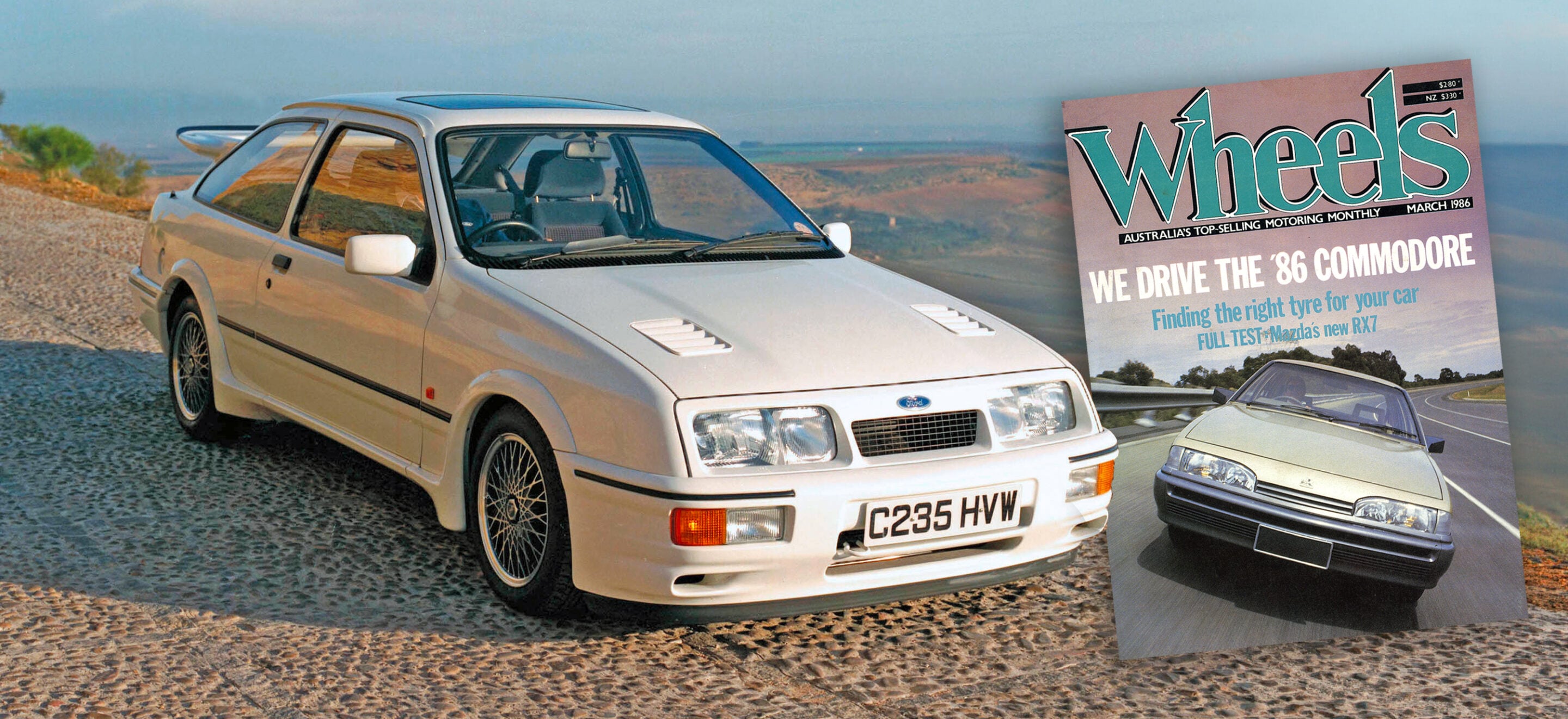
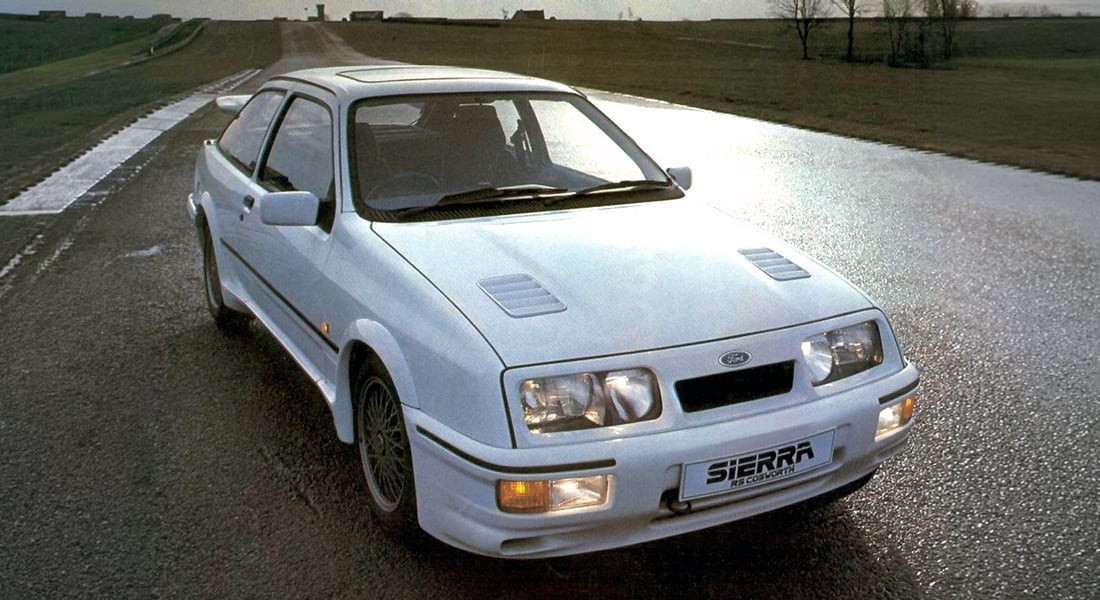
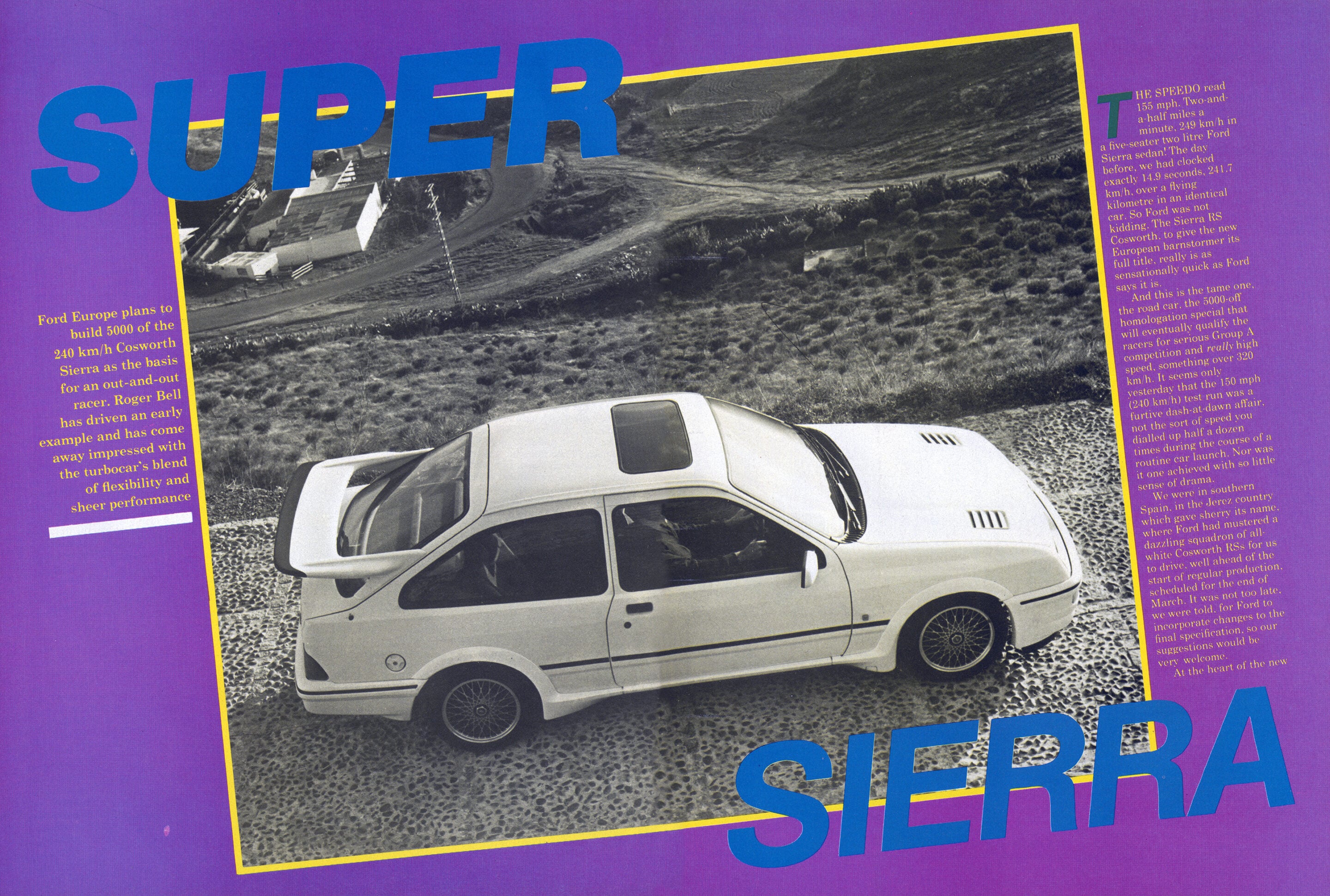
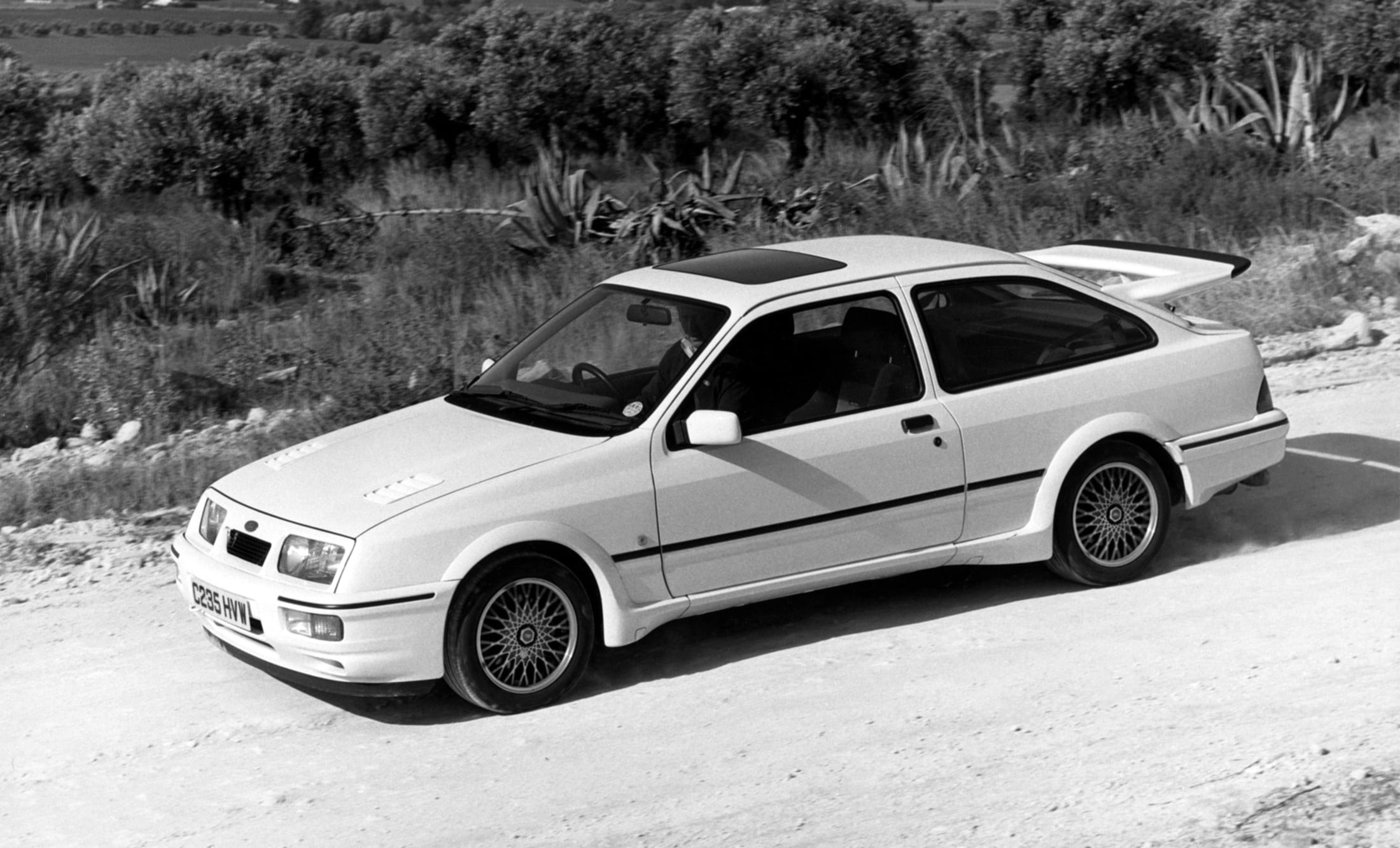
The speedo read 155mph. Two-and-a-half miles a minute, 249km/h in a five-seater two-litre Ford Sierra sedan! The day before, we had clocked exactly 14.9 seconds, 241.7 km/h, over a flying kilometre in an identical car. So Ford was not kidding. The Sierra RS Cosworth, to give the new European barnstormer its full title, really is as sensationally quick as Ford says it is.
1
And this is the tame one, the road car, the 5000-off homologation special that will eventually qualify the racers for serious Group A competition and really high speed, something over 320km/h. It seems only yesterday that the 150mph (240km/h) test run was a furtive dash-at-dawn affair, not the sort of speed you dialled up half a dozen times during the course of a routine car launch. Nor was it one achieved with so little sense of drama.
We were in southern Spain, in the Jerez country which gave sherry its name, where Ford had mustered a dazzling squadron of all-white Cosworth RSs for us to drive, well ahead of the start of regular production., scheduled for the end of March. It was not too late, we were told, for Ford to incorporate changes to the final specification, so our suggestions would be very welcome.
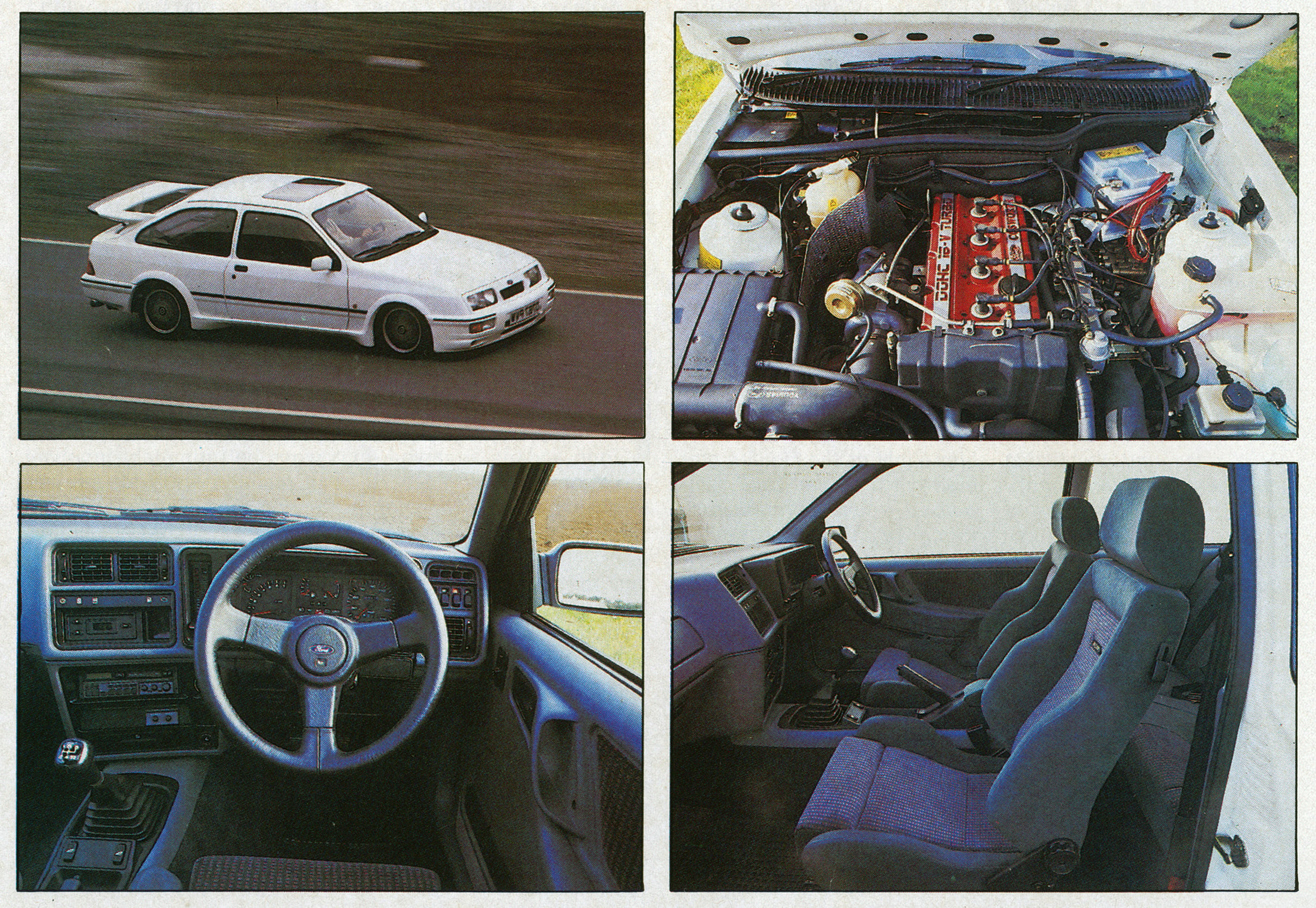
At the heart of the new car is a two-litre turbocharged engine, the 47th that Cosworth has developed in conjunction with Ford (out of a total of 52 engines Cosworth has created), but the first officially to carry the Cosworth name on a Ford. This new engine is based on a standard T88 Ford block, topped by a light-alloy cylinder head cast at Cosworth’s new Worcester foundry, which is claimed to be the most advanced in the world.
2
Two five-bearing camshafts, driven by a Uniroyal toothed rubber belt, open four valves per cylinder through inverted bucket tappets with hydraulic lash adjustment. Exhaust valves are sodium filled and angled at 45 degrees to the slightly larger 35mm inlets. The floors of the pentroof combustion chambers are recessed bowls in the fully skirted forged-aluminium 8:1 Mahle pistons.
Conrods and crankshaft are heat-treated steel forgings and the flywheel is attached by nine bolts instead of the usual six. The water-cooled turbo, a Garret T3 pumping through an air-to-air intercooler, is driven from a compact cast nickel-iron exhaust manifold of optimised length and gaspipe diameter. Maximum boost is set at 0.55 bar (8psi) by a wastegate controlled by the engine’s electronic control unit (ECU), integrated with multi-point Weber fuel injection and fully programmed Marelli electronic ignition.
This state-of-the-art Italian engine management system, dependent on accurate air intake and engine speed measurements, precisely controls fuel-air ratio and ignition timing. Although torque peaks at 4500rpm, with 272Nm, 80 per cent or more of the maximum available is developed between 2300 and 6300rpm.
2
Maximum power of 150kW is achieved at 6000rpm, and it was suggested that competition versions of the same engine, running with much bigger intercoolers and higher boost pressures, will be capable of yielding over twice as much.
Power is transmitted to the rear wheels through a five-speed Borg Warner gearbox (also used, with different ratios, in the 2.3 Ford Mustang and Thunderbird) and a two-piece rubber-damped propshaft. Ratios are fairly normal in their spacing but on the short side for such a powerful car, top being geared to give only 36.7km/h /1000rpm when it could obviously pull something nearer 50. Major re-engineering would be needed to give the car four-wheel drive, which is deemed unnecessary – undesirable in fact – for circuit racing, which is what this car is ultimately all about.
Suspension is conceptually like that of other Sierras, with MacPherson front struts and independent semi-trailing arms behind. Ford’s British-based Special Vehicle Engineering (the group responsible for the Capri 2.8i, XR2, XR3i, RS Turbo, XR4x4 and others) made many detail changes, though.
3
More positive wheel control was achieved by introducing solid plastic inner pivot bushes for the front and rear links, sacrificing some harshness suppression for sharper response. Springs and dampers were uprated, the front anti-roll bar thickened and the rear wheels given slight negative camber to ensure a flat contact patch for the new steel-belted 205/50 Dunlop SP Sport D40 tyres. Wheels are 15×7 cross-spoked light alloys, accommodating the largest possible brakes – 280mm ventilated discs up front, with four-pot Teves calipers, solid 250mm discs behind. Electronic anti-lock mechanism like that used on the new Scorpio and Sierra XR4x4 is standard. So is variable-rate power steering, as used on other production Sierras.
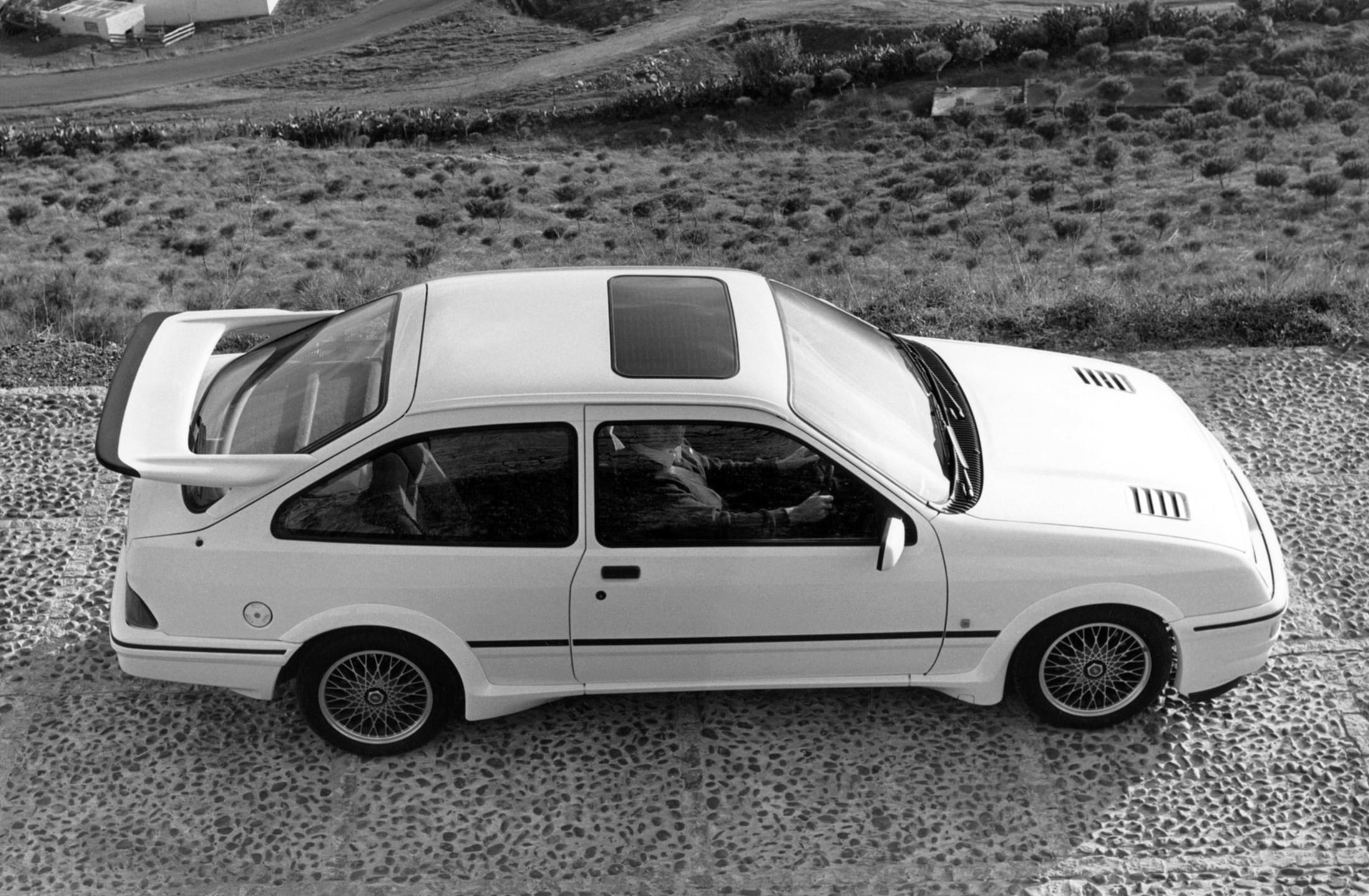
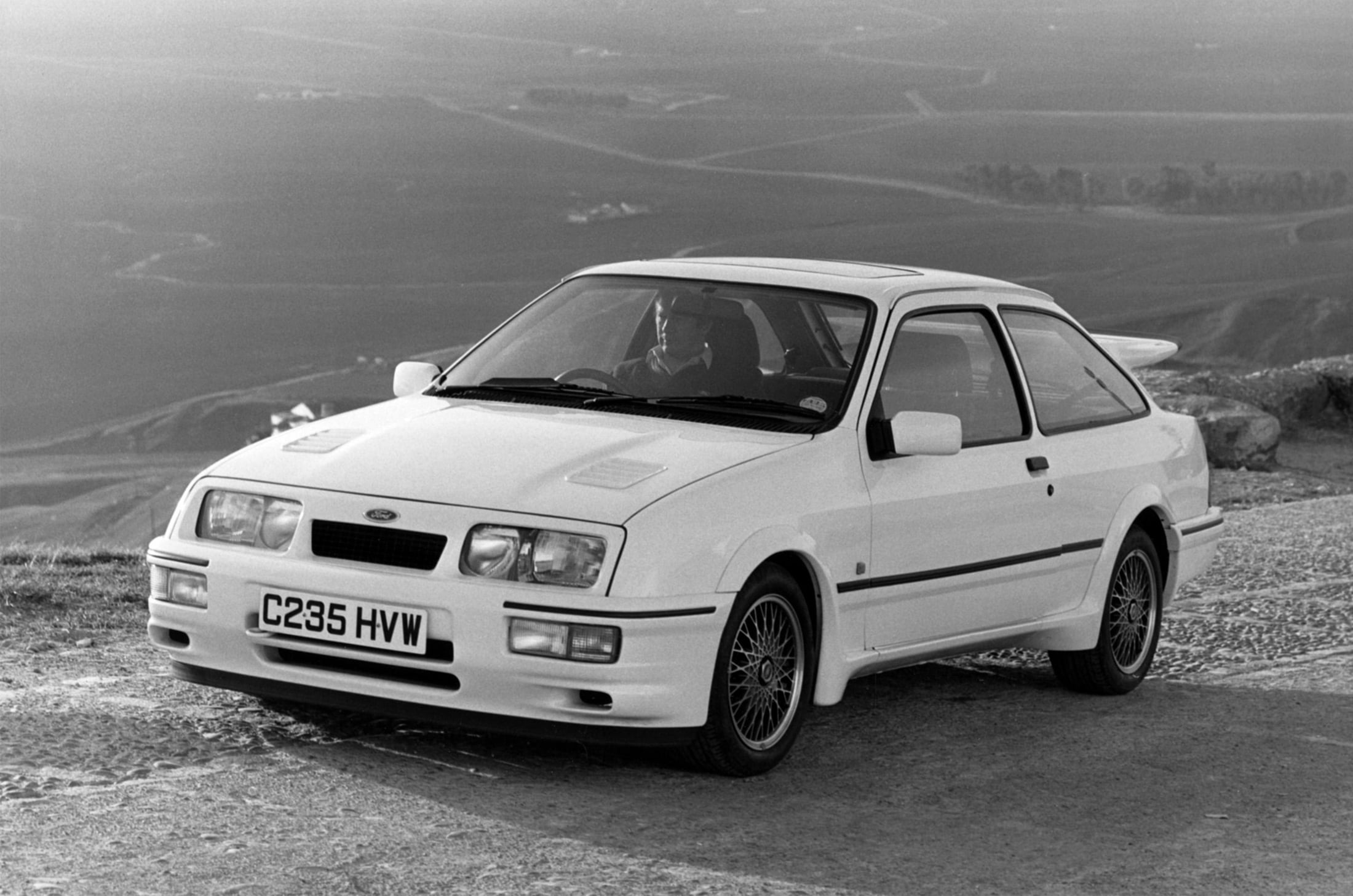
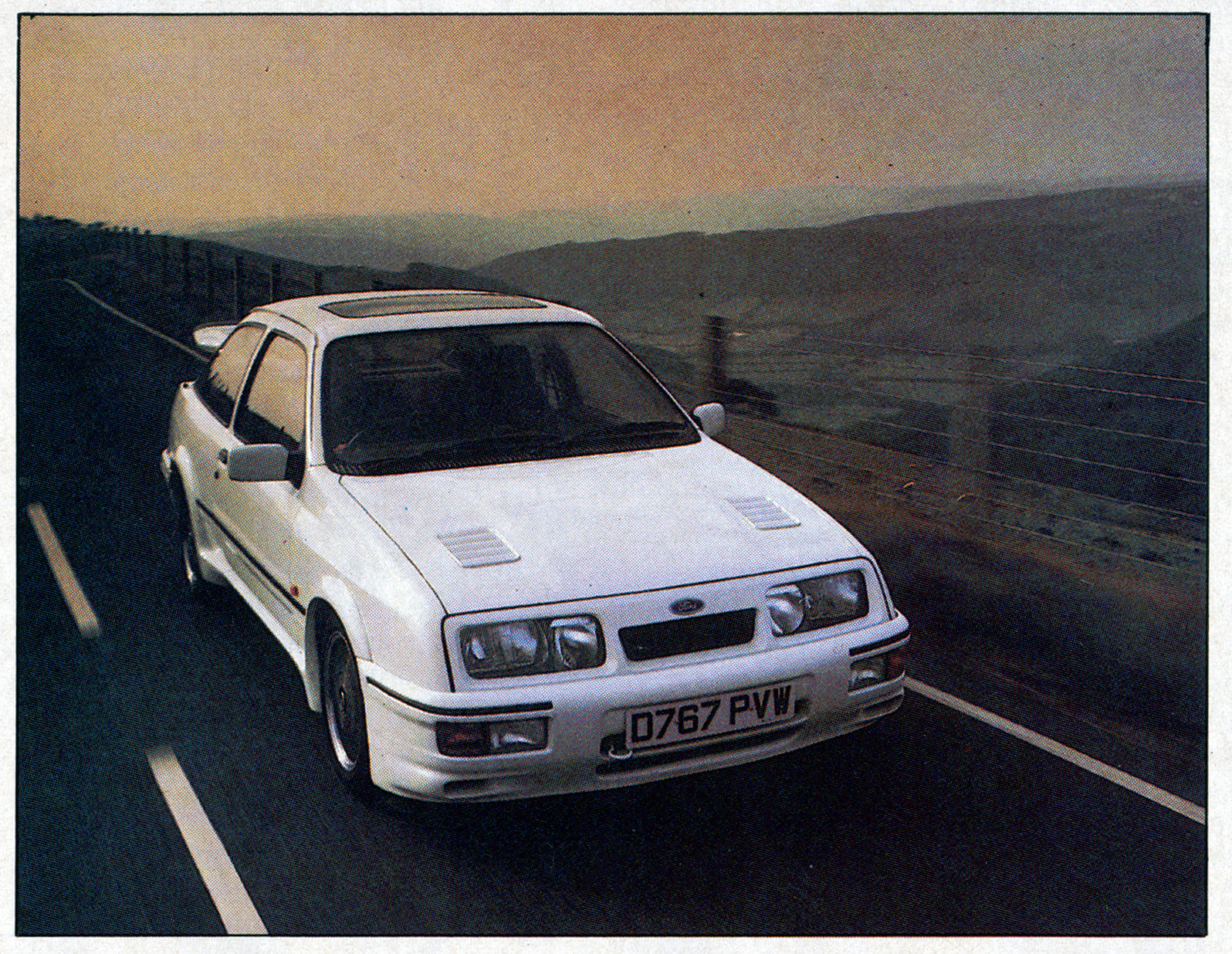
Based on the three-door shell used for the XR4i and some lesser short-lived variants, the Sierra RS Cosworth’s striking sedan body incorporates 92 detail sheet-metal changes. A single body-coloured polyurethane moulding embraces the front bumper, grille and lower spoiler, carrying intakes for the hungry engine and front brakes. Hood louvres help release engine bay heat. At the sides, wheel-arch extensions and side-sill skirting protrude far enough to accommodate 10-inch racing wheels. The impact-resistant polycarbonate rear bumper is also colour-keyed, as is the giant rear wing, extending well back from the sides of the tailgate and supported by a single central strut. High mounted to catch the wind, it is alleged not merely to reduce lift but actually to generate downforce, 20kg of it at speed, for the first time on a production car.
1
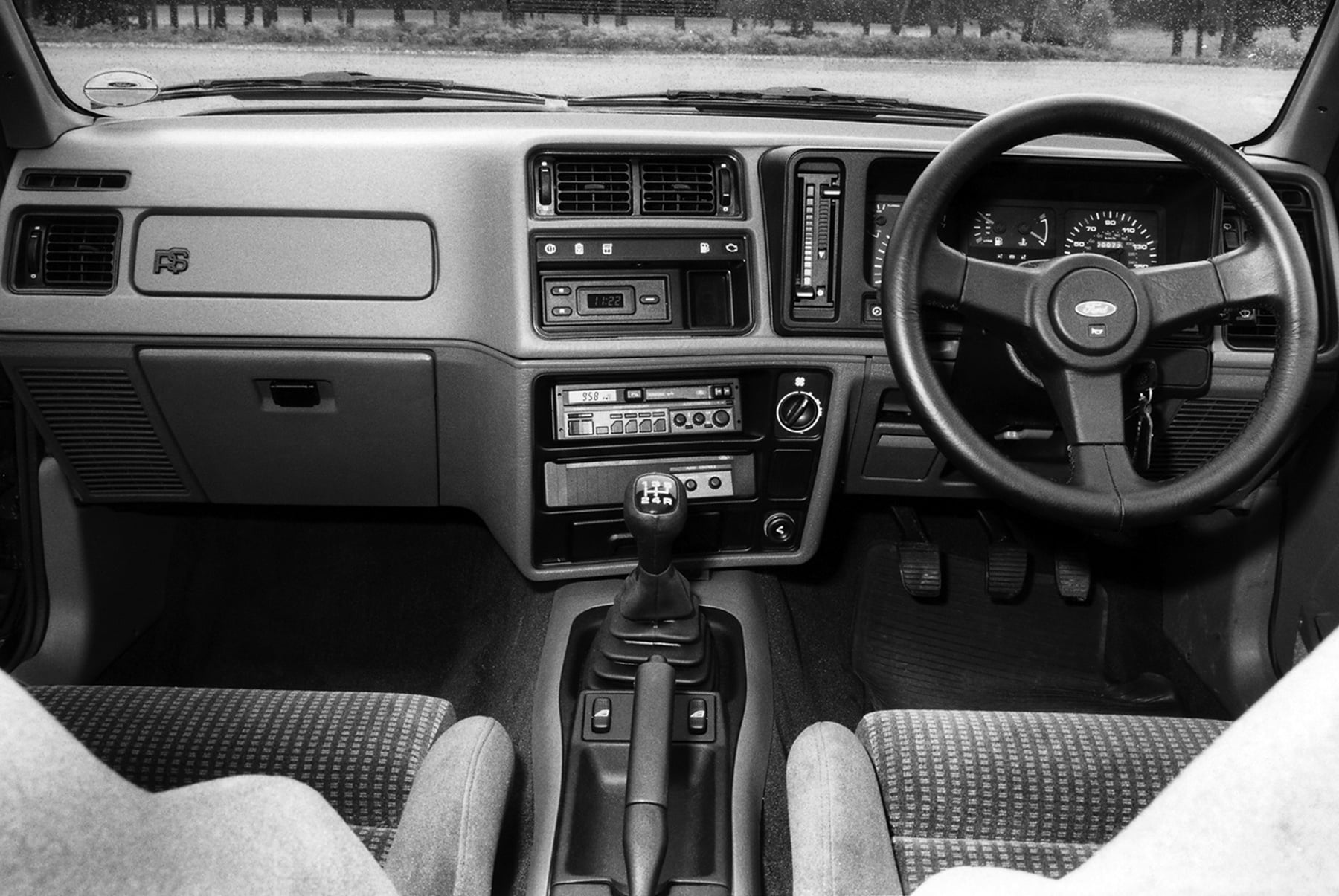
Inside, the RS Cosworth is much like that of other top-range Sierras, except for hip-hugging Recaro seats and a single-piece rear backrest. Instrumentation is normal apart from a boost gauge on the tacho dial. Other giveaways are a leather-trimmed gear lever knob and a blanked-off facia cubby used to house the car’s ECU, which you can hear ticking.
On the road, the RS Cosworth stands out like a thoroughbred in a pony field. Okay, so the rear wing is aesthetically way over the top. Never mind. The car has striking style rather than ostentatious vulgarity. It looks great.
You don’t sit on the Recaros so much as lever yourself into them. Firm and prominent bolsters embrace your hips and thighs with such unusual intimacy that it’s necessary to fine-tune the seat’s position with particular care. That done, the driving position is first class, even if the aft view isn’t. The rear wing cuts right across the middle of the screen, badly restricting visibility, though you can see the rooftops of following cars (and thus also see any flashing blue lamps!).
1
The first agreeable surprise is the tone and timbre of the engine. As expected, it is hard edged and slightly tingly at rest through the gearshift and pedals. Mildly boomy at the top end, too. But in the main, refinement is first class for an in-line four, never mind one yielding 75kW/litre. It’s this combination of sweetness and vigour that makes the engine so impressive.
Performance is terrific, and not just beyond midrange revs, either. This is not an all-or-nothing turbo. There is no sudden kick-point in the wide rev band. The power comes in fluidly, with a progressive surge, as the revs rise. Ford claims a 0-100km/h time of 6.8 seconds; we doubted it until we timed the car, verifying the claimed 240km/h top speed. It felt too relaxed, too steady, too undramatic for that, but it was for real.
With 6500rpm on the tacho, the engine certainly booms quite noisily, even sounds a bit strained. Back off to relative tranquillity and the speedo is still registering 210km/h, despite gearing biased more for sprint acceleration than long-legged cruising. Two miles a minute – 190km/h – is a very comfortable cruising gait.
1
Shift quality of the Borg Warner box is excellent, crisper and more precise than the normal Sierra’s, with little synchro obstruction to baulk swift movements. Despite the clutch’s rather mushy takeup from rest, it handles fast shifts positively and smoothly; all that’s needed is a sharp stab on the pedal. Although gearchanging is an indulgence to savour, the engine is quite willing to slog it out at low revs.
Handling, less impressive than drivetrain performance, is marred by steering nervousness, a characteristic of many Ford SVE products. Pressing on, the RS tends to dart round corners rather than flow through them. It is often necessary fractionally to back off lock immediately after entry to stabilise the car, to get it to point where you want. Even with deft, light-fingered pressure on the wheel, which is the technique SVE advocates, transient flick-turn behaviour denies the car pin-sharp accuracy.
Such edgy-turn-in also gives you the (false) impression that the tail is about to let go into massive oversteer. ln fact, the new Dunlops are impressively adhesive, the cornering powers very high once the car is g-settled.
4
Otherwise, there’s little but more praise to lavish on this car. The ride is firm but well controlled, braking powerful (but over-assisted), noise levels very modest. There’s little disturbing roar or thump from the tyres, nor much aggravating wind whoosh at speed. At A$34,250 or thereabouts in the UK – the price won’t be announced until next year – there is no other roomy, comfortable, five-seater to compete with this car dynamically. Ford’s party line is still that they will make 5000 for homologation purposes, and no more. We shall see.
Follow WhichCar/Wheels on Google
Click the button below to make WhichCar by Wheels a preferred source for your news.

We recommend
-
 Classic Wheels
From the Wheels Archive: Ford’s New Hot One – the birth of the Falcon GT legend
Ford's legendary Australian muscle car heritage started with the 1967 XR Falcon GT... and we put the V8 super sedan through its paces.
-
 Features
From the Wheels archives: We find the fastest Australian car
In September 1977, Wheels settled the argument about what is the fastest Australian car once and for all.
-
 Classic Wheels
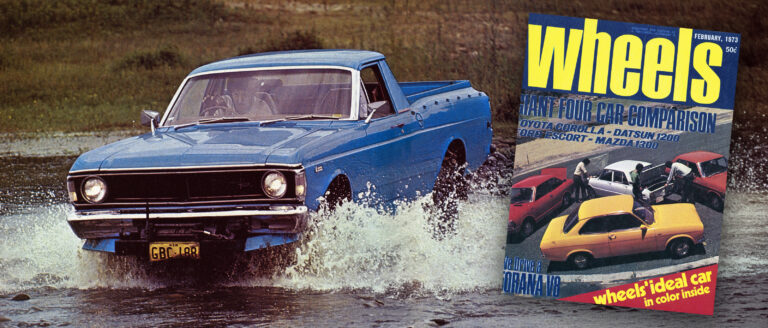
From the Wheels Archive: Ford’s ground-breaking 4WD XY Falcon ute was decades ahead of its time
Forget the Ford Ranger, this Falcon-based four-wheel drive ute from Australia is the original gangster of lifestyle utes.
