Reviews

Gallery 1
8.3
/10
Score
Score breakdown
8.0
Safety, value and features
9.0
Comfort and space
8.5
Engine and gearbox
9.0
Ride and handling
8.0
Technology
Things we like
- Spacious, good quality cabin and boot
- Easy to use in-car tech with lots of buttons
- Punchy hybrid powertrain is efficient
Not so much
- N Line package not worth the extra coin
- Extra two years of warranty are conditional
- Short 10,000km service intervals
In a time where medium SUVs absolutely dominate Australian new vehicle sales charts, the Hyundai Tucson has carved out a reputation as one of the segment’s most compelling all-rounders. Combining handsome styling, a spacious and technology-packed cabin, a punchy yet efficient hybrid drivetrain and the value for money Hyundai is known for, the Tucson continues to be a favourite among family buyers. It was also the overall winner of Wheels Best Medium SUV 2025.
As fresh rivals arriving from every direction, however, does Hyundai’s popular SUV still have what it takes to remain near the top of the class?
How much does the Tucson Hybrid cost to buy?
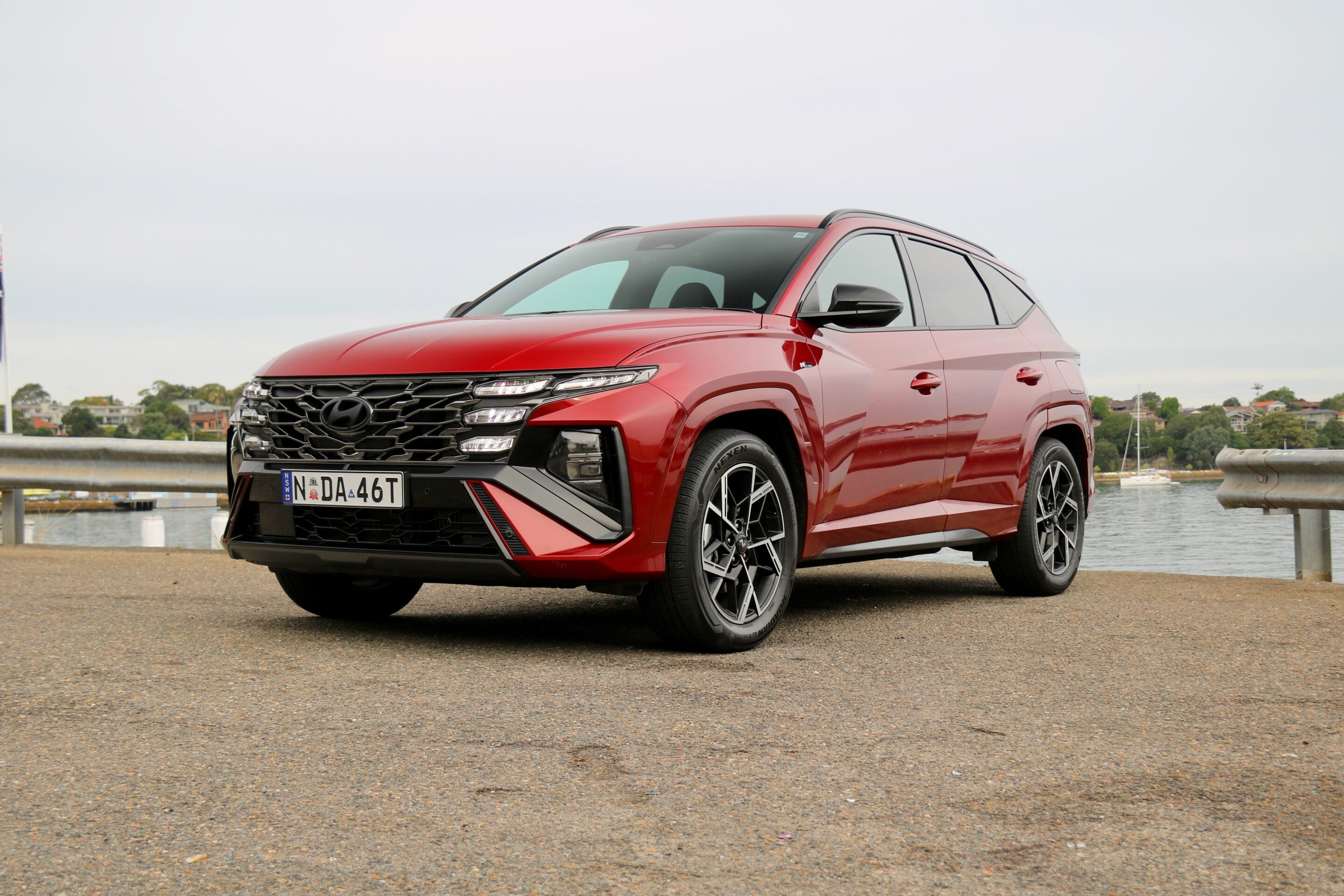
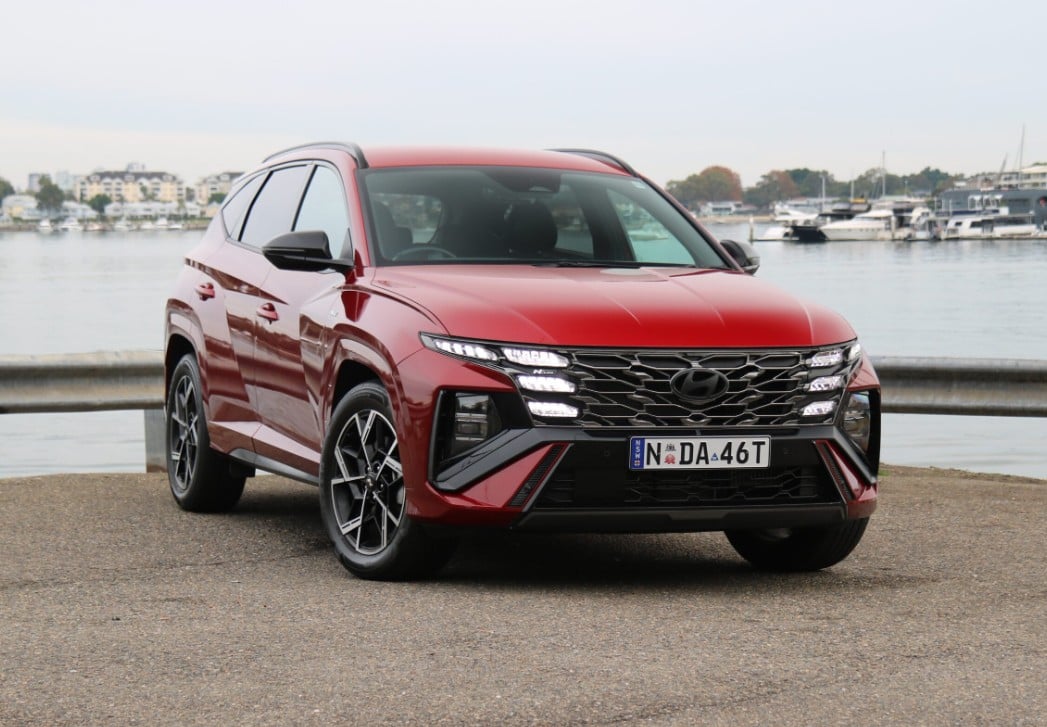
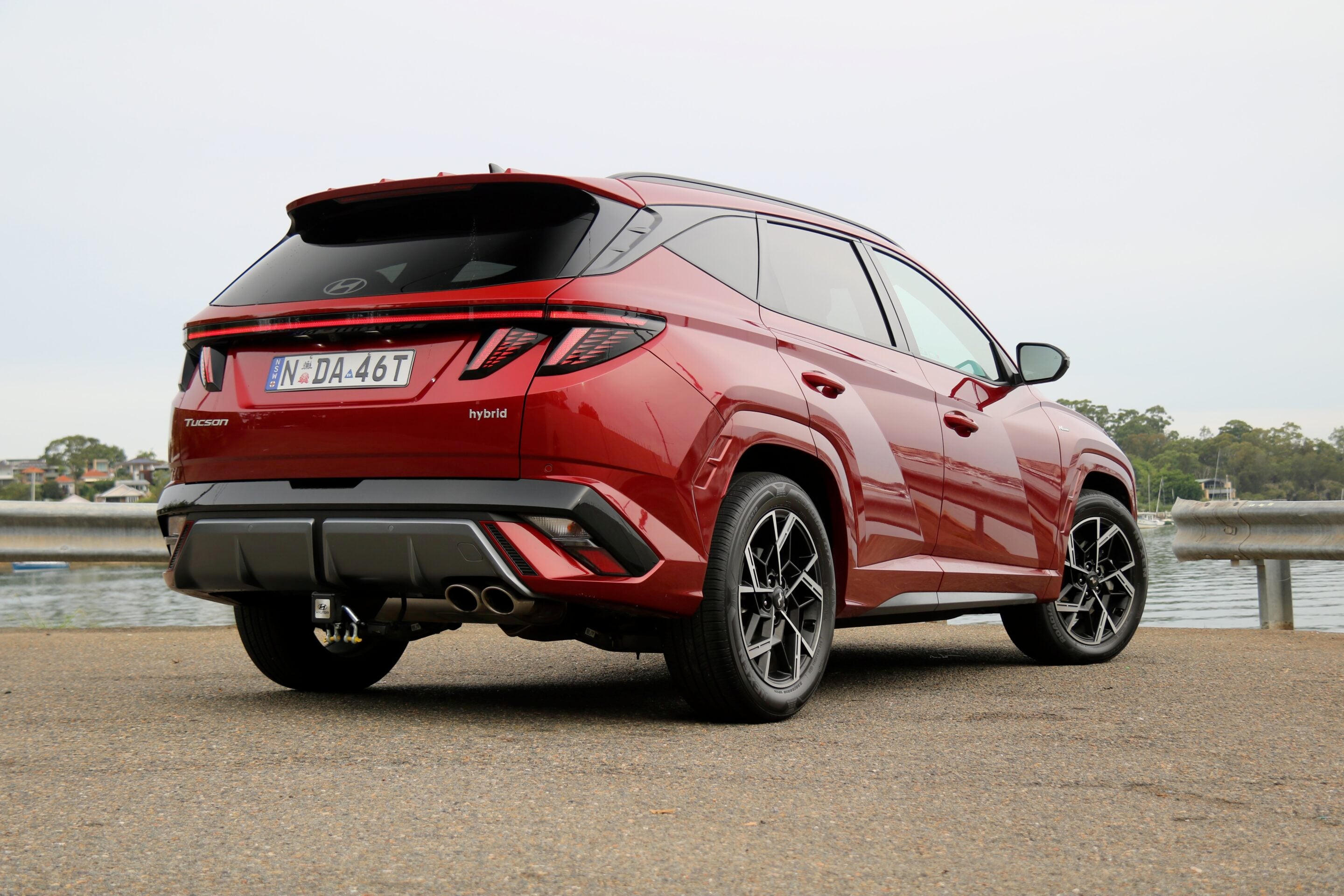
There used to be quite a large line-up for the Tucson, but after a facelift the range is just nine variants, starting with the base petrol at $40,100 plus on-road costs and reaching the top-spec Premium N Line at $59,850 +ORC. We tested the upper-middle hybrid Elite N Line 2WD ($50,850 +ORC) for this review, but it’s not the Tucson we’d buy.
5
2026 Hyundai Tucson pricing (plus on-road costs):
| Tucson petrol | $40,100 |
|---|---|
| Tucson Hybrid | $42,850 |
| Elite petrol | $45,100 |
| Elite Hybrid 2WD | $48,350 |
| Elite Hybrid AWD | $50,850 |
| Elite Hybrid N Line 2WD | $50,850 (tested for this review) |
| Elite Hybrid N Line AWD | $53,350 |
| Premium Hybrid AWD | $58,350 |
| Premium Hybrid N Line AWD | $59,850 |
Competition is very strong in the hybrid medium SUV segment, including the Tucson’s Kia Sportage twin, the Nissan X-Trail e-Power, Honda CR-V, Subaru Forester and, of course, the big-selling Toyota RAV4. That’s before you add in lower-priced competitors like the Haval H6 and MG HS, let alone plug-in hybrids like the Chery Tiggo 7, Geely Starray and BYD Sealion 5 as well.
As with everything, we say do your research before committing to any of them and drive as many options as you can. But if you don’t, what you need to know is that the Tucson is one of the best hybrid medium SUVs you can buy in terms of overall value. But the N Line part of the model isn’t necessary because the Tucson isn’t a sports car, so why try and make it look like one? Save $1500 and go for the Tucson Hybrid Elite ($48,350 +ORC), and don’t bother with optional all-wheel drive either.
How fuel efficient is the Tucson Hybrid?
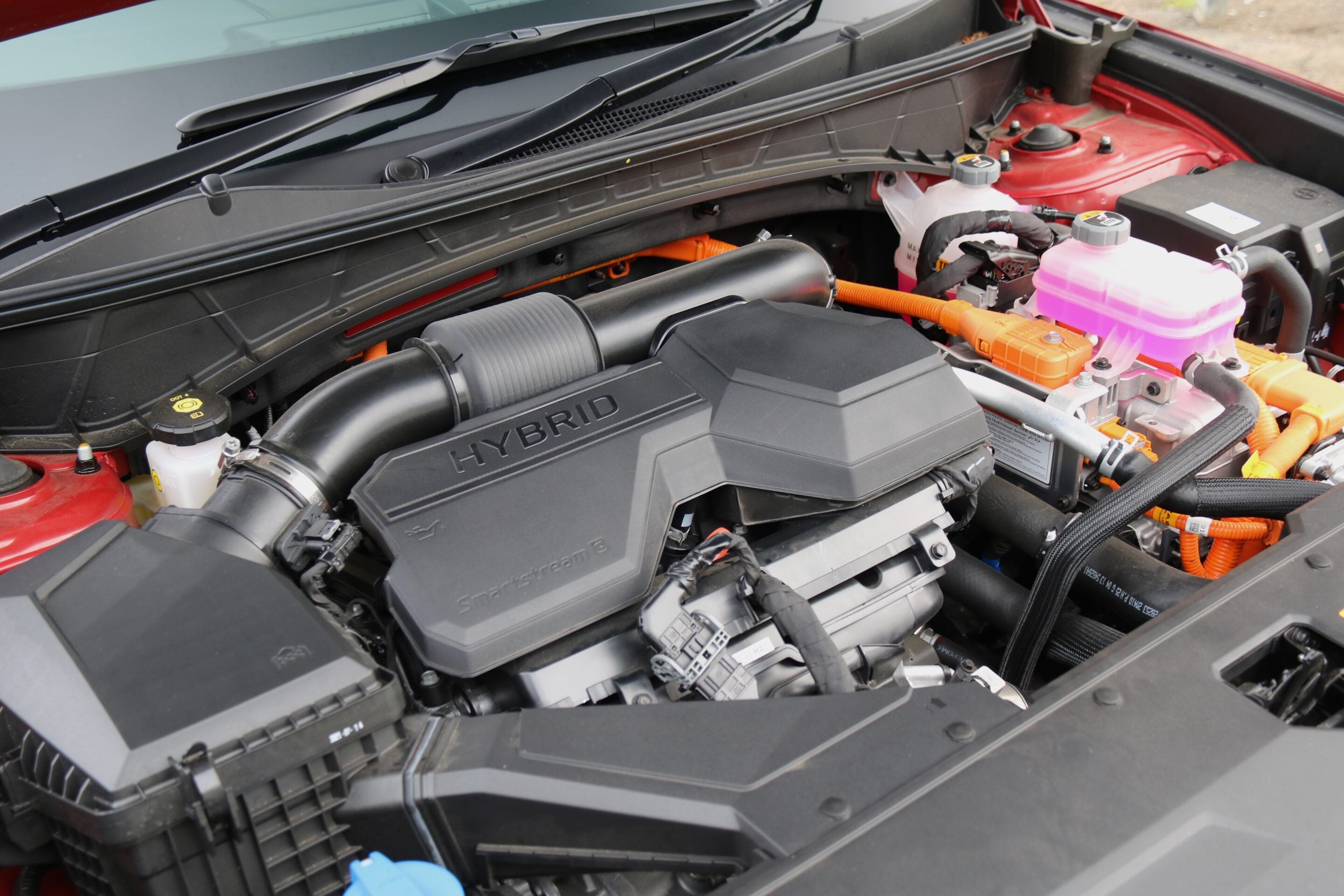
While you can still buy a 2.0-litre petrol engine in the Tucson range – it’s only available in the base model and mid-spec Elite in front-wheel drive form – we wouldn’t bother doing so because for $2750 more, the hybrid is far superior in every way. Unlike the petrol engine, the 1.6-litre hybrid is turbocharged and makes healthy 172kW/367Nm outputs, which far outgun the lacklustre petrol’s 115kW/192Nm numbers.
Not only is the hybrid significantly punchier than the petrol model, it’s also one of the most powerful mainstream medium SUVs you can currently buy. Hyundai doesn’t quote a 0-100km/h time, but we’d guess that it’s around the 7.0-second mark. It’s not only punchier than the 2.0-litre petrol engine, but it’s also a lot more fuel efficient rated at just 5.3L/100km (front-wheel drive Tucson Hybrid variants with smaller wheels use even less at just 4.9L/100km), and in the real world, we achieved 5.8L/100km.
Is the Tucson Hybrid good to drive?
The Tucson is one of the best hybrid medium SUVs to drive, bar none, and that’s thanks to its mostly comfortable ride quality, linear steering, tidy chassis and pleasing overall dynamics. The N Line’s 19-inch wheels aren’t the perfect match for sublime ride quality and bumps are felt perhaps more than you’d expect. Drop the ‘N Line’ from the model and downgrade the wheels to more comfortable 18s; that’s what we’d do.
5
It’s a better handler than most of the competition though, with a nimble chassis that makes it more fun to drive than many competitors. Part of that is the steering, which strikes a Goldilocks ‘just right’ feeling and it gives you far more information than Chinese rivals. It also grips hard and goes around a corner quite well.
As for the drivetrain, it’s excellent. It’s more than punchy enough, but also refined and quite eager to rely on electric power as much as it can to reduce fuel consumption. Unlike a Toyota hybrid system, it features a geared transmission with six speeds on offer. When the engine is actually running, it’s quieter than the somewhat noisy naturally aspirated 2.5-litre engine in the RAV4 Hybrid.
As for the active safety systems, they’re mostly well behaved. Hyundai’s annoying speeding buzzer – which can mis-read speed signs and ding at you even though you’re not speeding – can be easily be muted by holding down the volume knob on the steering wheel. The active lane keeping can tug a bit much at the steering wheel too when it thinks you’re about to veer into the next lane, but that too can be easily defeated with a hold of a button on the steering wheel. That’s exactly how these systems should be.
How practical is the Tucson Hybrid?
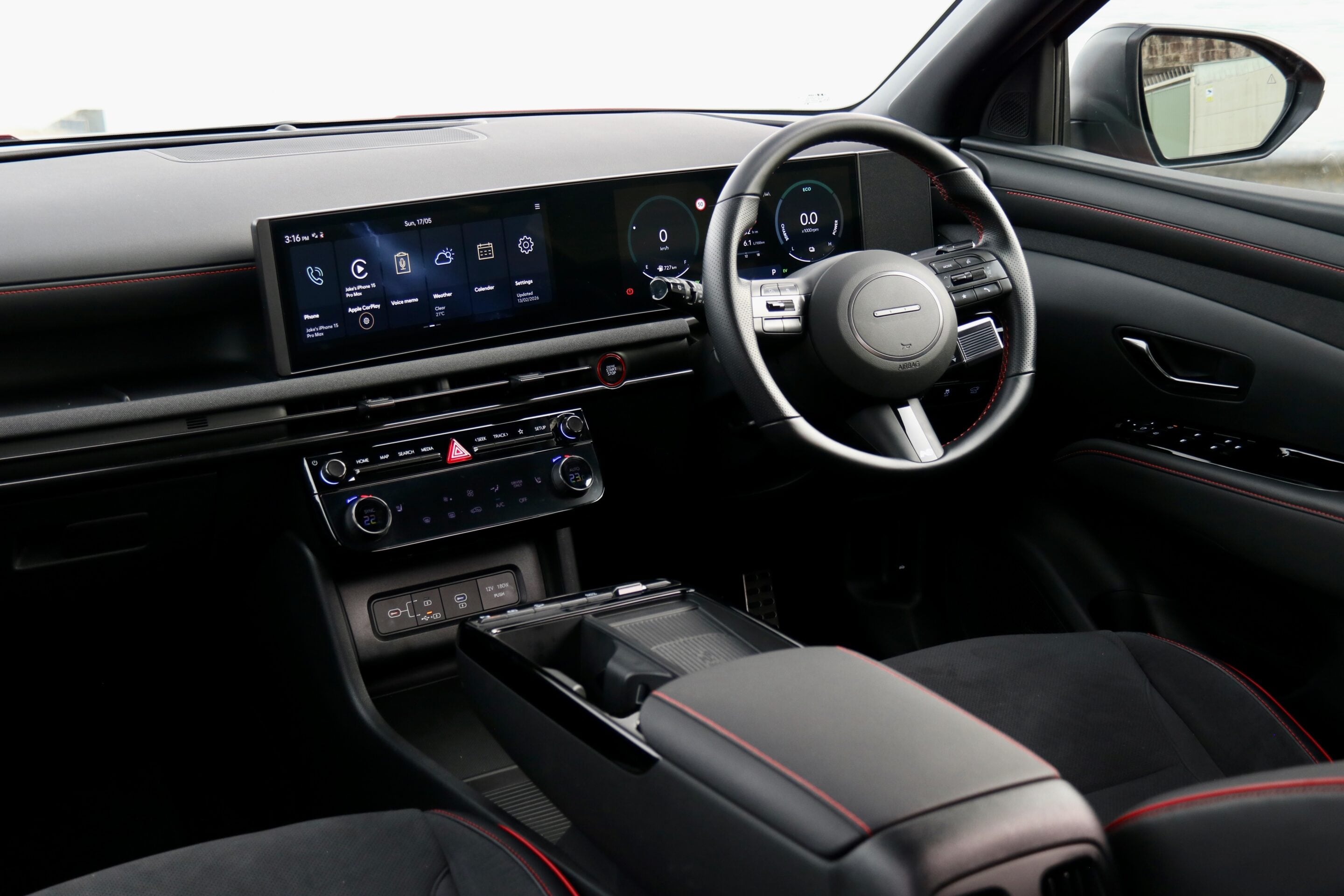
The cabin of the Tucson is one of the best options in the medium SUV segment thanks to its spaciousness, comfort, easy-to-use tech and quality. If you’re after a medium SUV with a great interior for your family’s needs – that’s the whole point of buying an SUV, right? – the Tucson is actually where you should start because it does so much very well. There are plenty of soft touch materials used too, giving it a quality feeling throughout.
5
The Tucson range uses Hyundai’s ‘ccNc’ infotainment software and that’s a good thing because it’s so easy to use and offers a lot of features – wireless smartphone mirroring, DAB+ digital radio and live services like traffic for the navigation, and even information about the weather. The six-speaker audio system is reasonable, though the Bose unit in the upper-spec Premium is punchier.
Screen quality is sharp too, and it’s quick to respond to touch, but the best part is that it features a separate section of buttons for the climate control. It’s hard to believe that’s even worth mentioning but so many competitors leave the climate control in the touchscreen and they’re all infuriatingly difficult to use at speed. The driver’s screen is a bit of a waste of space though, as it offers only one view and doesn’t feature inbuilt mapping.
Another great point about the Tucson’s interior is its storage. The door pockets are large, as is the box underneath the centre armrest, while the cup holders are large and centrally located and there’s a second layer of storage in the lower centre console too that can handle a handbag, plus an extra tray on the passenger side of the dashboard.
4
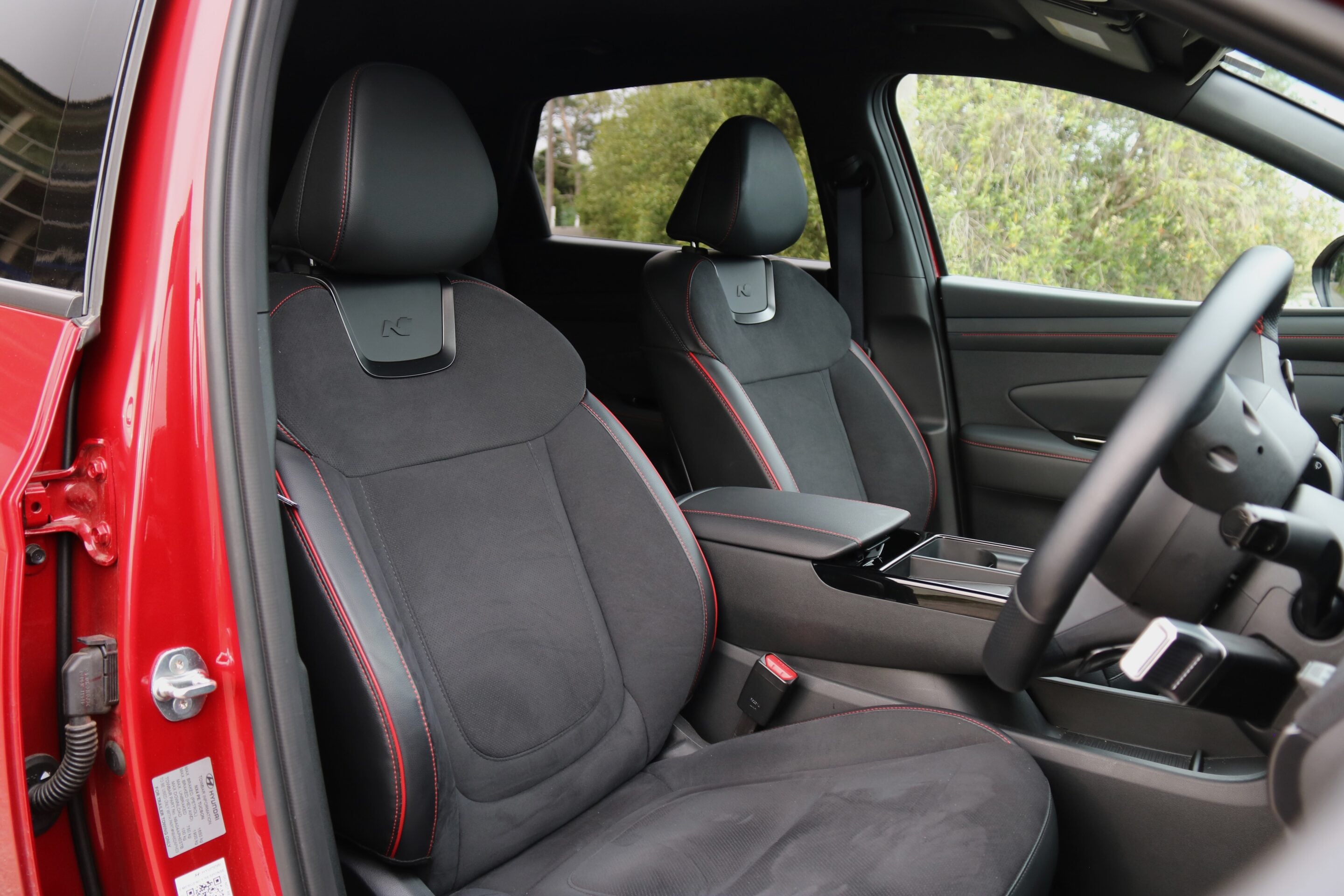
Rear seat space in the Tucson is plentiful for my six-foot frame, and taller folk will be happy as well because there’s excellent leg- and headroom on offer. Features include air vents, two USB-C charging ports, two map pockets, a central armrest with cup holders and bottle holders in the doors, though no separate climate zone, heated seats or inbuilt sunshades. The rear doors open wide – though not quite as wide as an X-Trail – and the two ISOFIX points are easy to access.
The boot of the Tucson Hybrid, as we’ve previously discovered, is actually the largest in the medium SUV segment. Behind the rear seats lies a solid 582 litres of space, but folding the rear seats unlocks a massive 1903 litres in total. Its practicality is aided further by a dual-level floor, some extra storage and remote releases to fold the rear seats. The electric tailgate can also be set to open automatically when standing next to it with the key.
How much does the Tucson Hybrid cost to service?
Five years of servicing the Tucson costs $2290, or $458 per year on average, which is not bad in the segment, though its short 10,000km service intervals are 5,000km shorter than rivals like the RAV4.
3
For warranty, Hyundai covers the Tucson with a five-year/unlimited km warranty, which is extended a further two years in total if the vehicle is serviced through a Hyundai dealership. That’s a bit disappointing given that many Chinese rivals offer at least seven years of warranty no matter where they’re serviced. The hybrid battery is also covered by a separate eight-year/160,000km warranty.
Should I buy a Hyundai Tucson Hybrid?
Considering its fierce all-round ability, it’s pretty easy to see why we chose the Tucson as the best overall medium SUV in 2025. It does everything quite well: It’s spacious, good value for money, well equipped, good to drive, punchy but fuel efficient, quite large in the boot area and relatively affordable to maintain.
Counting against it are the slightly naggy active safety features, short 10,000km service intervals, that the sixth and seventh years of warranty are conditional. In this case, the N Line package adds little to the overall package and we don’t think it’s worth the extra $1500 outlay. But minus the N Line and the Hyundai Tucson is an excellent product, in fact, it’s the first vehicle we’d be considering if were after a hybrid medium SUV.
Tucson Hybrid Elite N Line standard features:
- 19-inch alloy wheels (with a space-saver spare wheel)
- Dusk-sensing automatic LED exterior lighting
- Rain-sensing automatic wipers
- Keyless entry with push button start and remote start
- Phone key functionality
- Roof rails
- Heated and auto-folding mirrors
- Electric tailgate with easy open functionality
- Leather steering wheel with paddle shifters
- Suede and leather upholstery
- 10-way electric driver’s seat
- Heated front seats
- Dual-zone automatic climate control with rear air vents
- 12.3-inch digital driver’s display
- 12.3-inch touchscreen with over-the-air updates
- Wireless Apple CarPlay and Android Auto
- Satellite navigation with live traffic
- Bluelink live services
- AM/FM/DAB+ digital radio
- Six-speaker sound system
- 4x USB-C ports
- Wireless phone charger
- 7x airbags
- Autonomous emergency braking with car, pedestrian, cyclist, direct oncoming and intersection monitoring
- Lane keeping assistance with adaptive lane guidance
- Adaptive cruise control with stop and go functionality
- Blind-spot monitoring (with braking)
- Rear cross-traffic alert (with braking)
- Safe exit warning
- Driver attention monitoring
- Traffic sign recognition
- Matrix adaptive high beam
- Front and rear parking sensors
- Reversing camera
- Anti-theft alarm
- Tyre pressure monitoring
Tucson Hybrid Elite N Line specifications:
| Price | $50,850 plus on-road costs (currently $53,990 drive away in NSW) |
|---|---|
| Drivetrain | 1598cc turbocharged four-cylinder petrol + electric motor |
| Battery | 1.49kWh lithium-ion |
| Combined peak power | 172kW (@ 5600rpm) |
| Combined peak torque | 367Nm (@ 1000 – 4100rpm) |
| Transmission | Six-speed automatic, front-wheel drive |
| Claimed fuel consumption | 5.3L/100km |
| Claimed CO2 emissions | 121g/km |
| Fuel type/tank size | 91 RON regular unleaded, 52 litres |
| Dimensions (L/W/H/WB) | 4650/1865/1665/2755mm |
| Boot capacity | 582 litres (rear seats up), 1903 litres (rear seats folded) |
| Tare mass | 1775kg |
| Braked towing capacity | 1900kg |
| Warranty | Five-year/unlimited km (extendable to seven years with dealer servicing) |
| Five-year service cost | $2290 (an average of $458 per year) |
| On sale | Now |
8.3
/10
Score
Score breakdown
8.0
Safety, value and features
9.0
Comfort and space
8.5
Engine and gearbox
9.0
Ride and handling
8.0
Technology
Things we like
- Spacious, good quality cabin and boot
- Easy to use in-car tech with lots of buttons
- Punchy hybrid powertrain is efficient
Not so much
- N Line package not worth the extra coin
- Extra two years of warranty are conditional
- Short 10,000km service intervals
Follow WhichCar/Wheels on Google
Click the button below to make WhichCar by Wheels a preferred source for your news.

We recommend
-
 News
NewsEOFY offers 2026: Deals from Kia, BYD, BMW, Toyota, Mazda, MG and more – updated
It's approaching the end of the 2026 financial year, which means that car manufacturers are sharpening their pencils. Here are the best EOFY offers.
-
 Reviews
2026 Toyota RAV4 Cruiser review: The people’s choice improves… mostly
The big-selling Toyota RAV4 returns with more technology and updated hybrid power. Can the new Cruiser spec remain the medium SUV to beat?
-
 Reviews
Mazda CX-5 first drive: Can the popular medium SUV find more success without a hybrid option?
The entry to the revised CX-5 range is now $39,990 before on-road costs, signifying just how cut-throat the fight is in the medium SUV segment. Will the lack of a hybrid halt the sales success of Mazda’s most popular vehicle?