
Reviews

Gallery 1
8.2
/10
Score
Score breakdown
8.0
Safety, value and features
7.0
Comfort and space
8.0
Engine and gearbox
9.0
Ride and handling
9.0
Technology
Things we like
- New Elite adds important features over base model...
- ... without the top-spec Premium's price tag
- Efficient but punchy hybrid drivetrain
Not so much
- Surprisingly expensive to service
- Not particularly cheap to buy either, once on-road costs are included
- Plasticky interior could do with an extra layer of finishing
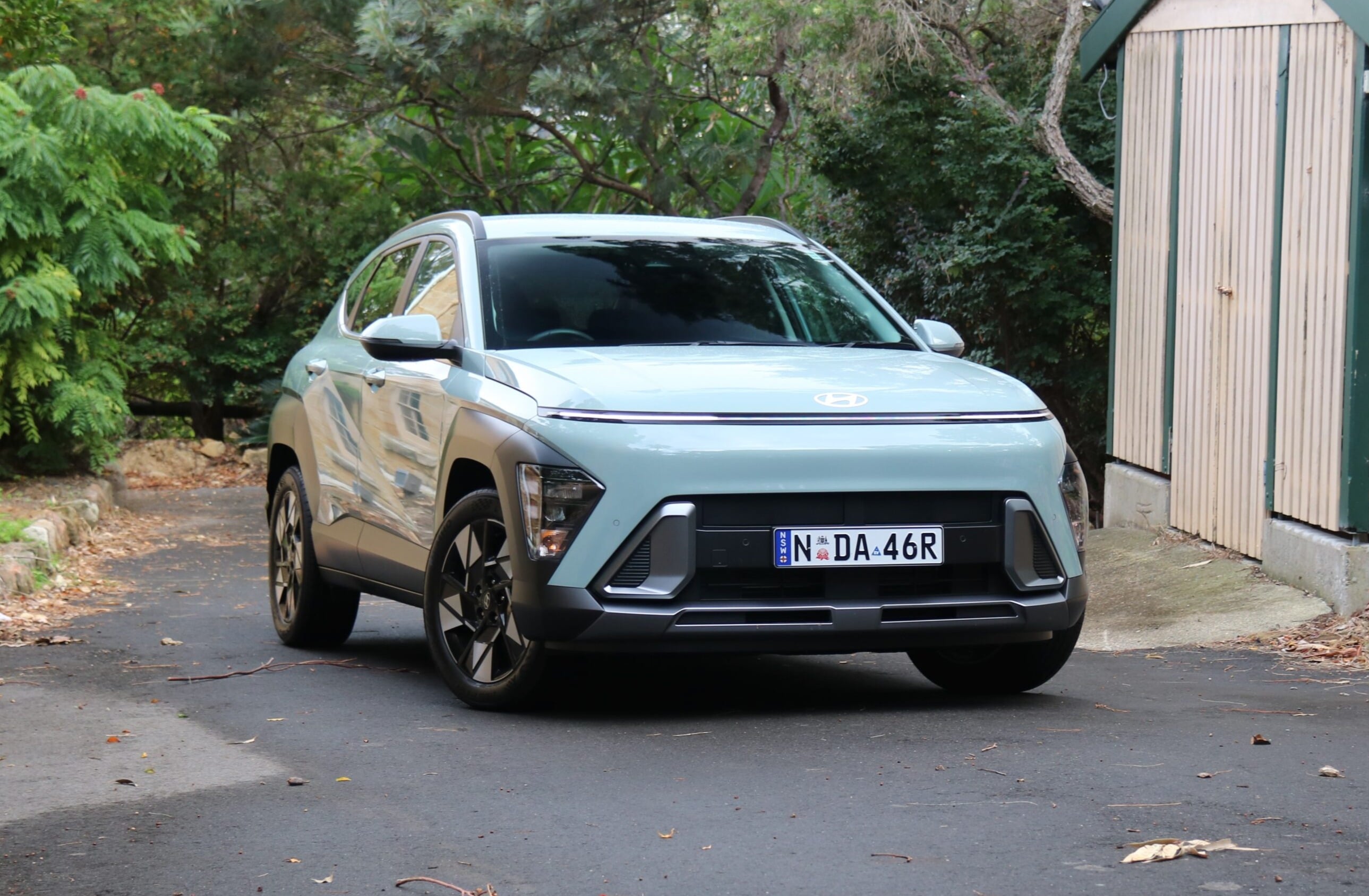
If you’re a car maker and don’t offer a small SUV, your chances at big sales are low. Small SUVs remain one of Australia’s most congested new car segments, but few have enjoyed the long-term success of the Hyundai Kona. Constantly ranked among the country’s best-selling small SUVs despite the threat from newer brands and newer models, the Kona has built a strong reputation for value, a good driving experience and wide range of choice.
Hyundai has recently revised the line-up with a new Hybrid Elite variant, which slots between the entry-level and top-spec Premium to offer extra equipment for those whose budgets don’t stretch all the way to the top. Is this new mid-spec Elite the sweet spot of the Kona range or are buyers better off looking elsewhere in the range?
How much does the Kona Hybrid cost to buy?
Prices for the 2026 Kona range start at $33,700 plus on-road costs for the entry-level petrol, $39,950 +ORC for the hybrid reviewed here and $46,000 +ORC for the Kona Electric. Small SUVs are selling well with all types of propulsion, so giving them the choice of petrol, hybrid and electric in one model is great.
As for model availability, base model (eponymously named ‘Kona’), new mid-spec Elite and top-spec Premium are available with each fuel type, and in both Elite (non-electric) and Premium spec, a sporty-looking N Line package is available as well.
5
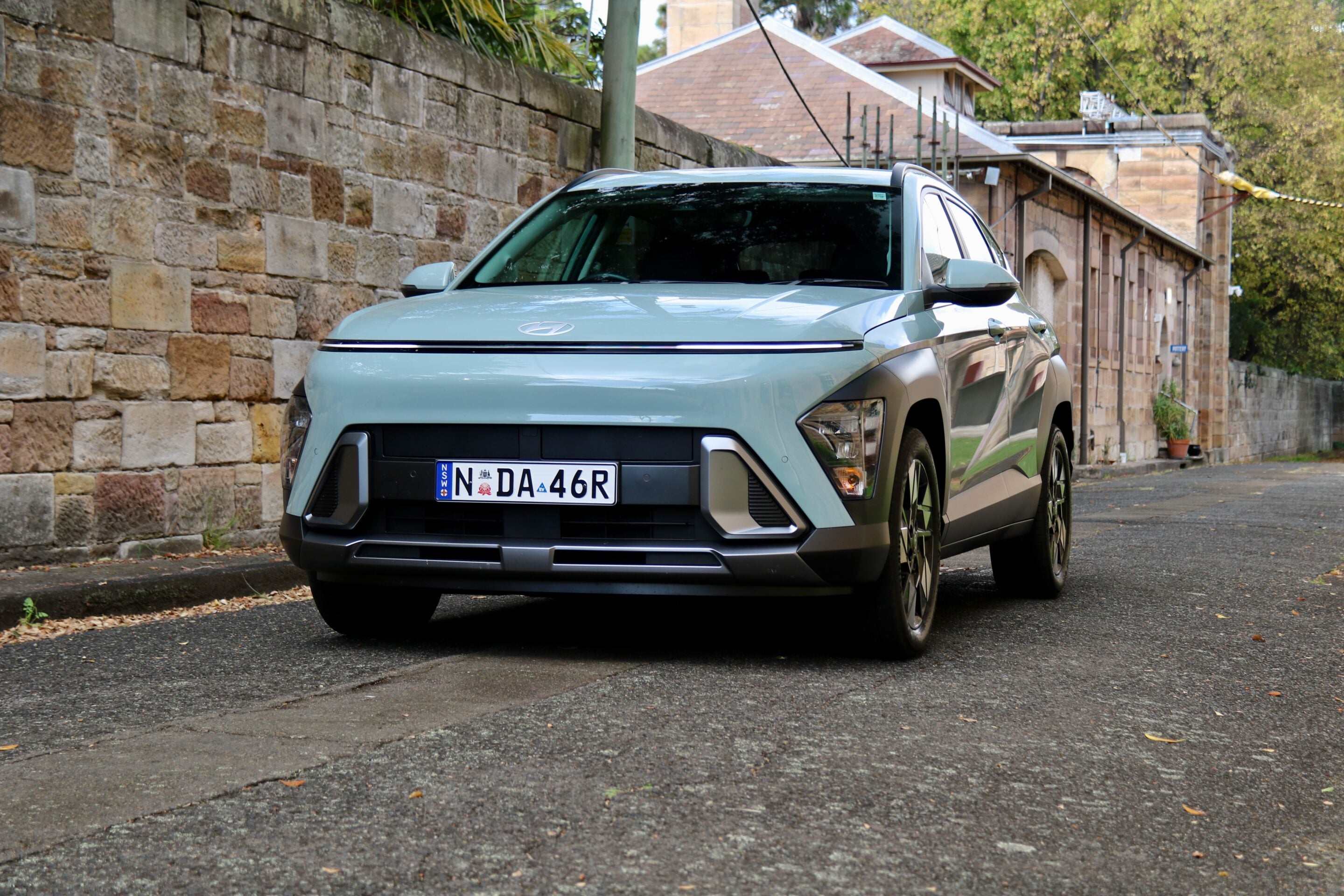
For this review, we tested the new Elite spec with the popular hybrid drivetrain, priced at $39,950 plus on-road costs or around $45,000 driveaway depending on location. Before the Elite arrived, there was a huge gap in both price and equipment between the base model and Premium. We think the whole Kona range could be a bit more affordable, but the price threshold for buyers wanting features like leather trim is now lower.
For only $3000 more than the base model, the extra big ticket equipment items of the Elite include larger 18-inch alloy wheels, leather upholstery, heated and electrically adjustable front seats, an auto-dimming rear mirror and rain-sensing wipers.
What does the Premium (costing $6000 more) add? A sunroof, upgraded LED lighting, ventilated front seats, memory for the driver’s seat, heated outboard rear seats, a heated steering wheel, sat-nav, Bose audio, an electric tailgate and 64-colour interior ambient lighting. Is it worth the extra spend? That’s up to buyers, but we think the Elite represents the best value in the Kona range.
2026 Hyundai Kona pricing (plus on-road costs):
| Kona 2.0L | $33,700 |
|---|---|
| Elite 2.0L | $36,700 |
| Hybrid | $36,950 |
| Hybrid Elite | $39,950 (tested for this review) |
| Elite N Line 2.0L | $40,200 |
| Premium 2.0L | $42,700 |
| Hybrid Elite N Line | $43,450 |
| Premium N Line 2.0L | $45,700 |
| Hybrid Premium | $45,950 |
| Electric Standard Range | $46,000 |
| Hybrid Premium N Line | $48,950 |
| Electric Long Range | $50,000 |
| Electric Elite | $53,000 |
| Electric Premium | $60,000 |
| Electric Premium N Line | $63,000 |
There are an abundance of hybrid rivals to the Kona, including the Toyota Corolla Cross, Honda HR-V, Kia Seltos, Nissan Qashqai, and Chery C5. We think that the Kona Hybrid Elite provides a compelling argument for value in the segment – it’s priced at under $40,000 before on-road costs, but offers a lot of standard equipment for the money.
How fuel efficient is the Kona Hybrid?
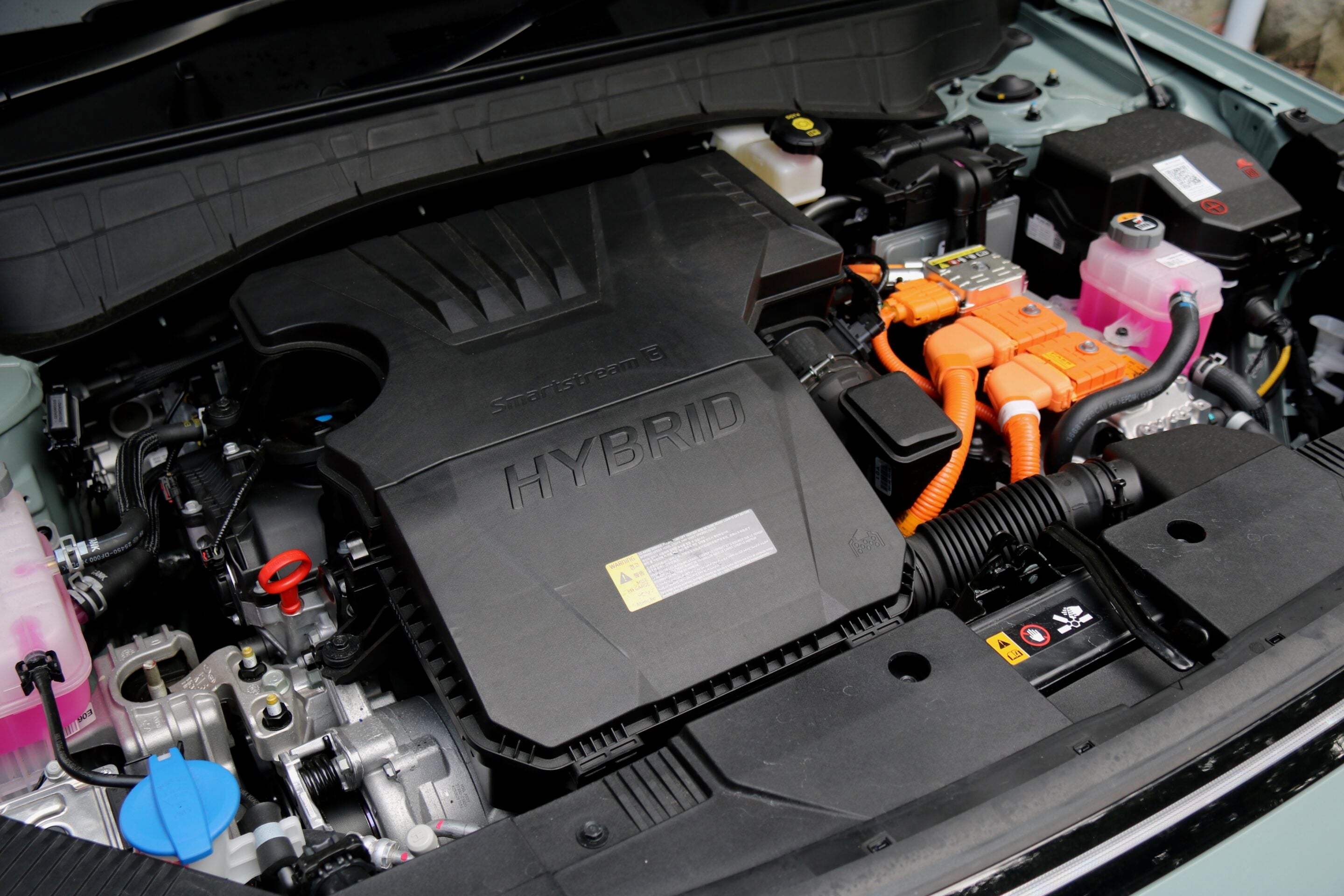
The growing popularity of hybrids is not only about fuel efficiency – they also generally give buyers superior performance as well. The Kona is a great example of that – the 110kW/180Nm 2.0-litre petrol engine is a fine performer, but the 104kW/265Nm 1.6-litre hybrid is not only more fuel efficient but its instant 170Nm low-end torque from the electric motor makes it more spritely off the line. It’s mated to a six-speed dual-clutch automatic transmission and sends power to the front wheels only, whereas the petrol is mated to a CVT.
The claimed combined fuel consumption for the Kona Hybrid Premium is just 3.9L/100km with CO2 emissions of 89g/km, which are healthy improvements of 2.7L/100km and 61g/km respectively over the 2.0-litre petrol model. In our testing of both urban and highway driving, we achieved a positive 4.3L/100km result. Running costs are further helped in that the Kona can run on 91RON regular unleaded, while its 38-litre fuel tank is 9L less than the petrol Kona and relatively small – a full fill won’t cost too much and it’ll easy last for over 800km.
Is the Kona Hybrid good to drive?
We really like the hybrid drivetrains on offer at Hyundai and sister brand Kia, be it the 1.6-litre used in the i30 Sedan and Kona, the turbocharged 1.6-litre in cars like the Sportage and Santa Fe or the new 2.5-litre used in the Palisade, they’re all quite refined, perform well and are capable of impressive fuel efficiency. Because they feature geared transmissions too, unlike the e-CVT in a Toyota hybrid, they’re more engaging to drive, which we think that enthusiasts will appreciate.
7
Aside from low speeds when the electric motor does a lot of the propulsion heavy lifting, and the regenerative braking and engine switching off when braking, it feels largely like a regular Kona to drive. It’s also more refined than a Toyota hybrid system thanks to the gearbox, which doesn’t send revs flaring when acceleration is called for. Dual-clutch gearboxes are known for jerkiness, but the electric torque at low speeds helps the Kona smoothen the ride accelerating from zero.
The Kona Hybrid Elite offers a mature driving experience for the small SUV class, with a generally compliant ride quality, though it can be a bit sharp at lower speeds thanks to the larger 18-inch wheels compared with the 17s on the entry-level model. The extra 70kg heft of the hybrid also means that it’s not quite as comfortable as the petrol drivetrain, but you’d be hard pressed to tell the difference. The steering is quick and nicely weighted, and it’s a good handler for a small SUV too.
Road noise levels in the hybrid are a bit louder than some competitors, but its visibility is expansive and the safety systems are mostly well tuned. The annoying active speed limit warnings are now quieter and easy to defeat by holding the volume button on the steering wheel, though they still grate because they aren’t accurate. The lane keeping assistance is well tuned and the adaptive cruise control is very easy to set, though we wish the Elite featured the Premium’s 360-degree camera.
How practical is the Kona Hybrid?
Small SUV buyers tell us that they want good levels of practicality but mixed with dimensions that aren’t huge, and we think the Kona is a great example of that. It measures a relatively small 4350mm on the outside, but the interior is surprisingly spacious and it’s clear that Hyundai thought a lot about how its owners will use it.
6
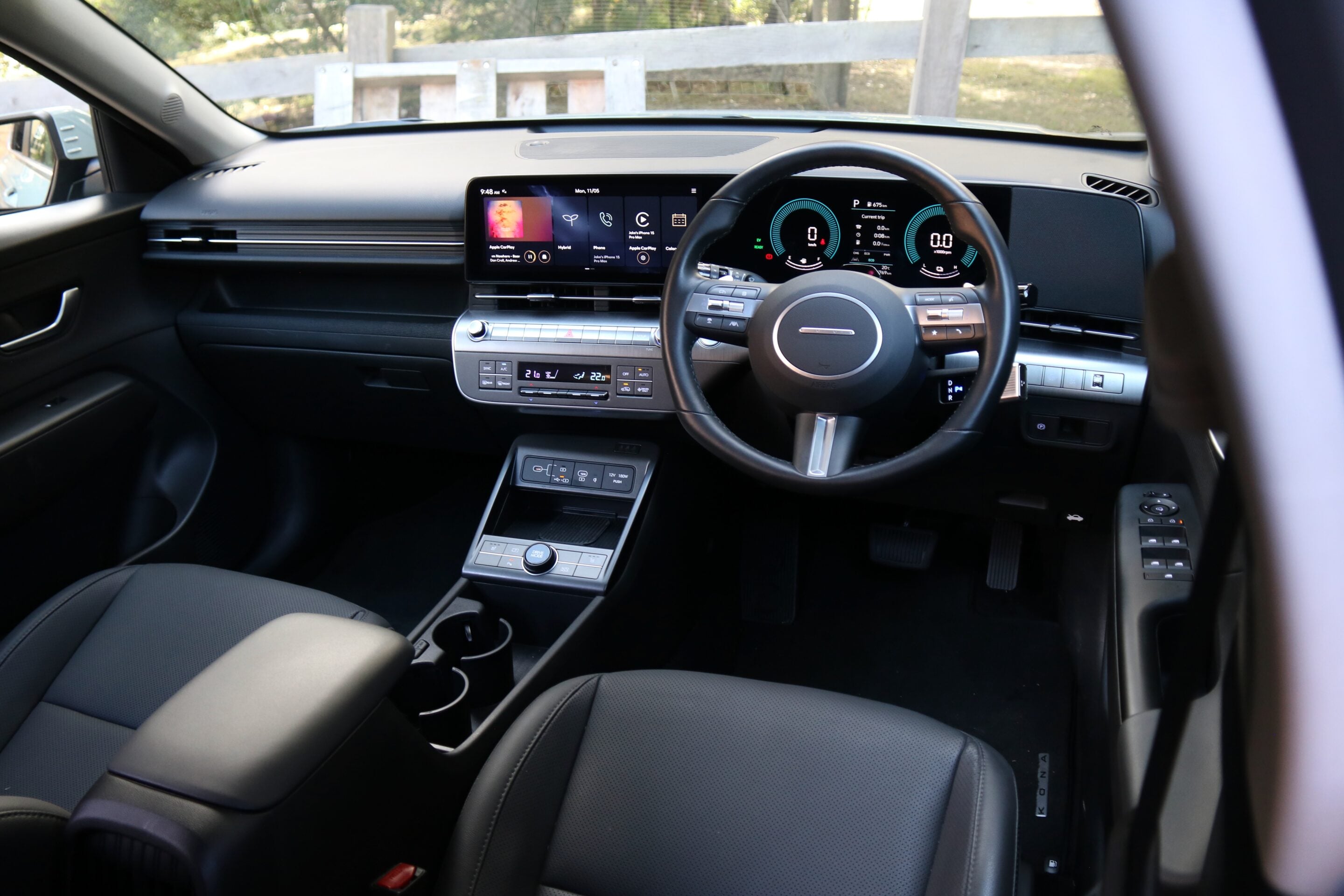
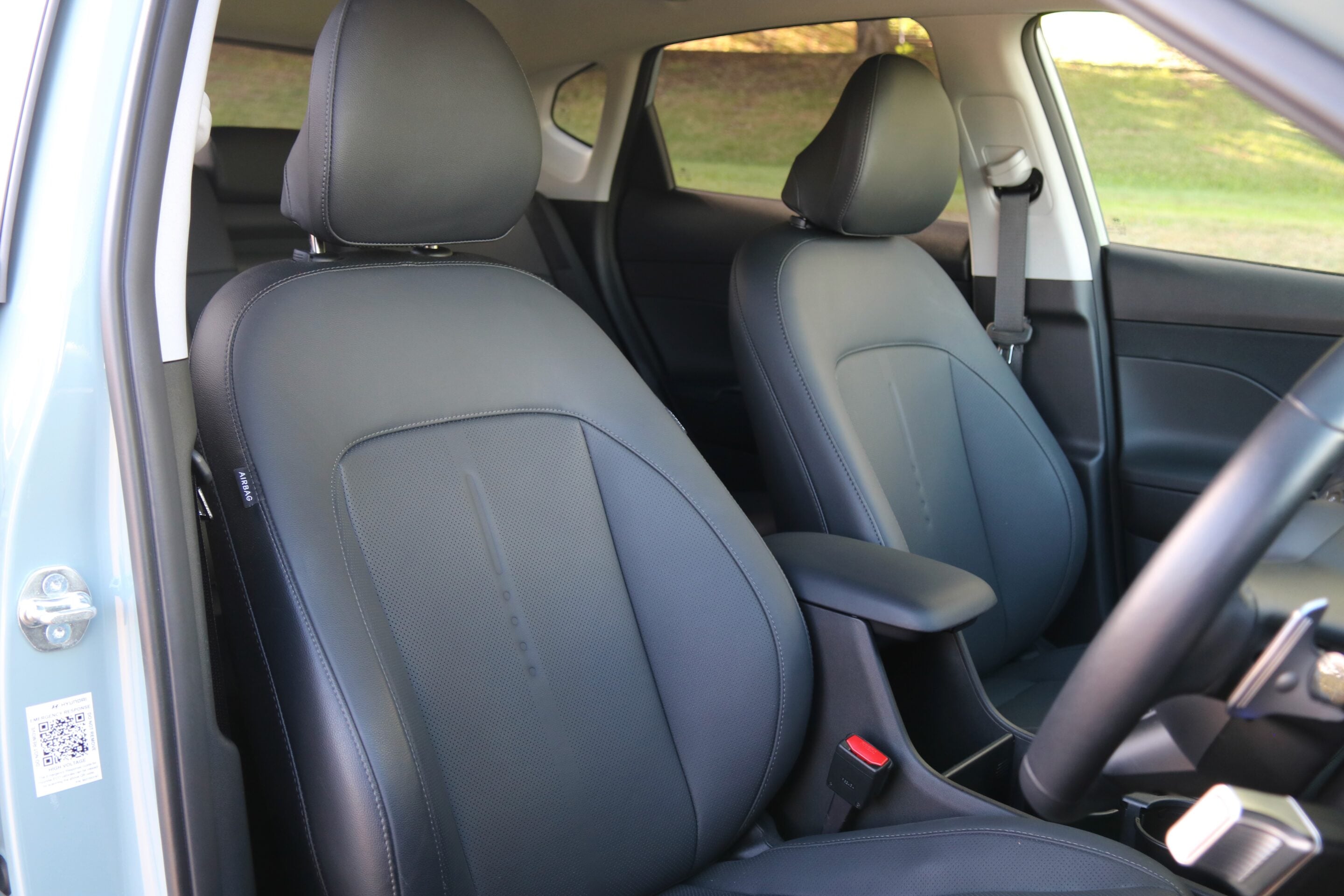
We love the open centre console storage, big cup holders and the very effective wireless phone charger, while behind it is a centre armrest with storage below it, as well as reasonable door pockets, a big glovebox and a cloth-lined tray on the dashboard fascia. In a win for ease of use, the AC controls are separate from the touchscreen and are very simple to use.
One area we still think needs improvement, however, is the quality of the materials used, which are still plasticky and the only bit of soft touch is used on the door cards. An extra layer of finishing, such as a synthetic leather material on the tops of the doors and dashboard would make it feel more luxurious inside.
In the centre of the Kona’s cabin is a 12.3-inch touchscreen with Hyundai’s current ‘ccNc’ infotainment software. It’s an impressive system that’s quite easy to use, while screen quality is sharp too, though it could be a bit brighter so that icons stand out more from each other. The Elite doesn’t feature inbuilt sat-nav, but wireless and wired Apple CarPlay and Android Auto do feature, as well as digital radio and connected services as well.
The rear seat space is also a big improvement over the previous Kona, and is one of the roomiest in the segment. Two six-footers will be more than comfortable thanks to good knee -and headroom, while the seatbacks also recline for greater comfort. Amenities include two USB-C ports, air vents, a centre armrest with cup holders, two map pockets and reasonable door storage. Child seat provisions include two ISOFIX points and three top-tether points, while the doors open reasonably wide too.
6
The Kona Hybrid’s cargo capacity is 407 litres with the seats up and 1241 litres with them folded, which is generous for the segment. There are also hooks, an adjustable floor height and under-floor storage, as well as a temporary space-saver spare wheel. The Elite misses out on the electric tailgate of the Premium, but the tailgate itself is quite light and easy to operate.
Is the Kona Hybrid expensive to service?
The Kona range is covered by a five-year/unlimited km warranty that’s extended to seven years in total if serviced at a Hyundai dealership in that time. The hybrid battery is then covered by a separate eight-year/160,000km warranty, and its service intervals are annual/every 15,000km (whichever comes first).
Servicing the Kona Hybrid is surprisingly expensive at $3176 over the first five years, or $635 per year. Buyers can choose to pre-pay that figure at the time of purchase to incorporate it into their finance payments, but it’s still not cheap. Servicing a Nissan Qashqai e-Power, for example, costs just $1995 over the same time period and a Honda HR-V is even less at just $995.
Should I buy a Hyundai Kona Hybrid Elite?
3
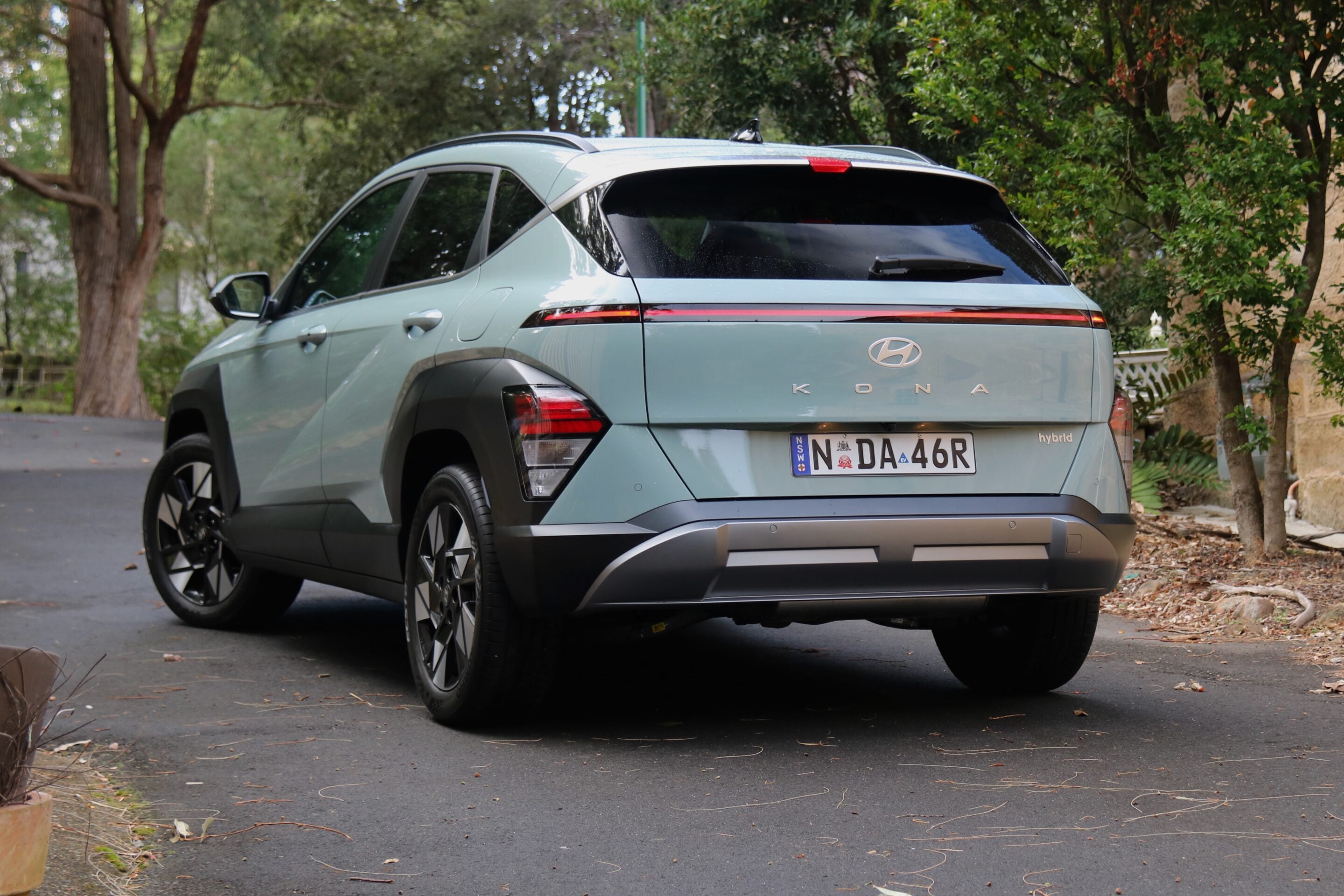
Overall, the Hyundai Kona remains one of the best small SUVs you can buy, and we think it shines particularly well in new Hybrid Elite form. With the new mid-spec model, Hyundai has made the desirable added features like leather trim, heated seats and larger 18-inch wheels more accessible than before, and we think the $3000 step up from the entry-level model is well worth it.
Aside from its specifications, the Kona Hybrid appeals with its fuel efficient but peppy hybrid drivetrain, mature driving experience, very practical cabin for a small SUV and small exterior dimensions that make it easy to drive in town. A solid and reliable model in the small SUV segment, the new Elite spec has made it that much better.
Kona Specifications:
| Model | Hyundai Kona Hybrid Elite |
|---|---|
| Price | $39,950 plus on-road costs |
| Engine | 1580cc four-cylinder hybrid |
| Battery | 1.32kWh lithium-ion polymer |
| Engine outputs | 77kW/144Nm |
| Electric motor outputs | 32kW/170Nm |
| Combined outputs | 104kW/265Nm |
| 0-100km/h | 10 seconds (est.) |
| Transmission | 6-speed dual-clutch, front-wheel drive |
| Fuel consumption (claimed) | 3.9L/100km |
| CO2 emissions | 89g/km |
| Fuel type/tank size | 91RON regular unleaded, 38 litres |
| Dimensions (length/width/height/wheelbase) | 4350/1825/1585/2660mm |
| Kerb weight | 1410kg |
| Boot size | 407 litres (seats up)/1241 litres (seats folded) |
| On sale: | Now |
8.2
/10
Score
Score breakdown
8.0
Safety, value and features
7.0
Comfort and space
8.0
Engine and gearbox
9.0
Ride and handling
9.0
Technology
Things we like
- New Elite adds important features over base model...
- ... without the top-spec Premium's price tag
- Efficient but punchy hybrid drivetrain
Not so much
- Surprisingly expensive to service
- Not particularly cheap to buy either, once on-road costs are included
- Plasticky interior could do with an extra layer of finishing
Follow WhichCar/Wheels on Google
Click the button below to make WhichCar by Wheels a preferred source for your news.

We recommend
-
 Reviews
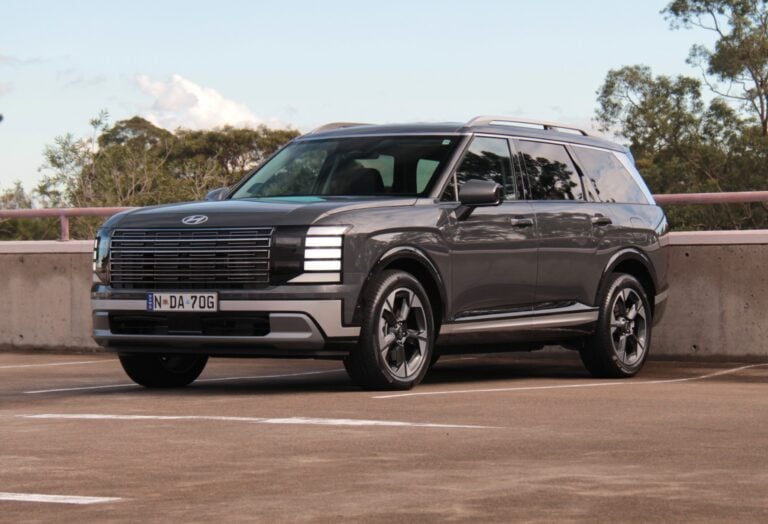
Hyundai Palisade Elite review: New entry spec model makes practical family SUV more attractive
The Hyundai Palisade impressed us in top-spec Calligraphy form when it launched, now it's time to give the new entry-level Elite model a run...
-
 Reviews
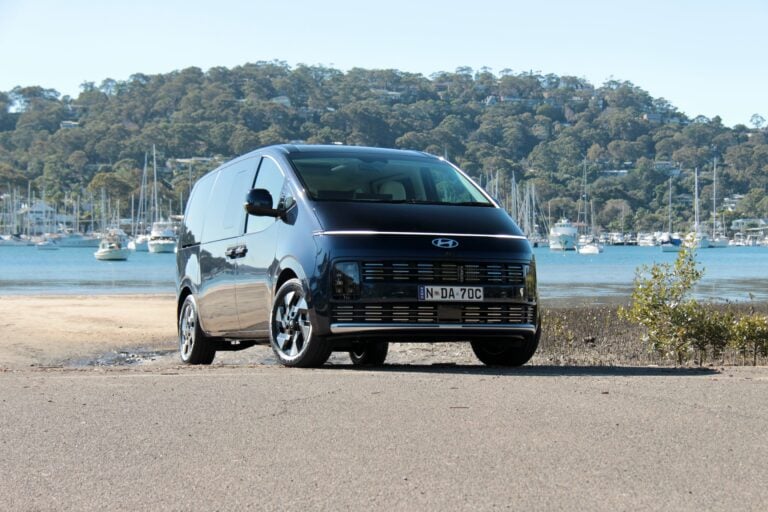
Hyundai Staria Lounge review: Luxurious new model adds to people mover's overall package
In addition to its Load sibling, the Hyundai Staria has also received a new hybrid drivetrain, but also a luxurious new Lounge model. What's it like?
-
 News
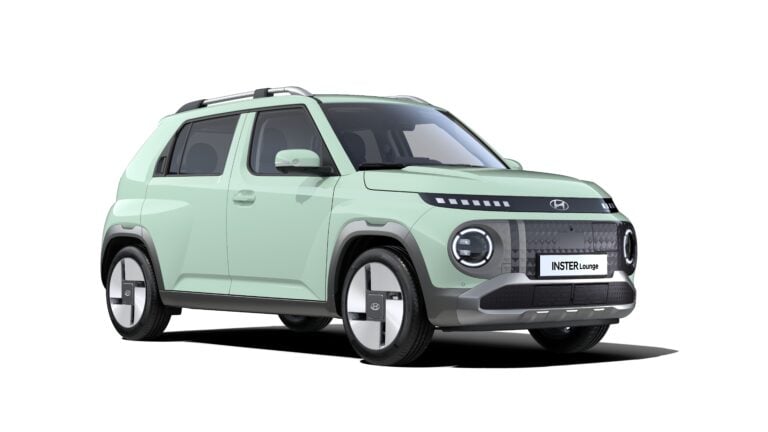
NewsHyundai Inster Lounge: Plusher version of cute electric small SUV revealed
Like its larger Staria MPV sibling, a luxurious Lounge version of the Hyundai Inster small electric SUV has been revealed with more features.
