
It’s been said that the V10 Lexus LFA is an automotive work of art. Now that handle can literally be applied to the brand’s RZ 450e and RX 450h+ SUVs after they were twisted and shaped into truly bizarre sculptures that surfaced this week.
Lexus commissioned the New York-based MSCHF art collective to turn the cars into exhibits for the “Motormorphosis” exhibition at the city’s Chelsea Industrial venue. The vehicles will be displayed alongside non-distorted versions to give attendees a better idea of just how much work went into the transformations.
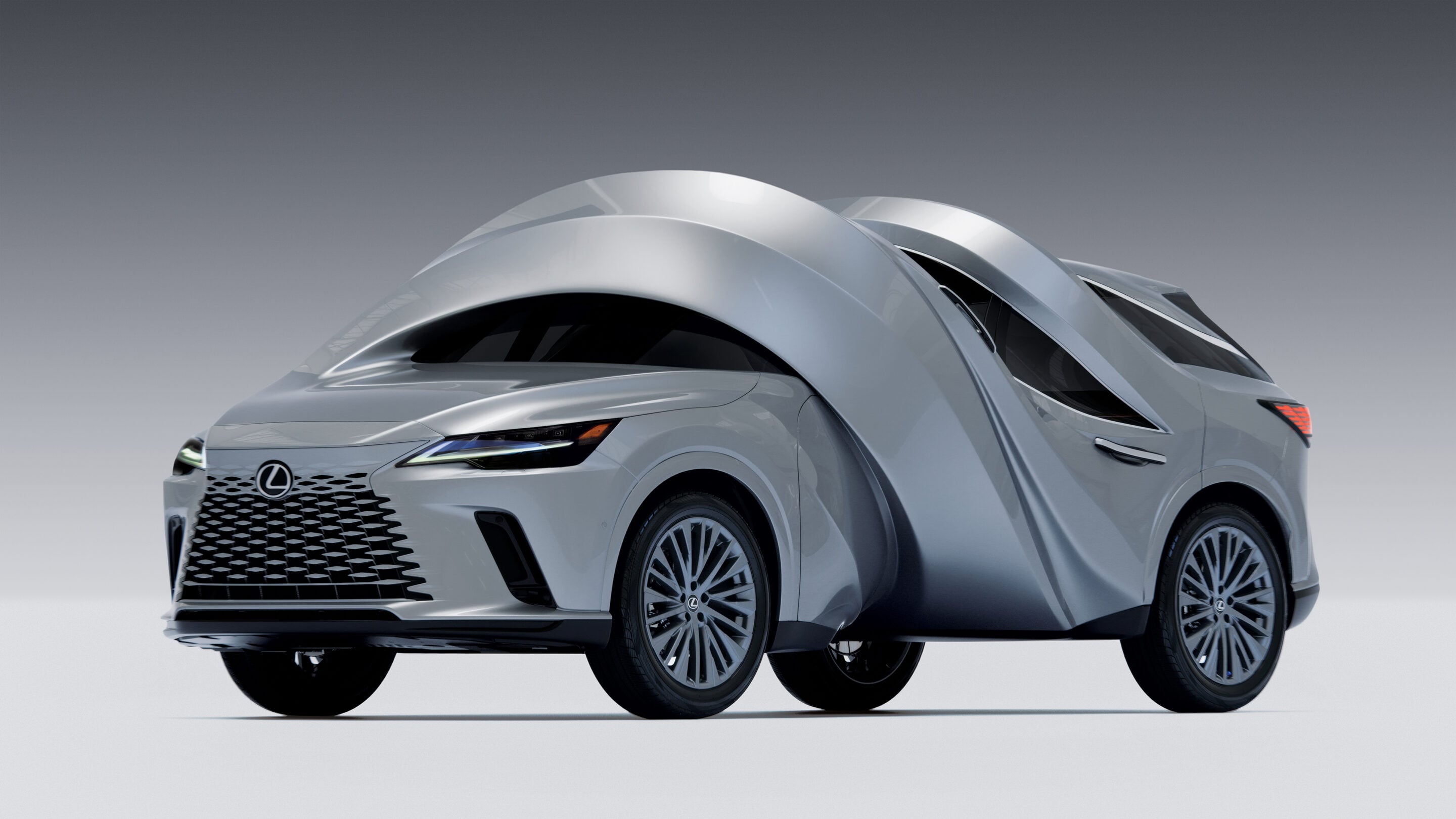
“A Lexus RZ 450e appears once as an electric vehicle, and again as sculpture in Circle Car, looped nose-to-tail, driving infinitely round,” the manufacturer said in a statement.
“Similarly, the Lexus RX 450h+ appears twice, first in familiar form and then in Twisted Car, in dramatic longitudinal torsion, its lines liquified and surface features pulled along tangent to the twisting spiral of its body.”
You could be excused for thinking the official photos of the creations are the result of CGI or someone feeding a set of instructions into ChatGPT, but the vehicles are very real. If you don’t believe us, check out the YouTube video of Twisted Car being moved in New York.
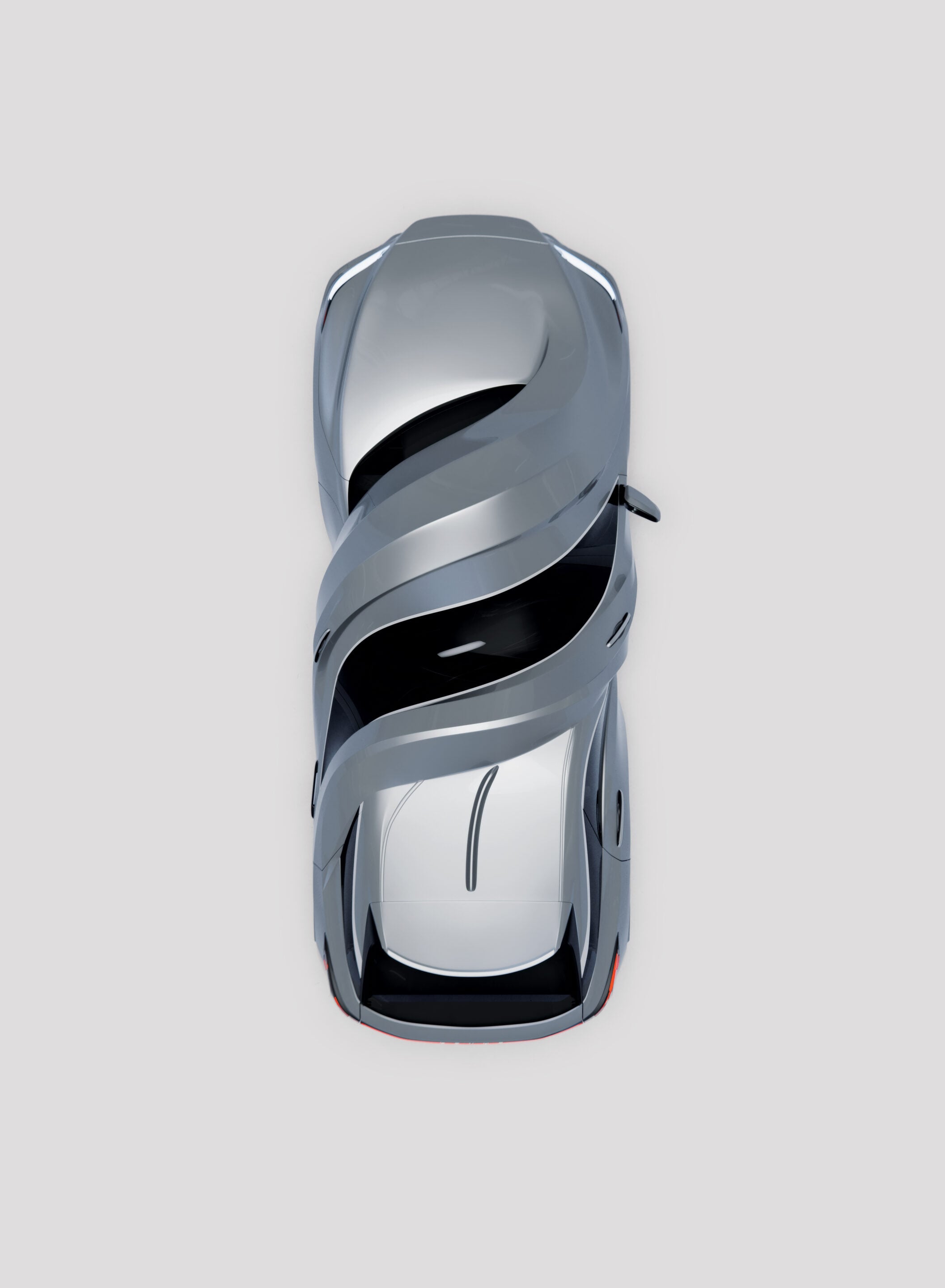
According to the Artsy website, the sculptures were made using conventional autobody techniques, with thousands of individual pieces – some of which are genuine Lexus parts – added to a steel armature, then given a few coats of duco.
Lexus senior marketing manager Lisa McQueen said the exhibits allowed the company to “take the automobile way beyond its familiar form and explore, movement, transformation and possibility in an entirely new way”.
Cars have often been turned into artworks. Possibly the most famous examples are BMW’s Art Cars, which were turned into canvases by some of the most famous names of the 20th century. Andy Warhol transformed an M1, and Roy Lichtenstein did the same to a 3201 Group 5 racer.
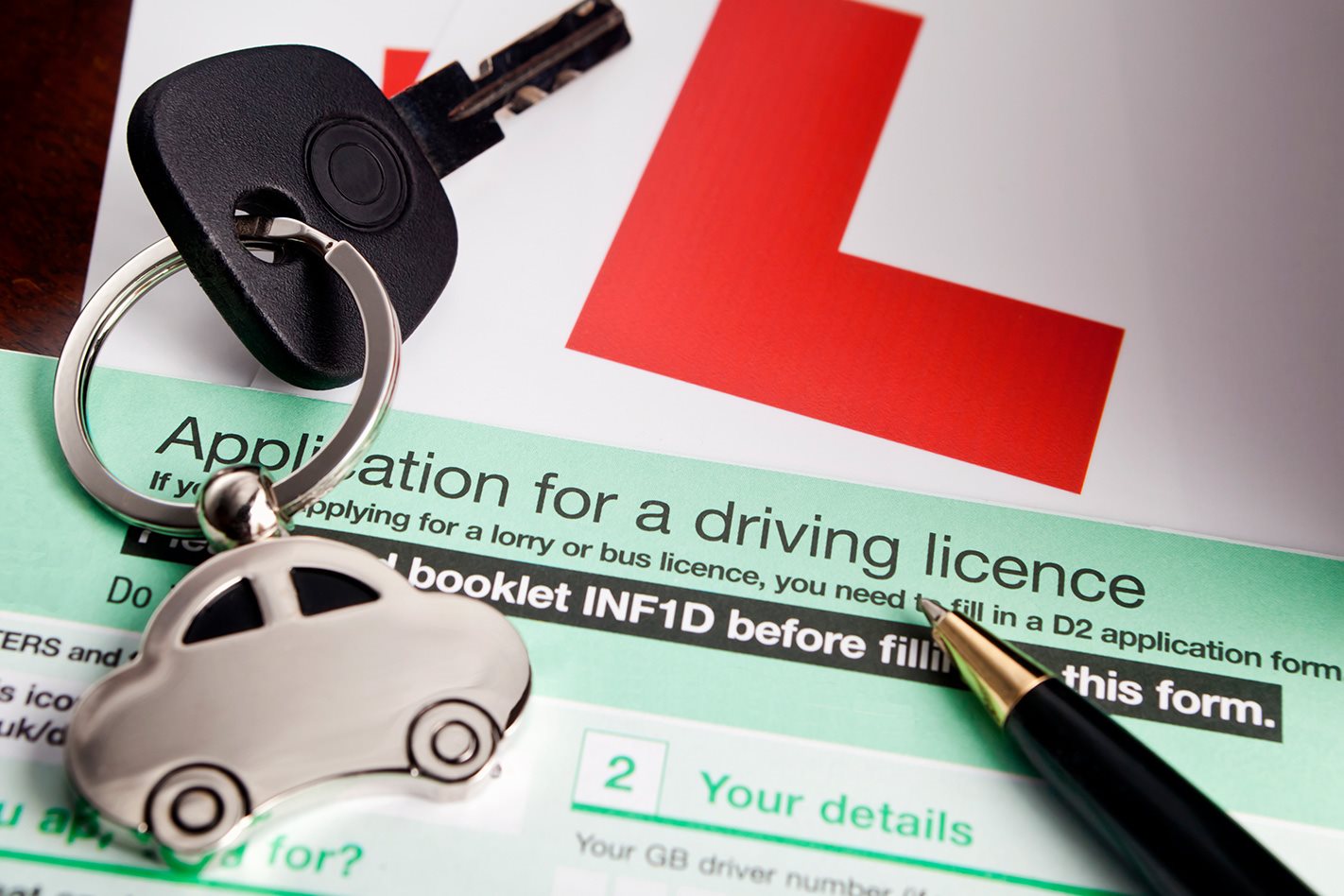
Kids as young as 14 could be driving towards their licence if one of Britain’s most experienced driver training companies is right. Young Driver has experience from more than 1.6 million driving lessons with children aged below 17, including some in the four- to eight-year-old range who drive in a special electric two-seater vehicle.
It has just completed research with 120 driving instructors, asking them what is the best age for kids to begin the road to their licence. The sweet spot was 14, the instructors said, with 25 per cent picking that age. Just seven per cent said people did best when learning when they were over the age of 18.

The research by Driver Trainer comes as the average age for people to pass their driving test in the UK has jumped to 25, and it’s still rising. Eighty-eight per cent said pupils learn better when they are young, with just seven per cent choosing learning over the age of 18.
“It makes complete sense that, rather than starting from scratch at age 17, children spend years gradually practising, consolidating and reinforcing the foundations of driving before they are old enough to drive independently,” said Lance Peake, the chief instructor at Young Driver.
“Seventy-one per cent of instructors said that learning under 17 helps pupils pick up practical skills more quickly. They can pick up those skills in a safe and supportive environment, away from the real roads, with no pressure to learn to a timetable.
“Seventeen-year-olds have a lot of stress in terms of exams, and jobs and university applications – adding in the pressure to learn to drive and then pass a driving test as quickly as possible probably isn’t helpful.”
Young Driver uses 70 venues across the UK where it creates special road systems with junctions, roundabouts and areas to practise manoeuvres such as steering, reversing or parking. It is not advocating for on-road training of youngsters, but rather a structured pathway beginning at a younger age.
“It makes sense to spend several years building neural pathways in the brain for the ‘mechanical’ elements of driving. Then at 17, on the real roads, learners can spend their time focusing on hazard perception and those other essential elements of being a good and safe driver,” said Peake.
Along with the focus on younger students, Young Driver also reported instructors’ views on older drivers. Fifty-six per cent said they felt it was more difficult for students over 25 to acquire driving skills.
“A large majority of the instructors we spoke to, who were experienced in teaching pupils of all ages, felt it got harder to learn the older you got. Two thirds said they felt learning [while] younger gave people more time to build up their confidence, and 54 per cent said younger learners had less preconceptions or bad habits,” said Peake.
Organisers of the Bathurst 12 Hour race have had “expressions of interest” from Max Verstappen for next year’s event – and current F1 drivers’ championship favourite Kimi Antonelli is also a chance of lining up on the grid, according to a new report.
Speaking on Fox Sports’ Motor Racing 360 program on Wednesday, reporter James Phelps said efforts are underway to get the superstars to the Mountain for the race in February, with the release of the 2027 F1 calendar paving the way for the possibility.
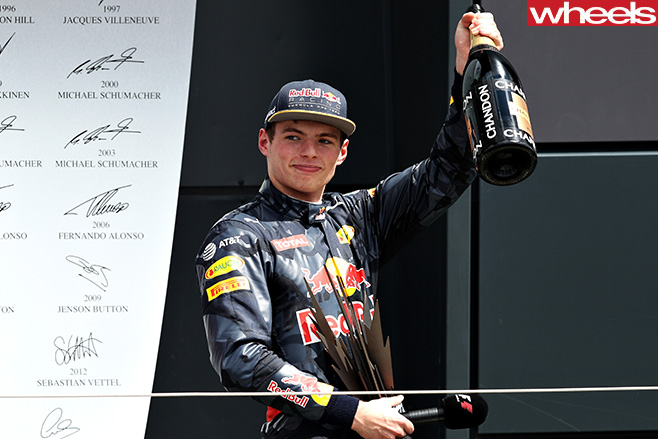
Pre-season testing for Verstappen, Antonelli and their rivals is scheduled to begin in Bahrain on February 24, and the 12 Hour runs from the 11th to the 14th.
“The Bathurst 12 Hour organisers were going to have a crack at getting Max Verstappen over and with the release of the calendar, we’ve got a week and a half either side of the F1 event, so it looks like it’s going to happen,” Phelps told viewers.
“And not just happen, we’ve had expressions of interest from Max. The moves are underway. He won’t be driving with Broc Feeney in a Ford, as has been reported. It will be in his team, the Verstappen.com racing team, in an AMG. It’s going to be massive.
“This one is even bigger and certainly one I didn’t see coming: Kimi Antonelli himself could be on the way over. An expression of interest has come over on behalf of Kimi’s father Marco. He drives GT3 in Italy and it’s a lifelong ambition of his to one, drive the mountain, and two, team up with his son.”
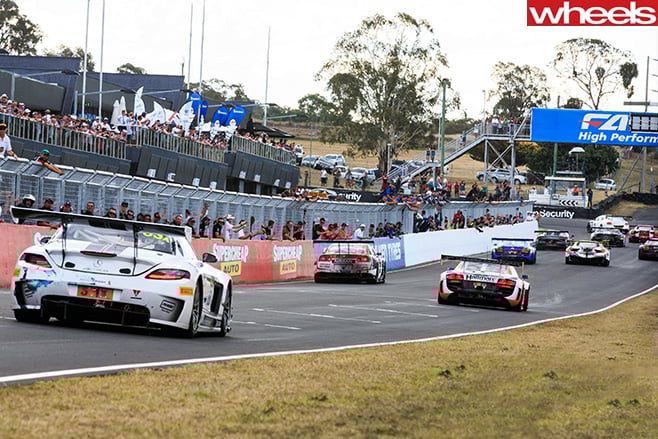
Verstappen has ties to Ford via Red Bull, and has made several appearances in GT racing. He almost took victory in the Nürburgring 24 hour race in May before falling victim to mechanical problems, for example.
He’s also quite familiar with the Bathurst track despite never physically turning a wheel there. Instead, the Dutchman won the iRacing Bathurst 12 Hour sim-racing contest in 2021 with co-driver Enzo Bonito and set a pole position lap time of 2:00.726 in a simulated Audi GT3 car.
Verstappen also voiced his affection for the Mount Panorama circuit ahead of this year’s Australian Grand Prix, saying, “I like Bathurst. It’s an amazing track and a place that I would definitely like to race at.”
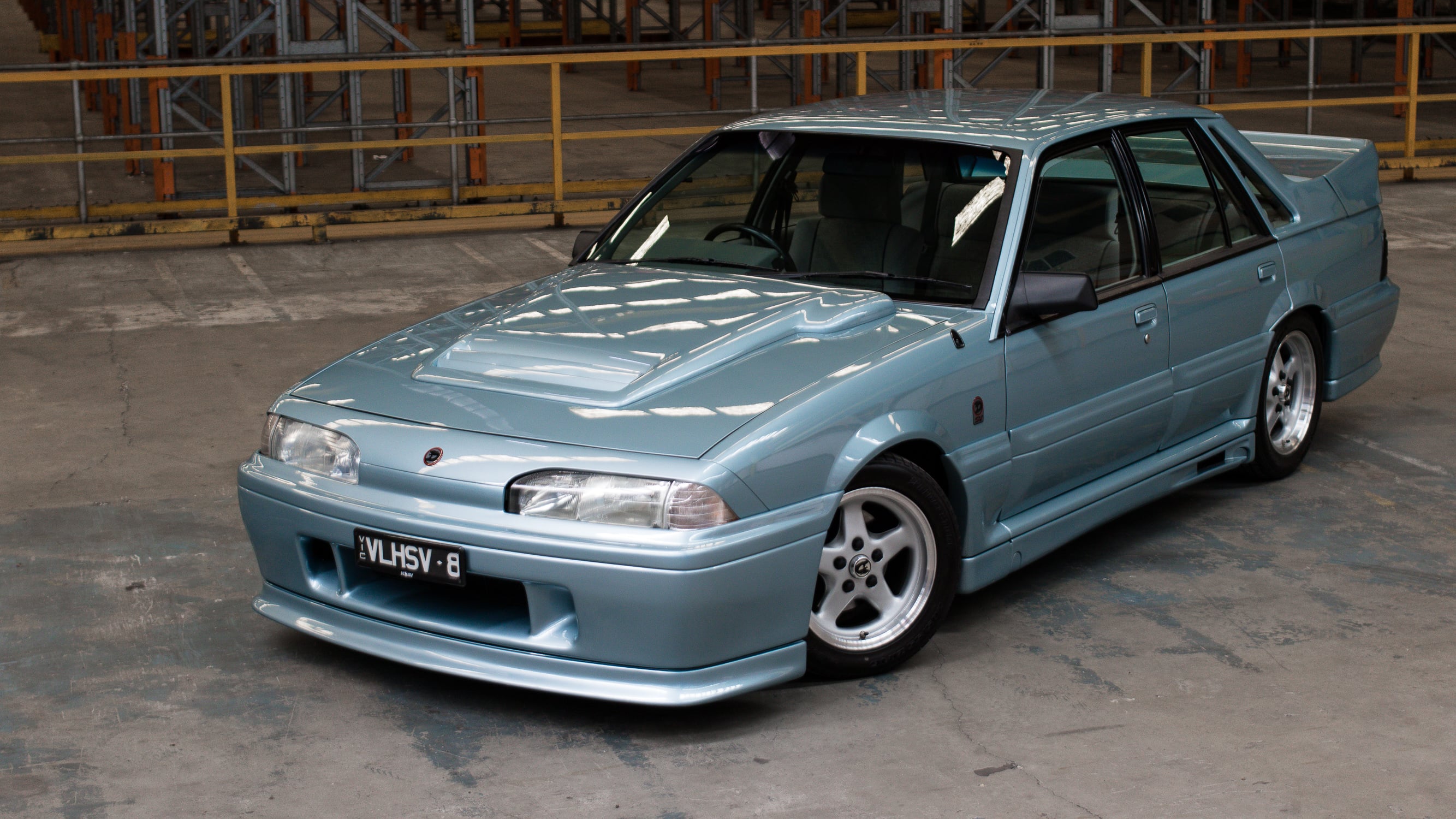
When Holden shipped an SS Group A to the States for GM promotional purposes in 1988, the crew at Car And Driver magazine jumped at the chance to put it up against their Mustang GT, Camaro IROC-Z and Corvette. The Commodore did Australia proud…
First published in the June 1988 issue of Wheels magazine, Australia’s best car mag since 1953. Subscribe here and gain access to 12 issues for $109 plus online access to every Wheels issue since 1953.
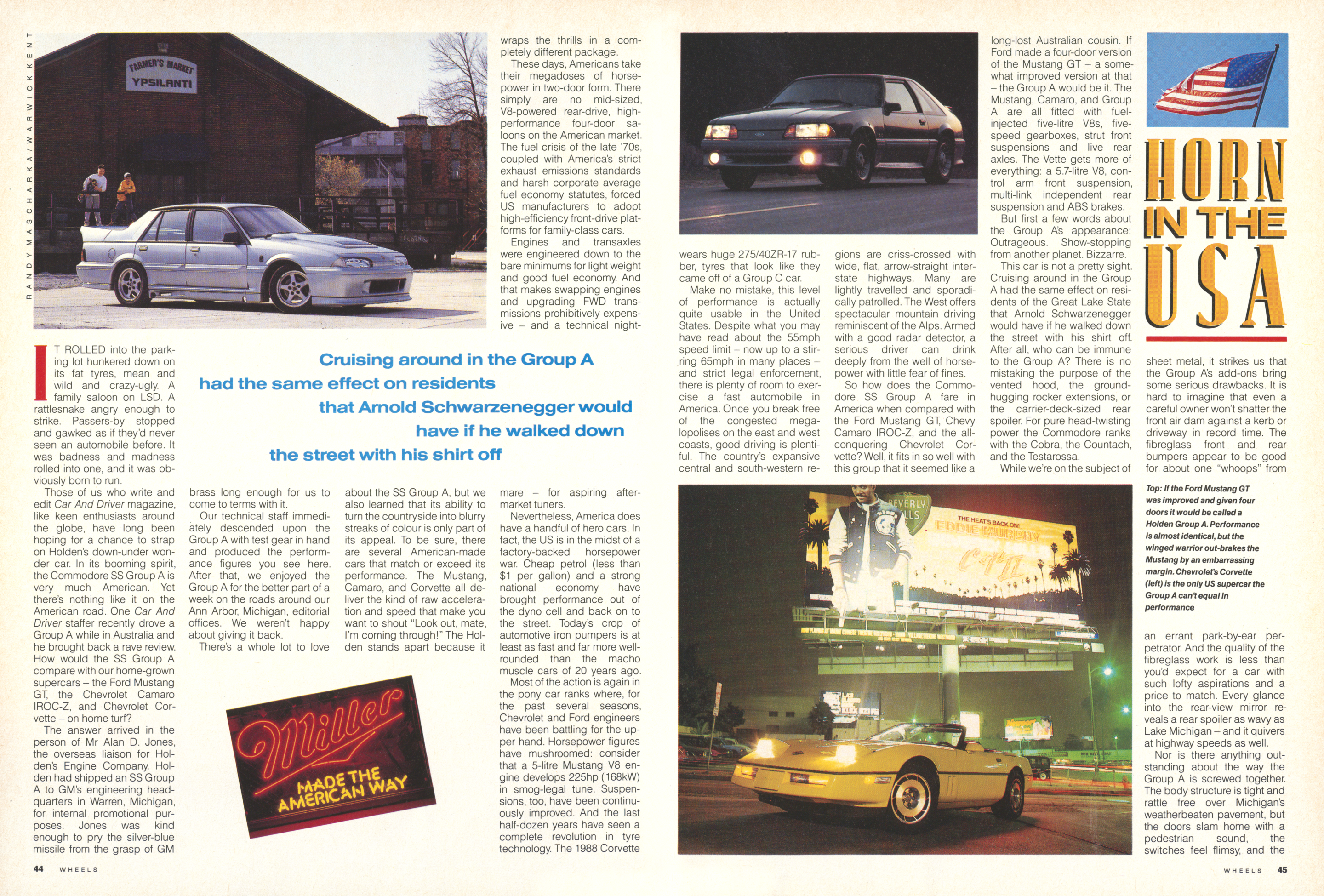
IT ROLLED into the parking lot hunkered down on its fat tyres, mean and wild and crazy-ugly. A family saloon on LSD. A rattlesnake angry enough to strike. Passers-by stopped and gawked as if they’d never seen an automobile before. It was badness and madness rolled into one, and it was obviously born to run.
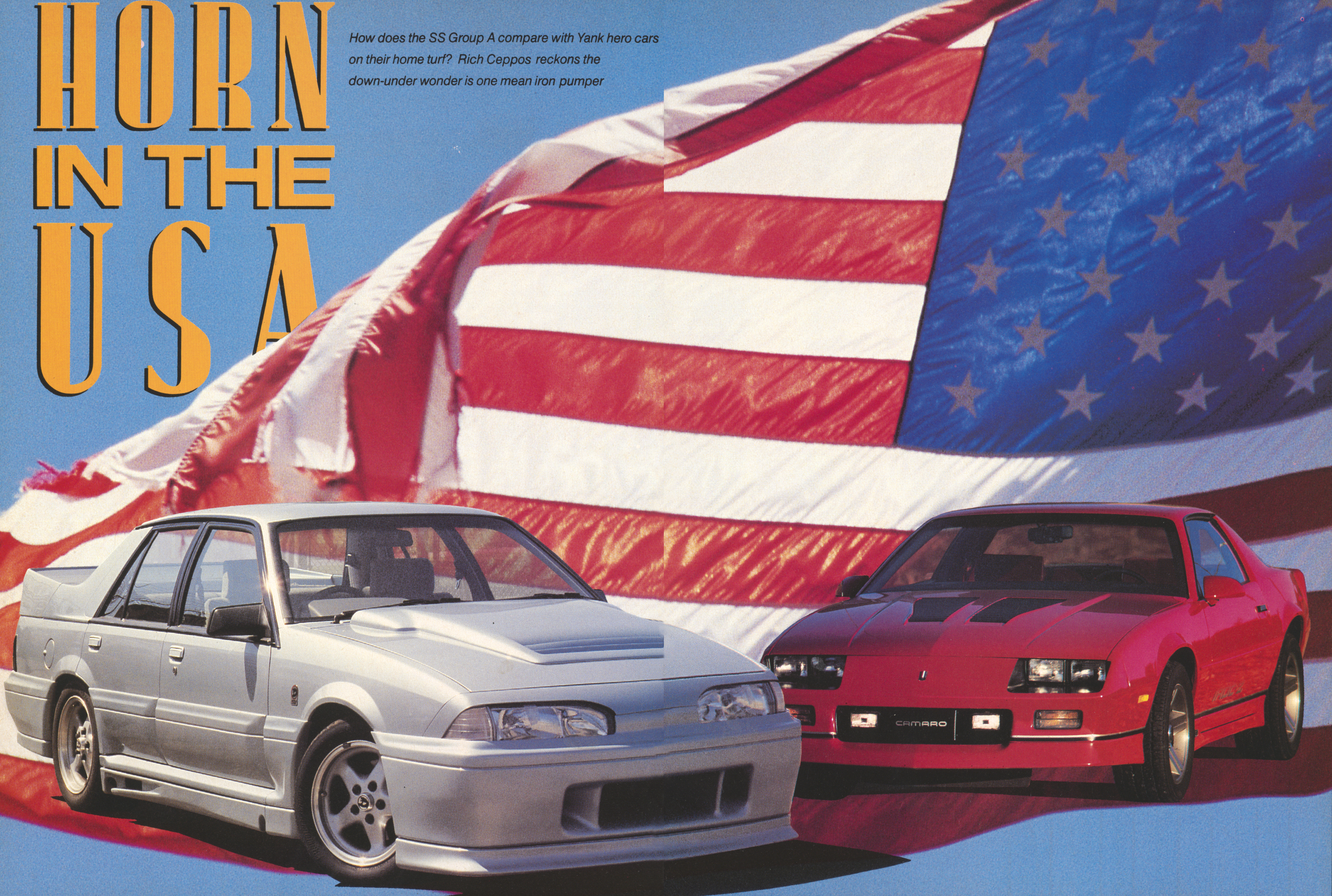
Those of us who write and edit Car And Driver magazine, like keen enthusiasts around the globe, have long been hoping for a chance to strap on Holden’s down-under wonder car. In its booming spirit, the Commodore SS Group A is very much American. Yet there’s nothing like it on the American road. One Car And Driver staffer recently drove a Group A while in Australia and he brought back a rave review. How would the SS Group A compare with our home-grown supercars – the Ford Mustang GT, the Chevrolet Camaro IROC-Z, and Chevrolet Corvette – on home turf?
The answer arrived in the person of Mr Alan D. Jones, the overseas liaison for Holden’s Engine Company. Holden had shipped an SS Group A to GM’s engineering headquarters in Warren, Michigan, for internal promotional purposes. Jones was kind enough to pry the silver-blue missile from the grasp of GM brass long enough for us to come to terms with it.
Our technical staff immediately descended upon the Group A with test gear in hand and produced the performance figures you see here. After that, we enjoyed the Group A for the better part of a week on the roads around our Ann Arbor, Michigan, editorial offices. We weren’t happy about giving it back.
There’s a whole lot to love about the SS Group A, but we also learned that its ability to turn the countryside into blurry streaks of colour is only part of its appeal. To be sure, there are several American-made cars that match or exceed its performance. The Mustang, Camaro, and Corvette all deliver the kind of raw acceleration and speed that make you want to shout “Look out, mate, I’m coming through!” The Holden stands apart because it wraps the thrills in a completely different package.
These days, Americans take their megadoses of horsepower in two-door form. There simply are no mid-sized, VS-powered rear-drive, high-performance four-door saloons on the American market. The fuel crisis of the late ’70s, coupled with America’s strict exhaust emissions standards and harsh corporate average fuel economy statutes, forced US manufacturers to adopt high-efficiency front-drive platforms for family-class cars.
Engines and transaxles were engineered down to the bare minimums for light weight and good fuel economy. And that makes swapping engines and upgrading FWD transmissions prohibitively expensive – and a technical nightmare – for aspiring aftermarket tuners.
Nevertheless, America does have a handful of hero cars. In fact, the US is in the midst of a factory-backed horsepower war. Cheap petrol (less than $1 per gallon) and a strong national economy have brought performance out of the dyno cell and back on to the street. Today’s crop of automotive iron pumpers is at least as fast and far more well-rounded than the macho muscle cars of 20 years ago.
Most of the action is again in the pony car ranks where, for the past several seasons, Chevrolet and Ford engineers have been battling for the upper hand. Horsepower figures have mushroomed: consider that a 5-litre Mustang VS engine develops 225hp (168kW) in smog-legal tune. Suspensions, too, have been continuously improved. And the last half-dozen years have seen a complete revolution in tyre technology. The 1988 Corvette wears huge 275/40ZR-17 rubber, tyres that look like they came off of a Group C car.
Make no mistake, this level of performance is actually quite usable in the United States. Despite what you may have read about the 55mph speed limit – now up to a stirring 65mph in many places – and strict legal enforcement, there is plenty of room to exercise a fast automobile in America. Once you break free of the congested megalopolises on the east and west coasts, good driving is plentiful. The country’s expansive central and south-western regions are criss-crossed with wide, flat, arrow-straight interstate highways. Many are lightly travelled and sporadically patrolled. The West offers spectacular mountain driving reminiscent of the Alps. Armed with a good radar detector, a serious driver can drink deeply from the well of horsepower with little fear of fines.
So how does the Commodore SS Group A fare in America when compared with the Ford Mustang GT, Chevy Camaro IROC-Z, and the all-conquering Chevrolet Corvette? Well, it fits in so well with this group that it seemed like a long-lost Australian cousin. If Ford made a four-door version of the Mustang GT – a somewhat improved version at that – the Group A would be it. The Mustang, Camaro, and Group A are all fitted with fuel-injected five-litre V8s, five-speed gearboxes, strut front suspensions and live rear axles. The Vette gets more of everything: a 5.7-litre VS, control arm front suspension, multi-link independent rear suspension and ABS brakes.
But first a few words about the Group A’s appearance: Outrageous. Show-stopping. From another planet. Bizarre.
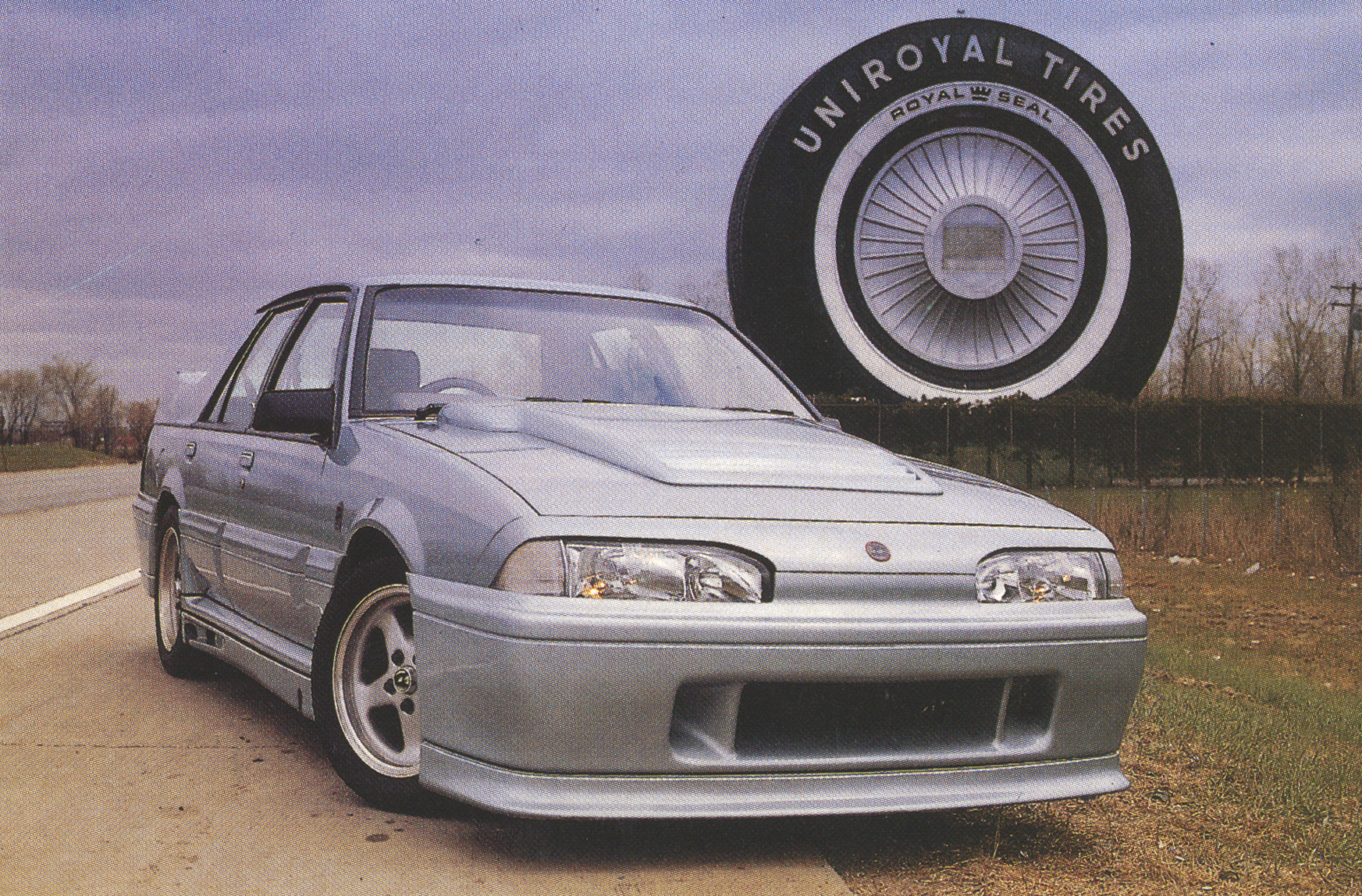
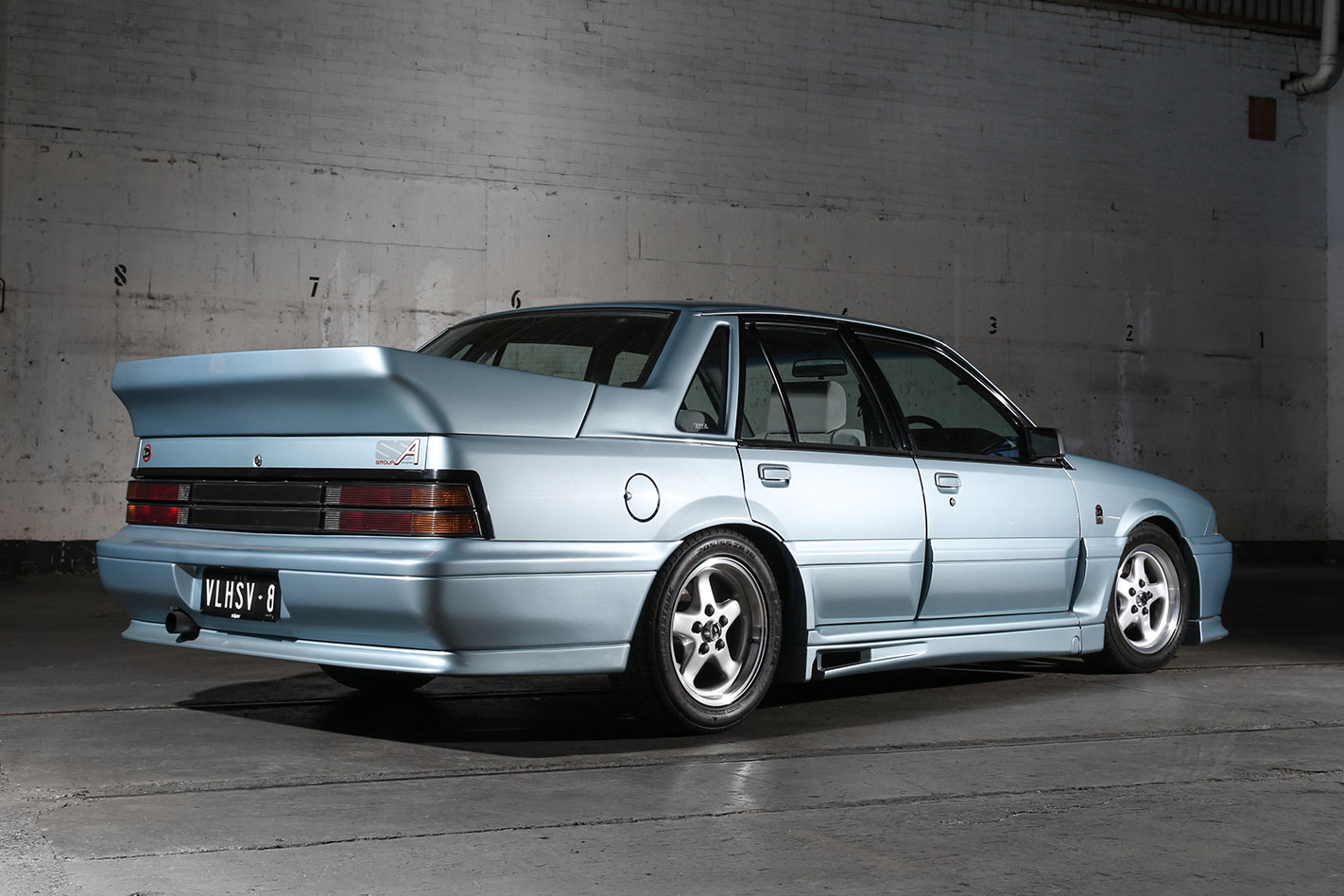
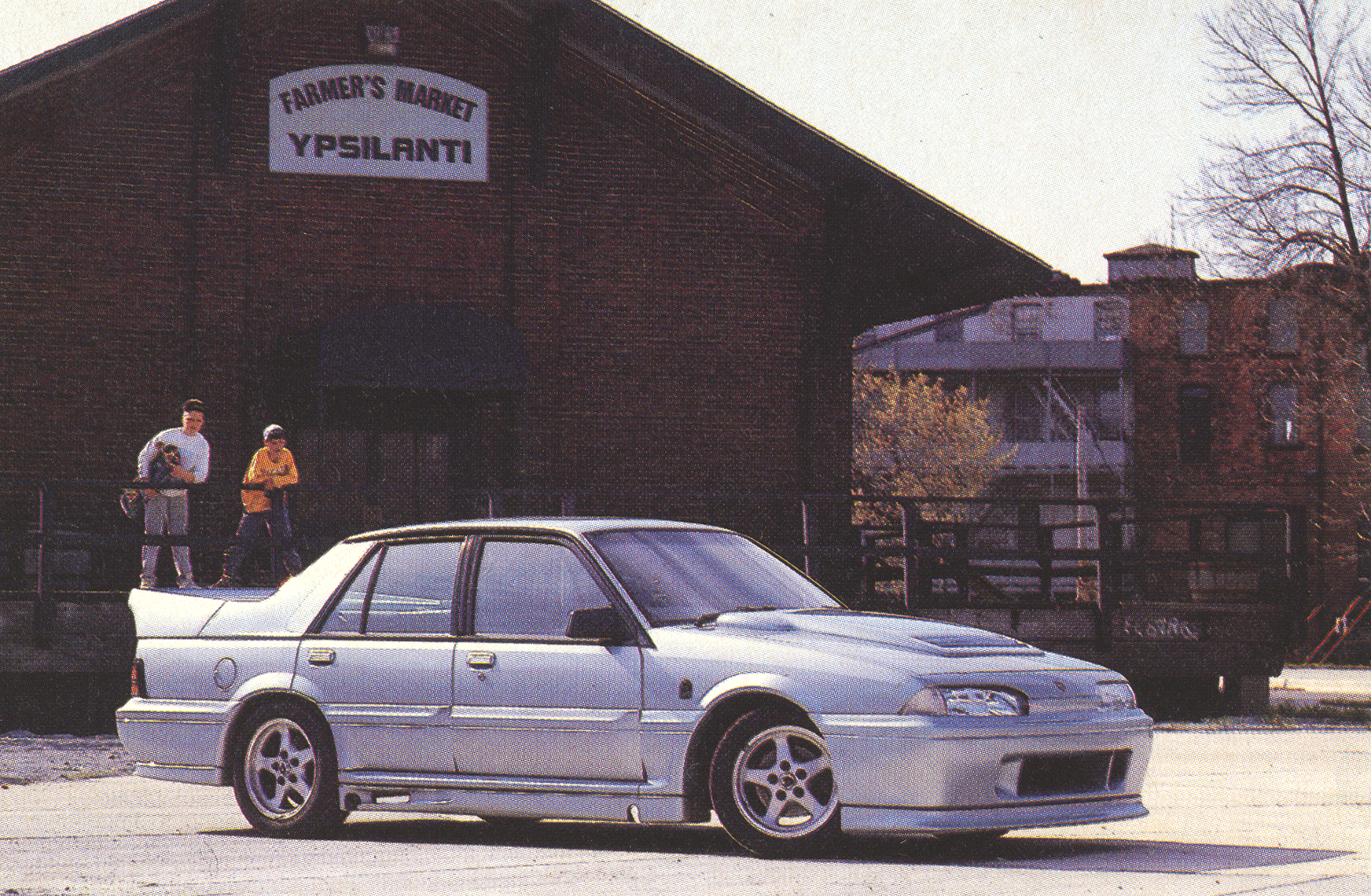
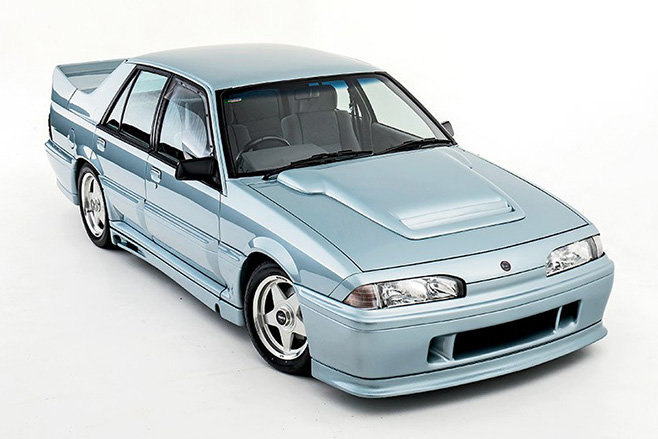
This car is not a pretty sight. Cruising around in the Group A had the same effect on residents of the Great Lake State that Arnold Schwarzenegger would have if he walked down the street with his shirt off. After all, who can be immune to the Group A? There is no mistaking the purpose of the vented hood, the groundhugging rocker extensions, or the carrier-deck-sized rear spoiler. For pure head-twisting power the Commodore ranks with the Cobra, the Countach, and the Testarossa.
While we’re on the subject of sheet metal, it strikes us that the Group A’s add-ons bring some serious drawbacks. It is hard to imagine that even a careful owner won’t shatter the front air dam against a kerb or driveway in record time. The fibreglass front and rear bumpers appear to be good for about one “whoops” from an errant park-by-ear perpetrator. And the quality of the fibreglass work is less than you’d expect for a car with such lofty aspirations and a price to match. Every glance into the rear-view mirror reveals a rear spoiler as wavy as Lake Michigan – and it quivers at highway speeds as well.
Nor is there anything outstanding about the way the Group A is screwed together. The body structure is tight and rattle free over Michigan’s weatherbeaten pavement, but the doors slam home with a pedestrian sound, the switches feel flimsy, and the upholstery is plain. The American machines generally come across as higher-quality pieces – with the exception of the Corvette and its creaky fibreglass body.
These superficial concerns turn to dust the instant you drop down into the Group A’s comfortable driver’s seat and twist the eager engine to life. Each passing mile underscores that the Group A is about high-performance motoring, and about the exquisite relationship man can have with machine. Judged in that context, it is sensational.
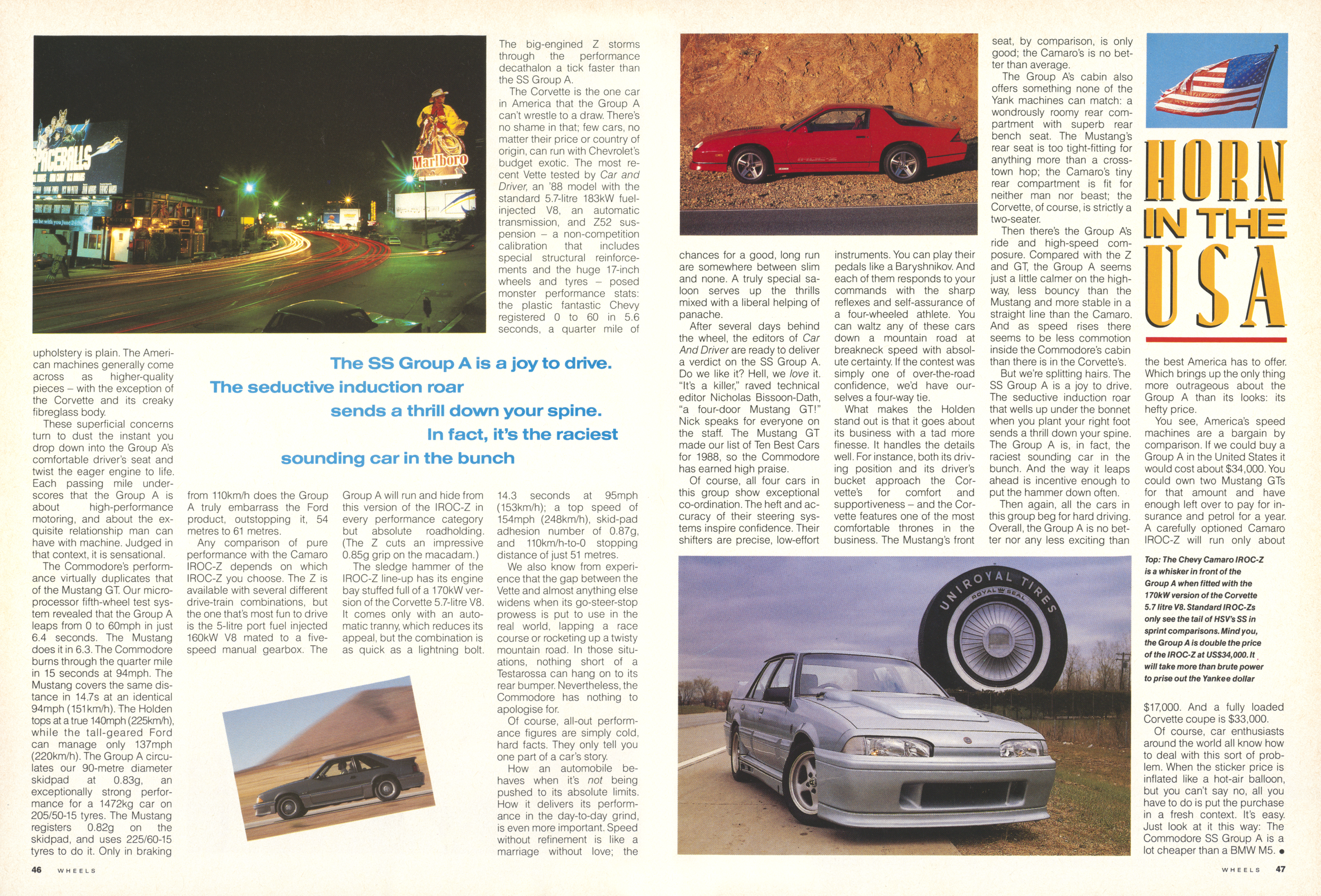
The Commodore’s performance virtually duplicates that of the Mustang GT. Our microprocessor fifth-wheel test system revealed that the Group A leaps from 0 to 60mph in just 6.4 seconds. The Mustang does it in 6.3. The Commodore burns through the quarter mile in 15 seconds at 94mph. The Mustang covers the same distance in 14.7s at an identical 94mph (151 km/h). The Holden tops at a true 140mph (225km/h), while the tall-geared Ford can manage only 137mph (220km/h). The Group A circulates our 90-metre diameter skidpad at 0.83g, an exceptionally strong performance for a 1472kg car on 205/50-15 tyres. The Mustang registers 0.82g on the skidpad, and uses 225/60-15 tyres to do it. Only in braking from 110km/h does the Group A truly embarrass the Ford product, outstopping it, 54 metres to 61 metres.
Any comparison of pure performance with the Camaro IROC-Z depends on which IROC-Z you choose. The Z is available with several different drive-train combinations, but the one that’s most fun to drive is the 5-litre port fuel injected 160kW V8 mated to a fivespeed manual gearbox. The Group A will run and hide from this version of the IROC-Z in every performance category but absolute roadholding. (The Z cuts an impressive 0.85g grip on the macadam.) The sledge hammer of the IROC-Z line-up has its engine bay stuffed full of a 170kW version of the Corvette 5.7-litre V8. It comes only with an automatic tranny, which reduces its appeal, but the combination is as quick as a lightning bolt. The big-engined Z storms through the performance decathlon a tick faster than the SS Group A.
The Corvette is the one car in America that the Group A can’t wrestle to a draw. There’s no shame in that; few cars, no matter their price or country of origin, can run with Chevrolet’s budget exotic. The most recent Vette tested by Car And Driver, an ’88 model with the standard 5.7-litre 183kW fuel injected V8, an automatic transmission, and Z52 suspension – a non-competition calibration that includes special structural reinforcements and the huge 17-inch wheels and tyres – posed monster performance stats: the plastic fantastic Chevy registered 0 to 60 in 5.6 seconds, a quarter mile of 14.3 seconds at 95mph (153km/h); a top speed of 154mph (248km/h), skid-pad adhesion number of 0.87g, and 110km/h-to-0 stopping distance of just 51 metres.
We also know from experience that the gap between the Vette and almost anything else widens when its go-steer-stop prowess is put to use in the real world , lapping a race course or rocketing up a twisty mountain road. In those situations, nothing short of a Testarossa can hang on to its rear bumper. Nevertheless, the Commodore has nothing to apologise for.
Of course, all-out performance figures are simply cold, hard facts. They only tell you one part of a car’s story.
How an automobile behaves when it’s not being pushed to its absolute limits. How it delivers its performance in the day-to-day grind, is even more important. Speed without refinement is like a marriage without love; the chances for a good, long run are somewhere between slim and none. A truly special saloon serves up the thrills mixed with a liberal helping of panache.
After several days behind the wheel, the editors of Car And Driver are ready to deliver a verdict on the SS Group A. Do we like it? Hell, we love it. “It’s a killer,” raved technical editor Nicholas Bissoon-Dath, “a four-door Mustang GT!” Nick speaks for everyone on the staff. The Mustang GT made our list of Ten Best Cars for 1988, so the Commodore has earned high praise.
Of course, all four cars in this group show exceptional co-ordination. The heft and accuracy of their steering systems inspire confidence. Their shifters are precise, low-effort instruments. You can play their pedals like a Baryshnikov. And each of them responds to your commands with the sharp reflexes and self-assurance of a four-wheeled athlete. You can waltz any of these cars down a mountain road at breakneck speed with absolute certainty. If the contest was simply one of over-the-road confidence, we’d have ourselves a four-way tie.
What makes the Holden stand out is that it goes about its business with a tad more finesse. It handles the details well. For instance, both its driving position and its driver’s bucket approach the Corvette’s for comfort and supportiveness – and the Corvette features one of the most comfortable thrones in the business. The Mustang’s front seat, by comparison, is only good; the Camaro’s is no better than average.
The Group A’s cabin also offers something none of the Yank machines can match: a wondrously roomy rear compartment with superb rear bench seat. The Mustang’s rear seat is too tight-fitting for anything more than a crosstown hop; the Camaro’s tiny rear compartment is fit for neither man nor beast; the Corvette, of course, is strictly a two-seater.
Then there’s the Group A’s ride and high-speed composure. Compared with the Z and GT, the Group A seems just a little calmer on the highway, less bouncy than the Mustang and more stable in a straight line than the Camaro. And as speed rises there seems to be less commotion inside the Commodore’s cabin than there is in the Corvette’s.
But we’re splitting hairs. The SS Group A is a joy to drive. The seductive induction roar that wells up under the bonnet when you plant your right foot sends a thrill down your spine. The Group A is, in fact, the raciest-sounding car in the bunch. And the way it leaps ahead is incentive enough to put the hammer down often.
Then again, all the cars in this group beg for hard driving. Overall, the Group A is no better nor any less exciting than the best America has to offer. Which brings up the only thing more outrageous about the Group A than its looks: its hefty price.
You see, America’s speed machines are a bargain by comparison. If we could buy a Group A in the United States it would cost about $34,000. You could own two Mustang GTs for that amount and have enough left over to pay for insurance and petrol for a year. A carefully optioned Camaro IROC-Z will run only about $17,000. And a fully loaded Corvette coupe is $33,000.
Of course, car enthusiasts around the world all know how to deal with this sort of problem. When the sticker price is inflated like a hot-air balloon, but you can’t say no, all you have to do is put the purchase in a fresh context. It’s easy. Just look at it this way: The Commodore SS Group A is a lot cheaper than a BMW M5.
For evidence of how electrification is shaping Australia’s new car market, look no further than the Kia EV9 GT. An ‘upper large’ electric SUV – a segment that didn’t even exist a few short years ago – it’s also a performance upper large SUV, which is a concept we don’t imagine is sought after by many Australians. Nevertheless, it’s here and is actually now Kia’s most expensive product in Australia.
The EV9 GT takes the impressive foundations of Kia’s largest electric vehicle and turns everything up to 11. Take, for example, the fact it makes 374kW of power and 740Nm of torque, which gives it enough performance to embarrass plenty of sports cars, yet it can still carry six people and their luggage comfortably. It sounds ridiculous, but there’s considerably more to the EV9 GT than simply making a huge SUV accelerate very quickly.
How much does the EV9 GT cost to buy?
Absolutely loaded with standard equipment, the EV9 GT is a not inconsiderable $129,600 plus on-road costs, or around $151,000 driveaway, and about $12,000 more than the GT-Line that sits below it. That’s a serious bit of coin, regardless of the brand and car type.
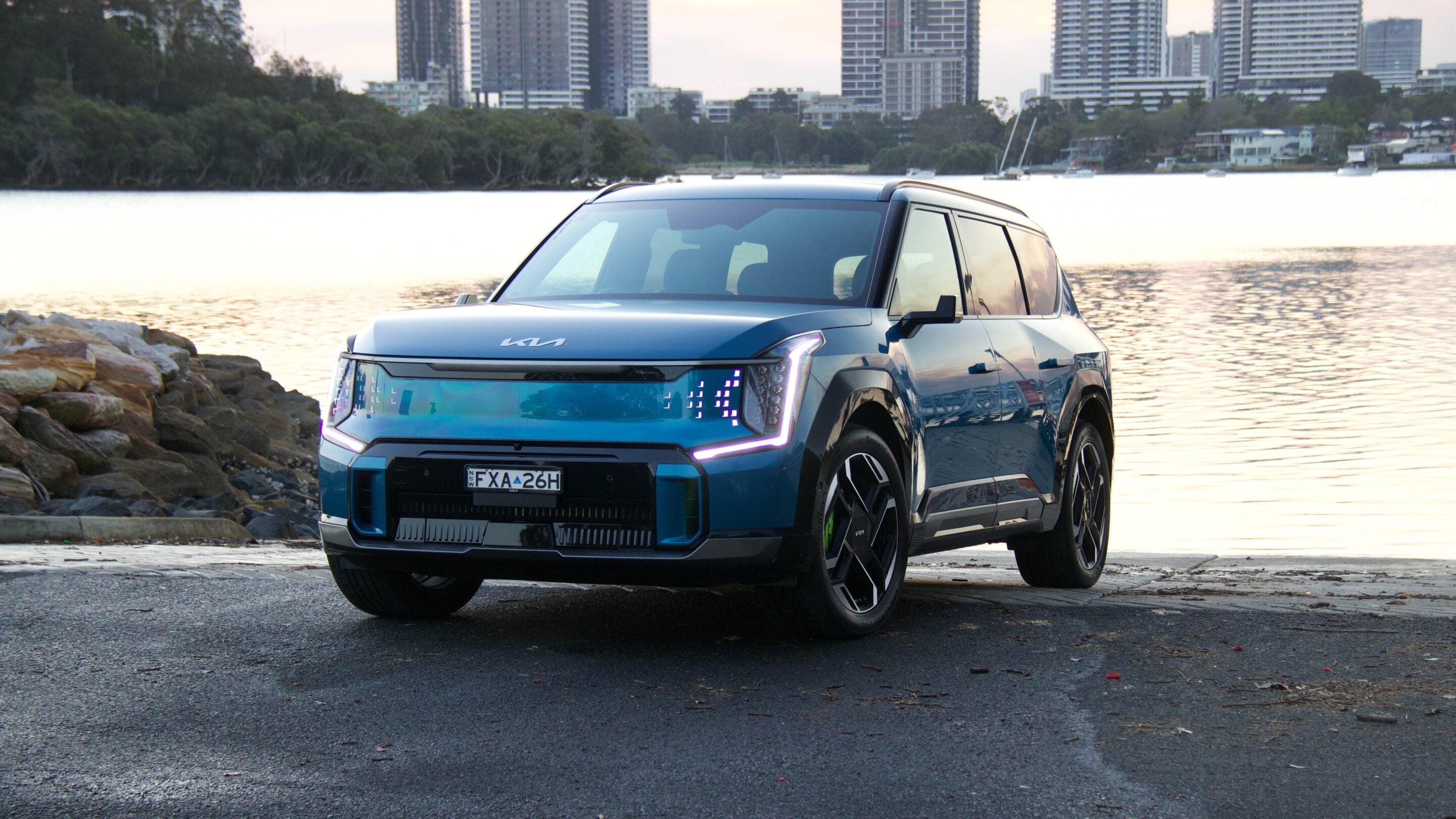
Equipment highlights include huge 21-inch alloy wheels, dual sunroofs, remote parking capability, multi-way electrically adjustable front seats with massaging, heating and ventilation, middle row ‘captain’s chairs’ seats with massaging, electrically operated rear seats, dual 12.3-inch displays with a 5.0-inch climate control panel, 14-speaker Meridian audio and a plethora of active safety features, including semi-autonomous highway driving tech, Matrix adaptive high beam and a 360-degree camera.
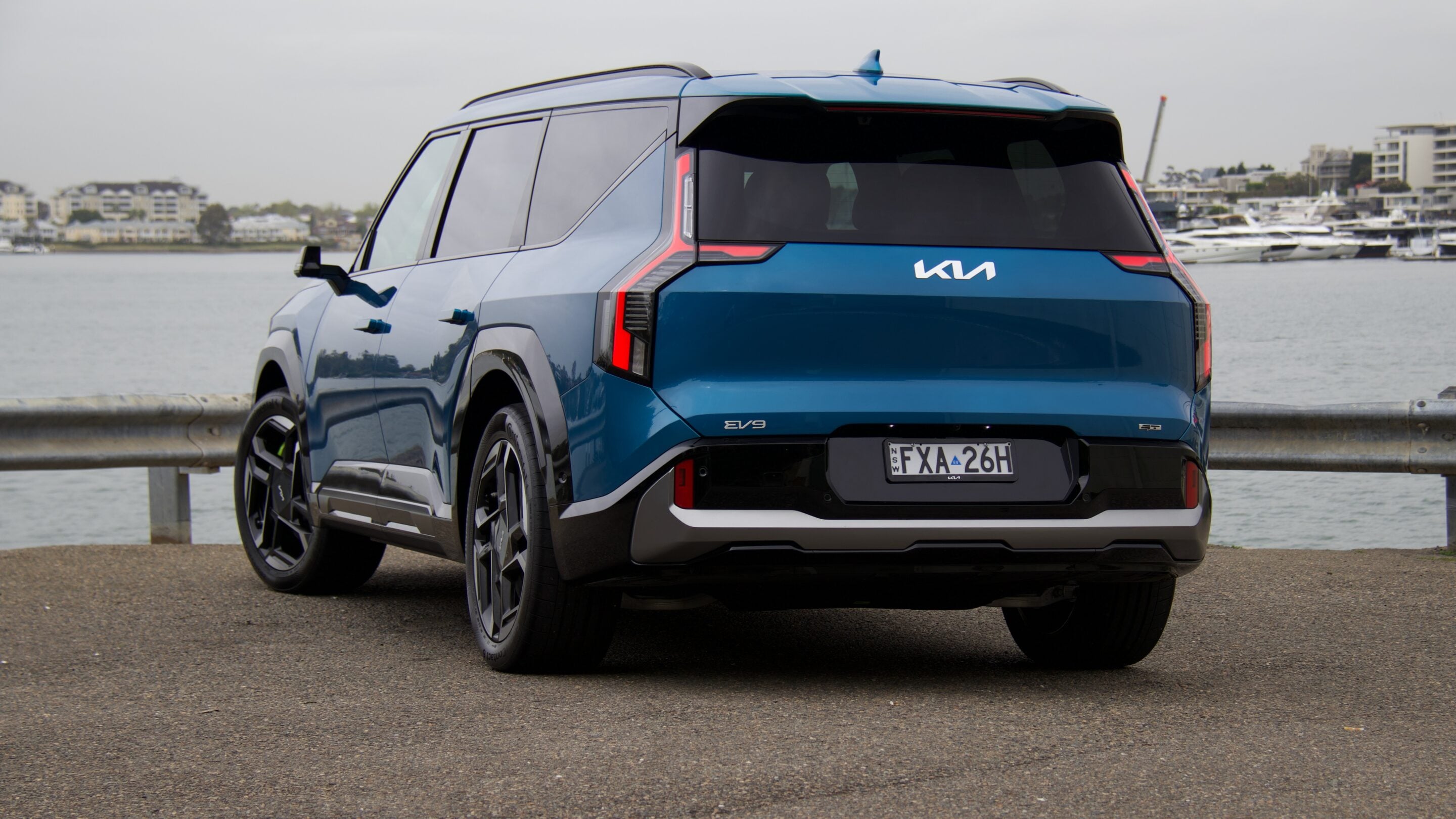
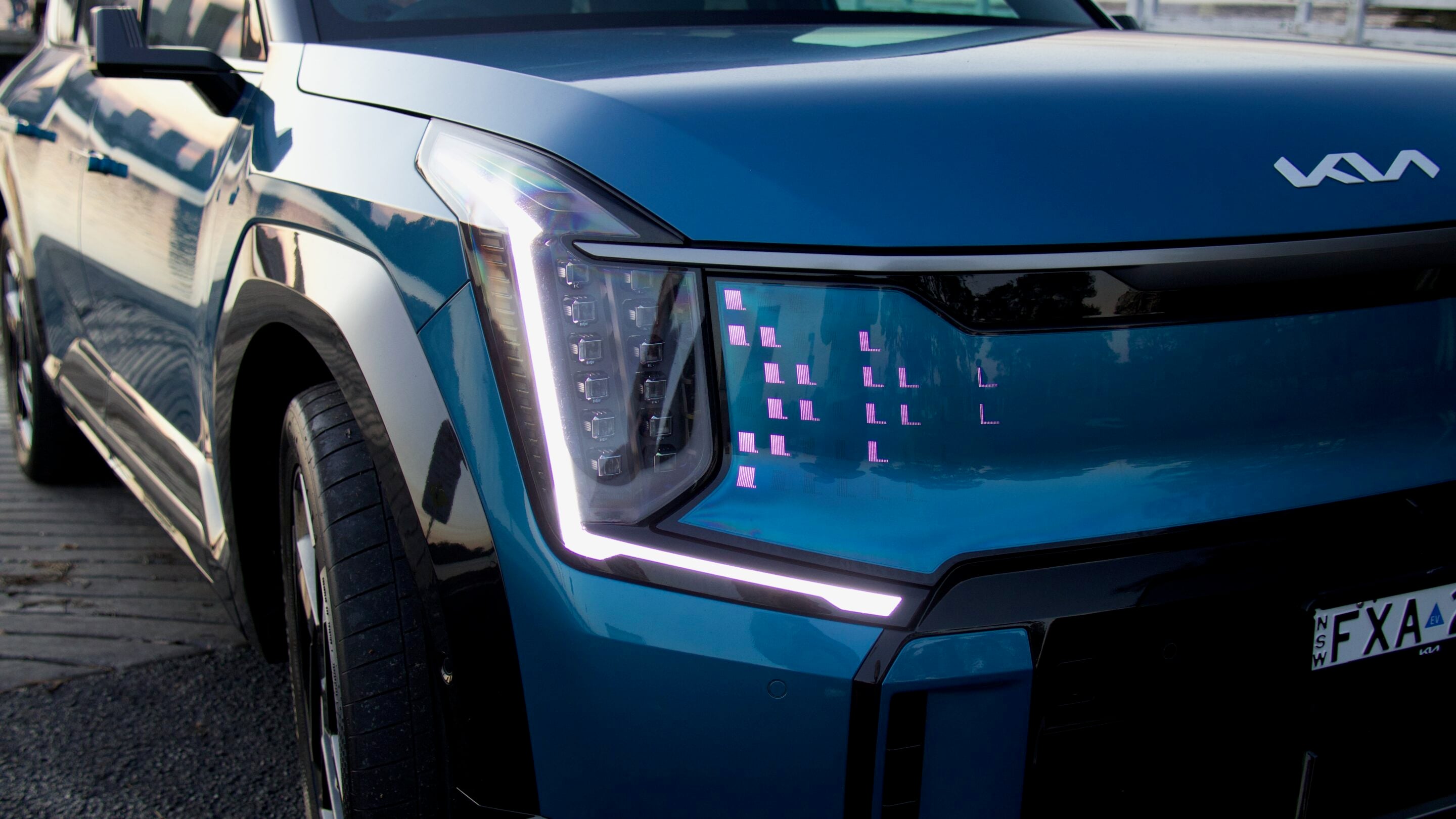
GT-specific features include the adaptive suspension, larger 380mm front/360mm rear ventilated disc brakes, sportier exterior styling, superb sports front seats, synthetic leather and suede upholstery, a three-spoke leather steering wheel, a lot of lime green detailing on the brake callipers, cabin stitching and GT button on the steering wheel, as well as GT badging.
For competition, the EV9 GT largely competes in a class of its own. There are a few electric seven-seaters on the market like the related Hyundai Ioniq 9, Volvo EX90, Volkswagen ID. Buzz and Mercedes-Benz EQB (new-generation GLB), but the GT’s seat count reduction to six means that the Tesla Model Y L could also be considered a rival. None of them, however, offer the space, pace and handling prowess of the Kia – if that’s what you’re searching for.
How far can the EV9 GT drive on a charge?
Powering the EV9 GT is Hyundai’s renowned 800V e-GMP platform and a large 99.8kWh lithium-ion battery, giving it a WLTP-rated range of 510km and combined energy consumption of 21.7kWh/100km. While that may seem like a lot, for something this large, heavy and powerful, it’s actually quite an impressive figure and somehow, it’s actually less than the other dual-motor EV9 models in Australia.
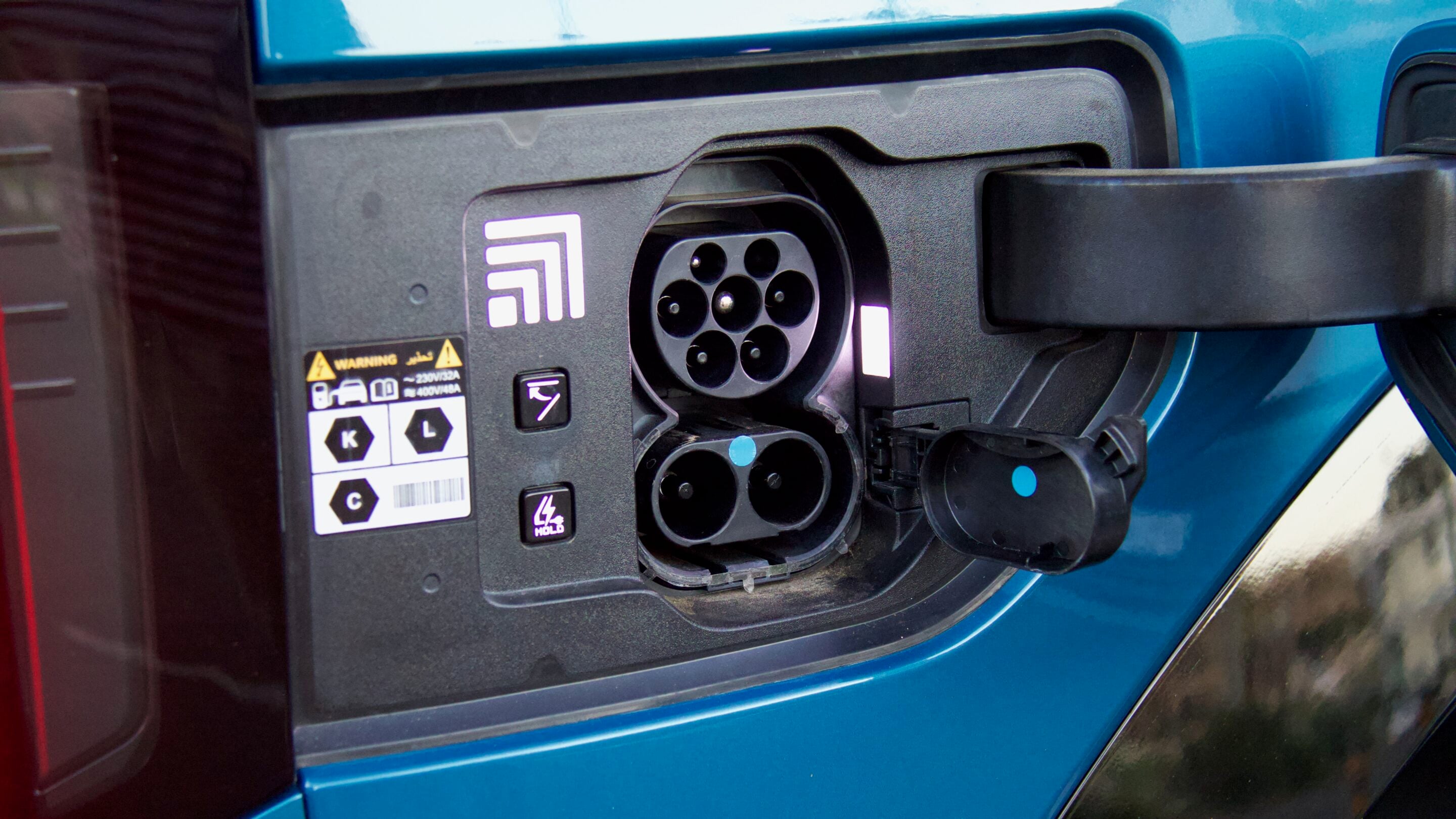
Naturally, putting all 374kW to use on a regular basis is going to have a fairly dramatic effect on how far you’ll travel between charges, but we achieved 21.5kWh/100km in our combined testing, which we thought was quite respectable. As for charging, the 800V architecture allows for super fast charging and Kia claims a 10 to 80 per cent charge time of just 24 minutes, which is quickish for such a large battery.
The battery provides juice for the dual-motor all-wheel drive system, which makes fairly serious outputs of 374kW of power and 740Nm of torque, enough to send the EV9 GT to 100km/h in just 4.5 seconds and on to a top speed of 220km/h. For something that weighs 2679kg (kerb), that’s enormously fast, and it truly does not feel anywhere near that heavy in all driving situations.
Because there’s masses of torque from both axles, it grips and launches out of corners far quicker than something weighing this much has any right to. Handling is assured and the locally-tuned adaptive suspension does a mostly good job of ironing out bumps – it can feel a bit firm at town speeds thanks to the large 21-inch wheels, but the flip side is that the body control is excellent. Refinement is also excellent, with not much in the way of road- or wind noise, even at highway speeds.
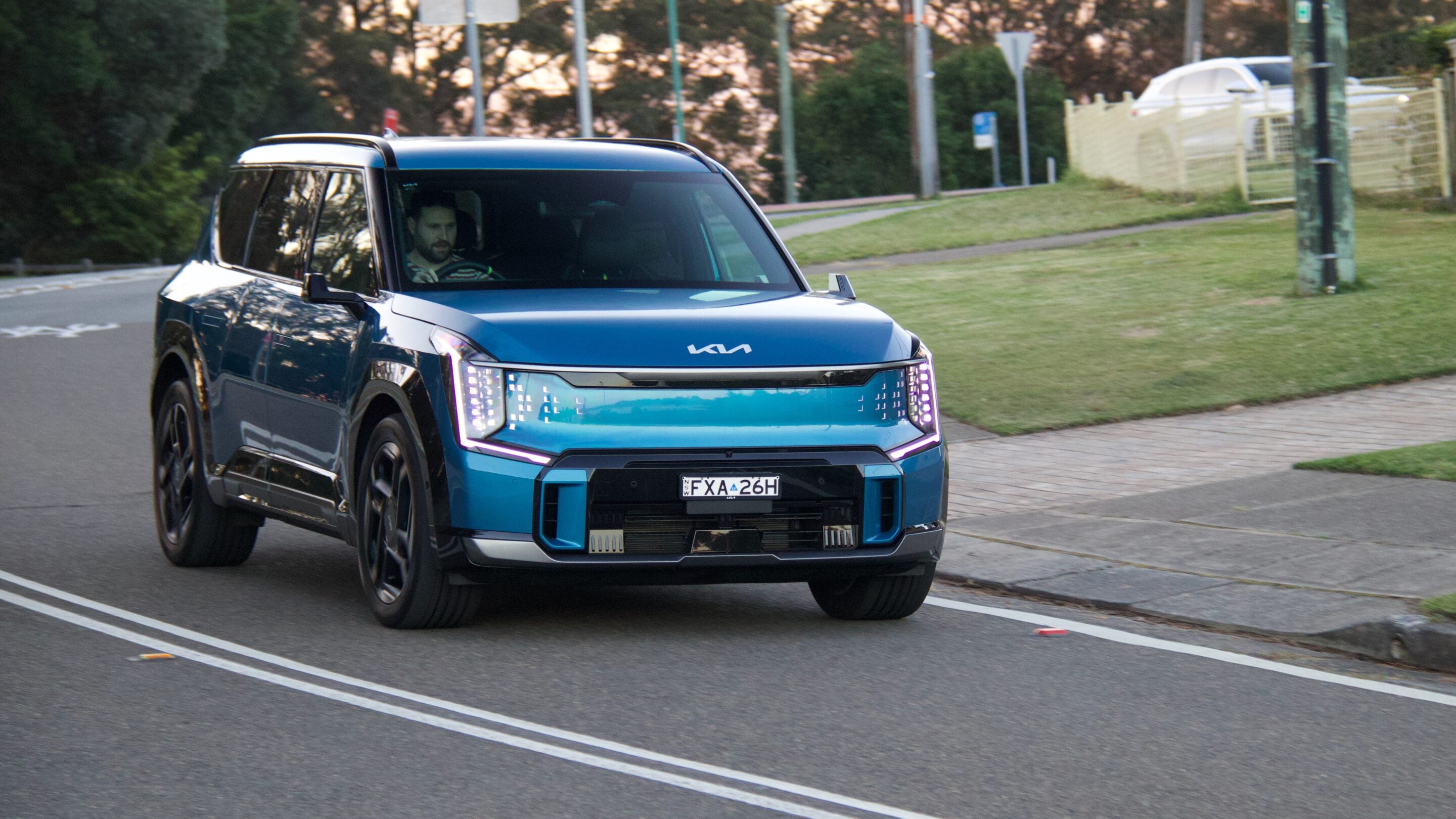
Not so excellent, however, are the camera mirrors that are standard on the GT-Line and GT. They supposedly make the EV9 use less energy but in my opinion, make it more difficult to drive as they just cannot provide a field of depth like a proper mirror does. When parking, judging your distance to the kerb – for example – can be quite difficult and judging the distance between you and cars in your blind spot is also not easy. Send them to the options list, please, Kia Australia.
How practical is the EV9 GT?
This is where the EV9 GT shines. Despite its performance statistics, it remains an enormous and highly practical family upper large SUV. Measuring 5015mm long and 1980mm wide with a huge 3100mm wheelbase, the EV9 has an enormous footprint and it’s also very well packaged. Combine those two elements and it’s a great option for larger families – though, to be fair, so is a regular EV9.
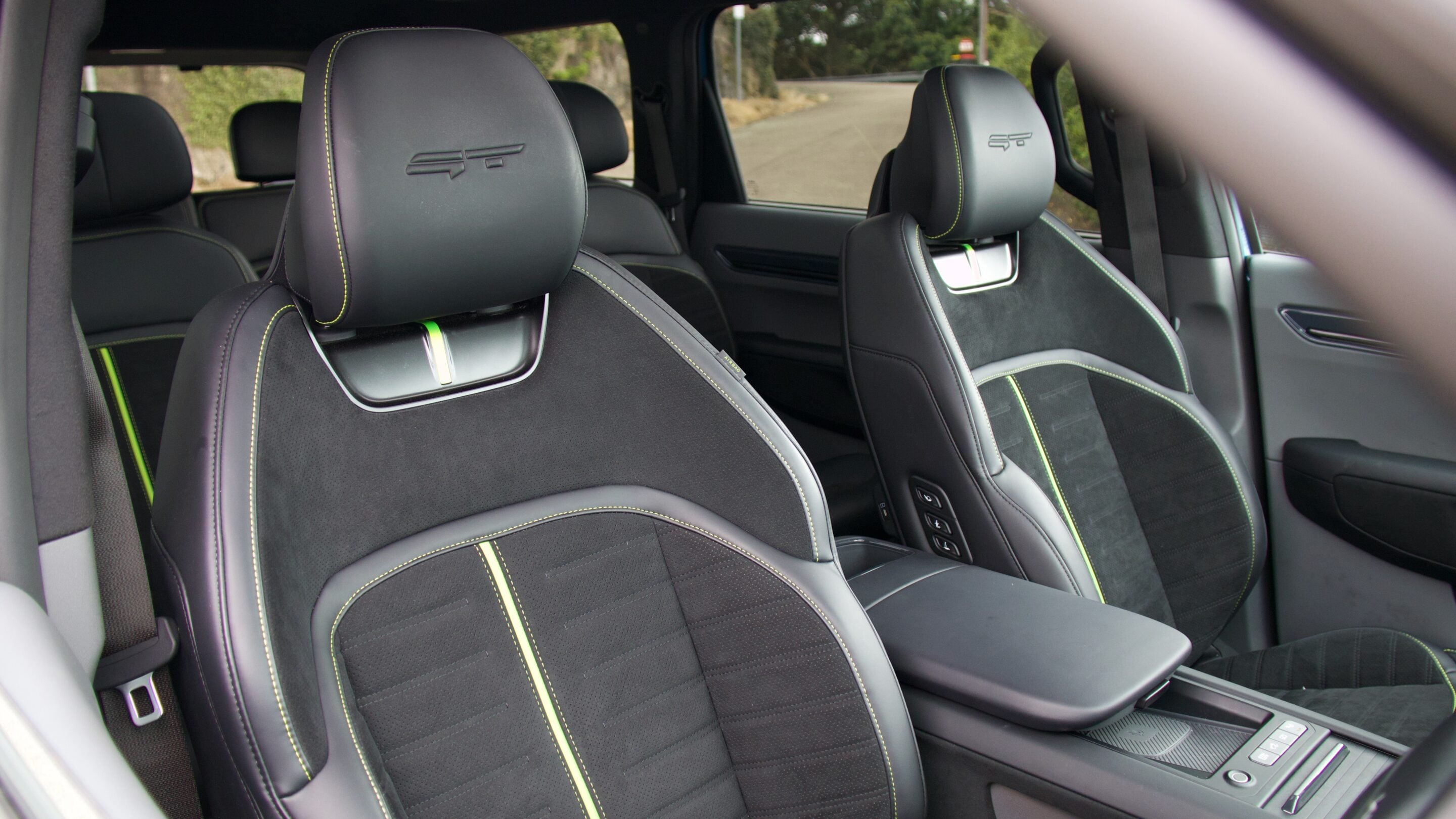
One key detail in the GT transformation is that it is the only EV9 in Australia to use a six-seat configuration with two individual captain’s chairs in the second row instead of the bench as in other EV9 models. Those seats give second-row passengers more personal space and help make the rear cabin feel almost limousine-like (new car of choice for rock stars?), while also providing easier access to the third row through the gap between them.
The seats themselves are electrically adjustable and feature massaging, heating and ventilation, making them not only comfortable but luxurious. Other second row amenities include inbuilt window shades, a separate climate zone, map pockets, door pockets and a huge sliding box for storage.
Importantly for families, unlike many seven-seaters, the third row of seating isn’t just for emergencies but is a proper third row for adults. It’s also well featured with air vents, cup holders and USB-C charging ports, while the seats themselves are electrically adjustable as well.
Luggage capacity is also impressive considering the EV9’s ability to carry six occupants with 333 litres of space behind the third row, expanding to 828 litres with those seats folded and a massive 2393 litres with all the rear seats folded. Drop the rear seating and the EV9 effectively becomes an electric removals van, plus there’s also a 52-litre storage compartment under the bonnet.
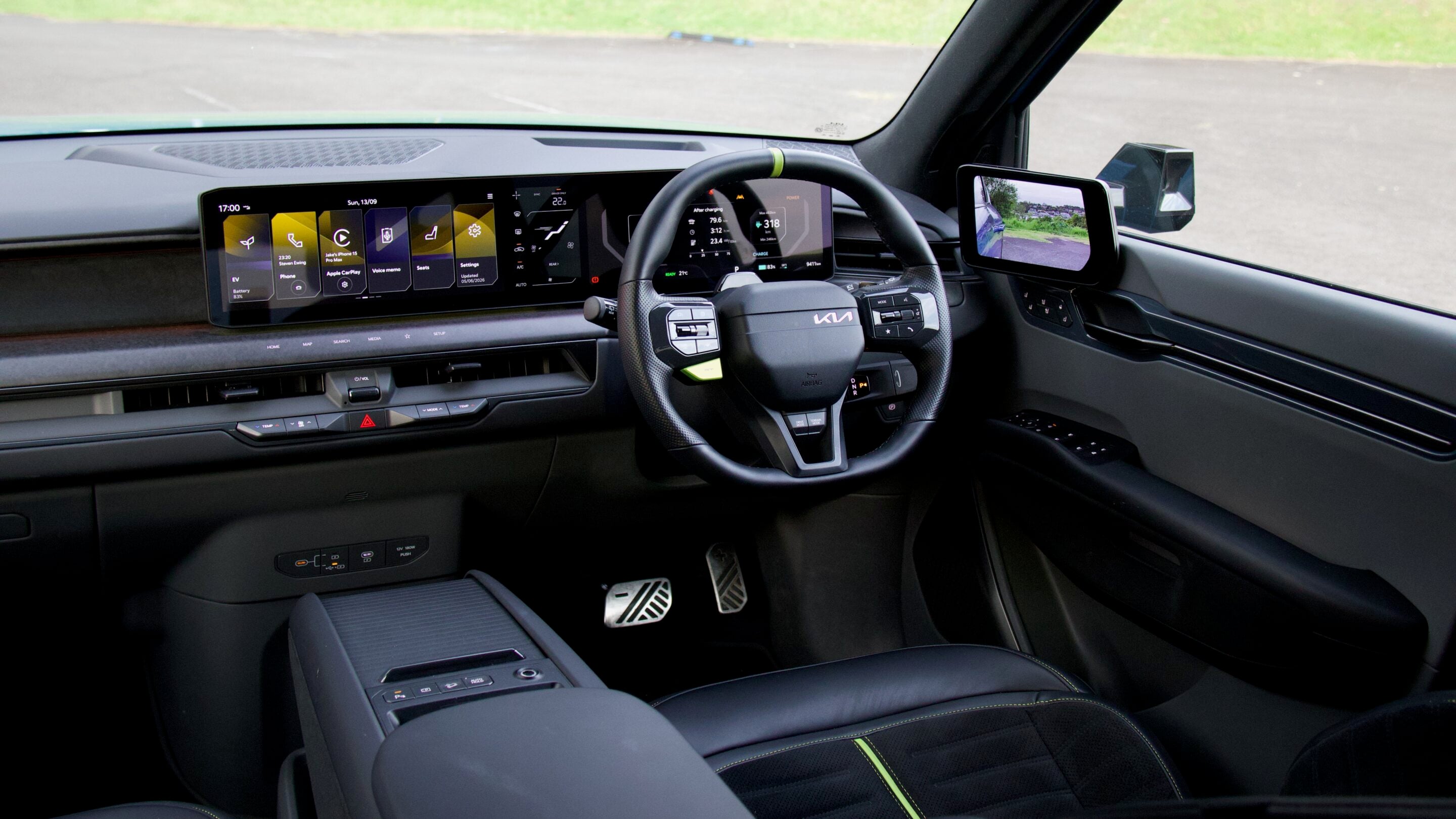
Move forward to the front cabin and it’s typical EV9 goodness. The dashboard design looks modern and feels high-tech, while there are plentiful storage options, including the big cup holders in the centre console. Kia’s 12.3-inch infotainment screen is easy to use, and it’s well featured with wireless smartphone mirroring, sat-nav with live traffic, DAB+ digital radio and live services. The 14-speaker Meridian audio system also sounds good and we love the subtle GT badging throughout the cabin.
How much does the EV9 GT cost to service?
If you’re searching for reasons to buy the GT over a regular EV9, you’ll be happy to know that it’s covered by the exact same service and warranty program. All new Kias are covered by a seven-year/unlimited km warranty with an eight-year/160,000km EV battery warranty for MY27 cars onwards.
As for servicing, a five-year pre-paid service plan costs $1351 or $270 per year for the first five years. As with the standard EV9, the GT’s service intervals are annual or every 15,000km, whichever comes first.
Should I buy a Kia EV9 GT?
If the idea of a very fast, practical, spacious and well equipped upper large electric SUV appeals to you, then the Kia EV9 GT is a great choice. There simply isn’t much that it does wrong – the camera mirrors are annoying, the ride can be a bit firm at times and it’s obviously not cheap, but it’s such a well-rounded product.
Even five years ago, the idea of a fast, electric Kia SUV costing $150,000 would have been ridiculous, but the result is a great car. Is there a market for an upper large performance electric SUV? Is it a niche within a niche gone too far? Time will tell.
EV9 GT standard features:
- 21-inch alloy wheels (with a tyre repair kit)
- Dusk-sensing automatic LED exterior lighting
- Rain-sensing automatic wipers
- Keyless entry with push button start, remote start and smart parking assistance
- Roof rails
- Dual sunroofs (with an opening front part)
- Rear privacy glass
- Digital rear mirrors
- Tri-zone automatic climate control
- Suede/synthetic leather upholstery
- 12-way electric driver’s seat/8-way electric front passenger seat with memory, two-way electric foot rest
- Heated, ventilated and massaging front seats
- Captain’s chairs middle row seats with massaging, heating and ventilation
- Heated leather steering wheel
- Dual 12.3-inch display panels with 5.0-inch climate middle control panel
- Kia Connect live services
- Satellite navigation with live traffic
- Wireless Apple CarPlay and Android Auto
- AM/FM/DAB+ digital radio
- Bluetooth phone and audio
- 14-speaker Meridian sound system
- Wireless phone charger
- 6x USB-C ports, 2x 12V sockets
- Ambient mood lighting
- Head-up display
- 9x airbags
- Autonomous emergency braking with car, pedestrian, cyclist, junction turning/crossing and direct/oncoming lane change detection
- Low-speed automatic braking (forward and reverse)
- Lane keeping assistance with adaptive lane guidance
- Adaptive cruise control with highway driving assistance
- Blind-spot monitoring with blind-spot cameras
- Rear cross-traffic alert (with braking)
- Rear occupant alert
- Safe exit warning with safe exit assist
- Traffic sign recognition
- Driver attention monitoring
- Adaptive high beam
- Front and rear parking sensors
- 360-degree camera
- Anti-theft alarm
EV9 GT specifications:
| Price | From $129,600 plus on-road costs |
|---|---|
| Powertrain | Dual-motor electric, 99.8kWh battery |
| Power | 374kW |
| Torque | 740Nm |
| Transmission | Single-speed automatic, all-wheel drive |
| Claimed WLTP range | 510km |
| Claimed 10-80% fast charge time | 24 minutes |
| Dimensions (L/W/H/WB) | 5015/1980/1755/3100mm |
| Kerb weight | 2679kg |
| Boot capacity | 333 litres (third row up), 878 litres (third row folded), 2393 litres (all rear seats folded) |
| Warranty | 7-year/unlimited km, 8-year/160,000km (EV battery – MY27 onwards) |
| Five-year service cost | $1351 |
| On sale | Now |
The Holden Dealer Team has previewed a “significant” announcement about its future direction as it eyes a “return to the heartland of Australian motorsport” at this year’s Bathurst 1000.
HDT, which was founded as a racing outfit in 1969, began making performance Holdens as HDT Special Vehicles in 1980, after the team was bought by the legendary Peter Brock. Now a spokesman for the team has revealed it has “unfinished business” with Bathurst.
On October 11, the day after the running of this year’s 1000 at Mount Panorama, HDT will outline its future plans as part of anniversary celebrations for Brock, who drove the team’s cars to eight of his nine victories at Bathurst.
In a statement, HDT said, “The announcement will provide a first look at the ambitious new direction for HDT, looking back at the Bathurst-winning pedigree of its heritage vehicles while showcasing its future automotive plans and a renewed presence in Bathurst.”
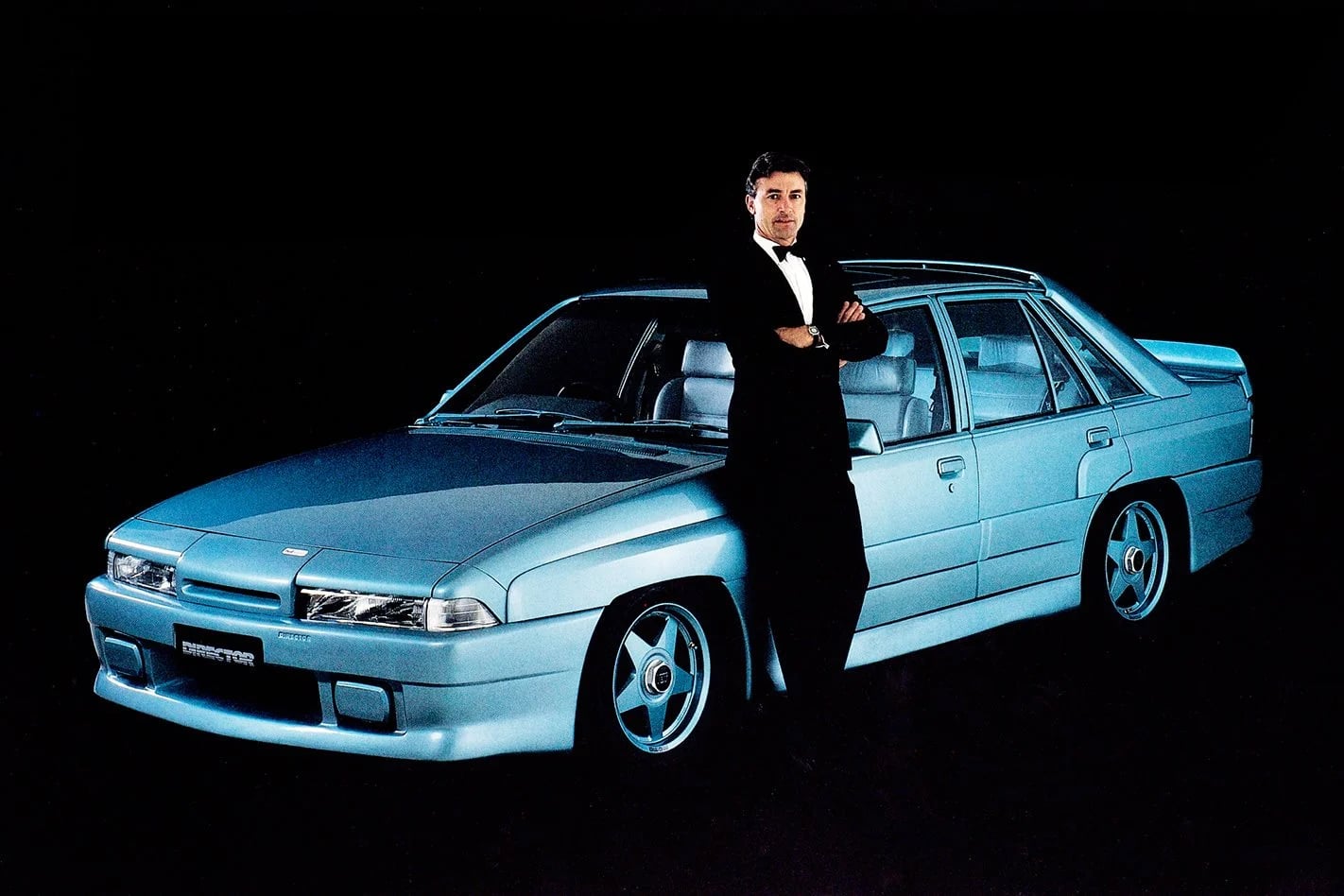
As well as dropping the news, the company will unveil a display of rare HDT Special Vehicles “not shown anywhere else during the Bathurst race weekend”. The models will include the VL SL Commodore that HDT used as the prototype and engineering mule for two of its most famous products: the VL Director and VL Aero.
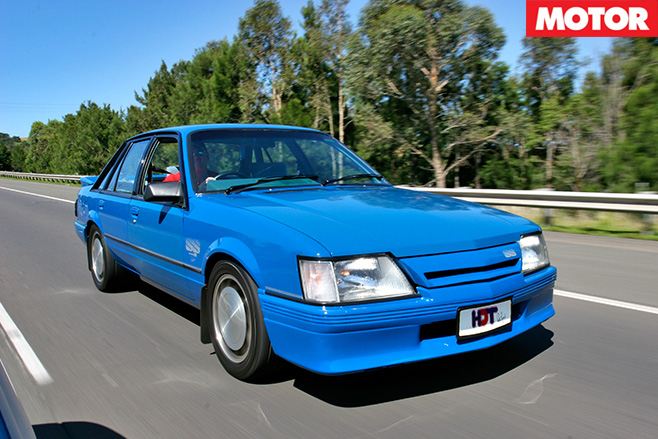
Other iconic Holdens produced by HDT include the famous Blue Meanie, aka the HDT VK Group A SS. The fastest car Brocky ever built bore the advertising slogan “body by Holden, soul by Brock” and just 500 were built – although some Holden tragics reckon an ordering mistake means the real number is 502.
The Holden Dealer Team began in 1969 under team boss Harry Firth as a way of getting around General Motors’ ban on its manufacturers entering races with factory-backed teams. HDT’s first driver line-up for Bathurst consisted of Colin Bond and Tony Roberts in car one, with Des West and Brock – who made his debut at the Mountain that year – in the second of three cars.
Peter Perfect took over the team 11 years later, partly to fund the racing arm of HDT with sales of those famous high-performance Holdens.
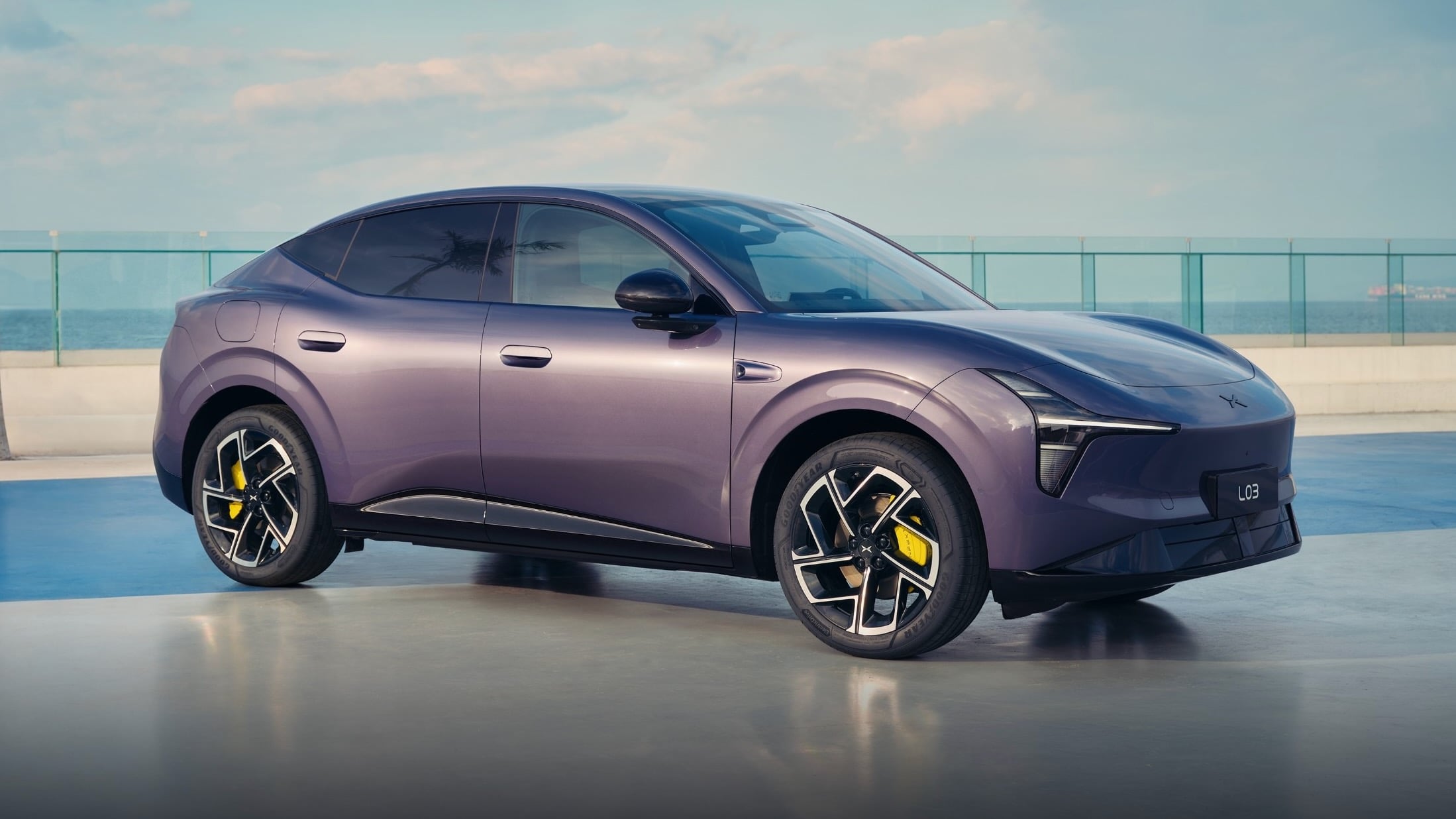
One of Xpeng’s top designers has hit out at the continuing use of grilles on EVs, saying they serve no purpose other than being a hangover from models with combustion engines – and his remarks came as the brand revealed its first model down under will be the grille-free L03 SUV (pictured, below).
Joan Melenchon, Xpeng’s creative design director, also took other EV makers to task for continuing to use the feature on their vehicles, saying they need to find a different way of establishing their own visual identity.
“You will see that everyone is developing their own front fascia based on the air intake, where you probably don’t need it in an EV. Doing design identity based on something that they don’t use, is that the right thing to do?” he said.
“For me, [it] is not honest for any EV brand that doesn’t have a combustion engine in front. It’s the wrong thing to express your identity based on an air intake you don’t need. Tell me just one brand that is being built from scratch, being electric, that has a strong design identity from the very beginning.
“Maybe it’s our competitor, maybe you can say Tesla. It’s clear what it is. But if you also analyse any other brand, any OEM [original equipment manufacturer] in the market … its design identity is coming from combustion engines.”
Tesla, of course, does not feature grilles on its extremely popular Model 3 and Model Y BEVs. Other manufacturers with a strong background in internal-combustion cars, such as BMW and Mercedes, retain them for their BEVs as part of the brands’ already-established signature looks.
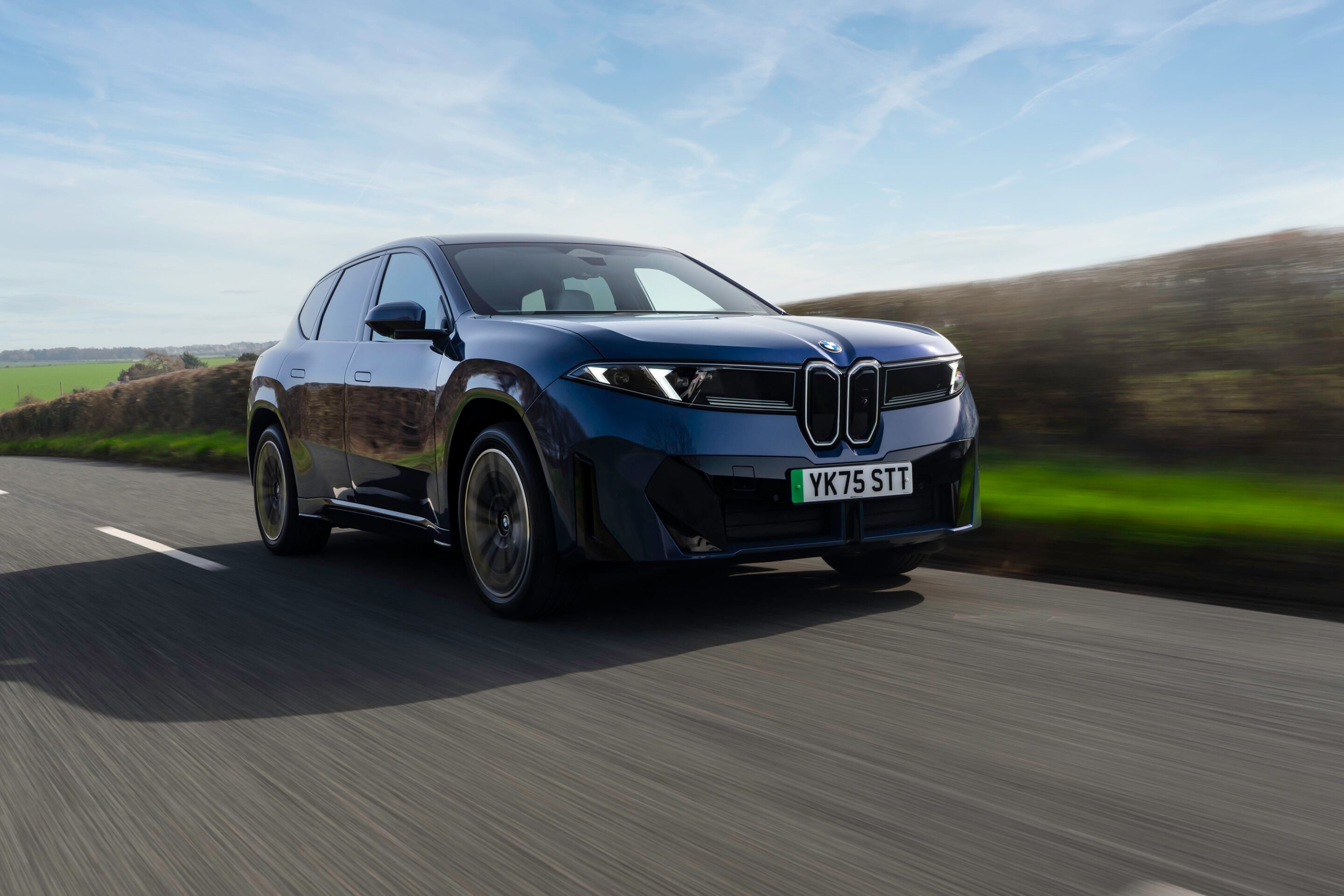
But as Melenchon pointed out, some new EV-centric brands – such as Chery and MG – make air intakes a major part of the look of their vehicles.
Grilles aren’t needed on BEVs for the same reason they don’t need petrol tanks: the absence of an internal combustion engine that needs to be fed with and cooled by air. Furthermore, leaving them off the front of the car has advantages beyond creating a completely non-ICE look.
Dropping the air intake gives designers more freedom to concentrate on aerodynamics by creating cleaner airflow around the body, which can bring benefits for efficiency, especially during highway driving.
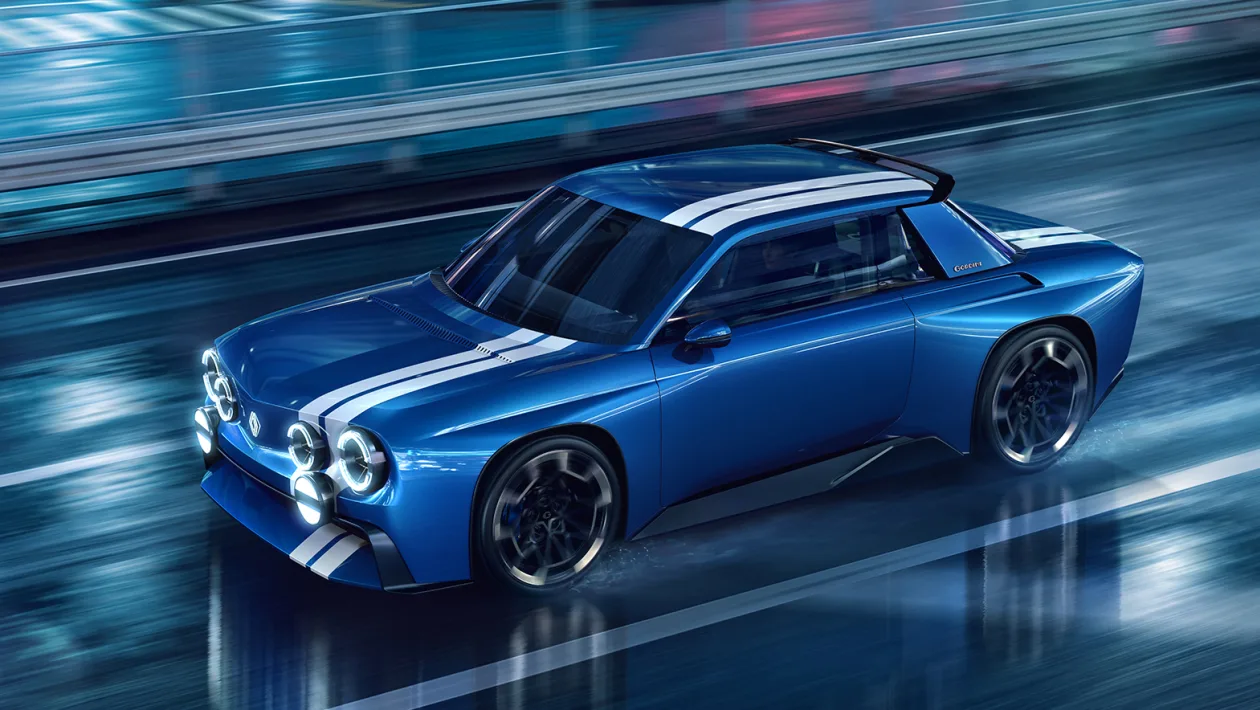
As thrillingly impressive as it is, Renault appears to have missed the mark with the riveting new 8 Gordini – not due to the fact it’s all-electric, but because there appear to be two chances of it ever rolling off the production line: Buckley’s and none.
The two-door EV is a modern interpretation of the Renault 8 Gordini launched in 1964, which became a French performance icon and rallying hero long before Renaultsport and Alpine became synonymous with the company’s hottest machinery.
The Gordini story began with racing driver and engineer Amédée Gordini, nicknamed “The Wizard” for his ability to extract serious performance from small engines. His ties to Renault began in the late 1950s and eventually spawned a series of road and competition cars.
Renault considered around 300 design proposals for this modern interpretation before settling on the finished concept, which reportedly took just two months to develop.
There’s no mistaking the inspiration. The original’s V-shaped nose, four-headlight layout, boxy proportions and distinctive twin white stripes over brilliant blue paint have all been updated without being diluted.
But Renault didn’t simply modernise an old design. The four-door body of the 1960s car has been replaced by a more dramatic two-door sedan silhouette, complemented by heavily flared wheelarches, 19-inch front and 20-inch rear wheels and a diffuser that screams aggression.
Extra driving lights reference the R8 Gordini’s off-road triumphs, while an F1-style rain light is among several nods to Gordini’s motorsport history. At 4.12 metres long, she’s compact like a true rally car, although it is substantially wider and lower than its ancestor.
The minimalist interior is just as striking as the outside. Renault has resisted the temptation to fill the dashboard with giant screens, instead fitting simple circular instruments to a brushed-aluminium fascia.
Blue corduroy features across the lower dashboard and bucket seats, with Alcantara and leather used elsewhere. The centre-console switchgear is brushed aluminium, and the uncluttered look should be forwarded to some modern designers to serve as inspiration.
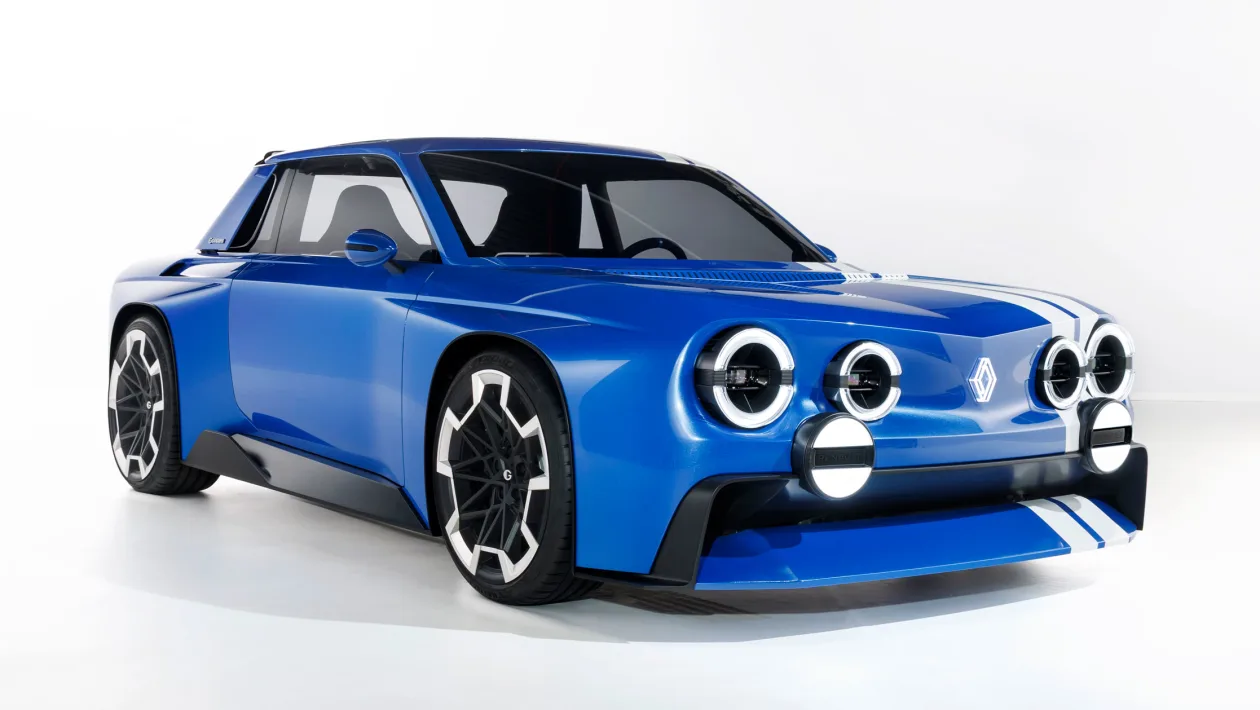
Technical details are scarce, although Renault has confirmed the 8 Gordini is electric, rear-wheel drive and produces 198kW. That represents an enormous jump over the original, which was also rear-wheel drive but mounted its 1.1-litre, four-cylinder, 71kW mill behind the cabin.
Renault hasn’t disclosed the battery capacity, performance figures or driving range. It also hasn’t confirmed whether the car shares its aluminium underpinnings with the wild Renault 5 Turbo 3E, which produces around 397kW.
There are no plans to put the new 8 Gordini into production. For now, it remains a one-off design exercise that will be displayed at the Paris Motor Show.
Turning it into reality would almost certainly make it an expensive proposition. The Renault 5 Turbo 3E costs roughly $270,000 before Australian taxes and charges, so fans would need exotic money if it ever does start rolling into showrooms.
Renault advanced design boss Romain Gauvin says concepts such as the Gordini allow the company to experiment while changing perceptions of what the French brand can be.Given the finished product, Renault might find plenty of people willing to encourage it to go one step further and actually build the thing.
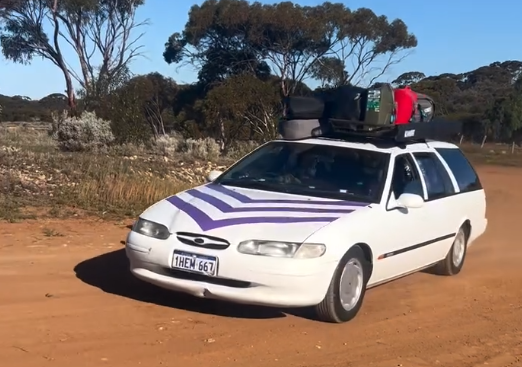
Marcus Pike and his mate Gerard De Campe are driving their 1995 Ford Falcon more than 3000km across the Nullarbor to watch their beloved Fremantle Dockers play in the AFL grand final – and despite the Falc’s age, they reckon it’s dealing with the journey “beautifully”.
Pike and De Campe documented the process of getting the 31-year-old vehicle ready on their Instagram account. Two weeks before setting off, Pike said there was “heaps of work to do” to the “tyres, suspension, diff pulled apart, new fuel lines, all that sort of stuff”.
The work – which also included new shocks – cost them $3000 at a time when they weren’t even sure their team would make it to the biggest game of the year after their shock loss to Hawthorn in the first finals match of 2026.
The duo christened their car the “Wharfie Wagon” – after the Dockers’ famed “Wharfie Time” celebration – once they’d added some decals to the duco in team colours the day before they hit the road.
With the roof rack packed until it was chockers with supplies including petrol, they set off, despite their Instagram followers warning them it was a bad idea. “A lot of you seem to think this vehicle shouldn’t be out here. And you’re right,” Pike said.
“However, this thing is running a treat. If you don’t think it should be out here, well then, follow along … this thing’s going on a f***ing journey.”
Speaking to Channel Seven’s Sunrise the morning after they reached the remote roadhouse community at Balladonia on their first stint, Pike said, “It’s been smooth sailing so far, mate. We made good headway yesterday, about 900 kays. Ran into our first minor mechanical drama, which we’ll get tidied up this morning and hopefully push on from here.”
Pike admitted the Falcon “is older than us” and said “it’s probably not the smartest choice”, but added, “It runs, drives and goes beautifully, mate. It’s just stopping that’s become a little bit of an issue … we’ll try and get the brakes sussed this morning and then see how we go after that.”
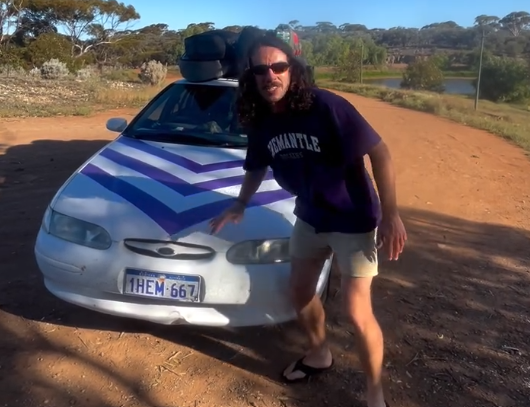
Asked if they attempted to get on a plane to get to the MCG, Pike (pictured above) revealed, “Nah, we didn’t even try, to be honest,” with De Campe adding, “There’s not much fun in that.”
Pike was a little less upbeat in a clip posted to Instagram. “We’ve had a tumultuous day,” he explained. “Last night coming into camp, we’re doing about 109 and I pumped the brakes … and then bang, all we heard was a hissing noise.”
The mates limped the car to Norseman, about 190km south of Kalgoorlie, and had a brake booster freighted so they could install it on the third morning of the run. They obviously pulled it off because the next post showed them in South Australia with a working set of anchors and the aim of reaching Melbourne on Friday morning, just over 24 hours before kickoff.
Their most recent post saw Pike checking the oil as part of some “preventative maintenance” as they punched out 2200km in two days. He invited petrolheads who’ve been following their exploits to meet them at the MCG, where they can check out what sort of state the Falc is in… and how it’s looking in anticipation of the return journey.
Nissan has turned back the clock to the boy-racer 1990s with the Z Kaze, a heavily modified concept that combines the latest Z sports car with styling cues from some of the most memorable models in the nameplate’s history.
Unveiled at ZCON, the annual gathering of the Z Car Club Association in Phoenix, Arizona, the Kaze – Japanese for ‘wind’ – is designed to celebrate more than five decades of Nissan sports cars while also tapping into the Japanese tuning scene of the 1990s.
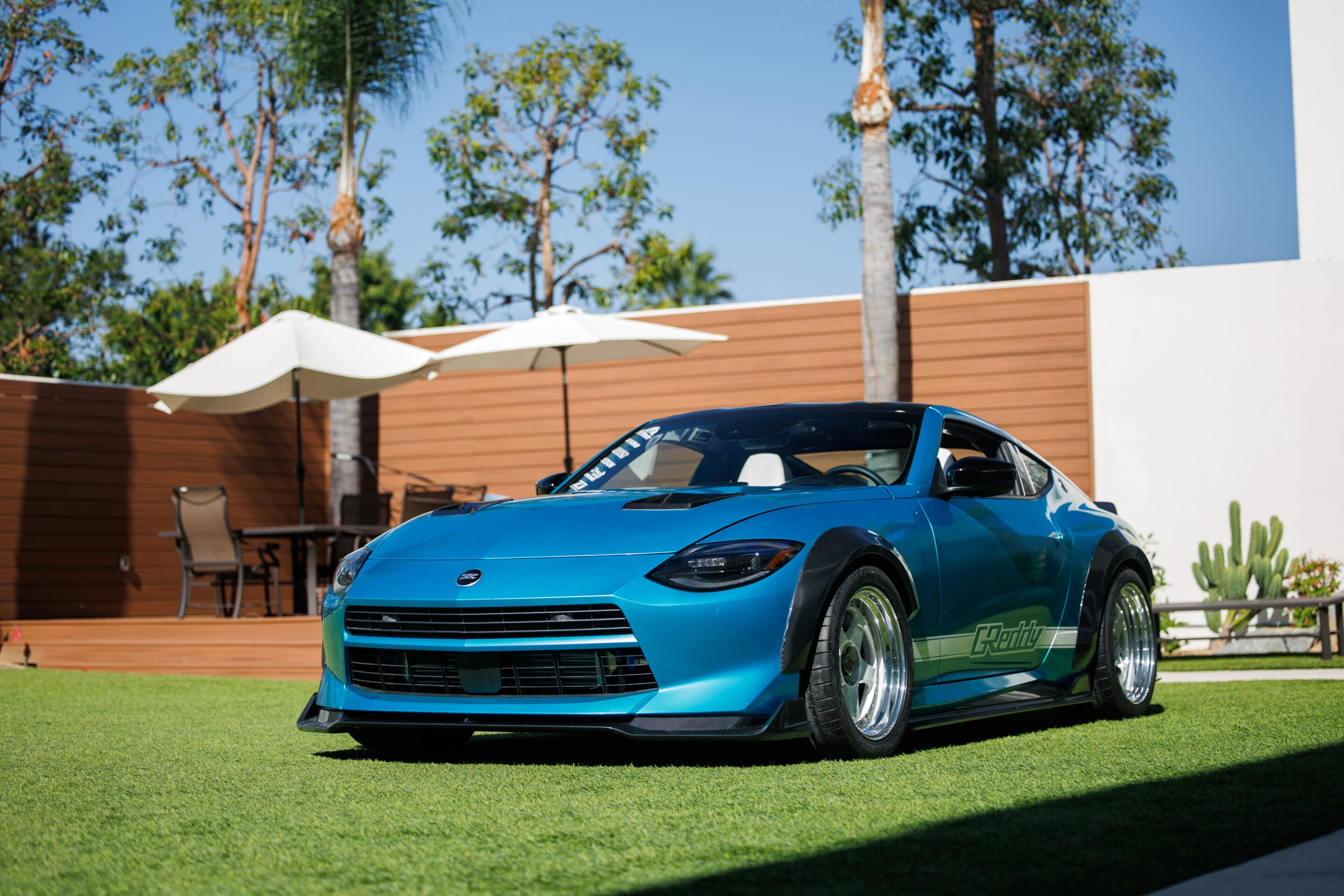
Its headline feature is a T-top roof inspired by the 300ZX that arrived in 1989, just to turn the nostalgia dial all the way up to 11. Special mention goes to the GReddy signage on the flanks, which harks back to the Japanese aftermarket that thrived in the 1990s and 2000s.
Nissan says the concept draws inspiration from all seven generations of Z, a bloodline stretching back to the original Fairlady Z of 1969 and including standouts like the 280Z, two generations of 300ZX and the 350Z.
“The Z Kaze concept celebrates some of Nissan’s most iconic open top sports cars, while recognizing the ’90s tuning culture that helped put Nissan and Nismo on the map,” said Nissan America senior vice-president Ponz Pandikuthira.
The retro treatment goes well beyond the roof. The Kaze features a pair of carbon-fibre bonnet vents, pumped-out wheel arches and a carbon-fibre body kit incorporating a front splitter, side skirts, redesigned rear bumper and more prominent lip spoiler.
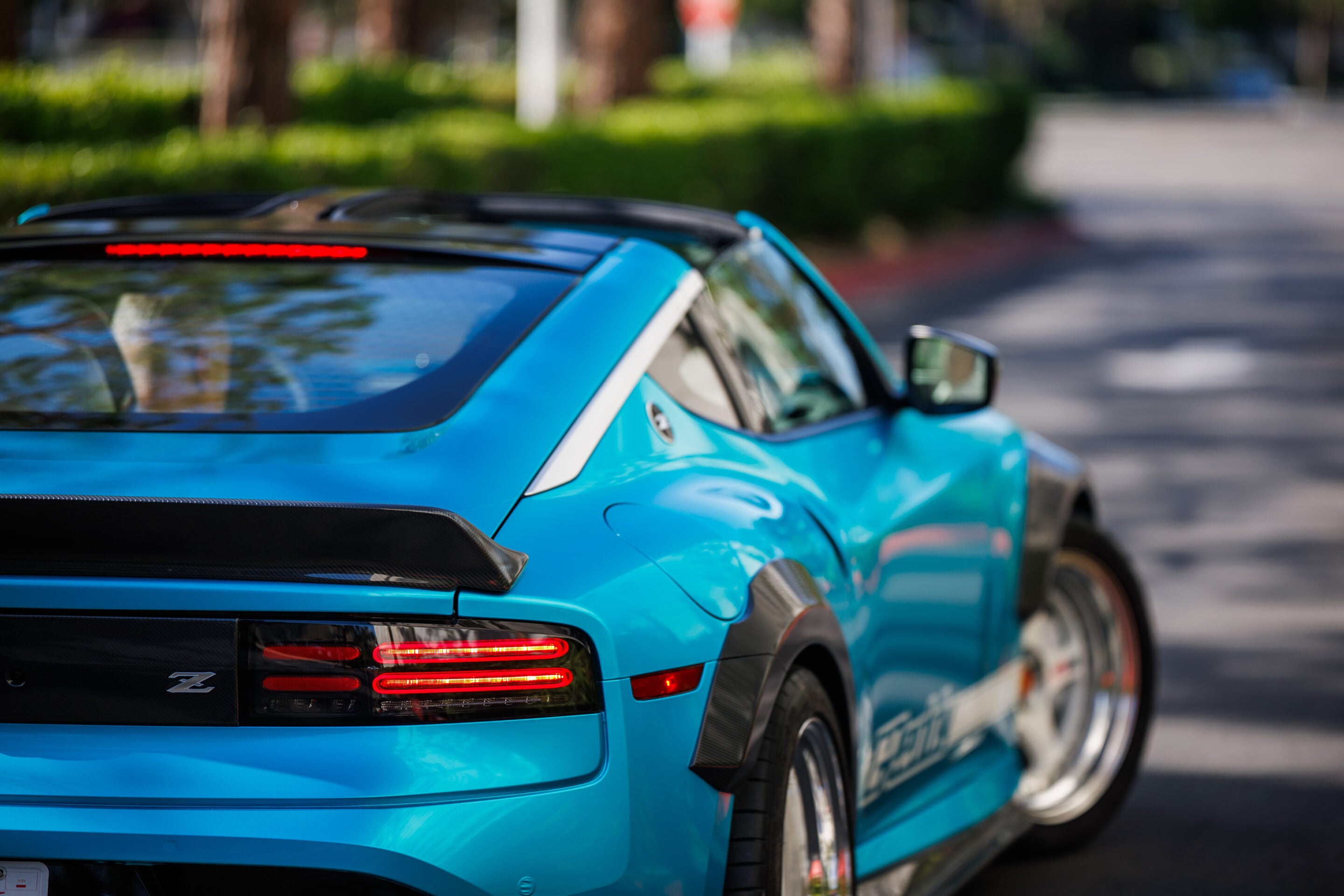
That lowered stance is complemented by forged multi-piece 18-inch Nismo LMGT2 racing wheels, while Nissan’s performance division has supplied a range of suspension and chassis upgrades. Pacific Teal paintwork and period-inspired decals put the cherry on top of the exterior transformation.
Inside, Nissan has fitted custom white leather upholstery and additional carbon-fibre trim. The audio system has also been upgraded, with a more powerful Bose set-up featuring speakers built into the headrests.
The regular Nissan Z is powered by a 3.0-litre twin-turbocharged V6 producing 298kW and 475Nm, sent to the rear wheels. Nissan has given the Kaze additional performance hardware, including a new exhaust system, intercooler kit and upgraded air filter. However, there’s no wordon how much extra power those modifications produce.
For now, the Z Kaze remains a concept rather than a preview of a confirmed production variant, but it shows Nissan is still willing to experiment with the heritage of one of its most famous performance nameplates.
