
Mat Armstrong took a huge risk by buying a one-of-a-kind Bugatti Veyron that would not start properly or select a gear. Now he’s laughing all the way to the bank after fixing the hypercar with parts that cost just $74.
The YouTuber, whose channel has more than seven million subscribers, went from England to Dubai and briefly inspected the vehicle before deciding to make the $1.67 million purchase. He could only turn the engine over very briefly before it conked out, and he could not select a gear for love nor money, which explained why it was hidden away at the back of a showroom instead of being prominently displayed.
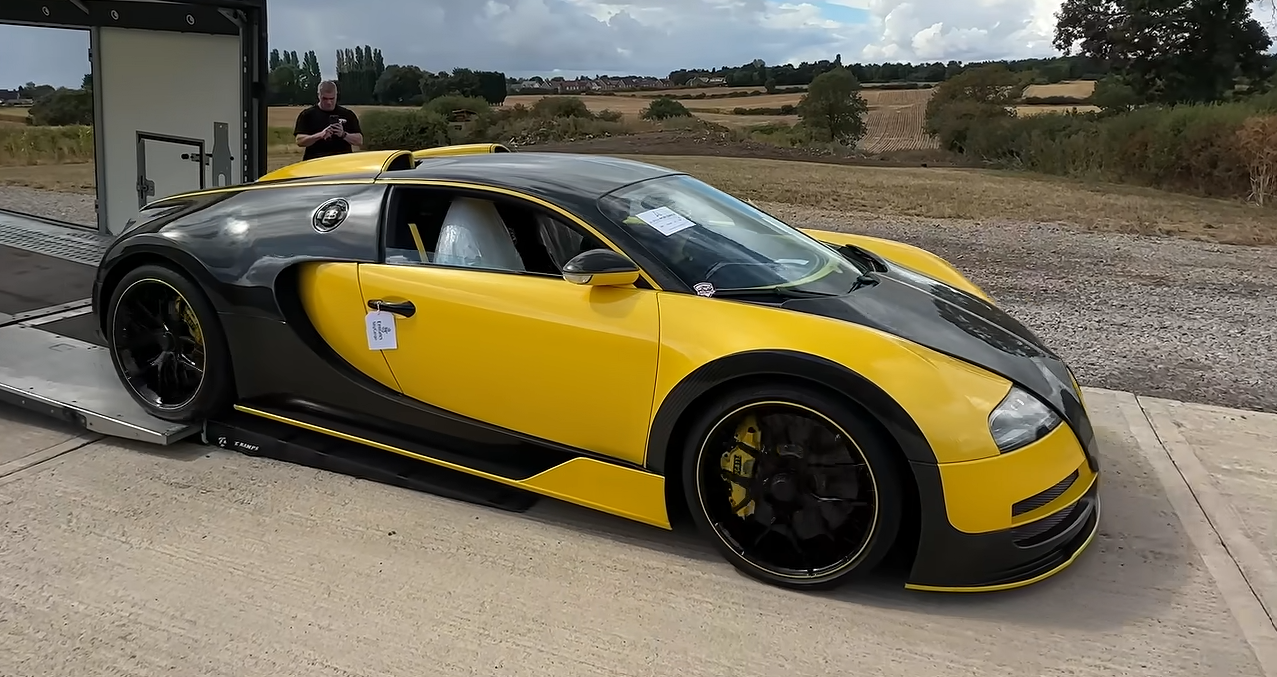
“This car doesn’t start, which could mean anything, and we know these Bugattis could be hundreds of thousands of pounds to repair – but sometimes the fixes are really simple,” Armstrong said on his YouTube video detailing the car’s journey back to health, which has been viewed 13 million times.
Adding spice to the story is the fact that this is no ordinary Veyron. Armstrong had chanced upon an Oakley Design variant, a one-off example that has been clad in a fully exposed carbon-fibre body and re-tuned to make 1200 horsepower (895kW) and 1584Nm.
Armstrong knew there was a good chance that the repairs would be extremely cheap, as he had experienced almost identical problems with a Veyron he had already fixed for next to nothing.
He found that the car wouldn’t start because the fuel hose that sits on the pump inside the tank had been worn away over time due to the high-ethanol petrol it ran on, and it just needed a simple replacement hose.
The company that delivered the Bugatti to Armstrong in the UK had to drain the fuel from the petrol tank as part of the process. They realised it was his car, saw the video explaining how he fixed the problem on his other Veyron, and actually performed the procedure for him.
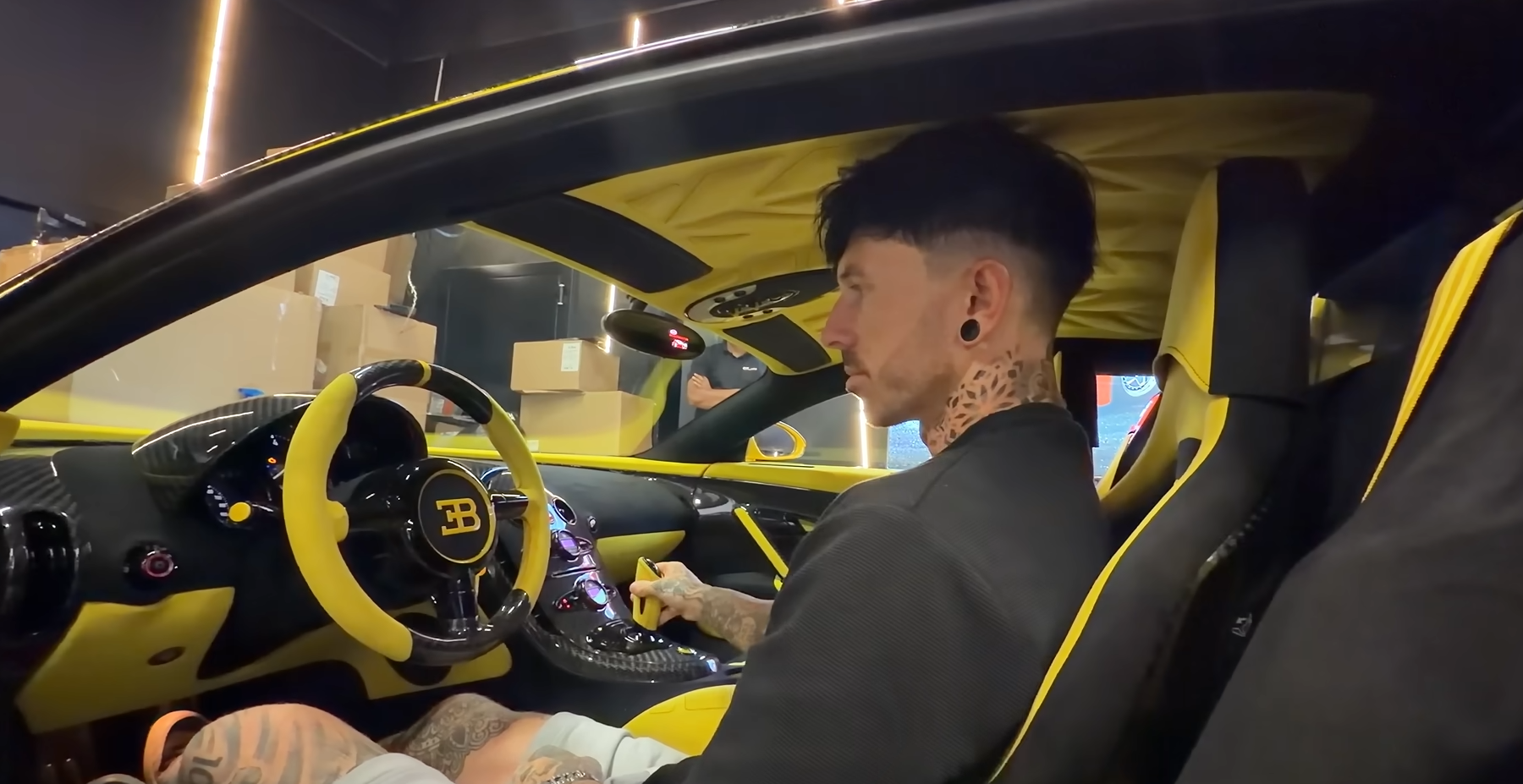
However, they used the wrong clamps on the hose, but that was another relatively simple fix for the YouTuber. Armstrong also had to source the original key for the car after the one it was shipped to him with proved faulty. He just had to put a new battery in the original item.
The toughest part of the repairs came when he found the ignition switch was faulty, meaning he had to take apart most of the dash to get at and install a replacement that cost about $21. The final stage was getting rid of an airbag warning light with a bit of rewiring.
Once everything was sorted, Armstrong took the Veyron to a supercar dealer to have it valued. The result? It’s now worth a cool $2.8 million.
MG Motor Australia has used the 2026 Everything Electric Sydney show to showcase two significant new models, beginning with its new electric ute soon to arrive in Australia along with its huge luxury SUV that could preview what’s next to come for Australian fans of its premium IM brand.
While MG didn’t debut as many models as other brands such as Chery, its two important new models show how the brand is expanding beyond its small car and SUV electrified line-up.
MG U9 EV
Taking centre stage was the new MG U9 EV, which made its first Sydney appearance ahead of Australian deliveries beginning in the fourth quarter of 2026. Australia will be the first market globally to launch the electric ute, and MG even announced its local pricing at the show.
Priced from $78,990 before on-road costs, the EV sits above the existing combustion-powered U9 but swaps its turbo-diesel engine for a 102.2kWh LFP battery and dual electric motors making 325kW/700Nm outputs, which are enough for a claimed 0-100km/h time of just 5.8 seconds.
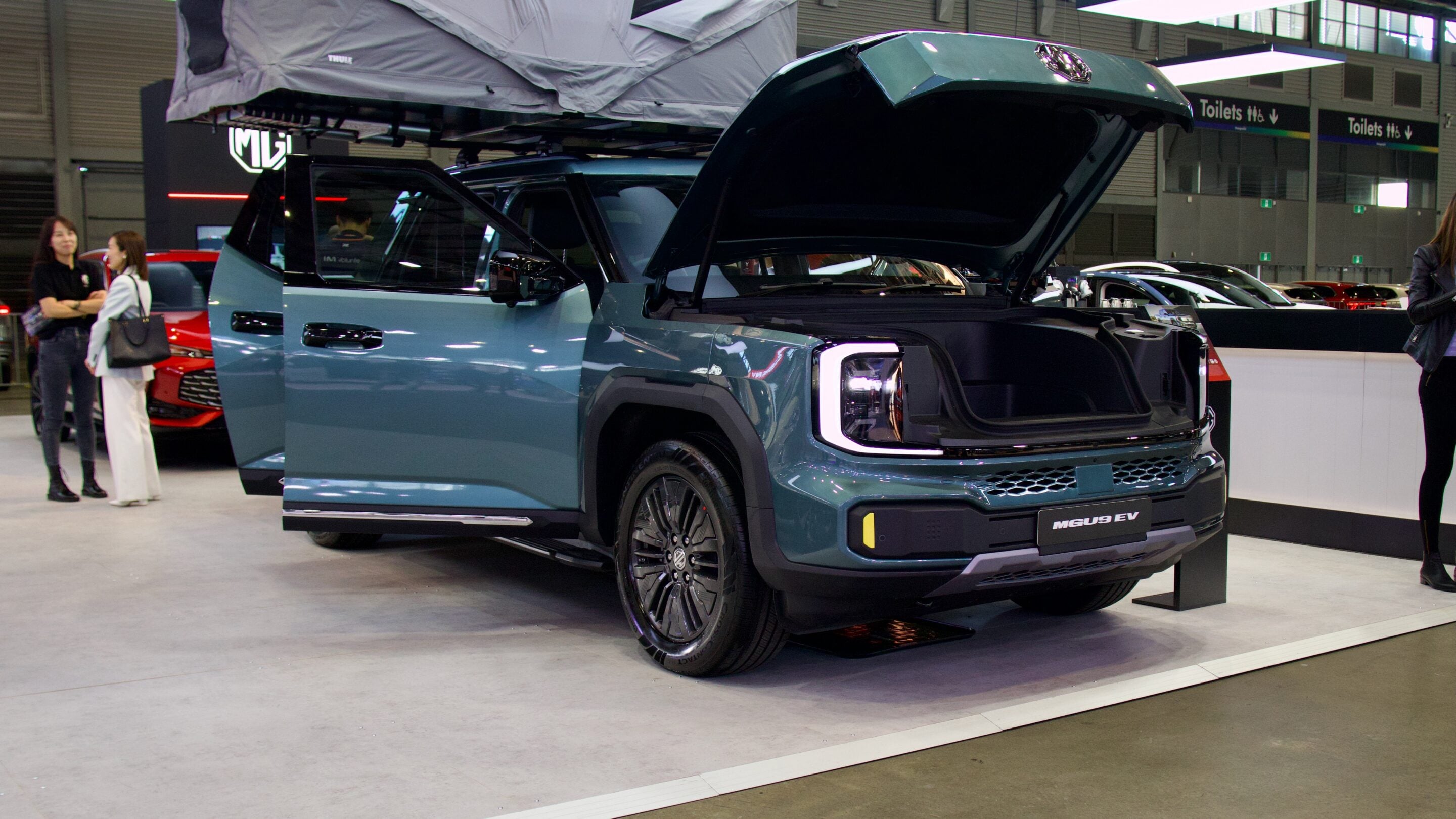
Its WLTP claimed range is 430km, while it can also tow up to 3500kg braked and offers a 685kg payload. Its massive 236-litre front storage compartment also adds some extra practicality. It also features air suspension, twin 12.3-inch displays, wireless Apple CarPlay and Android Auto, JBL audio and leather upholstery.
The unit on the show floor was fitted with some accessories such as a roof rack and a big roof tent, which further displayed its usability. Its party piece is the bonnet opening, revealing a huge and useful 236-litre boot. The cabin of the U9 EV is almost identical to the diesel U9, making it comfortable, good quality and quite spacious for its size.
IM LS9 Hyper
Offering just two models currently, the IM5 sedan and IM6 SUV, MG’s premium arm IM is in need of product expansion and the next model it sells locally may have been seen at the show: the LS9 Hyper. It’s a huge six-seat SUV that – unlike the IM models underneath it – uses an extended-range drivetrain with a 1.5-litre turbo-petrol engine and tri-motor all-wheel drive that draws power from a 65.9kWh NMC battery.
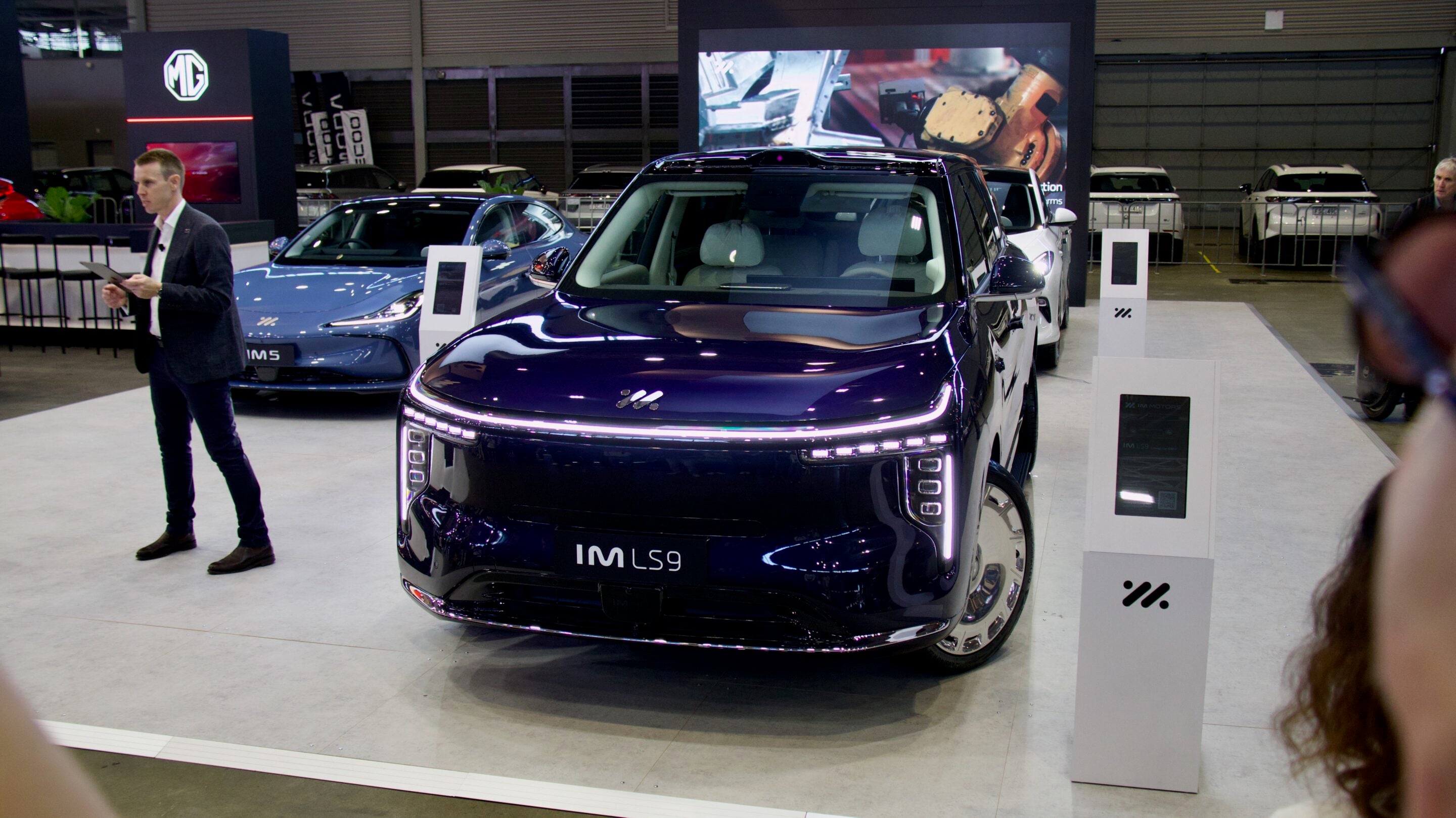
It measures close to 5.3 metres in length – or the same sort of length as a Rolls-Royce Cullinan – and it’s positioned as the flagship for the IM brand. Having said that, we shouldn’t get too excited just yet as MG’s local arm is yet to confirm it for our market. It’s not the first time that it’s been seen here – it was featured at the Melbourne Motor Show earlier this year, so it appears that the company is at least considering a local introduction.
The LS9 features a large 27.1-inch dual screen set up for the driver and then a separate 15.6-inch touchscreen for the passenger, a plethora of leather-covered surfaces, a 25-speaker Bang & Olufsen sound system and a six-seat layout with electrically adjustable seats.
Both the MGU9 EV and IM LS9 are on display alongside MG and IM’s broader electrified range at Everything Electric Sydney, which runs at Sydney Showground from September 18-20.
Toyota has revealed more details of its hydrogen fuel-cell HiLux, confirming the alternative-powered ute is targeting more than 400km of driving range and a 2500kg towing capacity when it arrives in 2028.
The fuel-cell electric vehicle (FCEV) will become another member of the ninth-generation HiLux family, joining diesel, 48-volt mild-hybrid and battery-electric versions as Toyota pursues multiple powertrain technologies. Toyota has confirmed the FCEV for Europe and Oceania from 2028.
Toyota’s latest targets give the hydrogen HiLux some notable advantages over its battery-electric sibling. The FCEV is aiming for more than 400km of range and up to 2500kg towing, while the European-spec HiLux BEV offers around 257km of range and a 2000kg towing capacity. Hydrogen refuelling should take about five minutes, compared with roughly 30 minutes for the BEV to recharge from 10 to 80 per cent.
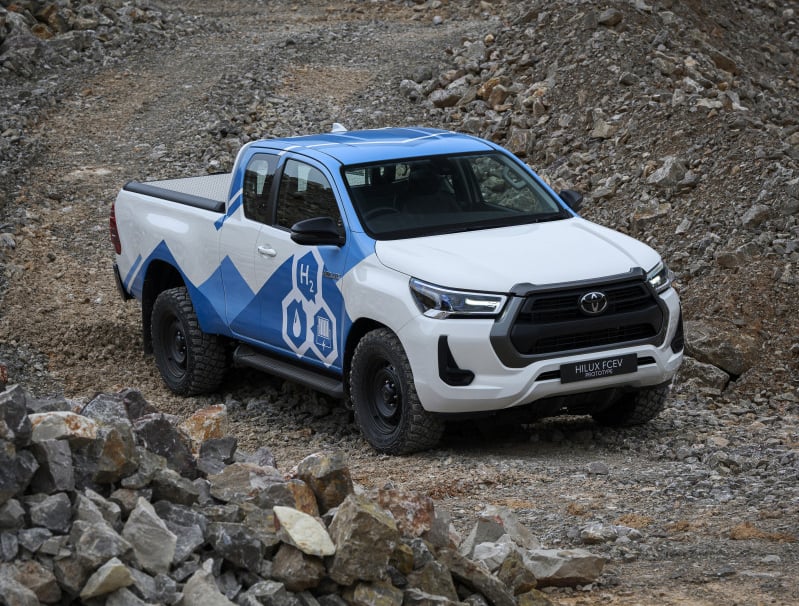
The production vehicle follows a development program that produced 10 prototype hydrogen HiLux utes at Toyota’s Derby factory in the UK during 2024 (above), with support from the British Government.
Those prototypes used technology derived from the Toyota Mirai passenger car, including three high-pressure hydrogen tanks mounted within the ladder-frame chassis. A 330-cell fuel-cell stack supplied electricity to a 134kW rear-mounted electric motor. The prototypes carried 7.8kg of hydrogen and were initially expected to achieve around 600km of range.
Toyota has not yet detailed the final production powertrain, meaning outputs, hydrogen capacity and drivetrain configuration remain unconfirmed.
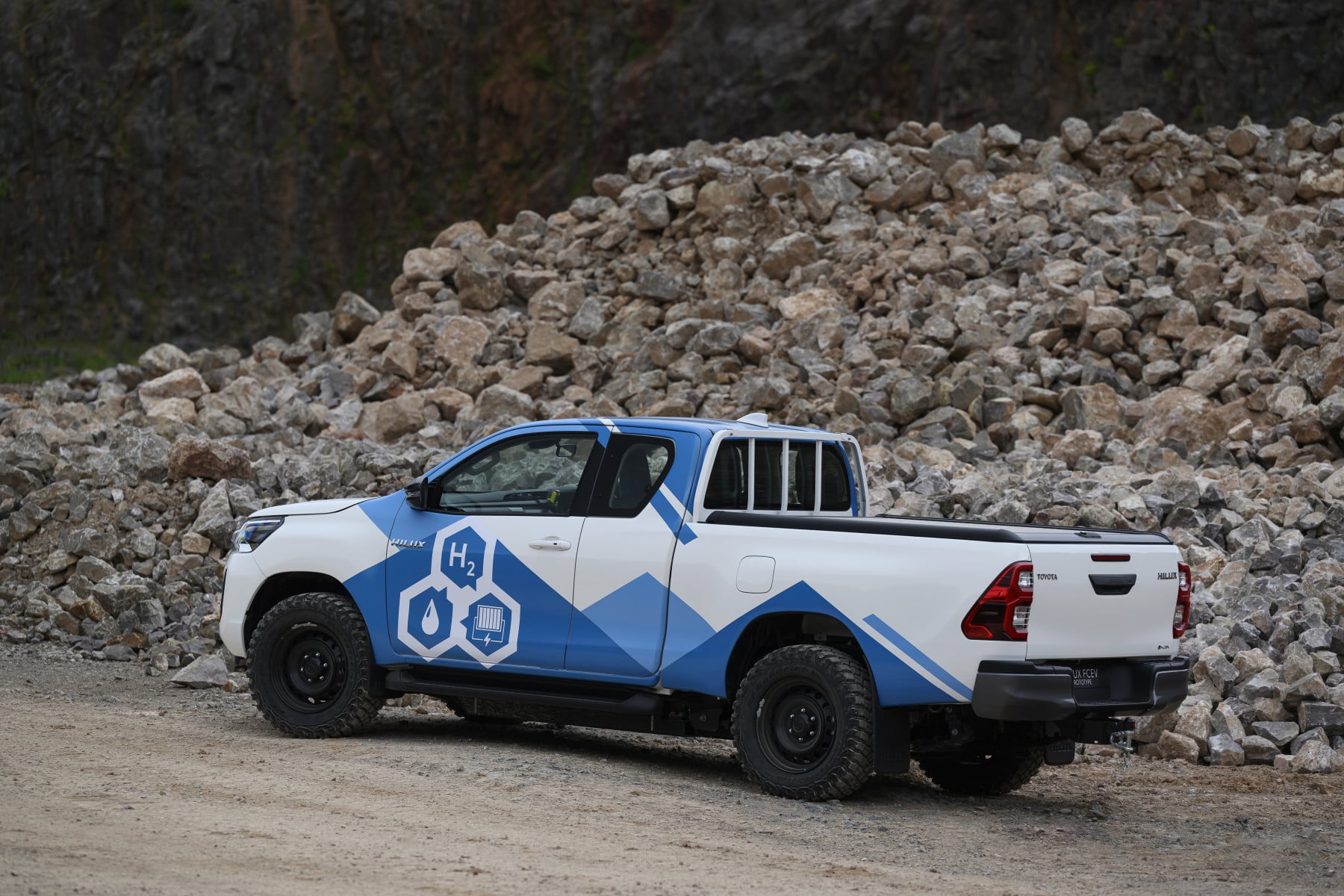
Infrastructure may prove the greater challenge. According to The Next Web, Europe and the UK currently have just 179 hydrogen refuelling stations, while some existing 700-bar passenger-vehicle facilities are being replaced or reconfigured for heavy trucks and buses.
European regulations call for hydrogen stations at intervals of no more than 200km along the core road network by the end of 2030 – two years after the HiLux FCEV is due to launch.
Toyota is also taking hydrogen HiLux development into motorsport, with a fuel-cell version planned to contest the Dakar Rally’s Future Mission 1000 category in 2027.
Pricing and detailed specifications for the production model have yet to be announced.
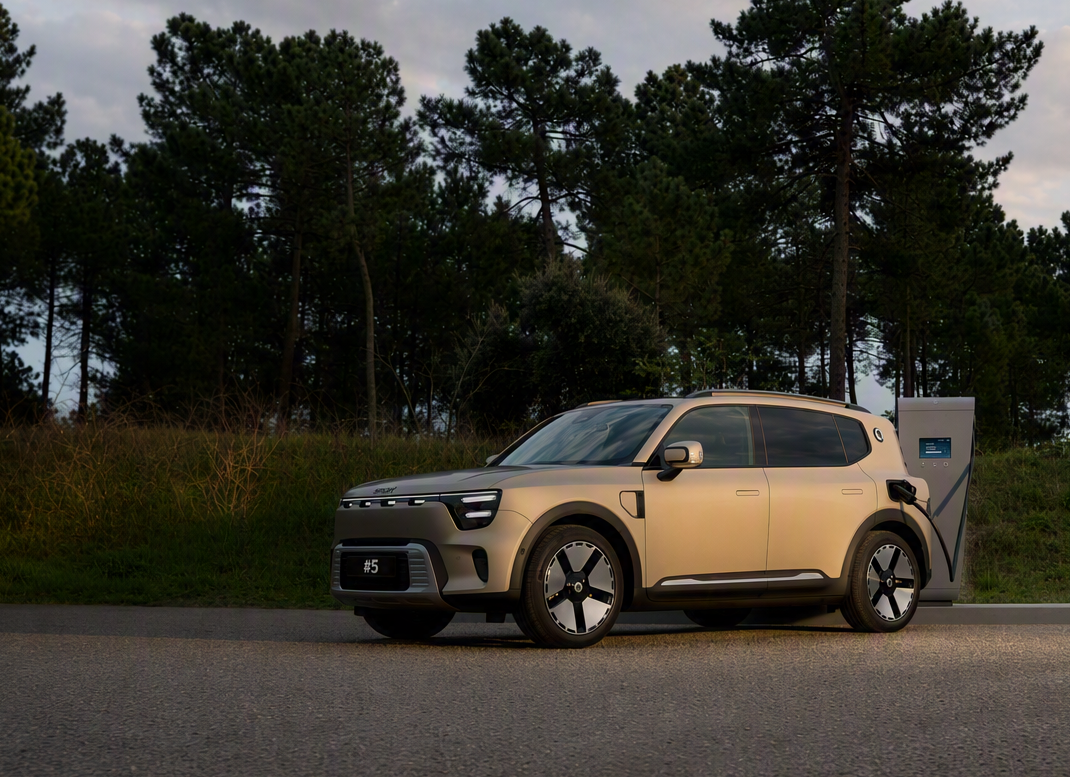
Smart has launched its new #5 electric SUV in Australia, with the brand’s largest model to date priced from $58,900 before on-road costs.
The mid-size SUV will be offered in three grades, starting with the #5 Pro+ at $58,900. The Premium+ costs $63,900, while the performance-focused Brabus sits at the top of the range at $73,900. Australian customer deliveries are scheduled to begin in November through distributor LSH Auto Australia.
Designed by Mercedes-Benz’s global design team, the #5 adopts a more upright, boxy shape than Smart’s smaller #1 and #3 models. Short overhangs and wheels positioned towards the corners are intended to maximise cabin space, while the rear seats can fold flat to increase luggage capacity.
Inside, the #5 features multiple digital displays powered by an AMD V2000 processor, along with a Sennheiser audio system, leather upholstery and 256-colour ambient lighting.
The major technical change is an 800-volt electrical architecture. A 100kWh battery supports a claimed 10-to-80 per cent DC fast charge in less than 18 minutes under suitable conditions.
Maximum driving range is quoted at up to 590km on the WLTP test cycle, although range and performance vary between variants.
The chassis uses double-wishbone front and five-link rear suspension, with multiple drive modes. Vehicle-to-Load functionality is also included, allowing the battery to power compatible electrical appliances and equipment.
At the top of the line-up, the #5 Brabus uses a dual-motor all-wheel-drive system and can accelerate from 0-100km/h in a claimed 3.8 seconds. Full Australian power and torque figures were not included in Smart’s launch announcement.
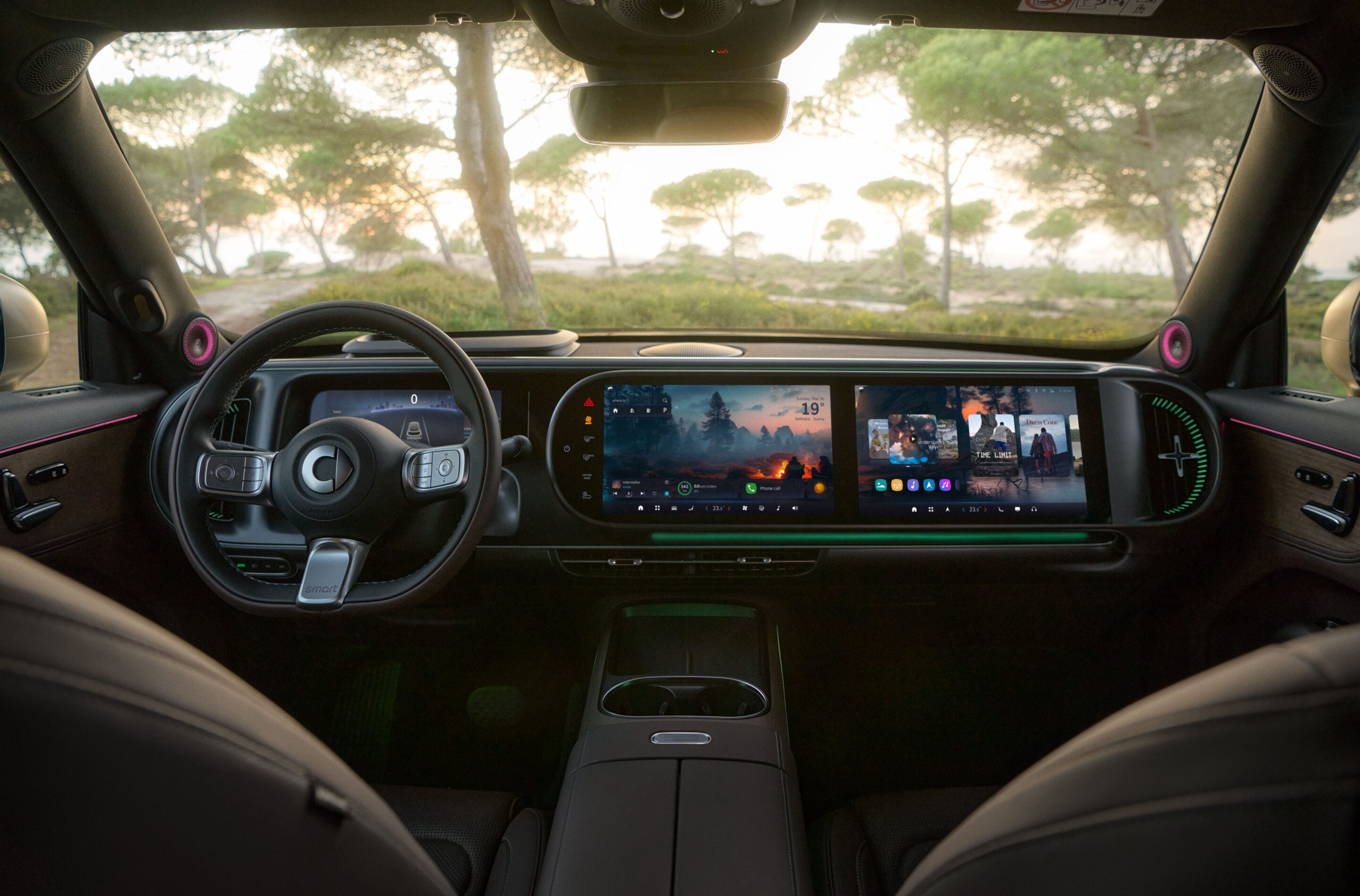
Driver-assistance technology includes Smart Pilot Assist, which uses dual Nvidia Orin X processors to support the vehicle’s various active safety systems.
The #5 has already received a five-star Euro NCAP safety rating and was named the organisation’s Best in Class large SUV for 2025.
Its arrival significantly broadens Smart’s Australian range, moving the brand beyond smaller urban-focused EVs and into the increasingly crowded electric mid-size SUV market.
Chery and its sub brands engaged in a flurry of activity at the Everything Electric Sydney show with no less than seven debuts for the Australian market.
Demonstrating just how quickly it plans to expand in our market, the debuts from the company included the important new Stockman ute, its new iCaur brand as well as the public debut of the new Lepas brand.
Together with several new and upcoming models from Chery’s existing brands, the seven debuts underlined the sheer scale of the company’s Australian ambitions – and showed that Chery is far from finished expanding its local line-up. Here’s what Chery showed at the Everything Electric show…
Chery Stockman
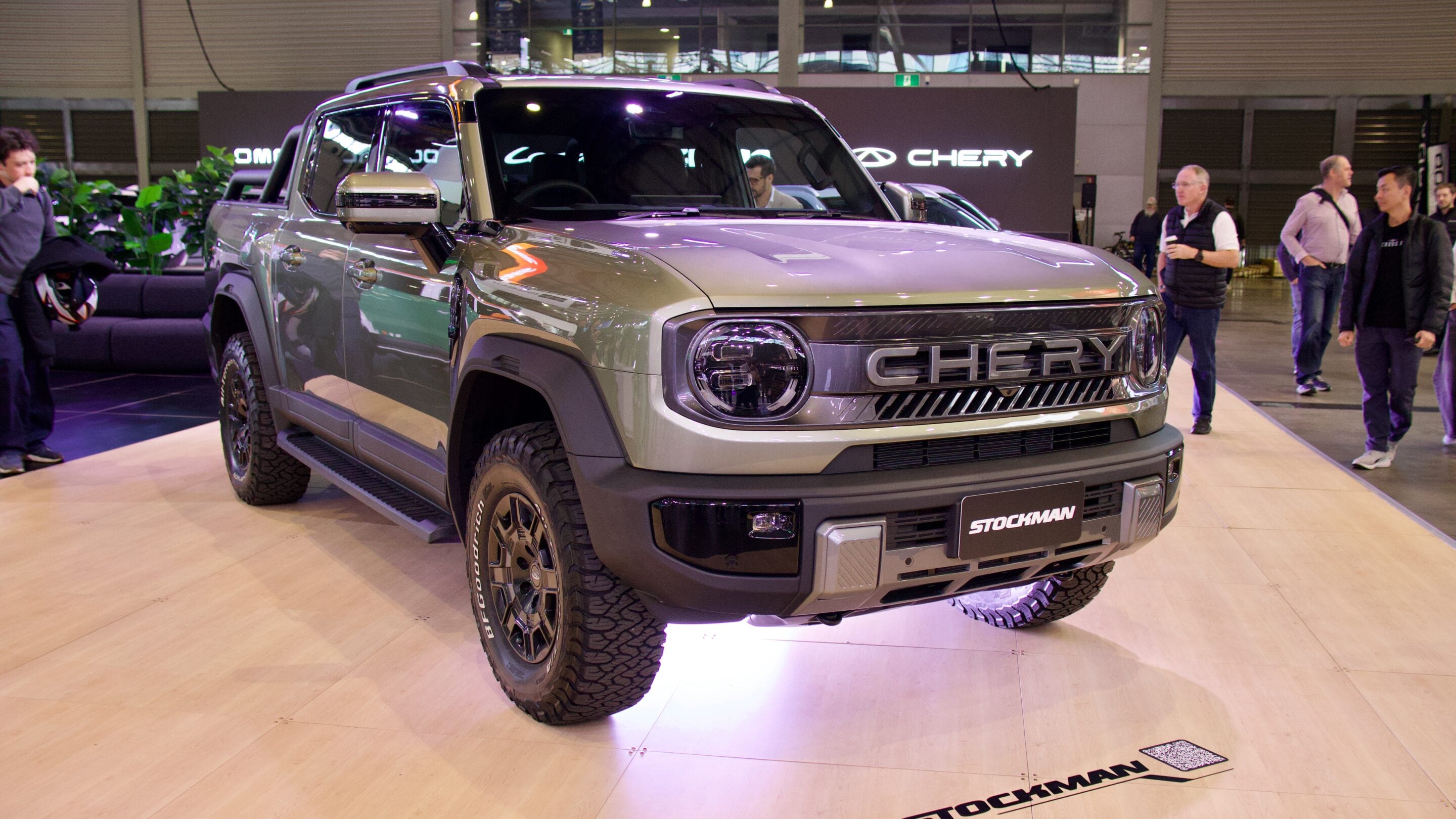
Due on sale in Australia around the end of 2026, the new Chery Stockman ute will be Australia’s first diesel plug-in hybrid ute. Using a new 2.5-litre four-cylinder turbo-diesel plug-in hybrid, the Stockman will make a keen 350kW of power and 800Nm of torque, but will also be capable of travelling up to 100km on electric power alone.
In person, the Stockman is handsome and spacious, measuring 5450mm long, making it larger than the Toyota HiLux. The cabin quality is also solid, as we’ve come to expect from Chery products, with many soft touch materials and tight switchgear. Rear seat room is definitely larger than a HiLux and Ranger, and the tray is well-sized too.
Updated E5
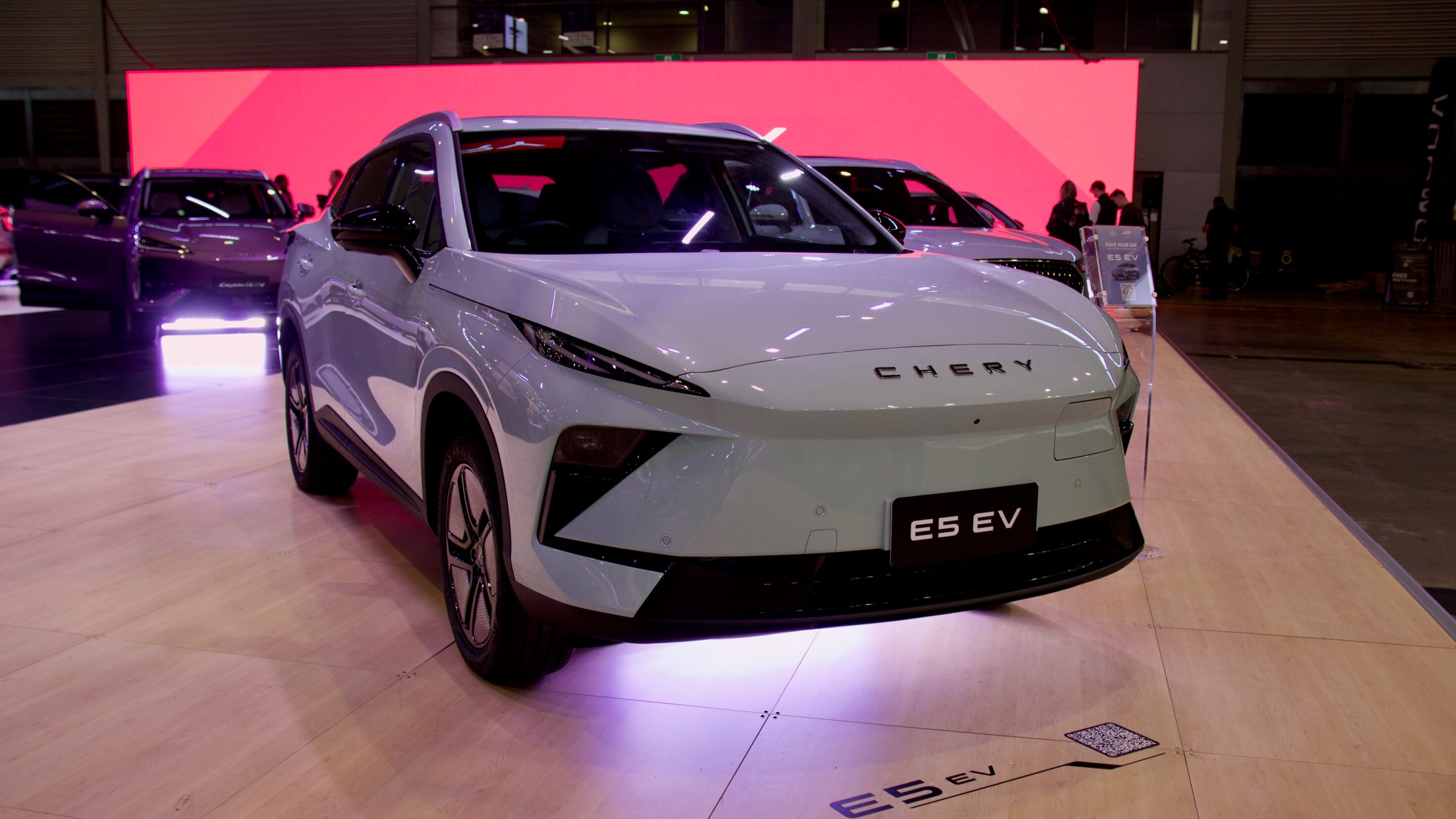
Only just confirmed for Australia, the updated Chery E5 electric small SUV is due to launch locally in the fourth quarter of 2026. Pricing is yet to be announced, though we aren’t expecting a major difference from the current model’s $36,990 driveaway price. The mechanicals of the E5 remain unchanged compared to the pre-updated model, so a 58.9kWh LFP battery with 430km of WLTP-rated range will continue.
Instead, the updated E5 ushers in a surprisingly comprehensive styling update with new front and rear styling, including angular new lighting units with especially sharp front daytime running lights (DRL). Inside is a new dashboard and centre console layout, which features a large 14.6-inch touchscreen, as well as a 12.3-inch digital driver’s display. Look out for the updated E5 in the fourth quarter of 2026.
iCaur V25
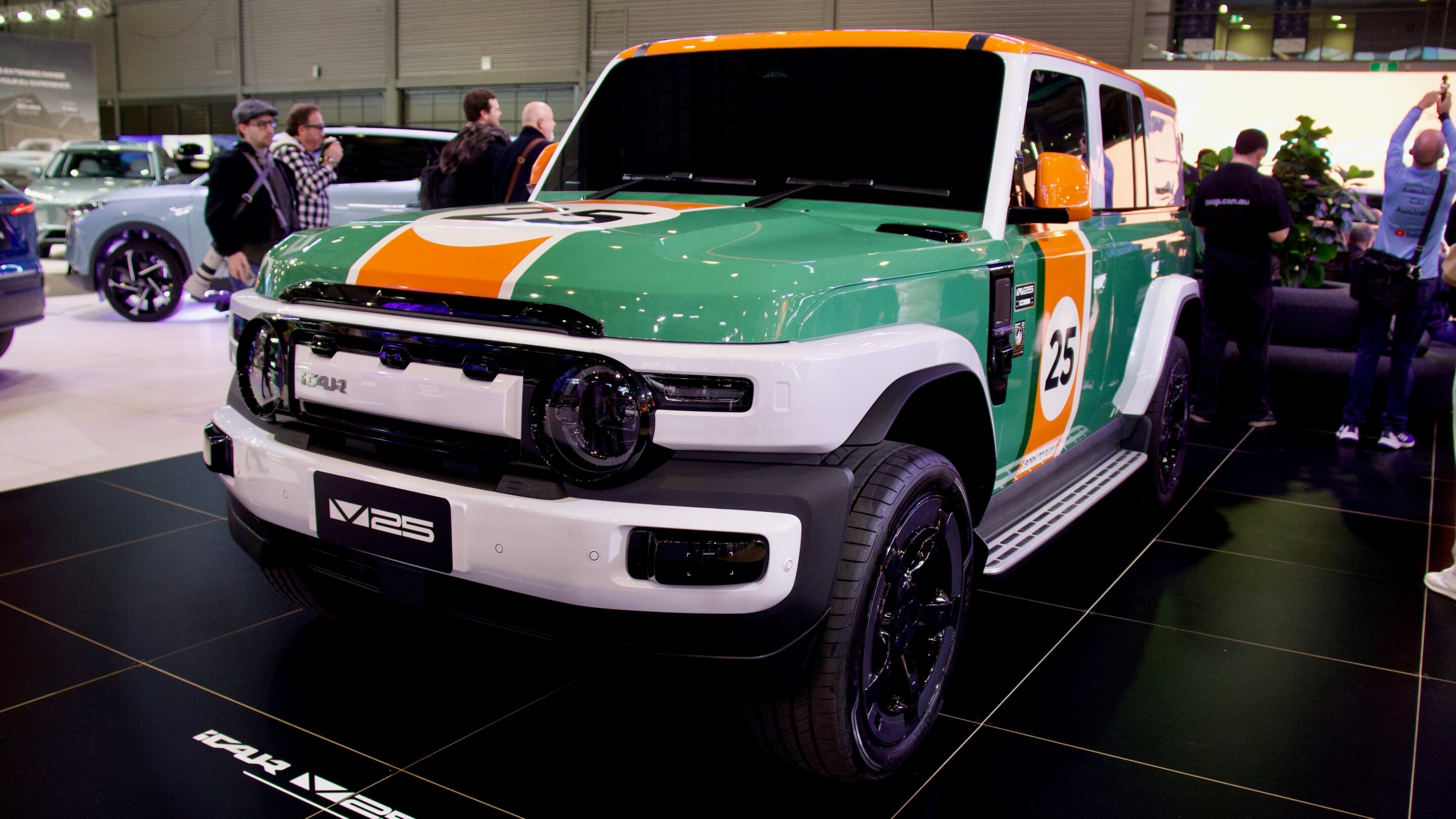
Chery used Everything Electric Sydney to debut its new iCaur brand with the V25 as its first offering locally. Due to go on sale in Australia in early 2027, the iCaur V25 will reportedly offer full-electric and range-extender PHEV options, with the latter featuring a 1.5-litre turbo petrol engine.
The show car featured a lairy livery, something we aren’t expecting to see offered locally, but in person it’s larger than expected and looks larger than the GWM Tank 300. More details about the iCaur V25 will be revealed closer to its early 2027 Australian launch.
Omoda 4
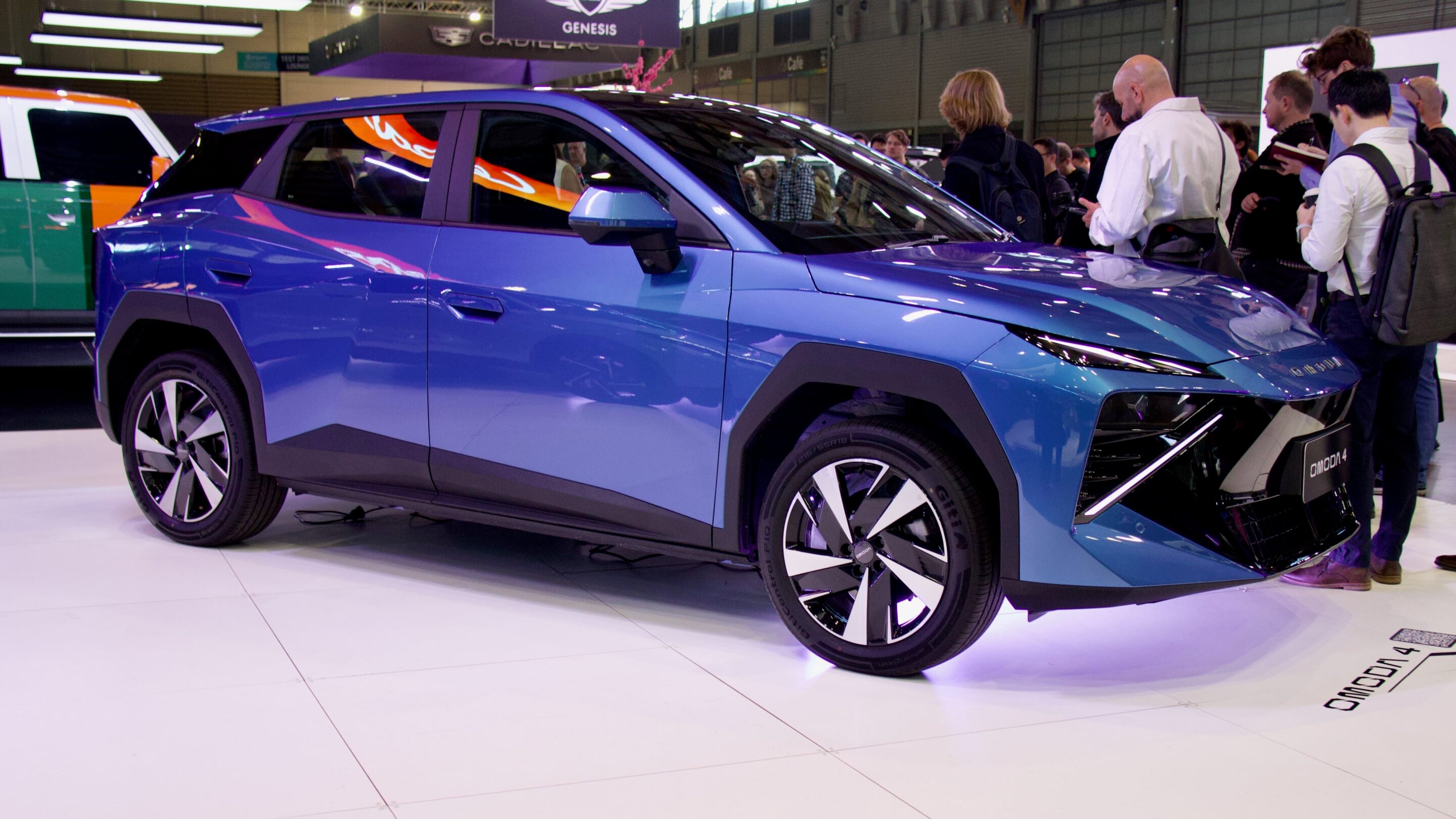
So far, Omoda Australia only offers one product in Australia but that’s due to change in the first half of 2027 as it will add the small Omoda 4 and mid-size Omoda 7 SUVs to its line-up. Measuring around 4400mm long – just bigger than the Hyundai Kona – the Omoda 4 features both fully electric and hybrid drivetrains overseas, which is what we’re expecting of the local model as well.
In person, it’s a striking and handsome-looking thing, while its cabin quality also feels good in the flesh. Rear seat and boot space is also capacious for the segment, and we’re looking forward to seeing how Omoda will price it in our market.
Omoda 7
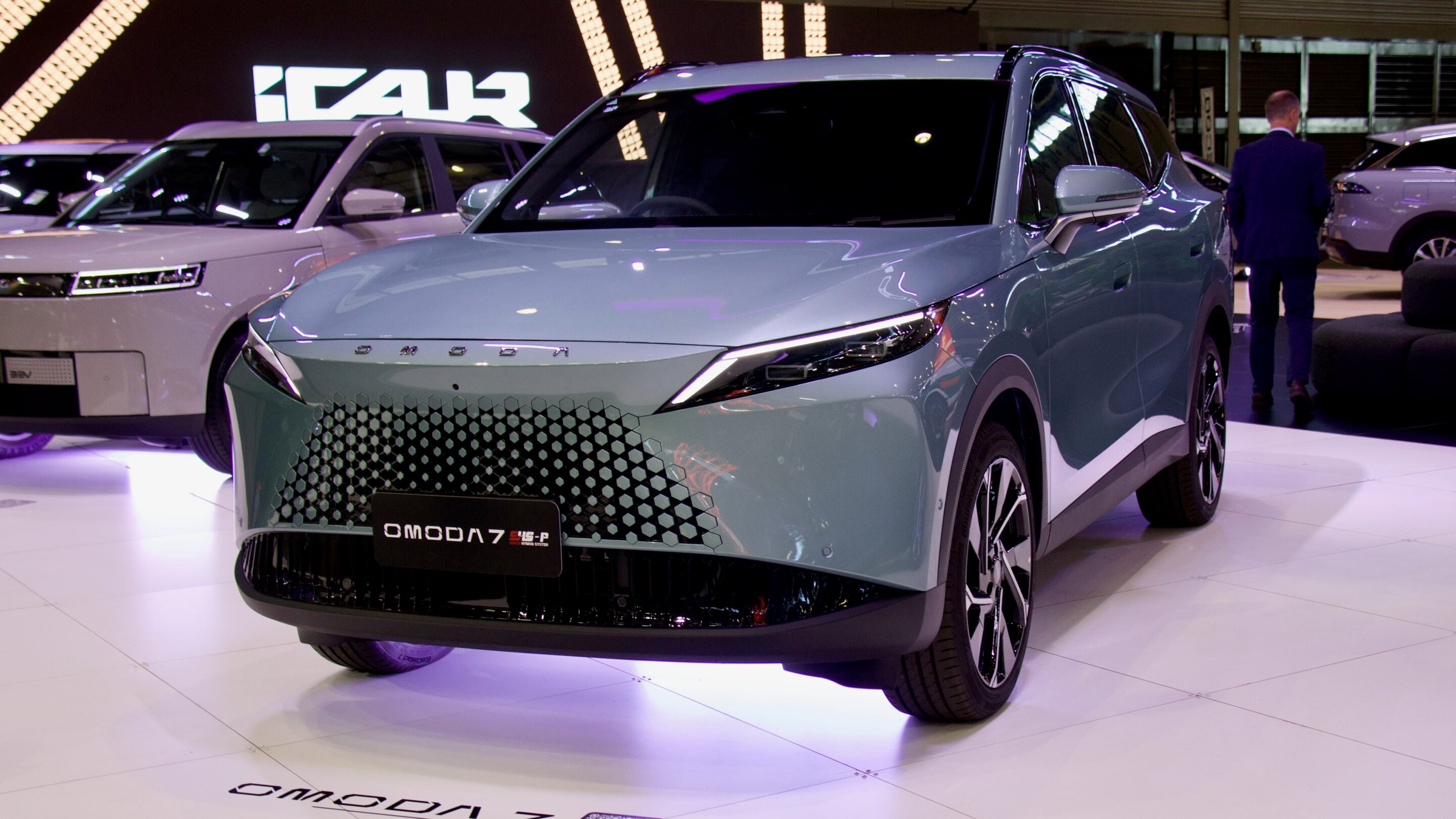
Omoda also debuted the larger 7, which will compete with cars like the Toyota RAV4 and Hyundai Tucson. Closely related to the Jaecoo J7 SHS, the Omoda 7 features a plug-in hybrid drivetrain with an 18.3kWh battery that should give it around 80-100km of electric driving range.
The 7 is already on sale in markets such as the UK, where it’s priced from £29,915 (A$56,000 at current exchange rates) so we’re expecting it to be priced similarly sharply in Australia when it launches in 2027.
Lepas
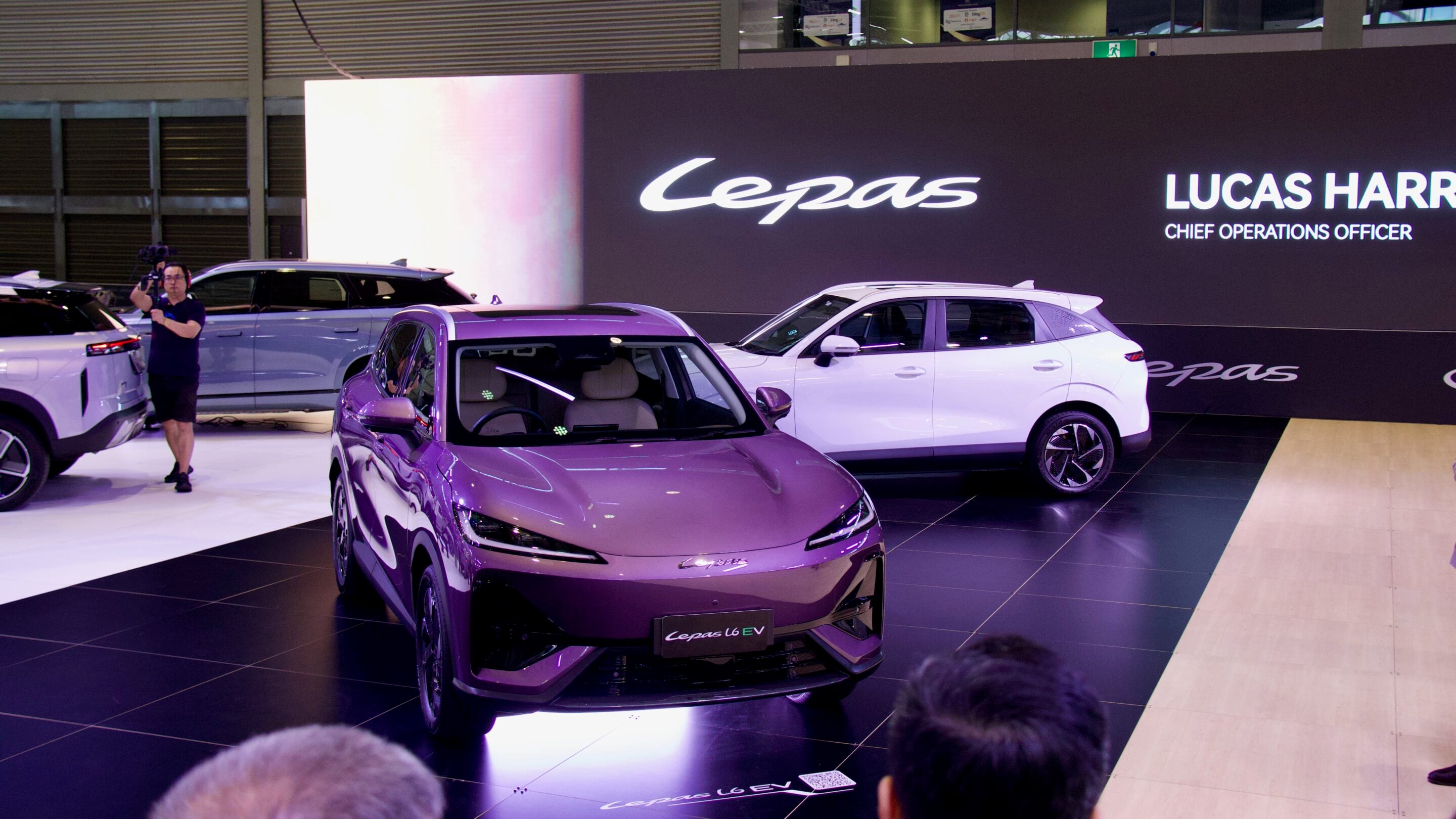
Chery also used Everything Electric to debut its new Lepas sub-brand to the Australian public, displaying its L6 EV and smaller L4 EV electric SUVs. The L6 EV will be the first model to be sold here, but Lepas plans a big expansion, including the L4 small SUV also shown at the show, due on sale locally in December. Plug-in hybrid versions of both will be sold, as well as a larger L8 sometime in 2027.
Chery has already revealed specs for the L6 EV, with a 65kWh LFP battery for a claimed WLTP range of 440km, while the L4 reportedly uses the same battery for a bit more range as it’s smaller. Australian pricing and standard equipment is yet to be announced for both models, but we’ll find out soon as the L6 EV is due on sale from next month.
The Everything Electric Sydney show started today and finishes on Sunday September 20.
GAC Australia is considering adding another plug-in hybrid SUV to its local range after using Sydney’s Everything Electric show to gauge reaction to the S7.
The large SUV is scheduled to enter global right-hand-drive production during the second half of 2027, opening the possibility of an Australian launch thereafter. GAC has stopped short of confirming the S7 for local sale, with pricing and Australian specifications yet to be determined.
If approved, the S7 would give the Chinese manufacturer an entrant in the competitive large SUV segment while expanding its local electrified line-up.
International versions use a plug-in hybrid system comprising a 1.5-litre turbocharged petrol engine and two electric motors. The front motor produces 170kW and 220Nm, while the rear contributes 80kW and 250Nm, providing electric all-wheel drive.
A 36.3kWh battery provides a claimed electric-only range of up to 150km, although GAC has not specified the test standard in its Australian announcement. Combined petrol and electric range is quoted at up to 1020km based on international specifications.
The S7’s appearance at Everything Electric comes as GAC explores how its Australian range could expand beyond its current offerings.
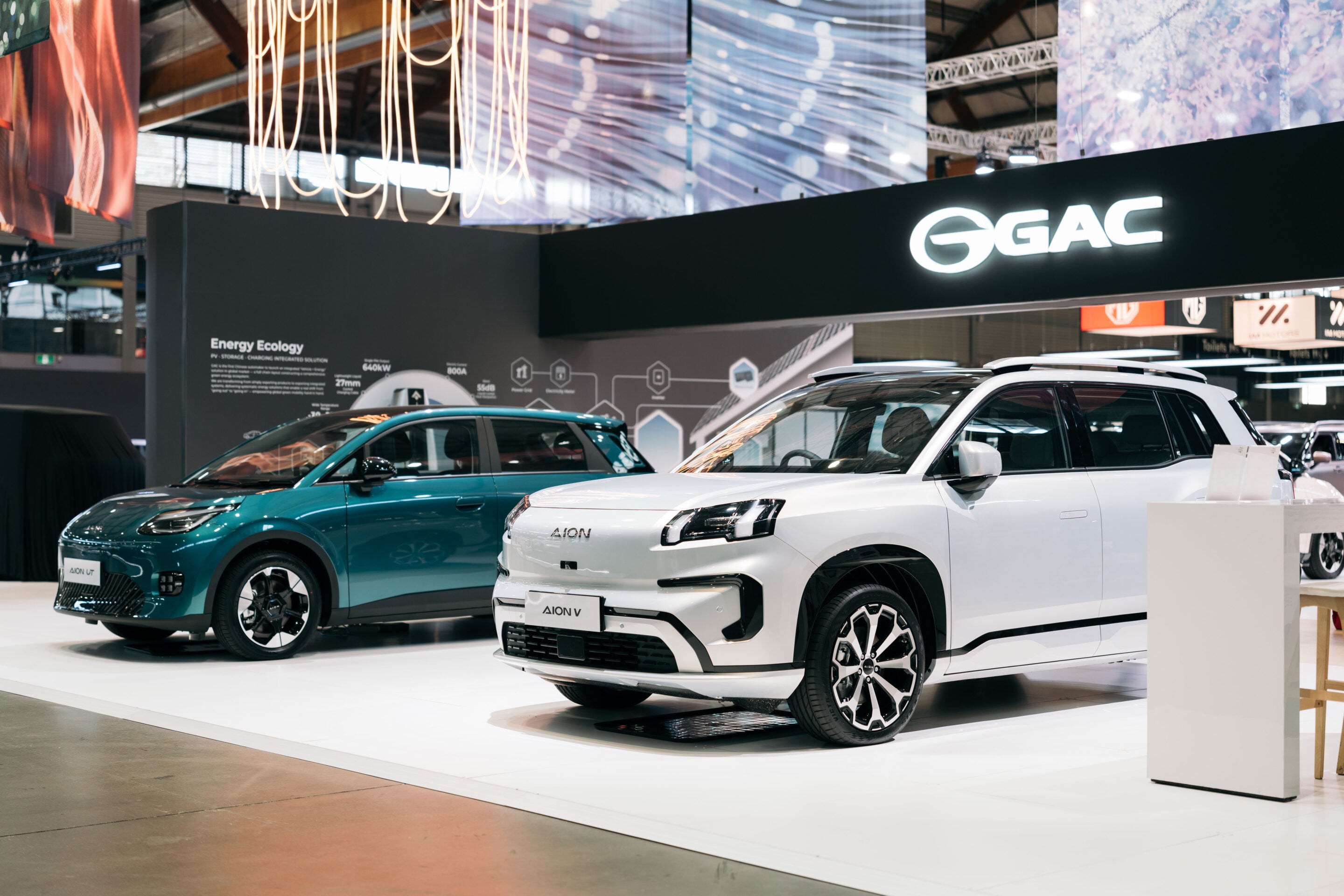
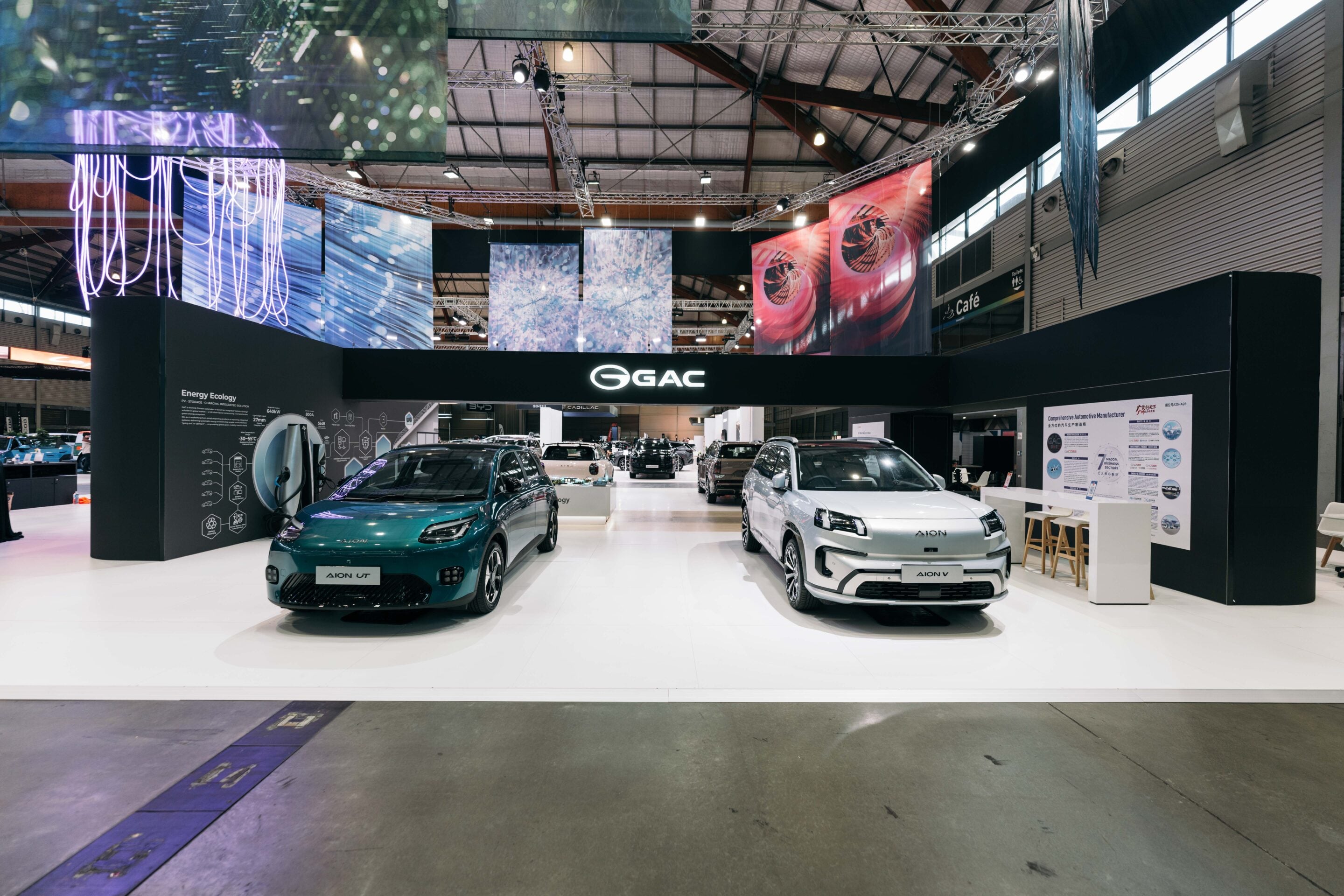
Also displayed in Sydney were the Aion UT compact electric hatch and Aion V mid-size electric SUV. Both were fitted with accessories to demonstrate potential personalisation options, ranging from exterior body kits to camping equipment.
GAC also brought its M8 PHEV people mover to the event. Already available in Australia from $76,590, the M8 combines plug-in hybrid propulsion with a claimed petrol-electric range of 1032km.
The people mover features second-row captain’s chairs, electromagnetic suspension and acoustic glass, and is positioned primarily as an alternative for private buyers, fleets and chauffeur operators seeking a large electrified vehicle.
The S7 would give GAC another model to compete in an increasingly crowded Australian plug-in hybrid market, where Chinese manufacturers are rapidly expanding their offerings.
However, its Australian future remains dependent on GAC’s assessment of local demand and its broader product plans.
More details are likely as right-hand-drive production approaches in the second half of 2027.
BYD has added the Sealion 7 to its partnership with Amber’s vehicle-to-grid program (V2G), which allows owners to use their cars to power their home or electricity from the battery to the grid to earn a bit of money on the side.
The SUV joins the brand’s Atto 3, which is already part of the collaboration – and Aussies who participate in the program can get a six per cent discount when they buy the vehicles, too.
V2G or bidirectional technology allows EV owners to take advantage of cheap or free solar electricity during the day, then use it to run their home power or sell it back to the grid at peak times, when power prices are at their highest. Amber’s system, which requires a compatible bidirectional charger, powers up the vehicle with low-cost juice, then allows it to be fed to the home or exported.
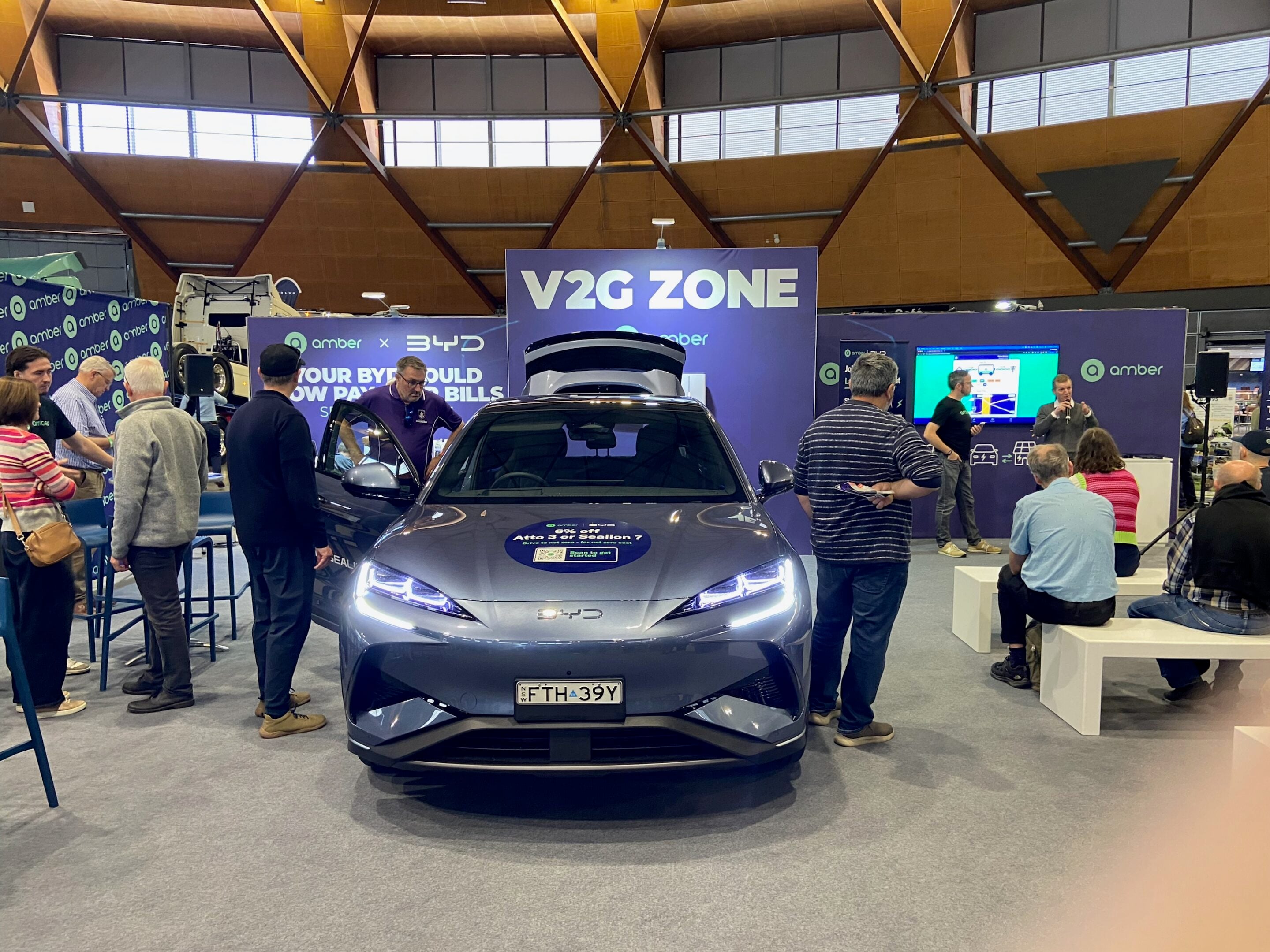
Amber claims using the system can save motorists approximately $2500 a year, with that figure based on 2025 wholesale electricity pricing data. While the charger costs $2990, that is offset by the discount on the BYD models, which saves $2519 on the Atto 3 EVO Dynamic, $2819 on the Atto 3 EVO Premium, $3179 on the Sealion 7 Premium, and $3839 on the Sealion 7 Performance variant.
There are no worries about any effect on battery warranty, either, with Amber program participants retaining full support. However, that may not apply for owners who use other V2G systems.
“The Atto 3’s involvement has shown us the value this can unlock for customers, and as strong supporters of the technology, we’re proud that we can broaden the partnership with Amber,” said BYD chief product officer Sajid Hassan.
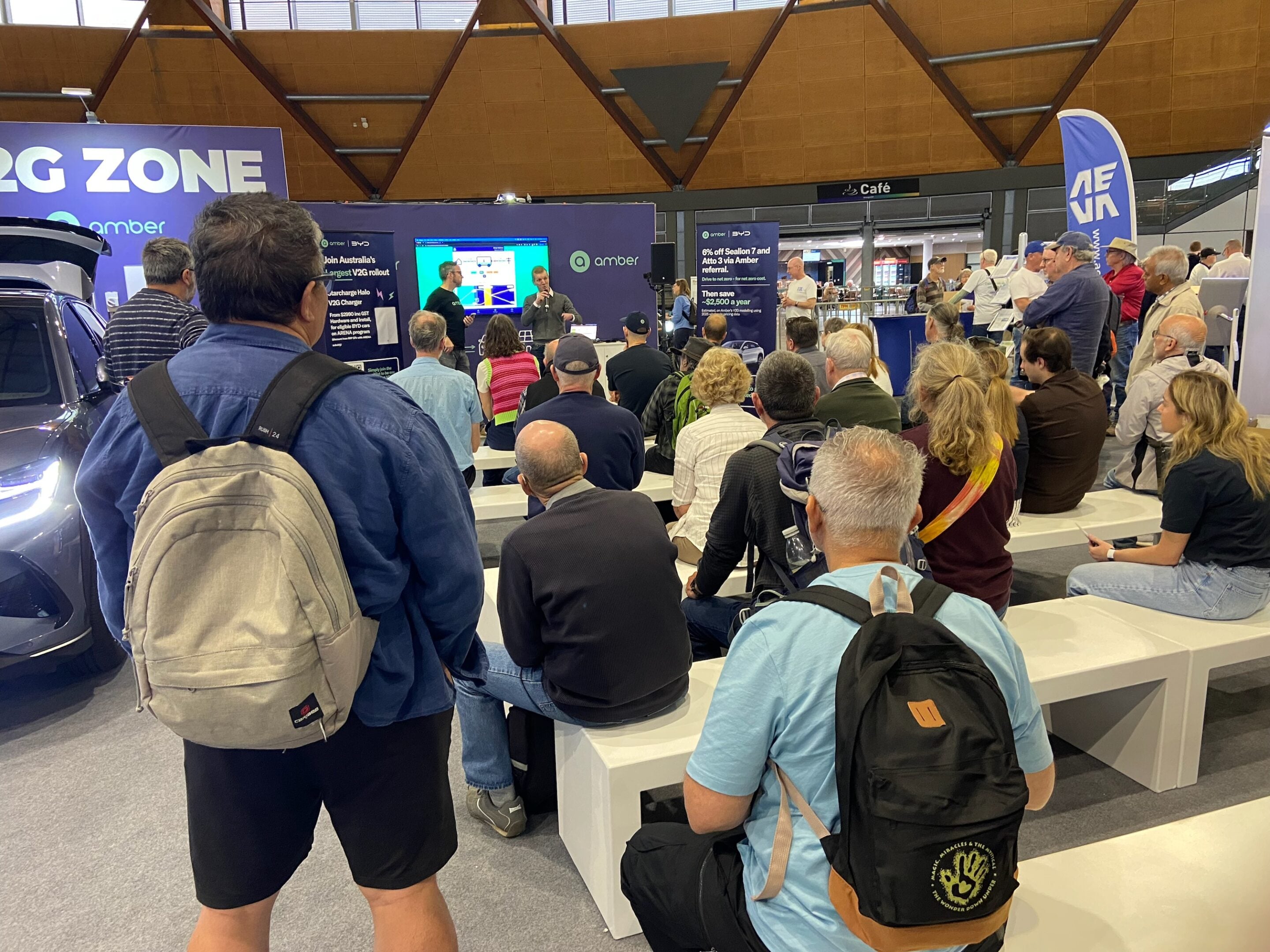
Amber currently has 50 V2G sites and plans to grow to cover 1000 Aussie households due to good demand, as evidenced by the 8000-strong waiting list. WhichCar by Wheels noted that the Amber stand was one of the busiest at Sydney’s Everything Electric show on Friday, with all seats taken for the regular talks staff were giving to explain how the system works.
The company’s V2G program has received a total of $126.2 million in federal government funding through the Australian Renewable Energy Agency. Working with EV makers like BYD is a great fit as the batteries in many cars are able to store far more power than home units such as Tesla’s Powerwall.
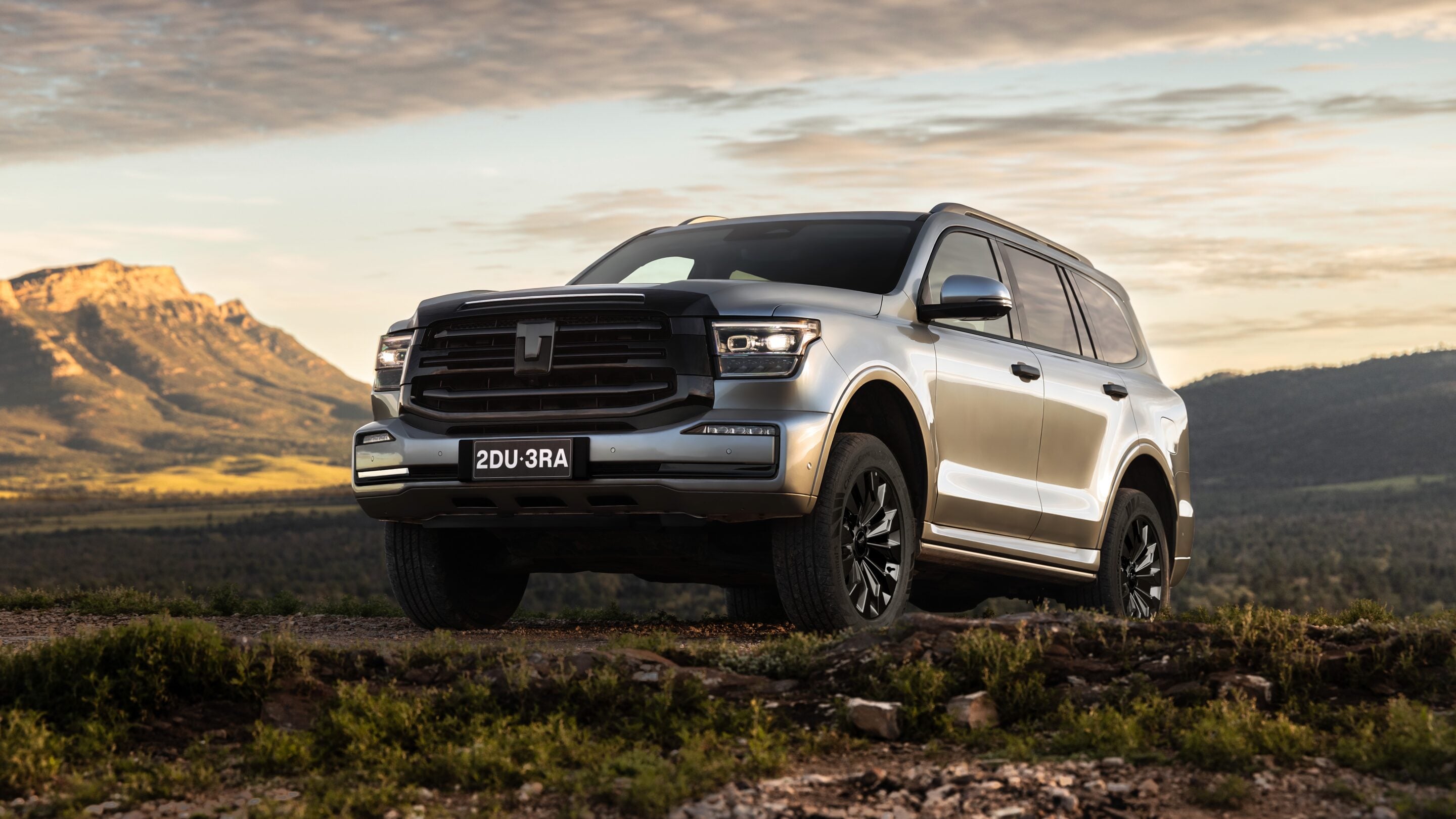
GWM’s local boss, John Kett, is confident the addition of a 3.0-litre diesel engine to its Australian line-up won’t hurt the company’s NVES (New Vehicle Efficiency Standard) targets.
Speaking to media, including Whichcar by Wheels, at the local launch of the new 3.0-litre diesel-powered Tank 500 SUV and Cannon-Alpha dual-cab, Kett said the new powertrain would have no impact in 2026 – “It’s neutral for us this year” – but that 2027 could see the Chinese brand face a small penalty.
Australia’s NVES scheme uses a credit and debit system for vehicle emissions where manufacturers can accumulate credits for selling low- or no-emission vehicles such as hybrids and electric cars against sales of higher-emitting vehicles such as diesel-powered SUVs and dual-cab utes.
GWM’s broad portfolio includes fully electric cars like the Ora 5 and a number of plug-in hybrid utes and SUVs as well as the just-launched 3.0-litre diesel variants of Tank 500 and Cannon Alpha.
Kett admitted the introduction of the new diesel powertrain could incur “a slight penalty next year”, but added he remained hopeful that a new plug-in hybrid variant of the Cannon ute would “neutralise” any NVES impacts.
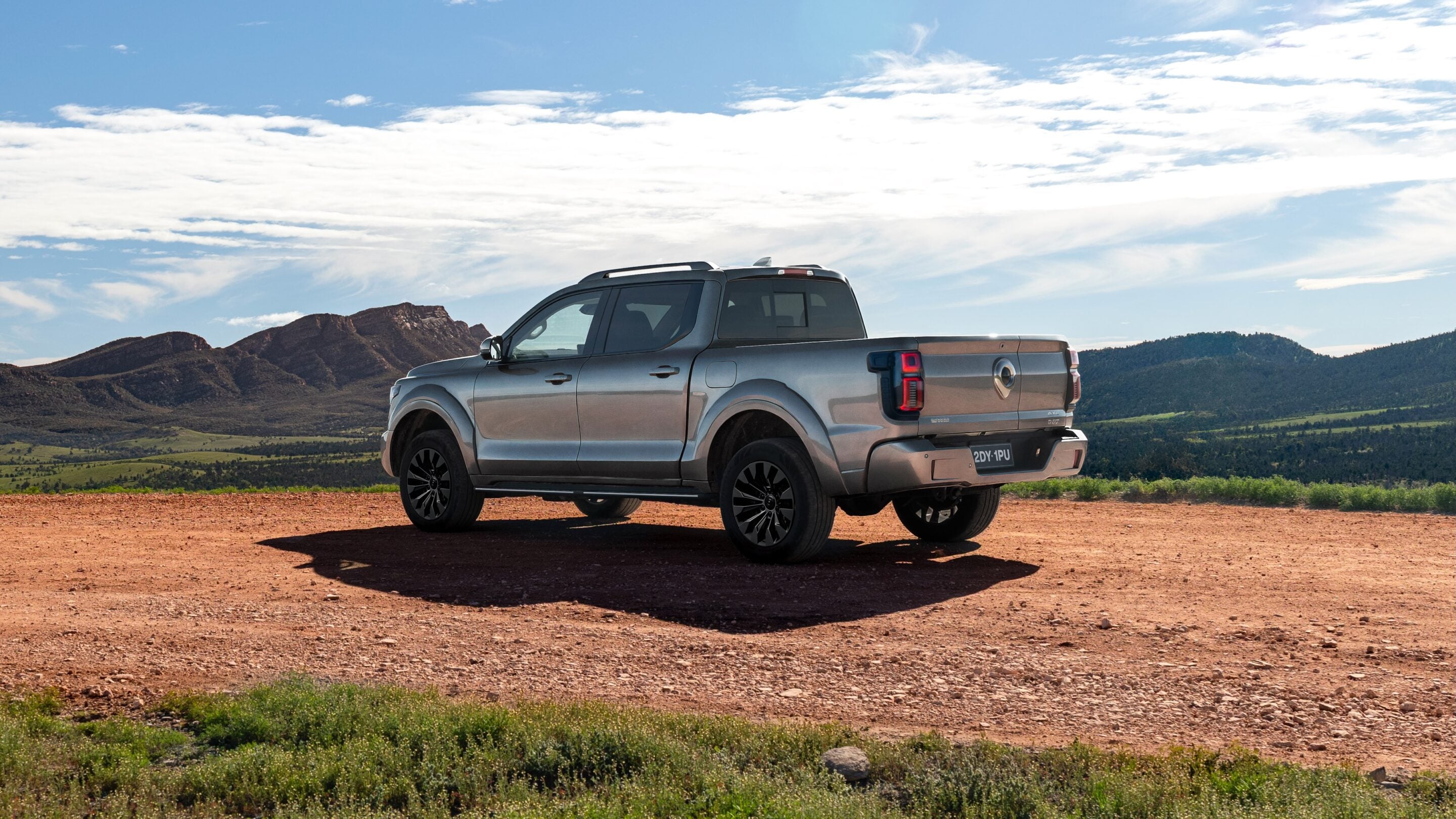
“It’ll start to be a slight penalty next year,” he said, “but when you put that hand-in-hand where we think the Cannon Hi4-T is going to come in, it just neutralises itself.
“We’re going to invest every credit we have in every car we can sell,” he added.
GWM Australia’s head of product planning, Sam Mulkearns, added that “it helps that our new Ora 5 SUV is performing quite strongly. So it gives us quite a lot of credits to help us offset any penalties that we might receive in the future for launching these new engines.”
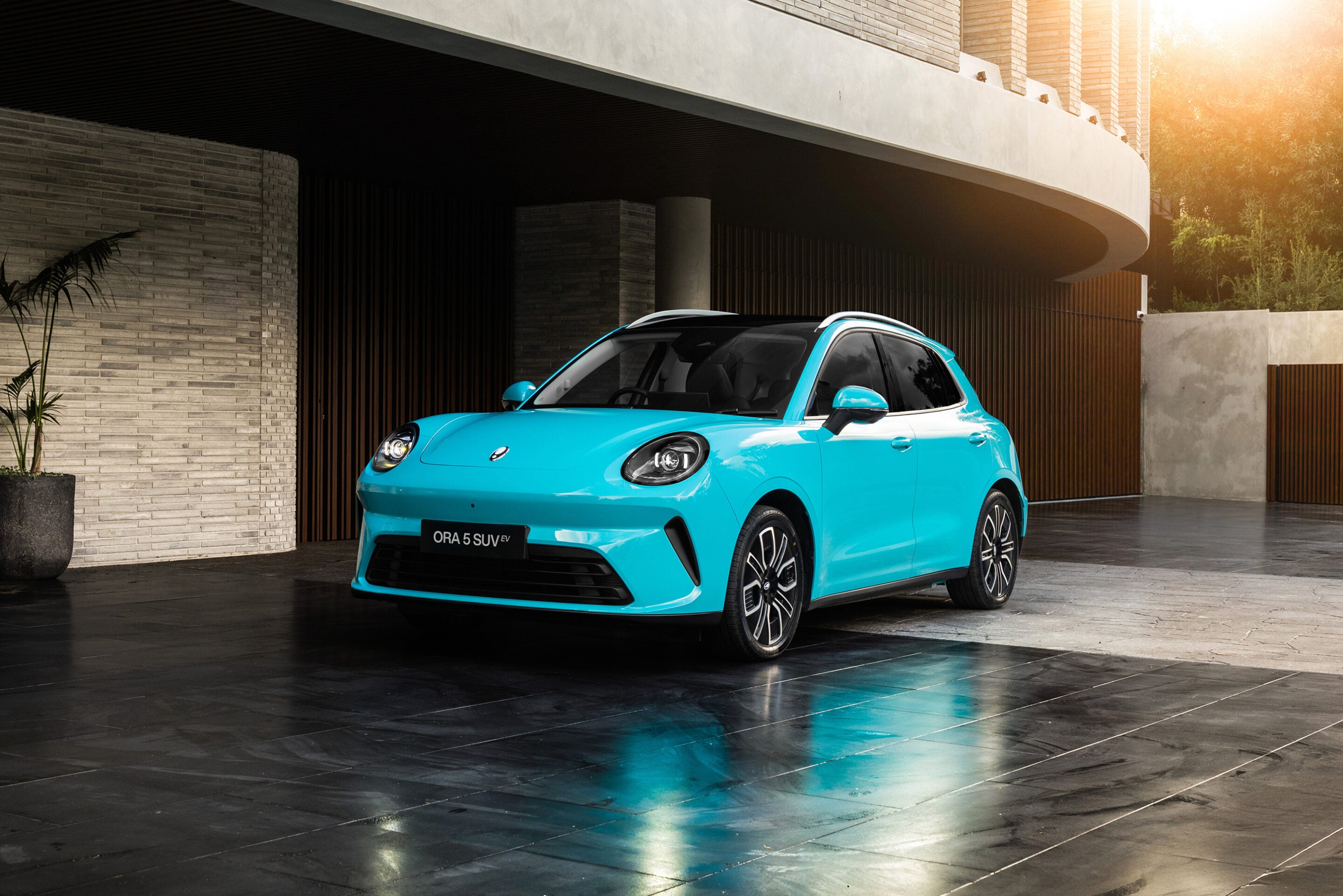
Since launching earlier this year, GWM says sales of the new Ora 5 are running close to 500 a month, easily eclipsing the older Ora hatchback’s peak of around 140 a month.
GWM has fired a warning shot at the established dual-cab segment, aiming to become a top-five player in one of Australia’s most popular new car segments.
The Chinese manufacturer currently sits seventh in the hotly-contested segment, its Cannon and Cannon Alpha siblings amassing 7766 sales so far in 2026.
That’s not that far off the Mazda BT-50 in sixth place which has accumulated 7857 sales across both 4×4 and 4×2 platforms. However, the leap to BYD in fifth place is much larger, the Shark 6 amassing 12,094 to the end of August.
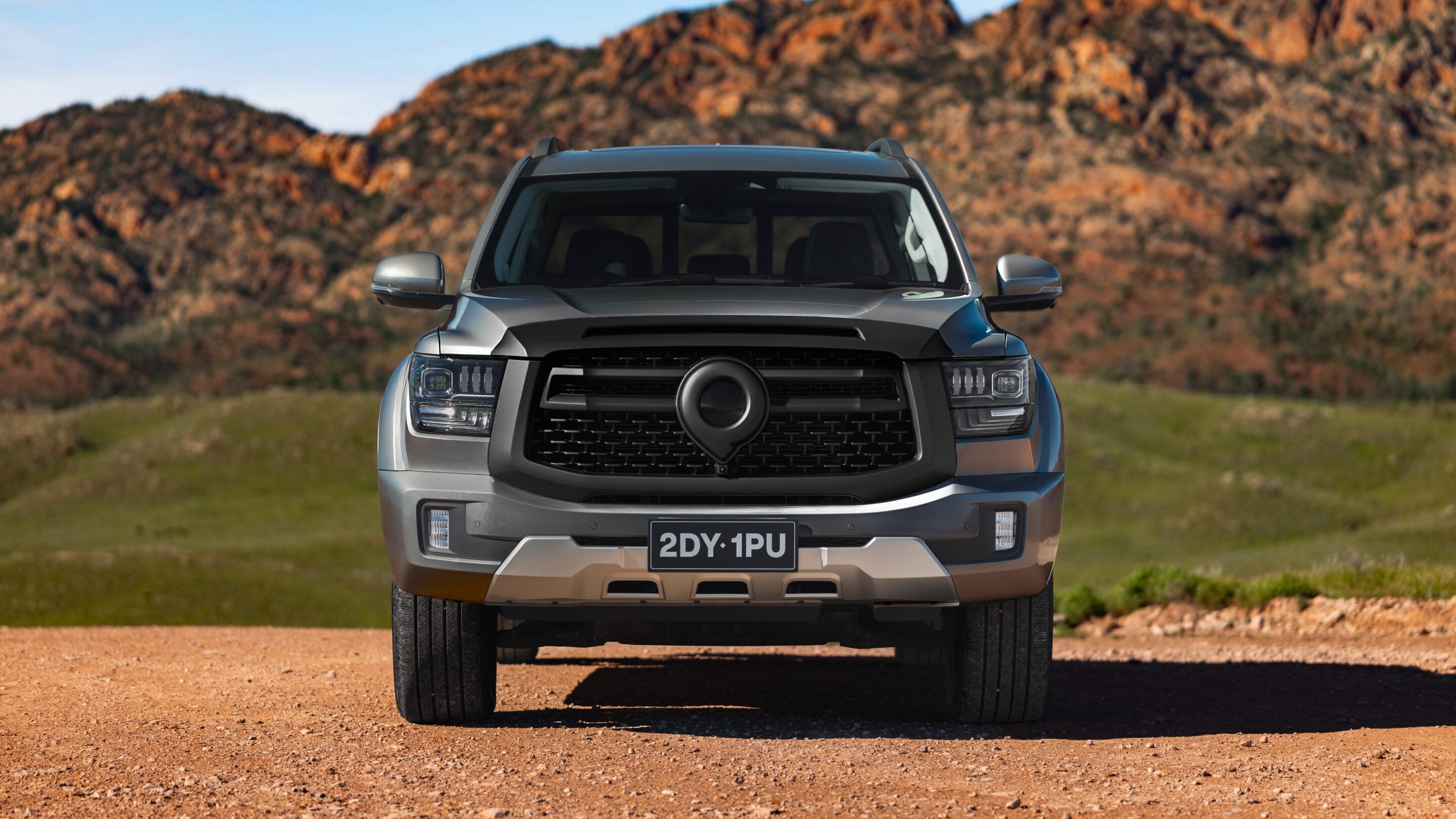
But that hasn’t deterred GWM from its lofty ambitions, the Chinese brand’s Australian boss, John Kett, telling assembled media including Which Car by Wheels that “we need to be a top five player in the ute segment. You have to get to 1500 a month to get anywhere close to that.”
Kett outlined the company’s expanding portfolio of diesel and plug-in hybrid petrol powertrains as key to the planned growth.
“When we think about the portfolio we have, Cannon Alpha three-litre diesel, Cannon 2.4-litre diesel, Cannon Alpha Hi4-T and now Cannon Hi4-T, we’ve got to believe that we’ve covered all our bases across all fuel types, all capabilities, all user needs.”
GWM has gone on the launch offensive this week, with two new variants joining its dual-cab line-up spearheaded by the new Cannon Alpha powered by a 170/620Nm 3.0-litre turbo-diesel. GWM also took the covers off the Cannon Hi4-T at this week’s Everything Electric motor show. It’s powered by a 2.0-litre petrol engine married to GWM’s plug-in hybrid system for combined outputs of 310kW and 750Nm and electric-only driving range of 115km (NEDC).
“If we’re not hitting 1500 utes by sometime in the middle to late of next year, then quite frankly we’ll be doing what we typically do is self-reflecting on what we need to do better,” Kett added.
Kett expects the split between Cannon and the dimensionally larger Cannon Alpha to sit at around 50:50 with a similar split between diesel and plug-in hybrid powertrains.
GWM has confirmed pricing for its new Cannon Hi4-T plug-in hybrid ute, with a launch offer dropping the entry point to $47,990 drive-away for eligible ABN holders.
That makes the Cannon Hi4-T Australia’s cheapest PHEV ute, taking the title from the JAC Hunter, which was launched at $49,988 before on-road costs.
The Cannon Hi4-T will reach Australian dealerships from mid-October in Lux and Ultra grades, joining the larger Cannon Alpha PHEV and making GWM the only manufacturer currently offering two separate plug-in hybrid ute models locally.
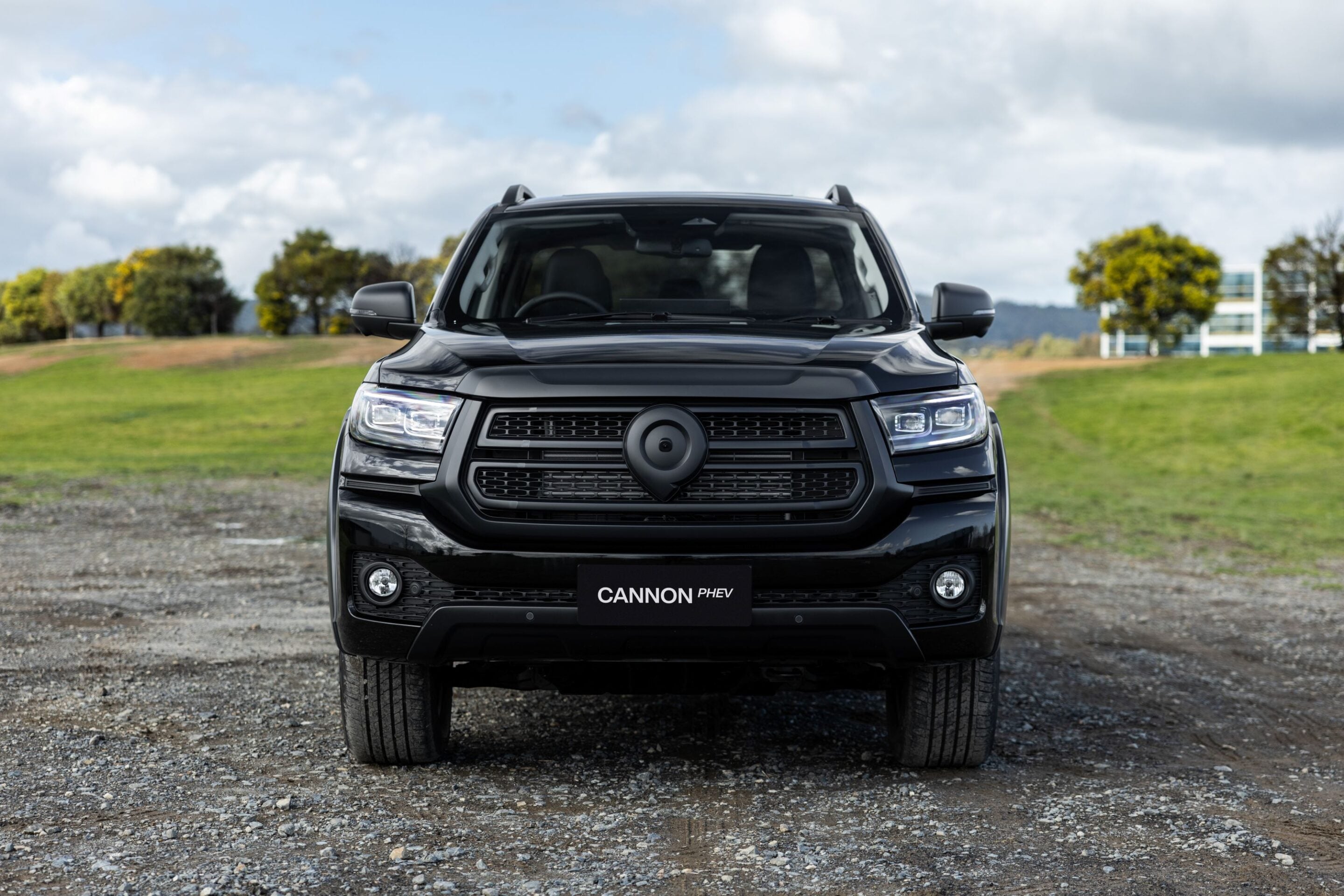
Standard drive-away pricing for the Lux is $49,990 for ABN holders and $50,990 for private buyers. Until October 31, a $2000 bonus reduces those figures to $47,990 and $48,990 respectively.
The Ultra normally costs $53,990 drive-away for ABN holders and $54,990 for private customers, dropping to $51,990 and $52,990 during the offer. Buyers can alternatively take a $2000 fuel card instead of the discount.
Underneath is GWM’s Hi4-T system, pairing a 2.0-litre turbocharged petrol engine with electric assistance and a mechanical four-wheel-drive system. Combined outputs are 310kW and 750Nm, substantially more power than the larger Cannon Alpha PHEV’s 300kW.
A 33.1kWh battery provides a claimed 115km of electric driving under the NEDC test cycle. GWM claims a combined petrol-electric range of 1037km and fuel consumption of 2.4L/100km.
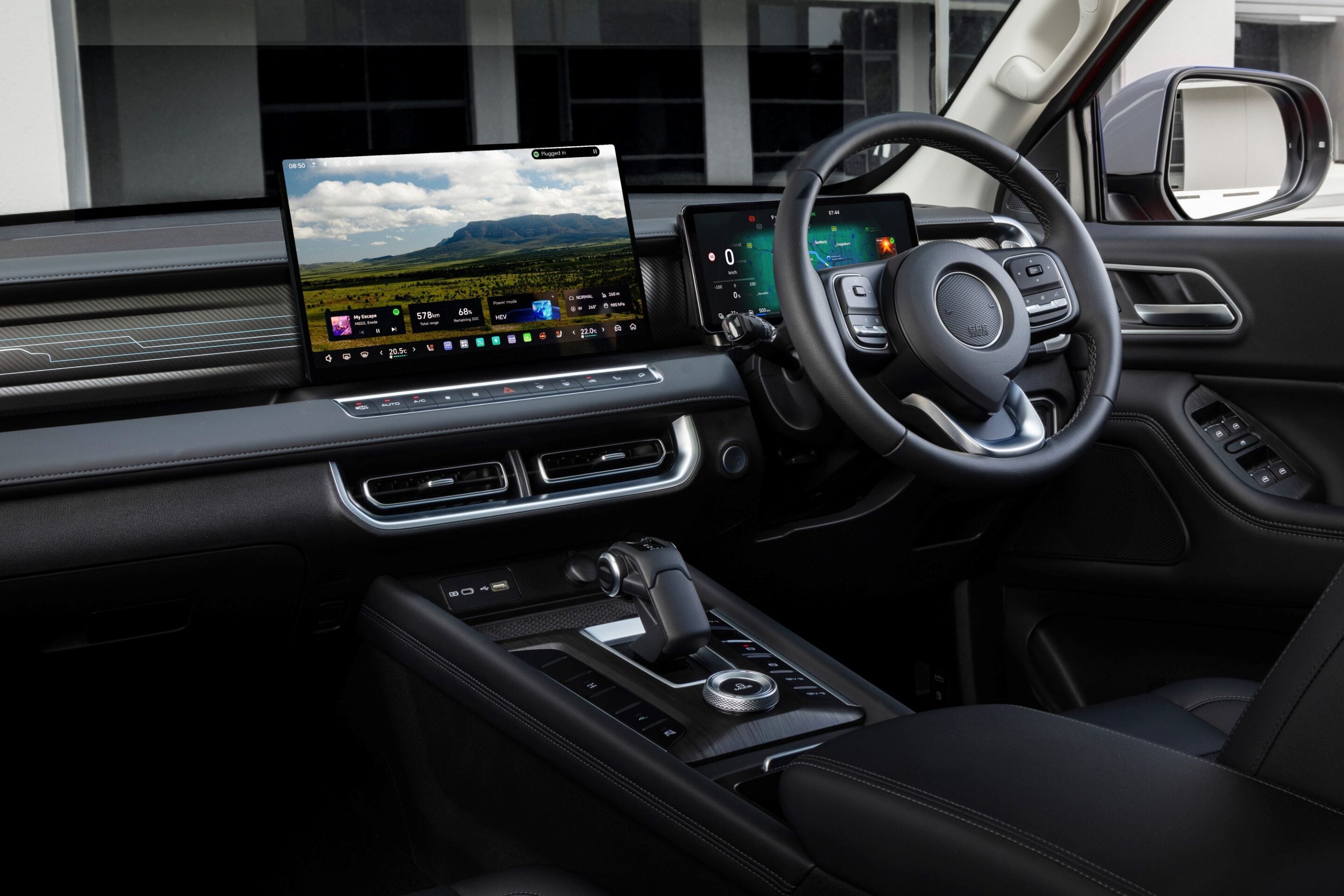
DC charging at up to 110kW allows a claimed 30-to-80 per cent recharge in 18 minutes.
Importantly for ute buyers, the Australian Cannon Hi4-T is rated to tow 3500kg braked, while its Hi4-T system retains a conventional mechanical four-wheel-drive arrangement rather than relying solely on electric motors to drive individual axles.
Vehicle-to-Load functionality provides up to 6kW of output, including 230V outlets in the tub for powering tools, camping equipment and appliances.
Inside, the Cannon Hi4-T introduces a 15.6-inch infotainment touchscreen running GWM’s Coffee OS software, with over-the-air updates.
Both variants also receive black 18-inch alloy wheels, grille, sports bar, mirror caps, door handles and side steps, along with red brake calipers.
Pre-orders are open ahead of first Australian arrivals in October.
2026 GWM Cannon Hi4-T PHEV – Key specs
| Length (mm) | 5,416 |
|---|---|
| Width (mm) | 1,947 |
| Height (mm) | 1,884 |
| Wheelbase (mm) | 3,230 |
| Minimum Ground Clearance (mm) | 232 |
| Wading Depth (mm) | 500 |
| Approach Angle ° | 26 |
| Departure Angle ° | 23 |
| Breakover Angle ° | 19 |
| Turning Circle (Kerb to Kerb) (m) | 13.1 |
| Fuel Tank (litres) | 75 |
| Seating capacity | 5 |
Features
Mechanical / Drive
- Max Power: Electric motor: 130kw,
- Petrol engine: 180@5500-6000,
- Combined: 310kw
- Max Torque: Electric motor: 495Nm,
- Petrol engine: 380@1700-4000
- Combined: 750Nm
- 9-Speed Hybrid Automatic Transmission
- Fuel consumption: 2.4L/100kms^
- Torque on demand
- Rear differential lock – electronic
- Front & rear ventilated brake discs
- Front suspension: double wishbone independent coil sprung
- Rear suspension: Leaf Spring live axle
- Electric power steering
- Low range transfer case
- All-Terrain mode selection (Snow, Mud, Sand, 4H and 4L)
- Towing drive mode
Exterior
- 18” black alloy wheels
- Black front grille
- Black side steps
- Black roof rails
- Black door handles
- Black side mirrors caps
- Black sports bar
- Auto LED headlights with DRL + electric levelling
- LED taillights
- Sequential LED indicators
- Auto fold exterior mirrors + power adjust with indicator
- Shark fin antenna
- Smart keyless entry
- Rear privacy glass
- One piece tailgate
- Spray on tub liner
- Full size steel spare
Interior
- Comfort Tek leather seats
- Driver seat: 6-way manual drive adjustable seat
- Front passenger seats: 4-way manual adjustable
- Power windows – auto windows + anti pinch (driver)
- Manual dimming rear view mirror
- Sun visor with vanity mirror
- Wireless phone charger
Infotainment
- 15.6” multi-touch high-resolution infotainment screen
- GWM Coffee OS
- Bluetooth® with wireless Apple CarPlay® and Android Auto™
- 6 speaker premium audio with DAB+ digital radio
- Front USB outlets (USB-A / USB-C)
- Connected car telematics
Driver
- 10.25” full colour digital instrument cluster with brightness adjustment
- 4-way adjustable steering wheel (tilt/reach)
- Electronic park brake with auto hold
- Paddle shift
- Multi-function steering wheel
- Push-button start
- Cruise control, Adaptive Cruise Control (ACC) and Intelligent Cruise Control (ICC)
Safety
- 7 airbags: 2x front, 2x side, 2x curtain, 1x centre
- Reversing camera
- Rear parking sensors
- Tyre pressure monitoring system (TPMS)
- Follow me home lighting
- ISOFIX child restraints
- Hill ascent / descent control
- Blind spot monitor
- Collision mitigation (ESC, AEB, LKA, LDW, LCK, ELK, LCA)
- Front Collision Warning (FCW)
- Door open/vehicle approach warning (DOW)
- Traffic sign recognition
- Traffic jam assist
- Intelligent turning
- Rear collision warning
- Rear cross traffic alert with brake
- Emergency signal system (indicators)
- Driver fatigue monitoring system
