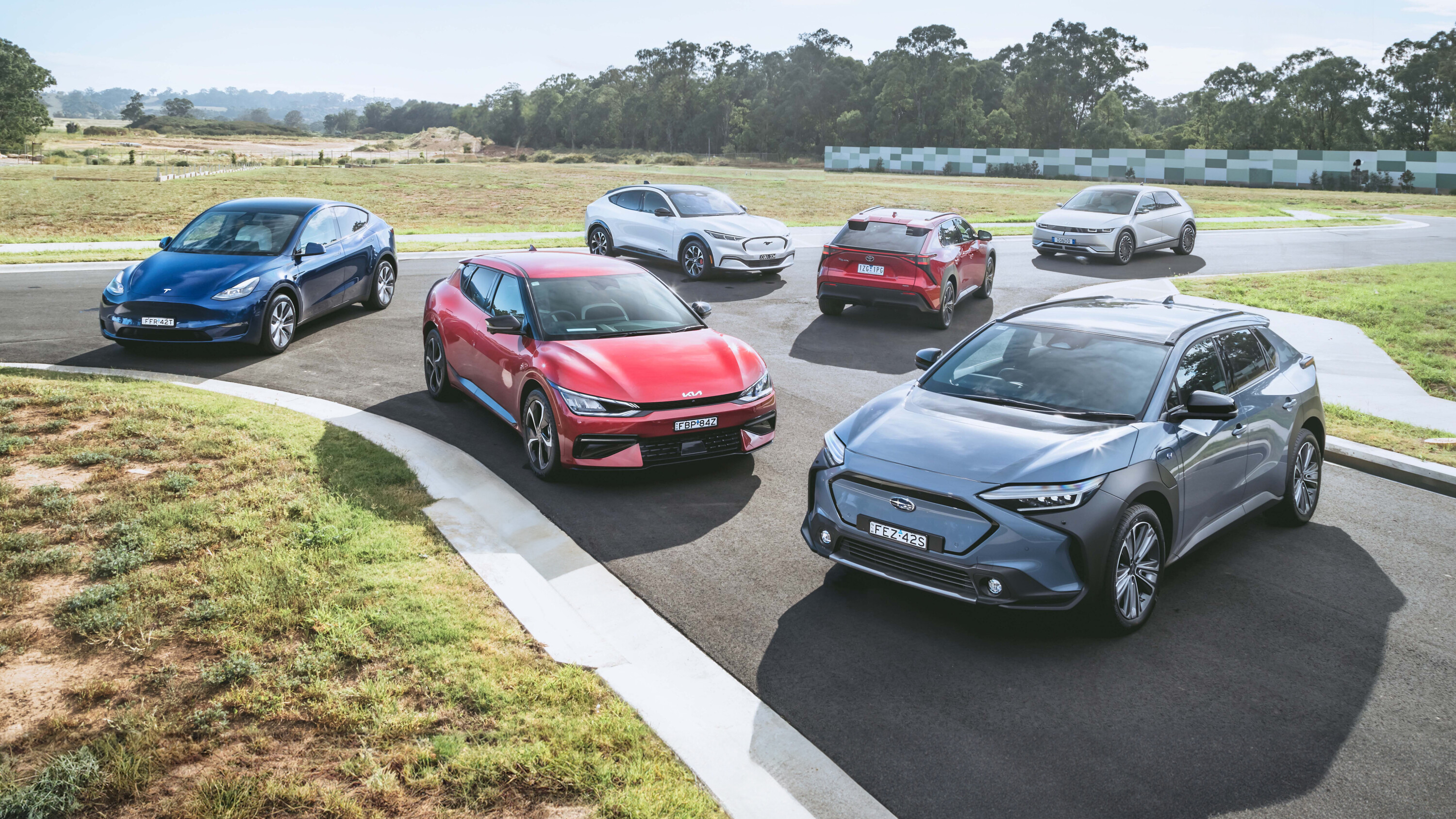
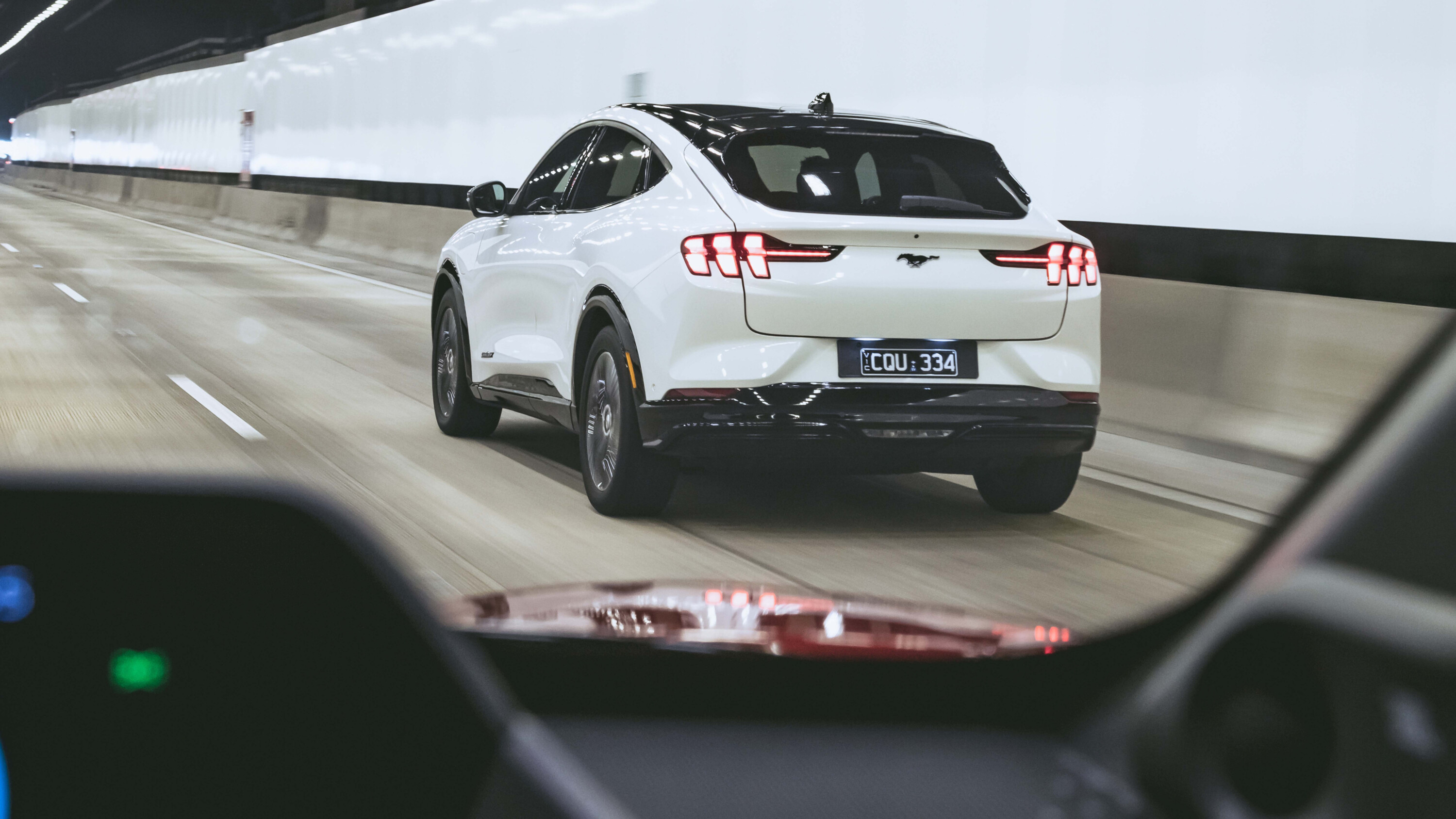
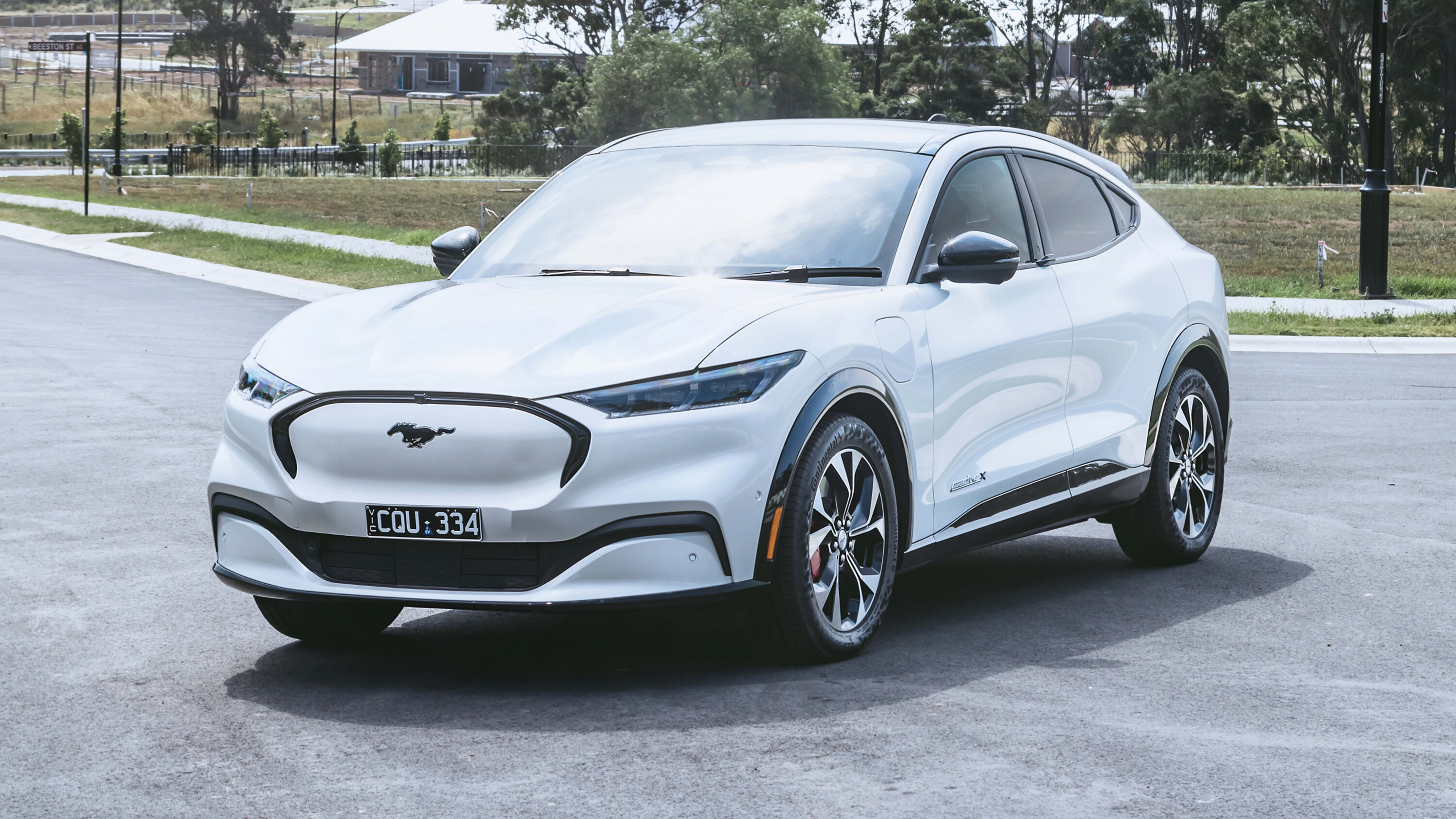
Ford has undoubtedly the most controversial nameplate, daring to trade on its V8 muscle-car heritage by calling its battery-powered crossover the Mustang Mach-E.
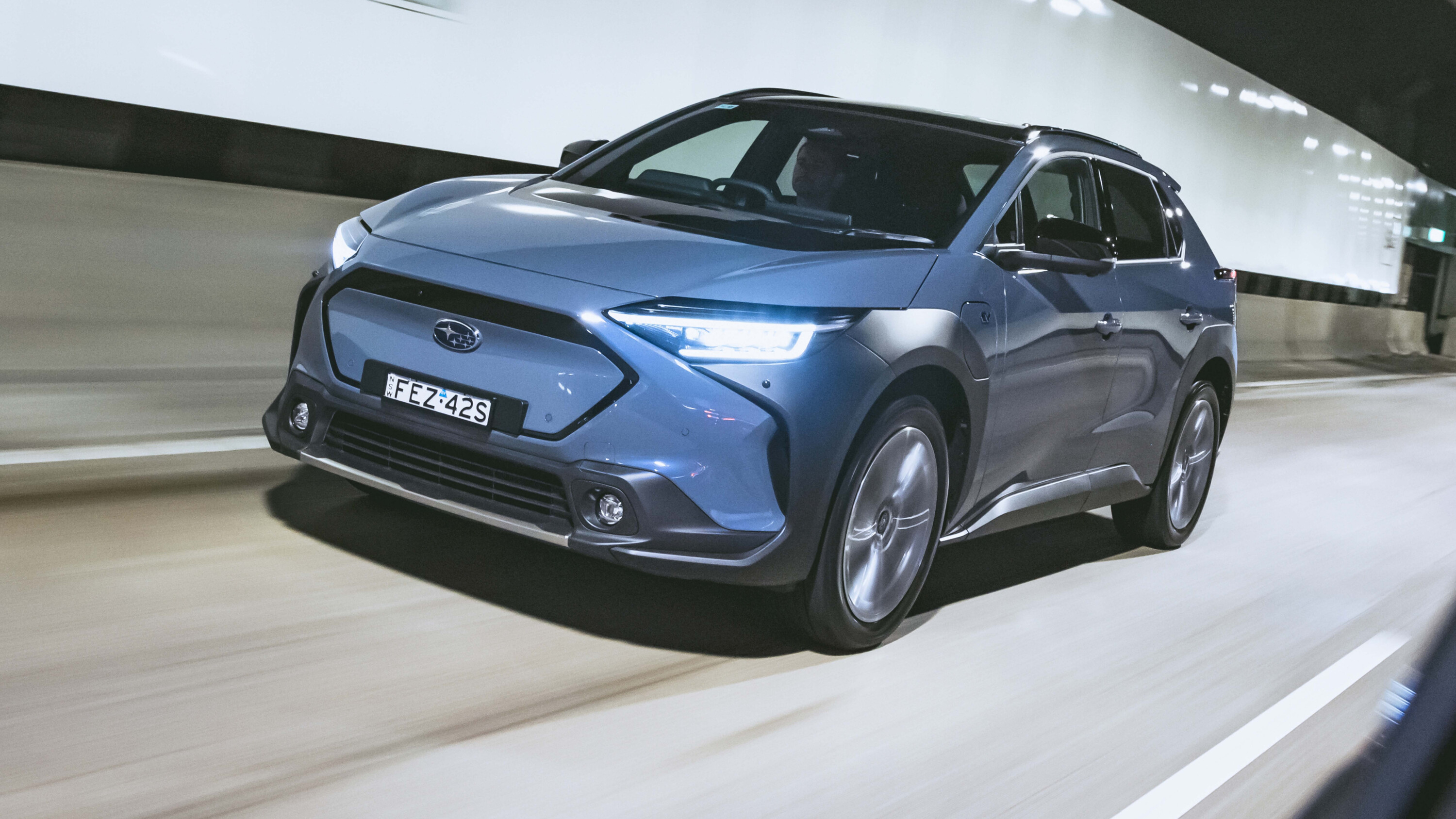
Subaru has gone all Latin with Solterra (a combo of ‘sun’ and ‘earth’), while Toyota has gone leftfield with the alpha-numerical bZ4X.
The Japanese brands’ EVs are more than mere architecture twins like the Hyundai Ioniq 5 and Kia EV6 platform buddies also in this group – they’re basically the same car with subtle design and spec differences.
1
While the bZ4X offers a $66,000 front-wheel-drive variant as one key difference, we’ve opted for the $74,900 bZ4X AWD for proper price and technical (near) parity with the top-line $76,990 Solterra Touring AWD.
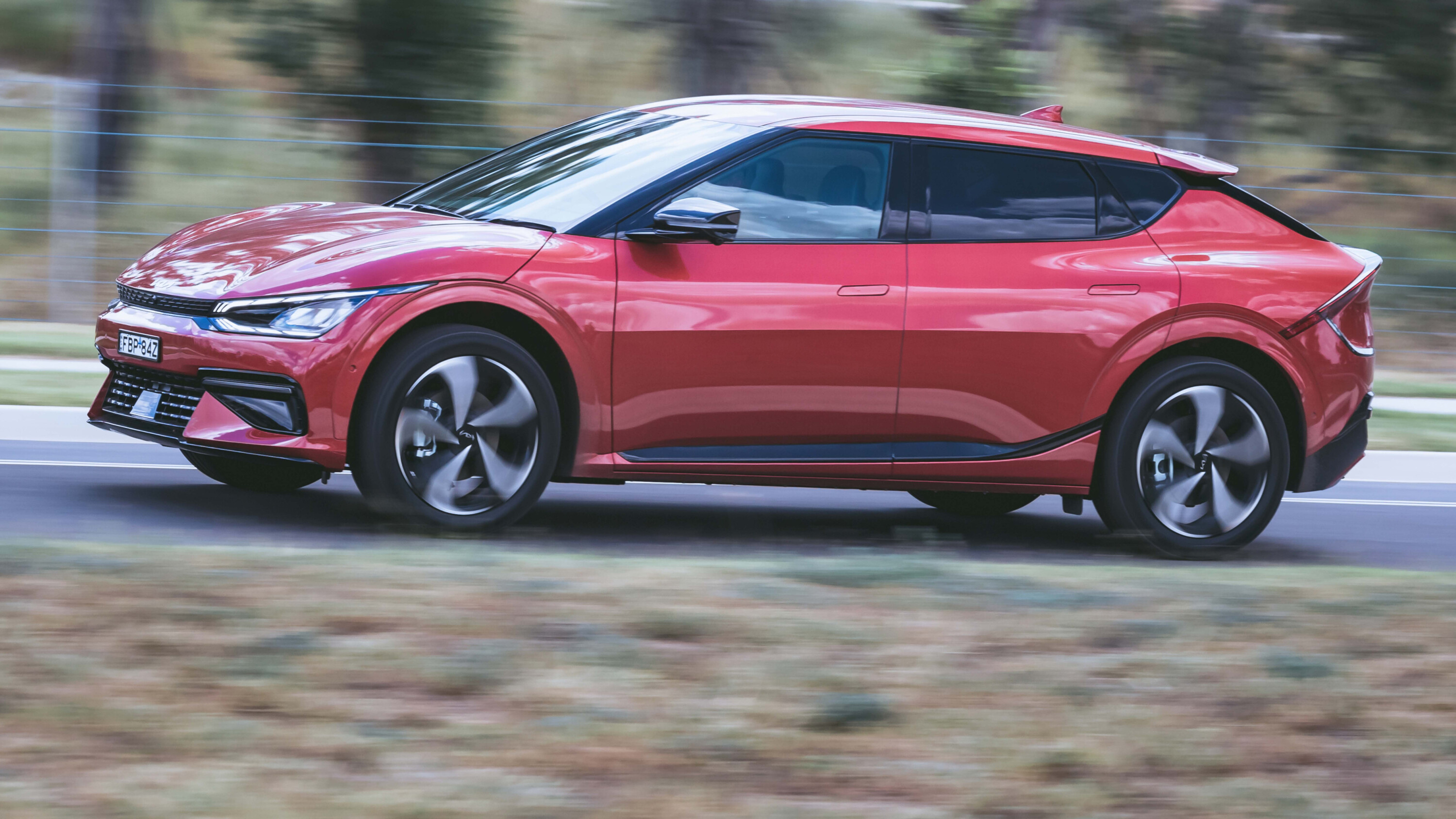
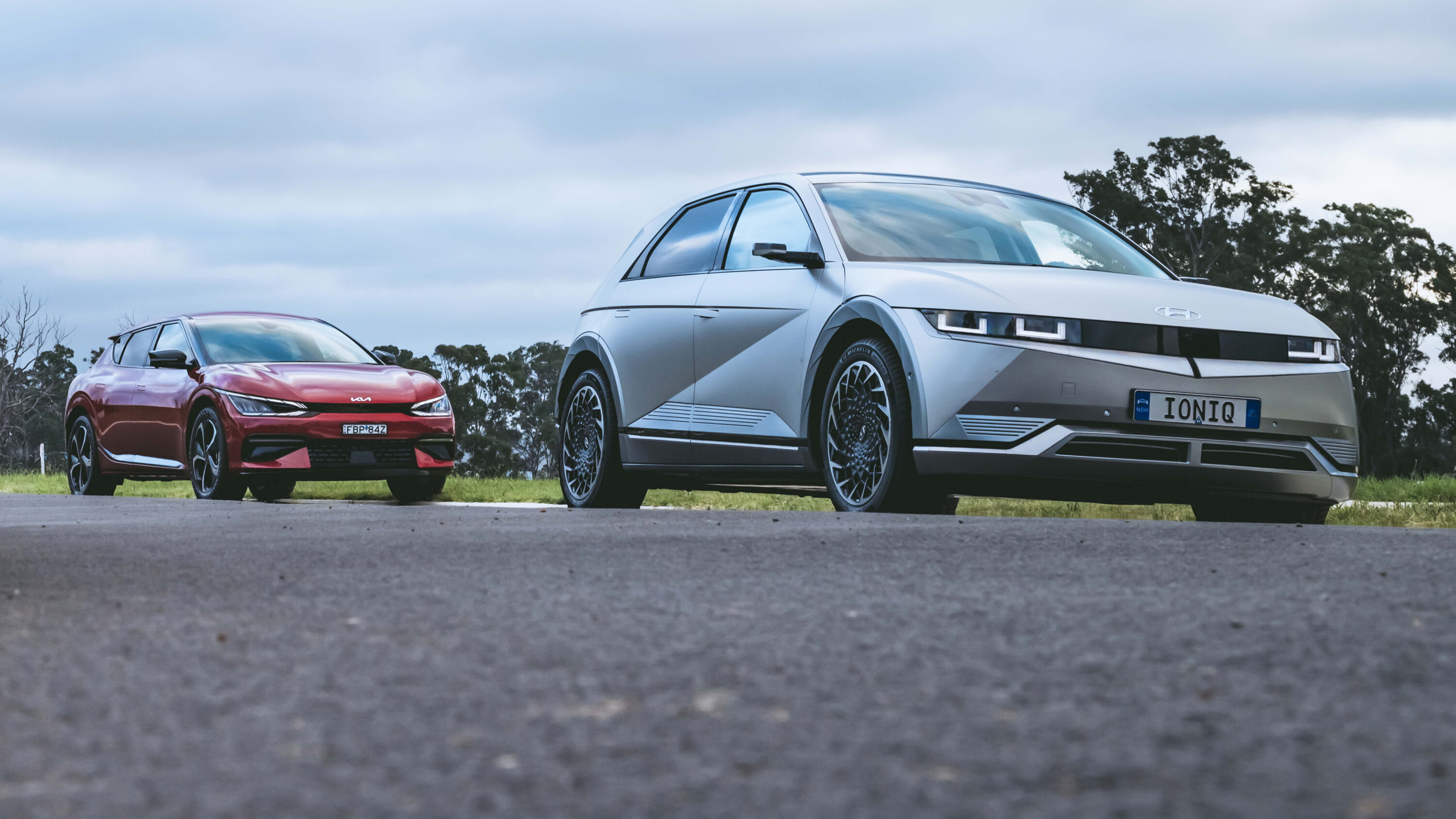
We did, however, choose to split the Korean twins to give us the two different levels of performance available for both the Ioniq 5 and EV6. We have the $84,000 Ioniq 5 Epiq AWD and for our 2022 Wheels Car of the Year winner, we’ve got the $79,590 EV6 GT-Line RWD.
Ford’s Mach-E is available from $72,990 in base Select form, though we instead selected the mid-range Premium that’s still rear-drive and quite a jump at $86,990 before on-road costs, though it brings the biggest battery and biggest on-paper range to the group.
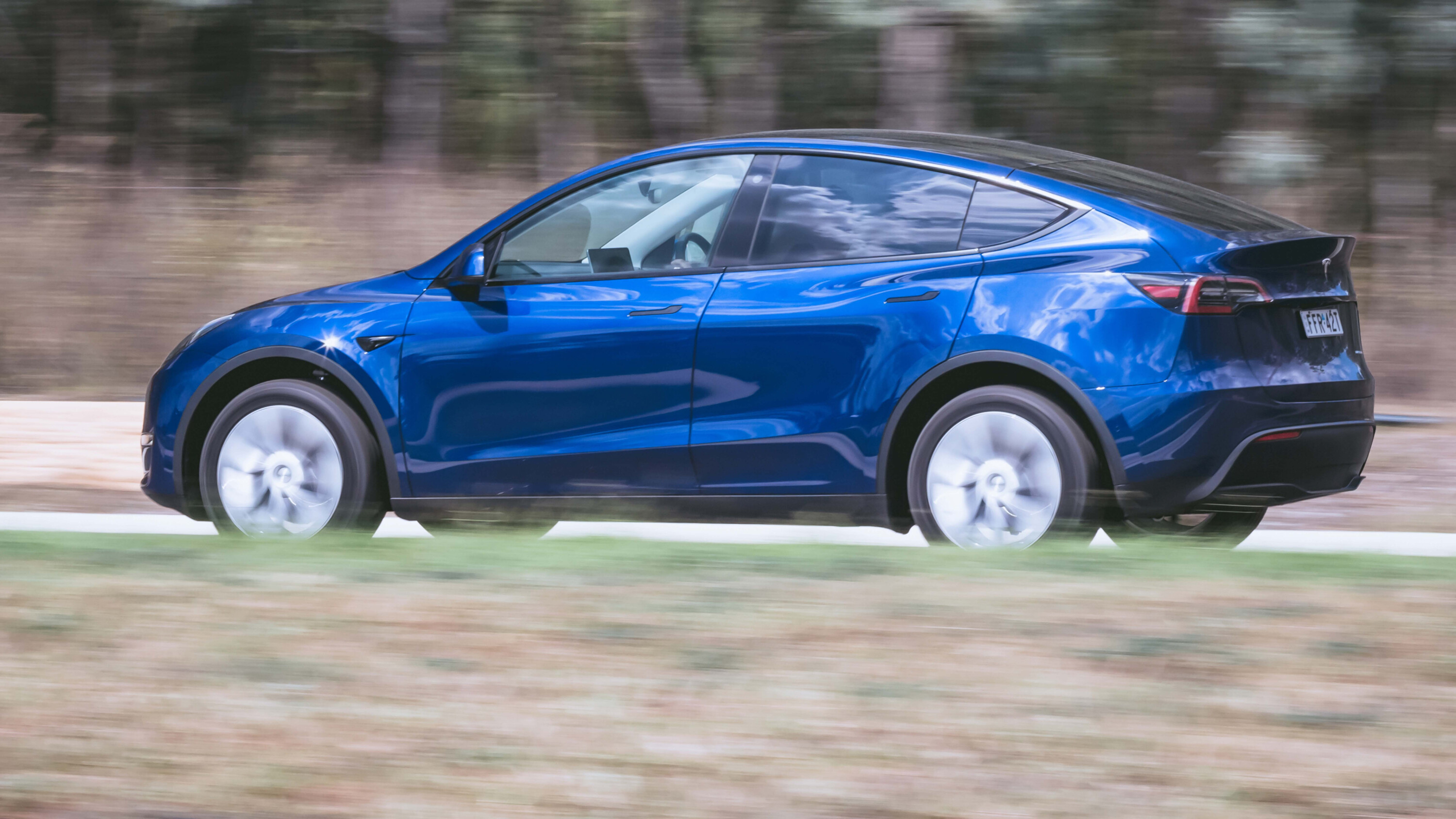
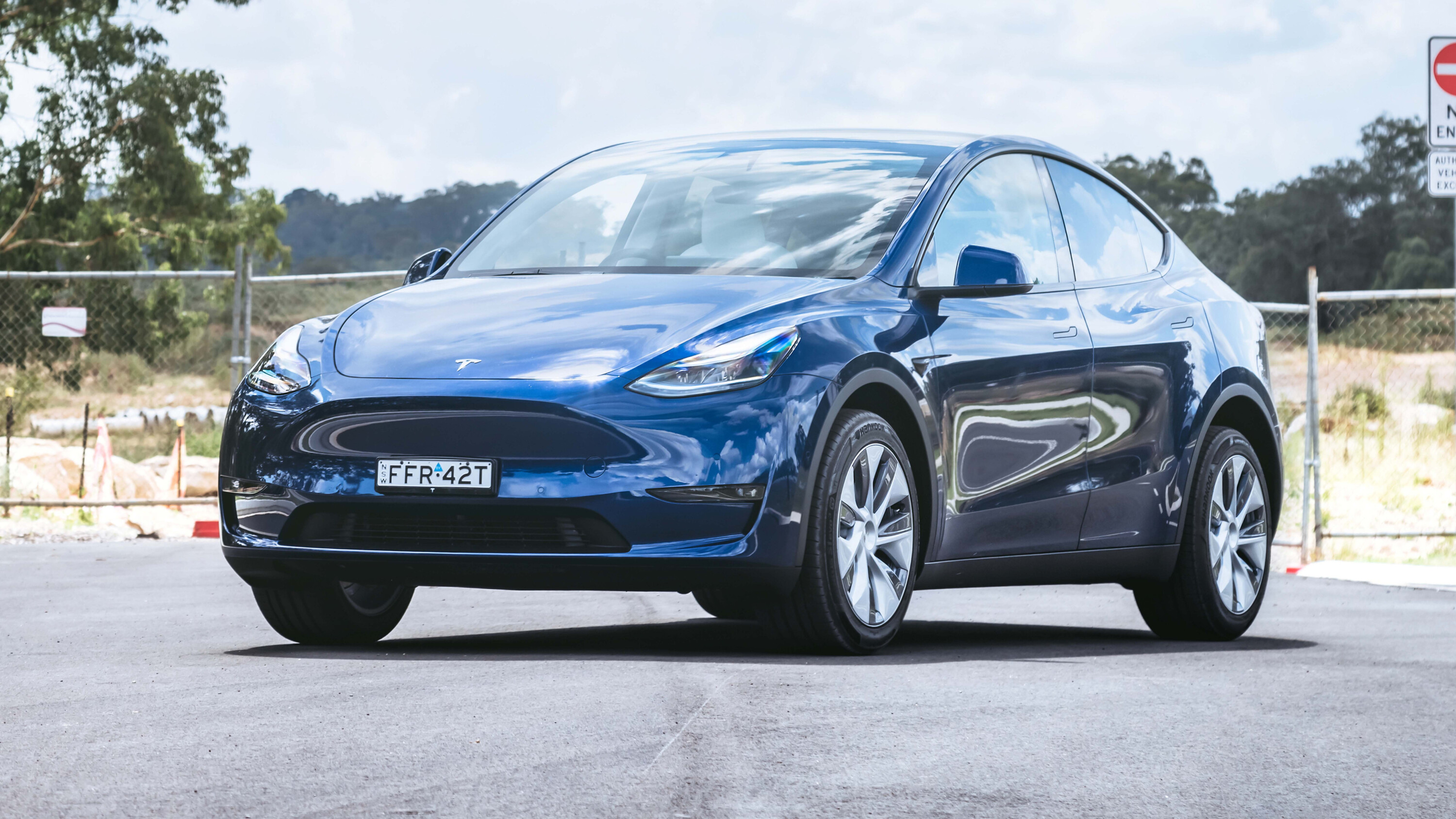
We also have the mid-range model of the car they would all dearly love to outsell – the $78,400 all-wheel-drive Model Y Long Range.
Oddly marketed Mach-E shines for range and curiosity
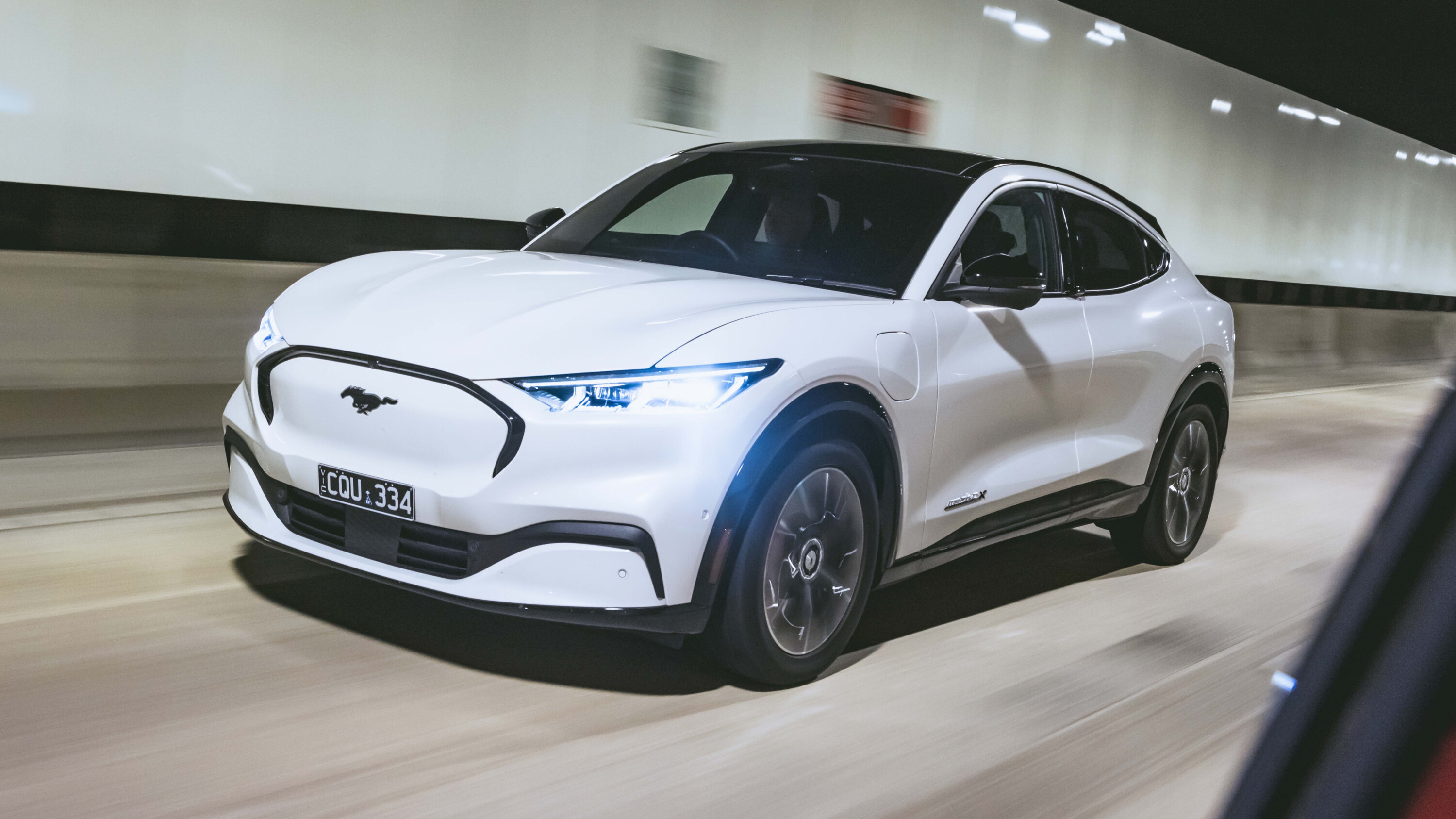
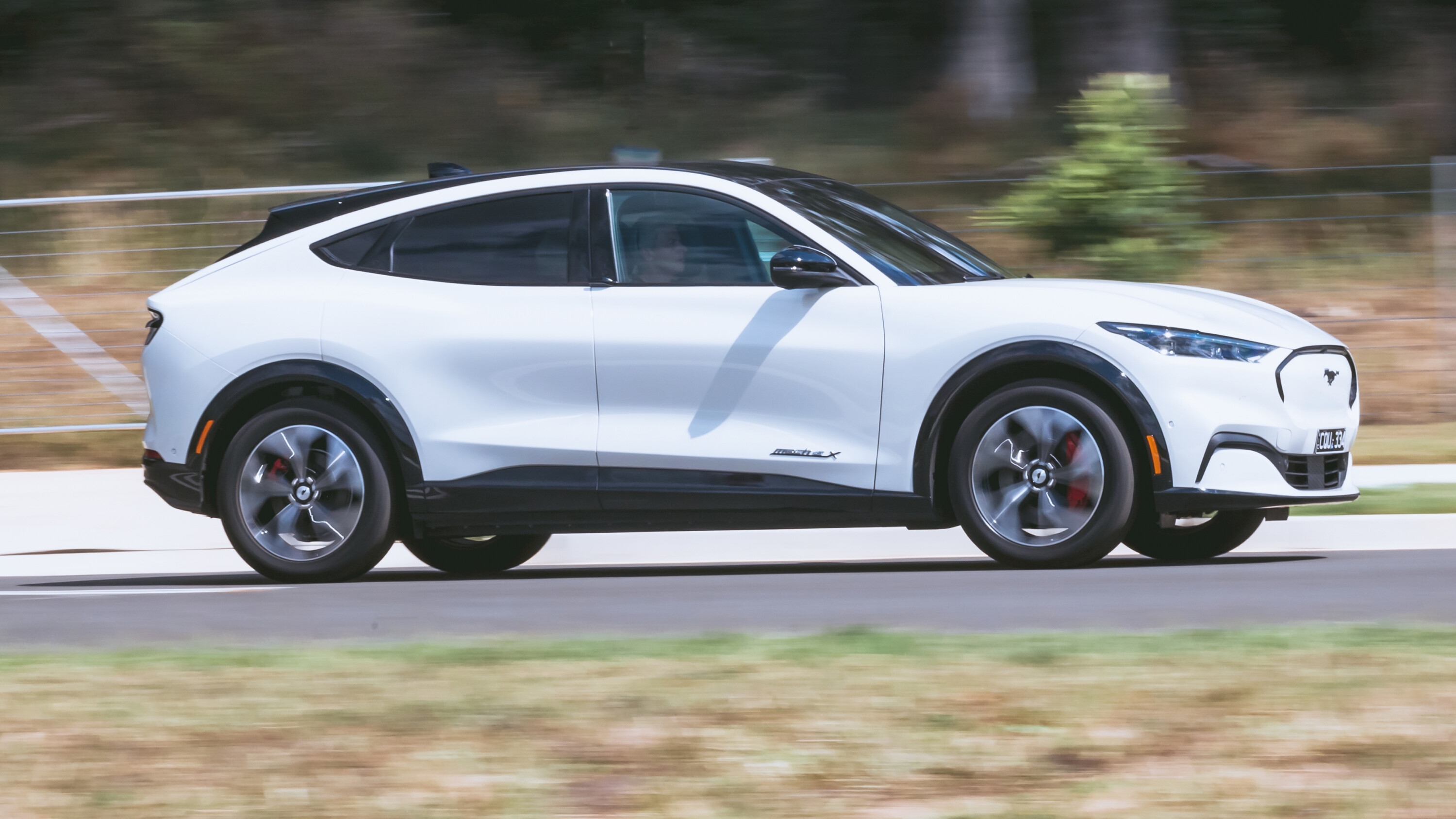
Ford’s newcomer, the Mustang Mach-E, makes a bold play for attention in the booming electric medium SUV category, wearing styling cues from the world’s best-selling sports car (somewhat awkwardly) and coming in swinging with a 358kW/860Nm GT AWD flagship that hauls itself from 0-100km/h in just 3.7 seconds.
As the brand’s first ground-up EV (albeit using a re-engineered ICE platform), the Mach-E is out to make a big impression and is instantly identifiable as a product of the Ford Motor Company – even though it doesn’t wear a single Blue Oval, which it eschews for stylised Ponies.
Fewer ponies in the paddock, though, because our budget didn’t stretch to the $104,990 GT AWD – so we settled for the mid-spec Premium rear-driver that offers 216kW/430Nm and falls inside the LCT threshold for efficient vehicles at $86,990 plus on-road costs, making it the priciest EV on test.
1
And that’s after a pre-launch price adjustment lowered Mach-E entry points by between $2675 and $7000, with the range-opener Mach-E Select benefitting from the largest cut to wear a $72,990 sticker.
Press a small, circular button on the window frame and the Mach-E’s driver door pops open – a tiny winglet providing the handle. (Rear occupants don’t get winglets and instead grab the door edge.)
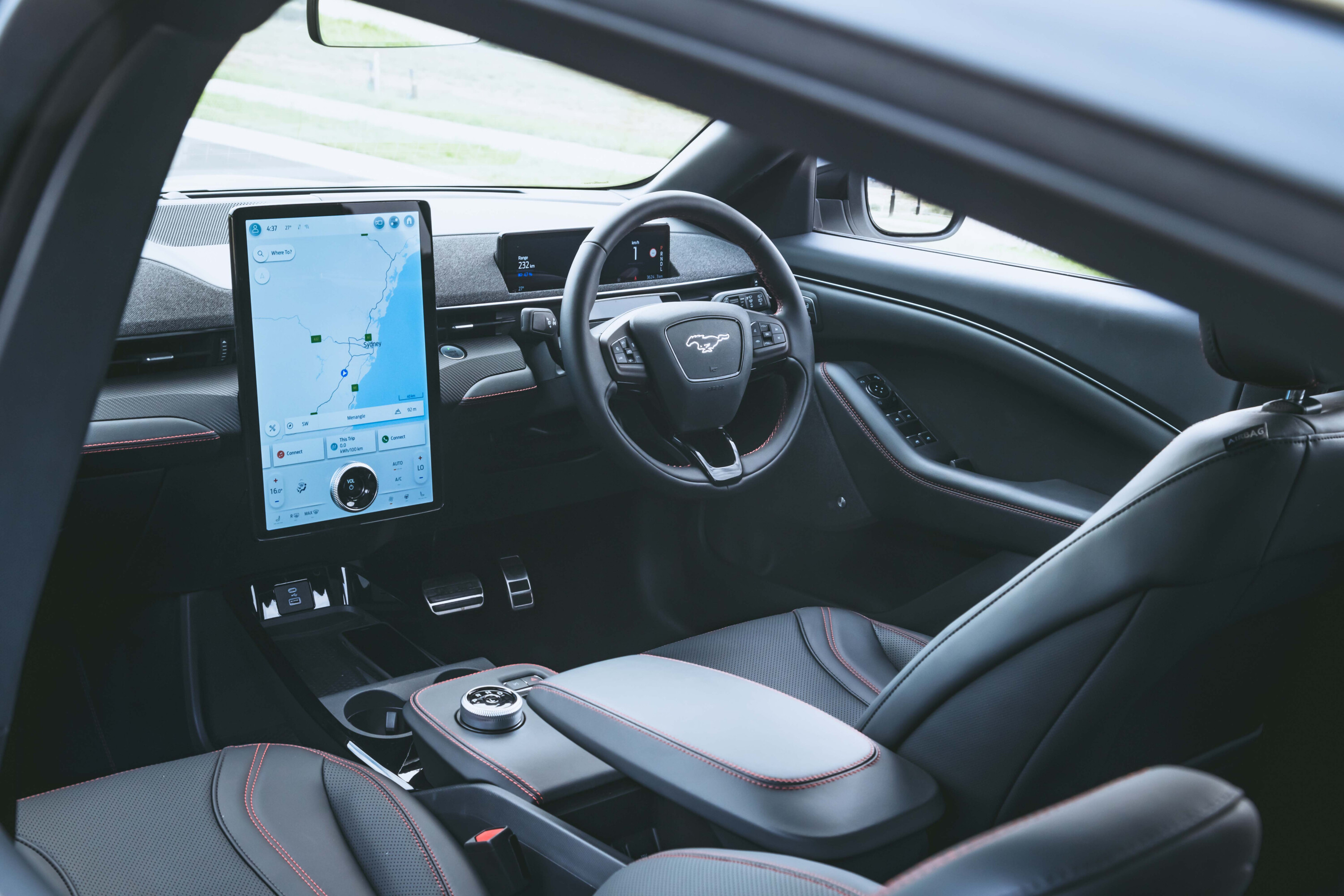
A black-on-black cabin treatment makes for a dark vibe inside, though there’s a tinted glass roof letting light in (as well as heat, seeing as there’s no sunshade).
From red-stitched perforated-vinyl seats that look and feel flat (and are crying out for seat ventilation), front occupants are presented with an appealing mesh-fabric-upholstered upper dash (with matching door trim inserts) that evokes 1980s Alfa, with a swathe of carbon-fibre-effect trim below.
1
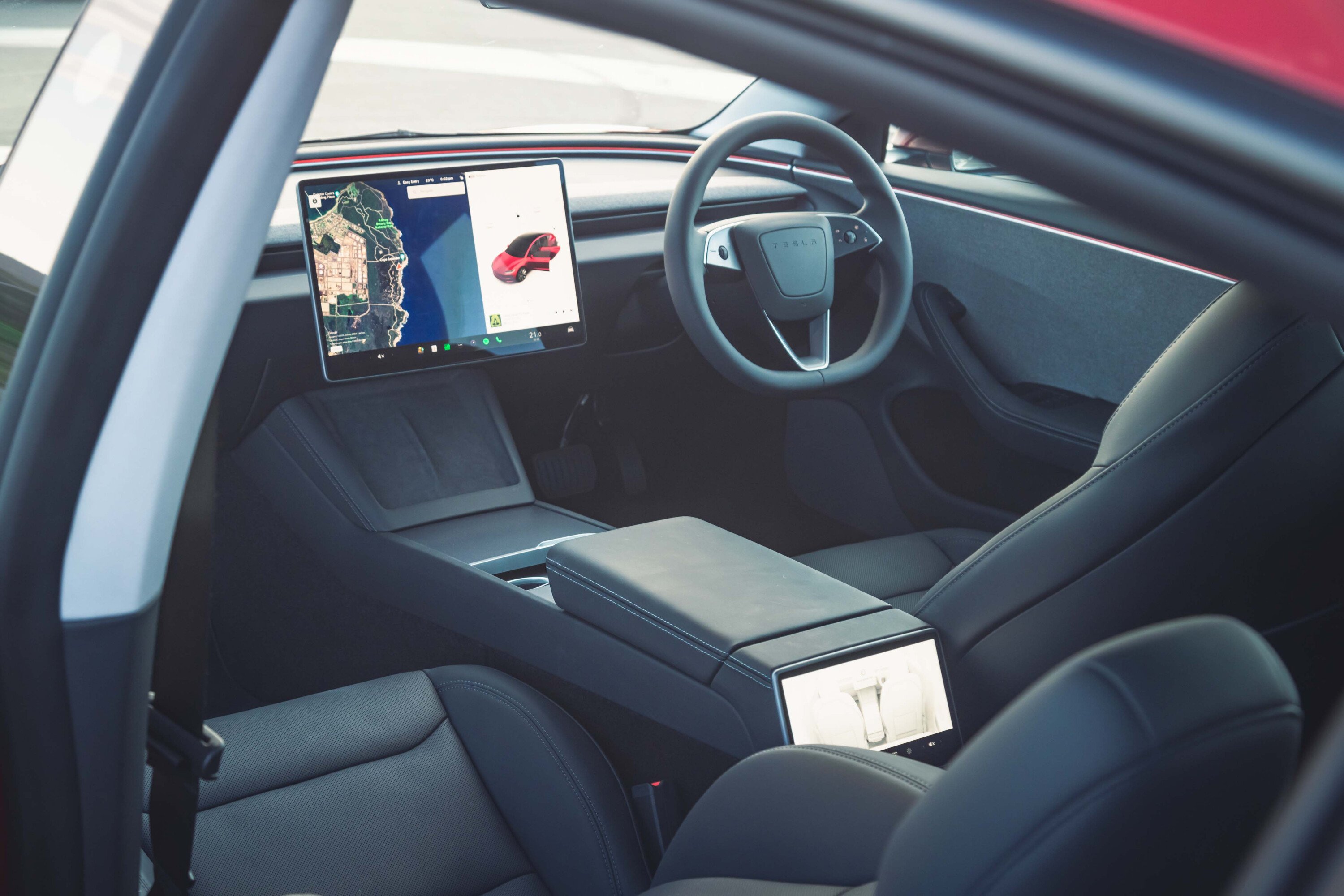
A Tesla-style 15.5-inch central portrait display screen and B&O audio also feature, with a dinky but functional cluster display and a nice leather wheel for the driver.
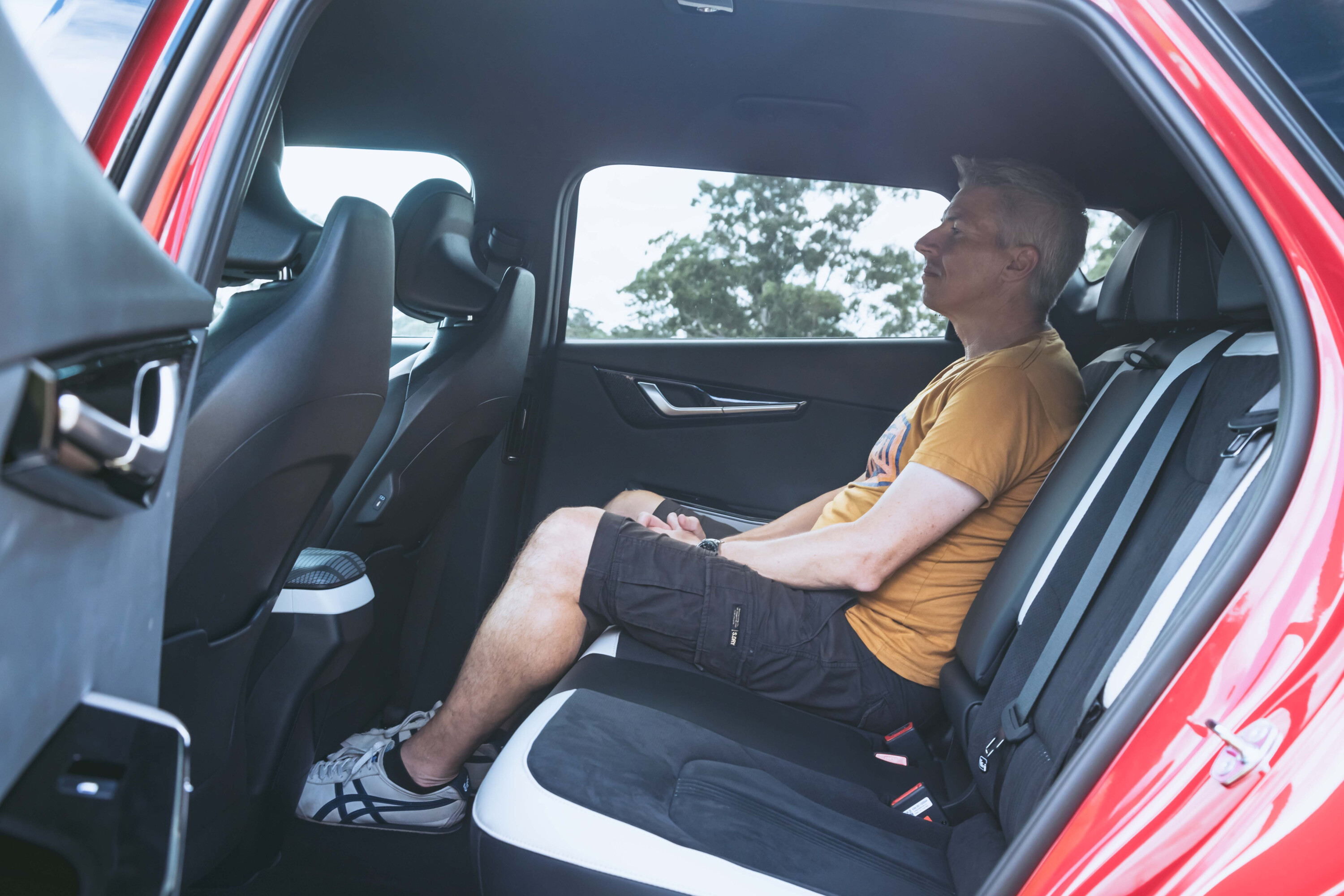
The rising beltline makes the rear equally dark, though forward vision is good, the bench is comfortable, and shoulder and leg room are great. There’s also central air-con outlets, plus USB-A and USB-C ports.
Back up front, the central display provides access to driving settings that make a big difference to how you get on with the Mach-E. With the level of braking regeneration tied to the drive mode, ‘Whisper’ allows for coasting while ‘Untamed’ brings heavier deceleration on a lifted accelerator, as well as an artificial propulsion sound that’s pretty unobtrusive, though it’s slow, gradual whirring would struggle to arouse anyone.
1
Thankfully, you can switch it off. There’s also a one-pedal mode – and it’s essential for avoiding the horribly grabby brake pedal in urban driving.
With its respectable outputs, the 2098kg single-motor Mach-E is good for 0-100km/h in a quoted 6.2 seconds. But it doesn’t feel quick off the mark – only gathering pace briskly above 30km/h – and the power delivery is a fraction grainy. It’s way off the pace of the Ioniq 5 and Model Y, feeling more the level of the less powerful Solterra/bZ4X twins.
The Mach-E’s rear-wheel drive and underlying balance brings an unexpected reminder of former local heroes, with an arse-out attitude attempting to introduce itself when punched from slower corners (before it’s quashed by the electronics), as well as roll-oversteer when punting the Mach-E one-up in faster corners.
2
Low-speed urban ride is unsettled and, in these conditions, the steering gives up little communication.
With speed and cornering load, the wheel starts to suggest some classic Ford tuning nous, yet the Mach-E’s ride continues to buck occupants in line with its nameplate. Sharp-edged back road bumps intrude more than in any rival here, and jar through the steering; larger undulations are dealt with more adeptly.
In the absence of engine NVH, other sounds are seemingly magnified and the Mach-E’s combination of surface-dependent tyre noise, road vibrations, and wind rustle around the side mirrors will grow tiring on a trip.
The Ford holds an ace in its large-capacity battery, however – at 91kWh it’s 21 percent bigger than the next-best Tesla, which it rivals for real-world efficiency at 18.0kWh/100km.
1
The result is the Mach-E will go farthest on a charge – our test indicated a range of more than 500km – but takes the longest to top up.
Efficiency is unlikely to be enough, though. The Mustang Mach-E is relatively pricey, with a polarising image – the retro cues desperately trying to evoke an emotional response the powertrain can’t.
The Mach-E is far more conventional than the futuristic Ioniq 5, and lacks the oomph of the Hyundai and Tesla, which make better driver’s cars and superior family wagons.
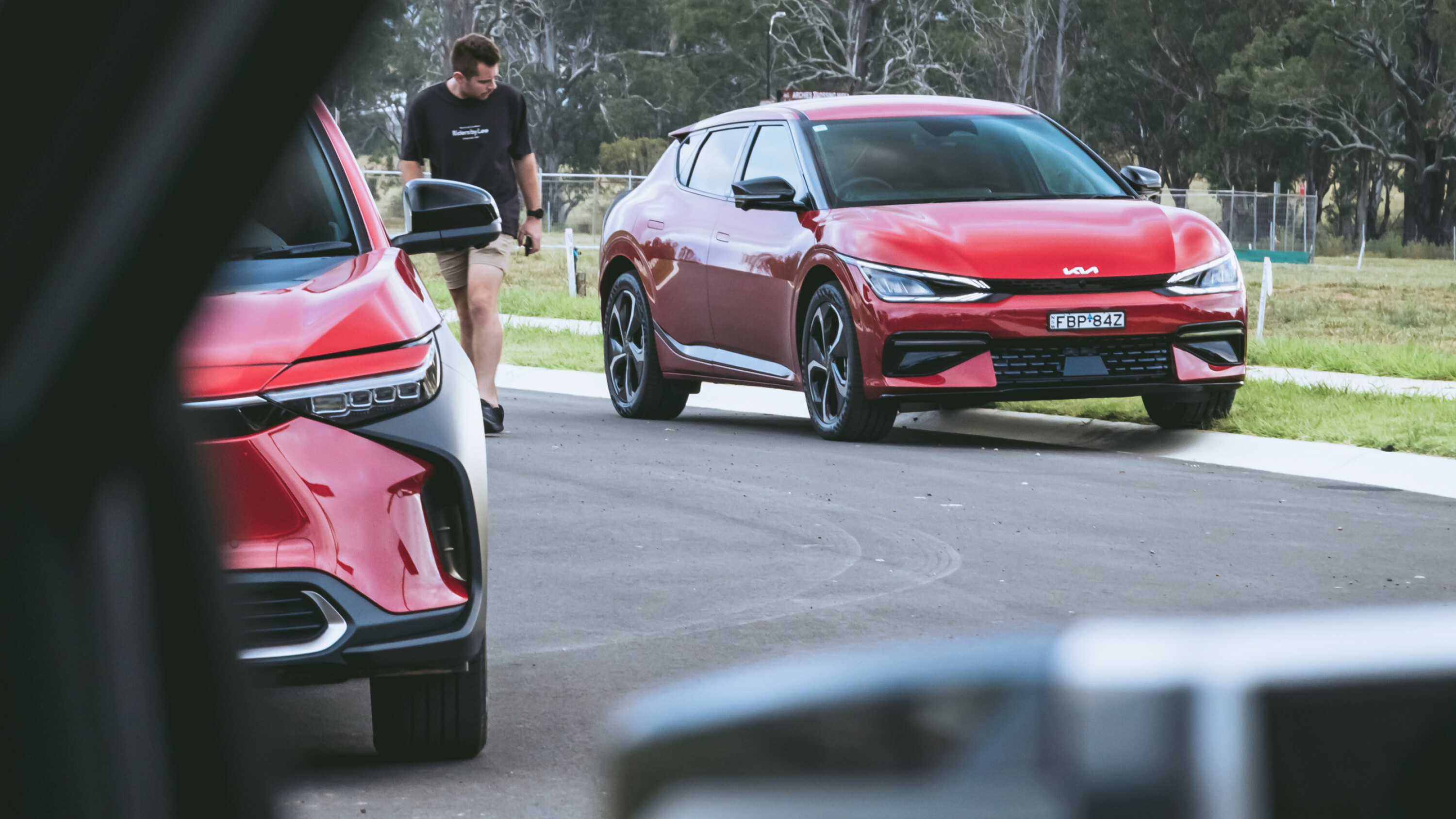
Meanwhile, the Kia EV6 is a better fit if the oddly specific brief calls for an ‘SUEV’ that channels the Pony Car.
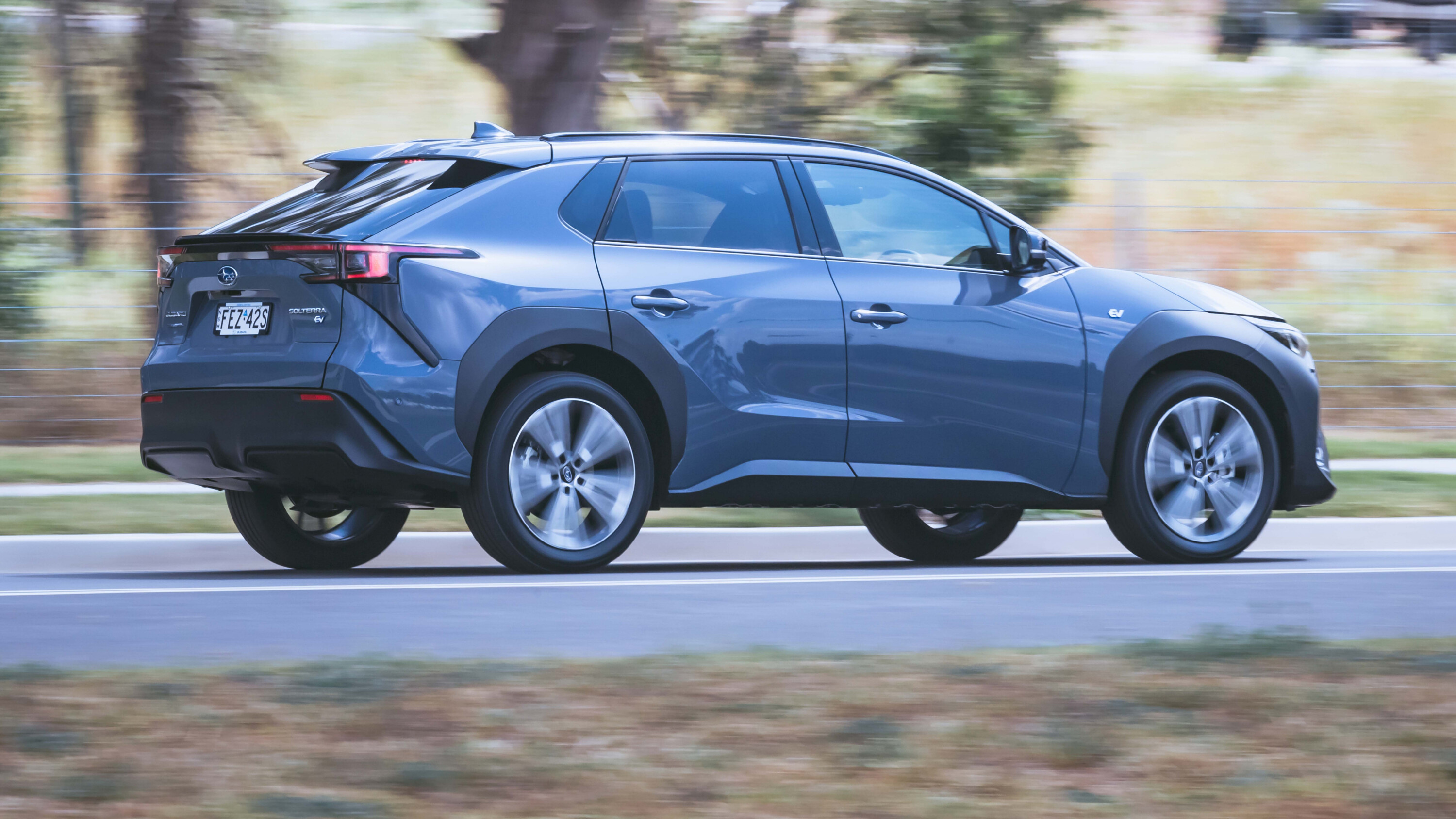
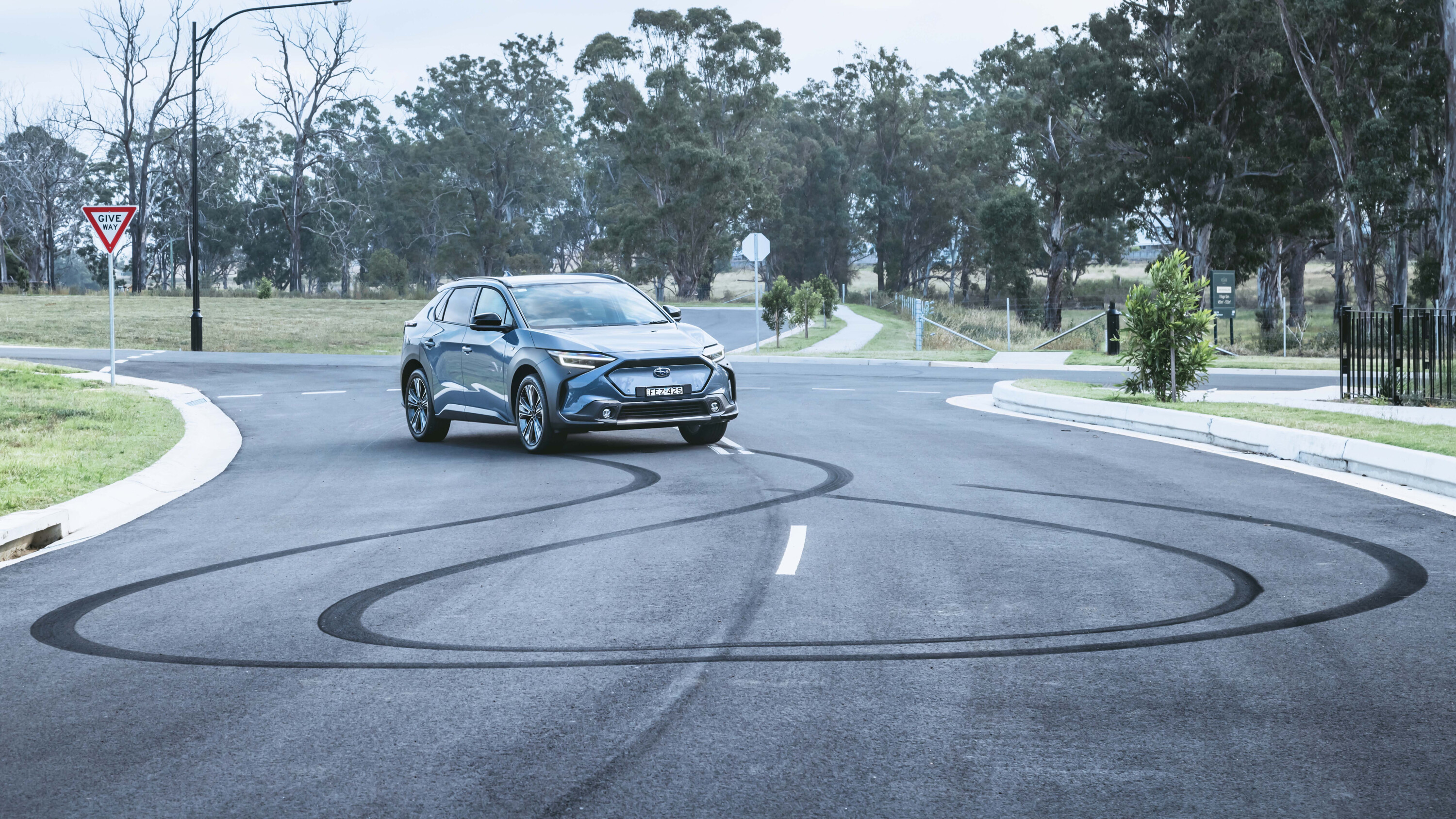
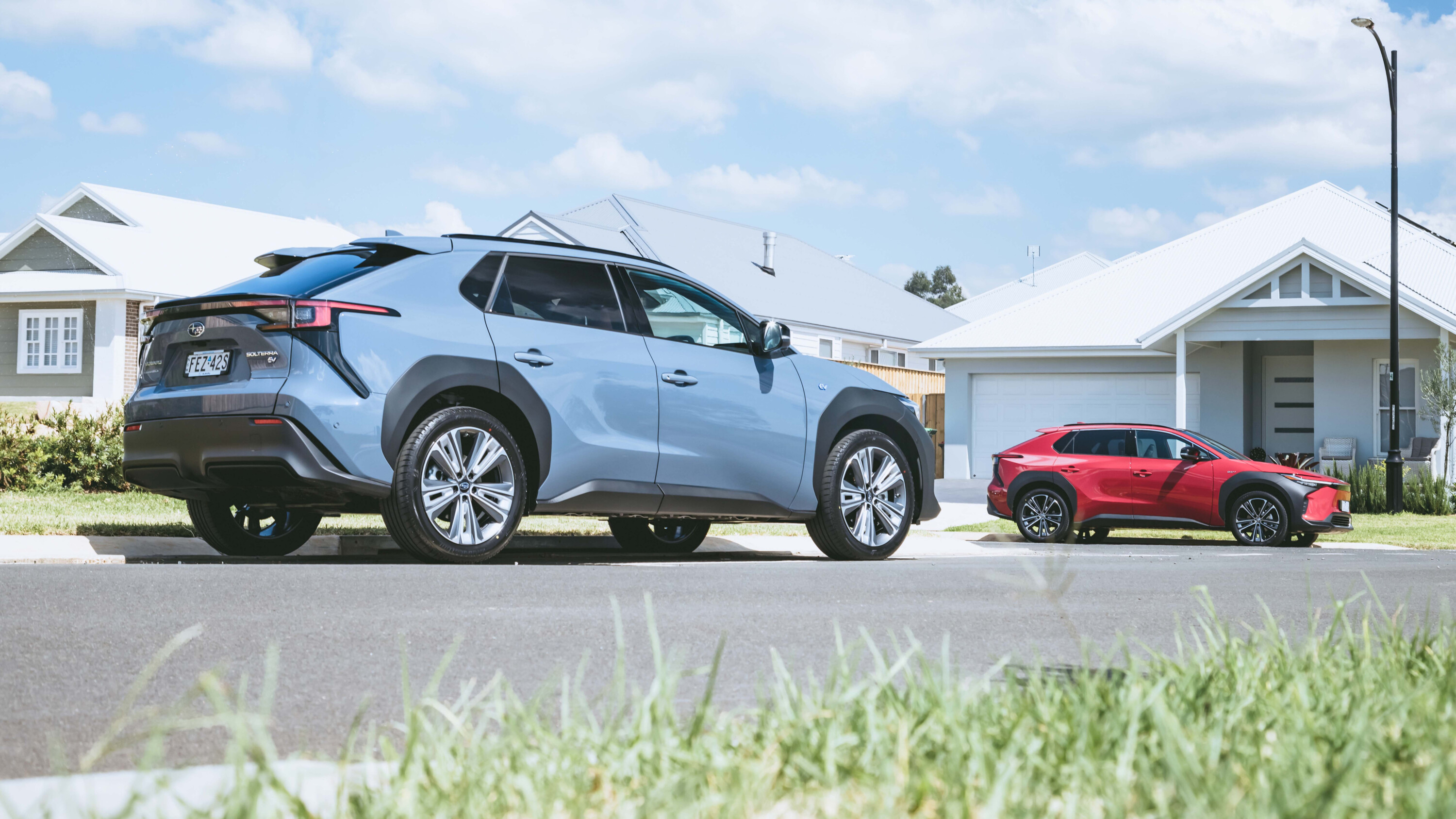
To drive the newly arrived Subaru Solterra and its sibling, the Toyota bZ4X, is to drive the same car … but for some subtle differences.
That’s true as tested, at least, with the $83,065 drive-away Solterra Touring AWD playing the $2854-cheaper bZ4X AWD with identical 160kW/337Nm dual-motor powertrains and broadly similar equipment.
It’s possible to have a $71,521 drive-away bZ4X front-wheel-drive, while the two-grade, AWD-only Solterra starts at $75,715 drive-away.
Brand loyalty may be the decider here, then, unless one of those subtle differences is a personal deal-breaker.
1
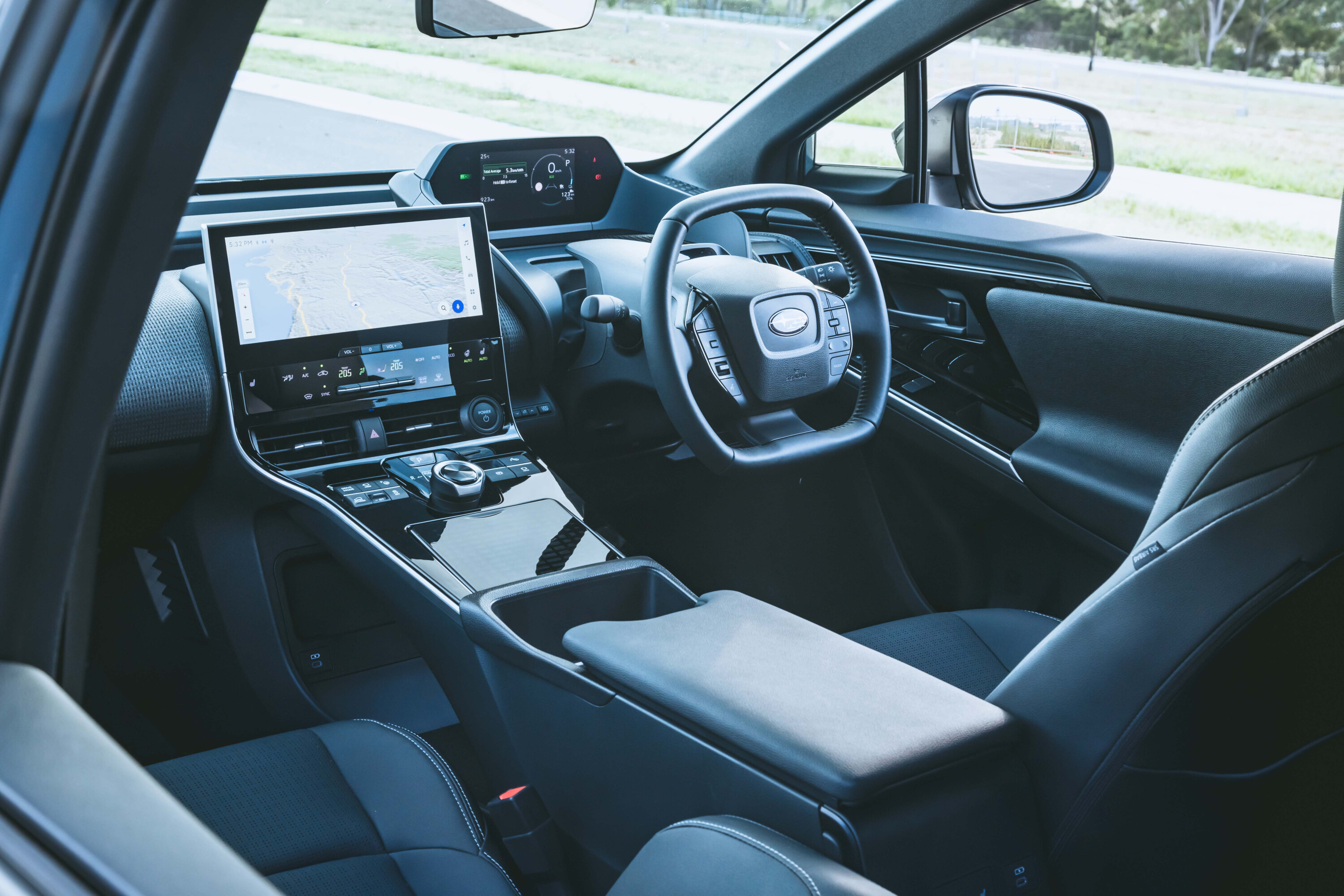
Not content to redefine the medium SUV as a pricey, battery-powered manga machine, the Subaru also reinvents the wheel – the steering wheel, that is, which features in flat topped and bottomed form.
Sure, it works stylistically against the backdrop of the Solterra’s ker-azy Japanese dashboard – complete with goofy yet functional 7.0-inch cluster display, upswept console, and 12.3-inch landscape centre screen. But the hand position it promotes leaves something to be desired – the Toyota’s round wheel.
In further differences, the Solterra Touring gets black synthetic leather while our Toyota tester brought the no-cost-option light grey. Our Solterra featured a powered passenger’s seat and rear-seat heaters; the bZ4X ventilated front seats with manual passenger’s adjustment (including height).
Finally, there’s a robust Harman Kardon audio in the former and JBL sound in the latter, while both have that new-Subaru smell.
1
Further range-standard kit includes Wireless Apple CarPlay and Android Auto connectivity, navigation, LED head- and tail-lights, a powered tailgate, a heated leather steering wheel, dual-zone climate-control with rear outlets, and front and rear USB-A and USB-C ports.
There’s also extensive standard safety tech including AEB, radar cruise control and road-sign recognition, as well as front, side, curtain, and front-seat centre airbags.
The Touring grade adds to the base spec with 20-inch alloys, a panoramic glass roof, wireless Qi charging, and advanced park assist.
1
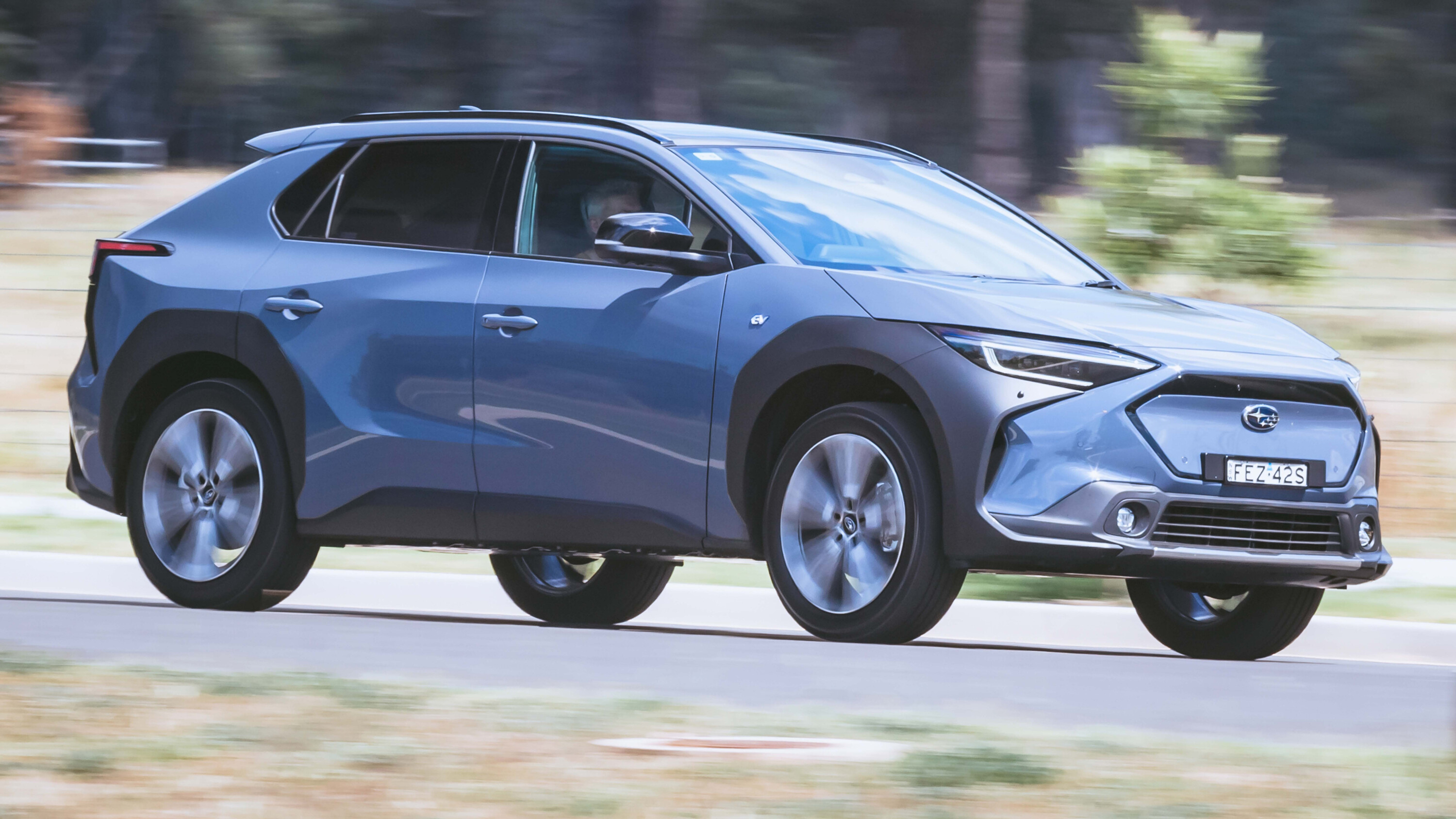
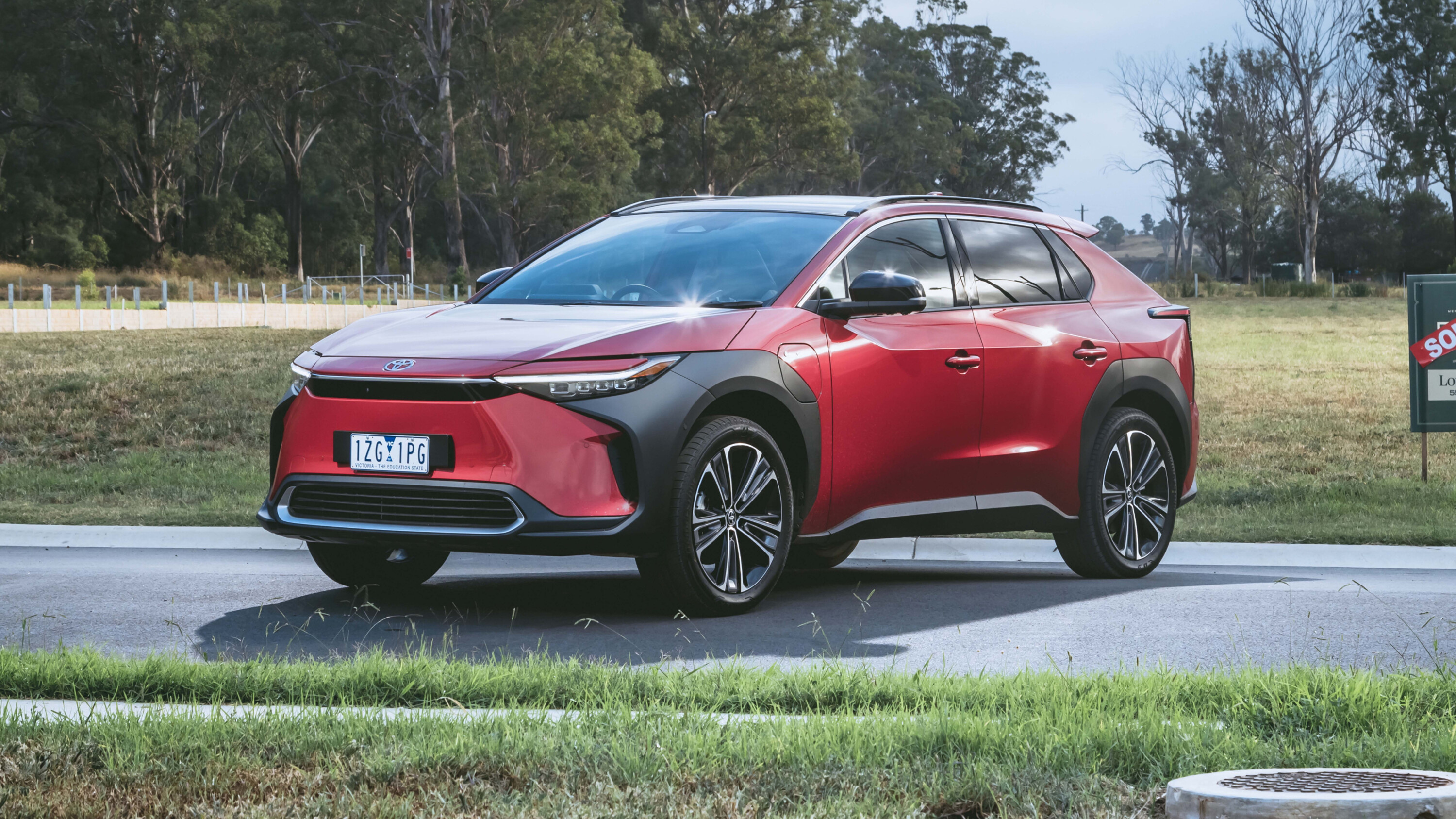
On the styling front, the test crew generally preferred the Toyota’s snout to the Subaru’s, which inexplicably looks like the Mustang’s. Perhaps there are only so many ways to not have a radiator grille.
Yet the drive experiences differ only in that the Subaru offers a noticeably livelier Power mode beyond both models’ Eco and Normal, and intuitive plus/minus column paddles to adjust the regenerative braking rate, rather than the Toyota’s centre-console button.
You quickly get used to the sensations of driving electrically, such as that faint buzz that follows you around, like you’re surrounded by a swarm of electromagnetically charged bees.
No synchronous motor will ever rival history’s great combustion engines for soundtrack, nor involvement, yet here you’re unlikely to miss the droning CVT and characterless four that would’ve had a run if global warming wasn’t a thing.
1
Although the two-tonne Toyobarus’ outright performance lags behind most rivals, it has every EV’s syrupy low-speed torque, and with a 6.9sec 0-100km/h time they’re swift enough. Once rolling, the pair have a nice vein of mid-range urge that makes them agreeable in the city.
Ask easy questions of Solterra’s chassis and it’s quick to respond with a well-damped urban ride and easy-going, Japanese-light steering. However, a back-road grilling that introduces higher speeds, greater cornering loads, and lumpier surfaces sees the Subaru stammer.
A reluctant nose is the overlying trait, while lateral loads fail to make their way to the steering wheel, which remains resolutely numb.
The ride, while not the last word in polish around the city, reveals a more obvious mismatch between the front and rear damping, with slower bump recovery from the front pointing to a slightly underdamped setting, and a lively rear suggesting a tad too much rebound.
1
As well, there’s some tyre drone and some wind rustle around the side mirrors, though both are more muted than in the Mach-E.
Country driving reveals a further shortfall. With the smallest battery here (at 64kWh usable) and a relatively high tested energy consumption – despite only modest performance – the Solterra (like bZ4X) provides a real-world range of just under 350km. (Subaru quotes a range of 485km on the NEDC test, which is more generous than the now industry-standard WLTP.)
Factor in the 150kW maximum DC fast-charging capability – to charge from 10-80 percent in a claimed 30 minutes – and the Subaru is also on the slower side to fill its cells.
We can appreciate that the economics of EV development and manufacturing mean this is an expensive product. But no maker can afford to leave so much on the table while asking customers to part with more than $80K for a five-seat electric SUV.
Or, to put it as one tester did: do you want an electric Forester that much?
Safe, sturdy and quietly punchy, though lacking any X-factor
Sharing development costs is nothing new for Toyota and Subaru. They’ve been doing it for more than a decade now with two generations of 86/BRZ coupes, so following the same principle with the first-ever EV for each brand clearly made a tonne of sense. Make that two tonnes.
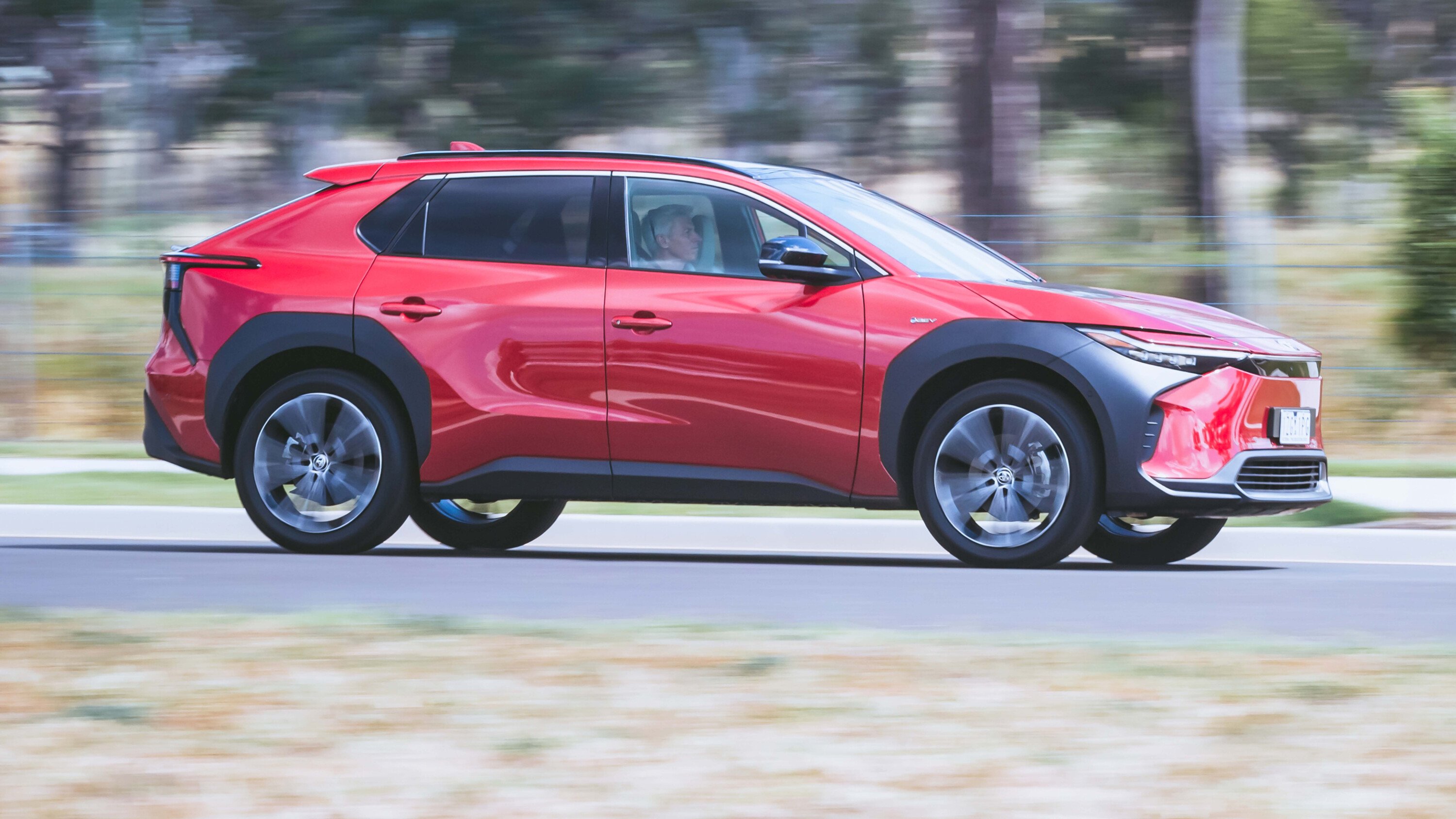
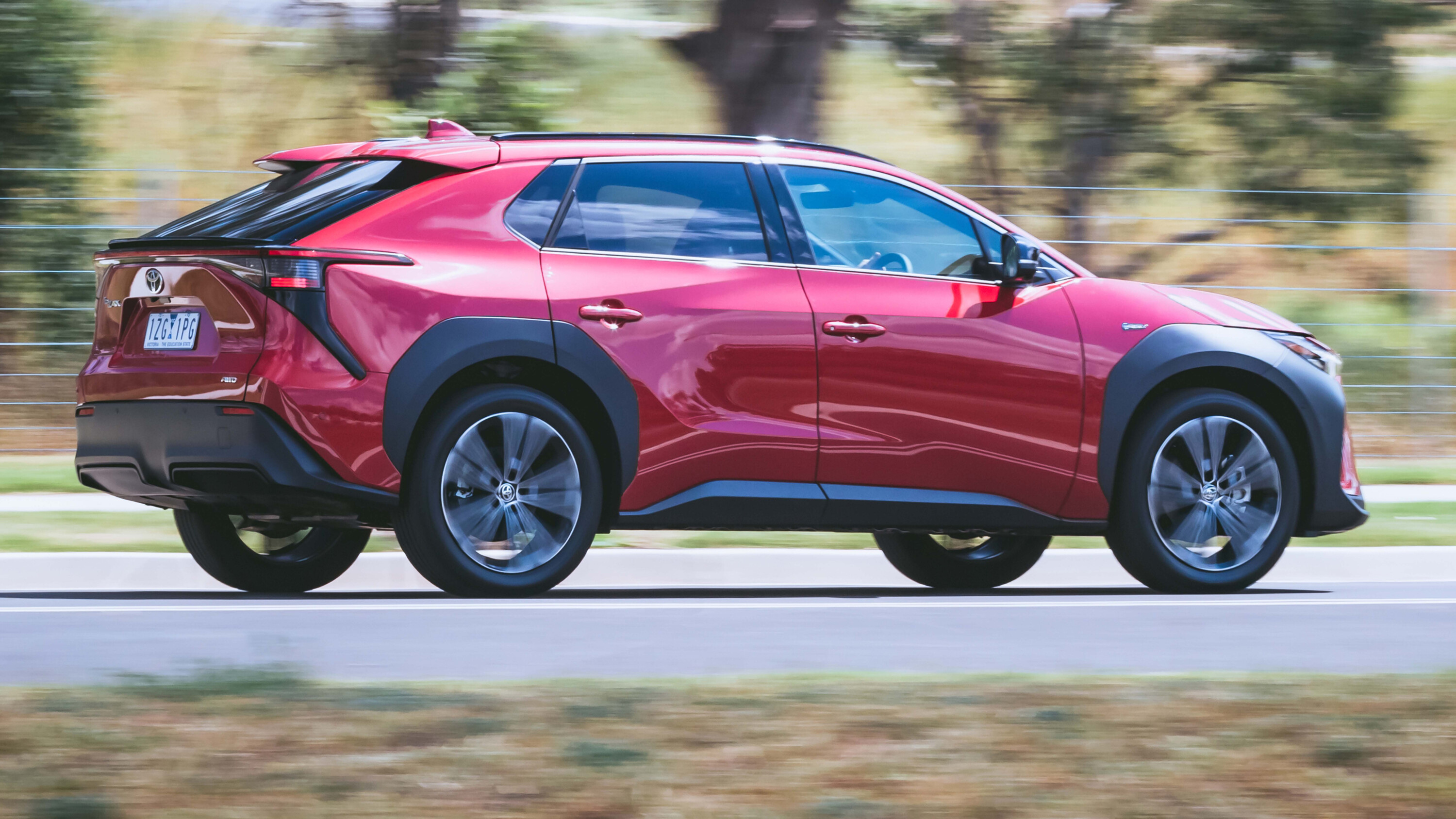
Externally, the styling differences between the EVs are greater than 86/BRZ, with Toyota’s bZ4X arguably clinching victory over the fussier Subaru Solterra thanks to its smoother front-end, black-accented (same-design) 20-inch alloys, and cleaner tail-lights with a red light band spanning the width of its (electric) tailgate.
1
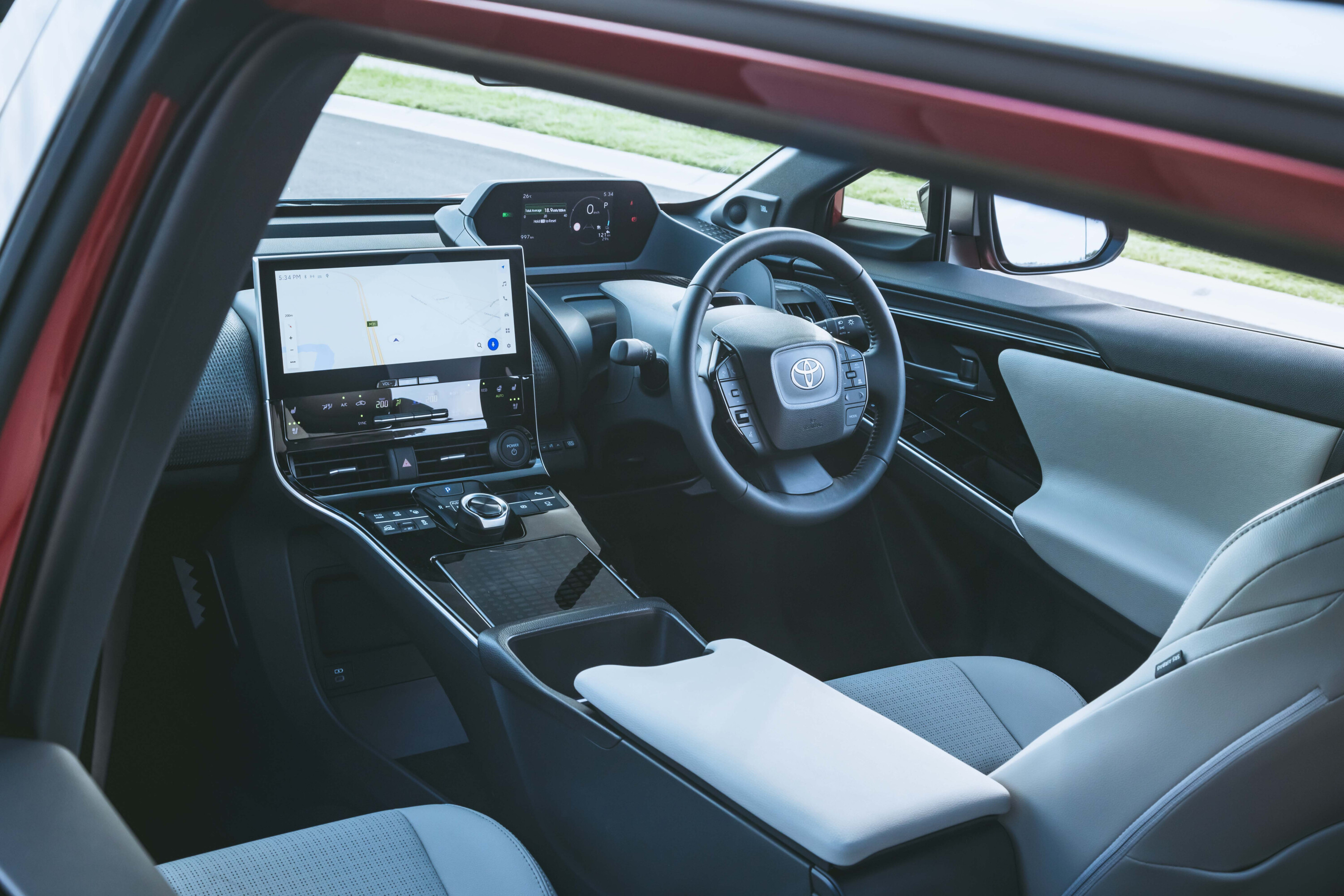
Inside, the bZ4X AWD uniquely includes a round steering wheel and a ‘greige’ colouring to its synthetic-leather perforated seating and door trims that lightens the cabin mood considerably, though the exclusive front seat cooling whispers its effect rather than blows – even on maximum.
They share rear-seat USB-C ports, but the bZ4X misses out on the $2K-dearer Subaru’s wheel-paddle-adjustable regenerative braking (it’s simply on or off in the Toyota), and its one-pedal mode also works in name only, given that it can’t stop the car and doesn’t provide much braking retardation.
Unlike both generations of 86/BRZ, however, the bZ4X and Solterra are identical under the skin, meaning not only the same driveline and electrics (reportedly developed by Toyota) but also the same suspension tune (reportedly honed by Subaru).
And what that delivers is an unexceptional EV that feels solid and rides with a degree of firm authority (despite considerable tyre noise and surface sensitivity), yet lacks finesse in almost all areas and, perhaps consequently, any character. A base Corolla would drive rings around a bZ4X.
1
Chief offender is the steering, which feels heavy-ish when parking but light and numb at speed, as well as leisurely in its response when deviating from straight ahead – the polar opposite of the ultra-keen Tesla Model Y.
The only saving grace is the bZ4X’s round steering wheel, which partly obscures the (basic) digital instruments but at least avoids the perpetual irritation of the Subaru’s heavily squared-off version.
The Toyobarus seem disinterested in changing direction and, while they display neutral handling balance when set up properly in a corner, they’re clearly front-biased, with both front wheelspin and power understeer rearing their ugly heads at times, despite being AWD. And it’s here, more than anywhere, that the Japanese EVs feel significantly inferior to their Korean and American alternatives.
At least the Toyota AWD’s electric drivetrain has its appeal, with a strong surge from a standing start and a 0-100km/h claim of 6.9sec (compared to 7.5sec for the bZ4X front-driver).
1
Featuring a 64kWh (usable) lithium-ion battery and an 80kW/168.5Nm electric motor on each axle, Toyota claims a 10-80 percent charge time of 30 minutes at the maximum DC capacity of 150kW, which is competitive with cheaper EVs but well below the standard of the Hyundai and Kia.
Toyota also claims a combined WLTP energy consumption of 18.1kWh/100km, which is close to our 18.6kWh/100km test figure.
The bZ4X AWD’s range claim (WLTP) is a fairly average 411km, though the real-world range from our testing calculated to 344km, giving the electric Toyota the stumpiest capability on a country journey by just 2km from its Subaru Solterra twin.
On these adventures, you might notice that the designers have tried to give the bZ4X some interior sparkle, with meshed cloth dashboard trim, a classy 12.3-inch centre touchscreen, a reasonably impressive JBL stereo, a modest digital instrument pod mounted Peugeot-like above the steering wheel (in theory), and mostly sensible switchgear, as well as the aforementioned two-tone colour treatment.
2
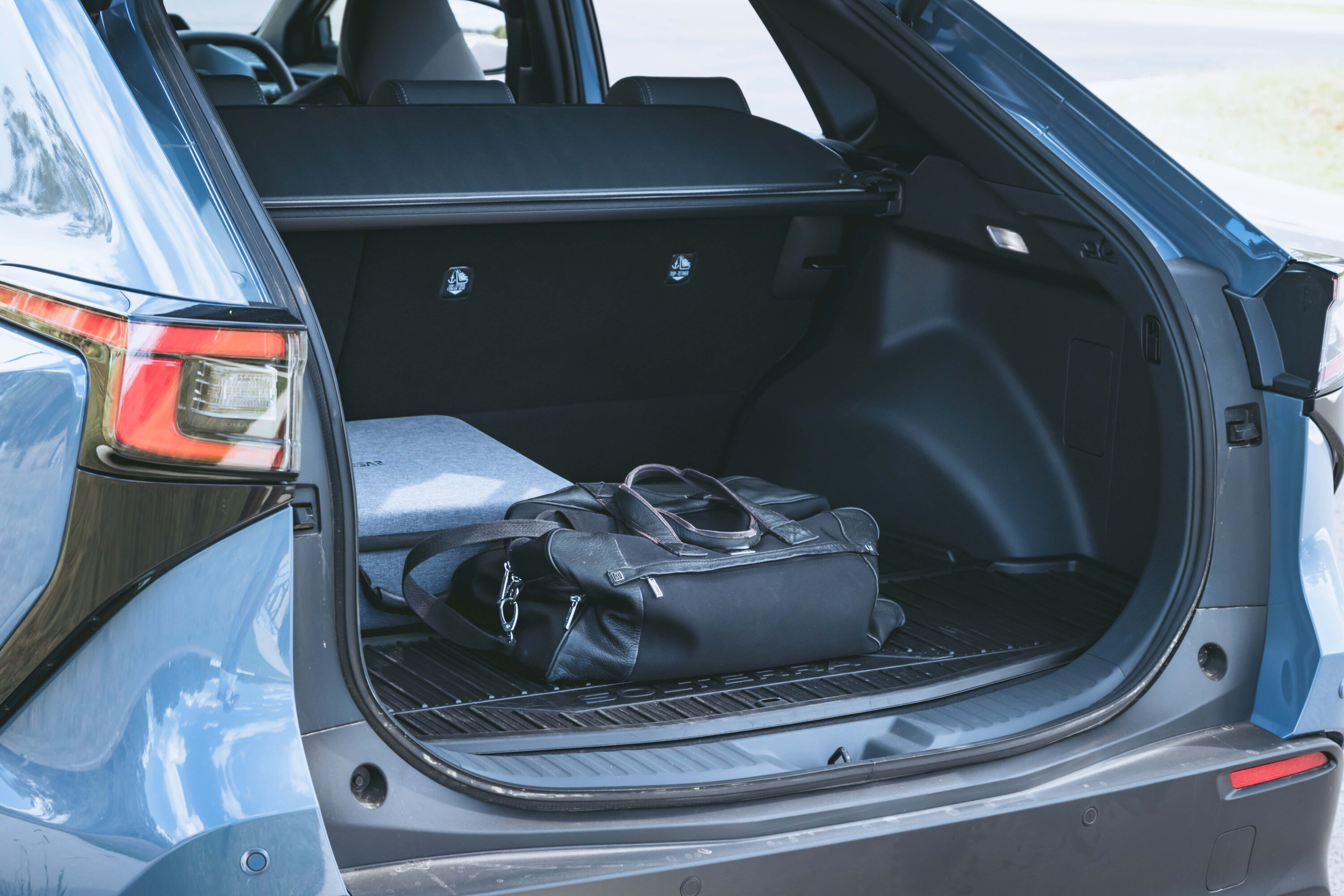
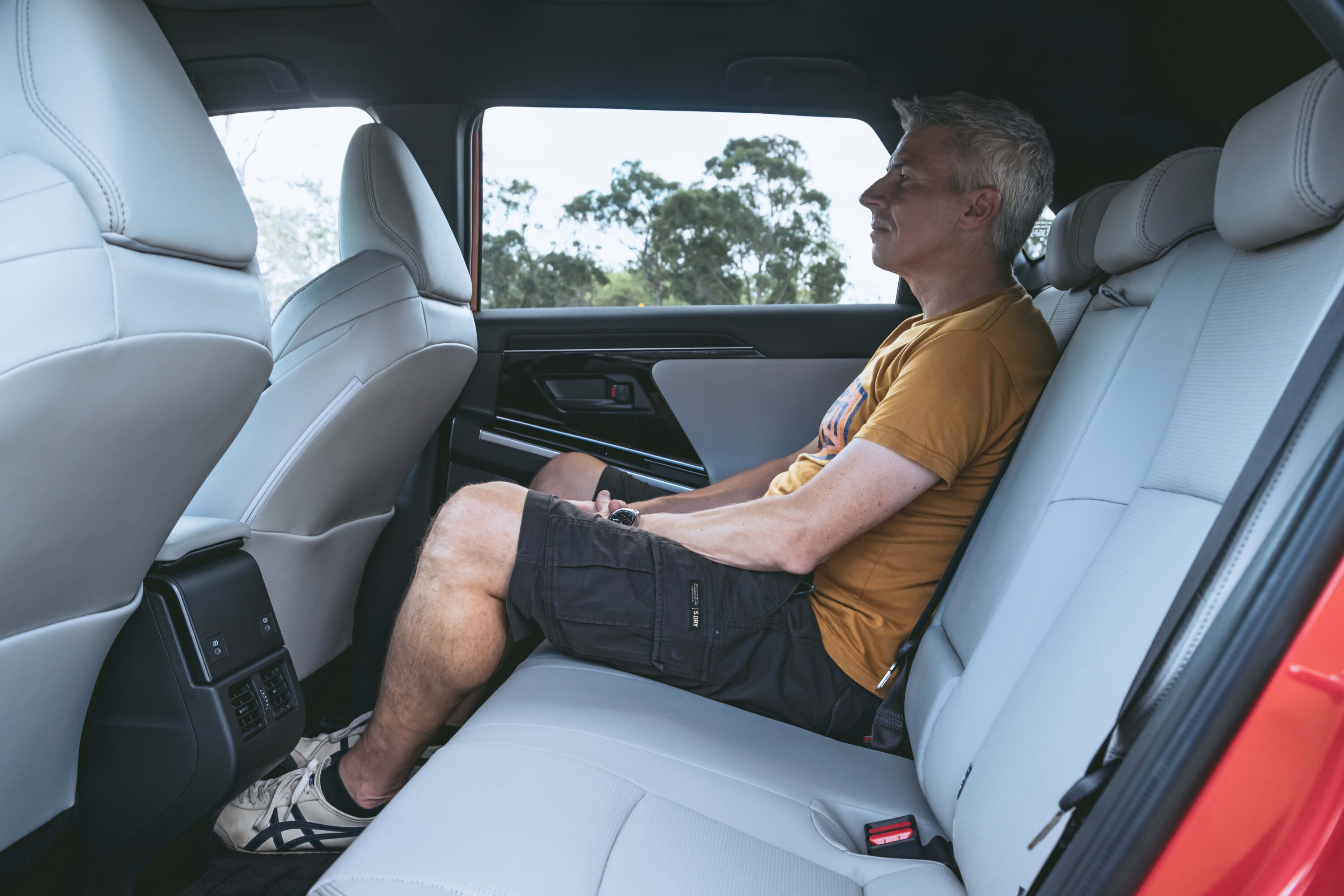
The seating is comfortable, front and rear – though lacking in rear under-thigh cushion support – and cabin space is competitive, but the detailing falls well short of what you’d expect for a list price of $75K.
For that kind of money, the bZ4X’s hard plastics, modest door storage, weirdly separated glass roof (it’s a single pane but has a headlining bar inserted across the middle), and cheap-looking instrument graphics are exposed. This is no Polestar rival for cabin slickness, let alone Hyundai’s designer-chic Ioniq 5.
1
If you approach the Toyota bZ4X AWD pragmatically, it’s inoffensively appealing. It seems well-equipped, appears intriguingly different to a Corolla or Yaris, and costs just $180 a year to service.
We’re sure the bZ4X will provide painless, effective, and satisfying ownership for many customers – supported by the largest dealer network in the country.
But for a first-ever EV attempt this late in the game, we hoped for more from the bZ4X. It seems to be relying on the loyalty of Toyota’s ownership base rather than trying to introduce something fresh or interesting to the category. For the asking price, there are better, classier alternatives.
Timeless design meets great packaging and performance
Remember when car designers thought that a pukka Hybrid should somehow look like a Hybrid, and an EV should, for some reason, be slightly weird without being attractive or genuinely cool … aside from the decade-old, still-handsome Tesla Model S?
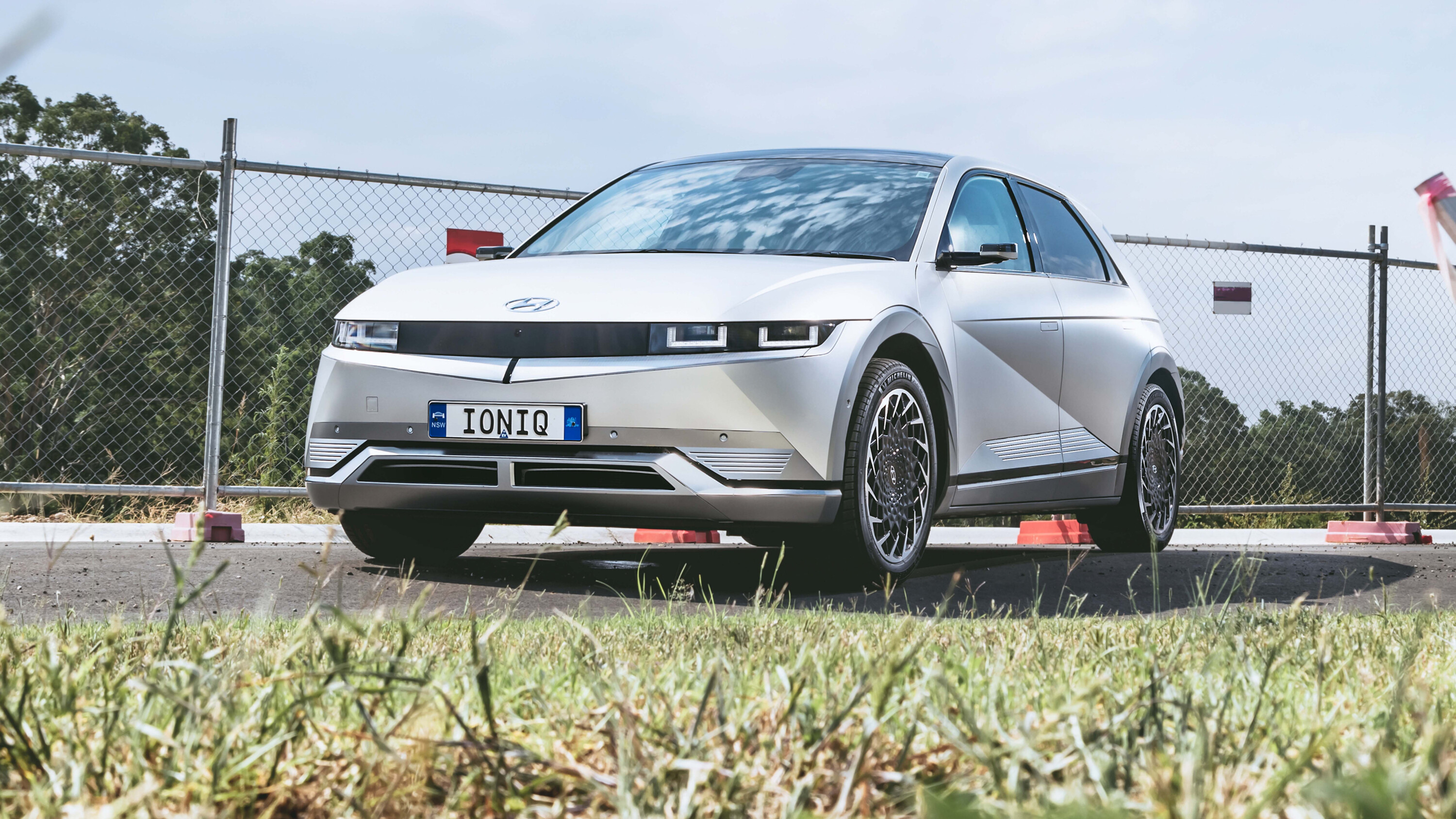
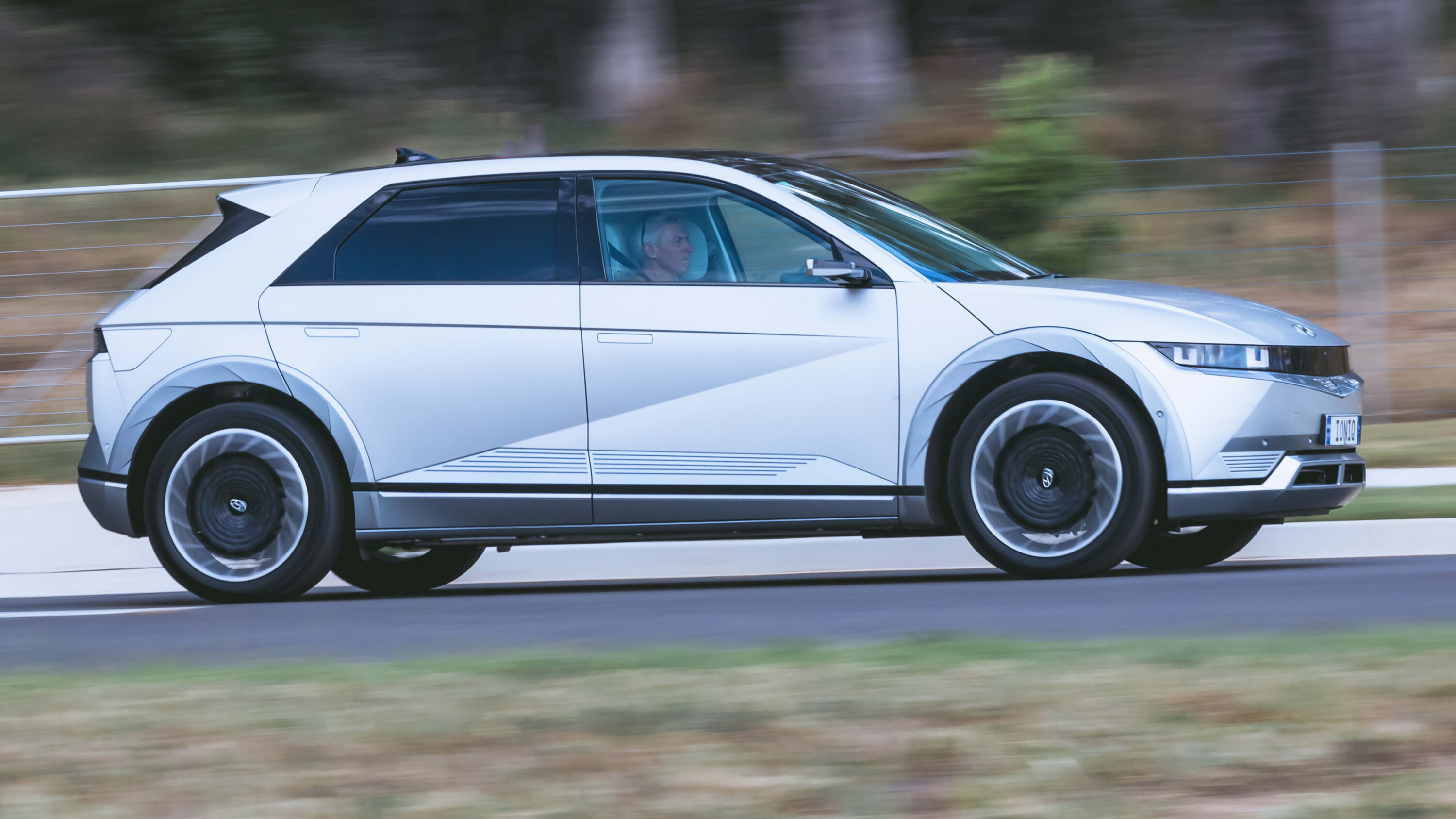
In more than any other area, the Hyundai Ioniq 5 has broken the mould for automotive design, in a way that EVs from many legacy manufacturers (such as Mercedes-Benz) have failed at spectacularly.
1
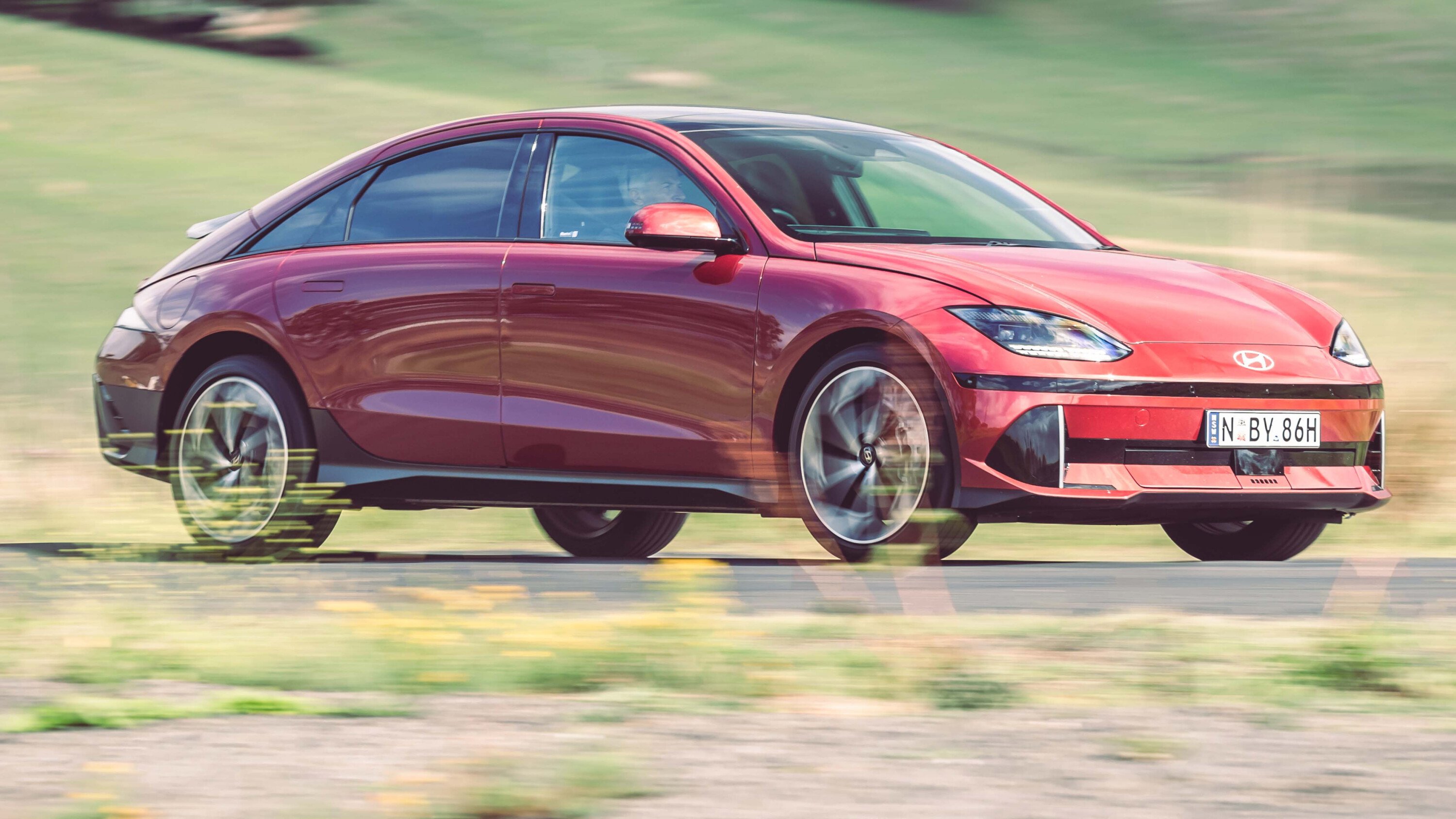
Ultra-modern yet intriguingly retro and wonderfully individual, the Ioniq 5 ranks among the handful of 21st-century designs that can truly be labelled ‘instant classic’.
But styling alone isn’t enough to make a car – not in a Wheels comparison test anyway. Thankfully for the Ioniq 5, Hyundai seems determined to keep finessing its now three-year-old icon – turning what was already a quite impressive thing into something potentially even better.
Come mid-year, the Ioniq 5 gets comprehensively upgraded with a larger battery (84kWh versus 77.4kWh for this MY24 model, and Kia’s related EV6) for expanded range, a sportier N-Line variant, a stronger body structure, improved suspension tuning and noise isolation, re-engineered switchgear, revised infotainment, enhanced active-safety features, new bumpers and new wheels for MY25.
1
We must applaud Hyundai for its perpetual desire to make the Ioniq 5 better, because many of those ‘revised’ areas mentioned are exactly where the MY24 model stumbles.
Not to any large degree, but enough to warrant further investigation – particularly its ride. While the 239kW/605Nm Ioniq 5 Epiq AWD is a hoot to hustle thanks to its superb grip, rear-biased handling balance, keen steering response and tremendous performance, its ride quality often sees it lolling about … in a somewhat charming way because it isn’t too discomforting, especially on smoother roads. It’s just not finessed.
Following an initially fairly terse primary ride, the Ioniq 5 will easily absorb big lumps at urban speeds – better than any EV here.
But this underlying plushness leads to it being underdamped at speed, where the lack of compression damping sees the Hyundai nudge its bump stops quicker than its rivals, with recovery also a little lax.
1
It does all this in a smooth-edged fashion, but that contrasts starkly with the Kia EV6’s well-controlled firmness and level demeanour. If there’s one word you’d never use to describe the Ioniq 5’s ride, it’s ‘level’.
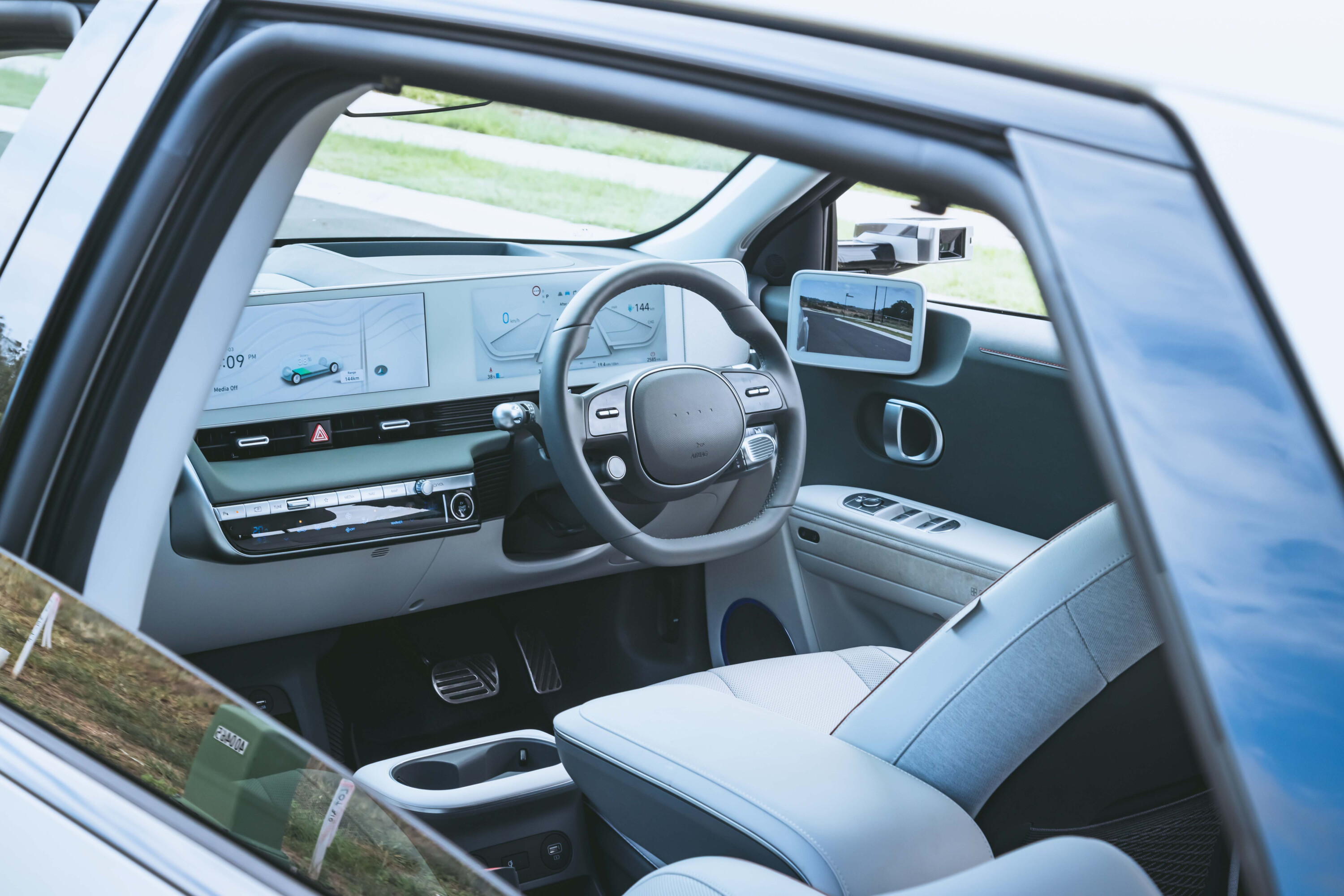
The Hyundai’s premium interior is a much classier, more expensive-looking and feeling place to spend time than the Kia’s (and its competitors), yet the flat 12.3-inch screens and hidden switchgear (the seat heating and cooling are buried in the centre touchscreen, for example) highlight its prioritising form and cost-savings over function.
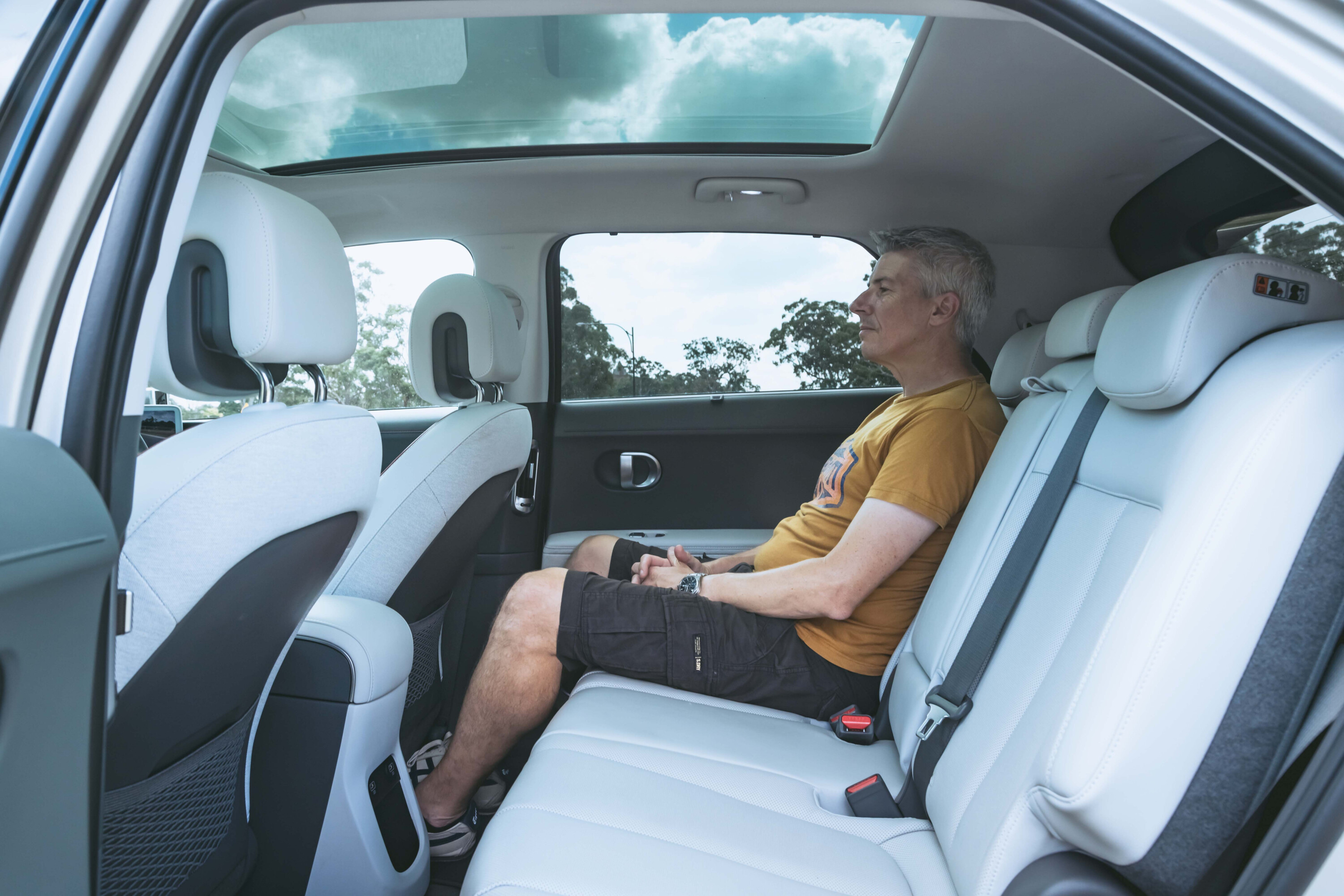
That said, the MY25 model moves those controls, plus the wireless charging pad, to the centre ‘island’ between the front seats – much like the EV6 – for improved functionality. And the Ioniq 5 beats the EV6 for cabin lightness. Its low beltline and brilliant all-round vision make it a joy to drive simply for the view.
In the Ioniq 5 Epiq AWD, there’s also a glass roof with an electric sliding blind that protrudes from both ends before meeting in the middle – giving it the glassiness of the Tesla combined with proper sun protection on hot days.
2
And while the same could be said about the Toyobarus, their curious centre beam robs their cabins of true airiness.
The Hyundai also offers some unique features such as camera-operated rear-view mirrors (which you do become accustomed to) and ‘Relaxation’ front seats that tilt backwards and have ottoman extenders for a quick, comfy nap while charging.
Speaking of which, it does so just as quickly as the Kia, taking 18 minutes to charge from 10-80 percent, while suffering little in real-world range (392km according to our testing and maths), despite its searing 5.2-second 0-100km/h acceleration.
The WLTP claim is 454km, so perhaps the AWD variants of Ioniq 5 and EV6 actually make more sense given their huge performance lift – especially when punching out of corners.
1
Where the rear-drive Kia squeals its Continentals and ignites the ESC (unless you disable traction control), the lusty Ioniq 5 AWD hunkers down on its Michelins and charges ahead.
Judging by the extent of its forthcoming updates, I think the best is yet to come for the non-N Ioniq 5. But even as assessed here, it’s an interesting, rewarding and well-equipped EV.
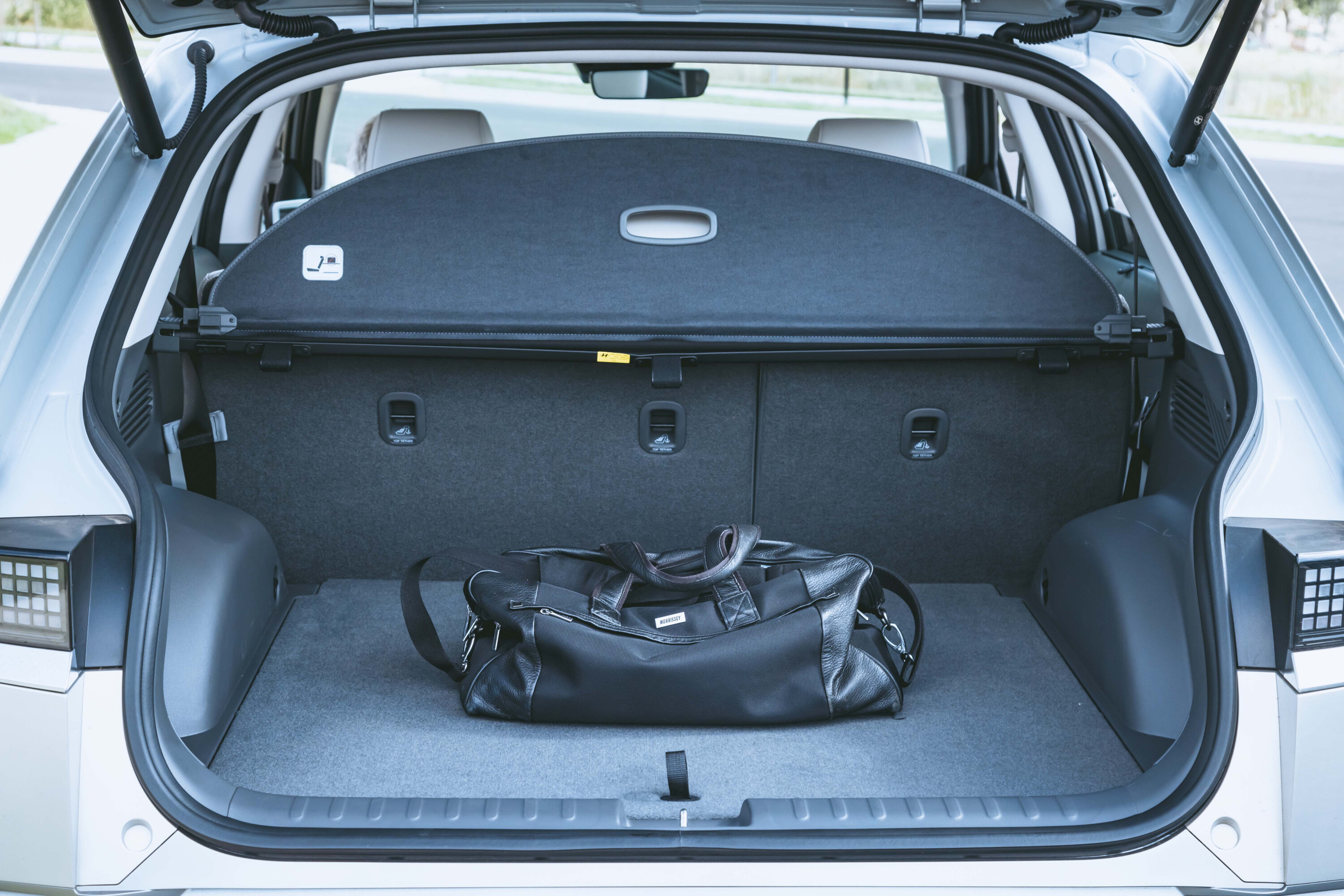
If the MY25’s proposed improvements prove successful, the Ioniq 5 could place even higher in a future similar comparison, even with its comparatively small boot (versus the Tesla’s gaping cavity). That’s how good the rest of this design icon still is.
Ubiquitous ev combines popularity with genuine ability
The coupe-crossover carves keenly into the long left sweeper, settling onto its outside tyres with a neutral mid-corner attitude before riding a syrupy tidal wave of torque from apex to exit.
We haven’t previously been that enamoured with the Model Y’s dynamics, tested earlier in base RWD and flagship Performance guises, yet the ride and handling of the mid-spec Long Range is proving to be surprisingly good – at least on our long country test loop.
1
We’d love to explain why this variant seems better to drive, but it would be easier to stage our own mission to Mars in a SpaceX rocket than extract specific information out of Tesla.
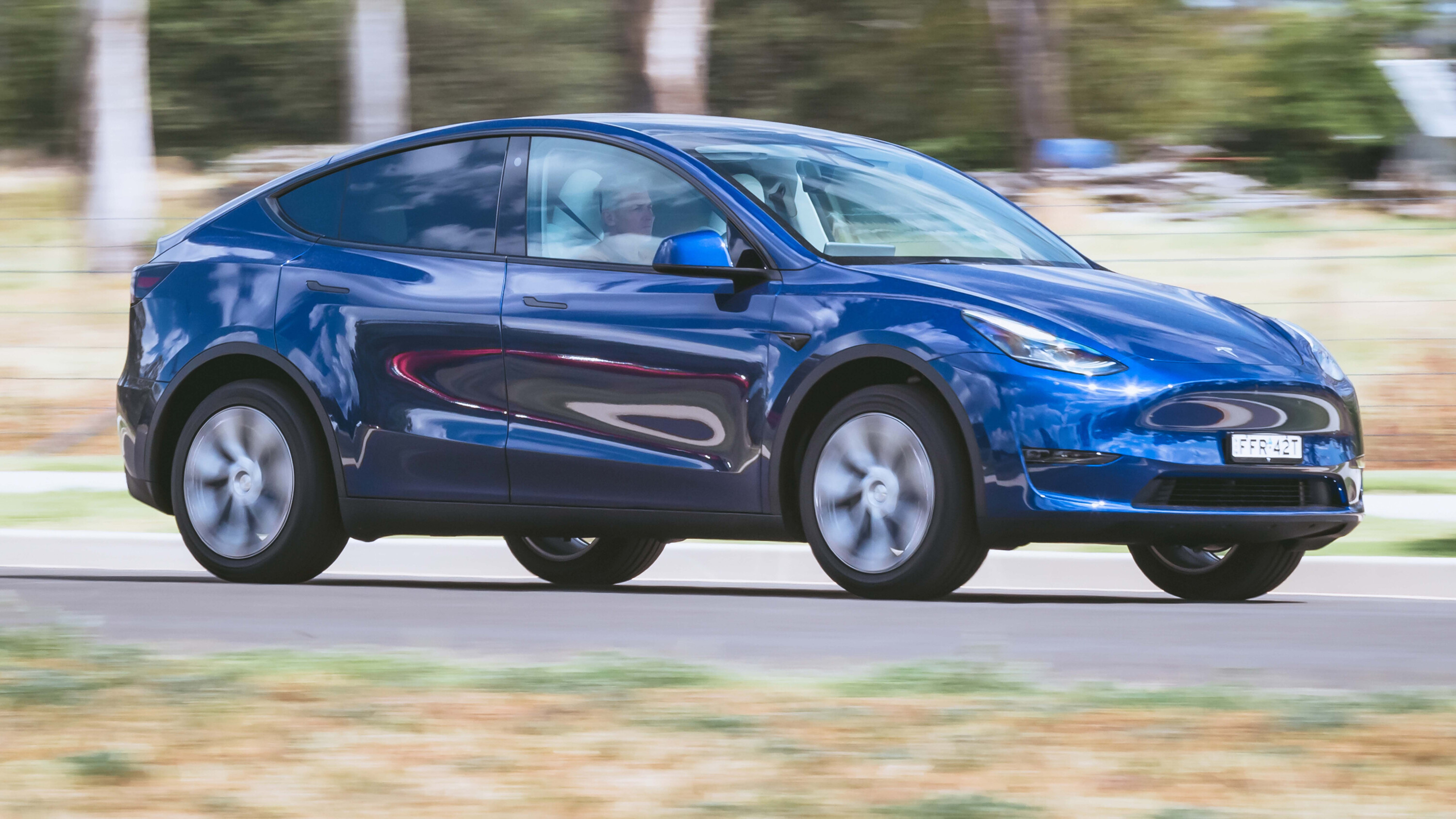
It’s almost impossible to escape Australia’s best-selling electric medium SUV, probably in ubiquitous Deep Blue like our test car – in a traffic jam, at the shopping centre, or in your neighbour’s driveway. The Model Y was private Aussie buyers’ favourite car in 2023.
In this trim, it produces 286kW and 510Nm unofficially (did we mention that Tesla is not big on providing specs), does 0-100km/h in a claimed 5.0sec, and unofficially draws from a 75kWh (usable) nickel-manganese-cobalt (NMC) battery to provide a claimed WLTP range of 533km. Our testing suggested a real-world 424km.
1
Taking advantage of 250kW DC fast-charging capability, the Model Y is said to add 261km of range in 15 minutes, and our pit stop at a suburban Sydney Supercharger suggested this claim is on the money.
Highly equipped from the $65,400 (plus ORC) rear-drive range-opener, North America’s Shanghai-built SUEV brings a 15.0-inch touchscreen display, dual wireless smartphone charging, a glass roof, synthetic leather, a 13-speaker sound system, powered front seats, heated seats and steering wheel, powered tailgate, a dashcam, and 19-inch alloys.
To this, the $13K-pricier Long Range adds dual-motor AWD and … LED fog lights. Our tester came in extra-cost Deep Blue Metallic (of course) with a white interior for $1500 apiece.
On the safety front, every Model Y packs seven airbags including a front-centre unit, and safety tech such as AEB, blind-spot assist, lane-keep assist, reverse and side-view cameras, tyre-pressure monitoring, automatic high beam, and an intelligent speed limiter.
2
The Tesla offers out its neat flush door handles by way of an introduction and, with the brand’s reputedly rising build quality, they’re increasingly unlikely to come off in your hand.
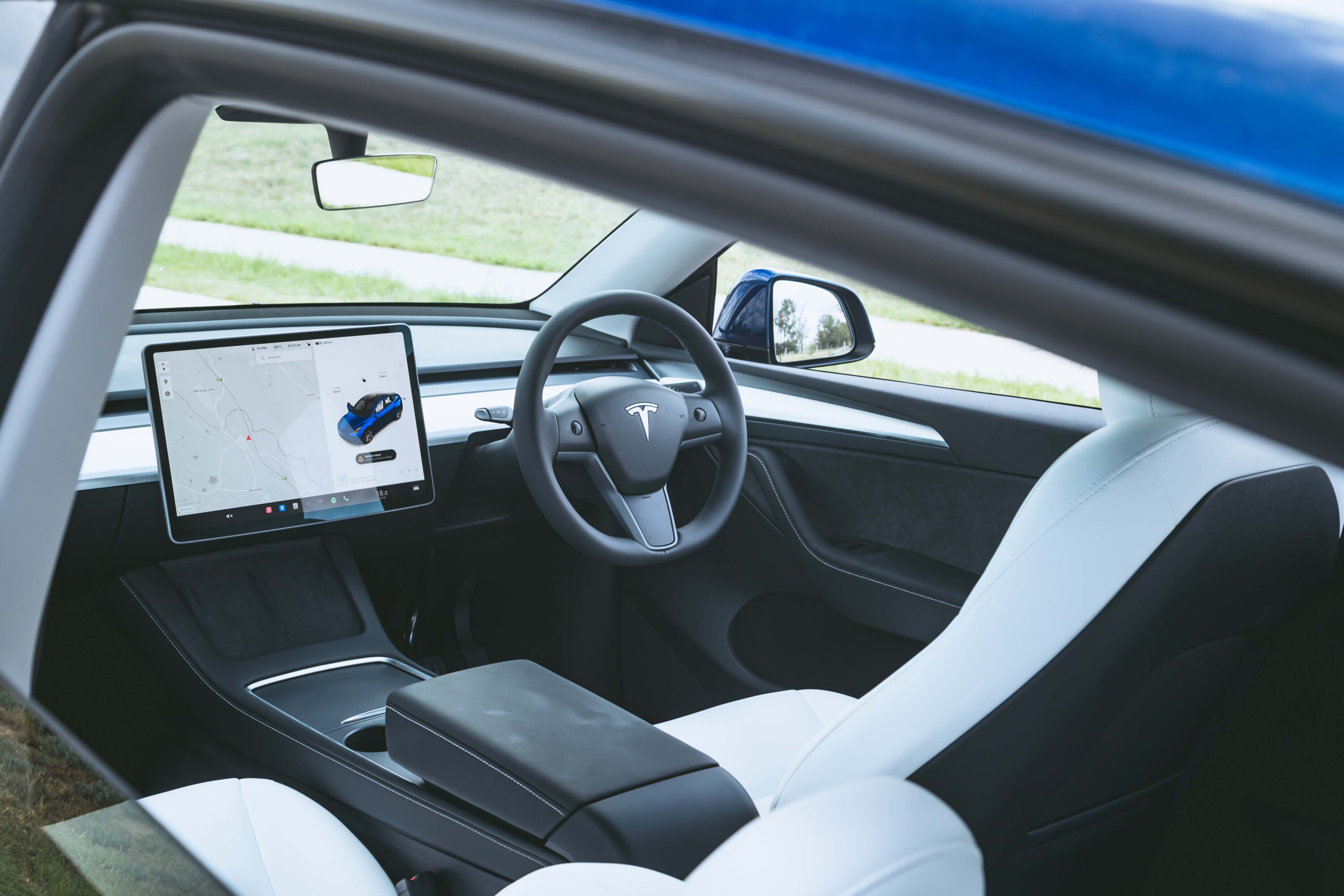
Cool frameless door glass provides a fleeting nostalgia hit because, from here on in, futuristic minimalism pervades.
The brand-signature central infotainment display dominates the cabin by virtue of its sheer size, and the fact you need to interact with it to do anything in a Model Y. The Tesla’s is certainly not the most intuitive interface if you’re fond of, say, wiper stalks or climate-control buttons, but it may be okay if you were raised by an iPad.
Think of the whitest thing you can, then add a bottle of White King, and you have the Y’s optional upholstery. It’s bright! And highly unlikely to hold up to the ravages of family life.
1
It’s also non-ventilated and unperforated vinyl, so expect to suffer some form of builder’s crack on baking summer days.
There’s more matte-white on the dash and door trims – which also feature Alcantara inserts – and, just to brighten up the place, that massive glass roof (which also does a fine job of heating up the cabin).
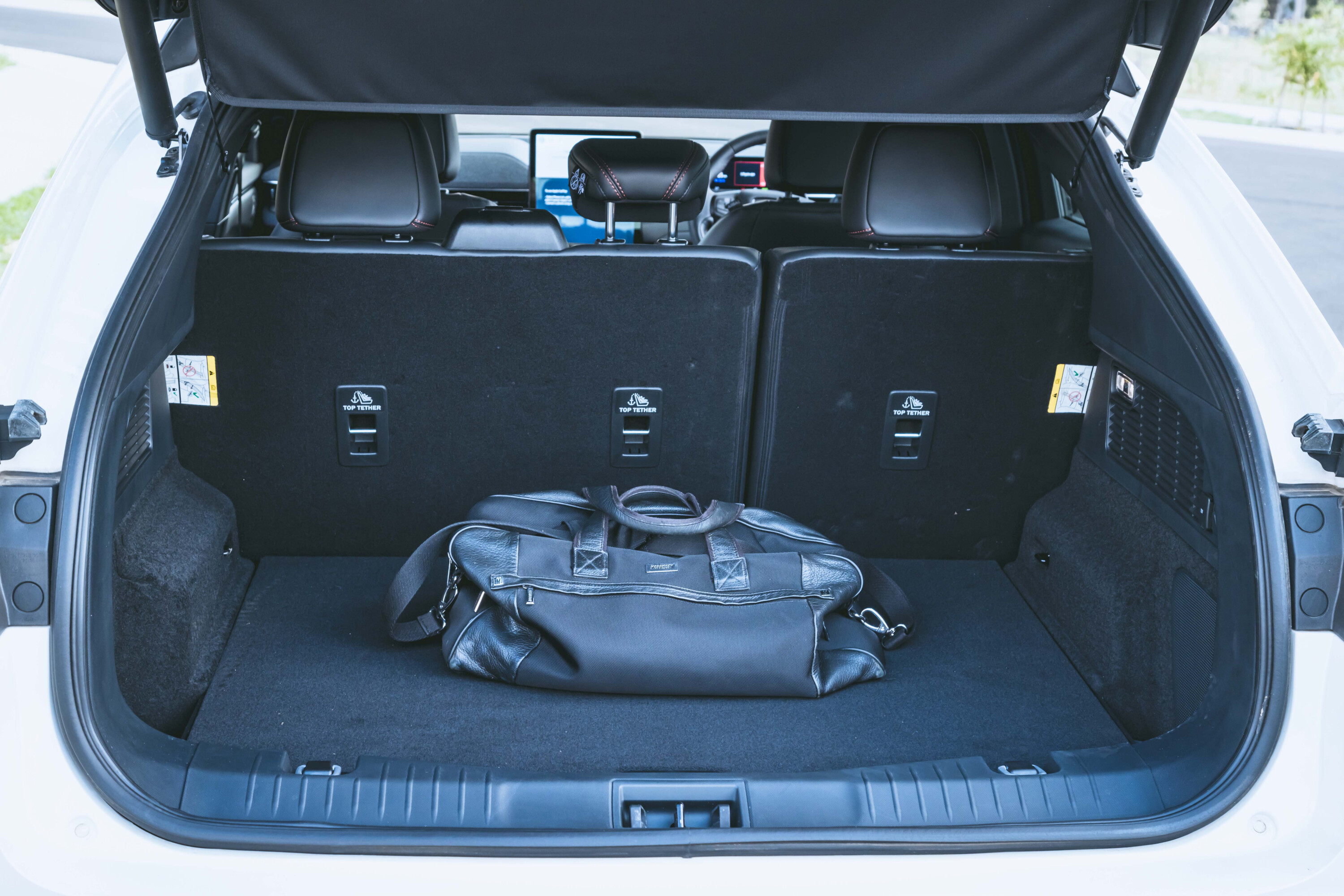
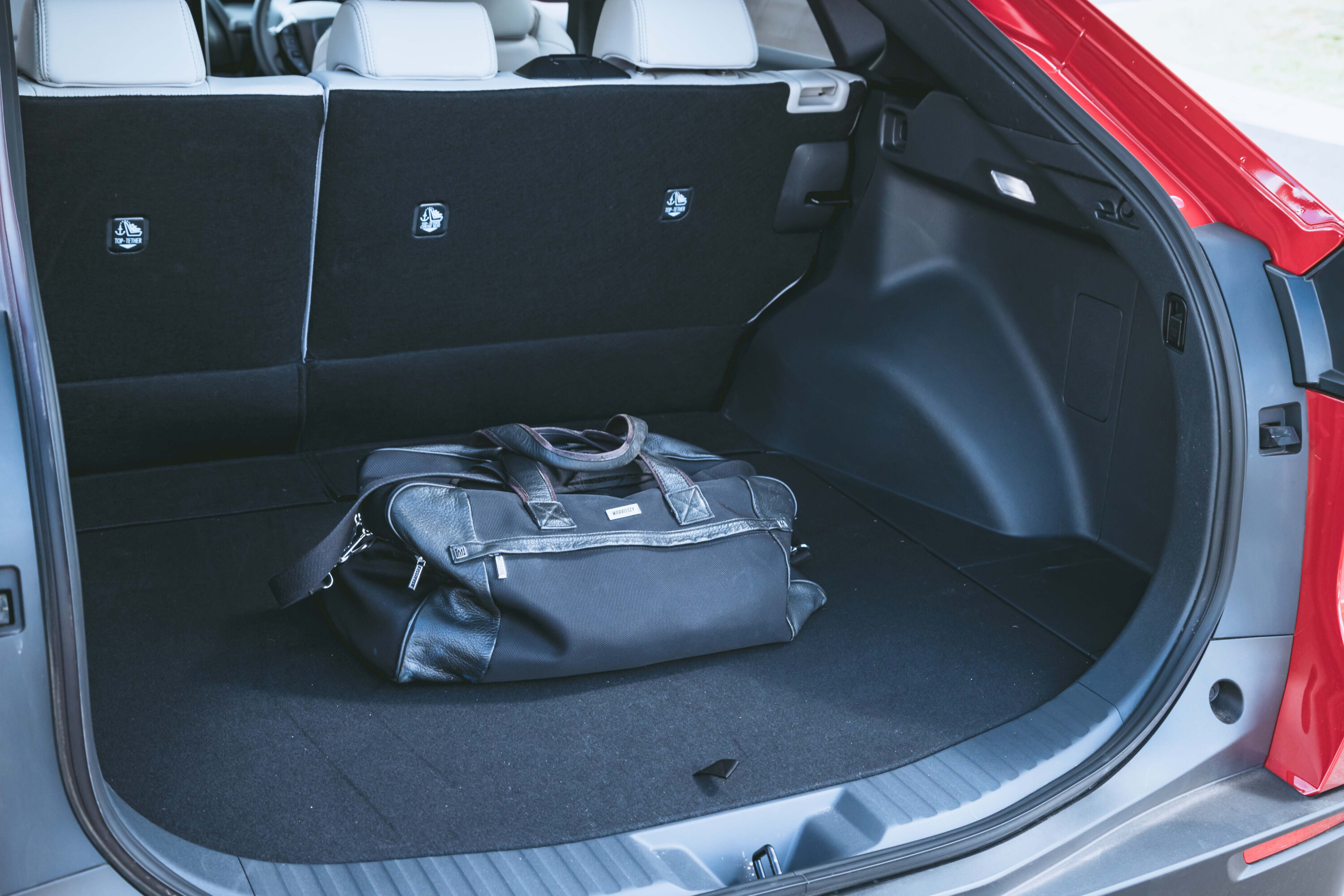
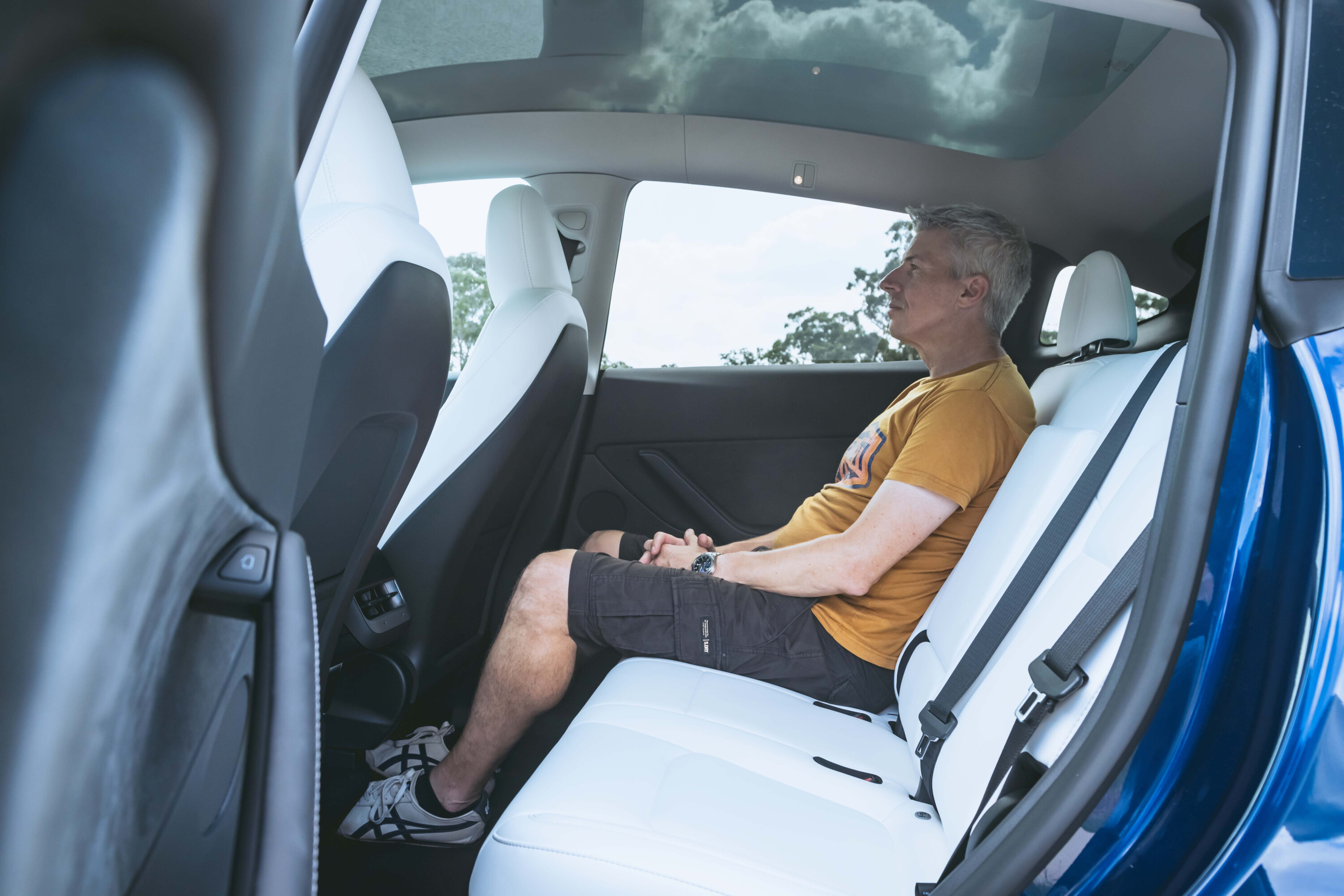
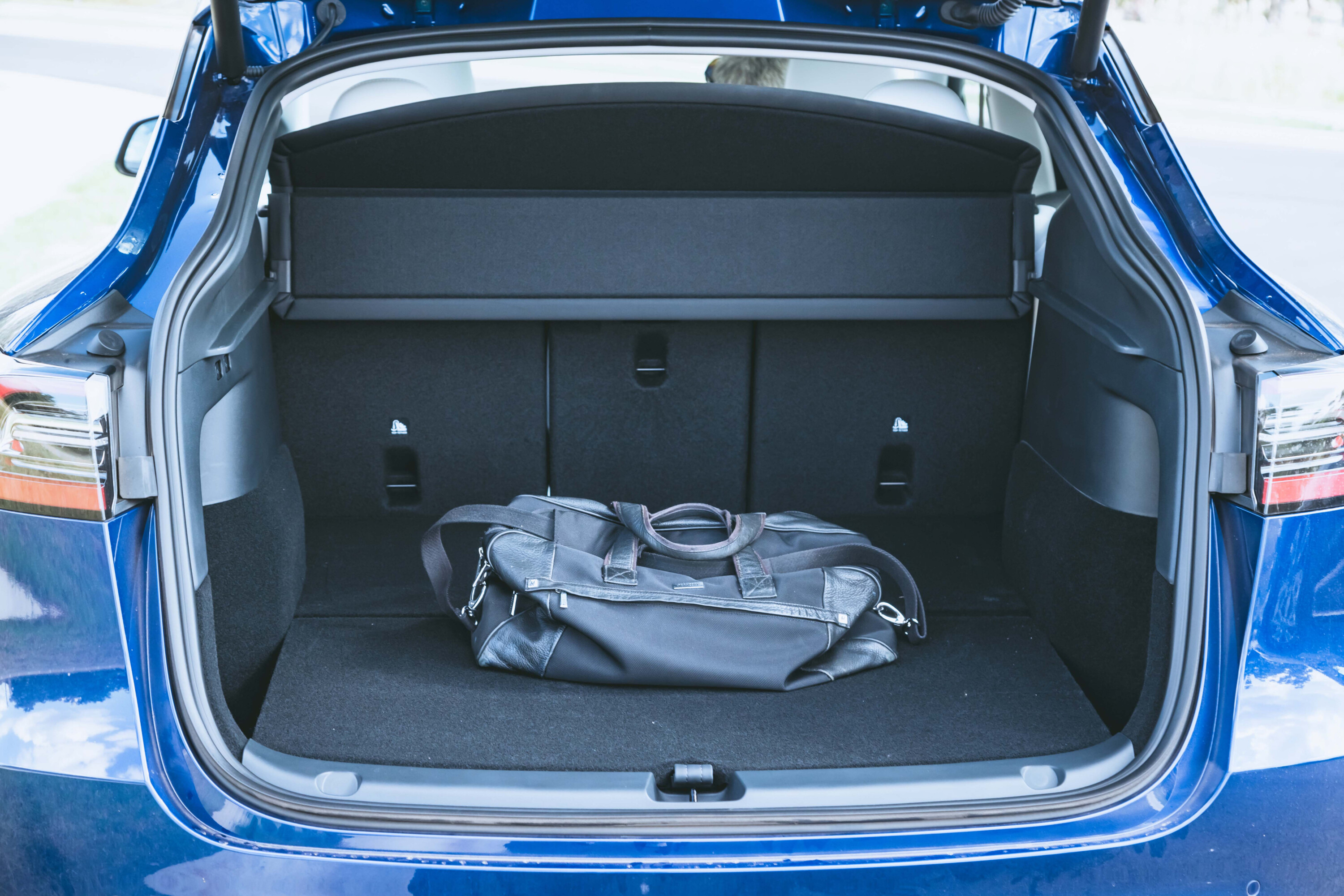
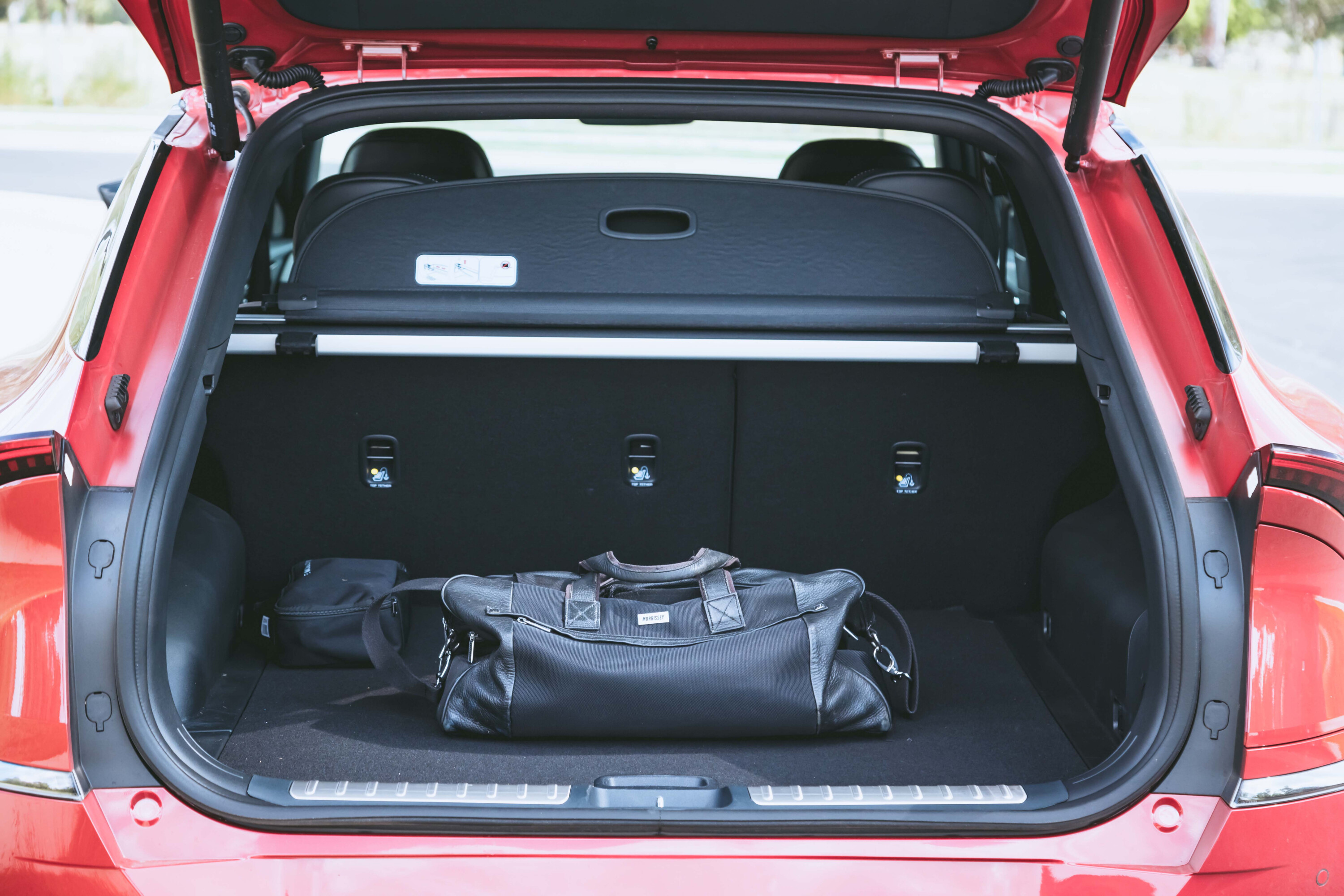
A three-position backrest, a flat floor and central air-con outlets feature in the spacious second-row, with a huge cargo bay behind – accessed through a generous aperture – featuring a shallow loading lip and an Esky-sized bin beneath. There’s also a 117-litre front boot.
Driving the Model Y is as easy as tapping your key card behind the console cupholders, then selecting Drive using the column stalk (now gone from the updated Model 3 sedan twin) while pressing the brake. The Tesla conquers city driving effortlessly, though its fixed-rate regen is overly draggy for some tastes and its low-speed ride is often busy – and noisy.
1
At suburban speeds, the Model Y’s poise, grip, and quick, crisp steering satisfy. It carries these qualities into its back-road behaviour while confidently despatching all but the biggest hits, which ruffle the chassis’ composure.
Like them or not, the most potent EVs have twin-turbo-V8-grade torque, and shifting the Tesla from 60km/h to 110 simply requires a brief stretch of your right foot’s toes. It’s impressive performance.
Yet Tesla’s attempt to simultaneously status signal and virtue signal surely violates one of the fundamental laws of nature.
If its popularity is any guide, the Tesla Model Y is the height of automotive fashion. It’s not, however – it’s merely a reminder that we are herd animals. I mean, how else do you explain why 28,769 buyers last year overlooked cooler and more polished alternatives to choose this stylistic nod to the Little Tykes Cozy Coupe?
2022 COTY winner proves it still has what it takes
If Toyota and Subaru completed their joint EV development via the path of least resistance, then Kia and Hyundai have shown us with the EV6 and Ioniq 5 what’s possible when the approach is both holistic and comprehensive.
Admittedly, both brands are wholly owned by the Hyundai Motor Company (rather than being co-conspirators like Toyota and Subaru), yet considering their shared development and EV underpinnings, these twins-under-the-skin are surprisingly different in their personalities – certainly in the areas that you can see, touch and feel.
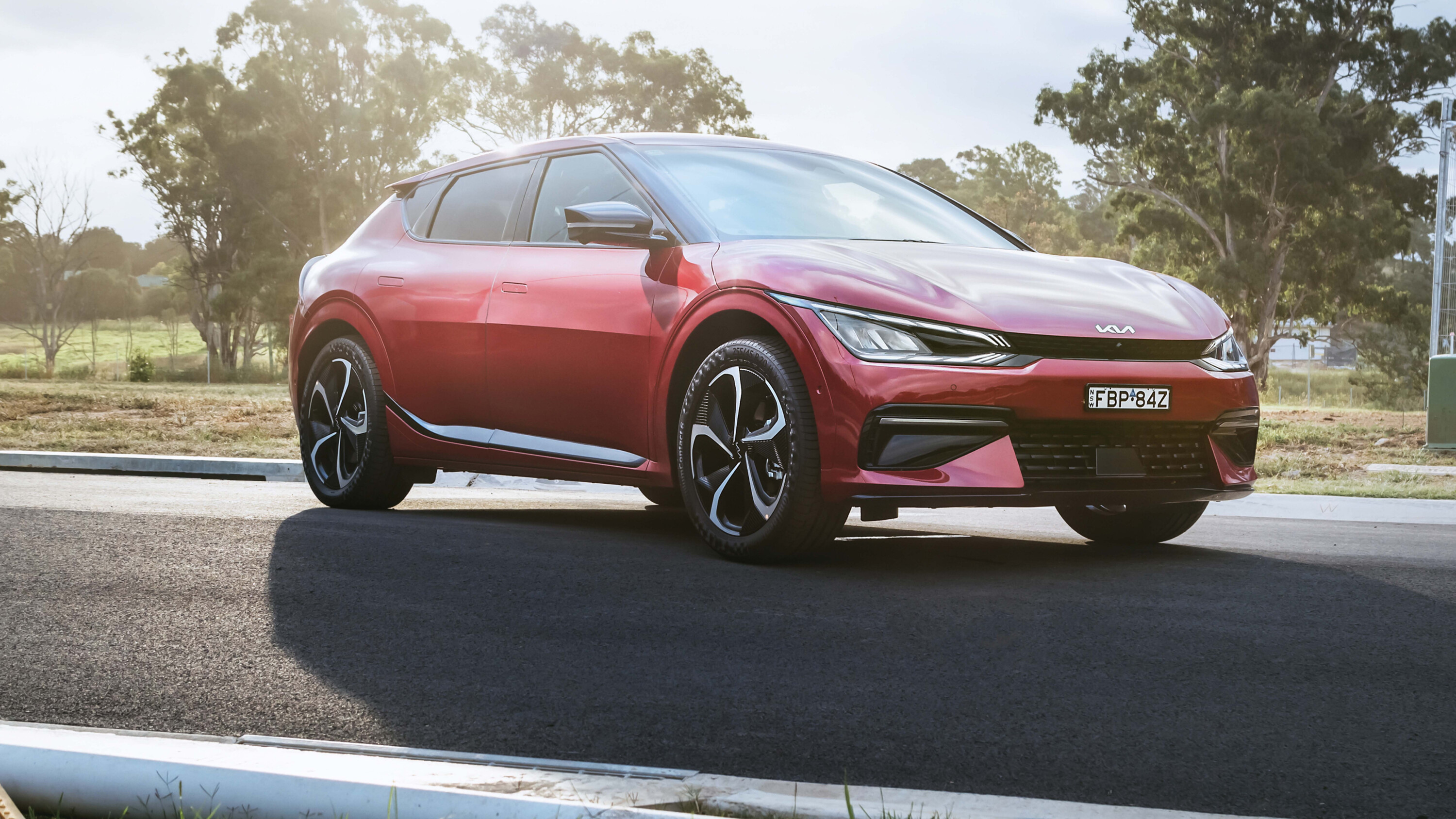
What sets the EV6 apart, however – both from its close Hyundai relative and its main competitors – is the consistency of its all-round abilities. It’s a pertinent reminder as to how the Kia EV6 range managed to score a Wheels COTY win in 2022.
1
Our test EV6 GT-Line RWD ($79,590) cedes quite a bit of output muscle to the Ioniq 5 Epiq AWD ($84,000), though our intention was to show the two different flavours available in both vehicles – each with their own personality traits and drivetrain benefits.
There’s no doubt the 168kW/350Nm rear-drive EV6 GT-Line feels slower and less grippy than the 239kW/605Nm Ioniq 5 AWD, but with its superb chassis balance and decent 7.3sec 0-100km/h time, the mid-spec EV6 still has loads to recommend it when it comes to dynamic ability and driver reward.
Indeed, the rear-drive GT-Line feels quicker than its acceleration claim suggests, and given its rear-drive foundation (rather than being front-biased like the Toyobarus), it’s also better at putting its power down – especially if you disable traction control with a quick stab of its ESC button (while retaining all the safety benefits of its stability system) when attempting to tame a twisty road. Think of it as an ESC Sport calibration.
1
Doing so lets the EV6 breathe in corners, with delightful adjustability from its rear end combined with subtle tweaking from its ESC system. Handling is excellent and steering response is measured yet precise.
But what underpins these admirable qualities is the EV6’s terrific ride – easily the quietest, best-controlled and most serene of this bunch. And because the EV6 is so adept at absorbing what’s raging beneath, it can be driven with calming confidence on virtually any surface without disturbing its occupants.
About the only downsides are tyre squeal when pushed in tighter corners (this is a 2000kg car wearing comfort-biased 255/45R20 Continental Premium Contact 6 tyres) and ESC intrusion if you don’t switch it to the half-way point, though if either of these is a concern, there’s always the $87,590
GT-Line AWD with its Ioniq 5 AWD-matching outputs, 5.2sec 0-100km/h time, and the cabin-brightening benefits of a large electric glass sunroof.
1
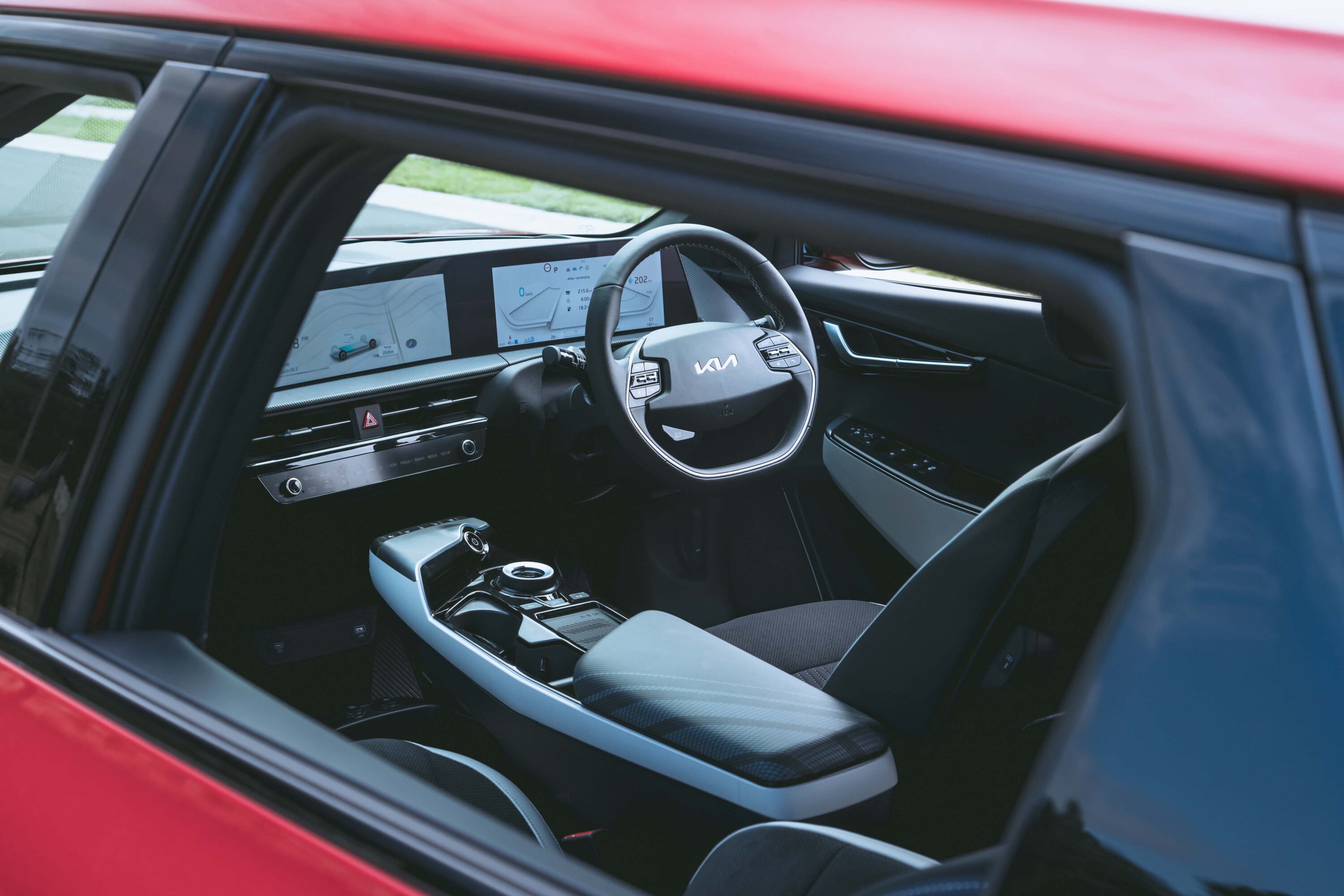
That last feature could come in handy because the rear-drive GT-Line’s all-black interior is very dark.
Spacious and comfortable, yes, but also a bit like falling down a well. When you’re seated up front, hugged by superb heated and ventilated buckets with perforated mock-suede upholstery, it’s not such an issue, but back-seat passengers might appreciate a bit less visual heaviness in their lives.
In this area, the EV6 is the opposite of the light-and-bright Ioniq 5.
The Kia also misses out on the Hyundai’s interesting cabin materials – instead favouring a far more traditional (meaning less expensive) approach.
But it compensates with its intelligent, ergonomic switchgear placement, its curved twin 12.3-inch screens, and its all-round ease of use (such as placing the wireless charging pad high and close to the driver, mounting its drive-mode button on the steering wheel, and perhaps even its conventional gear-selector dial).
2
The Kia’s 14-speaker Meridian stereo is also superior to the Hyundai’s disappointing Bose, though both are comprehensively blasted by the Tesla’s ear-splitting audio, as well as the JBL and Harmon Kardon systems in the Toyota and Subaru.
As for charging and all-round efficiency, nothing can match the Kia’s 10-80 percent charge time of just 18 minutes … except for the Hyundai. And on test, the EV6’s 18.2kWh/100km consumption and 407km real-world range placed it comfortably third – neatly between the second-place Tesla and the Hyundai in fourth.
Kia’s WLTP claim is 504km for the GT-Line rear-drive and 484km for the AWD.
1
Yet the most difficult aspect in assessing the EV6 was trying to come up with negatives for its plus-and-minus panel.
Some people may not appreciate its sombre cabin environment, but at least its climate control works quite well and there’s ambient lighting in 64 colours!
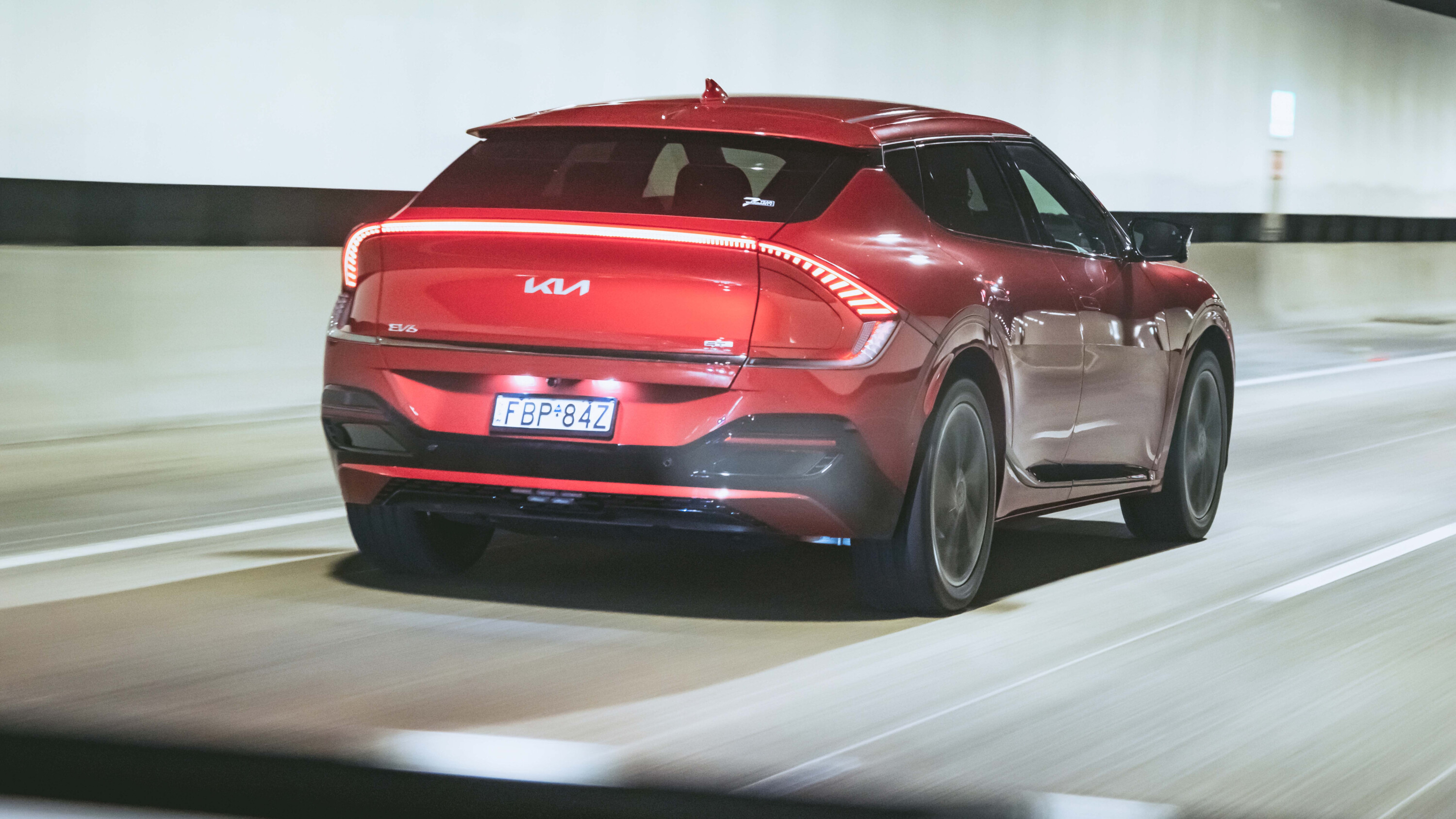
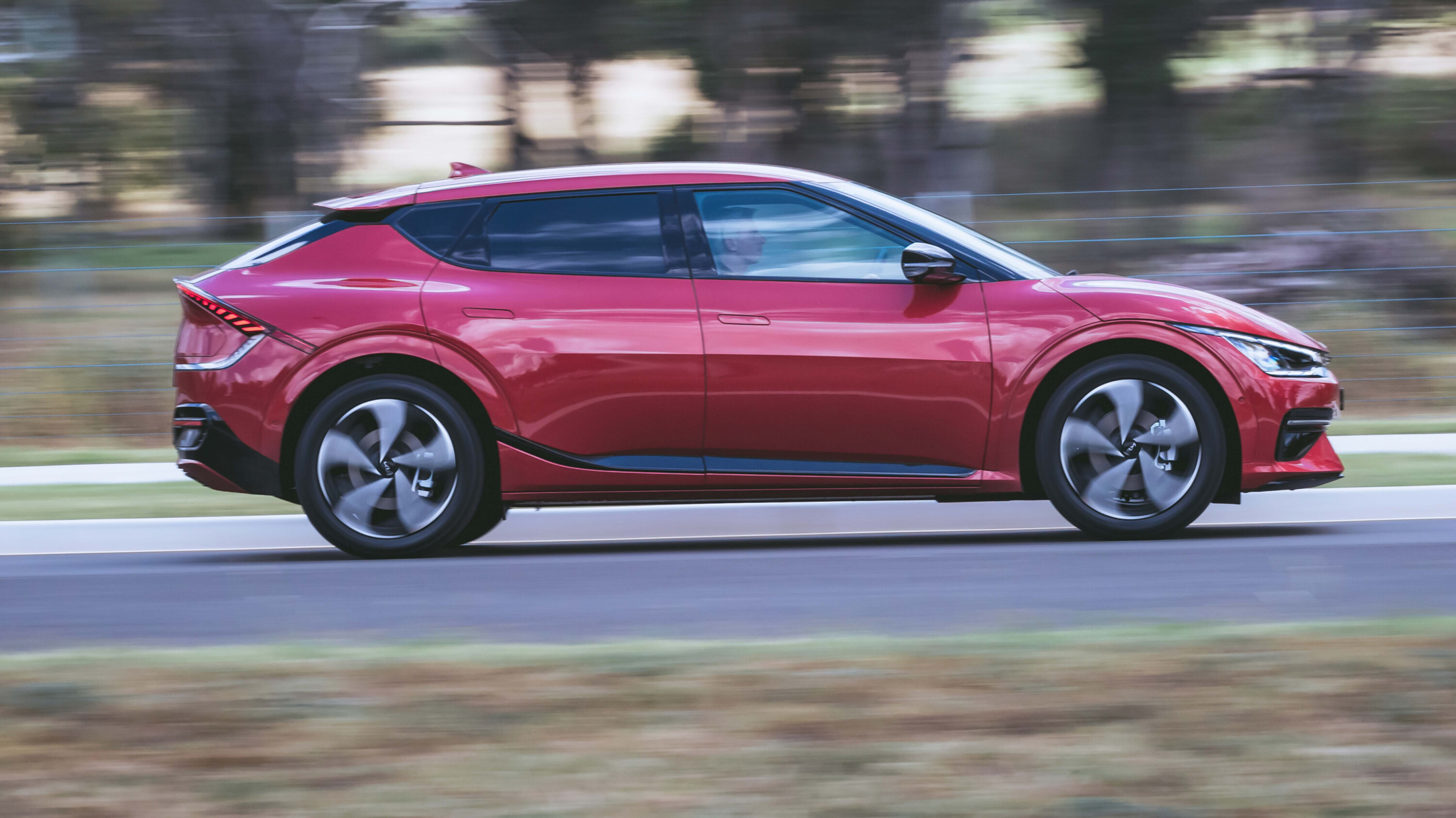
Others may find it a little dated in appearance compared to Kia’s latest design heros (such as EV9 and the forthcoming EV5), though you can hardly criticise the EV6’s distinctive, coupe-like shape, which fails to have any impact on its impressive packaging efficiency.
The EV6 has arguably taken a back seat to the more high-design Hyundai Ioniq 5 in terms of both media attention and design praise, but that takes nothing away from this electric vehicle’s immense breadth of ability. In avoiding both the highs and lows of its medium EV rivals, the Kia EV6 GT-Line quietly and satisfyingly proves that the loudest voice isn’t always the smartest.
Difficult-to-fault Kia slays its rivals with consistency
Given that they cost between $75-87K before on-road costs, it’s reassuring to know that none of these EVs are duds. But three of the six could be categorised as disappointing.
The Ford Mustang Mach-E Premium brings up the rear, despite the electric Pony Car’s benchmark range and impressive efficiency. It’s sluggish off the line, unrefined at times, surprisingly unresolved in its dynamics, and underdone when it comes to cabin materials and thoughtful design.
In global terms, it’s already an old car – unveiled in 2019 in the US – so as Ford Australia’s great new EV hope, it falls some way short of where it needs to be in 2024.
1
Despite the Toyota and Subaru’s relative lack of range, they beat the Mach-E because of their consistency.
They do most things quite well but nothing with any degree of distinction or panache, which unfortunately reminds us of the mediocrity of older-generation Toyotas – not the slick, classy, polished feel that has defined more recent attempts such as RAV4 and Corolla. For a new-from-the-ground-up design, they don’t feel like it.
1
That leaves the Hyundai Ioniq 5 Epiq AWD, the Kia EV6 GT-Line and the Tesla Model Y Long Range.
The Hyundai is by far the coolest EV here – its design transcends its price and brand image like few cars in history – and its charging technology, drivetrain performance and outright acceleration and grip are all stupendous. But its lolling ride quality impinges on its otherwise-terrific handling and driving character.
The Tesla is the opposite. Chunky hips and classy frameless doors aside, its design is so unspectacular that if you were searching for what a generic ‘car’ looked like, it would probably be a Model Y (or a Model 3).
Its hot, reflective cabin struggles in summer weather and its wilfully different control layout takes some getting used to … but its packaging is brilliant, its steering and handling are infectious, and its all-round entertainment factor is huge. Sealing the deal is its outstanding stereo – easily the best here – as well as Tesla’s comprehensive fast-charging network.
1
The EV6 GT-Line is a more cohesive car. Like the Tesla, not everyone loves the way it looks, but at least it’s distinctive. And the more you ask of it, the better this Kia gets.
Sure, the rear-drive EV6 lacks the AWD version’s corner-exit thrust and grip, but it offers plenty of punch, is still highly entertaining in corners, and is undoubtedly the best-riding, most refined, most comfortable and most resolved EV of this sextet.
It brings the latest 800-volt EV technology to the table, yet it doesn’t cost the earth, and it’s covered by the longest warranty.
Again, it’s not perfect, but as a likeable, characterful, genuinely useful medium-sized family EV, the EV6 is yet to be surpassed.
In a strange twist of fate, electrification has made medium sedans cool again. Camry, Sonata, and Mazda 6 are the only notable names left in the ICE camp besides Skoda’s liftbacks.
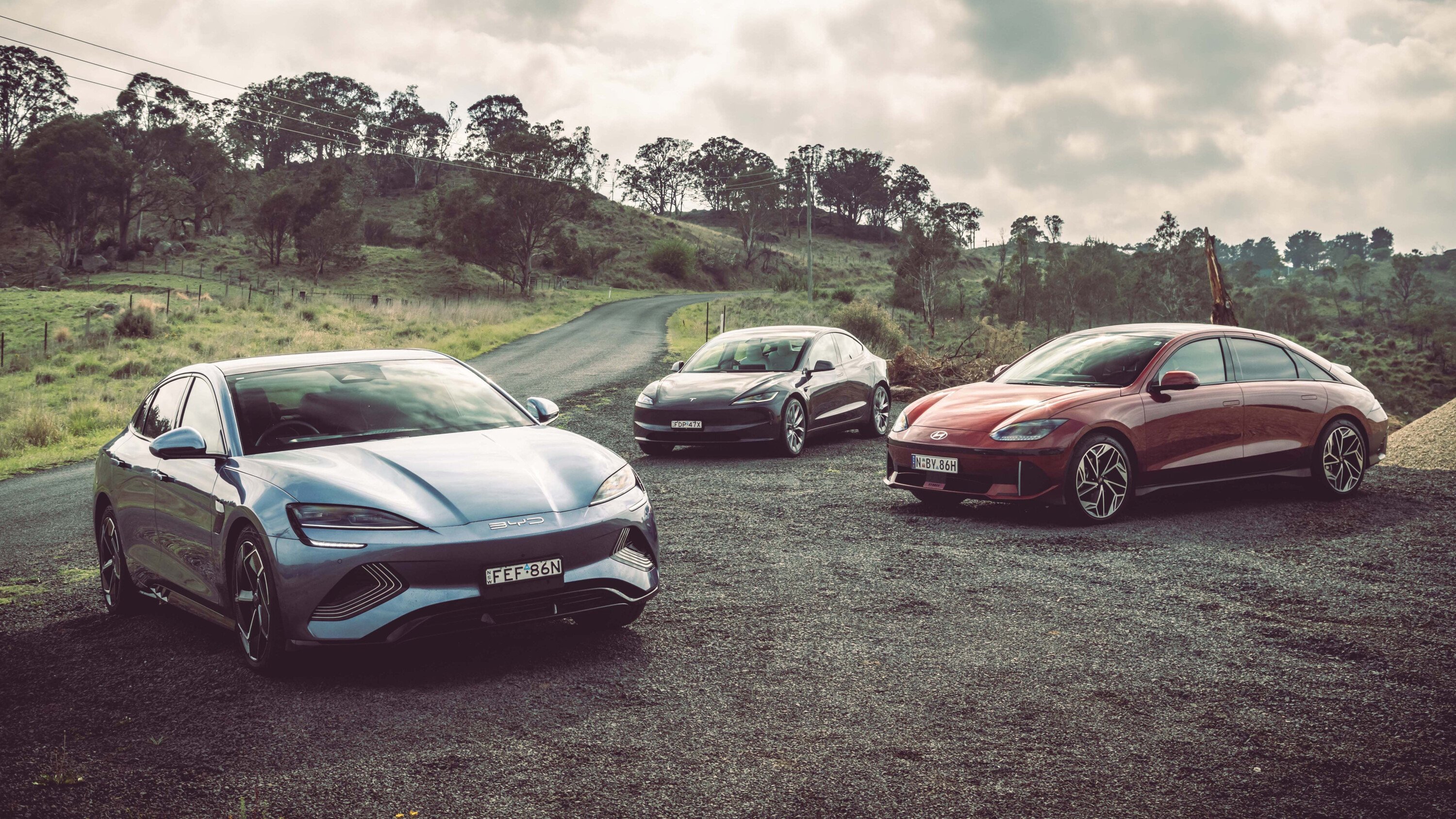
The Tesla Model 3 is the default and sells strongly month-on-month but new faces, such as the BYD Seal, Hyundai Ioniq 6 and recently updated Polestar 2 have rejuvenated competition in the middle class’s old favourite segment.
For simplicity, we’ve ignored (Seal notwithstanding) the high-performance variants because they push beyond $80K, and Jez is examining dearer sedans in detail next month.
1
Forty-nine thousand dollars is where the nearly 4.8-metre long BYD Seal Dynamic starts with a 460km driving range, 150kW, connected technology, and a 12.9-inch rotating central touchscreen.
There’s also enough space for four on board. The Premium ($58,798) ups driving range to 570km WLTP and the Performance ($68,798) allies two electric motors for 390kW and a claimed 0-100km/h time of 3.8 seconds. That’s bloody enticing.
It all starts to fall apart from the driver’s seat, though: clumsy drivetrain calibration, unpleasant steering and unpredictable handling. We’d put our circa-$50K towards the Atto 3 small SUV which, without any performance pretense, isn’t so disappointing.
1
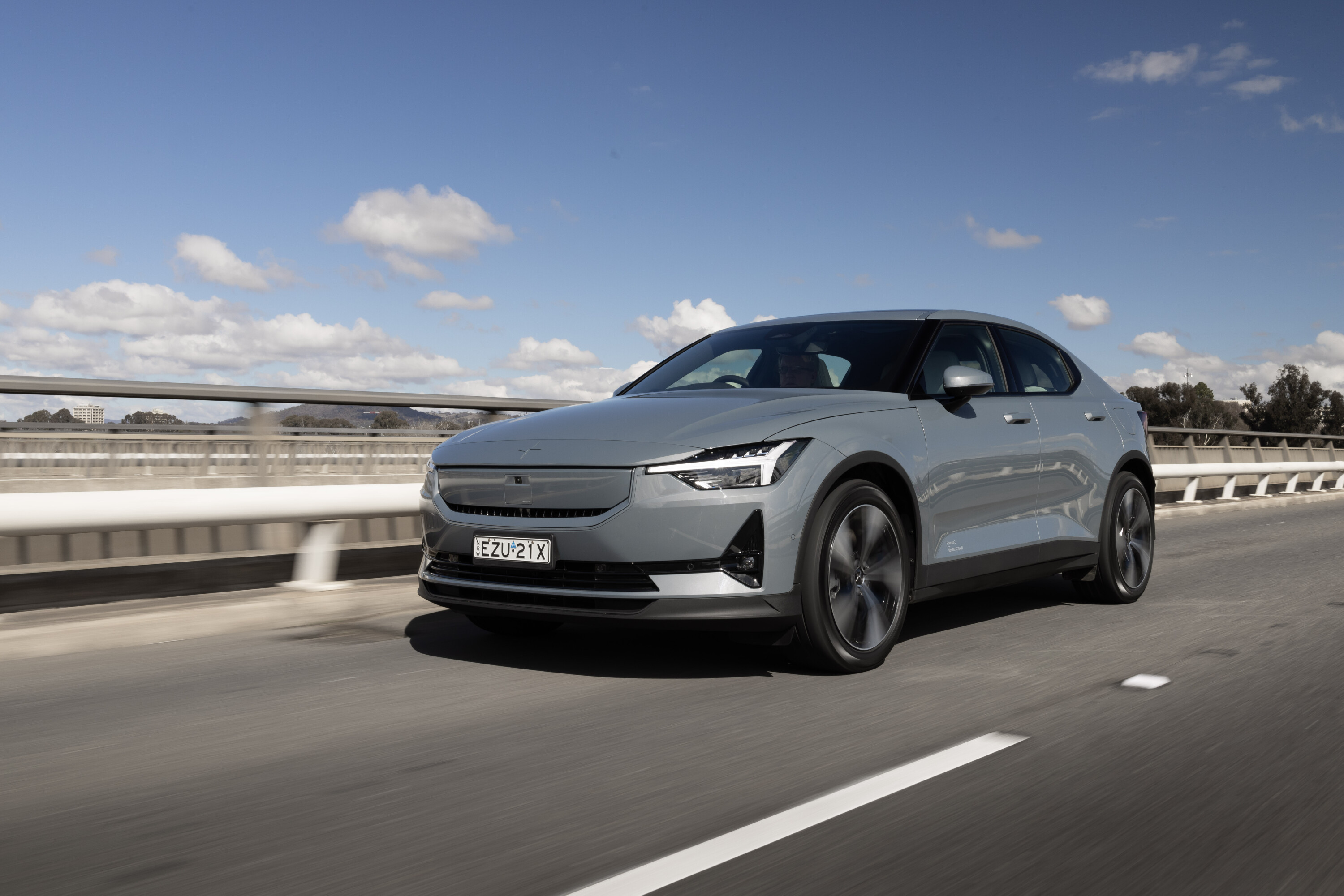
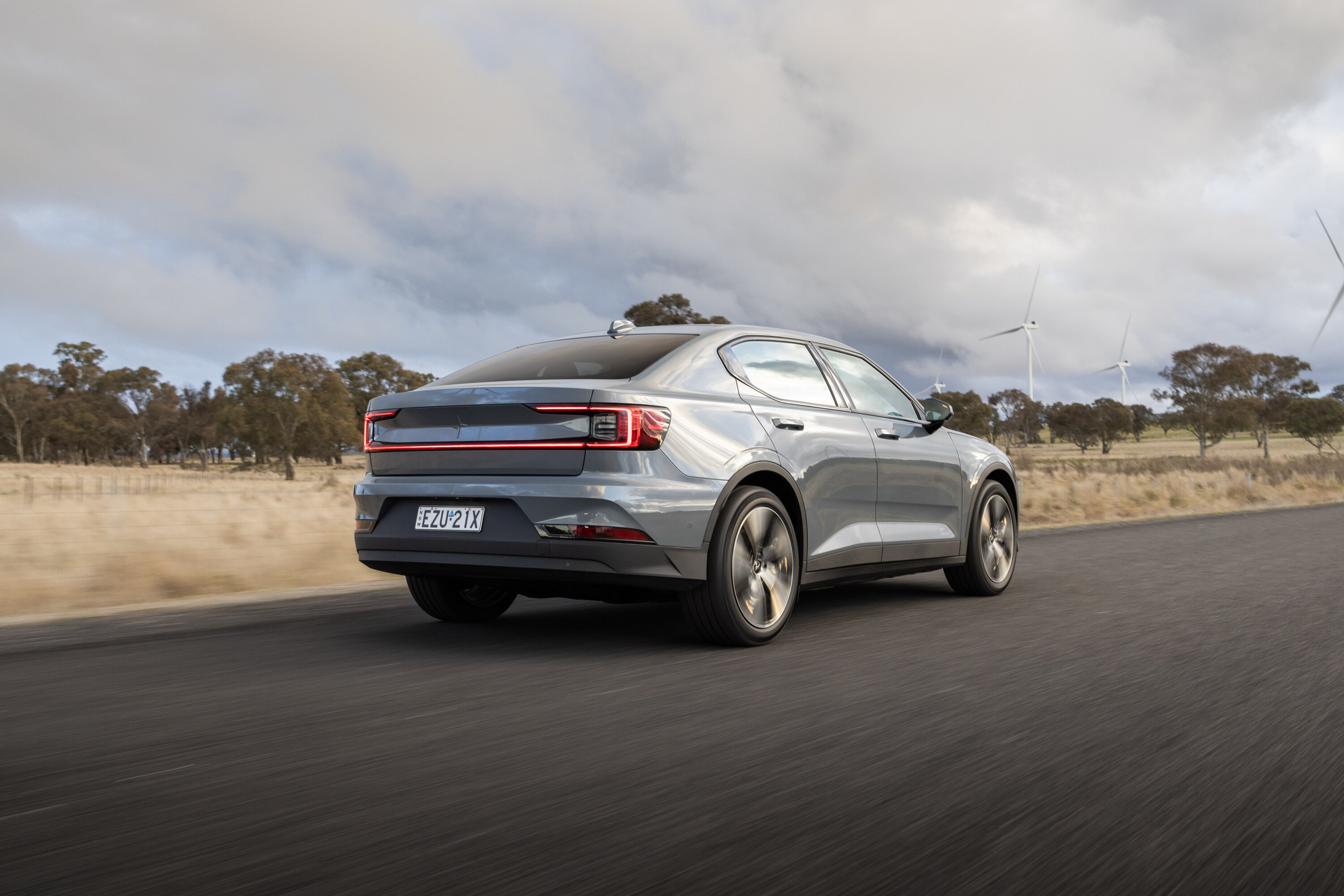
The Polestar 2 was overhauled in August with minor styling tweaks and a major powertrain reconfiguration – switching from front- to rear-wheel drive.
A more compliant ride and enhanced efficiency improved the Polestar experience and customers retained the ability to choose myriad options to personalise their 2.
Style was never a shortcoming for the Sino-Swedish sedan; nor was material tactility. But it’s not a cheap option despite an attractive starting price of $67,400 for the Standard Range and the back seat experience could certainly be better.
If you want the Long Range ($71,400) getting stuck into the configurator easily pushes the price to and beyond $80K. A great choice for design-oriented buyers who appreciate the finer things in life.
1
That leaves the two we awarded equal scores in a three-way comparison (including the Seal, Wheels February 2024).
The Hyundai Ioniq 6 is saddled with a higher price and quite a lot less kit in the entry-level Standard Range ($65,500) with a WLTP-certified 429km from a charge. We reckon the Dynamiq RWD (514km WLTP, $77,500) is the Ioniq 6 sweet spot.
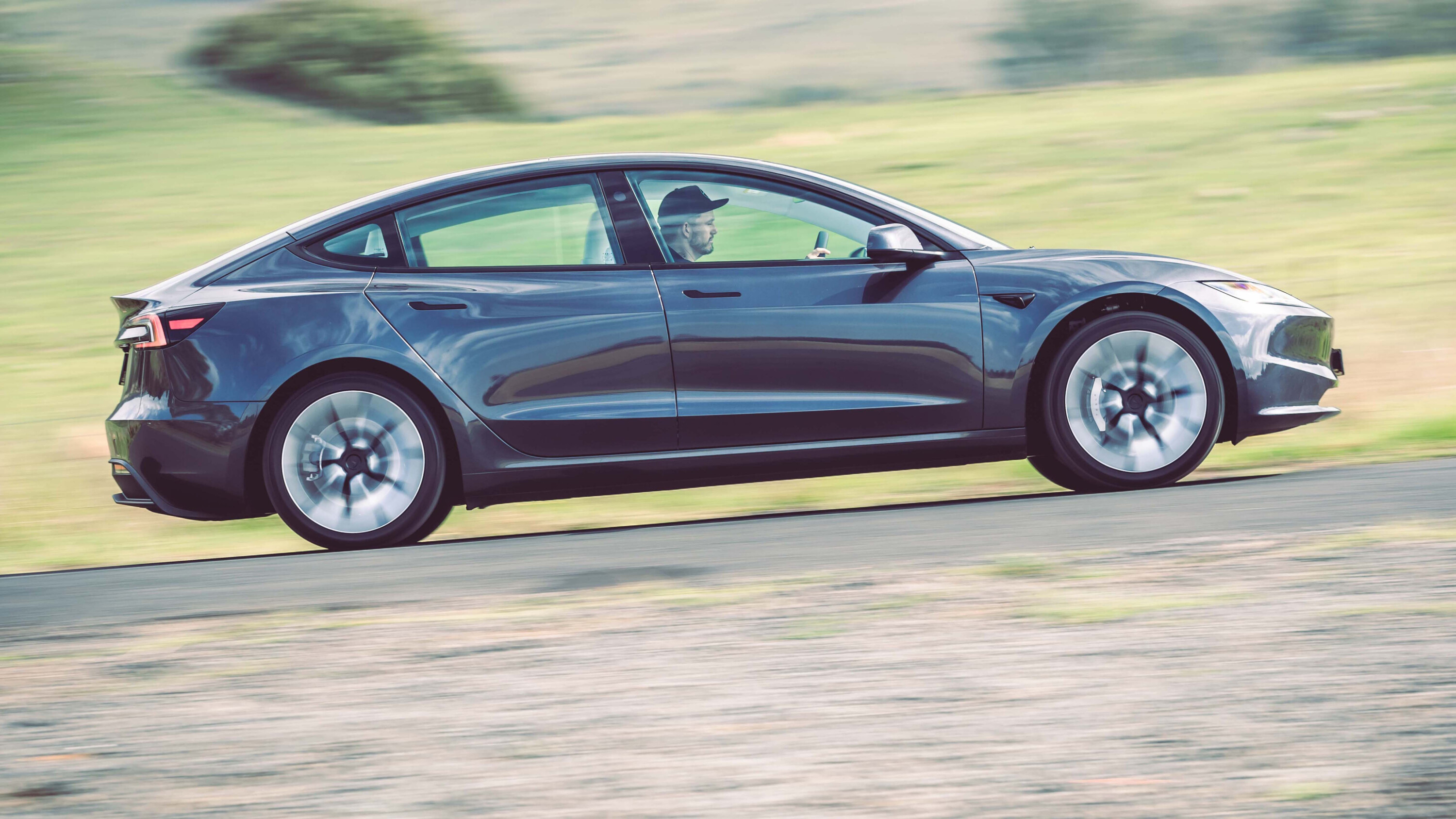
Tesla, however, gives you pretty much everything in the $61,900 Standard Range spec including LFP battery chemistry that will more regularly accept 100 per cent charge with less degradation. It’s also more efficient than the Ioniq 6 with that on-paper gulf opening in real life – the base Tesla scores 513km in the combined WLTP.
1
A bigger NCM battery (629km WLTP) and AWD justify the $10K upcharge for the Long Range.
It gets the same upholstery, seat adjust, ventilated seats, and although the base stereo is plenty good the upgraded 17-speaker item is fabulous. The Hyundai has greater legroom but the Tesla has more toe and head room.
Technology-wise, the Ioniq 6 gets a pair of 12.3-inch screens, one touch for the main HMI and an attractive digital driver’s display – something Tesla misses out on. The power and ability to connect the car to your phone will excite buyers in touch with cars rather than the world of consumer technology.
1
That said, Tesla’s phone-like software is deeply intuitive and will please those who love talking tech.
There’s also the ability to stream video (including on the new rear-seat screen) as well as run Spotify and other applications natively rather than using phone mirroring (wired in the Ioniq 6 and non-existent in the Model 3). Computer on wheels is an apt cliché in the Model 3’s case.
Tesla’s latest update (which, like the Polestar 2, was heavily focused on what’s underneath) did away with ‘unnecessary’ indicator and shifter stalks – though after experiencing it we question how unnecessary stalks are – that save construction complications and lower costs. There’s also a more compliant chassis tune with new knuckles and bushes.
1
This brings the Tesla closer to the Ioniq 6 for driving experience but the overall package remains unsophisticated.
Where the Model 3 will hit bump stops and deviate its course over nasty mid-corner bumps, the Ioniq 6 remains steadfastly composed.
In town, the Model 3’s suspension is still noisy despite a focus on NVH improvements (there’s almost no wind noise), the same can’t be said for the Ioniq 6 – you could hear a pin drop onto the Hyundai’s plush interior carpet.
1
Both have fantastic drivetrain calibration, though, with just the right response from the accelerator and brake pedals. All variants are quick, but both Model 3 trims deliver a more savage snap when you squeeze the accelerator.
Hyundai’s Ioniq 6 range is broader, charge time shorter, and from behind the wheel you can tell it’s engineered by a car company rather than a tech one – not to mention its 18-minute fast-charge time.
The updated Model 3 is agonisingly close, but it’ll probably take Tesla’s eager engineers another generation to produce a car that beats the Ioniq 6 entirely on engineering and driving experience. So the Hyundai remains our pick.
⚡ 2024 Wheels Best EVs
Looking for an EV in a different size or price category? Visit our full Wheels Best EVs series at the links below.
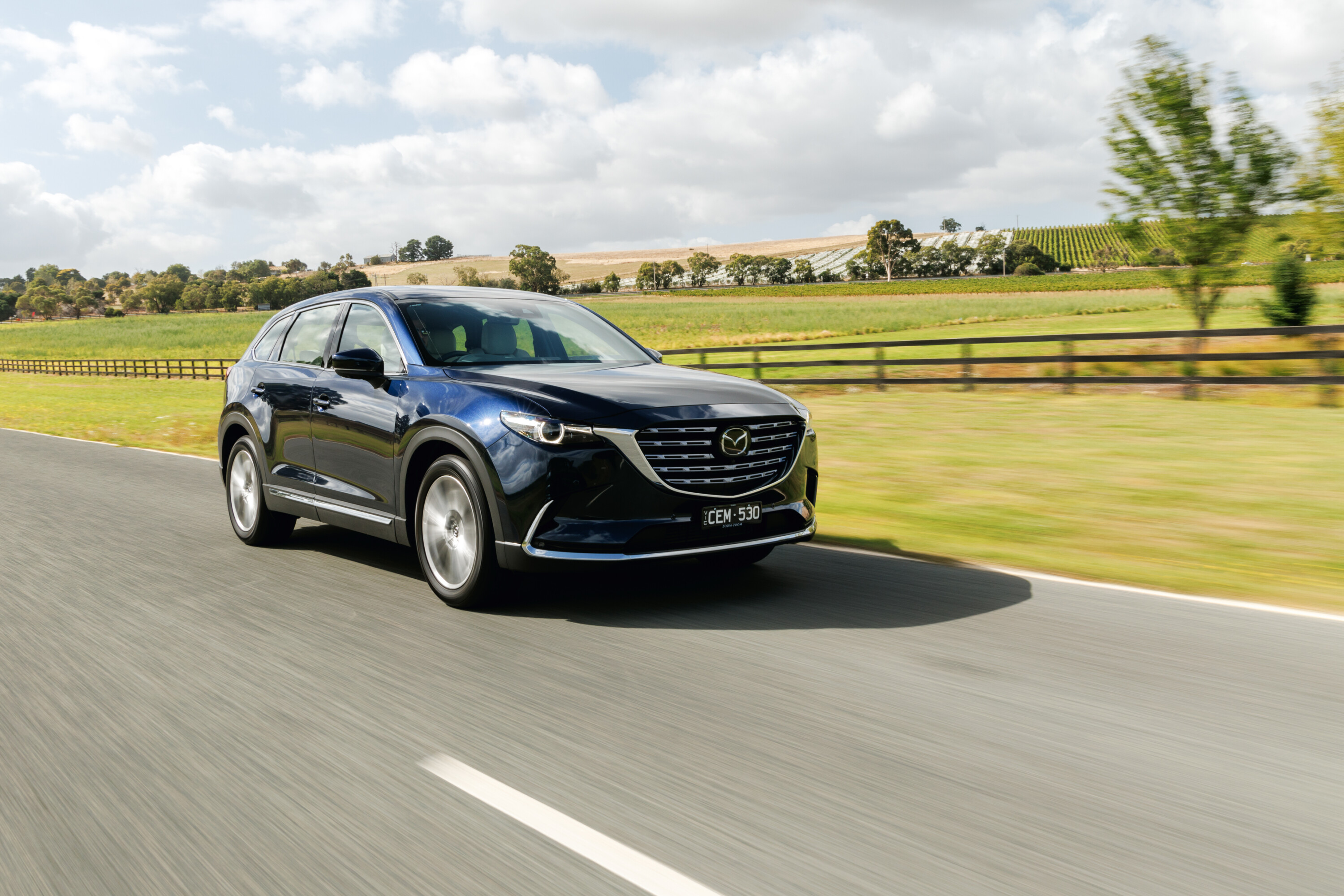
The Mazda CX-8 and Mazda CX-9 three-row large SUVs have been axed globally, with both vehicles to be eventually replaced by three more-premium models: CX-70, CX-80 and CX-90.
Mazda Australia announced the CX-9 would be discontinued locally about 12 months ago – and directly replaced by the more-expensive CX-90 available now – though it ordered enough stock to last into 2024.
A spokesperson for the brand told WhichCar“just over 100” examples of the Mazda CX-9 remain available in new-car dealer stock.
1
In 2023, 4696 examples of the Mazda CX-9 were sold in Australia for an average of 391 vehicles per month – meaning now might be your only chance to pick up a brand-new CX-9.
More supply is available for the smaller CX-8 three-row SUV, which ended production in Japan in December 2023.
The Mazda Australia spokesperson said the brand has “roughly” two months’ worth of CX-8 supply in new-car dealer stock, mostly front-wheel-drive Sport, Touring and GT SP petrol variants.
1
Based on the CX-8’s average monthly sales number in 2023, Mazda Australia would have around 900 examples left to sell, with the model expected to be sold out by the end of May.
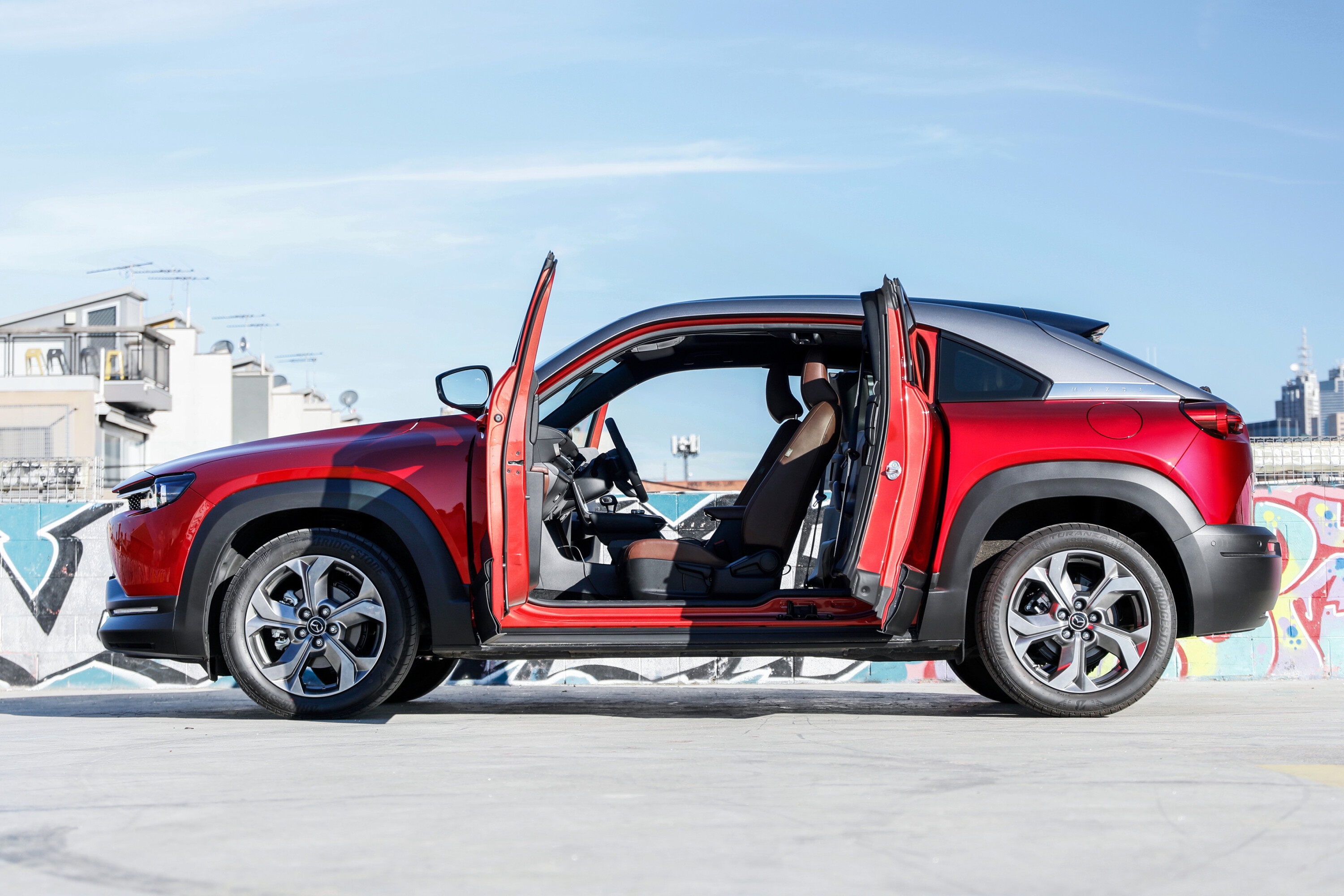
Another model recently discontinued by Mazda Australia is the MX-30 mild-hybrid and all-electric small SUV.
According to the brand, one new MX-30 Electric model remains available, while around 60 mild-hybrid examples are in stock.
Mazda Australia will launch the two-row CX-70 and three-row CX-80 large SUVs this year, which – along with the CX-60 and CX-90 – should assist in reclaiming some of the circa-10,000 annual sales lost from the deletion of the CX-8 and CX-9.
Land Rover has teased a new flagship for the Defender range that it says will be the “toughest, most capable and most luxurious Defender ever.”
Badged as the Defender Octa, the new model is powered by a mild-hybrid twin-turbo V8 and will debut a clever hydraulic suspension set-up that Land Rover calls 6D Dynamics.
We don’t know exactly how much power the Defender Octa will make just yet, or exactly what V8 will sit under the bonnet, but the promise of twin-turbos suggests the same 4.4-litre unit found in the fresh Range Rover Sport SV.
What we do know it is will be more powerful than the current supercharged 5.0-litre V8 Defender which makes 368kW and 610Nm.
1
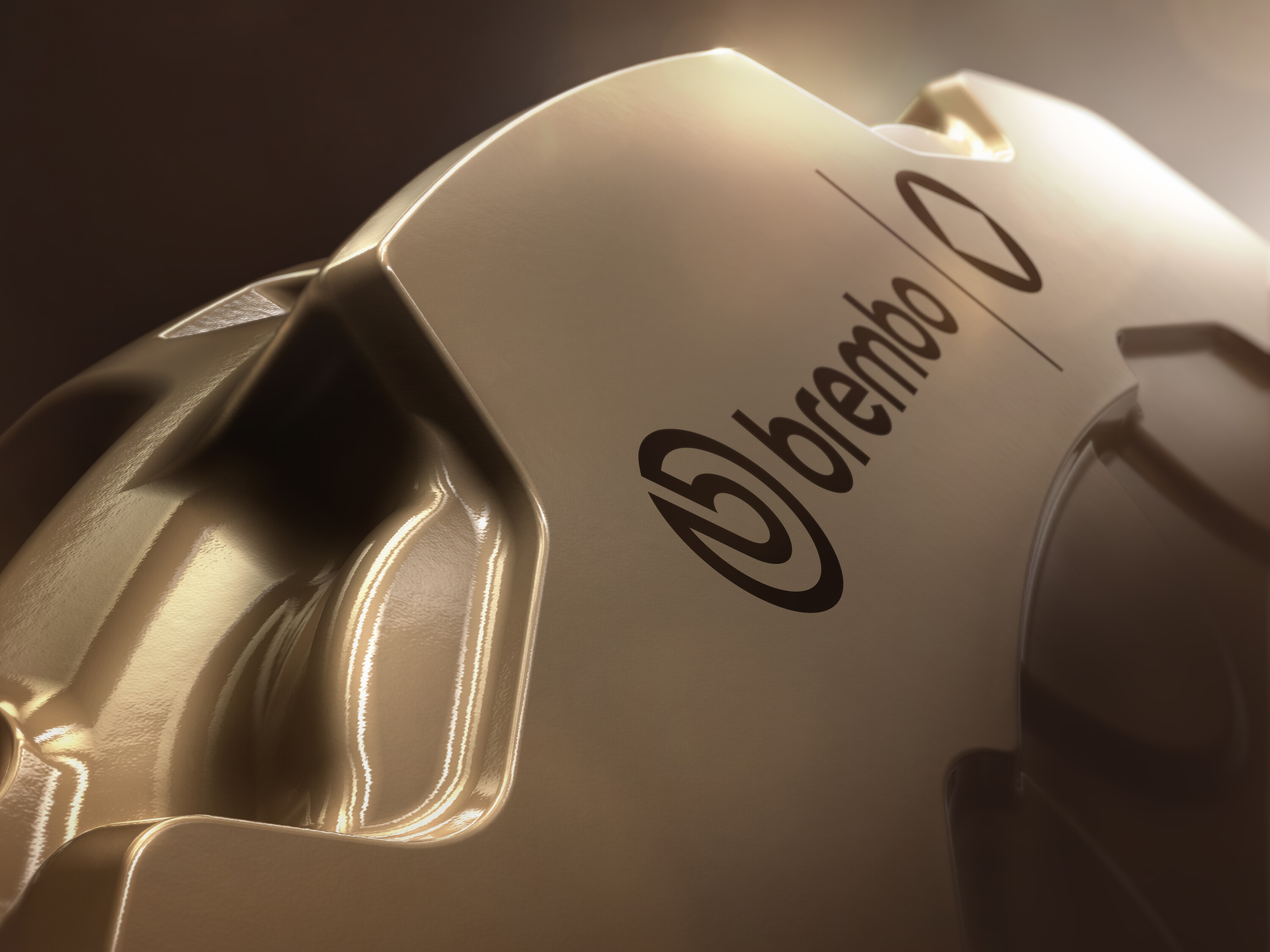
Land Rover’s images show big Brembo brakes will provide greater stopping power, while sportier, hip-hugging seats will also feature inside.
A new suspension system, known as 6D Dynamics, will help fulfil Land Rover’s promise that the Octa will be the most capable Defender ever.
Instead of traditional anti-roll bars, the Octa will pair air springs with hydraulically cross-linked dampers to help maintain a “near level stance during acceleration, braking and cornering on-road, while also maximising independent wheel travel and articulation across the most demanding off-road terrain”.
1
If that sounds familiar, it’s largely the same tech you’ll find on many high-performance, road-focused luxury SUVs like the Porsche Cayenne and Audi RS Q8.
The V8 Defender’s long-standing and recently facelifted rival, the Mercedes-AMG G63, has also moved to a similar hydraulic suspension set-up. Now there’s a two-car comparison test we’re looking forward to.
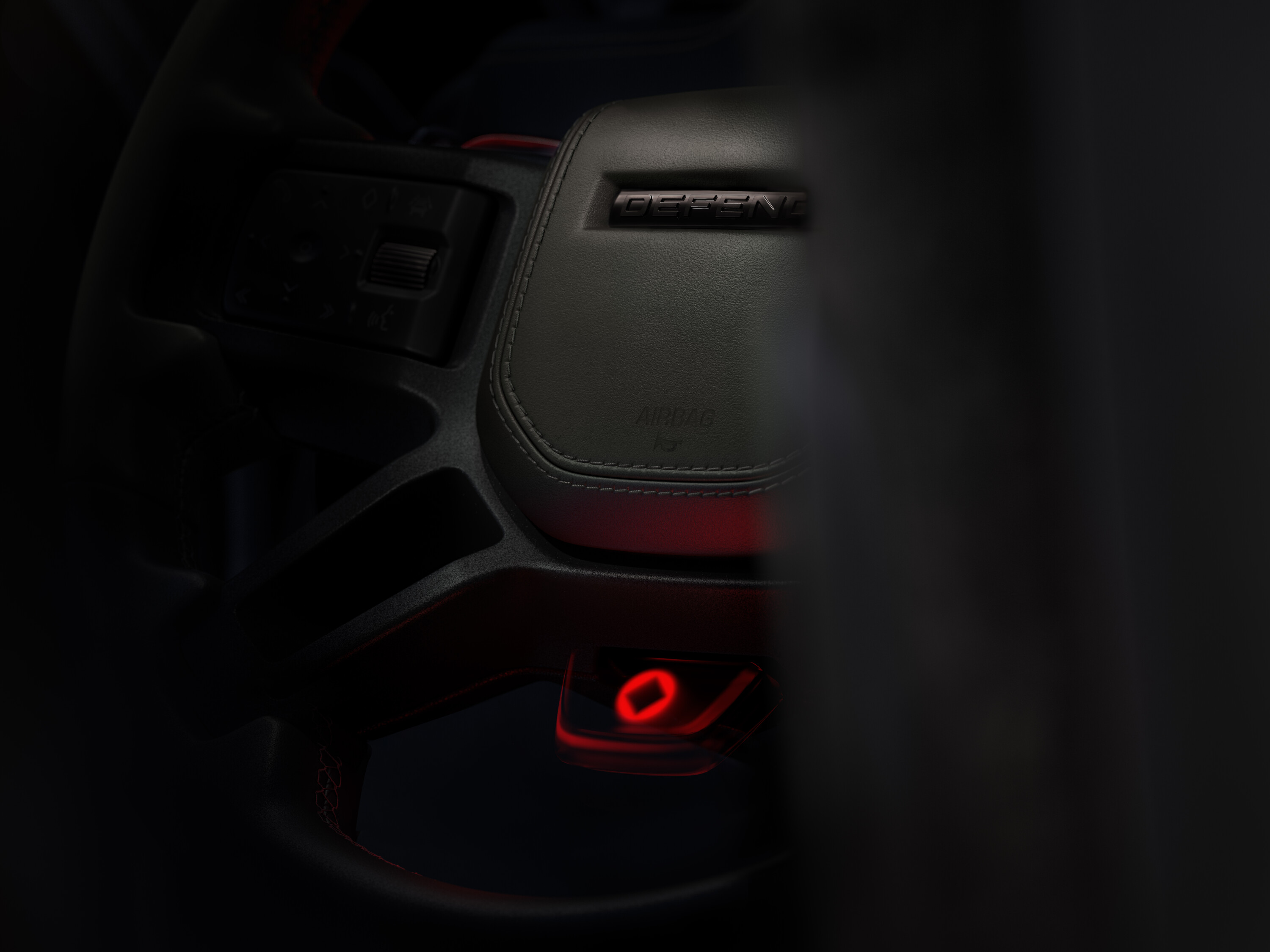
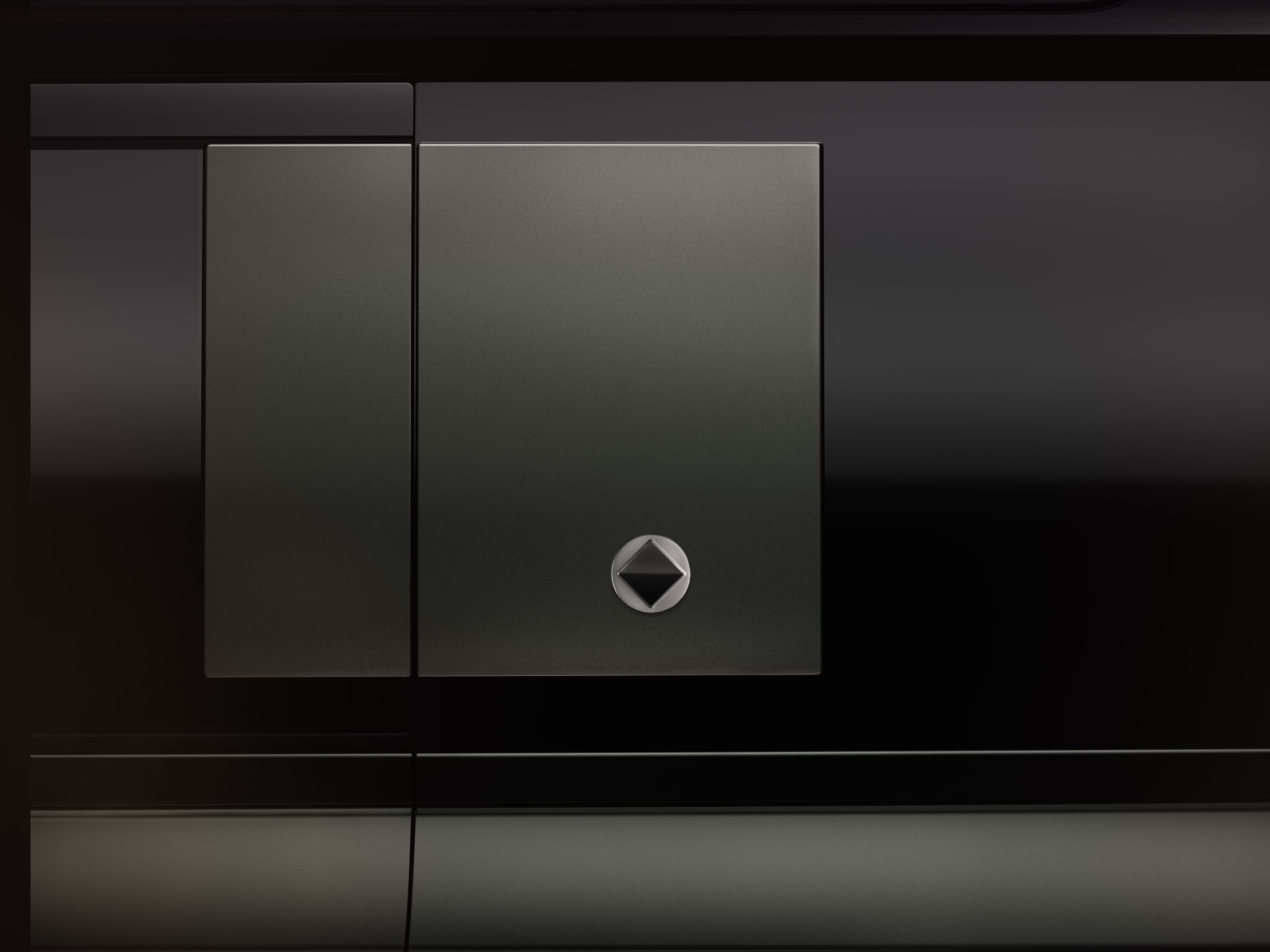
As for the Octa name, Land Rover says it’s derived from a diamond’s eight-sided octahedron shape, which is why you’ll also find a new encircled diamond graphic at various points around the car.
1
The new diamond badge, which Land Rover says is “representative of the vehicle’s strength, resilience and desirability” is stuck onto a sand-blasted disc of titanium and will identify all flagship Defender models going forward
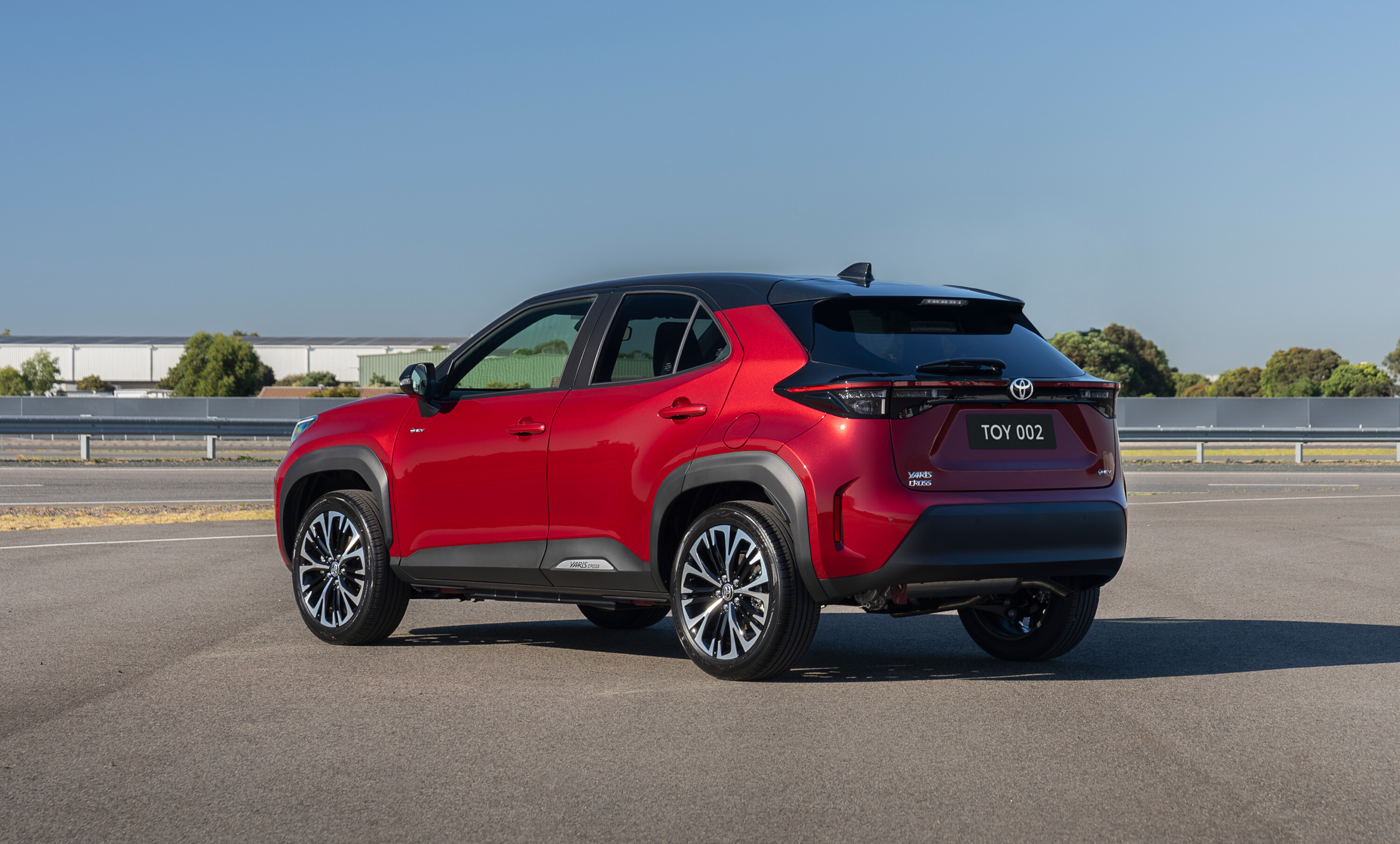
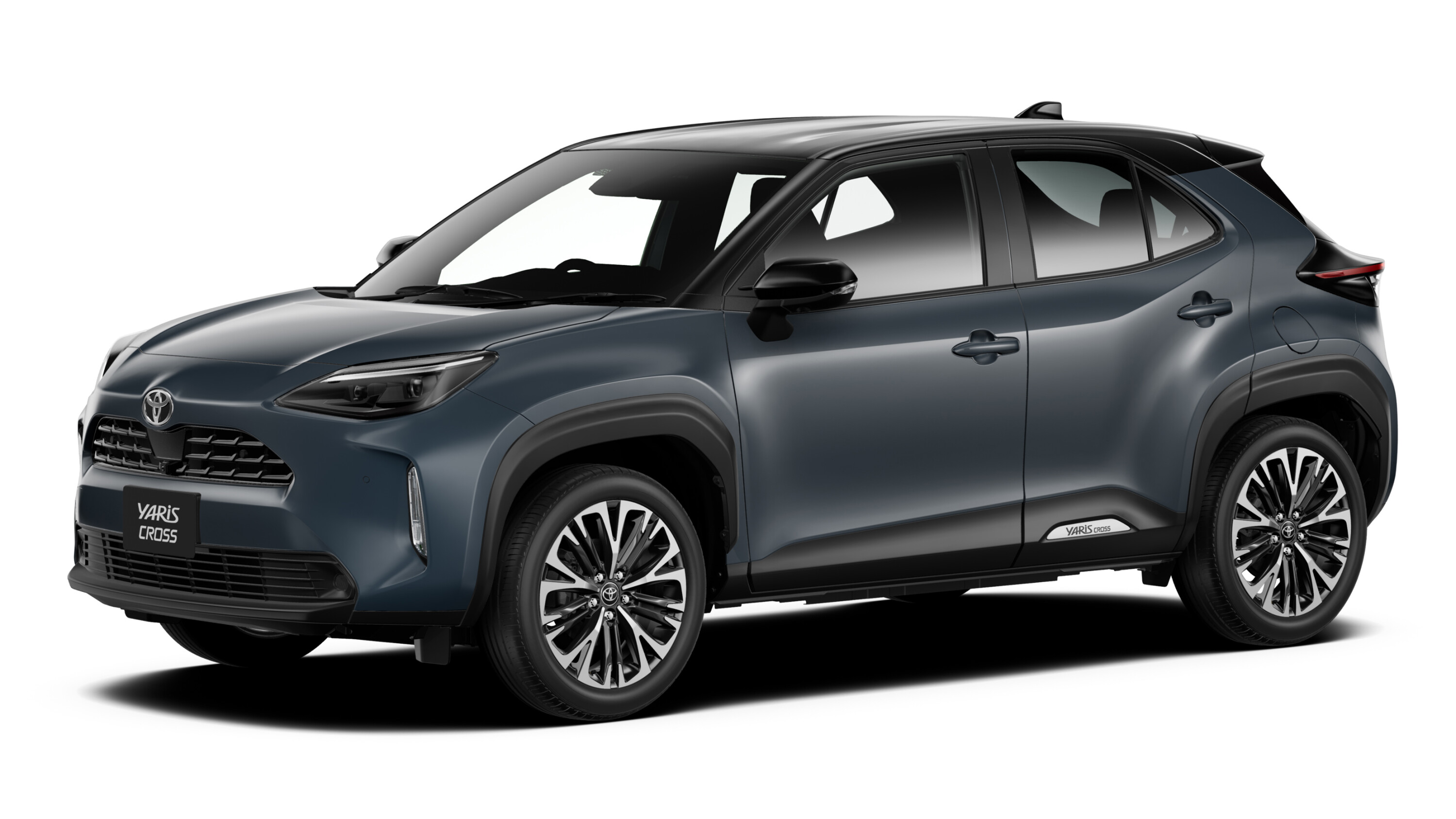
An update for the 2024 Toyota Yaris Cross light SUV has landed in Australia.
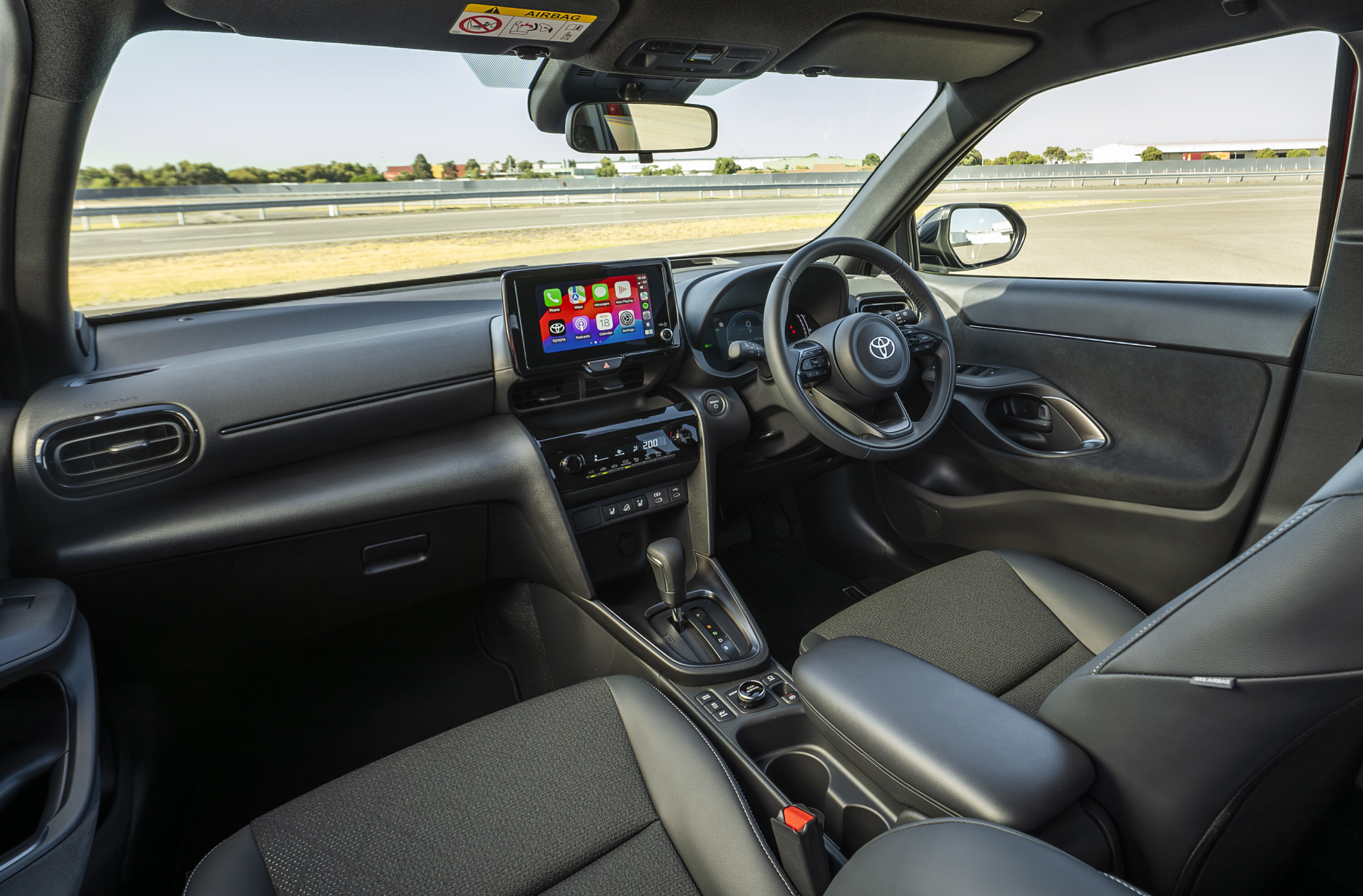
The changes applied to the Yaris Cross are headlined by the addition of a larger 8-inch touchscreen running Toyota’s latest infotainment system, with wireless Apple CarPlay and Android Auto connectivity.
GXL variants and above receive connected satellite navigation, which costs $12.50 per month to maintain after the 12-month free trial period expires as part of Toyota’s ‘connected multimedia’ subscription.
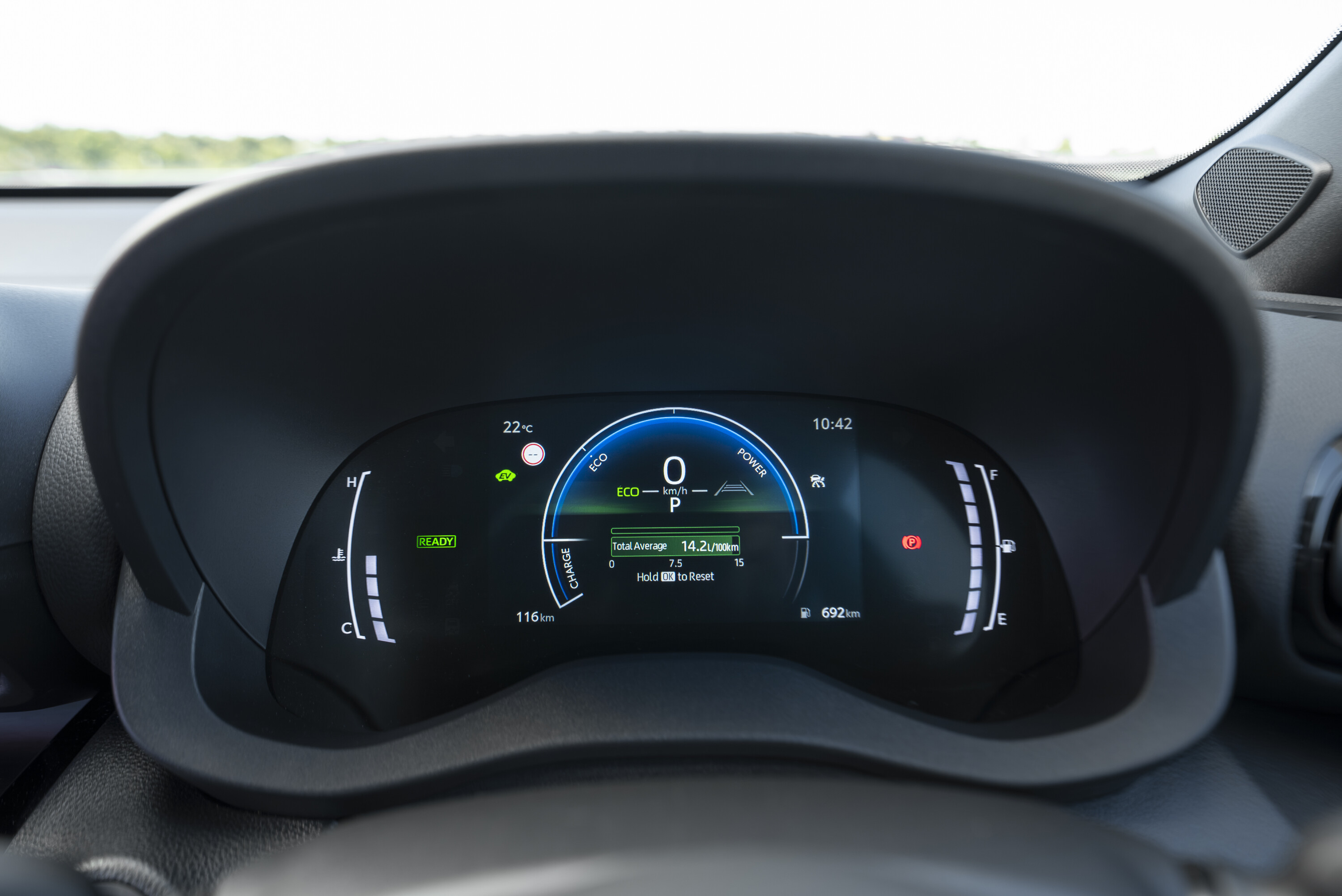
All variants are also fitted with a new 7-inch digital instrument cluster, which replaces analogue dials and a 4.2-inch multi-function display.
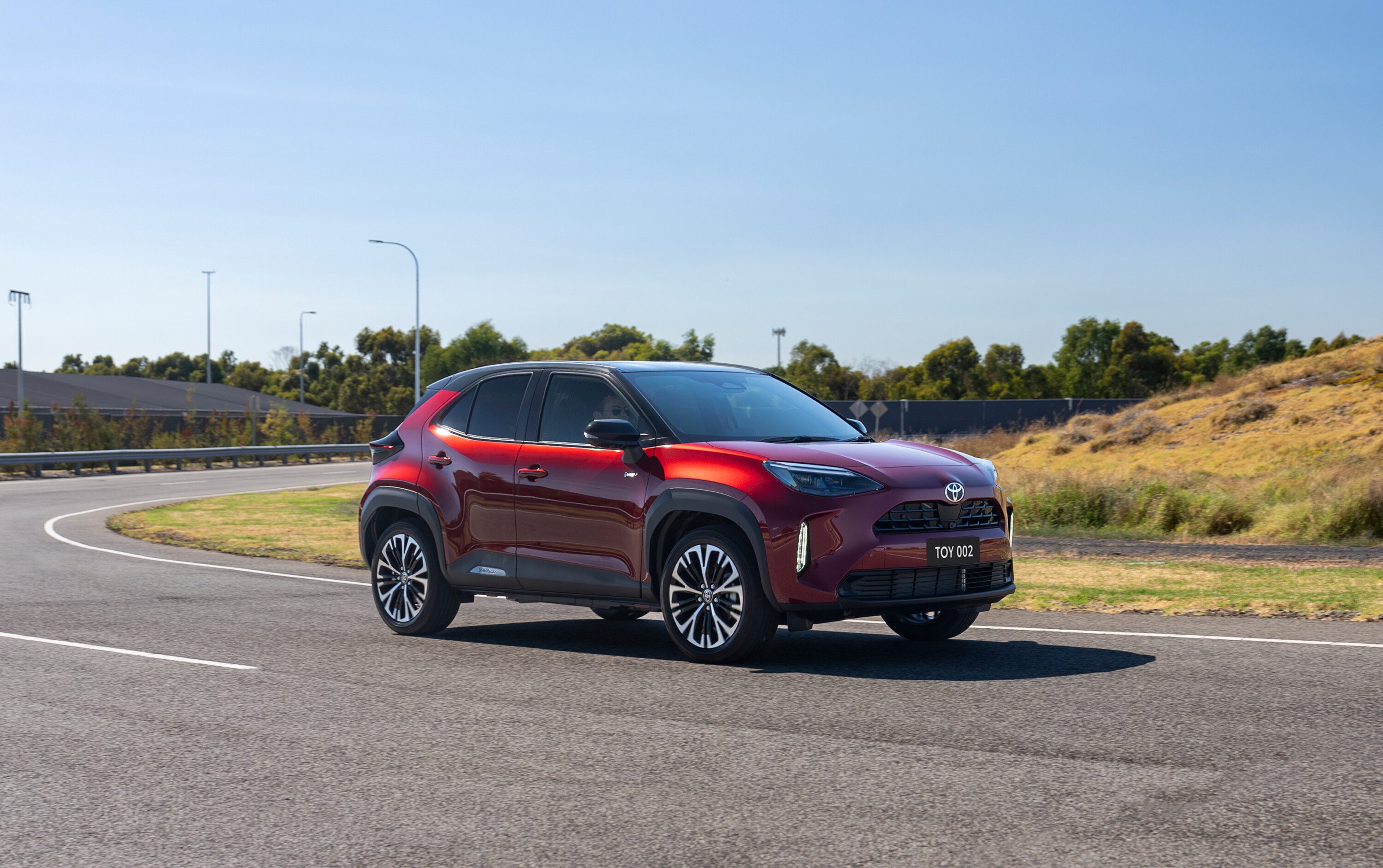
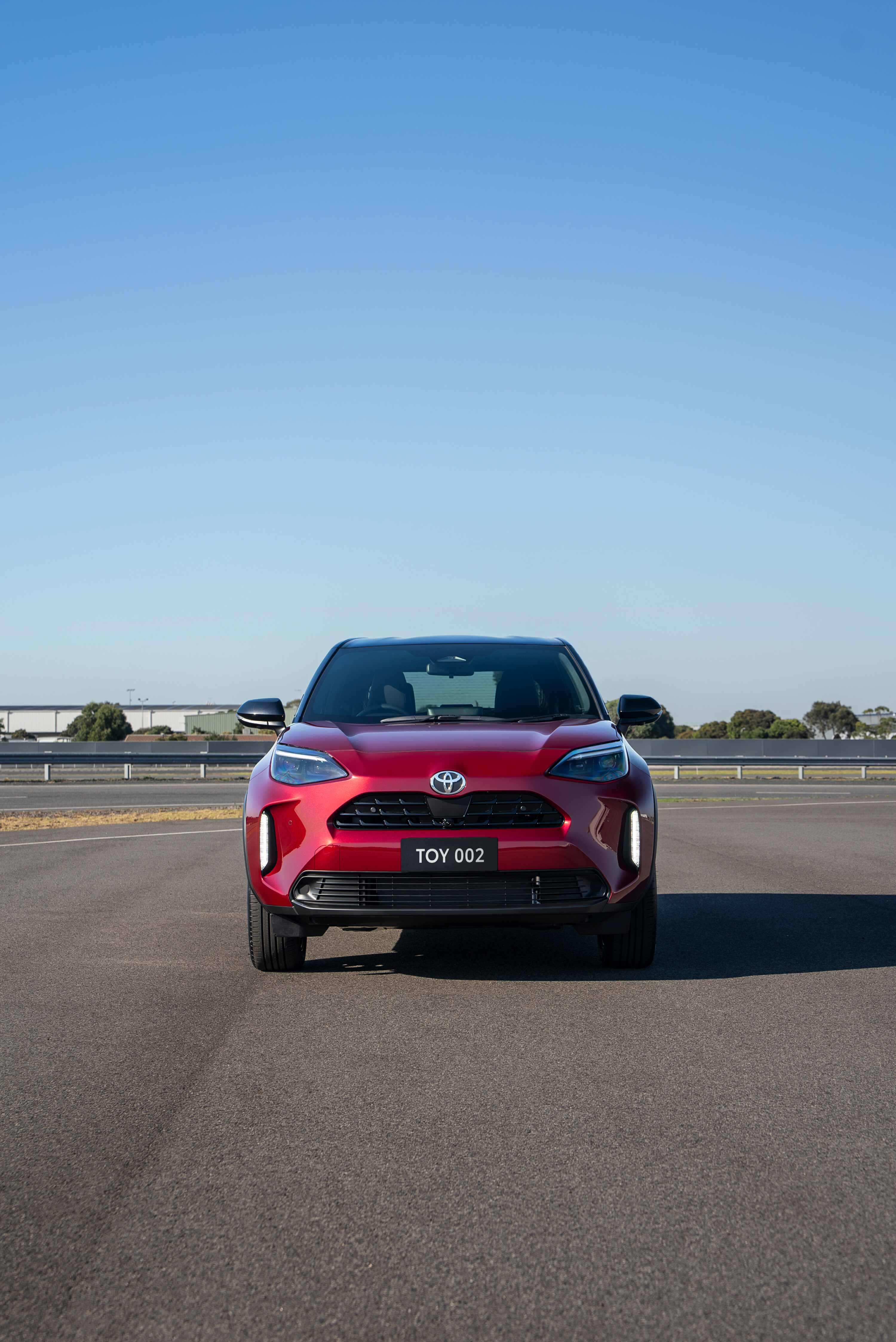
There’s also a new upper grille pattern and seat trim patterns for all variants except the GR Sport, a large rear side spoiler, new ‘HEV’ badges, and additional USB-C charge ports throughout to replace USB-A sockets.
1
Active safety improvements include motorcyclist and vehicle head-on detection for the autonomous emergency braking system, which also has enhanced intersection detection during the day.
Emergency steering assist is now available for all Yaris Cross variants, while the cameras and sensors for the adaptive cruise control and lane-keep assist now operate over a wider area.
GXL variants and above add safe exit assist – which uses the same radar as the blind-spot and rear cross-traffic alerts – to prevent ‘dooring’ other road users, and low-speed emergency braking in forward and reverse when parking if an imminent collision is detected.
1
Rear-side privacy glass is also added to the GXL, GR Sport and Urban, while the entry-level GX has additional convenience features, including sunvisor mirror lights, two rear grab handles, and a softer armrest.
Prices have increased between $880 and $950 for all 2024 Toyota Yaris Cross variants.
Wireless Apple CarPlay and Android Auto (previously wired-only)
Leather-accented steering wheel
USB-C charge ports (previously USB-A)
Keyless entry with push-button start
16-inch alloy wheels
Halogen headlights
AM/FM/DAB+ radio
LED daytime running lights
Toyota Connected Services
Electronically-adjustable, power-folding side mirrors
Six-speaker audio system
Reversing camera
2024 Toyota Yaris Cross GXL features
In addition to GX
Safe exit assist (new)
360-degree camera system
Low-speed emergency braking u2013 forward and reverse (new)
Blind-spot alert
Connected satellite navigation (new)
Rear cross-traffic alert
LED headlights and reverse lamp
Rear privacy glass
Front and rear parking sensors
2024 Toyota Yaris Cross GR Sport features
In addition to GXL
18-inch alloy wheelsu00a0
Alloy pedals
Unique black grille design
Underfloor brace
GR Sport badging
Black synthetic leather and suede upholstery
Lowered suspension
Air purification system
Red brake calipers
2024 Toyota Yaris Cross Urban features
In addition to GXL
18-inch alloy wheels
Heated front seats
Head-up display
Power-adjustable driveru2019s seat
Leather-accented upholstery
Hands-free electric tailgate
Air purification system
Toyota Connected Services is standard on the Yaris Cross. Available features include automatic collision notification, SOS emergency calls, stolen vehicle tracking, guest driver settings, vehicle function statuses, and current vehicle location.
The SIM-based service is complimentary for 12 months from the date of vehicle delivery.
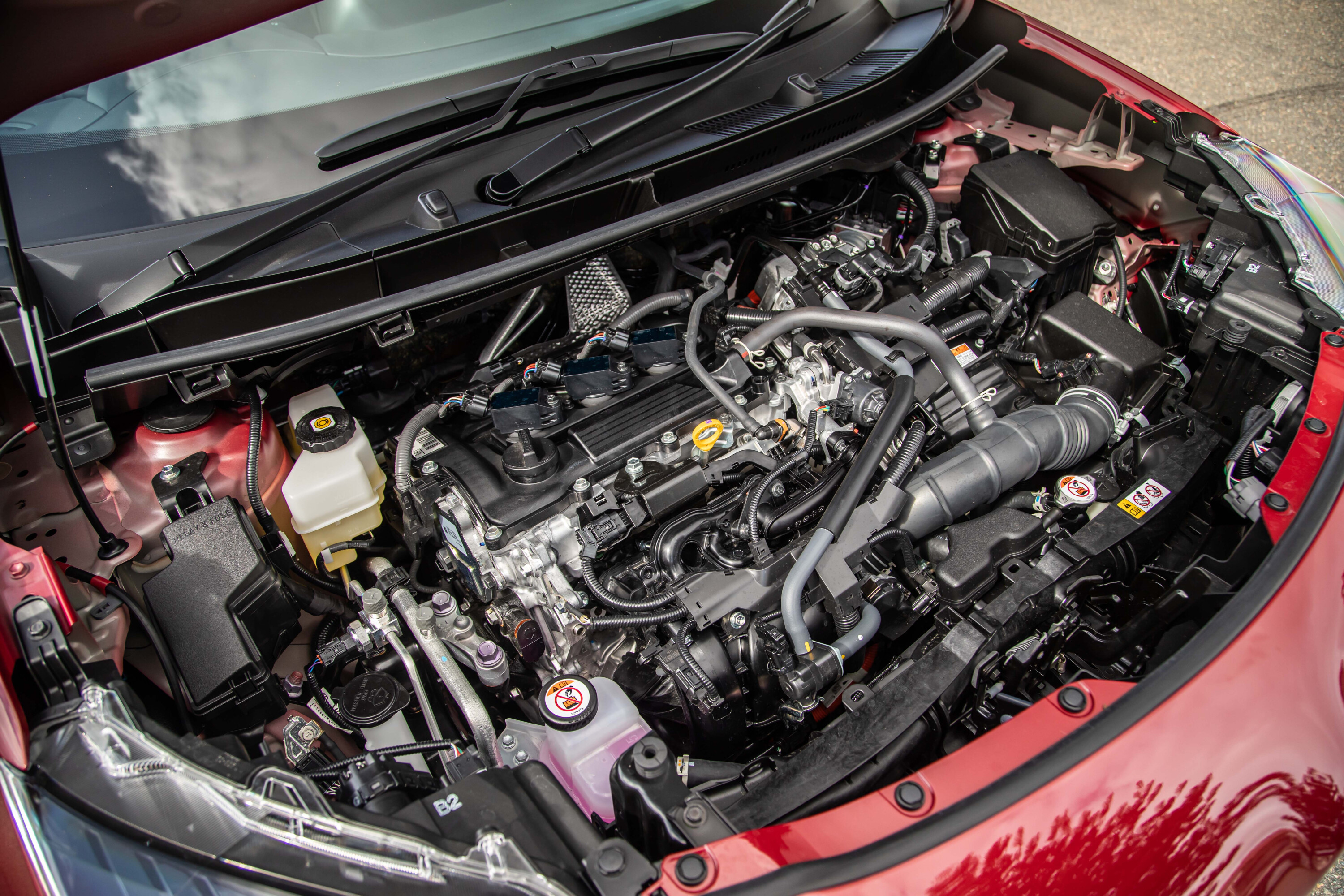
Front-drive hybrids use a 1.5-litre Atkinson cycle petrol engine paired with two electric motors, for a maximum combined 85kW power output. It is matched to a CVT automatic transmission.
All-wheel drive versions use the same hybrid engine and battery set-up as the front-drive hybrid, but add a 4kW/52Nm electric motor to the rear axle for improved grip in slippery conditions.
This variant can send up to 100 per cent of the power to the front wheels, or split delivery 40 per cent to the front and 60 per cent to the rear.
Torsion-beam rear suspension features in front-wheel drive variants, while the all-wheel drive includes a multi-link setup.
2024 Toyota Yaris Cross fuel consumption (combined cycle)
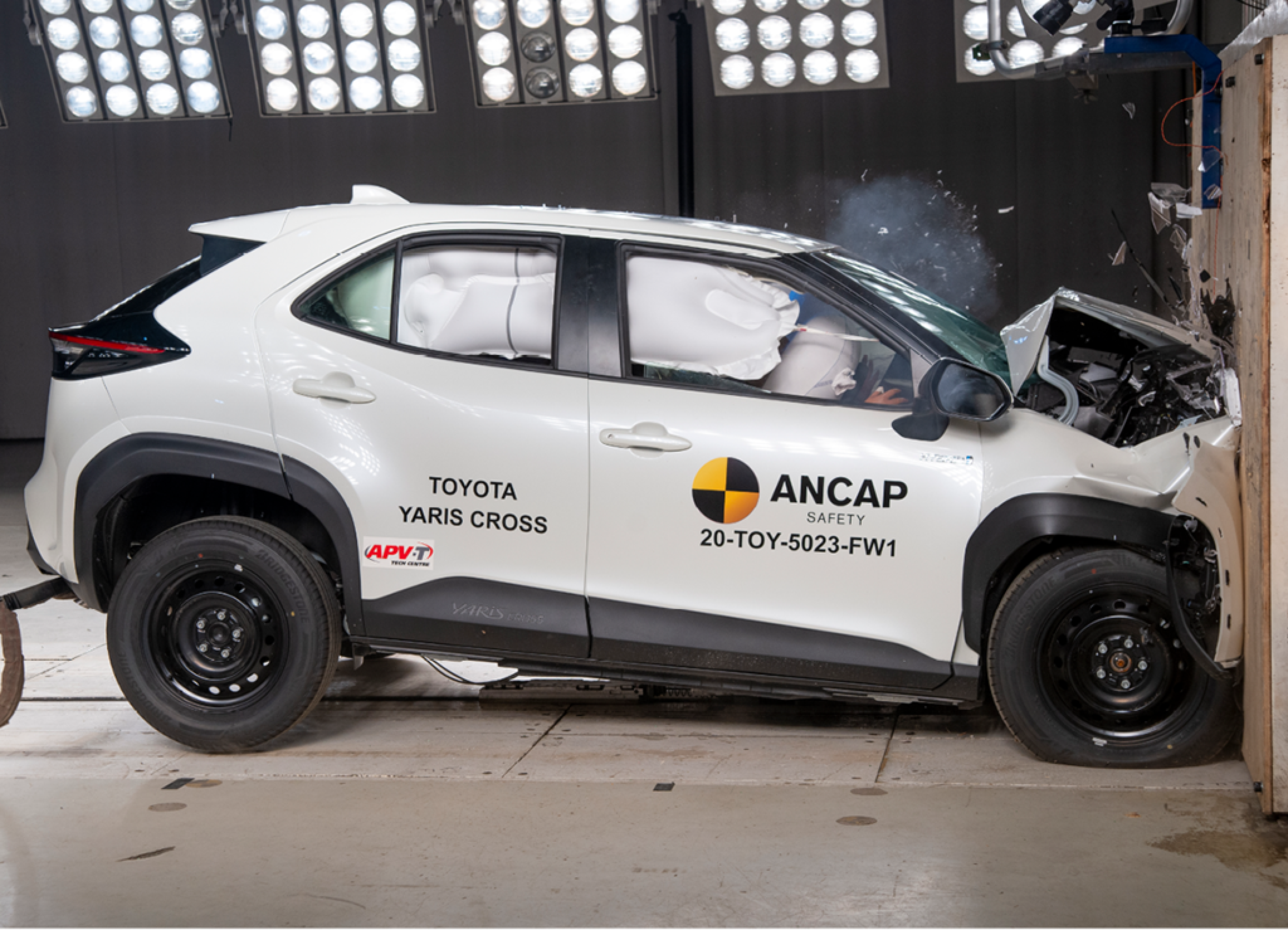
The Toyota Yaris Cross is covered by a five-star ANCAP safety rating, based on testing conducted under the 2020-22 criteria. This rating covers all variants sold in Australia.
Eight airbags, including a front-centre airbag, feature across the range.
Blind-spot alert, rear cross-traffic alert, safe exit assist, front/rear parking sensors, and low-speed emergency braking are available on GXL grades and above.
The Yaris Cross is covered by Toyota’s five-year/unlimited-kilometre vehicle warranty.
If a Toyota dealer services the vehicle, a seven-year warranty applies to the engine and driveline, while a 10-year warranty covers the hybrid battery.
The Japanese manufacturer also offers customers capped-price servicing, with the first five visits to a dealer for servicing costing $250 each.
Okay folks, time for your best Dr Evil impersonations: Genesis, the luxury arm of Hyundai, has revealed plans to create its own performance sub-brand to rival AMG, BMW M and even Porsche.
Its name? Magma.
1
1
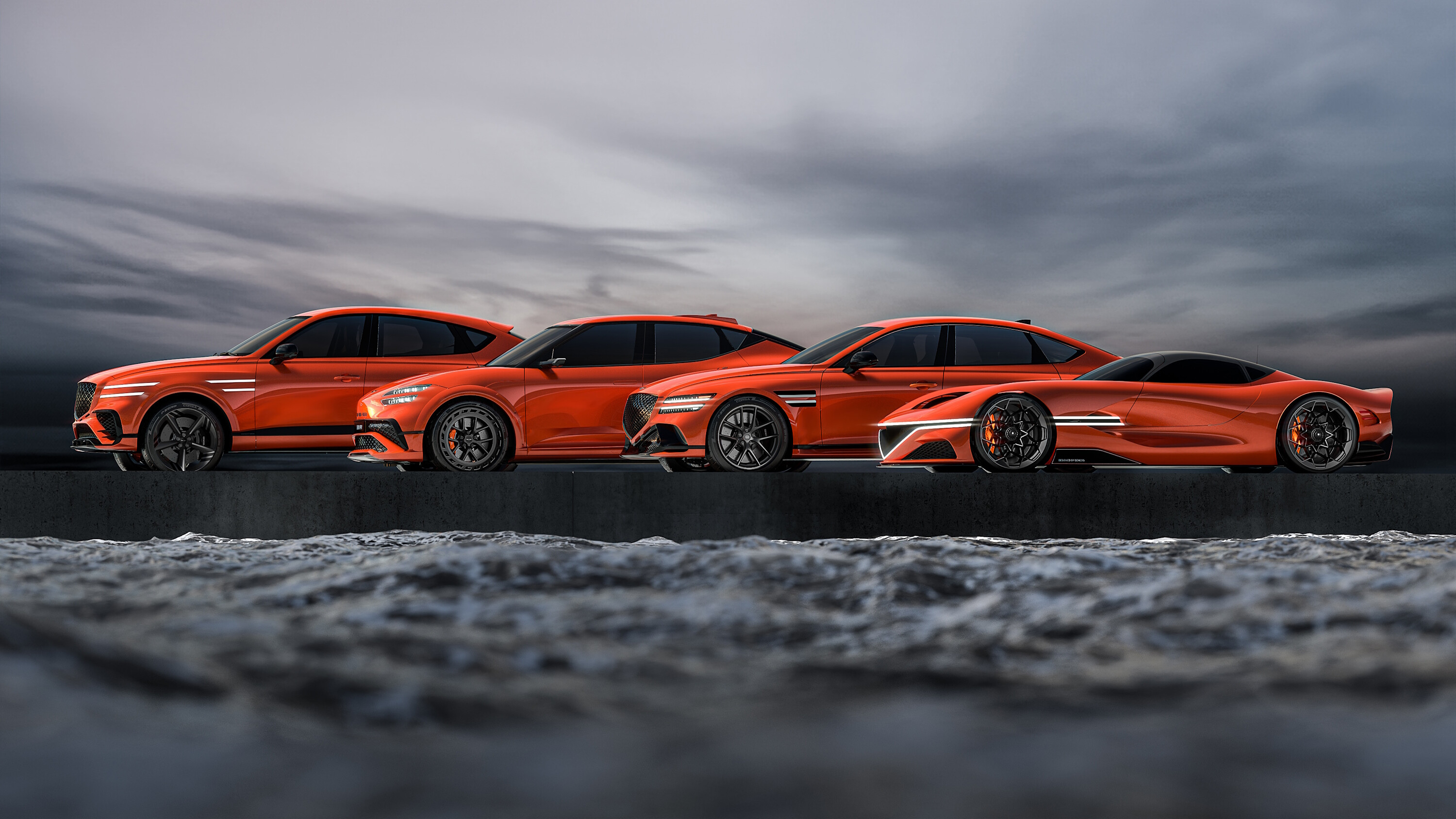
Created to spawn an entire range of performance models, Genesis revealed four Magma concepts at the New York Motor Show ranging from ‘go fast’ versions of the GV80 Coupe SUV, G80 sedan, GV60 mid-size SUV and the sleek two-door X Gran Berlinetta concept.
Genesis says it “ultimately aims to develop a high-performance Magma model for each production vehicle in the existing lineup, maximising both aesthetics and performance.”
The Korean brand has even drafted in motor racing legend and six-time Le Mans winner Jacky Ickx to help develop the new range of Magma models.
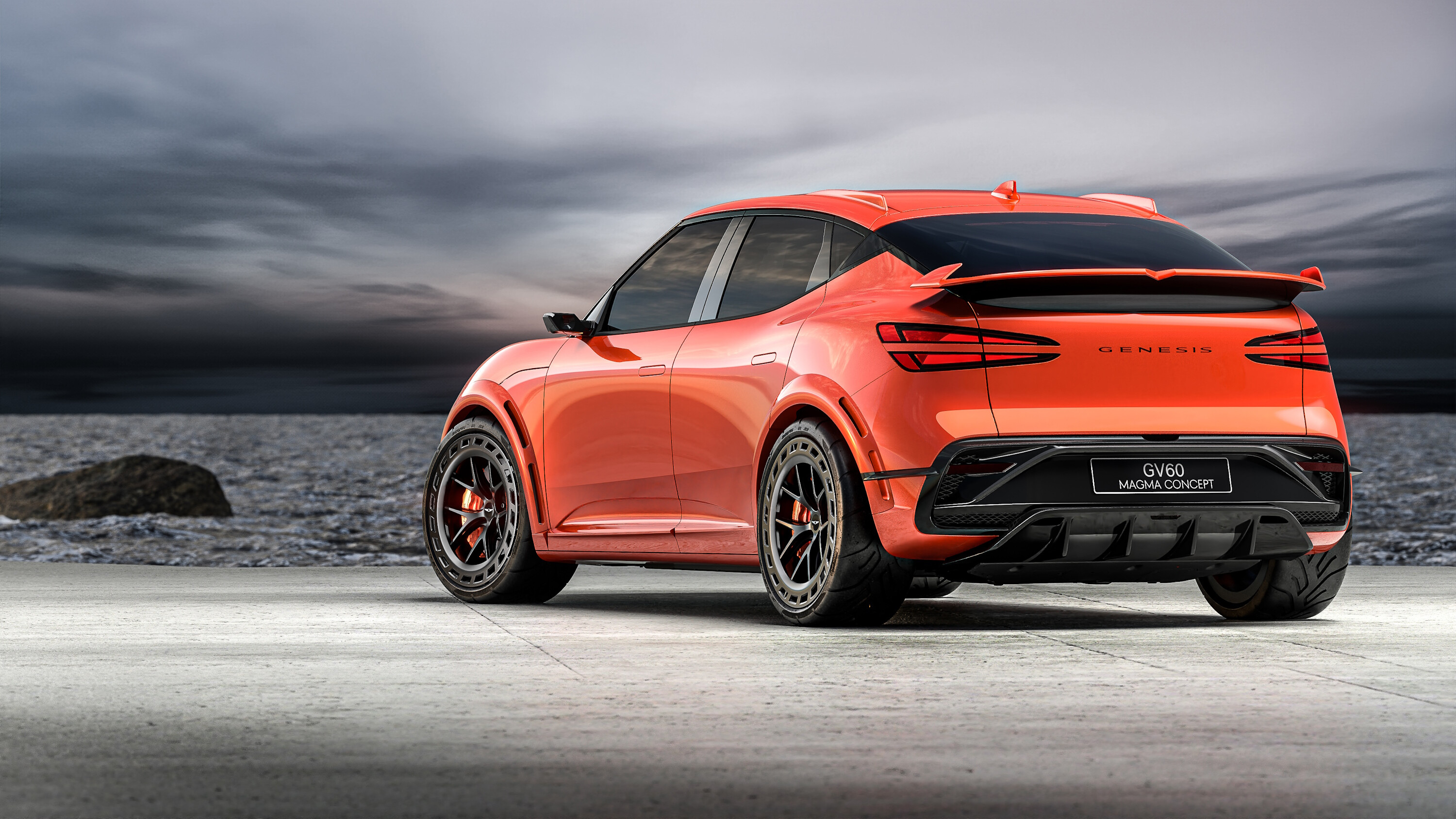
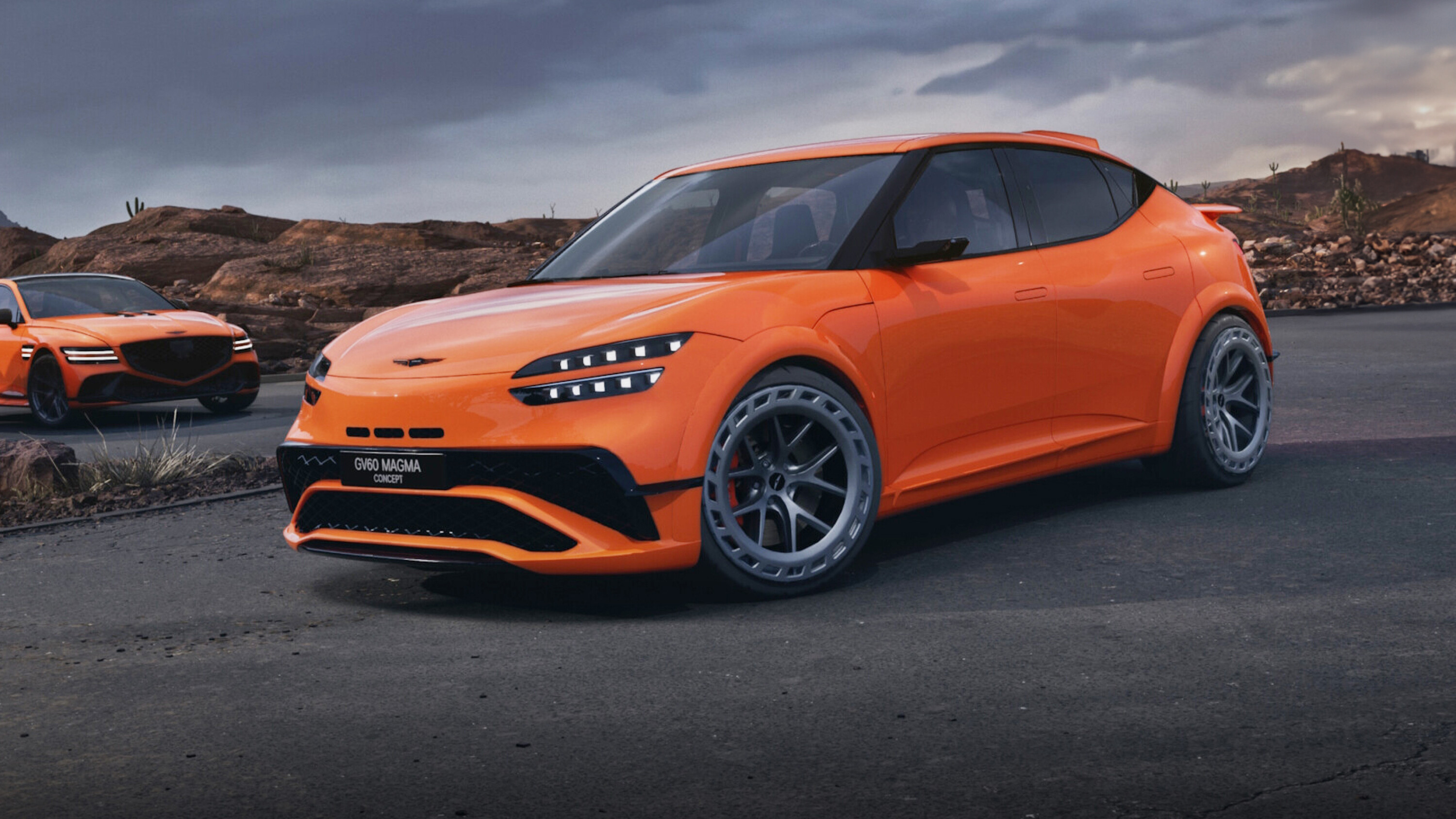
The first concept set to make production will be the GV60 Magma Concept, an electric mid-size SUV likely to utilise the same hardware that underpins the well received Hyundai Ioniq 5 N.
As Genesis’s first dedicated EV, the regular GV60 uses the same E-GMP platform as the Ioniq 5 and Wheels COTY-winning Kia EV6 however it will benefit from “improved battery and motor technology”.
1
Genesis is yet to reveal any details about the GV60 Magma’s powertrain, but for reference, the Hyundai Ioniq 5 N produces 478kW and 770Nm in Boost Mode.
The Hyundai also has unique driver-focused features like a simulated 8-speed gearbox, a drift mode and a convincing combustion-car soundtrack.
“The GV60 Magma Concept will deliver ample power, instilling customers with the confidence to drive with pure excitement and exhilaration,” said Genesis chief creative officer, Luc Donckerwolke.
Outside, the GV60 Magma’s body has been widened and lowered to improve its centre of gravity, and there’s a greater focus on cooling for the batteries, e-motor and brakes courtesy of larger front intakes.
Pumped-up wheelarches house 21-inch aero disk wheels and fins have been placed on the roof to direct air towards a new, downforce-generating rear wing.
The cabin has also been enhanced with bucket seats and fresh upholstery that combines Nappa leather and suede with double-diamond stitching in Magma’s signature orange colour.
1
Genesis bringing Magma to Australia
Aussie customers will have the chance to buy the full range of Magma models, however the company’s local arm couldn’t confirm when they might arrive Down Under.
“Yes, we will take them but there’s no word on timing just yet,” a company spokesperson told Wheels.
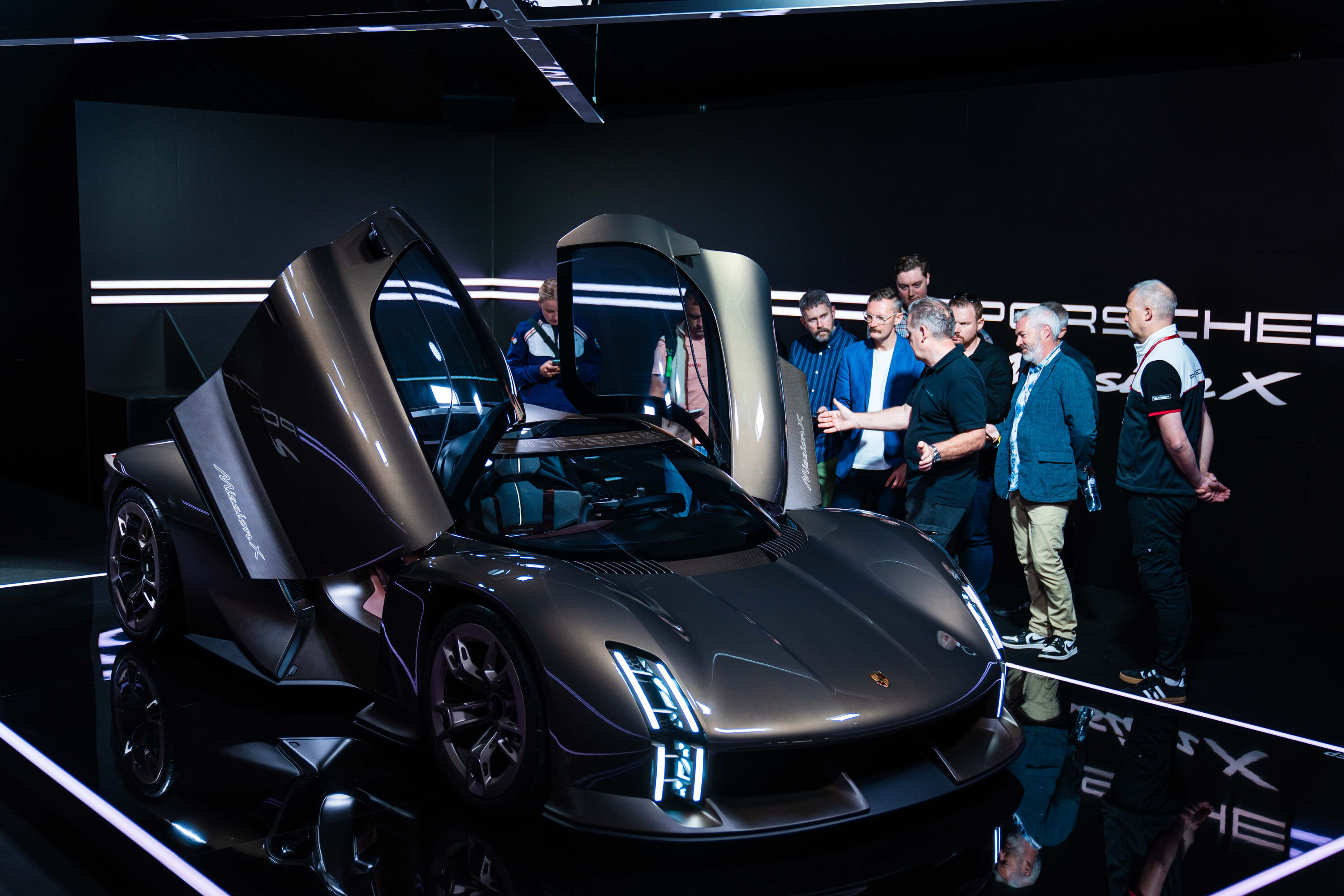
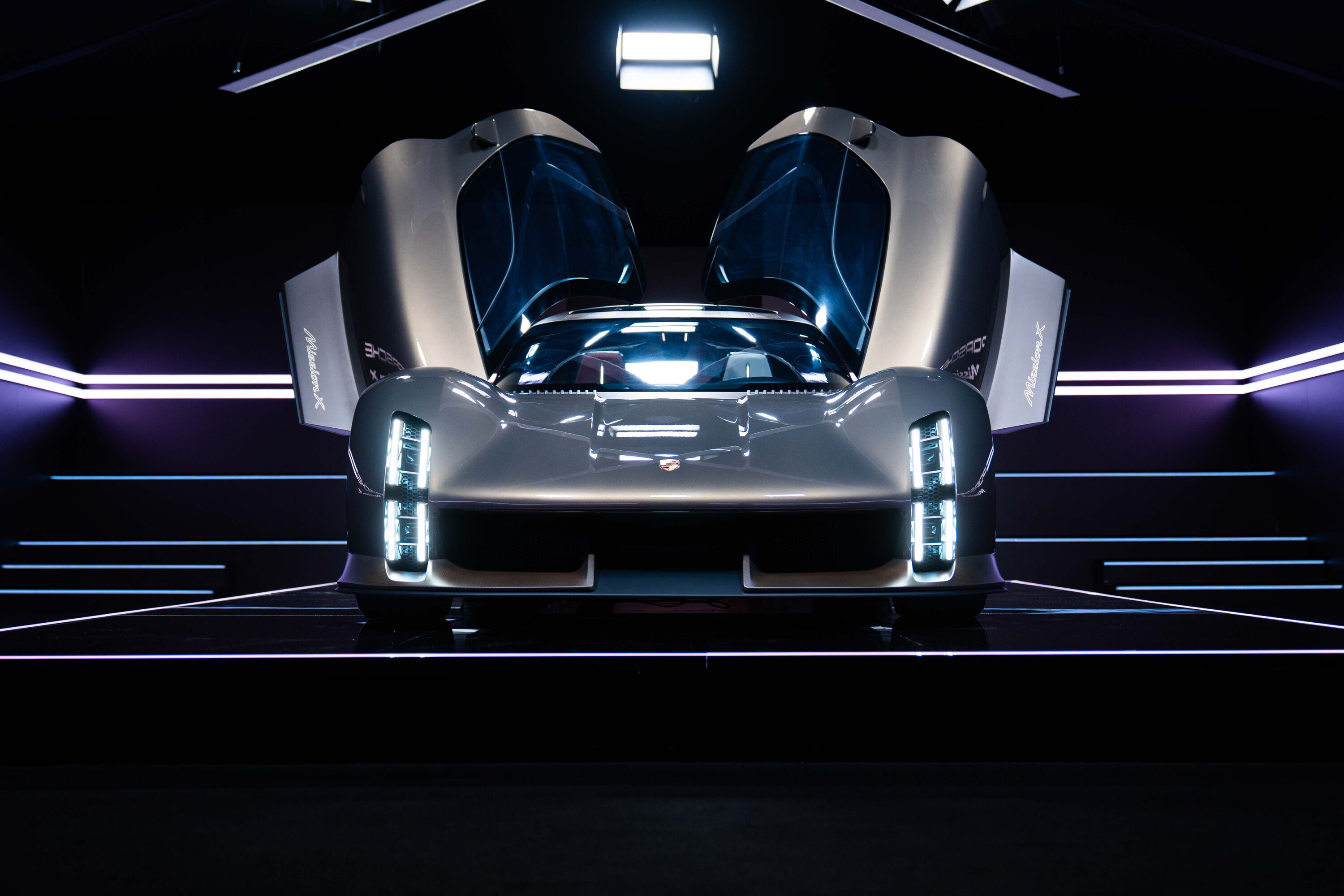
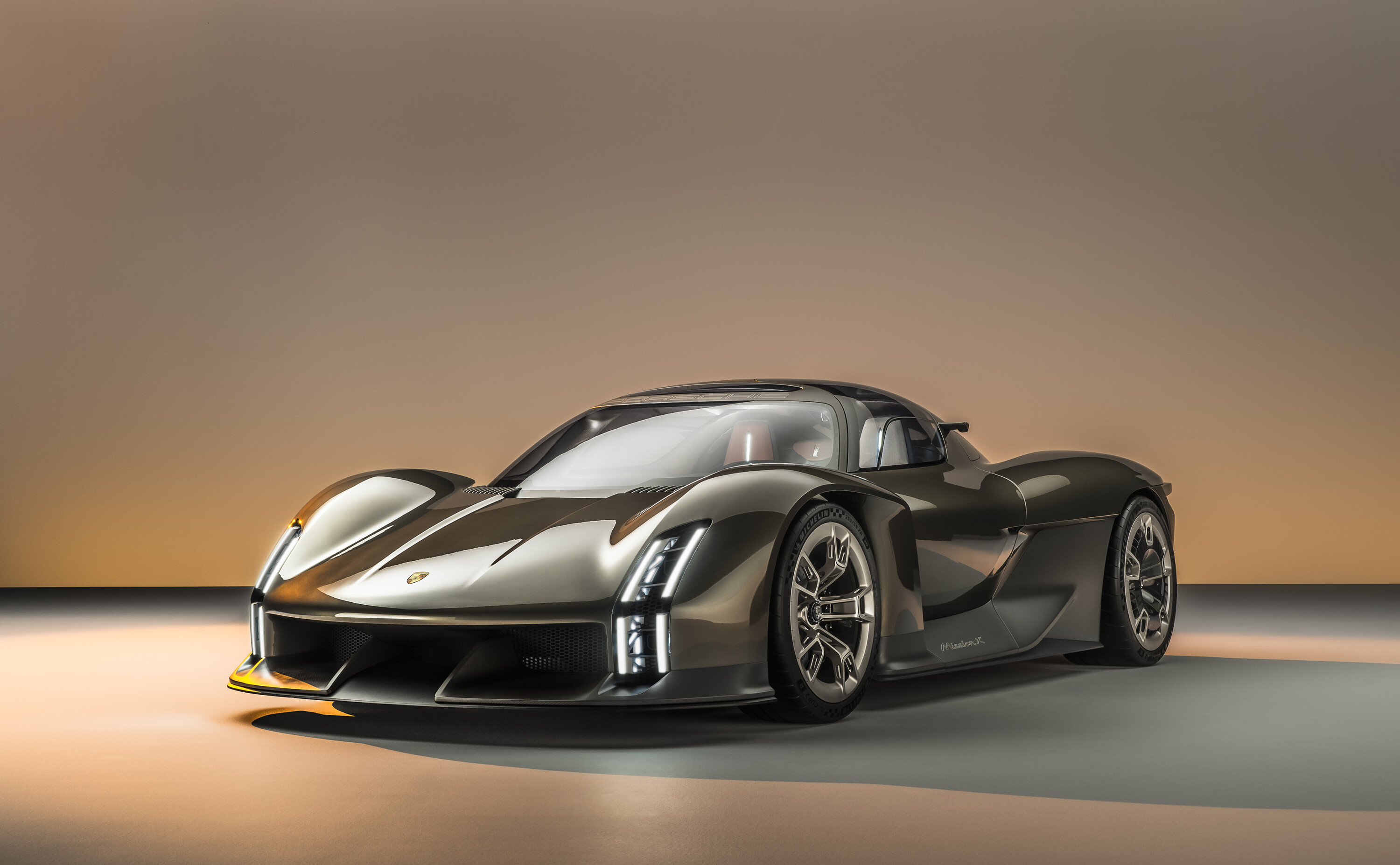
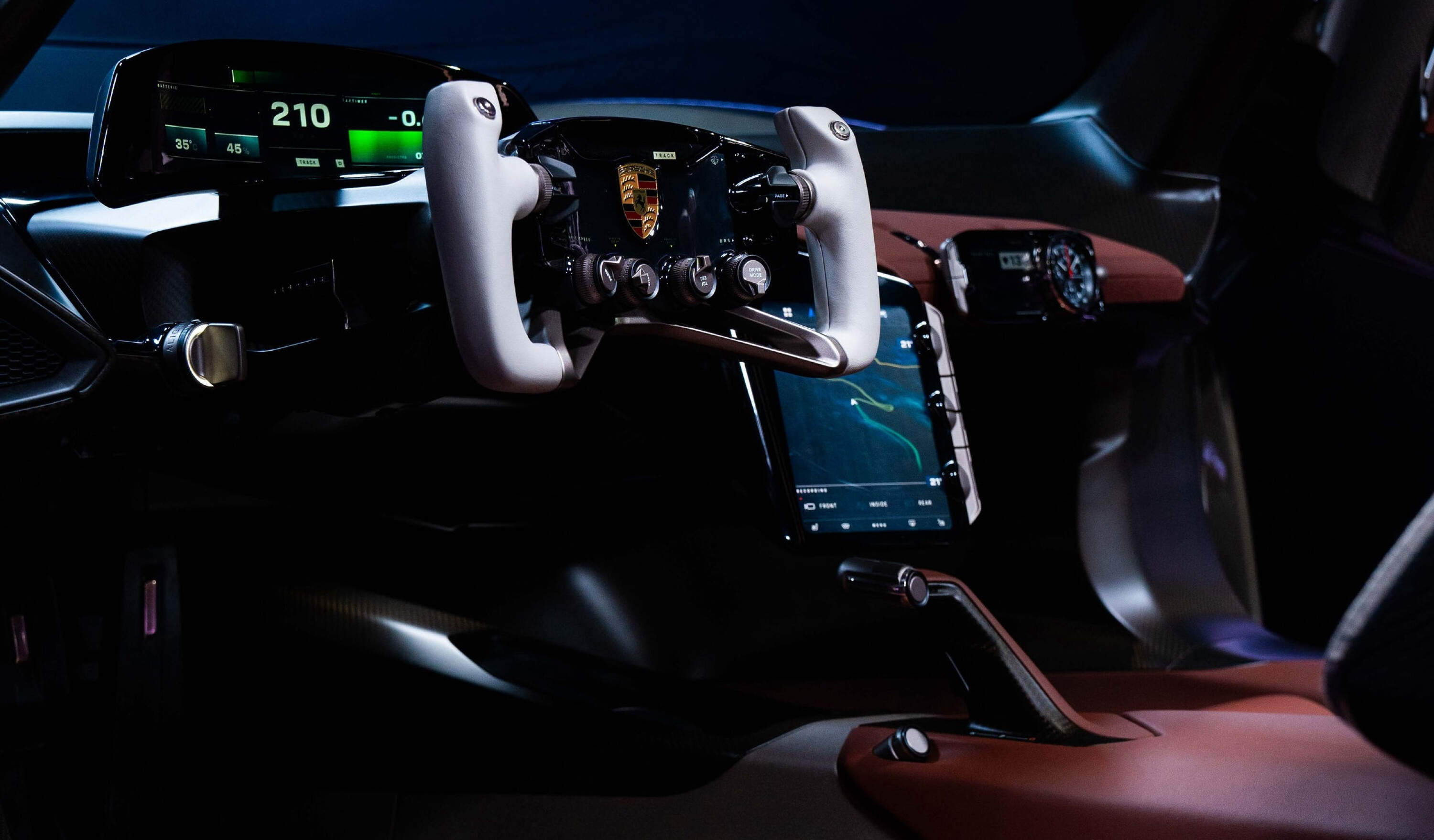
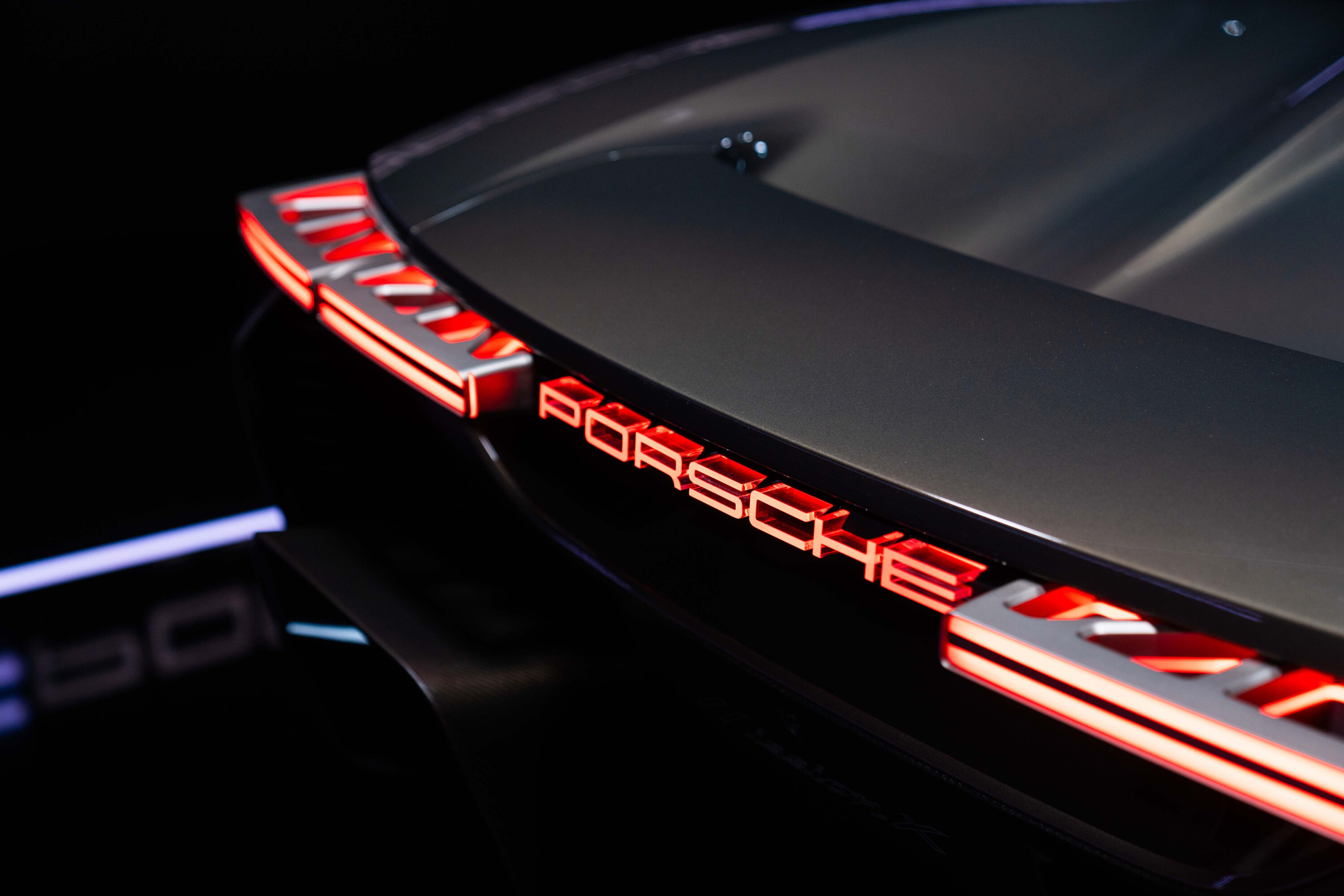
Porsche is set to disappoint wealthy Australians by restricting its Mission X to left-hand drive if the hypercar concept is finally confirmed for production.
The Mission X was unveiled last June for the German car maker’s 75th anniversary, and is intended as a successor to the 959, Carrera GT and 918 Spyder that were all short-term flagships for the brand.
Like those cars, it seems the Mission X would also be ruled out for use on Australian roads despite its electric powertrain raising hopes of a right-hand drive version.
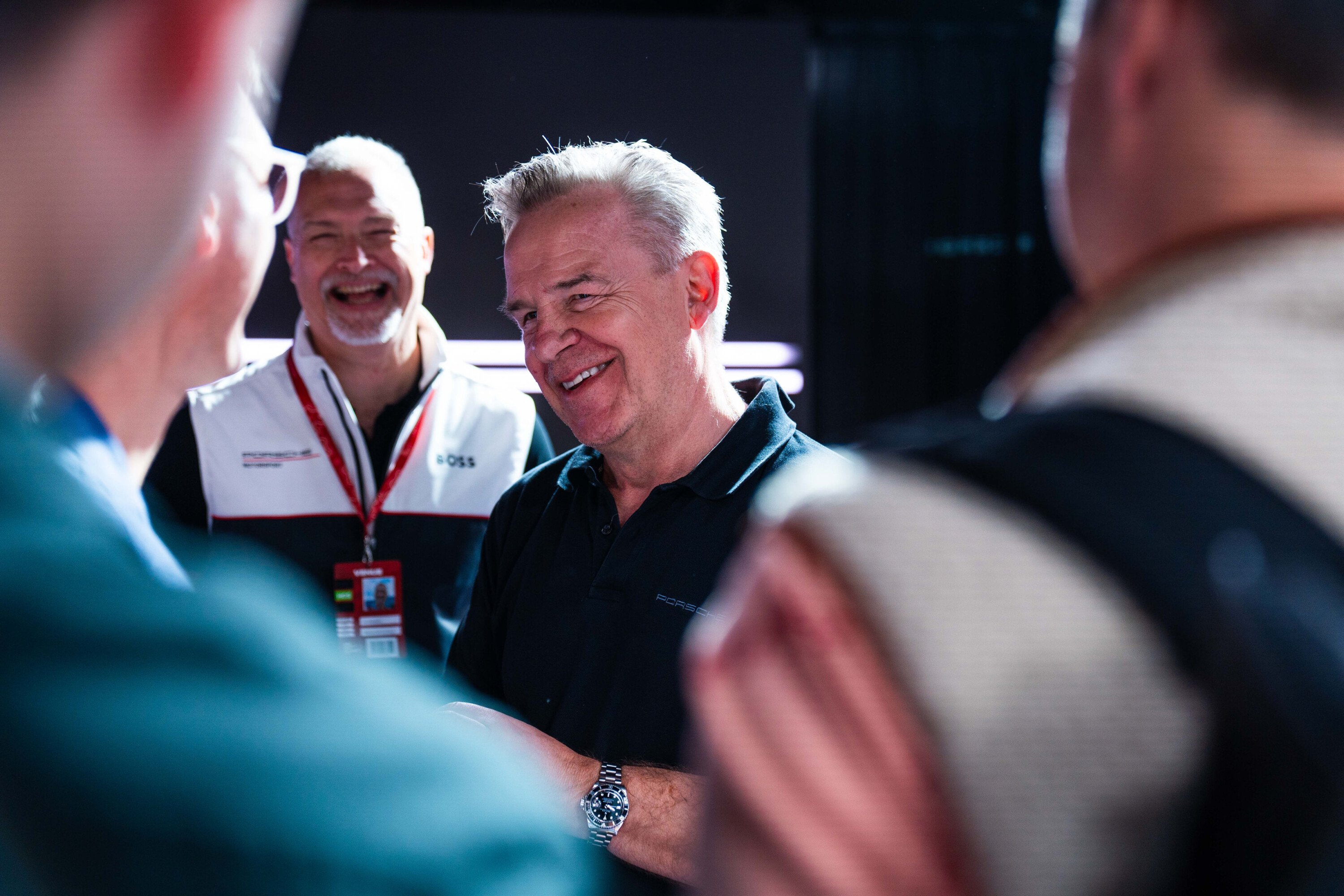
Speaking at a media showing of the Mission X at last weekend’s Australian Grand Prix in Melbourne, project manager Michael Behr (pictured below) said producing LHD and RHD versions would be difficult from a technical perspective.
“It’s more complicated to have two versions. If you’re doing just the right-hand version, that’s okay because you have a limited number of cars [for a smaller number of markets] … [but] then if there are two versions it’s much more complicated.
1
1
“So, I think it’ll be one version [of the Mission X] and I think it’s a left-hander.”
Behr said a production version of the Mission X would look very similar to the concept, which is left-hand drive.
The car is intended to be the fastest road-legal Porsche yet around the famous, 21km-long Nürburgring Nordschleife circuit.
Behr said the Mission X was not just a racing car but also a luxury car.
The production version would add details the concept doesn’t need, including a wiper and air-conditioning, and other items that a road-legal car needs. He also said the wheelbase may be slightly different, but that the essential shape would be unchanged.
Porsche’s advanced design studio engineer, Kai Leibrandt, said the company always aimed to avoid pipedream features that couldn’t become a reality.
“Everything we do in our concept cars is for something that we would aim to be producible and usable and [meet] legislature. So we don’t do stuff where we know it’s not going to happen.
1
“The [Mission X’s scissor-style] doors of course look spectacular, but their lightness is for a reason. It actually starts with a glass panel [on the door], which goes all the way into the roof, and this is a packaging [solution].
“If we have a conventional roof even with a small glass panel above the head, then we need some kind of metal bar going just on the outside and that would actually limit your head space. And one of the goals we have for this car is to be drivable with a helmet.
“If you’ve ever driven a 918, with a helmet, it’s very tight in there. So one of the goals that we have for this car is to say, ‘Okay, this car is going to be fully drivable with full comfort with a helmet on.’ And so this is really the only way that we could do it while also reducing the frontal area to the minimum.”
Porsche has also lowered the seating position by 65-70mm compared with the 918, enabled by the placement of the battery pack behind the seats – unlike the electric Porsche Taycan that has its battery integrated into the floor.
The company says the Mission X would produce significantly more downforce than its legendary racecar for the road, the 992 GT3 RS that produces 409kg of downforce at 200km/h and 860kg of downforce at 285km/h.
Leibrandt says the Mission X’s aerodynamics are similar to that the Porsche’s recent Le Mans racing cars, including last year’s endurance series contender.
1
“Once you’re at that kind of performance level [of the Mission X], one thing that really limits you is aerodynamics, and downforce in particular, especially around the Nürburgring. And to generate enough downforce, it would simply not be possible with a car that’s built like a Taycan.
“So essentially what we have here is seats forward [design]. It is a race car, right? It’s got very similar aerodynamics to 919, 963, that kind of thing. There’s no cooling at all going on in front of the car and it’s all in the back of the car. So we can basically concentrate on generating as much downforce as we can. Is there a target for downforce for this? Much higher than the GT3!
Porsche has been coy about details regarding the hypercar’s electric powertrain, though Behr did reveal the concept was two-wheel drive (presumably rear-driven).
However, Bear suggested a production version would need to be all-wheel drive more for range than speed to ensure it is equipped to make make record-attempting runs of the 21km Nürburgring Nordschleife.
1
“This car is two-wheel-driven and we did a lot of simulation beginning in 2016 for the future sports car, electric sports car, and DNA of Nordschleife [hypercar] again. And there is not really a difference between two and four wheel driven, just one [key reason]. It’s an electric car and you need a four-wheel-driven car to recuperate a lot of energy [for the battery] to have a bigger range on the Nordschelife, not just for one lap, maybe for three laps.”
The Mission X hypercar would need to beat the time of 6 minutes and 35 seconds set in late 2022 by Mercedes-Benz’s F1-inspired AMG One, also road-legal though still yet to make it into customer hands.
Porsche is targeting a power-to-weight ratio of about one horsepower per kilogram, meaning the production hypercar could produce at least 1500hp – or more than 1100 kilowatts.
Porsche holds the outright Nürburgring Nordschleife record, when the 919 Hybrid Evo – a modified version of its Le Mans-winning racing car – blitzed the course in just under five minutes and 20 seconds.
The Mission X also features a 900-volt system architecture that Porsche says would enable the hypercar to charge its battery from five to 80 percent in about 10 minutes – about twice the speed of Porsche’s current fastest-charging car, the 800V-system Taycan Turbo S.
1
Porsche is expected to make a decision on the Mission X production car later this year.
Behr said the decision would be “a commercial one not a technical one”, confident the production hypercar could meet its ambitious objectives.
Porsche Australia boss Daniel Schmollinger told media at the F1 GP that he still hoped the Mission would be available in right-hand drive if it went into production.
“This is what we hope. The car is stunning, it clearly showcases where Porsche wants to go and what Porsche is able to deliver when it puts its energy into new technology and to this concept.
“But at this point in time we are not talking about numbers and we also don’t know yet if this car will become street-legal series production.
“Absolutely we have expressions of interest, over the past two days [of Mission X being shown in Australia].”
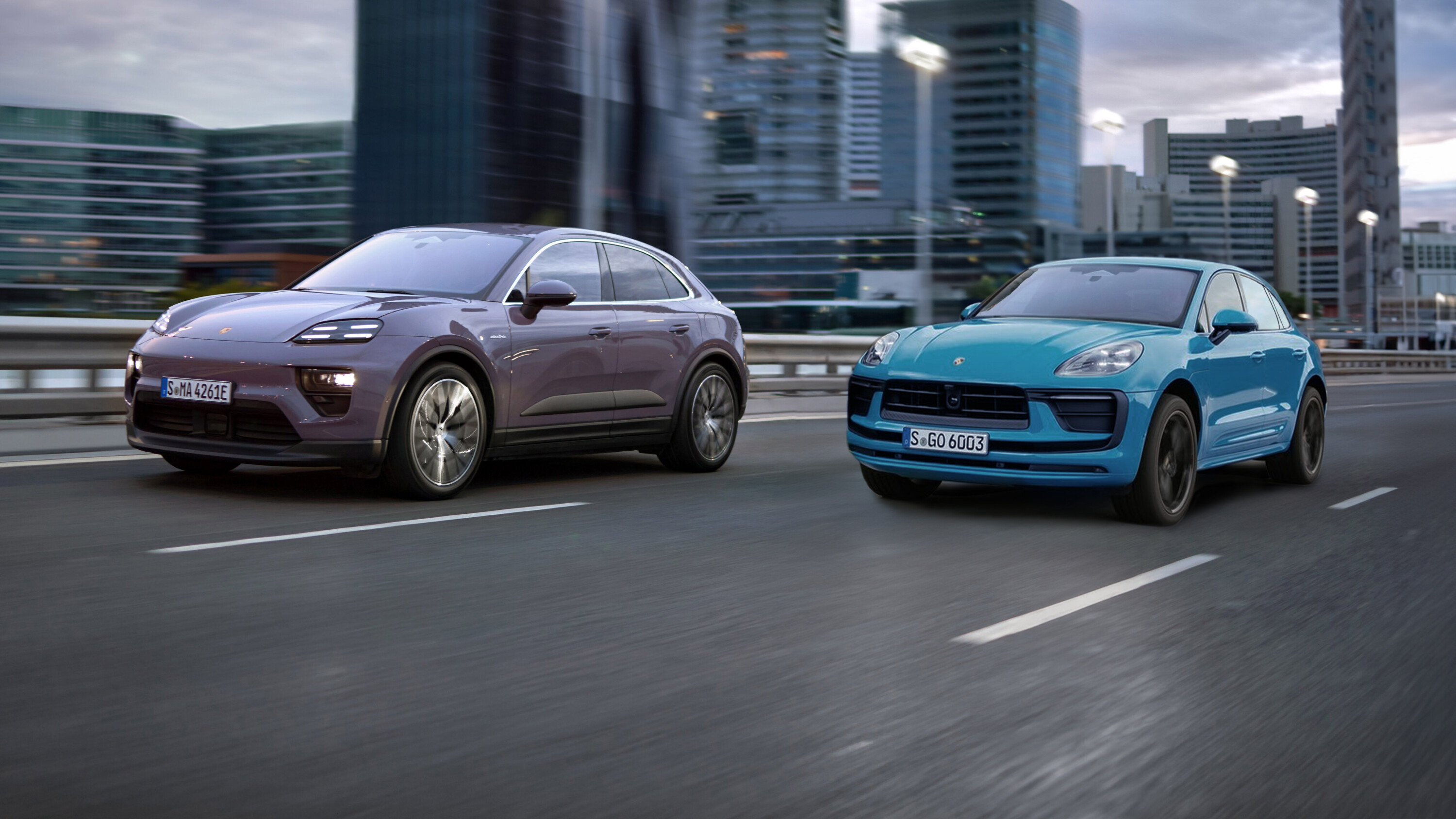
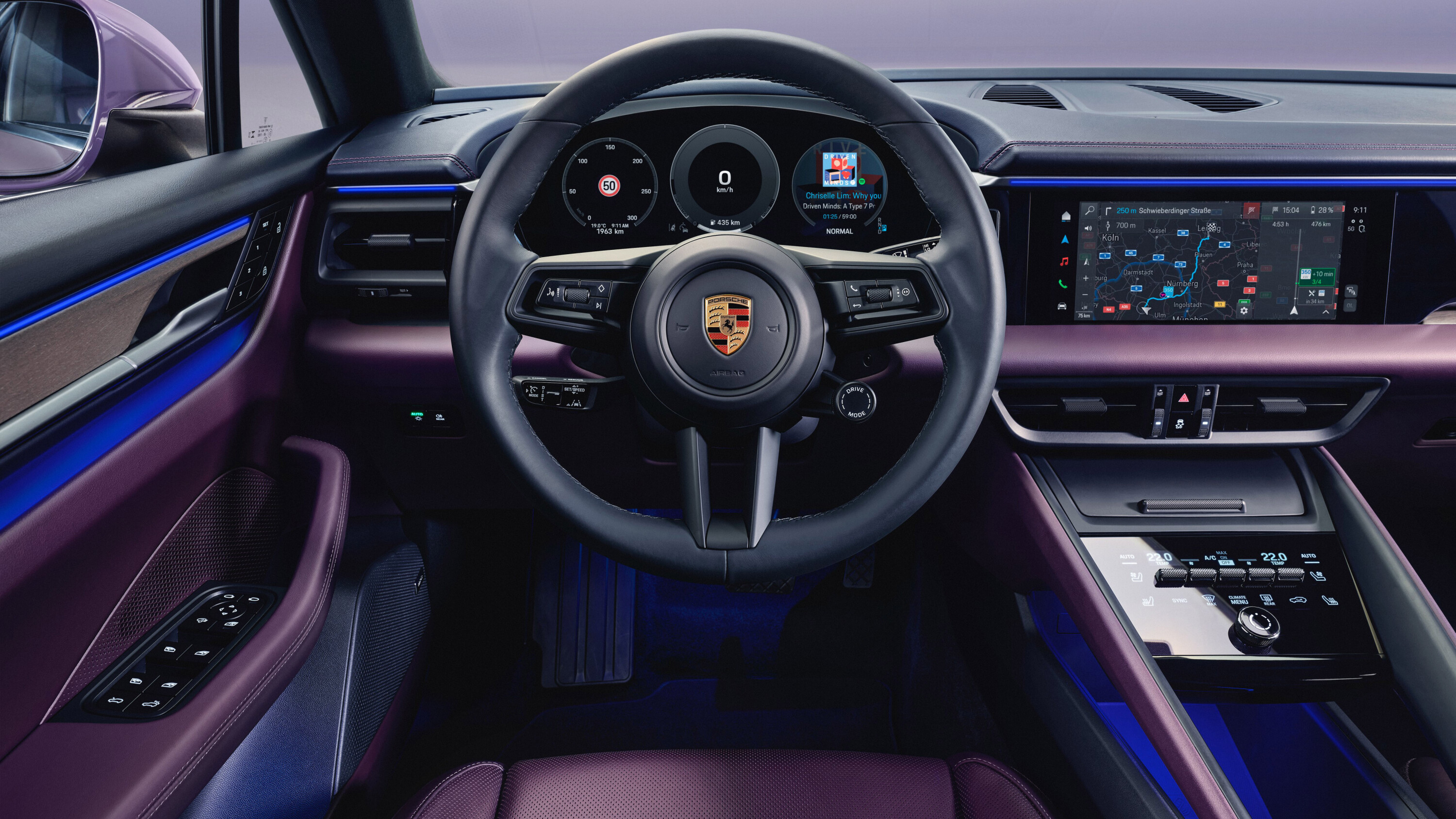
The petrol Porsche Macan is set to have an extended lifespan in Australia as the German car maker prepares to launch the electric-only next-generation version of its popular midsized SUV.
Porsche’s long-delayed new-generation Macan finally goes on sale locally in late 2024, costing from $133,700 to be $40,000 dearer than the most affordable petrol Macan.
The petrol Macan, around since 2014, was due to be phased out in the same last quarter, with global production set to end in the third quarter of this year. The company says there’s now no set time for the SUV to go all-electric, at least in Australia.
“For a certain while we will offer the ICE [internal combustion engine] and fully electric [Macans]. So we still have a little bit of time to see how the market adapts,” Porsche Australia CEO Daniel Schmollinger told media at last weekend’s Australian Grand Prix.
1
Porsche’s vice president region overseas emerging markets, Matthias Becker – also in attendance for an event where the company showcased its stunning Mission X hypercar concept – reiterated the plan for greater showroom flexibility for a model that accounted for half of the brand’s Australian sales last year.
“It depends on how quickly the ICE [Macan] sells out. So we don’t have a specific time when [the Macan is] only electric,” added Becker.
Schmollinger said he was confident the electric Macan could be a success, especially based on Australia’s reception to the company’s first electric model, the Taycan sedan.
“We started three years ago with the Taycan and obviously there had some question marks if the Taycan is the right fit for the market, especially in Australia that is petrol oriented. And the success we saw with the Taycan over the last three years was actually outstanding and so it exceeded our expectations.
“By now we reach roughly 10 per cent share within our model range, which is within from a global point of view and outstanding design. And based on this we have strong beliefs that the Macan Electric will follow this path to be also very successful.
1
“What we also have seen is that in Australia electric cars have really pushed hard and really accelerated over specifically the last year. And we have basically for all these customers that have decided to go on the electric journey, we have an answer for the next level [of midsized SUV].”
Added Becker: “The dynamics chassis set up with rear wheel steering, the power, the range, everything the car has is next level and I’m totally confident if we put customers in front of this car and in the car they will be overwhelmed by what an electric car can be.”
Becker said Porsche globally had received “more than 10,000 order intakes” already, despite the electric Macan having only been unveiled in late January and not being sold in markets including China, Korea and Japan.
Click on the article link below for all the details on the new electric Porsche Macan.
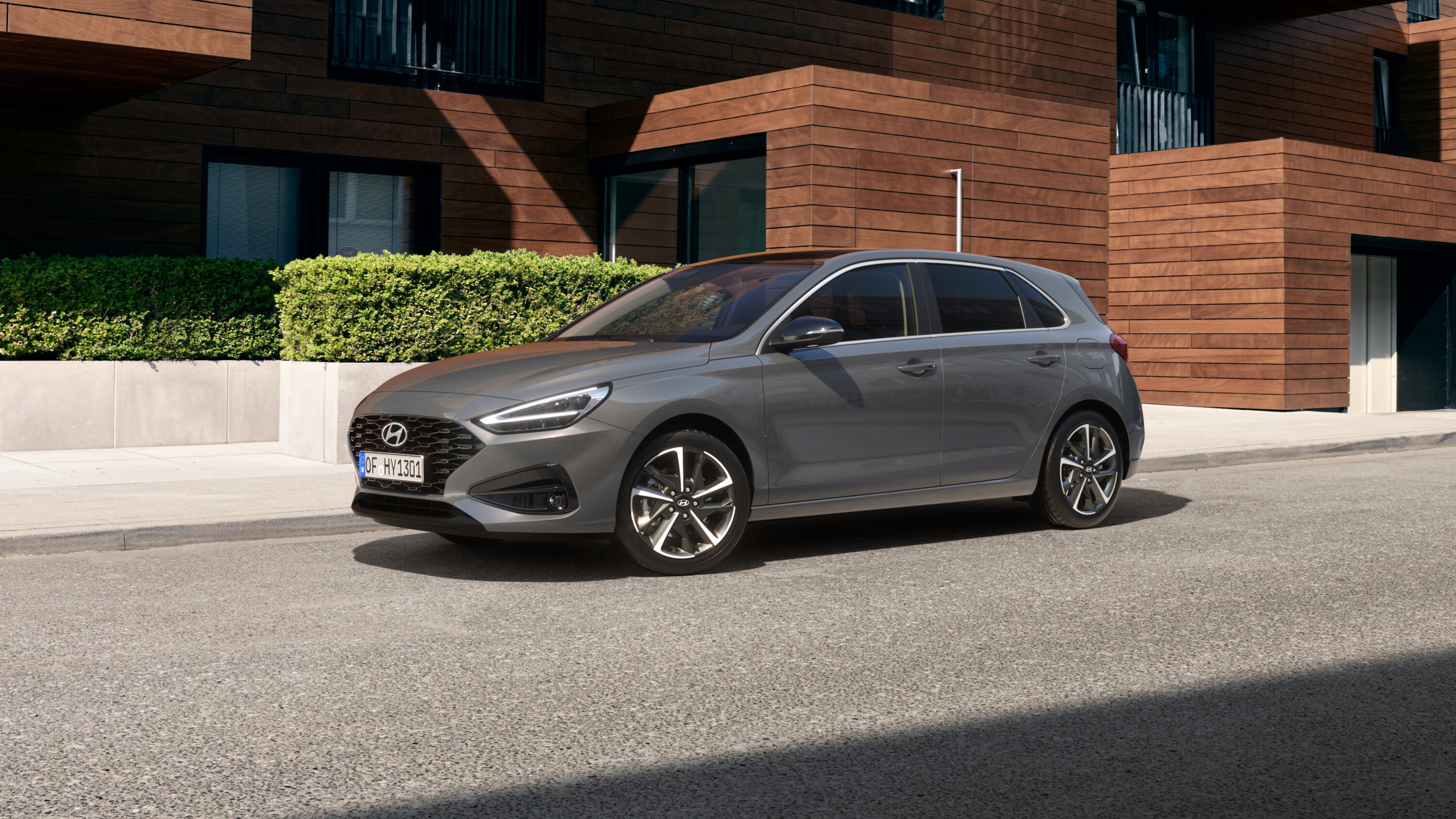
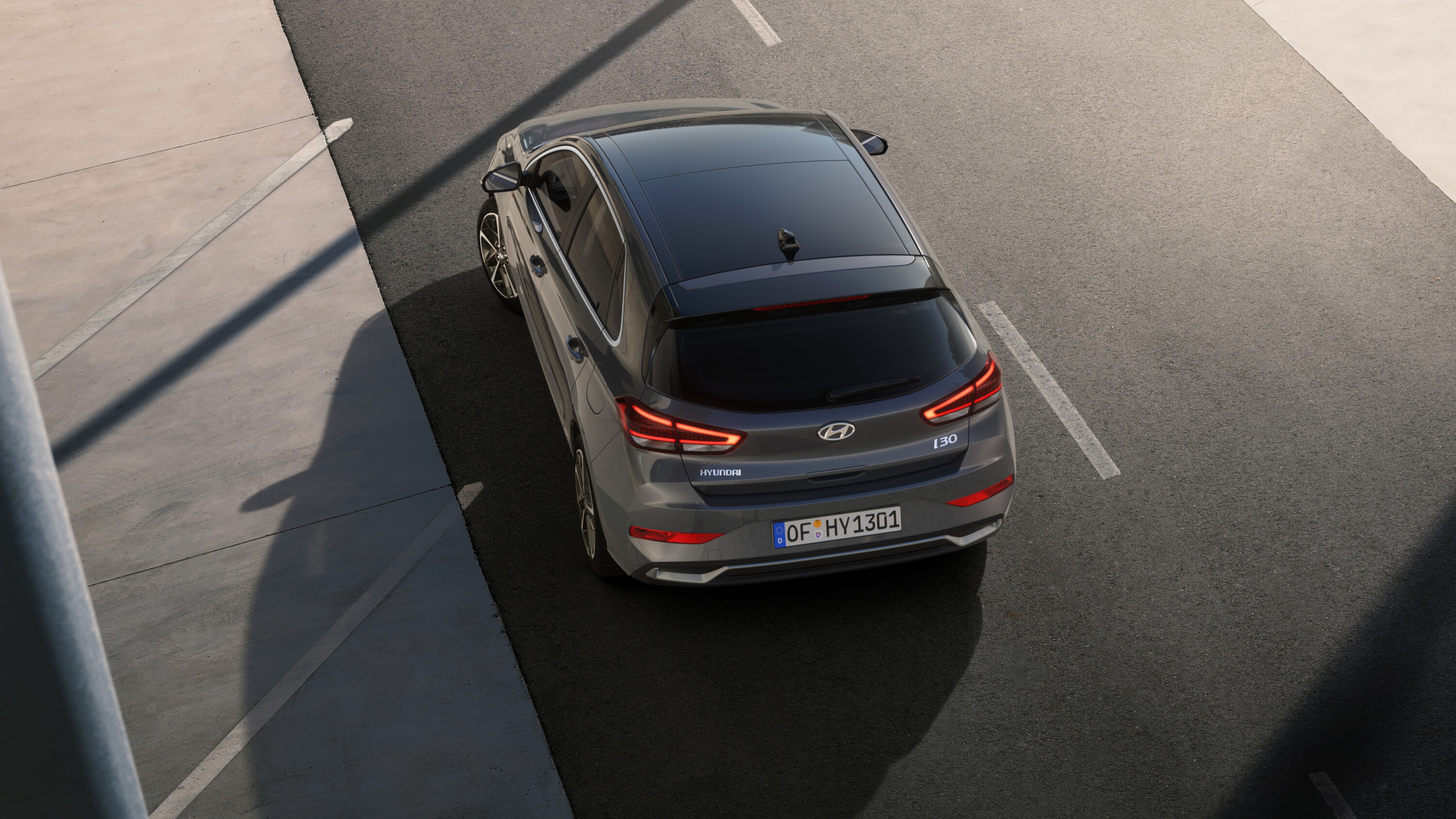
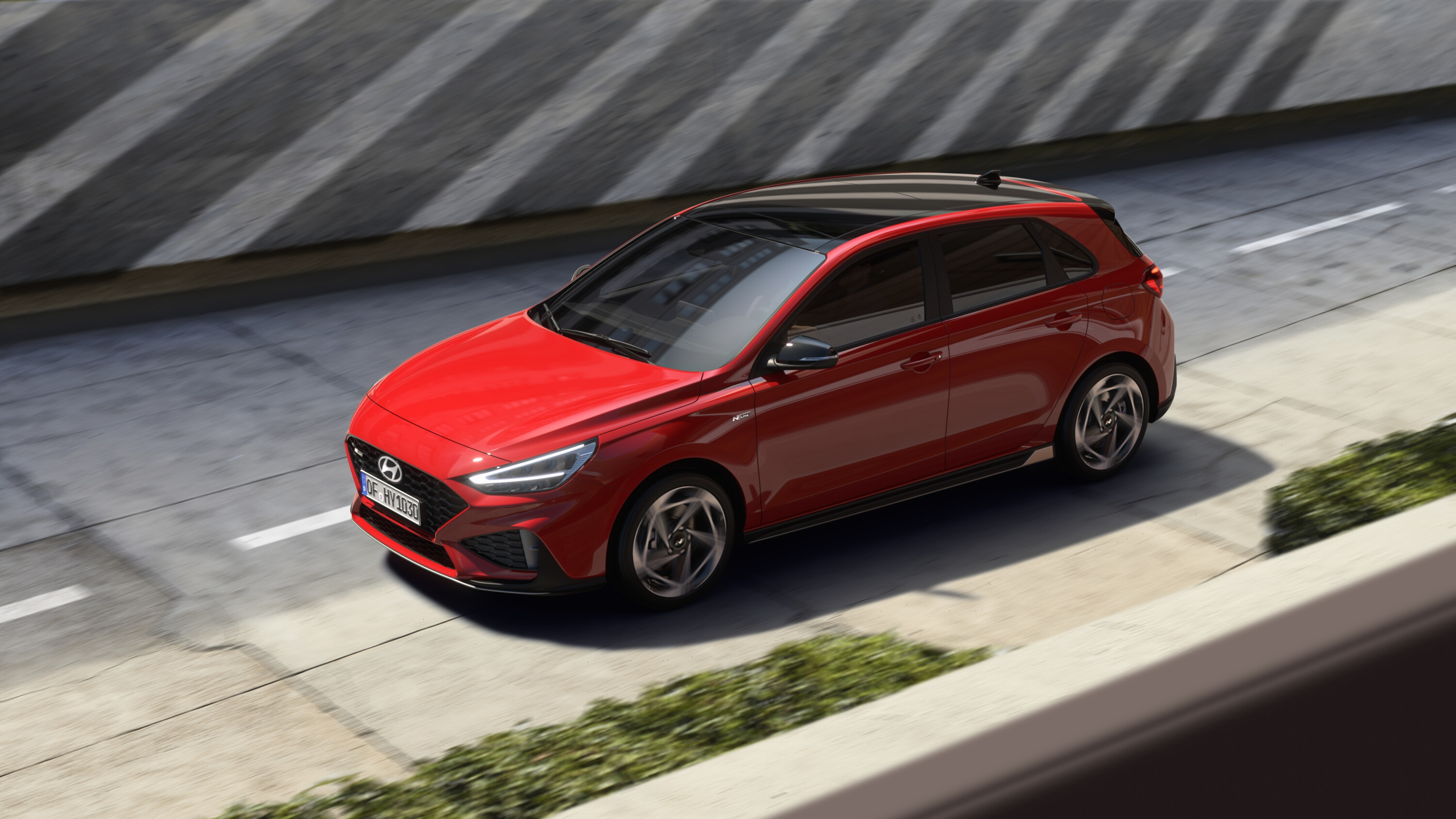
The updated 2025 Hyundai i30 hatchback has debuted in Europe ahead of its local launch.
Australia was the sole market supplied with Korean-built i30 hatches for around three years after it was discontinued in its South Korean domestic market in 2020.
1
Price rises are expected as the i30 hatch should switch from the choice of two well-established powertrains to a 1.5-litre turbo mild-hybrid – and the likely discontinuation of a price-leading manual transmission option.
The 48-volt mild-hybrid 1.5-litre turbo – which is optional in Europe but likely to be standard in Australia – produces 116kW and 253Nm for all variants, including N Line models. It is matched to a seven-speed dual-clutch automatic transmission.
Current Australian-spec i30 hatches have a 120kW/203Nm naturally-aspirated 2.0-litre in standard models, or a 150kW/265Nm 1.6-litre turbo in N Line variants.
1
Fuel consumption for the 1.5-litre turbo is rated at 6.2L/100km under the stringent WLTP test standard, down from 7.1L/100km (1.6-turbo dual-clutch) or 7.4L/100km (2.0-litre auto) under Australia’s more-lenient ADR test standard.
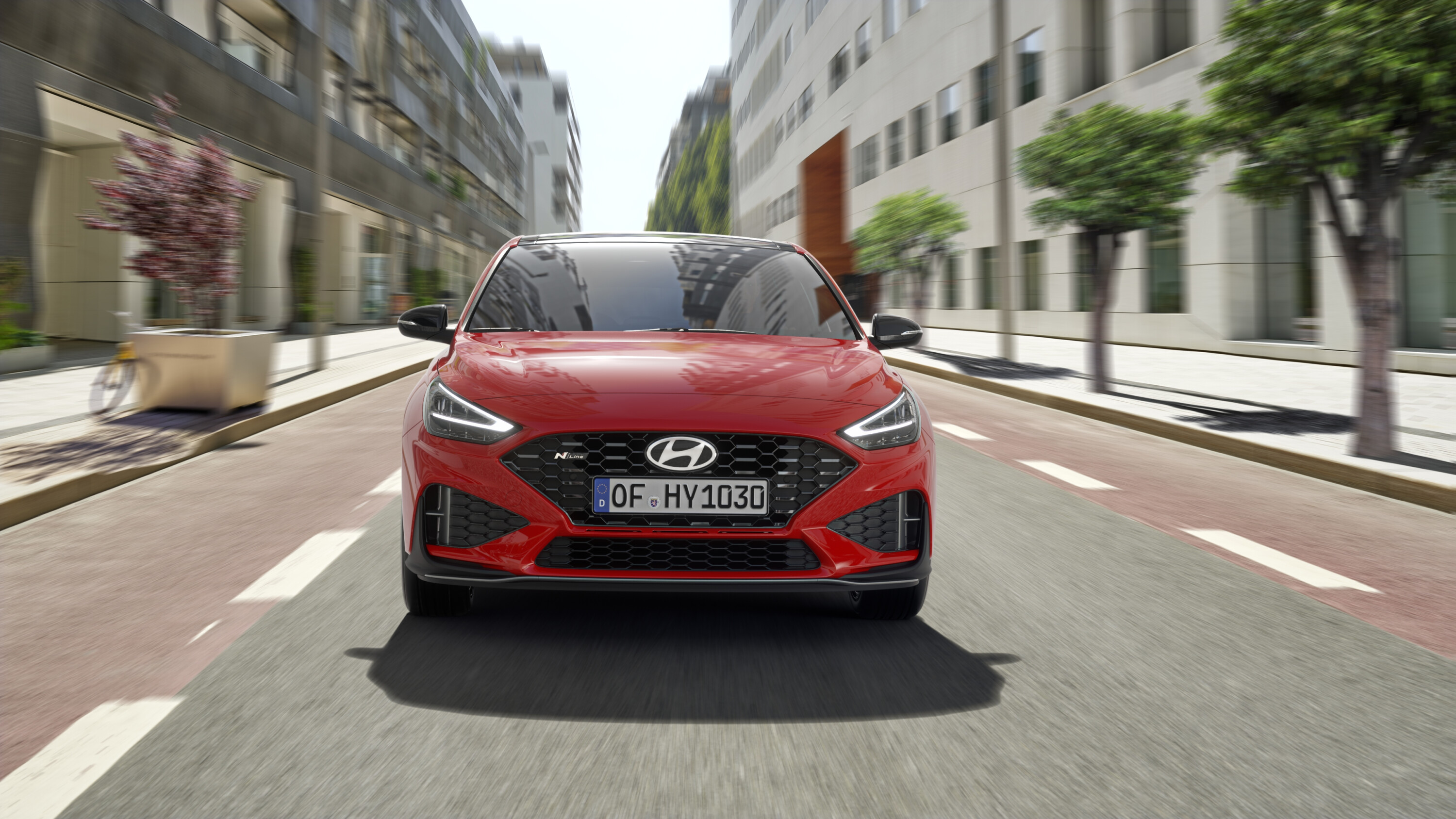
New revisions for the i30 hatch include an updated grille pattern, a new bumper insert beneath the registration plate holder, and a retouched fog lamp housing.
The rear chrome insert has been made more angular, while the Hyundai and N Line badges are now two-dimensional in line with the brand’s latest models.
1
N Line variants will finally receive the same facelift applied to European versions back in 2020, including new front and rear bumpers with twin exhaust pipes, and boomerang-shaped daytime running lights.
Additional changes for the i30 N Line include dark metal accents and new 17- or 18-inch alloy wheel designs.
The i30 hatch’s colour palette is also expected to be amended due to the production switch, with new finishes such as ‘ecotronic grey’, ‘meta blue’, ‘cypress green’, ‘shimmering silver’, and ‘shadow grey’.
1
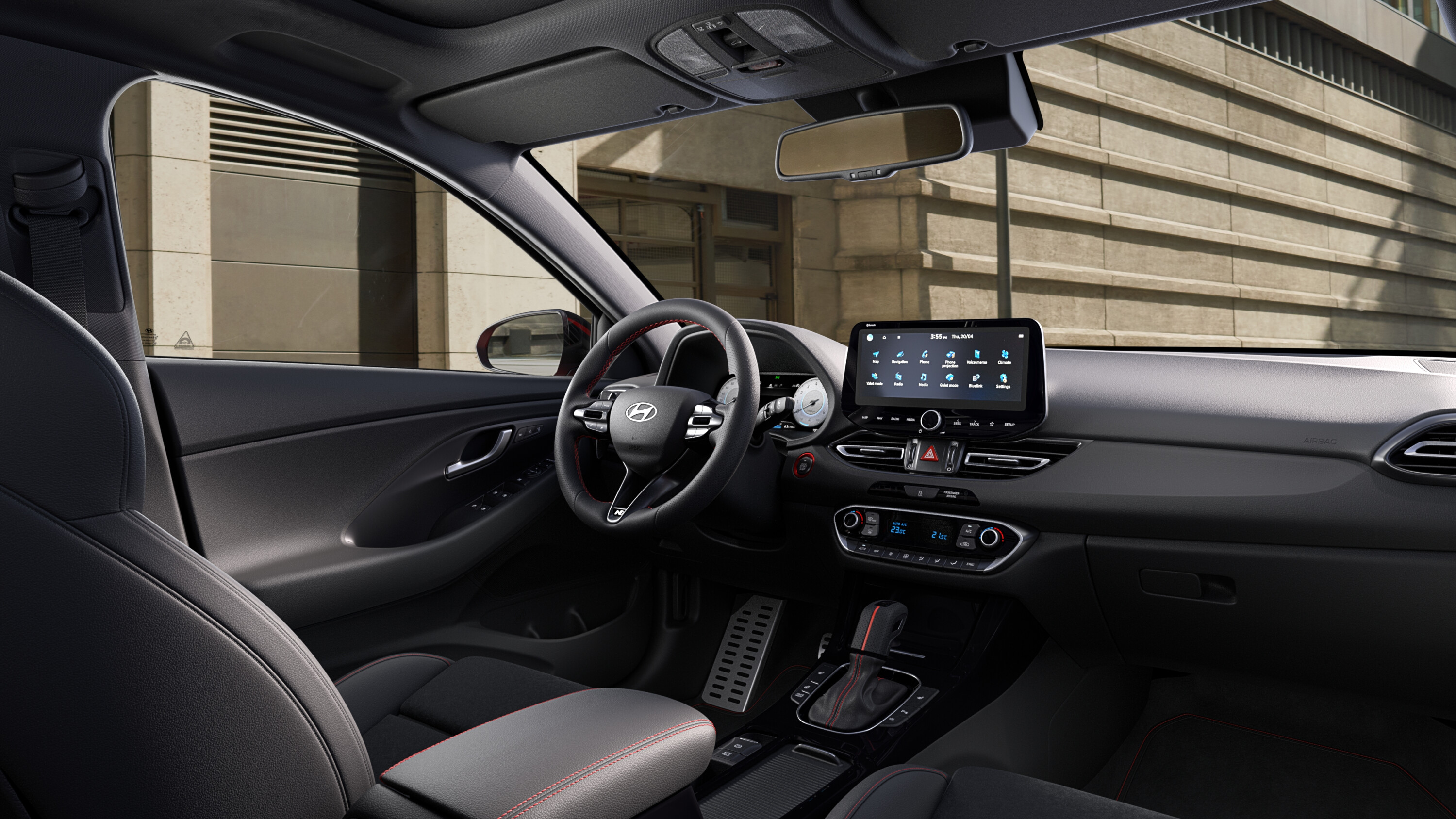
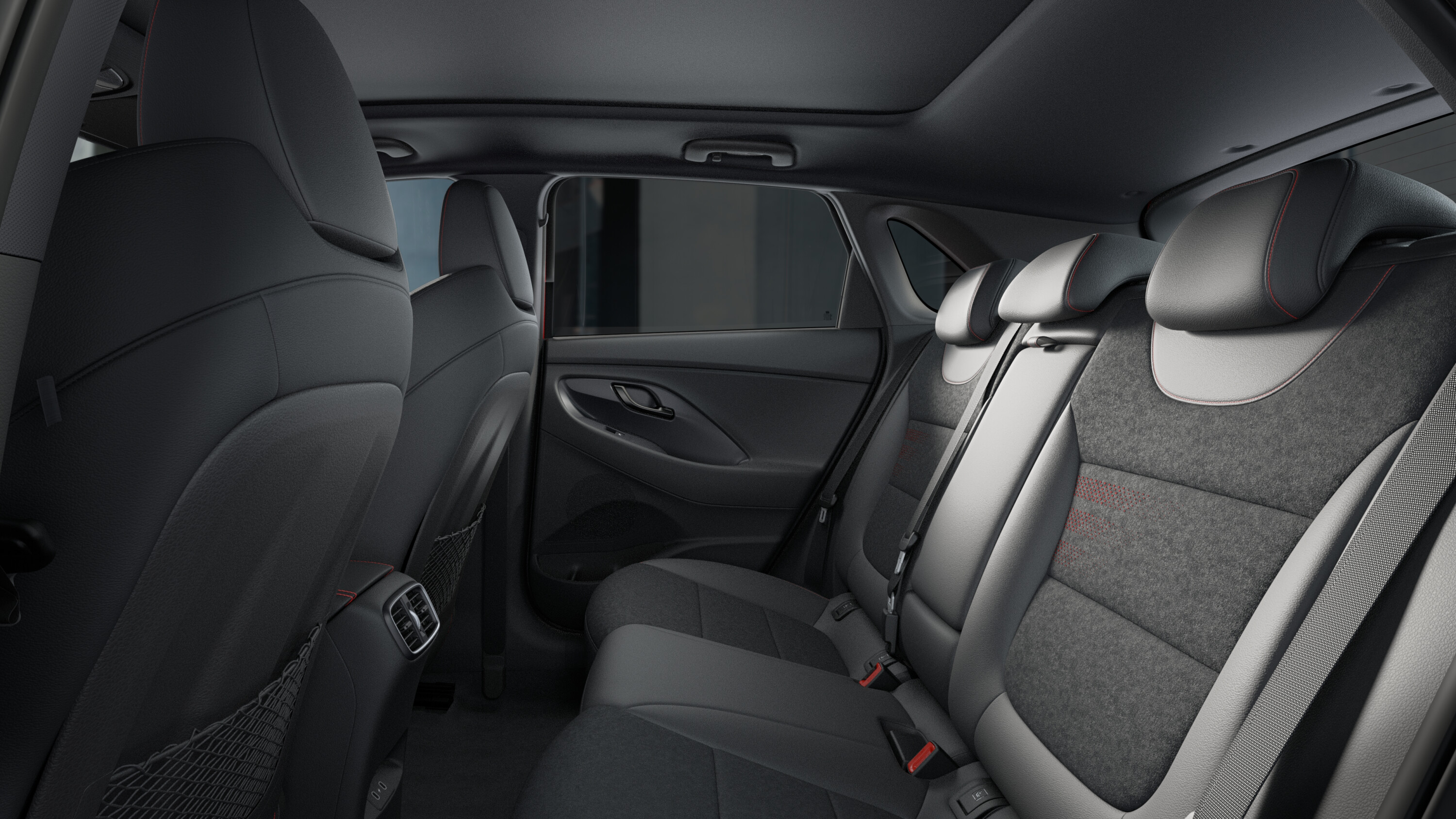
Inside, the i30 hatch is now available with a full-digital 10.25-inch digital instrument cluster, over-the-air map updates, and three USB-C charge ports in the front and rear.
Other interior revisions include a “more pleasant and smoother to the touch” finish for the crash pad, a gloss-black central tunnel, new seat patterns, and standard LED cabin lights.
N Line variants receive black leather and textile suede upholstery with triple red horizontal lines.
Active safety improvements include the addition of lane-following assist, intelligent speed limit assist, rear occupant alert and semi-autonomous Highway Driving Assist 1.5, while the autonomous emergency braking system now has intersection-turning detection.
1
Production of the current South Korean-built i30 hatch ended in December 2023, with retail sales in Australia due to be temporarily halted from the end of this month.
Hyundai Australia has confirmed production of the i30 hatch will restart in the Czech Republic around June or July, ahead of first customer deliveries around September or October.
The 2025 Hyundai i30 hatch will be more expensive to build due to its mild-hybrid powertrain, as well as additional production and shipping costs.
It will also incur a five per cent import tariff as Australia does not have a free trade agreement with the European Union.
Expect the facelifted mild-hybrid automatic hatch to start from around $30,000 before on-road costs – or around $34,000 drive-away – compared to $24,000 plus on-roads for today’s 2.0-litre manual entry-level model.
1
The Hyundai i30 hatch was available for as low as $19,990 before on-road costs five years ago.
Additionally, the recently facelifted i30 Sedan will continue to be made in Korea for Australia, including the new Toyota Corolla-rivalling petrol-electric hybrid option.
The Federal Government has announced some elements of the New Vehicle Efficiency Standard have been amended ahead of its introduction to Parliament tomorrow.
This includes the start date for credits and penalties, which has been pushed back six months from January 1, 2025, to July 1, 2025.
This change will only apply to body-on-frame SUVs with a braked towing capacity above 3000 kilograms, meaning some ladder-frame models – such as the GWM Tank 300 and Suzuki Jimny – will remain in the passenger vehicle category.
The emissions target for light-commercial vehicles – which include top-selling utes like the Ford Ranger and Toyota HiLux – has been raised to reflect recent adjustments made to United States Environmental Protection Agency model, which the NVES is based on.
The ABC [↗] reports the less-stringent target for light-commercial vehicles would result in a 50 per cent reduction in emissions by 2029, down from the previously announced 60 per cent reduction.
Other changes include an amended weight-based relative emissions limit – known as the break point – to recognise that heavier vehicles emit more.
The Federal Government has also announced it will provide a further $60 million in funding to the Australian Renewable Energy Agency’s ‘Driving the Nation’ program to boost electric vehicle charging infrastructure at Australian new-car dealerships.
As detailed here, the New Vehicle Efficiency Standard aims to improve the level of efficient vehicles sold in Australia to bring the nation in line with the United States and Europe.
The Government’s emission-limit scenario – known as ‘Option B’ during the consultation period – intends to catch up to the United States by the end of the decade.
“The Albanese Government has closely consulted with a broad range of stakeholders over the past year and engaged with the more than 9000 submissions made throughout the latest consultation period,” said Transport Minister Catherine King and Climate Change and Energy Minister Chris Bowen.
Toyota Australia said it welcomes the Federal Government’s decision to make “positive” changes to the proposed policy.
1
“Toyota has long supported the introduction of an ambitious fuel-efficiency standard that is calibrated to the unique requirements of the Australian market and leaves no-one behind,” said Toyota Australia president and CEO Matthew Callachor.
“We welcome the willingness of the Federal Government to consult on this important public policy and to make changes that represent a positive step forward.”
Hyundai Australia said it continues to support the New Vehicle Efficiency Standard, which will allow it to introduce more efficient vehicles available elsewhere.
“The NVES framework seems to strike the right balance between ambition and practicality,” said Hyundai Australia chief operating officer John Kett.
1
“With this Standard in place, Hyundai dealers will have great vehicles to sell, customers will have great vehicles to drive, and the automotive industry will be playing its part to reduce emissions in line with Australia’s commitment to decarbonise.
“It is our intention to bring many more EVs to the Australian market, while substantially reducing the emissions profile of our entire range.
“The New Vehicle Efficiency Standard will help us to do that, and now we can look forward to getting on and selling some cars.”