If you’re anything like us, you were probably feeling a touch melancholy about the demise of the Mercedes-AMG C63 Coupe.
We’ve long considered it to be the pick of the C63 bunch (aside from the barnstorming wagon, obviously) so to learn that the new C63 wasn’t only going to ditch the V8 in favour of an electrified four-cylinder, but would also nuke the hulking, perfectly proportioned coupe body style was a bitter pill to swallow.
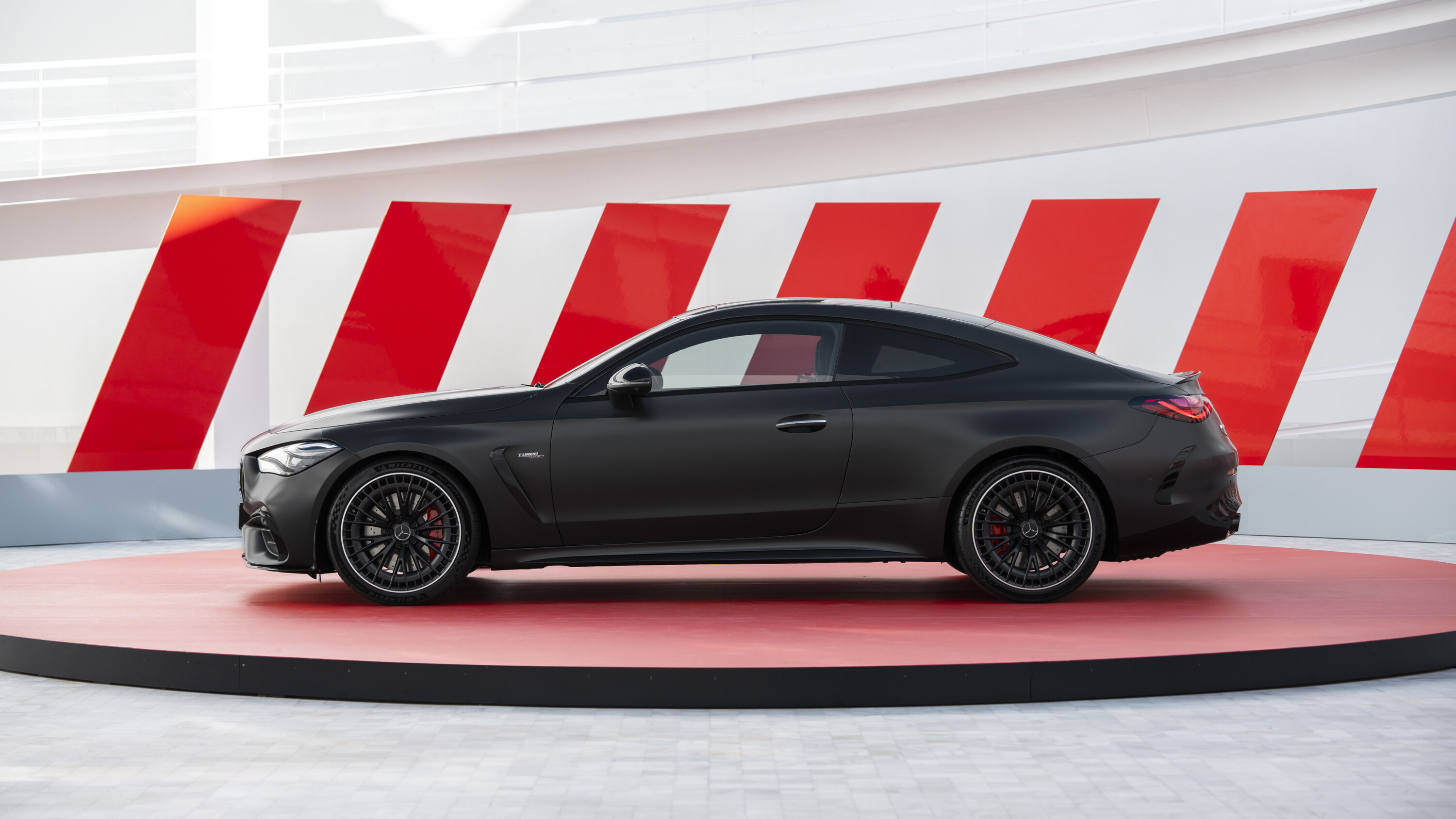
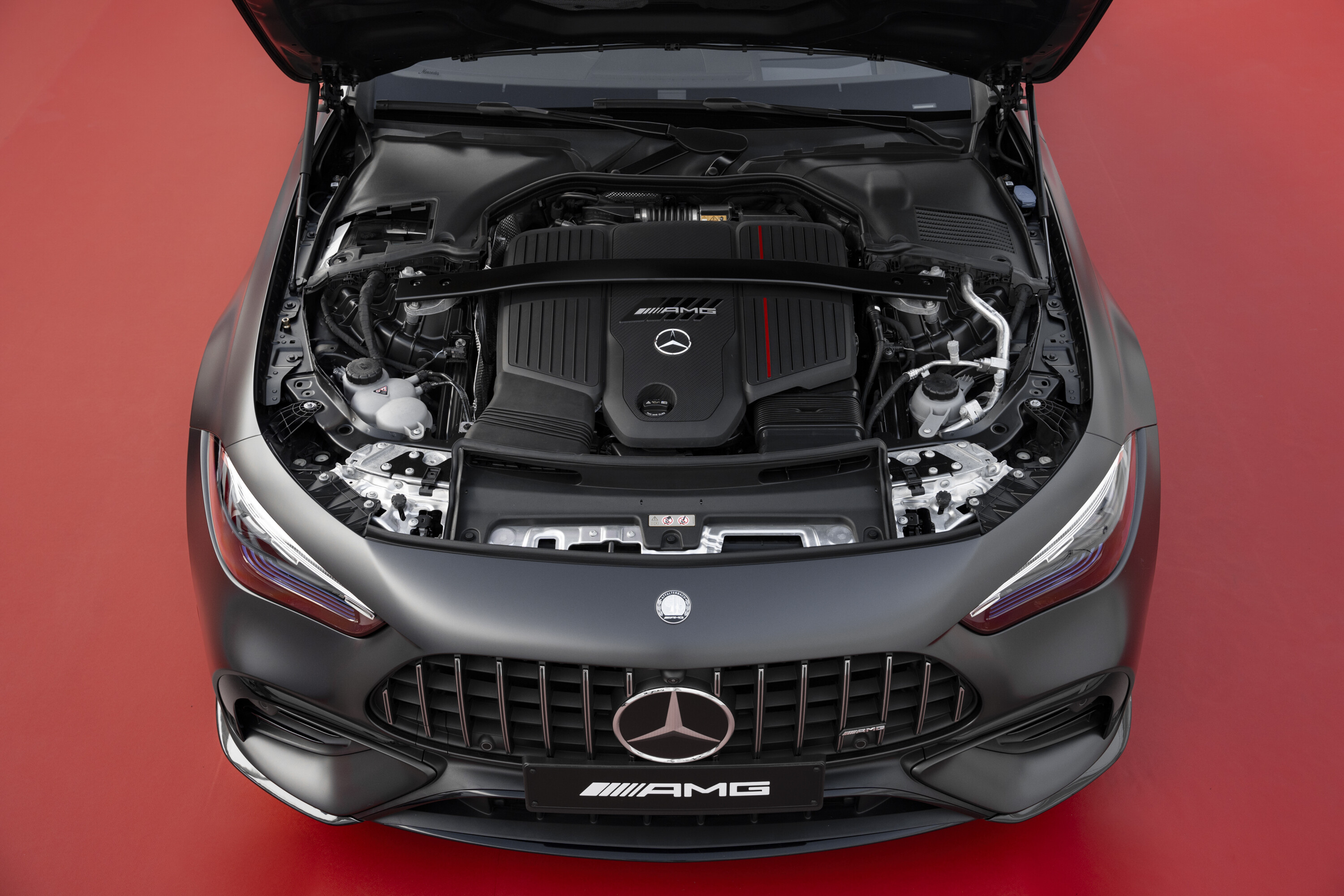
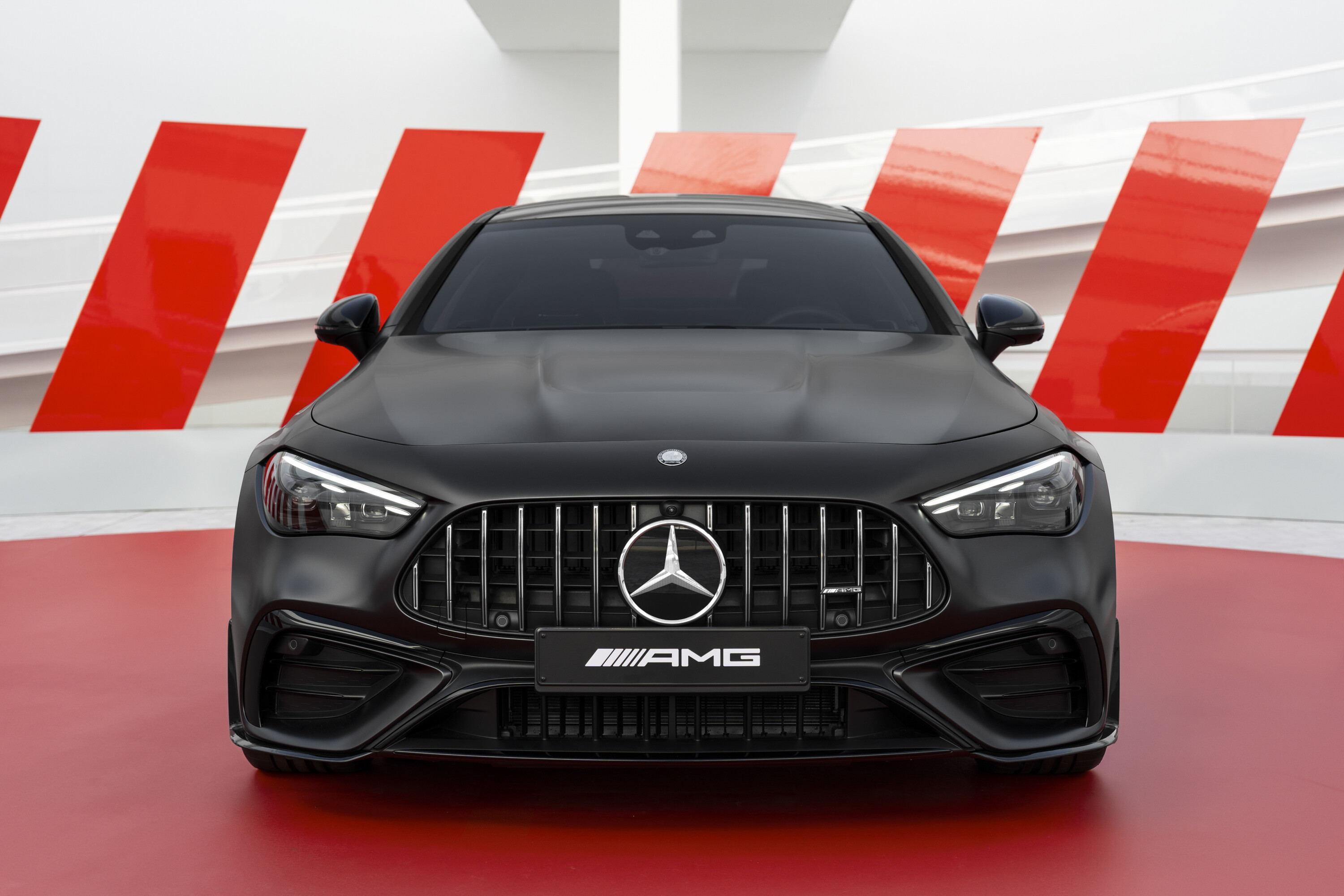
So imagine our delight when AMG whipped the hanky off the Mercedes-AMG CLE 53 a few days ago. Looks tough, doesn’t it? Like a slightly bigger, wider C63 Coupe. And in even better news, there’s no hybrid powertrain to be seen. Under the bonnet is a twin-turbocharged straight-six churning out an entirely appropriate 330kW/560Nm.
1
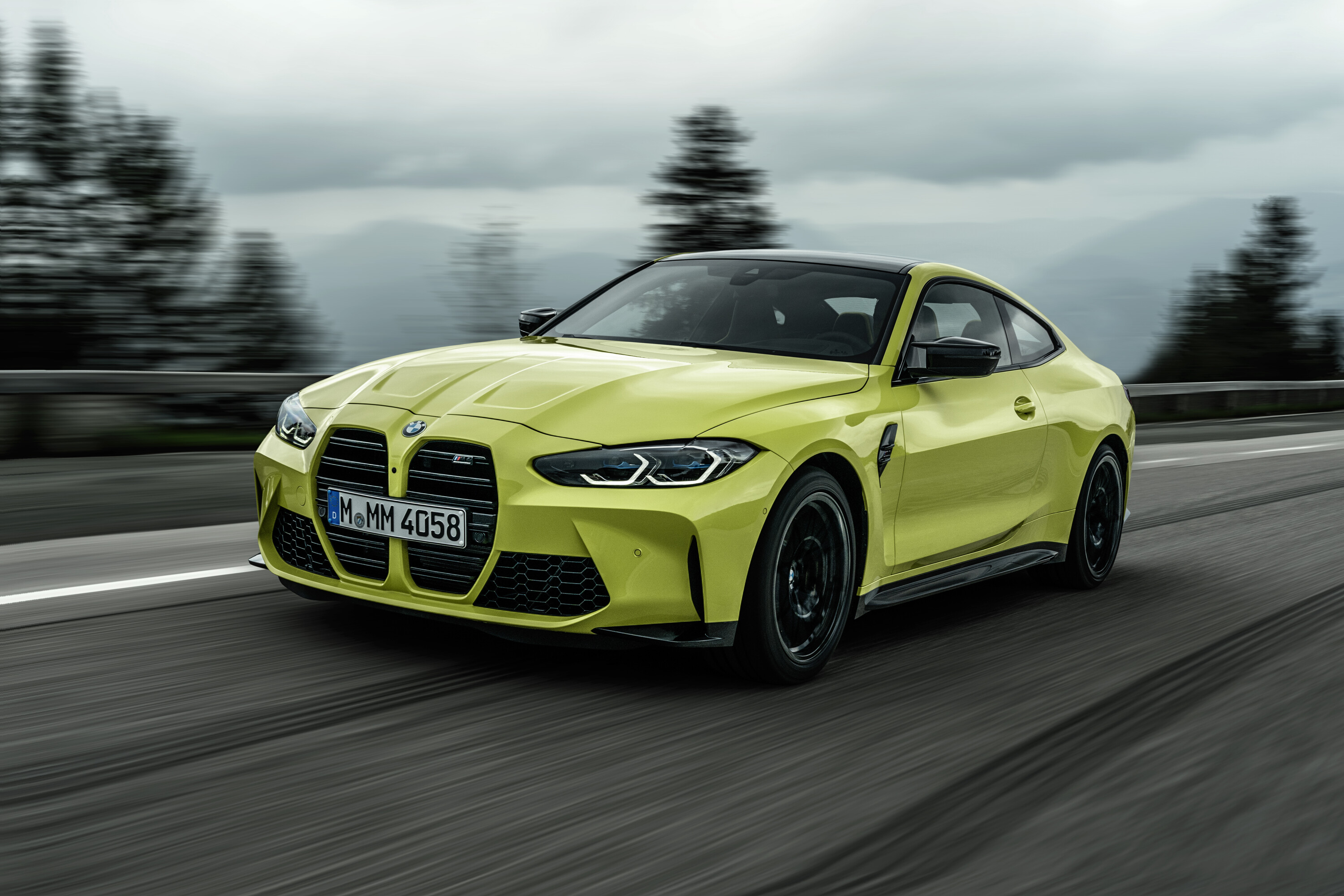
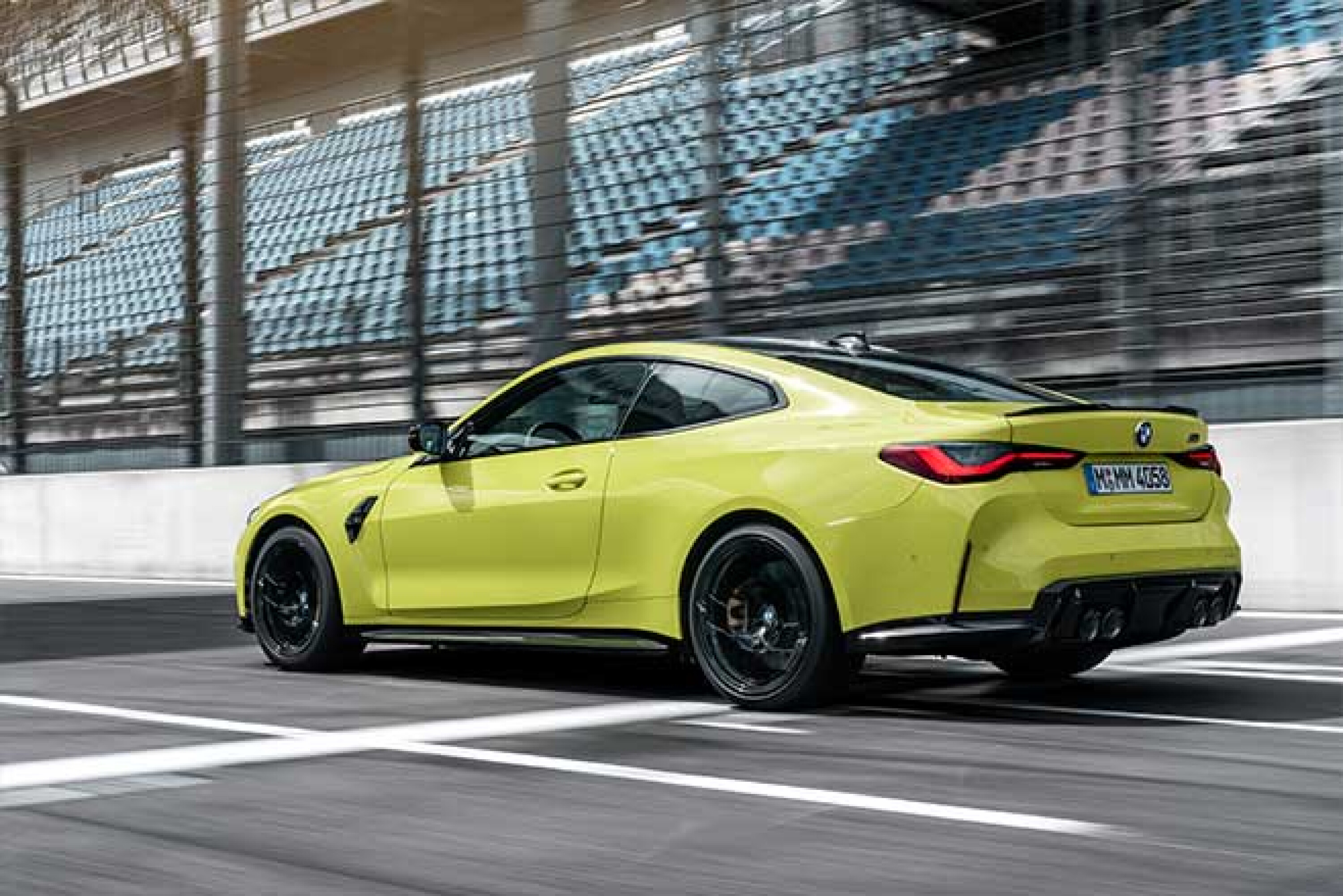
But hang on… aren’t high-output six-cylinder engines BMW’s schtick? The BMW M4 is a close match for AMG’s new charger.
They’re both two-door, four-seat coupes. They both have 3.0-litre inline six cylinder engines with similar levels of power. And they’ll both hit 0-100km/h in around four seconds.
So is the new AMG CLE 53 a BMW M4 beater? It’s an interesting match up, especially when you consider the ‘53’ badge isn’t the top of the AMG totem pole. That spot belongs to the ball tearing CLE 63, which while not officially confirmed, is pretty much a sure thing according to our sources inside AMG.
Can a humble ‘53’ badge topple a mighty M car? And if so, what does that mean for the hardcore 63 version? Let’s find out.
If you don’t feel that familiar with the Mercedes-Benz CLE just yet, that’s to be expected.
Mercedes only introduced the CLE nameplate earlier this year as a combined replacement for the C- and E-Class Coupes. Convertible versions of the CLE will also follow to fill the void of the C- and E-Class cabriolets.
Size wise the CLE is closer to an E-Class than the C, meaning it’s marginally larger than a BMW M4. The CLE 53 is 56mm longer, 27mm narrower and 35mm taller than the M4 and it rolls on a 2865mm wheelbase, which is 8mm longer than the BMW’s.
Weight wise, the two cars are strikingly similar. A ‘regular’ BMW M4 hits the scales at 1775kg and while AMG is yet to provide an exact kerb weight for the CLE 53, the regular car is between 1790kg-1870kg so it’s a fair bet it’ll be around 1800kg.
1
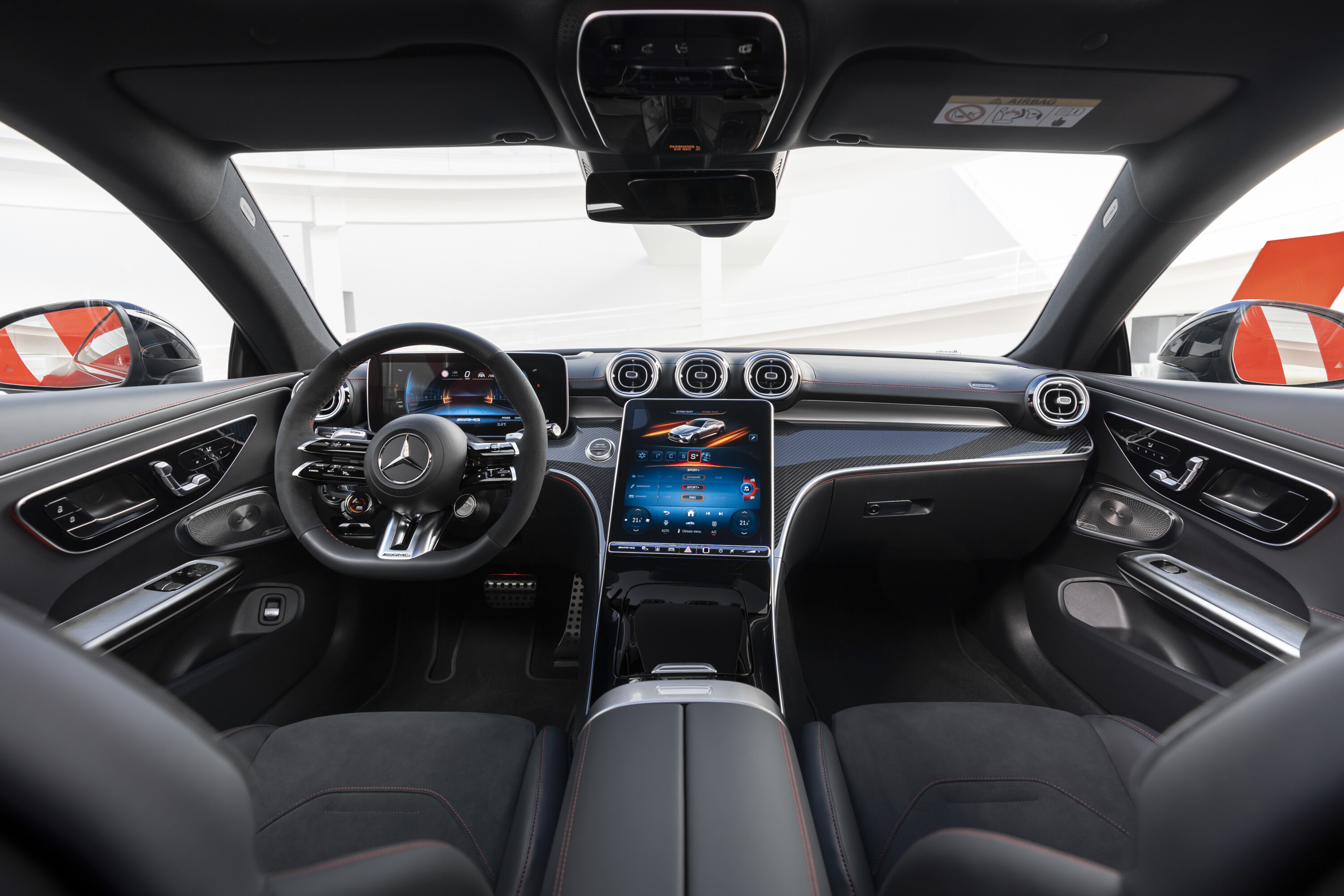
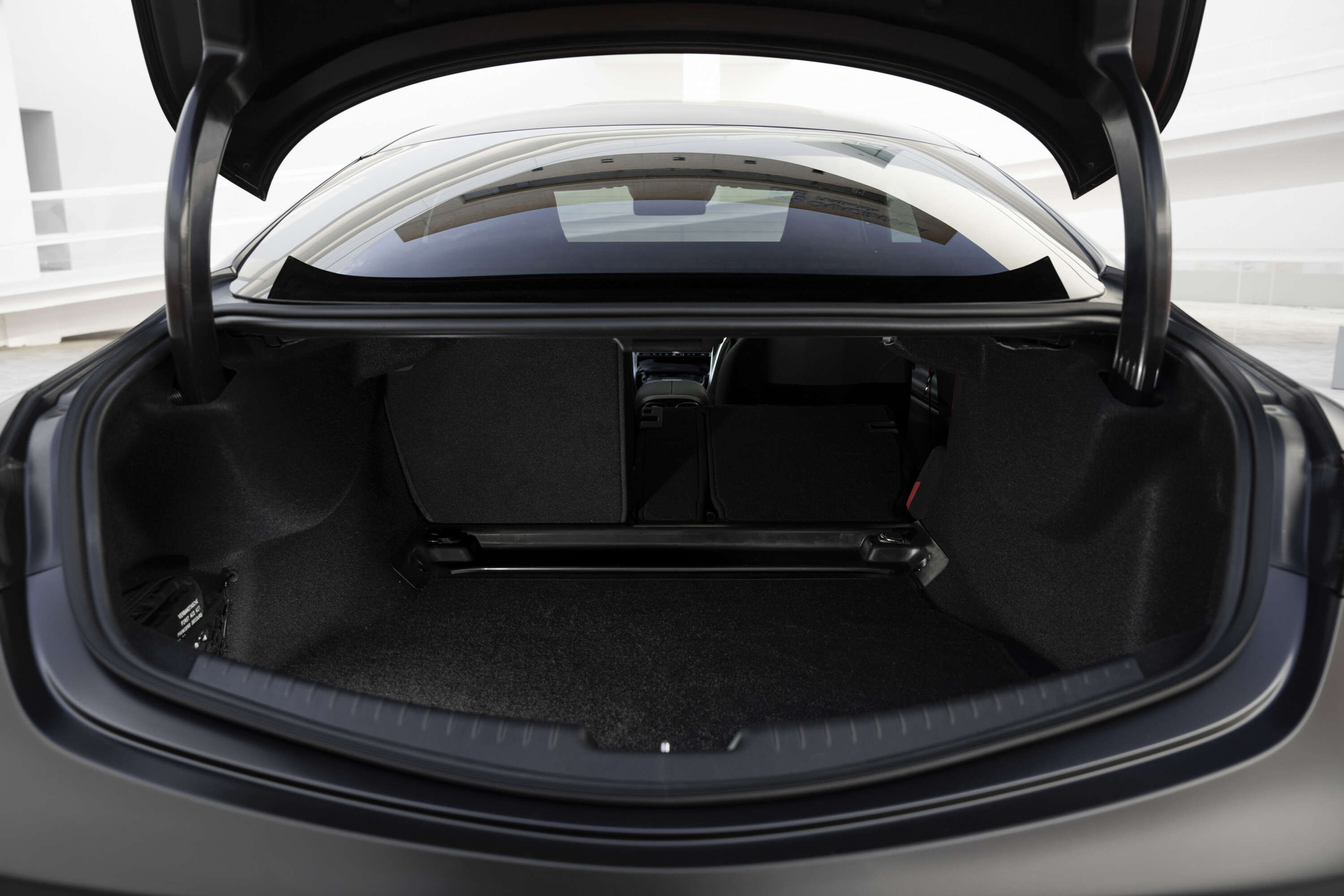
The pair are also closely aligned for passenger count and boot space, with the CLE’s 420L boot only slightly down on the M4’s 440L.
Where things start to diverge is when it comes to price and philosophy. The CLE 53 isn’t due Down Under until late 2024 so an exact retail price is a long way off but it’s tipped to be close to $200,000. That’s well up on the BMW M4’s $166,500 and actually makes the M4 Competition a better price fit.
The M4 Comp xDrive is $183,600 and is also all-wheel drive and auto-only, which is also a better match for the all-wheel drive CLE 53.
But the AMG isn’t as hardcore or as focused as an M4 Comp, which is why we’ve chosen a ‘regular’ M4 for this spec battle as it feels a closer everyday performance rival. We’ll still reference the M4 Comp throughout the story, however.
The AMG CLE 53 is powered by a heavily revised version of Mercedes’ M256 3.0-litre inline six-cylinder petrol.
Increased boost, new piston rings, an optimised combustion chamber and an improved electric turbo help to raise outputs to a meaty 330kW @ 5800rpm and 560Nm @ 2200-5800rpm. An overboost function is also available that lifts torque to 600Nm for up to 12 seconds.
AMG claims the new 3.0L has improved response and less turbo lag thanks to tweaks to its ‘twin charge’ design. There are two turbos — a convention unit spun by exhaust gas and another electric turbo driven by a compressor.
2
AMG says the electric turbo now operates over a broader window and can provide instant response which allowed them to make the convention turbo even larger.
The engine is paired with AMG’s 9-speed TCT 9G automatic, which is perhaps our only point of concern given the same gearbox is surprisingly jerky in the C43. Here’s hoping things are smoother in the CLE 53.
BMW has long been the master of straight six engines and the M4’s 3.0-litre twin-turbo unit is no exception. It offers 23kW more than the AMG’s engine with 353kW on tap at 6250rpm. The BMW is down slightly on torque, with its 550Nm @ 2650-61030Nm being 10Nm less than the AMG.
1
Where the M4 differs is its gearbox. BMW now only offers the ‘regular’ M4 with a six-speed manual and rear-wheel drive, meaning it’s the clear pick for drivers looking for an extra layer of tactility and chassis purity.
The M4 Competition xDrive blows the CLE 53 out of the water for engine performance. Its 3.0L six produces 375kW and 650Nm which helps to cut its 0-100km/h time to 3.5 seconds.
A regular M4 and CLE 53 will be much closer in a drag race, with both cars claiming 4.2 seconds to 100km/h providing you can shift quickly enough in the manual BMW.
If high-tech chassis hardware gets you all hot and heavy, then the AMG has the M4 licked.
Adaptable dampers, active engine mounts, four-wheel steering and a fully variable all-wheel-drive system are all available. A ‘Drift Mode’ function is also included as part of the AMG Dynamic Plus pack, meaning the CLE 53 should be able to match the M4 when it comes to lurid slides and throttle adjustability.
As standard, the CLE 53 rolls on 19-inch alloys and has a broader footprint than its donor car thanks to track widths that have grown by 58mm and 75mm front and rear.
1
By comparison, the M4 is a simpler set-up. Six-cylinder engine up front, manual gearbox in the middle and rear-wheel drive is classic recipe and one that delivers tactile thrills on the road and track.
This generation of M4 has also largely traded the F82’s spiky nature for a chassis that majors on engagement and predictability. As for the manual gearbox itself? It’s good but not quite up there with the greats for shift feel or accuracy.
The M4 Competition is an altogether sharper and more engaging performance car, though. We’d wager it’s easily the pick for sheer driving thrills over the CLE 53, although the balance could swing back in the AMG’s favour once the inevitable ‘63’ arrives.
For now, though, which way would you jump? CLE 53 or BMW M4?
The Toyota RAV4 hybrid has been a popular choice for Australian drivers since it launched in 2019, thanks to its fuel efficiency, reliability, affordability, and spacious interior.
However, due to high demand and supply chain disruptions, wait times for the RAV4 hybrid continue to blow out to over 12 months.
If you’re looking for a new electrified, fuel-sipping SUV but don’t want to wait a year or more, plenty of alternatives are available with quicker delivery.
Here are a few of our top picks – including several plug-in hybrid and all-electric options.
Wait times for the RAV4 hybrid continue to blow out to over 12 months
The new, sixth-generation CR-V has landed in Australia with a hybrid option.
That petrol-electric powertrain is currently restricted to a range-topping E:HEV RS variant, however, at $59,900 drive-away – similar to a RAV4 Cruiser once on-road costs are added.
We’re fans of the current Nissan X-Trail, and the innovative E-Power hybrid system elevates it to an even higher level.
In a comparison between the RAV4 and X-Trail, linked below, the Nissan emerged victorious due to its value proposition, more refined interior, rear seating arrangement, quieter and more refined driving experience, and the added punch from the electric motors.
Petrol-electric option popular for GWM’s Haval H6.
The hybrid version of the affordable Chinese-built GWM Haval H6 combines a 1.5-litre turbo-petrol engine with a 130kW electric motor, providing a total system output of 179kW and 530Nm.
The facelifted Hyundai Tucson due here in mid-2024 will finally see a hybrid option join the range.
The hybrid version of the Tucson shares the same 1.6-litre turbo-petrol engine from the larger Santa Fe, combined with an electric motor for a 171kW/350Nm total system output.
The Tucson Hybrid claims a WLTP-rated combined fuel economy figure of 5.9L/100km for the front-wheel-drive model, and 6.6L/100km for the all-wheel-drive.
Due to arrive in Australia in the first quarter of 2024, the petrol-electric Sportage mid-size SUV is expected to offer at least two variants and be priced similarly to the RAV4.
The Sportage’s hybrid powertrain mimics that of the Sorento hybrid, with a 1.6-litre four-cylinder turbo-petrol engine linked to an electric motor, supplemented by a small 1.49kWh battery that can only be recharged by the petrol engine – not a plug.
The plug-in hybrid MG HS Plus EV – priced from $49,690 drive-away – offers a 1.5-litre turbocharged petrol engine, an electric motor on the front axle, and a 16.6kWh lithium-ion battery.
Combined outputs are 189kW of power and 370Nm of torque.
The second-generation Mitsubishi Outlander PHEV amps up the range, performance and cost, making it a great option.
Predictably, the downside is you’ll need to pay for the privilege. The plug-in powertrain is available in nearly every trim level but compared with a petrol-powered Outlander, the PHEV is at least $16,450 more expensive.
The next Forester is expected to borrow segment-leading hybrid tech from Toyota, but this one is harder to recommend.
In its current form, the electrified Forester features an electric motor matched to a 2.0-litre engine and a small battery that delivers negligible real-world fuel savings and a performance hit over the standard 2.5-litre model.
While it acts more like a mild-hybrid vehicle, the electric motor can power the vehicle at low speeds, and it offers regenerative braking. The lithium-ion battery means there’s no spare wheel.
Maybe a smaller or larger hybrid, maybe an extra efficient petrol model…
Honda ZR-V
Identifiable by its blue-badge highlights, the ZR-V E:HEV LX hybrid – similar in size to a Mazda CX-5 – combines a 2.0-litre four-cylinder with an electric motor for a 135kW/320Nm total system output and costs $54,900 drive-away.
It’s worth noting the ZR-V does not currently have an ANCAP safety score, with only a four-star Euro NCAP rating to its name.
With a claimed 3.9L/100km fuel consumption – one of the lowest for a non plug-in car – the Kona hybrid small SUV has a theoretical driving range of almost 1000 kilometres.
It incurs a $4000 premium over the FWD petrol variant, with the sportier N Line package also available in hybrid.
It’s worth noting the new Kona does not currently have an ANCAP safety score, with only a four-star Euro NCAP rating to its name.
The Nissan Qashqai small SUV range has grown with the addition of the new hybrid Ti E-Power flagship, swapping combustion-engined propulsion for electric motor drive with a petrol engine as a generator.
Like the X-Trail E-Power above, the hybrid system exclusively uses the 140kW/330Nm electric motor for propulsion. It is priced from $51,590 before on-road costs.
The non-hybrid Karoq offers generous standard equipment, lively driving dynamics, plenty of Skoda’s ‘simply clever’ features, and a decent 6.6L/100km fuel efficiency.
That’s greener than the lightly electrified Subaru Forester ‘hybrid’, although certain features are bundled into expensive option packs.
With seven seats, the bigger Toyota Kluger Hybrid – which shares its powertrain with the RAV4 – is a great choice for families who need more space and versatility.
Still keen on a RAV4, despite all this? While hybrid dominates the line-up, Toyota still offers two conventional petrol engines in the RAV4.
Those include a non-turbo 127kW/203Nm 2.0-litre that’s standard in the GX, GXL and Cruiser with front-wheel-drive, and a non-turbo 152kW/243Nm 2.5-litre with all-wheel-drive in the off-road-styled Edge.
However, while the wait time for a petrol RAV4 won’t be as long as the in-demand hybrid, supply is still limited due to production constraints.
The Tesla Model Y continues to be a top-selling choice for Australians making the electric switch, with an efficient design, high-tech features, and a practical medium SUV body.
It is priced from $65,400 before on-road costs with a 455-kilometre WLTP-rated driving range.
Euro NCAP has slammed the increasing weight of new vehicles as a ‘safety concern’, particularly SUVs and electric models, following its final crash tests of 2023.
“Of the 11 new cars rated, only three weigh less than two tonnes,” said the preamble to the Euro NCAP media statement.
“In the context of COP28, it would appear encouraging that the majority of these are EVs, but this release highlights a concerning trend in consumer demand for heavier, more powerful, and taller cars that not only put other drivers at risk but also have an adverse effect on the environment,” it said.
Euro NCAP secretary general Dr Van Ratingen pointed to both buying preferences and the rapid shift to electrification as adding unnecessary mass to new models, with SUVs outselling conventional hatchbacks in Europe for the first time in the six months to July 2023.
1
In Australia, SUVs made up more than half of all new vehicles sold in the 11 months to the end of November 2023 to be the most prolific new vehicle type on our roads by far.
“This is a trend that helps neither safety nor the environment: big, heavy cars are generally less energy efficient than small, light ones, and there is a safety concern when those two types of vehicles collide or, worse, when vulnerable road users are involved,”
Van Ratingen also dismissed previous suggestions that NCAP, and other safety bodies globally, were responsible for increasing vehicle weight through mandating the latest safety technology.
“The increase in vehicle weight we see nowadays is certainly not safety-related – it is down to consumer preference for larger vehicles and to electrification,” van Ratingen said.
That includes the Australasian New Car Assessment Program (ANCAP), which renewed its ties with Euro NCAP last month and uses ratings from European crash tests for some vehicles sold in Australia.
“For years, Euro NCAP was accused of pushing up the weight of cars. It was thought that additional safety features meant extra mass. That was never really the case.”
Priced from $187,900 before on-road costs, up $20,000 over V8 predecessor
The 2024 Mercedes-AMG C63 S E-Performance will land in Australia in January priced from $187,900 before on-road costs.
This latest high-performance C-Class model from Mercedes-AMG is one of its most controversial, as it features a four-cylinder plug-in hybrid engine – which starts up silently – instead of the thumping V8 engine used in previous C63 generations.
Compared to the previous W205 C63 S sedan, which was last offered in 2021 with a 4.0-litre twin-turbo V8 engine, the new W206 C63 S E-Performance is $19,724 more expensive, but comes with the electrified four-cylinder engine and all-wheel-drive.
The combustion powertrain is an upgraded version of the M139 unit found in the A45 S and C43, which itself can produce 350kW/545Nm, making it the world’s most powerful four-cylinder engine.
The ‘P3’ hybrid system includes a 6.1kWh battery and an electronic drive unit similar to the GT 63 S E-Performance 4-Door, which combines an e-motor with its own two-speed gearbox and an electronically controlled limited-slip differential mounted above the rear axle.
Mini match-up: W206 C63 S E-Performance vs W205 C63 S, BMW M3 Competition, Audi RS4 Avant and Alfa Romeo Giulia Quadrifoglio
W206 C63 S E Performance
W205 C63 S sedan
BMW M3 Competition xDrive
Audi RS4 Avant
Alfa Romeo Giulia QV
Engine
2.0-litre 4cyl turbo + electric motor
4.0-litre V8 twin-turbo
3.0-litre inline-6 twin-turbo
2.9-litre V6 twin-turbo
2.9-litre V6 twin-turbo
Power
500kW (combined)
375kW @ 5500-6250rpm
375kW @ 6250rpm
331kW @ 5700-6700rpm
375kW @ 6500rpm
Torque
1020Nm (combined)
700Nm @ 2000-4500rpm
650Nm @ 2750-5500rpm
600Nm @ 1900-5000rpm
600Nm @ 2500-5000rpm
Weight
2036kg
1745kg
1855kg
1715kg
1624kg
0-100km/h
3.4sec
4.0sec
3.5sec
4.1sec
3.9sec
Fuel use
6.9L/100km
9.9L
10.2L/100km
8.9L/100km
8.2L/100km
1
While the added weight from the electric components makes it the heaviest C63 yet, it is also the quickest model ever, rocketing from 0-100km/h in 3.4 seconds – a 0.6s improvement over the rear-wheel-drive W205 V8 sedan. However, it is only 0.1s quicker than the M3 Competition with ‘just’ 375kW and 650Nm.
The all-wheel-drive system necessary for the hybrid means there’s also a Drift Mode function and four-wheel steering is now standard, which can move the rear wheels by up to 2.5 degrees.
A Mercedes-Benz Australia spokesperson confirmed the 63 units of the C63 S E-Performance Formula 1 Edition, detailed in October 2022, are still bound for Australia in the first half of 2024. Pricing and exact timing will be confirmed closer to launch.
The 2024 Mercedes-AMG C63 S E-Performance is now available to order, with first deliveries due to commence in January.
1
2024 Mercedes-Benz C-Class pricing
All prices exclude on-road costs.
Model
Pricing
C200
$89,900
C300u00a0
$95,900
AMG C43 AWD
$138,900
AMG C63 S E-Performance AWD (new)
$187,900
1
2024 Mercedes-Benz C63 S E-Performance options
Carbon Aero Package – $9900
AMG external carbon fibre package
Carbon fibre mirrors
AMG Performance carbon-fibre spoiler lip
Performance Ergonomic Package – $6900
AMG Performance black Nappa leather multi-contour front seats
BYD is planning to buy AUD $43 million of its own shares to help halt its falling stock price
BYDu2019s stock price has fallen 22 percent year-to-date
The Chinese brand could soon topple Tesla as the worldu2019s best-selling EV brand
Chinese car maker BYD has announced plans to buy 200 million yuan of its own shares in an attempt to halt its tumbling stock price.
The buyback, which was proposed by BYD’s chairman and president Wang Chuanfu and translates to around $43 million Australian dollars, will be used to sure up investor confidence and stabilise BYD’s valuation.
Despite soaring sales that could soon see BYD overtake Tesla as the world’s best-selling EV brand, BYD’s stock price is down 22 percent year-to-date.
Bloomberg reports BYD shares fell 17 percent in November alone.
1
The weak performance reflects a broader trend on China’s A-share market so far in 2022, with the Shanghai Composite Index down around five perfect year-to-date.
BYD has also dropped prices of its models to compete with fresh rivals like Huawei in China’s growing EV market.
Early signs are that BYDs buyback plan is already working, with the company’s shares climbing by 2.6 percent on Wednesday.
BYD sales also continue to grow, with the brand a clear market leader in China. BYD sold 301,000 vehicles in China last month, with that number including 170,150 full electric models. Tesla sold 82,432 EVs in China over the same period.
BYD is also enjoying skyrocketing growth in Australia and has delivered 10,975 cars to the end of November. It still has a way to catch Tesla Down Under, however, which has notched up 43,924 sales year-to-date.
Nine new cars were awarded five-star safety ratings with Euro NCAP today, with relevant scores transferring to the local ANCAP system.
Winners in the latest round of tests included the Volkswagen ID.7, the BMW 5 Series, Mercedes-EQ EQE SUV, BYD TANG, Kia EV9, XPENG G9, VinFast VF8, smart #3 and BYD SEAL-U.
Of those, the BMW, Mercedes and Kia are already on sale in Australia and have today had their scores recognised by ANCAP – local partner to Euro NCAP. The BYD Seal U is expected to arrive next year, while the others – including the VW ID.7 – are not expected to be offered here.
These days, five-star ratings are barely news, given most brands plan for it and will generally make the grade. Less impressive scores do happen, however, and never without some controversy.
In this case, the Hyundai Kona’s four-star result was described by Euro NCAP as being “lucky to avoid three stars”.
“This result is due to its substandard test performance, especially in driver assistance and crash avoidance,” it said.
The organisation’s statement pulls no punches, continuing: “Hyundai has made the car larger and its interior bigger to compete within its class, but the company should not assume that its customers are content with a level of safety which lags behind its competitors.”
What’s a 4-Star rating worth?
It’s worth noting that Euro NCAP’s own system defines four stars as “Overall good performance in crash protection and all round; additional crash avoidance technology may be present”.
The local ANCAP system is more ‘glass half empty’, describing four stars thus: “Provides an adequate level of safety performance yet fell short in one or more key assessment areas. May present a higher injury risk to occupants and/or other road users in certain scenarios or have a reduced ability to avoid a crash.”
In contrast, the statement was almost apologetic for the ZR-V’s result, for some reason praising it as “the only car in this release that offers a pure Hybrid powertrain” and noting that its hefty 1.6-tonne weight makes it the lightest vehicle in the group.
“Its performance in both crash and active safety tests was just below the five-star performance thresholds, resulting in a four-star rating for the ZR-V,” it adds.
Locally, ANCAP added the below comments as an ‘editor’s note’ on today’s release announcing the five-star winners:
“Despite both models being on sale locally for some time, to date, both Hyundai and Honda have been unable to provide the necessary technical evidence to confirm the safety specification and performance of Australian and New Zealand supplied vehicles in time for this release.
“ANCAP will look to publish locally-applicable ratings for the Hyundai Kona and Honda ZR-V vehicles specified for and supplied in Australia and New Zealand once clarification on vehicle specification and appropriate technical evidence has been received and assessed.”
The previous Kona was a five-star car, under older ANCAP test requirements.
Our Australian first-drive review of the Kona Electric was initially set to be published on December 1, alongside our Kona Hybrid review, but the Electric’s embargo was shifted to a ‘TBC’ date in December while the company finalises local pricing. Our existing new-gen Kona reviews can be found at the link below.
Ordinarily, when ANCAP uses Euro NCAP crash tests to apply scores for the Australian market, it requires detailed, legally-binding confirmation from the manufacturer that its local models – which differ in being right-hand-drive and not always equipped with the same active safety systems – are a match for the vehicles tested in Europe.
A Hyundai Australia spokesperson has confirmed with Wheels that the business is working to get the necessary data to ANCAP as quickly as it can, acknowledging that the delay has not been ideal.
Hyundai’s new electric Kona is here, finally, and it presents as a more thought-provoking option than any would’ve thought when we first drove it way back in November.
December: Euro NCAP scoring announced
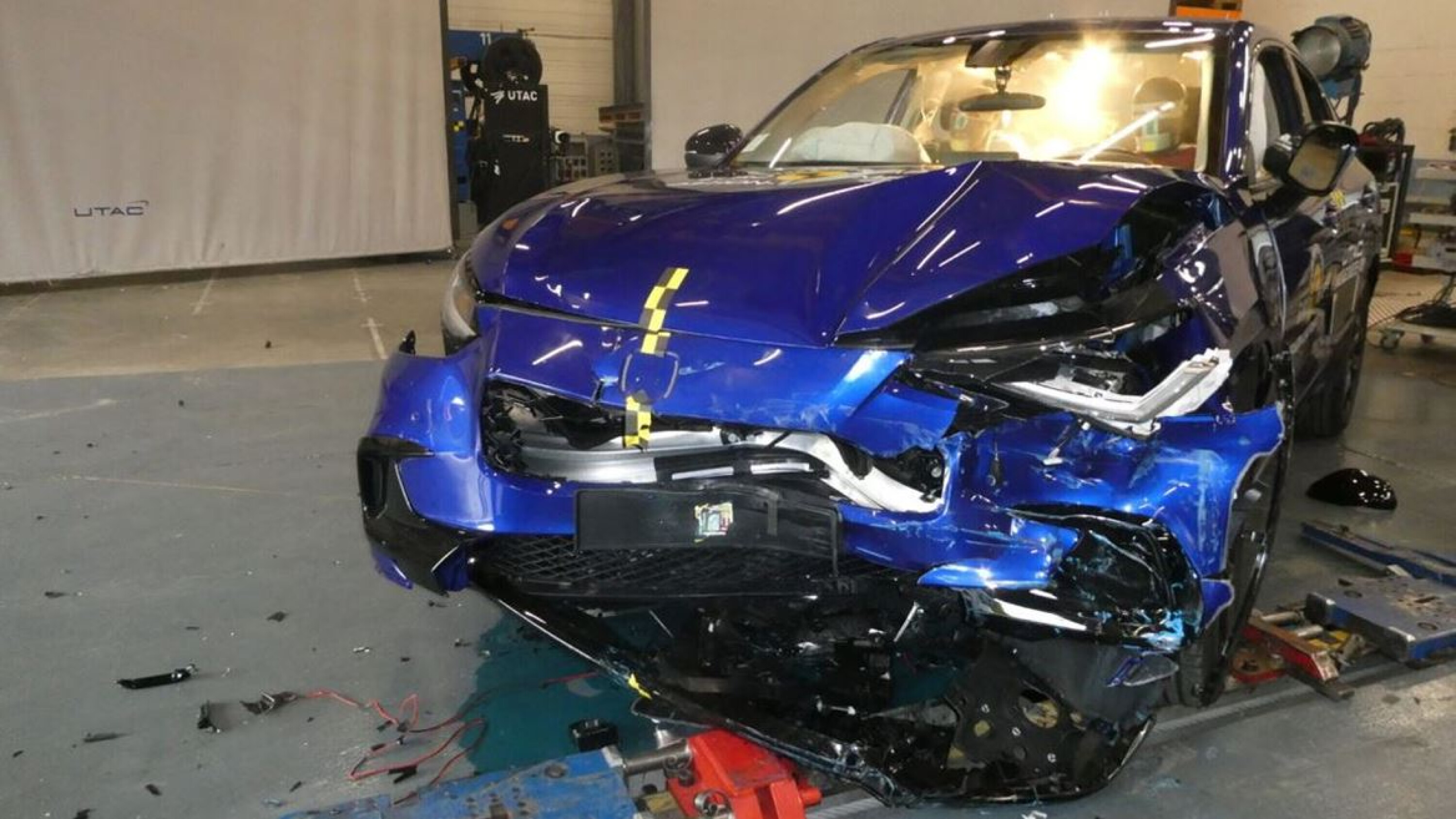
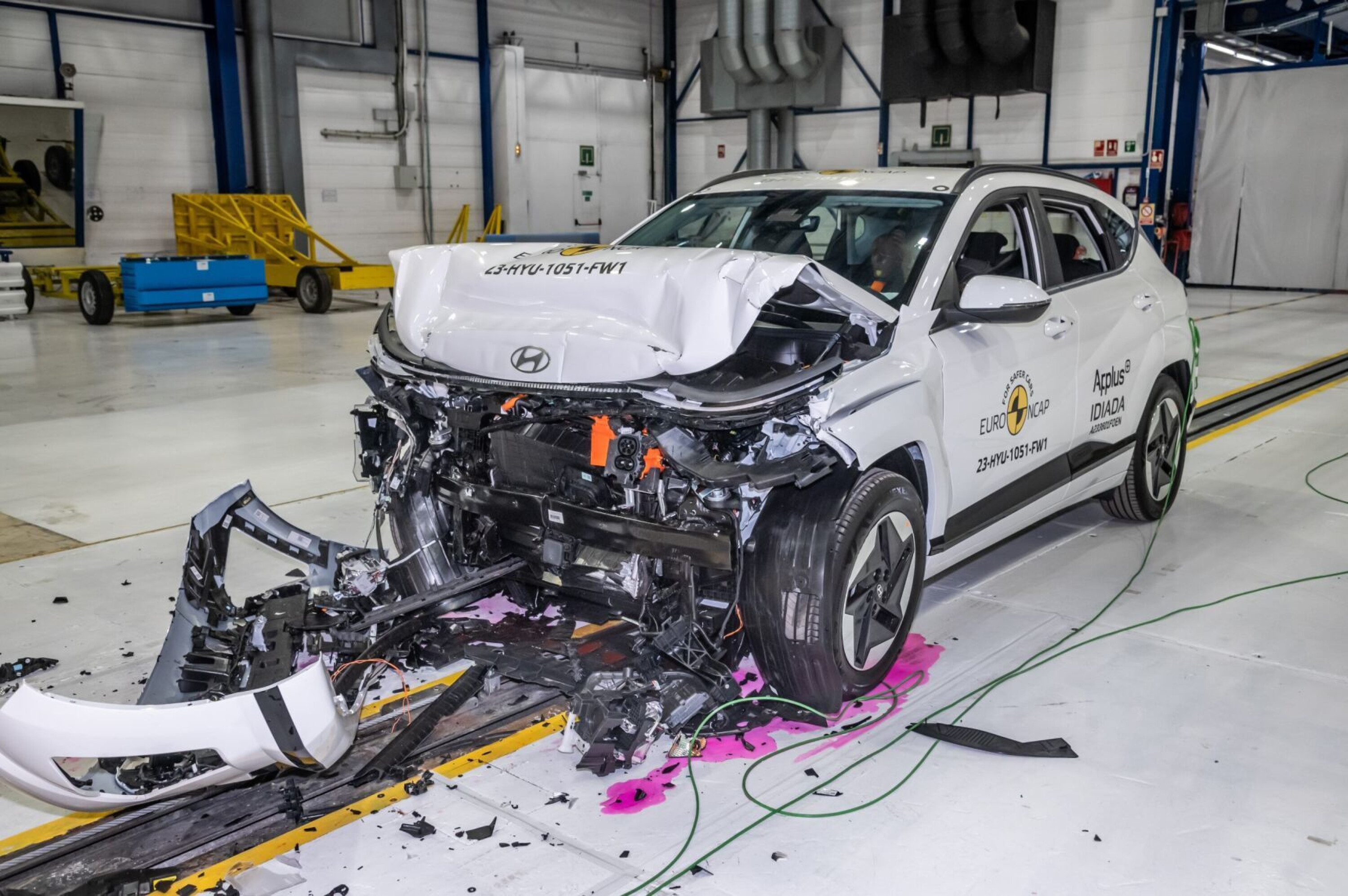
The new Hyundai Kona has come close to receiving a lowly three-star crash rating after placing last out of 11 vehicles tested by Euro NCAP.
Hyundai’s second-generation small SUV was joined by the new Honda ZR-V midsized SUV and VinFast VF8 as the only models to miss out on a five-star rating.
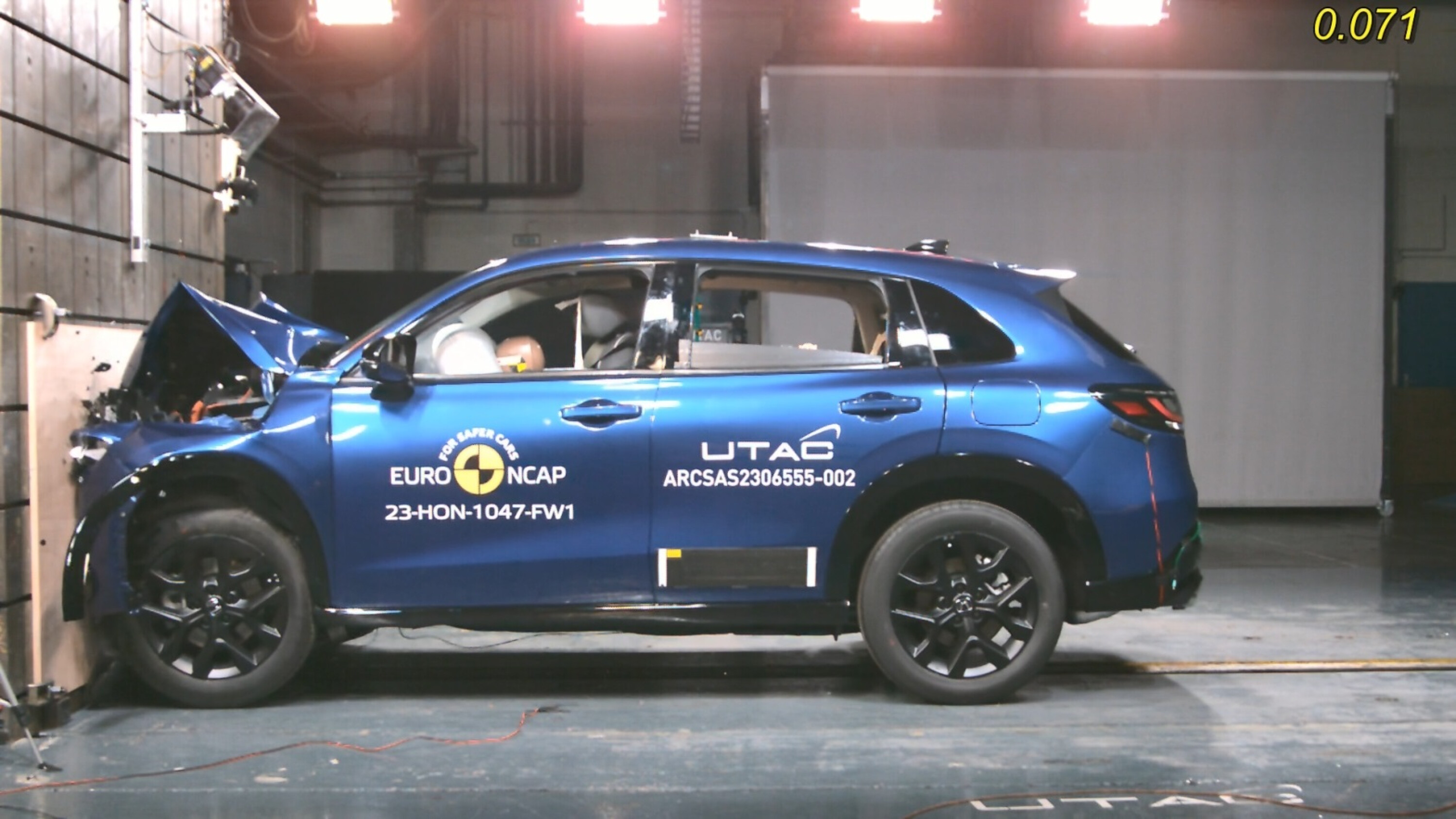
Independent crash-test body Euro NCAP said that while the ZR-V fell just below the thresholds required for a maximum score, the Kona’s performance was a “real disappointment”.
“[The Kona] scrapes by with four stars, [but] in reality [is] lucky to avoid three stars,” said Euro NCAP in its accompanying release.
“This result is due to its substandard test performance, especially in driver assistance and crash avoidance.
“Hyundai has made the car larger and its interior bigger to compete within its class, but the company should not assume that its customers are content with a level of safety which lags behind its competitors.”
What’s a 4-Star rating worth?
It’s worth noting that Euro NCAP’s own system defines four stars as “Overall good performance in crash protection and all round; additional crash avoidance technology may be present”.
The local ANCAP system is more ‘glass half empty’, describing four stars thus: “Provides an adequate level of safety performance yet fell short in one or more key assessment areas. May present a higher injury risk to occupants and/or other road users in certain scenarios or have a reduced ability to avoid a crash.”
While Euro NCAP said the Kona’s passive-safety protection struggled in some areas in the frontal offset test, the Kona missed out on the maximum five stars only owing to the assessment of its active-safety systems.
NCAP gave the Hyundai a low 60 percent scoring for Safety Assist, mainly noting the lack of AEB (autonomous emergency braking) for when approaching a car crossing a junction and a “marginal” result for its car-head-on AEB performance.
1
Euro NCAP commended the Kona for its protection in the Side Barrier and Side Pole Impact, and the Hyundai’s 80 per cent score for Adult Occupant Protection was fractionally higher than the 79 per cent given to the ZR-V (pictured above).
It also scored 83 per cent for Child Occupant protection.
The Venue baby SUV is the only other current Hyundai to miss out on a five-star crash rating, also scoring four stars.
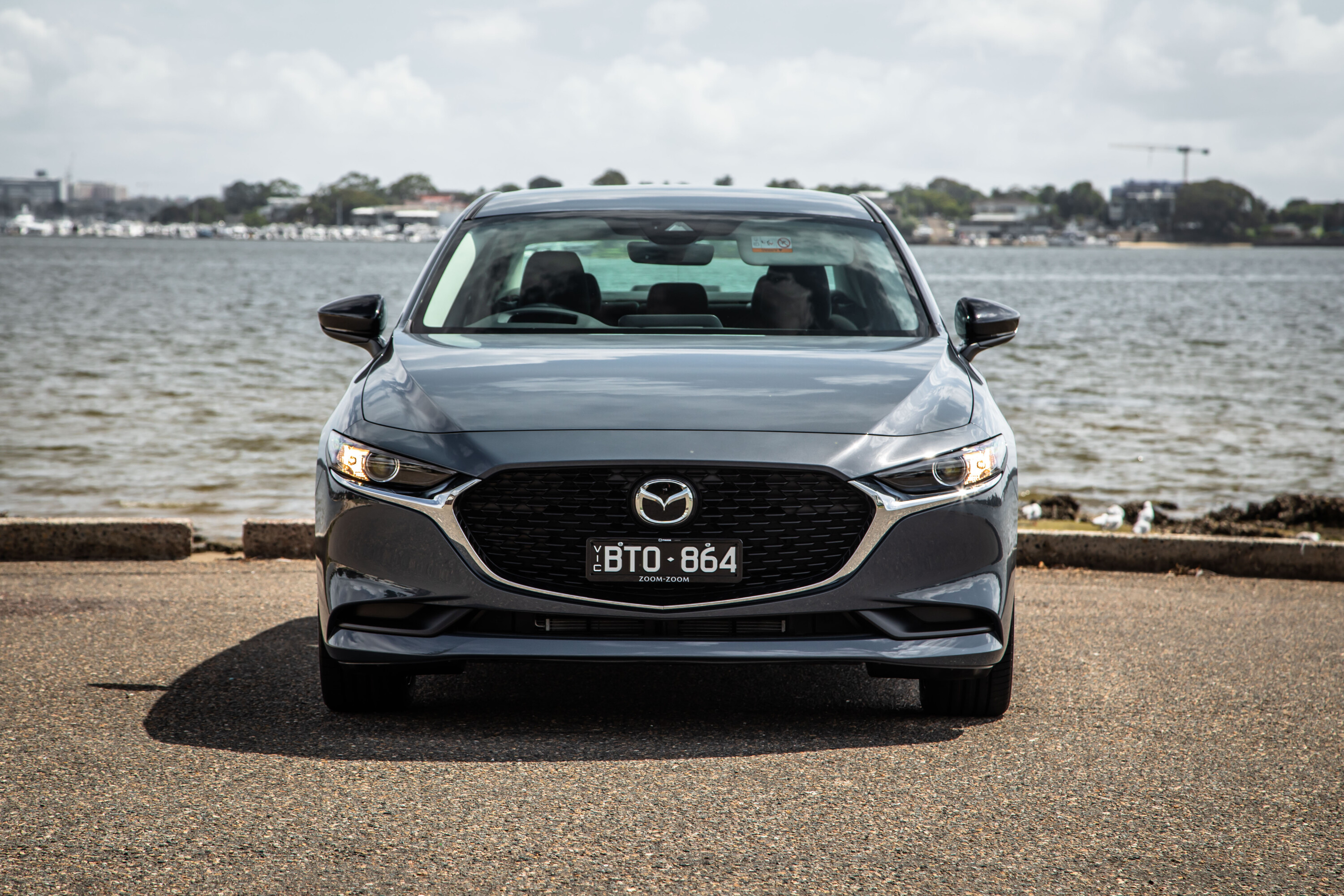
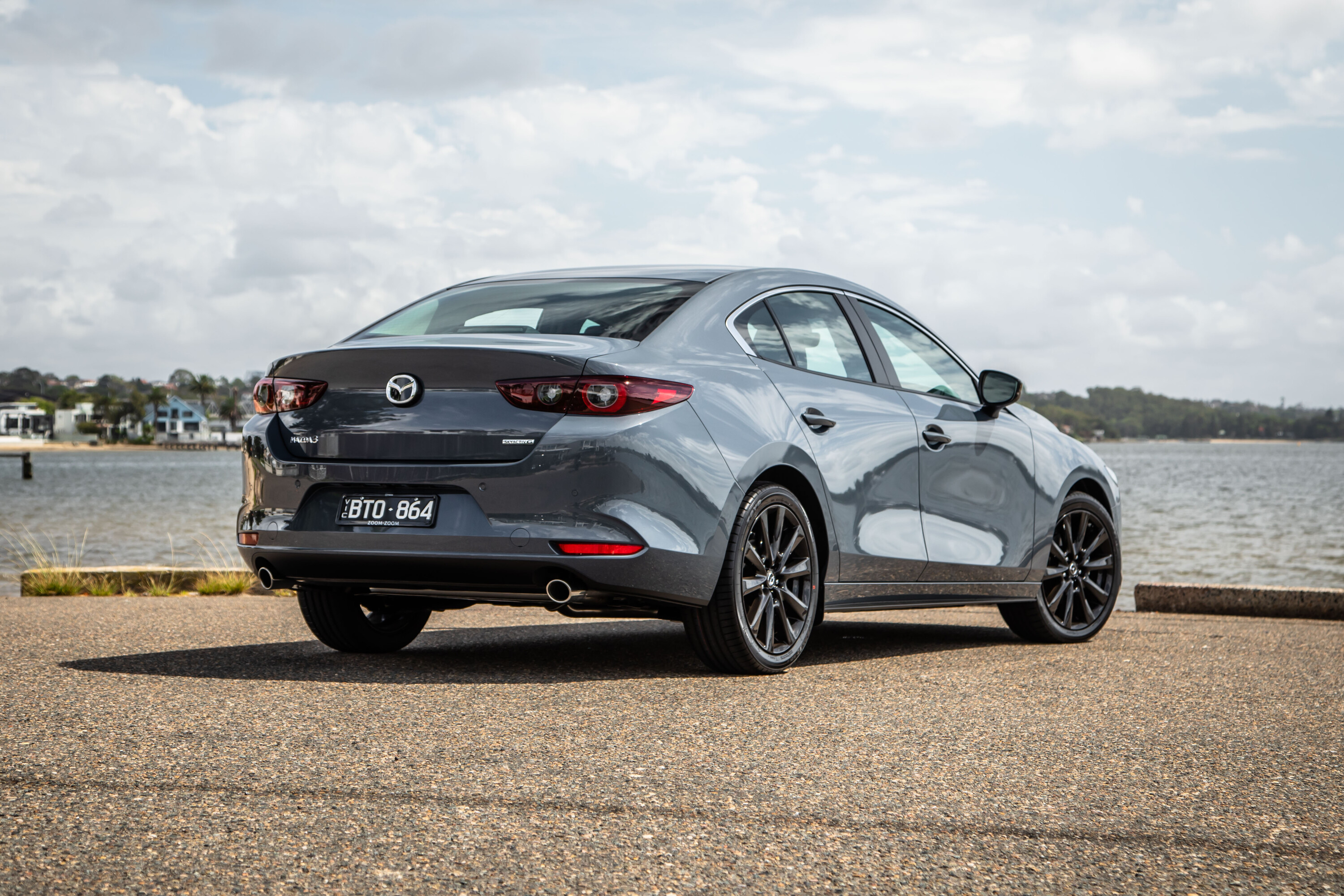
Emerging in the late 1970s as a modest entrant, the Mazda 3 has steadily risen to become a highly favored small car in Australia.
However, like other small cars in its class it’s starting to creep up in price towards competitive light and small SUVs, presents a significant challenge in maintaining robust sales volumes.
To stay appealing, the Mazda 3, along with models like the CX-3, has been updated midway through its life cycle. This update notably deleted manual transmission and mild hybrid options.
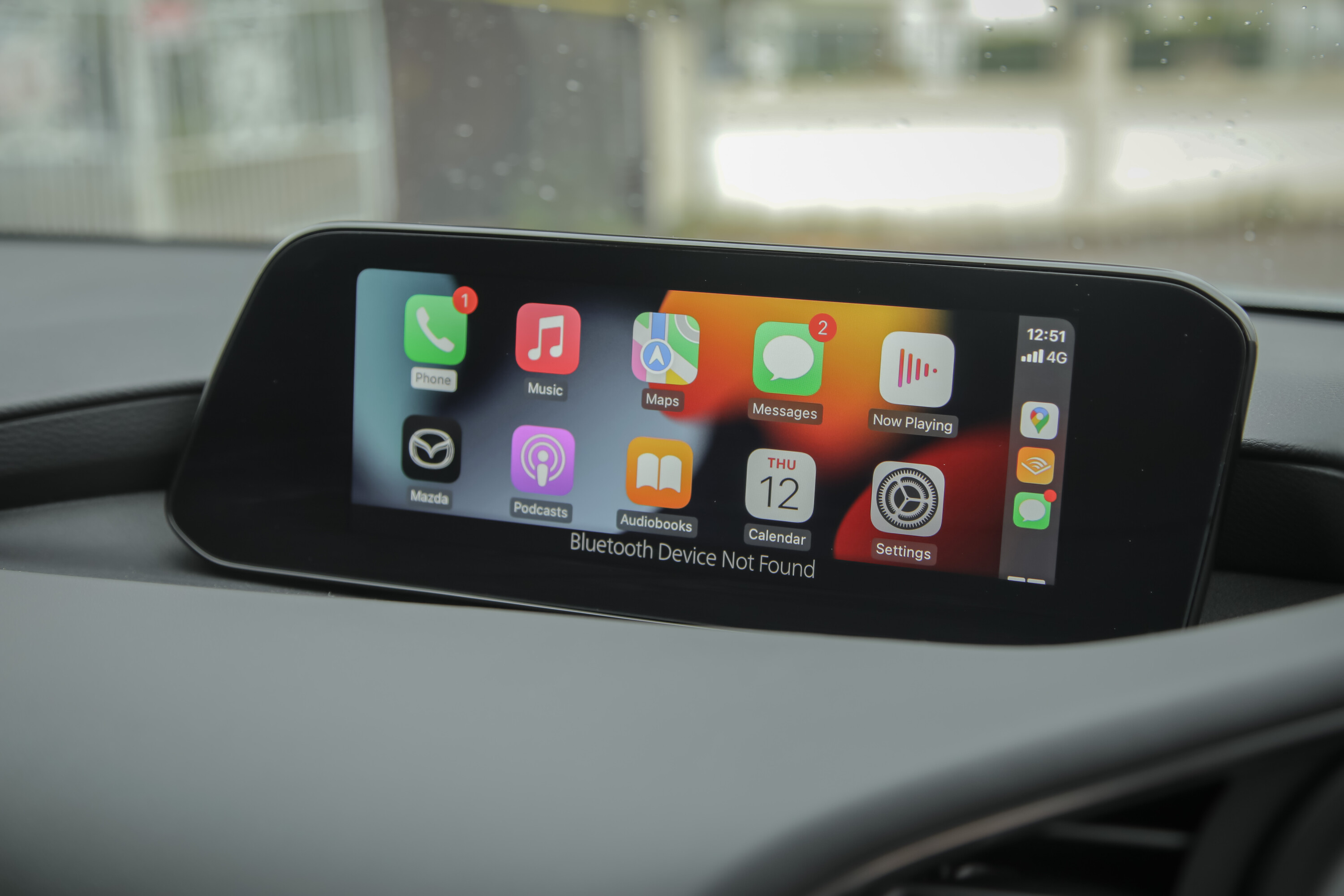
Instead, the focus has shifted to enhancing the economical 2.0-litre petrol engine and introducing new technology across the higher-end models, including Wireless CarPlay and a larger 10.25-inch infotainment screen.
1
Pricing and Features
The Mazda 3 comes in two styles: a five-door hatchback and a four-door sedan, with the mid-spec Touring model of each priced at $34,520 excluding on-road expenses. For the same money you can choose the Evolve SP, with a more sports-focused set of features and bigger engine.
Both versions are equipped with a 2.0-litre petrol engine, connected to a 6-speed automatic transmission. The engine delivers an output of 114kW of power, 200Nm of torque, using 5.9L/100km on a combined fuel cycle.
Stepping up to the Evolve SP will change your engine to a more powerful 139kW/252Nm 2.5-litre engine.
1
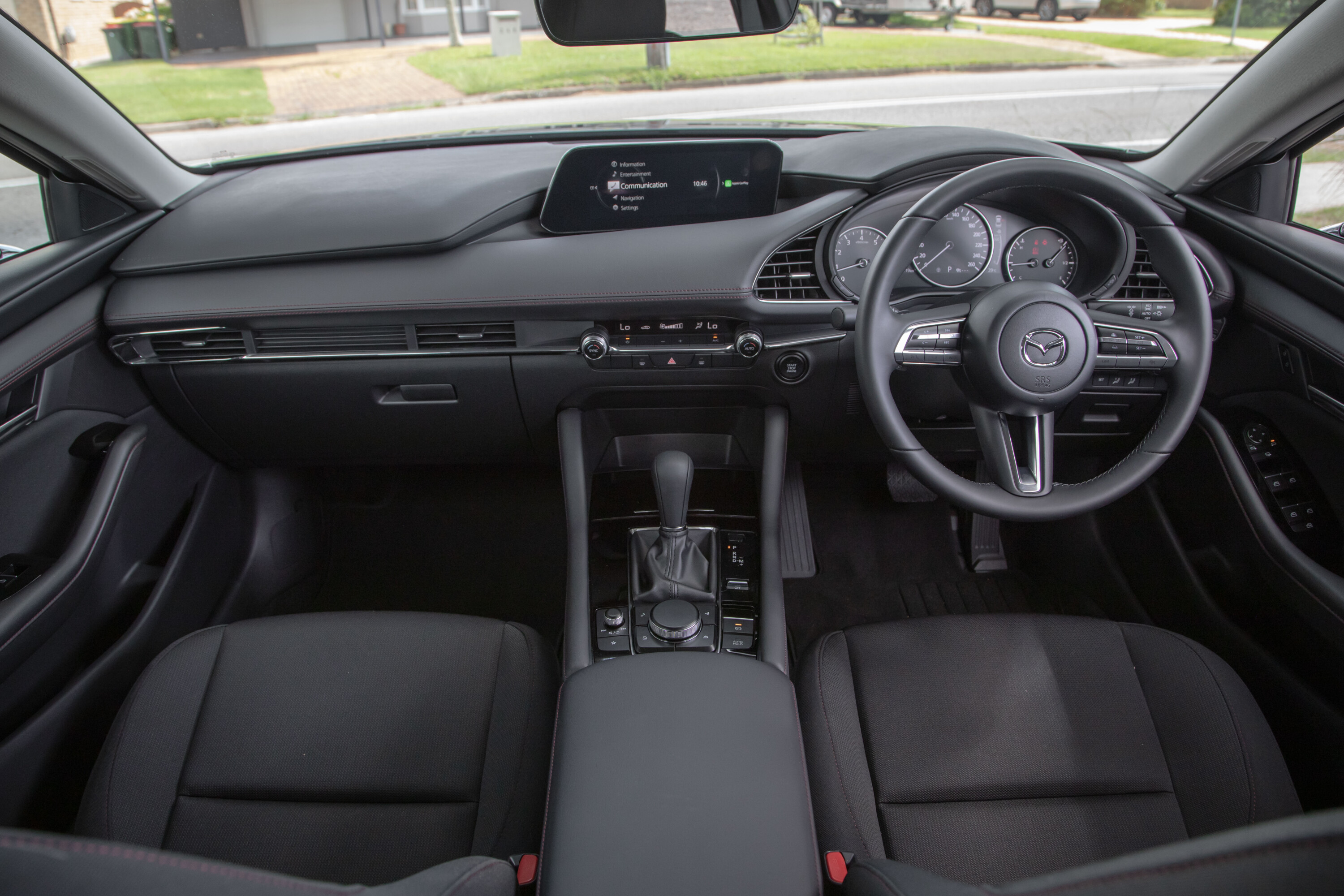
The Mazda 3 stands out with its interior quality, offering a sophistication and simplicity that seems superior to its rivals.
Its cabin boasts a sleek design, highlighted by a slim, elegant steering wheel, an easy-to-use infotainment system with an 8.8-inch screen, and vital connectivity features such as Apple CarPlay and Android Auto. The design prioritizes driver engagement, as seen in the ergonomic arrangement and the general layout of the cabin.
Additionally, the lower seating position in the Mazda 3 lends a sporty ambiance, setting it apart from larger models in the lineup, like the CX-30.
2024 Mazda 3 Touring features
18-inch alloy wheels
Leather seat trim
7-inch semi-digital instrument cluster
Leather-wrapped steering wheel and gear shifter
8 speaker audio system
LED headlights, DRLs and tail lights
8.8-inch infotainment screen
Manual air conditioning
Adaptive cruise control
Power adjustable driver seat
Apple CarPlay and Android Auto
Power-folding door mirrors
Autonomous emergency braking
Push-button start
Blind-spot monitoring
Rain-sensing wipers
DAB+ digital radio
Rear centre armrest
Driver attention alert
Reversing camera
Dual zone climate control
Satellite navigation
Head-up display
Tyre pressure monitoring system
Heated exterior mirrors
Wireless phone charger
1
For an extra $2000 you can add a Vision Technology option package which includes :
Driver Monitoring
360° view monitor
Front Cross Traffic Alert (FCTA)
Cruising & Traffic Support (CTS)
Front Parking Sensors
10.25 inch widescreen colour display
2024 Mazda 3 paint options
Snowflake White Pearl Mica
Standard
Platinum Quartz Metallic
Standard
Ceramic Metallic
Standard
Deep Crystal Blue Mica
Standard
Jet Black Mica
Standard
Machine Grey Metallic
$595
Polymetal Grey Metallic
$595
Soul Red Crystal Metallic
$595
Safety
Every model within the Mazda 3 series possesses a five-star ANCAP safety rating, based on evaluations conducted in 2019.
These ratings break down to 98% in adult occupant protection, 89% in child occupant protection, 81% in protecting vulnerable road users, and 76% in safety assist technologies.
Each car in the range is outfitted with seven airbags, encompassing front, side, and curtain airbags, along with a driver’s knee airbag.
Standard across all models are various active safety features:
While many Australians obsess over SUV options, there is still a world of merit for those looking for a sports-styled hatch or sedan.
If the 2024 Mazda 3 Touring follows the trajectory of its predecessors, it will be a compelling choice for those seeking a compact car that balances luxury, technology, and enjoyable driving dynamics.
The Touring offers a bit of extra comfort over it’s entry-spec with keyless entry and larger 18-inch alloys that are worth the price.
However, the G25 Evolve SP equipped with the Vision Technology package does seem to offer the right mix or features and might just be the ideal choice within the Mazda 3 lineup.
New hardcore tS flagship headlines 2024 coupe range
Manual pricing is up by a significant $3500; auto $700
Price increase offset by additional safety features
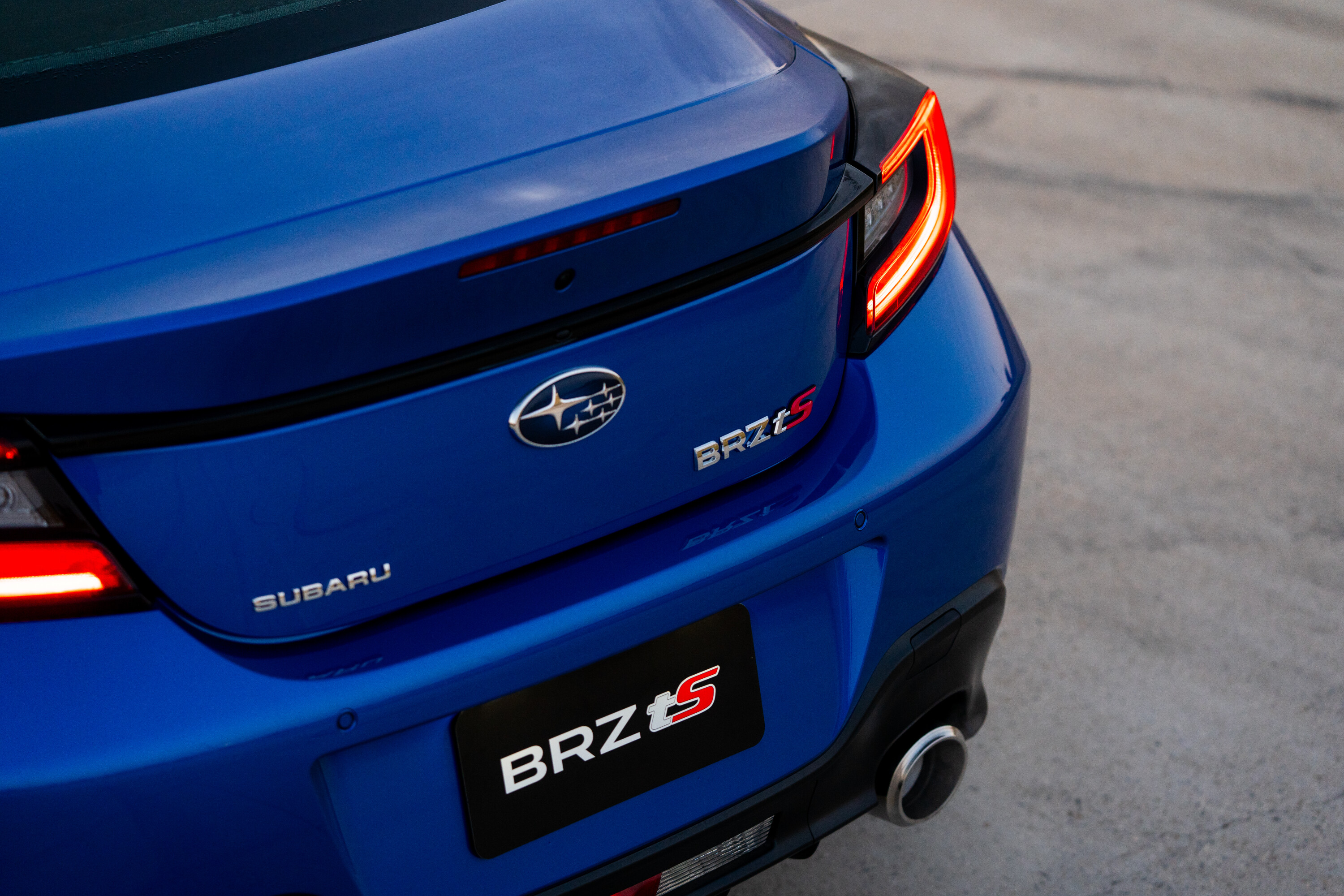
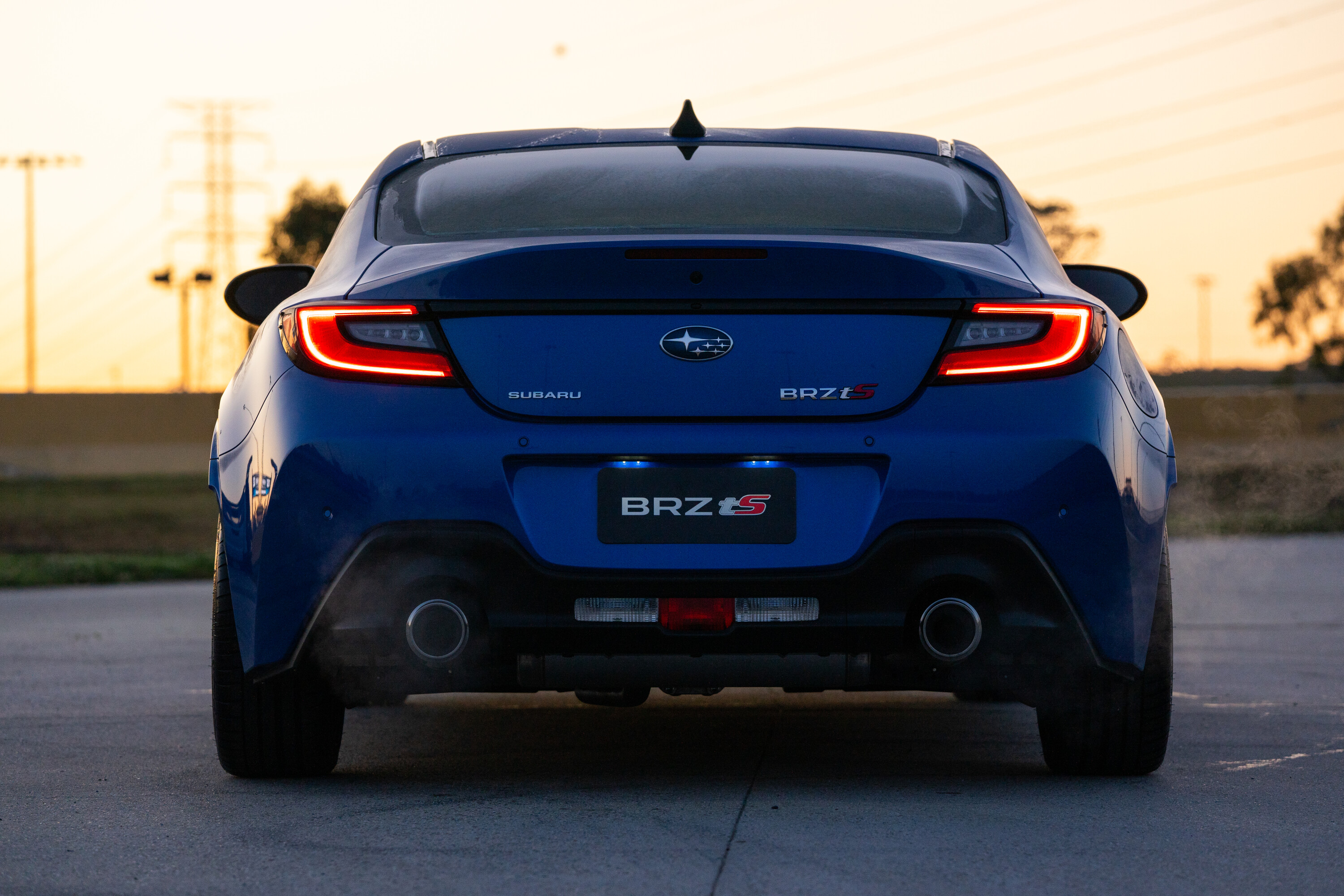
Subaru will introduce a more hardcore tS variant of its BRZ sports car in 2024. Available in both manual and automatic (for an extra $1000), the new flagship costs $48,690 before on-road costs.
Following the Toyota GR86 update, the updated BRZ manual now gets adaptive cruise control, lane-departure warning, pre-collision braking, and lead vehicle departure alert from Subaru’s Eyesight safety suite.
Unlike the GR86, though, the BRZ’s price climbs for MY24. Reflecting the additional features, manuals are up $3500 and therefore dearer than the Toyota option. Automatic variants climb $700.
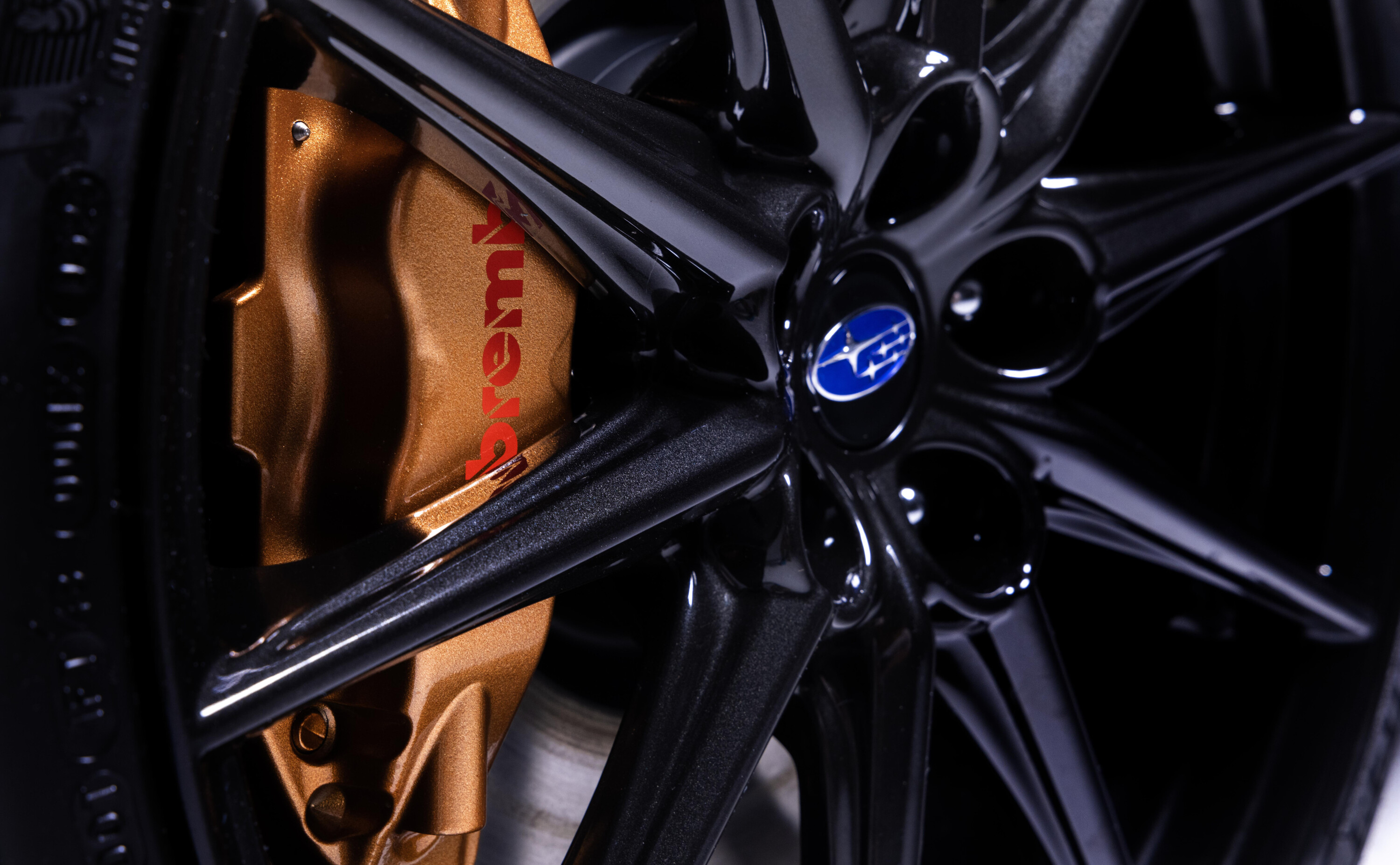
The first identifier is a set of 18-inch dark grey alloy wheels shod in 215/40 R18 Michelin Pilot Sport 4 tyres behind which are four-piston front and two-piston rear gold Brembo brake calipers.
STI has developed a firmer chassis with new dampers front and rear, though ride height and spring rates stay the same.
There are tS badges found at the front and back while the black door mirrors and antenna add extra menace.
1
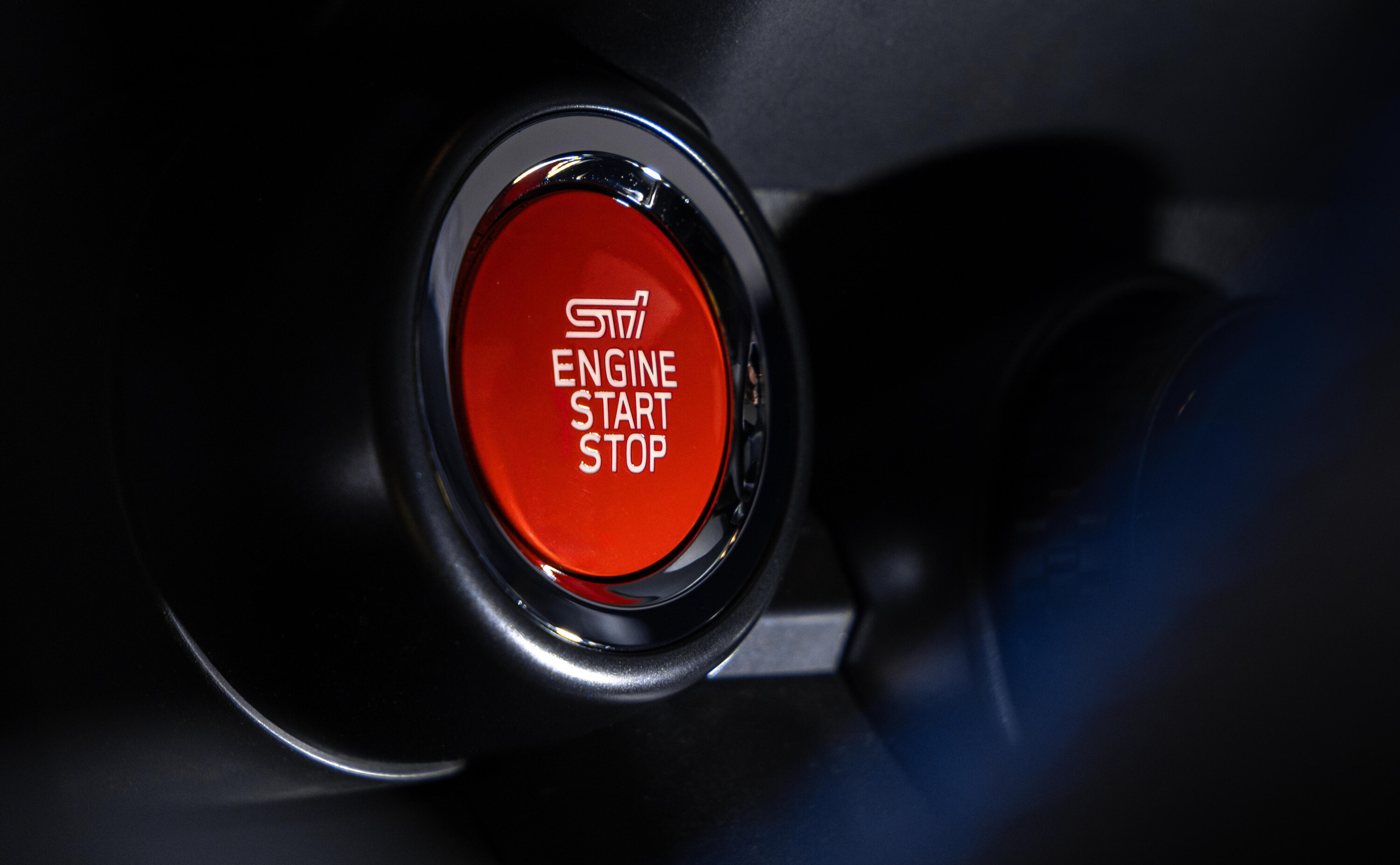
The cabin has been lifted with black/Bordeaux coloured Ultrasuede and leather upholstery, STI-embossed setas, red STI start button and STI logo in the digital instrument cluster.
“The BRZ has earned a reputation as a driver’s car thanks to its superb engineering”, said Blair Read, Managing Director of Subaru Australia. “We are therefore excited to add to the BRZ offering for Australian drivers the best performing and handling BRZ ever with the tS.”
1
The rest of the BRZ range is unchanged with the 174kW/250Nm 2.4-litre flat-four petrol engine driving the rear wheels via a six-speed manual or six-speed automatic transmission and limited-slip differential.
Spending the extra $1300 on the BRZ S brings 18-inch alloys, natural and synthetic leather trim and Ultrasuede for its seat material, plus heated front seats.
However, the base car is still well equipped with LED headlights, Apple CarPlay/Android Auto capable head unit, dual-zone climate control and navigation.
1
Seven paint colours are available across the BRZ range, including the tS.
Crystal White Pearl
Ignition Red,
Ice Silver Metallic,
WR Blue Pearl
Sapphire Blue Pearl
Magnetite Grey Metallic
Crystal Black Silica
The tS and 2024 BRZ range are available to pre-order online or in Subaru dealers now.
One special day, a full year ago, Ken Block and his Hoonigan crew brought a deafening cacophony to a chunk of Mexico City as Electrikhana Two filled the streets with the sound of screaming electric motors and squealing tyres.
What came next, every car enthusiast remembers well: Block was killed in a snowmobile accident just two months after filming Electrikhana Two, aged 55.
If you need to relive that news, you’ll find it in the story linked at the bottom of this one. For now, though, you should hit the play button below and enjoy Block’s last outing in his bespoke Audi S1 Hoonitron electric skid machine for 12 minutes of pavement scribbling and flying bodywork.
Watch more Hoonigan videos below, and read about the Electrikhana Two project at the Hoonigan website here [↗].
Gymkhana One
This is ground zero, where the whole saga began. Gymkhana One featured Block’s built 2006 Subaru Impreza WRX STI at an old airfield. Chaos ensues, the internet catches hold, a legend is born.
Gymkhana Two
Gymkhana Two was designed to feature a few of Ken Block’s DC Shoes products, mimicking the form of an infomercial. The cinematography was a big step-up and so was the car, a Crawford Performance 422kW Impreza WRX STI.
Gymkhana Three
2010 was the year of change for Block and Gymkhana. First of all, he changed from using Subarus in the viral videos to Fords – now employing a 484kW 2011 Ford Fiesta. Secondly, the team set the video in Linas, France at an old autodrome. The anti-lag Ford Fiesta Gymkhana car was the start of a long partnership between Block and Ford Performance which continues to this day.
Gymkhana Four
The HOONIGAN team had to wind up at Hollywood at some point. Featuring more stunts than ever, 2011’s video once again featured Ken’s Fiesta smashing through walls, knocking over objects and of course, performing mammoth-sized jumps.
Gymkhana Five
Ken Block skids his way around the San Francisco skyline in 2012’s 100 million hit video.
Gymkhana Six
Gymkhana Seven
For the first time in years, Ken changed his car to a 1965 Ford Mustang in Gymkhana Seven. The fire-breathing methanol-injected V8 can be seen ripping up the concrete wonderland that is Los Angeles.
NOTE: The above video isn’t embedding correctly, but the ‘Watch on YouTube’ link works. Head to YT to check it out.
Gymkhana Eight
2016 saw the HOONIGAN crew head to Dubai to film Gymkhana Eight, once again using Block’s rally-spec Ford Fiesta as the ultimate whip-mobile.
NOTE: The above video isn’t embedding correctly, but the ‘Watch on YouTube’ link works. Head to YT to check it out.
Gymkhana Nine
The first outing for Ken’s 2017 Ford Focus RS RX, the ninth iteration of Gymkhana filmed in Detroit, Michigan has the most daring stunts to date, most notably a game of ‘chicken’ with a diesel train.
Gymkhana Ten
Gymkhana Ten is the most unbelievable film to date, with the planning taking over two years and filming in multiple countries like Sweden, United States and Mexico. The full film goes for almost 20 minutes and rest assured, each second is worth watching.