
The Ford F-150 scored well in US IIHS crash testing but only now does the protocol include a daytime car-pedestrian AEB test, with no low-light, cyclist or motorcycle elements.
Australasian New Car Assessment Program (ANCAP) executives have revealed that the booming popularity of American pick-up trucks has put them in the crash-testing body’s sights for 2025.
It’s not like the popular one-tonne utes such as the Toyota HiLux and Isuzu D-Max aren’t a safety concern for motorists, but as the biggest sellers now carry five-star safety ratings and myriad driver-assistance features to avoid crashes, they’re a lot safer these days.
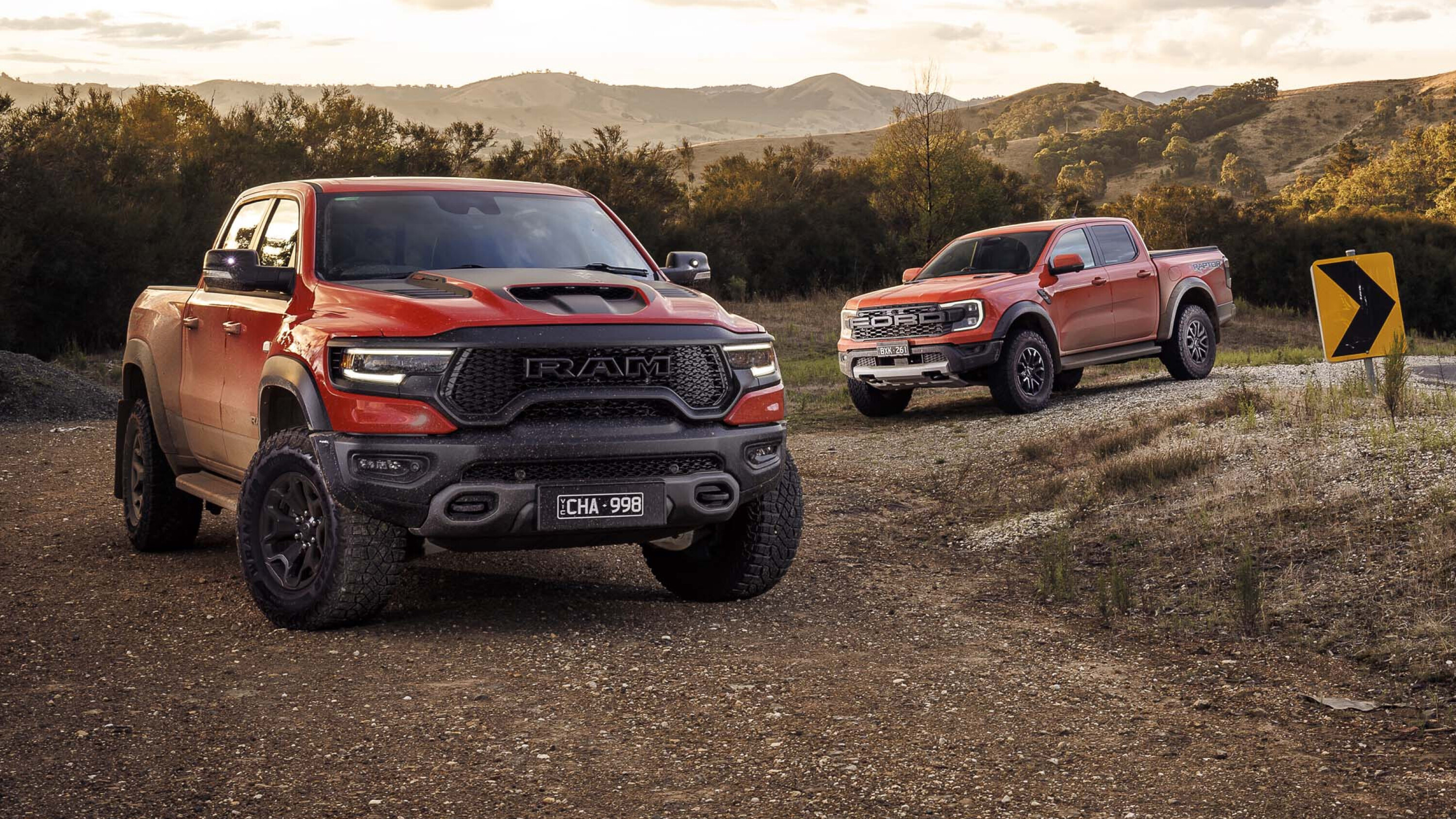
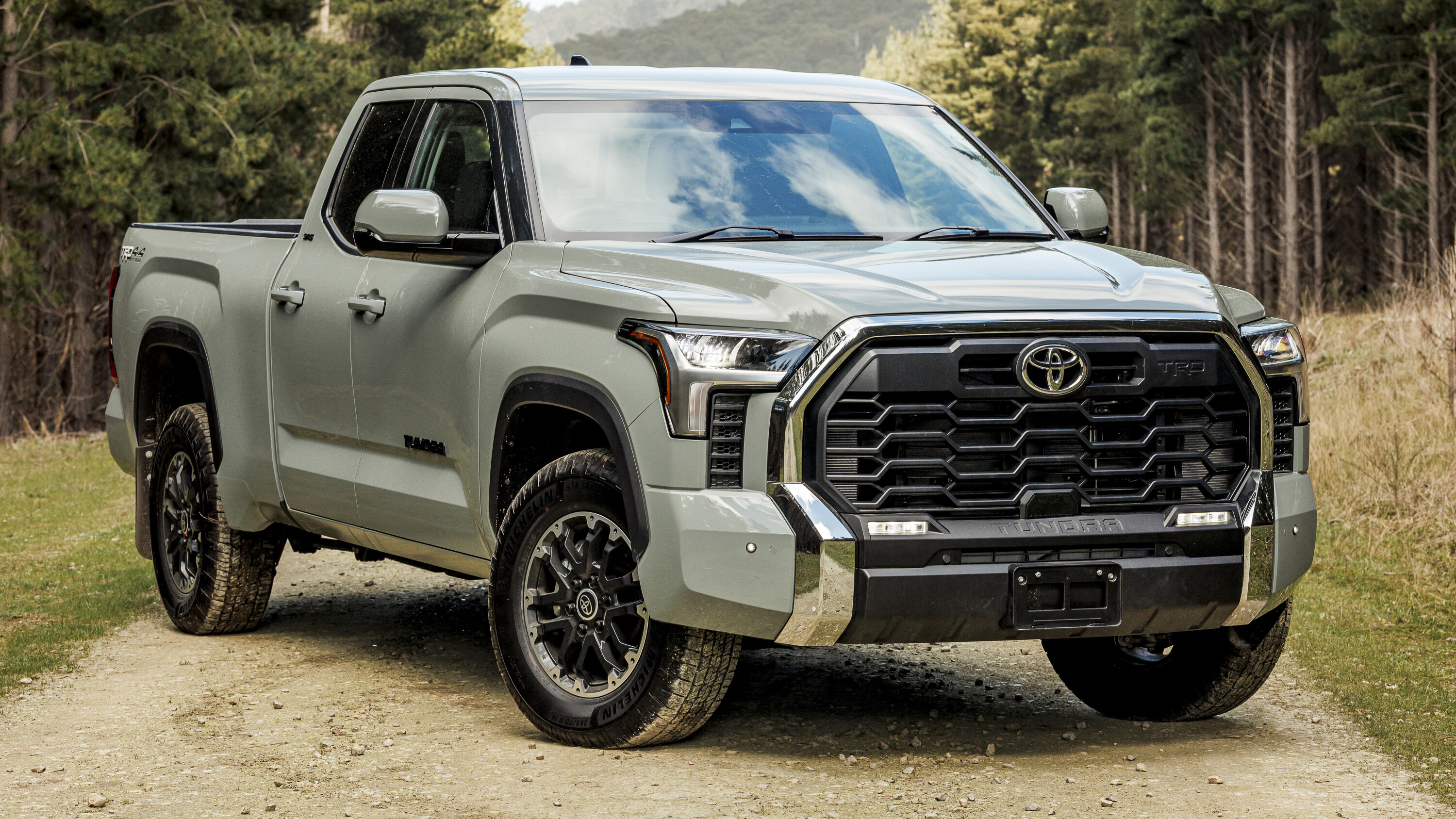
The vehicles at the heart of the large pick-up concern are the Ram 1500, Chevrolet Silverado, Toyota Tundra and Ford F-150 – the predominant pick-ups of North America that are making their way to Australia in increasing numbers. Sales are up to 8808 by the end of October – more than were sold in the whole of 2022, with F-150 and Tundra deliveries yet to commence.
We’re working out at the moment what that plan will look like – it’ll definitely involve ADAS testing
1
The worry isn’t so much the safety of the vehicle occupants, but rather how these circa-2500kg body-on-frame vehicles interface with smaller cars, motorcyclists, and pedestrians.
“Some of them have some of the safety systems we’d expect to see in terms of ADAS [advanced driver-assistance systems], some of them don’t necessarily. They’re in urban areas, they’re mixing with other road users and there are definitely concerns from the community about the size of the vehicles. So our considerations are: what information can we provide about these vehicles?” ANCAP CEO Carla Hoorweg told Wheels at a 30th-anniversary media event this week.
“We’re working out at the moment what that plan will look like – it’ll definitely involve ADAS testing. What more we do starts to become a trade-off as they’re very expensive vehicles, so it’s a question of: What are you going to learn and what information you’re going to be able to provide through the different tests that we’ve got available to us and where the best value is going to be in terms of being able to provide comparable safety information for people”, said Hoorweg.
“For [vehicles] that are coming out of the United States, there’s not the same focus on pedestrian [safety] in the US either, so we just don’t really have any intel about whether these systems are working in those vehicles and that’s the kind of information that we can provide.”
Carla is talking about autonomous emergency braking (AEB) systems, but also blind-spot monitoring and other assistance technologies. American safety testing bodies such as the NHTSA and IIHS do not evaluate the detection of vulnerable road users to the same depth as ANCAP and Euro NCAP protocols.
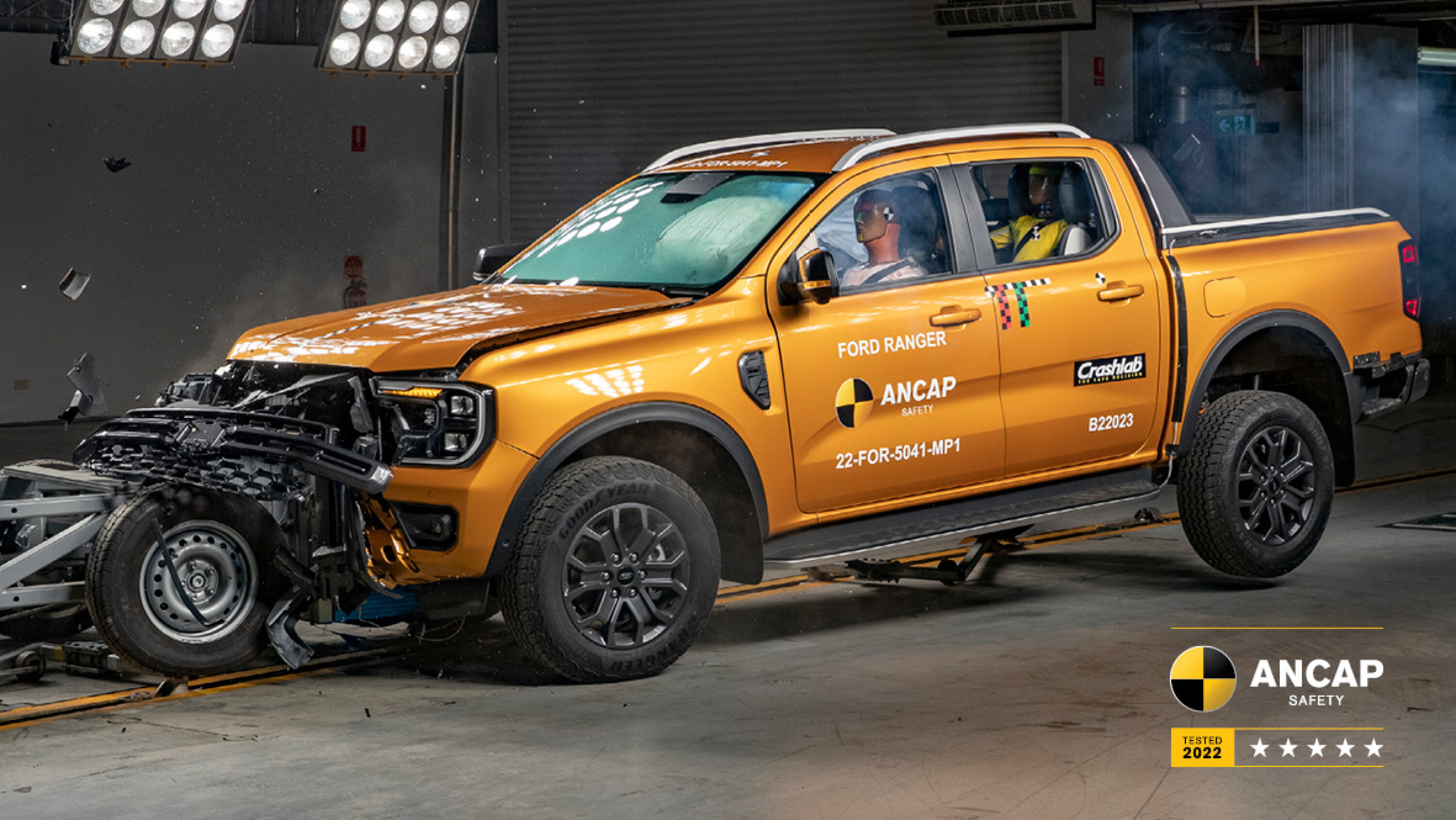
Destructive crash testing isn’t out of the question because, while utes are typically safer for onboard occupants, vehicle-to-vehicle compatibility plays a larger role in five-star ratings from 2023.
1
“Where [utes] might get advantages they also get penalised more heavily from 2023 with compatibility in the MPDB [frontal offset] test. That’s where the penalties increased from this year. So if you are causing more significant damage to the barrier when you impact it, you’re going to get a bigger penalty which reduces your score for adult occupant protection.”
ANCAP chief technical officer Mark Terrell explained what’s known as the ‘fork effect’, where the frame rails of a ute – if not adequately insulated by a front crash structure – can penetrate another vehicle and cause severe harm to both those in and out of the vehicle.
“These vehicles largely will be eligible for the star ratings program”, said Carla noting that the independent body could spend money putting each ute through the full star rating program.
“Maybe the manufacturers want to front up for this one; we’re having those conversations with them. We’ve got limited resources in terms of what we can spend on testing each year and we’ve got to make that deliver the best result for that”, she added.
1
It all comes down to balancing cost outlay against public benefit. So, like the commercial van program, ANCAP is likely to provide Gold, Silver and Bronze active safety scores, and not recommended awards depending on performance.
“We want to create something where you can see ‘this is what’s good, this is what’s performing really well, and this is where improvements are needed’. So how [ANCAP] designs the protocols for that and what we choose to test is a significant part of that conversation”, said Carla.
Prior to the focus on full-size pick-ups – with a publish date of early 2025 likely – ANCAP is planning to investigate the safety of light delivery trucks (3.5-5 tonnes) and collaborate closely with Euro NCAP on safety for heavy goods vehicles and prime movers.
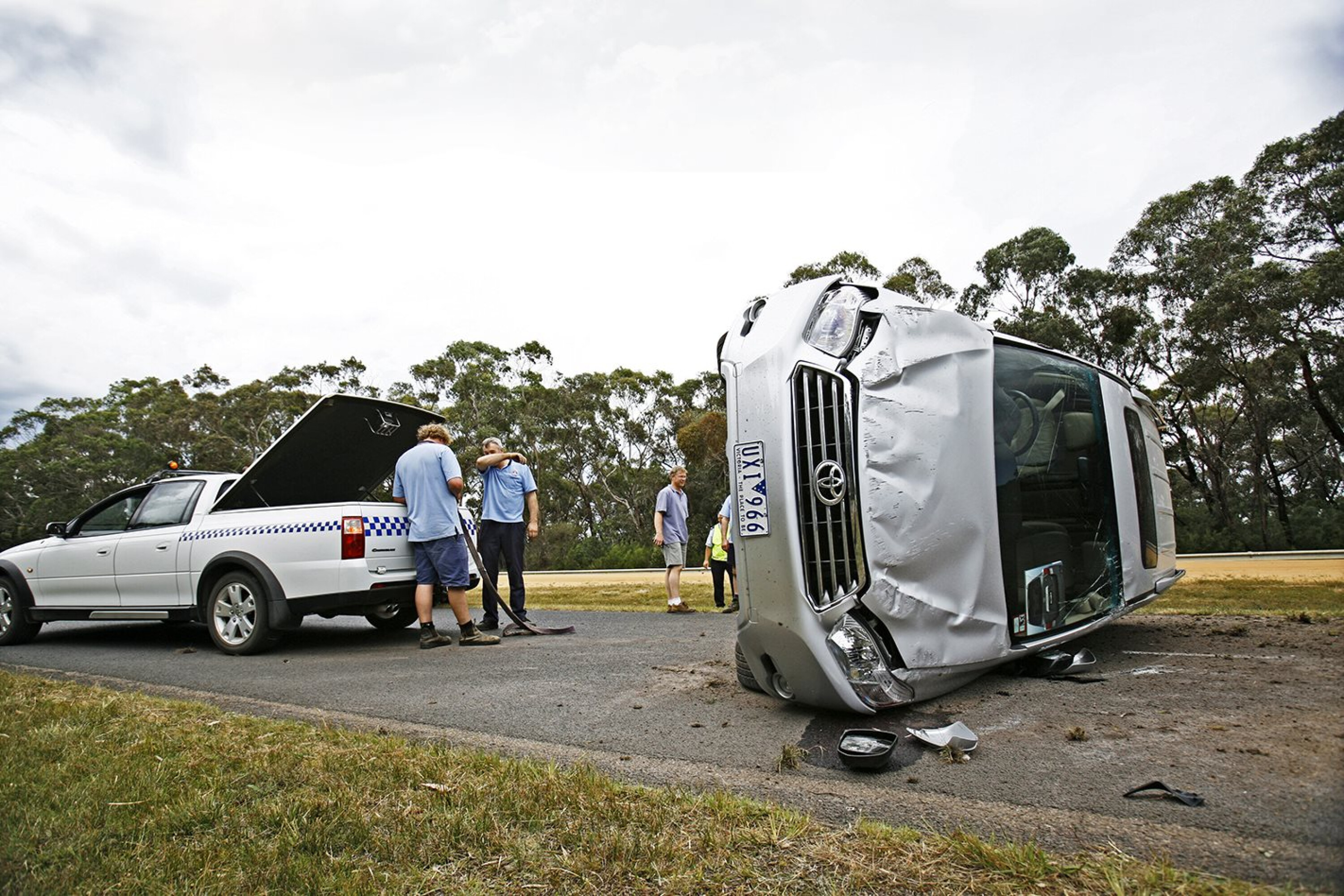
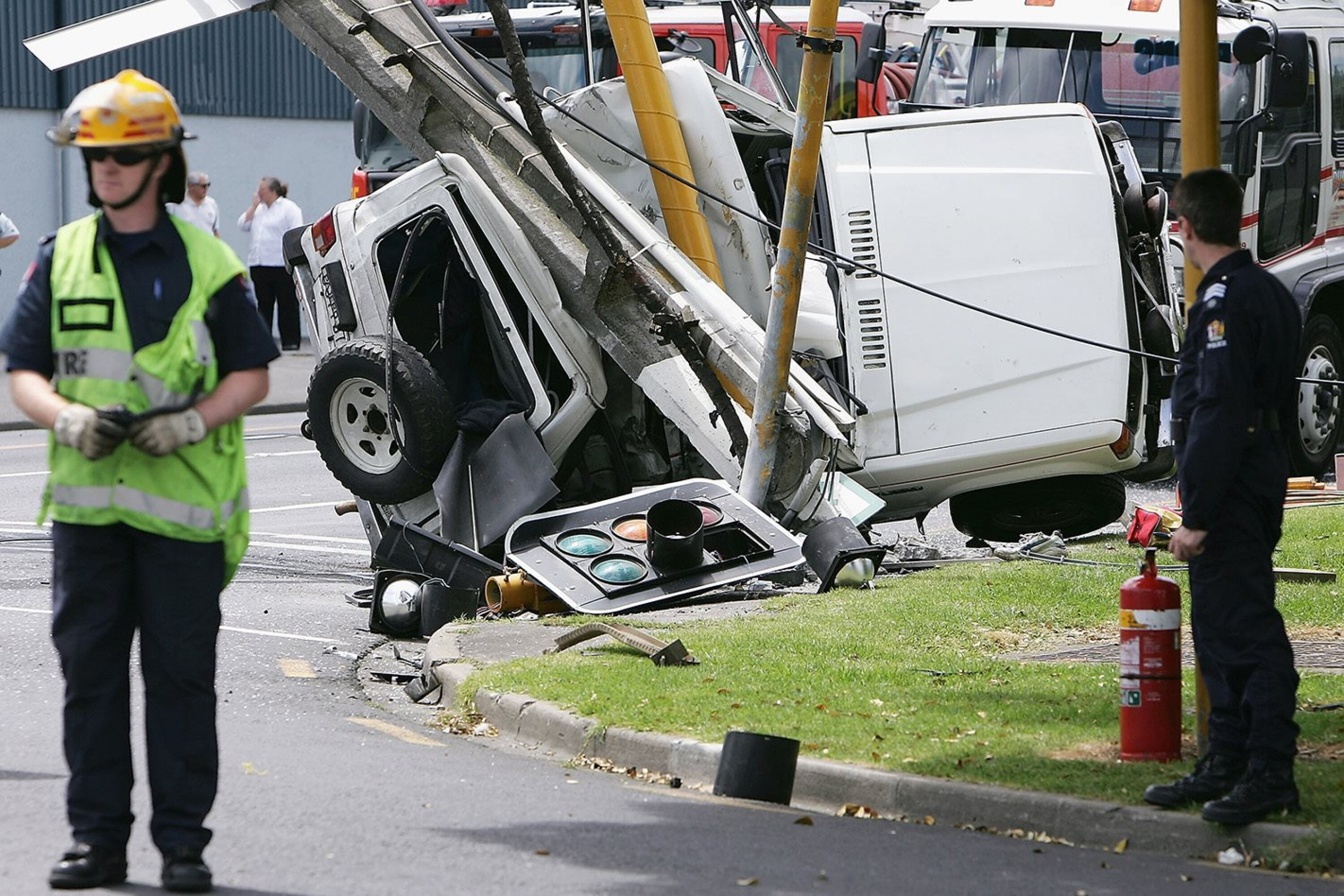
The statistics make for grim reading and only tell one story: Australia’s roads are becoming deadlier.
Victoria’s year-to-date tally for lives lost shows an increase of 19.4 percent. The figures in New South Wales are even more alarming, with 321 people having died in road crashes to midnight last night. That’s a spike of 29.4 percent.
Mercifully, Queensland’s tally is down 4.7 percent but it’s backing up from its worst year of road fatalities in 13 years in 2022. Nationally the road toll is up 6.5 percent year-on-year.
South Australia, meanwhile, is enduring a horror run. Its annual figures show 102 people have died in 2023 which compares to 61 to the same period last year. That’s a 67.2 percent increase.
1
Tragically, SA’s figures include the recent death of 18-year old Charlie Stevens — the son of South Australia’s police commissioner Grant Stevens — who was killed in an alleged hit and run last week.
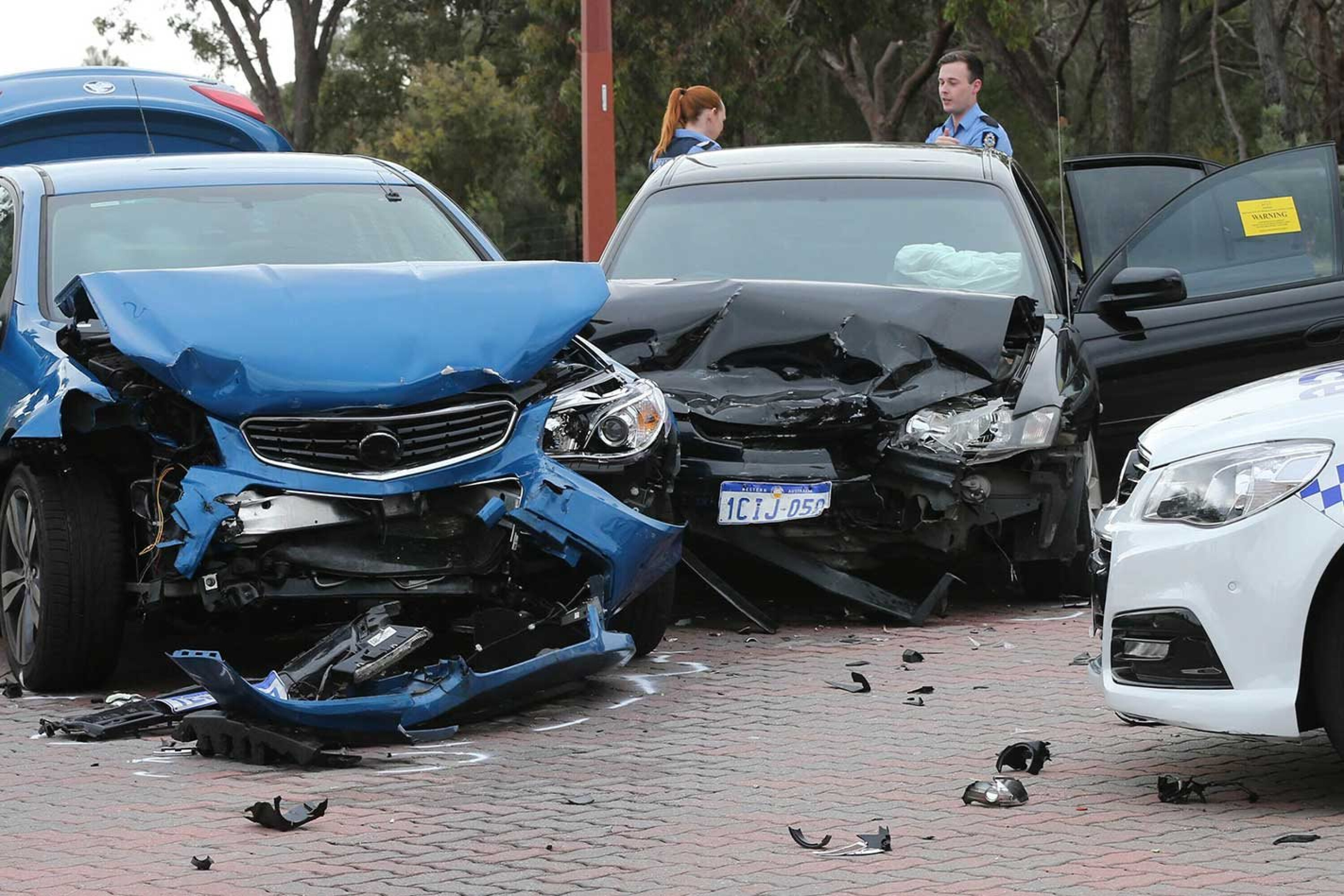
As you’d expect, the situation has sparked calls to implement drastic changes in order to arrest the rising toll. Controversial tweaks to licensing, rewards for good behaviour, better training, more police patrols and more speed cameras have all been suggested.
So what’s the answer? Do the fresh suggestions stack up? And how does Australia’s road tolls compare internationally?
1
The current system is broken
Despite 2023’s eye-opening stats, it’s important to remember Australia was once a world-leader when it came to road safety.
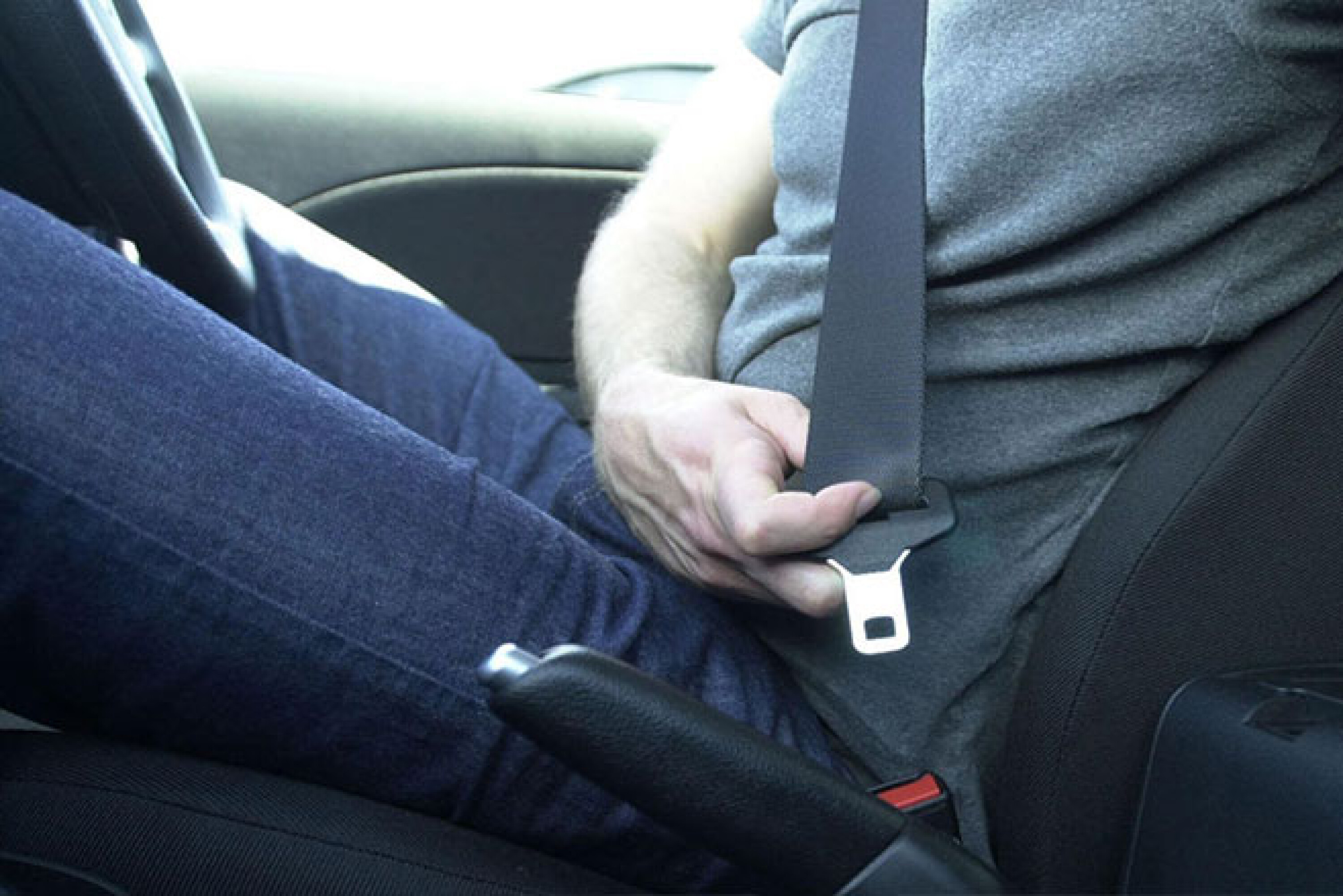
Victoria was the first state in the world to make seatbelts mandatory in 1970, for example, and Australia was also at the forefront of random breath testing around the same time.
Both measures saw huge improvements in the number of road deaths and the general trend ever since has been positive. In 1970, the worst year ever for traffic fatalities, 3798 people lost their lives on our roads. In 2022, 1194 people died.
1
We’ve already eclipsed that figure in 2023, however, with 1247 deaths. So why, at a time when cars are becoming increasingly safer, do we seem to be going backwards?
A blase attitude towards seatbelts could be to blame, according to Victoria Police’s assistant commissioner Glenn Weir. Mr Weir told the ABC earlier this year that: “We’ve got a significant number of people now not wearing seatbelts involved in road trauma.
I think there’s a bit of in-built arrogance that seems prevalent in a lot of people… whether it’s a reaction to lockdowns and COVID-19 restrictions, I don’t know.
1
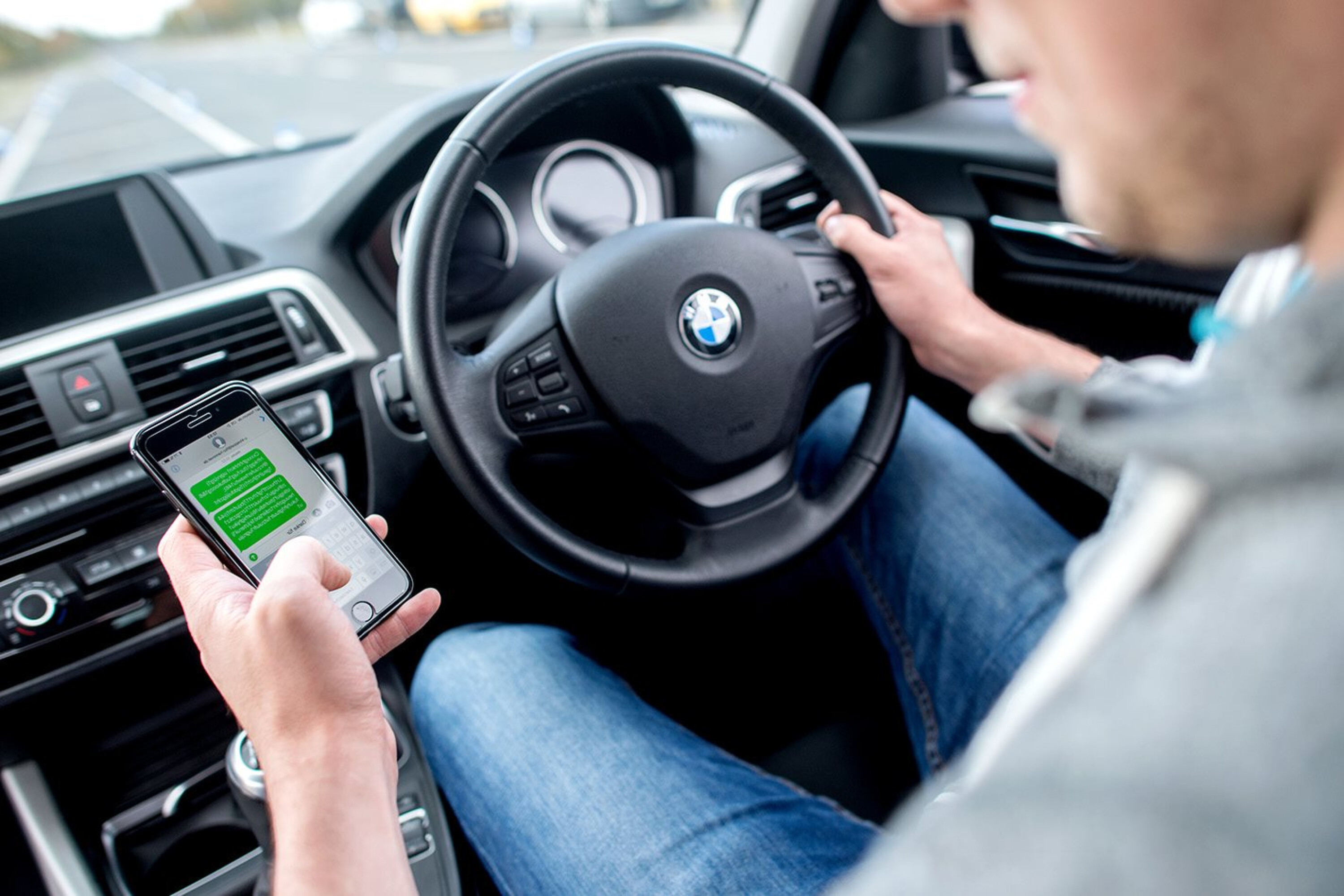
Driver distraction and using mobile phones while driving is another rising factor.
Drivers are 10 times more likely to crash if they are using their phone, according to Victoria’s Transport Accident Commission and one third of Aussie drivers admit to using their phones illegally. We suspect the actual figure is much higher.
1
In the US around 3000 people die every year due to distracted driving.
Speaking of America, the rise in popularity of full-size US pick-up trucks like the Ford F-150, RAM 1500 and Chevrolet Silverado may also be a contributor. Aussie sales of these larger utes, which can measure more than six metres long and two metres tall, are up 42 percent to the end of September.
Data out of the US shows large vehicles like these that have a bonnet height taller than 101cm are 45 percent more likely to result in a fatality if they hit a pedestrian.
1
Could controversial changes work?
Ideas on how to improve our road toll range tend to range from sensible to controversial. Some of the more recent suggestions include:
Rewarding drivers who do the right thing
This is the brainchild of Russell White from the Australian Road Safety Foundation who suggested a change to Australia’s licensing system during an interview on The Project last week.
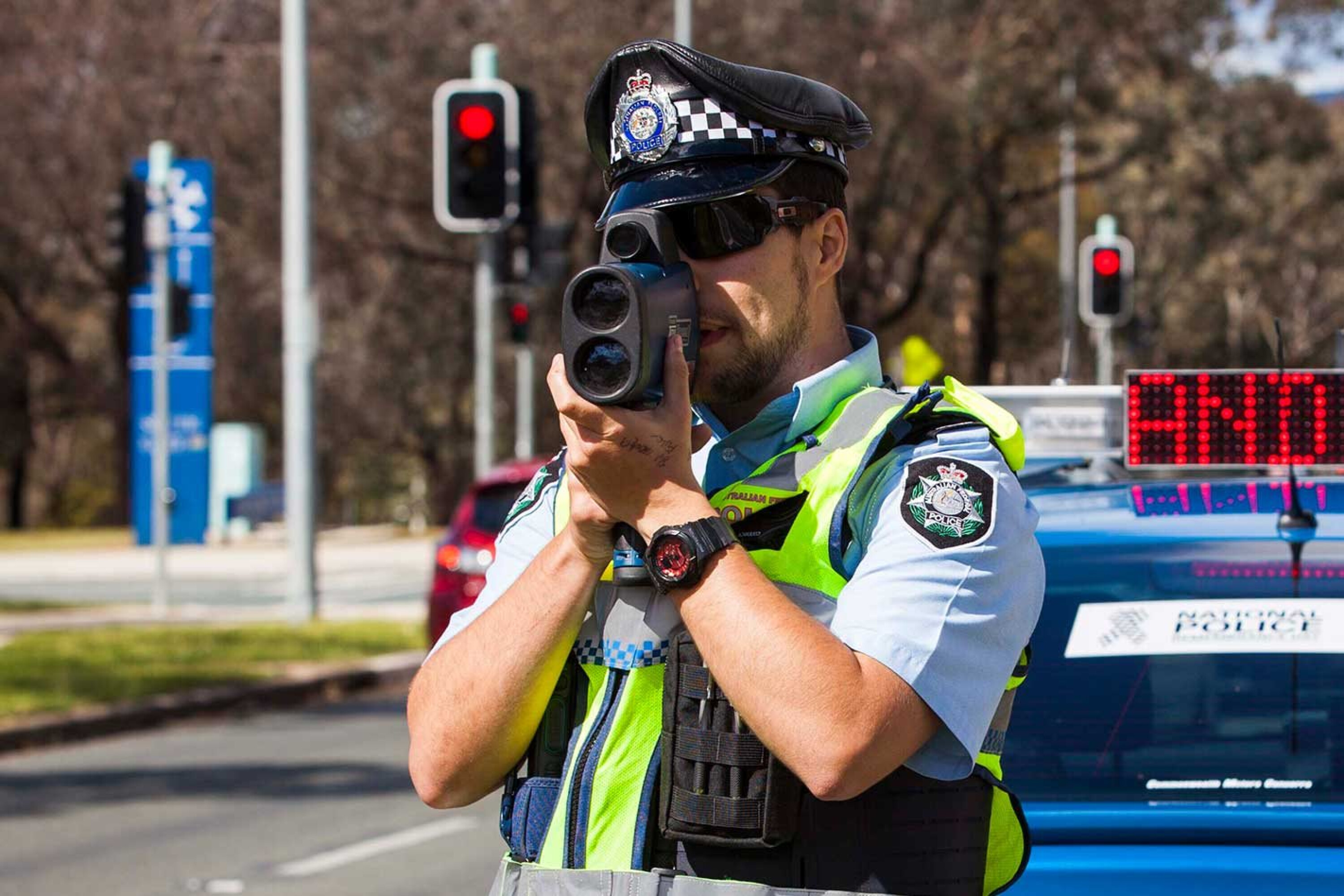
Mr White believes there “needs to be an increase in the level of visible police cars actually enforcing the law” and that Aussie drivers should understand getting their licence is just the beginning of learning how to be a good driver, not the end.
He also floated the concept of rewarding drivers who do the right thing by giving tax deductions, cheaper tolls and fuel discounts to those with zero demerit points. “So that a clean licence actually has a financial value as well as the points value as well.”
1
A refresher driving test
Queensland is exploring the idea of forcing millions of drivers to resit an online test when the time comes to renew their licence. The test would likely include a video or an information booklet as well as a “range of questions” that cover recent road rule changes.
QLD also introduced steep fine increases for common offences last year, with one example seeing the penalty for phone use jumping from $413 to $1078.
Banning licences for males under 21
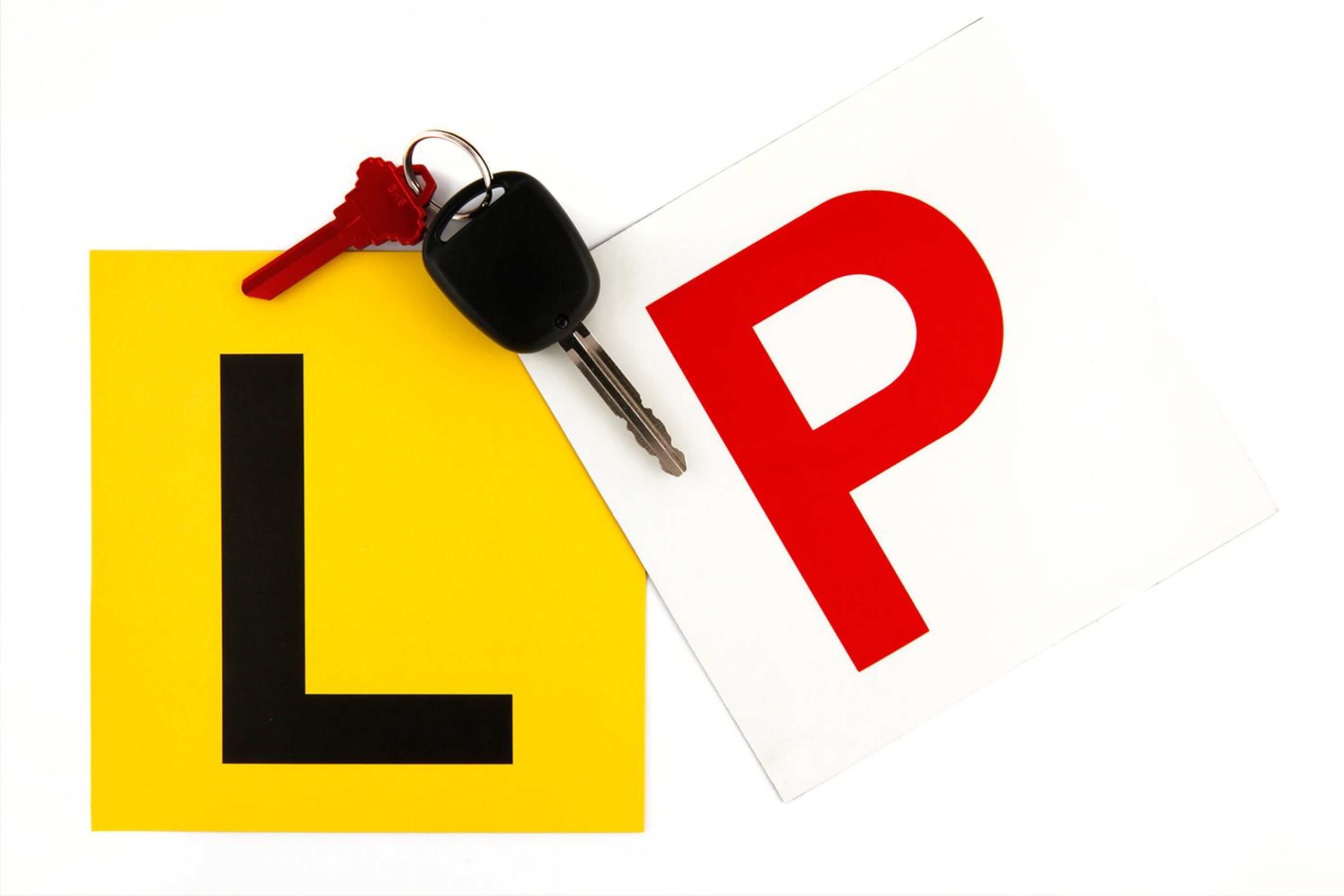
Late last year, the Australasian College of Road Safety, floated the controversial idea of banning licences for males until they turn 21. According to the ACRS, 15 percent of road users in NSW were less than 25 years old yet they accounted for 25 percent of all car crashes.
1
How we compare globally
While there’s no doubt Australia’s recent road statistics are sobering, viewing them through a broader context only reinforces the need for change. This data lags slightly behind our current road-toll, with the most recent figures taken from 2020.
Even so, Australia’s rate of road fatalities per 100,000 population was 4.26 which ranked 20th out of 36 countries that form the Organisation for Economic Co-Operation and Development (OECD).
The nations with the best fatality figures were Norway, Sweden and Iceland who scored 1.73, 1.98 and 2.2 respectively.
1
The statistics show Australia trails behind the United Kingdom (2.26), Japan (2.72), Germany (3.27), France (3.9) and Italy (4.02) for road fatalities per 100,000 population.
Interestingly, New Zealand’s figure is worse than Australia at 6.01 while the United States has the worst road fatality rate at 12.45 per 100,000 people.
MORE
ANCAP
As the festive season rolls in, days are filled with the hustle of celebrations and the hit of holiday expenses. The last thing anyone wants during this bustling period is the unwelcome surprise of a hefty fine.
Recently, Victoria Police ramped up efforts to target unsafe vehicles in Melbourne’s South East, issuing defect notices for cars that fail to meet roadworthiness requirements and registration standards over a two-day blitz.
To dodge the unwanted gift of a defect notice and ensure your holiday travels are smooth and safe, here’s a rundown of five crucial checks you can perform on your vehicle. By following these tips, you can help improve your chances of enjoying your end-of-year journeys without any unexpected bumps on the road.
What is a defect notice?
A defect notice, issued by traffic or road safety authorities, is a formal notification given to a vehicle owner when their vehicle is found not to meet certain roadworthiness requirements or registration standards.
This notice typically indicates that the vehicle has been inspected and found to have deficiencies or faults that could make it unsafe or unsuitable for use on public roads. Essentially, the car is not roadworthy.
You’ll be given a date that the vehicle defects must be fixed. If not obliged you can be given a hefty fine, and in some cases even have your registration cancelled.

1
Wheels and tyres
Wheelie good times should not be compromised by dodgy wheels.
Your wheels should be free from cracks, damage, or imbalance, with spare wheels securely retained if carried. Replacement wheels must also comply with specific standards of your state.
While you’re down there, it’s important to inspect your tyres thoroughly, ensuring all have a minimum tread depth of 1.5mm in principal grooves and check for uneven wear (except at the tread wear indicators). Tyres must match the rim sizes and be free from deep cuts, cracks, bulges, or other defects.
Brakes
1
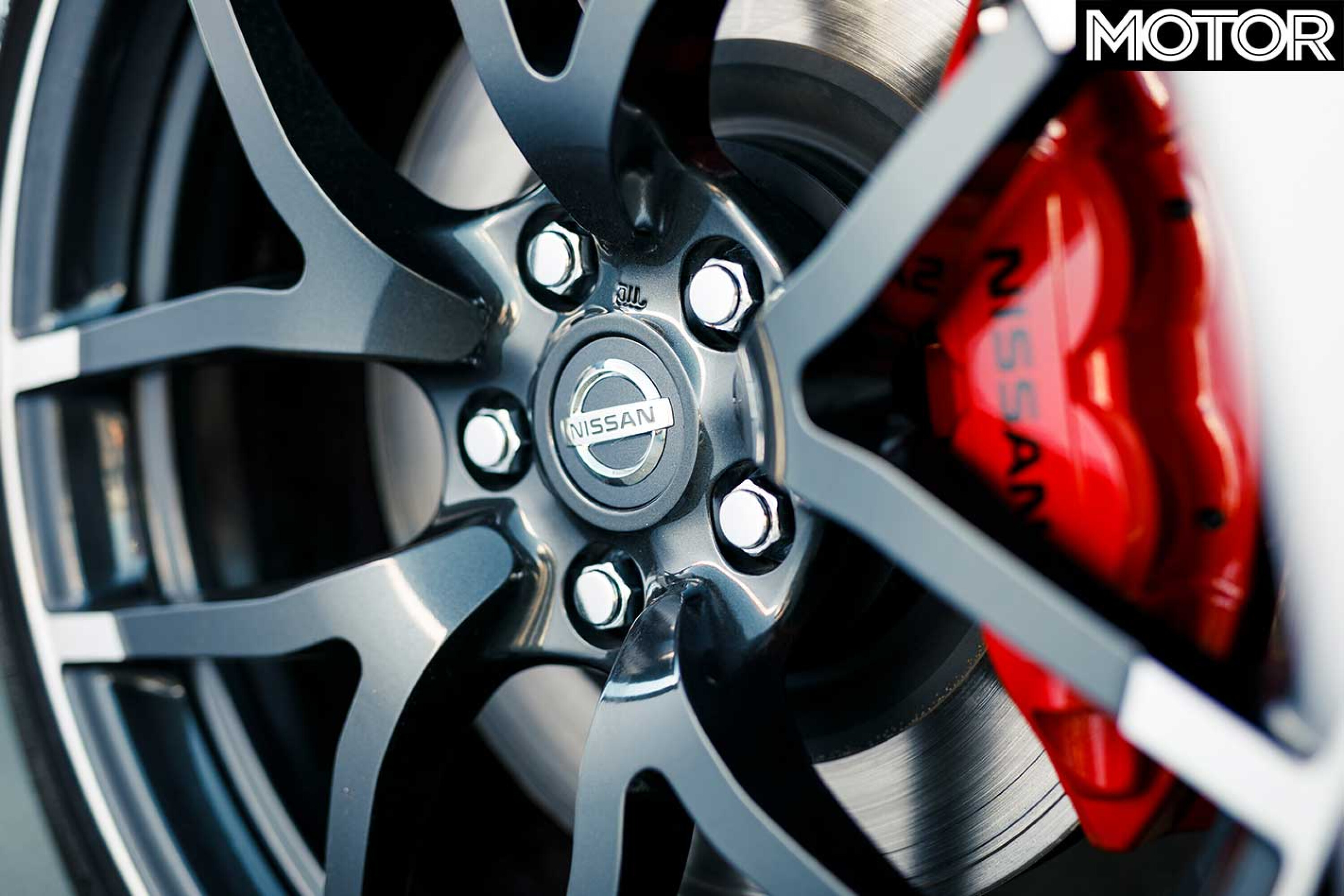
Make sure all your brake components are working properly, are firmly attached and correctly positioned, and free from any damage that could cause them to fail or wear unevenly beyond the manufacturer’s guidelines. if you can’t assess that alone, it’s best to check in with a mechanic.
The brake hoses and pipes must also meet safety standards. For brake linings, the material should not be worn down to the wear indicators.
If there aren’t indicators, the lining material should not be thinner than the manufacturer’s recommended minimum thickness, or less than 1.0mm if no recommendation is provided.
Lights
Ensure all car lights (headlamps, stop lamps, position lamps, number plate lamps, turn signals, hazard warning lights etc.) are functional, emit the correct colour and are securely mounted.
This isn’t Bizzaro World. No red light should be visible at the front of your car or white light at the rear while driving (with the exception of a reversing light, of course).
All lamps should meet registration standards and ADRs, have glare-preventing, colour-correct, clean, and undamaged lenses, and headlamp reflectors should be in good condition.
Lamp defects can sometimes be a quick fix, so this should be an easier one to keep an eye on.
Glass
1
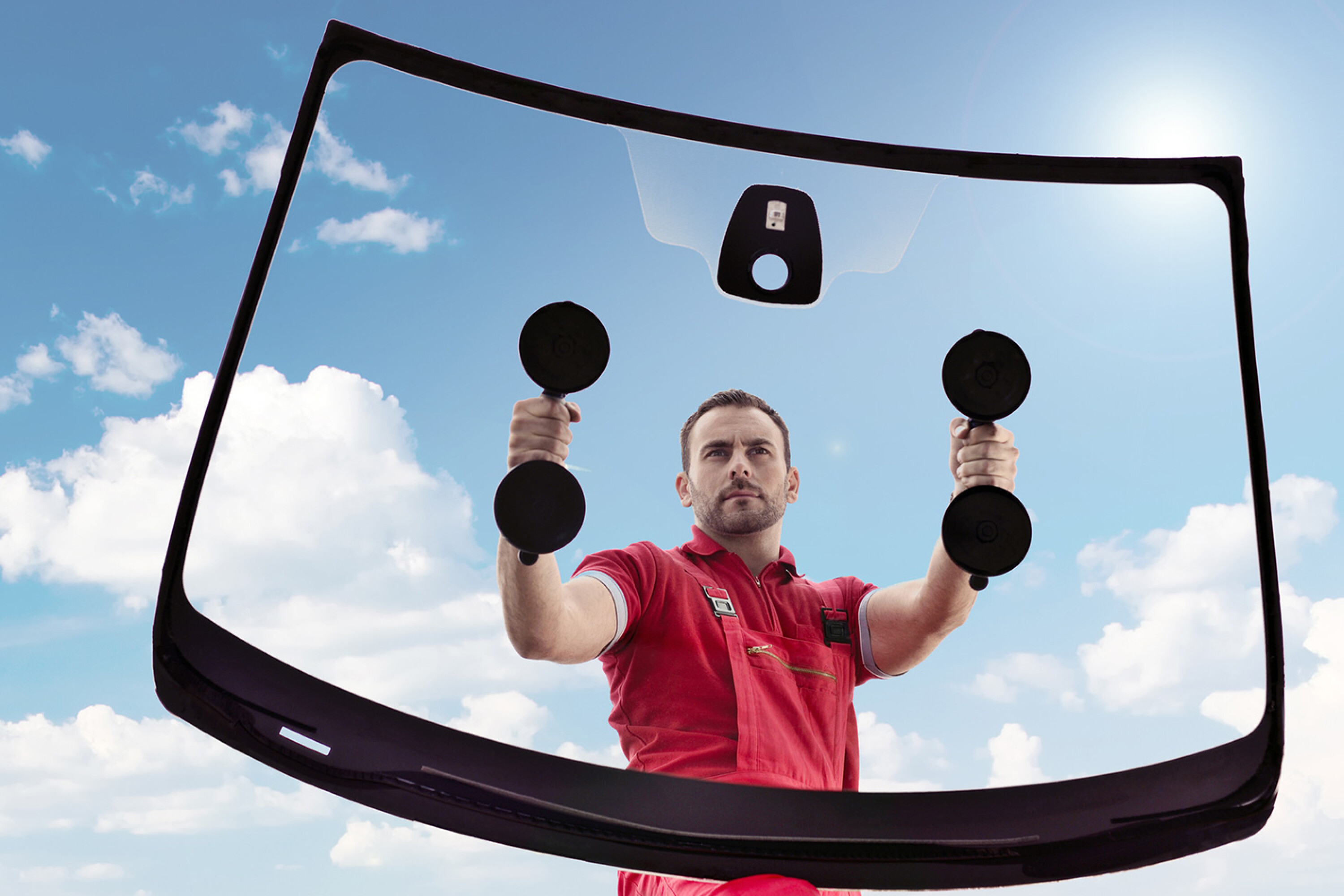
When it comes to your windscreen, take a look for any damage that would impair the drivers vision and have it fixed. A windscreen should be replaced if it’s badly scratched, fractured, or has cracks penetrating more than one layer of glass.
Side windows with extensive damage impairing the driver’s vision should also be replaced.
While you’re inspecting your windows, check out the laws in your local state to make sure they are within the legal tint limit percentages.
Registration
While rushing around buying gifts for loved ones it’s easy to miss that registration reminder e-mail in your inbox.
Whether you’re paying your registration yearly, bi-yearly or quarterly, it’s best to take a look and confirm your car is registered over the silly season.
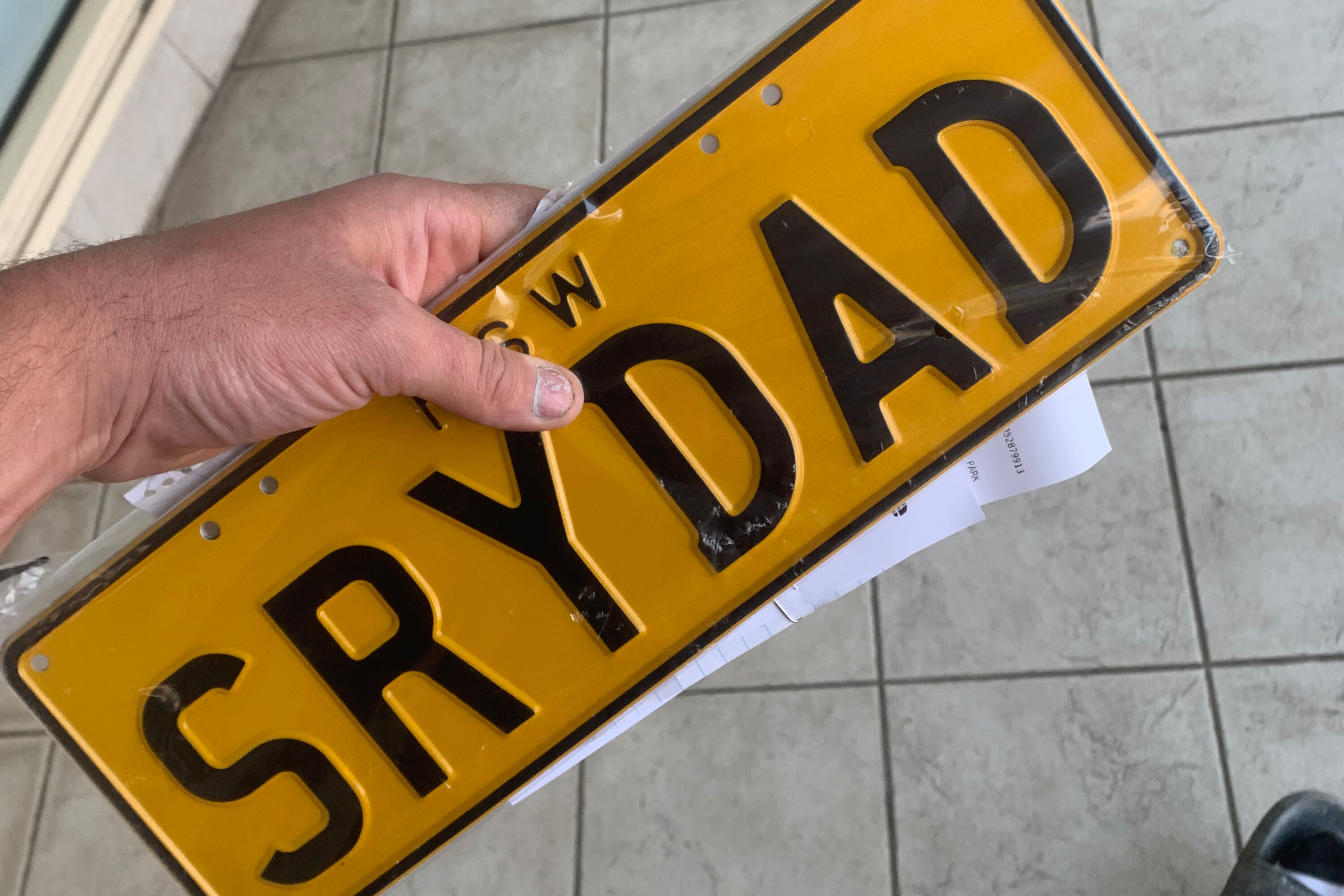
If your vehicle is unregistered, there are several legal and practical implications including significant fines and penalties. Your car will be illegal to drive, may be seized, and it will actually be likely no longer covered by your insurance. This is something you most certainly don’t want to be caught out by.
1
In states like NSW, you can also receive defect notices if your car:
- Emits excessive noise, leaks oil, or produces too much smoke
- Features a bull bar that fails to comply with safety standards or regulations, such as having pointed corners or sharp edges.
- Includes accessories that are improperly installed, like fishing rod holders, spotlight mounts, or winches.
If you’re off on a long journey and have some concerns, you can have a mechanic take a look at your vehicle, or jump onto your local state government transportation departments website for more details.
Remember, these checks not only contribute to avoiding fines but are crucial for your safety and that of others on the road.
Safe travels and happy holidays!
Safety organisation Euro NCAP has said it expected more real-world development from carmakers implementing lane-keep assist systems.
“When we started to develop these tests [for lane-keep assist] our understanding was that vehicle manufacturers would not bring these systems in if they would upset their customers”, Euro NCAP secretary general Michiel van Ratingen told Wheels at an Australasian New Car Assessment Program (ANCAP) media event this week.
Yet with lane support systems – such as lane-departure warning, emergency lane-keep assist and lane-trace assist – now necessary for a five-star safety rating, Euro NCAP and ANCAP are updating their protocols to include real-world testing.
Van Ratingen was asked about a few recent five-star models – including the Chery Omoda 5, Isuzu D-Max and MG 4 – that have aggressive emergency lane-keep inputs designed to ace the program’s lab tests with little attention paid to real-world functionality.
We are kind of upset that the vehicle manufacturers answer questions from you guys to say that Euro NCAP is forcing them [to implement LSS]
1
“I think we should not generalise the whole ADAS [Advanced Driver-Assistance Systems]. There are different elements within the ADAS family and some of them are very effective, other ones I would certainly agree have issues in the implementation in the vehicle; how the vehicle manufacturer has put the systems into the car”, said Michiel.
He conceded that lane-keep assist functions are often turned off by drivers and – in some instances – can be dangerous.
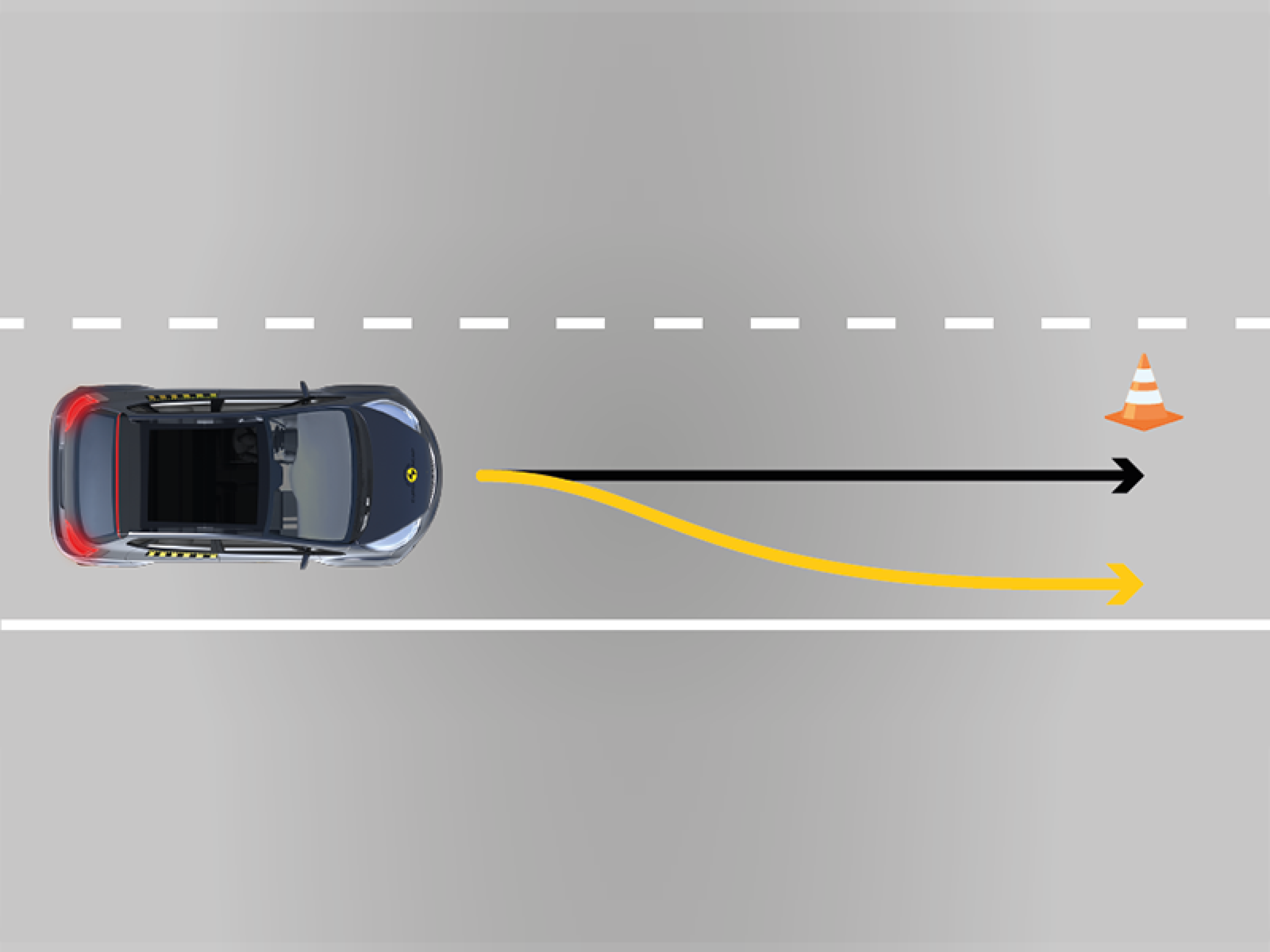
“When we started to develop these tests, our understanding was that vehicle manufacturers would not bring these systems in if they would upset their customers. So we focused on evaluating whether – in critical scenarios where the system should actually intervene – they will actually do a good job; that’s what we test actually in Euro NCAP and ANCAP.
1
“So we really focus on: ‘Let’s imagine a crash is about to happen, how can the system effectively intervene’, and we replicate that on the track, and that’s the basis on which we give the five stars”, he explains before saying that Euro NCAP has had tough discussions with automakers about this exact issue.
“As it turned out, many vehicle manufacturers basically used that [test] as a blueprint for the system, which was never the intention for us. So [some manufacturers] basically said: ‘Okay, if I meet the test, that’s fine. That’s enough.’
“And because of the development times getting shorter, and shorter and shorter – now they are basically back to two years – what we see happening is that they are not properly evaluated in the real world”, he added.
1
“We are kind of upset that the vehicle manufacturers answer questions from you guys to say that Euro NCAP is forcing them [to implement LSS]. We never forced them to do that, we actually assumed that they would actually have the ethical courage to actually implement a good system. And if they could not deliver that, they wouldn’t go for it. But they went for it just to get the points”, said a despondent van Ratingen.
“So now it’s back to our action to actually adapt the test procedure and to include real-world testing”, he explains, with Euro NCAP – and by extension ANCAP – upgrading the test procedure to “really force [manufacturers] to include driver intention much more than what they had done before”.
Michiel says he’s “of the opinion that this is not Euro NCAP’s job”, believing strongly it’s up to manufacturers to ensure these systems are helpful and don’t give false positives. “Already for next year, we have reduced the torque requirements”, he says, suggesting that second-gen systems emerging over the next two to three years should be much improved.
1
Euro NCAP and ANCAP have signed a new memorandum of understanding (MOU) on ANCAP’s 30th anniversary, updating the agreement first signed in 1999.
The two independent crash-testing bodies will continue to work closely on future safety incentives, including evaluating light trucks and heavy goods vehicles, with the Australian body looking into testing full-size American pick-ups that are growing in popularity locally.
Snapshot
- 2024 Mercedes-Benz GLA facelift: Full Australian details
- Updated small SUV receives mild design revisions, more tech
- Price rises of up to $5700; AMG GLA 35 down $900
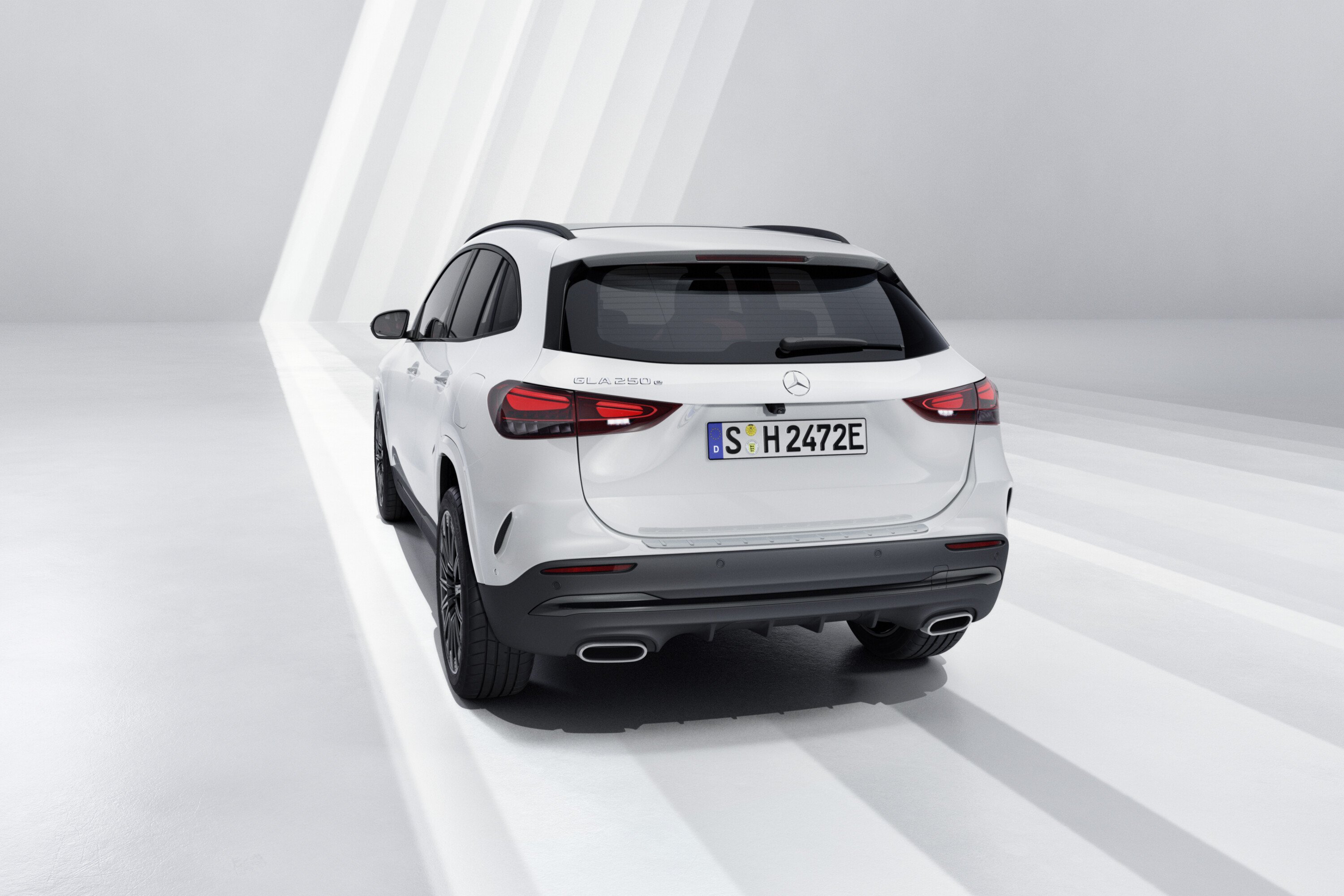
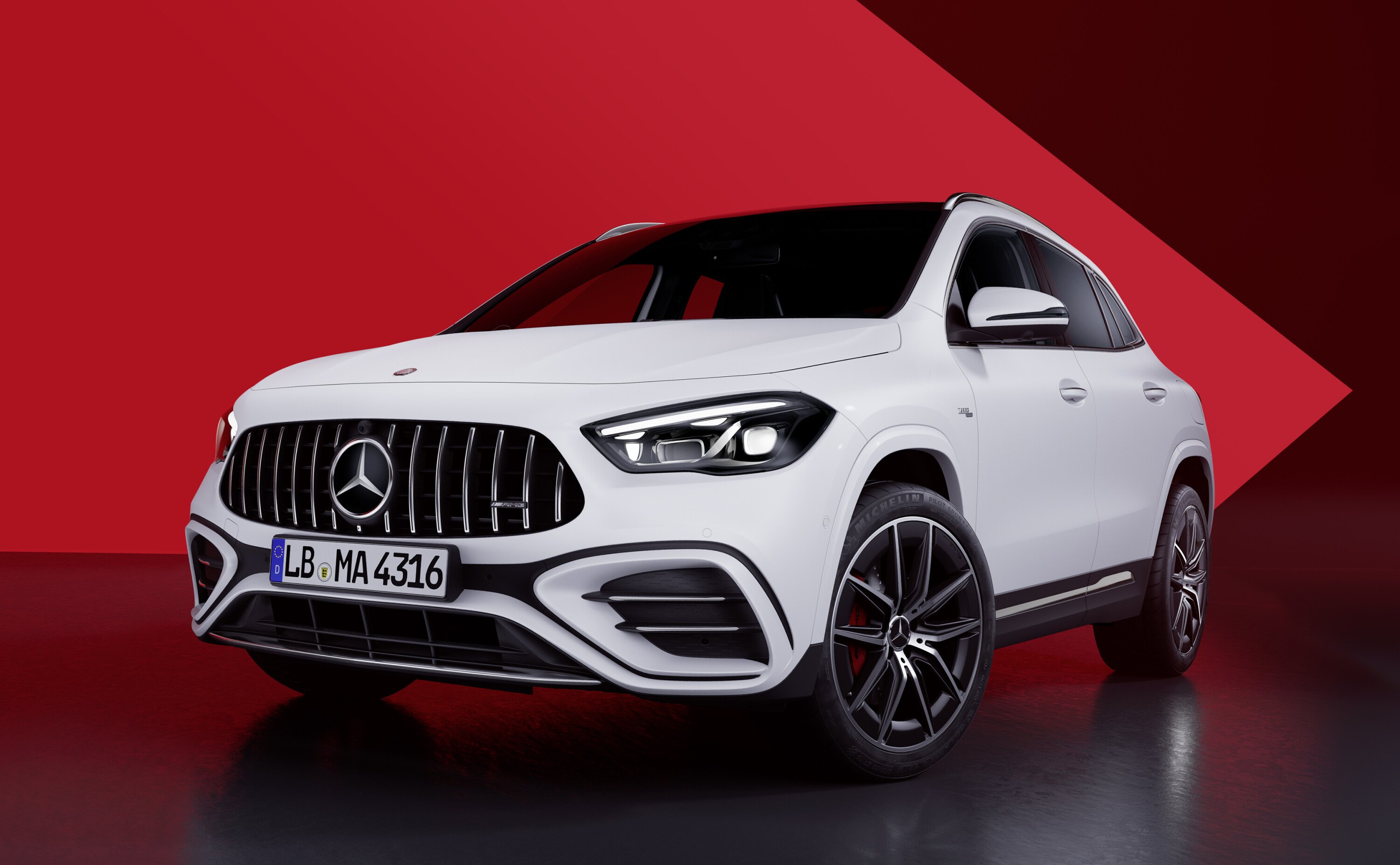
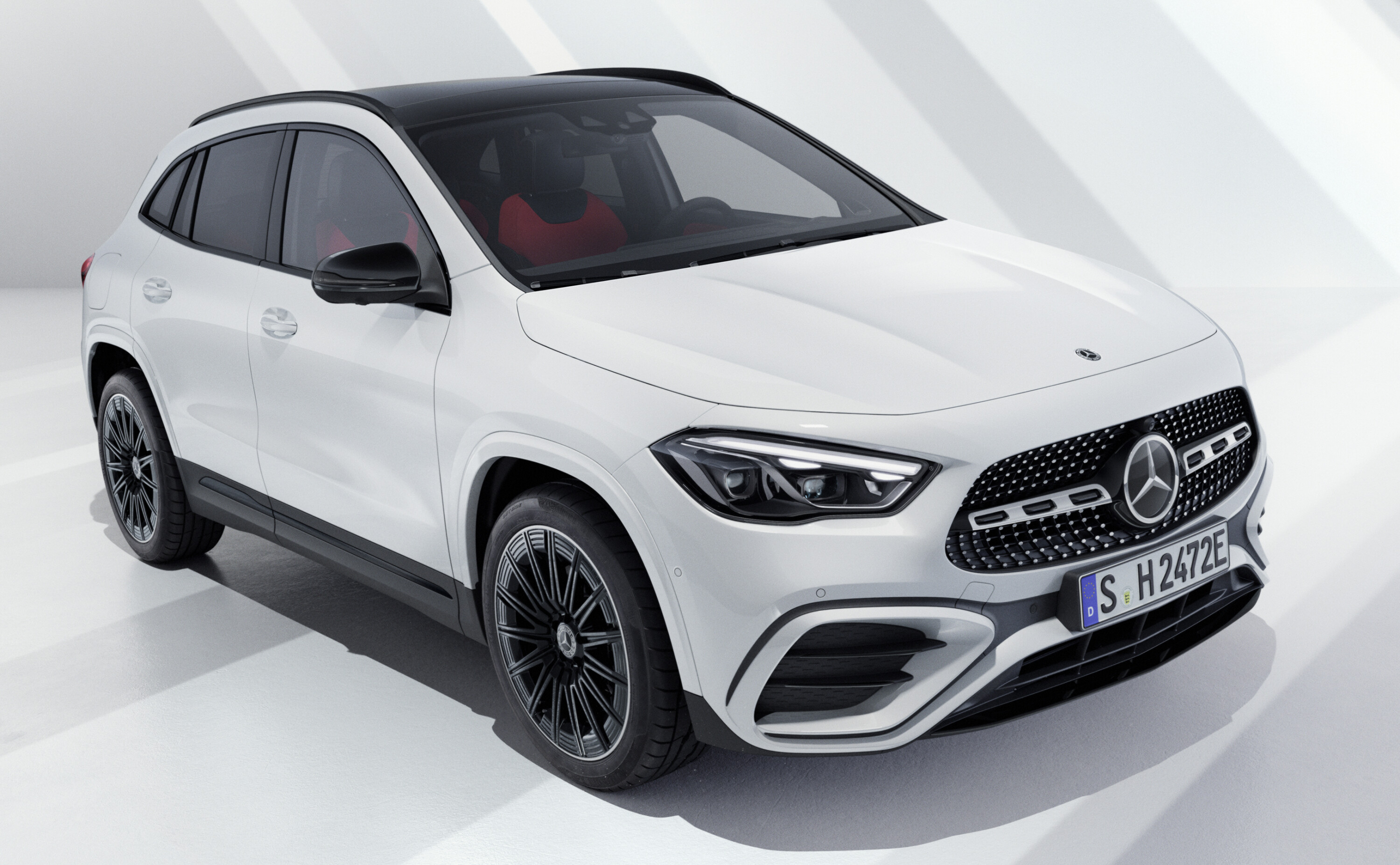
The facelifted 2024 Mercedes-Benz GLA small SUV is now available to order in Australia.
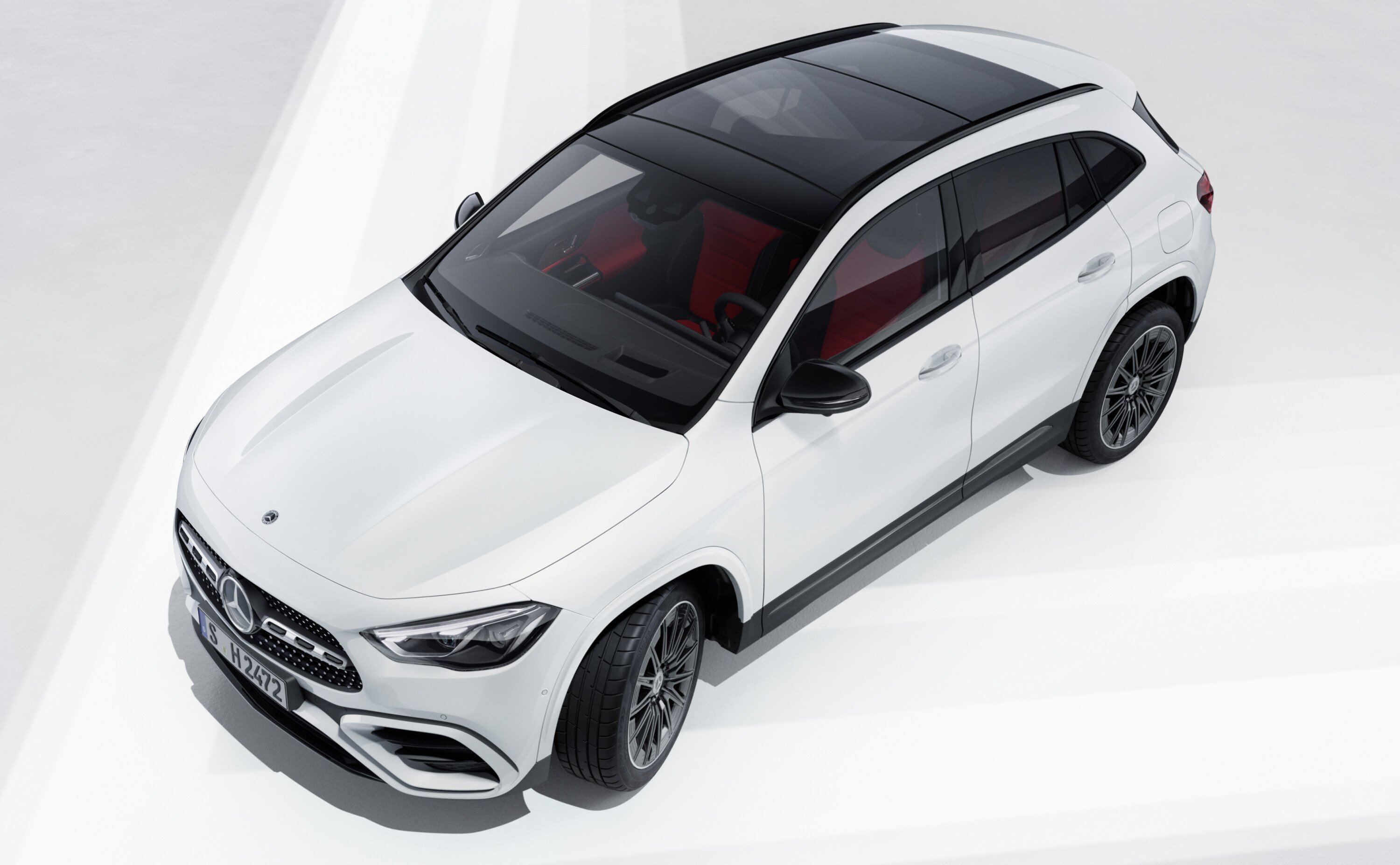
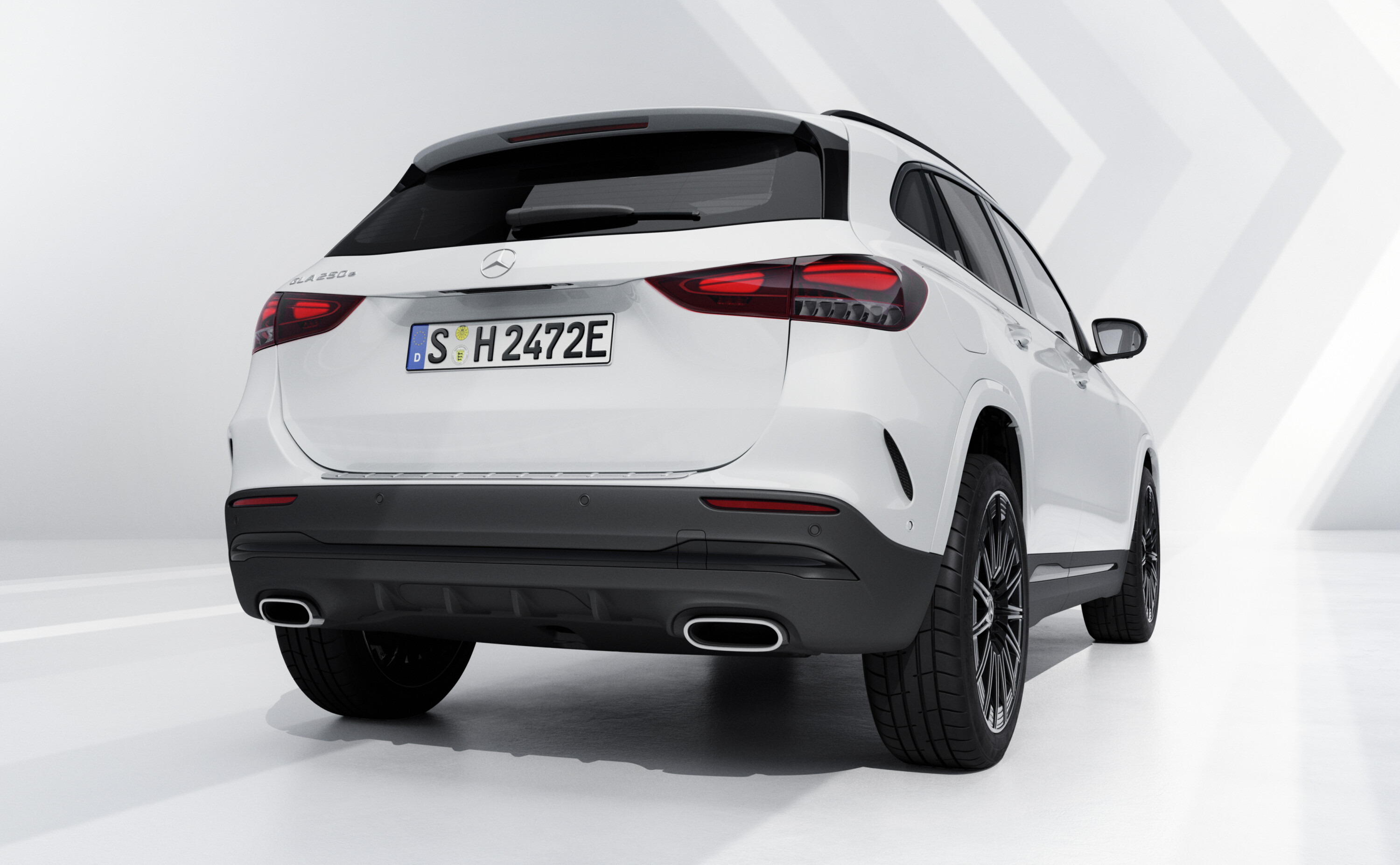
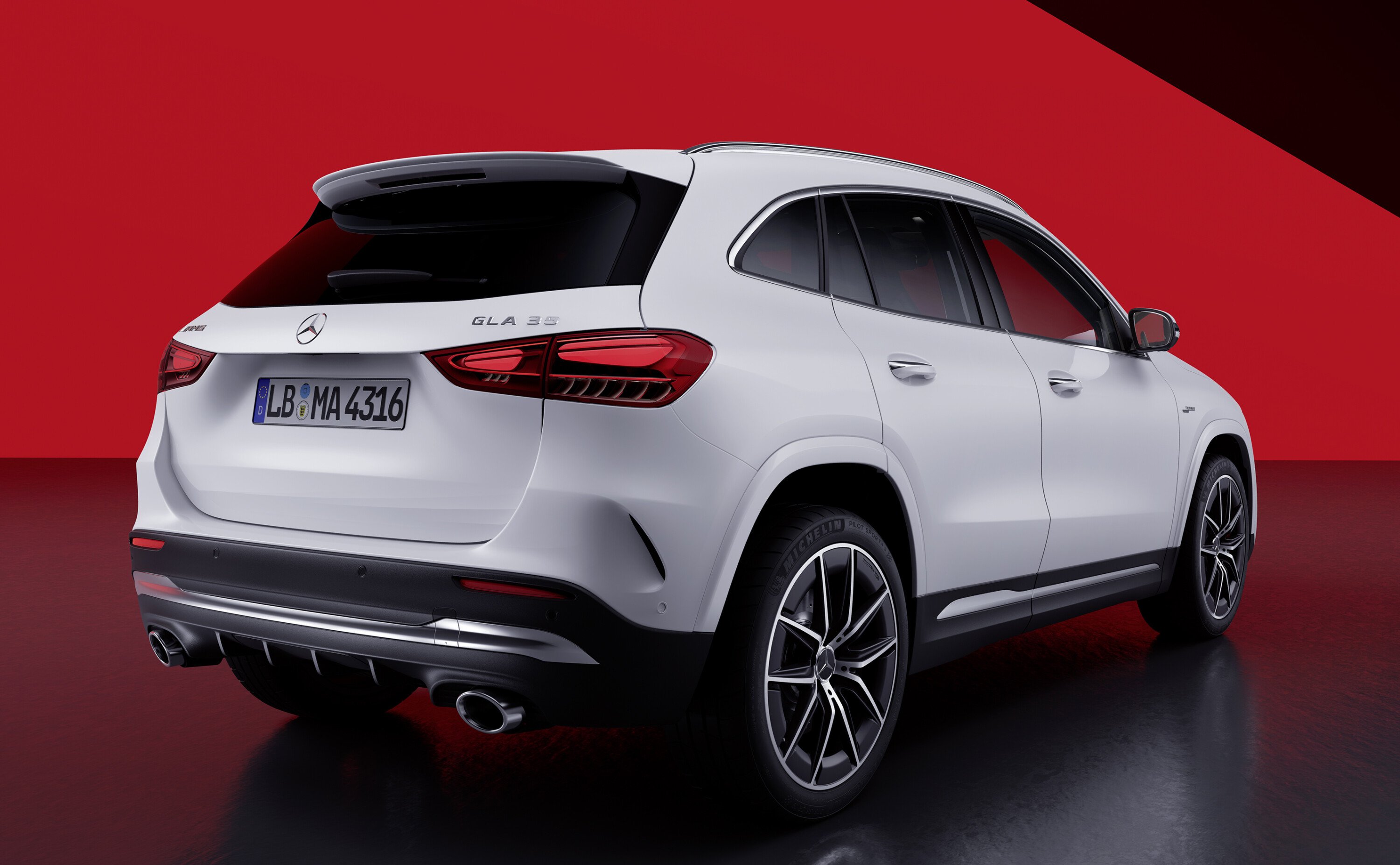
Mirroring the updated A-Class launched in mid-2023, design changes include redesigned headlight internals, modified tail-lights, and new alloy wheel designs.
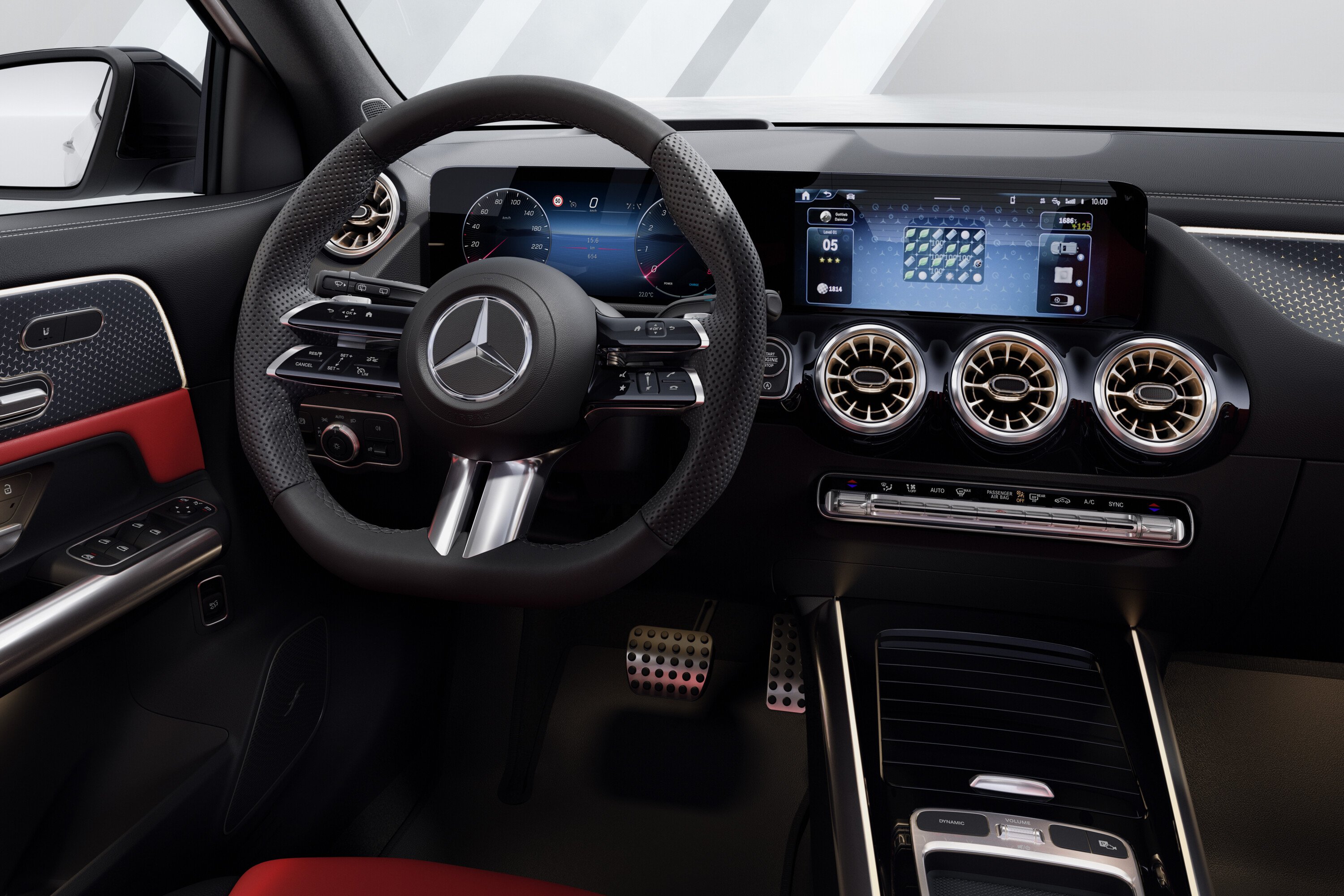
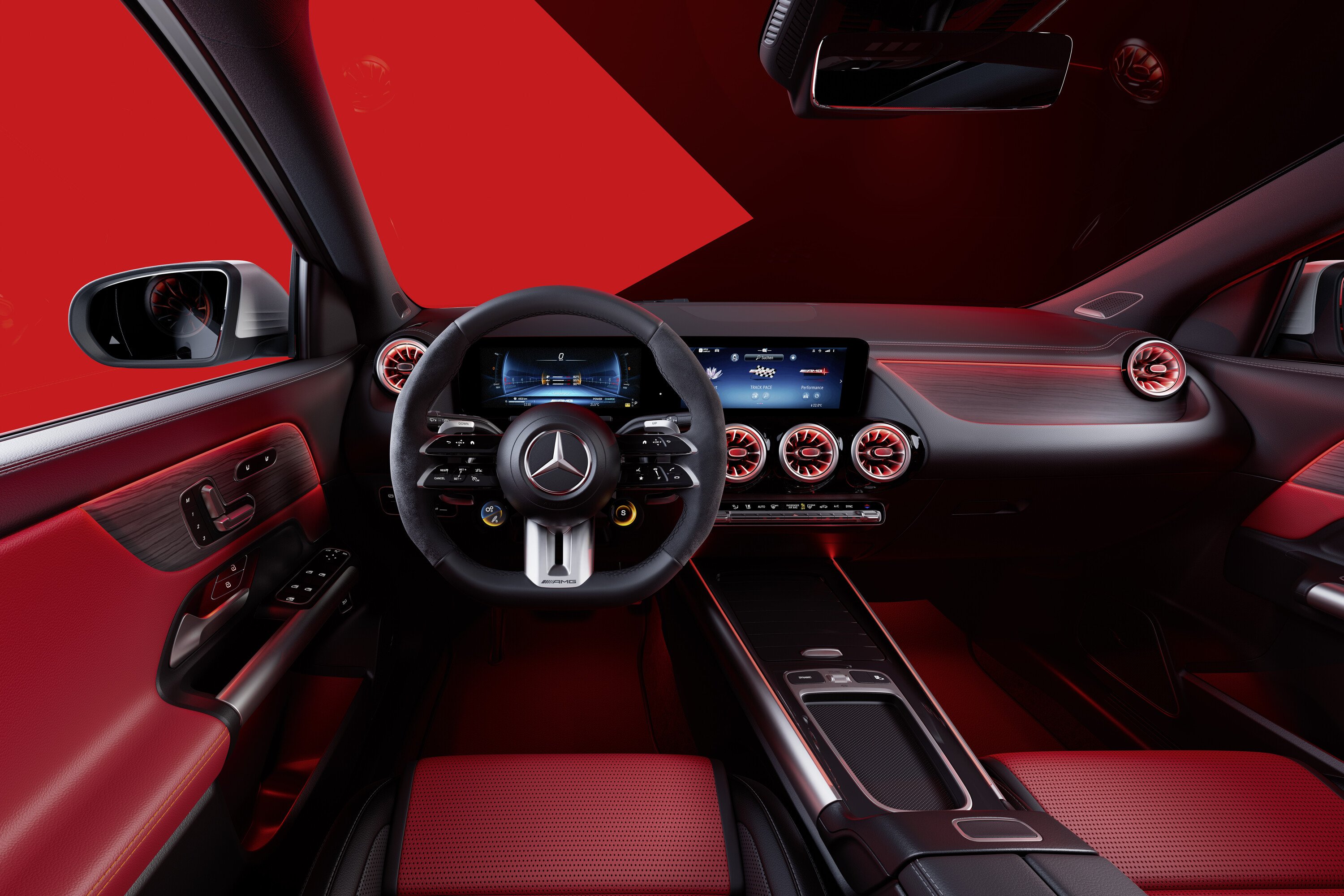
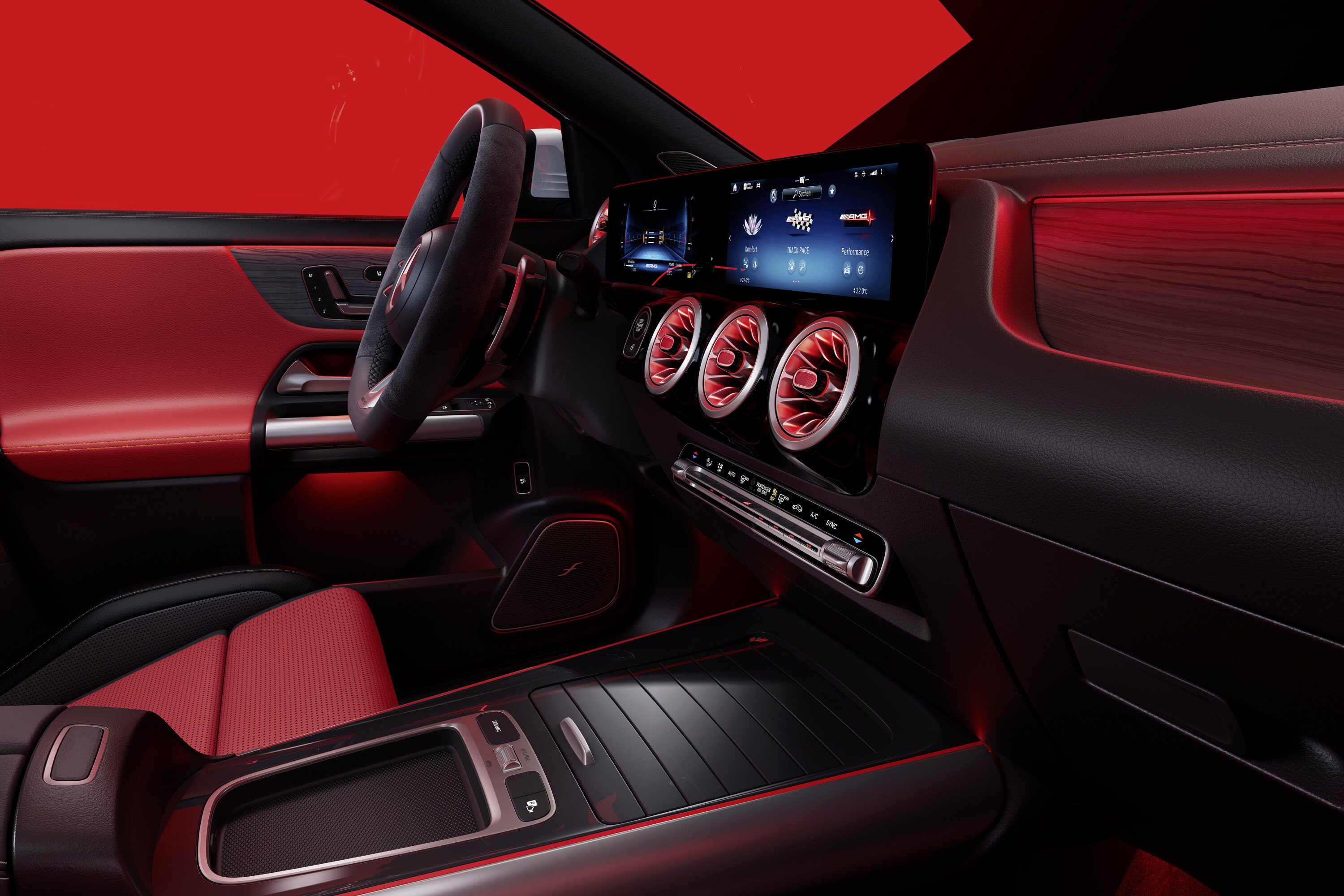
Inside, it features an AMG twin-spoke steering wheel, a simplified centre console with the touchpad removed and repositioned controls, along with an additional USB-C port.
1
While the current 10.25-inch MBUX infotainment system remains, it has been revised with new features, including wireless Apple CarPlay and Android Auto and a higher-resolution 360-degree camera.
There are also newly designed display styles, machine learning, and the ability to speak to the voice assistant without saying ‘Hey, Mercedes’ first in some instances.
A fingerprint sensor on the centre console to identify and authenticate the driver is not available in Australia.
1
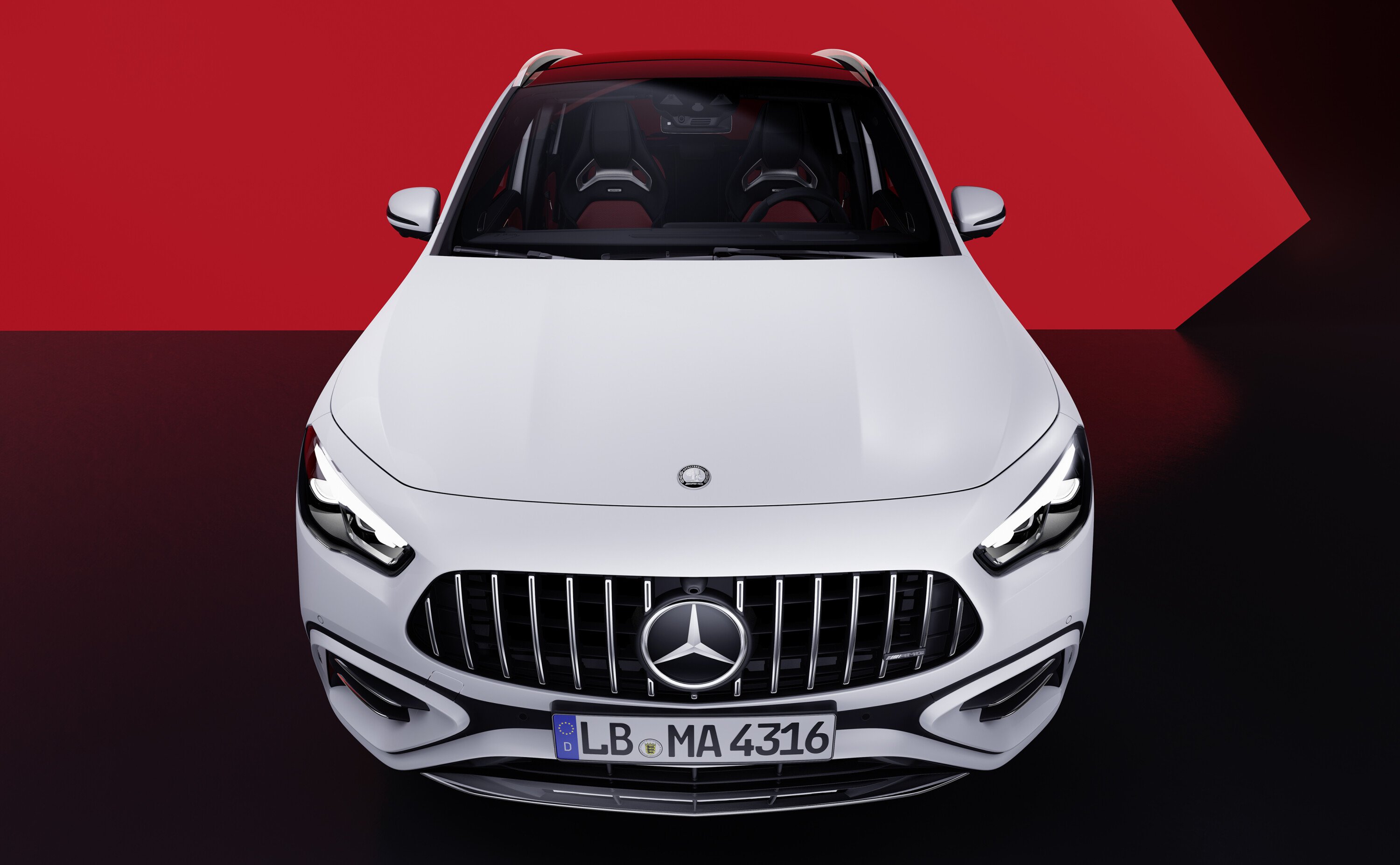
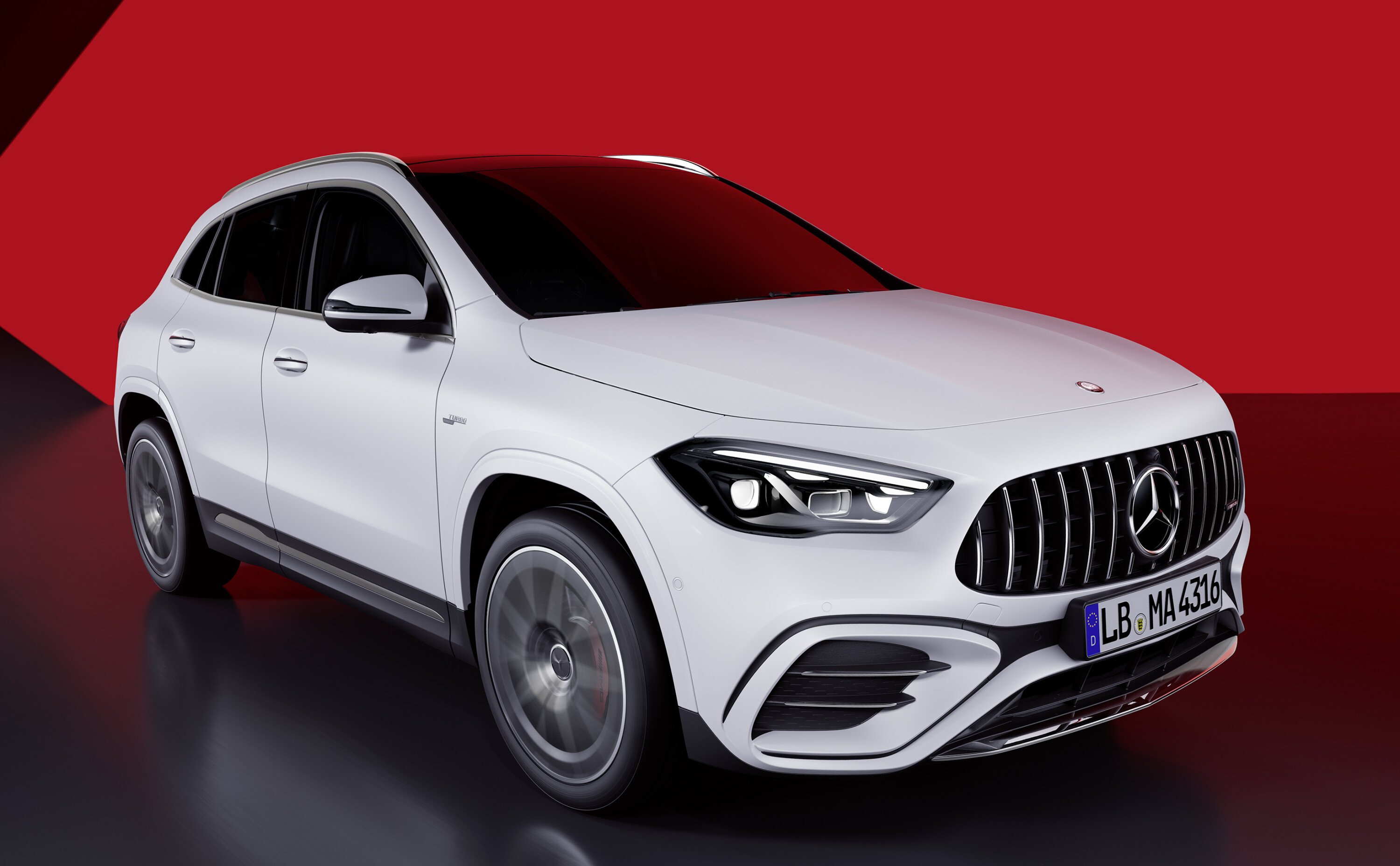
The GLA 35 receives the round AMG emblem to replace the Mercedes star with a laurel wreath that remains fixed to the bonnet on non-AMG variants.
Under the bonnet, all petrol engines – including the AMG 35 – are fitted with a 48-volt mild-hybrid system for the belt-driven starter generator.
This system brings an additional 10kW with faster acceleration, added refinement with low-noise engine starting and reduced vibration, and regenerative braking.
1
While the GLA 35 has unchanged outputs at 225kW and 400Nm, it has a new eight-speed dual-clutch automatic transmission, replacing the current seven-speed unit.
The updated AMG GLA 45 S revealed in Europe last month will not feature in the current line-up. Mercedes-Benz Australia has not confirmed if it will return to our market at a later date.
Pricing for the GLA 200 has increased by $5700, while the GLA 250 AWD is up $1600. The AMG GLA 35 has decreased by $900 compared to the pre-facelift version.
JUMP AHEAD
- 2024 Mercedes-Benz GLA pricing
- 2024 Mercedes-Benz GLA features
- Options
- Colours
- Engine, drivetrain, and fuel economy
- Safety
- Dimensions
- Warranty and servicing
- Availability
2024 Mercedes-Benz GLA pricing
| Model | Pricing | Change |
|---|---|---|
| GLA 200 | $68,900 | up $5700 |
| GLA 250 AWD | $78,900 | up $1600 |
| AMG GLA 35 | $96,900 | down $900 |
| Prices exclude on-road costs. |
1
2024 Mercedes-Benz GLA features
| 2024 Mercedes-Benz GLA 200 features | |
|---|---|
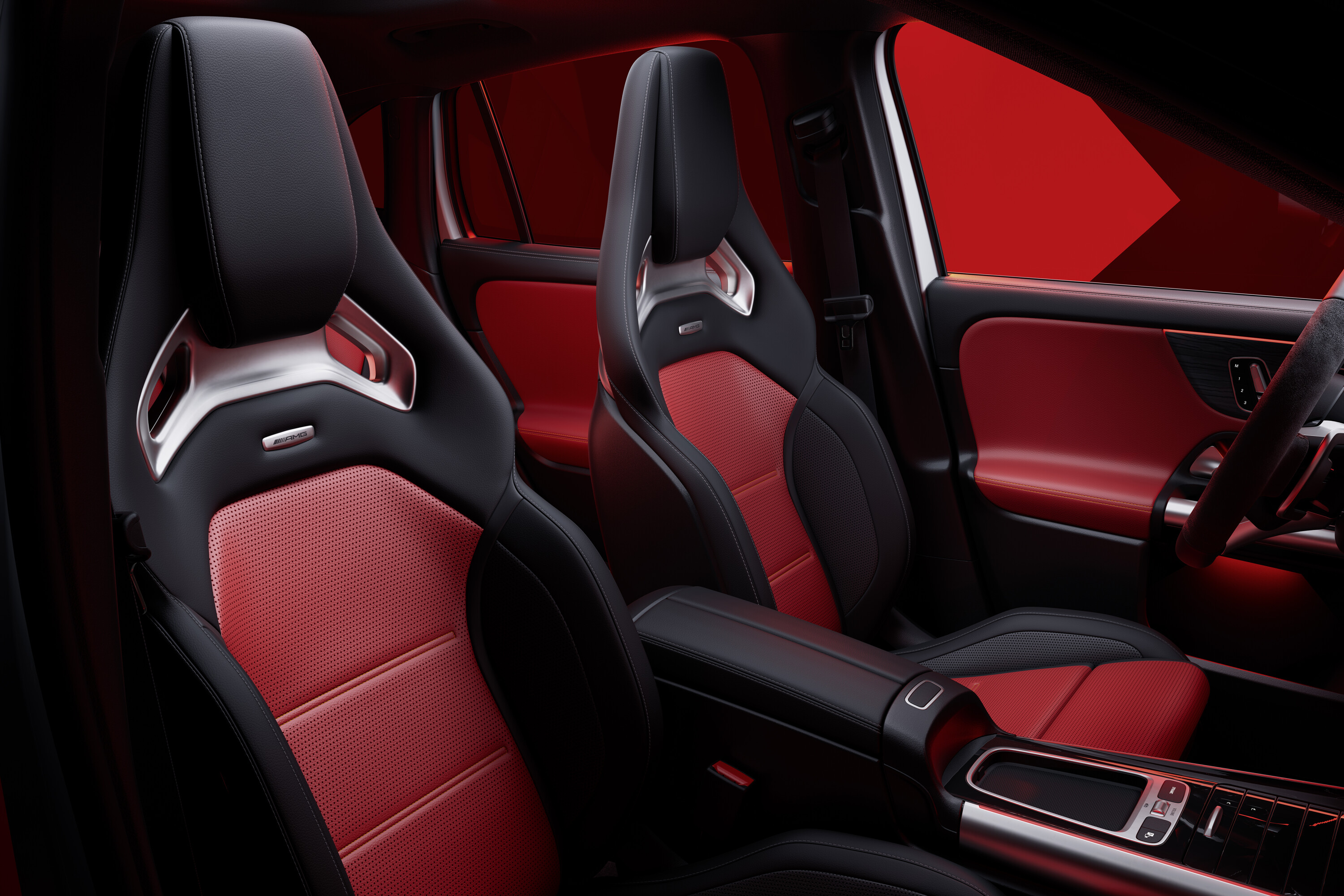
| 18-inch alloy wheels | Power-adjustable passenger seat (new) |
| 10.25-inch MBUX infotainment system | Dual-zone climate control (new) |
| Wireless Apple CarPlay and Android Auto (new) | Wireless phone charger |
| Built-in satellite navigation | Black leather-accented/suede upholstery |
| Mercedes Me connected-car service | Paddle shifters |
| DAB+ digital radio | 64-colour interior ambient lighting |
| Single-zone climate control | Rain-sensing wipers |
| Reflector-type LED headlights | Keyless entry and push-button start |
| Heated front seats (new) | Automatic parking |
| Panoramic sunroof (new) | 360-degree camera (new) |
| AMG Line body kit (new) | Auto-dimming rear-view mirror |
| Nappa leather-wrapped steering wheel | Tyre pressure loss warning |
| Power-adjustable driveru2019s seat with three-position memory and four-way lumbar support (new) | |
1
2024 Mercedes-Benz GLA 250 features
| In addition to GLA 200 | |
|---|---|
| All-wheel drive | Multi-link independent rear suspension |
2024 Mercedes-AMG GLA 35 features
| In addition to GLA 250 | |
|---|---|
| 20-inch AMG alloy wheels | Traffic jam assist |
| Black leather upholstery | Traffic sign recognition |
| AMG-specific front grille | Intelligent speed limit assist |
| 12-speaker, 590-watt Burmester surround-sound audio system (new) | AMG illuminated front door sills |
| Adaptive projector-type LED headlights | Adaptive dampers |
| Head-up display (new) | Rear privacy glass |
| Active lane change assist | Black-painted side mirrors |
| Front cross-traffic alert | Tyre pressure monitoring |
| Augmented reality satellite navigation | Tyre inflation kit |
1
Options
| Plus package (GLA 200, GLA 250) u2013 $3770 | |
|---|---|
| 12-speaker, 590-watt Burmester surround-sound audio system | Augmented reality satellite navigation |
| Adaptive projector-type LED headlights | Traffic jam assist |
| Head-up display | Gesture control |
| Dual-zone climate control | Traffic sign recognition |
| Front cross-traffic alert | Route-based speed adaptation |
| Active lane-change assist | AMG illuminated front door sills |
1
| Aerodynamics package (AMG GLA 35) u2013 $3500 | |
|---|---|
| Larger front splitter | High-gloss black rear diffuser blade |
| High-gloss black rear spoiler | |
| Optional wheels | |
|---|---|
| 20-inch AMG multi-spoke alloy wheels (GLA 200, GLA 250 AWD) | $1154 |
| Colours | |
|---|---|
| Digital white | Cosmos black |
| High-tech silver | Mountain grey |
| Spectral blue | Patagonia red* |
| *Premium paint, $691.90 | |
1
Engine, drivetrain, and fuel economy
The GLA 200 features a 1.3-litre turbocharged mild-hybrid four-cylinder petrol engine producing 120kW and 270Nm. It is matched to a seven-speed dual-clutch automatic transmission, sending power to the front wheels.
Mercedes-Benz claims an 8.9-second 0-100km/h sprint time.
The GLA 250 has a 2.0-litre mild-hybrid turbo-petrol four, with 165kW and 350Nm, all-wheel-drive, a 6.8-second 0-100km/h sprint time, and a new eight-speed dual-clutch automatic transmission.
1
In the AMG GLA 35, the 2.0-litre turbo is uprated to 225kW and 400Nm, with a revised front radiator for improved cooling.
It has a 5.2-second 0-100km/h sprint time.
Front-wheel drive variants have a torsion-beam rear suspension and 43-litre fuel tank, while all-wheel drive models sport multi-link independent rear suspension and a larger 51-litre fuel tank.
GLA 200 and GLA 250 require premium unleaded (95 RON or higher), while AMG variants require 98RON.
| 2024 Mercedes-Benz GLA fuel economy | ||
|---|---|---|
| GLA 200 | 6.2L/100kmu00a0 | 140/km |
| GLA 250 AWD | 7.7L/100km | 175g/km |
| AMG GLA 35 | 8.0L/100km | 179g/km |
1
Safety
The Mercedes-Benz GLA is covered by a five-star ANCAP safety rating, based on testing conducted in 2019.
It scored 96 per cent for adult occupant protection, 92 per cent for child occupant protection, 79 per cent for vulnerable road user protection, and 77 per cent for safety assistance.
Nine airbags (dual front, rear head, front and rear side, and front knee) are fitted as standard.
| 2024 Mercedes-Benz GLA active safety features | |
|---|---|
| Autonomous emergency braking (vehicle, pedestrian, cyclist) | Rear cross-traffic alert |
| Lane-keep assist | Side exit assist |
| Lane departure warning | Adaptive cruise control (new) |
| Blind-spot alert | Auto high beam. |
1
Dimensions
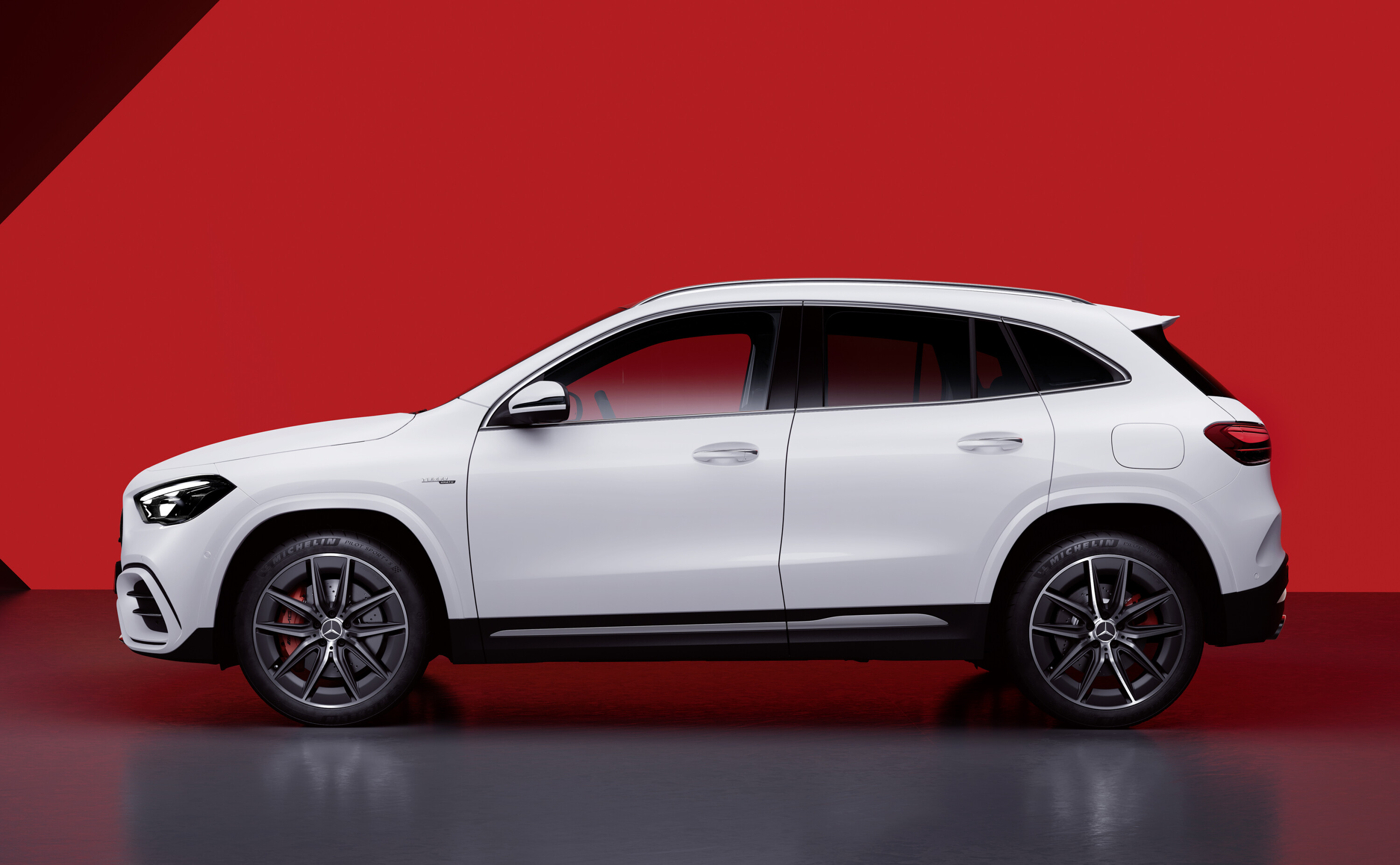
The Mercedes-Benz GLA measures 4410 millimetres long, 1834mm wide and 1611mm tall, with a 2729mm wheelbase.
2024 Mercedes-Benz GLA boot space
The Mercedes-Benz GLA has a 435-litre boot, extending to 1420L with the second-row folded.
1
Warranty and servicing
The Mercedes-Benz GLA is covered by the brand’s five-year/unlimited-kilometre warranty.
A complimentary roadside assistance program during the vehicle’s warranty period. The program can be extended for $149.60 per year.
Service pricing can be pre-purchased, consisting of three-, four- or five-year packages with 12-month/25,000km intervals.
2024 Mercedes-Benz GLA service plan pricing
| Model | Three-year | Four-year | Five-year |
|---|---|---|---|
| GLA 200, GLA 250 | $3165 | $4100 | $5155 |
| AMG GLA 35 | $3500 | $4400 | $5885 |
1
Availability
The updated 2024 Mercedes-Benz GLA is on sale now.
Snapshot
- 2024 Genesis G70 pricing and features
- Streamlined line-up, more tech for premium mid-size car
- Entry price up $18,000 u2013 or $25,000 for the sedan
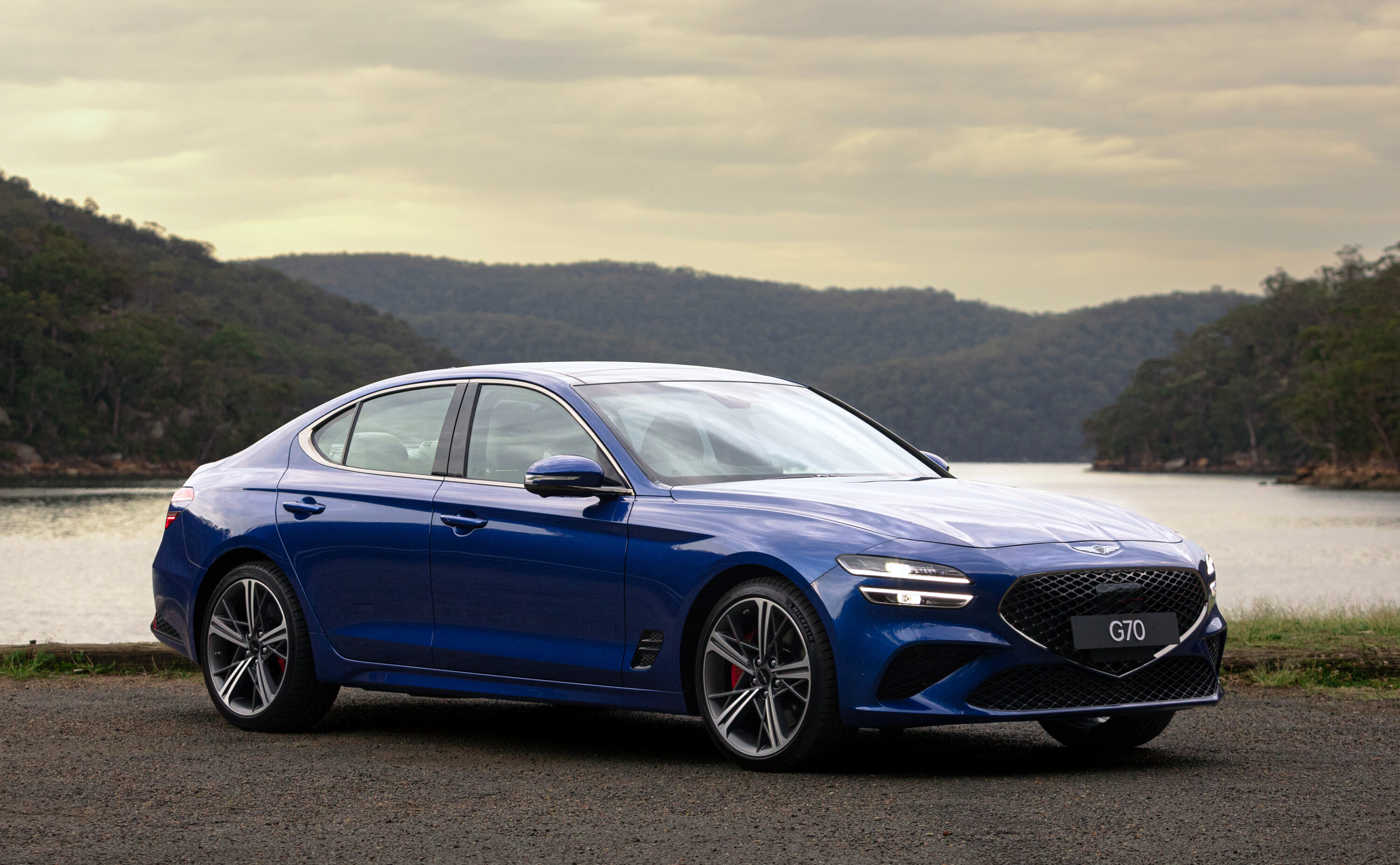
The 2024 Genesis G70 has arrived in Australia with more technology and fewer variants.
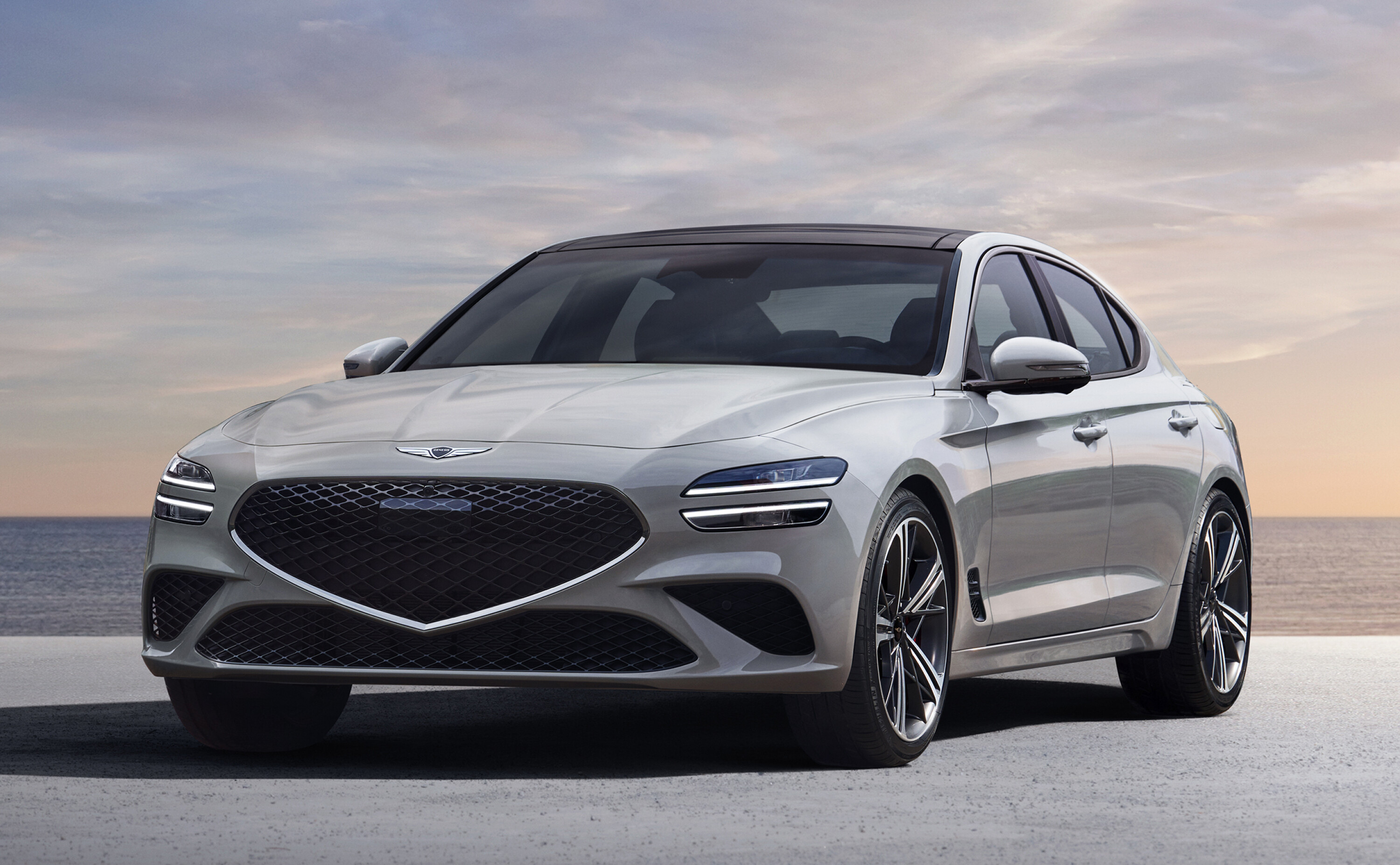
Genesis Australia has dropped the entry-level G70 Sport turbo-four sedan and made the Luxury Pack standard-fit, leaving two identically-specced variants – the 2.0-turbo Shooting Brake Sport Line Luxury or 3.3-litre twin-turbo V6 Sport Luxury sedan.
As such, the entry price has climbed $18,000 – or $25,000 for the sedan – with increases between $3676 and $4273 for carryover variants, now fitted with the luxury package as standard.
1
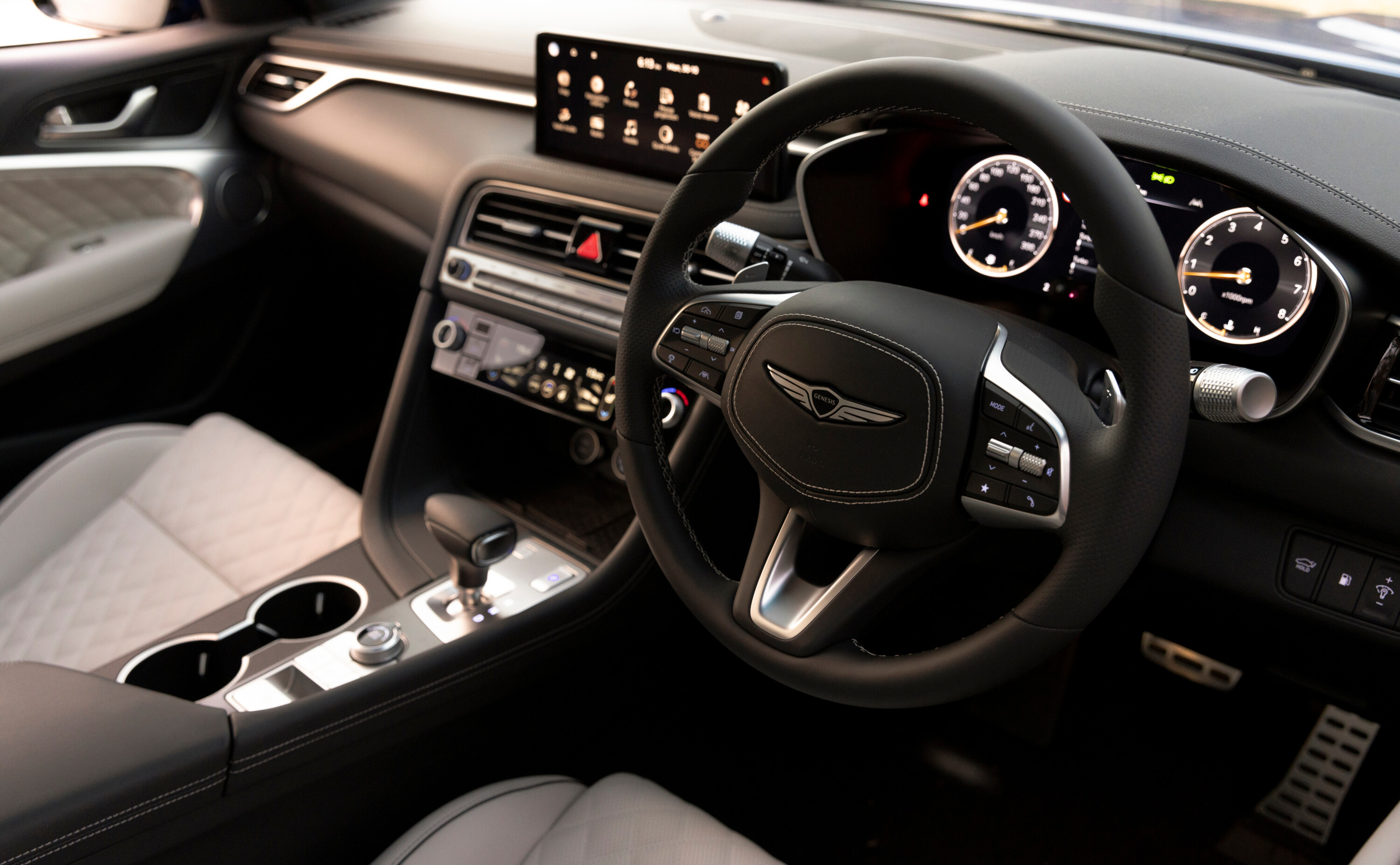
The latest G70 – heavily related to the now-axed Kia Stinger sedan – features updated emblems and alloy wheel designs, new exterior colours, a 6.0-inch touch-type climate control panel, and “new generation” electronic control suspension.
Genesis says the updated suspension improves the G70’s “roadholding, comfort and driver engagement” with reduced damping lag, increased damping force resolution, improved control logic and functions, and a wider damping force window.
It also adds intelligent speed limit assist, Genesis Connected Services with a complimentary five-year subscription, over-the-air updates, a frameless rear-view mirror, and dual rear USB-A ports.
1
However, while left-hand-drive examples of the G70 have switched to the newer 224kW/422Nm 2.5-litre four-cylinder turbo, the Australian-spec model retains the existing 179kW/353Nm 2.0-litre turbo, which is now exclusive to the Shooting Brake variant.
The 274kW/510Nm 3.3-litre twin-turbo V6 in the Sport Luxury sedan remains unchanged.
2024 Genesis G70 pricing
Prices exclude on-road costs.
| Model | Pricing | Change (with previously-optional Luxury Pack fitted) |
|---|---|---|
| G70 2.0T Shooting Brake Sport Line Luxury | $81,000 | up $4273 |
| G70 3.3T Sport Luxury sedan | $88,000 | up $3676 |
1
2024 Genesis G70 features
| 2024 Genesis G70 2.0T Shooting Brake Sport Line Luxury features | |
|---|---|
| 19-inch alloy wheels | Frameless auto-dimming rear-view mirror |
| Brembo brake package | Dual-zone climate control |
| 10.25-inch infotainment system | 6.0-inch touch-type climate control panel (new) |
| Wired Apple CarPlay and Android Auto | Acoustic laminated windscreen and front door glass |
| Genesis Connected Services (new) | Adaptive LED front lighting system |
| Built-in satellite navigation | Panoramic sunroof |
| Over-the-air software updates (new) | Rain-sensing wipers |
| DAB+ digital radio | Autonomous emergency braking (vehicle, pedestrian, cyclist, junction-turning) |
| 15-speaker Lexicon audio system | Lane-keep assist |
| 12.3-inch 3D-function digital instrument cluster | Lane departure alert |
| Head-up display | Blind-spot alert |
| Nappa leather upholstery | Blind-spot view monitor |
| 16-way power-adjustable driveru2019s seat with memory function | Rear cross-traffic alertu00a0 |
| Heated and ventilated front seats | Adaptive cruise control |
| Heated steering wheel | Safe exit assist |
| Heated rear seats | Intelligent speed limit assist (new) |
| Electric tailgate | Leading vehicle departure alert |
| Sport Line appearance package | 360-degree camera system |
| Keyless entry and push-button start | Multi-collision braking |
| Electronic steering wheel column adjustment | Rear occupant alert |
2024 Genesis G70 3.3 Sport Luxury features
| In addition to 2.0T Shooting Brake Sport Line Luxuryu00a0 | |
|---|---|
| Dual muffler with active variable exhaust | Electronic control suspension with Sport+ drive mode |
MORE
Everything Genesis
Hands up … how many brands has General Motors sold in Australia over the years?
Holden, of course, was the main one, before it was ruthlessly dispatched in 2020. Saab, too, was incorporated under the GM operations umbrella back in 2005, before sputtering to a halt in 2013.
There was also a short-lived and ultimately unsuccessful attempt to roll out the Opel brand in 2012 – a decision that was overturned within 10 months.
1
Cadillacs were also sold in Australia from the early 1930s through to 1969 in various guises, with many early models being assembled in Adelaide by Holden.
The US luxury brand then made a false start in 2008, launching at the Sydney Motor Show under the GM Premium Brands umbrella, though its attempted revival came to naught with the onset of the global financial crisis the following year.
Fast forward to 2023 and more than 60 brands fight for a slice of the annual 1.1 million-slice pie that is the Australian new car market. As consumers, we have more choice in new vehicles than exponentially larger markets like the United States, United Kingdom, and Germany.
1
And that number is only set to grow. Think of the influx of Chinese brands like MG, Chery, Haval, GWM and BYD, and consider that there are many, many more sizing up our shores for a potential roll-out.
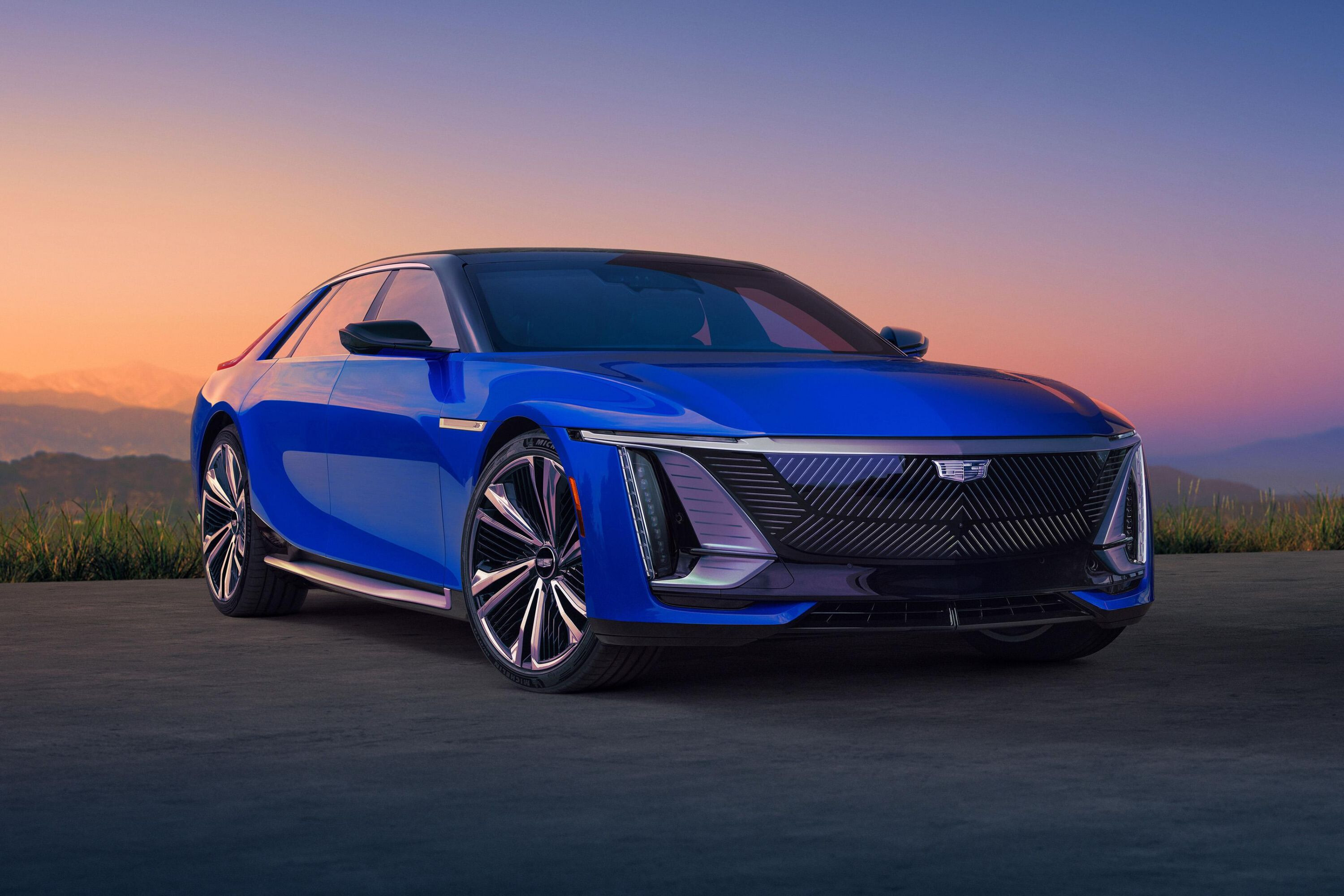
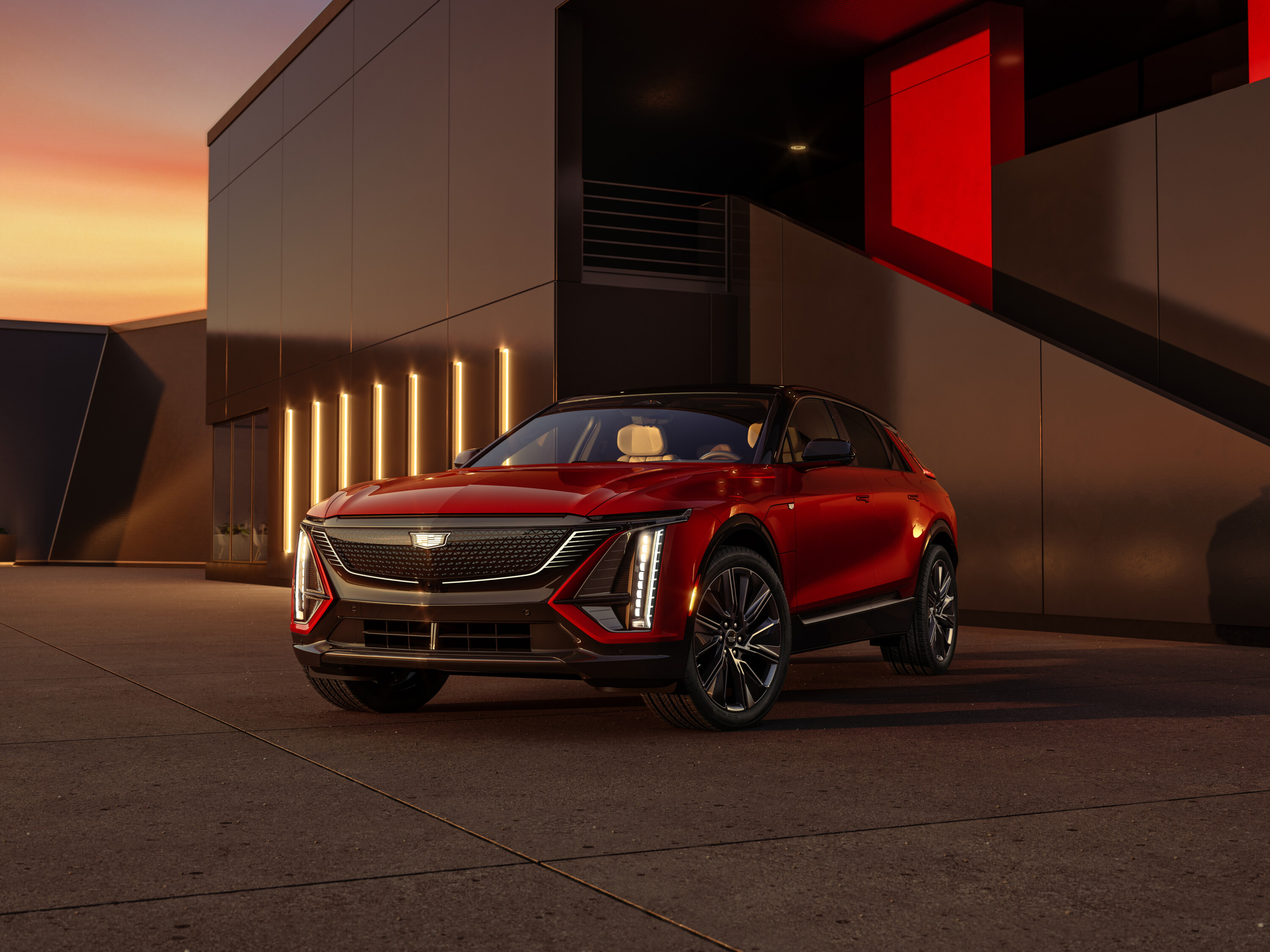
Now that the news is official and Cadillac is indeed returning, it begs the question … just why is General Motors bringing the Cadillac brand to Australia?
It wouldn’t be out of order to suggest that – despite the success of the Chevy Silverado ute – GM is still a bit on the nose with Aussie buyers, after the acrimonious departure of Holden not too long ago.
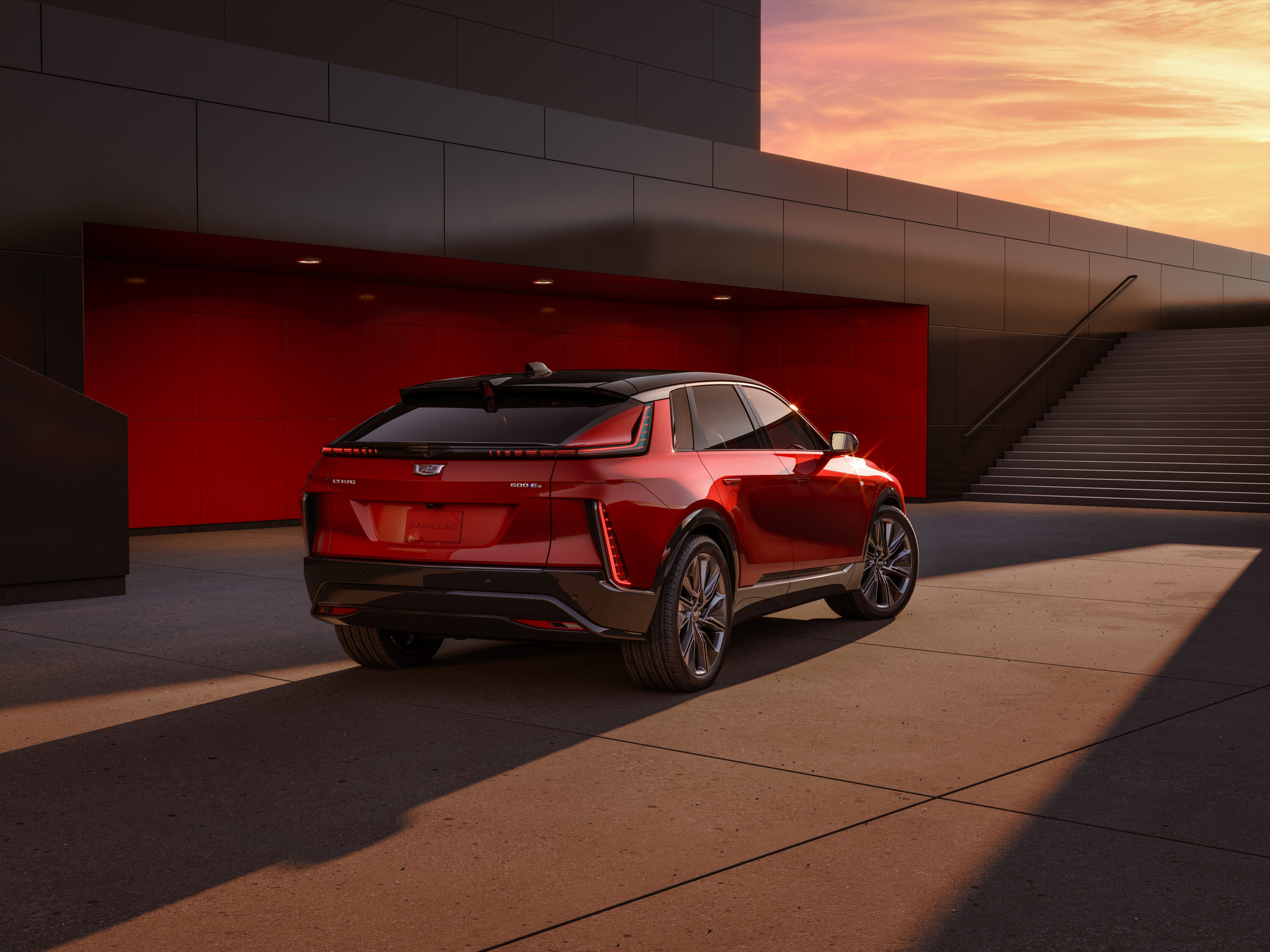
The market position of Cadillac, too, is interesting. Best known as GM’s luxury flagship, it’s now being repositioned as an electric vehicle bastion for the US’s biggest carmaker – no doubt without losing its lustre as a premium marque.
1
And on the surface, ‘electric’ and ‘premium’ are perfect bedfellows.
The effortless, silken smooth and silent power delivery of a decently sized electric motor matches perfectly with the more settled ride of a vehicle with its mass mounted low in the chassis.
But what’s the next stage of EV adoption going to look like? Overseas, companies like Volkswagen are winding back on EV production in the face of lower than expected demand, with the early adopter markets finally sated and the task of convincing everyday buyers still ahead of the industry.
While Tesla is making hay in our market with its Model 3/Model Y double act, mass take-up of electric vehicles is yet to occur in Australia, though MG and BYD’s more affordable models are doing their best.
1
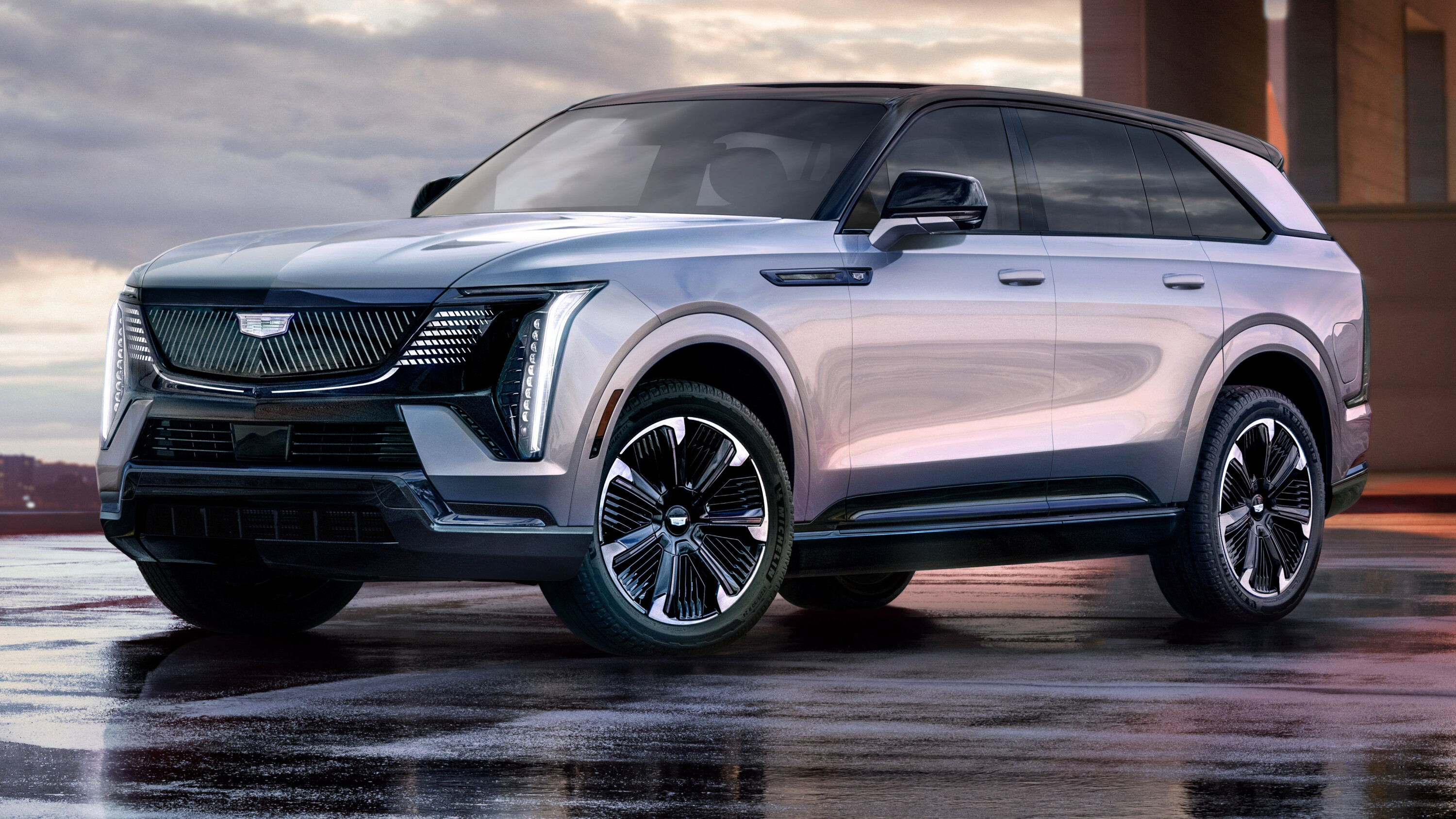
And this is where the Cadillac business case gets interesting. The money is on a three-strong electric SUV line-up, starting with the large-sized Lyriq which will likely cost $120,000-ish in base trim. Affordable? Not so much.
There are whispers of state government fleet orders already in the works, which will sweeten the pot at the factory level when it comes to building right-hookers in quantity (an easier prospect with EVs in general, thanks to steer-by-wire tech and smaller powertrains under the bonnet).
But ask any of the existing players in the market and expensive EVs are not only hard to source (thanks to raw material shortages and cost), they’re tough to sell into a market with no incentives, a fledgling charging network and an economy tilting towards a slowdown.
It’s also worth considering how well Cadillac’s take on Tesla’s direct sales model will fare. Will just three Cadillac Experience Centre outlets be enough to deliver a new-to-Australia brand significant traction?
Only time will tell.
MORE
Everything Cadillac
MORE
Electric Cars
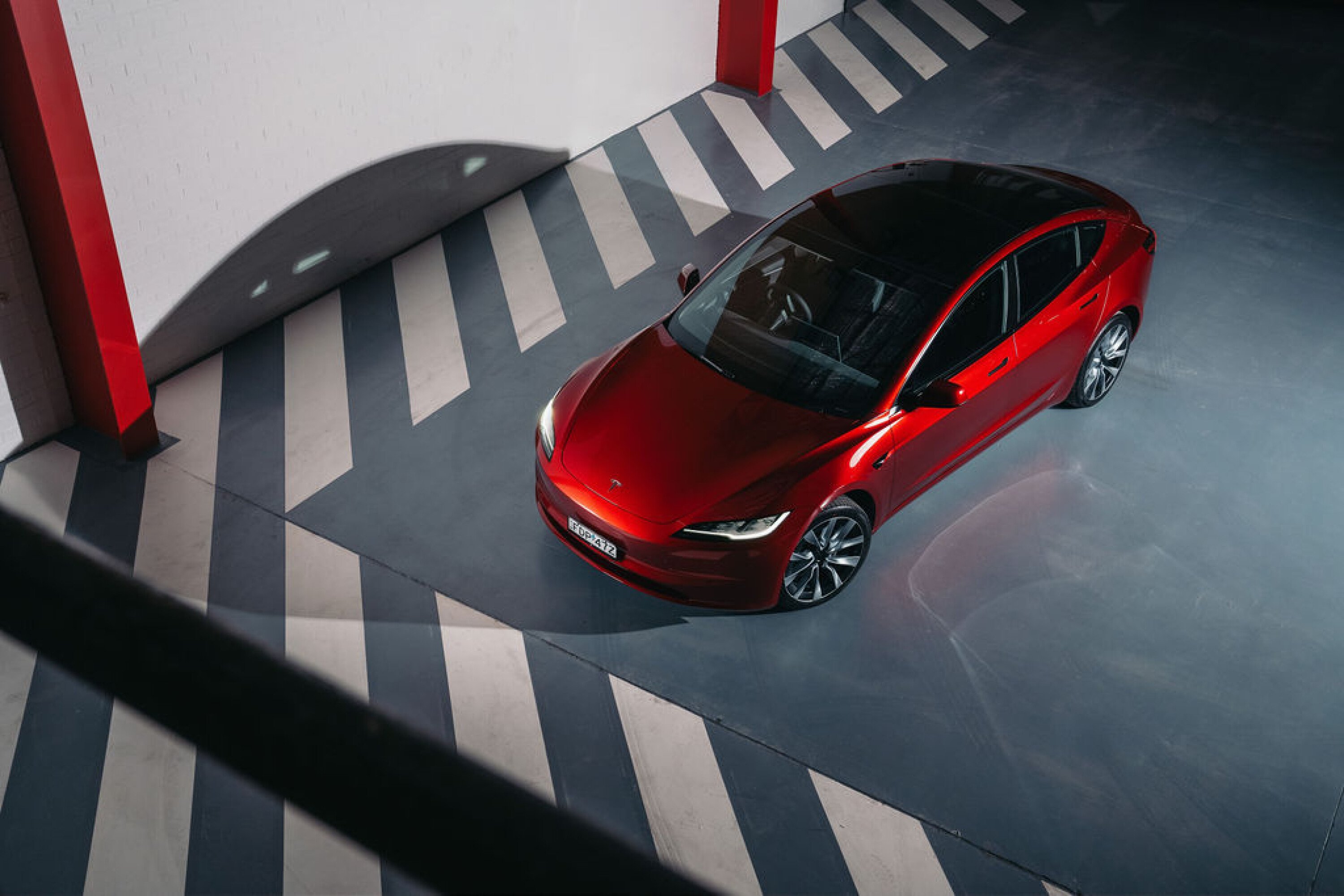
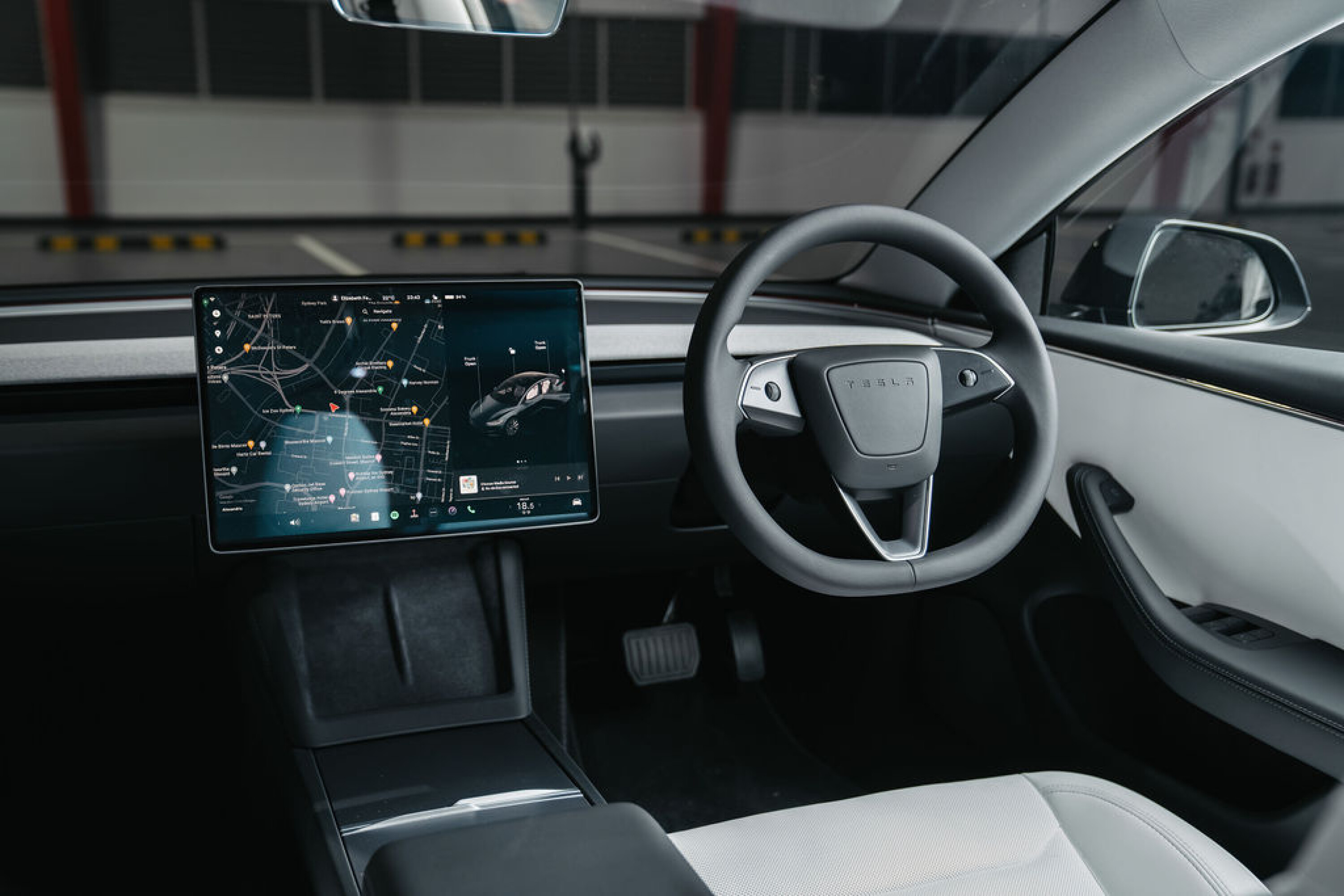
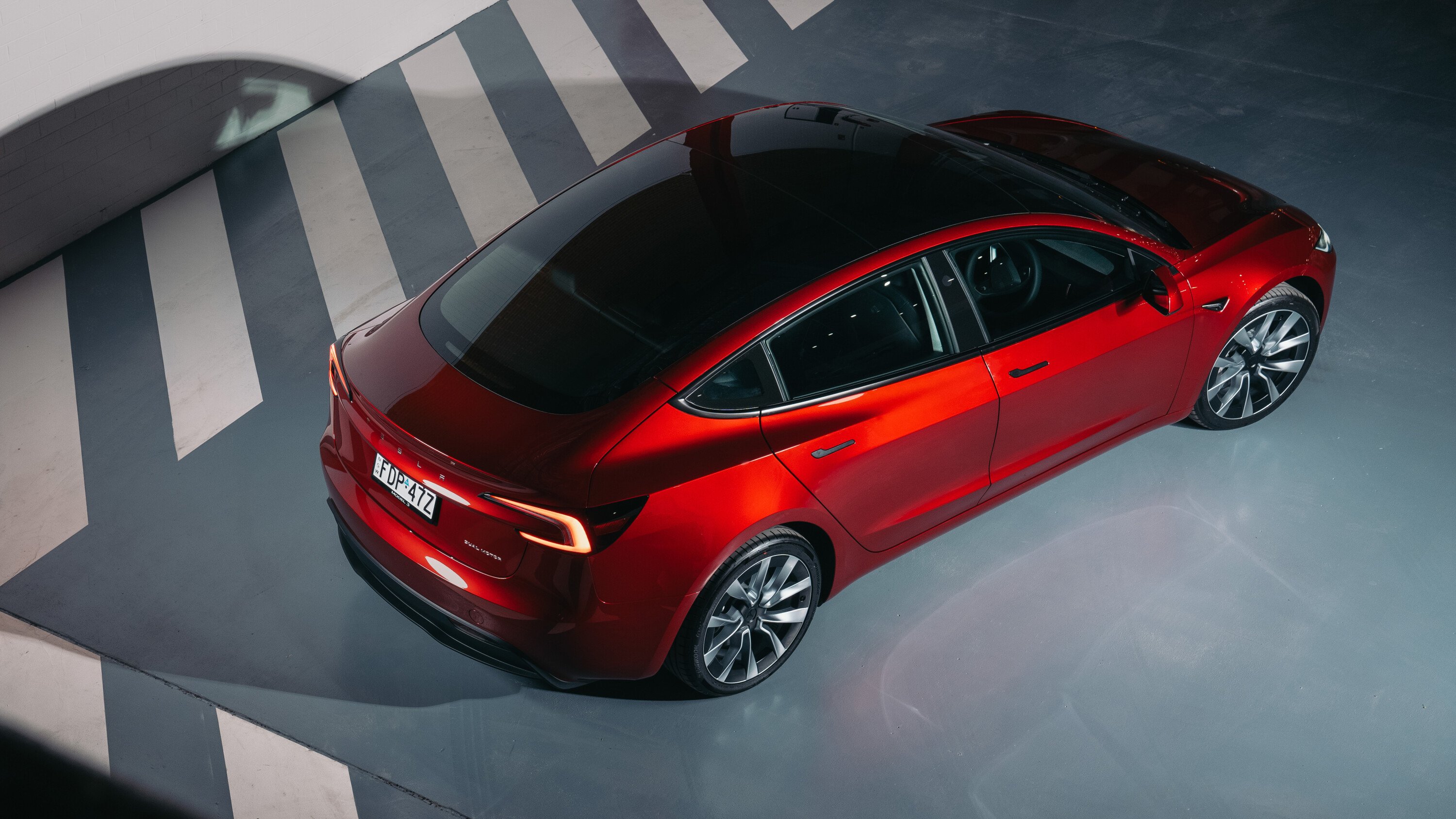
A better, faster and more resolved Tesla Model 3 Performance will hit virtual showroom floors in 2024, the company has confirmed.
Tesla claims that driving enthusiasts have been involved in the process of engineering the Model 3 Performance, and that the company intends to realise the potential it left on the table when the first version hit the road five years ago.
No timetable or pricing has been confirmed, but expect to see more from the Model 3 Performance before the end of the year, before a claimed on-sale date of early 2024.
2
The admission comes on the eve of the roll-out of the 2024 Tesla Model 3 revamp, which lobs in Australian Tesla stores this weekend.
Top brass from the US EV company in Australia for the launch – who cannot be directly quoted – confirmed that the previous iteration of the Performance was underbaked.
Difficulties meeting manufacturing quotas for the more basic version of the Model 3 meant that the focus fell on fulfilling customer orders, not refining an upmarket, go-fast version.
2
The company says that the next version will be “pretty special” and will focus on the areas left undone with the first one.
Expect the 2024 Model 3 Performance to be based on the current dual-motor powertrain, which remains physically unchanged for the facelifted version of Australia’s best-selling electric car.
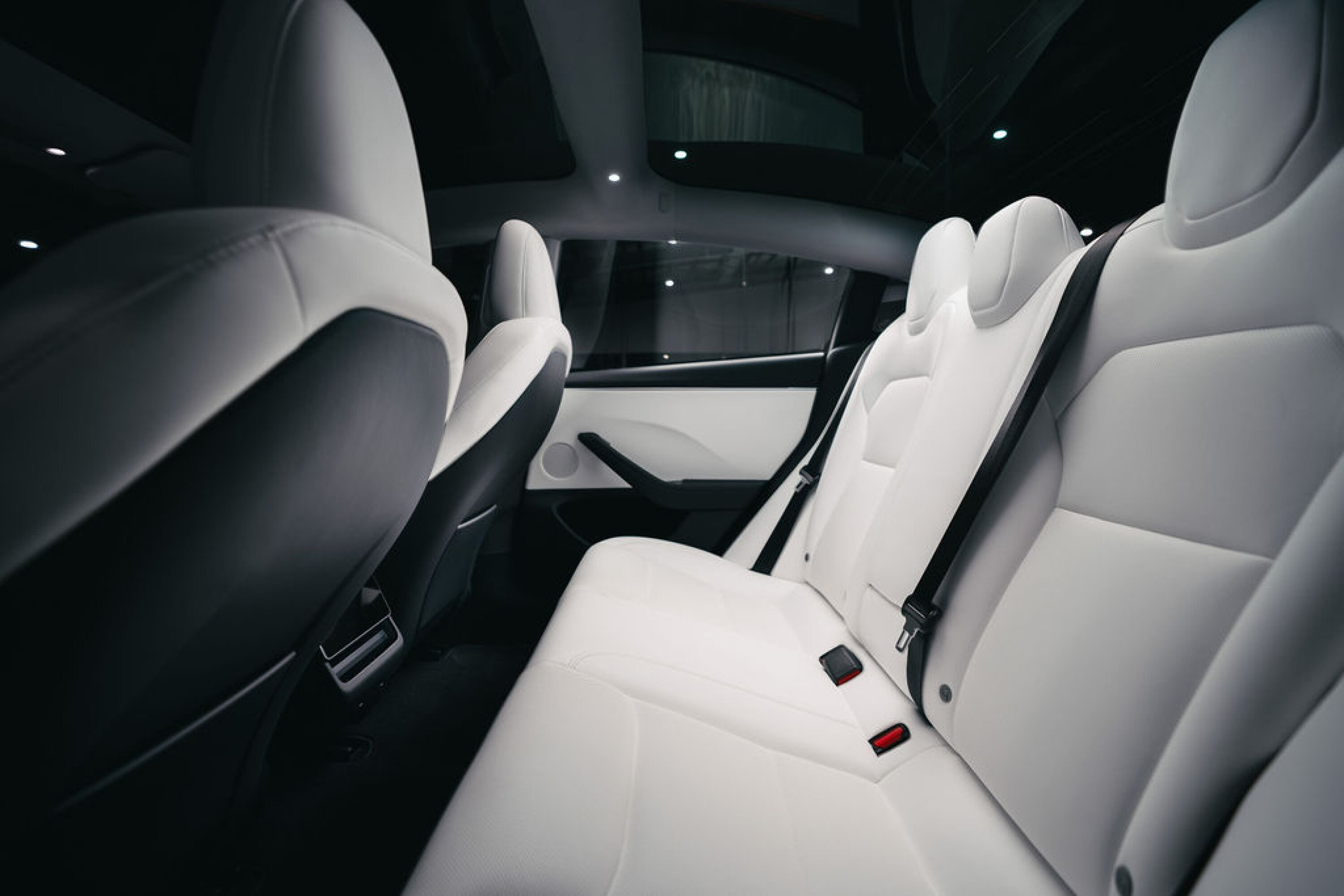
Refinements to the updated Model 3’s body and suspension set-up will lend themselves very well towards a performance version, with revised dampers and bushings promising a more compliant ride and a new focus on aerodynamic performance.
2
Larger rims with high-performance tyres, more sophisticated shocks that could potentially offer adjustable damping and larger, multi-piston brakes are a given, along with further sports-orientated revisions to the interior makeover rolled out for the 2024 car.
Significant software updates and physical hardware changes are also anticipated; necessary if the new Performance is to outstrip the current 0-100km/h time of 3.3 seconds achieved by the previous version, which launched in the US in 2017 and in Australia two years later.
3
As with all EVs, weight will be a factor; the 2024 version of the Model 3 gains a handful of kilograms over its predecessor thanks to the addition of stronger, heavier doors and acoustic glass throughout the car.
It’s possible that the new Performance could shed a few kilos by way of lighter body panels, more svelte (and expensive) forged rims and the use of a smaller battery pack to favour punch over distance, but at worst it will be within a few percentage points on the scales as the stock Dual Motor.
MORE
Everything Tesla
Suzuki Australia is jumping on the Black Friday sale bandwagon by offering 10 per cent off new and demo cars for a limited, two-hour window tomorrow.
The deal window applies to all cars in stock and will take place between 12pm and 2pm local time at official Suzuki Australia dealers.
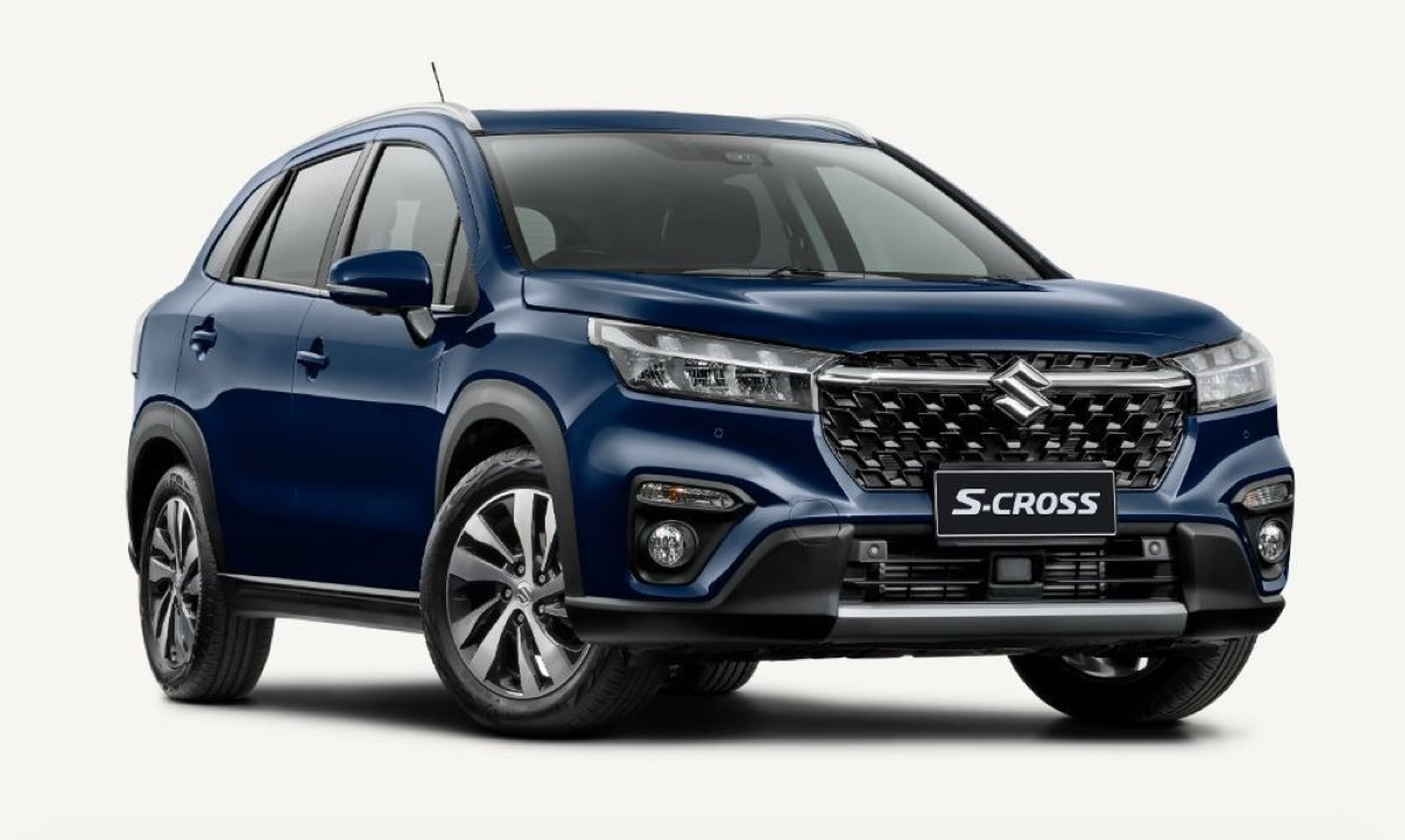
The biggest saving available is $4449 on the S-Cross AllGrip Prestige (pictured below), which takes the compact SUV’s starting price before on-road costs to $40,041.
1
Suzuki’s 10 percent offer also creates a rare sub-$20K model, if for two hours only. The Black Friday price for the Ignis GL manual is $19,341, down from its usual $21,490 RRP.
Two Jimny models start from below $30,000 with the discount: the Lite manual and regular manual are priced in the sale from $27,441 and $28,741, respectively.
The automatic Jimny is discounted to $30,141, though the new five-door Jimny XL model isn’t available yet with its launch set for early December.
The Vitara small SUV and Swift hatchback are also on sale.
Suzuki has followed Hyundai as an auto brand looking to capitalise on the Black Friday sales phenomenon. Hyundai’s saving offers on its Ioniq 6 electric sedan are greater, while its deals run for three whole days.
MORE
Everything Suzuki
It’s six years since the i30 N emerged as a hot-hatch that finally convinced keen drivers Korea could build a bona fide performance car.
The IONIQ 5 N, however, has a different mission: to persuade highly sceptical petrolheads that an electric car can be similarly entertaining.
The regular-sized five-door and the oversized hatchback – or crossover if you prefer – share a mutual project leader: Albert Biermann. There’s some full-circle symmetry, too, as where the i30 N was the German’s first N car, the IONIQ 5 N will be the 66-year-old’s last before a belated retirement.
Biermann has a clear, no-nonsense view on performance cars of the future: they will/must be electric and there’s little point mourning combustion cars.
1
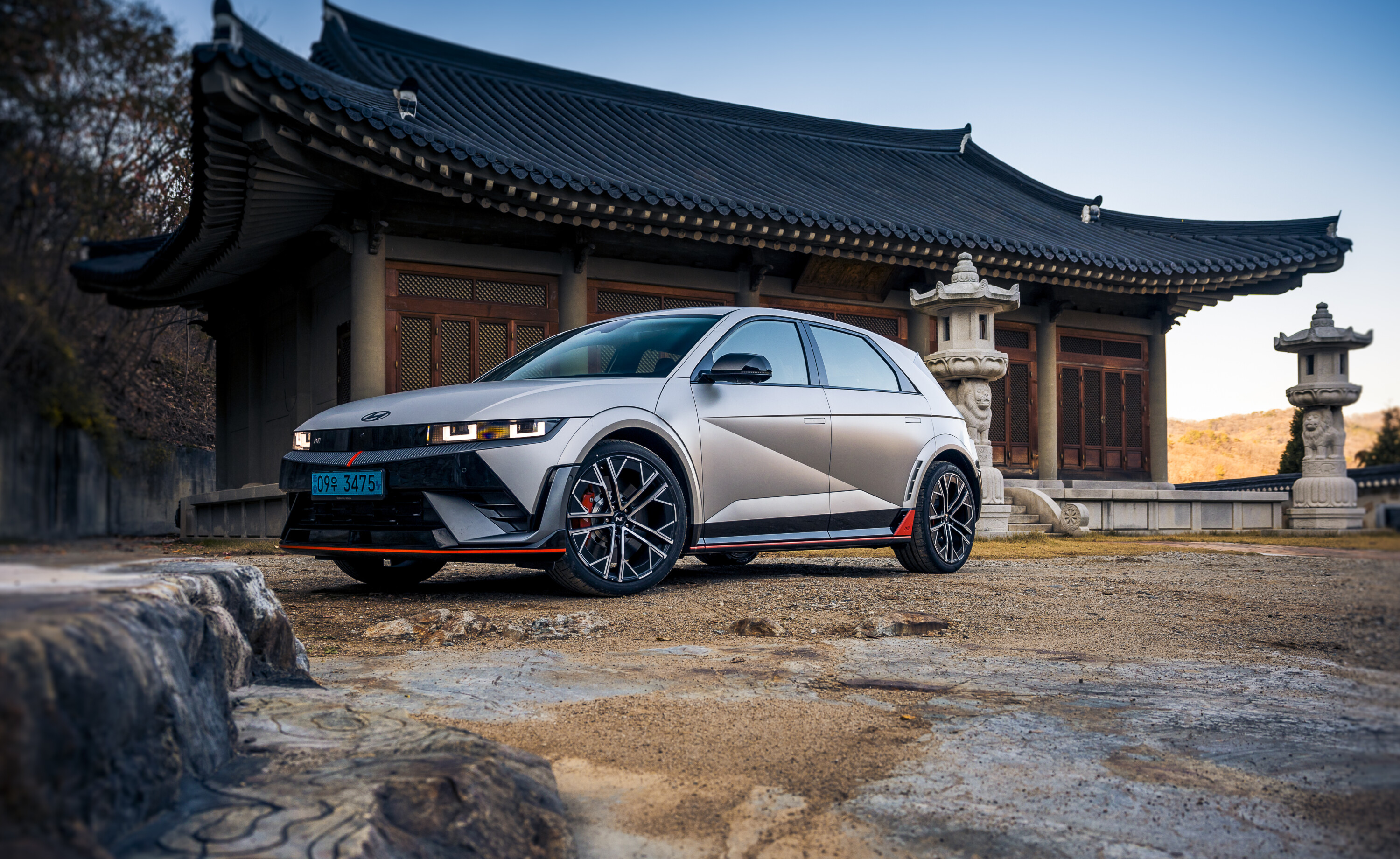
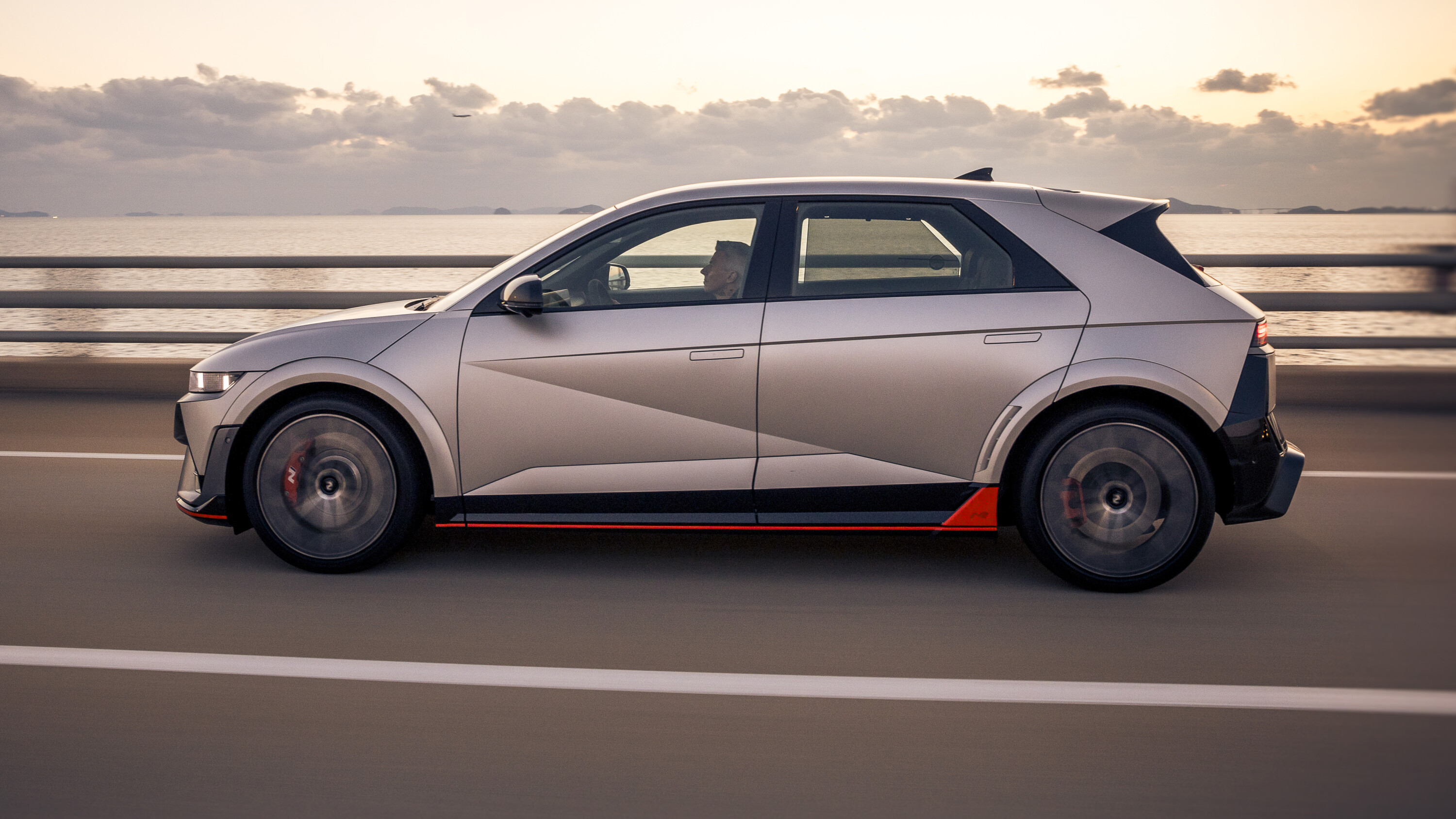
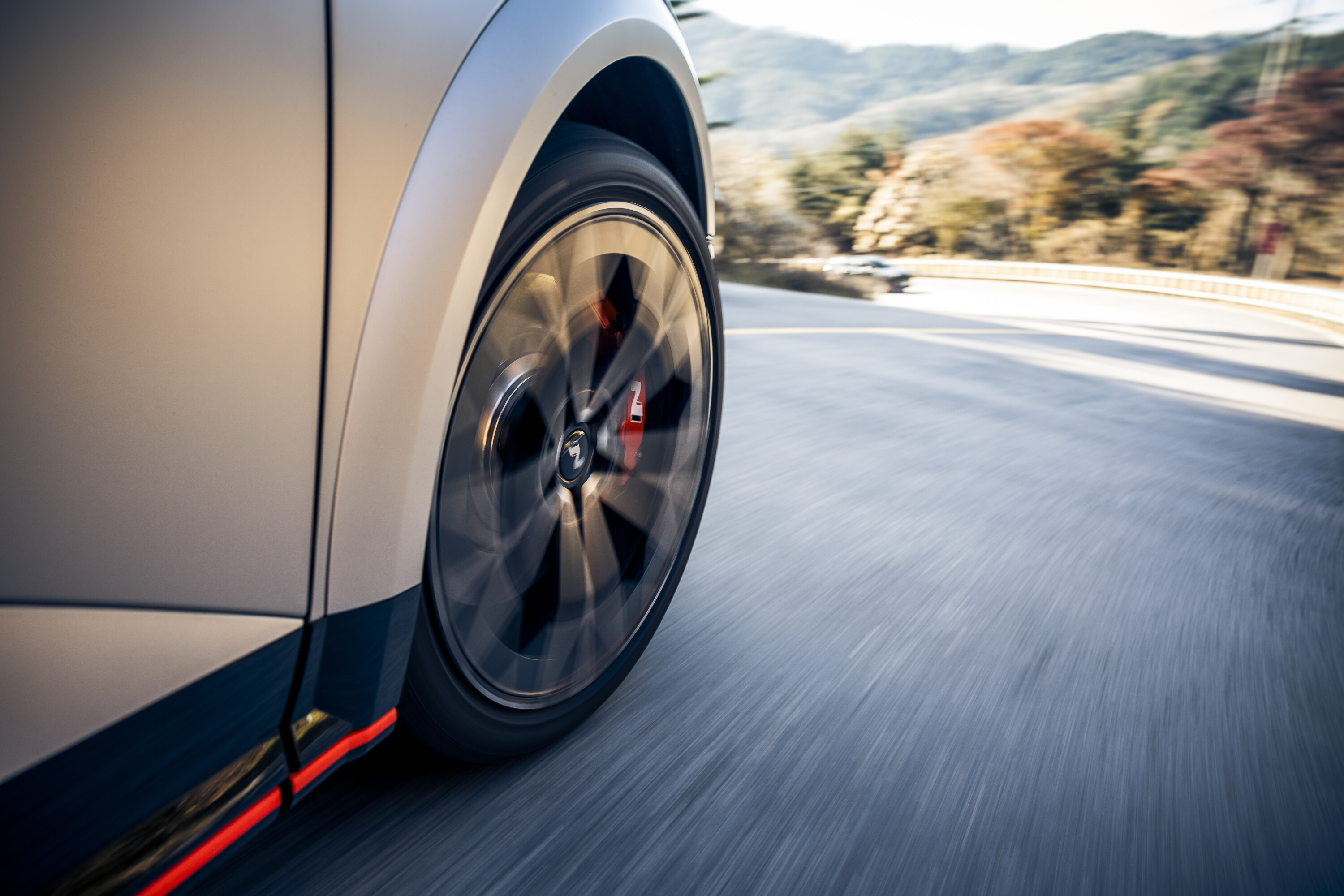
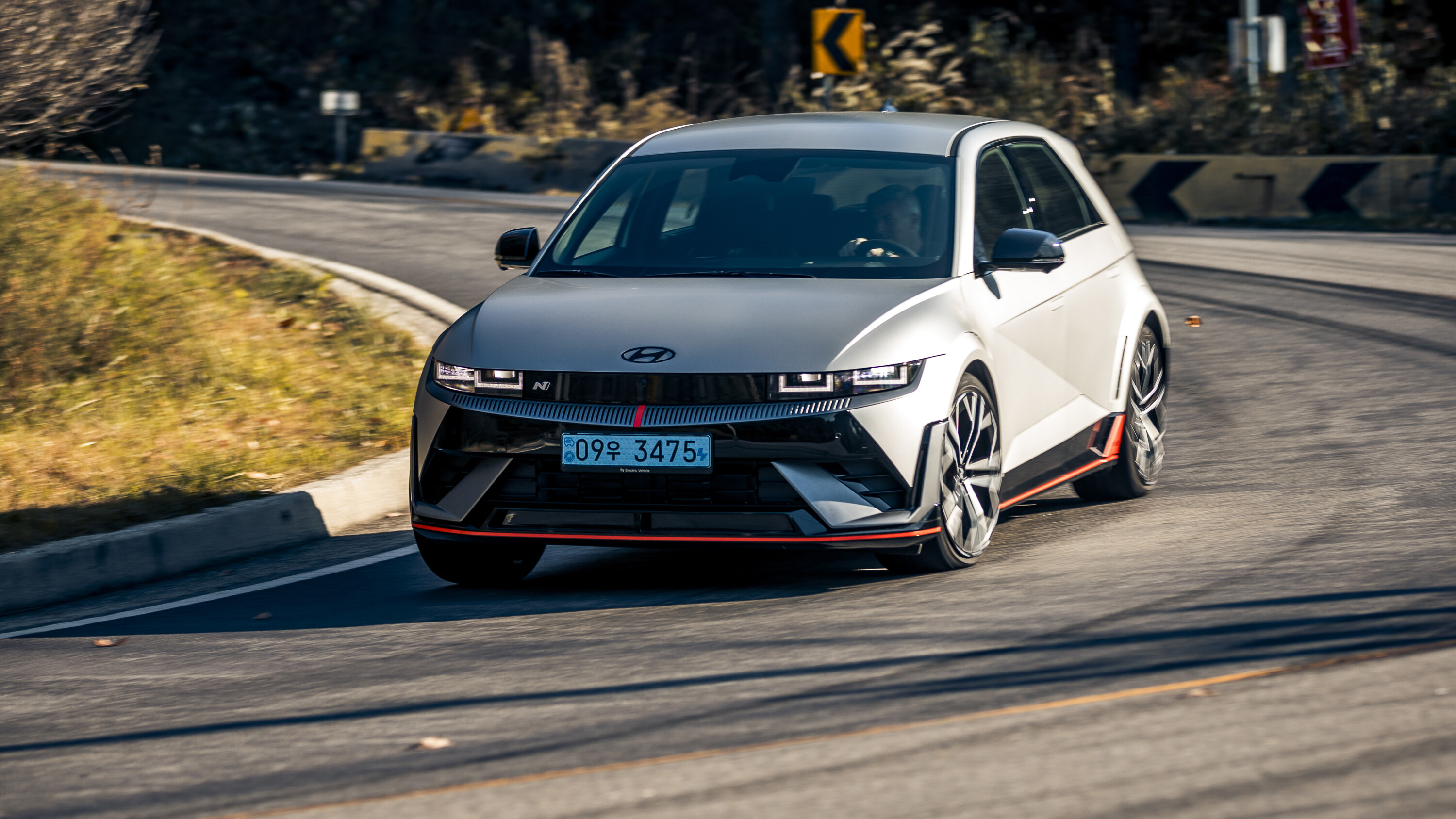
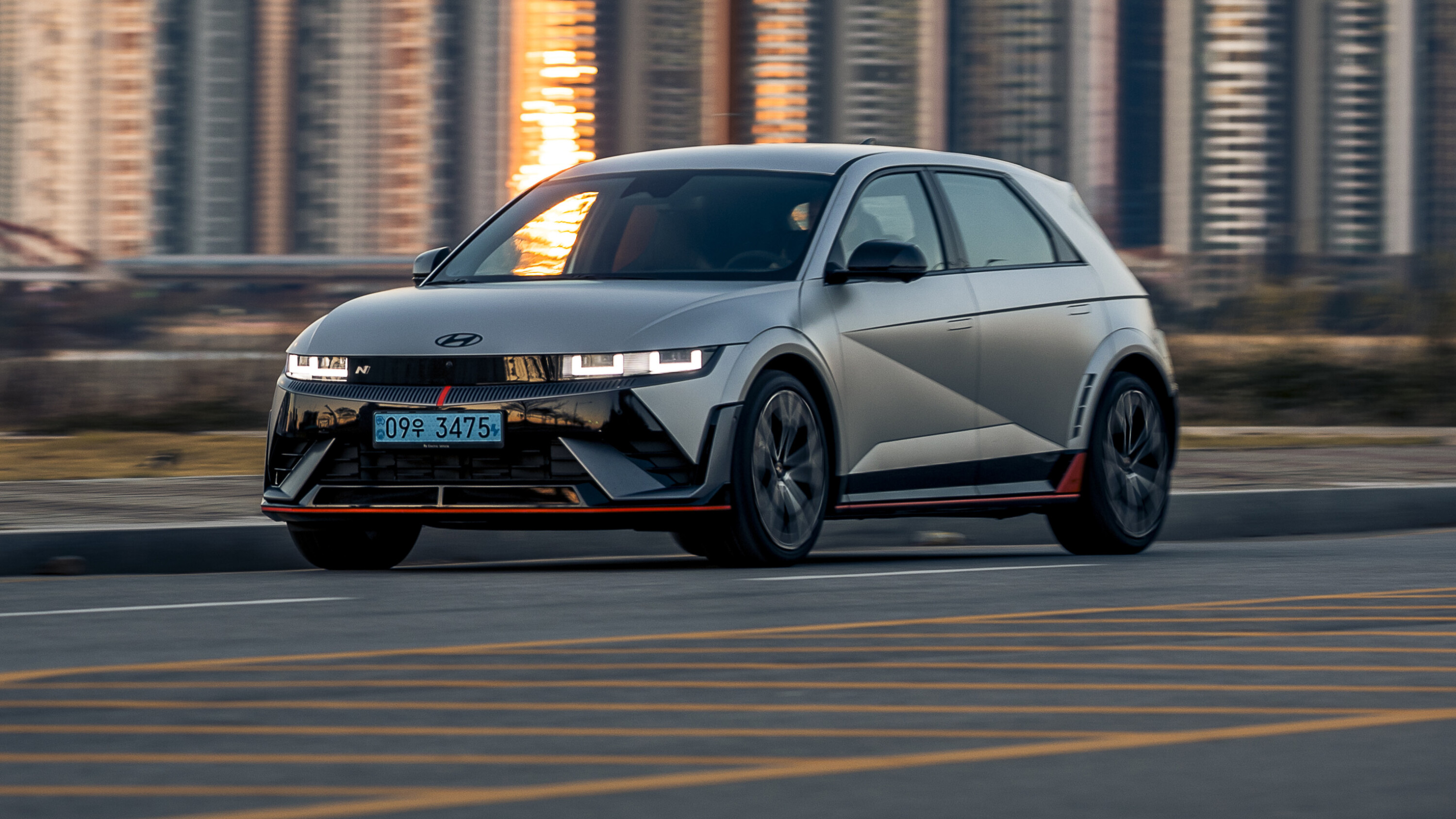
The 5 N certainly looks the part. Its stance is aided by a 2cm-lower ride height and a 5cm-wider body necessitated by 275mm-wide Pirelli P Zero rubber.
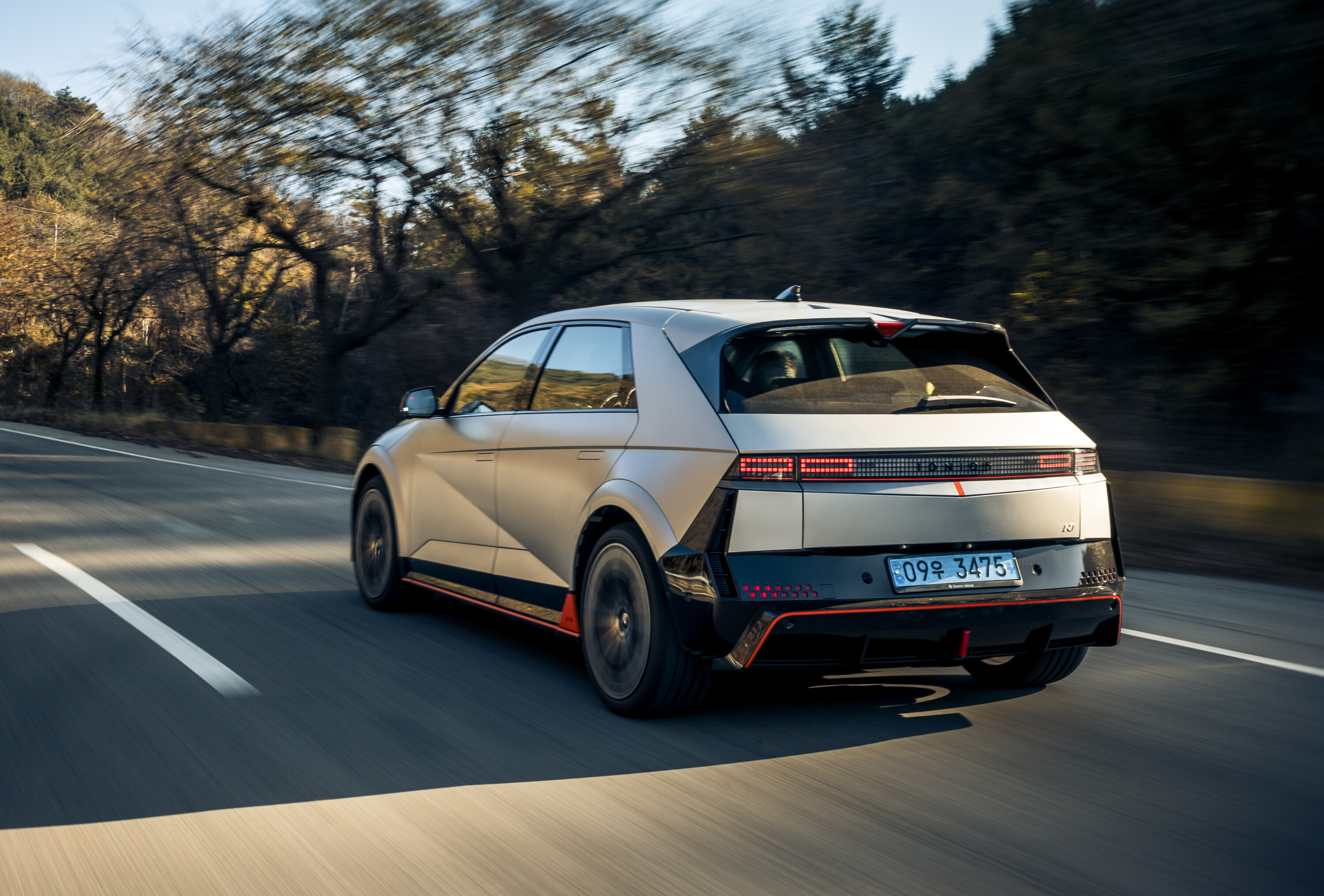
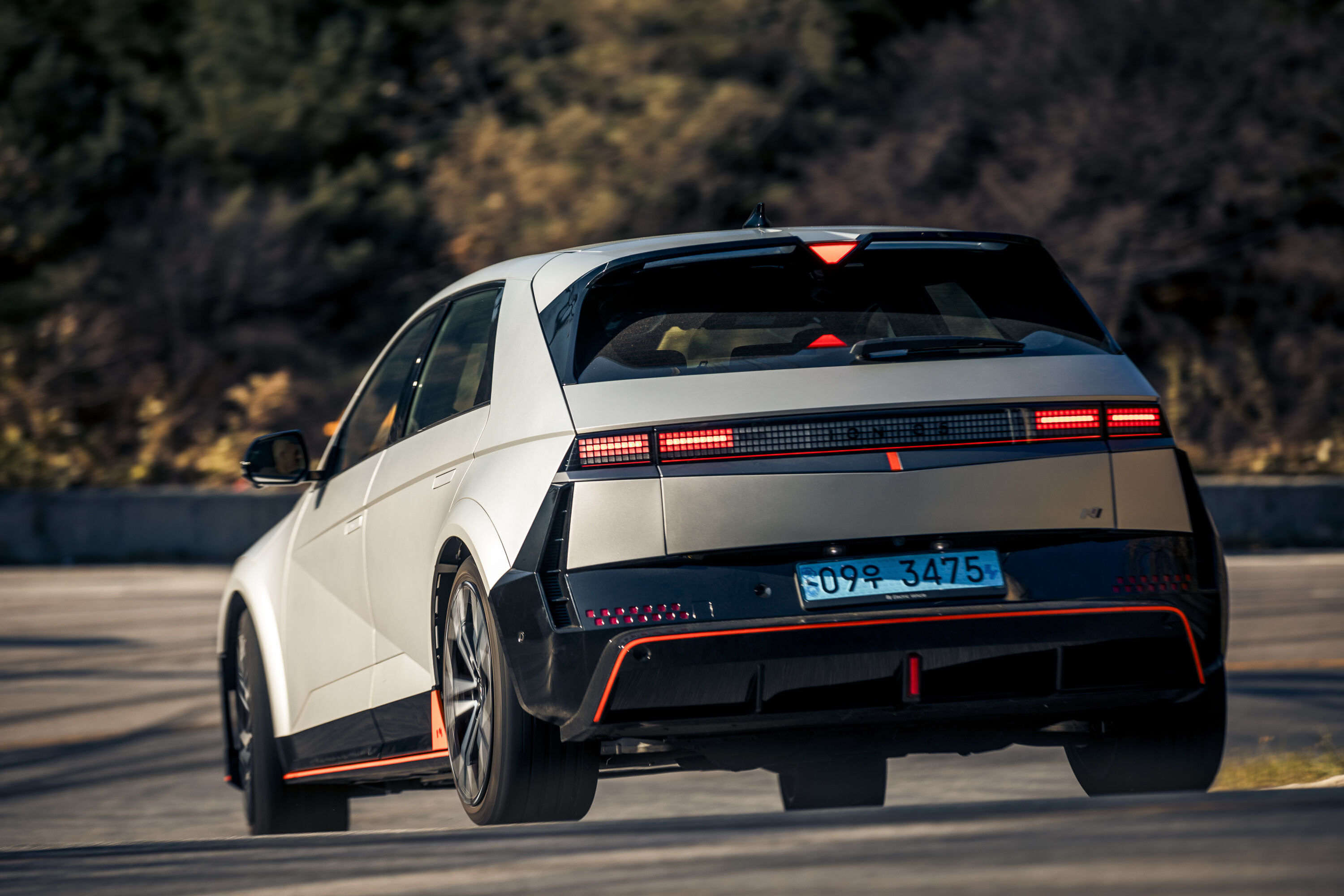
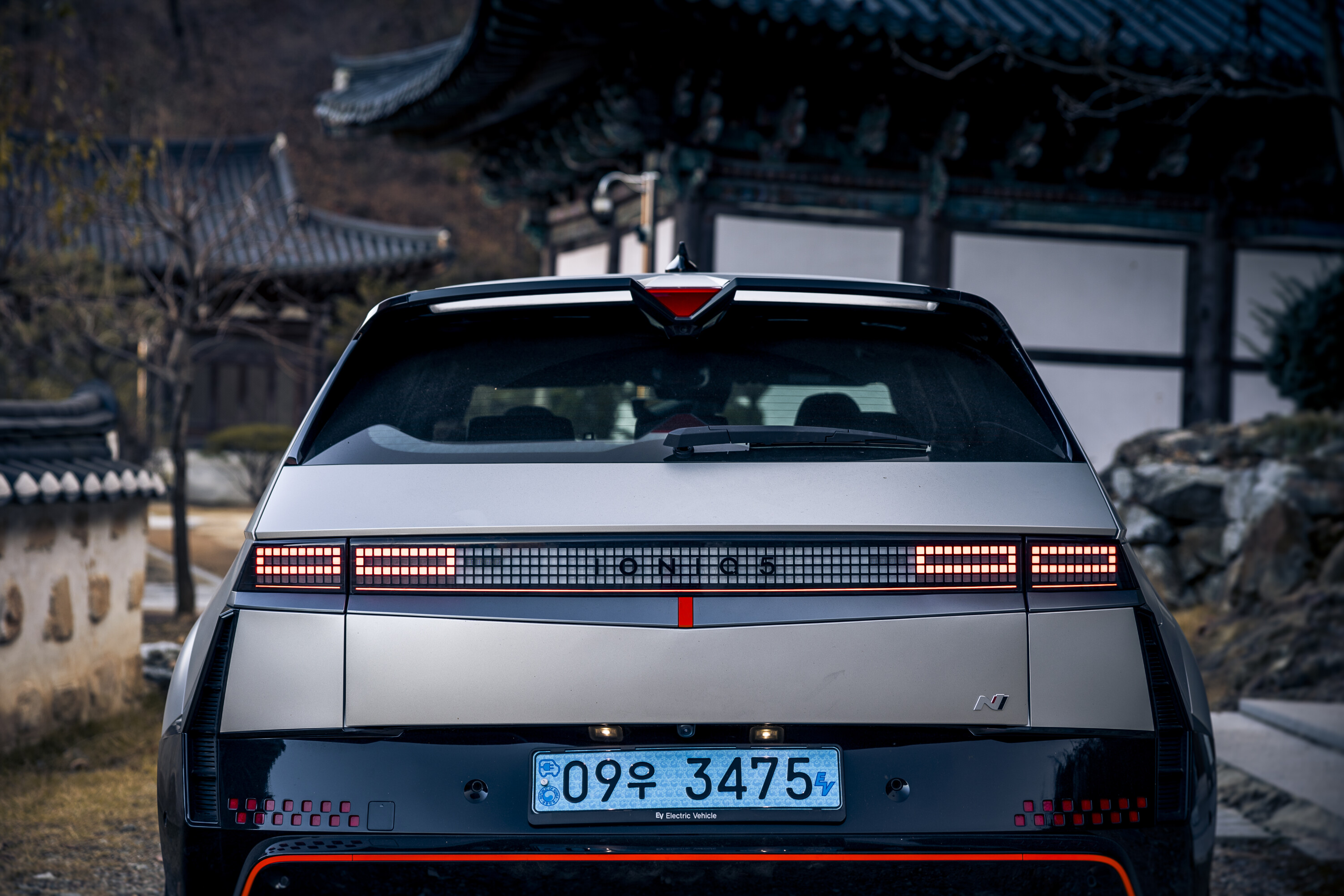
Aerodynamics-focused appendages – front splitter and rear diffuser –add 8cm to the 5’s overall length and modify its silhouette (along with an extended roof spoiler).
There are more exterior differentiators to ensure it’s impossible to mistake the N for a regular IONIQ 5.
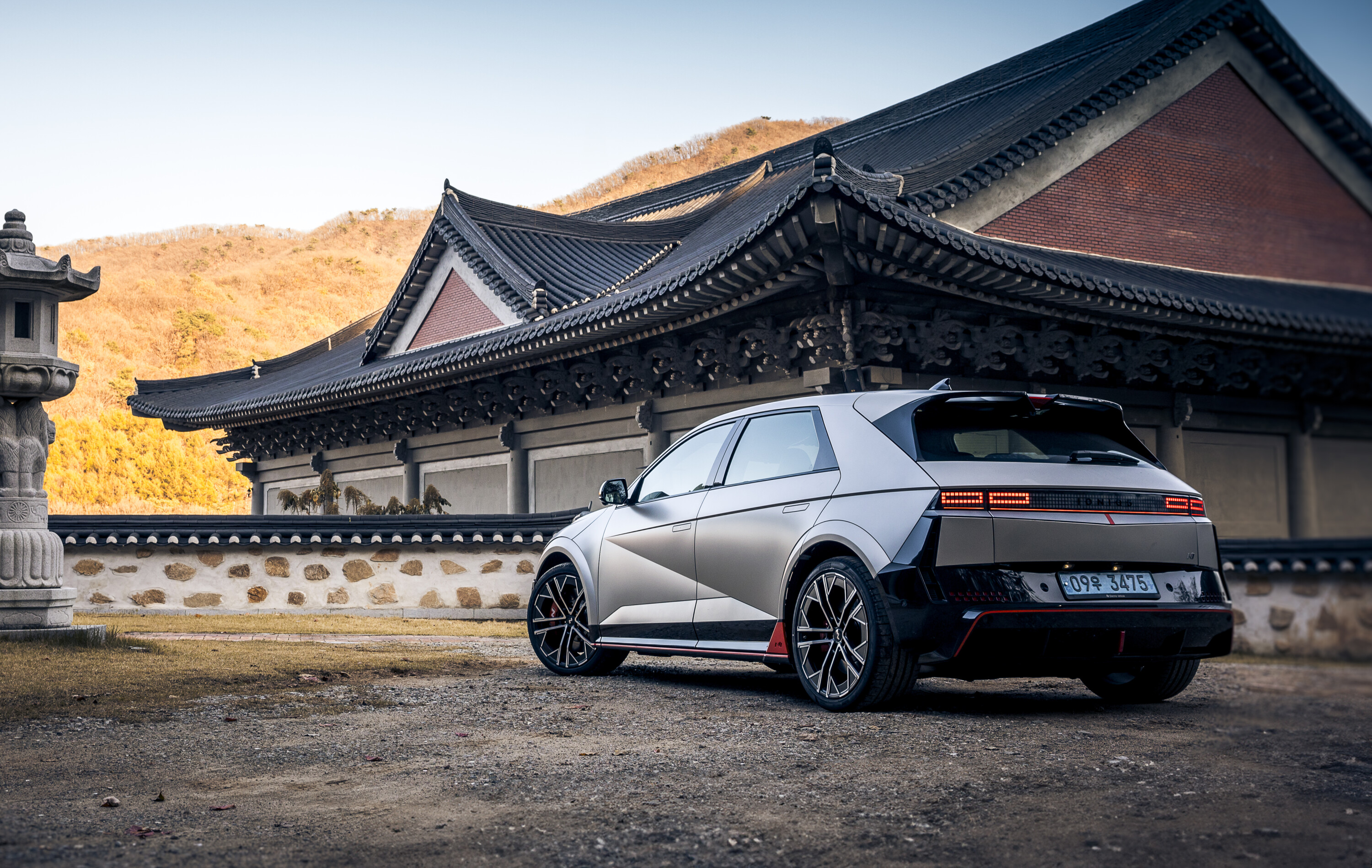
Bright-orange striping features on all four sides, including the skirting line that expands into an aeroplane-style tail-fin by the rear wheel arch. There are more vents for battery and brake cooling, and the first electric N sits on boldly styled 21-inch forged-alloy wheels.
1
Nine palette options include two exclusive colours: Soultronic Orange and the Performance Blue famous from other N models.
Performance Blue is also available as a matte finish (along with Atlas White) for an extra grand. Otherwise, a $2000 ’Vision’ panoramic roof is the sole option.
Changes not so visible include revised suspension and steering tuning, upgraded front and rear subframes, and a body-in-white that has been stiffened through more than 40 additional welds and an extra 2.1 metres of adhesives.
1
About half of the modes are designed or recommended for track use
While the 5 N shares its 800-volt ‘e-GMP’ architecture, it adopts a bigger, 84kWh battery and its dual motors – creating the first all-wheel-drive N vehicle – produce a combined 448kW and 740Nm. Or 478kW and 770Nm via a temporary Boost mode.
Called N Grin Boost, it’s one of a dozen or more N-labelled features or functions.
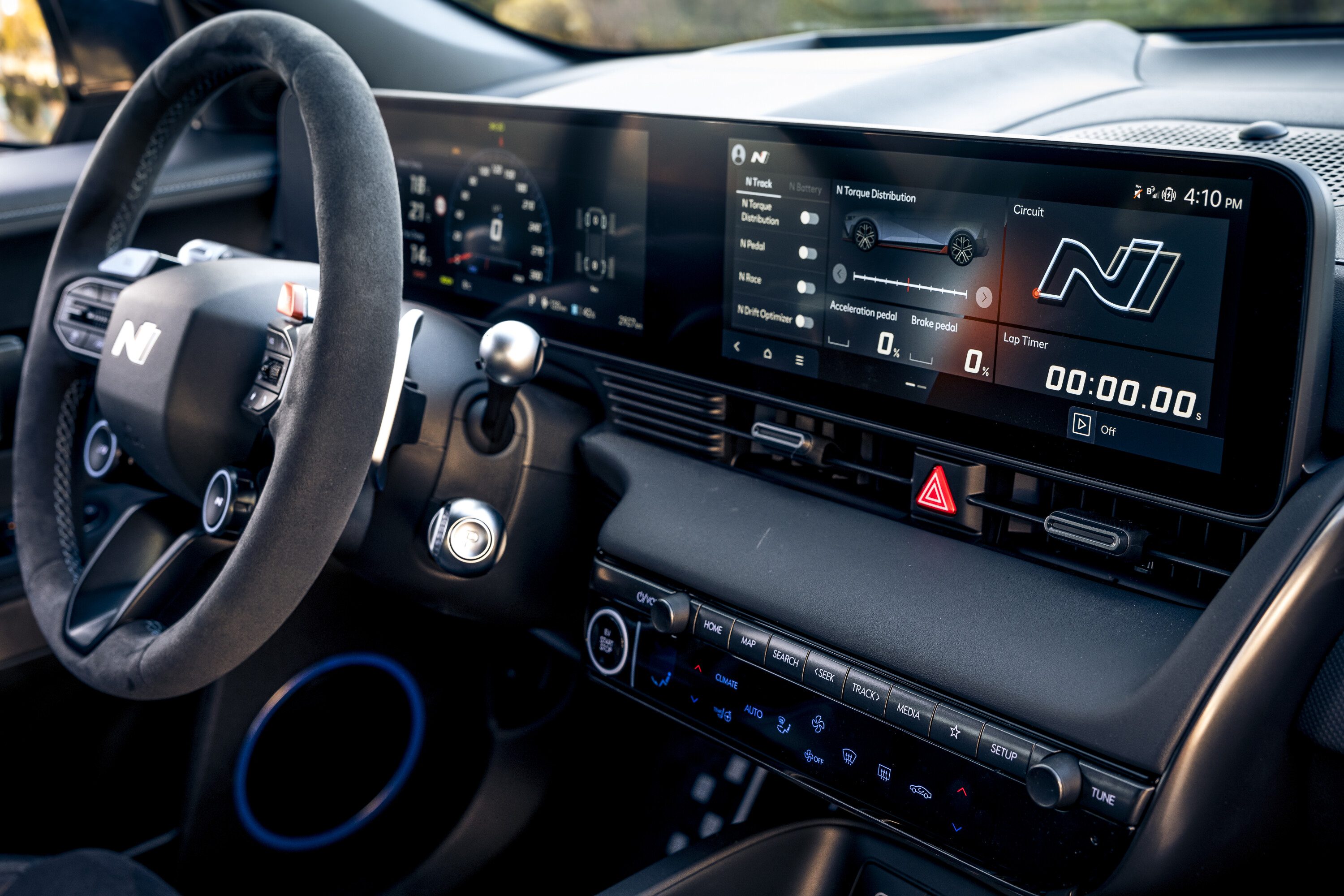
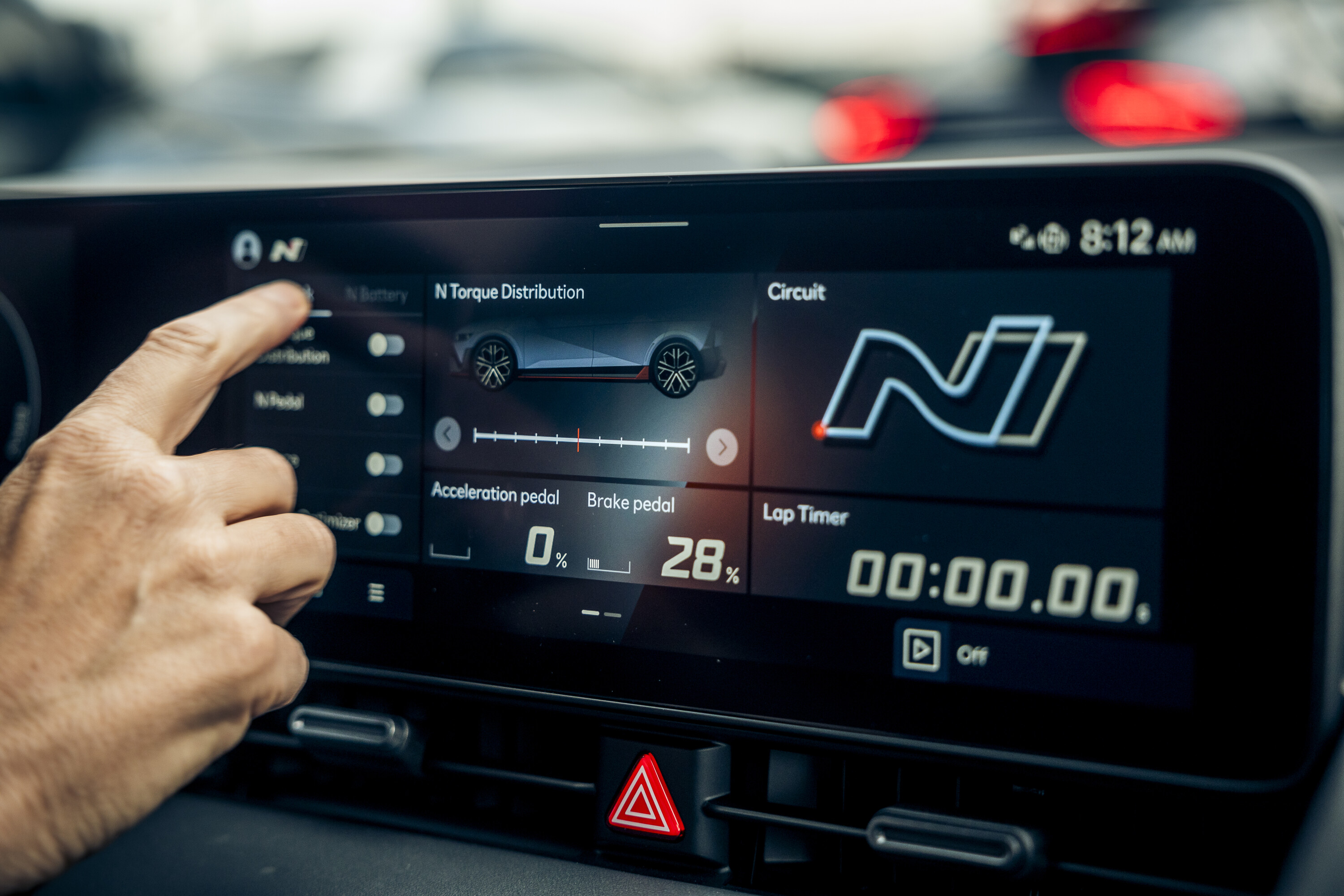
We’re already on a freeway out of Incheon, near Seoul, without any time for familiarisation with the touchscreen menu, and initially trying to locate specific functions is N-Oying.
About half of the modes are designed or recommended for track use, which at least simplifies matters, and it’s not too long before we’ve figured things out.
1
1
It’s here that we should point out that while we’re in Korea during the 5 N’s international launch, we broke free from the official program for an exclusive road drive.
The downside is that we missed out on a racetrack experience to try out some of the more extreme features, such as N Drift Optimiser and N Launch Control (both self-explanatory), as well as N Pedal (an extreme-regen-braking interpretation of lift-off oversteer, essentially).
There’s also N Race, which includes Sprint and Endurance options (respectively, to go full power for a limited time or have limited peak power for longer lapping), and N Battery Conditioning that can prep the battery temperature for either the fastest acceleration possible (30-40 degrees) or sustained lapping (20-30 degrees).
The upside is that we got to spend a good couple of days with the 5 N, with full freedom to explore some suitably curvaceous roads.
1
A glorious, hillclimb sequence of hairpins is up first, and is equally savoured by our accompanying video crew and Wheels photographer Ellen.
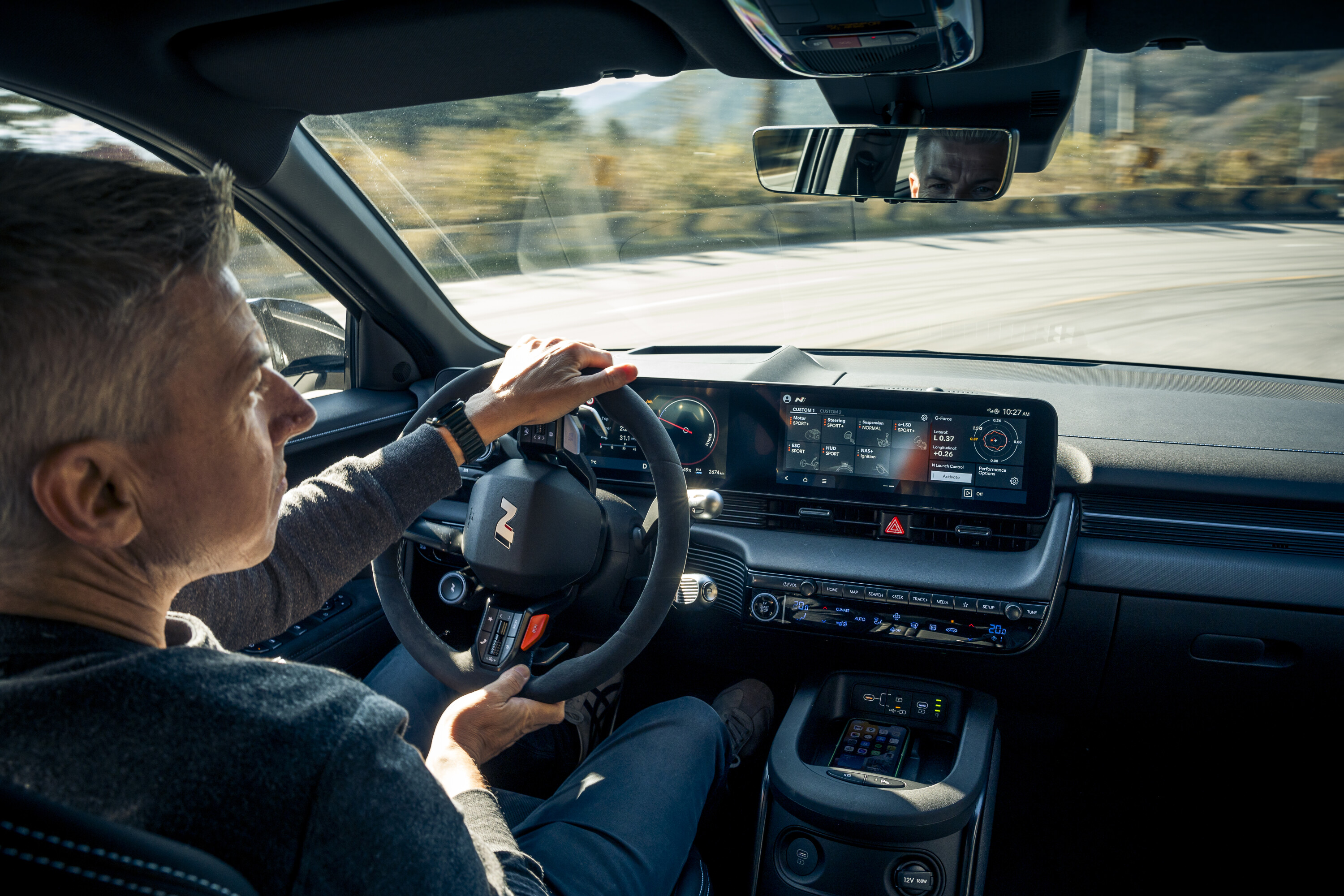
By now I’ve long located the menu pages for Customisation 1 and 2, which via the left ‘N’ button on the steering wheel provides a shortcut to the driver’s favoured settings.
I opt for my Customisation 1 set-up, which has steering, electric motors, suspension and electronic limited-slip rear differential in their most aggressive settings, and the ESC in Sport mode.
And for the car’s two most distinctive features – at least in our view – we’ve engaged N e-Shift (via the right-side N button on the steering wheel) and selected ‘Ignition’ out of three options provided by N Active Sound Plus.
1
Working together to mimic the feel and sound of the 2.0-litre turbo petrol engine and eight-speed dual-clutch auto found in the i30 N, they’re far less gimmicky and far more entertaining than we were expecting.
The rorty engine note provided by ‘Ignition’ mode isn’t that surprising in this era of speaker-enhanced combustion motors; the clever part is how the car’s e-Shift software introduces slight jolts to what, for an EV, would normally be totally seamless acceleration as you flick the paddle levers for ‘upshifts’.
Most comically – in a good way – is the power delivery stutter if you bounce off the artificial 8000rpm ‘limiter’. (As an aside, the electric motors spin significantly faster than any conventional combustion engine – up to 21,000rpm.)
The sound isn’t limited to the cabin, either. External speakers – front and rear – can be switched on to try and fool passers-by.
1
There are two other buttons of note on the steering wheel – and you can’t miss them; finished in the N-customary Performance Blue.
The left ‘Drive Mode’ button cycles through default Eco, Normal and Sport modes. The right-side ‘NGB’ stands for the aforementioned N Grin Boost.
Press this, floor the throttle, and the 5 N maximises power and torque for a 10-second burst – delivering a claimed 0-100km/h of 3.4 seconds.
Biermann and his N team, however, have consistently stressed that their cars are not about straight-line shenanigans.
1
It wasn’t promising when we learned the IONIQ 5 N weighs about 2.2 tonnes – about 10 percent heavier than the regular 5 and 50 percent heavier than an i30 N auto hatch.
Yet that kerb weight proved hard to believe on our hillclimb. Hyundai’s first electric N model behaves very much like an i30 N on steroids – bigger and beefier (and sounding similar thanks to ‘Ignition’ mode) but capable of attacking corners with deft precision.
A rear motor that’s more powerful than the front motor lends an inherent rear-drive feel, though the driver can also adjust the AWD system’s torque distribution (yes, another area of customisation).
The steering, given more directness, is satisfyingly accurate – and the Alcantara covering is a tactile delight.
1
Overall, I was far less conscious about weight-transfer management than anticipated, even if trail-braking is a good tactic for achieving the best turn-in.
And on the subject of brakes, there are three ways of slowing the IONIQ 5 N (and it probably doesn’t hurt to have options for a car that can have you arriving at a corner at a very rapid rate).
There’s an N Regen regenerative braking system which can generate up to 0.6g of deceleration. And an N Pedal function with three different levels essentially brings extreme weight transfer – especially Level 3, we’re told – to help the car turn into corners.
1
Hyundai recommends N Pedal for racetracks only – and is one of a few functions requiring the driver to click ‘Okay’ to a warning disclaimer – so we stuck mostly to the third stopping option: using the regular brakes.
We say ‘regular’, but the front brakes feature four-piston calipers and 400mm-diametre discs. The rear brakes aren’t small, either – 360mm, with single piston.
We’re pleased to report there’s good pedal feel to complement strong and progressive braking.
It’s too early to tell if the ICE powertrain impersonations will be a novelty that wears off, but we can say we found they complemented the driving experience – and even helped judge speed better than a regular EV.
1
And over two days, I never felt inclined to turn the ‘Ignition’ mode off.
You can turn the 5 N into a whisper-quiet EV just like the regular IONIQ 5, and this helps deliver the dual character found in the best all-round performance cars.
As does the ride comfort. Although the 5 N is undoubtedly stiffer than the stock model, we found the suspension sufficiently relaxing during one long day. We’re told the Australian-spec tune will be softer again below 30km/h.
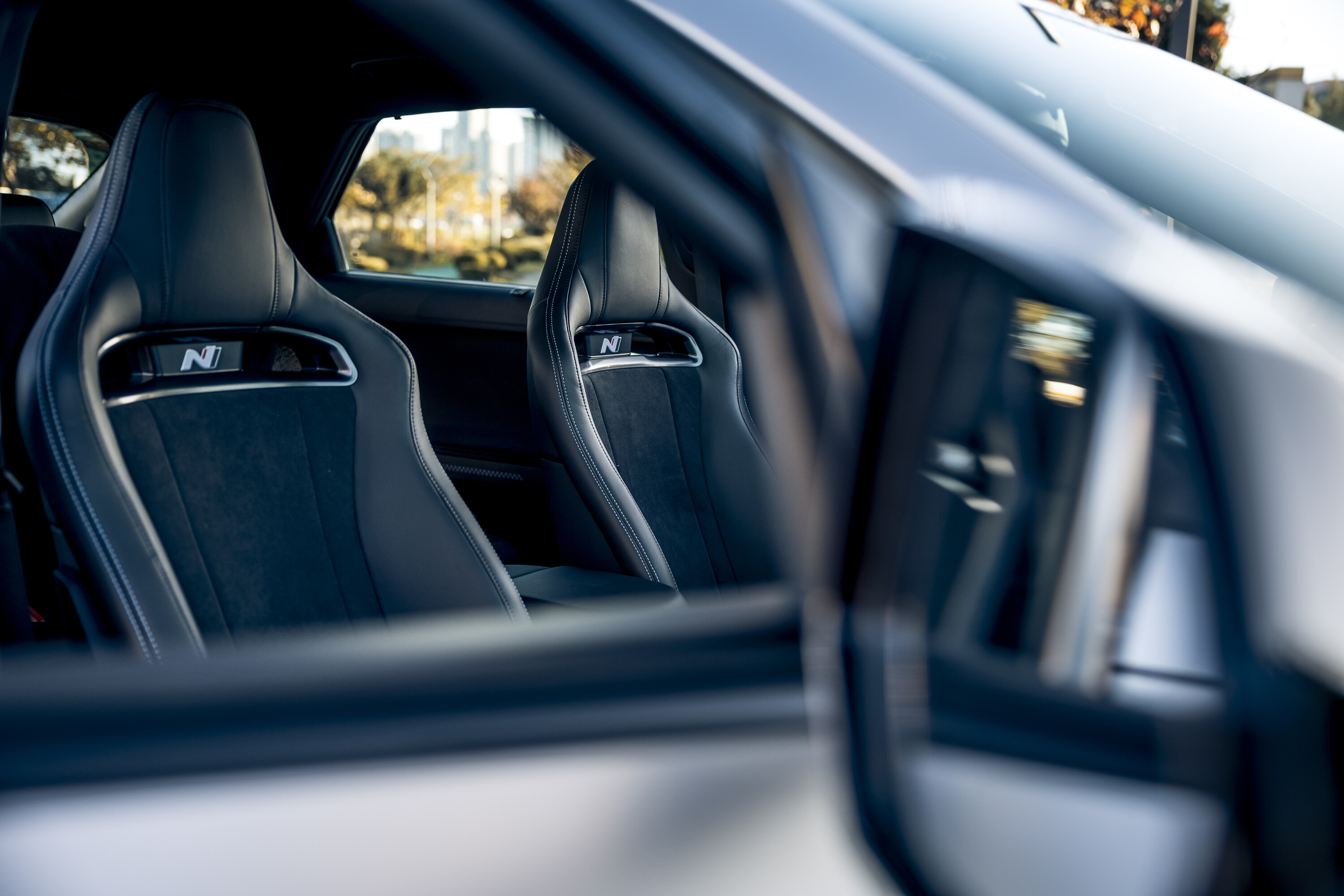
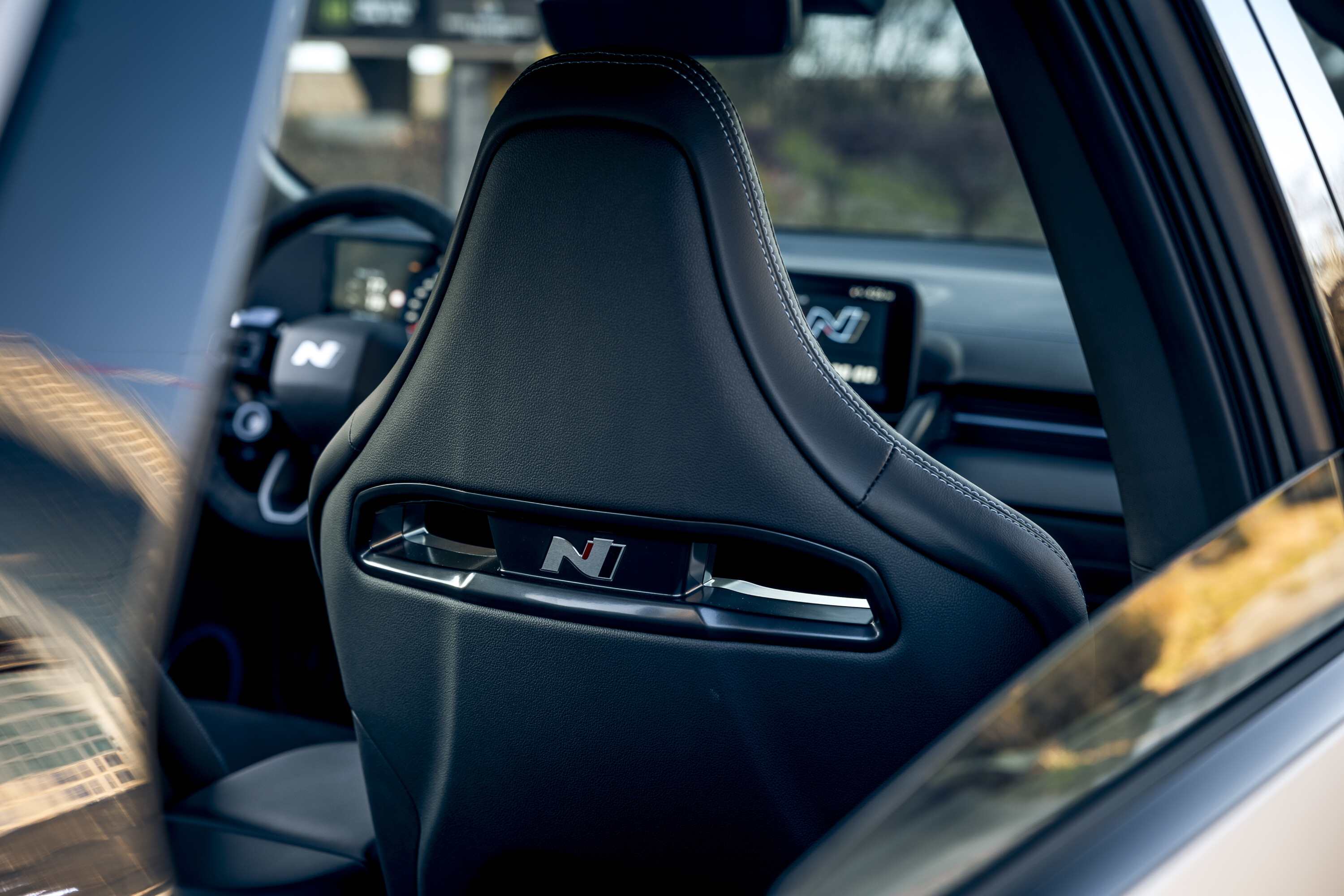
Criticisms are few, then, at this stage, though the N bucket seats are very hard, if excellent at keeping the driver in place when cornering.
1
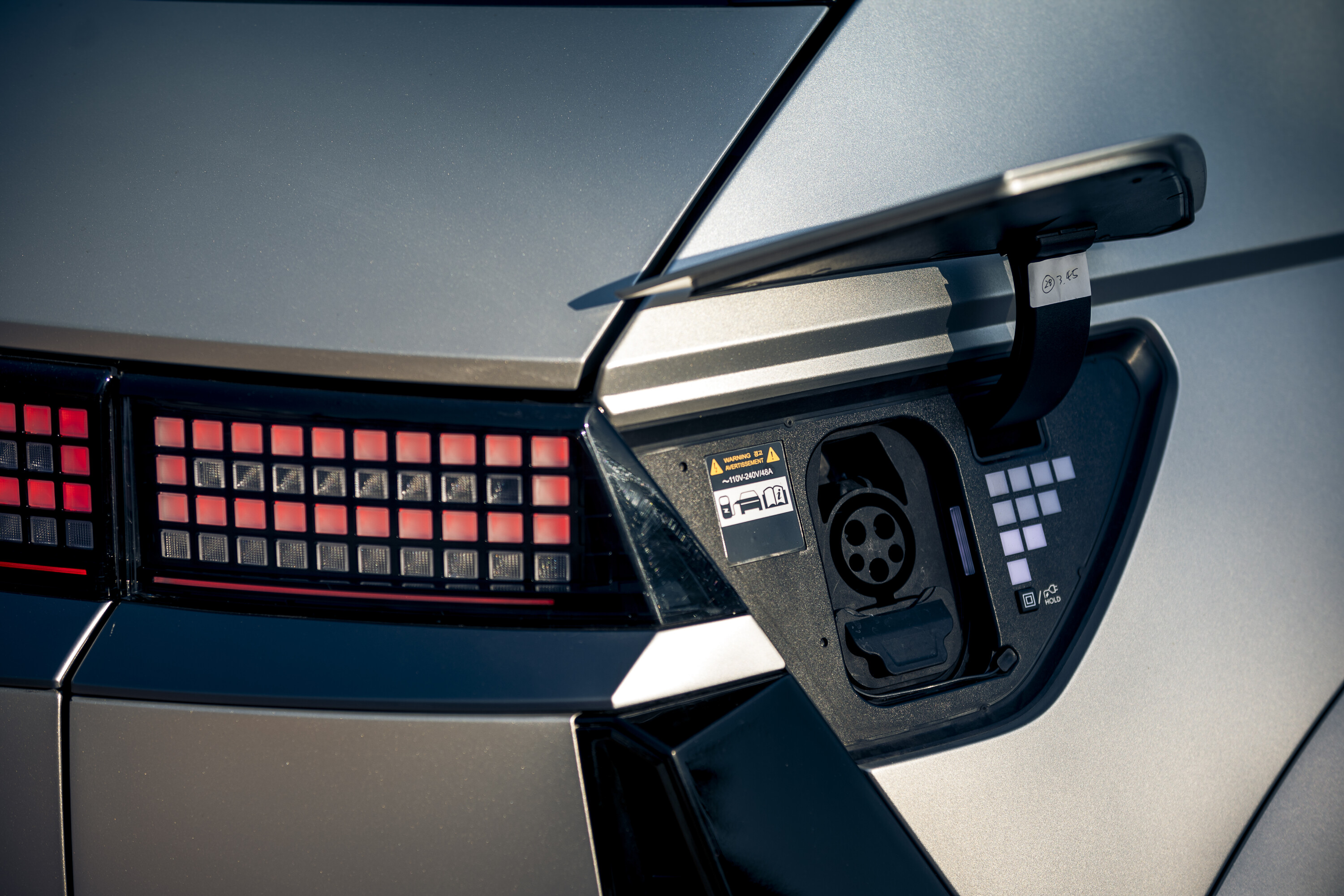
There’s a complexity to all the N modes and systems that demands homework from owners who want to get the most out of the car, and range is also a question mark.
Hyundai is estimating a WLTP-rated max distance of about 450km, but our experience in Korea suggested this figure could be highly optimistic – and we suspect impossible without driving like Miss Daisy in Eco mode.
A $111,000 price tag (or about $118K with on-roads) isn’t cheap, either (Australian deliveries start in Jan) – more than double the price of an i30 N and arguably not in keeping with Hyundai N’s mission to deliver “accessible performance”.
1
Perspective is always important, though, because the IONIQ 5 N delivers similar performance to a Porsche Taycan Turbo that costs about $300,000 (before adding the inevitably long list of options).
There’s more to the equation, too. Because while Hyundai’s performance division created one of the world’s best hot-hatches with its i30 N, it’s now built the world’s best electric driver’s car.
1
Hyundai IONIQ 5 N specifications
| IONIQ 5 N | Dynamiq RWD | Techniq AWD | Equip AWD | |
|---|---|---|---|---|
| Power/torque | 448kW/740Nm (478kW/770Nm on boost) | 168kW/350Nm | 239kW/605Nm | 239kW/605Nm |
| Range | 450km WLTP | 507km | 454km | 454km |
| Battery size | 84kWh | 77.4kWh | 77.4kWh | 77.4kWh |
| Charge capacity | 350kW | 350kW | 350kW | 350kW |
| Weight | ~2200kg | 2015kg | 2125kg | 2125kg |
| 0-100 | 3.4s | 7.3s | 5.1s | 5.1s |
