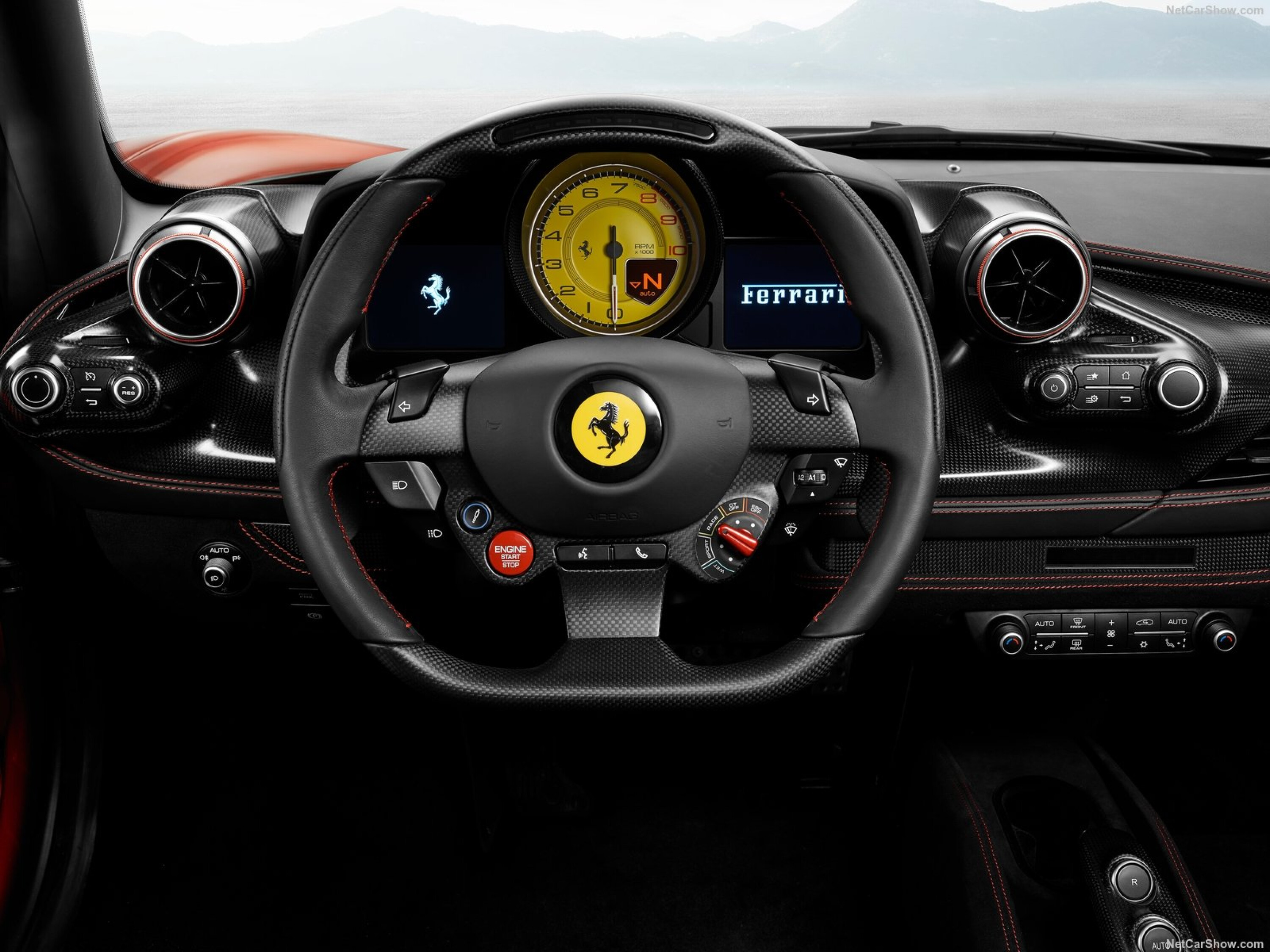
Regular Wheels readers will know there are typically three types of these Driven to Extinction pieces.
There are those that lament a much-loved model that has departed too soon and then there are those that finally farewell a car that’s hung around well past its sell-by date.
Then there’s the awkward ones into which the Ferrari F8 Tributo falls – that of the car that’s replaced by something so manifestly superior that it can be hard to work up a great deal of heartfelt saudade for it.
So unambiguously does the Ferrari 296 GTB now sit at the top of the supercar tree that the F8 Tributo is almost consigned to one of Maranello’s historical footnotes, which fails to explain quite how good it was.
1
The F8 Tributo was good. Not McLaren 720S good, but not far off, which in the overall scheme of things is pretty damn good.
As well-received as it was, it isn’t a patch on the new 296 GTB and it enjoyed a mayfly-like existence, on sale for less than four years; much the same duration as its 488 GTB predecessor. Both were developments of the 458, a car that enjoyed a six-year build slot.
It’s the 458, particularly in Speciale form, that gets Ferrari fans excited, as it was the last of the atmo mid-engined models. While the turbocharged 488 and F8 were undoubtedly quicker, they didn’t rev as freely and never sounded quite as good as a 458 at full noise.
1
It has almost passed without comment that the F8 Tributo was the last of the non-hybridised Ferrari mid-engined supercars, which speaks of a slight lack of buzz around the model.
But, as we’ve seen in the Modern Classic section of the Wheels November issue (the Lamborghini Murcielago LP670 SV), cars that weren’t particularly well regarded at the time can enjoy a resurgence in popularity when afforded the benefit of hindsight. The F8’s time may well come.
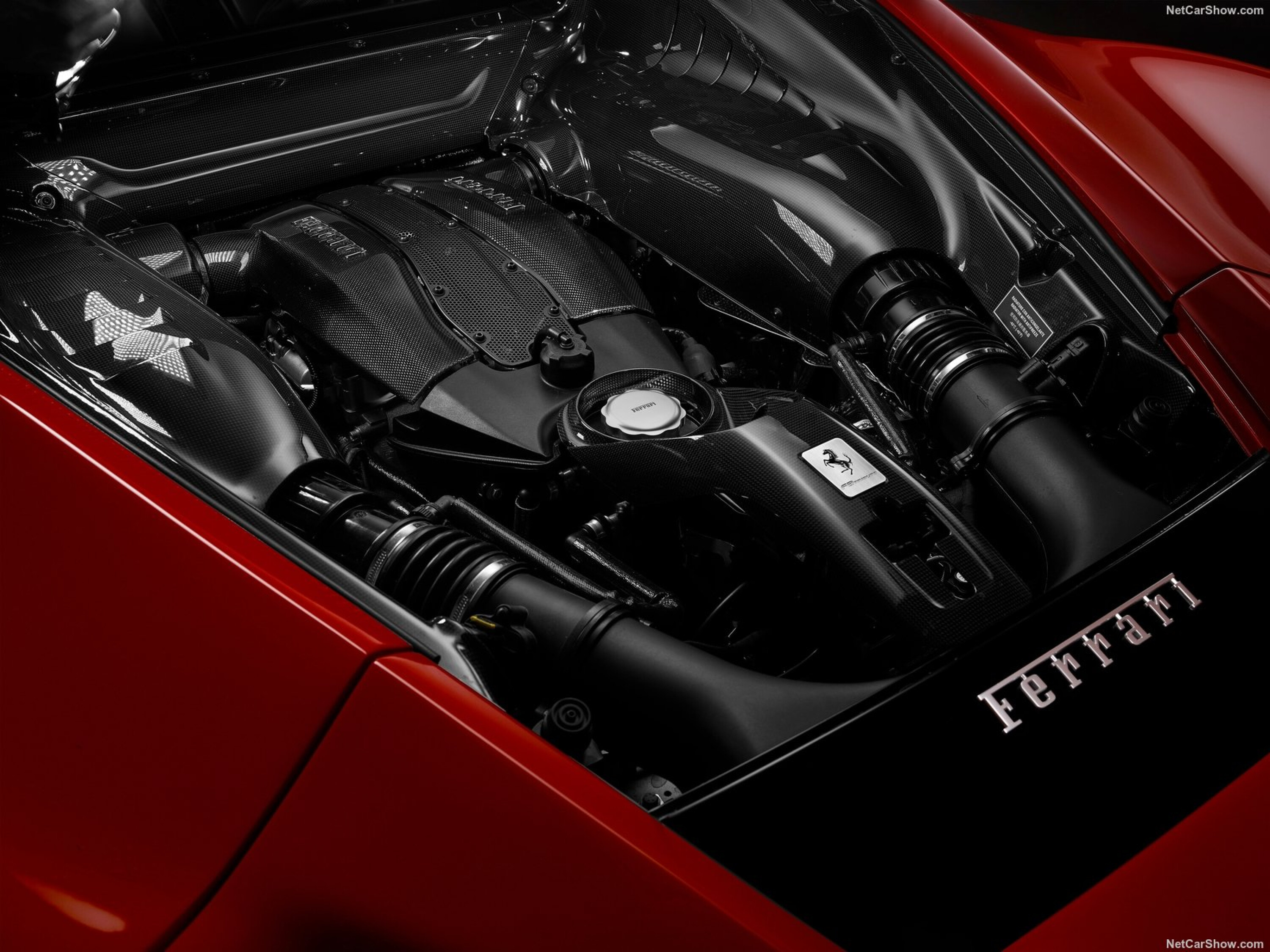
With 530kW/770Nm at its elbow from its 488 Pista-derived F154 V8, the F8 Tributo certainly didn’t short-change its customers in terms of sheer ability, although we’d take the claimed 2.9-second 0-100km/h time with a shovelful of salt given that the same time is claimed for the 296 GTB, which wields an extra 89kW.
Get into a 458 after driving an F8 and it’ll feel as if it’s got about as much torque as an S2000 running on three pots.
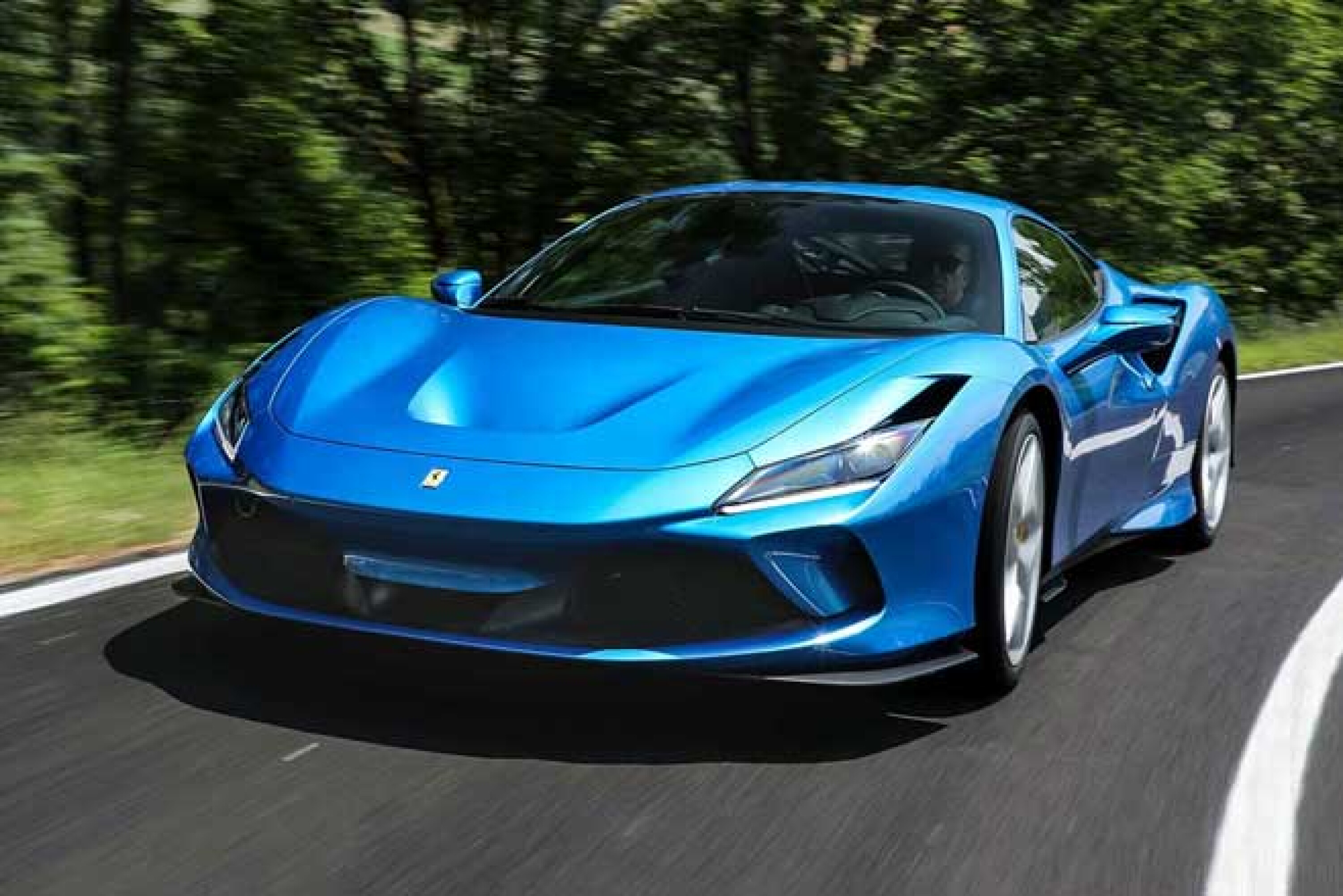
Arguably a prettier car than the somewhat lumpen 488, the F8 Tributo is a more aggressive-looking confection than the lithe 296 GTB and, with a kerb weight of just 1435kg, it’s lighter than both its predecessor and successor.
The final pure ICE mid-engined Ferrari and the final V8 ought to cement the F8 Tributo’s place in history. Yes, it’s been superseded by something more talented, but maybe its moment in the limelight is still ahead of it.
1
PISTA perfection?
The F154 engine won a total of 14 awards in the International Engine of the Year competition, claiming an unprecedented four consecutive overall titles between 2016 and 2019.
In CG form in the F8 Tributo and F8 Spider, it delivered exactly the same 530kW/770Nm as the 488 Pista’s CD unit, but married it with a more accommodating suspension set-up to make an indisputably better road car.
The unicorn
In May of 2022, Ferrari built a one-off version of the F8 dubbed the SP48 Unica. This featured a clear F8 silhouette overlaid with a melange of the design language that went into the SF90 and the 296.
It also introduced clever wrapovers and transitions between panels and materials that could well find their way into future production Ferrari models.
Toyota’s venerable mid-size sedan goes hybrid-only in ninth-generation form, due here later in 2024
November 10: 2025 Toyota Camry teased again, November 15 reveal confirmed
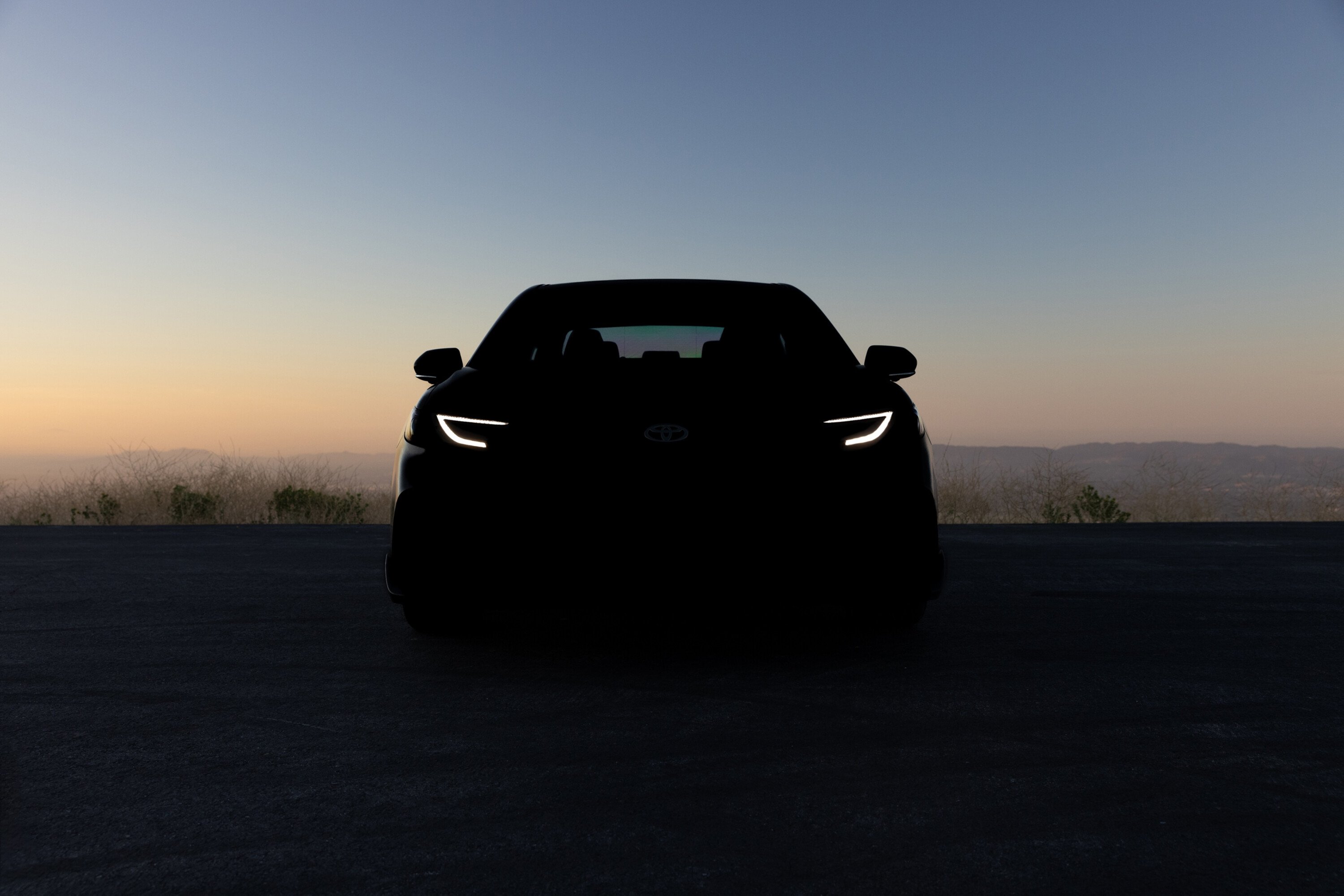
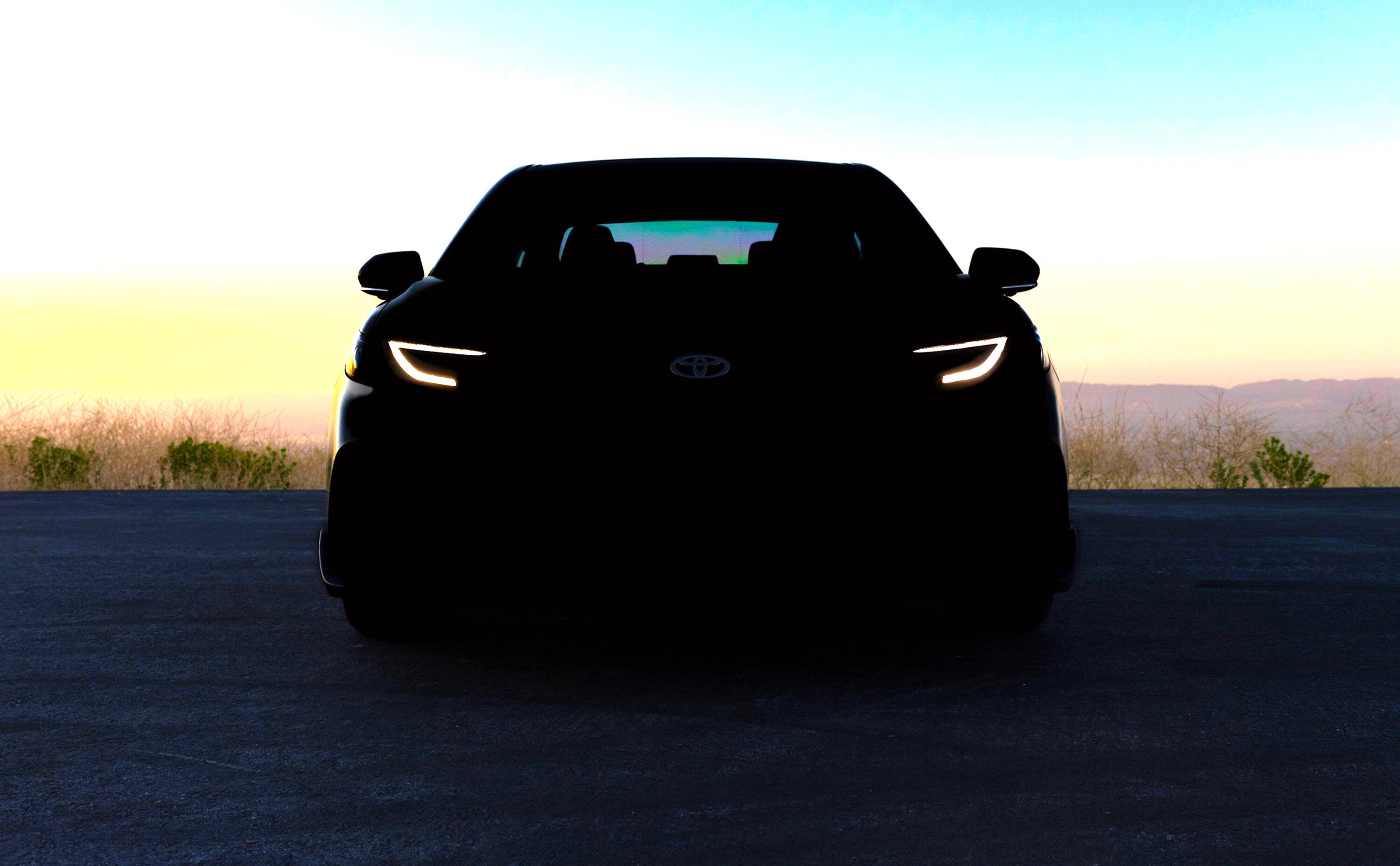
A second teaser for the 2025 Toyota Camry sedan has been released.
Snapshot
2025 Toyota Camry sedan teased
Ninth-gen Camry to have evolutionary design
Debuts on November 15 ahead of the LA auto show
Toyota has confirmed the ninth-generation Camry will debut on November 15 at 2:00pm AEDT, ahead of the Los Angeles auto show next week.
The teaser reveals an ‘AWD’ and ‘HEV’ badge, confirming the Camry will offer electronic all-wheel-drive with a hybrid powertrain – like a RAV4, Kluger or Crown – for the first time.
The 2025 Toyota Camry sedan has been teased ahead of an expected debut next month.
While the new teaser image released by Toyota in North America, captioned ‘A new dawn is coming’, doesn’t explicitly confirm a new Camry, the similarities are clear.
The ninth-generation Camry is expected to be an evolution of the current model that debuted in 2017, not a ground-up overhaul, with an updated design from existing TNGA-K underpinnings.
1
It is tipped to be unveiled at the 2023 Los Angeles Auto Show in late November or as a near-production sports concept at the SEMA show in Las Vegas earlier in the month.
Under the bonnet, the Camry could transition to a hybrid-only offering in Australia, while the 3.5-litre V6 still available in North America is likely to make way for the more efficient 2.4-litre turbo-four from the Kluger.
The teaser confirms an updated C-shaped daytime running light signature similar to the new C-HR, Prius and Crown Sport and a beefier lower bumper that could preview a hotted-up GR Sport variant.
A full-fat GR Camry is less likely, but a GR Sport (or TRD in the USA) could be fitted with the turbo-hybrid powertrain from the Crown and Lexus RX, producing around 270kW and 550Nm with all-wheel-drive.
A plug-in hybrid ‘Camry Prime’ is also possible with components from the RAV4 Prime mid-size SUV, including a 2.5-litre petrol engine and high-output electric motors.
Inside, expect influence from the C-HR, bZ4X and Crown with a larger, new infotainment system, a fully digital instrument cluster, and a smartphone-based digital key.
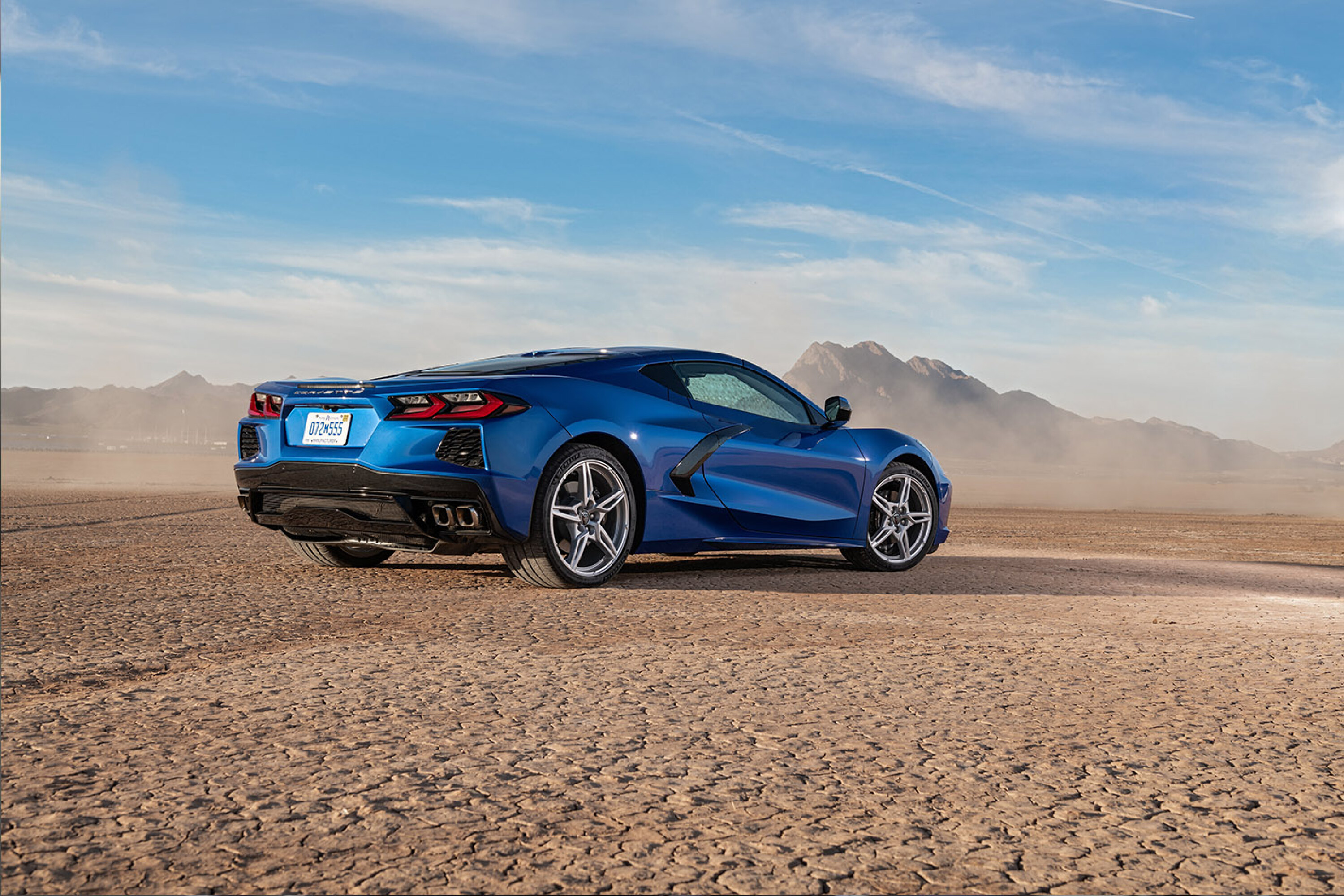
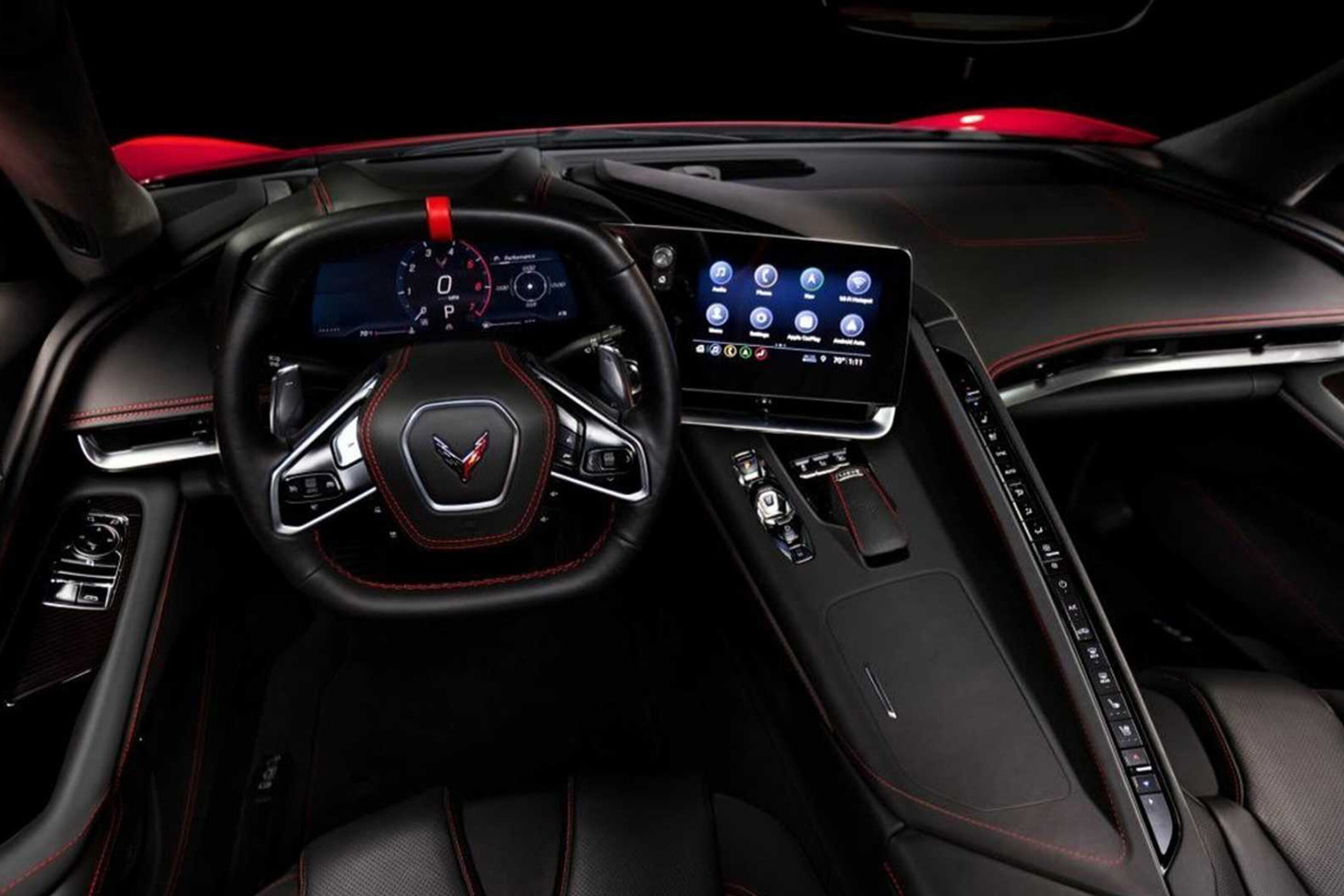
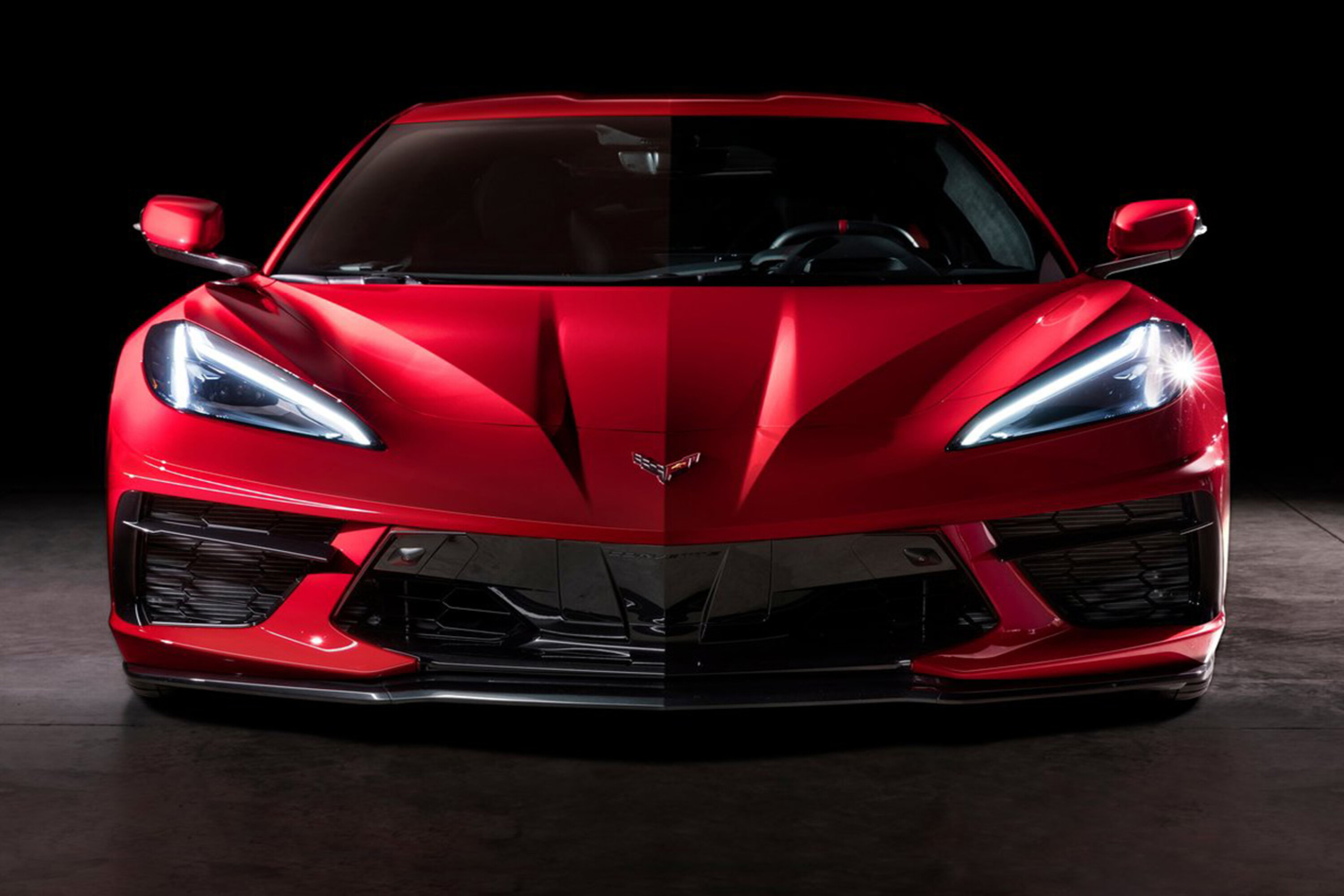
With a 369kW V8 slinging just 1545kg up the road, it’a a potent and accomplished thing. It’s priced keenly too, thanks to its factory right-hand-drive build.
We always knew that the ‘vanilla’ ‘Vette was just the start. The C8 product line had some hugely ambitious plans behind it.
1
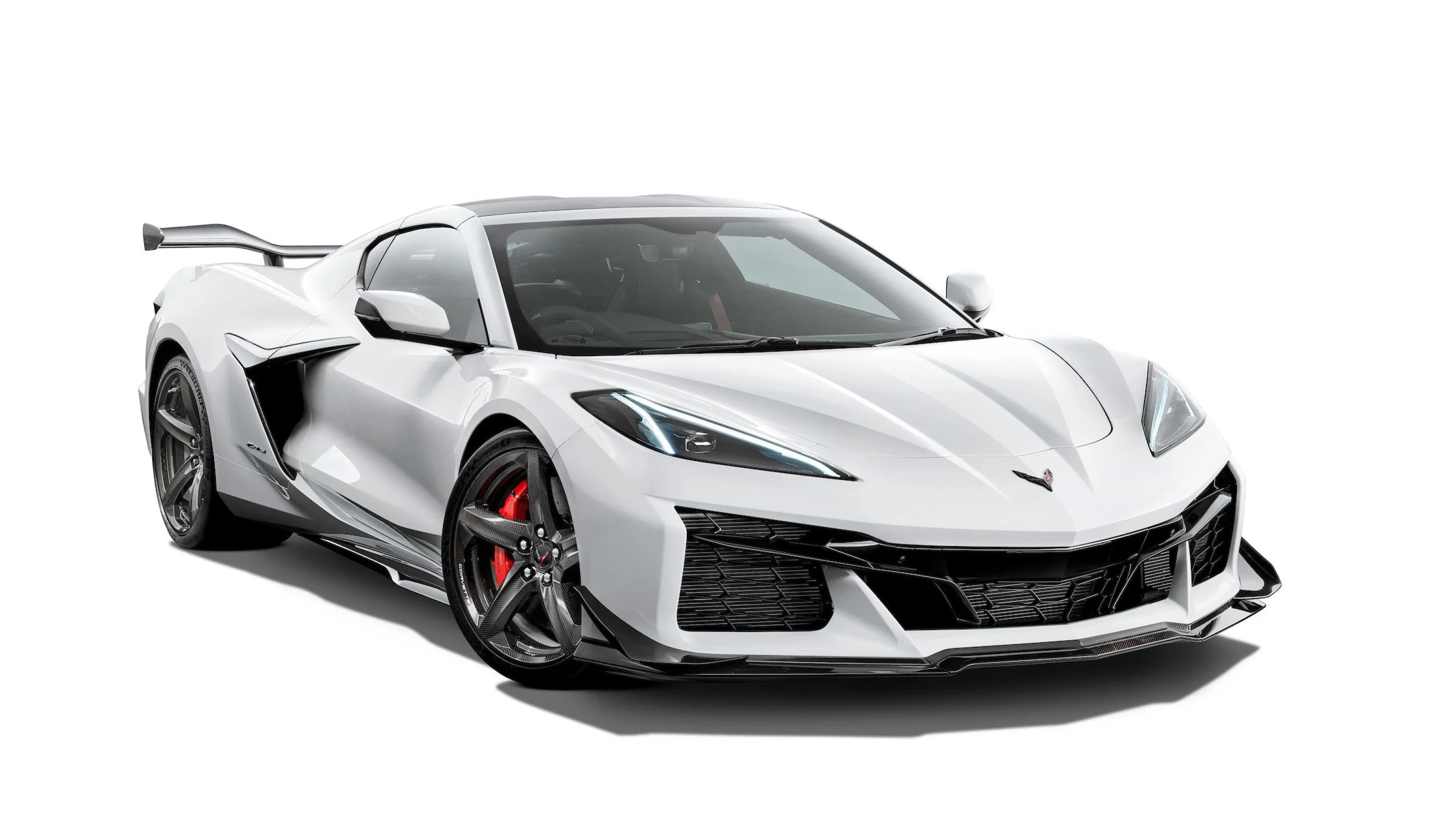
The first of the specials to make landfall in Australia is the Z06, powered by a 5.5-litre atmo V8 with a flat-plane crank and, in Australian tune, develops 475kW and 595Nm.
The first cars are now arriving, and the asking price in the 3LZ coupe (the only version imported) is $336,100.
Also offered is a Z07 Performance Pack, which adds stickier Michelin tyres, carbon-ceramic brakes, retuned suspension, and a carbon-fibre aero pack. If you’re really keen – not to mention suitably skilled at parallel parking – you can also option carbon-fibre wheels built by Geelong-based company Carbon Revolution.
“Due to incredible global demand, the Corvette Z06 is a measured volume proposition. In keeping with its exclusive nature, availability will be very controlled,” General Motors Specialty Vehicles director Greg Rowe noted in a media statement.
1
If 475kW still leaves you merely whelmed, it’s probably best to wait for what is billed as the quickest accelerating Corvette ever: the E-Ray.
As confirmed in January, the Corvette E-Ray is also coming to Australia. With power and performance that reside firmly in the supercar bracket, the first electrically-assisted Corvette features all-wheel drive to launch it to a 2.5-second 0-100km/h time.
The electrical hardware fitted is for performance, not economy or emissions, with a 1.1kWh battery wedged into the car’s transmission tunnel driving a front electric motor that adds a 118kW shot in the arm to the LT2 V8 for a total system output of almost 500kW.
1
“The electrified architecture makes this the most technologically advanced Corvette ever and we are pleased to announce that the MY24 build of the new model is expected to commence mid-next year [2024],” explained Rowe.
Detailed arrival timing and pricing for Australia and New Zealand has not been confirmed, but in the US, the E-Ray retails at $106,595 versus the Z06’s $114,395. That should give you some sort of idea when taking the Z06’s Australian pricing into account.
As tempting as the Z06 and E-Ray are, nothing other than the daddy of the lot, the ZR1, will suffice for some.
This flagship version is still in development and, as spy shots taken at the Nürburgring show, it seems to be following a similar development pathway to the Porsche 911 GT3 RS.
1
A huge fixed rear spoiler has been trialled, as has a bonnet which channels air through a huge duct, at the expense of frunk storage.
Said to be good for 630kW thanks to two turbochargers that augment the 5.5-litre V8, the rear-driven ZR1 is expected to utilise a more traditional cross-plane crank set-up. If that’s not mouthwatering enough, a Zora version is also said to be in the works, which will add hybrid tech for near 750kW. Whether the ZR1 will reach Australia has yet to be confirmed.
In the meantime, right-hook Z06 and E-Ray imports should keep enthusiasts occupied and the Euro blue-blood brands on their mettle.
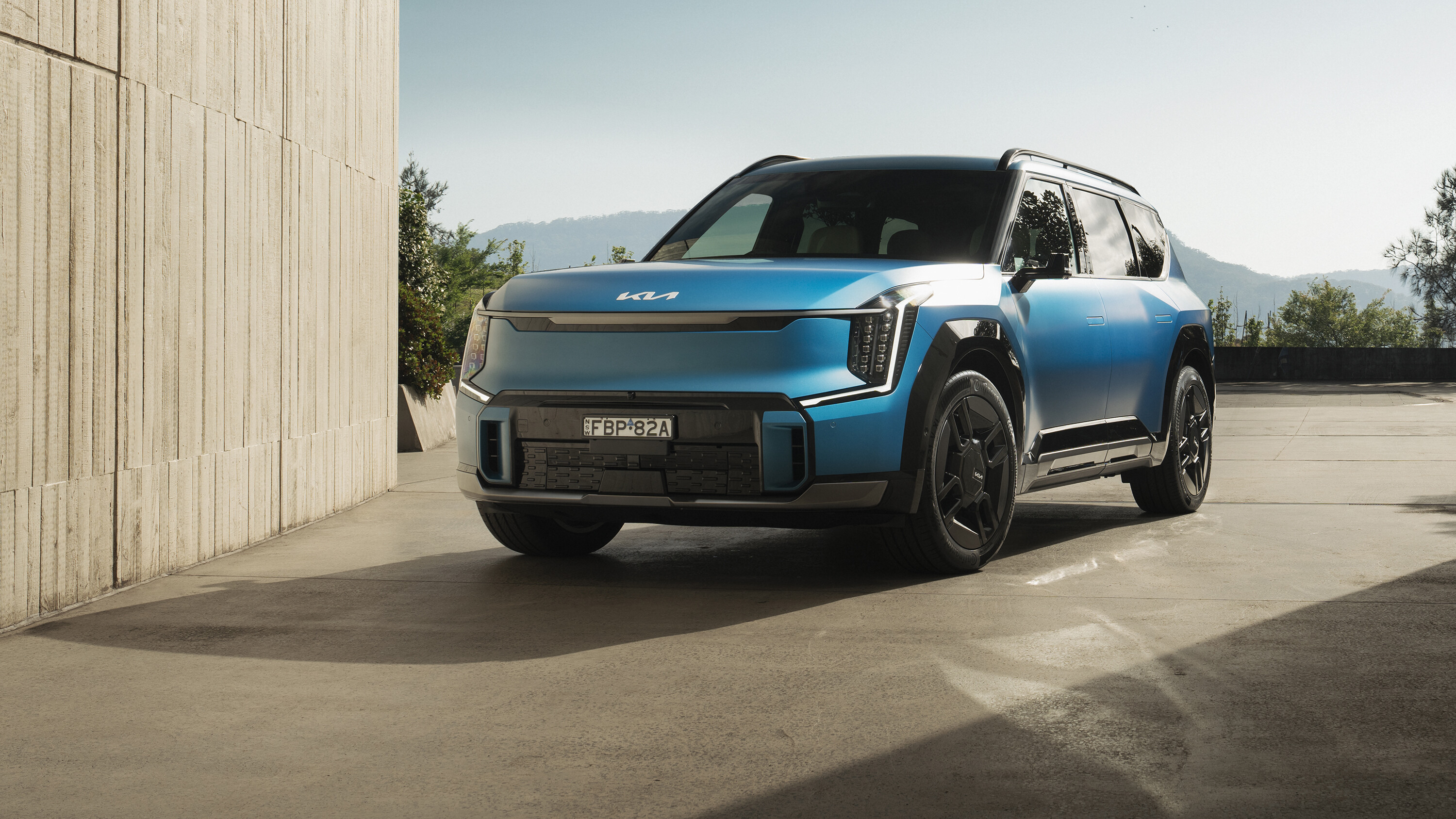
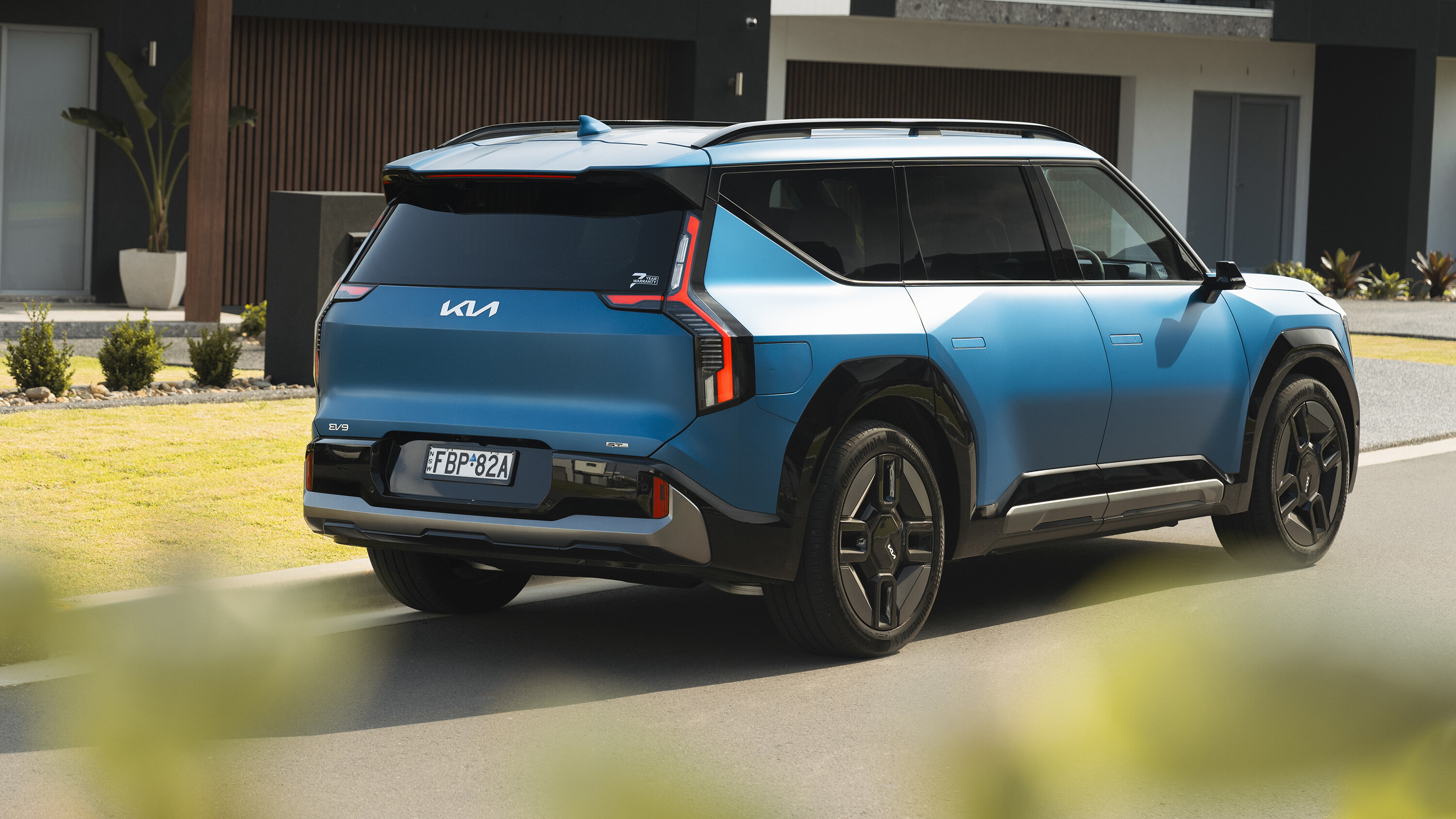
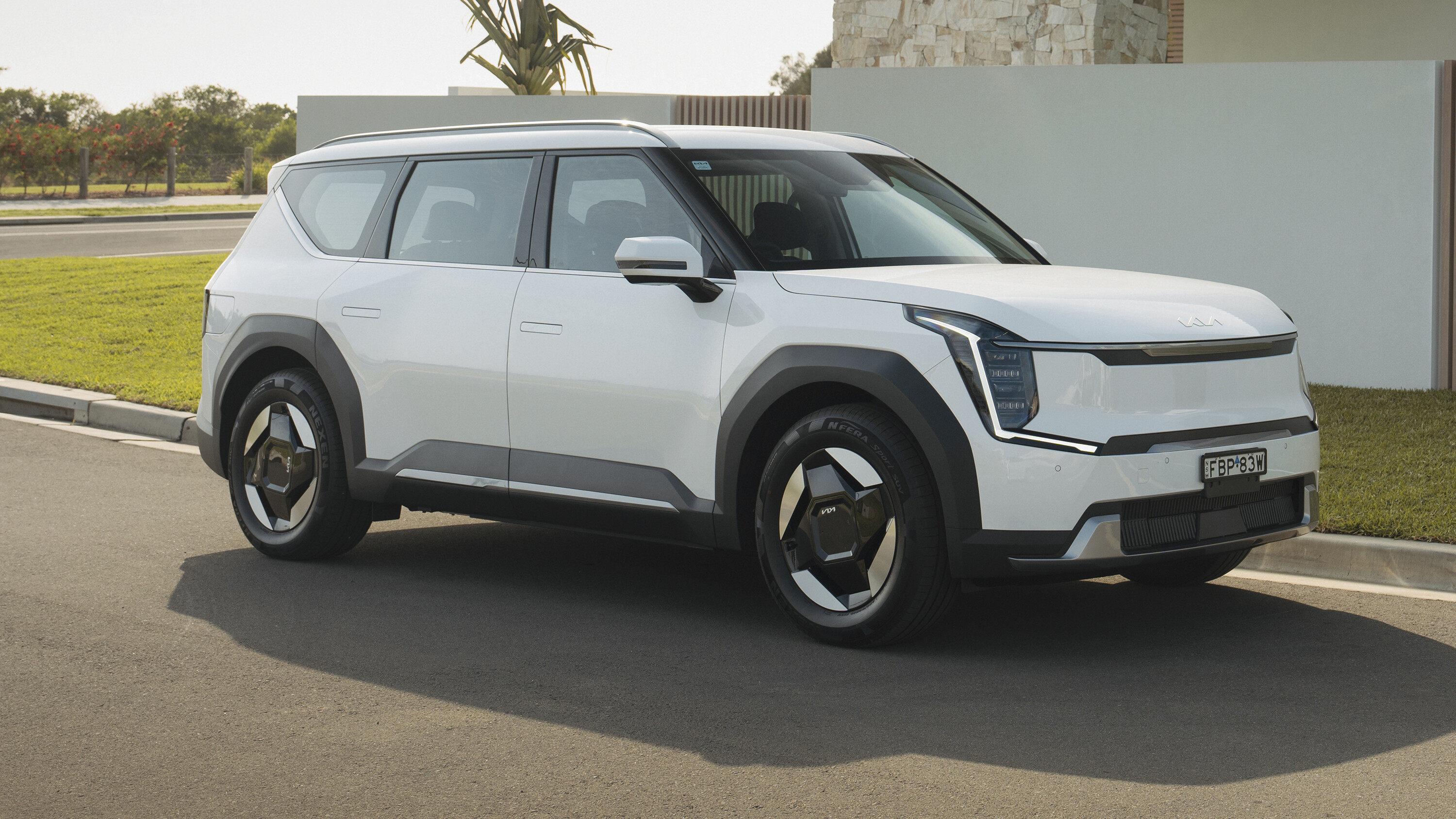
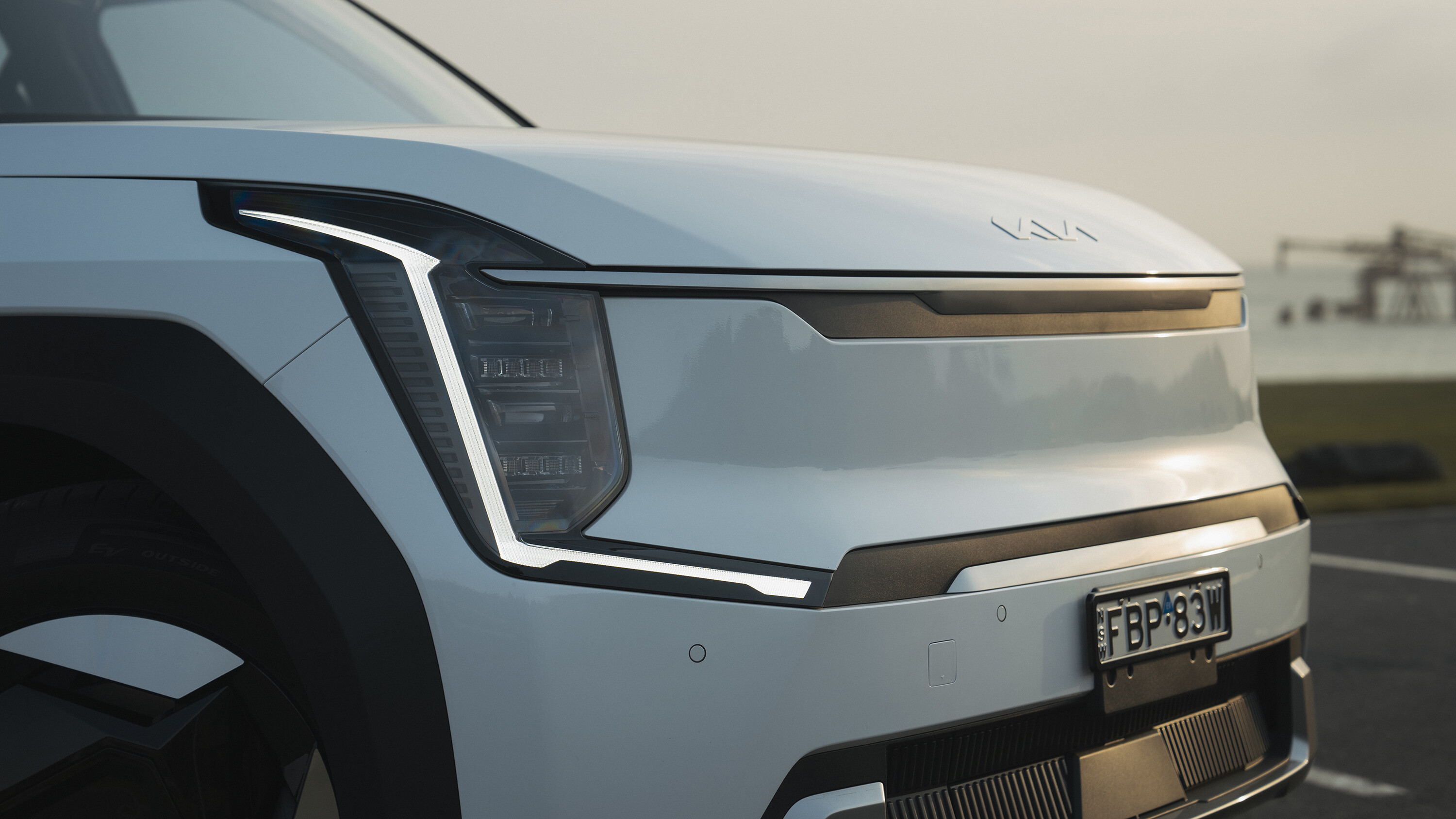
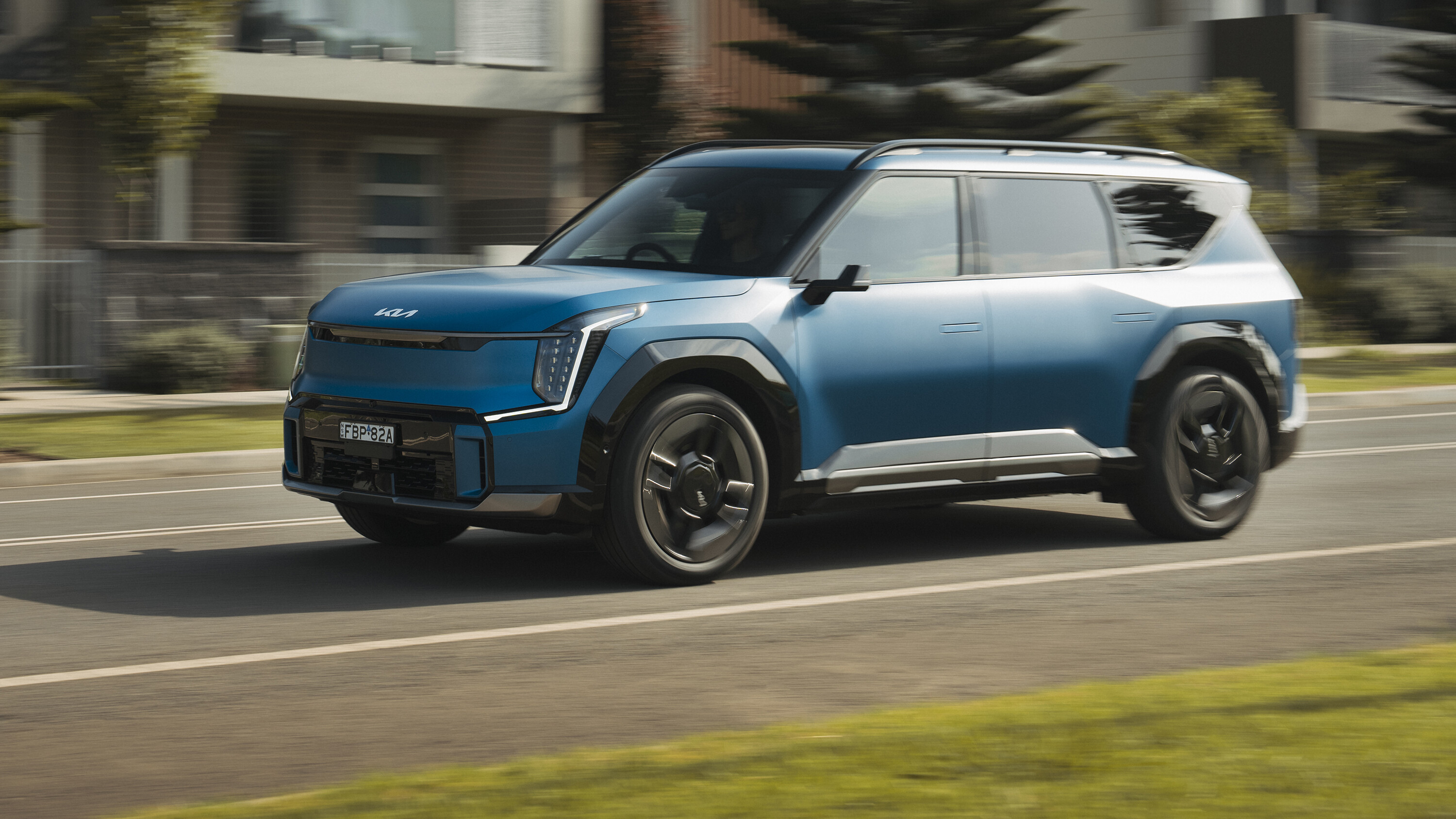
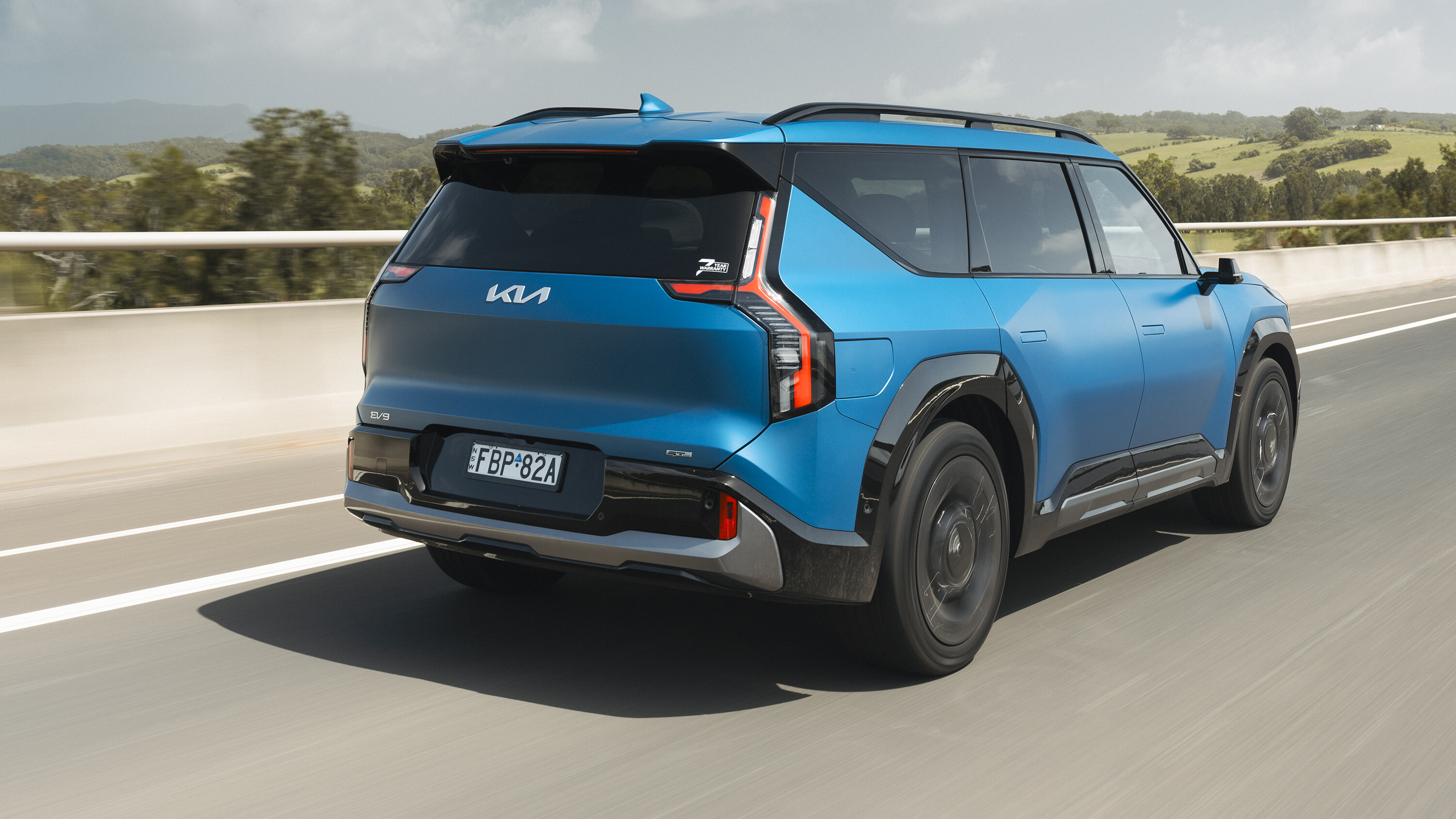
Kia’s got some brass ones these days, because its new EV9 electric SUV is big, bold, and bloody expensive. It’s also unique, for Kia and the market alike, which could result in a surprise success – even at $100k a pop.
It’s here. Arriving in rapid form after its global reveal just nine months ago, Kia’s massive EV9 is now on sale in Australia. And, unlike the smaller EV6 when it launched last year, Kia has enough supply to satisfy all but the most unlikely levels of buyer interest, with an allocation of around 100 cars each month.
1
Whether the EV9 will come close to those sorts of sales numbers remains to be seen, but with something like 7000 ‘expressions of interest’ – which can be anything from a visit to a phone call or a click online) – and dealers “writing orders for a while already”, Kia might be onto a good thing here.
At the time of last week’s Australian media event, Kia’s local arm said it had around 200 EV9s inbound by ship, and it intends for each of its 133 dealers to have a demonstrator on display.
Should you go take a look? The short answer is yes, but let’s get into it.
NEW: Kia’s plan for EVs in Australia
Kia is looking at 2024 as a watershed moment for its electrification plans, with a host of new and updated EVs bound for Australia. Get all the details here.
The EV9 is expensive, have I mentioned that? I feel like I’ve mentioned that.
Snapshot
Australian EV9 line-up opens from $97,000
RWD EV9 Air claims 443km range, AWD Earth & GT-Line over 500km
Strong equipment list, but no head-up or surround view in entry model
Of course, everything is about context, and while the EV9’s size and segment positioning form big pieces of the puzzle, it’s also very well equipped. Through the entire three-model range, in fact.
RWD EV9 Air claims 443km range, AWD Earth & GT-Line over 500km
800V electrical system with a 20-min fill from 10-80% on 350kW chargers
The entry-level model is the rear-wheel-drive EV9 Air, with a 76.1kWh lithium-ion battery pack and a claimed 443-kilometre driving range (WLTP). The Air’s single motor produces 160kW and 350Nm, promising a 0-100km/h time of 8.2 seconds with only the driver on board.
The $106,500 ‘mid-range’ EV9 Earth moves us into dual-motor territory with a 99.8kWh battery pack, boosting outputs to 283kW and 700Nm while adding all-wheel drive, a claimed driving range of 512km, and a much sharper 6.0-second run to 100km/h.
At the top of the range, and our focus here, is the $121,000 EV9 GT-Line. With battery and power numbers identical to the Earth, the GT-Line differs primarily in its equipment list – although it will draw more current to deliver a 0-100km/h time of 5.3 seconds, corresponding to a slightly shorter claimed driving range of 505 kilometres.
1
It’s uncommon for a RWD EV to have the shortest driving range, but Kia says its buyers have shown a preference for AWD – which, in this case, also boosts braked towing capacity from 900kg to 2500kg. But, as always, buyers should note that EVs will lose around half their driving range when towing at their full claimed capability. You should also consider that the rearward position of the charging port means you’ll usually have to unhitch a trailer and back up to the charger.
The EV9 uses the same E-GMP platform that underpins the EV6, upcoming EV5 and Hyundai’s Ioniq models – meaning it also boasts the same 800V electrical system.
Using a 350kW ‘DC+’ fast charger, this system enables a 20-minute charge from 10-80% for the EV9 Air, and 24 minutes for the GT-Line. To preserve their battery cells, most EVs will slow their charge rate after 80%, and the EV9 is no exception.
I said the EV9 is well-equipped, and it is. First impressions count, and when I climbed into the Air, my first impression was that there isn’t much missing. That isn’t quite true, as the tables below make clear, but there’s still a lot going on here.
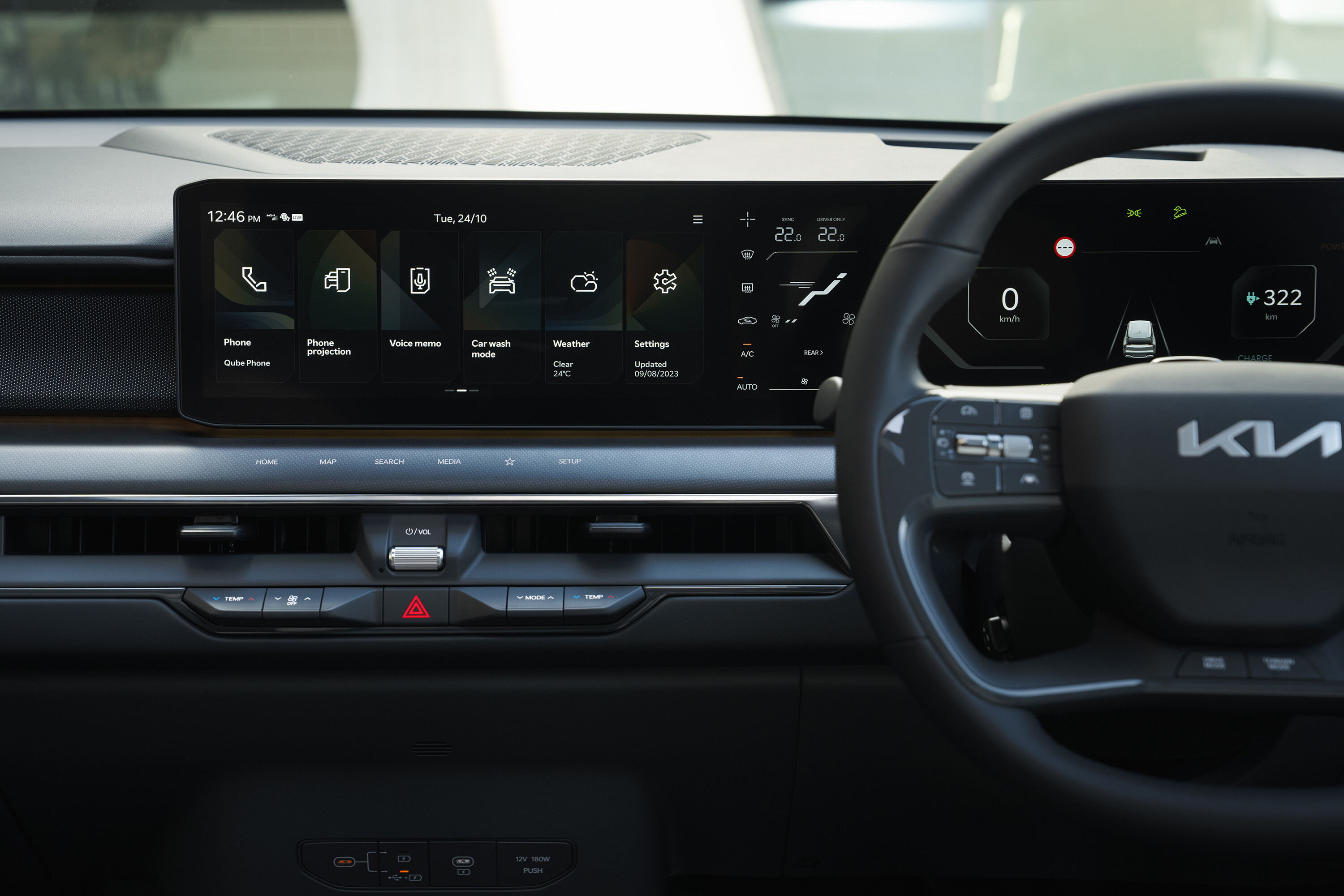
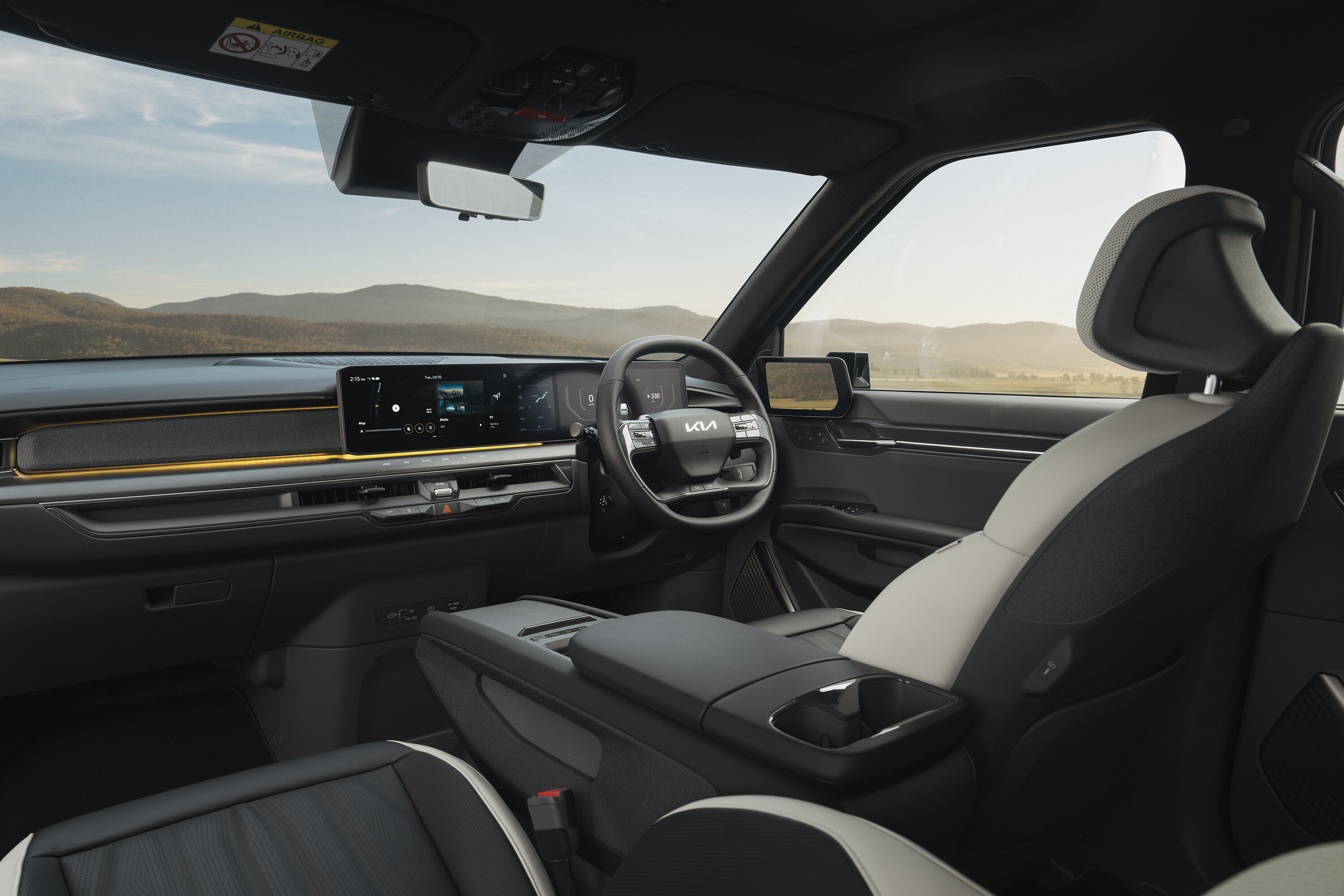
The most noticeable and flashy inclusion at the $97,000 opening end is the dual 12.3-inch displays (those are the huge kind) with a cleverly devised 5-inch climate display sandwiched between them.
Even listing the entry-level EV9 Air’s highlights is a challenge. What to exclude? For me, as a tech nerd, the standouts are the three-zone climate control; six USB-C charge ports (two in each row); powered tailgate; heated, ventilated and eight-way powered front seats; and a heated steering wheel.
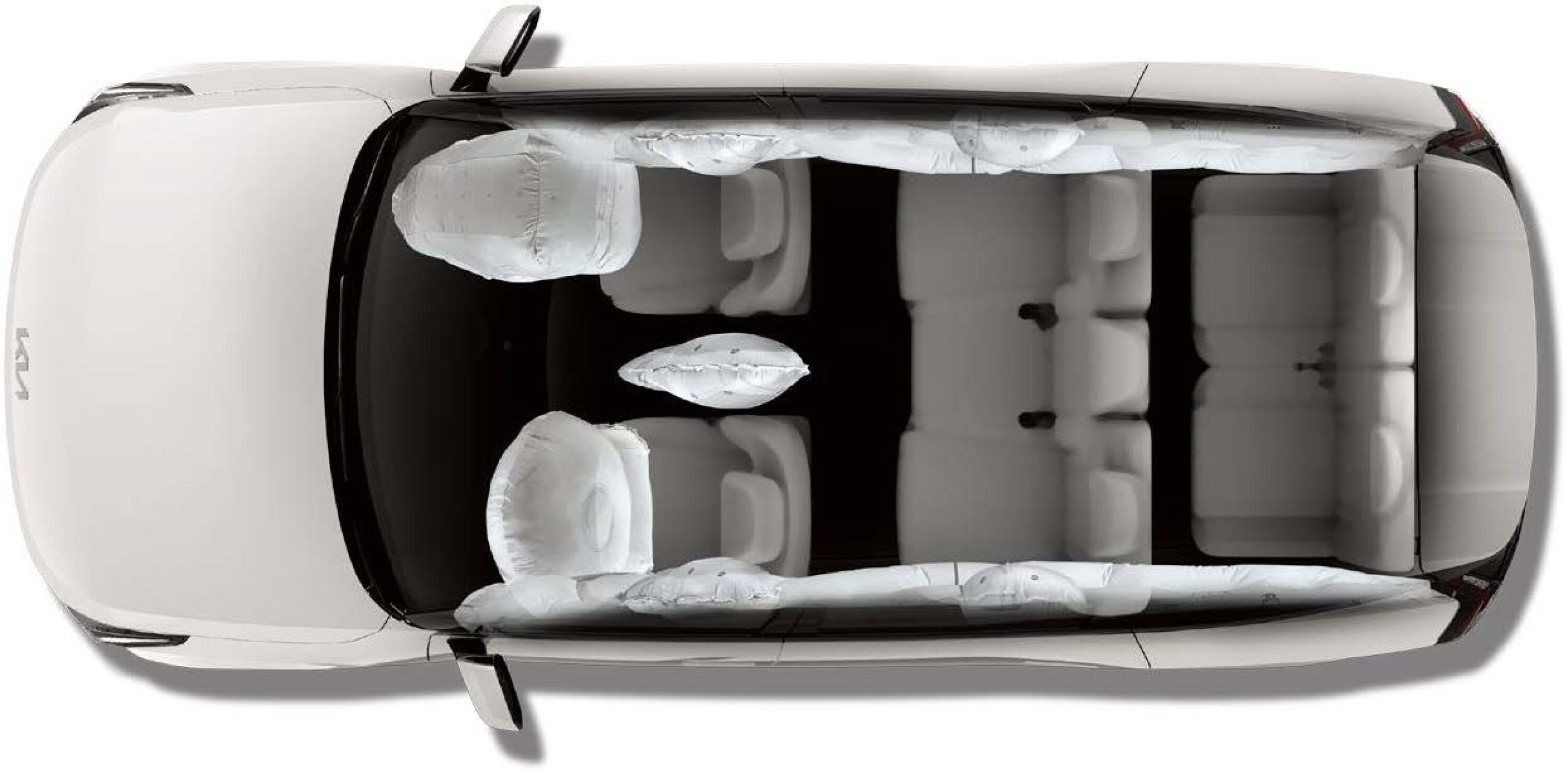
That’s the creature comforts. As a dad – and for it to achieve a top ANCAP safety score under the latest strict requirements – I’m pleased to see that the EV9’s standard safety list is loaded almost to the lid. See the full list below.
1
2024 Kia EV9 Air features
19-inch alloy wheels
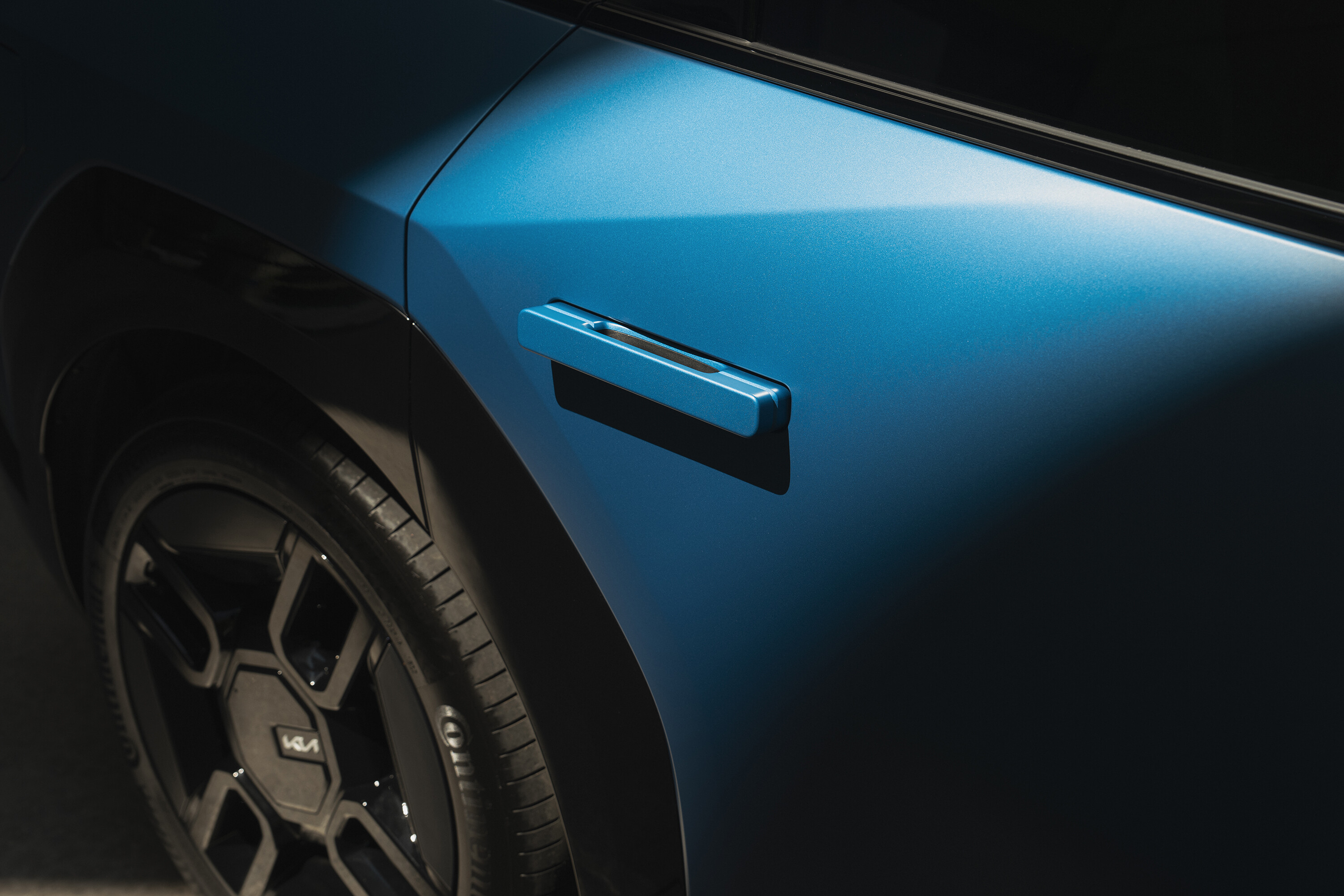
Auto-flush exterior door handles
12.3-inch ccOS infotainment system
Black leather-accented upholstery
Wired Apple CarPlay and Android Auto
Eight-way power-adjustable driver’s seat with two-way lumbar support
Kia Connect
Eight-way power-adjustable passenger seat with two-way lumbar support
Over-the-air software updates
Heated and ventilated front seats
Eight-speaker audio system
Heated steering wheel
Satellite navigation
Rain-sensing wipers
DAB+ digital radio
Remote-folding second-row seats
12.3-inch digital instrument cluster
Fingerprint authentication module
5-inch climate control display
Wireless phone charger
Three-zone climate control
In-cabin driver monitoring camera
Six USB-C charge ports (2x front, rear, side)
LED headlights, tail-lights, and daytime running lamps
Electric tailgate
2024 Kia EV9 Air safety
Driveru2019s front airbag
Tyre pressure monitoring
Passengeru2019s front airbag
Blind-spot alert
Side airbags (1st & 2nd rows)
Rear cross-traffic alert
Curtain airbag
Safe exit assist
Front center side airbag
Front and rear parking sensors
Lead vehicle departure alert
High beam assist
Rear occupant alert
Multi-collision braking
Autonomous emergency braking (vehicle, pedestrian, cyclist, junction, direct oncoming)
Highway Driving Assist 2 ud83dudd3d
Adaptive cruise control
Lane change assist
Lane-keep assist
Lane departure warning
Intelligent speed limit assist
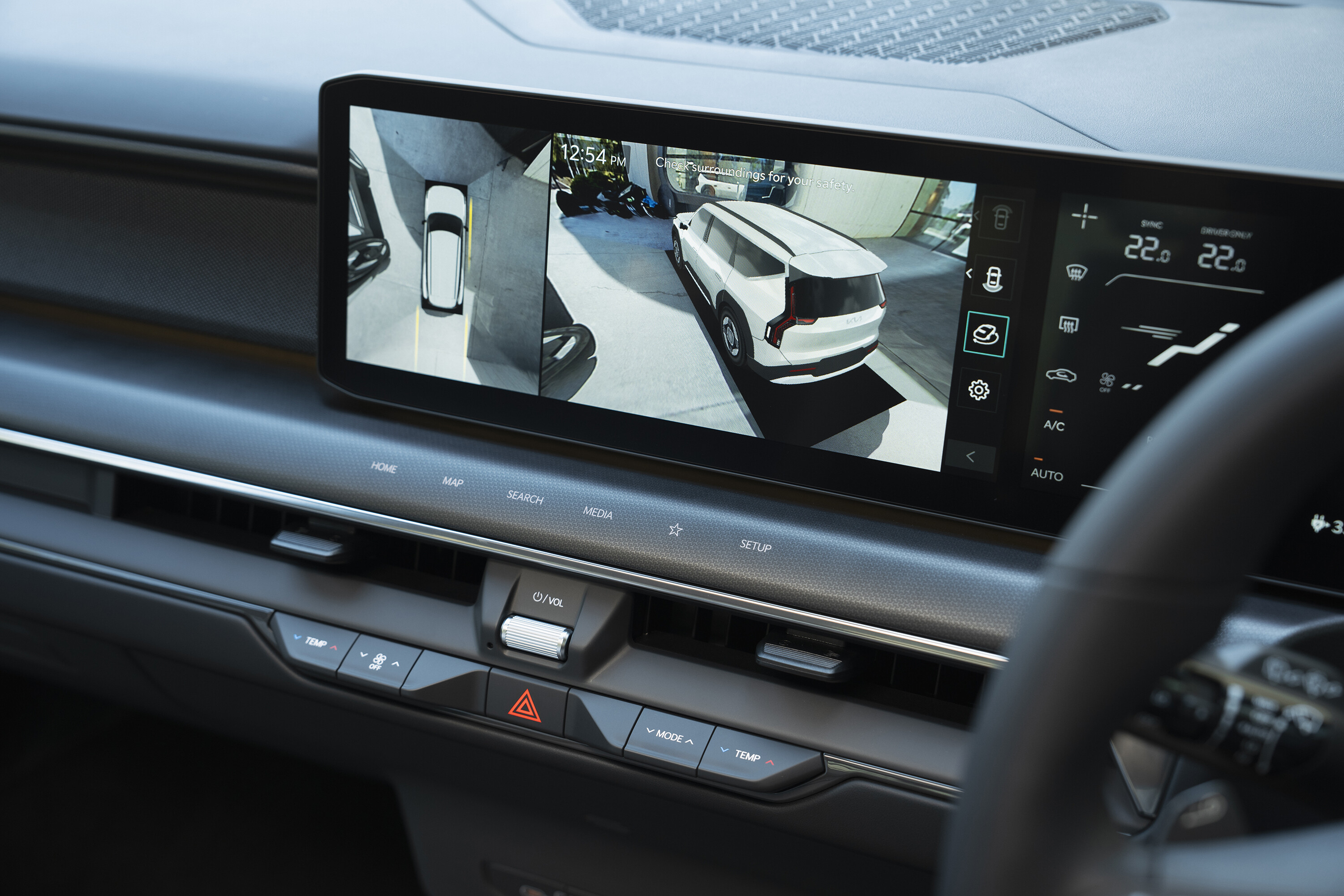
But! Despite this royal flush of active and passive safety features, there are still three omissions at the entry level that should really be included: a top-down 360º surround camera view, blind-spot cameras, and a head-up display. For the first two, you’ll need to step up to the $106,500 Earth, which Kia expects to be the most popular variant. The head-up display is unique to the GT-Line.
Buyers should also know that Intelligent Speed Limit Assist (ISLA) is again featured (as it is in all new Hyundai models), causing a loud beeping when the speed limit is exceeded. This can be made quieter or even deactivated, but as with previous ISLA-equipped models, it must be done each time the vehicle is started. Kia notes, however, that you can now map the ★ button on the steering wheel to go direct to the safety settings screen, shortening the number of steps from about seven to four. Of course, the noise is most easily avoided by not speeding…
Black leather-accented upholstery with stripe stitching
Reverse parking collision avoidance assist
Gloss black body cladding
360-degree camera system
Illuminated Kia steering wheel logo
Blind-spot view monitor
64-colour configurable ambient lighting
1
EV9 GT-Line, in addition to Earth
21-inch alloy wheels
Four-way driver’s seat lumbar support, and power bolster adjustment
14-speaker Meridian audio system
Premium relaxation front seats with two-way power leg rests
Augmented reality head-up display
Two-position driver’s seat memory function
Digital side mirrors
Power-adjustable steering wheel column
Digital rear-view mirror
Dual sunroof
Matrix LED cube projection-type headlights
Rear privacy glass
Beige two-tone leather-accented upholstery
Backlit dashboard controls
Heated and ventilated outer second-row seats
Manual rear sunshade blinds
Remote smart parking assist
Active sound design
Vehicle-to-load (V2L) exterior adaptor
Alloy pedals
Forward and side parking collision avoidance assist
Black headlining
Parabolic glovebox
The $121,000 GT-Line is the focus of this review, and you can see that even though the Air and Earth models are well-equipped, the GT-Line adds its share of comfort, convenience and safety kit.
$15k worth? That’s up to you, and Kia knows the mid-range Earth is where most buyers will land, but the GT-Line should prove compelling for big-budgeted yet pragmatic buyers considering a more expensive and traditionally premium offering – with or without a need for seven seats.
Err, a lot. Let’s start with the phone-like fingerprint authentication pad that means crooks can’t steal your car even if they’ve got one of the key fobs – so long as they don’t also have one of your fingers. It works quickly, and setting up your fingerprints is exactly the same processed you’d use for any phone with a fingerprint scanner.
The second generation of Kia Connect is also featured, pairing your vehicle with your phone through a persistent online connection. The system launched last year with the small Niro, but this latest form adds over-the-air updates and, soon, an online store for features and apps. (We’re not expecting heated seats to become a paid feature.)
Kia says Connect will allow owners to download and install software updates for “almost 60%” of the EV9’s controller systems ‘over the air’, and map updates are also delivered twice yearly through this connection.
Apple Carplay and Android Auto are both standard in a wired form, but an over-the-air update due in the next month-or-so will enable wireless connectivity for new and existing owners.
2
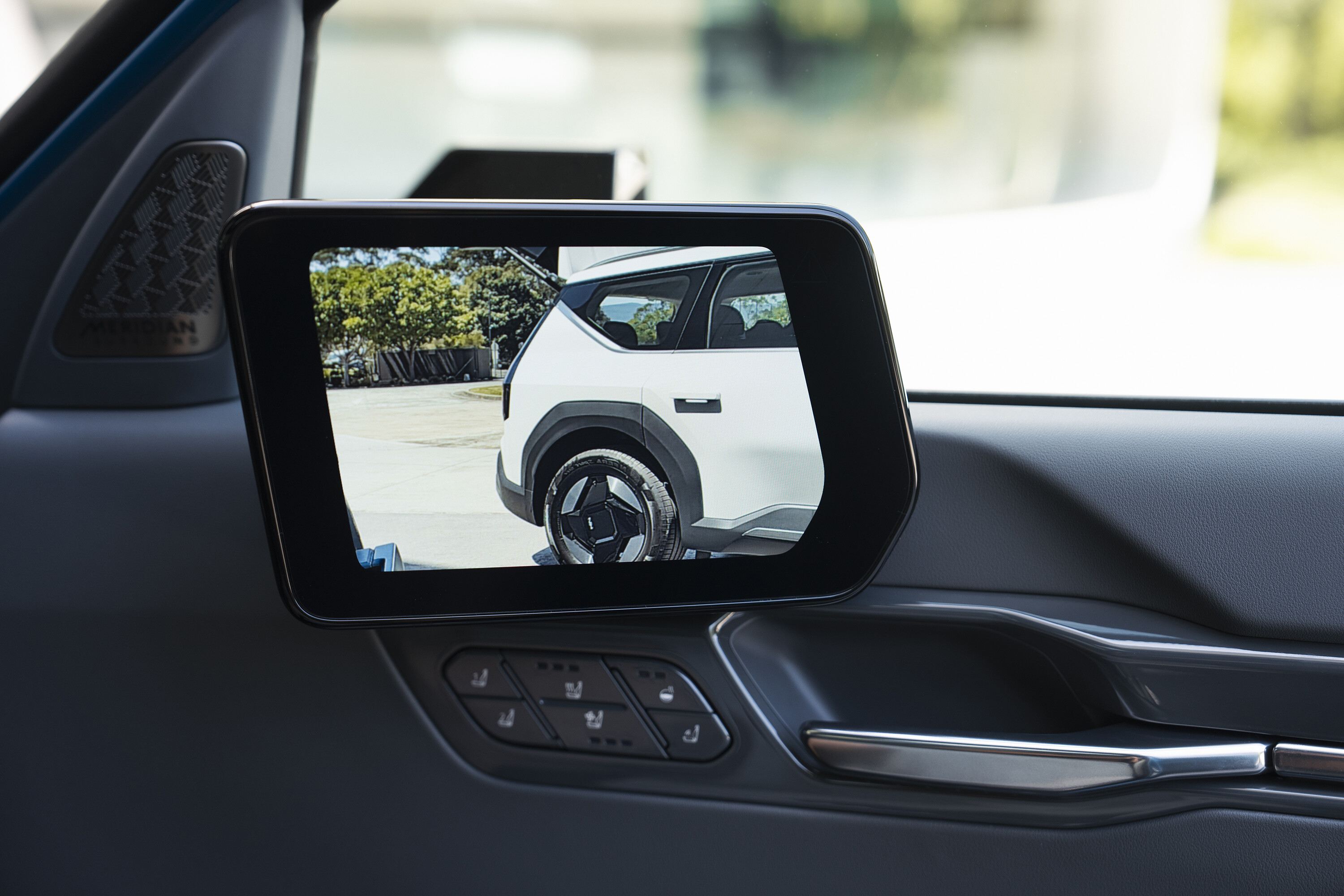
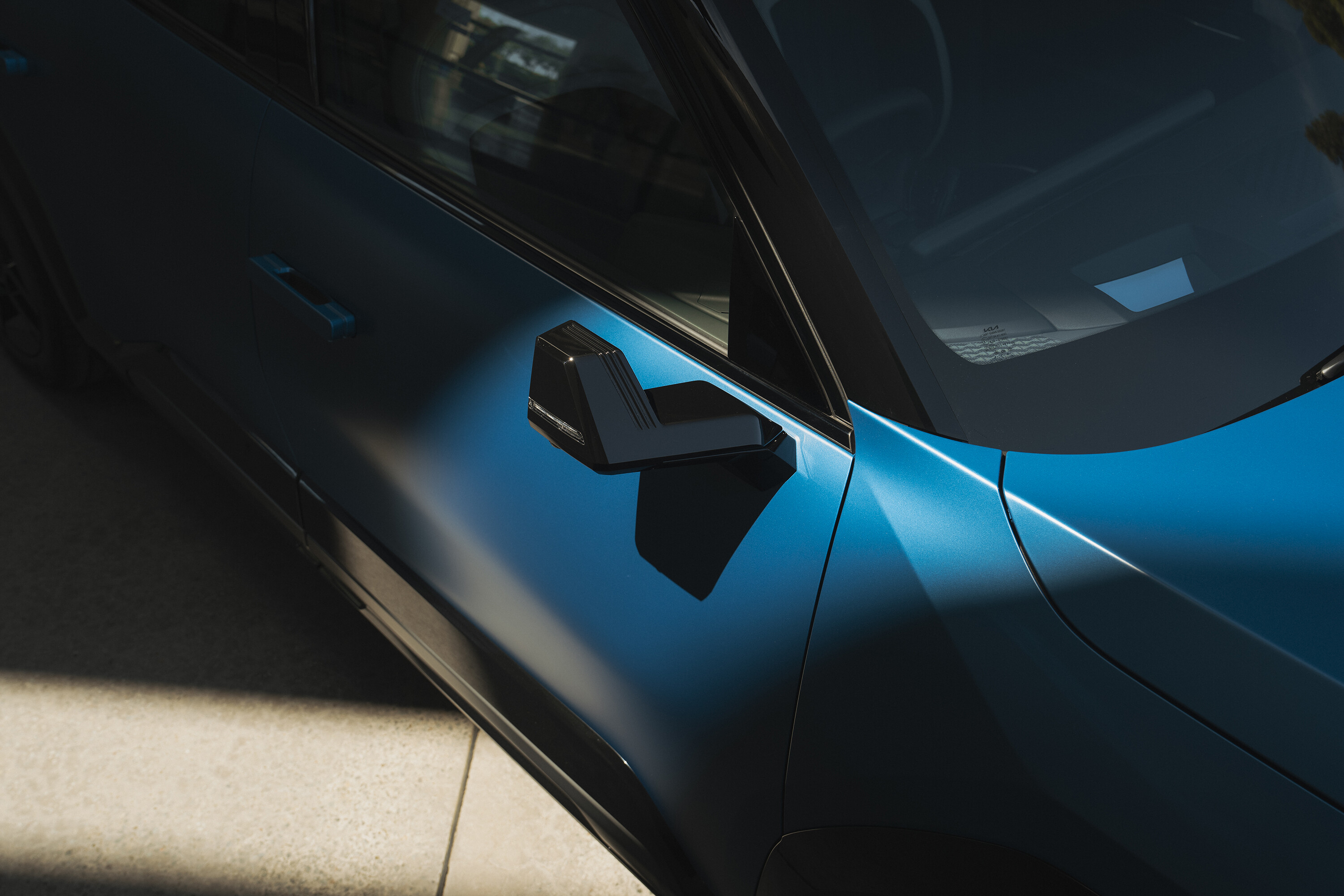
As with a number of other recent electric cars, the EV9 gets digital cameras in GT-Line trim. Yes, we may scoff at the ‘solution looking for a problem’ mirror cameras, but I’ve come around.
Not only do they show a marked improvement in wind noise when compared to the conventional mirrors on the Air and Earth models, but the viewing angle displayed on the door screens is so wide that it largely (but not completely) diminishes the critical importance of performing a head-check.
They’re also a more obvious presence and easier to glance at, improving the driver’s general situational awareness. If these features help to stop less mindful drivers from causing harm or bingles on the road, I welcome them. (Let’s see how long they go before needing an expensive replacement…)
1
There’s also a less controversial camera view in the main rear-view mirror, which can be used as a conventional mirror if preferred (thanks to the mirrored glass of the screen), or quickly flicked to a digital display as needed – such as when passengers’ heads are in the way, or the boot is loaded too high to see out the rear window.
Not only is the digital view wider, but it’s also proved surprisingly entertaining for Miss 5, who gets the exact same view from her seat in the second row, since there are no mirror angles to deal with. “There are so many cars chasing us!” ?
The EV9 also marks the Australian launch of Highway Drive Assist 2.0, which can autonomously manage a lane change on mapped highways – but, since it’s illegal to take your hands off the wheel, the system’s official job is to monitor for potential collisions when you indicate, and then guide you safely through the lane change when the coast is clear.
HDA also brings hands-on detection, stop-and-go cruise control, and lane-following assist to keep you centred in your lane.
For now, the EV9 is Australia’s ‘Goldilocks’ option for seven-seat electric SUVs.
The Mercedes EQB is cheaper but markedly smaller, and the EQS is a little bigger but markedly more expensive – while the EQE is both more expensive and short two seats.
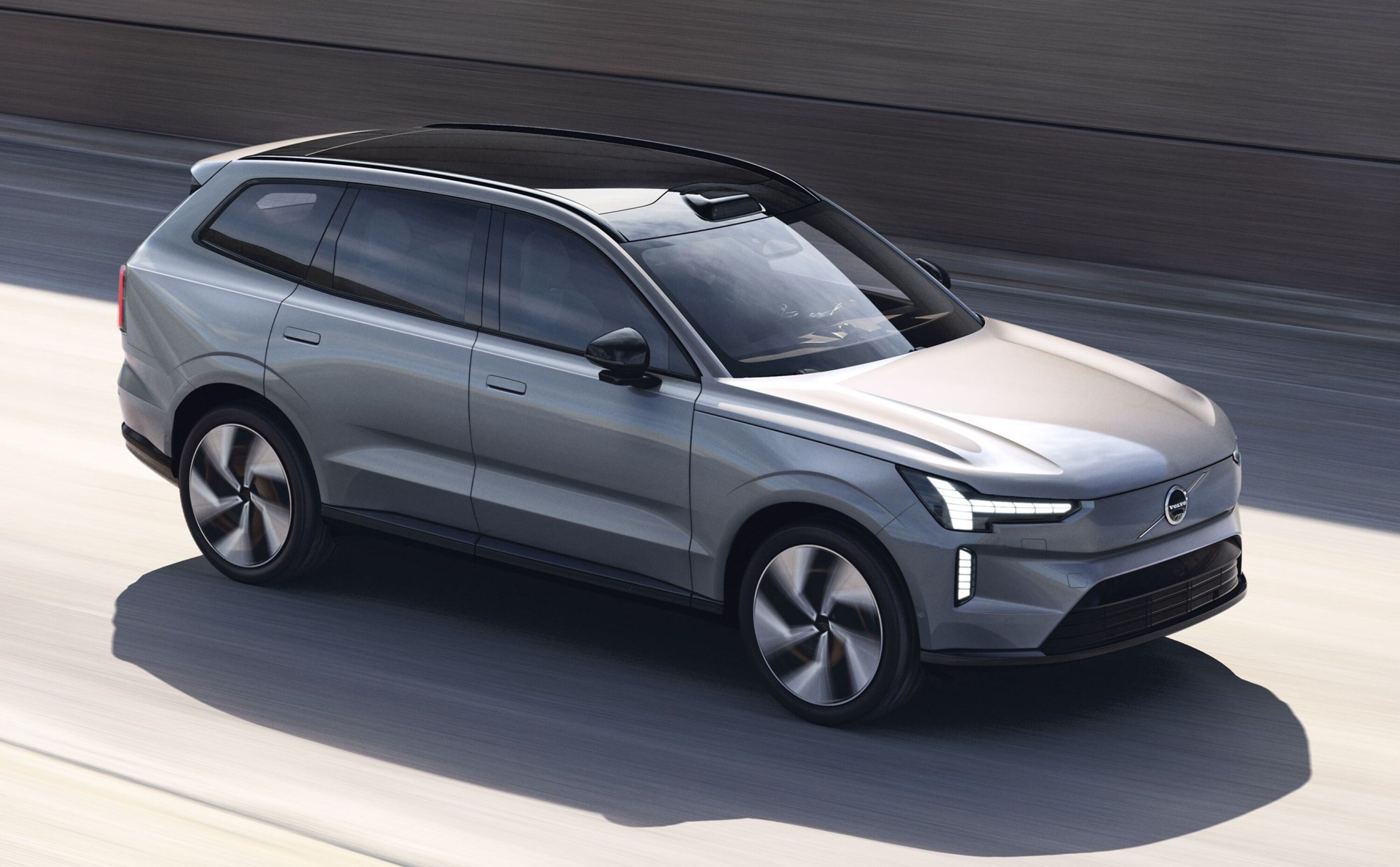
Volvo’s large EX90 is still a year away from its local launch, and will likewise be much more expensive than the EV9.
The most appropriate rival, if it’s space you need, is probably the LDV Mifa 9 electric people mover. It’s more expensive, ranging from $106k to $131k, but you get a comparable feature set and a 440km driving range. However, it charges slower, delivers only 180kW/350Nm front-wheel-drive for the price of Kia’s dual-motor AWD EV9 Earth, and has a shorter warranty.
Comfort, personal space and cargo capacity in the EV9 is just about bang-on, as you should be able to expect from a vehicle of this size.
The EV9’s long 3100mm wheelbase – a huge 285mm longer than that of the Sorento – along with its wide and surprisingly tall cabin, make it a properly spacious thing. Even the space-focused Carnival has a slightly (10mm) shorter wheelbase, although its total length is 145mm longer (5155mm plays 5010mm).
1
Driver and front passenger will have no valid complaints for space, and the synthetic ‘vegan leather’ (not made from vegans, I confirmed) seats provide a well-considered compromise between firm and plush cushions, along with good thigh support and fixed bolstering that feels suitably secure without leaving wider occupants uncomfortable.
In the GT-Line, there’s also smart bolsters that will actively tighten around you under swift acceleration, which is a neat effect.
And, oh, friends… the mesh headrests. The mesh headrests are just lovely. A little Volvo inspired, they’re beautifully supportive and perfect for a nap when you’ve powered your seat back into the relaxation position while charging.
1
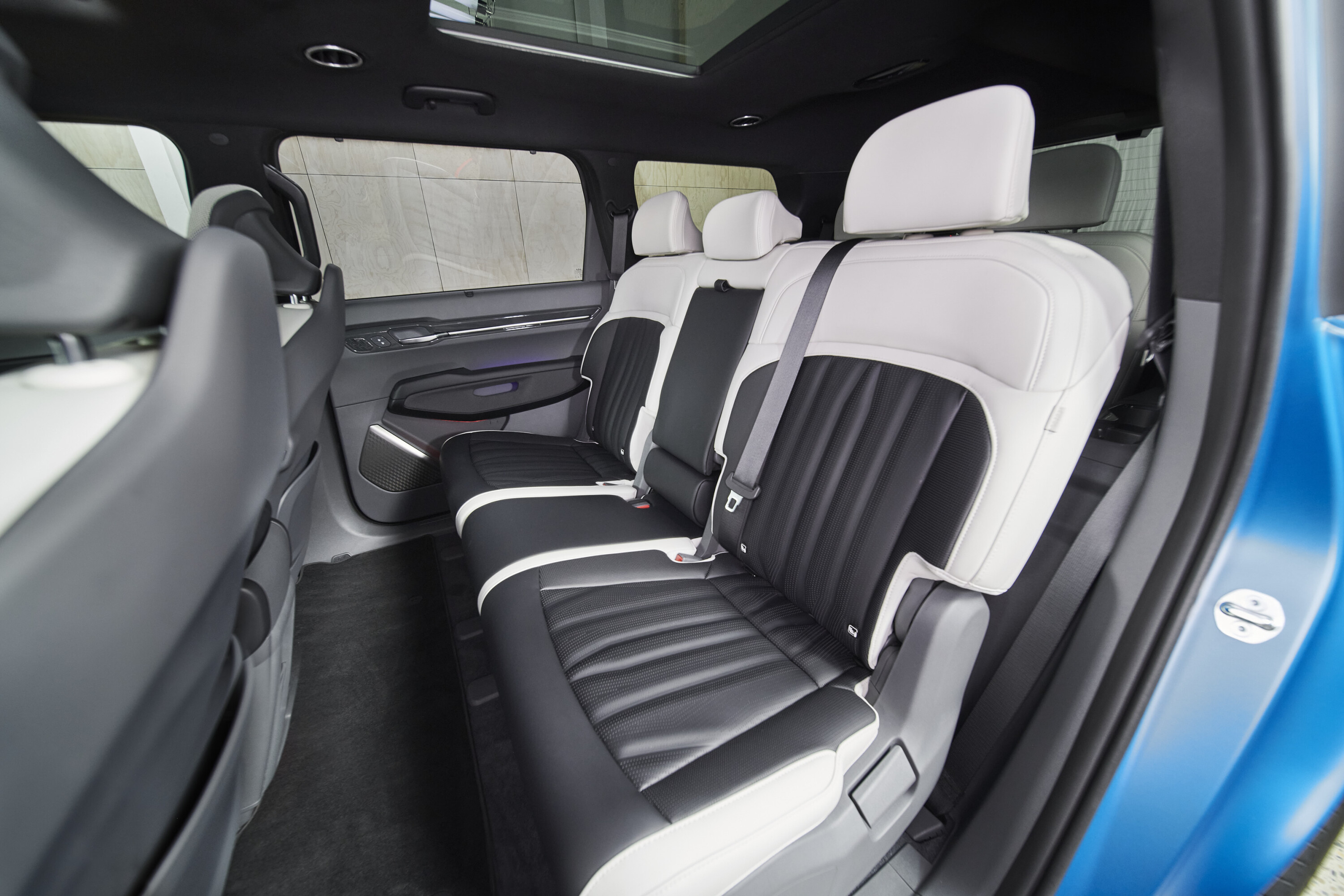
The second row is similarly accommodating, thanks to good toe space beneath the front seats, scalloped seatbacks for knee room, a flat floor, and room enough for three adults to sit fairly comfortably.
Second-row passengers would benefit from more thigh support, however.
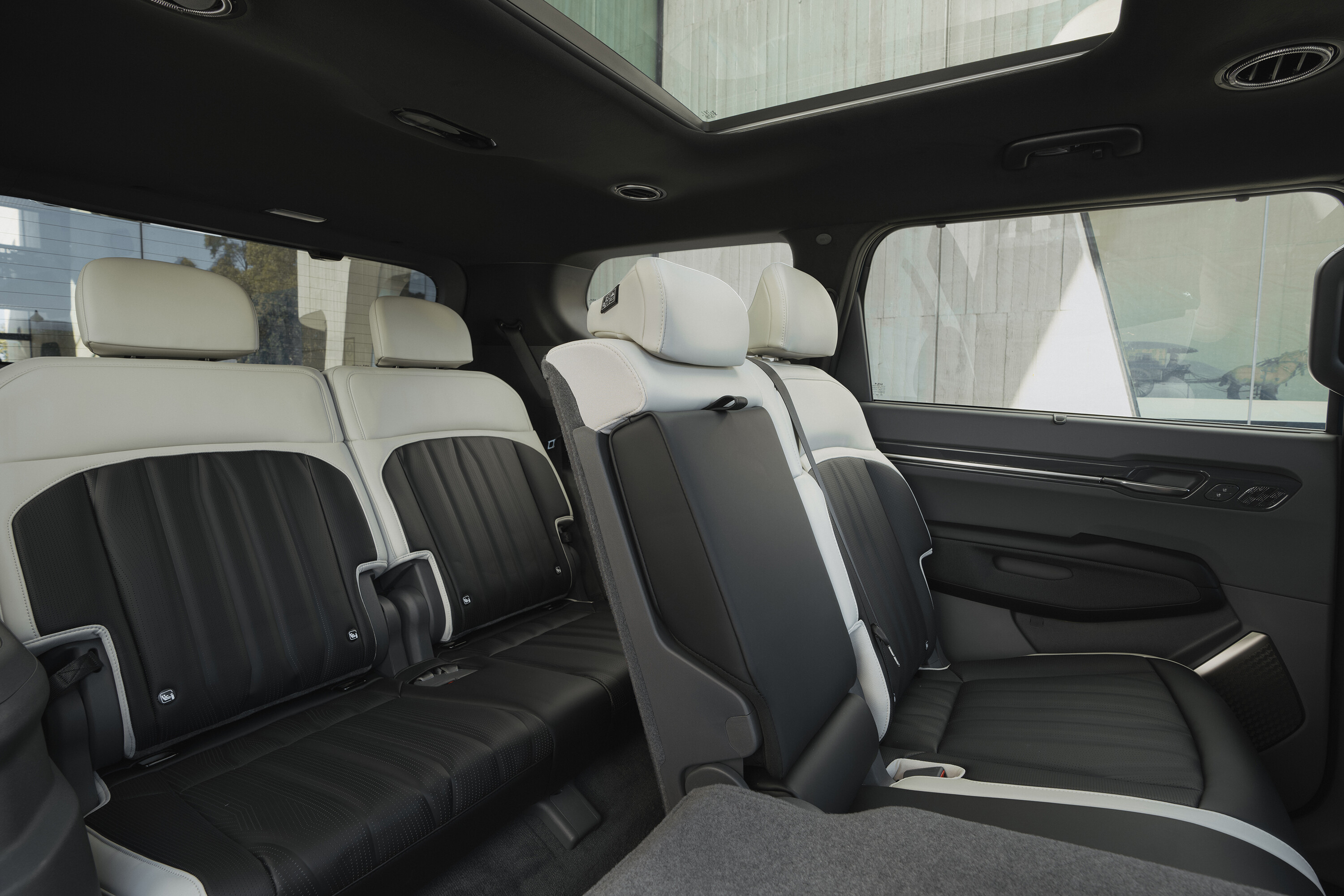
Thanks to the completely flat floor and long wheelbase, most adults will survive a trip in the third row with muscles unharmed, knees intact and hair styles unspoiled, which is saying something for most third rows. Knee room can actually be quite generous, thanks to the sliding second row.
A one-touch sliding function for the second-row seats is also featured, along with the ability to flip them entirely forward – meaning the third row can be accessed even if you have child seats in the outboard positions of the second row. (Perhaps remove your child from the seat first, though.)
1
There are three climate zones – two in front and a shared rear zone with two vents in each of the rear rows, long with two USB-C ports each. As with most EVs, the EV9 can’t cool the cabin well enough on a warm day to simulate an icebox (this furnace-bodied writer’s preference), but the lowest setting of 17º, along with the cooled seats, will keep everybody comfortable.
Materials throughout, along with fit and finish, are comfortably up to the best in the class. The EV9 Air has more exposed hard plastics at touch points than I’d like – especially around the centre console, where your knee will often rest – but this is a minor grievance, especially in mind of how well equipped the Air comes.
The GT-Line, where I spent most of my time on launch and in the week after, is just about sumptuous by comparison. With very convincing leather-like bioplastics for the seats, a surprisingly classy recycled plastic-based fabric on the dash, and a suede/Alcantara-like headliner made from – you guessed it – recycled plastics. If you saw my earlier walkaround video, you might recall I lingered on that detail. It’s a very “what sorcery is this?!” experience.
A word on buttons
This is an increasingly aggravating point for many buyers, as more and more brands work to cut costs – under the guise of streamlined styling and cleverly expanded functionality – by moving familiar physical controls into the big screens that now dominate the dashboards of today’s top sellers.
Thankfully, most of the EV9’s controls are thoughtfully designed, with physical toggles for the main heating and air-conditioning settings, while additional but less critical settings are always accessible on the dedicated climate panel. Seat and steering temperature is controlled via buttons on the door, as is the massaging function where equipped.
The steering wheel features the usual controls, again as physical buttons rather than the single-piece capacitive touch controls some brands have moved to, along with Drive Mode and Terrain buttons in the bottom of the wheel.
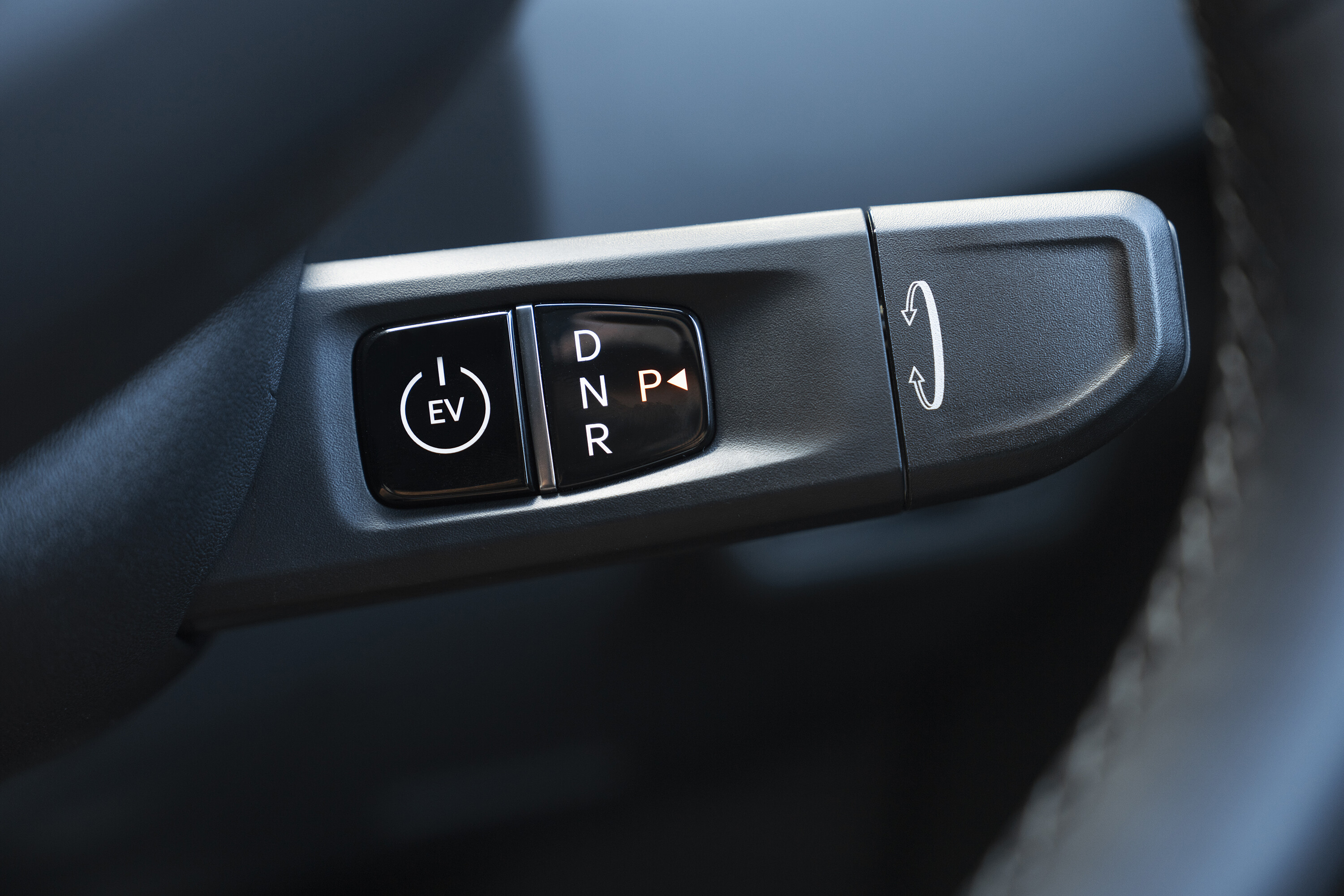
You won’t find any stalk controls or gear selection relocated to screens, either. (So far, only Tesla has taken this leap.) The EV9 wears its indicators and light switches in the usual position, while the gear selector is now a thick stalk on the lower right of the steering column. My only complaint here is that it can take a little while to remember this is also where the power button lives.
You’ll find a row of controls integrated into the surface beneath the main display, which is about as close as the EV9 comes to an unnecessary solution to a problem that doesn’t exist – but none of these are critical, most are duplicated on the screen, and each responds nicely with a haptic vibration when touched.
1
Cabin storage and boot space in the EV9 is impressive overall, with only the door bins standing out as surprisingly tight for anything bigger than a 600ml drink bottom.
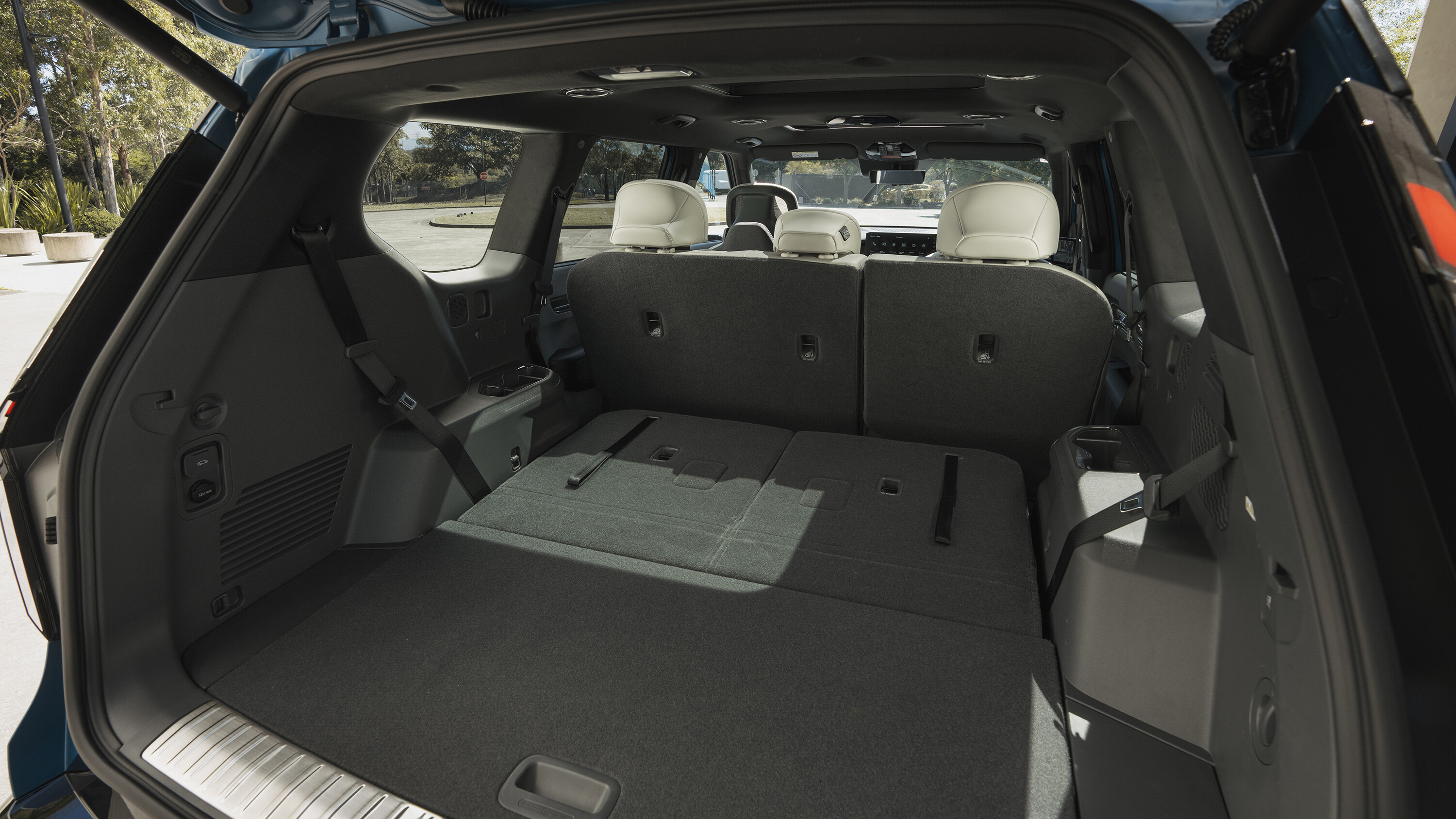
The boot is a real showpiece, however. Kia claims a frankly huge 333 litres with the third row in use and 828 litres when folded flat. This blows out to a “could… could I live in here?”2320 litres if you drop the third and second rows flat. And you’ll do that electrically, by the way, via a set of four buttons in the boot – set alongside a 250V, 16A three-pin power outlet for all manner of conventional appliances. You’ve seen the videos.
Kia lists its storage capacities to the European VDA standard, but for the sake of comparison, it’s also offered a chart to show how the EV9’s rear storage compares to the large seven-seat Range Rover, measured to the SAE standard.
Kia EV9
Diff
Range Rover (7seat)
Behind 1st Row
2,314
-287
2,601
Behind 2nd Row
1,233
172
1,061
Behind 3rd Row
573
261
312
^ SAE, litres
^ SAE, litres
1
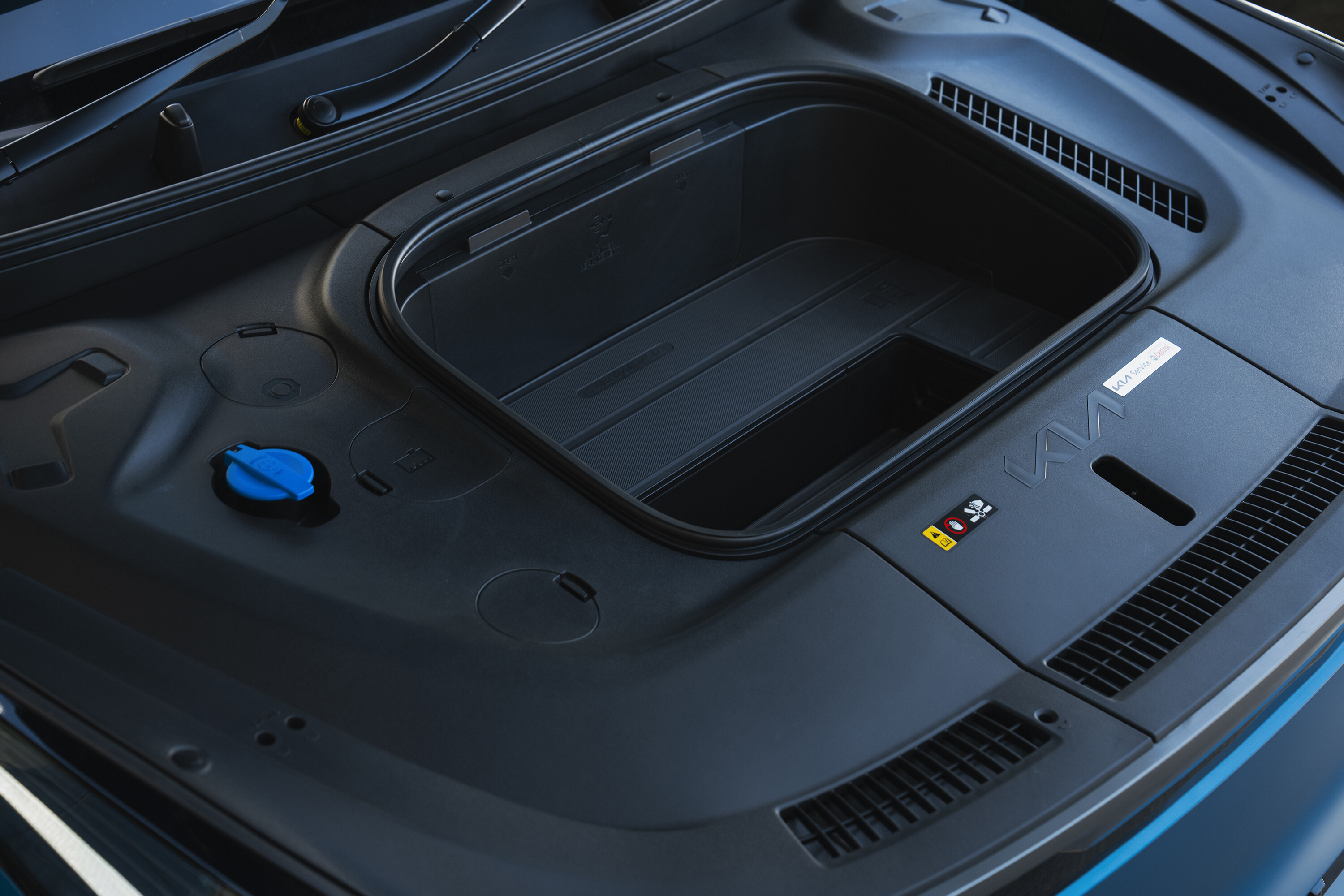
In the front, the RWD EV9 Air has a 90-litre ‘frunk’, while the dual-motor Earth and GT-Line models get a smaller 52-litre space to accommodate the additional motor.
In terms of sheer dimensions, Kia is keen to note that while the EV9 is a fair bigger in all directions than the Sorento, it’s not as overwhelmingly large on the road as a seven-seat Range Rover – which has a 97mm longer wheelbase and measures 238mm longer overall. The big Rangey is also 67mm wider and 90mm taller.
Why does Kia make a point of this? Because it’s proud of the EV9’s packaging, which claims greater legroom in the first and second rows, headroom in the first and third rows, and shoulder room in the first and second row. Land Rover doesn’t quote shoulder room for its third row, so Kia offers no comparison numbers for that very back row.
Category
Sorento
Diff.
EV9
Diff.
Range Rover 7seat
1st row leg
1,052
–
1,052
38
1,014
2nd row leg
1,060
26
1,086
59
1,027
3rd row leg
752
31
783
-81
864
Total
2,864
87
2,951
46
2,905
1st row head
1,024
22
1,046
6
999
2nd row head
994
18
1,012
-20
1,005
3rd row head
935
69
1,004
95
909
1st row shoulder
1,500
64
1,564
19
1,545
2nd row shoulder
1,475
50
1,525
25
1,500
3rd row shoulder
1,345
53
1,398
–
–
6
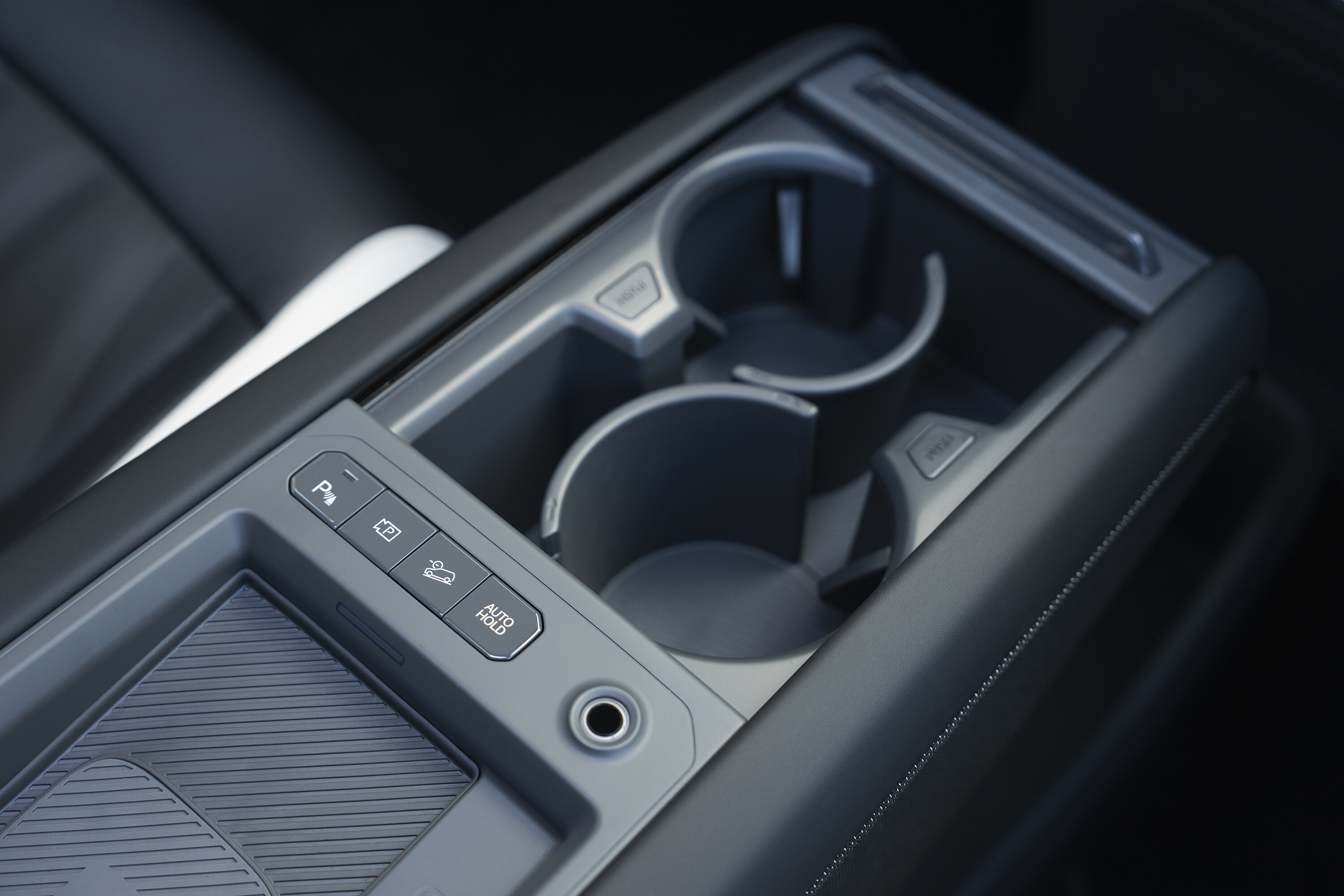
In the front row, there’s a large combination cup-holder and cubby space with a sliding drawer lid, set above a huge lower storage section that makes good use of the EV9 having no conventional transmission to take up that space.
Behind the cup holders is a fairly shallow console bin beneath the arm rest, along with a single wireless phone charging pad. There’s also a large glovebox (9 litres in Air and Earth, 8 litres in GT-Line), and decent – if a little narrow – door pockets.
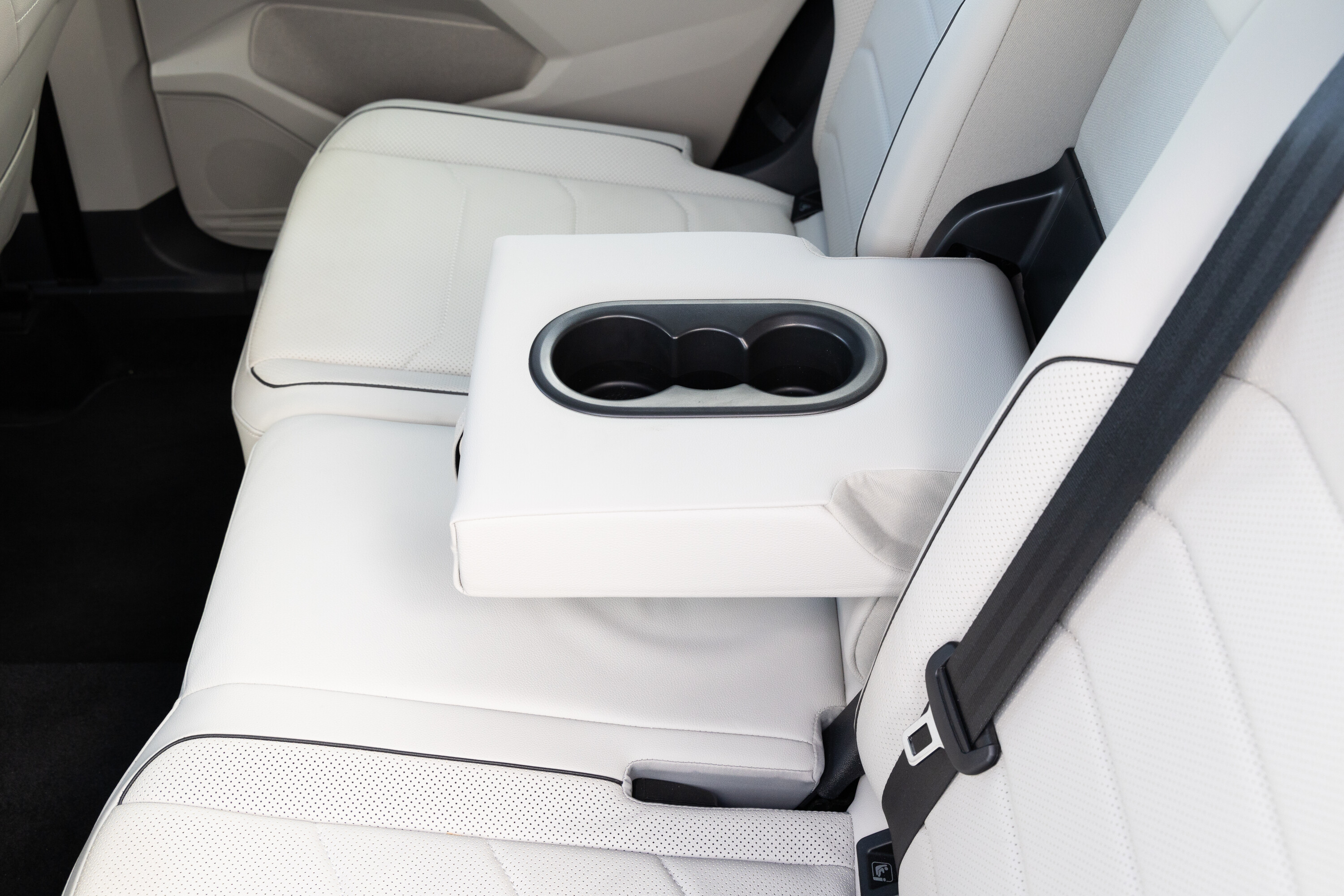
Passengers in the second row get cup holders in the rear of the centre console, and in the flip-down centre armrest if that seat isn’t in use. There’s also map pockets in the front seatbacks, small but useful door pockets, and – oh yeah – a properly deep cubby in the bottom of the centre console. Storage space democratised!
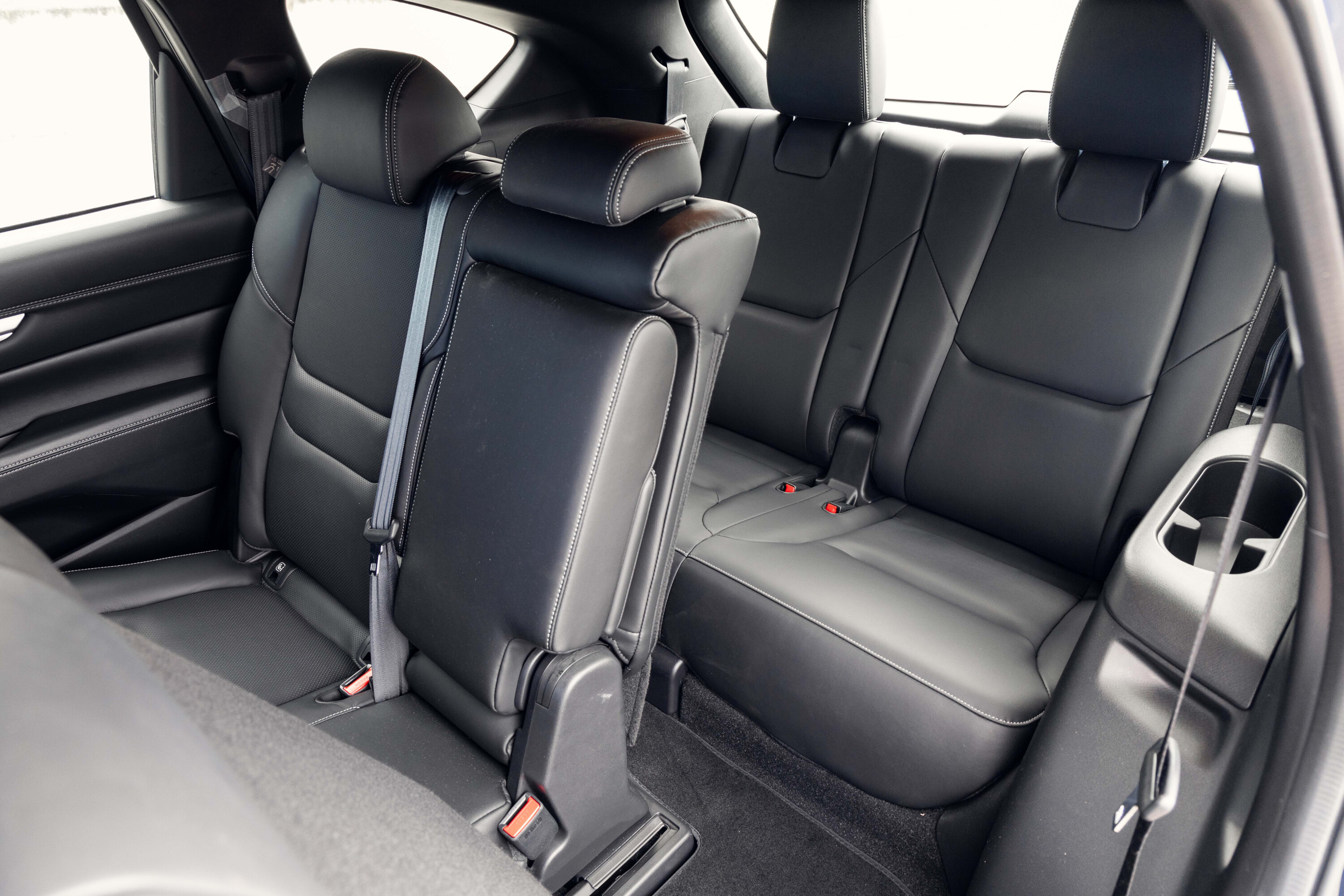
Way out back in the third row, you’ve got large cup-holders and a small tray next to each that would accommodate an AirPods case at most – but it’s something at least.
Firstly, in case you’ve been living on Mars these past few years, here’s an important point to keep in mind: all EVs are heavy.
Really heavy. The EV9 weighs in at 2960kg in RWD form and breaks the scales at 3240kg for the dual-motor models. A lot of that is in their big battery packs, too, at 463kg and 566kg respectively.
For some perspective, if you swapped those batteries for a 1957 Fiat 500 (fresh out of a hydraulic press), you’d add nothing more to the EV9’s weight. It wouldn’t go anywhere, but still.
All of this is really to say that when I tell you the EV9 handles as neatly as the well-regarded and surprisingly fun Sorento GT-Line, if not better – with weight distribution, long wheelbase, a complimentary centre of gravity and yet more of Graeme Gambold’s exhaustively proven local suspension work in its favour – it should, well, carry some weight.
1
It’s also stronger through the body than, for example, a Tesla Model Y, with eight more hot-stamped parts used as well. Kia says the EV9’s torsional stiffness is 14% greater than the Tesla, while average tensile strength is 9.7% better.
Listen, it’s not a sports car. I find myself saying that a lot – mostly for those readers who can’t comprehend that a modern SUV might corner flatter and shift direction with more composure than many older sports cars – but this is where we are now. If you’re uncommonly inclined to give the EV9 a competent whipping, it won’t go screeching into the first concave guardrail you see. It grips. It’s balanced.
Indeed, it’ll rarely utter a squeal except for at the hands of the most wildly thrill-thirsting drivers, and if you let the i-Pedal brake-regen setting do its thing as you approach a corner – effectively producing a trail-braking sensation when you gently lift off the accelerator – you’ll scoot through. Often with the thought “but how?” rushing into your mind.
Of course, it’s bloody quick, too. All that electric torque is no joke, so if you’d rather just enter corners sensibly and rocket out of them, that’ll work too.
1
In regular driving, the EV9 GT-Line is perfectly competent as a comfortable commuter, even on its large 21-inch wheels – thankfully shod with low rolling-resistance Continental PremiumContact C rubber, developed for a low-noise application.
In touring sections of the New South Wales coast and the Southern Highlands, I encountered little cause for concern when it comes to the EV9’s ride and comfort over pot-holes and broken surfaces, corrugations and unsealed surfaces. Like the smaller EV6, the EV9 is equipped with frequency-selective damper tech and self-levelling rear suspension – all with Australia-specific tuning by Kia’s ride and handling guru, Graeme Gambold.
Road and wind noise are well suppressed, thanks to those tyres but also an abundance of sound-insulating materials and laminations in the body and the windows. It all adds to the vehicle’s weight, of course, but a journey without these elements would not be pleasant.
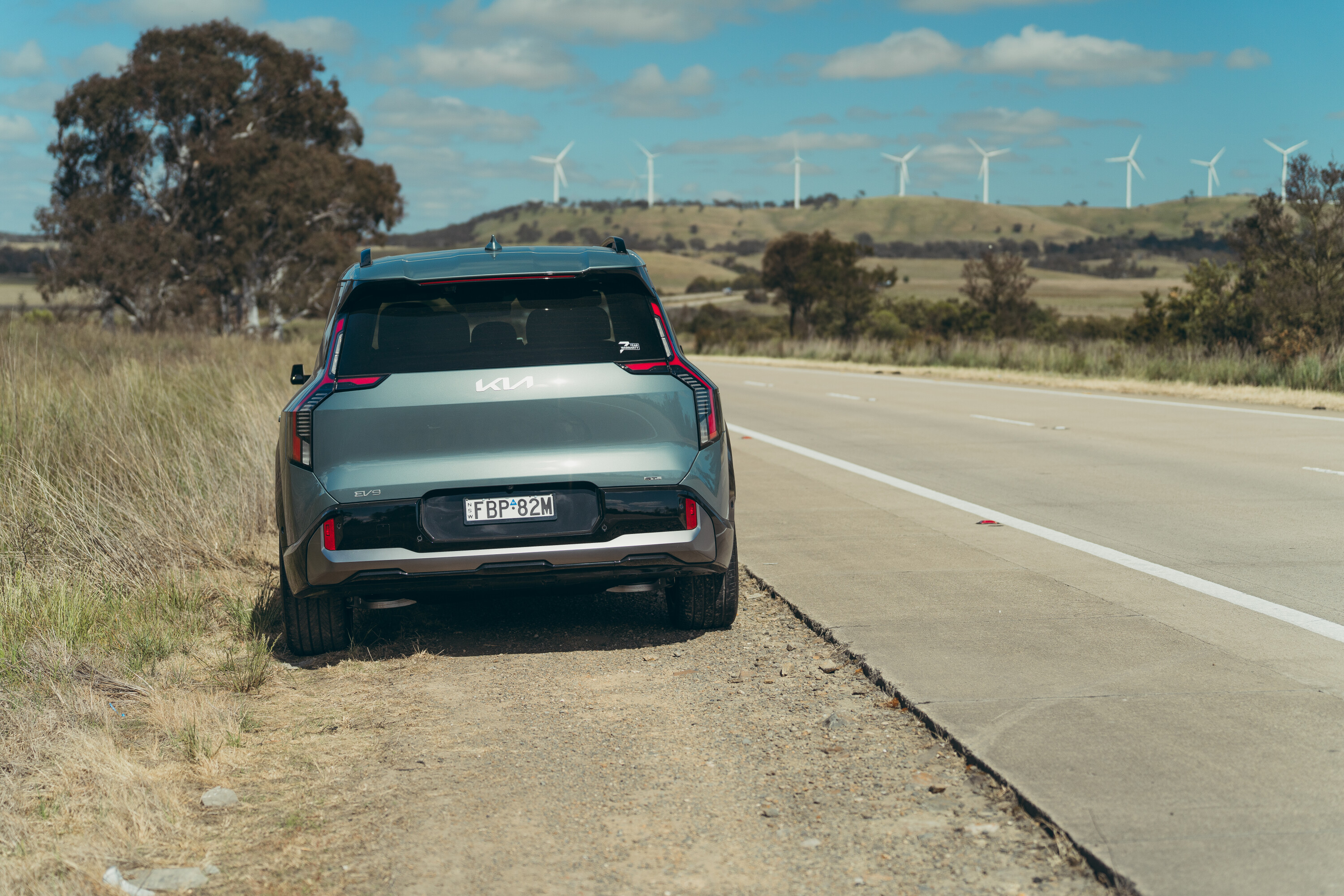
Immediately after the launch event, I drove an EV9 GT-Line from the Southern Highlands to Outer Eastern Melbourne – a journey of more than 700km. I had 490km indicated range when I left.
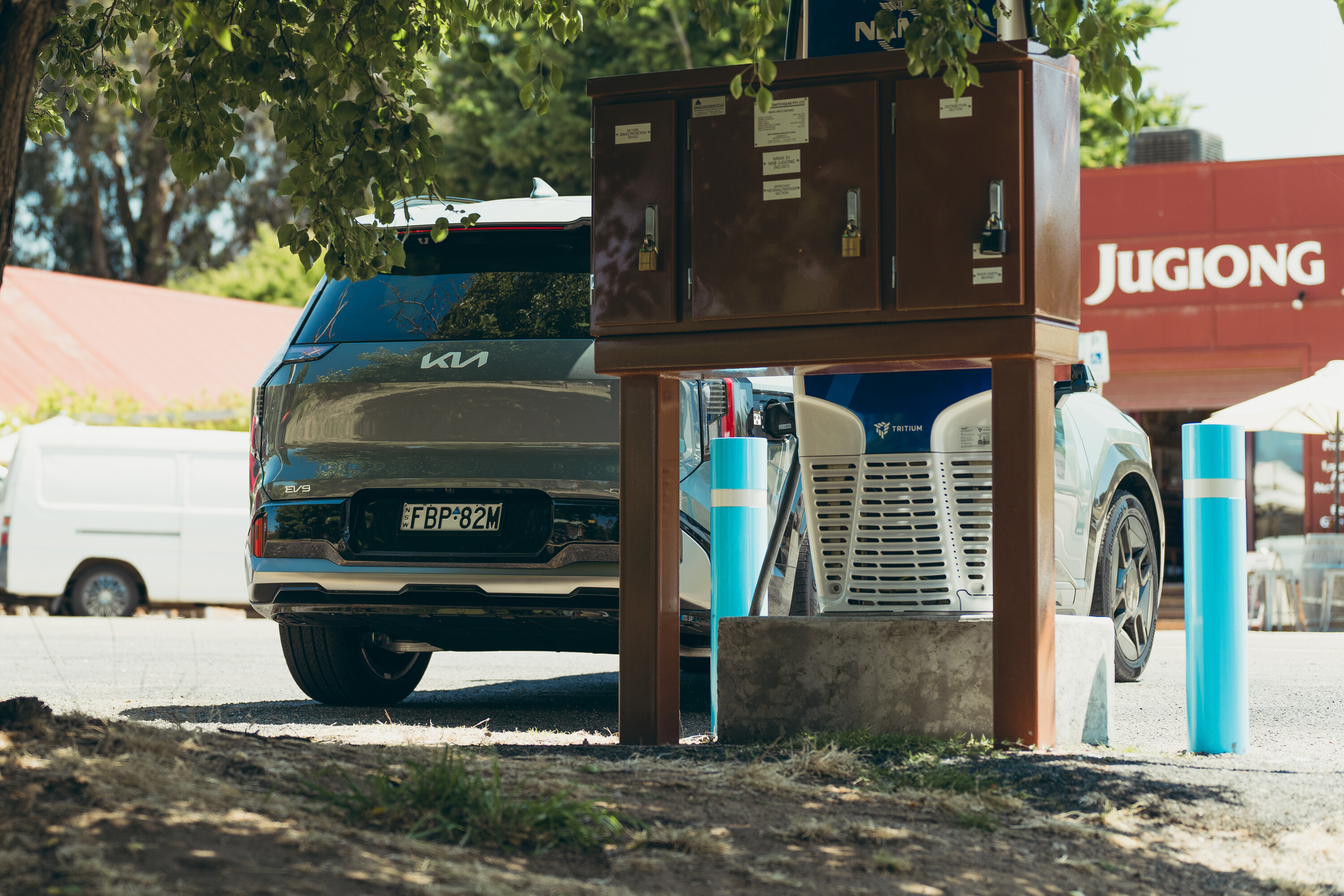
Using the Kia Connect navigation system to identify charging options along the way, I decided to make my stops at Jugiong, 210 kilometres away, and then Barnawartha, a further 240km.
Why didn’t I skip Jugiong and head directly for Barnawartha? I’m no genius, but I’m no fool: EVs do their best work in urban environments where they’ve got less drag to combat and can capitalise on plenty of stop-start traffic to pour braking energy back into the battery.
So, while the EV9 GT-Line’s official WLTP efficiency rating of 22.8kWh/100km is good for its massive 3240kg weight (plus my 120kg and my four-tonne camera bag…), it wouldn’t be doing its best work on the highway.
1
Well, I pulled into Jugiong with 54% battery and 242km range remaining.
Efficiency? Travelling at 110km/h with no brake regeneration and a number of breaks for photos and toilet stops, varied from the high 20s to – by the time I backed up to Jugiong’s free-for-now 50kW NRMA charger – 21.3kWh/100km. Not bad.
Clearly I had little to worry about, but nonetheless, I was right to not try barrelling on to Barnawartha before topping up.
After a wander around to snap some photos of the car and the local scenery, I returned to 81% charge and 397km indicated range. No sense charging any further, since it had throttled charging speed when it hit 80% – and my next stop was well within range.
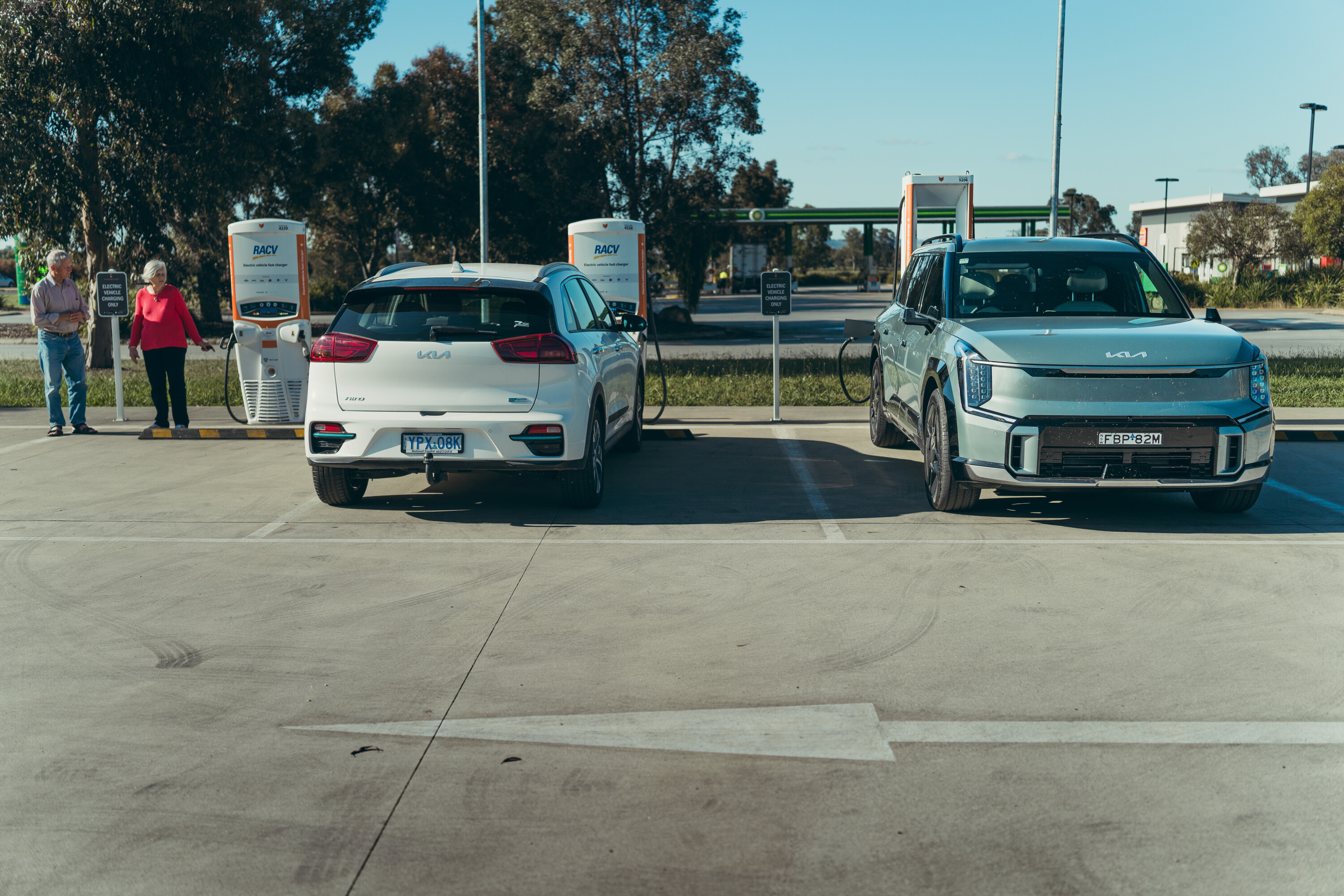
Arriving at the RACV Chargefox location in Barnawartha, situated about 80 metres from the Shell servo and food hall whose site it shares, the EV9 showed 23% battery and 102km remaining. Again not bad, given my indicated range from Jugiong suggested I’d hypothetically have 155km remaining at this point. Efficiency had fallen off, however, with the EV9’s big display showing 24.2kWh/100km with 3 hours and 51 minutes of driving behind us.
1
The Barnawartha charging station presents an interesting puzzle for the EV9.
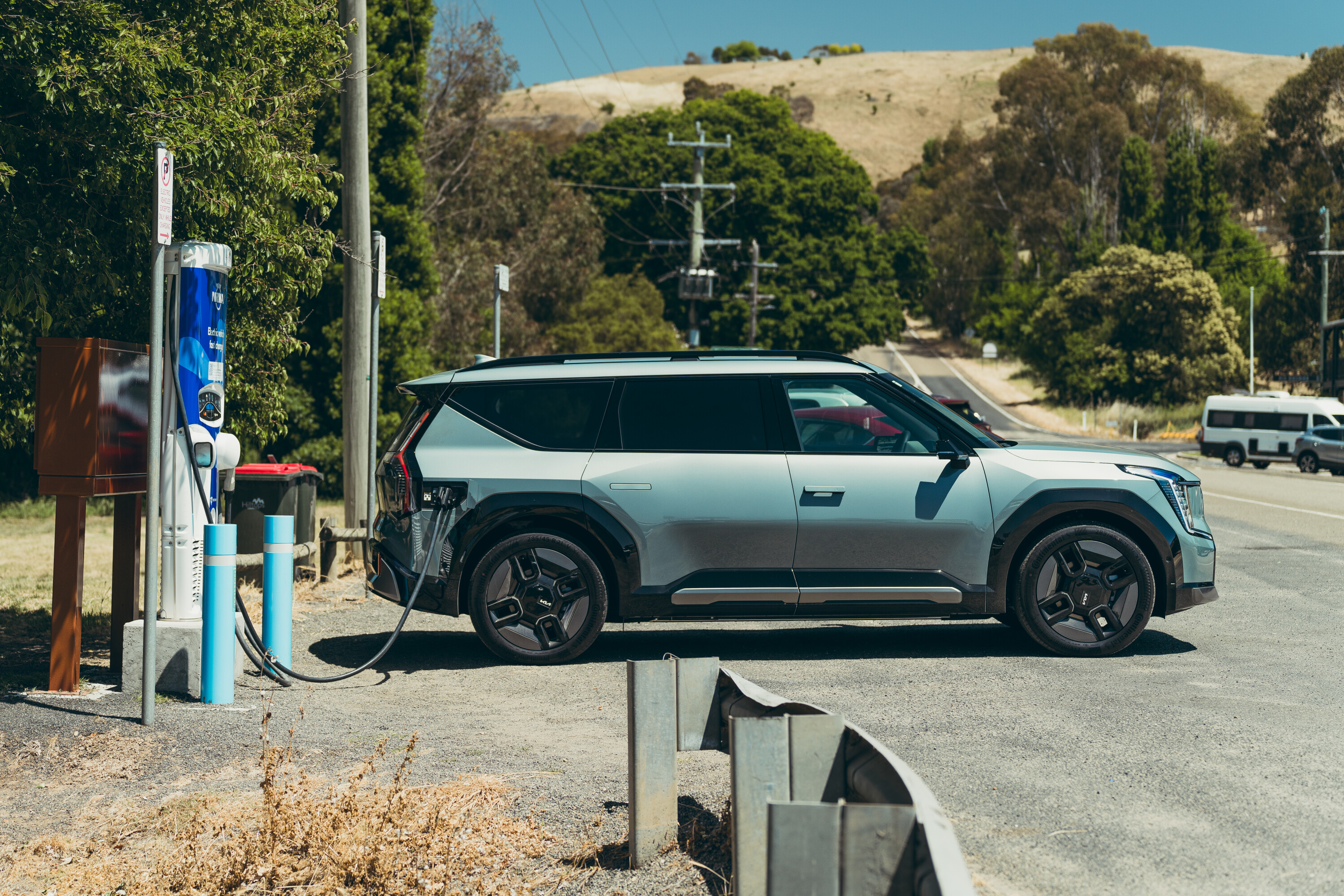
Because this Kia’s charging point is on the driver’s side at the rear, you have to back into your space – which is fine, except that this location has a disabled parking spot at one of its two chargers, and that’s where I’d need to park in order for the charging cable to reach the EV9’s receptacle.
I would’ve if I had to, but thankfully the other 350kW charger’s most appropriate spot was available. But, as I discovered, this charger wasn’t behaving too well. When plugged into the EV9, it wouldn’t progress beyond ‘preparing your session’ – and I tried a few times. Eventually, I phoned Chargefox, who tried confirmed the problem and tried to reset the charger remotely, but it wouldn’t respond.
I suggested we simply try another session while they were on the call, so they asked me to firmly support the cable in the EV9’s charging port, as this can supposedly help deal with any degraded or damaged pins. In the EV9? I don’t believe so, since I’ve since charged at an Evie location with no issues.
Well, this trick worked, so the charging session was off and away. I asked if the charger would be marked for a maintenance visit, and I was told no – it’s not a significant enough fault. It was pretty significant for me…
1
After a chat with an elderly couple in a 2022 first-gen Kia Niro Electric (new badge, old model) who confirmed they absolutely love their Niro but not so much the apparently EV-ignorant and disinterested staff at their local (regional) Kia dealership, I wandered off for a burger. Lunch time!
Burger down, my 35-minute stop had returned the EV9 to 90% charge, feeding 75.4kWh into its 99.8kWh pack. So, with 413km indicated range, I decided to power on home with no further stops. Exiting the Hume towards Mansfield for the scenic and more dynamically interesting route, I had a 305km trip from that last recharge – stopping only briefly in Bonnie Doon to take in the serenity.
With half-a-dozen more stops for photos, and the corresponding accelerations back up to speed, I arrived home with just over 40km of indicated range. Not quite the 108km I “should” have had remaining, but when have you ever met a car with a perfectly accurate prediction of its remaining range? And, friends… I wasn’t exactly babying it.
It’s a good thing, this big, bold, and bloody expensive electric SUV.
The EV9 feels every bit the premium offering Kia wants you to consider it, and while it’s no Bentley… the general fit and finish, through to the materials used, the leaps made in its technology offering, the smarts of its interior packaging and the first-class efficiency of its electric drive system all combine to make the EV9 the sort of product you might mistake for a more prestigious brand’s work in one of those blindfolded taste tests.
I don’t know if Kia will move many at the $100,000 price point it’s decided to kick off from, but if you’re shopping with that budget – or even better, a Mercedes EQS budget – it wouldn’t be the worst idea, or all that disappointing a compromise, if you steered to the EV9 instead. Hell, you could pick yourself up an EV6 with the change. Maybe a couple of EV5s. A few EV3s?
It’s not the sort of cross-shopping most buyers consider, with those German luxury marques carrying so much perceived value and social credit in their badges – but this feels like a good time to start. If only for those mesh headrests…
Buyers would be forgiven for feeling bamboozled by the staggering array of options in the Large SUVs category.
In one of Australia’s most popular segments, prices range from below $40,000 to close to $400,000, there are ladder-frame, monocoque and electrified vehicle platforms, and cabin layouts ranging from 5-seater to 7-seaters with 5+2s and even six-seaters in between.
You’ll even find a couple of (high-riding) wagons in our industry’s official classification.
So, if you don’t have your eye on a specific make or model, where do you start? Well, right here, as it happens – with the Wheels Best Large SUVs.
1
Large SUV is the third and latest segment of our Wheels Best series, following Best Small SUVs and Best Utes.
Our Wheels Best series has a simple aim: to comprehensively cover any given vehicle segment with multiple comparisons that can help new-car buyers with varying needs and wants.
It (almost) goes without saying that family practicality is high on the priority list for large-SUV shoppers, and we have several comparisons catering to specific spending budgets – up to $50,000, $60,000, and $80,000.
For buyers focused purely on the budget, we also have Best Value comparisons that crunch the numbers on running costs.
Our Best Large SUVs coverage also extends to off-roading, hybrids, and luxury. Just looking for a consummate all-rounder? We complete our segment picks with an overall winner.
1
With a plethora of SUVs in existence, you may wonder what exactly qualifies as a large SUV.
It’s certainly not based on pricing, but rather size, so we’ve opted for a starting length of 4.7 metres (with medium SUVs considered between 4.5 and 4.7 metres). We didn’t set a maximum length, but only the odd model in our coverage exceeds five metres.
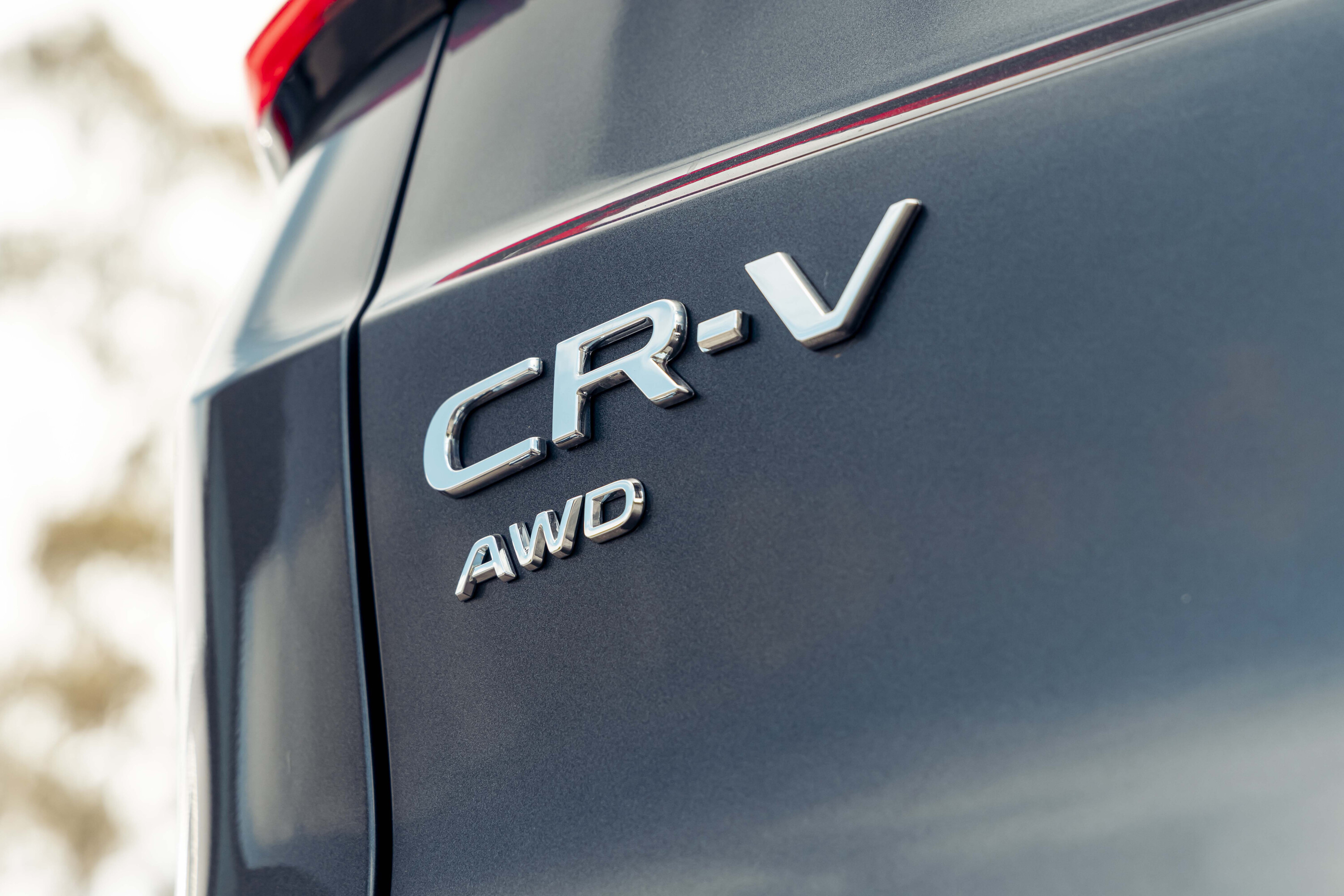
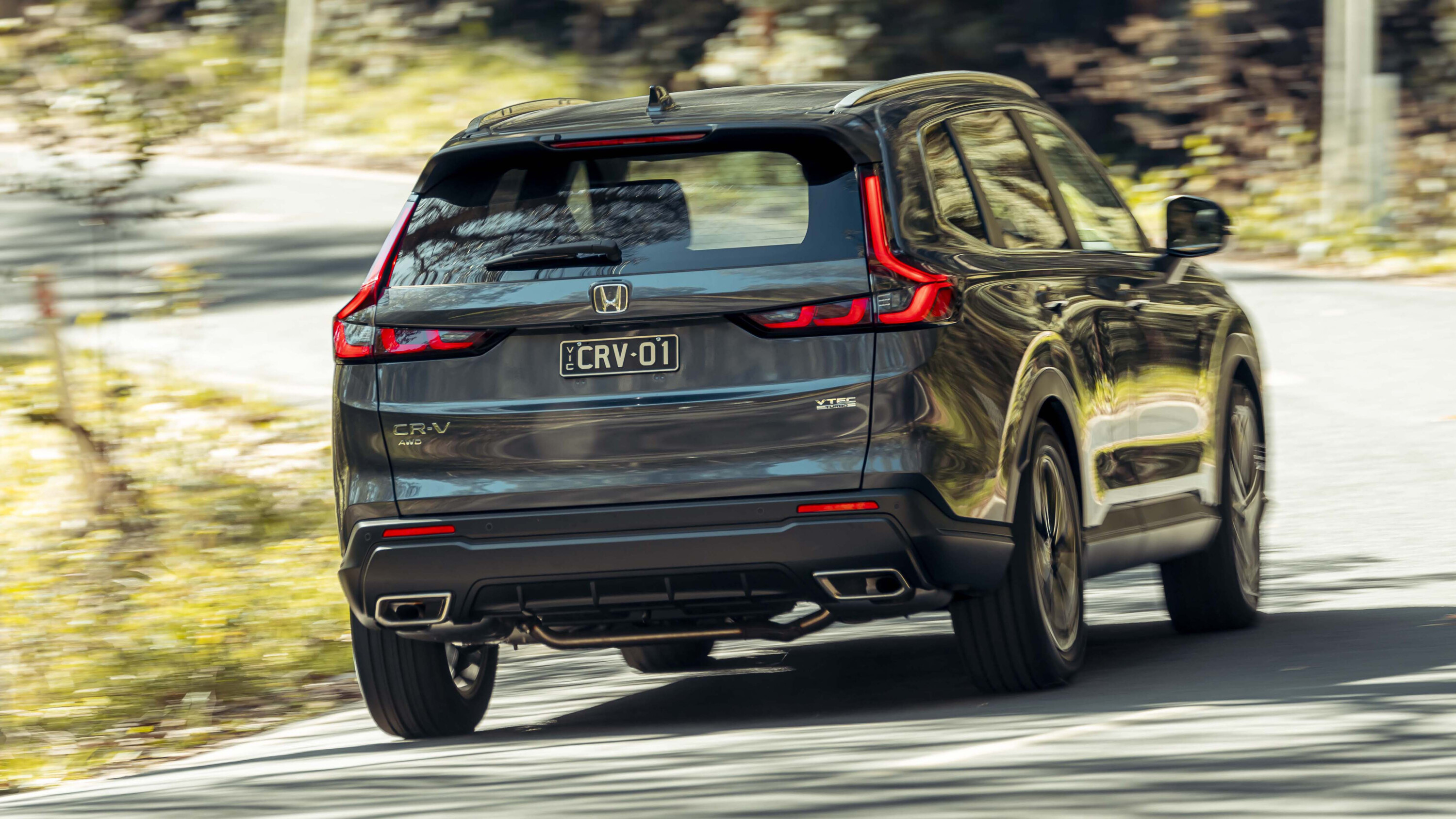
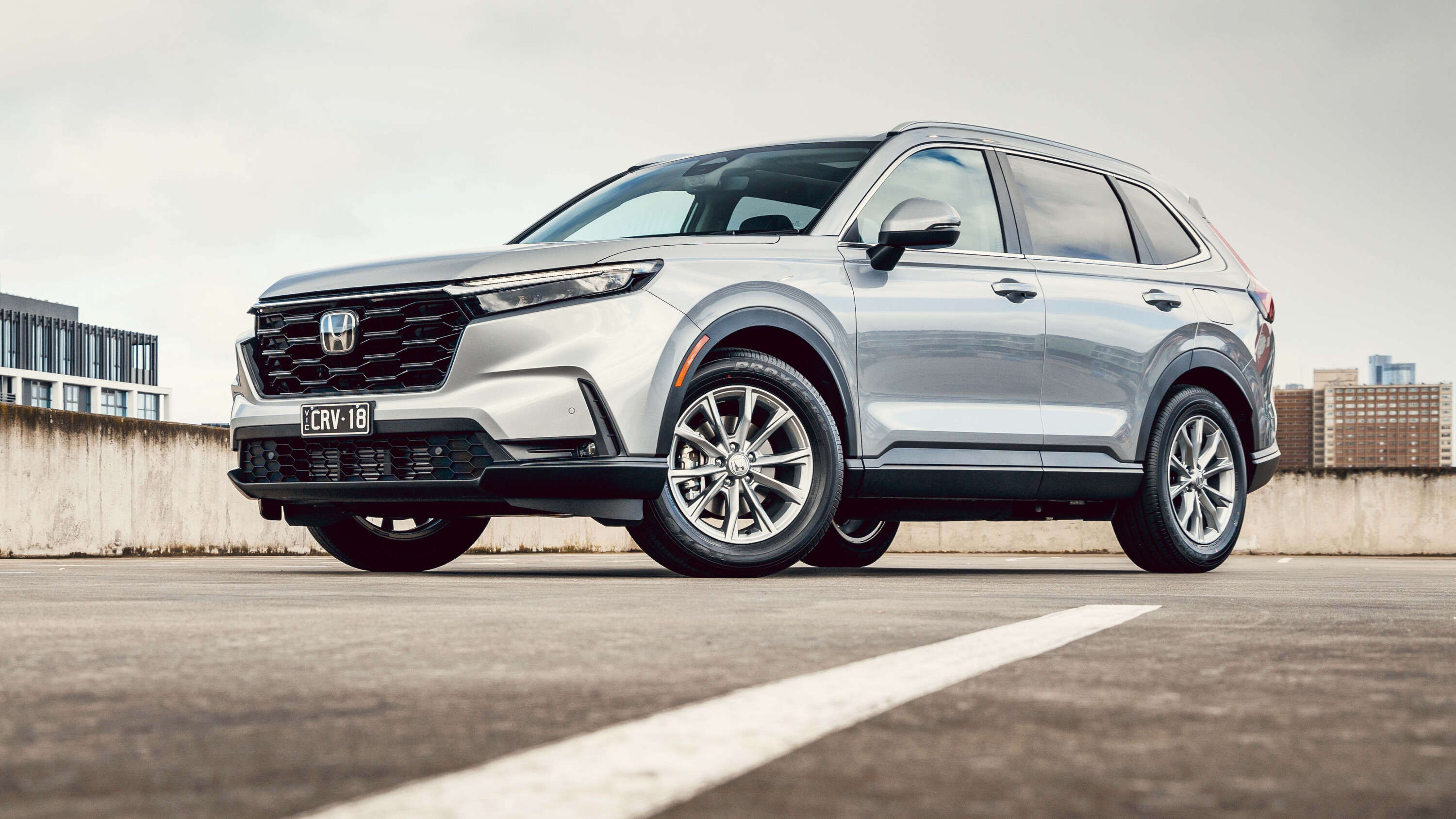
This approach created one interesting scenario: it meant we ignored the official (and hitherto traditional) ‘medium SUV’ classification for the Honda CR-V. With the new, sixth generation growing by 65mm, it pushed it past our Large SUV dimensional criterion by just four millimetres.
1
It also makes some sense within its own line-up, as Honda now has a completely new entry in the medium-SUV segment with the ZR-V.
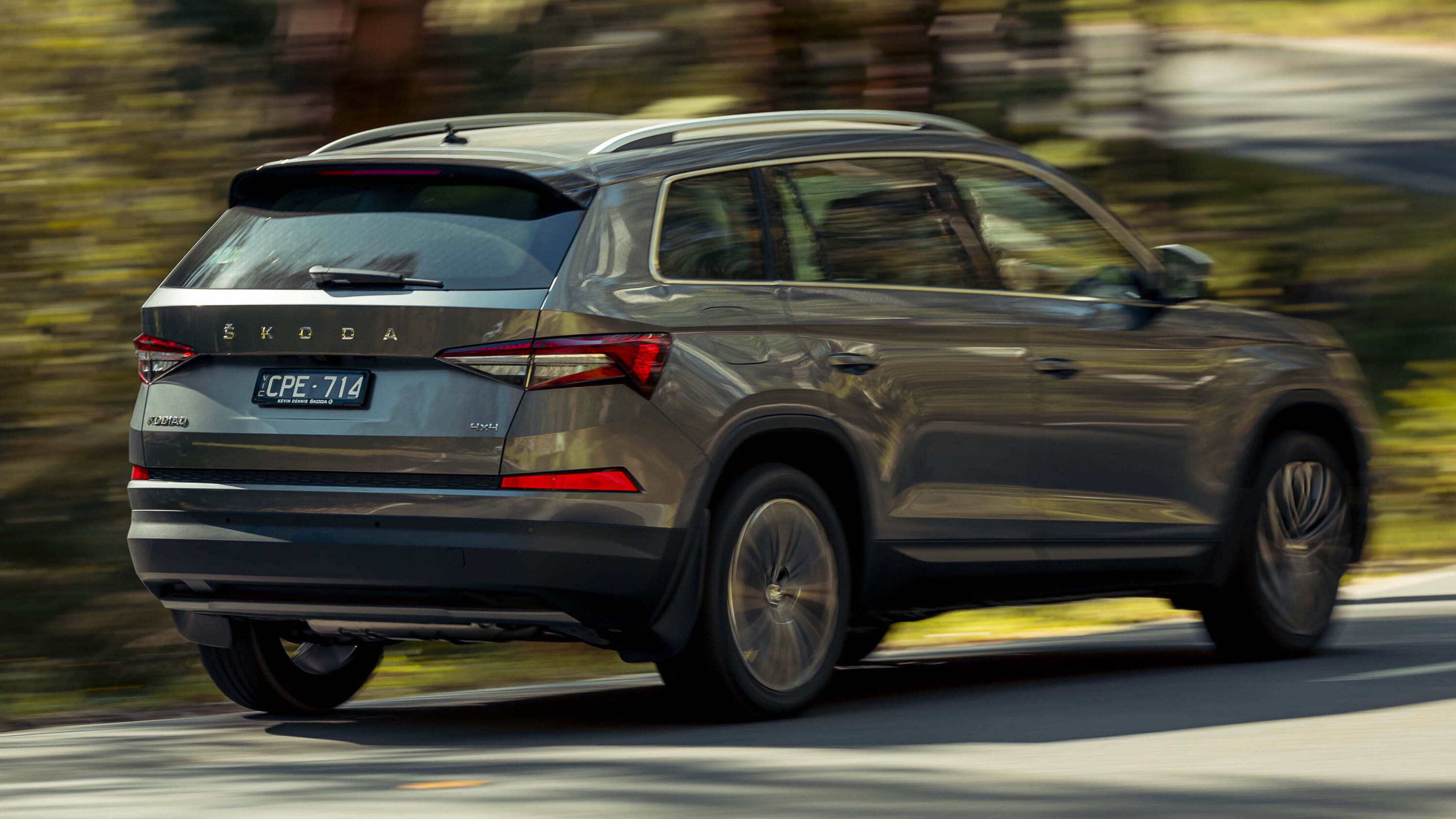
We also included the Skoda Kodiaq, which falls a single millimetre short of the 4.7m mark but is widely considered a large SUV.
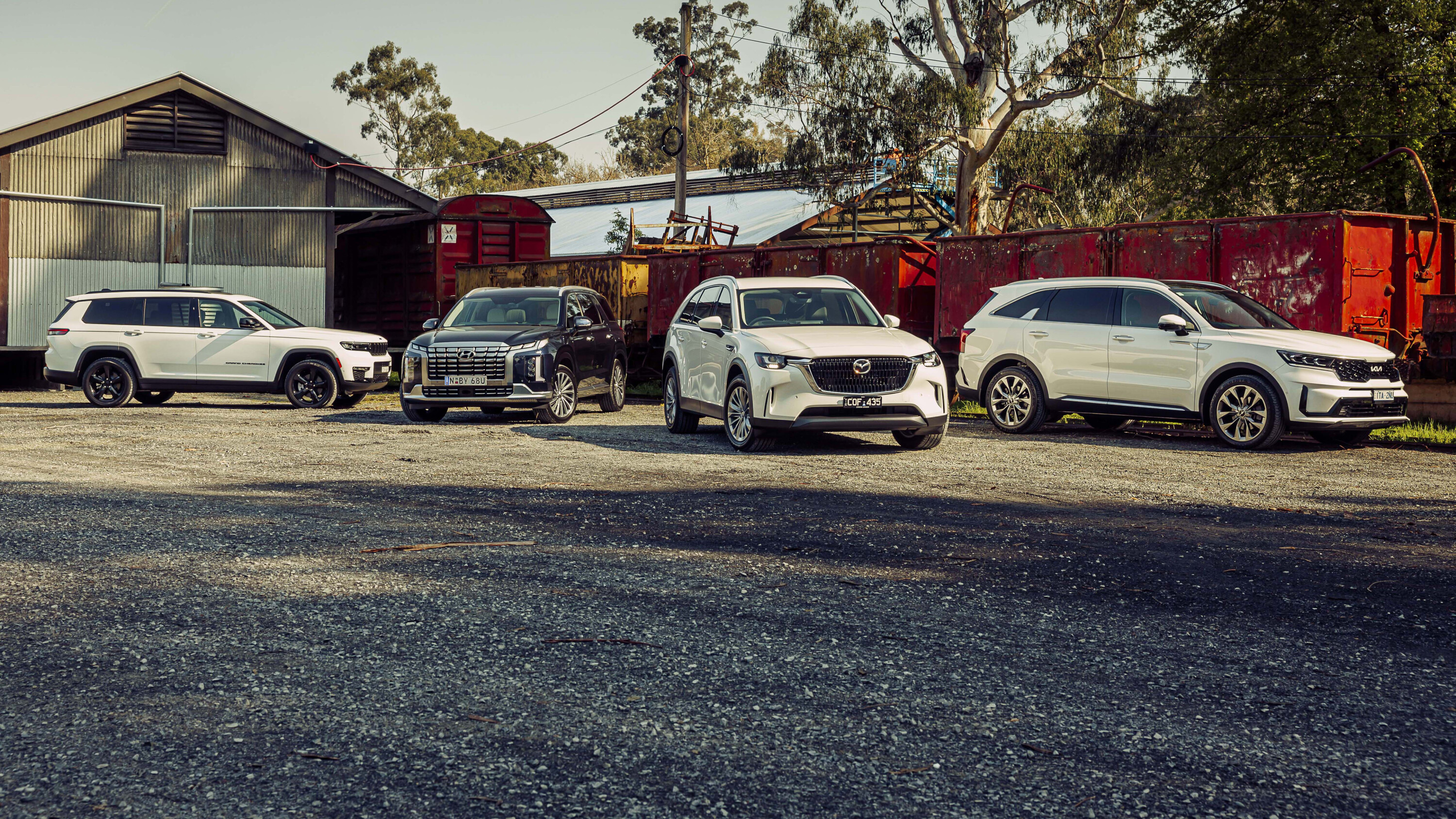
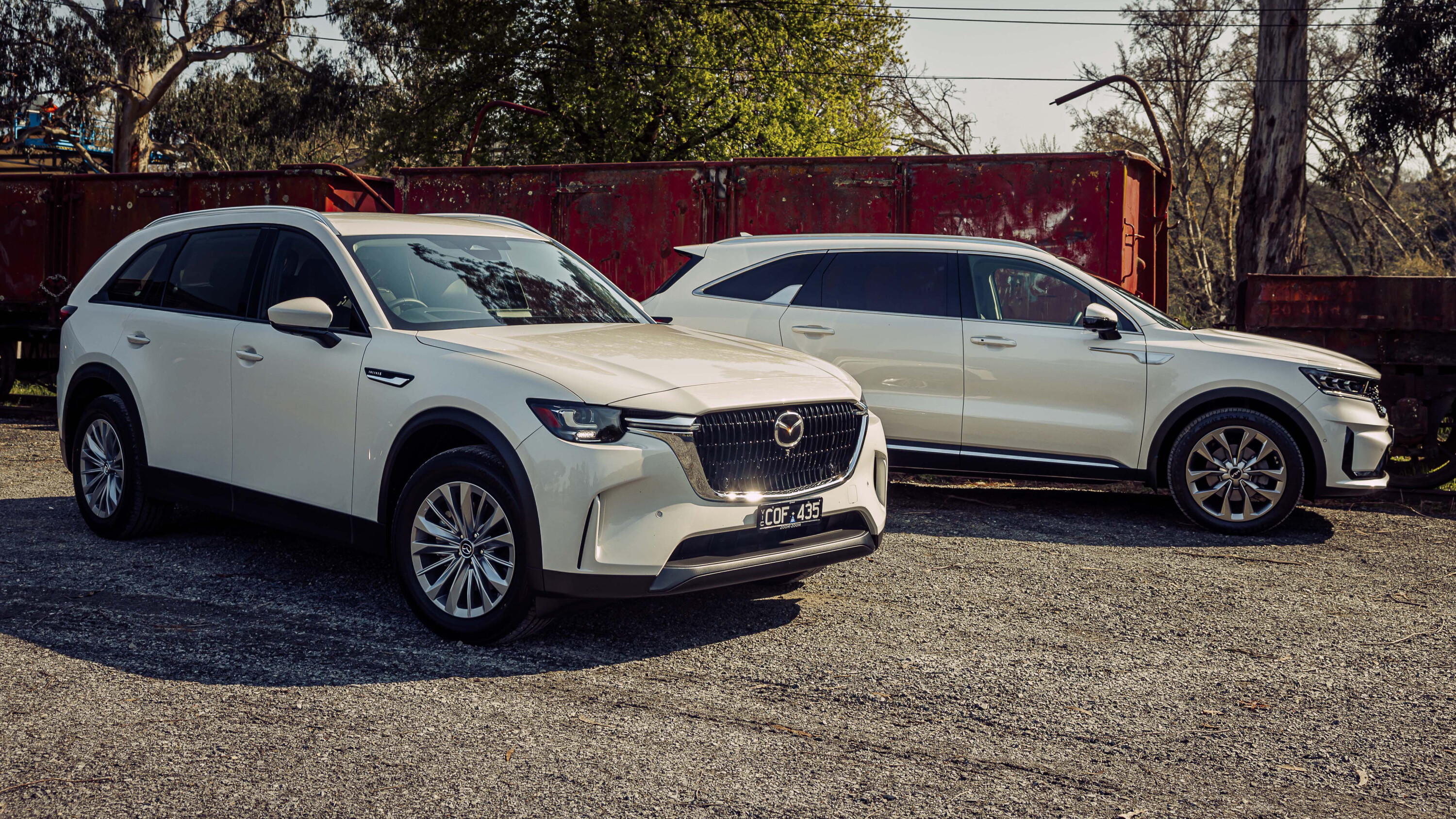
Other fascinating newbies we cover include the Mazda CX-90, the Japanese brand’s new premium large-SUV play. To test both its mainstream and luxury credentials, a base CX-90 was placed in the Best Under $80K sub-category and a flagship grade in the Best Luxury sub-category.
Kia’s first-ever EV9 large electric SUV arrived too late for testing, and a generally limited pool prompted us to hold a Best Electric Large SUV category for 2024.
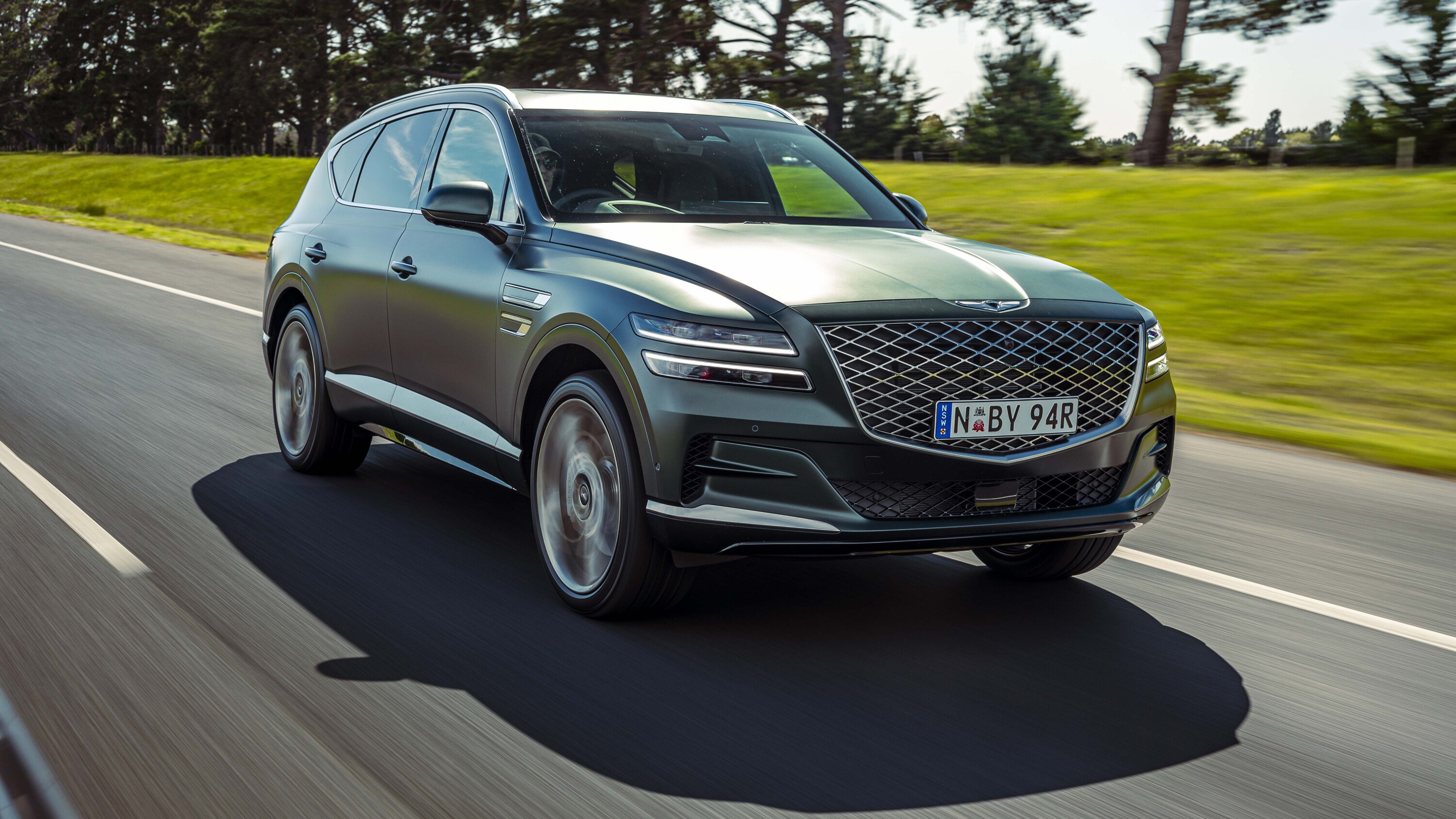
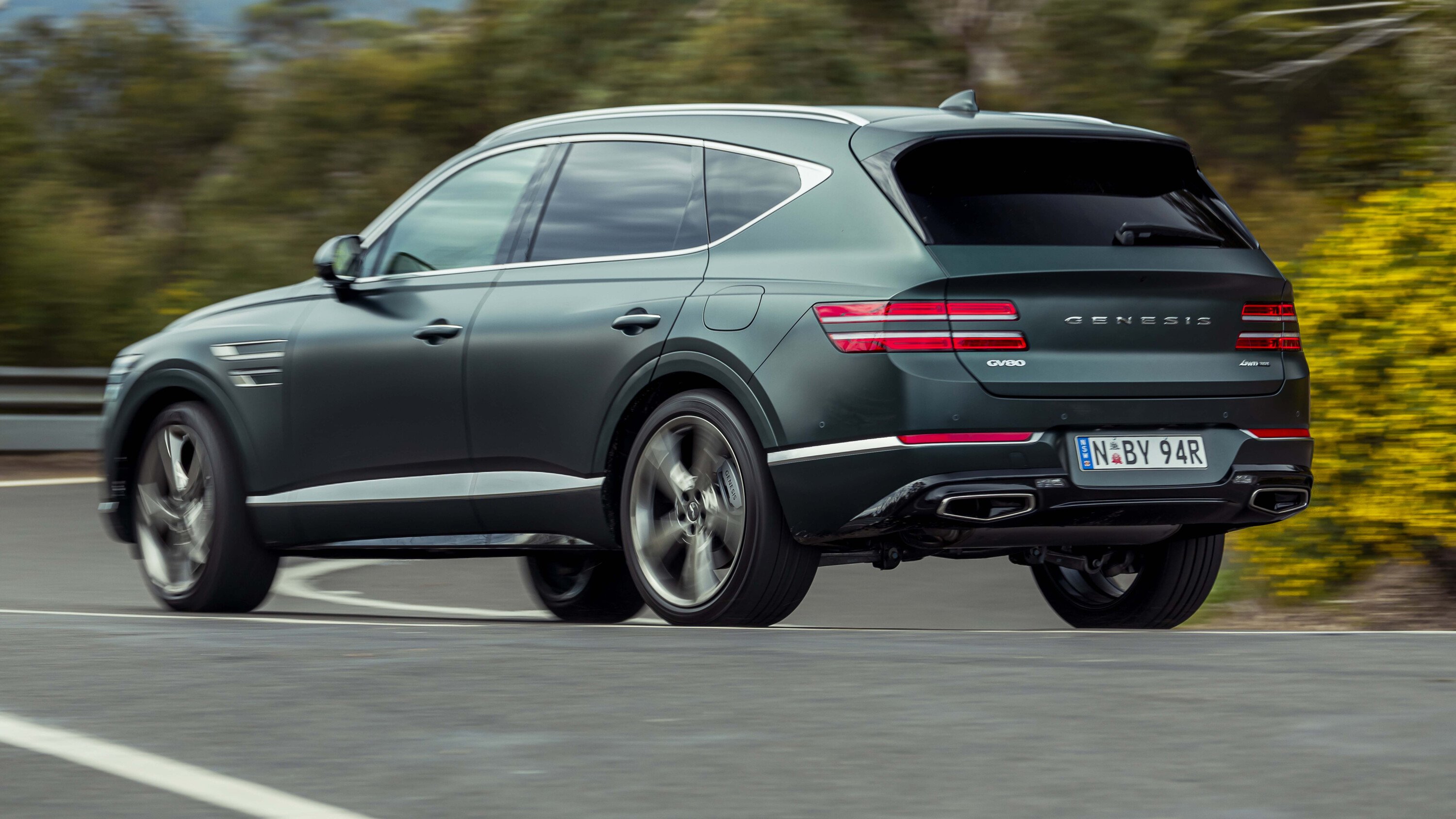
Some manufacturers have more than one representative: the Kluger and Prado from Toyota, and the Santa Fe and Palisade from Hyundai (as well as the GV80 from its luxury off-shoot Genesis). However, as they serve different purposes and price points, no two models from one maker feature in the same comparison.
1
Our Wheels Best series covers all large SUVs you can buy right now, so how long a car has been on sale is irrelevant. If it’s good enough…
Is there a category that offers more variety and choice for Aussie buyers than the Large SUV segment?
If you’re looking for a family vehicle, this segment offers up a dizzying array of flavours, shapes, and sizes for you to consider.
Whether you’re chasing luxury, performance, hybridised efficiency, off-road ability, or just have a particular budget in mind, there’s nary a question or requirement the Large SUV segment doesn’t have an answer for.
1
Of course, being crammed with so many options means it can be tricky to choose the right SUV for you, which is where our individual category winners come in. They really are the cream of the current crop; our Oscar nominees if you will.
But what if you don’t have a particular requirement in mind? What if you want your Large SUV to make a decent fist of everything? That’s where our overall winner comes in.
Unlike our individual category victors, which focus on a particular variant within a model range, our overall winner takes the entire model range into account.
1
A focus on value, inherently good driving dynamics, and a broad skill set are what we look for. And, impressively, there were a number of strong contenders that offer exactly that.
Honda’s box-fresh CR-V is one such candidate. As an SUV that won two categories (Best Hybrid and Best Under $50K), the fifth-generation CR-V impresses with its tidy dynamics, broad model range, miserly hybrid option, and well appointed cabin that includes the flexibility of seven seats in some variants.
But as one of the smaller contenders in the Large SUV class (some may still consider the CR-V a mid-sizer), the Honda is more of a 5+2 than a genuine seven-seater, which is what ultimately scuppered its chances of our overall win.
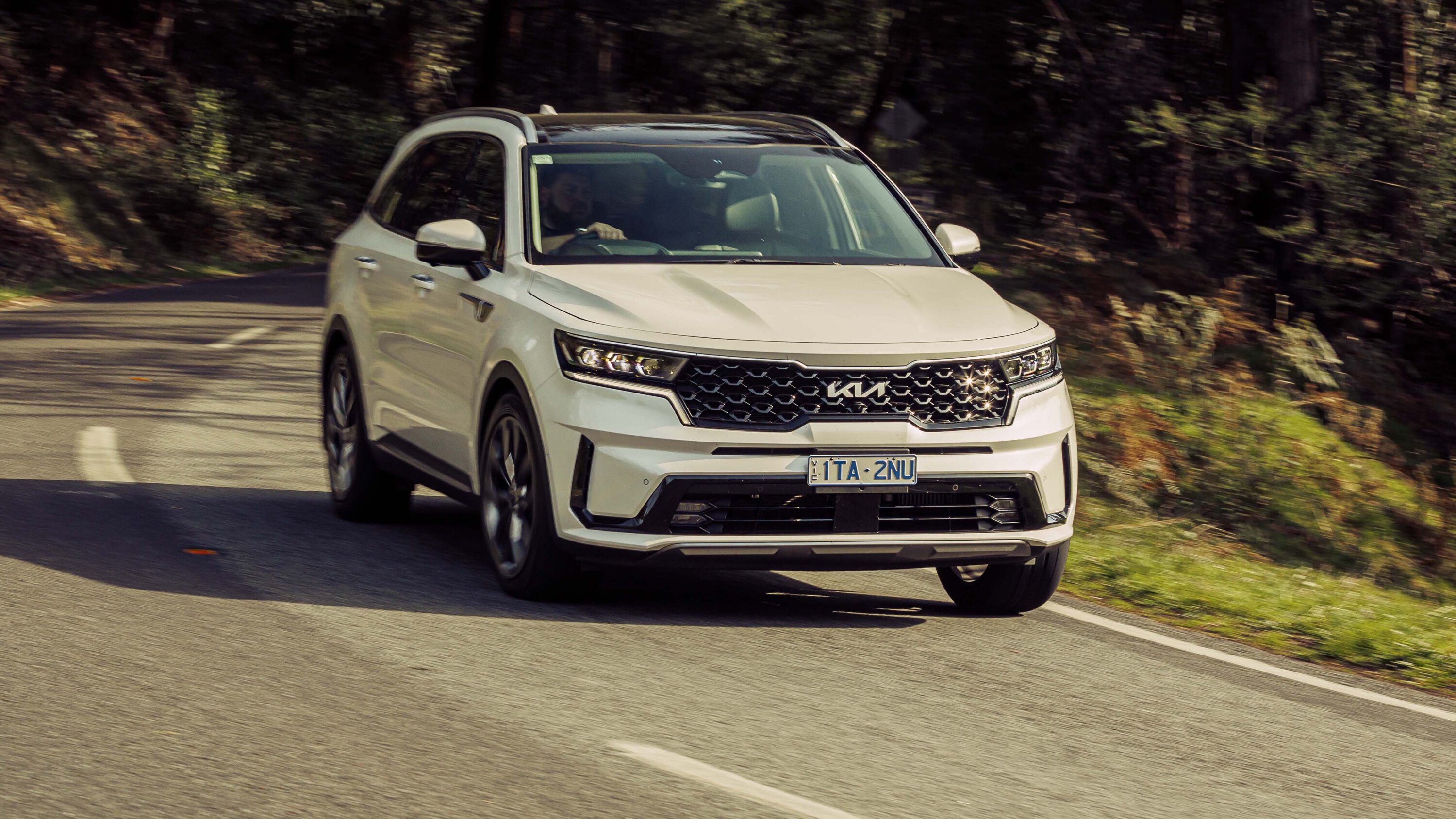
The Kia Sorento stakes a claim in that regard, however. With its roomy cabin and cleverly packaged third row, the Sorento offers the kind of seating flexibility big families demand.
It’s also fantastically light on its feet to drive and its sharp steering, keen front end and well-sorted ride combine to make it the kind of family bus that tempts you to take the twisty way home.
To really shine, though, the Sorento needs the extra glitz and glamour of its top-spec GT-Line model grade. And while it might be great to drive on tarmac, it’s not the kind of SUV you’ll hook a camper trailer up to for a weekend away in the bush…
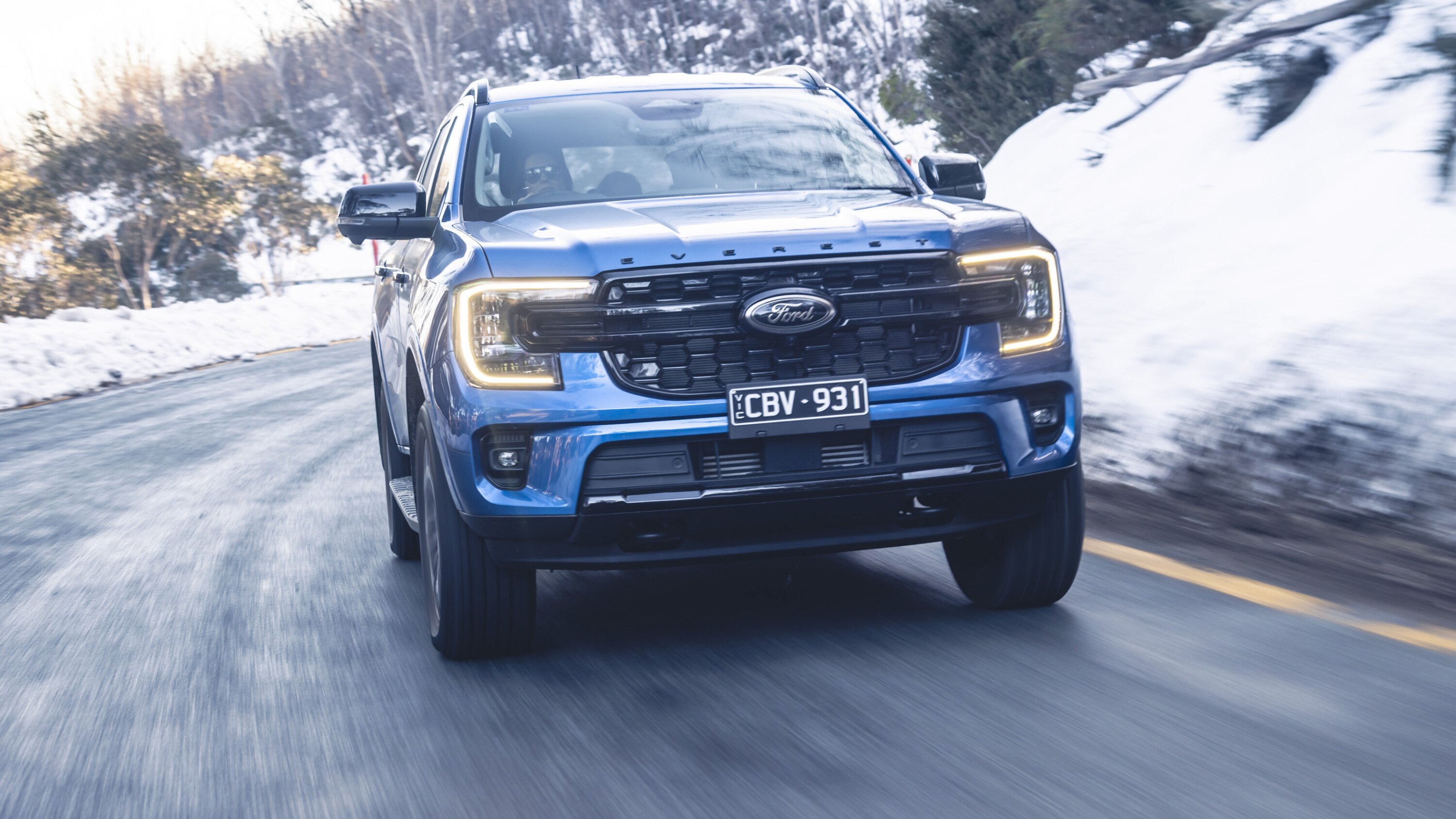
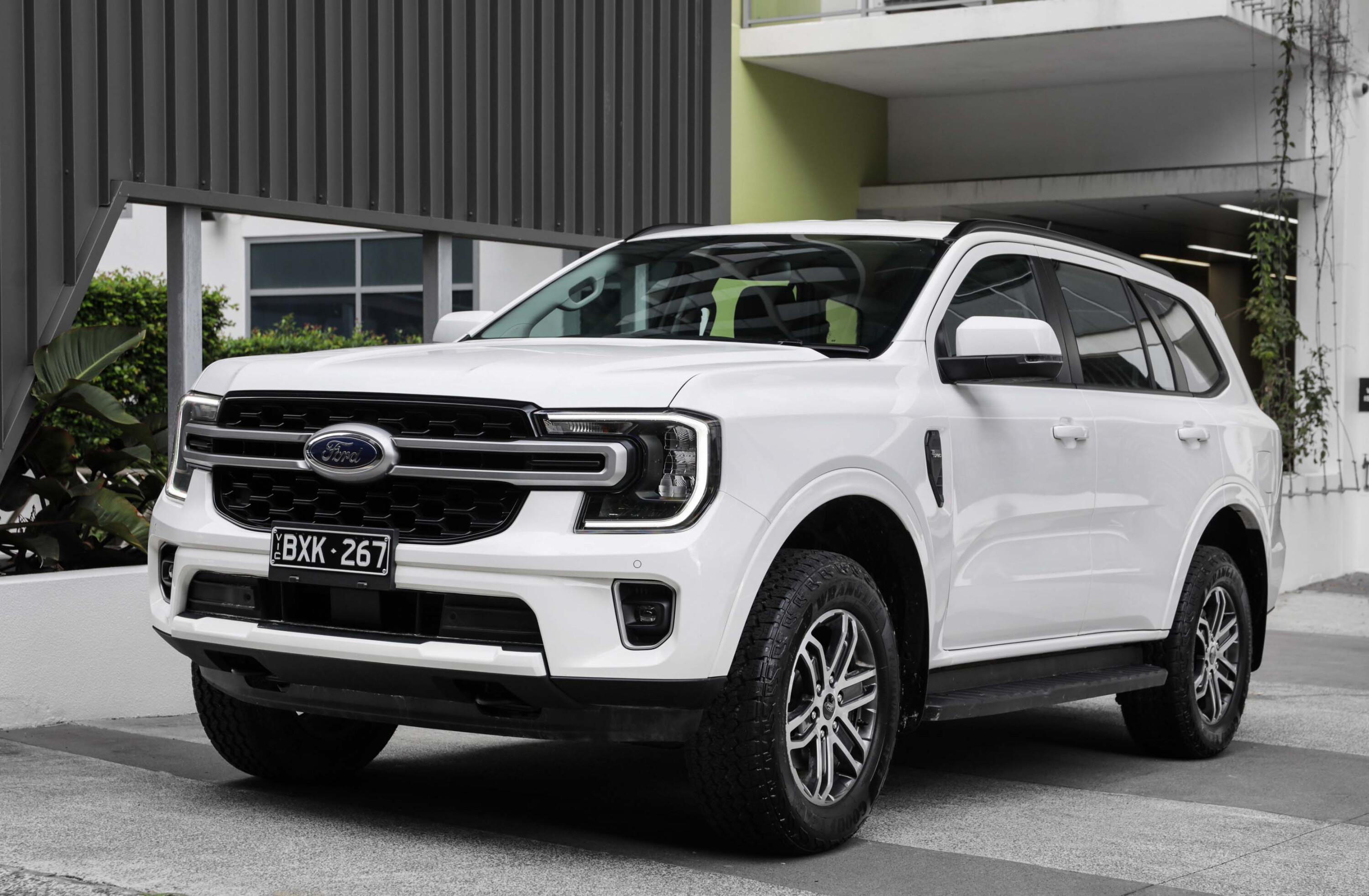
Which is where the Ford Everest comes to the fore.
While it mightn’t offer the same level of luxury, cabin refinement or resolved ride quality as road-biased monocoques like the CR-V, Sorento and Volvo XC90 (the winner of our Luxury category), the Everest has a string to its bow that they don’t: the ability to tow 3500kg and to conquer properly gnarly terrain off-road.
It means that if you’re looking for a genuine seven-seat SUV that offers a roomy and comfortable third row with dedicated air vents and is equally skilled at school drops-off and long-distance cruising as it as at bush bashing and towing your boat or jet ski for a weekend away, then the Aussie-developed Everest is a clear winner.
1
Whether you opt for the $55K 2.0-litre bi-turbo four-cylinder or the $80K 3.0 V6 Platinum, the Everest has a trim level and performance package to suit.
It’s not only miles ahead of its direct rivals – and significantly cheaper than a Land Rover Defender or Discovery – but it’s also impressively capable to drive for what is, essentially, a ladderframe commercial vehicle underneath.
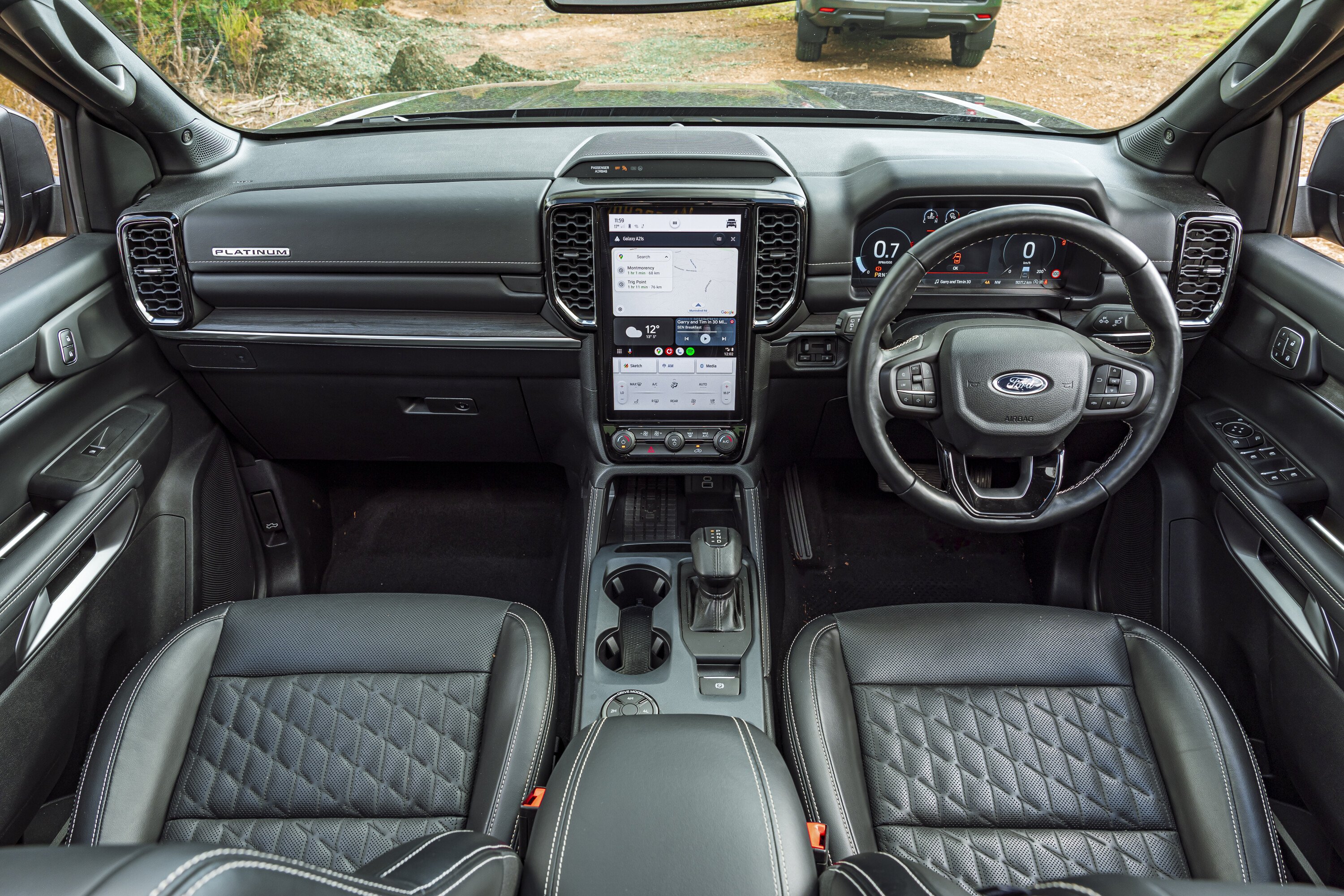
Its cabin also doesn’t put a foot wrong when it comes to space, storage and connectivity (admittedly some of the cabin materials do feel more hardwearing than premium) and there really isn’t a dud in the line-up.
Whether you opt for the $55K 2.0-litre bi-turbo four-cylinder or the $80K 3.0 V6 Platinum, the Everest has a trim level and performance package to suit.
Of course, we’re not naive enough to think the Everest will suit everyone’s particular tastes and needs (in that case check out our broader Large SUV coverage) but simply by virtue of its broad skillset, the big Ford grabs gold.
1
2023 Best Large SUV series
Looking to get into a brand-new large SUV? Our stories below will guide you to the model that best suits your needs!
There are not many vehicles remaining on the market that can drive well on the road off-road, take seven people, carry big stuff inside if required and tow a heavy trailer — all the while being reasonably fuel-efficient and easy to drive.
One of the last bastions of such jack-of-all-trades in the car industry is the off-road large SUV. These relatively affordable wagons will do just about anything well.
1
All models here except for the Toyota Prado are available with 2WD-only options, but here we are focussing only on the off-road capable 4WD models.
There are more off-road SUVs than those here but they have not made out shortlist because they don’t quite excel to the degree these SUVs do, or they have an entry price beyond our $70k limit — or don’t qualify as a large SUV.
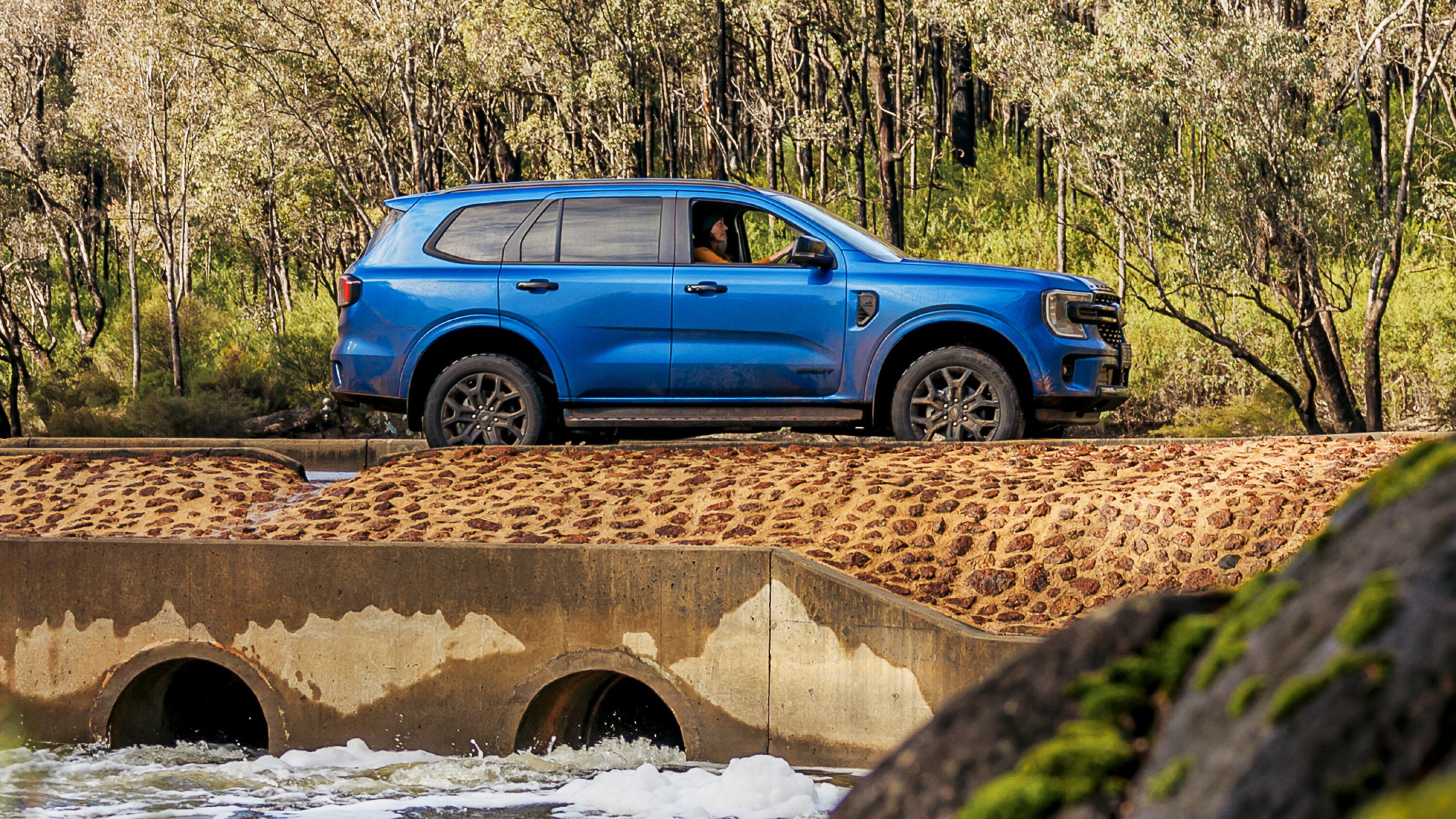
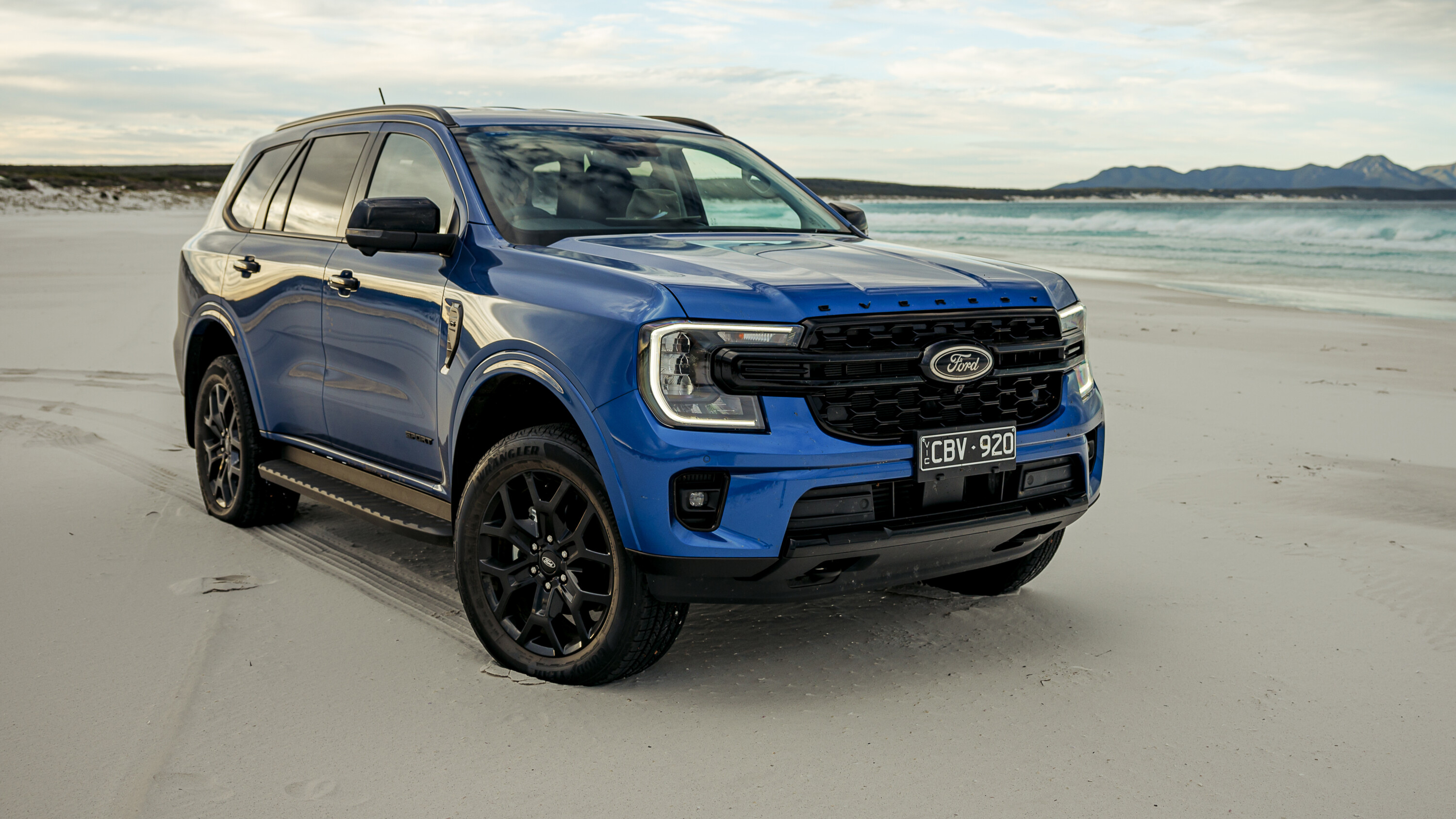
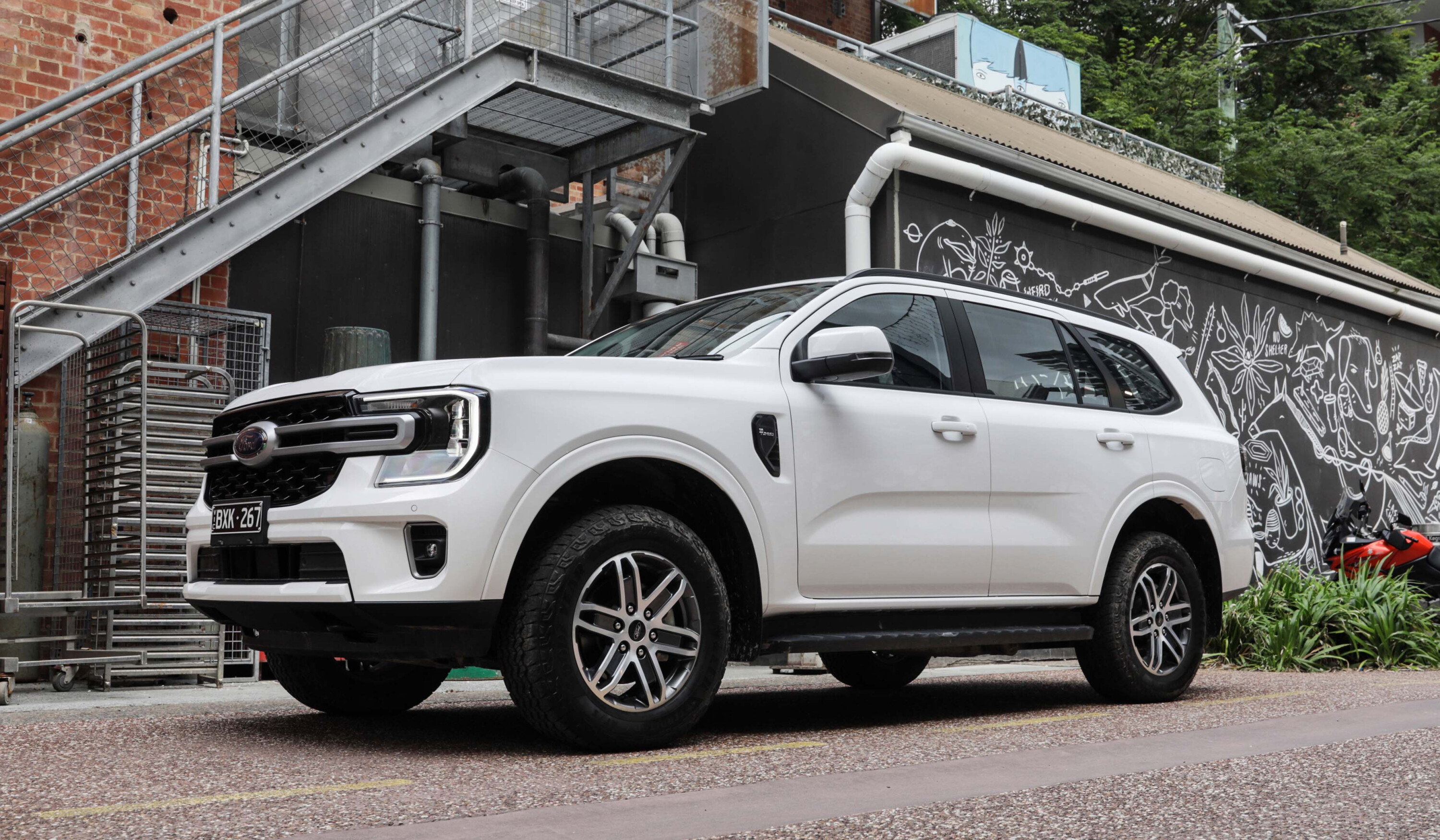
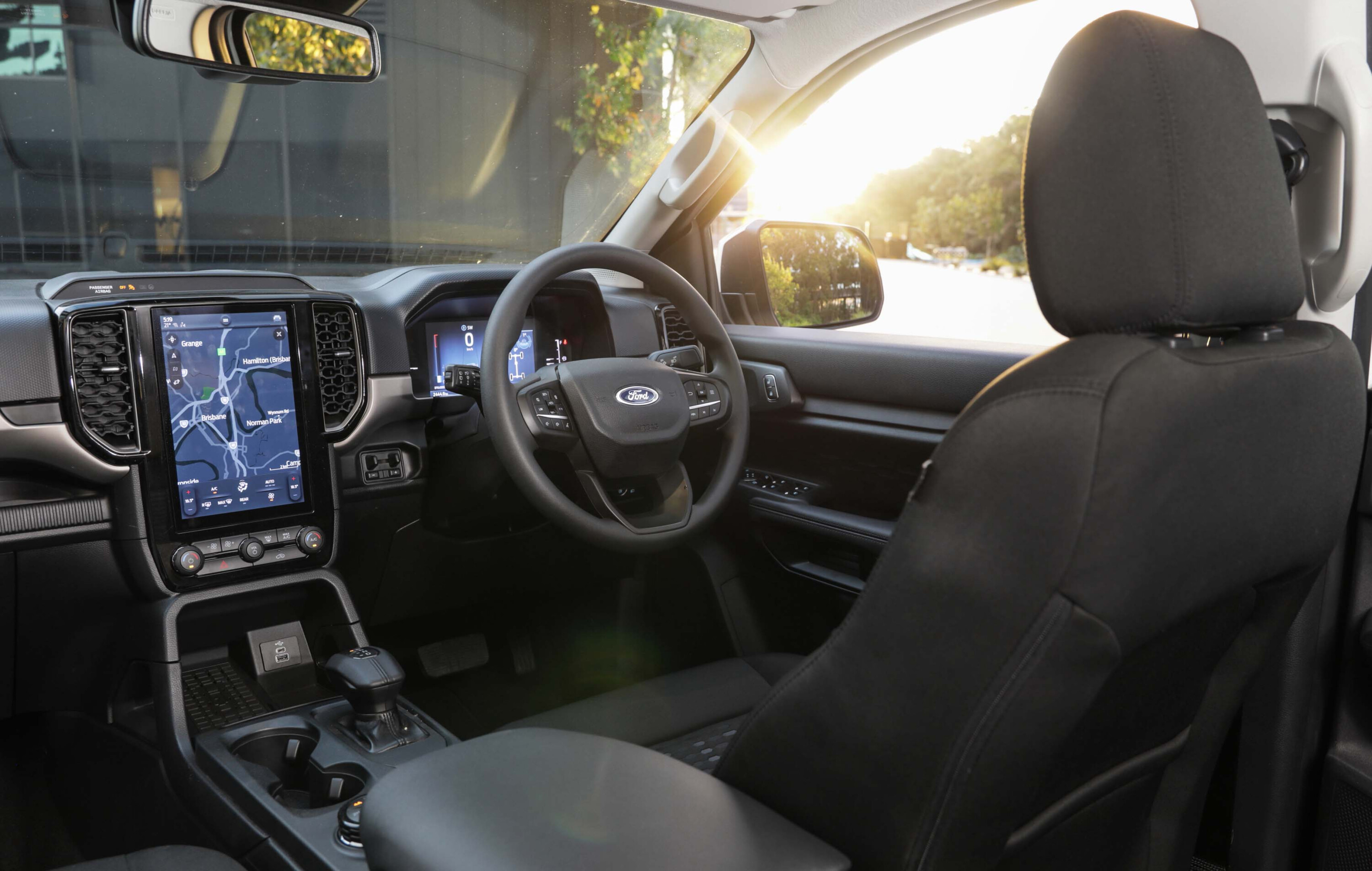
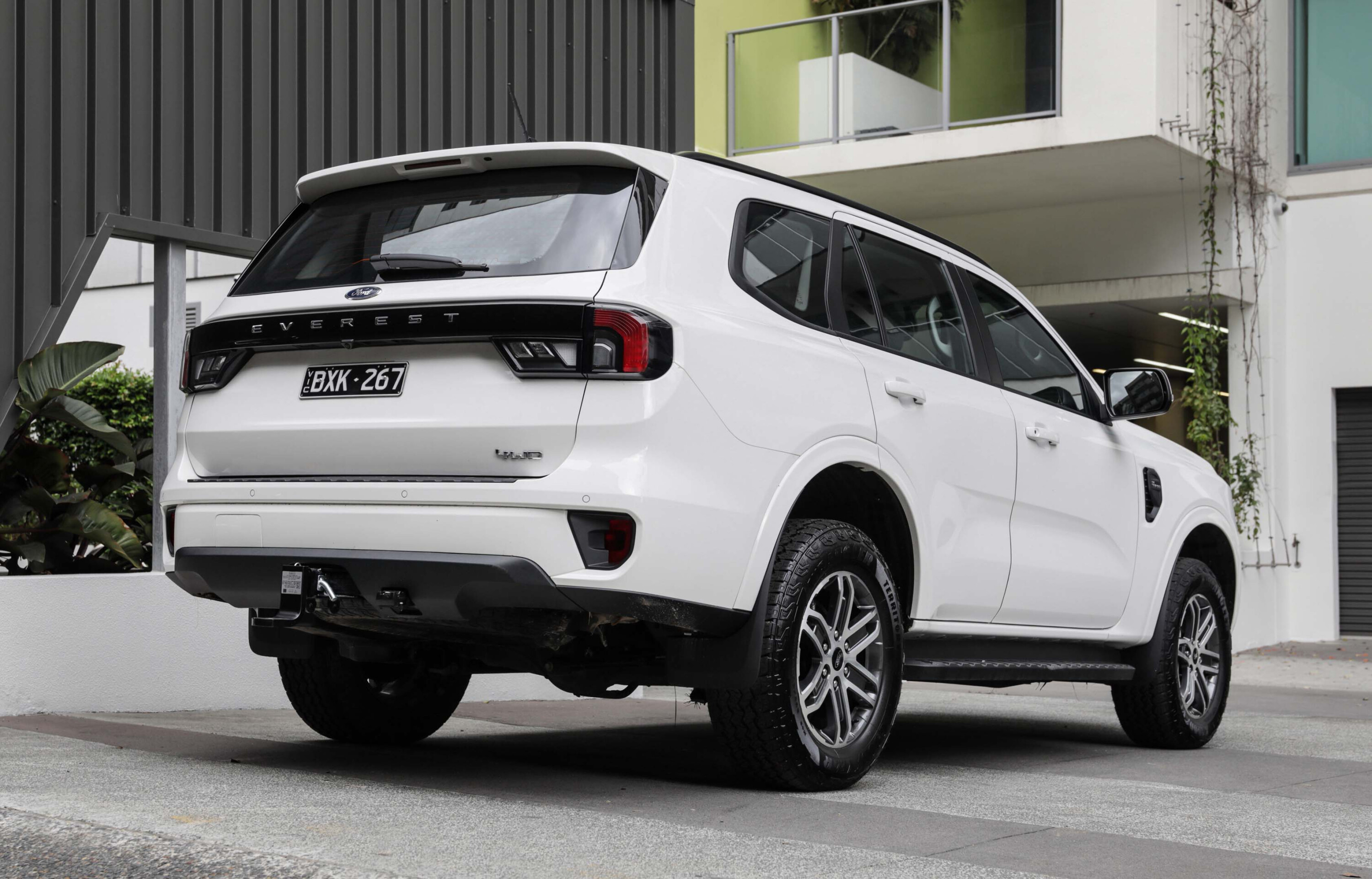
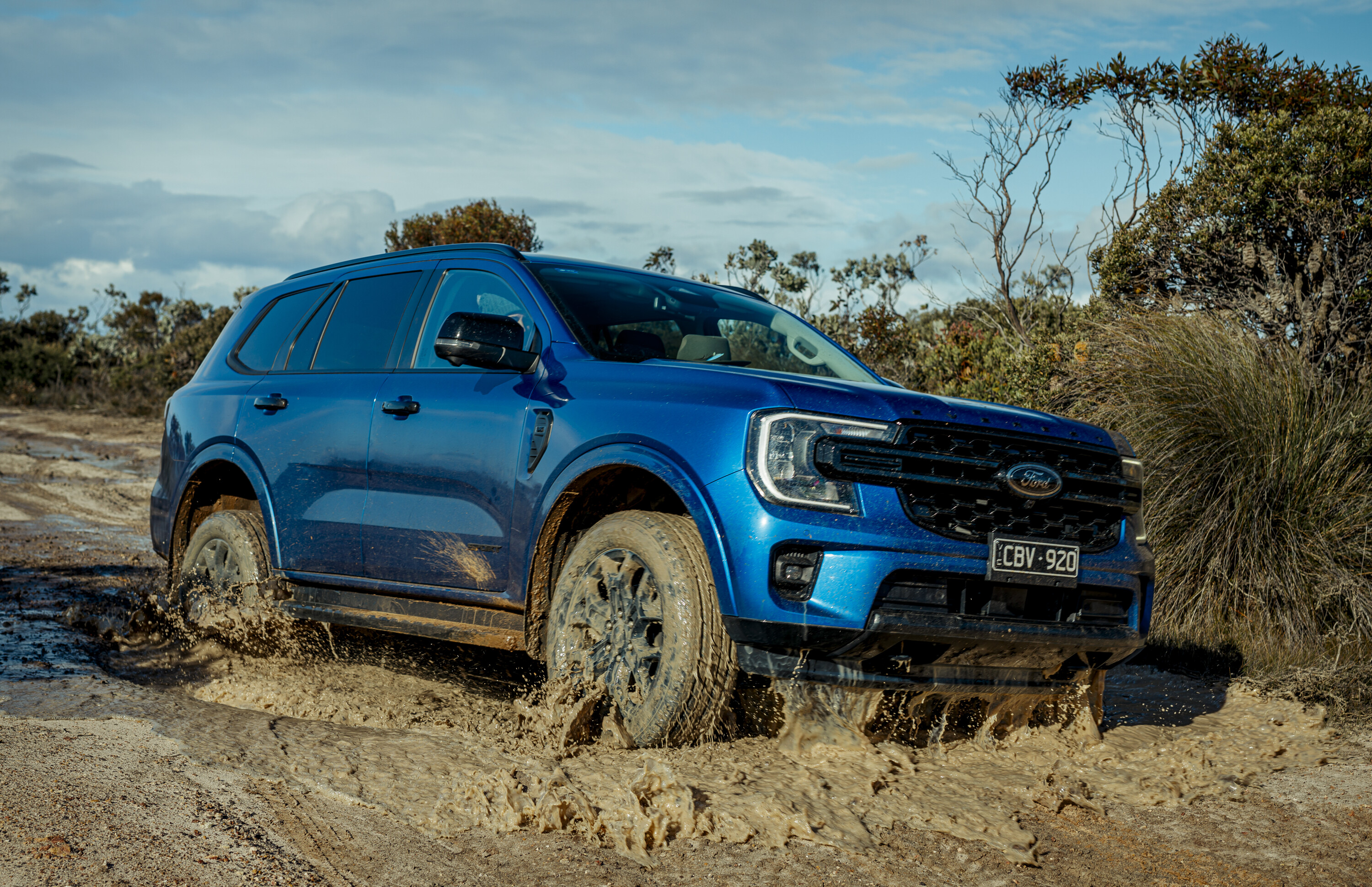
The Everest uses the same powertrains as the closely related Ford Ranger ute: that is, either bi-turbo four-cylinder or V6 turbo-diesels both running 10-speed automatics and all wheel-drive and similar underpinnings. The main difference is at the rear axle; leaf springs in Ranger, coils and five-link in Everest.
Like the Ranger, the Everest has the performance, towing performance and stability, refinement, technology and safety to lead the class.
1
Even better is the ride and handling compromise, one of the best in the large off-road SUV business augmented by an excellent, versatile interior space.
For off-road work, the Everest (like Prado) has full-time 4WD so, unlike the part-time 4WD in most of the other large wagons, you don’t need to engage 4WD (or remember to disengage it) when the road gets slippery. The Everest’s low-range performance, over-bonnet vision and wheel travel and articulation all put it up near the top of the off-road performance ladder.
The negatives are relatively minor for the new Ford all-terrain wagon: the ride quality on patchy bitumen or rough dirt could be a touch more refined, while inside the rocker switch for manual mode might need a rethink, as it’s not easy to use. The lower cabin trim materials may also be a touch reminiscent of commercial utes, for some.
The Ford comes standard with a five-year/unlimited-kilometre warranty and free roadside assistance for a year, continued when you have services done with Ford.
The capped-price maintenance scheme covers the first four scheduled services, either pre-paid or pay-as-you-go, due every 12 months or 15,000km. Ford gives you a free service loan car and also a price-matched tyre offering.
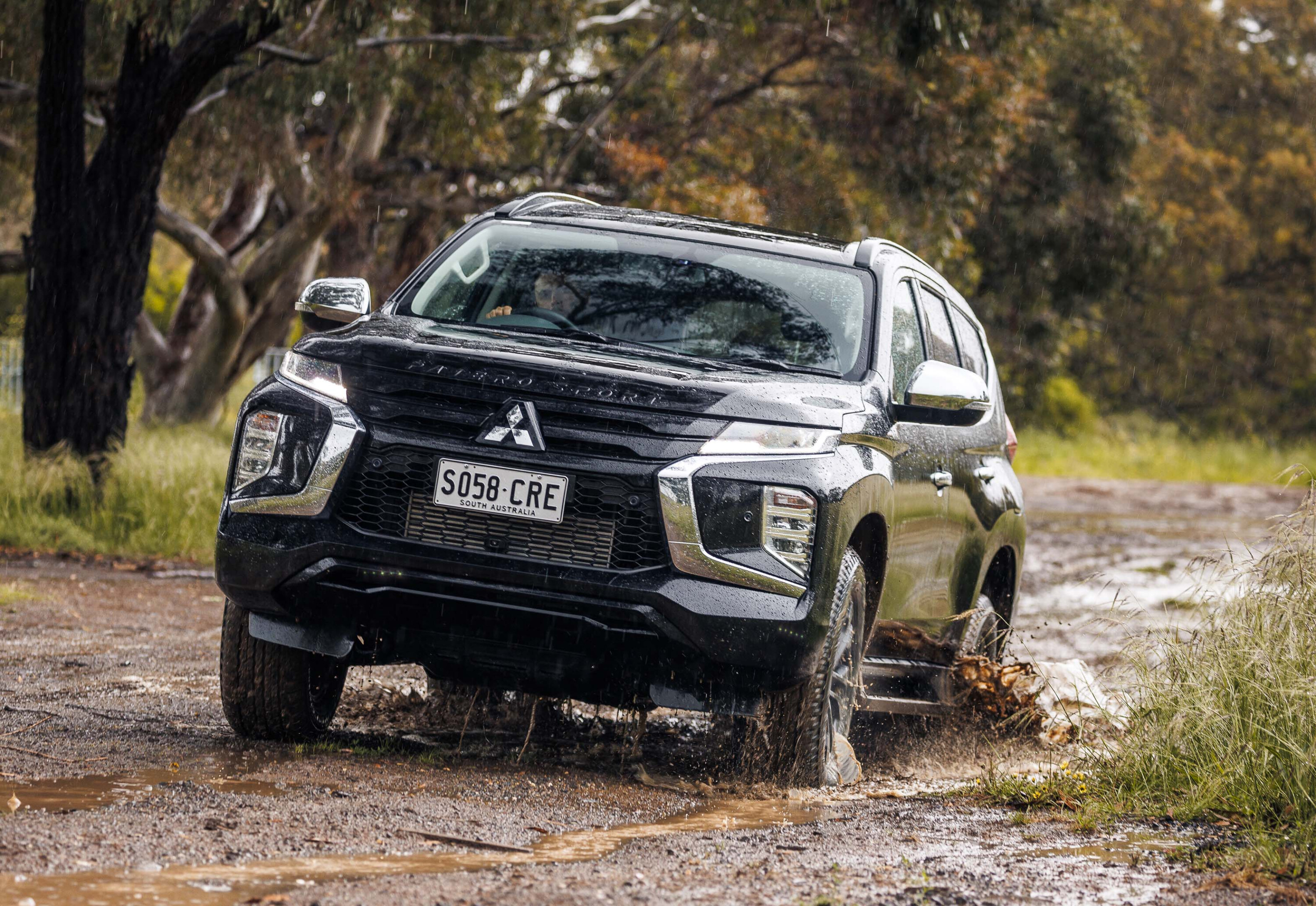
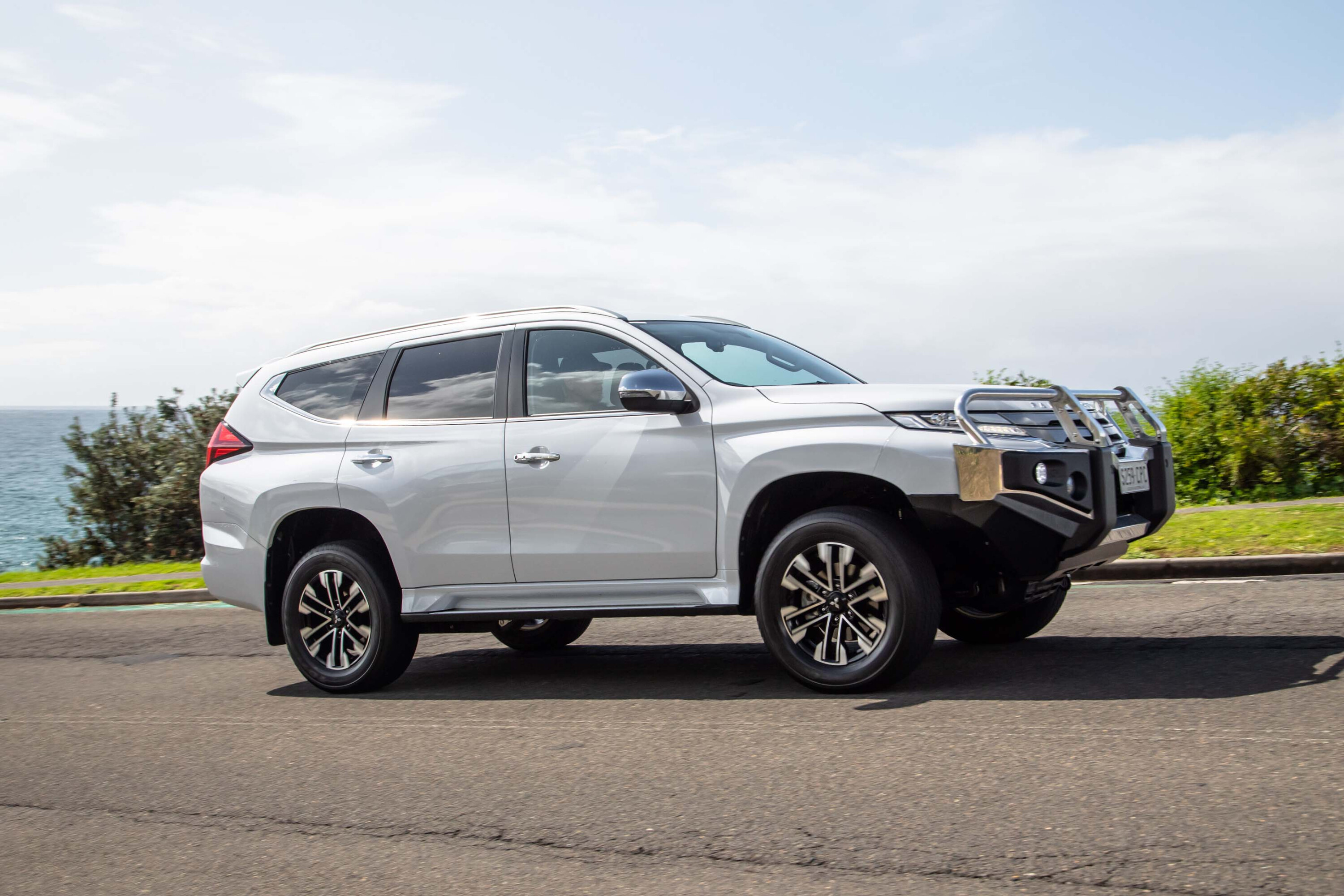
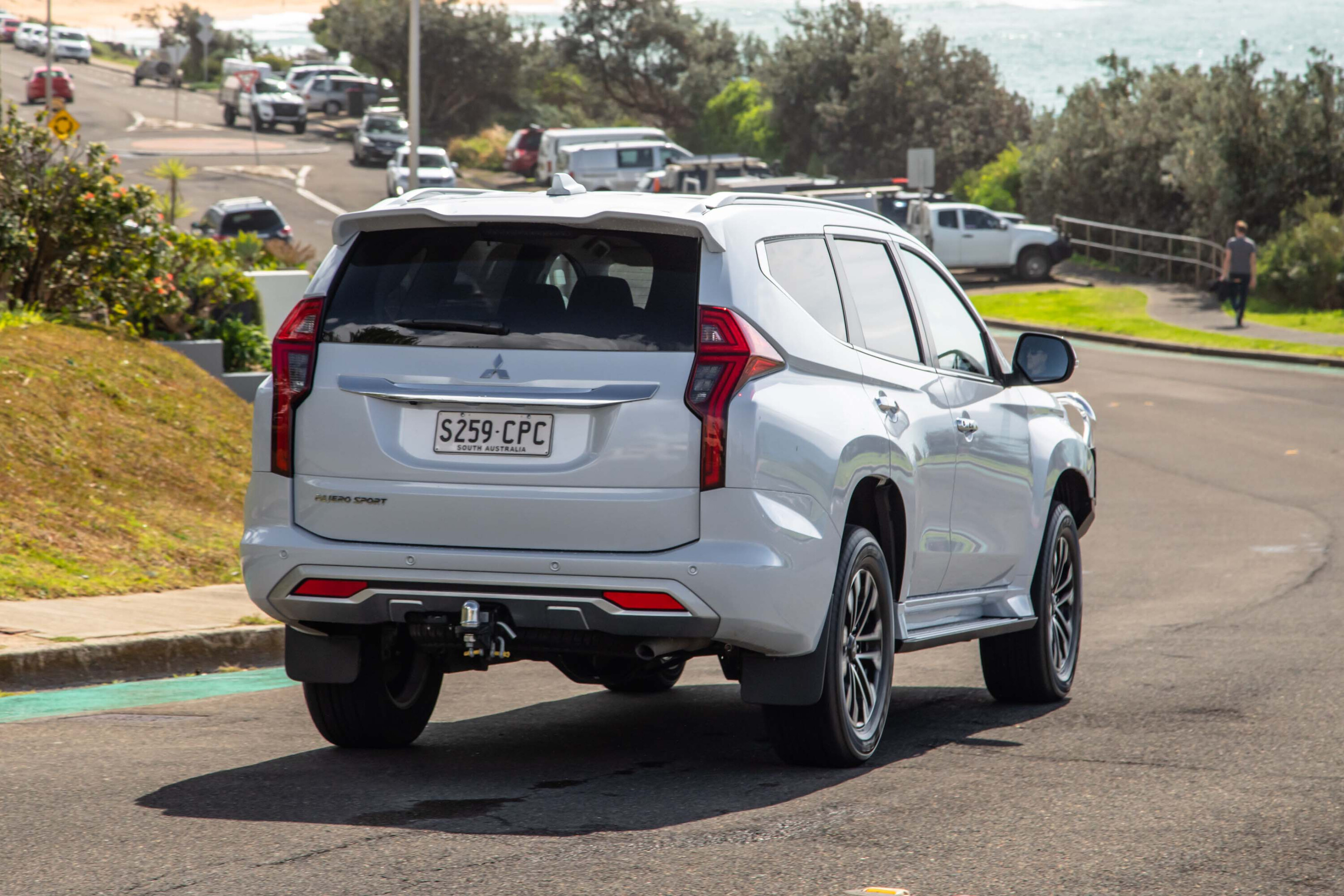
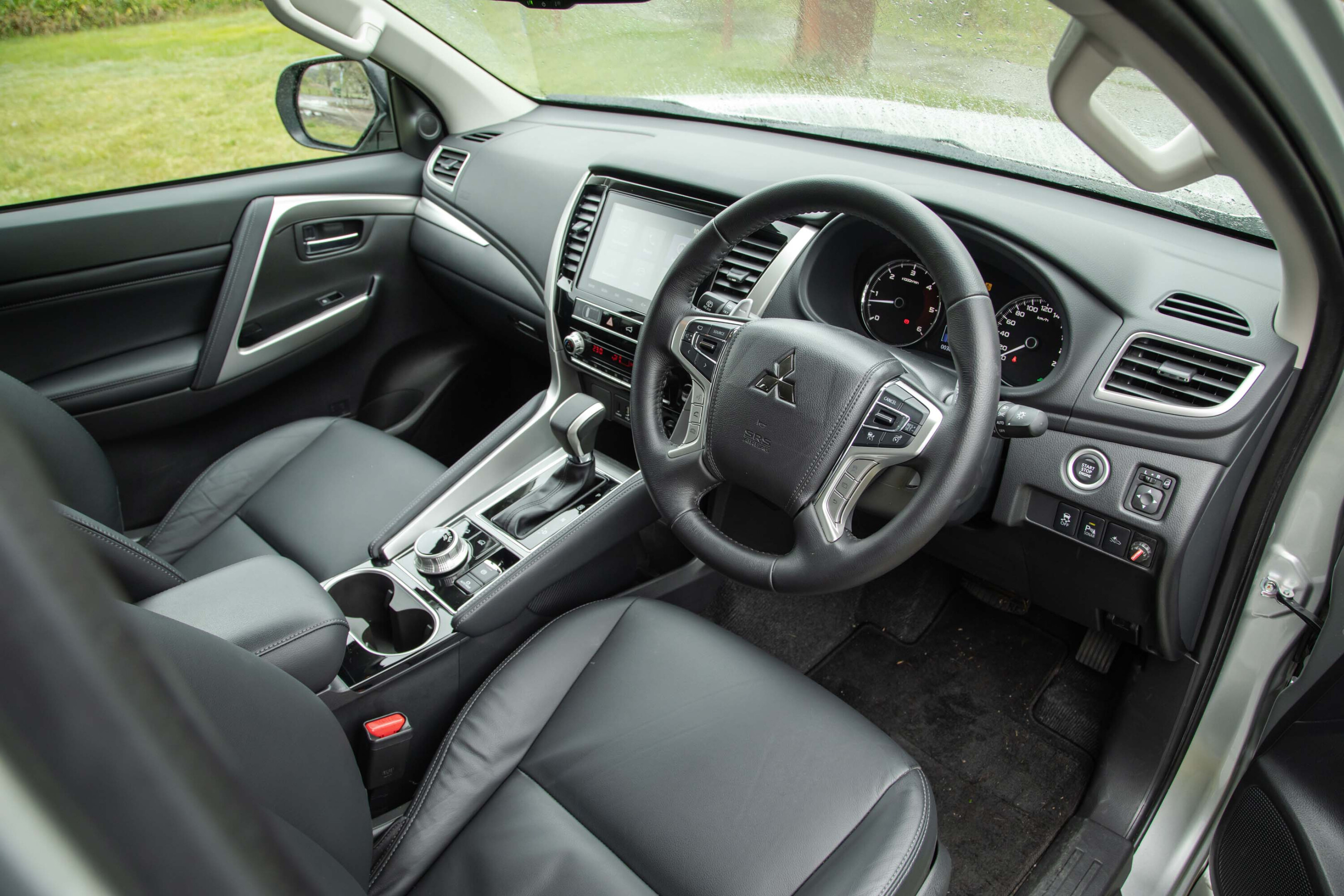
The Pajero Sport, priced from $49,940 (GLX) to $62,440 (GSR), is much the same as the model first released eight years ago.
While a new-generation Pajero Sport is due in two years, the fact remains that the existing Pajero Sport simply lacks innovation of more recent arrivals. At least the current model was updated in 2020, and continues as a value-laden offering in the segment.
For example, you save $8000 on base 4×4 models, if you buy a Pajero Sport GLX 4WD, over the Ford Everest Ambiente 4WD.
1
Although no longer competitive on outputs, the 133kW/430Nm turbo-diesel four cylinder is among the most efficient
The Pajero Sport has a clever 4WD system, debatably the best of the 4WD bunch for its flexibility. This 4WD system, called Mitsubishi Super Select II, basically means you have a part-time and full-time 4WD system in the same vehicle. It has been around a long time and is reliable.
Although no longer competitive on outputs, the 133kW/430Nm turbo-diesel four cylinder is among the most efficient, (with an 8.0L/100km claimed average) even though it uses a six-speed auto where eight to 10 speeds is becoming more common.
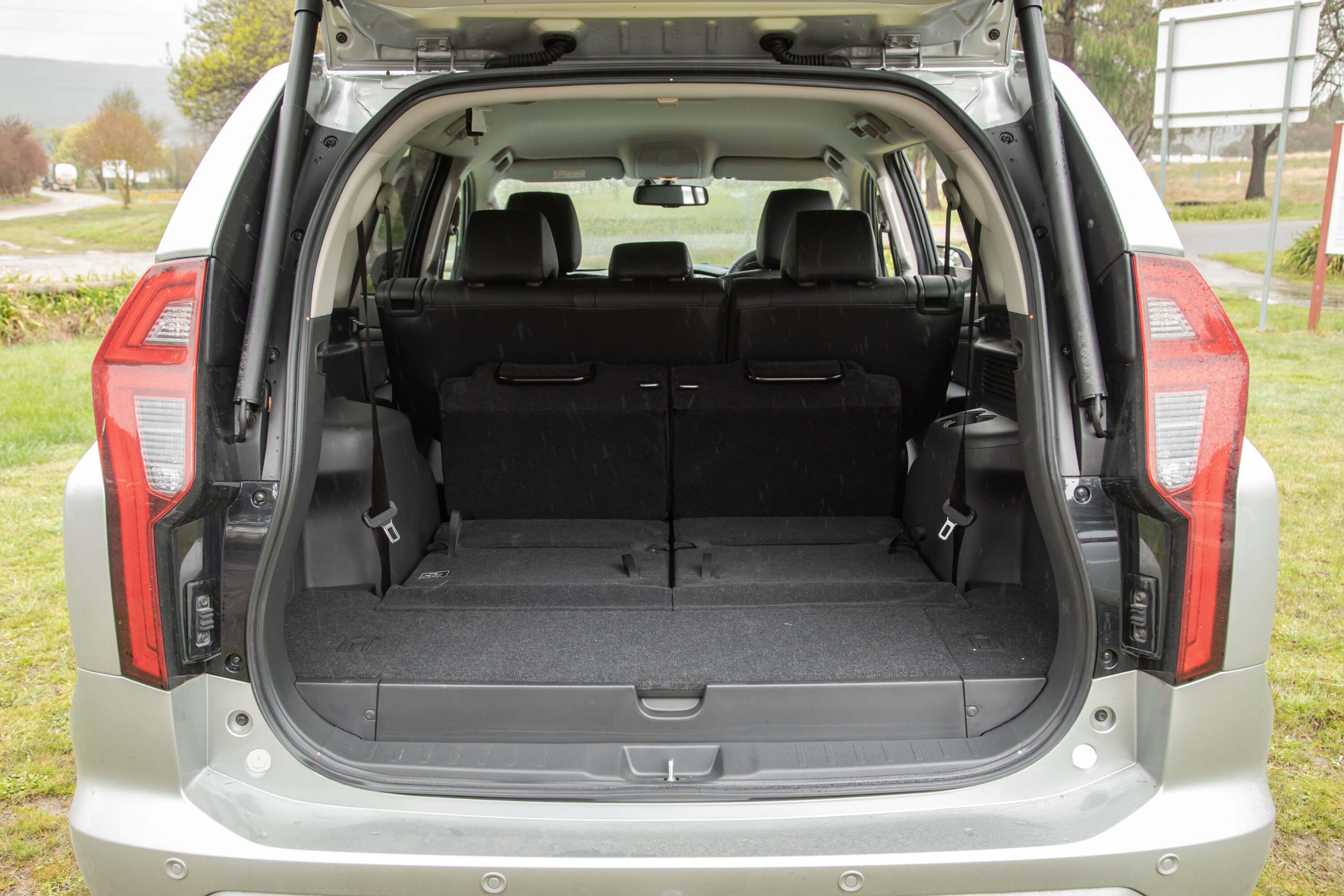
Even though there’s more than adequate room inside, the Pajero Sport more than any others in the class has more obvious old-school body on chassis design, where the seats seems closer to the floor.
1
As it has been tested too longer ago to be considered current, ANCAP has removed the 2023 Pajero Sport’s safety rating, although previously it was rated five stars.
No matter what your position is on true towing mass capacities, the Pajero Sport’s 3100kg maximum towing capacity is undeniably short of the 3500kg towing capacity now standard elsewhere.
The Pajero Sport’s 10 year/200,000km warranty is the longest (in time period, at least) in the business, but you have to go back to a Mitsubishi dealer for every service for the warranty to remain valid after five years or 100,000km has passed.
1
Miss just one service, and by the book, your warranty expires at the five year/100,000km mark.
Servicing intervals are every 12 months or 15,000km, whichever comes first. Mitsubishi will also cap servicing costs for the first ten years or 200,000km and includes 10 years of roadside assistance provided, again, that you service yearly at Mitsubishi.
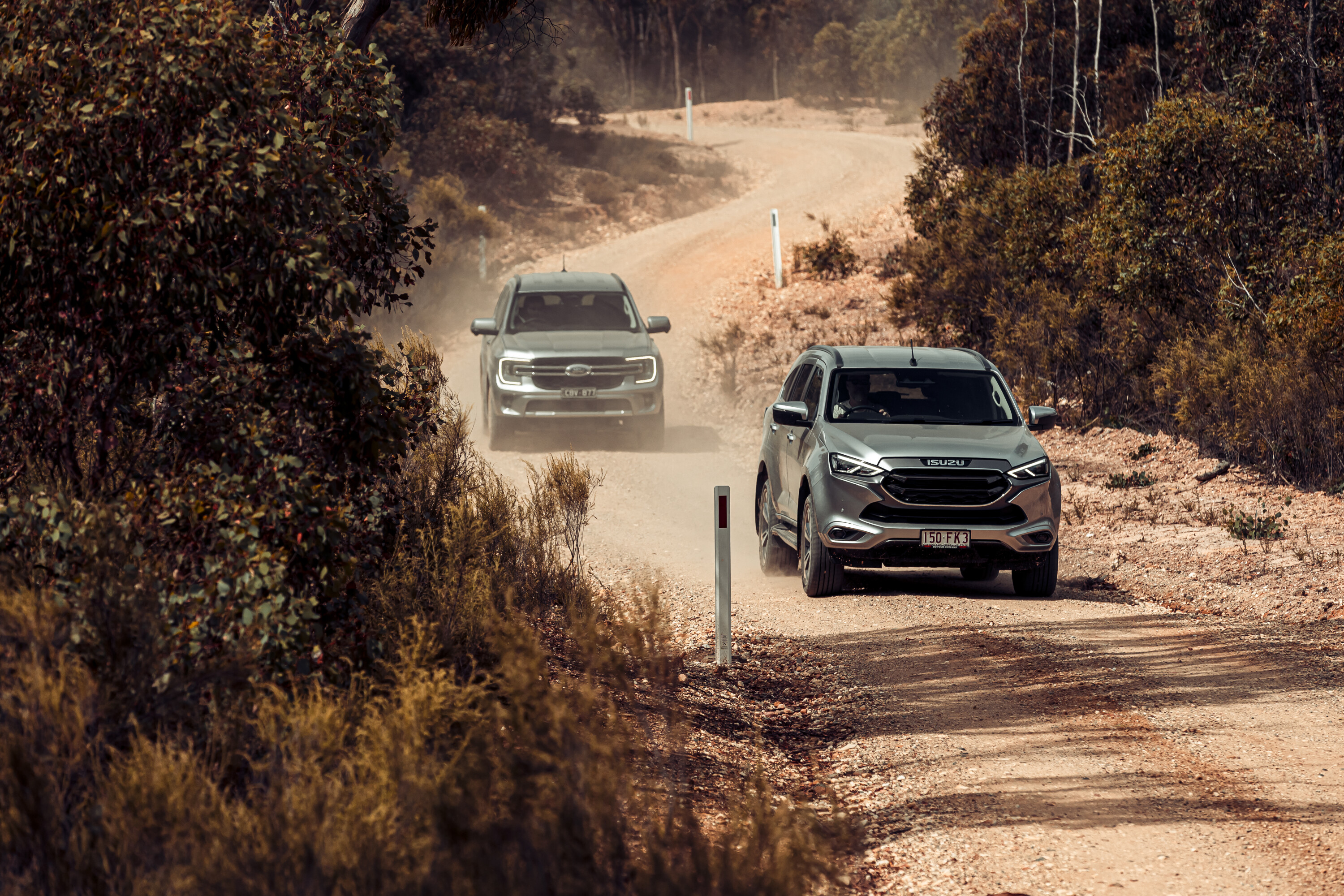
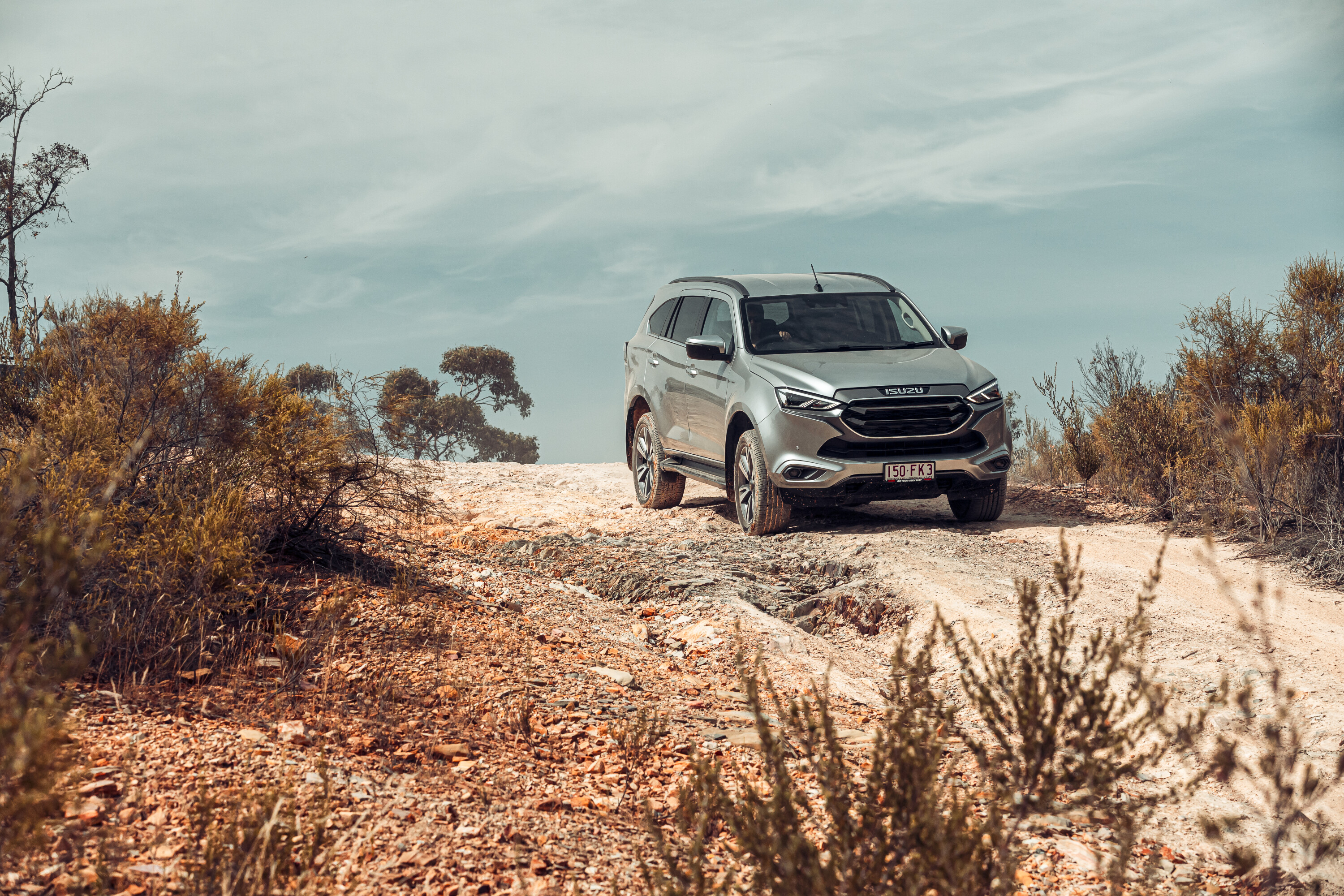
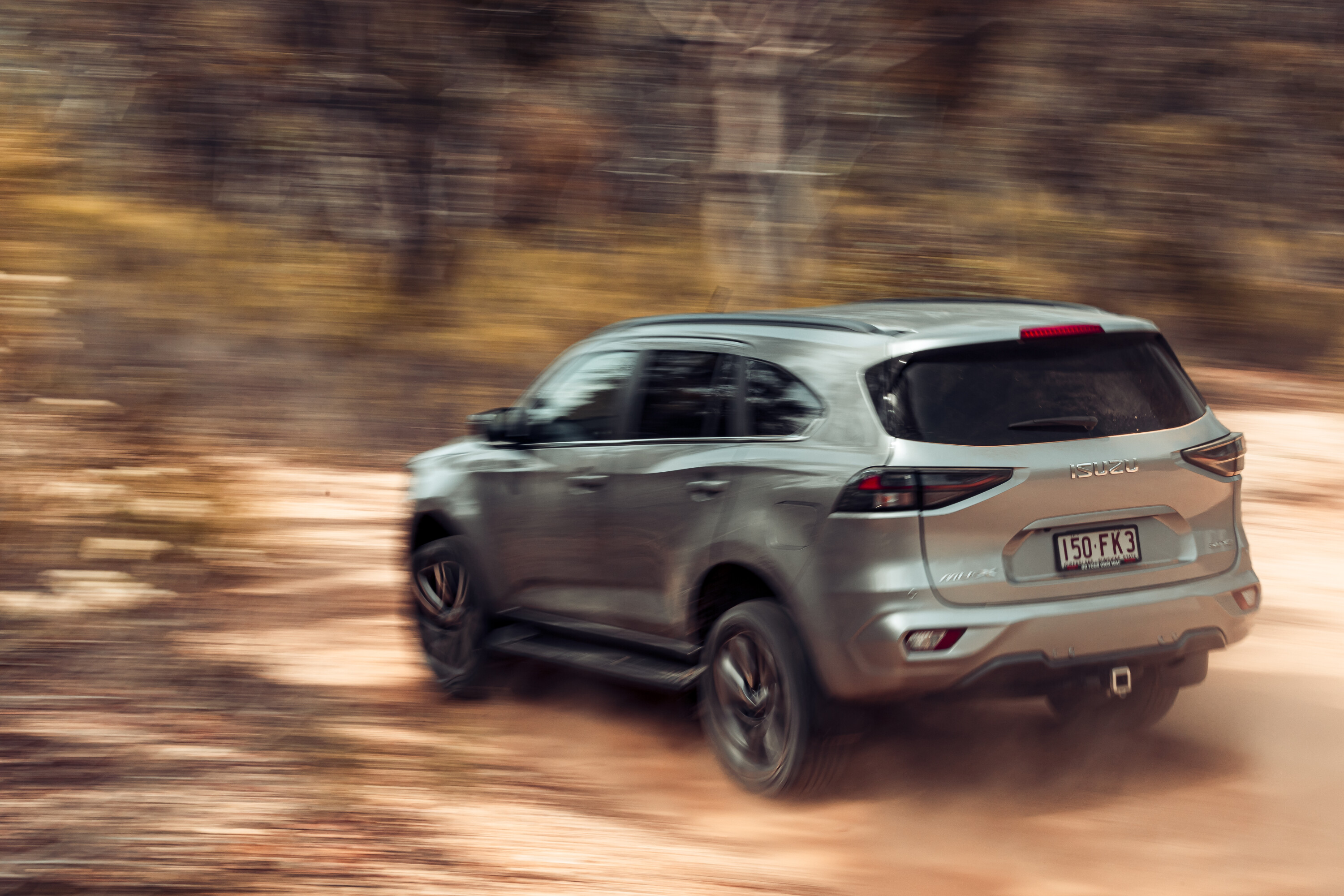
From $54,900 for the base 4×4 the LS-U to $65,990 for the top of the range LS-T, the MU-X, was released in 2021, not long after the ute on which it is based, the D-MAX. The Isuzu MU-X received a mild update earlier this year.
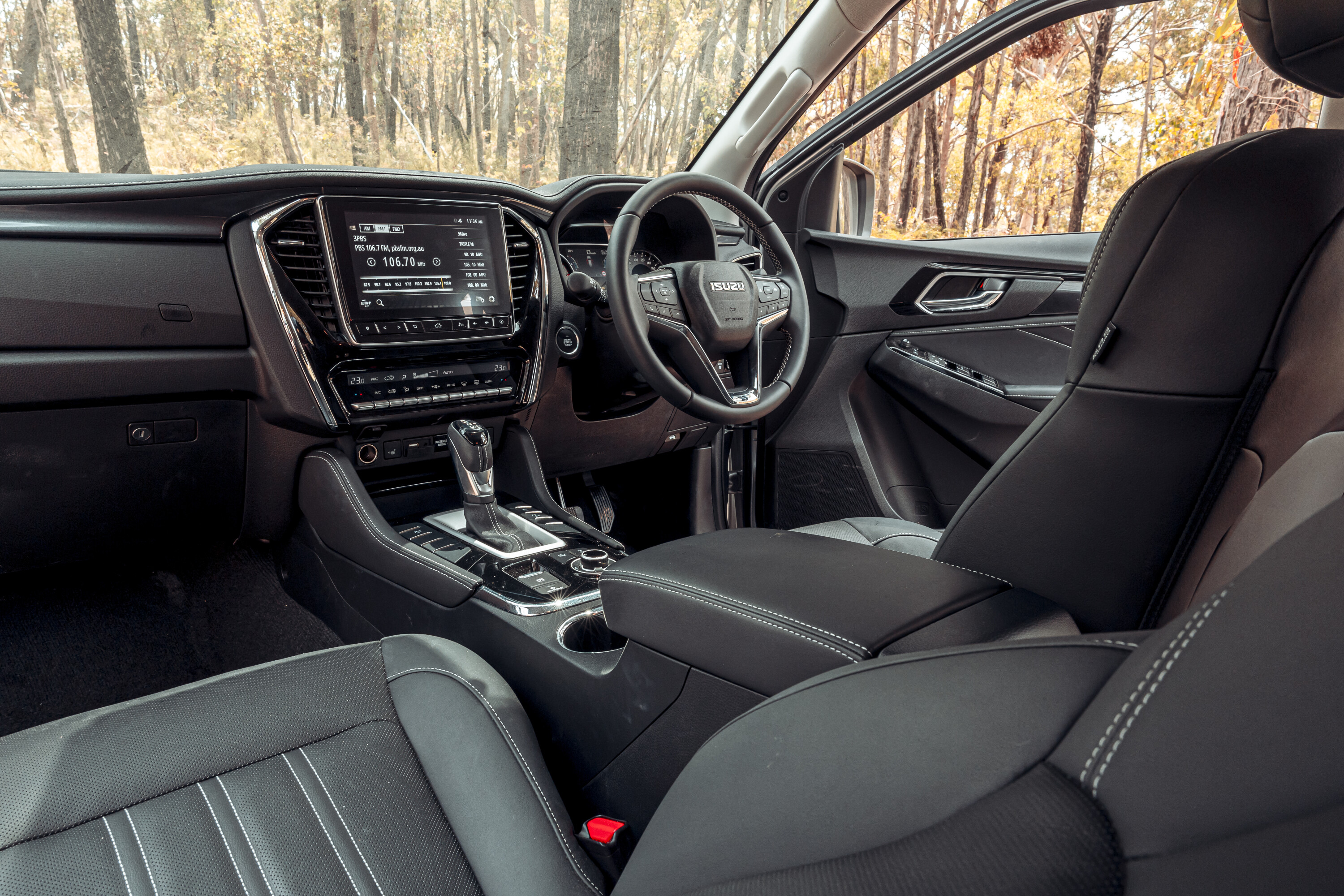
The Isuzu has a fresh interior design and offers slightly improved material quality over the Pajero Sport, although it is trumped in most respects by the Everest.
The 3.0-litre turbo-diesel is the MU-X’s only engine option but it propels the MU-X though its six-speed auto very well, although with more harshness and noise than you might expect.
1
The MU-X’s selectable off-road setting called Rough Terrain mode, sharpens traction control response and it works really well.
This is aided by excellent suspension travel for an independent front/live rear axle design (a set-up used by all the wagons here), and very good low-range reduction gearing, plus good over-bonnet vision and a relatively compact wagon body.
A combination of 1.5mm-thick steel and some 5mm-thick poly-composite plates. This vehicle ticks many boxes for the off-road enthusiast. With all these off-road assets, you can get a long way off-road in the MU-X.
1
This is one of the best 3500kg-capacity tow wagons here, second only to the Everest for its ability to hitch up almost any trailer within its legal capacity and get on with hauling it with ease.
The Isuzu MU-X certainly offers a tonne of safety gear, good performance and reasonable ride and handling. Yet is a little on the noisy side, its auto is lagging behind with only six forward speeds and the tailgate opens too low for taller people.
The Isuzu MU-X comes standard with a six-year/150,000km warranty and seven years Roadside Assistance when you scheduled services are done with Isuzu. The CPS Program covers the first seven scheduled services, due every 12 months or 15,000km.
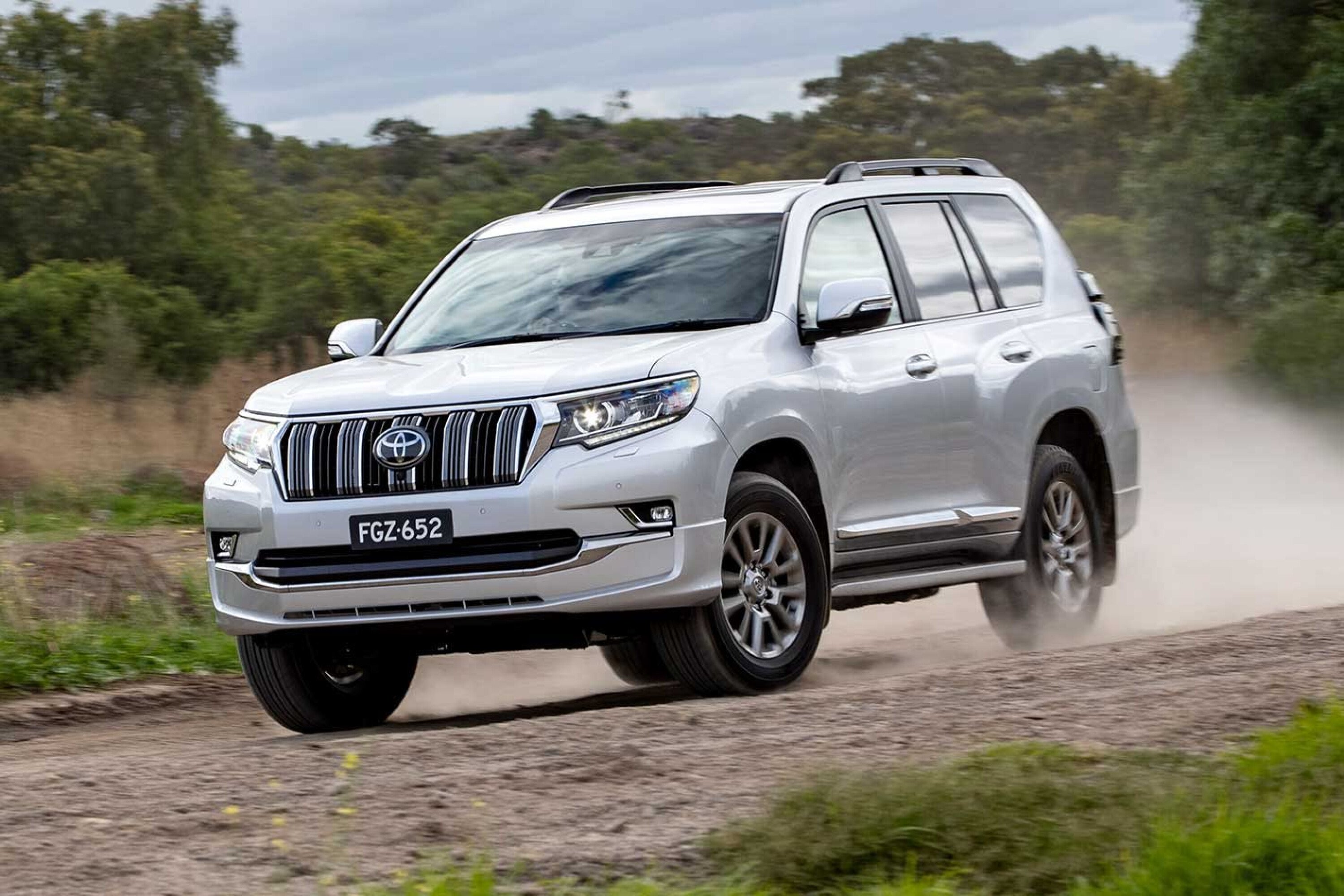
$62,830 (GX) to $87,468 (Kakadu). All models feature a robust 2.8-litre turbo-diesel engine generating 150kW/500Nm, paired with a six-speed automatic transmission.
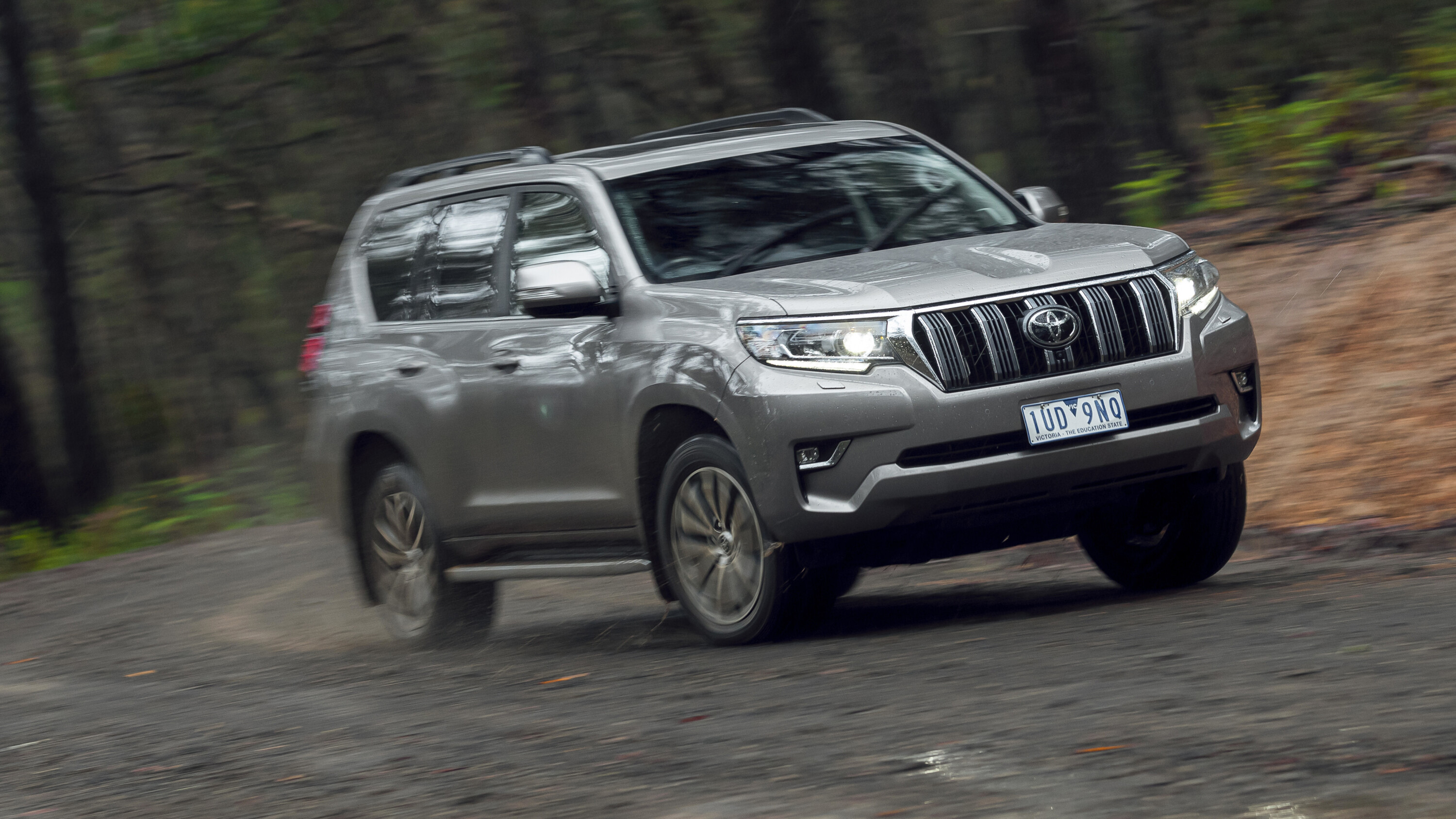
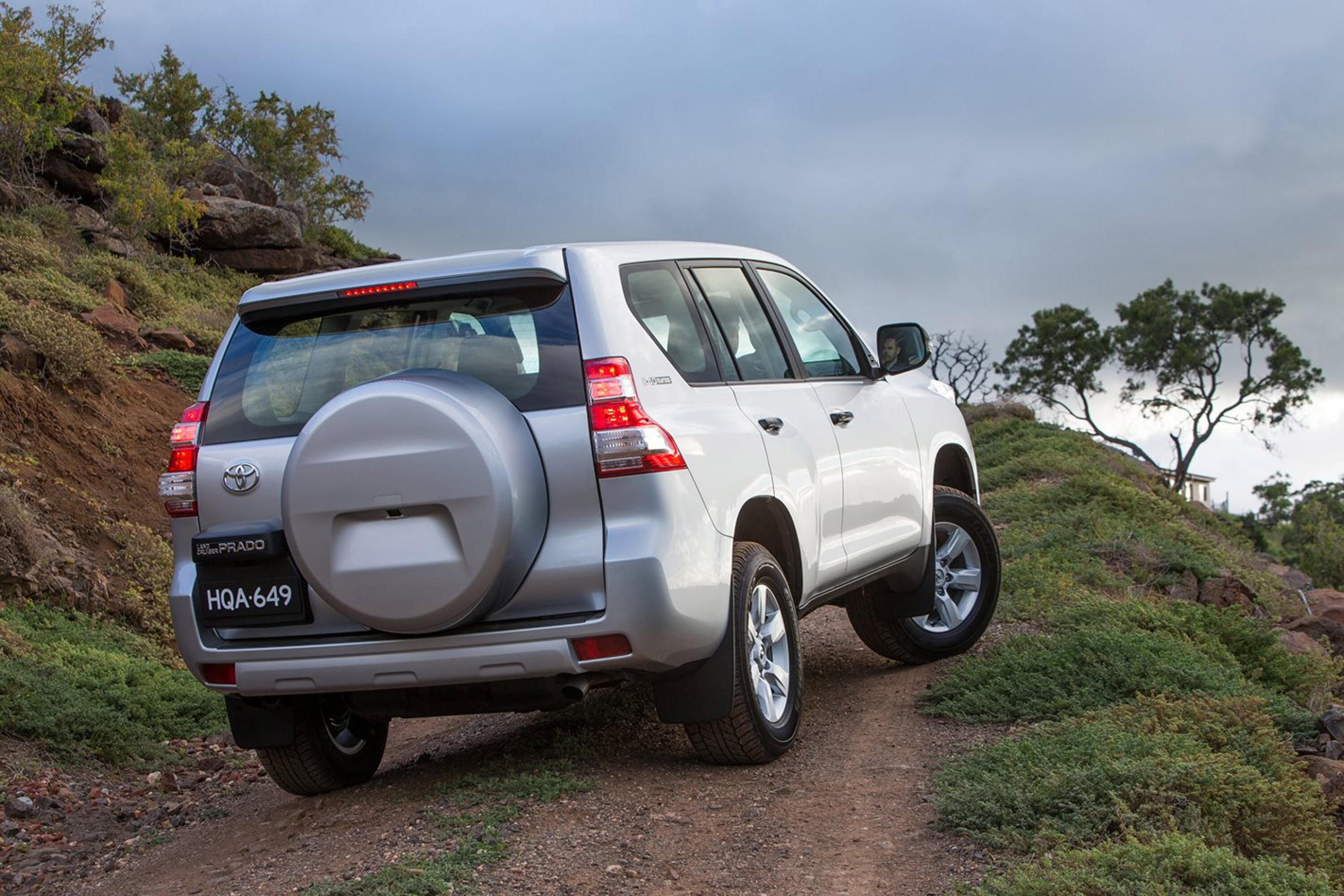
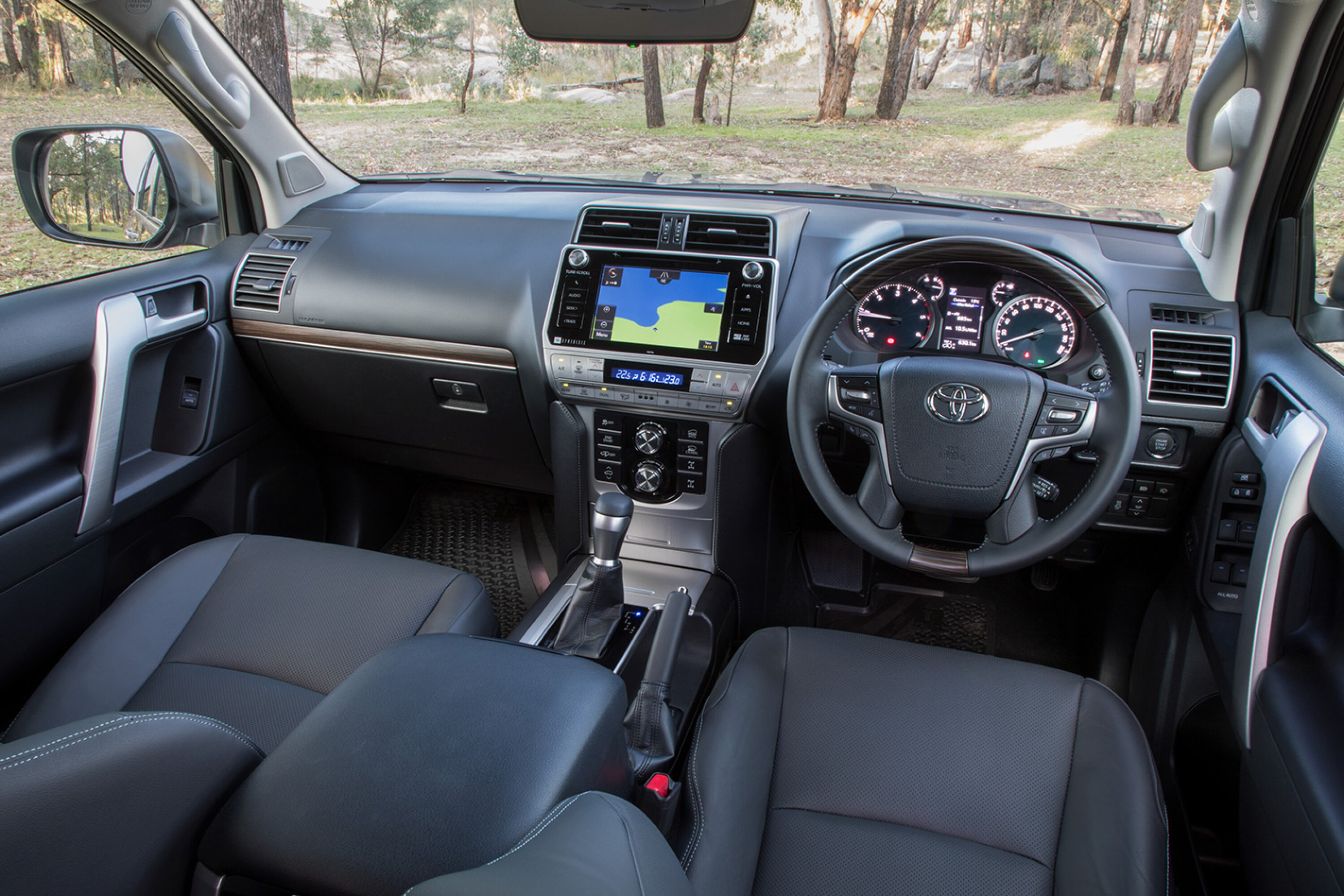
The 2024 Toyota Prado has recently made its debut in both Japan and the United States. It’s worth remembering that the Prado was released in 2009, with the 150 series on sale new today in effect a thorough rehash of the 120 Series, which itself first came out in 2002.
Even though much revised since, it is still a bit of an old truck in its base form, which makes it even more incredible that is manages to be so competitive today.
1
The 2.8-litre turbo-diesel engine is unchanged. It’s not a noisy diesel, and while it’s smooth it doesn’t like to rev beyond 3800rpm (redline is at 4400rpm).
That’s not really what diesels are about; it’s in the thick of the 450Nm mid-range torque band that the LandCruiser Prado is most willing. The six-speed auto is more workman-like than wonderful in terms of gearshifts (it’ll occasionally clunk into gear). Both fifth and six gears are overdrives.
A tall-bodied separate-chassis 4WD wagon with a live rear axle isn’t the makings of a great handling vehicle. The LandCruiser Prado is the least precise through the corners but is arguable the most lush-riding; you really notice that on a badly pock-marked road that the LandCruiser Prado blots out the worst of it.
1
The LandCruiser Prado isn’t a natural towing vehicle in the way that, for example, the Isuzu MU-X is.
The combination reacts to small steering inputs at 100km/h with a tail wag from the trailer.
The Prado’s off-road ability is somewhat predicated by how much you spend. For example, you don’t get a rear diff lock on base GX; while all Prados features a full-time 4WD system, only GXL, VX and Kakadu variants have a rear diff lock. You need to spend big on the top-shelf Kakadu to get a five-speed crawl control function.
1
The Prado’s low-range gearing is not stellar but well within the ballpark for pegging speed.
Not so great is the gearshift between first and second gear in low range – the transmission holds first for a bit too long and then lurches into second gear.
The 2023 Toyota Prado has not been crash safety-rated by the Australasian New Car Assessment Program (ANCAP), although it did achieve five stars when put against less stringent ANCAP criteria in 2015.
The Prado has a five-year / unlimited-kilometre factory warranty, with no breakdown cover as standard. Services are due at quite short intervals, that is, every six months or 10,000km – whichever comes first.
The Ford Everest is the Best Off-Road Large SUV under $70K for its ability to traverse all types of terrain with ease, even when towing a trailer or carrying seven occupants. Its extensive safety and technology equipment, even at entry Ambiente level, sweeten the deal on what is a very well-rounded wagon.
One of the particular cruelties of getting older is the sudden ability to identify youthfulness in other people.
It doesn’t creep up on you, this special power; it appears suddenly, like an extra toilet stop in the night or a pair of white New Balance trainers, and its arrival can deliver quite a shock. One day you’re blissfully young and unaware; the next you need a lie down as you find yourself marvelling at a younger person’s bright eyes, dewy skin and seemingly endless supply of energy.
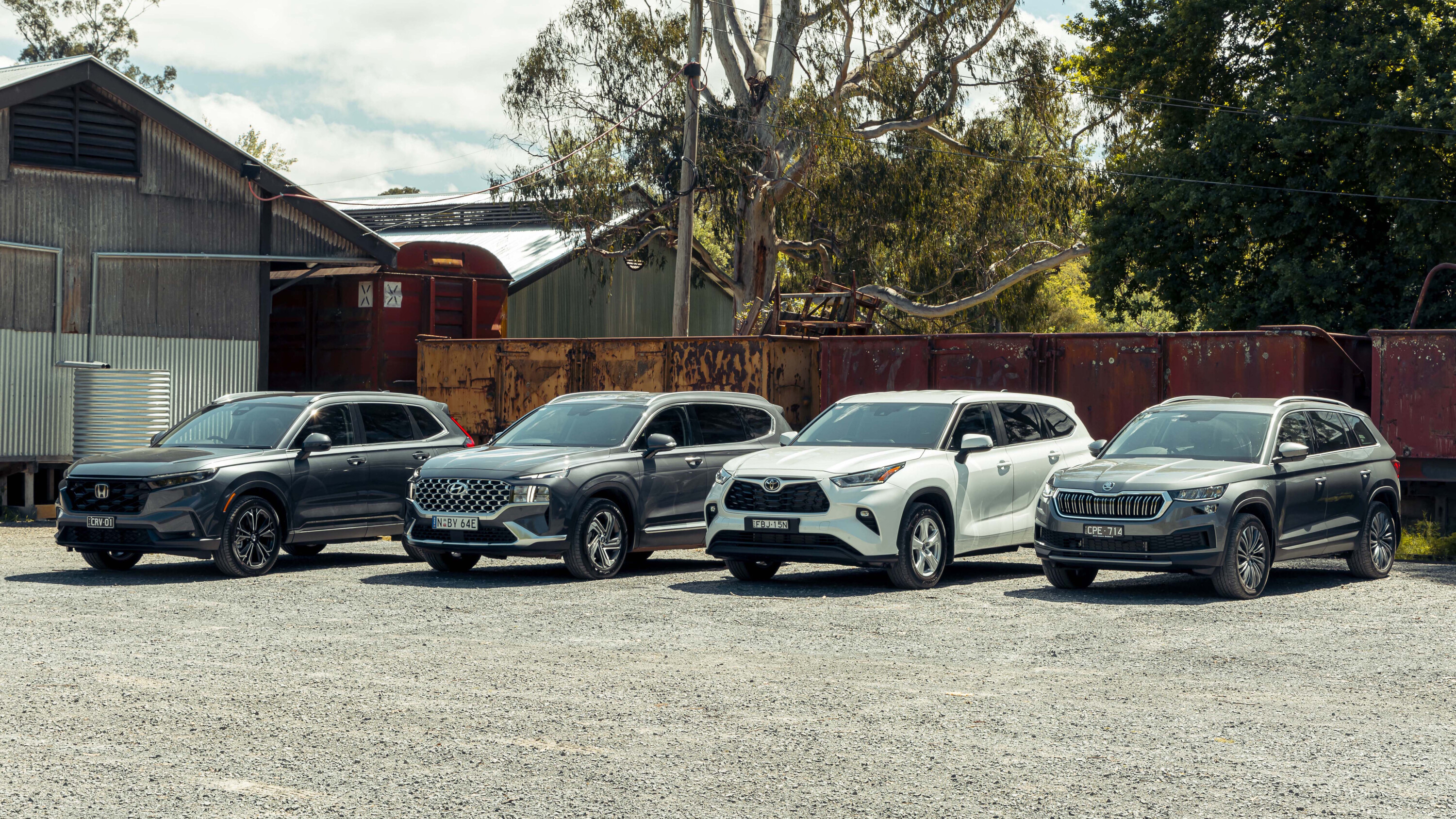
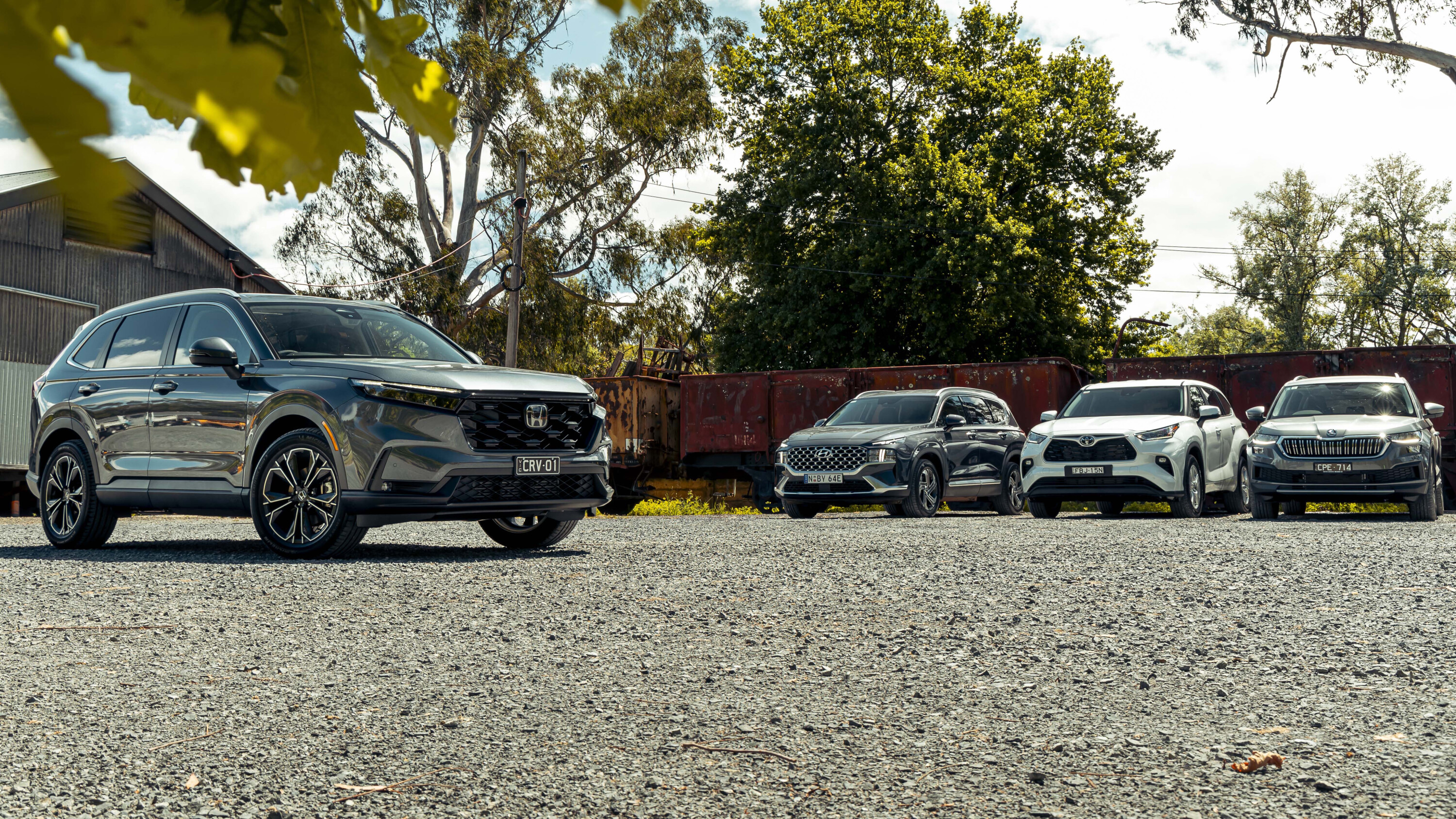
I know all this because it’s how I look at my daughter, from the couch as she demands that I keep playing, and it’s exactly how our group of assembled SUVs must be feeling as they watch the 2024 Honda CR-V roll into our designated meeting place.
1
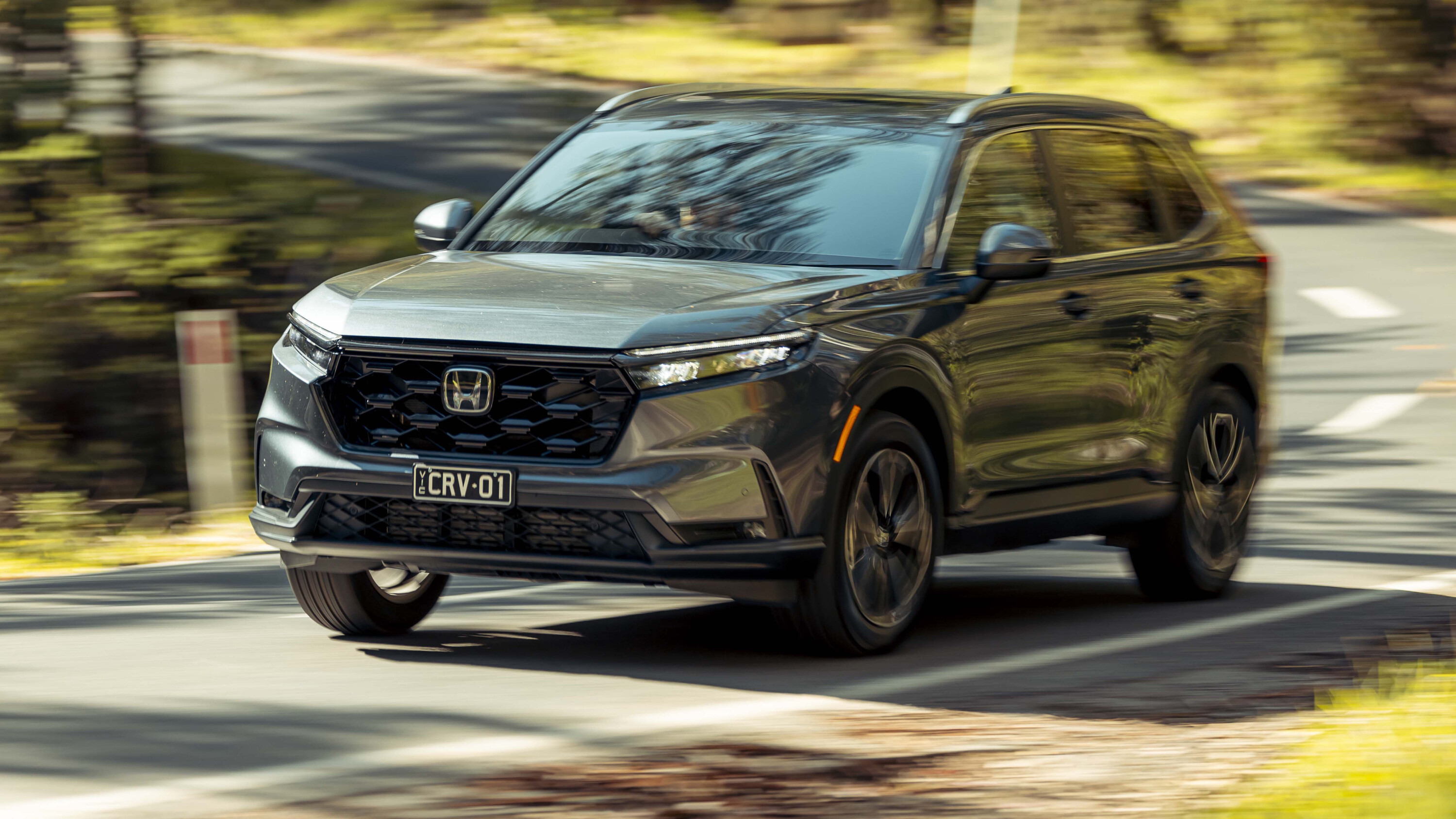
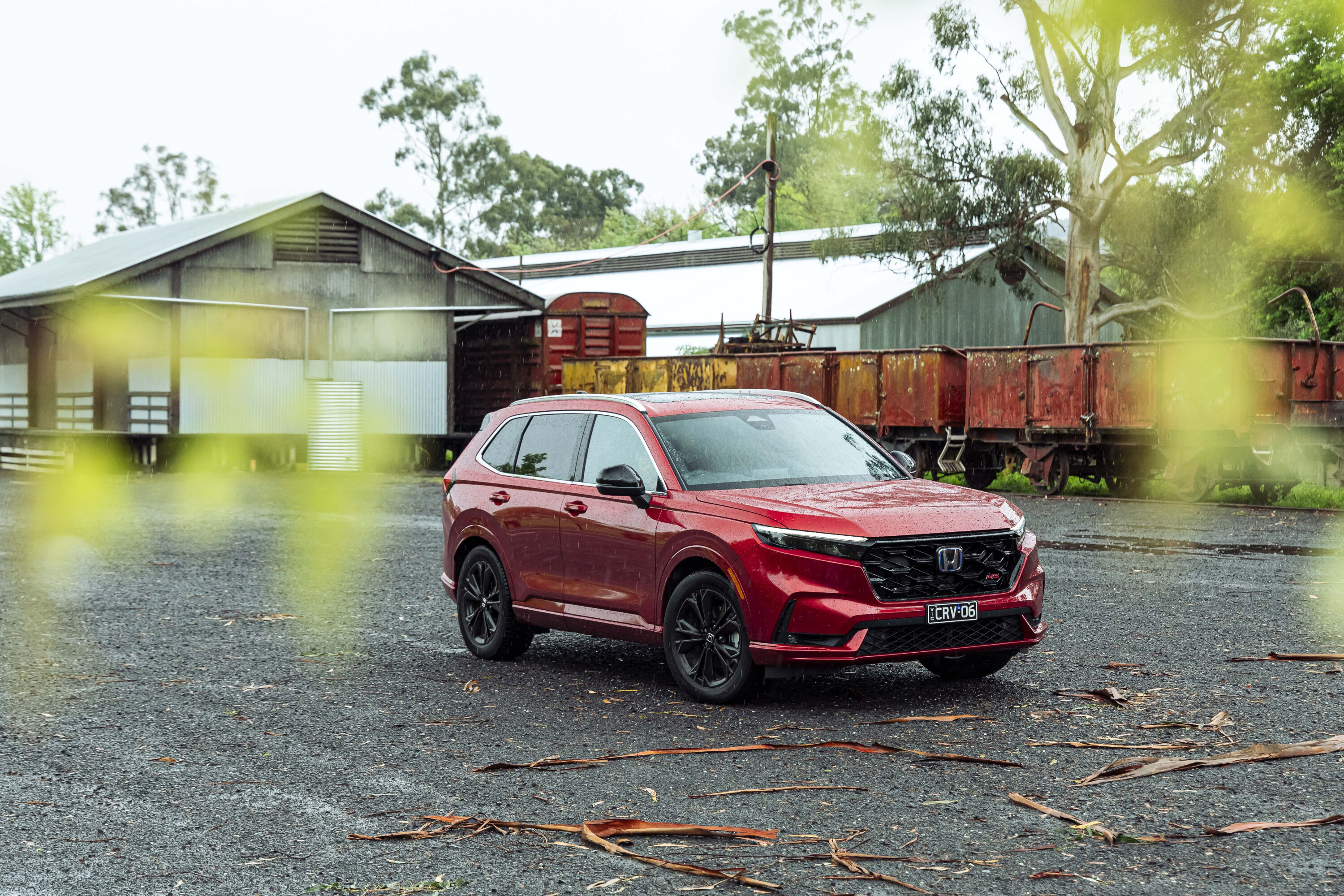
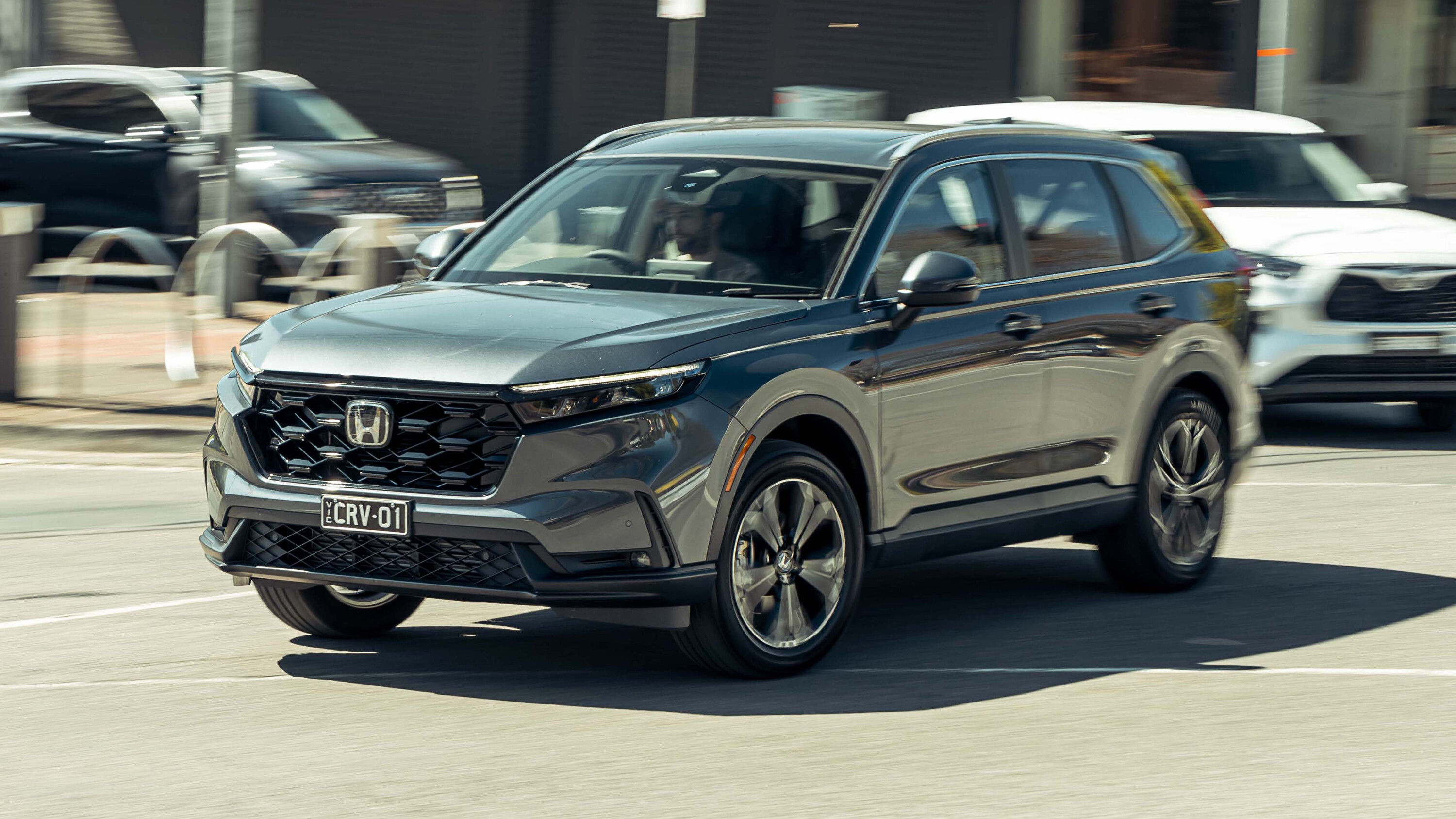
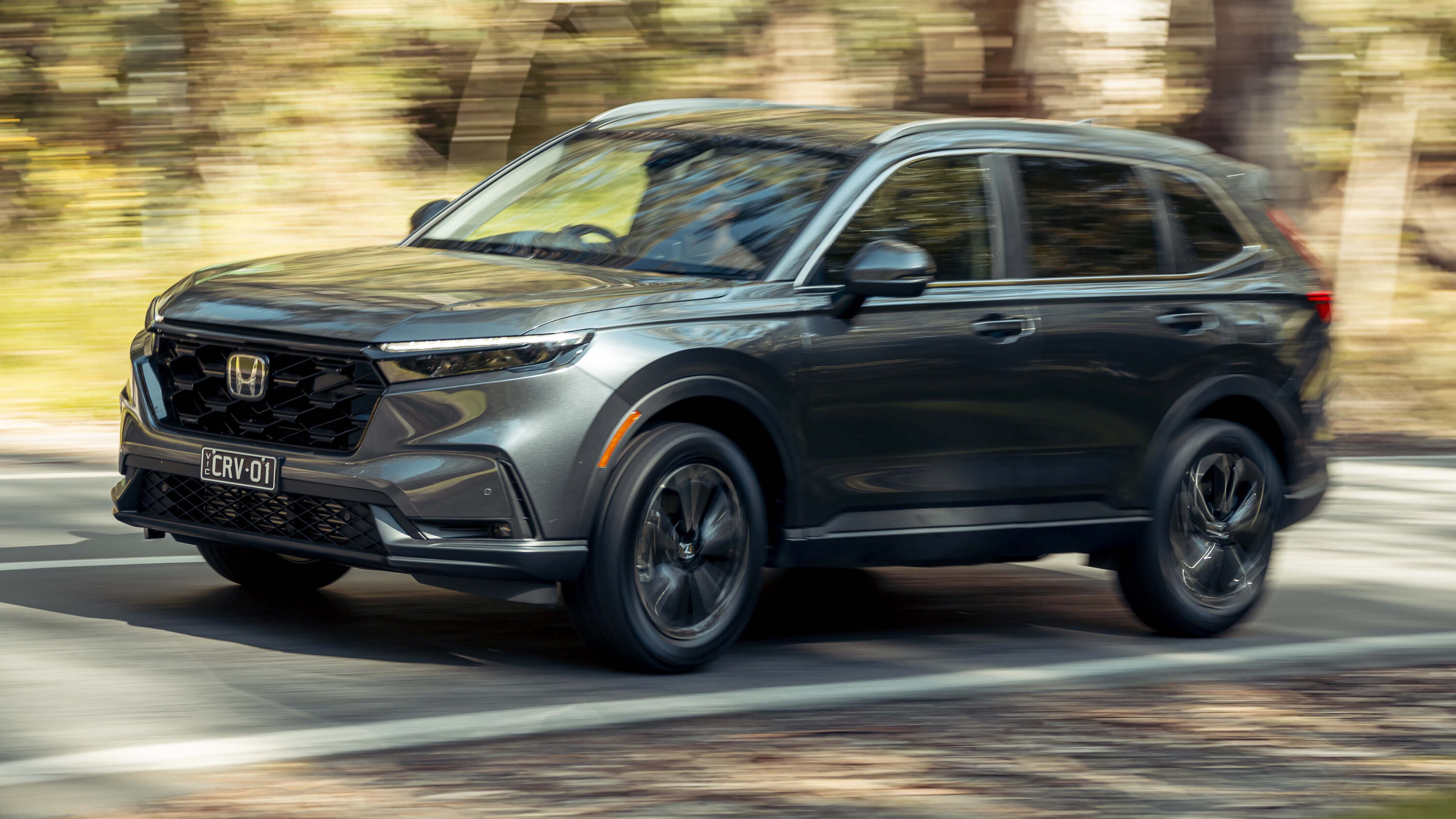
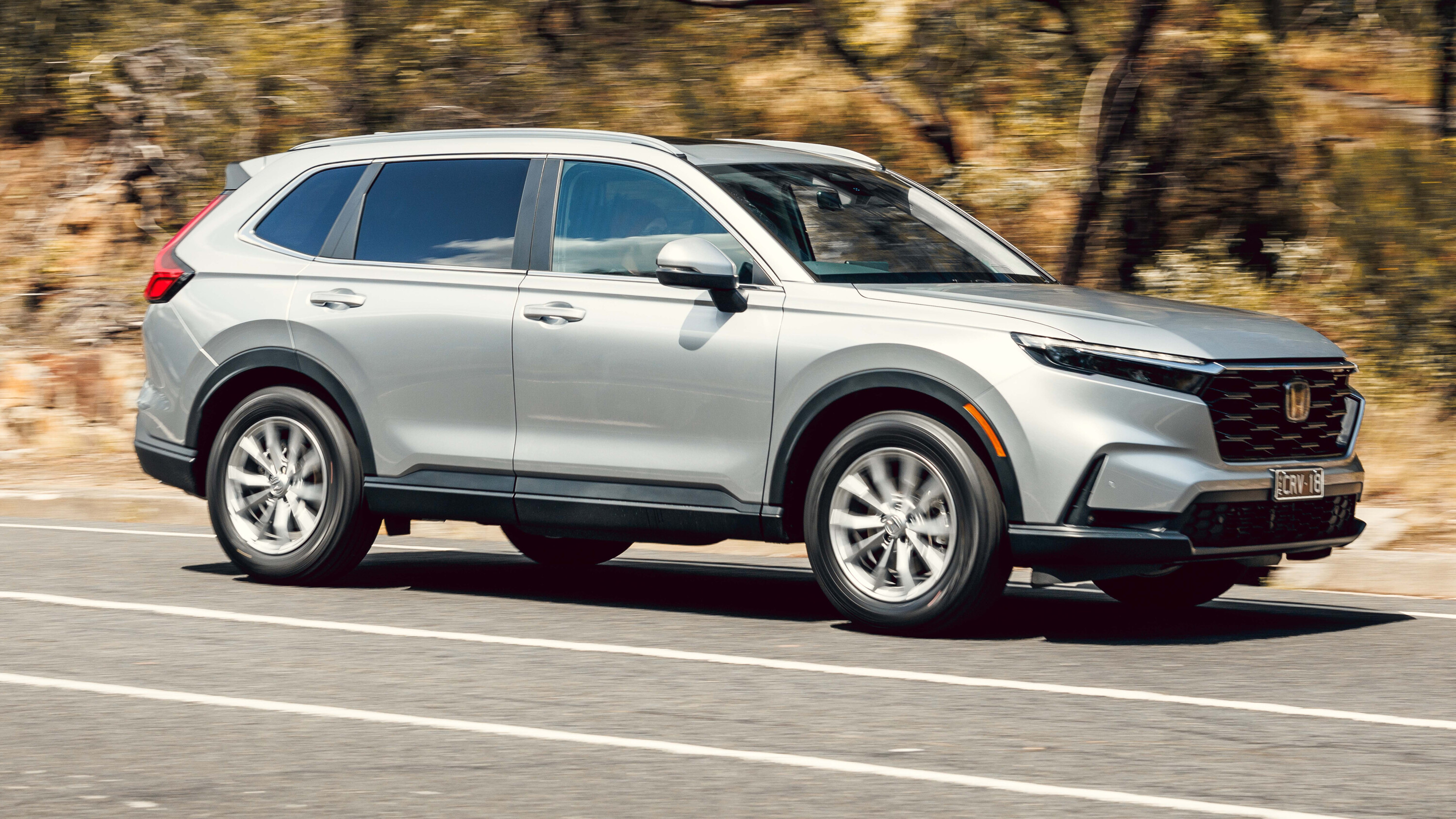
Now in its fifth-generation, the 2024 Honda CR-V is box fresh and doesn’t only roll on a new platform but boasts a roomier – and more premium-feeling – cabin after a growth spurt that pushes it out of medium-SUV territory and into the mix with large SUVs (if on the shorter side). It looks sharper than ever, too.
The CR-V has long been a conservatively handsome thing (the boxy original was particularly great to our eyes) but there’s something especially pleasing about this new model’s crisp shoulder line, long bonnet and swept-back windscreen. Fresh, resolved and contemporary? That’s the new CR-V. In saying that, the high spec of our test car certainly helps…
While the CR-V is now more expensive than ever (prices have crept north by as much as $8600 in some variants), it still stacks up remarkably well against its large SUV competitors for value.
1
As such, we were able to select a top-spec VTi LX AWD variant for this sub-$60K test, meaning it rolls on large 19-inch alloys and benefits from matte black exterior detailing.
Our other contenders, meanwhile, could only offer humbler trim levels to squeak under the $60K marker and next to the Honda, you can almost feel them wince as they glance down at their ageing sheetmetal, smaller alloys and dated cabins.
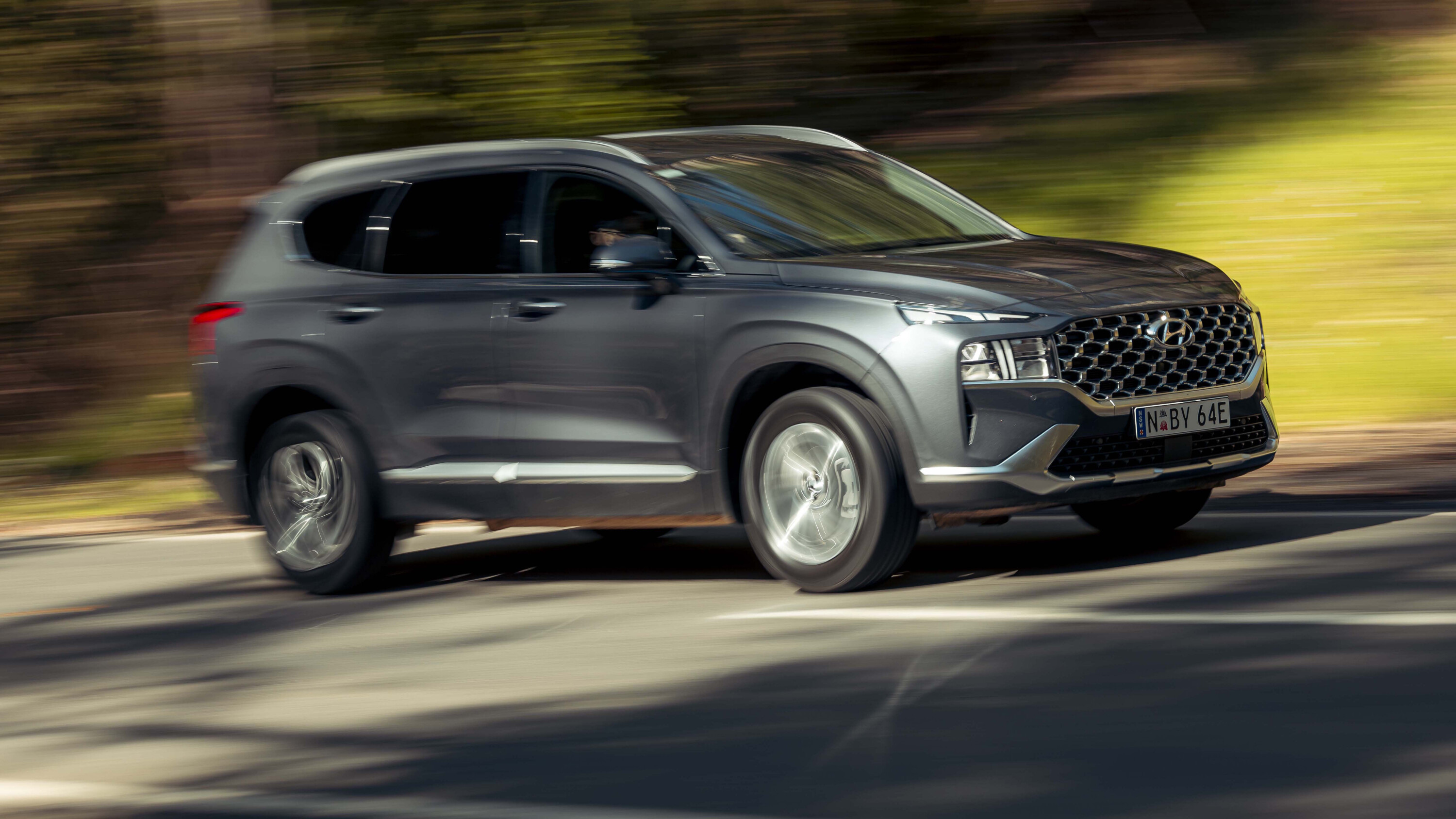
The oldest of our quartet, and therefore the most likely to be self conscious, is the Hyundai Santa Fe. Assembled here in second-from-bottom Active guise which carries a drive-away price of $58,710, this fourth-generation Santa Fe was first revealed back in 2012 – though it remains longer than the new CR-V.
1
Hyundai’s gutsy 2.2-litre oiler, which makes 148kW/440Nm, is lurking under the bonnet
An all-new generation Santa Fe, which is bigger, boxier and looks radically more futuristic, has already been revealed and will arrive before the end of 2024. But that doesn’t mean you should discount the current Santa Fe from this battle of sub-$60K family SUVs…
Despite its age, we’ve long praised the Santa Fe’s impressive cabin space, roomy third row and tidy handling. Plus, our tester has a key point of difference to the other contenders: it’s a turbo diesel.
Hyundai’s gutsy 2.2-litre oiler, which makes 148kW/440Nm, is lurking under the bonnet, so if effortless propulsion and lower fuel bills are your priorities, the Santa Fe could cause an upset.
1
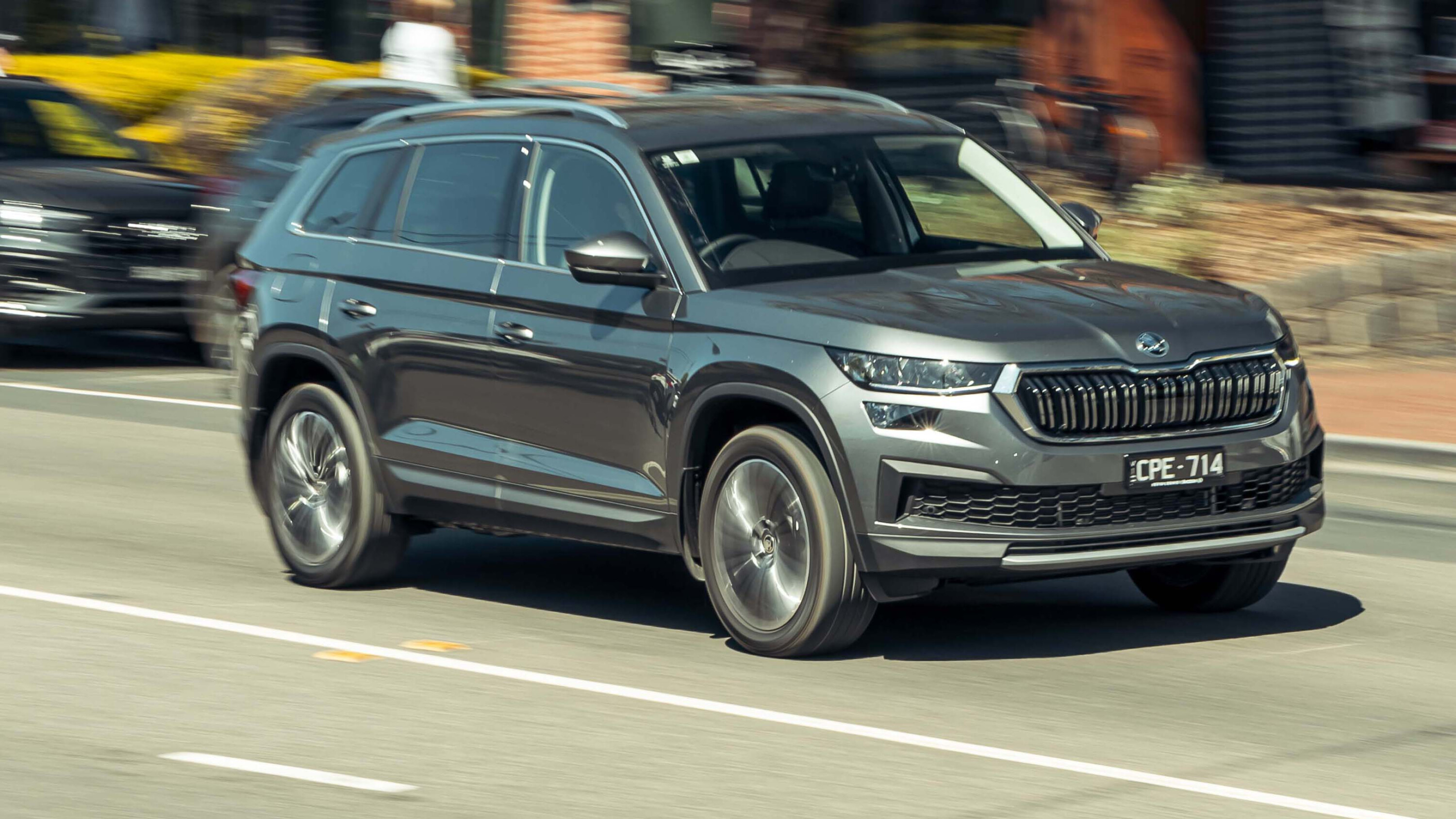
An all-new Skoda Kodiaq is due here in late 2024, though the current model is ageing gracefully.
In fact, even next to the fresh-faced Honda, the Skoda’s exterior still looks spry and timeless – like George Clooney at a movie premiere – and you’d never guess our test car is actually the base model.
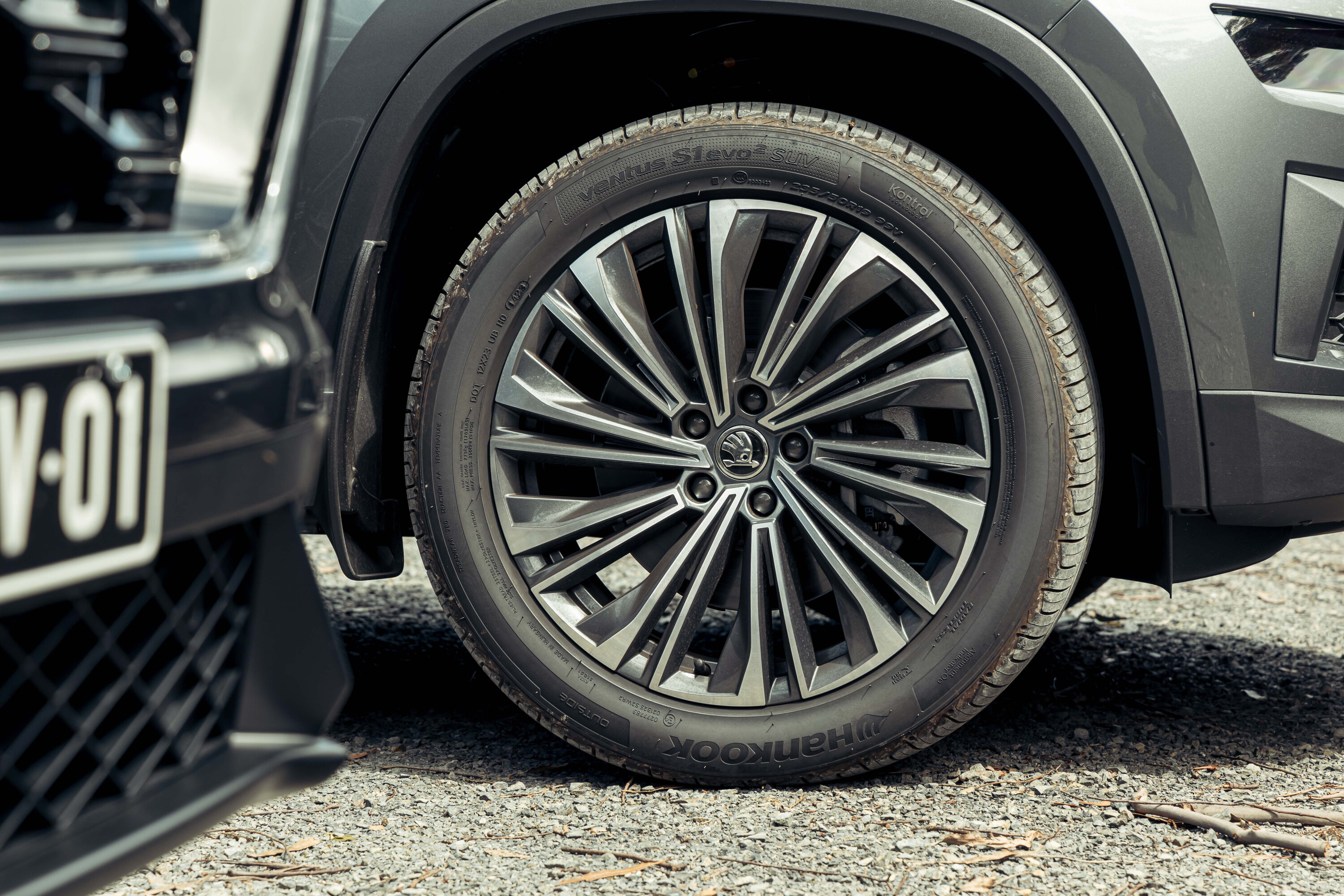
At $56,490 driveway, our particular Kodiaq is the entry-level Style, yet it’s remarkably well equipped, with its long list of standard features including 19-inch alloys, LED day-time running lights and an electric tailgate – the latter deserving a mention because it’s missing from both the Hyundai and Toyota. No electric tailgate when you’re paying circa-$60K? Grim.
1
Further bolstering the Kodiaq’s stock is a recent MY24 update that saw the return of some equipment previously unavailable due to the semiconductor shortage, including: rear-cross traffic alert, blind-spot monitoring, auto-dimming exterior mirrors and power child locks.
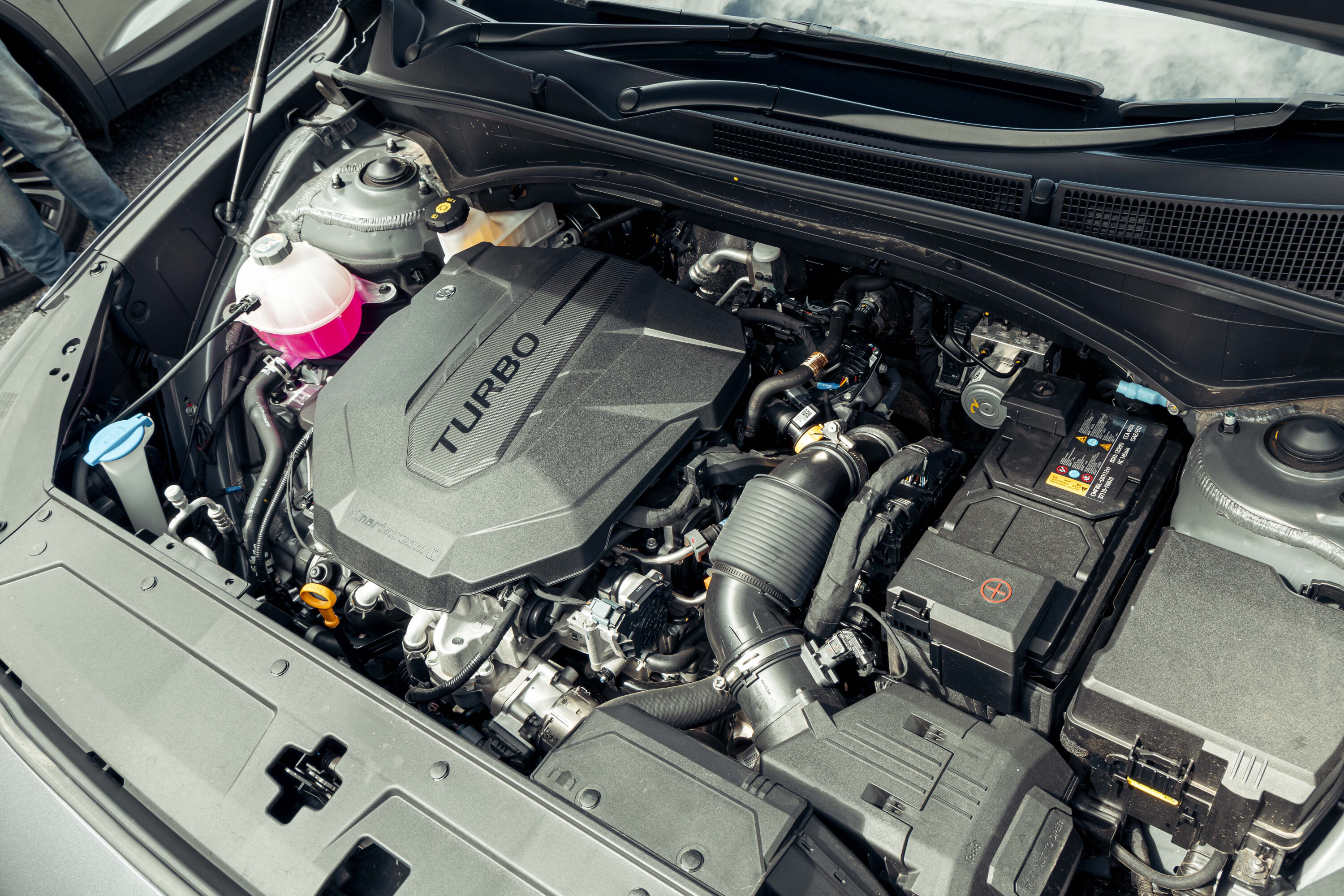
Throw in clever packaging that squeezes in a third row of seats into a body that’s fractionally shorter than the CR-V, VW’s well regarded 2.0-litre EA888 engine, plus Skoda’s host of ‘simply clever’ touches, and it’s clear the Kodiaq still has plenty of appeal, despite its imminent replacement.
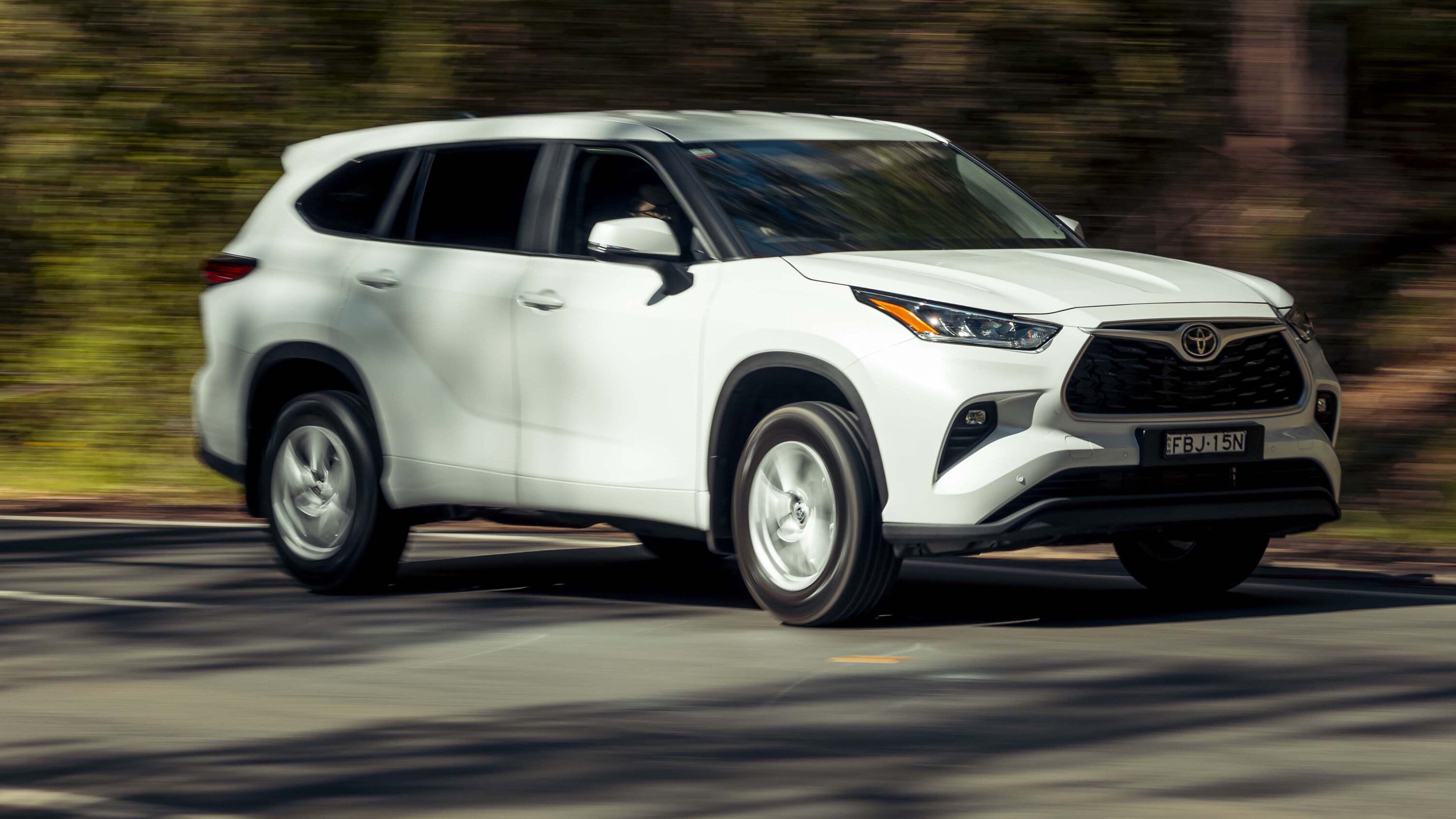
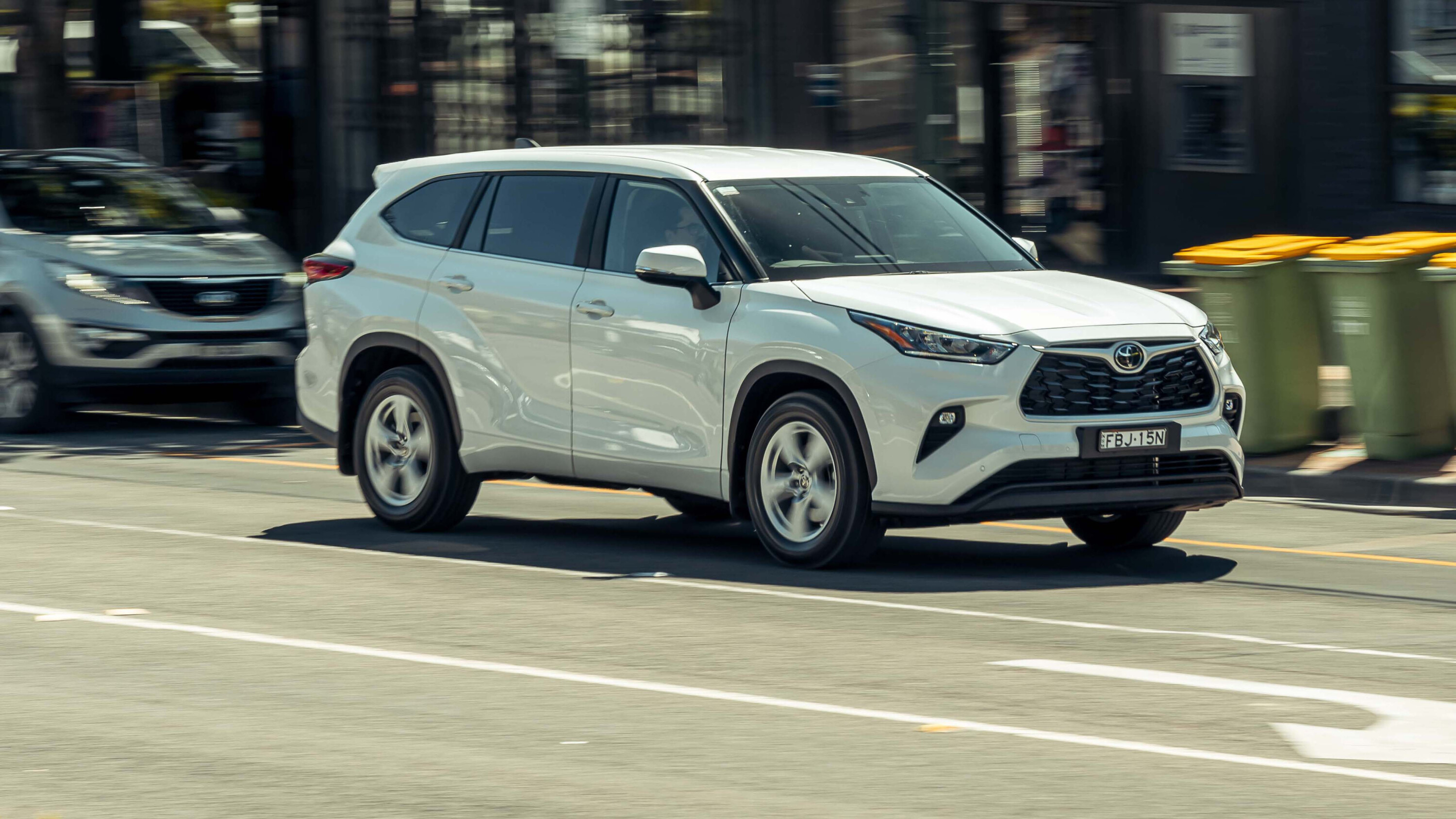
The closest match for the Honda, at least when it comes to age, is the Toyota Kluger. First introduced in 2021, the second-gen Kluger is bigger than the original, can be had with petrol or hybrid power and, thanks to its fresh TNGA-K underpinnings, is surprisingly youthful. Not that you’d know that by looking at it, though…
1
Our Kluger is the entry-level GX front-wheel drive and its white paint, drab cloth seats and small-looking alloys seem to scream “Hire car spec!”.
At $56,525 drive-away, the Kluger is the cheapest car in this test and it feels it, especially inside, where you’ll encounter uninspiring grey upholstery, a small centre touchscreen and manual-adjust seats.
But while its cabin might lack for premium touches, the Kluger certainly isn’t lacking in the power department. Under the bonnet is a 2.4-litre turbo petrol that produces a meaty 198kW/420Nm and sends its grunt solely to the front axle. That doesn’t only make it the most powerful in this test but also the only front-driver. An inspired combo? Or a thirsty, torque-steering mess on a damp road? It could go either way…
4
One thing that’s not up for debate is how convincing the Honda feels inside. Slip into the driver’s seat and you’re greeted by a cabin that feels modern, minimal, and spacious.
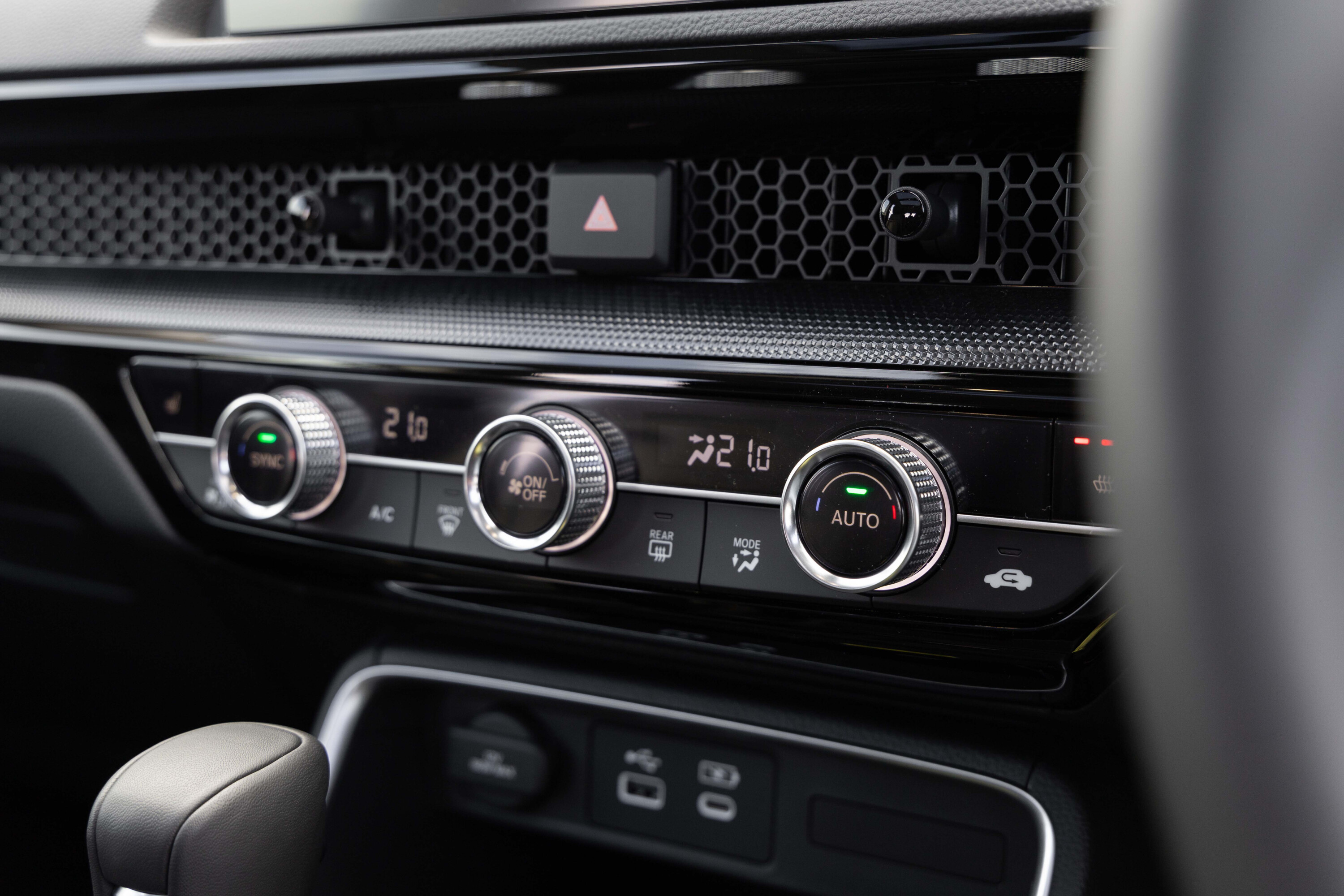
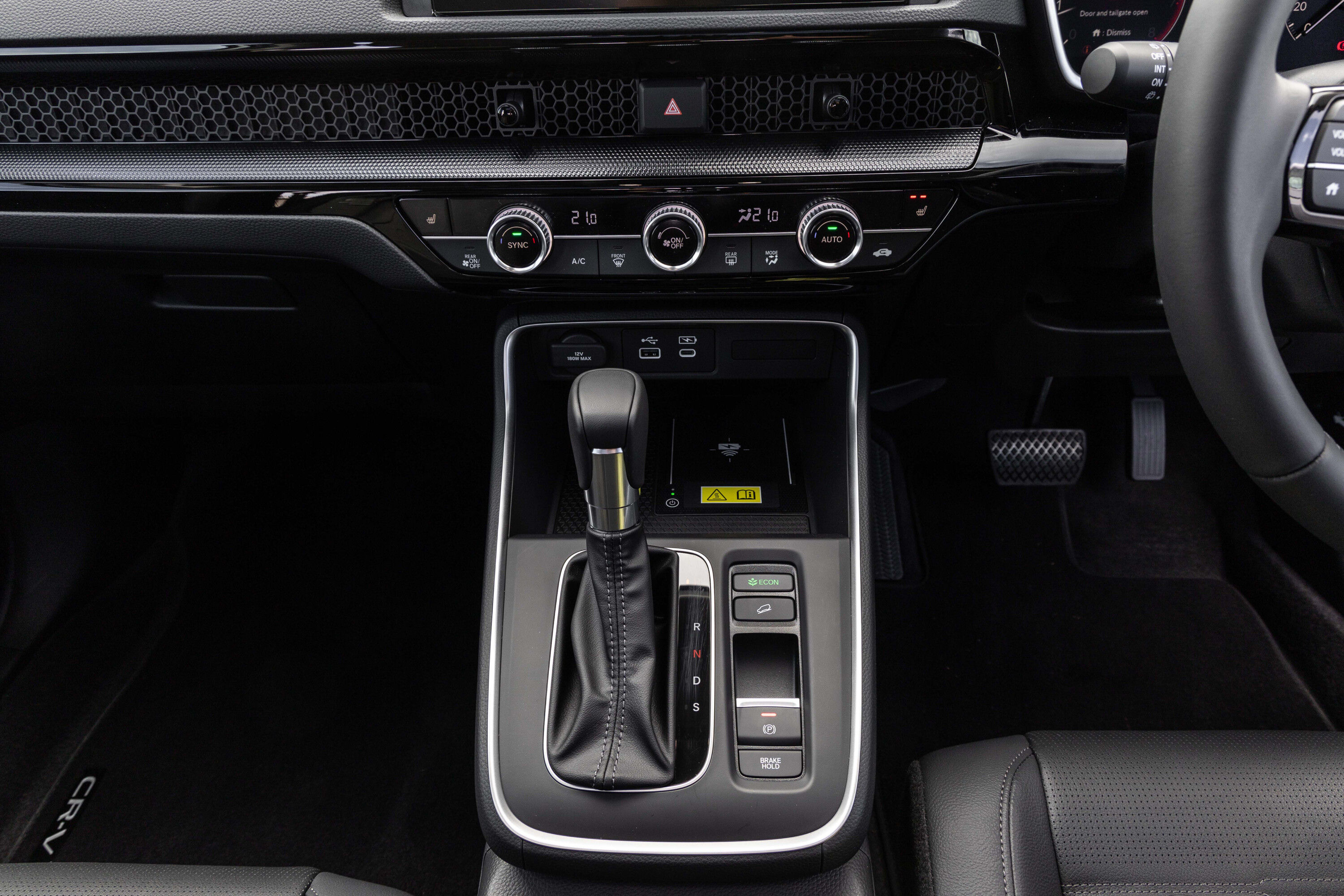
The basic design mirrors that of the Honda Civic, right down to the open-mesh inserts and the joystick-like stalks for the air vents, and it’s a triumph of pleasing aesthetics and sound ergonomics.
Admittedly the centre screen does look a touch small, even though it’s 9.0 inches, and Android users have to use a cord to access Android Auto (CarPlay is wireless), but it’s difficult to fault the new CR-V’s cabin for seat comfort, passenger space, storage or user friendliness.
4
And because we’re testing the top-spec VTi LX, it’s absolutely bursting with standard equipment.
You get electric front seats, a large 10.2-inch digital driver display, wireless phone charging and twin USB ports (one Type-A, one Type-C), a leather steering wheel and a 12-speaker Bose sound system. Our CR-V is also the only contender with a panoramic sunroof.
Honda’s full suite of active safety systems is also present and includes: lane departure warning, lane-keep assist, adaptive cruise control, traffic sign recognition, blind-spot detection and rear-cross traffic alert.
1
Perhaps the only thing missing is a child seat top-tether mount in the middle of the second row, which is a bummer.
And, crucially for some buyers, the VTi LX lacks a third row like its rivals here. That’s fixed by dropping into the model down, the $53K VTi L7, though this sacrifices all-wheel drive (for front drive) and some nice features (such as Bose audio and larger driver display).
The LX’s second row is surprisingly roomy, with a high-set cushion, excellent outward visibility, dedicated air vents and two more USB-C outlets. The only downers are a slight lack of headroom (blame the sunroof and high cushion) and the fact our five-seat CR-V doesn’t have a sliding second row.
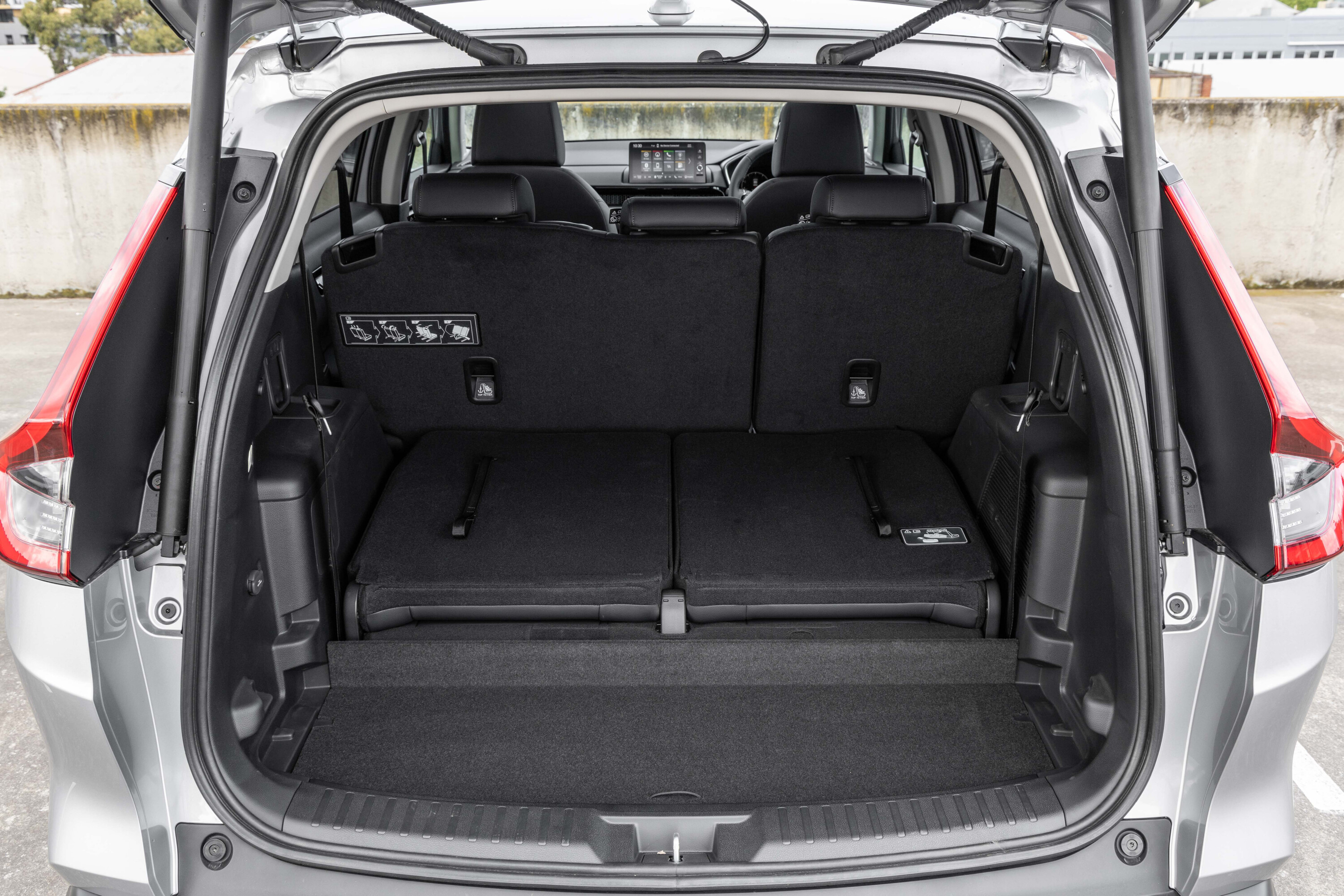
The Honda’s 589L boot is impressively large and it features the lowest and flattest loading lip of our bunch. Boot space increases to 1671L when you lower the 60:40 rear seat and under the boot floor there’s a full-size spare, which is common in all our contenders bar the Skoda, which has a space-saver spare.
7
Another minor mark against the Honda? There’s nowhere to store the parcel blind when its not in use. And there’s no anchor point for the jack, either, which has been wedged unceremoniously on top of the spare tyre.
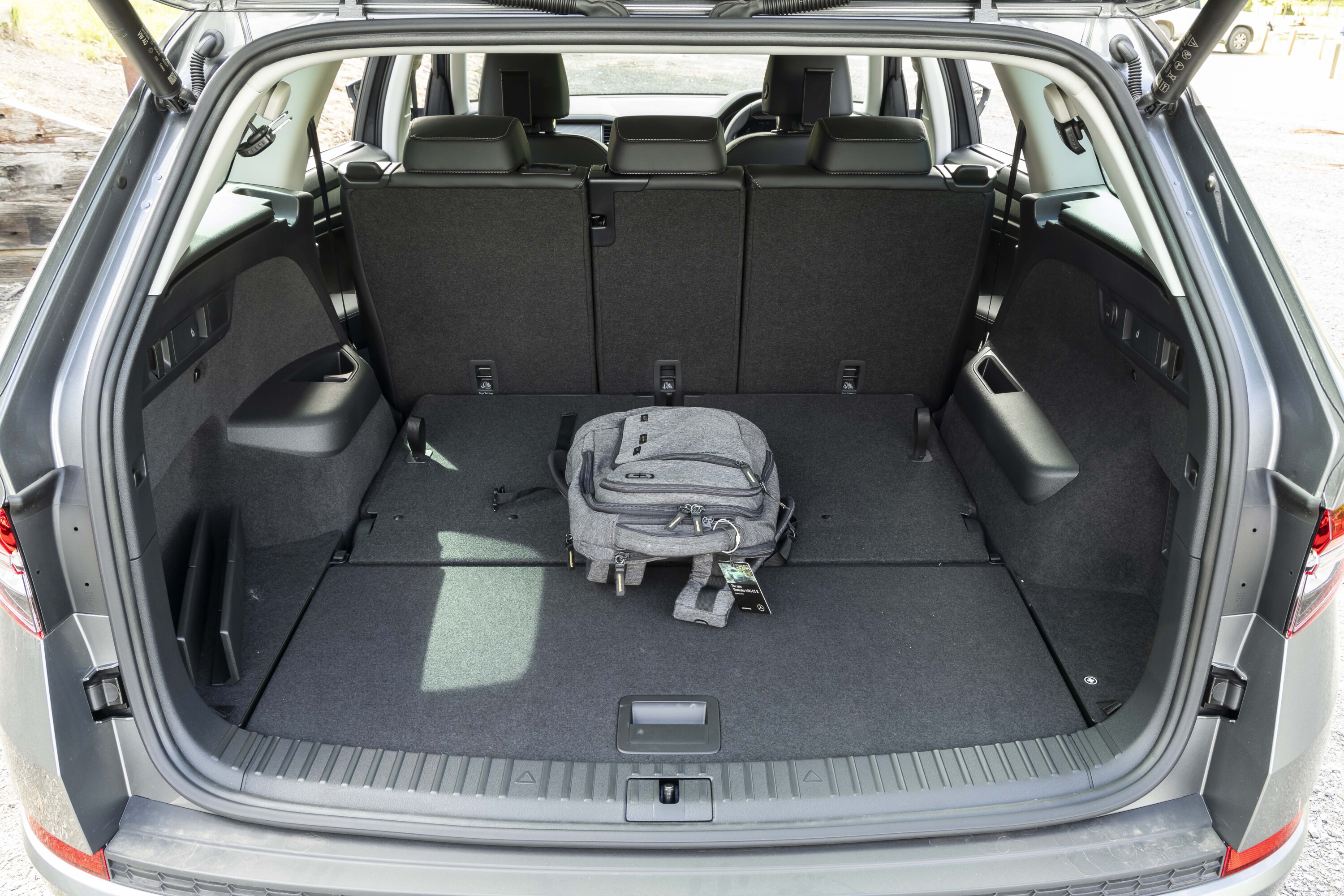
You won’t encounter such carelessness in the Kodiaq – it’s bristling with thoughtful touches. The 765L boot isn’t only large and deep (its loading lip is higher and narrower than the Honda, however) but it includes lidded storage cubbies on either side, an ingenious solution for storing the cargo blind, levers to electrically drop the back seats and velcro dividers that stick to the boot floor.
The middle row also folds completely flat and there’s a huge, reversible mat that extends all the way from the boot lip to just behind front seats.
1
And you also score a third row of seats, of course, which fold flat into the boot floor.
The third row itself isn’t super roomy – the Kodiaq is more of a 5+2 than a genuine seven seater – but headroom is okay for adults and you score extra cupholders and storage cubbies.
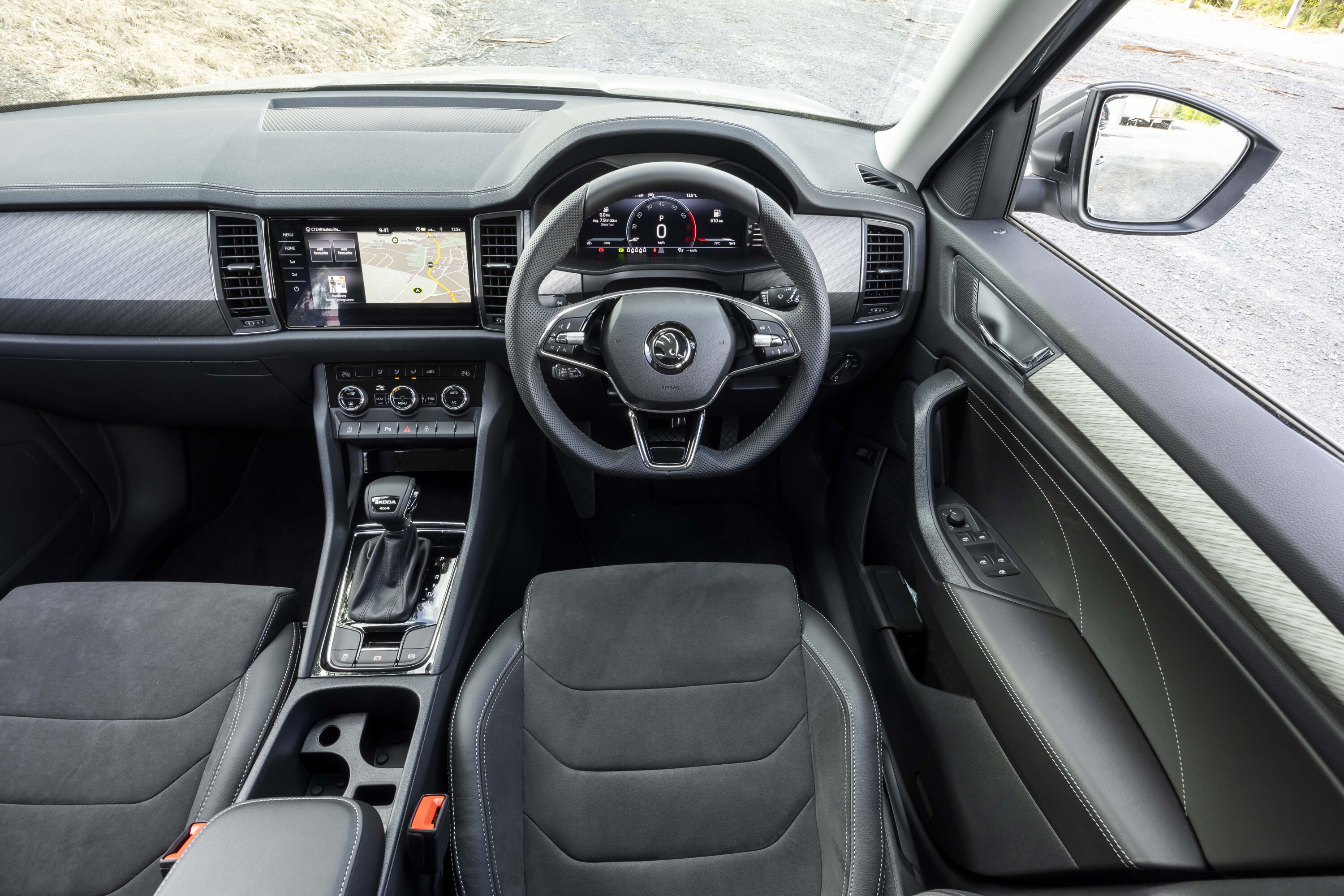
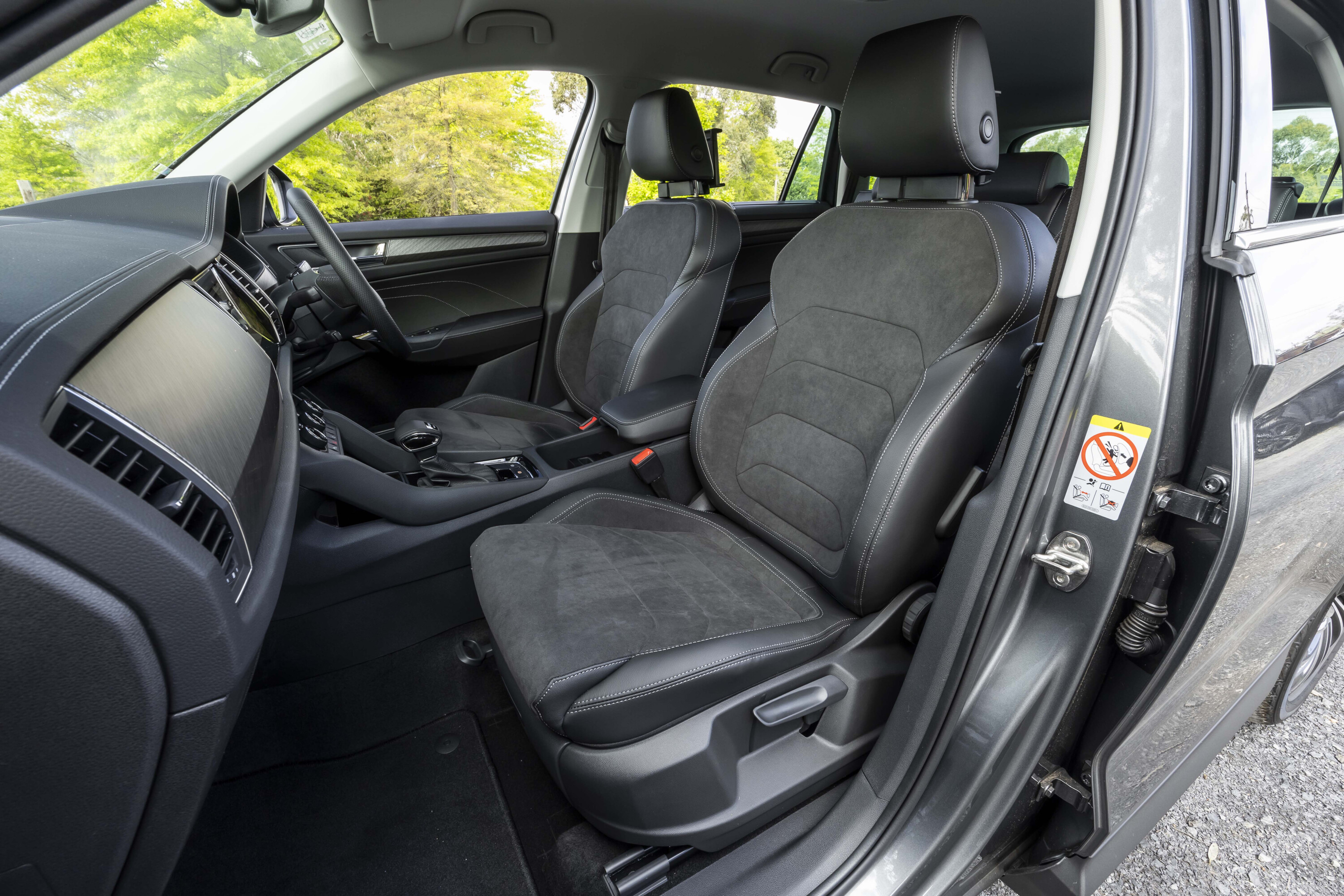
The rest of the cabin is equally impressive. The Style scores manually adjustable front seats but they’re terrifically comfortable and wrapped in expensive-feeling suede. The front passenger seat is also the only member of this group to offer height adjustment.
1
The middle row, which is on rails, is equally comfortable and thoughtfully executed
There’s no faulting the cabin’s ergonomic or usefulness, either. There are two gloveboxes, the flocked door pockets are generous, connectivity is sorted via wireless Apply CarPlay, twin USB-C ports and a wireless phone charger, and the centre touchscreen strikes a welcome balance between swiping and physical buttons.
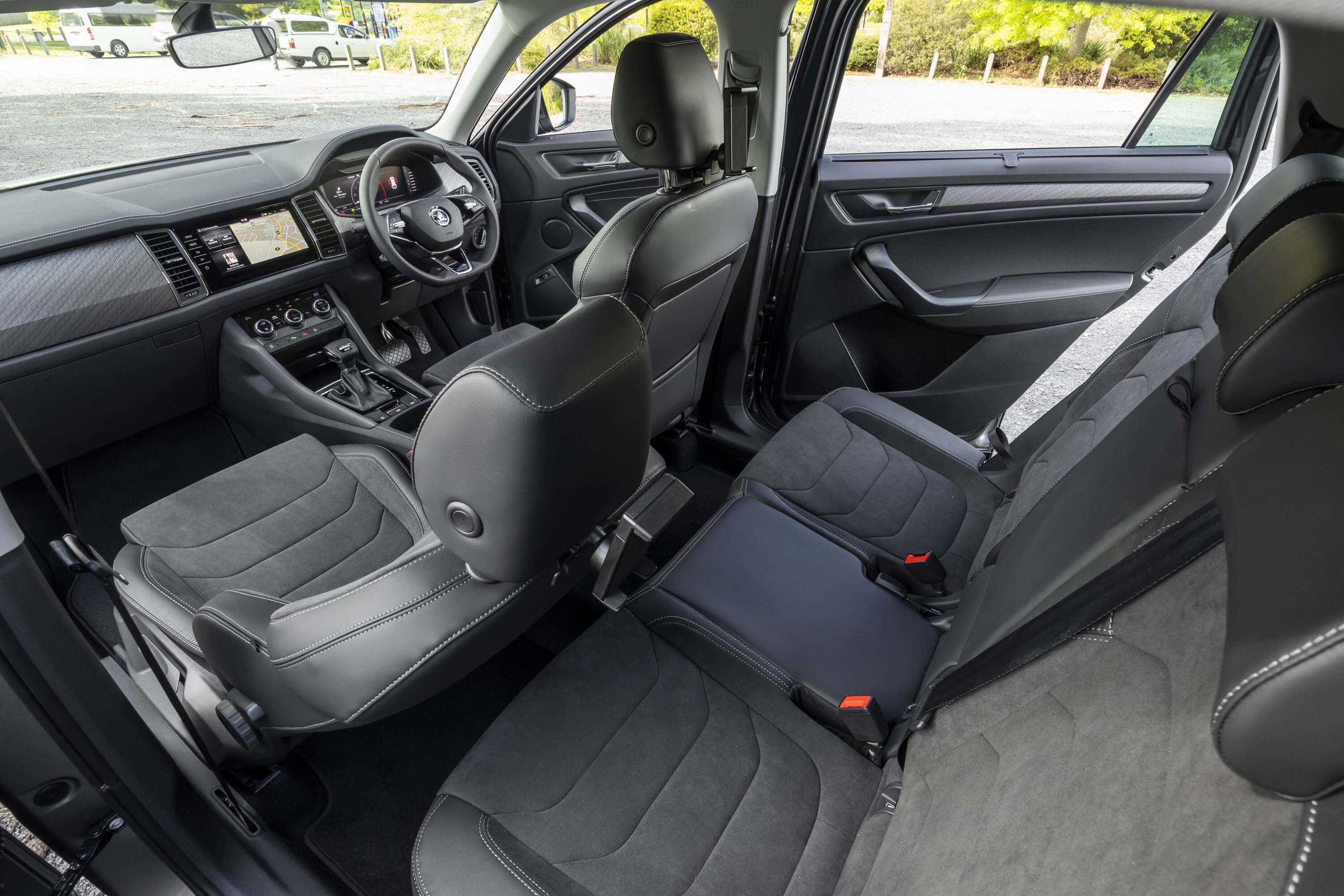
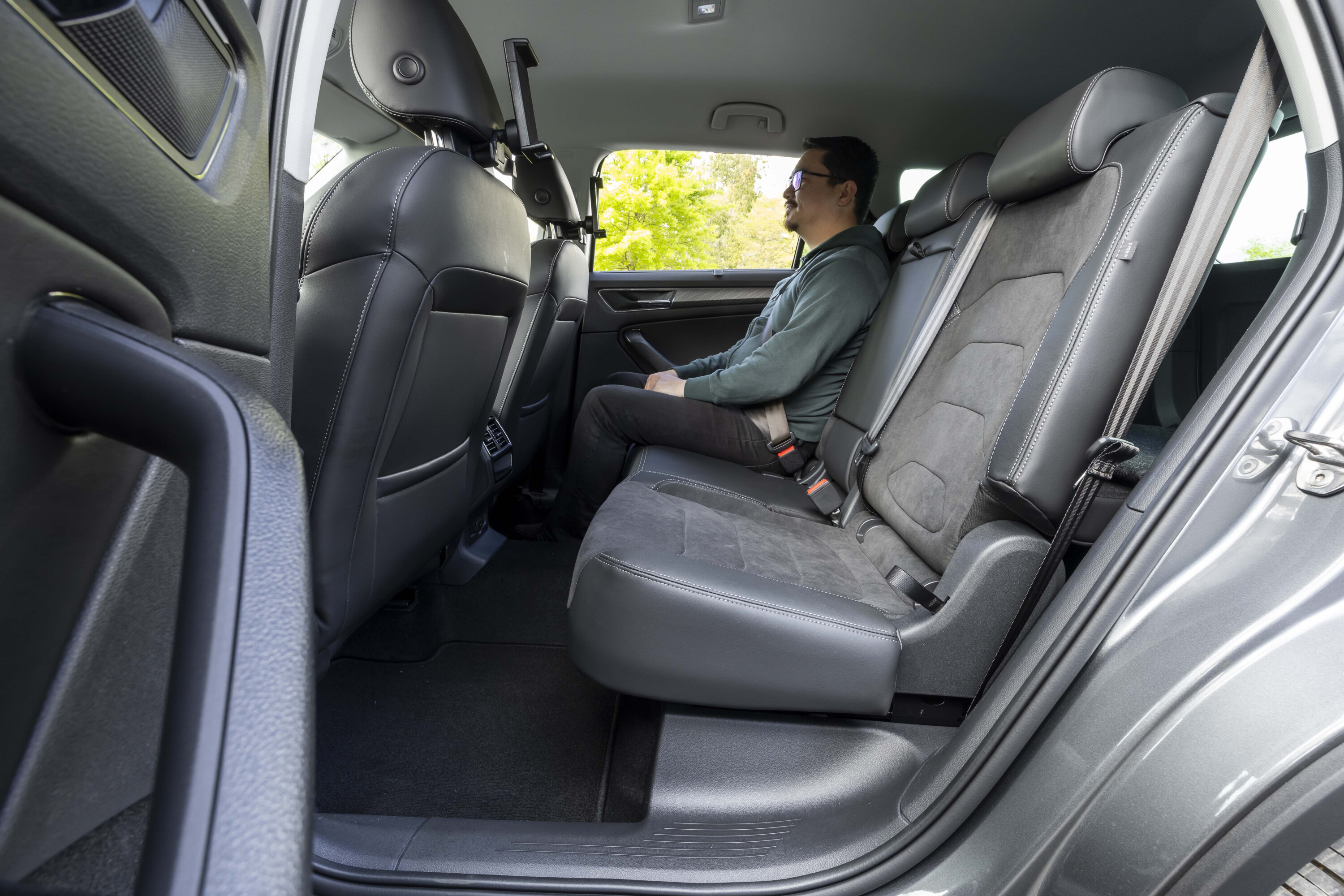
The middle row, which is on rails, is equally comfortable and thoughtfully executed thanks to one-touch access to the third row, ample space for adults, standard window blinds (in a base model!) and tablet holders. There are no extra USB ports, however, which betrays the Kodiaq’s age a little.
If it’s space you’re chasing, though, it’s hard to look past the Kluger. At 4966mm long, 1930mm wide and 1755mm tall, the Toyota is easily the biggest SUV here – it’s so big it feels like you could crack it in half and swallow up the others like a Babushka doll – and it delivers the roomiest second and third rows on test.
4
Like the Kodiaq, the Kluger’s second row slides, and there’s a good amount of knee- and headroom for adults, as well as excellent outward vision.
Equipment levels are also impressive for a base model and include roof mounted air vents, dedicated temp and fan-speed controls, twin USB-C outlets, and a relatively flat floor which liberates foot space for middle seat passengers.
The middle seat itself is also deep and softly cushioned, with twin Isofix mounting points and top-tether hooks behind all three seats (unlike the Honda).
1
Access to the third row is easy thanks to a wide opening and once you’re in, you’ll discover enough room for adults to travel in relative comfort. The third-row backrest also reclines but there aren’t any top-tether points back there, so you can’t fit child seats in the third row, which is disappointing.
It’s up front where the cabin of our particular Kluger feels weakest. While the seats are softly cushioned and there’s an impressive amount of interior storage, the Kluger’s dash design feels heavy handed next to the clean and minimal interiors in the Honda and Skoda.
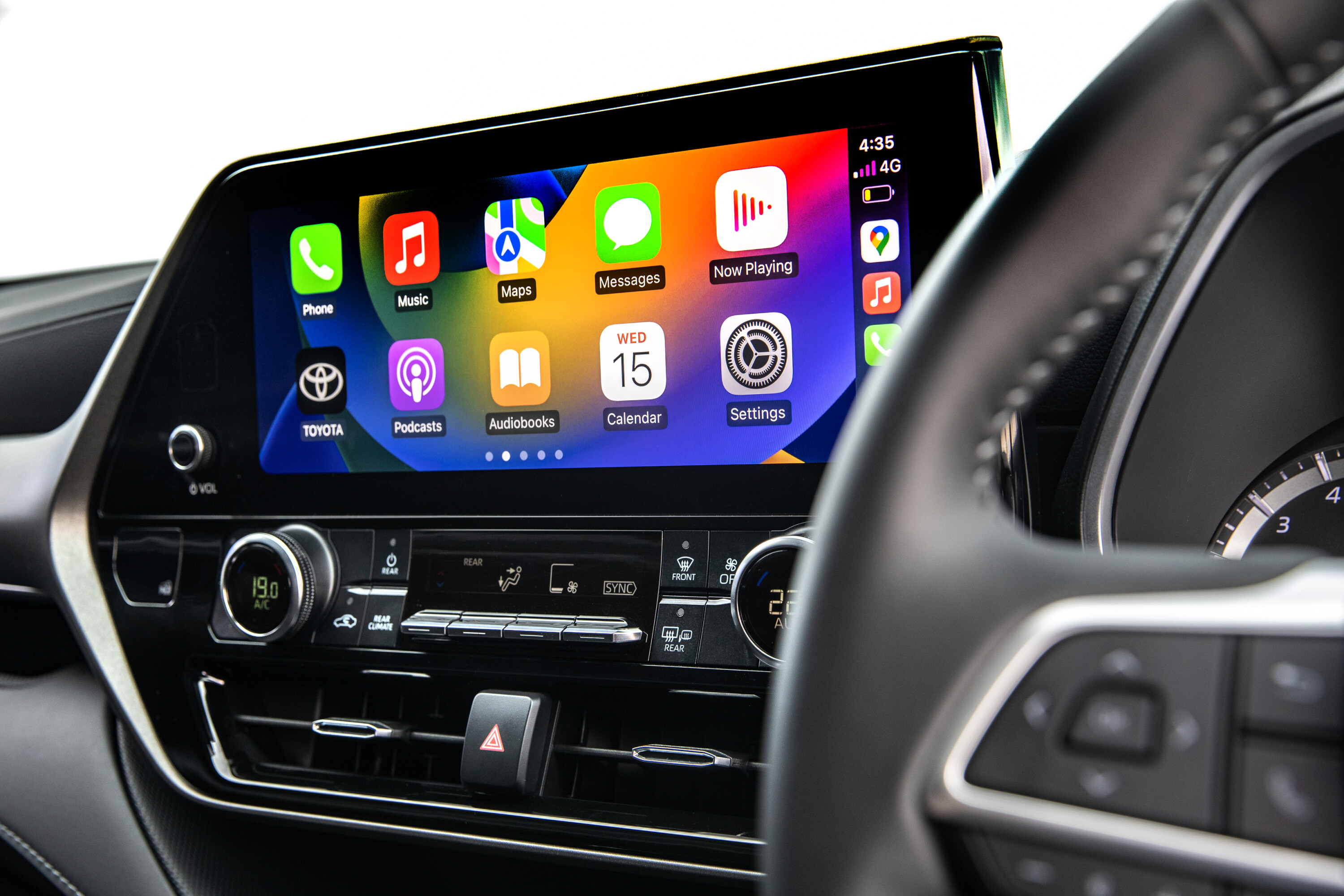
The 8.0-inch centre touchscreen is also small by 2023 standards, and the less said about Toyota’s clumsy infotainment software the better. At least CarPlay is wireless and there are loads of USB outlets, though, again, you’ll need a cord for Android Auto.
1
So while it might be big, comfy and functional, the Kluger’s cabin feels off the pace for tech and premium touches in this company.
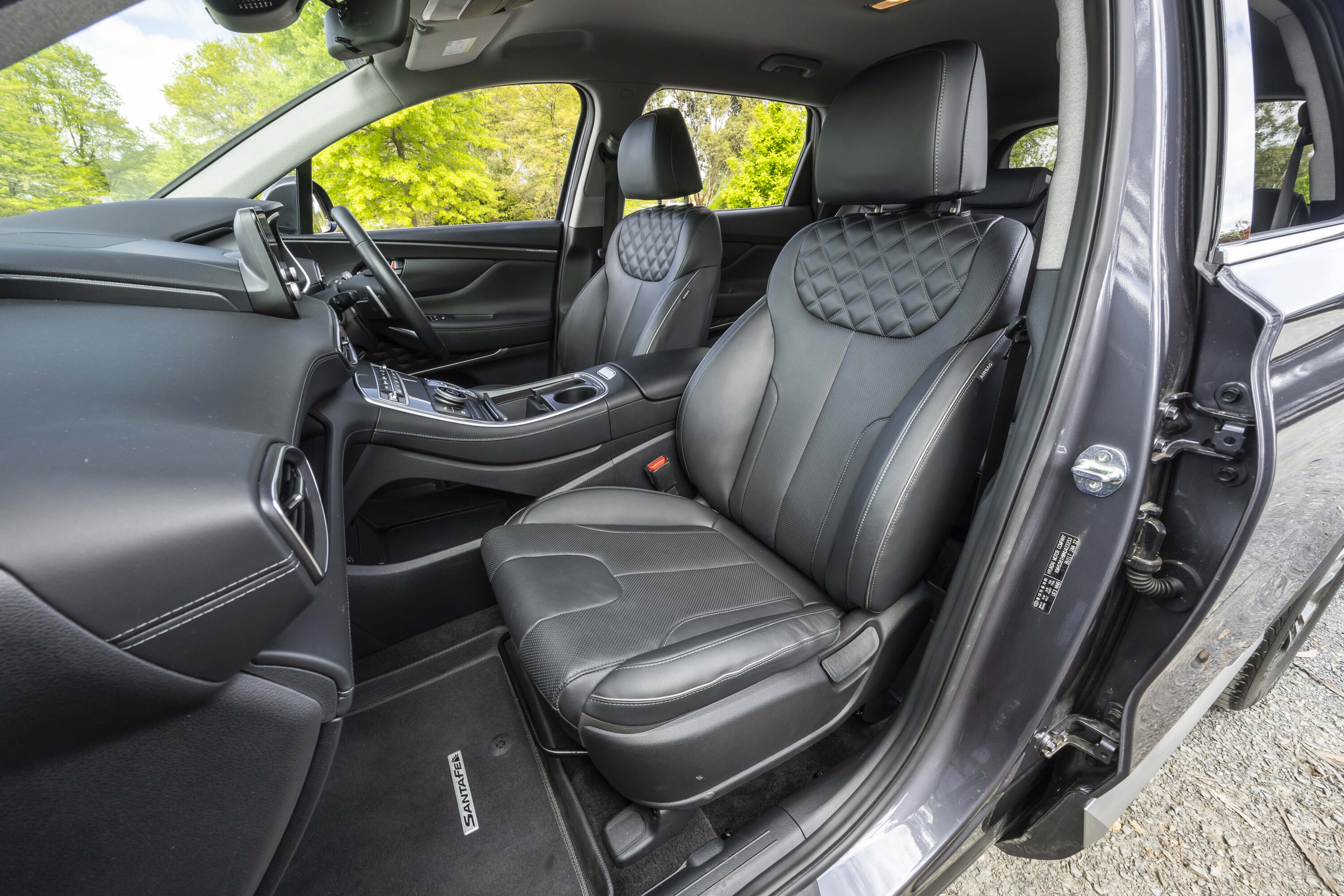
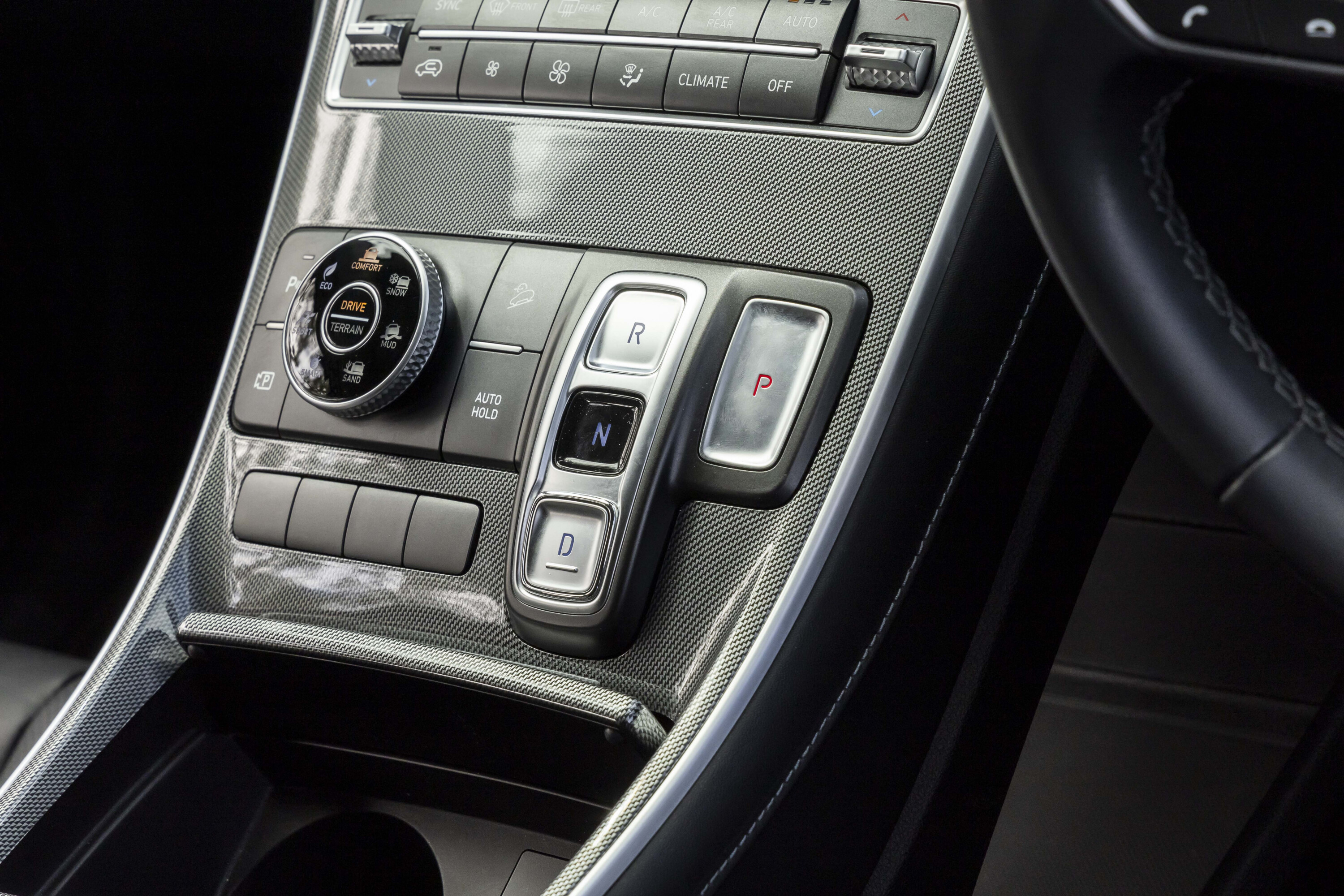
You can level the same criticism at the Sante Fe. As the oldest member of this group, the Hyundai’s cabin betrays its age with a button-heavy design, analogue dials, and a high centre console that delivers a hemmed in feeling. There’s also only a single USB-A port for front passengers, although you do score a wireless charging pad and Apple CarPlay and Android Auto.
There’s also plenty of core goodness to enjoy. Storage is impressive, thanks to an extra cubby beneath the floating centre console, and because the Santa Fe is the second largest of this group, there’s plenty of cabin space to exploit.
1
Grown ups can also occupy the third row, which is spacious enough to make the Santa Fe a genuine seven-seater, though it’s still not as commodious as the Kluger.
So it’s the Honda and Kodiaq that have their noses in front for value, cabin presentation and equipment, but what about driving dynamics? First up: the Honda. We have arguably the most driver-focused CR-V on this test – the 1.5-litre turbo AWD – and initial impressions are exceedingly positive.
The steering is accurate and naturally weighted, body roll is nicely contained, and the ride on passive suspension strikes an almost ideal balance between comfort and control.
1
The damping is especially good, somehow filtering out all the niggly, low-amplitude bumps that plague Aussie back roads while also being assertive enough to immediately arrest reactions to bigger bumps.
In fact, on a twisty section of road, this new CR-V verges on unflappable. There’s loads of traction, grip is plentiful and the steering (2.4 turn lock-to-lock) is quick witted and accurate. It’s actually… fun. And far more engaging that a family SUV needs to be. We like that.
The engine is less of a slam dunk. Honda has paired the 1.5-litre turbo unit with a CVT and for the most part it works well. It’s quiet around town and the CVT does a decent job of impersonating a conventional torque converter auto.
1
But it’s a powertrain that lacks torque, especially low in the rev range, and there’s none of the muscularity you’d expect from a turbo donk once boost builds.
Honda says that’s quite deliberate – it has shaped the torque curve to make the engine feel naturally aspirated – yet the result is a powertrain that needs to be worked hard to extract its best.
Still, there’s no escaping the CR-V is a fantastic family SUV to drive. It steers sharply, corners tenaciously, and it actually feels like a taller, slightly heavier Civic, which is a high praise indeed. In fact, more than one of us wondered whether Honda should consider building a Type R version of this CR-V!
1
Things are slightly less sporty, yet no less cohesive, in the Skoda. Like the Honda, the Kodiaq’s damping and chassis set-up is superb, even on gnarly backroads, but unlike the Honda, the Skoda has the engine to properly exploit its dynamic goodness.
VW’s EA888 is a clean-revving unit and it feels far more urgent and powerful than the slightly strangled 1.5T you get in the CR-V. The Kodiaq is quicker out of corners, has a better soundtrack, and delivers stronger overtaking performance.
The Kodiaq’s lighter steering isn’t quite as engaging, however, and while its seven-speed dual-clutch is quick and decisive on the move, it can be frustratingly laggy around town.
Things are even more relaxed in the Toyota. After the greyhound eagerness of the Skoda and Honda, the big Toyota feels phenomenally soft and ponderous. Like a Labrador that’s had too much to eat.
1
That’s not a criticism, per se, more an acknowledgment that comfort is the top priority here.
The long-travel suspension is supple and languid, the damping is relaxed (perhaps too relaxed; things can get a touch boaty), and the steering is light and effortless. For such a big car it’s surprisingly easy to manoeuvre, yet a word of warning: be judicious with your throttle inputs when it’s raining.
Toyota’s 2.4T is a gutsy engine and but it’s also prone to torque steer and will easily spin up the front wheels. It churns through petrol at a fearsome rate, too. On our dynamic loop, the Kluger returned a fuel reading of 21L/100km, which was miles ahead of the others over the same stretch of tarmac.
1
As you’d expect, the diesel Santa Fe drank the least (the Kodiaq was the next best, with the CR-V a close third) but the turbo oiler offers more than just efficiency.
It’s huge reserves of low-down torque make the Santa Fe a muscular and effortless cruise. Engine refinement is also a strength, with the smooth 2.2L unit mostly free of gruff diesel clatter. If only the rest of the Santa Fe’s dynamics were as convincing…
Despite riding on 18-inch alloys with chunky tyres, the Hyundai is the firmest SUV here and bumps are translated keenly into the cabin. Our tester’s brake pedal also felt disconcertingly dead, and vision out is also the worst of this lot.
1
VERDICT
Before we establish an order for our quarter of contenders here, we should point out that we couldn’t get a Kia Sorento Sport+ for this test – with test-car availability limited by an upcoming model update.
While it’s difficult to say where the Sorento may have landed in our pecking order, we are big fans of the big Kia – not least for its third row that caters brilliantly for kiddies with not only top tethers but also Isofix points. More manufacturers should be offering this set-up!
The Kluger, Kodiaq and Santa Fe all lack top-tether points for their third rows, and the same applies to seven-seater versions of the CR-V.
Cabin refinement weaknesses and a driving experience that generally feels less polished compared with its rivals contributes to the Santa Fe’s last place in this test.
Coming home in third is the Kluger, with its spacious cabin (including third row) and soft ride quality making it an easy SUV to recommend.
The Toyota is also commendably cheap to service at $265 a pop, but in this company the Kluger lacks the dynamic finesse and cabin flair of the Honda and Skoda.
Splitting the Kodiaq and CR-V is harder. Both are dynamically excellent, offer modern, well appointed cabins, and should deliver similar readings at the fuel bowser. The Honda is cheaper to service at $199 per visit, yet its 10,000km service intervals are also shorter than the Kodiaq’s 15,000km.
1
Ultimately, we’d happily recommend both SUVs, but our winner is the Skoda.
Its engine is superior, it has a longer warranty (seven years plays five), and it also offers the flexibility of seven seats which is something the CR-V doesn’t have in the top-spec VTi LX.
And then there are the Skoda’s numerous practicality bonus touches, which will continue to surprise and delight buyers long after they’ve taken delivery. So while the Honda might be younger, the outgoing Kodiaq (which still has another year at least) shows that sometimes age and experience wins out.
2023 Best Large SUV series
Looking to get into a brand-new large SUV? Our stories below will guide you to the model that best suits your needs!
Fifty grand is not what it used to be. Once upon a time, it bought you a top-of-the-line sports car – even earlier than that, it’s probably what your parents spent on their house. Their four-bedroom one, we mean. In inner Sydney.
These days, it gets you an SUV for hauling around spouse and spawn, and not even a top-spec one.
While of course the best salary your parents could aspire to earn would be considered unliveable in 2023, cars have come a long way. The standard equipment list of a car of yesteryear would be lucky to fill a piece of A4, whereas today’s run-of-the-mill SUVs pack more equipment and technology than the most advanced vehicles of a generation ago. And we know which one we’d rather have a crash in.
1
To demonstrate our point, today we’ve assembled the best of the sub-$50K bunch if you’re in the market for a new SUV – and while that sum won’t get you a three-bedder in an Australian city anytime soon, it’ll get you quite a lot of car.
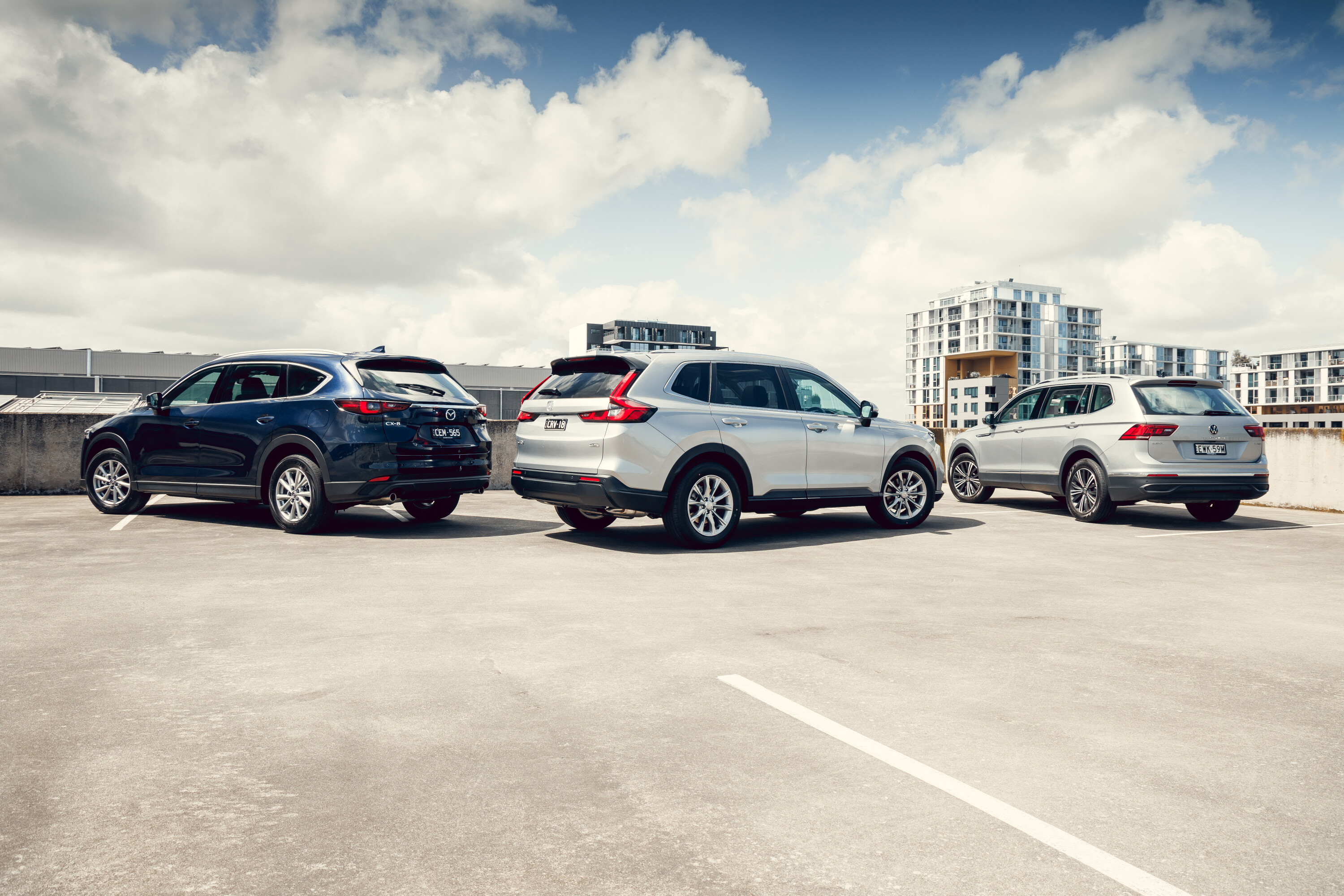
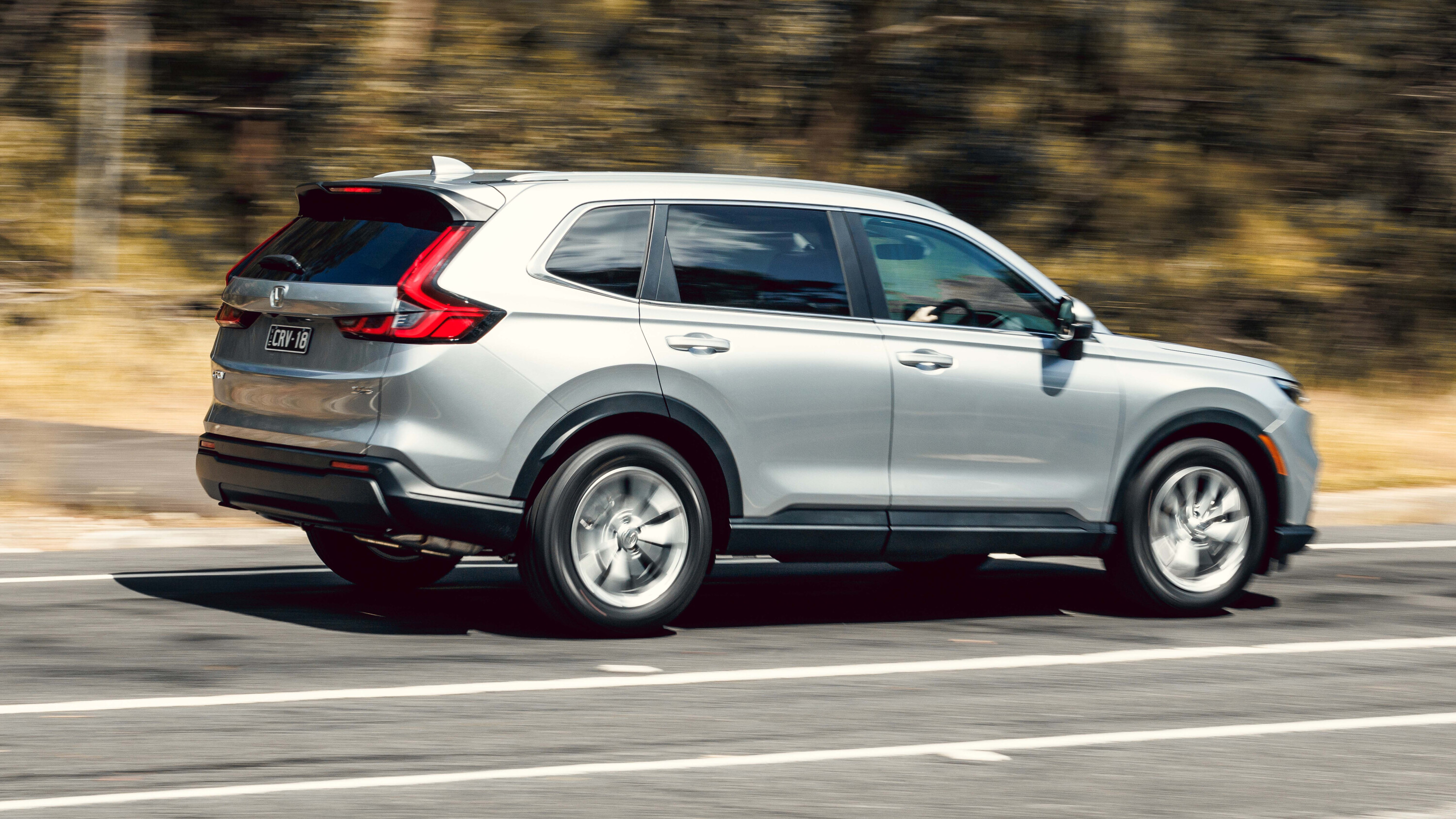
The new Honda CR-V is the latest release of our trio – and it looks it. At 4.7 metres long, it makes the original 1997 CR-V look like a model car, and blurs the line between mid-size and large SUV. Not just its first-generation forebear, it also eclipses the previous model at 69mm longer, 11mm wider and with a 40mm-longer wheelbase.
With its handsomely long bonnet and sculpted styling, the one we have today is the VTi L7 – the one with a pair of seats in the boot. A turbocharged 1.5-litre four-cylinder supplies 140kW and 240Nm to the front wheels only, via a CVT (continuously variable transmission) auto.
1
While its $53,000 price-tag suggests it exceeds our $50K ceiling, that’s a drive-away figure that incorporates several thousand dollars’ worth of on-road charges.
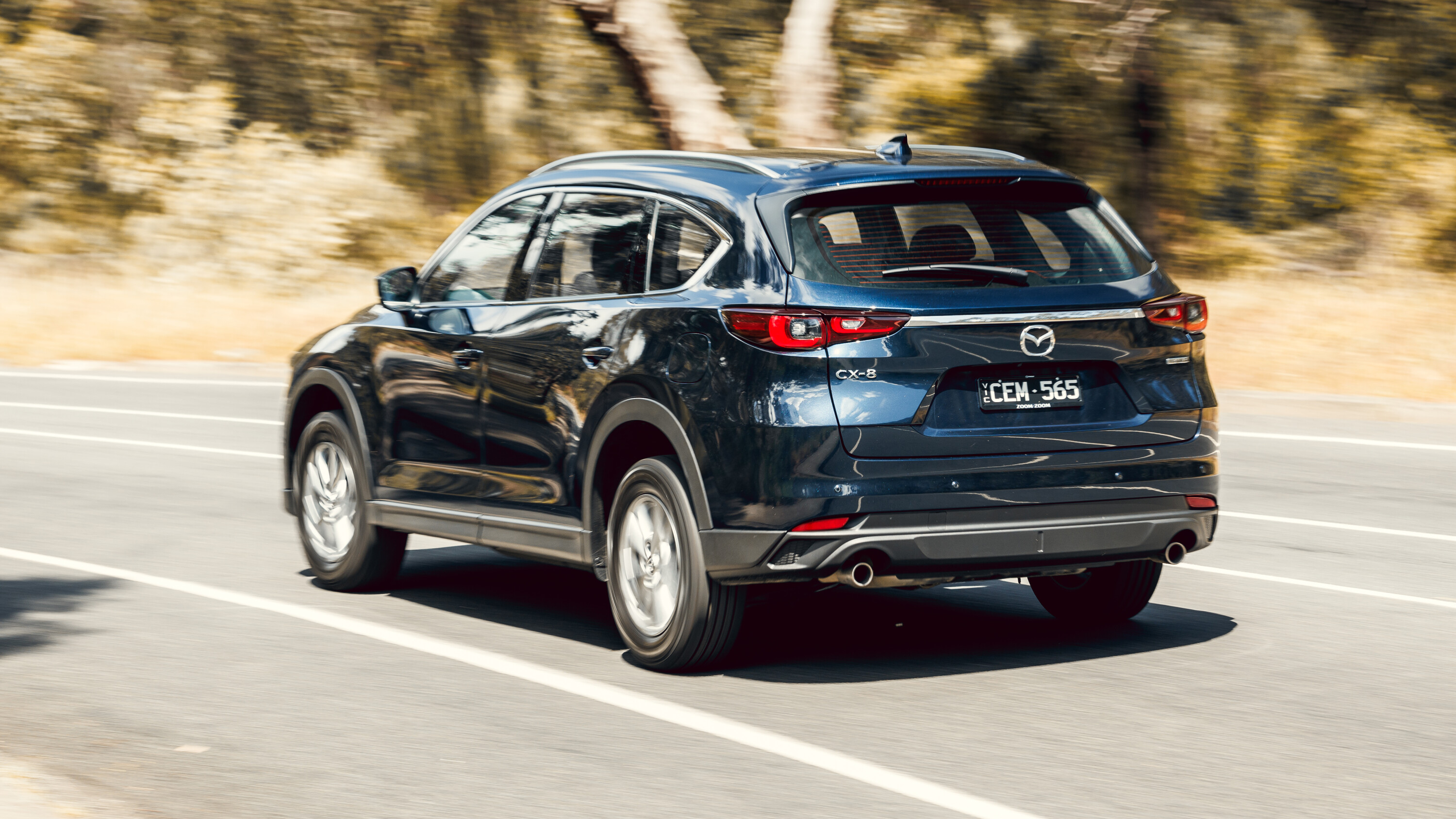
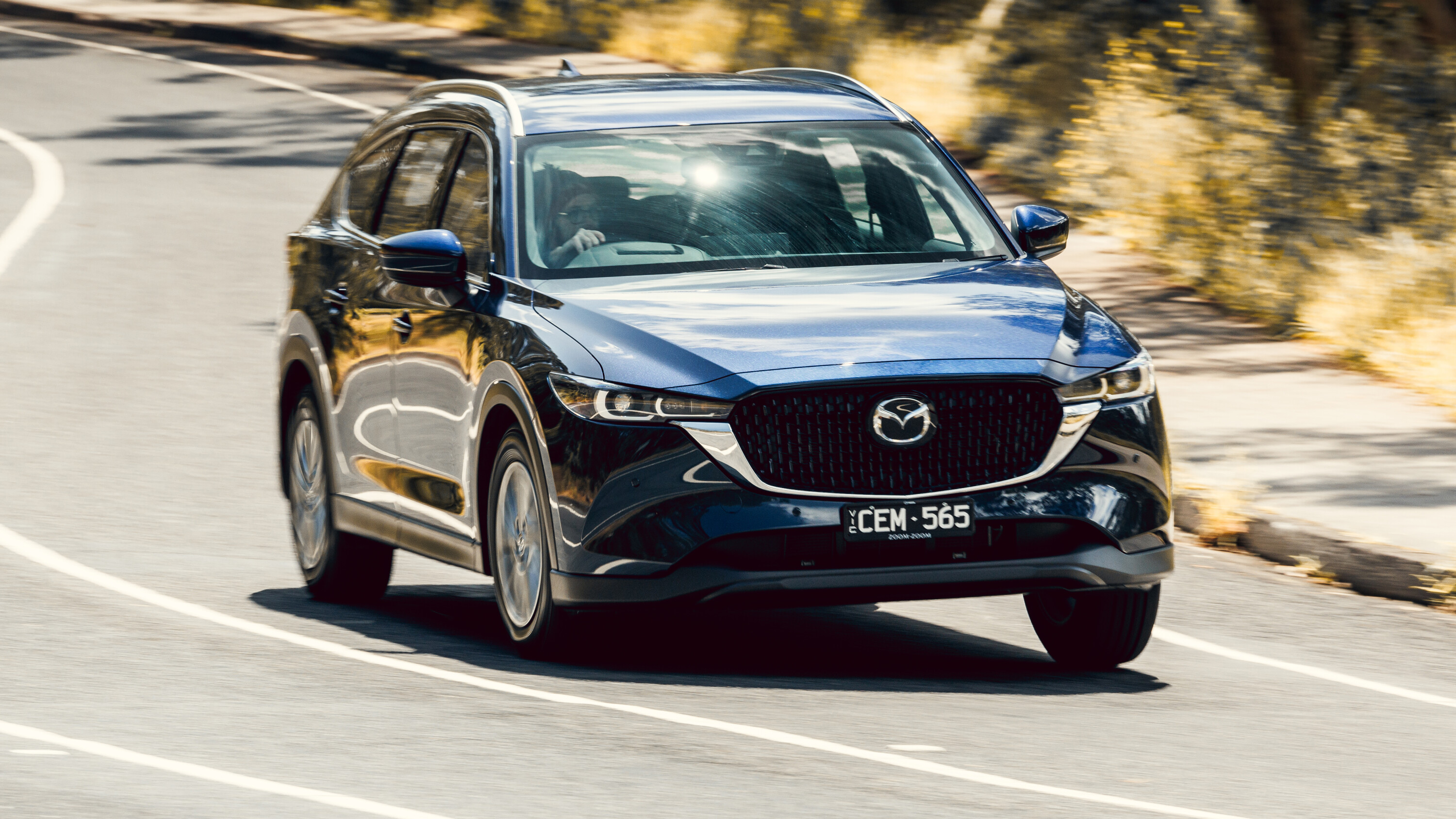
Shame, as it’s still a very good SUV, though arriving at our photography location I’m embarrassed to admit I thought the CX-8, parked anonymously in a car park, belonged to a member of the public.
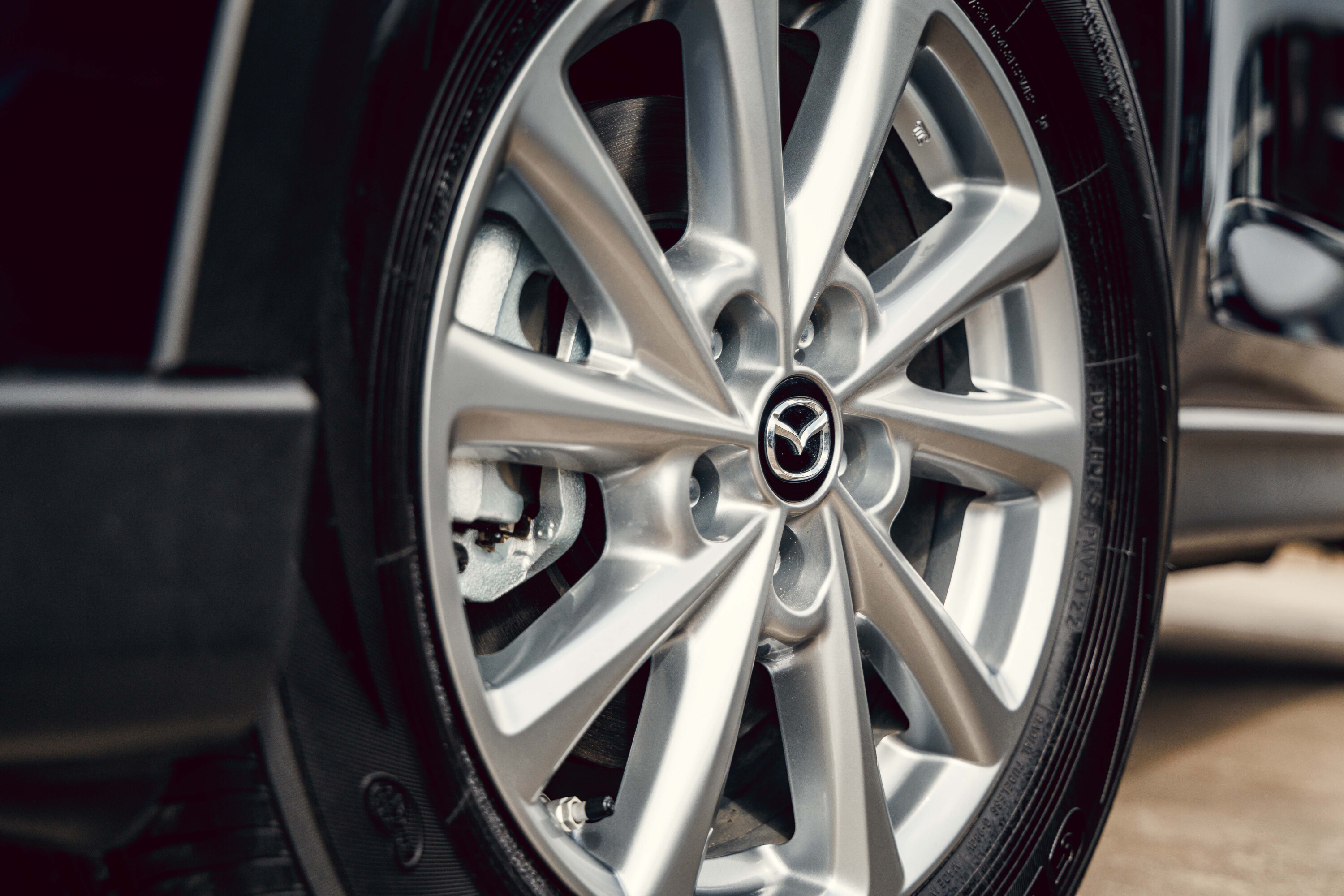
Compared with the Honda, which has proper presence, the CX-8 is almost invisible – especially on the 17-inch wheels of our Touring FWD test car. Its $49,560 list price sneaks just under our $50K RRP cap – it’d be about $54,500 drive-away – while under the skin there’s a six-speed auto, and a peaky 2.5-litre naturally aspirated inline-four dishing up 140kW and 252Nm.
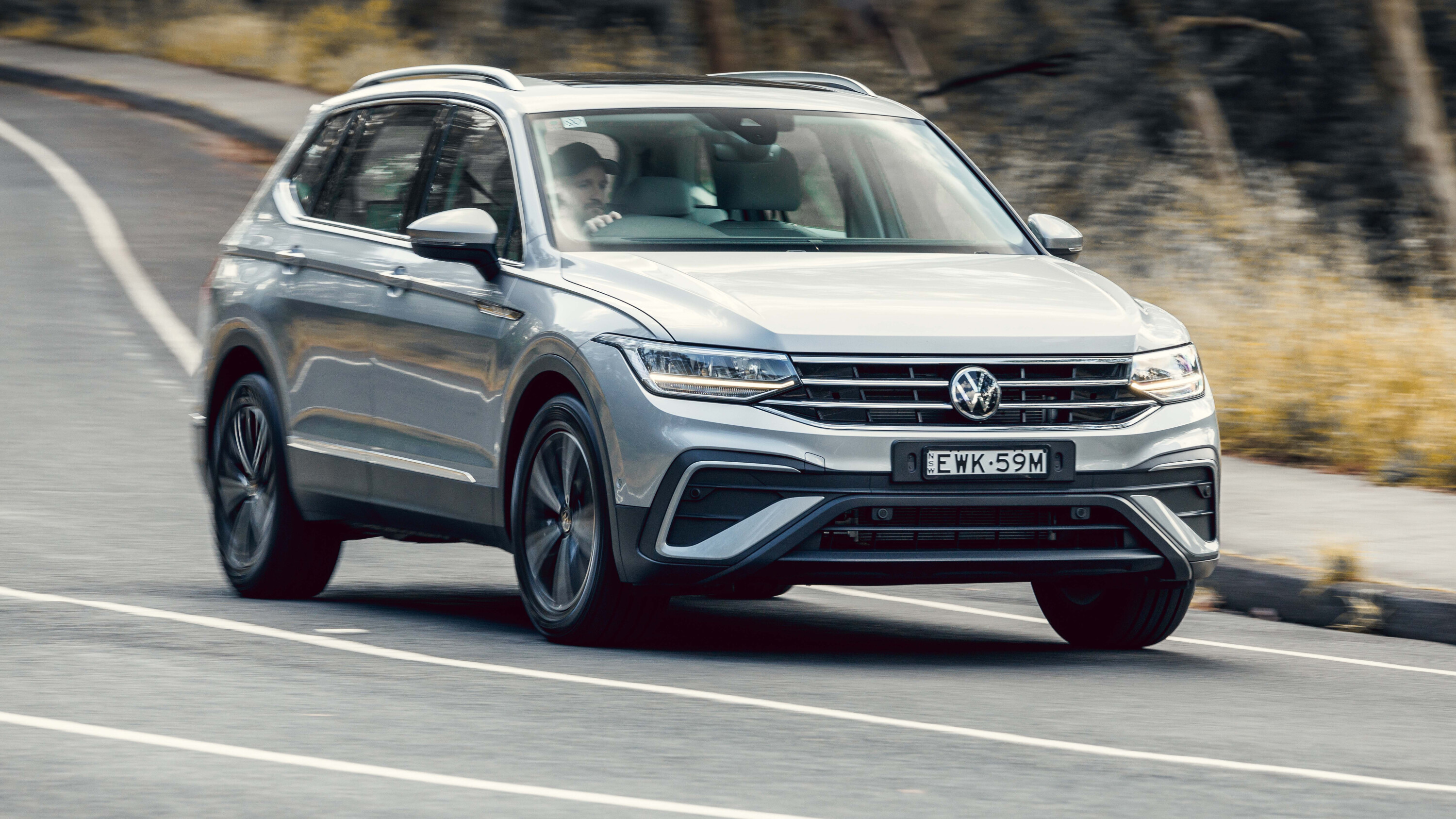
While, like the Mazda, it’s almost ready for the motoring retirement village – this generation Tiguan goes back to 2016 – it’s still a mighty good car.
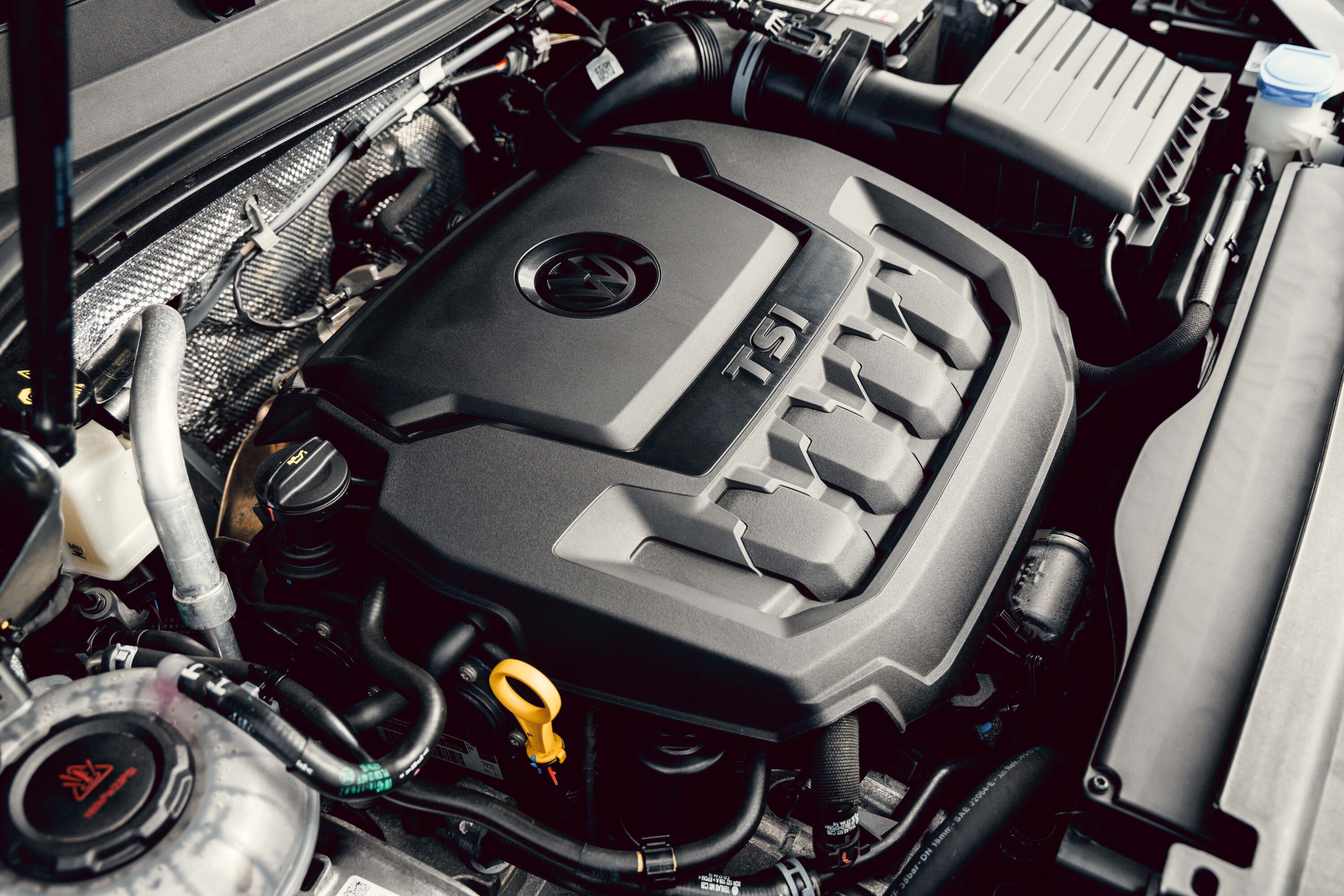
This one has a 2.0-litre turbo inline-four with 132kW, a grunty 320Nm, and the much-desired – or much-maligned, depending on your past experiences – seven-speed dual-clutch automatic. Unlike the other two cars here, this one is all-wheel drive.
1
While its $48,590 base list price seems extraordinarily sharp, an additional $6400 of options dents our Tiguan Allspace’s value equation somewhat, coming in at $54,990 before on-road costs.
And if value is what you’re after, the Honda CR-V takes an early win, being cheaper than both rivals. While all three cars come with lengthy standard equipment lists, the Honda offers a few things standard the other cars don’t, namely its hands-free electric tailgate, panoramic sunroof, and driver’s seat memory.
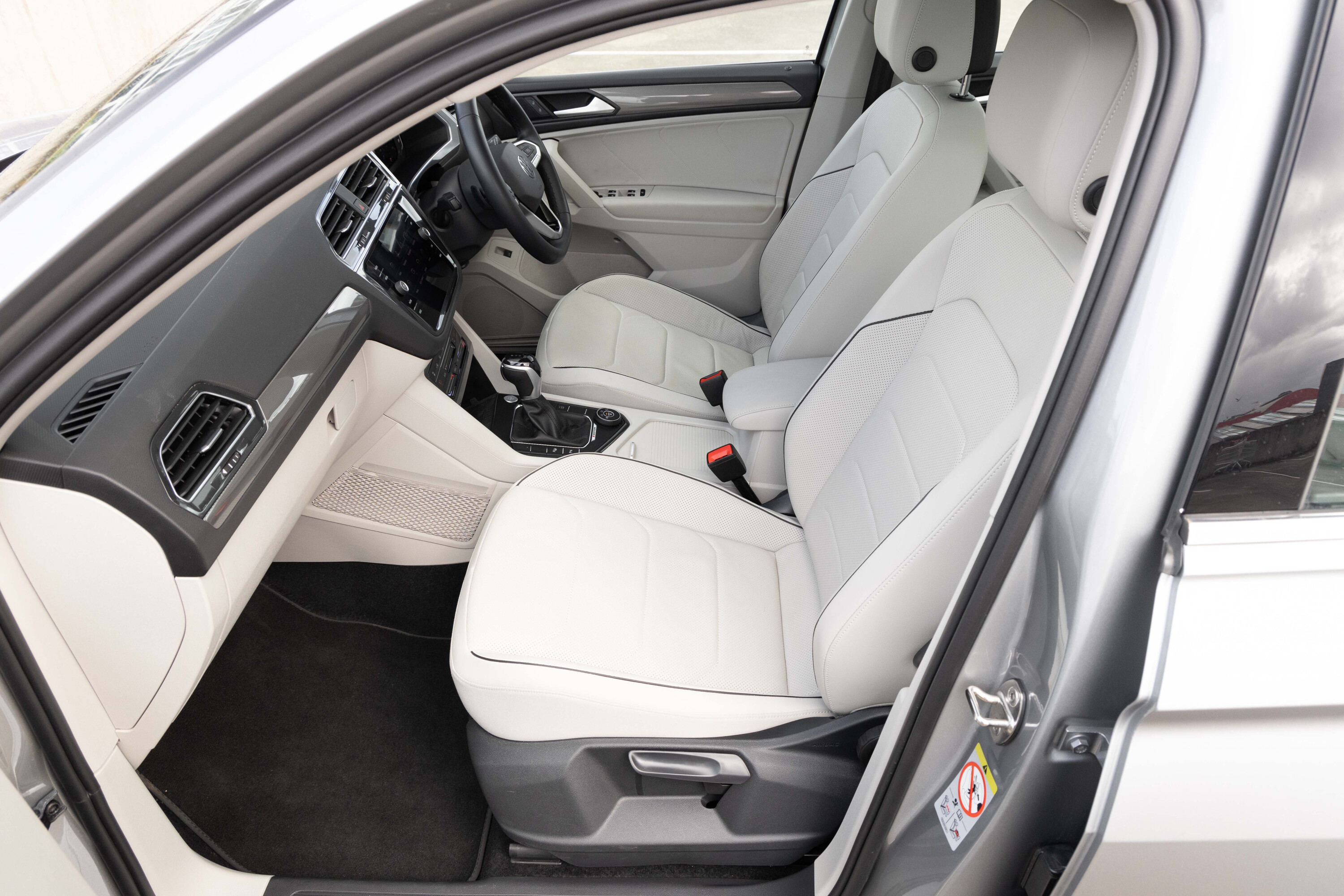
Somewhat criminally for a premium marque, you have to pay extra for heated seats in the Volkswagen, something standard on both the Honda and Mazda.
3
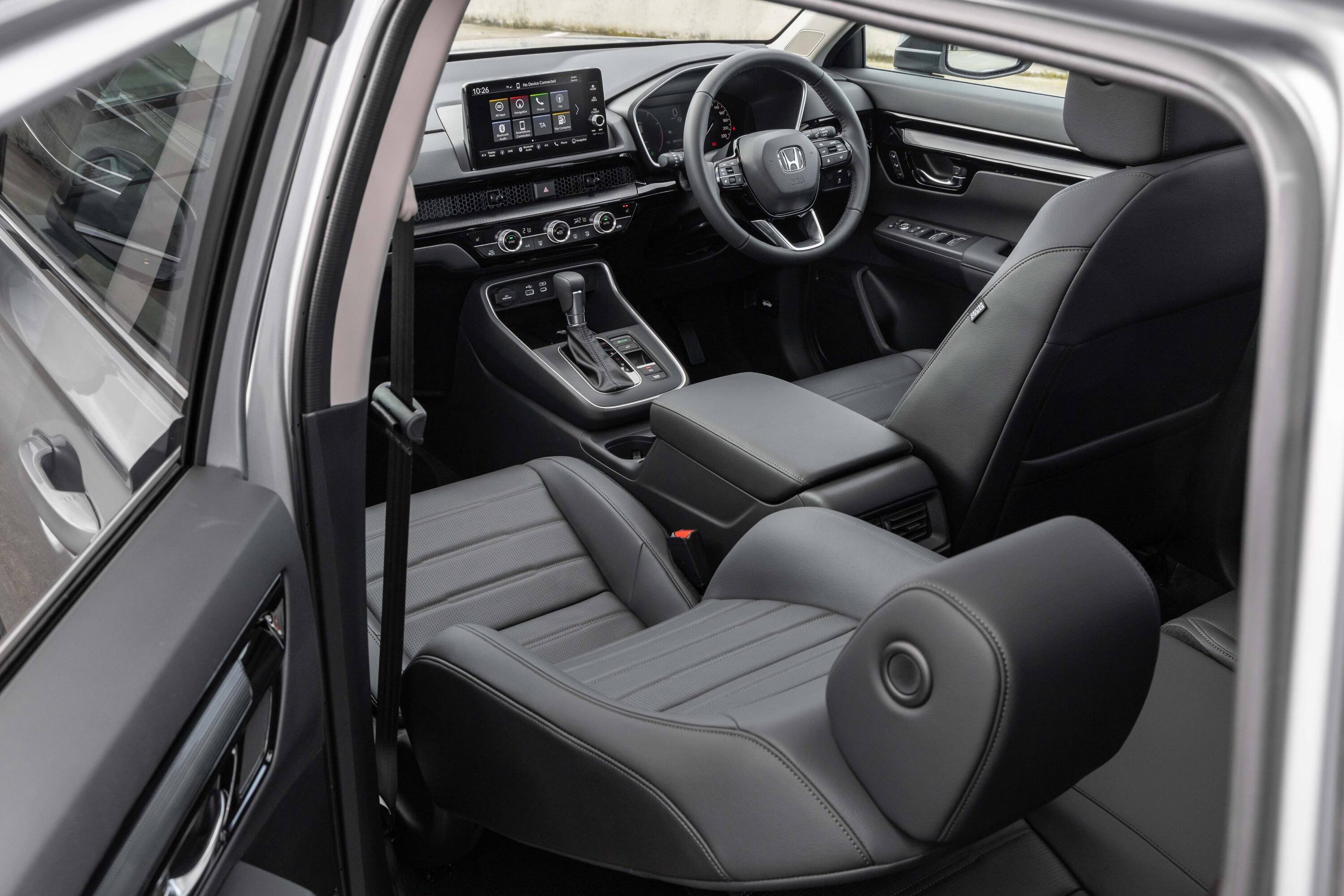
Compared to Honda interiors of only a generation ago, the CR-V’s is more mature, restrained and classy
Meanwhile the CX-8 – if it hadn’t already showed its age – can’t come with a wireless phone charger at all, something standard on the VW and Honda, although unlike those two, the Mazda does give you an old-school, basic head-up display.
Getting into the CR-V, it’s also evident the Honda design department has popped the triangle and trapezoidal stencils in the bottom drawer, replacing them with rulers. Compared to Honda interiors of only a generation ago, the CR-V’s is more mature, restrained and classy, to the point that existing owners – lured by the quirkiness of previous designs – might find the new one a bit plain.
At least in an ergonomic sense, it’s better off for it, whacky controls for things like the volume replaced with a simple, timeless dial. Materials are decent quality while storage space is also good, while we like the bright, clear, contemporary look of the infotainment and instruments.
3
Many of these things can’t be said for the CX-8 which, while being a pleasant place to sit, feels like you’ve borrowed a five-year-old car from a family friend.
While the slim, 10.25-inch infotainment display is plenty modern, its native interface looks dated and, exasperatingly, is non-touchscreen for the Apple CarPlay.
Why Mazda persists with forcing you to use the hand-controller – when the screen is within easy reach – is one of the biggest continuing own-goals in the world of new car interior design.
In the absence of a sunroof like the other two cars, the CX-8’s interior – trimmed entirely in black, with minimal brightwork – is also oppressively dark, like you’re in a little cave and need to open the curtains a little. This sensation is especially stark if you’re coming straight from the Volkswagen.
1
Our Tiguan test car’s Storm Grey interior and enormous panoramic sunroof make this a bright, light-filled place to be – like you’re in a sun-kissed, white-leather-trimmed, luxury speed boat.
Even though this generation Tiguan is about to be replaced, the interior is still a premium, upmarket place to be, only its relatively small 8.0-inch central touchscreen giving away its age. (And maybe also its antiquated, tall gear shifter.)
All three cars boast spacious second rows, although the CX-8’s is the best, with tonnes of room and great tri-zone air-conditioning. The VW also has tri-zone, but the CR-V has plain, old manual rear vents. The Honda scores some points for its rear doors, which open so wide it’s like they disappear.
1
As for Amish readers, or anybody else shopping on third-row space alone, you can stop reading here: the CX-8 wins.
You could reasonably subject an adult to the boot of the CX-8, while the Honda and Volkswagen are child-only zones. At least the Honda gives third-row occupants air-vents – the others don’t.
With back-of-the-bus seats stowed away, all three have great big boots – and all have sliding second rows. Extra points go the Honda here, though, with its standard electric tailgate – something not available on the Mazda at all. Although points are in turn deducted as the CR-V’s boot is almost non-existent in seven-seat mode, while with the third row up, the VW and Mazda still offer something.
3
For pootling about suburbia, we’d choose between the Honda and Volkswagen.
The CR-V is a lovely companion for the urban grind, with perfectly calibrated steering and brakes – not too heavy, not too light – while the engine is responsive without being hyper.
Refinement is also good, the CR-V now surprisingly well-insulated from tyre noise, however the engine could pipe down a bit at low speeds (especially when paired with the CVT).
Jump into the Tiguan and forward visibility is so good, you almost feel like you’re sitting in a glass capsule. While the Tiguan’s small-ish infotainment and instrument displays seem a bit pokey while driving, the car itself is effortless and easy to drive, with very light, direct steering. The suspension is beautifully soft, although hit a speed bump too quickly and it clunks loudly, as if something’s just broken.
6
Curiously, the Tiguan Allspace feels much longer than it is wide, sort of making it feel like you’re driving a van or MPV.
There’s an overall butteriness to the Tiguan that would be improved with a torque converter transmission, the DSG still the tiniest bit taut and sensitive, like occasionally, when getting back into the throttle, you’re taking up a bit of slack. But otherwise, it feels engineered like a Tag Heuer watch.
Curiously, the Tiguan Allspace feels much longer than it is wide, sort of making it feel like you’re driving a van or MPV. After driving the Volkswagen, doing a U-turn in the Honda – with its much shorter wheelbase – almost feels like it’s got rear-wheel-steer.
This is not all to say the CX-8 is a dud. It’s still great to drive, even by 2023 standards. The ride quality feels expensive, the thin-rim leather steering wheel great in your hands, while the powertrain, like that of the Honda, is responsive without ever feeling surprised.
1
It’s just that, again like the Honda, the CX-8’s engine is a bit loud at urban speeds. If it came with a volume dial, you’d be reaching to turn it down a notch or two.
On a winding road, the Honda’s handling gets better the harder you push, to the point that this would be an excellent basis for a Type R hot SUV. Especially if that included junking the 1.5-litre engine and CVT for a powertrain hotter and better, as it falls far short of matching the sparkle that Honda has given the CR-V’s chassis.
1
It’s like Honda has given its turbo engine the personality of a naturally aspirated engine
Hearing ‘turbo engine’, you might think muscular, low-down torque, but boot it in the CR-V and the CVT ‘kicks down’ to about 4500rpm, skipping where the turbo presumably gives its best. It’s like Honda has given its turbo engine the personality of a naturally aspirated engine.
The Tiguan’s handling has an enjoyable fluidity, but ultimately its agility is blunted by its near three-metre wheelbase. Punting the Tiguan hard is more about enjoying the powertrain.
There’s a bit of Golf GTI about the Tiguan’s engine, its turbo engine pulling solidly from about 4000rpm and sounding rorty around its 6000rpm redline. The twin-clutch changes gears very quickly using the flappy-paddles, making for a warm-hatch-like powertrain that almost seems confused to find itself in such a long, heavy SUV.
1
Contrasted to the two front-drive Japanese cars, the VW might also be all-wheel-drive, but it offers no real advantage – the front wheels could manage 132kW just fine we think, in the dry at least.
As for the Mazda, punting it hard feels like you’re making it do something it doesn’t really want to do. It’s much happier loping along, and we’re sure the five kids in the back won’t disagree.
All three cars come with a five-year, unlimited kilometre warranty, but for five-year ownership cost, the CR-V is gentlest on the bank account by a long way. Five services will cost $995 over five years, while the CX-8 is more like $2168 and the Volkswagen, a stinging $3200.
1
The CR-V also uses 91RON fuel, much like the CX-8, although the Tiguan has expensive tastes, requiring 95RON minimum.
We didn’t get a chance to properly test fuel economy, but using the ADR 81/02 benchmark you could expect the Honda to be most efficient (7.3L/100km combined), followed by the Mazda (8.1L) then the Tiguan (8.9L).
Verdict
The Honda CR-V is the newest of this bunch, and feels it. It drives and feels like a car from 2023, whereas the others feel a bit last decade.
Given their vintages, you’d be tempted by the used market for both the Mazda and Volkswagen, too, pocketing more than a few thousand – or you would with the Japanese car at least, given buying a second-hand, dual-clutch Volkswagen without a warranty would take a bit of derring-do.
1
You won’t be tempted by a second-hand CR-V, as the new one is a big improvement over the old.
While Honda’s new interiors lack a bit of the funk and personality of those before it, they’re much smarter, more intuitive, more usable – and in the CR’V’s case, more spacious.
While we’re sure the CVT hides some of the magic of the new turbo engine, the CR-V seriously impresses for its build quality, refinement, and all-round offer. It’s our winner here, demonstrating that while $50K can no longer buy a house, it can get you a damn good car.
“Dress for success” – it’s the well-worn maxim that motivates influencers, CEO wannabes, and economy-class passengers who erroneously believe the only thing holding them back from a business-class upgrade is a nicely-pressed suit and good posture.
It’s apparently also a phrase that resonates within the hallways of Mazda’s Hiroshima HQ, because the freshly-minted CX-90 flaunts sheetmetal that’s Versace instead of Tarocash, draped over a frame with handsome proportions and the confident air of an athlete – and a thrusty turbo inline-six housed within it.
The CX-90 is a bold play by Mazda, being its first longitudinally-engined large SUV and its first non-sports car to play in the $100K+ realm. But does it really deserve to stand shoulder-to-shoulder with the established members of the large luxe SUV club? The CX-90 certainly looks like it should.
Yet looks can only take you so far. Luxury is about much more than appearances – there are other targets to hit in refinement, cabin quality, technology and performance that are just as critical – and competition gets thick when you start shelling out six figures.
Is the CX-90 wheat or chaff? We’ve assembled a cross-section of luxe and near-luxe large SUV rivals for the big Mazda to square up to. Some, like the Genesis GV80, are propelled by the same sort of premium ambitions and aspirations as the CX-90.
At the other end, the BMW X5 is virtually a founding member of this particular country club.
In between are contenders like the Lexus RX, the mainstay model of a brand that successfully took on the Euro establishment 30-odd years ago (and which some might say has been resting on those laurels ever since), and the Volvo XC90 – a masterclass in elegant understatement, but whose lack of braggadocio may count against it in a market that preferences bling.
Rounding out the sextet is Volkswagen’s Touareg, which has common ground with the CX-90 given both are born of modest brands yet also possess the on-paper credentials to warrant consideration for bona-fide premium status.
Should the bouncer part the velvet rope for them?
6️⃣ Volkswagen Touareg 170TDI
Things we like
Solid build quality
Torquey diesel
The pick for towing + long-distance cruising
Not so much…
Needs expensive options to feel luxe
Laggy gearbox
Overeager ESC
Small CarPlay integration
There’s a certain warm, fuzzy feeling in seeing 1200km of range flash up in the instrument binnacle after a servo stop. That’s life with a 90-litre fuel tank, and a Volkswagen Touareg 170TDI.
Due for a facelift next year – before some sort of EV behemoth replaces it altogether in the coming years – the Touareg even in its current guise is still an eminently pleasing vehicle.
Under the bonnet is a 3.0-litre turbocharged diesel V6 twisting out 170kW and 500Nm – the latter from just 1750rpm. There’s an eight-speed torque converter auto and all-wheel-drive, while its $87,990 list price, before any options, doesn’t look quite so scary after a few inflationary years.
1
From the outside, it’s a classy, handsome, if modest car – whose design somehow makes 19-inch wheels look like 17s – and inside, the Touareg boasts a budget Audi vibe with seemingly as much screen as there is leather.
At 15.0 inches, the centre infotainment touchscreen – part of the $8600 Innovision option package – looks as if someone’s fitted a TV to the middle of the dashboard.
The gigantic, beautifully crisp and bright, high resolution native sat-nav map view is hard not to love – less so the compressed Apple CarPlay display which, irritatingly, only fills about half the screen. It’s also wired-only.
1
Netflix streaming not available on the Touaregs huge centre screen, unfortunately
While the giant display lends the otherwise ageing Touareg interior a high-tech feel, the absence of HVAC hard buttons and dials can make it feel an empty, plain place – especially at night, where the centre stack is strangely dark. Forget that only until recently VW produced some of the most terrific physical HVAC controls of any carmaker, lest you feel swindled now that they’re all in a touchscreen.
With a generous, fat vein of turbo-diesel torque just off throttle tip-in, the Touareg 170TDI is an effortless car for the everyday grind. It’s quiet, refined, and feels engineered like a chronograph watch.
While the 170TDI misses out on the air suspension of richer grades, ride quality is still good, and the overall drive a breeze. Parking, with its myriad cameras and views, is also a doddle for such a large car.
1
On the open road, dynamically the Touareg is also very good – and better than it has any right to be.
That’s even if you’ll be hunting around for the ESC ‘off’ button, as the system’s strategy of stabbing suddenly at the brakes, mid-corner, is not a pleasant one.
In the final reckoning, the Touareg is a lovely car to drive, feeling premium without trying (unlike other cars here), with impressive fuel economy and a spacious second row. It’s the pick for towing and long-distance cruising, and being German seems to imbue it with an additional fathom of engineering depth and build quality other cars here could only dream of matching.
But where it falls down is that, in this company, and around this price point, it feels like a base model competing against top-spec grades – because it is.
Even at $98,790 as-tested, it’s missing the panoramic sunroof of other cars here, and tri-zone air-conditioning. The haptic steering wheel is, at best, an ergonomic step sideways from plain, old buttons; and just in general, the interior doesn’t feel special enough.
The inside of the Genesis, for example, feels like it’s been fussed over by a team of stylists for months; while a design committee ticked off the Touareg 170TDI’s cabin in a few weeks. While an entry-level Touareg is still a pleasant place to be, for outright luxury and making its occupants feel spoiled, the other cars simply try harder.
There’s something suspiciously Bavarian about the new Mazda CX-90.
Glance around Mazda’s new SUV and there are multiple echoes of BMW. The tail-lights have a hint of BMW XM while G50e, denoting the CX-90 model grade, has a certain Munich ring to it. Mazda’s rotary infotainment controller, meanwhile, is more than a little iDrive; while someone’s plonked a 254kW 3.3-litre turbo straight-six under the bonnet.
Mazda would doubtless appreciate our comparisons to one of the world’s most accomplished premium brands, given that it’s aspiring to a more premium positioning – and price.
1
From the outset, there’s no disputing that the CX-90 is one of the more handsome vehicles here – if admired from the correct angle, such as the front three-quarter.
The ‘Kodo’ design language translates well to the large CX-90, with its long wheelbase and generous length between the front axle line and A-pillar base.
The front overhang is also so short, any shorter and it would almost look a bit too blunt, like it’s been driven at low speed into the back of something.
Inside presents just as well – depending on the grade. Our top-spec Azami is lush enough with its black Nappa leather, but at your local Mazda dealer you should avoid sitting in any CX-90 with the Takumi or SP Packs, the latter of which upholsters the cabin with quilted tan leather and suede headlining making for an irresistible options box to tick. (Even if doing so means a $5000-lighter wallet.)
1
Even without that, though, it’s a lovely place to be, with its dual 12.3-inch digital displays.
The back seats are also very good, the rear doors opening extra wide, while second row occupants enjoy stadium seating with great visibility and quad-zone climate control with rear seat heaters. The second row itself is tilt-and-slide, while there’s a 220-volt outlet in the boot – so you could sit in the back and use your laptop, while it’s charging, on the fly.
Back in the driver’s seat, that straight-six itself is very likeable. Crack a window and there’s a bit of turbo hiss as it comes on boost, while torque – 500Nm from just 2000rpm – is also delectably meaty.
1
Dynamically, too, the CX-90 is very good – second only to the BMW as driver’s pick of this bunch.
While the ride quality is good in isolation, it’s hardly plush and wafting, and the purpose of its tautness is revealed when you get on a winding road. With simple, direct steering, the CX-90 can carry impressive mid-corner speed for its size – and 2275kg weight – owing also to its generously wide, 275-section tyres.
It’s a pity, then, that the CX-90 feels a bit unpolished. Lift off and the engine shuts off and coasts, but then can feel surprised to be woken back up when you want to go again. A feature shouldn’t have you immediately hunting for the off button.
1
The bigger concern is that the in-house-developed, eight-speed automatic transmission has a personality – when it should probably be invisible.
Feeling oddly highly strung, even occasionally flustered – like it’s had too much caffeine – it can even clunk into first gear so audibly and obviously that you wonder how engineers signed it off.
The CX-90 is a delightful car, but at more than $100,000 drive-away, you’re left wondering if it’s best to wait for the update, where hopefully the few too many minor wrinkles are ironed out.
Besides that, some might prefer softer suspension, while others will be perturbed by the inexplicable lack of touchscreen Apple CarPlay (forcing you to use the hand controller, even though the infotainment screen is within easy reach). Unlike a lot else about the CX-90, that’s not very BMW at all.
It’s a hard nut to crack, this world of premium SUVs, but few newbies have enjoyed such roaring success as the Lexus RX.
First introduced in Australia in the early noughties, the RX quickly became Lexus’s most popular model and has steadily built a reputation as the thinking man’s alternative to the established Germans. Cheaper to buy and thriftier to run, yet absolutely bursting with equipment and high-quality, luxurious touches –that’s long been the Lexus RX MO.
The version you see here is the fifth-gen RX, an all-new model that sauntered onto Aussie roads earlier this year.
1
Longer, wider, lower and rolling on a stretched wheelbase, it’s the biggest RX yet and also offers buyers a boggling array of choice thanks to four engines, four trim levels, multiple option packs and the choice of front- or all-wheel drive.
Our particular tester is the RX350 F Sport, which retails for $98,370, and doesn’t only score a host of sporty detailing such as unique 21-inch wheels, more aggressive bumper designs and an F-Sport steering wheel, but it’s also one of the few offerings in the line-up not to use a hybrid powertrain.
Instead, propulsion comes from a 2.4-litre four-cylinder turbo petrol that makes a healthy 205kW/430Nm and sends its grunt to both axles through an eight-speed torque converter auto.
1
It that recipe sounds a touch old-school, don’t be alarmed: the RX feels effortless and polished from the get-go.
The steering is light, the ride quality on large 21-inch alloys is relaxed and comfortable, and the cabin is impressively refined and quiet at a highway cruise.
The cabin makes an equally strong first impression. The snug and supportive front seats, which are part of the F Sport treatment, are especially fabulous, as is the soft and tactile leather steering wheel and high-end 21-speaker Mark Levinson stereo.
1
The sense of quality is also top drawer, as you’d expect from Lexus, and you’ll encounter soft leather touch points, lovely suede inserts on the door cars and soft-touch plastics on the dash.
There are a few weak points, however. The biggest and most confronting is the huge slab of piano-black plastic that surrounds the 14.0-inch centre touchscreen. It dominates the dash design and looks and feels on the cheap side, which erodes the cabin’s overarching sense of luxury. Hard, scratchy plastics can also be found on the doors and the rear of the centre console.
Happily, the cabin’s core ergonomics are hard to fault – the dreaded Lexus touchpad has been banished! – and the centre touchscreen itself is large, bright and integrates well with Apple CarPlay and Android Auto, although only Apple users will enjoy a wireless connection, which is a drag in 2023.
1
Our test car was fitted with the optional Enhancement Pack and a sliding panoramic roof, with the latter further enhancing the cabin’s sense of space and airiness.
Rear seat space has grown, thanks in part to the 60mm wheelbase stretch, and there’s ample knee and toe room, although taller passengers might find headroom a little tight. There’s loads in the way of amenity, though, thanks to a reclineable backrest, dedicated air vents with temp control, two USB-C ports and a centre arm rest with twin cupholders.
The boot is generous, too, at 612L and offers a wide and low aperture, two bag hooks, electric releases for the rear seats and a 12V socket. A space saver spare and additional storage cubby are housed beneath the boot floor.
1
There’s also a decent amount of dynamic cohesion for keen drivers to explore. While the adaptive suspension is undoubtedly softly set-up with plenty of travel and suppleness, body control is impressive on a twisty section of road and the steering is accurate, if a little too light and lifeless.
Performance from the 2.4-litre engine is quick rather than fast, yet the turbo unit is quiet and ably supported by the eight-speed auto which is smooth and unobtrusive. Unfortunately, though, this non-hybridised powertrain is relatively thirsty when driven hard.
1
On our dynamic loop, the RX 350 trailed only the lusty V6 Genesis for fuel use, though things did improve on a longer drive that took in more highway miles and returned an as tested fuel figure of 13.0L/100km.
So there’s lots to like about the new RX. It’s quiet, refined and should be the kind of SUV that slips seamlessly into your life as you relish its effortless powertrain, silken ride quality and sublimely comfortable seats.
But for all its goodness, the heavy handed dash design, inconsistent cabin materials and high fuel use were enough to rule out a podium finish.
Unlike the Mazda and Volkswagen, the Genesis GV80 benefits from a badge that puts distance between it and its humble origins.
On the other side of the coin, building brand reputation isn’t easy. Up to the end of October, Hyundai’s luxe offshoot has sold just over 1600 cars. In comparison, nearly 13,000 new Lexus models have been registered, with the German brands even further ahead.
Is premium-ness measured by sales metrics, though? Gauging from the reactions of bystanders, the answer is “no”. The GV80 had pull among the punters, the matte Brunswick Green paintjob (a $2000 option) and broad-shouldered sheetmetal of our tester working to swivel more heads than any other car on this comparo.
1
Sure, from some angles it might look like a bootleg Bentley Bentayga, but it’s a flattering comparison rather than a clumsy imitation.
The cabin follows a similar theme. In Luxury spec (which adds $10,500 over the base grade) it sports a high-end aura, borrowing heavily from upper-echelon Euros with its lush leather (supple Nappa hide in the Luxury) and diamond-stitched upholstery.
Silver/chrome highlights and fine knurling around switchgear and knobs are a nice touch, but could be better executed on the bigger dials – such as the rotary transmission selector and mode dial – where the moulding seam can be felt by roving fingertips.
1
Soft-touch plastics and padded surfaces are everywhere, the centre bin is flocked (and appreciably deep), the roof and A-pillars are lovingly trimmed in microsuede and even the deep-pile floormats are lavish.
For material quality and presentation the GV80 ranks incredibly well, and the way it insulates occupants from outside noises, mechanical vibes and wind rustle deserves recognition too.
The feature set is also bougie, with the 14.5-inch infotainment screen being accompanied by a slick quasi-3D LCD instrument panel, a glass sunroof, noise-cancelling tech for the 21-speaker Lexicon audio, massage front seats, heated and ventilated first and outboard second-row seats, soft-close doors, plus roof-mounted vanity mirrors and power recline and seat angle adjustment for the second row occupants.
1
Want more? A six-seat configuration not only brings separate captain’s chairs in the middle, but also graft a pair of 9.2-inch entertainment touchscreens to the back of each front seat in exchange for an extra $3000.
There’s also a power-folding third row, which makes unfurling occasional seats a cinch, but for all its glitz and glam the GV80’s cabin falls down in one fundamental way: space. And really, it’s the vertical dimension that’s the one in shortest supply.
In the second row, the elevated seat position does give great vision past the front passengers and through the side glass, but even my 5’8” self found headroom to be more limited than the other contenders.
1
The rearmost seats are strictly for kids, but at least there’s third-row air vents
Clambering into the third row required a spinal scrunch to retract most of my neck into my torso, turtle-style, in order to achieve adequate clearance from that luscious suede headliner – the rearmost seats are strictly for kids, but at least there’s third-row air vents, lidded storage, cup-holders and USB power.
It’s smaller than it looks – at 4945mm long with a 2955mm wheelbase, it’s a shorter thing than the 5120mm long CX-90. Interestingly, that relationship gets flipped when you examine cargo space: with 727 litres with the third row flattened and 2144 litres when the third and second row are stowed, the GV80 can swallow up more cargo than the bigger Mazda.
With such a capacious cabin and superb first-row comfort, it’s disappointing that there’s simply not enough distance between the rear seat bases and the roof to carry larger adults.
1
Stomp on the skinny pedal, wait a smidge as the twin turbos spool, and the GV80’s 3.5-litre petrol V6 flings the 2.25-tonne SUV forward with ease.
The more alert engine and trans calibration of Sport mode gives its straight-line performance an even sharper feel, and there’s no reason to doubt the factory claim of a 5.5-second zero-to-hundred. It’s rapid in a straight line – thirsty too, with the highest average fuel burn in the group – but a mushy suspension and high mass blunt the edge of its surprisingly direct steering.
The gigantic 22-inch wheels and their sporty Michelin Pilot Sport 4s confer good roadholding regardless, but the GV80 is predictably best deployed as a boulevard steamroller, serenely wafting you around town with its muscular engine thrumming away at low revs, the rest of the world drowned out by that 21-speaker stereo.
In certain parts of Australia’s capital cities, the X5 is more ubiquitous than the humble Camry.
Since launching at the turn of the millennium, BMW’s family-sized SUV quickly became a firm favourite among the upper-middle class, and now, four generations on, that popularity has endured.
It’s not difficult to understand why. For one, it’s attractive. We talk about the CX-90 having good proportions… Well, that’s arguably because it copies the X5’s format, with front wheel wells pushed well forward to make room for an inline six in the middle, in turn producing a long bonnet that balances out the visual heft of the wagon box on the back.
1
Sheetmetal that swells around the wheelarches imparts an athletic aura too, and their subtly flicked-out lips not only look sporty, but are there to provide sufficient coverage of the massive 315-section rear tyres fitted to our xDrive40i tester.
On the inside, the X5 is classically German. Cleanly presented with well-crafted materials throughout, it’s difficult to find surfaces that look or feel unpleasant, or out of place – even the standard ‘Verino’ leather feels high-end. Switchgear and closures all operate smoothly with a pleasing tactility to them, and it’s genuinely hard to find a rough edge, figurative or literal.
Space utilisation could be better though: the centre box houses a good volume beneath its bi-fold lid, but the cubby ahead of it which contains the cupholders and phone charging pad is hemmed-in by the shape of its recess and lid.
1
Try and put your phone on charge when you’ve got a drink in there, you’ll see what I mean.
In the back, the stadium-style elevated H-point of the second row bench give backseaters a good view around the front passengers, while the X5’s generous glasshouse – including a panoramic glass sunroof that’s standard-issue – lets light flood in.
With a wide cabin and a very low transmission hump the X5 can even take three adults across the rear bench, but there’s no third-row capability in the X5 anymore – even as an option. On the plus side, a 640-litre seats-up boot capacity should swallow up prams, groceries and other cargo with ease, and the X5’s power-operated split-fold tailgate is far more manageable in cramped shopping centre carparks.
1
But in all honesty, the real appeal of the X5 lies in how it drives.
With a powerful 250kW/450Nm 3.0-litre turbo petrol six driving all four wheels through an excellent eight-speed automatic, the X5 is a rocket on a mountain road. The massive contact patch provided by its Pirelli P-Zeros (275/40R21 up front, 315/35R21 at the rear) confers a tenacious hold on the pavement despite a 2060kg kerb weight, and the explosive energy of its engine is good enough for a 5.5-second zero-to-hundred claim.
The steering is pretty ordinary, with scarcely any feel or feedback, even in Sport mode, but in every other way the X5 is a true performer. What’s equally as impressive is when you prod the ‘Comfort’ mode button on the centre console, the X5’s adaptive dampers slacken and the transmission calibration eases up to make it a very civilised machine for day-to-day urban schlepping.
1
But you need to pay to play, and that’s arguably one of the bigger demerits against the X5: the unavailability of more substantially affordable variants.
Opting for the diesel inline six of the X5 xDrive30d instead of the petrol xDrive40i only trims $4000 from the price which, considering this 40i retails at $138,900 before options and on-roads, isn’t much of a discount. A four-cylinder diesel disappeared from the range last year, making the X5 a six-pot-only proposition in Australia, and a pretty pricey one at that.
However, the X5 you see here isn’t exactly representative of what you can buy right now. When we conducted our comparison, BMW Australia was still waiting on stock of its updated X5 family to arrive, which left us with the about-to-be-superseded model instead.
1
Which is a shame, because not only does the update bring a substantial exterior facelift, but it also adds 30kW and 70Nm to the petrol six’s output, revises the gearbox, and grafts a completely new fascia to the dash centered around a gargantuan 14.9-inch main display running BMW’s latest infotainment operating system. The price hasn’t moved, either, in a rare win for the consumer.
The X5 is far from cheap, but excellence rarely is.
Small 9.0-inch centre touchscreen betrays XC90u2019s age
No wireless CarPlay
Key functions buried in centre screen
No top tether points in third row
It’s easy to forget that it was the Volvo XC90 that kickstarted the Swedish brand’s modern transformation.
Launched way back in 2015, the second-gen XC90 was one of the first cars to ride on Volvo’s new modular platform and the first to benefit from the cash injection brought by fresh owners Geely.
Svelte, beautifully made and with tidy ride/handling, the XC90 came within a whisper of winning Wheels COTY. And now, almost a full 10 years later, it has edged out much fresher competition to win our gong for the best luxury large SUV. Talk about ageing like a fine wine…
1
As you’d expect, Volvo has treated the XC90 to some welcome upgrades since its 2014 launch with the latest raft of improvements arriving last year.
That update brought a rejigging of the model range (the existing trim levels of Momentum, Inscription, R-Design and Recharge were replaced by Plus, Bright, Dark and Ultimate T8 respectively) and the injection of Volvo’s latest Android-based infotainment system, which now includes Apple CarPlay.
For this test, we’re driving the high-spec B6 Dark which uses a fizzy 2.0-litre four-cylinder turbo that produces 220kW/420Nm and is supplemented by an electric supercharger and a 48-volt sub-system.
1
XC90’s Scandi interior delivers impeccable build quality and heightened sense of luxury.
It retails for $107,990, which plonks the XC90 smack bang in the middle of our six contenders for price, but our particular tester is bristling with desirable options like air suspension ($3750) and a truly fantastic Bowers and Wilkins sound system ($4550) that deliver an ‘as tested’ price of $118,690.
That’s still cheaper than the Genesis and BMW, mind, and our XC90 looks every cent of that outlay. We know beauty is in the eye of the beholder but you’d have to be a harsh marker to deny the XC90 is a deeply handsome thing. Chiselled and broad shouldered, it looks taut and perfectly proportioned for what is, essentially, a family bus.
The huge 22-inch diamond-cut alloys help, of course, as does the optional air suspension which slowly lowers the body when parked to give it lightly ‘slammed’ appearance.
1
The cabin is arguably even more impressive. The minimal cabin design feels like a high-end Scandi furniture shop and the sense of luxury and build quality are impeccable.
The seats, in particular, are superbly comfortable, and boy is this cabin functional.
The XC90’s form factor is longer and narrower than other luxe SUVs like a BMW X5 and Audi Q7 and it makes full use of its extra length with plenty of cabin space and a third row that’s roomy enough for most adults. Third row passengers also score face-level air vents, cup holders and their own storage, though notably there are no top-tether anchor points for child seats back there.
1
You do score three tether points in the second row, however, as well as twin Isofix anchor points and Volvo’s useful integrated booster seat features in the middle pew.
Throw in a sliding second row, four-zone climate control, plenty of USB-C charging points and retractable window blinds and there’s nary a chink in the XC90’s armour when it comes to hauling about seven people in comfort.
The one thing that betrays the Volvo’s age is the size of its portrait-style touchscreen. At 9.0-inches it looks small by modern standards, yet its functionality is excellent. The software is Google based, and now includes Google Maps and Google Assistant, and the layout of the key controls and menus is easy to wrap your head around.
1
One annoyance is the need to dive into multiple menus to change the AC or seat heaters, yet the screen’s resolution and response is hard to fault.
The centre screen pairs with a 12.0-inch digital instrument cluster and head-up display, plus there’s a 360 surround view camera which sends a high-res video feed to the centre screen to ensure you don’t kerb those massive alloys.
The XC90’s light steering also aids low-speed manoeuvrability and once you’re on the move, there’s little to disrupt the Volvo’s overarching sense of calm and serenity. A big part of our tester’s phenomenal comfort and control is down to the optional air suspension, which is a must have inclusion.
1
It’s wafty and cushy around town, with none of the crashiness you expect from the big wheels, yet also engaging, flat and measured at high speed.
On our dynamic loop, the way the XC90 absorbed and recovered from big bumps was mighty impressive.
Those big alloys are surprisingly grippy, too, and while the overall experience isn’t what you’d call sporty, there’s plenty of talent and poise to the XC90’s dynamics.
Yet there’s no escaping that the Volvo’s true genius lies in its focus on comfort, space and functionality. This is an impressively practical family SUV, – one that nails its fundamentals with an uncommon layer of finesse and flair.
Finishing anywhere in the lower half of the field can be demoralising – but when the competition is as fierce as it is plush, ending the race in fourth, fifth or even last place is no relegation order.
Although they fell short of a podium step, the Lexus RX350, Mazda CX-90 and VW Touareg 170TDI each has a wealth of merits.
The RX350 has a lovely ride quality, beautifully big and bright Apple CarPlay integration and easily the best seats here, but fell down with its oddly clumsy dash design, hit-and-miss cabin materials and vague steering.
We wanted to love the new Mazda CX-90. We rate its handsome exterior styling, engrossing handling, elegant cabin and spacious third row – and it would have finished higher if not for its weirdly jerky transmission, overly-sporting ride quality, and the fact it needs $5000 splashed on an optional interior pack to be considered anywhere close to ‘luxe’.
The VW Touareg 170TDI is an excellent car in its own right, and you’ll be cleaning cobwebs from inside the fuel filler cap at every servo stop. But we were looking for luxury in this test, and the Touareg’s interior doesn’t surprise, delight and outright spoil as much as the other cars here.
1
If you’re the kind of person who would love to trick your neighbours into believing you own a posh and expensive British SUV, you might like the Genesis GV80, our third-place finisher.
Its blingy interior bristles with novel touches that are fun to discover, and it tries hard to spoil its occupants. It’s not really the driver’s choice, however, with a laggy, anodyne twin-turbo V6 and nautical dynamics.
Of course, if this was a test of best driver’s luxury-performance SUVs, the BMW X5 and its rip-snorting B58 turbocharged straight-six would romp it home.
Around a track, it would easily be the fastest here, even despite its oddly lifeless steering. It would also have seen the chequered flag first if we merely ranked our contenders by price, the BMW costing a wince-inducing $144,600 as-tested.
1
That leaves the brilliant, beguiling Volvo XC90 to nab our gold medal.
At $118,690 as-tested, it was one of the priciest cars on-test, but there wouldn’t be a day or drive where you won’t consider every dollar well spent. Its wagon vibe cuts an original figure in a car park of SUVs, and we can’t believe how well it rides for a vehicle on 22-inch wheels.
While its relatively small 9.0-inch infotainment touchscreen betrays its age – the second-generation XC90 first appeared in 2015 – it’s matured like a fine cabernet sauvignon, of which we’d happily take an extra tall glass.
2023 Best Large SUV series
Looking to get into a brand-new large SUV? Our stories below will guide you to the model that best suits your needs!