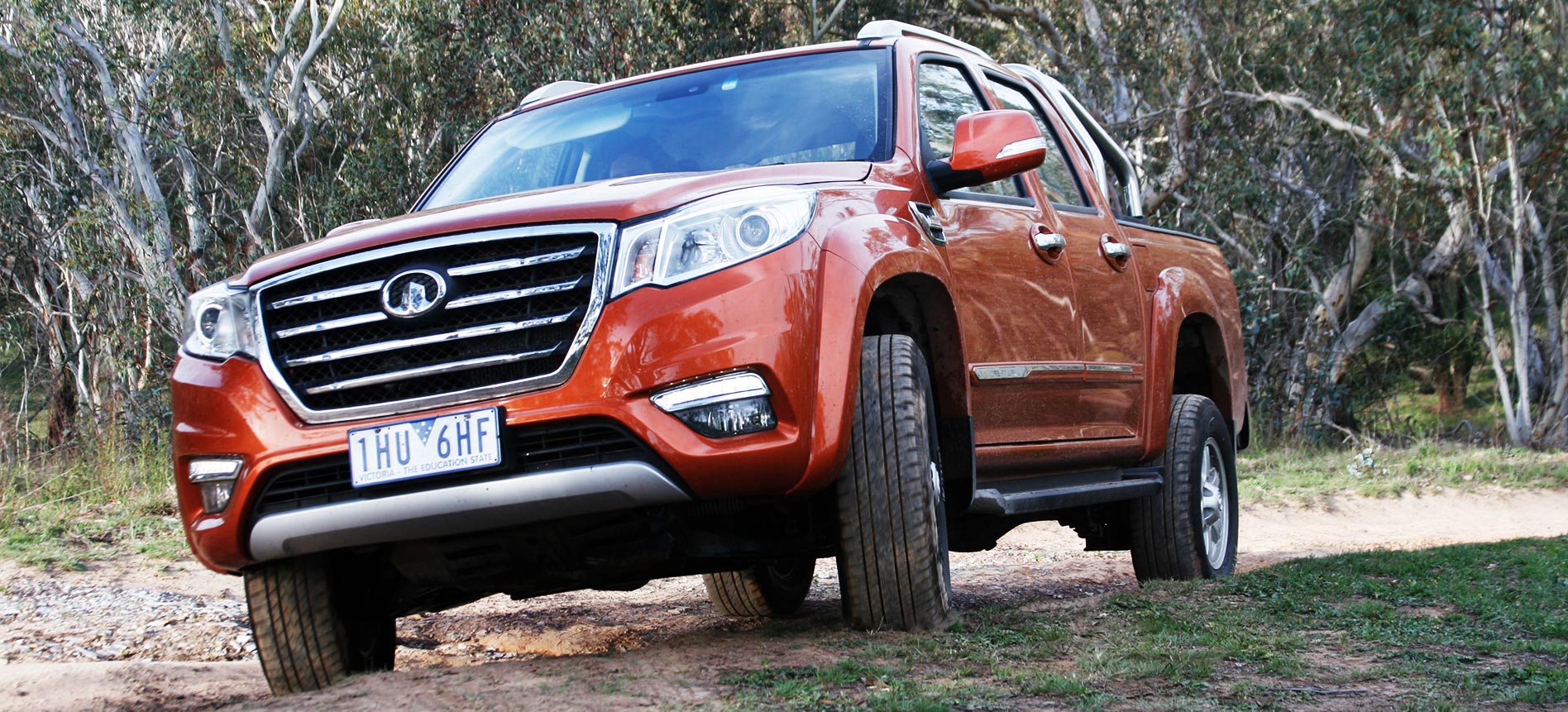
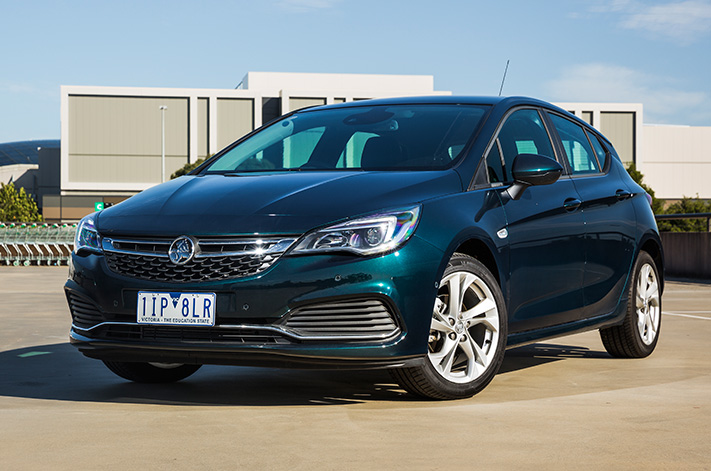
Holden’s European-built Commodore and Astra hatchback were discontinued two months before General Motors announced it was winding down its entire Australian operation. This means any cars left in stock could be subject to some significant deals along with the rest of the Holden range in the lead-up to the company’s planned June closure.
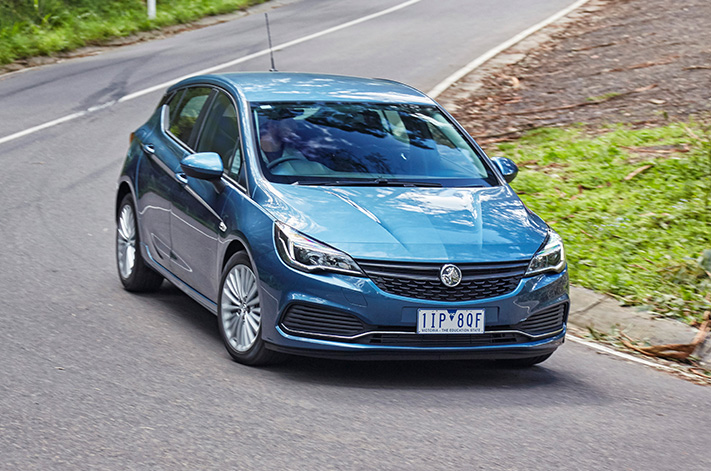
But what does discontinuing Commodore and Astra mean to current owners or anyone looking to score a deal on either model? Here is a quick guide about what the news means.
Why did Holden discontinue the Commodore and Astra?
Sales of the Opel sourced ZB Commodore plummeted compared to the Aussie built VF model it replaced. A large part of this was due to the backlash against Holden daring to call an overseas model Commodore. But there were other factors including the rise in SUV sales, which have taken their toll on passenger cars, including the Astra.
Holden’s acting chairman and general manager Kristian Aquilina said that the time that dropping passenger cars from the range to concentrate in SUVs is “consistent with customer preferences”.
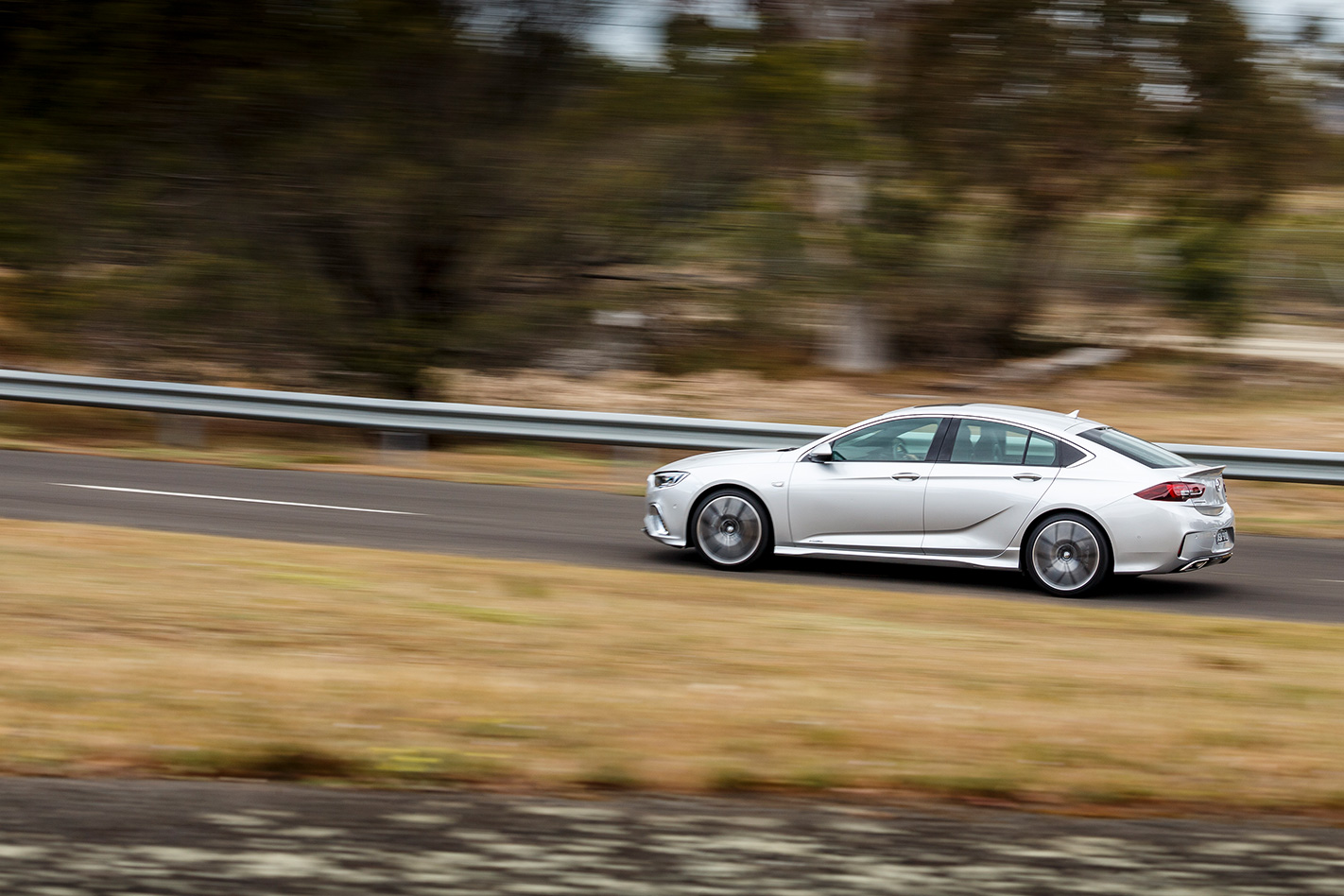
“So far this year SUVs and utes have increased to 76 percent of Holden sales, a trend we only see continuing,” Aquilina said.
Holden also cited the low Australian dollar along with an 87 percent drop in large passenger car sales since 2013 as key reasons why the Commodore is no longer available.
“At its peak, the large car segment in Australia accounted for 217,882 sales in 1998. This year (2019) it is projected to come in at about 8,700 units,” Aquilina points out.
As for Astra, it too is a victim of the changing local vehicle market, with Holden explaining that it can’t sustain being competitive in the small-car market with a European-built hatchback.
The Astra wagon and Korean-built Astra sedan were already deleted from the Holden range earlier in 2019.
Can I still buy a Commodore or Astra?
For now, yes, but only while stocks last. Holden dealers are expected to have various Commodore and Astra variants in their showrooms as the entire Holden stock winds down.
Can I get a good deal on a new Commodore or Astra?
Even before Holden announced it was closing it was keen to clear existing stock so it’s likely there will be some good run-out deals.
At the time Holden announced it was dropping its passenger cars you could already get Astra, Astra R+, and Astra RS driveway for just a few hundred dollars over retail.
If buying a Commodore or Astra, take note of the build year. None will be 2020 models and slow sales of Commodore in particular means some of the MY19 cars still on sale could have been built in 2018.
What will the resale be like for Commodore and Astra?
The Commodore already has a pretty low resale value, ranging from 36 to 38 percent, which means it will be worth about 37 percent of the new retail price after three years.
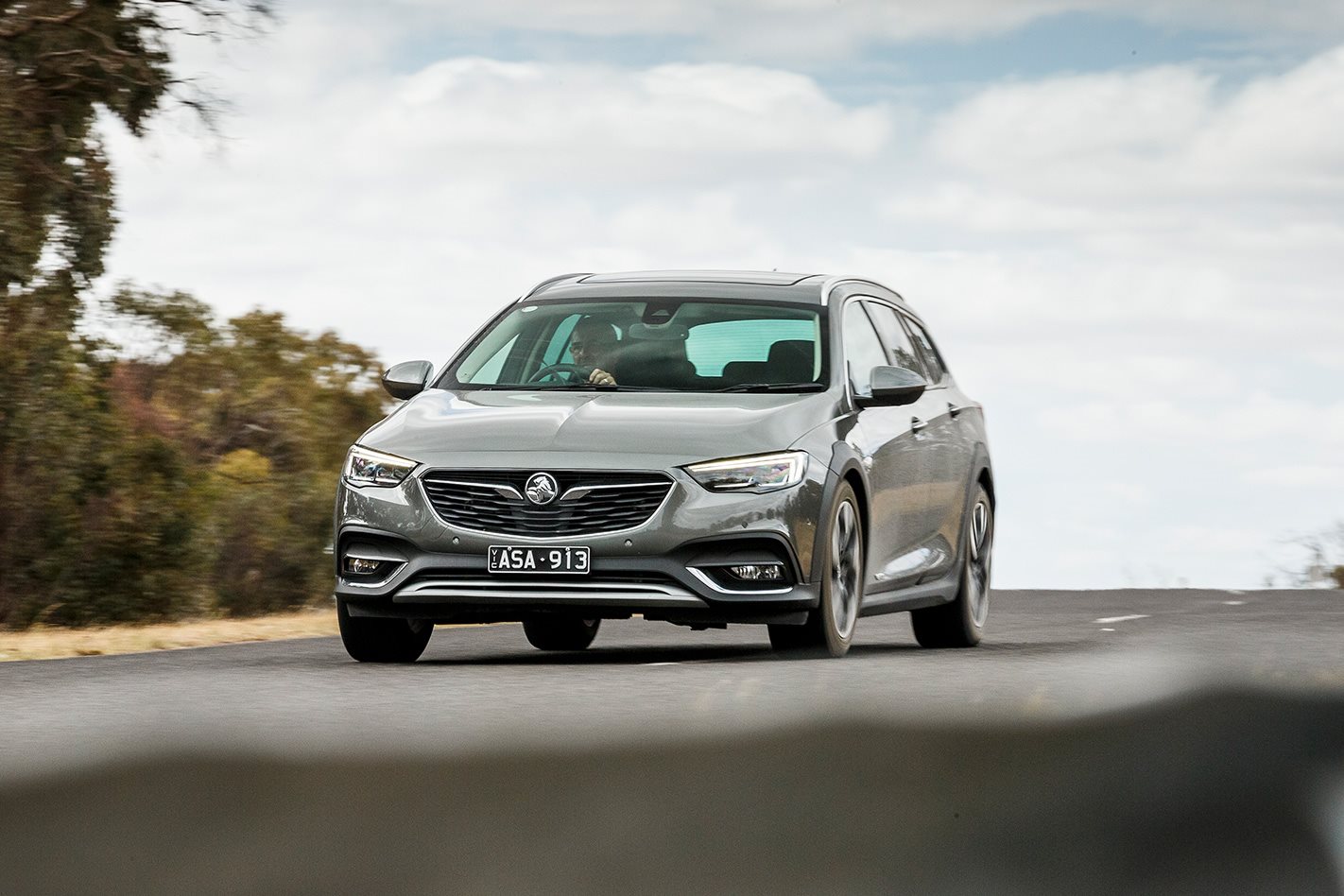
The Calais-badged variants fare a little better with 40-41 percent. In each case, the upper-spec V6 variants enjoy the slightly higher resale value.
Leanne Harvey from Glass’s Information Services, which guides used car prices, says the discontinuation of each model isn’t expected to make an impact on resale either way.
The Opel built Astra hatchbacks enjoy a more respectable 50 percent resale value, though the base-spec R is currently at 48 percent.
Harvey told WhichCar you’ll only get a bounce in resale value if a company puts out a special final edition variant, like Holden did with the last of the Aussie-built VF Series II Commodores. But that’s unlikely to happen with Holden simply phasing out the current stock of MY19 cars.
On the plus side, you’ll be able to score a good used deal on a ZB Commodore, with the low resale reflecting demand rather than quality issues.
Will my Commodore or Astra’s warranty still be valid?
Yes. Holden has sought to reassure existing Commodore and Astra customers their vehicles will continue to be backed by their warranty and roadside assistance commitments, with spare parts supply guaranteed well into the future. This is also the case for all Holden models now the company is closing.
Can I still get my Commodore or Astra serviced at Holden?
You will still be able to get your Commodore serviced at your local Holden dealer until the company winds up. In addition, all MY19 ZB Commodores and MY19 BK Astras ordered or delivered from December 10, 2019 onwards will be subject to a seven-year free scheduled servicing offer.
Most of the 180 Holden dealers in Australia have also sell and service other brands, which means their service departments could still accept maintain your Commodore, Astra or any other Holden model. That said, customers don’t have to service their cars at a Holden dealership to guarantee warranty coverage.
What about Commodore and Astra spare parts?
Like any other discontinued model, spare parts supply for Commodore and Astra will be guaranteed well into the future. The company says it will establish a national aftersales network to support existing customers for at least the next 10 years. All current Holden dealers, meanwhile, will be offered the opportunity to transition to Holden authorised service outlets.
In the wake of GM’s heartbreaking decision to retire the Holden brand forever, there’s still a glimmer of hope hidden within all of the sad news. GM may not leave the country entirely, and has confirmed that it is looking into the viability of low-volume imports under the name “GM Specialty Vehicles” – likely an extension of Walkinshaw’s existing HSV operation.
But what will GMSV’s menu of cars look like? It’s too early to say, but there’s definitely a slew of General Motors product in the USA that we think would work Down Under as well.
We’ve already got a big Yankee ute in the form of the Chevrolet Silverado and the Chevrolet Camaro 2SS sports coupe – both converted to RHD locally by Walkinshaw – but what else could we take from The General’s vast Stateside inventory? Flip through our gallery above to find out what’s at the top of our wishlist.
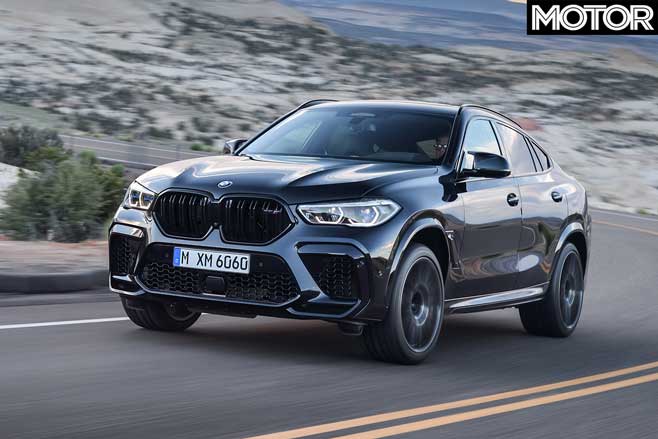
BMW Australia has confirmed local pricing for the 2020 BMW X5 M and X6 M Competition, with the brawny SUV twins to arrive in May this year.
Starting at $209,900 before on roads for the X5 M Competition, and $213,900 for the X6 version, the two SUVs utilise BMW’s 4.4-litre twin-turbo V8 which pumps out 460kW and 750Nm, which is the same as it makes in the M5 Competition.
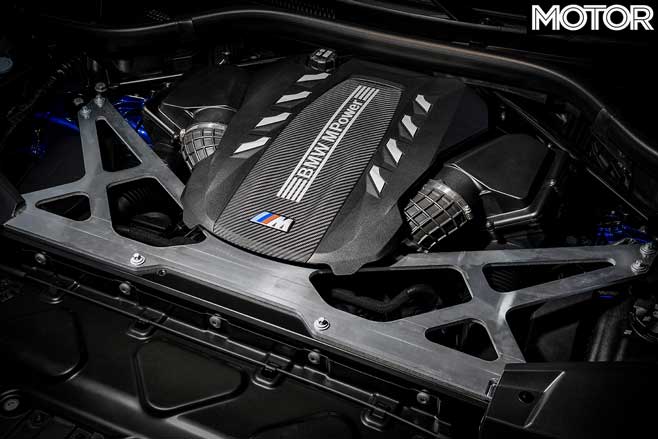
In the ‘X’ twins, this results in a 0-100km/h sprint of just 3.8 seconds, though the kerb weights of 2310kg (X5 M) and 2295kg (X6 M) will likely leave some dynamic ability to be desired.
Power is put down to all four wheels through an eight-speed M Steptronic transmission, then distributed via a BMW active M differential. Its rear-biased torque delivery is able to be sharpened up in ‘4WD Sport’ mode.
Suspension is M-tuned and adaptive, of course, with active roll stabilisation and stability control, as well as ‘Servotronic’ variable assisted steering. BMW alloys sized 21‑inches at the front axle and 22-inches at the rear are standard on Competition variants, and optional on standard models. Behind these, compound brakes with six-piston fixed calipers on 395mm discs at the front and single-piston floating calipers on 380mm discs at the rear.
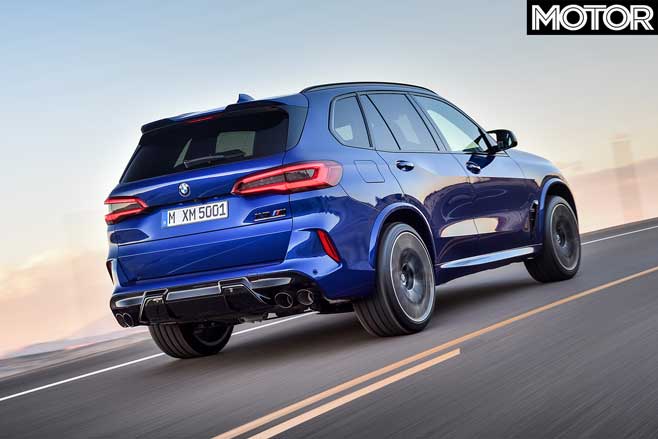
What BMW does claim, however, is that the X5 and X6 M will all weigh about the same in both standard and Competition. Not that it matters much here, BMW Australia won’t bring the lower-spec X5/6 Ms here.
Both are available to order now, with BMW Australia expecting deliveries to begin as the cars arrive in May.
It’s often the case that games which achieved great success on console or PC inevitably receive a mobile version (usually a gutted, de-contented and generally underwhelming version), but rarely is the inverse true.
Which is why it’s surprising that Australian game developers Grease Monkey Games says it will buck that trend and port its hugely successful mobile game Torque Drift to the PC platform around the middle of 2020, bringing with it a raft of enhancements.
Grease Monkey will distribute Torque Drift for PC via Steam, and while a precise launch date has yet to be announced the game’s Steam page lists the planned alpha release date as being “mid-year 2020”. The game will enter Early Access mode in March.
With the added processing power of a PC Grease Monkey have confirmed that the PC port will have greatly improved graphics as a result, though other details about changes to gameplay, the physics engine or sound have yet to be announced. Interestingly cross-platform multiplayer will be part of the full release, meaning drifters on PC will be able to compete against those playing Torque Drift on an Android or iOS portable device.
Controller support is also confirmed, but compatibility with specific gaming wheels is still unclear. However as a drifting title for PC, we would expect there to be generous wheel support out-of-the-box.
Torque Drift won’t be the only new oversteer-oriented title coming the PC platform this year. Drift 19, which was expected to launch late last year but has now been pushed to a Spring 2020 release date (and has been sneakily renamed Drift 21 as a result) is another promising drift sim,
Besides Drift 21, Torque Drift will also face off against another phone-to-PC drift title: the Russian-developed Car X Drift Racing. We look forward to finding out which one is the better slideways simulator.
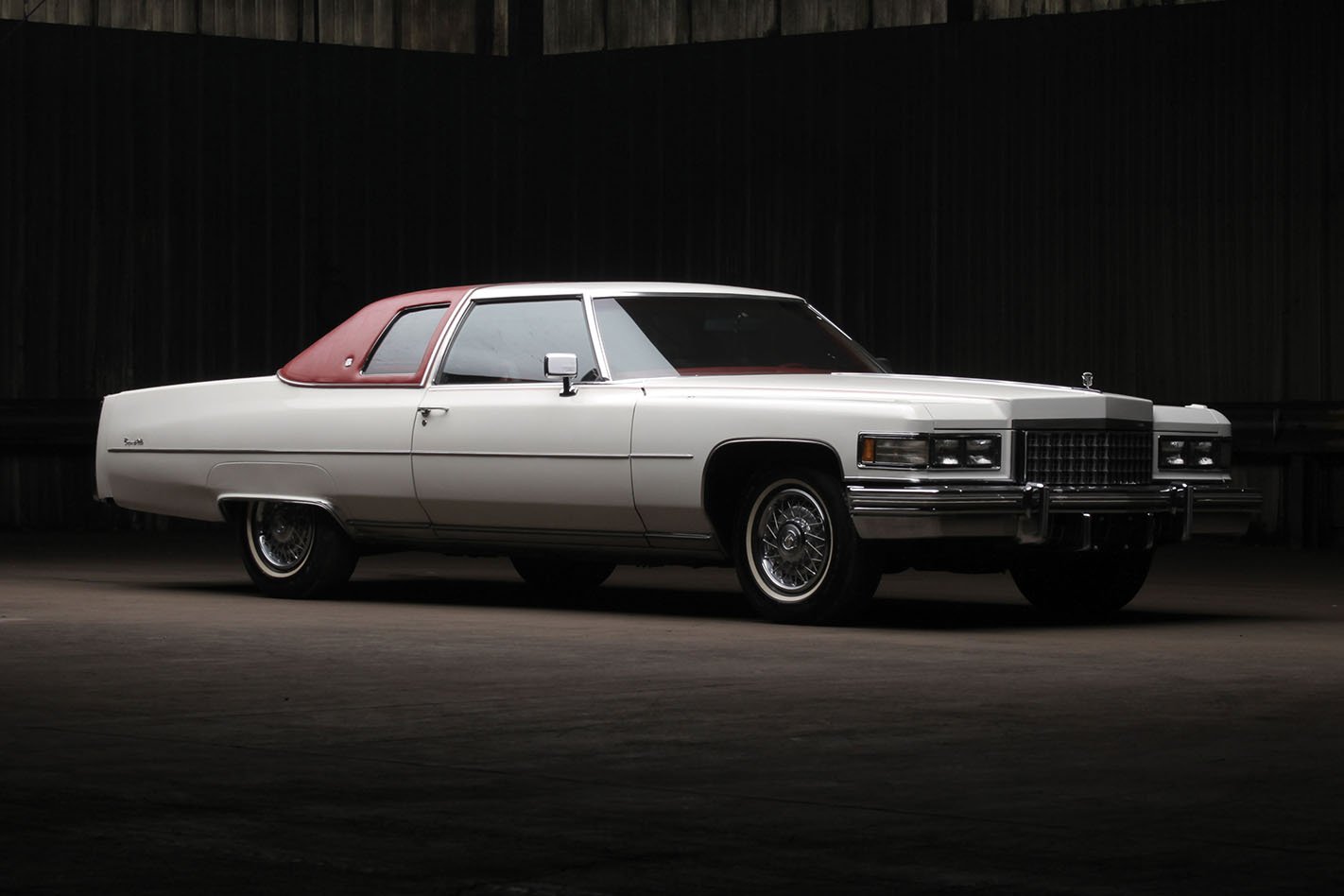
Picture yourself in the USA at the dawn of the 1970s, driving out of a Cadillac dealership in the finest gosh-dang otto-mo-beel that money could buy. Your new-generation Cadillac Coupe deVille was motivated by an 8.2-litre V8, weighed 2.5 tonnes and measured 5.74 metres from one hard-edged chrome end to the other.
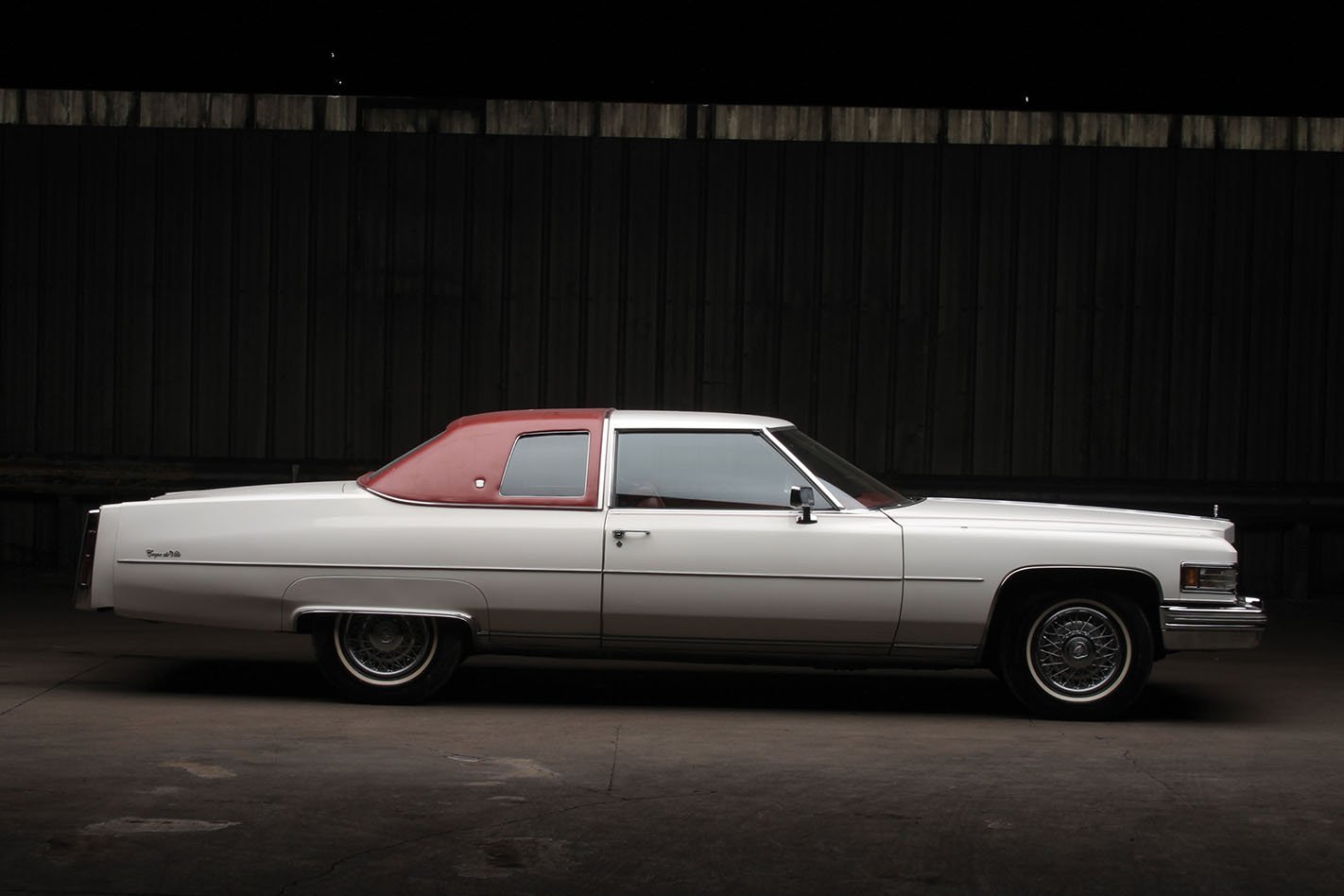
At the close of the same decade, you’d reckon on driving out of a Honda dealer in a new Civic. But that would be to underestimate America’s favourite luxury car.
The early 1970s was the best of times and the worst of times for the US car industry, with waves of labour strikes, oil crises and new safety, fuel and emissions regulations threatening to drown dozy Detroit.
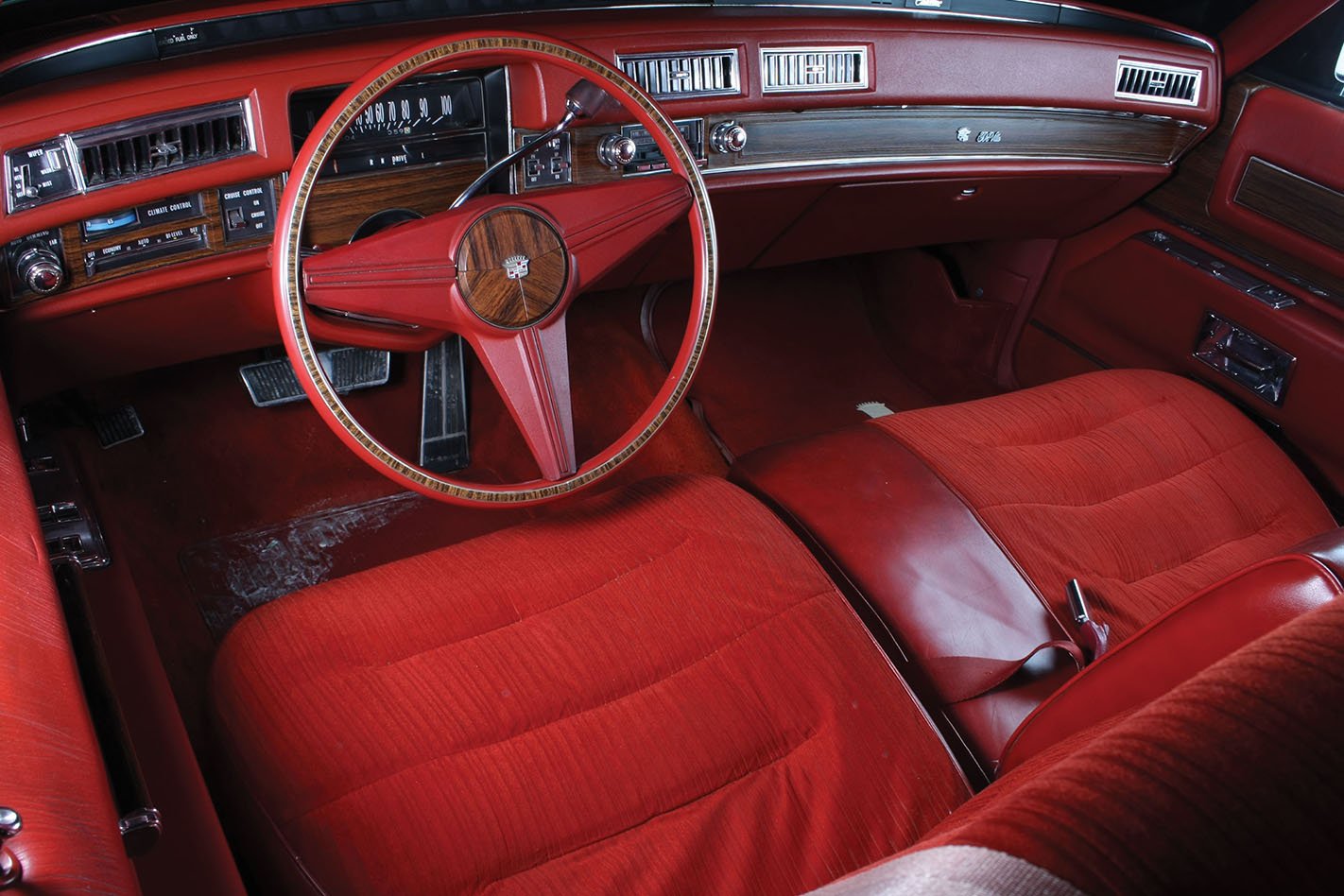
Amazingly, though, Cadillac rode majestically above the waves, its flagship deVille land-yachts barely changing from 1971-’76. Indeed, in responding to various crash and emissions requirements, the deVille got even bigger in length and engine capacity. And in 1976, the swan song of the big C-body, the Coupe deVille again bested its own sales records, with 114,482 examples built.
The Coupe deVille and sister four-door hardtop Sedan deVille ran the old Detroit textbook of a ladder-type chassis, waterbed-like ride, whoofly big V8, slushbox and rear-wheel drive (where the slightly smaller Eldorado range was front-drive). One semi-significant facelift change came in 1974 with the loss of pillarless rear windows for fixed ‘coach’ windows.
The 1971-’76 C-body boasted the greatest interior width to date of any GM passenger car. The pillow-soft, electric-adjustable front buckets (or split bench) were in velour or optional leather, and faced a heated windscreen, minimal instrumentation and an expanse of vinyl dashboard with fake woodgrain. To the driver’s left were the rotary dial for climate-control air-con and the switch for cruise control; to the right, a push-button radio. Rear passengers enjoyed plenty of space and a suitably plush bench with fat, central armrest.
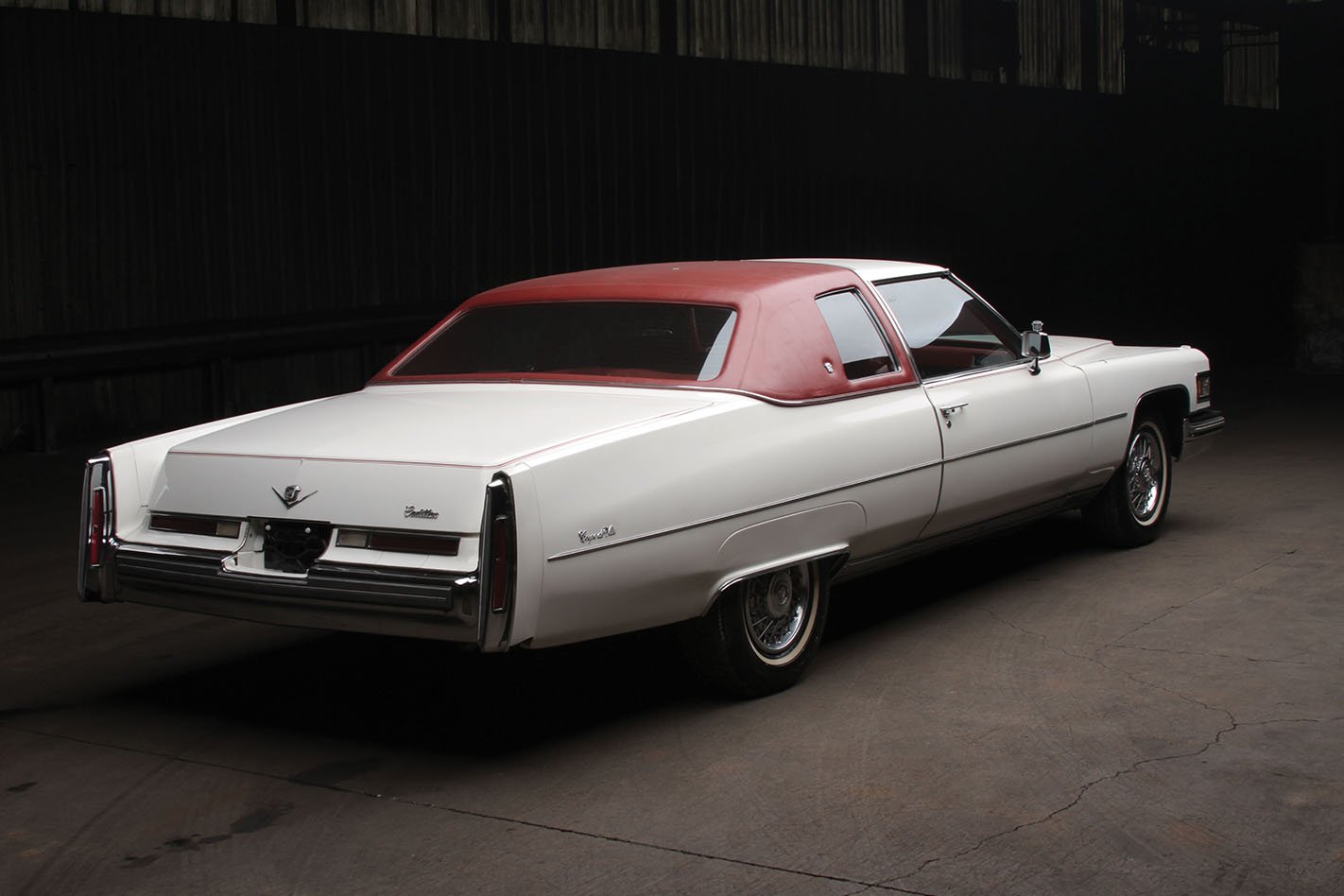
For 1977, Cadillac’s 75th anniversary year, the new-gen Coupe deVille was 240mm shorter, 430kg lighter, had ‘only’ 7.0 litres’ capacity and was 10 percent more expensive. But Cadillac had magically got it right again, and the Coupe deVille would continue on its record-breaking way into a new decade.
deVille-may-care
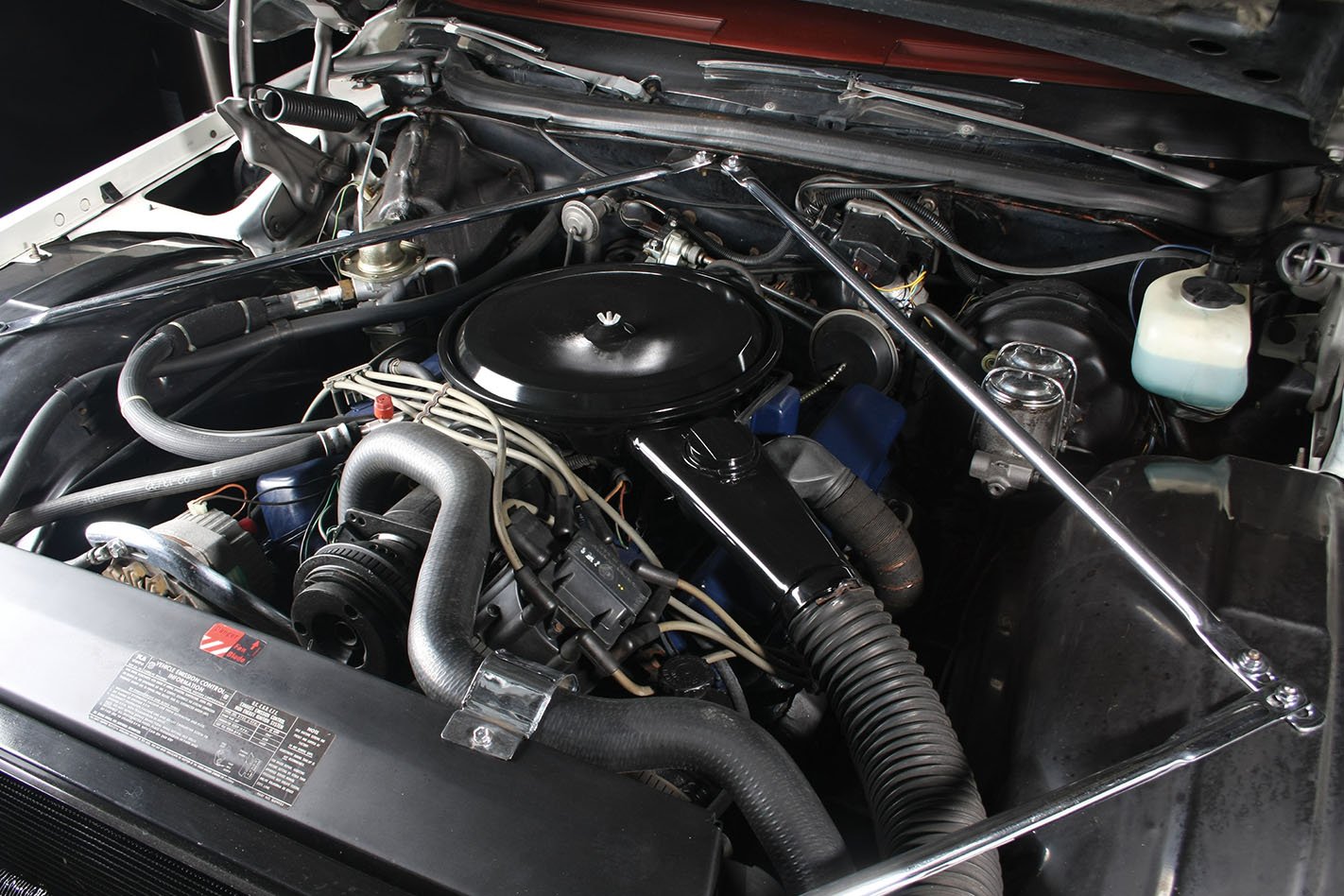
Tightening US regulation made Caddy’s big V8 engines even larger. The 7.7-litre unit of 1971-’75 rose to 8.2 litres in a carburetted version rated at 142kW at 3600rpm/488Nm and throttle body-injected for 157kW/515Nm. Both drove through a three-speed column-shift Turbo-Hydramatic 400 auto and hit 0-60mph in an estimated 11 seconds.
The long game
Cadillac’s final 3300mm wheelbase car rode on a ladder-type frame with boxed side sections. Front suspension was by coils with upper and lower control arms, the rear a four-link, coil-sprung live axle. Steering was power assisted, while brakes were single-piston discs (front) and rear drums. Automatic ride and skid control were options.
1976 Cadillac Coupe deVille in numbers
611,111 – The number of 1971-76 generation Coupe deVilles built
24 – litres per 100km average fuel consumption (city/highway)
1975 – Second OPEC oil crisis… meh!
5786 – Length in millimetres after 5mp/h bumpers were added in 1973
In drawing up the shortlist of piping-hot vehicles for this year’s Performance Car of the Year (PCOTY) we had to ask ourselves, with limited space available do we include a performance SUV?
The performance SUV is, of course, a peculiar phenomenon. Like that mole that keeps getting bigger, it just doesn’t seem to be going away. As such, it’s something we here at MOTOR can no longer ignore. (Unlike that mole – you really should get that checked out.)
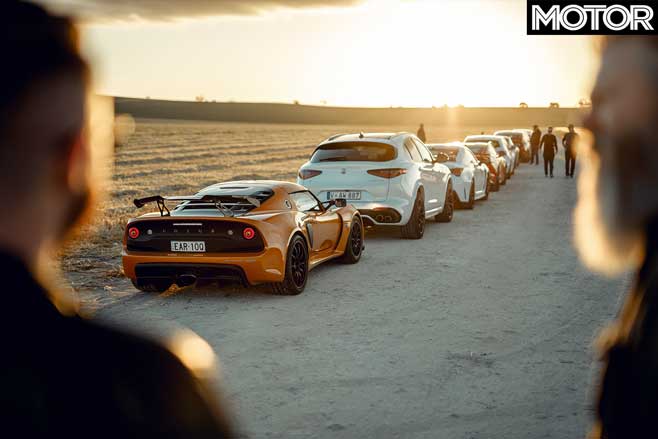
Not that we have been ignoring performance SUVs, really. In the 23 years we’ve been doing PCOTY we have included a few of these lovable, angry, high-riding hippos, from the BMW X5 M to the Porsche Cayenne Turbo. But the question for PCOTY now is more like, which one do we take? You only need to look away for five minutes and there’s twice as many of the things as before, and only more to come.
Besides Ferrari’s incoming Purosangue SUV (the thought of which makes me spew in my mouth a little bit), apparently Alpine and Lotus are working on SUVs now too. I’m all for business, but how these brands – bastions of lightweight driving purity – plan to make their own versions of fundamentally heavy and languid-handling vehicles is something I am equally curious and nervous to see.
Personally, the most flattering thing I could say about the performance SUV is that it can’t be thought of logically. It’s an off-road vehicle that, short of an unsealed road that any car can drive on, really can’t go off-road anymore. It’s been whisked into a car that exists for speed and performance, but owing to its surplus weight and high centre of gravity is just a bit awkward and undesirable to drive fast.
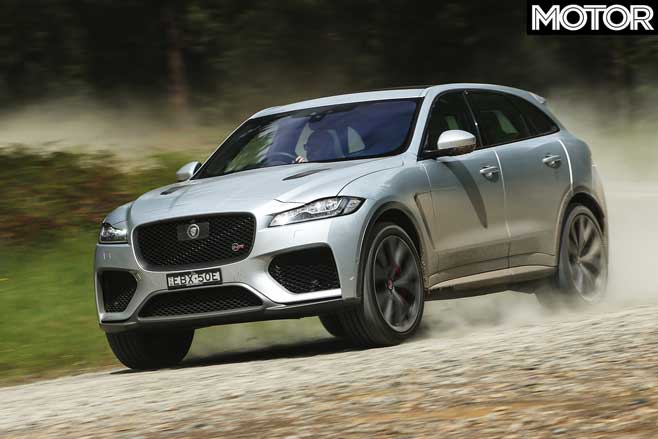
So you are left with a large, heavy car you can’t take off-road and is covered in parts that you paid for that you’ll never use. It would be like buying a Toyota LandCruiser, fitting a 400kW petrol engine, stiff springs, huge brakes and enormous wheels with low-profile tyres – all at great cost – to create a vehicle that doesn’t really do any one thing very well. What’s the point of that?
Also, I can rationalise the explosion in the general SUV’s popularity to people wanting to express a lifestyle they’d like people to think they have (even if they don’t have it), but what kind of lifestyle is the performance SUV expressing? You wanted a sports car but the significant other wanted an off-roader so here’s a lesson in compromise?
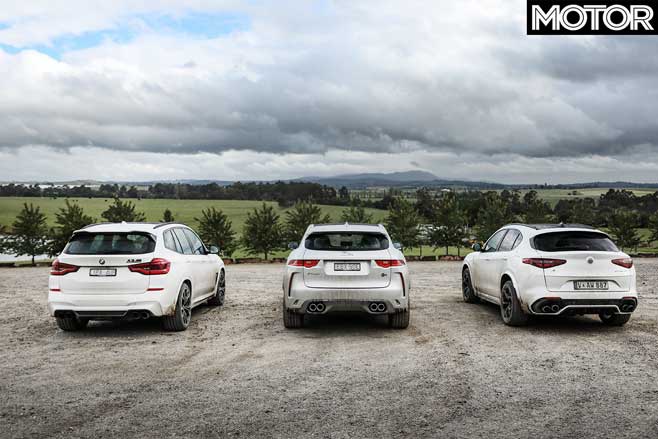
Of course, sometimes if people just want something, that’s all the reason you need to offer it. And most of these cars are much better than I’m giving them credit for. Like, annoyingly so, which is completely down to the engineers who are sent to work on them (punitively?). A lot of these SUVs now drive like oversized, overweight hot hatches trying to work around a weirdly high centre of gravity. And, dare I say, it can be kind of fun slowing down your inputs and managing so much weight as it moves through exaggerated axes. But on a racetrack a performance SUV still feels odd, and probably always will.
And so we’ve decided that after this issue it’s time to make a bit of a change – there might not be a performance SUV at PCOTY again. But for good reason, because this year we’re going to host the first Performance SUV of the Year. Yes, that’s right (and please don’t cancel your subscription). We’re still figuring out how it’s going to work, but the goal is to come up with a test that makes sense. Even if the segment itself doesn’t.
McLaren is not a company known for fickle design follies, and even though the top-exit exhausts that pierce the engine cover of the company’s 600LT look like the stuff of concept fantasy, they make as much engineering sense as they do street theatre.
In the case of the Longtail’s sibling, the 570S, dumping waste gases at road level requires a complex exhaust system that hurdles the rear axle, involving restrictive angles all the way, but the 600LT gases take a short cut and that has numerous advantages.
Not only does the shorter system reduce back pressure, allowing the 3.8-litre turbo V8 to find even more power and noise, a significant chunk of weight is left on the parts shelf. Eight kilos is saved in tubing and a further 4.6kg spared in heat shields and the cooling fans that would be required to vent heat from the engine bay.
McLaren’s trademark aerodynamics are also improved. Without conventional low-exit pipes, the wall-to-wall rear diffuser is an aerodynamicist’s dream, allowing greater air management at the rear of the car. The result? Boosted downforce and improved stability.
There’s little aerodynamic upset where the exhausts spit hot gas centrally over the large rear spoiler, with a majority of the hard work performed at the outside edges of the wing. A coating of matte black Ceracoat prevents heat damage to the carbonfibre surface and structure. However, no, there’s no happy by-product such as extra downforce, with only a few grams of thrust generated by even the most hardcore turbo-car exhaust, but you might be able to toast a marshmallow. Sweet.
But don’t expect to see the next Kia Cerato blowing exhaust through its top. Despite the advantages, top-exit exhausts generally only work for cars which have the engine located behind the driver, and which have high horsepower expectations.
Before McLaren, Porsche brought the race-car-derived feature to the road on the back of its V8-powered 918 Spyder hyper hybrid, and you can bet the 600LT won’t be the only car to follow the high-performance German’s lead.
Tesla owners are a special bunch. Some are hell-bent on touting all the positives of electric car ownership, some are die-hard Elon Musk fan-boys defending him to the ends of the Earth. And there are a few that even take matters into their own hands to create one-of-a-kind creations like the recently-converted Model 3 fitted with snow tracks.
Youtuber lowlifeduramax took his Model 3 – which recently won the WhichCar Style Award – and engaged a manufacturing facility in British Columbia to mount a pair of snow tracks in place of the rear wheels.
You can see the Model 3 traversing a snowmobile trail in the video; it is a rudimentary set up but nonetheless got us thinking about some of our favourite Tesla mods we’ve seen so far.
Truckla
Like this Tesla-turned-truck that fellow Youtuber Simone Giertz built after being fed up of waiting for Tesla to debut an electric pickup truck. Truckla, as it’s affectionately known, was built by a team lead by Simone who cut up her then-new Model 3 to create a single-cab ute similar to the Holden and Ford utes Australians are used to.
Tesla key wrist implant
We’re not going to lie, this one freaks us out a little, but Tesla Model 3 owner Amie DD implanted an RFID chip into her forearm in order to unlock her car without the need for a key.
Usually owners would need to use their phone or a swipe card to unlock the Model 3, but Amie implanted the chip from the key card into her wrist. We did say that Tesla owners are special.
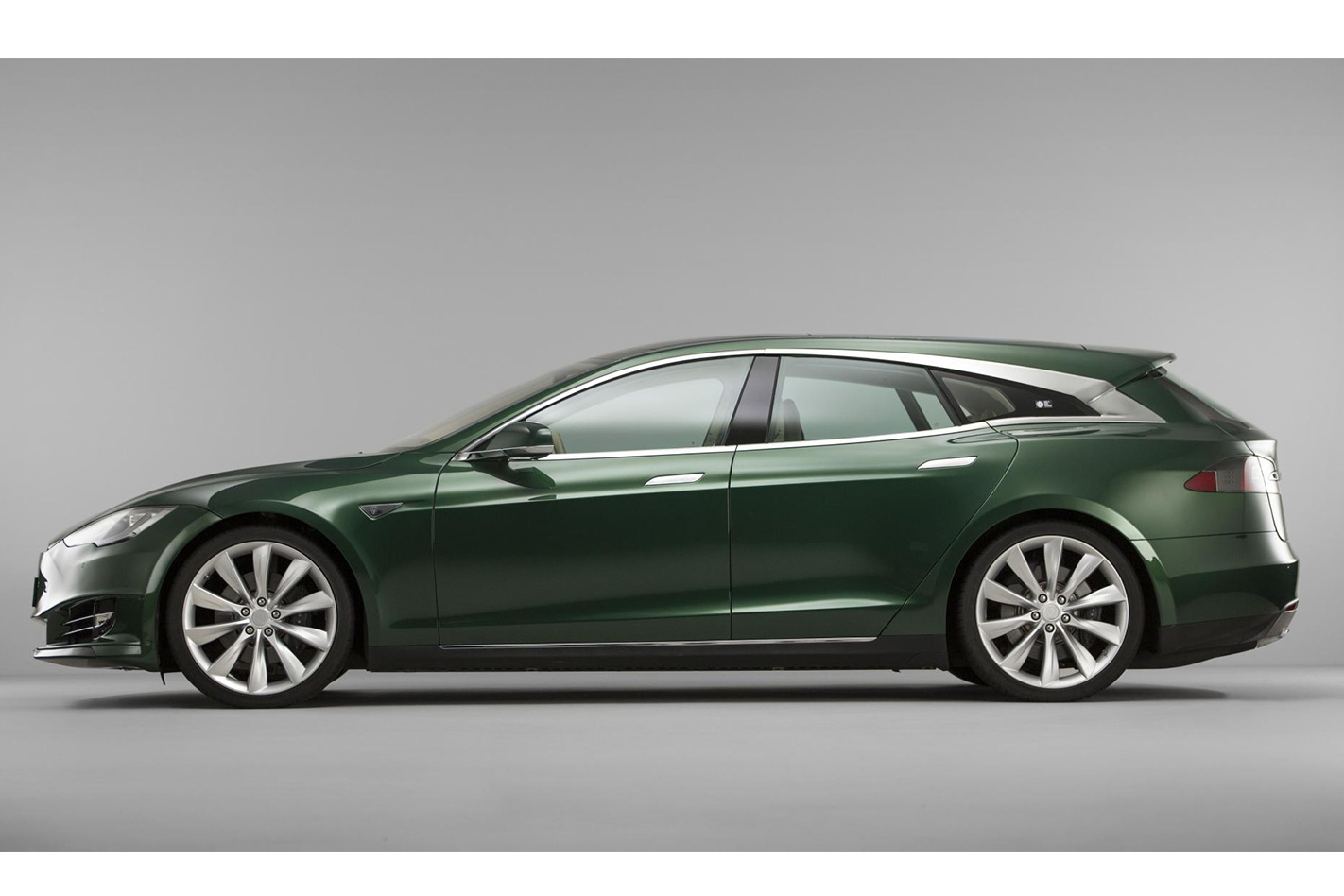
Model S shooting brake
Three-motor Model S
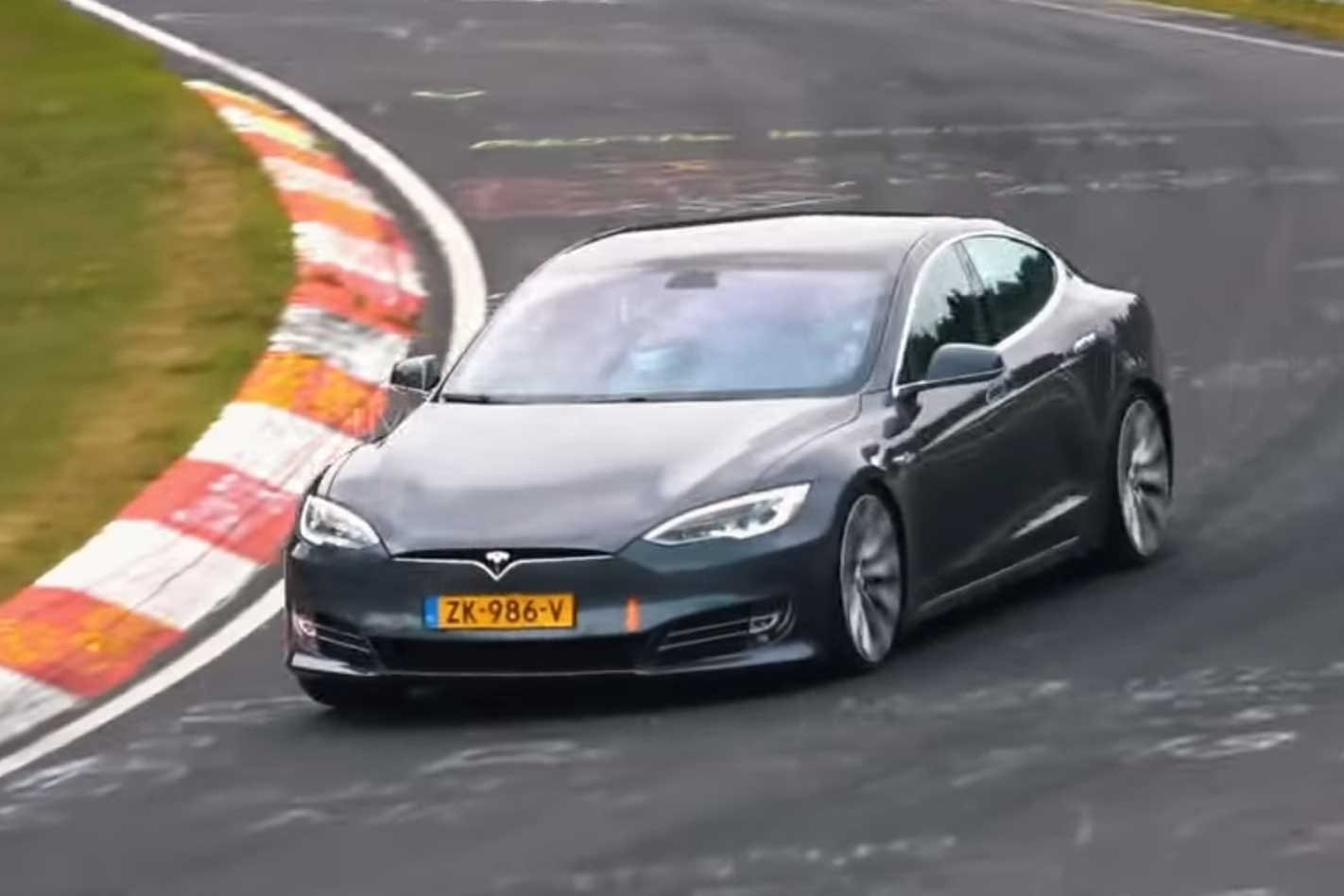
Ever since Porsche took its Taycan Turbo S to the Nurburgring and set a blisteringly-fast time, Tesla watched with keen interest ready to take the title themselves. While it mightn’t be a production model just yet, Tesla developed a three-motor ‘Plaid powertrain’ Model S that also featured a new ‘chassis prototype’. They unofficially took back the record but we feel like Tesla isn’t quite done here yet – watch this space.
We’ve often said that progress has left the Subaru WRX STI in its wake. So when we recently drove one we were curious as to how this warrior was ageing six years on from the current generation’s launch.
Subaru, in typical Japanese tradition, has made continuous micro-improvements to the car over the years and here, in Spec R form, the changes are starting to work.
In traffic, the six-speed manual shifts with surprising smoothness, the larger six-piston brakes offer more feel and, while STI has explained that it has tried to massage BMW M3-like performance-luxury into its cars since the mid-2000s, it’s only now that the STI’s interior fit and finish has reached levels even remotely capable of honouring that statement. Mind you, the Recaro seats’ horribly flat cushions and smoothed-off bolsters are unforgivable, especially in something that produces this much cornering grip.
When that 2.5-litre flat-four’s turbo gets huffing in the six-speed manual’s incredibly short first few gears, the STI lunges out of corners unlike anything else. However, the turbo lag feels so mid-’90s. As well as that, the stiff ride remains one-dimensional and the steering is plagued with kickback. So while there’s lots to like, there’s also lots we’d happily forget.
2020 SUBARU WRX STI SPEC R SPECS: Engine: 2.5-litre flat-4, turbo Power: 221kW @ 6000rpm Torque: 407Nm @ 4000rpm Drive: AWD Weight: 1508kg Price: $58,940
There’s more to picking a 4×4 ute than price and power. We weigh up what’s around
THE POINTY END
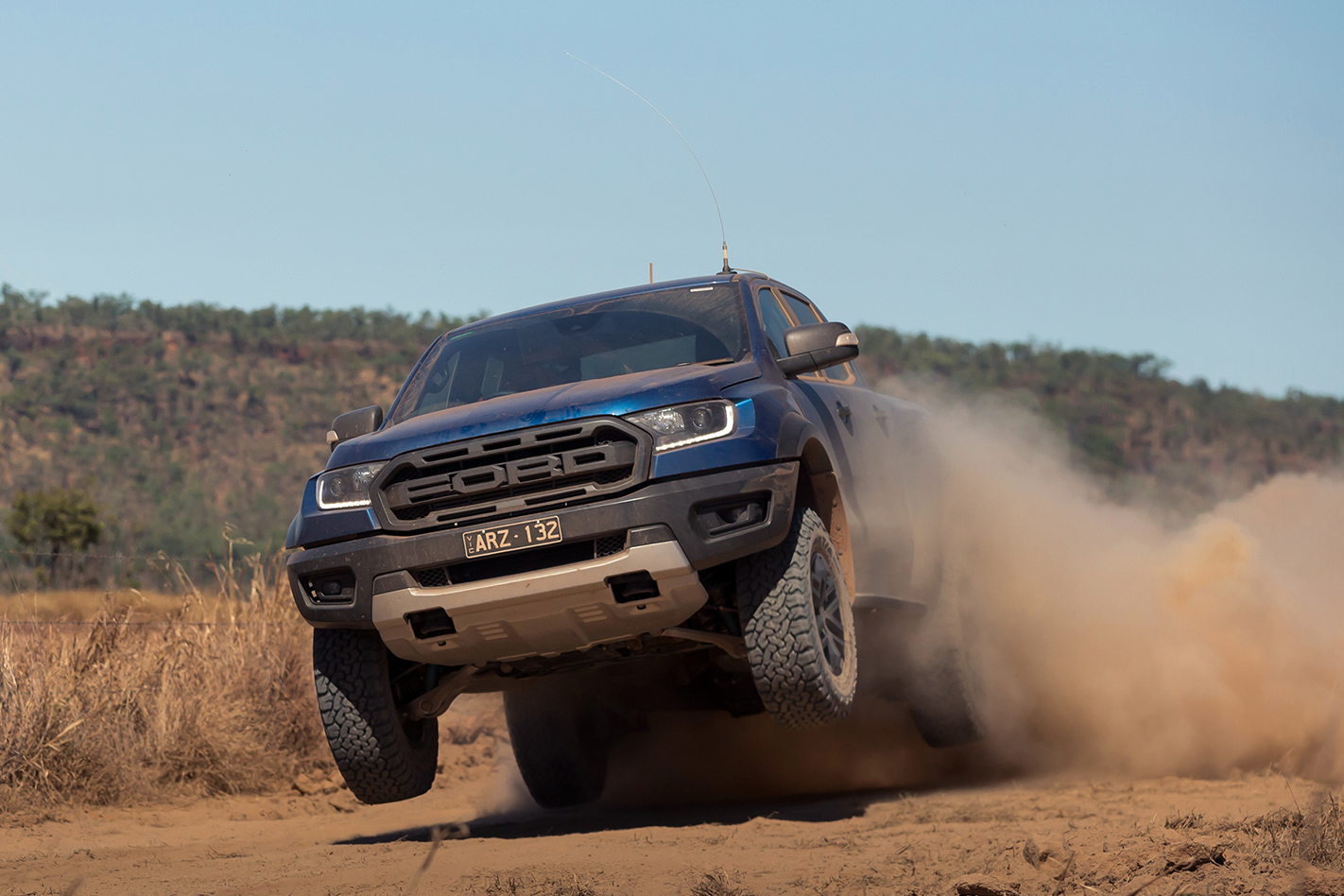
Ford Ranger
Steady development has really paid dividends for the Blue Oval’s best seller. The range-topping Raptor has a chassis touched by brilliance, but this Baja-buster is heavy, pricey, and probably over-engineered for what you want to do with it. If you’re not willing to fork out close to $80K on-road, there’s ample appeal elsewhere in the range. The interior is typical unsexy Ford, but scores well for functionality. And don’t turn your nose up at the twin-turbo 2.0-litre diesel, available in XLT and Wildtrack (as well as Raptor). It’s actually punchier than the old 3.2-litre five throughout the rest of the range, as well as more frugal, lighter over the nose, and it pairs with the 10-speed auto.
Pick of the range: Short of the Raptor, a 2.0 XLT at $60,340 would be our target.
Verdict: A top seller in the private sector for good reason.
Volkswagen Amarok
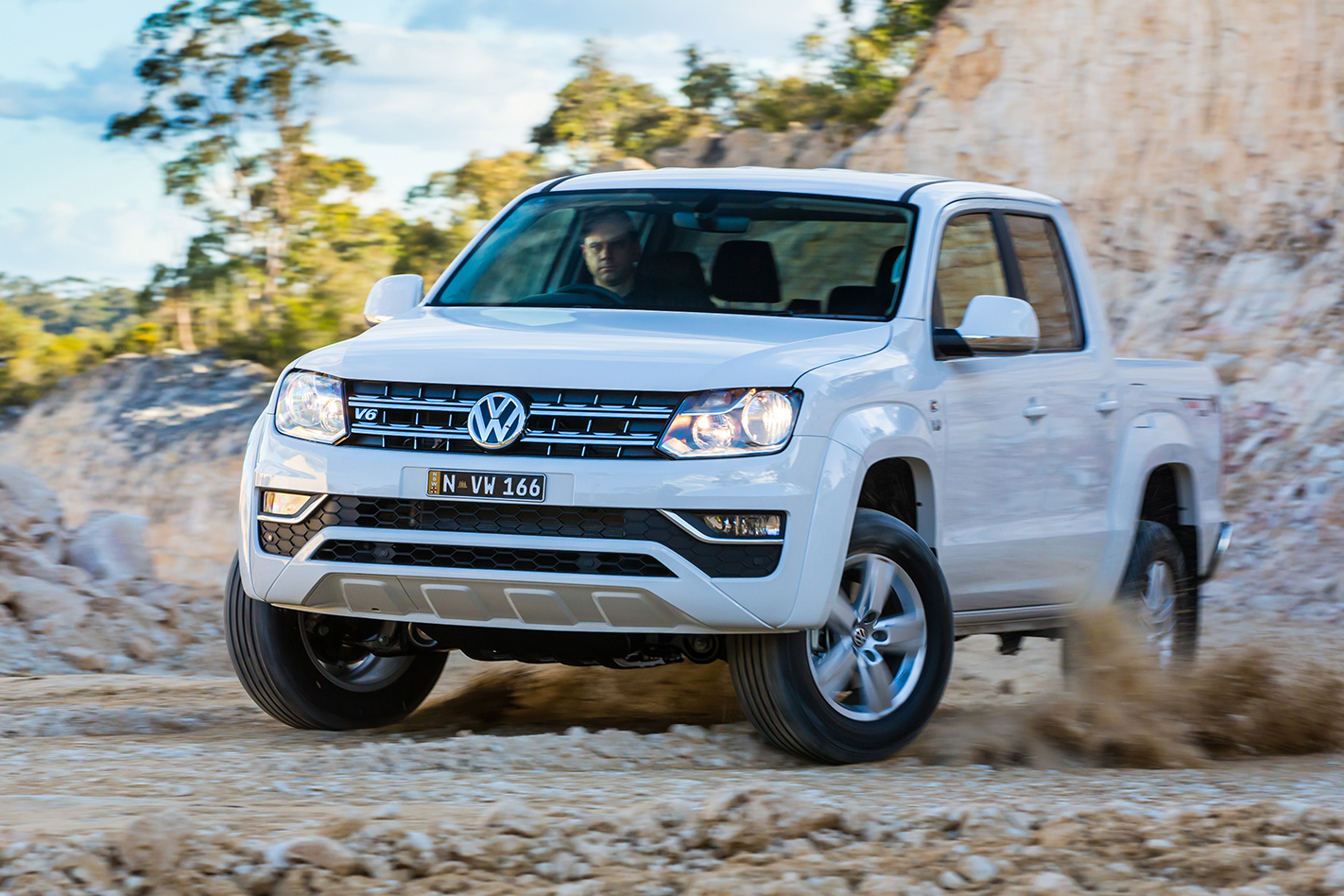
The ageing Amarok has been left behind in terms of plenty of safety and convenience equipment – it lacks push-button start, radar cruise control, rear cross-traffic alert, blindspot monitoring and AEB – but still mounts a case for itself based purely on smoothness, quietness, and bump-absorption abilities. Its 3.0-litre V6 leads the class (along with the top-spec Merc X-Class) for punch, refinement and real-world frugality relative to performance. Long-wheelbase XL and XXL versions are being made available for buyers who prioritise tray space. Plus there’s the on-road security of constant all-wheel drive, a beaut eight-speed auto, and accommodating (if austere) interior. All of which keeps the VW up the pointy end of a segment bereft of brilliance.
Pick of the range: Availability of the V6 starts with the TDi 500 Core at $49,590; worth it.
Verdict: Getting old, but shouldn’t be forgotten.
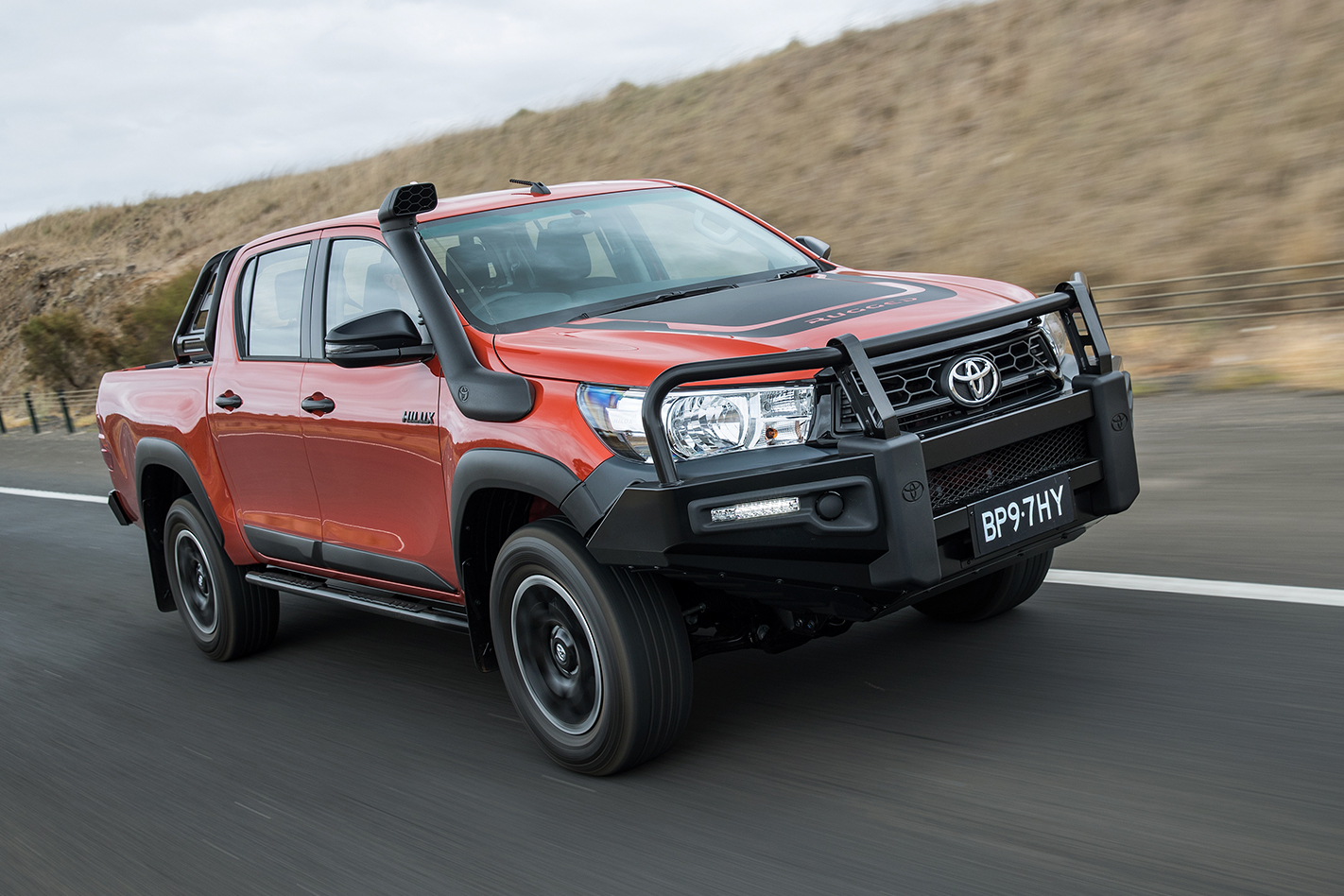
Toyota Hilux
Sheer weight of sales success may suggest that Hilux is right up at the pointy end for desirable attributes in this segment, but don’t swallow the hype. Fact is, the Hilux is very much a midfielder in key areas like engine performance and refinement, dynamic poise and ride comfort. And despite being one of the more youthful utes here (it arrived mid-2015) it lacks Apple CarPlay/Android auto, dual-zone climate control, and a digital speedo. Better is the inclusion now of AEB, radar-cruise and speed-sign recognition, and it makes a persuasive case in the broader ownership sphere, where reliability, aftersales service and retained value accounts for plenty.
Pick of the range: The value starts to trail off as you summit the range with Rugged X and Rogue; we’d stick with an auto SR5 ($56,440) or auto Rugged for only a few hundred more.
Verdict: Ubiquitous, unremarkable, but worthy.
THE MIDFIELDERS
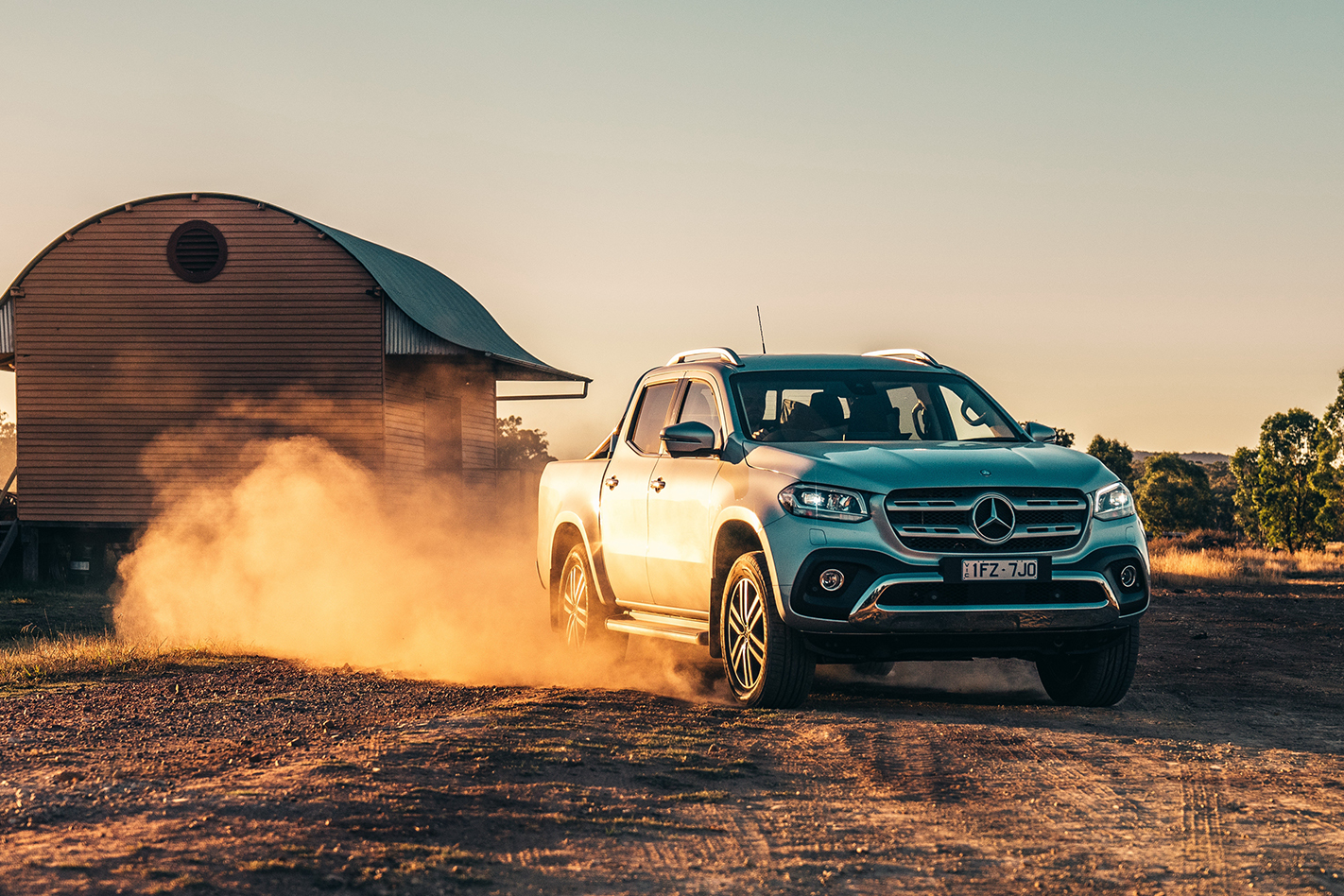
Mercedes Benz X-Class
The axing of Merc’s premium pick-up is proof there’s no such thing as a sure bet when it comes to selling cars here. But could Merc’s loser be your gain? The interior is a real cut above the 4×4 norm, and the driving experience benefits from the additional NVH measures the German engineers foisted on the Nissan Navara platform. The 2.3-litre four-cylinder is acceptable rather than exceptional in terms of performance and economy, but the 3.0-litre V6 is properly punchy and refined. Biggest drawback to the latter was the $73K entry point; the top-spec Power lists for $79K plus on-roads. You can now land a Power for under $70K driveaway, which some may argue is what it should have been all along.
Pick of the range: Shoot for the top and drive a hard bargain on an X350d in either spec level.
Verdict: Benz badge, now for Amarok money
Mitsubishi Triton
This one’s cheap for a reason. Driven back-to-back with something like a Ranger or even an Amarok it feels a generation behind. But the safety upgrade (blindspot monitoring, rear cross-traffic alert and AEB) that came with the front-end restyling is a welcome inclusion, and the 2.4-litre diesel has better refinement than other midfielders like Navara and D-Max. Retuning the rear suspension has netted benefits, but if you’re a regular hauler of heavy loads, be aware the tub on dual-cab Tritons overhangs the rear axle more so than other utes, meaning a chunk of the extra weight is placed behind the axle. Does the steering no favours…
Pick of the range: The $41,040 GLX ADAS auto packs a value punch.
Verdict: If the budget’s tight, it’ll get the job done without you wanting to set it on fire.

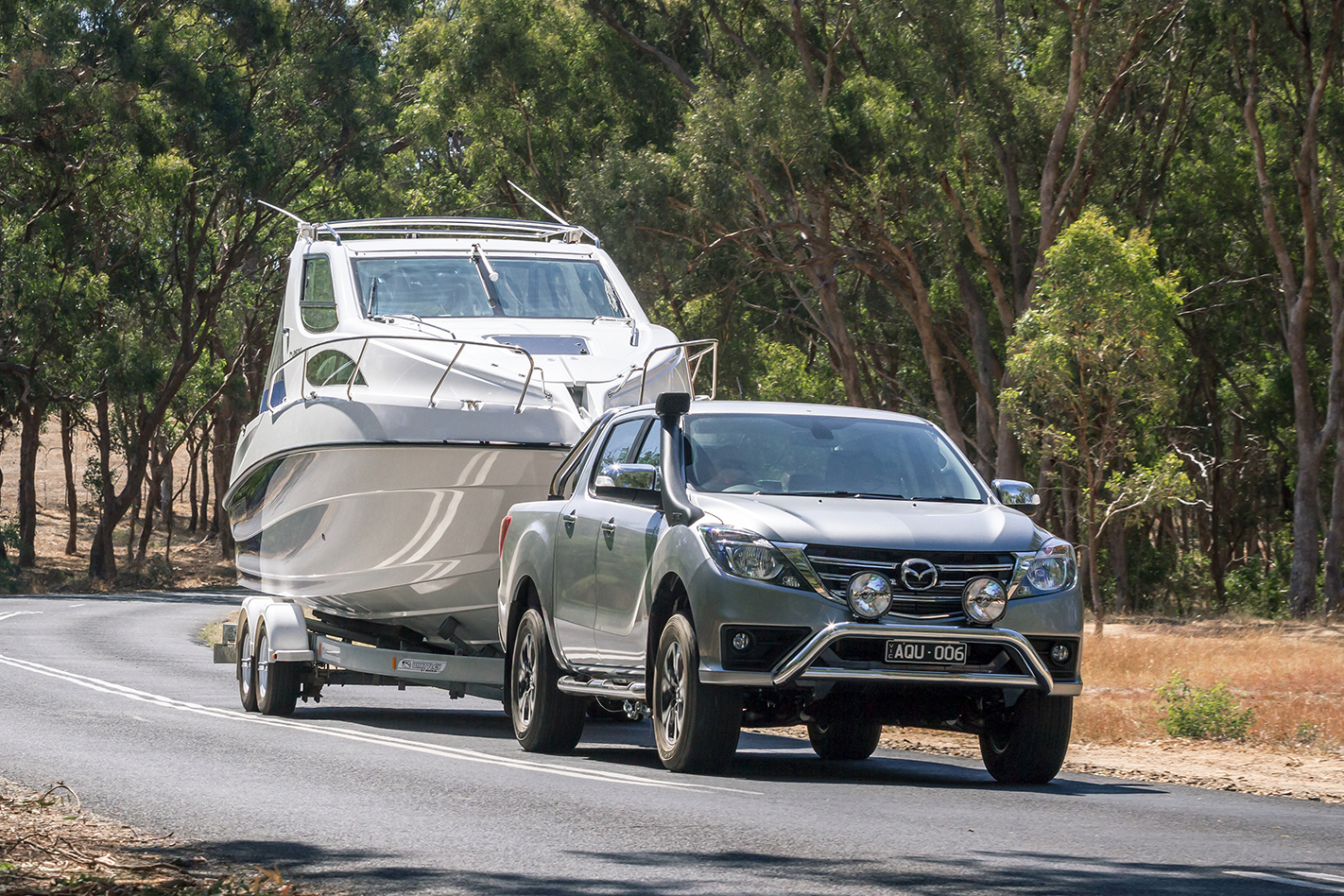
Mazda BT-50
Ah, the mystery of the Ranger’s unloved brother. Given Mazda Australia’s overall slice of the local market compared to that of Ford, the BT-50, which was co-developed with the Ranger, should not be so roundly ignored. So why is it? Could it be the slightly feline front-end styling doesn’t connect with the blokey target market? It doesn’t help that the BT-50 has missed out on much of the Ranger’s ongoing development, including the move to electric power steering assistance and additional safety systems. The once punchy five-pot is now slower than plenty of the smaller-capacity fours in this class, and equipment you may think is a given in 2020 – digital speedo, push-button start, and radar cruise control, for example – is missing. Suddenly the unloved bit is easier to understand.
Pick of the range: An auto XTR, if it’s so cheap you can’t refuse.
Verdict: Been left to wither, so showing its age.
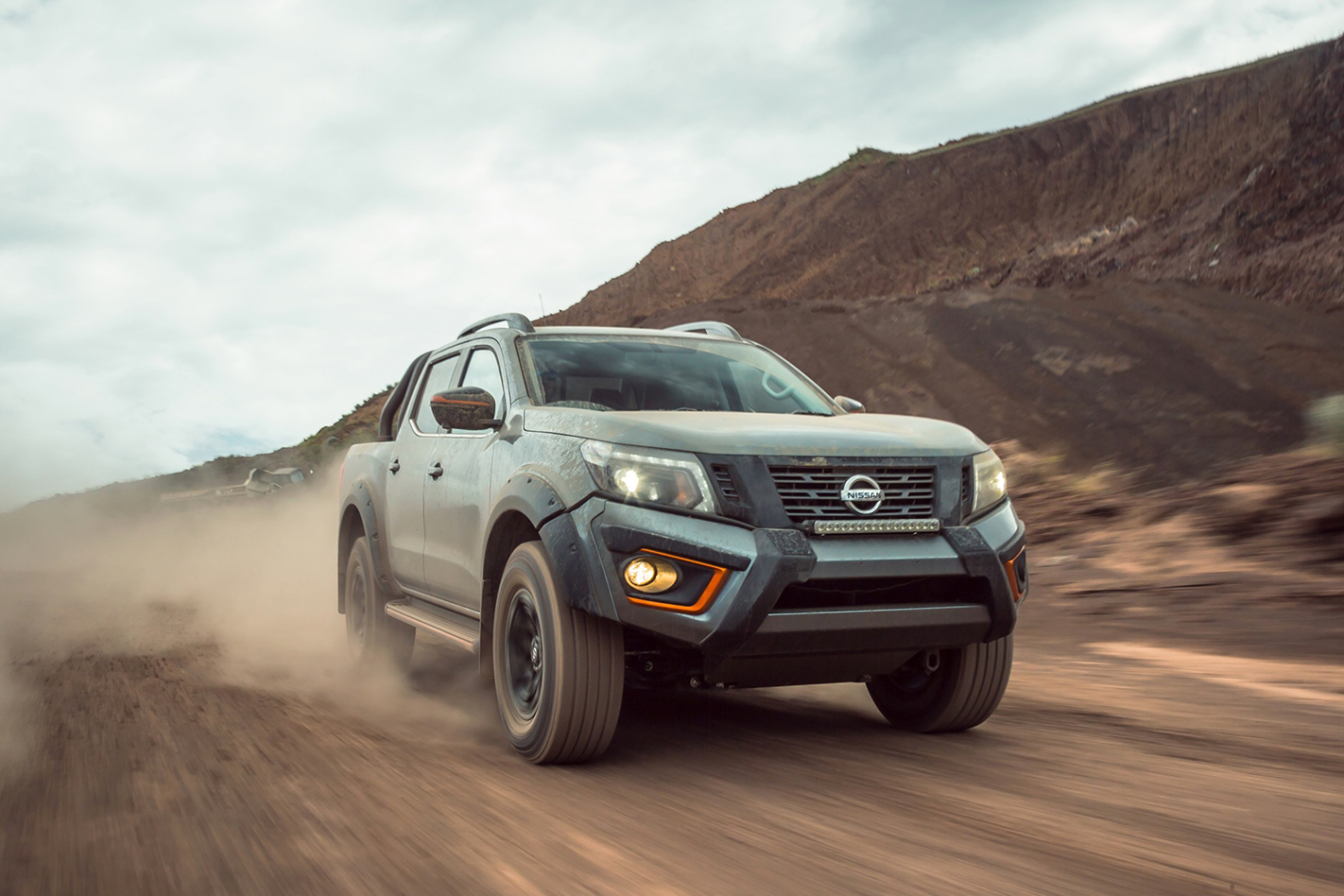
Nissan Navara
You can’t accuse Nissan of not persevering to get its stalwart ute’s rear suspension right. It feels like this D23 generation has had more tweaks to the coil-sprung rear end than Scott Morrison had days on the beach in Hawaii, but it’s still no benchmark for ride, composure, nor load-carrying ability. Better news is found under the bonnet, where the twin-turbo diesel four teams with the seven-speed auto to deliver responsive performance, middling fuel consumption and not horrid refinement. The cabin’s quite nicely presented, too, with a logical layout and car-like ambience. But the seats are flat and shapeless, and the safety story is not compelling. You can do better.
Pick of the range: Driveaway deals to be had on the ST-X.
Verdict: Carlos Ghosn never bothered trying to pinch one from the warehouse.
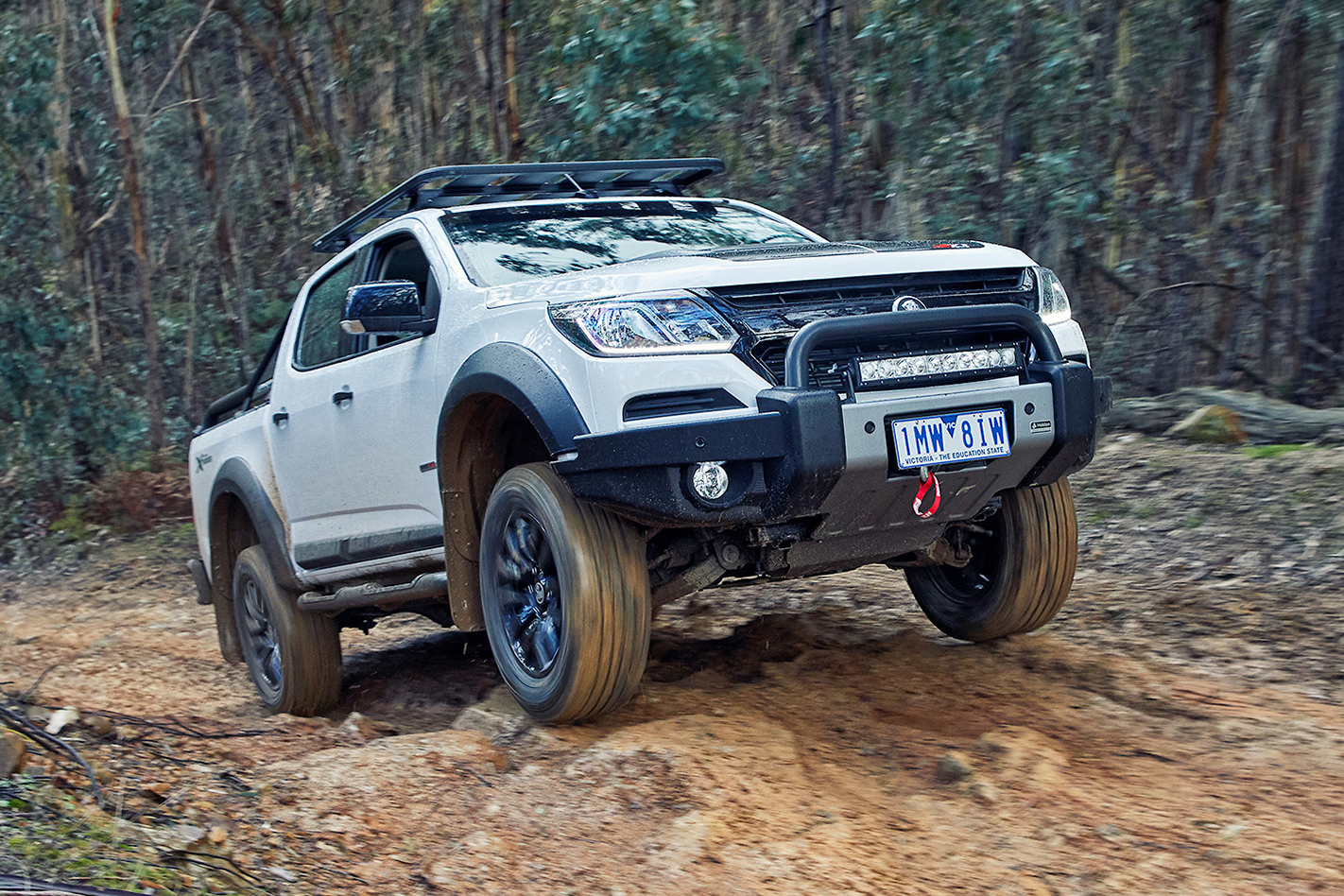
Holden Colorado
Holden’s ute, which has often been the fifth-best seller in this segment, is now a Dead Man Walking thanks to the brand being extinguished at the end of 2020. So why would you buy one? Fact is, Colorado does have virtues – the 2.8-litre engine pulls hard from low revs, and the local development of its chassis is evident in the well-tuned steering and sure-footed handling. Interior presentation is decent if you can ignore the cheap plastics, and there’s a robust functionality pretty much everywhere you look. But it lacks the overall polish of the likes of Ranger, and misses out on key safety features like AEB. Deal breaker? Possibly not, when there are dealers falling over themselves to clear stock at bargain prices.
Pick of the range: An LTZ auto is the sweet spot, but shoot higher if the price is right.
Verdict: Haggle like it’s a tuk-tuk ride in Bangkok, then wait for the kids next door to go, “Hey Mister, what’s a Holden?”
SUPERSIZE ME!
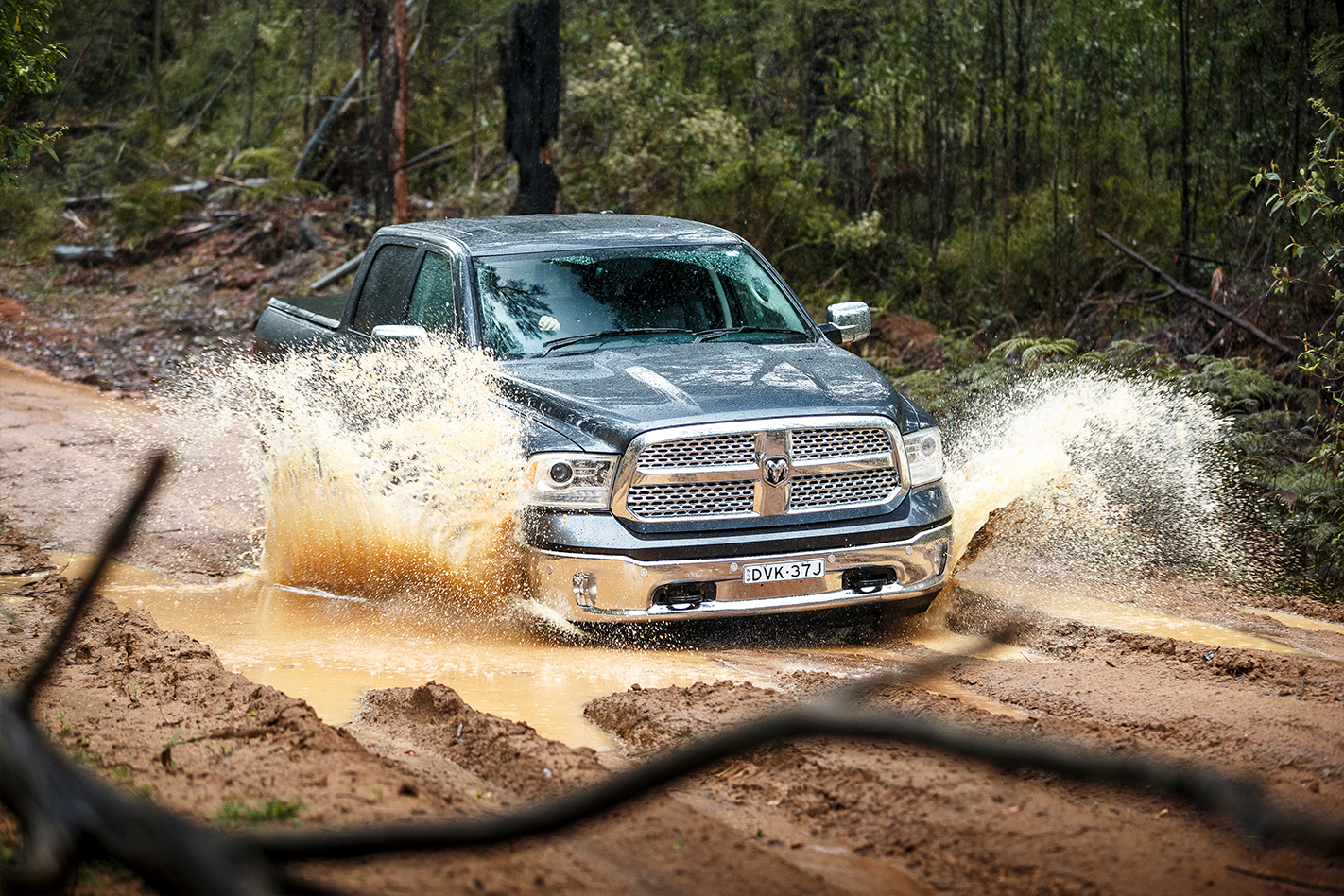
Ram 1500
It seems a little incongruous, but despite its hulking size and weight, the Ram 1500 is the closest thing Aussies can buy to the Commodore and Falcon V8 utes of yesteryear. Great-sounding Hemi V8 delivers 0-100km/h in around 7.0sec, way quicker than a Raptor, although expect it to slurp at least 16L/100km around town. Extra rear-seat room and vast cargo tray are the upsides of the oversized dimensions, but your parking-spot options just shrunk. Coil-sprung rear end contributes to thoroughly civilised on-road demeanour, and the local conversion to RHD is executed with care and quality.
Pick of the range: There’s only two, so not a confusing choice.
Verdict: Should make no sense; somehow does.
Jeep Gladiator
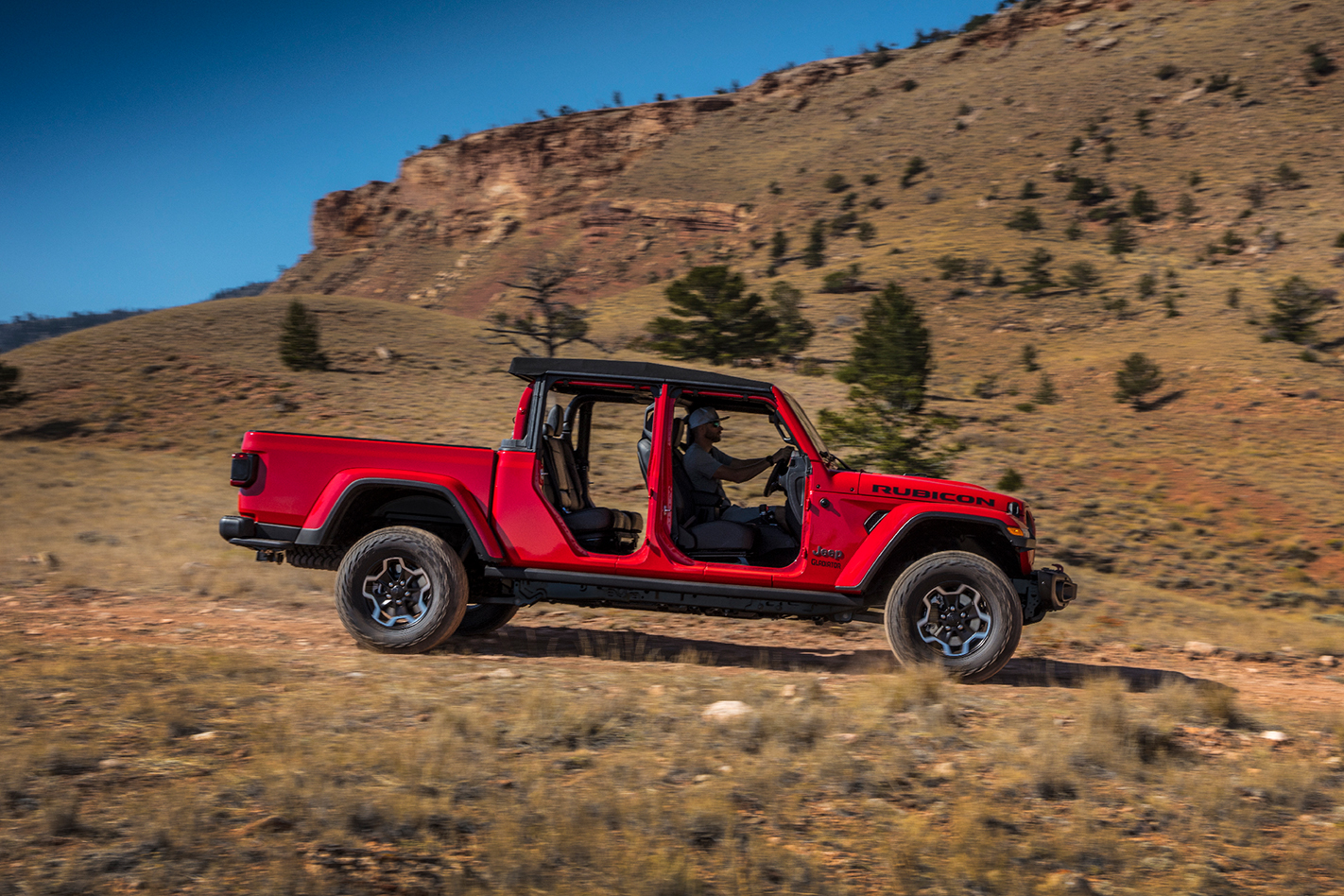
If you have a penchant for heading into seriously inhospitable terrain and then getting semi-naked, Jeep’s ute, due here mid-year, could be for you. Okay, the nudity we’re referring to is for the vehicle (although operator clothing is optional), because as with the Wrangler from which it’s developed, Gladiator allows you to lower the windscreen, and even remove the doors with provided tools, for a blissful breeze over your bits.
Its wheelbase is longer than that of the Wrangler, which makes for a more planted, composed ride. Confirmed engine is the 3.6-litre Pentastar petrol V6, which is smooth and refined, but not a torque monster, and likes a drink. It’s mated to a slick-shifting eight-speed auto, and all the hardware needed for extreme off-roading works seamlessly. What isn’t yet confirmed by Jeep’s Australian operation is whether we’ll get a diesel engine option, or a manual transmission. The former could be a deal-breaker for some.
Pick of the range: Rubicon.
Verdict: Built to take you places the others can’t.
HSV Chevrolet Silverado
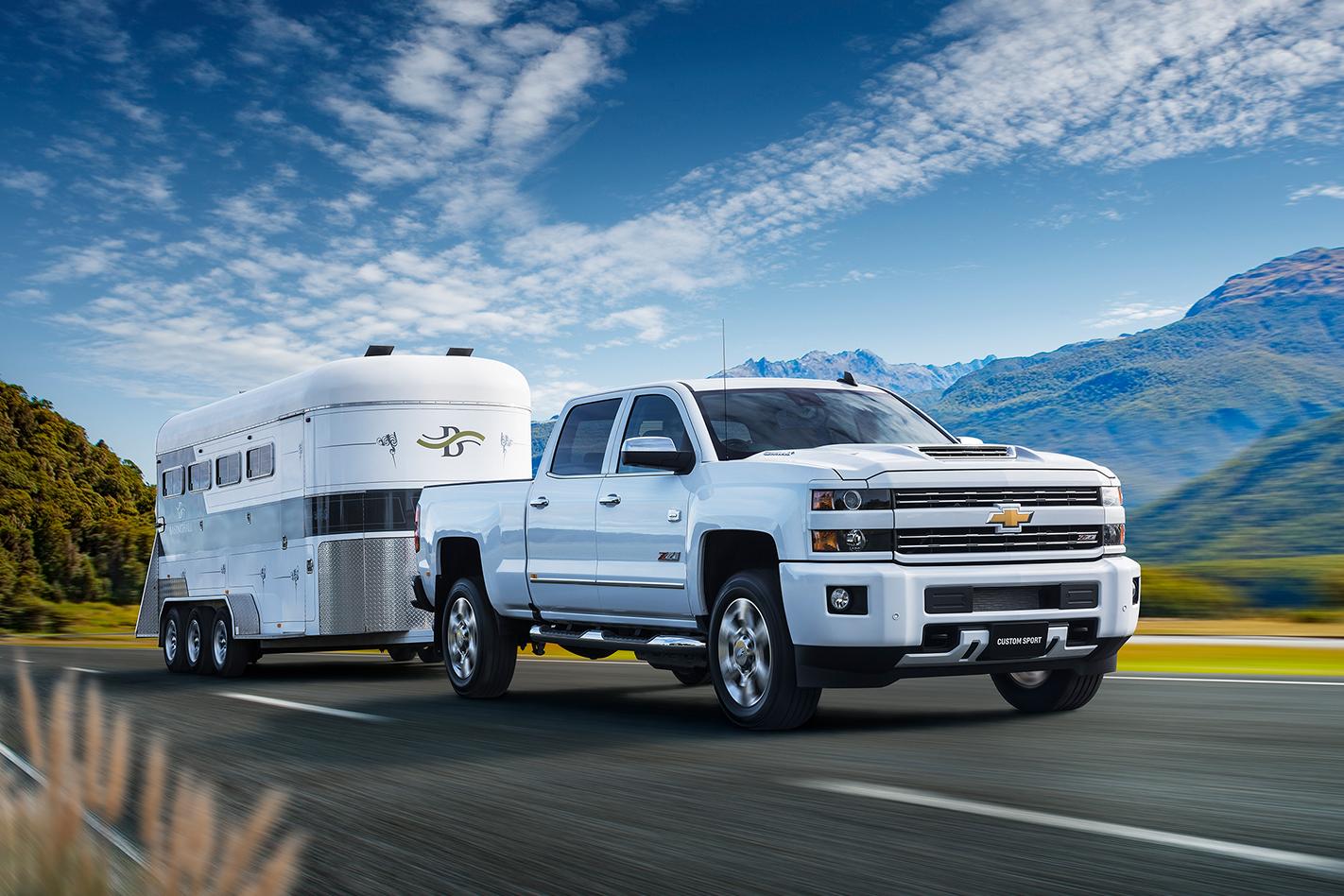
It’s hard to know which numbers to focus on first – the dimensions, the price tags, or the torque output. Let’s cover them with ‘huge, huger, monstrous’. There are five spec levels to choose from, spanning $115K to $148K, all powered by a beast of a turbo-diesel: the 6.6-litre Duramax V8 pumping out 332kW and – wait for it – 1234Nm. An Allison six-speed auto handles the shifting; four-wheel discs are tasked with hauling it down. Performance is pretty lively, given the weights range between 3.5 and 3.7 tonnes, but you’d only buy one of these if you need to tow a boat the size of a Sydney ferry, or relocate Clive Palmer to a richer pasture.
Pick of the range: 2500 LTZ Midnight.
Verdict: This ain’t Texas, y’all, so let’s be sensible.
THE REST
SsangYong Musso
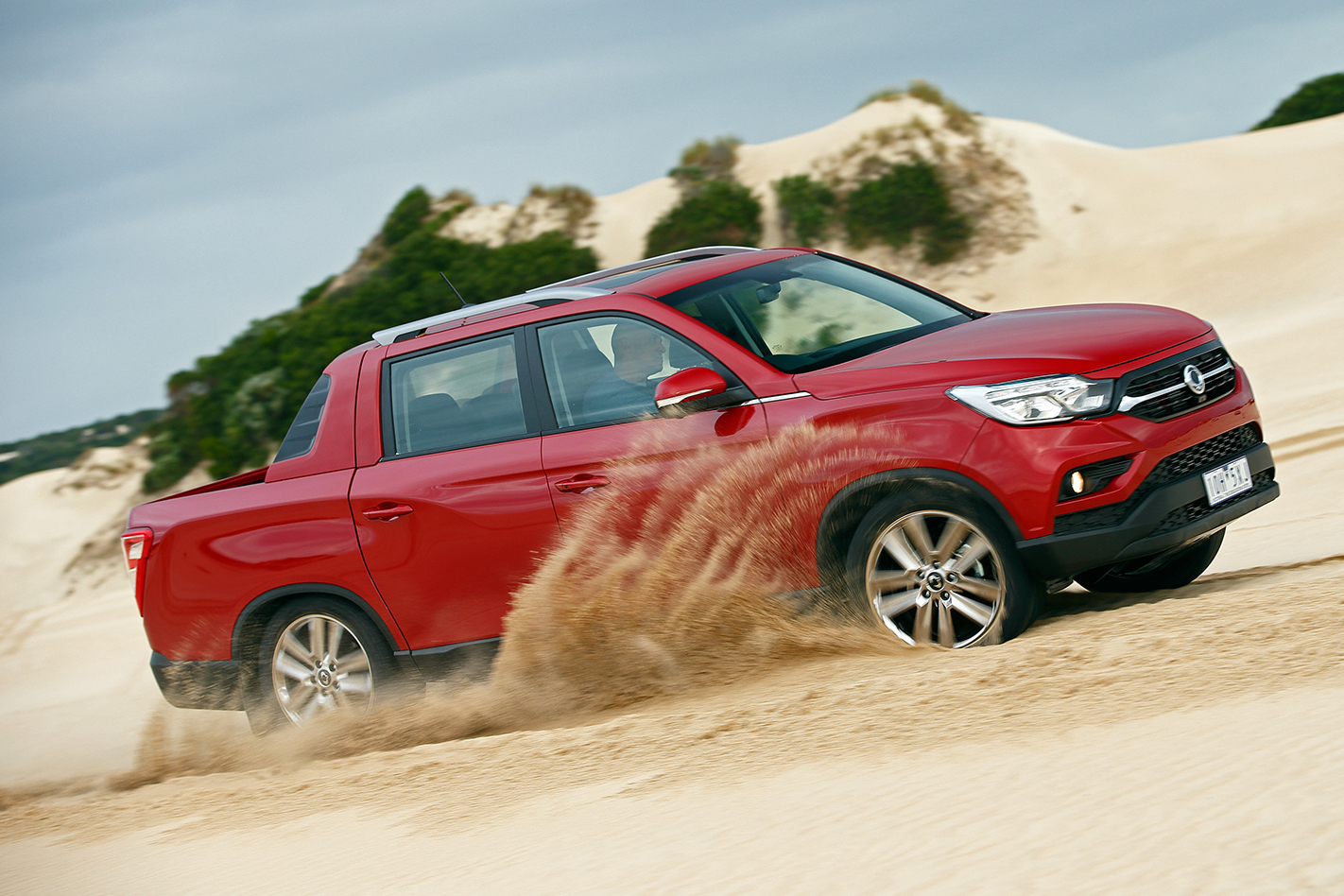
This is the real sleeper of the 4×4 ute segment, offered in both standard and long-wheelbase guises, and boasting one of the biggest trays in class, along with best-in-class seven-year warranty. You can choose between coil rear suspension (allowing an 880kg payload) or a leaf-spring rear that can handle 1025kg. Relatively small 2.2-litre four-cylinder turbo-diesel is matched to a six-speed automatic transmission, giving midfielder performance, but is way quieter and more refined than most. Standard safety tech shames a few bigger names, and includes AEB, rear cross-traffic alert and blindspot monitoring. Nice-quality cabin, too. So why wouldn’t you? Lack of an ANCAP crash-test result is an anomaly, as is the lap-belt-only for the second-row’s centre seat. Keen pricing may make you question how much you really love that middle child.
Pick of the range: Ultimate XLV is under $40K.
Verdict: Kia is not the only Korean brand with the power to surprise.
Isuzu D-Max
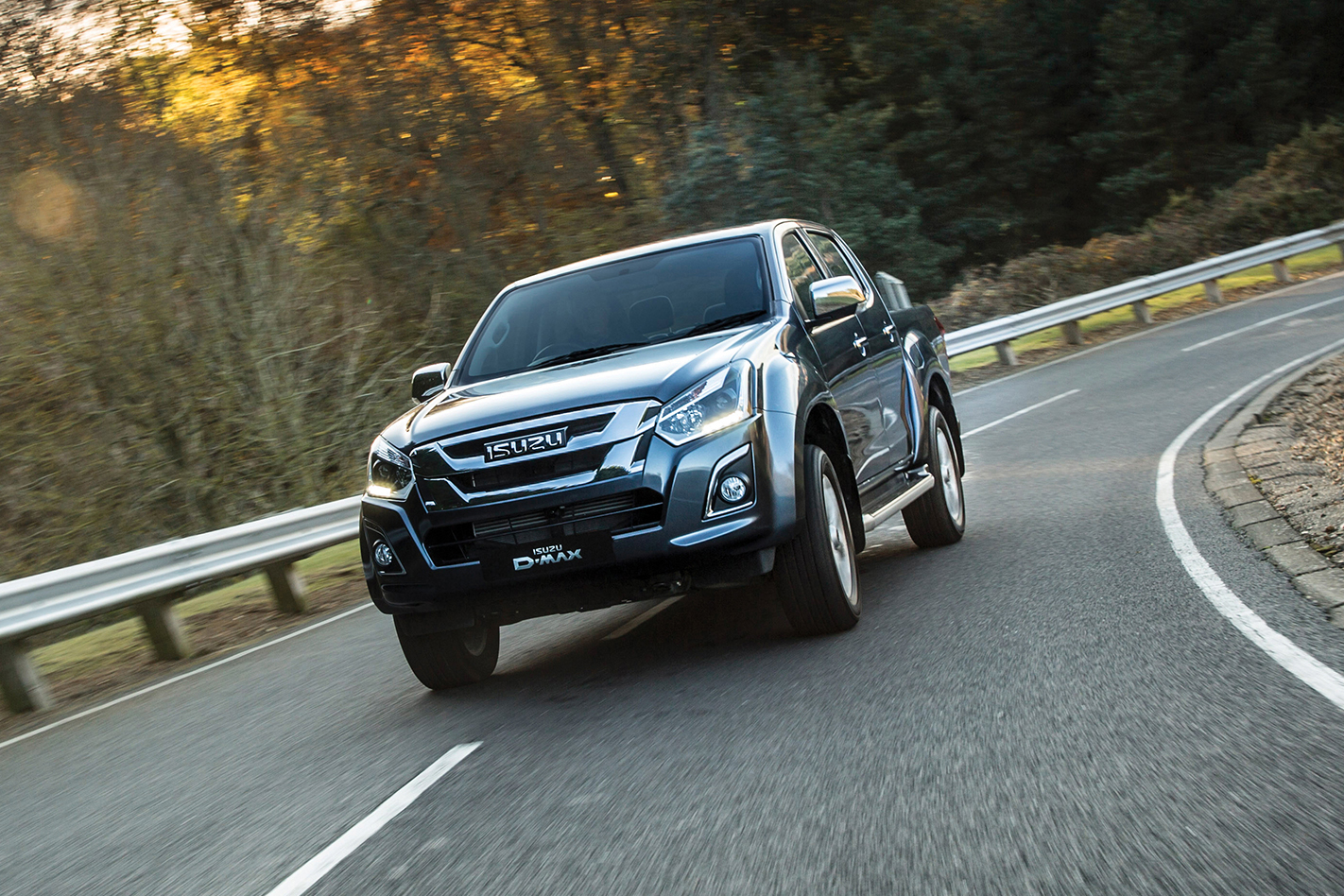
Isuzu left the D-Max virtually untouched until 2017, when mandatory compliance to tougher Euro 5 emission regs brought a revised engine along with six-speed manual and auto gearboxes (replacing the previous five-speeders.) NVH improvements and equipment upgrades also featured; then, in 2018, all SX, LS-U and LS-T dual-cabs were specced with more-compliant three-leaf rear springs designed to improve the unladen ride. (LS-M models retain the five-leaf springs.) But the big 4JJ1 3.0-litre four with its beefy timing chain is still a bit vocal when asked to work for its keep and the interior presentation certainly puts the emphasis on function rather than form. But, as steady sales suggest, there’s a ready market for something that’s a known quantity and which sports a reputation for simplicity, low service costs and reliability. While others may deliver more shine in the showroom, the D-Max can still deliver when you’re in a tight spot.
The biggest deterrent to buying a D-Max right now, however, is the imminent arrival of an all-new model. Exact timing of the new D-Max is hazy, though it could be as early as this July. The new-gen model is the first full update in eight years and will bring important upgrades to the powertrain and the exterior and interior styling, plus a host of additional safety and convenience features.
Pick of the range: Auto LS-U.
Verdict: Unless dealers can really surprise us on pricing, we’d probably wait for the updated 2020 D-Max
LDV T60
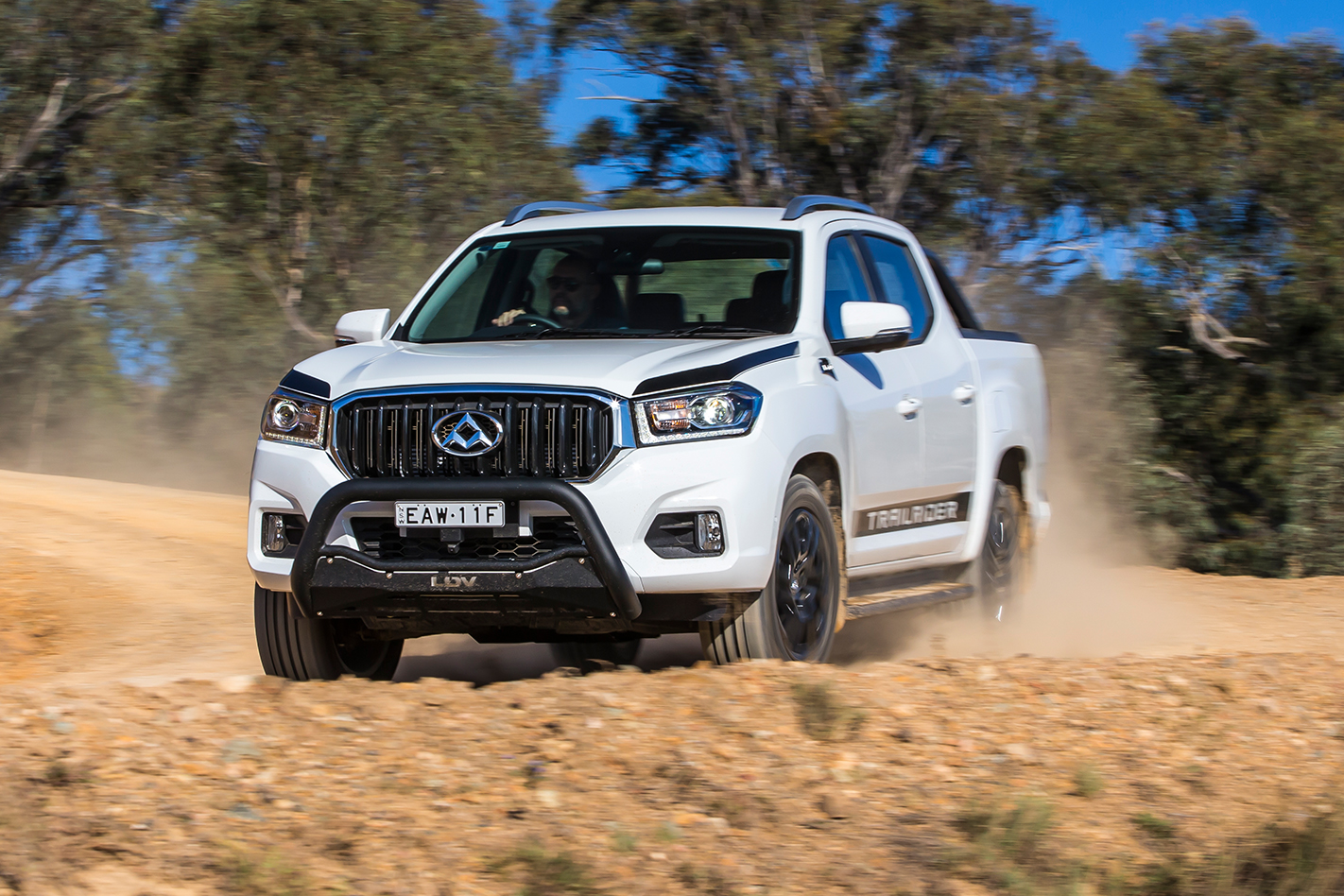
Cheap doesn’t make this Chinese fringe player entirely cheerless. The top-of-the-range LDV T60 Luxe automatic costs from $35,490 drive-away, making it anywhere between $10,000–$15,000 cheaper than similarly equipped rivals here. It scores a five-star safety rating, it’s one of only a couple of utes to feature rear disc brakes, its shock absorbers are specced for Australia, and its 10.0-inch infotainment screen is the biggest in class. Oh, and the MegaTub variant boasts the biggest tray of any 4×4 dual-cab in the class. So what’s the catch? Well, the 2.8-litre four-pot engine is a weakling, making just 110kW and 360Nm, with a useable powerband narrower than the gap between Mr Burns’ eyeballs. But not only is it slow, it idles noisily and resents hills. Then there’s the steering rack rattle and kickback over corrugations. For now, the LDV speaks of potential, rather than your cue to jump in.
Pick of the range: Top-spec auto T60 Luxe cheap enough to not bother looking below.
Verdict: New engines coming, so cool your jets.
Mahindra Pik-Up
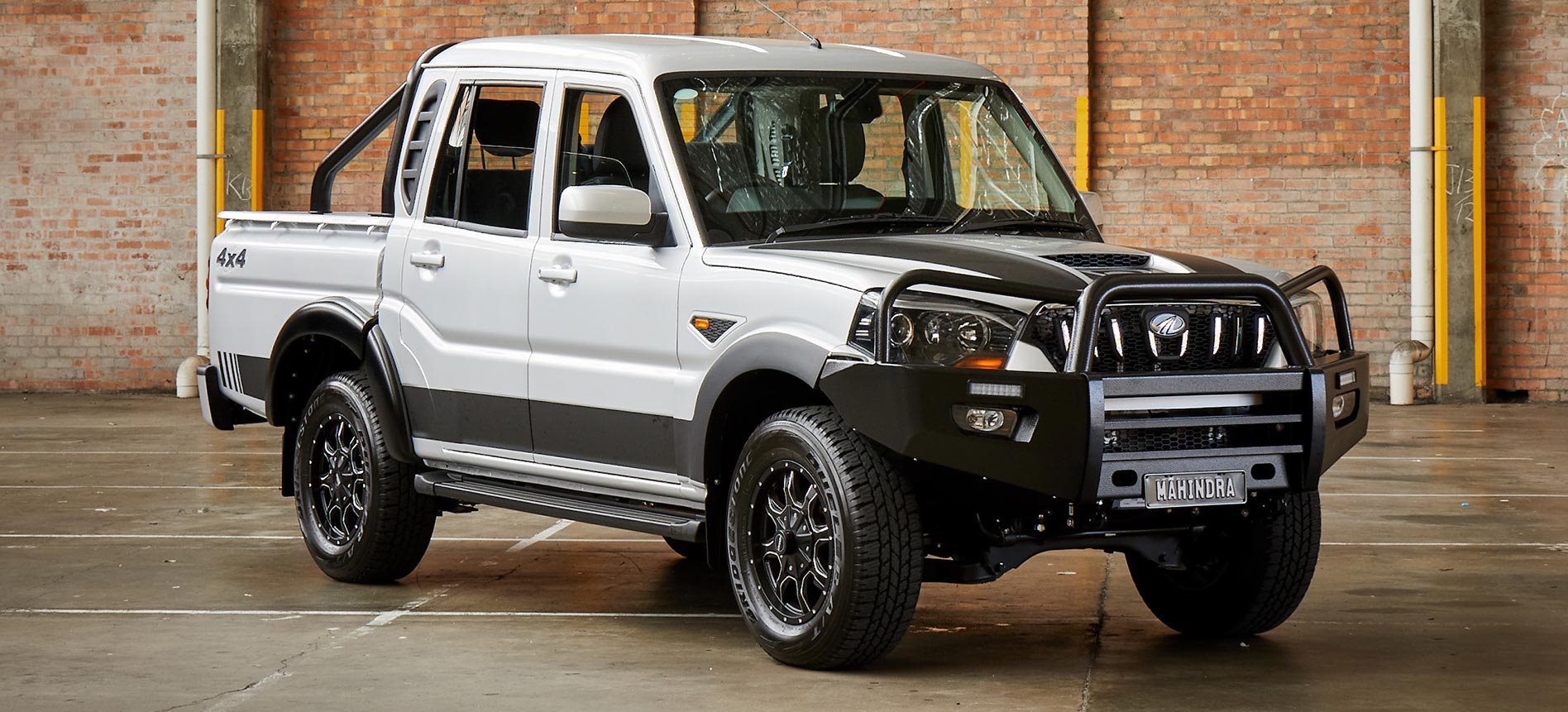
Aussies love to feel as though we’re getting a lot of metal for our money, and by that metric, the Mahindra Pik-Up excels. Starting at $29,490 for the entry-level S6 4×4, the Pik-Up’s trump card is its stunning value. There’s genuine 4×4 know-how at play here too – Mahindra started out assembling war-surplus Jeeps in the 1940s, so it knows its way around a transfer case. Age is also on the Pik-Up’s side, given Mahindra gave it a top-to-bottom rebirth in 2018 that brought a raft of updates to the chassis, powertrain and cabin. The only engine available is a 2.2-litre diesel paired with a six-speed manual (auto buyers will need to look elsewhere), and while its on-paper outputs of 103kW/320Nm sound diminutive, the Pik-Up doesn’t actually feel underpowered, and its fuel use isn’t the worst in this class either. So it’s cheap, a decent steer, and top-spec S10 variants gain plenty of equipment (such as a 6.0-inch touchscreen, sav-nav, rear camera, and cruise control), though you do have to make some sacrifices at this price point. The unladen ride is bouncy and firm, the cabin is dominated by hard plastics and won’t be winning any awards for fit and finish, there’s no reach adjustment for the steering wheel, and that 6.0-inch screen is hard to read. Plus, the lack of an ANCAP crash rating will concern some.
Pick of the range: Spend the extra $2000 and go for a top-spec S10 which brings useful equipment upgrades
Verdict: A solid choice for budget-conscious buyers looking for a dependable workhorse. We’d look elsewhere, though, if comfort, car-like handling and known safety credentials are your priorities.
Great Wall Steed
Proof that cheap really can be cheerful. The Steed undercuts Hilux and Ranger by significant margins (we’re talking $13K and 17K respectively), yet boasts expensive goodies like on-demand four-wheel drive and rear disc brakes. Cabin is nice, too, and includes leather and heated front seats. You also get lots of equipment: cruise control, electric driver’s seat, tyre pressure monitoring, auto headlights/wipers and Bluetooth. Sat-nav is a $990 option. The downside is the Steed is based on old underpinnings and it feels a generation behind newer rivals, especially in the handling stakes. And while it will handle moderate off-road tracks, the Steed’s relatively low-slung body and average wheel articulation mean it isn’t as capable off-road as mainstream rivals.
Pick of the range: There’s only one 4×4 model to choose from, priced at $30,990.
Verdict: You get a lot for a little with the Steed, though it’s not as capable on- or off-road as newer rivals. We’d look elsewhere if price isn’t your only priority.