
THE NAME John Dixon won’t mean much to Aussies. Even if you visited Mr Dixon’s home town of Dayton, Ohio, it’d be fairly easy to miss the nondescript warehouse on the outskirts. Step inside ‘Taj Ma Garaj’, however, and you’d be greeted with one of the loveliest, and strangest, private collections of Porsche cars and collectibles in the world.
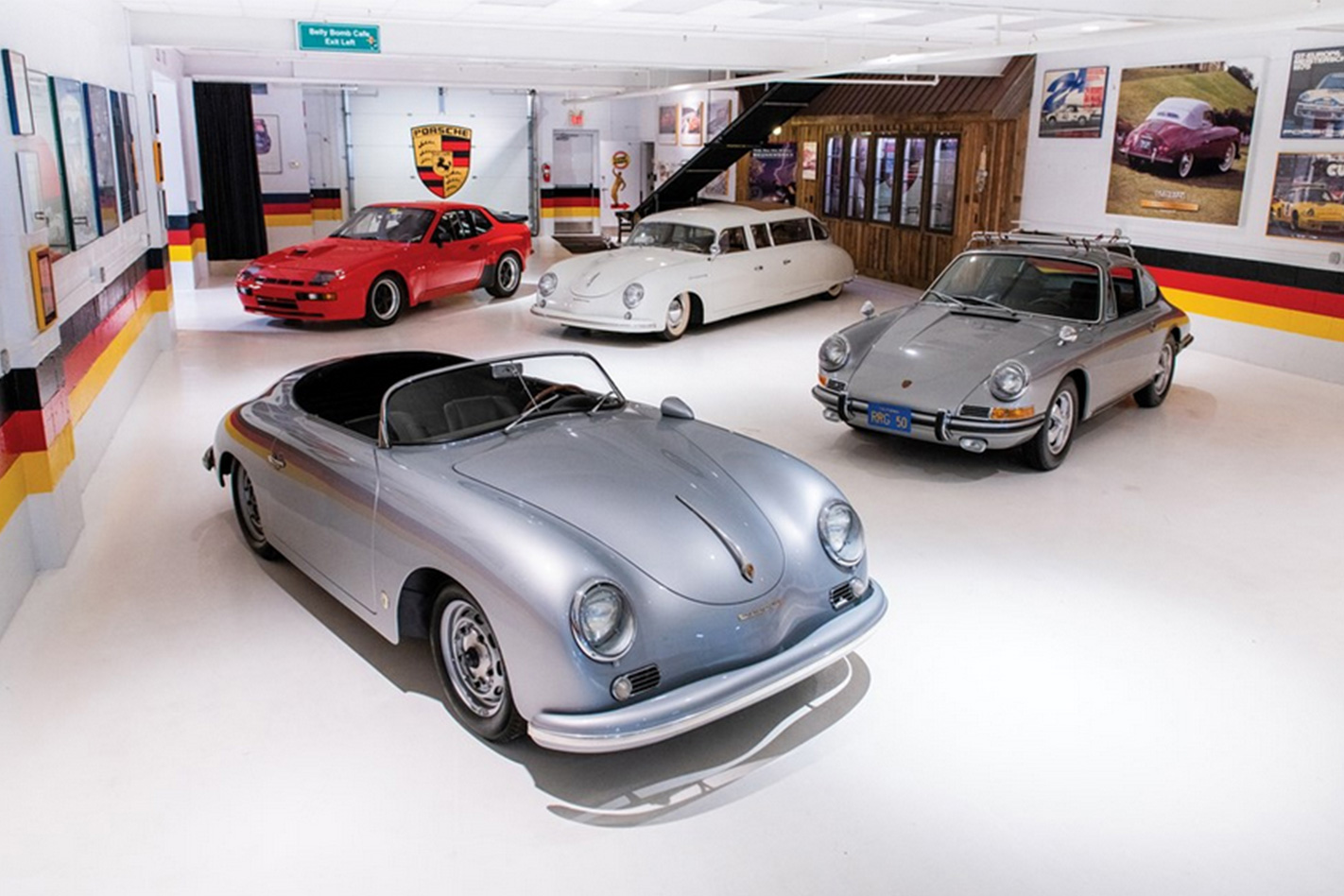
Dixon’s knowledge was encyclopaedic, and he’d happily share details of his Carrera GT with 12 miles on the odometer or the BMW motorcycle that he’d chanced upon that had been built with a Porsche 356 Carrera quad-cam engine at some point in the 1960s. Quaaludes clearly have a lot to answer for.
He sadly passed in 2013 and, some six years later, the entire collection is being auctioned by RM Sotheby’s. What’s more, there are no reserve prices on any of the 30-plus cars.
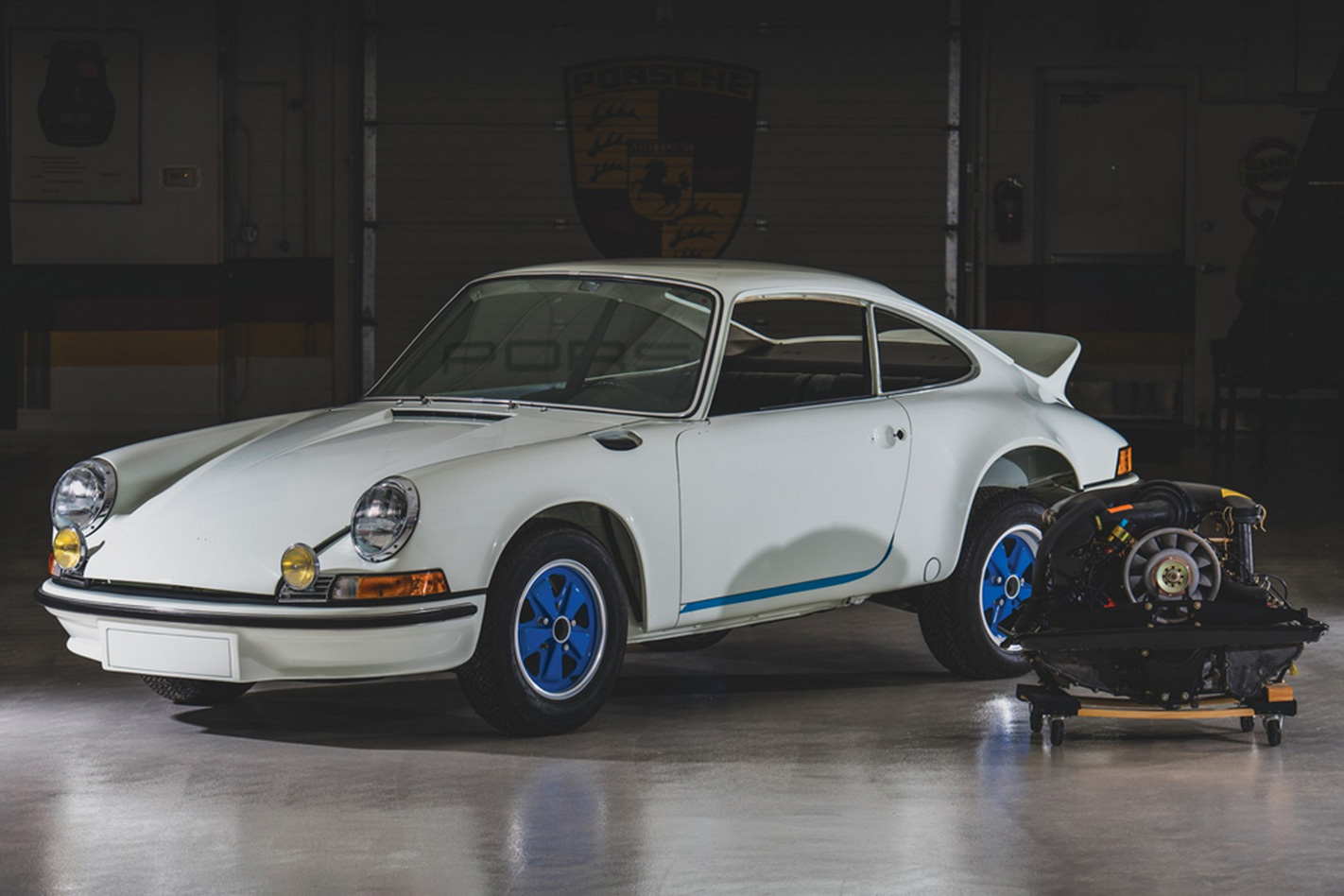
Some of the cars are de rigueur Porschephile classics. Of course you’d need a 1973 Carrera RS 2.7 if you were assembling a ’best of’ collection. But it’s the slightly left-field and oddball stuff that really has us intrigued. How about a 1957 356A Carrera GT with a body made by Reutter, expected to fetch over US$2 million (A$1.5 million)?
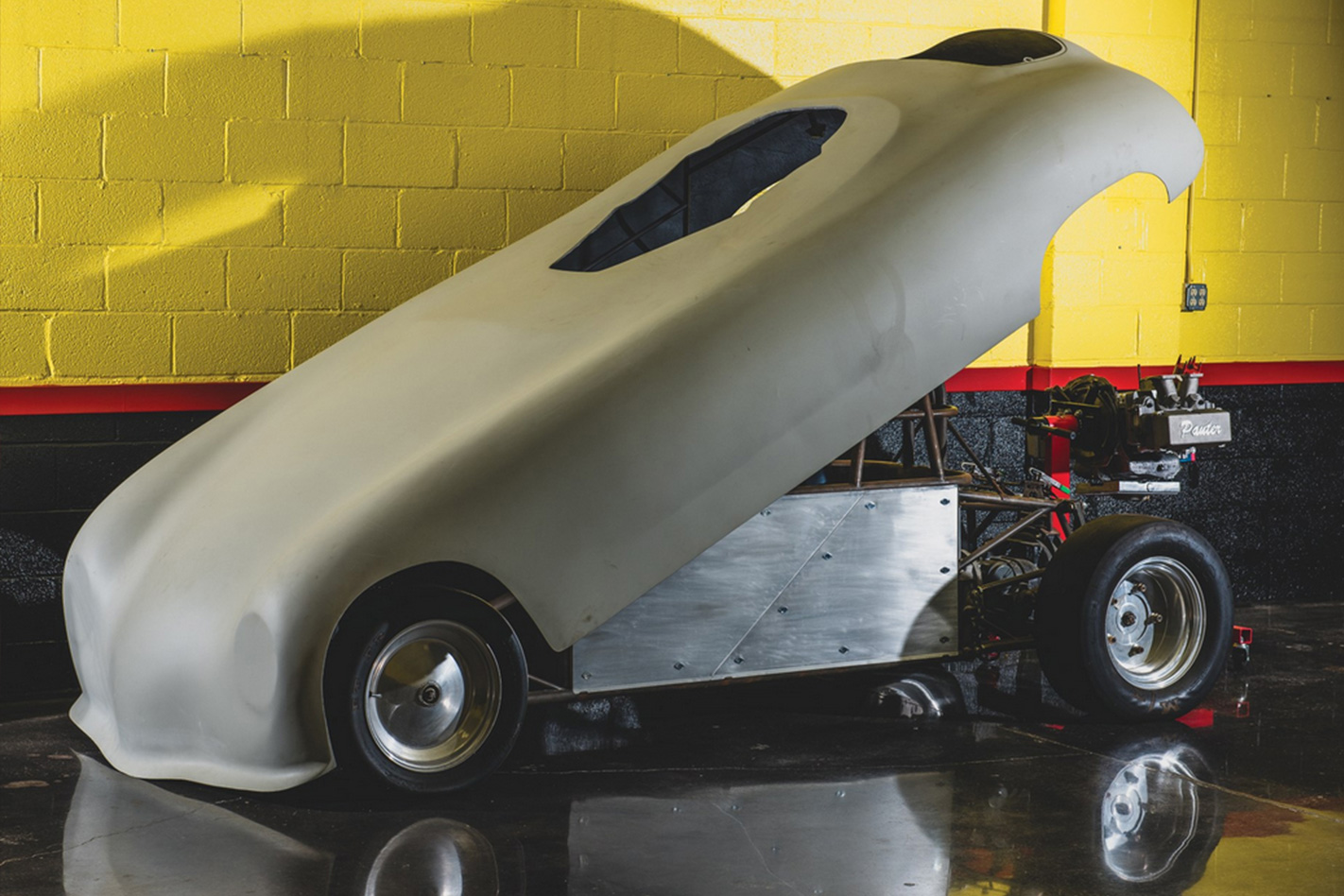
Then there’s the 1953 Porsche 356 stretch limo that was used for Dixon’s daughter’s wedding. Or the 1956 356 turned into a dragster. If air cooling doesn’t do it for you, keep an eye out for one of 15 examples ever built of the 924 GTS Clubsport homologation special or later 993 Turbo and 997 GT3 RS.
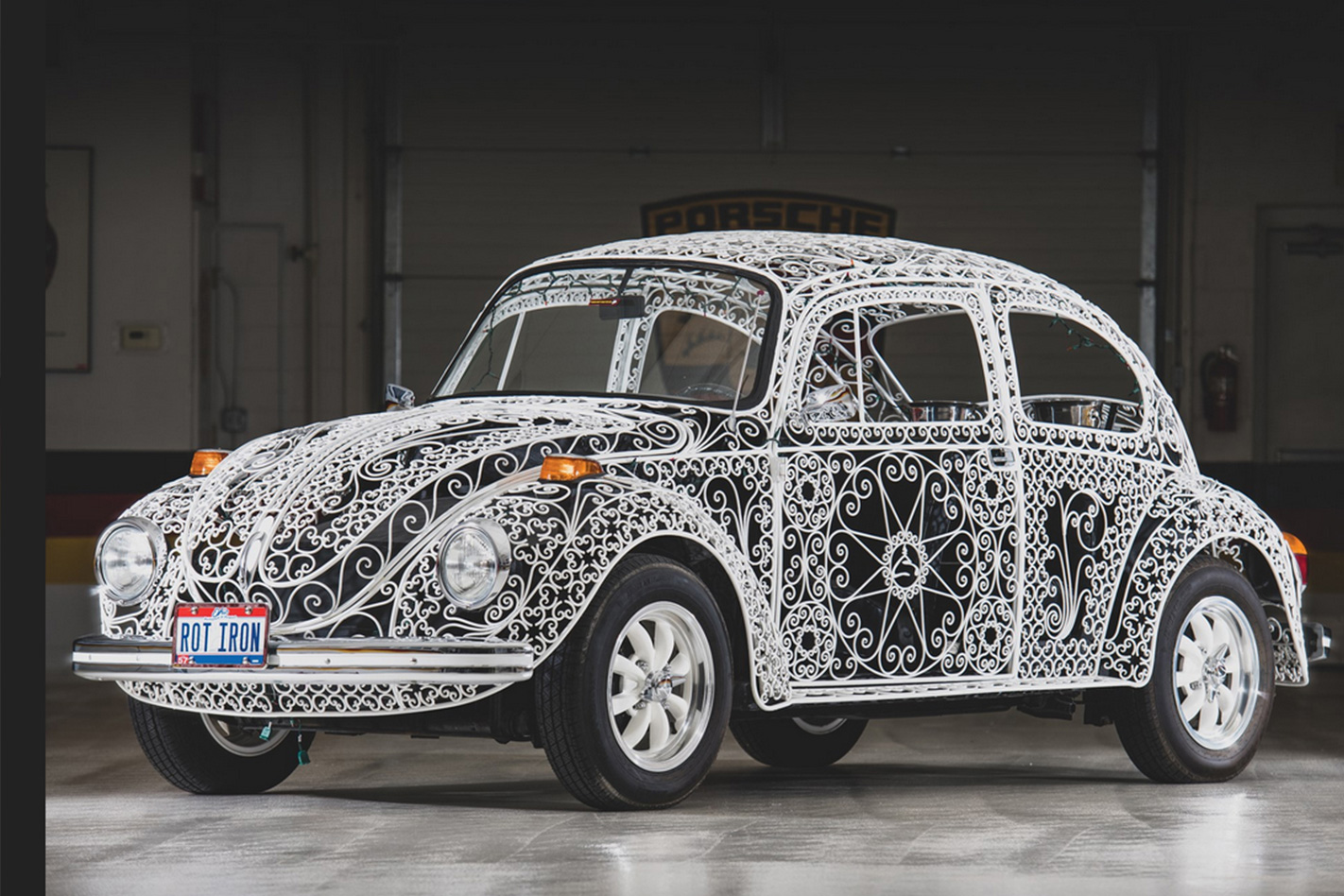
As well as Porsches, a number of amazing air-cooled Volkswagens are going under the hammer. There’s an ‘as-new’ 2004 Beetle Última Edición, still with its consignment slip in the window. The astonishing Beetle ‘Casa Linda Lace’ art car by Rafael Esparza-Prieto and Jose Barajas is a wireframe object of wonder, while the 1956 Beetle Outlaw ‘Death’ low-rider by Franz Muhr is the belly-scraping opposite end of the spectrum from the usual cutesy Bug image.
Right-hand-drive cars are included in the collection, so if you want to get your bid on, clear the schedule on September 28.
Heritage is an excellent marketing tool, and the Mazda MX-5 30th Anniversary Edition is proof.
The car is highly specified, with exclusive parts and exclusivity on its side (only 30 made it to Australia), but a $49,990 price makes it $500 more expensive than the top-of-the-range MX-5 RF GT with an auto gearbox. If that price still tempts, allay your desires because the 30th Anniversary Edition is already sold out.
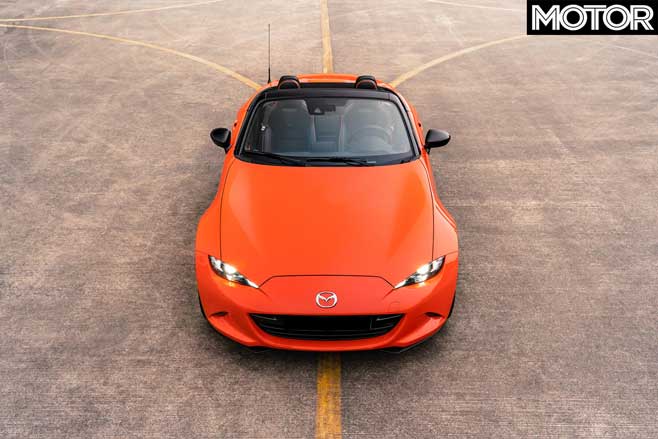
The 30 customers quick enough to nab one will all be enjoying their Racing Orange roadsters thanks to a set of special Rays alloys in black (inspired by MX-5 Cup cars), an Alcantara interior with orange accents, Bilstein dampers, plus Brembo brakes at the front and Nissin calipers at the rear.
The dampers are only a little firmer than standard, with the roadster still providing body-movement feedback to the driver under cornering as is the Jinba Ittai way. As for the Brembo/Nissin brake package, it does a fine job of pulling up the 1.1-tonne MX-5, but so do the stock brakes.
All 3000 30th Anniversary models are fitted with the 135kW/205Nm 2.0-litre unit and six-speed manual gearbox.
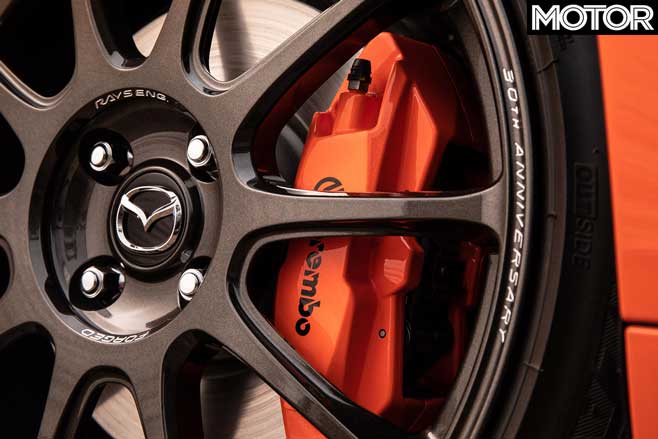
They also feature Recaro seats, which tread the line between bolstering and comfort rather nicely, and there’s a subtle, numbered 30th-anniversary badge by the door, in case the paint didn’t make it clear. Our test car was number 219 of the 3000 built.
The changes to this special edition don’t exactly break new ground. We’ve already driven MX-5s with Bilsteins and Brembos, and the revised 2.0-litre engine has been around for a while now. This car just brings those ingredients together, but they do make the car feel special.
It’s at this point your reviewer should confess to the ownership of an NA MX-5 (which happens to turn 30 this year), though Mazda’s target group of ‘loyal customers’ likely doesn’t include those who have never owned a new car.
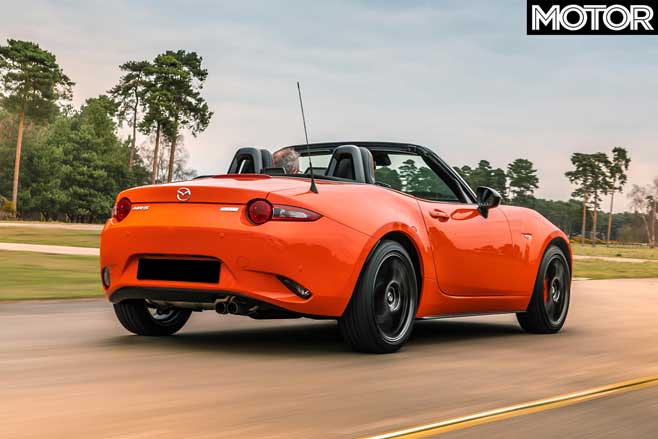
Reviewing this car feels more like an exercise in assessing the value for money offered by this limited-run roadster, rather than actually dissecting the few changes made to the car. Those changes all tweak its driving dynamics in very minor ways and allow the MX-5 to remain within its original formula of modest power but low weight.
If you wanted to feel what it’s like to drive an MX-5 30th Anniversary Edition, you could buy a 2.0-litre GT roadster, drop in some slightly stiffer dampers, upgrade the brakes and paint the car orange. But even this sceptic knows that’s not the point.
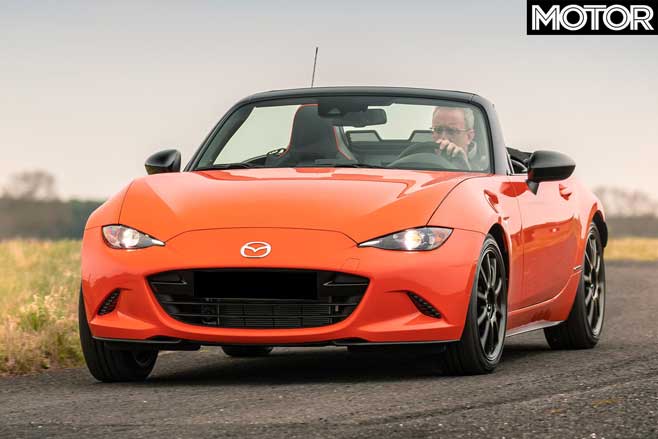
On Mazda’s part, it might have been nice to see a more focused tyre than the Bridgestone Potenza S001s fitted, or even some more radical alteration of the suspension, but the price is already pushing it for a Toyota 86/ Subaru BRZ rival.
Ultimately, it’s a good thing that Mazda is choosing to celebrate its sports car heritage, and it’s good that 30 Australians were willing to put $50K of cold-hard down to be part of it.
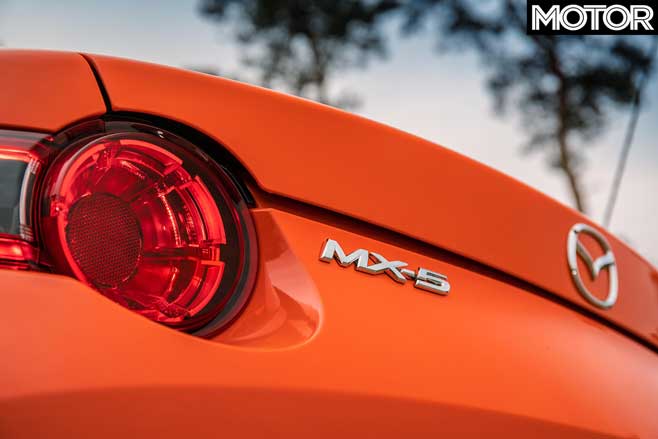
2019 MAZDA MX-5 30th ANNIVERSARY EDITION SPECS Engine: 1998cc inline-4, DOHC, 16v Power: 135kW @ 7000rpm Torque: 205Nm @ 4000rpm Price: $49,990 (Sold out)
Ford Australia has confirmed the 2020 Ford Mustang 2.3L High Performance will take the reins from the EcoBoost as the representative of four-pot Ponys.
With more power and torque, plus a host of added features and kit from the Mustang GT, the 2.3L is a step up from its predecessor in terms of both bark, and bite.
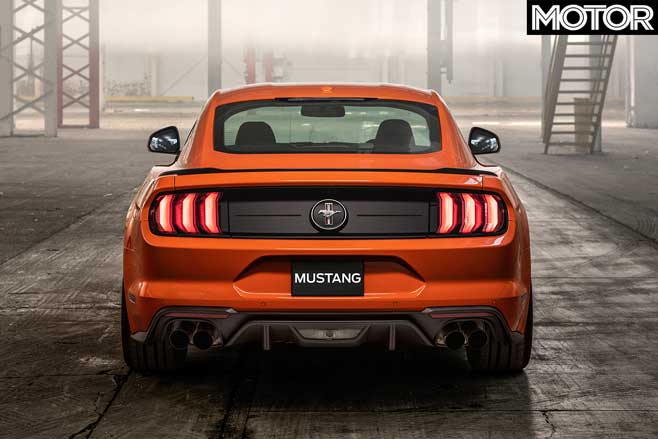
With 236kW at 6200rpm and 448Nm of torque at 3800rpm, the 2.3L now boasts, according to Ford, “the highest output for a road-going production Mustang four-cylinder in history.” It’s now not far off the 257kW Focus RS, which has donated its 63mm twin-scroll turbo.
With a six-speed manual still available, the 10-speed auto an option, and the 2.3L’s 53/47 front-to-rear weight distribution, the turbo Pony is now better equipped to be a proper contender in the sports car world.
Chief program engineer for the Mustang Carl Widmann says the power increase also comes with other benefits.
“It’s not just the power gains over the previous 2.3-litre engine,” says Widmann.
“It’s the broader torque curve that delivers 90 percent of peak torque between 2500 and 5300 rpm. Plus, horsepower holds stronger up to the 6500-rpm redline – enabling more usable power and torque.”
In addition, the manual and automatic gear ratios have been shortened since the last version, and the drive ratio of 3.55:1 is changed from the previous 3.31:1.
More good news is that the Mustang 2.3L can be optioned with Ford’s MagneRide adaptive dampers for more ‘tweakability’.
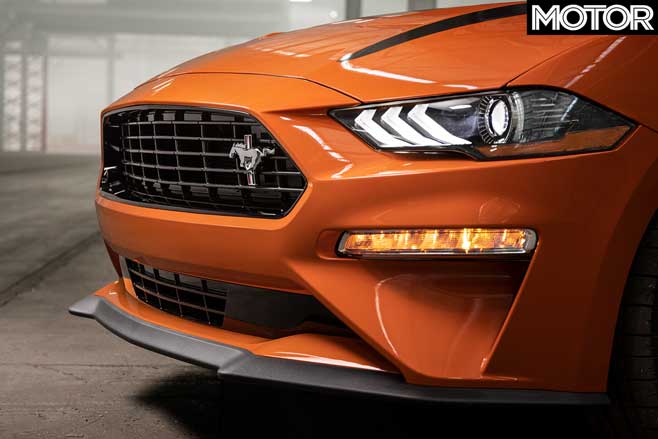
Visually, the four-pot Mustang gets some added aggro in the form of a new front grille with a racier splitter, and more body details like the lip spoiler an bonnet spears, finished in Magnetic (or silver if the body colour is Magnetic).
Machine-finished 19-inch alloy wheels also now come wrapped in Pirelli P Zero Corsas, with Brembo brakes lurking just behind them.
Ford Australia hasn’t revealed pricing for the Mustang 2.3L High Performance yet, but says it’ll make an announcement closer to the car’s on-sale date in February 2020.
I had kind of hoped the Fastback treatment would turn the Hyundai i30 N from a sensible looking little hatch into a real looker. Um, no… not really.
This track review was carried out in conjunction with MOTOR’s Bang For Your Bucks 2019
If anything the end result seems a bit butt-heavy. Booty-licious? Don’t think so. In fact, the thing looks faintly like one of those jacked-up SUV coupes from one or two angles. But then so does the Cerato GT we had this year, so maybe it’s just an industry-wide shift.
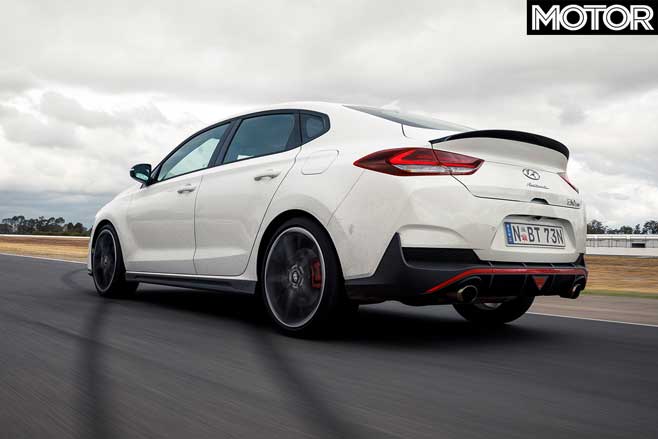
Like the hatchback version, there’s no automatic option for the N (there will be, but not until Hyundai is happy with the durability and quality of its double-clutch unit that remains in the works). That will limit the appeal for some buyers, but for the rest of us, the slick-shifting six-speed manual is a delight. The clutch is light and accurate and if you find shifting your own cogs in this car to be a chore, you’re almost certainly doing it wrong.
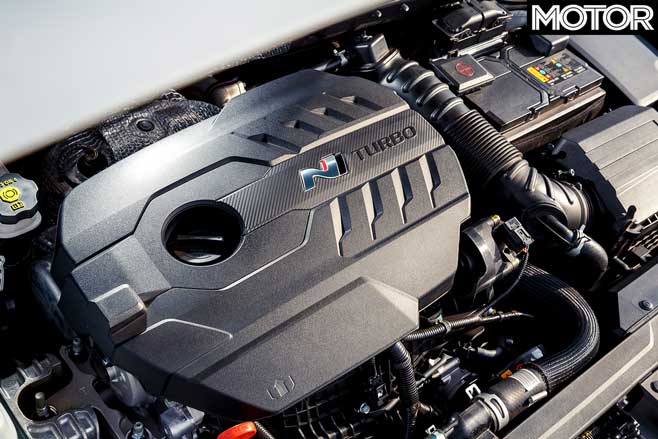
The same level of accessibility goes for the two-litre turbo donk, too, and while the smaller turbocharger (smaller than, say, the Renault’s) means the Hyundai isn’t all about stratospheric revs, it does serve up a hugely meaty mid-range that means overtaking is only ever a smoosh of the gas pedal away. It makes plenty of the right noises, too, with enough popping and banging on the over-run (Hyundai calls it ‘afterburn’) to keep us all entertained.
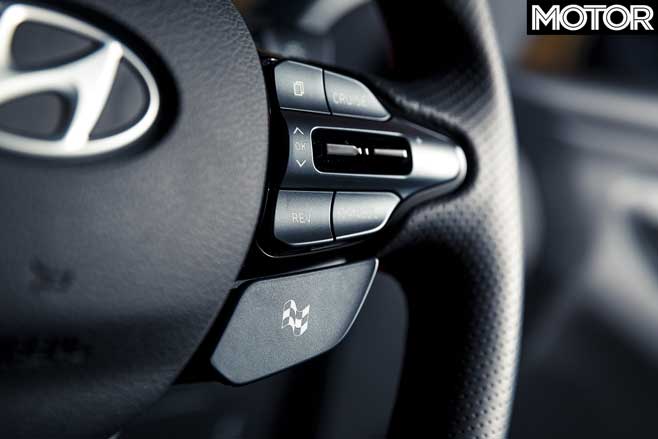
The cabin still feels big and roomy, but the rear view is a bit restricted thanks to the higher tail and sloped rear glass turning the opening into a bit of a slit in the mirror.
But the quality feel is still there even if the look is a bit more down market without the spiffed-up trimmings of Hyundai’s optional luxury pack.
The combination of (what feels like) more rear weight and a softer set of front springs in the Fastback over the hatch, means the handling is familiar to anybody who has sampled the hatchback, but different enough to give the car its own character. Crucially, the Hyundai will still degenerate into a chattering, chuntering version of understeer on a dry track if you’ve over-cooked your entry speed.
Once the track was wet, it was always possible to get the rear of the car stepping out on lift-off and, again, that could have something to do with a rear end that is now proportionately stiffer than the front end.
That was most noticeable through the Winton sweeper where, even though the greasy surface kept speeds down, it also allowed for an earlier onset of ‘there-goes-the-tail’.
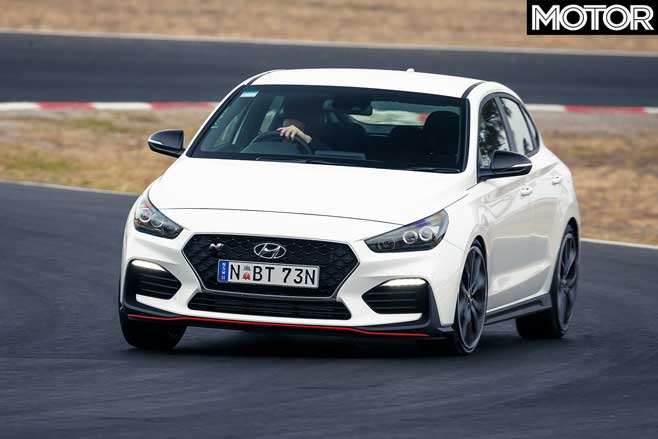
The real magic of the i30 N, meanwhile, hasn’t changed. It has an incredibly friendly, accessible feel that lets even noobs get their mitts on a fair chunk of what the car has to offer. Which is plenty.
Probably the only thing keeping the Hyundai off the higher steps on the podium is that the Fastback is a couple of grand dearer than the hatch variant. That, and the fact that two grand buys you more curves, glass and a bit more metal rather than any more outright ability.
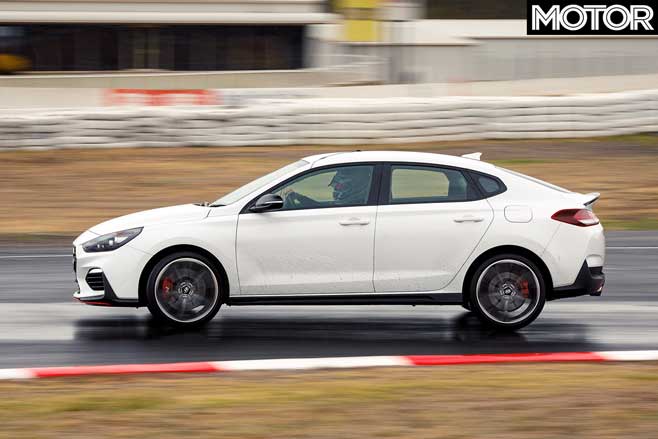
It’ll be interesting to see how many take up the Fastback option and how many stick with the practicality of the original hatchback. But one thing hasn’t changed and that is, with any of the i30N variants, Hyundai is now a bona fide maker of performance cars.
That it has done so without abandoning its value-for-money philosophy is great. That it can also do so while allowing the factory warranty to cover some forms of track-day work is, frankly, amazing.
Hyundai i30 Fastback N BFYB 2019 Results – 3rd place
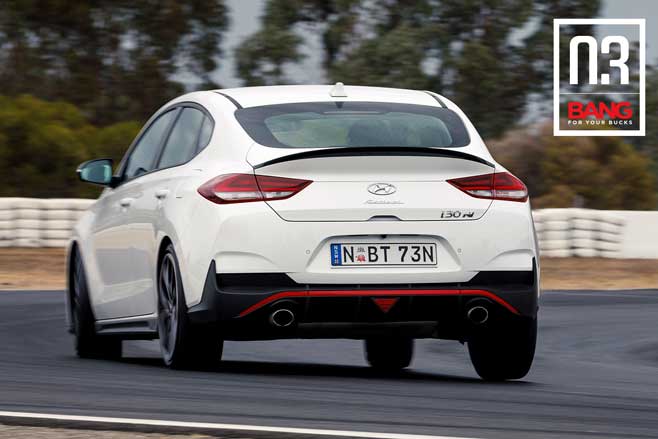
0-100km/h: 6.59sec 0-400m: 14.55sec @ 159.78km/h Price: $39,990 Bang Index: 107.2 Bucks Index: 124.1 BFYB Index: 115.7
Bang For Your Bucks 2019 Judges’ Comments
Campbell – 10th “It has some good things to say but I struggled to get the conversation flowing.”
Cordony – =3rd “Different suit, same robust performance.”
Morley – =5th “Rarely cars are entertaining and practical as this one.”
Scott Newman – 3rd “Superb. Does everything you want it to and I don’t mind the looks.”
Luffy – =4th “It has impressive grip considering the very wet conditions. The front end has heaps of grip when you clear the brake and roll through apexes. The rear end is probably the most stable of the front-drivers. The engine and gearbox are really good as well, but it was a little too wet to really push and find the overall limit. But it is a really good, fun car.”
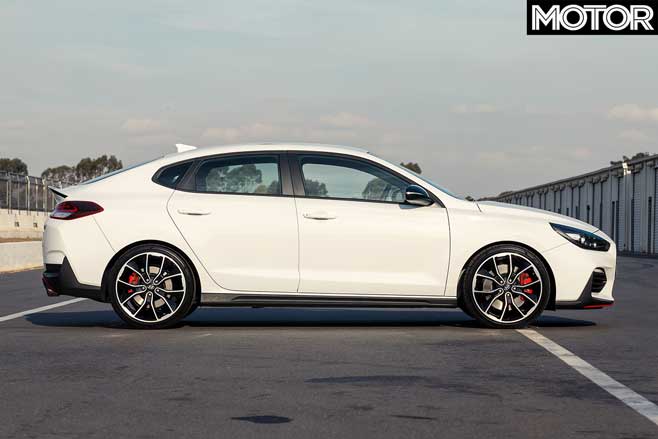
FAST FACTS 2019 HYUNDAI I30 FASTBACK N SPECS BODY: 5-door, 5-seat liftback DRIVE: front-wheel ENGINE: 1998cc inline-4, DOHC, 16v, turbo BORE/STROKE: 86.0 x 86.0mm COMPRESSION RATIO: 9.5:1 POWER: 202kW @ 6000rpm TORQUE: 353Nm @ 1450-4700rpm WEIGHT: 1520kg POWER-TO-WEIGHT: 134kW/tonne TRANSMISSION: 6-speed manual SUSPENSION: struts, coil springs, adaptive dampers (f); multi-links, coil springs, adaptive dampers, anti-roll bar (r) BRAKES: 345mm ventilated discs, single-piston calipers (f); 314mm ventilated discs, single-piston calipers (r) WHEELS: 19.0 x 8.0-inch (f/r) TYRES: Pirelli P Zero (HN), 235/35 R19 (f/r) PRICE: $39,990
Bang For Your Bucks 2019
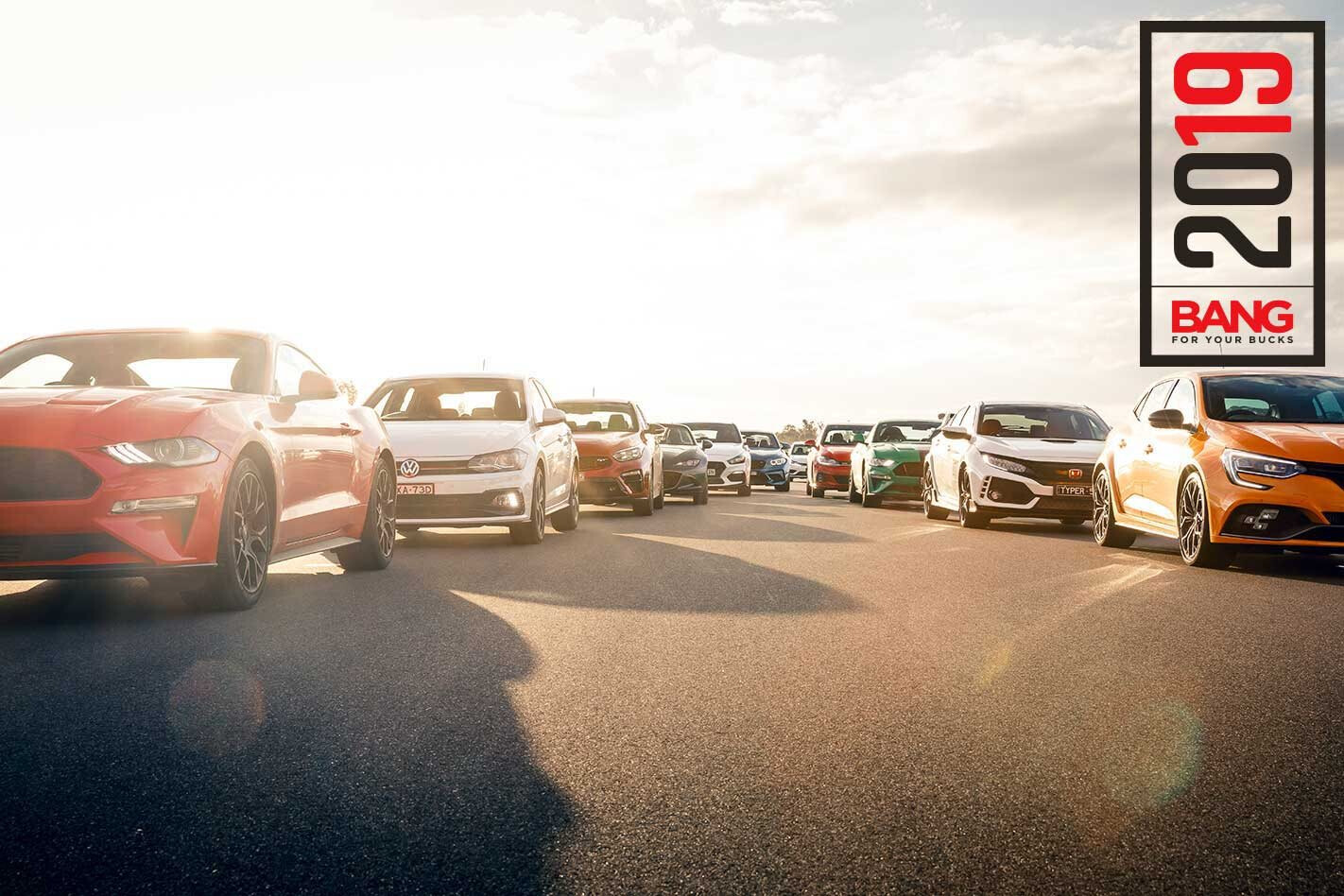 The Contenders, Judges & Criteria
11 of the hottest new fast cars under $100K roll up to take on our famous value-for-money formula. Which will be number 1?
Cosworth’s 3.0-litre V8 was a revolutionary engine that dominated Formula 1 for over a decade, and was the brilliant antidote to a radical car design theory from Lotus founder Colin Chapman.
During the early ‘60s, regulations for F1 were changing and the then-current 1.5-litre engine was to be replaced with a larger 3.0-litre capacity. Lotus was supplied engines from Coventry Climax at that point but the engine builder was not interested in developing a larger engine to meet the new rules. Chapman went to see his ex-gearbox engineer Keith Duckworth, who had founded a fledgling automotive business with Mike Costin named Cosworth.
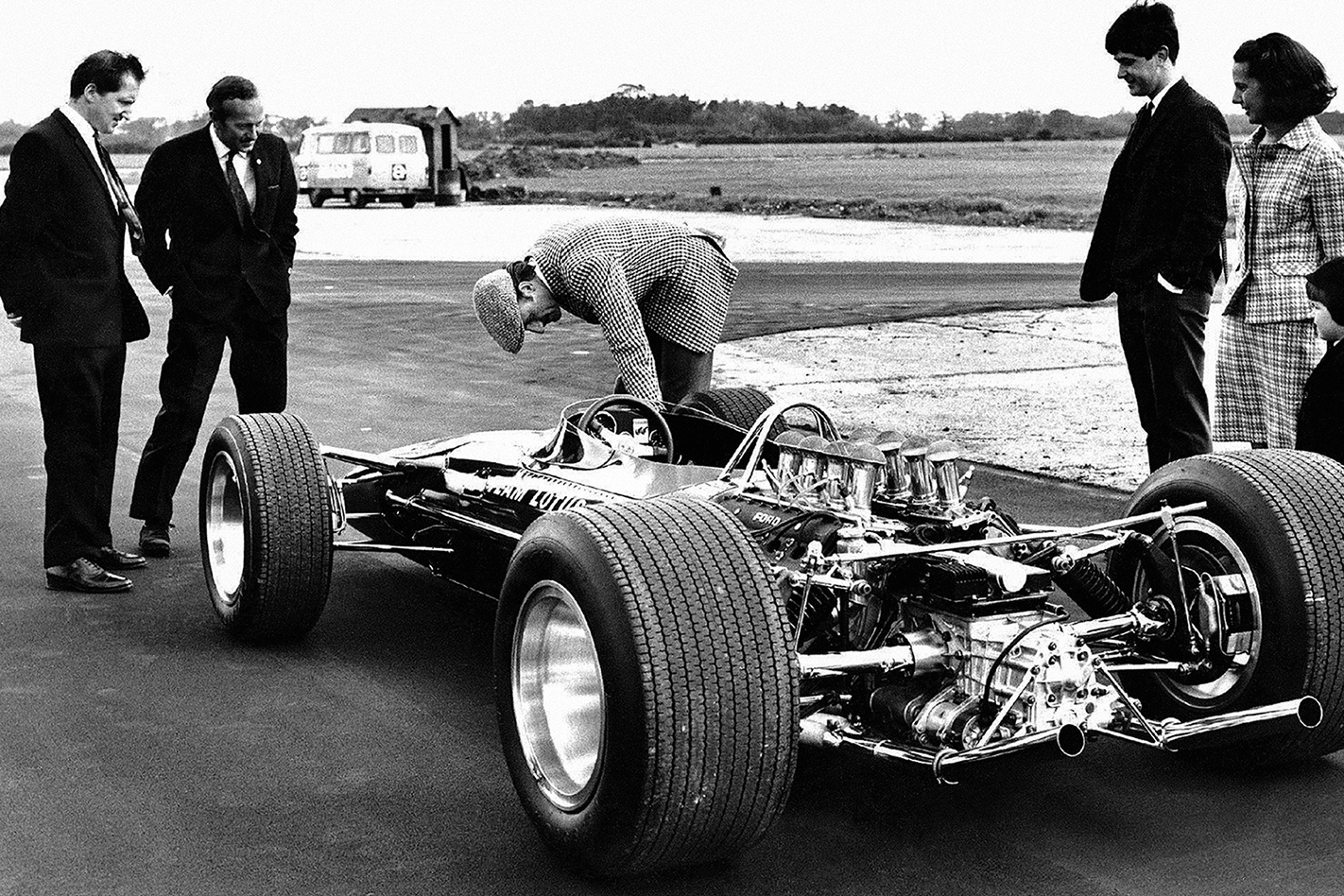
But Chapman did not just want a normal engine, he wanted a block that could form a structural part of the car; that is, suspension components would bolt straight onto the block that was connected to the chassis. It was radical thinking, and required a solution that would take into consideration heat from the engine affecting how the suspension might react. Duckworth was sure he could build a race engine to suit and it would cost £100,000; Lotus, which had a close relationship with Ford, successfully lobbied the Blue Oval to help fund the F1 motor and by 1967 it was complete.
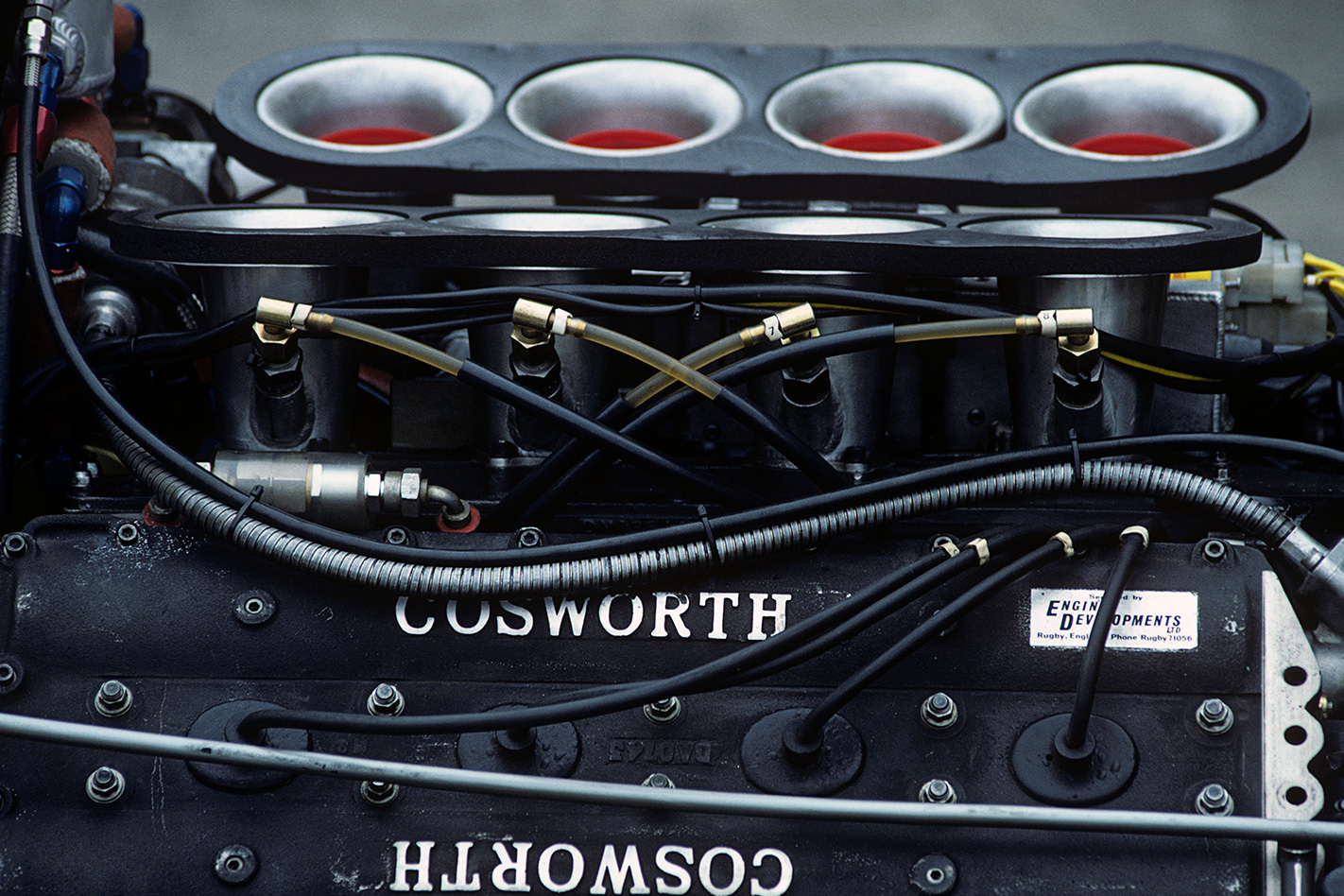
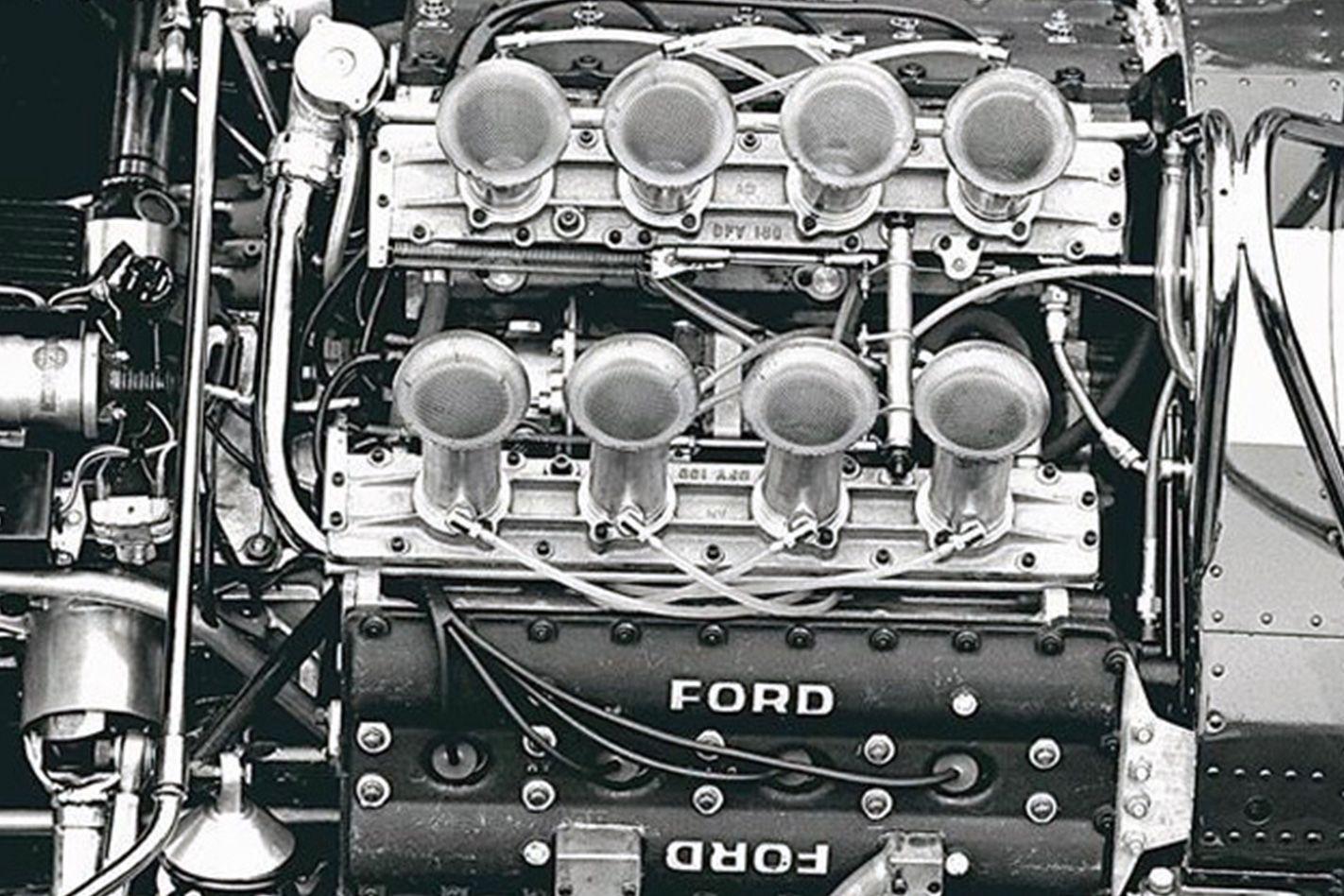
The resulting engine, designed by Duckworth, was mostly based on the Four Valve series A (FVA) engine used in Formula 2 racing, which itself was based on the Ford Cortina road car engine.
It was in the early months of that year, when the championship was already two races in, that Lotus would first test the Type 49 race car with Cosworth’s motor. But it completed only a few laps in the hands of drivers Graham Hill and Jim Clark before being put on a truck to Holland where it would debut at the Dutch Grand Prix.
Arriving at Zandvoort, the Lotus 49’s first appearance was about as special as a radical new F1 car from McLaren appearing three races into the season with a Ferrari engine now. In qualifying, despite limited wheel time and complaining of the engine’s sudden burst of power up the rev range, Hill qualified on pole though did not go on to finish the race due to engine problems. Instead, teammate Clark, who started down the grid, went on to enjoy a comfortable win. But mechanical problems hindered the powerful Cosworth DFV all season – spark plug failures, vibrations and oil pooling in the head were culprits that cost Lotus the 1967 championship.
By the start of the 1968 season, Lotus and Cosworth had perfected the motor’s design and went on to win the championship. It was the first of 12 drivers’ and 10 constructors’ championships that the DFV would record – the greatest of any engine to ever grace F1. After its sterling performance, Ford commercialised the opportunity by supplying the engine to other teams, and it became the most popular engine on the grid.
Cosworth’s Double Four Valve was quickly known as the DFV – a water-cooled 2993cc capacity, 90-degree V8 engine with double overhead cams and four valves per cylinder, made up from a total of 3550 parts. Because the engine was wider than other engines, it required different packaging, with the fuel tank located in front of the engine which only served to enhance balance and handling.
On debut in 1967 it produced 304kW at 9000rpm; at its height in 1977 it produced 347kW at 10,500rpm. Chasing higher output, the engine could be allowed to spin at higher revolutions for a limited time, but at over 10,500rpm – toward the 11,200rpm absolute limit that developed 380kw – one of the eight pistons is stationary at bottom dead centre of the stroke, with 230g of forces on the rod enough to destroy the engine quickly. It had reached maximum output.
However, the Cosworth enjoyed years of dominance and is regarded as a pioneer of F1 along with Chapman’s radical design which integrated the engine as a stressed member of the chassis. The design principle carries through to today’s F1 machines.
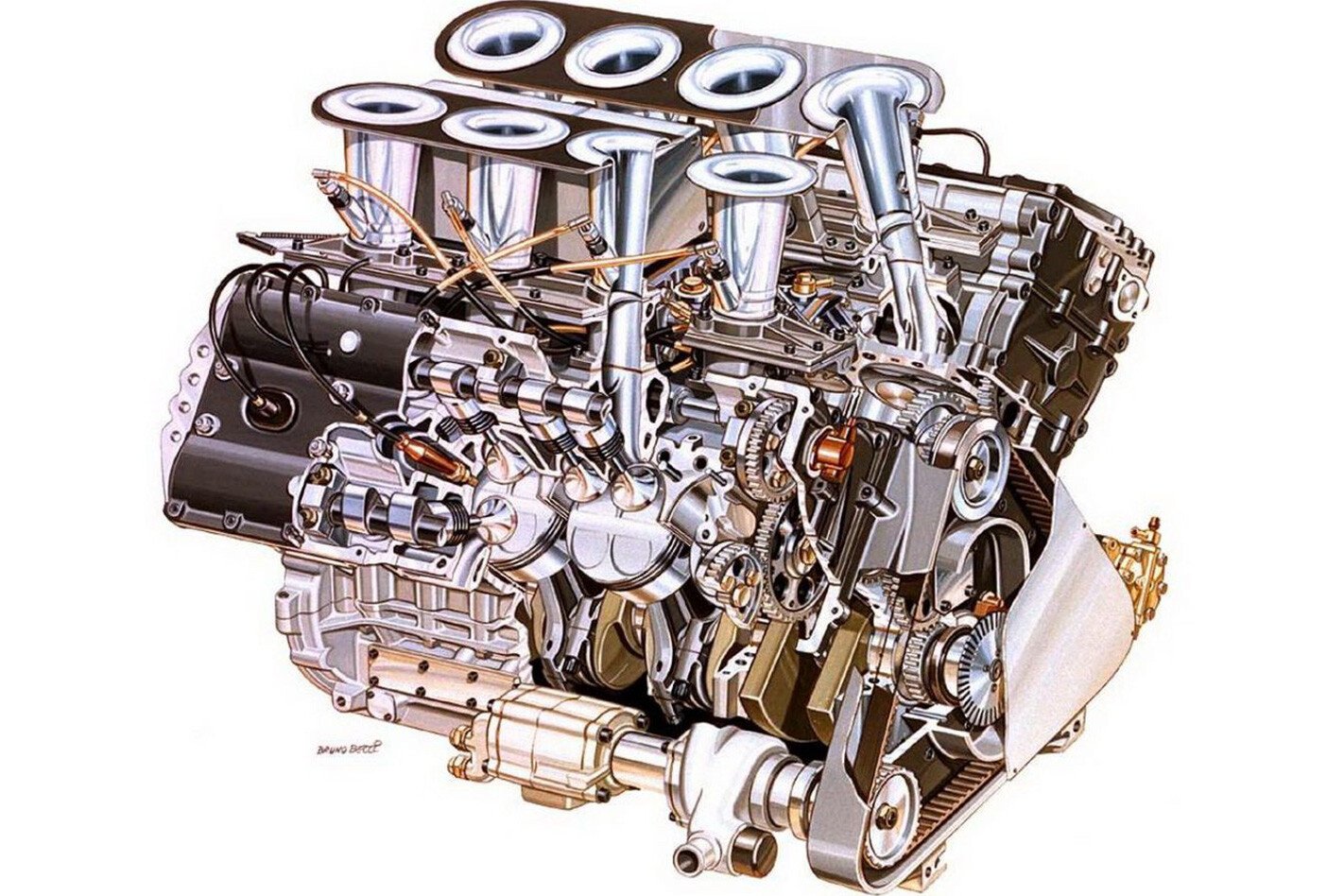
The Cosworth DFV had its last win in 1983, before the turbo era regulations were introduced, and had its last race in 1985 – though it will never be forgotten in racing and engine lore.
| Manufacturer | Cosworth |
| Production | 1967-1985 |
| Configuration | 90u00b0 V8 |
| Bore x Stroke | 85.674 x 64.8mm |
| Displacement | 2993 cc |
| Valvetrain | DOHC four valves per cylinder |
| Power | 304-380kW |
| Torque | 332Nm (1967) |
Click here to read more Wheels features on Great V8s.
Every now and then you might see a car that has unfamiliar number plates and wonder how it came to be geographically out of place. But the reality of sending your car overseas along with you on holiday isn’t so farfetched.
Just like you do, your car requires a passport when entering a new country on a short term basis. This is where a Carnet de Passage en Duoane (CPD) is required.
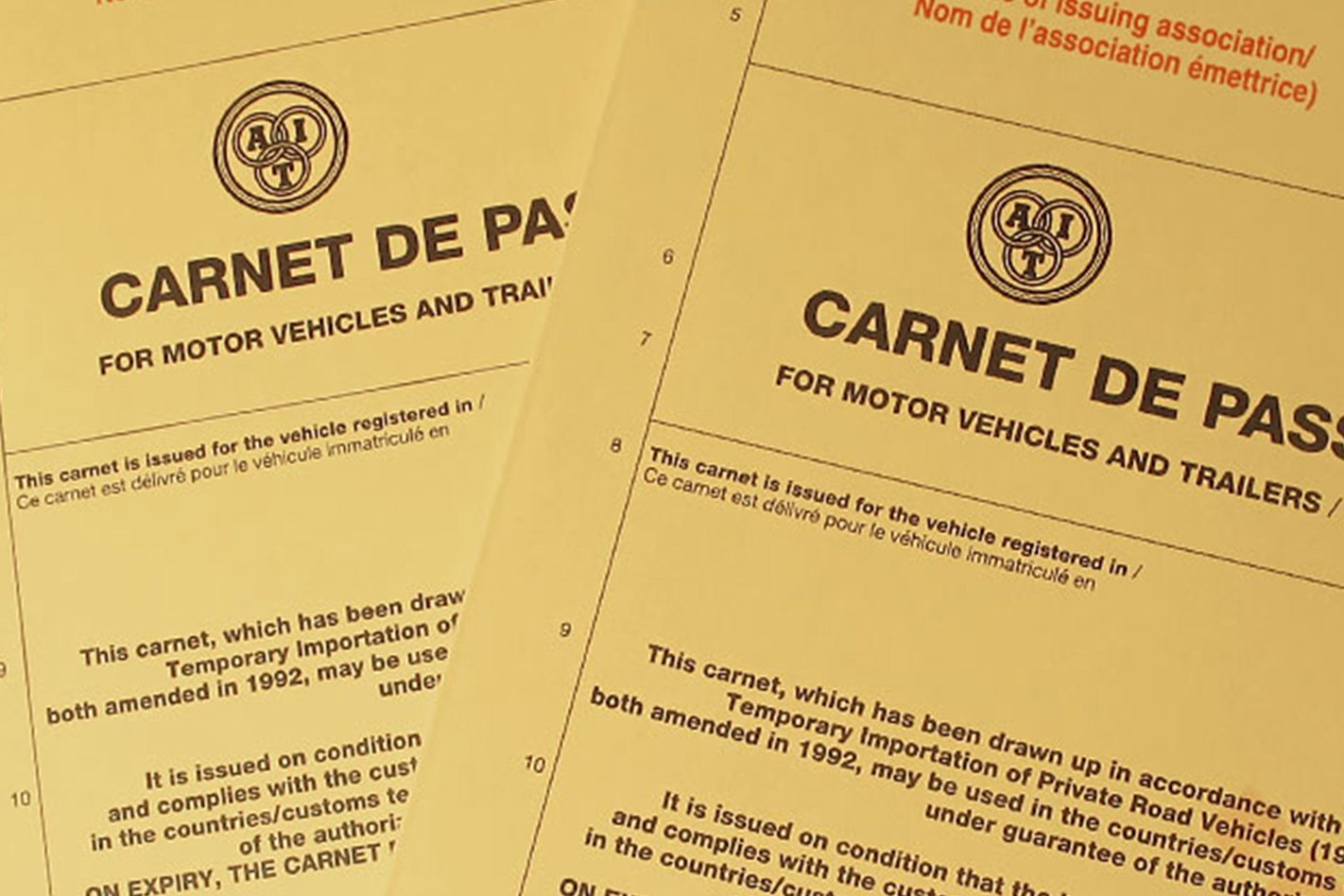
A CPD is an international agreement between two countries that allows the temporary importation of a car for up to 12 months by visitors. Vacationers may take their car along with them as long as it’s not lent, sold, hired, given away or destroyed while in the visiting country.
A Carnet essentially guarantees that you will remove your car from the country it’s visiting once your time is up, allowing travellers to temporarily import their cars without having to leave a cash deposit or bond at the port.
Additionally, the car must stay no longer than 12 months, and must also leave when the owner leaves the country.
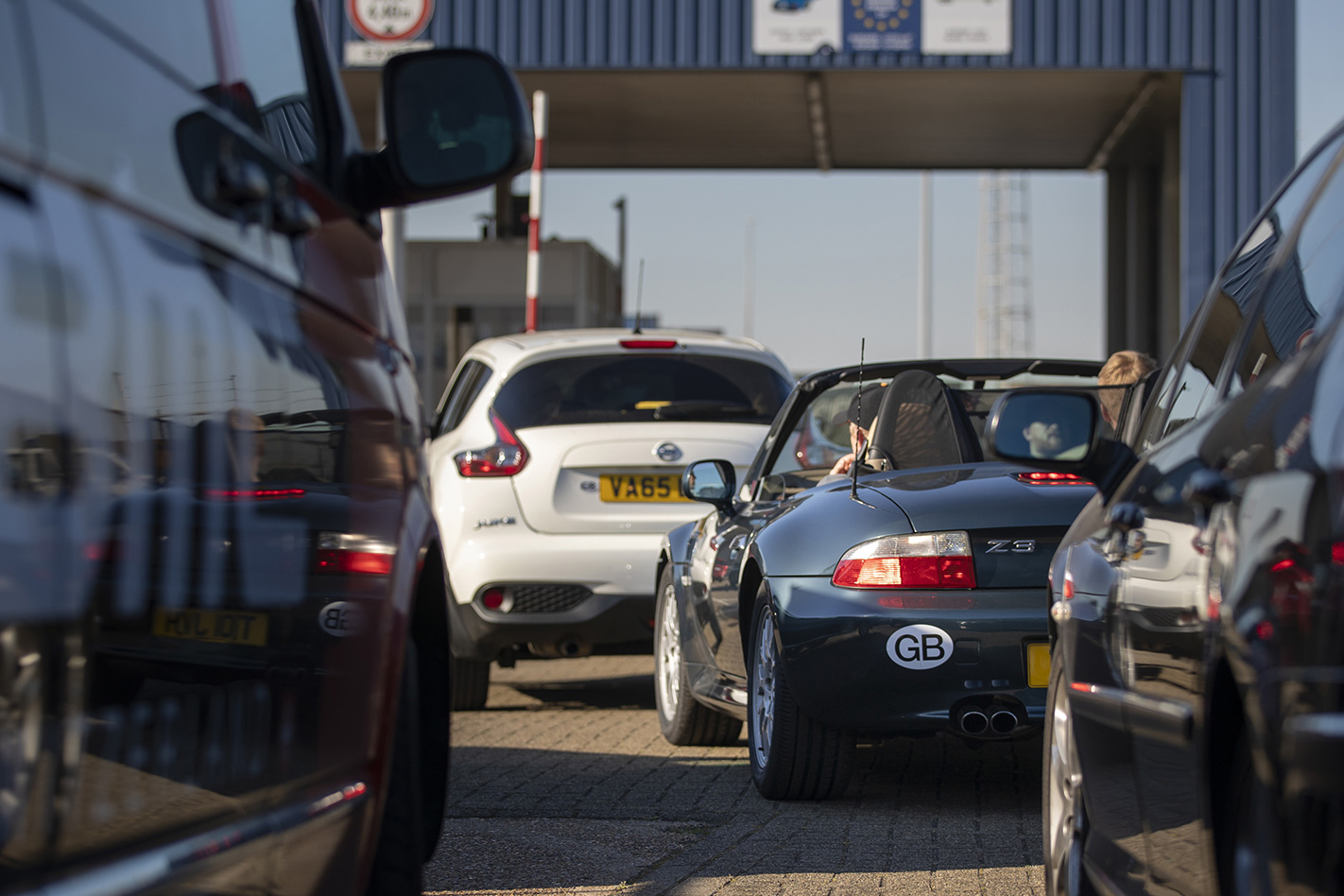
Not all countries require a CPD in order to drive your car on unfamiliar soil, but Australia and New Zealand do, as well as much of Southeast Asia, Africa, India, Mexico, Japan and Germany, among others.
A CPD works in a similar way to a personal passport, containing information about your car including make, model, colour, engine, seating capacity, registration number and value.
You don’t need your car to be registered with the visiting country, provided it still has remaining registration in the origin country, and you have a country sticker (AUS) fitted near the rear number plate.
Charges vary between countries, but the application cost in Australia (for travel overseas) is $1420, which includes a $500 refundable bond that’s reclaimed once the vehicle is reimported back to Australia.
In Australia, a CPD is provided by the Australian Automobile Association, which is then submitted to the Department of Home Affairs for the port where the vehicle arrives.
Keep in mind that your current insurance won’t cover your car if you take it overseas, so it’s worth talking to your provider to enquire whether your insurance can be extended for your travels overseas.
A CPD is usually processed within 10 business days and can be applied for online. After being approved, you’ll then have to plan the shipping itself.
Although it may seem like a huge effort to move a vehicle overseas for a holiday, being able to take your special car on an iconic or famous rally, for example, would be the experience of a lifetime.
If you’re determined, all it takes is some research into the specifics, some solid organising and you could be bringing your car along with you on your next vacation.
Normally, pre-production, prototypes, and test cars for brand new models end up being destroyed, but Kia Motors UK decided the first Stinger GT press car shouldn’t face the crusher. Instead, it was turned into the one-off Kia Stinger GT420 track car.
As this was the car used for Kia’s major press engagements, such as appearances on Top Gear and The Grand Tour, Kia’s UK press office felt the car was too special to squish.
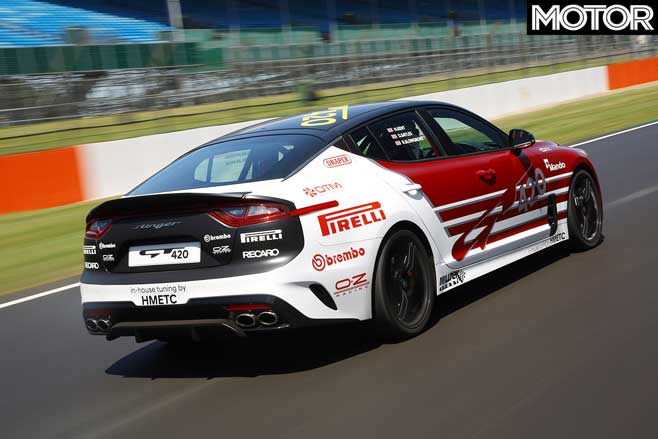
In a sly press release, Kia joked that ‘delayed’ paperwork was the reason the car didn’t end up being destroyed.
“When it came to ordering the truck to take the very first Stinger in the UK to the crusher at the end of 2018, there was an unfortunate and mysterious delay in creating the required paperwork,” Kia said.
The team then set about turning the Stinger’s muscular 272kW and 510Nm into something a little more potent, and with the help of Germany’s Hyundai Motor Europe Technical Centre, achieved it.
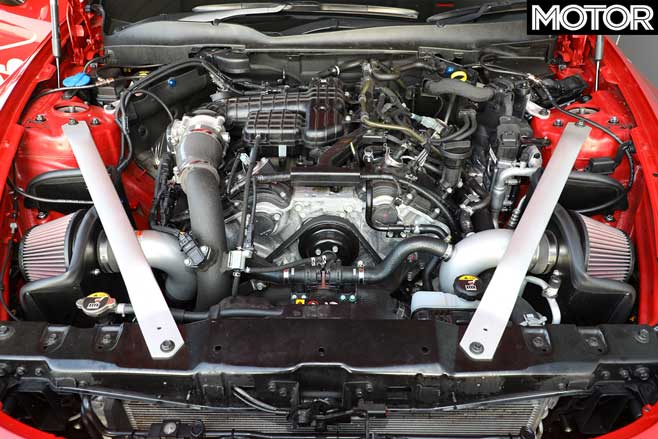
The 3.3-litre twin-turbo V6 in the Stinger GT420 now produces a healthy 315kW and 560Nm, with the help of upgrades like HKS spark plugs, a K&N filter, a Milltek Sport quad-exit exhaust minus the catalytic converters, a new transmission cooler, and a gearbox retune. But that’s not all that was changed.
Kia also stripped the interior, removing the seats and belts, airbags, sound system, interior trim, and rear window regulators.
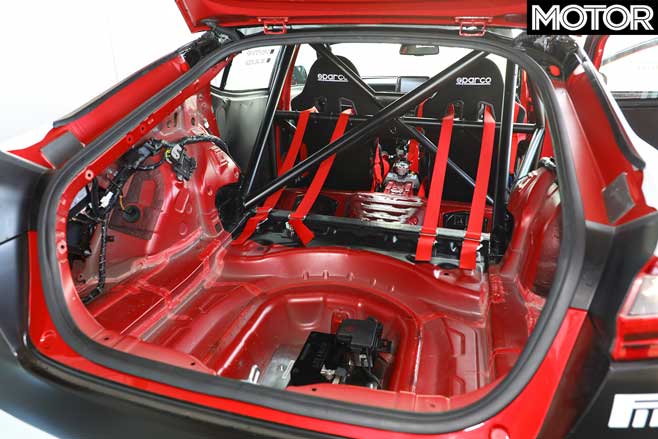
“There is a total weight reduction of approximately 150kg after the installation of the roll cage, seats, belts and fire extinguisher,” Kia says.
Unfortunately, there will be only one GT420, but the good news is Kia has proven the Stinger’s ability to be tweaked into something a little more potent than the grand touring sedan is from the factory.
Thump-thump-thump goes the heart. I can feel the pulse in the fingertips and along the temples. At last the time has come to put this awesome car to the real test. I have explored Sport+ ad infinitum.
Qualified for Master in the AMG Dynamics hierarchy. Dialled in the Supersport display with a big fat gear indicator circled by the rev counter that in turn is flanked by two rainbow bar graphs. Sampled Race Start, which performs ‘Smokey and the Bandit’, allegedly without impairing the warranty. Set the Real Performance Sound processor on blaring Dynamic (which will no longer be legal from next year)…
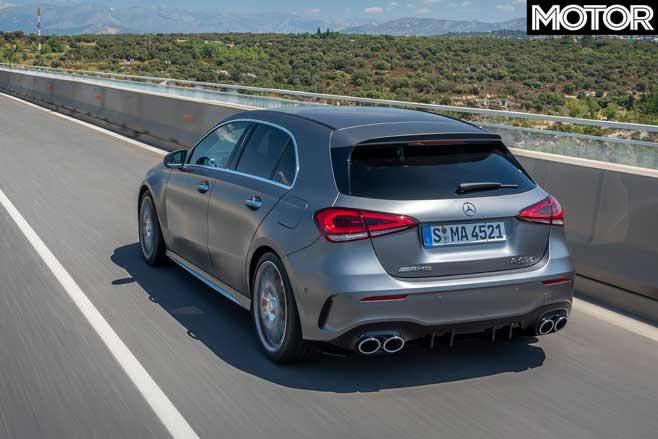
But all the above steps were merely a prelude to the accolade advertised as Drift Mode. It can only be locked in with the transmission in manual, the drive program in Race, and ESP switched off. Next, you must pull both shift paddles simultaneously, then confirm powerslide mode by a quick flick of the Up paddle. Ready? Ready! S-MB 1001 to ground control: we are going to burn some rubber now.
El Circuito del Jarama, a mere stone’s throw from Madrid airport, hosted the Spanish F1 Grand Prix between 1968 and 1981, alternating with Barcelona. Nowadays surrounded by gated communities, the tight and short Mickey Mouse track boasts plenty of elevation changes, three swirly bends that make the adrenalin flow a little bit faster, and two taxing superfast corners.
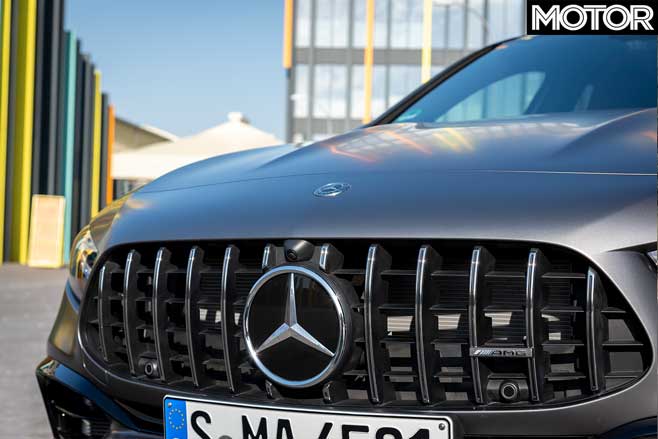
On a hot day like today, the sizzling tarmac is eating tyres for breakfast, lunch and dinner, which isn’t that much of a bother to the Mercedes-AMG A45 S – as long as you adjust your driving style to its quite special power-oversteer antics. After all, the tarted-up pocket rocket sporting the trademark vertical Panamericana grille is all-wheel drive, not rear-wheel drive.
Although the system can shift most of its 500Nm of maximum torque to the hind legs when required, one must wind on an extra hand’s breadth of lock or two to keep the slide alive. The normal gut response – a decent measure of opposite lock – would push the car wide and stifle the act.
Like the bigger C63 AMG, its baby brother responds without delay to full-throttle orders. The tail swings round in a creamy arc, and as long as the driver maintains a tighter than usual steering angle and the punchier than normal torque flow, the winged five-door hatch will behave like a pedigree drift machine.
Just for the heck of it, we took the yellow bird to the skid-pad, where it duly performed all sorts of 360s from smelly virtually stationary donuts to a supercool third-gear tap dance along a line plotted by imaginary pylons. What a car! Not once did we spin, veer off the trajectory or upset the flow.
Having said that, there would have certainly come a point at which the scorching, shredded front tyres lost grip at time-warp speed and it would be game over. But this is too good a plaything to overdrive it. What I’m looking for instead is the replay button, or a spare car shod with fresh rubber, and extra track time while the other journos here are having lunch…
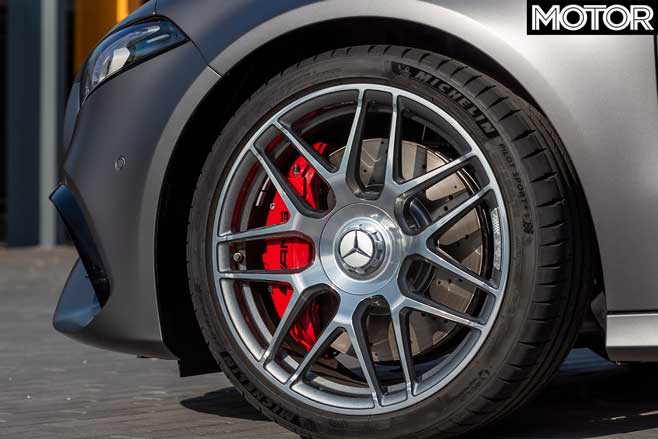
The AMG A45 S – due in Australia in the first quarter of next year, priced a little above the current model’s $78K – is not merely an extreme evolution of the A-class, it is also powered by the world’s most powerful volume-production four-cylinder engine, and comes dressed up as five-door hatch, four-door coupe or even a wagon, at least in Europe.
Although even the base model – rated at 285kW and also slated for the Australian market – eclipses the competition in one easy lesson, the S version churns out a mind-boggling 310kW at 6750rpm, which is simply incredible in view of the fact that these incredible numbers are generated by four cylinders and an aggregate displacement of just 1991cc. Amazing what a twin-scroll turbocharger and some engineering wizardry can do.
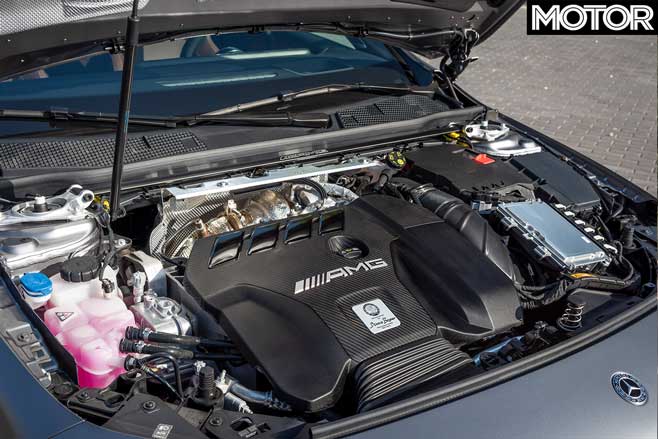
In combination with an eight-speed dual-clutch transmission and a trick all-wheel-drive system, this exceptional engine can propel the 1635kg crackerjack from rest to 100km/h in only 3.9sec. Although the top speed is restricted to 272km/h, the new A45 S easily qualifies for a free fast-lane season ticket.
As usual, the official fuel consumption has been computed in the wishful thinking department. Mercedes claims a combined figure as low as 8.1L/100km, but the hard-charging test car averaged 16.9 with some serious right-foot treatment. And, yes, every drop of premium unleaded was burnt for a very good cause called exceptional driving pleasure.
The secret behind the A45’s radical on-demand change of handling attitude is known as AMG Torque Control, and the heart of the system sits inside the rear axle. On each side of the differential, we find electronically controlled multi-disc clutches, one for each driveshaft.
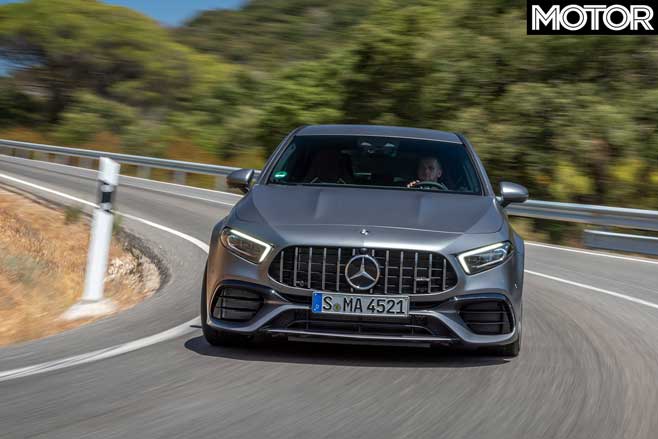
In combination with the fully variable electro-mechanical front-to-rear torque split, the fully variable rear side-to-side torque distribution ensures optimum traction in all weather and road conditions – except of course in Drift Mode, when the outer rear wheel is fed all the oomph it needs to put on a waltz while the inner wheel takes some time off.
Sounds straightforward, but the chip-controlled network of sensors and control units could in fact not be more complex. The ergonomic wonderland created to address all these talents is equally challenging, offering a selection of hard keys, a touchpad and a multi-functional steering wheel, complete with several sub-menus and multiple redundancies.
In a nutshell, the AMG A45 comes equipped with three scalable dynamic interfaces. Level 1 defines the 4Matic set-up. With the AMG Dynamics menu in Basic or Advanced, all-wheel drive works in Comfort mode. Upgrade to Plus or Master, and Sport mode will automatically take over. Level 2 offers three different ESP activities: On, Sport handling mode and Off. Level 3 lets you choose from six different driving programs labelled Ice, Comfort, Sport, Sport+, Race and Individual.
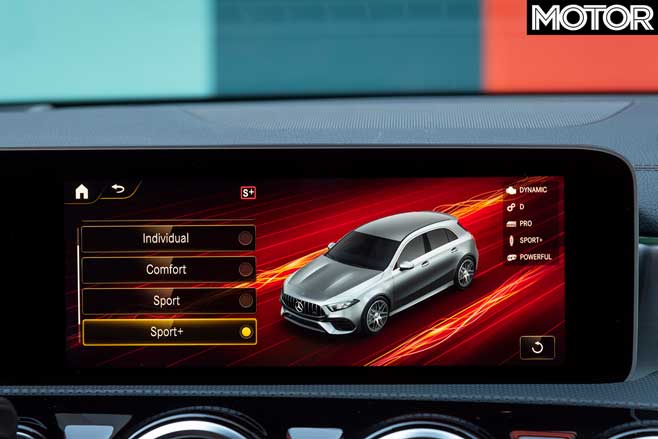
The related software masterminds all drivetrain-related functions such as throttle response, shift points and speed, sound processor and exhaust note in Reduced, Moderate, Sporty or Dynamic fashion.
Other flexible tools are the available adjustable dampers, active torque split, ESP calibration and steering action. Devoid of air suspension and rear-wheel steering, the new A-class on steroids is only a couple of steps away from total overkill.
But it’s time to leave behind the fun of the skid-pad and head back into the real world. The hinterland of Madrid is inhabited by cattle, sheep, goats and the odd human being. Most of the roads were built before General Franco was even born, when vehicles were a lot narrower and slower. With not enough room to put a wheel wrong, the attack mode of choice is Sport+, Dynamics in Master, the shock absorbers in Sport and the transmission in manual.
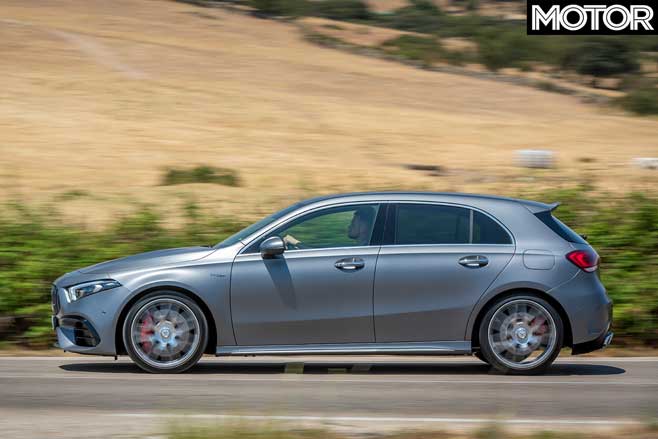
Ten kilometres down the road, though, it’s back into Drive, which does a fine job holding the appropriate gear, shifting down just in time and making full use of all 7200rpm to the redline. The in-between ESP channel encourages the odd lift-off tail-wagging antics as well as a momentary trace of exit oversteer, which is all you feel comfortable with in an environment dominated by blind corners, question-mark crests and unannounced surface changes.
At speeds of up to 120km/h, the steel brakes have no problem reeling us in, apex by apex, but on the track we had noticed that pedal travel and pressure are liable to increase under stress.
The electro-mechanical rack-and-pinion steering is of the variable-effort and variable-rate kind. While the effort changes progressively, the calibration alters from swift and stiff to relaxed and balanced in accordance with the selected drive mode. The latter set-up is okay for city slickers, but a little too vague for comrades in arms.
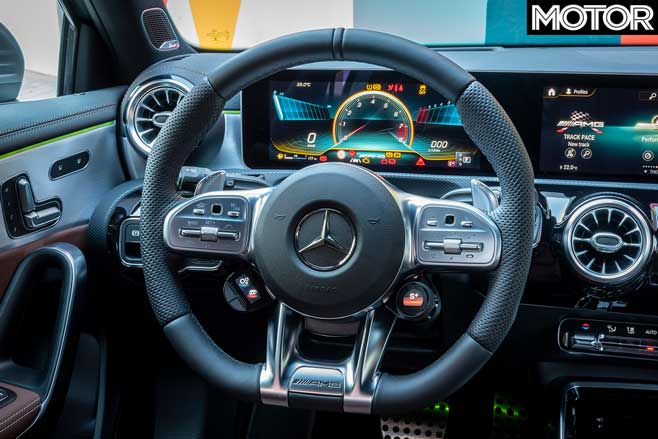
Just as BMW promised us no more understeer and no more steering fight when they released the latest M135i, Mercedes claims a totally neutral handling attitude and zero torque-steer for the AMG 45 S.
True or false? With an extra 85kW wedged in between its broad buttocks compared to the Bee-Em, the AMG is pardoned for a few centimetres of third-gear understeer at the limit. Although discreet, the torque distribution is never fully isolated from our palms, which is a good thing because it relays information, not interference.
Like almost all DCT-equipped cars, this one can be caught out by a sudden change of plan, like an aborted overtaking manoeuvre. Depending on gear and throttle position, we did for the blink of an eye register a faint trace of throttle lag that never returned beyond 3500rpm.
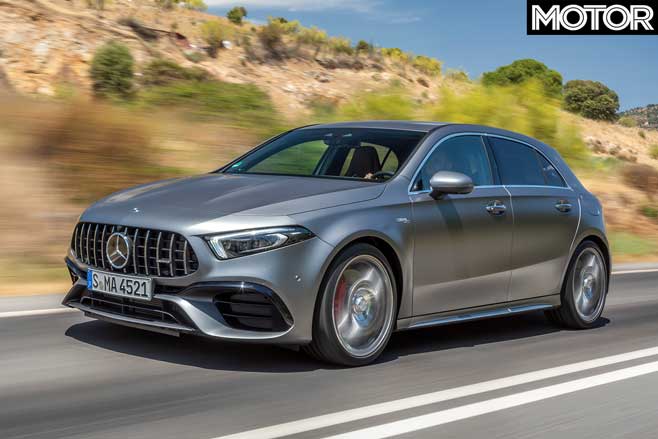
Would I spend my own money on the hottest hatch on the market? Probably not. But I might consider the CLA AMG 45 wagon, which is more practical and less conspicuous. In combination with the pending plug-in electric-hybrid package, the high-tech four-cylinder engine conceived in Affalterbach may soon even eclipse the C63 on my personal desirability chart.
As it stands, the 310kW Mercedes has no real rivals. The BMW M135i does not really compete and the M2 is half a second slower off the mark to start with, the Audi RS3 is lost in reverie and too uninvolving for its own good, and the Alpine A110 is a different animal altogether.
Let’s face it, a quality five-seater that can outsprint a C63 AMG costing twice as much has got to have a lot going for it. The ultimate A-class certainly chiselled a broad grin into my face, which duly froze in anticipation of a hopefully prompt encore on either the road or race track.
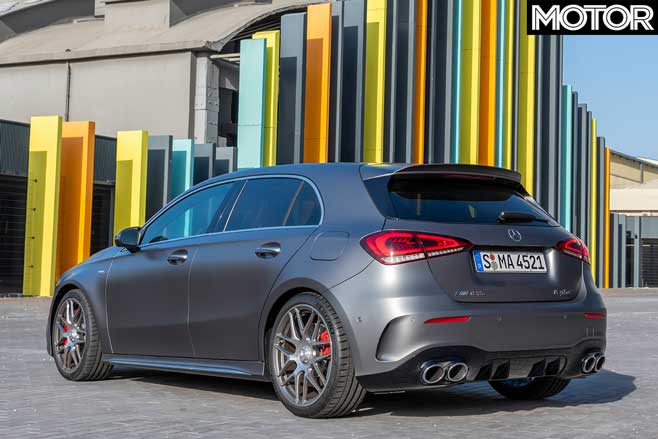
FAST FACTS 2020 Mercedes-AMG A45 S BODY: 5-door, 5-seat hatchback DRIVE: all-wheel ENGINE: 1991cc inline-4, DOHC, 16v, turbo BORE/STROKE: 83.0 x 92.0mm COMPRESSION: 9.0:1 POWER: 310kW @ 6750rpm TORQUE: 500Nm @ 5000-5250rpm WEIGHT: 1675kg POWER-TO- WEIGHT: 185kW/tonne TRANSMISSION: 8-speed automatic SUSPENSION: MacPherson strut, coil springs, anti-roll bar (f); multi-links, coil springs, anti-roll bar (r) L/W/h: 4693/1857/1413mm WHEELBASE: 2729mm TRACKS: 1605/1585mm (f/r) STEERING: electrically assisted rack-and-pinion BRAKES: 360mm ventilated/drilled discs, single-piston calipers (f); 330mm ventilated/drilled discs, single-piston calipers (r) WHEELS: 19.0 x 9.0 (f/r) TYRES: 255/35 ZR19 (f); 255/35 ZR19 (r) PRICE: $83,000 (est)
PROS: Class-leading performance; entertaining Drift Mode; 8-speed DCT; electronic chassis wizardry CONS: Optimistic consumption figure; brake durability
The V8 engine has a long and storied history in motorsport, with the venerable bent-eight configuration arguably the most popular in racing history.
While there have been more powerful, more revolutionary, and more popular V8s in global racing history, none was more successful at the world’s toughest endurance race than Audi’s 3.6-litre twin-turbo V8.
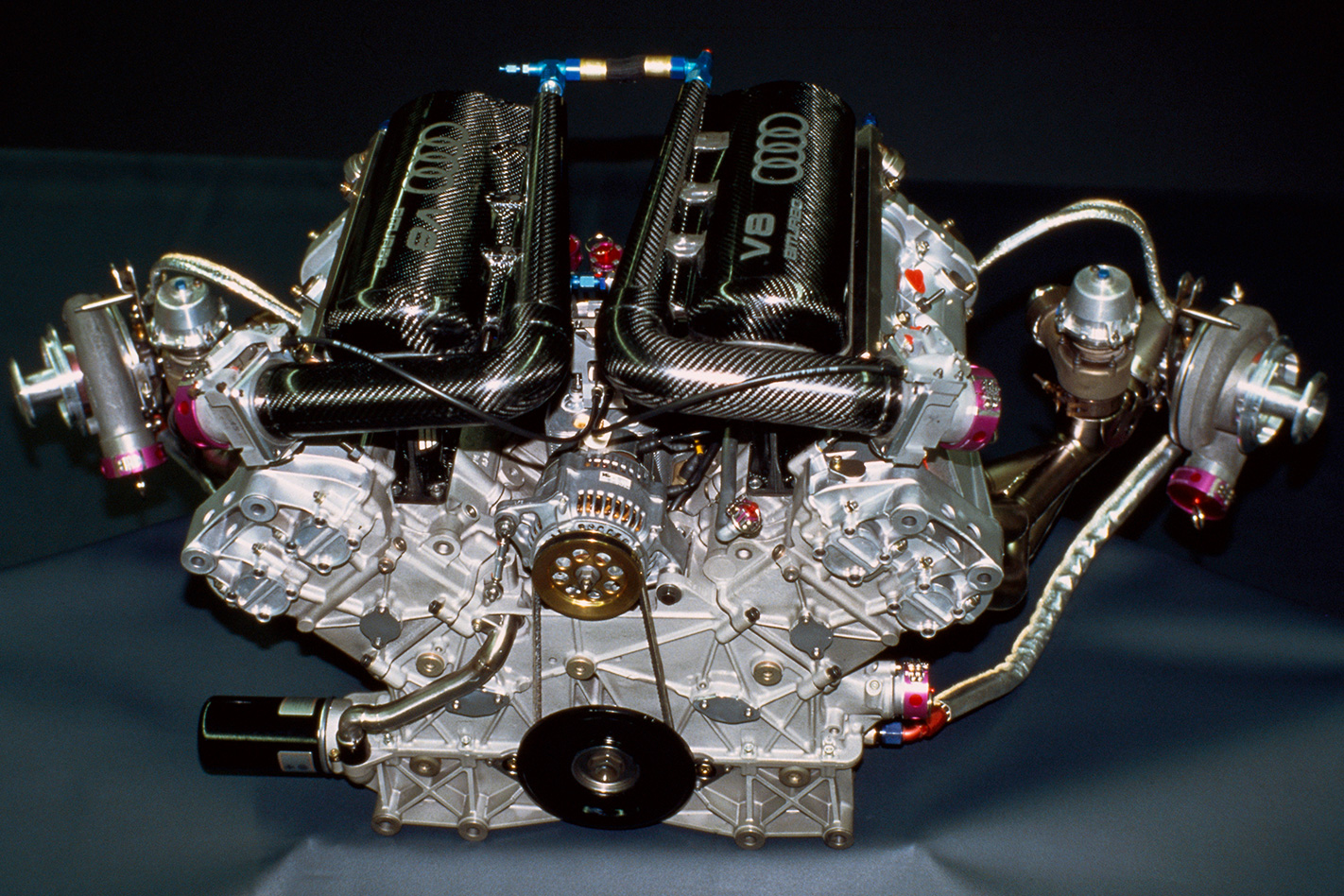
Despite its central role in dominating the 24 Hours of Le Mans at the start of the millennium, details on the 3.6-litre V8 are remarkably thin on the ground – it doesn’t even have a publicly known codename.
The story of the 3.6-litre started when Audi’s head of engine technology Ulrich Baretzky, along with head of motorsport Wolfgang Ullrich, were summoned for a meeting by Volkswagen Group CEO Franz Josef Paefgen at the newly-acquired ex-TOMS’s base in Norfolk, England.
The meeting would change sportscar racing – particularly Le Mans – for the next 15 years, as Paefgen charged Baretzky and Ullrich with leading Audi’s foray into endurance racing.
Up until this point, Baretzky had been developing production-based engines for touring car racing, making his new project the first purpose-designed motor from Audi since the Auto Union days of the 1930s. No pressure, then.
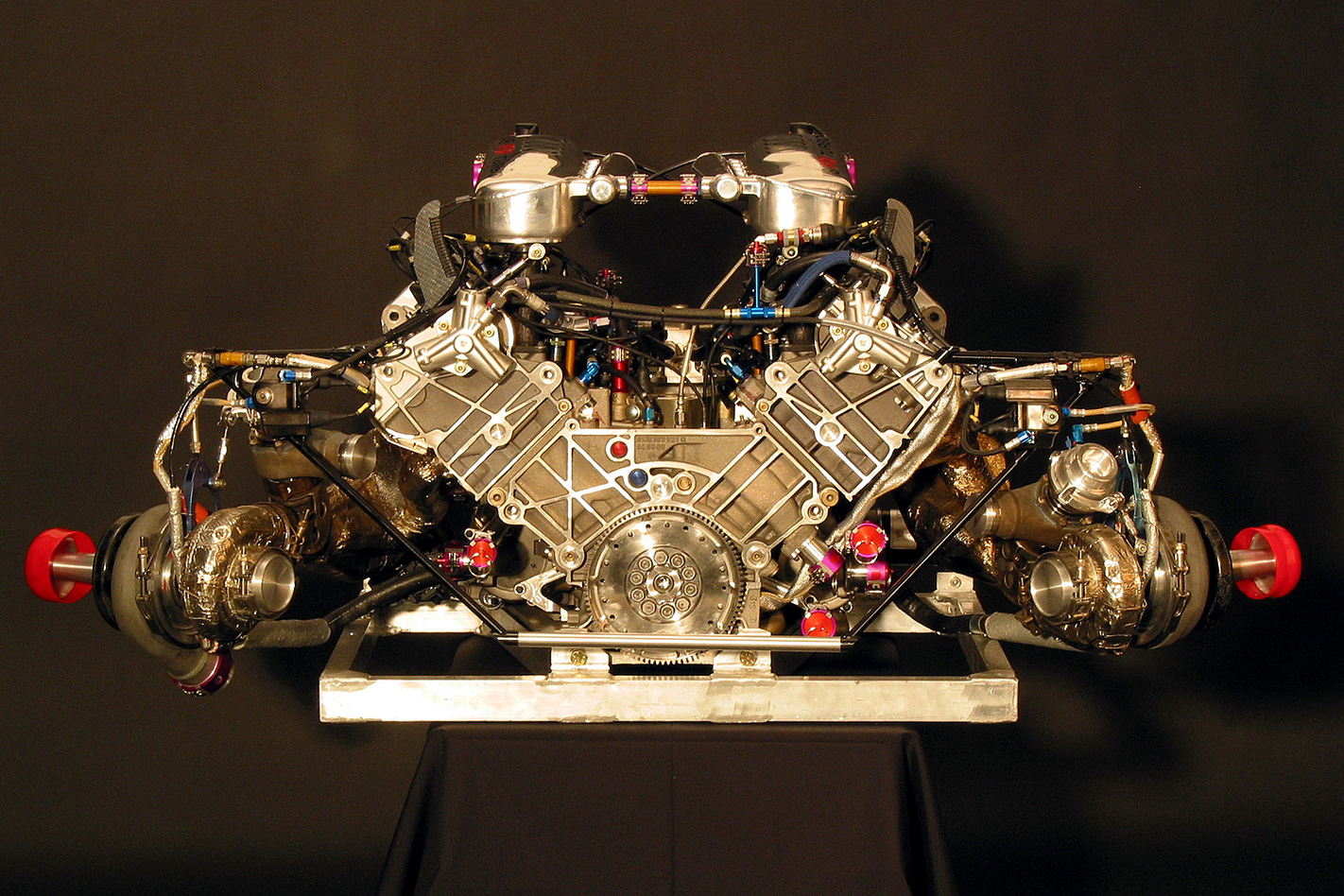
When Baretzky proposed a twin-turbo V8 engine layout to Paefgen, the VW CEO was initially opposed to the idea. Regardless, Baretzky pushed on with his plan, and the first iteration of the 3.6-litre engine was fitted to the R8R for the 1999 24 Hours of Le Mans.
After the lead R8R finished third in its Le Mans debut despite rising water temperatures in the closing laps, Paefgen was forced to humbly apologise to his engine guru, telling Baretzky “I apologise for having pushed you for the normally aspirated engine, you were absolutely right”.
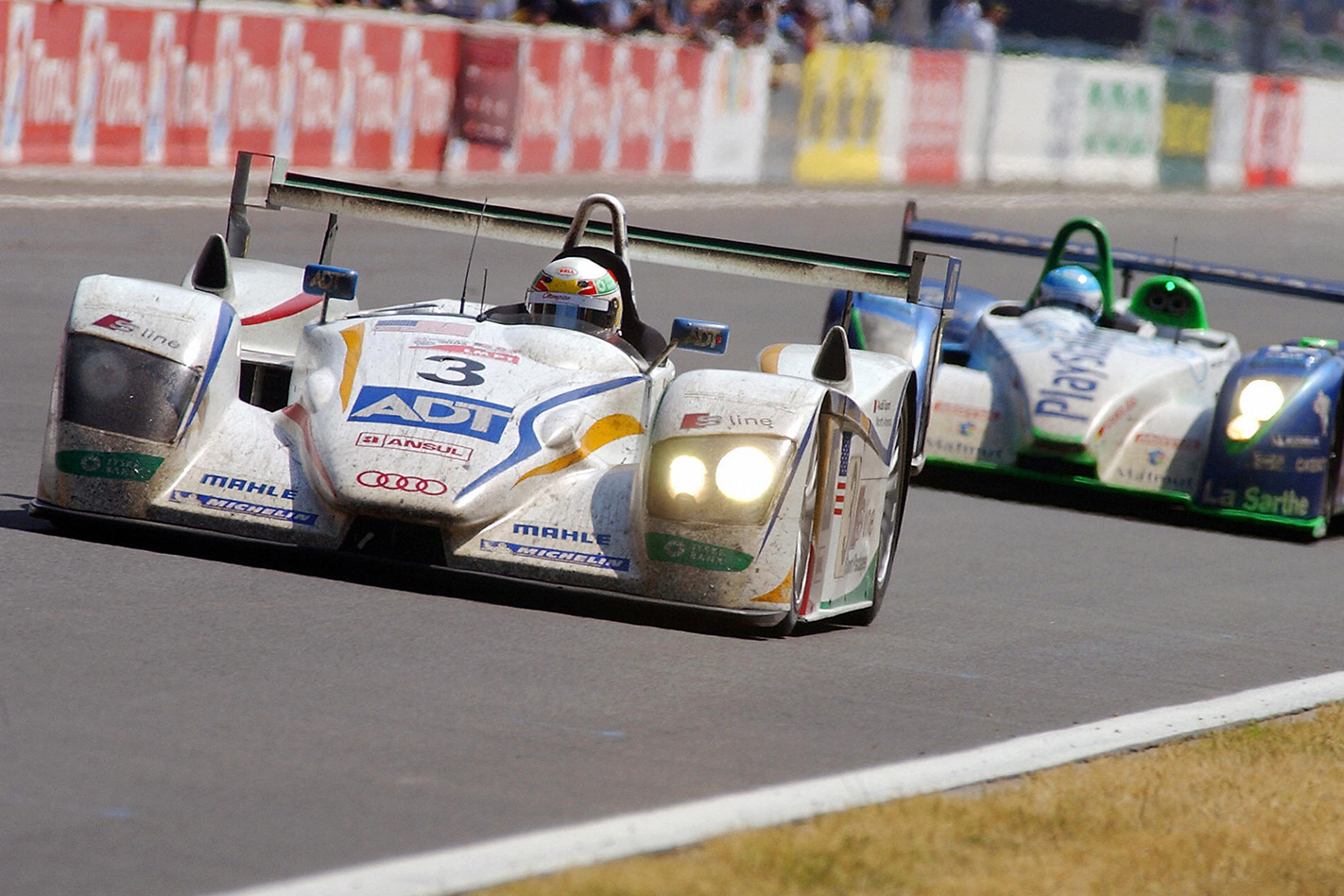
Baretzky followed up the R8R with the R8, which would go on to be the most successful vehicle design to ever grace the La Sarthe circuit. On debut in 2000 it would finish 1-2-3, with the best non-Audi circulating 24 laps off the lead – roughly 88 minutes behind.
Not content with resting on his laurels, Baretzky insisted in fitting the engine with direct fuel injection for ’01, doing so with a condensed development period.
“I didn’t know how to do it, but I just said, ‘We have to do it’, and we somehow made it work.” He told Autosport.
It would be the first time Audi’s TFSI tech would be implemented on the track, resulting in significantly improved engine response, better fuel economy, and shorter fuel stops.
What followed was an absolute shellacking of the competition, as the R8 won in ’01 and ’02. Audi’s fuel-injection upgrade wasn’t revealed to the world until after the ’01 victory, with the entire project kept in complete secrecy. In fact, the engine remains shrouded with mystic, though there are some details available.
The 3.6-litre unit is constructed from lightweight aluminium, with a pair of Garrett turbocharges aiding power.
Official figures for Audi’s twin-turbo creation vary depending on the ruleset and which team was running the unit. From 2000-02 it was officially stated to produce 455kW, with smaller restrictors in 2003 and 2004 dropping that to 410kW, then 388kW in 2005.
Unofficially, the factory Joest Racing R8s were alleged to have around 500kW being sent to the wheels at speeds over 240km/h. This figure is measured at speed as the factory cars were fitted with ram-air intakes which benefited from the denser air being fed into the motor at higher speeds. Torque was reported to be in the region of 700Nm.
Audi’s of that era earned an enviable reputation for reliability, with no car fitted with the 3.6-litre V8 suffering an engine failure during a race.
This is in part thanks to the engine being fitted with two independent water pumps, along with a water-coiled oil radiator for the engine and gearbox which was integrated inside the engine’s V.
Along with reliability, the V8 was incredibly fuel efficient for a racing engine, able to achieve 12-13 lap stints on the 90-litre tank mandated by the rules. This is the equivalent of 166-180km at race pace, at a circuit which is attacked at wide open throttle for 71 percent of the lap.
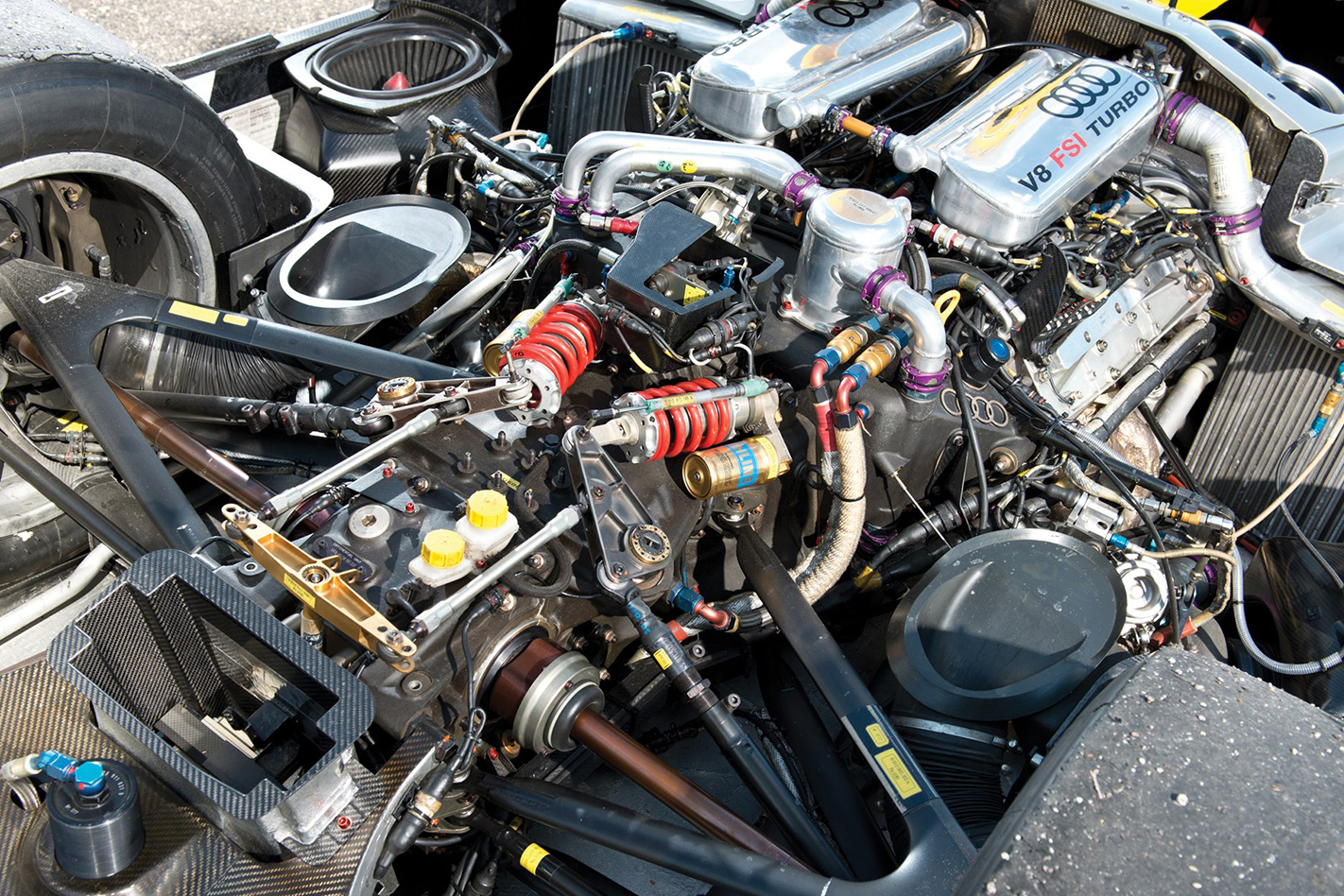
For 2001 the rules dictated 32.4mm air restrictors, with maximum boost pressures of 1.67 bar. The V8 had an 85mm bore and 79.22 stroke, and while the compression ratio was never disclosed, a paper written by Baretzky about its development states it is greater than 11.0:1. This high compression ratio was possible as TFSi injected the fuel at the exact time of ignition, reducing the chance of pre-ignition from over-compression. Importantly for pit stops, it meant a leaner mixture could be used.
The 3.6-litre V8 was more powerful, more reliable and more fuel efficient than its rivals, making it a powerhouse of early-2000s racing.
In 2003 Audi temporarily wound down its factory support for the R8, with funds being diverted toward VW Group stablemates Bentley, and its Speed 8 prototype which was built on the R8 chassis and powered by a modified 4.0-litre version of the 3.6-litre V8.
Once again, Baretzky’s creation would dominate, finishing 1-2 badged as a Bentley, with the original 3.6-litre in third and fourth.
The R8 would once again dominate in ’04, and ’05, making it an unbroken six-year winning streak for Audi’s twin-turbo V8. No other engine has won the 24 Hours of Le Mans as many times, let alone without being beaten.
As it was replaced by the diesel-powered R10, Audi’s petrol twin-turbo V8 has an unblemished, unbeaten, Le Mans record.
Audi dominated the 24 Hours of Le Mans from 2000 until 2014, only being beaten in the endurance classic twice during that time. The start of that domination came thanks to Baretzky, and his dreadnought of an engine.
| Manufacturer | Audi |
| Production | 1999-2006 |
| Configuration | 90u00b0 V8 twin-turbo |
| Bore x Stroke | 85 x 79.22 mm |
| Displacement | 3596cc |
| Valvetrain | DOHC four valves per cylinder |
| Power | 388-500kW |
| Torque | 700Nm |
Click here to read more Wheels features on Great V8s.
The Wheels Verdict: Performance, badge cachet and family-friendly practicality all in the one wagon. If you can afford the $217,000 asking price and don’t mind the styling, there’s little not to like. Space and pace need not be mutually exclusive.
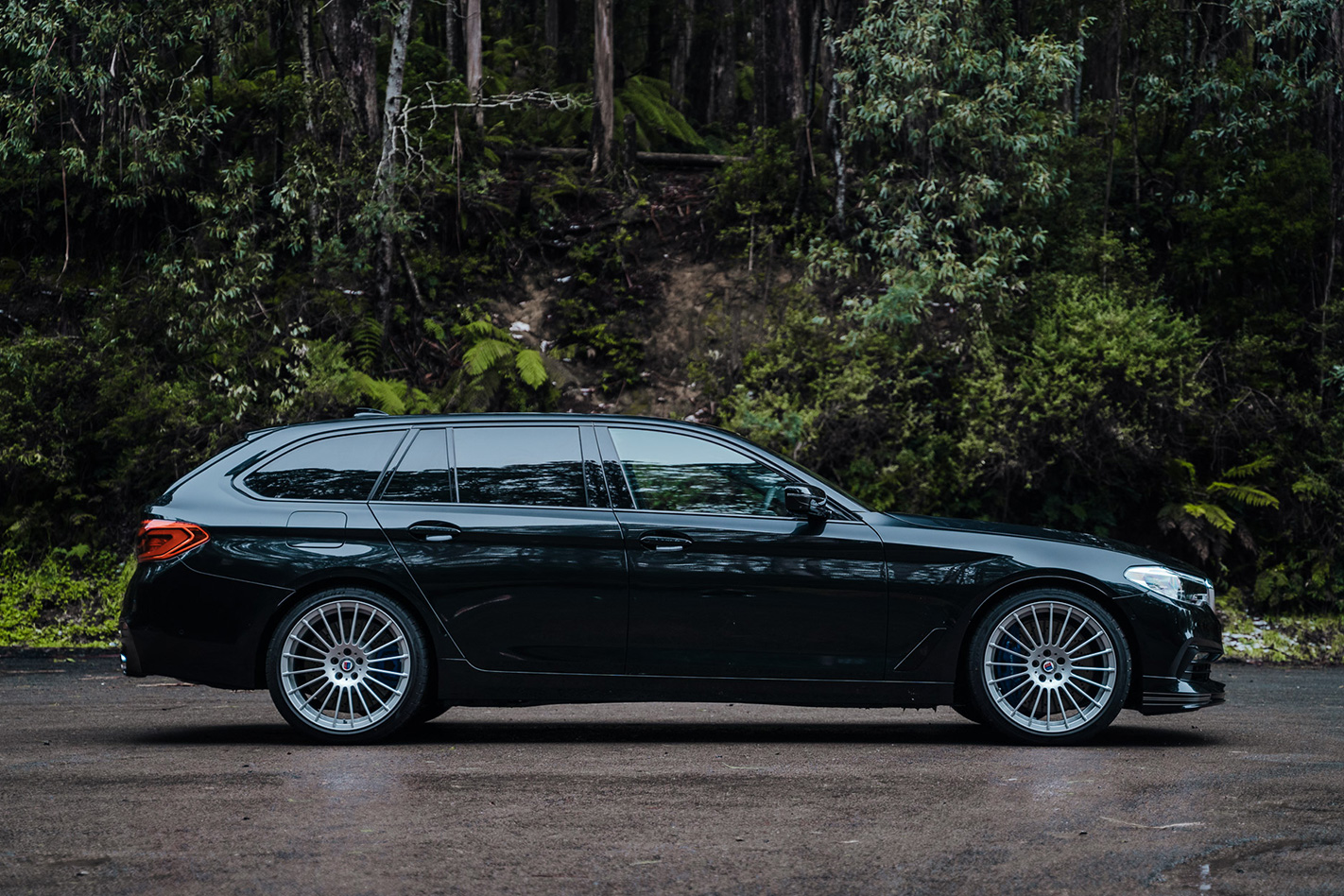
WHAT IS THE ALPINA B5 TOURING?
The Alpina B5 Touring is the ultra-fast V8 wagon BMW doesn’t offer – discounting SUVs, of course. If you want M5 levels of performance and 7 Series luxury with the ability to bring along a four-legged friend, Alpina is the only option available. Ultimately, the B5 Touring embraces its BMW routes rather than trying vehemently to disguise them.
WHY WE’RE TESTING IT
It’s quite a unique proposition. While we await Audi’s upcoming RS6, Alpina’s B5 Touring is the kind of car that befits the one-car-to-do-it-all mentality. Plus, who doesn’t love a fast wagon?
ALPINA B5 TOURING REVIEW
There’s something profoundly pleasing about a barnstorming wagon. It is pragmatism meeting performance in the best kind of way. The Alpina B5 Touring embodies this theory, with a $217,000 touch of luxury and exclusivity.
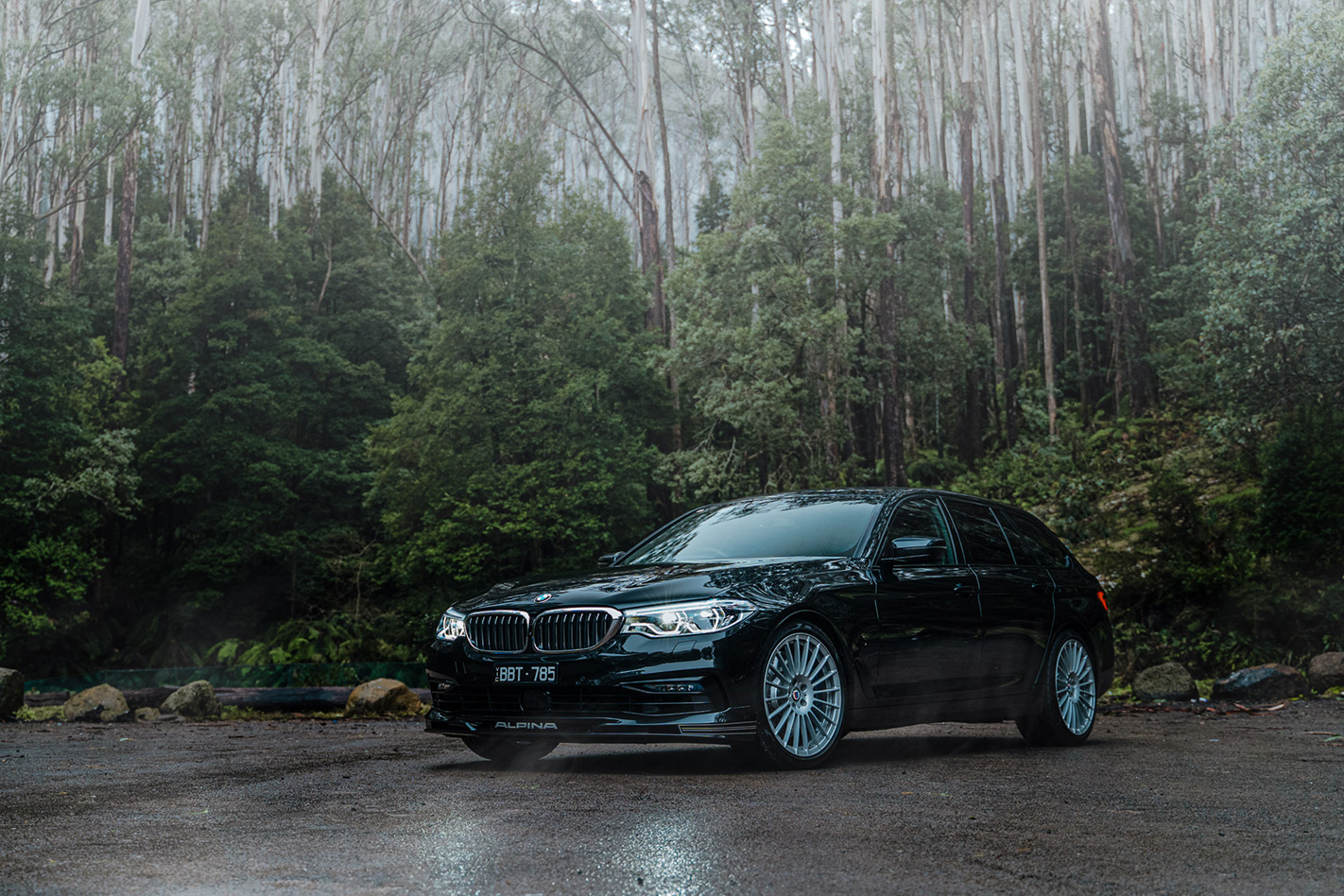
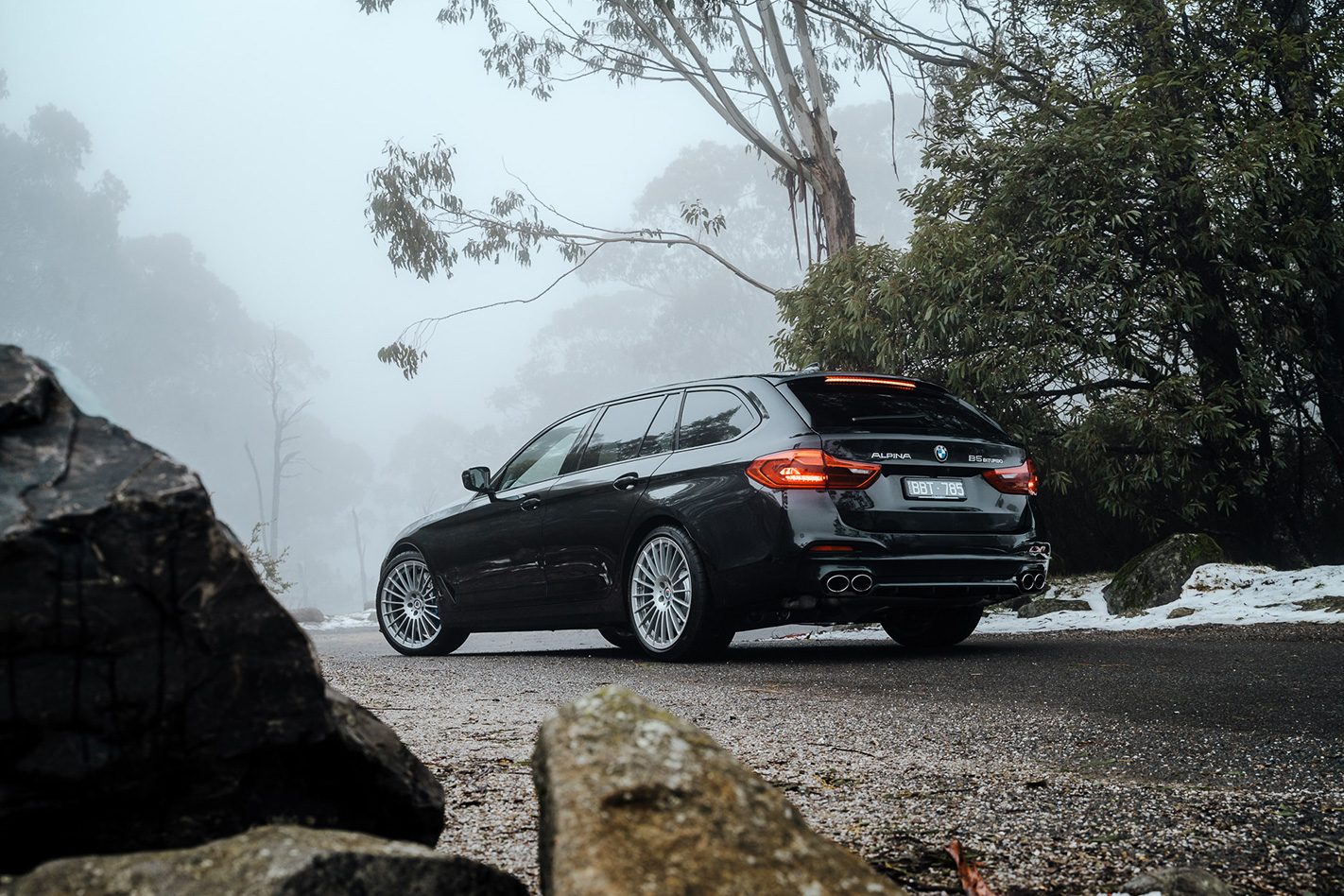
Understated certainly describes the Touring’s exterior. Yes, the traditional 20-spoke alloys, quad exhaust pipes and prominent Aplina badging are present, but little else gives away the Alpina’s go-fast identity – even the V8 heart is hushed until provoked.
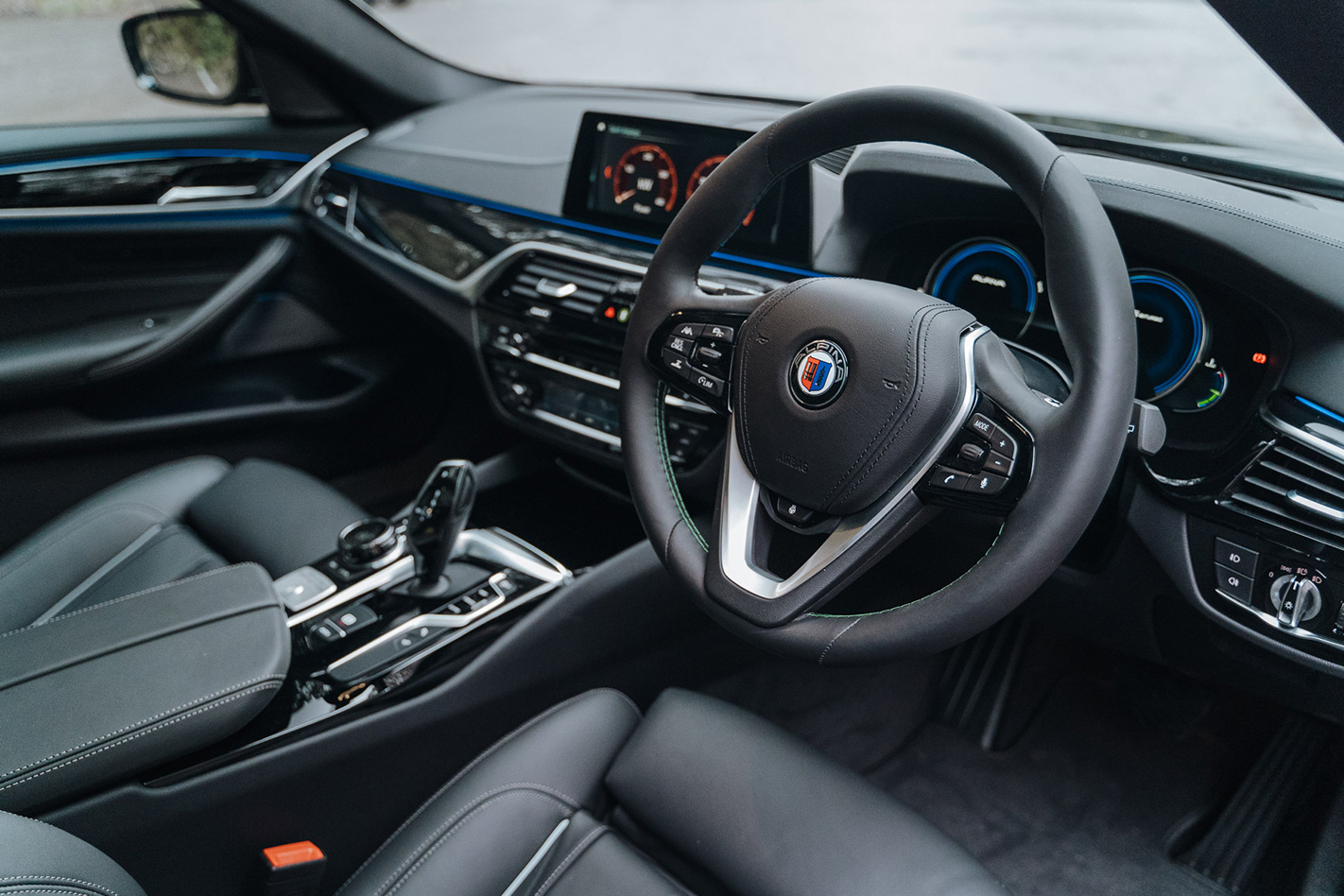
Inside, the luxe ambience is apparent. It’s ostensibly a BMW 5 Series at face value, but overtly Alpina in detail. High-quality materials are used throughout, with fine leathers and intricate coloured stitching signs of a bespoke touch. It lives up to its price tag.
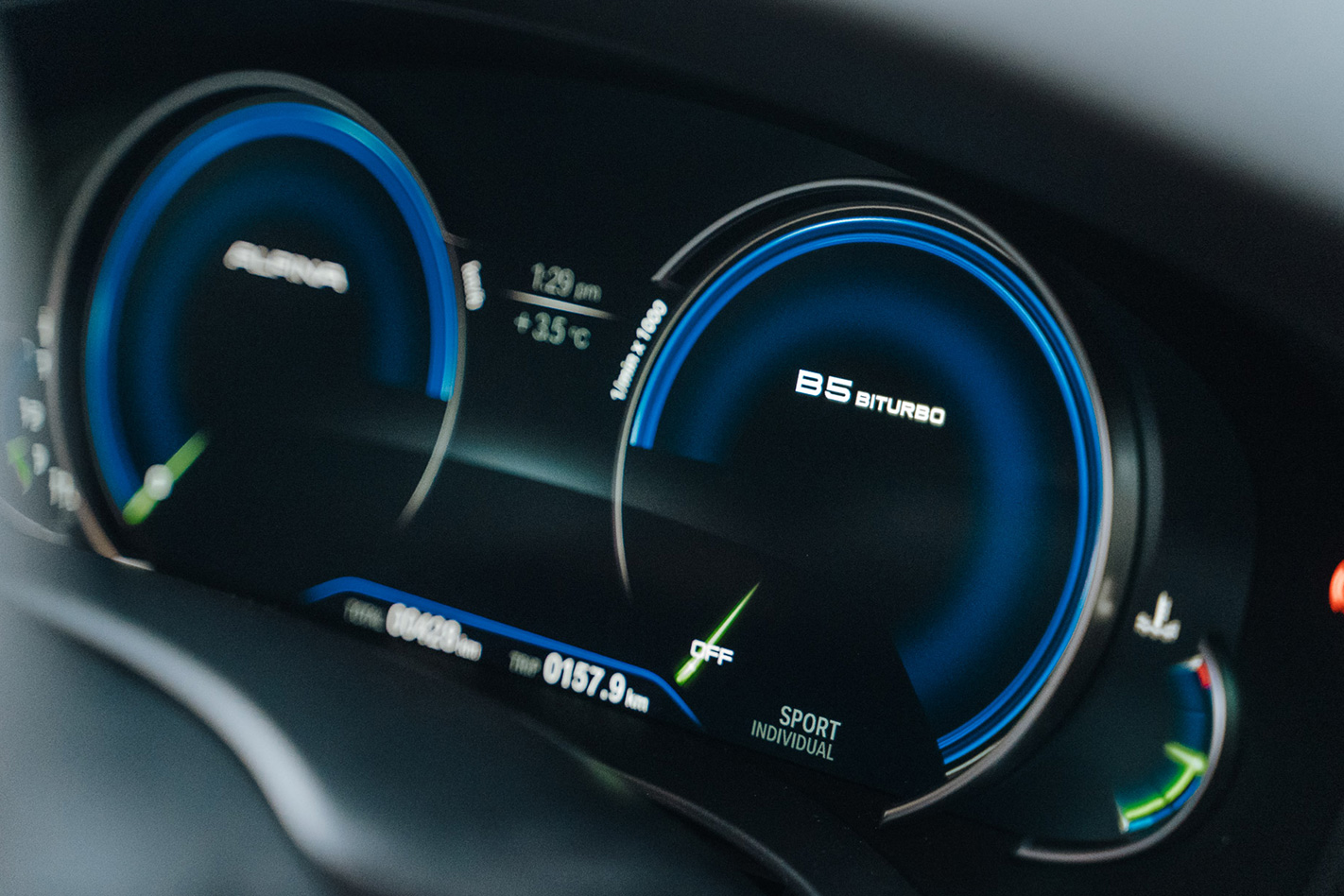
Myriad Alpina references are made within the cabin, most notably the plaque near the iDrive controller, which like the infotainment system is lifted straight from its Bavarian donor, while the digital instrument cluster receives a complete Alpina redesign.
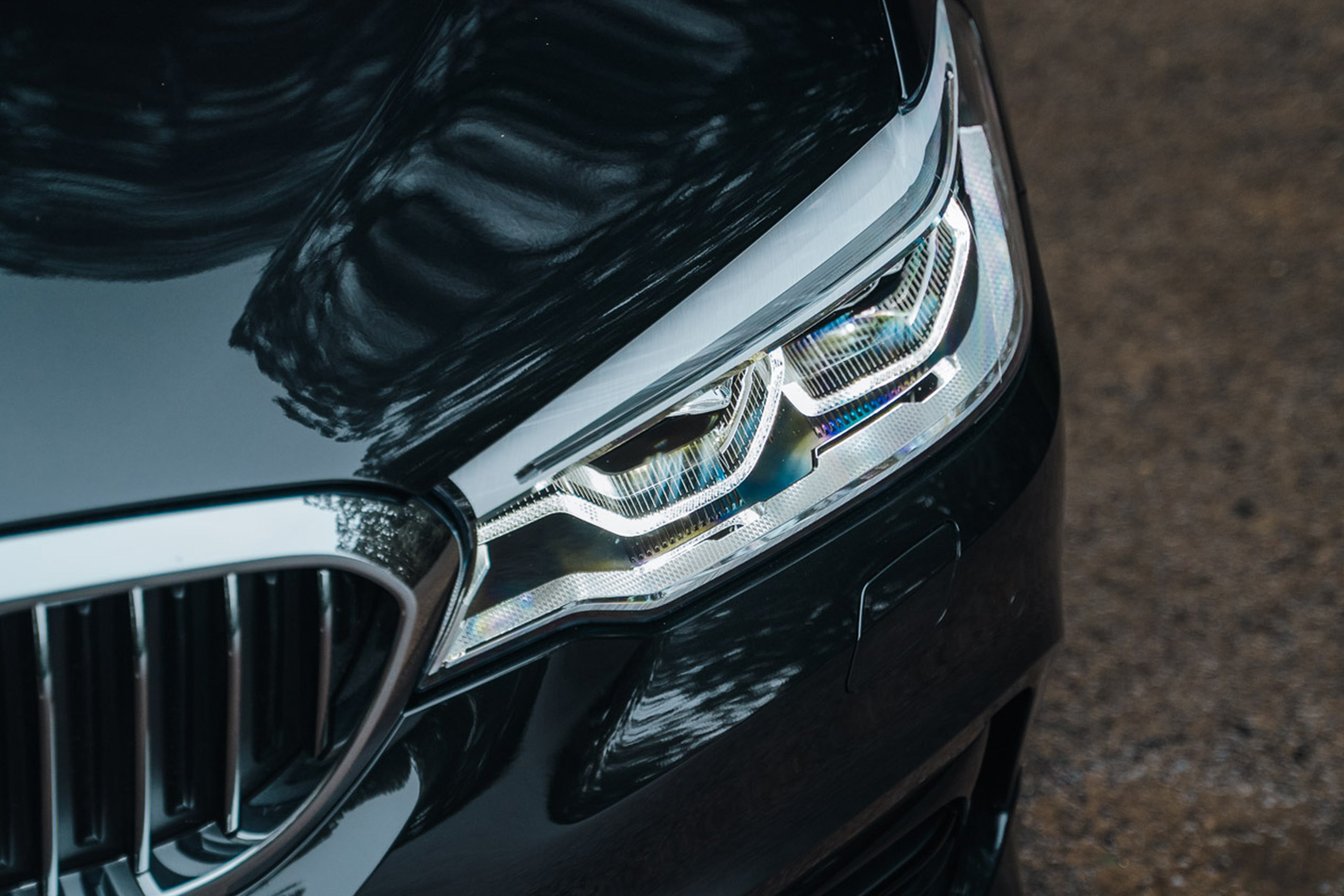
Practicality levels are high. The boot offers 570-litres cargo capacity, which expands to 1700L with the back seats folded. There’s ample room front and back for heads and legs, while the rear doors open wide, making the B5 a good choice for a busy family.
However, turf the family for a spirited drive and the B5 Touring comes alive. Motivated by a twin-turbo 4.4-litre V8, the Alpina offers 447kW of fun. It sounds tough in sportier driving modes and is bloody fast, with the rear-biased all-wheel-drive system fostering ample grip – a prerequisite to properly harness the 800Nm of torque you could use to tow a horse float and not know it. Alpina’s 0-100km/h claim of 3.7sec is utterly believable, aided by the Alpina-tuned ZF eight-speed auto. Frustratingly, the shift buttons remain a bugbear and unsatisfying to use.
With the BMW 540i Touring as its base, the B5 is softer and not quite as focused or agile as an M5, however, with an Alpina-only Comfort Plus mode for the adaptive dampers (as well as air suspension on the rear axle), it delivers greater ride comfort than BMW can achieve. Flick to Sport mode and body control tightens, but at the expensive of the plush ride quality.
Where the road surface allows the stiffer setup, the B5 remains capable – so much so that you can forget its wagon status. With four-wheel-steer fooling you into thinking it has shortened the 2975mm wheelbase, the almost five-metre long Touring is responsive and somewhat shrinks around you. It is staggering how adept and fast the Alpina is for a 2.1-tonne wagon.
For the well-heeled buyer who requires practicality, but enjoys spirited driving and exclusivity, the booted Alpina is the chameleon car that can do it all. If ever there was a case for not buying a bloated SUV with performance pretence, this is it.
ALPINA B5 TOURING RIVALS
Audi RS6 Performance, Porsche Panamera Gran Turismo, Mercedes-AMG C63 S Estate
ALPINA B5 TOURING PRICE AND SPECS
- Model: Alpina B5 Touring
- Engine: 4395cc V8 (90°), dohc, 32v, twin-turbo
- Max power: 447kW @ 5750-6250rpm
- Max torque: 800Nm @ 3000-5000rpm
- Kerb weight: 2120kg
- Transmission: 8-speed auto
- Economy: 11.1L/100km (claimed)
- 0-100km/h: 3.7sec (claimed)
- Price: $217,000
- On sale: Now
