
If you’ve ever wondered what a Skoda Kodiaq-based ute would look like, then wonder no more.
The one-off Mountiaq concept is the product of more than 2000 hours work over eight months by a team of 35 apprentices.
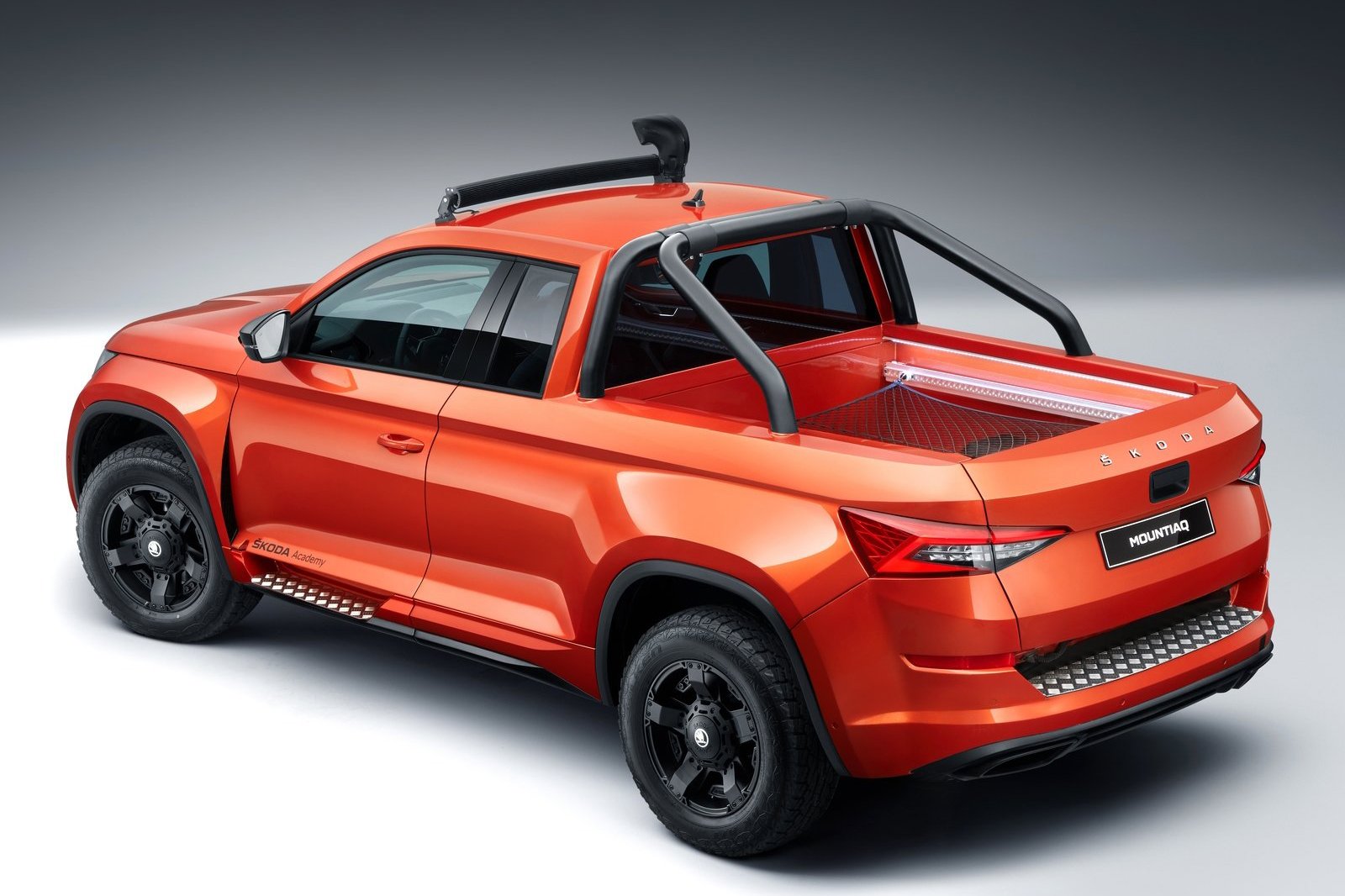
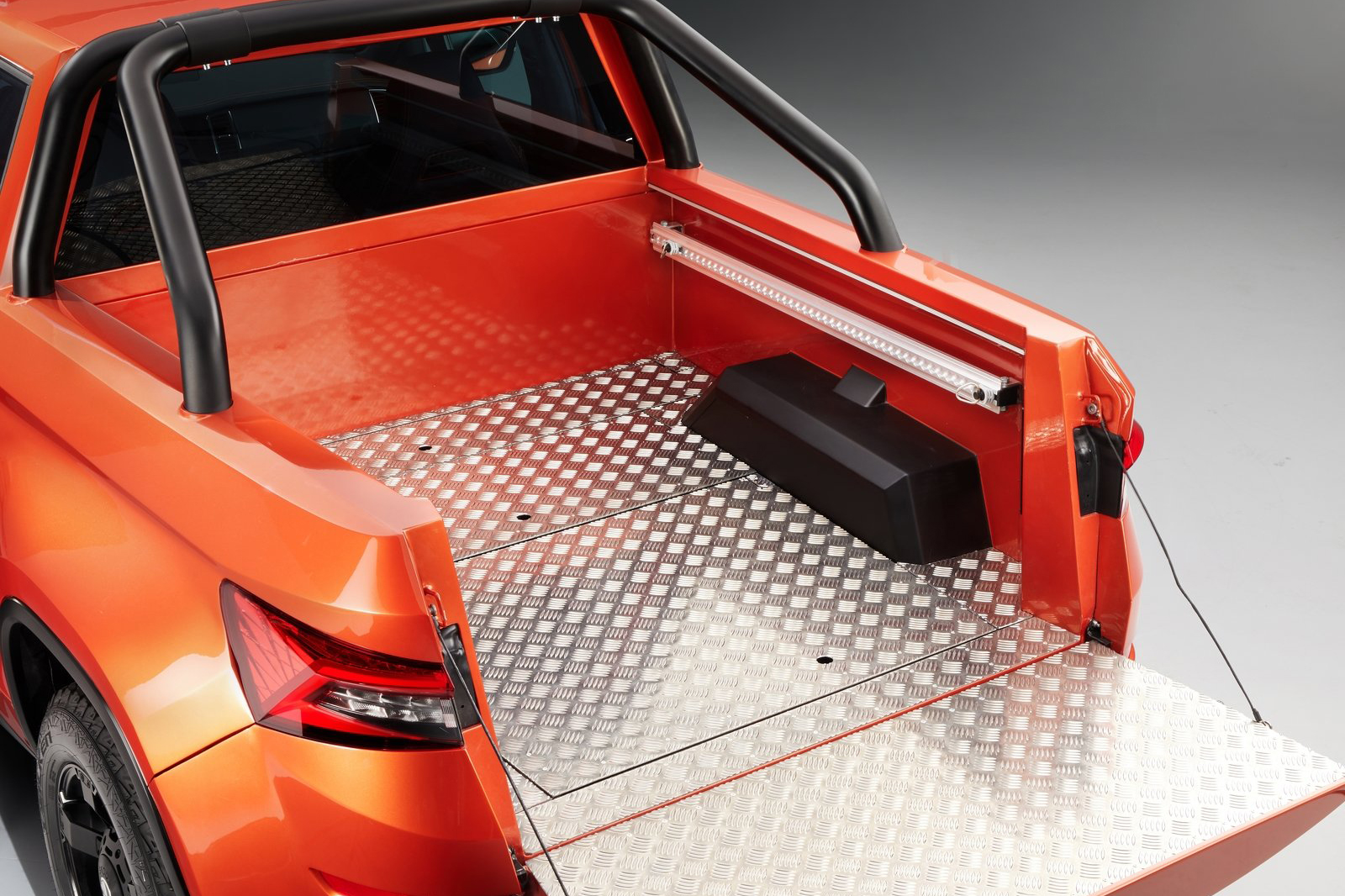
Transforming the Kodiaq into a ute required reinforcement of the body after the team removed the roof, creating a rear panel for the cab along with new rear and side windows. Skoda says one of the biggest challenges was the integration of the fully functional tailgate and the short tray features a hidden storage compartment. Although it looks pretty similar to a conventional 4×4 ute, overall payload is limited due to the donor Kodiaq, which is based on the road-focused MQB platform.
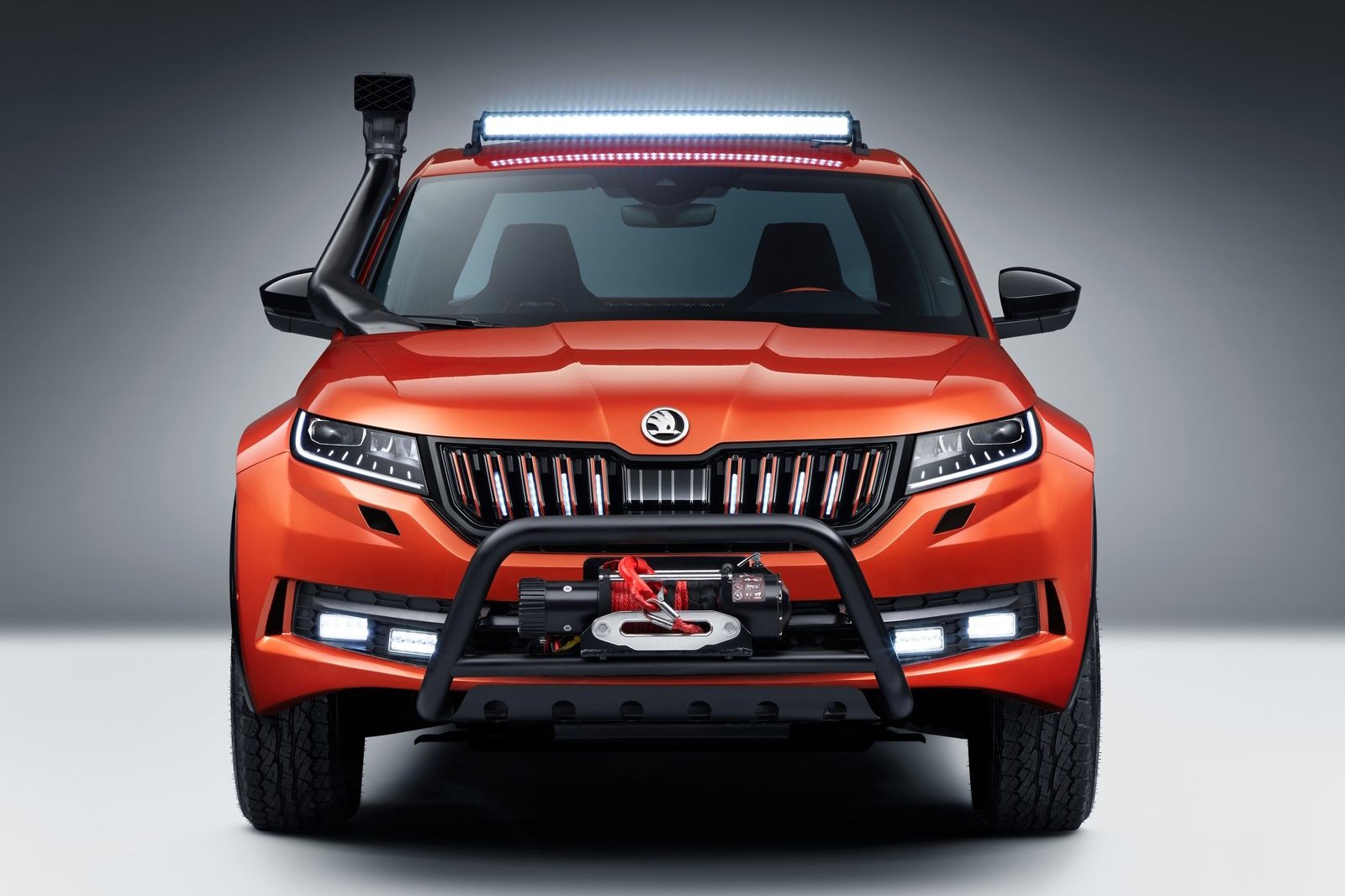
But it’s not just a ute look-alike with some extra body cladding, as the Mountiaq has been fitted with high-lift suspension, a snorkel, underbody protection, bulbar, LED light bars and a winch. The one-off concept adds a whopping 100mm of ground clearance (290mm in total) over the Kodiaq via the lifted suspension and 17-inch Rockstar wheels wrapped in special off-road tyres with deep treads.
At 4999mm long, 2005mm wide and 1710mm tall, the ute is bigger than its SUV donor in all dimensions, showcasing just how much work went into the conversion.
However, don’t expect blistering performance with the Mountiaq weighing a heavy 2450kg and powered by the Kodiaq’s stock 140kW 2.0-litre four-cylinder turbo petrol.
The Sunset Orange paint was also developed by the students, while the cabin received attention with specific design elements and a thumping sounds system featuring a 2000-watt subwoofer.
What do you think, should Skoda consider taking Mountiaq to production?
If you don’t think electric powertrains can be used to create seriously quick cars, you are either wilfully ignorant, or haven’t been paying enough attention.
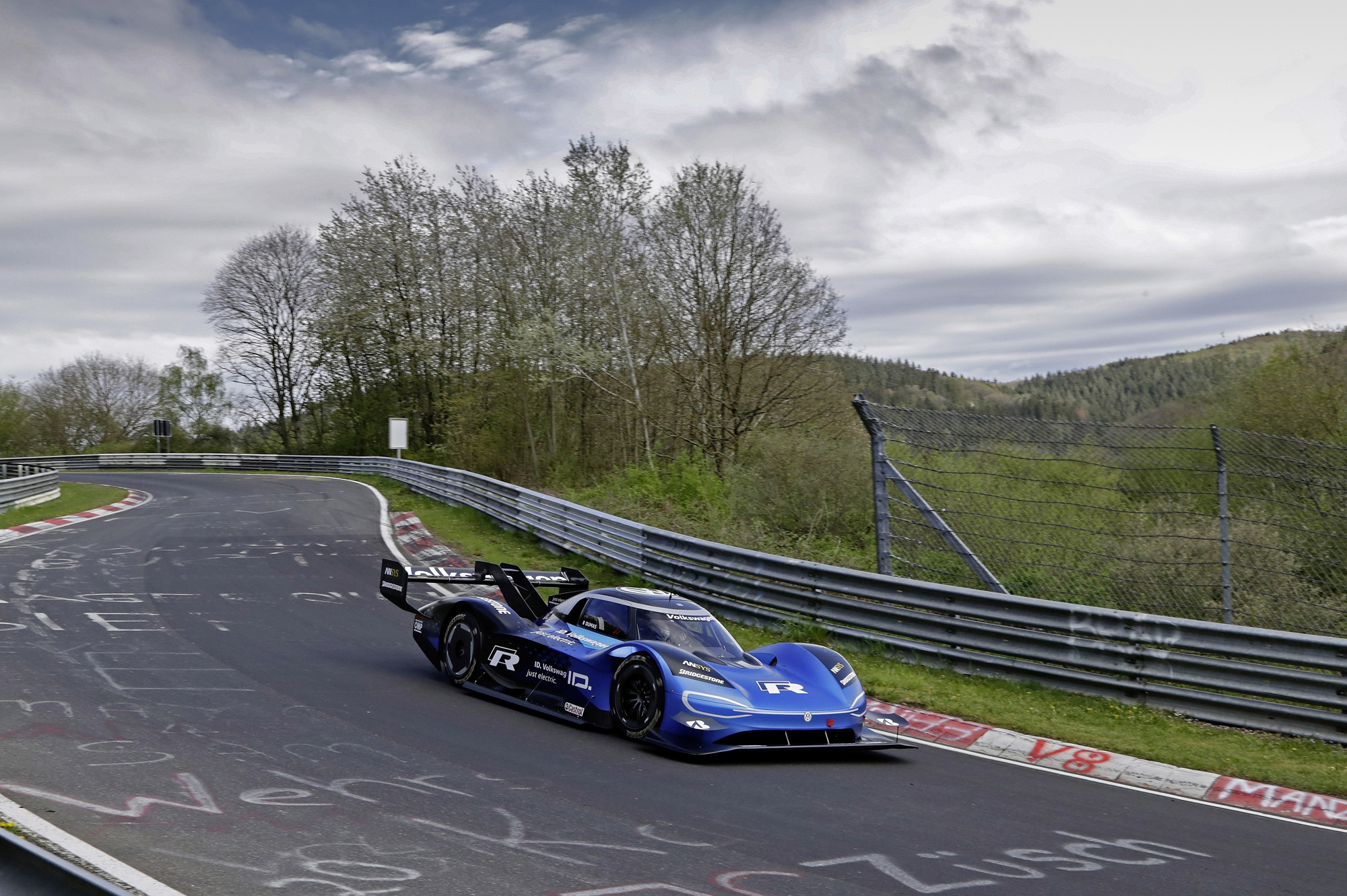
Volkswagen has once again proven the versatility of a fully-electric drivetrain, recording the second-quickest time in Nurburgring Nordschleife history.
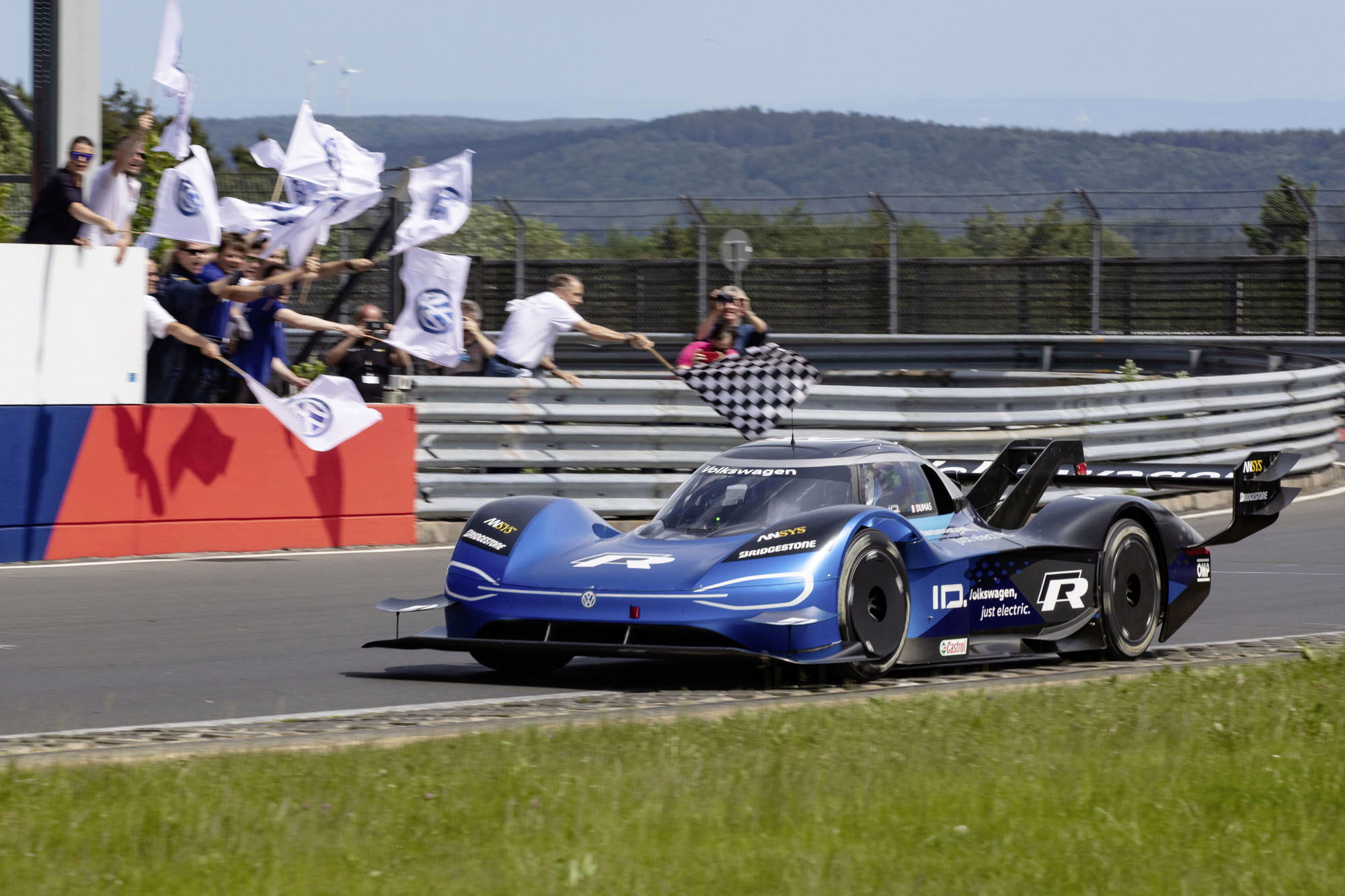
French racing driver Romain Dumas wrestled the fully-electric I.D. R to a laptime of 6:05.34 around the Green Hell.
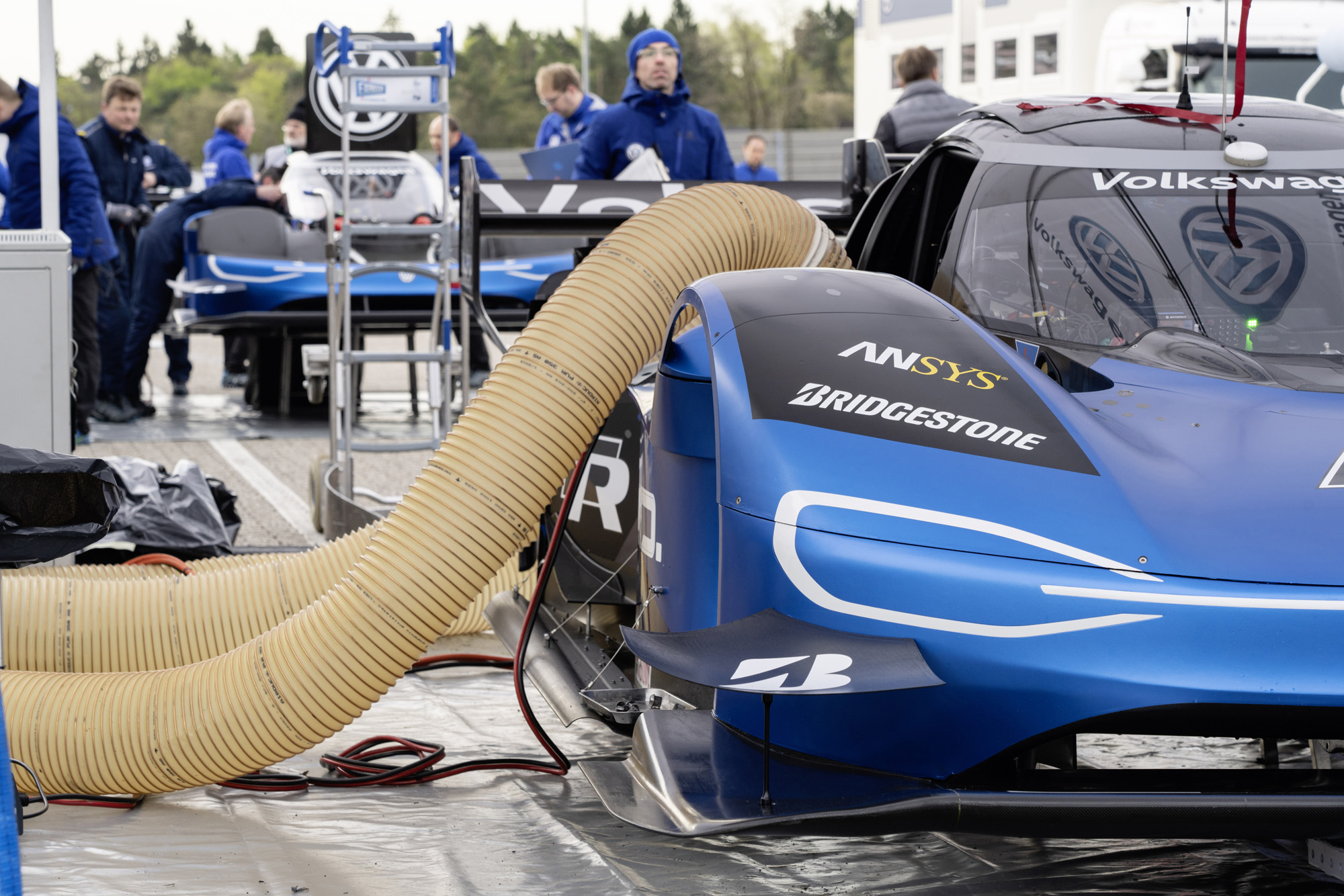
While coming short of outright supremacy, Dumas and VW’s achievement is significant for the fact that it is quicker than a time set over 35 years ago.
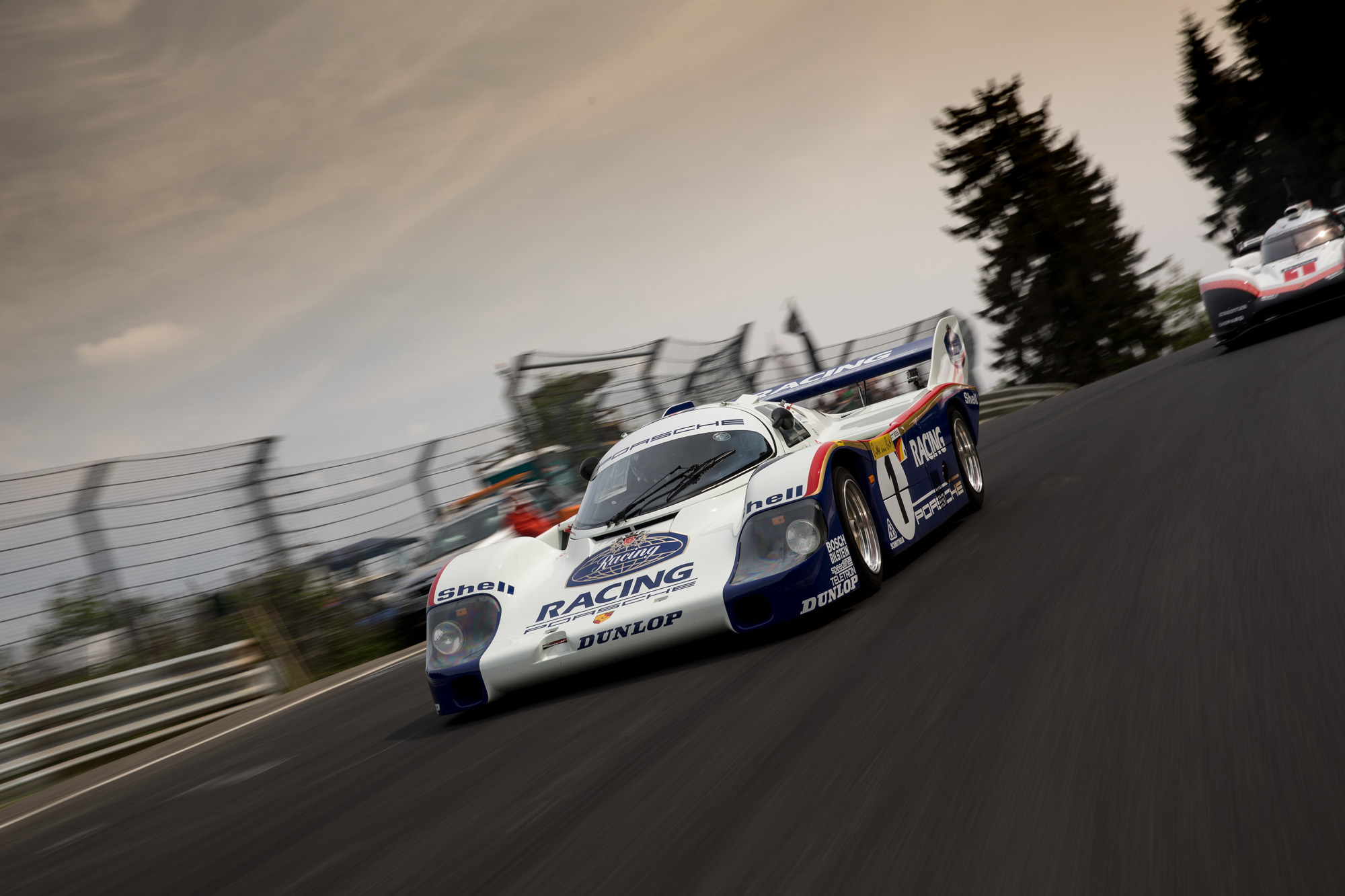
Now, it might seem condescending to use a time approaching middle age to measure yourself against, but this is no traditional benchmark – it is the 6:11.13 time set by Stefan Bellof at the helm of a Porsche 956 Group C race car at the 1983 Nurburgring 1000km race.
Until recently, the 6:11 benchmark was the quickest time the Nordschliefe had ever seen, and many thought that would not change. That was until Porsche retook its own record in 2018 with the unhinged 919 Evo racer, recording a 5:19.55 lap with Timo Bernhard.
The fact that Bellof’s 6:11 time, once considered unbeatable, is now just the third fastest time to have been recorded at the Green Hell speaks volumes for the rate of progress in the motoring industry. For it to be a fully-electric car that has relegated Bellof’s 956 would have been inconceivable in 1983.
Publically, VW always said that their target with the I.D. R was to take the electric record from the NIO EP9, a benchmark of 6:45.90, and internal simulations suggested a tilt at the outright record could have been possible, with rumours of a 5:30 time being passed around.
This mentality reflects what happened in Colorado last year when the I.D. R obliterated the outright record at Pikes Peak, after arriving at the fabled hill climb only targeting Rhys Millen’s 8:57.118 electric record.
History shows that Dumas and the I.D. R redefined what was thought possible at Pikes Peak, ascending the 19.99km climb in 7:57.148. It was the first time anyone had gone quicker than 8 minutes through the course’s 156 turns.
However, Pikes Peak and the Nurburgring are two completely different beasts. The former squeezes hairpin turns so tightly it’d make a Melbourne property developer wince, the Nordschliefe is a fast, flowing circuit with long straights, which requires carrying immense corner speed.
This required VW’s motorsport engineers to radically change its I.D. R racer, with new low-downforce bodywork (low downforce is a loose term when used in relation to what occurs at Pikes Peak’s high altitude and thin air), and the introduction of a drag reduction system on the rear wing.
While the twin motor and battery set-up remained unchanged from Pikes Peak specification, VW used a new energy management system to help the car achieve its top speed faster.
At Pikes Peak, Dumas and the I.D. R averaged 150.82km/h, but with the changes fitted to the car, was able to average 204.96km/h at the Nurburgring. For context, Bernhard in the hybrid 919 Evo had an average speed of 234.69km/h.
It should also be noted that the I.D. R was at a relative power disadvantage compared to both the NIO EP9 and 919 Evo, with approximately 500kW and 650Nm at its disposal.
The 919 Evo combined a 530kW turbocharged V4 engine with 325kW worth of electric thrust, and the NIO EP9 creating a neat megawatt (1000kW) of power.
Could this be a new golden age for Nurburgring Records? We certainly hope so.
Before we introduce zombifying speed limiters in a few years’ time, the South Australian state government is making a dash to cash in on reckless speeding drivers.
In response to a $500m write-down to its budget, the State Government has increased driving infringement fines for “Brainless idiot” drivers, adding a much needed $79m lifeline to the state budget.
“It’s no secret the State faces a significant $517 million shortfall in GST revenue in 2019-20 and it’s imperative we seek to plug that hole in a responsible way,” said state treasurer Rob Lucas.
“The Government will continue to cut waste and reduce spending in lower priority areas and increase revenue, especially from people who are breaking the law.”
“I’ve got no sympathy at all. As Kevin Foley [former treasurer] said, this is a voluntary form of taxation, you don’t have to pay speeding fines of any size.”
Specifically, anyone caught speeding between 30-45km/h over the speed limit will cop a $1472 fine, up from $920. Those done speeding at over 45km/h will receive a $1658 fine in the mail – up from $1036.
“Brainless idiots who blatantly thumb their nose at the law, risking the lives of others on our roads, ought to be whacked,” said Lucas.

The Government has been fairer on minor infringements, with fines for speeding at less than 10km/h over the signed speed limit up just $3.
The revised fees include a huge increase to companies which elect to hide the identify of company-car drivers. Lucas called the existing fine structure “limp lettuce” as part of a scathing commentary on drivers being let off the hook.
In South Australia, a company may pay an additional fee on top of infringements linked to a company car so that the driver will not receive any demerit points. That fine has skyrocketed from $300 to $1800. Over the last 12 months, 15,000 fines were paid in this manner, and the added $1200 fee would add $18m to state coffers.
“We’re cracking down on lead-foot drivers of company cars who speed and run red lights,” added Lucas.
“For far too long, thousands of them have been ripping off the system by asking their bosses not to identify them as a speeding motorist in a company vehicle, enabling them to avoid a loss of demerit points so they can stay on the road and keep their licence. In the last financial year, we had 15,000 people caught in this manner.
“Quite frankly, the limp lettuce leaf of a fine structure we’ve had in the past has practically given these motorists a licence to speed. Many of them should have lost their licence but they’re getting away with it.”
In addition to speeding fines, drivers caught using a mobile phone will be fined $534 – up $200 year-on-year. There have also been minor increases to registration and licensing fees.
There are many unusual sensations that fight for your attention while driving the 2019 Mercedes-AMG GT4, but the most surprising is undoubtedly the breeze.
Its location is the primary reason it dominates the senses, a strong stream of cool, fresh air being sent straight up the legs of my race suit in an attempt to keep steering wheel attendant temperatures under control.
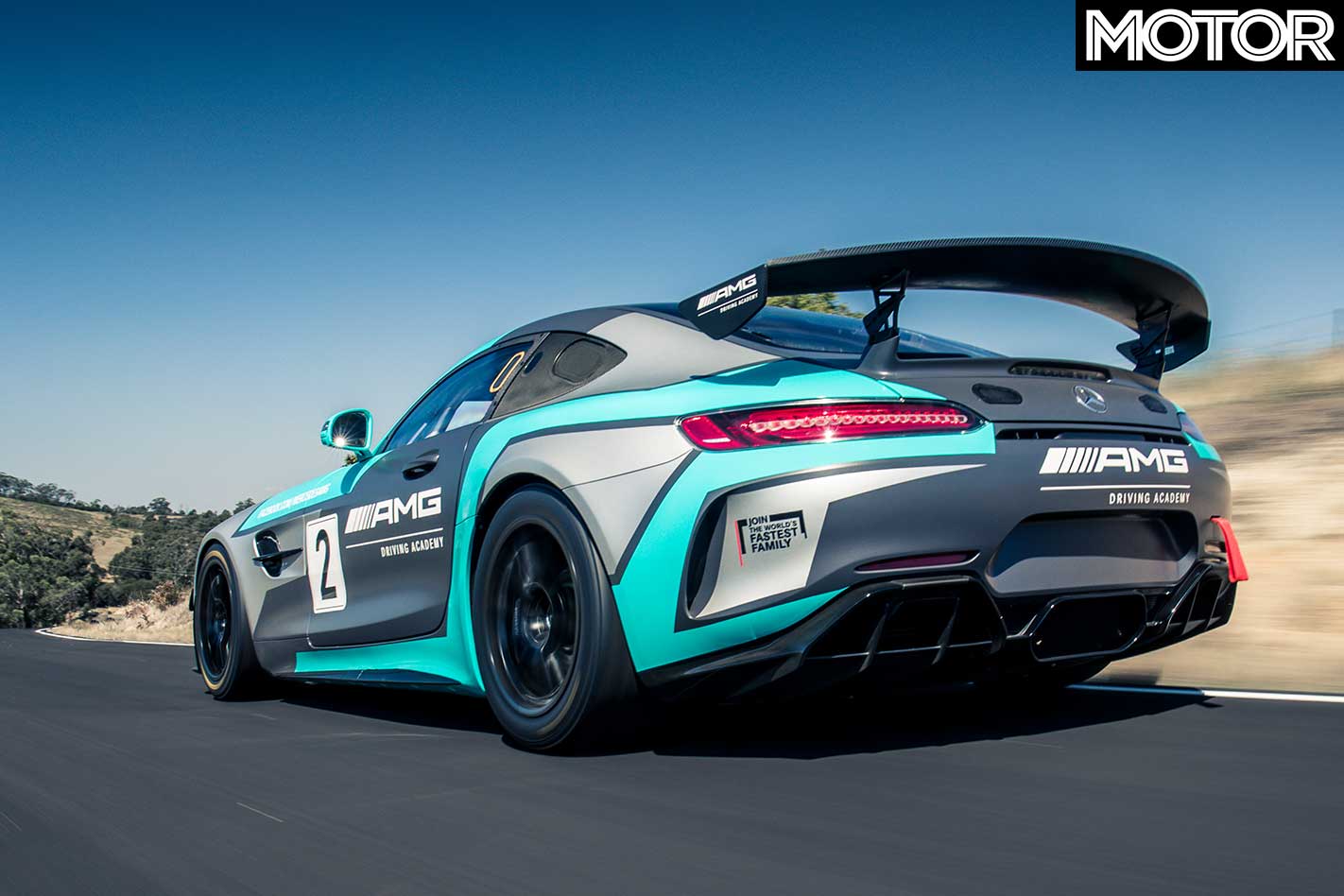
Air-conditioning might seem a strange inclusion in a racing car, but it’s important when the GT4 may be driven at maximum attack for hours at a time and by owners who may not necessarily be whippet-thin professional racers.
It adds 11kg and costs a single kilowatt, though can be foregone for a cool suit which is lighter and saps no power but can be prone to failure, leaving the driver slowly basting over the course of a stint like Sunday’s roast chicken.
Thankfully, air-con has no such issues as I need all the help I can get. It might look outwardly familiar but the driving experience of the GT4 is completely alien to somehow who has only really ever driven road cars.
You sit quite reclined and deeply ensconced in a carbon safety cell lifted from AMG’s GT3 machine, Merc’s rationale being that it doesn’t want to offer a race car that’s anything less than as safe as it can possibly make it.
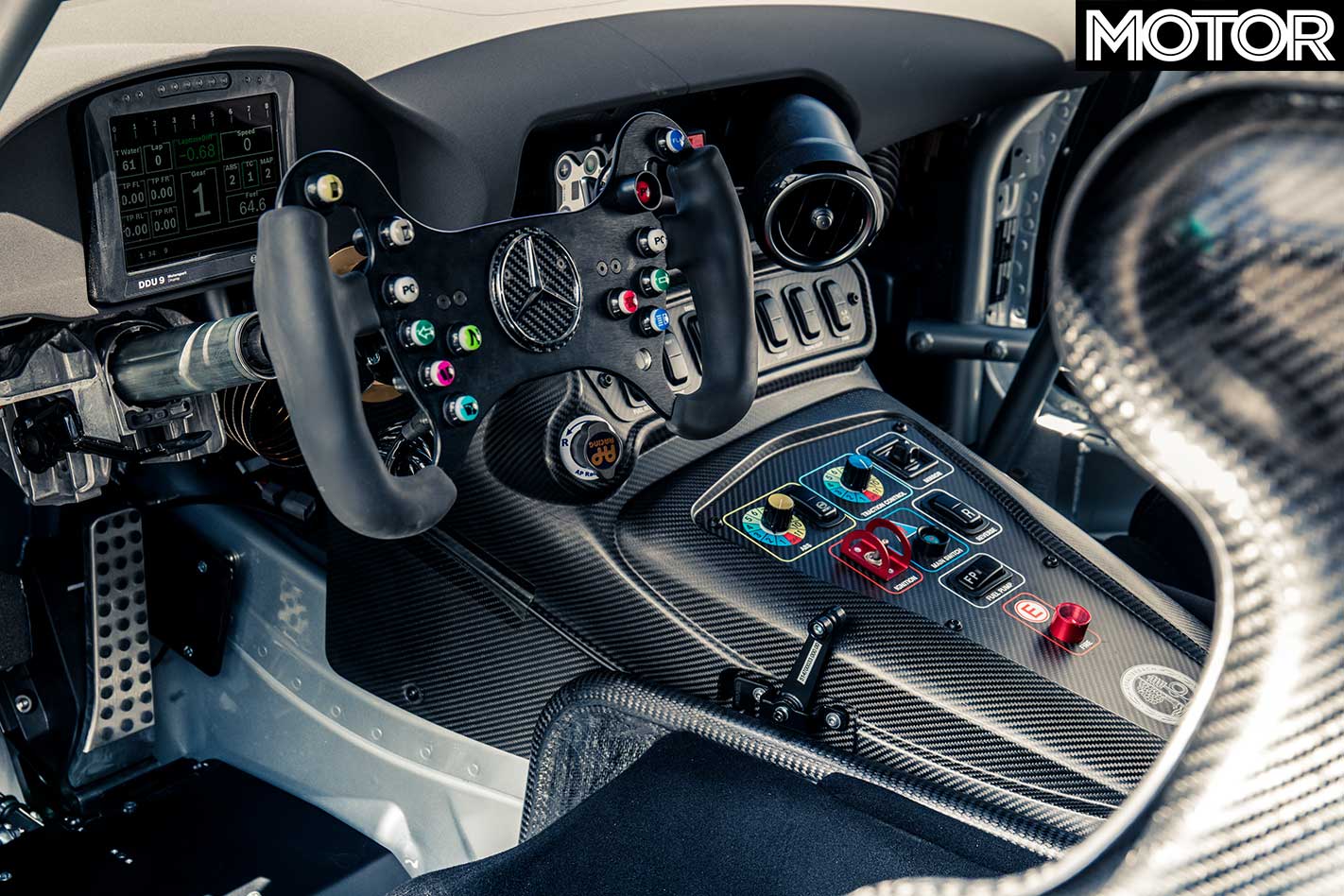
With the belts tightly fastened, HANS device connected and nets to the left and right (presumably to restrain flailing limbs) it’s a fairly claustrophobic environment, and I have a weird propensity to fidget constantly when six-point harnesses are involved.
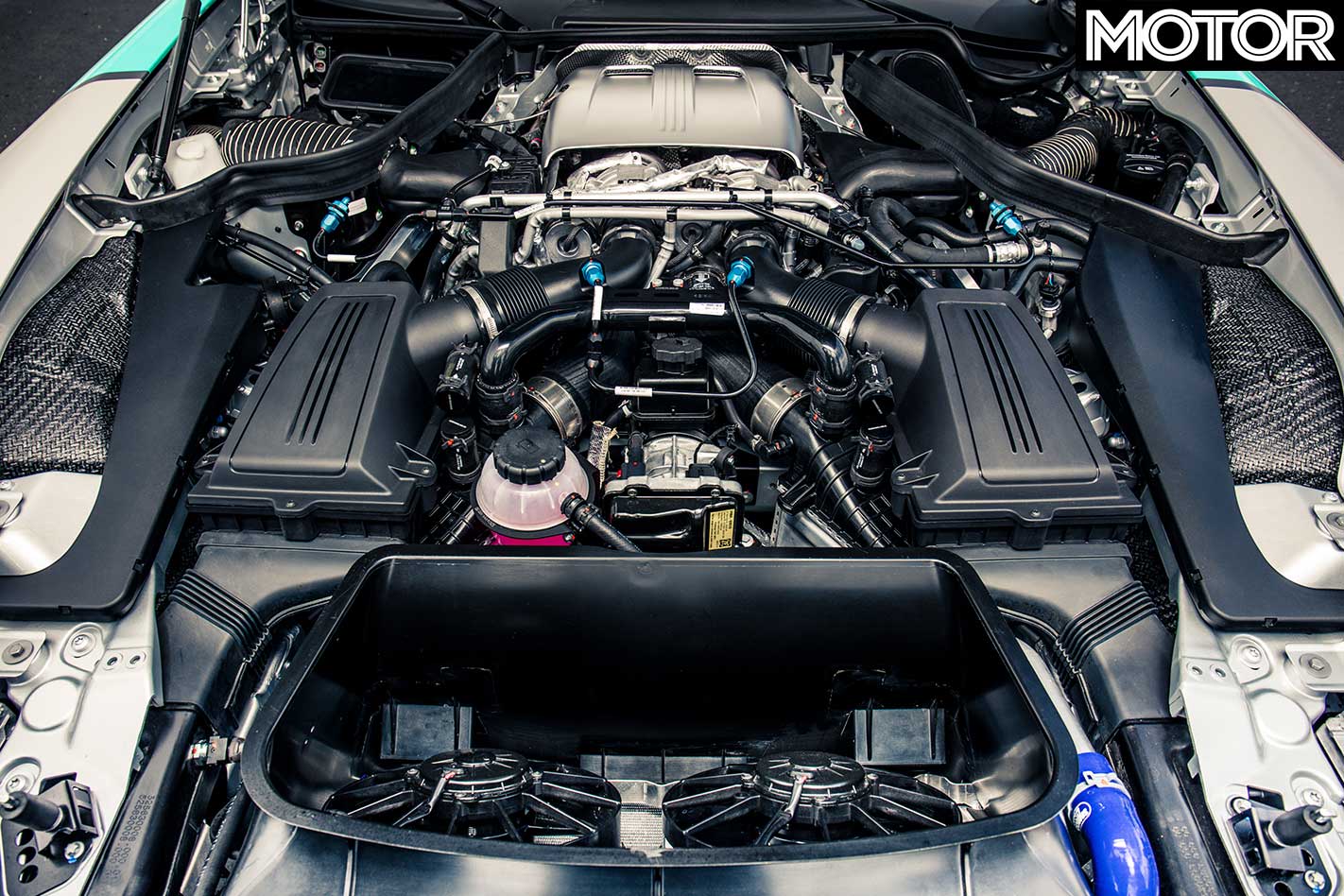
The instruction from my teacher, racer and AMG driving instructor Nathan Antunes, to start the engine provides a welcome distraction, a whirr of starter followed by a cacophonous explosion as the 4.0-litre twin-turbo V8 is woken.
Unlike road-going GTs, the GT4 has a clutch pedal, albeit a fairly apologetic one that isn’t required once moving. Fears of a bitey, capricious bastard of a thing are unfounded, with a smooth release resulting in forward motion, though the accompanying noise sounds like the tracks on an M1 Abrams tank.
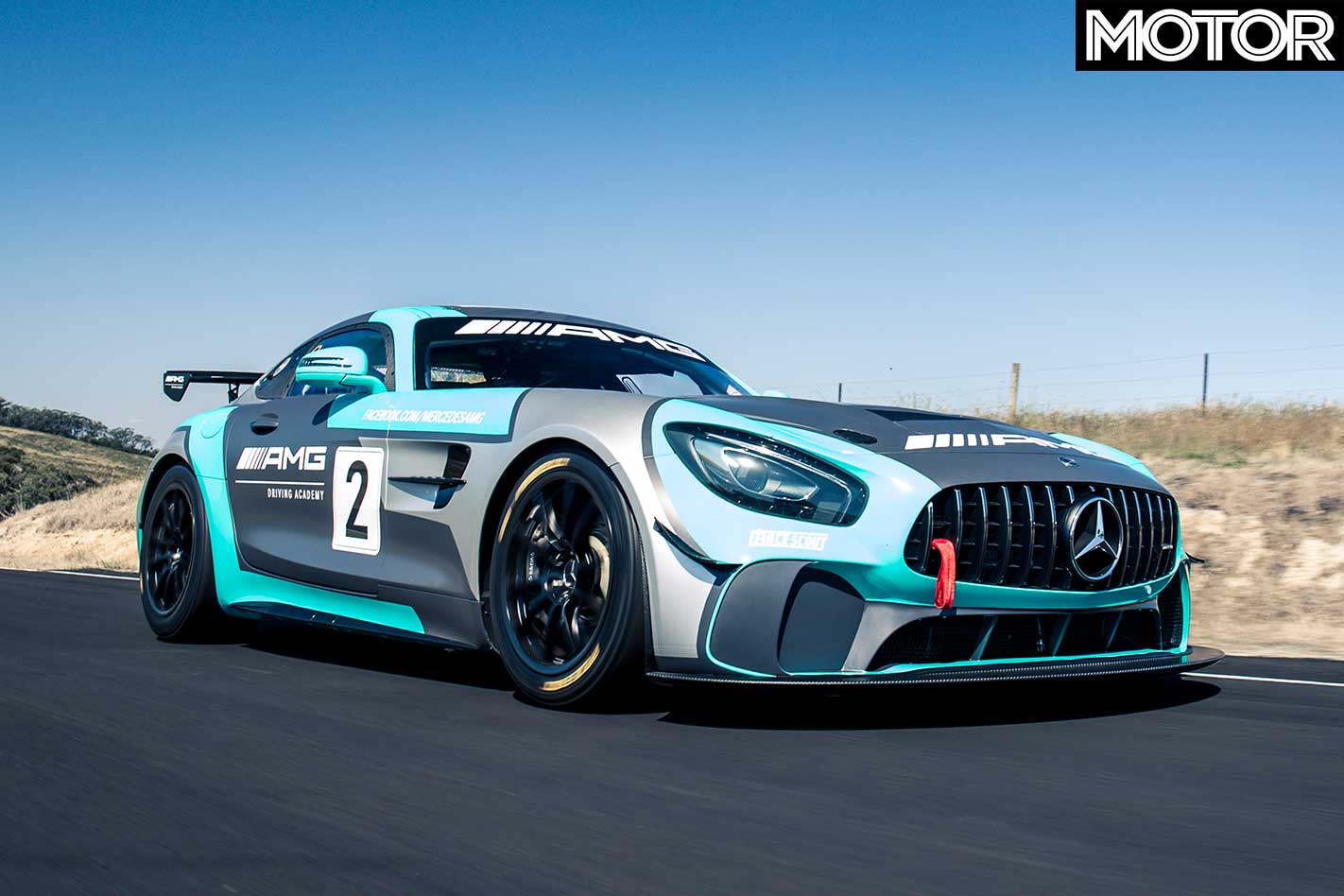
The three pedals are necessary as the GT4 also steals the six-speed sequential gearbox from its GT3 big brother. It’s lighter, smaller and much more durable than the road car’s seven-speed dual-clutch, being built to cop an unholy amount of abuse – AMG claims it’ll do 12,000 race kilometres before a check is required.
This durability is what separates the GT4 from regular road cars. Aside from the gearbox, most other bits are lifed for 18,000km except the engine, which apparently lasts, essentially, forever. “We tried to destroy an engine on the dyno and we stopped at 50,000km,” explains Stefan Wendl, head of Mercedes-AMG customer racing.
Key to its longevity is its standard nature. Whereas the GT R road car produces 430kW, the GT4 maxxes out at the 375kW we’re using today, while running as low as 295kW depending on the standard of the competition, nine boost maps allowing various power levels to achieve balance of performance.
Factor in a 150kg-odd diet, however, and the GT4 certainly doesn’t want for straight-line pace, particularly as the brutal blend of noises envelopes you like a warm blanket. The uncorked V8 mixes with straight-cut gear whine, the metallic clack of gear changes and the impatient rattle of the diff in tight corners as it awaits the next throttle application.
The car has been pre-warmed so the slicks are up to temperature and, satisfied I’m not a complete liability, Antunes begins to coach me through how to drive the GT4 properly. With 305mm-wide slicks all round grip is plentiful, but the effective use of the electronics – again, lifted from the GT3 car – is key to exploiting the car’s abilities.
A pair of knobs adjusts the ABS and traction control systems through 12 settings. The latter is pretty self-explanatory, allowing more wheel-slip as the system is relaxed; set to eight it’ll allow oversteer slides on corner exit if you’re too eager with the throttle.
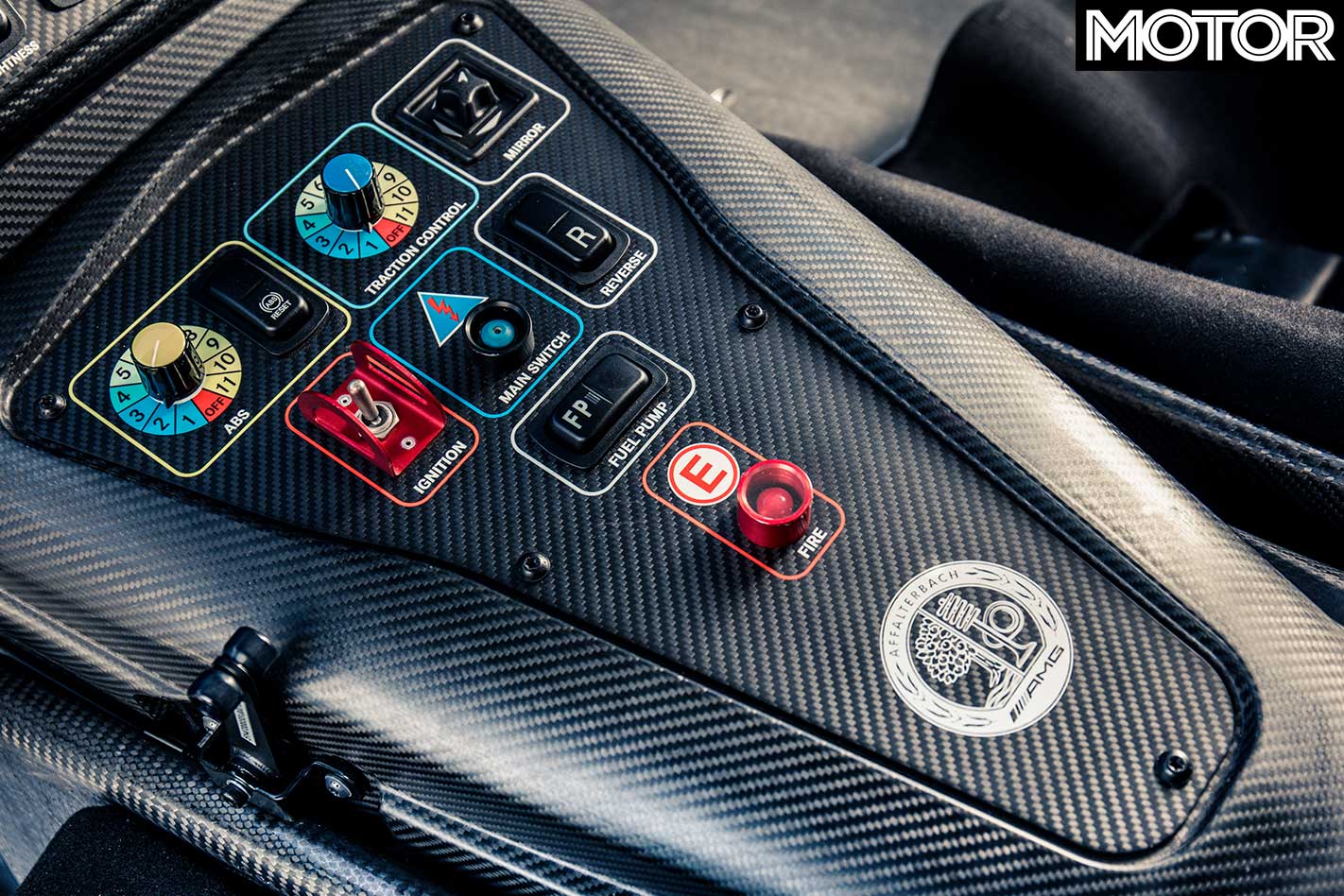
Understeer is the predominant characteristic, though, so to overcome this you hit the unassisted brakes HARD to trigger the ABS, pinks and purple lights flashing on the instrument display to indicate you’ve done so.
Carry this brake pressure into the turn and the GT4 turns beautifully; release it too early and the front will push wide of the apex and delay throttle application. Finding the balance isn’t easy but the process is incredibly rewarding.
It’s an unbelievable machine. The harder it’s driven the better it gets and suffers no performance degradation, unlike the driver. The experience is mentally and physically taxing and after seven or eight flat-out laps fatigue starts to creep in, which is a good sign to park it.
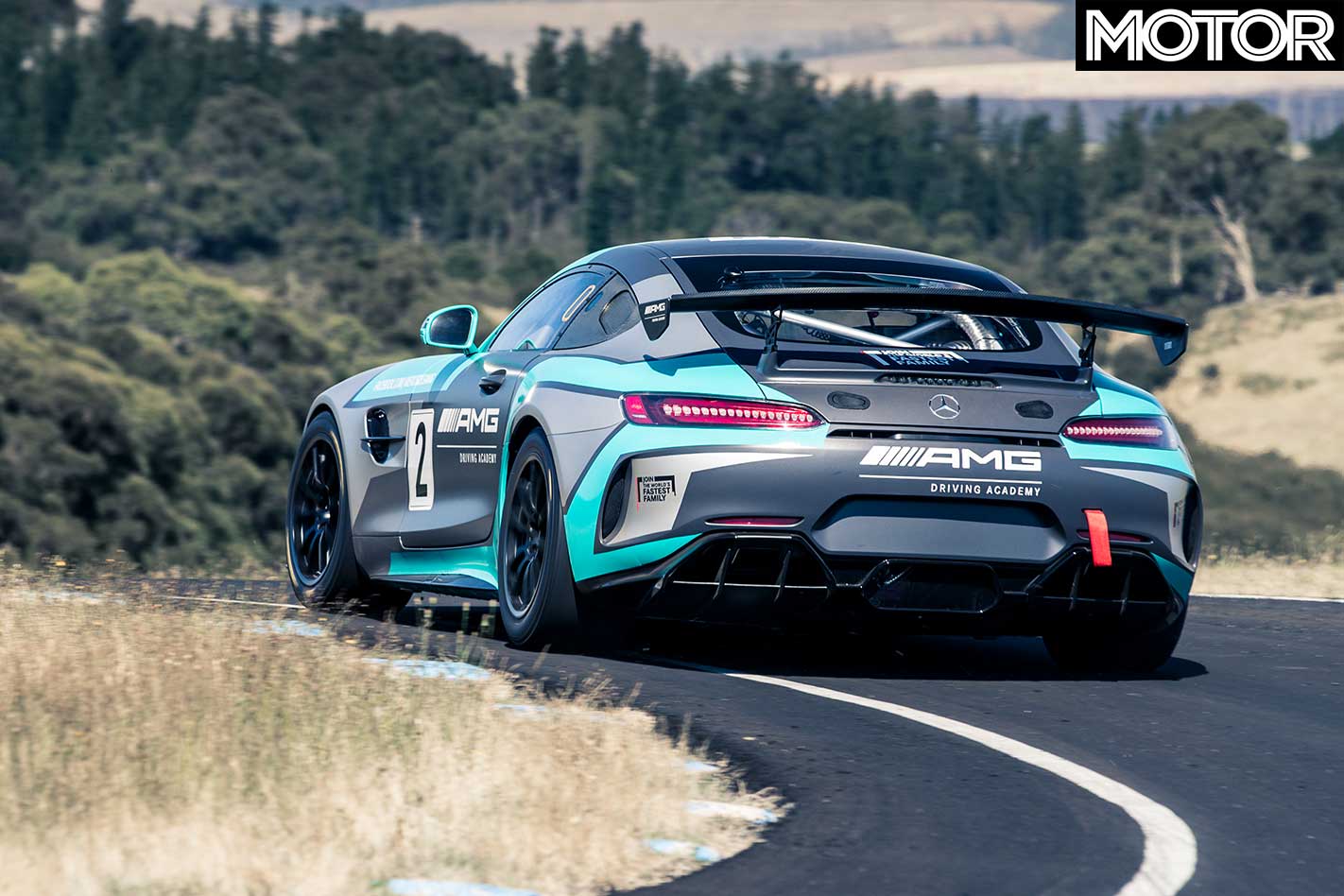
The GT4 might look like its road-going siblings but it’s a completely different animal. For track use there is just no comparison between this purpose-built racing car and even the most track-focused production cars.
AMG GT4s are sold direct from Germany so the price depends slightly on exchange rates, but the fact that it’s roughly equal to the GT R – and half the price of a GT3, which is remarkably similar to drive according to those in the know – makes it an absolute bargain.
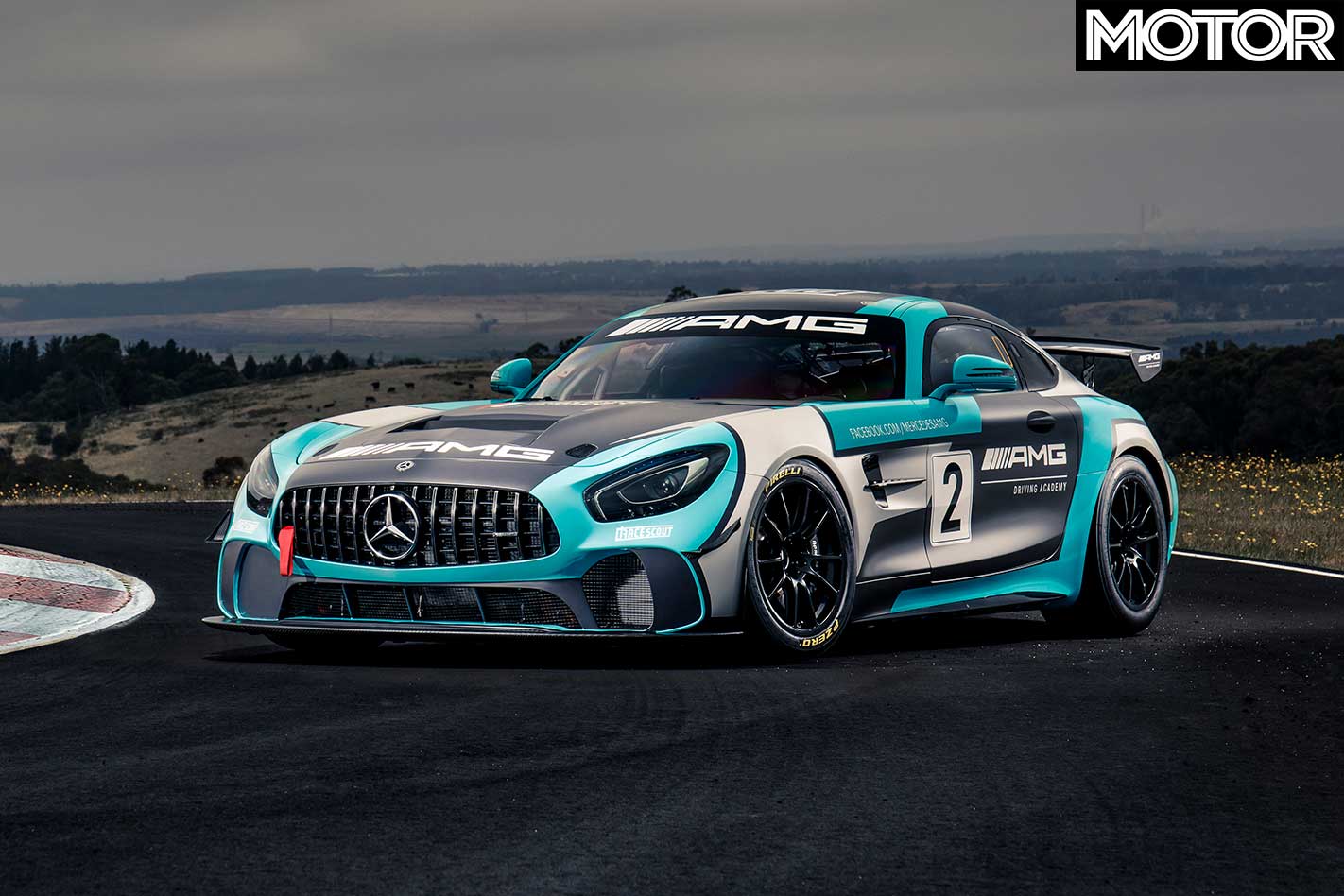
2019 Mercedes-AMG GT4 SPECS Engine: 3982cc V8, DOHC, 32v, twin-turbo Power: 375kW Torque: 650Nm Weight: 1390kg 0-100km/h: 3.5sec (est.) Price: $350,000 (approx..)
The Wheels Verdict: The new Range Rover Evoque hasn’t strayed far from the familiar, but it has matured significantly, become more tech-savvy and environmentally aware.
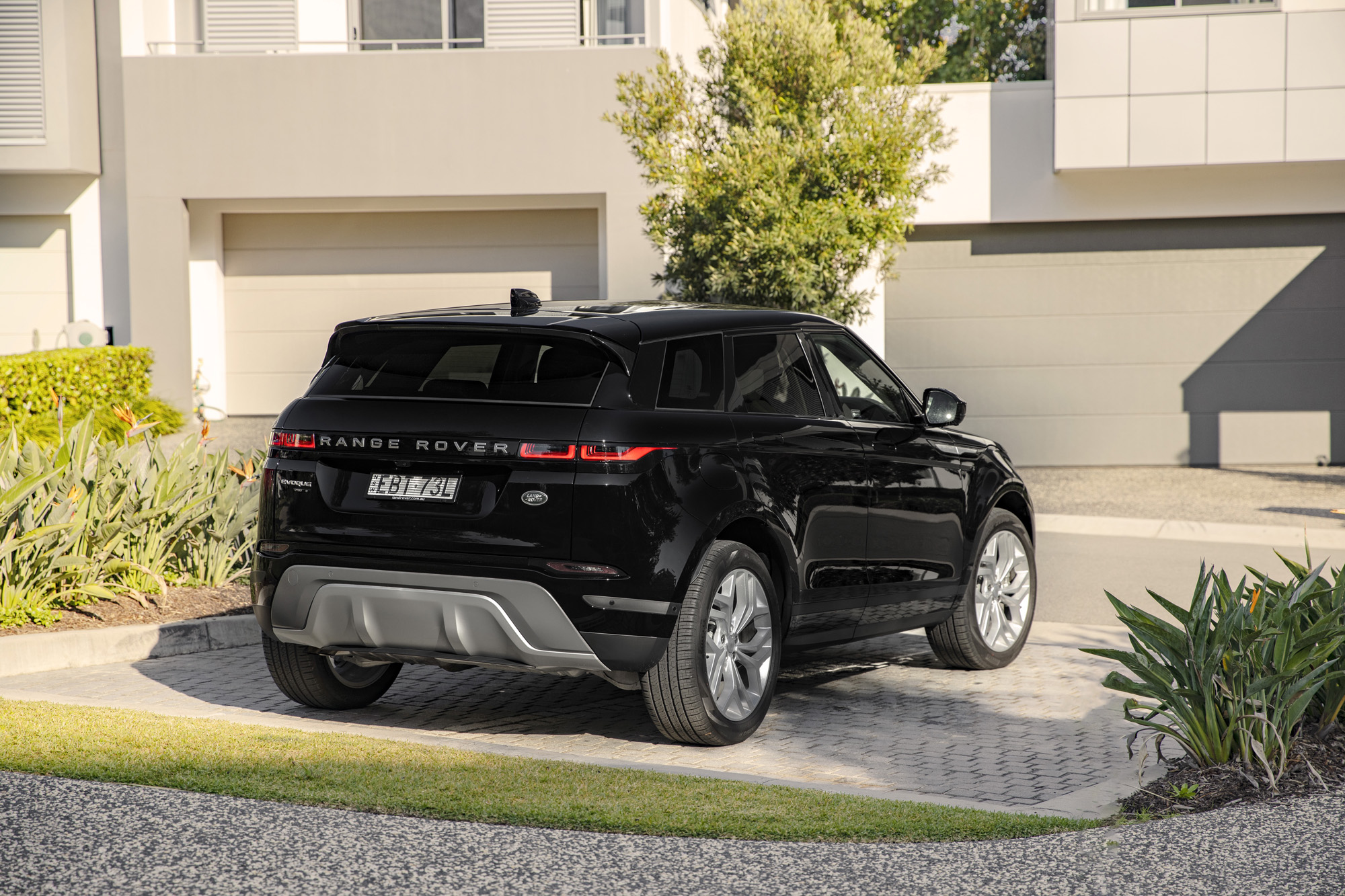
WHAT IS THE RANGE ROVER EVOQUE?
In 2011, the Range Rover Evoque was launched as the little SUV that could do it all. It was the world’s first small SUV to truly marry fashion with the utilitarian appeal and off-road abilities typical of a Range Rover. It was a product that Jaguar Land Rover itself said they never expected to do as well as it did, selling more than 772,096 units worldwide, with over 17,000 of those in Australia.
The new Evoque is priced from $62,670 to $94,290 and is available in a number of drivetrain configurations. For now, there are diesel 48-volt mild hybrid (MHEV) and petrol engines, with a plug-in hybrid (PHEV) arriving in 2020. The three-door coupe and polarising convertible body types of the previous generation are gone, and while it may not look much different from its predecessor on the outside, the second-gen Evoque has a new platform, improved refinement and plenty of fresh technology and ‘lifestyle’ features.
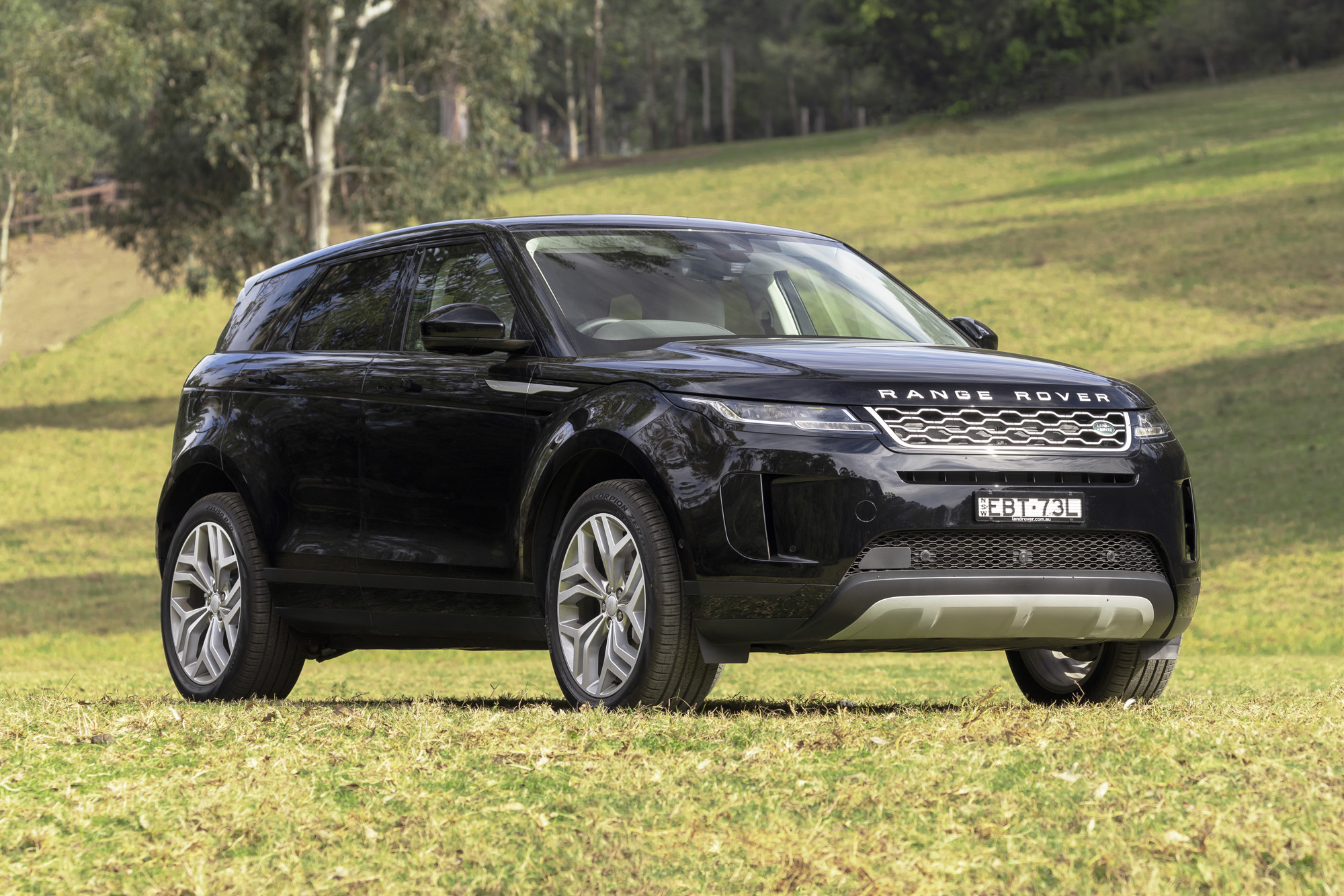
WHY WE’RE TESTING IT
With the premium SUV market swarming with competitors like the Porsche Macan, Volvo XC60, BMW X3 and Audi Q5, and the looming uncertainty within JLR in mind, there’s pressure for the British maker to not mess this up.
RANGE ROVER EVOQUE REVIEW
The 2020 model appears like any other Evoque on first approach, but look closer and you’ll notice the added tidiness of flush door handles (as seen on the Velar), slimmer LED headlights and sequential indicators. Despite some familiar JLR elements inside the cabin (many as seen in the Velar), Range Rover claims that everything, bar some door hinges, is new.
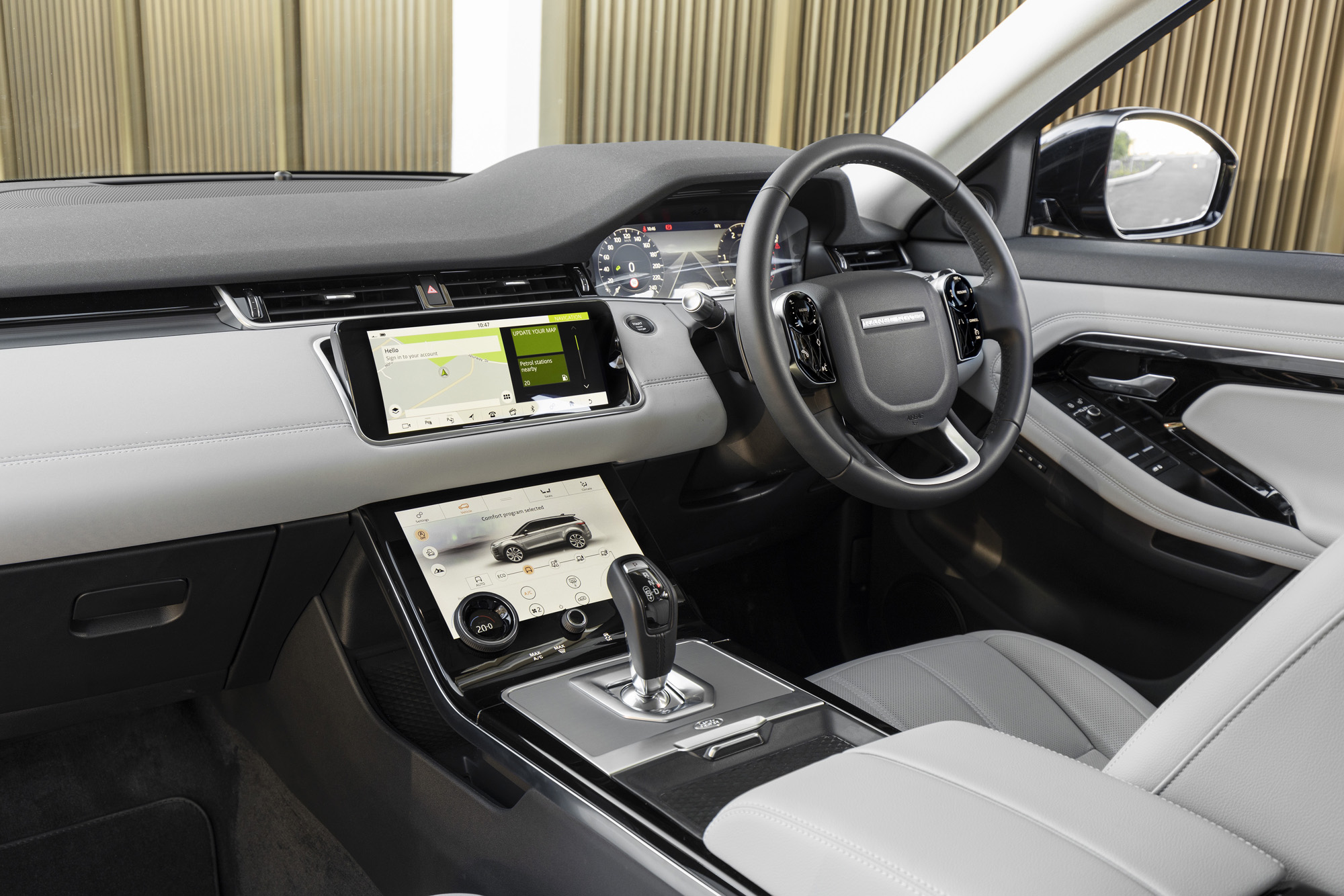
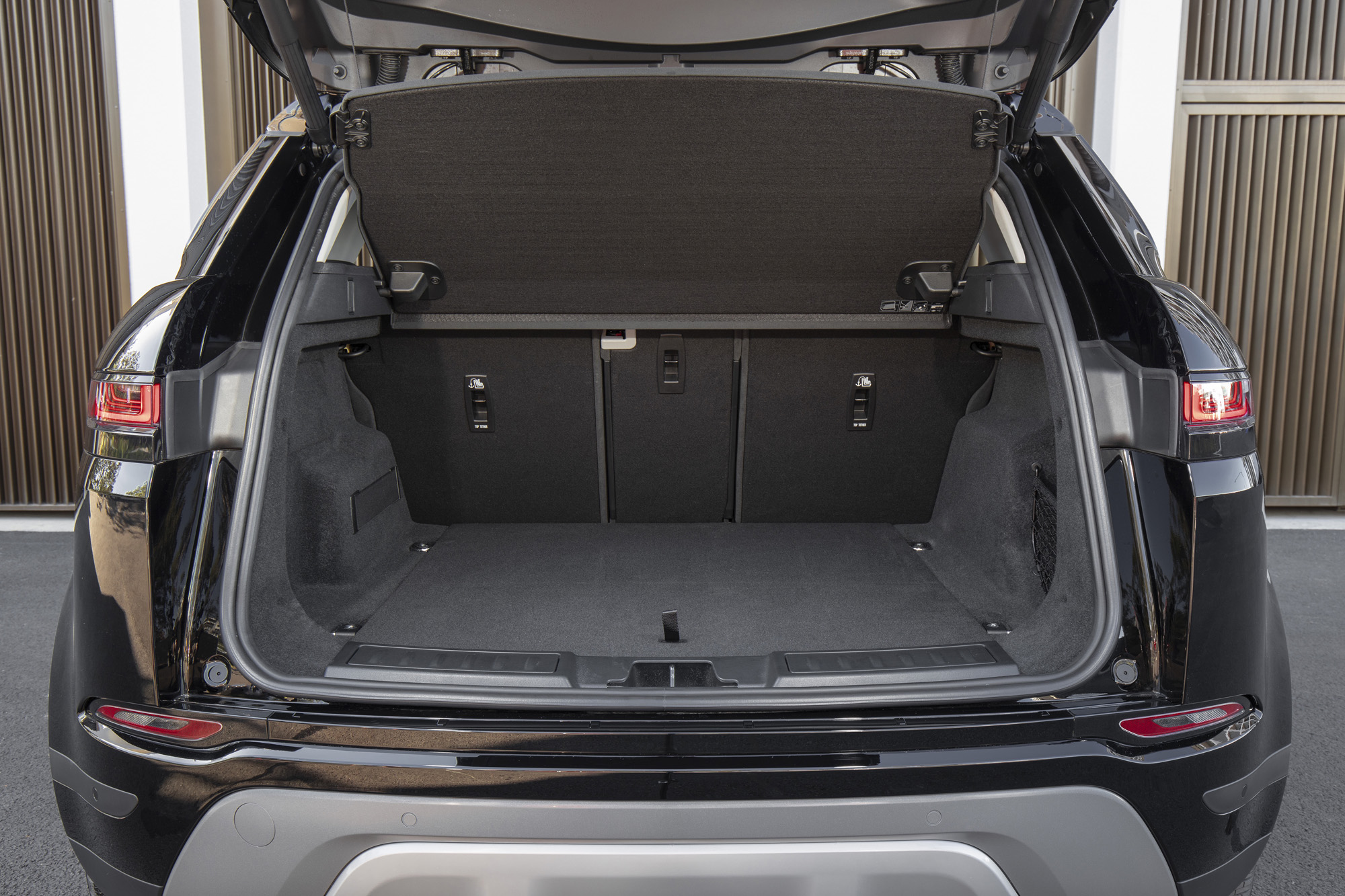
The Evoque is the first model to be underpinned by Land Rover’s Premium Traverse Architecture, a new platform developed for electrification (as seen in the MHEV diesel and incoming PHEV), which adds 20mm of length to the wheelbase. Couple this with a clever interior architecture re-design for increased headroom, 20mm of rear knee room and 20cm of extra boot space in width (mostly thanks to a new multi-link suspension, bringing the Evoque’s boot capacity up from 575L to 591L) and the common complaint of a squashy interior is addressed. Unfortunately, the rear seats are still fairly cramped when there are four full-sized adults in the car.
For those with sustainability in mind, a range of non-animal, ethically sourced textiles made from soybeans, recycled plastics and eucalyptus are now on the table. This includes the Kvadrat cloth seen in the Velar (a $4188 option) and Dinamica suede cloth, made from 53 recycled plastic bottles. In fact, there are 33kg of repurposed materials inside every Evoque.
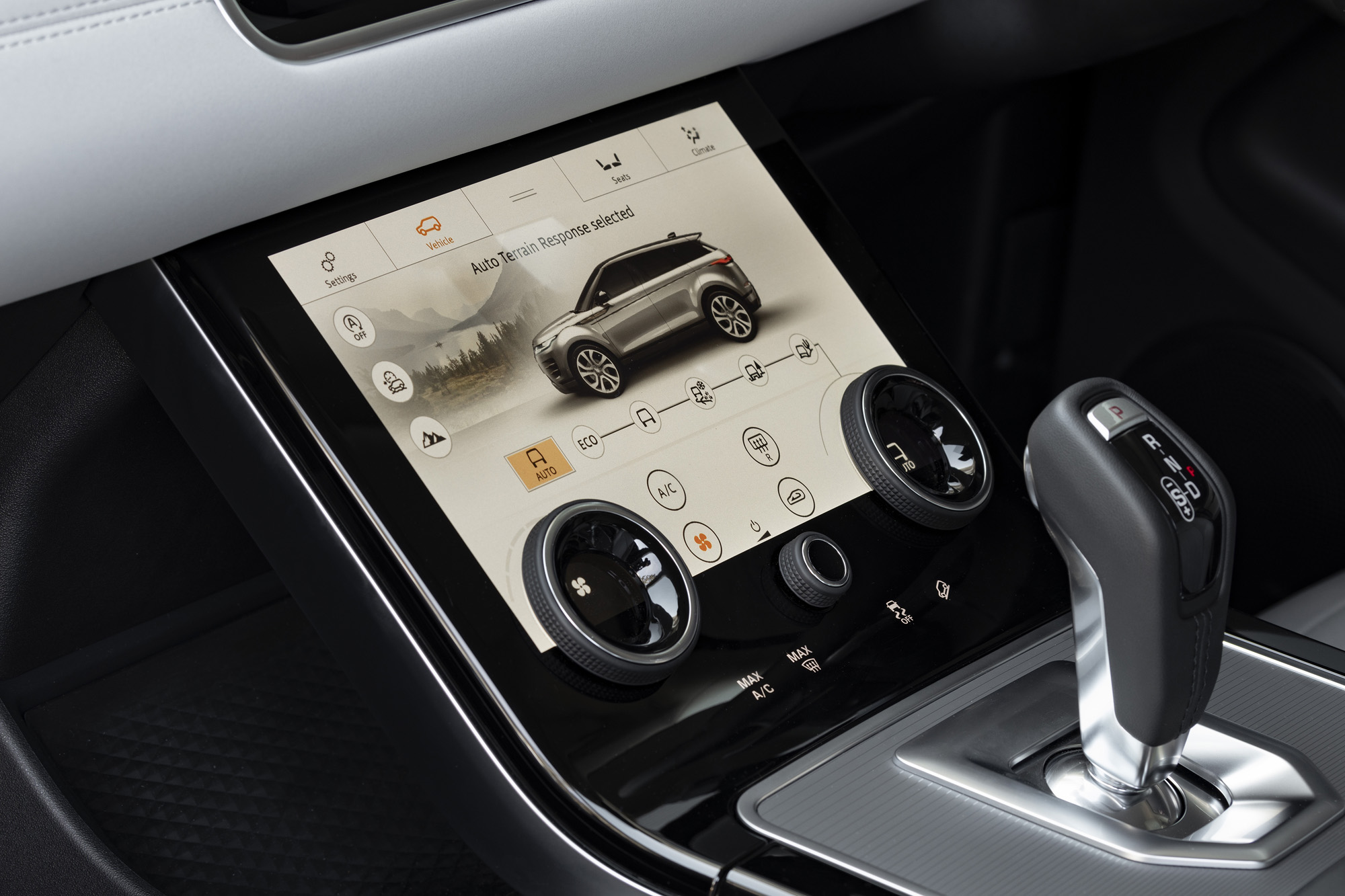
The new Evoque also gets more tech than ever before. Apple CarPlay and Android Auto are now standard, as is an infotainment system that learns the driver’s habits, and downloads updates over the air. Then, there is the revolutionary ClearSight Ground View, an under-bonnet camera that adds extra vision and recreates the front-axle of the car, showing not only what you’re about to drive over but where you’re placing the wheels. There’s also the ClearSight mirror camera, a water-repelling camera mounted on the rear of the roof which is displayed on the rear-view mirror.
The entry-level P200 S we’re testing here is one of 26 variants in the new Evoque lineup. It’s powered by a 2.0-litre turbo four-pot engine with a nine-speed transmission, producing 147kW of power and 320Nm of torque to help it accelerate from 0-100km/h in 8.5 seconds; all of which proved to be more than sufficient for driving around the inner city, on the highway, and on a rural off-road loop.
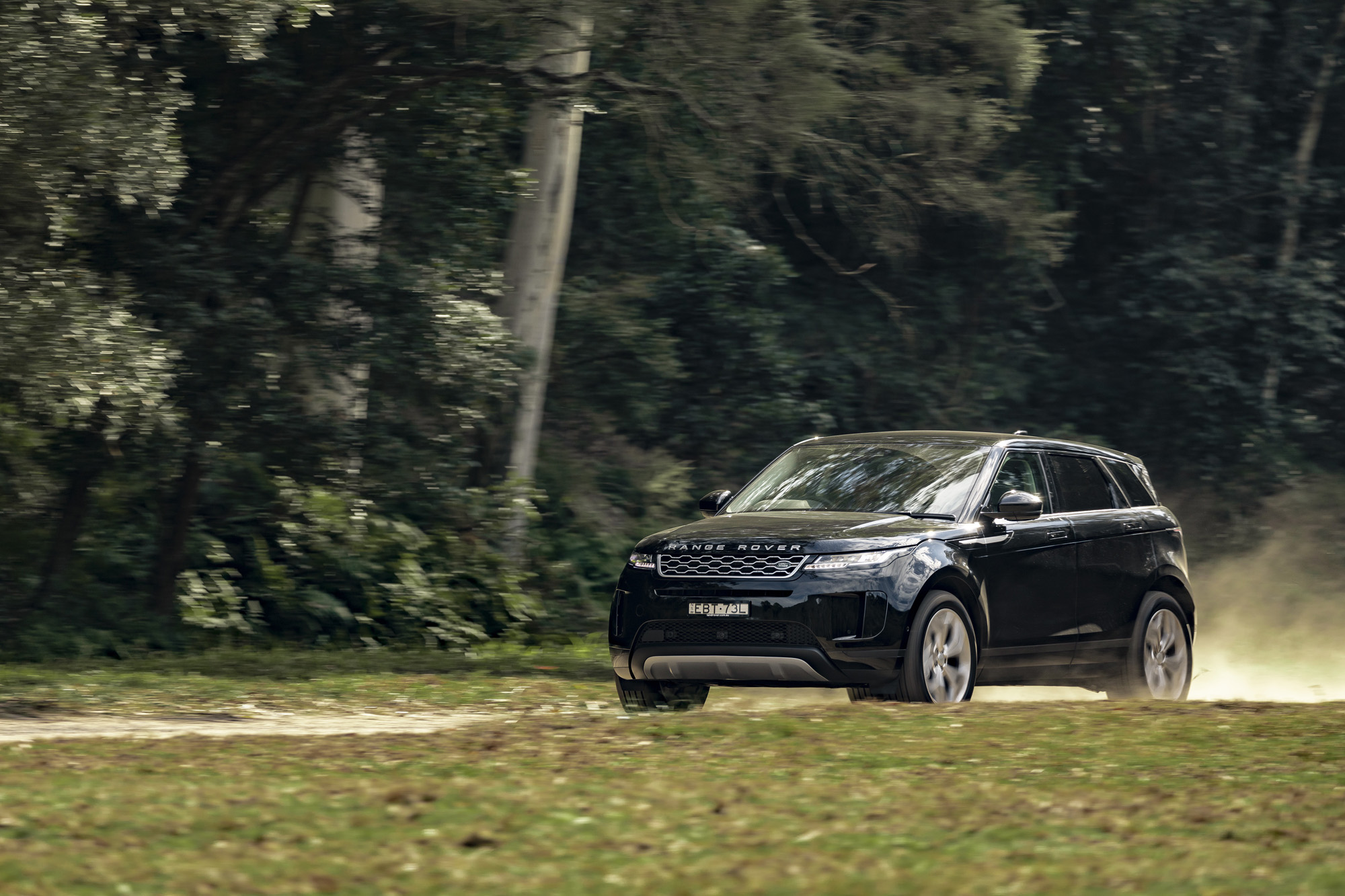
Range Rover claims an official government combined fuel consumption figure for the P200S of 8.1L/100km, and after our road trip, our reading was 10.1L/100km.
Steering is mildly weighted and very direct, vision has improved greatly (especially if you opt for the ClearSight rearview mirror for $515) gear shifts were crisp and the ride is supple and incredibly quiet, bar a mysterious creak in our tester’s left C-pillar. Even on a normally loud highway with high-wind areas and uneven dirt roads, the Evoque’s cabin attenuation and composure deserve applause. It’s worth noting that our car was equipped with 20-inch wheels, instead of the standard 18s, and passive rather than the $1950 cost-option adaptive suspension.
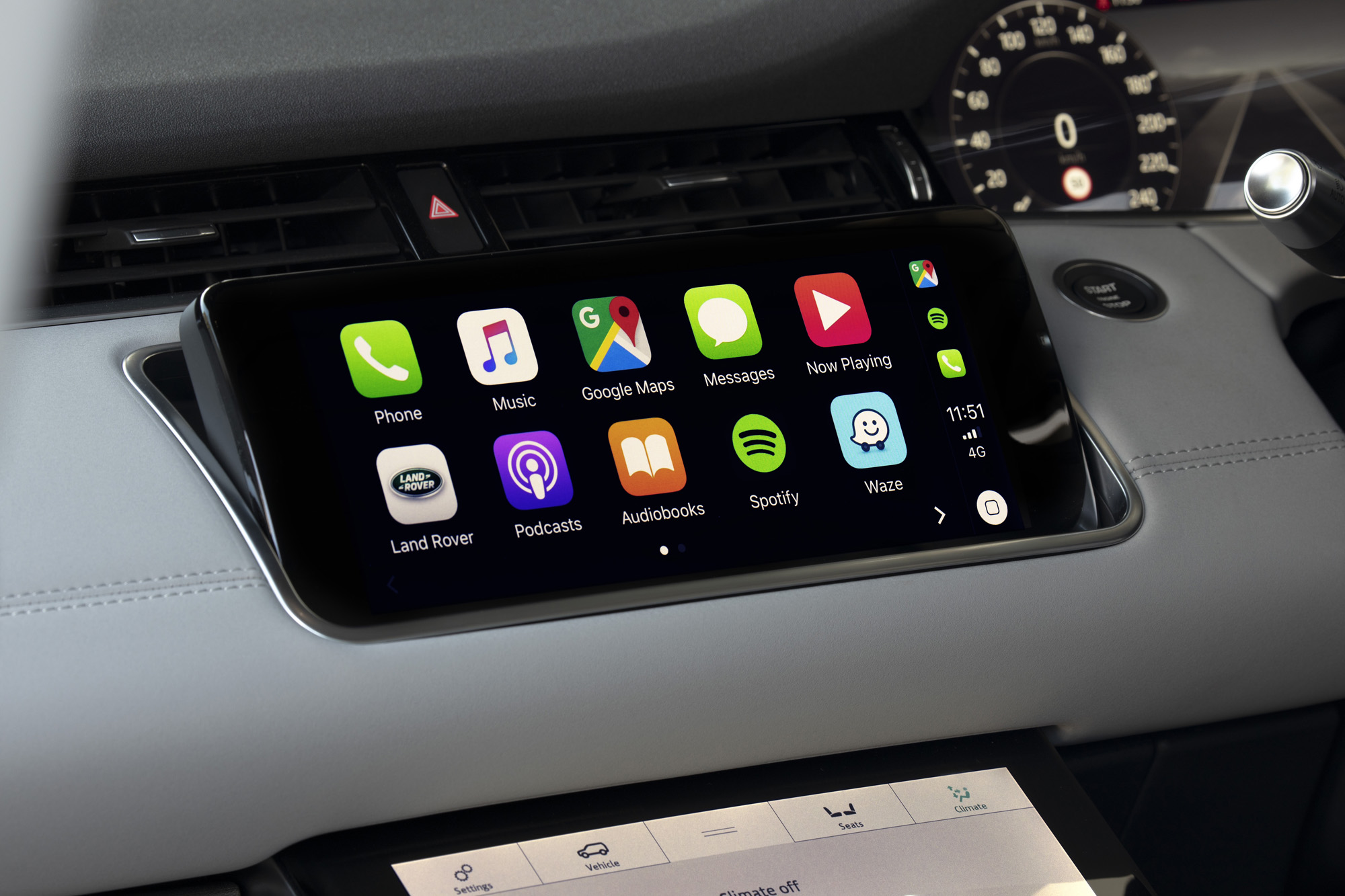
In terms of value, the P200 S starts at $62,670, which might seem like a good deal but ours was stacked with $15,000 worth of extra kit – many of which felt like showroom knife twists and a common gripe with Land Rover products. Case in point: $400 for a DAB radio, $180 for a 2-pack power socket, $480 for a powered tailgate… the list goes on.
Options worth looking at are the $1340 Drive Pack, which includes adaptive cruise control and blind spot assist; and the Park Pack, at $1010, that includes clear exit monitor, reverse traffic detection and 360-degree parking aid and more.
Service costs provide better value, capped at $1500 for the first five years/130,000km. But Land Rover’s warranty period is three years/100,000km, which, like the extensive options list, seems a little outdated.
RANGE ROVER EVOQUE VS RIVALS
The Range Rover Evoque’s main rivals are the Audi Q5, Volvo XC60, BMW X3, Mercedes-Benz GLC and Porsche Macan.
RANGE ROVER EVOQUE PRICE AND SPECS AUSTRALIA
- Model: P200 S
- Engine: 1,997cc, turbocharged 4-cyl Petrol
- Max power: 147kW @ 5,500rpm
- Max torque: 320Nm @1,200-4,500rpm
- Transmission: 9-speed automatic
- Weight: From 1,813kg
- 0-100km/h: 8.5 seconds
- Economy: 8.1/100km (claimed)
- Price: From $62,670
- On sale: Now
What is it?
As a brand, Infiniti is in a pretty unique place in the automotive world. The luxury offshoot of Nissan – think Lexus for Toyota – it’s yet to really forge its own identity in the Australian marketplace, and even though it’s been around for almost 20 years, Infiniti is still a small fish in a large pond.
A couple of years ago, the brand got a bit of a kick-along from the top brass, with new, bolder designs and novel technology promoted up the order to gain more visibility.
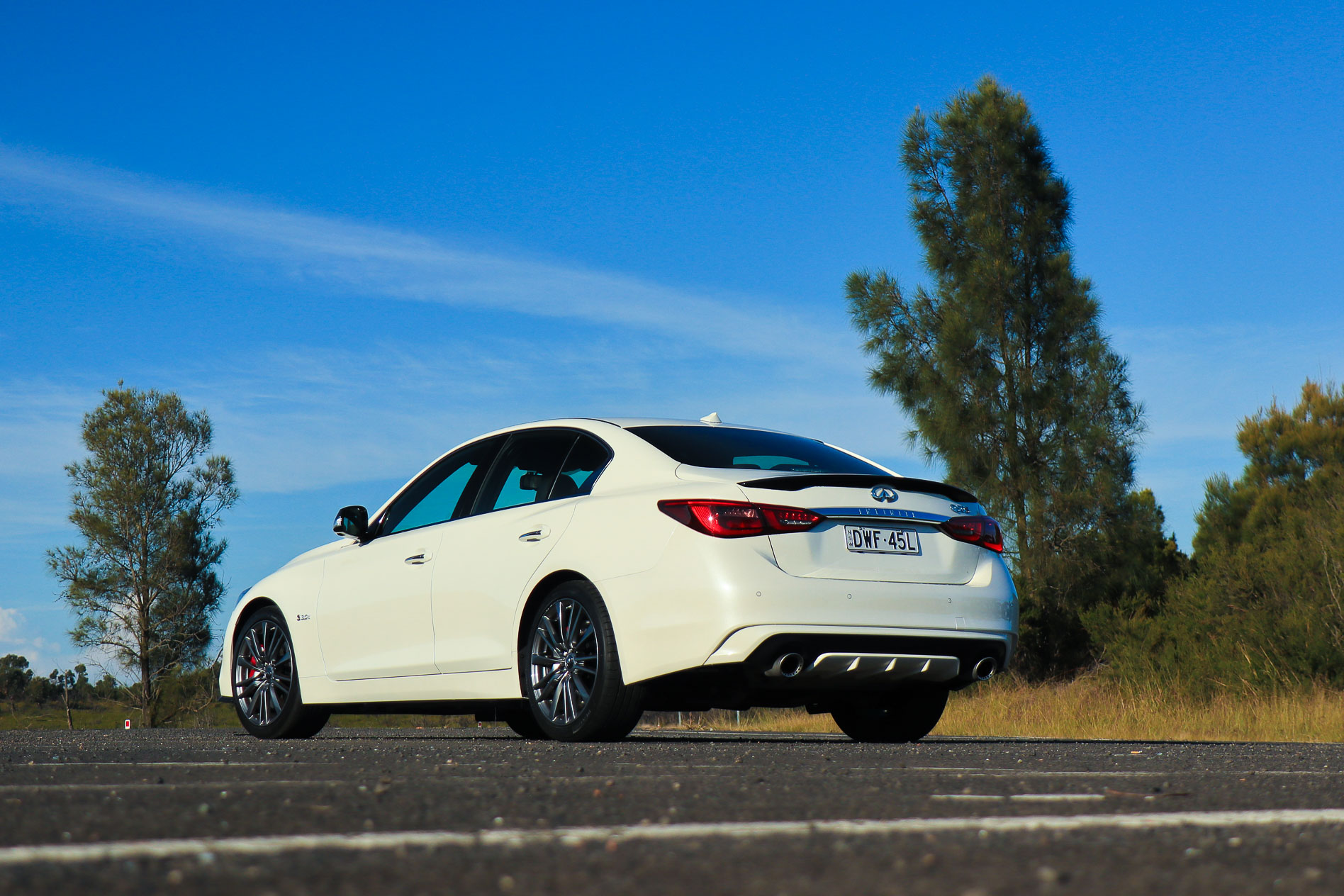
Case in point; even though its Q50 sedan has been around for a number of years, Infiniti reckons that a dose of attitude is just the thing to give the brand a kick-along.
Unfortunately, though, it’s not the car it should be.
Style
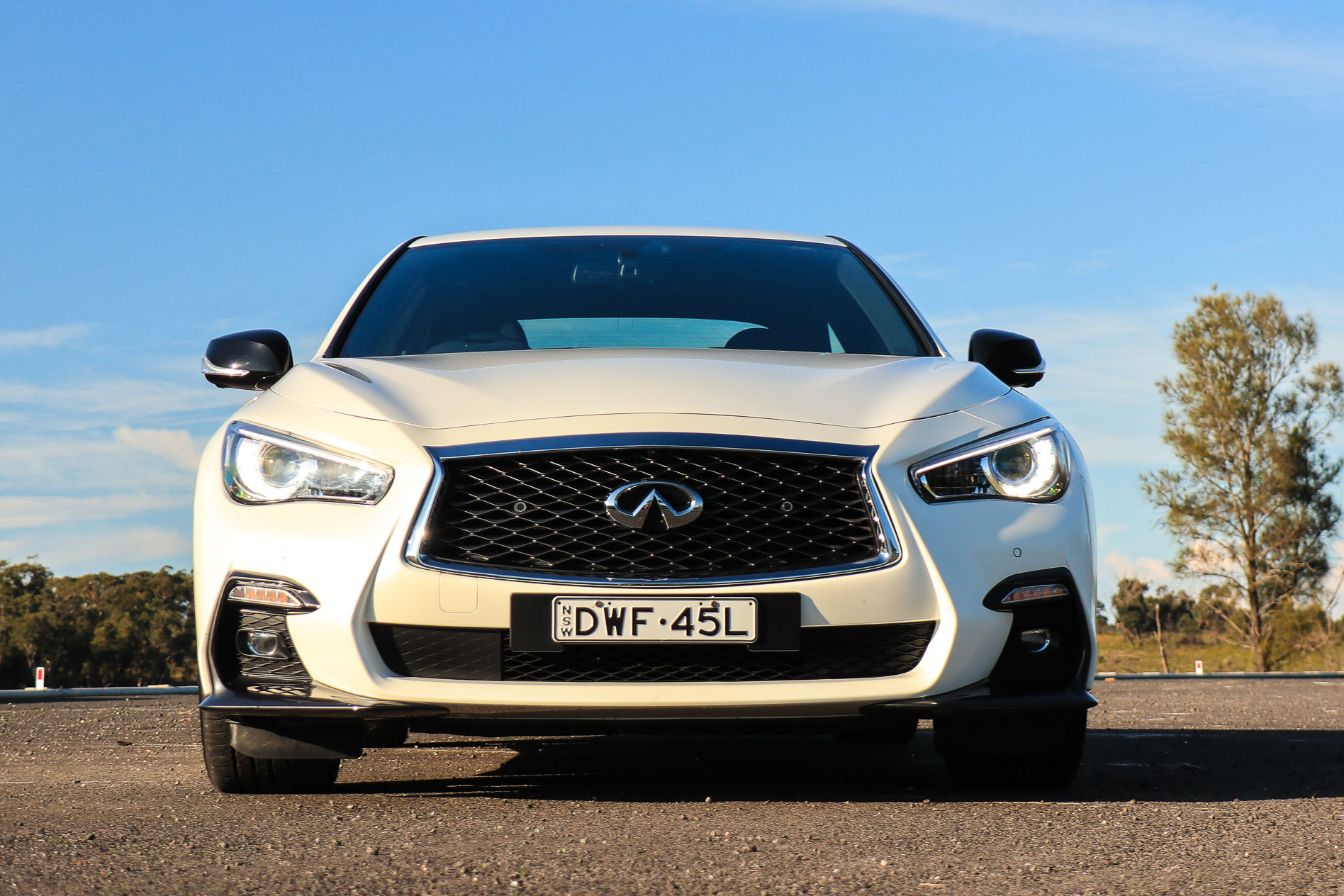
The four-door, five-seat Infiniti Q50 sedan lineup got a bit of a birthday in 2018, with revised front and rear bumpers, new rims and a bit of an internal refresh.
Competing with the likes the Audi A4, BMW 3-Series and Mercedes-Benz C-Class, along with the Lexus IS range, the Q50 S is the sportiest of the range, with a lowered stance on 19-inch rims.
The overall look of the Q50 manages – just – to not look derivative when it’s lined up against its closest competitors, but it’s not resetting the bar when it comes to reinventing the sedan silhouette.
Price and value
Infiniti’s Q50 Red Sport sells for $74,900 before on-road costs, which is a drop of $5000 over its 2016 Aussie debut and makes it a true-bang-for-buck bargain in the executive express space.
The Red Sport offers leather-clad seating, powered and heated front seats, 60/40 split/fold rear seats, rear air vents, a powered steering column and a sunroof.
It also sports 19-inch dark chrome rims and 245/40 RF19 run-flat Dunlops.
Under the bonnet is a highly tuned version of Infiniti’s VR30 3.0-litre twin-turbo V6 that makes 298kW and 475Nm of torque, making it one of the most powerful mid-size sedans on the market for less than $75,000.
A seven-speed traditional automatic gearbox backs the mighty motor, but crucially the Q50 misses out on a limited slip rear differential.
Size
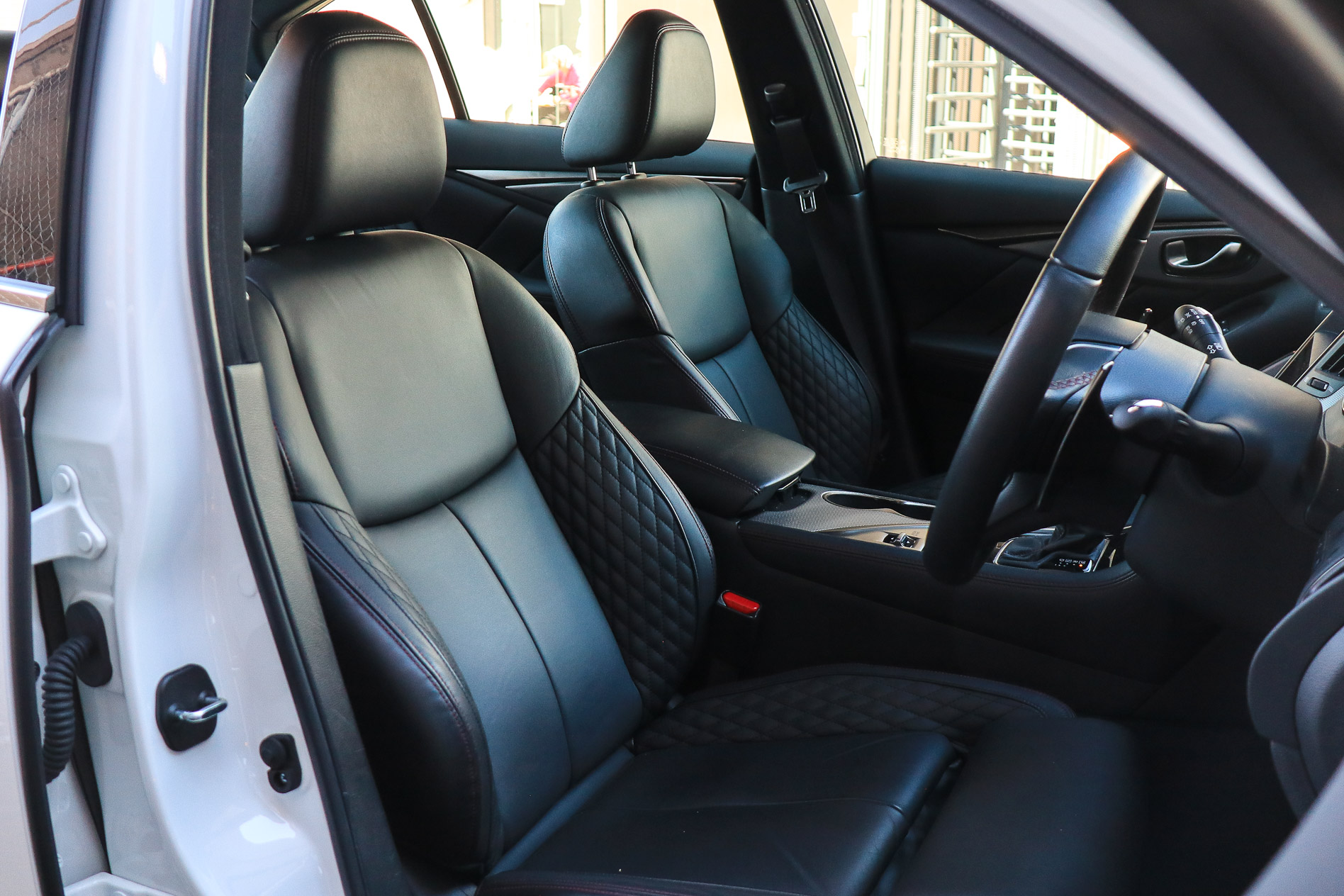
At 4751mm long, the Q50 S is fractionally longer than cars like the Audi A4 and about 100mm longer than a Mercedes-Benz C-Class sedan.It holds five people, but four in comfort.
The boot space holds 500 litres, according to Infiniti, while the seat backs can be dropped to increase that load space.
Safety
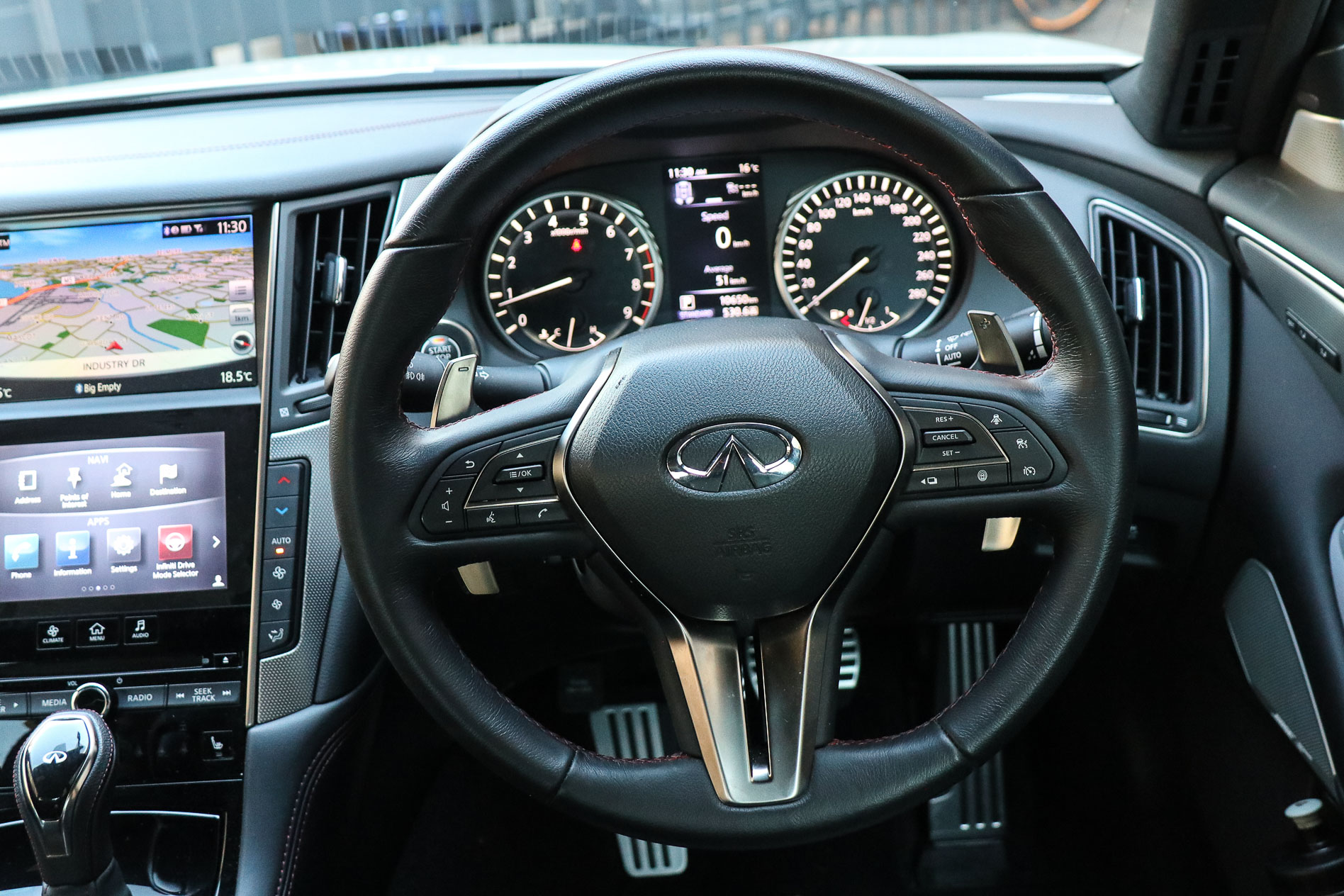
The Q50 comes standard with seven airbags, and it’s rated at a maximum of five stars by ANCAP.
It comes with a full suite of active and passive safety features, including radar cruise control that can manage traffic, automatic emergency braking, blind spot warning and intervention system, lane departure with prevention, predictive forward and rear collision prevention and a 360-degree camera.
It also sports a mode – operated via a button on the steering wheel – that will apply the brakes for you if you lift off the accelerator when approaching a vehicle or obstacle. It’s unusual, but I really got to like it in heavy traffic.
Warranty and running costs
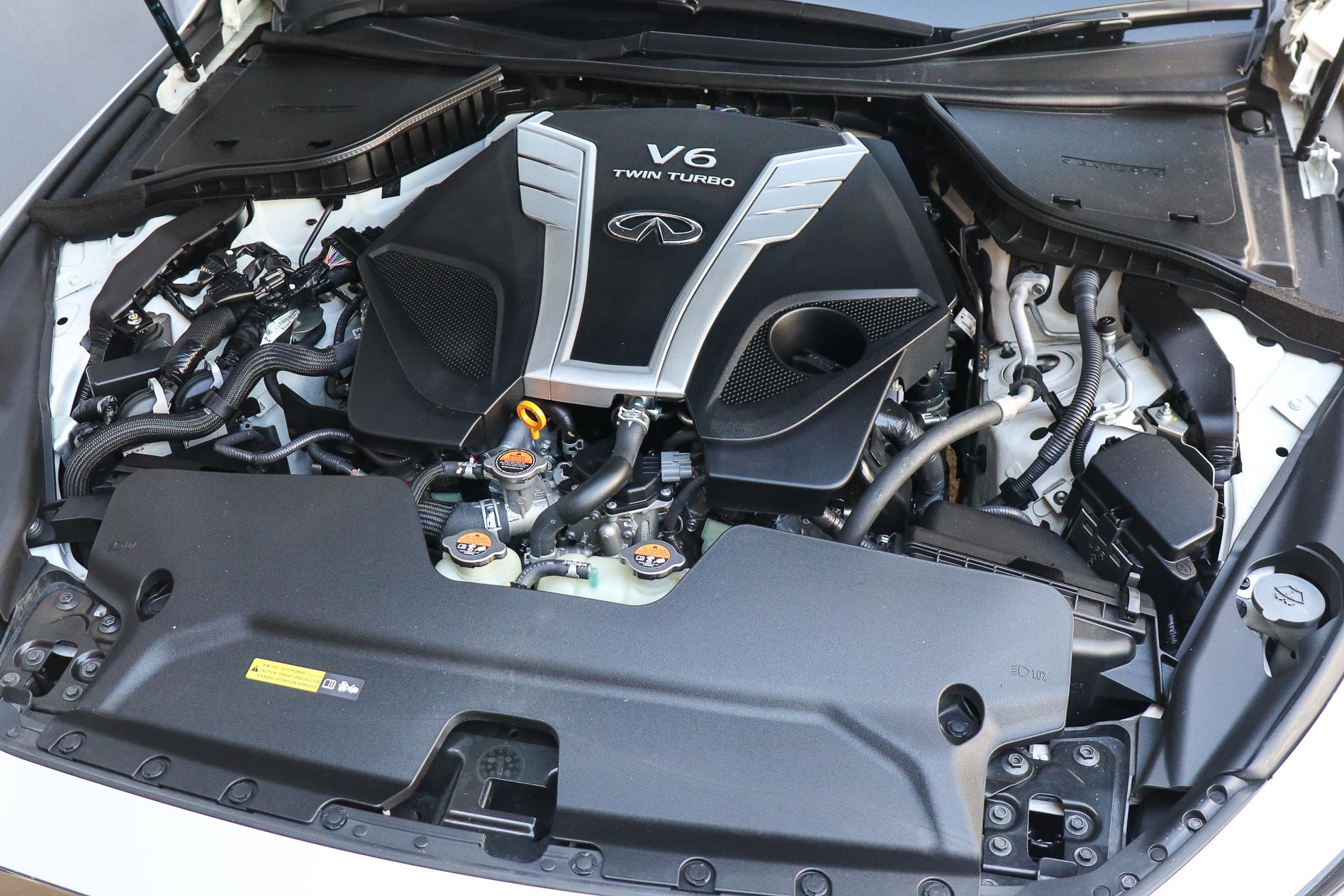
Infiniti offers a four-year, 100,000km warranty on the Q50, and suggests a service interval of 15,000km or one year.
The 1784kg Q50 Red Sport is rated at 9.3 litres per 100km on the combined fuel economy cycle, compared to our 10.2L/100km over 435km of testing.
It’ll hold 70 litres of premium-grade fuel, giving it a theoretical range of about 750km on a single tank.
Infiniti offers a fixed-price scheduled servicing policy up to 80,000km, along with a plan to pre-pay for servicing at time of purchase.
Comfort
The Q50 Red Sport variant takes the content from the previously top-rung Sport Premium range and mixes it with more performance.
The front seats – newly trimmed with contrasting stitching -are wide yet supportive, with the driver’s seat offering adjustable side bolsters. Both are heated, as well, with powered movement for both sides.
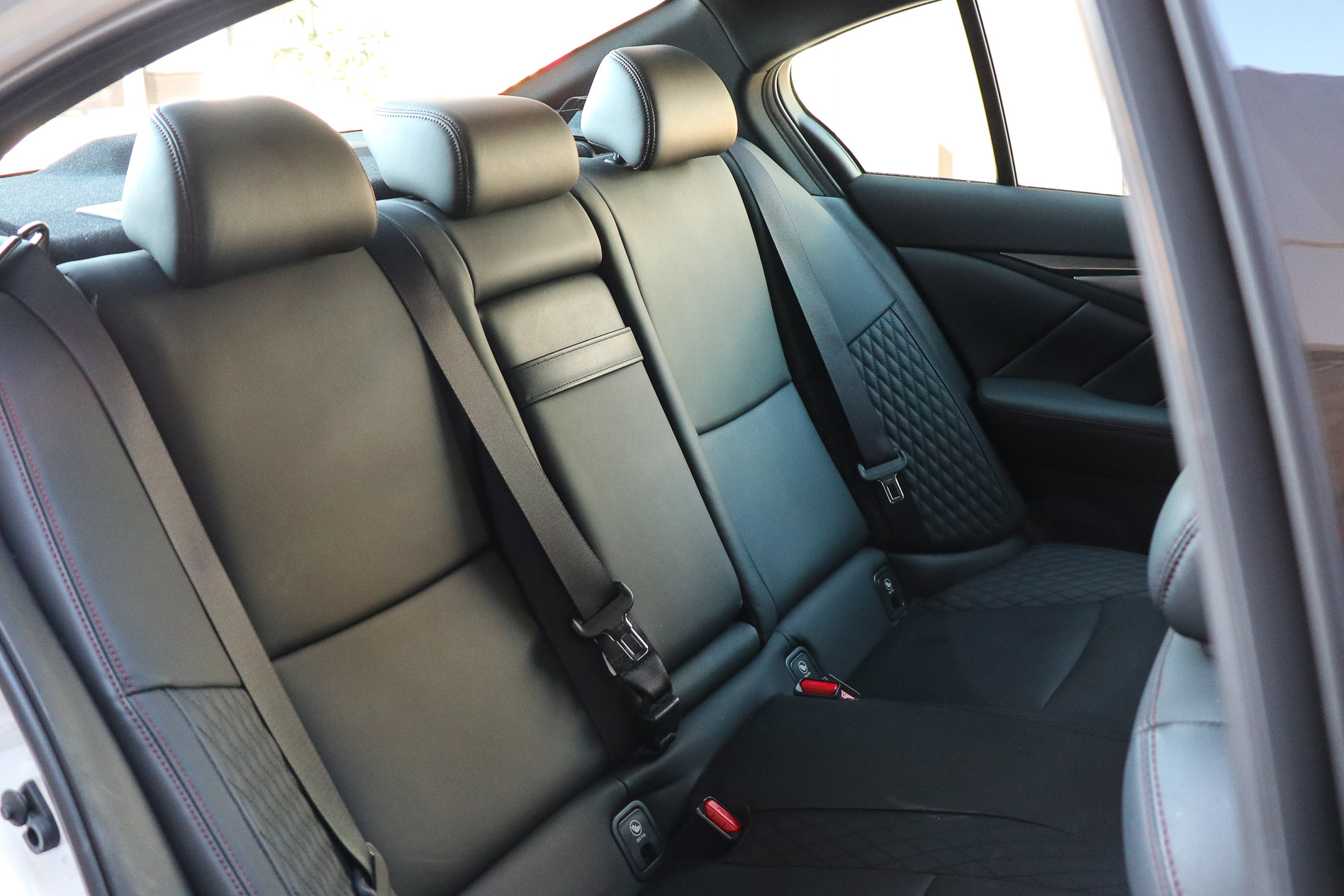
The rear seats are fulsome for the outside passengers, the centre position is less comfortable, while a lack of headroom cruels in for all three. A pull-down armrest hides a pair of cupholders, and there are rear-facing air vents along with ISOFIX baby seat holders.
There is no storage in the rear door cards, though.
Magnesium paddles supplement the traditional gated auto for the seven-speed automatic gearbox, but the foot-operated park brake is quite archaic in a modern car.
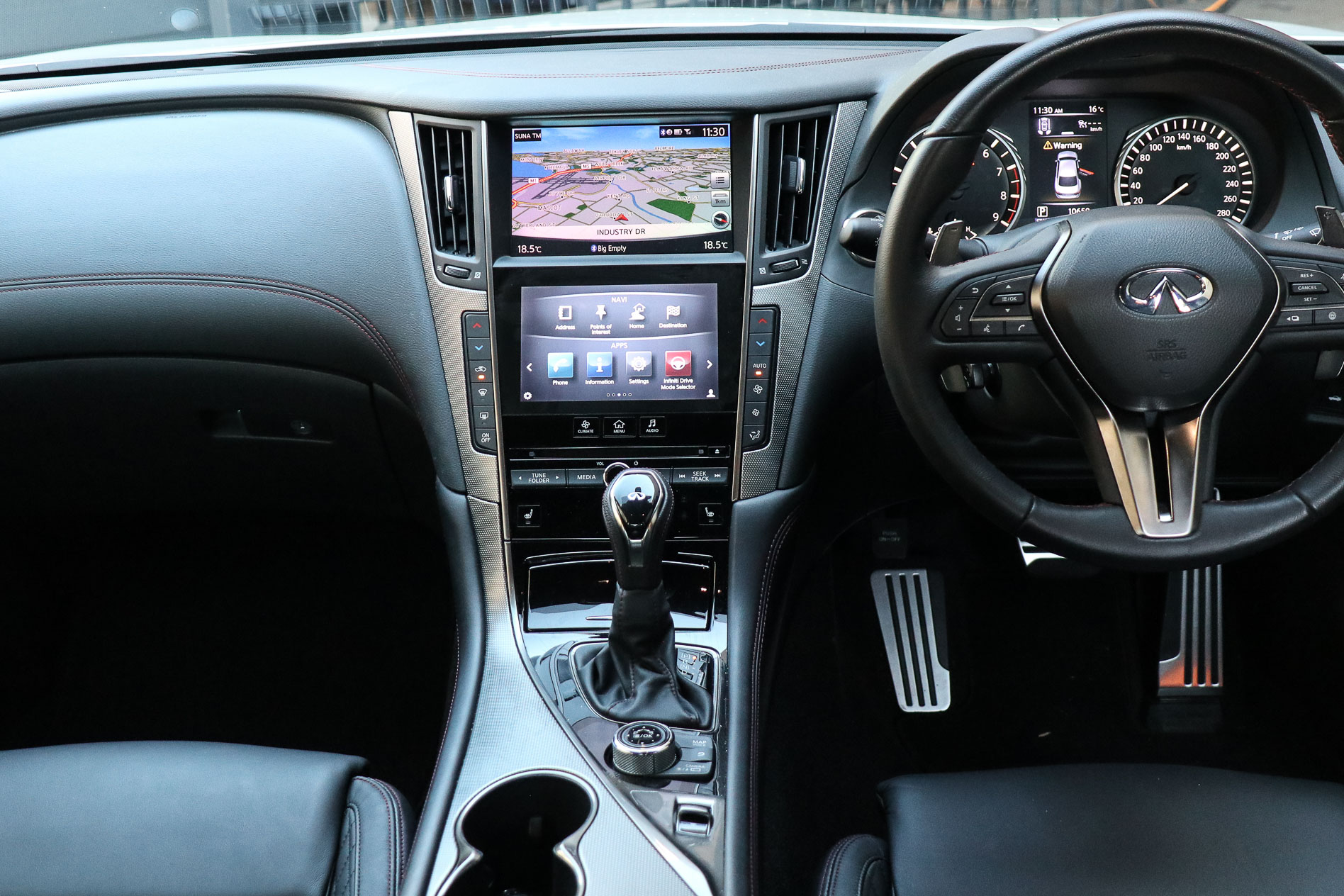
The twin multimedia screen system, too, is a confusing hybrid of two separately designed interfaces that’s not particularly user-friendly (though it has been improved over the 2016 launch version), and there is no smartphone mirroring tech on offer.
On the road
Anything that’s rear-wheel-drive and boasts a decent slug of power should be a bit of a hoot to drive, right? Well…
At launch, the Q50 S Red Sport startled seven bells out of me with its decidedly wayward manners, particularly in the wet. While things have improved since, it’s still a bit off the pace.
The VR30 twin-turbo three-litre six in its 298kW spec is a smooth, tractable, potent engine, with astonishing chunks of mid-range urge that simply throw you towards the end of the road.
Future focus: Is this Infiniti SUV a Tesla killer?
It’s important, then, that power and torque output be properly managed, but in the Red Sport’s case, it’s less than perfect.
A poor tyre spec is the first culprit. Run-flat tyres are as a rule heavier and stiffer than their regular counterparts and often aren’t as adept at channelling power and grip to the road.
The stock Dunlop Maxx Sport run-flats on the Q50 S just aren’t just up to the task of handling the additional performance of the car – and it’s not just the rear end, either. Even moderate corner speeds equal loss of grip at the front (understeer), followed by loss of rear grip (oversteer) – and I’m not talking track speeds here.
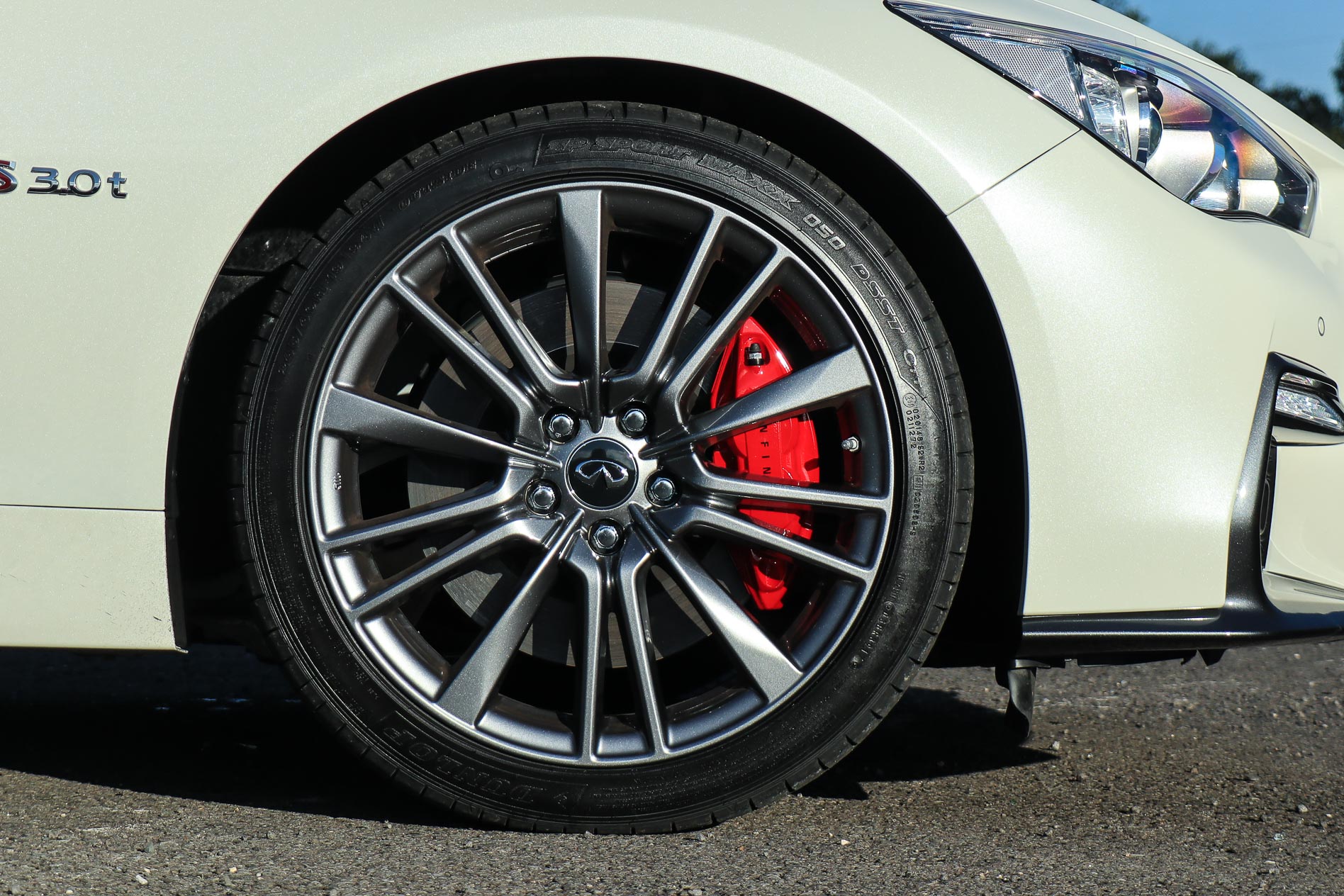
The Q50 boasts a set of adaptive dampers that are designed to help rein in all of that firepower, along with a massively worked-over version of its excellent steer-by-wire system.
The difference between the Q50’s Sport and Normal driving mode suspension tunes is quite subtle, but the firmer mode is actually the pick of the two.
The shocks themselves feel too soft in their compression and not quite quick enough in rebound, which means the Q50 doesn’t react to bumps in the way you’d expect.
It’s a heck of a lot better than the last version I drove, and at citified speeds (once you get used to the sharp, high brake pedal feel), the Q50 S is actually pretty pleasant to drive. Lean on it even a little, though, and things unravel pretty quickly.
Verdict
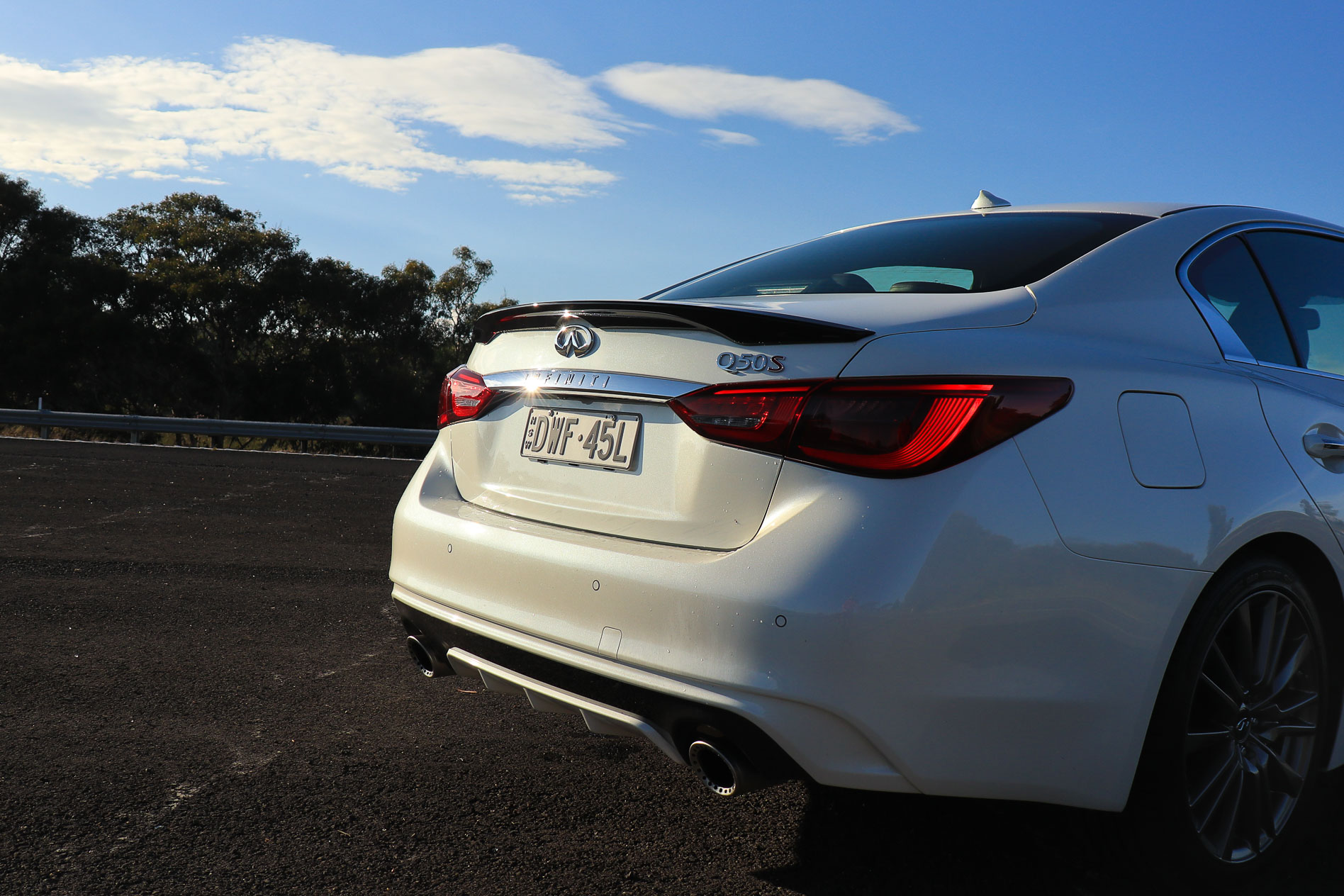
It’s a funny one, this car. On the positive side, it looks pretty good, goes bloody quickly, is comfortable from the front seats and sports a host of modern safety tech that makes the commute a lot easier to bear.
On the downside, its lack of physical grip, its cramped rear quarters and its unresolved multimedia set-up play against it.
In terms of its value equation, though, the beautifully assembled Q50 does feel like a lot of car for the money if you’re after a quiet, quick urban warrior for the inner city, though its resale values would be horrific, thanks to the brand’s lack of presence in Australia.
SPECS Model: Infiniti Q50 S 3.0tt Red Sport Engine: 2997cc V6 (60degree), dohc, 24v, twin-turbo Max power: 298kW @ 6400rpm Max torque: 475Nm @ 2200-5200rpm Transmission: 7-speed automatic Weight: 1784kg 0-100km/h: 4.8sec (estimated) Fuel consumption: 9.3L/100km Price: $74,900 On sale: Now
On September 2, 2019, Infiniti Australia announced it will fully withdraw from the Australian market by the end of 2020. For more information, head here.
The online configurator for Aussie Tesla Model 3 customers has gone live, with the dual-motor AWD Performance version featuring with a price estimate for those curious.
At a base price of $66,000 for the standard RWD model, the Model 3 Performance will cost at least an extra $19k for a starting price of $85,000.
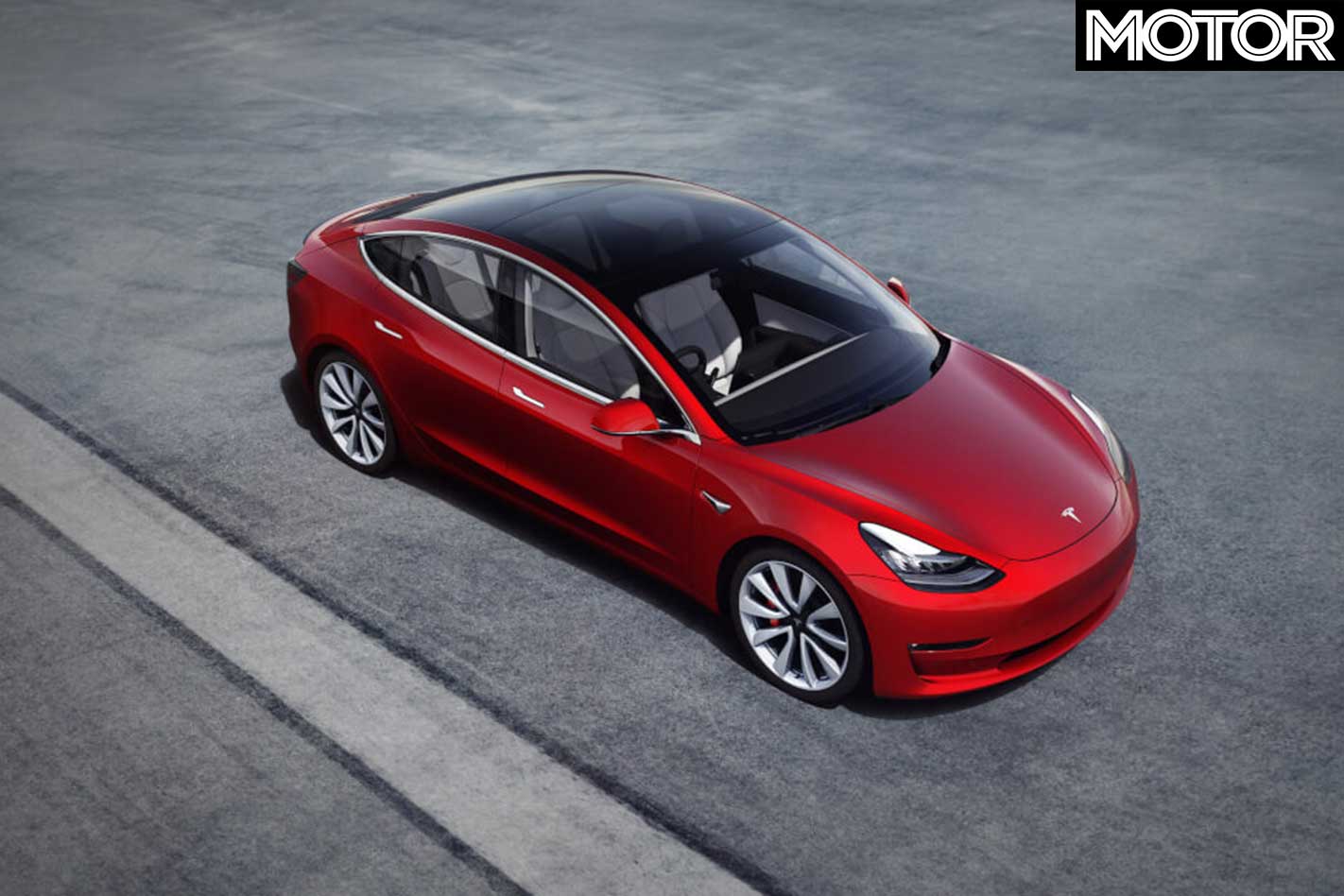
While the Model 3 Performance’s longer 560km will no doubt be useful, it’s the 3.4 second sprint to 100km/h that’ll get most customers to cough up the extra dough, with the optional (we’ll get to that) 261km/h top speed well out of reason for those who value their licence.
The Performance version also cops a premium interior upgrade, with 12-way adjustable heated front and rear seats, a better audio system, internet streaming for music and media, and even a ‘location-aware automatic garage door opener.’
Black, silver, blue, white, and, red are available once customers move through the configurator, with Tesla’s 18-inch ‘Aero’ wheels available as standard, or 20-inch wheels as part of the $6200 performance upgrade. Michelin Pilot Sport 4S tyres come with the 20-inchers.
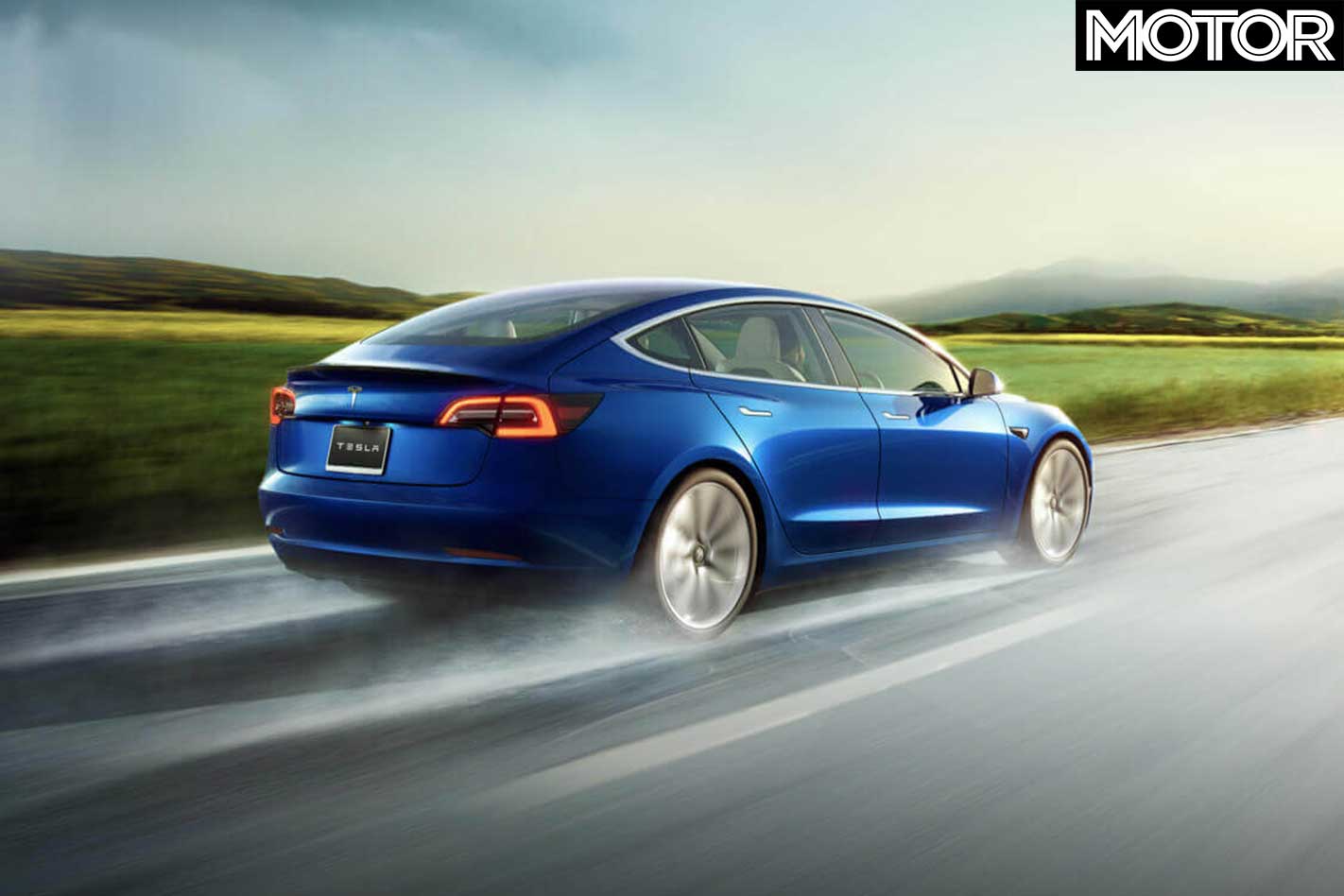
Better brakes, a carbon spoiler, a lower stance, aluminium pedals, and the full 261km/h top speed unlocked. Otherwise, 233km/h is the top end.
Also with the performance upgrade is Tesla’s Track Mode, which allows for more ‘dynamic’ driving… like power oversteer.
The only interior colour option (if you can call your only choice an option) is for the trim to be all black.
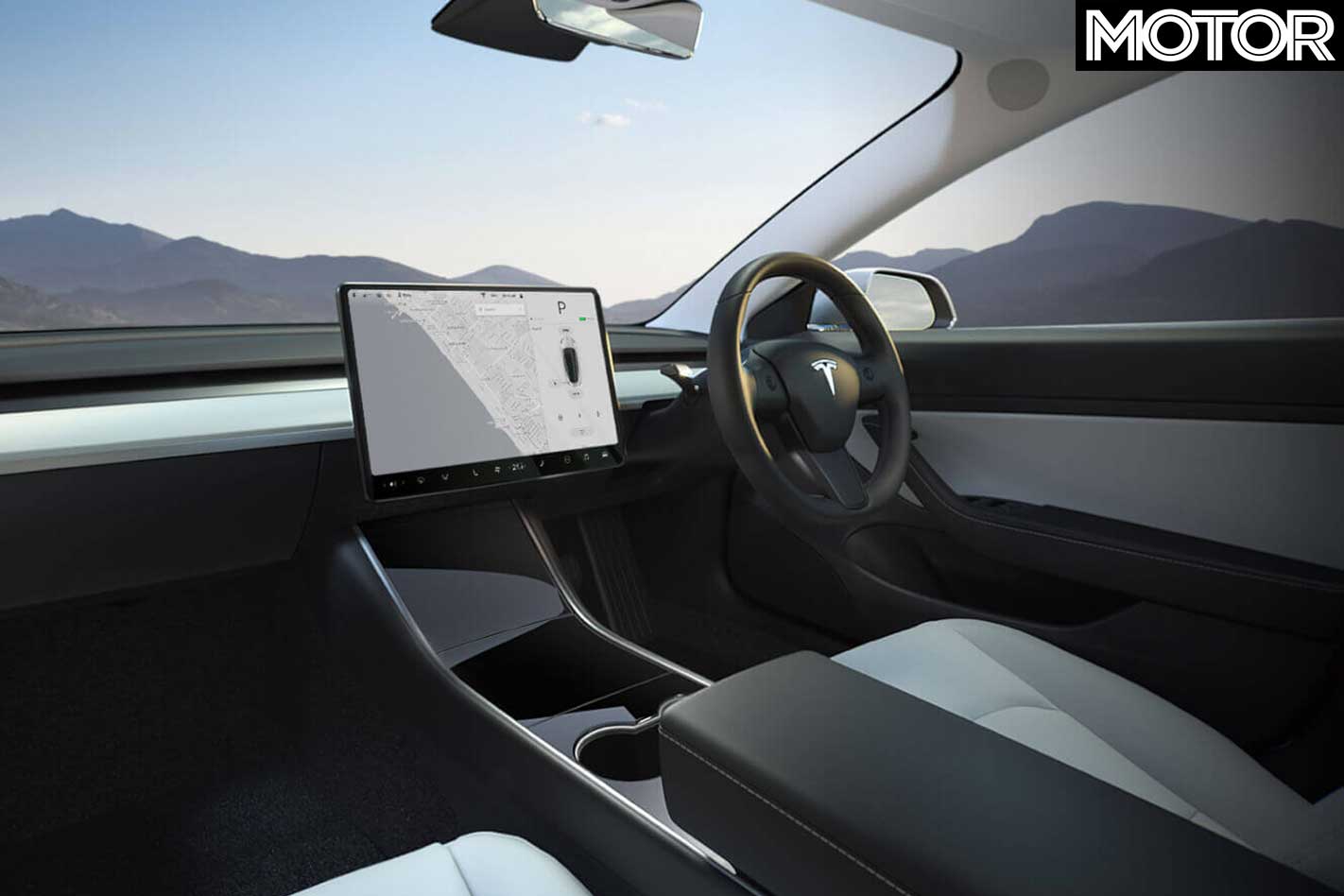
Finally, the last option on the configurator is for Tesla’s Full Self-Driving Capability, which takes Autopilot to the next level with a significant level of autonomy available, and more to come soon.
A fully optioned Model 3 Performance will cost, in Victoria for example, $116,555 drive-away with $7,934 of that comprising Luxury Car Tax, though prices alter per state (QLD is $114,986, NSW $115,559, etc). A $3000 refundable deposit is required upon ordering, paid online.
For each state, delivery is estimated for August if ordered at time of publish. In the meantime, have a go at the Tesla Model 3 configurator here.
From staid British luxury, V12 powertrains and Bathurst-conquering ability, the Jaguar XJ has enjoyed a life of excess and success.
However, the current X351 sedan is said to be the final incarnation of a formula we’ve been familiar with for more than 50 years, with Jaguar believed to be trying to jump its luxury rivals with an XJ utilising a fully electric powertrain.
Autocar reports that the ninth-generation flagship is expected “to continue the XJ nameplate”, but not its internal-combustion engine, with the move to an all-electric halo set to join the I-Pace.
A move even further upmarket is expected, with the British marque targeting its German rivals at BMW, Audi and Mercedes-Benz – even the upcoming Porsche Taycan EV is seen as key competition.
The final X351 XJ will roll off the UK-based Castle Bromwich production line on July 5, 2019, ending 10 years of production for the current generation.
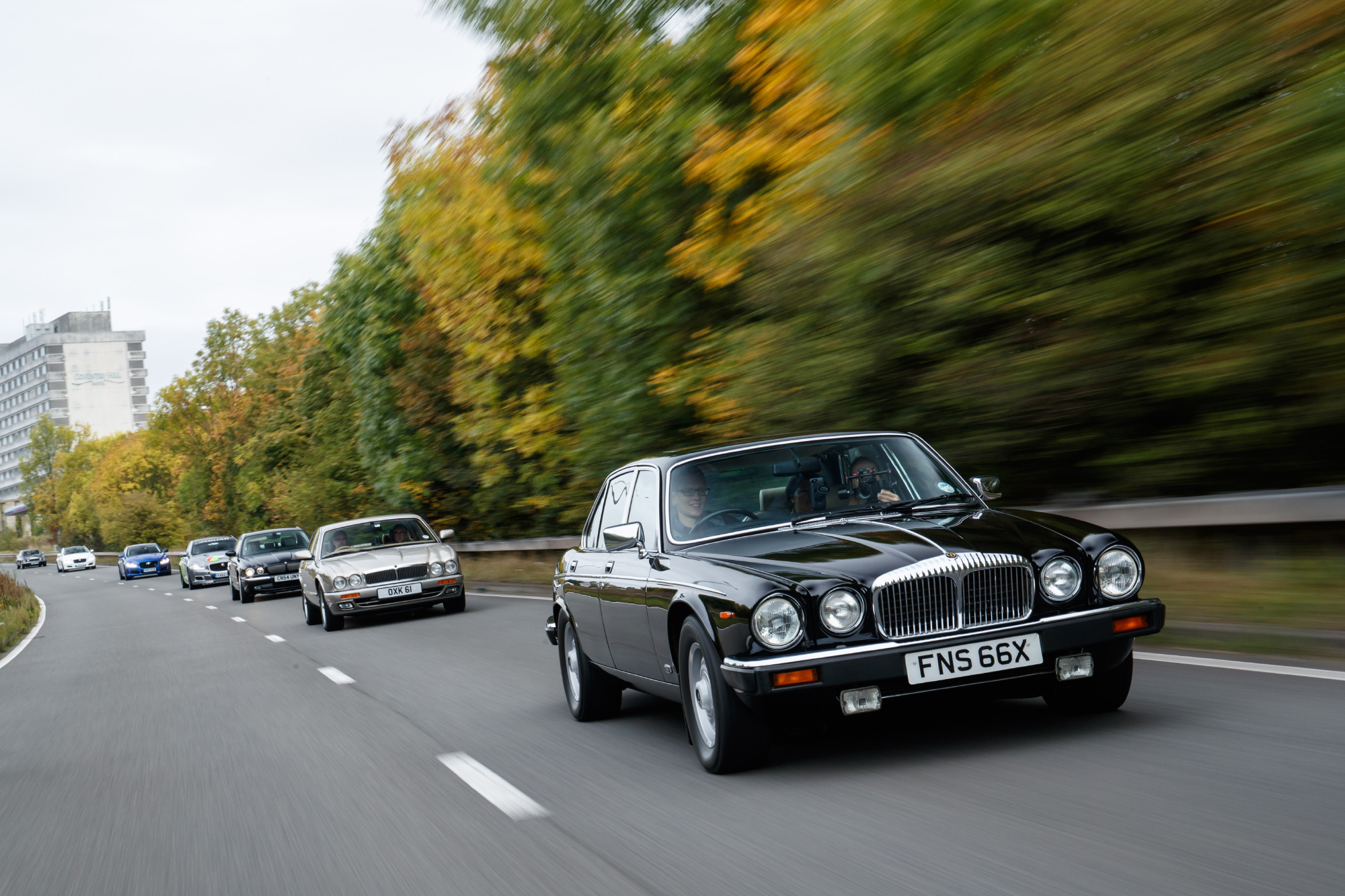
More than 120,000 current-gen XJs have been produced with a mid-life update in 2015 that freshened up the range. And while the XJ is a low-volume model, selling just four examples this year to April in Australia, it’s an important halo for the brand.
At the 2018 Beijing Motor Show, Jaguar released the XJ50 in both short and long wheelbase forms, as a special edition aimed at commemorating 50 years of XJ, a model designation that debuted in October 1968.
The XJ will also be remembered Down Under for its racing prowess. Three TWR-prepared, V12-powered XJ-S coupes tackled the mountain in 1985, with the #10 XJ-S piloted by John Goss and Armin Hahne claiming the race win.
Like onion-biting, beer sculling and coal snuggling, incorrectly proclaiming that electric vehicles are gutless is now part of our prime ministerial folklore. In April of this year, Prime Minister Scott Morrison told reporters in Melbourne that an electric vehicle “won’t tow your trailer. It’s not going to tow your boat. It’s not going to get you out to your favourite camping spot with your family.” How wrong he was.
So wrong, in fact, that we’re sick of talking about it in the WhichCar office because we’ve already spoken about it at length, asking ‘are electric vehicles and hybrids good for towing?’ and even highlighting the tough electric utes bound for Australia.
This week, arguably one of the most surprising cars to take on the “can EVs tow?” question is the small but mighty Mini electric. How? By towing a Boeing 777F freighter aircraft, of course.
Partnering with Lufthansa Cargo, the stunt sees the adorable MINI electric “muscle car”, hook itself up to the cargo plane and take it for a walk in all its 150 tonnes of curb weight glory, across Frankfurt airport with not a single emission released into the atmos.
Having already reviewed a prototype, our friends at Wheels confirmed the Mini Electric, scheduled to start production in November, is mighty little machine itself, sharing an engine with the BMW i3 (125Kw/250Nm).
There is also said to be a performance model with an i3 S (135kW/270Nm) engine in development. If this is the case, and we see the MINI cut the fat with the same level of lightweight materials BMW has used in the i3, it could very well have a pretty decent power-to-weight ratio.
Of course, this isn’t the first time we’ve seen EVs perform magnificent stunts or star at the centre of viral videos…
We’ve seen Qantas tow a plane with a Tesla Model X and drag race a Model S.
Audi replicate a famous commercial from the ‘80s with an E-Tron by taking on the legendary Streif in Kitzbühel.
Met the fictional Mercedes-Benz’ “AA Class” car.
And smiled at the touching farewell BMW gave outgoing Mercedes-Benz CEO Dieter Zetsche on his retirement (that saw him driving off in an i8 hybrid)?
What would you like to see an EV do? Tell us in the comments below!
A naturally aspirated flat six, a manual gearbox, a 1099kg kerb weight, and 289kW to propel it. Is the Porsche 981 Boxster Bergspyder the ultimate open-top enthusiasts machine? Surely it’s not far off.
Porsche has now let the world in on the details of its one-off experimental tribute to the original Porsche 909 ‘Bergspyder’, a 384kg racer that remains the lightest car ever raced by the Stuttgart brand.
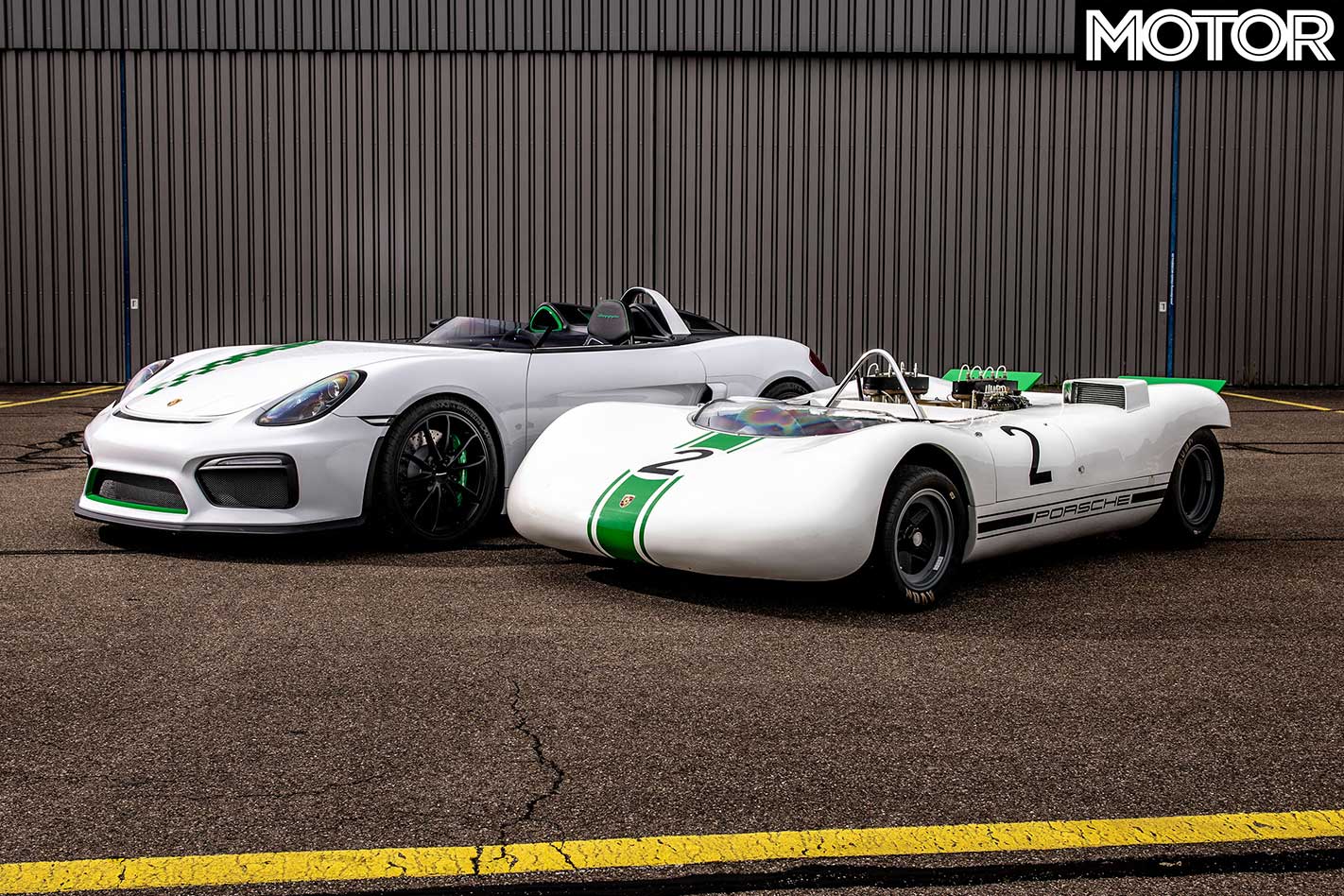
Four years ago, Porsche’s board told a handful of engineers and designers to create 981-based sports car with a focus on being “as light and minimalist as possible.”
“For the engineers, the name for the project was obvious: 981 Bergspyder. Deciding on the choice of colour was also quick: white with green touches.”
The team took a 981 Boxster and used the 1968 racer as inspiration in more ways than just the name, with a single-seat configuration and low wrap-around windshield being the most obvious nods to the past.
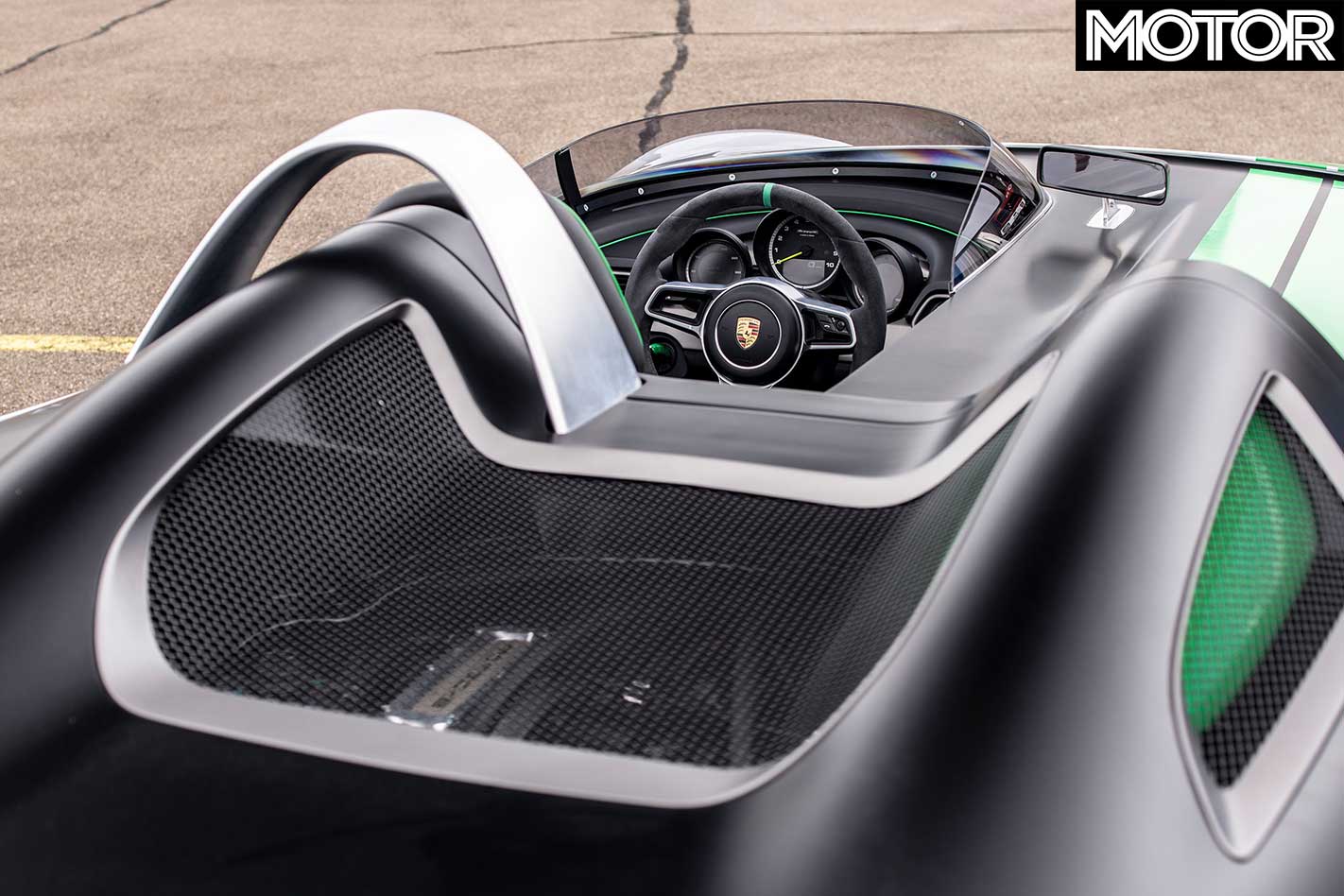
Details from the 918 Spyder also made their way into the 981 Bergspider, with dash elements and the seat originating from the hybrid hypercar.
But it’s the weight and mechanical aspects of the 981 Bergspyder that make it such a hypothetical driving dream, with a kerb-weight to rival an ND MX-5, a 3.8-litre flat six providing 263kW-per-tonne… and of course a six-speed manual ‘box. Its tacho would also suggest a 9000rpm redline.
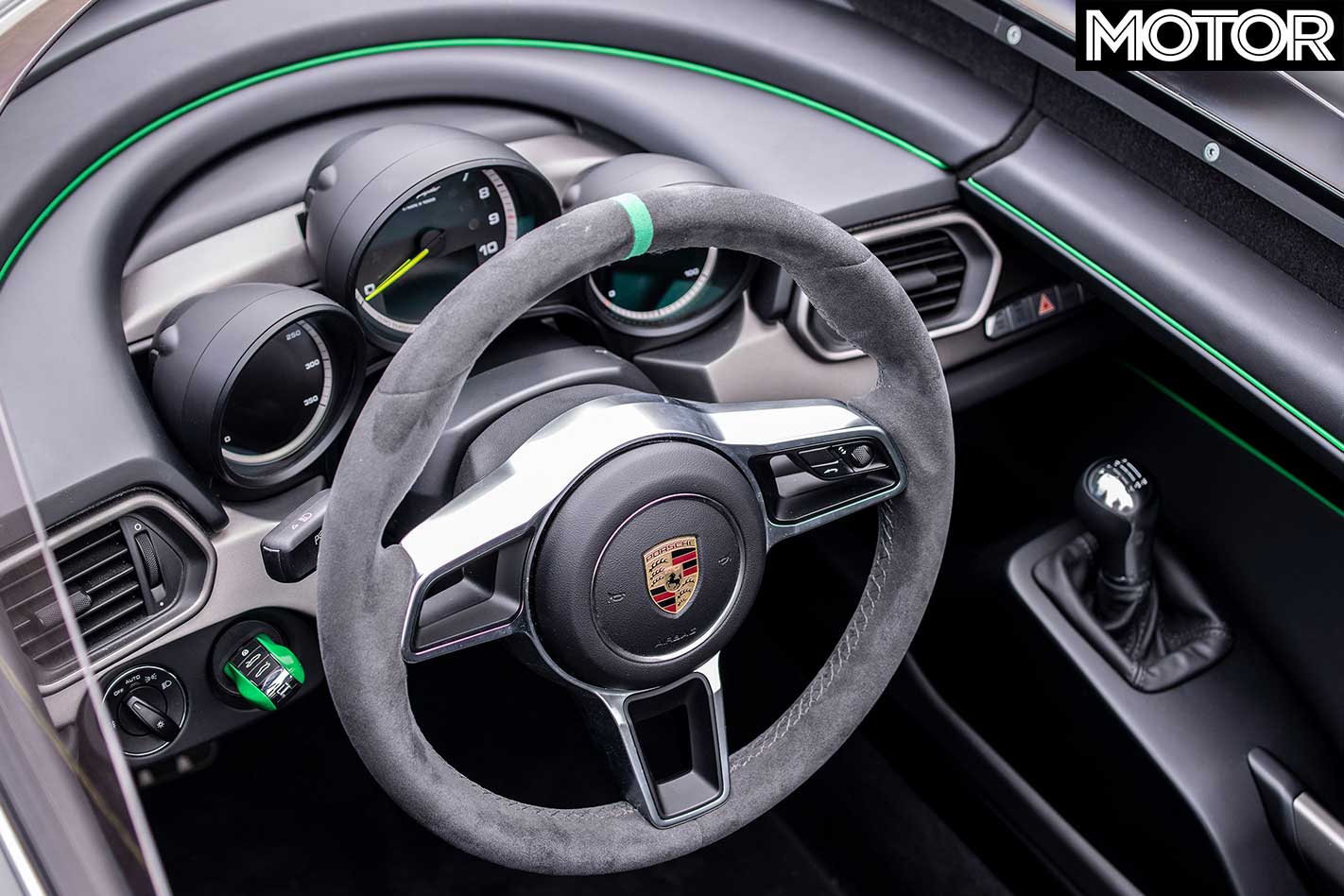
Porsche says the Bergspyder would have been able to lap the Nürburgring in 7:30 but, unfortunately, Porsche’s frustratingly sensible bean-counters put a halt to any further development of the Bergspyder project.
“A major question mark remained as to whether the car would be eligible for registration in some countries, which would have an impact on potential sales. As a result, the project was not pursued and the prototype remained a one-off.”
