
No one thought that the whole SUV coupe craze would catch on to the extent that it has, but here we are ten years after the introduction of the first BMW X6 with Audi’s challenger, the Q8.
Combining an extra dose of style with high-riding practicality, the Audi Q8 joins the SUV coupe mini-segment a little late to the game, but it packs a technological punch where rivals like the Mercedes-Benz GLE Coupe and BMW X6 are yet to be updated.
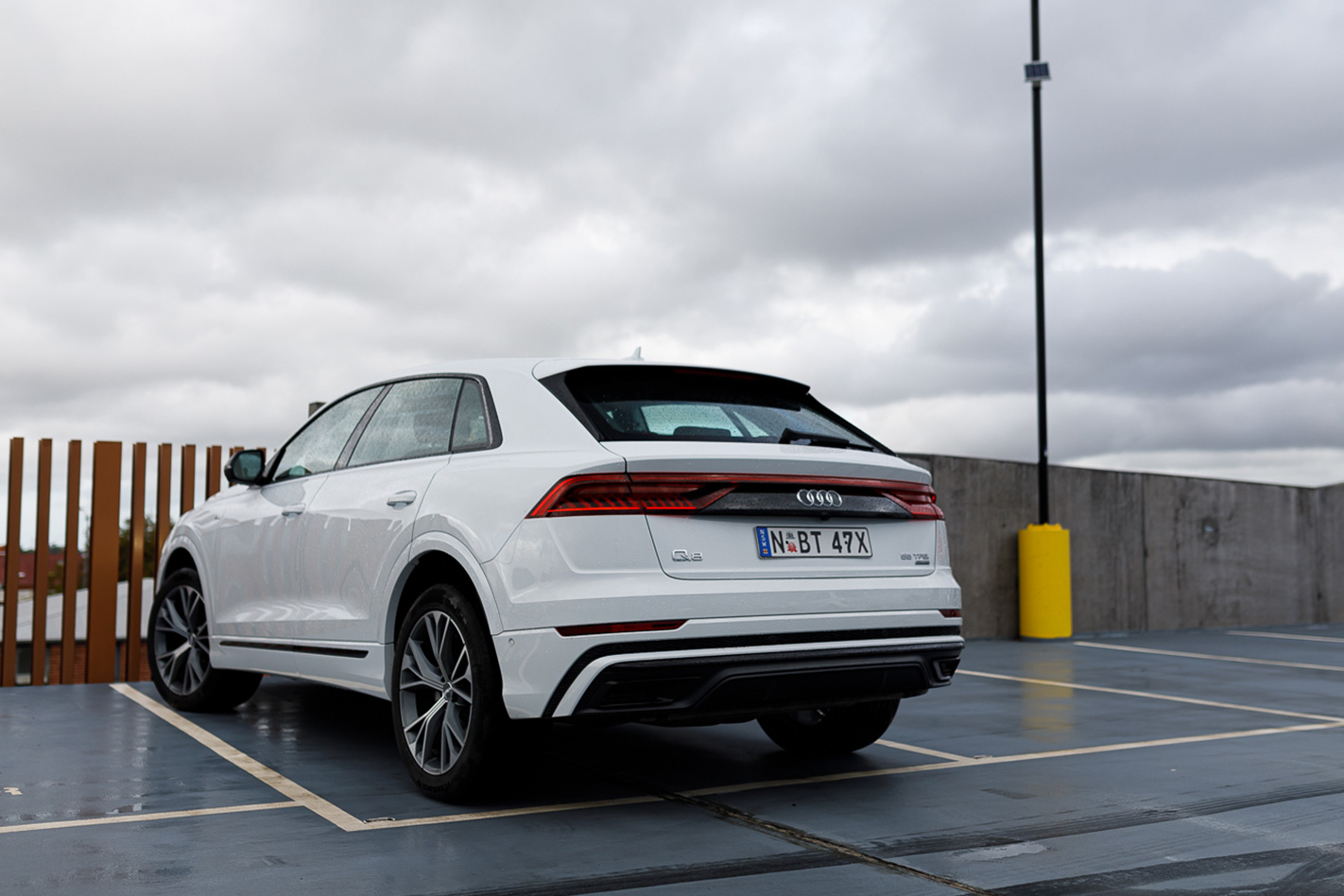
Now the flagship of the Audi Q family, here is a handful of the 2019 Audi Q8’s defining features.
Technological tour de force
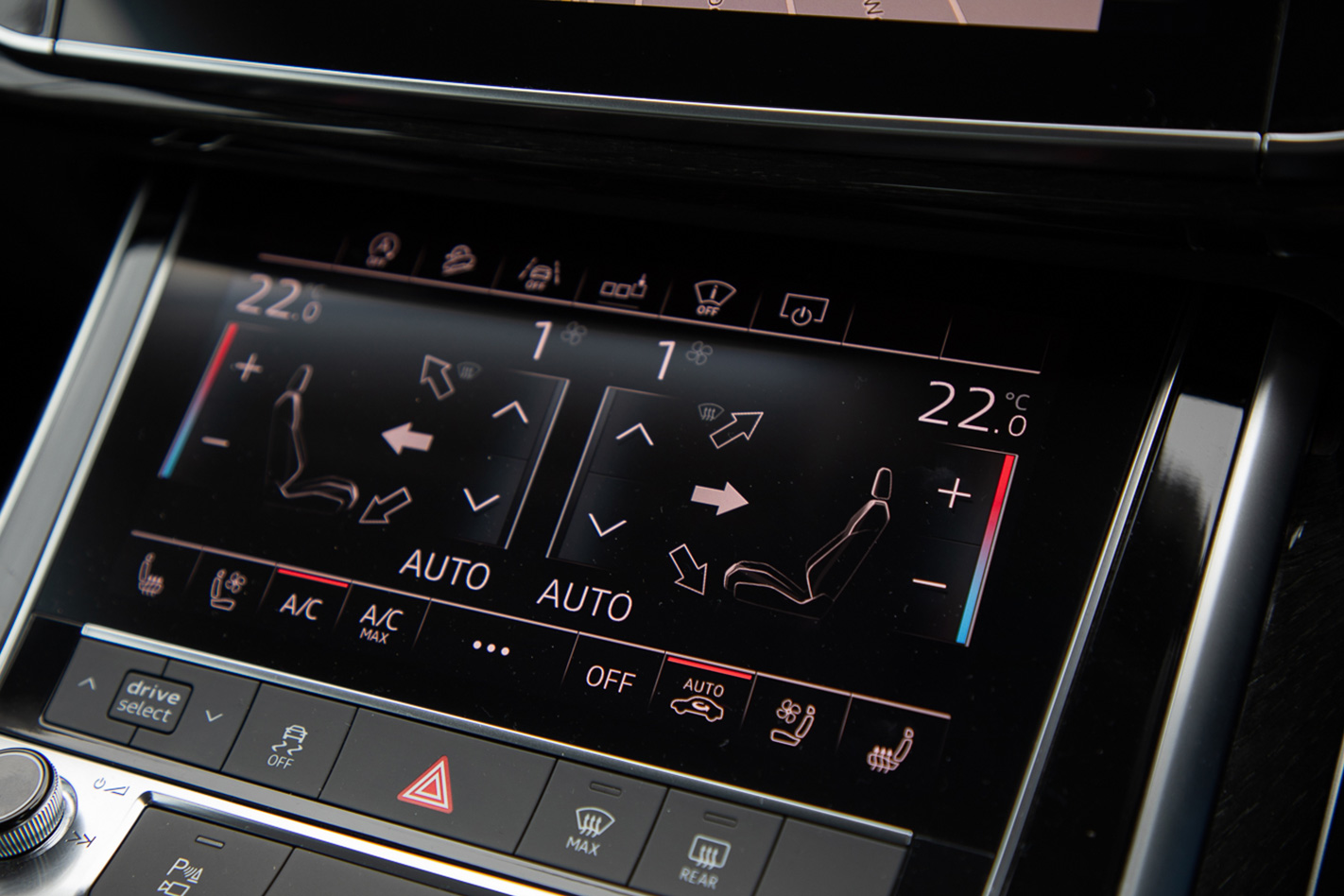
Digital displays dominate the Audi Q8’s interior, with two 10.1-inch and 8.6-inch screens making up the central infotainment system while a mammoth 12.3-inch display housing Audi’s virtual cockpit sits in front of the driver. Almost all functions are operated using the two touch-responsive screens in the centre, with the top screen handling infotainment and navigation while the lower one organises the climate control system and convenience functions.
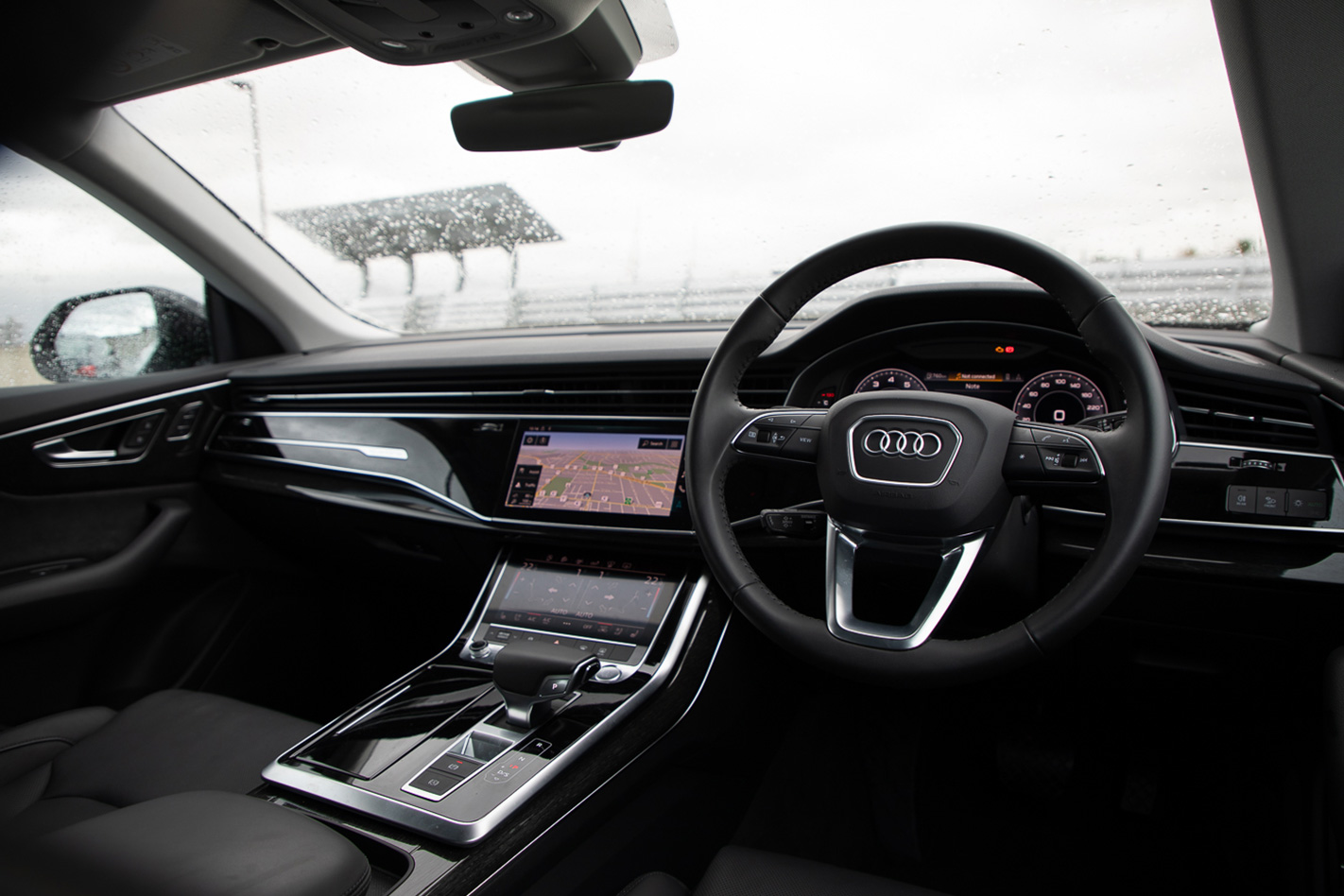
The Q8 also features an intuitive virtual assistant that responds to commands like: “I am hungry” by suggesting restaurants nearby.
Petrol powerplant
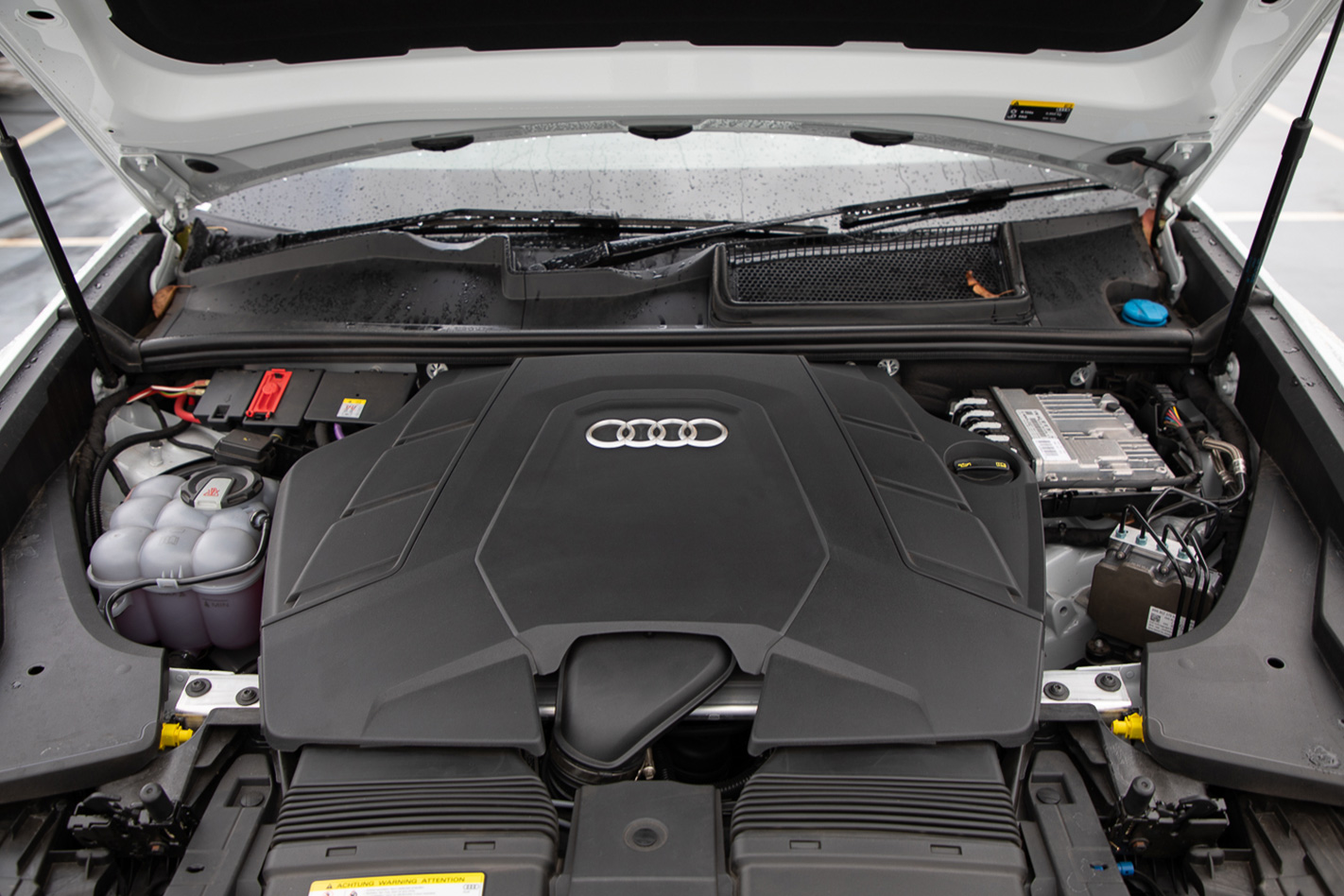
At the moment, Audi will only sell you a single-specification, petrol-powered Q8. The Q8 55 TFSI exists on its own until later this year when a diesel offering is introduced for the same $128,900. The Q8 55 TFSI features a 3.0 V6 engine that produces 250kW and 500Nm which is sent to all four wheels, par for the course with Audi’s Quattro all-wheel-drive system.
A 48-volt mild-hybrid system also helps the engine in circumstances of hard acceleration and start-stop traffic, aiding the Q8’s 5.9-second 0 to 100km/h time.
Style conscious
In addition to gifting the Q8 a number of design features from the luxury-limousine A8 sedan, the Q8 also uses its styling to hark back to the Ur-quattro Audi icon.
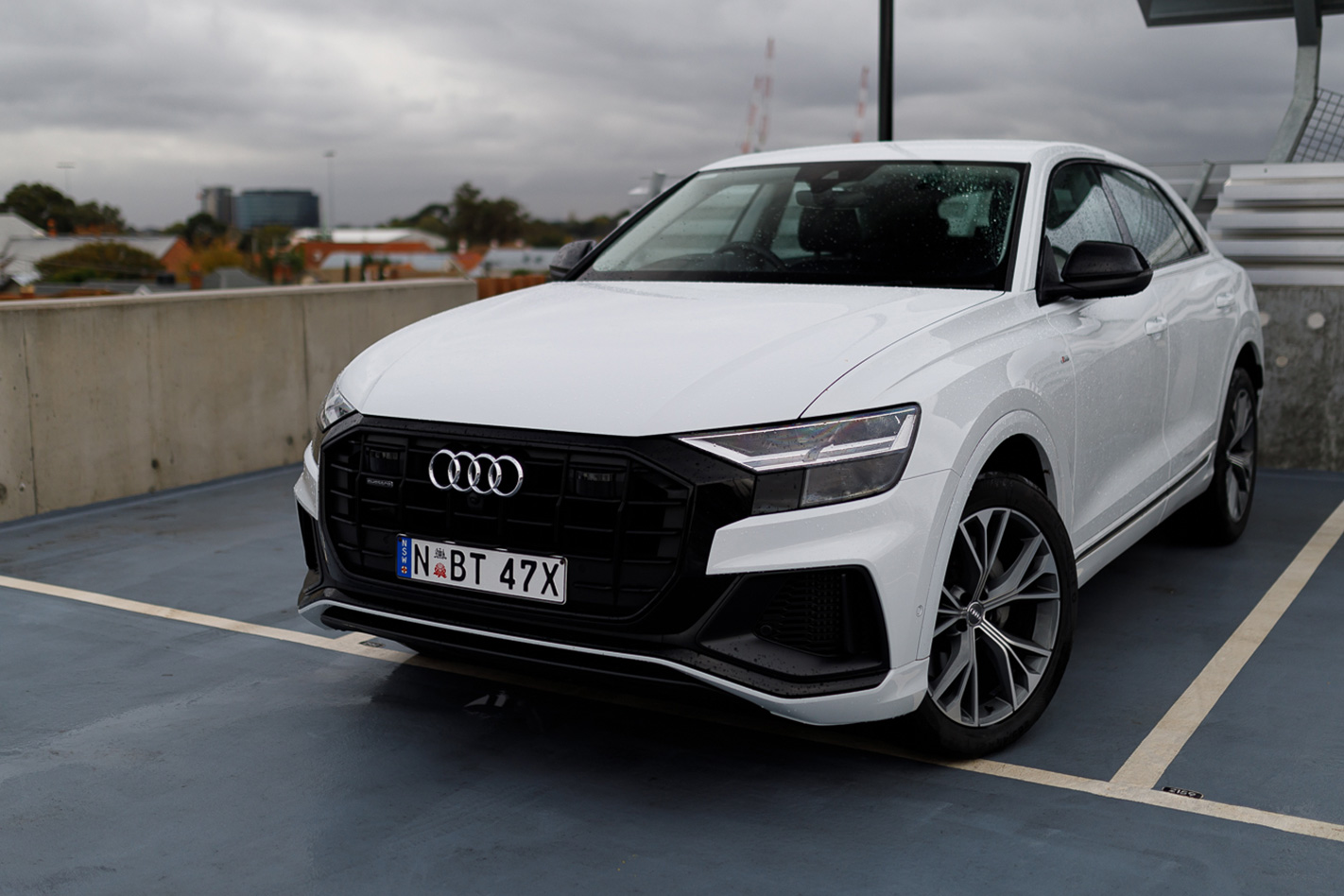
Pumped rear guards combine with a single-piece trim that bridges the two taillights like the old, while frameless doors allow for a raked rear roofline which evolves into a rear spoiler.
Sibling rivalry
The Q8 joins the already-established Q7 in the top-tier of Audi SUVs. Offering similar dimensions like an equal three-metre long wheelbase, the Q8 differs only by being wider (1995mm), lower (1700mm) and shorter overall (4986mm) in comparison.
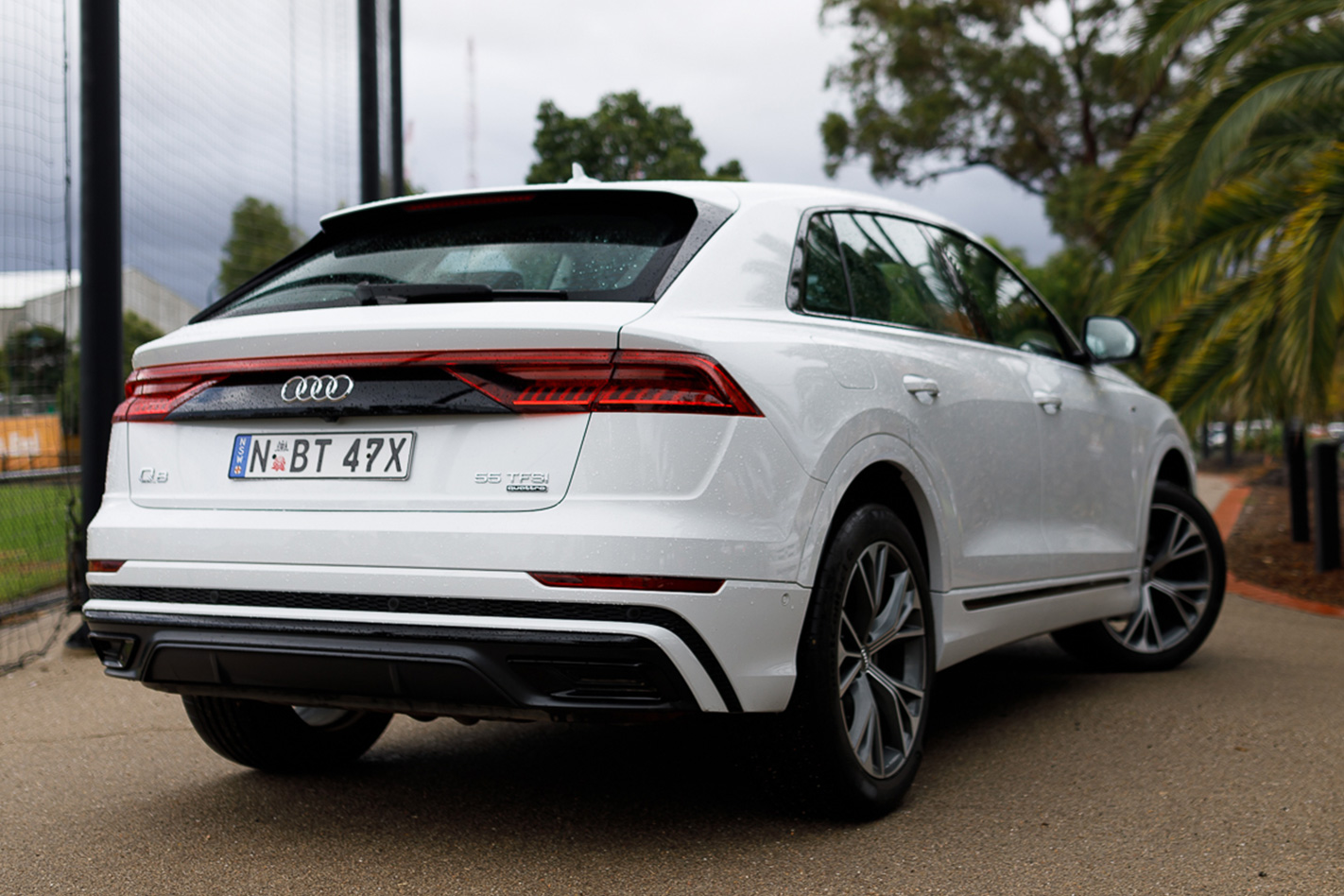
Of course, in comparison to the wagon-style Q7 the coupe Q8 concedes luggage space to its load-lugging sibling, but 605 litres and then 1755 litres with seats down is still more than enough for two golf bags. A power rear tailgate with foot-activated gesture control is standard too.
Standard swag
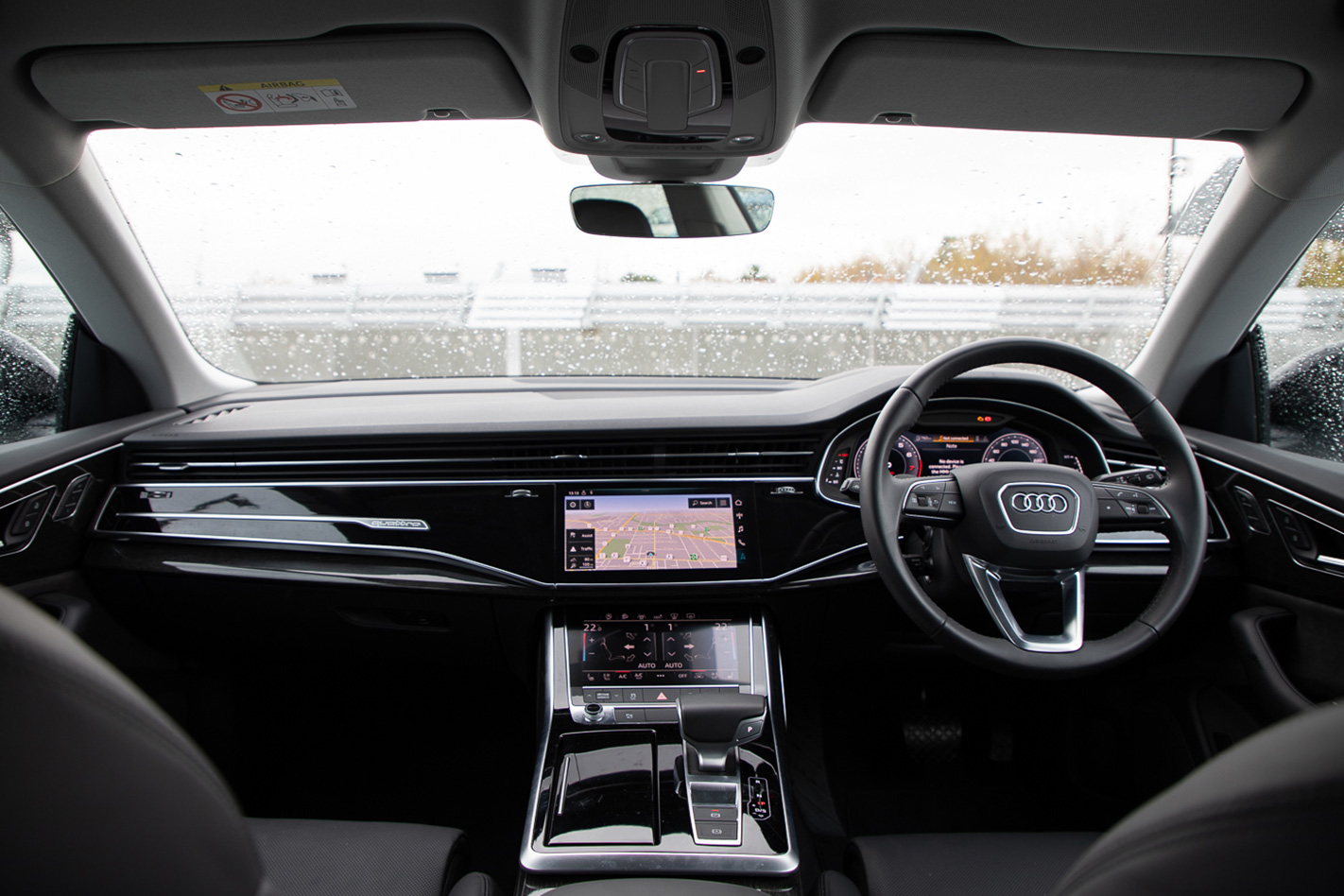
The upside of a $128,900 (before on-road costs) asking price is that there are quite a few options available as standard. The exterior is flanked by the S line exterior styling package including 21-inch alloy wheels, automatic LED headlights, adaptive suspension, Apple CarPlay and Android Auto support, electric seats in Valcona leather, front seat heating and ventilation and Audi virtual cockpit all offered as standard.
An $11,000 Premium package adds 22-inch allows, air suspension, Bang & Olufsen sound system and ambient lighting package among other additions, while a full leather package also exists for $8,900.
The Q8 is on sale now, to be joined later this year by a Q8 50 TDI diesel version.
Toyota has finally revealed the price it expects Aussies to pay for the highly anticipated GR Supra, and it’s time to compare it against other enthusiast-focused vehicles.
Toyota Supra GR pricing
The ‘entry-level’ GT variant will have a sticker price of $84,900 plus on-road costs, while the GTS which adds a head-up display, 19” forged alloy wheels, sport brakes with red callipers and the options of red leather accented or Alcantara seats will start at $94,900.
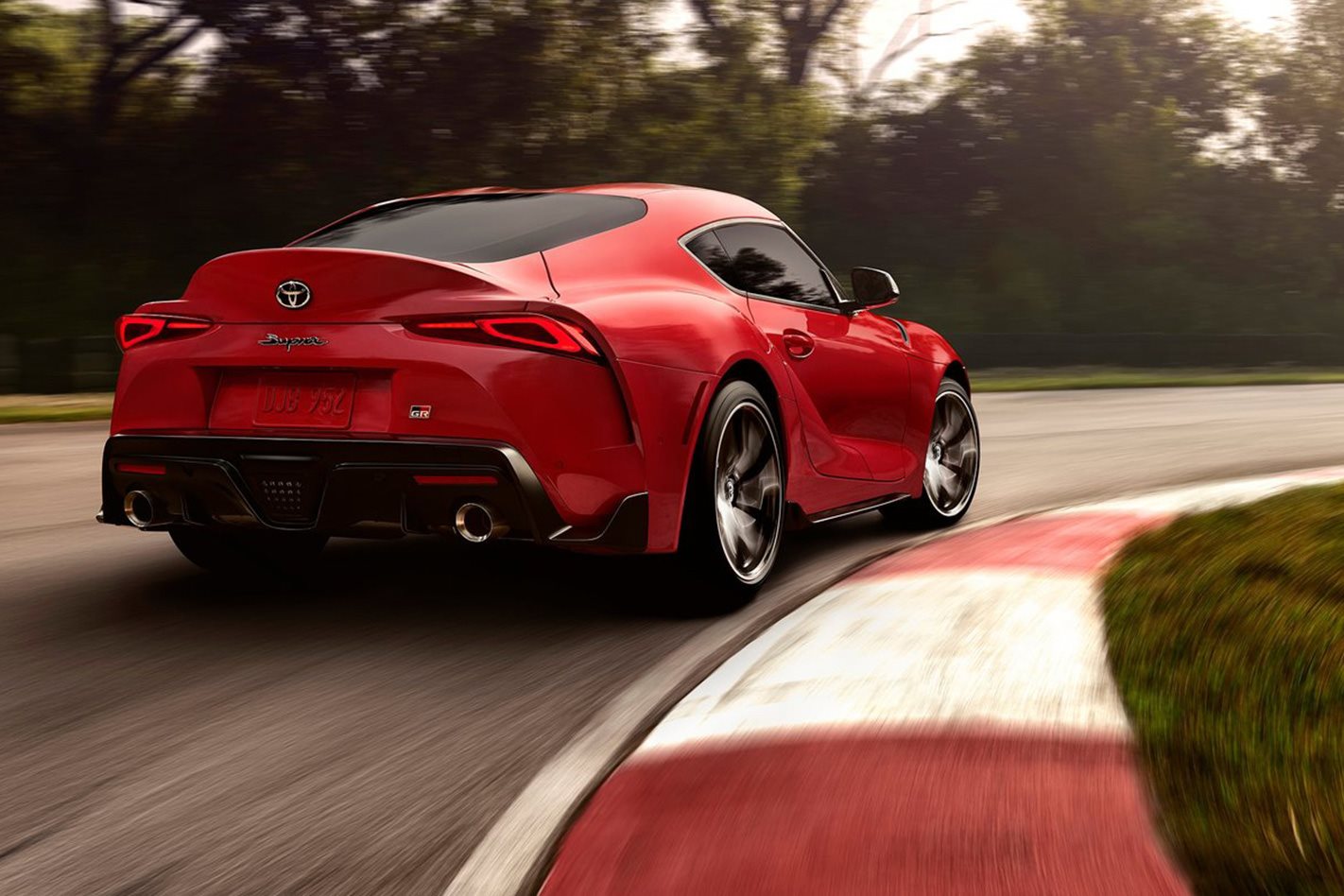
Putting the price of Toyota’s sporting flagship into perspective is the fact just two other models from the manufacturing giant are more expensive – the petrol LC200 Sahara, at $114,830, and diesel-powered variant of the same SUV at $119,930.
According to our readers and compared to expectations, the re-born Japanese cult car seems a tad expensive. So, how does that compare to other sports cars, we hear you ask.
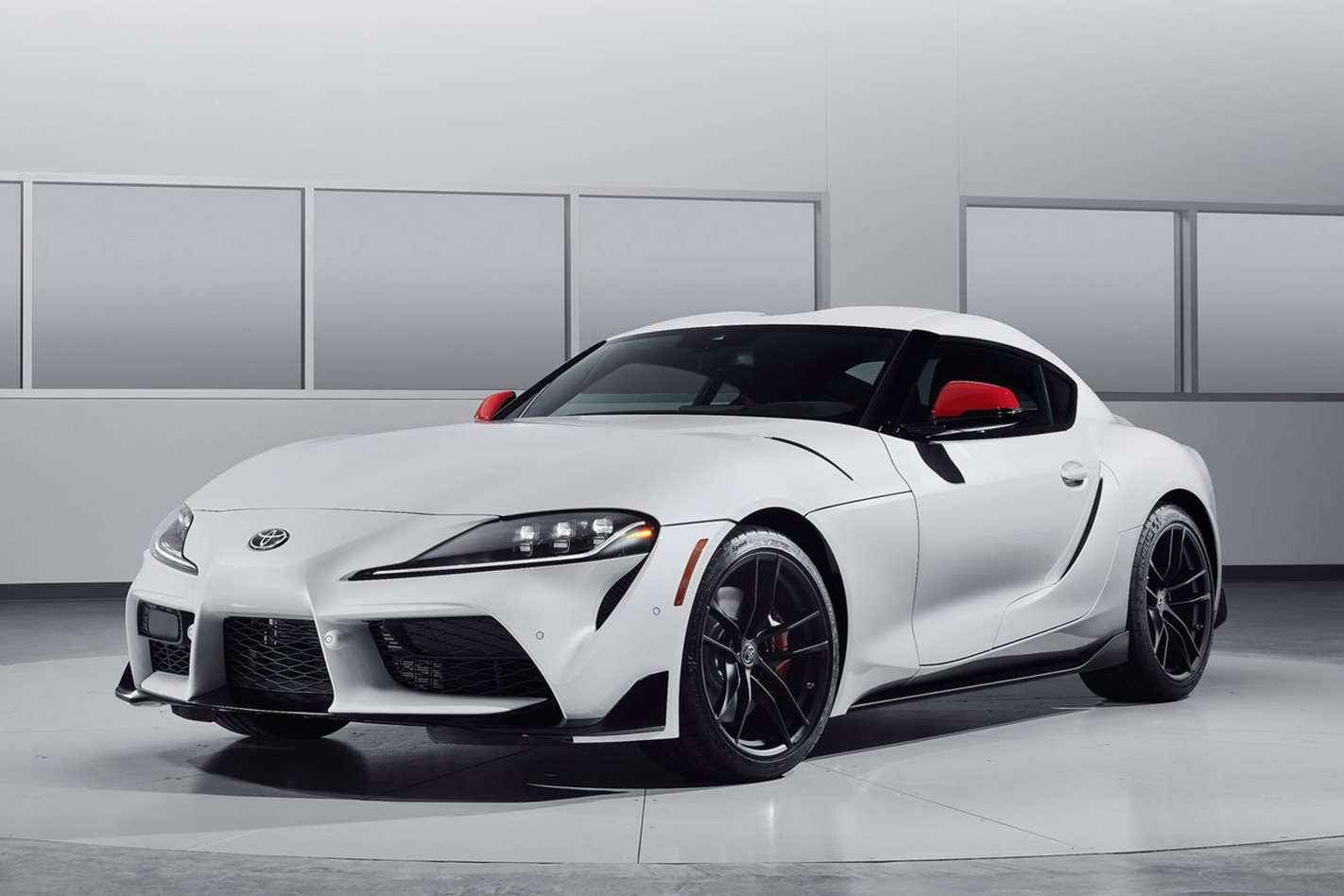
BMW Z4
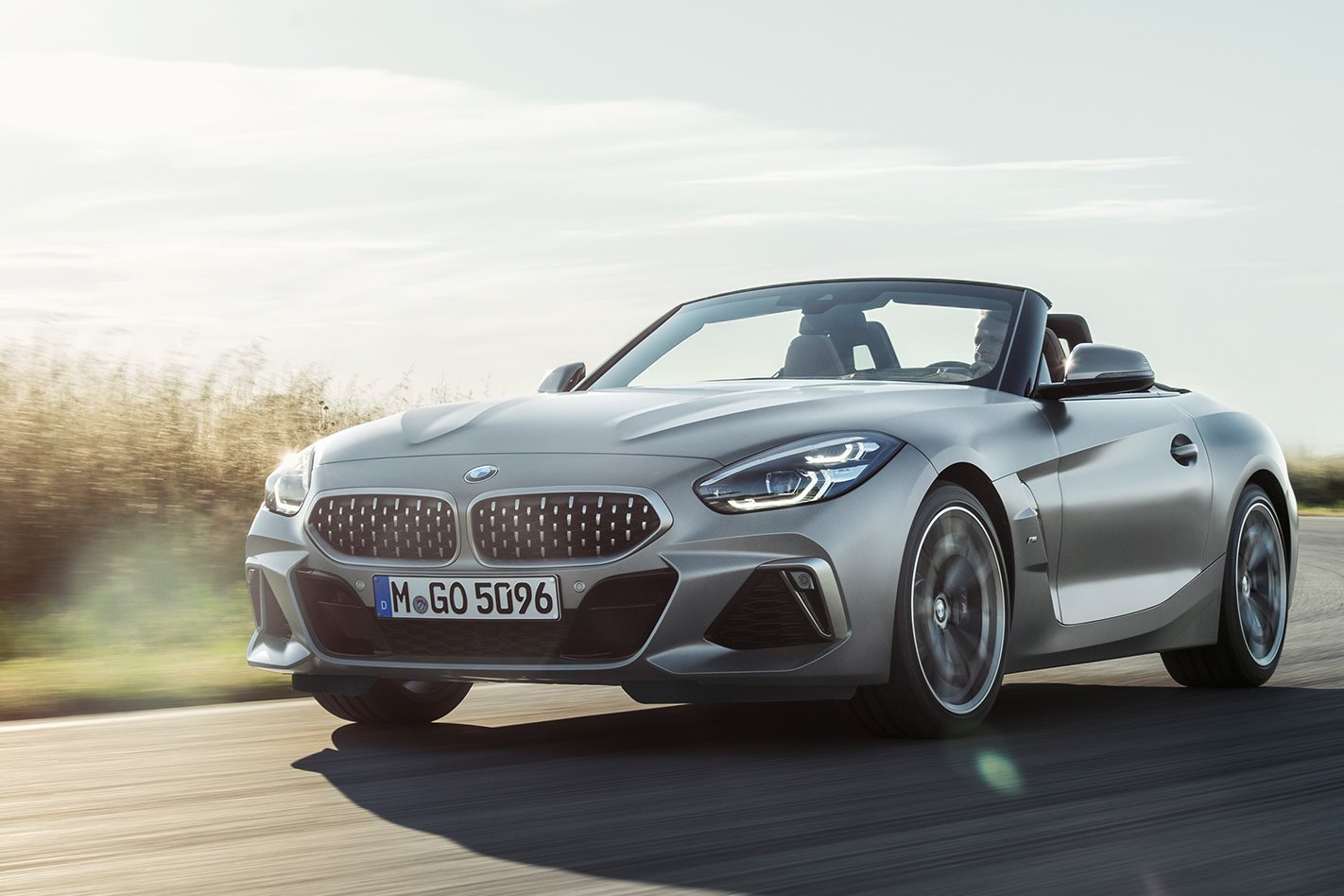
Let’s start with the obvious comparison that is the Supra’s development twin, the BMW Z4. Starting at $84,900 for the four-cylinder sDrive20i, Z4 pricing steps up to $104,900 for the more powerful four-pot sDrive30i, while the six-cylinder M40i will cost customers $124,900. The latter is the same engine used in both Supra variants.
When it comes to front-engine, rear-drive two door coupes, the field of rivals is limited to the BMW M2, Ford Mustang GT, and Chevrolet Camaro 2SS.
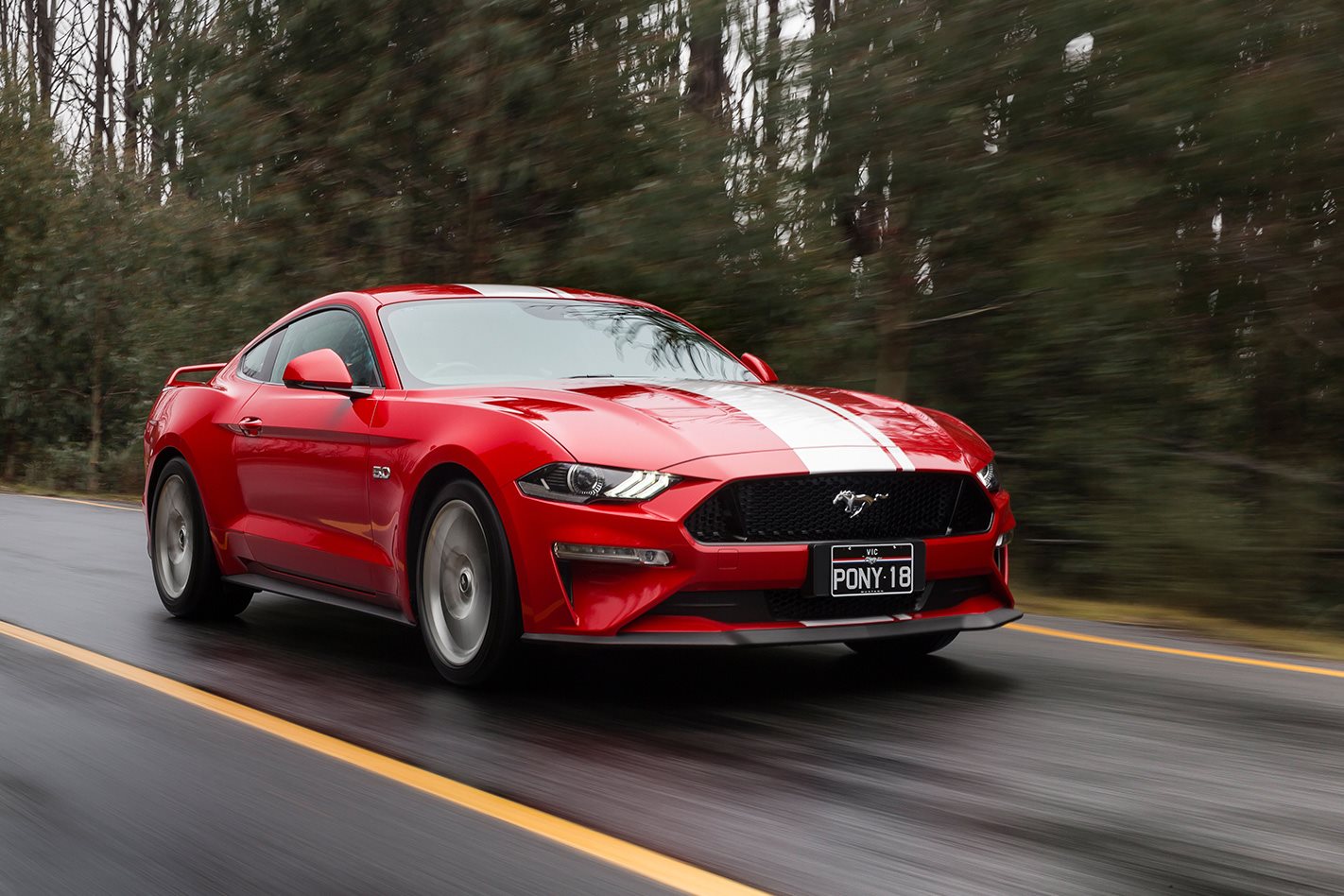
Ford Mustang GT
The Blue Oval’s offering is the cheapest option on this list, coming in at $62,990 and $65,990 depending on whether you opt for a six-speed manual or 10-speed automatic ‘box. For the money, you get 339kW and 556Nm from a 5.0-litre V8 – considerably more than the Supra’s 250kW and 500Nm from a turbocharged straight-six. However, when it comes to exclusivity, the Mustang falls short, and the Supra’s dynamic ability remains to be tested.
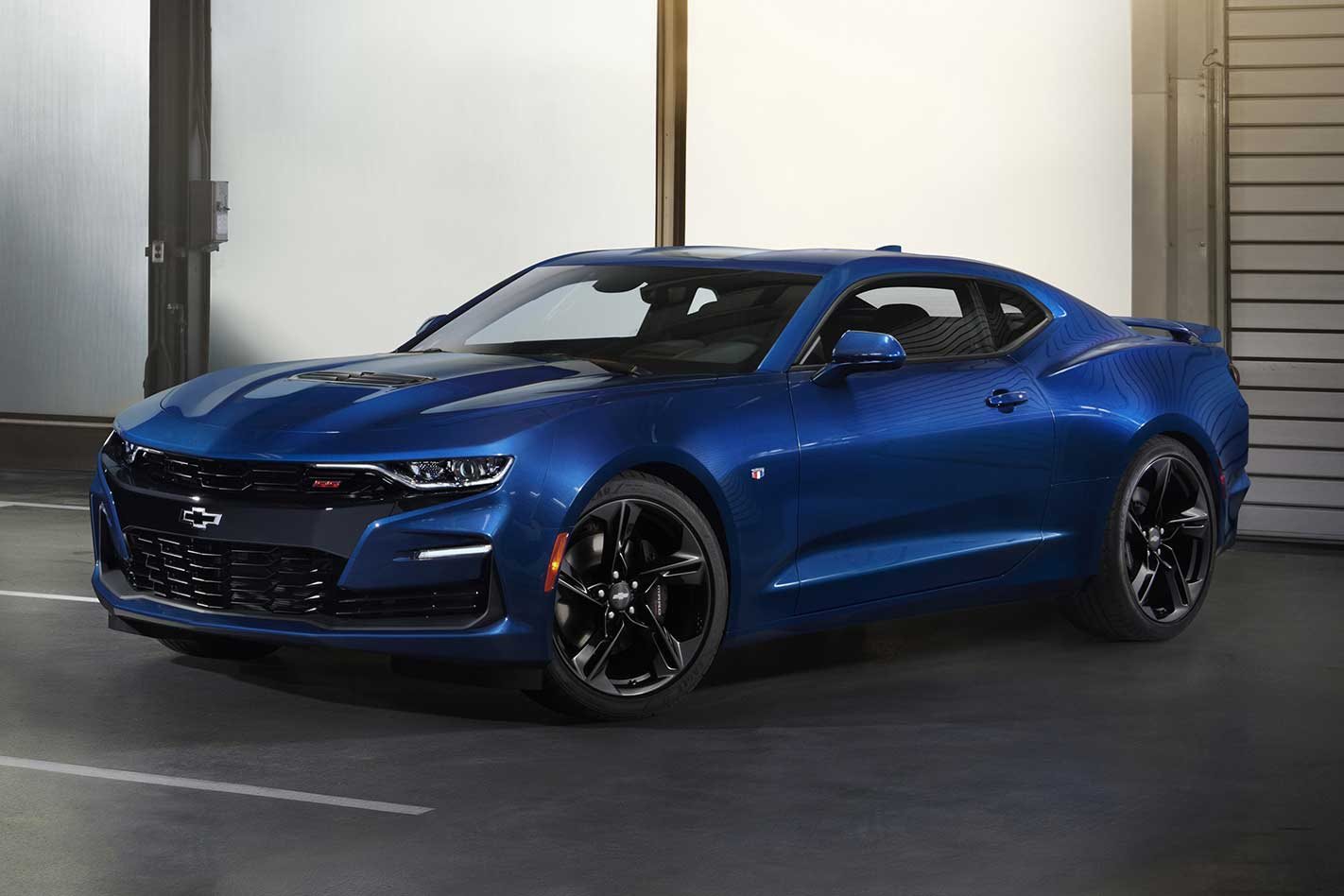
Chevrolet Camaro 2SS
HSV’s converted Camaro is a little closer in price, starting at $85,990 for the manual, and $89,100 for a 10-speed auto. Power is delivered via a 6.2-litre atmo V8, with 339kW and 617Nm lighting up the rear treads. Glorious.
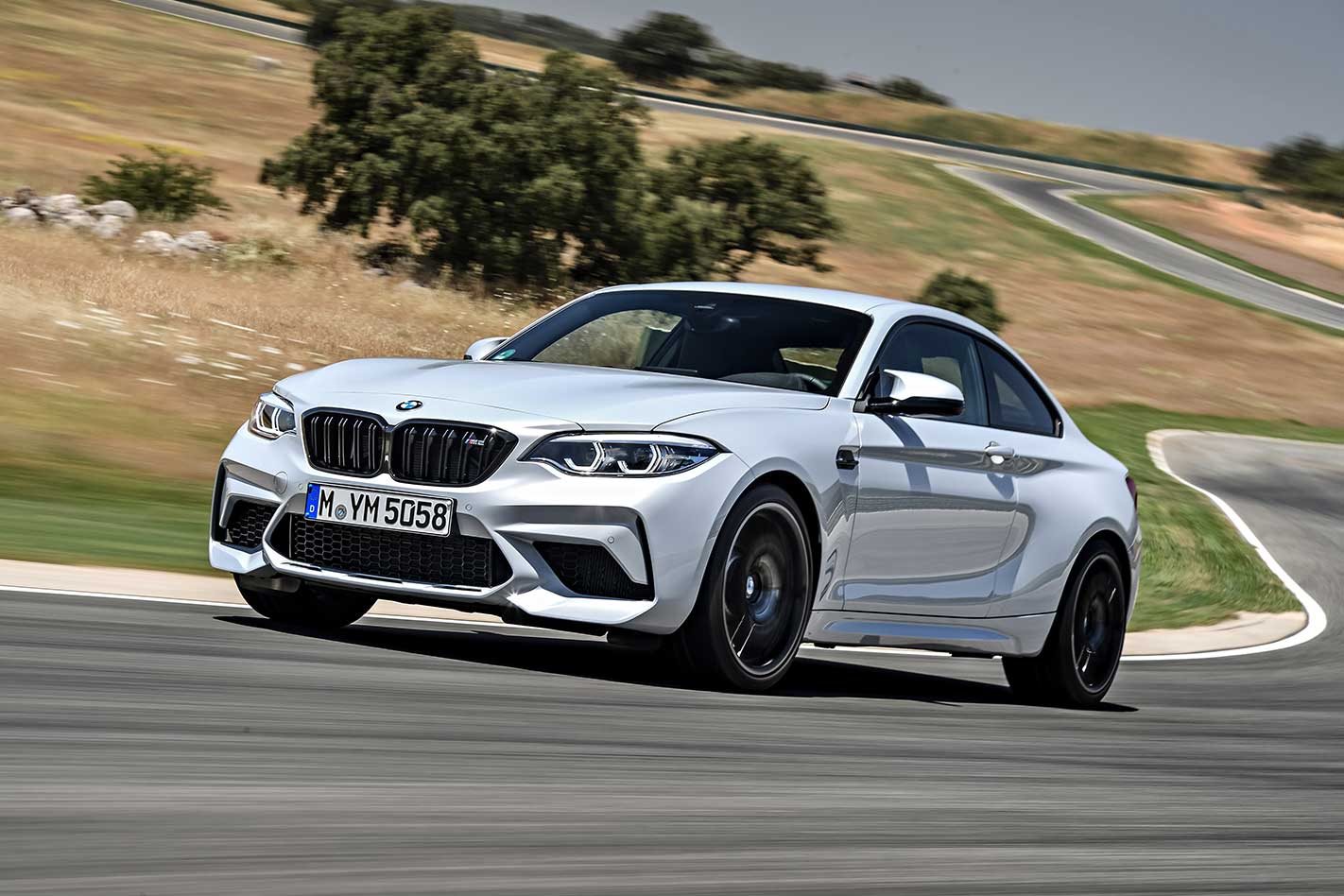
BMW M2
BMW’s most affordable M2 is the Competition Pure, listed at $99,900 whether you option it with an automatic or manual transmission. With an extra turbo than the Supra (it now shares the same engine as the M3, but tuned differently), the M2’s straight-six produces 302kW/550Nm.
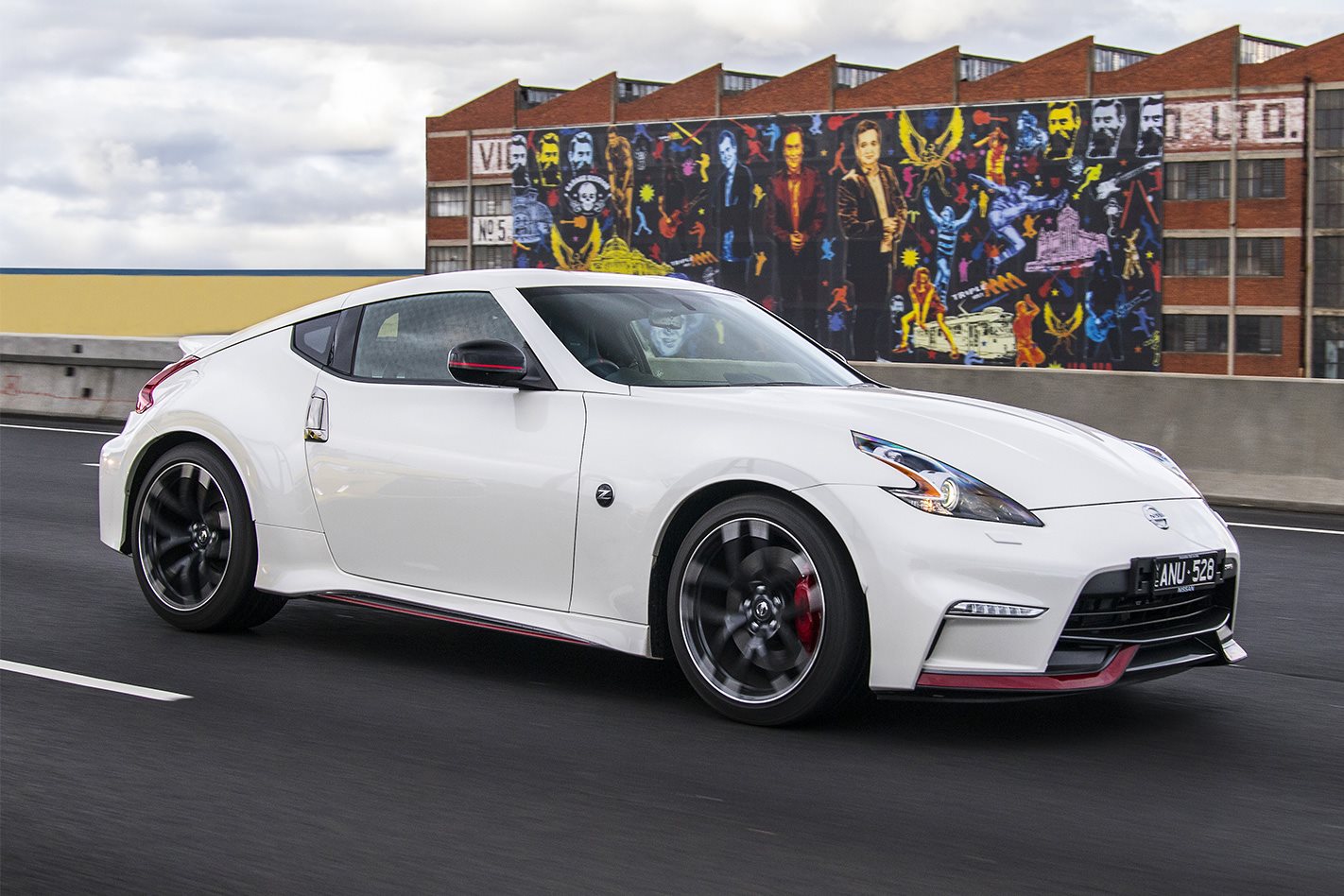
Baby Godzilla
The Supra’s traditional rival has been the GT-R in previous generations, but with a cavernous price difference it now seems the 370Z is the more logical rival. NISMO variants of the atmo V6 coupe start at $61,490, with a self-shifting version costing $63,990. But having recently turned ten-years old, it’s a bit of an automotive relic on the showroom.
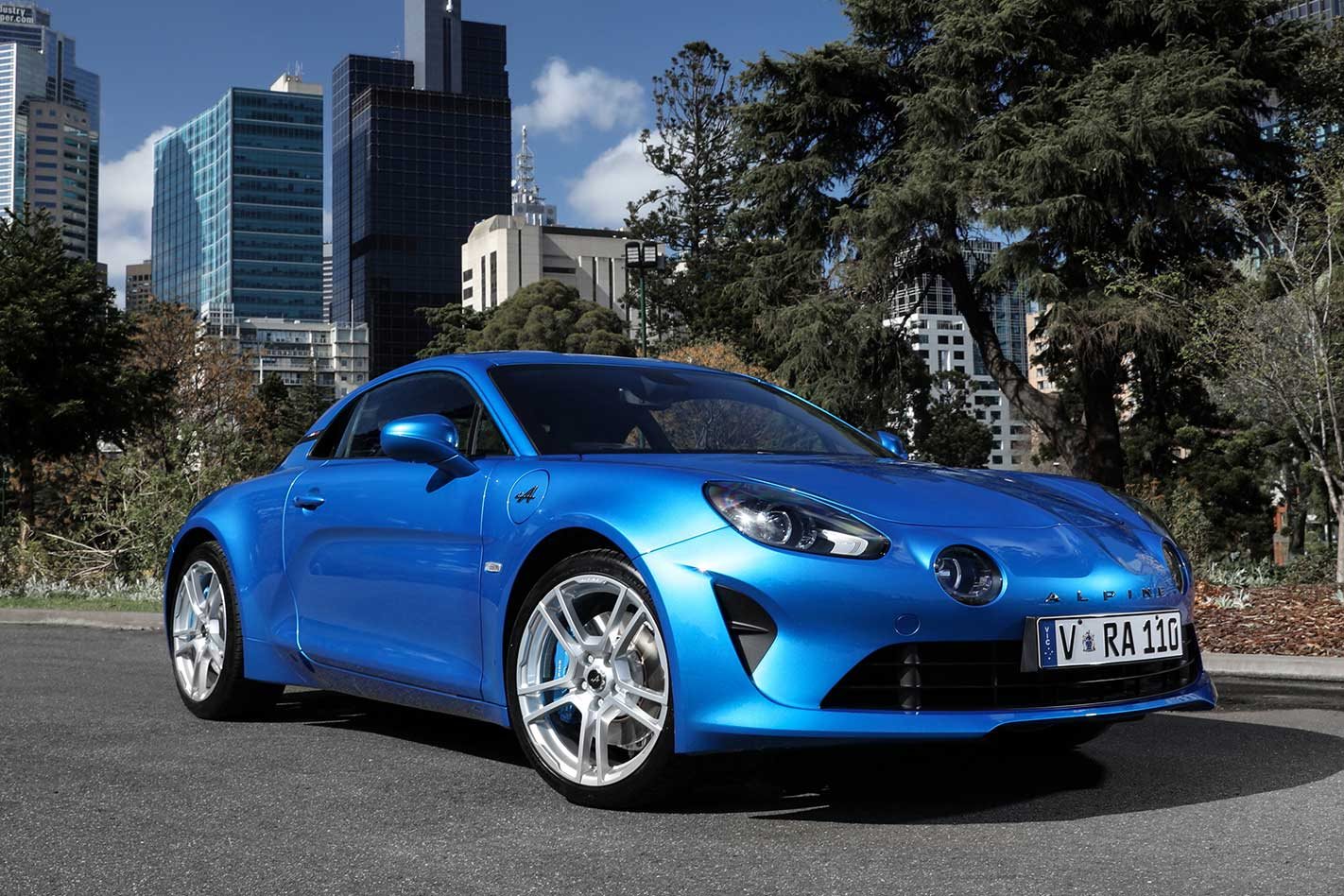
Alpine A110
Alpine’s A110 sports car comes in three different trims, each powered by the same 1.8-litre, turbocharged four-cylinder that produces 155kW and 320Nm. The lightest, and cheapest, is the Pure, which costs $97,000, while the mid-spec Legende has a sticker price of $103,500, and the flagship Premiere costs $106,500.
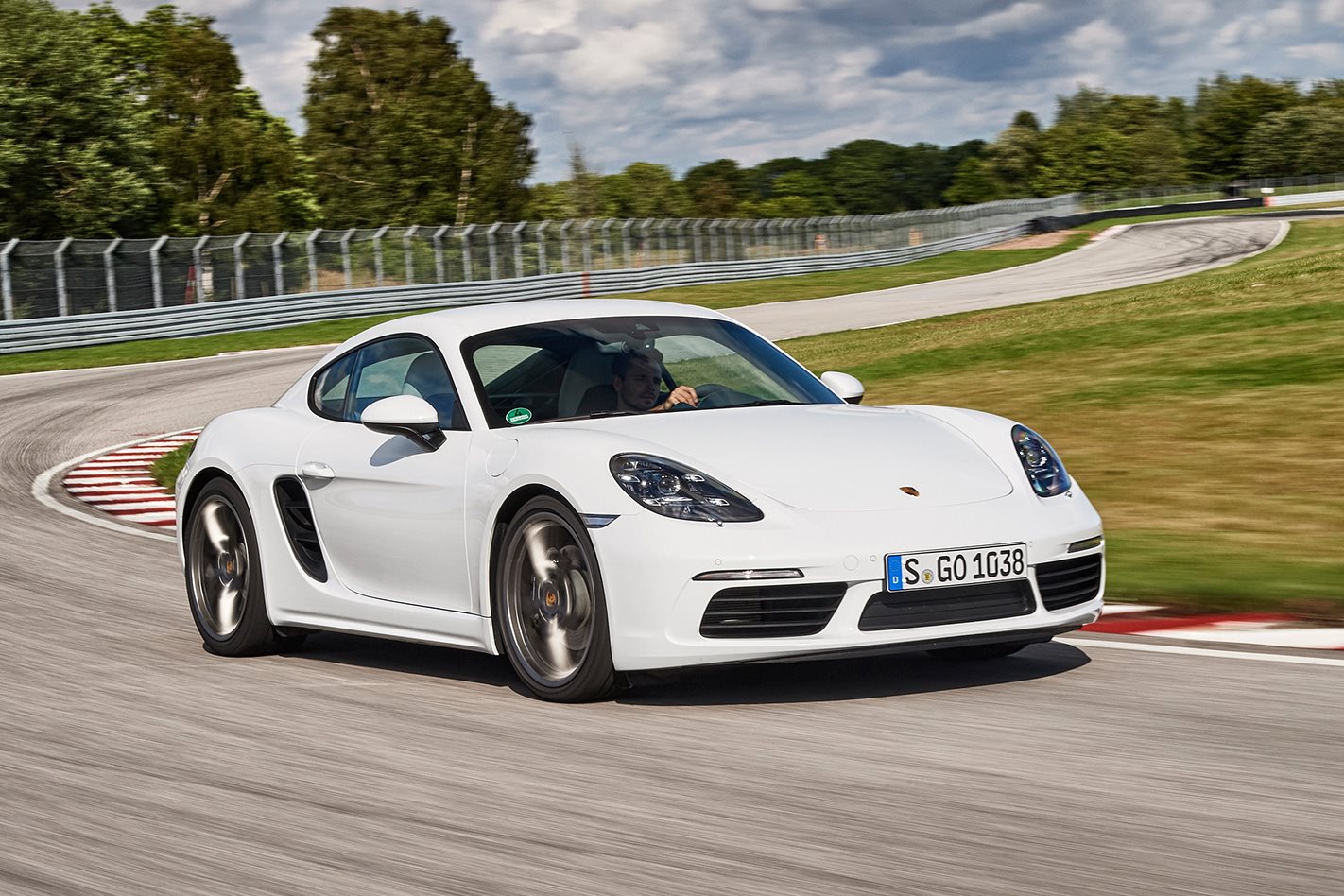
Porsche 718 Cayman
With the Supra at an almost $100,000 price point, it’s likely customers will also be cross-shopping with arguably the greatest sports car manufacturers in the world – Porsche. The 718 Cayman starts at $114,900 for a manual, while the PDK is listed at $117,900.
Audi RS3
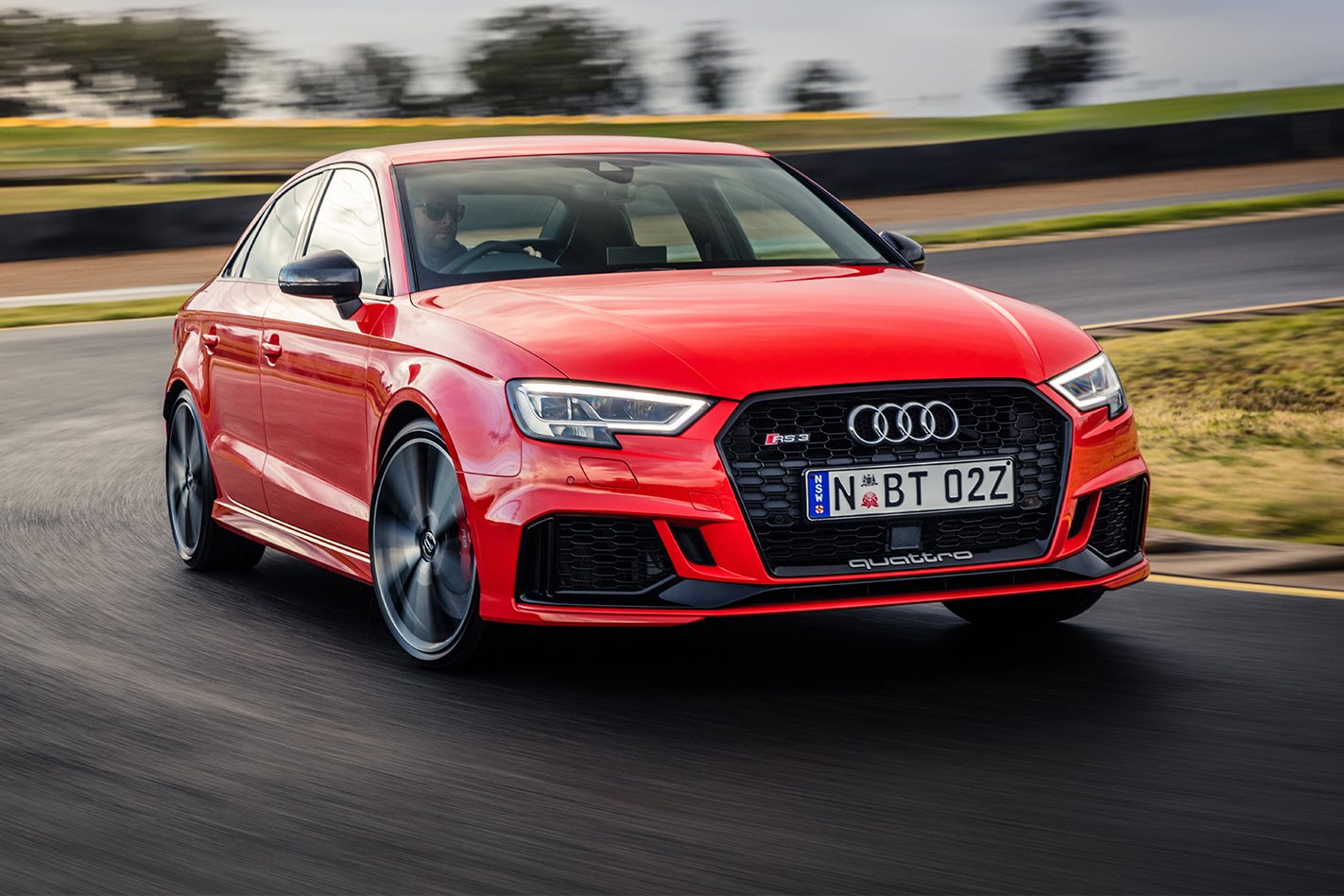
Perhaps left of centre as a direct rival for the Supra, but worth considering, is the Audi RS3, that uses a 2.5-litre turbocharged five-cylinder producing 294kW and 480Nm to sprint from a standstill to 100km/h in 4.1 seconds. The cost? $80,611.
A 2000 HSV VTII GTS-R has crossed the auction block in Mecum’s Indy 2019 auction, fetching a much lower price than the auction house had apparently hoped for.
The car itself has an interesting story, but the fact that it sold below its estimate is just as interesting.
With an estimate set by Mecum of between USD$50,000 and $75,000, we’re sure the seller was disappointed to see it go for USD$28,600 (AUD$41,400 for us), thanks to its no-reserve sale.
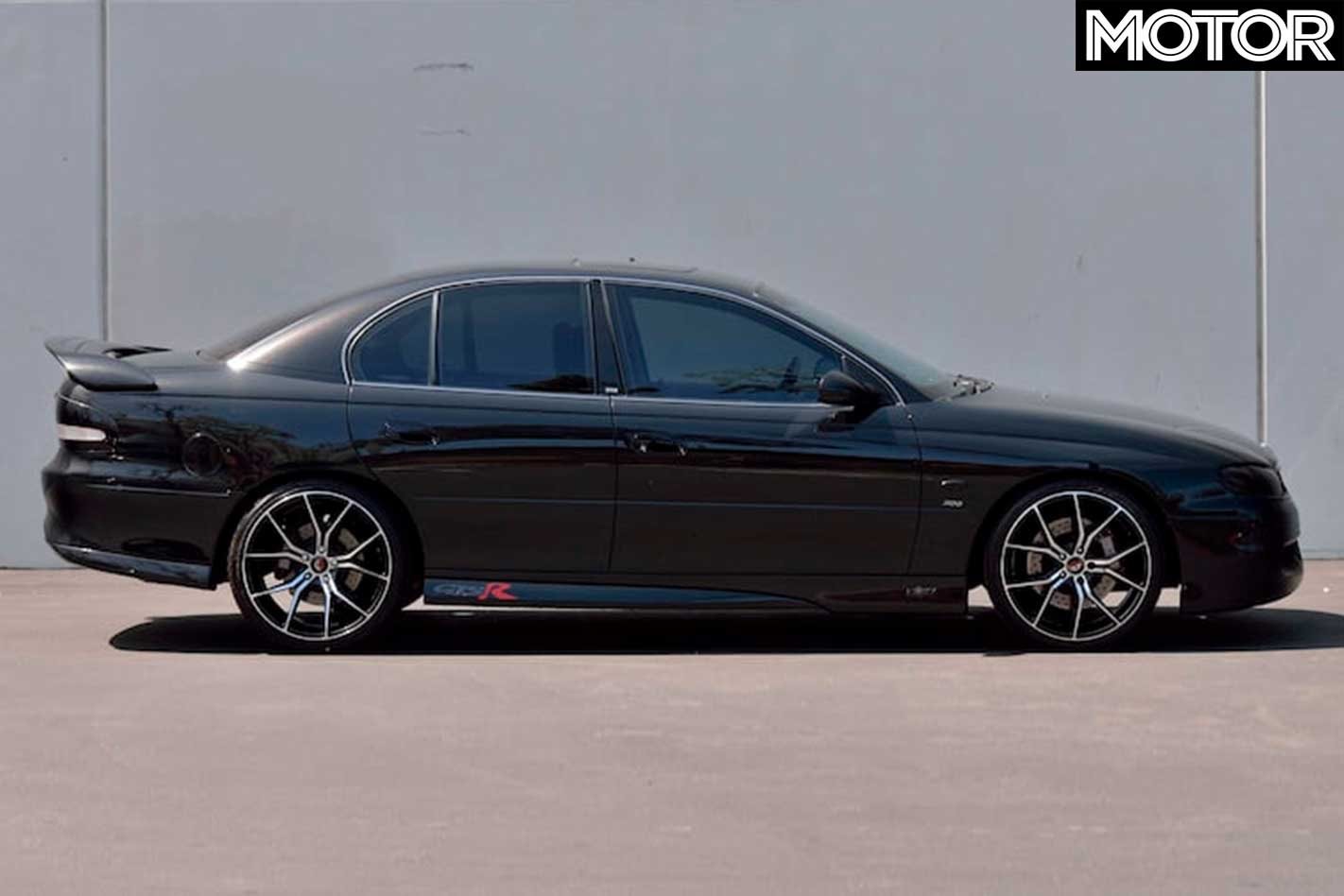
Believed to be the only car of its kind in the USA, it seems the rare muscle car collectors weren’t out in force that day.
For those confused as to what a VTII GTS-R is, HSV developed a small number of VTII GTSs for export (to the UK, primarily) and rebadged them with the extra ‘R’.
Some of those cars remain in Australia, with one example well known amongst HSV trainspotters, while the car just sold by Mecum was reportedly used by then-head of GM Bob Lutz for a cross-country trek in the States.
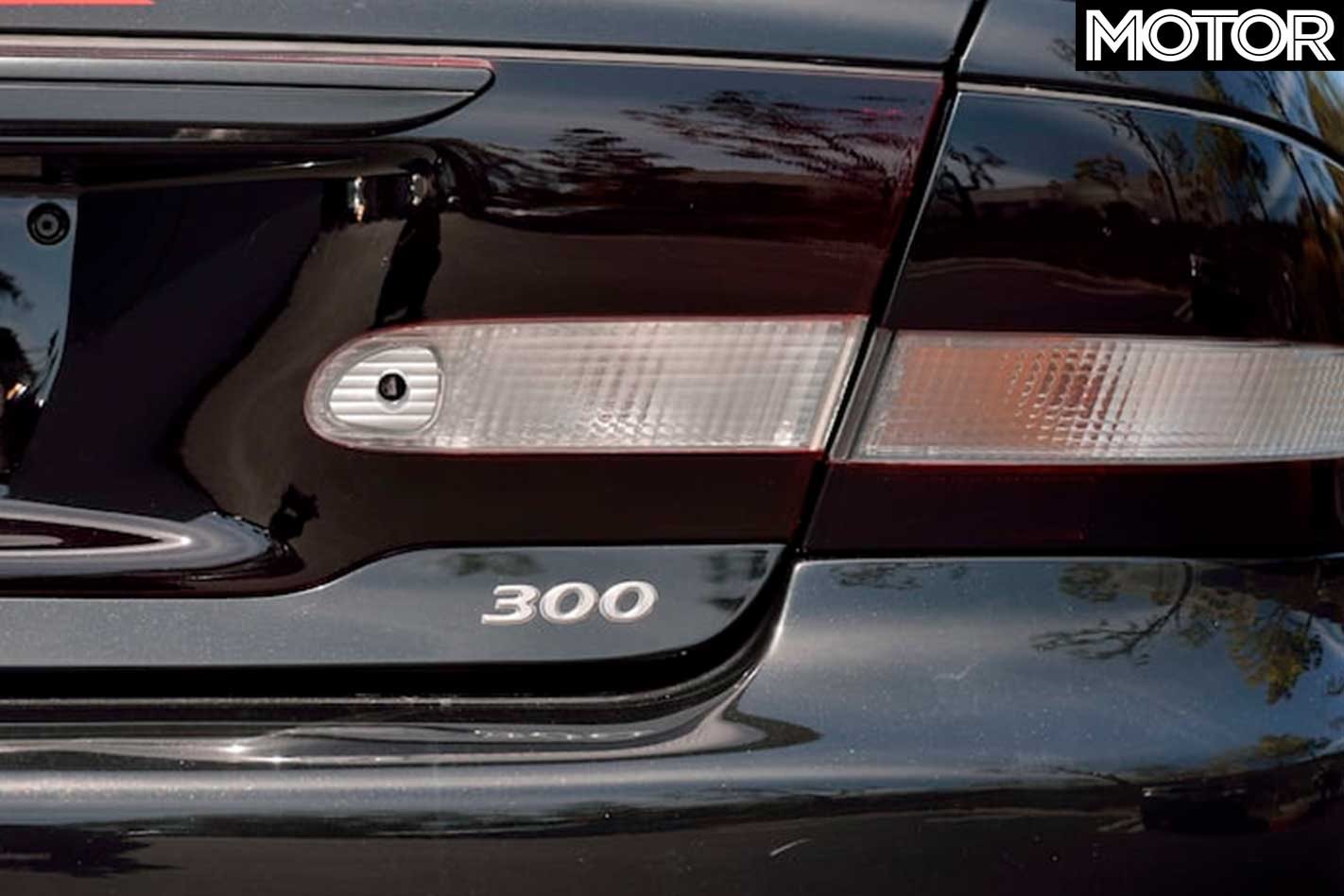
Afterwards, Mecum claims it was also used in the development of the 2004 Pontiac GTO. Evidently this car was given to media for testing at some point, as a comparison test with a BMW M5 by Car and Driver was published with this car.
In any case, evidence of more cars like it in the US is non-existent, consolidating the chances of Mecum being correct in its claim that this car is one-of-a-kind State-side.
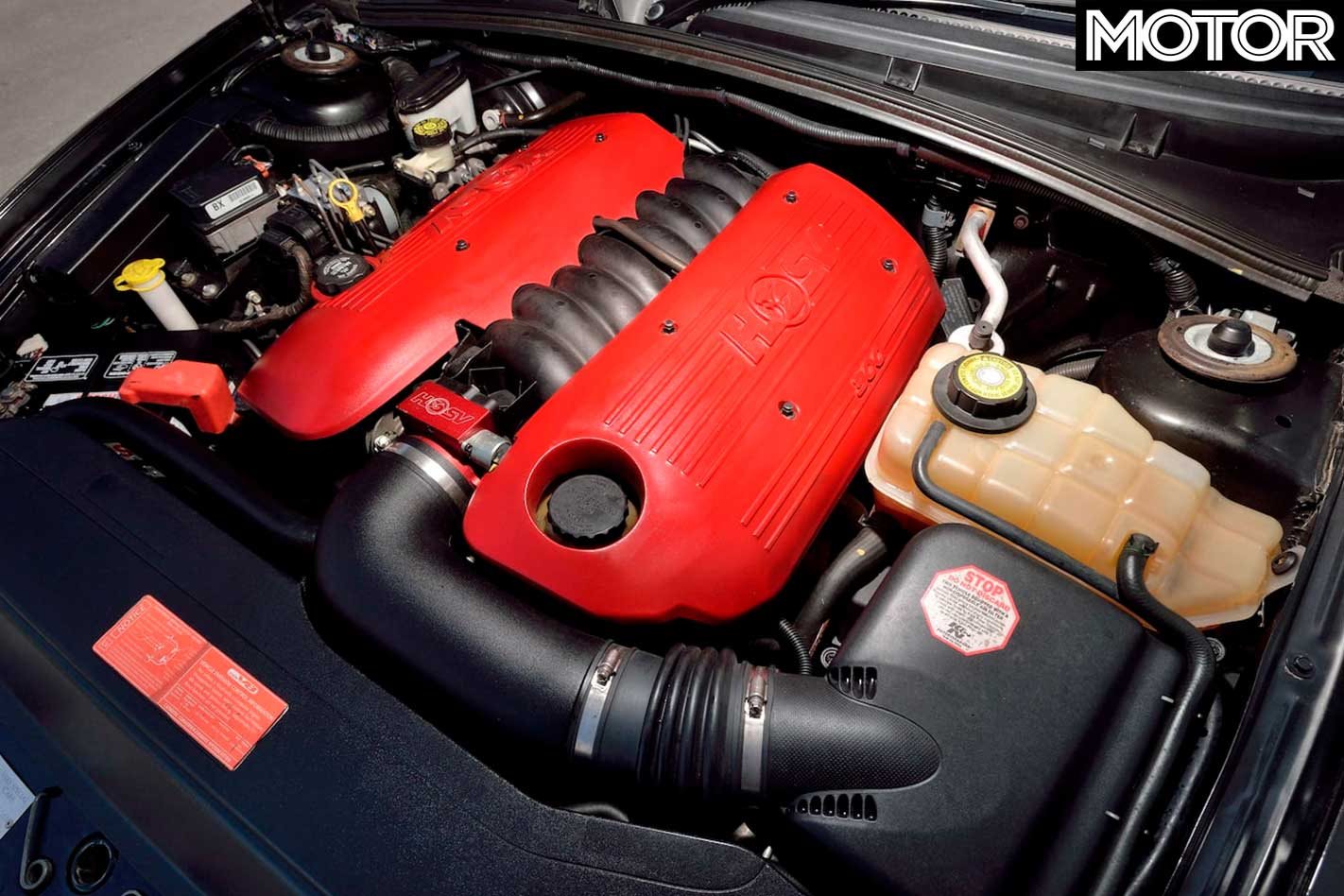
With a 300kW Callaway-tuned LS1 ‘C4B’, a manual shifter, and about 42,400km showing on the odometer, AUD$41k seems like a bit of a bargain to be the only person in the USA to own an already-rare car, especially given its AUD$70,900 lower-end estimate.
TRANSPORTING your kiddies could soon become a whole lot safer, and easier, if this clever child-seat concept from Mercedes-Benz makes it into production.
Revealed today in Germany, the seat’s party piece is its ability to sense if an accident is imminent and then proactively protect the child before an impact.

In the milliseconds before a crash, the seat will pull the child’s five-point seatbelts tight to firmly fix them in the ideal position. An arm is also shot out from the side of the seat to brace it against the side of the car.
The seat is integrated into Mercedes’ existing suite of Pre-Safe active safety systems, so for now, it only works if fitted to a modern Benz.
Still, the German brand says that when deployed the seat’s functions are able to “considerably reduce” the loads transferred to the child during an accident.
Of course, installing a child seat correctly is crucial to its effectiveness, and shockingly, studies show than almost half of all seats aren’t properly fitted.

The Mercedes concept, however, has been designed to save us from our own ineptitude. There are icons on the seat that tell owners if it is fitted correctly, and whether the belts have enough tension.
A special child-seat menu is also available through the car’s MBUX infotainment system, which not only includes step-by-step instructions on how to fit the seat, but also the ability to monitor the child’s vital signs and even see a live video.
Rear-facing capsules for small infants are difficult to see into from the front pews, so Mercedes has fitted its seat concept with a video camera capable of monitoring the child’s temperature, pulse, breathing patterns and state of wakefulness.
When the car is stationary, the camera can also project a live video onto the infotainment screen.
The downsides? Well, aside from only working in a modern Mercedes, the concept is fitted via Isofix points and a supporting leg brace, so it’s unclear whether it’s compatible with Australia’s regulations that demand a top tether restraint.
The bigger hurdle for the concept, however, is it’s just that – a concept. Mercedes-Benz isn’t talking pricing or even whether it’ll put it into production.
We hope it does, given the seat’s benefits and the potential of its active safety functionality. Stay tuned.
Australian pricing for the 2020 Toyota GR Supra has finally been confirmed, with two trim levels split by about $10,000.
The ‘base’ Supra for Australia, the GR Supra GT, will cost $93,730 driveaway, which Toyota says is based on a Western Australian recommended driveaway price.
That is topped by the Toyota GR Supra GTS, which comes in at $104,379 driveaway, based on the same system.
Toyota Australia has since confirmed these prices with MOTOR, adding the base prices before on roads are $84,900 for the GT and $94,900 for the GTS.
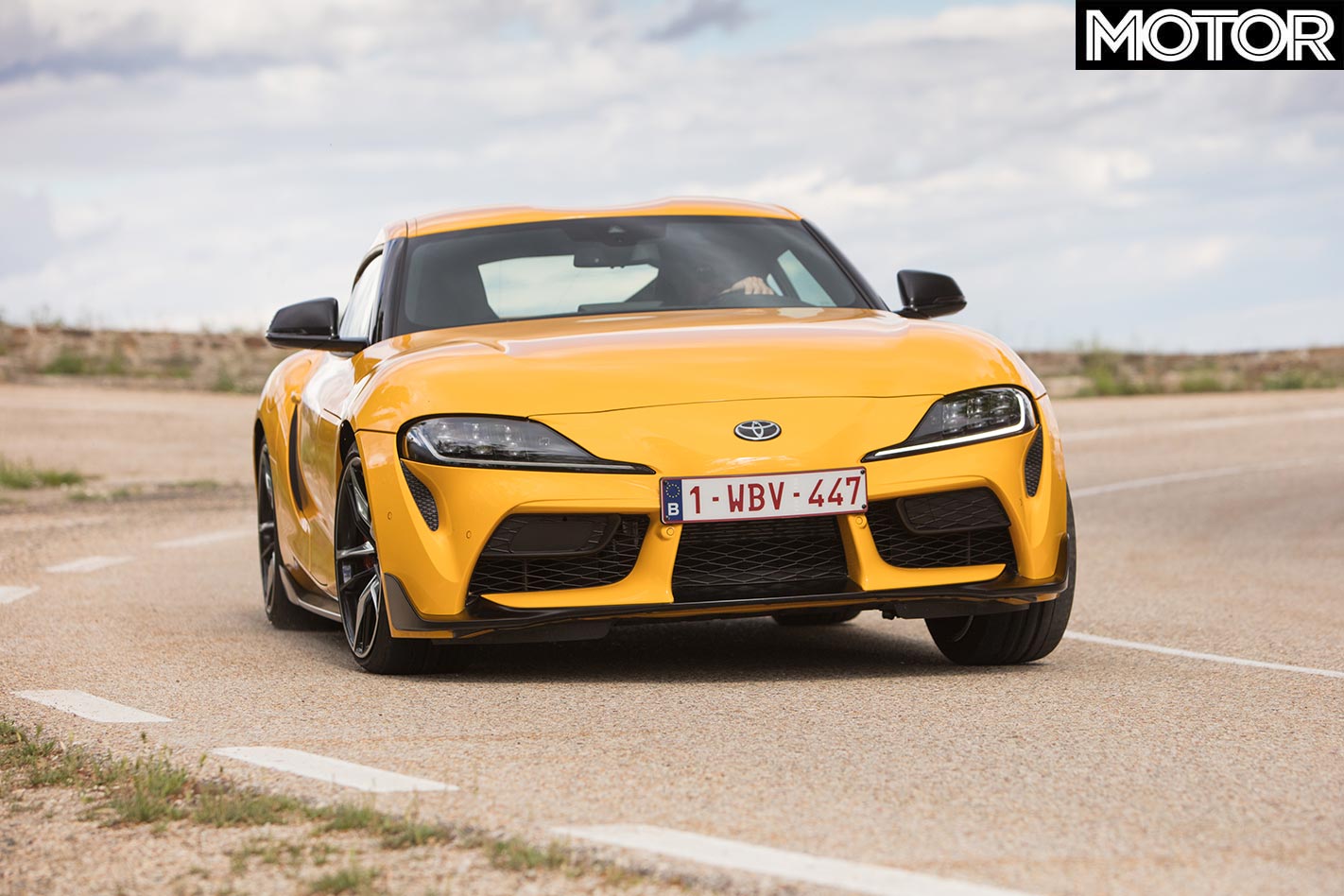
In justification for its pricing model, Toyota’s marketing and sales VP Sean Hanley says the sub-$100k starting price for the “very high level of performance specification” is a victory for buyers.
“The GR Supra should be compared with vehicles in a much higher price bracket including top-end European sports coupes – it really is that good,” says Hanley.“I am certain anyone who experiences it will appreciate the engineering, passion and precision that has gone into building what we believe is one of the best value, most engaging drivers’ cars on sale in the world today.”
The GT trim level will miss out on a few goodies seen in the GTS, including a “head-up display, 19” forged alloy wheels, sport brakes with red callipers and the options of red leather accented or Alcantara seats.”
Alcantara trim and matte grey paint are both $2500 options for the GTS.
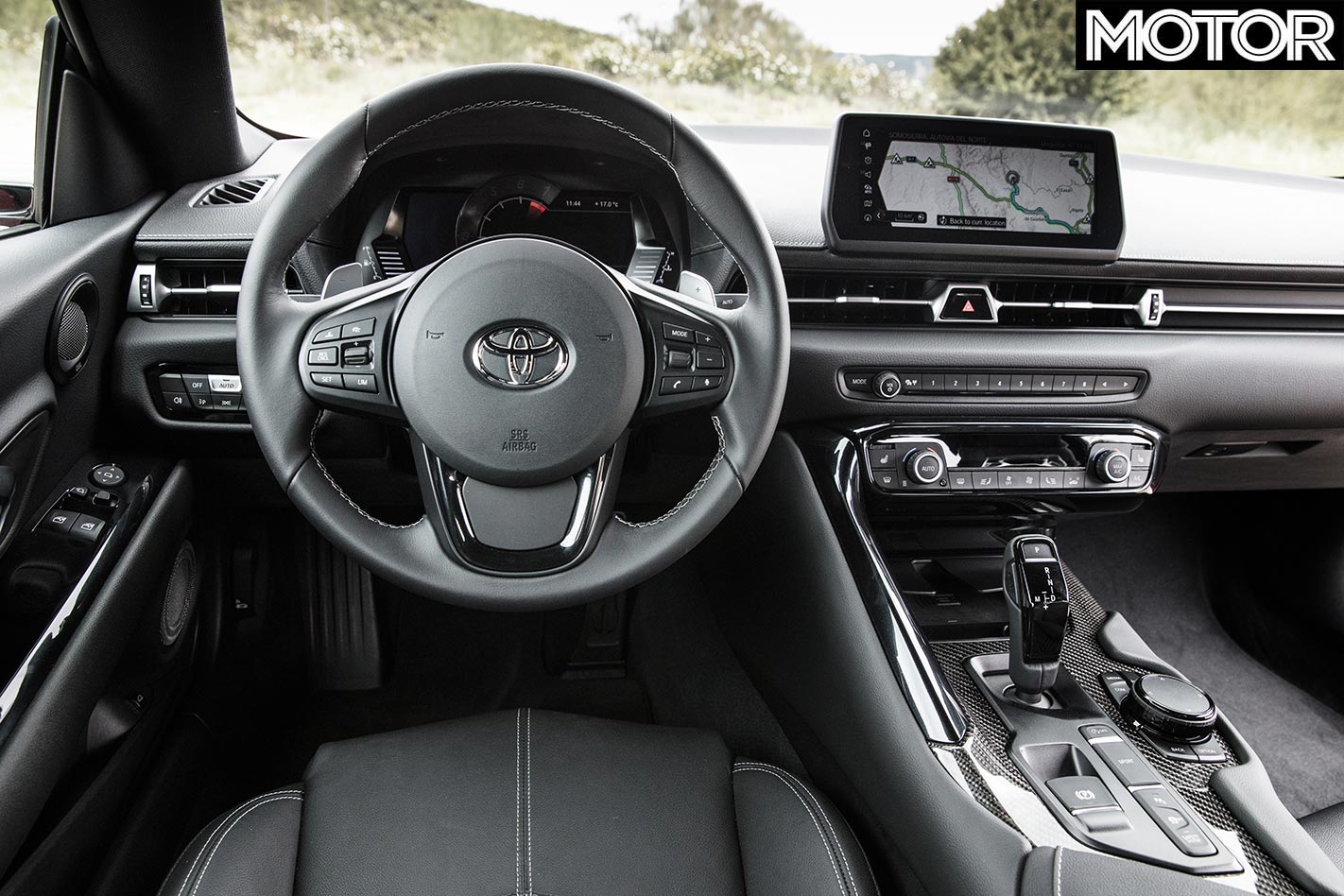
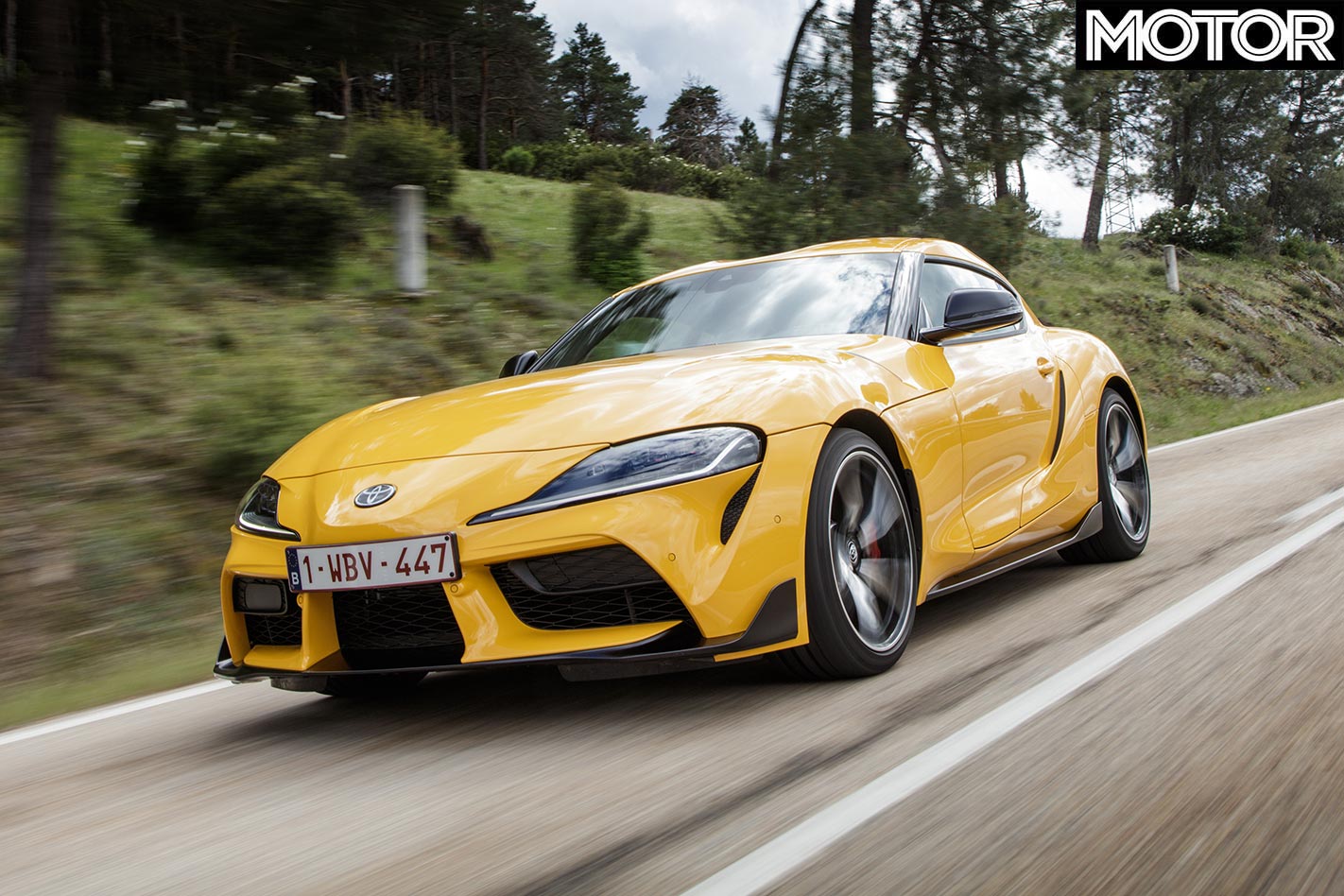
Toyota’s local arm also named each of the seven available colours after race circuits, with black getting the alliterative ‘Bathurst’ moniker. The other hues available are Fuji White, Suzuka Silver, Goodwood Grey, Monza Red, Silverstone Yellow, and Le Mans Blue.
Toyota Might bring four-cylinder Supra to Oz
Toyota is now taking orders via an online system due to the limited number of cars that will land on Aussie shores.
Actual reservations open on June 19, so the process is limited to an expression of interest, but after that date a $1000 reservation fee kick-starts the buying process, before an additional $4000 secures one of less than 500 units to show up in Oz.
Toyota Australia says its online reservation system will use a randomised balloting process to allocate the first 100 reservations.
An official statement from Toyota Australia, released since this story was initially published, says cars are expected to arrive locally in early September 2019.
Contrary to some media reports, the Toyota Supra has not sold out in Australia.
UPDATE: Pricing has been confirmed as this story published.
In fact, not a single official deposit has been taken for the reborn sports car, the 300 cars available in the first 12 months to be sold via an online ordering system.
However, the most crucial piece of the puzzle remains a mystery, with Toyota Australia having not yet confirmed pricing for its 250kW/500Nm coupe.

Examining US and UK pricing does little to make things clearer and not just because of the obvious differences between these markets and Australia’s in size, taxation, import duties and the like.
Locally, the best indicator to the Supra’s pricing is the car with which is shares its platform, powertrain and much of the interior, the BMW Z4 M40i.

Worryingly, in the UK the £49,050 Z4 undercuts the £52,695 Supra, though this situation is reversed in the US, the Z4 offered at US$64,695 and the Supra US$49,990.
Solace can be found in the fact that in both markets the Supra’s pricing represents roughly double the cost of an 86 (£27,560/US$28,635). Apply the same logic to the Australian market and the Supra will sit between $75,000-80,000.

What does all this tell us? Not a lot, apart from the fact that the new Supra could cost anywhere between $75,000-$125,000 when it arrives locally. Hopefully, we won’t have long to wait before there is a concrete answer.
I honestly thought Mazda had stuffed up the new 3.
First impressions were of goopy electric steering feel, a firmer ride than seemed necessary, wooden brakes and an over-the-shoulder blind spot you could hide a cruise ship in thanks to the enormous C-pillar.
There were certainly positives: a beautiful interior (though one that lacks illumination at night), much improved noise levels, every gizmo under the sun, but whither the fizzy, fun to drive Mazda 3?

Our test car was the G25 Astina with a 139kW/252Nm 2.5-litre atmo four: it’s not fast but it’s fast enough to entertain, the six-speed auto making the most of the available grunt with an outstandingly responsive Sport mode, though automatic upshifts about 300rpm shy of redline are disappointing.
The true magic of the new 3, however, is in its chassis. In terms of driving enjoyment, it has all but the very best hot hatches beaten. It’s fluid and responsive, precise and accurate, adjustable and controllable, clearly the work of engineers that love driving.
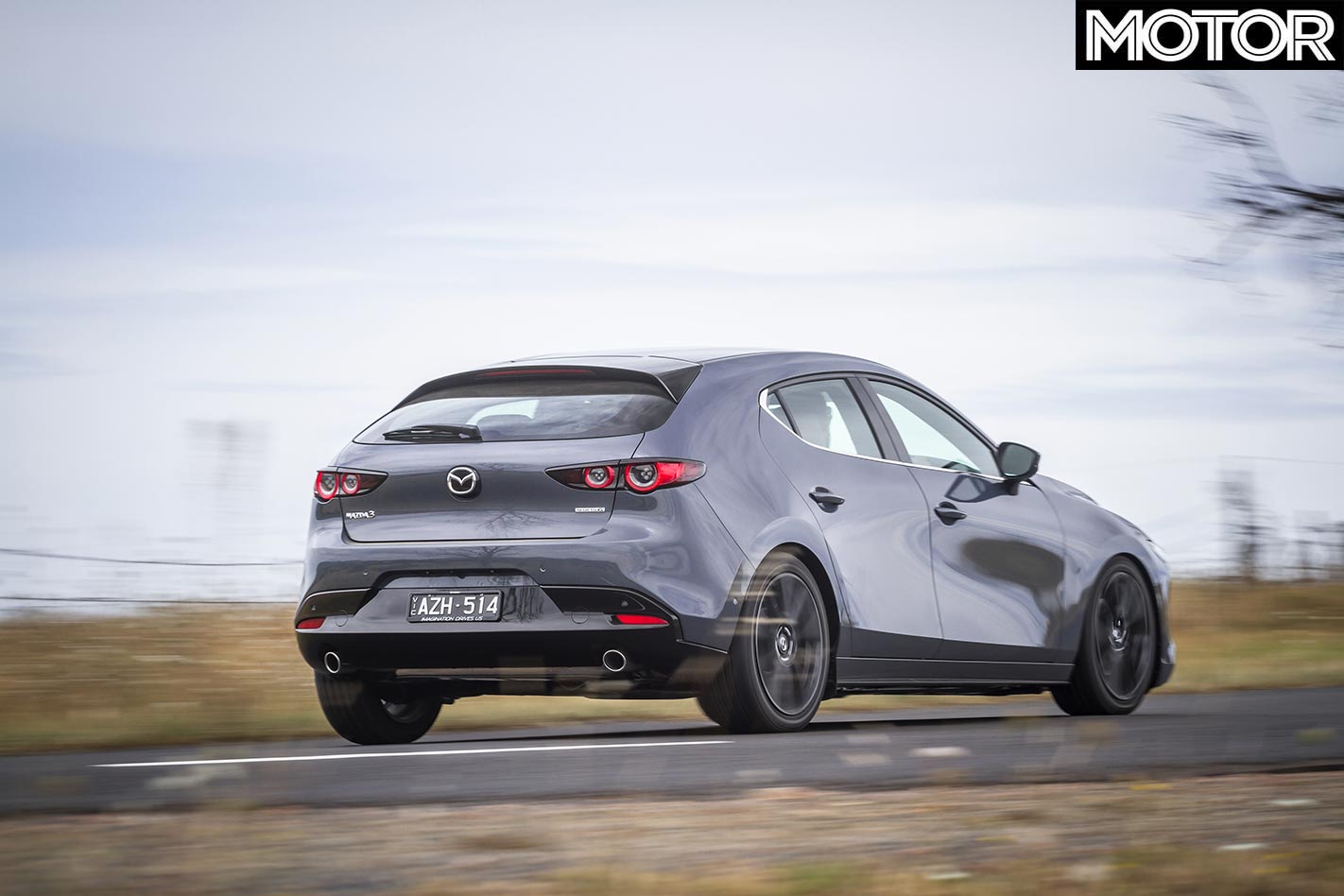
Step down the range a couple of notches and the $29,490 G25 Evolve offers involving dynamics at sensible speeds and the bonus of a manual gearbox for those that way inclined.
Let’s hope rumours Mazda is working on a hot version of the new 3 come to fruition, for to not capitalise on a chassis this talented would be a very big stuff-up indeed.
Engine: 2488cc inline-4cyl, DOHC, 16v Power: 139kW at 6000rpm Torque: 252Nm at 4000rpm Weight: 1380kg 0-100km/h: 8.0sec (est.) Price: $37,990
Mazda has launched its new Mazda 3 sedan in Australia, complementing its sporty hatch in the showroom with a ‘more practical and elegant’ bodystyle.
Sporting the same design up front as its hatchback sibling, the Mazda 3 sedan has a more seriously capacious boot which sacrifices the hatch’s voluptuous rump styling for storage space.
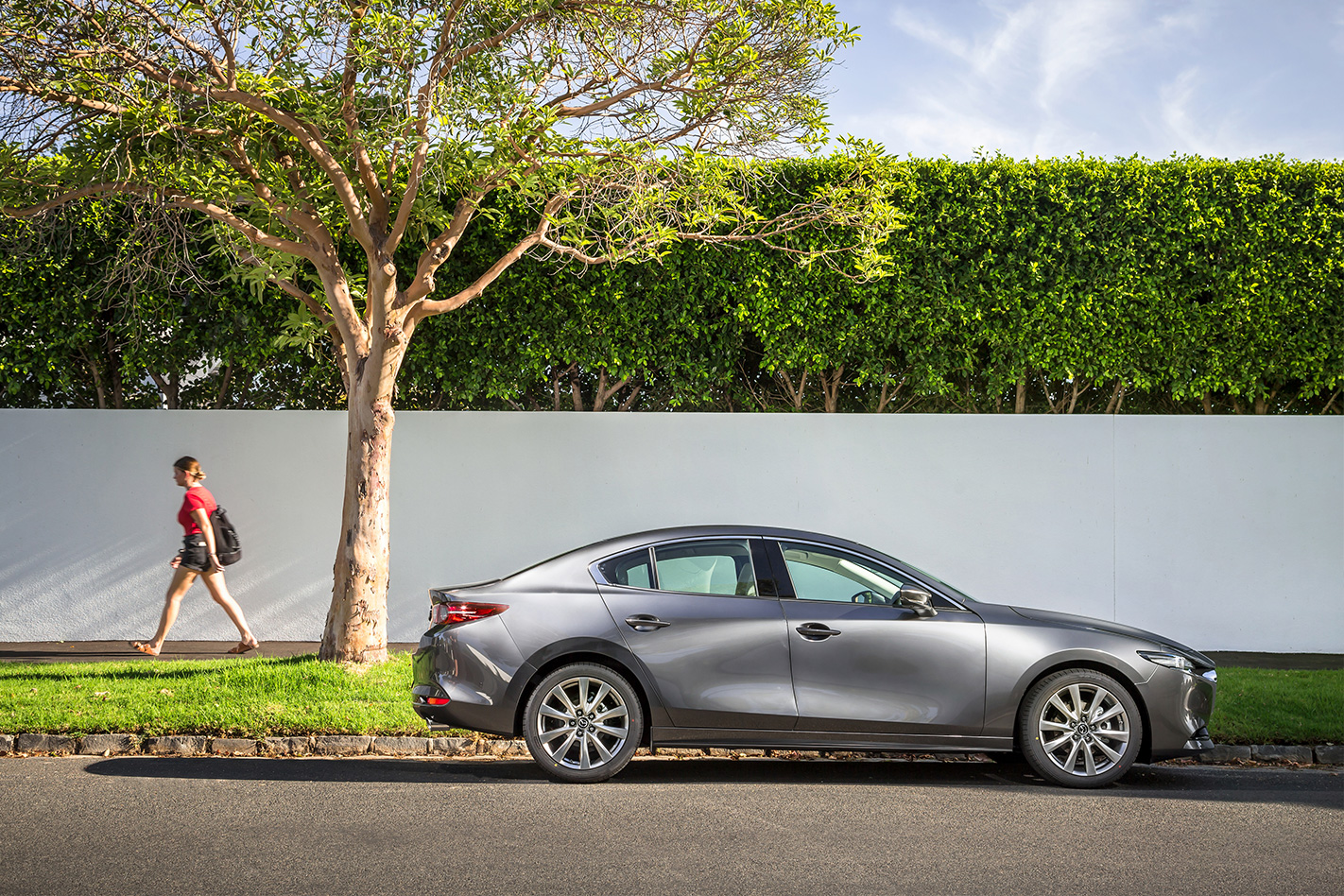
Mazda Australia sees the new sedan as a more elegant and sporty comrade to the hatch which has already established itself with Aussie buyers.
“The sedan is more practical, with a larger boot and better leg room,” said Mazda Australia marketing director, Alastair Doak.
“We see the sedan introducing some elegance while the hatch is focusing on sportiness in that segment.
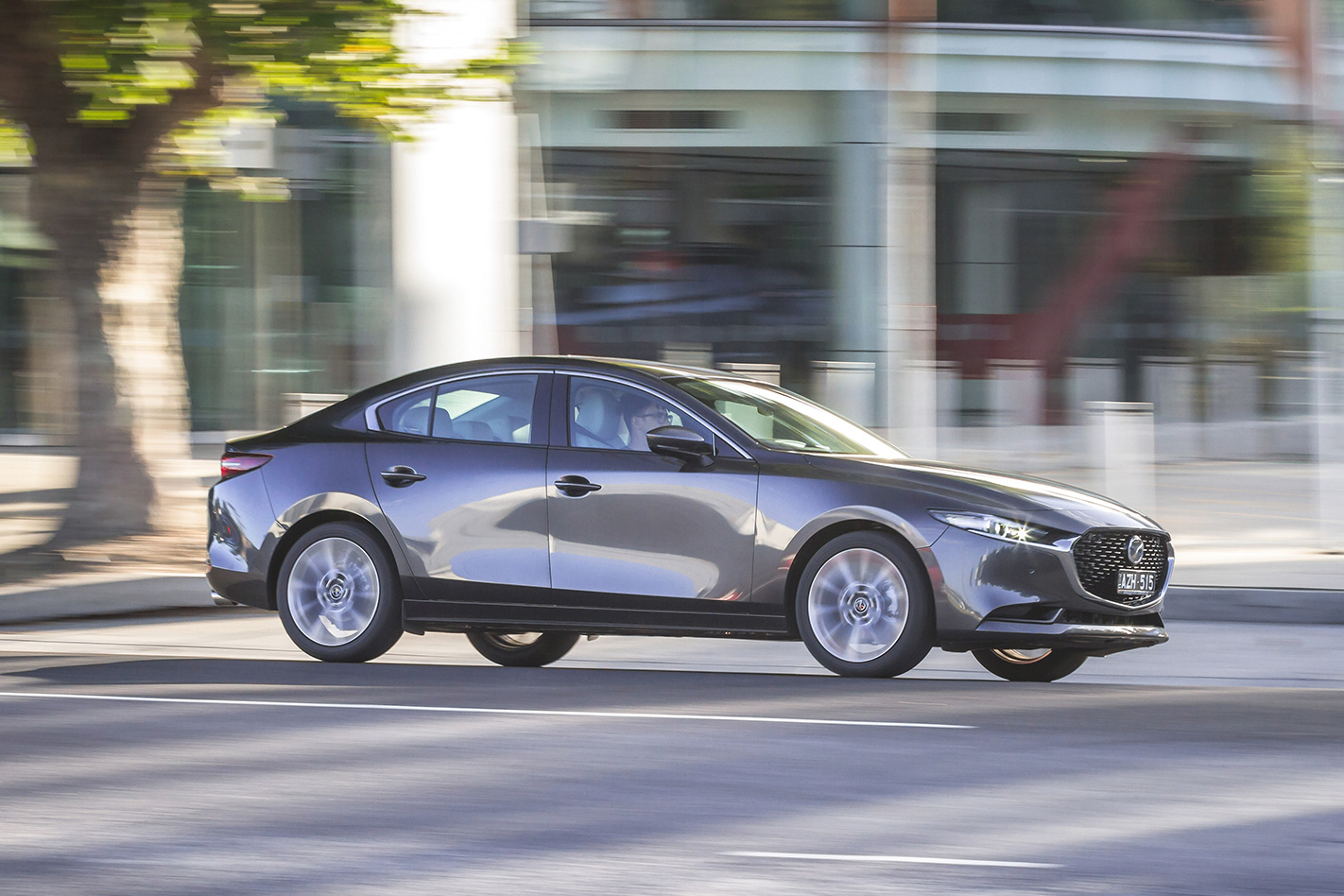
Indeed the sedan offers up a much larger 444L boot – 40L more than previously available on the Mazda 3 sedan and a massive 149L over the new-gen hatch.
The new sedan has arrived in Mazda showrooms around the country with pricing and equipment which mirrors that of its sibling, except a tweak in leather colour option for the top-grade Astina.
Engine options for the sedan also match that of the hatchback with two four-cylinder drivetrains available initially: the ‘G20’ 2.0-litre producing 114kW and 200Nm, and ‘G25’ which develops 139kW/252Nm – an increase of 1kW and 2Nm over the previous generation. Economy varies for each variant, consuming a combined fuel consumption of 6.1-6.6L/100km.
Mazda’s new Skyactiv-X engine is still on course to arrive late-2019 at the earliest, with Doak suggesting 2020 is a realistic timeline for customers to get into models with the breakthrough compression-ignition petrol motor.
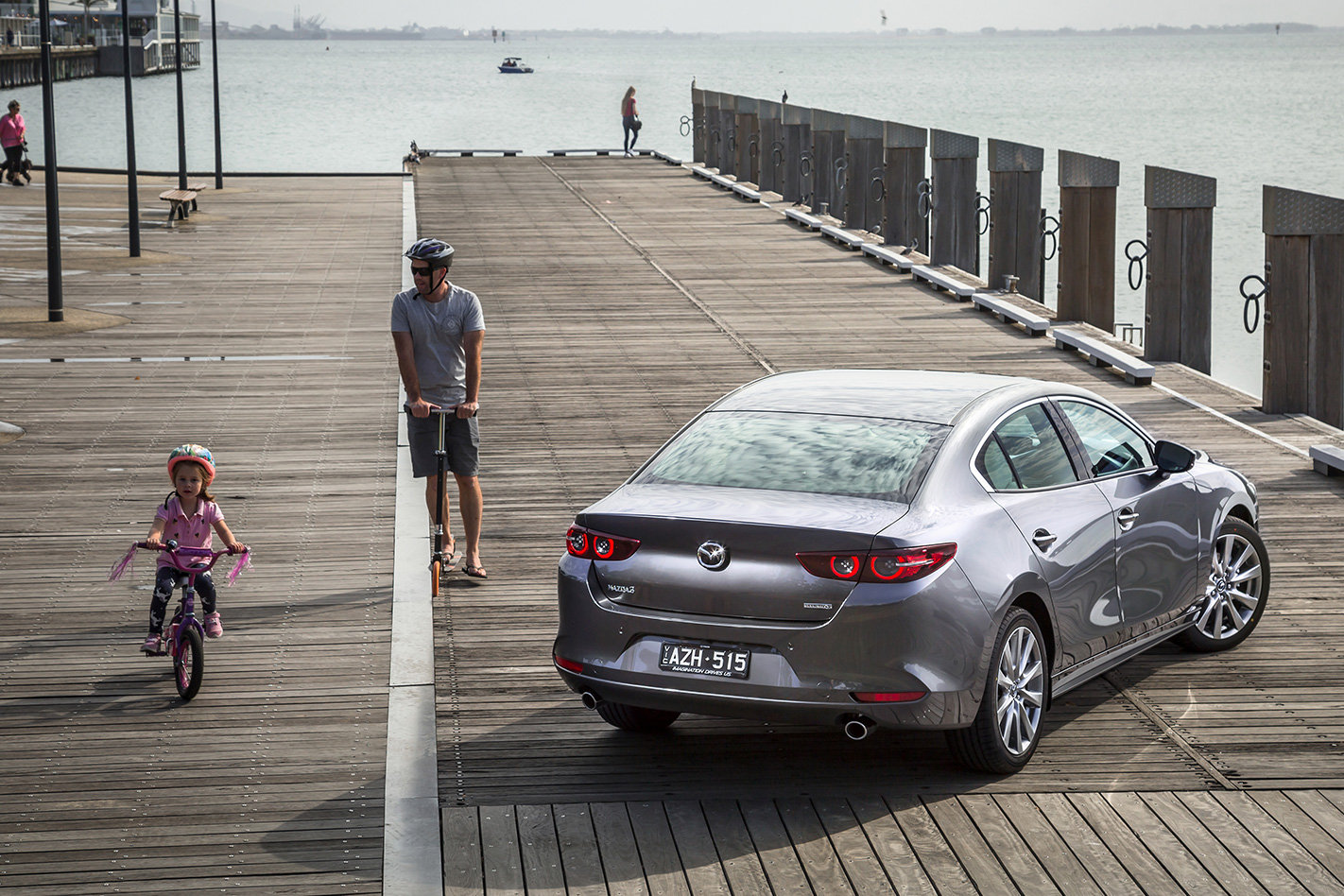
Though the new Mazda 3 range has increased in price by around $3500-$4500 for equivalent models, equipment is elevated and Doak says that it has not deterred sales of the new hatchback.
“What we’re seeing is customers are not hesitating to get into the new model, regardless of a slight price increase because it offers so much more. And the styling and what is offered justifies that obviously.”
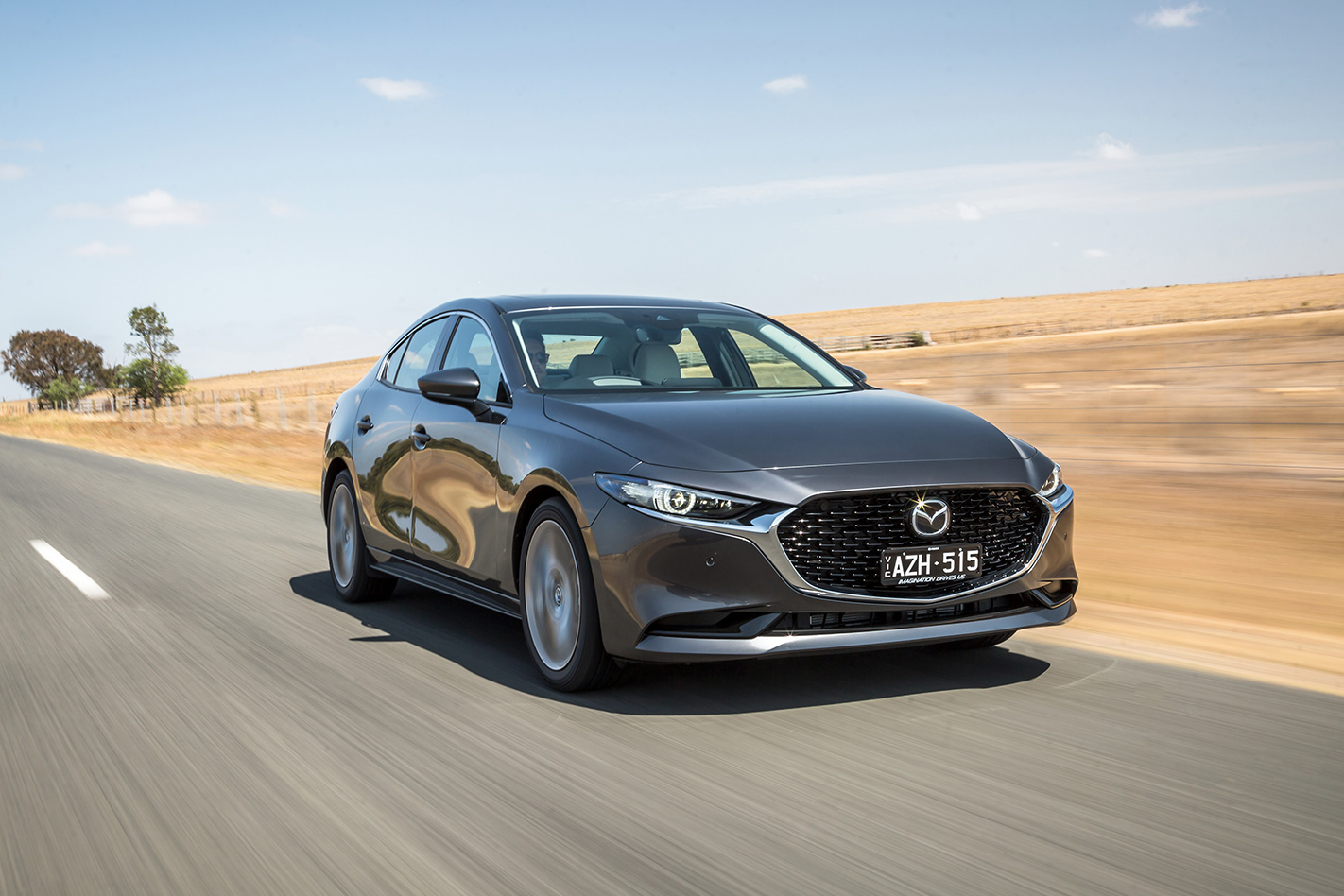
All Mazda3 sedans come equipped with comprehensive i-Activesense safety technology including AEB, lane keep assist, lane departure warning, traffic sign recognition and forward collision warning. Every model comes standard with a six-speed manual transmission and the six-speed automatic is a $1000 cost-option across the range.
Starting at $24,990, the entry-level G20 Pure is kitted with 16-inch alloys, fabric trim interior, 8.8-inch infotainment display with Apple CarPlay and Android Auto, LED headlights and an eight-speaker stereo system.
From $26,690, the G20 Evolve adds 18-inch alloys, dual-zone climate with rear air vents and a leather wrapped steering wheel.
The G20 Touring is priced from $28,990 and brings keyless entry, black leather upholstery and 10-way electric seats; the G25 Evolve adds the more powerful engine and gains the Touring’s kit, minus leather trim, and is priced at $29,490.
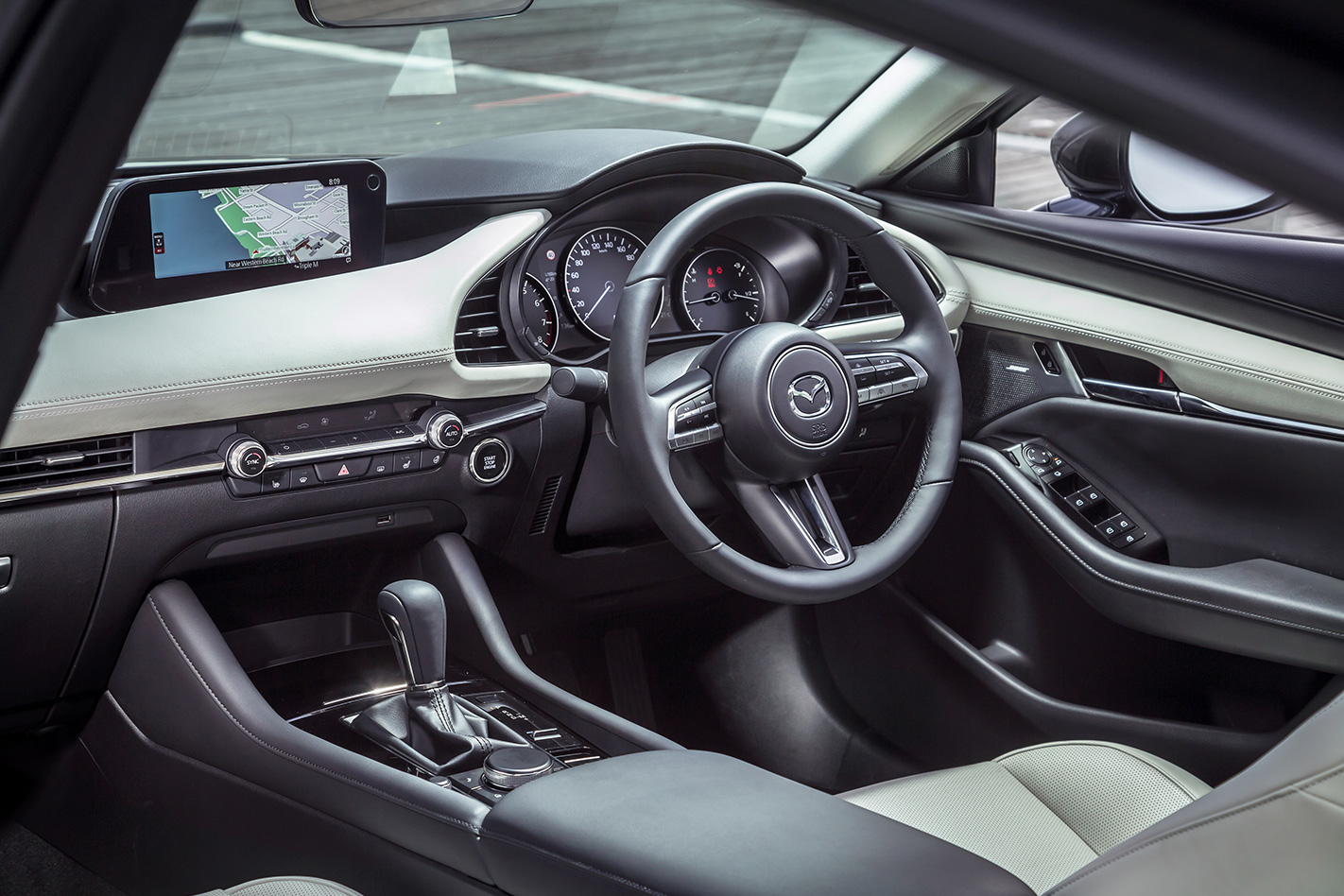
Towards the pointy-end of the range is the G25 GT priced from $33,490, which has a leather-trimmed interior, heated seats and steering wheel, and a 12-speaker Bose sound system.
The top-spec G25 Astina, the hatchback version of which won a Wheels comparison test in the May 2019 issue, is priced at $36,990 and gains unique black 18-inch alloys, black or white leather, 360-degree birds eye camera, sunroof and adaptive LED headlights. The Astina also comes as standard with driver monitoring, front cross-traffic alert and automated adaptive cruise control and steering assist in traffic – available in the $1500 Vision Technology pack on all other models.
Mazda 3 sedan pricing (plus on-road costs):
G20 Pure – $24,990 G20 Evolve – $26,690 G20 Touring – $28,990 G25 Evolve – $29,490 G25 GT – $33,490 G25 Astina – $36,990
It’s not often you get the chance to push an iconic Italian high-performance car to its limits in a safe environment but that’s exactly what Louis gets to do when he joins a group of lucky Maserati customers at an official track day.
Then we bring together two Australian motoring icons when Scotty goes for a ride in a GTHO Phase III with racing legend John Bowe as his chauffeur. From one handy steerer to another, find out what John really thinks about the most valuable Ford Falcon to date.
Time warp forward 50 years and Scott swaps from the passenger seat to the pilots pew in the GT’s spiritual successor. The Falcon bloodline came to an end before FPV had a chance to make one last icon, but Scott drives the next best thing, and it’s a supercharged blur of power and glory.
Taking out the show this week, Noelle explores the one thing that can unite Baby Boomers and Gen Y. Jump on board with Noelle and her mum to see how the new Lexus UX SUV appeals to two very different audiences… and if all three survive the day.
On-air: Channel Ten, May 26 (AU) / June 2 (NZ)
Catch-up: Watch at tenplay.com.au (AU) or primetv.co.nz (NZ)
Why is the compact SUV segment enjoying such a heyday? To answer this question we bring together the entire WhichCar team in a series of automotive events that test both the strengths and weaknesses of six crossover contenders.
Click through the video gallery above to view parts 1, 2, 3 and 4 of the 2019 WhichCar Auto Games special
Do SUVs actually offer any kind of all-terrain ability? With tiny dimensions can they be as practical as they pertain? And when you load them up with people and things, do these little high-riders have the performance to get you places with time to spare or are they frustratingly glacial?
It’s Suzuki versus Subaru for the Cross Country event, Hyundai bumps gloves with Nissan for the 1400m Sprint and Citroen weighs in with Toyota for the Autokhana. And there are plenty of surprises along the way.
See the team brought together for the first time in the series in this automotive olympiad like no other.
See the full episode: Watch at tenplay.com.au (AU) or primetv.co.nz (NZ)
