
An American company that is yet to produce a single car has received over half a billion dollars of investment from one of the biggest manufacturers in the world, which could result in a new Ford electric car being sold in Australia.
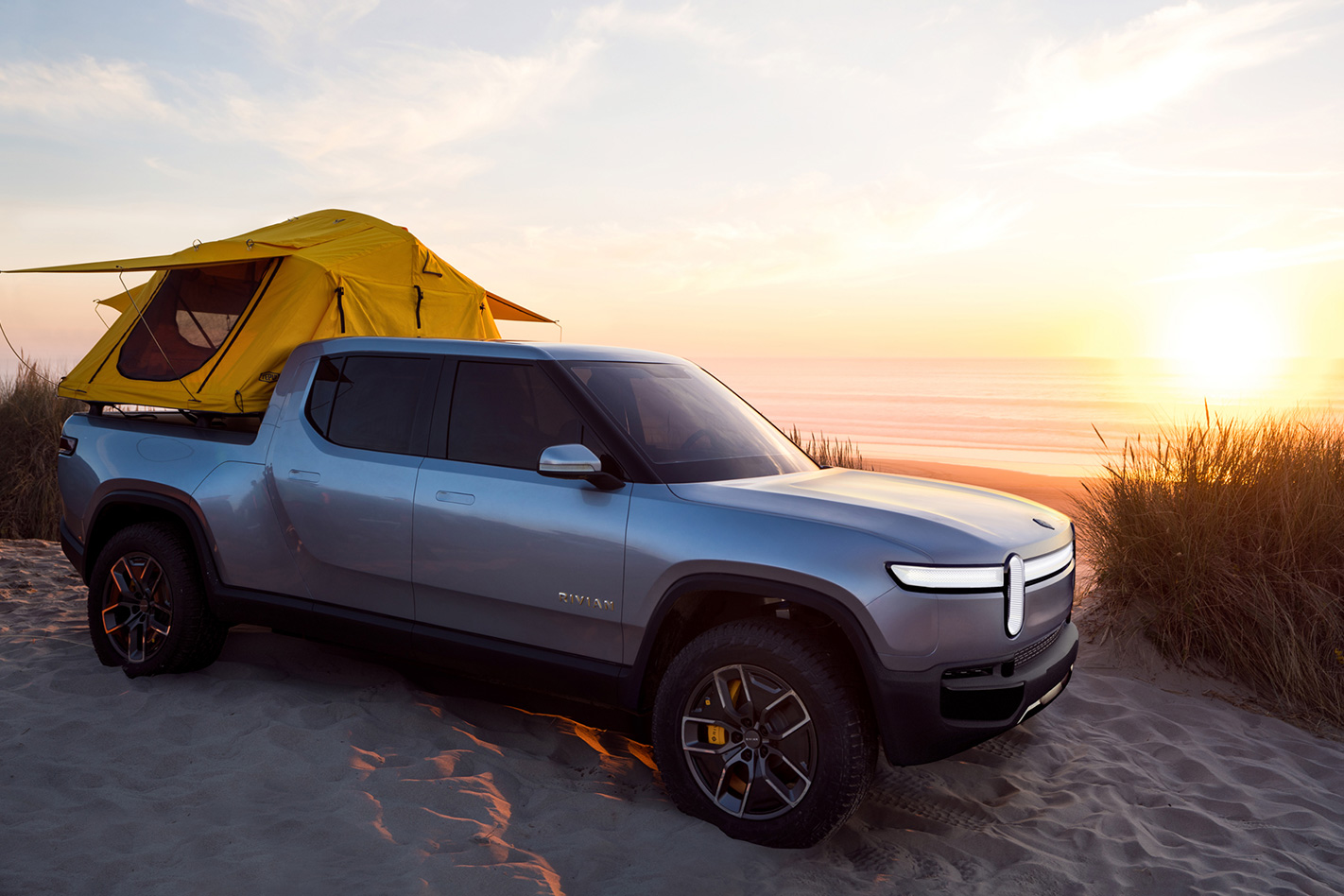
Okay, so there is a few moving parts going on here, so let’s start with Rivian, the US-based company that is planning to put two all-electric ‘adventure vehicles’ (a dual-cab ute and seven-seat SUV) into production next year.
Having already received US$700 million (A$998.4 million) of backing from Amazon, Ford announced overnight it was injecting US$500 million (A$712.8 million) into the 10-year-old company.
While the investment from Ford means a Blue Oval executive will join the Rivian board, the more interesting part of the partnership is that the two companies will now collaborate on a new Ford electric vehicle, which will utilise Rivian’s bespoke platform. And that’s very good news for Australians.
This new model will be in addition to the two EVs Ford already has slated for production – a “Mustang inspired” crossover and F-150 truck.
Why exactly should Aussies be happy? Well, for years we have missed out on some of the Blue Oval’s best products due to right-hand-drive production constraints.
Thankfully, there are no such limitations on Rivian’s products, with plans to sell the R1T dual-cab and R1S SUV in Australia as soon as 2022 – just two years after production starts.
Both of Rivian’s products share the same ‘skateboard’ platform that will be used by Ford in its upcoming model. Batteries are packed underneath the floor, with four electric motors delivering claimed outputs of 560kW and 1120Nm.
By ditching a combustion engine and traditional gearbox, packaging becomes much more modular, allowing for easier right-hand drive production. Drive reports that right- and left-hook development will be done simultaneously.
Being built on the same platform, it’s likely Ford’s new EV will also be easily adaptable to right-hand drive.
It is unclear whether Ford will simply purchase the platform and produce its vehicles at its own plants, or if the electric pick-up will roll off Rivian’s former Mitsubishi factory line in Illinois.
An electric ute could be a reality in Australia within two years
Rivian’s R1T boasts impressive capability on paper, with claims it’ll carry an 800kg payload in the tray, has 350mm of “dynamic ground clearance”, all-time all-wheel drive which allows it to ascend 45-degree inclines, a 0-98km/h time of 3.0 seconds, towing capacity of 4500kg, and 640km of potential driving range.
There are other benefits to Ford partnering with Rivian as well. The electric manufacturer claims it can package the battery, drive units, suspension, braking and thermal systems all below the height of each wheel on its platform, giving it a distinct advantage when it comes to passenger space and lowering the centre of gravity.
If Ford’s product built on the same platform matches these specs, it’ll be sure to win over Aussies with an adventure bent that are sceptical about an electric future.
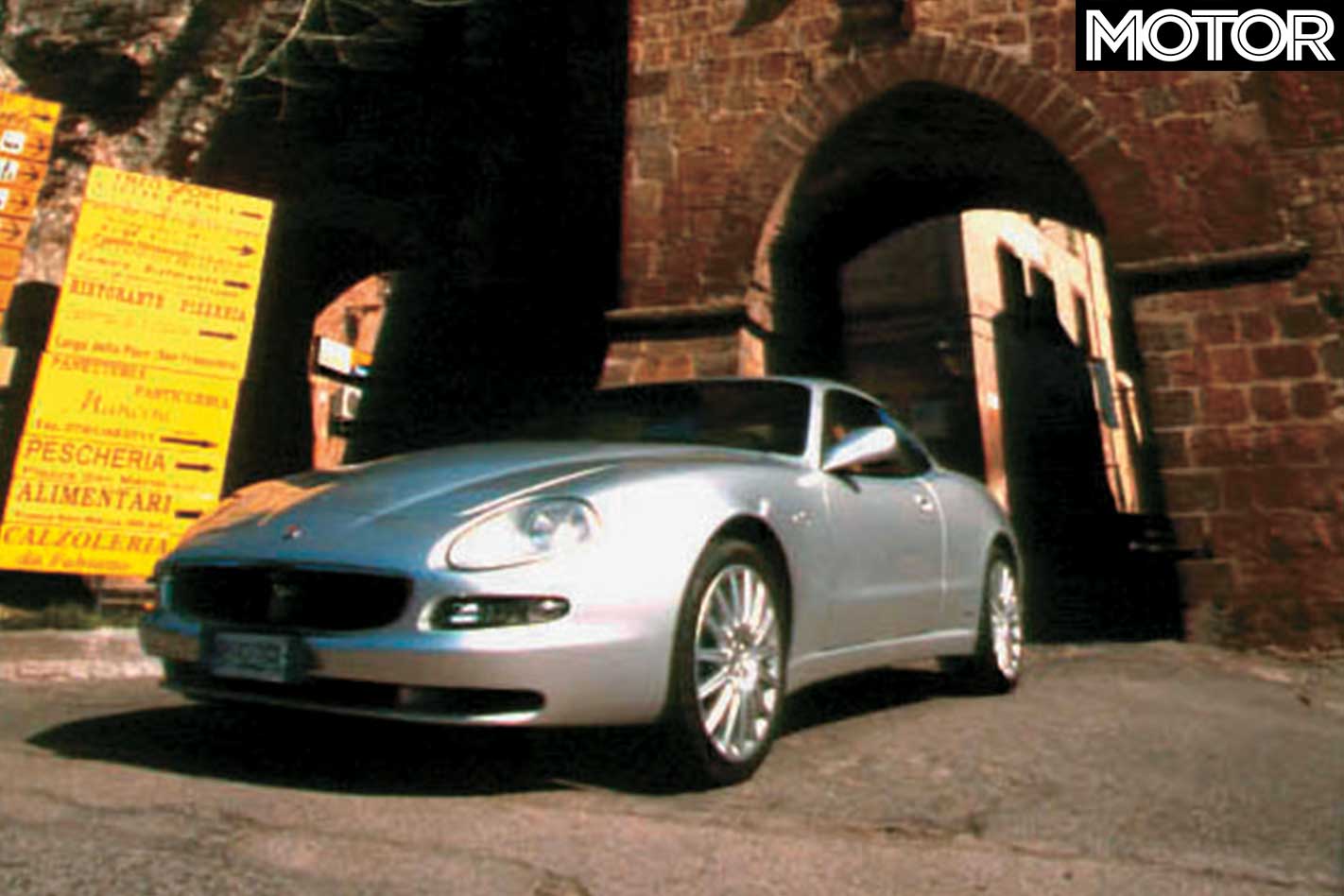
Antonia Ferreira de Almeida waves in our direction as he turns the gun-metal coupe into the narrow piazza. It’s lunchtime in Tuscanina and nothing disturbs the peace of the small village, apart from the murmur of conversation and the clink of coffee cups. Then Almeida guns it.
This review was originally published in MOTOR’s June 2002 issue
Eight throttle bodies crack wide open and 451Nm screws urgently rearwards. The noise from the Ferrari-built V8 rises in intensity, from a muscular rumble to an angry, barking salute. The Maser fishtails, right, then left, then straightens as the fat Michelins finally grip the shiny cobbles. Then it’s gone, leaving the V8’s symphony reverberating off the village walls walls long after it has disappeared out of sight.
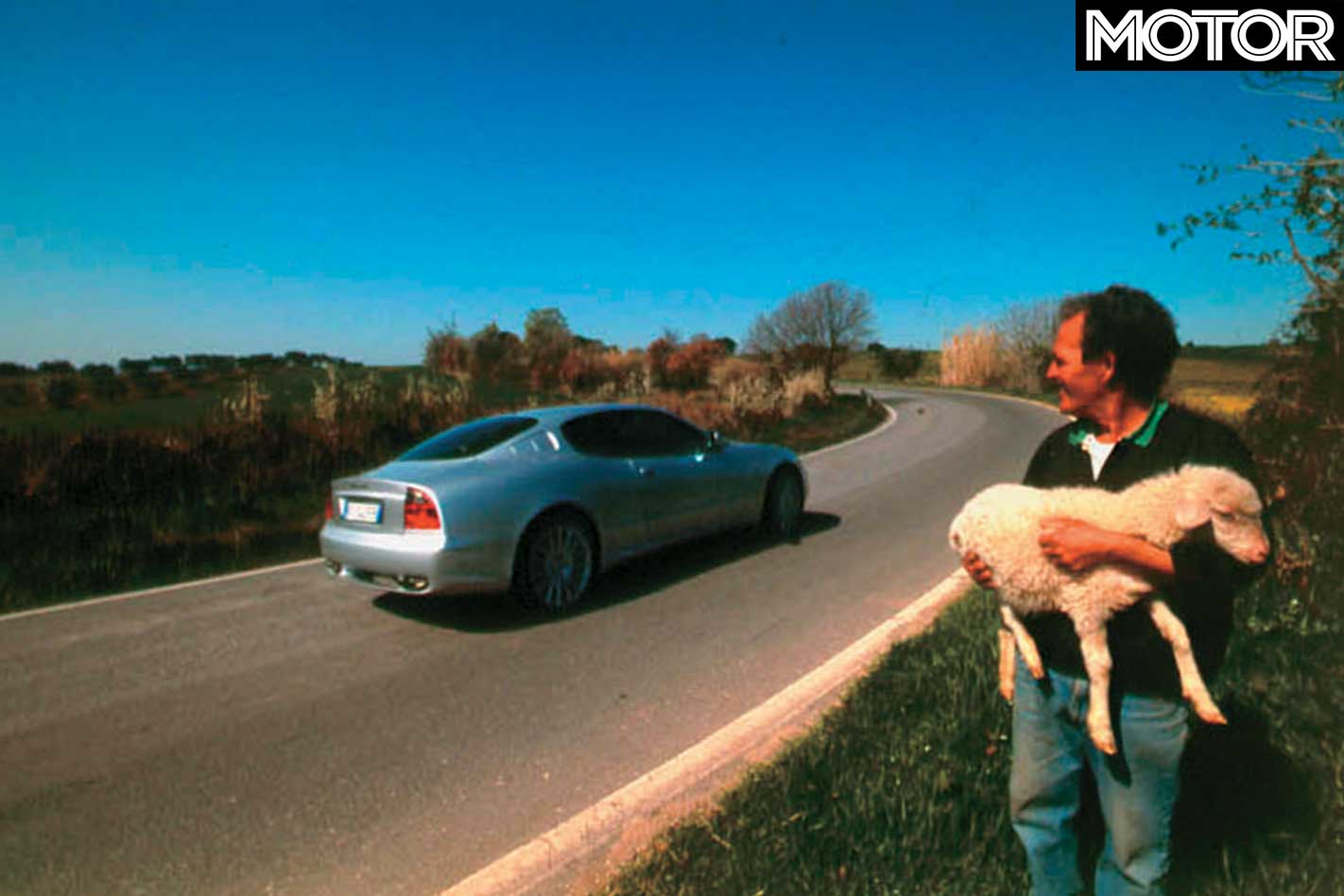
De Almeida, a flamboyant Portugese national is Maserati’s head of public relations. He loves the job and the Maserarti brand with a Mediterranean passion, and his impromptu burnout was just his way of saying, “I’m excited!”. And he did it with a good deal more style and flair than our own Big Kev could muster.
Over lunch, he explained that, “It’s hard to respect the limits when you have a Maserati on your hands.”
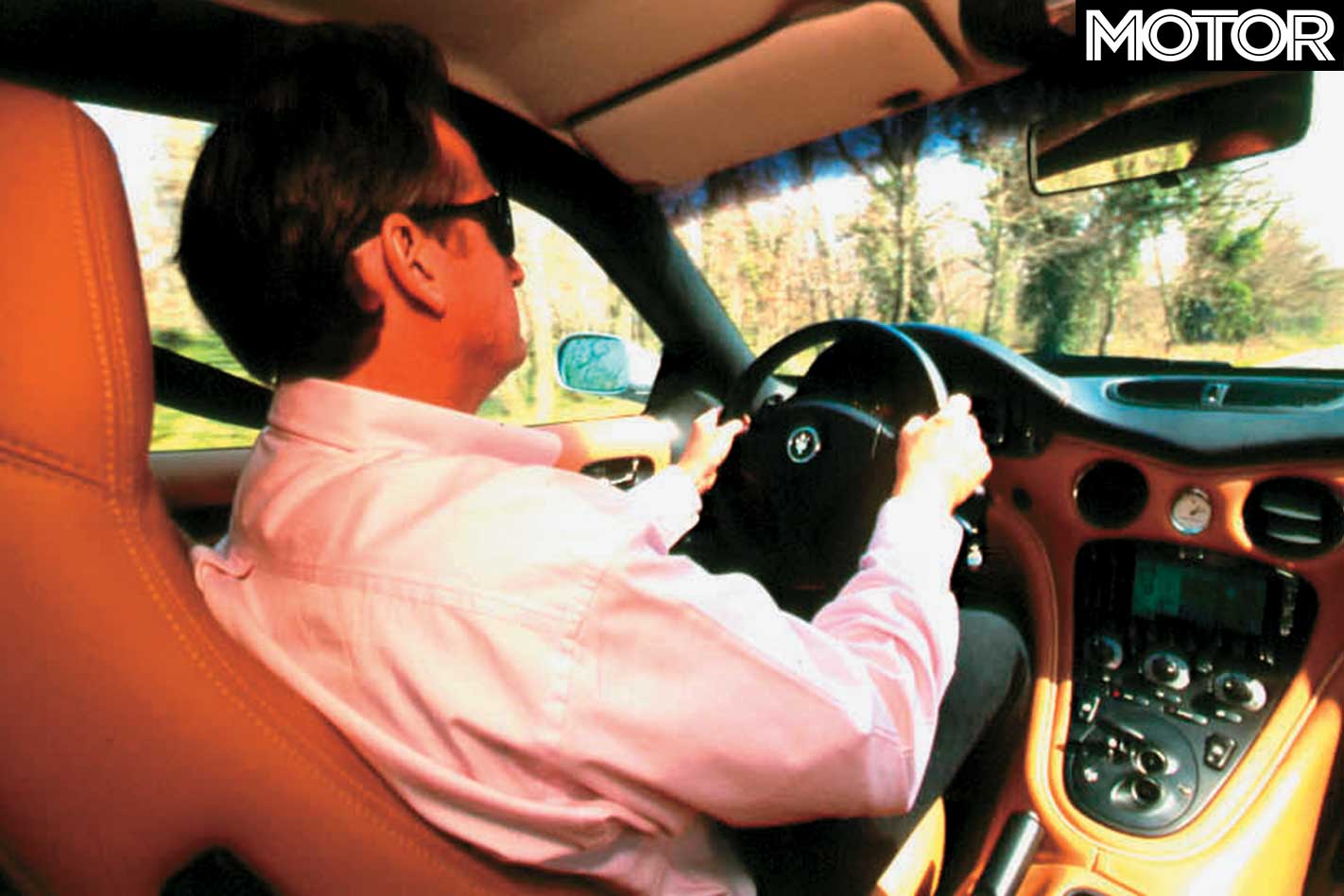
I knew this because my German co-pilot and I had spent the morning strafing the sinuous back-roads that criss-cross the hills and valleys around Tuscanina, which is just outside Rome. We’d already had a chance to savour the delicious note from the Maserati Coupe’s new 4.2-litre V8. It’s a glorious piece of work, which we’ll see here shortly for the first time in the just released Maserati Spyder (convertible).
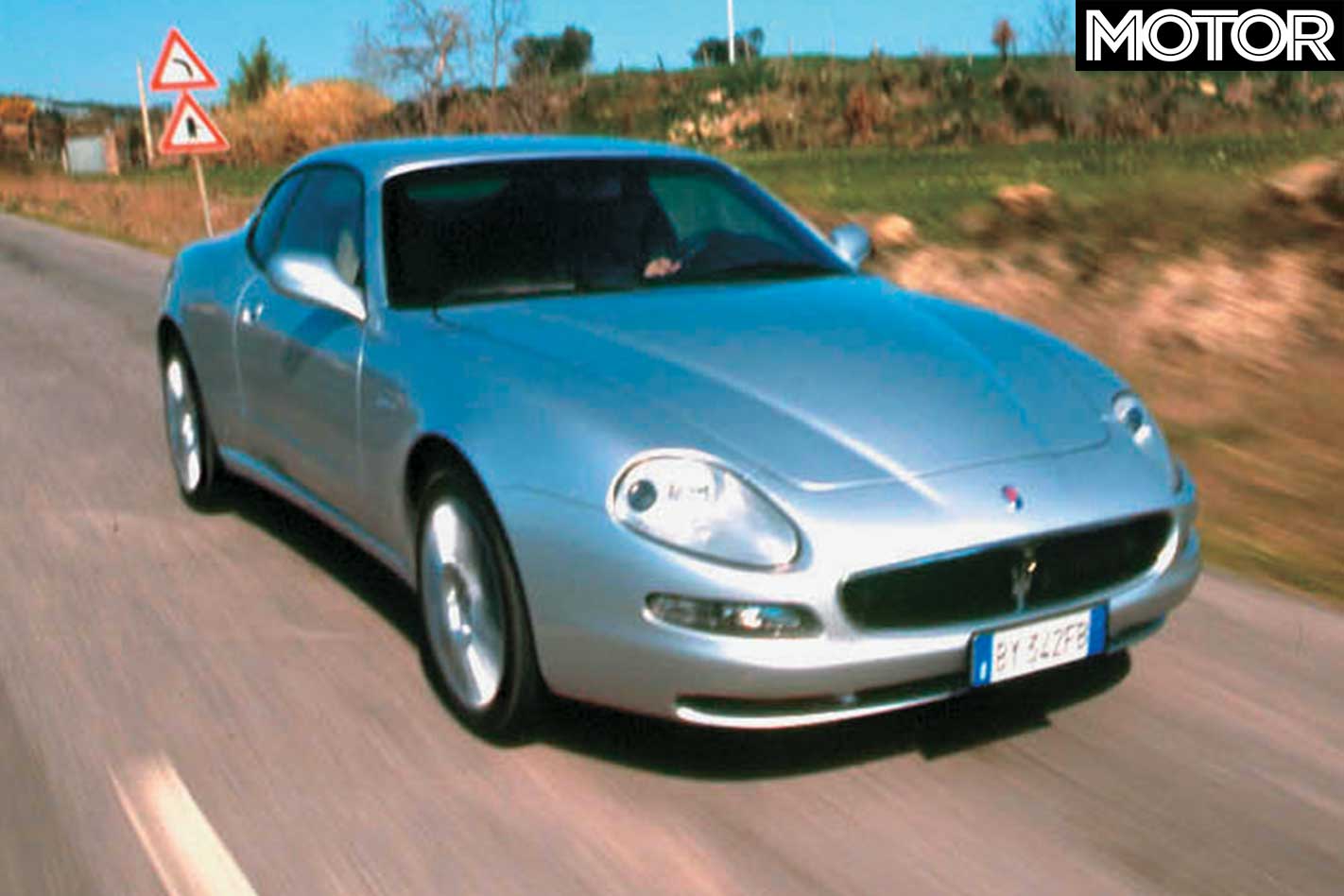
But while the Spyder is an all-new model, the Coupe is an update of the existing 3200GT. It’s a pretty significant update, mind you, comprising a new suspension system, trick new F1-inspired gearbox, and superior weight distribution in addition to the new engine.
About the only thing that’s not significantly altered is the styling. The original Italdesign-Giugiaro-penned form is still very much intact, the most obvious change being to the rear tail-lights, which have morphed into a more conventional triangular shape. But look closer and you’ll see the bonnet is also new; all the better to house that stonking new V8.
The two model lineup will be known as the Coupe GT, (the conventional six-speed manual variant) and the Maserati Coupe Cambiocorsa (‘racechange’), which is equipped with a Ferrari-developed, clutchless manual gearbox, complete with paddle shift operation.
The Coupe GT and the Coupe Cambiocorsa will be priced at $205,000 and $218,000 when they go on sale here in October. Maserati expects some 60 per cent of the 3500 Spyders and Coupes it will build in 2002 will be equipped with the new gearbox.
Cambiocorsa basically gives a driver the choice between driving the Coupe as a sporty manual gearbox, sans clutch, or as a fully automatic unit. In both cases the clutch is engaged and disengaged automatically, but if you choose to do the work yourself, gears are selected via paddles mounted behind the steeering wheel. There’s a range of different settings for the gearbox, including Normal, Sport, Full Auto and Low Grip.
The shifts in Sport mode are lightening fast but also reasonably harsh, unless you make the effort to lift at the point where you’re upshifting, just as you would in a conventional manual.
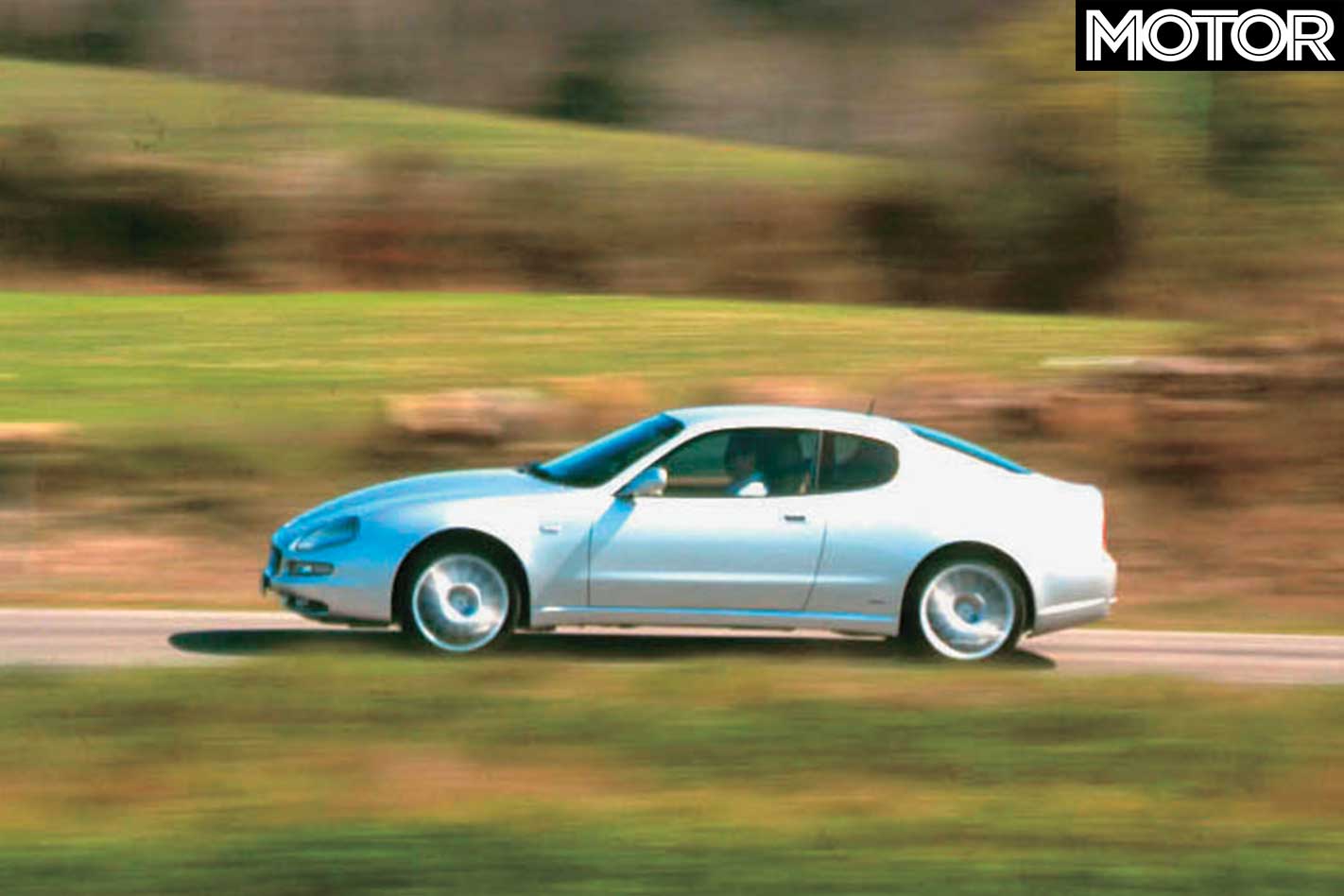
Like most of these systems we’ve experienced, the gearbox is at its best when being driven purposefully. Around town it’s quite acceptable, but the selector mechanism does clunk and carry on a bit when downshifting through several ratios in auto mode.
The real beauty of the paddle shift is that you can grab a gear up or down the ’box whenever you like, without ever taking your hand off the wheel. While it may not be the preferred driving style of purists, who would say you should be in the right gear before you commit to the corner, with Cambiocorsa if you muff a shift, you just right the wrong and and get on the noise again.
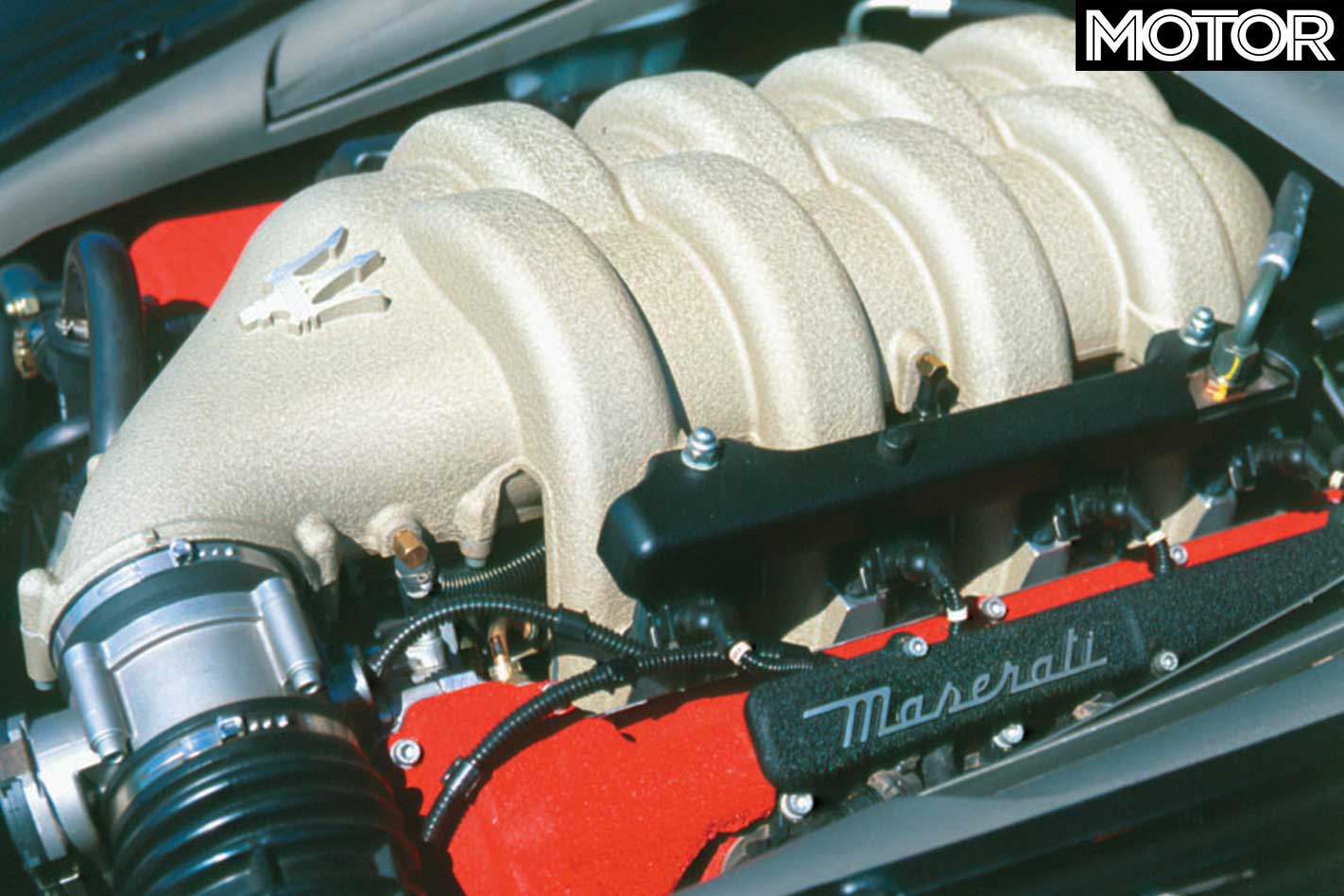
Once you’ve taken in some of the niceties this particular piece of Italian exotica has to offer, the mind, eye and ear wanders to what lies beneath the re-sculptured bonnet. It’s a 90 degree, 4.2-litre V8, built at Ferrari’s Modena plant.
Despite displacing a larger capacity than the superseded V8 in the 3200GT, the new engine is three centimetres shorter and 20kg lighter, so weight distribution is better. All-alloy construction, chain-driven twin overhead camshafts per bank and four valves per cylinder are all de rigeur for a modern V8, but there’s also plenty of trick bits, including a five-bearing crank, dry sump lubrication, and variable valve timing on the intake side of the cylinder head.
Net result? A thoroughly respectable 287kW at 7000 rpm and 451Nm at 4500rpm, working on a kerb weight of 1570kg. Claimed performance is 0-100km/h in 4.9 seconds, 0-1000 metres in 23.5 seconds, top speed of 285km/h, and a hot lap of Fiorano a full six seconds quicker than the old jigger.
Tickle the thin pedal and there’s the sort of instantaneous, cracking throttle response available that wasn’t in evidence with the laggy, twin turbocharged 3200 GT. Put that down to a low-inertia flywheel that weighs just a quarter of the old engine’s flywheel, and some good old Ferrari engine know-how.
The power delivery is smoother and far more progressive, too, without the awkward peaks and troughs that characterise the blown engine. The tacho needle gallops around the dial as the engine exhibits a clean-revving willingness all the way to its 7500rpm cut-out, laying down a deliciously aggressive soundtrack en route.
At 160 km/h in sixth gear the engine is sitting bang on 4000rpm; at 200km/h it’s a smidge under 5000rpm, right in the meat of its torque curve and eager to go on with the job. Put the foot down at this speed and the Maser leaps forward, eager to kiss the redline.
The steering is quick and accurate, with excellent weighting. There’s no shortage of grip from the Michelin rubber while Brembo cross-drilled discs clamped by four-piston calipers provide reassuring stopping power.
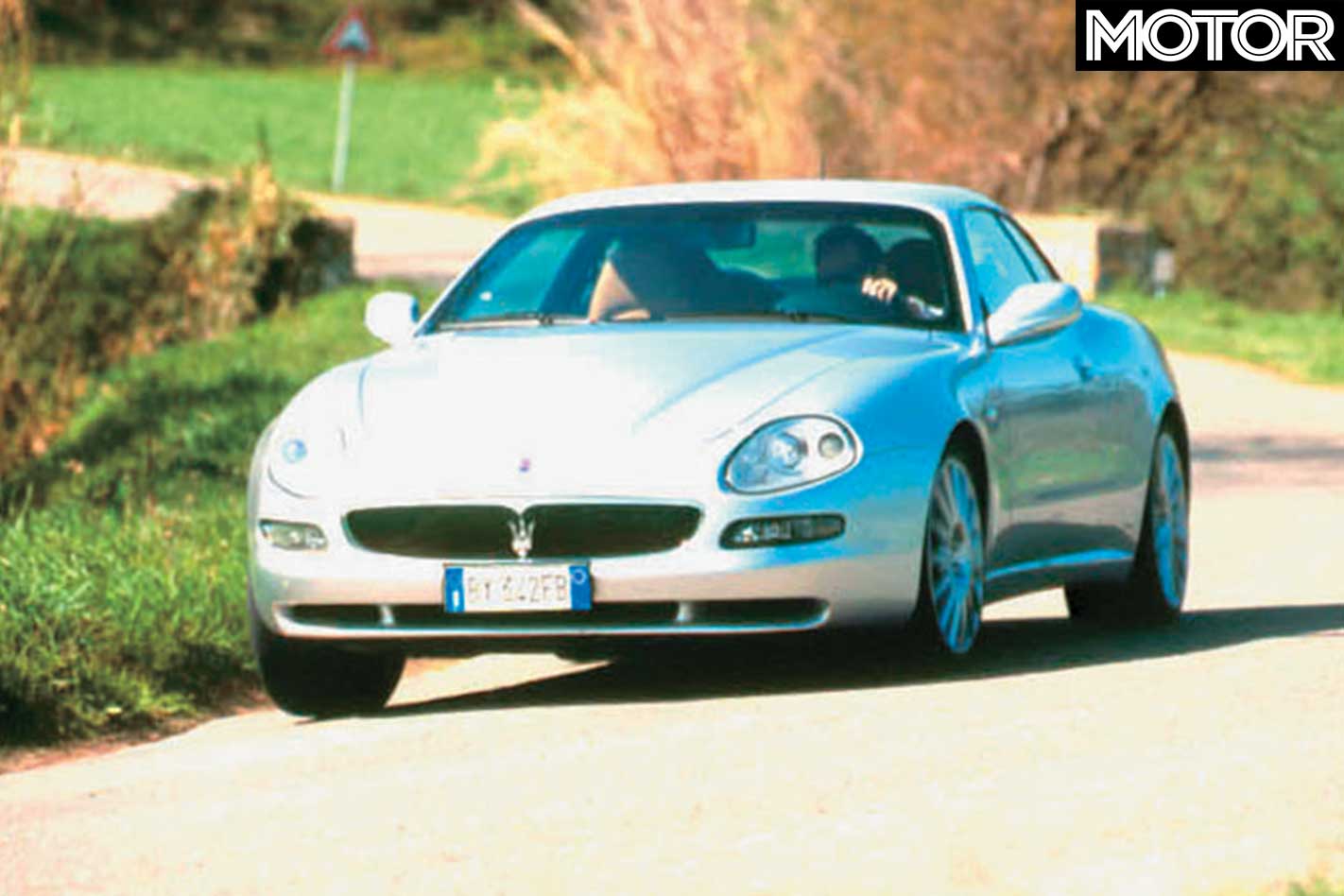
The handling is overwhelmingly predictable, thanks to two per cent better mass distribution over the rear axle, which endows the Coupe with close to perfect 50/50 weight distribution. The lighter engine plays a part, but there’s also a totally new transaxle layout which features a newly-designed longitudinal gearbox at the rear of the car, and an integral self-locking differential.
It’s overstating the bleedin’ obvious that the Coupe will oversteer at the limits, but those limits are quite high unless you deliberately prode the tiger through the bars. For the most part it’s a fairly gentle and predictable understeerer, but just in case you are inclined to provoke things and aren’t totally confident in your abilities to bring it back, switchable electronic traction control (ASR) is integrated into the auto gearshift setup.
Underneath a 15 per cent stiffer body is an all-independent suspension that sports revised front and rear anti-roll bar rates, and anti-dive and anti-squat geometry.
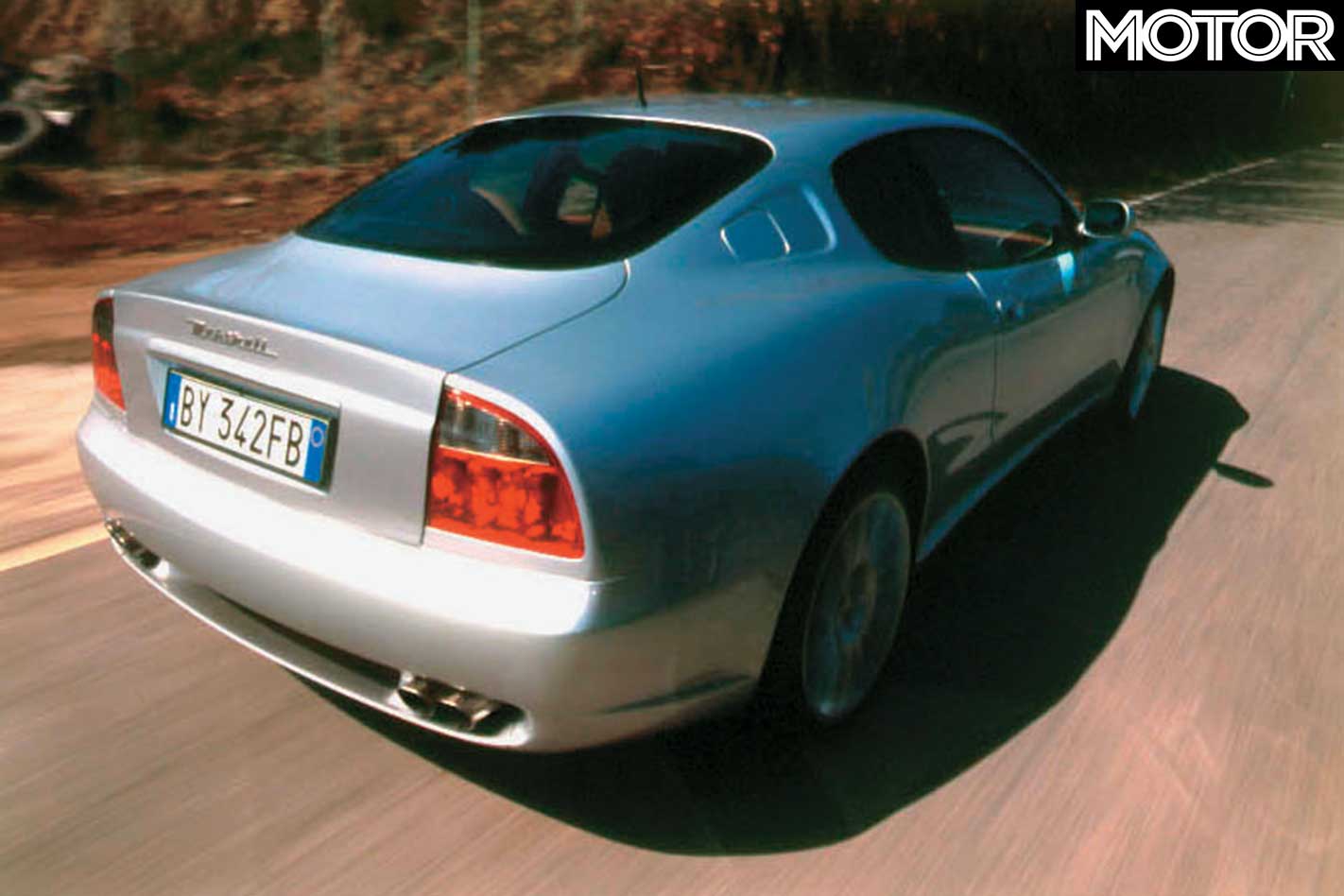
All up the new Coupe Cambiocorsa is a pretty impressive package, one that has Maserati and its Ferrari masters brimming with confidence, and should have Porsche and Jaguar a little worried. It’s a car that delivers on the emotional front as much as the old car did, but it feels far more convincing from a technical perspective.
Both the Spyder and the Coupe Cambiocorsa herald a remarkable return to form by Maserati. The historic Italian brand is once again building powerful, passionate cars that you can not only get enthused by, but have few qualms recommending. Buyers with a lazy $200k in their pocket would be foolish to write it off.
FAST FACTS 2002 Maserati Coupe
BODY: 2-door coupe DRIVE: rear-wheel ENGINE: 4.2-litre, 32-valve, DOHC V8 BORE/STROKE: 92.0mm x 80.0mm COMPRESSION: 11.1:1 POWER: 287kW @ 7000rpm TORQUE: 451Nm @ 4500rpm WEIGHT: 1580kg POWER-TO-WEIGHT: 182kW/tonne TRANSMISSION: 6-speed manual SUSPENSION (f/r): double wishbones, coil springs, anti-roll bar L/W/h: 4523/1822/1305mm WHEELBASE: 2660mm TRACK: 1525mm (f); 1538mm (r) BRAKES (f): 330mm ventilated discs, four-piston calipers BRAKES (r): 310mm ventilated discs, four-piston calipers WHEELS: 18 x 8-inch (f); 18 x 9.5-inch (r), alloy TYRES: Michelin Pilot Sport; 235/40 ZR18 (f), 265/35 ZR18 (r) PRICE: $215,000 (approx.)
New to Wheels Car of the Year?
Read the COTY 101.
There’s no pleasing some COTY judges, with Carey quickly hurling words like “charmless” and “bulky” at the latest Audi A8. Character assassinations aside, by limousine standards, the all-new car oozes COTY cred.
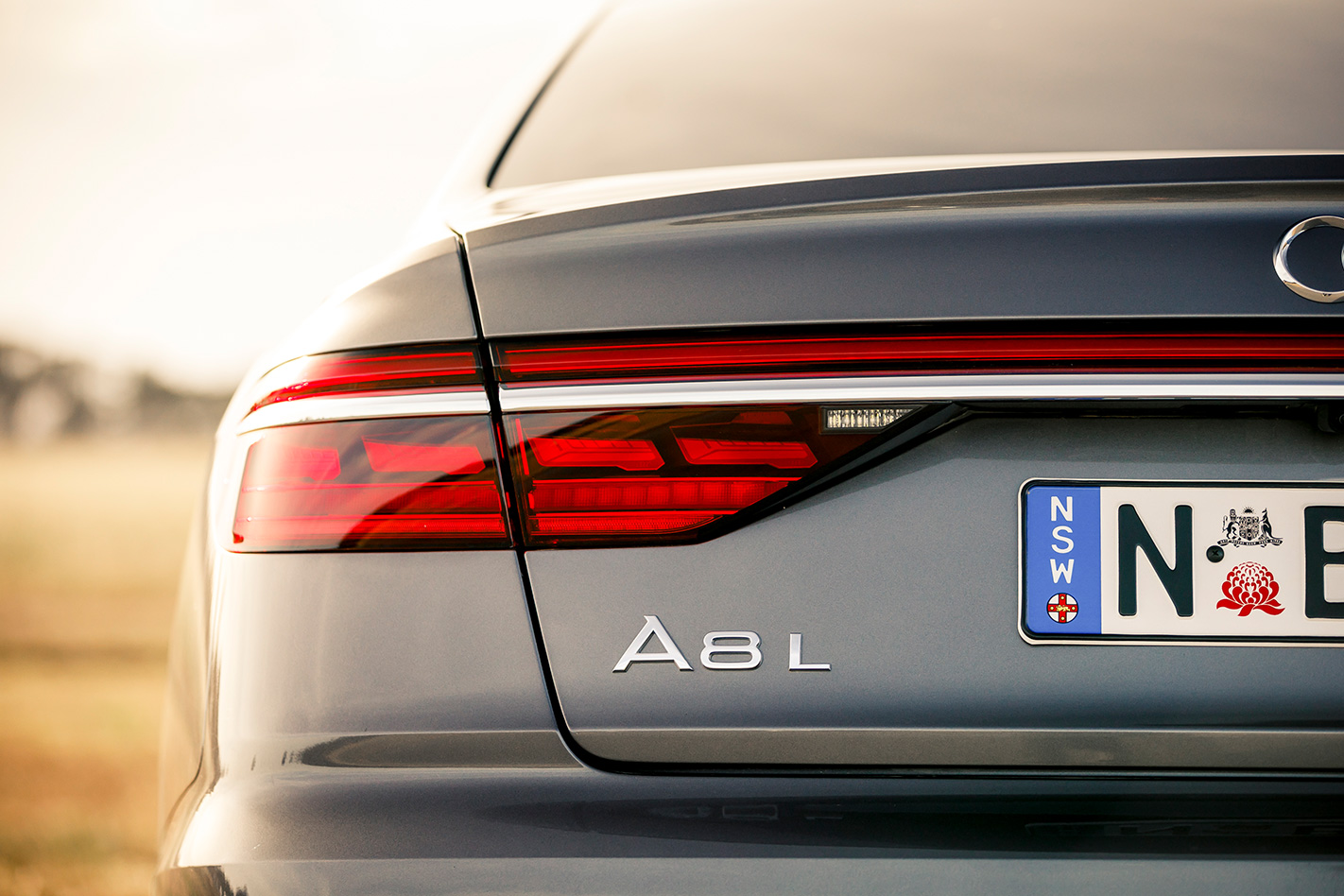
New model naming and a tech injection headline the rethink, with safety stepping up via active systems to avoid myriad crash scenarios and even prevent doorings. A whiff of mild-hybrid electric assistance beneath the bonnet cements its place on the grid.
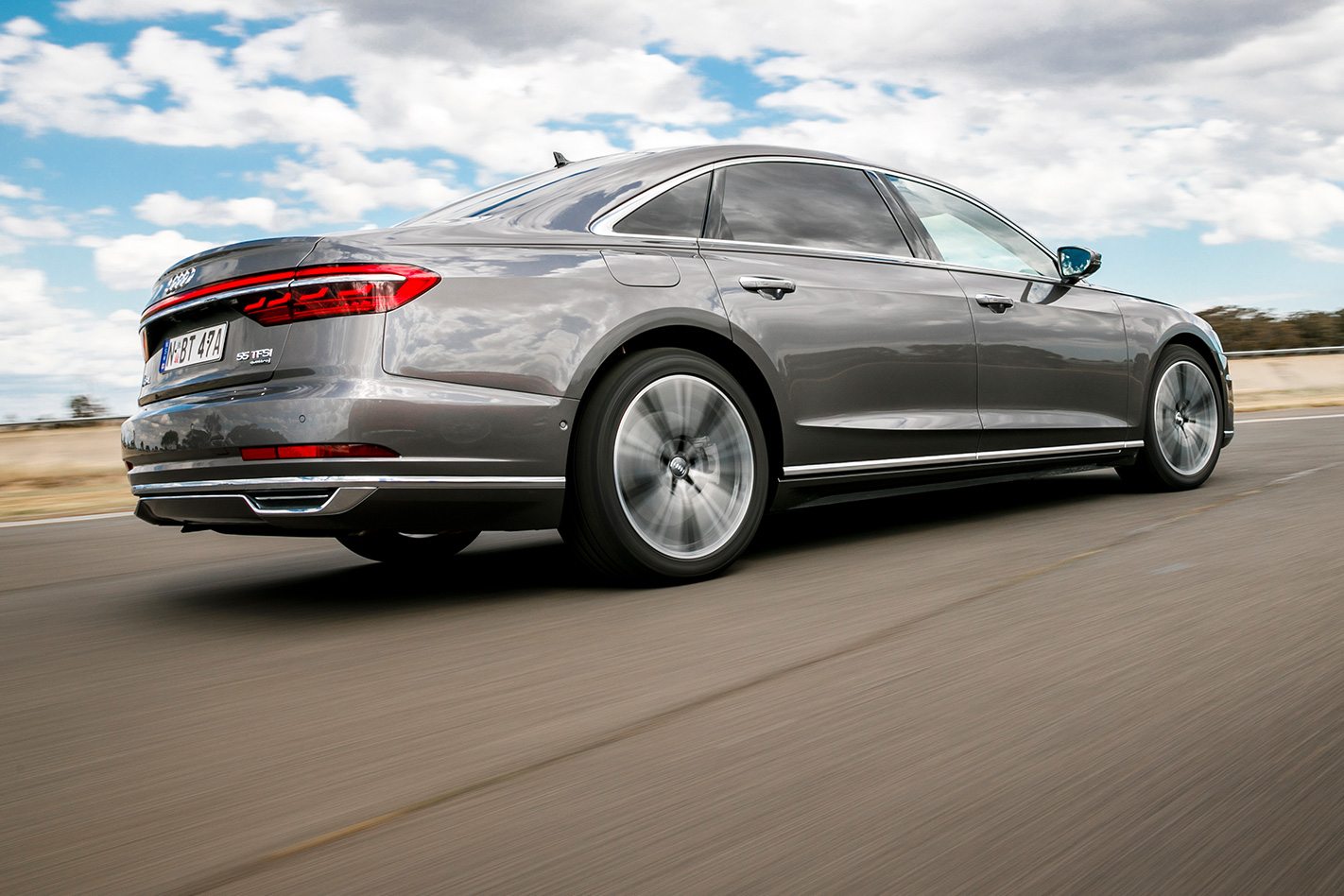
Key to the fourth-gen A8’s appeal is an entry price shaved by a few grand while the high-end-gadget count has stepped up, especially in terms of digital screens.
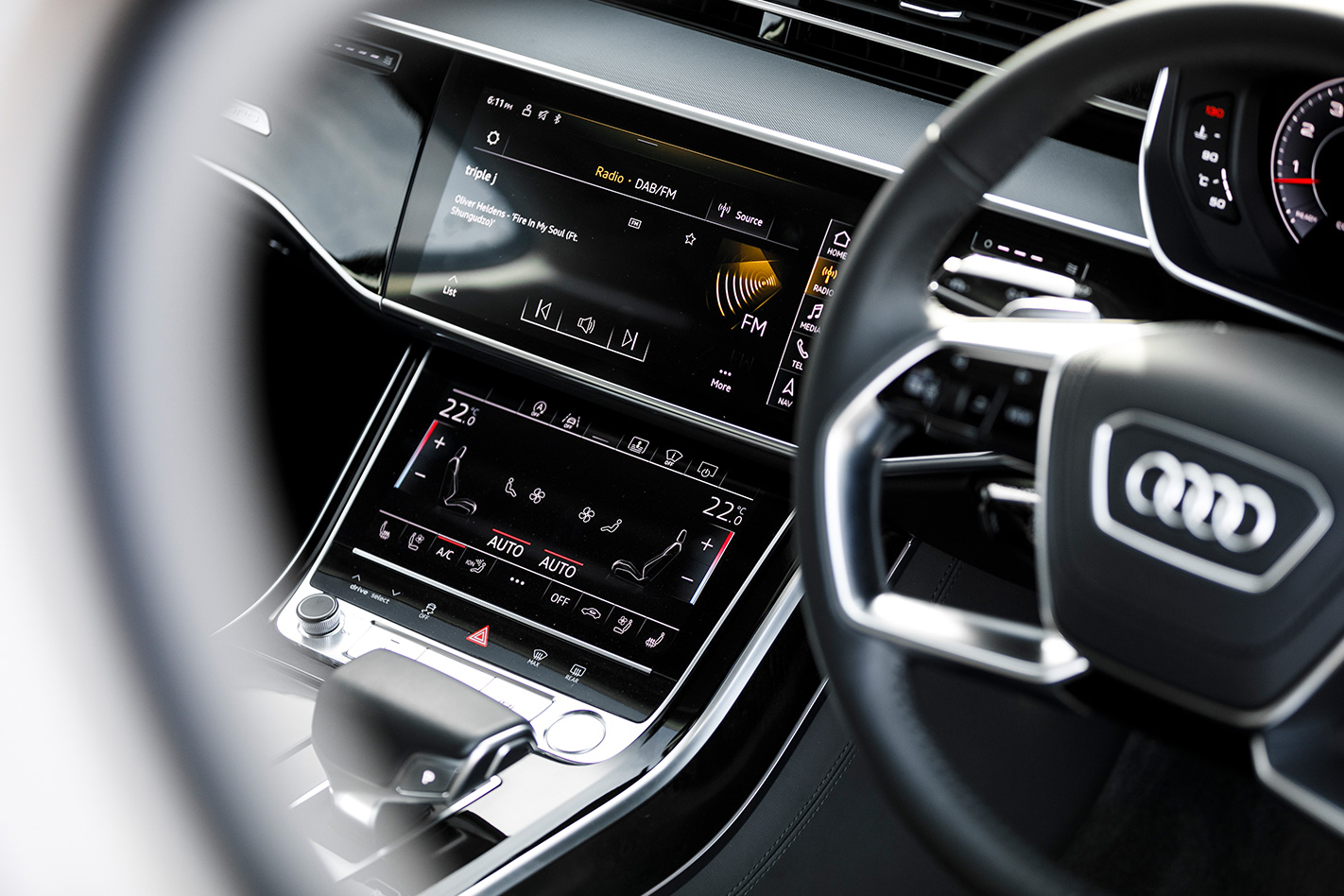
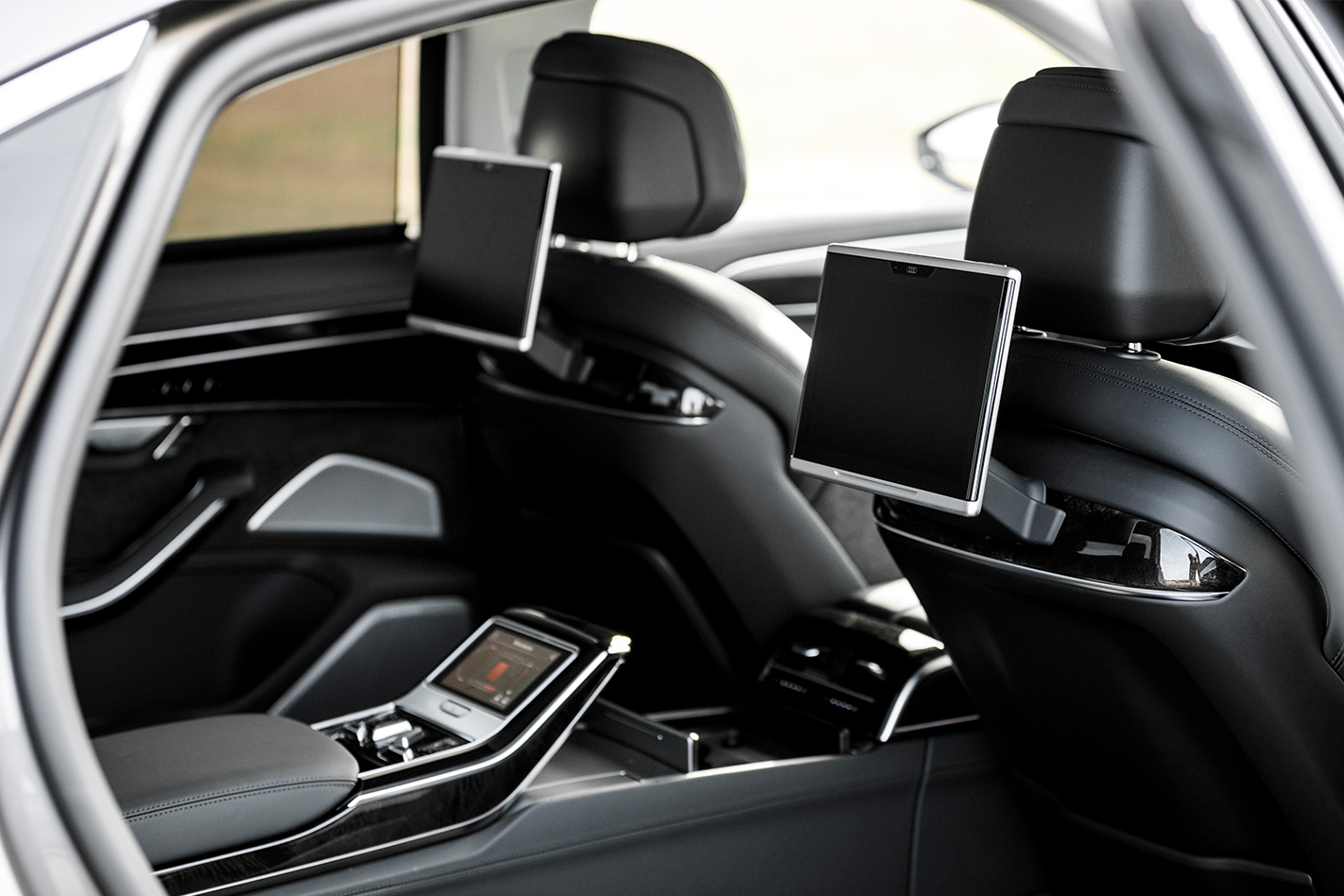
And it’s those prominent central touchscreens – with haptic feedback – in an otherwise restrained Teutonic cabin that sparked debate. Pixels count for wow factor, but judges questioned whether the lower OLED screen controlling ventilation brought significant benefit over buttons and dials.
There was no such apprehension regarding hardware, with the 17-speaker Bang & Olufsen audio, four-zone ventilation and Valcona leather all in keeping with the $192K-plus price. Heated rear pews in the long wheelbase – which adds 130mm for serious stretchability – reaffirm the emphasis on ensuring occupants are appropriately cosseted.
Double-glazed glass adds to the hushed serenity and back-seaters even get a removable OLED device, a fitting full stop for a cabin that truly delivers on luxury.
The A8 stays true to its predecessors’ template: aluminium body riding on adaptive air suspension and the choice of two wheelbases, both of which made a COTY appearance.
Steering brings meaningful weight, and sizeable rubber (ours were on 20s) hunkers nicely to deliver cornering thrills. Ramp up the pace and the A8 relishes the challenge, predictable understeer creeping in at the (high) limit.
The lengthened wheelbase was deemed a better investment than the $4500 for four-wheel steering.
Only over the PG’s vicious stutters does the suspension crash and confuse the luxury message; should the chassis tune swing further to passengers rather than driver?
The V6 drivetrains deliver, though. The 600Nm hit from the 3.0-litre in the 50TDI is beautifully matched to a long-legged eight-speed auto that glides between ratios. There’s additional zing in the petrol-powered 3.0 turbo 55TFSI, its 250kW peak compensating for the 100Nm shortfall.
Efficiency is aided by a 48v mild-hybrid system that utilises the torque of the starter motor at low speeds, while also running ancillary systems. That contributes to fuel use as low as 5.9L/100km, which is impressive.
However, the A8’s aluminium integrity was called into question. Despite claims of a sub-two-tonne kerb weight, the PG scales saw our cars weigh in at 2145 and 2186kg. Sure, they were plumped with options, but 200kg of them?
Speaking of which, value weakens with each box tick. Audi focuses on option packs, but prices quickly get frightening.
The A8’s value and comfort are also bettered by a Lexus LS, and its dynamics closely shaded by a BMW 7 Series.
The Audi A8 is a terrific limousine, but it doesn’t bring significant advances, this time, against the COTY criteria.
- Exact scale replica of Honda Civic Type-R
- Nine builders took more than 1300 hours to hand-build the car for TV show promo tour
- Over 320,000 bricks used in construction
- Weighs just over 1300kg
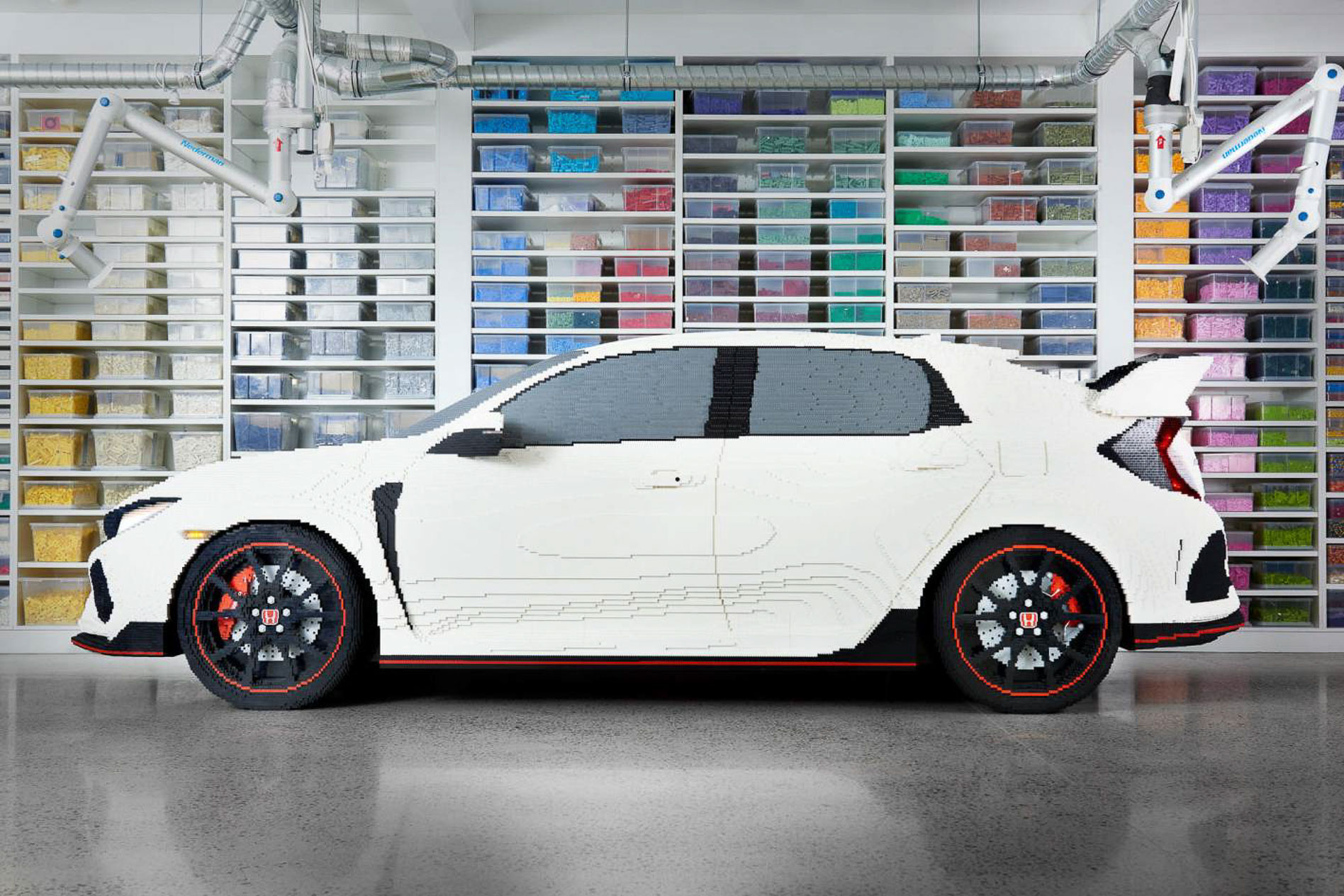
Led by global expert Ryan McNaught – who is a Lego Certified Professional – the nine-person team used more than 320,000 bricks in the build, which took over 1,300 hours to complete.
“We’ve loved the challenge of this project,” said McNaught. “The car is shaped with a considerable amount of curved lines, making it a tough but interesting build.”
A steel frame underpins the structure of Lego bricks, which are then glued together. Key, too is that the car is built completely by stock standard pieces.
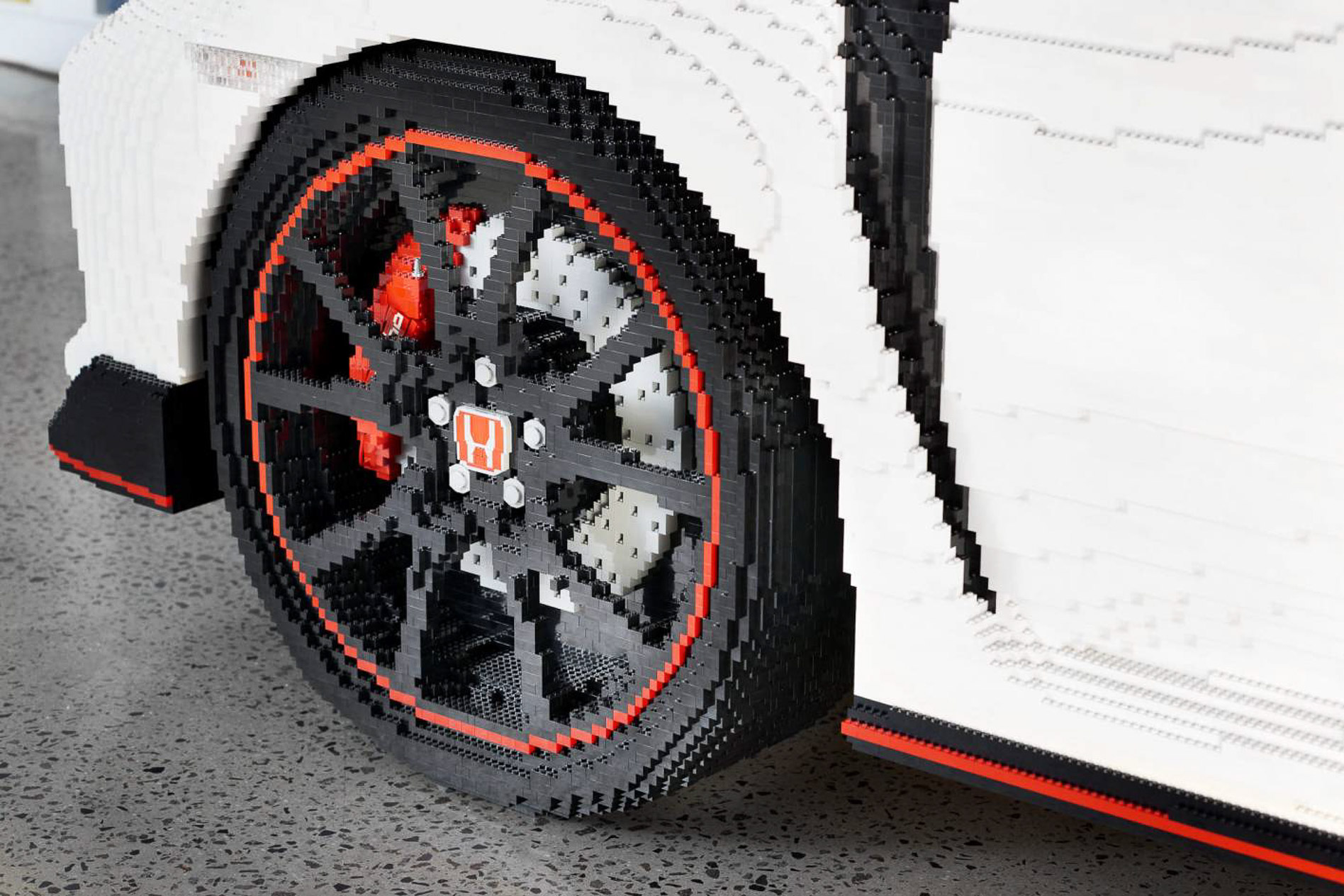
All the badges, logos and sensors around the Honda Civic Type-R have been duplicated, while a special cradle and jacking system has been developed to move the car around. It can also be picked up with a forklift without bits breaking off.
There are no stickers to replicate logos on, for example, the brake calipers – the Brembo brand has been rendered from Lego bricks.
An iPad is used to turn on the headlights, DRLs, fog lights, hazard lights, brake and reversing lights, too.
A full-size Civic Type R, as well as CAD drawings, were used to build the blueprint.
The most challenging elements of the build, according to McNaught, were the window wipers thanks to their fragility, while the back spoiler needed additional construction allowing it to ‘float’.
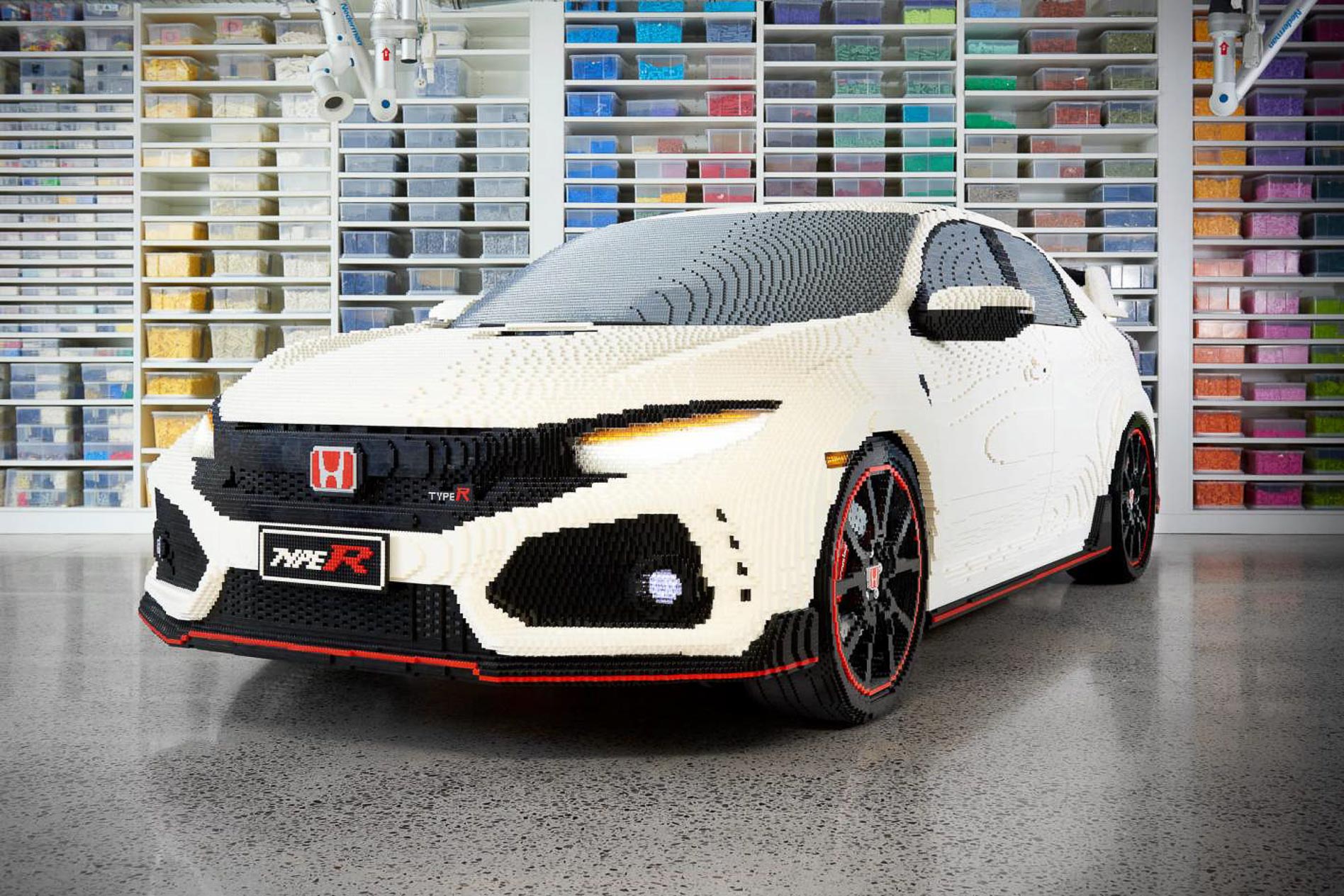
The car, which is estimated to cost around $80,000 in bricks alone, will tour the country as part of its promo duties for the show, where McNaught will appear as a judge.
See more amazing Lego cars HERE!
For the first time in this series – and hopefully the only time – we deliberately crash a car. Go behind the scenes with Tony as he follows the process for assessing a new car’s safety rating with the ANCAP team of scientists and engineers.
Later, Dan and Andy head for the hills in a pair of $100k coupes to see if your money is better spent on a fresh new French wildcard or an established German quantity. Spoiler alert – the spectacular alpine scenery wins but is the Alpine a close second?
And if you thought our Ford Endura punk rock band test was tough, just wait until you see how its Everest big sister goes with Tim’s family. Hell hath no fury like a disgruntled teen so let’s hope for his sake that the Ford has some decent features.
On-air: Channel Ten, Apr 28 (AU) / May 5 (NZ)
Catch-up: Watch at tenplay.com.au (AU) or primetv.co.nz (NZ)
Even though Bullitt came out 50 years ago and Steve McQueen is no longer with us, the film’s 10 minute-long car chase sequence still captivates movie audiences and petrolheads everywhere.
Evocative and visceral, Bullitt’s car chase not only left an indelible mark in cinema history, but elevated the Mustang’s place in popular culture.
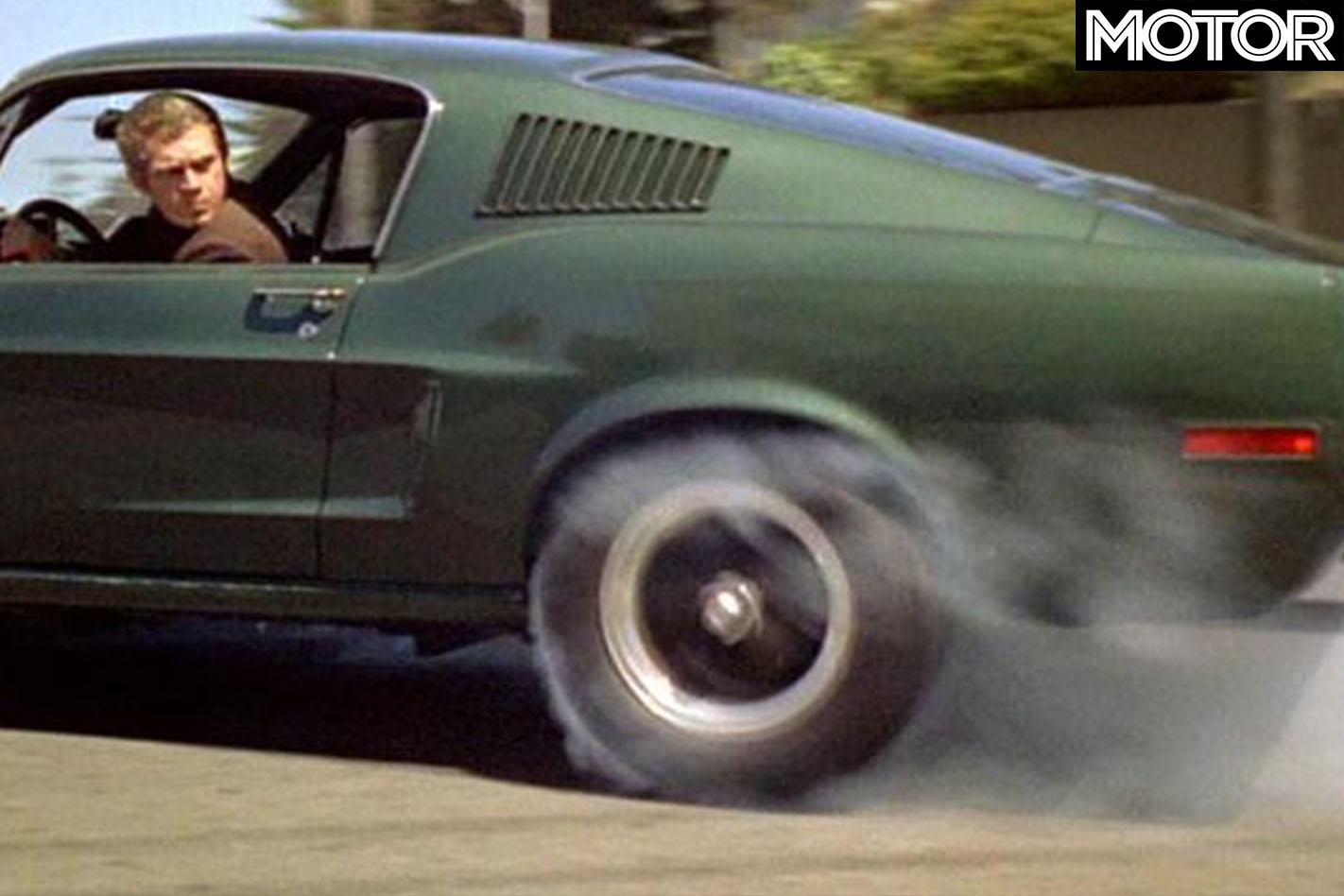
So when we pitched Ford’s latest tribute to the iconic Bullitt Mustang, against Chrysler’s thuggish-looking 300 SRT, we couldn’t resist the opportunity to make our own little tribute to the greatest car chase in cinema history and commit it to film (er… digital memory).
Check out our gallery above!
Read the full comparison review of the Ford Mustang Bullitt vs Chrsyler 300 SRT here.
You’ve bought a new car and you’re excited to show off. But with your new purchase comes certain responsibilities.
Many people are tempted to simply hand off that responsibility to a mechanic, whether it’s an independent operator or the service department of the dealership they brought their car from. However, scheduled servicing isn’t the only thing you need to take care of when it comes to maintaining your car – if anything, it’s simply the bare minimum.
That said, we recognise some people just aren’t that mechanically inclined – if that’s you, then perhaps you are indeed better off outsourcing the entirety of your car’s upkeep to a third party.
However, the vast majority of you should have the mechanical aptitude to follow a few simple rules about taking care of your car – if you do, you could wind up saving significant amounts of money by being able to take care of trivial maintenance tasks yourself instead of booking your car in with a mechanic whenever something minor goes wrong.
While the major services, safety checks and nuts-and-bolts repairs are best left to the professionals, there are still some simple things you can do to keep your vehicle in good condition. And by simple, we mean easy-peasy
1. THE BIBLE
When in doubt, read the instructions. Wondering whether that weird light on the dash is something important? Don’t ignore it, open up your car’s owners manual and find out what it is. Make sure you always have your owner’s manual on you – when it comes to your car, it’s your first port of call.
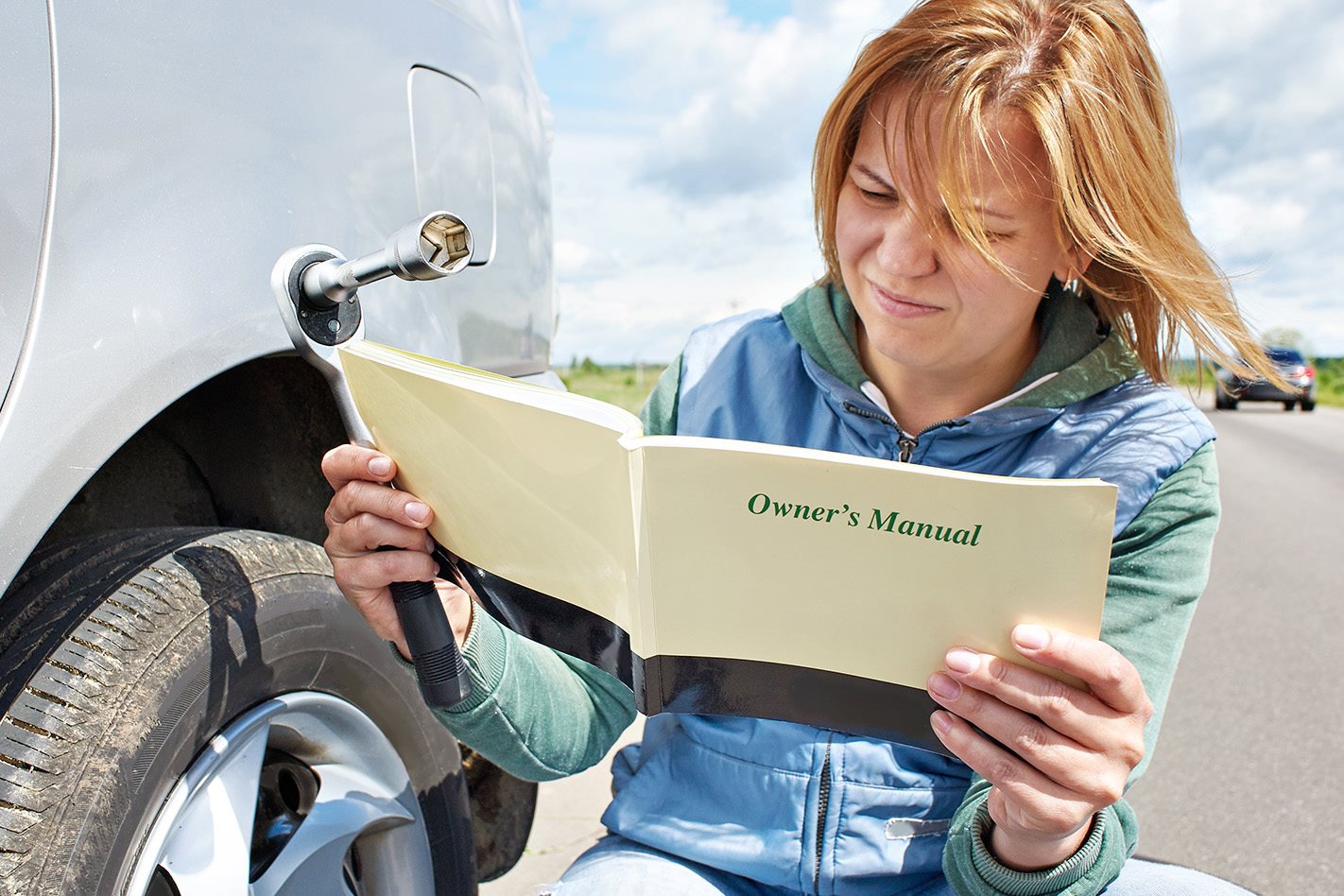
It will tell you all kinds of things like what type of globe you’ll need to buy if a headlight goes out, as well as how to install that globe. Is something stuck or not operating as it should? The manual will probably help you figure out what’s gone wrong, and perhaps present you with an easy fix.
If your car is missing its manual you can always ask your local dealer if it can be acquired or better yet, download it for free in PDF form from reputable websites. If you do the latter, ideally get one for an Australian-market car as there are often small differences in functionality and equipment from region-to-region.
2. PROPER FOOTWEAR
One of the most important car components is often the most neglected – don’t skimp on tyres. Using worn or cheap tyres is like running in clogs; noisy, strenuous, and you may end up breaking something. It’s a topic we frequently harp on about because it’s so critical to vehicle safety, but there’s a simple rule: buy the most expensive tyres you can afford.
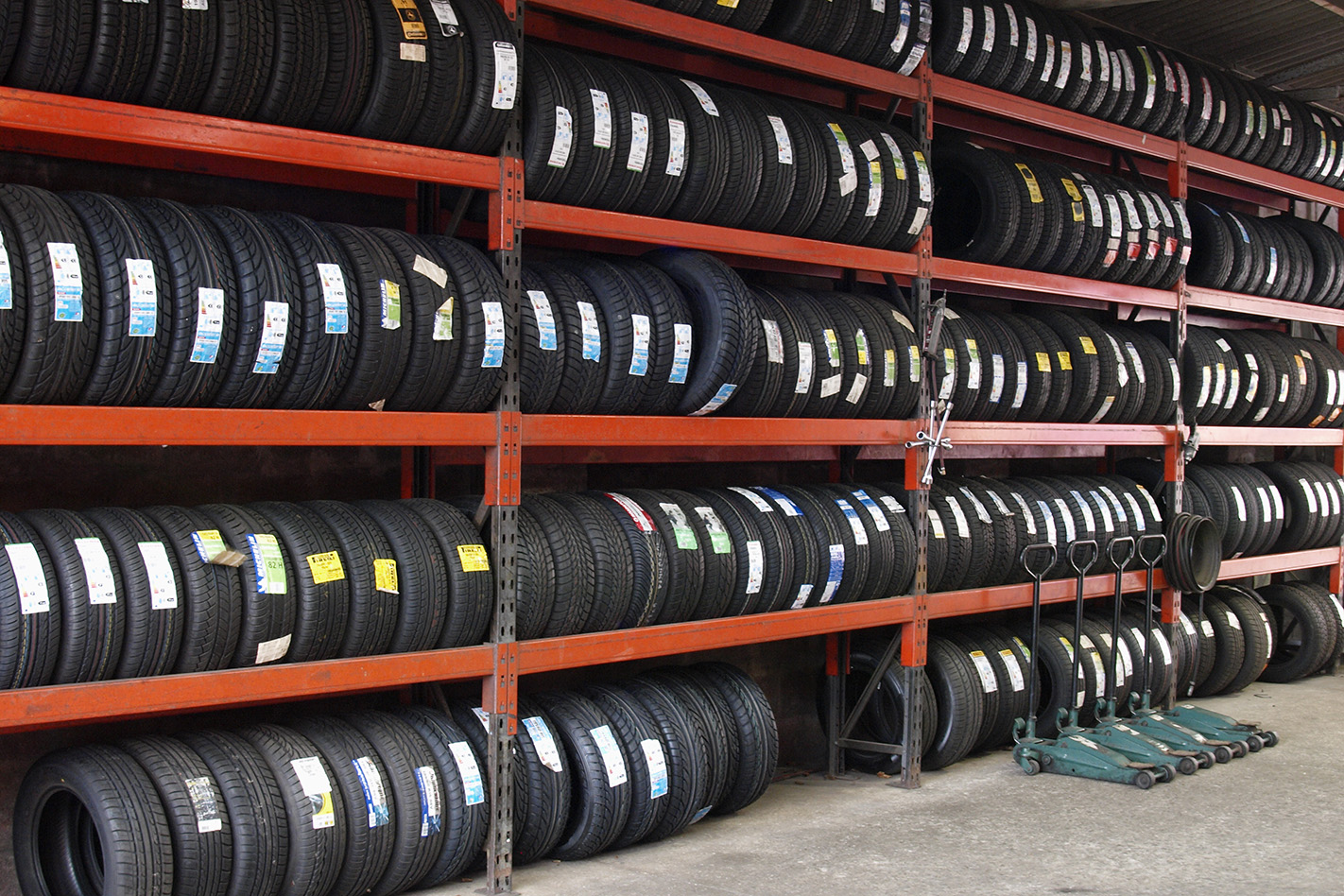
Good tyres may be pricey, but they are the only thing connecting your car to the road. The surface of the tyre that grips the tarmac, known as the ‘contact patch’, is only about as big as your hand, so you want the best quality rubber you can get – buy well and look after them.
As air escapes over time, be sure to set a recurring alarm on your phone to check your tyres every couple of months at a minimum. Under or over-inflated tyres can reduce your contact patch by up to 30 per cent, and riding around on poorly-inflated bags of air will affect your fuel economy and reduce the life of the tyre.
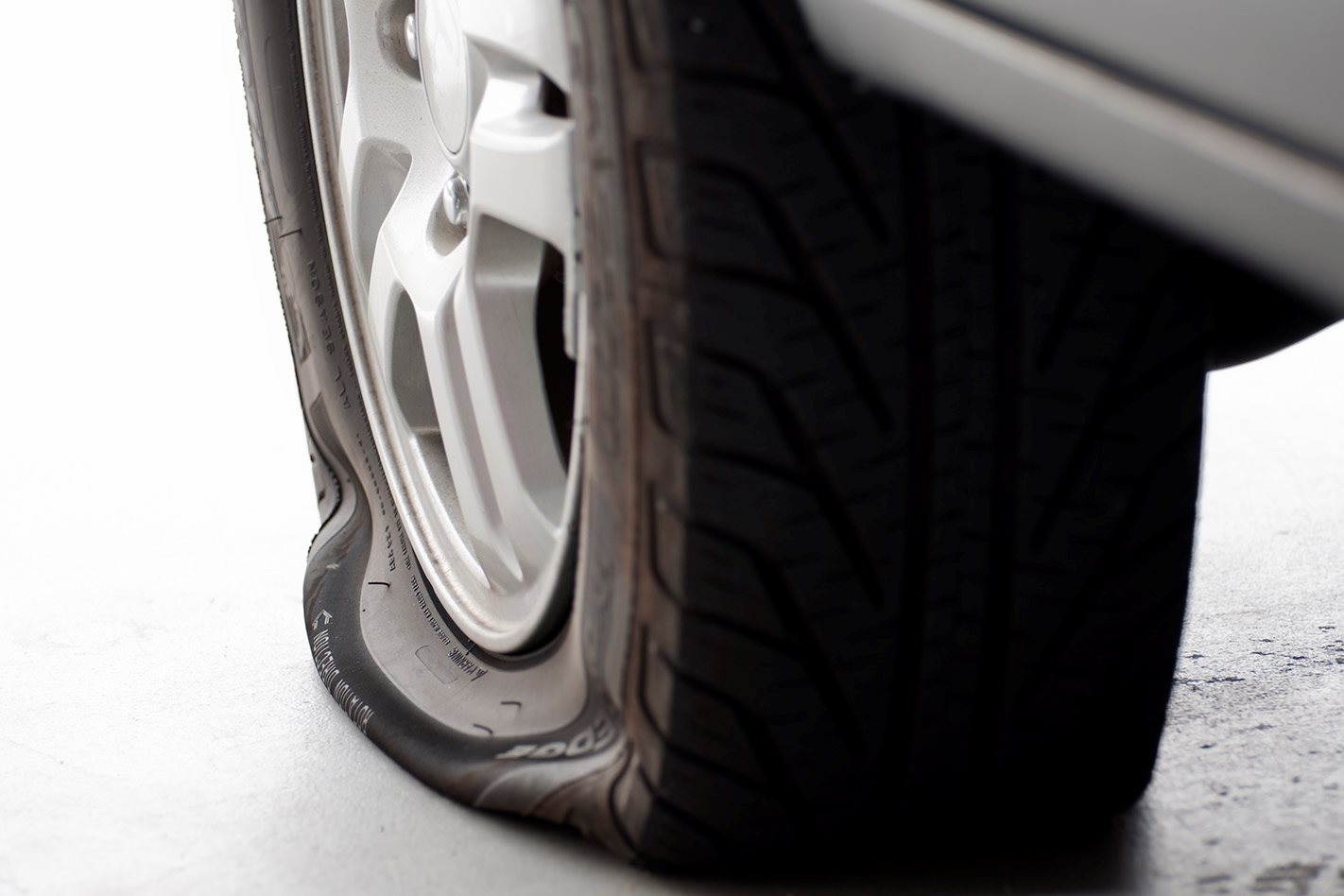
If your tyre looks like the one above, stop driving right away. Don’t EVER drive any more than a few metres if your tyres are so flat that the rim of the wheel is pinching the sidewall against the ground. You’ll do irreparable damage to the tyre that can turn them from being potentially repairable into dangerous junk.
Did you know that pressures should be checked when the tyres are cold? That means that drive to the servo isn’t necessarily the best option, as your tyres will naturally heat up a few degrees on the way over. Buy yourself a decent tyre gauge to keep in the glove box for consistent readings at home. Your car’s optimum tyre pressures can be found on a placard on your car, typically in the door jamb, the inside the fuel cap, or under the bonnet.
If your pressures don’t match up, then you can head to the service station. Try to find one with a digital filling station for accuracy. And don’t forget to also check the air in your spare – the last thing you want is to cop a puncture, then discover your only means of getting home has no air in it either.
3. STRAIGHT AND NARROW
A minimum of 1.5mm of tread all the way across the tyre is required to be road legal (and safe). It’s hard to check this across the whole surface of your tyre though, particularly the inside shoulder.
Here’s a handy trick to check the tread you can’t see: take a coin and sink it into the tread on the outside shoulder of the tyre. Mark the depth of the tread on the coin with your thumbnail. Now, without moving your thumbnail, reach in to the inside shoulder of the tyre and sink the coin into a corresponding tread groove.
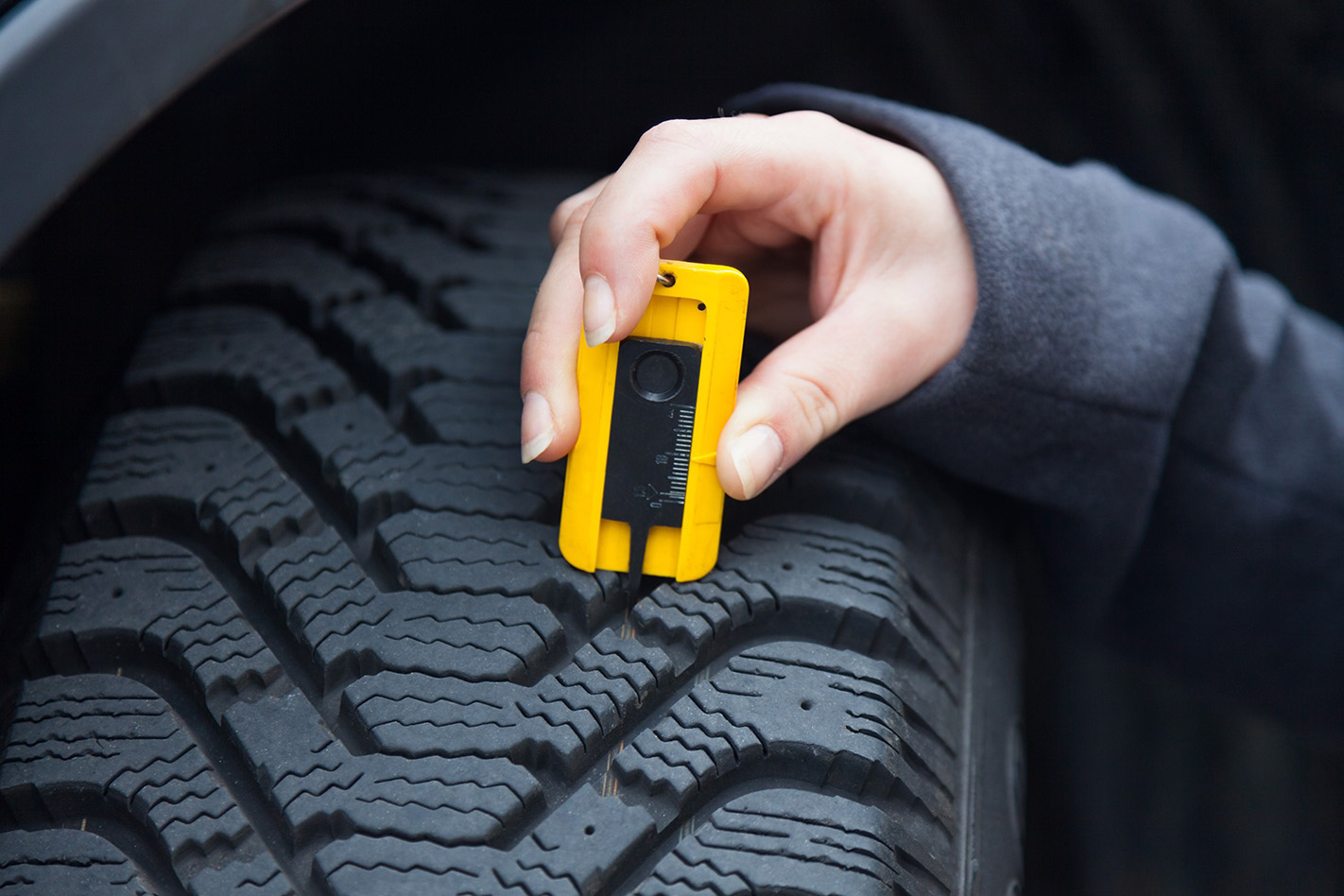
If the measurements are not even you may need to ask about a wheel alignment at your next service. And if there’s no tread to sink the coin into, or it’s not even remotely close to that 1.5mm minimum, get yourself to your nearest tyre centre ASAP. Driving in the wet on tyres with next to no tread is extraordinarily dangerous.
4. FLUID MOTION
Like humans, cars need fluids to keep them running. Typically, your main fluids – engine oil, brake fluid and coolant – will all be checked at your scheduled service. However, if you’re a bit naughty and stretch your intervals, you’re planning on going on a long trip, or you’ve got the bonnet popped to add washer fluid to your car at the servo, make a visual check.
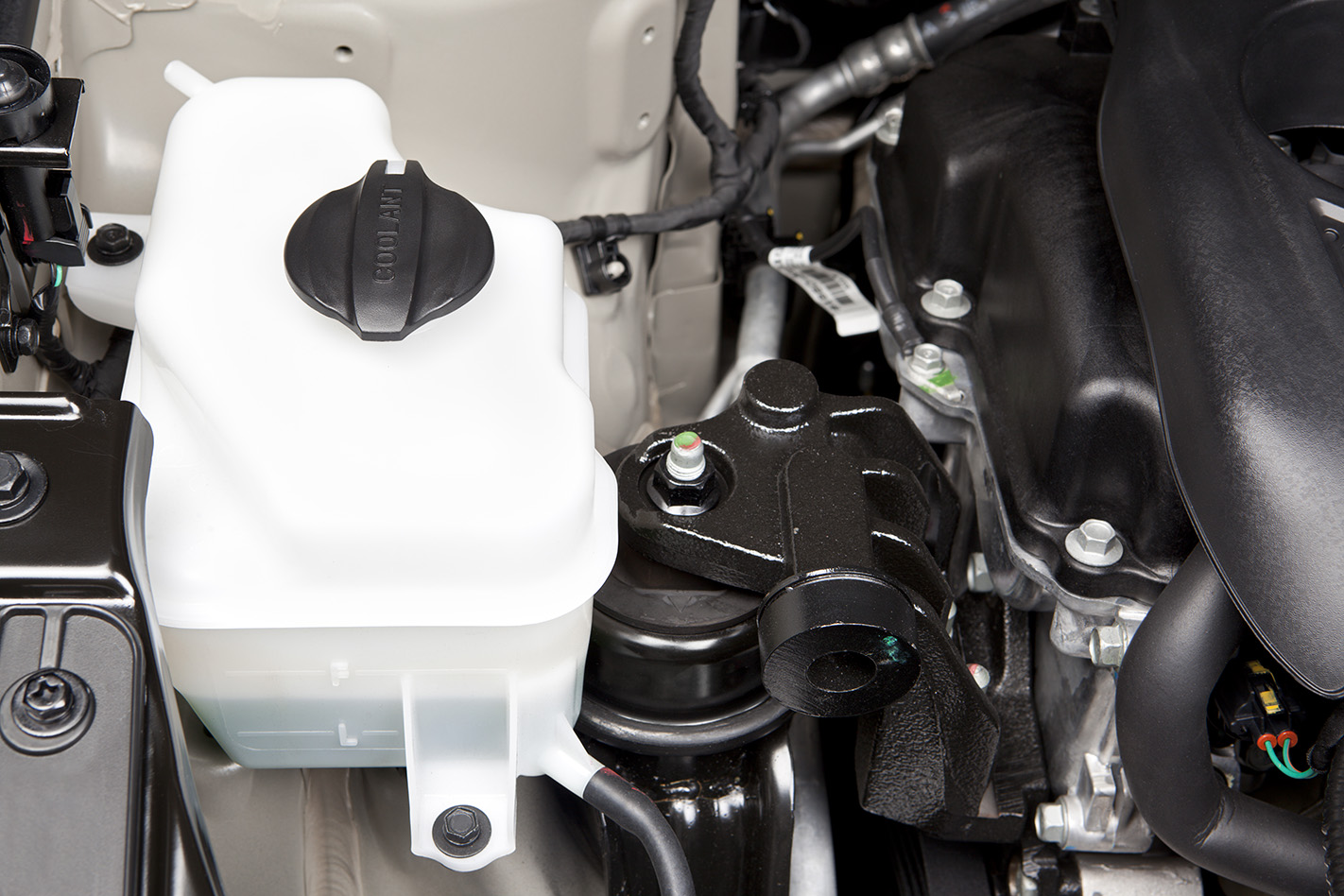
No, you don’t need mechanical knowledge. Brake fluid, windscreen washer and radiator reservoirs are usually the only clear-ish plastic containers under the bonnet, and they normally have a line on the bottle itself indicating the optimal fluid level. The one above is for coolant.
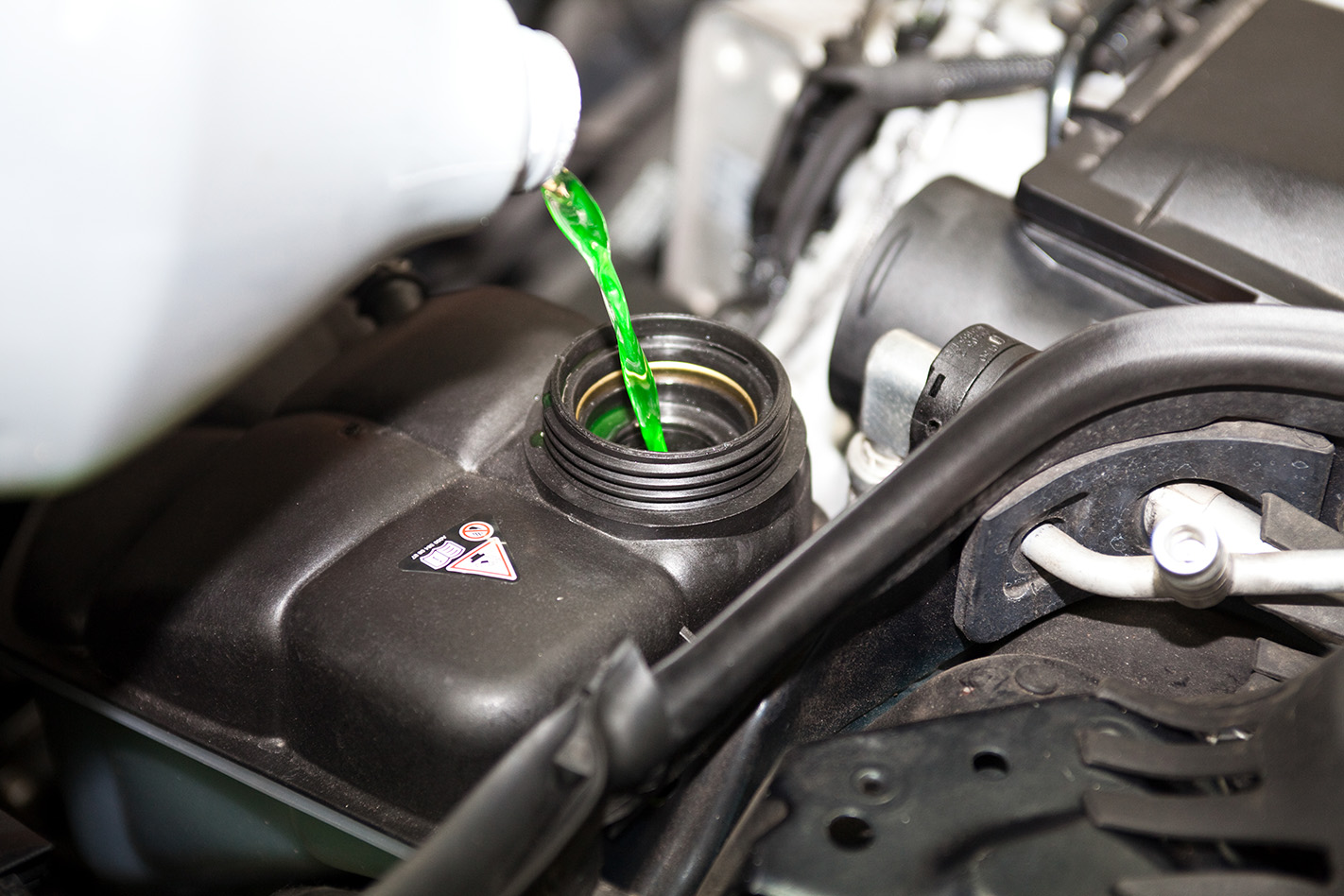
Be careful with the coolant system though – never open up the radiator cap or the cap to a pressurised coolant overflow bottle or header tank when the engine is hot, as you could spray scorching-hot coolant all over you. Wait until the engine cools down, and only use either distilled water or, better yet, premixed coolant of the type specified by the manufacturer (it’s usually bright green or red). Not all coolant bottles are clear either – the one below is opaque plastic.
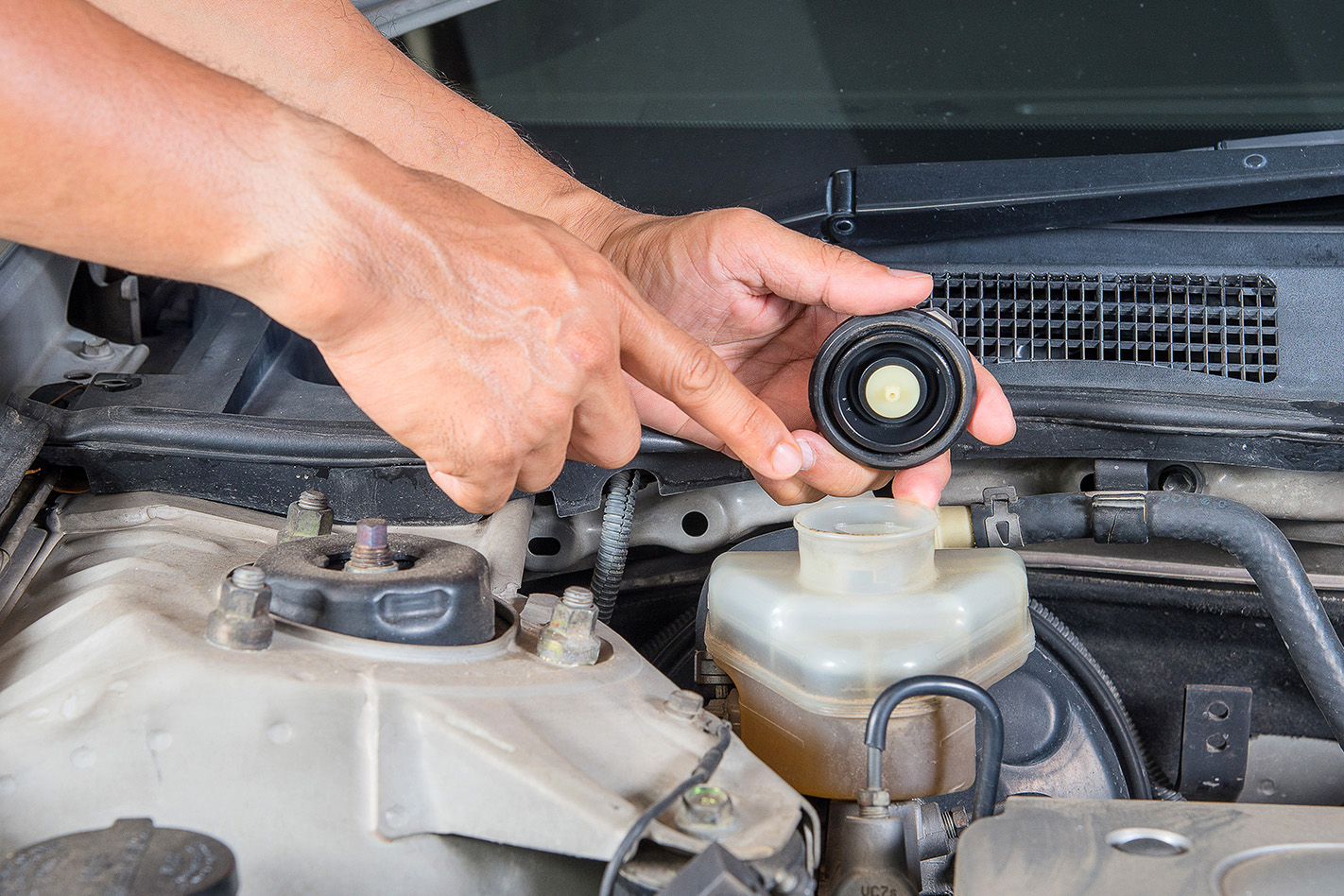
The brake fluid reservoir is normally located up high on the firewall on the driver’s side (like in the photo below), and requires hydraulic fluid of a certain type. The specific fluid required will be shown either somewhere on the reservoir or inside your owner’s manual, and mixing fluid types can either damage the brake system or reduce its effectiveness. Tread carefully with this one.
Engine oil is a bit trickier, as you can’t see into the engine to check how much is in there. Locate the dipstick (first-timers should consult the manual), which is a long metal rod with a coloured ring at the end that reaches all the way into the bottom of your engine block.
Grab some paper towels or a rag and pull the dipstick out slowly (be careful not to flick it onto your clothes), then wipe its length clean with the cloth. Feed it back into the holder, pushing it all the way in. Now pull it back out again, hold onto it with the cloth at the halfway point and check the end of the dipstick. There are grooves to clearly label low, optimal and high levels of oil. Simple!
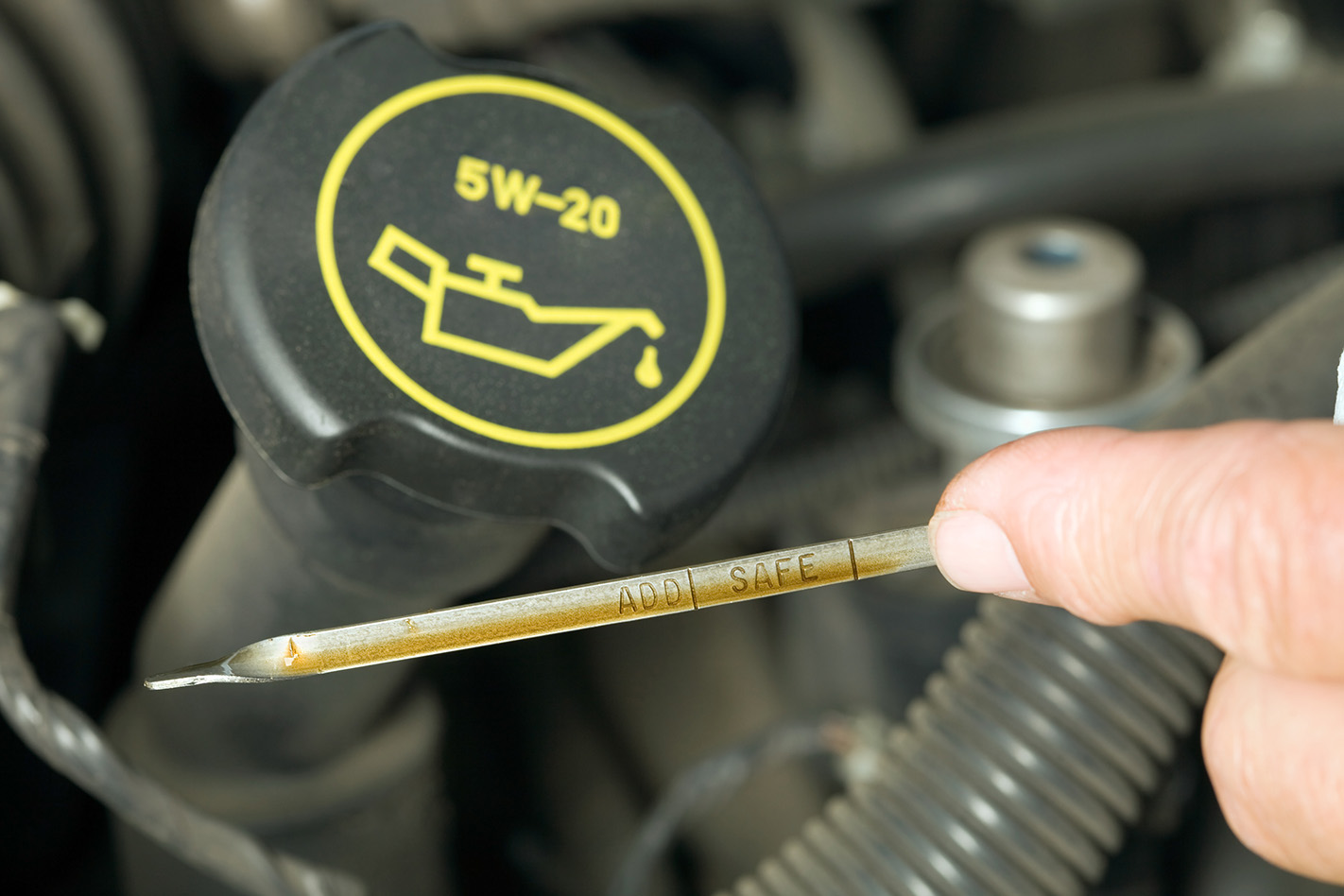
If you need more oil, check your owner’s manual for the specific viscosity of oil your car requires or, if you don’t know what any of that means, simply ask the guys at your local mechanic or car-parts store.
Handy hint: The oil should be translucent – if not transparent – when you’ve wiped the dipstick. If it’s solid black, gluggy oil, top it up if needed then get it to your mechanic or service centre pronto to have an oil change performed.
Does the oil look red rather than yellow or dark brown? You may have pulled the dipstick for your automatic transmission instead, which will also be located somewhere within the engine bay. Once again, double-check your manual to make sure you’ve pulled the right stick.

5. FULLY CHARGED
If your car is as slow to start as you are in the mornings, it could be your battery – but don’t rush to replace it just yet. Lead-acid car batteries are electrochemical; they produce electricity through a chemical reaction. The panels in the battery need to be immersed in fluid, and depleted levels can pose a problem.
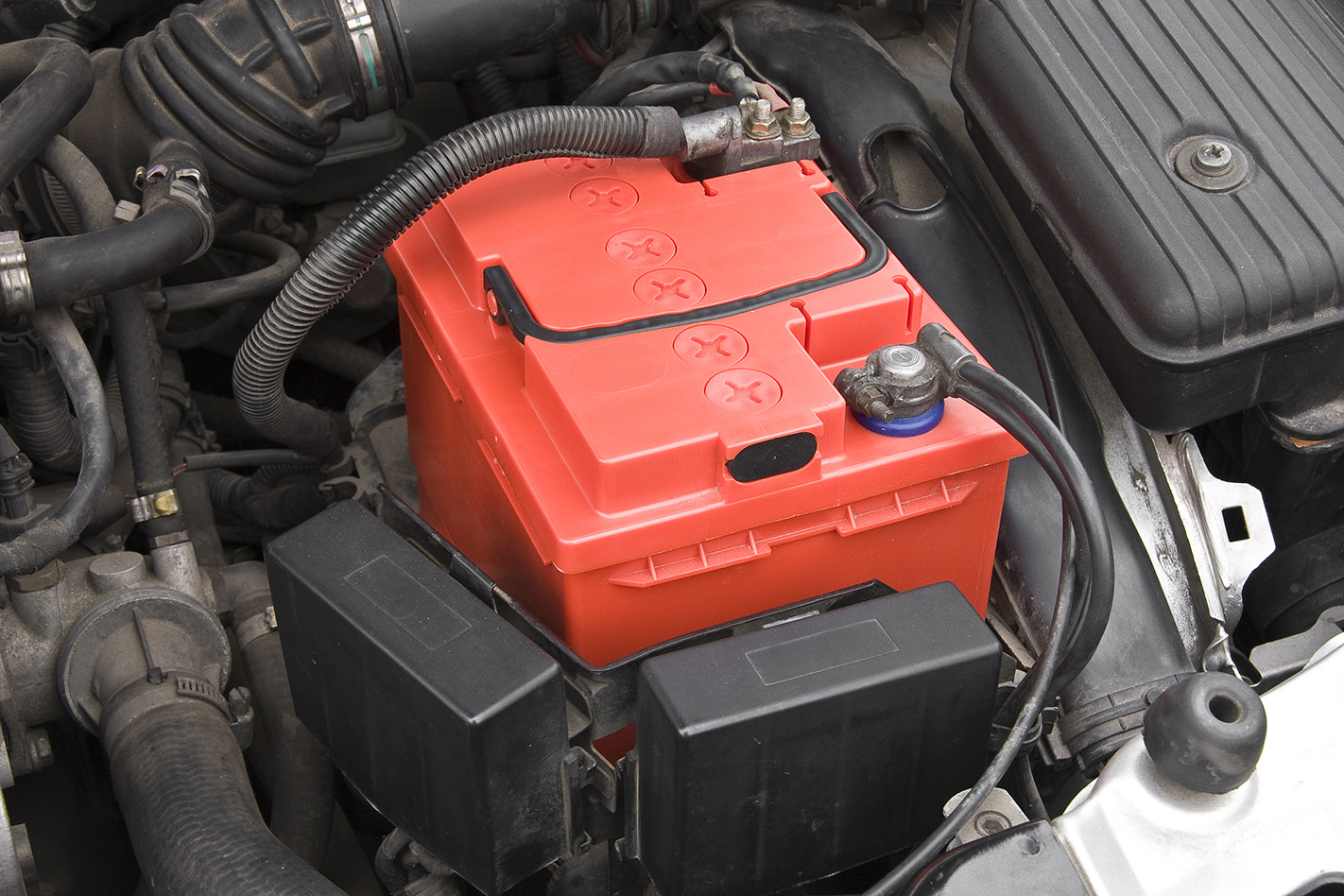
You can check these levels by unscrewing the caps on top of the battery (which you can see above marked with a cross) and making sure the water level inside is just touching the ends of the caps. If you need to top it up, use only demineralised/distilled water, and remove the two power cables (start with the black one before the red one) before you do so, taking care not to overfill the battery and spill acidy water everywhere.
Same goes for connections that have crudded up with white corrosive powder – disconnect the cables and give them a good clean.
If you aren’t comfortable doing any of these tasks yourself, find an old-school service station – service being the operative word here – and ask for assistance. The big auto stores will often help their customers after purchase for things like this as well.
Never be afraid to ask for advice, and if in doubt, go to your mechanic. Spending a little time here and a bit of cash there could save you a fortune down the road.
NEW ISSUE ON SALE NOW!
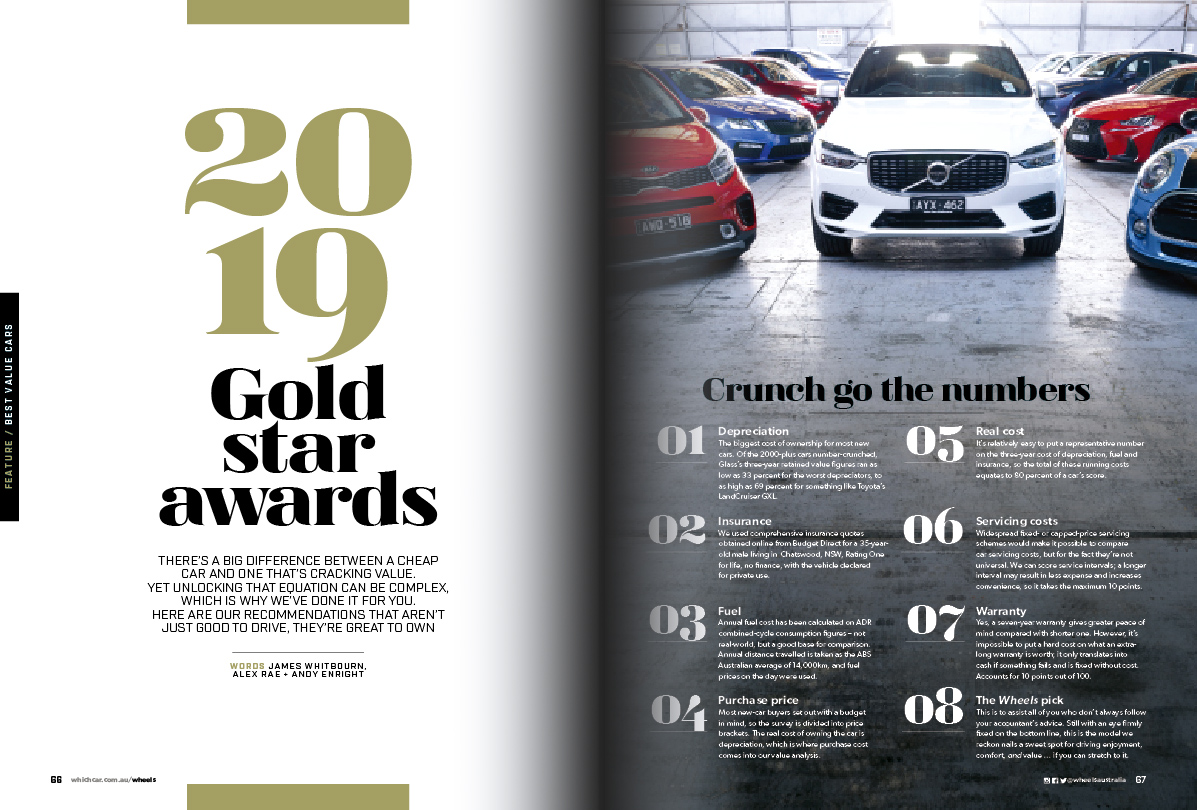
- AUSTRALIA’S BEST VALUE CARS:
- THE KIWI THAT REALLY FLIES:
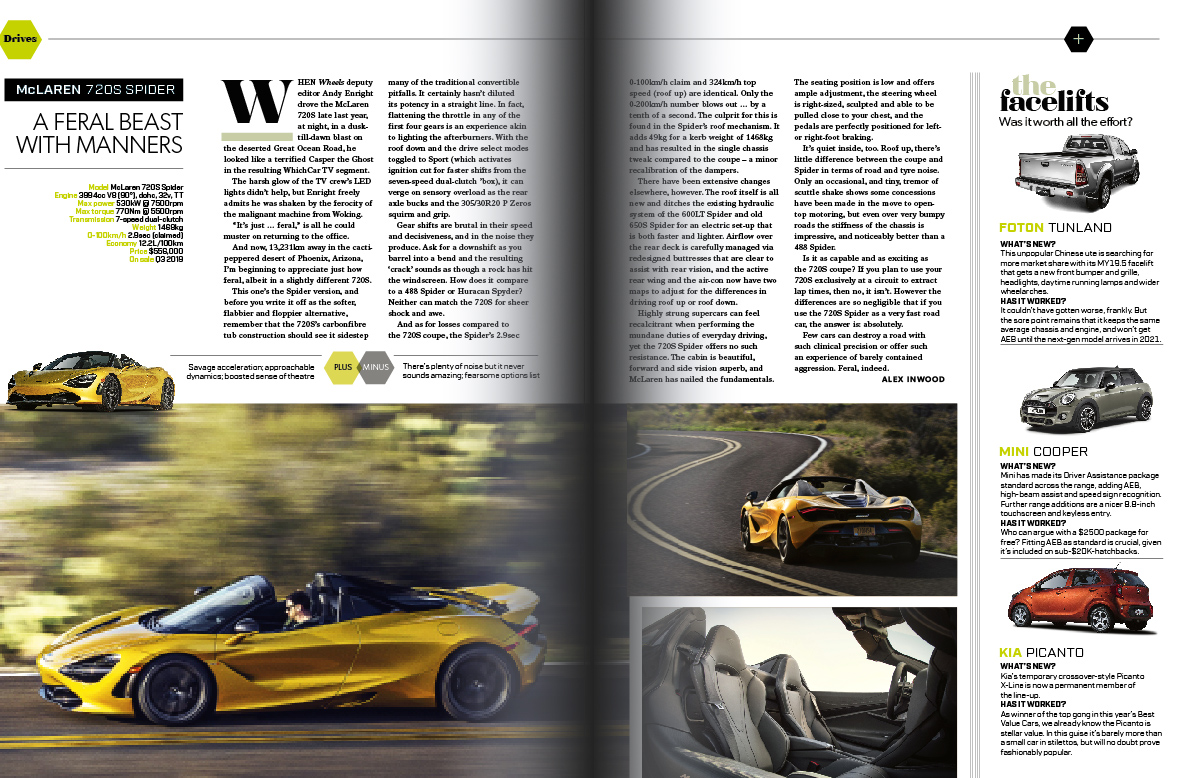
- McLAREN 720S SPIDER:
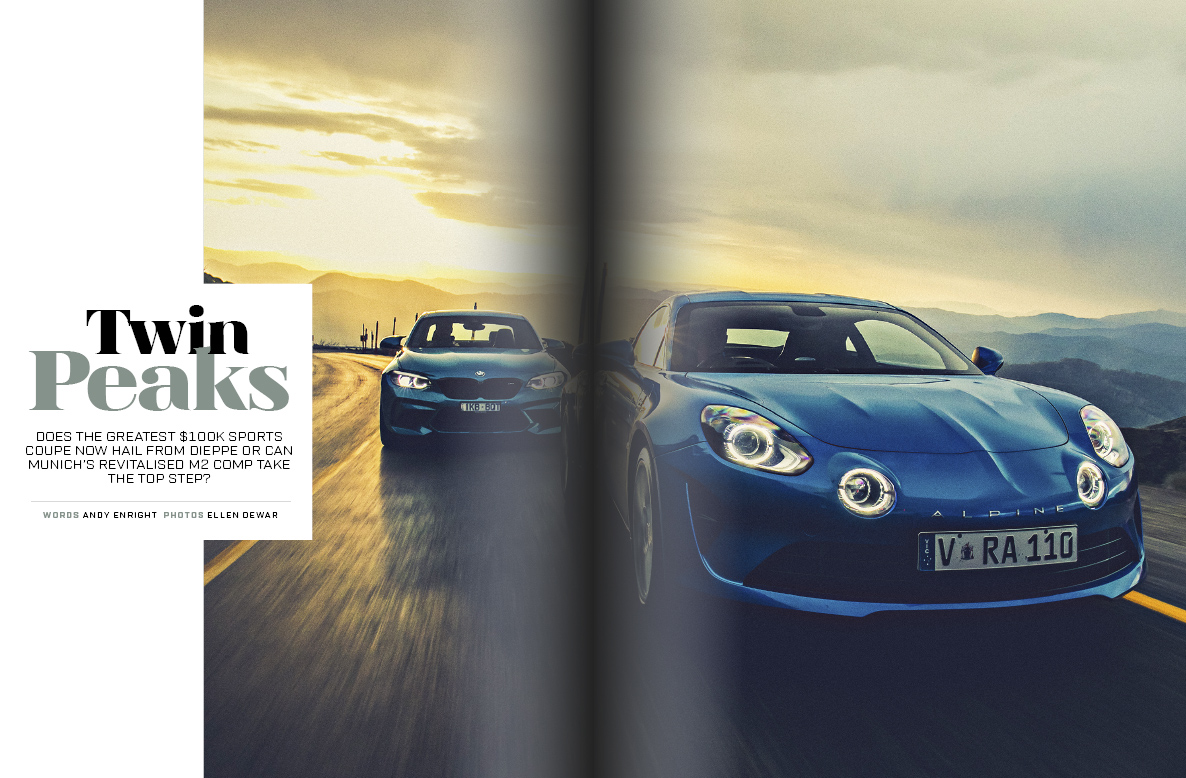
- ALPINE A110 VS BMW M2:
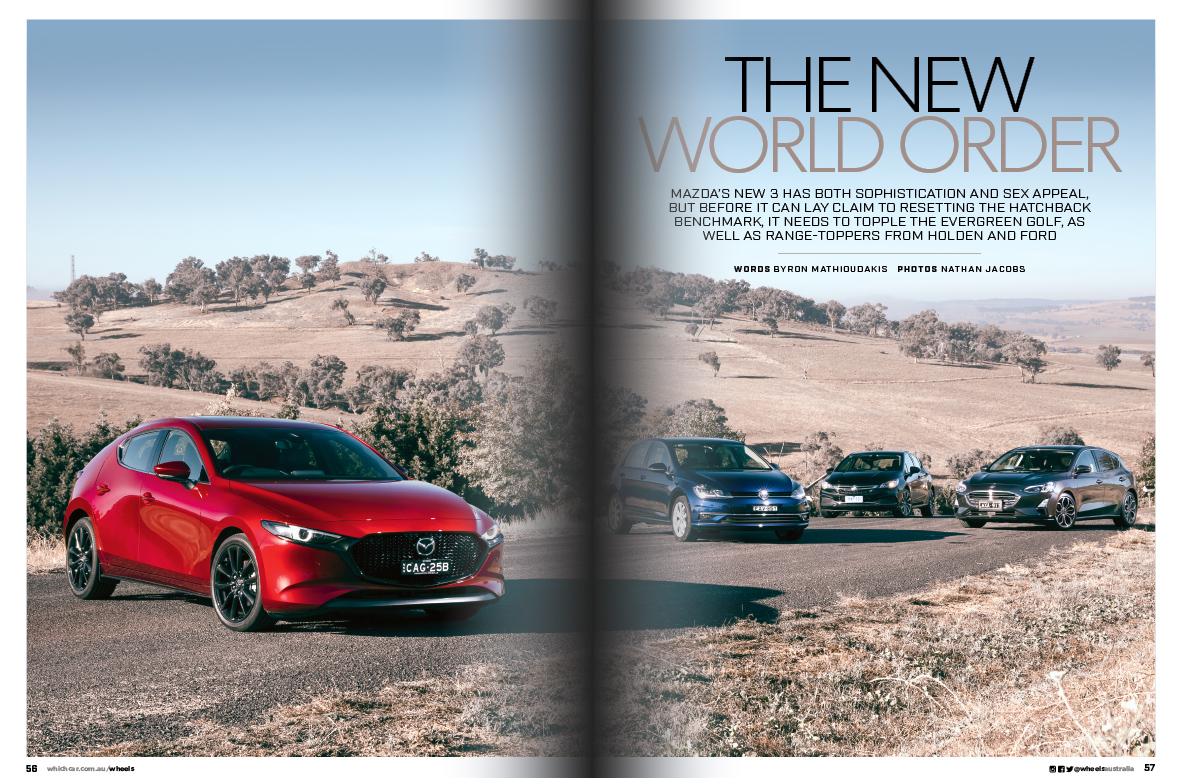
- MAZDA 3 VS RIVALS:
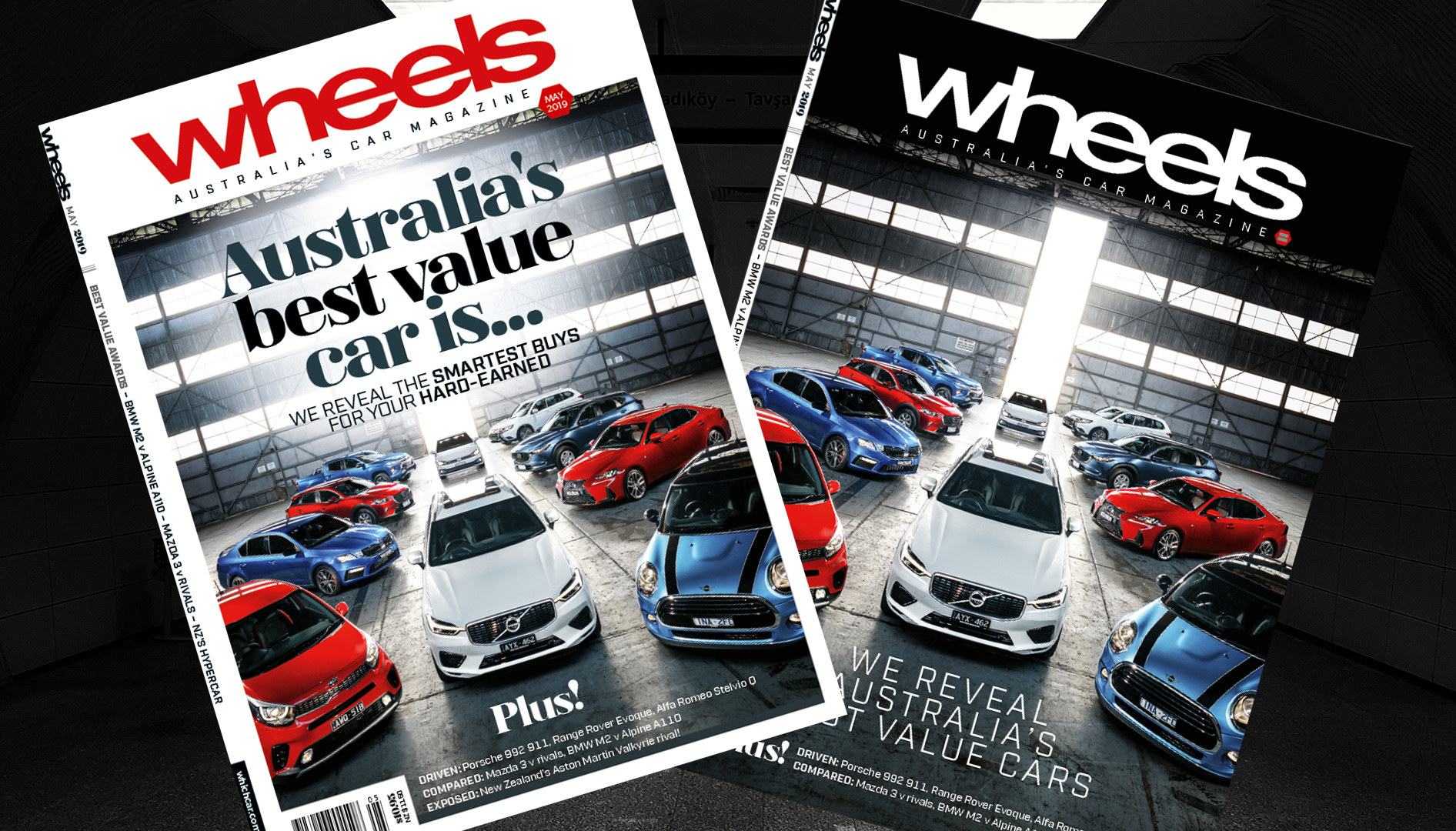
- AND MORE OF THE BEST NEWS, REVIEWS AND LONG TERM TESTS AROUND
Get your digital copy here or pick up a print subscription via Magshop
What’s in the garage?
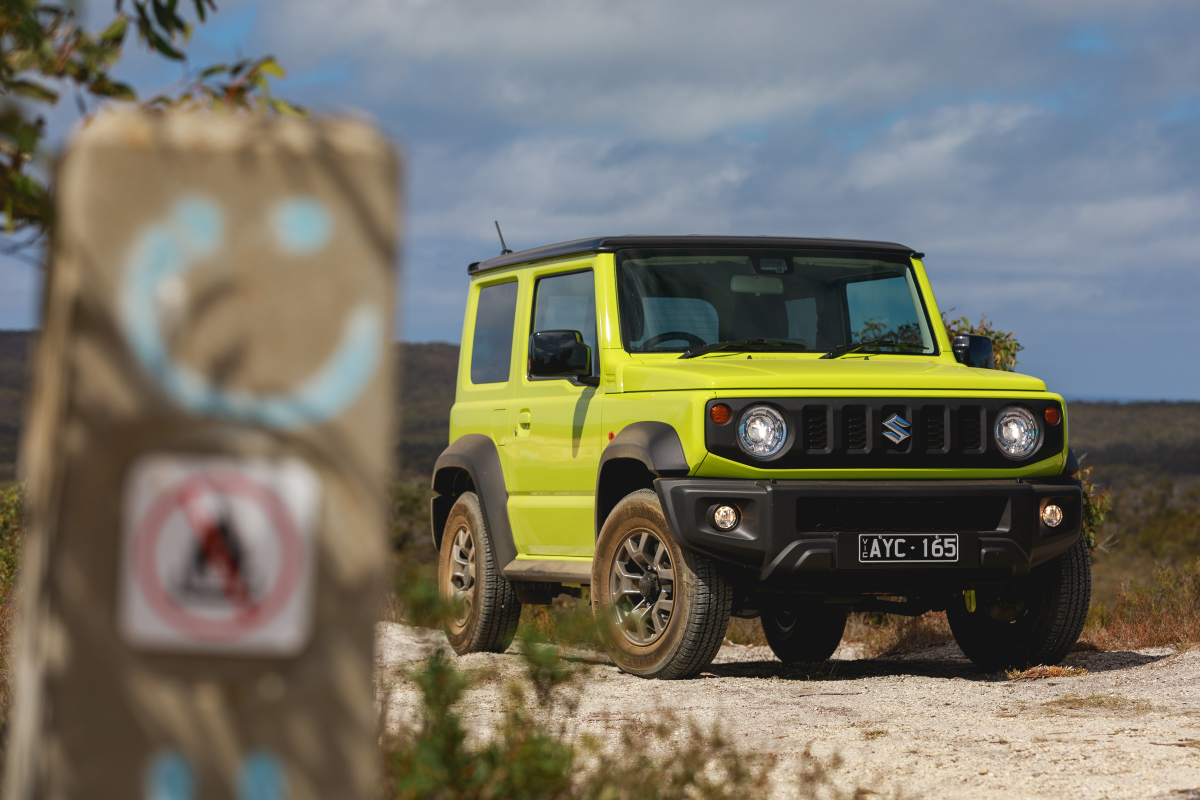
Wheels subscribers and regular readers might recognise this boxy, bright green Suzuki Jimny that’s been a staple of our long-term review updates. Having been around the block a few times at the office even the janitor has a good read on what the Japanese brand’s fourth-gen four-by-four is like.
What we reckon

Cameron Kirby
Staff Journalist
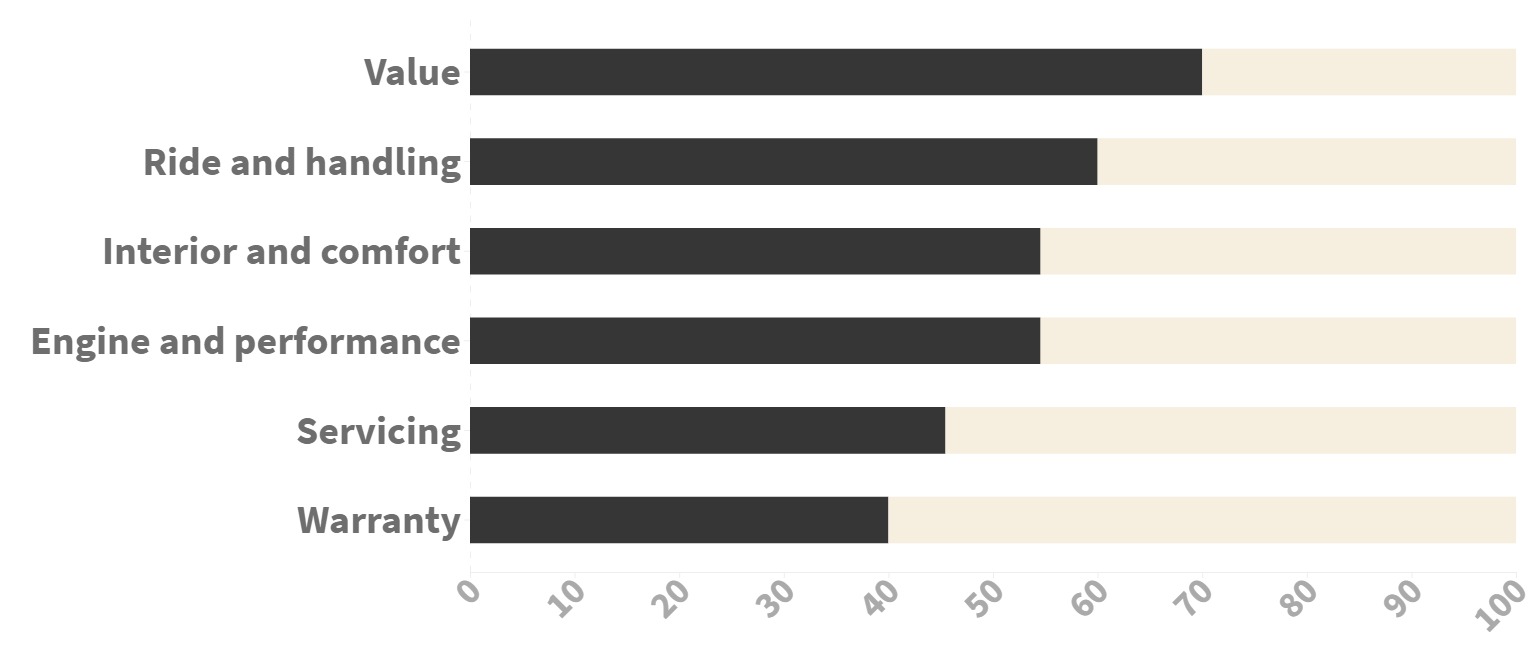
| Outside of ostentatious supercars, few cars grab attention on the road like the Suzuki Jimny. Its ability to turn heads means you’ll be the centre of attention whether you are driving to the shops or heading bush. Despite its immense off-road capability, the little Suzuki is surprisingly adept in an urban environment thanks to a tight turning circle and short length. However, the ride is busy, and highway driving is best reserved for short bursts only. |

Andy Enright
Deputy Editor
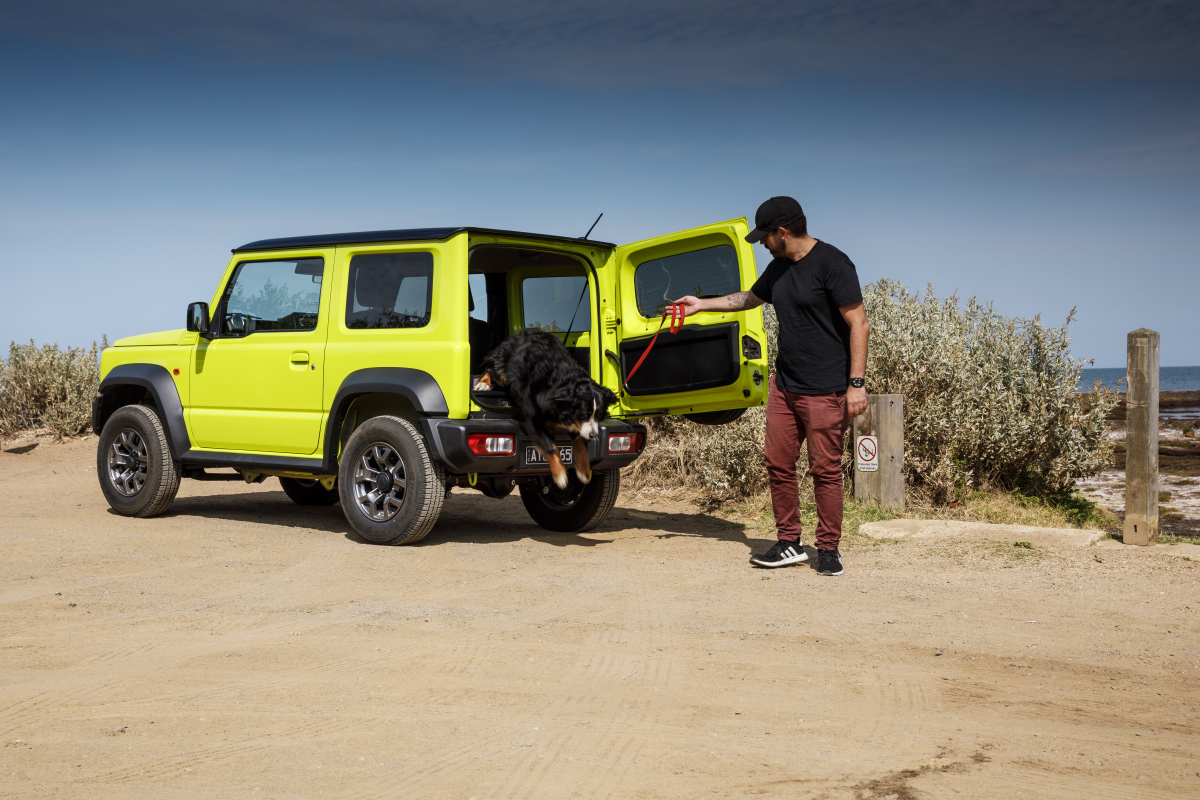
| The Jimny has so many objective faults, yet so many seem to love it. Can you imagine if a mainstream hatchback had this many shortcomings? The press would undoubtedly slaughter it. It may be divisive, but I’m still on the ‘love’ side of the ledger. It’s too much fun not to paint a giant, dopy grin on your face. One change I’d want to make right away is to cover the back of the seats in some kind of flock or carpet. I drive with them folded down and the hard plastic is shinier than Tom Cruise’s chiclets, sending bags and dogs skidding all over the place with any minuscule application of throttle, brake or steering. |

Alex Rae
Online Editor
| Suzuki’s retro-cool Jimny offers a lot for little money, if you can live with some compromise. While it’s easier to enjoy as a rough-and-ready weekend car than an everyday commuter, its modern touches, safety tech and surprisingly forgiving ride make it a worthy upgrade for many four-wheel-drive enthusiasts with just the one car. Roof racks with a crate would be top priority for increased cargo capacity, though, which is hard to live with on a long trip. |
Specs and compared to rivals
| u00a0 | Suzuki Jimny | Toyota LandCruiser 70 Workmate | Jeep Wrangler Sport S |
| Price | $23,990 | $63,740 | $48,950 |
| Engine | 1.5L 4cyl | 4.5L V8 turbo | 3.6L V6 |
| Output | 75kW/130Nm | 151kW/430Nm | 209kW/347Nm |
| Transmission | 5spd MT | 5spd MT | 8spd AT |
| Fuel | Petrol | Diesel | Petrol |
| Efficiency (combined) | 6.4L/100km | 10.7L/100km | 9.6L/100km |
| Drivetrain | 4×4 | 4×4 | 4×4 |
| ANCAP rating | 3 STAR | NA | 4 STAR |
| Warranty | 3 years/100,000km | 5 years/unlimited | 5 years/100,000km |
| Service Interval | 6 months/10,000km | 6 months/10,000km | 12 months/12,000km |
| Seats | 4 | 5 | 4 |
| Wheel size | 195/80 R15 | 225/95 R16 | 245/75 R17 |
| Boot space | 85L | 720L | 197L |
| Length | 3480mm | 4870mm | 4334mm |
| Width | 1645mm | 1790mm | 1894mm |
| Height | 1720mm | 1955mm | 1821mm |
| Wheelbase | 2250mm | 2730mm | 2459mm |
| Weight | 1095kg | 2275kg | 1762kg |
| Towing capacity braked | 1300kg | 3500kg | 1497kg |
| Front suspension | live axle | live axle | live axle |
| Rear suspension | live axle | live axle | live axle |
| Country of origin | Japan | Japan | United States |
Review
Power and performance
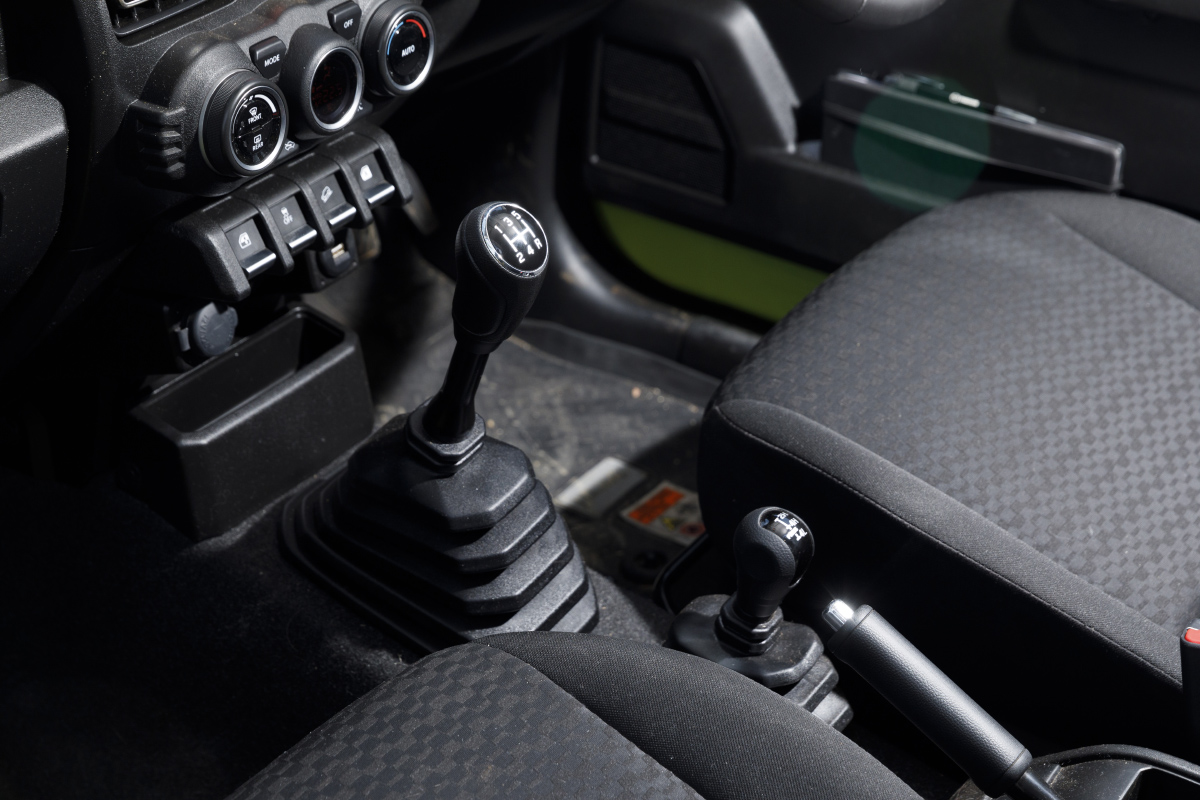
A small 1.5-litre four-cylinder petrol engine with lowly 75kW and 130Nm output figures is nothing to write home about, but with a featherweight 1095kg performance on the scales the Jimny doesn’t need much oomph to get moving. Still, it feels leisurely accelerating above 60 km/h and needs to rev to make the most of its power. It’s not a car to be in a rush with, but it does have an energy about it that’s pleasing when schlepping along, and the long-throw five-speed manual transmission is nevertheless positive in its action and engaging to use. Below that is an old fashion shift lever for selecting part-time two-wheel-drive (rear), locked 4×4 high and locked 4×4 low range.
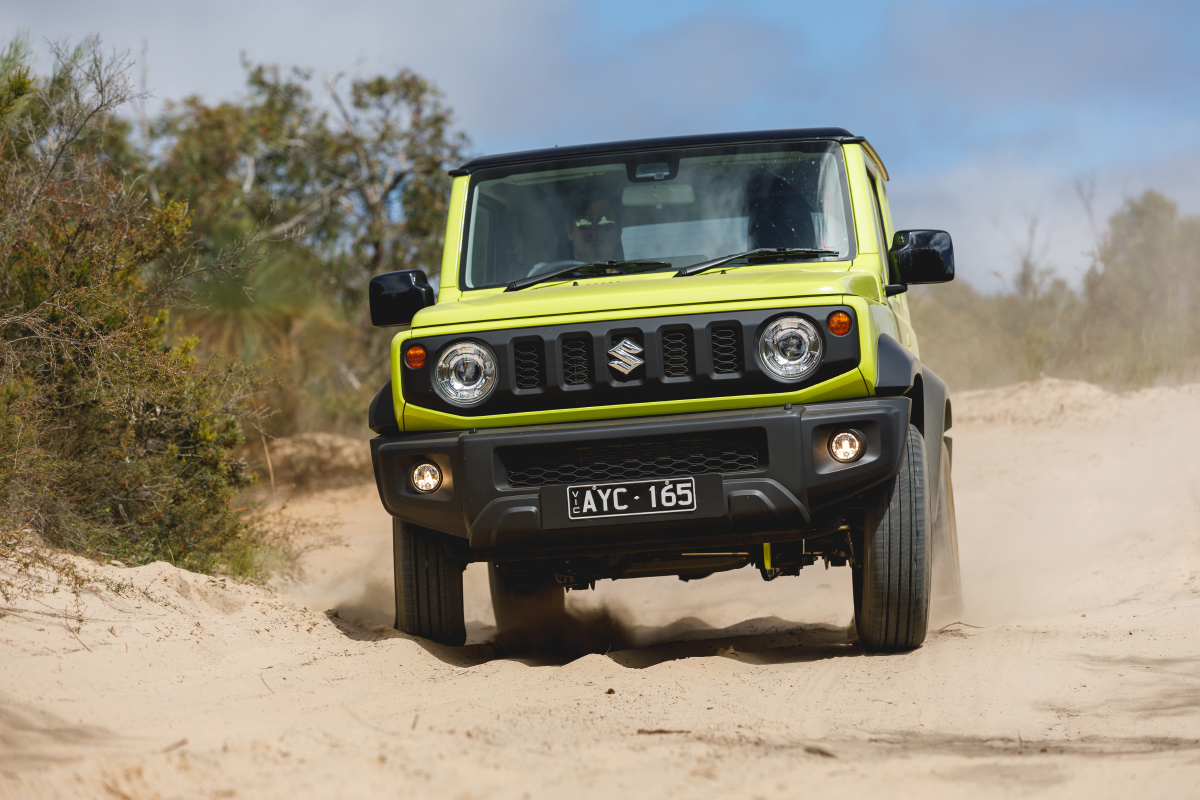
Off bitumen and with four-wheel-drive engaged, the power delivery feels well-judged and it’s enough to scrabble on just about anything suitable to the car’s 210mm ground clearance and skinny 195mm wide road-biased rubber. And it’s probably more than apt to push on harder with some suitable mods to get really serious.
Ride and handling
Built on a ladder-frame chassis with front and rear live axles, the Jimny’s solid off-road credentials compromise some of its on-road compliance. But given there is a lightweight body on top it feels relatively light on its feet. It’s not a loud, clunky four-wheel-drive by any means. Small dimensions and light but direct steering provides an almost comically tiny turning circle that’s better than many city hatchbacks, placing the Jimny as the perfect urban dweller cum weekend warrior. Tip it into a corner at speed, though, and the softly sprung body begins to feel uneasy. It’s also very susceptible to a bit of rock and roll in crosswinds on the highway.
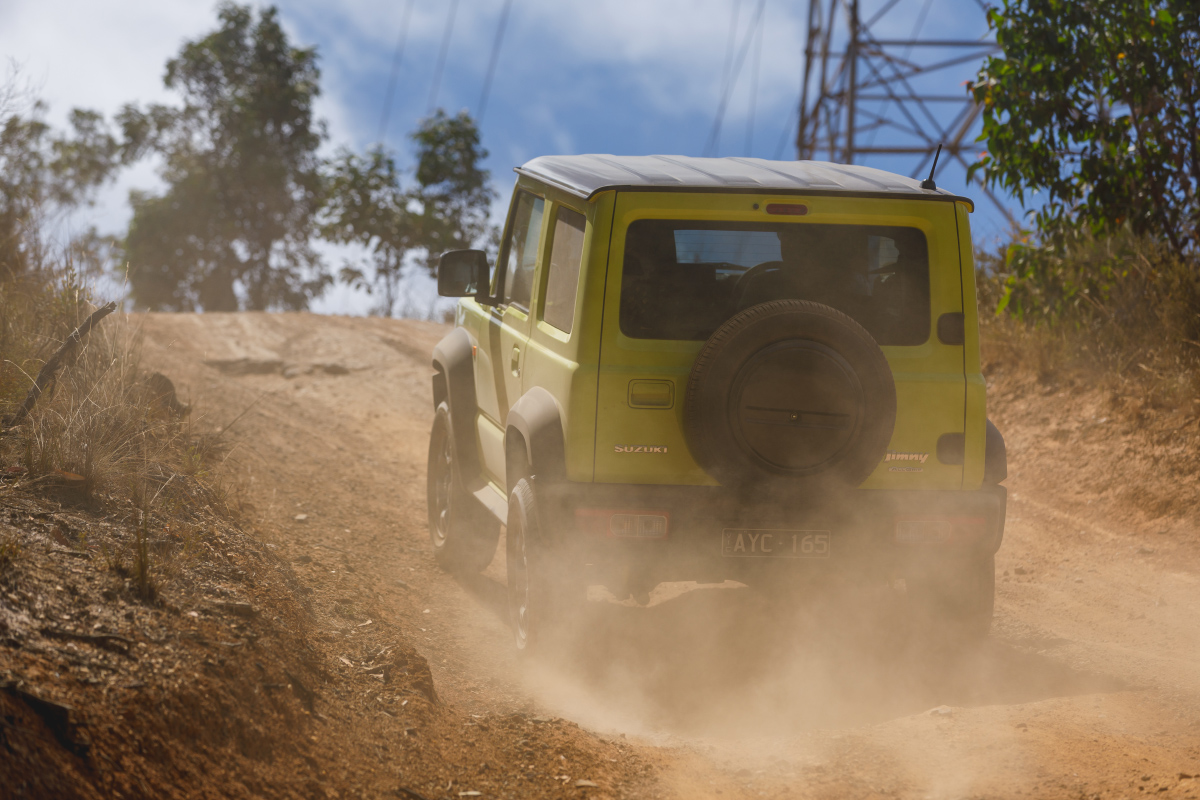
Low gearing in the manual transmission helps when climbing off-road and crawling along rocks but it does need some momentum to get over bigger obstacles and bumps, which in turn gets pretty bouncy on the soft suspension. In this situation a larger off-roader with longer wheelbase and wider tyres cruises along, but as long as you’re fine with being bumped around a bit, the Jimny’s a very capable 4WD with excellent vision out of the cabin.
Interior and comfort
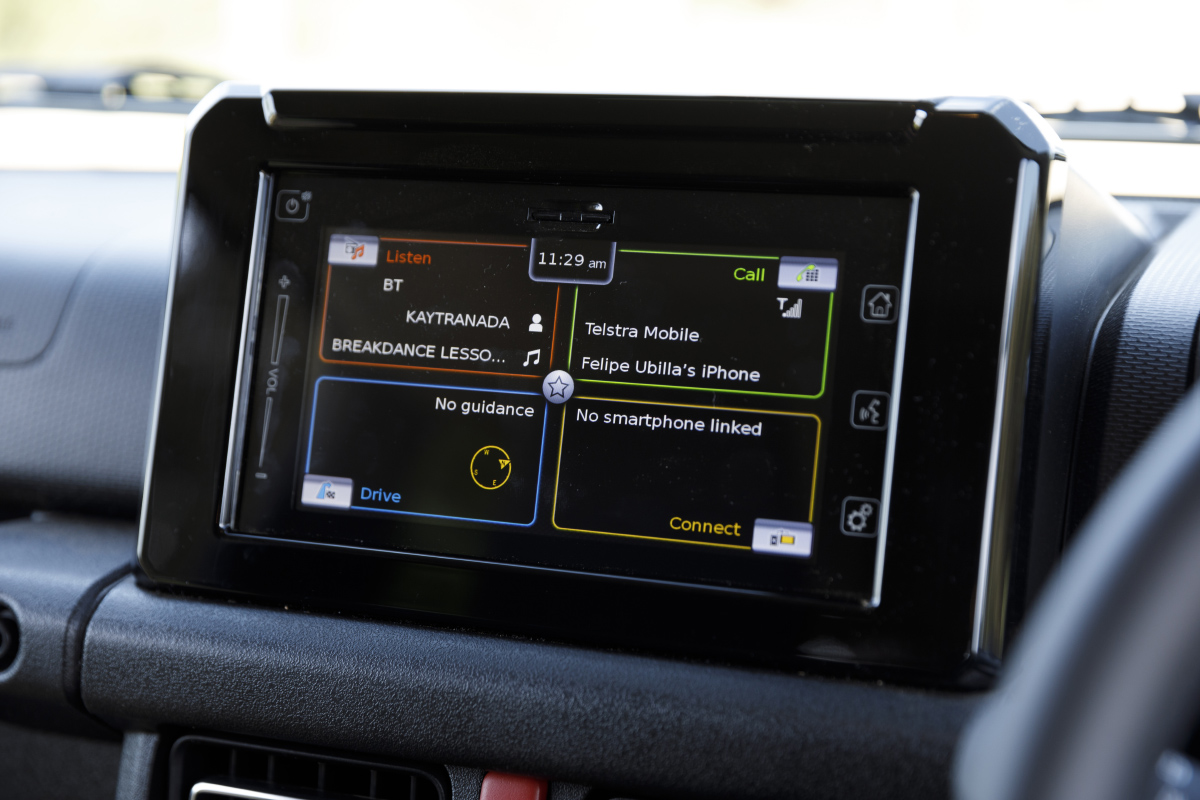
Mirroring the boxy retro styling outside, the interior feels plucked from the 1970s – in a good way. There’s a dash of modernism, such as the 7.0-inch infotainment system with sat nav, Apple CarPlay and Android Auto (but only two front speakers), and automatic electric windows and climate control bring convenience to what is a sparse but rugged cabin.
The front seats are simple and supportive, whereas the rear two pews are thin fold-flat supports that will likely serve most time out of the way so that the diminutive 85L ‘boot’ can claim some extra space. At least the seats are ISOFIX compatible and there’s decent legroom for small kids.
Scoring
Verdict
As a logical choice in the new car market, it’s doubtful the Jimny’s numbers stack up well against most vehicles; it’s simple, nuts and bolts transport that feels behind the times. But heart over head, you’d be hard pressed to find a better choice for something that has the same vibe and panache at such a price point, and one that goes where not many new cars can.
The Wheels Verdict: The Chevrolet Camaro 2SS gets a little more polish, but doesn’t change its fundamentals too markedly. The facelift has improved its liveability, the 10-speed auto is a step on, and the addition of a manual gearbox to the Camaro line-up will have new fans lining up. It’s still hard, fast and angry and worth every brass cent of its eighty-odd grand price sticker.
WHAT IS THE CHEVROLET CAMARO?
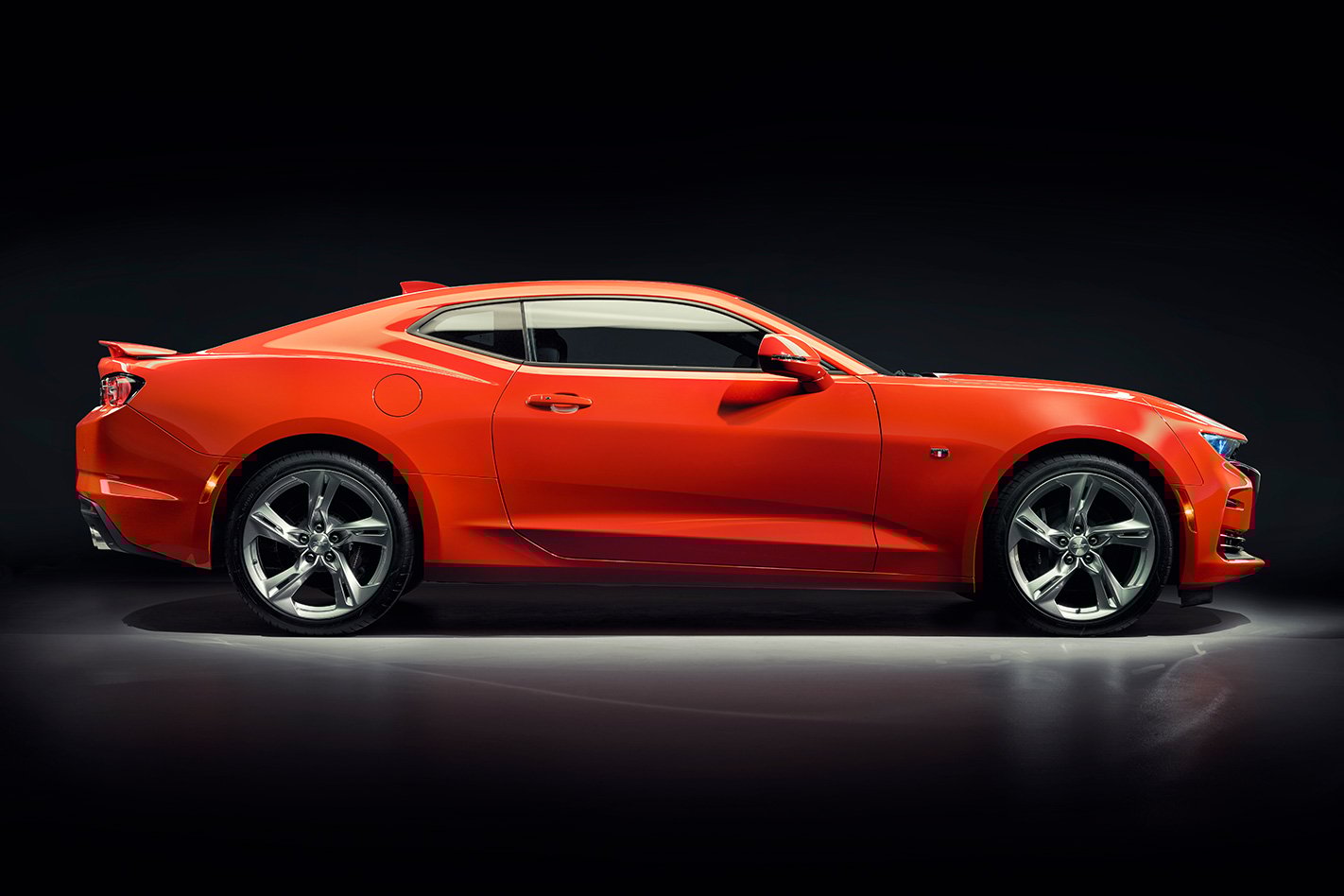
We got our first taste of an official right-hook HSV Camaro late last year, and as much as we enjoyed it, our enthusiasm was slightly tempered by the fact that a newer version was on offer in the States. Well, that facelifted car has finally made it across the Pacific and Aussie buyers now have a much harder decision when choosing whether to buy a 5.0-litre Mustang or go large on a 6.2-litre Camaro.
WHY WE’RE TESTING IT
We were already impressed by HSV’s engineering in the 2018 car and were keen to see how the 2019 Camaro would shape up. Although the engine and suspension have been left largely unchanged, a lot of interior updates, revised styling and a box-fresh 10-speed automatic (with a manual on the way) had us itching to grab the keys.
CHEVROLET CAMARO 2SS REVIEW
You’re joining us here halfway through a series. If you’ve been watching from the start, you can ignore this paragraph. For everybody else, here’s a very quick recap. The Chevrolet Camaro was never sold in right-hand-drive form. Holden sat on its hands for an eternity before HSV decided to pitch its hat into the ring for the car. GM said yes, and Clayton took delivery of a limited run of Argentinian-spec 2018 cars in effect a proof-of-competence exercise to show Detroit that it knows what it’s doing in the conversion from left- to right-hand drive. The big office was clearly impressed with HSV’s handiwork, because as a reward, Australia’s now getting a run of the latest and greatest Camaros. This updated 2019 car has made some significant strides forward.
To whit, there’s now a choice between a 10-speed auto, the guts of which are shared with the Mustang, and a six-speed manual, available from June. The LT1 engine hasn’t really changed, still developing a chunky 339kW/617Nm, but should you hanker after more, a $159,900 supercharged ZL1 is also on offer and that serves up 477kW and 881Nm of good ol’ LT4 aggro. File that under ‘fit for purpose’.
We’re driving the 10-speed automatic today, equipped with launch control and line locker functions, as well as the delightfully self-explanatory Lift-Foot Gear Hold technology. The six-speed manual will also get launch control as well as active rev matching, so that if you can’t manage the perfect heel and toe downshift, you can always fake it.
Why it costs $85,990 in Australia
The bad news first. The two most significant dynamic shortcomings of the old car, namely ride quality and steering feel, haven’t been addressed. The ride is still fairly busy on its passive dampers and the steering never quite weights up as you’d like. There’s a curious stiction to the nicely thin-rimmed wheel about the straight ahead which lulls you into thinking that it’ll require some biceps to haul through a tight corner, but as soon as you get a few degrees off-centre, it feels as if you could be steering a Corolla. The steering is accurate and you get used to its quirkiness, but it’s not the most communicative front end. It is endowed with huge lateral grip though, and you soon learn to build your faith, although the mechanical limited-slip differential can nevertheless allow torque to bleed away through an unweighted rear wheel. Odd.
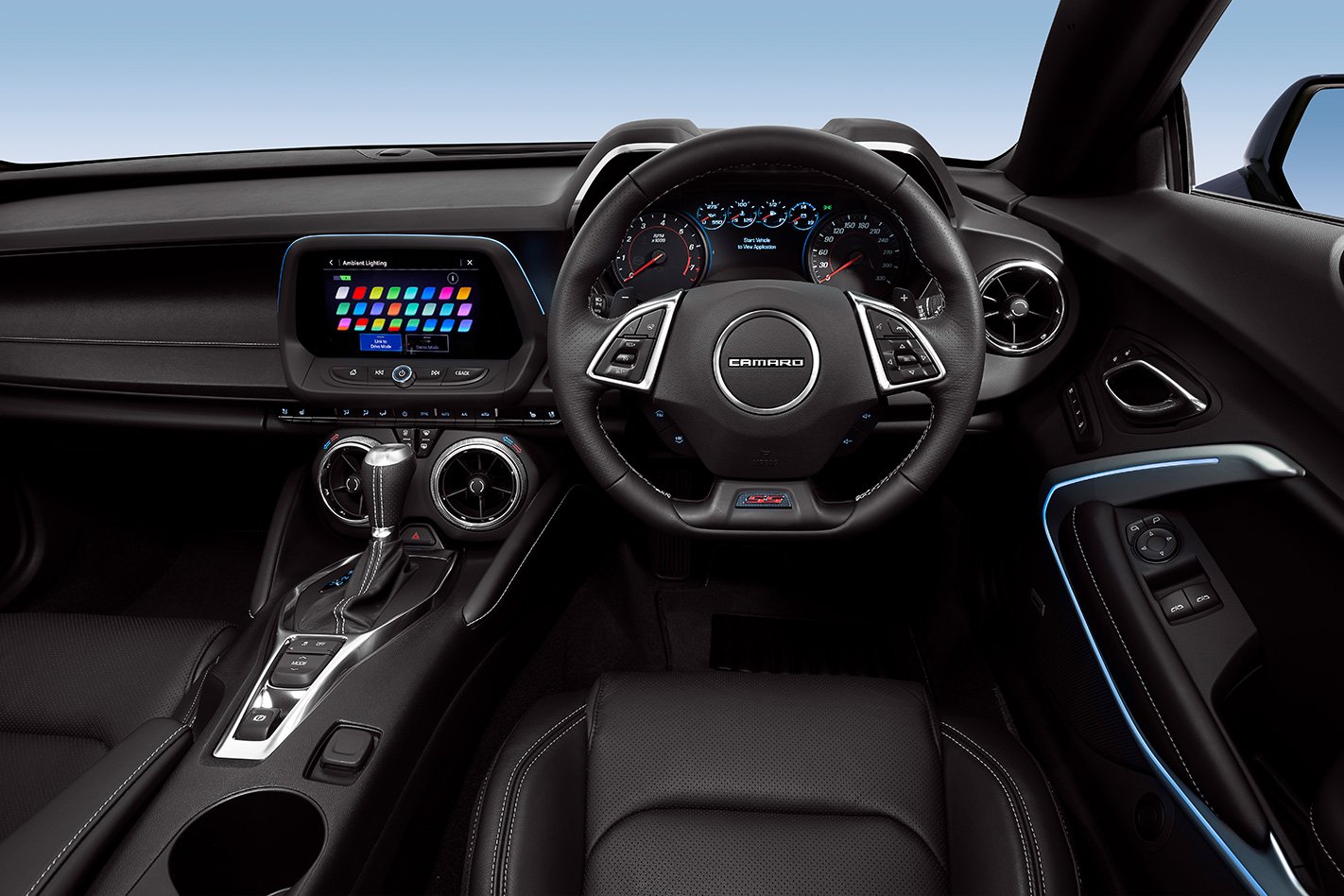
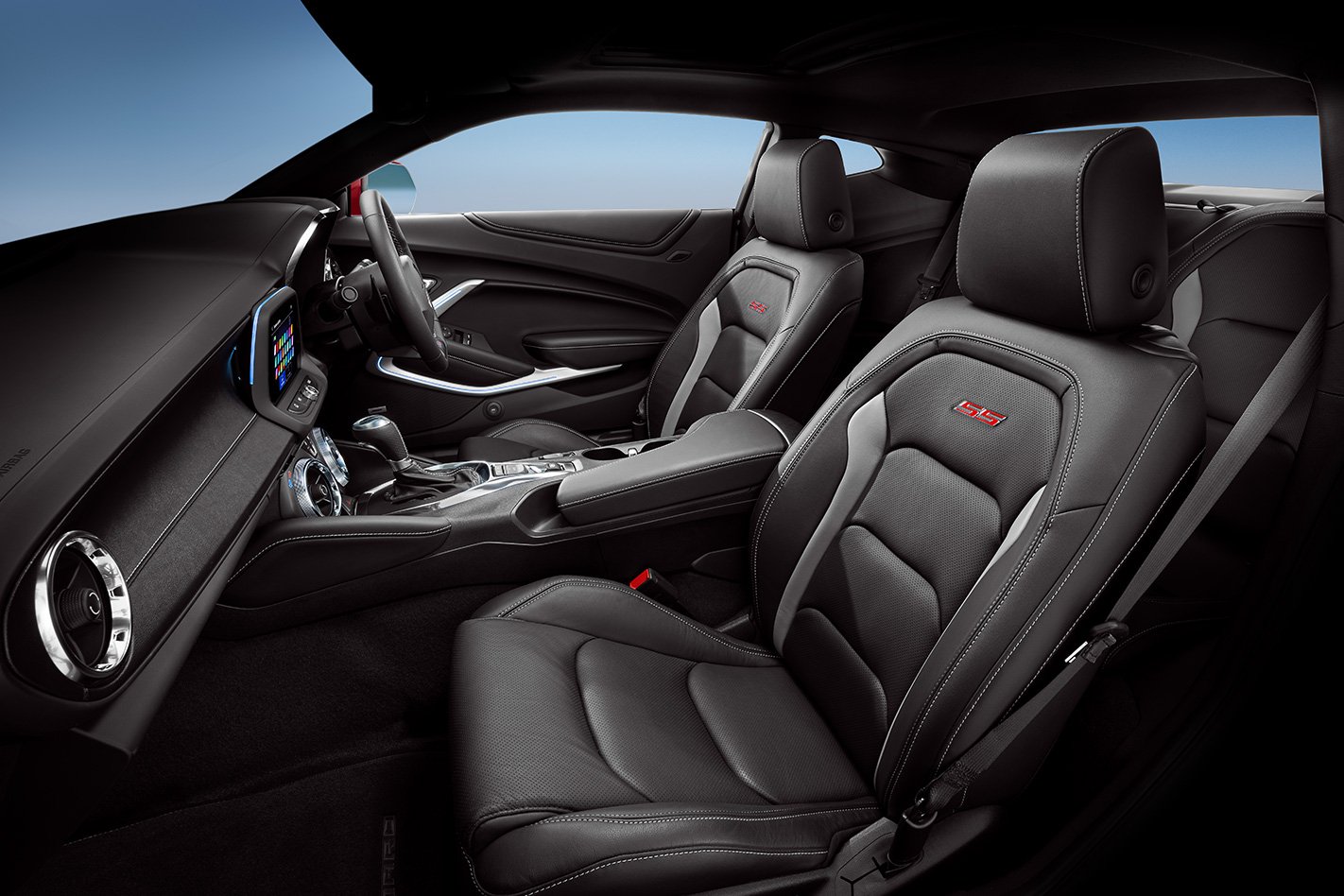
One plus point to riding on steel springs is that you can routinely use the racier Sports and Track modes on Aussie B-roads without the suspension firming up to such a degree that you find yourself switching back to Tour mode. The head-up display that HSV found impossible to convert in the old car makes an appearance in this 2019 vintage, so you can now tell how fast you’re going, and some of the stress is taken out of parking manoeuvres with a better camera system. Forward Collision Alert and an updated infotainment system are welcome additions too. Kids will love the ambient lighting choices, and you can bet your bottom dollar that at some point you’re going to be driving around in this malevolent monster with My Little Pony pink interior lighting.
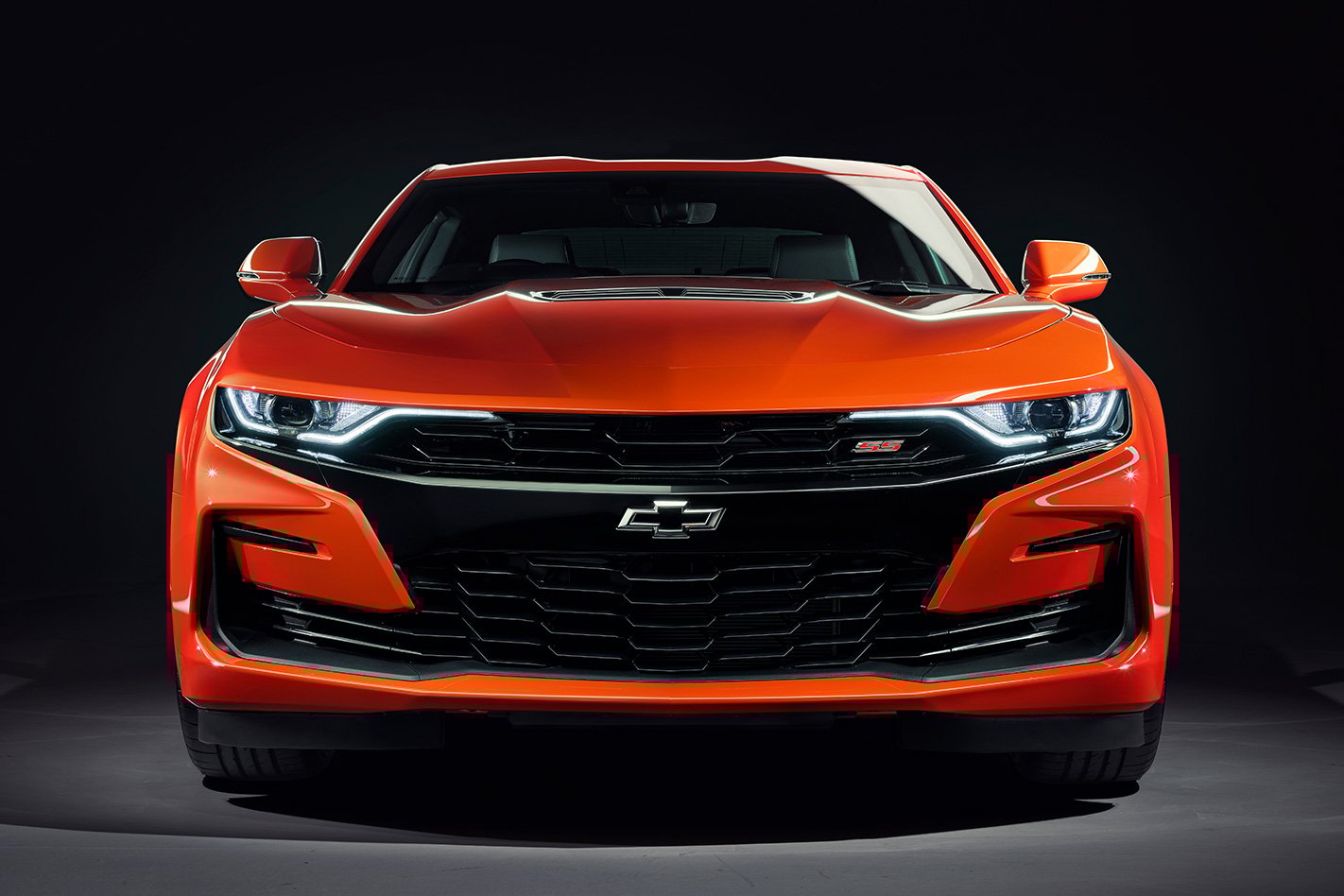
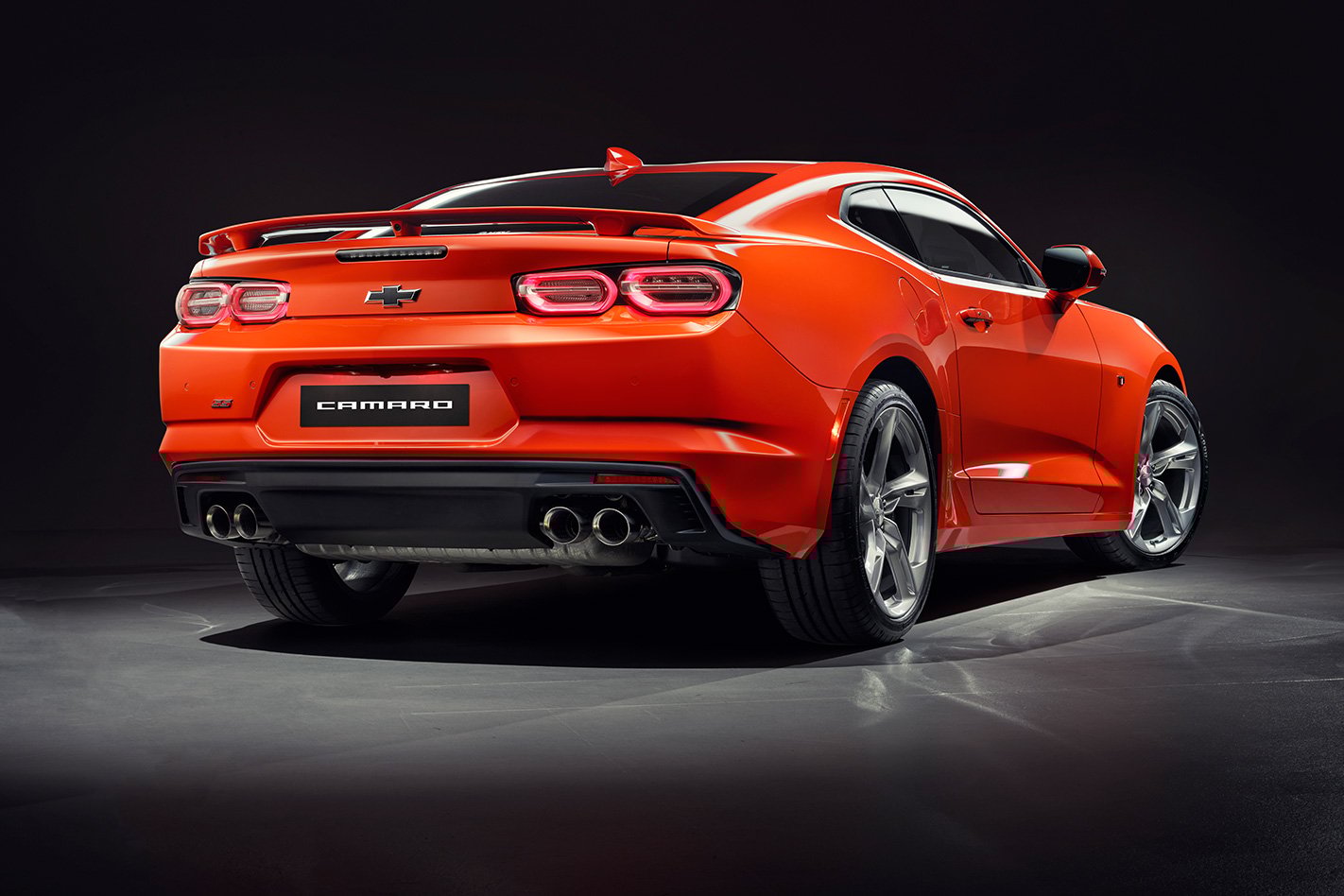
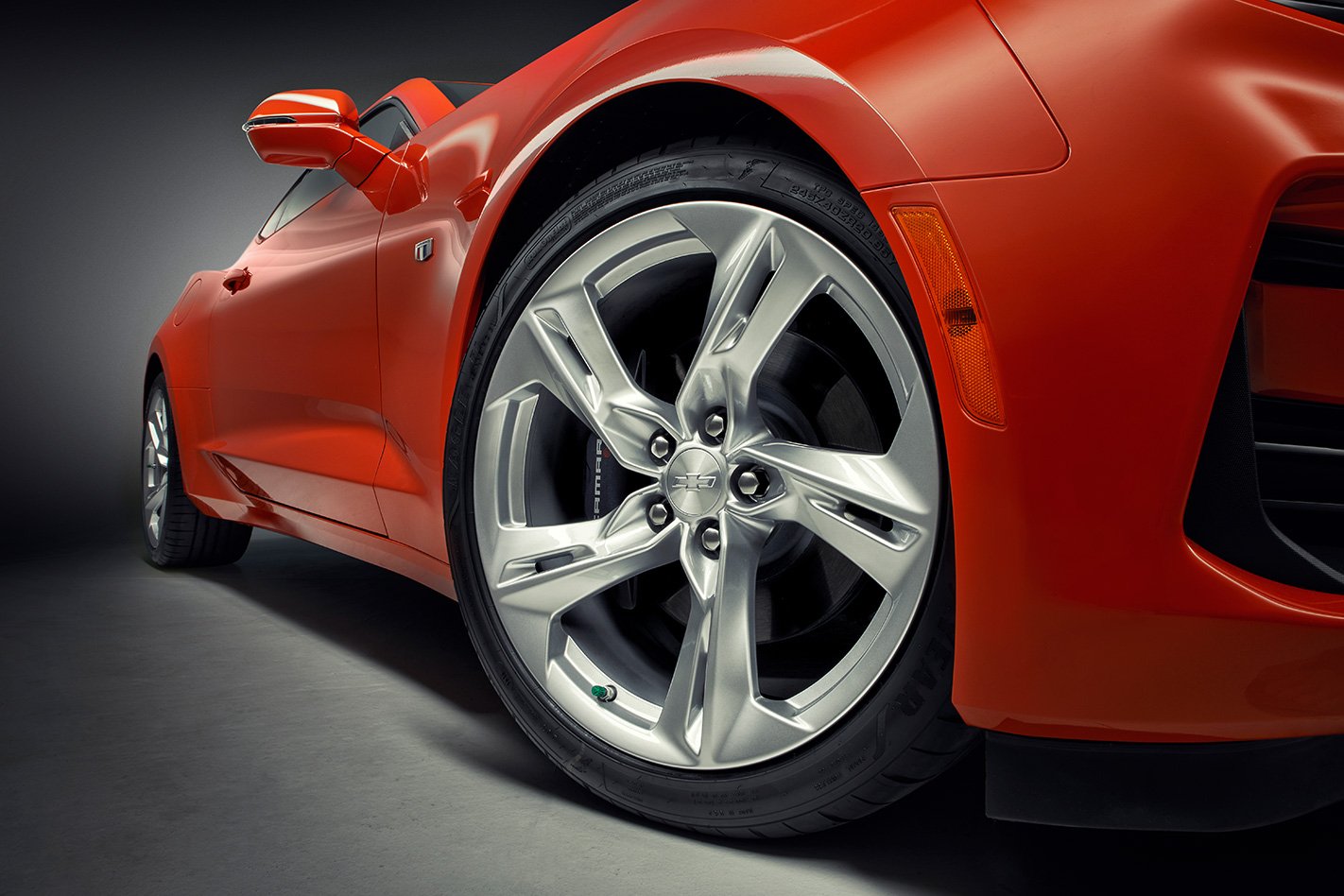
The styling updates work a lot better in the metal than they first appeared. We wondered whether the front end was now too fussy, but the dual-element LED headlights and the functional extractor-style hood just give the car more visual menace. The new ‘squircle’ rear lamps and five-spoke 20-inch alloys are also an improvement, as is the fact that these US-market cars now no longer come as standard with a headroom-robbing sunroof as standard, unlike their Argentine predecessors. Brembo brakes, a Bose stereo and Recaro seats point to the fact that Chevrolet hasn’t skimped on quality fitments for the 2SS.
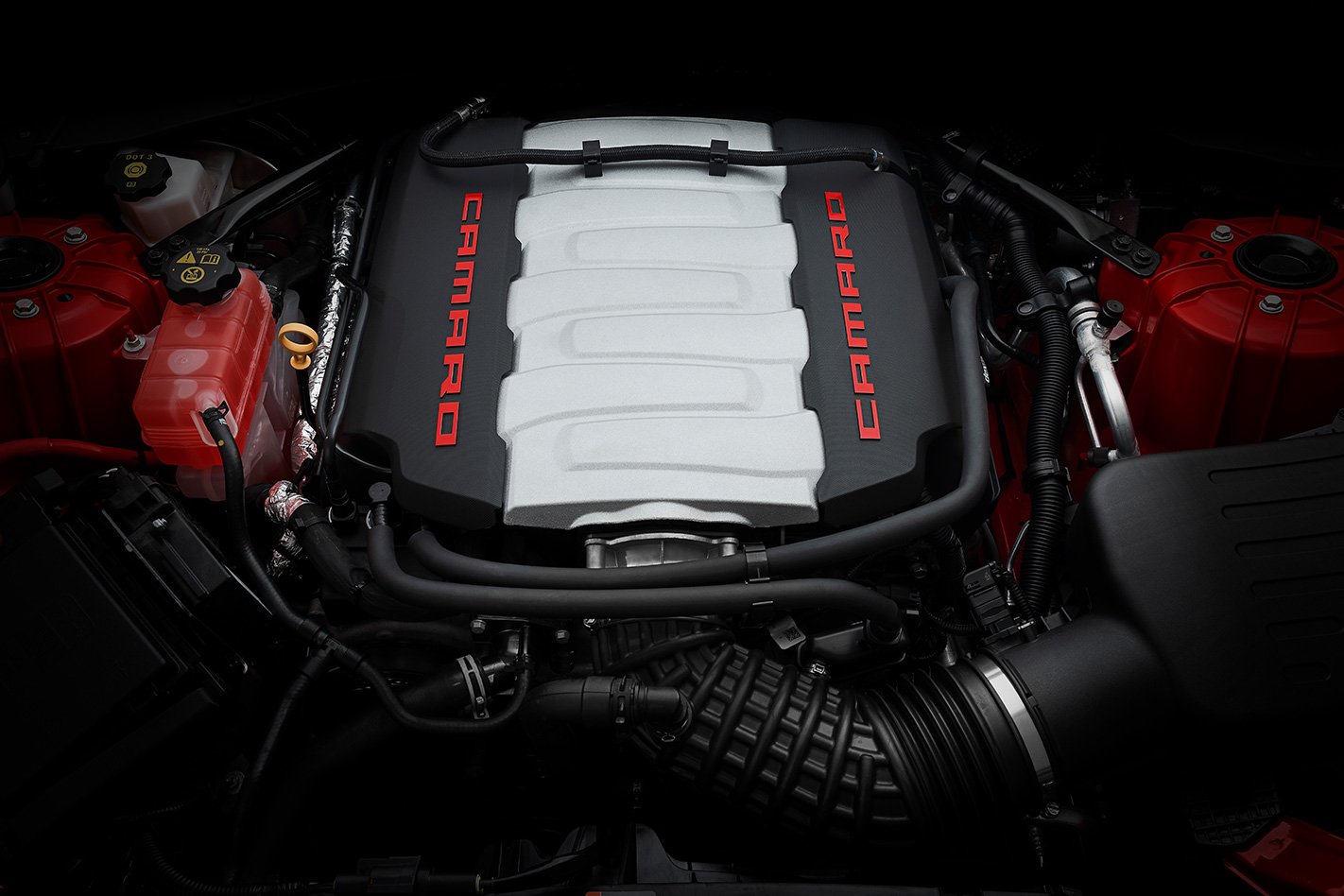
There are some Camaro idiosyncrasies that you need to get used to, like the LHD centre console, with its poorly placed cupholders and illuminated gear selector panel on the wrong side of the selector. Likewise the lack of interior stowage, no standard-fit sat-nav and lazy parking pawl for the auto ’box take a little shine off an otherwise well-finished product. Prices start at $86,990 for a manual model, with the auto version weighing in at $89,190. That’s still $23K more than a Mustang V8, but if you feel the Mustang buzz has palled somewhat, the updated Camaro offers formidable bang for your buck against the best of the rest.
CHEVROLET CAMARO 2SS VS RIVALS
Ford Mustang GT coupe
The Mustang is notably different in feel to the Camaro, offering a softer-edged, more authentically ‘rock-on-the-springs-at-idle’ muscle car feel. The Camaro feels harder, faster and angrier, but the Ford’s easy-going practicality is certainly going to be easier to live with on a daily basis.
CHEVROLET CAMARO 2SS PRICE AND SPECS AUSTRALIA
- Model: Chevrolet Camaro 2SS
- Engine: 6162cc, V8, ohv, 16v
- Max power: 339kW @ 6000rpm
- Max torque: 617Nm @ 4600rpm
- Transmission: 10-speed automatic
- Weight: 1710kg
- 0-100km/h: 4.0 sec (claimed)
- Fuel economy: 11.5L/100km (claimed)
- Price: from $86,990
- On sale: Now
