
We get the low-down on staggered tyre fitment from MOTOR Magazine’s Chris Thompson in the video above
Later, Dan gets behind the wheel of the muscular Hyundai i30 N to see if this hot-hatch newcomer is Golf R power for Golf GTI money and the high-performance car bargain of the decade.
In the ultimate test of strength and value, Dan then pitches the hottest Hyundai to date against not one, but eight of its closest rivals in an affordable performance car shoot out like nothing else.
Does the venerable Golf GTI reign supreme, can Honda’s incredibly sharp Civic Type R steal the show or perhaps a wildcard will come out of the blue?
See the full episode: Watch at tenplay.com.au (AU) or primetv.co.nz (NZ)
Noelle saddles up the Jaguar I-Pace to see if its purported 400km-plus pure electric range is a realistic real-world figure. Is it enough to put an end to so-called range anxiety, or a fantasy that leaves her stranded on the side of the road.
See the full episode: Watch at tenplay.com.au (AU) or primetv.co.nz (NZ)
HONDA is an industrial behemoth. Its market capitalisation at the end of 2018 made it the fifth most valuable car company in the world. In that same year it produced over five million cars, with only five car manufacturers shifting more metal. Those would be, in order, Toyota, Volkswagen, Mercedes-Benz, General Motors and Ford.
Yet here in Australia it’s a relative bit-part player, ranking tenth, climbing from twelfth two years ago. To put that local discrepancy into perspective, here in Australia, Honda (which ranks sixth globally), shifts less than half the stock of Mazda, a company that ranks 22nd in the world. All of which leaves you asking one question:
Why do Australians have such a complicated relationship with Honda?
It’s not as if the company has a lousy portfolio. But break down the portfolio into market segments and you begin to see why Honda has an issue. Take the booming SUV segment as an example. Here in Australia, Mazda markets the CX-3, the CX-30, the CX-5, the CX-8 and the CX-9. Five models across five niches, with everything from a sub-compact to a pair of hefty seven-seaters, with a choice of petrol or diesel engines, manuals and autos, front- or all-wheel drive. By contrast, Honda has the front-drive HR-V, available with one engine and a CVT transmission or the CR-V, again with just a CVT transmission and one engine, but in this case offering a choice between front- and all-wheel drive. The pair of them sell moderately well, contributing to Honda’s local sales record in June 2018, but individually these models don’t have the depth of choice to kick on towards the sales podium in their respective classes. A runner-up place for the front-drive CR-V VTI-L in this month’s Gold Star Cars for Australia’s best value vehicles (backed up by a podium for the Jazz Jazz VTi) demonstrates that the company’s best products are fundamentally punching in the right places.
Honda’s other five models are a mixed bag. The NSX supercar and Odyssey people mover contribute very little to sales numbers. Likewise the City sedan, which shifted 837 units in 2018. Even a clogger like the Suzuki Baleno can sell a couple of thousand units here in Oz, and you know you must be doing something very wrong when Mitsubishi’s ancient Lancer – a slightly larger vehicle but not dissimilar pricewise – outsells you eight to one. A cynic might well point out that Australians clearly value cheap cars over quality ones, but that still doesn’t help Honda.
That leaves its two respectable passenger car competitors: the Jazz and the Civic. The former was the fifth in its class last year, behind the Hyundai Accent, Mazda 2, Toyota Yaris and Suzuki Swift, while the Civic finished in sixth, behind Toyota Corolla, Mazda 3, Hyundai i30, Volkswagen Golf and Kia Cerato.
There’s no large SUV, there’s no dual-cab ute, there’s no proper 4×4, there’s no sedan and no affordable sports coupe or roadster. The frustrating thing is that Honda occasionally shows us what it can do when it really tries, with cars like the incredible Civic Type-R. That is a genuinely class-leading car, and it’s hard to argue that the NSX isn’t a brilliant technical achievement and a worthy halo model, yet for the most part, that engineering-led genius is sorely lacking across the range of cars that we get. But we can’t just let ‘Honda be Honda’ and hope for the best.
It was exactly this dogmatic attitude that saw Honda miss the rise in popularity of diesel engines at the turn of the century. Adamant that variable valve-lift technologies could achieve much the same ends with petrol engines (they couldn’t), the three years post-2000 saw Hyundai overtake Honda, with Nissan and Toyota both garnering market share hand over fist in Europe.
Honda launched its range of diesel engines in 2003 and started filling out its SUV portfolio to achieve peak European sales of 313,000 in 2007, just in time for the GFC to decimate new car sales. Closing one of its lines at the Swindon plant in the UK saw it operating well below peak operational capacity. Fears over Brexit have seen that plant drawn down, with shuttering due in 2021. A series of curiousproduct decisions has seen the company lag behind its key competitors. Some of them are genuinely baffling.
The Honda Insight and the Toyota Prius once carved the hybrid market up between them. Now Honda sells just one hybrid vehicle in Australia, which racked up the sum total of two sales in all of 2018. Two. That’s pitiful. It’s outsold by the Morgan Aero8. Honda has ceded its joint lead in the biggest technological breakthrough of the last generation – vehicle electrification – to practically zero here.
Honda would doubtless counter by insisting that it targets private buyers – relatively successfully we’d point out – and eschews a ‘pile it high, sell it cheap’ fleet mentality. This helps prop up residual values for customers and ensures a measure of ongoing loyalty. A switch to five year warranties has also been a smart move to counter the helter-skelter market share claw of the Korean brands.
Some of the issues are certainly not Honda Australia’s doing per se. Toyota sold 32,000 Prado and Kluger seven-seat SUVs in 2018. Toyota shifted more than 50,000 Hiluxes in the same 12 months, yet Honda has the MDX seven-seater and the Ridgeline ute that it can’t make a business case for converting to right-hand drive. This speaks of a key shift within the company. In the 1980s, Honda was a notably outward-looking company under the stewardship of the extrovert Nobuhiko Kawamoto. Nowadays it looks increasingly to its home market and the US, rather than addressing the issues in regions where it has struggled of late.
That underpins why Australia has this mixed relationship with Honda. It’s hard to escape the perception that while its sales have risen in a rising market, there’s insufficient product depth in key areas to fend off rivals. A reinvigoration of Honda’s hybrid tech is clearly in the works and can’t come soon enough. Whether it can come soon enough remains to be seen.
u00a0 2018 AUSTRALIAN SALES FIGURES BY MANUFACTURER (Source: VFACTS) | |||
1 | Toyota | 217,061 | |
2 | Mazda | 111,280 | |
3 | Hyundai | 94,187 | |
4 | Mitsubishi | 84,944 | |
5 | Ford | 69,081 | |
6 | Holden | 60,751 | |
7 | Kia | 58,815 | |
8 9 | Nissan Volkswagen | 57,699 56,620 | |
10 | Honda | 51,525 | |
11 | Subaru | 50,015 | |
There’s a scene in the movie Bullitt when the actors say nothing for about 10 minutes. Instead, as a Ford Mustang and Dodge Charger terrorise San Francisco’s streets in chase of each other, big V8s fill the dialogue. There’s no music, just bellowing engines and screeching tyres to hold your attention, as many argue, better than any other car chase scene in history.
Over the years, Ford’s built three special Mustangs in tribute to Detective Frank Bullitt’s (played by Steve McQueen) iconic 1968 Mustang GT from the scene. First in 2001, again in ’09, then in 2018 to mark 50 years since the film’s release. Named Mustang Bullitt, the latest one is the first to be sold in Australia.

Sure, you could call this comparison pointless when our 700-strong allocation is virtually sold out. But when its $73,680 price lands within only a couple grand of the Chrysler 300 SRT, our inner movie buff is screaming for a showdown. After all, the 300 SRT can claim family relations to the scene’s menacing 1968 Dodge Charger R/T 440.
Besides both cars being built by Chrysler, now known as FCA, the Dodge Charger was revived in 2016 with four-doors to avoid stealing Challenger sales. As a result, it shares the 300 SRT’s same platform and pushrod Hemi 6.4-litre V8 that punches out 350kW at 6150rpm and 637Nm at 4250rpm.
The 300 injects FCA’s presence into right-hand drive markets where the left-hand drive Charger and Challenger miss out. And although sales remain small in Australia, it survives here because our local four-door V8s gifted it an uncontested segment when they were axed.
Sales did peak, despite its architecture dating back to 2005, when it was revamped in 2014 with a new face, bum and interior. The update also introduced the Core, a budget version with static dampers and a downgraded equipment list, but we think the 300 is best enjoyed like a burger – with the lot.
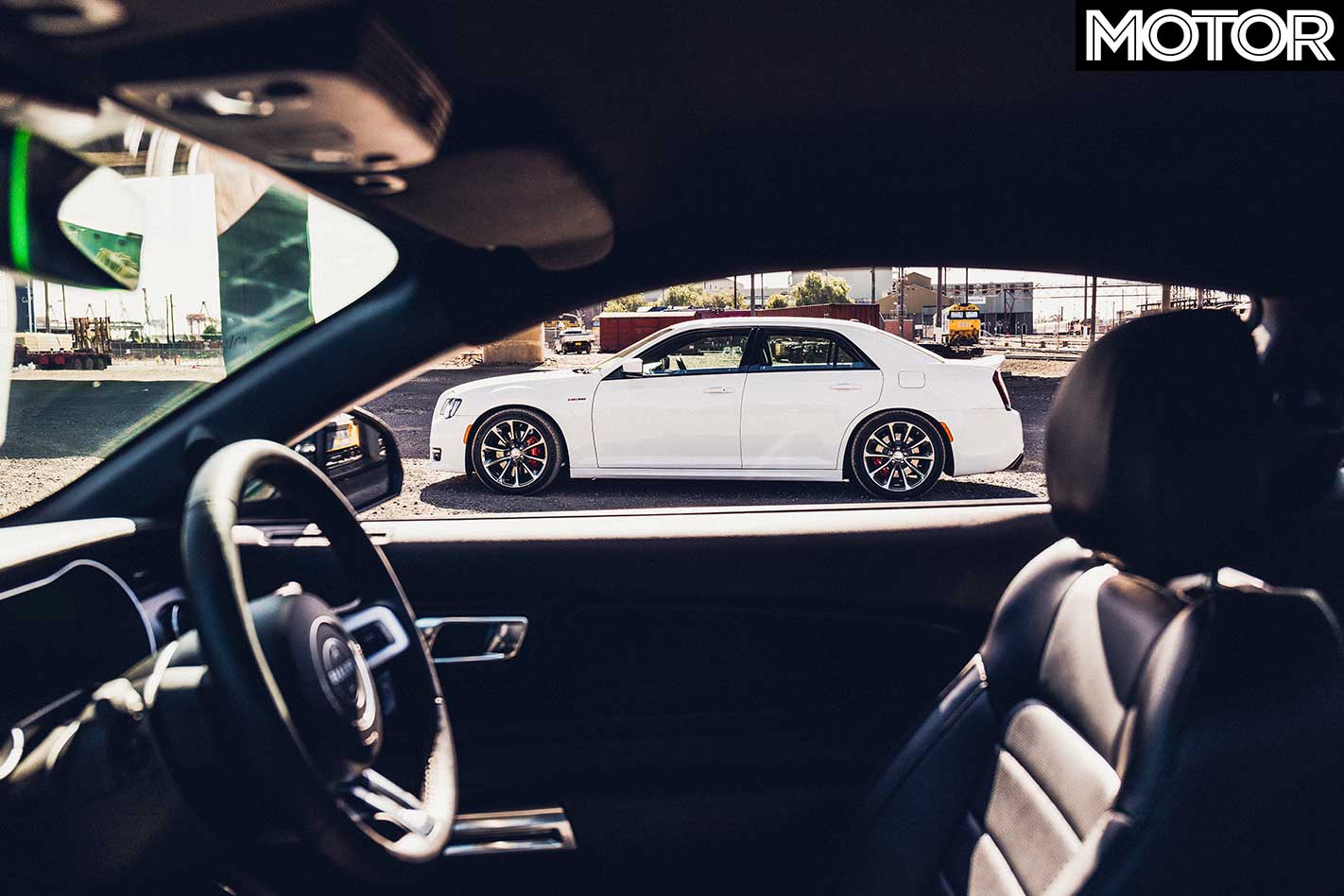
That clearly was the brief at Ford on the Bullitt. Inside some things ham-up the tribute; ‘Bullitt’ is written on the side-sills, steering horn and a numbered dash plaque. Meanwhile, its digital cluster and cup holder LEDs glow green, matching the Recaro’s seat stitching.
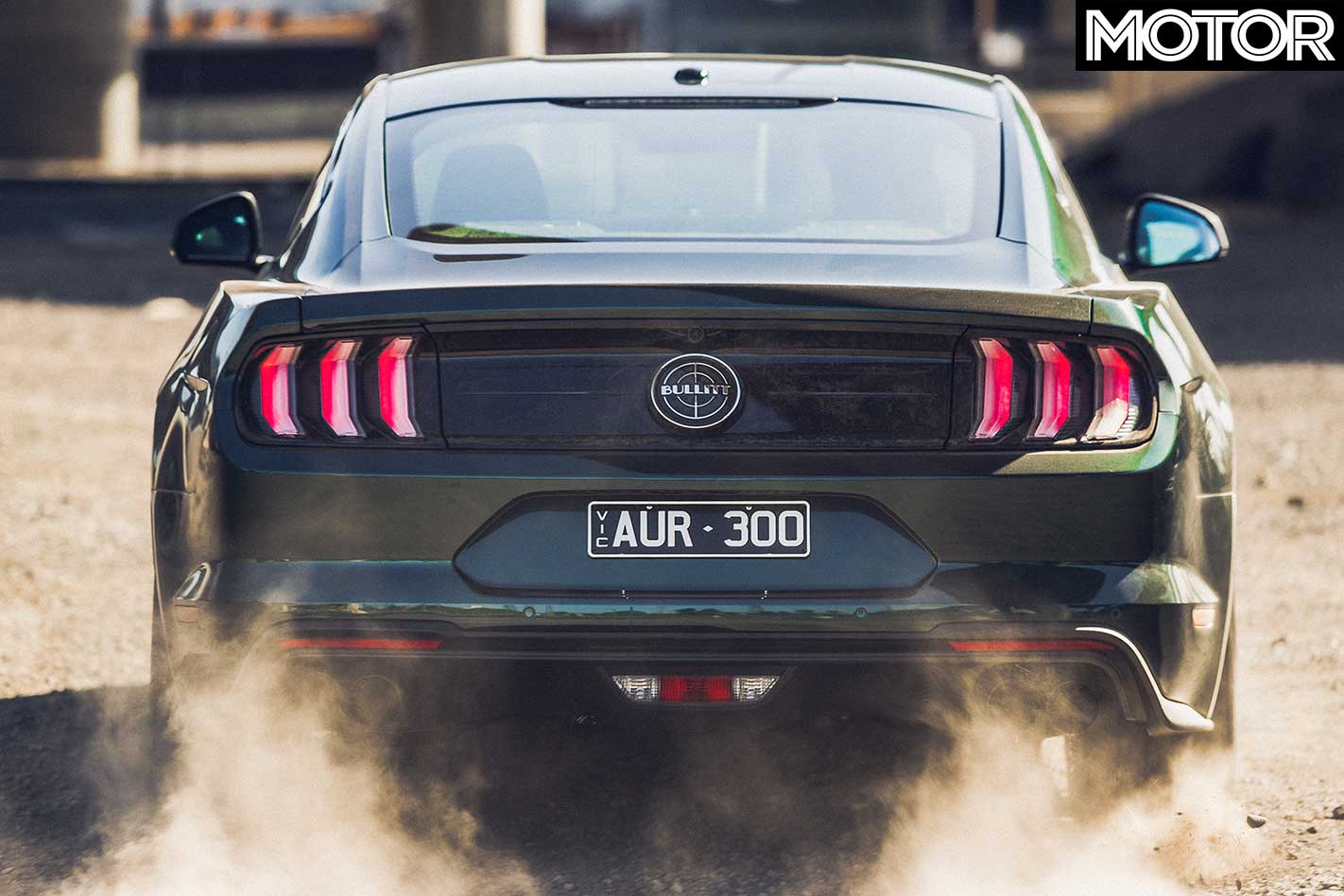
But there are other, more genuine, nods to the movie icon, like that white cue-ball knob atop its six-speed manual transmission. Or, the way the seat pads are partitioned. Its front grilles are bare. The top grille and the glasshouse are framed in chrome, while special ‘Torq-thrust’ wheels and a single Bullitt badge, placed where the regular ‘GT’ one was on the boot, complete the transformation.
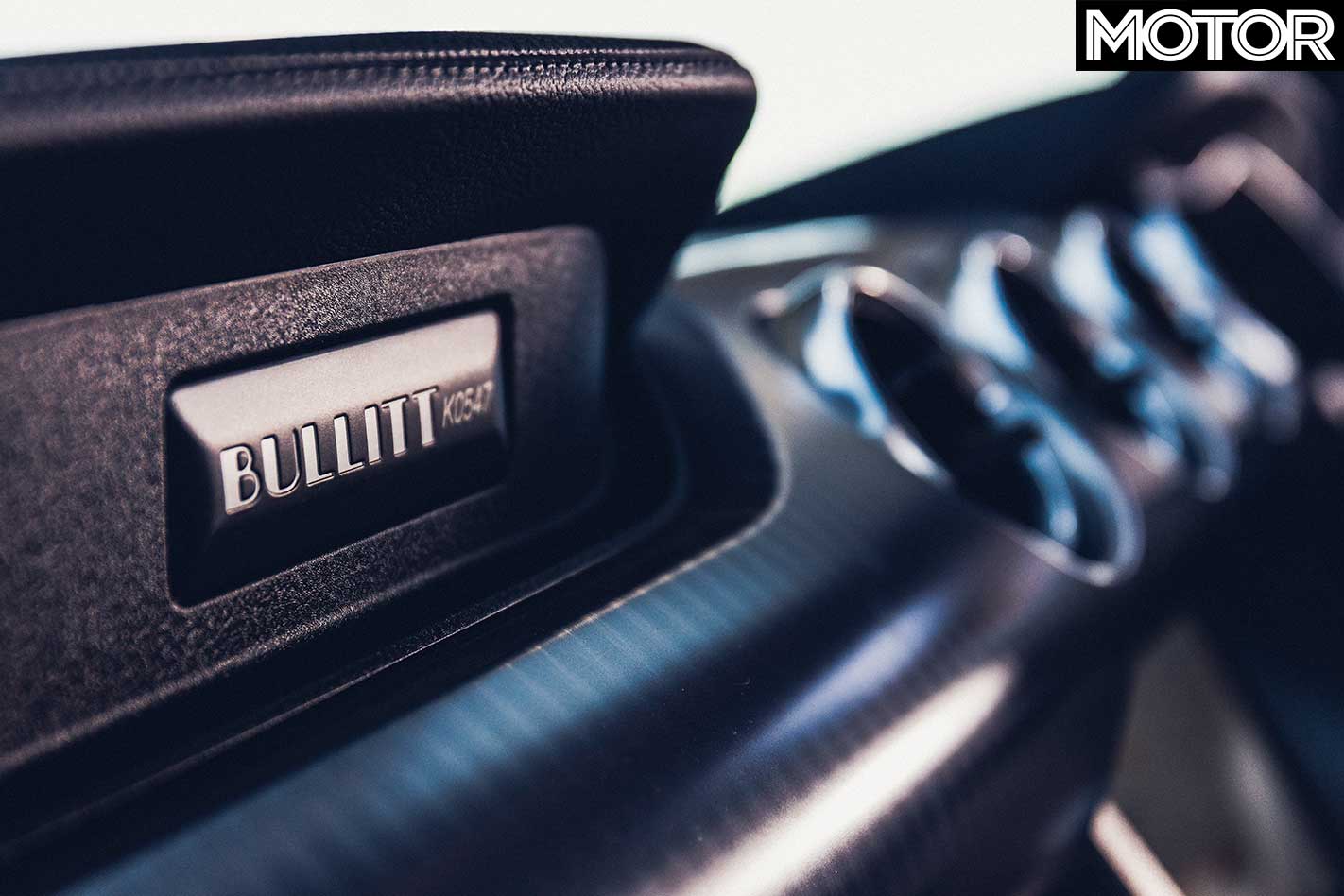
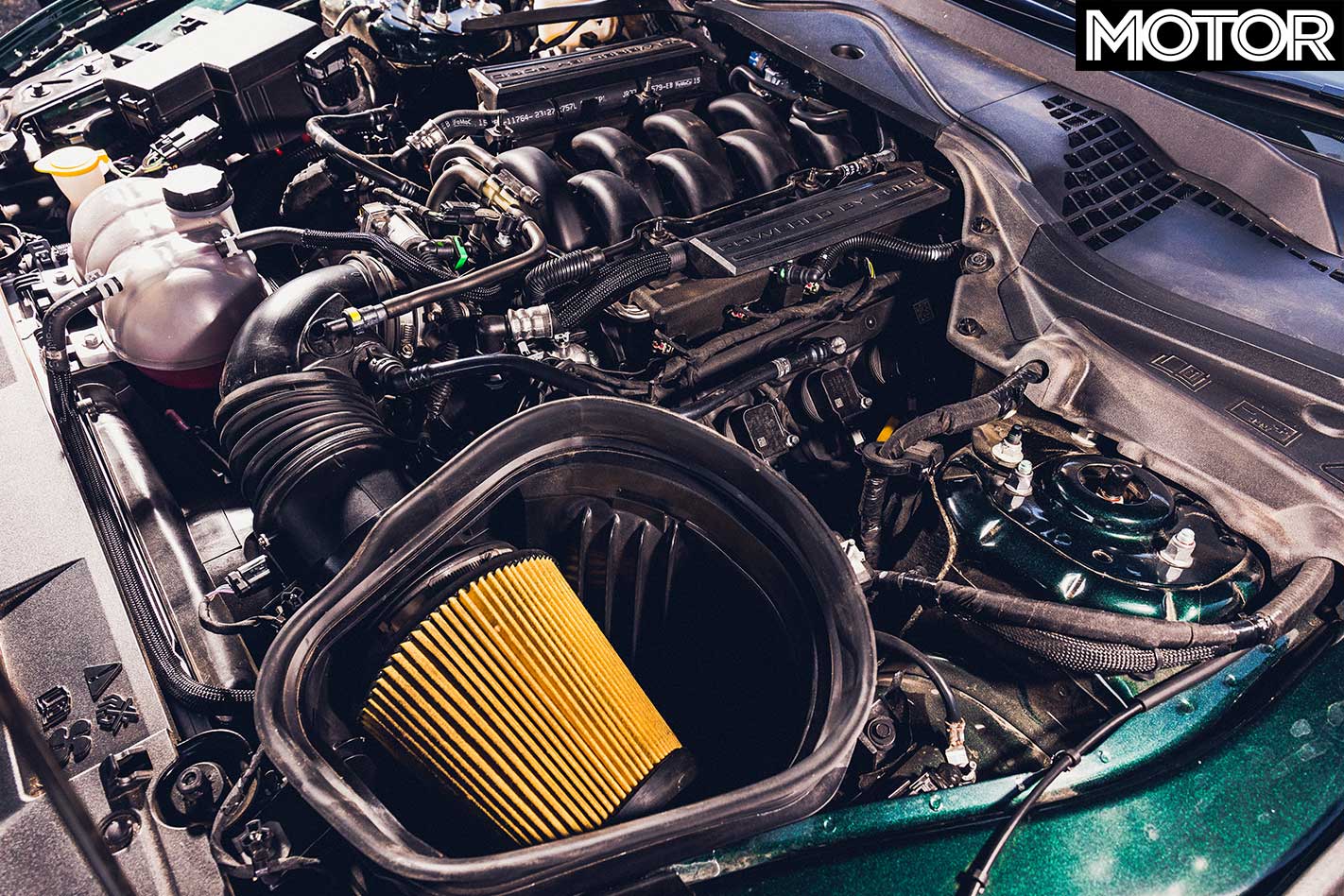
All these small changes add to one serious statement. The Bullitt is a stealthy, brooding thing. Intimidating, even. And to help justify its $10K premium over a base manual GT, its 5.0-litre V8 also breathes through a larger 87mm throttle body (compared to 80mm) and cold-air intake, boosting power by 6kW to 345kW/556Nm. Otherwise, it’s mechanically identical to a regular Mustang GT.
It’s unlikely 6kW could significantly quicken the Mustang’s gallop, with Victoria’s end-of-summer heat threatening to turn Heathcote Raceway into a cooking pan, we roll through its gates even more sceptical.
Being manual only, the launch technique demands experimentation. Normally, revs are limited to 4000rpm with the clutch in, even with traction control and ESP switched off. Sport Plus mode allows more revs and dropping 5000rpm on rear Michelin Pilot Sport 4 S tyres will spin them nicely. But, it only reaps a 5.7sec sprint to 100km/h and 13.7sec sprint across the 400m strip.
It takes a while to nail a good upshift. Manual Mustangs spin to a higher 7500rpm cut-out than the 10-speed automatic powertrain, even though redline is marked at 7400rpm like the auto. It makes timing the shift perfectly, even with a warning light, incredibly hard, especially since the revs build so quick in the upper ranges.
Drag Mode, though, clearly helps. Suddenly, like a sprinter on the starting blocks, muscles tensed, the car’s systems are focused on delivering maximum acceleration. The rear dampers soften so its weight pushes down on the rear and the safety systems optimise traction. Even with a relatively low-rpm launch from 3700rpm, its 0-100km/h time drops to 5.34sec and its 0-400m sprint falls to 13.34sec.
That’s a tenth slower than what we extracted from a regular manual GT and the hot temps are sabotaging its potential. We’re seeing 30 degrees Celsius on its dash. The first 2018 manual GT we ever tested crossed the line 3km/h higher and a tenth faster than our Bullitt, but it was in 11 degrees ambient.
However, cold air would not save the Mustang Bullitt from ridiculously long new gear ratios. First is geared to 87km/h, second to 134km/h and third to 198km/h. So even though it packs another 39kW and 36Nm, the outputs are nowhere near enough to leverage these wide spreads.
There are plenty of ways to launch the SRT, but only one way to nail it. For instance, you must leave ESP on to engage launch control. Full throttle on the brake jumps the revs to 2000rpm, which then slowly build to a pre-set figure with, what feels like, a stall function. Lift the brake, and it unleashes the Hemi’s hell on its skinny rear Goodyears.
The SRT’s eight-speed transmission belts through much shorter ratios. It can kiss 96km/h in second gear if you let it run to its 6750rpm cut in manual mode. But there’s no real point. Left to shift on its own, it slots into third at 85km/h instead, or 6000rpm, so revs spend more time in the mid-range.
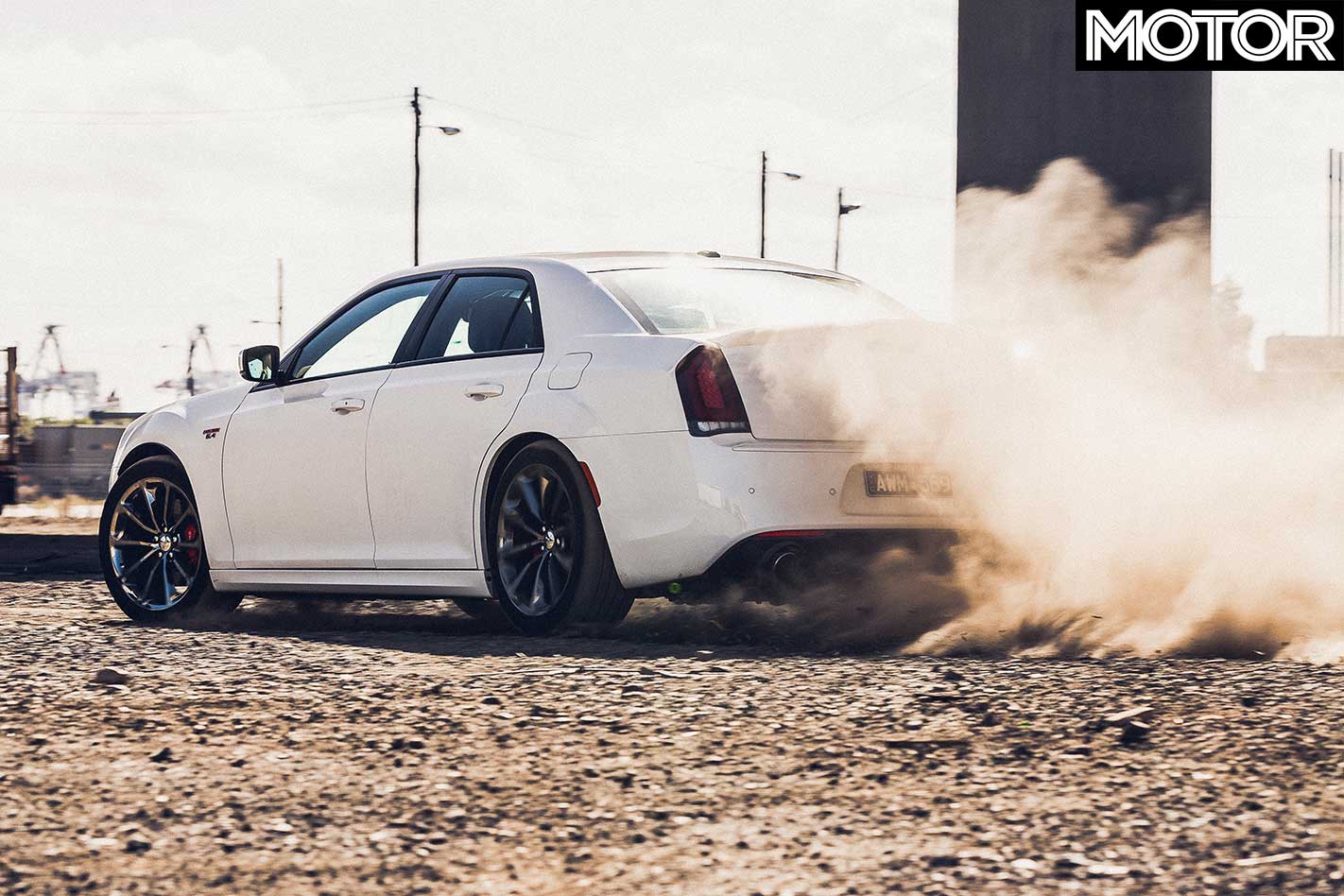
It’s slow, on today’s surface, until we try a much smoother launch sequence. With its damping set to Street in a configurable drive mode, its traction control and transmission set to their most aggressive mode, Track, and some throttle built against a soft brake, we ease away at 1500rpm.
As soon as it gains some speed, we sink the loud pedal. From rest, it hits 100km/h in 4.83sec and blitzes the finish line in 12.97sec. Again, trap speeds are disappointing, with 176km/h revealing even a bulletproof V8 feels the heat.
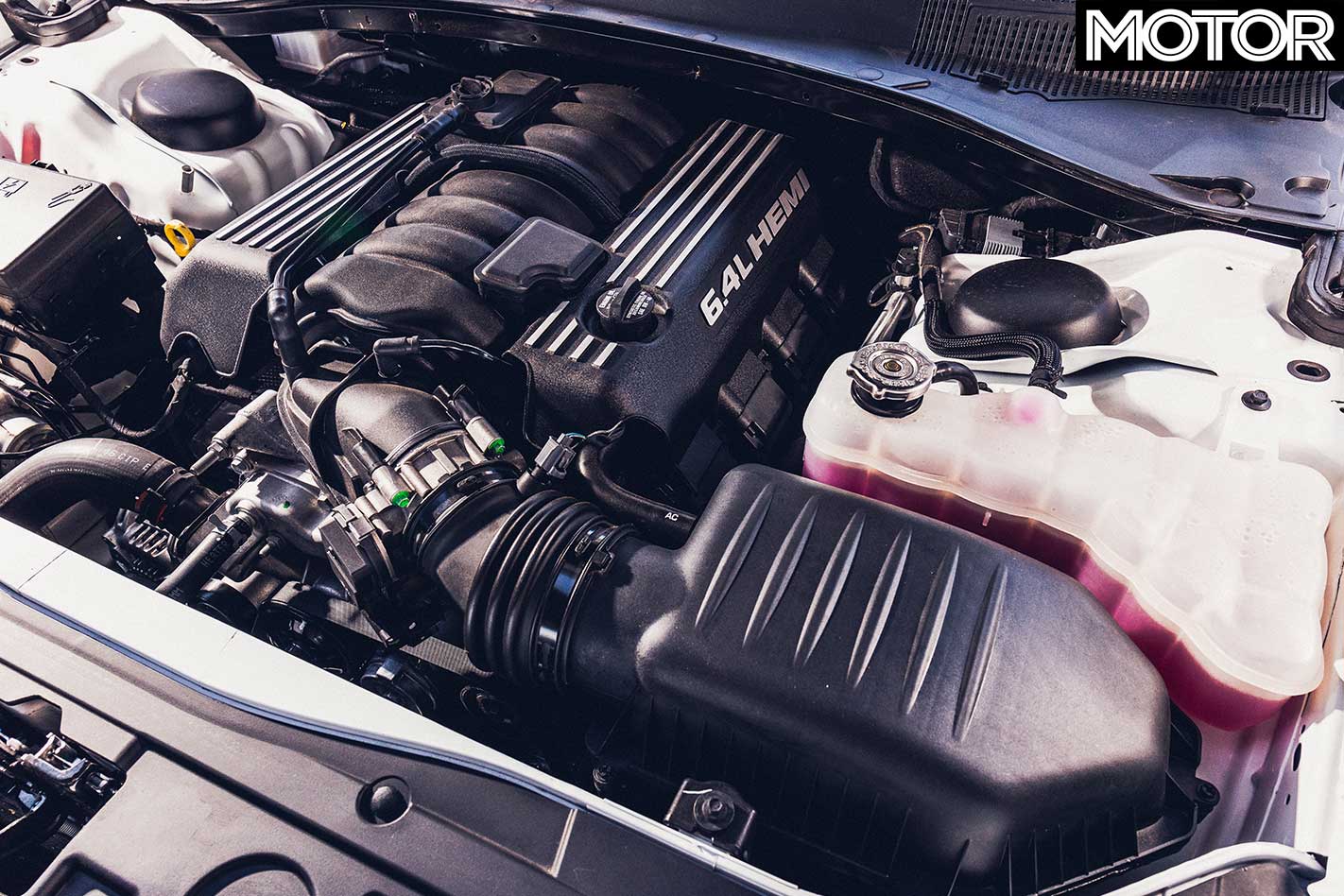
Not that you could tell from the sound it makes. The 6.4-litre V8 thunders like a Supercar racer as it rips through the atmosphere, gulping air to fill its 103.9mm wide cylinders. It then blasts a deep rumble out its exhaust, punctuating the climb to a strong top-end with a burp on every upshift. With only a 94.5mm stroke attached to its big cylinders, the SRT can rev, and instead feels most energetic above 3500rpm.
Even though the Mustang rows longer gears, and its DOHC 5.0-litre V8 is almost square in bore and stroke, it builds engine speed with relentless pace. The delivery is racecar-like and clearly helped by cutting-edge tech like plasma-coated bores.
But there’s also the noise, which is good enough to justify a Bullitt sequel. That exposed air filter gives its intake roar a hard-edge, like a Shelby GT350R. And as well as the thunder exploding from its active exhaust, there’s a deep throbbing engine noise that the SRT lacks.
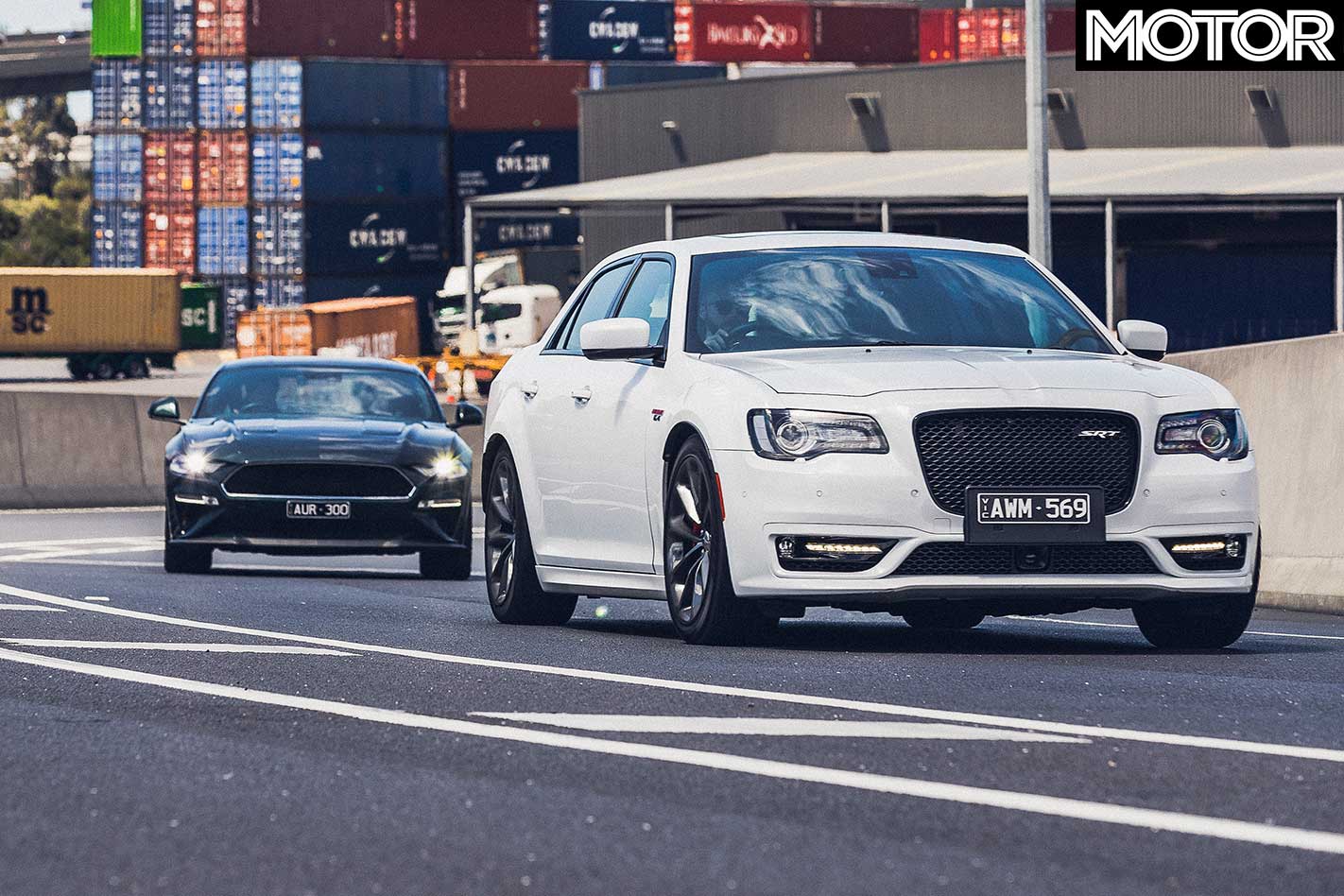
Ford’s equips adaptive suspension on all Bullitts, so on top of uprated dampers, bigger swaybars, revised rear toe-links and Michelins, it has bigger front bearings and inverted front struts. As a result, it tries hard to handle like a sportscar, holding the road with barnacle-like grip and darting into corners as soon as you point the steering off-centre. But it never feels truly planted. Or, delivers the steering feedback you need to push as hard as you want.
Still, it makes an easy target of the 300 SRT. Yes, the big thing is okay to drive. The steering wriggles in your palms with some feedback, the brakes are firm and the throttle is responsive, but you can always sense its size. Roll, squat and dive always threaten to creep in and the whole thing feels inert.
Its size reveals the true problem. Compared to the Mustang, it’s 277mm longer in length, 332mm longer in wheelbase and 233kg heavier. Since it’s weighed with virtually an empty 70 litre tank, its true kerb weight is even more. And yet, Chrysler places this mass on 245mm-wide tyres at all corners.
Clearly, when FCA updates the SRT, a lighter platform and staggered wheel widths would help, but for now, there’s still plenty to like. It’s ridiculously easy to oversteer. It’s undergripped, and its wheelbase gives you plenty of time to react. Yes, the steering’s a little slow coming off lock, and the stability control could allow a touch more latitude in Track, but otherwise it’s a big, friendly boofhead.
This easy-going nature translates to its ride, as well. Track damping is too stiff, obviously, whereas Comfort struggles to control its mass. Sport strikes a good balance and soaks up bad roads without insulating you too much.
The Mustang’s ride is okay in comparison, but its huge 19-inch tyres often thump into potholes and over bumps. Meanwhile, the lingering float in the setup never pays off with a cushioned ride. At least it’s the better place to sit, where you’re hugged by Recaros and stare at that digital cluster.
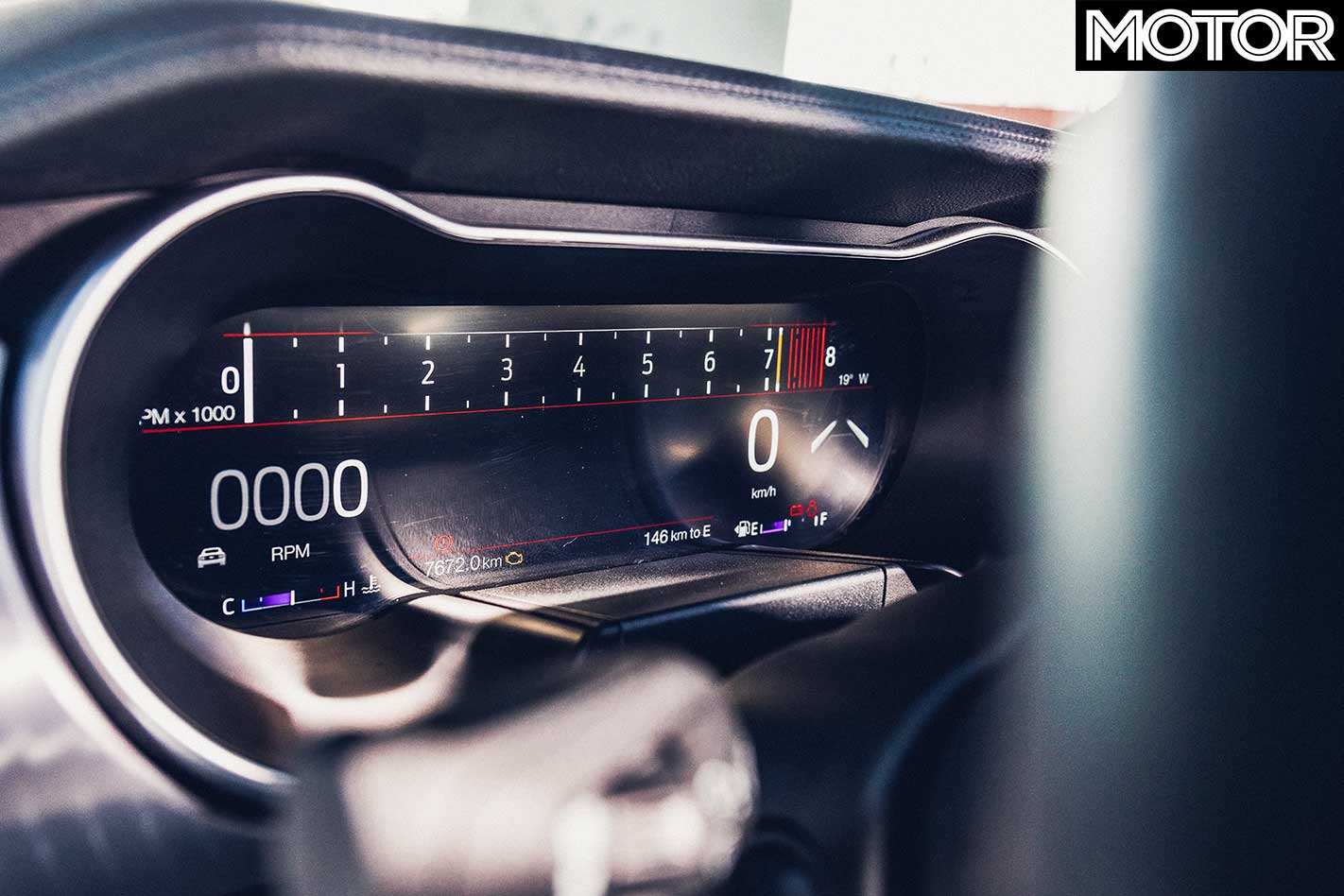
The Chrysler, by comparison, has big, comfy Alcantara-trimmed seats that lack bolster or meaningful support for hard driving. Its footwell, too, is cramped by a foot brake, and operating its rotary dial gear selector is clunky at the best of times, dangerous at the worst of them.
Clearly, each car’s strengths play to their purpose. The Chrysler is a big people hauler with a very limited skill set. But what it does get right, makes it charming. Its rear-end is so easy to smear across the road and its powertrain is refreshingly old-school, yet potent. It looks good for an old rig, and it’s comfortable to punt around.
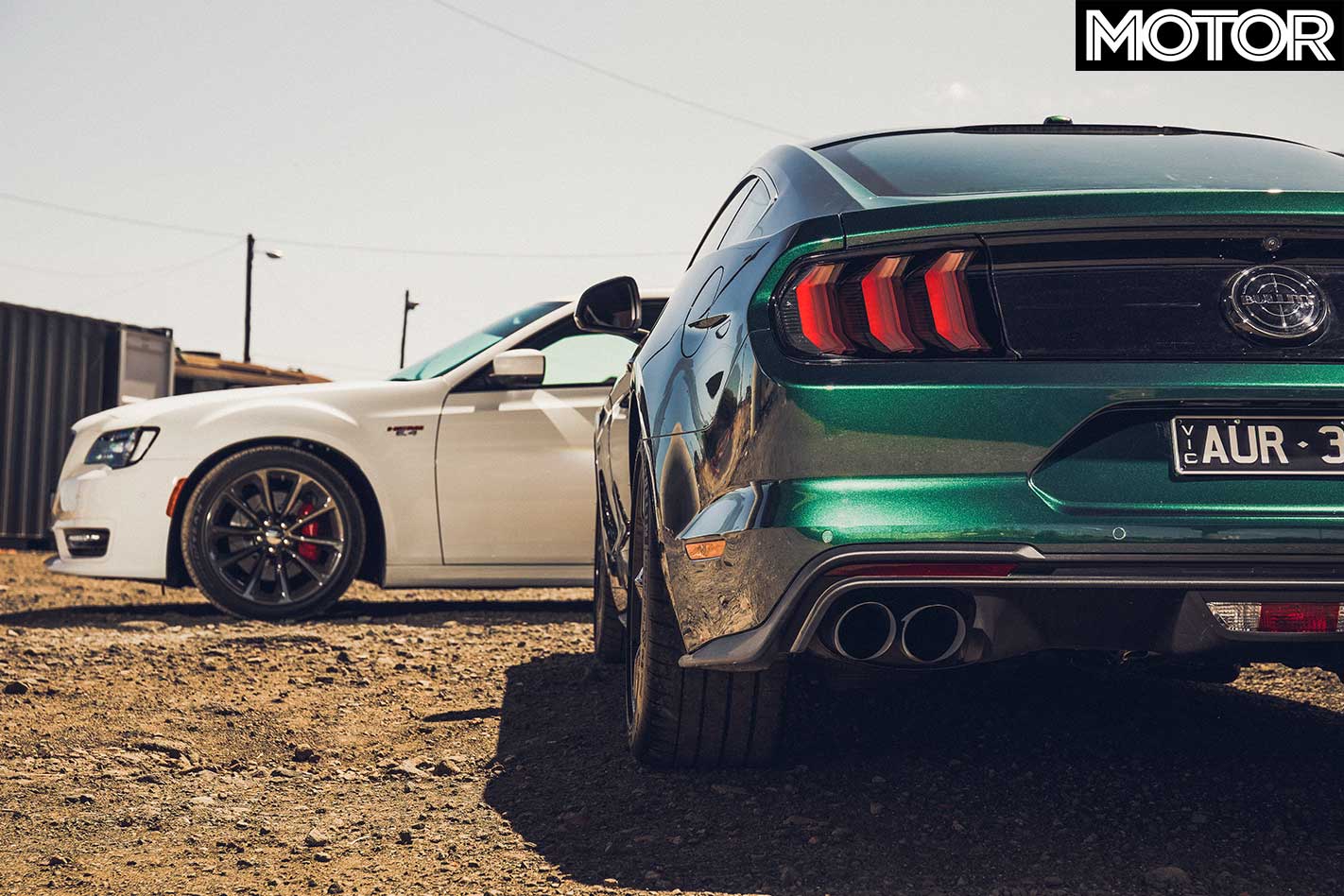
The Mustang Bullitt had to look, feel and drive like a movie star. Luckily, it already did. From its Dark Highland Green paint, to its wheels, it’s instead an excellent tribute, where its character equals more than the sum of its parts.
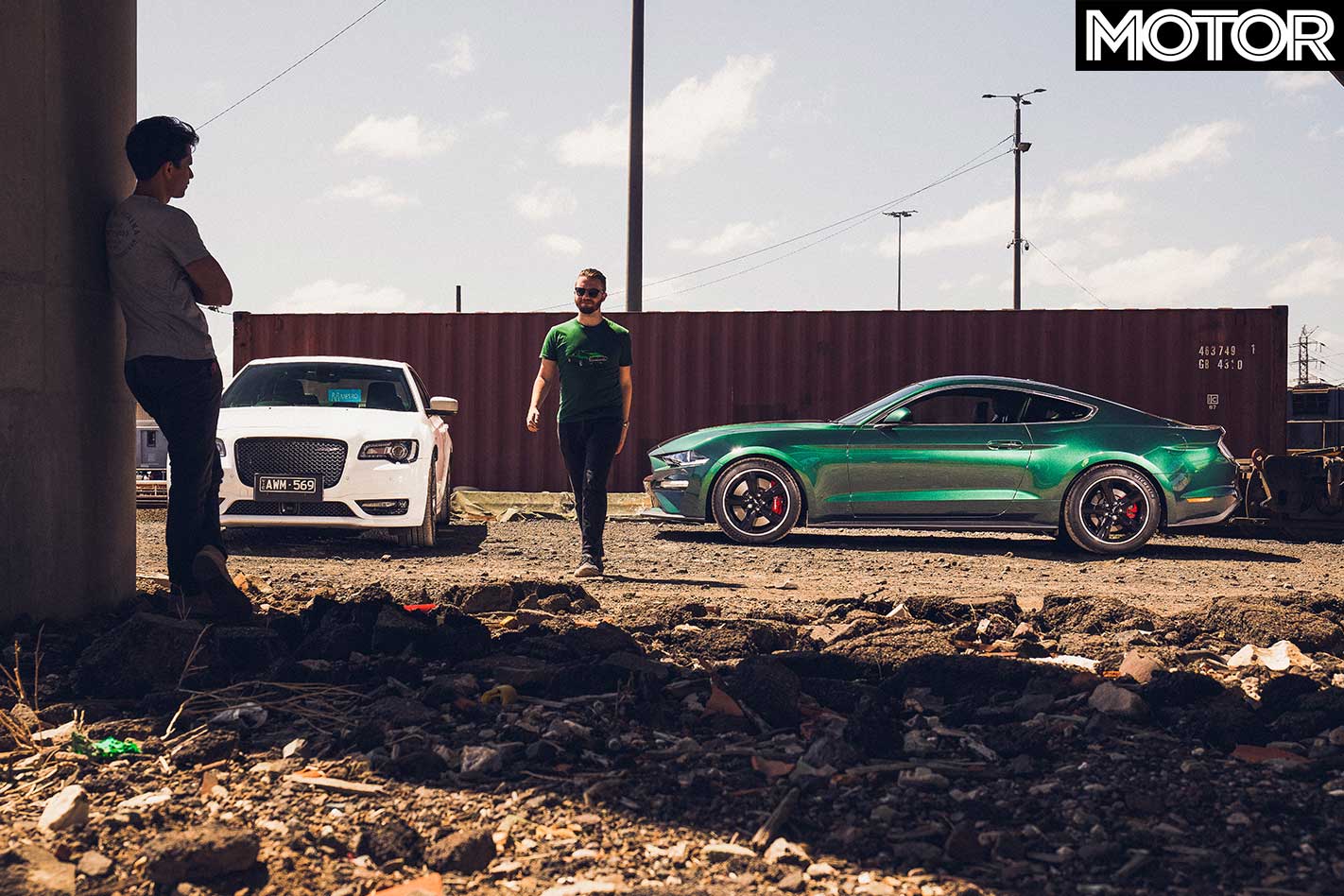
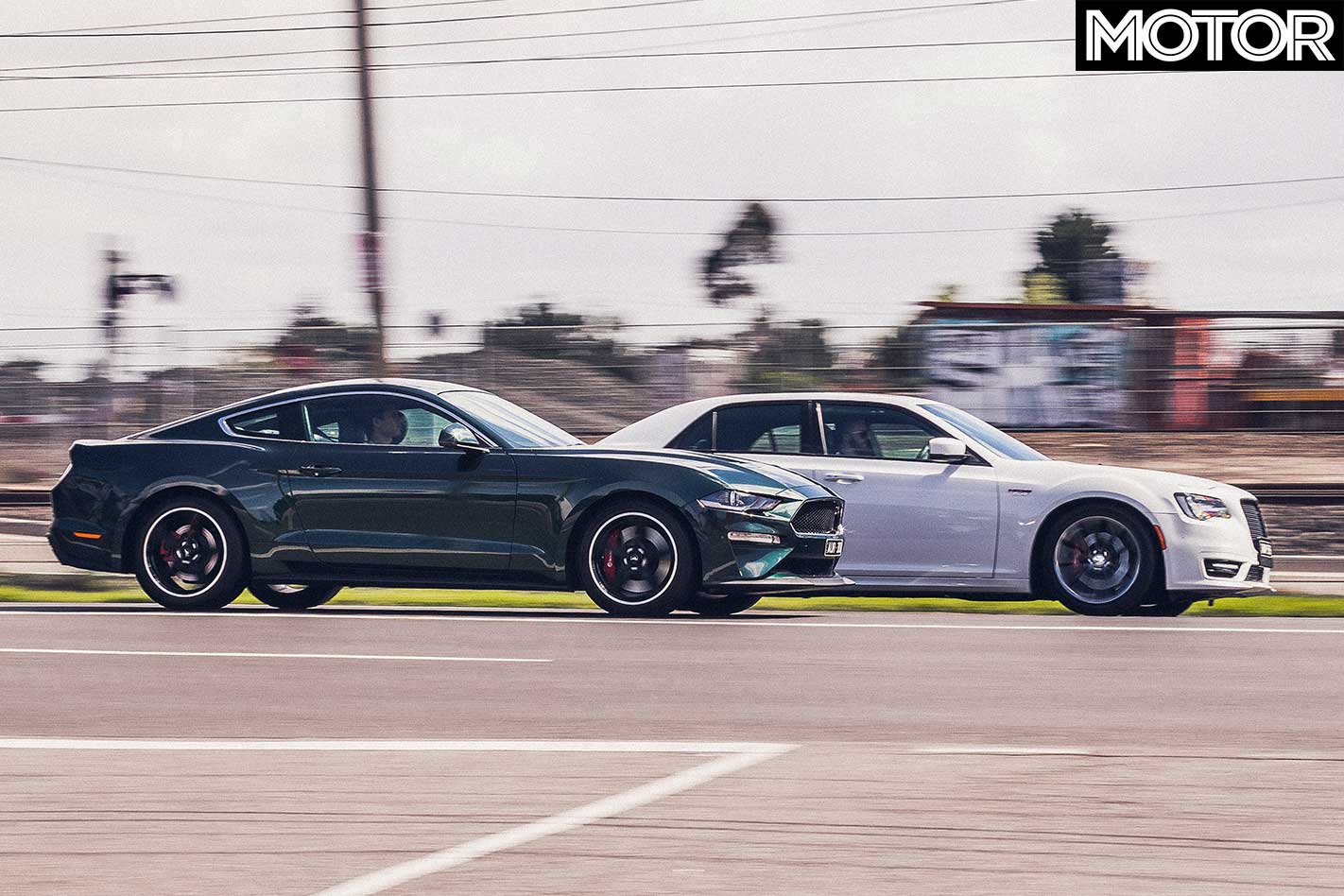
These two might work different sides of the street, but they find middle ground as muscle cars. The Chrysler leads the chase as the big, lazy skid-friendly V8. It’s quicker in a straight line, thanks to an automatic, but the Mustang, with its lighter side-step and free-revving engine, hunts it down with pace. Considering the Mustang is more capable at grand touring than the Chrysler is at being a sports car, and the winner is obvious. Ford’s Mustang Bullitt is a star. It’s only a shame that they’re probably all spoken for.
Fast Facts
| u00a0 | Chrysler 300 SRT | Ford Mustang Bullitt |
| Body | 4-door, 5-seat sedan | 2-door, 4-seat coupe |
| Drive | rear-wheel | |
| Engine | 6417cc V8, OHV, 16v | 5038cc V8, DOHC, 32v |
| Bore x Stroke | 103.9 x 94.5mm | 93 x 92.7mm |
| Compression | 9.6:1 | 12.0:1 |
| Power | 350kW @ 6150rpm | 345kW @ 6000rpm |
| Torque | 637Nm @ 4250rpm | 556Nm @ 4800rpm |
| Power/Weight | 178kW/tonne (tare) | 199kW/tonne |
| Transmission | 8-speed automatic | 6-speed manual |
| Weight (dry) | 1965kg (tare) | 1732kg |
| Suspension (f) | links, coil springs, adaptive dampers, anti-roll bar | struts, coil springs, adaptive dampers, anti-roll bar |
| Suspension (r) | multi-links, coil springs, adaptive dampers, anti-roll bar | |
| L/W/h | 5066/1902/1478mm | 4789/1916/1396mm |
| Wheelbase | 3052mm | 2720mm |
| Tracks | 1621/1639mm (f/r) | 1582/1648mm (f/r) |
| Steering | electrically assisted rack-and-pinion | |
| Brakes (f) | 360mm ventilated discs, 4-piston calipers | 380mm ventilated discs, 6-piston calipers |
| Brakes (r) | 350mm ventilated discs, 4-piston calipers | 330mm ventilated discs, single-piston calipers |
| Wheels | 20.0 x 9.0-inch (f/r) | 19.0 x 9.0-inch (f); 19.0 x 9.5-inch (r) |
| Tyre Sizes | 245/45 R20 (f/r) | 255/40 R19 (f); 275/40 R19 (r) |
| Tyres | Goodyear Eagle F1 Supercar | Michelin Pilot Sport 4 S |
| Price | $74,990 | $73,688 |
| Pros | Driftability; still looks tough; metal for your money | Sound; exclusivity; exterior looks; pace; handling |
| Cons | Itu2019s getting on; handling; build quality issues | Steering feedback; shift feel; overly tall gearing |
| Rating | 3.5 out of 5 stars | 4 out of 5 stars |
The Strip
| u00a0 | Ford Mustang Bullitt | Chrysler 300 SRT | |
| 0-10km/h | 0.43sec | 0.35sec | |
| 0-20km/h | 0.98sec | 0.78sec | |
| 0-30km/h | 1.46sec | 1.20sec | |
| 0-40km/h | 1.95sec | 1.59sec | |
| 0-50km/h | 2.37sec | 2.02sec | |
| 0-60km/h | 2.76sec | 2.44sec | |
| 0-70km/h | 3.27sec | 2.93sec | |
| 0-80km/h | 4.04sec | 3.49sec | |
| 0-90km/h | 4.64sec | 4.10sec | |
| 0-100km/h | 5.34sec | 4.83sec | |
| 0-110km/h | 6.05sec | 5.59sec | |
| 0-120km/h | 6.78sec | 6.41sec | |
| 0-130km/h | 7.79sec | 7.23sec | |
| 0-140km/h | 8.84sec | 8.23sec | |
| 0-150km/h | 9.89sec | 9.29sec | |
| 0-160km/h | 10.93sec | 10.50sec | |
| 0-170km/h | 12.10sec | 11.93sec | |
| 0-400m | 13.34sec @ 179.96km/h | 12.97sec @ 176.97km/h | |
| 80-120km/h (Drive) | 2.70sec | 2.88sec | |
| 100-0km/h | 33.75m | 33.57m | |
| Speed in Gears | |||
| 1st | 87km/h @ 7500rpm | 64km/h @ 6750rpm | |
| 2nd | 134km/h @ 7500rpm | 96km/h @ 6750rpm | |
| 3rd | 198km/h @ 7500rpm | 143km/h @ 6750rpm | |
| 4th | 249km/h @ 6675rpm* | 180km/h @ 6750rpm | |
| 5th | 249km/h @ 5900rpm* | 234km/h @ 6750rpm* | |
| 6th | 249km/h @ 4525rpm* | 282km/h @ 6350rpm* | |
| 7th | N/A | 282km/h @ 5325rpm* | |
| 8th | N/A | 282km/h @ 4250rpm* | |
Heathcote Raceway, 30˚C, dry. Driver: Louis Cordony/Scott Newman *Manufacturer’s claim Official timing supplier – VBOX Australia
As big-cube, hairy-chested V8s gradually become less and less politically-correct, Jaguar’s decision to jam one into its otherwise family-focused F-Pace SUV is certainly a bold move… and one that’s transformed the brand’s first-ever high-riding wagon into a bit of an animal.
We travelled to the south of France for our first steer of the Jaguar F-Pace SVR ahead of its arrival in local showrooms in June.
VALUE
In case the idea of a tasty supercharged V8 wasn’t enough to entice you, there’s another sizable incentive in the form of the F-Pace SVR’s price tag. Simply put, at $140,020 the F-Pace SVR isn’t just the most affordable member of Jaguar’s high-performance SVR family, but it’s also a compellingly priced within the fast SUV fraternity.
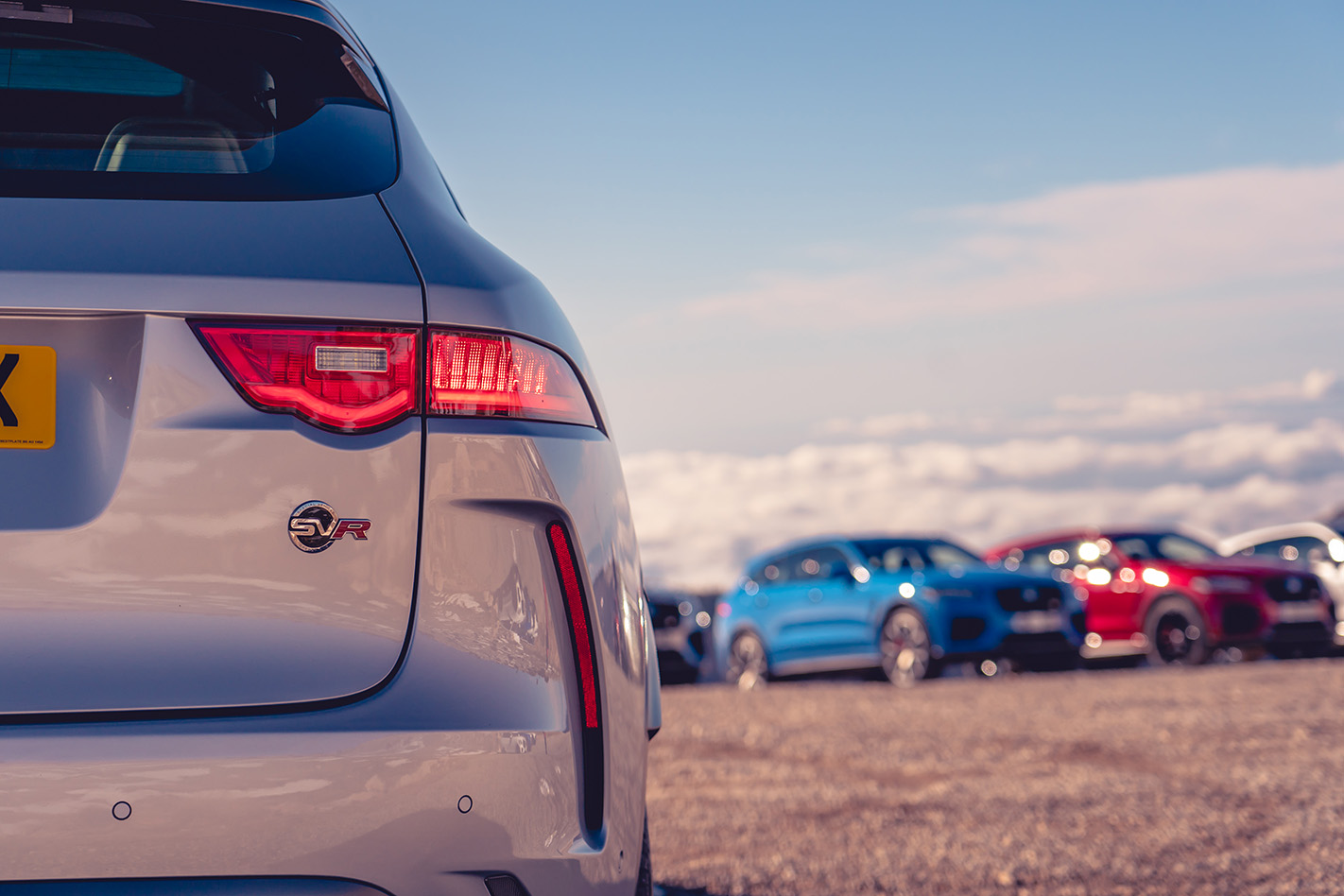
Granted, the Porsche Macan Turbo and its blood brother the Audi SQ5 cost less – more than $40,000 less in the case of the Audi – but neither can hold a candle to the Jaguar’s 404kW power output and scintillating 0-100km/h acceleration. The Alfa Romeo Stelvio Q, Mercedes-AMG GLC 63 S and, eventually, the BMW X3 M are truer rivals for the F-Pace SVR, but the first two will cost you an extra $9K and $22K respectively, while pricing for the BMW has yet to be announced.
Still not convinced? Well, consider that the F-Pace SVR’s powertrain is essentially the same as that in the $238,200 Range Rover Sport SVR, and the Jaguar shapes up as a value-rich proposition indeed.
STANDARD FEATURES
The SVR’s standout features are mechanical, so we’ll cover them off in the On The Road section later. However, that’s not to say there isn’t plenty of in-car gizmology to keep driver and passengers comfortable, informed and entertained.
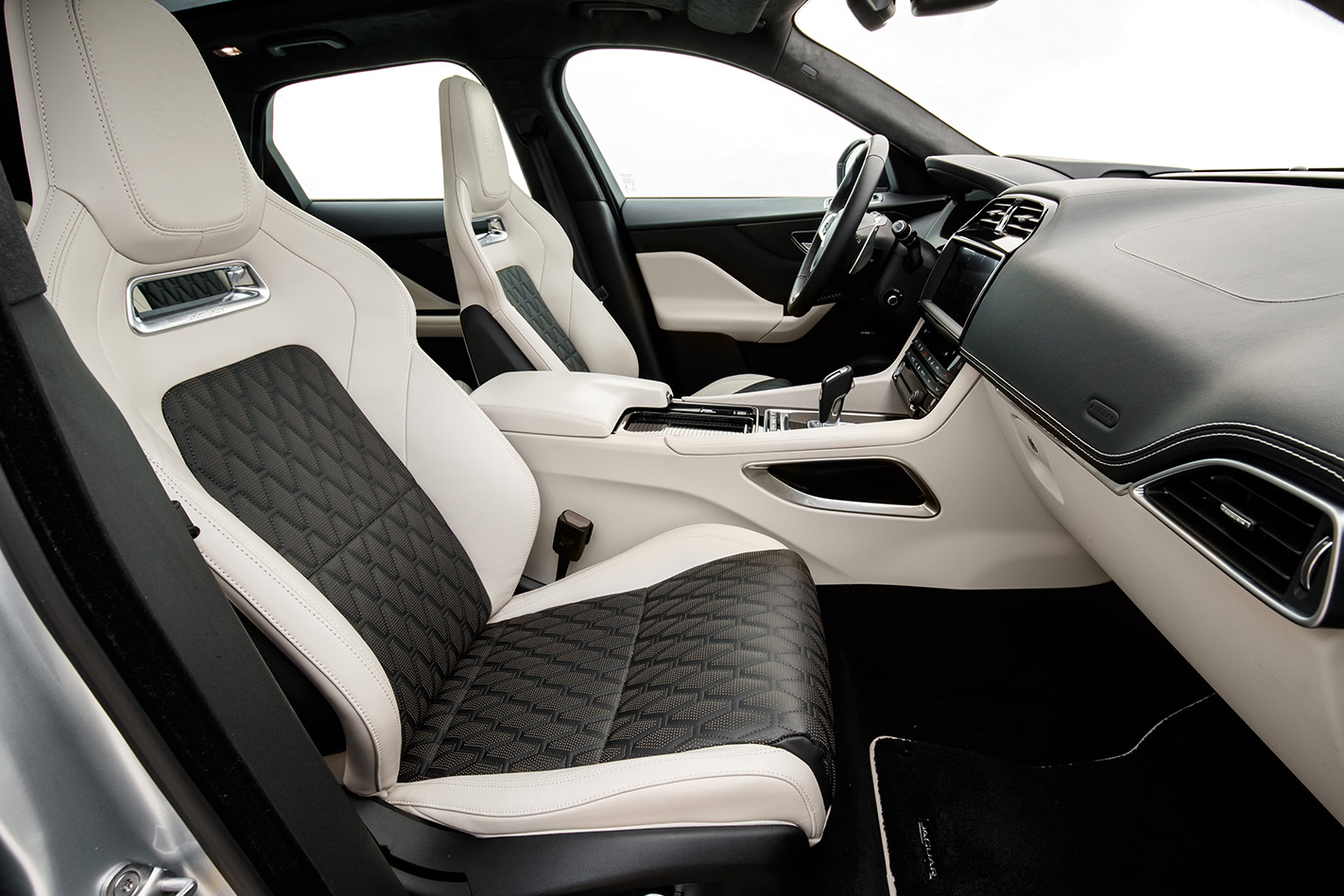
As standard, all F-Pace SVRs sold in Australia feature well-bolstered (and heated/ventilated) sports front seats, quilted leather upholstery, a grippy SVR-specific steering wheel, adaptive LED headlamps, dual-zone climate control, and an in-car wifi hotspot that can link to up to eight devices at a time.
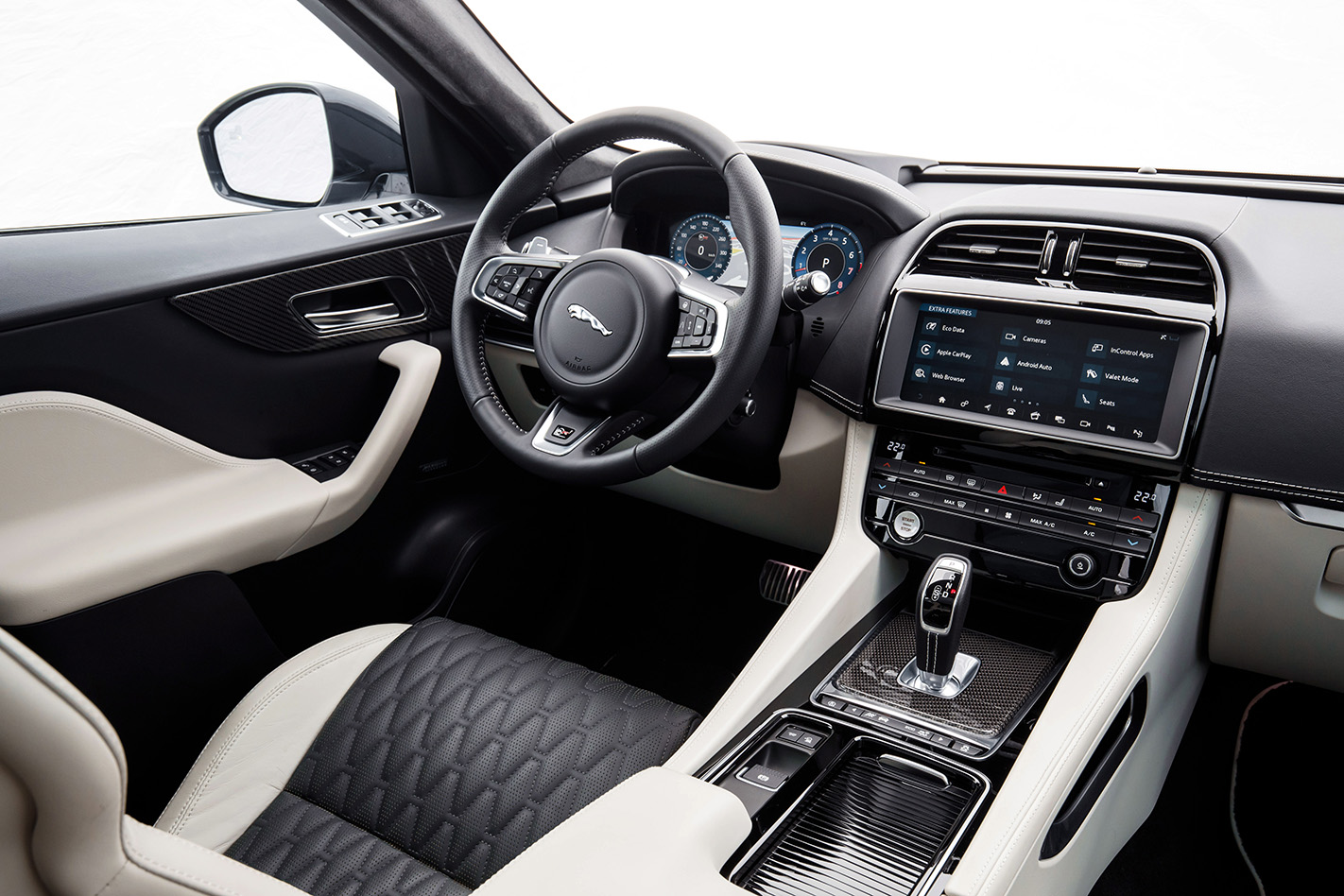
Infotainment comes courtesy of the 10-inch Touch Pro screen in the centre console, which is slick but not quite as up-to-date as what’s found in Jaguar’s I-Pace or the just-released XE update. A 12.3-inch electronic display sits within the instrument binnacle, with eye-pleasing and easy-to-see graphics. Unfortunately a head-up display remains a cost option even for the top-dog SVR, a definite downside given the car’s prodigious ability to exceed the speed limit.
Front, rear and side parking sensors are standard along with a rear camera, though blind spot assist, active cruise control, rear cross-traffic alert and high-speed AEB are cost options, only available with the purchase of an option pack. Want smartphone mirroring too? You’ll need to shell out $495 for Jaguar to enable that feature.
SIZE
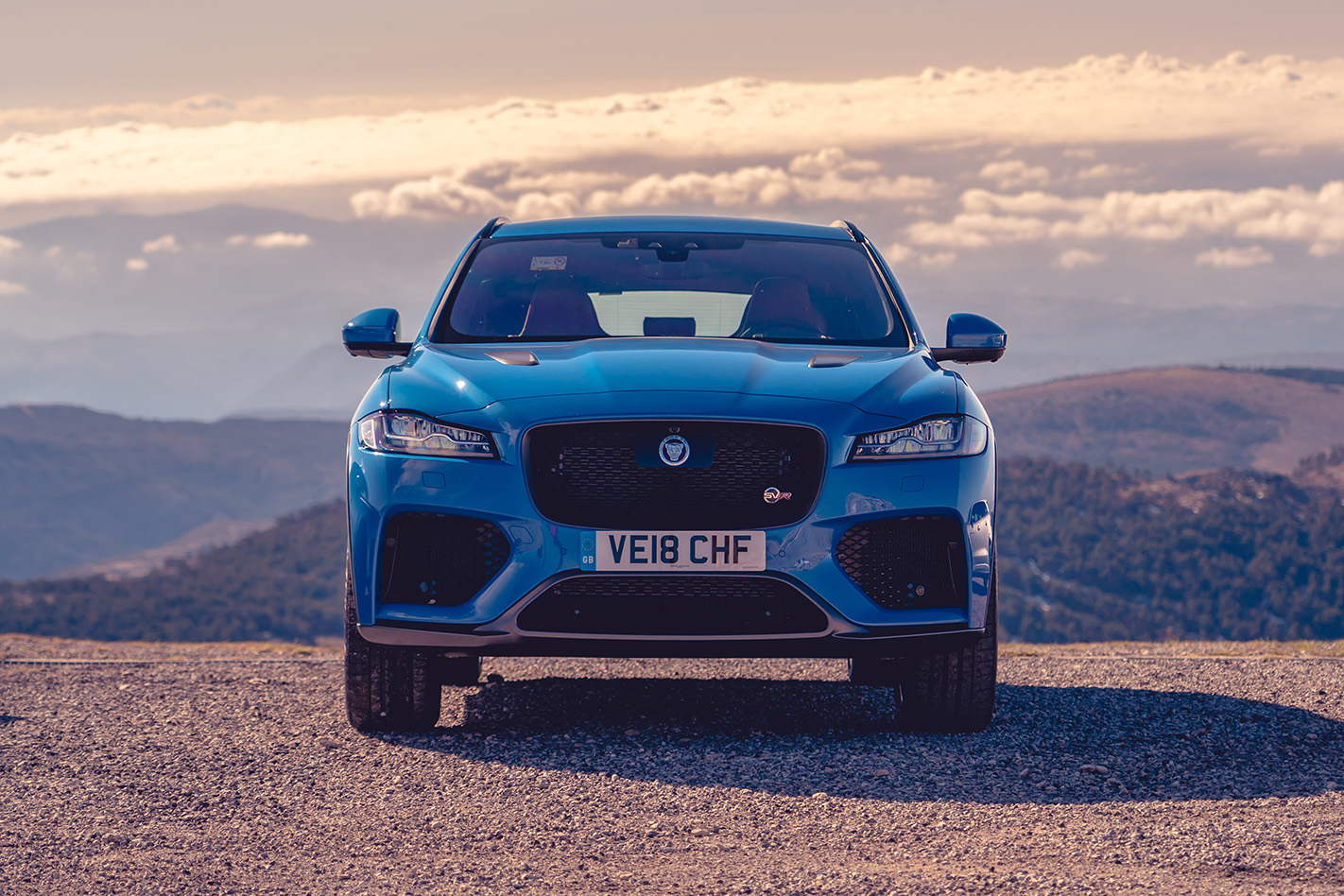
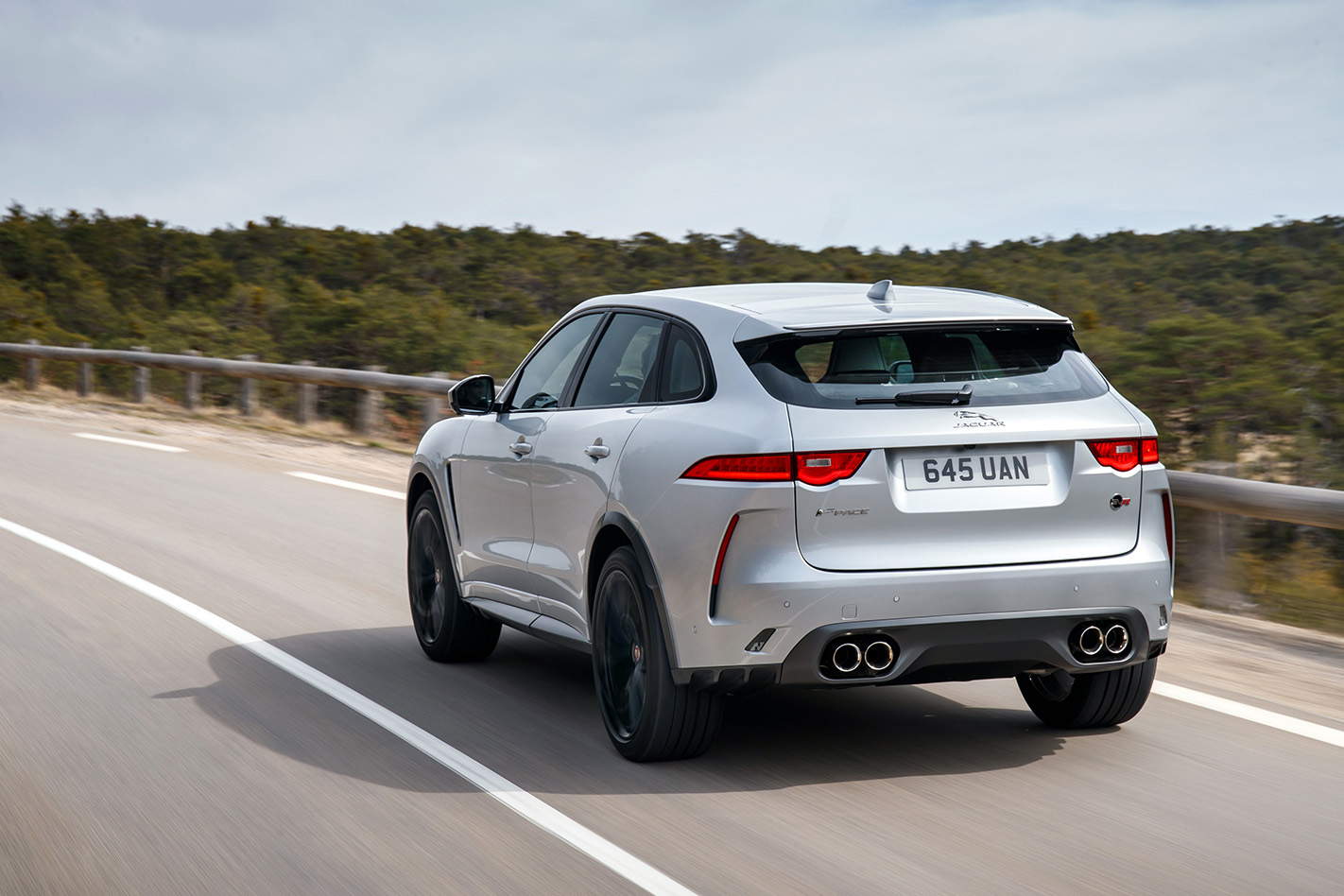
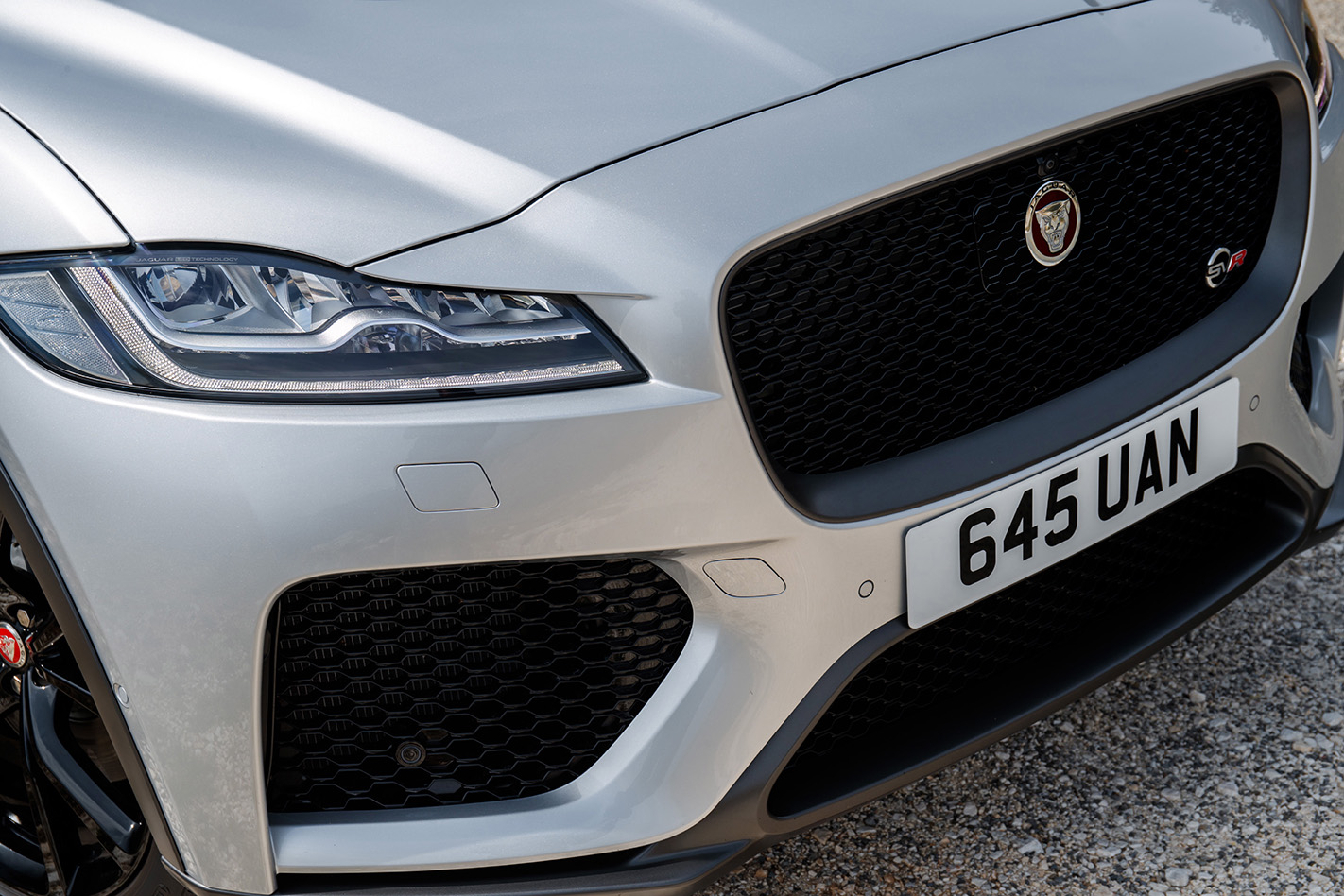
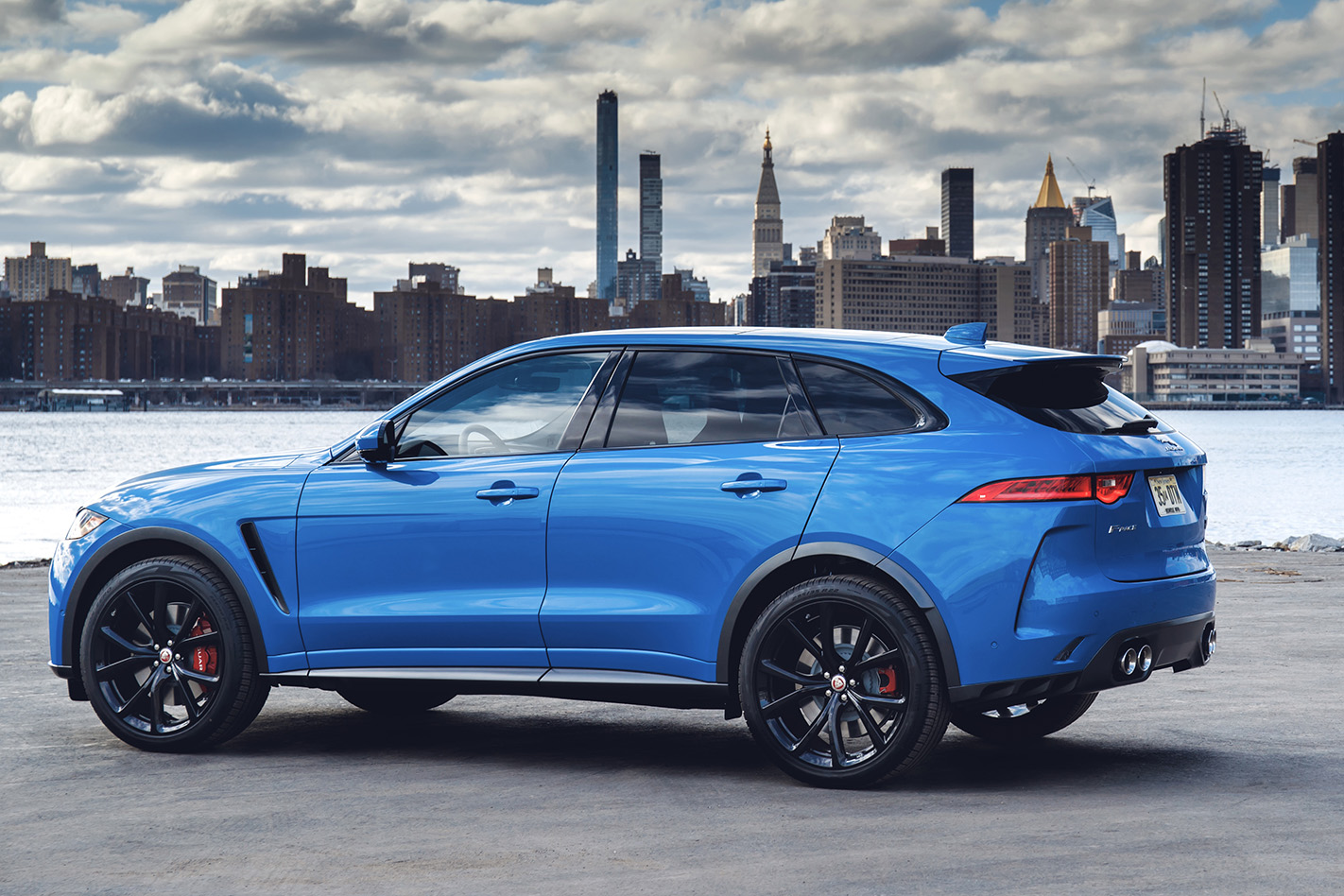
Though equipped with an aggressive bodykit that adds a vented bonnet, deeper front air dams, vented front quarter panels, deeper side skirts and a lift-reducing rear bumper/spoiler combo, the F-Pace SVR is dimensionally almost identical to a regular six-cylinder F-Pace.
The biggest difference can be seen in width with subtle arch flares taking the F-Pace SVR’s width to 207cm, whereas milder F-Pace variants measure less than two metres wide from flank to flank.
On the inside, the cabin only really feels different from the first row, where the completely unique front seats provide a slightly different posture while seated. Behind the second row, there’s 650 litres of cargo space with the seatbacks raised.
SAFETY
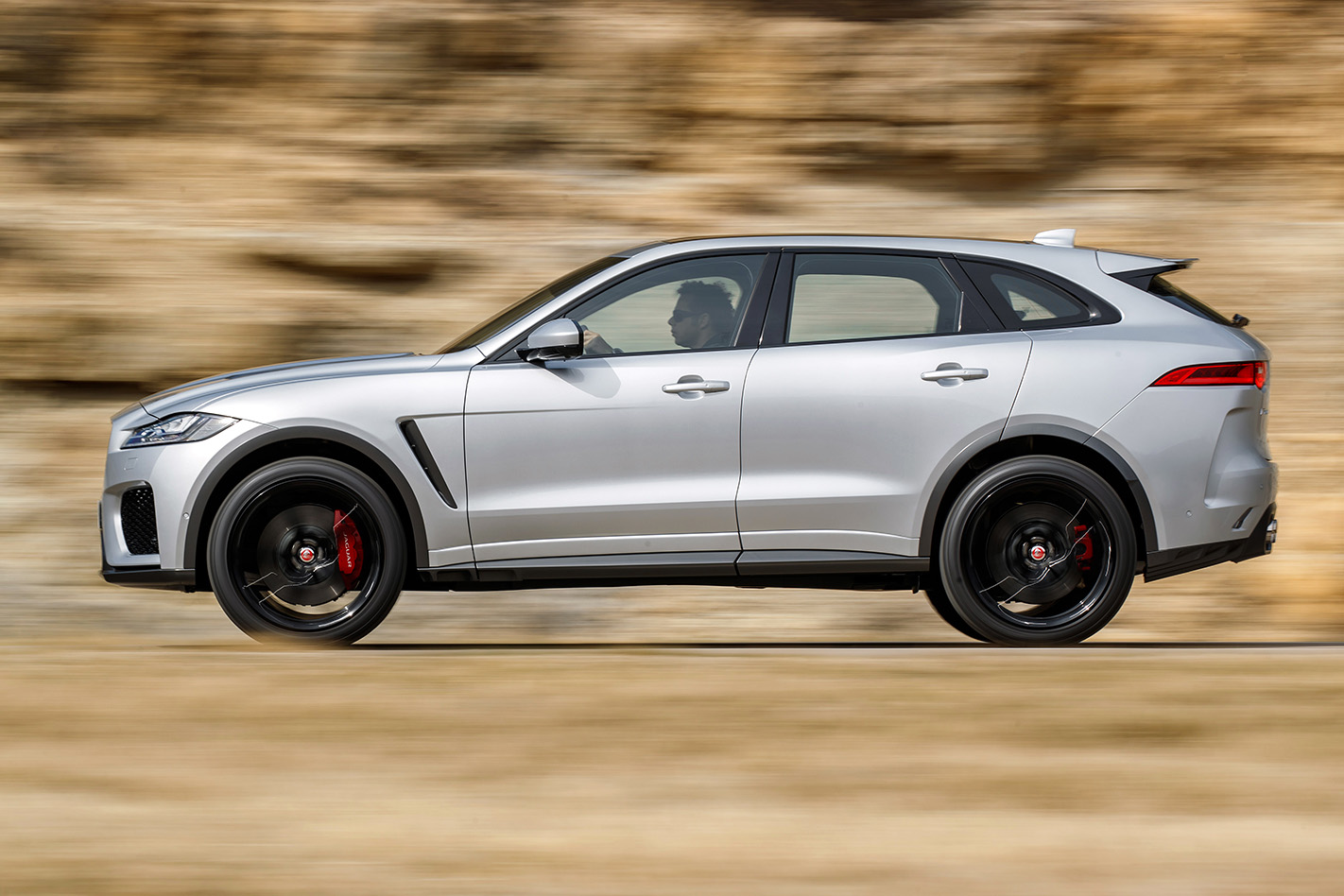
If there’s one area where Jaguar could improve the F-Pace SVR’s value proposition, it’s in safety equipment. The standard fit-out is fine, with stability control, traction control, ABS, EBD, low-speed automatic emergency braking (AEB), lane-keep assist, brake assist, six airbags and ISOFIX child seat anchorages as standard, but high-speed AEB, blind spot monitoring, rear cross traffic alert and adaptive cruise control remain on the options list.
At the SVR’s price point, we’d expect at least some of those features to have been standard-issue.
COMFORT
Those big-bolstered SVR-specific front seats hug you nicely – and they’re a necessity too, given the car’s ability to change direction. Even so, unlike some sports seats they’re adjustable and generous enough to provide you with some meaningful wriggle room – a pinched bum shouldn’t be a side-effect of spending lots of time in the SVR.
They’re heated and ventilated too which is nice, and that other key touch-point, the steering wheel, is another SVR exclusive. Thick-rimmed and shaped for a sure grip, it’s a nice interface with the car’s standout feature: its chassis.
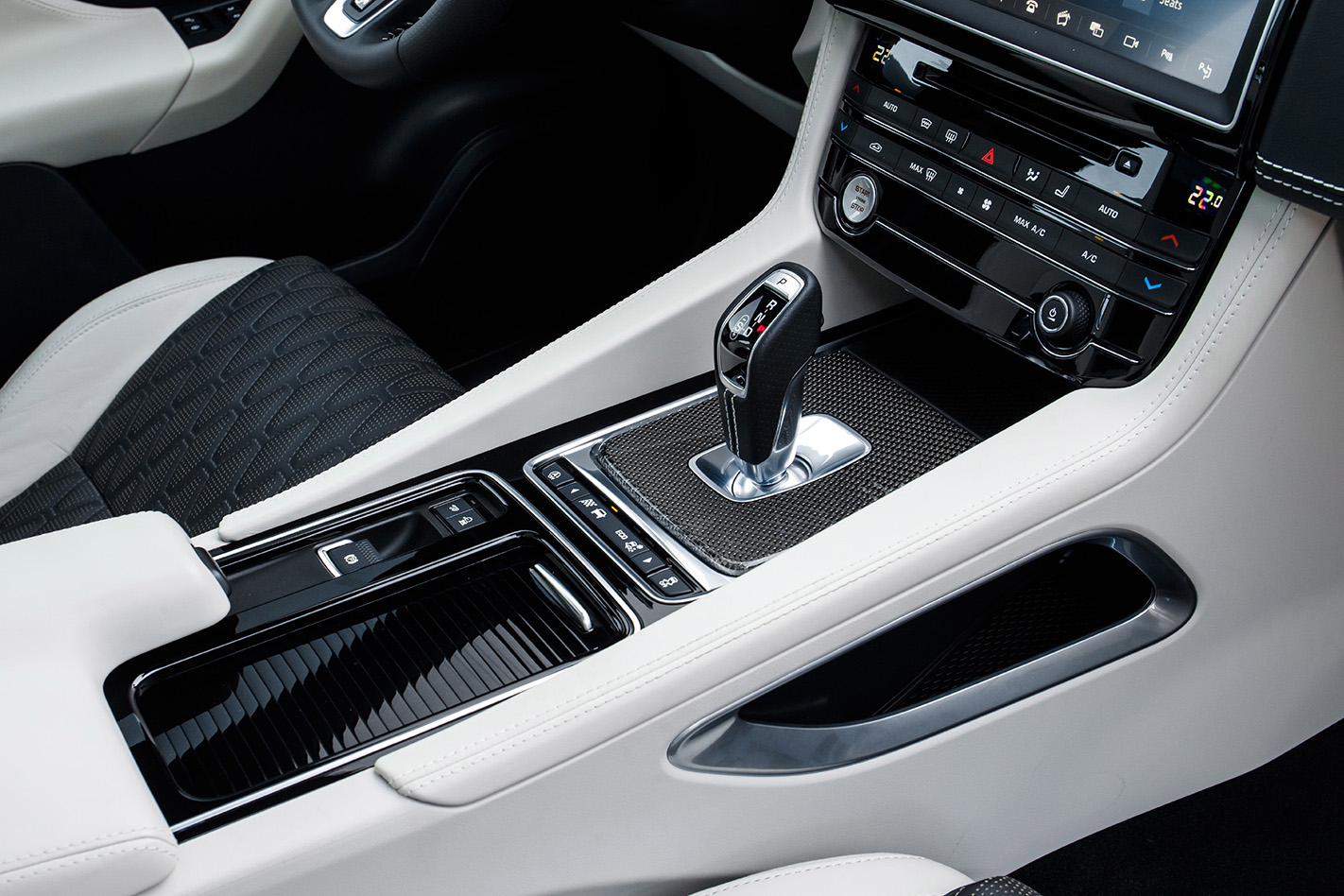
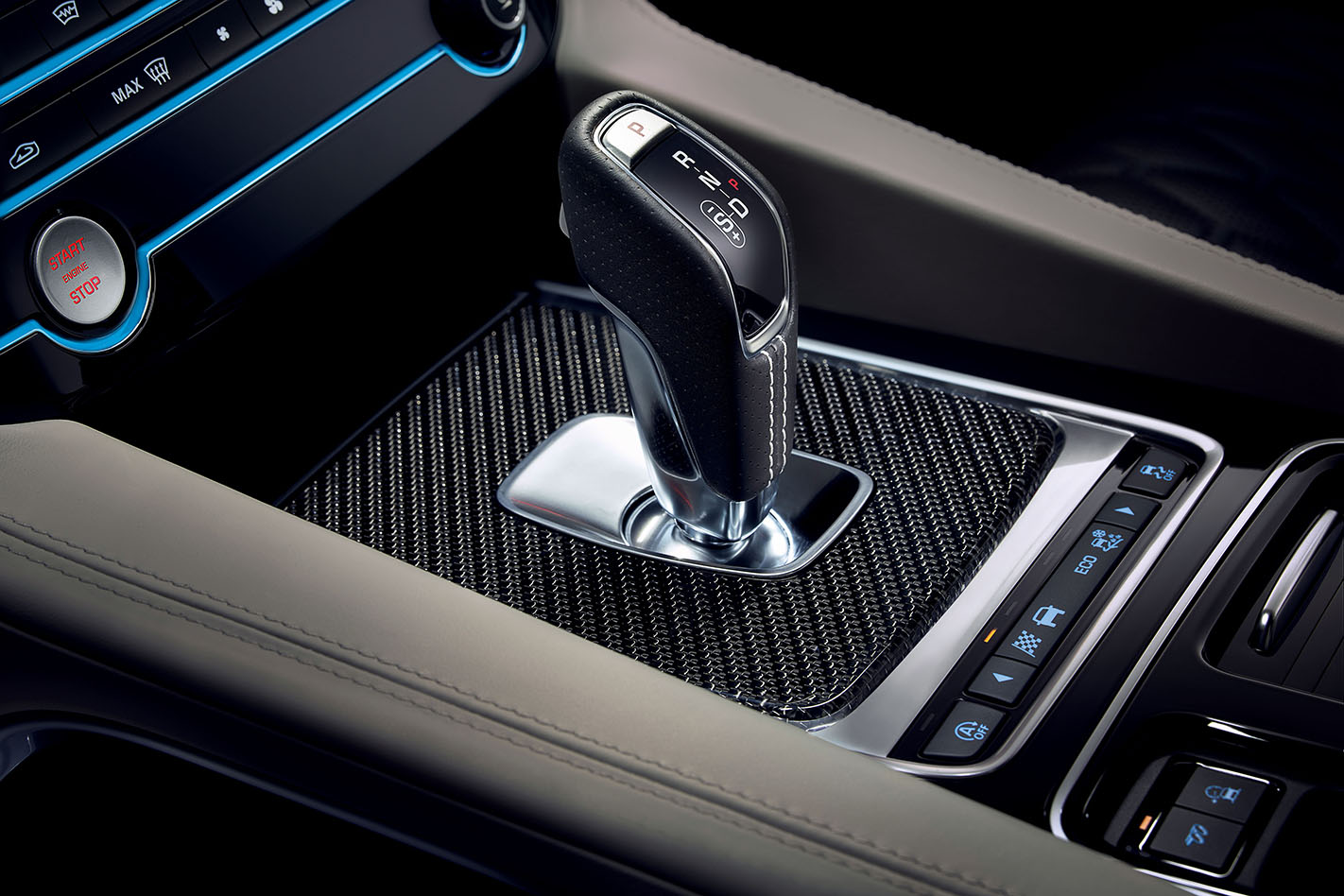
The F-Pace SVR also sports a conventional transmission selector atop its centre console, which is miles ahead of Jag’s oddball rotary dial that has been the default for many years now. It might not look as neat, but it’s ergonomically superior – though it still seems like there’s a lot of wasted real estate between the driver and front passenger.
Rear seats are also SVR-specific, with the outboard positions equipped with heaters and cushions sculpted to provide better lateral support. We didn’t test them out, however – our attention was firmly focused on the experience from the front.
That said, as nice as the F-Pace’s cabin is, it lacks some of the glamour and visual sparkle of its German rivals. It’s a step above the surprisingly undramatic Stelvio, but still a little sober for something pitched as a performance flagship. The ride quality is also something that may affect how you feel about the SVR, for even in comfort mode those adaptive dampers can be awfully firm on choppy roads and urban lumps. Raise the speed, however, at the ride smooths out substantially. It’s clear this car was engineered with going fast in mind, not dawdling around the suburbs.
ON THE ROAD
Four-hundred and four kilowatts. That’s a lot of power. Not for an SUV, but for any road-going, registerable vehicle, period.
But trust the mad boffins at Jaguar Land Rover’s Special Vehicle Operations division to slip their second-most potent V8 into a family all-terrain wagon. Their insanity is our gain, because while injecting that much brawn into a car designed for mum, dad, three kids and a terrier might seem a touch irresponsible, the result is a mutant machine that should turn the opinions of ‘performance SUV cynics.
In short: it’s fast. Very fast. At full whack it’ll jump to 100km/h from standstill in just 4.3 seconds, which may not be quite as rapid as the 3.8s taken by the Alfa Romeo Stelvio Q or Mercedes-AMG GLC 63 S, but it’s nevertheless a clear half-second ahead of Porsche’s Macan Turbo. You can thank the SVR’s 404kW/680Nm 5.0 litre supercharged V8 for that.
But the SVR’s development hasn’t just been the single-minded pursuit of performance. Jag’s SVO division wasn’t aiming to make the F-Pace SVR the fastest SUV around the Nurburgring, because in their words that objective would have simply resulted in a vehicle that would be, well, a bit rubbish to drive every day.
A veiled attempt at throwing shade on the aforementioned Stelvio Q and GLC 63 S, both of which have laid claim to the title of fastest SUV around the Nordschleife? Perhaps.
But where we are, in the south of France on the F-Pace SVR’s international launch, SVO’s commitment to making a vehicle that’s more road-oriented is certainly appreciated.
Our route traces through sections of the spectacular Verdon gorge to the north of Saint-Tropez, hugging limestone and granite cliffs and weaving in, out and through the rock. Throw in frequent hairpin switchbacks and short straights, and the drive is an almost constant dance of brief spurts of full-throttle acceleration, quick left-right steering inputs and firm stabs of the brake pedal.
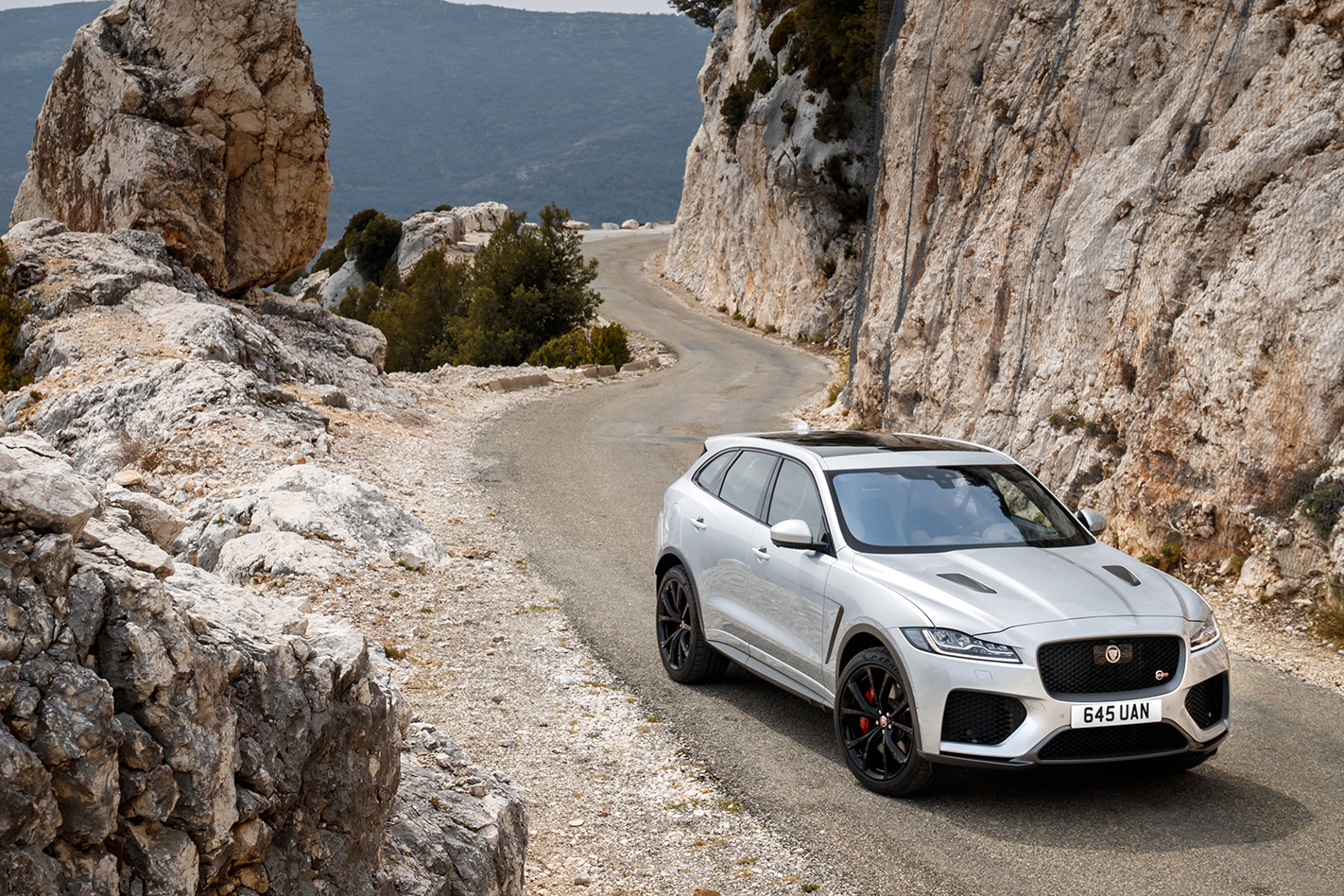
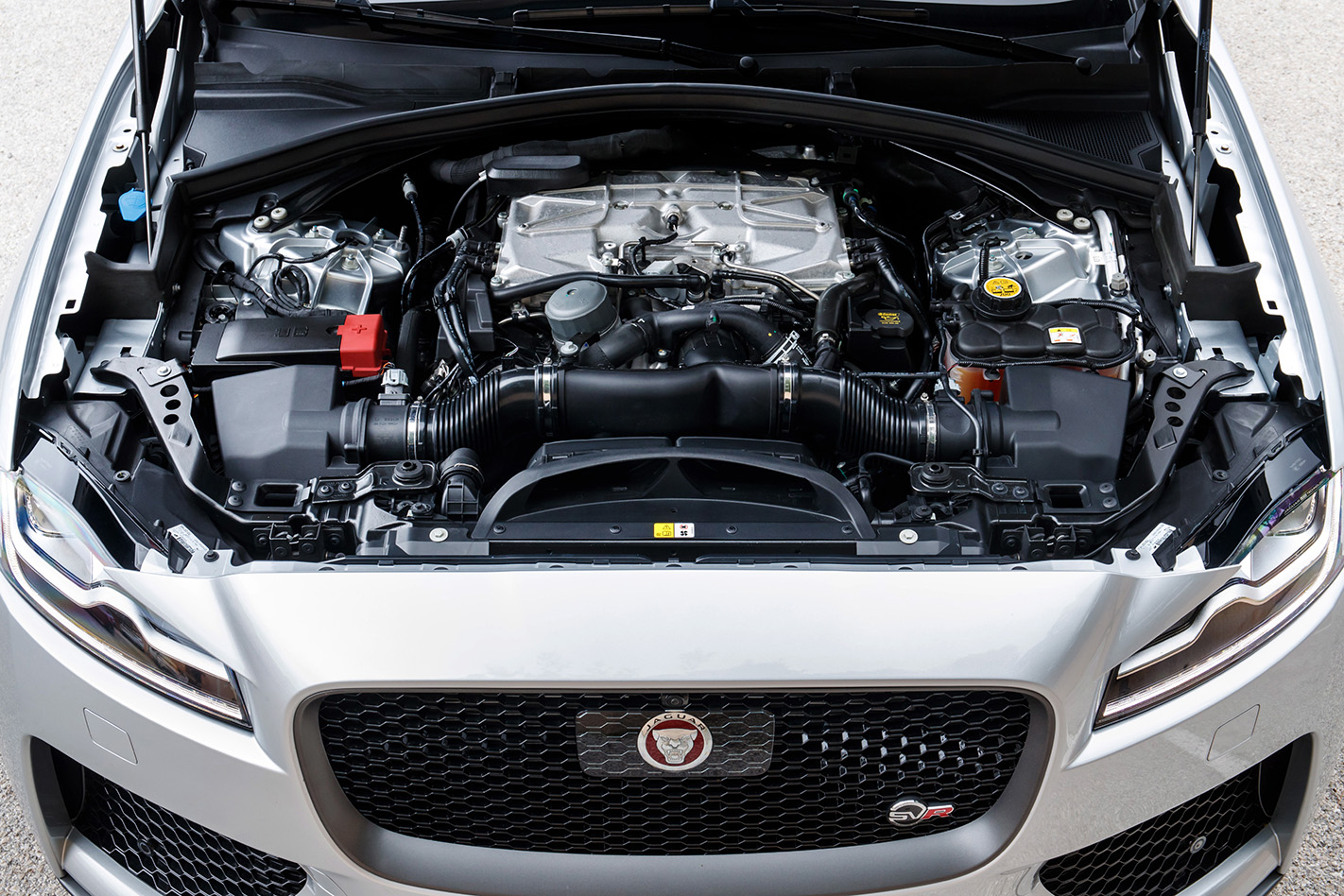
And in this environment, the F-Pace SVR delights. That engine, first of all, is a peach. Being supercharged it feels fabulously linear and manageable, an attribute that many of its turbo rivals don’t have. It also sounds mega with the exhaust baffles opened in dynamic mode, its bassy high-decibel report echoing off cliff faces from behind while the supercharger whines through the airbox up front.
It’s backed up by an eight speed automatic that blasts out rapid-fire shifts that are almost dual-clutch quick, and is clever enough to simply be left in its sportier automatic setting should you just want to focus on guiding the car.
Which would be understandable, given there’s much joy to be had in simply steering the SVR. Its grip is stupendous, and on a dry road it’s phenomenally hard to unstick. 295-section rear tyres will tend to have that effect. Even with a smidge of moisture we could only coax the slightest wriggle from it when powering out of a corner, but when you’re dealing with 404kW in a big heavy wagon that’s probably a good thing – especially if Junior and Rex are in the back.
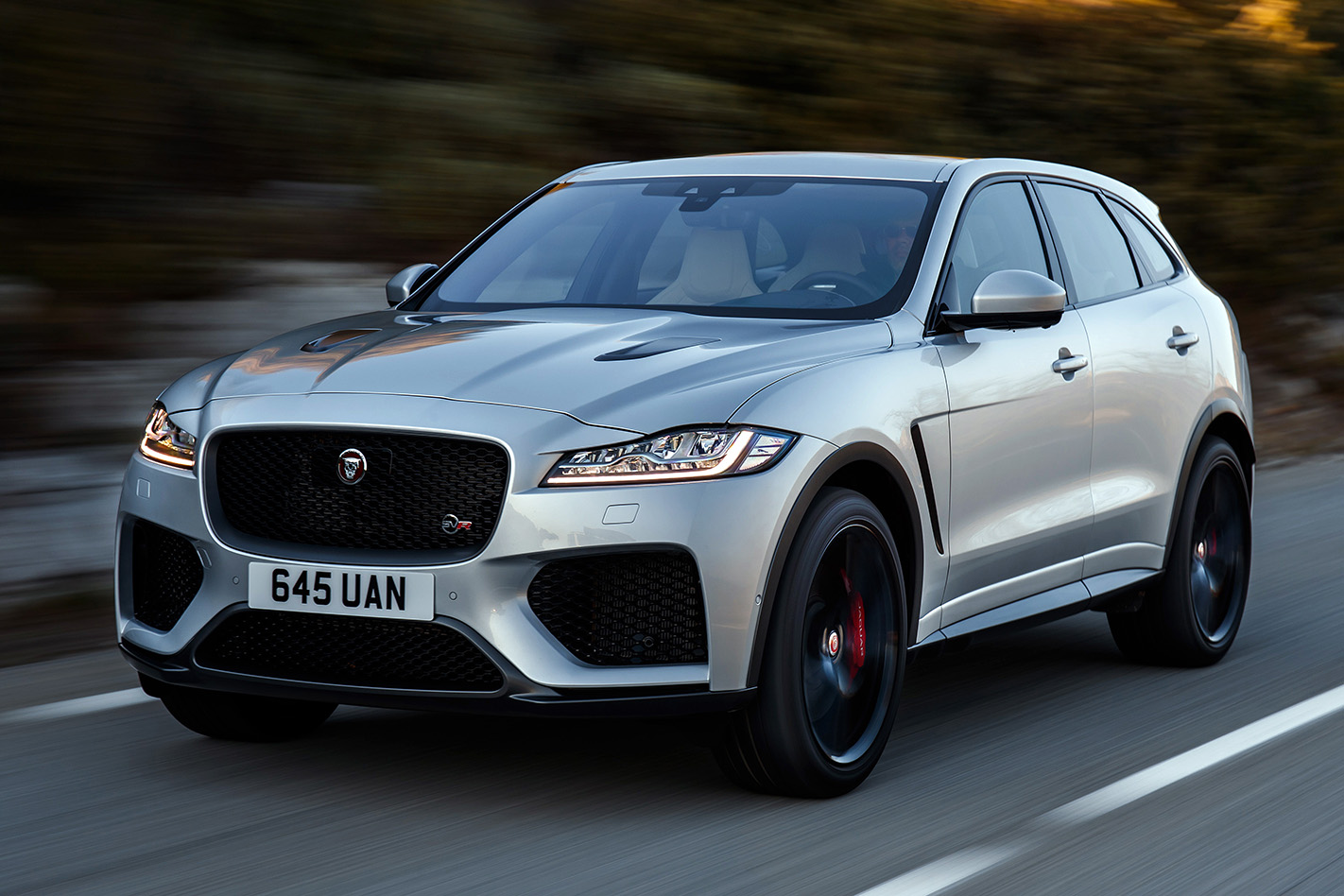
Control, though, is never an issue. The SVR’s chassis is tuned to handle, with higher springrates and clever adaptive dampers working in concert with firmer bushings and an AWD system that preferences the rear axle to neuter understeer and impart a balanced feel.
The steering rack also boasts an SVR-specific tune, and though the electrically-assisted tiller does filter out a lot of sensation about what’s beneath those front tyres, it’s direct, fast-reacting and authoritative.
The only thing it doesn’t handle well is pockmarked roads, cobblestones and speed bumps, with the suspension’s firmness and low-profile rubber on 22-inch alloys (21-inch wheels are standard) not being especially conducive to wafting comfort.
VERDICT
The F-Pace SVR has immense capabilities as a performance car, capabilities that should hopefully help you overlook its fairly brittle around-town ride and somewhat restrained cabin.
And for the amount of dollars required to get into one, it’s a solid buy. Is it a better all-rounder than Merc’s GLC 63 S or Porsche’s Macan Turbo? Is it shamed by the Stelvio Q’s speed? We’ll have to wait a couple of months for the F-Pace SVR to land in Aussie showrooms to find out.
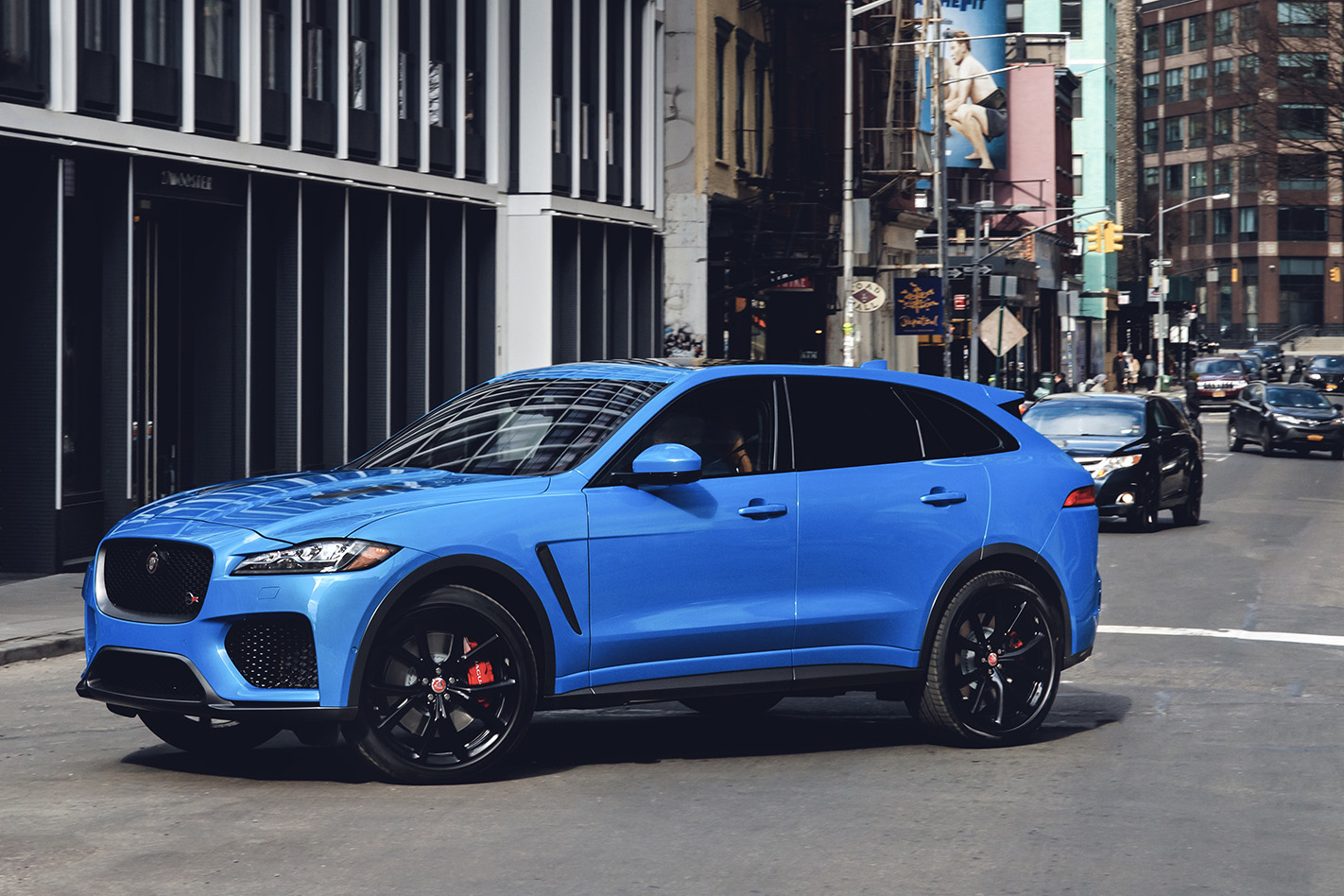
After a year’s delay, Jaguar has at last launched itself into the increasingly-crowded luxury performance SUV segment with the F-Pace SVR, which makes its international sales debut this week ahead of an Australian arrival in June.
Propelled by a 5.0-litre supercharged petrol V8 and boasting a bespoke chassis setup to endow it with sportscar-like handling, the Jaguar F-Pace SVR will line up against the likes of the Mercedes-AMG GLC 63, BMW X3 M, Audi SQ5, Alfa Romeo Stelvio Q and Porsche Macan Turbo. Stiff competition, no doubt, but Jaguar’s offering has more than a few weapons in its arsenal to give it a fighting chance. Here are the highlights:
Bent-eight, it’s great
The centerpiece of the SVR is, naturally, its big-capacity V8 powerplant. Displacing 5.0 litres and augmented by a belt-driven supercharger, it churns out 404kW between 6000-6500rpm, and 680Nm between 2500-5500rpm. Healthy numbers, and if you’re the kind for whom size matters, you can take comfort in the fact the SVR has the biggest engine of its segment – the next-largest rival is the GLC 63 with its 4.0 litre turbo V8, while the rest of the pack use six-cylinder engines ranging from 2.9L (Alfa Romeo Stelvio Q) to 3.6L (Porsche Macan Turbo).
Performance is brisk, with the F-Pace SVR reaching 100km/h in 4.3 seconds on its way to a maximum speed of 283km/h.
Looks fast, is fast
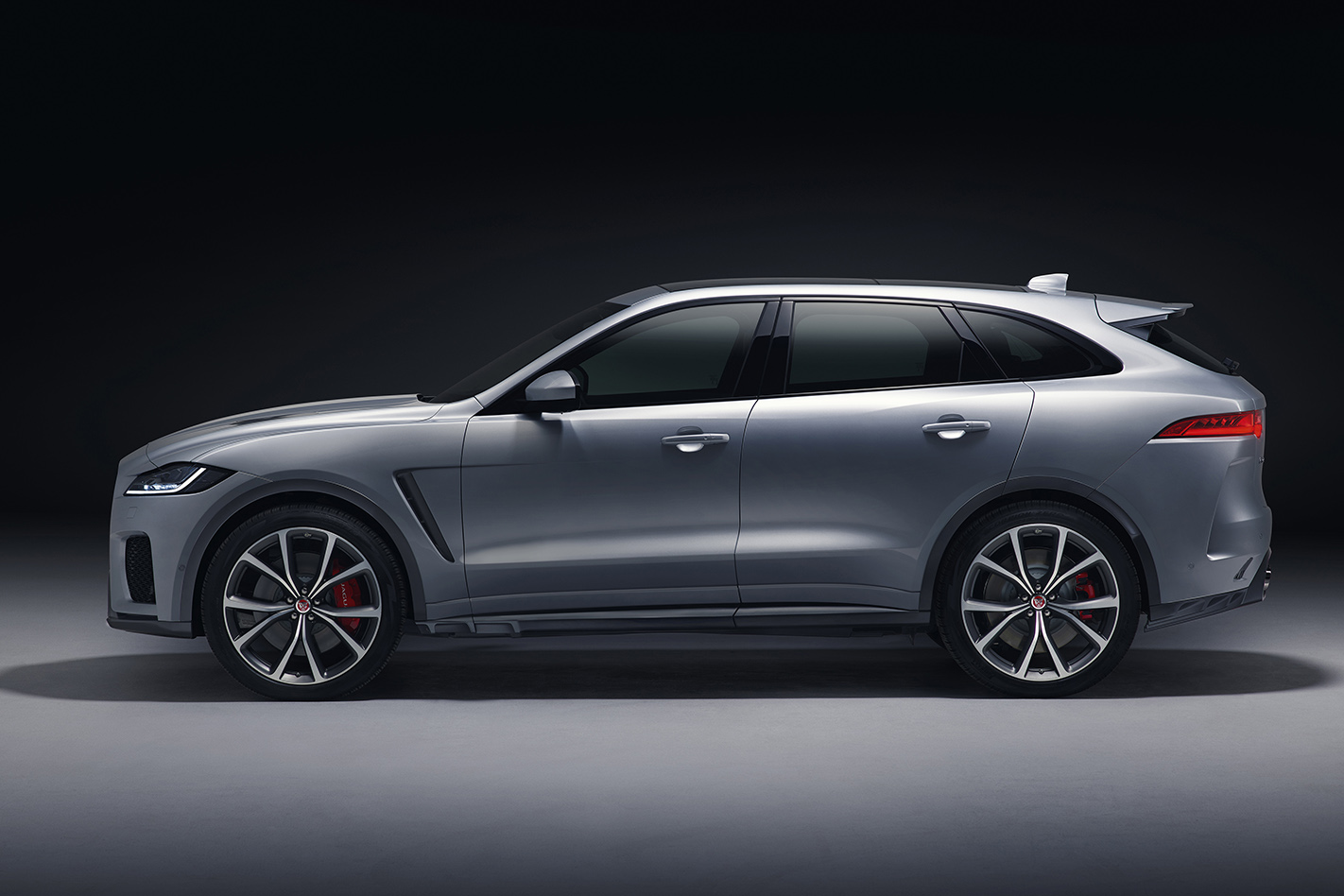
Though its ground clearance is the same as a vanilla-spec V6 F-Pace, the F-Pace SVR adopts a sportier stance thanks to its more aggressive – and aerodynamically functional – bodykit. The front bumper features swollen air intakes to direct air to the engine’s heat exchangers, a tailgate roof spoiler reduces lift at high speed, and recontoured side skirts rear bumper incorporate diffuser-like protrusions on the underside to smooth out airflow and further cut stability-spoiling lift.
Gigantic 21-inch alloys are the standard wheel for the SVR and amply fill out its huge wheelarches, though even larger 22-inch items are available for those who want them.
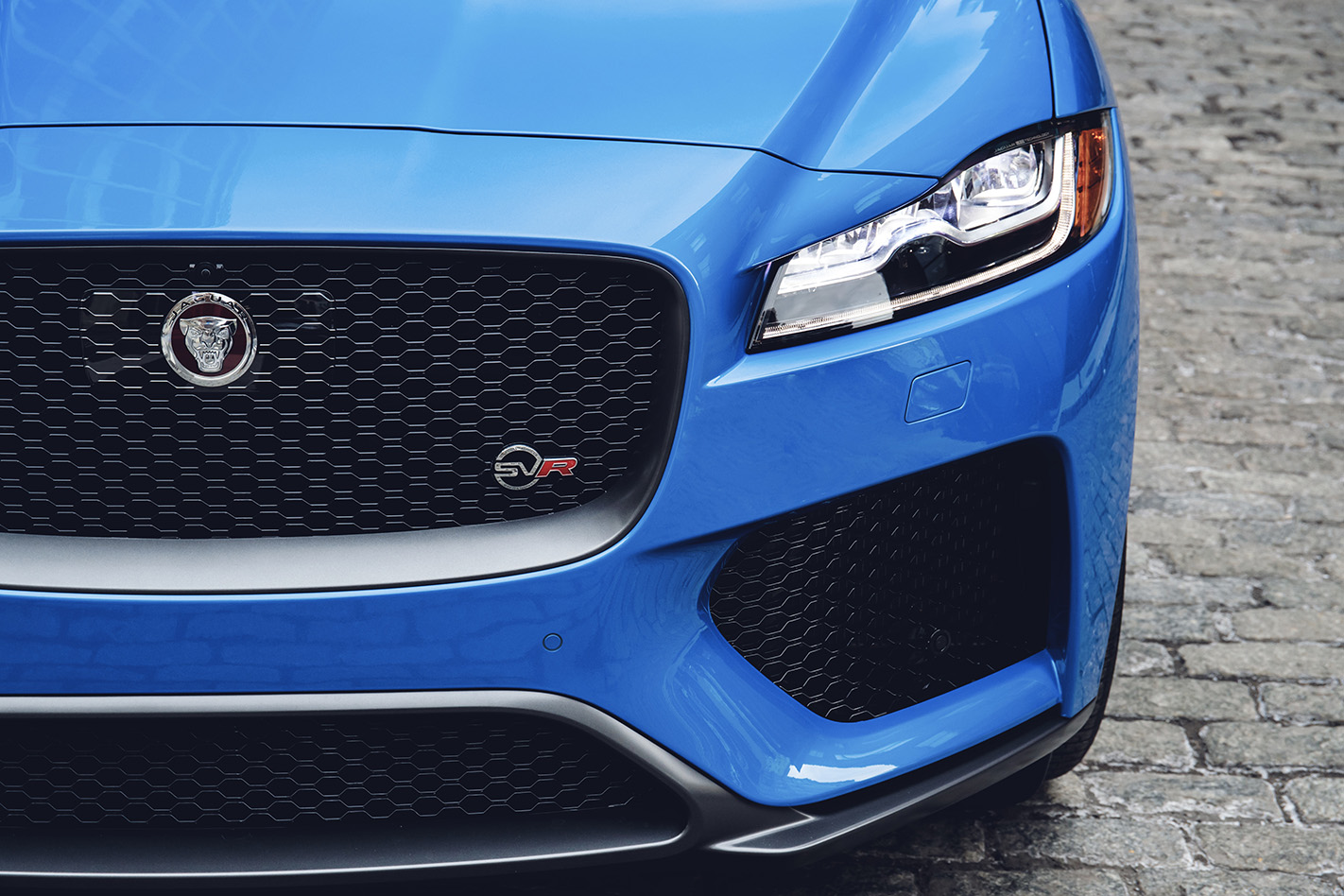
Big brakes
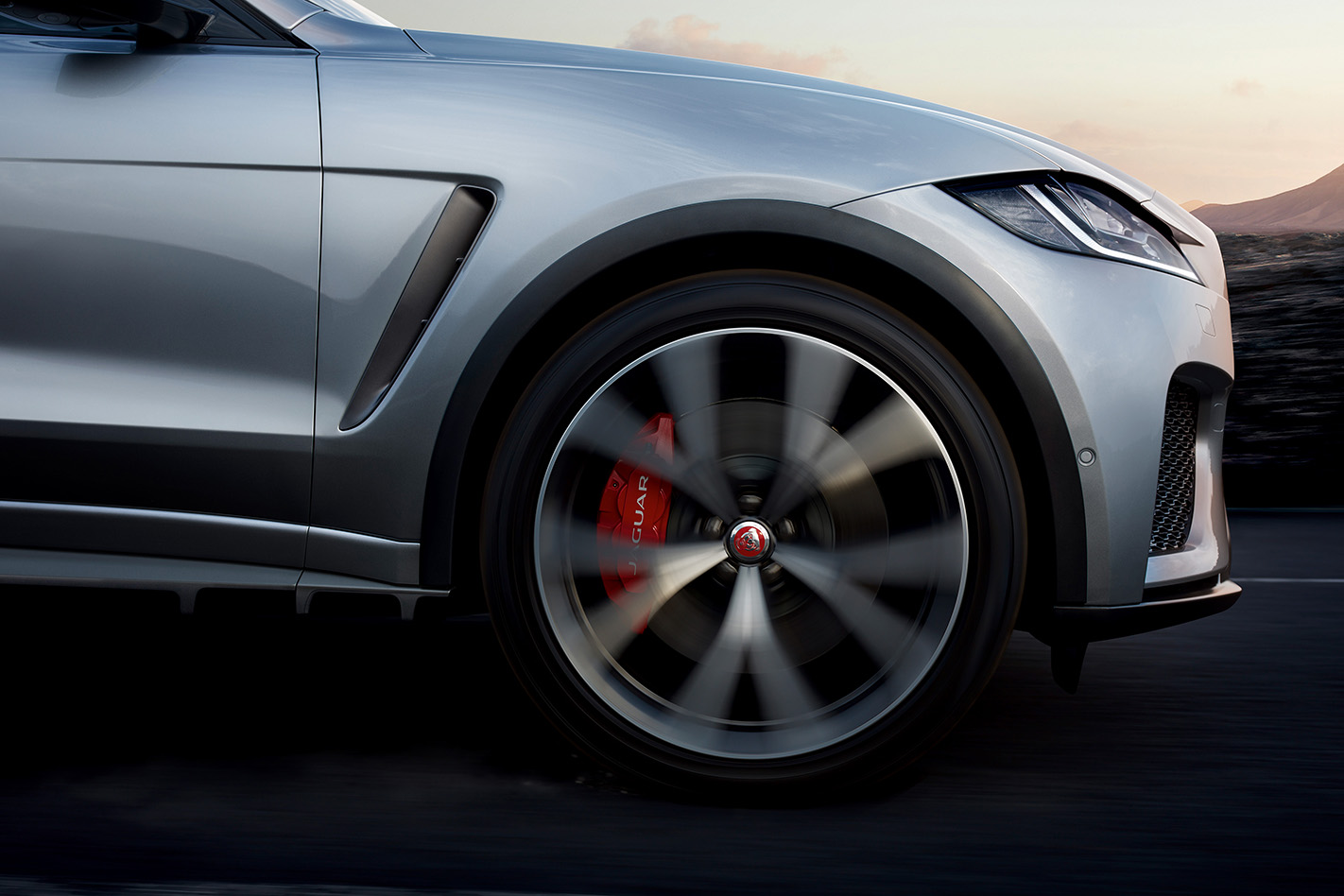
Going fast necessitates stopping fast, and the SVR’s brake package has been beefed up to accommodate. Big two-piece 395mm front rotors are gripped by chunky four-piston Brembo calipers on the front, while two-piece rotors measuring 396mm are fitted to the rear axles and clamped by sliding calipers. With the hubs of each rotor made of aluminium versus the standard car’s all-steel items, the SVR’s brake package actually weighs substantially less in total despite offering greater stopping power – and each aluminium front caliper shaves 2kg versus the standard F-Pace hardware.
Trackstar diet
The brakes aren’t the only area of the F-Pace SVR to see some lightweighting. The 22-inch forged alloy wheels are 2.4kg lighter at the front and 1.7kg lighter at the rear compared to standard F-Pace rolling stock, and the SVR-specific exhaust also trims 6.6kg from the kerb weight thanks to less internal baffling. The front seats are also lighter too, and the total weight differential compared to a regular V6 F-Pace amounts to roughly 70kg.
Bespoke interior
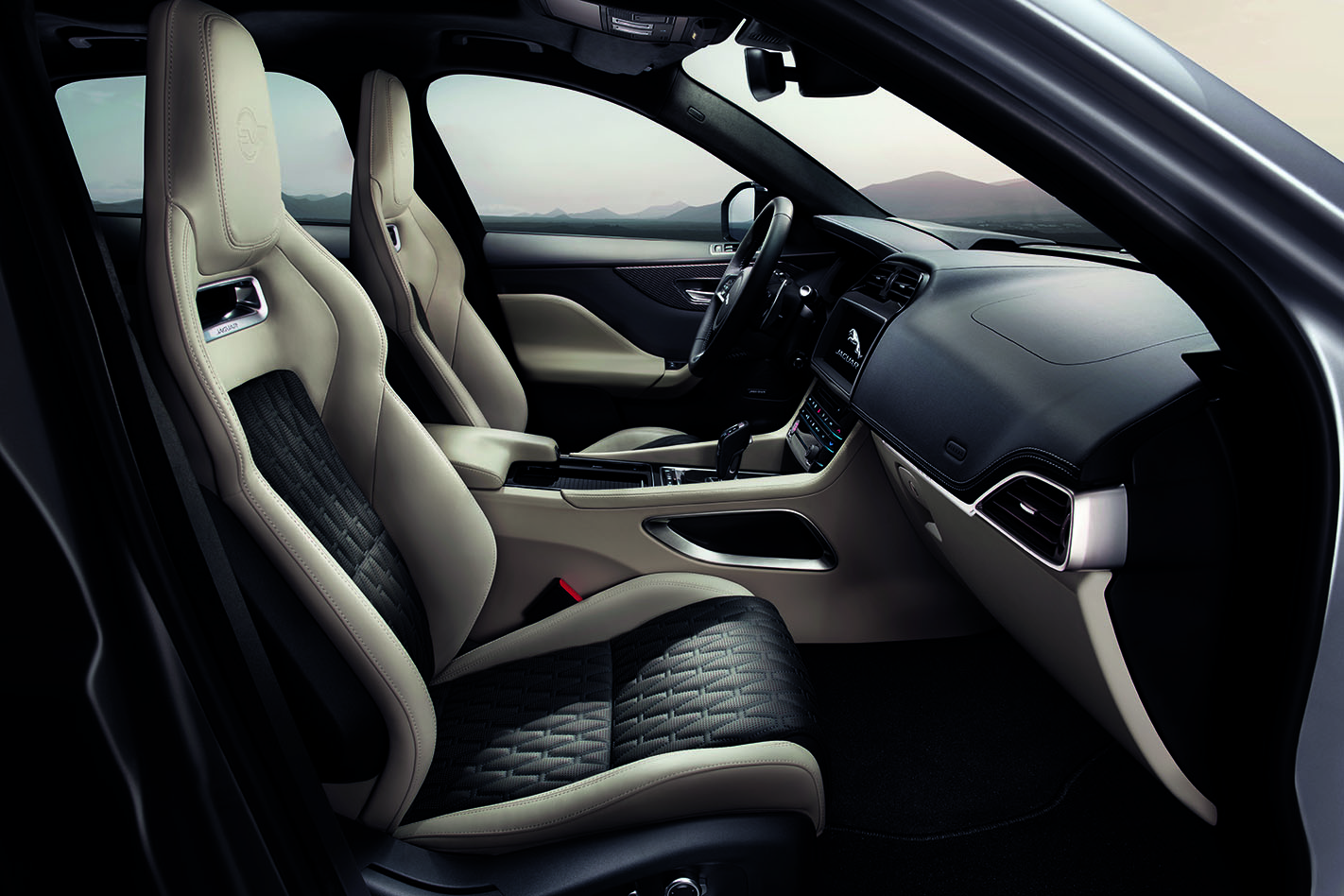
On the inside, the SVR has a number of specific enhancements that separate it from the rest of the F-Pace family. The most noticeable are the front seats, with fixed headrests and deeply-sculpted bolsters designed to hold driver and passenger firmly in place during spirited driving.
The driver also has a fat-rimmed SVR-exclusive steering wheel to hang onto as well, which has a pair of shift paddles behind should they wish to manually change cogs. Manual shifting can also be accomplished via the pistol-style gear selector on the centre console – another SVR hallmark and one that replaces the unloved rotary transmission dial of the regular F-Pace.
Instrument graphics also differ, and on the centre console there’s another SVR touch that most drivers will likely appreciate: a button that puts the exhaust bypass valves into their angriest setting with a single prod.
Smart undercarriage
Jaguar is fiercely proud of its reputation for building fine-handling cars, and the company has spared little expense in applying its corner-carving know-how to the F-Pace SVR.
Though the transmission is a conventional 8-speed automatic (no dual-clutch hardware here), the SVR’s gearbox is tuned for fast shifting and an ultra-direct feel when the car is put into Dynamic mode. It’s also hooked up to an AWD transfer case that is calibrated to be as rear-biased by default, normally taking the bulk of the engine’s power and torque to the back wheels to impart a neutral feel to the chassis and help stave off understeer when accelerating.
Power starts being directed to the front when rear wheel slippage is detected (or anticipated by the on-board electronics), but the SVR won’t direct more than 50 percent of its torque to the front wheels – the objective here being to maintain a rear-driven feel at all costs. A torque-vectoring rear differential is also standard, and helps sharpen turn-in response by overdriving the outside rear wheel.
Adaptive dampers also work to constantly adjust suspension behavior according to conditions or driver demand, and can be switched between a conventional setting and a harder-edged Dynamic mode. The electric power steering, too, has been re-tuned with an SVR-specific steering map, and the chassis is made tauter through revised suspension bushings.
I reckon there’s something special about a car that can take a motor show by storm. I mean, there you are, surrounded by bright lights, hostesses made up almost entirely of breasts and lipstick, dodgy-looking spivs in suits, and acre upon acre of brand-spanking metal, all polished to within an inch.
This feature was originally published in MOTOR’s December 2008 issue
It’s possible to walk away from such events wondering what the hell the fuss was all about, especially if nothing with four wheels has rushed over, grabbed you by the collar and shoved its tongue down your throat.

In my lifetime, the latter-day Monaro prototype of 1998 absolutely stole the Sydney Motor Show. But before that, you had the Citroën DS slaying them at Paris in 1955, the E-Type Jaguar braining the crowds at Geneva in 1961 and, this car, the Lamborghini Miura, which stormed the Geneva show in 1966 (then again, the Miura’s chassis was shown at the Turin show in 1965 and despite not having any sort of body fitted, Lamborghini still managed to take orders for it).
Anyway, if there’s one thing all those cars have in common, it’s a degree of gorgeousness you just don’t see every day (okay, the Citroën isn’t to everybody’s taste, but those who get it, get it bad).
The legend of the Miura isn’t just down to its stunning bodywork. For starters, there’s debate as to who actually penned what many view as still the most beautiful car in the world. We know that the mid-engined layout out of the Miura is down to Gian Paolo Dallara (remember the Dallara Formula 1 chassis? Yep, same dude) and Paolo Stanzani, while Marcello Gandini is credited with sketching up the clothes.

But Giorgetto Giugiaro, who worked for Bertone until November 1965, claims that it was he who penned the Miura’s proportions while at the design house, and that Gandini simply added the production details to the Miura’s form. And believe it or not, the three official contributors were all only in their 20s when they dreamed up the stunning Miura.
If you look hard, you can see just a bit (okay, maybe quite a bit) of Ford GT40 in the Miura’s profile, and that’s no surprise as the Ford was sticking it to everybody with its race-car in those days. But there’s also a purity to the Lamborghini which, from any angle, makes it look graceful and aggressive at the same time.
Not easy, but that’s the Italians for you. Gandini’s detail stuff is gorgeous, too; the louvered rear windscreen and the eye-lashes on the headlights (that sadly disappeared in the final version).
But beneath all that beauty, the Miura was also a serious piece of hardware. The engine is – as the mill in all good Italian supercars should be – a V12. It measures 3.9 litres (3929cc to be exact) and runs four triple-choke down-draught Webers.

That sounds great, but the carbs were actually racing units and weren’t the best idea for a road car. After idling for any length of time, for instance, the carbs would fill the chamber above the throttles with raw fuel which was then depressingly likely to ignite as the light turned green and the car accelerated away. This happened often enough for the early Miuras to be regarded as serious barbecue risks.
The solution was to add a fuel return system to the Webers, a solution that Ferrari also ended up using, which is somewhat ironic because tractor-maker Lamborghini only ever got into road cars after the boss – Senor Lamborghini – bought a Ferrari road car, found it unreliable (gasp) and was then more or less snubbed by Enzo when he dared to complain. The 350 GTV concept of 1963 was Lamborghini’s first attempt before the Miura shocked both admirers and (now former) detractors of Italy’s other exotic car maker.
With truly unusual double overhead camshafts (this was 1966, remember, when a heater was still an extra-cost option in your HR Holden), the Miura’s engine burped up 261kW at 7000rpm, with the 1971 S version delivering 276kW. The SV version that’s pictured here pumped out a substantial 287kW. Unheard of, really.
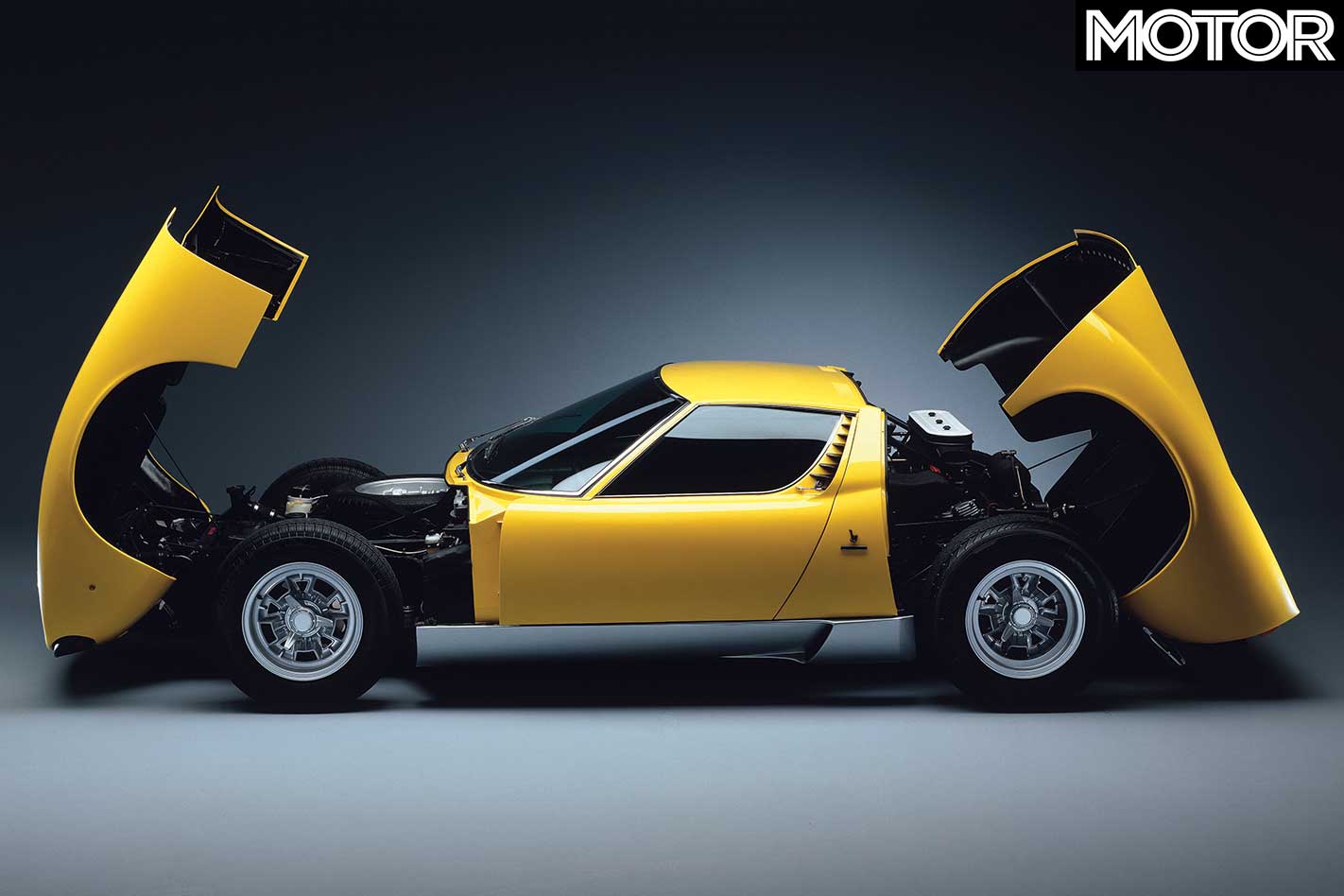
While the Miura’s mid-engined construction might seem a bit passe these days, back then, mounting the engine in the middle was equally all but unknown. Ferrari did, however, debut the Dino at Paris in 1965, a mid-engined V6, prior to the Miura’s naked debut at Turin the following year.
The Italians can’t take all the credit for the mid-engine mayhem though: Ferdinand Porsche started the mojo with race-cars as far back as the 1920s. Still, to find a road car with a mid-engined layout, you needed to look again at Porsche and the Spyder of 1954, as well as the ’60s De Tomaso Vallelunga and the el-weirdo Zundapp Janus of 1957, which was as relevant as a chocolate teapot.
Unlike modern interpretations of the mid-engined theme, the Miura mounted its engine not longitudinally, but sideways (leaving enough room for a tiny luggage compartment in the tail, behind the engine). It also courted idiosyncrasy by using the same technology as the original Mini and putting the gearbox in the sump, rather than a separate, erm, ’box with its own oil (and God alone knows what those straight-cut gears did to the lifespan of the oil they shared with the engine).
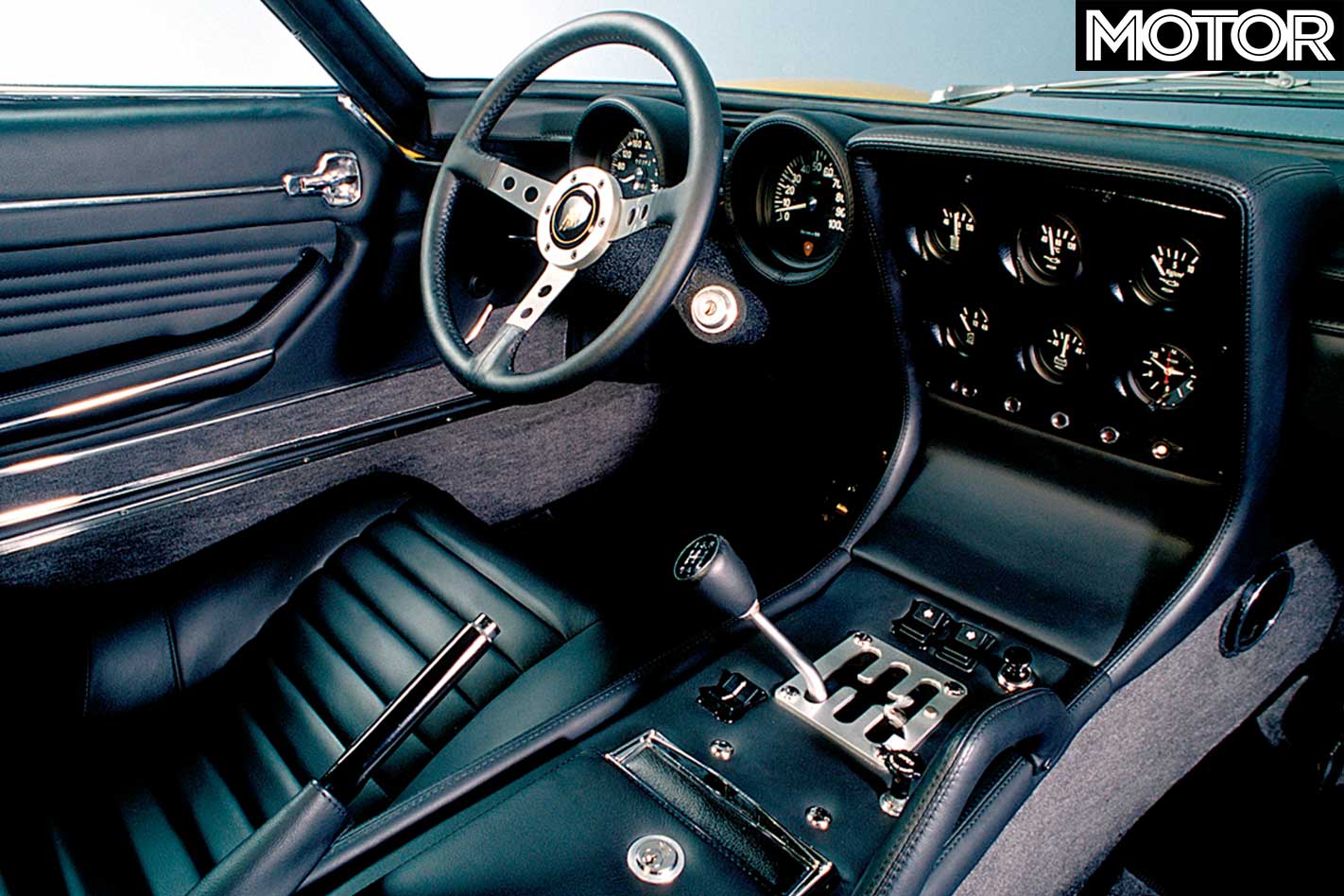
Driving any Italian supercar from this era soon reveals a pleasure-and-pain thing going on. While the V12 is lovely and surprisingly docile around the ’burbs, the gearbox is clunky and, in the manner of early gated shifts, a complete bitch to use, especially when the oil is cold.
There’s a foreboding 10,000rpm tacho (8000rpm was the redline) and a 320km/h speedo egging you on to squeeze those floor-hinged pedals (which you actually do get used to – ask a Porsche 911 owner), and ergonomics that throw into doubt the notion that Rome could ever possibly have ruled the world.
To describe the noise as lovely is a gross understatement (if you ignore the wailing gearbox, that is). The Miura sings one of the automotive world’s sweetest symphonies.
Goof about at 2000rpm and you’ll probably hate the Miura as much as it’ll hate you, but the steering starts to make sense the faster you go. Drive it like a ’60s Italian movie star on his way to pick up Sophia Loren for dinner before a slap and tickle session, and the Miura works.
Lamborghini Miura SV – The Good
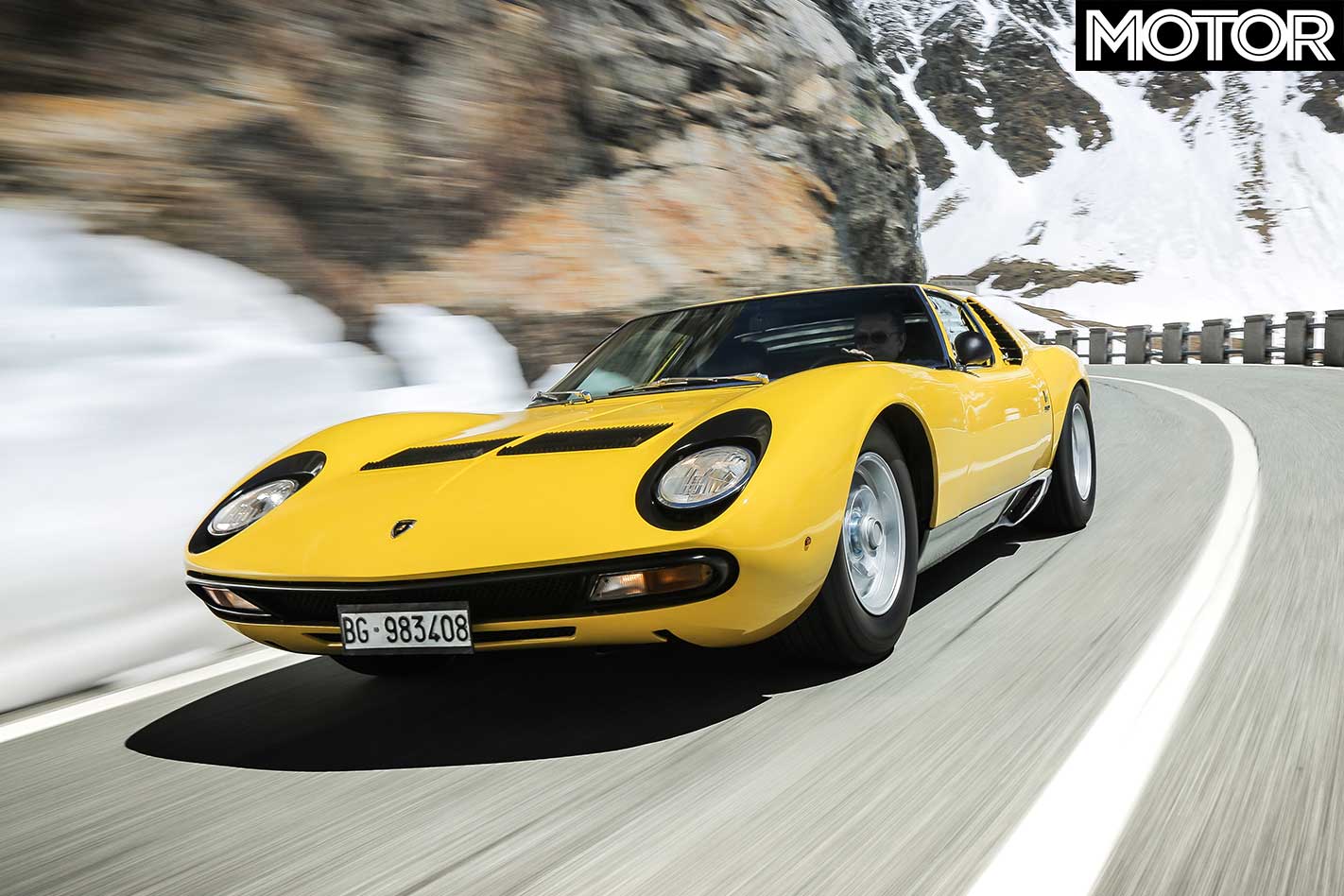
01 – Looks good The Miura is a stunner, and still regarded by many as one of the most beautiful cars ever created, period
02 – Feels good The second Lambo made isn’t too bad a thing to drive, either, in a mid-60s Italian kind of way
03 – A good investment Keep your Miura in tip-top condition (and you will, at current prices) and its value should keep going up
Lamborghini Miura SV – The Bad

01 – Park and pray Think about it for just a moment – where on earth could you possibly park it? Yep, absolutely nowhere
02 – Needs costly TLC The Miura will require a fair bit of expensive fettling, even if it’s just sitting around most of the time
03 – Parts famine Spare parts could be a bit of an issue. And replacement body panels? Seriously, don’t make us laugh
There’s a working ute, and then there’s this. It’s the Vampyre Batt, a unique take on the notion of a tracking rig, built by Scotsman Duncan Barbour.
With winter now truly upon us, we stumbled across this amazing doco from season six, showing the incredible lengths and detail that goes into GoT.
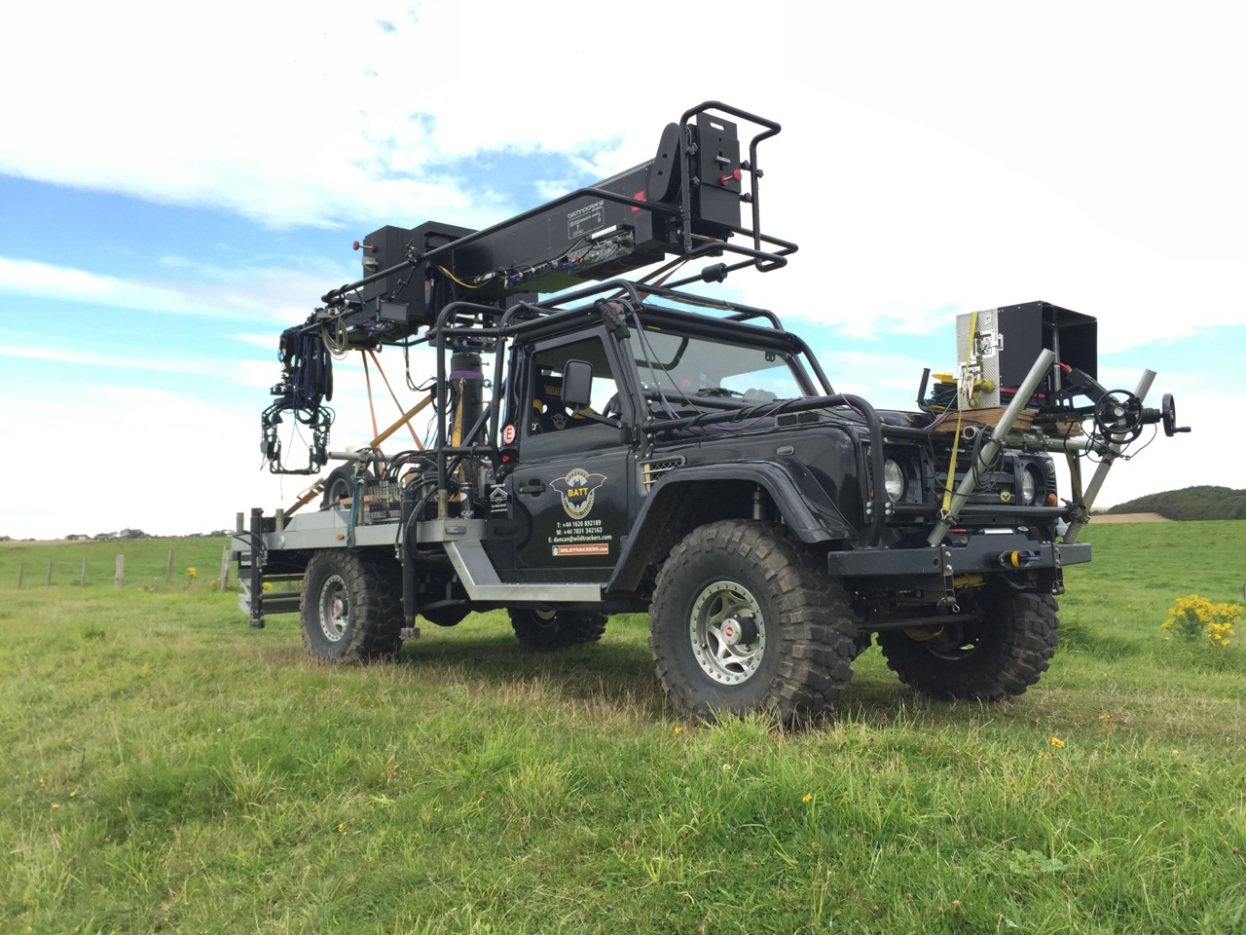
The Land Rover Defender ute is fitted with a flat tray, and runs a Chevy V8 and long-travel desert racing suspension along with big-bag offroad tyres, in order to create a smooth-as-possible platform for the huge camera boom.
Known as a Russian arm, the huge carbon fibre boom is operated from the tray of the vehicle, where the film crew is completely sheltered from the elements.
It proved its worth in one of the biggest battle scenes ever filmed for a TV show, where more than 80 horses and more than 600 cast and crew were involved on a freezing winter’s day.
“We were a bit annoyed [when we saw the final edit],” said Kit Harington, who plays leading man Jon Snow. “It looks like it was done in CGI, but it wasn’t!”
The Vampyre also sports a fully detachable roll cage, 240-volt on-board power via a removable generator under the car.
It has extra mounting points for other cameras, as well as a winch to allow the Vampyre to anchor itself when filming in tough spots.
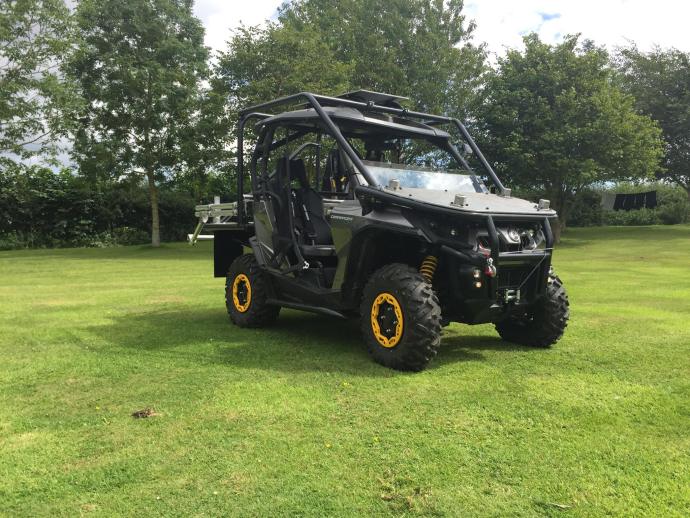
Barbour also makes another unique tracking vehicle that was used in Game of Thrones, known as the ROBIN. Based on a side-by-side Can Am Commander quad, the ROBIN has room for four people on board but with all-wheel drive, a locking front diff and a top speed of 120km/h.
Like the Vampyre, the ROBIN features a rear-mounted Steadicam stabiliser mount, which isolates the camera from the vehicle’s movements and makes for smooth shots even when moving quickly.
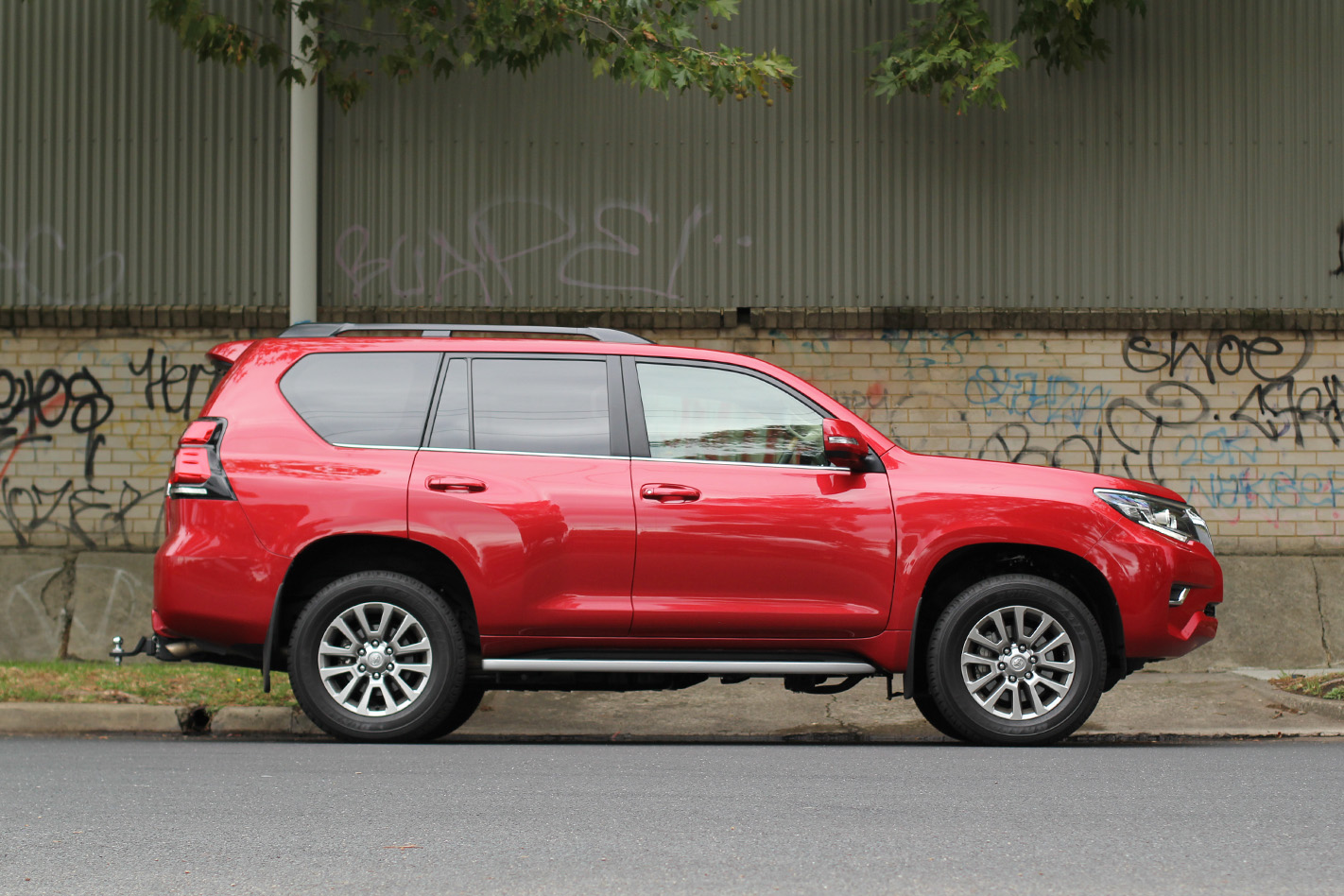
The Toyota Prado should be a familiar machine to most Australians. As one of the most (if not THE most) popular large SUVs in the country, you can’t travel far down any Aussie street without seeing one. Here we take a look at the top option in the range, the Prado Kakadu. Loaded with mod-cons and boasting some unique off-road gear to set it apart from its brethren, the Kakadu doesn’t come cheap – but is it worth the expense?
VALUE
First things first: the pricetag for the Prado Kakadu is a fairly staggering $84,119, putting the big Toyota well and truly on the wrong side of the Luxury Car Tax threshold and making it more than $10,000 more expensive than the next variant down the Toyota Prado hierarchy: the VX.
In the context of its segment, that’s not amazing value. You can get a mid-spec Land Rover Discovery (a much newer vehicle in every respect) for less dosh, while Ford’s top-shelf Everest is $10K cheaper and offers more under-bonnet oomph. Want some serious muscle? Nissan asks for just $71,990 for its V8-powered behemoth Patrol Ti, a car which boasts loads more space and towing capability than the Prado.
However, look beyond the dollar figure and you’ll find that the Kakadu compensates by packing in heaps of equipment – a lot of it being stuff you simply won’t find elsewhere at the price point.
According to Toyota, the Prado Kakadu consumes an average of 8.0 litres of diesel per 100km, while the first six scheduled services are capped at $240 per visit, seeing you out to the first three years or 60,000km of ownership.
STANDARD FEATURES
If you’re a gadget fiend, the Prado Kakadu delivers what you’re after. Jam-packed with gear, the Kakadu spec is brimming with mod-cons designed to make life on the road a little bit easier.
There’s driver-assist stuff like active cruise control and blind spot monitoring (invaluable for such a big car, even one with such generous wing mirrors), plus a top-down camera view that uses the four-camera array of the Kakadu to show you whether you’ve managed to park between the lines – or not.
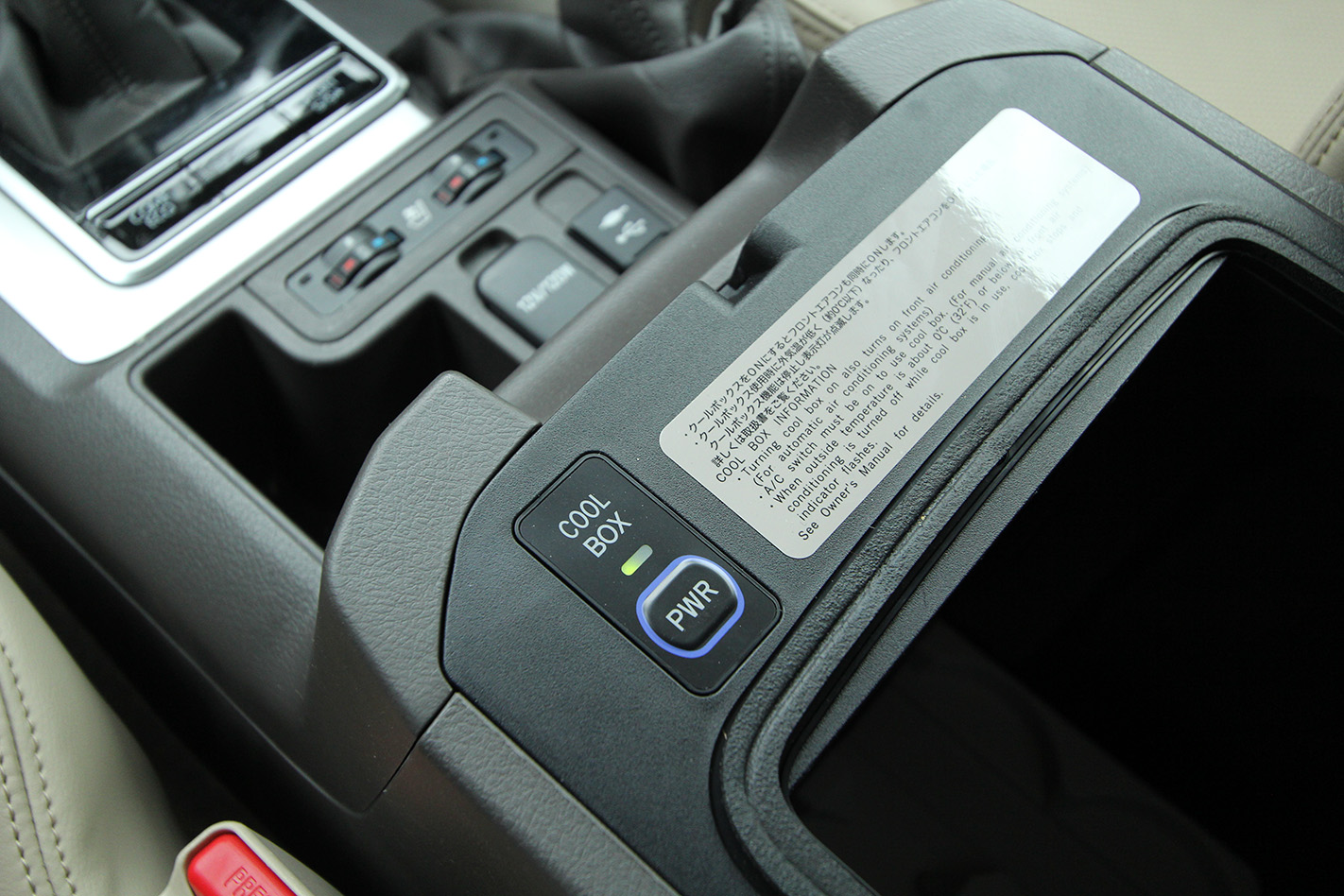
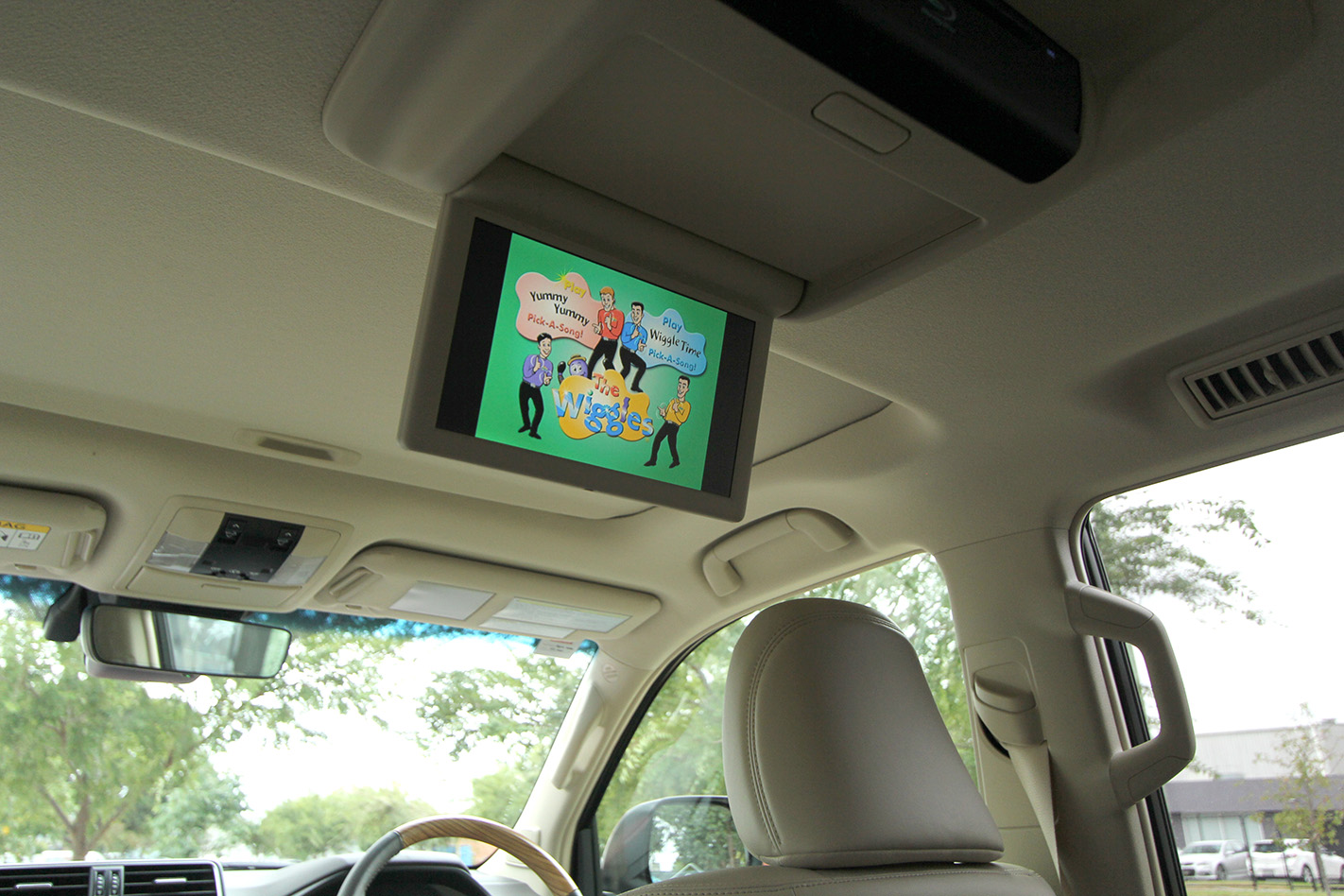
On top of that, there’s supple leather upholstery, not-so-impressive faux wood trim, power-adjustable (and heated/ventilated) front seats, power-folding third-row seats, a glass sunroof, roof-mounted 9-inch Blu-ray entertainment screen (with three wireless headsets), an integrated fridge with enough space for a six-pack of cans (!), and three-zone climate control.
Engage low-range, and another party trick appears on the central screen. The Prado Kakadu is equipped with a bevy of external cameras, and when the car is placed in any of its off-road modes they activate to show you exactly what obstacles might be around you, the car’s angle of inclination, and the path your tyres are going to take. It’s added peace of mind when picking a tricky line on a tough offroad trail.
Downsides? That infotainment screen is small, somewhat slow to respond to touch inputs and hobbled by dated graphics and a cramped visual presentation. Not only that, there’s no smartphone mirroring capability by either Android Auto or Apple Carplay – a feature that is fast becoming standard-issue in new cars these days.
SIZE
The Prado might not be Toyota’s biggest 4×4 in Australia (that title is easily claimed by the hulking Toyota Landcruiser 200-series), but it’s nevertheless an imposing vehicle.
Measuring just 5mm shy of 5 metres long, 1885mm wide and with 2790mm between the front and rear axles, you’ll need a decent-sized driveway or car spot to park the Prado Kakadu in. It’s tall too, at 1880mm from ground to roof, and as such the view out the windshield is definitely a commanding one.
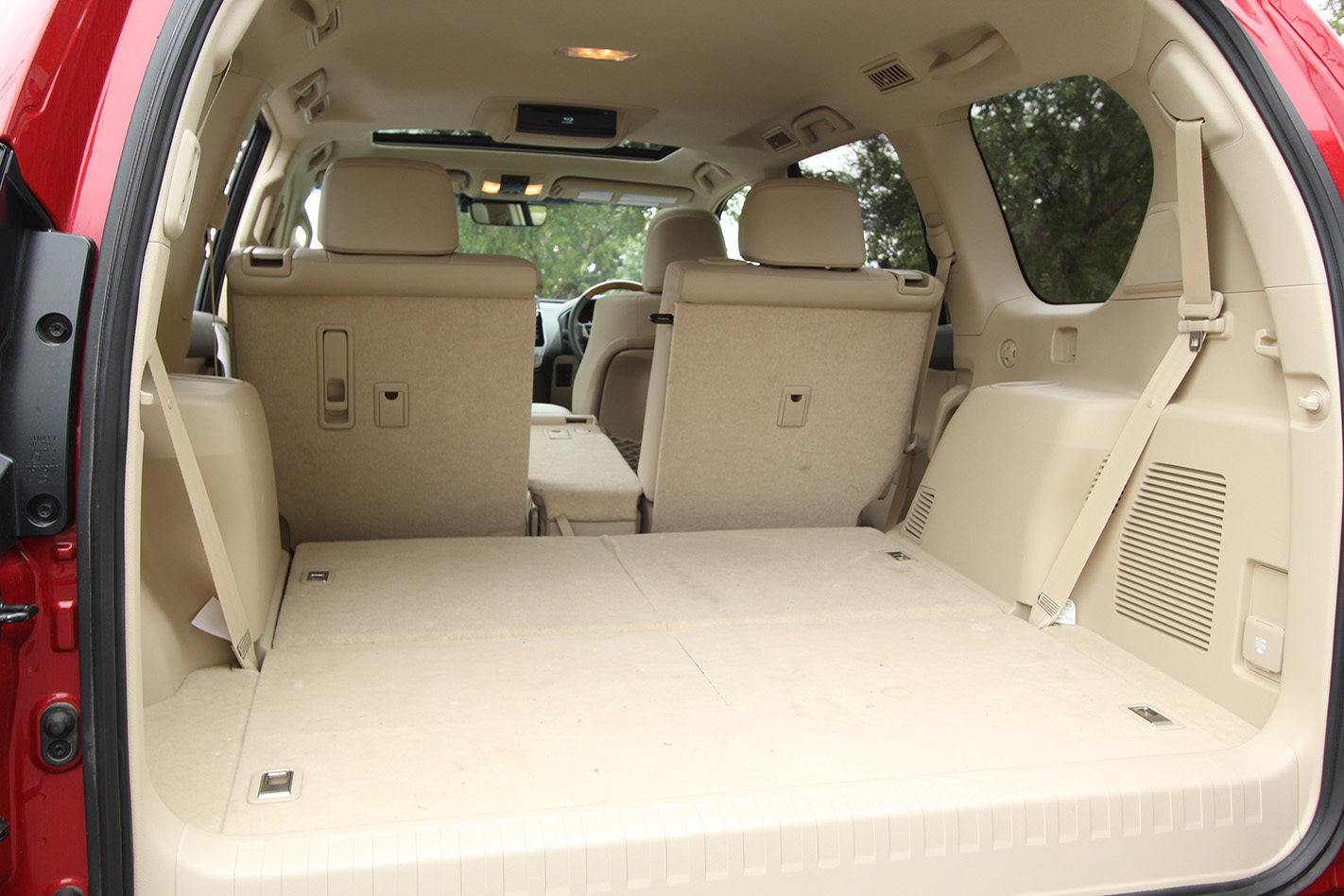
It’s a big unit, that’s for sure, but certainly a more manageable size than its Landcruiser bigger bro or a Nissan Patrol. In Toyota’s family tree, it sits about smack-dab between the Hilux-based Toyota Fortuner and the Landcruiser 200 – though interestingly the Fortuner gives more space behind the third row’s backrest – enough to slide an esky – whereas the Prado can only accommodate a handful of shopping bags when all seats are raised.
SAFETY
The Prado offers seven airbags as standard, with head protection across all three rows. Electronic aids include the usual ABS, EBD, traction control and stability control, along with collision detection, AEB with pedestrian detection, lane departure warning, blind spot monitoring and auto high beam.
In 2011 ANCAP awarded the current-generation Prado a full five-star safety rating, though be aware that crash safety standards and testing methodology differed greatly eight years ago.
COMFORT
It’s well-built and feature-rich, that’s for sure, but it’s undeniably quite dated. The Prado is an old vehicle by now, with the current generation rolling up on ten years of production. The clunky button-heavy design of its cabin, though functional, is definitely quite behind the times as a result. So too is that high-mounted infotainment screen, which lags well behind the status quo when it comes to smartphone integration and graphic presentation.

But the Prado’s raison d’etre is to cart a bunch of humans over whatever terrain you want to point it at with good comfort, and in that respect it succeeds. The Kakadu’s two front seats may as well be thrones, such is the imperiously elevated view they provide of your surroundings. Trimmed in soft leather, heated, ventilated and electrically adjustable to the nth degree, the comfort on offer is also fit for a king or queen – though the optional beige colour scheme isn’t something we’d necessarily spec. Good thing there’s an all-black option.
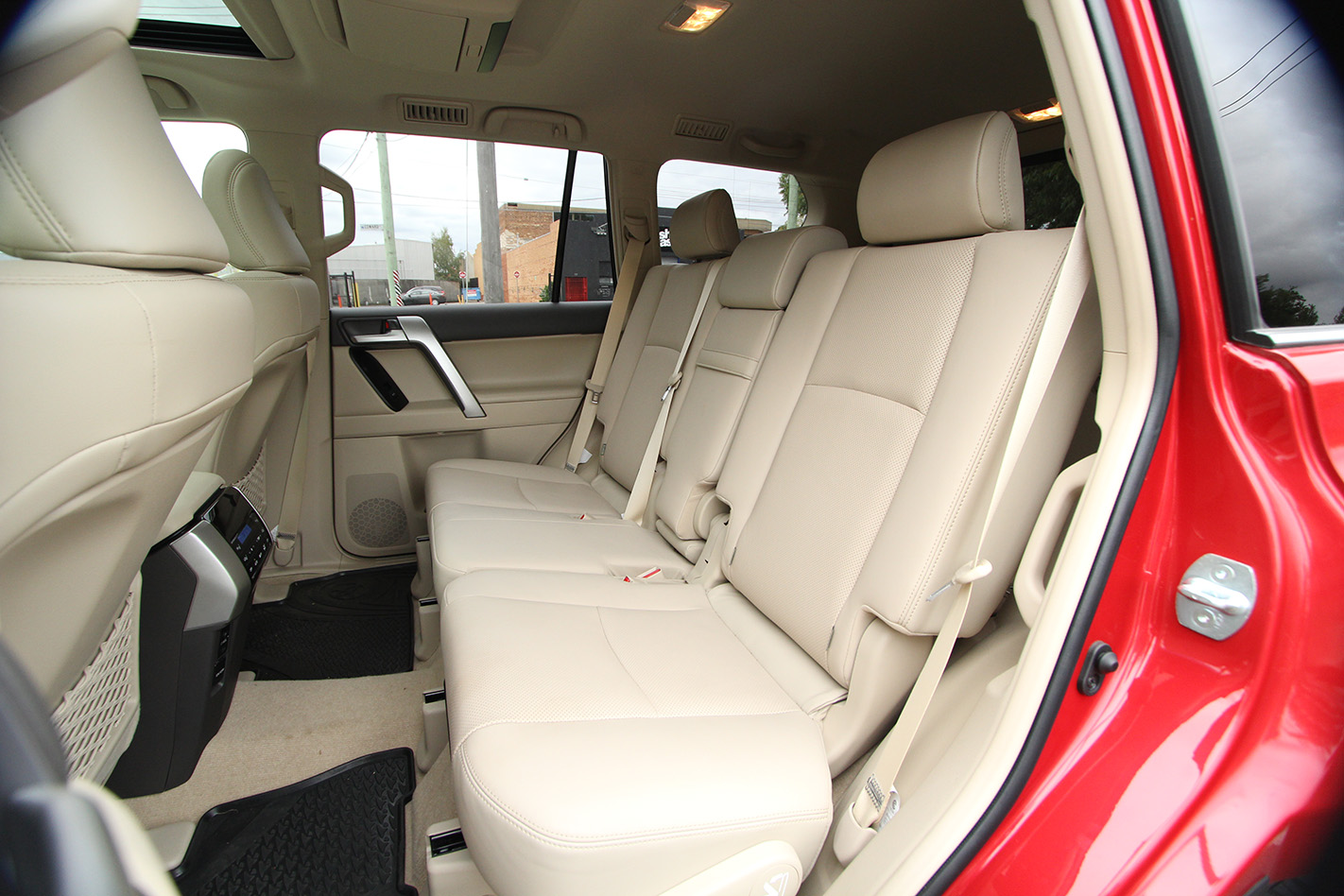
Plus, as a three-row SUV it has plenty of space for seven adults if you scooch the sliding second row forward a touch, liberating a few more centimetres of foot room for those in the rearmost two seats.
And speaking of which, in the Kakadu it’s a cinch to deploy and use those seats. Unfurling and stowing electrically via a set of buttons located just inside the tailgate (and another set accessible from the rear doors), those third row seats actually have reasonably good ingress and egress characteristics. There are plenty of grab handles to hold onto as you clamber in, and the kerbside second-row seat tilts and slides forward at the pull of a single lever.
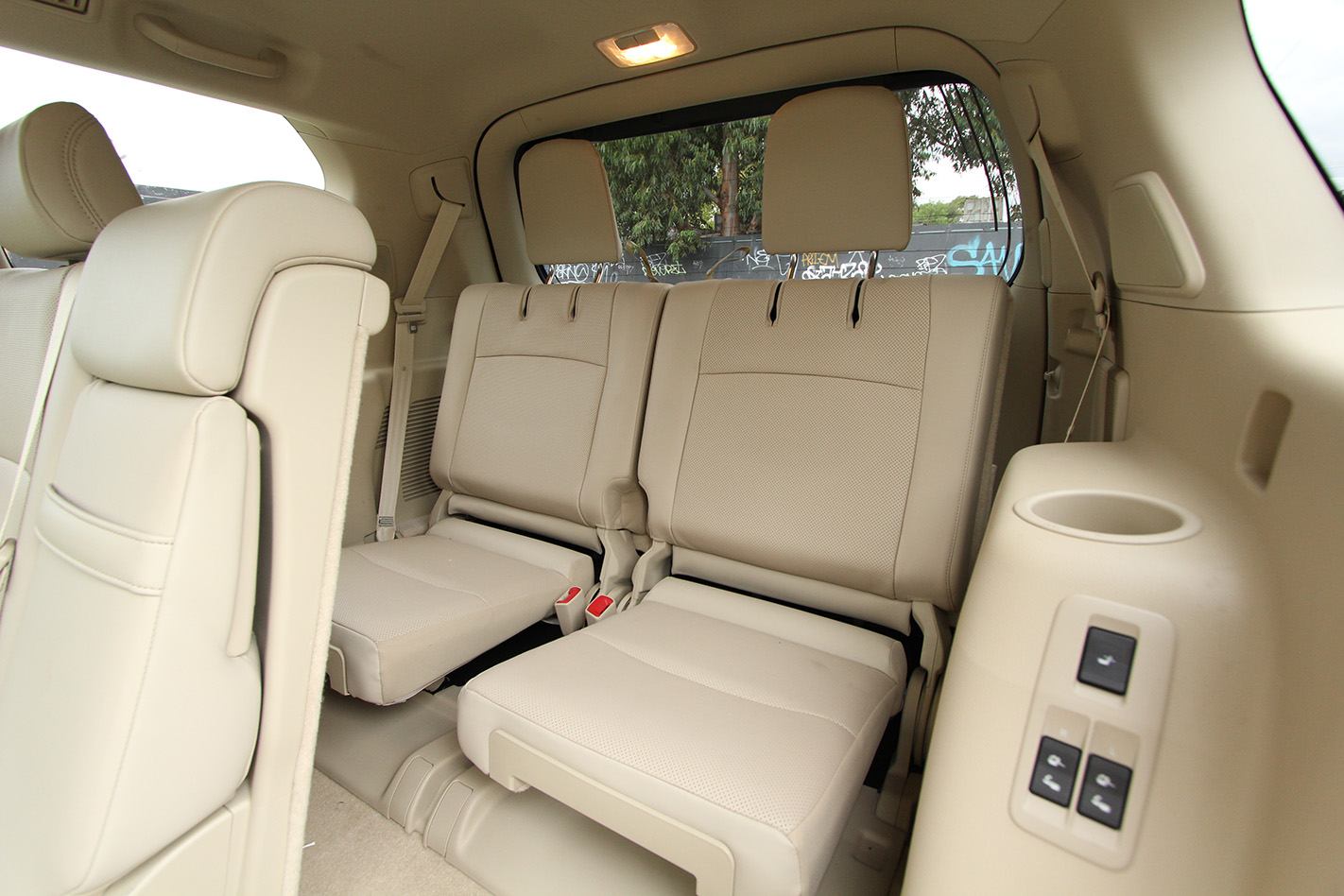
On top of that, every occupant in every row has either a cupholder or bottle holder (or both), and roof vents keep those in the second and third row cool in summer. The rear cabin also operates on its own independent air conditioning circuit, which greatly boosts the Prado’s ability to chill the cabin in hot Aussie weather. Not cool enough for you? There’s a sizable fridge between the front seats, one that can store a whole six-pack of 375ml cans and chill them surprisingly quickly – perfect for those long road trips.
The roof-mounted DVD player is primitive by today’s standard, with auxiliary audio/visual input being achieved by RCA connectors instead of something more modern, like HDMI. Kids will also need to crane their necks up to actually see it – a seatback-mounted solution would be ergonomically better, no doubt.
ON THE ROAD
The Prado Kakadu is built for eating up obscene amounts of kilometres, whether they be long asphalt highways or lonely gravel country roads. Its ‘Kinetic Dynamic Suspension System’ uses air springs and active hydraulics to iron out all but the nastiest of surface imperfections to deliver a cushy ride, and the steering is reasonably direct yet fingertip-light.
It’s a recipe that reduces fatigue at the wheel and promotes comfort for your passengers, and when the road ends and offroad trails begin, the Kakadu shows off the rest of its impressive cababilities. Unlike other models in the Prado lineup, the Kakadu’s suspension is unique.
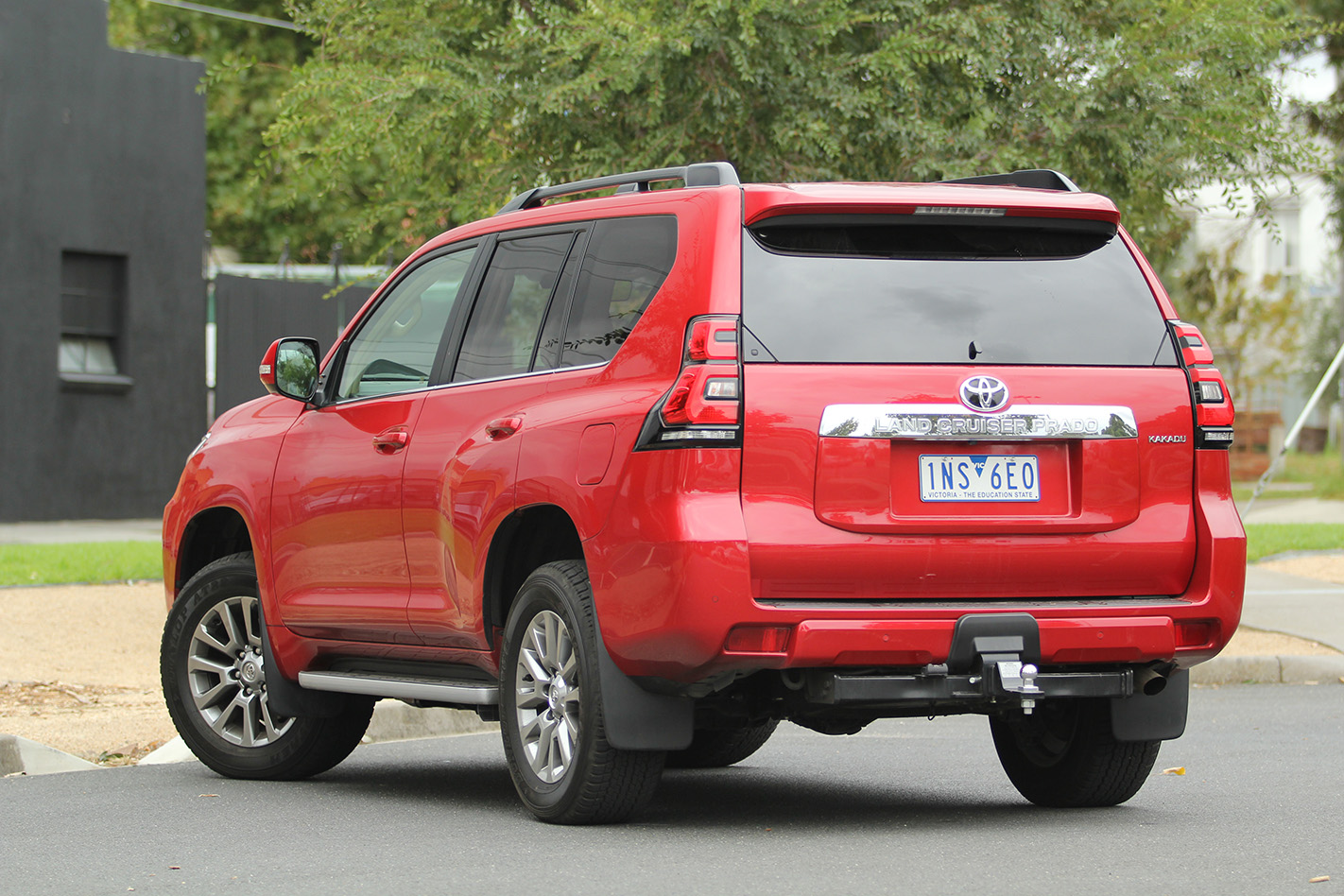
All Prados feature permanent 4×4, but twisting the Kakadu’s transfer case dial to 4WD-low allows you to switch between a myriad of surface-specific offroad modes to conquer whatever trail lies between you and your campsite, changing the behaviour of the hydraulically-linked dampers and chassis electronics to maintain traction. Get properly stuck, and a locking rear differential is there to help haul you out.
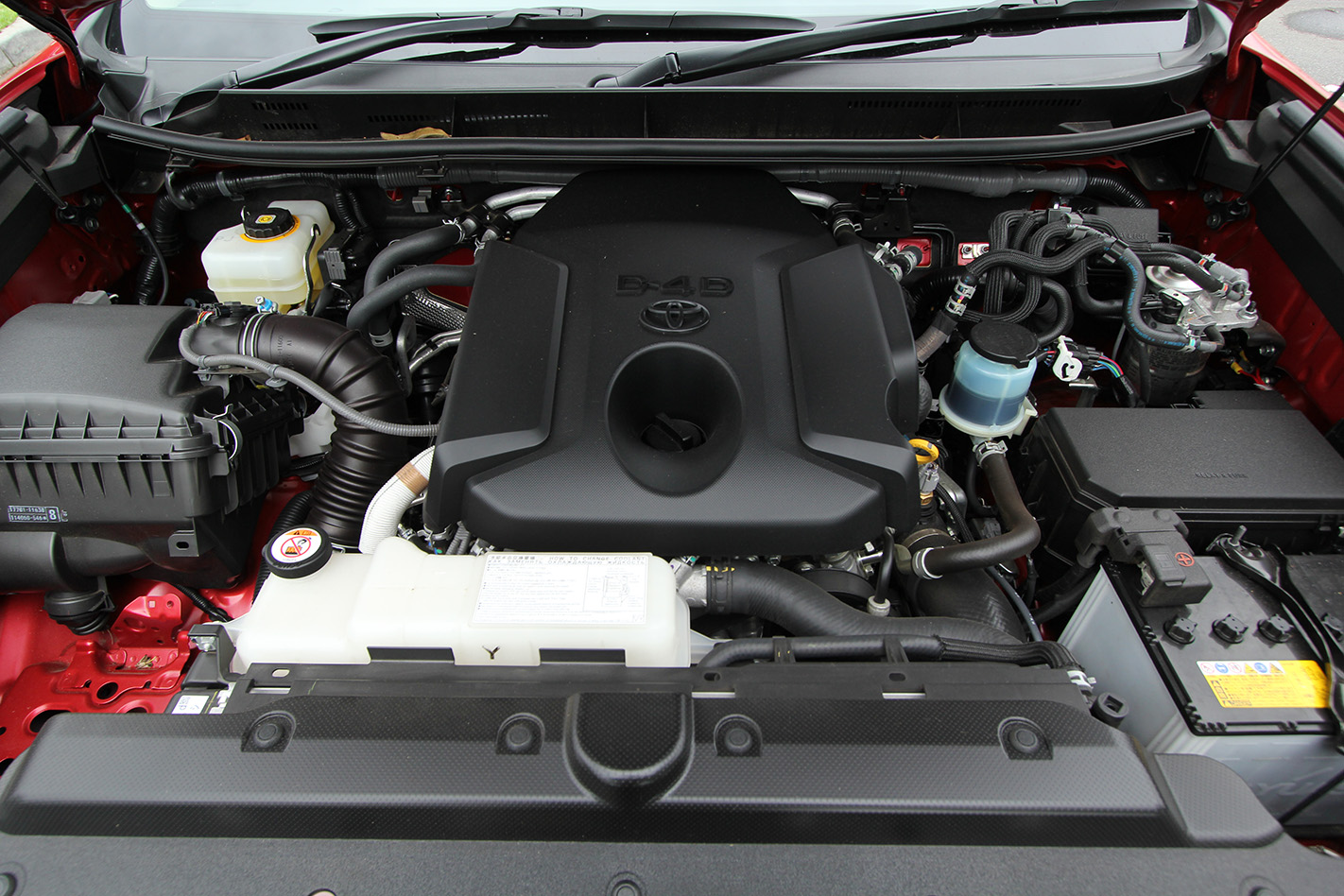
The 2.8-litre turbodiesel engine and six-speed automatic transmission combo don’t feel sprightly in the slightest, but we’d cut it some slack considering the Prado’s huge 2.45-tonne kerb weight. That weight also puts its fuel efficiency into perspective too, with a claimed 8.0 litres-per-100km average – and just 7.0L/100km on highway – the Kakadu’s thirst is restrained considering its size.
And that makes it best suited to eating up heaps of highway miles. The engine is relaxed and happy to lope along at low rpm at freeway speeds, and the Prado’s excellent cabin isolation means you’ll be just as relaxed as that powertrain. A three-tonne tow capacity also endears it well to roadtrippers.
However, if big trips are what you’ve got planned, maybe don’t spec the ‘flat tailgate’ option like our test car. It moves the spare wheel from the rear door to beneath the boot floor, deleting a 67-litre auxiliary fuel tank in the process and trimming the Prado’s potential range by a colossal 787km to ‘just’ 1087km – which could make the difference between making it to your destination on time, or becoming stranded in the middle of nowhere.

VERDICT
There’s little wonder that the Prado has been the darling of the Grey Nomad set for so long – it’s simply the best tool for the job.
But the Kakadu flagship goes an extra step by offering unique suspension and offroad modes designed to get you even further away from the blacktop. For adventure-seekers, that alone could be worth the fairly substantial premium demanded by the Kakadu.
Others may be more drawn to the sheer comfort levels of the top-spec Prado. As a lounge room on wheels, it is properly exceptional. Yes, the décor is dated by now, but the packaging, seating and isolation from the surrounding world is exceptional – not just for a vehicle of the Prado’s age, but for anything. If you can afford it, the Prado Kakadu should not disappoint.
