
The arrival of the third-generation Mercedes-Benz CLA brings with it a marked shift, the new model casting off the shackles of its predecessor in a package that holds more appeal than ever before.
Where previous generations always seemed a bit ‘entry-level’, the new CLA holds nothing back, a generational update that not only brings new architecture along with new hybrid and battery electric powertrains, but also a level of in-car technology and interior fitment that imbues it with the feeling of a ‘proper’ Mercedes.
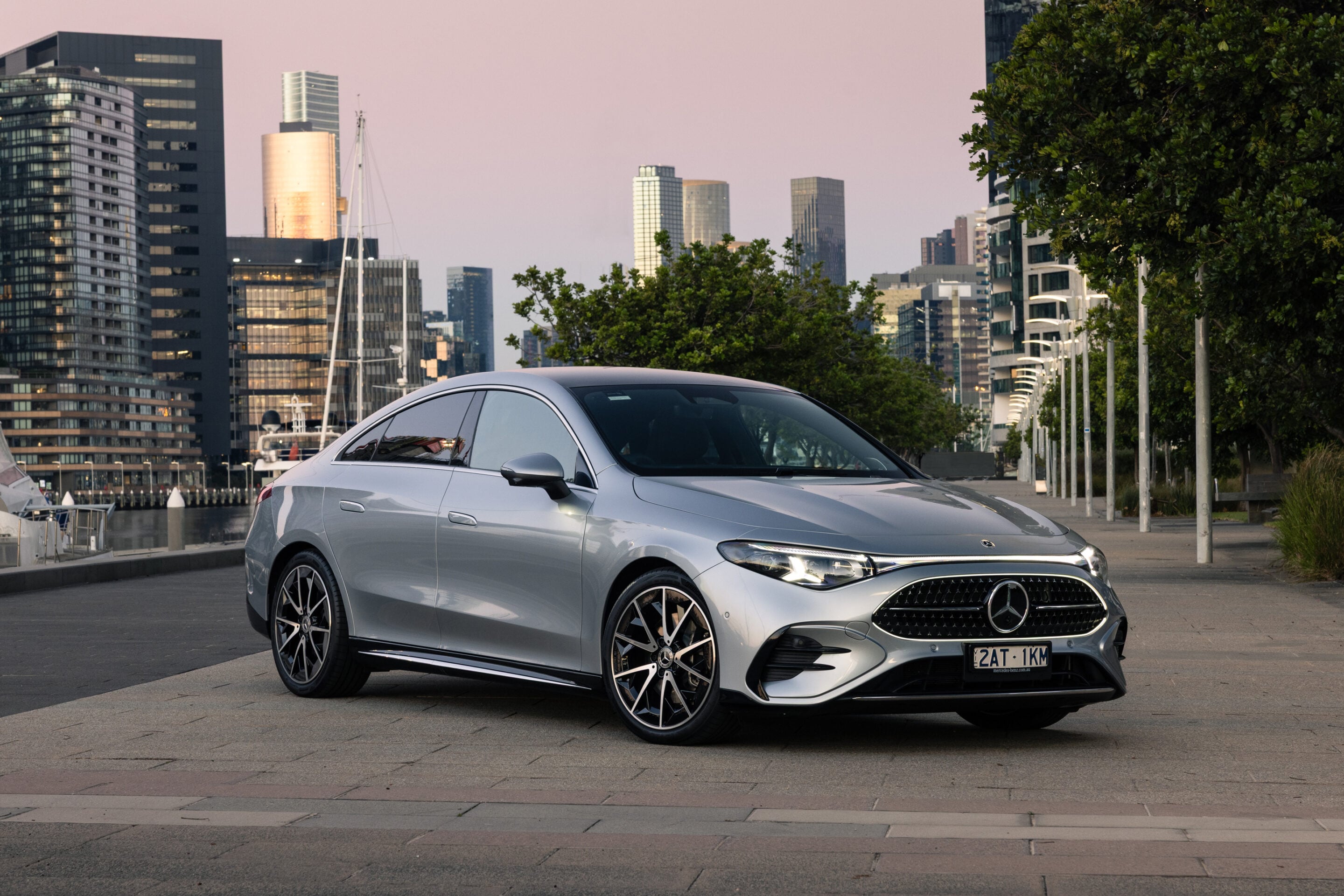
And it does so while being significantly more affordable than the previous model, no easy feat in an age where the cost of everything is rising on an almost daily basis. Cue, aspirational first-time buyers flocking into showrooms.
Mercedes-Benz Australia is staggering the rollout of its newest baby, with mild-hybrid variants first, followed shortly by the CLA’s EV variants. First up, the flagship hybrid CLA 220 4Matic.
How much is the Mercedes-Benz CLA hybrid?
In a remarkable turn of events in these cost-of-living-pressure times, Mercedes-Benz has ensured the price of the new CLA is significantly more affordable than the model it replaces.
The mild-hybrid range gets underway with a new entry-level model, the CLA 180, priced from $66,500 before on-road costs. Stepping into the mid-spec CLA 200 asks for $68,100, a significant drop of $5100 over the outgoing model while the range-topping CLA 220 4Matic is also more affordable than the model it replaces, down $3300 for a sticker price of $84,300.
Two electric models will join the range soon – the CLA 200 ($72,200) and the flagship CLA 350 4Matic ($91,300).
For now, though the focus is on the mild-hybrid range and whether Mercedes-Benz’s claims that its 48-volt electric architecture more closely resembles a regular series hybrid stack up.
What engine does the Mercedes-Benz CLA hybrid have?
All hybrid models pair a turbocharged 1.5-litre four-cylinder petrol engine with an integrated electric motor housed inside an eight-speed dual-clutch transmission.
A small 1.3kWh lithium-ion battery powers the electric motor which can, according to Mercedes, propel the CLA in electric-only mode in urban environments where less than 20kW of power is needed. It’s a bold claim of the 48-volt mild-hybrid architecture and one I’m keen to test. Power and torque outputs differ across the three hybrid models.
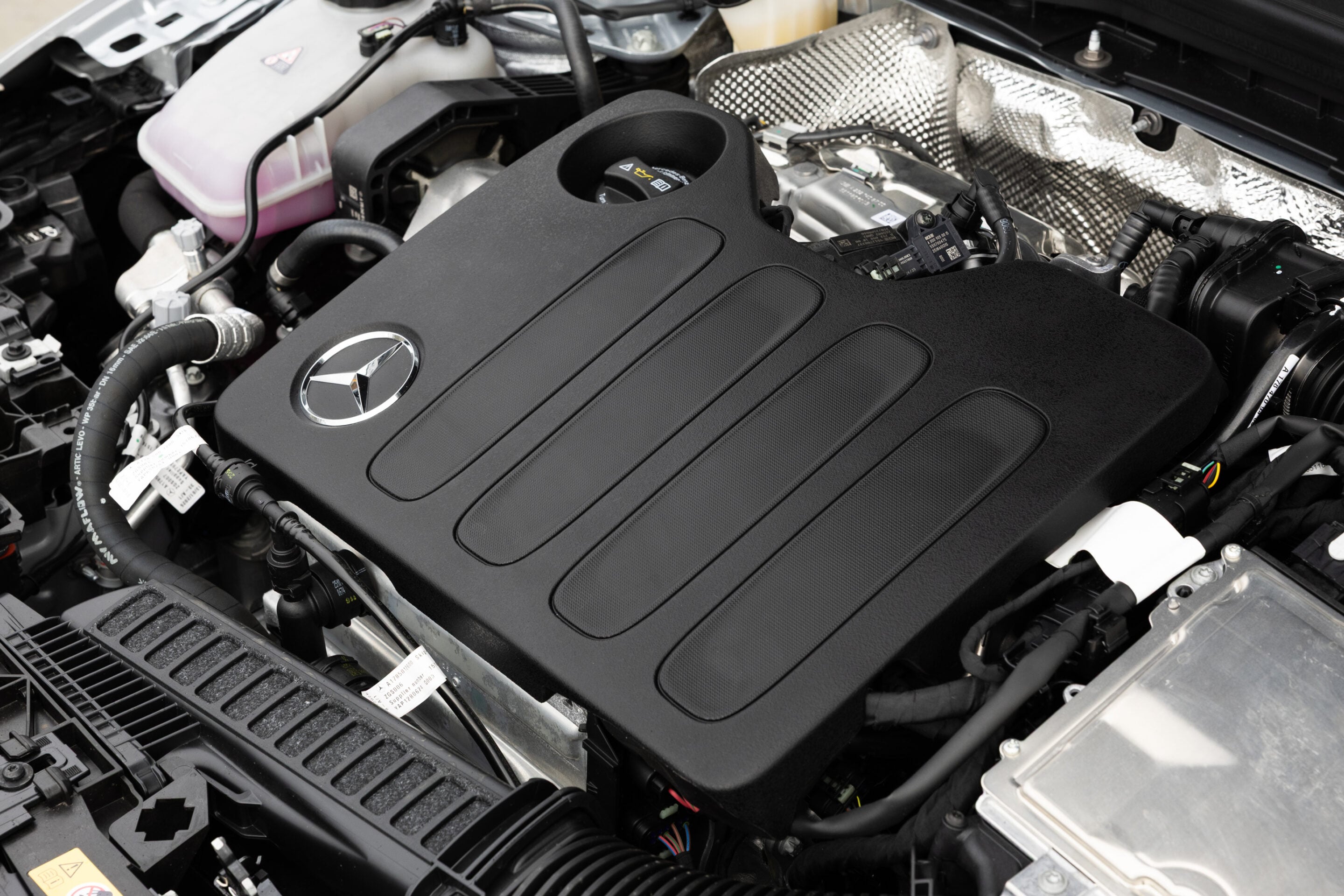
In the CLA 180, outputs are rated at 100kW and 200Nm, giving a 0-100km/h claim of 8.8 seconds. The CLA 200 ups the ante marginally, with 120kW and 250Nm and 8.0 seconds from zero to 100km/h. The CLA 220 4Matic, the only all-wheel drive model in the hybrid line-up, enjoys 140kW/300Nm and a 0-100km/h sprint time of 7.1 seconds. All three models benefit from an extra 22kW boost thanks to its electric motor.
Mercedes brought just one model to the Australian launch, the hybrid flagship CLA 220 4Matic.
Is there anything interesting about the Mercedes-Benz CLA hybrid’s design?
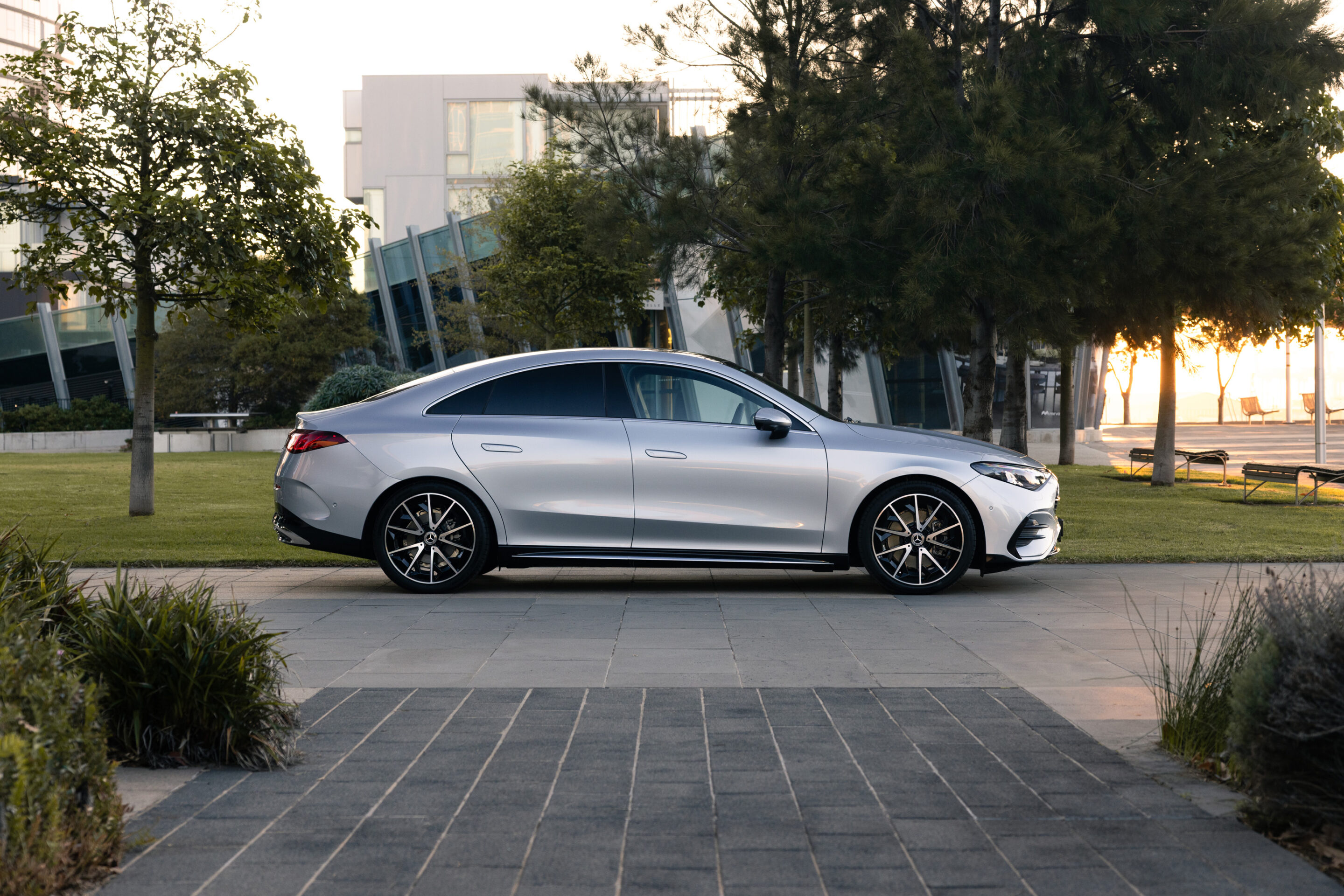
While this new third-generation CLA may resemble its predecessors, thanks to its swoopy profile, the reality is it’s a much bigger car than previously, growing in stature by every measure – 43mm longer, 25mm wider, 17mm taller and sitting on a 61mm longer wheelbase.
That growth spurt has led to a more resolved profile than before, as if the CLA has finally grown into its skin.
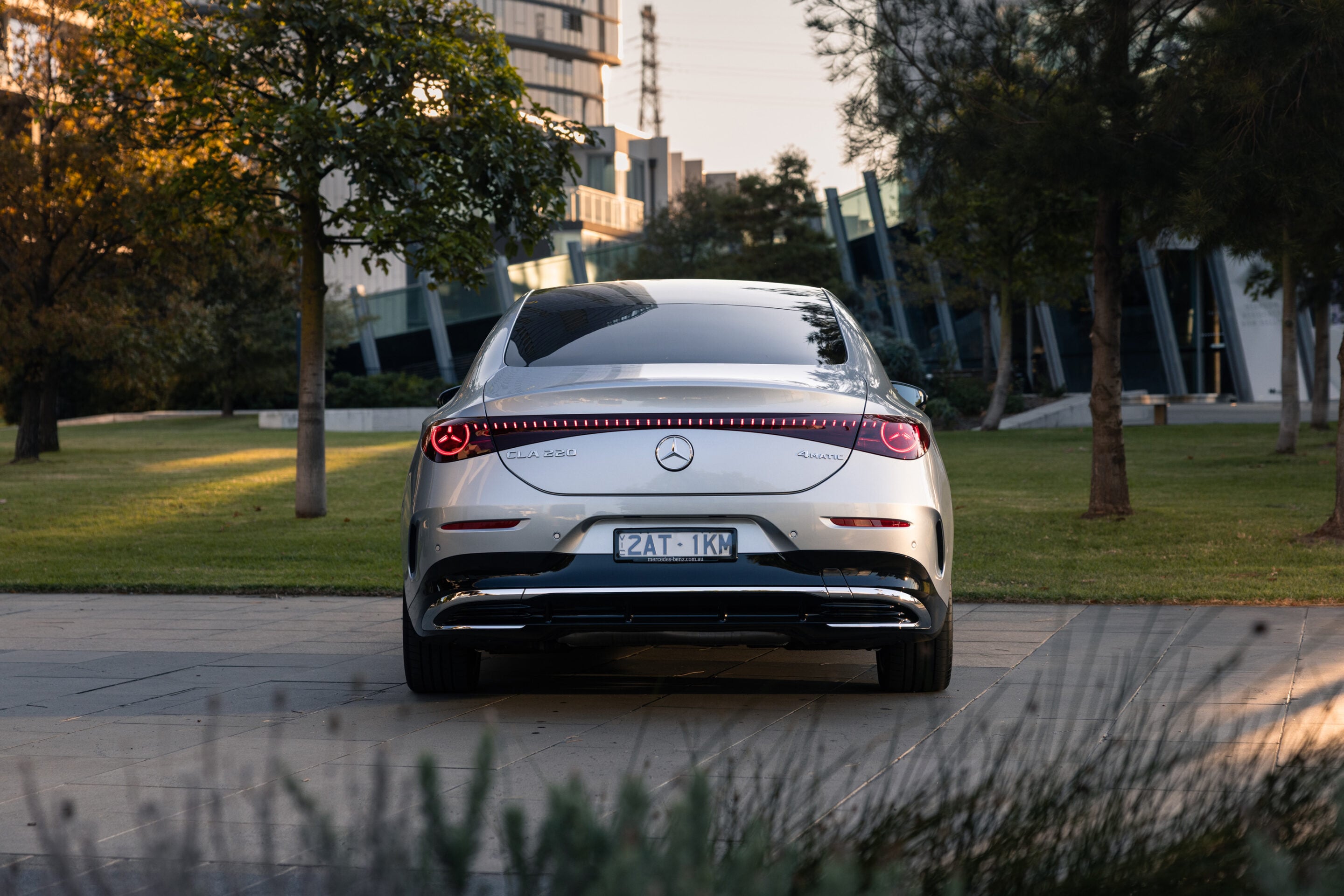
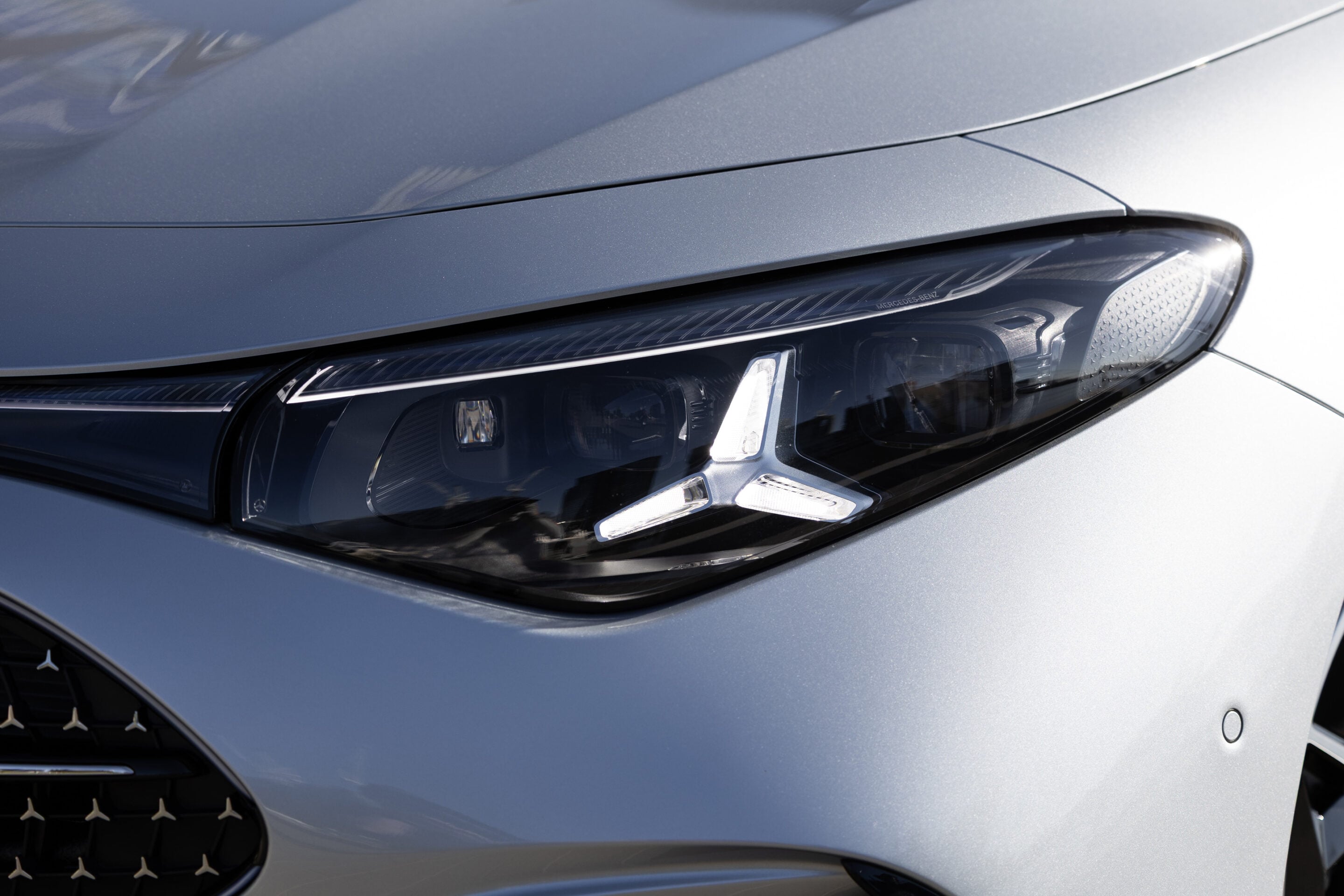
Up front, new headlights featuring a three-pointed star motif, are joined by a light band that stretches the width of the grille. The new “shark nose” grille features an illuminated frame, the effect at night distinctive and striking.
That theme is mirrored out back with new tail-lights (again with three-pointed star signature) joined by a light band across the width of the bootlid.
CLA 220 (and CLA 200) comes with Mercedes’ AMG Line package as standard that brings body enhancements including to the front and rear splitter and diffuser. The CLA 220 sits on 19-inch AMG alloy wheels in a five-twin-spoke design while both the CLA 180 and 200 are fitted with 18-inch alloys.
In profile, the CLA’s aero efficiency is underscored by frameless doors and retractable door handles helping the small sedan achieve a drag coefficient of just 0.21Cd.
The AMG Line theme continues inside with sports seats, a multifunction sports steering wheel, carbon-grey trims, and plenty of AMG logos including on the floor mats.
Thanks to its growth spurt, the cabin feels significantly larger than its predecessor’s, a feeling enhanced by the standard panoramic glass roof that fills the cabin with light.
The choice of materials throughout is excellent, playing right into Mercedes’ premium playbook. Highlights include the Artico and Microcut leather seats with contrasting red stitching, available in black as standard or a stunning black and white two-tone as a no-cost option. I sampled both and as much as I can see the white causing some headaches after prolonged use, it’s the colourway I’d opt for. It looks sensational.
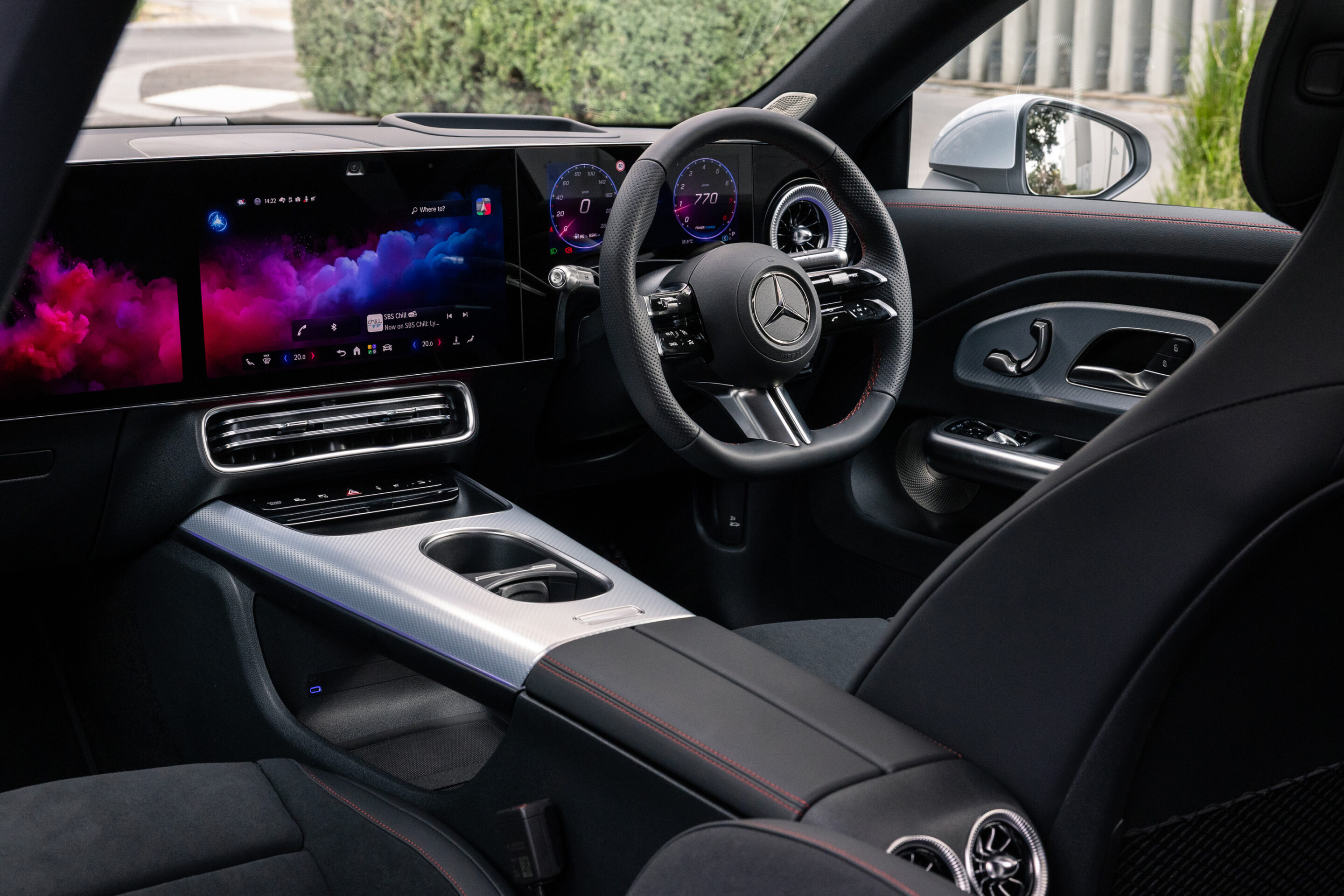
There’s plenty of storage on offer including in the generous centre console and door pockets that easily accommodate bottles. The centre console is floating too, freeing up additional space underneath for smaller items.
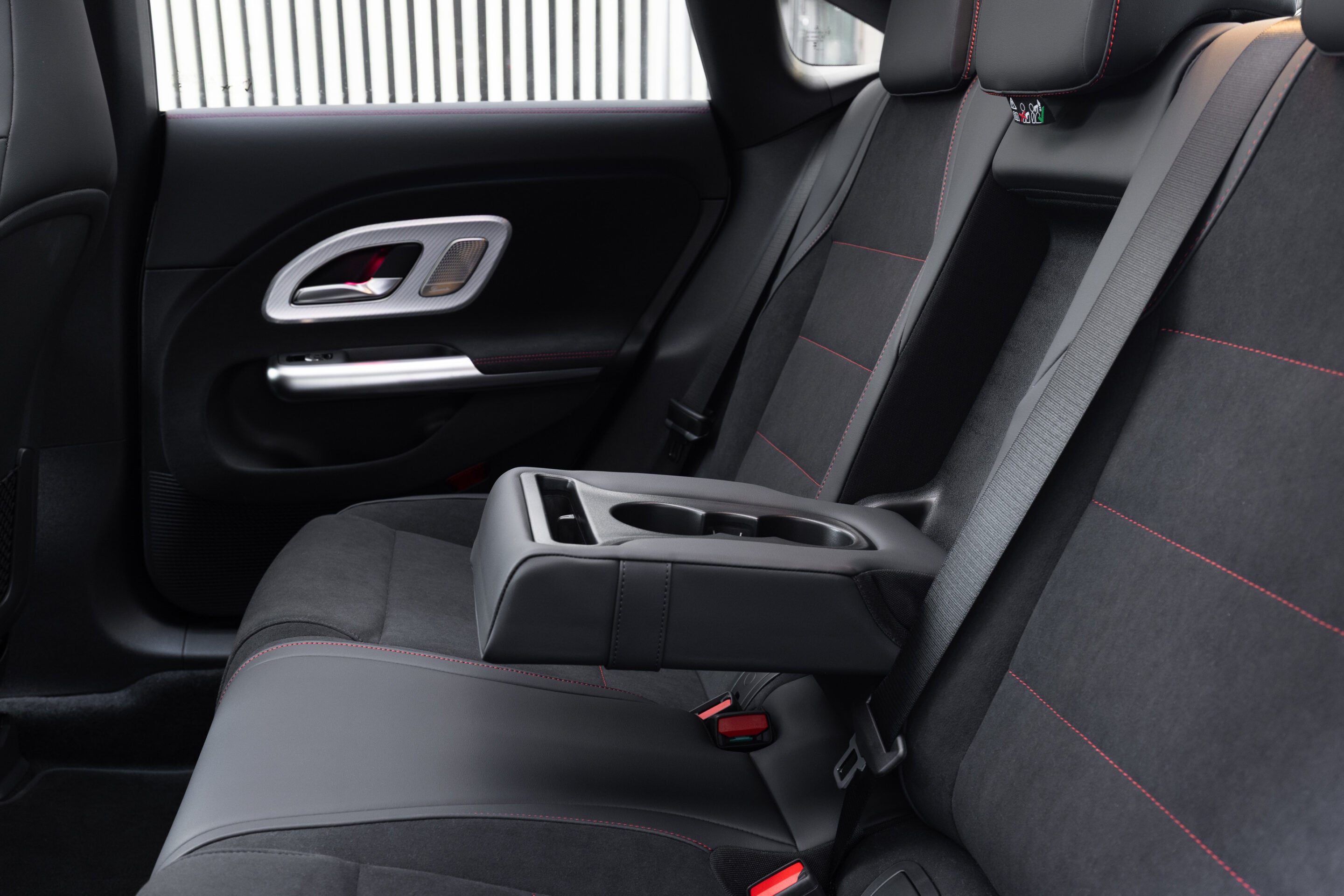
The second row is more generously proportioned than previously, with excellent knee and legroom. But despite an additional 28mm of height in the second row, headroom is still at a premium for anyone over 182cm. Still, my 173cm frame had no trouble getting comfortable in the second row, which, thanks to the presence of that panoramic roof, offered a vibrant and light-filled space to spend time in.
Boot space is quoted at 405 litres and while the second row seats can be folded in 40:20:40 split fashion, Mercedes-Benz does not quote a combined figure for the expanded area. Don’t look for a spare wheel and tyre, though, the CLA range equipped with a ‘repair kit’ to get you out of flat tyre purgatory, which, while increasingly the norm in today’s new car landscape, still rankles. Call your local roadside assistance is our recommendation.
What technology comes with the Mercedes-Benz CLA hybrid?
The CLA’s suite of in-car technology is as impressive as it is in-your-face. There’s no hiding from the massive cabin-wide, single-frame screen that runs the length of the dash. Dubbed the MBUX Superscreen it debuts Mercedes’ in-house developed MB.OS operating system.
The Superscreen blends a central 14-inch infotainment touchscreen, a 10.25-inch digital driver display and an optional 14-inch touchscreen for the passenger. It looks like the future, as impressive as it is large but most importantly, it functions beautifully.
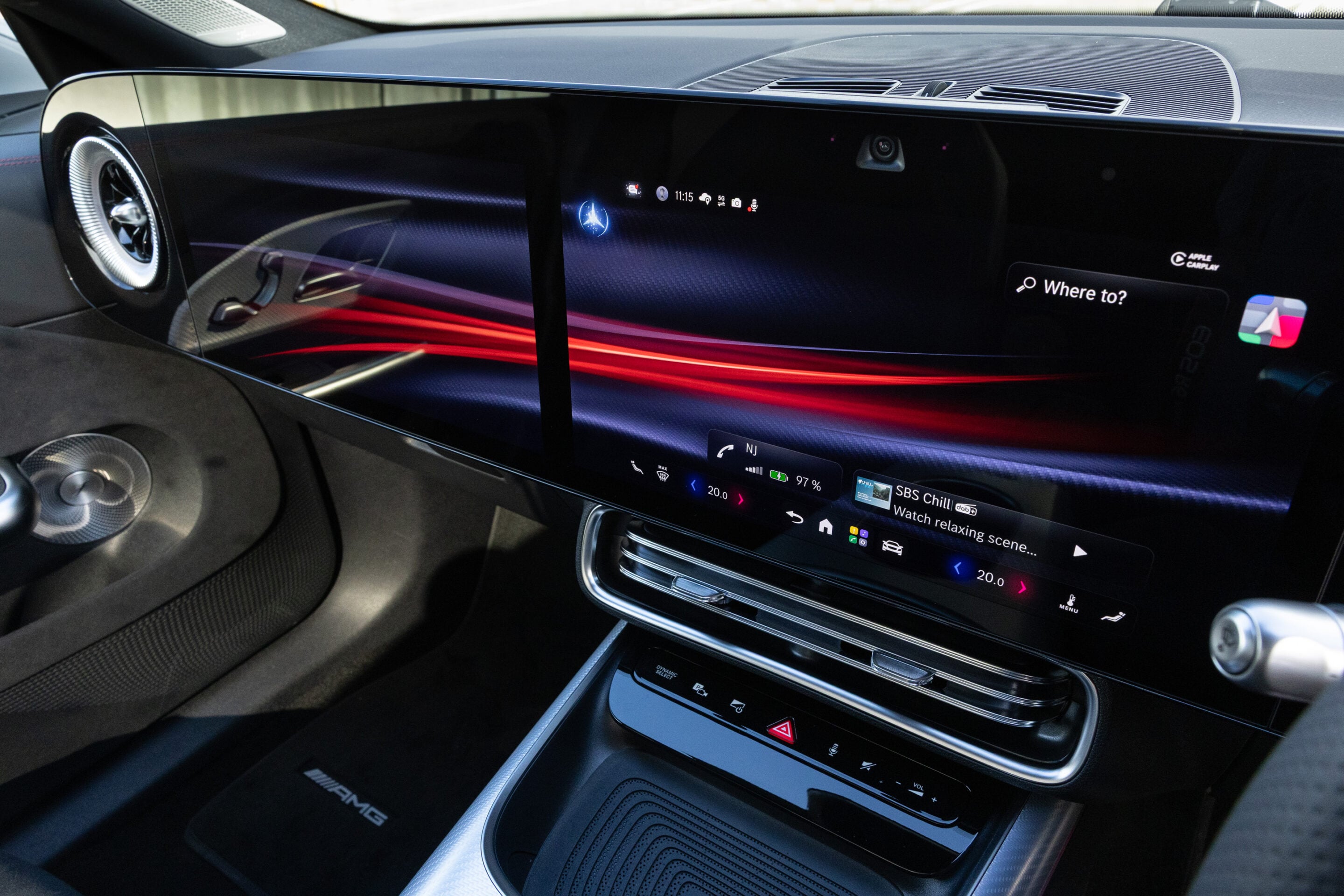
High-res graphics coupled with smooth animations and sharp respsonses to inputs, the MBUX Superscreen is the nerve centre of the CLA. Mercedes-Benz has partnered with some of the giants of the tech world to offer familiar functionality, including Google (mapping), as well as Gemini, ChatGPT and Bing AI-powered voice assistants. We did briefly try the AI assistant, which wasn’t as helpful as advertised on the box. I suspect, however, that my short time with the CLA at launch precluded me from a more thorough dive into the world of automotive AI so will reserve judgment for when we get the car through the Whichcar by Wheels garage for an extended loan.
Wireless Apple CarPlay and Android Auto are standard as is wireless smartphone charging, bringing a more familiar environment to interact with the CLA.
The optional passenger screen has access to third party streaming apps such as Netflix and Disney+ and even a suite of games including Angry Birds. The caveat here is they only work when the car is stationary. I’d suggest not ticking that box on the options list.

What’s the Mercedes-Benz CLA hybrid like to drive?
Where the CLA has – arguably – taken its greatest strides over the outgoing model is in the driving experience.
A newly-developed 1.5-litre turbo-four does the heavy lifting, augmented by a 22kW electric motor housed inside the eight-speed dual-clutch transmission. Ostensibly, this is a mild-hybrid setup, but the reality is, out on the road, the CLA 220 does a great job of mimicking a conventional series hybrid.
Take off from standstill is predictable and smooth, the initial surge of speed coming courtesy of the electric motor before the petrol engine chips in, seamlessly and quietly, to take over the motivation.
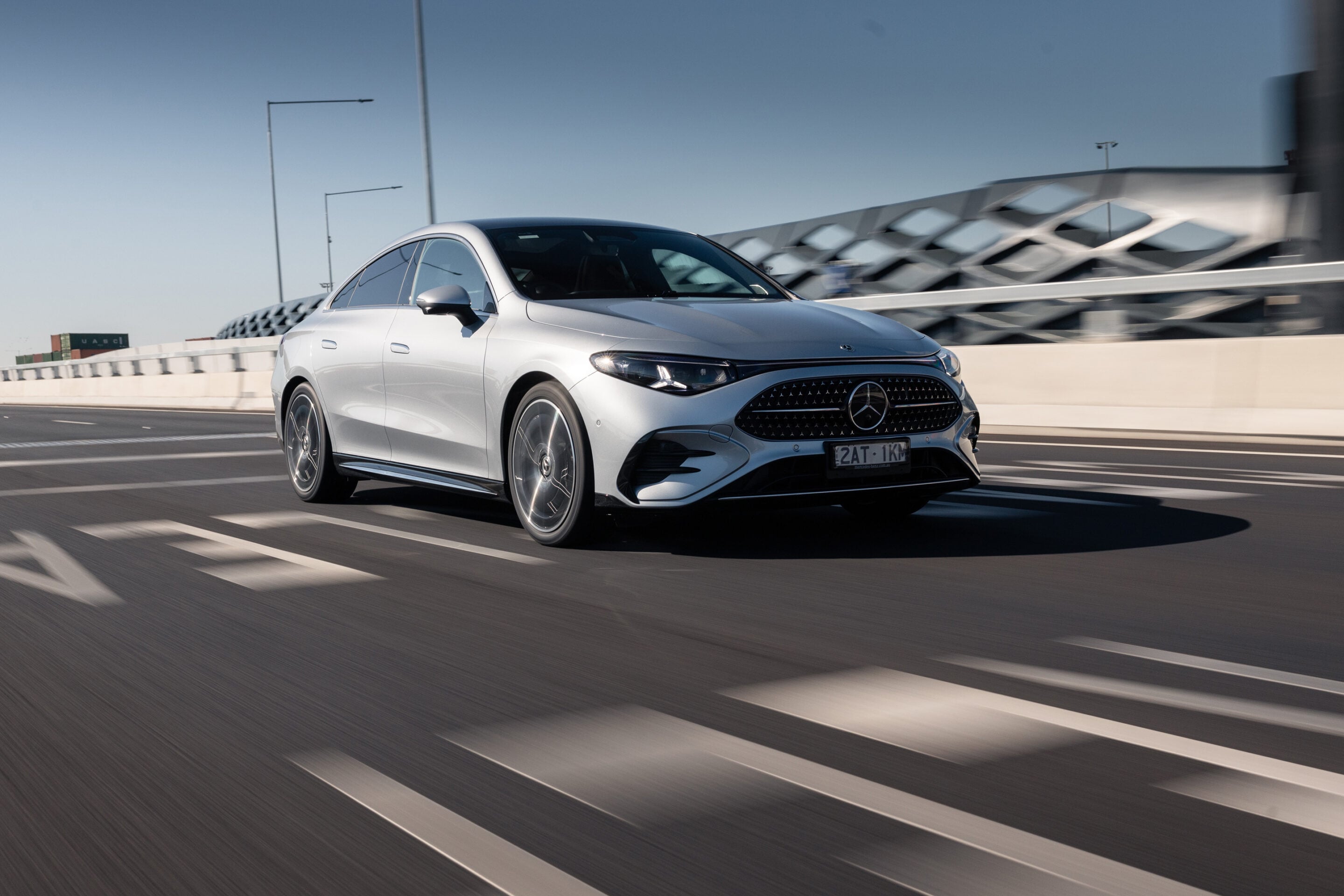
In everyday traffic situations, the electric motor is happy to hum along without assistance from the 1.5-litre petrol. To a point. Mercedes-Benz claims it’s capable of powering the car alone under a light power load, quoted at 20kW. And while that’s not measurable out in the real world, it certainly feels on the money.
Navigating flat suburban streets at speeds of around 30km/h results in the petrol engine lying dormant under the bonnet. Once over that threshold, or when faced with even the slightest incline, Merc’s newest four-cylinder feels the need to chip in.
Once up to speed, however, and under cruising conditions, the petrol engine is happy to switch off and let the electric motor drive the wheels for short spells, helping to eke out fuel consumption.
It’s not a series hybrid, by any stretch, but also park your notions of what a mild-hybrid can do because Mercedes’ system has moved the 48-volt game forward. Significantly.
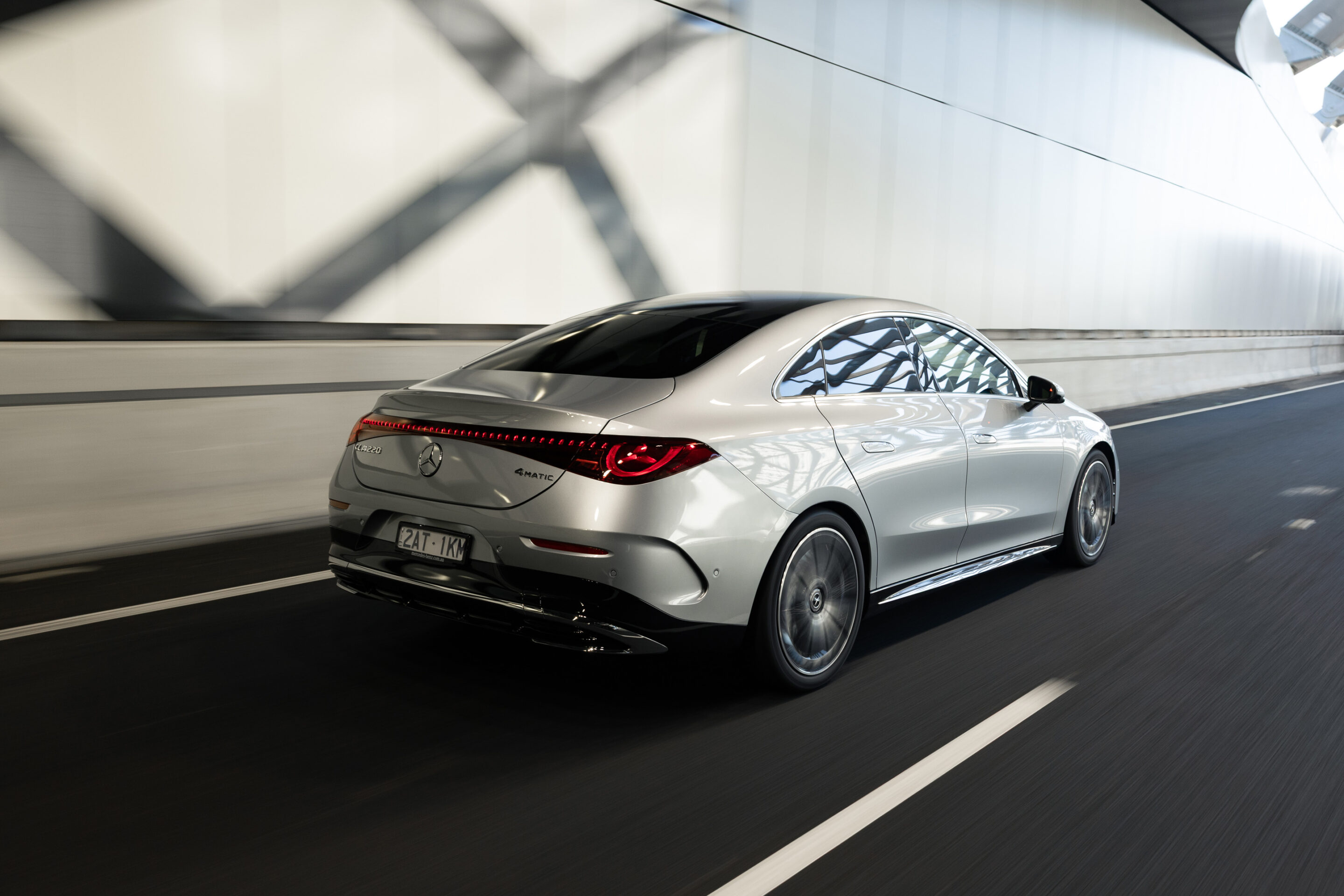
Better still, the eight-speed dual-clutch actually features a third clutch, which is able to decouple the engine and gearbox from the wheels, allowing the CLA 220 to cruise at 100km/h on flat stretches of highway on electric power alone. It works too, and nicely at that, with flat and downhill stretches of the motorways that formed part of the test drive completed solely on electric power.
Mercedes-Benz has also addressed one of the more strident complaints of the previous model with this new CLA. Where the older model always felt firm and jarring on the road, this new third-gen iteration takes the idea of ride comfort seriously. There’s no adaptive damping, and after covering around 230km over the full gamut of road surfaces, there doesn’t need to be.
Instead, the steel-spring suspension – three-link up front and multi-link at rear – delivers an excellent comfort and handling package, equally at home on suburban streets as it is hustling through some twisties.
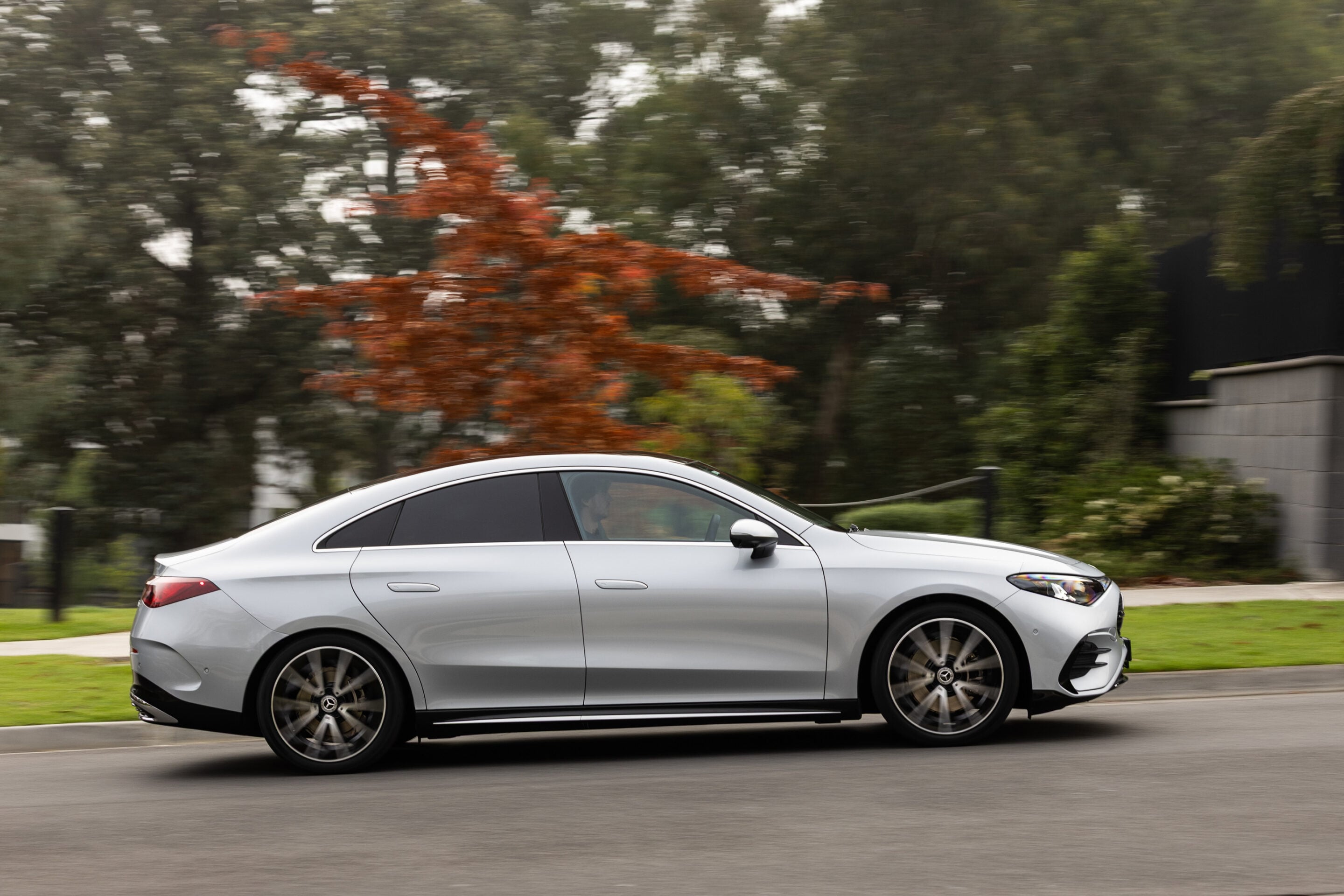
Patchy and scarred road surfaces are handled with composure, ironed out with barely a ripple transmitted into the cabin. But underscoring the suspension’s well resolved engineering, hustling through some corners reveals a nicely-balanced chassis with decent body control. It’s by no means a corner-carver, but there is enough inherent enjoyment engineered into the CLA 220 to elicit a grin.
There is a small downside, however. The eight-speed transmission, as slick and as responsive as it is under normal driving conditions, can prove a little recalcitrant when on the move, taking a moment too long to engage the right ratio under harder acceleration. But it’s a minor brickbat in a field of bouquets.
How much fuel does the Mercedes-Benz CLA hybrid use?
So how does the new CLA stack up at the bowser? In a word, brilliantly. Mercedes-Benz claims a combined fuel consumption number of 5.8L/100km. After a day behind the wheel, covering the full range of driving conditions – from urban traffic, to motorway cruising, and a spirited fling through some beguiling backroads in Victoria’s Yarra Valley, we saw an indicated 5.7L/100km, bettering the manufacturer’s claim.
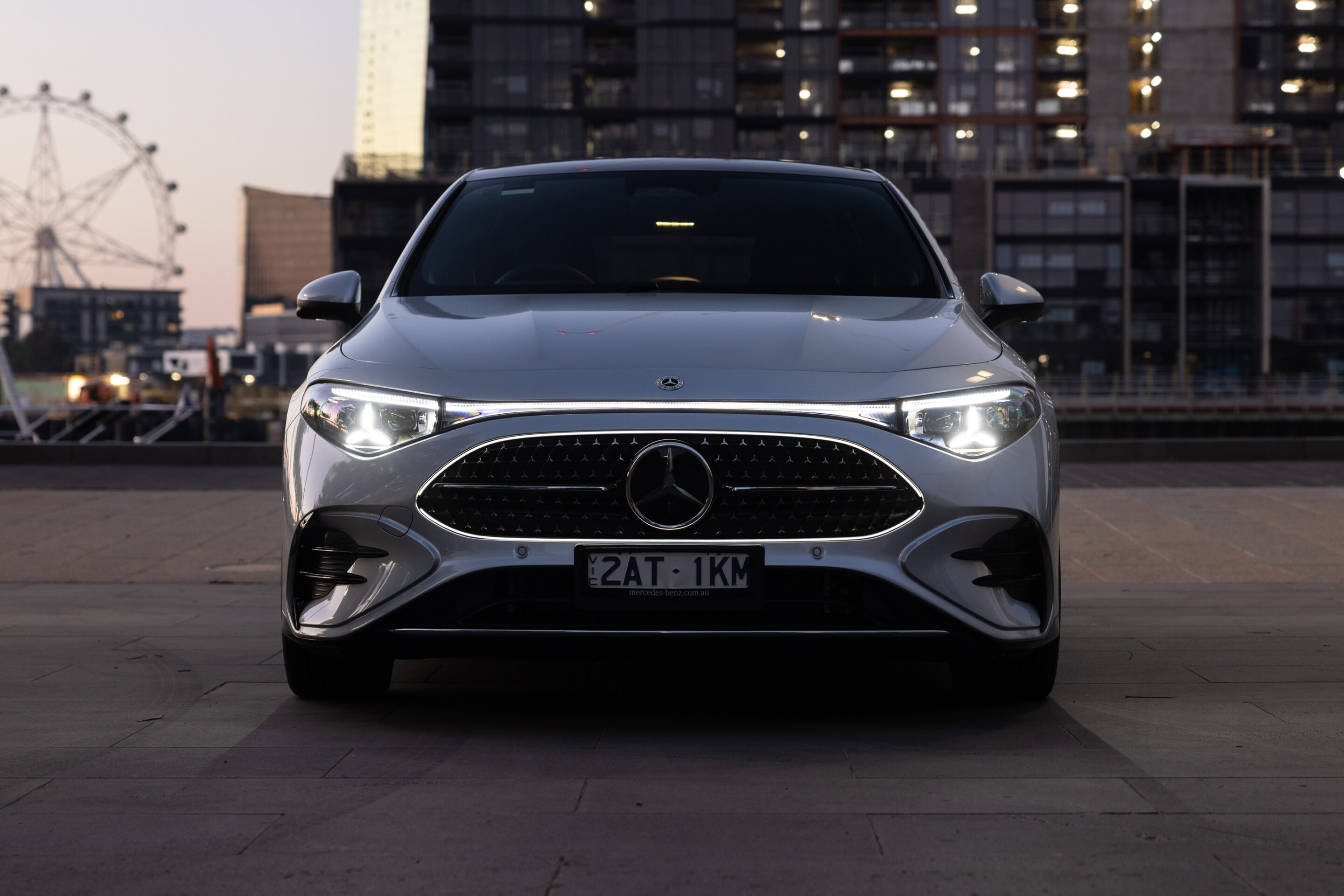
The highest we saw was 7.1L on the climb up the Dandenongs and into the Yarra Valley, but the return leg highlighted the efficacy of Merc’s mild-hybrid system to good effect, dropping back to our final readout in the heart of suburban Melbourne.
Mercedes-Benz hasn’t offered a fuel octane rating, but we suspect it’ll be at the premium end of the bowser spectrum.
What’s the verdict on the Mercedes-Benz CLA hybrid?
The new third-generation Mercedes-Benz CLA has struck the right chord of premium affordability in a tech-laden package that is sure to appeal to younger, aspirational buyers.
Sharp styling and premium appointments only tell part of the story, though, With its fuel-saving technology, Mercedes has added broader appeal in a market where hybrids of all colours are dominating the new car landscape. And with the imminent arrival of the CLA electric range, every fuel-saving whim is catered to.
The driving experience has improved markedly over the outgoing model, with better ride comfort and, thanks to this new mild-hybrid powertrain, enough sportiness to sate the needs of most.
That Mercedes-Benz has managed to achieve this while significantly cutting the price of entry should ensure the brand attracts an entirely new cohort of buyers.
Specifications
| Model | Mercedes-Benz CLA 220 4Matic |
|---|---|
| Price | $84,300 plus on-road costs (circa $91k drive-away) |
| Engine | 1.5-litre turbocharged four-cylinder petrol mild-hybrid, AWD |
| Peak power | 140kW @ 5500rpm plus 22kW electric motor |
| Peak torque | 300Nm @ 2000-3500rpmrpm |
| Transmission | 8-speed dual-clutch auto |
| L/W/H/WB | 4731/1855/1463/2790mm |
| Weight | 1718kg (tare) |
| Fuel consumption | 5.8L/100km (claimed); 5.7L/100km (tested) |
| Boot size | 405L |
| 0-100km/h | 7.1s |
| Warranty | 5 years/unlimited km |
| Servicing | 12 months/25,000km |
| Servicing costs | $6710 five years/125,000km |
The second-generation Mercedes-Benz GLB medium SUV has been confirmed for Australia, due to arrive in the third quarter (July-September) this year.
A Mercedes-Benz spokesperson told assembled media, including Whichcar by Wheels, that “the all-new GLB is coming… in both hybrid and electric form. We’re aiming for Q3 to launch the GLB.”
Final details on specification and pricing are still to be confirmed but the line-up will feature both mild-hybrid and full battery electric variants.
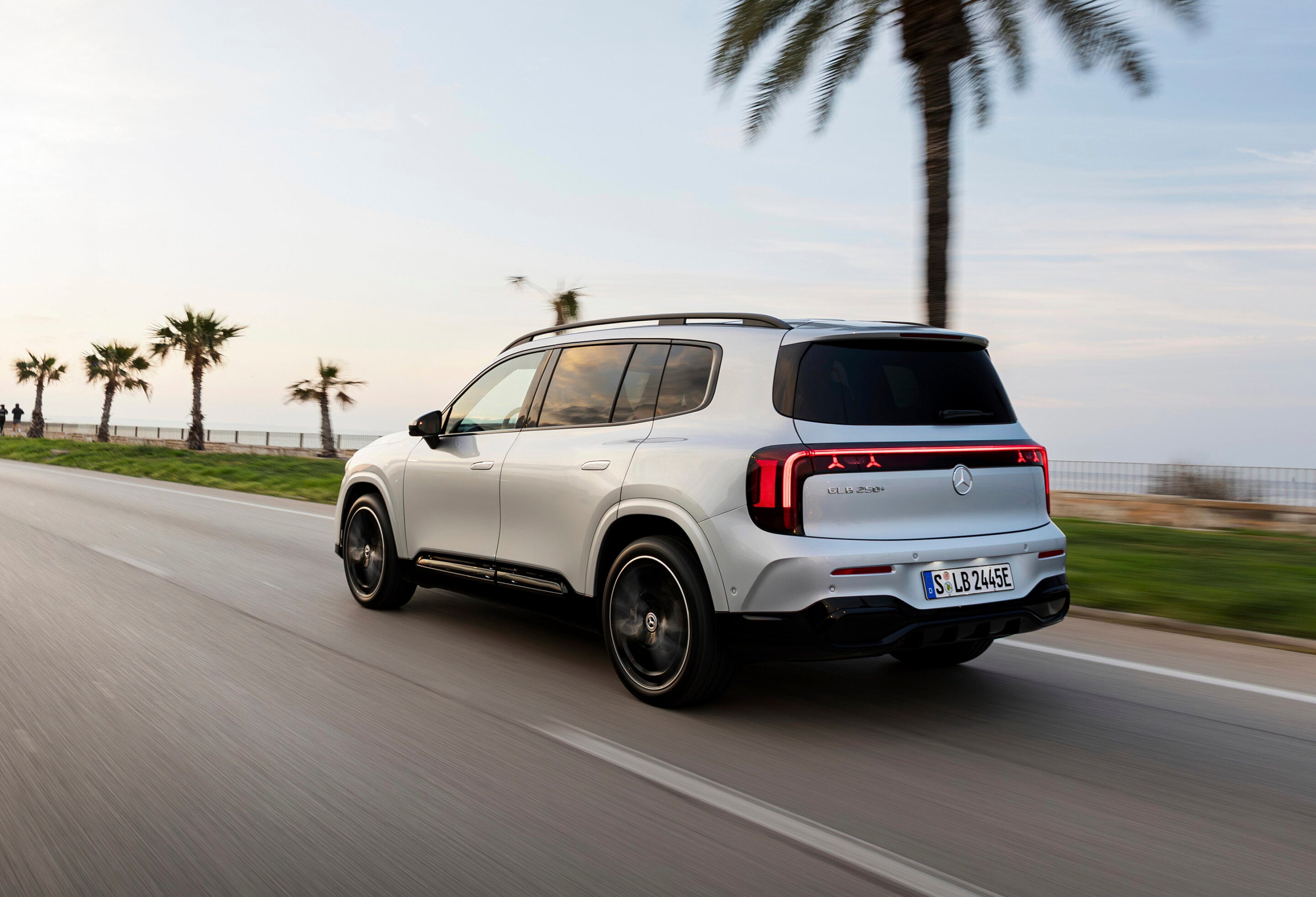
The new GLB mid-size SUV, available as either a five- or seven-seaster, shares its underpinnings with the just-released Mercedes-Benz CLA small sedan. It’s built on the brand’s MMA architecture, which has been developed to support both hybrid and EV variants.
Like the CLA Class, petrol-hybrid models of the GLB will be powered by a 1.5-litre turbocharged four-cylinder petrol with a 48-volt mild-hybrid system and a new eight-speed dual-clutch automatic transmission across either front- or all-wheel drive.
The battery-electric GLB with EQ Technology range is expected to offer a choice of two battery sizes – 58kWh or 88kWh – offering WLTP claimed driving ranges of between 450km to 630km depending on the model.
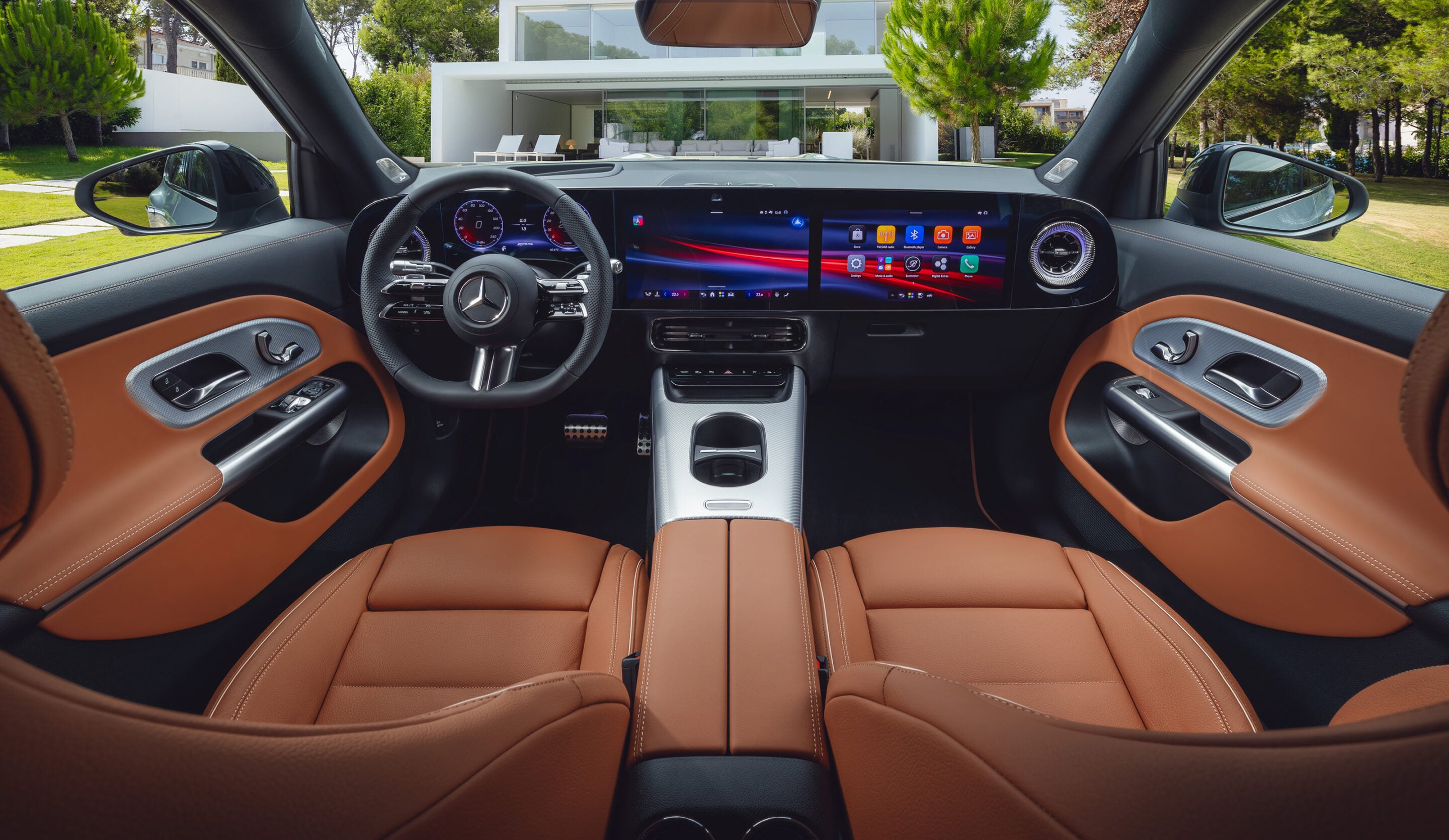
Inside, the cabin features Mercedes’ newest MBUX Superscreen, running the width of the dashboard. It houses a 14-inch central touchscreen, a 10.25-inch digital driver display and in higher grade models, a 14-inch passenger screen all housed inside a single frame glass screen.
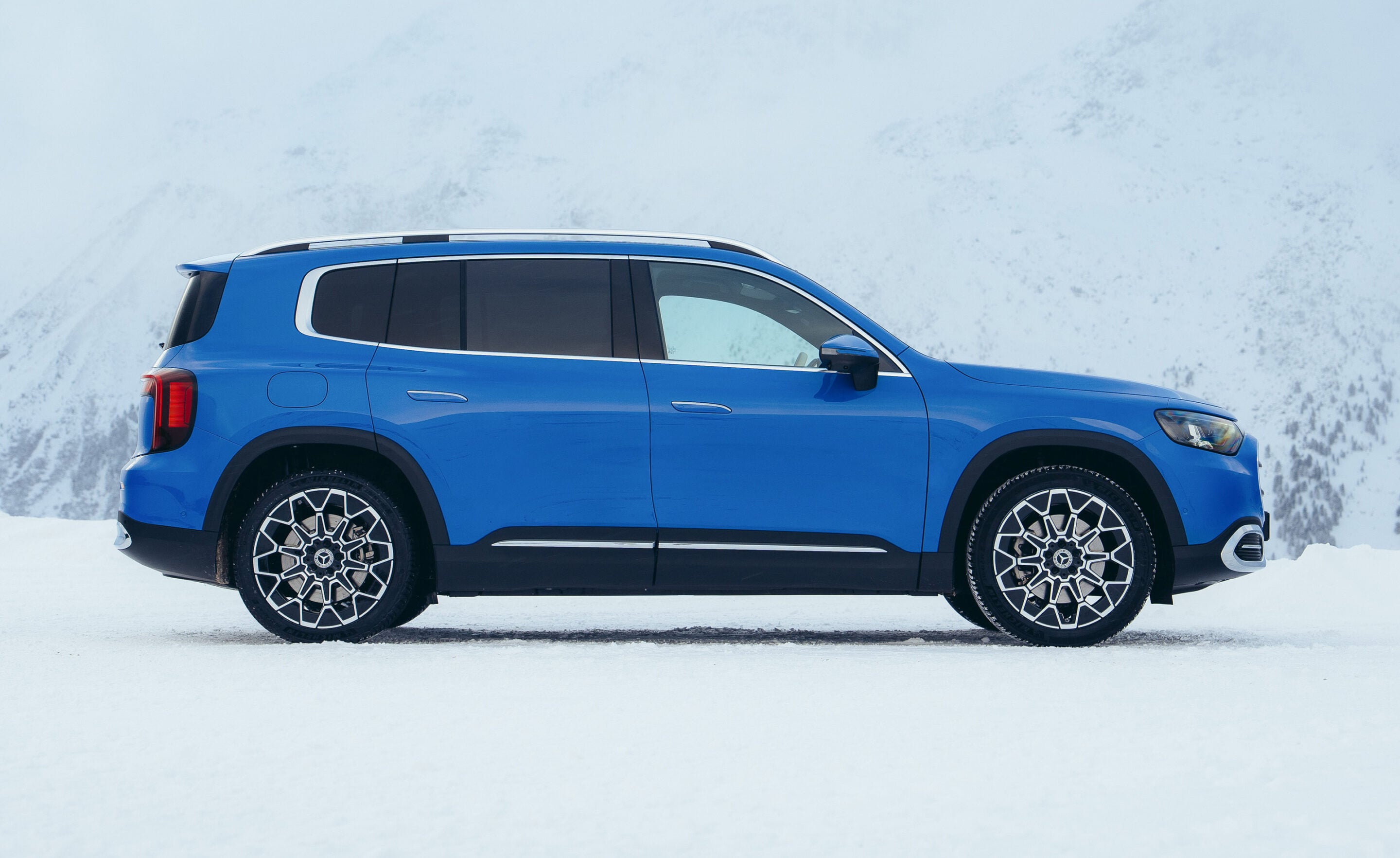
The new-gen GLB retains the boxy profile of the outgoing model but with redesigned elements including a new three-pointed star headlight signature and new tail-lights. Overall dimensions have increased, the new GLB 98mm longer than the outgoing model, 27mm wider and sitting on a 60mm longer wheelbase. The GLB’s growth spurt claims to have added interior space and comfort.
Pricing in Germany starts from €46,868 (A$76,052) for the entry-level mild-hybrid and tops out at €62,178 (A$100,896) for the all-wheel drive GLB electric.
Mercedes-Benz Australia will confirm final Australian specifications and pricing closer to the launch later this year.
How much does the Honda Prelude cost to buy?
New Prelude is priced from $65,000 drive away, and comprises one model only. Given it’s based on the Civic e:HEV LX, which is priced from $55,900, it’s a decent step up, but you can certainly argue that you get more for more, in every sense. Keep in mind, too, that Honda Australia runs with set pricing, so there’s no haggling.
Prelude gets adaptive dampers standard, along with 19-inch alloy wheels, blue brake calipers, LED headlights, dual-zone climate control, a 9.0-inch touchscreen with wireless smartphone connectivity, a 10.2-inch driver display and an eight-speaker Bose audio system. There’s also heated, leather trimmed seats, a flat-bottomed, leather-trimmed steering wheel, privacy glass, LED headlights, tail lights and running lights, and adaptive high beams.
Standard safety equipment includes ten airbags, autonomous AEB, adaptive cruise control with low speed follow, lane-keep assist, blind-spot monitoring, rear cross-traffic alert, traffic jam assist, traffic sign recognition, post collision braking system, rear-view camera, front and rear parking sensors, and unintended acceleration mitigation system.
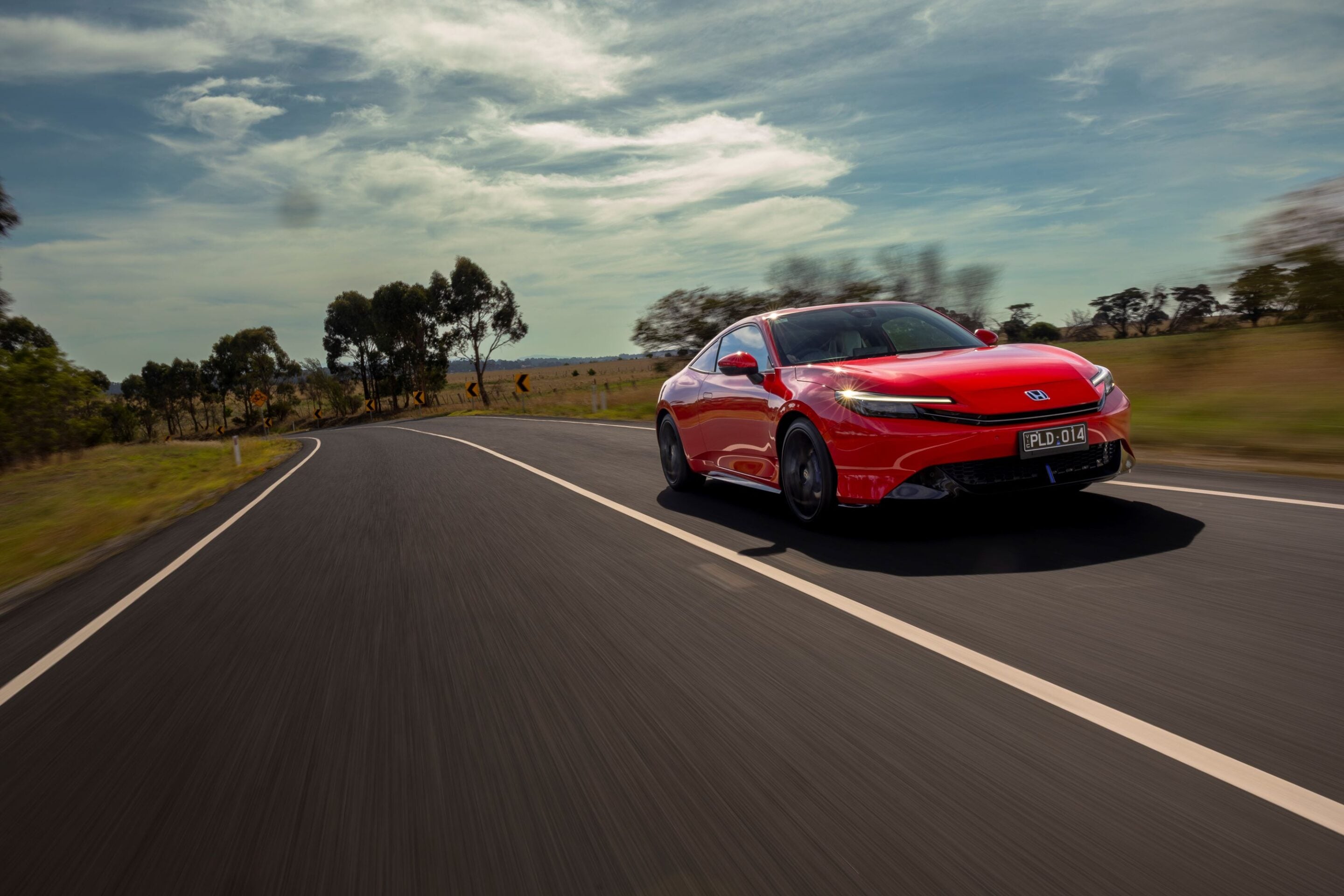
In sixth-generation form, the Prelude cuts a classy, elegant figure on the move. As much, if not more so, than it does when parked. Honda has ticked that box then. In fact, I’ve not driven a car that has garnered quite so much attention for some time. In the city, in the country, thumbs up were given, nods were exchanged, and photos were taken – people love the look of the new Prelude. And, while the blush of a new, not yet broadly seen car is fleeting, there’s real street presence to be witnessed with Honda’s return to form.
How fast is the Honda Prelude?
The technological smarts and powertrain that Honda has opted for, are genuinely interesting. And it’s why, once again, the Prelude might well be, more than the sum of its parts. What’s most fascinating though, is the wildly divergent take on a hybrid powertrain.
Speak to Lamborghini for example, and hybrid is a way of making a fast car, even faster. Yet, in a vehicle like the new Prelude the sentiment might be that it’s ‘only’ a hybrid. That would be to misjudge just how good it is, though.
New Prelude is powered, then, by an e:HEV hybrid system, rather than a screaming, naturally aspirated engine. There’s a 2.0-litre, Atkinson-cycle four-cylinder petrol engine, which on its own, generates 104kW and 182Nm. The electric drive motor then adds 133kW and 315Nm. As is the case with powertrains of this nature, the numbers don’t quite add up, with Honda quoting combined system outputs of 147kW and 315Nm, driving the front wheels.
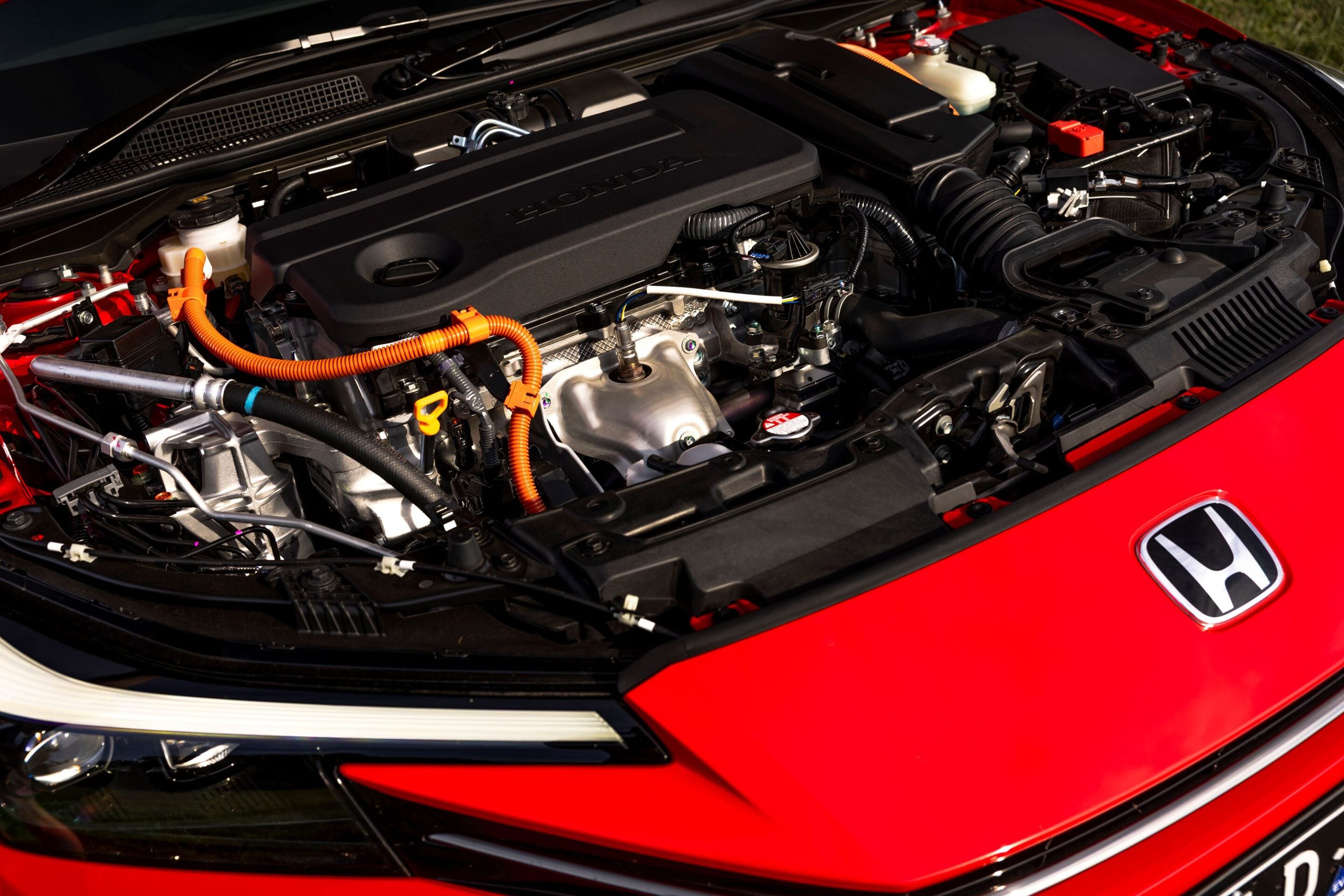
While the power figure won’t make your eyes water, consider the healthy 315Nm, delivered instantly by way of the electric motor. As such, the Prelude feels fast from launch, but not scintillating. Honda doesn’t quote an official 0-100km/h time, but initial reports suggest a sprint in the range of 6.5-7.2 seconds is achievable.
The transmission is, for me, the point of most interest. Technically, there isn’t one, with Honda opting for its direct-drive e-CVT system. Here’s the rub, though. To counteract the whiny, power-sapping sensation you get from some CVTs, Honda has come up with the aforementioned S+ Shift system. Paddle shifters are there if you want them, and there’s the simulation of an eight-speed transmission. It’s important to note, too, that this isn’t a CVT with belts and pulleys. It’s an e-CVT as part of a two-motor hybrid combination, where the electric traction motor is primarily driving the front wheels.
Do you need the sensations that come with simulated gearshifts? Maybe not, but they add some flair to the Prelude’s bag of tricks, and satisfy those of us who love to feel as engaged as possible when they
drive.
Under the skin, engine aside, there are some unexpected hot hatch smarts, though. As a way of best harnessing the instant, and healthy, electric torque, Honda has used the dual-axis front suspension from the Civic Type R, specifically designed to control torque steer.
Given Civic Type R has one of the best FWD front ends ever designed, that’s a good start. Prelude also gets the adaptive damper system from the Type R, albeit tuned to suit a more luxurious driving experience as well as Agile Handling Assist, an active braking system that helps keep your corner entry and exit tidy. This is all ably assisted by the quality 235/40/19 Continental tyres contacting the bitumen.
The quality of the chassis, and its components, then, is the reason the front end is firing me through each corner of Black Spur in a way that blurs the line between grand tourer and hot hatch. My chosen drive route is designed to push the performance envelope of the Prelude to find out exactly what it’s capable of.
Prelude isn’t a fast car outright, but it extracts the absolute maximum of what it can deliver because the chassis is capable of so much more than it needs to harness. In fact, the 1480kg Prelude feels lighter than that number would indicate. The balance, the feedback through the wheel, the turn in and Brembo braking system are all so feelsome and capable, you know there’s a Honda engineer somewhere back at HQ working on a Type R version.
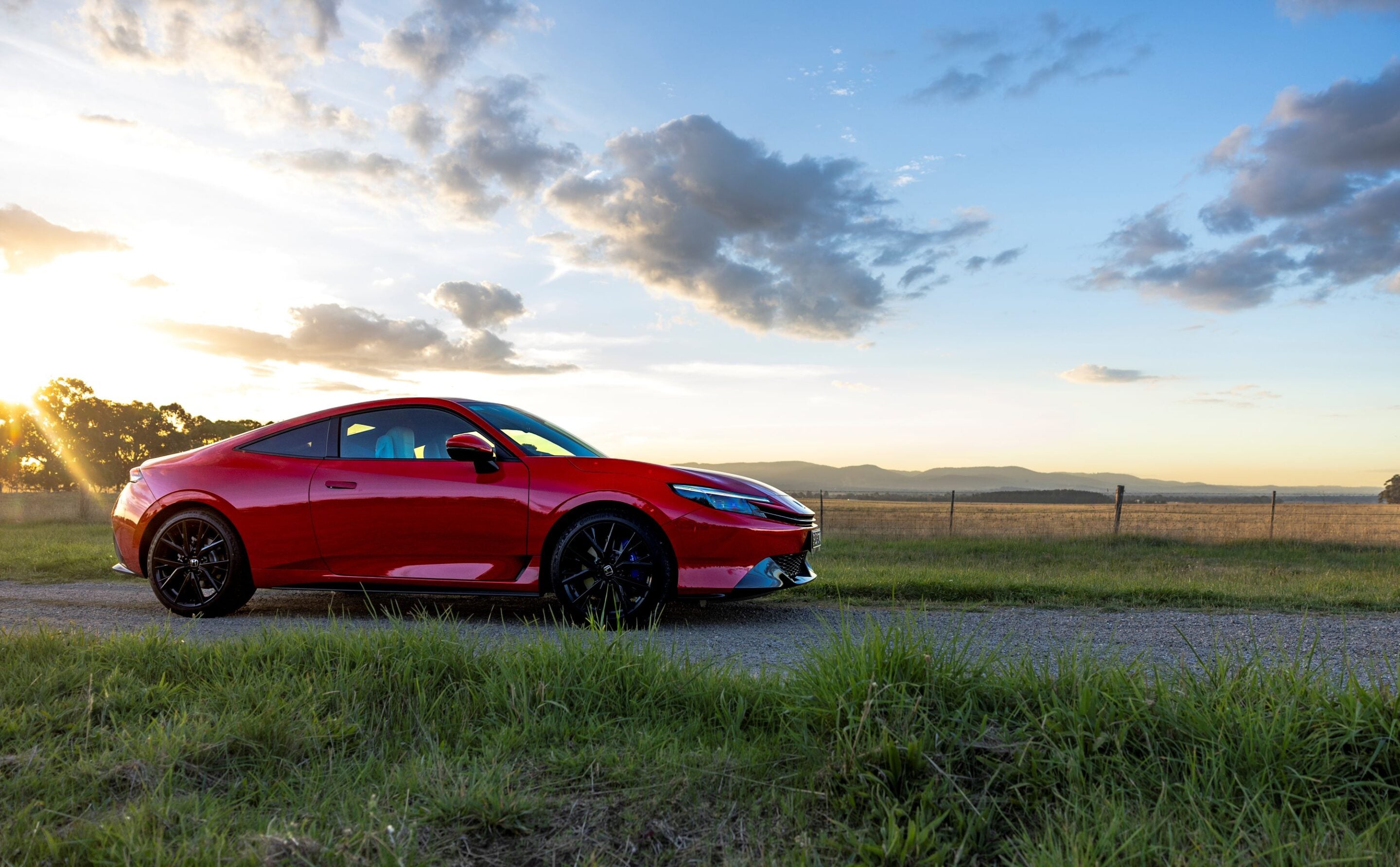
Exiting a corner at about the halfway mark up Victoria’s famous Black Spur drive, the new Honda Prelude’s duality of character truly reveals itself. A few short hours earlier, I had left Melbourne city in the pre-dawn darkness, intent on avoiding the morning peak hour, making my way out of the urban sprawl and, following a quick coffee stop in Healesville, I headed for one of Australia’s great driving roads.
As the Prelude’s shapely snout pierced the low-hanging mist, a two-door that had been utterly at ease working its way comfortably out of town at banal traffic speeds, lunged for the next corner with the enthusiasm of a far sportier sports car than its specification sheet might suggest it is. Indeed, the Prelude is no hot hatch, nor is it masquerading as one.
Honda would argue there’s a Civic Type R to satisfy such desire. Rather, the Prelude, much as it always was, is targeted at classy, elegant touring. A two-door for the discerning buyer, one who knows that depth of engineering and attention to detail trump boy racer bodykits and noisy exhausts.
And yet, in Sport mode and with S+ Shift engaged, the 2.0-litre engine singing a soulful lullaby, simulated gearshifts bringing with them a blip of the throttle, and the front end doing precisely what I ask of it, I’m struck by how fun this Prelude is to drive. It’s a well-executed car in the way Honda does things, but it’s faster, more engaging and more connected than I expected.
The Black Spur drive is a sensational one – so much so, I pass through Narbethong and reach Marysville, letting the Prelude relax only long enough for me to admire it within the frame of the autumn leaves, before I turn around to head down, and then back up again.
It’s a road that provides corners and surfacing that allows you to test a car within the speed limit, and without the need to stress the car beyond its comfort point. Few Preludes will ever see the track, so this environment, on a beautiful Melbourne day, is where it should feel most at home.
How fuel efficient is the Honda Prelude?
Real-world efficiency – once not even a fleeting thought for the cultured and discerning GT driver, is very much the subject du jour in 2026 and on that front, the Prelude is excellent.
Our tester had only just clocked over 600 total kilometres as it sat ticking on cool down, and over that duration, it had used an average of just 5.6L/100km, despite much of that driving being, let’s say, enthusiastic.
Initial specifications suggested an average fuel use of 5.2L/100km, but Honda officially claims an average figure of 4.3L/100km. The live reading still only displayed mid sevens during our sporty drive. If you want to look good while using as little fuel as possible, then, the Prelude is here to serve. The 40-litre tank provides plenty of cruising range, and it will use regular 91 RON fuel.
Is the Honda Prelude practical?
If you’re of the vintage that might be considering buying a Prelude now, lets call it 45-60, you would have come of age in a time when Honda ownership was to be respected. A step above ‘regular’ Japanese cars, a Honda in the driveway wasn’t far off a vastly more expensive Euro badge in terms of credibility. In that sense, this new Prelude will require broad shoulders to carry the weight of its lineage.
Reluctantly, I point the Prelude’s nose back toward Melbourne, understanding that like the dates Prelude was always designed to enhance, all good things must come to an end.
Prelude is without question, the type of car that leaves you looking for the long way home, or one more blast than you had planned as I did earlier in the day. That alone, is the mark of a great car, and the cabin design and execution play a large part in the attraction.
Back into city traffic, Comfort mode selected, and the e-CVT left to its own devices, the Prelude is incredibly smooth, comfortable and competent. The ride quality in Comfort mode (Prelude defaults to GT at start-up) is excellent, soft enough to knock the sharp edges off ruts and speed humps, but without feeling like it wants to pogo after dealing with them. If you feel like the ride is too soft, switch over to Sport mode to firm things up.
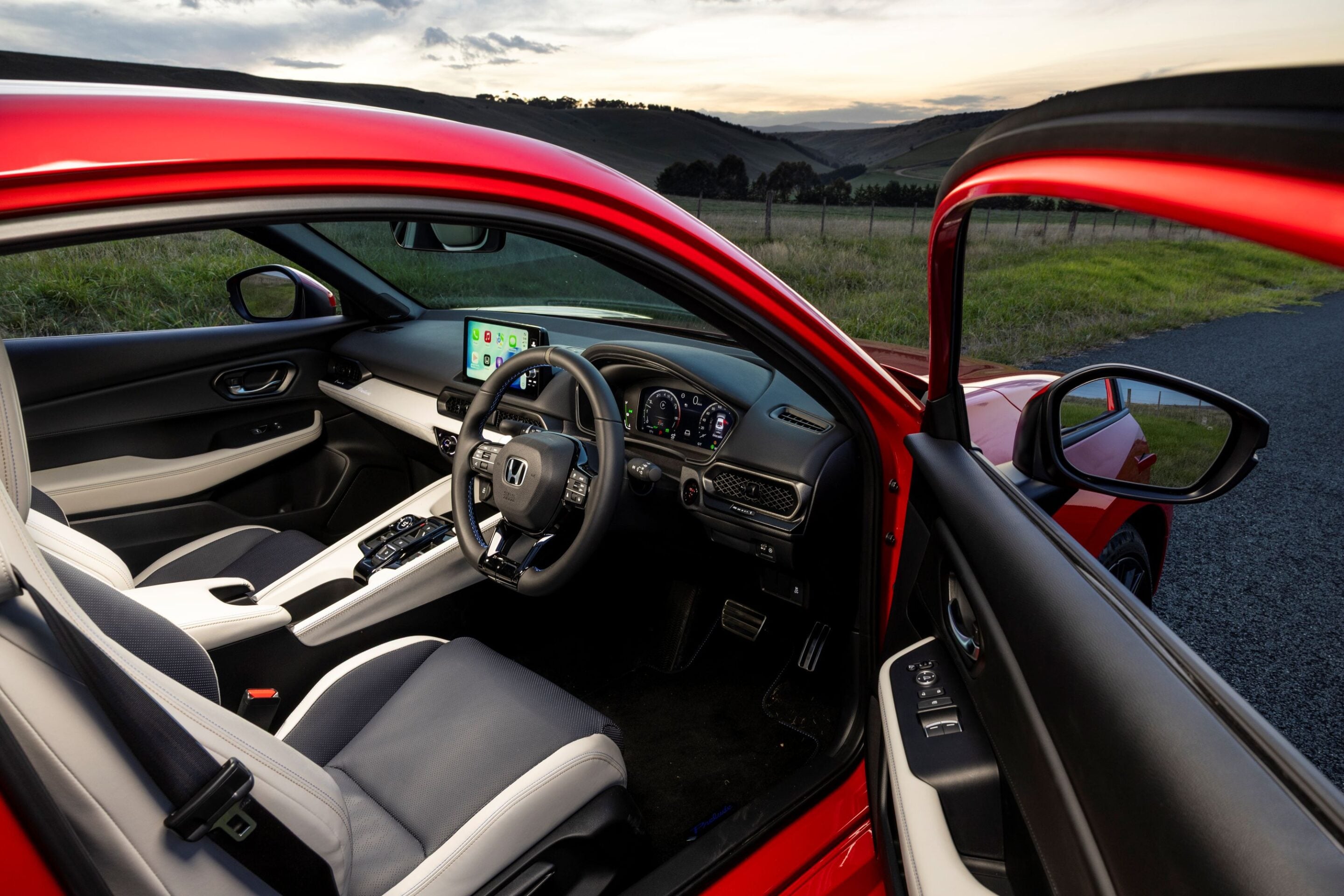
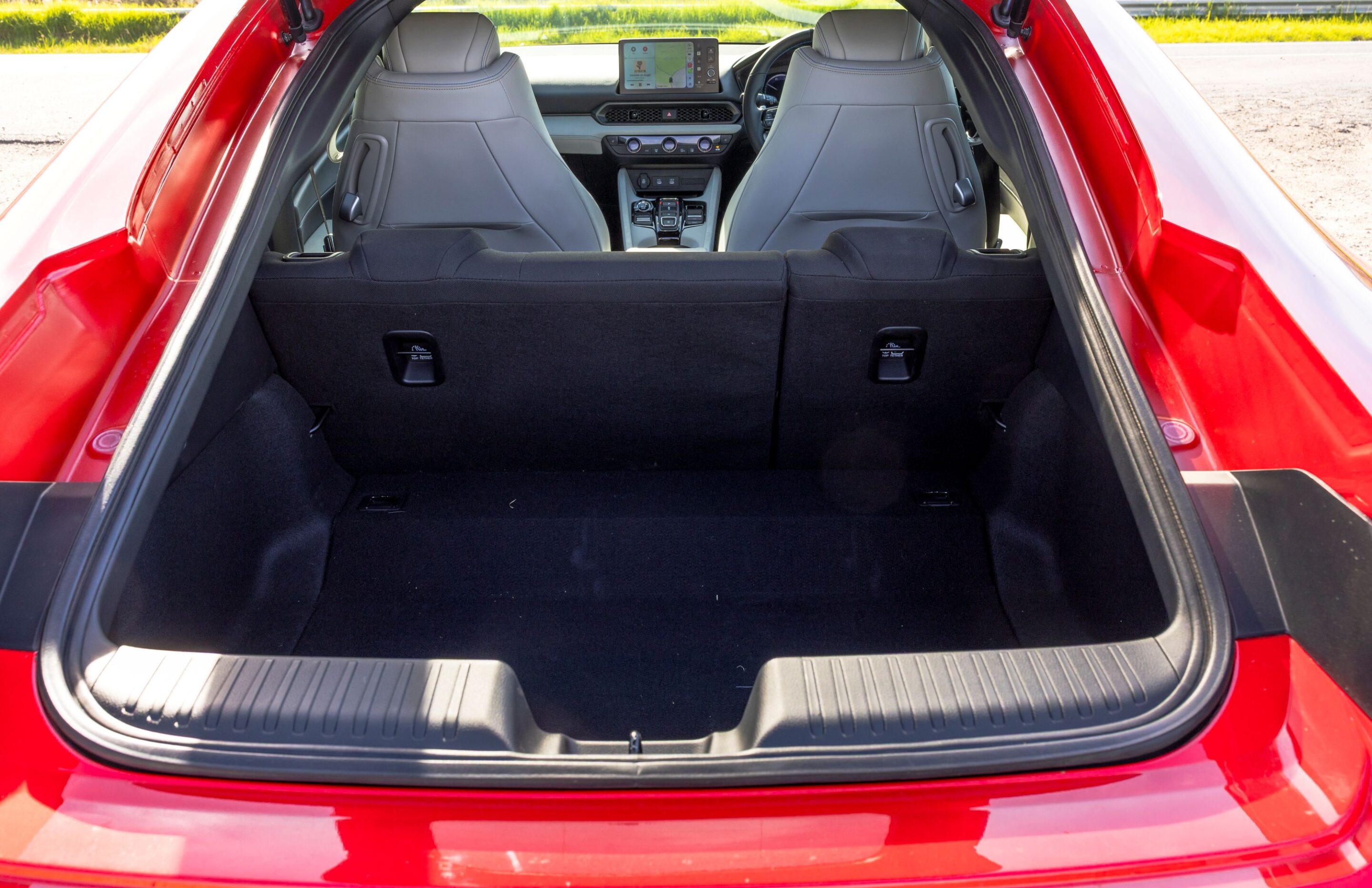
The seating position for my 185cm frame is excellent, driver focused and sporty, without requiring inelegant entry and egress. This is unequivocally a useful two-door, something not all of them can claim. It’s low without being silly, but once you’re in the cabin, there’s room, storage, and visibility to ensure a comfortable drive whether you’re on a road trip or going to work. While the second-row seats are tight for adults, the 663-litre boot is perfect for two-up road trips, accessed by way of a traditional hatch.
The cabin, and all the features we expect to be able to easily use in 2026, are all as expected. Honda’s attention to detail is in evidence in the trim, the choice of materials and even the embroidered Prelude logo on the passenger side of the dash. Connectivity and infotainment control are all as per the current Honda brief. Physical switches and dials for key controls are appreciated and ensure the interaction between driver and car is as good as it can be.
What warranty covers the Honda Prelude?
Prelude is backed by the same warranty as other Hondas in the fleet, that being a five-year/unlimited kilometre span, while the hybrid battery gets coverage across eight years.
Service your Prelude at a Honda dealer and you access an additional three years coverage, with roadside assistance included. Servicing is incredibly competitive, with a visit to the service centre required every 12 months or 10,000km and costing just $199 each across the first five years of ownership.
Should I buy a Honda Prelude?
As has always been the case, Prelude enters a market without a segment that comfortably accommodates it. Toyota 86 and Subaru BRZ aren’t really aligned, an Ecoboost Mustang would provide a fun, if irrelevant, comparison, while BMW’s 2 Series Coupe isn’t quite right either.
Prelude was never really defined by a segment and you could mount an argument that it remains so. The first line in my notes, before I’d even opened the door, as I prepared to drive the Prelude was the following: I want the Prelude to be great. It is.
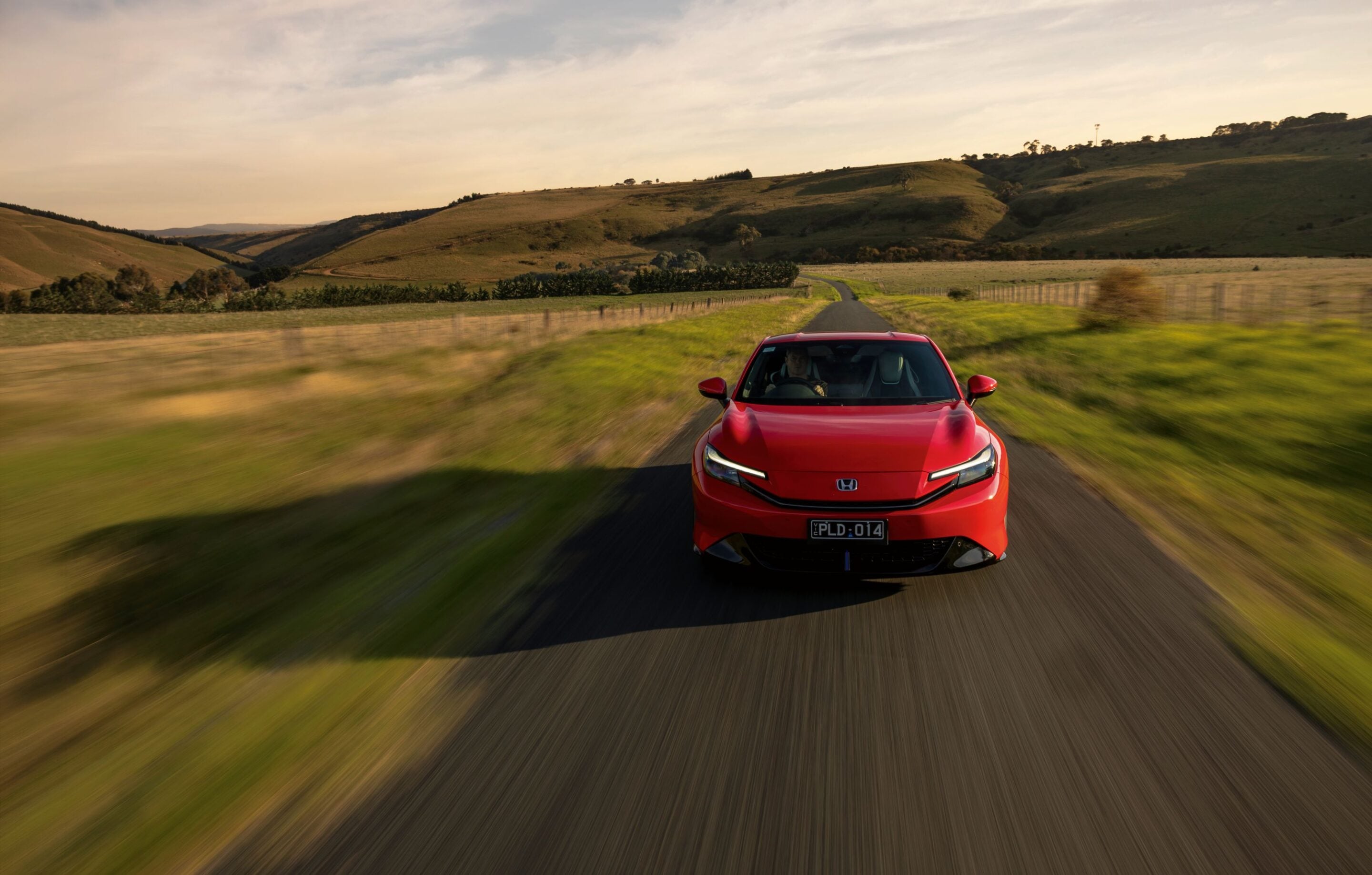
Honda Prelude Hybrid
| Price | $65,000 drive away |
|---|---|
| Engine | 2.0-litre, four-cylinder petrol engine |
| Motor | Single electric motor front-wheel drive |
| Engine outputs | 104kW/186Nm |
| Motor outputs | 135kW/315Nm |
| Combined outputs | 135kW/315Nm |
| Transmission | e-CVT with S+ Shift |
| Claimed 0-100km/h | 8.2 seconds |
| Fuel economy (claimed) | 4.3L/100km |
| Fuel on test | 5.6L/100km |
| Dimensions (l/w/h/wb) | 4522mm/1880mm/1355mm/2605mm |
| Boot size | 264L/760L seats folded |
| Kerb weight | 1468kg |
| Fuel | 91 RON unleaded |
| Warranty | 5-year/unlimited km |
| 5-year service cost | $995 |
| On sale | Now |
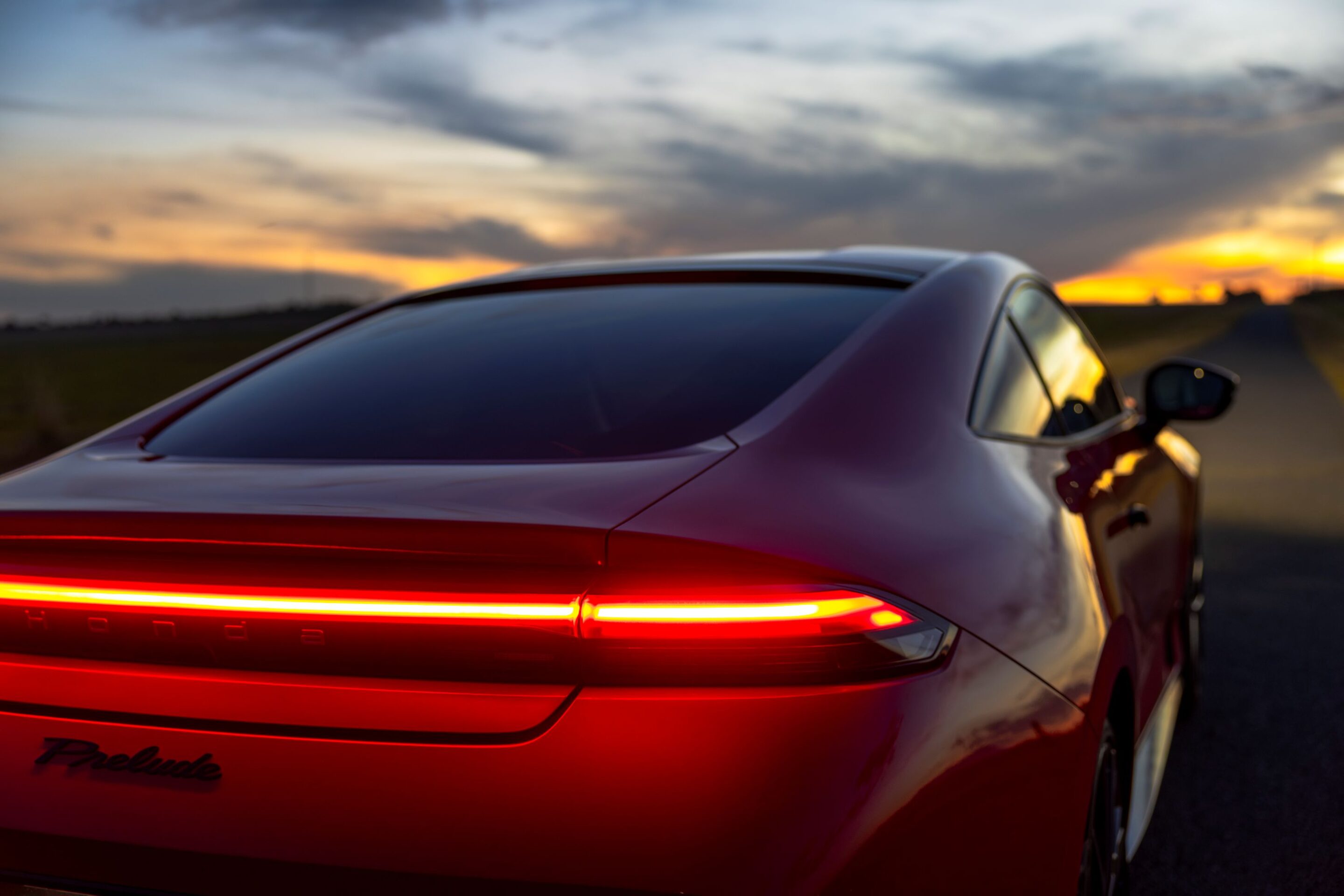
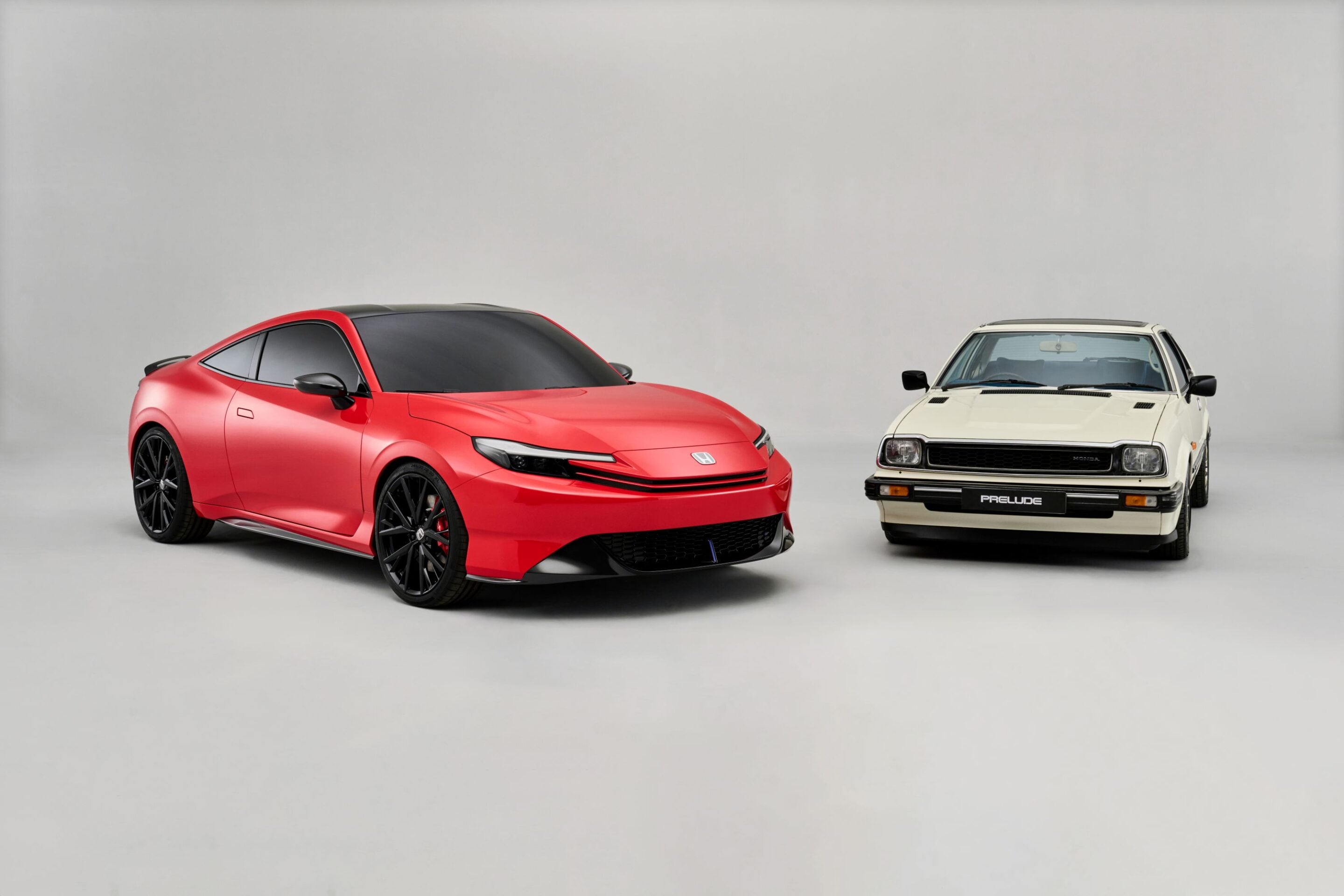
Honda Prelude: Down the generations
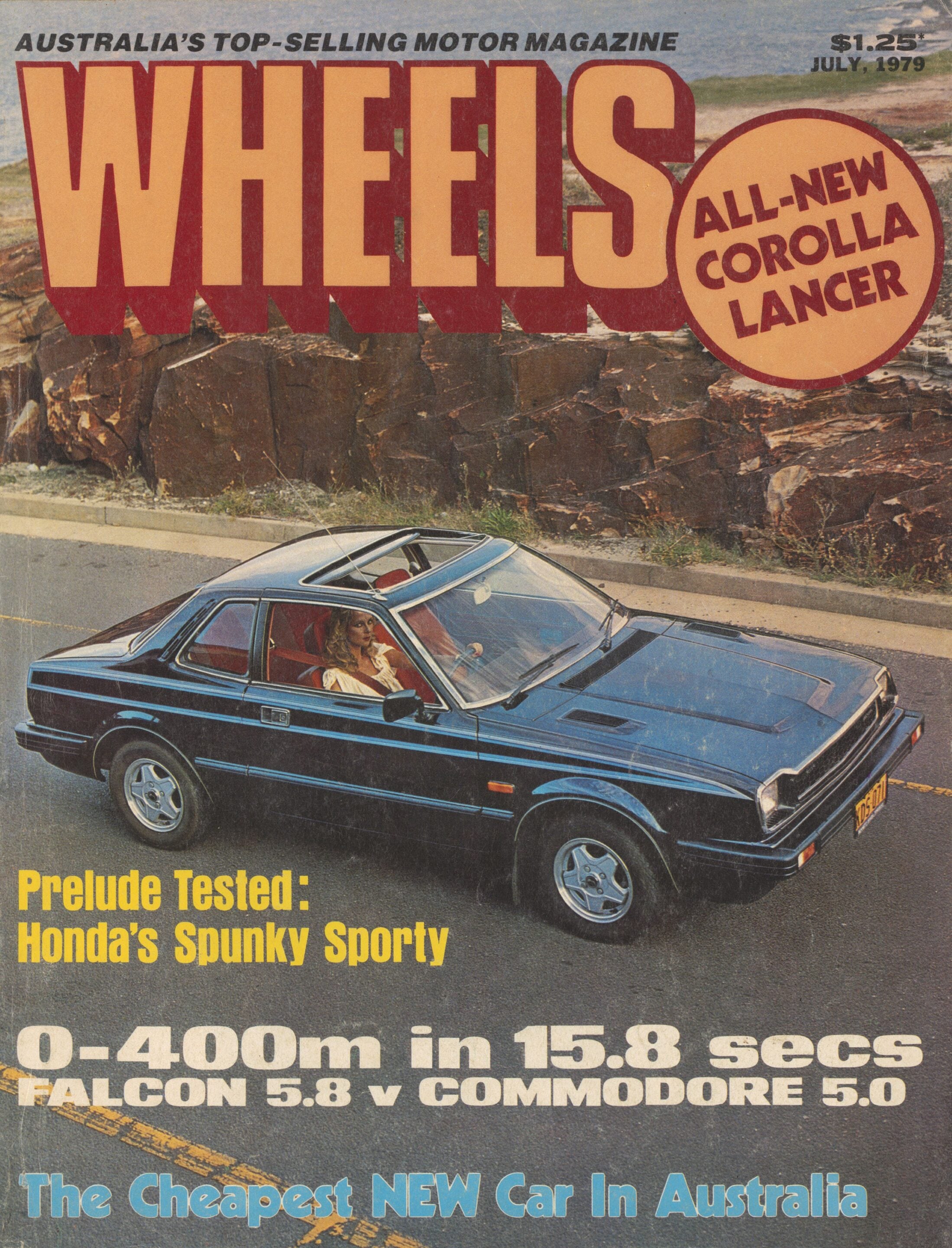
In 1978, Honda released the third element of its reinvention – the Honda Prelude. On the back of the Civic a nd the Accord, the Prelude was based on a shortened Accord platform, and was a forward-thinking, sporty coupe that blended European styling with decent fuel economy and what Wheels described as ‘adequate performance’. When it landed in Australia in 1979, it costs $8549, significantly more than a Toyota Corolla or Holden Commodore SL. Power came from a 1.6-litre, four-cylinder engine, making 59kW and 126Nm.
By the time the second generation rolled around, Honda had sold nearly 313,000 units of the first generation, with around 80 percent sold outside Japan. Released globally in 1982 and locally in 1983, Peter Robinson wrote, ‘we are convinced this high-tech Prelude significantly raises Japanese car standards to the point where European coupes are being challenged as never before’. The 1.8-litre, 12-valve four-cylinder was new, and power climbed to 79kW and 155Nm. Prelude also got ABS, the second car in Australia with such technology, behind only the Mercedes-Benz S Class. It was priced at $17,100.
In 1986, a 2.0-litre engine was added to the second-generation line-up with outputs of 85kW and 161Nm and an asking price of $29,000.
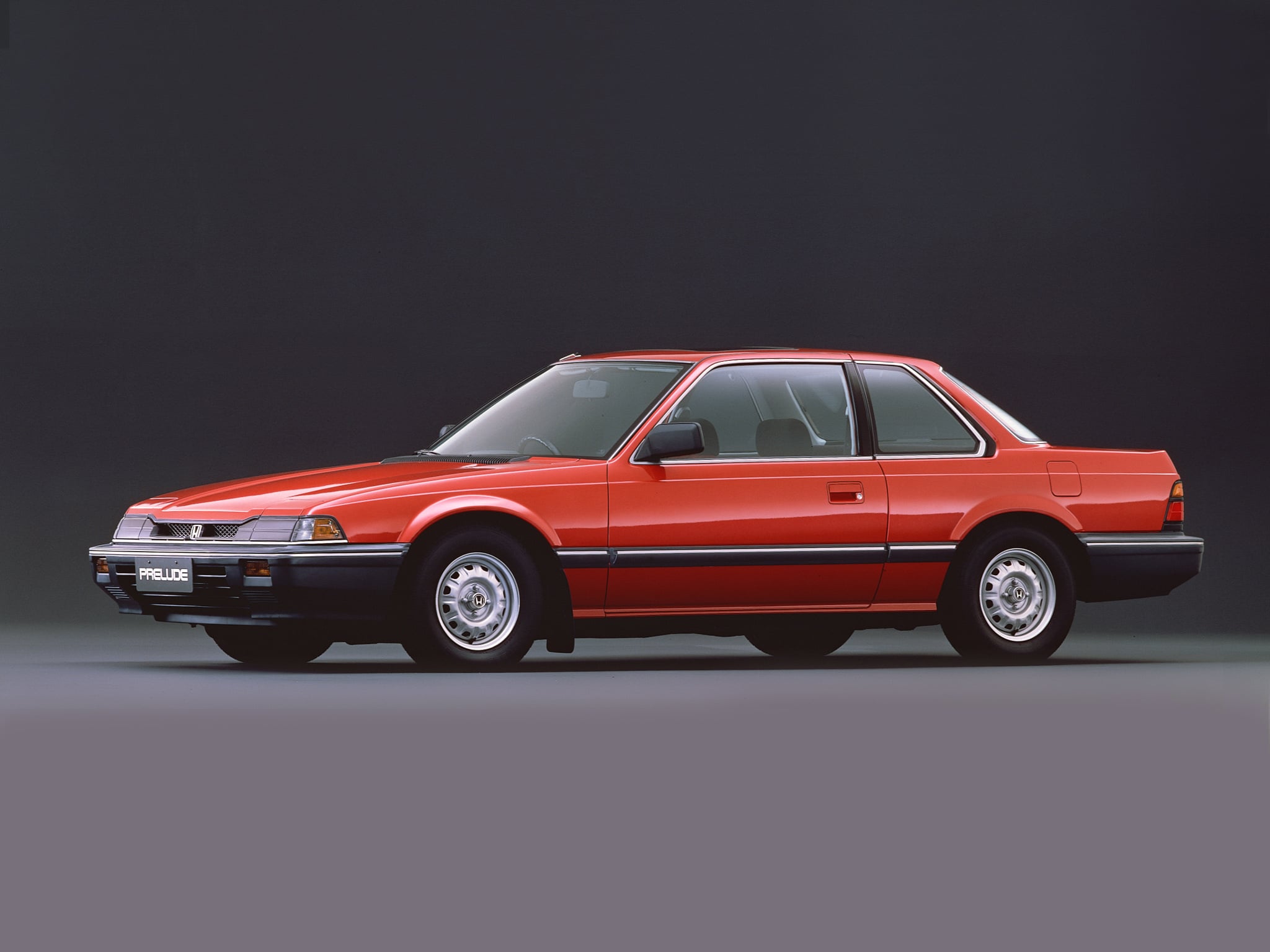
The third-generation hit showrooms in Australia in 1987 and, while the price had climbed significantly to $33,450, the new model brought with it a serious move forward in technology. It was the first mass-produced car with four-wheel steering, a purely mechanical set up, side stepping the complexity of electronic versions that would follow. A new, fuel-injected 2.0-litre engine made 106kW and 174Nm, with a 0-100km/h sprint time of 9.0 seconds neat.
The fourth generation landed in 1991, with softer edges and curves presenting a farewell to the wedge-obsessed 80s. The body was 70mm wider, 80mm shorter, riding on a 15mm shorter wheelbase and was 15mm lower. Under the skin, the significant change continues with a choice of two four-cylinder engines. There was a 2.2-litre, SOHC 16 valve engine making 96kW and 191Nm or a 2.3-litre 16-valve twin cam making 118kW and 209Nm. A 2.2-litre DOHC VTEC unit would follow in 1994 with the launch of the VTi-R model, making 65.8kW per litre, outpacing 348 and 512 TR Ferraris.
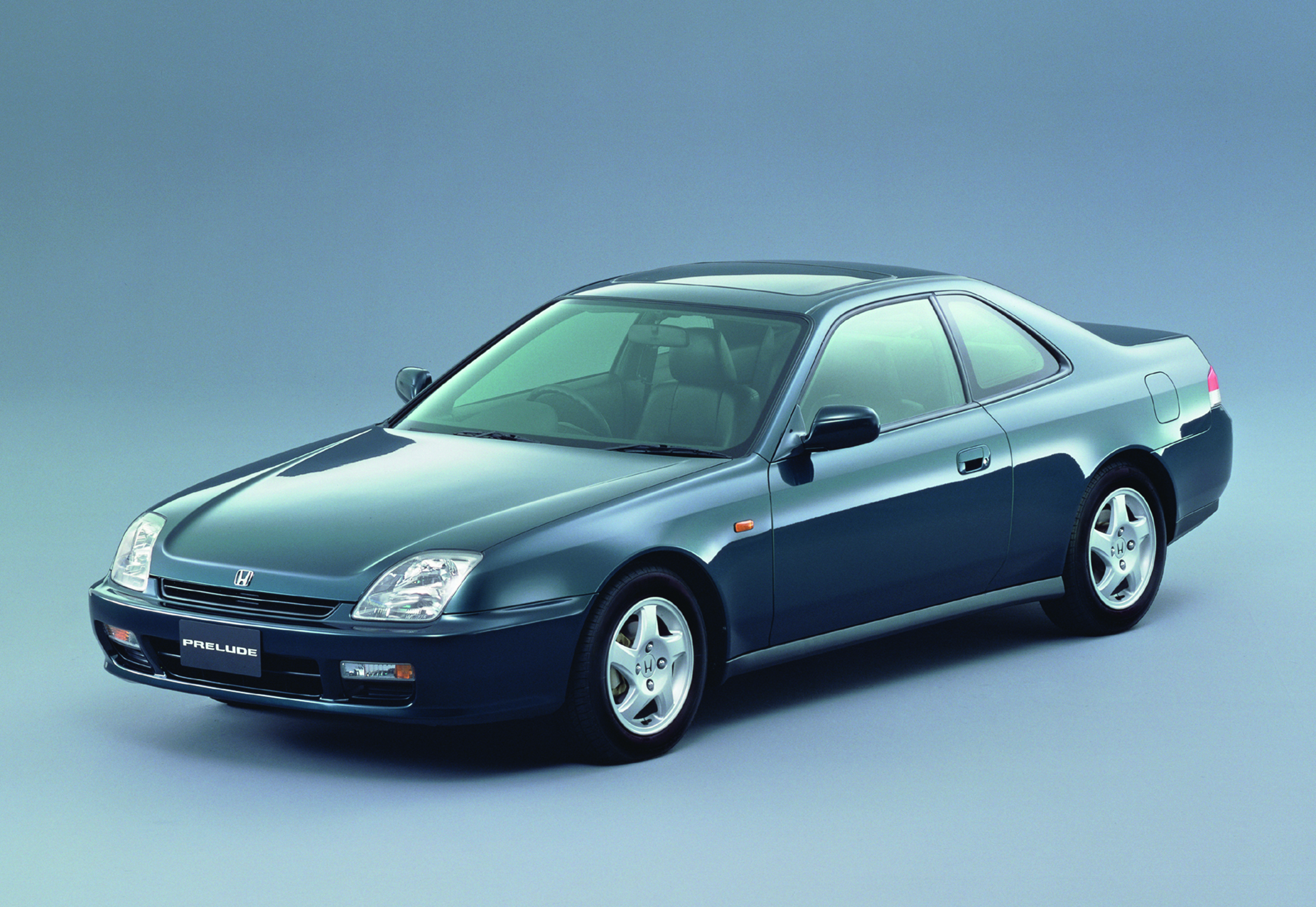
The final Prelude – until the release of this new model of course – landed in Australia in 1997 with the 2.2-litre engine remaining in service. While the styling was’t to everyone’s liking, the 143kW and 212Nm on offer – with either a manual or semi-automatic transmission – made for an engaging drive. Wheels claimed in the March 1997 road test that, ‘when VTEC kicks in, the engine’s note rises in pitch and you instantly feel it awaken – at that point it becomes a screaming pleasure to drive’.
At the time, a manual VTi-R could be had from $44,850, sitting around $5000 cheaper than the model it replaced. Part of the price reduction was attributed to Honda dropping it’s four-wheel steering system, and the Prelude ran out of puff in 2001, consigned to the history books – until now.
More Australians are delaying essential vehicle maintenance as rising household costs place growing pressure on drivers, according to a new national report examining car ownership and running expenses.
The latest edition of Youi’s Generational Car Care & Costs Report found the number of Australians postponing at least one vehicle maintenance task has jumped sharply from 35 per cent in 2024 to 54 per cent in 2026.
The report also found nearly two in three motorists now admit to delaying maintenance work, compared with just one in three two years ago.
Servicing habits appear to be changing significantly. Drivers servicing their vehicles at least every six months fell from 46 per cent to 32 per cent, while the proportion servicing their cars less than once per year more than doubled from seven per cent to 16 per cent.
The findings come amid mounting financial pressure on Australian households, with half of respondents saying driving had become less affordable over the past 12 months.
According to the study, 57 per cent of Australians now consider car ownership costs comparable to grocery expenses as a major household budget concern, while 56 per cent reported increases in fuel, insurance and loan repayment costs.
The most commonly delayed maintenance tasks remain relatively basic but potentially important to long-term vehicle health and safety. Car cleaning topped the list, followed by tyre replacement and oil changes.
Cost remains the biggest reason for delays, cited by 60 per cent of respondents. However, the report also identified growing behavioural factors, with 21 per cent saying maintenance was being deprioritised and 15 per cent admitting lack of motivation contributed to delays.
The broader Youi study also found signs of changing vehicle ownership trends in Australia. Single-car households increased from 53 per cent to 57 per cent over the past two years, while multi-car households declined from 47 per cent to 43 per cent.
Despite many drivers viewing some delayed maintenance as relatively harmless, the report warned postponing servicing and tyre replacement could increase the risk of breakdowns and avoidable accidents.
The findings align with broader industry concerns about the rising cost of vehicle ownership in Australia, particularly as newer vehicles become more technologically complex and expensive to repair.
Recent research published alongside the report also highlighted ongoing increases in insurance premiums, fuel prices and servicing costs, placing additional pressure on drivers already dealing with higher mortgage repayments and general living expenses.
Youi said some respondents believed delayed maintenance did not immediately affect vehicle drivability, though safety experts cautioned that problems can develop gradually before becoming critical.
The future of the BMW M3 has firmed up, based on insider information gathered by BMW Blog.
The website reports that the current BMW M3 is set to wrap production in February next year, leaving at least an 18-month gap before a combustion-engine replacement takes its place.
That next M3, set to be G84 generation, looks likely to be automatic only, leaving the current G80 version as the last M3 available with a manual transmission.
A new approach for the M3, and the 3 Series on which it’s based, will see petrol versions (ICE) and electric (EV) models rolled out side-by-side. In the case of the M3 EV, to be based on the i3 EV that has already been shown, production is expected to commence during 2027.
The ICE version of the M3, like the 3 Series, is set to follow later, but among BMW’s plans is a change in production locations for the 3 Series. The production cycles for the 3 Series, coupled with the retooling required at BMW’s Dingolfing, Germany, factory will see an almost 18-month gap between the outgoing M3 and the new ICE M3.
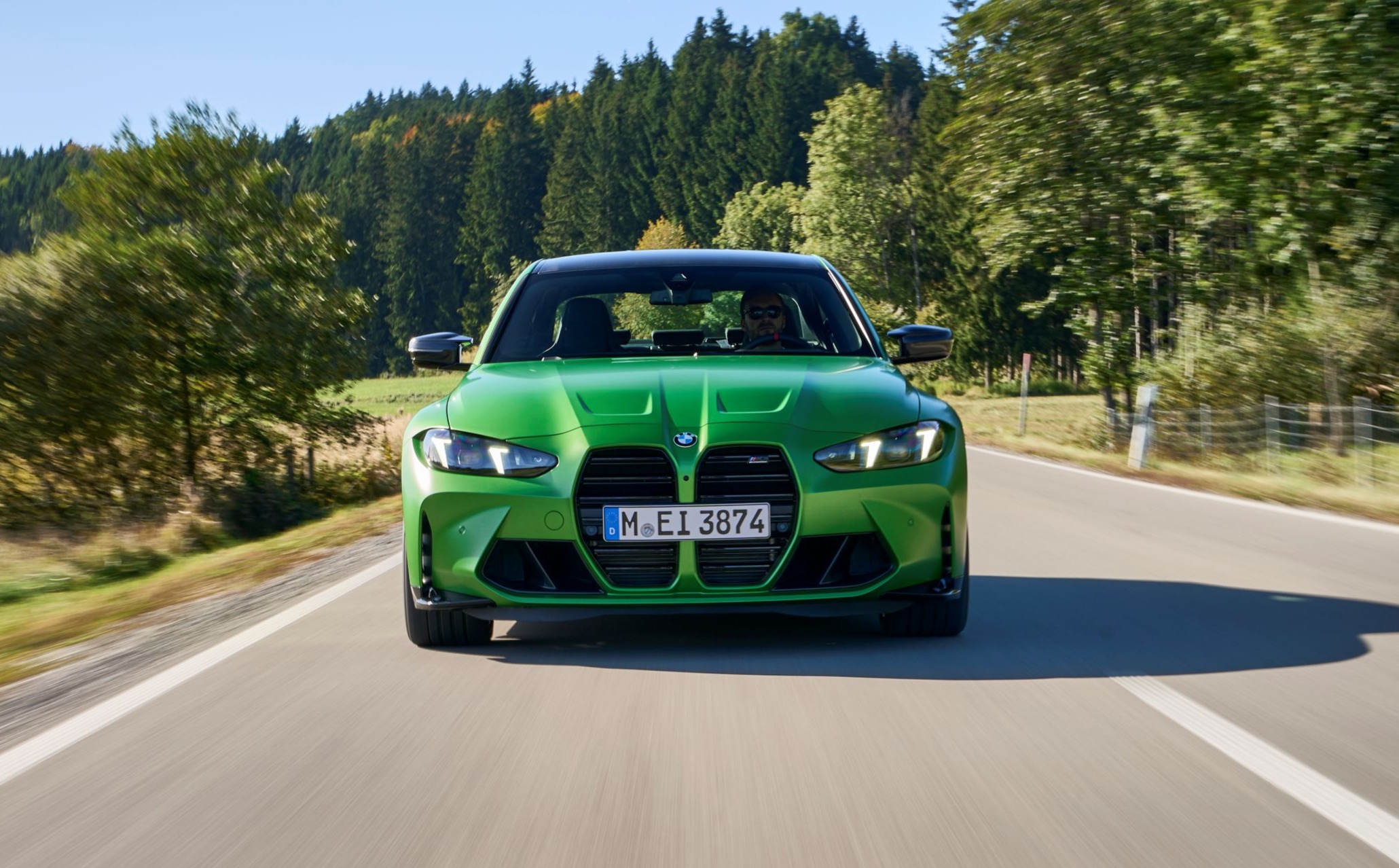
BMW Blog reports consistent insider information that suggests the current M3 will be the last with a traditional manual transmission.
North American buyers will be offered a special edition M3 CS Handschalter as a farewell to the current generation, combining the lightweight CS treatment with rear-wheel drive and a manual transmission for the first time. Other markets, meanwhile, offer the M3 CS with an eight-speed automatic and all-wheel drive.
Australian customers have the option of a six-speed manual paired with rear-wheel drive in the ‘entry-level’ 353kW M3, but not the 390kW M3 Competition, which switches to all-wheel drive with an eight-speed automatic, as does the 405kW M3 CS.
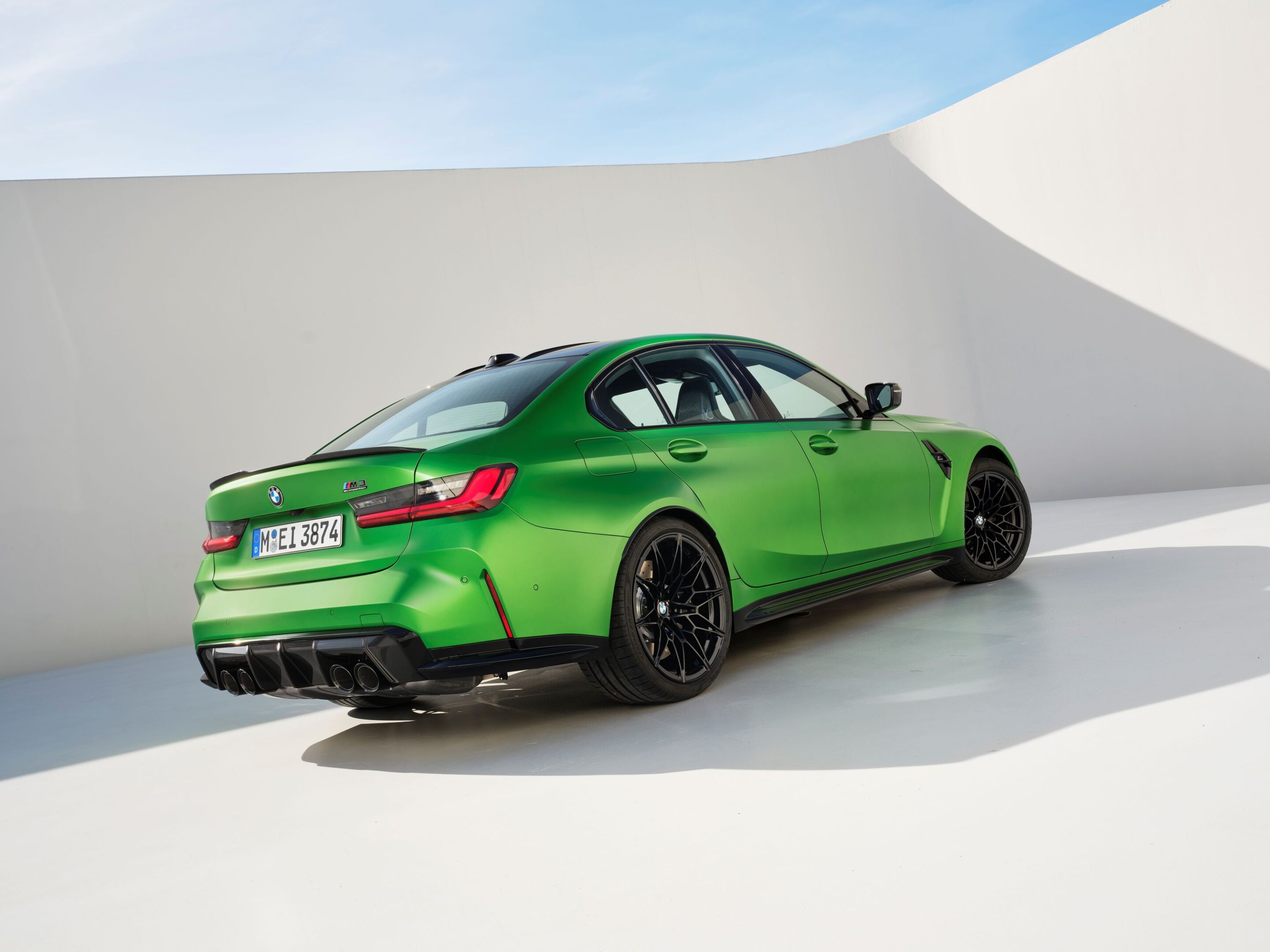
The new M3 EV is expected to offer a simulated transmission, with paddle shifters and power delivery programming to mimic the feel of a traditional transmission, but neither it nor the M3 ICE will offer a true manual.
Earlier this month, BMW outlined changes to the current six-cylinder engine in the M2, M3, and M4 to meet stricter Euro 7 emissions compliance regulations. The addition of ‘M Ignite’ precombustion technology, with a separate spark plug and ignition coil, is claimed to reduce fuel consumption under high loads, like track use, without altering engine outputs.
The new technology enters production in July 2026 for the M3 and M4, followed by the M2 in August.
The first images of a new plug-in hybrid small hatchback from BYD, developed specifically for the European market, have been revealed.
The new BYD Dolphin G DM-i will slot into BYD’s global line-up alongside the existing Dolphin EV, this time as a slightly smaller model, shorter than the current Dolphin EV, but bigger than B-segment rivals like the Volkswagen ID. Polo and Renault 5 E-Tech.
The Dolphin G offers a new look for BYD’s ‘ocean series’ vehicles, departing from the wave-like headlights of current models destined for the Chinese market, and taking on a more pointed front-end design with triangular headlights and a narrow grille panel.
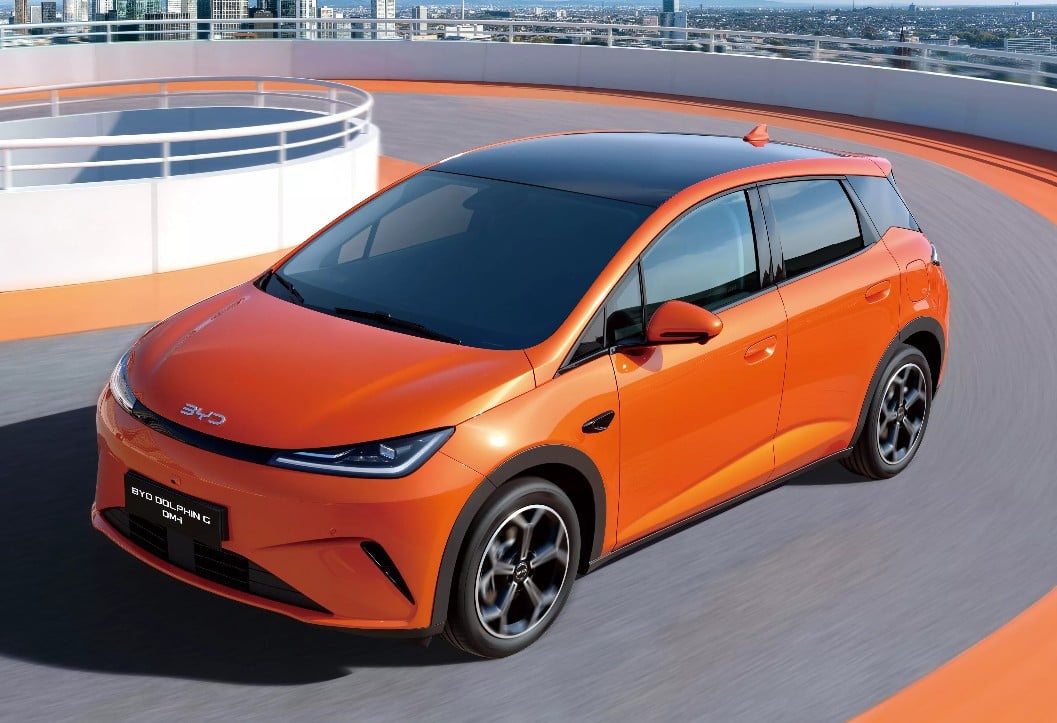
The rear of the car is yet to be revealed, but the Dolphin EV’s black plastic-clad wheel arches, floating rear roof, and gloss-black D-pillar design carry over. Flatter body sides and a small wave at the rear of the beltline evolve the design.
BYD has not yet announced the powertrain details for the Dolphin G DM-i, other than confirming that the combined range from the electric and combustion engine is more than 1000km from a full charge and full tank of petrol.
It is believed that the Dolphin G may use a version of the plug-in hybrid system used in the Atto 2 DM-i in Europe, combining a 1.5-litre naturally aspirated four-cylinder engine and a single electric motor with 122kW and 156kW combined output versions available.
The Atto 2 offers a choice of 7.8kWh or 18kWh batteries, providing 39km or 86km of WLTP electric-only driving range. While it’s unknown if the Dolphin G will mirror these specs exactly, the production configuration is likely to be similar.
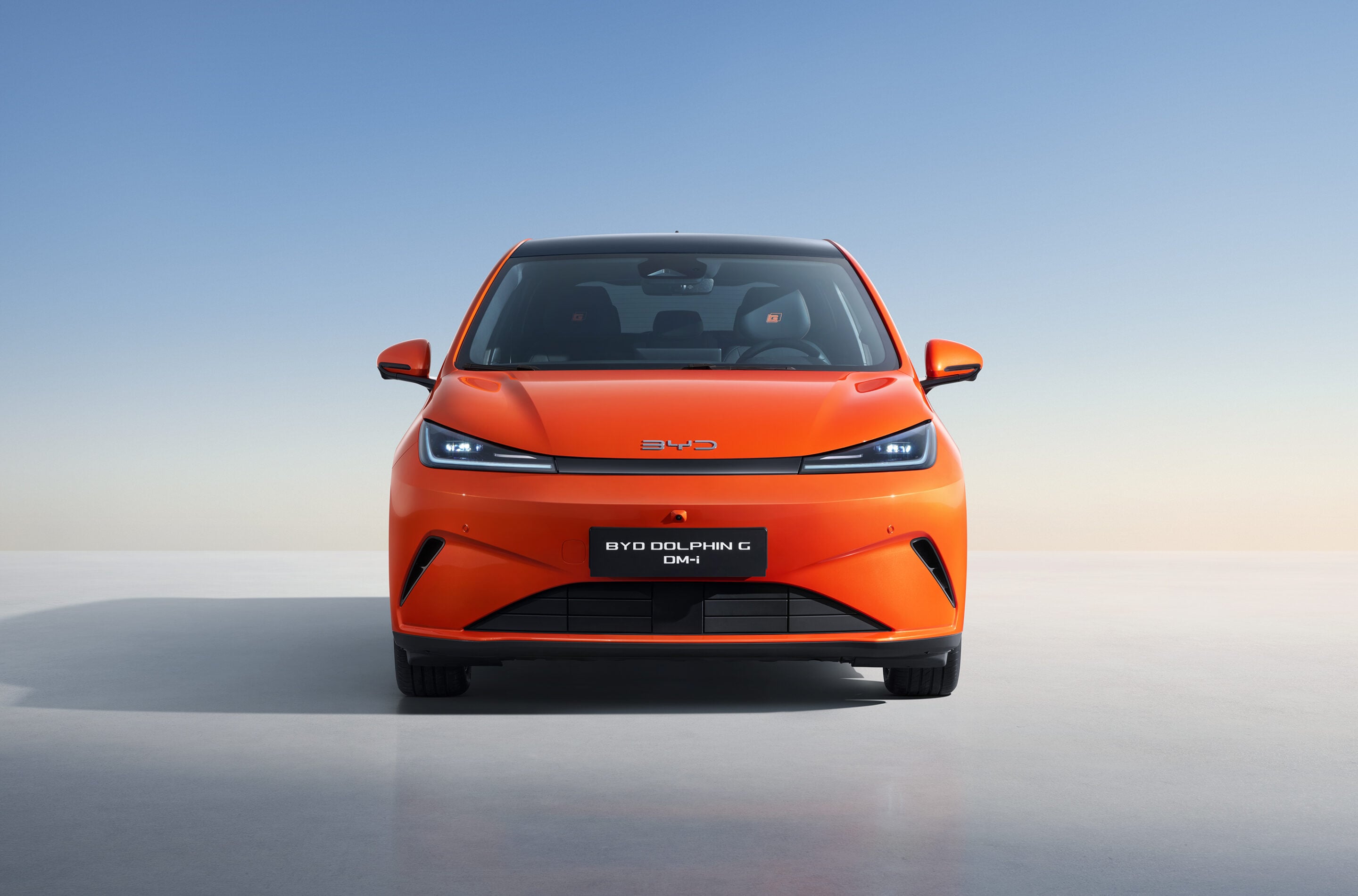
The Dolphin G measures 4160mm long, making it 130mm shorter nose-to-tail than the Dolphin EV currently sold in Australia, but longer than B-segment rivals in Europe, like the newly-launched Volkswagen ID. Polo EV (by 107mm) and the segment’s best-selling Dacia Sandero (by 61mm).
While the Dolphin G is the first BYD vehicle developed specifically for overseas markets and not a Chinese model tweaked for international sales, BYD is also working on a Japan-specific kei car, and is set to become the first non-Japanese brand to do so. BYD also has plans for a wider range of products specifically designed for overseas markets to follow.
The Dolphin G will be one of the first models built at BYD’s Szeged, Hungary, factory, and is expected to receive its full, official launch in June, 2026.
As Ferrari confidently revealed its first all-electric vehicle publicly yesterday, investors demonstrated a far less confident attitude.
Ferrari stock suffered its biggest daily drop since October 2025, losing 7 per cent of its value. As Ferrari unveiled what could be the brand’s most pivotal new models in the brand’s 87-year history, investors were less effusive.
While the on-paper specs look right for the brand, including a 722kW four-motor powertrain and 2.5-second 0-100km/h acceleration, the Luce electric sedan marked a number of departures for the Italian supercar builder.
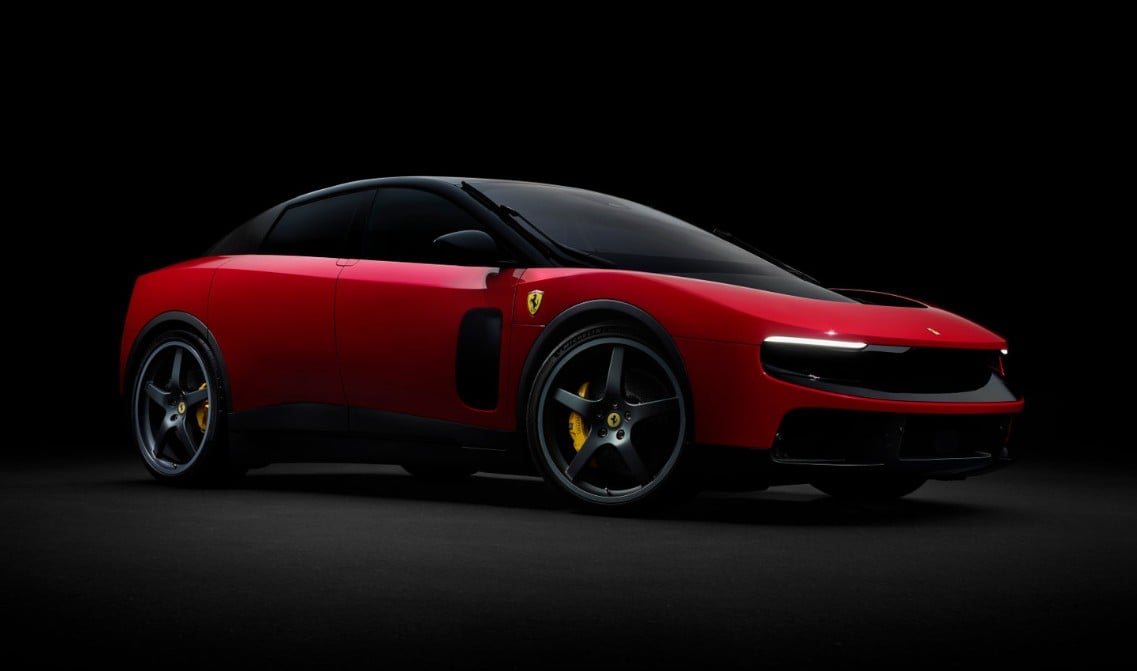
Despite almost a decade of experience with electrified drivetrains, the Luce is Ferrari’s first all-electric vehicle. It’s also the first five-seat model from the brand, and the first designed by an external design consultancy since 2013.
Rather than using an experienced automotive firm, LoveFrom, a ‘creative collective’ better known for its work on consumer electronics and logo design, was tasked with the exterior and interior appearance.
Former Ferrari president and chairman, Luca di Montezemolo, voiced his concerns about the new model.
The former Ferrari head was first quoted in 2011 as saying, “You will never see a Ferrari electric because I don’t believe in electric cars, because I don’t think they represent an important step forward.”
In 2013, he reiterated that stance as the company prepared to launch its first hybrid vehicle, the LaFerrari, declaring, “We will never manufacture an electric car as long as I’m chairman.”
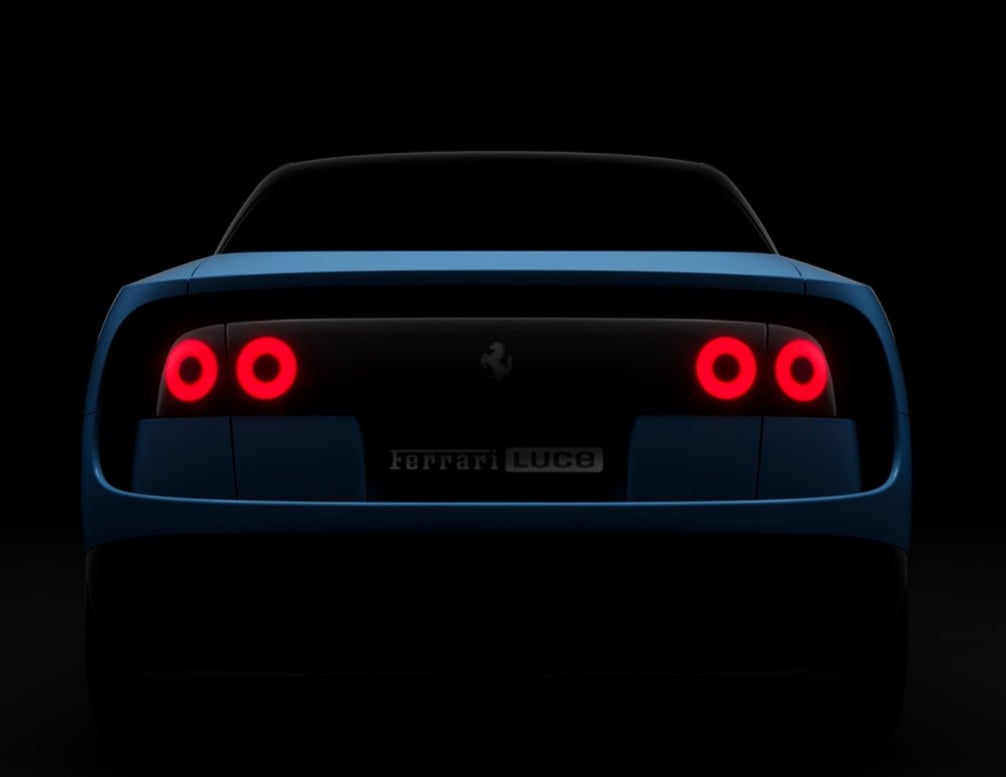
When asked what he thought about the Luce by Italian media, di Montezemelo responded, “If I said what I think, I would do harm to Ferrari.”
After a moment’s pause, he continued, “Yes, we risk the destruction of a legend.”
“I just hope that the little horse comes off.” he said, referencing Ferrari’s prancing horse logo. “This is certainly a machine that the Chinese, at least, won’t copy from us. They won’t need to.”
Market analysts at Berenberg Bank cited investor concerns that demand for the new model would be low among Ferrari’s traditional customers, resulting in the stock drop.
Ferrari’s timing comes as major rivals like Lamborghini and Porsche retreat from future EV plans, reducing confidence in high-end electric vehicles. At the same time, Rolls-Royce claims its Spectre EV was its most popular vehicle in Europe, and the number-two vehicle in its global portfolio, suggesting buyer demand remains for high-end electric vehicles.
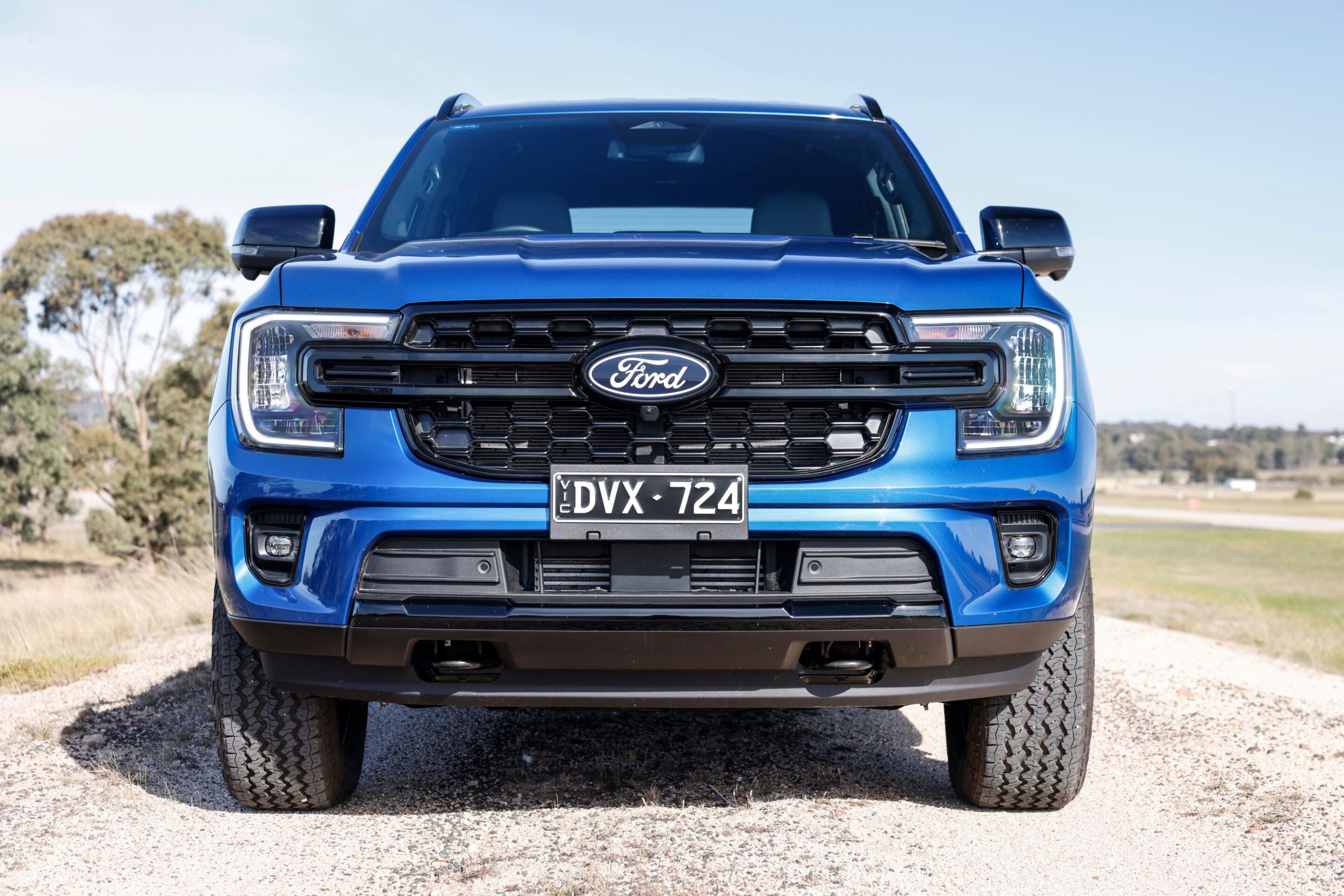
Ford Australia believes its long history embedded in Australia will stand it in good stead as more rivals to popular models such as the Ranger and Everest seek to take a bite out of its market share.
Ambrose Henderson, Ford Australia’s Marketing Director, suggested to WhichCar by Wheels at the launch of the MY 26.5 Ranger and Everest that the arrival of new competitors into the Australian new market was nothing the Blue Oval hadn’t dealt with before.
“This has been the most competitive market in the world for a long time, and it was that way before the Chinese entered the market and have the impact that they’ve had,” he said.
“We haven’t been here for 101 years in Australia without having to go through changes in the market, Henderson continued. “We’ve seen a bit in our history – two world wars, the GFC, COVID-19, the Great Depression, to name a few.
“What you’re seeing from Ford at every one of those changes in the industry is us refocus on what customers want, address that, deliver and win.”
That didn’t mean, Henderson stressed, that Ford was not closely watching what its latest crop of rivals are doing
“[We’re] going through that cycle again,” he said. “This is another new wave of competitors. Of course we assess what they are doing, as we would any competitor around the world.”
Where other manufacturers point to ‘Australian tuning’ or ‘Australian testing’ to make their cars relevant to the local customer, Ford is keen to emphasis its long ties to manufacturing in this country as its competitive advantage.
“That’s why its so important that we keep talking about capability today… we believe we have a sustainable long term advantage because we’ve made a decision to invest here and be based here,” he said.
“Capability is important, but to be based here and invest here, is very important. Others, talk about Australian-tuned, but let’s be honest, How much is Australian tuning? How much can you really change on the dynamics of a vehicle? I’d argue it’s little more than 5 per cent which is really insignificant in terms of how a whole vehicle comes together.”
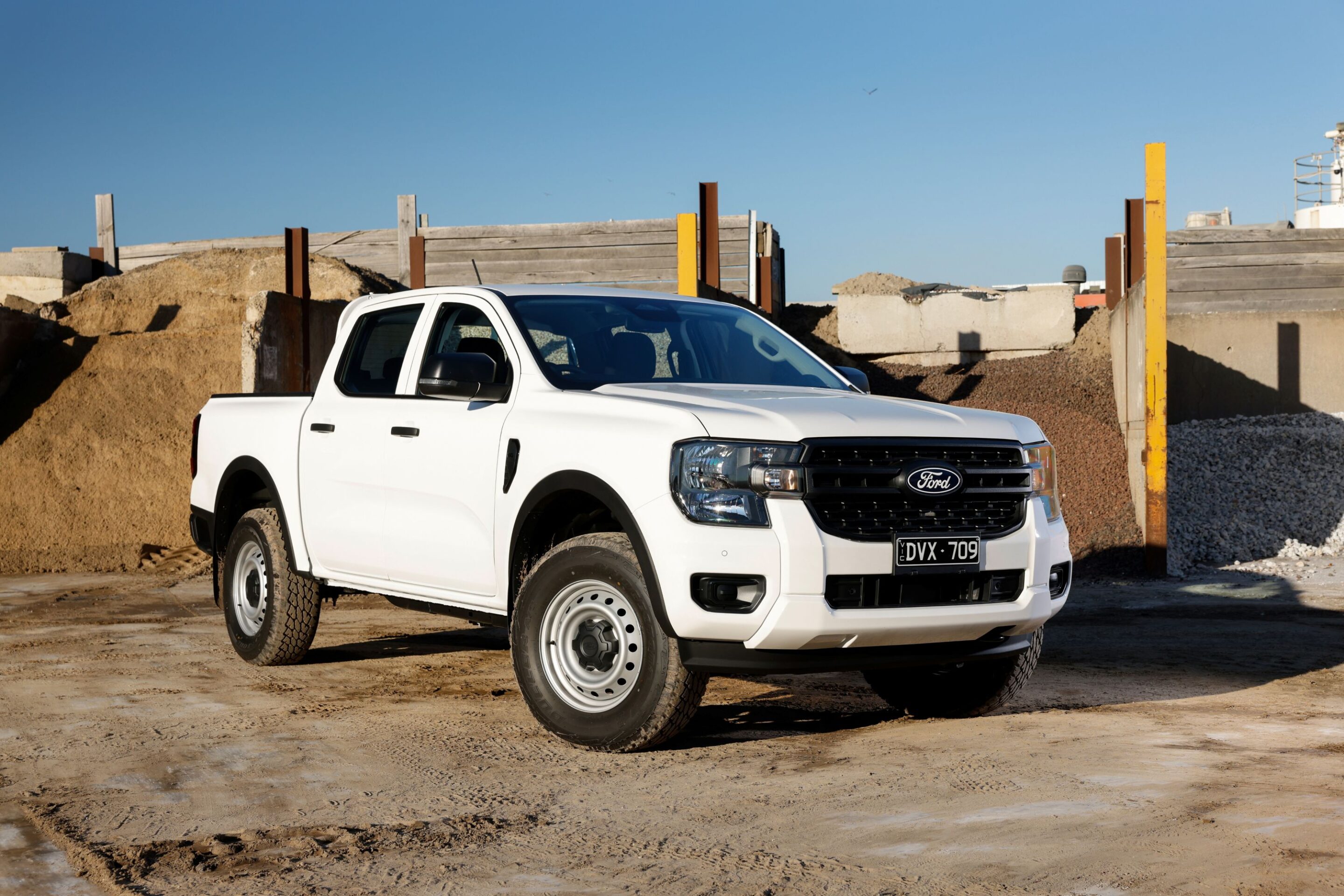
Watching its competitors included taking note of BYD’s recent announcement of its own ship bringing 5000 new vehicles from China to Australia for local customers, with Henderson saying Ford did similar bringing Ford Rangers and Everests from Thailand to Australia.
“We have already taken those actions (leasing boats to bring cars to Australia), to secure the logistics of the volume of cars we’re selling years ago. So there’s no new news about a boat of 5000 cars coming in – we do that every month, more than 5000 coming out of Thailand. We secured two ships that we have a long lease on to deliver that.”
Chinese-owned British sports car maker, Lotus, has announced a new version of its mid-engined Emira with upgrades targeted at the brand’s more traditional customers.
The 2026 Lotus Emira 420 Sport will sit at the top of the Emira range as the lightest and most powerful version to date, the upgrades reportedly coming at the request of customers.
The 420 Sport is powered by a version of the Mercedes-AMG-sourced 2.0-litre four-cylinder turbo engine from the Emira Turbo SE, with outputs boosted to 309kW/500Nm (or 420PS, hence the name), up 11kW and 20Nm over the Emira Turbo SE.
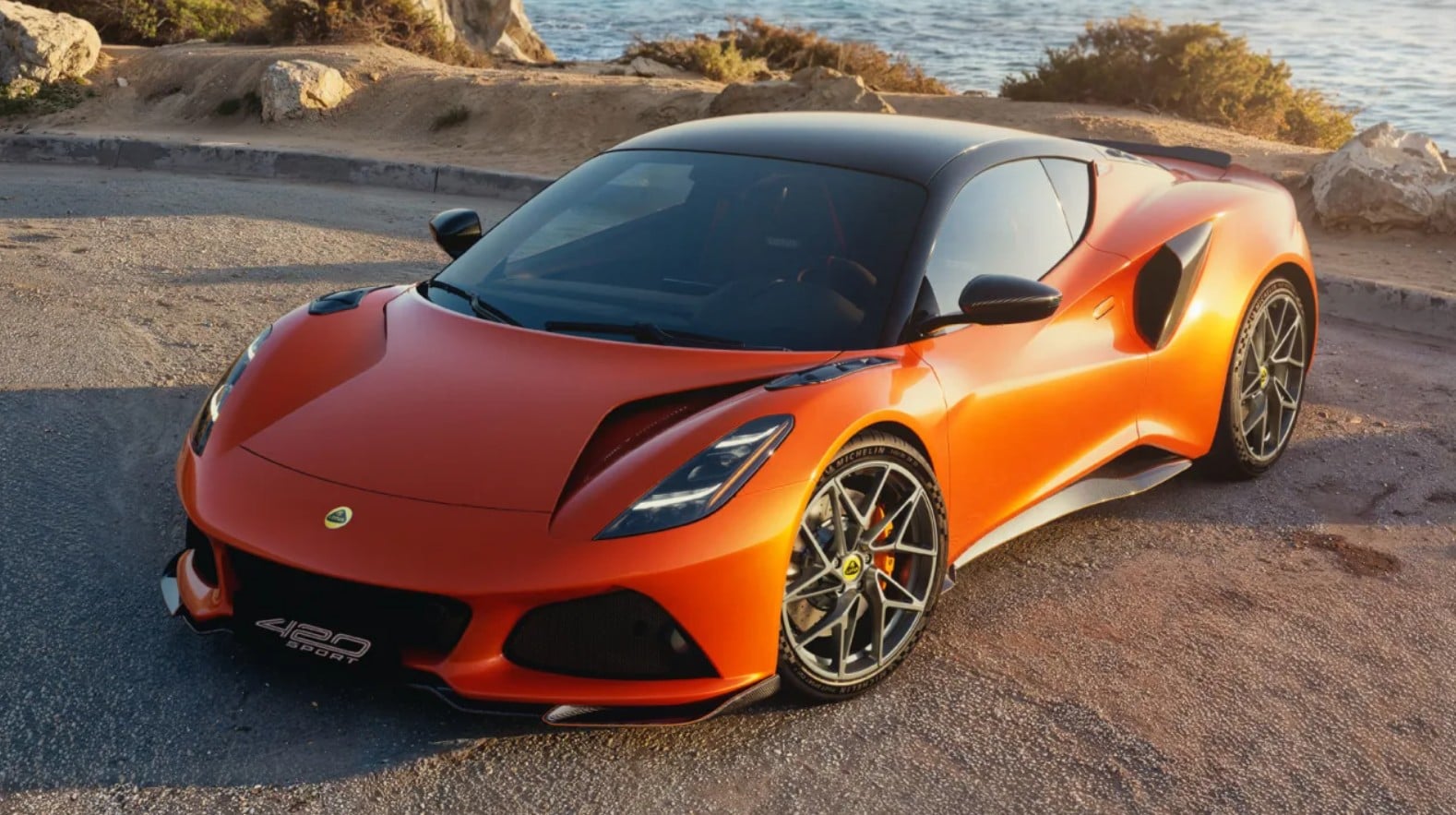
As with other four-cylinder Emira models, the sole transmission available is an eight-speed dual-clutch automatic, with the manual option from the V6 off-limits for the Mercedes-derived powertrain. New carbon-fibre gearshift paddles have been added, with revised haptic feedback for a more clearly defined feel.
Acceleration from 0-100km/h drops to 3.9 seconds, 0.1-sec faster than the Turbo SE and 0.3-sec faster than the 298kW supercharged V6 auto.
An optional Lightweight Handling Pack is available, saving 25kg of weight over the standard Emira 420 Sport while increasing downforce by 25kg. Changes include a lighter lithium-ion starter battery, titanium exhaust, and multimatic two-way adjustable dampers.
Changes to the Sport 420 also see suspension lowered by 5mm, with tweaked suspension settings, and high-performance tyres for ‘enhanced control and feedback’. The Emira retains electro-hydraulic steering.
Aerodynamic and cooling have also been upgraded, with larger side air intakes, revised front vents, a new front splitter, a rear lip spoiler, and a louvred tailgate contributing a 10 per cent improvement to brake cooling, 15 per cent greater air flow to the outboard radiators and 14 per cent more to the central radiator. The changes have been made to ensure more consistent performance during track use.
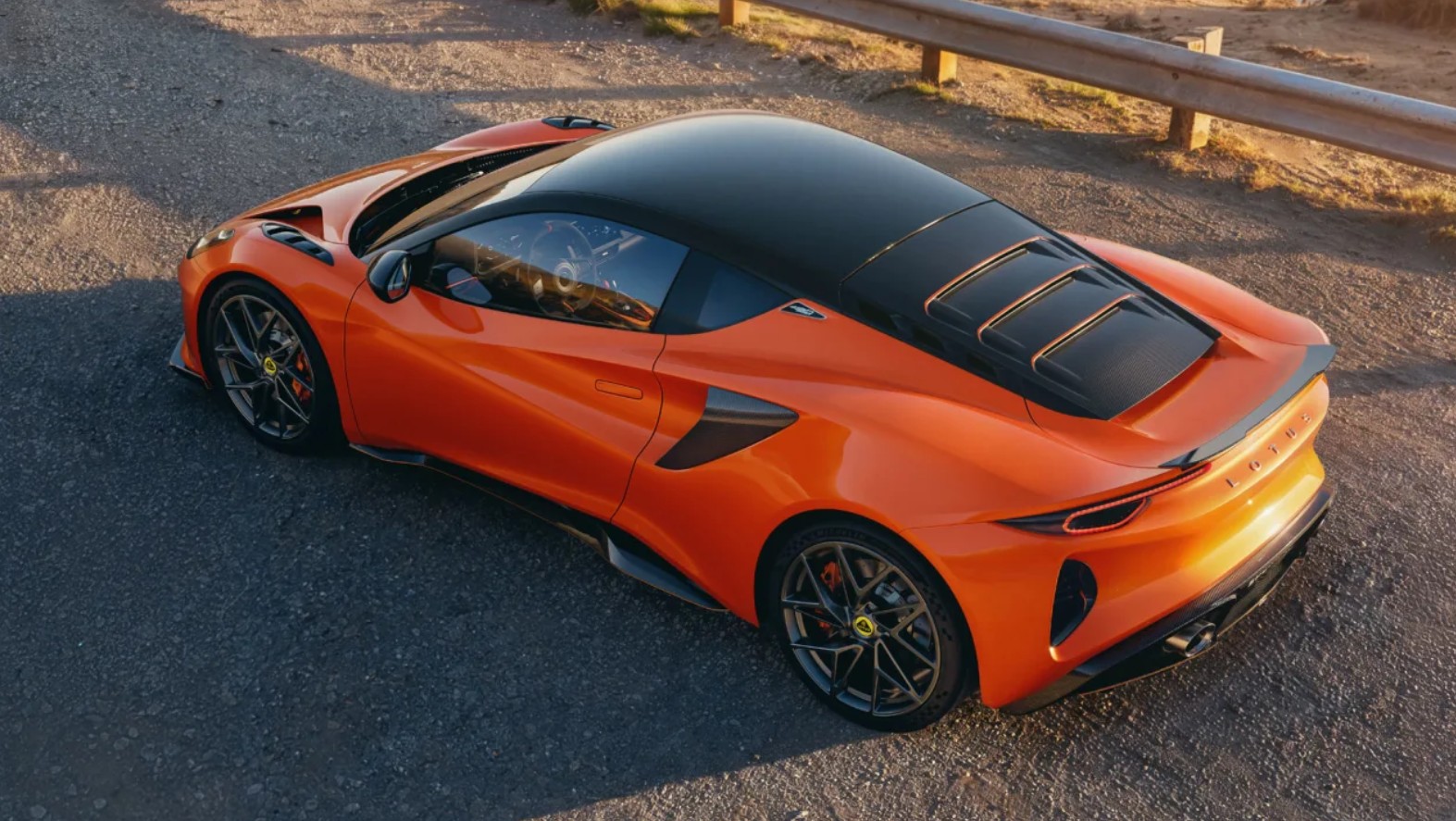
At the same time, Lotus has introduced a removable glass roof panel for all variants of the Emira lineup. The change required no alterations to the Emira’s bonded aluminium structure, and the removable panel can be stowed behind the seats in a protective bag.
An optional Exterior Carbon-Fibre Pack includes carbon finishes for the rear spoiler, rear diffuser, side sills, wheel arch vents, side pods and front splitter. An interior Carbon Pack with carbon elements for the steering wheel, instrument cluster surround and seatback logos is also available.
A new 20-inch satin grey 15-spoke alloy wheel design brings the number of available wheel options to nine, and Tangelo Orange paint exclusive to the 420 Sport is available, along with matching hand-painted Tangelo Orange highlights for the console, steering wheel, and air vent surrounds.
The Lotus Emira 420 Sport is slated for a launch during the European summer (June to August). UK pricing starts from £105,900 (A$198,720) with local pricing and availability yet to be revealed.
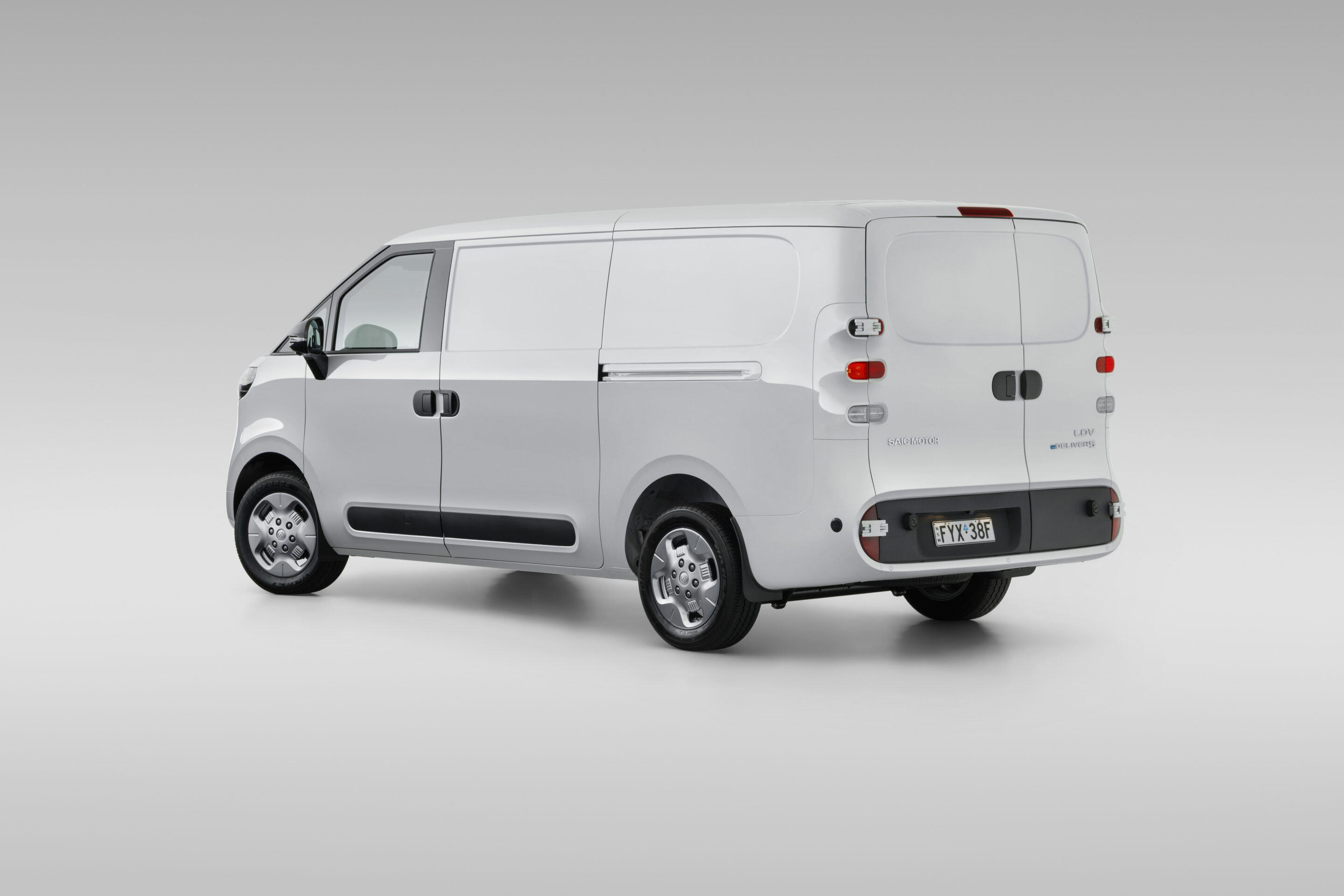
LDV has announced that the first examples of its all-new eDeliver 5 electric van have been airfreighted to Australia, with customer deliveries to start in July. Pricing is sharp, with a starting price of $47,990 drive-away for ABN holders as a limited time launch offer, making it one of the most affordable vehicles in the electric van segment in Australia.
LDV is keen to fulfil customer interest, hence the airfreighting of models into Australia for final validation testing. From today, Australian buyers can officially register their interest, via the portal on the LDV Australia website.
“There has been a seismic shift in consumer behaviour due to recent geo-political tensions, fuel insecurity, and surging diesel costs,” said Dinesh Chinnappa, General Manager of LDV Australia. “With that in mind we brought forward our plans to introduce the LDV eDeliver 5 to the Australian market, which is why stock will initially be limited.”
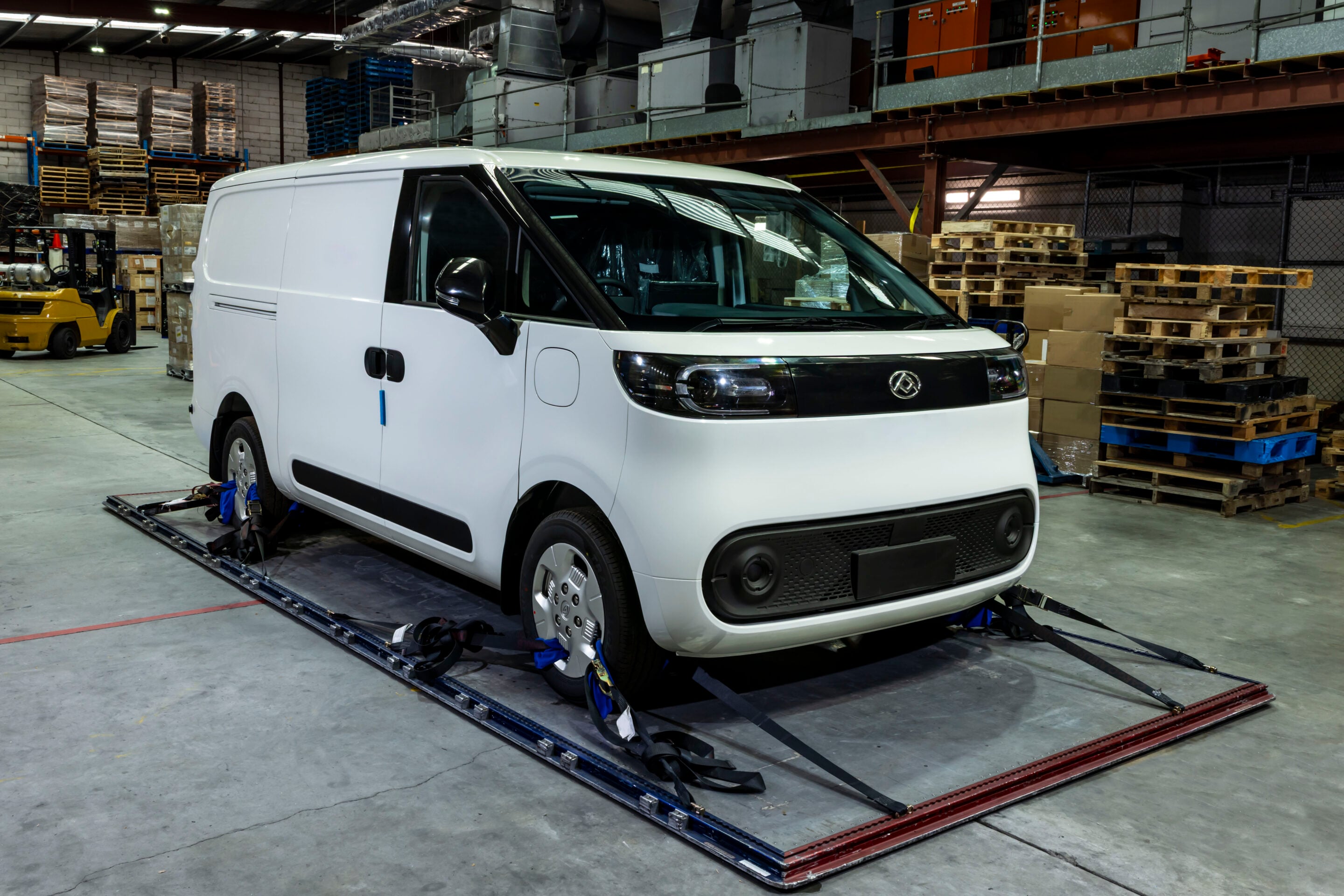
All three versions are powered by a 120kW/240Nm electric motor, which drives the front wheels. There’s a 64kWh battery pack, and vehicle-to-load (V2L) capability, meaning the eDeliver 5 is capable of handily offering power on the go. It is also the first electric LDV with v2L capability on sale in Australia.
Driving range is claimed by WLTP testing to be 335km, 321km and 301km respectively across the model range, while the SWB version can accommodate 1200kg, and the LWB variants able to carry 1265kg. LDV claims 20-80 percent charging in 36 minutes at the peak intake rate of 70kW, which can be accommodated by most modern DC fast chargers.
Pricing
Recommended retail pricing for ABN holders:
| MY26 LDV eDeliver 5 SWB low roof | $47,990 drive-away (launch offer) |
|---|---|
| MY26 LDV eDeliver 5 LWB low roof | $52,990 drive-away |
| MY26 LDV eDeliver 5 LWB high roof | $54,990 drive-away |
Recommended retail pricing for private buyers:
| MY26 LDV eDeliver 5 SWB low roof | $52,621 drive-away |
|---|---|
| MY26 LDV eDeliver 5 LWB low roof | $55,779 drive-away |
| MY26 LDV eDeliver 5 LWB high roof | $57,884 drive-away |
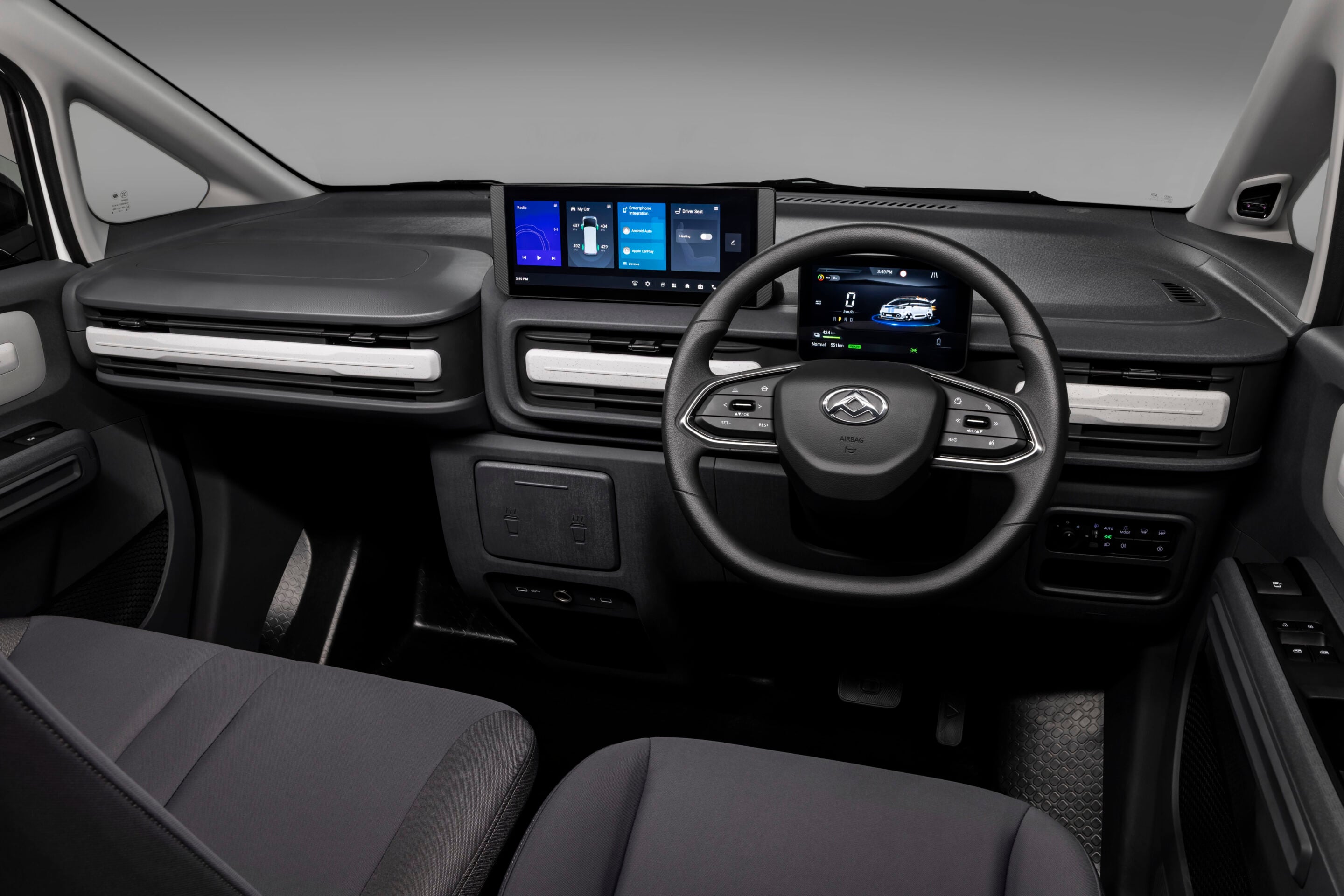
With the arrival of the eDeliver 5, LDV now offers three fully-electric vans in Australia with eDeliver 7 and eDeliver 9 already launched in this market in 2024. eDeliver five features a three-seat layout, overhead storage, vinyl floor covering in the cab and load space, a 12.3-inch infotainment touchscreen, smartphone connectivity, DAB radio, a 7.0-inch driver’s display, window-less side sliding doors and rear barn doors.
New eDeliver 5 is covered by LDV’s five-year/160,000km warranty, while the battery pack
is covered for eight years/250,000km.
Specs
| Engine | Single electric motor |
|---|---|
| Output | 120kW/240Nm |
| Battery capacity | 64kWh |
| Driven wheels | Front |
| Range (WLTP) | up to 335km (SWB low roof), up to 321km (LWB low roof), up to 301km (LWB high roof) |
| Maximum DC fast-charging capacity | 70kW |
| Vehicle-to-load (V2L) maximum capacity | 6.6kW |
| DC fast-charging time (70kW) | Approximately 36 minutes (from 20 to 80 per cent) |
| Cargo volume (m³) | 6.6 (SWB low roof), 7.5 (LWB low roof), 8.7 (LWB high roof) |
| Cargo area length | 2654mm (SWB), 3042mm (LWB) |
| Cargo area width at widest point | 1704mm |
| Cargo area width between wheel arches | 1250mm |
| Cargo area height | 1455mm (low roof), 1675mm (high roof) |
| Rear door opening width | 1305mm |
| Rear door opening height | 1270mm (low roof) 1490mm (high roof) |
| Maximum rear door opening position | 270 degrees (when side sliding doors are closed) |
| Side door opening width | 869mm |
| Side door opening height | 1243mm |
| Vehicle length | 4800mm (SWB), 5250mm (LWB) |
| Vehicle wheelbase | 3100mm (SWB), 3450mm (LWB) |
| Vehicle width excluding mirrors | 1874mm |
| Vehicle height | 1960mm (low roof), 2180mm (high roof) |
| Gross Combination Mass (GCM) | 4550kg (SWB), 4695kg (LWB) |
| Gross Vehicle Mass (GVM) | 3050kg (SWB), 3195kg (LWB) |
| Kerb weight | 1850kg (SWB), 1930kg (LWB low roof), 1930kg (LWB high roof) |
| Total vehicle payload | 1200kg (SWB low roof), 1265kg (LWB low roof), 1265kg (LWB high roof) |
