
BMW has unveiled the seventh-generation of its 3 Series mid-size sedan at the 2018 Paris Motor Show, revealing a more overtly sporty sedan that closely follows the brand’s latest design language – but with nearly wholesale under-the-skin changes.
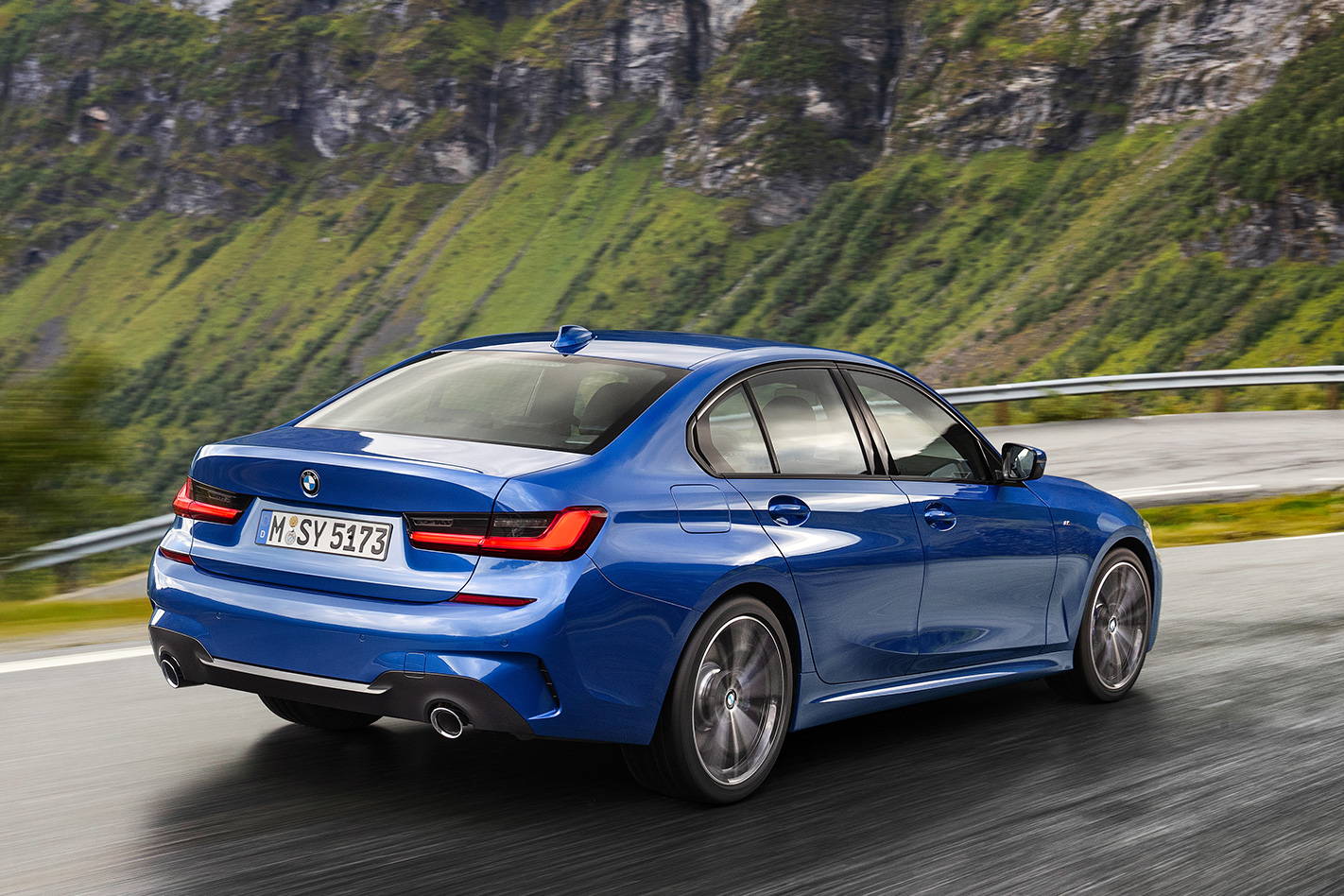
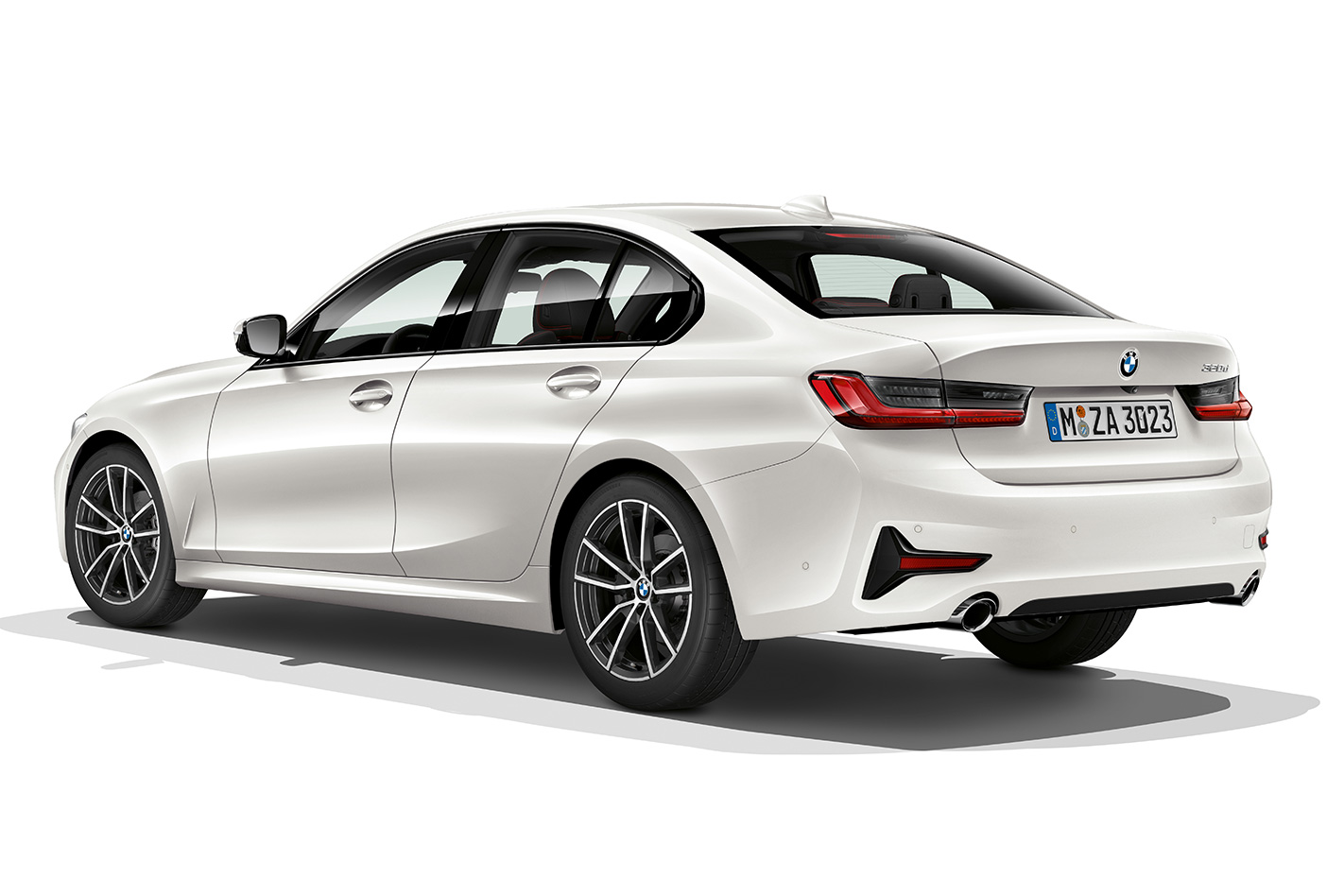
The design language is unmistakeably BMW, with styling elements like the Bavarian brand’s trademark ‘Hofmeister Kink’, double-kidney grille and quad-lamp headlight arrangement still very much prominent parts of the new-generation 3 Series’ looks.
However, a stronger focus on aerodynamic slipperiness sees the front bumper sport drag-reducing vents and an integrated bootlip spoiler at the opposite end.
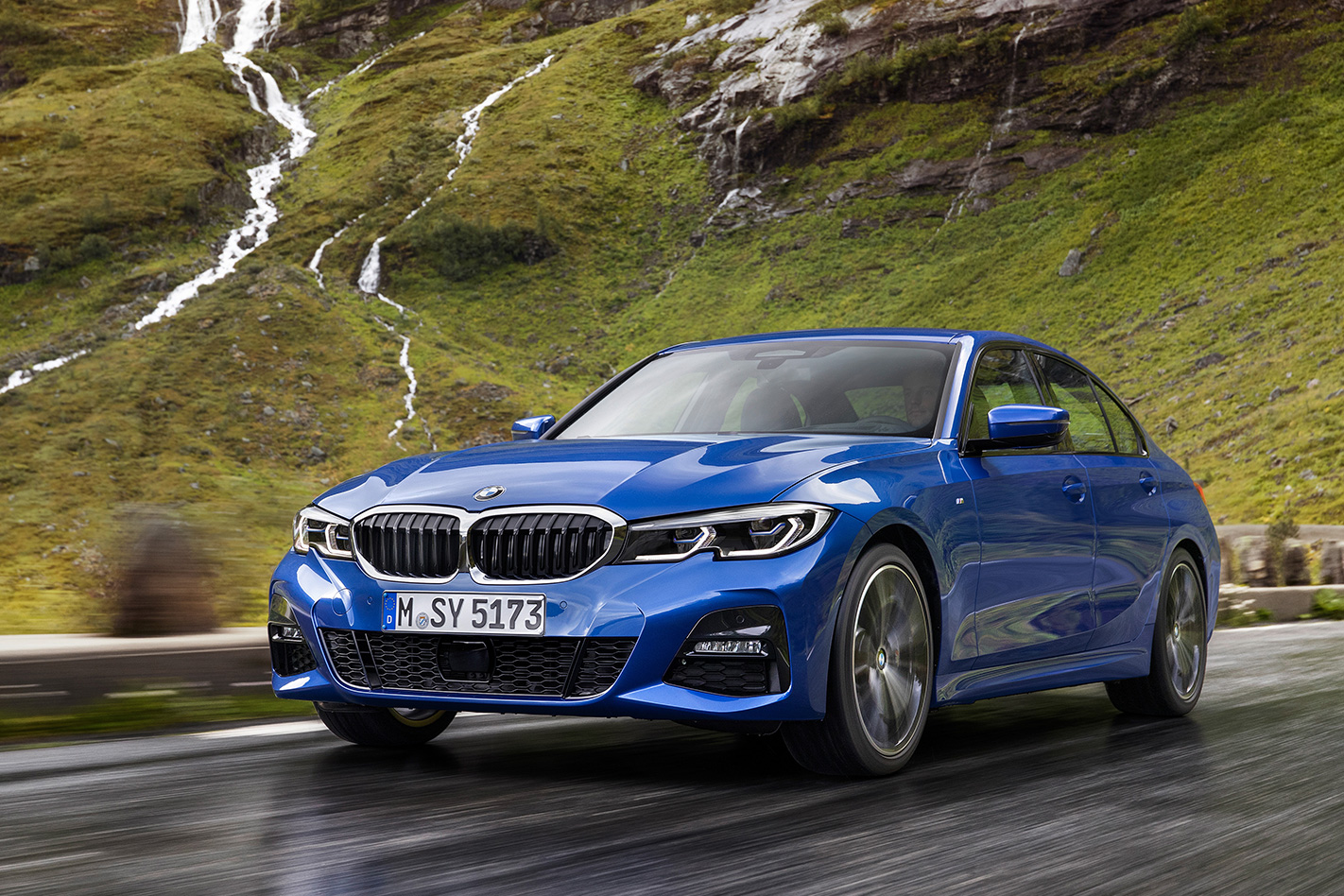
Critical dimensions have also changed – mostly to improve the car’s credentials as a driver’s car. Relative to the outgoing F30-generation model, the new 3 Series measures 8.5cm longer overall at 4.709 metres, with 1.6cm greater width. The wheelbase grows 4cm to 2.85 metres, while track width also increases by 4.3cm at the front, and 2.1cm at the rear – primarily to provide a wider ‘footprint’ on the road and thus greater grip.
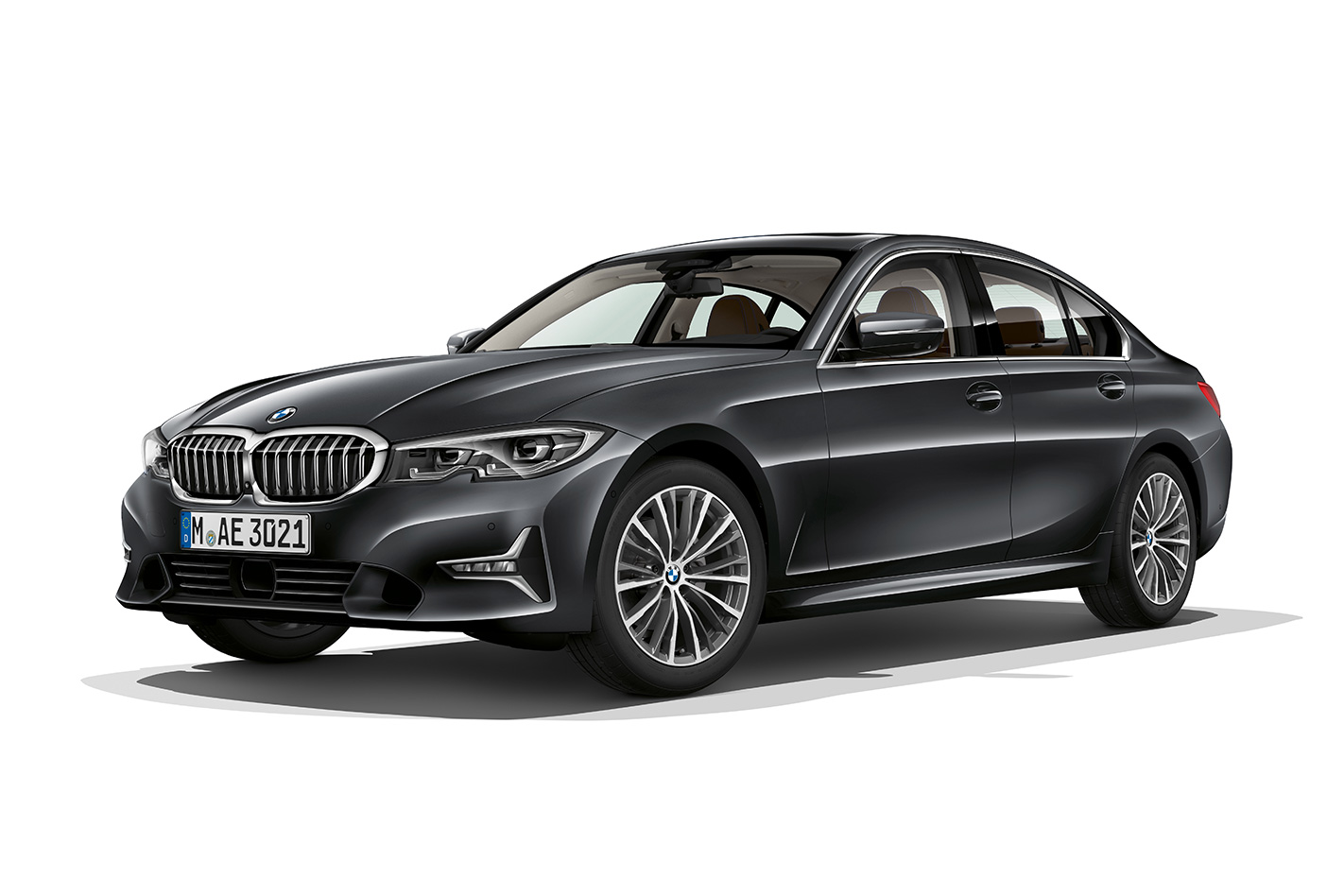
In Europe four trim grades will be offered, ranging from base Advantage up through Sport Line, Luxury Line and then topping out at M Sport. If BMW’s present Australian range strategy is any indication, it’s unlikely the Advantage grade will be offered locally. Expect Australian-market details to be announced closer to the car’s arrival next year.
Interestingly, it appears the three-cylinder 318i base petrol powertrain has been culled from the range. Instead, the 2019 3 Series will launch with a 135kW/300Nm 2.0-litre four-cylinder petrol option in the 320i, with the base-model diesel option being the 318d with 110kW/320Nm from a 2.0-litre diesel four-pot.
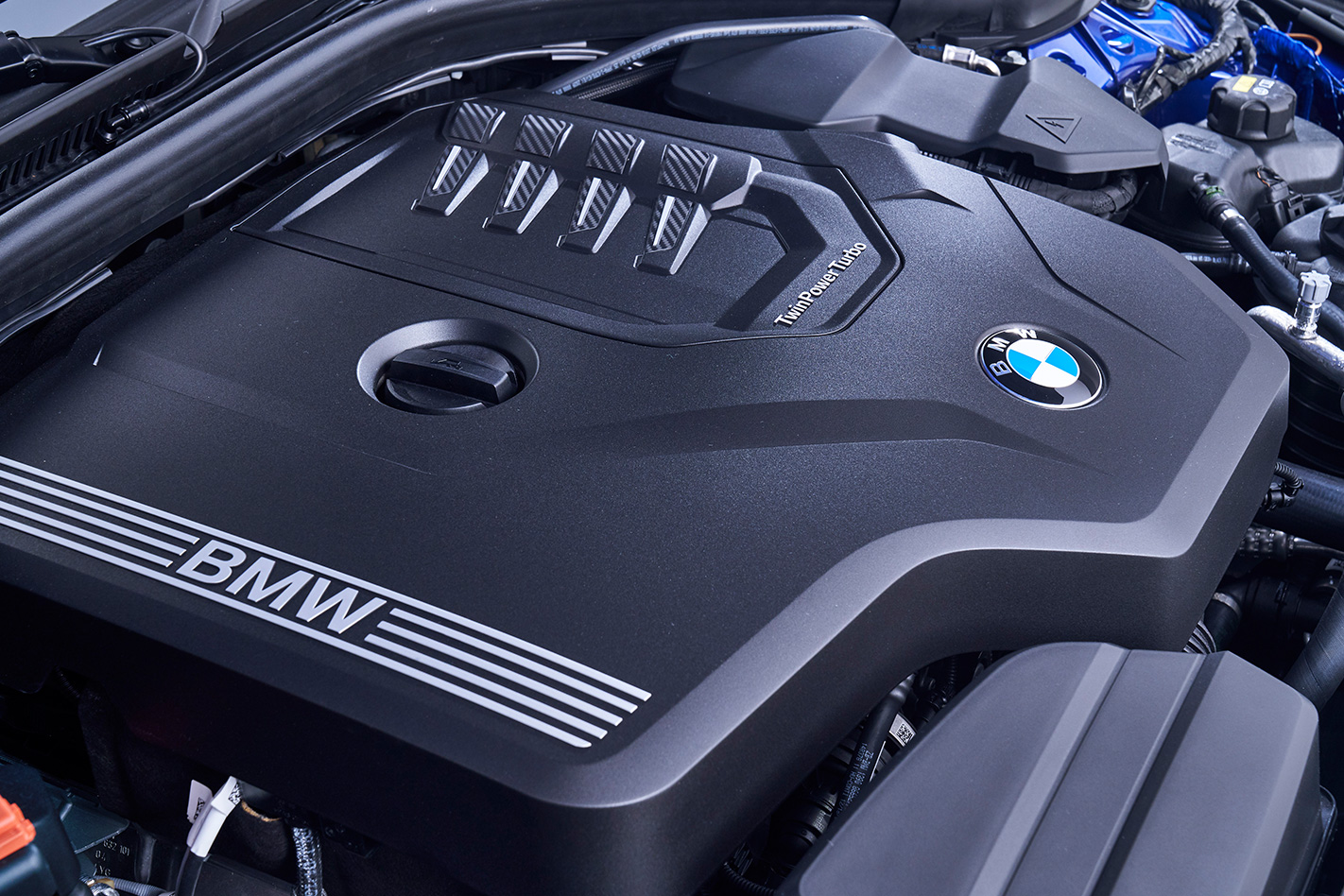
The latter is also the fuel economy star of the range at launch, sipping just 4.1L/100km of diesel in its most efficient, automatic-equipped form. Speaking of transmissions, the 318d and 320i will be the only models to be offered with a six-speed manual as standard in Europe – all other variants will be equipped with an eight-speed automatic by default.
They’ll be accompanied by the 140kW/400Nm 320d (which uses a higher-tune version of the 318d’s engine), the 330i with 190kW and 400Nm (which, like its diesel counterpart, uses a more powerful version of the 320i’s four-cylinder) and the six-cylinder diesel 330d, which generates a sizable 195kW and 580Nm.
Midway through 2019, the range will be bolstered by the arrival of the 330e plug-in hybrid, which will boast around 60 kilometres of electric-only range (an increase of roughly 33 percent compared to the current-gen 330e) and wear a claimed fuel economy figure of a mere 1.7L/100km. It won’t be ‘all about eco’ though, thanks to a mode that allows the electric motor to send 30kW of power to the wheels in order to launch the 330e to 100km/h in six-seconds flat.
That’s hot-hatch speed in a midsize hybrid luxury sedan, but it’s far from the fastest in the family. The 330i, for example, will do the same sprint in 5.8 seconds while the 330d’s six-cylinder grunt will trim a further 0.3 seconds off that number – however all will be eclipsed by the M340i xDrive that’s due to arrive around the same time as the 330e.
The sole six-cylinder petrol option in the range, the M340i will hit 100km/h in just 4.4 seconds courtesy of a 275kW peak power output and 500Nm of torque. All-wheel drive will be standard, as will an agility-enhancing M Sport rear differential and quick-shifting eight-speed automatic gearbox.
The handling of all models will benefit from the new 3 Series’ all-new underpinnings and bodyshell, which BMW claims is up to 25 percent more rigid than the car it replaces. That not only makes for a safer car, but also one that enables the suspension to work better. BMW says it also delivers improvements in ride comfort.
It’s also slightly lighter than before. The bare bodyshell weighs 20kg less, while overall weight of a complete car can be as much as 55kg lighter depending on variant.
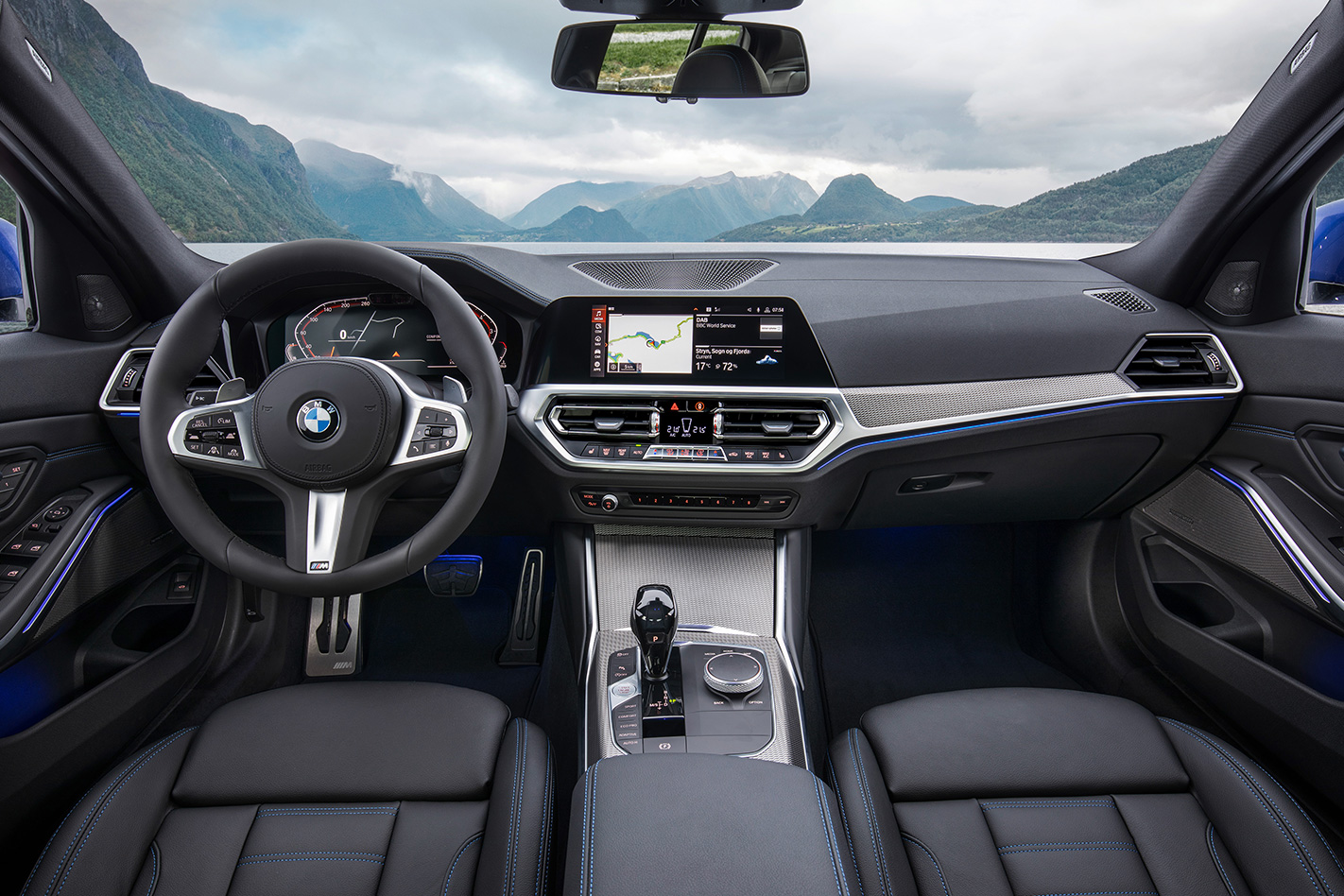
BMW will also dial up the in-car tech as well. The centrepiece will continue to be the company’s iDrive infotainment suite, which will feature an 8.8-inch colour touchscreen as standard that will make way in higher-specced models for a 10.25-inch display (which will also be paired with a 12.3-inch all-electronic instrument panel). BMW’s familiar iDrive controller returns, but is augmented by improved voice recognition that allows the driver – or passengers – to converse using natural speech rather than recite pre-set command phrases.
Other mod-cons include three-zone climate control and a longer glass sunroof panel, giving those in the back seat a slightly higher quality of life.
An Australian debut is slated for sometime late in the first quarter of next year. Expect local pricing and specifications to be announced closer to that date.
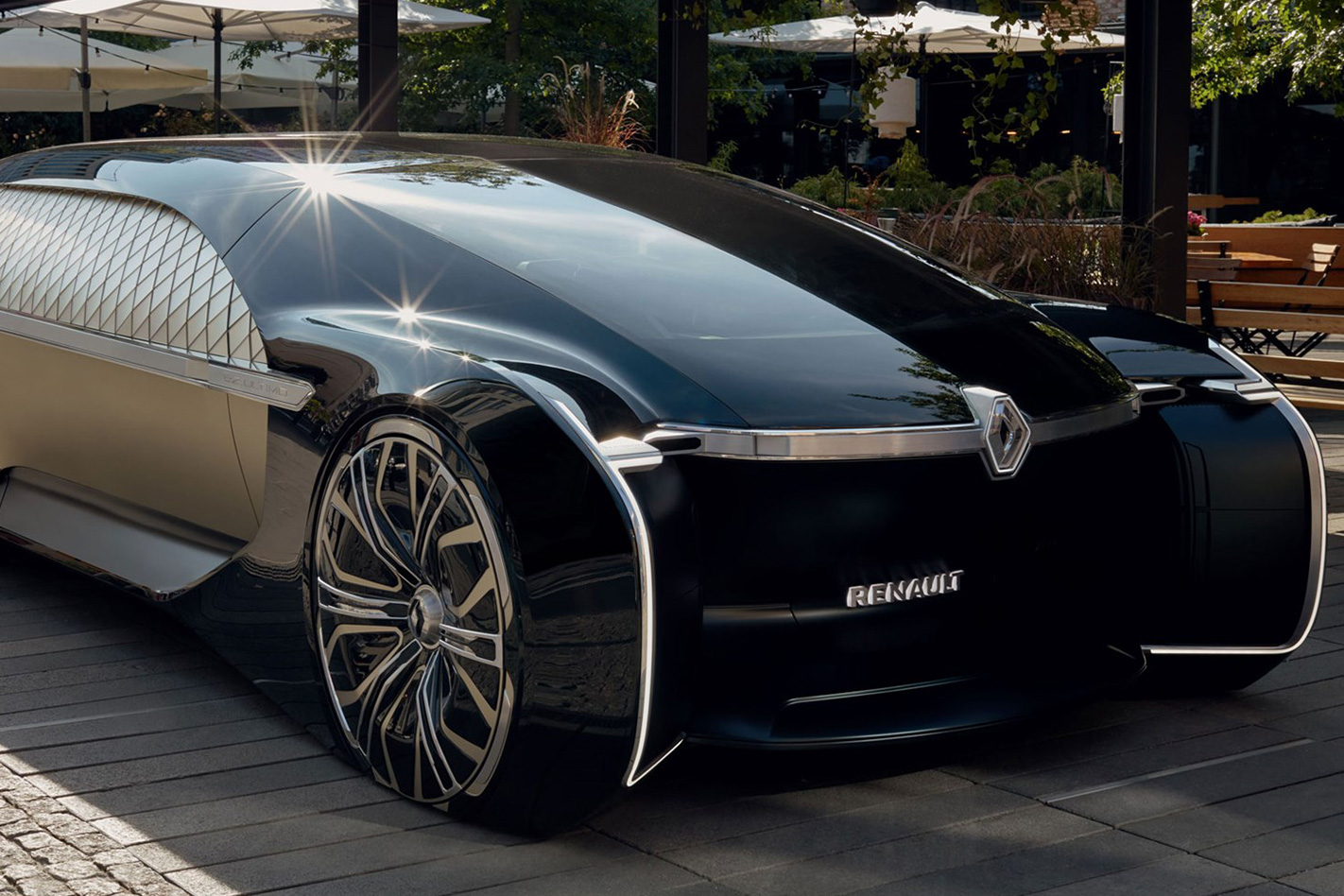
Renault’s used its home motor show as an excuse to unveil the wild EZ Ultimo concept car, the third of its triptych of electric, self-driving future studies – and the most outlandish yet. Decadently proportioned and lovingly sculpted by Laurens van den Acker’s team, the EZ Ultimo is an app-booked Level 4 autonomous limo with an interior like a boutique hotel. Renault’s future-gazers reckon it’s a vehicle you might book for special occasions, or that the likes of an airline’s First Class lounge might use to ferry guests to and from the airport.
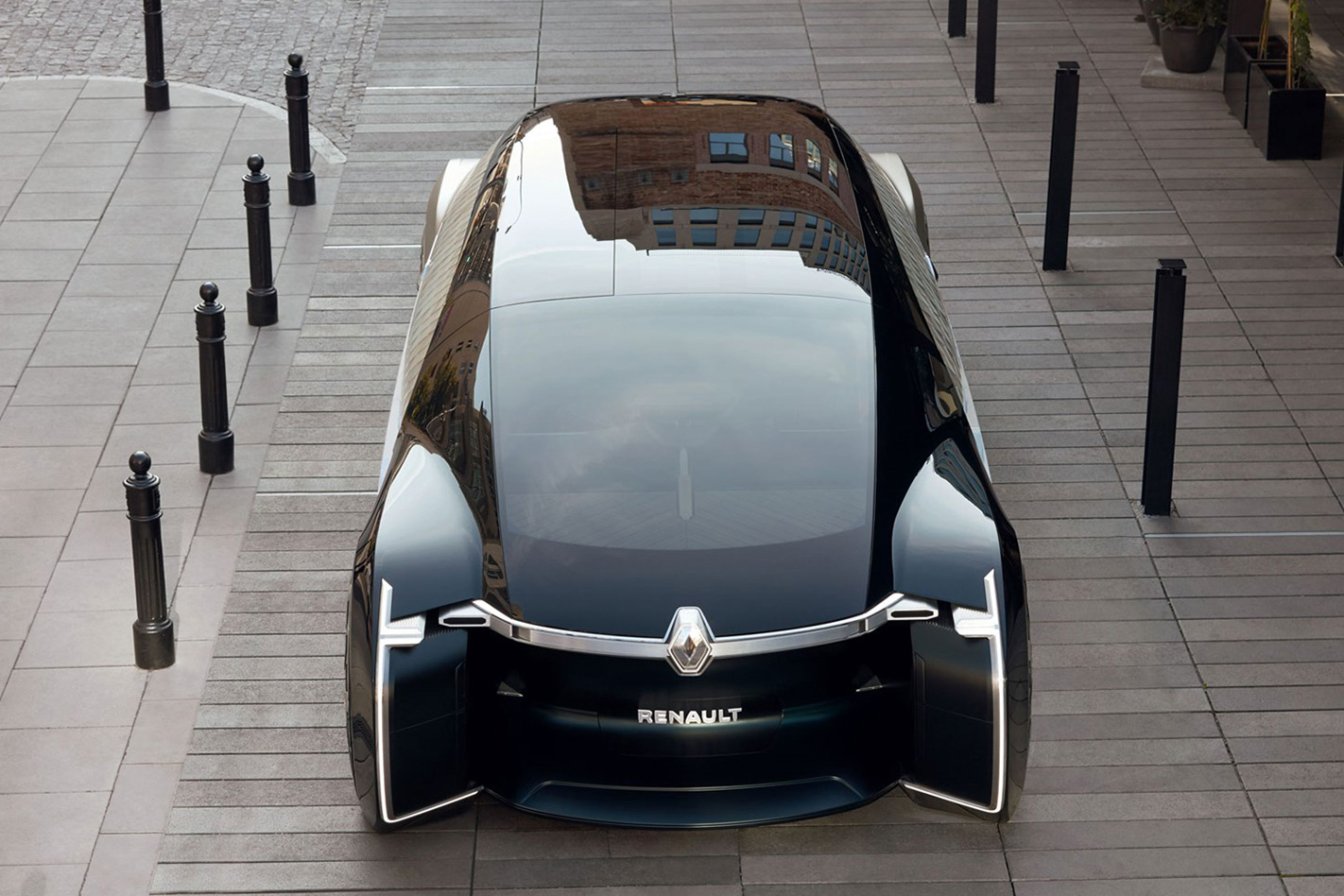
The EZ Ultimo, like the other two vehicles in Renault’s concept car series, is a response to CEO Carlos Ghosn’s announcement that a Renault robo-taxi will be a reality by 2022. It’s also designer Laurens van den Acker’s riposte to the notion that, in a future of ride-sharing, electrified, connected, autonomous pods, there is no place for emotive car design.
‘We were annoyed by this idea – that we’re all going be riding around in white boxes,’ smiles van den Acker. ‘I’m not saying we won’t – for most of us, 90% of the time, that will be the reality – but we won’t only be doing that. I like to think there is hope for design, even in this new world. Who wouldn’t want to be driven in this? Tell me this is a white box!’
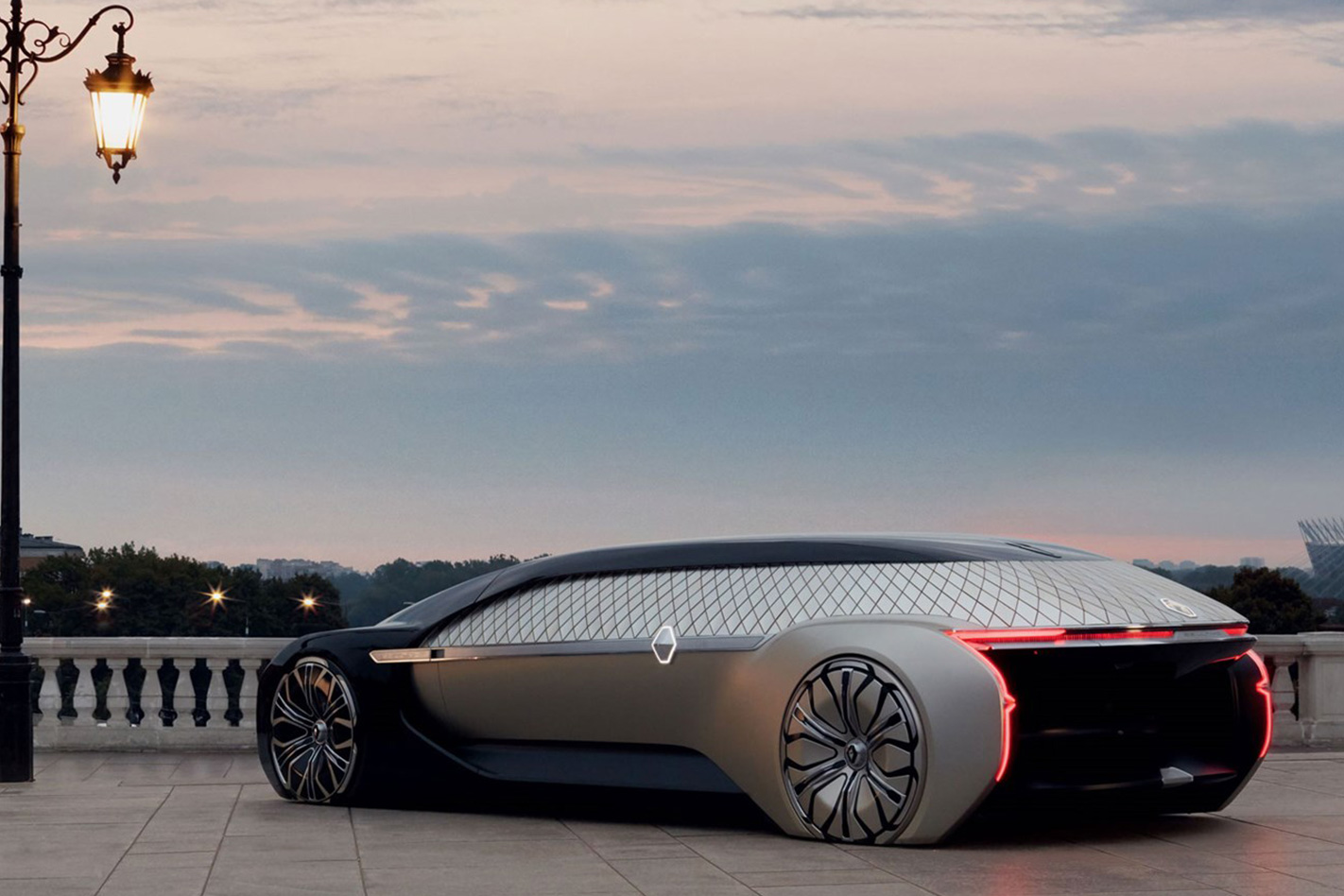
EZ Ultimo is not a white box. It might riff on familiar concept car themes – a lounge-like interior liberated of driving controls, architectural design influences – but it delivers them with such flair, particularly on the beautifully detailed interior, you’re happy to suspend disbelief.
The 1800kg package, such that it is, uses a single e-motor driving the front wheels, wireless charging to keep the 498 kilometres battery topped up and a magisterial body some 5.8 metres long but low like a supercar’s (1.35 metres high).
A pair of vast two-part doors unfurl to give access to the interior and its lone and very indulgent rear-facing front seat, which rotates to face the opened door for easier entry, and a rear bench seat. Gorgeous detailing abounds; moody lighting from lamps in pale gold, emerald green velvet seats, smooth marble, the herringbone parquet floor in American walnut, and controls that work with the tactile precision of a top-end stereo. And all the time the car’s signature lattice-like skin, inspired by the Prada store in Tokyo, creates a cosy cocoon of contemporary cool.
Renault’s director of concept car design Stephane Janin explains the thinking behind the lavish interior: ‘The arrival of autonomous technology means we need to think a lot about materials. After all, when you are no longer driving, they are one of the few things we as designers can play with. Currently we have all these points of interaction – the steering wheel, the gearshift lever – but in the future we will lose these.
The relationship you have with this machine will be completely different, and the materials will be more important. We have to make the difference in new ways. We are becoming more and more like an architect or an interior designer.’
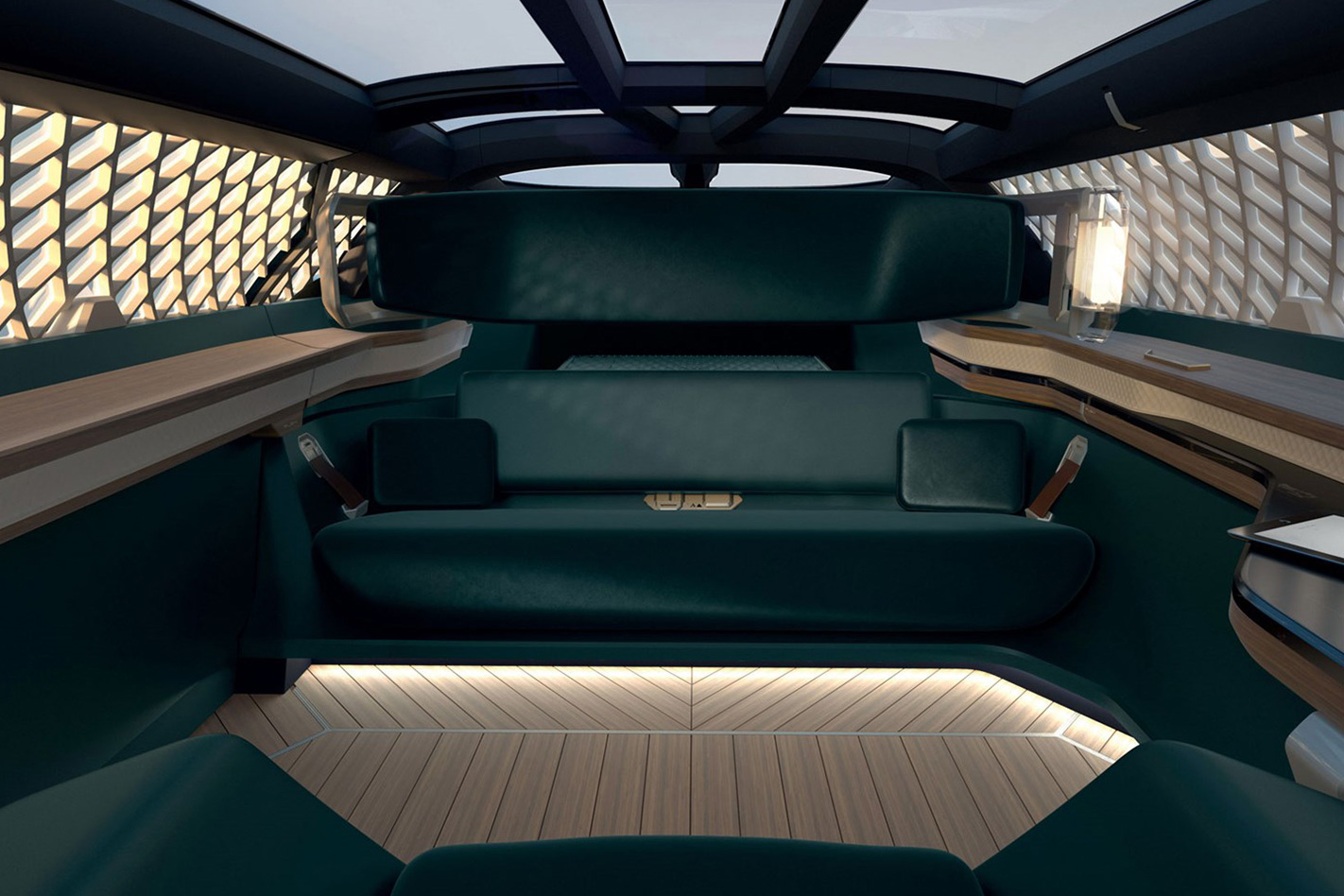
Certainly the detailing in the EZ Ultimo is special, from the bespoke refreshments flask to the wireless phone charging dock that rises from the shelf in which its invisibly embedded.
‘The few interfaces we have, they are very nice features,’ continues Janin. ‘We have heavy metal, these timeless rotary controls – it makes sense to do these for car lovers, even though you are not driving, because as a car lover you love all machines, like watches and aircraft. The proportions are also car-like. It is not tall and boxy but sleek.
Clearly, there are many questions. Questions like what makes Renault think it can go toe-to-toe with Maybach and Rolls-Royce in this sphere? And questions like how on earth an electric three-seater’s come in at nearly six metres long?
‘My boss Carlos is saying this is a big business and he wants us to take our fair share of it,’ continues van den Acker. ‘But we couldn’t resist doing something more exotic because people say that when we’re all using these robo-vehicles then design is dead. I needed to prove that we don’t agree.
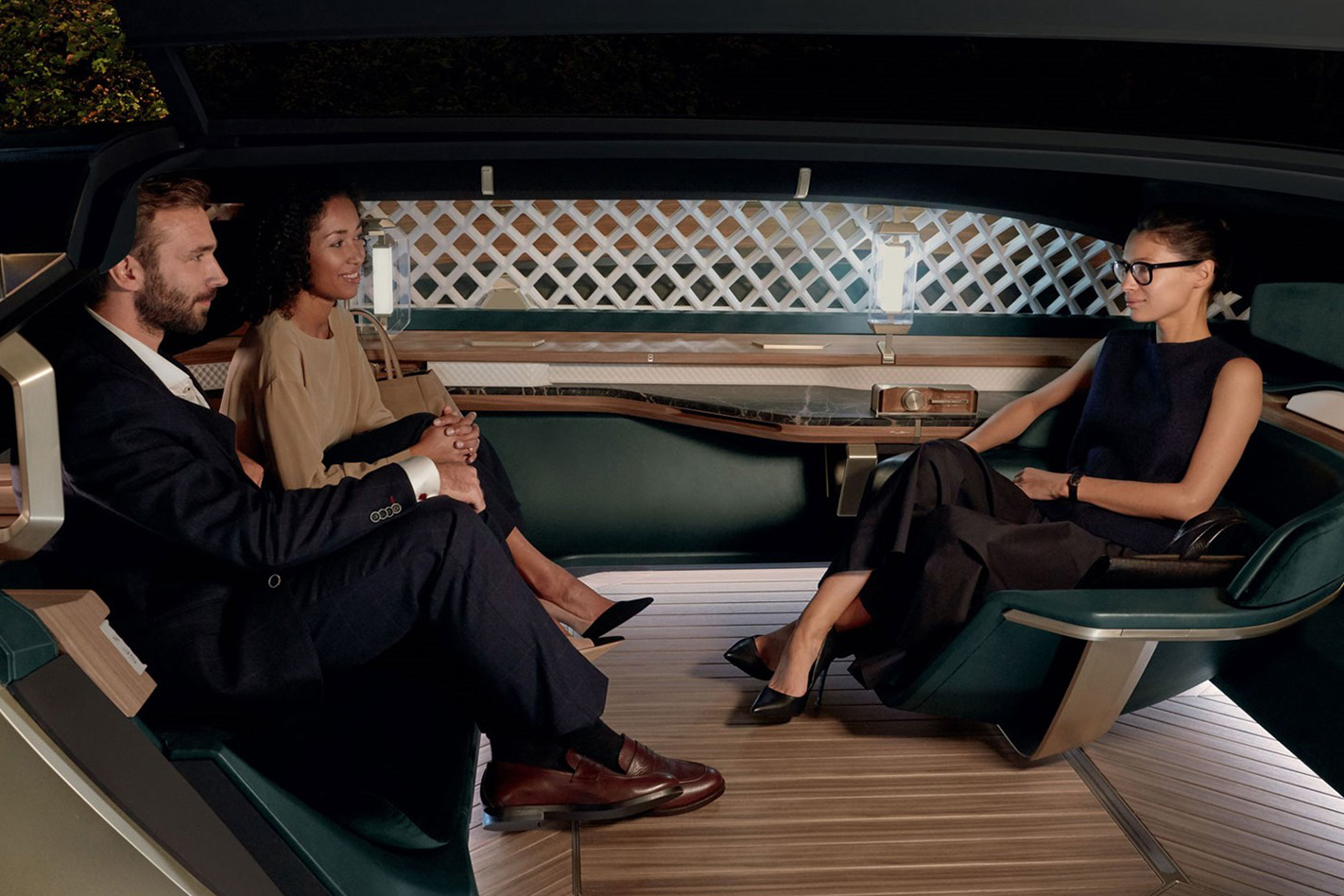
‘As Renault, we wondered if we were legit to go to this premium space. But the world is changing. My dad bought his cars; I lease mine. And when you think about selling time in this vehicle rather than the vehicle itself, then anybody could buy 10 miles in it and have a luxury experience. Renault is not a premium brand, evidently, but we are good at democratising innovations.’
And the lavish proportions? A smile. ‘It’s not discreet – it’s anything but – but this concept is not obnoxious. Buses in beautiful cities are visual pollution, so we wanted to reduce the silhouette so that we don’t detract from the beauty of our urban spaces. Besides, it’s more premium to be stretched out.’
Sexy, private, public transport? The future – Renault’s version of it, at least – is bright.
KIA’S long-awaited Cerato GT is winging its way to Oz in time for a January 2019 launch, where the warm hatch and its sedan twin will go up against the Mazda 3 SP25 and Hyundai i30 SR.
Full details are still to be confirmed, but it’s understood the Korean-built Cerato GT will share a 1.6-litre turbocharged four-cylinder petrol engine with the Ceed GT shown in Paris today, producing 150kW at 6000rpm and 265Nm from 1500 to 4500rpm.
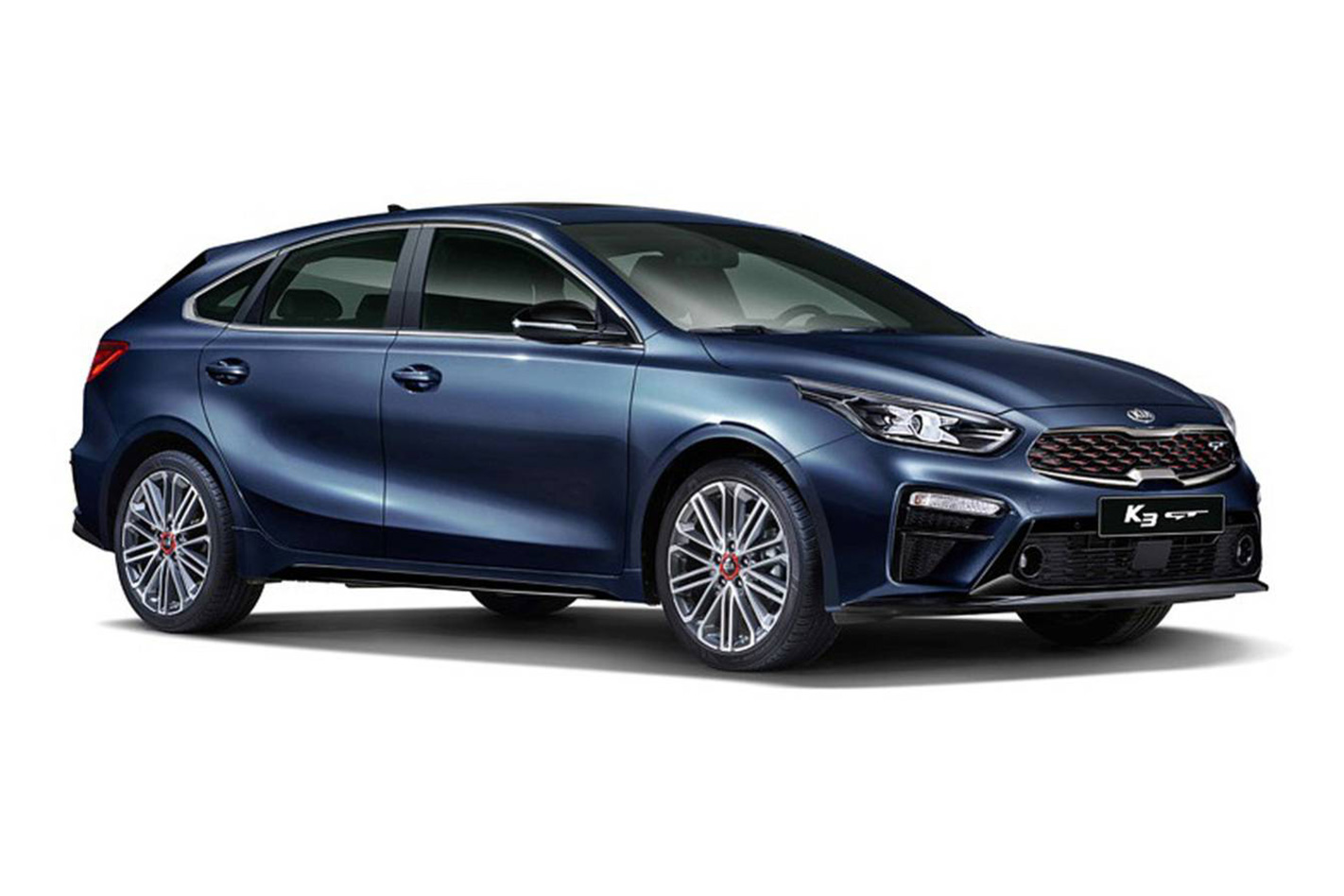
Those are identical outputs to the three-door, manual-only ProCeed GT sourced from Europe and sold in Oz for a short period ending in late 2015. However there are crucial differences elsewhere to make the Cerato GT more appealing to a broader range of buyers this time around, not least of which is a five-door configuration, as shown by the Korean-market Kia K3 in these pictures.
The K3 is our first proper indication as to what the Cerato hatch arriving in November will look like. In GT form its distinctive design features are subtle, and the whole package less overtly sporty than its Ceed GT cousin from Europe. Over there, the Ceed GT is available with a choice of gearboxes, but the Korean market K3 GT is auto-only.
“That’s not certain [for Oz],” said Kia Australia communications manager Kevin Hepworth. “We’ve signed off on the engine, but we still haven’t signed off on the gears yet. I suspect there’ll be a six [speed] manual, and a DCT; most likely two gearboxes.”
Independent rear suspension has been confirmed, and it is understood former BMW M boss and current chief at Hyundai N, Albert Biermann, played a part in the development of the Cerato GT. The car will be further refined for Aussie roads by local engineers.
“[Cerato GT] will get the full Australian ride and handling treatment,” said Hepworth, confirming a continuation of the brand’s local suspension program for Cerato GT. “Biermann’s got input on every car. And then we input again.”
Kia’s GT models will be the most performance-focused variants across its line-up, with no dedicated sub-brand like Hyundai N on the cards for Kia.
Hepworth doesn’t believe it’s cost effective for Kia to go down that path, though the development of the i30 N has added flexibility to the local tuning of the Cerato GT.
Expect more info in November when the regular Kia Cerato hatch arrives, followed by a proper launch for the Cerato GT in Janurary 2019.
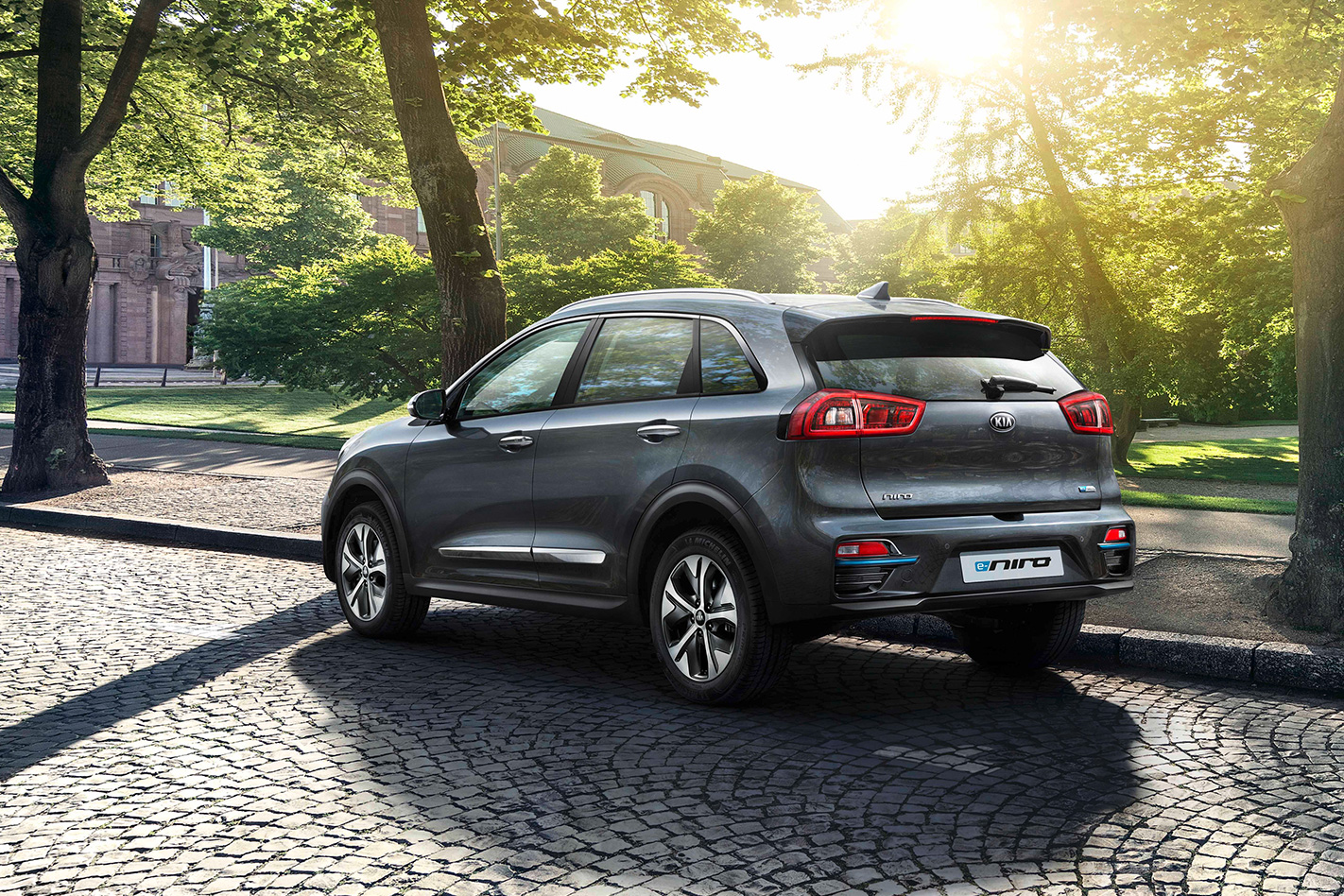
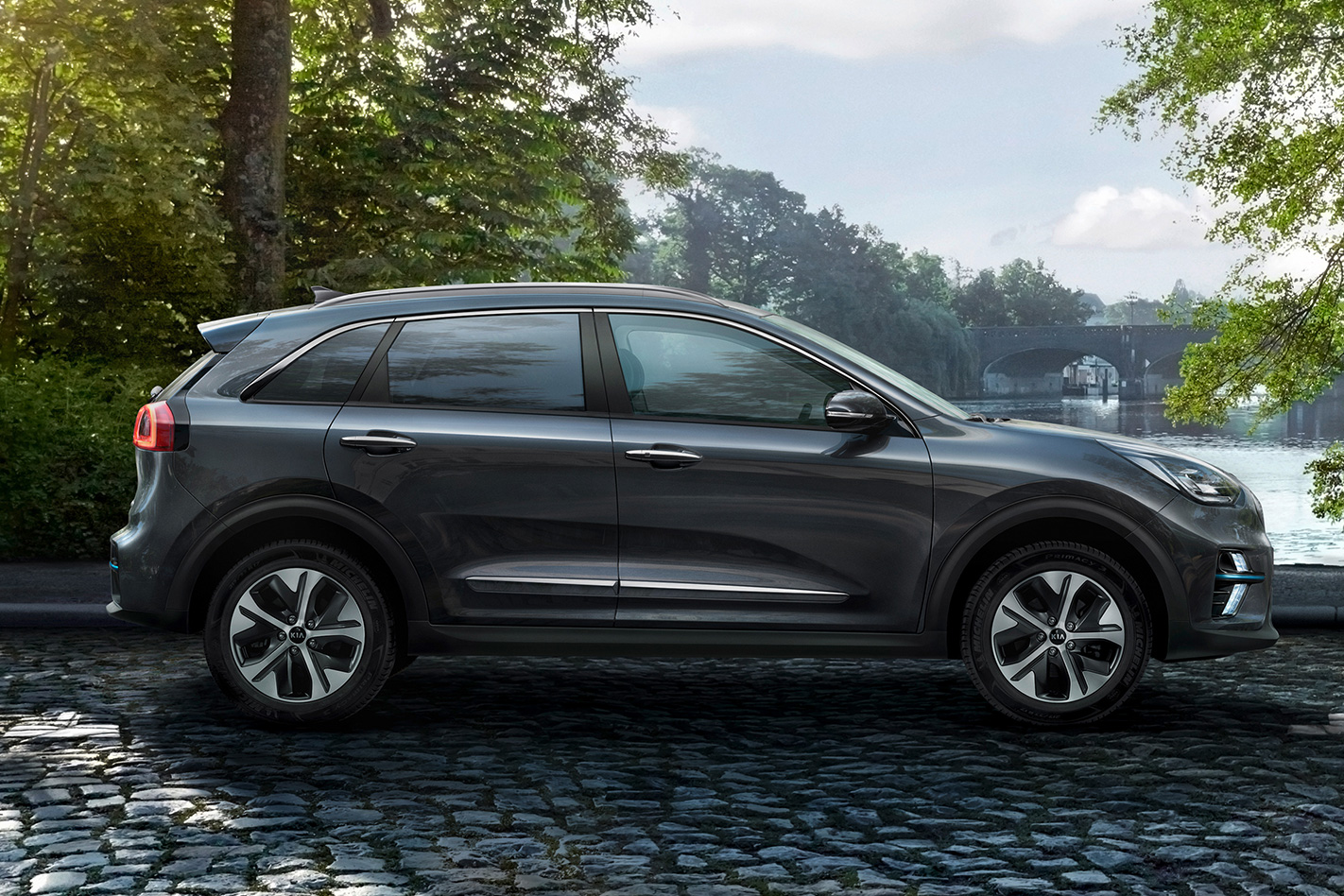
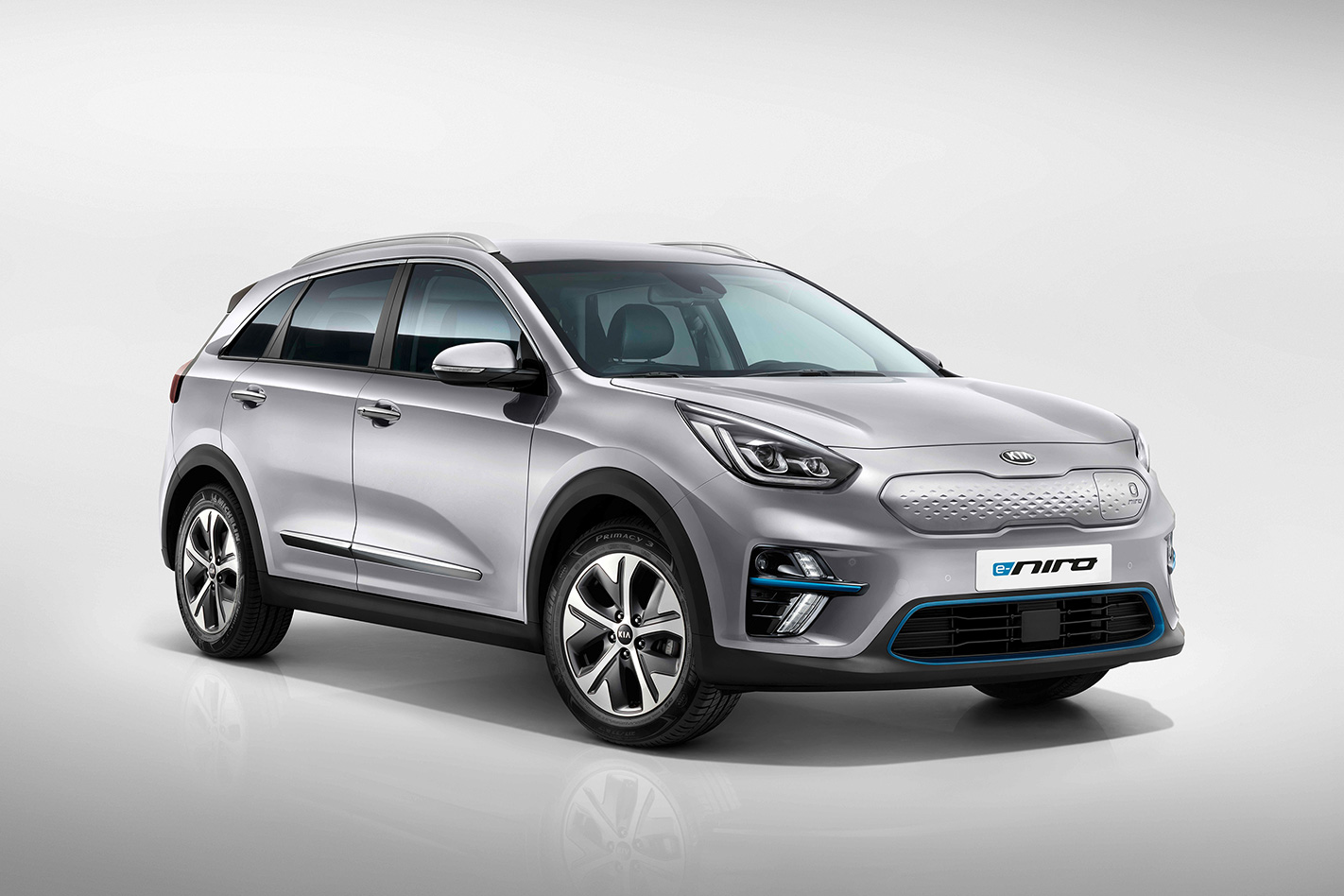
KIA Australia is taking its first steps toward a zero emissions future with the e-Niro electric SUV shaping up for a local launch in late 2019.
Making its European debut at the Paris motor show today, the e-Niro crossover moves Kia’s EV game on in a big way, with a WLTP combined range of 485km, and up to 615km of urban mileage possible from a single charge of its 64kWh long-range battery, according to Kia.
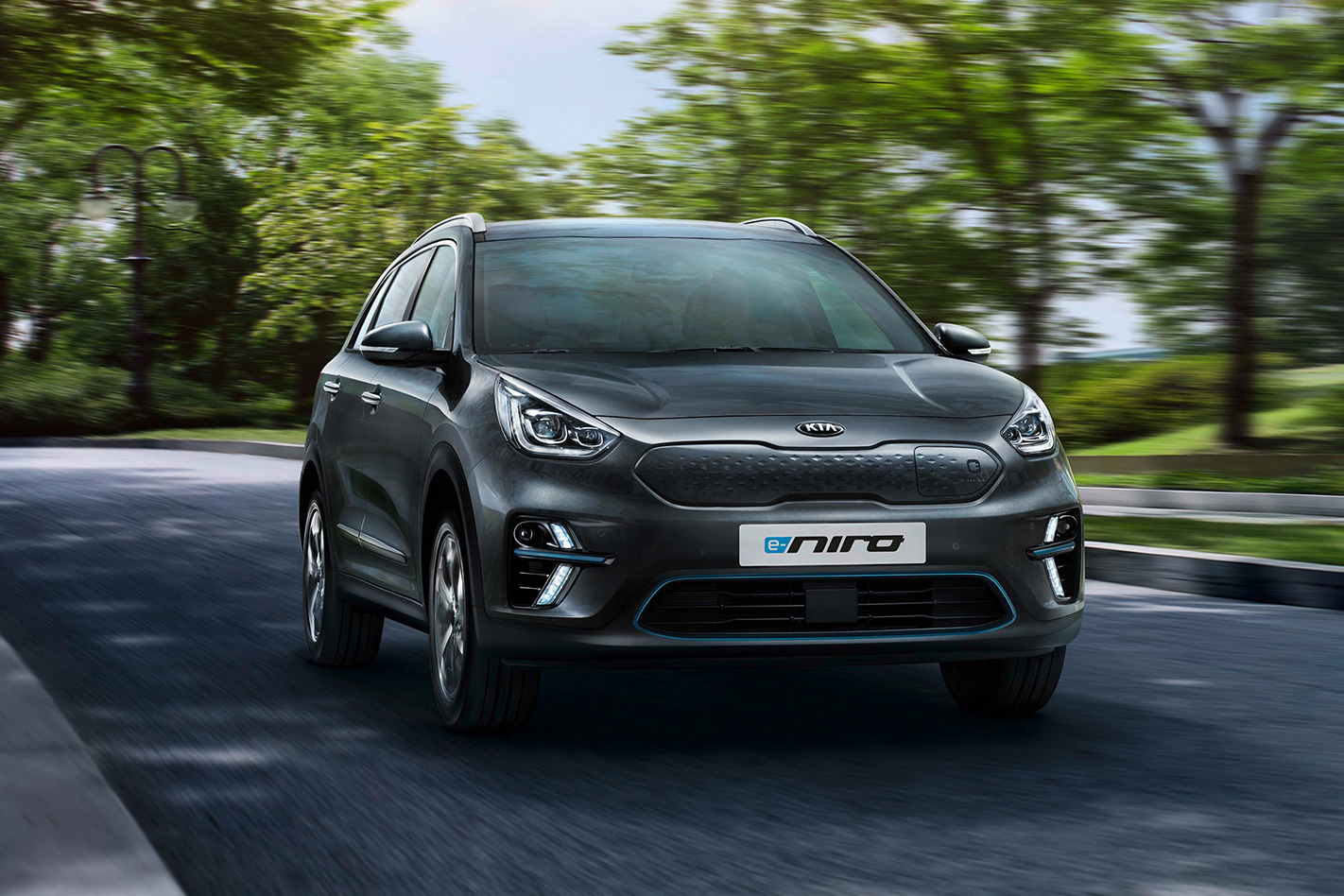
Those claims beat the Mercedes-Benz EQC, Jaguar I-Pace and Audi E-Tron, all of which have larger batteries.
As with the electric Hyundai Kona, a second version with a smaller 39kWh battery is also planned for Europe, with a range of 312km, and all components are covered by Kia’s seven-year warranty.
Planning is well underway to bring the Korean made e-Niro to Australia. Though it is not yet locked in, Kia’s local communications manager Kevin Hepworth says he “would put money on it” happening.
“If it goes through – and the odds are that it will – by the time we get the dealerships fully trained up it would be towards the end of next year.”
“With a 485-or-so-kilometre range, you can do Sydney to Melbourne, stop for lunch, recharge it and get to Melbourne on that charge.”
Using a 100kW fast charger, a 20-to-80-percent fill takes 42 minutes. Those volts then feed into a single electric motor producing 150kW and 395Nm in the 64kWh version. Zero to 100km/h takes 7.8sec.
But what will it cost? The price premium of EVs is unlikely to go away before the e-Niro’s arrival, and Hepworth warned it will cost more to buy than an equivalent, combustion-powered mid-size SUV.
“It’s going to be more expensive. There’s not an EV on the road that isn’t. But the difference is [e-Niro] will have probably the best range of any EV – certainly SUV type vehicle – in Australia.
“It won’t be disproportionately expensive, it has to be affordable.”
Other key features of the e-Niro include independent rear suspension, advanced regenerative braking technology, battery heating for cold climates, LED lighting inside and out, luxury interior appointments including a heated steering wheel, and a 451-litre cargo area.
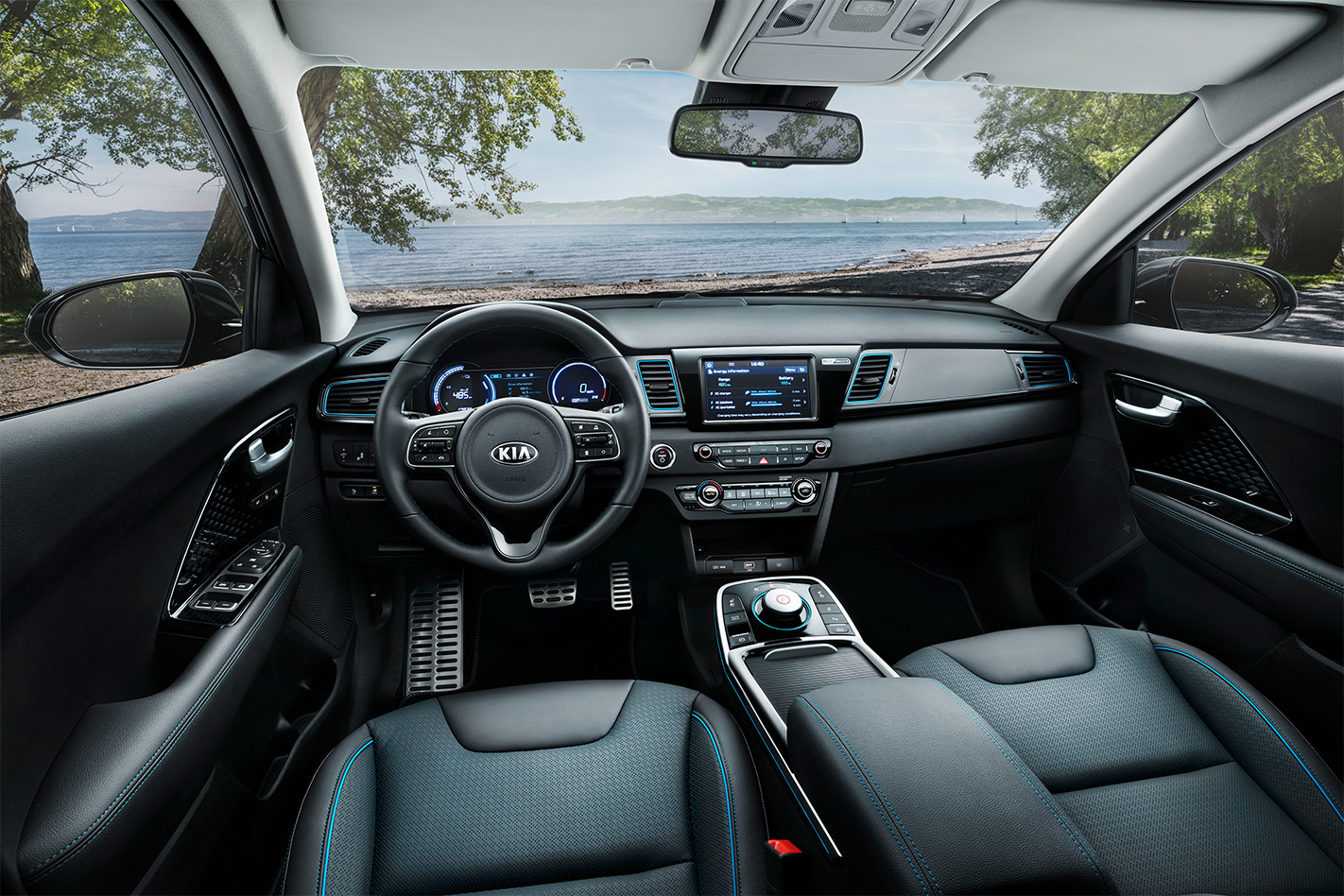
Extensive digital displays are part of the e-Niro’s distinctive interior treatment, packaged within a futuristic design highlighted by bright blue trim.
The e-Niro is Kia’s all-electric follow-up to the Soul EV, which was launched in 2014 but “never considered” for Oz due to the Soul’s relative lack of popularity Down Under.
Electrification has been a long time coming for Kia Australia, with COO Damien Meredith choosing to skip half measures and wait for an appropriate fully electric product to become available.
“Damien made a conscious decision that we weren’t going to get engaged in hybrids and go straight to EVs when the right one came along,” said Hepworth. “And that was a pure brand image marketing decision.”
“We’ll end up with more than one EV, but we’ll see how the first one goes.”
KIA has pulled the covers off its re-born ProCeed at the Paris motor show today, revealing a dramatic five-door shooting brake that retains much of the coupe design flair seen in concept drawings, with a bit more Kia Stinger mixed in.
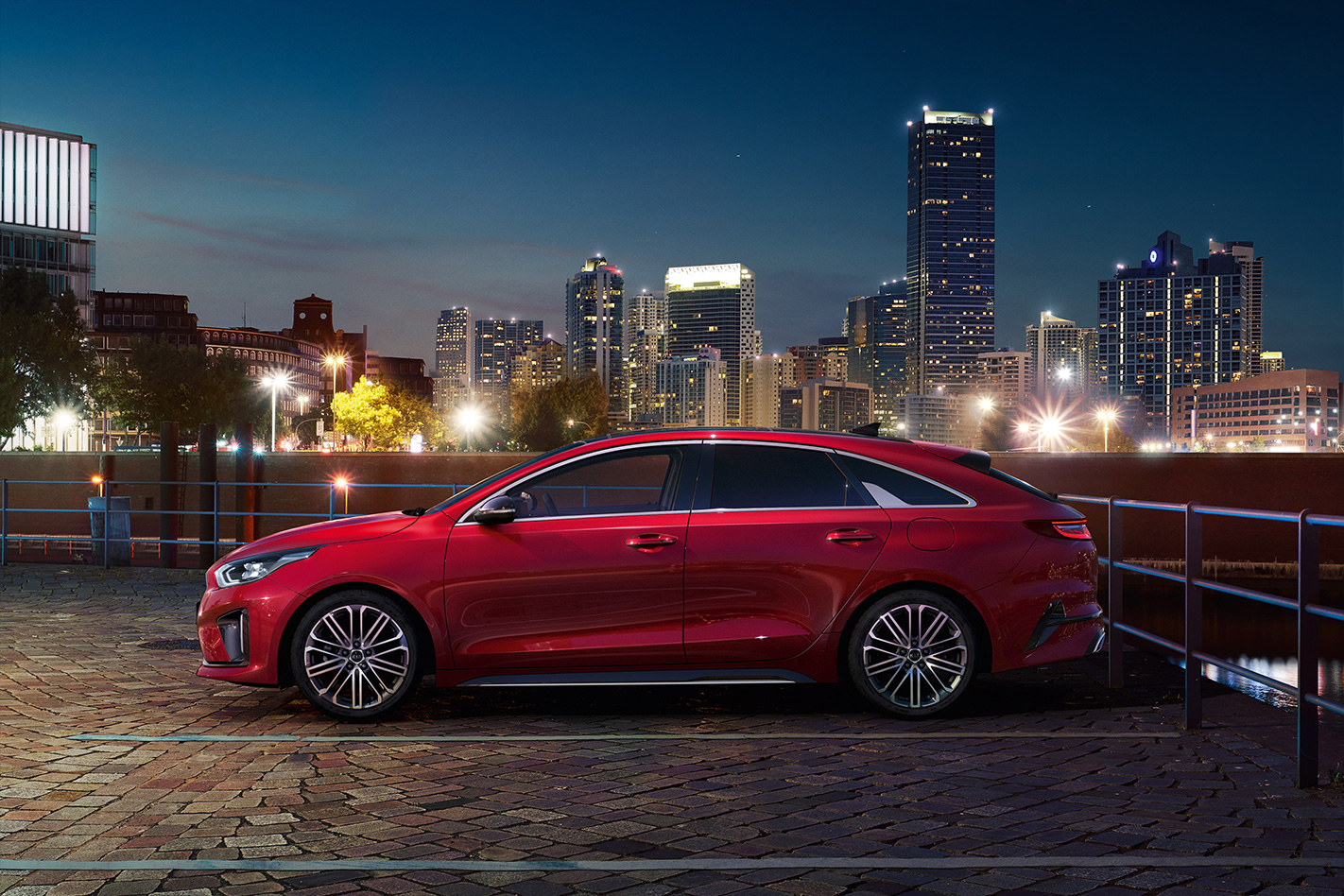
Developed in and for Europe, the ProCeed is effectively a stylised and more ‘emotionally engaging’ version of the regular Ceed Sportswagon sold overseas.
The cars share underpinnings, but in bodywork terms only the bonnet and front quarter panels are common.
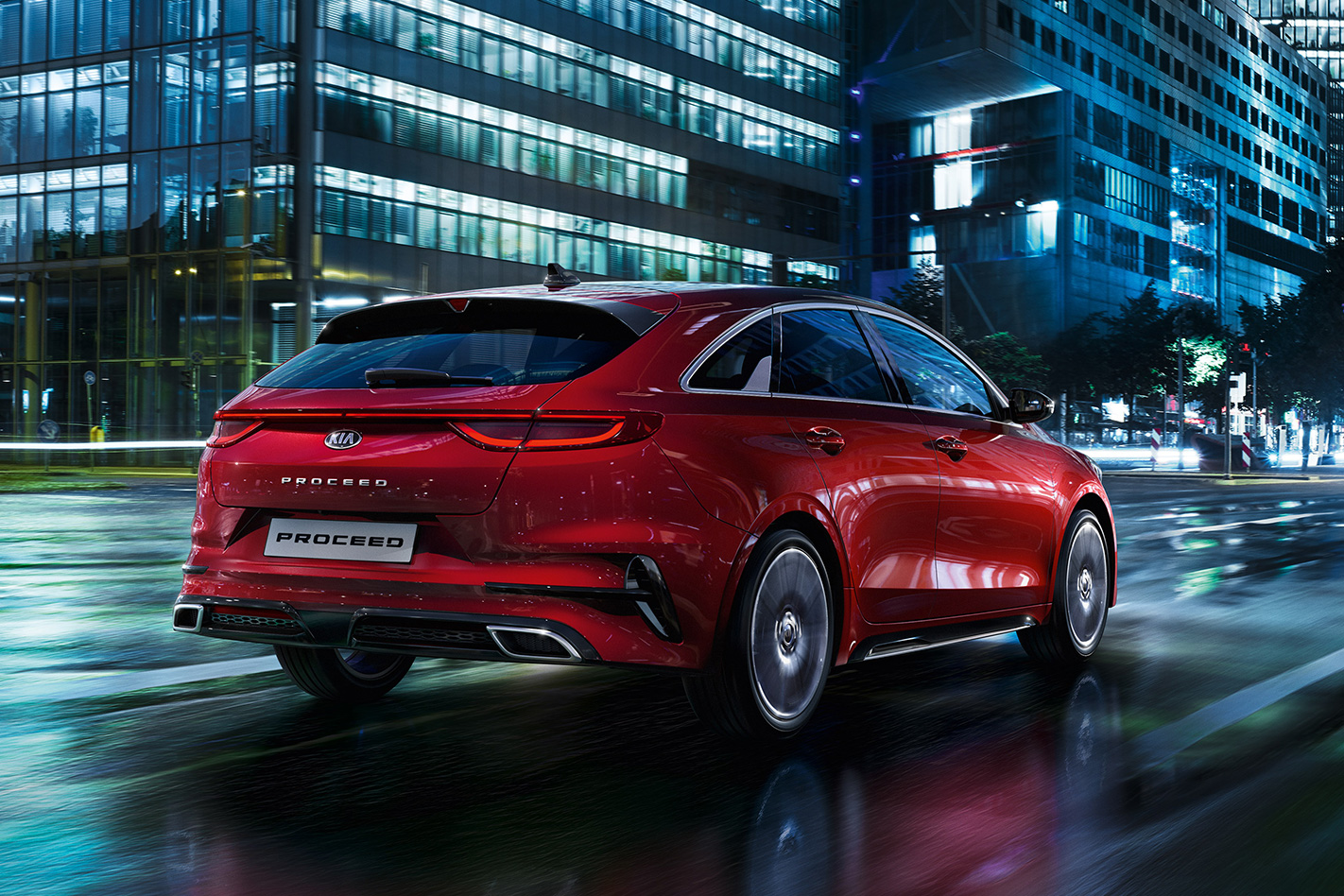
ProCeed is the longest and lowest vehicle in the Ceed model family with a silhouette reminscent of the Mercedes-Benz CLA Shooting Brake, though Kia says it is unlike anything in the mainstream family car segment.
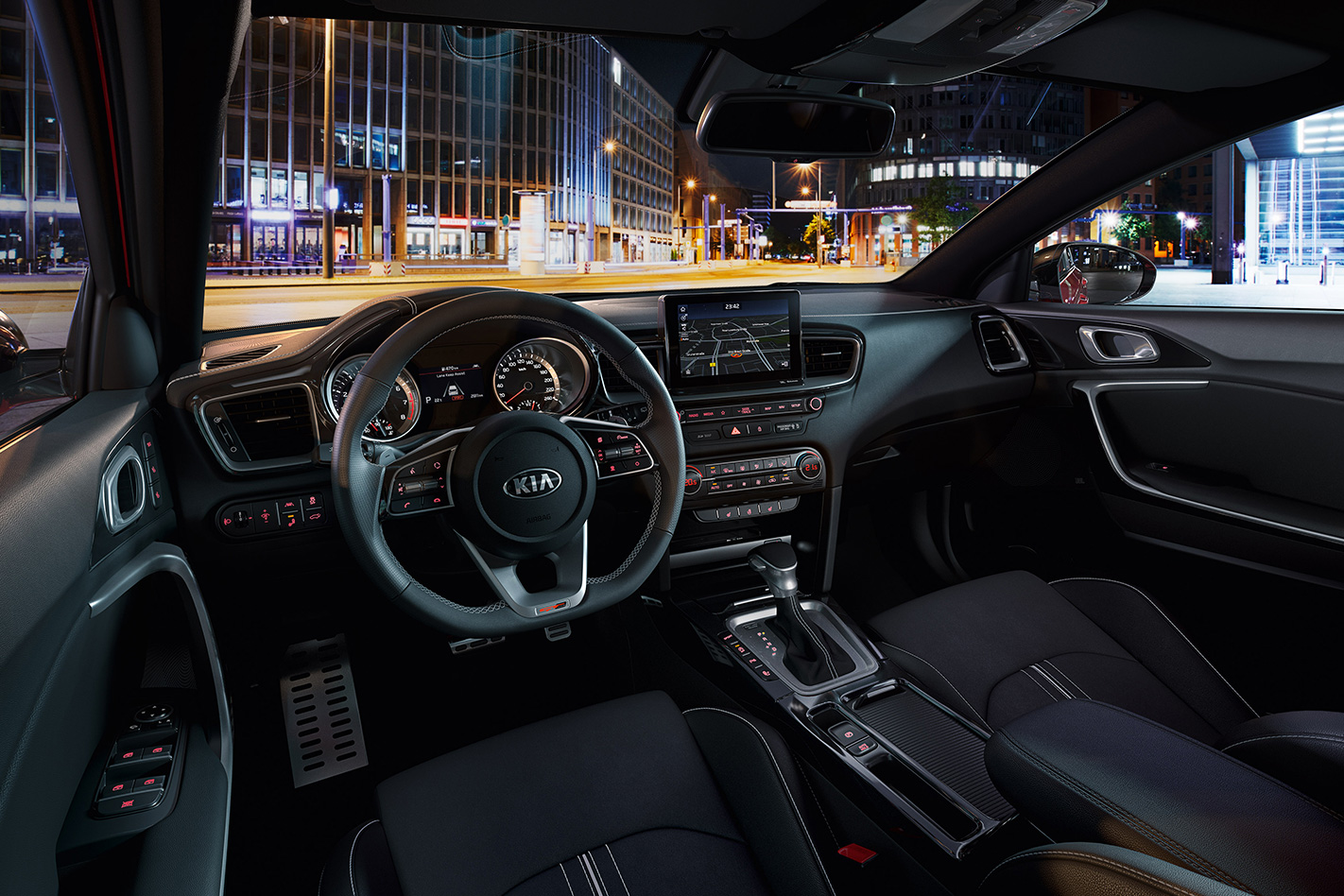
A range of exclusively turbocharged drivetrains is offered in both GT and GT Line guises. The flagship GT is powered by a 150kW/265Nm 1.6-litre petrol four, an engine that has been used to good effect by Kia previously, and there’s a choice between a seven-speed DCT or six-speed manual gearbox.
But before you get too excited, unlike the last ProCeed GT that was sold in Australia until 2015, price concerns mean there’s little chance this new model will ever come to Oz.
“You’ve got to ship it across country, then get it on a boat, and if you’re only going to do it for one model it’s not worth it,” says Kia Australia communications manager Kevin Hepworth.
Price projections during the evaluation process had the ProCeed GT arriving in local dealerships with a price tag of more than $40,000, which Hepworth says is simply too expensive.
Moreover, the imminent arrival of the Cerato GT hatch and sedan, which share the same drivetrain as the ProCeed GT and have similar dynamic credentials, makes the new shooting brake too niche an offering for a viable business case in Australia.
As a product of Kia’s European operations, the ProCeed is designed, developed and engineered in Frankfurt, Germany, and manufactured in Slovakia. These days, Kia product sold in Australia is sourced exclusively from South Korea.
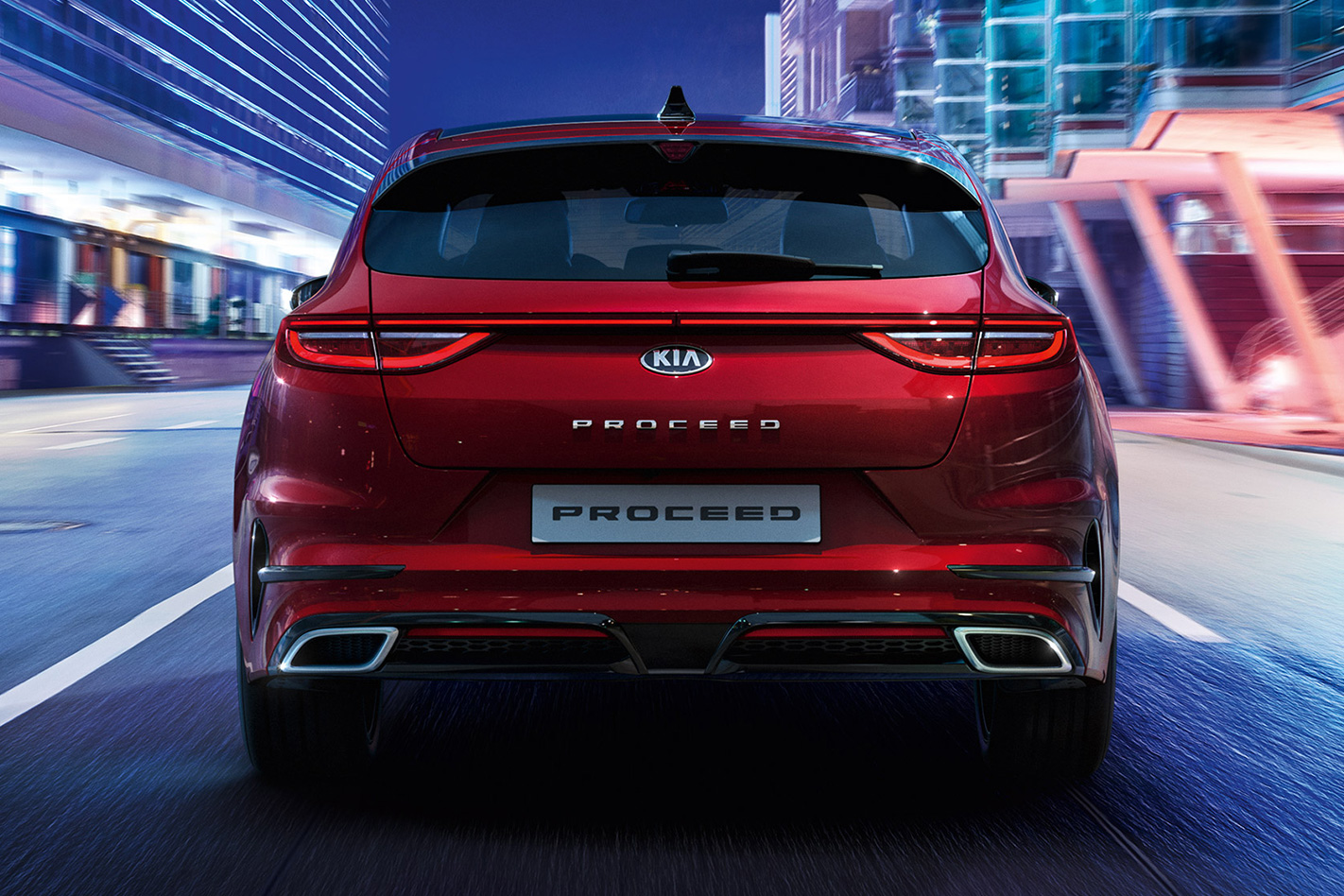
The ProCeed nameplate was formerly used on a range-topping three-door hatchback, but European sales of that inflexible form factor are collapsing, so a reinvention was necessary to keep the badge alive. In its new format the ProCeed has a 594-litre boot and a focus on usefulness with its form.
“Where the Ceed Sportswagon majors on practicality, the ProCeed provides couples or young families with the space and versatility of a wagon, combined with an emotive, swept-back design,” says Kia Europe COO Emilio Herrera.
“Where focusing on one of these normally compromises the other, the ProCeed is the first car in the mainstream segment to combine both.”
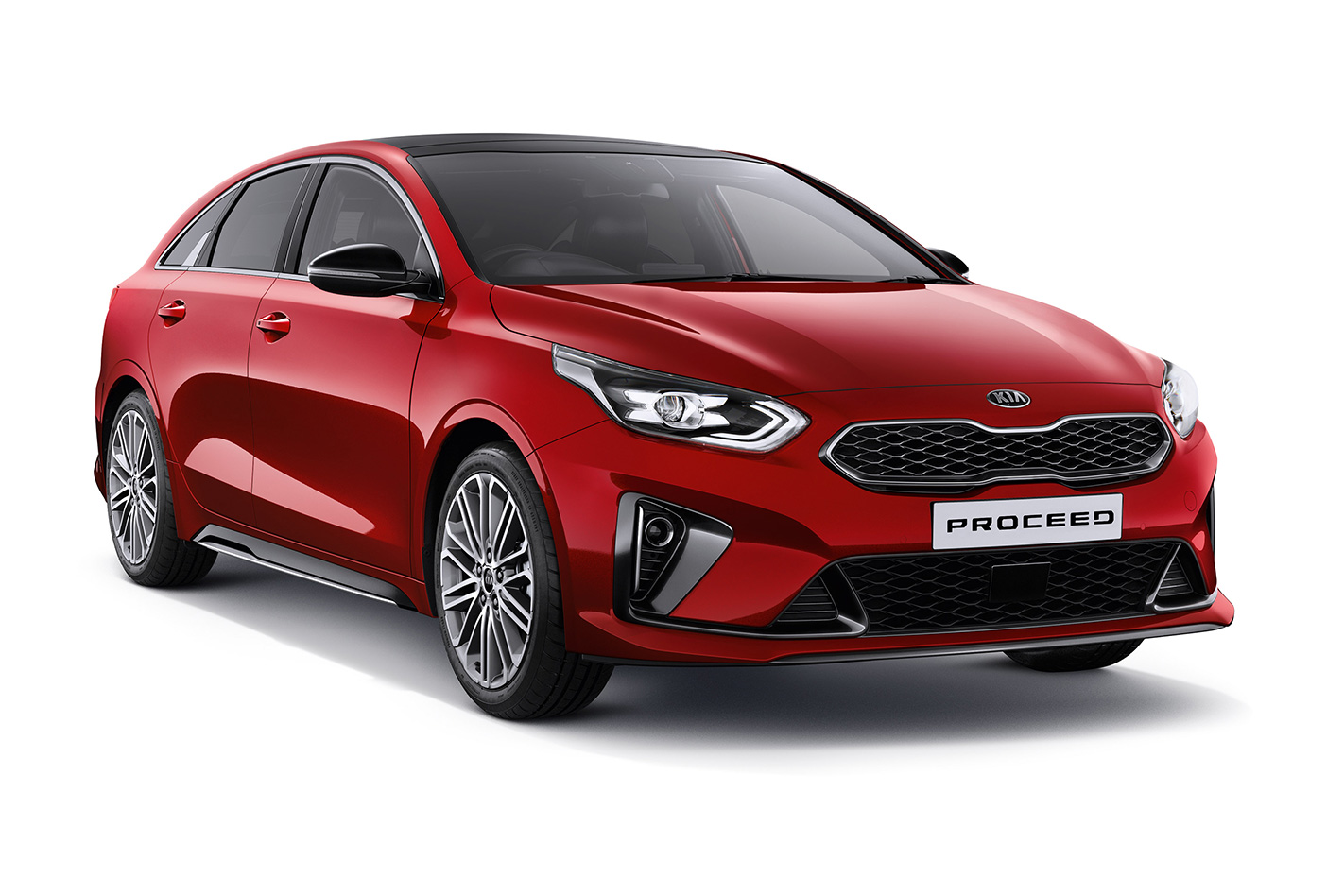
Independent rear suspension and input from Hyundai N boss Albert Biermann on the ProCeed’s unique ride and handling tune are yet more points in its favour, but failing a drastic shift in exchange rates, Kia’s attempt at a Mercedes-Benz CLA Shooting Brake will remain absent from our shores.
Hyundai is set to offer up ways to make its raucous i30 N hot hatch more noticeable, thanks to a range of optional accessories called ‘N Options’.
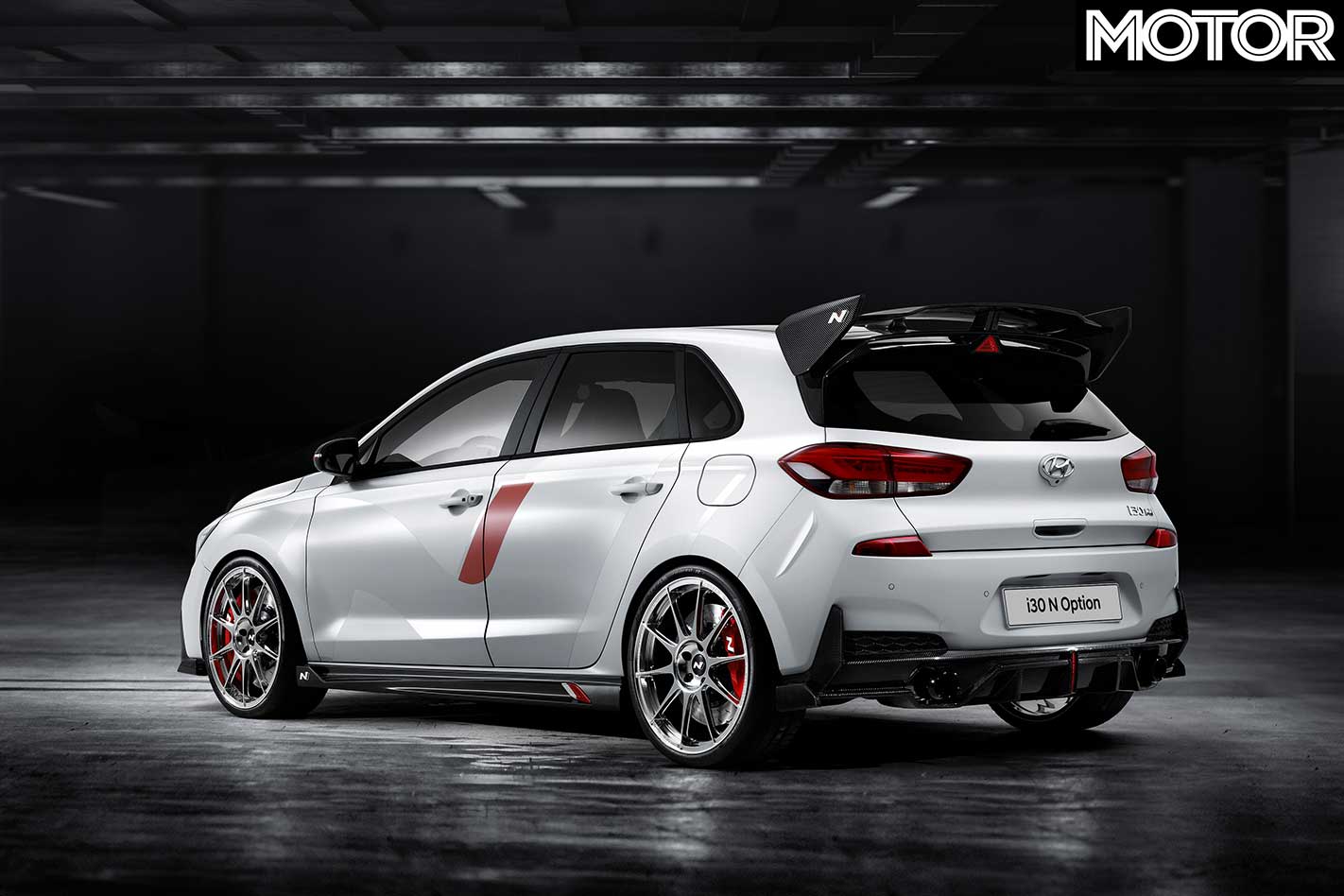
A Hyundai i30 N Options show car was revealed at the Paris Motor Show, as a showcase of 25 different possibilities for i30 N owners.
“With our N portfolio we are shaking up the competition, and bringing new performance and emotions for our customers,” says Schemera.
”The development of our N vehicles is grounded in Motorsport and our engagement there is the pinnacle of N.
“The new i30 N Line and our i30 N ‘N Option’ show car illustrate our dual approach to customisation, making N available to a wider audience.”
Hyundai says the list of parts includes “a carbon rear wing carrying the N emblem, a carbon hood with integrated air vents, quad mufflers, and the N grille surrounded by a red character line.
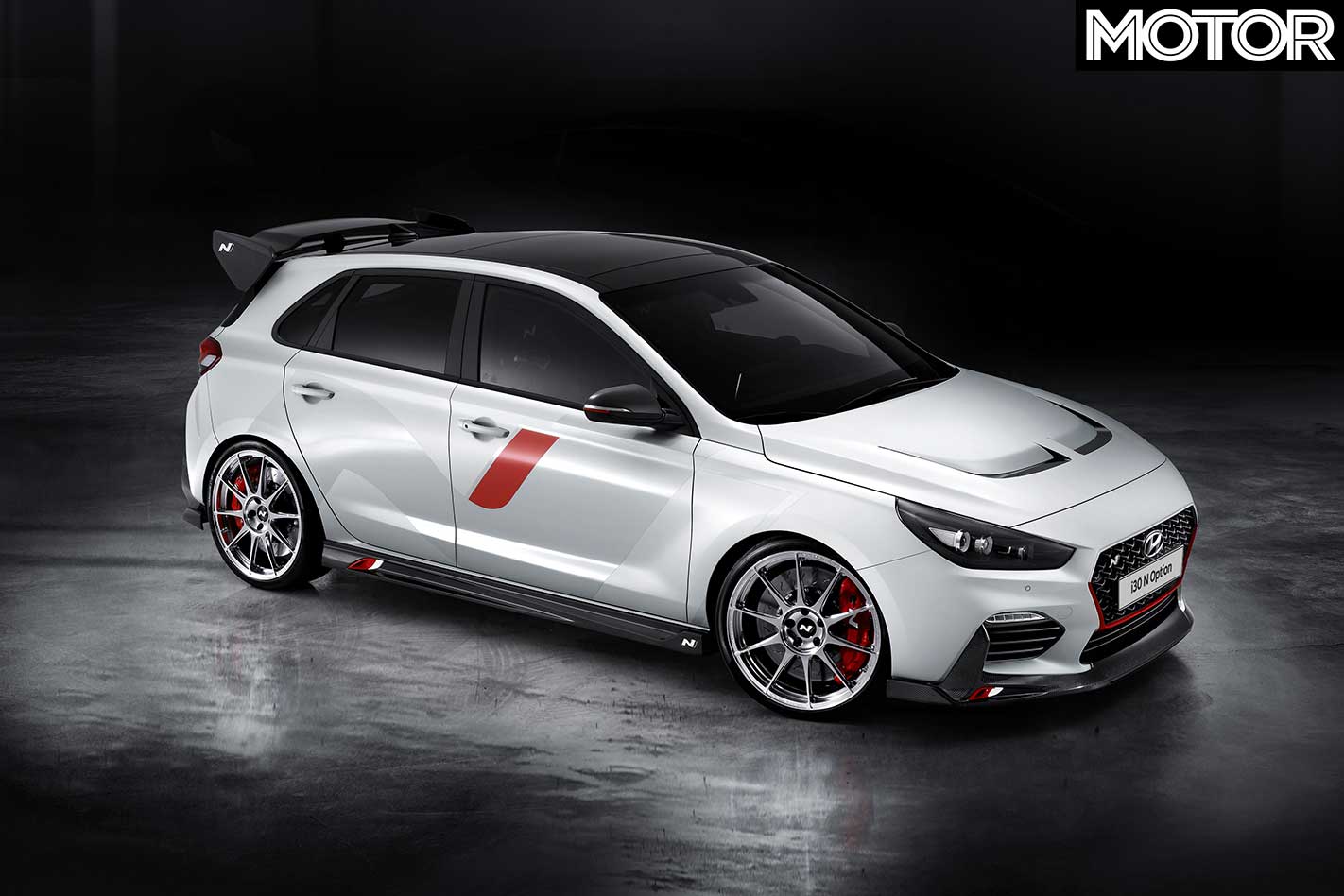
“Another highlight in style and performance are the wheels with casted lightweight 20-inch rims fitted with high-performance semi-slick tyres.
“The i30 N ‘N Option’ exterior colour is a unique matt paint, specially created for the show car.”
None of the parts affect output specs of the i30N, nor do they dramatically reduce weight.
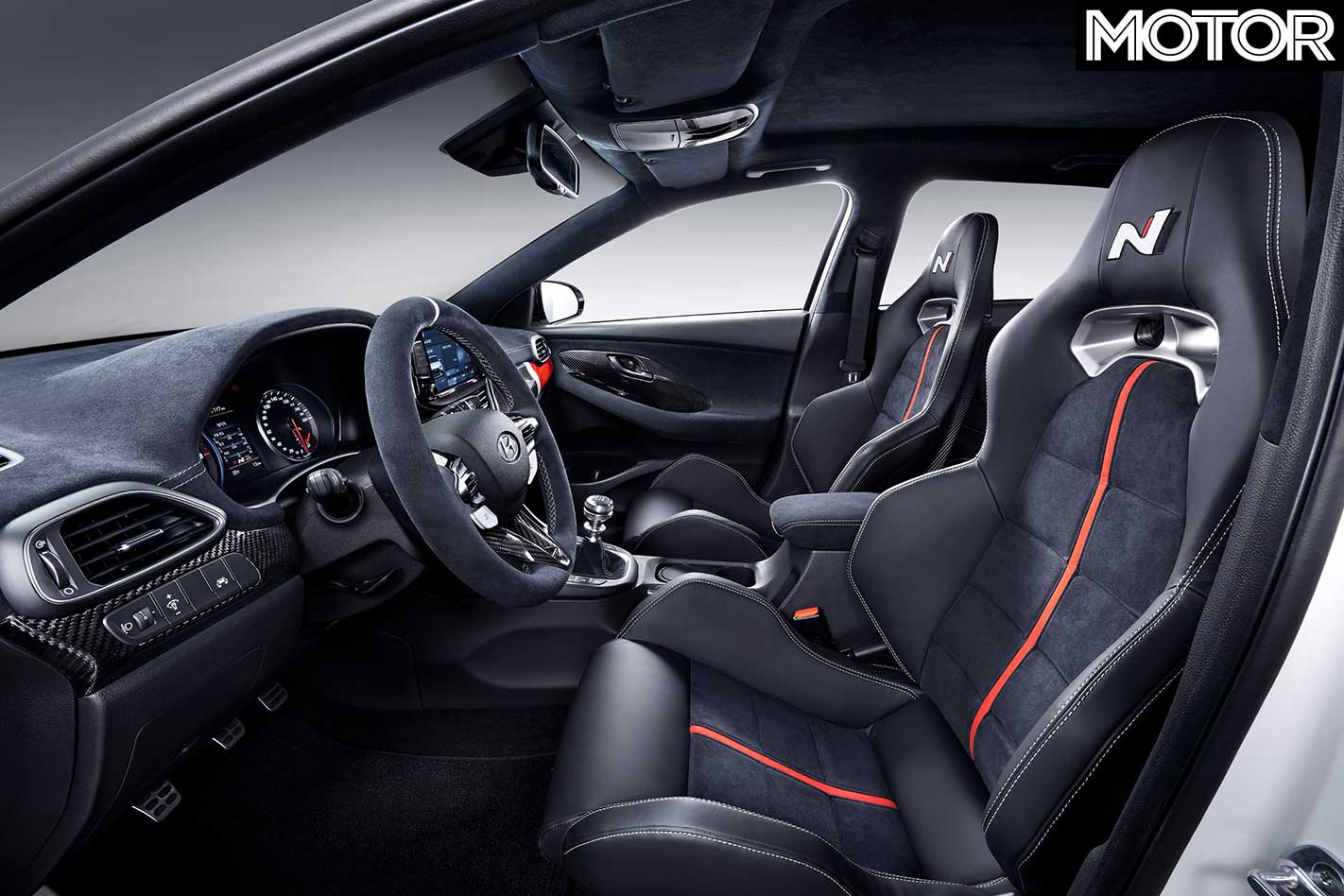
Inside the show car present in Paris, black carbon accents are found throughout, as well as plenty of Alcantara.
Most notably, lightweight sport bucket seats replace the standard pews, imposing a much more ‘motorsport’ vibe.
Stay tuned for Australian details to be confirmed regarding the new performance parts.
BMW has pulled the covers off the fresh version of what is arguably its most important range, the 3 Series.
With it, BMW has revealed a new ‘range-topper’, or at least until the M3 comes along. Instead of the 340i, BMW has announced the non-M 3 Series will be headed up by the 2019 BMW M340i xDrive. It’s the only new 3 Series model announced so far to feature six cylinders running petrol.

It’s been treated to a new version of BMW’s 3.0-litre in-line sixer engine, now producing 275kW and 500Nm rather than the 240kW and 450Nm previously available in the 340i. As its badge suggests, this power is now transferred to all four wheels via BMW’s xDrive AWD system.
BMW says the M340i xDrive will hit 100km/h from a standstill in just 4.4 seconds, where MOTOR only extracted that sprint from the previous rear-drive version in 5.51 seconds.
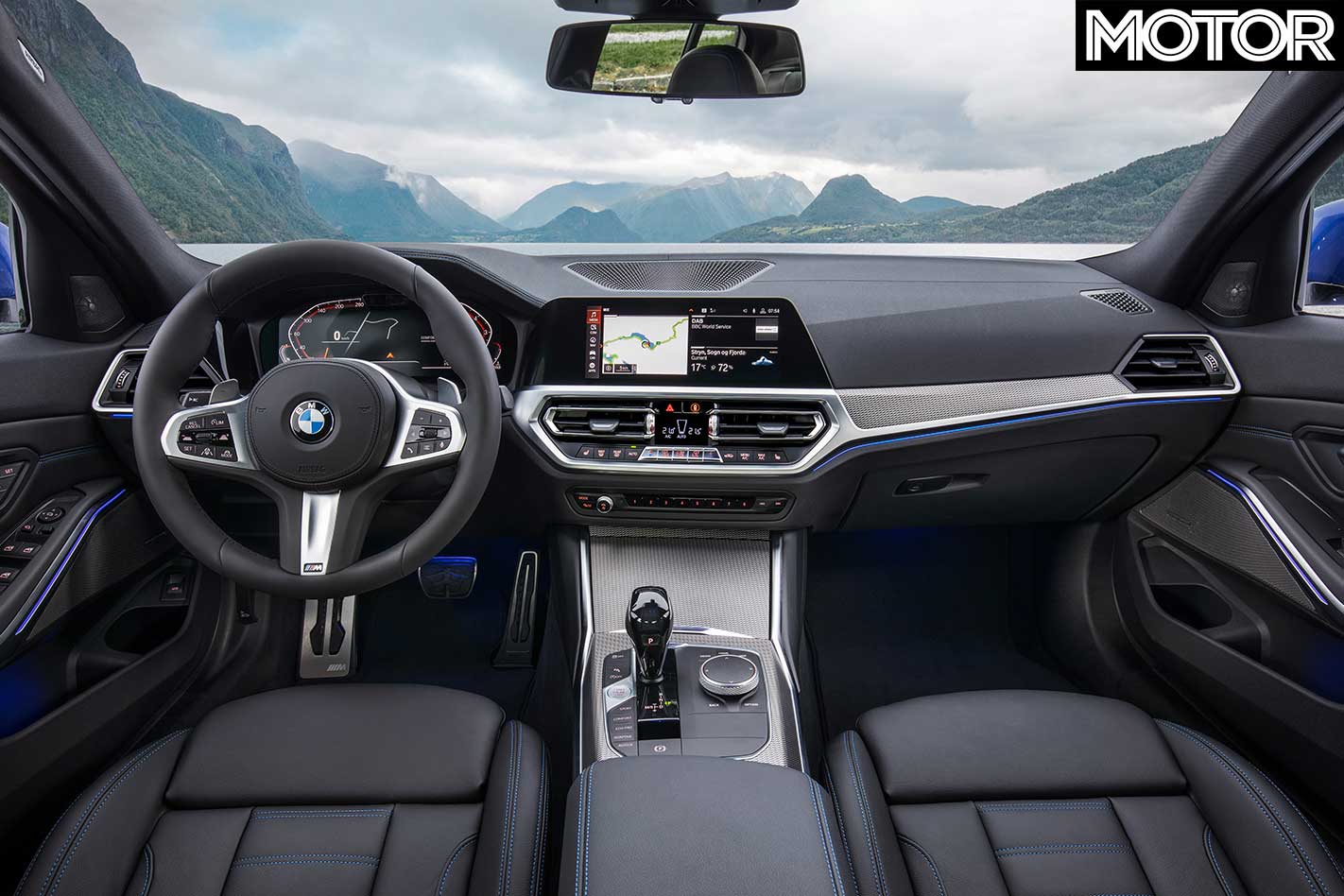
BMW says the new M340i will be a proper performance car, rather than just a powerful cruiser, though the ‘M’ before its numerical designation was a little hint at that.
“[Its 0-100km/h time] takes the BMW M Performance model into the reaches of the performance stratosphere inhabited by high-calibre sports cars,” BMW says.

“The new BMW M Performance model will showcase the full dynamic potential of the new BMW 3 Series Sedan.
“A new six-cylinder in-line petrol engine, bespoke chassis tuning, xDrive intelligent all-wheel drive and the standard M Sport differential ensure performance attributes that will both impress and challenge the driver.”
Stay tuned for local spec and pricing, as we wait for word on the next M3.
Porsche has officially confirmed that it will put the Porsche 911 Speedster into production, after the initial concept for the car was shown earlier this year.
With a limited run of just 1948 cars, a reference to the first year a Porsche (Porsche 356 ‘Number 1’ received its operating license on June 8 that year) was registered, the supremely collectible Porsche has no listed price yet.
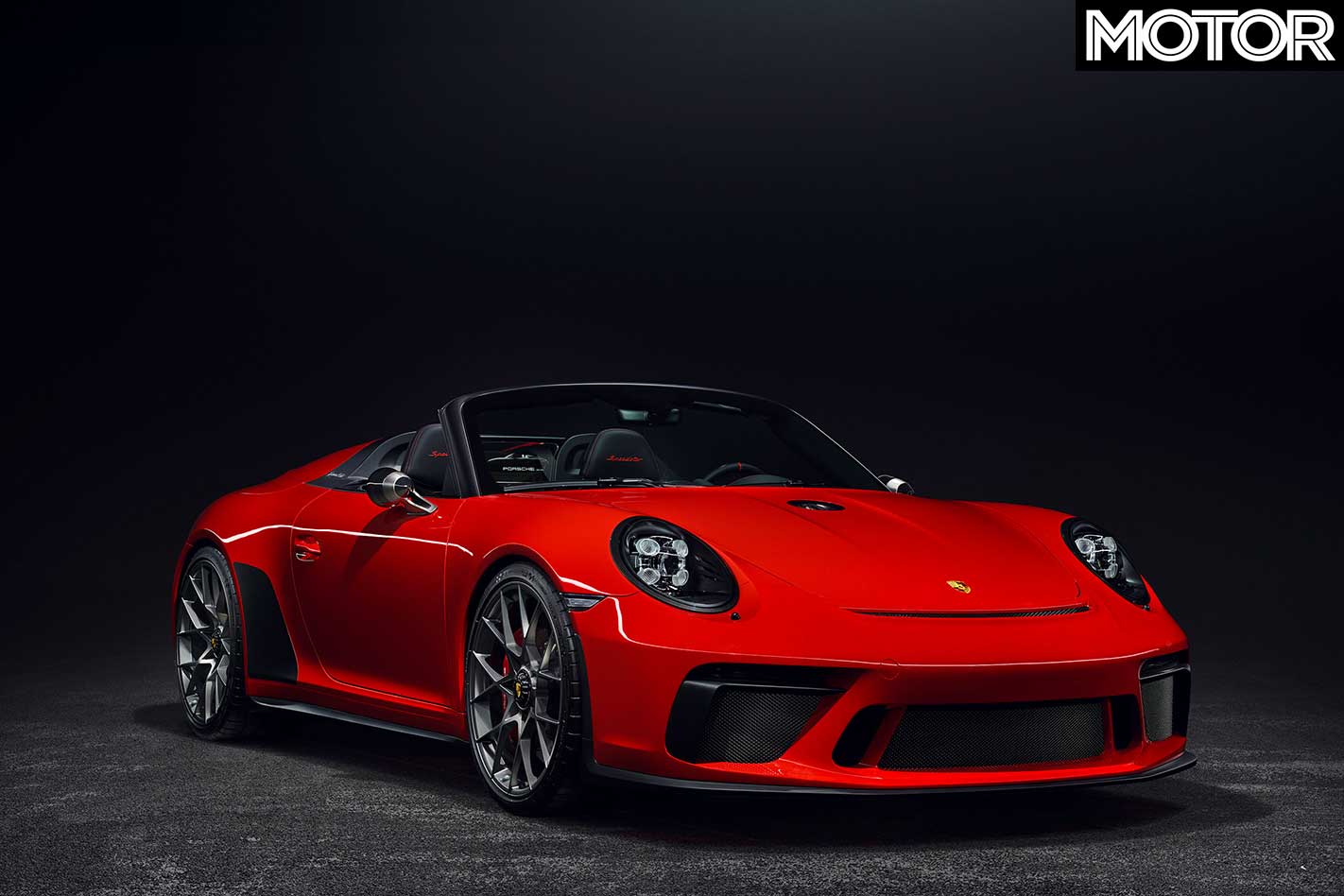
To that effect, Porsche says the GT Department had a fair bit of involvement with building this car outside of the engine.
“The concept cars’ body is based on the 911 Carrera 4 Cabriolet,” Porsche says.
“The fenders, as well as the front and rear bonnet are made from lightweight carbon fibre composite while the chassis was taken from the 911 GT3.
“Furthermore, the GT development department provided the exhaust system with its titanium tailpipes.”
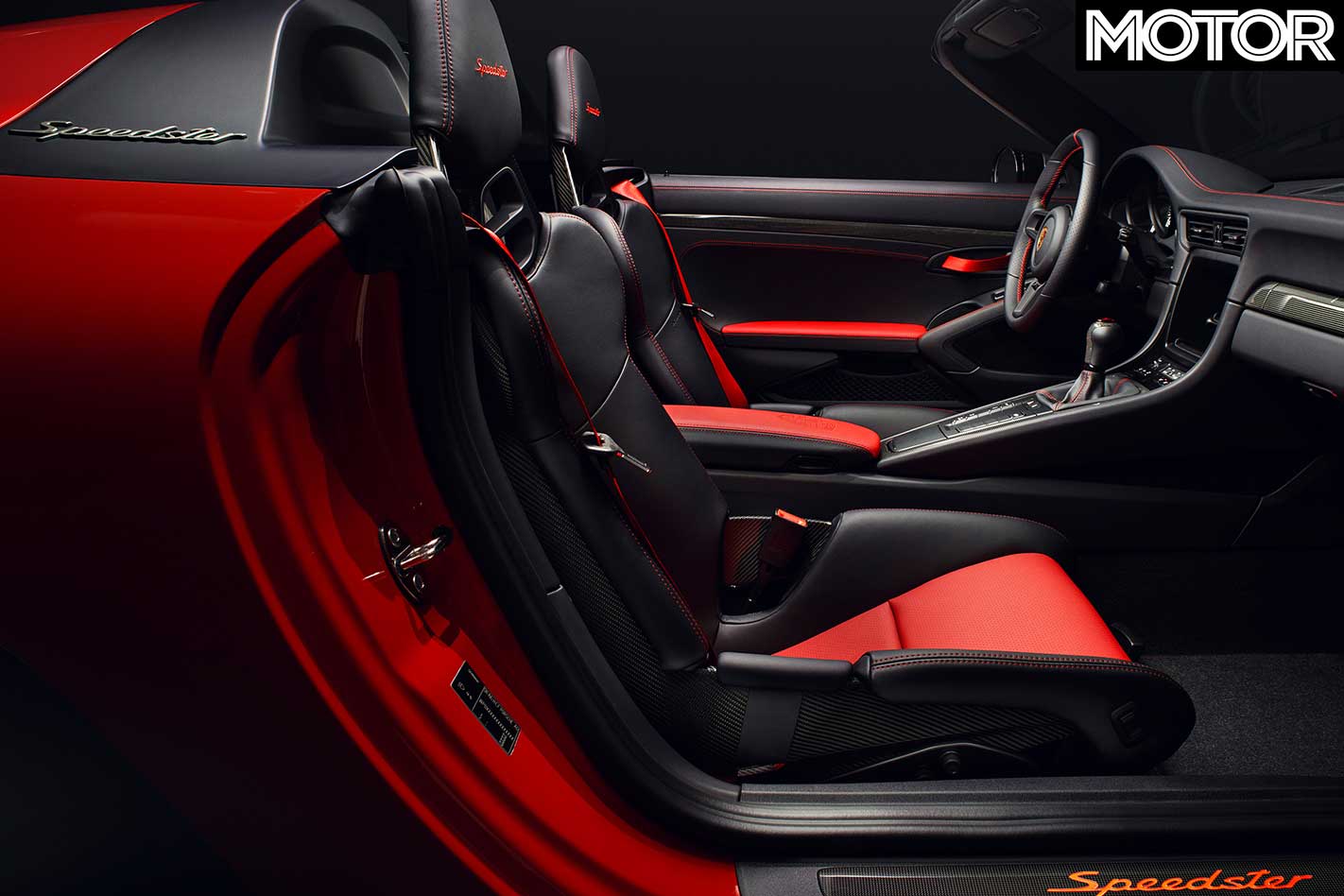
It adds that the Guards Red paintwork seen on the example model is a reference to the 1988 911 Speedster.
It shares with the silver ‘Heritage’ version, shown earlier this year, “the shortened window frames with their lowered cowl top panels and the smaller side windows, as well as the carbon-fibre rear bonnet with the double-bubble cover behind the seats. “
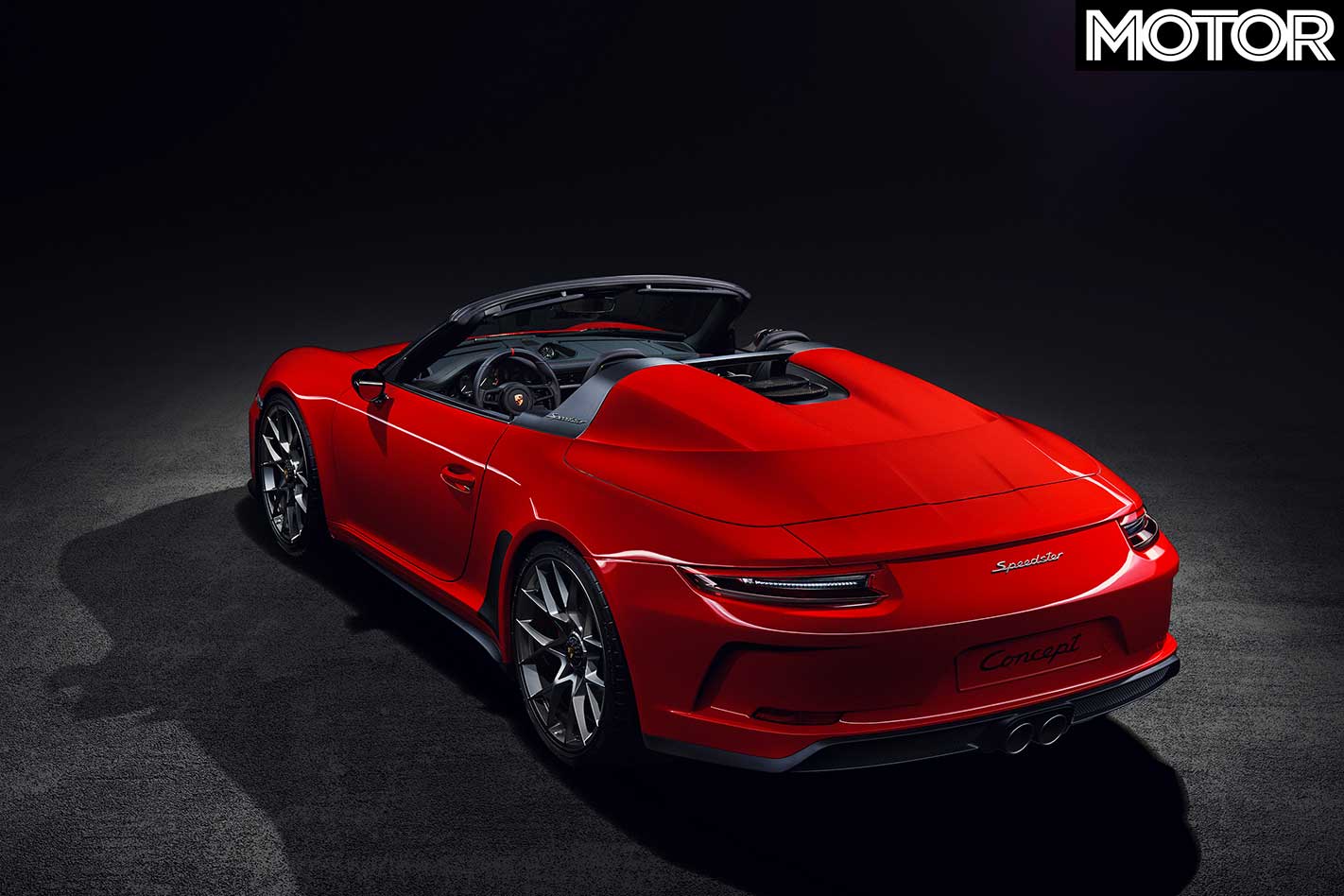
Both also come with soft Tonneau covers instead of traditional convertible roofs.
The Porsche 911 Speedster will go into production in the first half of 2019, with the 1948 units to be delivered in the months following.
The final Ford Falcon has been sold today, more than two years after it rolled off the production line.
Fittingly, it’s an XR8 Sprint in Kinetic Blue with a six-speed automatic transmission. As reported by news.com.au, the car was discovered by Westpoint Ford in Hoppers Crossing by the dealership’s new owners during a stocktake.
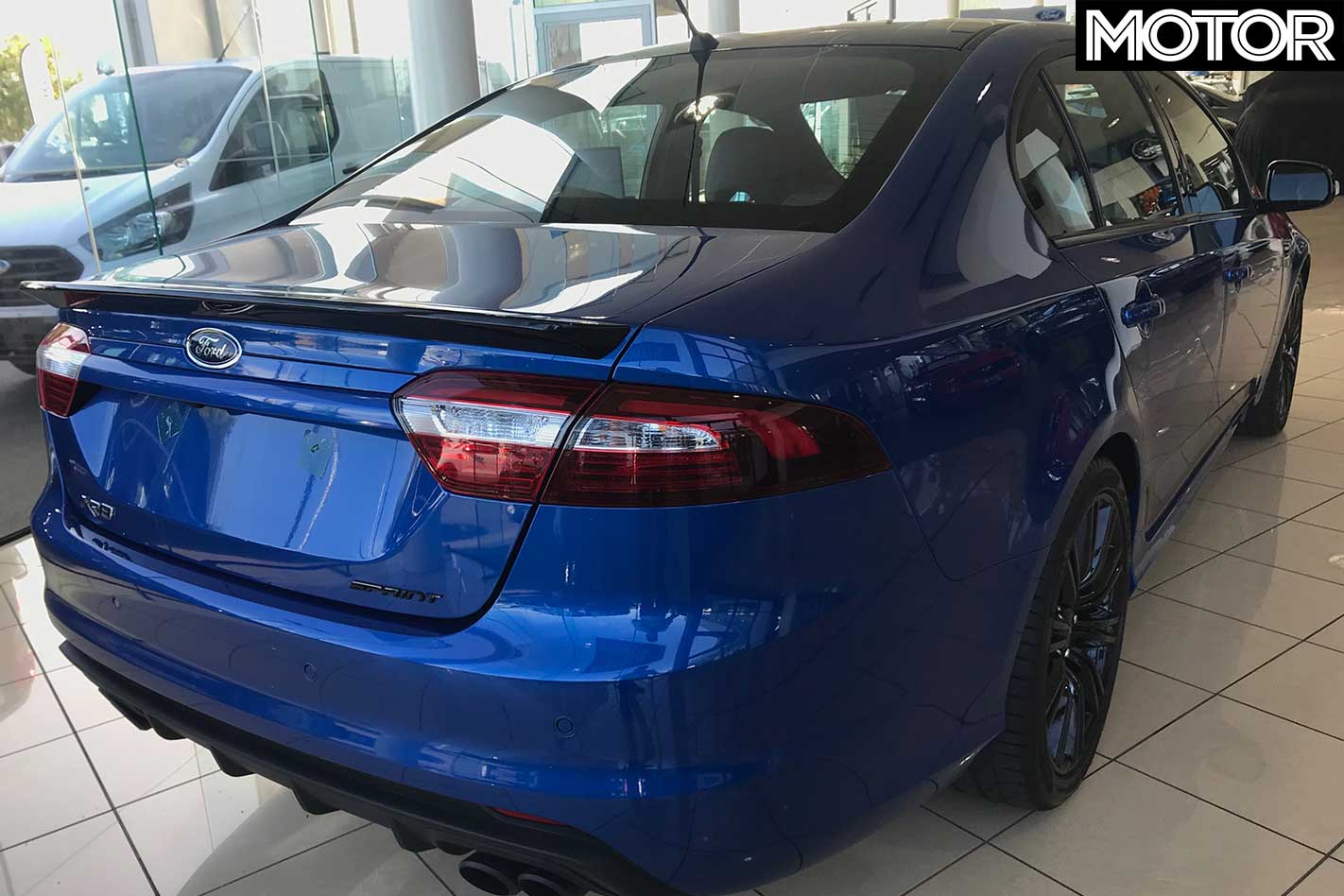
The car is build number 739 with just 58km on the clock and Ford Australia has confirmed it is the last unregistered Falcon in dealer stock. In a neat turn of events, its new owner is PremCar, who played a key role in the development of the Miami engine, including the final 345kW/575Nm Sprint tune.
“I got an email from my business partner Jim saying ‘maybe we should put a bid in’,” explains PremCar’s Engineering Director Bernie Quinn. “So I rang the dealer and said ‘I want it’ and we did a deal straight away.” Oddly, as a new Ford sold the XR8 Sprint will come with a five-year warranty, not that it will need it.
The Sprint will be converted to ‘GT Holy Grail’ specification, a 483kW/753Nm upgrade package intended to fulfil the Miami’s potential and developed to the same OE standards as the original engine.
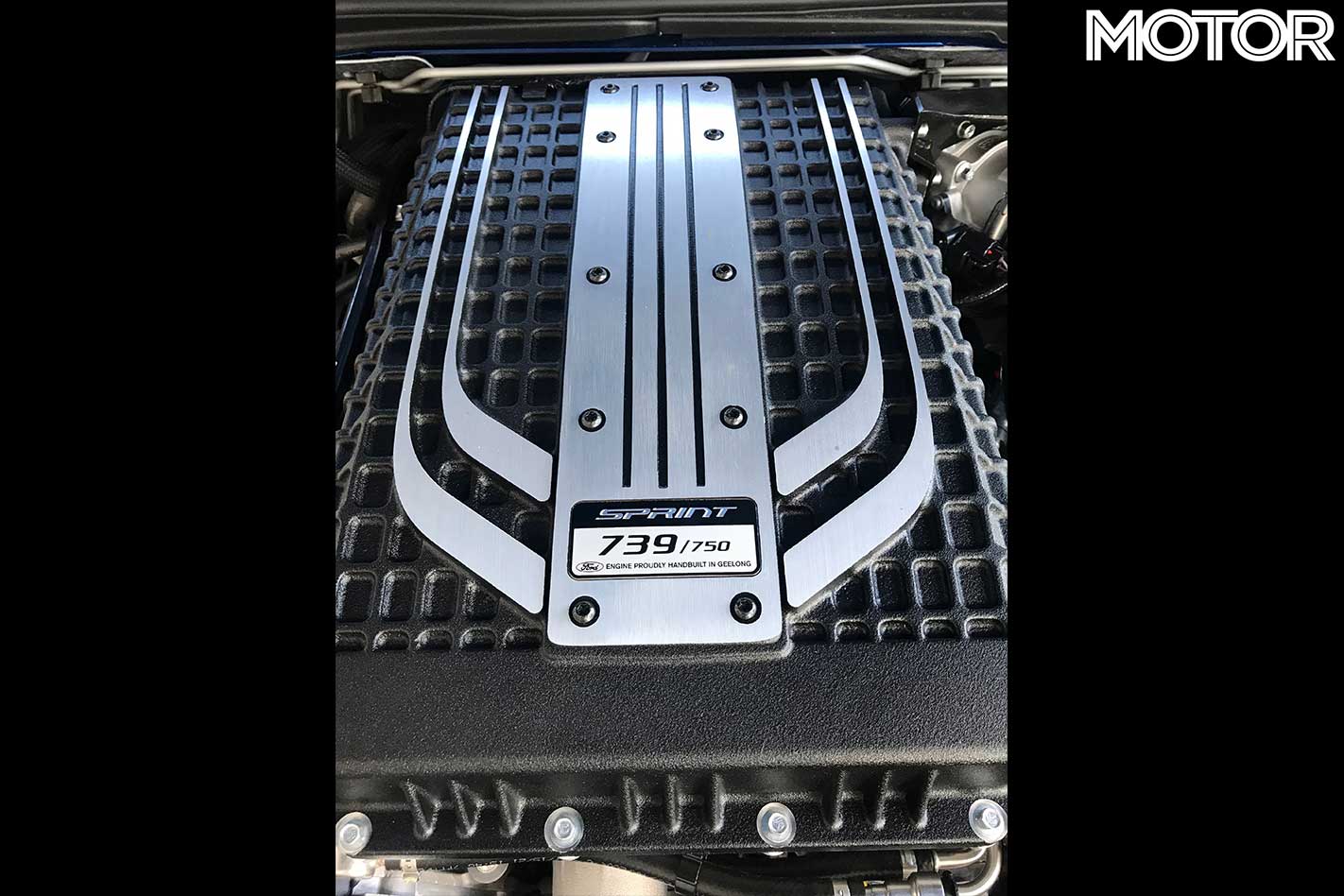
However, while the car will receive a hefty extra helping of grunt, the idea isn’t to add any kilometres to its current meagre tally. “The attraction for us is getting a brand new Sprint,” says Quinn. “I’m going to get it picked up on a flat tray, brought to us, we’ll convert it to Holy Grail spec and then we’ll just sit it there as a showroom car.”
PremCar is currently in the process of finishing its first demonstrator vehicle and preparing the production tooling for the Holy Grail package, with just 100 kits to be offered.
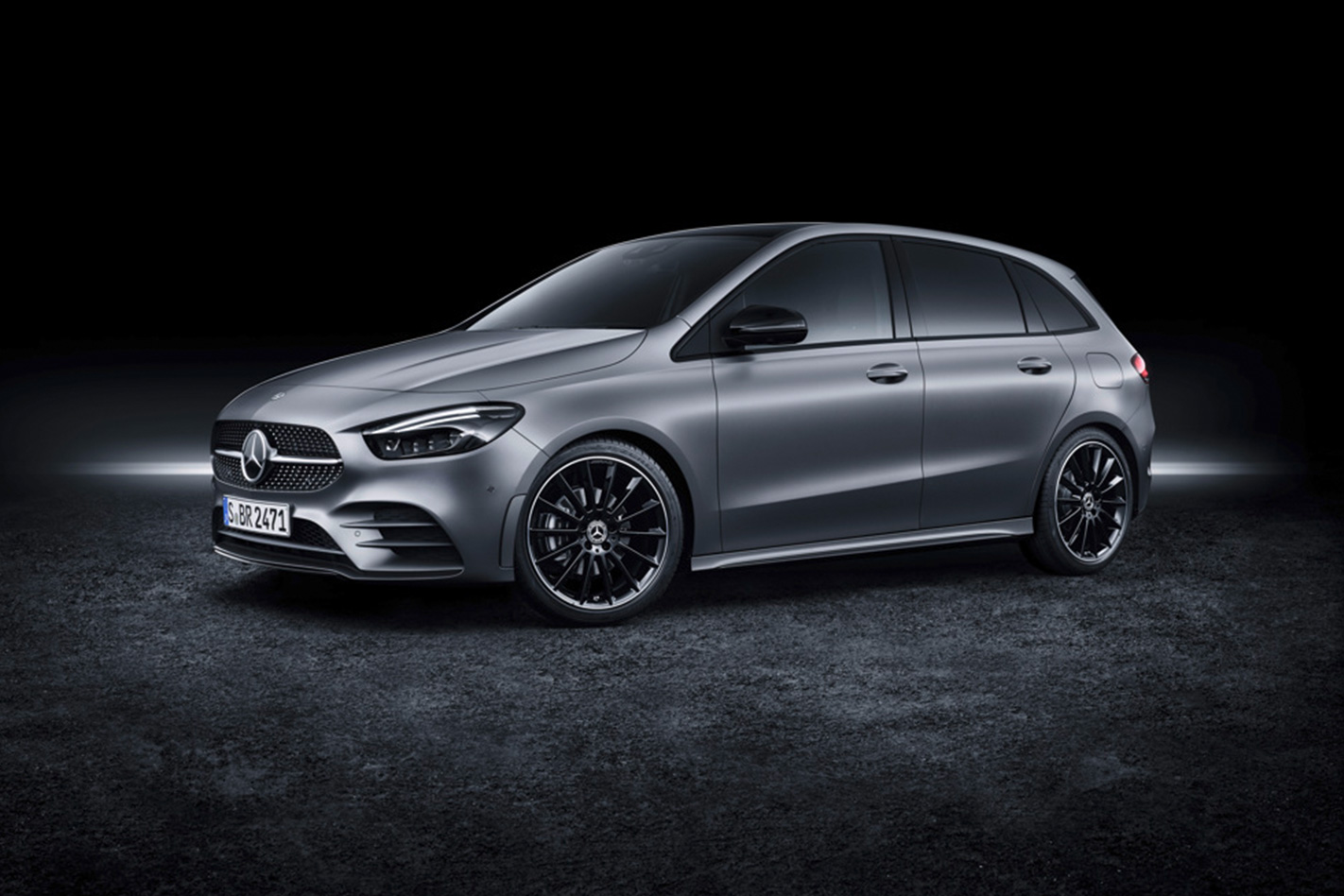
Mercedes-Benz has whipped the covers off its all-new B-Class minivan at the 2018 Paris Motor Show, revealing a vehicle with slightly more dynamic styling than its bland predecessor.
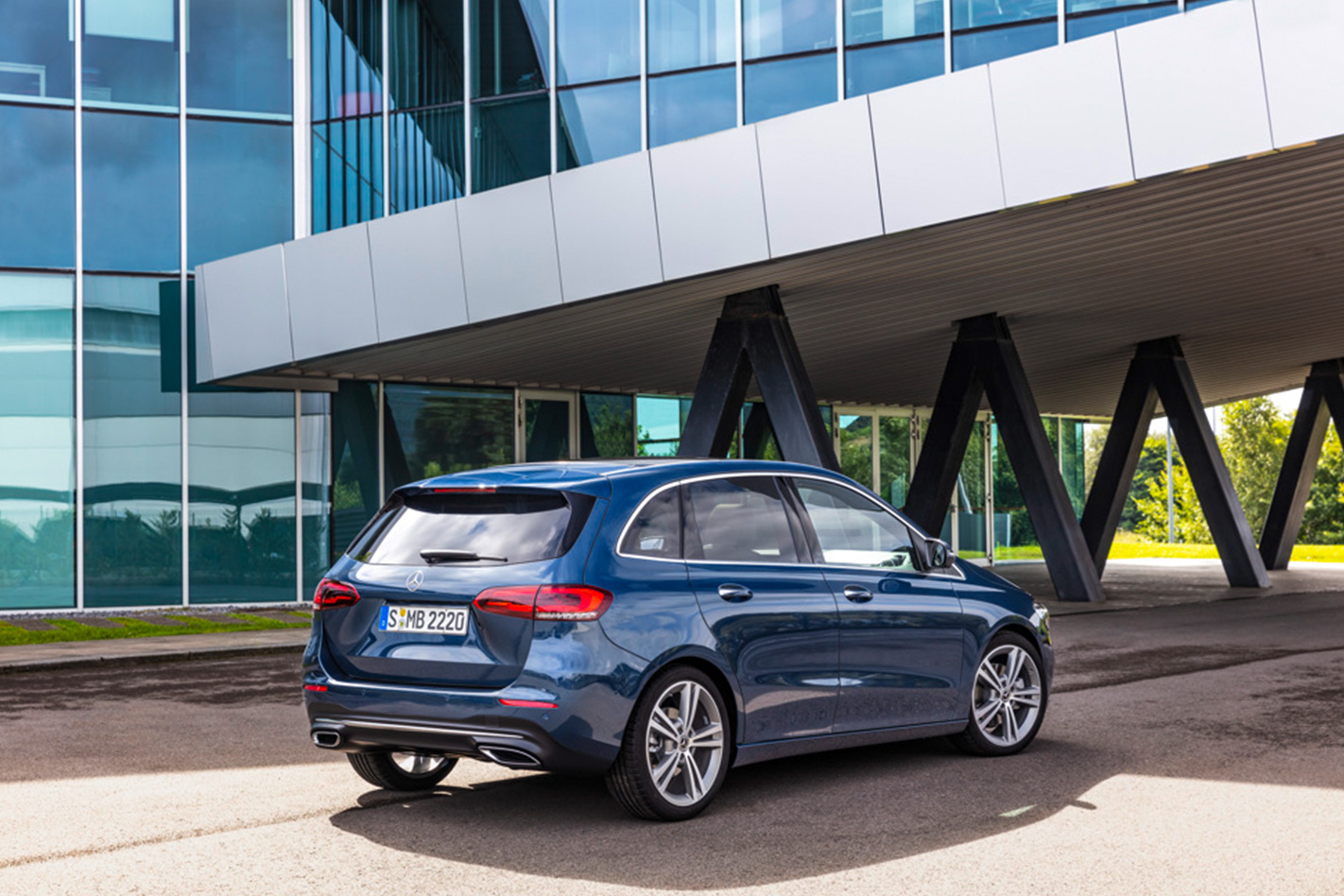
Imparting visual flair to a bodystyle intended for family-toting practicality is no easy task, but Benz’s designers lowered the new B-Class’ roofline, trimmed overhang lengths, and stretched the wheelbase by 3cm to put 2.729 metres between the front and rear axles. Result: more aesthetically-pleasing proportions, along with more space for passengers.
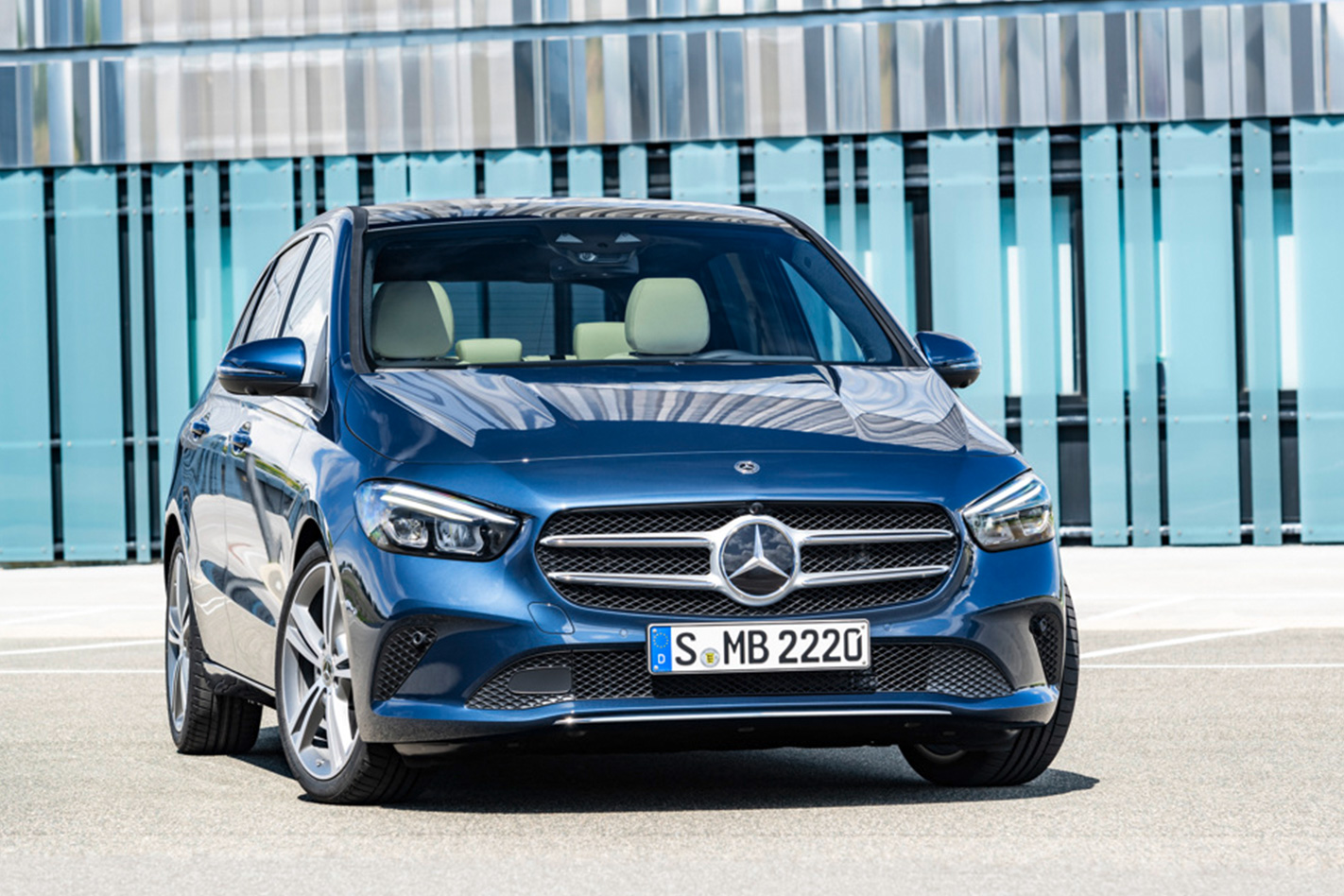
Low-profile headlamps sharpen the styling up front, while the tailgate features a prominent roof spoiler that, along with high-gloss black spoilers at the sides of the rear window, helps improve aerodynamics while adding to the sportier look.
From some angles, the new B-Class echoes the smaller A-Class – another box-fresh Benz that has benefited from a wholesale makeover this year. The two are siblings, being based on the same platform, but the B-Class features a roomier interior that puts more air above passenger’s heads and inserts an extra window behind the rear doors to give the B-Class a wagonoid bodystyle – not to mention greater cargo capacity.
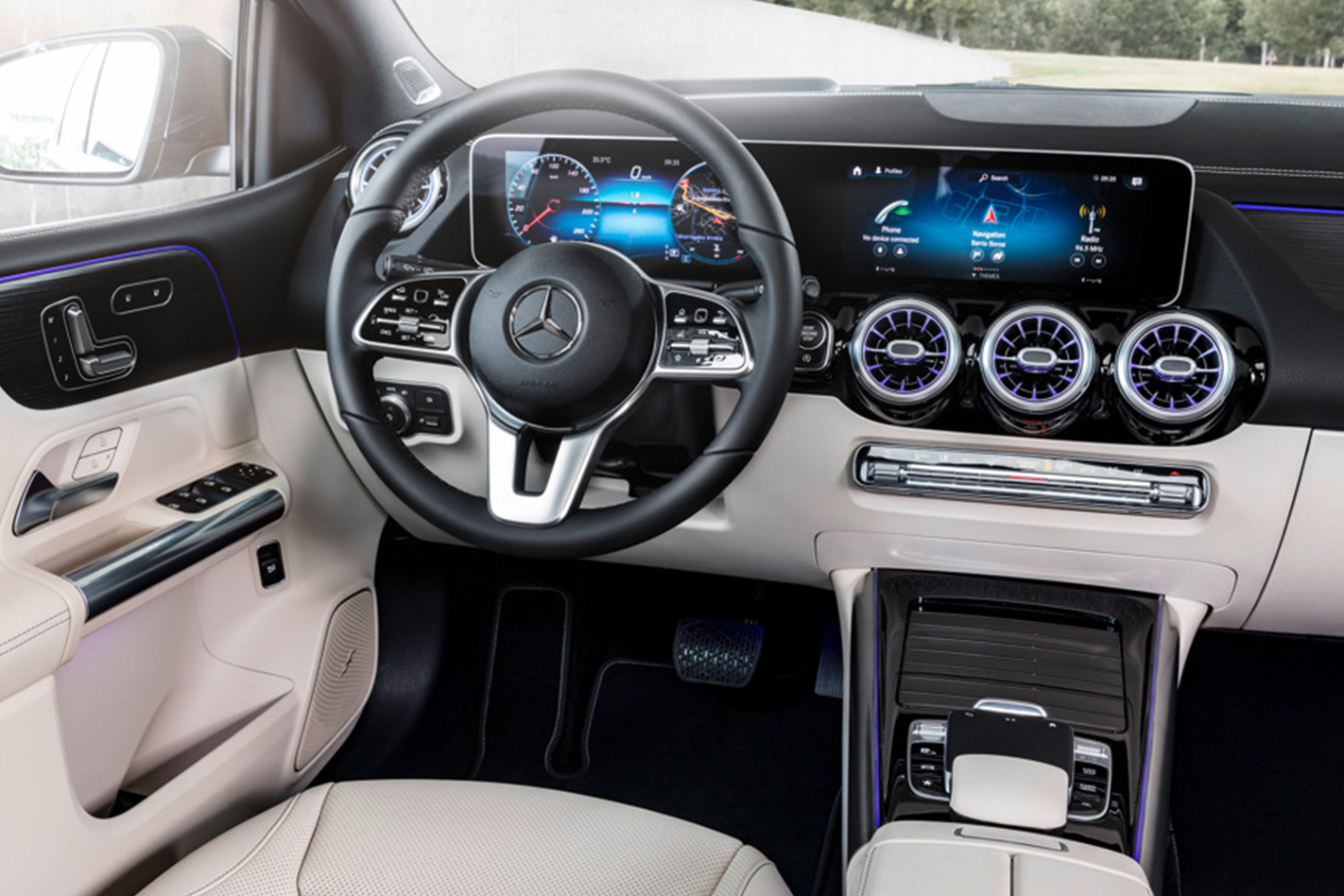
Stepping inside reveals a distinctly more spacious interior, and one that’s substantially more ‘glam’ than the outgoing B-Class. Much of that gloss comes courtesy of the twin-screen infotainment/instrument panel arrangement, which is available with either two 7.0 -inch displays, a combined 7.0- and 10.25-inch display or an impressive widescreen version with two 10.25-inch displays. A head-up display can also be specified.
The B-Class also shares Benz’s new MBUX infotainment software with the A-Class, which features natural-speech voice control functions to reduce the amount of button-prodding required to operate infotainment and vehicle functions. It has also borrowed advanced driver assist technology from the bigger S-Class flagship that brings autonomous emergency braking, adaptive cruise control and lane keep assist.
Meanwhile seating positions have been tweaked to liberate more space and provide more comfort than its predecessor. Drivers who like a more commanding view of the road will appreciate sitting 90mm higher in the new B-Class than in its A-Class relative, making the B-Class the ‘missing link’ between Benz’s conventional passenger cars and its SUV range.
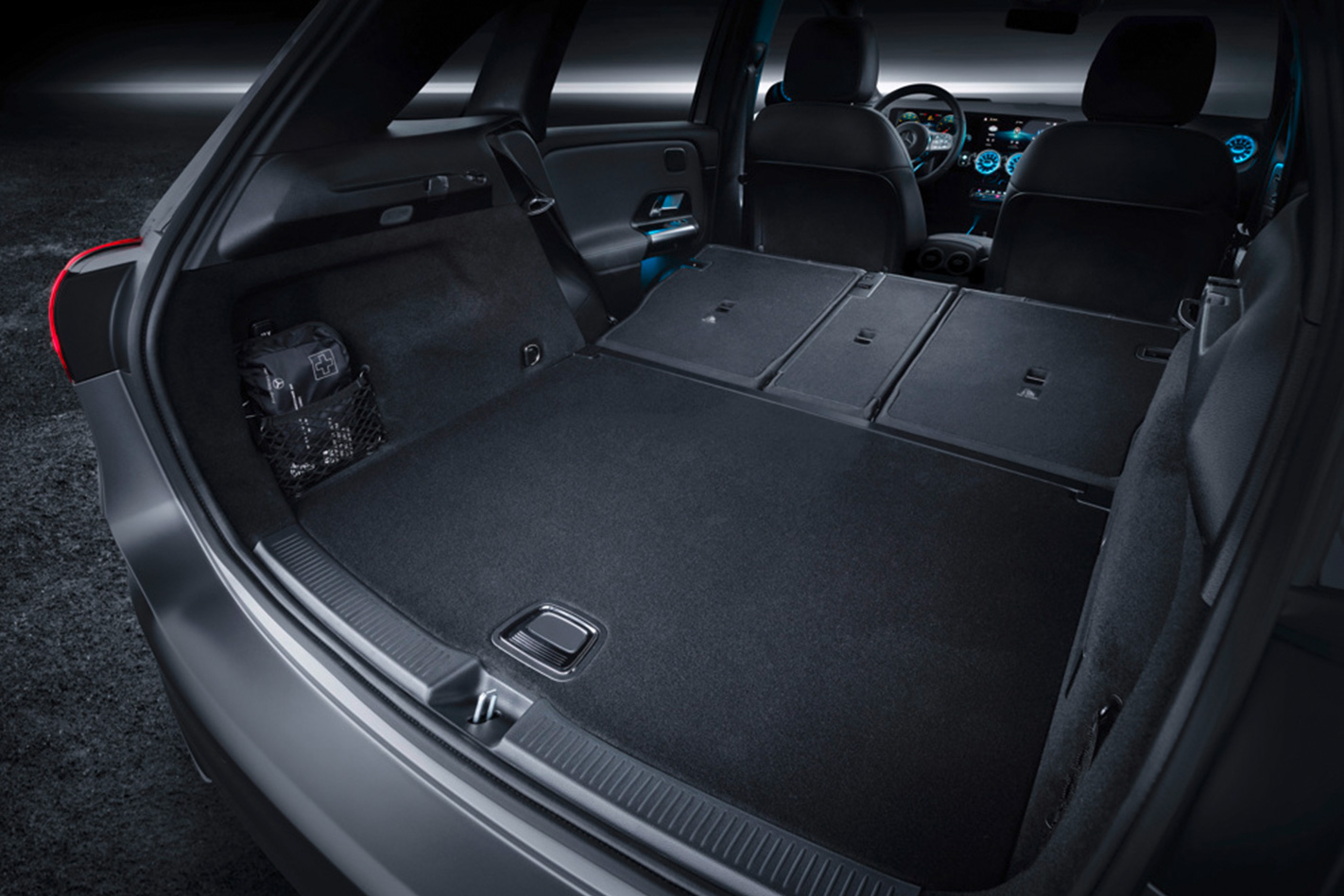
Boot space is about the same as before, however the rear-seat backrests now have a 40:20:40 split to cater for various sized loads. In some variants the rear bench can slide back and forth up to 14cm and dial in a more vertical backrest angle to boost luggage capacity from 455 litres to a very handy 705 litres. Fold all the backrests down and you’ll be able to carry 1540 litres in total, while an optional flat-folding front passenger seat, available from mid-2019, will further boost capacity.
For 2019, the powertrain range opens with an 86kW/260Nm 1.5-litre turbodiesel in the B180d, with the entry-level petrol B180 and B200 powered by 100kW/200Nm and 120kW/250Nm versions of Benz’s 1.33-litre turbo petrol four-cylinder (which has been co-developed with Renault) respectively.
Similarly, the 2.0-litre four-cylinder turbodiesel that sits higher up in the range is also offered in two states of tune, with the B200d producing 100kW/320Nm with its version of that powerplant, and the B250d winding up the same engine to 140kW and 400Nm.
A new eight-speed dual clutch transmission will take power to the wheels in the 2.0-litre diesel models, with all other powertrains retaining the company’s existing seven-speed dual-clutch auto.
Mercedes-Benz Australia has confirmed the 2019 B-Class will be available here from mid-2019, with prices and specifications to be announced closer to its local arrival.
