
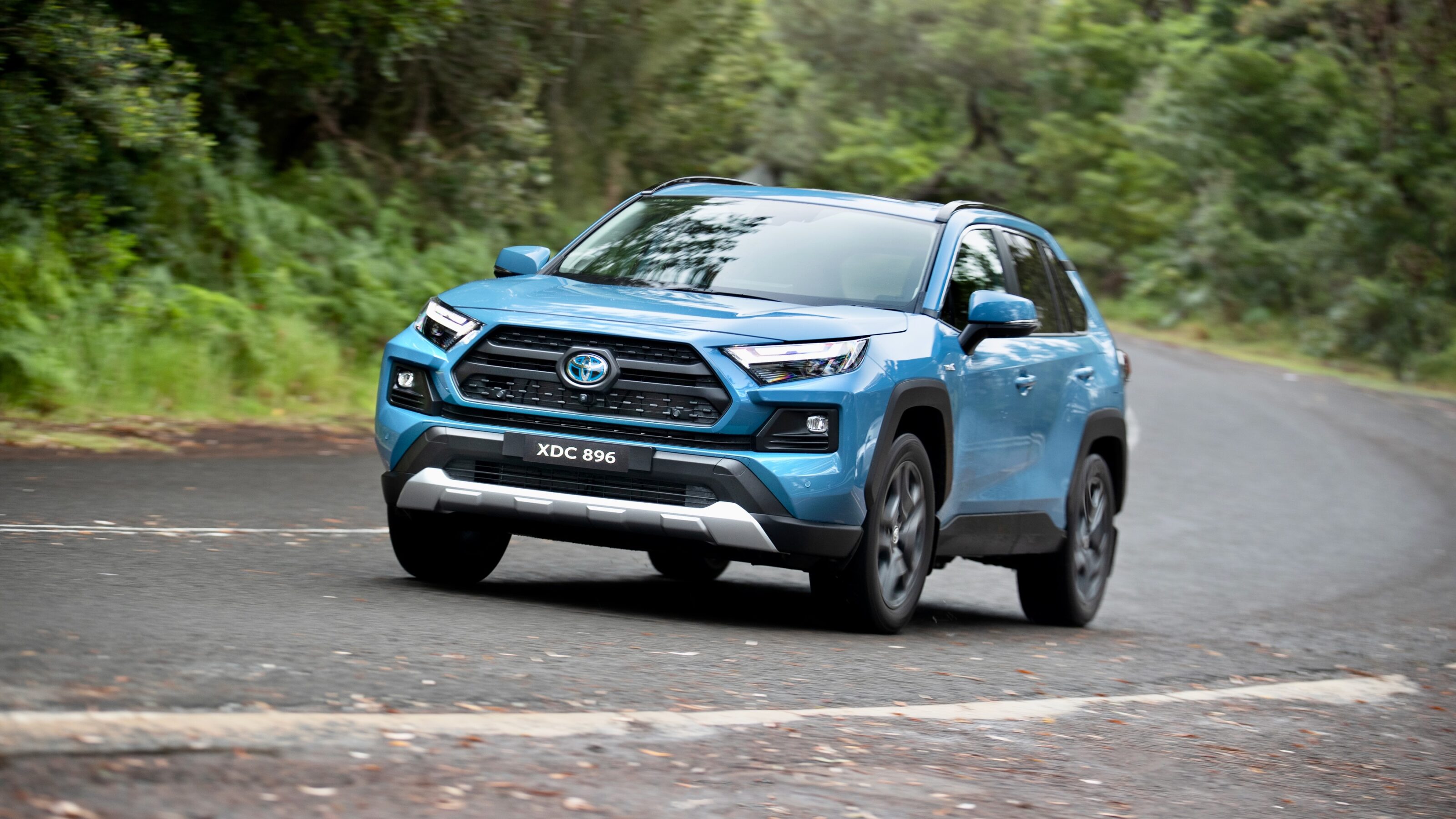
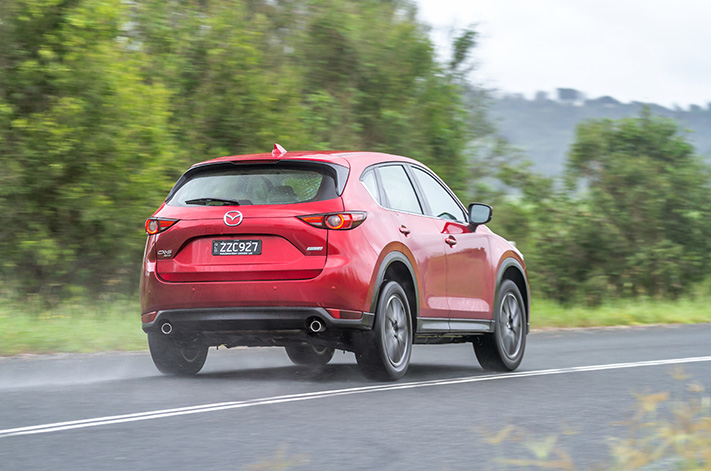
They might not be the freshest offerings, but according to the sales figures Aussies don’t really care. The Toyota RAV4 regularly battles the dual-cabs at the pointy end of the local charts and is dominant in its segment, but the Mazda CX-5 continues to hold its own as the third most popular medium SUV, only slightly trailing the Mitsubishi Outlander.
Does the Toyota deserve its place atop the family friendly pile? Should more people consider the Mazda? Is it a case of wait for the all-new generations of each that aren’t far away? Let’s put them head-to-head and see what we find.
Pricing
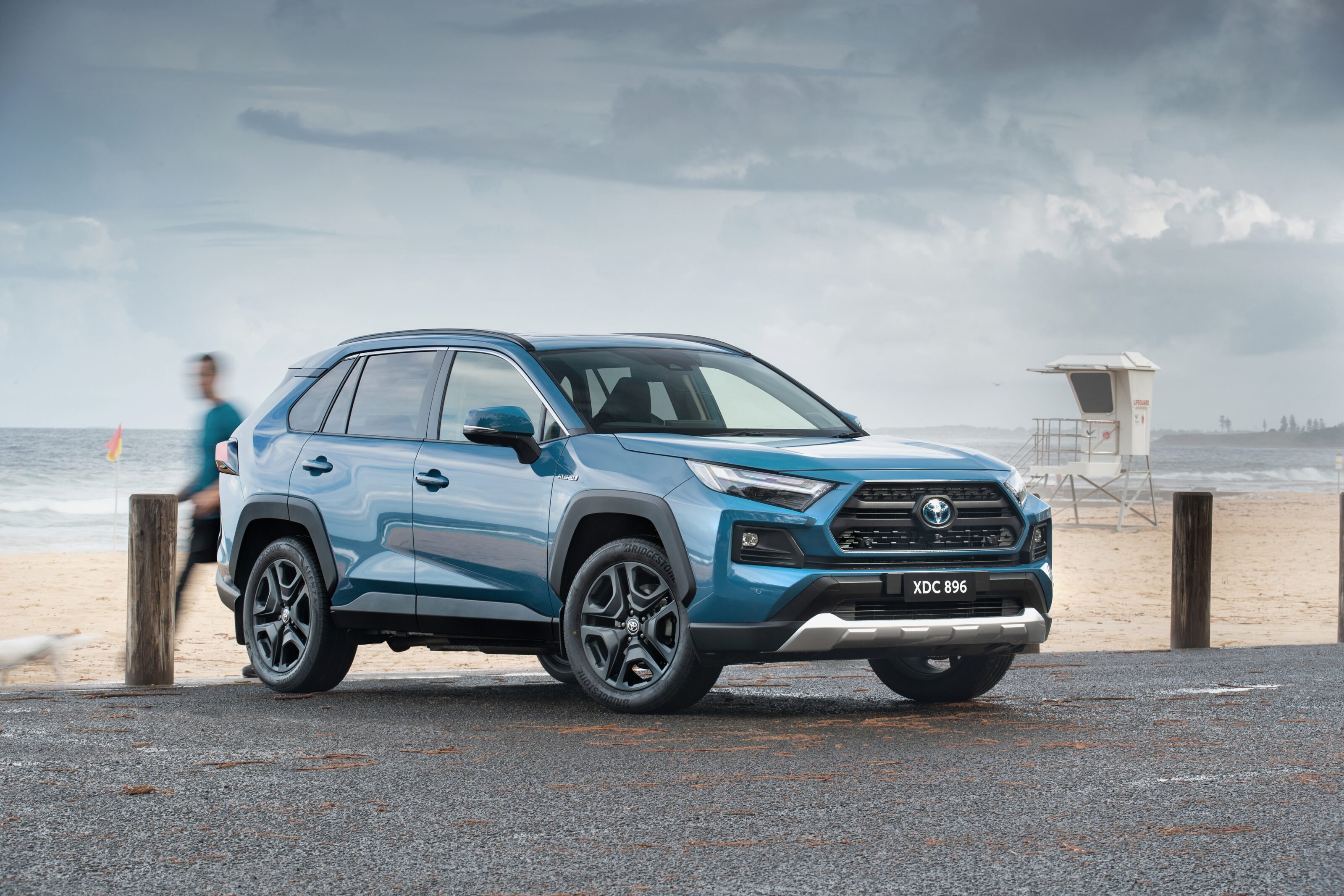
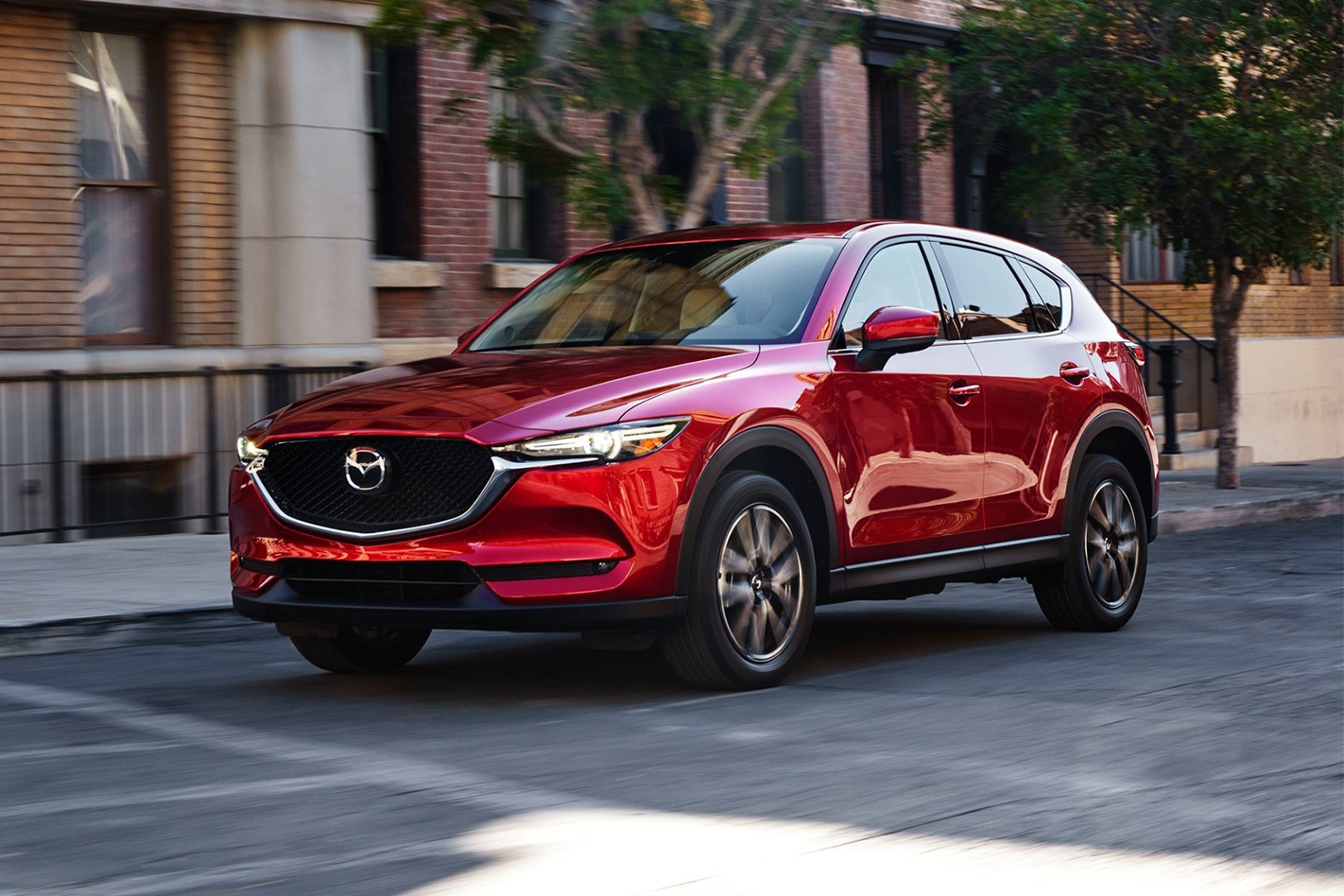
As you might expect, both the Mazda CX-5 and Toyota RAV4 offer fairly extensive ranges, the former spanning from $36,590-$55,000 plus on-road costs (ORCs) and the latter a little more expensive at $42,460-$58,360 (+ORCs) now it’s an all-hybrid affair.
For the purposes of this article we’ll focus on a couple of upper-middle variants, the $50,310 (+ORCs) Mazda CX-5 G25 GT SP and $51,410 (+ORCs) Toyota RAV4 Cruiser Hybrid. If you want some more grunt, the CX-5 GT SP also comes in turbocharged G35 guise for $52,810 (+ORCs) while added traction can be had in the all-wheel drive RAV4 Cruiser Hybrid eFour for $54,410 (+ORCs).
Both brands offer a five-year/unlimited-kilometre warranty, though Toyota extends this to seven years on the drivetrain. Likewise, service intervals for both are 12 months or 15,000km, but whereas the RAV4 is $1350 over the first five visits, the Mazda is $2227.
Toyota does charge $99/year for roadside assistance, however, whereas Mazda throws in five years’ complimentary coverage. White is the only standard RAV4 colour, with all others $705, while Mazda offers the flashier silver-beige Platinum Quartz, blue and black at no cost, with other options adding $795.
Dimensions
Given all these cars are heavily benchmarked against one another, it should come as no surprise that the Mazda CX-5 and Toyota RAV4 are separated by millimetres. The RAV4 is 25mm longer, 10mm wider, 5mm taller and 7kg heavier, though its wheelbase is 10mm shorter. Nothing in it basically.
Where the two do differ, though, is in interior space. The RAV4 not only has a much larger boot at 580 litres to the Mazda’s 483, there’s significantly more room in the back seat, too, the CX-5 being a tight in terms of adult legroom.
| Mazda CX-5 | Toyota RAV4 | |
|---|---|---|
| Length | 4575mm | 4600mm |
| Width | 1845mm | 1855mm |
| Height | 1680mm | 1685mm |
| Wheelbase | 2700mm | 2690mm |
| Weight | 1693kg | 1700kg |
| Boot space | 438L | 580L |
| Charge time 10-80 per cent* | 23min | 15min |
Equipment
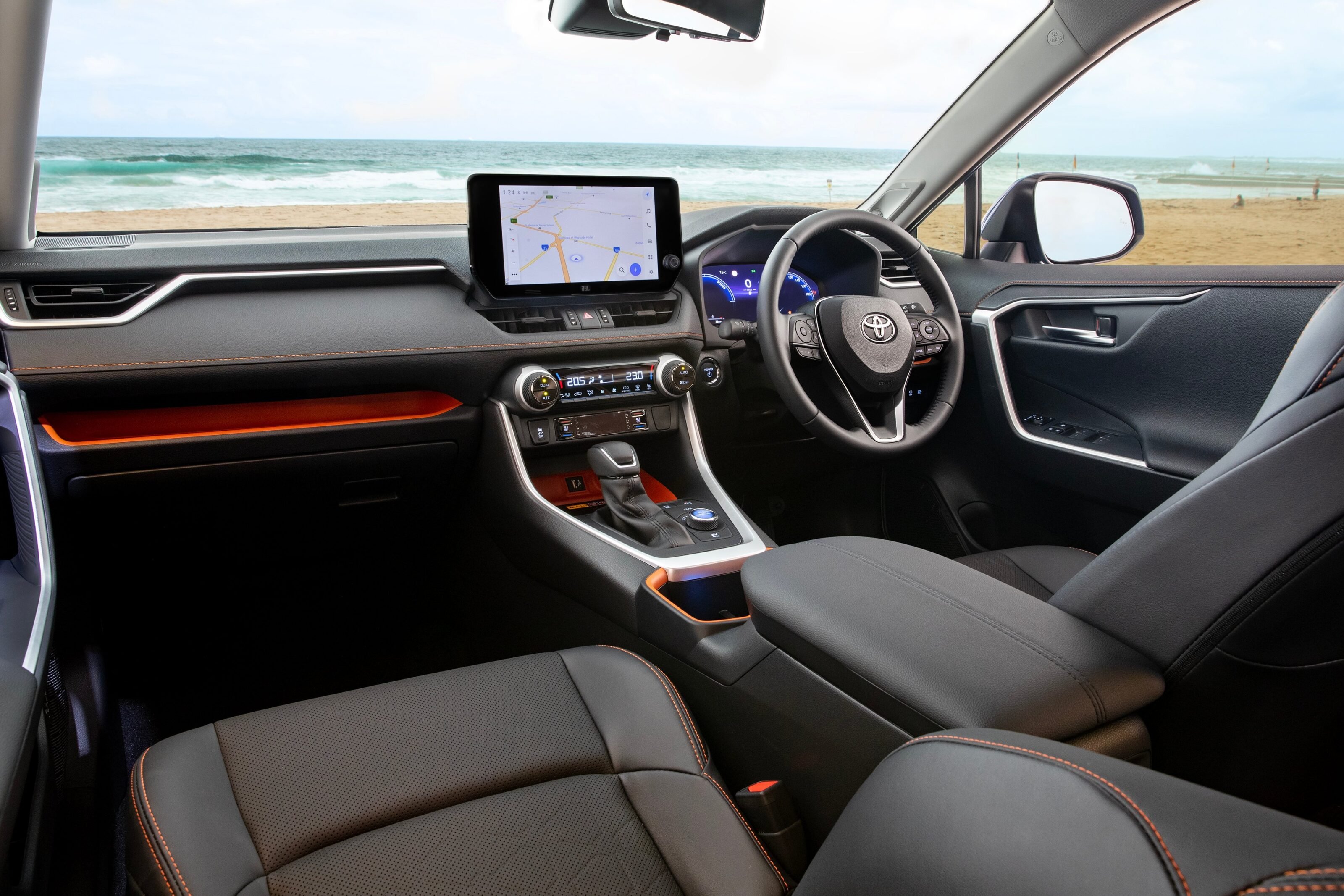
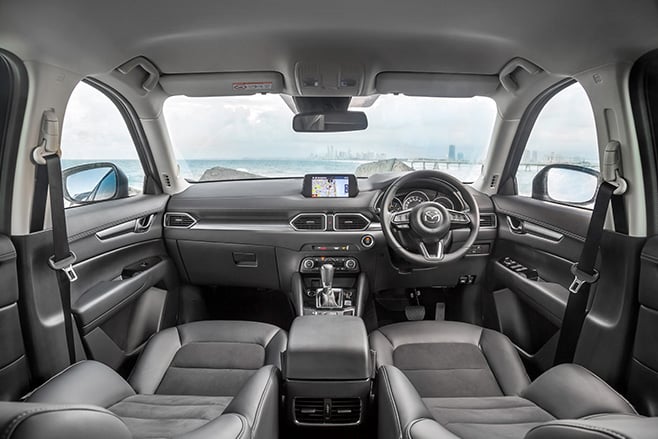
As befits their spots towards the top of their respective trees, there’s plenty of fruit to be found in the Mazda CX-5 GT SP and Toyota RAV4 Cruiser. They’re a fairly close match in most regards and while the table below isn’t exhaustive, it should cover the obvious features most will be after.
| Equipment | Mazda CX-5 GT SP | Toyota RAV4 Cruiser |
|---|---|---|
| Wheels | 19-inch | 18-inch |
| LED headlights | X | X |
| Sunroof | X | X |
| Roof rails | – | X |
| Electric seats | 10-way driver’s, six-way passenger | 10-way driver’s, eight-way passenger |
| Heated seats | Front | Front |
| Ventilated seats | – | Front |
| Climate control | Dual-zone | Dual-zone |
| Power tailgate | X | X |
| Keyless entry | X | X |
| Stereo | 10-speaker | Nine-speaker |
| USB ports | 2 x USB-C, 2 x USB-A | 4 x USB-C, 1 x USB-A |
| Head-up display | X | – |
Powertrains
While 2.5-litre four-cylinder petrol engines feature under the bonnet of both the Mazda CX-5 GT SP and Toyota RAV4 Cruiser there are plenty of differences in their operation. The Mazda’s Skyactiv engine sends 140kW/252Nm to all four wheels via a six-speed automatic gearbox.
If you’re a keen driver, the extra $2500 for the 170kW/420Nm turbocharged version could be money well spent as it gives the CX-5 genuinely enjoyable punch but it comes with a commensurate increase in fuel consumption. The standard version claims 7.4L/100km on the combined cycle.
Hybrid assistance means the RAV4 can offer the best of both worlds. Not only is it more powerful at 160kW/221Nm (the latter figure being the engine figure only), its claimed combined fuel consumption is just 4.7L/100km. And that’s no test anomaly, it’s a relatively representative figure.
Unless you really need the added traction of all-wheel drive the extra $3000 for the eFour is questionable value, though it can tow 1500kg (braked), whereas the 2WD is limited to 480kg. Both the Mazda and Toyota are happy with 91RON fuel.
Technology
While older vehicles at their cores, the Mazda CX-5 and Toyota RAV4 have received regular updates throughout their life to remain competitive. The CX-5 features a 10.25-inch infotainment screen with wireless smartphone mirroring and digital radio along with a wireless charging pad and a quasi-digital driver’s instrument display.
Once more, the RAV4 is similar, though it has a completely digital 12.3-inch instrument display and the 10.5-inch infotainment screen has wireless Apple CarPlay but you need to plug in for Android Auto. Digital radio and wireless charging also feature, while Toyota offers 12 months of complimentary access to the complete Toyota Connected Services.
Following this 12-month period, SOS emergency call, automatic collision notification and vehicle information will still be complimentary but adding stolen vehicle tracking and remote vehicle functions is $9.95/month and including connected navigation and multimedia profiles lifts this to $12.50/month.
Safety
The Mazda CX-5 is now listed as unrated by ANCAP as its five-star rating from 2017 is deemed to have expired. That rating carried scores of 95 per cent for adult occupant protection, 80 per cent for child occupant protection, 78 per cent for pedestrian protection and 59 per cent for safety assist.
That latter score is particularly low, but the CX-5 has been updated in the meantime and in addition to six airbags it has all the modern active safety features as standard, including adaptive cruise control, auto-emergency braking in forward and reverse, lane-keep assist and departure warning, rear cross-traffic alert and speed sign recognition.
The Toyota RAV4 basically mirrors this, with the addition of a panoramic view monitor for better vision while parking and an extra airbag. It retains its five-star ANCAP rating, albeit an older one from 2019, with scores of 93 per cent for adult occupant protection, 89 per cent for children, 85 per cent for pedestrians and 83 per cent for safety assist.
Driving
While it might not necessarily be the top priority for most buyers, both the Mazda CX-5 and Toyota RAV4 are two of the better-driving medium SUVs available, albeit in slightly different ways.
Keen drivers will enjoy the CX-5 as it’ll happily carve through corners with accurate steering and balanced, trustworthy handling without sacrificing ride comfort. The engine needs a bit of a rev for to give its best but it’s happy to do so and the automatic is smooth and responsive.
For years the words ‘RAV4’ and ‘dynamics’ didn’t belong in the same sentence, but the latest iteration is a very impressive vehicle. Comfortable, easy to drive and the hybrid system not only improves fuel efficiency but helps the petrol engine out where it needs it most.
Conclusion
In both instances here, the sales figures don’t lie. The Mazda CX-5 won’t be for everyone, but if outright space isn’t high on your priority list then it’s a well-equipped, fine-driving SUV that’s making thousands of people a month happy.
However, the RAV4’s dominant position isn’t down to the might of Toyota’s marketing machine (though that doesn’t hurt). It’s a very difficult package to pick flaws in, with plenty of space, benchmark running costs, excellent safety credentials, all the equipment you’d need and it’s a fine drive to boot.
If having the latest and greatest isn’t that important to you, keep an eye out for deals as both manufacturers sharpen their pencils as the all-new generations of both models approach.
Mahindra Australia has announced that the new XUV3XO is now in local dealerships ahead of the first deliveries that commence on July 4th. The brand is yet to announce local pricing for the XUV3XO, though has given a bit more information as to its model line-up.
Two models will be available at launch: the entry-level AX5L and upper-spec AX7L, and both will be equipped with level 2 ADAS features such as autonomous emergency braking with pedestrian and cyclist detection, forward collision warning, adaptive cruise control, traffic sign recognition, lane keeping assistance and auto high beam.
There will also be dual 10.25-inch displays for the driver and infotainment system, with Apple CarPlay and Android Auto standard as well.
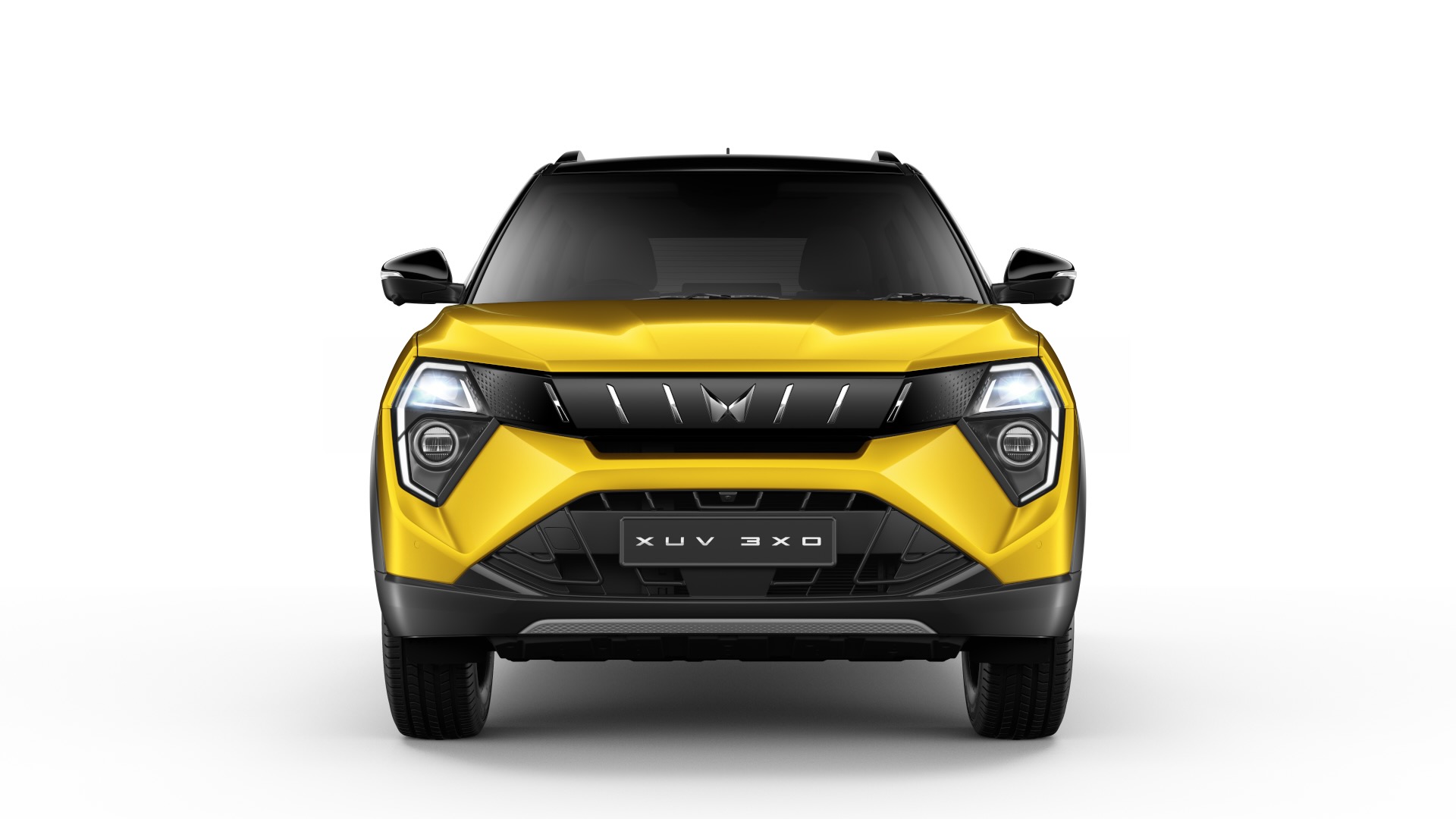
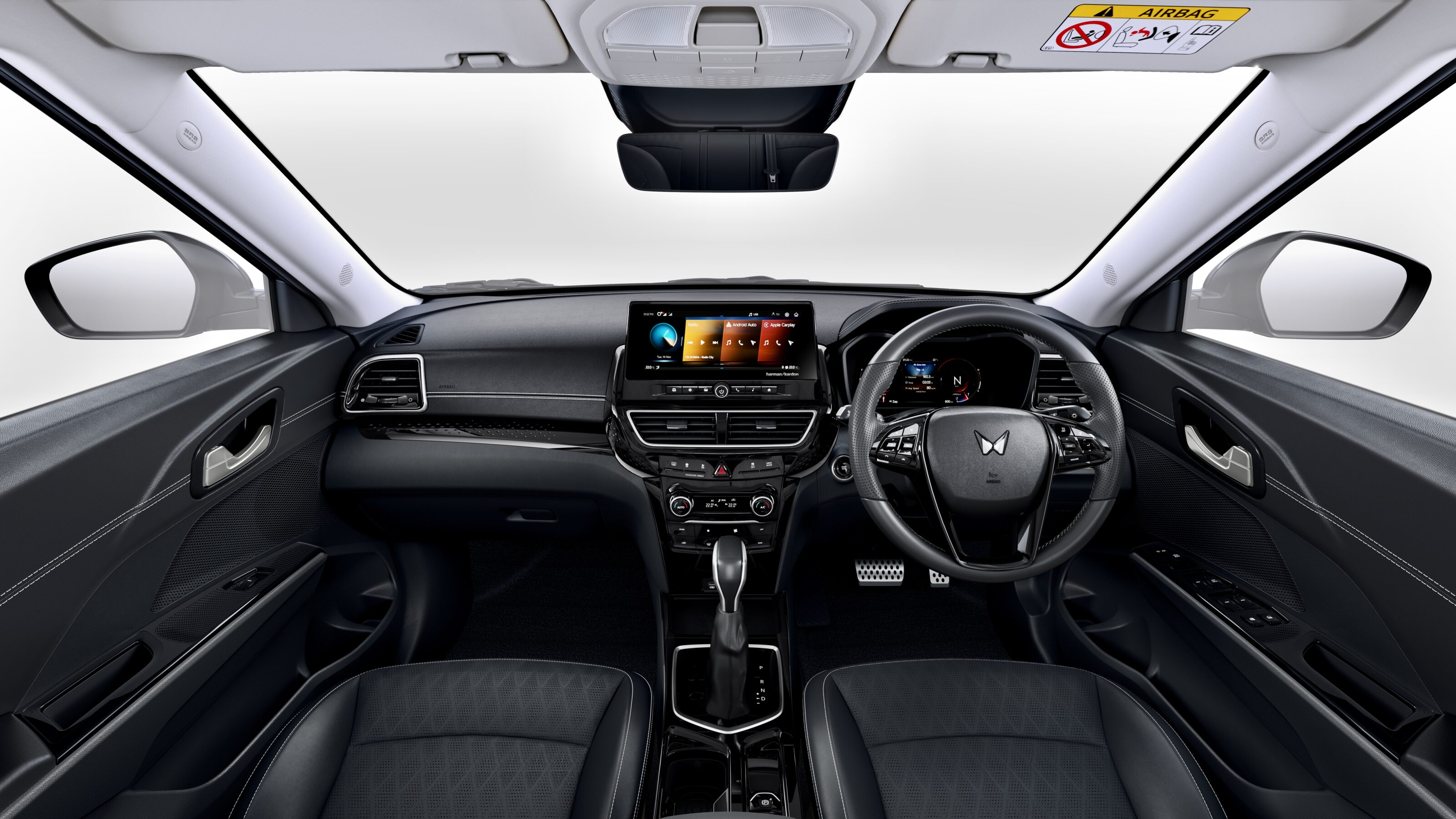
Other features available on the XUV3XO in India include a panoramic sunroof, a seven-speaker Harman Kardon sound system, a 360-degree camera (including a blind-spot camera), dual-zone automatic climate control with rear air vents, front and rear parking sensors and a wireless phone charger.
According to Mahindra, a six-speed torque converter automatic transmission will be standard across the range, and the XUV3XO will be rated at 6.5L/100km for combined fuel consumption.
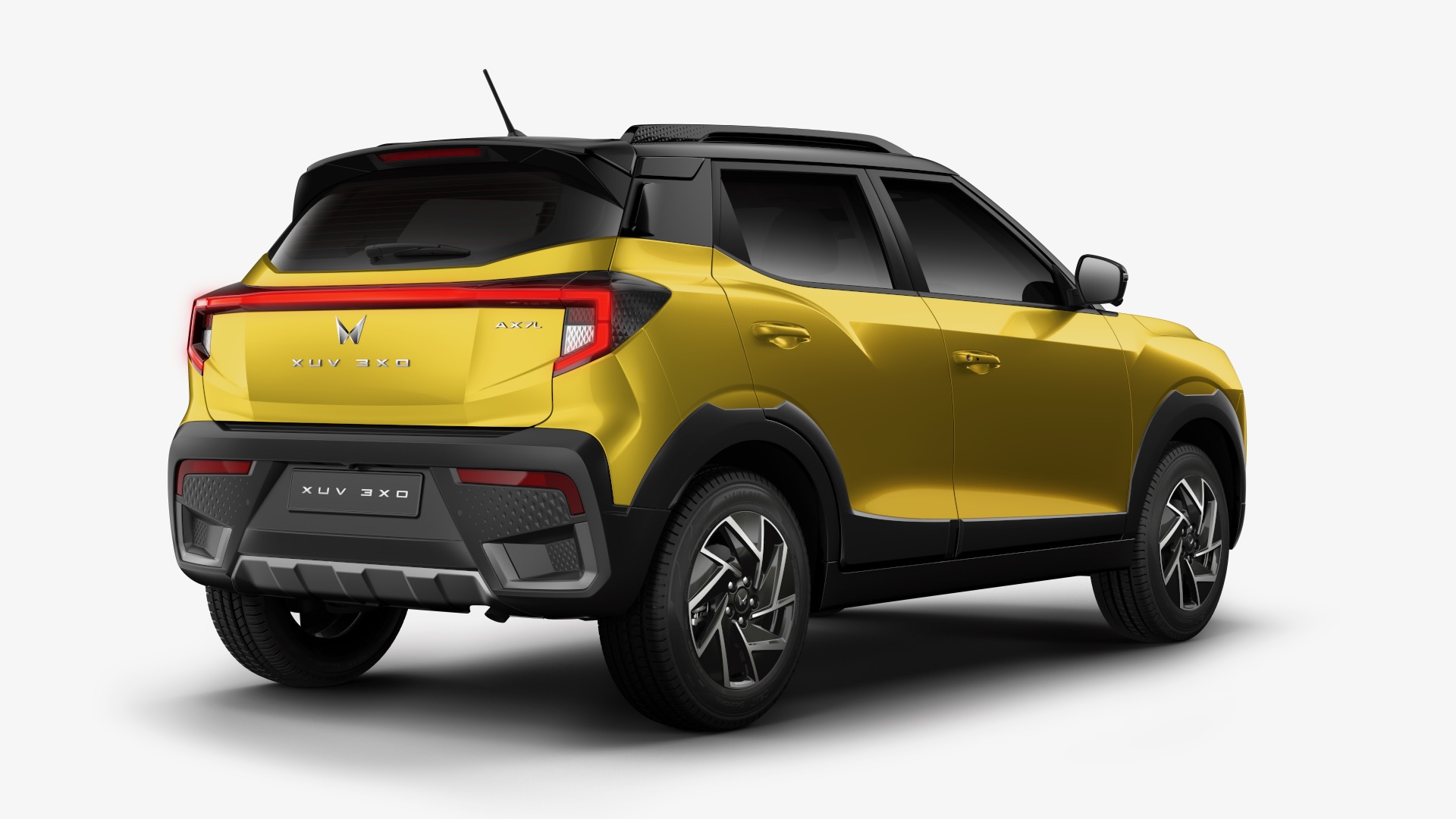
Mahindra is yet to announce any drivetrain details for Australia, though in India, the XUV3XO is available with two turbocharged 1.2-litre petrol engines (one making 82kW/200Nm and the other making 96kW/230Nm) and an 86kW/300Nm 1.5-litre turbo-diesel.
Sitting below larger Mahindra models such as the XUV700, the XUV3XO is the first small SUV offering from the brand to go on sale in Australia.
The Mahindra XUV3XO is now available to pre-order ahead of the first deliveries commencing on July 4th.
Ferrari has revealed its latest venture – and it’s not on four wheels. The legendary Italian marque has launched the Ferrari Hypersail project, a revolutionary step into the world of offshore sailing that merges its motorsport legacy with cutting-edge nautical innovation.
The Hypersail name pays tribute to Ferrari’s iconic Hypercars – symbols of speed, endurance, and advanced engineering. In the same spirit, Hypersail aims to redefine performance on water.
At the helm of this ambitious project is veteran sailor Giovanni Soldini, who will serve as Team Principal. Under his leadership, Hypersail will operate as a floating R&D lab, pushing boundaries in aerodynamics, sustainable energy, and marine engineering.

Ferrari’s own engineering team is working closely with specialists from the sailing world to oversee every phase – from concept and design to build and testing. Their combined goal: to develop a breakthrough racing vessel that showcases innovation without compromise.
At the centre of the project is a 100-foot ocean racing monohull designed by esteemed French naval architect Guillaume Verdier. This high-tech yacht will “fly” over the waves, stabilising on three points of contact, and will be entirely powered by self-sufficient energy sources – a landmark in sustainable competitive sailing.
Construction will take place in Italy, with sea trials scheduled for 2026.

XPeng launched into Australia In late 2024, one of a plethora of Chinese brands seeking a piece of the pie in the Australian car market. But in many ways they’re the least known of the new crop so it’s worthwhile taking a look at the Xpeng back story…
Founded in 2014 by a group of automotive and tech company executives, Xpeng is an electric vehicle manufacturer headquartered in Guangzhou in the Guangdong province of China. Today, the company also has offices in California and Germany.
XPeng’s first car product, the G3 SUV, was launched in China in 2018 and its P7 large sedan arrived in April 2019 before going on sale in 2020. Later, the G9 large SUV and P5 small sedan were also launched, with the GP5 notable for its impressive tech inclusions such as dual LiDAR, radar and ultrasonic sensors that formed part of the brand’s ‘XPilot3.5’ ADAS system.
XPeng is notable for being an entirely privately owned business that is not only focused on EVs, but the application of AI to mobility. While it has a range of cars globally, it also develops tech, including the first AI-integrated operating systems for cars called ‘AI Tianji System XOS 5.1.0’.
The brand also developed the first comprehensive models for intelligent driving with AI (‘XNet’, ‘XPlanner’ and ‘XBrain’), the world’s first 40-core chip for AI-defined cars, robots and flying vehicles (‘Xpeng Turing’) and the AI perception sensor ‘Hawkeye Vision’. Plus, it also launched an AI humanoid robot called Iron in 2024 at its AI Day.
In 2021, XPeng launched into Norway – its first global market outside China – with the P7. So began a dramatic market expansion after the Scandinavian foray was deemed a success. XPeng is now sold in most European markets, as well as Middle Eastern states like Qatar and the UAE.
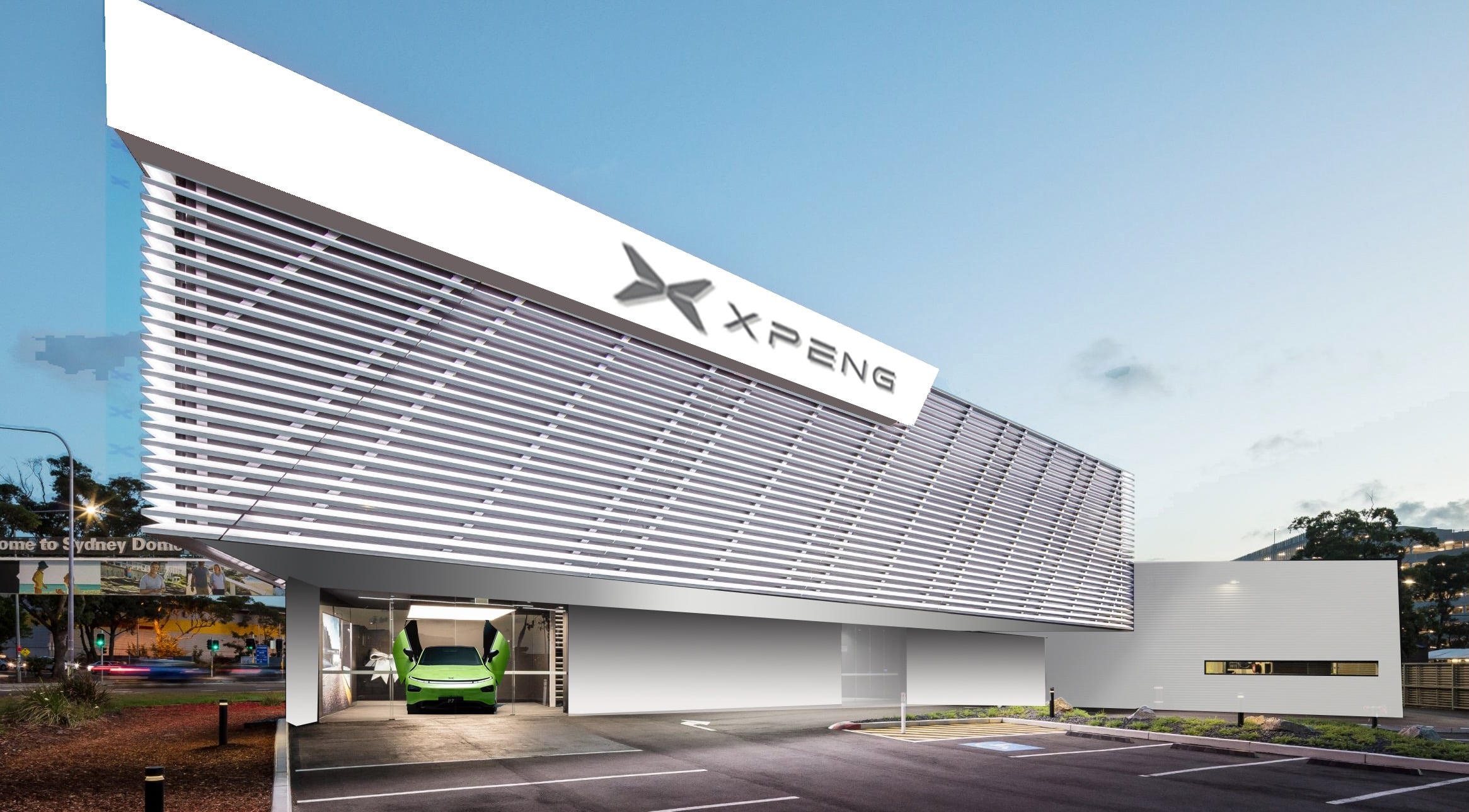
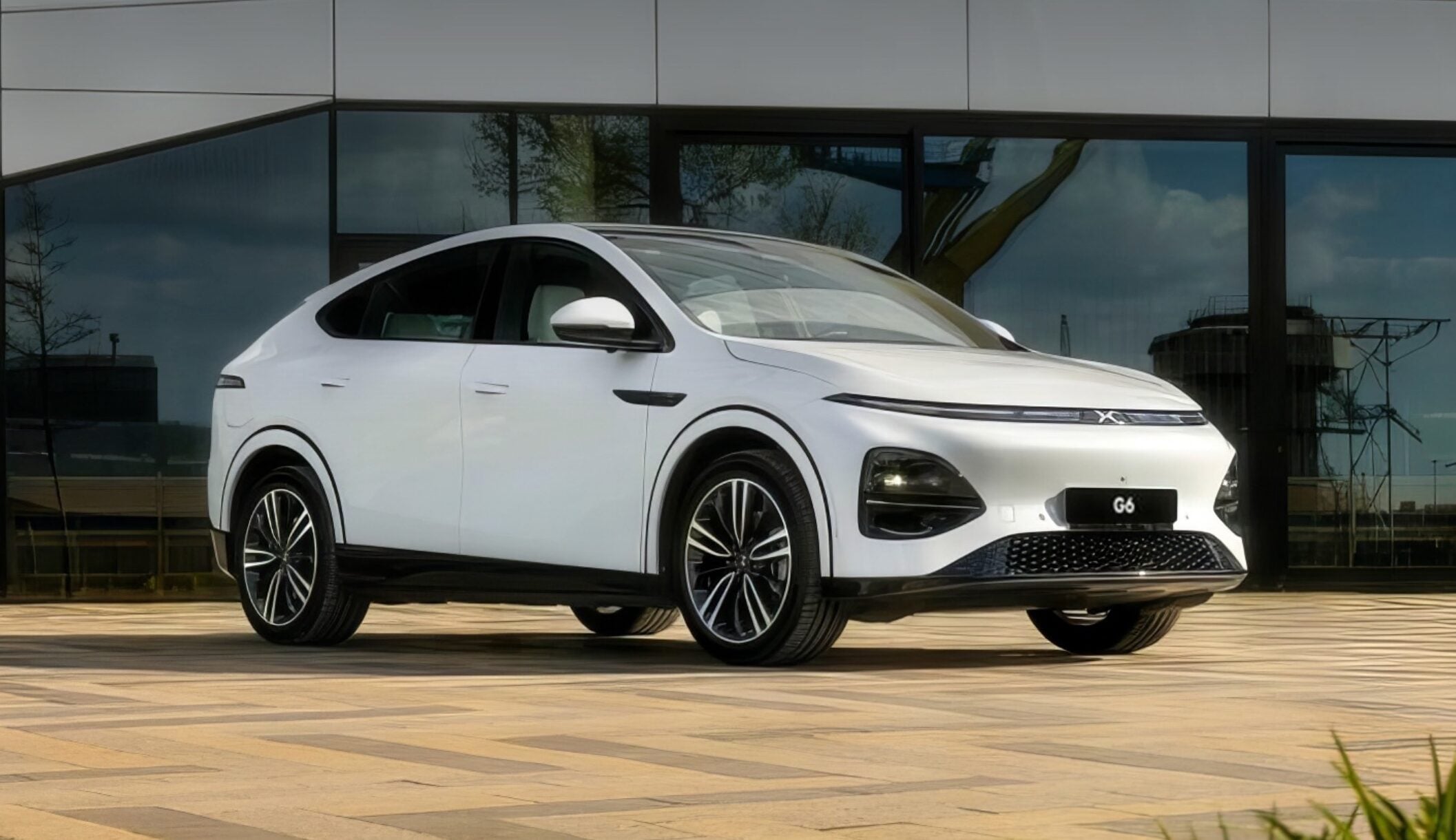
XPeng brought its new G6 mid-sized SUV in 2023 alongside a $700 million investment from the Volkswagen Group in return for a 4.99 per cent stake and collaboration on future VW EVs for the Chinese market.
Soon afterwards, XPeng acquired the autonomous driving division of Beijing-based company DiDi in exchange for US$744 million worth of shares. Part of the purchase included the aforementioned Pilot system, but also the Mona M03 five-door liftback that was developed by DiDi but became an XPeng-badged product.
XPeng also has a vast network of charging infrastructure in China, much like Tesla does, and it offers free charging to its customers. As of earlier this year, it has 772 branded super fast DC stations and 1870 free chargers.
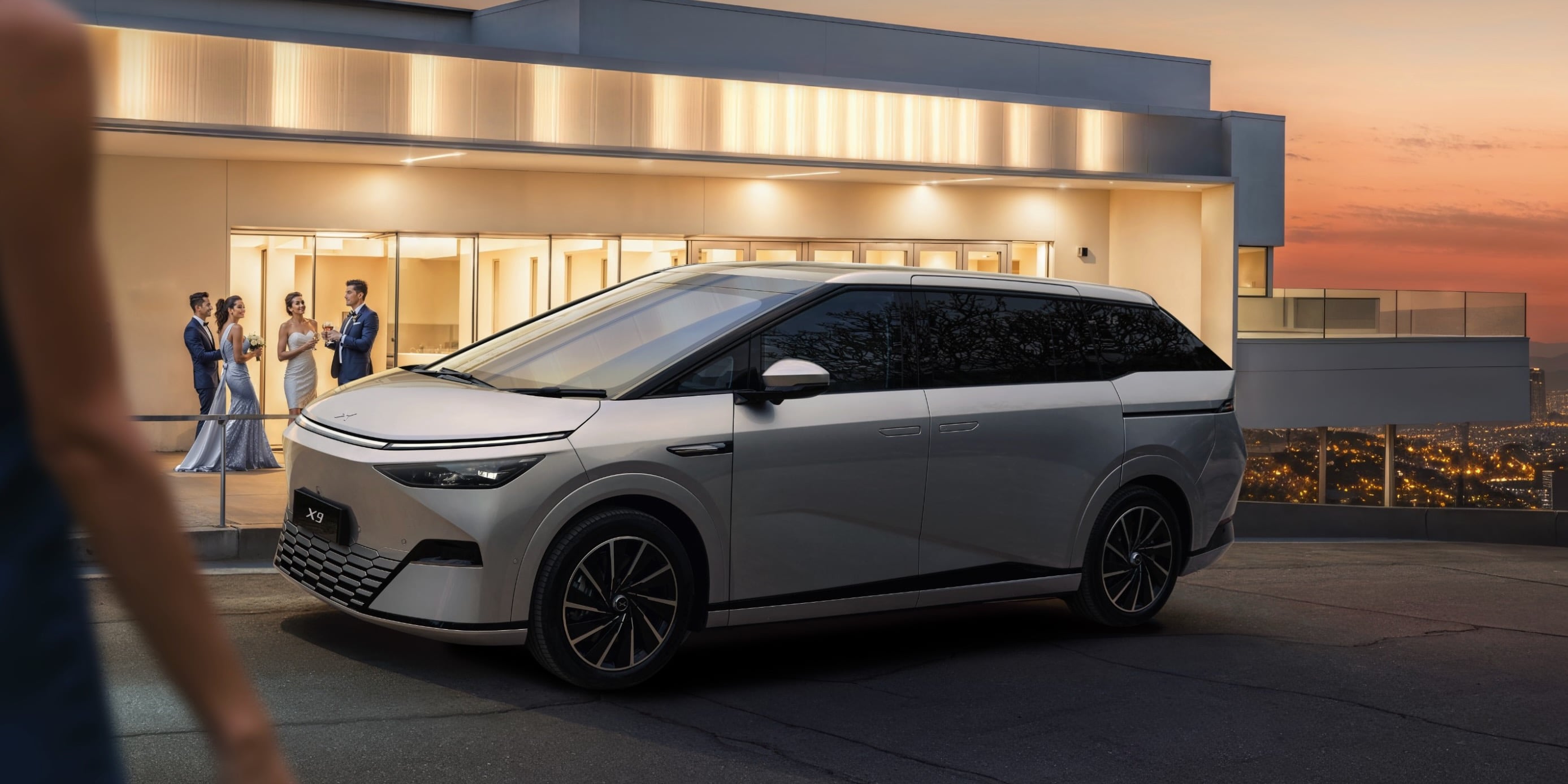
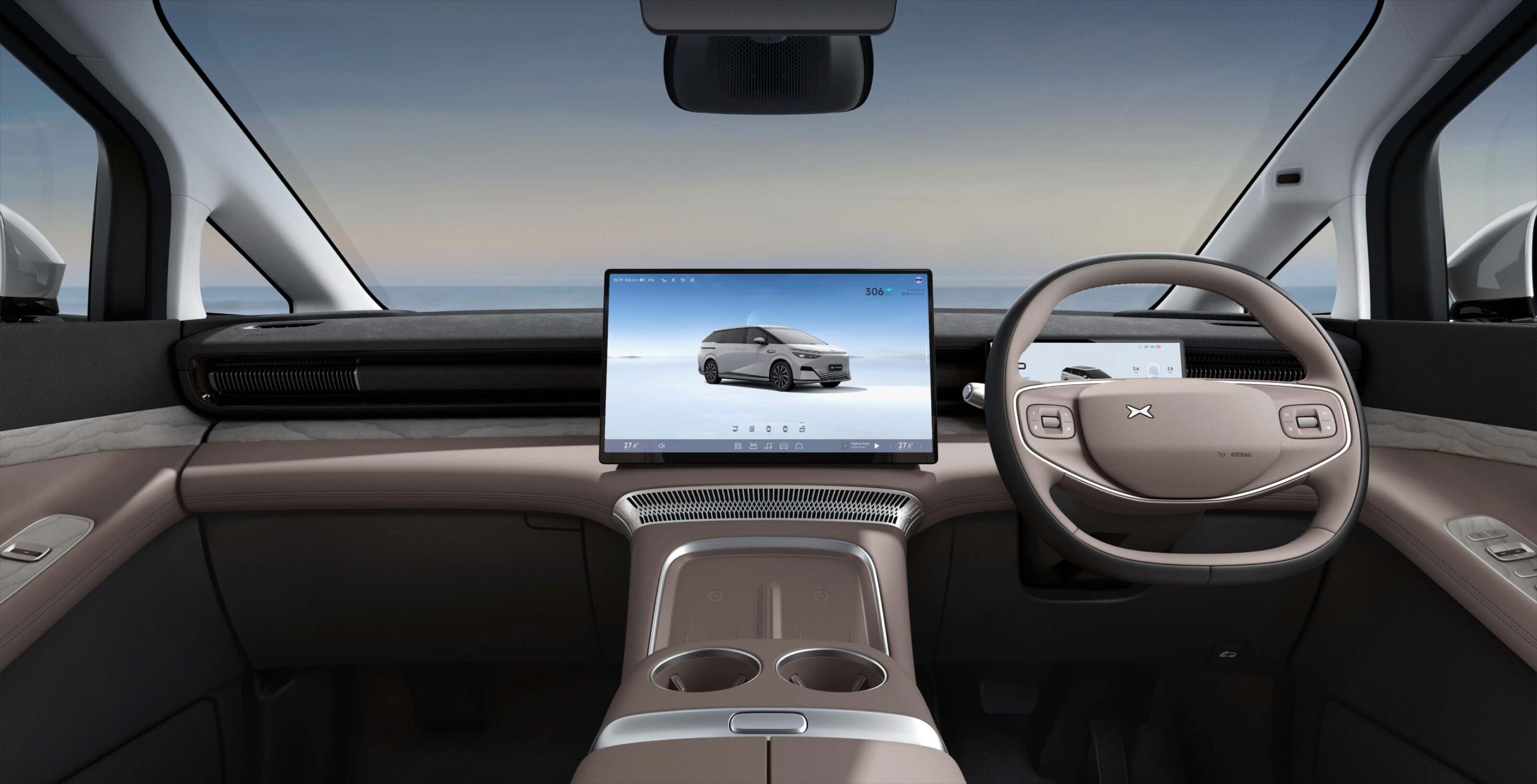
XPeng launched in Australia in late 2024 through new distributor TrueEV, and while it’s yet to disclose local sales figures, the brand has plans for more than 20 Australian dealerships by the end of 2025.
Currently, there’s only one XPeng product sold locally: the G6 mid-sized electric SUV, which competes with the Tesla Model Y and Kia EV5. The G6 is priced from $54,800 plus on-road costs and is available with either 66kWh LFP or 87.5kWh NMC batteries for up to 570km of range on the WLTP cycle.
But there are more products for Australia on the horizon, including the G9 large SUV and X9 people mover. The new P7+ is also set for an Australian debut at the Melbourne EV Show in late June.
In just 10 years, XPeng has gone from nothing to selling over 190,000 cars in China alone in 2024, selling its products in multiple global markets and developing a significant amount of in-car technology. What comes next is anybody’s guess, but its future looks bright.
The future of Mercedes-AMG has been previewed with the unveiling of the new GT XX concept car. Packing intimidating figures such as a 1000kW power output and a 360km/h top speed, the GT XX also debuts a number of new drivetrain technologies for Mercedes, such as 850kW DC fast charging and new axial flux electric motors.
Underneath the GT XX is a new electric vehicle platform dubbed ‘AMG.EA’, which will underpin the next generation of electric Mercedes-AMG products. The first of which will be a new four-door coupe like the GT XX, which is expected to be revealed soon, and afterwards an equivalent SUV will also join the lineup.
It’s this new platform that delivers some impressive new technologies for the brand, including a new high-performance battery developed by AMG’s Formula 1 powertrain division that can manage extreme and long-lasting power delivery.
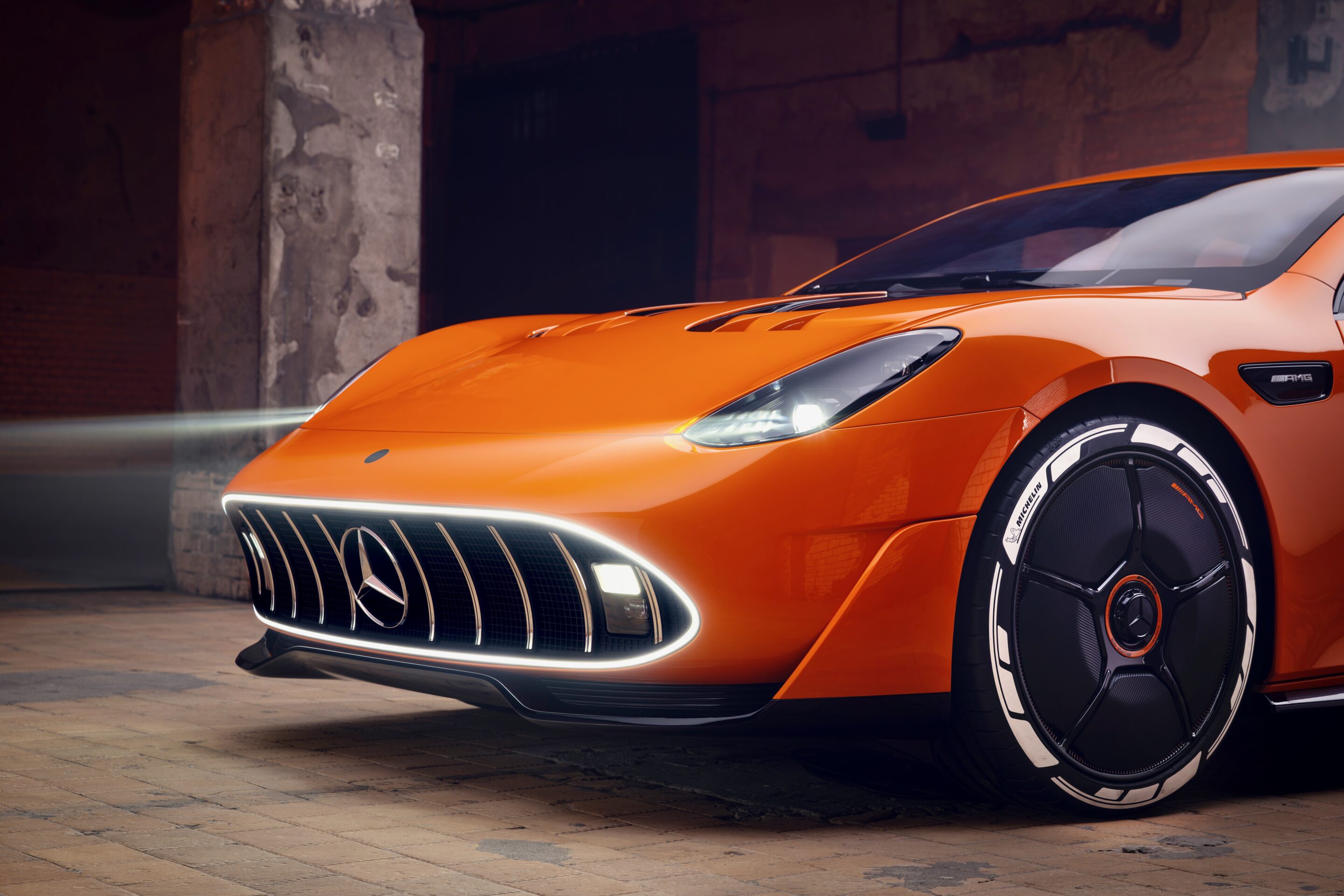
The battery capacity is 114kWh with 3000 cells that combine a nickel cobalt manganese aluminium (NCMA) cathode with a silicon content anode, while the AMG GT XX also features a new electrical system that runs at over 800V to allow charging speeds of up to 850kW. That’s far beyond even the most advanced EV chargers in Australia and according to AMG, it can add 400km of range in just five minutes.
The GT XX has also debuted a new new tri-motor drivetrain, with two axial-flux motors at the rear with a third on the front axle that can decouple under light loads to reduce mechanical drag. The combined power output is 1000kW, which is sent to all four wheels through a variable all-wheel drive system.
The exterior of the AMG GT XX shows a lot of cues from the experimental Mercedes C111, as well as more recent concepts such as the Vision AMG from 2022. Its shape is extremely sleek with a drag-co efficiency of just 0.198Cd, thanks to details such as frameless doors with flush handles, compact aero mirrors and 21-inch wheels that feature active blade sections that open to aid brake cooling and close to reduce drag.
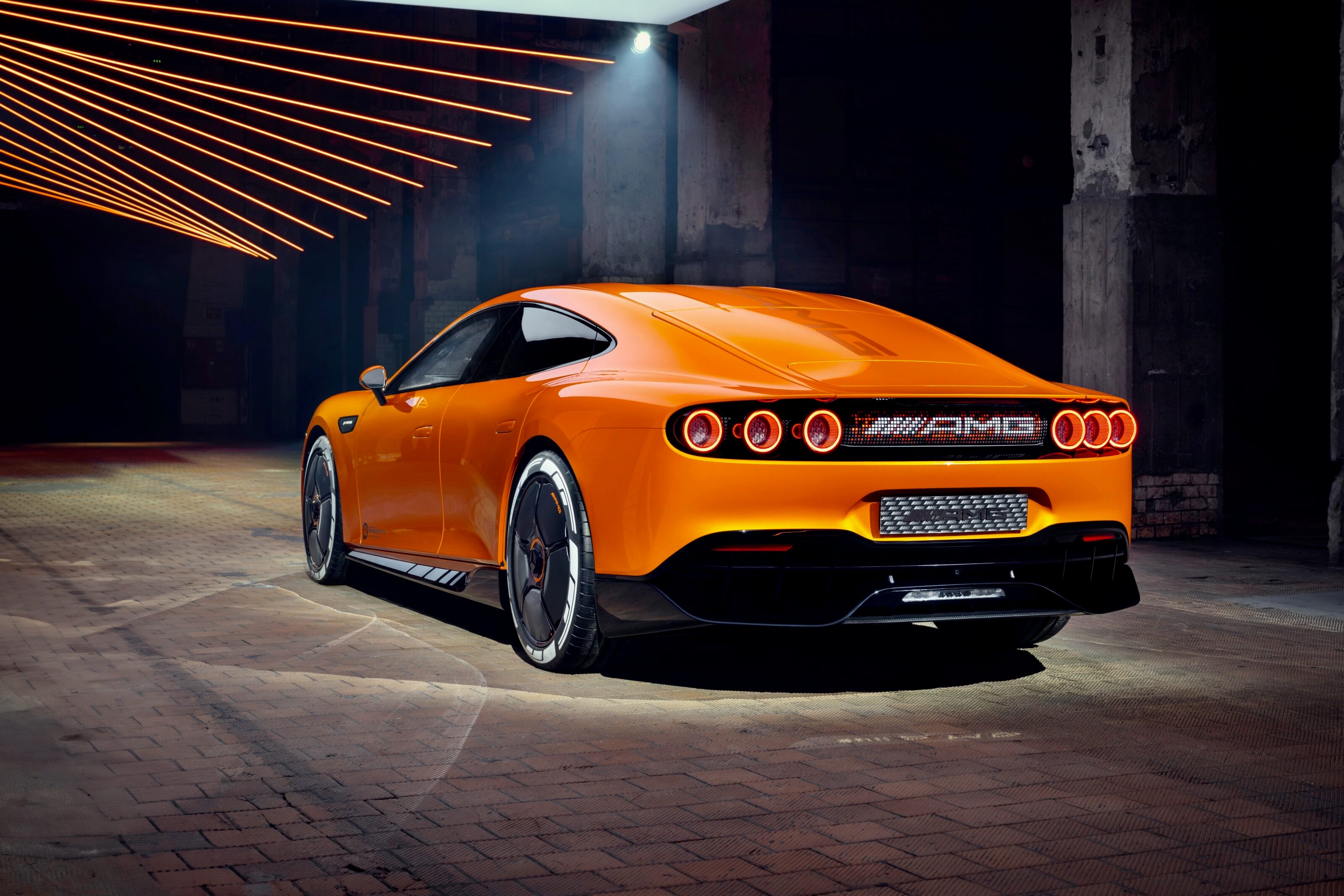
At the rear, the AMG GT XX lacks a rear window – like the Polestar 4. Beneath are six round tail-lights joined by a 730-LED light panel that can display an array of messages. An airbrake spoiler deploys under heavy braking or at high speed, and works in tandem with the carbon fibre lower diffuser.
Inside the GT XX is a minimalist and tech-heavy cabin filled with experimental materials such as biotech leather made from recycled GT3 tyres and bio-silk door pulls. It uses a similar yoke-style steering wheel to the AMG One supercar, while the 11.25- and 14-inch displays use the brand’s MBUX software.
Trying further to win over V8 fans, the GT XX reportedly mimics AMG V8 engine noises through an eight-speaker exterior sound system mounted in the headlight housings.
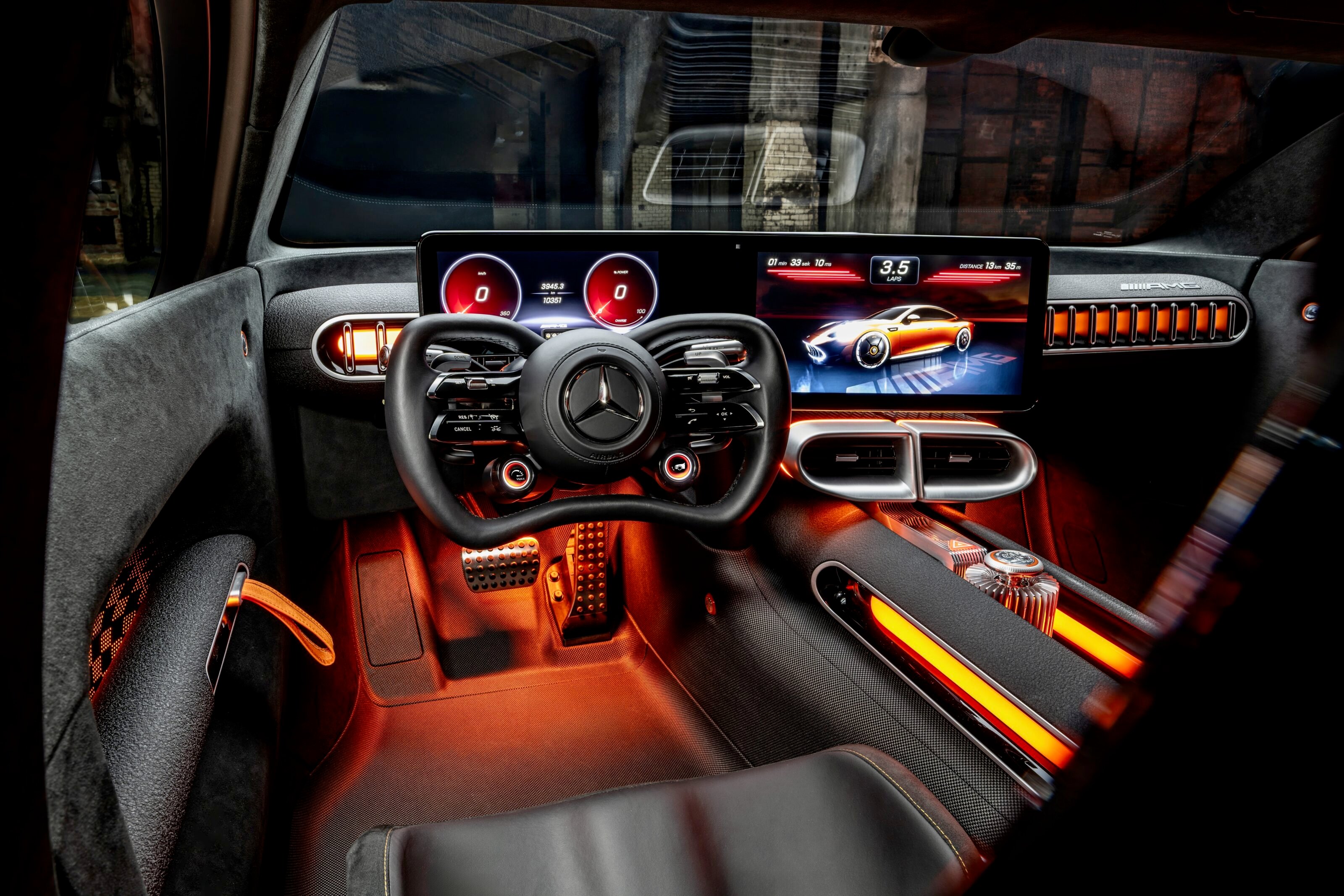
Measuring 5204mm long, 2130mm wide and 1317mm tall, the GT XX is 150mm longer than the existing AMG GT four-door coupe that debuted in 2018.
The Mercedes-AMG GT XX previews a new AMG flagship sedan that will reportedly debut in the next few years. Watch this space.
Geely Auto Australia has announced the upcoming launch of its second model for the Australian market – the Starray EM-i, a tech-rich mid-size hybrid SUV. Following the successful debut of the all-electric Geely EX5 earlier this year, the Starray EM-i marks the brand’s latest step in expanding its new energy vehicle portfolio in Australia.
Slated to arrive in the fourth quarter of 2025, the Starray EM-i – known in China as the Galaxy Starship 7 – has already made waves in its domestic market with over 80,000 units sold since its late 2024 debut.
Built on Geely’s Global Intelligent New Energy Architecture (GEA), the SUV introduces EM-i Super Hybrid technology to Australian customers for the first time.
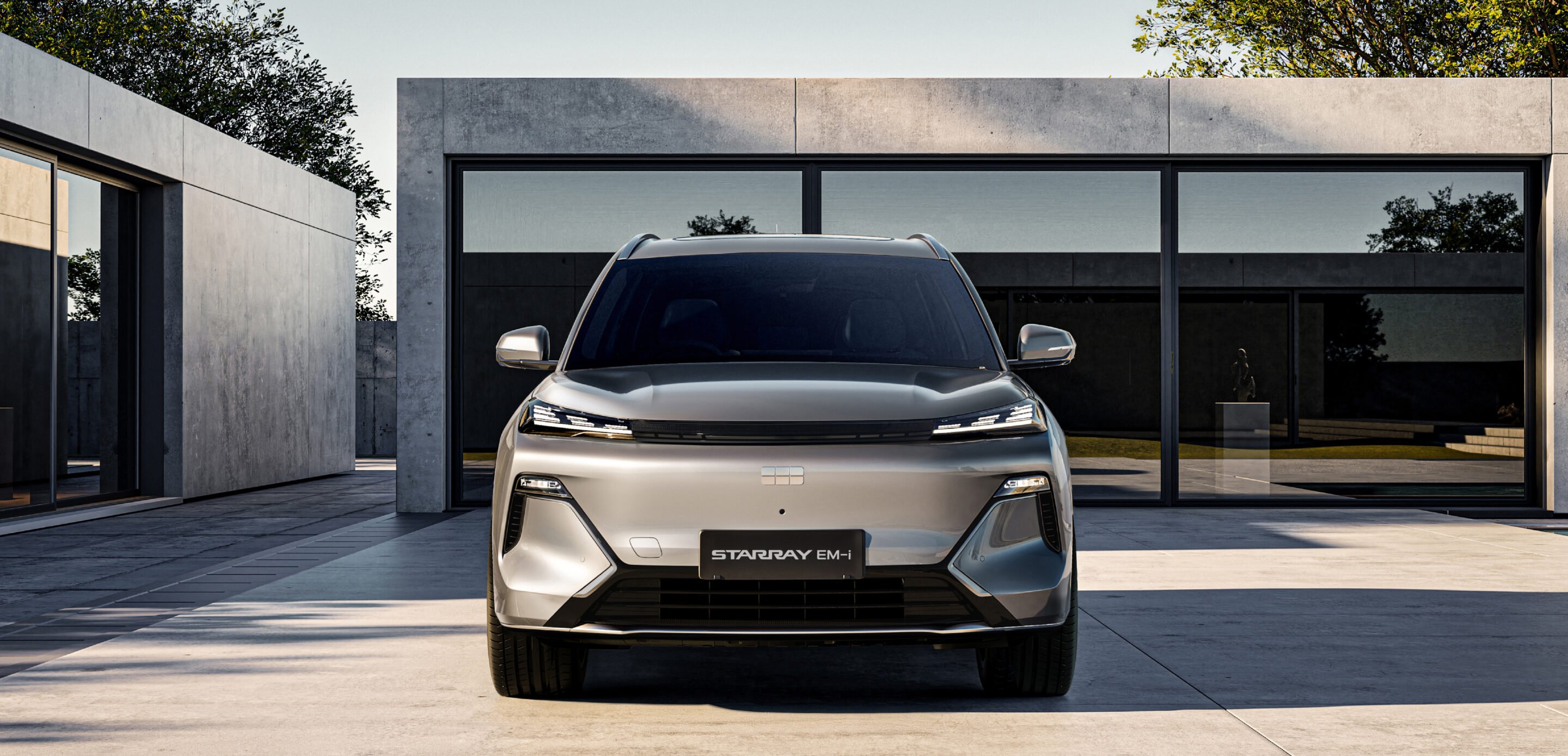
Combining a 1.5-litre petrol engine (73kW/125Nm) with a powerful electric motor (160kW/262Nm), the Starray EM-i delivers a total system output of 193kW sent exclusively to the front wheels. It also features an 18.4kWh Lithium-Iron Phosphate battery, enabling pure electric driving for daily commutes and a Vehicle-to-Load (V2L) function supporting up to 3.3kW output — ideal for outdoor or emergency power use.
Geely Auto Australia CEO Mr Lei Li said of the new the model: “The Starray EM-i is a worthy follow-up to the Geely EX5, continuing the accessible quality, innovation, and value that customers have come to expect from Geely.”
The EM-i hybrid system supports three intelligent drive modes: Pure (EV only), Hybrid (for optimal fuel economy), and Power (combining electric and petrol power for peak performance). With a focus on electric-first operation, the EM-i offers smooth take-off, instant torque, and consistent performance regardless of battery charge, aided by advanced silicon carbide temperature management.
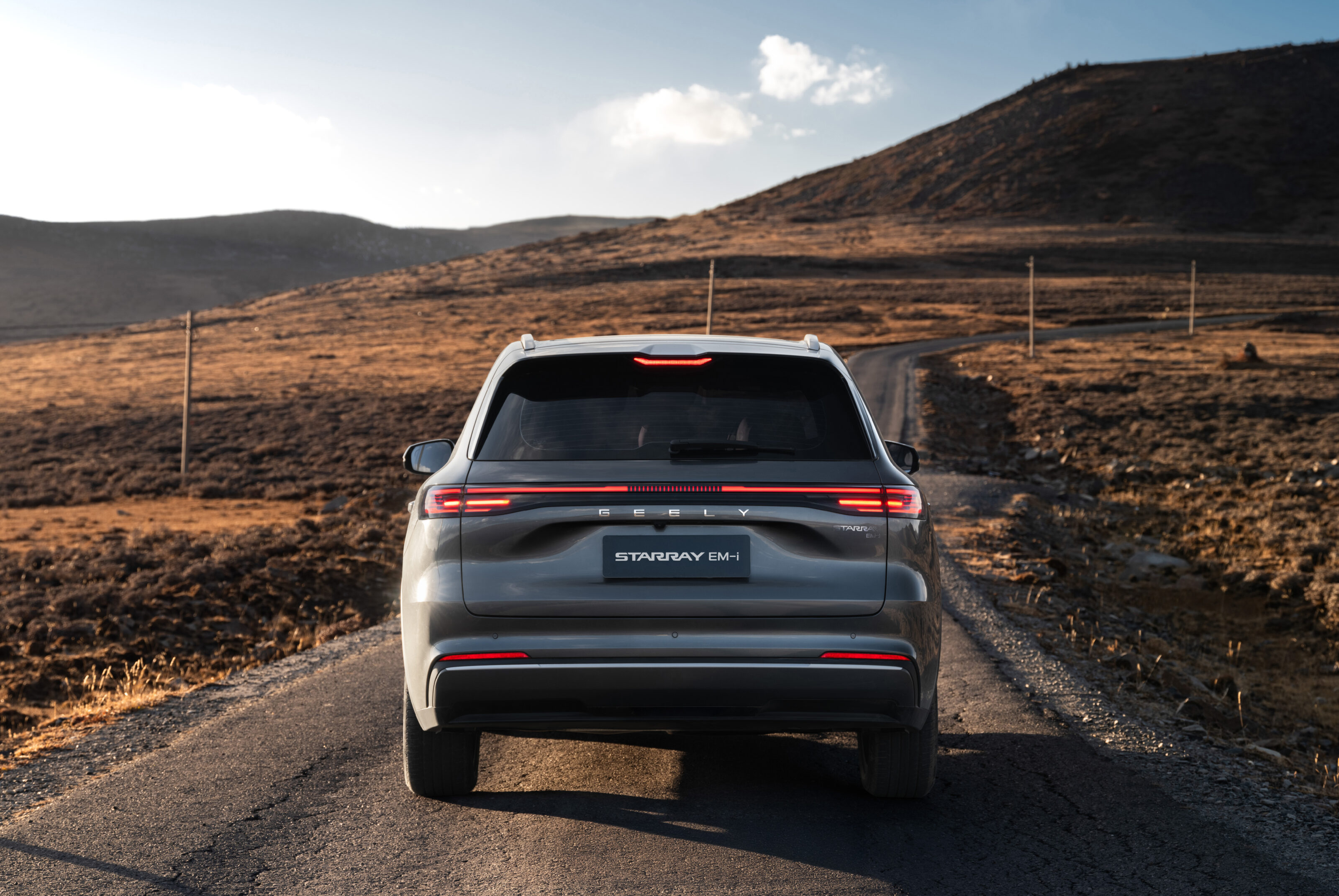
The GEA platform also places strong emphasis on safety, with battery units rigorously tested against extreme conditions such as saltwater immersion, subzero exposure, impact, and fire.
Further details on the Starray EM-i’s pricing and local specification are expected closer to its late-2025 launch.
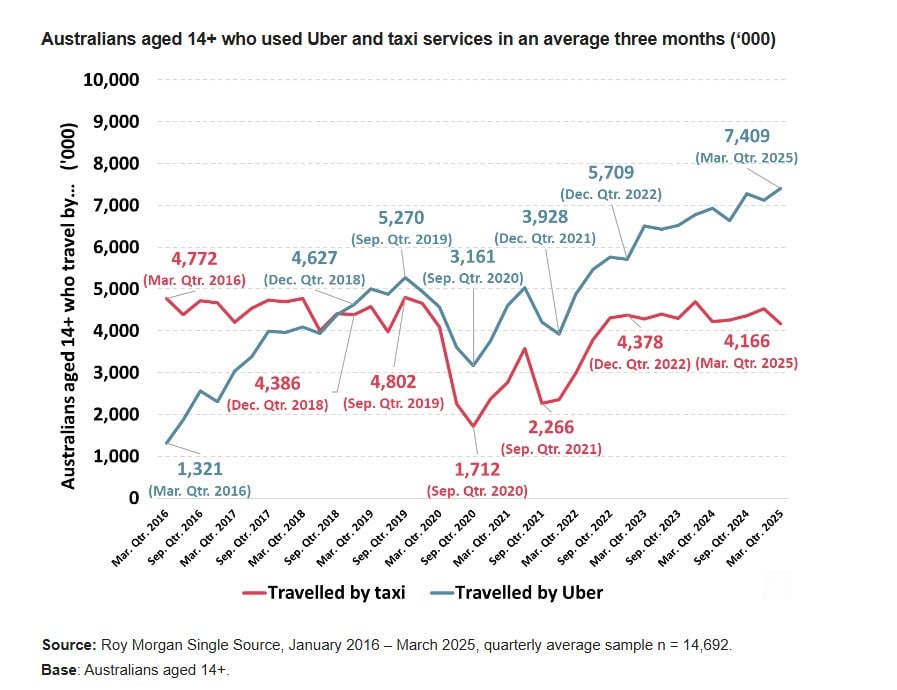
Uber has cemented its dominance over traditional taxi services in Australia, with new data from Roy Morgan revealing that more than 7.4 million Australians aged 14 and over (32.3%) used the ride-sharing service during the March Quarter of 2025. In contrast, only around 4.2 million (18.1%) opted for taxis over the same period – marking a record gap of over 3 million in favour of Uber.
The data highlights a continued upward trajectory for Uber, whose usage has surged by 1.7 million people – or nearly 30 per cent – since pandemic restrictions were lifted at the end of 2022. Meanwhile, taxi usage has experienced a modest decline, dropping by 212,000 users (4.8 per cent) over the same period.
Compared to pre-pandemic figures in September 2019, Uber’s user base has ballooned by more than 2.1 million Australians, an increase of 40.6 per cent. Taxi usage, however, has fallen by 630,000 (13.3 per cent). Uber first overtook taxis as the country’s preferred paid passenger vehicle service in 2018–19 and has steadily widened the gap ever since.
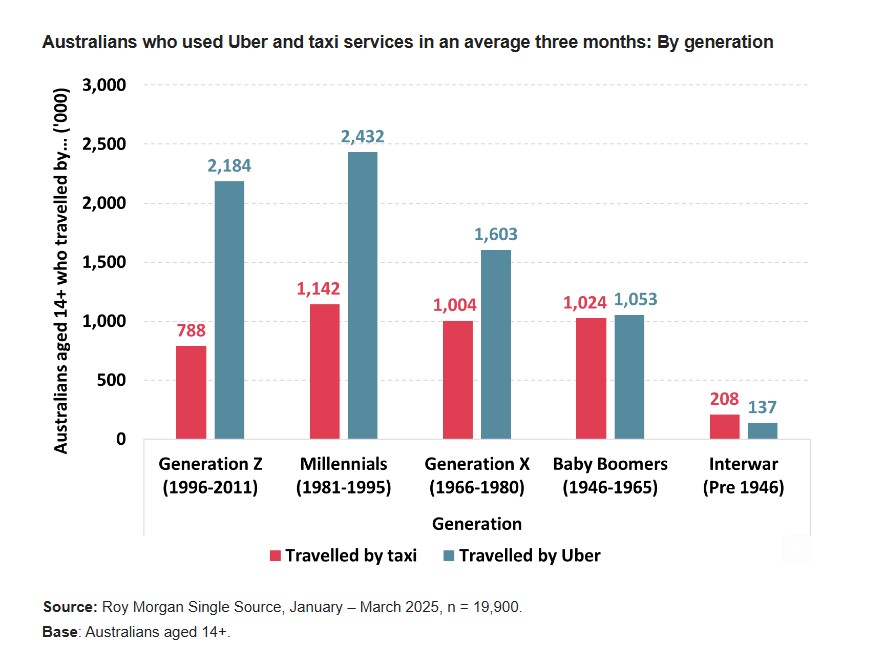
Generational differences in preference are stark. Uber enjoys overwhelming popularity among Australians under 60, especially Generation Z (born 1996–2011) and Millennials (born 1981–1995). Among Gen Z, 2.18 million (39.7 per cent) use Uber compared to just 788,000 (14.3 per cent) who use taxis. Millennials remain the largest group of Uber users, with 2.43 million (40.5 per cent) preferring the service, more than double the 1.14 million (19 per cent) who choose taxis.
Generation X (born 1966–1980) also favours Uber, with 1.6 million users (33 per cent) compared to 1 million (20.7 per cent) taxi users. Baby Boomers are split almost evenly, while only the Interwar generation (born pre-1946) continues to prefer taxis, with 208,000 users (19 per cent) compared to Uber’s 137,000 (12.5 per cent).
The findings come from Roy Morgan’s Single Source survey, one of the country’s most comprehensive consumer studies, based on over 65,000 interviews annually. The growing divide between Uber and taxis reflects shifting consumer behaviour and evolving transportation preferences across generational lines – with convenience, app-based booking, and pricing playing key roles in the evolution of Australia’s ride service landscape.
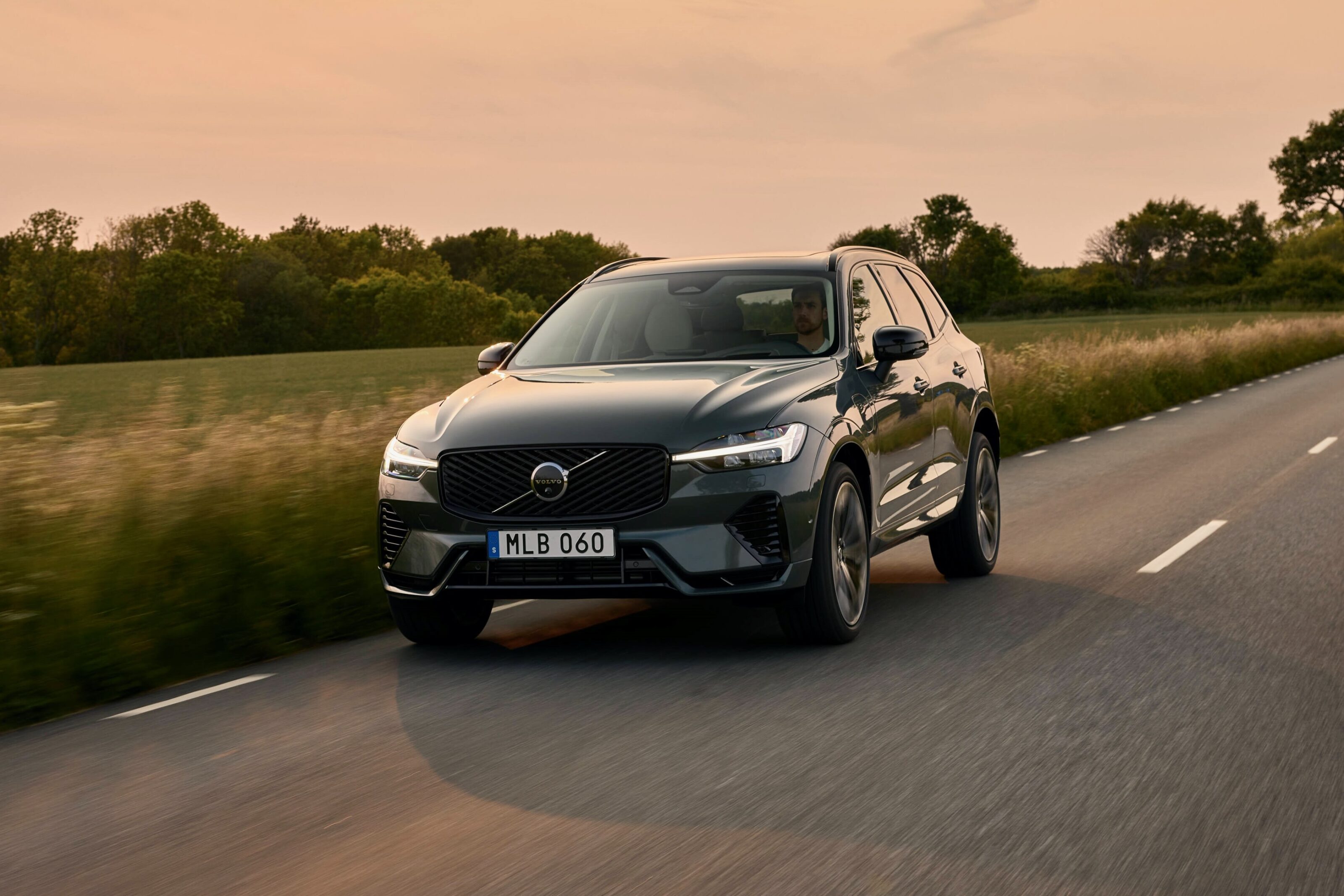
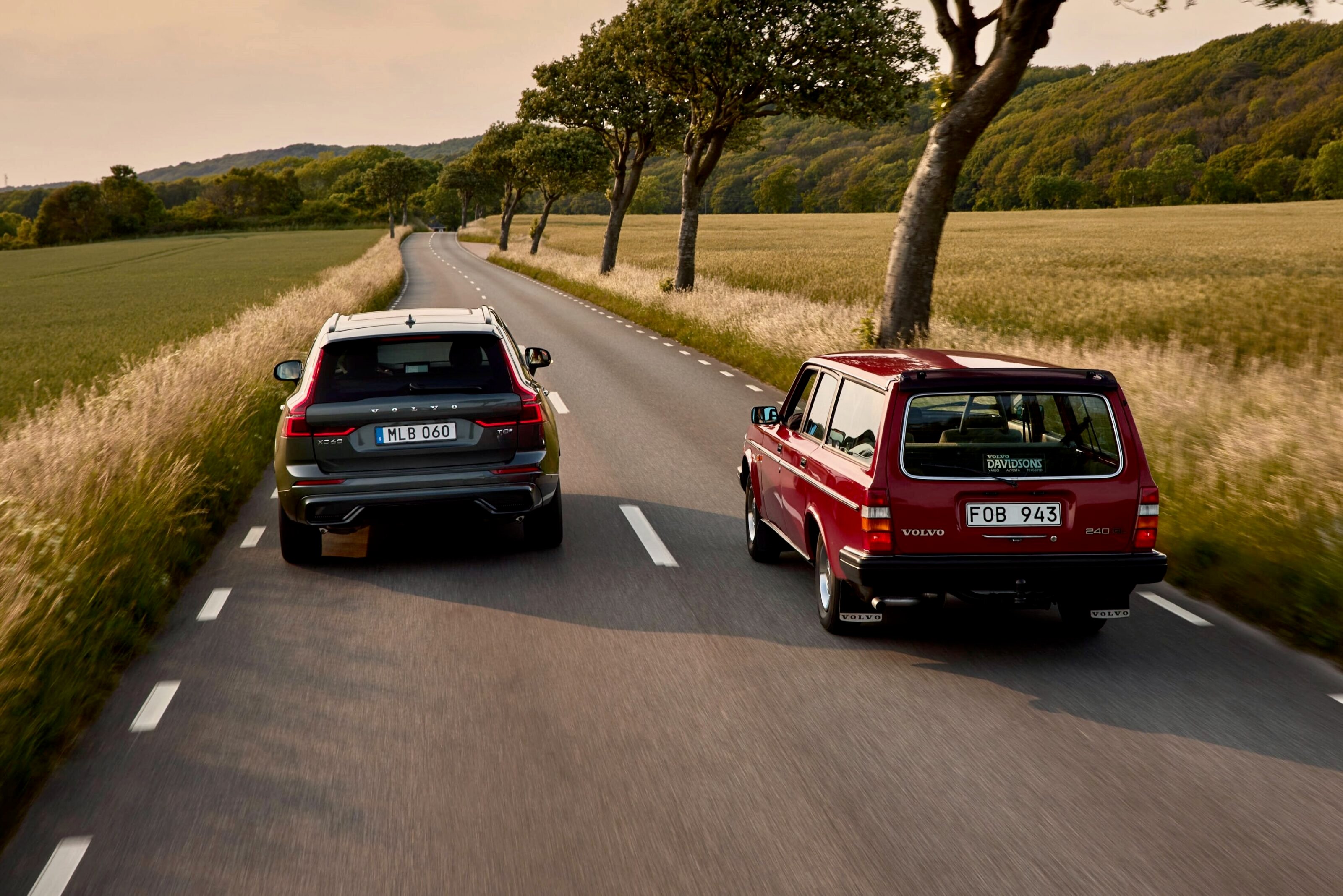
Volvo has announced that its XC60 mid-size SUV is now its most best-selling product of all time, with 2.7 million produced and counting, overtaking the iconic 240 sedan and wagon that ceased production in 1993.
“Growing up in Sweden in the 1980s, the Volvo 240 was the iconic family car – you could spot one in almost every driveway,” says Susanne Hägglund, head of Global Offer at Volvo Cars. “Today the XC60 has taken over that position in two ways. Not only as the family favourite, but also becoming our all-time top-seller, which in itself is the ultimate proof point of a successful car.”
Produced from 1974 to 1993, 2,685,171 240s were built in total. Upon its introduction, the 240 was one of the safest cars ever made at the time. Front and rear crumple zones, as well as a reinforced passenger compartment, were central to its safety-first approach.
It was also one of the first cars to incorporate enhanced side-impact protection, which later evolved into Volvo’s Side-Impact Protection System (SIPS). In 1978, the 240 also introduced the integrated child booster seat, a feature that modern Volvo products still use.
According to Volvo, the XC60 continues the 240’s safety-first heritage. It was the first car to feature a low-speed automatic braking system in 2008, while in 2017, it introduced Oncoming Lane Mitigation to steer the car back into its lane to avoid drifting into oncoming traffic. Just as the 240 was at the time, the XC60 is one of the safest cars in the world.
Volvo Cars Australia has just announced local pricing and specifications for the refreshed XC60, which is priced from $74,990 plus on-road costs. It uses a new larger infotainment system, as well as trim and light design updates, to keep it fresh in the ever popular mid-size SUV segment.
The updated Volvo XC60 is now available from local Volvo dealerships.
New Suzuki hybrid and electric small SUVs have been confirmed for an Australian release with the new-to-Australia Fronx, updated Vitara and new electric e Vitara set to launch locally.
While the Fronx is expected this coming September, and the Vitara and e Vitara early in 2026, the brand’s new models will introduce new hybrid and electric drivetrains to Australian Suzukis for the first time.
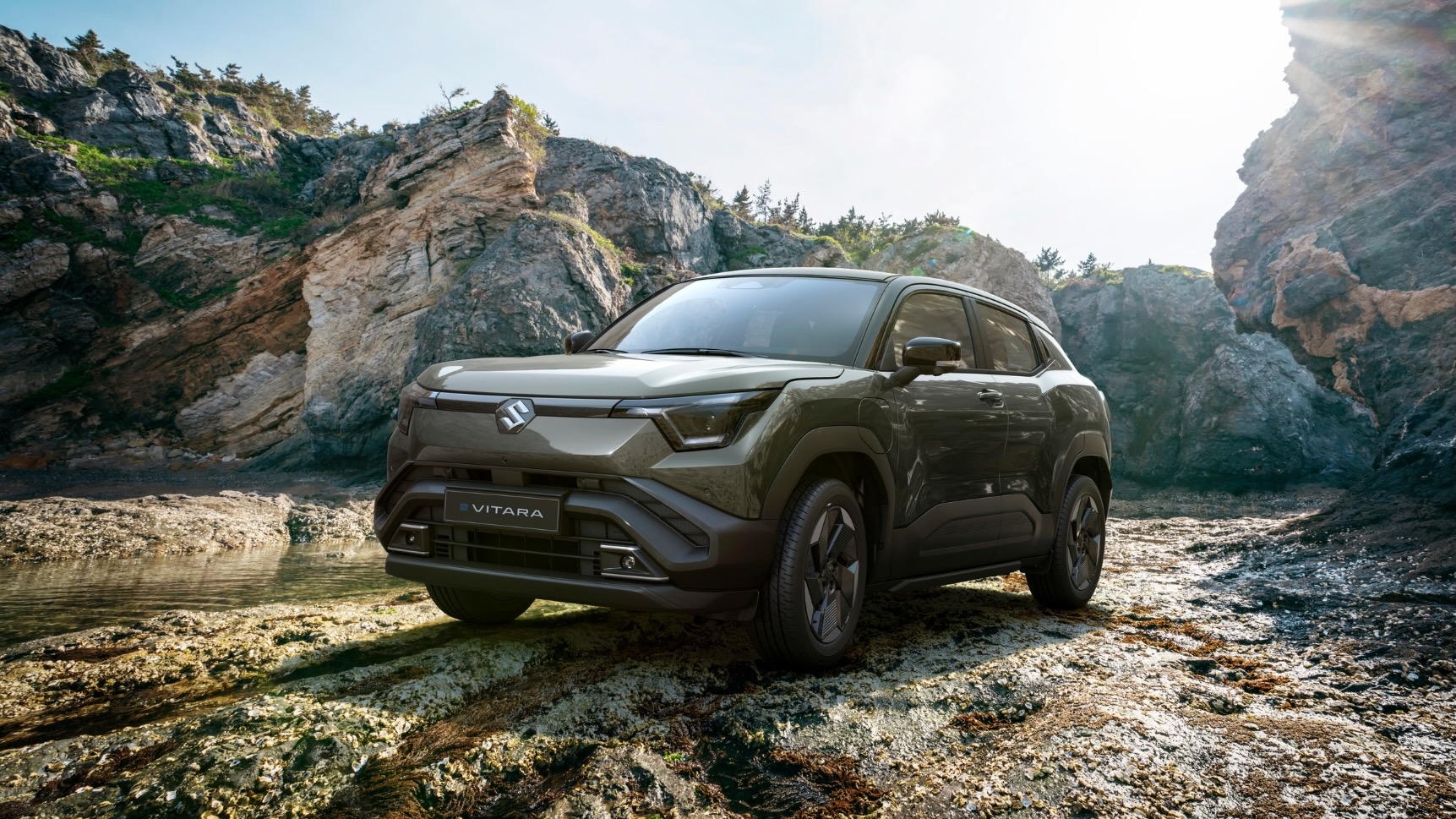
e Vitara
The brand’s first electric vehicle (EV) will go on sale in the first quarter of 2026, with the new e Vitara featuring the new ‘Heartect-e’ platform developed with Toyota and Daihatsu, designed specifically for EVs. Globally, the e Vitara is available with two LFP battery options: a 49kWh unit with 344km of WLTP range and a larger 61kWh version for 400km of range.
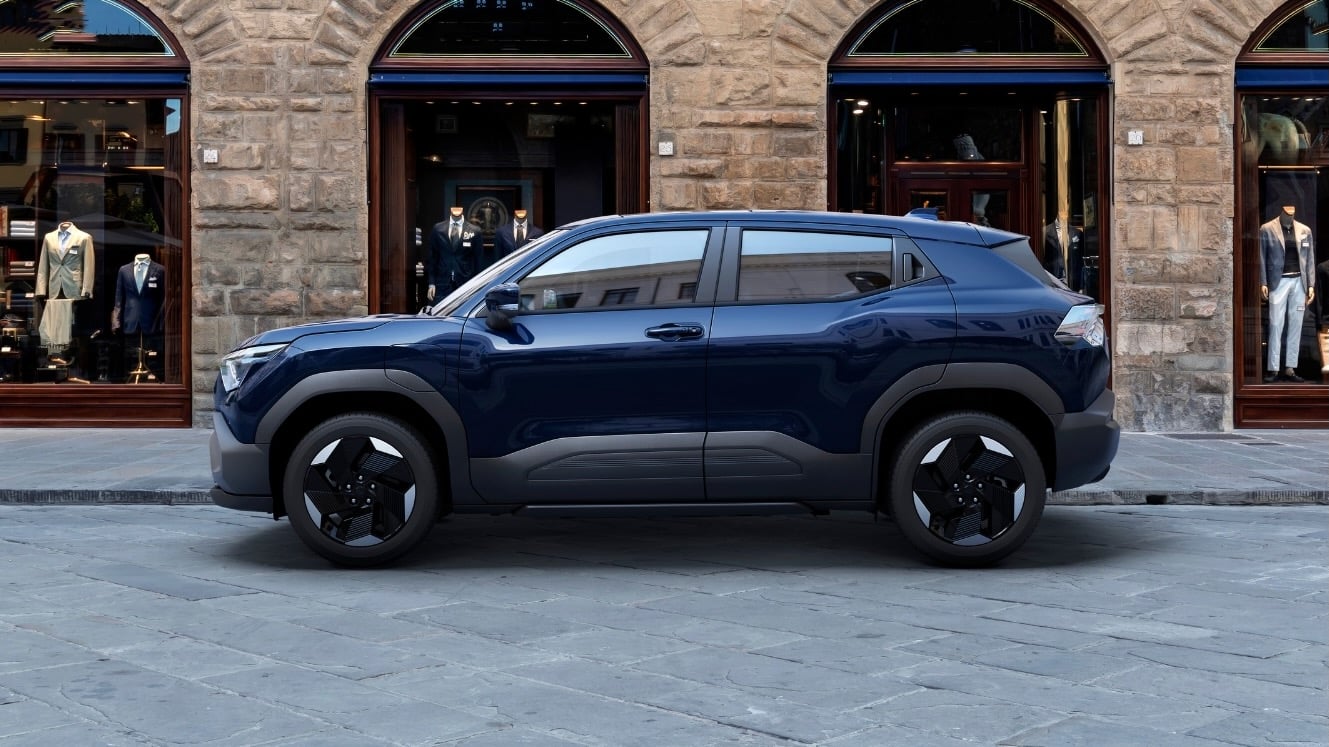
Unlike a lot of electric small SUVs, the e Vitara offers both front-wheel drive and all-wheel drive drivetrain options, with the front-drive model making 106kW of power and the all-wheel drive model upping that to 135kW.
The e Vitara measures 4275mm long, 1800mm wide, 1635mm tall and rides on a 2700mm-long wheelbase, making it identical in length to a Mazda CX-3, though 20mm narrower, 100mm taller and using a 130mm longer wheelbase.
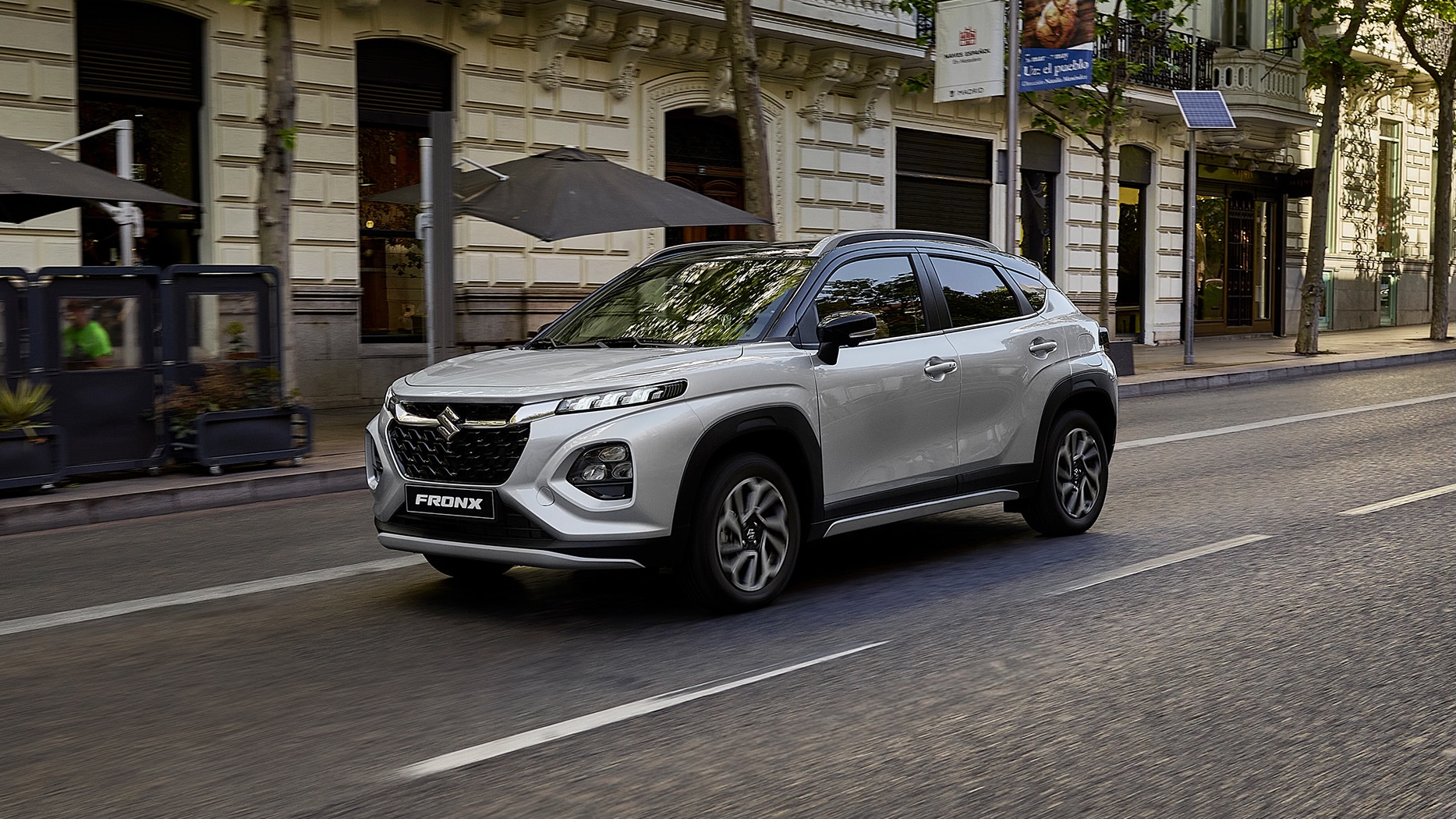
Fronx
Set to launch locally on September 1st, the Fronx is a new small SUV to Australia that’s been in production in India since 2023. The Fronx name is derived from “Frontier Crossover”, and its exterior styling is decidedly coupe-like with its sloping roofline.
Using the same platform as the Baleno small car that’s no longer sold locally, the Fronx will be available in Australia with a 74kW/135Nm 1.5-litre four-cylinder petrol engine with mild-hybrid assistance and a six-speed automatic transmission.
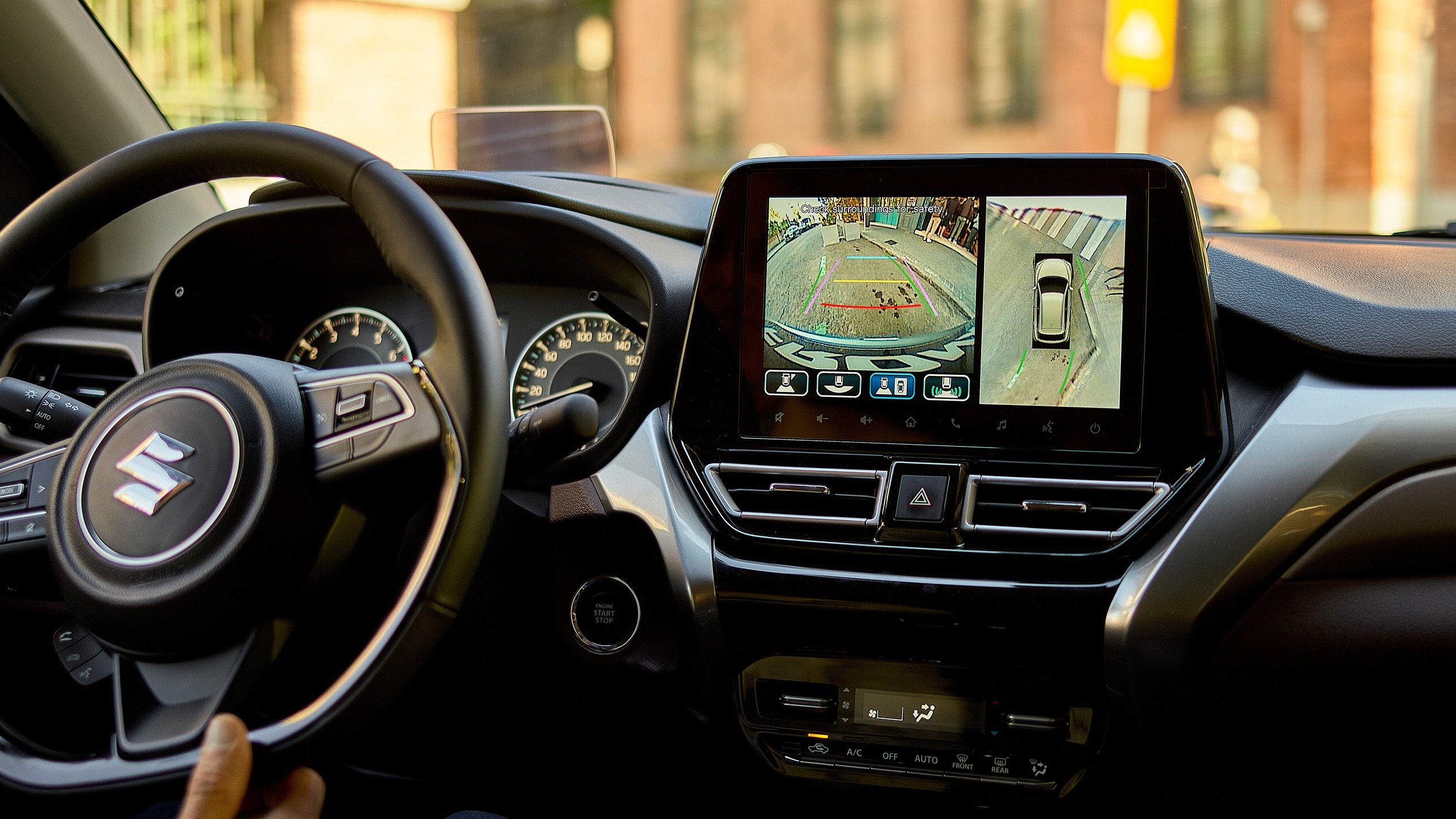
Available features on the Fronx globally include LED exterior lighting, a head-up display, leather-like upholstery, a 9.0-inch touchscreen with wireless smartphone mirroring, a wireless phone charger, heated front seats, rear USB ports and a dual-level boot floor.
The Japanese-spec Fronx is also fitted with safety features such as six airbags, autonomous emergency braking, adaptive cruise control, blind-spot monitoring with rear cross-traffic alert, lane keeping assistance, auto high beam, speed sign recognition, a 360-degree and low-speed front and rear braking.
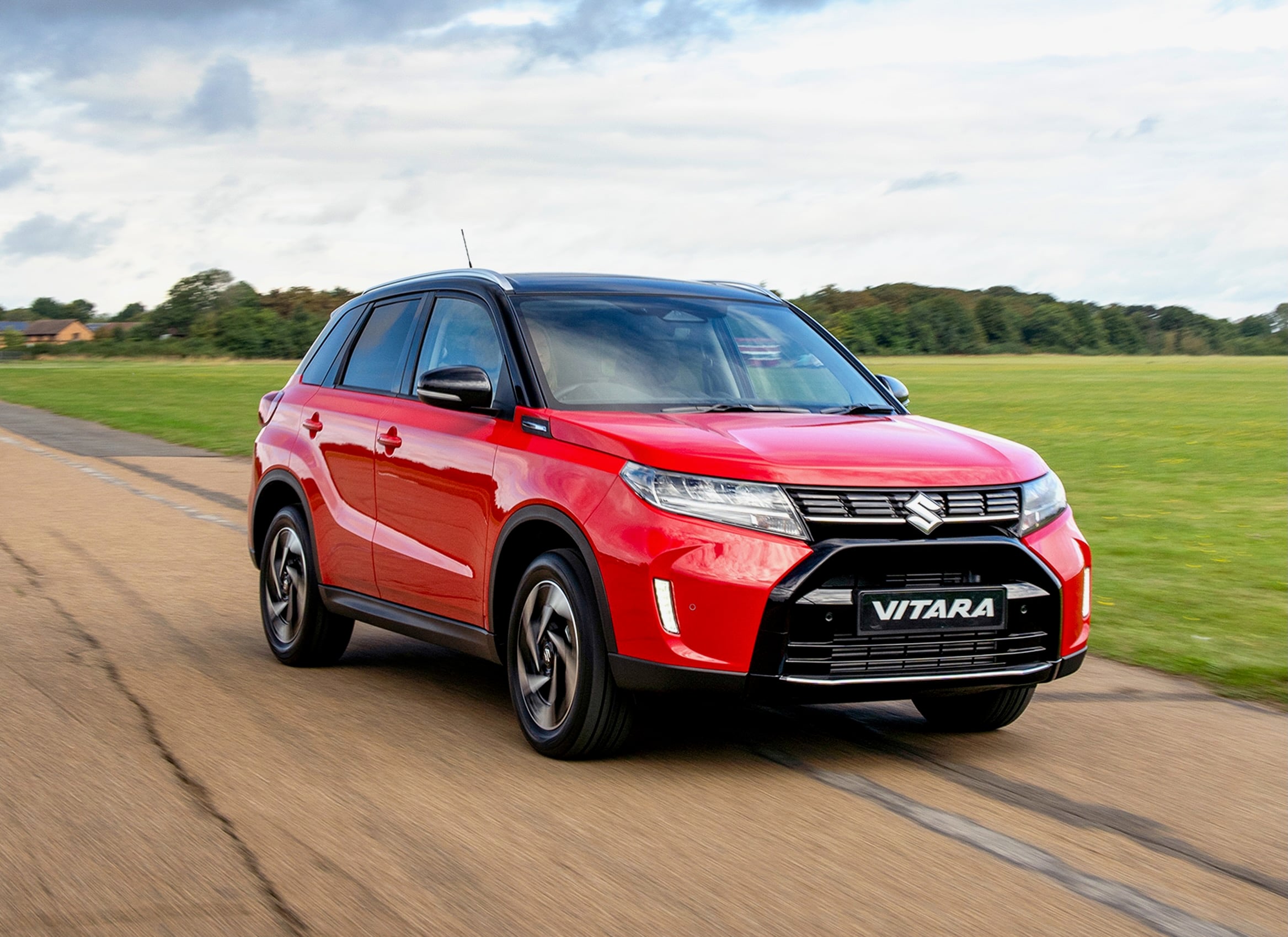
Vitara Hybrid
Launching in the first quarter of 2026, the updated Vitara Hybrid small SUV will introduce hybrid power to the Vitara nameplate for the first time in Australia. It’s not yet known which drivetrains the Vitara will offer locally, but in Europe, two are available: a mild-hybrid version of the Vitara’s current 1.4-litre turbo-petrol engine and a new 1.5-litre full-hybrid system, both optionally available with all-wheel drive.
In the UK, the 1.5-litre engine makes 75kW/138Nm, with the electric motor contributing another 25kW/60Nm. A six-speed automated manual transmission is standard and for combined fuel consumption, it’s rated at 5L/100km on the WLTP cycle.
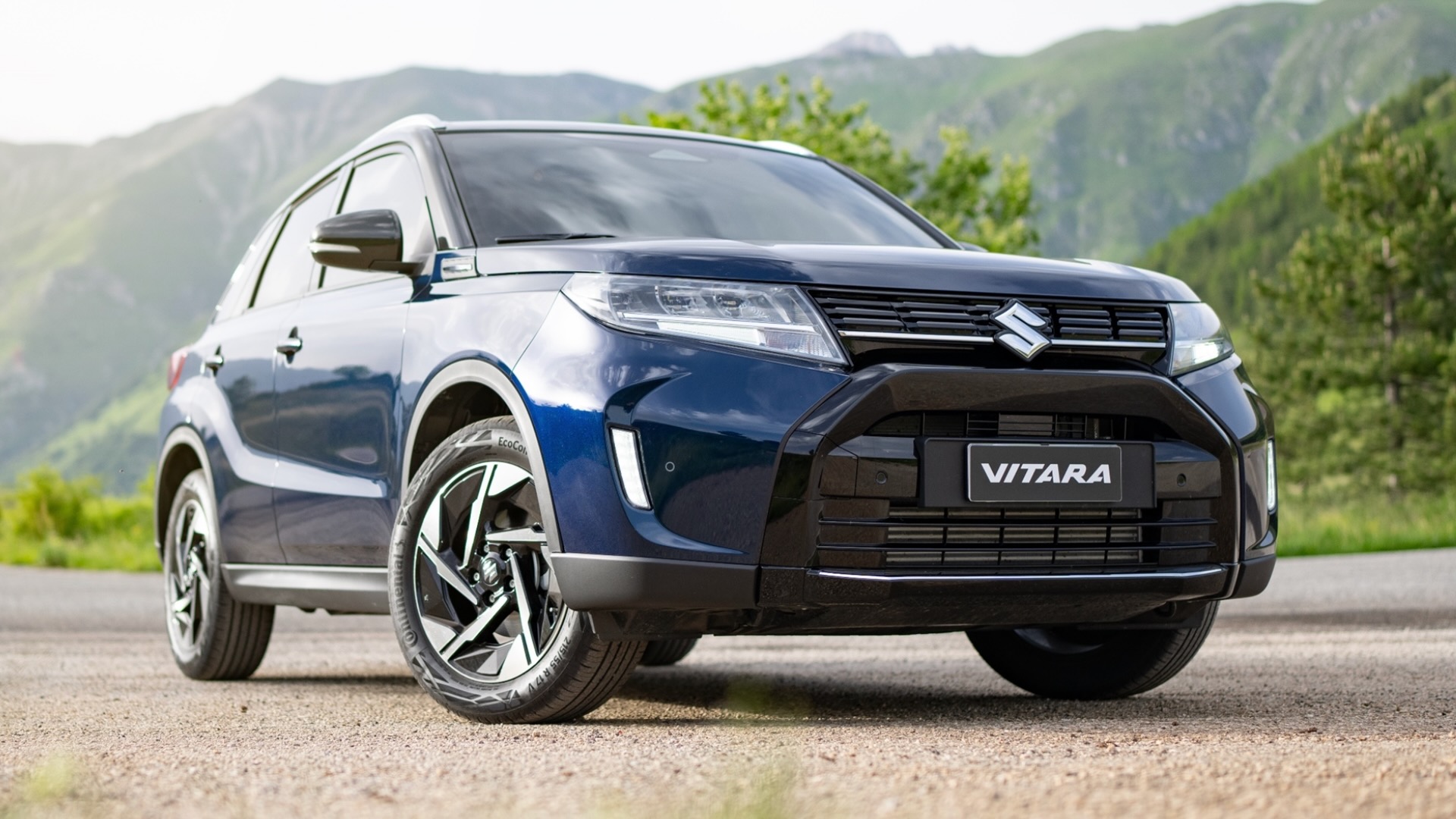
Meanwhile, the mild-hybrid 1.4L turbo makes 96kW of power and uses 5.3L/100km on the WLTP cycle – down 7kW and 0.6L/100km on the Australian-spec Vitara Turbo, though local specifications are yet to be announced.
The Suzuki hybrid and electric models will go on sale in Australia gradually from the third quarter of 2025, with the Fronx launching on September 1 and the updated Vitara and e Vitara due first quarter of 2026.
Nissan has revealed the Patrol Nismo, the high-performance version of its new large SUV that’s due in Australia in late 2026. Featuring an uprated twin-turbo V6 engine, a louder exhaust, re-tuned adaptive air suspension and a whole host of sporty details, Nissan says the Patrol Nismo takes its “muscular and capable full-size SUV to a new level”.
Revealed in Dubai overnight (and in the USA in Armada identical twin form), the Nissan Patrol Nismo will go on sale in those markets later in 2026. An Australian arrival is yet to be confirmed, but the regular Patrol will debut locally in early 2027.
Centre of the Patrol Nismo’s enhancements is an uprated version of its 3.5-litre twin-turbocharged petrol V6 engine, in this tune making 369kW of power – or 52kW more than the regular Patrol – and an unchanged 700Nm of torque. The Patrol’s nine-speed automatic transmission has been recalibrated for more performance as well.
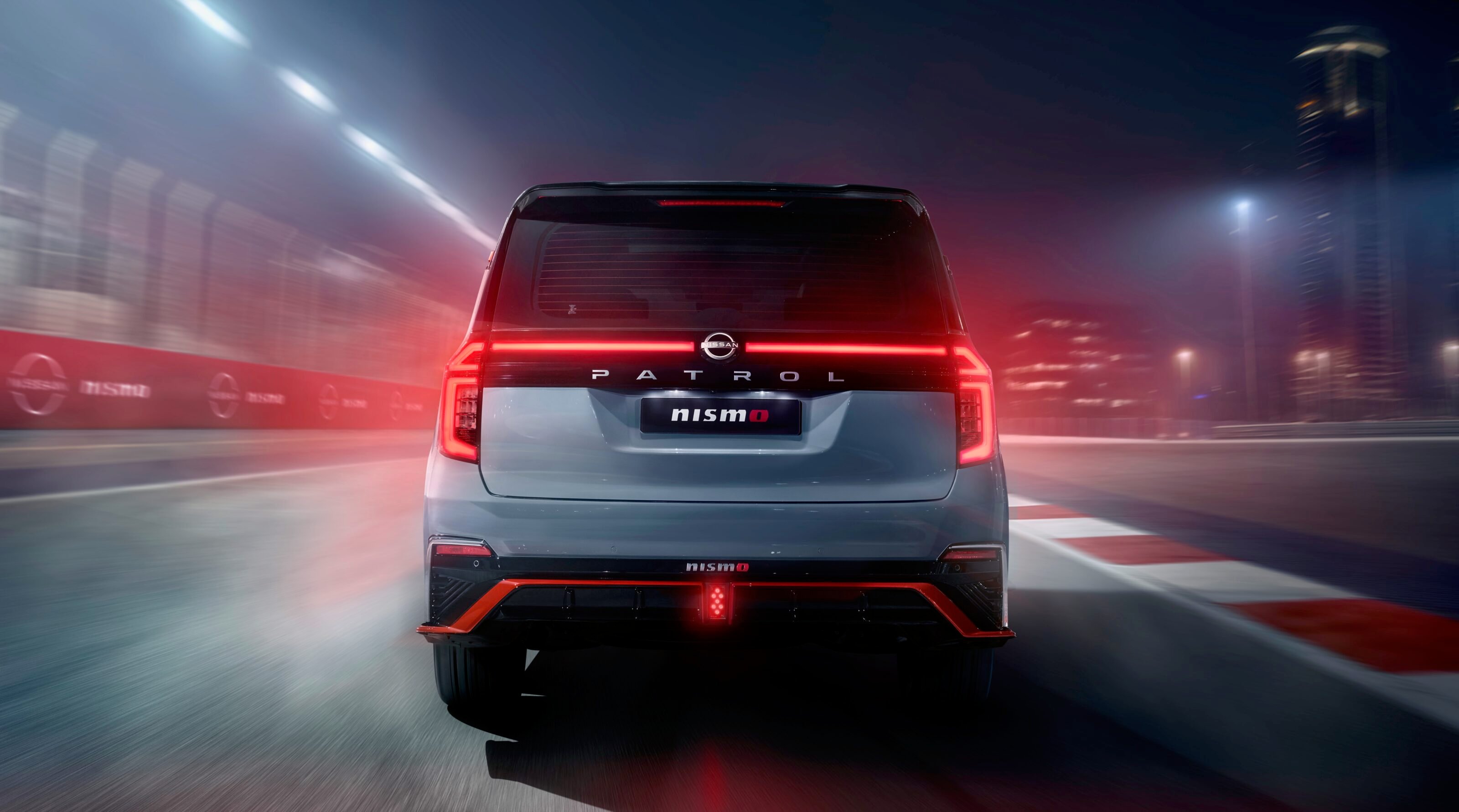
Accompanying the higher-performance tune of the engine is a louder and sportier exhaust note with enhancement from the active sound inside the cabin.
The ride and handling balance has also been modified, with a 49mm-lower ride height, retuned vehicle dynamics control and suspension tuning and a quicker steering rack. New 22-inch wheels are reportedly 23 per cent lighter than standard Patrol wheels as well, and use high-performance tyres.
Naturally for a sporty model, the Patrol Nismo’s exterior and interior have received a sporty makeover. The exterior features new front and rear bumpers with aerodynamic diffusers and splitters, a new ‘Stealth Grey’ colour and a lot of Nismo badges.
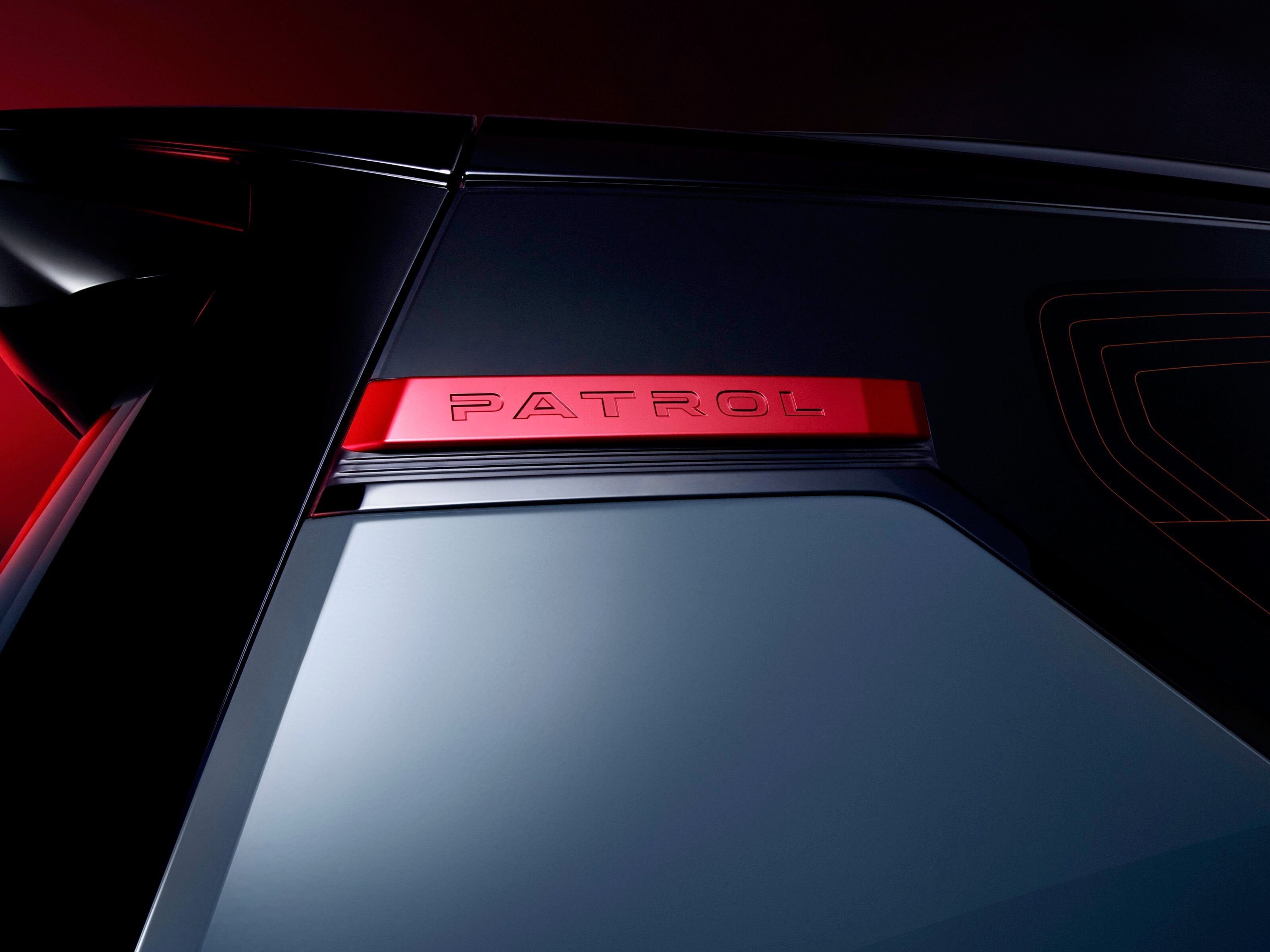
Because of the new bumpers, the Patrol Nismo is actually 90mm longer than the regular Patrol, while it’s also 40mm wider.
Inside, the Patrol Nismo adds a lot of red and black detailing, including leather and suede upholstery, contrast stitching and carbon fibre trimmings. The start stop button is also red, while more Nismo logos also feature.
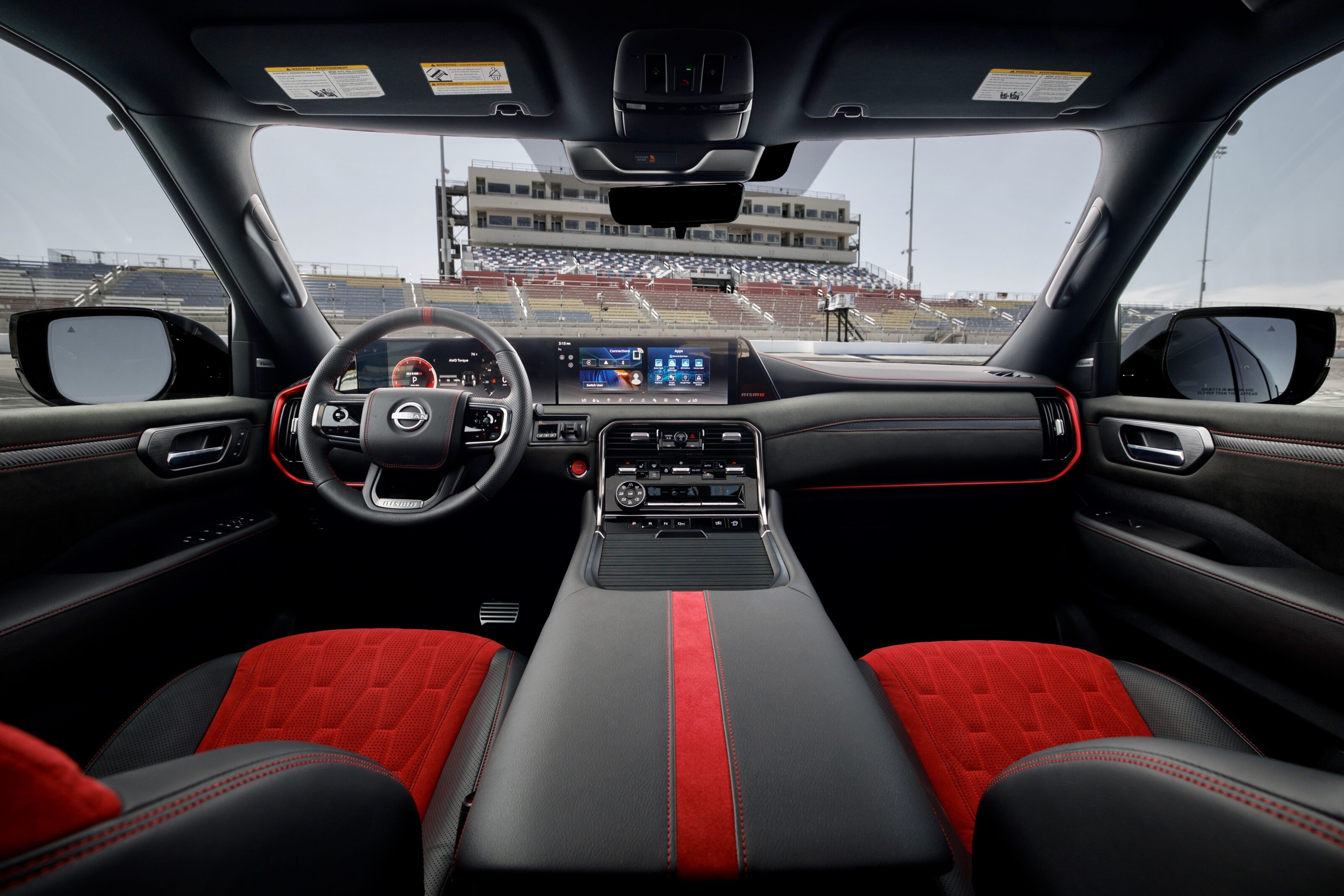
While the Y63 Nissan Patrol (and North American Armada identical twin) is already on sale, an Australian debut is scheduled for early 2027.
