
BMW Australia has announced, in addition to the impressive local pricing of the new M5, that it has secured five units of the limited run BMW M5 First Edition to bring to Aussie customers.
With only 400 units worldwide, the First Edition looks to be a collectors’ dream. For a start, its pricing is set at $229,900, which matches it up to the previous generation M5’s standard pricing.
That’s only $30K more than a new standard M5 will cost, making the First Edition something of a bargain when you take into account its exclusivity.
But though it won’t be faster or more powerful, the M5 First Edition does score ‘Individual’ Merino leather upholstery in Smoke White with red contrast stitching.
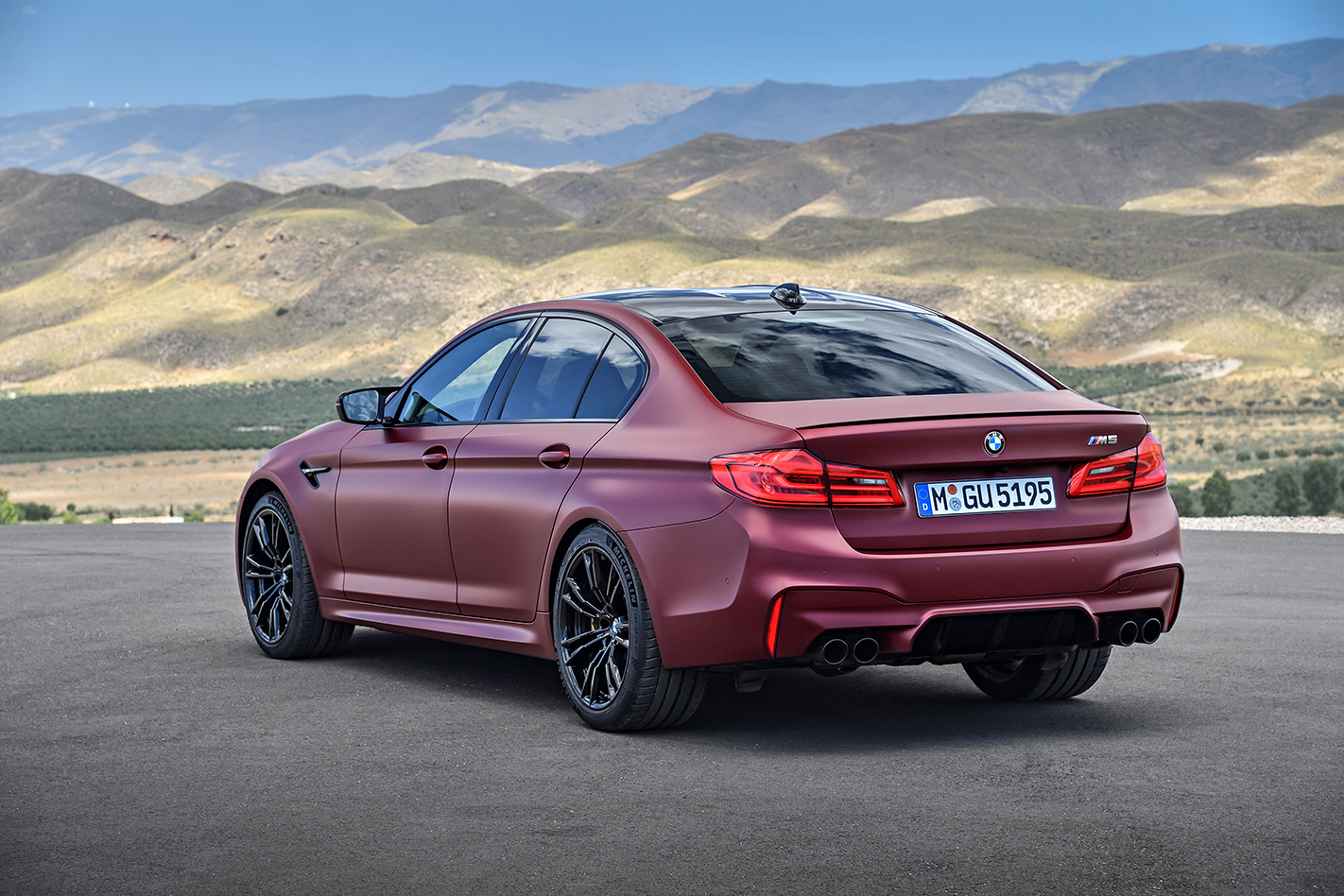
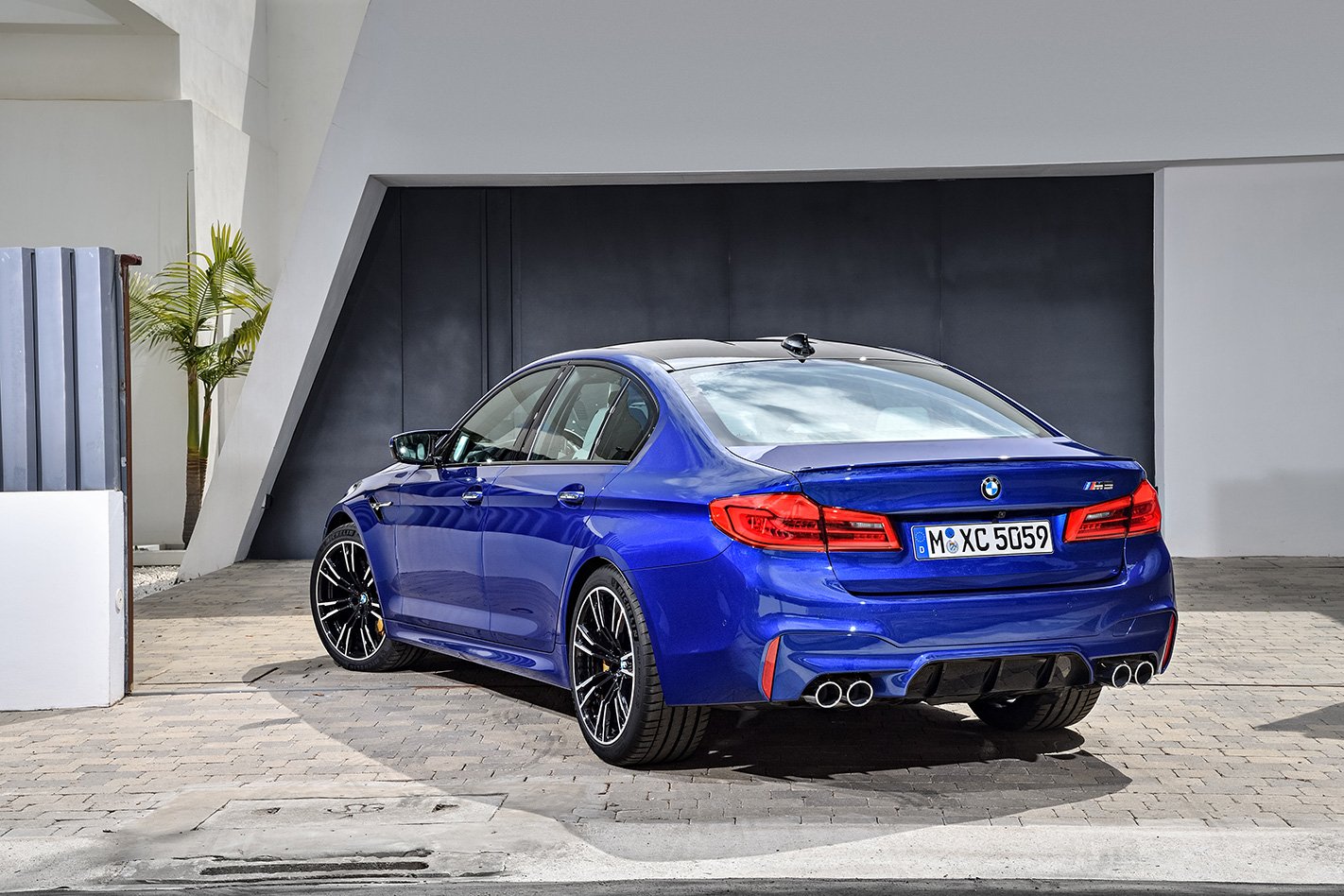
Outside, the First Edition is finished in an exclusive Frozen Dark Red metallic paintjob, with Jet Black 20-inch M light alloy wheels.
BMW Australia CEO Marc Werner says he’s pleased with the company’s ability to provide special editions such as this to a market that’s so enthusiastic about performance cars.
2018 BMW M5 scores switchable AWD
“BMW Australia is over the moon with the specification and pricing levels we’ve achieved for the all-new M5,” says Werner.
“Now to bring out this very special M5 First Edition to five very lucky customers, with even further enhanced specification and exclusive specifications makes for an even greater continuation of the M5’s story.”
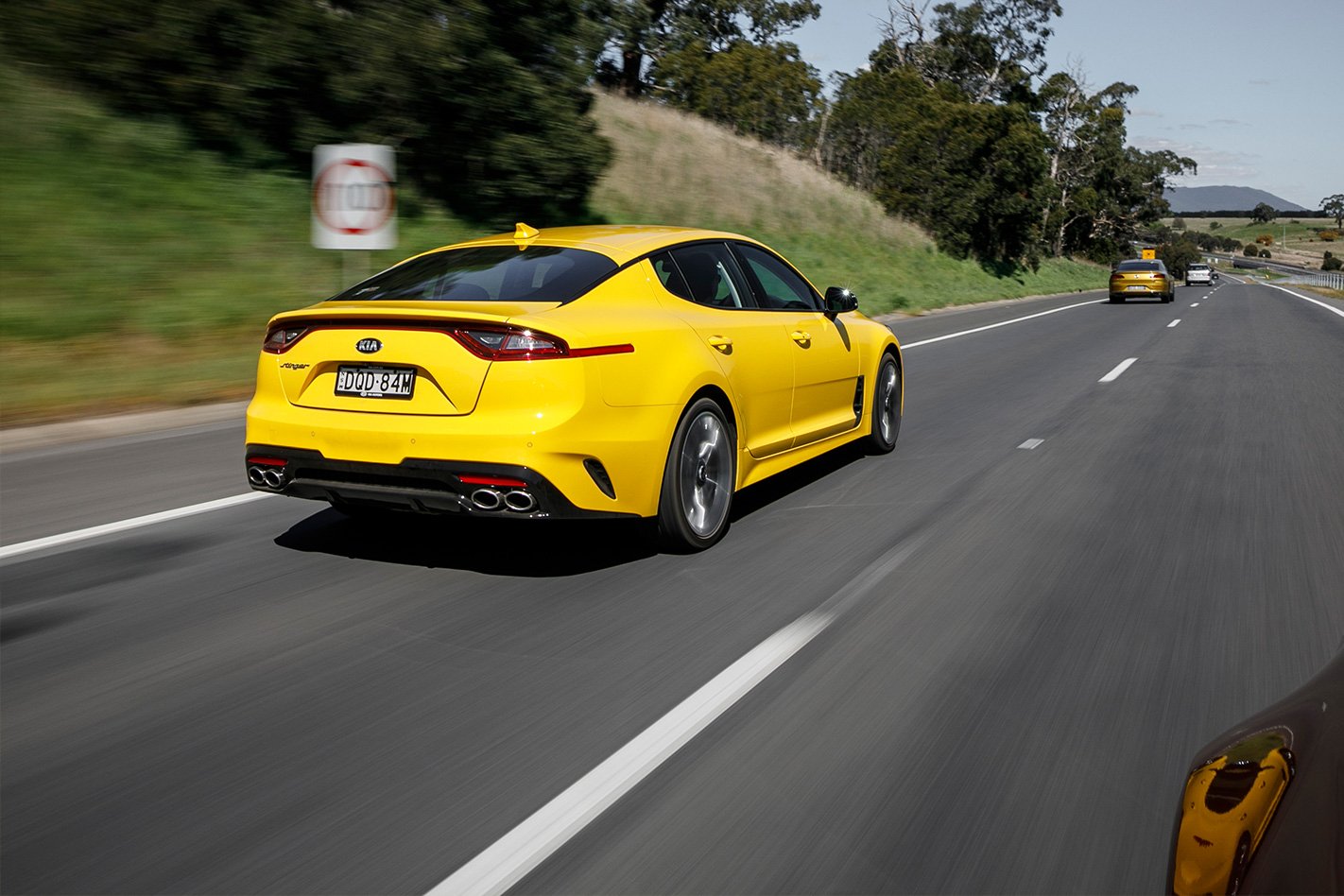
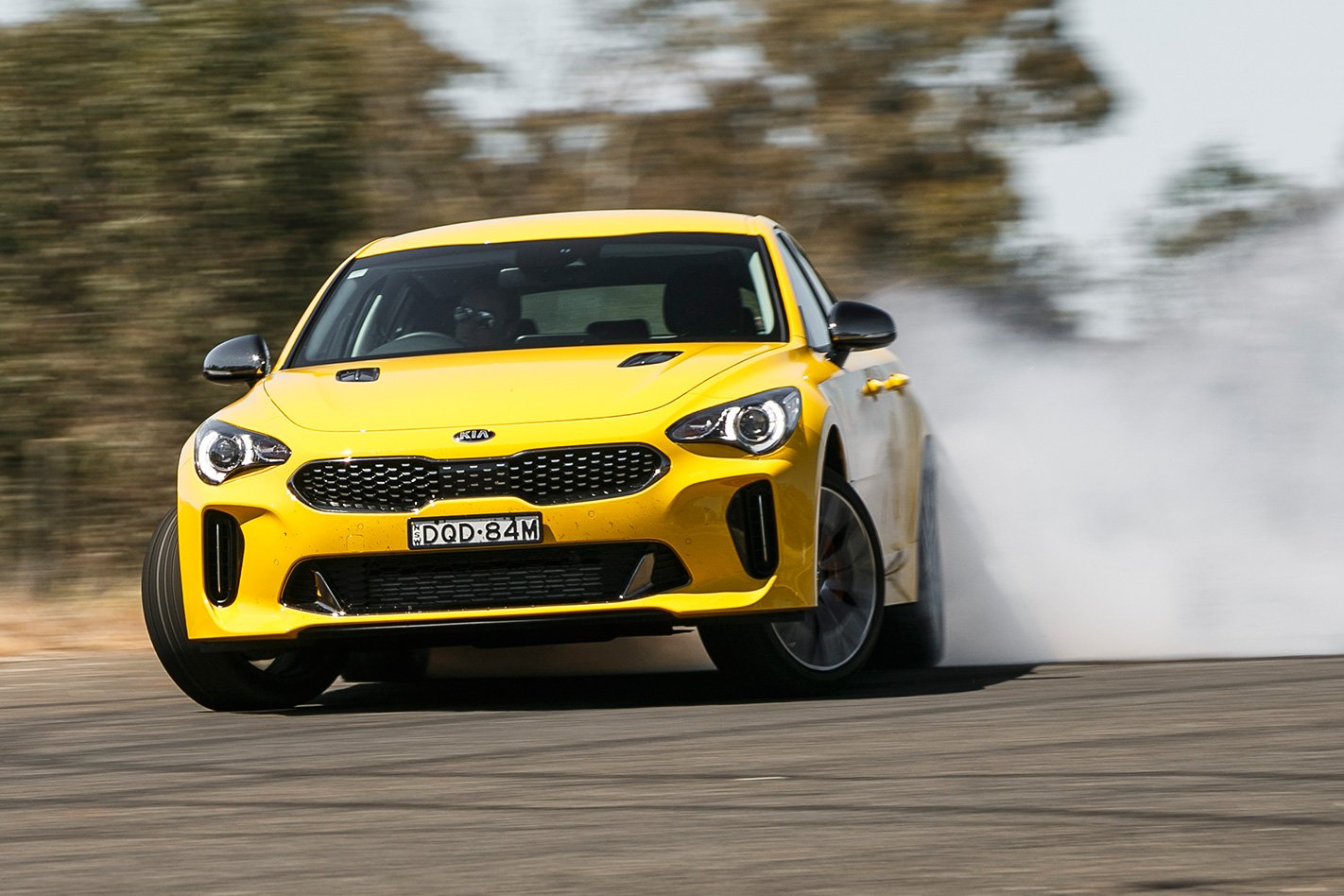
“NO acoustic excitement” – that was one of our key takeaways from our first drive of the V8-rivalling, rear-driven, twin-turbocharged Kia Stinger GT sports sedan back in September.
Not so much of an issue for four-doors like, say, Kia’s own Optima, but when you’re trying to stoke the emotional responses of driving enthusiasts then having some aural theatrics certainly helps. Thankfully, Kia Australia has a solution: a $2659.99 dealer-fitted bi-modal exhaust system that adds a more aggressive voice to its athletic sedan.
The optional exhaust is available for order now, and so far dealers have snapped up 140 sets in anticipation of strong demand. The good news for existing Stinger owners is that the system is fully retrofittable by any Kia dealership, and costs the same as if it were optioned on a brand-new car.
The exhaust can be fitted to any V6-powered Stinger, too, not just the top-shelf Stinger GT.
As the above video shows, the standard pipes comprehensively strangle the V6’s exhaust note, and are easily out-shouted by the induction roar coming from the Stinger’s engine bay.
Since launch, the Stinger has so far notched up 223 sales for Kia Australia with 90 percent of those orders being V6-engined models – and the bulk of those being for the range-topping $59,990 Stinger GT.
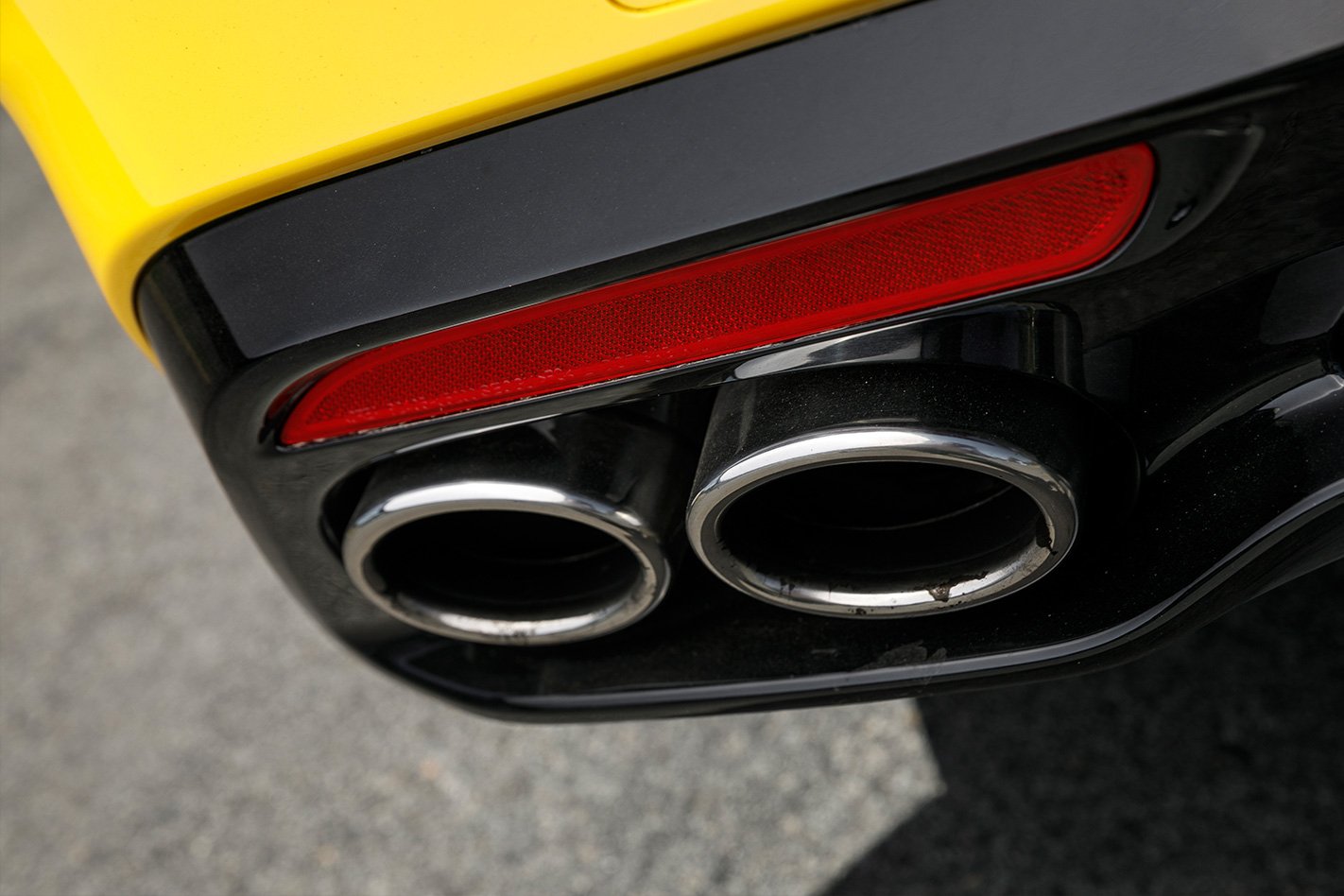
The new optional exhaust has no effect on performance numbers, but at least Stingers across the country will now sound half decent as they claim V8 scalps.
BMW Australia has announced local specification and pricing for the hotly anticipated 2018 BMW M5.
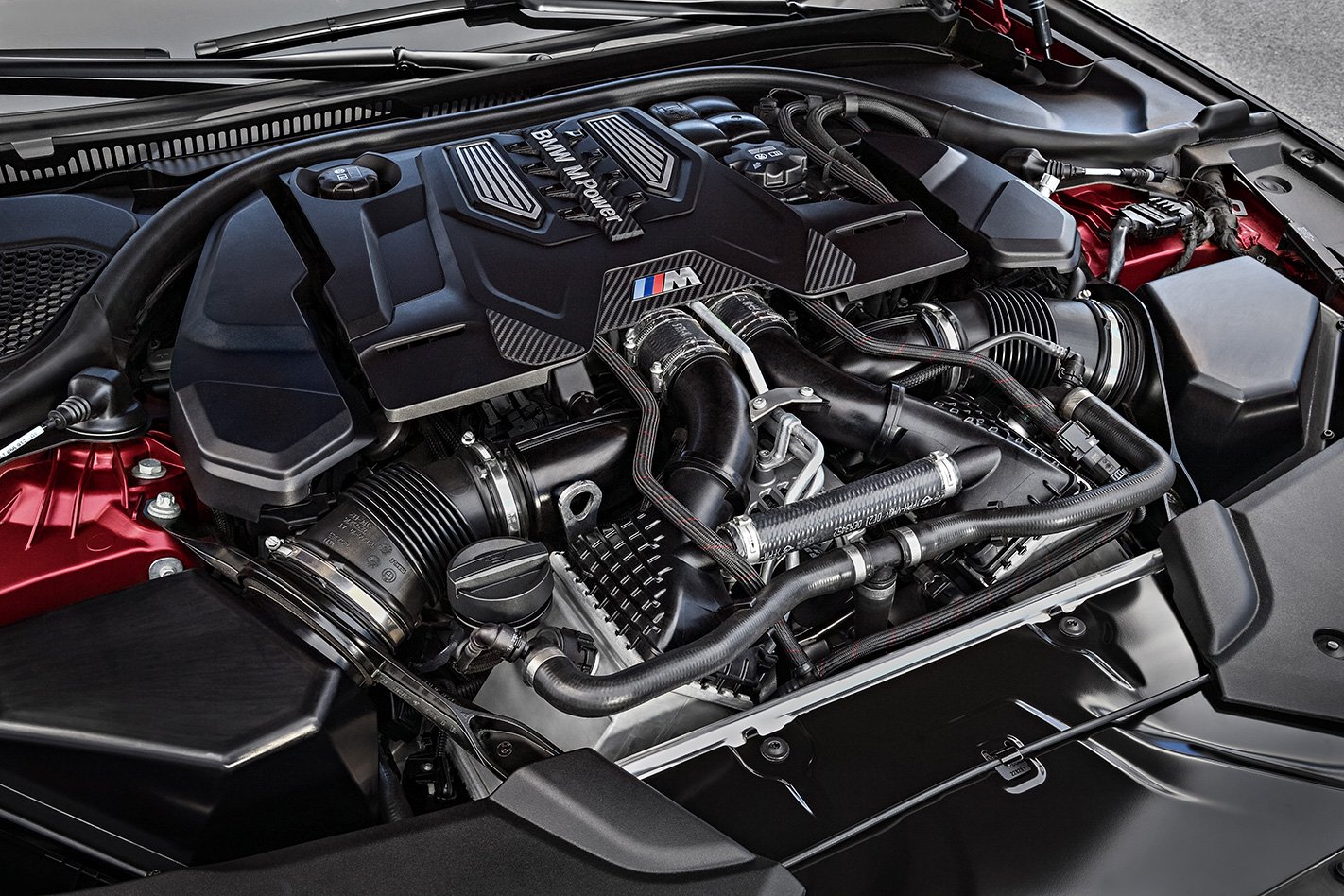
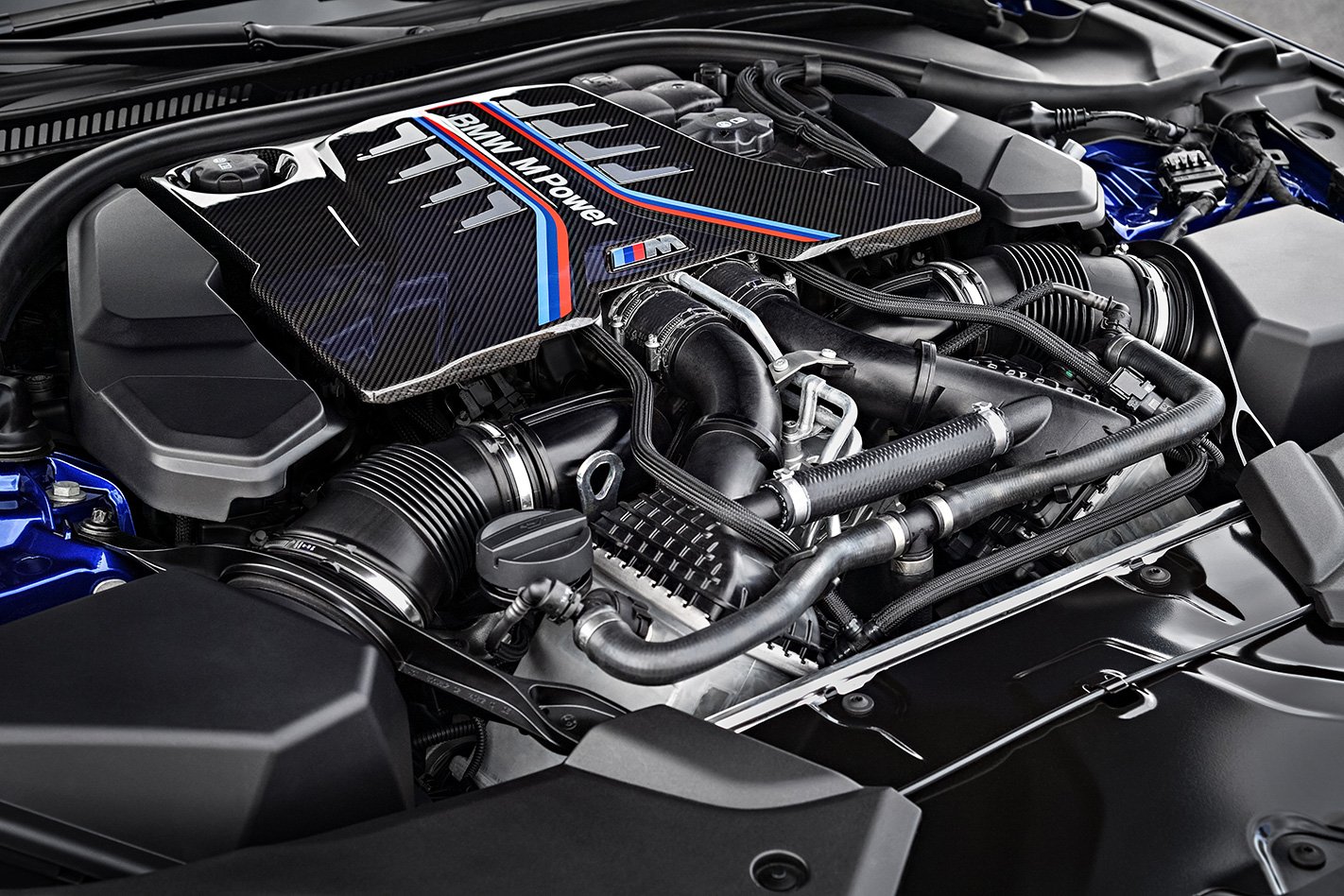
With the same 441kW and 750Nm being drawn from its 4.4-litre twin-turbo V8 as overseas, the all-wheel drive Bimmer isn’t going to suffer the same de-tune Aussies sometimes see.
In addition, BMW says we’ll only be paying $199,900 to get our hands on a new BMW M5, rather than the $230,000 or-so we expected to fork out based on pricing for its previous generation.
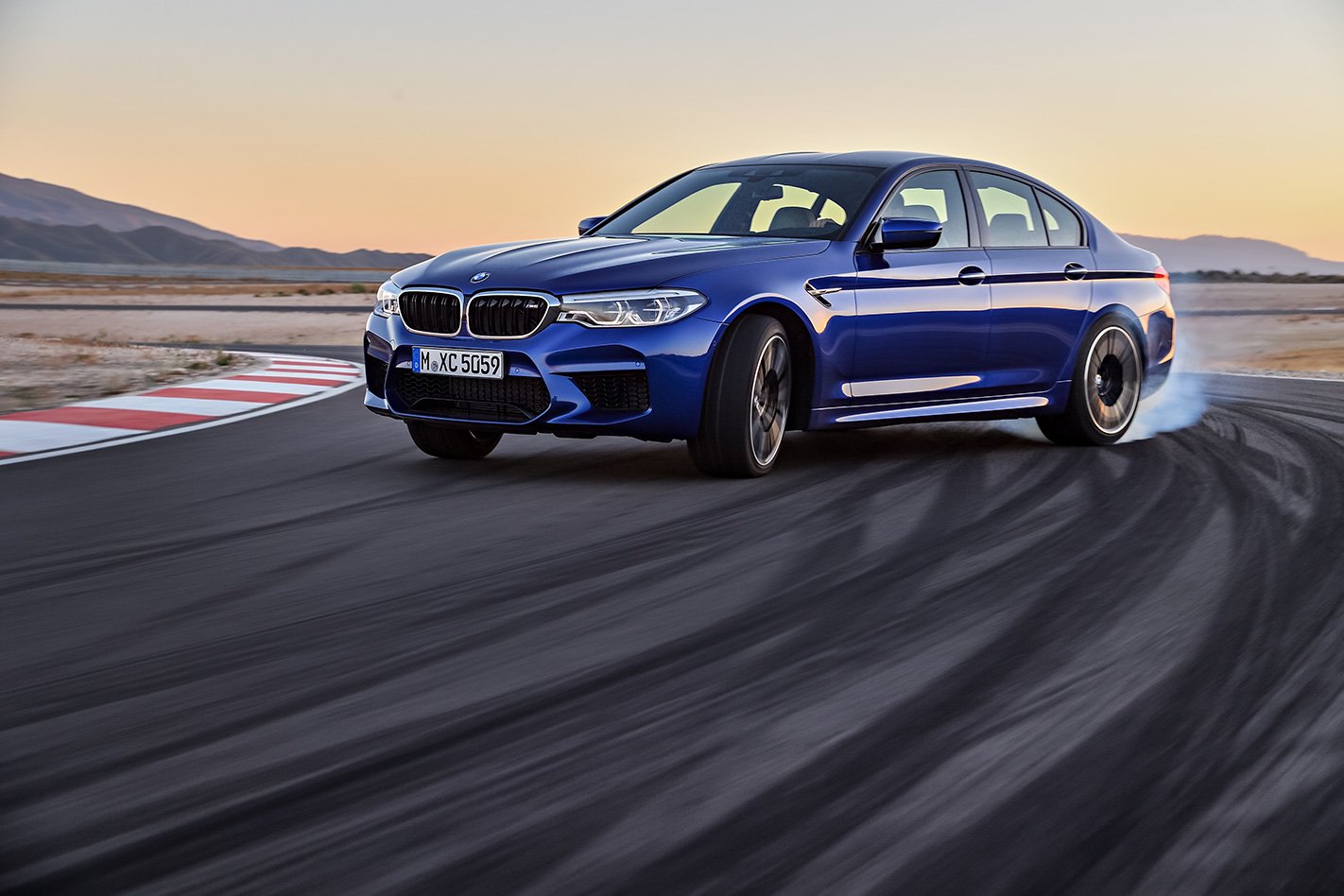
BMW Australia says there aren’t any differences in specification between the regular M5 and the Launch Edition, though as pricing is the same it appears to primarily be a way to acknowledge the first units to arrive Down Under.
Additionally, stability control can be completely disabled in any of the xDrive modes, whether full AWD or RWD.
“Never before has BMW M brought such an advanced car to market,” says BMW Group Australia CEO, Marc Werner.
“Its combination of awesome power and torque, switchable four-wheel drive system, innovative technologies and the ability to carry five passengers in comfort is truly unique.
“To bring this incredible package to market at such a strong price point is further proof of our standing among BMW’s M Division globally.”
Keep an eye on MOTOR later today for more news on the next BMW M5.
It’s been an incredible Supercars season with some of the most exciting racing ever and records broken all around the country.
But who do you reckon was the real star of the Championship? Jamie Whincup? Scott McLaughlin? Shane van Gisbergen? David Reynolds? You tell us. Vote for your Driver of the Year and while you’re at it, choose your Race of The Year and Racecar of The Year.
Results will be published in the Official Virgin Australia Supercars Championship Season Review magazine, on-sale December 14, 2017, and as digital download from Supercars Official Merchandising Store.
VOTE HERE
It became clear early on that somewhere near the 14 or 15 mark on this year’s scorecard, performance-car impostors were wasting teacher’s valuable time.
This article was first published in MOTOR magazine’s March 2005.
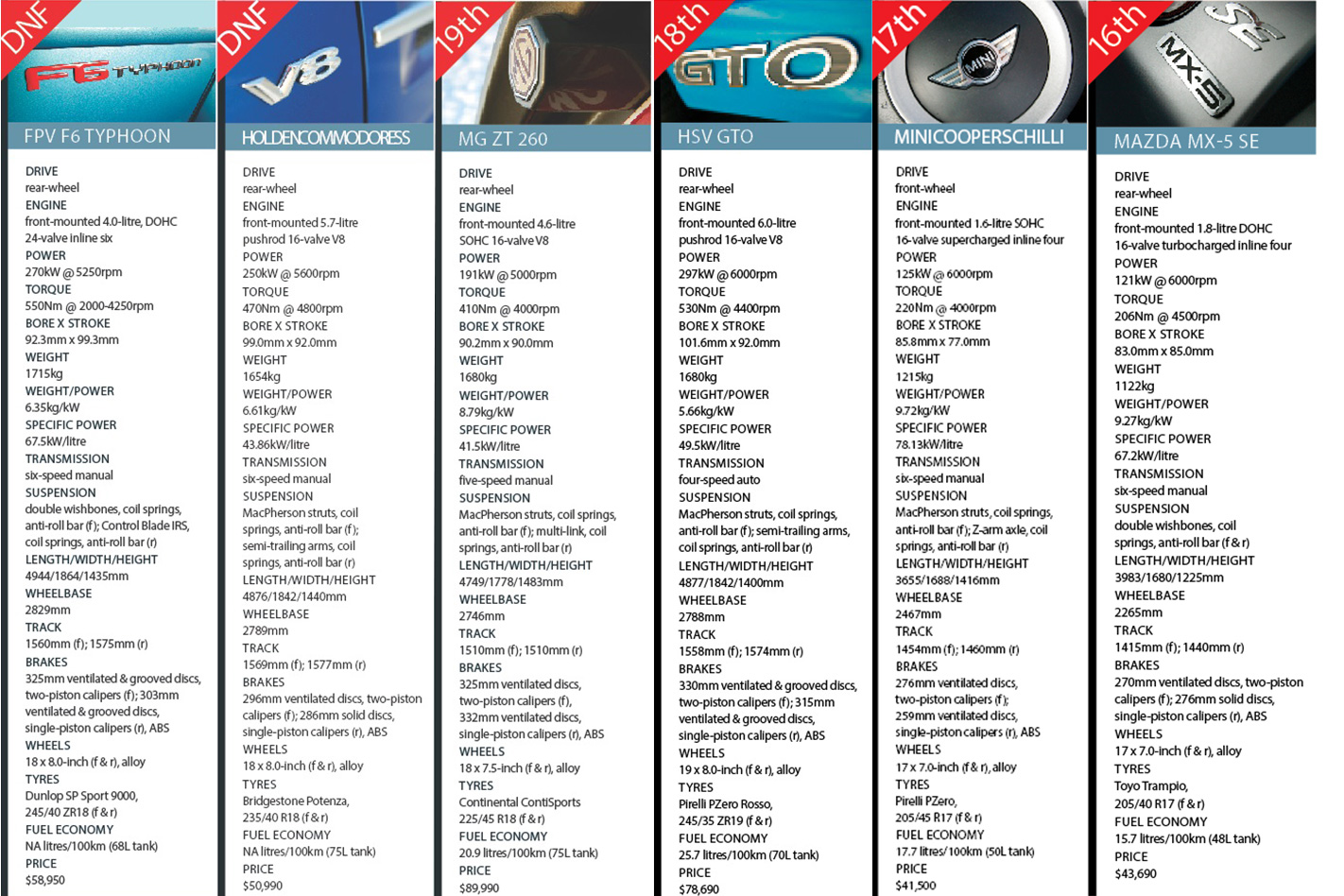
That the ZT 260 didn’t make the cut should surprise only those that haven’t yet been told their Emperor has no clothes. Converting a competent, front-drive V6 into an under-powered, under-suspended V8, rear-driver was not, we’d suggest, the move of a company needing to bullseye every strategic dartboard to survive and prosper.
Better than we thought it would be, though, the V8 suffers from tall gearing, and a Leaving Las Vegas thirst. It’s got all the noise, fuel consumption and range of an old-school V8, but lacks the urge. Its open-diff struggles for drive out of corners and it runs lots of steering weight but no feel.
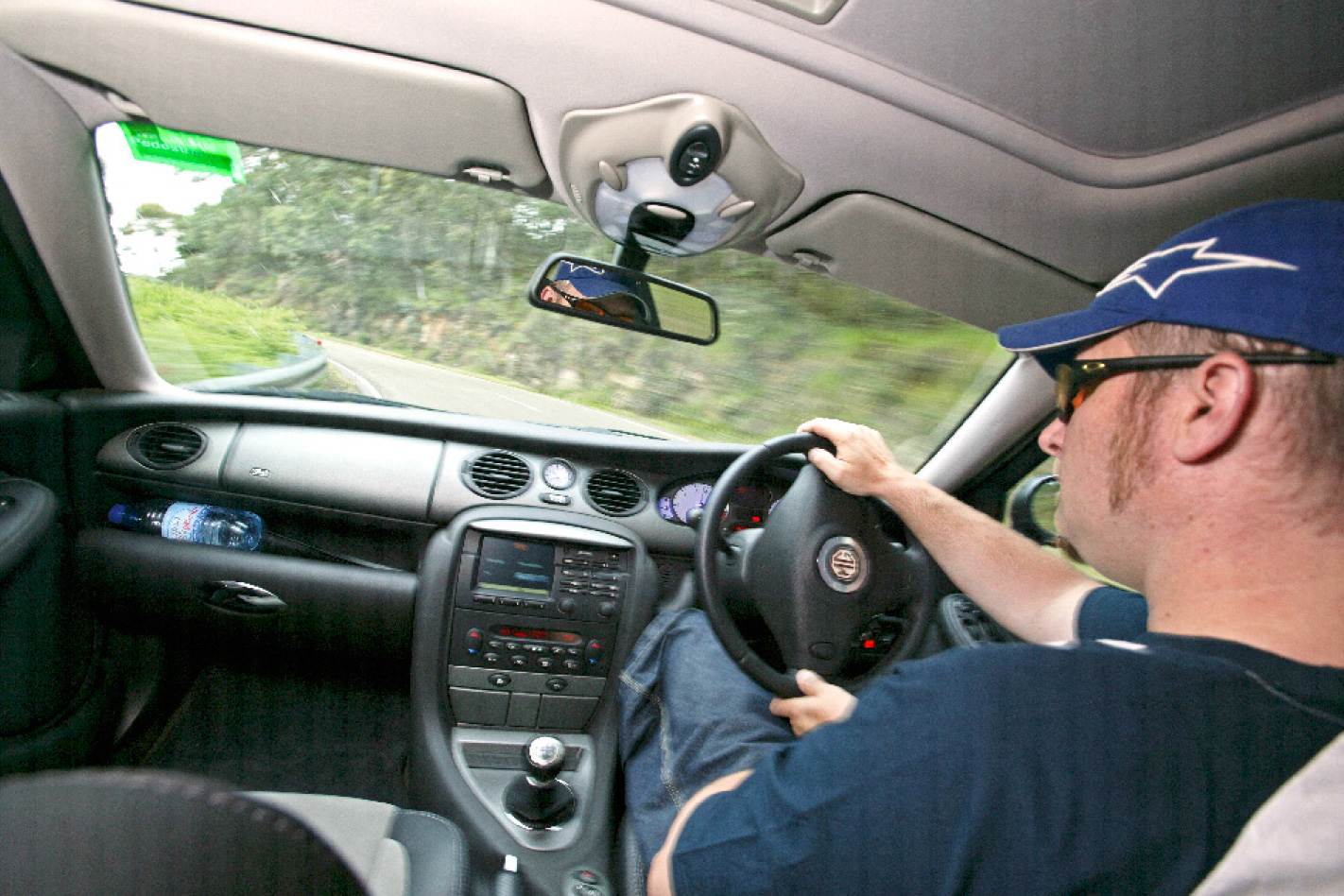
MINI might call it the Cooper S Chilli, but it was the slowest car at Winton and it was never out of the bottom three in any measured test. The Chilli is a nicer road car than it is a track car – but that’s not meant to be a compliment.
The chassis always seems to be catching up to what the front end asked two inputs ago and it’s too sharp in the steering to be anything but a handful in fast corners. Neither will it get out of tight corners without epilepsy-inducing flashes of the ESP light. Bye-bye.
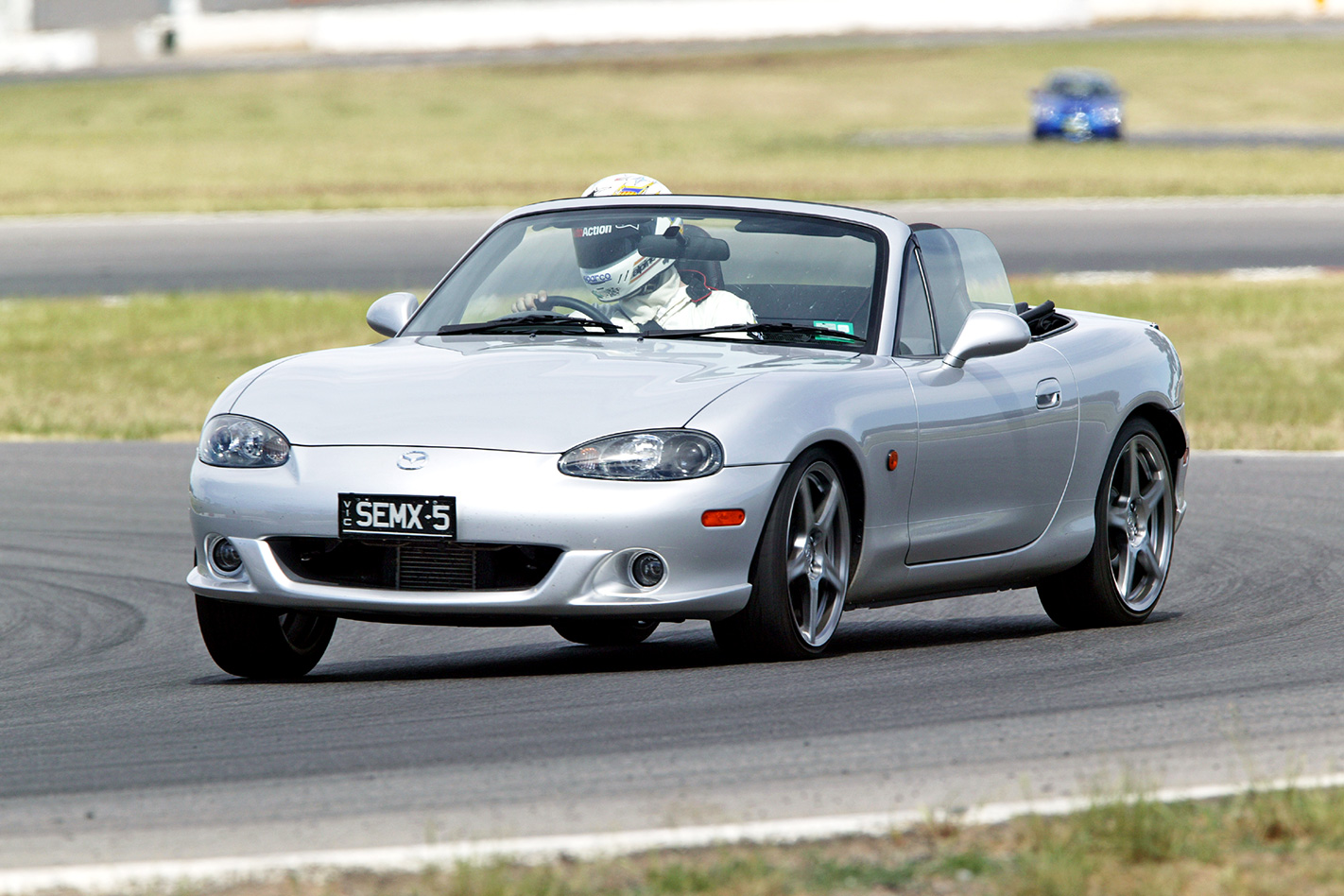
Mazda’s MX-5 SE is still a forgiving, involving sweetheart of a car, but age has wearied both its reactions and its body integrity. Below 4000rpm or so, it’s practically a standard atmo 1.8-litre four, with the low-pressure turbo battling to gather enough fizz. Over 4000 revs the boost it tips in is a bit underwhelming.
This year’s cartoon-blue GTO was the least convincing thing to come out of Clayton since non-alcoholic Scotch. Taylor J insisted we take an automatic HSV, purely because the slusher’s sprinting ability was higher than the six-speeder.
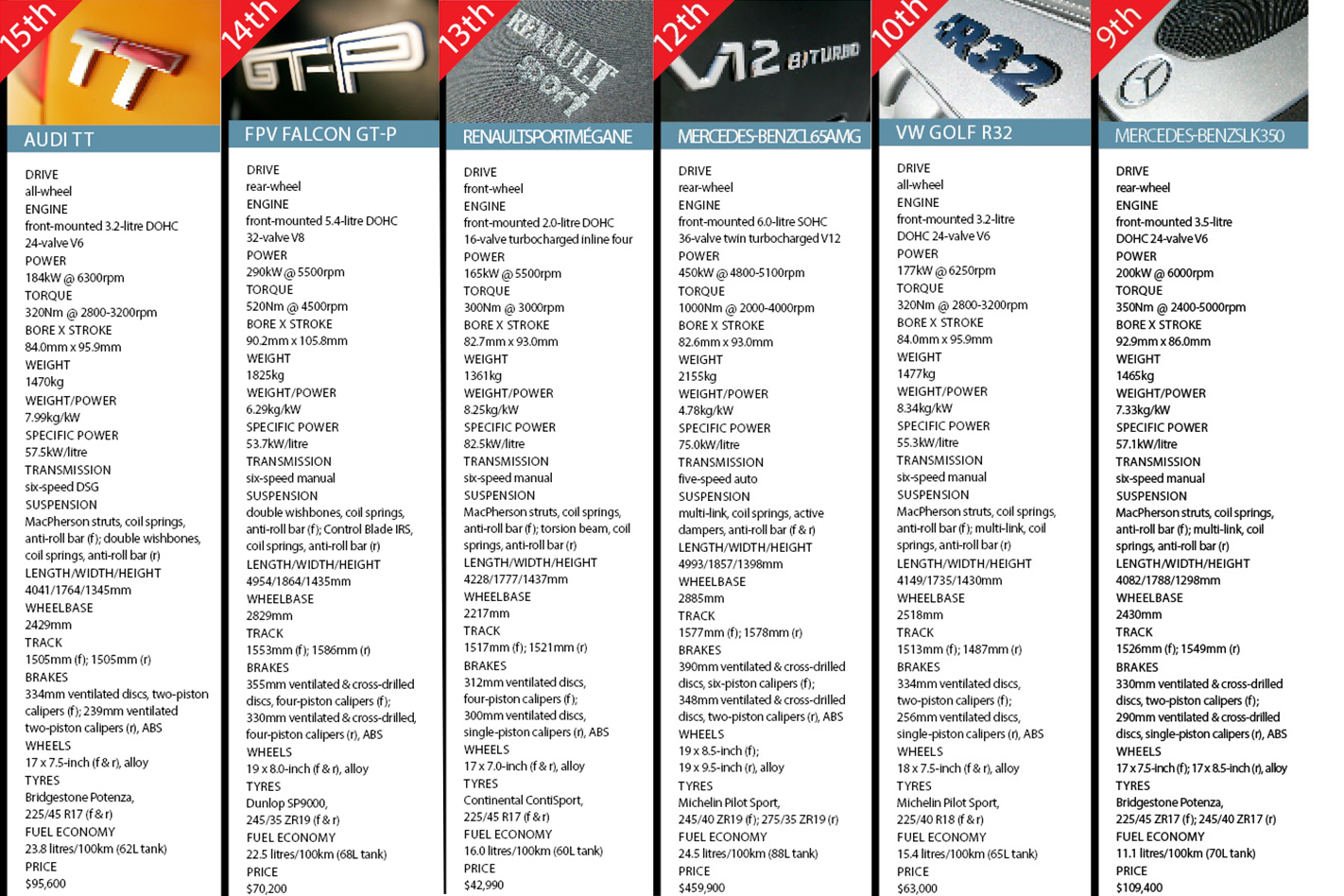
The shame is that the chassis is convincing, allowing drivers to lean the car on either the nose or the tail, depending on your driving style. It’s honest, entertaining and, while power-down remains an issue, it’s almost always a giggle. We expected a lot out of Audi’s TT.
Performance Car of the Year 2005 – Hillclimb: Classic MOTOR
Instead, we got a car that most reckoned was very ordinary in almost every respect. There is an incredible smoothness to the shift action from the new gearbox, but it gets demerits for shifting when you don’t ask it to, not shifting down (or memorising your request for it) when you want it to and, if you’re trying to get speed out of it around a track, is largely a frustrating pain.
It’s a better car (and gearbox) on the road, but not as fabulous as we’d been hoping. Its steering kickback over mid-corner bumps is shocking at high cornering loads, the left-foot braking throttle shutdown is pointlessly frustrating and the chassis is still unbalanced and un-adjustable in its cornering stance.
An awesome missile in a straight line, the CL65 AMG punches through the standing kilometre in 22.35 seconds to be a full second quicker than anything else and slower, historically, only than the 911 GT2, the Viper and the 911 Turbo. Besides 450kW of twin-turbo 6.0-litre V12 power, there’s also that 1000Nm (yep, a gorilla) at 2000rpm.
Ask it to work a bit smarter, though, and the cracks start to gape. The steering is dead-set ordinary; riddled with kickback (so severe it’s audible) and slap on both the road and track, and the front end feels as though it’s just not rigid enough to cope with the massive torque loads being twisted through it.
The front wheels feel like a sprintcar’s front wheels look, springy and bouncy over smooth surfaces, and the traumatised gearbox is smooth, but inconsistent in its decision-making on shift points. Renault’s Sport Mégane 225 split the judging panel.
Easy to drive at eight-tenths, packed with clever features and boasting a terrifically strong and frugal 300Nm turbocharged four-cylinder engine, its appeal as a day-to-day driver is fairly obvious even to its knockers. It’s difficult, though, to reconcile that this car and the Sport Clio Cup are born of the same parent.
At its best when left a gear too high, plundering its torque curve, it’s hardly a willing track charger. Driven hard, it can stumble into a wallowing mess on the racetrack, struggling to get its power down, pivoting around its vertical axis two or three times a corner as the ESP takes whole chunks of the lap out of the driver’s control.
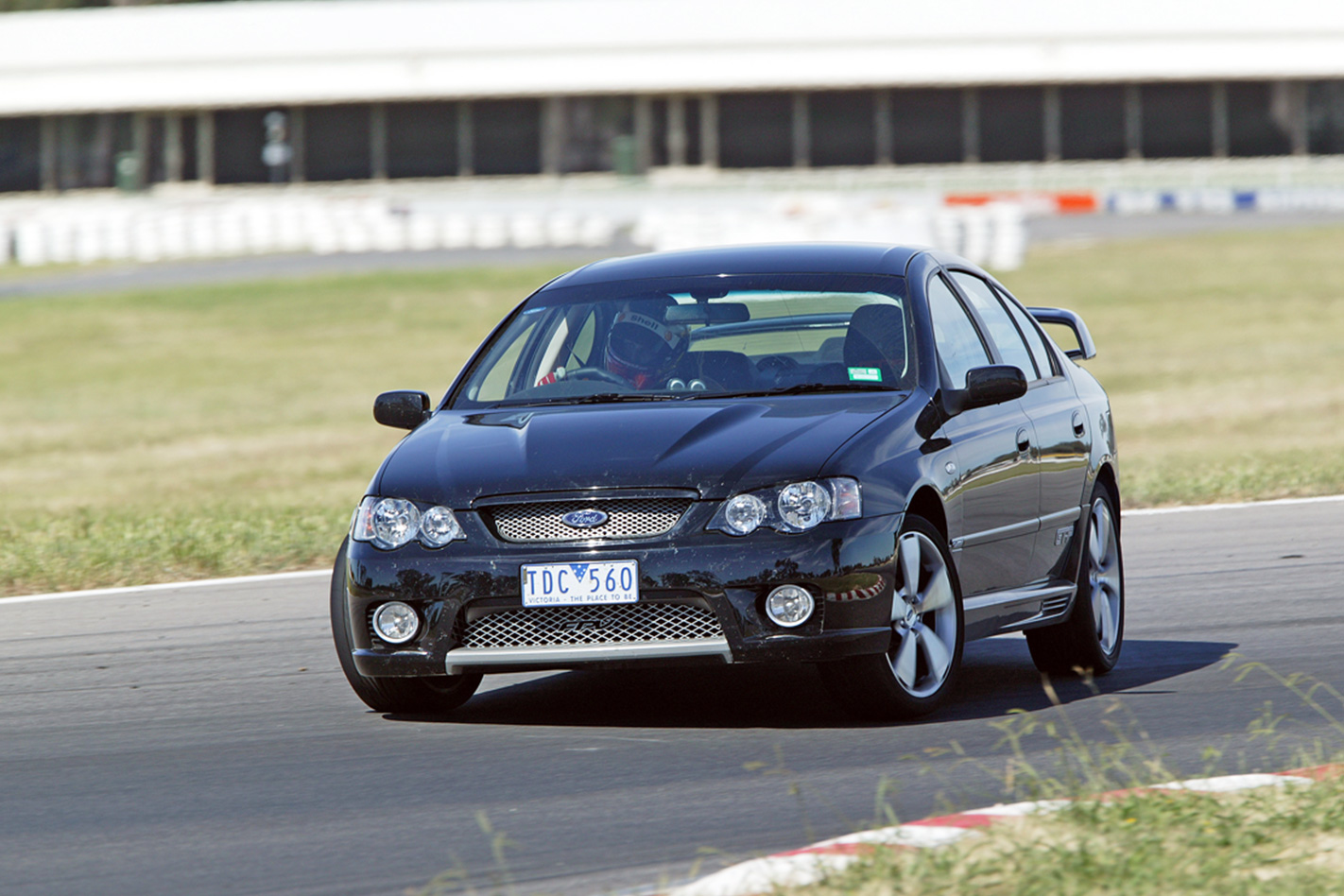
Its gearbox is direct until you hurry it on the track, then it feels oddly remote. Ciao. There’s a lot to like about the FPV GT-P, it’s a big car with great seats, lovely ride quality and the most luscious of engine notes. Oh, and it’s quite the drift car.
FPV’s detail engineering changes to the gearbox have rendered it a better device than in any Holden-based product (it’s essentially the same unit), especially in its first three gears. The trouble is that it just doesn’t go hard enough and it doesn’t do the numbers.
FPV owners want to be able to at least match HSV owners. Instead, they struggle with Holden owners. Embarrassingly, it was only 11th fastest at Winton. Regardless of what FPV says, nobody’s going to be happy spending $70k on a GT-P knowing it gets bested on a track by a Commodore SS, let alone being whupped by 1.5 seconds a lap by the ClubSport R8.
It’s a better road car, with lovely steering weight and throttle response, but it’s got too much body roll, and not enough turn-in bite or mid-corner grip. Nor is its power-down on corner exits anything special. There’s nothing much wrong with Benz’s SLK350.
Benz just doesn’t seem to have the confidence in its chassis engineering to let you tear away the swarming electronic aids to taste the raw car beneath – something both BMW and Porsche gleefully and proudly invite you to do.
While the noise is always the dominant factor with the SLK’s engine, it doesn’t build urge in the same manner as it builds aural intensity and it can be difficult to pick its power peak, especially as the curve flattens off towards its crest.
The steering is, typical of the brand, fairly slow in the rack, but nicely weighted (Merc’s are notoriously light in the helm), and the chassis prefers safely leaning on the nose mid-corner. Try to move the balance rearward and you’ll find the boffins have been there before you and built a safety net.
It’s a lovely car in so many ways, but giving the customer the benefit of any doubt as a driver isn’t one of them. And that’s too frustrating and self-limiting for us to take it further up the ladder. We expected big things of the re-powered Exige, and we got them.
It flew home sixth in the 0-100km/h and quarter mile sprints, even though it was being run down by more powerful weaponry (in terminal velocity) by 400 metres. But point it at a track and watch it hammer.
This chassis is an exquisite piece of unconventional engineering, with ridiculous levels of grip, remarkable feedback from its unassisted steering and brakes that never, ever feel like they’ll go away. That and, when it’s on the cam, its throttle response fair sparkles.
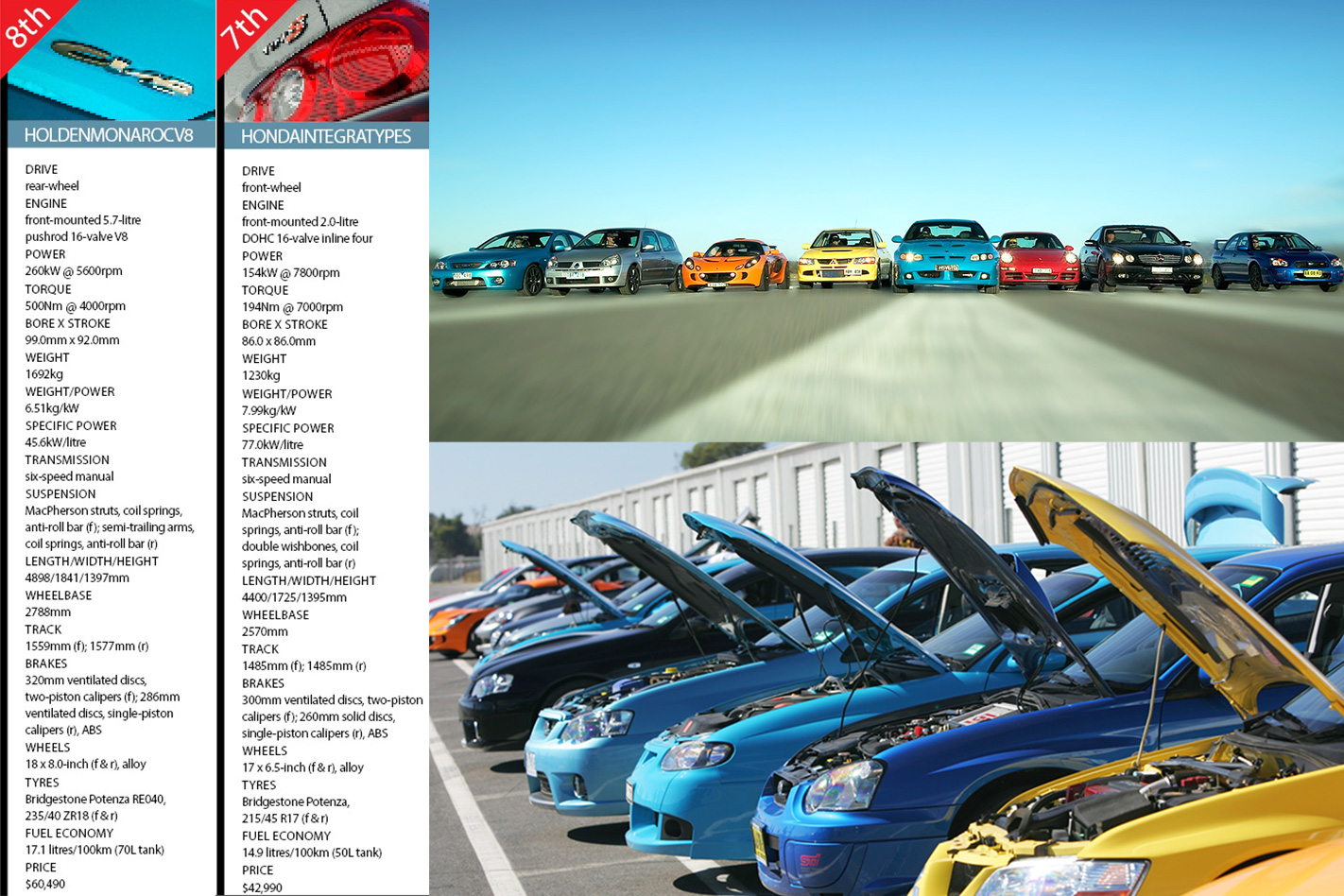
The freshly angered Monaro CV8 was as fast as we’ve come to expect, and comfortably walked into the top 10. It’s actually now a hugely enjoyable car, with an engine burble of unabashed potency that is finally matched by 260kW and 500Nm of delivery.
Even with its sharpened rack, the steering’s still a little slower than the car’s chassis accuracy could tolerate and, while you’re always aware of its weight (err, the brakes are, after a few kays of enthusiasm, a dead giveaway), it never overwhelms you, like it does in the nose-heavy GT-P.
Perhaps the unluckiest cull victim of all was Honda’s Integra Type S. A sleeper in the classic mould, it was convincing on the track, convincing on the road and as chuckable as a 3am kebab. Ultimately not a very quick track car, it’s a bag of fun.
Its power down is better than it has any right to be, its brakes are incredibly strong, its engine is manic (though it still feels a bit flat and doesn’t quite follow through with the power) and it always feels like it’s going Exige-quick, even though it isn’t.
A flattering car to drive, it’s as predictable, safe and controllable as only a well set-up front drive can be on the road and its only Hillclimb shortcoming was a bit of unwelcome ABS intervention over bumps. Its level of mid-corner adjustability is simply astonishing. Being the first of the losers, in this case, is no disgrace at all.
What stands out?
The Australian-built Toyota Camry has been country’s best-selling mid-sized car – and by a huge margin. You get a lot for the money, with plenty of space and the option of hybrid power. The Camry is also good to drive, with nice balance, and in hybrid form a responsive drivetrain.
What might bug me?
Friends who want you to drive something more exciting.Perhaps the look and feel of your Camry inside, if you have ridden in a friend’s recent mid-sized alternative. It has not changed much since 2011, and may seem cheap and cheerless by comparison.
What body styles are there?
Four-door sedan only.All Camrys are front-wheel drive. The Camry is classed as a medium-sized car, lower priced.
What features do all Toyota Camrys have?
Cruise control, Bluetooth connectivity for phones and audio streaming, and a 6.1-inch or bigger central touchscreen. An MP3-compatible sound system, with AM/FM radio and a CD player.Height and reach adjustment for the steering wheel, and buttons on the wheel for controlling the sound system. Height adjustment for the driver’s seat. Air-conditioning that maintains a set temperature.A reversing camera, and parking sensors front and rear.Daytime running lamps illuminated by long-lived LEDs.Wheels made from an alloy of aluminium (lighter and nicer looking than steel wheels).Electronic stability control, which can help the driver recover from slides. All new cars must have this feature.Seven airbags: two directly in front of the driver and passenger, a side airbag for each front occupant, a curtain airbag on each side to protect the heads of front and rear occupants, and an airbag in front of the driver’s knees.All Camrys are warrantied for three years and up to 100,000km. (The batteries in hybrid models are warrantied for eight years and up to 160,000km.)
Which engine uses least fuel, and why wouldn’t I choose it?
The petrol-electric hybrid uses least fuel, consuming just 5.2 litres/100km in the official test (urban and rural combined).This also happens to be the most powerful engine, so that the main reason not to purchase a hybrid Camry is the higher initial price.A second reason might be that you intend to use the car mainly on long journeys. The hybrid drivetrain does its best work around town, where it can harvest energy usually wasted in braking. On the highway, it loses much of its efficiency advantage.(An Atara SL Hybrid tested for the September 2016 edition of Wheels magazine returned a real-world average of 9.1 litres 100km. That ranked it among the less thirsty of 10 mid-sized cars for a mixture of city and country use, but it was not the least thirsty.)A third reason might be that the hybrid Camrys are rated to tow only a much lighter trailer than the non-hybrid versions: 300kg total, compared with 1200kg.Non-hybrid Camrys are powered by a 2.5-litre four-cylinder petrol engine that produces up to 135kW, with good mid-speed response.The hybrids use a retuned version of that petrol engine, and add an electric motor that can produce up to 118kW on its own. However, the two motors produce their peak power in different driving conditions, so that a hybrid’s combined maximum output is 151kW.All Camrys are supplied with an automatic transmission: there is no manual transmission option. Petrol Camrys use a conventional auto with six ratios. Hybrids use a continuously variable transmission or CVT, which adjusts steplessly to the driving conditions.
What key features do I get if I spend more?
The least costly Camry, the Altise, rolls on 16-inch wheels and has cloth trim on the seats.Spend more for the Altise Hybrid and you also get smart key entry, which means doors can be unlocked without taking the key out of your pocket or handbag. There is dual-zone air-conditioning, which lets the driver and front passenger set temperatures independently.The Atara S adds satellite navigation, and five-way powered adjustment for the driver’s seat. Wheel diameter rises to 17 inches, and they mount slightly shallower – or lower profile – tyres in the same width.The Atara SX adds partial leather seats (they’re a mix of real and fake leather), unique headlamps, a rear window blind that can be deployed electrically, and sporty design touches such as alloy pedals and a body kit. It also gets firmer suspension, for more stable cornering, and bigger, 18-inch tyres that are slightly wider and with an even lower profile.The Atara SL shuns the SX’s sporty touches and instead ramps up the luxury features. Seat trim remains part-leather, but both front seats are power-adjustable. Windscreen wipers operate automatically when it rains, and headlamps dip automatically for oncoming traffic. There is a more powerful, 10-speaker sound system. Place a compatible smartphone on the centre console and you can charge it wirelessly.The SL also has active cruise control – which can automatically match the speed of a slower car on the highway – and several active safety features designed to avoid a crash. They comprise auto emergency braking, lane departure alert, a blind-spot warning system, and a rear cross-traffic alert. (For more on these features, please open the Safety section below).You can get the Atara S and SL in Hybrid versions. There is no hybrid Atara SX.(Toyota has also offered a special edition named the Camry RZ, which is a sports-themed version of the cloth-trimmed, petrol-engined Altise. In its most recent form, released in November 2016, the RZ brings you a 7.0-inch touchscreen with digital radio, satellite navigation, dual-zone air-con, and smart-key entry. A firmer suspension tune controls 18-inch wheels. A marginally more powerful engine with twin exhaust tailpipes, and sporty visual touches, complete the package for the 700 Camry RZs produced.)
Does any upgrade have a down side?
The lower profile tyres on the bigger wheels may ride more roughly and cost more to replace.Hybrid models have less boot space.White is the only standard colour, with the other nine hues costing extra.
How comfortable is the Toyota Camry?
It might officially be a mid-sized car but the Camry is closer to a large car when it comes to interior space.The Altise has some bland trim and a plasticky steering wheel, but the main controls are great to use and the dash is spruced up with some stitching across its sweep.The Atara S gets a chunkier, leather-wrapped wheel and more expensive looking seat trim. The Atara SL brings old-school woodgrain trim and leather seats, for a more formal look and feel.A Camry cabin is a pleasant enough place in which to spend time – but it may feel spare and old-fashioned by comparison with many mid-sized alternatives. Seats are comfortable but not especially so. Over bumps or second-grade roads the less sporty versions ride well.The SX (and limited-edition RZ) gets a slightly firmer suspension setup to go with the sportier sales pitch. Combined with the lower profile tyres it will jiggle over small bumps more noticeably than the other models. That is less intrusive above about 70km/h.
What about safety in a Camry?
Seven airbags, the mandatory stability control, parking sensors and a standard reversing camera make for a good safety package. There are seatbelt reminders for all seats.The relatively expensive Camry Atara SL steps it up a notch with an active safety suite. Its Pre-Collision Safety System offers automatic emergency braking, which is designed to alert you to obstacles in front of the car – typically another vehicle that has slowed sharply – and apply the brakes if it believes a collision is imminent. The radar-based system works at city and highway speeds.The Atara SL’s Lane departure warning alerts you if you are drifting – perhaps dangerously – out of your lane on the highway. Its Blind spot warning alerts you, when you indicate to change lanes, if a vehicle in that lane is hidden near your rear corner.The SL’s Rear cross-traffic alert helps you reverse safely out of driveways and parking spots. It warns you of vehicles crossing behind you.The Australasian New Car Assessment Program (ANCAP) rated the Camry’s safety at five stars, its maximum, in May 2015.
I like driving – will I enjoy this car?
The Camry petrol engine is all about getting the job done rather than doing it in an exciting way. It sounds dull and produces only moderate acceleration. The auto transmission sometimes takes too long to shift into a lower gear, exacerbating the lack of go.Battery assistance improves things in a petrol-electric Hybrid Camry. The drivetrain feels sweetly muscular and most people would be surprised by how quickly the car can be hustled.The tyres on Altise models offer only average levels of grip, while tyres on the S and SL have more. The standard suspension tune works well on Australian roads, and through bumpy corners a Camry feels unruffled and holds its line gamely.The SX model with its firmer suspension takes some of the unwanted leaning out of the equation, and benefits from 18-inch tyres with great grip. The steering is also slightly sharper, combining with the tyres to improve cornering accuracy.
How is life in the rear seats?
There is a refreshing breadth to the Camry cabin that makes getting three adults in the rear an easy task. Rear leg room is very generous, ensuring good comfort for tall people, while rear air-conditioning vents help cool the cabin quickly. You might find that the rear backrests supply too much recline.The retractable rear blind in the Camry SX and SL is a bonus for keeping some of the sun out.
How is it for carrying stuff?
Boot space in the petrol versions is capacious, with 515 litres and a split-fold rear seat.However, hybrid models make do with a smaller boot (421 litres), because their batteries use space. Those batteries also mean that barely more than half the seatback can be folded, limiting usefulness for larger or bulky items.
Where does Toyota make the Camry?
All the Camry models featured in this review were made in Australia.
What might I miss that similar cars have?
If you are considering a less costly Camry, perhaps active safety aids. For example, several alternative mid-sizers offer automatic emergency braking on all versions, among them the Mazda6, Subaru Liberty and Volkswagen Passat.Among other mid-sizers worth considering are the Ford Mondeo, Hyundai Sonata and Kia Optima.
When did Toyota update the Camry?
The Aussie-built Camry received a major revision in the first half of 2015. While the interior was largely unchanged, it got new panels outside that gave it a fresh look. Minor equipment upgrades were made in June and December 2016.It Camry was replaced in November 2017 by a new-generation, imported Camry. The new Camry offers petrol-electric hybrid four-cylinder and petrol V6 engines, both using direct fuel injection. All cars have sophisticated double-wishbone rear suspension (for improved handling), and auto braking.We will have a separate review once we get to test drive the new Camry. In the meantime you can look up 2018 Toyota Camry pricing and features.
I like this car, but I can’t choose which version. Can you help?
WhichCar reviewers like the Atara S Hybrid. For the money, it offers a nice blend of city savings and open-road usability. Note the low towing limit, however.For a slightly more engaging drive with less emphasis on urban use, the Atara SX offers low running costs and good value.
What stands out?
The comfortable and sophisticated Volkswagen Amarok handles and steers better than most SUVs – let alone other dual-cab utes. The smooth V6 diesel in the most expensive Amaroks provides highway performance that’s unmatched. Four-wheel drive Amaroks are very good off-road, too, and auto versions drive all wheels at all times.
What might bug me?
That passengers in the rear seat are more exposed to head injuries, from side impacts, than they would be in almost any other new vehicle of comparable size. The Amarok’s side-curtain airbags protect front occupants only.That it might be hard to find someone who can fix your Amarok if it fails on a trip out of town. Volkswagen dealers in country towns are relatively scarce.That unlike most 4WD utes, your expensive V6-engined Amarok does not offer a second set of low-range gears, for driving very slowly off-road. (However, its eight-speed auto gearbox does have very low ratios in first and second, which is nearly as good.)
What body styles are there?
Dual-cab ute and dual-cab chassis only. The utes come with a tub at the rear that matches the cabin. Cab-chassis versions don’t have the tub: you fit the tray of your choice.The Amarok is available with rear-wheel drive only, or with four-wheel drive.Four-wheel drive Amaroks with manual gearboxes come with part-time 4WD and dual-range gearing – like most other 4WD utes. You must drive only the rear wheels on sealed surfaces, but may switch to 4WD on slippery surfaces. You may also select low-range 4WD, which allows you to drive comfortably at very low speeds off road.Four-wheel drive Amaroks with automatic gearboxes come with full-time 4WD – they drive all four wheels all the time, even on sealed roads. They do not have dual-range gearing, however.The Amarok is classified as a light commercial pick-up.
What features do all Amaroks have?
A sound system with an AM/FM radio, a CD player, an SD-card slot, USB and auxiliary input jacks, and six speakers. A 12 volt outlet on the centre console. Bluetooth phone connectivity with voice control.A 6.3-inch colour touchscreen for controlling cabin comfort and infotainment. Support via Mirror Link for Apple CarPlay and Android Auto, allowing you to display apps from compatible smartphones on the touchscreen and control them from there. The screen supports smartphone swipe and pinch-zoom functions.Cruise control. Buttons on the steering wheel for operating the audio system, cruise control and centre-display readouts, and for making phone calls.Air-conditioning that maintains a set temperature. Height and reach adjustment for the steering wheel, and height adjustment for both front seats.A very handy light that can illuminate the rear cargo-area.Trailer-Sway Control, which helps settle the car if a trailer is swaying from side-to-side.Electronic traction control, which helps the Amarok maintain drive on slippery roads or when off-road.On all 4WD Amaroks: a rear differential lock, which helps you go further off road. (On 2WD Amaroks you can add the diff lock as an extra-cost option. It’s a handy feature on muddy building sites, for example.)Four airbags, and electronic stability control. (For the placement of airbags, and more on Amarok safety, please open the Safety section below.)All Amaroks carry Volkswagen’s three-year, unlimited kilometres, warranty.
Which engine uses least fuel, and why wouldn’t I choose it?
Three engines are available in an Amarok, all turbocharged diesels. On official government test results, the most fuel-efficient is the biggest and most powerful of them, a 3.0-litre V6 that Volkswagen calls the TDI550 and that comes only with an auto gearbox. It consumes 7.8 litres/100km (city and country combined).This is a gem of an engine, smooth and very strong. The most obvious reason why you wouldn’t go for it is that you want to pay less for your Amarok: it is available only in the three most expensive models.A second reason is that you can’t get it with dual-range gearing. Most of the time this is not a problem, even off road. But for some uses you might want a manual ’box with a low range.A third and less obvious reason you might not choose it is that in the real world, it does use a bit more fuel than the alternatives, both 2.0-litre in-line four-cylinders.Neither of these 2.0 litre engines comes close to the 3.0 V6 for effortless urge, but both are unusually smooth for a ute engine and broadly responsive. The TDI400 is mated to a manual gearbox and the very similar TDI420 comes with the automatics.In the real-world, you can expect to average about 10 litres/100km from an Amarok TDI400 (from a mixture of town and country driving), about 11 litres/100km from a TDI420, and about 12 litres/100km from the TDI550 V6.Amarok manual gearboxes have six ratios, while the Amarok automatics have eight.
What key features do I get if I spend more?
The least costly Amarok is the Amarok 2WD, which is aimed at commercial buyers and has 16-inch steel wheels, a four-cylinder engine and an automatic gearbox. (You can no longer get a 2WD manual.)Spend more for an Amarok Core and you get 4WD, and a choice between manual and auto transmission. The Core has fancier wheels made from aluminium alloy – wrapped in tyres that are useful off-road and on sealed roads. It also has a rear camera to guide you when reversing, and rear parking sensors that tell you how close you are to an obstacle. (The rear camera and sensors are options on the Amarok 2WD.)Spend more again for a Core Plus and you’ll find carpet on the floor rather than rubber. Windscreen wipers come on automatically when it rains, and headlamps switch on automatically when it gets dark. There are front foglights, front parking sensors, and three additional 12-volt outlets – one on the dashboard, one at the rear of the centre console for rear-seat passengers, and one in the tub. The tailgate is lockable. Wheels are bigger and sportier-looking 17-inch alloys, fitted with lower profile tyres biased more towards road use. On the tub is a sports bar, and there are wheel-arch flares and other styling changes.The next price-step is to the TDI 550 Sportline, which brings you the V6 engine, an auto gearbox and 4WD. Front parking sensors augment those at the rear, and the air-conditioning is dual-zone climate control (which allows the driver and front seat passenger to set their own cabin temperatures). Bigger wheels again (18 inches) are fitted with wider, lower-profile road tyres.Spending more on a V6 will get you a TDI550 Highline, which gets you built-in satellite navigation, and sidesteps (which make it easier to enter the car). Headlights are extremely bright bi-xenon units, there are long-lived LED running lights so the car stands out more on dull days, and a pressure monitor warns you if a tyre loses air. If you are driving, you can amplify your voice through the rear speakers – an easy way to make sure rear-seat passengers hear you.The most expensive Amarok is the TDI550 Ultimate, which in addition lets you control the gearbox from the steering wheel, and trims the cabin in leather. Both front seats are power-adjustable, and heated. There is an extended sports bar for the rear tub, and bigger wheels (19-inches) with even lower profile tyres.Satellite navigation, heated seats, bi-xenon headlamps and LED daytime running lights are available on the Core Plus as an extra-cost option. Leather-trimmed and heated front seats are optional on the TDI550 Highline.
Does any upgrade have a down side?
As with all utes, the extra equipment carried by the more expensive models adds weight and reduces the permissible payload – that is, there is less capacity left for other stuff you might want to carry.Choosing an automatic gearbox means you cannot get dual-range gearing.The 18-inch and 19-inch wheel rims and lower-profile tyres fitted to the V6 Amaroks are more susceptible to damage off road than the smaller wheels and higher-profile tyres on less costly models, and the tyres will be generally less effective off road. The lower profile tyres also ride more harshly on rough roads than the 16 or 17s.(If you want to optimise your TDI550 for off-road use, Volkswagen offers 17-inch wheels, fitted with more suitable tyres, as a no-cost option.)Any colour except white is an extra-cost option.
How comfortable is the Volkswagen Amarok?
It’s a good step up to Amarok’s cabin. The front passenger gets an assist-handle to haul on, but the driver does not.Inside, an Amarok feels big and airy, and the presentation is reserved and understated. Models fitted with the rubber floor coverings have a work-vehicle air about them, while the most expensive feel quite luxurious.With a good range of adjustment for the seat and the steering wheel, the Amarok can accommodate short and tall drivers with equal comfort. Front seats in a ute don’t come any better.On the move, the Amarok is quiet and comfortable – and more so than any other 4WD ute. You will hear less road noise in an Amarok cabin than you would in many hatchbacks and sedans.The Amarok’s ride when unladen still has some of the rear-end kick typical of utes, but it’s better than most. And like others, it settles nicely with a load on board.All the engines are smooth and quiet, especially for diesels, with the V6 even better here than the fours.The auto gearbox is the best automatic of any ute and offers seamless, barely detectable gearchanges.
What about safety in an Amarok?
Every Amarok has four airbags: two directly in front of the driver and front passenger, and one on the outer side of each front occupant that protects the head and chest from side impacts.A reversing camera and rear parking sensors are standard on all but the Amarok 2WD, and optional even there.All Amaroks have anti-lock brakes, and electronic stability control – which helps you control the car in a skid. In auto-gearbox Amaroks, the full-time 4WD system – a rare feature among utes – also helps stability on sealed roads where it’s slippery.The Amarok also offers a feature called Multi-Collision Braking. After a crash, this applies the brakes automatically. The aim is to prevent your rolling or being nudged into further danger – for example, into an oncoming lane.However, this is not autonomous emergency braking (which uses sensors to detect obstacles ahead, and can brake automatically to help prevent the first crash).The Amarok does not offer airbag protection for rear-seat passengers.The Australian New Car Assessment Program (ANCAP) awarded four-cylinder dual-cab Amaroks five stars for safety, its maximum, in April 2011. Amarok V6 models have not been rated.
I like driving – will I enjoy this car?
If you want a diesel dual-cab 4WD that goes and turns like a sports car, this is as close as you’ll get. The Amarok handles better and steers more precisely than any other 4WD ute. Amarok V6 models add punchy engine performance that is also unmatched. A V6 Amarok overtakes on the highway with urgency – something you can’t say about any other ute.Although not as powerful, auto and manual four-cylinder Amaroks are easy and pleasing to drive – partly because their engines use two turbochargers rather than the usual single turbo. The smaller of the two turbos brings immediate response when you press the accelerator, and the bigger one builds power if you hold your foot down.The Amarok is also an enjoyable drive off-road and is about as capable as it gets for a light 4WD ute. The standard rear diff lock helps here. So does the traction control, which remains active at the front even when the rear lock is engaged. The Amarok’s underside is well protected, also.While automatic 4WD Amaroks do not have low-range gearing, the eight-speed gearbox has unusually low first and second gears, which make it easy to drive very slowly off-road if needed. Because they also have full-time 4WD, you can head off road straight from the highway – without having to engage 4WD or low-range.
How is life in the rear seats?
The Amarok is better than similar utes for rear shoulder room, literally the pinch point in dual-cabs when you are trying to seat three adults in the back. Rear legroom too is good but some other utes have slightly more. Rear passengers are looked after about as well as they would be in many medium SUVs.The rear seat itself is firm but comfortable. It folds (base up, back down) if you want the rear-seat area for cargo.There are three child-restraint anchorages in all models.
How is it for carrying stuff, and towing?
Being a ute, the Amarok is tailor made for carrying stuff. It can accommodate a standard pallet between the factory tub’s wheelarches, a feat few utes can manage.Amarok payloads (the weight you can carry, including passengers) are midfield for a ute like this, and range from 1139kg for the 2WD model down to 864kg for the TDI550 Ultimate.Four-cylinder Amaroks have a 3000kg towing capacity, which is 500kg short of a Ford Ranger, Holden Colorado and some others.In October 2017, Volkswagen announced that for the 2018 model-year, every Amarok V6 would have its towing capacity lifted 500kg to 3500kg. (Volkswagen said it had amended the step area under the tailgate to achieve the higher rating.)The Amarok V6 also matches the best alternatives for how much it can carry and tow simultaneously. The V6 power will be especially useful for towing and carrying a big combined load.Use caution (in any ute) if you want to drive with loads approaching legal rated limits.
Where does Volkswagen make the Amarok?
All Australian delivered Amaroks are made in Argentina.
What might I miss that similar cars have?
Side-curtain airbags that protect the heads of rear-seat passengers from side impacts. These are supplied with the Ford Ranger, Toyota HiLux, Mitsubishi Triton, Holden Colorado, Isuzu D-Max and Nissan Navara dual-cabs, for example.An automatic gearbox with dual-range gearing, which is available on most utes. The main reason you might want this is for towing a heavy camper trailer on steep off-road tracks.Perhaps Active cruise control, which will match automatically the speed of a slower car in front on the highway. And other active driving aids aimed at augmenting your attention, such as forward collision warning (telling you that you are in danger of crashing into a car in front) and lane departure warning (telling you that you are drifting into an adjoining lane). Such systems are available on the Colorado and Ranger, for example.Other utes you might consider include the Mazda BT-50.
I like this car, but I can’t choose which version. Can you help?
The TDI550 Sportline has arguably become the value sweet spot since it was introduced in August 2017. It is the least well equipped Amarok V6 but it still brings you plenty of kit, combining proficiency as an all-round ute and family car with unmatched performance.The TDI550 Sportline won’t suit everyone however, especially if you want a more basic and work-oriented vehicle.
Are there plans to update the Amarok soon?
The Amarok was launched overseas in 2010 and arrived in Australia in 2011. The TDI550 V6 engine arrived in late 2016.About February 2017 Volkswagen cut back its Amarok four-cylinder models, axing all Single Cabs and making its 2WD Dual Cab auto-only. The feature-rich Highline and Ultimate trims were reserved for the V6 engine.About August 2017 Volkswagen added a third, and less costly, V6, the Amarok TDI550 Sportline.Late in 2017, for the 2018 model-year, the tow rating of the Amarok V6 (only) was raised 500kg to 3500kg.Volkswagen says a second TDI550 Sportline, this time with a manual gearbox and dual-range gearing, will arrive in 2018.A new-generation Amarok is not likely before 2020.
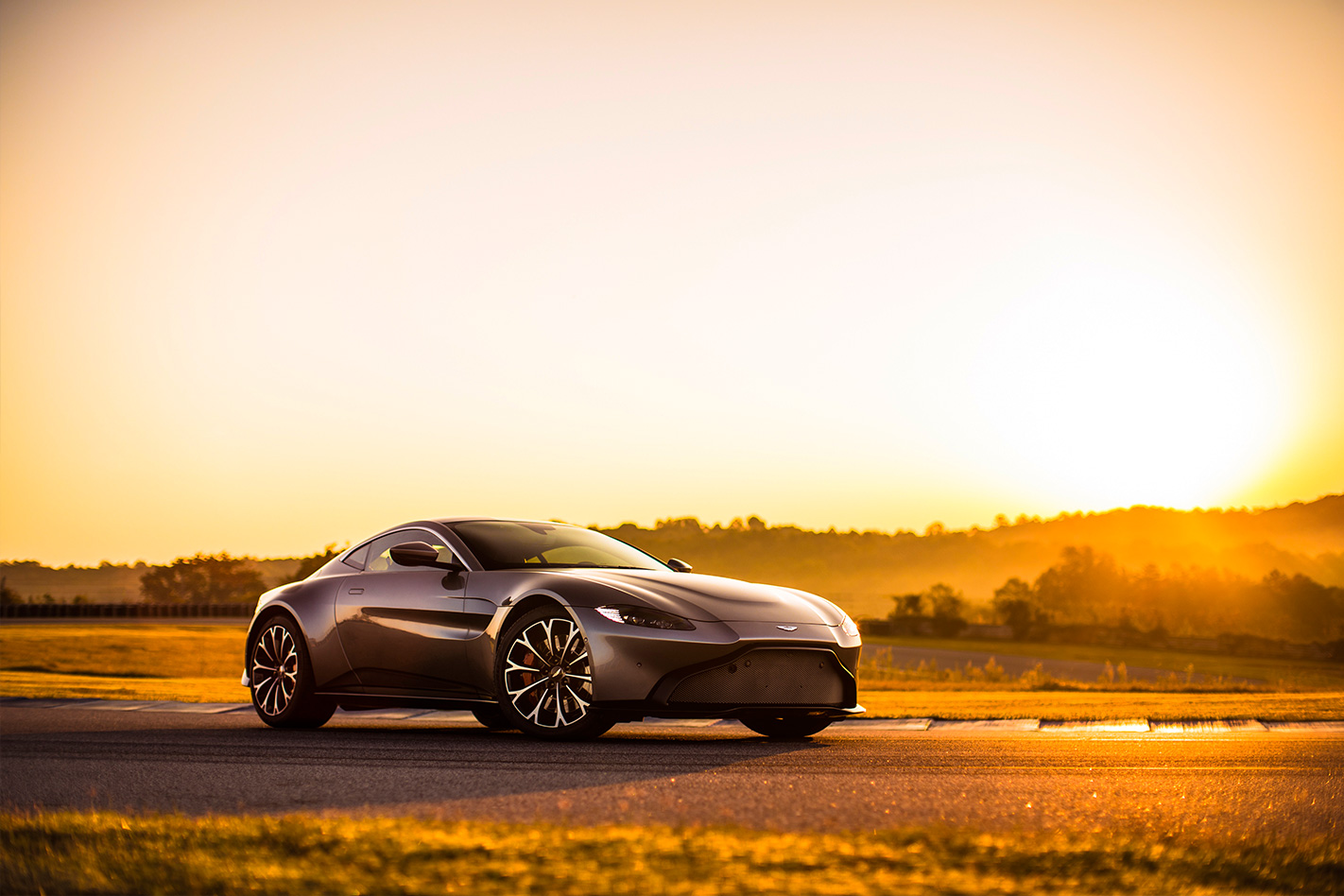
AFTER months of hype, speculation and teasers, Aston Martin has finally revealed its next-generation Vantage sportscar.
It has revealed a two-door coupe that redefines the entry point for the British high-performance brand and must continue to build momentum for the company.
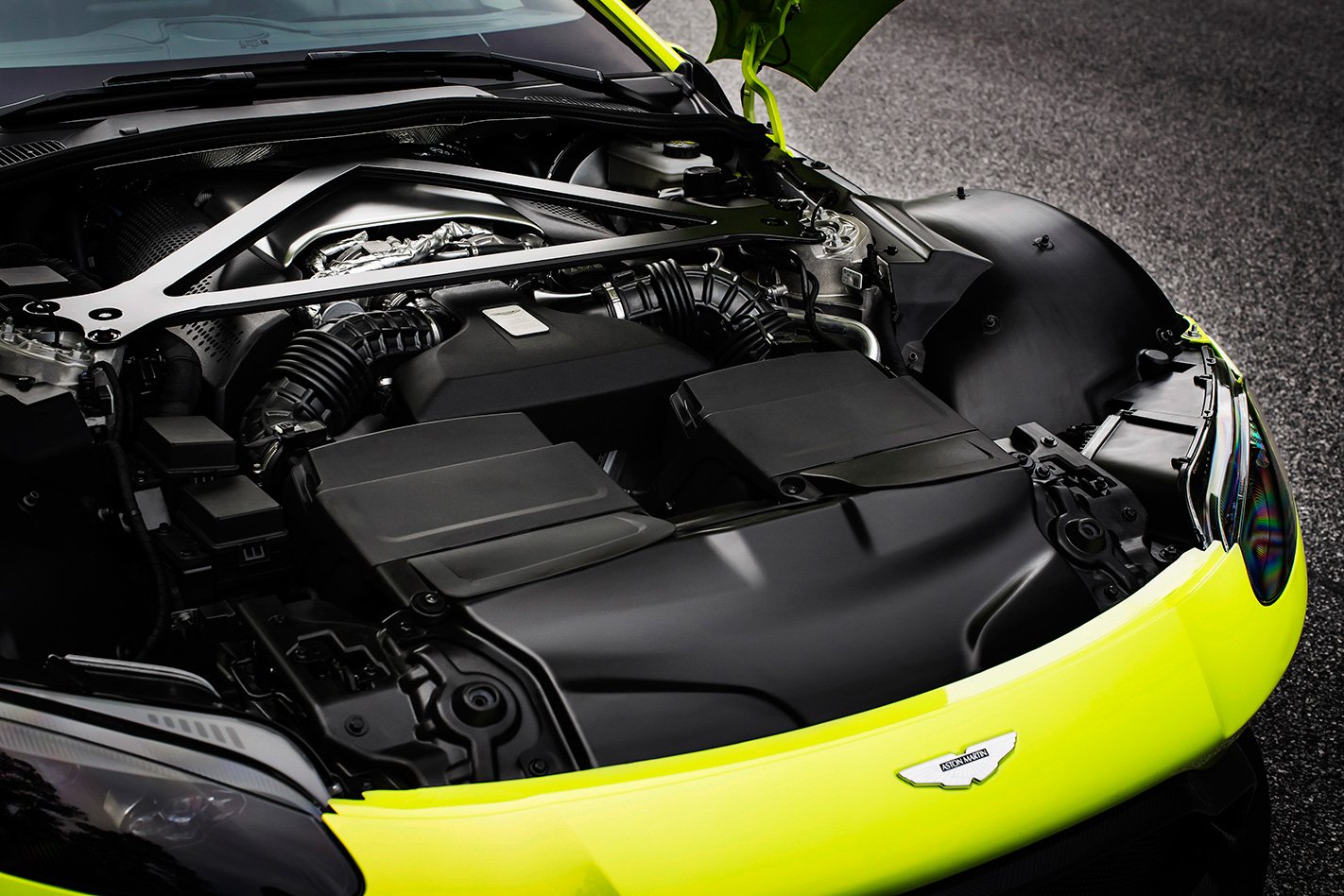
With a hand-built Mercedes-AMG 4.0-litre V8 under its clamshell bonnet, the radically restyled Vantage comes to the competitive high-end sportscar market packing a 375kW punch thanks to twin turbos and a tune unique to Aston.

Power usurps the outgoing V8 Vantage, which produced 321kW from a naturally aspirated 4.7-litre V8, and although the 5.9-litre V12 version pumped out up to 444kW in AMR tune, the new version is faster than both.
Vital statistics look like this: Zero to 100km/h in 3.6 seconds and a V-max of 314km/h.
But the new arrival assumes a greater mantle than simple performance figures and Aston Martin predicts the new-gen Vantage to contribute to its continued global growth.

“We see some significant growth just focusing on our existing owner base I guess we would expect volumes similar to what we’ve been achieving, but with our focus now broadening to a large number of volume competitors, we see significant volume increase for the brand overall with this car,” he said.
With 20 percent of the 2018 allocation already spoken for, Australian sales are already looking healthy, despite a price tag that will eclipse the outgoing V8 Vantage by about $80,000. Exact pricing is yet to be finalised but a figure “circa $300,000” should be expected, said Wall.
But that’s unlikely to deter well-heeled Aston fans who have already set their heart on the new model, which brings a significant evolution in styling and cues from both the unhinged Vulcan track-star and even the manic Valkyrie.

“Three years ago Aston Martin was selling about 350 to 360 cars in Asia-Pacific,” said Wall. “Next year, our target will be over 800. It is the right time and with the increased volume comes increased budgets.”
Wall would not reveal how many vehicles the company believed it could sell with the arrival of the new Vantage, which joins forces with the DB11, followed by another significant shot in the arm , the DBX SUV. However, Wall did say the Vantage would outsell the DB11 and it is likely the company’s first high-rider would trump both sports cars.
For now, Vantage customers are being offered a two-seat rear-drive coupe with credentials that appear to stack up well against its contenders in the high-end sports segment, with the prospects of more potent versions on the cards.
The adoption of a transaxle and front mid-mounted engine has resulted in a 50:50 front-to-rear weight distribution for the ultimate in handling and balance, according to Aston.
Unlike the AMG, which has a dry-sump lubrication system for the lowest engine positioning, the Aston uses a slimline wet sump.
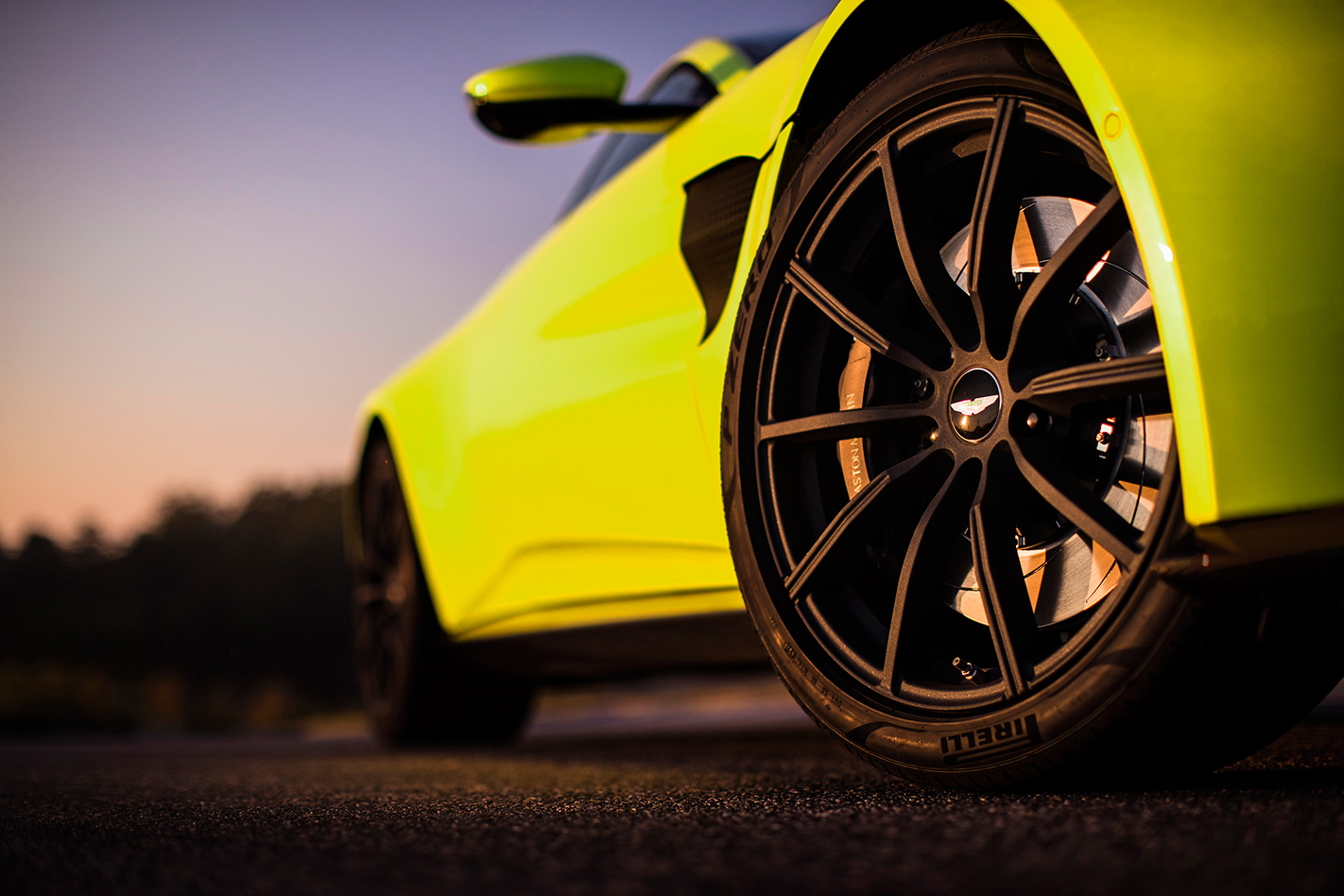
Traction is optimised with an electronically controlled differential, while torque vectoring and 20-inch wheels are standard. Customers with a little cash to splash can upgrade to lighter forged versions of the same diameter in a number of different designs.

Most exterior aerodynamic components are crafted in carbonfibre for strength and minimised weight, helping to contribute to an overall dry weight of 1530kg.
Handling braking are six-piston calipers and 400mm discs on the front axle, and four-pot calipers with 360mm rotors at the rear. No mention has yet been made of an optional carbon ceramic set. The Pirelli P Zero tyres measure 255/40 on the front and 295/35 at the rear.
Forged double wishbones form the front suspension with a multilink set up at the rear, supplemented by adaptive damping.
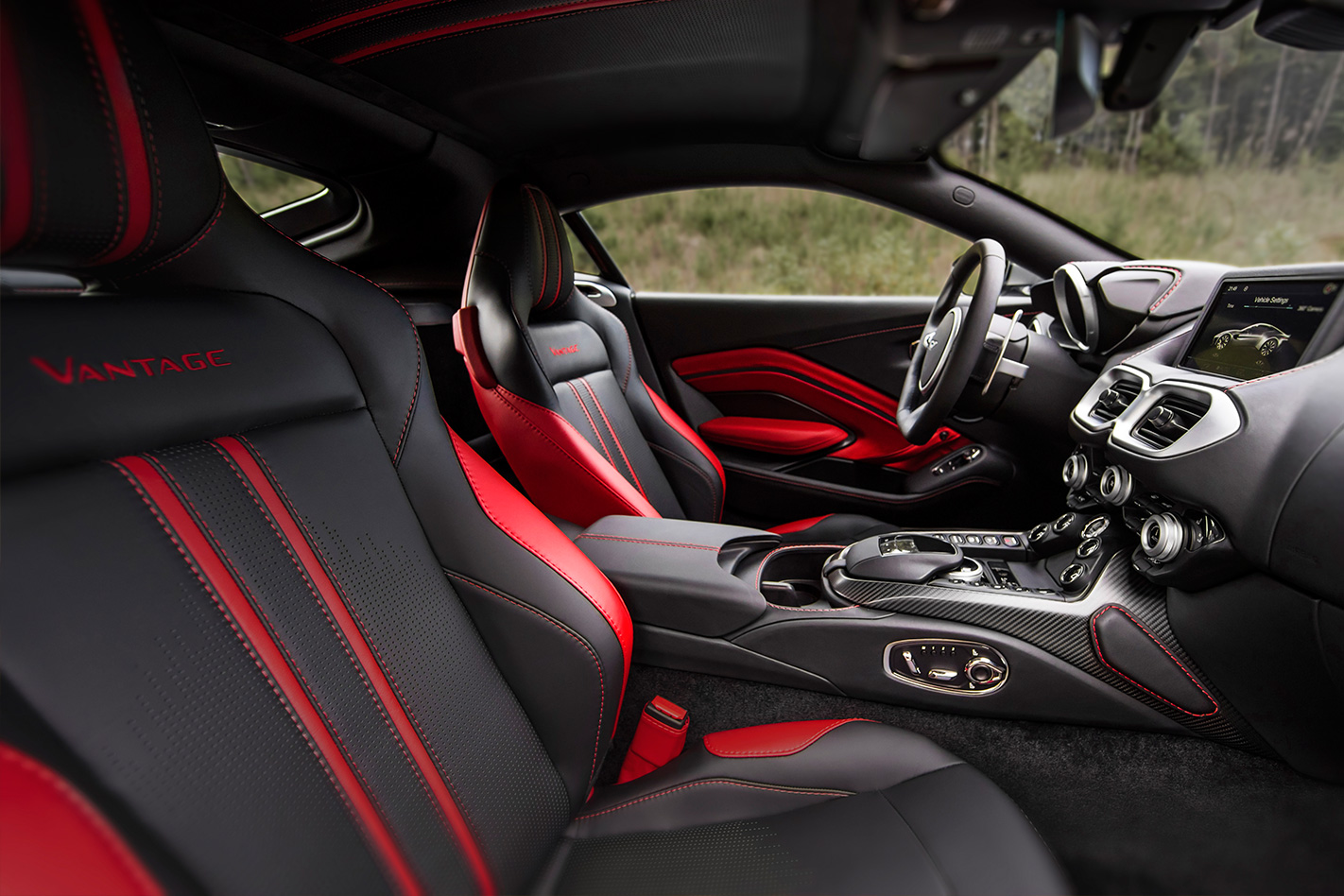
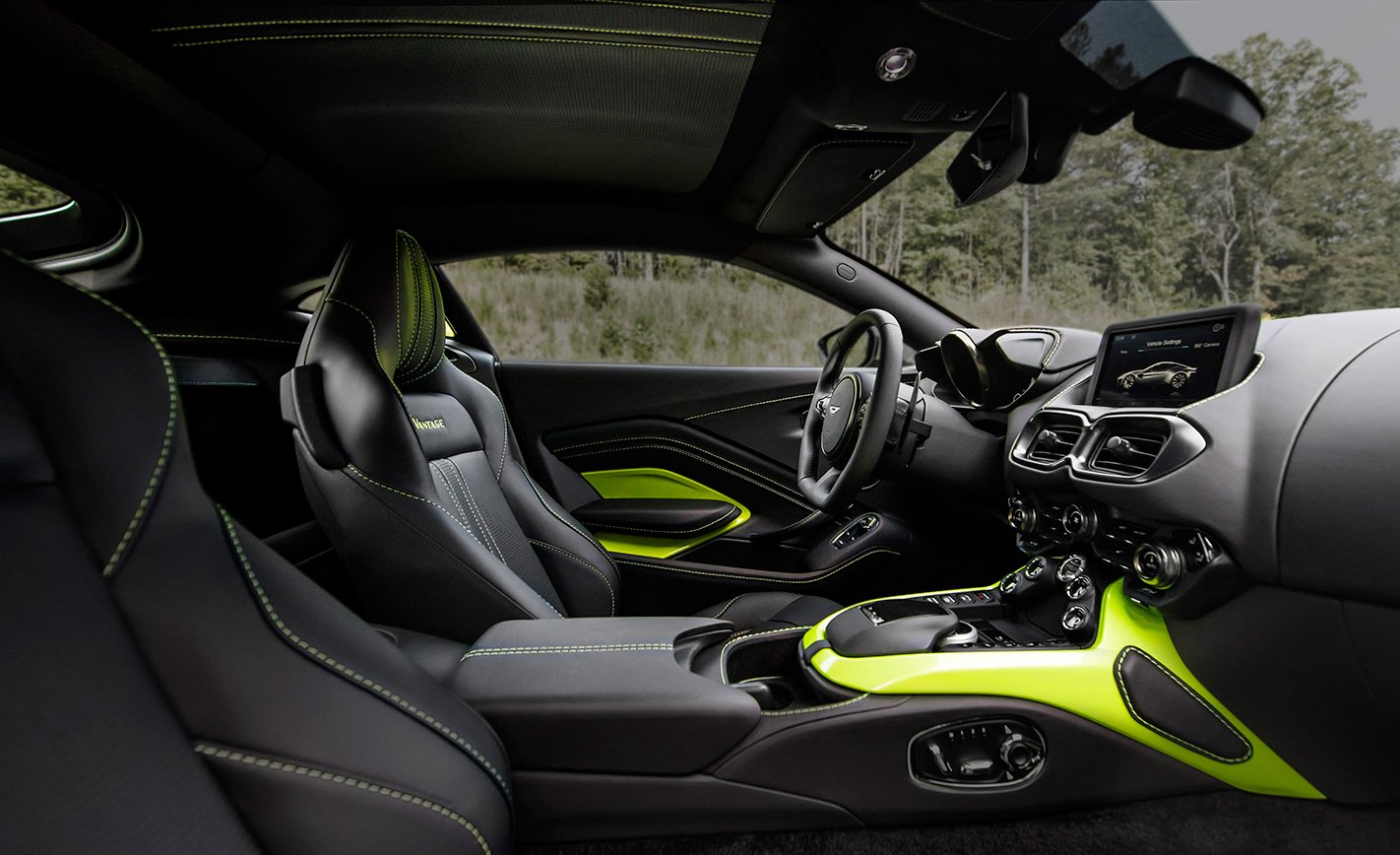
Inside, there are more clues to the AMG connection with an information and entertainment system dial and 8.0-inch screen lifted straight from the German car’s cabin, as well as other switchgear. But interior styling including the Alcantara-clad seats are a more dramatic departure.
The company will also offer a bespoke customisation service to make the Vantage more personal while distancing it from the related AMG.

Aston Martin has revealed the successor to what it calls its most successful model yet – the Vantage.
With an AMG-sourced 4.0-litre twin-turbo V8 housed “low and as far back in the chassis as possible for optimal centre-of-gravity,” the Vantage scores a 375kW/685Nm output and a 50:50 weight distribution.
Rather than a heavy GT, Aston says the new Vantage will only weigh 1530kg, allowing its new wet-sump engine to propel it to 100km/h in just 3.6 seconds.
“This differential is linked to the car’s electronic stability control system, so it can understand the car’s behaviour, and react accordingly to direct the engine’s power to the relevant wheel,” Aston Martin explains.
The 2018 Vantage will charge on to a top speed of 314km/h.
Inside, the seating position is now lower, and the cabin has been designed to elicit a ‘cockpit’ feel.
“It speaks volumes for the outgoing Vantage that it is the single most successful model in Aston Martin’s history,” Palmer says.
Aston Martin Valkyrie AMR Pro teased with design sketches
“I’m enormously excited by what we’ve created: a new Vantage that’s more explicit in looks and intent, wrapping heart-pounding performance and dazzling dynamics into an everyday usable package.
“A true sports car with a sharper look and a keener dynamic edge, the new Vantage is the Aston Martin pure driving machine enthusiasts have been waiting for.”
Harding Performance, based in Brisbane, plans to build a supercar-bashing Volkswagen Golf R.
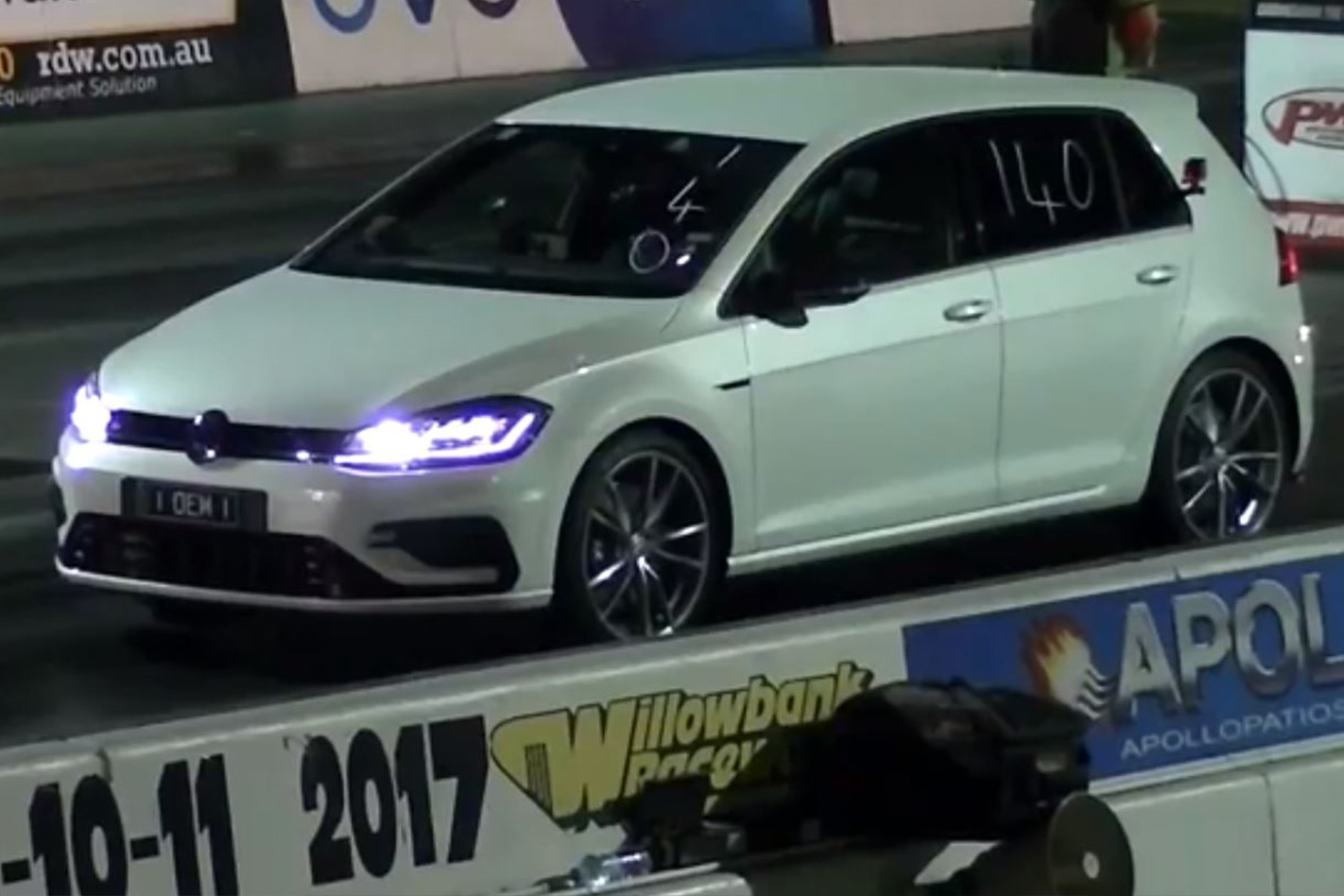
Harding has already built an incredibly quick Volkswagen Golf R, but this is a new, improved Mk7.5.
The main difference, head honcho Guy Harding points out, is that the gearbox is much stronger and can handle more power coursing through it.
As such, he believes the 7.5 R is going to be able to be tuned to out-perform the Mk7 he and his team completed previously.
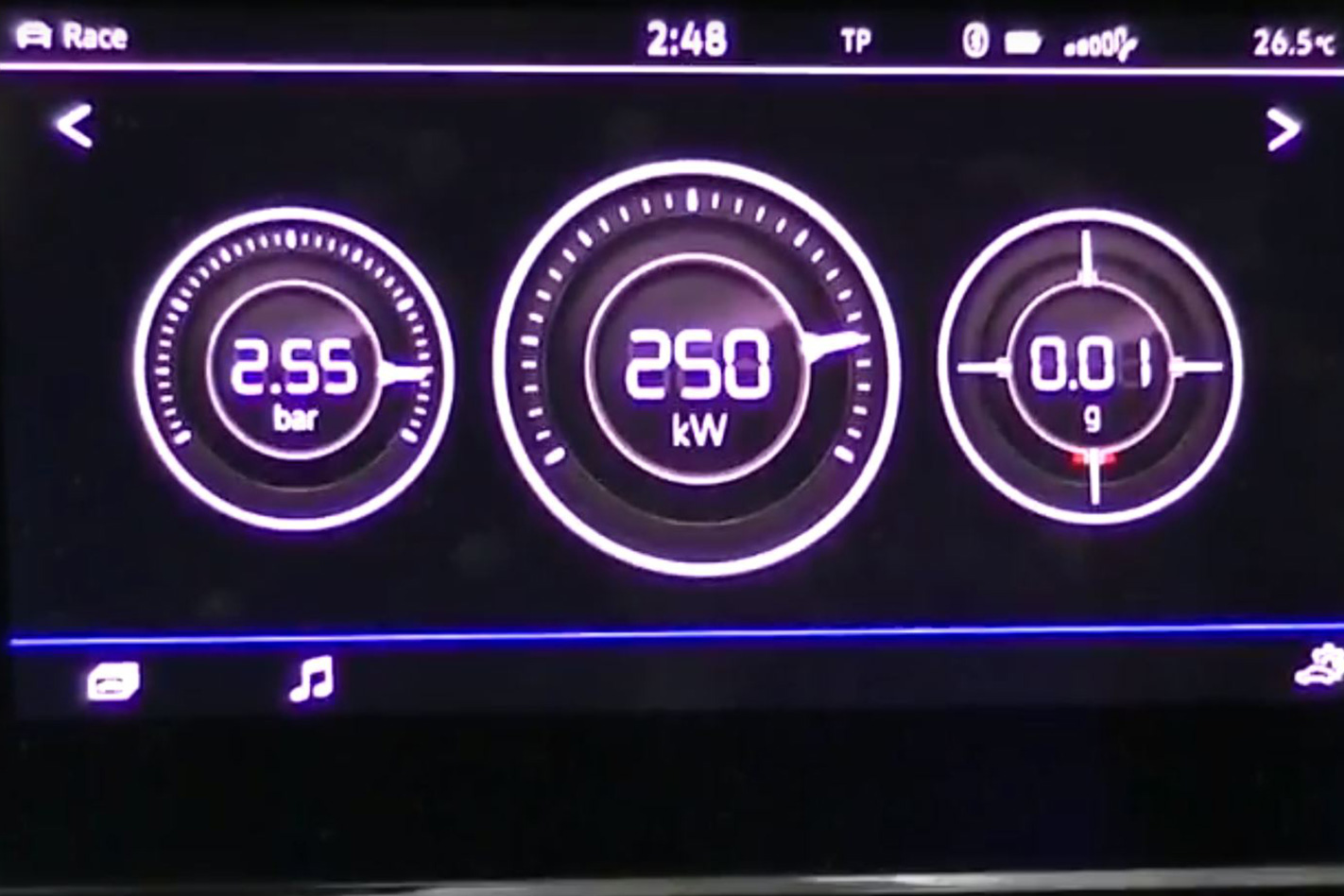
At this point, the changes are purely to do with the engine software. Harding says he’s already tested times against the stock R, and gains have been made.
“Stock, we ran a 12.8sec and a 12.9,” Harding says.
“With our Stage 1 engine tune we pulled .6 of a second off both its quarter mile times, and also brought its 0-100km/h time from 4.8 seconds down to 4.3 seconds.
Harding says to achieve his intended performance times, he’s going to have to tune the R past ‘Stage 3’.
Cheaper Volkswagen Golf R Grid Edition announced
“Our Stage 3 kit, which produces 390kW, will be launched first, and we are currently working on a 450kW+ kit which we hope to have to market 2nd quarter 2018.
“The 450kW kit will more than likely require a conrod upgrade internally, but the new gearbox should make it an extremely fast car.”
MOTOR will follow the development of the Harding Performance VW Golf R 7.5 and bring you the news when it’s finished.
