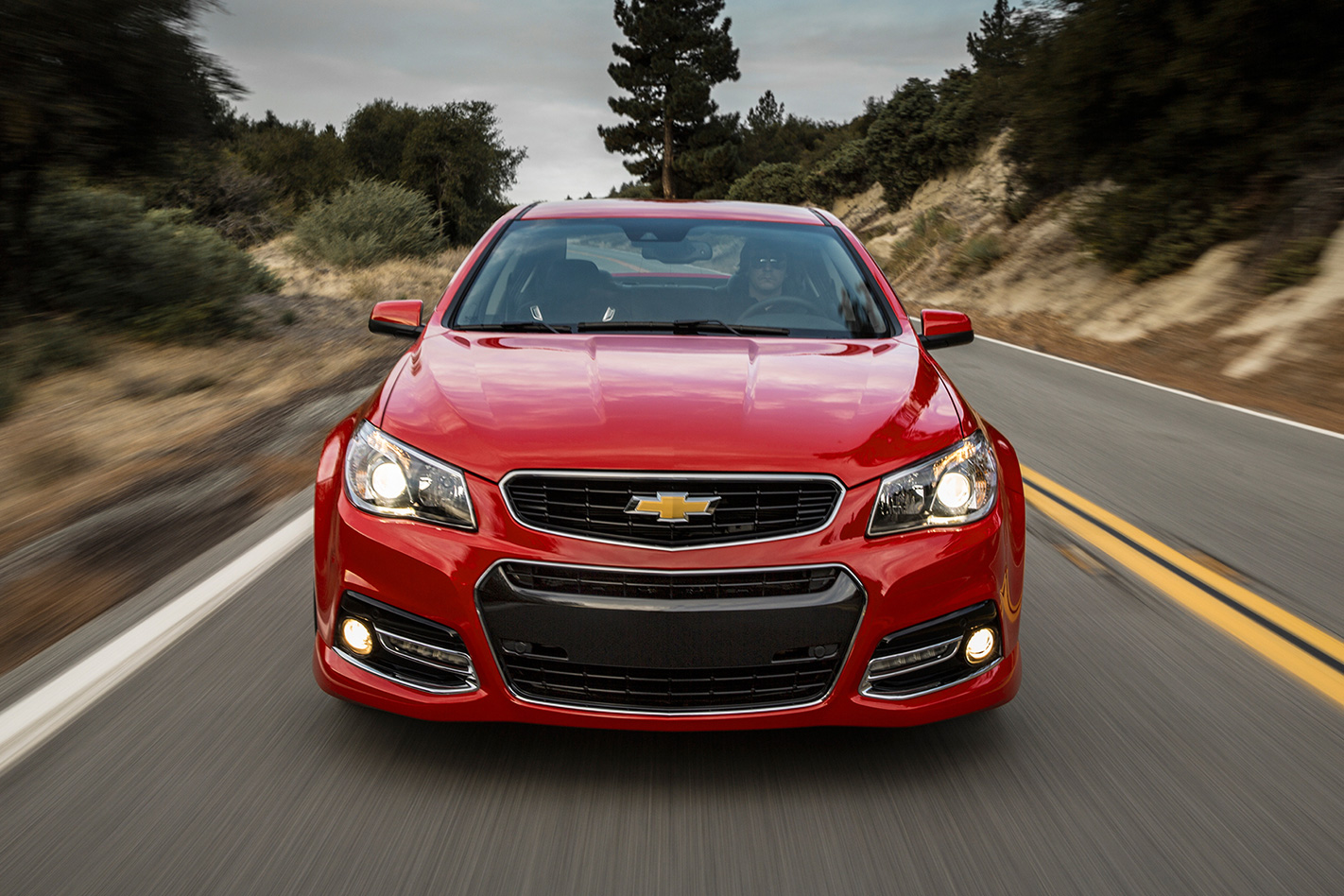
CHEVROLET has started to wind down the promotion of the Holden Commodore-based SS sports sedan; this week it has pulled the car off its media website.
The website, formerly dedicated to promotional material relating to the Chevrolet SS, now simply reads: “Please add a Redirect Path in the Page Properties, advanced Tab.”
The model is still a strong niche seller in the US: sales in August alone totalled 227 units compared to the same month in 2016 when only 14 examples of the US-only SS were sold. So far this year, Chevrolet has sold 2810 SS-badged, LS3-equipped Commodores, compared with just 2148 for the same eight-month period last year. It is not known how many of the $US46,625 ($A58,000) sedans are still held by US Chevrolet dealers.
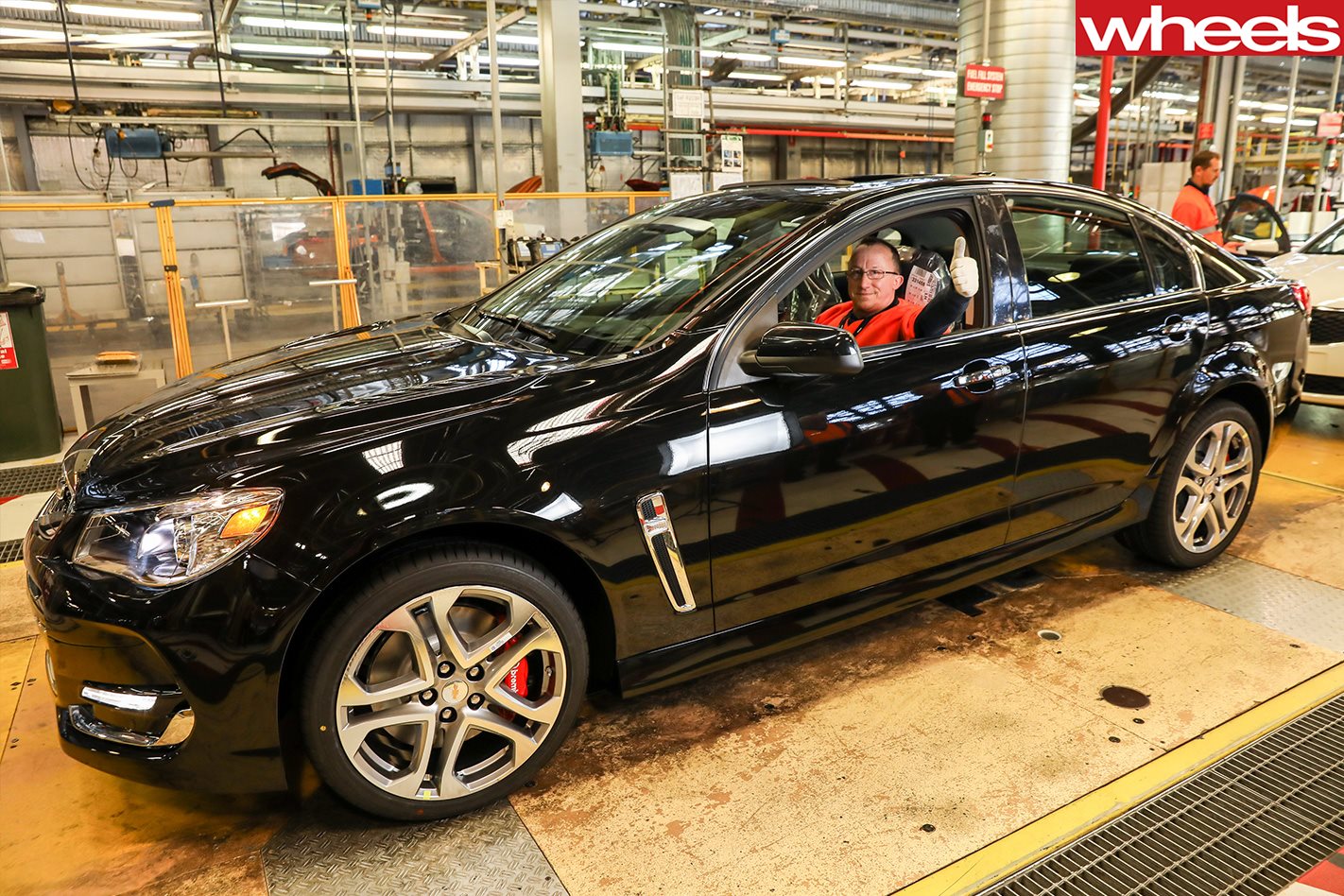
The last car built, which has already been sold to a buyer who asked Holden’s Elizabeth production line workers to sign the chassis as they assembled it, was a Phantom Black SS fitted with a six-speed manual gearbox.
More than 7300 heavily modified Holden Caprice long-wheelbase sedans also made their way stateside with the SS, sold as the Chevrolet Police Pursuit Vehicle to various law-enforcement authorities throughout the US.
The last locally made Holden Commodore will come off the car maker’s production line on October 20.
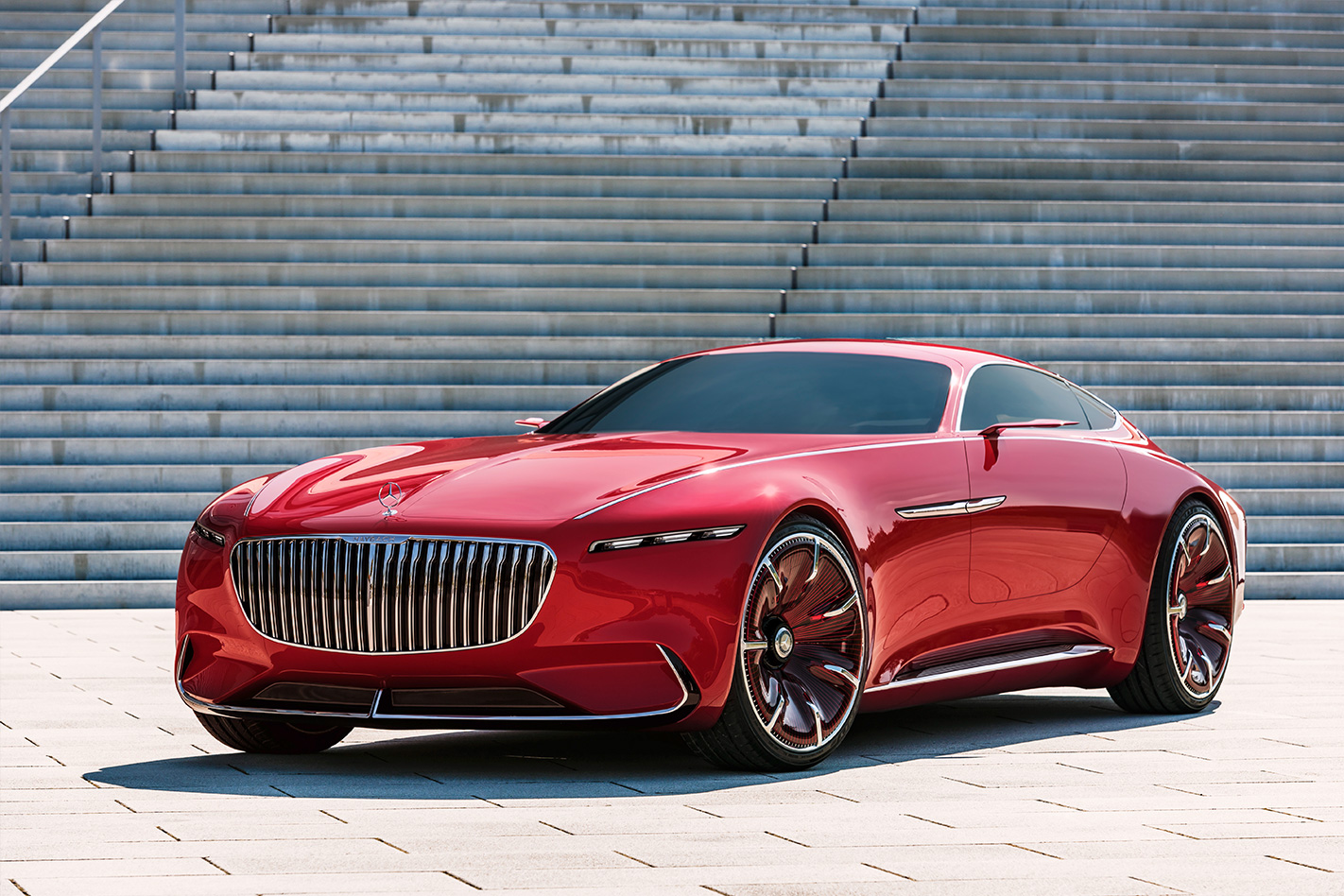
THE Mercedes-Maybach 6 Coupe and Cabriolet concepts might seem like one of the automotive world’s ultimate flights of fancy, but a production version of the mighty Maybach 6 is not yet out of the question.
The imposing, monstrous six-metre-long coupe and cabriolet won much critical acclaim when they rolled out at the Pebble Beach Concourse d’Elegance in 2016 and 2017 respectively, but their outlandish proportions and no-compromise styling appeared to brand the pair as little more than wild concepts.
“These things are dreams and visions and they work for us here in the show, but these things always cross over internally,” he said. “I can tell you that our board members were strongly supportive of this project, so whatever happens is not without a reason and the future is very open for our brand.”
Koehl said a number of wealthy and high-profile Pebble Beach attendees had approached Maybach and offered almost unlimited sums of money for a version of the concept pair – a request that the company could agree to.
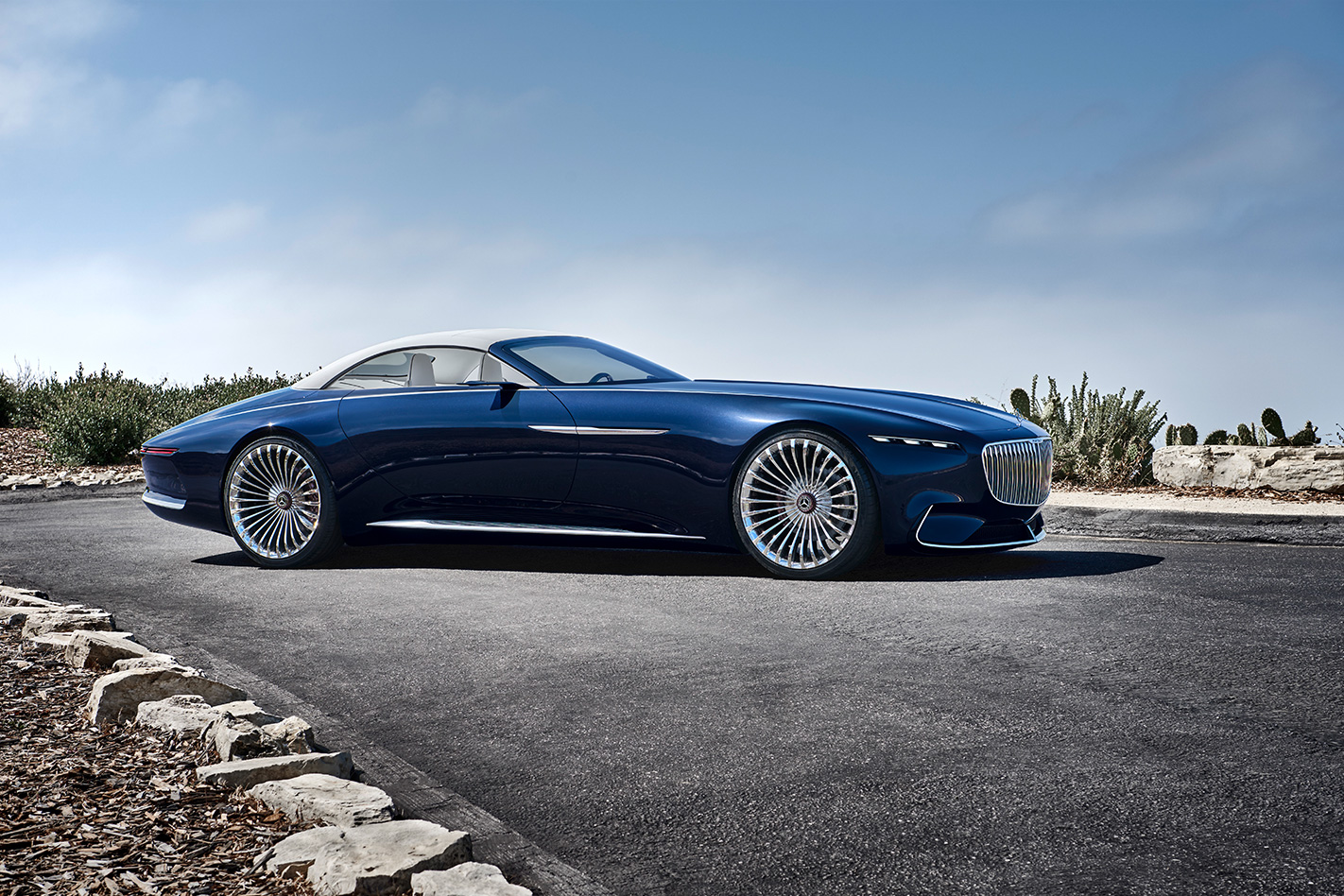
But while a one-off or micro-production run is still a possibility, Koehl said the company did not need a production Maybach 6 to bolster sales and that the company was enjoying its greatest popularity to date.
“What we found out is that, beside enthusiasm and pure design, we have never been as successful as we are with Mercedes-Maybach. People understand the brand as a very strong, leading brand and the customer worldwide has no problem that Maybach is related to Mercedes.
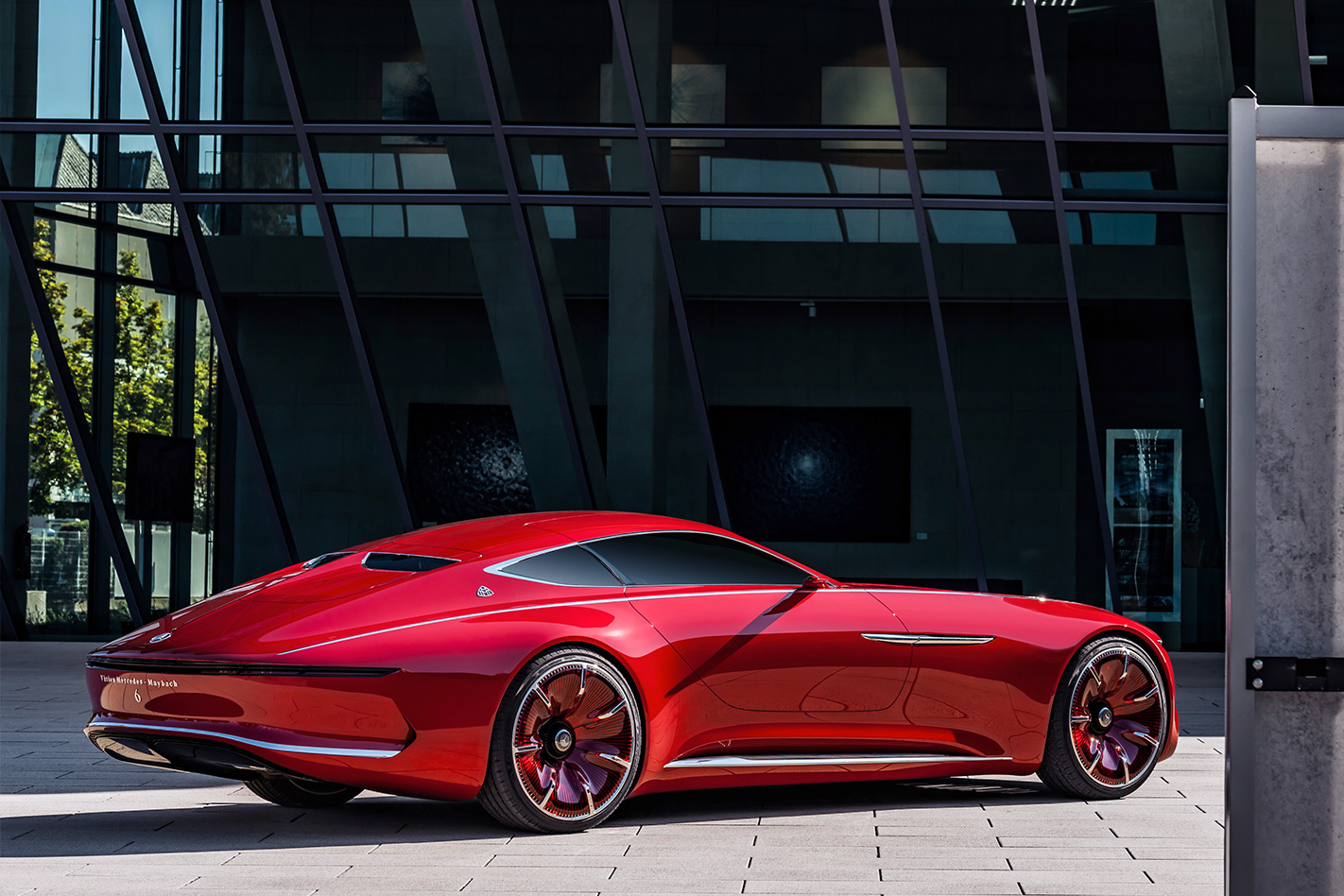
Even if the huge coupe and convertible remain firmly in the show car realm, Koehl said design elements and Maybach 6 details would filter into mainstream production models, similar to how many concept cars impart some of their styling into road-going versions.
“You see a lot of show cars which do not exactly come like that, but you can recognise after that the guys tested something and you find it later in the production cars. That always happens because these things are inspiration for our engineers, for our designers, for the board to say ‘Hey, this looks great, why don’t we have it in production?’
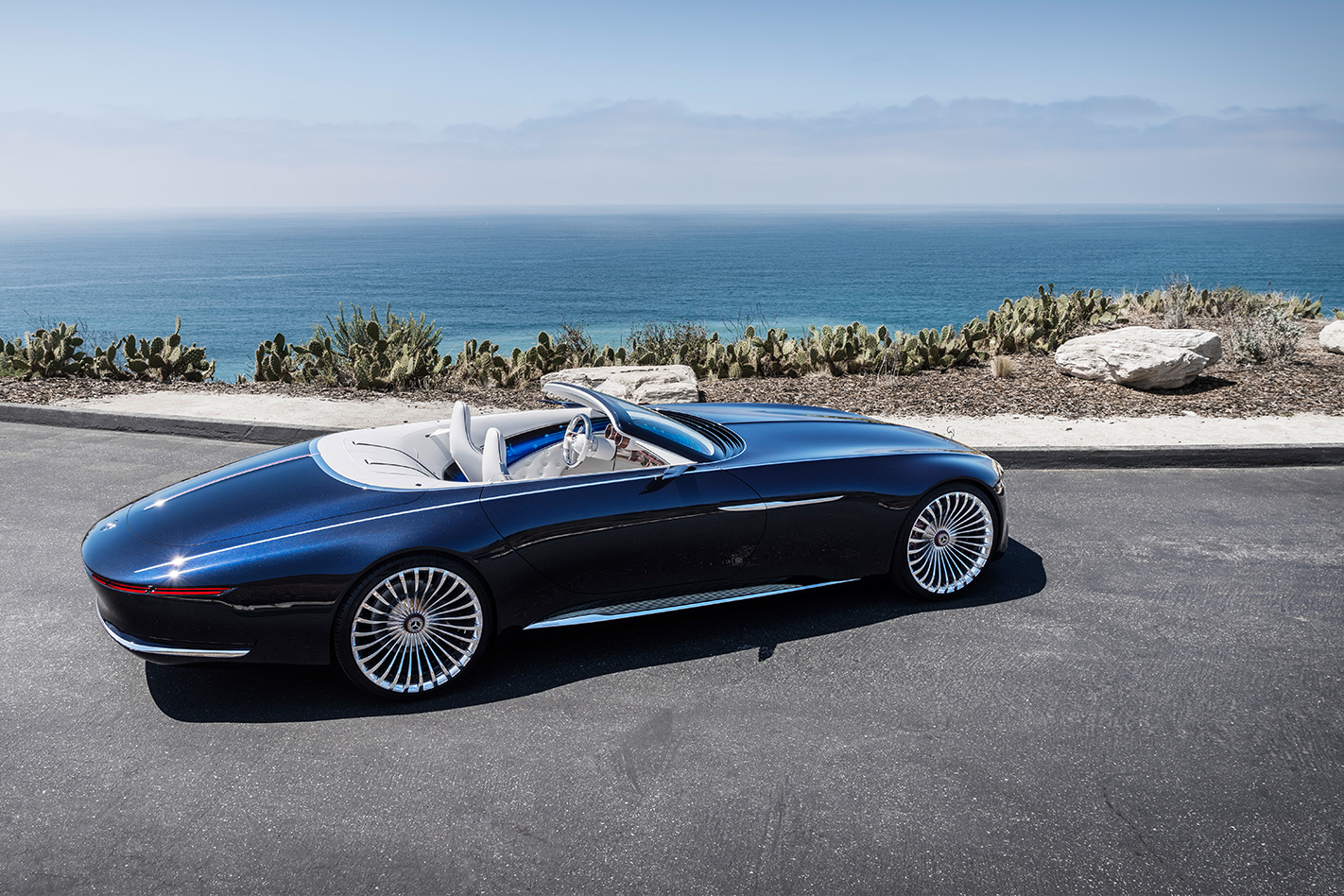
But not all concepts are equal, Koehl said. Daimler’s design studies are categorised as “vision” cars such as the imaginative Maybach 6, or “pre-positioning” cars that are much closer to a possible (often imminent) production version.
Mercedes-AMG’s GT Concept is one such example, said Koehl, and fans of the four-door GT from Affalterbach can expect the production version to strongly resemble the concept that rolled out at the Geneva Motor Show in March.
“The AMG GT Concept sedan is a pre-positioning show car because the product will very much look like that,” Koehl said.
TELL ME ABOUT THIS CAR
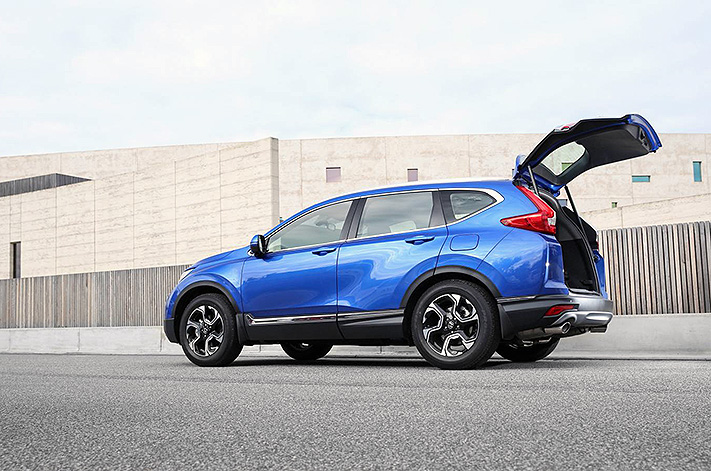
Honda has added two more seats to its fifth-generation CR-V SUV though only in this upper-spec front-wheel-drive VTi-L model which, at $38,690, is more than $8000 more than the entry-level VTi.
STRENGTHS
- Pricing is pretty sharp for the equipment levels compared to similarly equipped seven-seaters such as the Mazda CX-9 and Kia Sorento.
- It’s not as big as most seven seaters meaning the convenience of having two extra isn’t compromised by a large SUV that’s more difficult to park.
- The VTi-L comes with most of the CR-V’s range-topping comfort including panoramic sunroof and part-leather seat trim, heated front seats, power adjustable driver’s seat with lumbar adjustment and notably soft front headrests.
- Other standard equipment includes keyless entry/ignition, dual-zone climate control, front and rear parking sensors, a reversing camera, 7.0-inch colour touchscreen infotainment display and electronic instrument panel, power-operated tailgate, inbuilt satellite navigation, a rear-facing blind-spot camera, dusk-sensing headlamps and auto wipers.
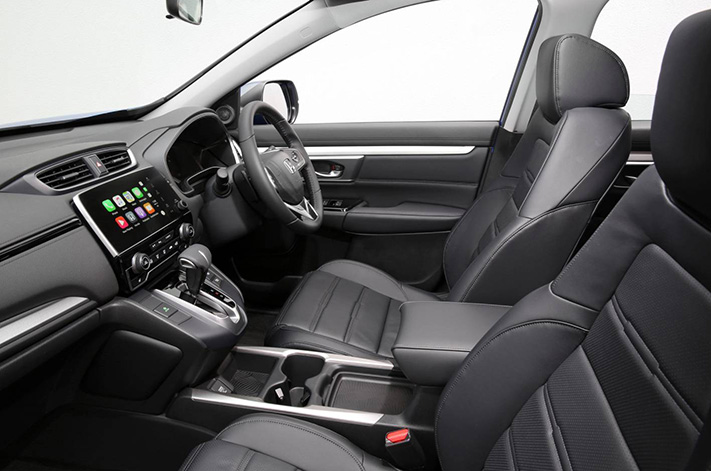
- The middle row seats have adjustable backrests, slide back and forth and tumble forward for easier third row access. Second row passengers also have their own air vents and two USB sockets.
- The third-row seats fold up and down easily and are comfortable for children who get their own cupholders, ventilation via ceiling-mounted vents and good forward views.
- The CR-V’s ride feels smooth and the suspension absorbs and recovers over bumps quite well. The front-wheel-drive is adequate for most driving conditions.
- The driving position feels commanding with excellent forward vision provided by the elevated seating position and narrow A-pillars.
- There’s plenty of cabin storage including a two deck centre console bin that can take items as big as a laptop.
- The 140kW/240Nm 1.5-litre turbo engine is smaller but punchier than the 114kW/190Nm 2.0-litre naturally aspirated unit in the previous model VTi-L FWD.
- The CVT auto manages the power well and provides some low-end grunt when needed via a Sport mode or with manual gearing using paddle shifters.
WEAKNESSES
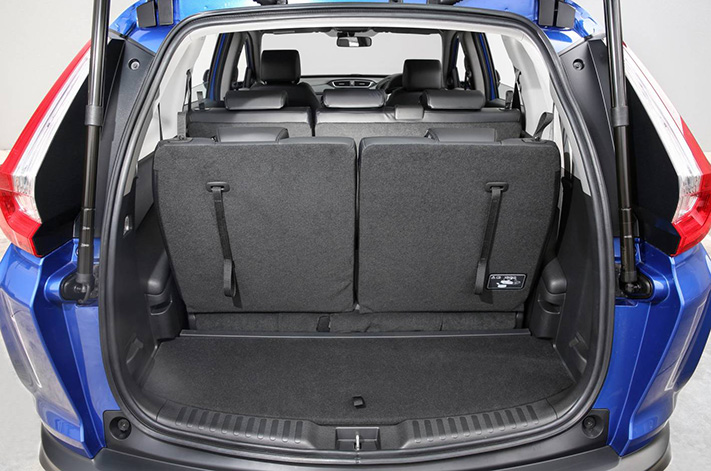
- Even with the rear seats folded flat, the seven-seater’s 472-litre boot space is considerably less even than the five seater’s 522 litres and you get just 150-litres with rear seats in position.
- The third row is next to useless should you have baby seats in the second row as the anchor straps fix to rear ceiling where the rearmost passenger’s heads would be. There’s no provision to mount child seats in the third row which could make this seven-seater difficult to justify for a young family.
- Driver assist functions such as autonomous emergency braking and active cruise control aren’t even available as an option. If you want them you’ll have to upgrade to the VTi-LX, which only comes with five seats.
- The multi-functional second row seats are a little harder than in the five-seat versions. Headroom is pretty tight too because of the sunroof.
ARE THERE ANY RIVALS I SHOULD CONSIDER?
Unless you really need the seven seats go with the five-seat Honda CR-V variants which provide more comfort for back seat passengers.
Similarly priced and sized seven-seat alternatives include the Hyundai Santa Fe, Kia Sorento, Mitsubishi Outlander, Nissan X-Trail and Skoda Kodiaq.
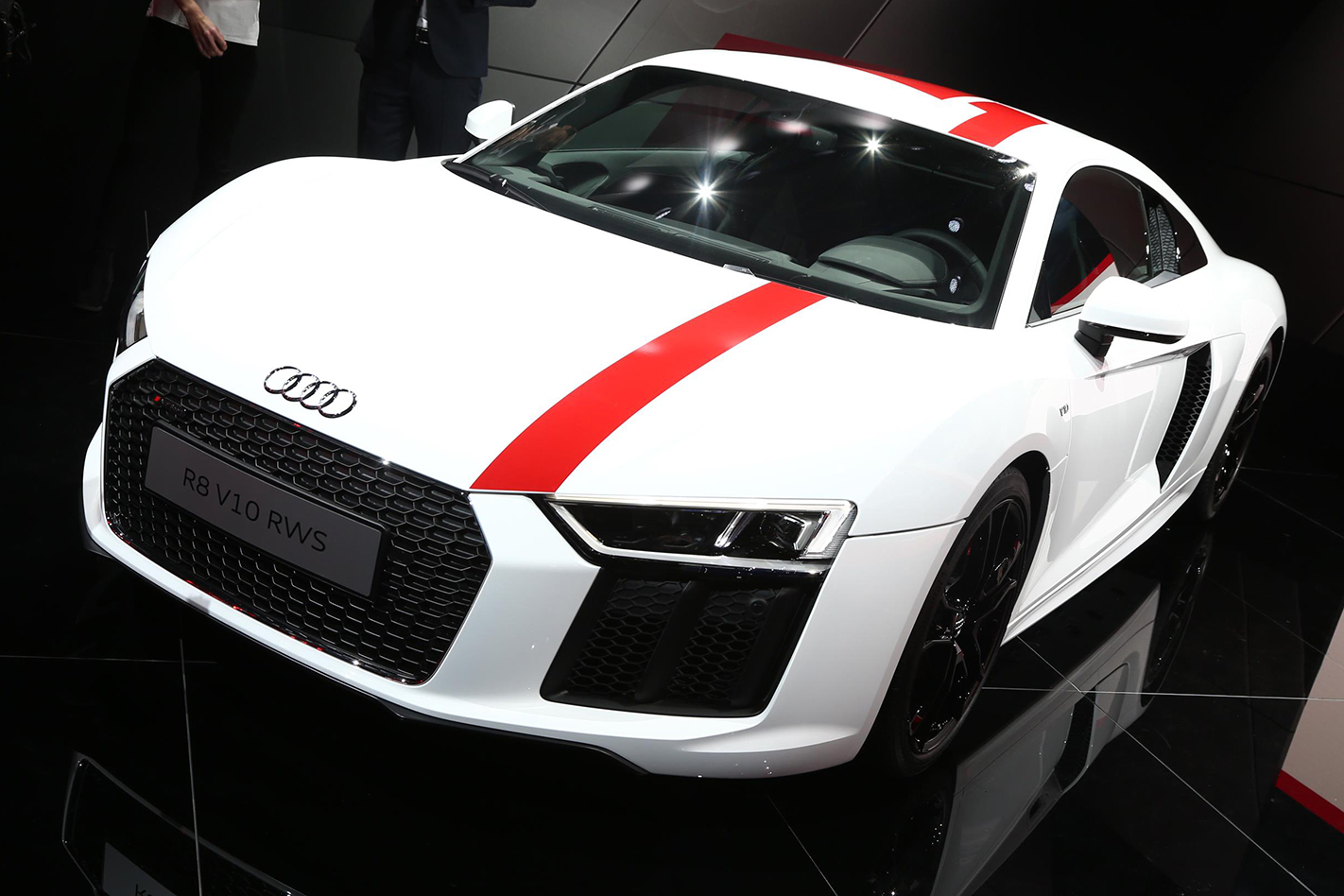
AUDI says it had to create a rear-wheel-drive version of its iconic R8 V10 because it was losing sales to rear-drive rivals.
The frank admission, though, doesn’t necessarily mean that Audi will expand its rear-drive roll-out, currently limited to the R8 V10 RWS coupe and upcoming R8 V10 RWS Spyder, to more models developed under its Audi Sport performance division.
It also shows that Audi is keeping a close eye on the R8’s rear-drive competitors, including the Ferrari 488 GTB, the Lamborghini Huracan LP580-2, the McLaren 540C, the Mercedes-AMG coupe, and even the enemy from within, the Porsche 911 Carrera GTS.
Speaking a day after the reveal of the R8 V10 RWS, Audi Sport chief executive Stephan Winkelmann said while the RWS was the first R8 in more than a decade of production to not wear a Quattro badge, marking a clear milestone for the company, it was unlikely any other rear-wheel RS models would join the rear-drive V10.
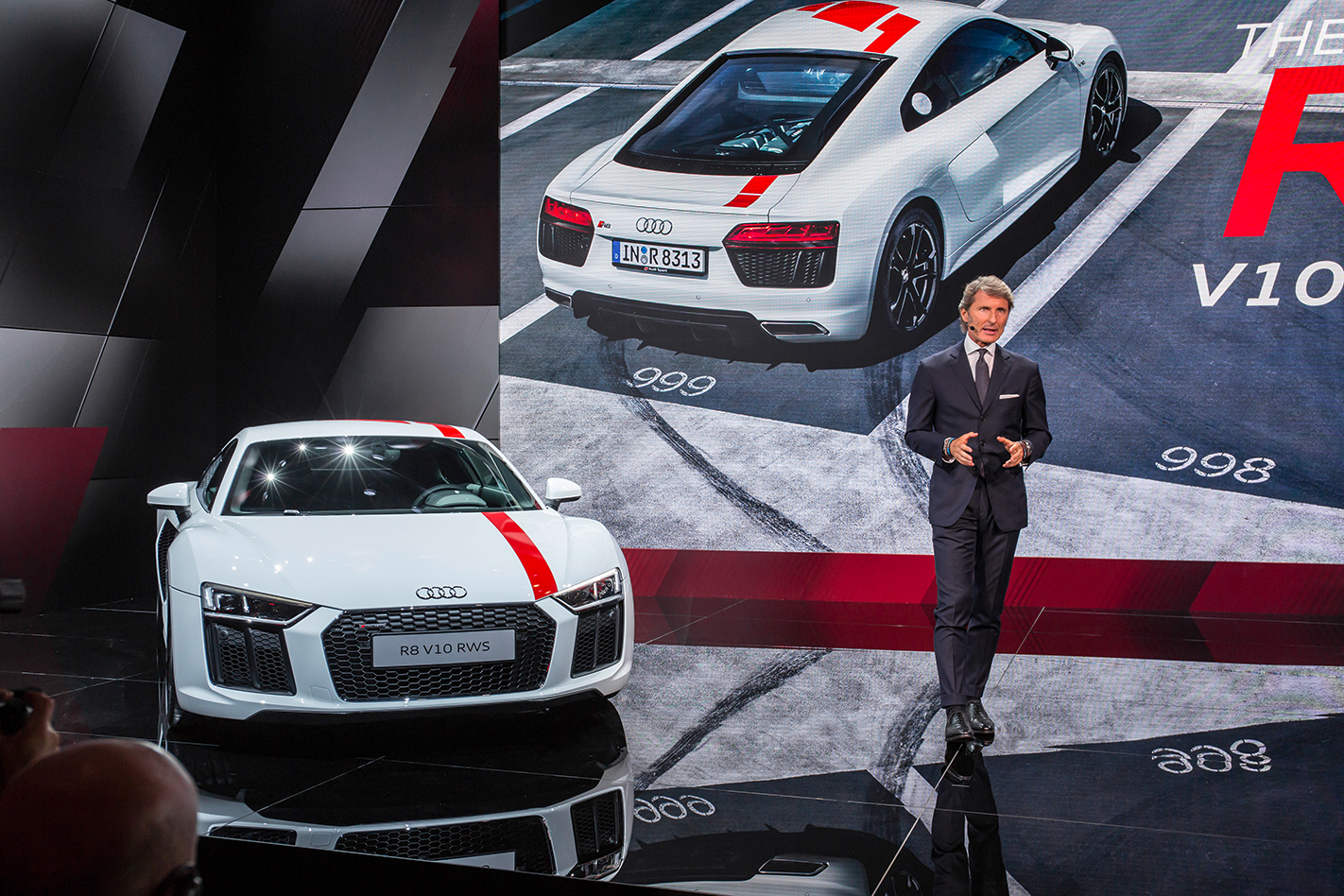
Winkelmann said the newest addition to the R8 family was conceived primarily as a coupe, but the opportunity to offer the car as a Spyder was enough to justify its inclusion in the range.
“It’s more a coupe style, idea and approach. The mix will be in favour for sure for the coupe, but I think that if you can extend the offer then we should do it. Then it’s up to the customers to decide.”
“In the future and for the time being, I don’t see another one coming up because for me the Quattro is one of the things which made Audi great, and together with the five-cylinder and aluminium chassis. All these features positioned Audi in a different way as a premium manufacturer and this is something we are not going to change.”
According to Winkelmann, the Quattro name is now more accurately positioned within the company as a technology leader and not as the overarching brand.
“For me, the company name Quattro was wrong, therefore we changed it to Audi Sport. It was wrong because it’s a feature, not a company, and for a quarter of a century they never played the brand.”
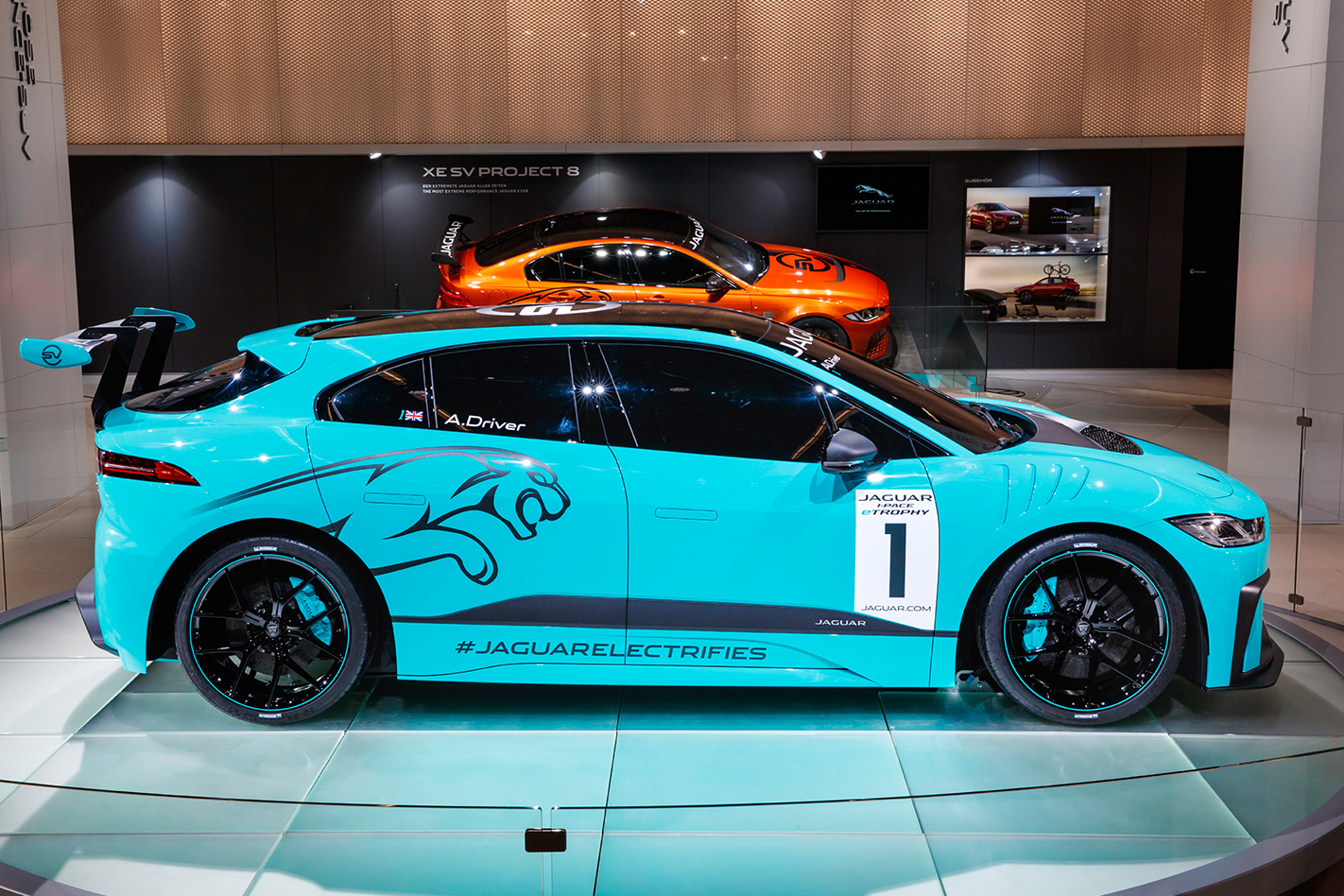
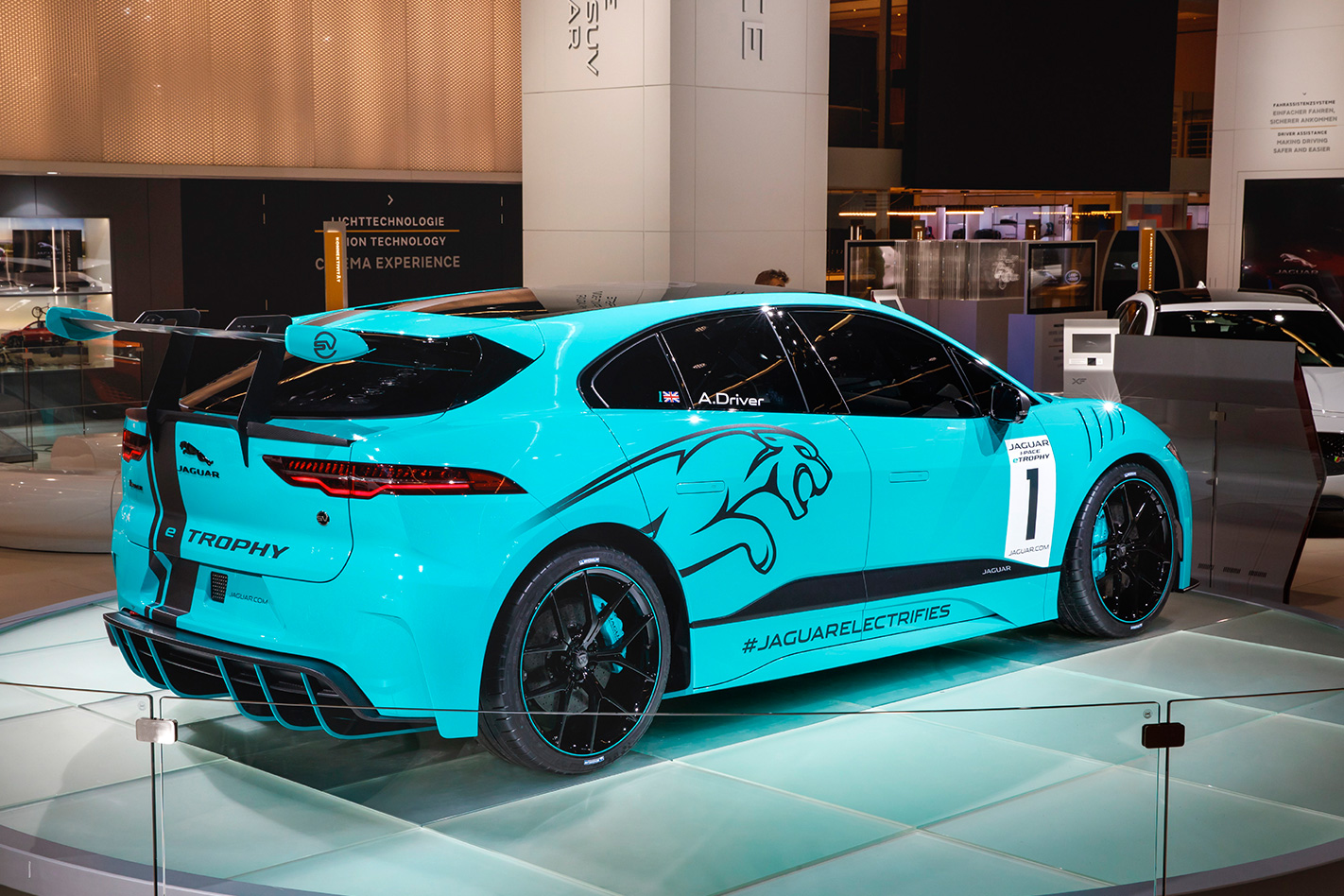
TAKING pride of place on the Jaguar stand at the Frankfurt Motor Show was the strikingly aggressive I-Pace eTrophy, a bright teal, race-ready version of the British marque’s pure-electric SUV.
Set for its own one-make race series in 2018, the same year the road-going version of the I-Pace rolls into showrooms, the I-Pace eTrophy should be the kind of thing that makes Jaguar faithful hurl their flatcaps onto the dirt.
After all, an electric SUV is perhaps the last vehicle from the Jaguar stable that you’d base a race car on.

“We’re working on a few electric cars at the moment,” Callum told Wheels. “I think there will be no lack of emotion.”
“I’ve driven the I-Pace and it’s good fun to drive and handles well. Mike Cross, our test driver, likes it and he’s responsible for making it drive like a Jaguar.”
But while company people are bullish about the rise of electrification at Jaguar, Callum conceded that a lot of time may need to pass before die-hard fans would accept a pure EV like the I-Pace as being true Jaguars.
Callum wouldn’t say how long it would take until Jaguar’s first electric-only sports car arrived, but the company’s 2020 electrification target doesn’t necessarily mean battery-electrics will be the sole powertrain offering across its product portfolio – not by a long shot.
It sneaks into BFYB 2017 by just $100, but its category-topping $99,900 ($102,850 with the sport differential) price tag means that the Audi S4 faces the wrath of the Bucks index.
Put it this way – you can just about buy one of each of the two cars that ended up on top of the pile for around the same money…
Sitting in the lane at Winton, one could also be excused for thinking the S4 – the mildly hot-rodded all-paw version of the A4 that’s been around for four generations – may well be here just to flesh out the field.
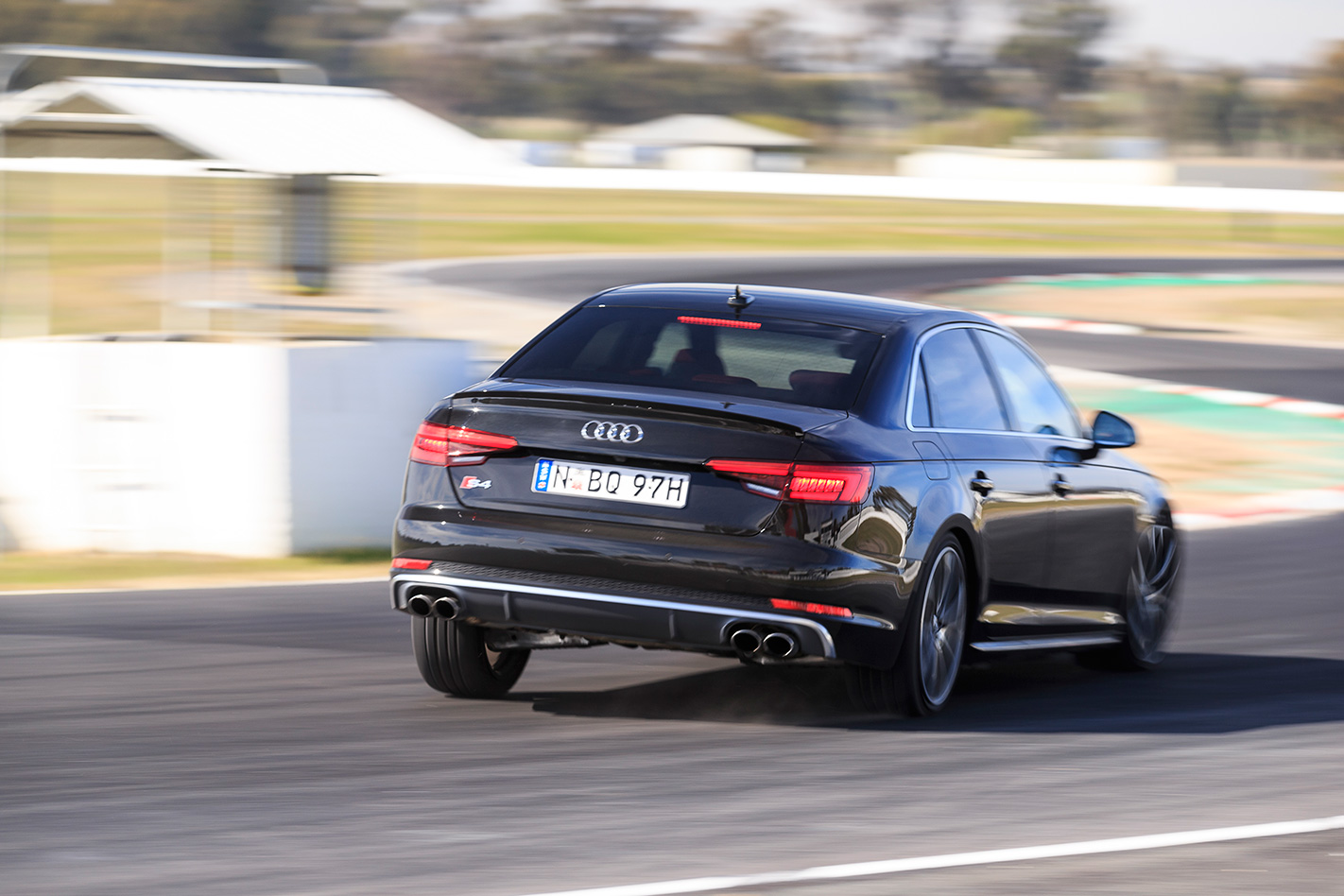
Other than its reduced ride height, subtly aggressive 19-inch rims and twin zorsts, the S4 gives off a distinct air of exec express that feels at odds here, somehow.
That snooty air evaporates pretty damn quickly when the Audi’s numbers start tumbling across the laptop screen. Thanks to a new 260kW/500Nm turbocharged 3.0-litre six that replaces the B8’s supercharged number, the S4’s 4.95sec 0-100km/h sprint is beaten only by the A45, and it dead-heats with the SS-V for third over the quarter with a 13.1sec run.
To the surprise of many, Luffy guided the quattro S4 to the second-fastest lap time of the day, too; its impressive 1min 37.9sec beats the BMW M140i by a mere tenth of a second.
A brace of average numbers – fourth in the 80-120km/h run, a middling V-max at 400m, bottom-half scores for mid-corner apex speeds – are the beginning of the end of its charge towards the podium, though, and lukewarm scores from the judges (along with that cruelly low Buck index score) hampers the S4.
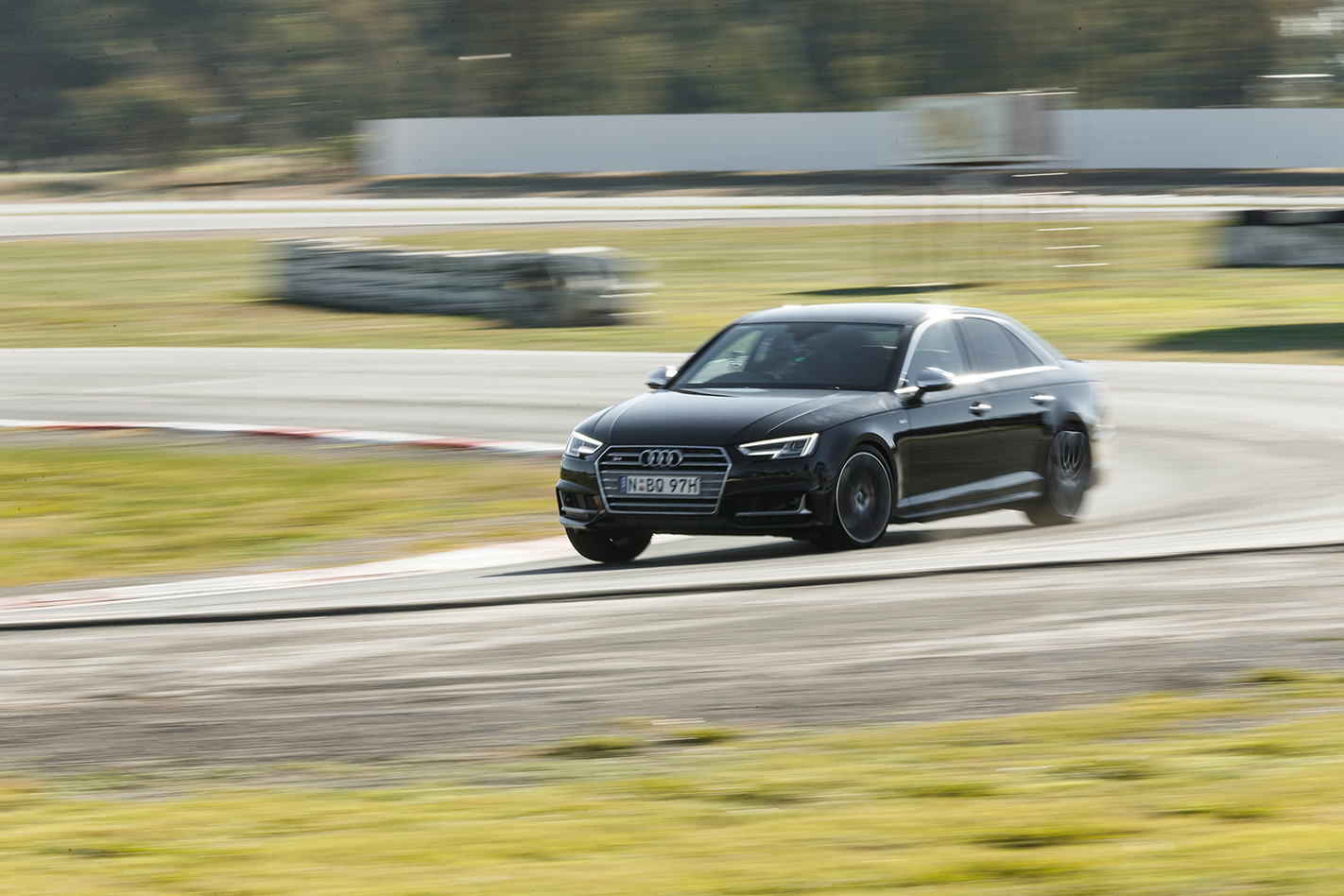
It also registers the highest apex speed at turn 10 on the day, but is let down with a slowish mid-corner marker at turn four.
So, despite its undoubted abilities, the S4 can do no better than fifth.
Specs Engine: 2995cc V6, DOHC, 24v, turbo Power: 260kW @ 5400-6400rpm Torque: 500Nm @ 1370-4500rpm Weight: 1630kg
Times 0-100km/h: 4.95sec (3rd) 0-400m: 13.12sec @ 173.64km/h (4th) Lap Time: 1:37.9sec (2nd)
Scores Price: $99,990 Bang Index: 125.1 Bucks Index: 65.8 BFYB Index: 101.4
Warren Luff says “The Audi is a really easy car to drive on the limit. It’s almost one of those things where you’ve got to be careful what you wish for with Audis – everyone always wants a car that’s got more grip and that is really stable – and that’s what the S4 is. Only downside is that it probably does lack a bit of character and a little bit of that fun and wow factor that some of the other BFYB cars produce. The chassis dynamics, the brakes, the engine; it does everything right, it just lacks that x-factor. It just does it all too easy.”
Judges notes David Morley – 5th: “Understated, but surprised a few old stagers with its overall ability” Dylan Campbell – 5th: “It’s a ‘sweet’ car. Nice on road yet is up for a proper dig on a track” Louis Cordony – 5th: “Sharp-looking sedan with proper punch and grip” Tim Robson – 3rd: “Surprise of the day for me. This is a fun, pacy four-door”
What stands out?
The Discovery Sport is a medium SUV from Land Rover that can seat up to seven people. It is compact enough to be handy in the city, and just loves getting onto country backroads and into easy four-wheel-drive territory. You can choose from responsive and frugal turbo-petrol and diesel engines, and order from a long list of luxury options. Auto braking is standard.
What might bug me?
How much time you’re spending working out which Discovery Sport you want, with what options. It’s very complicated.How insistently the price rises as you add those options.Picking the seven-seat option and having to forego a full-size spare wheel, which is replaced with a space-saver spare that has speed and distance limitations.Discovering that your spare is a space-saver only after you get a flat tyre in the middle of nowhere.
What body styles are there?
A five-door SUV-type wagon is the only body style. There’s seating for five, or optionally for seven.The Discovery Sport has full-time all-wheel-drive. In some models, you have the option of driving only the front wheels when you don’t need all-wheel drive (which could save you a bit of fuel).The Discovery Sport is classed as a medium SUV, higher priced.
What features do all Discovery Sports have?
Smart-key entry, which lets you unlock and start the car provided the key is on your person. You can also open the tailgate, by waving your foot under the rear of the car.A leather-wrapped steering wheel with tilt and reach adjustment, which carries buttons for operating the audio system, the cruise control, and calls from your smartphone via Bluetooth.Leather seat trim, and power adjustment for the front seats.Dual-zone climate control, so that the driver and passenger can each set their desired cabin temperature.A sound system with an analogue radio, input from your smartphone or iPod via USB or Bluetooth audio streaming, and at least 10 speakers, controllable from an 8.0-inch or bigger touchscreen. Satellite navigation, with voice recognition.A Remote Essentials app, compatible with most smartphones, that allows you to remotely lock and unlock the car, and check on things like fuel level and door and window status. It can also help you find the car in a big carpark, with a beep and flash function.At least four USB charging points for mobile devices, and three 12-volt outlets.A rear-view camera, and rear parking sensors (which help you judge your distance from obstacles behind).Headlights that switch on automatically when it gets dark, and that auto-dip their high beams for on-coming traffic. Windscreen wipers that operate automatically when it rains.Daytime running lights, which help other drivers see you.Electronic traction control, which inhibits wheelspin on slippery surfaces.Terrain Response, which lets you optimise the Discovery Sport for a range of driving conditions (normal, slippery, mud, and sand) with a single control. It improves performance, and helps you avoid getting bogged when off road.Hill Descent Control, which can control your speed automatically on steep downhill tracks, letting you concentrate on steering.Alloy wheels, and a full-size spare (unless you option seven seats, in which case you get a space-saver spare).Autonomous emergency braking, and Lane departure warning.Seven airbags, and Electronic Stability Control. (For the placement of airbags, and more on Discovery Sport safety systems, please open the Safety section below.)The Discovery Sport is covered by a three-year, 100,000km warranty. The body is covered for an additional three years for corrosion.
Which engine uses least fuel, and why wouldn’t I choose it?
Three engines are available in a Discovery Sport: two 2.0-litre turbo-diesels, and a 2.0-litre turbo-petrol.The more fuel-efficient of the three are the diesels, and there is not much between them for fuel use. Both use as little as 5.3 litres/100km in the official government test (conducted in a laboratory).The diesels share a common four-cylinder construction but are tuned differently, so that one (which Land Rover calls the TDI 150) produces less power than the other (the TDI 180).On real roads, the TDI 150 averages about 7.5 litres/100km, and the TDI 180 about 8.0 litres/100km.Both diesels are excellent engines. The main reason you might shun them and choose the petrol alternative is that the 2.0 Si4 four-cylinder runs more quietly and smoothly and produces more power than either. The petrol engine also means more convenient and cleaner refuelling at most service stations. It averages about 11 litres/100km in real-world driving.A nine-speed conventional automatic is the only gearbox available.(Power outputs and all other Discovery Sport specifications are available from the Cars Covered menu, under the main image on this page.)
What key features do I get if I spend more?
Land Rover offers the Discovery Sport with the three engines outlined above and in three trim levels: SE, HSE and HSE Luxury. In addition, a big range of extra-cost options is available on almost any Discovery Sport. (Further, wheelrims smaller than standard, down to 17 inches, can be ordered as a no-cost option, if you want to optimise performance off-road.)The least expensive Discovery Sport is the TD4 150 SE. It comes with the less powerful of the two diesels, 18-inch wheels, and the features common to all Discovery Sports.You can pay more for an SE with either the petrol engine or the more powerful diesel. Go for either of those engines and you also get All Terrain Progress Control, which works like a very low-speed cruise control for use off road. Select a speed and it will adjust the engine and brakes automatically to maintain that speed, uphill or down. That lets you negotiate rough ground while attending just to the steering.You can also spend more on a Discovery Sport HSE, which adds luxury and convenience. The front seats gain heating and cooling, and – along with the exterior mirrors – remember adjustment settings. The sound system is more powerful and includes a subwoofer. Headlights are extremely bright Xenon units, and the daytime running lights and tail-lights use long-lived LEDs. Front parking sensors augment those at the rear, and the wheels are fancier 19-inchers. (All these HSE features are available as extra-cost options on the SE.)Spend still more on a Discovery Sport HSE Luxury and you get a more appealing grade of leather on the seats, a bigger (10.2-inch) touchscreen, and more feature-rich satellite navigation. There is also a louder sound system with more speakers, a CD/DVD player, and digital (DAB) radio. (All but the premium leather can be added to an SE or HSE as extra-cost options.)At any trim level, choosing either the petrol engine or the more powerful diesel allows you to option Adaptive Dynamics, which automatically adjusts the car’s ride so that it feels smoother over bumps but leans less in corners (it uses electronically controlled suspension dampers). You also gain access to the optional Active Driveline, which automatically drives only the front wheels unless it’s slippery (thus saving some fuel).On any Discovery Sport, you can also add various features either individually or in option packs. The most significant of these for many people will be third-row seating, for a total of seven seats.Among other options available on most Discovery Sports are heated rear seats, a self-parking system, apps that let your smartphone control parts of the car, rear-seat entertainment screens, and a fixed glass sunroof. You can also have a head-up instrument display, adaptive headlights that shine into corners, and bigger wheels. The optional adaptive cruise control reduces your set cruising speed to match a slower car in front, until you can overtake – and it will also hold your place automatically in stop-start traffic. And optional active safety features include Lane keeping assistance and Reverse traffic detection.Land Rover also offers an extensive choice of exterior and interior styling details, finishes and highlights.
Does any upgrade have a down side?
The 19-inch wheels, and more so the optional 20-inch wheels, use lower profile tyres that ride more harshly on rough roads, are less effective off road, are more easily damaged on poor roads, and cost more to replace.Optioning seven seats means you lose the full-size spare tyre and gain a space-saver spare wheel, with speed and distance restrictions.The Active driveline is not always seamless when switching from front-wheel-drive to all-wheel-drive. It adds complexity and brings a marginal fuel saving at best.White is the only colour that doesn’t attract an additional cost.
How comfortable is the Discovery Sport?
The Discovery Sport’s keyless entry, push-button start and leather seats, all standard on even the SE model, convey a sense of luxury as soon as you climb aboard. That’s sustained by the nicely detailed and finished interior.The driver’s seat is comfortable too, and it sits you higher than many similar cars. That brings you a more commanding view, which is handy for driving off-road. The big touchscreens are easy to use, as are the clearly marked controls, conveniently grouped by function, on the centre console. All the specialist controls for off-road use are in the one spot, for example.In place of a conventional gear shifter, you use a knurled metal dial on the centre console to operate the automatic gearbox. The settings are what you’d expect – Park, Neutral, Reverse, Drive, and Sport. Paddles on the steering column allow you to change gears yourself, if you want to.Once under way, even the lesser of the two diesel engines provides effortless performance – helped by the very smooth automatic gearbox. As with the more powerful diesel, this engine is so quiet and smooth you might think you were driving a petrol car. That is until you drive a Discovery Sport with the petrol engine, which is smoother and quieter again.The Discovery Sport’s steering is light and easy, and its ride is supple and comfortable. You will notice a bit of suspension and tyre noise on rough roads.
What about safety in a Discovery Sport?
Every Discovery Sport comes with seven airbags, seatbelt reminders on all seats, the mandatory stability control, a reversing camera and rear parking sensors, auto headlights, daytime running lights, auto braking and lane-departure warning.It is a comprehensive safety offering, emphasising crash protection, visibility, crash avoidance, and the safety of others when reversing.There are two airbags directly in front of the driver and front passenger; one alongside each front occupant to protect the upper body; a knee airbag for the driver; and full-length curtain airbags on each side of the car to protect the heads of all those sitting next to a window (including those in the optional third-row seats).Electronic stability control can help you bring a skidding car back under control.The Discovery Sport’s Autonomous emergency braking uses camera-based sensors to scan the road ahead, and is effective at speeds up to 80km/h. If it recognises a crash is imminent, it first warns you via a display on the dash. If you do not take action, it will apply the brakes automatically.Lane departure warning alerts you if it detects you are drifting inadvertently out of your lane on the highway – perhaps through distraction or fatigue.The Discovery Sport also has Trailer sway control, which can help settle a trailer that has begun to swing from side to side.You can add four active safety features to any Discovery Sport in two pairs, as options.Lane keep assist, which will gently correct the steering if it detects you are drifting out of your lane, is paired with a Driver condition monitor, which warns you if it detects signs of drowsiness.Blind spot monitor checks behind you for vehicles near your rear corners that might not show in your exterior mirrors, alerting you via a yellow light in the relevant mirror. It is paired with Reverse traffic detection, which works when you are reversing, alerting you to a vehicle approaching your path from either side.The Australasian New Car Assessment Program (ANCAP) awarded the Discovery Sport five stars, its maximum safety score, in April 2015.
I like driving – will I enjoy this car?
You will. The Discovery Sport is enjoyable to drive – especially so with the more powerful of the two diesel engines, and particularly with the zippy petrol engine.The lesser of the two diesels is effortless enough in normal conditions but it doesn’t offer much for the performance-minded driver.What every model does offer is plenty of confidence through corners, thanks to sharp steering and the all-wheel-drive grip. Particularly impressive is the way the car feels stable and assured even if the road is bumpy or unsealed. The Discovery Sport’s very effective suspension gives it something of a rally-car feel.Those wishing to head off road will find that the same supple suspension will work in their favour, as do the relatively high ground clearance and your ability to tailor the car for different conditions with Terrain Response. Unlike more off-road focused Land Rovers, the Discovery Sport does not have high-speed and low-speed gears – and certainly it is not up extreme off-road driving. But the low first gear in the nine-speed automatic helps when you need to travel very slowly, up or down steep slopes or across rough ground.If you wish to optimise your Discovery Sport for off-road use, you can order it at no extra cost with the optional 17-inch wheels and enjoy the traction, comfort and durability benefits of tyres with higher sidewalls than are standard on any model.
How is life in the rear seats?
The 60-40 split second-row seat has good head and leg room for two adults in the outside positions and is shaped for them. The narrow centre position is suitable only for a child, or perhaps for a small adult over short distances, and its backrest can be folded down to provide an armrest with cup holders for the outer passengers.The second-row seat also slides back and forward over 160mm to provide more or less leg room and rear luggage space.Isofix child-seat restraint points are fitted to the two outside second-row seats, and the higher-riding SUV stance of the Discovery Sport makes it easy to load small children in and out.The optional third-row seats, accessed by sliding the smaller part of the split second-row seat forward, are suitable only for children up to teenage years.
How is it for carrying stuff?
The Discovery Sport has a one-piece, top-hinged, rear door that can be power-opened with a foot gesture. In five-seat configuration total space is a handy 981 litres despite the space lost to the full-size spare wheel. With the optional seven seats fitted and deployed, the luggage space drops to 194 litres – less than you would find in a light city hatchback but sufficient for a couple of overnight bags.The seat backs in the second and (if fitted) third rows fold down individually, so that the Discover Sport can be optimised for carrying more or fewer people and different shaped luggage items. With all of the second and third-row seat backs folded, total luggage space is nearly 1700 litres.The Discovery Sport is rated to tow between 2000kg and 2500kg (with a braked trailer) depending on the version, a good amount for a vehicle of this size and better than most similar vehicles. A rating of 2500kg is sufficient to legally tow a big camper trailer, a medium-sized caravan or boat, or a basic two-horse float carrying two average-sized horses.
Where does Land Rover make the Discovery Sport?
All Discovery Sports sold in Australia are made in the United Kingdom.
What might I miss that similar cars have?
Possibly petrol-electric hybrid power, which could offer near-diesel fuel economy but with the refuelling convenience and running refinement of a petrol engine. The Lexus NX offers this, for example.More off-road ability, as offered by the Jeep Cherokee Trailhawk and the Jeep Grand Cherokee – or indeed by the bigger Land Rover Discovery. These have two sets of gearbox ratios, one for the road and another set for driving very slowly off-road.Body-protecting side airbags for passengers in the second-row seats (in addition to the head-level curtain airbags that protect those passengers in a Discovery Sport). The Mercedes GLC comes with these, for example.Among other cars you might consider is the Range Rover Evoque, which shares most mechanical parts with the Discovery Sport.
I like this car, but I can’t choose which version. Can you help?
The TD4 180 SE is the best buy. If offers the more powerful of the two diesel engines at a modest price hike over the lesser diesel, and more than enough equipment. If you do want a few more features you can then cherry-pick from the long list of options.
Are there plans to update the Discovery Sport soon?
The Discovery Sport arrived in 2015, replacing the Land Rover Freelander (for a time the cars were sold alongside one other). In late 2016, new-generation Ingenium diesel engines replaced the original diesels carried over from the Freelander.For the 2018 model year, Land Rover will offer a third (and more powerful) diesel and two new petrol engines with the Discovery Sport, all 2.0-litre four-cylinder Ingenium units. One of the new petrols will replace the non-Ingenium current engine in the Si4, supplying similar performance, while the other will offer about 20 per cent more power. The new vehicles can be ordered, but the first arrivals are due about January 2018.Don’t expect a facelift for the Discovery Sport before 2019.
This special episode of the performance car podcast comes to you during the height of the Frankfurt Motor Show’s press event, with new cars and updated models being announced faster than most people can keep up!
So, to make things easier for you, MOTOR’s associate editor Scott Newman and our digital journalist Chris Thompson bring you an episode covering off all things Frankfurt, from the luxurious comfort of a BMW M760Li!
From the reclining rear seats of the Bimmer, Scotty and Chris recap the following big stories:
Mercedes-AMG Project One: AMG’s F1 car for the road has caused quite a stir, and has provoked a mixed response in the MOTOR office. Its engineering is certainly incredible, but its styling might not be for everyone.
Suzuki Swift Sport: Much anticipated Sport scores a 1.4-litre turbo motor and a sub-tonne kerb weight. The MOTOR boys are keen to see what this mini hot hatch can do!
Renault Sport Megane RS: French hot hatch hero returns while still retaining its ever-important manual ‘box.
Audi RS4 Avant: No more V8 for Audi’s wicked wagon, but the same power and more torque might make you forget about the lack of V8 note.
Audi R8 V10 RWS: The Audi R8 V10 is great and all, but what if you’re an oversteer junkie? It turns out Audi has the rear-driver you’ve been looking for!
Porsche 911 GT3 Touring Package: Wingless 911 turns up, might upset a particular group of current Porsche owners…
Porsche Cayenne Turbo: Did you ever thing an SUV needed a rear air-brake? Now you can buy one.
Jaguar I-Pace Race Series: How do the boys feel about an all-electric SUV race? Err…
Lamborghini Aventador S Roadster: Roofless ruthless Lambo is impressive, but expensive!
Land Rover Discovery SVX: Finally, a supercharged V8 you can take off-road!
BMW M8 GTE: BMW’s hyper halo dons race livery and takes to the track.
Mini John Cooper Works GP Concept: Wicked JCW concept scores style points, but what’s it going to have under the bonnet?
If you want to know what the performance car podcast is all about, you can find our regular episodes here at MOTOR!
BMW has announced two new models including an M Performance all-wheel-drive 5-Series wagon and an all-paw diesel version of its big 6-Series Gran Turismo four-door coupe.
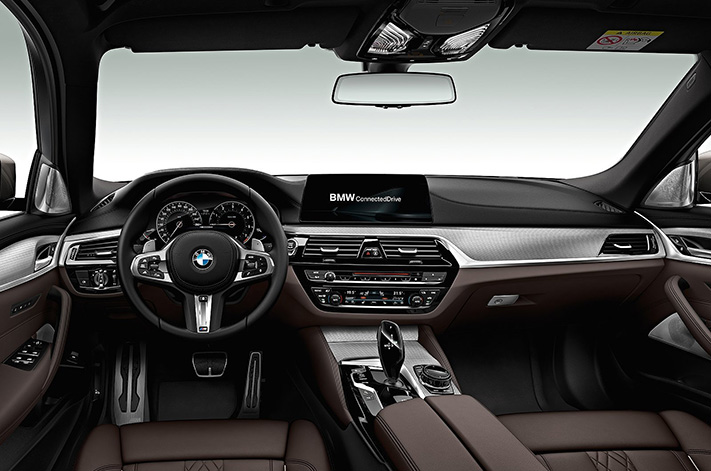
The BMW M550d xDrive Touring will feature what BMW claims is the world’s most powerful production diesel engine.
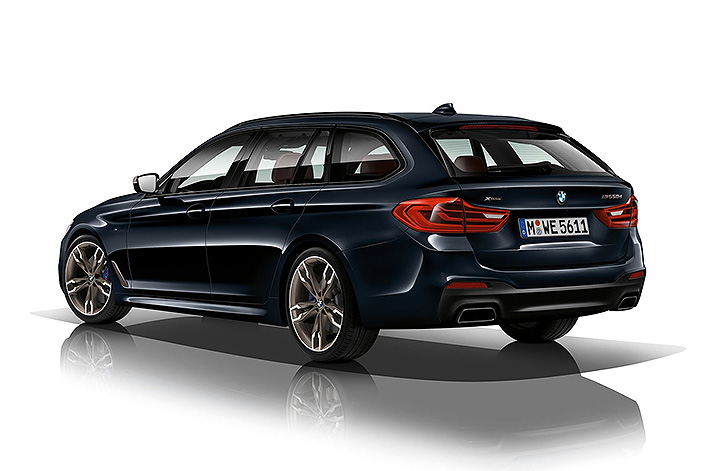
The 3.0-litre inline-six has a grand total of four turbochargers strapped to it to produce an imposing 294kW/760Nm which gives the wagon a 0-100km/h sprint time of 4.6 seconds and a frugal combined fuel consumption of around 6.5L/100kms.
The uber oil burner will send all that power to all four wheels via an 8-speed Steptronic transmission.
It will also feature active steering, an M aerodynamic package, M-sports suspension lowered by 10mm, sports brakes, and 19-inch M light-alloy wheels with mixed tyres.
All-wheel-drive M Performance models have thus far been unavailable in Australia because they’re only built in left-hand drive and there wasn’t a demand for xDrive vehicles because of the lack of ice and snow.
However the M550d has a chance to make its way Down Under, with a BMW Australia spokesman telling Wheels magazine “This is changing as our passenger vehicles and systems become ever more powerful and dynamic, to a point where it is making sense to introduce M and M Performance vehicles with all-wheel drive systems.”
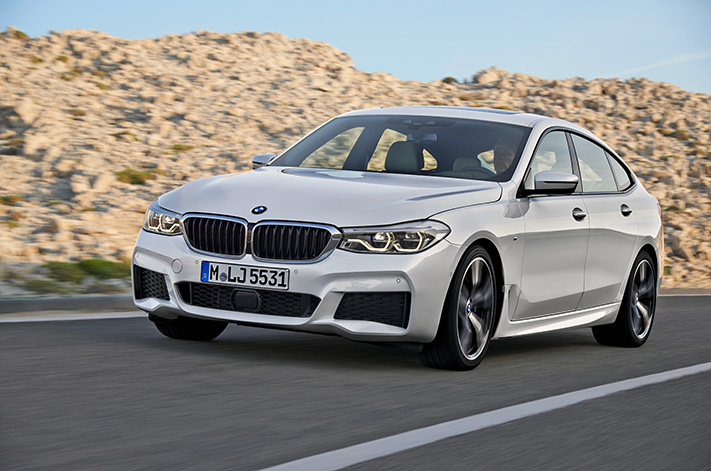
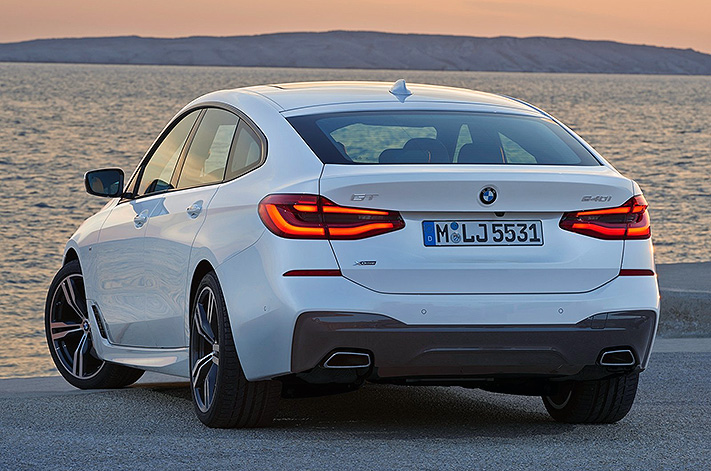
This thinking could see the all-new 640d xDrive Gran Turismo arrive on the same boats to complement the three rear-wheel-drive petrol versions on sale here.
The 640d GT is also powered by 3.0-litre straight-six diesel engine but with two fewer turbochargers and a slightly more subdued output of 235kW and 680Nm. Also coupled with an 8-speed Steptronic transmission and xDrive four-wheel drive system it can reach 100km/h from a standing start in 5.3 seconds with combined fuel consumption of around 6.0L/100km.
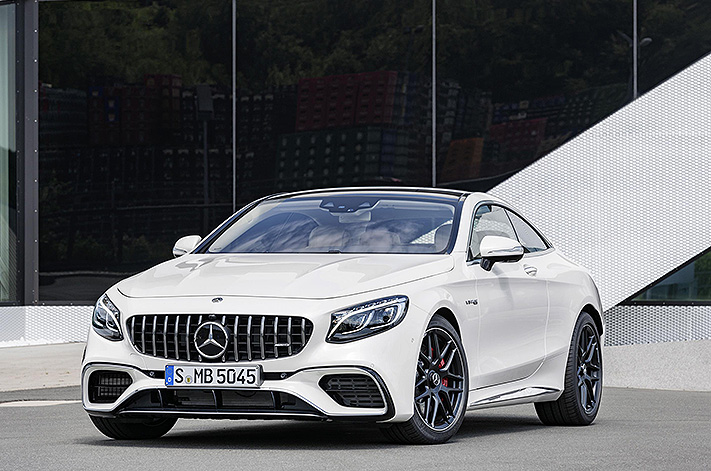
The updated Mercedes-Benz S-Class family is complete with Coupé and Cabriolet versions unveiled at the Frankfurt Motor show.
The two-door versions feature the same innovations as the big luxury sedan including the latest Generation 4.5 driver assistance systems and widescreen digital cockpit and infotainment display. The dual 12.3-inch displays are now housed behind a single glass pane, as first introduced in the current E-Class.
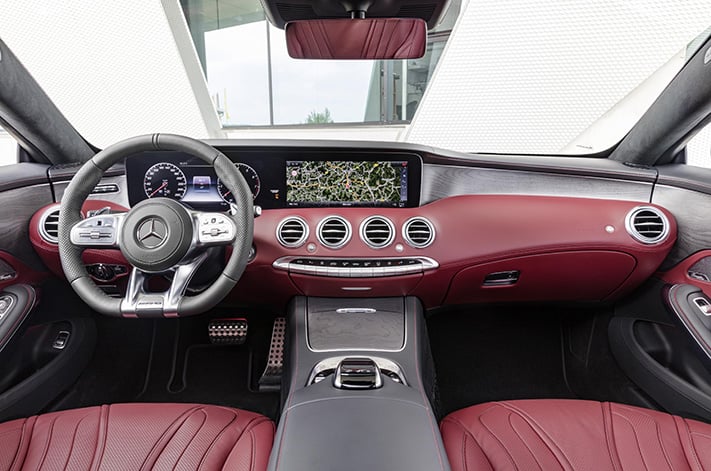
The 2018 Mercedes S-Class Coupe and Cabriolet also get a new steering wheel with touch sensitive controls and the latest version of the COMAND infotainment system that includes Apple CarPlay and Android Auto smartphone pairing and wireless charging.
The advanced driver assist tech has been integrated with the car’s sat-nav so the system knows when to autonomously brake, accelerate and turn the steering wheel for upcoming curves and intersections.
The software is also governed by the selected driving mode, with the car braking later and harder if you’re in Sport or Sport+ than it does in Comfort.
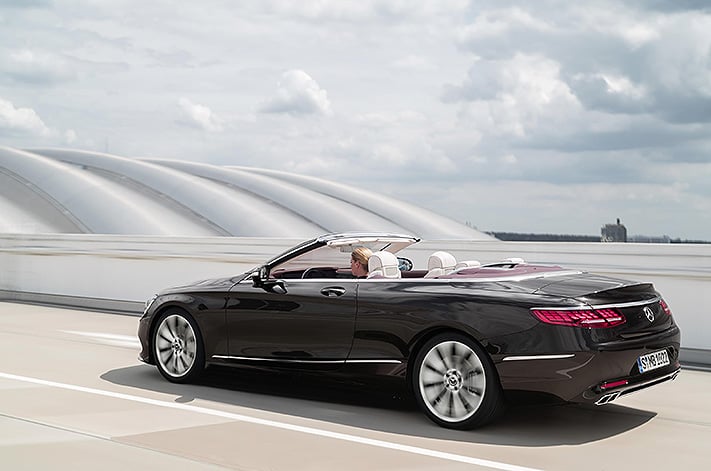
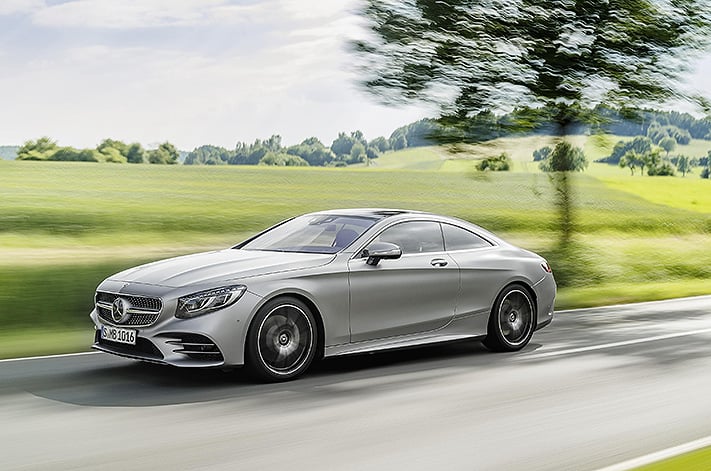
Exterior design changes are subtle and include a revised bumper and new, full LED headlights while the rear gets new tail lamps, unique to Coupe and Cabriolet, with graphics featuring organic light emitting diode (OLED) technology that emit a seemingly floating dynamic light sequence that varies depending on whether the car is being unlocked, turning or braking.
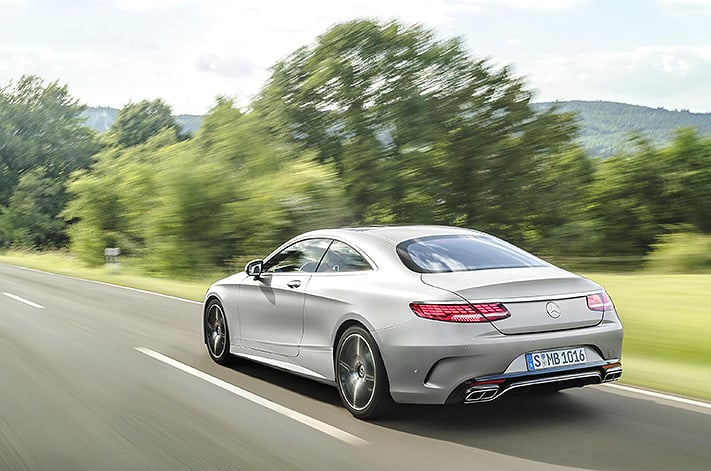
The Coupe comes in four variants, the S 450, S 560, AMG S63 and AMG S65, while the Cabriolet has the three senior engines, making do without the V6 S 450 option. All except the S 65 run on the 4Matic all-wheel-drive system.
The S 450 Coupe’s 3.0-litre V6 produces 270kW/500Nm and is coupled with a nine-speed automatic transmission which boasts a relatively high combined fuel efficiency of 8.9L/100km thanks to a new gliding function that automatically disconnects the engine from the running gear allowing it to coast under certain conditions.It’s quick too, turning the land yachts into speed boats with a 0-100km time of 5.5 seconds.
Unfortunately, it’s not likely that the S 450 will make its way to Australia when S-Class range arrives at the end of the year.
The S 560 replaces the S 550 model and is powered by a 345kW/700Nm 4.0-litre bi-turbo V8. The same block appears in the S 63 but is tuned to push out 450kW/900Nm. Sprint times for the S 560 and S 63 are 4.6 and 3.5 seconds respectively.
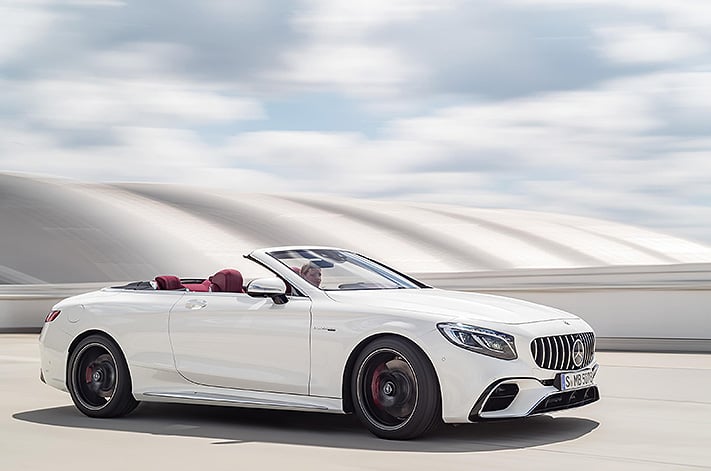
The range-topping S 65 sees a 463kW/1000Nm 6.0-litre twin-turbo V12 shoehorned under the bonnet. Its 4.1-second 0-100km/h time is 0.6 slower than the V8-powered S 63 but sprint times would be the last thing on your mind when enjoying its rapturous roar especially in the soft top.
That massive surfeit of torque is going to make acceleration – in any gear – utterly effortless, and if being cool is not having to try hard, then there’s not a lot that’s going to ruffle the S 65’s feathers.