
WhichCar thanks Jez Spinks for the original version of this story.
The other day the worst possible thing happened – I reversed into the wall at the back of my garage in my beloved 1986 Toyota AE86 Sprinter.
A silly thing to do, yes. Flustered and in a bit of a rush, I edged backwards with my eyes glued to the rear vision mirror, glancing to the left and right side mirrors to avoid, ironically, disaster. A very tight space, but I was reasonably confident in my sense of where the back of the car ended, and the wall started. I was wrong.
Fortunately, it was just a mere light, low-speed kiss, the plasterboard of the wall coming off very second-best to the plastic bumper of the 39-year-old Toyota (which, miraculously, had no damage at all, not even the slightest mark). But it was still enough to cause much stern self-consternation.
1
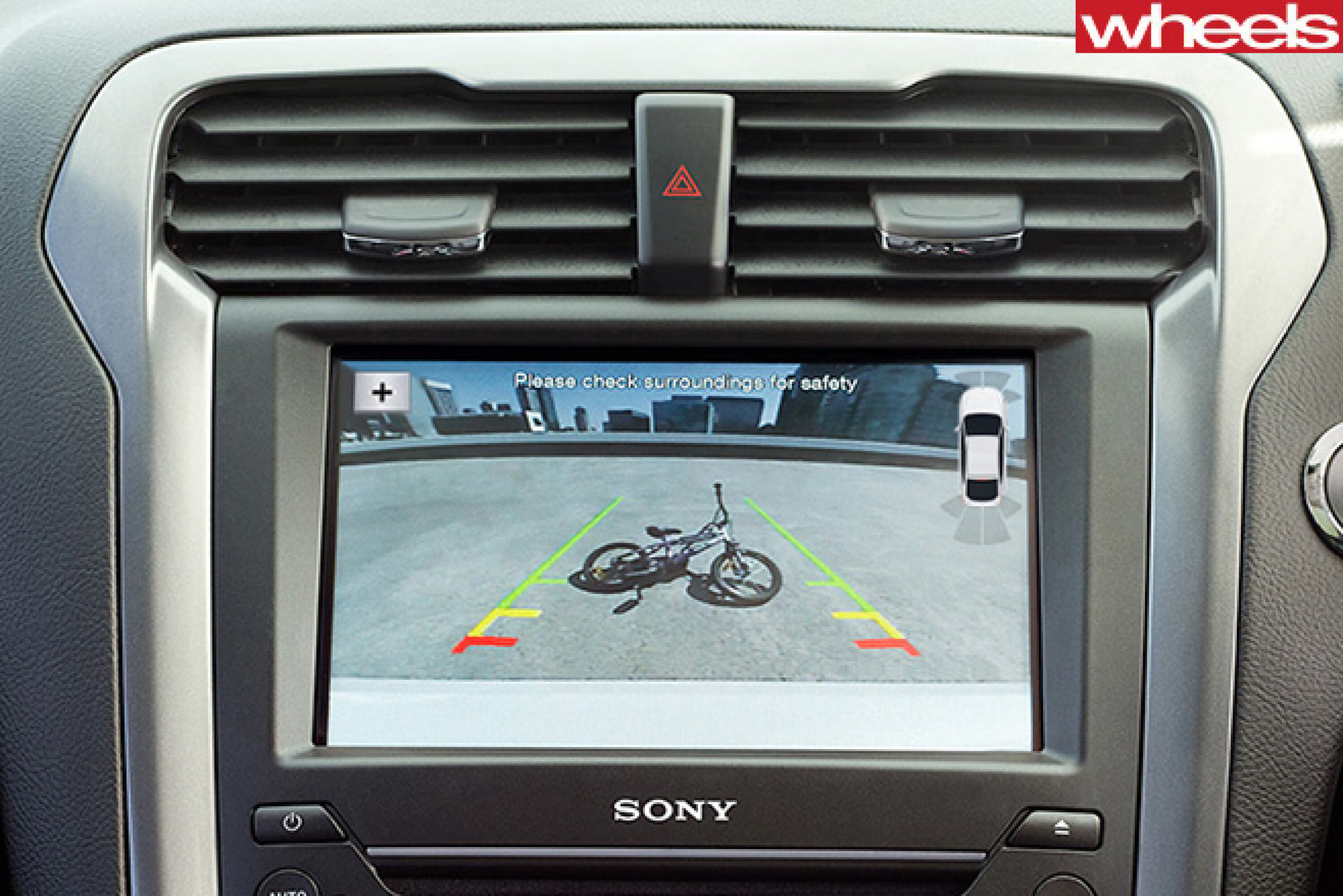
Sheepishly, it’s occurred to me that I’ve become very used to the reversing cameras, sensors and even the cosseting knowledge of reverse autonomous emergency braking of the latest modern cars. A little too used to them.
I think I’m far from alone. And is there a risk of becoming too dependent on modern driver aids, to the point you’re not just a chance at reversing an old car into a garage wall – but of making a bigger mistake out on the public road?
For a while now, modern cars have given their drivers a heightened sense of invincibility. They’re quiet, well-insulated from the outside world – five-star-safety cocoons of airbags and passive safety equipment. But semi-autonomous driver aids have taken this to another level.
1
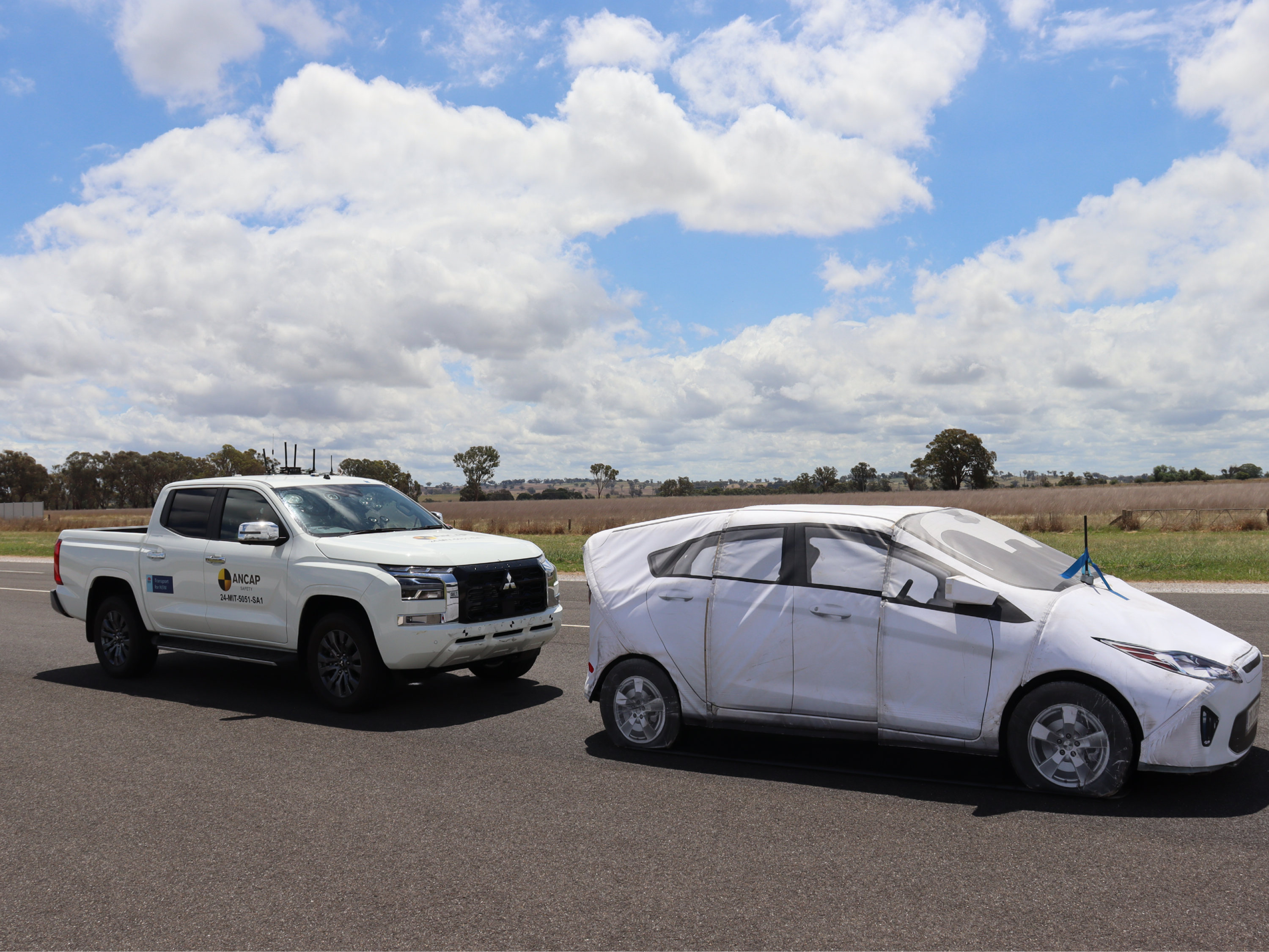
The best new cars wrap you in several layers of computer-controlled physical assistance, from emergency autonomous braking (AEB, in forward and reverse, and even at junctions) to active lane-keeping, blind-spot monitoring (some systems with steering intervention) and radar cruise control that can brake the car to a stop.
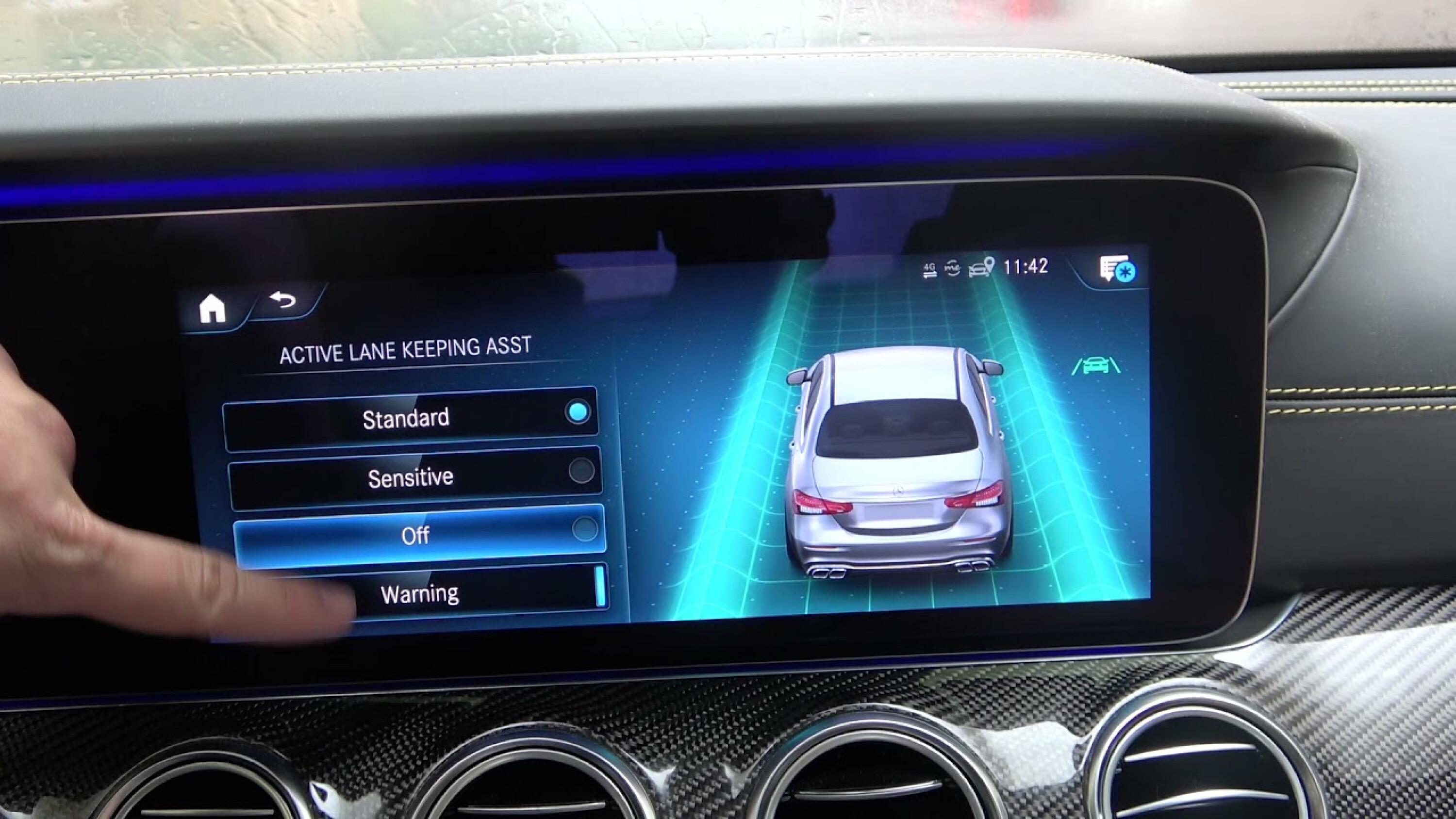
The efficacy of these systems, particularly active lane-keeping, varies hugely between manufacturers, and many are so bad you have no choice but to turn them off. In some respects, these might be the safest systems of all.
But some of them are so good that after a while you’re a bit too tempted to leave them on – especially if turning them off requires digging through several menus every time you start the car. The best active lane-keeping systems you can feel subtly driving the car for you, beneath your grip on the steering wheel. That’s as your mind enjoys the newfound extra capacity to wonder what to make for dinner.
1
Should the worst happen, and very suddenly, the driver, over-dependent on a feature like this, almost needs waking up from the semi-lucid state their modern car has lulled them into. It’s no wonder we now need driver attention monitors to make sure our eyes are still open and pointing in the right direction.
I’ve got no issue with technology that prevents or mitigates a crash – such as ESC or AEB. These have saved countless lives. But on our roads, there was already a crisis of inattention. At what point do we hit the brakes on computer-assisted semi-autonomous features that only reduce driver buy-in further?
The robots might be chauffeuring us around at some point in the future, but not yet. Drivers still need to drive, and pay attention to the road around them, lest they are given a rude shock at how reliant on these technologies they’ve become.
Not all of them will find out by reversing an old Toyota into a tight garage.
MORE
Technology stories
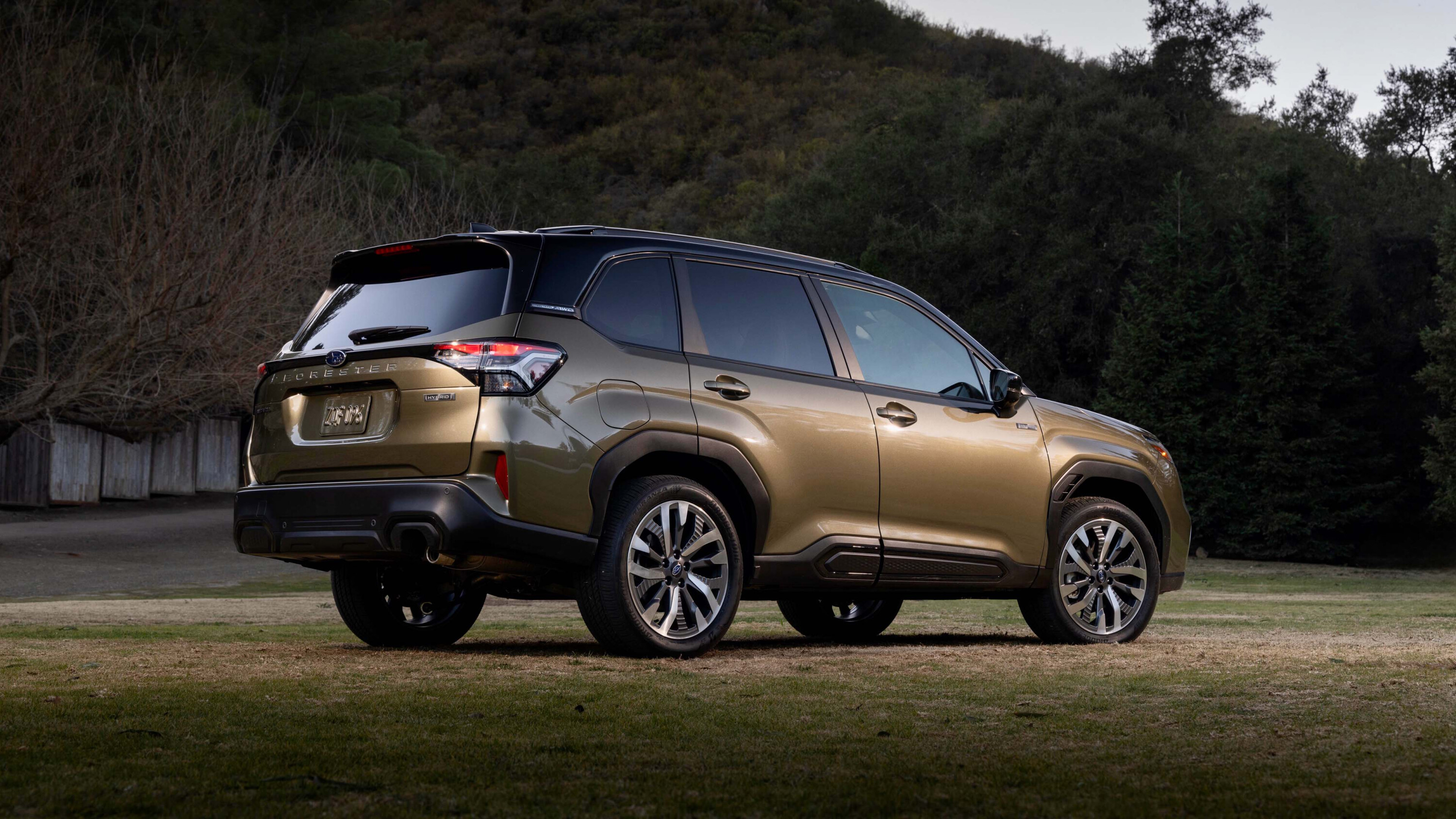
Subaru has revealed the new Forester at the Chicago Auto Show in the US overnight, powered by a new-generation hybrid system confirmed for the Australian lineup when it launches locally in July.
Building on the sixth-generation Forester that debuted in March 2024, the new ‘strong hybrid’ system combines a 2.5-litre ‘Boxer’ engine with a Toyota-sourced electric motor and 0.7kWh battery for a 145kW system output.
The system puts its power to all four wheels via an e-CVT transmission and unlike the RAV4’s electric rear motor, the Forester’s all-wheel drive system is mechanically linked.
1
The hybrid Forester is rated at 35 miles per gallon for fuel efficiency in the USA or 6.7L/100km. That sounds mediocre for a hybrid, but the RAV4 hybrid AWD is rated at 6.0L/100km there compared with 4.8L/100km here, potentially giving the Forester a 5.5L/100km rating locally.
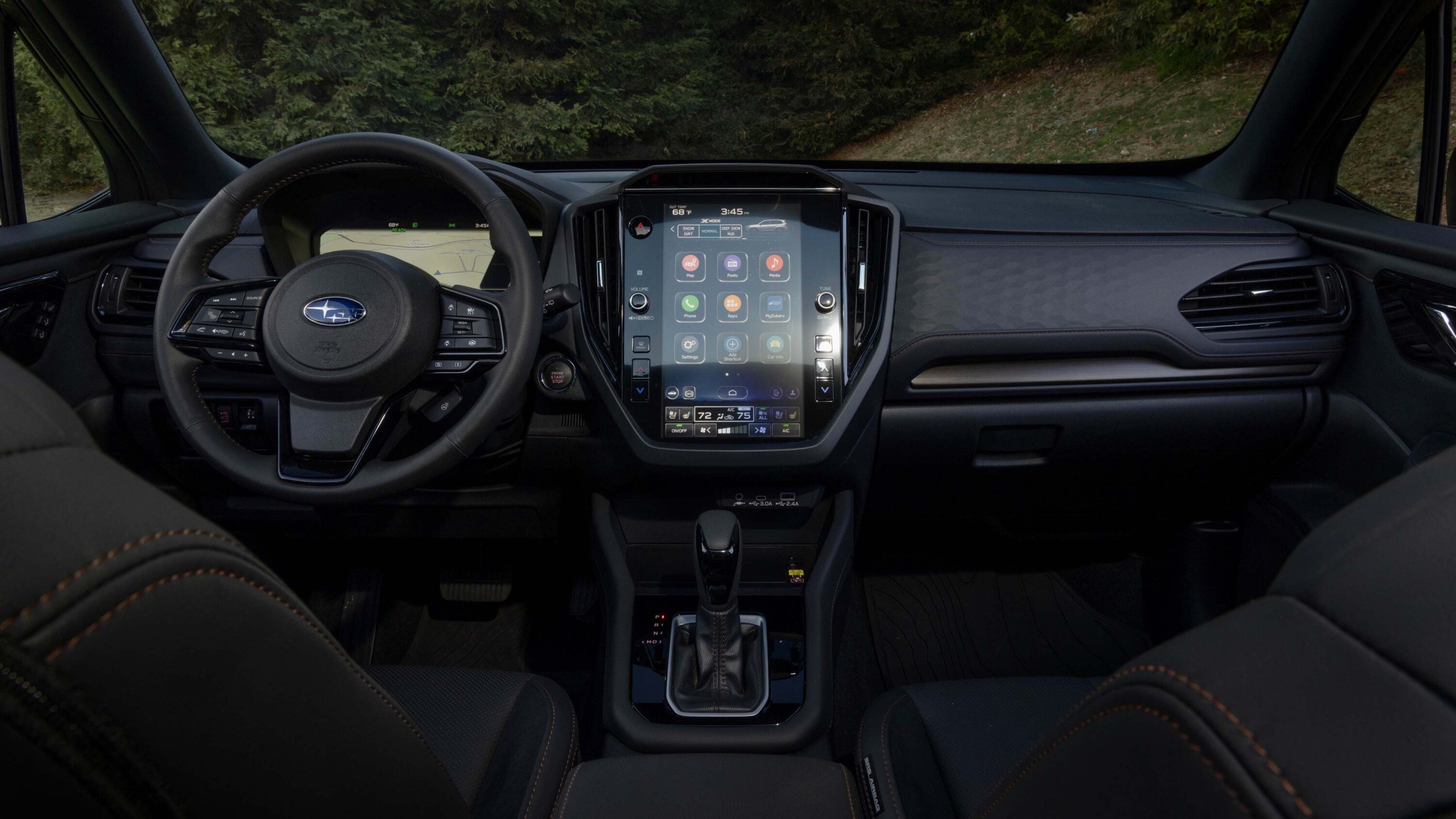
The hybrid Forester keeps the standard car’s X-Mode off-road traction system, hill descent control and active torque vectoring, while it also has a 220mm ground clearance.
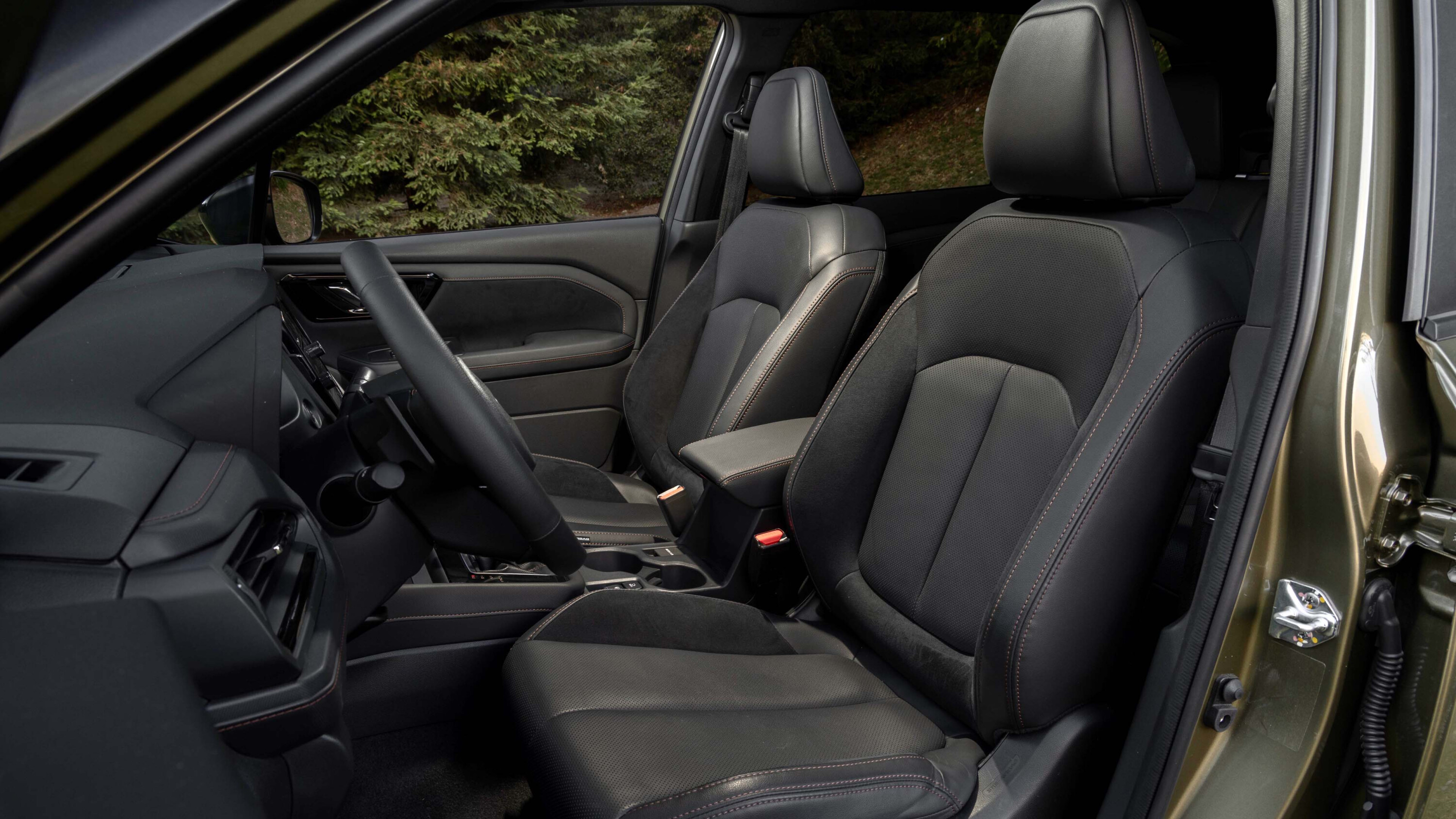
Inside the Forester hybrid is the same 11.6-inch touchscreen with wireless smartphone mirroring as the petrol models revealed last year, while a new 12.3-inch digital driver’s display will be available on some hybrid variants.
1
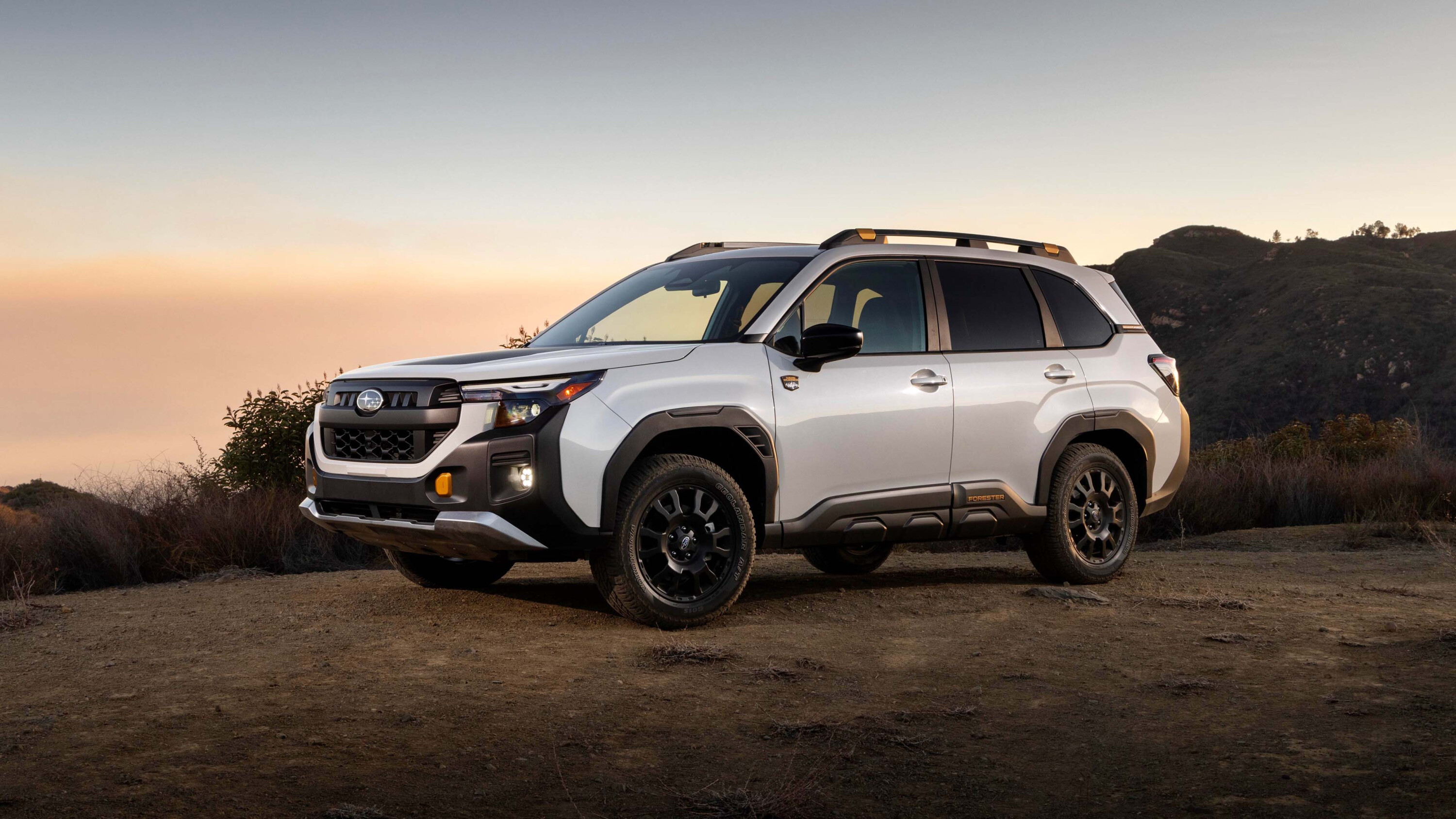
Subaru also revealed the new Wilderness alongside the hybrid, which is an off-road model in the Forester range, as well as both the Crosstrek and Outback in North America as well. It was part of the last Forester lineup in America from 2021.
The new Wilderness adds several off-road upgrades to the already competent off-road Forester, including 15mm more ground clearance, off-road bumpers, all-terrain tyres, underbody protection and tweaks to the transmission for greater off-road ability.
1
Subaru Australia is yet to confirm the Forester Wilderness for local sales, telling local media in a statement: “We remain very interested in Wilderness editions for our market and are working closely with Subaru Corporation on future opportunities for Australia.”
Would you like to see the new Subaru Forester Wilderness sold in Australia? Let us know in the comments below.
22
MORE
Everything Subaru
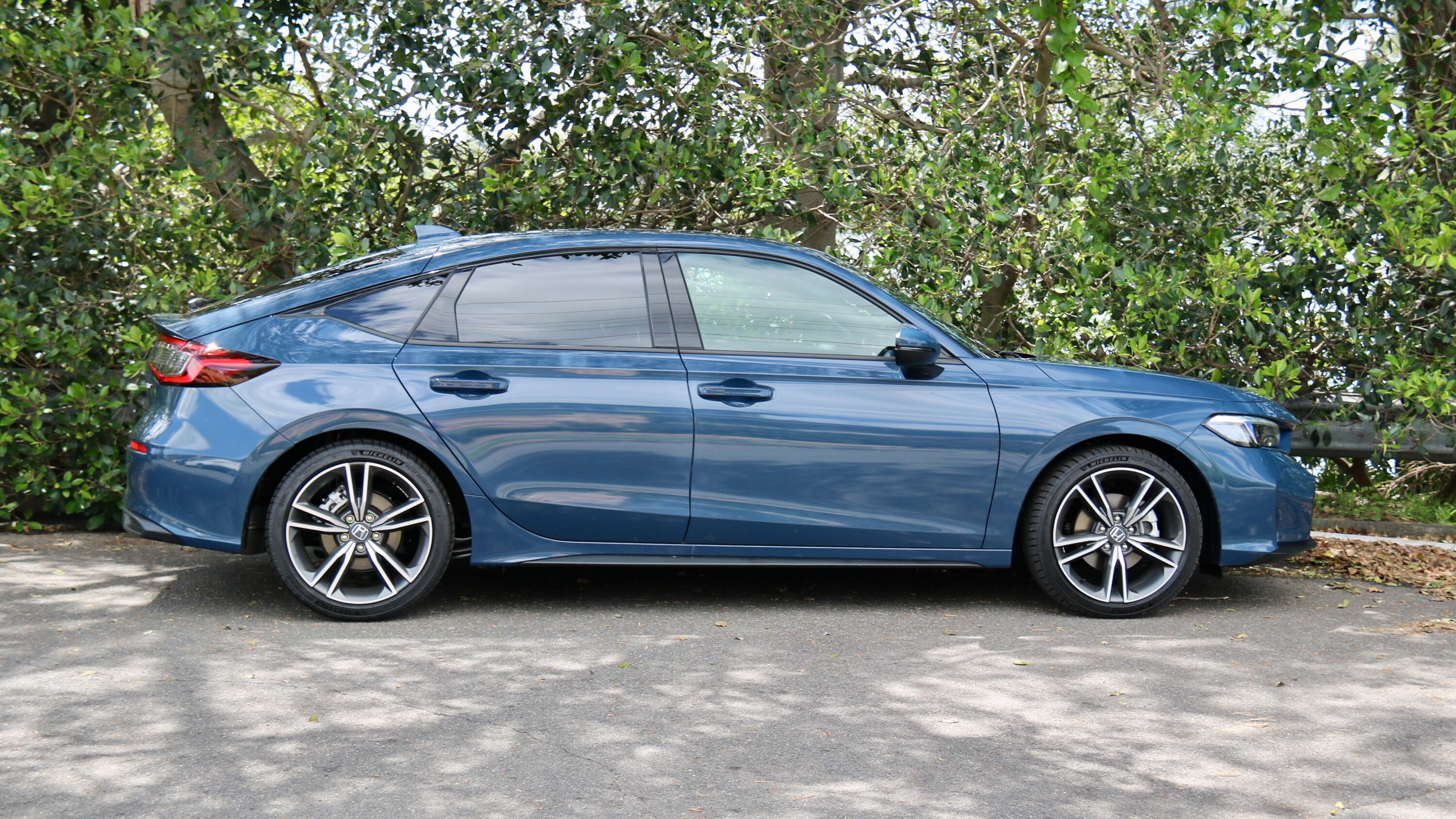
Recently launched with a minor mid-life update and part of a now hybrid-only lineup, the 11th generation Honda Civic takes all of Honda’s small car smarts and adds a dose of premium quality, fun driving dynamics, an efficient hybrid system and the usual practicality that we’ve come to expect from the brand.
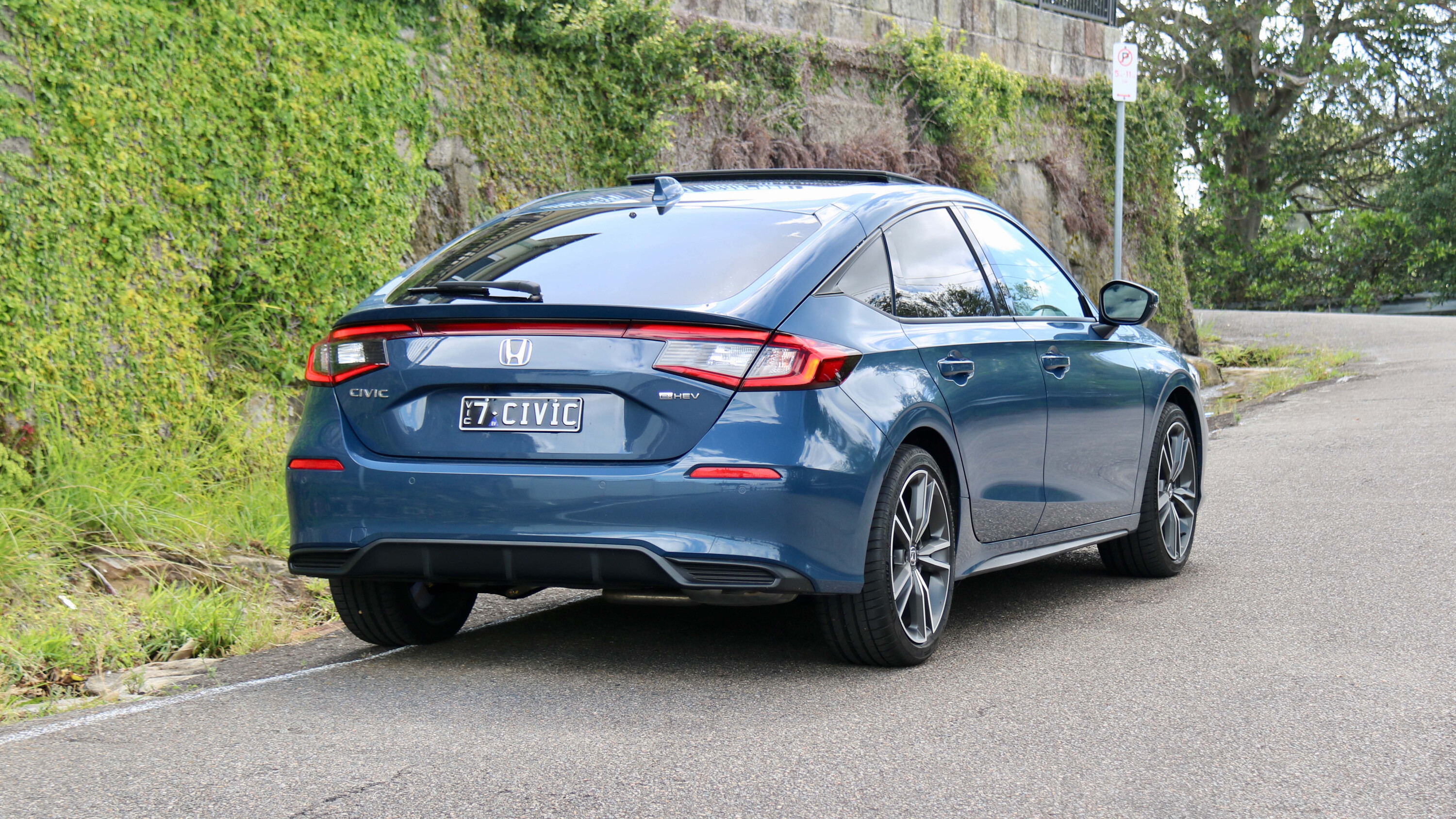
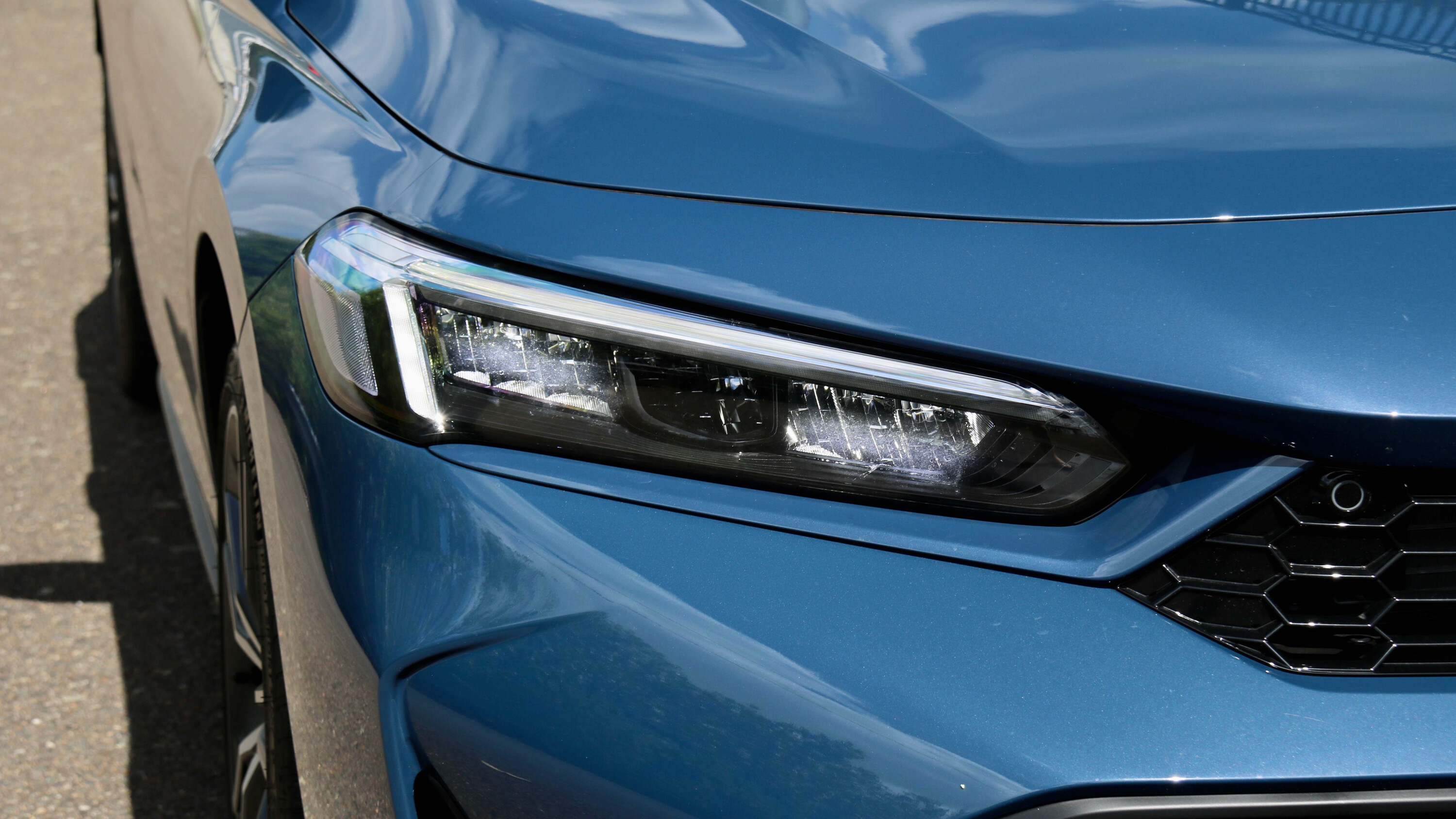
The previous 1.5-litre turbocharged petrol engine is no longer available and in response to demand for hybrid powertrains, a new entry-level hybrid model has been added. The exterior has also been treated to light styling changes, plus a new alloy wheel design and revised colours.
1
Inside, Honda has added new Google-based infotainment software, plus new equipment for the entry-level car.
The changes mean that the Civic range is now more expensive than ever before. With a starting price of $49,900 drive away, the updated range starts $2,700 higher and the top-spec LX is now $900 more. It’s not a cheap car but is it a smart buy?
JUMP AHEAD
- Pricing and features
- Performance and economy
- Interior comfort, practical and boot space
- On the road
- Service and warranty
- Verdict: Should I buy a 2025 Honda Civic?
- Civic rivals
Pricing and features
There are two variants in the Civic range in Australia: the entry-level e:HEV L and the top-spec e:HEV LX. Overseas, petrol engines and even a sedan bodystyle are available, but not locally.
| 2025 Honda Civic pricing (drive away): | |
|---|---|
| e:HEV L | $49,900 |
| e:HEV LX | $55,900 |
| Honda Civic e:HEV L standard equipment | |
|---|---|
| 18-inch alloy wheels with a tyre repair kit | Heated leather-wrapped steering wheel with paddle shifters |
| Dusk- and rain-activated automatic LED headlights | 10.2-inch digital driveru2019s display |
| Rain-sensing automatic wipers | 9.0-inch touchscreen with inbuilt Google and Google Play Store access |
| Keyless entry and push button start with a smart key card | u2018Honda Connectu2019 live services (three-year subscription) |
| Heated and auto-folding mirrors | Wireless and wired Apple CarPlay and wired Android Auto smartphone mirroring |
| Rear privacy glass | Google Maps navigation with live traffic |
| Dual-zone climate control with rear air vents | AM/FM/DAB+ digital radio |
| Auto up/down windows | 4x USB-C ports |
| Leather and cloth upholstery | 12-speaker Bose sound system |
| Six-way manual driveru2019s seat with electric lumbar adjustment | Normal, eco, sport and individual driving modes |
| Heated front seats | Adjustable regenerative braking |
1
| Civic standard safety equipment | |
|---|---|
| 11 airbags (including front centre, dual knee and rear side units) | Intelligent speed limit assistance |
| Auto emergency braking (AEB) with pedestrian and cyclist detection | Lane departure warning with lane keeping assistance |
| Adaptive cruise control with traffic jam assist | Blind-spot monitoring with rear cross-traffic alert |
| Adaptive lane guidance | Front and rear parking sensors |
| Auto high beam | Reversing camera |
| Traffic sign recognition | |
| Civic e:HEV LX model adds | |
|---|---|
| Full leather upholstery | 12-way driver/8-way front passenger electric front seat adjustment |
| Panoramic sunroof | Sunglasses holder |
| Wireless phone charger | Second rear seat map pocket |
| Auto-dimming rear mirror | |
1
| The Civic colour range (all no cost extra) |
|---|
| Seabed Blue |
| Platinum White |
| Premium Crystal Red |
| Sonic Grey (e:HEV LX only) |
2
Performance and economy
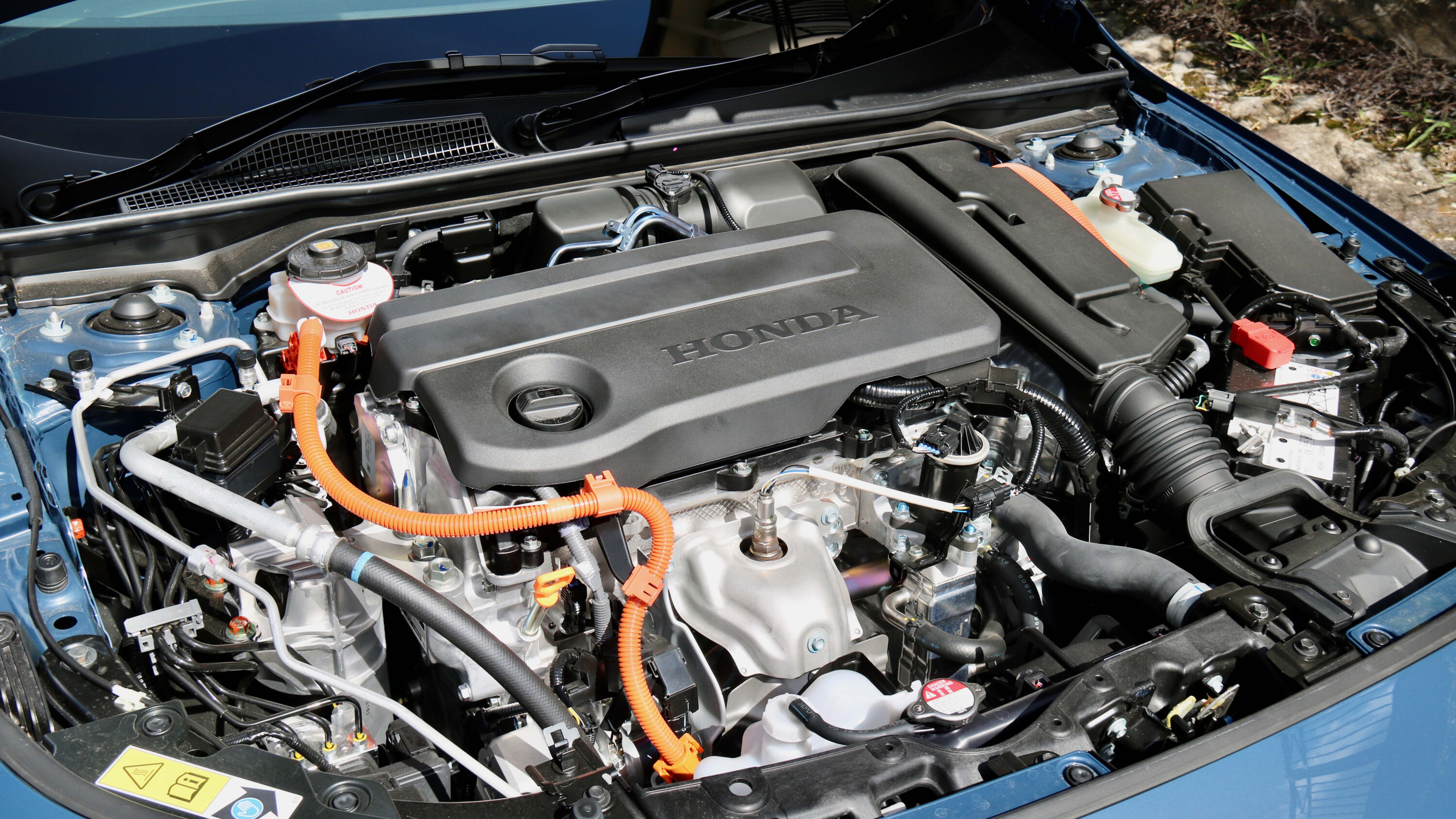
The Honda Civic is powered by a 2.0-litre four-cylinder petrol engine paired with a hybrid system and an e-CVT gearbox. Its combined outputs are 135kW of power (between 5,000rpm and 6,000rpm) and 315Nm of torque (from 0 to 2,000rpm).
The claimed combined fuel consumption for the Civic hybrid is 4.2L/100km with CO2 emissions rated at 96g/km. It can run on 91RON regular unleaded fuel and features a 40-litre fuel tank for a theoretical range of around 950km. That compares well to rivals with the less powerful Corolla hybrid officially using only 0.2L/100km less, and petrol rivals above the 5L/100km mark.
In our testing, we achieved 4.9L/100km with mixed driving, which is a bit higher than Honda’s claim but still impressive. At that consumption, it’s capable of a range of more than 800km.
1
Interior comfort, practical and boot space
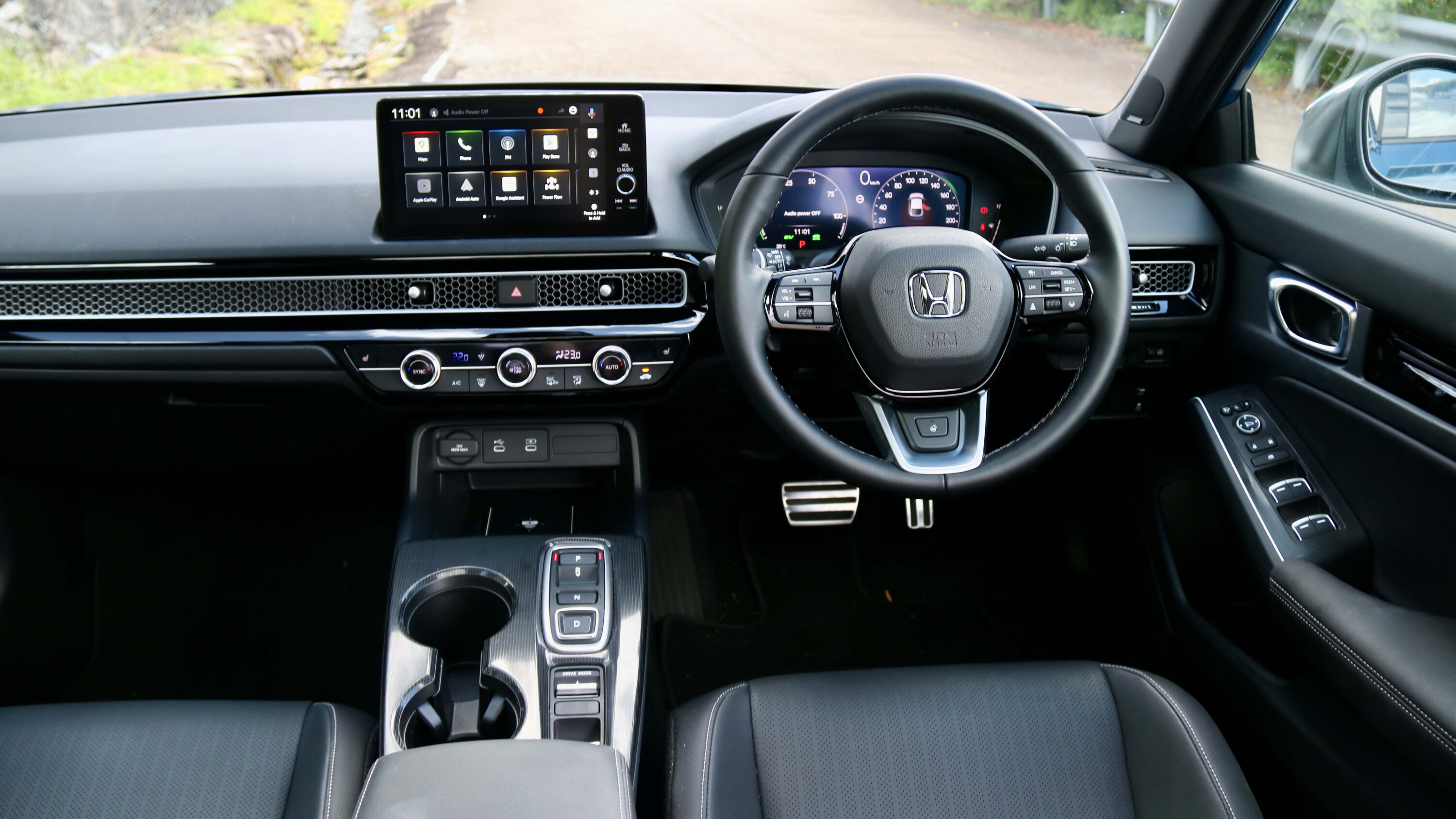
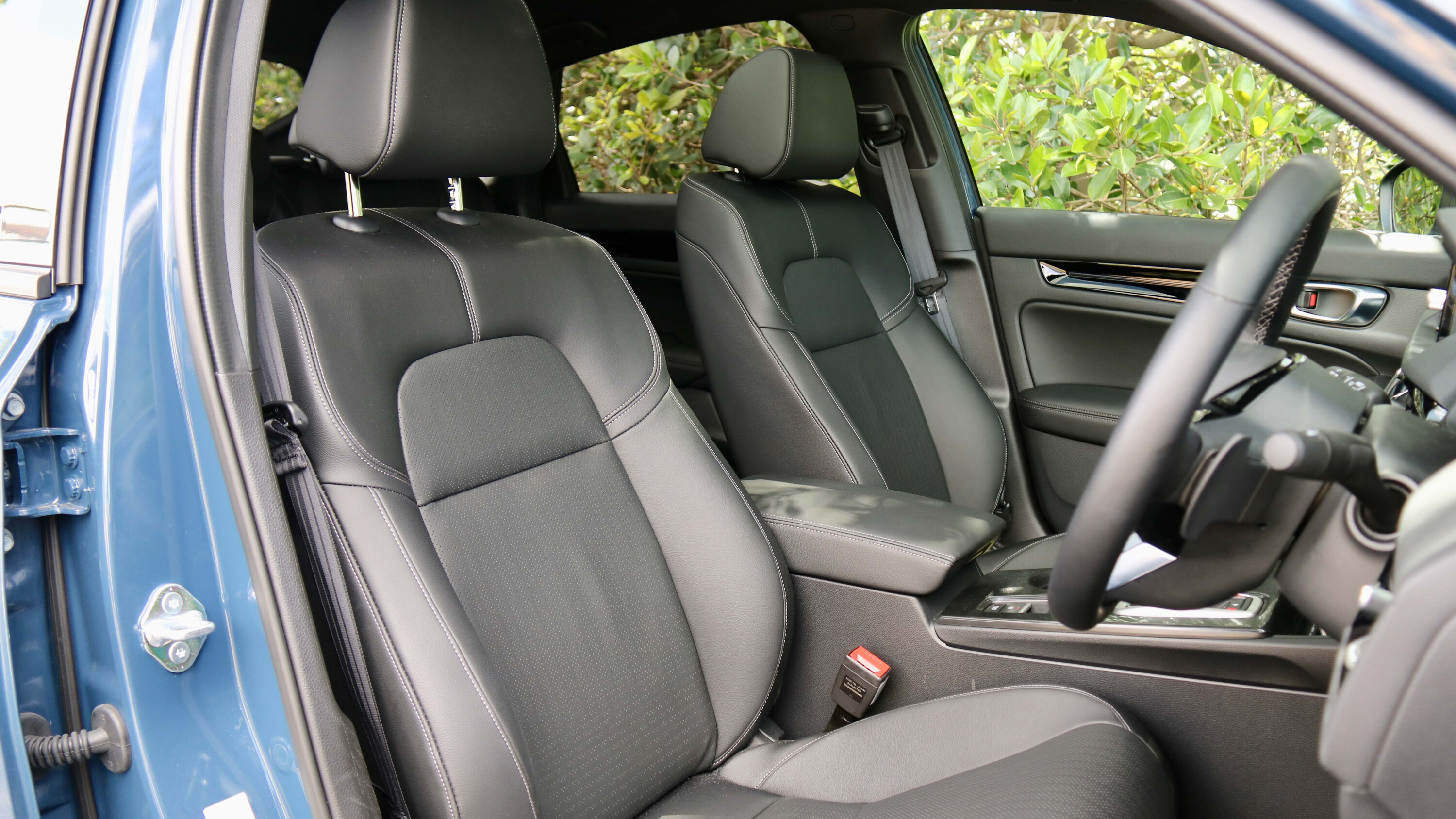
The Civic’s interior remains relatively unchanged in this update but that’s not a bad thing given its quality. There are ample soft touch materials atop the dashboard and doors, while the switchgear has a great tactility to it. Inside a Mazda3 is more luxurious, however, and it starts at a lot less money than the Civic.
To extend the comparison, the Civic’s cabin is more practical than the Mazda3, and storage highlights include large door bins, a big central box underneath the armrest, large cupholders in the centre console and a large tray underneath with a wireless phone charger.
Seat comfort is also excellent, and the driver’s seat has ample electric adjustment – though no memory functionality.
1
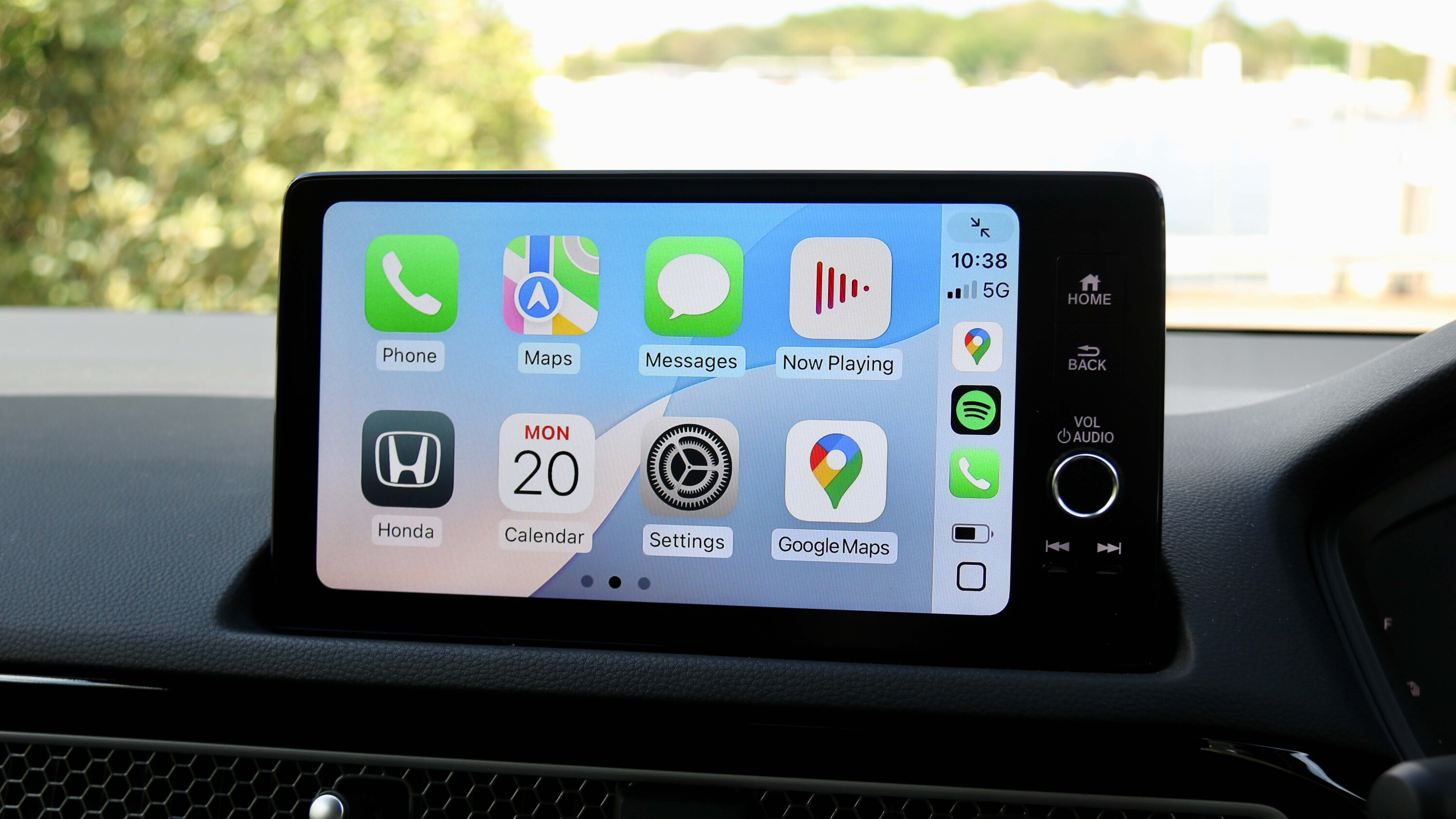
The Civic features a 9.0-inch touchscreen which now uses Google-based software. It’s quicker to use than before and its menus are still super easy to understand. Because of the Google integration, it now features Google Maps for its navigation and access to the Google Play store to download apps. It’s also useful if you already use Google features as you can sign into the car.
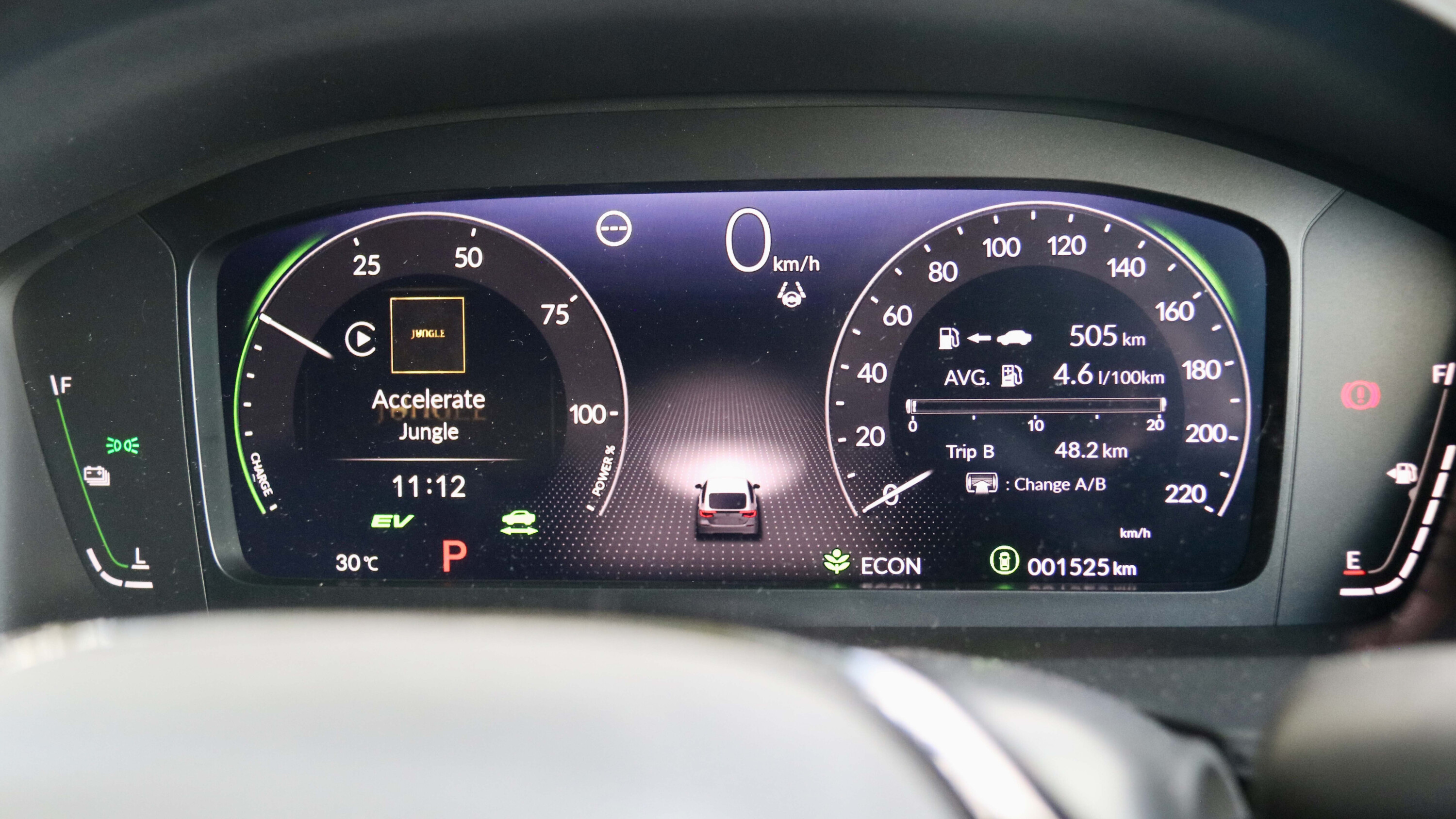
Ahead of the driver sits a 10.2-inch digital driver’s display that’s good quality and easy to use, though it’s unable to display a map like in a Volkswagen Group product. Usefully, however, when the cruise control is activated, it displays the car from the rear with the lanes and other cars around it like a Tesla.
The 12-speaker Bose sound system is solid, with effective bass and good clarity, though the Bose unit in the Mazda3 sounds better.
1
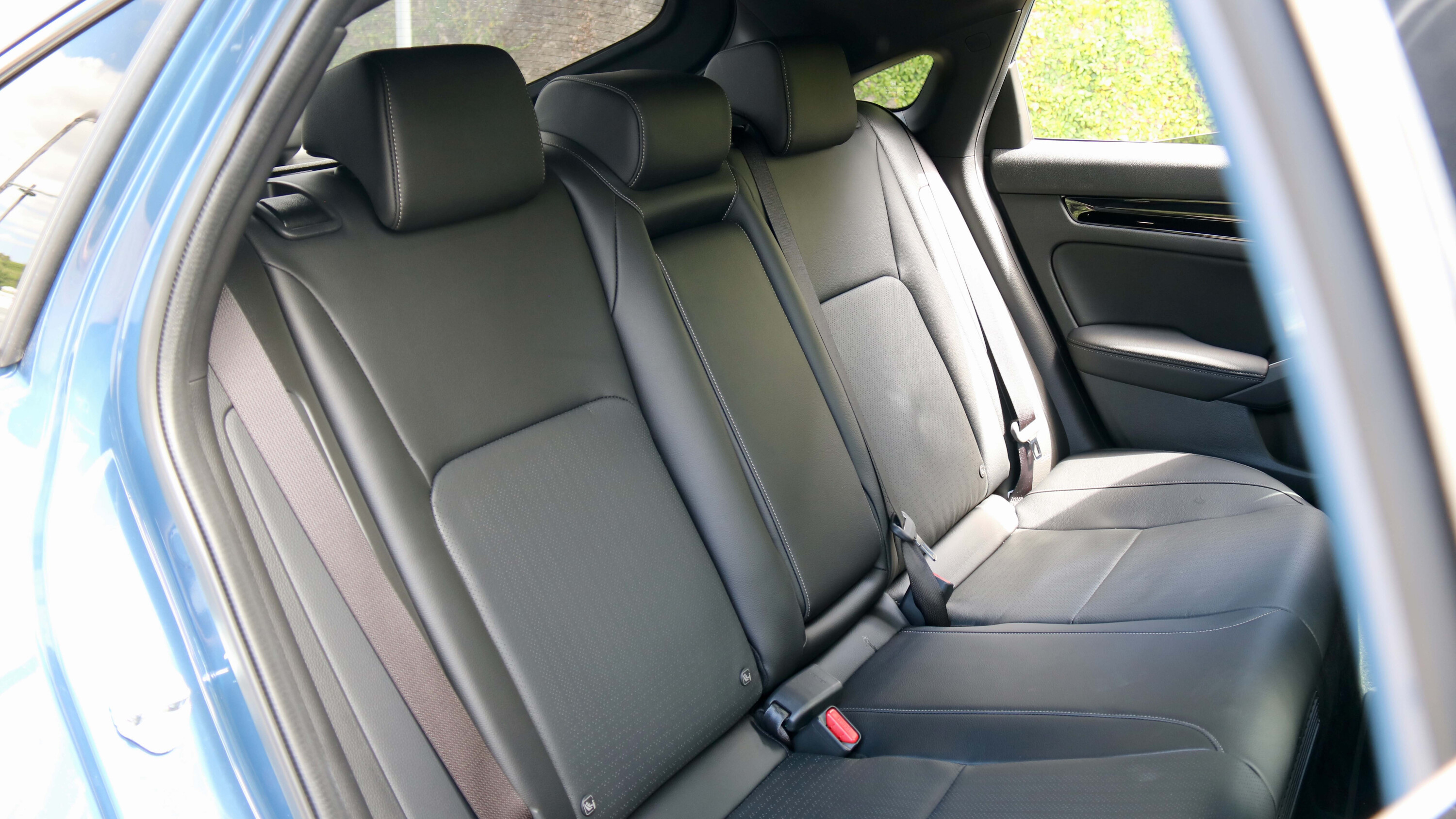
The rear seat of the Civic is spacious for the segment with ample legroom and pretty good headroom for six-footers, though a Skoda Scala is still roomier. Unlike the smaller HR-V, it features five seatbelts and three adults will be fine for short trips. It’s a well-featured space, with map pockets, door pockets, a central armrest with cup holders, air vents and two USB-C charging ports.
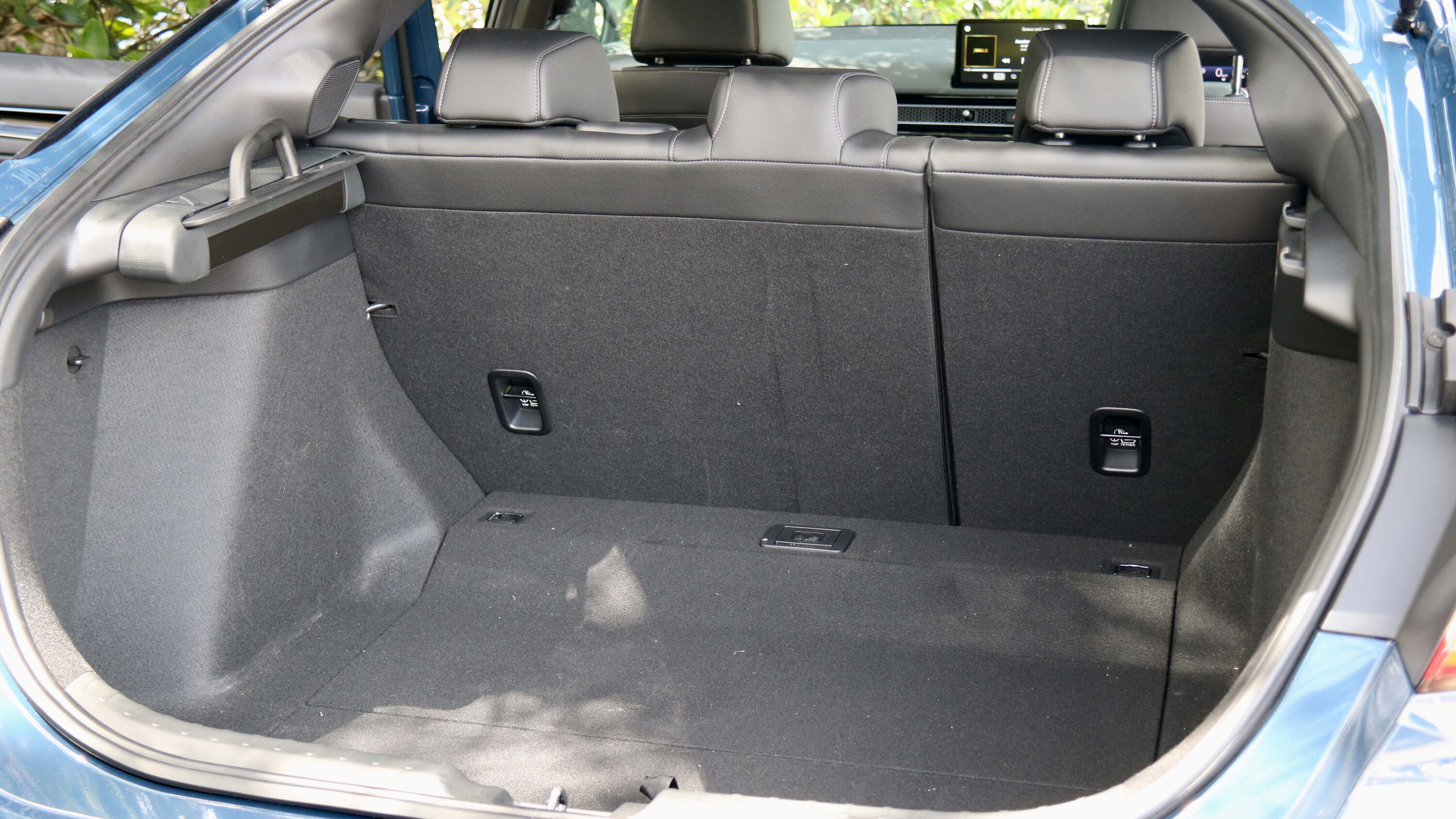
At 409-litres, the boot of the Civic is one of the largest in the segment, and much bigger than the 295L boot in the Mazda3, though still smaller than the 467L boot in the Scala.
There’s no spare wheel but some under-floor storage in its place. There are a few hooks and the boot cover can be retracted without having to be taken out of the boot. The rear seats fold easily to create a large space – no figure is given for when they are folded – but the floor isn’t flat when done so.
2
On the road
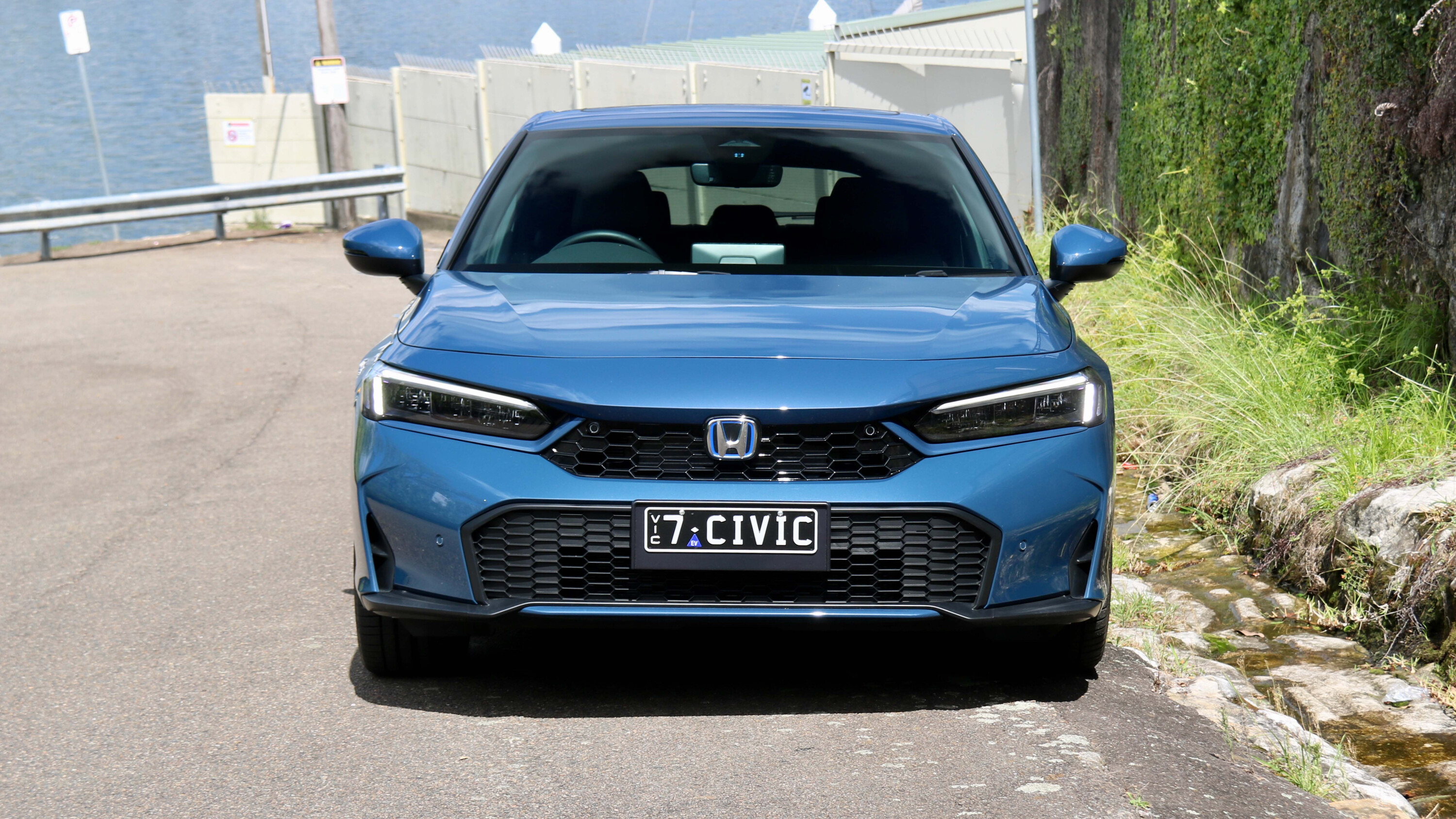
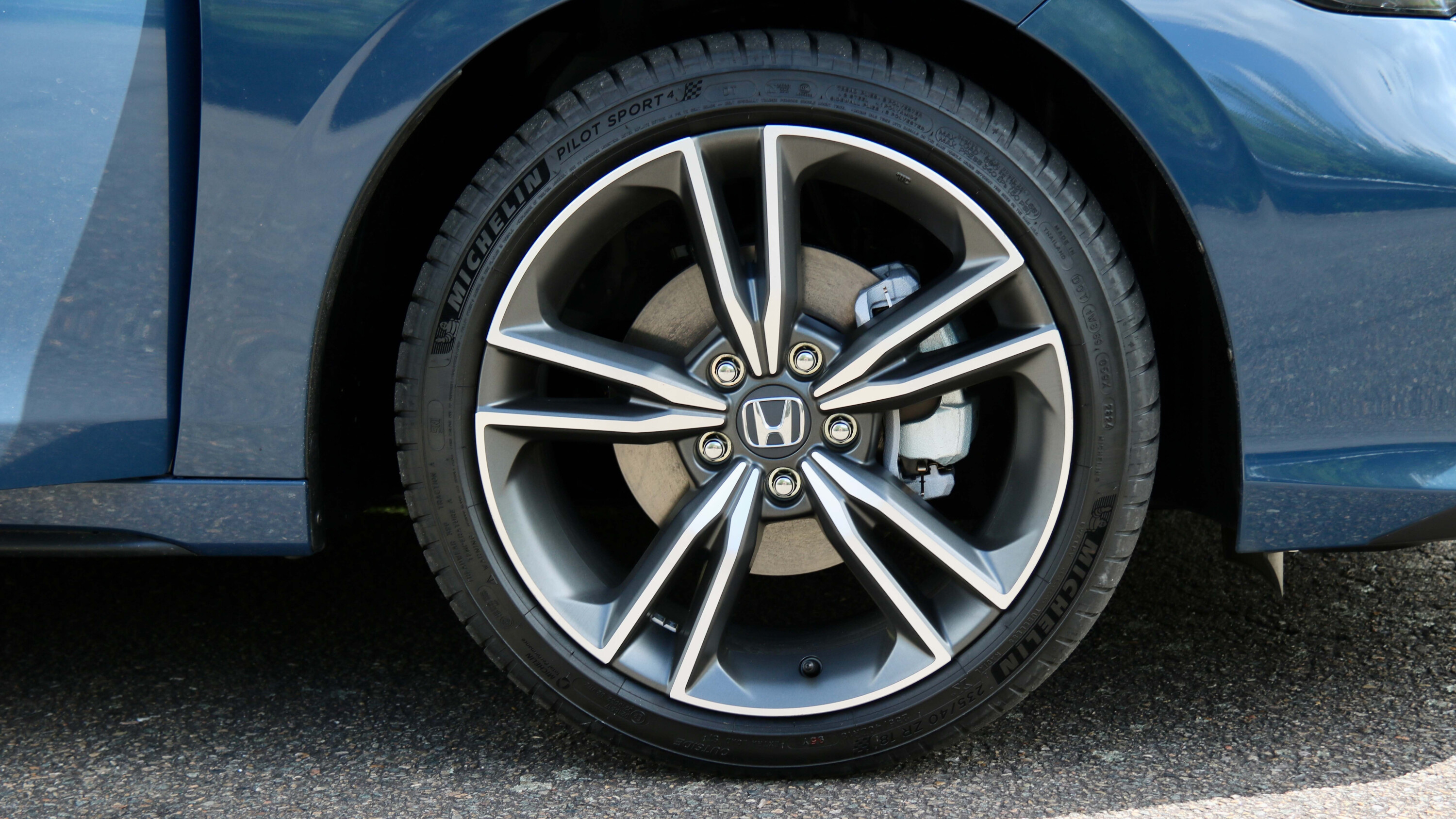
As we found when we reviewed the pre-facelifted model, the Civic’s chassis is well balanced with good front-end grip, a generally great ride quality and – much to the delight of enthusiasts – Michelin Pilot Sport 4 tyres.
While its chassis is not quite as sharp as a Corolla, the ride is more resolved and road noise levels are also much quieter. In an age where performance cars are under attack, it’s nice to know that regular grocery getters provide a smile from behind the wheel.
The hybrid system is impressive as well, effectively saving charge from regenerative braking and being charged by the 2.0-litre petrol engine, using it to allow the car to run on EV-only power in most stop-start situations.
1
When the petrol engine fires up, it’s more refined than a Toyota hybrid and that’s mostly because the gearbox features stepping like a proper gearbox, instead of the rubbery dynamic of the Toyota’s CVT.
There are paddle shifters to control the regenerative braking – which oddly revert to their lowest setting once you’re off the brakes – and eco, normal, sport, as well as new individual driving modes to further tune the driving experience.
Unlike the Corolla, however, there’s no dedicated EV driving mode, but we’re not sure that many drivers will mind considering how efficient the Civic is.
1
Service and warranty
The Civic is covered by a five-year/unlimited km warranty with five years of roadside assistance, and an eight-year/160,000km warranty for the battery. That warranty term matches most rivals, though Skoda includes two extra years for seven in total.
Service intervals are annual or 10,000km (whichever comes first), and each of the first five services costs $199 each for a total of $995 over 50,000km of driving. Three years of Honda Connect is included with the Civic’s price, after which point owners must pay a fee.
1
Verdict: Should I buy a 2025 Honda Civic?
There’s no question that the updated Civic is one of the best products in the small car segment. It just doesn’t do much wrong: it’s practical, efficient, fun to drive, well equipped, cheap to service and covered by a pretty good warranty too. It’s not perfect – there’s no spare tyre, for example – but it’s just a really well engineered product, or exactly what we’d expect from Honda.
The biggest issue with the Civic is its price. There’s no doubting that it’s a great product, but many buyers will overlook it simply because of its position in the market.
Sub-$50,000 where the base model sits is where the top-spec LX should be priced, and oddly enough, the larger ZR-V hybrid SUV that’s based on the Civic costs $1,000 less. Regardless of the pricing though, the Civic is a great all-rounder and if you’re able to justify the price, it’s worth strong consideration.
1
Civic rivals:
u2b06ufe0f Back to top
MORE
Everything Honda
MORE
PHEV and Hybrid Cars
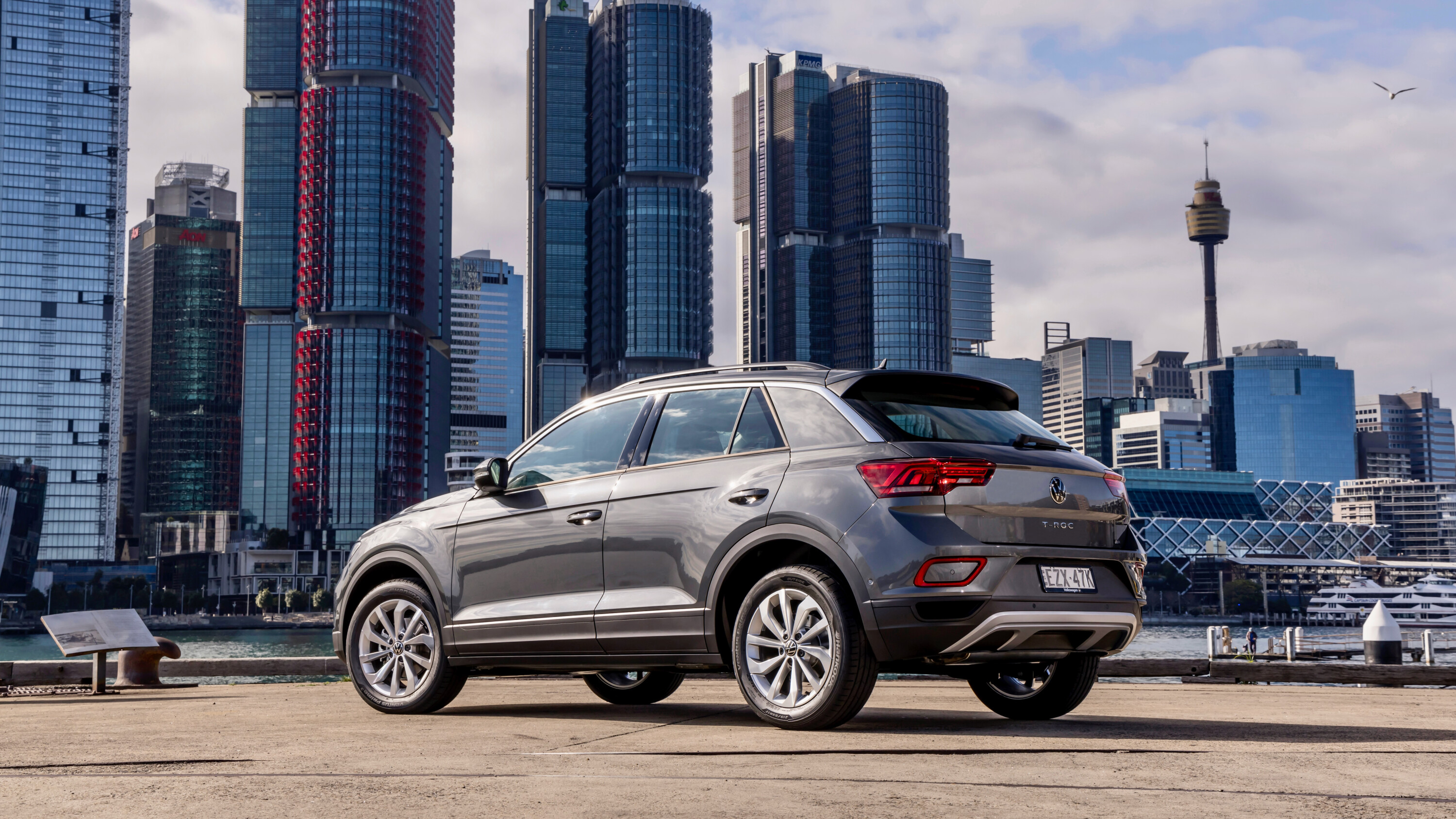
Volkswagen Australia has revealed both its Polo small hatch and T-Roc small SUV will receive new safety features for the 2025 model year.
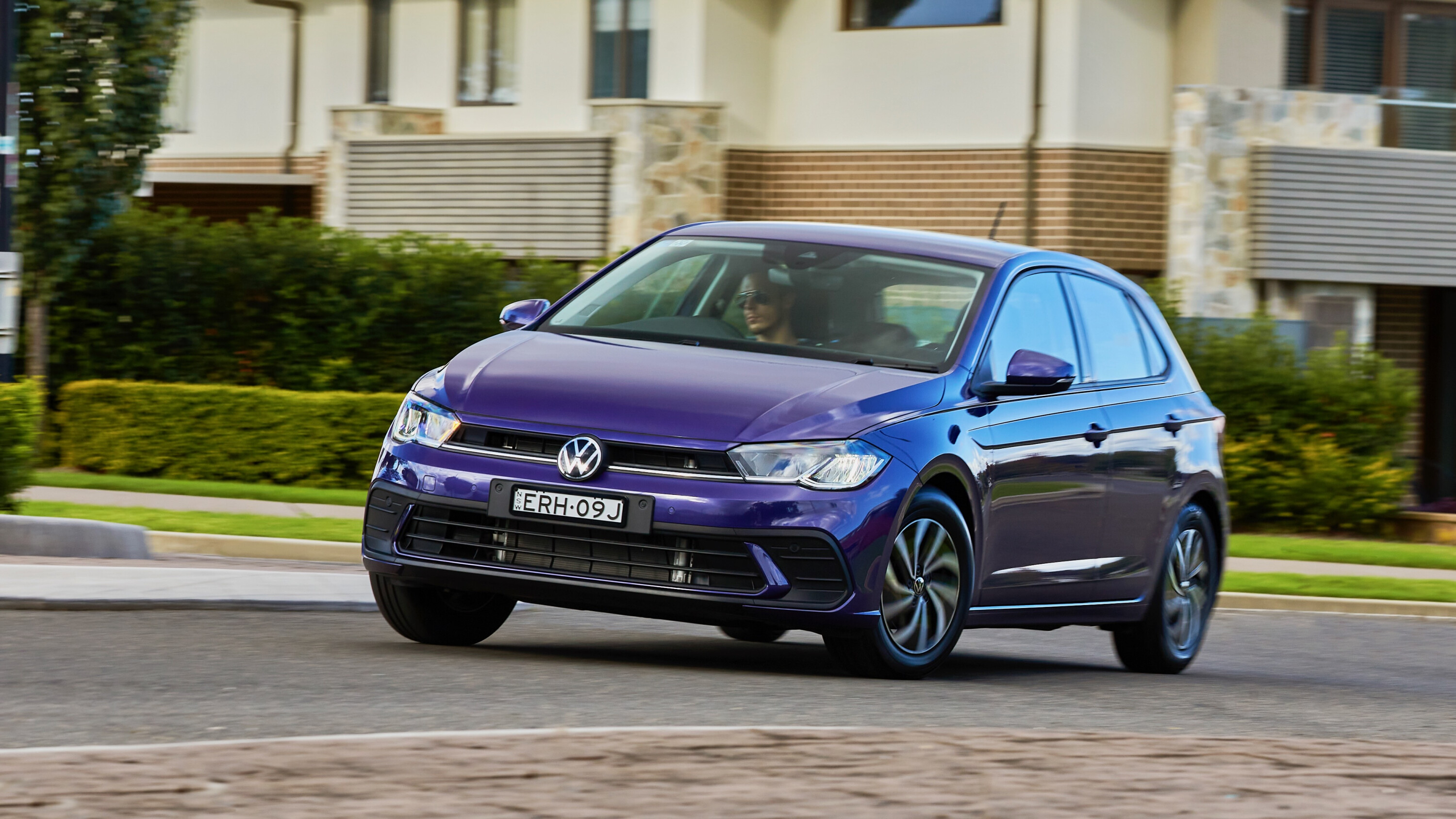
Now with adaptive cruise control and adaptive lane guidance standard on the Polo range, and blind-spot monitoring with rear cross-traffic alert added to the T-Roc, the MY25 Volkswagen range is safer than ever – though prices have gone up to account for the new standard kit.
Priced from $30,790 plus on-road costs – an increase of $1,300 – the entry-level Polo Life is now equipped with adaptive cruise control and adaptive lane guidance under the brand’s ‘Travel Assist’ branding, which allows for semi-autonomous highway driving.
1
The mid-spec Polo Style has also gained standard keyless entry with push button start, satellite navigation, wireless Apple CarPlay and Android Auto, and a wireless phone charger is also now part of the spec sheet.
Its $34,790 +ORC price is a $2,250 increase on 2024 models, while the previous Vision and Tech Package on the Life, and Sound and Tech Pack on the Style, are now unavailable.
The entry-level T-Roc CityLife has also gained new safety equipment, with blind-spot monitoring with rear cross-traffic alert (with braking) and a proactive occupant protection system now standard kit for a $2,000 price increase to $38,990 plus on-road costs.
1
The T-Roc R-Line has gained a new leather steering wheel with physical buttons replacing the previous touch pads.
All T-Roc variants have also gained five years of free access to Volkswagen’s new ‘GoConnect’ smartphone app with remote access to vehicle information, location, recent trip data, warning light notifications and direct dealer communication. GoConnect debuted on the ID. Buzz electric people mover recently and is the first type of live services offered by Volkswagen in Australia.
Before the MY25 cars arrive, Volkswagen is offering special drive away pricing on MY24 cars with the T-Roc CityLife available for $37,990, the Style for $42,990, the R-Line for $51,990 and the R for $65,990 (all drive away).
| MY25 Volkswagen Polo pricing (plus on-road costs): | |
|---|---|
| Life | $30,790 |
| Style | $34,790 |
| GTI | $41,790 |
| MY25 Volkswagen T-Roc pricing (plus on-road costs): | |
|---|---|
| CityLife | $38,990 |
| Style | $41,990 |
| R-Line | $49,990 |
| R | $64,990 |
The MY25 Volkswagen Polo and T-Roc will enter local VW showrooms later this quarter.
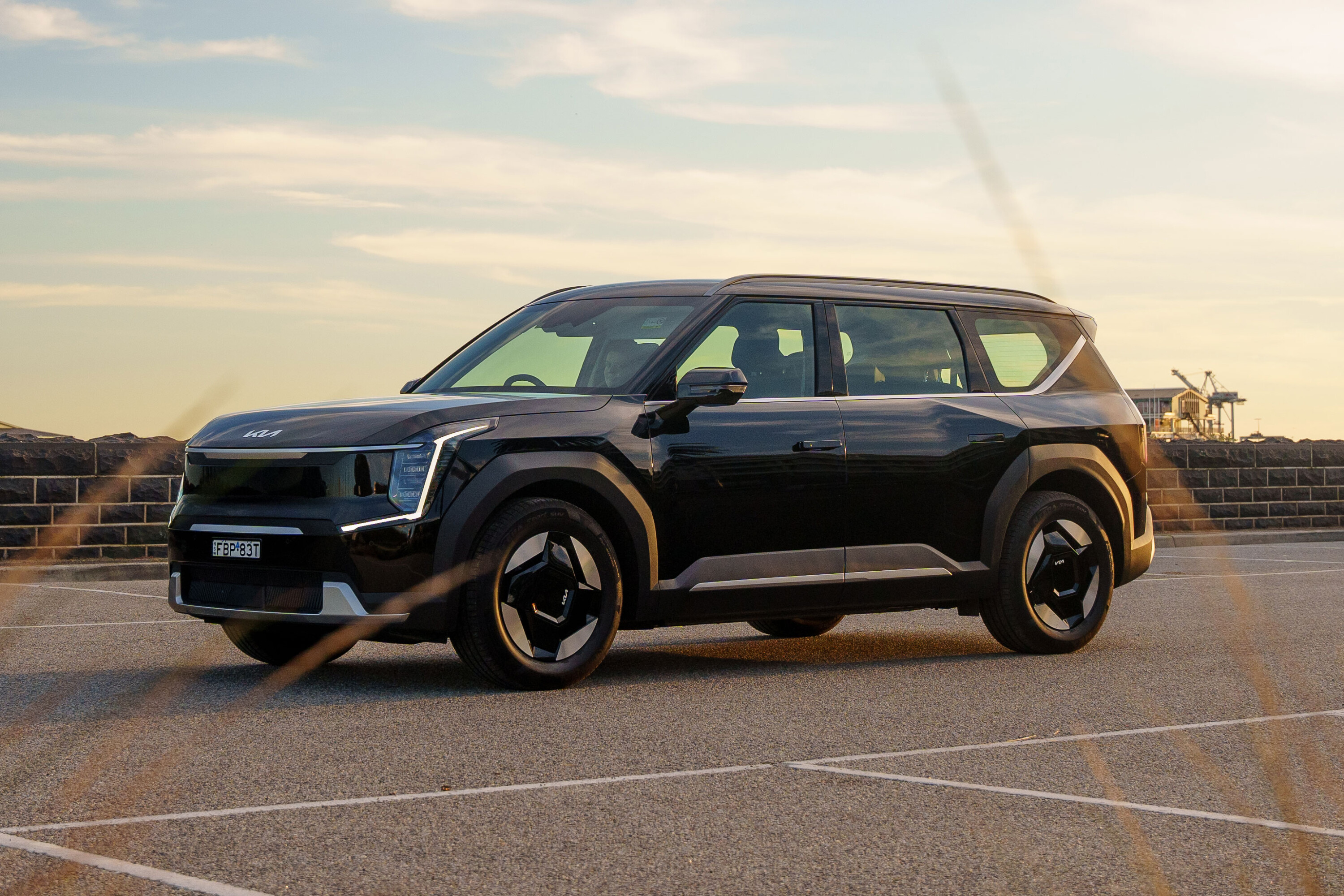
Australian drivers have reached a significant milestone in the shift towards cleaner transport by putting more than 300,000 EVs and PHEVs on the road, according to the Electric Vehicle Council.
Analysis of the EVC’s data shows that since sales data commenced in 2011, more than 248,000 EVs and 53,500 PHEVs are now on Australian roads. Even with the recent upswing in PHEV sales, EVs are still the more popular choice among the two.
“With 300,000 electric vehicles on Australian roads – and counting – we’re seeing a significant shift in how Australians choose to drive,” said Electric Vehicle Council CEO Julie Delvecchio.
1
“Just a few years ago, electric vehicles were an emerging option in Australia, with a limited selection of models at expensive prices. But today, EVs are a serious consideration for many drivers and a familiar sight on roads nationwide. Today, Australians have access to more than 120 EV car models, over 220 variants, and a wider range of affordable options starting at under $30,000, with even more choices and competitive pricing on the horizon.”
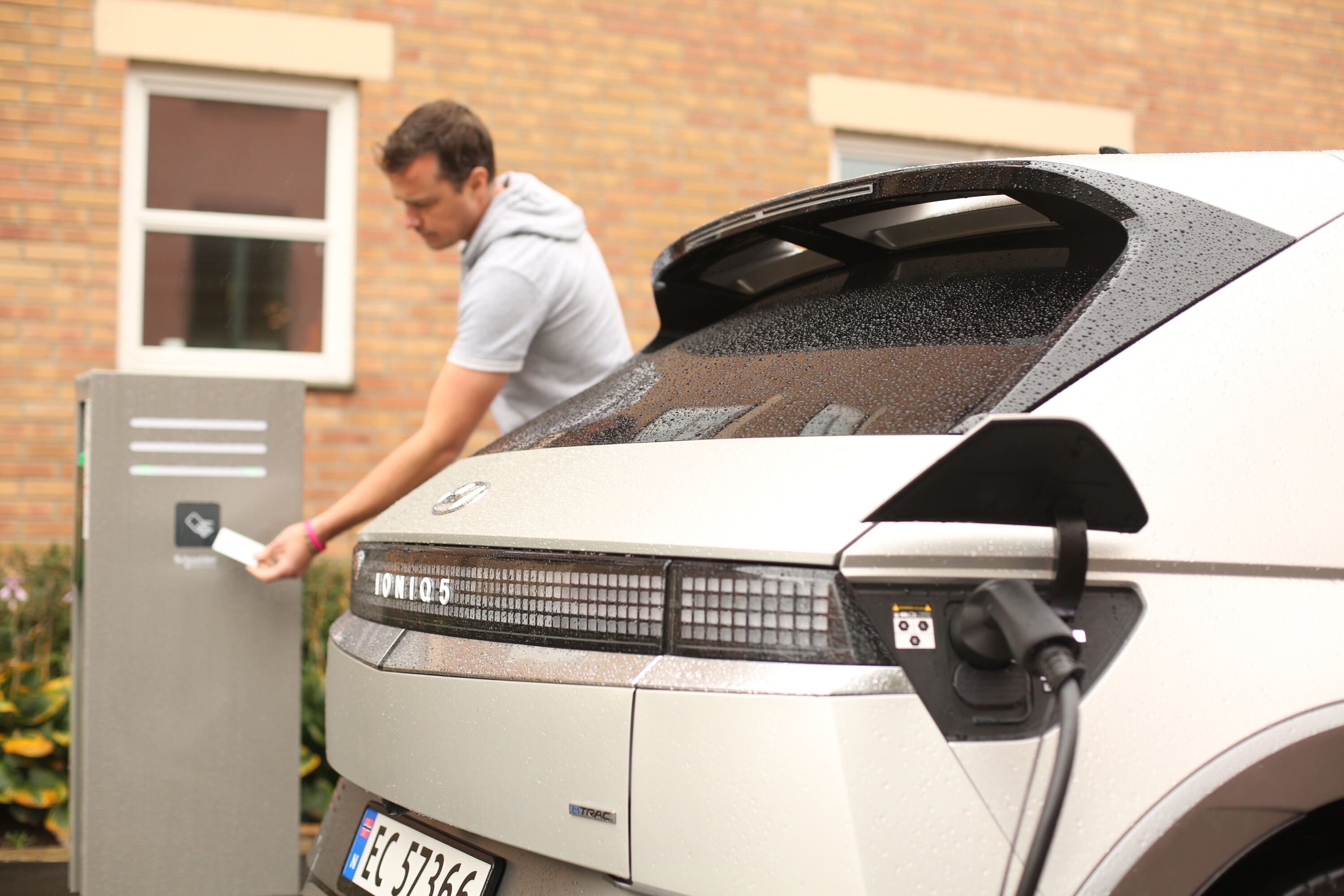
The EV and PHEV sales milestone comes as the latest national sales data from January 2025 shows that EV sales have decreased by 18.3 per cent year-on-year to just 4.4 per cent of overall sales – but both plug-in hybrids and regular hybrids recorded increases of 51.5 per cent and 88.5 per cent respectively.
1
In January 2025, 3,011 EVs were registered compared with 1,908 PHEVs and 14,386 hybrids, while overall new vehicle sales declined 3.3 per cent year-on-year with 86,804 new registrations.
Once again, Toyota topped the charts with 18,424 units registered (up 2.9 per cent), with Mazda (8,322, up 1.9 per cent), Ford (6,830, up 3.1 per cent), Kia (5,720, up 0.2 per cent) and Mitsubishi (5,681, down 3.9 per cent) rounding out the top five.
Top 10 selling cars in Australia January 2025:
| Model | Sold |
|---|---|
| Toyota RAV4 | 5,076 |
| Ford Ranger | 4,254 |
| Toyota HiLux | 3,302 |
| Toyota Prado | 2,847 |
| Mitsubishi Outlander | 2,090 |
| Isuzu D-Max | 2,086 |
| Mazda CX-5 | 1,872 |
| Kia Sportage | 1,826 |
| Ford Everest | 1,679 |
| Mazda CX-3 | 1,608 |
MORE
Electric Cars
MORE
PHEV and Hybrid Cars
MORE
VFACTS
Australia is the second most stressful place in the world to drive, according to insurance experts.
The findings from insurance comparison outfit Compare the Market took into account a wide variety of road-stress factors such as congestion, road quality, parking costs, fatality rate, motor thefts, electric vehicle chargers, maximum speed limits and online searches for ‘stressful driving’ to decide Australia’s potholed roads and angry drivers put us in second place only to Romania as more stressful.
But what makes driving in Australia so stressful? With a score of 48 out of 100 – just three less than first-placed Romania – Australia came to the top of the list as the most expensive in the world for parking. Two hours of parking costs $28.30 AUD, well over double that of the next-placed country, the USA ($13.88 AUD).

1
We placed 10th overall for online searches about stressful driving at 2,810 per year (the Romanians only made 890 searches per year on the topic!). The growing number of EV and hybrid drivers also have cause to be stressed in Australia, with our number of EV charging stations ranked at 27th place in the world.
However, it wasn’t all bad as we placed middle-of-the-road for congestion (29.9 per cent) and road fatalities per 100,000 at 4.5 out of 7 on the index. America’s third placing for car theft in the world was far worse than ours, though its EV chargers are far more plentiful.
So what makes first-placed Romania such a stressful country to drive in? Its congestion is the worst that was analysed at 55 per cent and the low road quality rating of just three out of seven also added stress for drivers. Romania also has the fourth highest road fatality rate per 100,000 at 9.6.

1
The top 5 most stressful places in the world to drive:
- Romania
- Australia
- United States
- New Zealand
- Italy
“At the end of the day, whether we’re driving the familiar streets of our hometown or the confusing maze of a brand-new city, it’s important to remember that everyone is in the same boat and everyone on the road has a responsibility to drive safe,’ said Adrian Taylor, Executive General Manager of General Insurance at Compare the Market.
Do you agree with this list, or is there somewhere more stressful to drive? Let us know in the comments below.

1
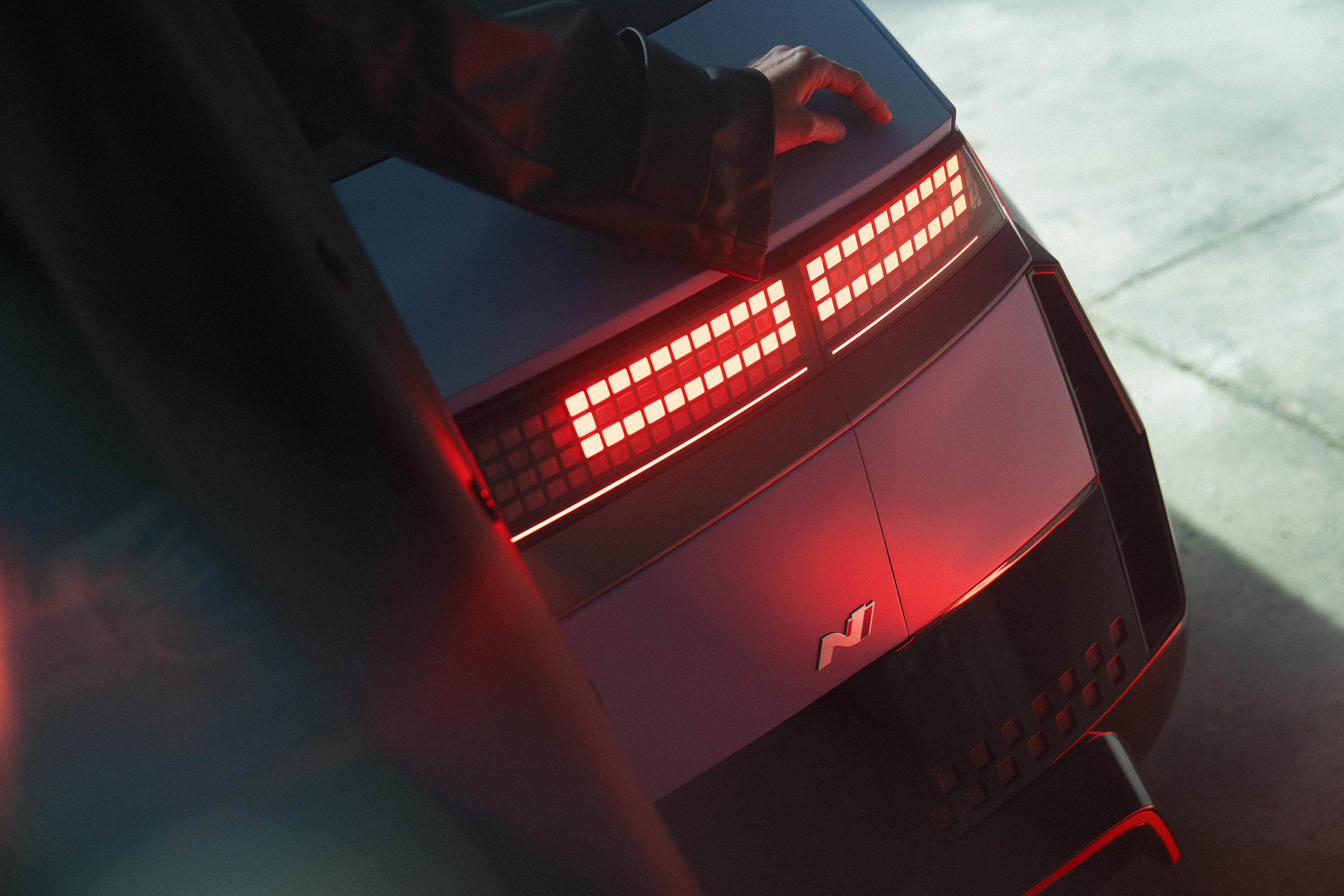
A hugely expanded IONIQ EV range, the next Nexo, Casper’s electric cousin, a HiLux-rivalling ute, and – finally! – the Vision 74!
Hyundai, one of the world’s biggest car makers, isn’t about to get complacent as its product-planning department continues its relentless pace.
2024 was a big one for Hyundai showrooms, with updates for the i30 small car and Tucson midsized SUV (two of its biggest-selling models), a new-generation Santa Fe large SUV, and its first ever all-wheel-drive/electric N car.
Along with new more affordable IONIQ EV models, 2025 will bring the huge IONIQ 9, the compact Inster EV and a production version of the Vision 74.
And, if whispers prove true, 2025 may be the year Hyundai finally reveals official details of its first-ever Toyota Hilux rival.
1
JUMP AHEAD
Confirmed & arrived models
- Hyundai i30 (facelift)
- Hyundai i30 Sedan (hybrid and N facelift)
- Hyundai Tucson (facelift and Hybrid)
- Hyundai Santa Fe
- Hyundai IONIQ 5 (facelift)
- Hyundai IONIQ 5 N (2024-25 COTY WINNER!)
Future models
- Hyundai Inster EV
- Hyundai Vision 74
- Hyundai IONIQ 3
- Hyundai IONIQ 4
- Hyundai IONIQ 6 N
- Hyundai IONIQ 9
- Next Tucson
- Hyundai Electric Ute
- Next Nexo
- Palisade
Confirmed & here now
1
i30 Hatch
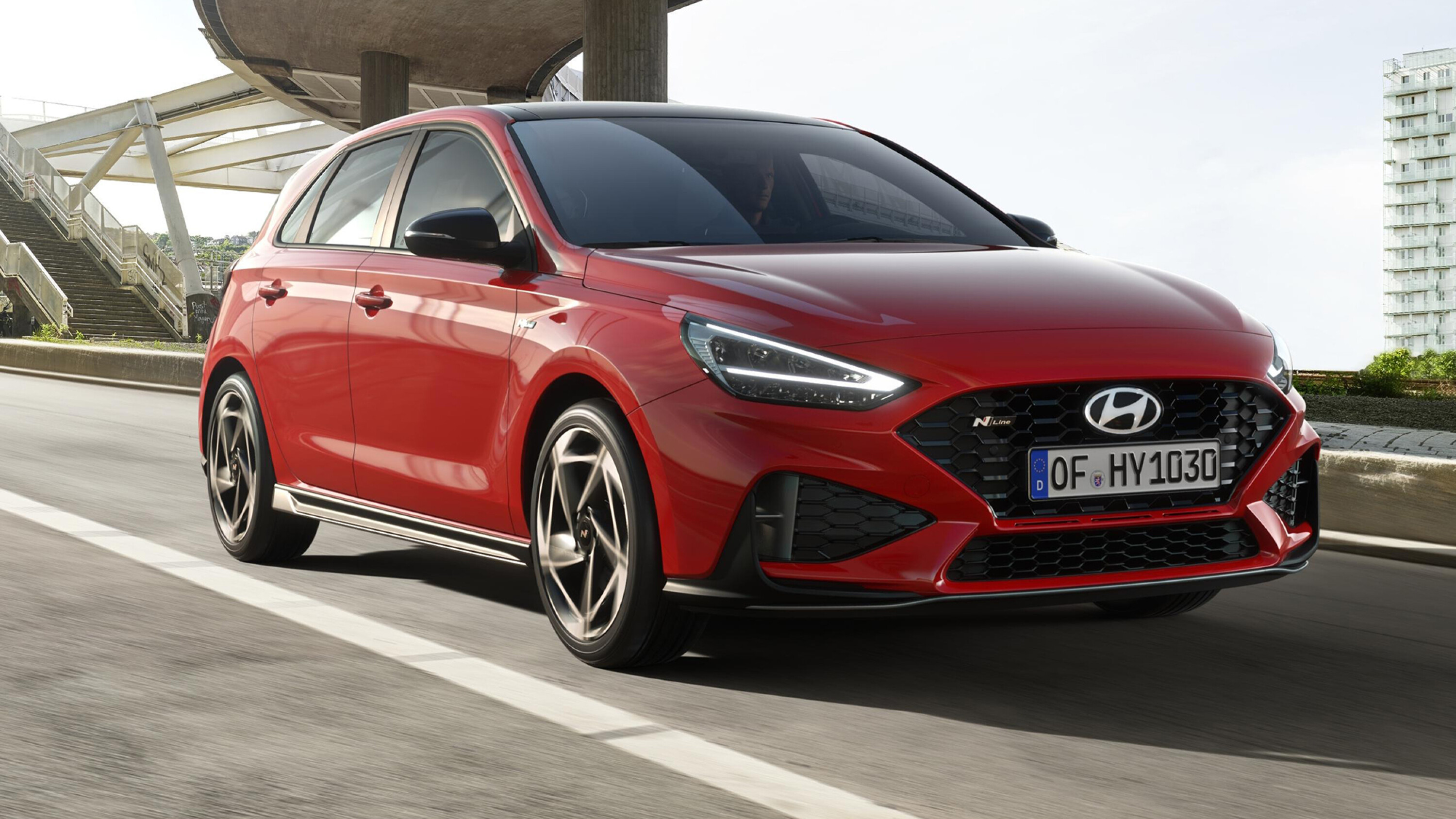
The 2025 Hyundai i30 Hatch has undergone significant changes, with a shift to Czech production introducing a five per cent import duty and the elimination of lower trims like the Active and Elite.
The remaining N Line and N Line Premium variants now start at $36,000 and $41,000 before on-road costs, marking a $12,000 increase for the base model compared to the previous entry-level price. These updates place the i30 Hatch at a higher price point than before, with the N Line Premium costing $3700 more than its 2024 equivalent.
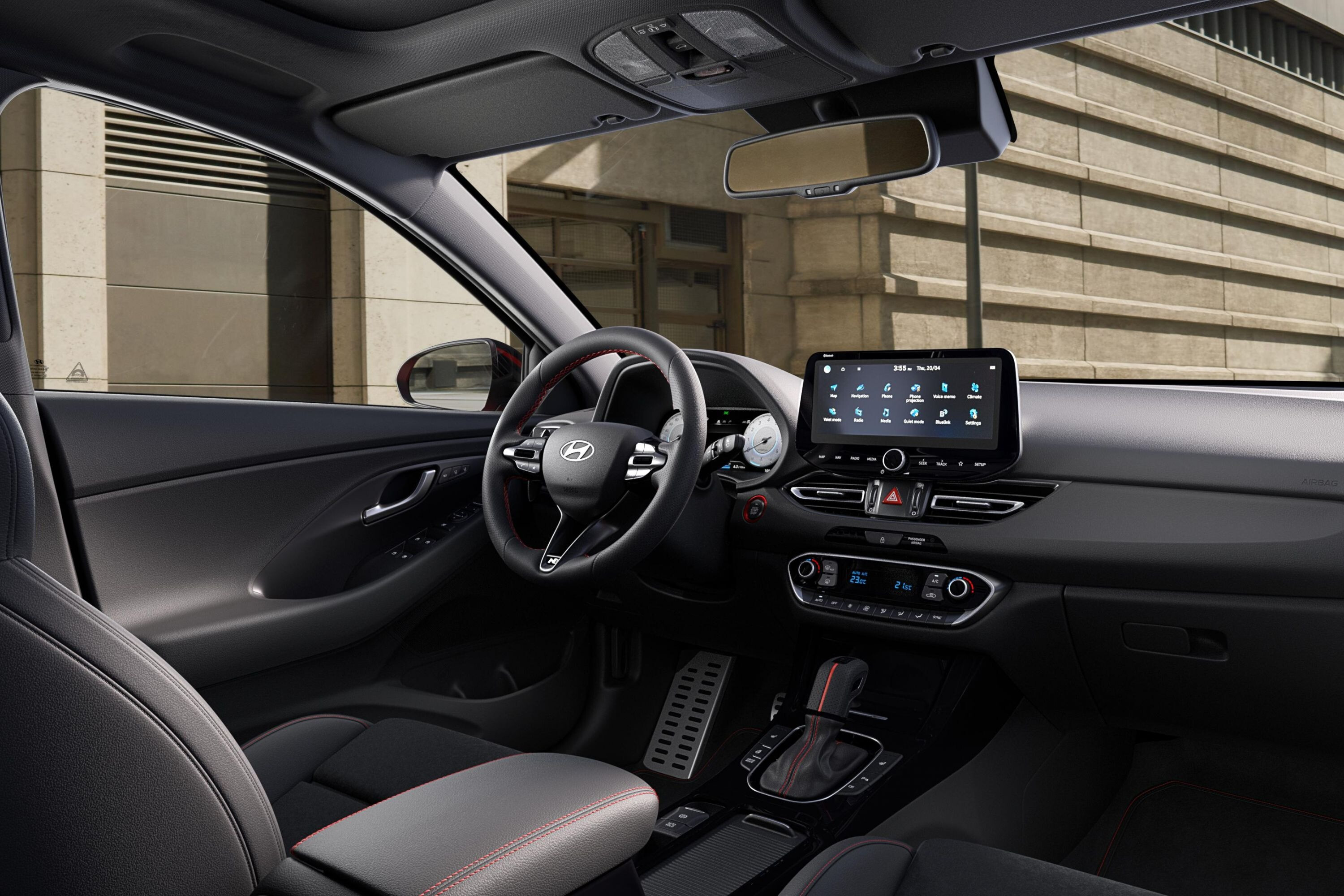
The new model adopts a turbocharged 1.5-litre four-cylinder engine with a 48V mild-hybrid system, producing 117kW and 253Nm. This engine, paired exclusively with a seven-speed dual-clutch automatic transmission in Australia, replaces both the naturally aspirated 2.0-litre unit and the more powerful 1.6-litre turbocharged engine from previous N Line models.
3
Despite lower outputs compared to the outgoing 1.6-litre, the new engine delivers improved fuel economy, claiming 5.6L/100km on the combined cycle. Multi-link rear suspension continues as a standard feature for the N Line trims.
Styling updates include refreshed LED headlights, tail lights, and LED interior lighting. These enhancements bring the N Line models in line with European versions, addressing discrepancies from the last facelift in 2020.
The pricing shift positions the i30 Hatch in a more premium bracket, leaving the more affordable Korean-built i30 Sedan—starting at $29,000 before on-roads—as the brand’s budget-friendly option.
For those seeking more performance, the sedan retains its 1.6-litre turbocharged engine in the N Line variant, priced similarly to the base i30 Hatch N Line.
i30 Sedan
The refreshed i30 Sedan arrived earlier this year, and now Hyundai has extended its nationwide drive-away pricing until the end of November.
The entry-level i30 Sedan is now available at $29,990 drive-away, reflecting a discount between $2400 and $3300, depending on the state or territory.
Other models in the line-up also benefit from reduced pricing, with the flagship N Line Premium offered at $44,990 drive-away, approximately $1000 less than the standard price.
Equipment highlights
i30 Sedan: 16-inch alloy wheels, automatic LED headlights, 8.0-inch touchscreen infotainment system with Apple CarPlay and Android Auto, wireless phone charger, and a suite of safety features including autonomous emergency braking and adaptive cruise control.
i30 Sedan Elite: Adds 17-inch alloy wheels, 10.25-inch digital instrument cluster, 10.25-inch touchscreen with satellite navigation, Bluelink connected services, dual-zone climate control, leather upholstery, and additional safety aids like blind-spot assist and rear cross-traffic assist.
i30 Sedan N Line: Features a turbocharged 1.6-litre engine, 18-inch alloy wheels, N Line exclusive exterior and interior styling, multi-link rear suspension, and sport seats with leather bolsters.
i30 Sedan Premium: Includes a tilt and slide glass sunroof, projector LED headlights, eight-speaker Bose sound system, heated and ventilated front seats, and advanced safety features such as rear autonomous emergency braking and a surround-view camera.
At the time of reporting, Hyundai has around 1500 examples of the i30 Sedan currently in Australian stock, which should get cars into buyers’ hands quickly.
The base, Elite, and Premium models are powered by a 2.0-litre four-cylinder engine, while the N Line variants are equipped with a more powerful turbocharged 1.6-litre engine.
According to Korea’s ET News, a new-generation i30 Sedan, codenamed ‘CN8’, will debut in 2026, with petrol and hybrid powertrains again on offer.
Tucson
The refreshed 2025 Hyundai Tucson arrived in June, introducing revised looks, a new hybrid powertrain and updated safety features.
The previous 2.0-litre turbo-diesel engine has been discontinued, replaced by a petrol-electric hybrid system delivering 172kW and 264Nm. The existing 2.0-litre petrol engine (115kW/192Nm) and 1.6-litre turbo-petrol engine (132kW/264Nm) remain available.
The 2025 Tucson is offered in three trim levels: Base, Elite, and Premium (formerly Highlander). Pricing starts at $39,990 for the 2.0-litre petrol FWD Base model and reaches $59,600 for the Premium 1.6-litre turbo-petrol hybrid AWD variant. An optional N Line package is available, adding features such as exclusive 19-inch wheels, a unique grille, and sportier exterior and interior elements.
Notable updates include a redesigned front bumper and grille, standard LED lighting across all variants, dual 12.3-inch touchscreens in the interior, and an enhanced suite of safety technologies.
Safety enhancements encompass increased body rigidity, second-row seatbelt pretensioners, and advanced driver assistance systems like Forward Collision-Avoidance Assist 1.5 with junction turning function, Highway Driving Assist, and Blind-Spot Collision Avoidance Assist.
Santa Fe
The new 2024 Hyundai Santa reached Australia in May, offering a hybrid-only line-up across three variants: Santa Fe, Elite, and Calligraphy.
The base Santa Fe model is available in front-wheel drive at $55,500 and all-wheel drive at $58,500. The Elite variant, priced at $65,000, and the top-tier Calligraphy, starting at $75,000, are both all-wheel drive. The Calligraphy offers a six-seat configuration with second-row captain’s chairs for an additional $500, bringing its price to $75,500.
All variants are powered by a 1.6-litre turbocharged petrol-electric hybrid engine, delivering 172kW and 367Nm, paired with a six-speed automatic transmission.
The combined fuel consumption is rated at 5.6L/100km. Standard features across the range include seven seats (with the six-seat option in the Calligraphy), 20-inch wheels, dual 12.3-inch infotainment screens, and over-the-air update capability.
The Elite variant adds features such as ambient lighting, a 12-speaker Bose audio system, satellite navigation, and twin wireless charging pads. The Calligraphy variant further includes a head-up display and a digital rearview mirror. Safety features standard across all models encompass 10 airbags, autonomous emergency braking, blind-spot and lane-keep assist, fatigue detection, radar cruise control, speed-sign recognition, and rear cross-traffic alert with braking.
IONIQ 5
July brought us the 2025 IONIQ 5 electric SUV, introducing design changes, safety enhancements, and increased driving range.
The 2025 IONIQ 5 now features redesigned front and rear bumpers, an extended rear spoiler, and new 19- and 20-inch alloy wheels. An optional N Line package is available for the Dynamiq and Epiq variants, adding exclusive bumpers, gloss black mirror housings, and specific 20-inch wheels.
The interior has been updated with a revised centre console that includes controls for seat heating and ventilation. The infotainment system now supports wireless Apple CarPlay and Android Auto.
Safety features have been enhanced with forward collision avoidance, smart cruise control, and intelligent front lighting.
The 2025 IONIQ 5 offers two battery options: a 63kWh battery for the Standard Range variant, providing a WLTP range of 440km, and an 85kWh battery for the Extended Range variant, offering up to 570km.
The Standard Range model delivers 125kW and 350Nm, while the Extended Range provides 168kW and 350Nm.
Pricing starts at $69,800 for the Standard Range 2WD, with the Extended Range 2WD priced at $75,800, and the Extended Range AWD at $85,300.
IONIQ 5 N
Hyundai introduced the 2024 IONIQ 5 N to Australia in February, marking its first high-performance electric vehicle under the N division.
Priced at $111,000 before on-road costs, this model is positioned above the standard IONIQ 5 variants.
The IONIQ 5 N is equipped with dual electric motors delivering a combined output of 478kW and 770Nm in ‘N Grin Boost’ mode, enabling acceleration from 0 to 100 km/h in 3.4 seconds.
It features an 84.0kWh battery, all-wheel drive, and a reinforced chassis for enhanced handling.
Standard features include 21-inch alloy wheels with Pirelli P Zero tyres, a 12.3-inch digital instrument cluster, a 12.3-inch infotainment touchscreen, and a head-up display.
Safety systems encompass autonomous emergency braking, blind-spot monitoring, lane-keeping assist, and adaptive cruise control.
JANUARY 2025: Now there’s a Drift King edition, made in collaboration with the legendary Keiichi Tsuchiya. Will we see it in Oz? ?
Future models
Next-generation Tucson
Hyundai’s popular Tucson will continue to play a central role in the brand’s global line-up as it transitions to its next generation, expected in the first half of 2026.
Known internally as the NX5, the redesigned Tucson will continue with its petrol, hybrid, and plug-in hybrid powertrain options, aligning with Hyundai’s strategy to extend the lifespan of internal combustion engine (ICE) vehicles into the 2030s.
There’s no official news on the new model yet, but Korean website ET News claims the next Tucson will feature improved powertrain performance and the latest Hyundai safety technologies.
As for styling, we can likely expect the recently launched new Santa Fe (see below) to influence the design of the next Tucson.
The current Tucson, which first launched in 2020 and received a facelift earlier this year, is Hyundai’s best-selling vehicle in Australia, with 16,200 deliveries recorded to the end of October 2024.
Casper Inster EV
This baby Hyundai already existed as a three-cylinder petrol city car known as Casper, but this year brought the debut of an electric companion: the Inster.
Hyundai’s smallest and most affordable new EV will reach Australia in early 2025, and while pricing is still to be confirmed, leaked details suggest a drive-away price in the low $40K range.
The Inster will be available in two configurations, with a driving range beyond 300km in base form and over 355km in top-spec form.
It’s a properly little thing, too. Tthe Inster measures 3825mm in length, 1610mm in width, and 1575mm in height, with a wheelbase of 2580mm. This positions it as a compact SUV, smaller than the already small Hyundai Venue, yet offering a longer wheelbase.
Read more about the Inster at the linked story above.
Finally, at last: Vision 74
In August, Hyundai confirmed the N Vision 74 concept car will enter limited production, with 100 units planned, suggesting an entirely hand-built run.
Of these, 70 will be available to the public, and 30 will be reserved for racing purposes. The hydrogen hero is expected to deliver over 550kW, with production anticipated to begin in 2026.
The N Vision 74 draws design inspiration from the 1974 Hyundai Pony Coupe Concept, blending retro aesthetics with modern technology.
It is part of Hyundai’s broader strategy to expand its electric vehicle lineup, which includes plans to release 21 new models by 2030, encompassing economy, luxury, and high-performance segments.
Pricing for the N Vision 74 is expected to start at £284,000, reflecting its limited production and advanced technology. The vehicle’s development underscores Hyundai’s commitment to innovation in the high-performance electric vehicle market, combining hydrogen fuel cell technology with a distinctive design heritage.
IONIQ 3
Affiliate company Kia has already unveiled a range of upcoming smaller EVs such as the EV3 and EV4, yet Hyundai has been strangely silent for its production plans below the midsized IONIQ 5.
Current industry intel is that the IONIQ 3 will be a subcompact crossover, which would help ensure it doesn’t tread on the toes of the recently introduced second-generation electric Kona compact SUV (4.35 metres long).
A crossover body style – part SUV, part hatch – would make the IONIQ 3 a natural rival for the likes of the BYD Dolphin, Cupra Born and MG4. The IONIQ 3, however, may not be seen for a good couple of years.
IONIQ 4
As the badge suggests, the IONIQ 4 will sit between the IONIQ 3 and IONIQ 5 in the showroom pecking order.
Odd numbers SUVs, even numbers sedans… That seems to be Hyundai’s approach anyhow, as the IONIQ 4 is expected to be a smaller sibling to the IONIQ 6 electric sedan.
Renowned US industry journal Automotive News has suggested the IONIQ 4 will make a production debut in 2026.
Hyundai’s mastermind behind the N performance division has already confirmed there will be a smaller N model to sit beneath the $111K-plus IONIQ 5 N.
For enthusiasts on smaller budgets, the hope will be for both IONIQ 3 N and IONIQ 4 N models.
IONIQ 6 N
Hyundai hasn’t officially confirmed it, but an N version of the IONIQ 6 is coming – and has already been previewed by the RN22e concept (see story above).
The regular versions of the IONIQ 5 and 6 are closely related, so the 6 N can be expected to share all its fundamental components with the 5 N.
It could gain extra power over its crossover sibling, while we’re also expecting the 6 N to adopt the twin-clutch rear differential showcased in the RN22e – which can shuffle torque up to 100 per cent to an individual rear wheel.
IONIQ 9
Hyundai unveiled the IONIQ 9, a seven-seat electric SUV, in November.
Set to enter above the popular IONIQ 5, the IONIQ 9 emphasises interior space, with features like reclining seats and a movable centre console.
A large battery pack offers a targeted range of 620km. Multiple powertrain options are available, including rear and all-wheel drive configurations.
The IONIQ 9 will launch in Korea and the US in early 2025, with an Australian debut set for the second quarter.
Electric ute
Hyundai already sells a ute called the Santa Cruz in the US, though it’s left-hand-drive only and more of a car-based lifestyle vehicle than workhorse.
The company, however, is working on a commercial-focused dual-cab vehicle – a model Hyundai Australia would dearly love to help it take a slice of a huge segment currently dominated by the Ford Ranger and Toyota HiLux.
Partner company Kia has revealed the polarising Tasman ute, but Wheels understands Hyundai will skip combustion engines and go directly to electric propulsion for its version.
Hyundai has again been very tight-lipped about this vehicle, so concrete details remain scarce.
Next-gen Nexo hydrogen SUV
Rather than giving up, Hyundai is advancing its hydrogen fuel-cell vehicle (FCEV) technology with the development of the next-generation Nexo SUV.
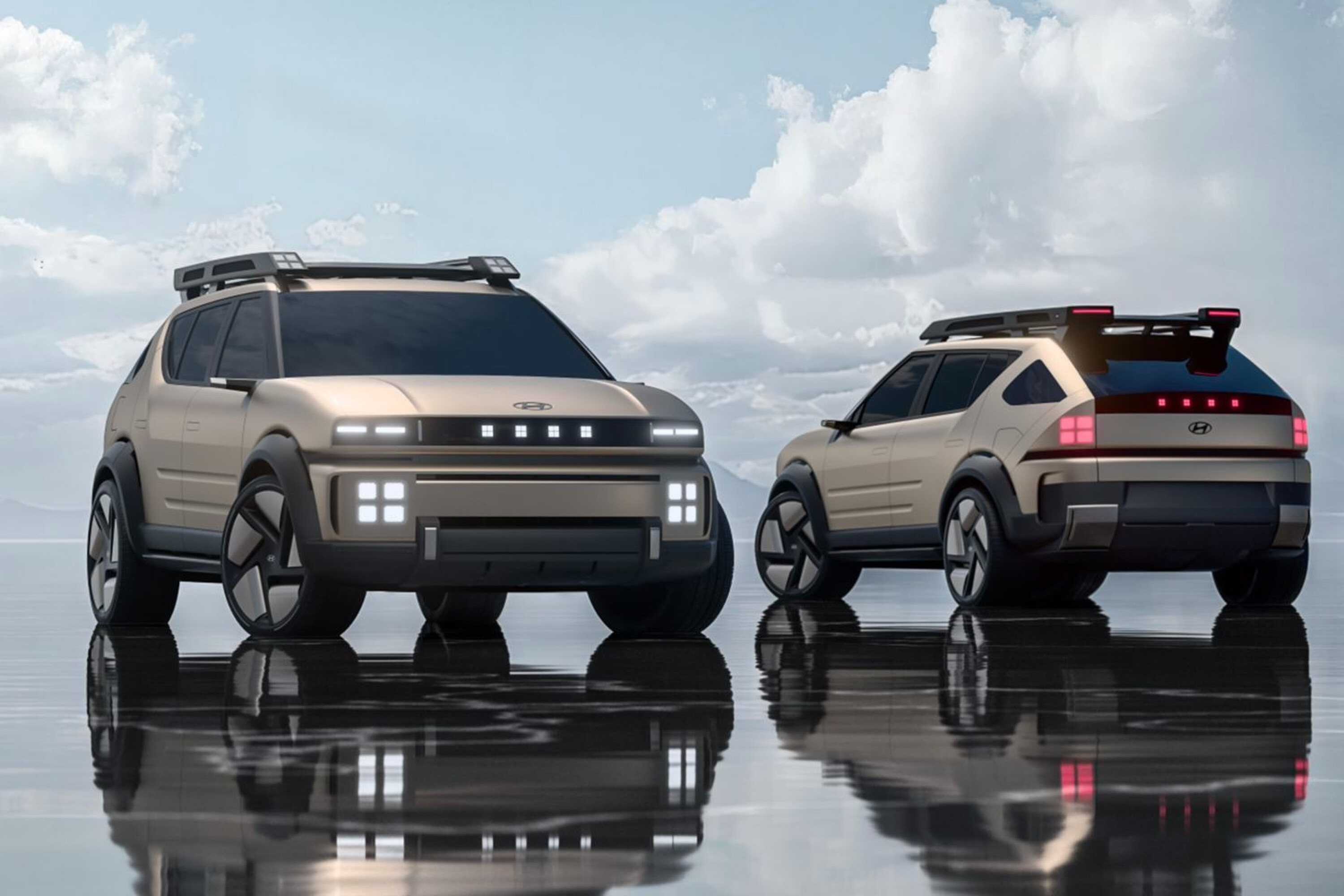
In terms of design, the current model’s fluid design is expected to give way to a more angular, boxy aesthetic, reminiscent of the Initium concept unveiled earlier this year (pictured below). This design evolution aligns with Hyundai’s broader strategy, as seen in the 2024 Santa Fe’s redesign.While specific powertrain details for the new Nexo remain undisclosed, the existing model features a hydrogen fuel tank with a capacity of 6.33kg, a 95kW fuel cell stack, a 1.56kWh battery, and a 120kW electric motor.
1
The Initium concept, which may influence the upcoming Nexo, is equipped with larger hydrogen tanks, a higher-output fuel cell stack, an enhanced battery, and a 150kW electric motor.
Hyundai targets a driving range exceeding 650km for the production version, compared to the current Nexo’s 666km range under WLTP testing.
Hyundai has been investing in hydrogen fuel-cell technology for 27 years, with the Nexo being its latest FCEV, first introduced in 2018 and arriving in Australia in 2020 – albeit in limited numbers, available only through special business leases.
Next-gen Palisade
Hyundai unveiled the 2025 Palisade in December, showcasing a more angular design reminiscent of luxury SUVs.
The exterior features distinctive stacked LED lighting and a boxier profile. Inside, dual 12.3-inch displays dominate the dashboard, while physical controls are retained (bless you, Hyundai). Expect at least seven seats, although a nine-seat configuration is a possibility.
Powertrain details are limited, but a hybrid variant and a 3.5-litre V6 are expected – but, like the smaller Tucson and Santa Fe, the diesel option could be left out this time.
The Palisade will initially launch in South Korea, with an Australian release likely in 2025. Hyundai, for its part, has yet to confirm any local plans.
MORE
Everything Hyundai
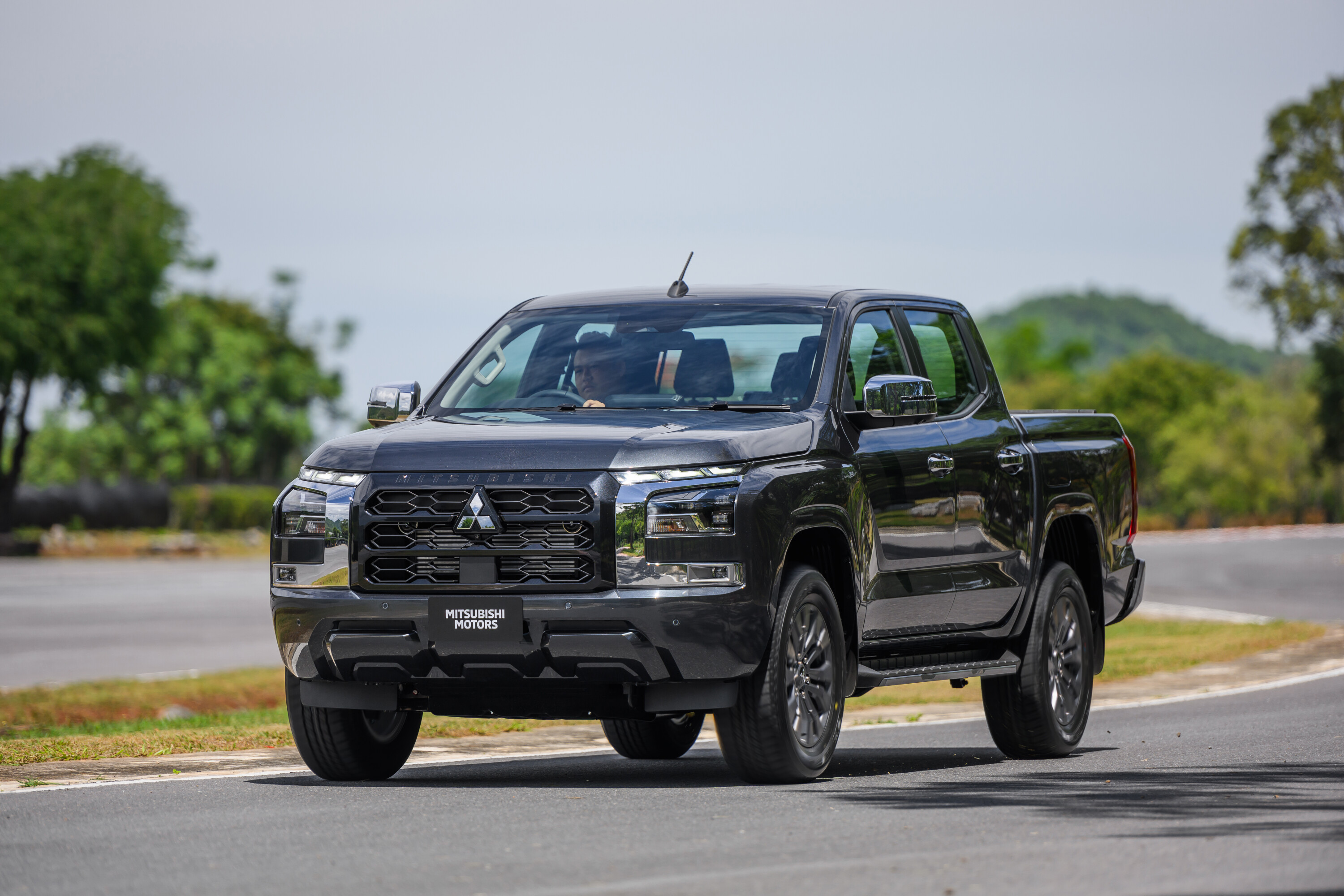
Mitsubishi has pledged to wheel eight new or refreshed models this decade, and the big news for 2024 was the arrival of an all-new Mitsubishi Triton. What else does the Japanese brand have up its showroom sleeve for the future?
Since the demise of the Mirage, Mitsubishi’s local showrooms have become the exclusive domain of SUVs and 4x4s, and that’s unlikely to change soon.
Don’t pay any attention to those renderings on social media, either – a Lancer revival is very much not part of the product plan, unless it’s an SUV.
But what lurks around the corner for the Triple-Diamond? The immediate future looks a little light for new product, but there’s stuff on the horizon that’s a bit more titillating. Here’s what we know.
1
JUMP AHEAD
- ASX
- Eclipse Cross
- Triton
- Pajero
- Pajero Sport
- Outlander
- Delica
- Electric vehicles
- New Lancer as an electric SUV?
ASX
In 2025 the Mitsubishi ASX will mark 15 years on sale. In automotive terms, it’s a fossil. Finally, though, that’s about to change.
Yep, the ASX sold in Europe – a near identical rebadging of the Renault Captur – is finally coming to Australia, after debuting over there in early 2023. It’s been a long journey, with concerns that centred mostly around the cost of a Euro-sourced model compared to the incredible value of the current model, which had long ago paid all its debts.
1
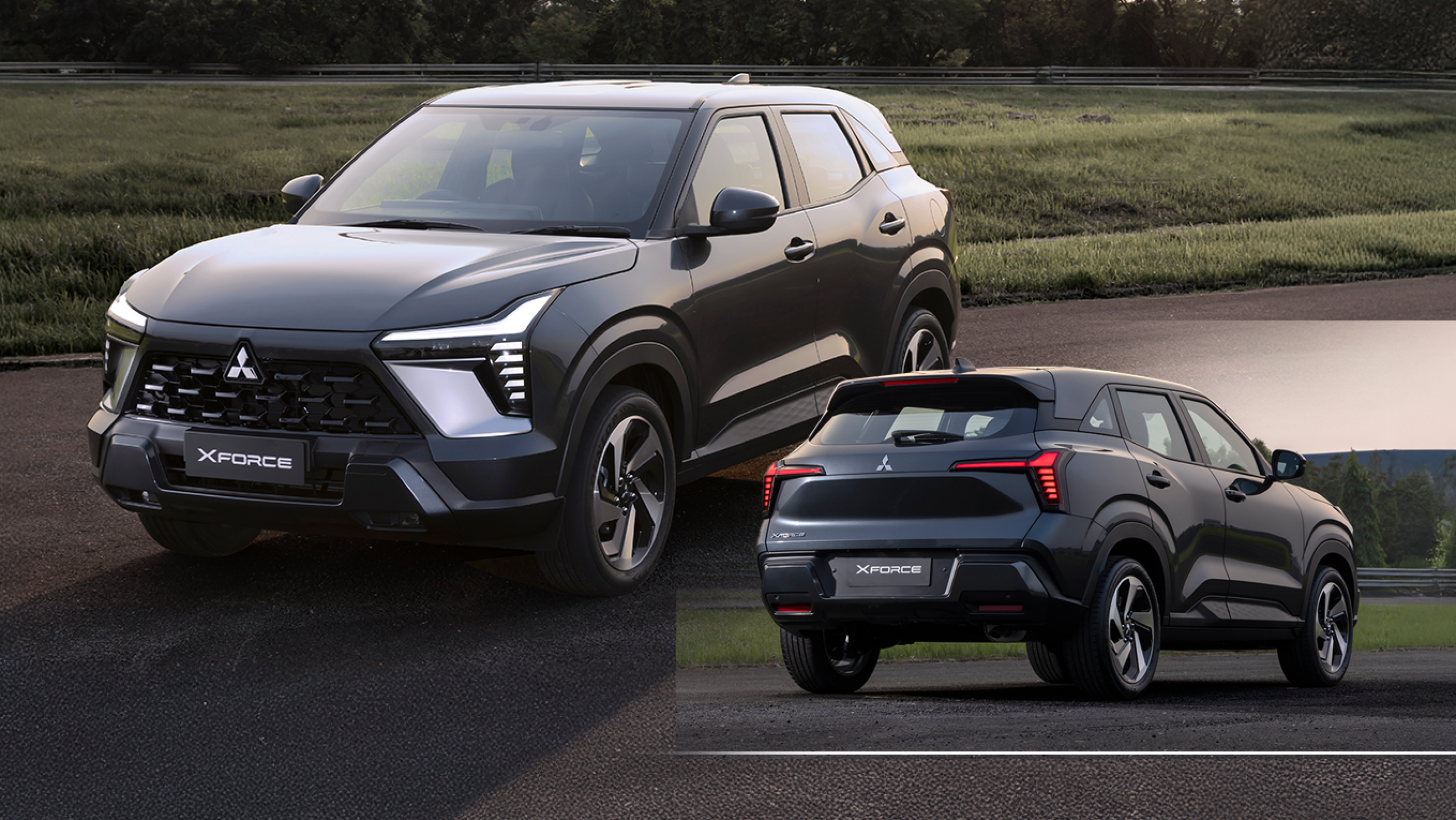
For a while, it was thought that the very stylish new Asia-focused XForce could be an option – but it was understood to be well short of compliance with the Australian Design Rules (ADR) system that determines what can be sold here.
Indeed, it was updated ADRs that have caused Mitsubishi to finally retire the current model. (Along with the current generations of the Eclipse Cross and Pajero Sport.)
Now that the Captur-based model is confirmed, we’ll have to wait and see what the price difference will be. The current model begins from just $24,490, but with the Captur’s most recent local price starting from $39,500, the new ASX is unlikely to be much cheaper.
1
Eclipse Cross: Gone
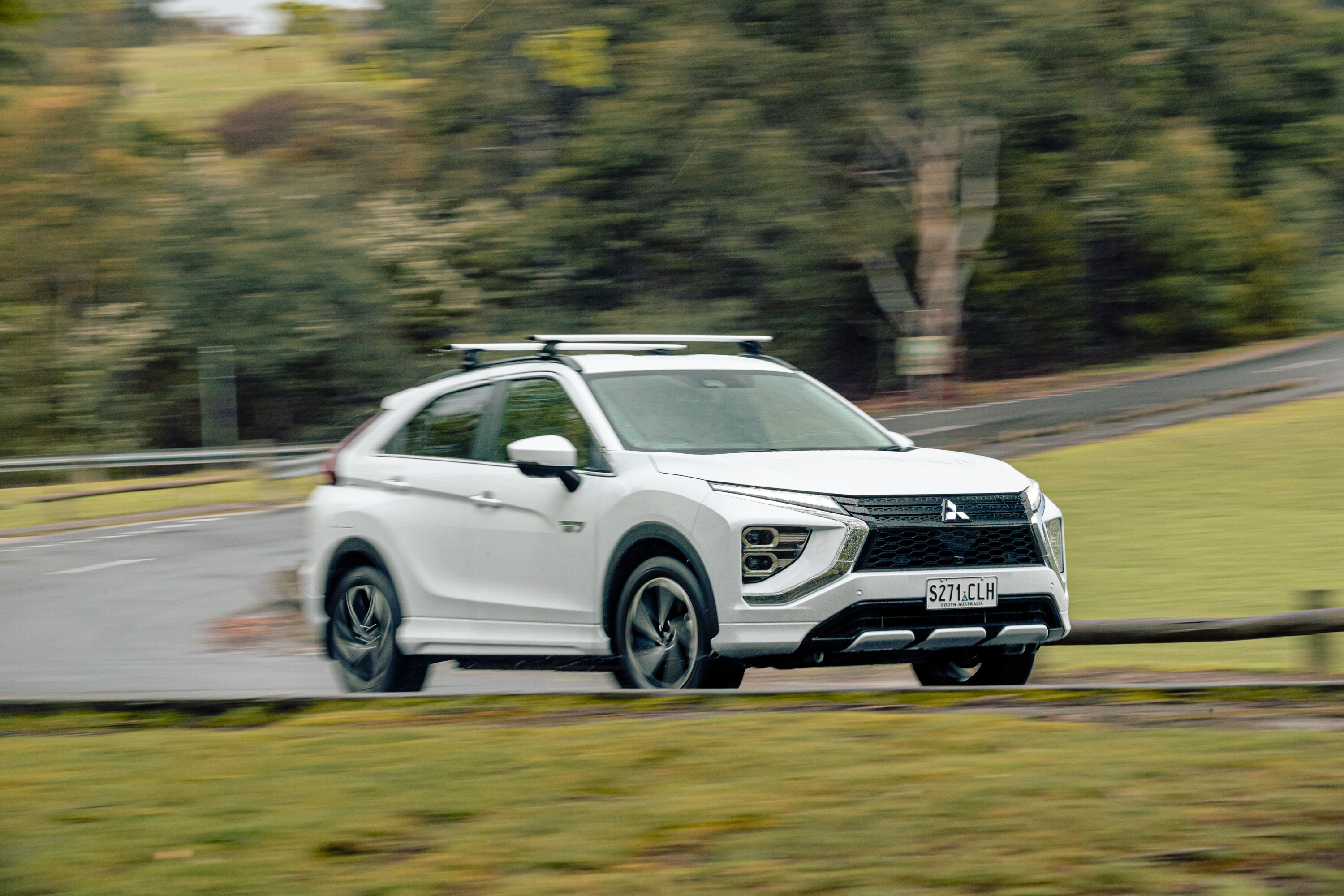
The Eclipse Cross shares a similar story to the ASX, except that it has no immediate replacement – despite being nearly eight years old. Of course, that’s nothing on the ASX.
A running update in early 2024 bumped up the Eclipse Cross’s safety fit-out with the addition of lane departure warning as well as rain sensing wipers and dusk-sensing headlamps for the base ES grade, but very specific new ADR requirements for emergency braking (AEB) have seen the EC scrubbed.
Mitsubishi is allowed to keep selling the Eclipse Cross for now, however, and it says there’s enough stock to see it through 2025.
There’s no clear successor on the horizon from anywhere in the wider Nissan-Renault-Mitsubishi Alliance. Could it be one of these models, teased last year? Or, perhaps the XForce could finally get the work it needs to be offered here. It has a 20mm shorter wheelbase than the Eclipse Cross, though, so it wouldn’t be considered ideal.
Don’t expect any new Eclipse Cross to be related to Honda: Mitsubishi has recently been reported to have no role in the upcoming Nissan and Honda merger.
1
Triton
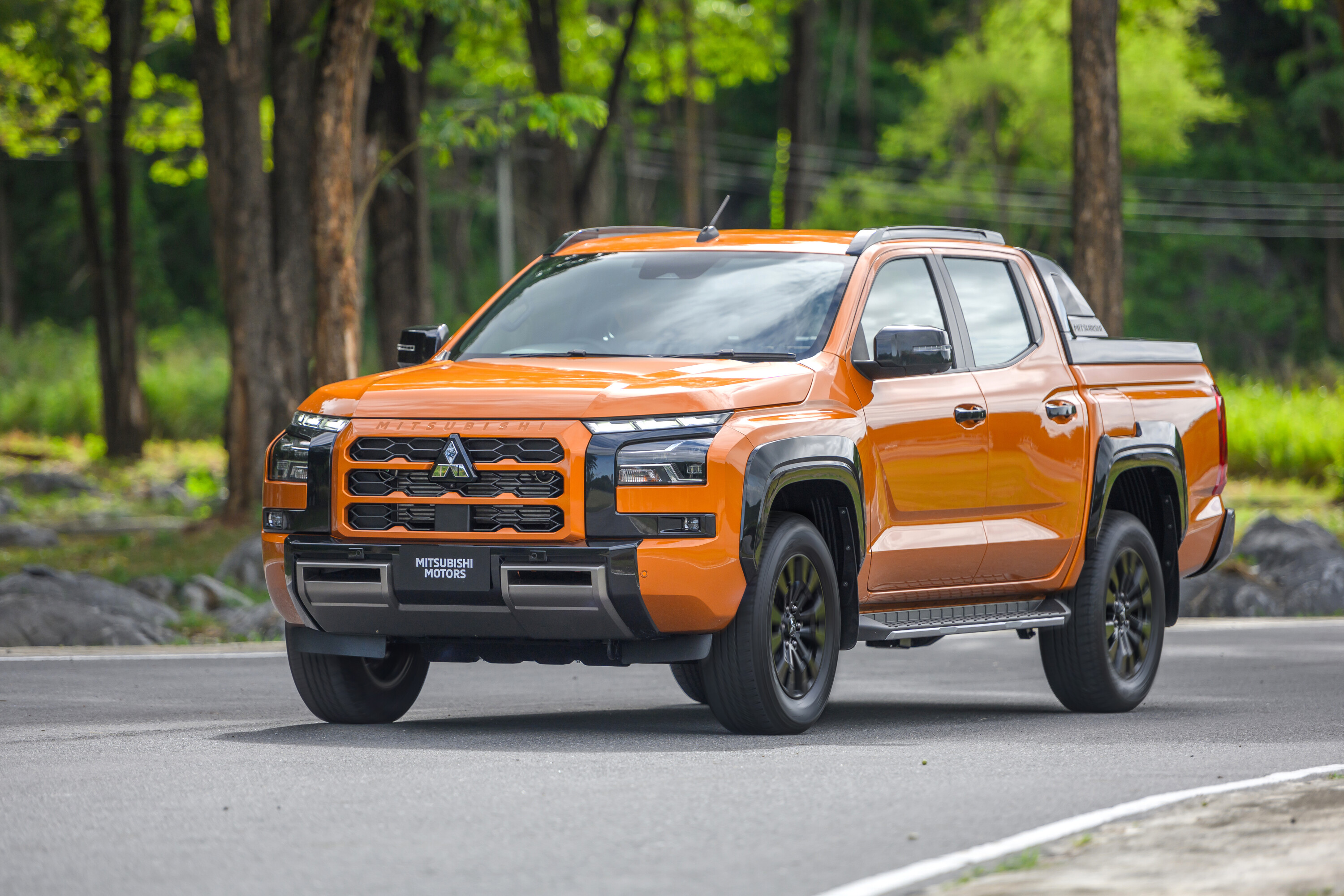
Mitsubishi’s new-generation Triton launched in early 2024 in a dual-cab-only, pickup-only five-model range, with just one fleet-focused 4×2 model in the mix.
A swift ‘MY24.5’ update added a new GLX-R grade to sit between the GLX+ and GLS, while a Club Cab option was added for the GLX+ post-launch to provide an alternative to the otherwise dual-cab-only lineup. Otherwise the MV-generation Mitsubishi Triton range has lacked the diversity of most other Thai-sourced utes since it launched.
Later in the year, the GLS and GSR variants gained sub-1000kg payload options, while a new GLX-R model joined the range.
For 2025 we expect more variants to arrive to broaden choice within the MV Triton family, such as cab-chassis and single-cab and more space cab options. When? Mitsubishi Australia hasn’t confirmed timing, but sometime in the first half of 2025 seems likely.
In the meantime, Mitsubishi has also recently added a new GSR Special Edition which is oddly cheaper than the regular GSR. Read about that one here.
Later on in the decade, an electrified Triton will most likely be added to the range to duke it out with the BYD Shark 6 and Ford Ranger PHEV.
Mitsubishi is keeping mum on the particulars, but expect a plug-in hybrid to hit the ground first (most likely with a petrol-electric rather than diesel-electric powertrain), with a fully-electric potentially following it – although that one may not make its way to Australia.
Pajero
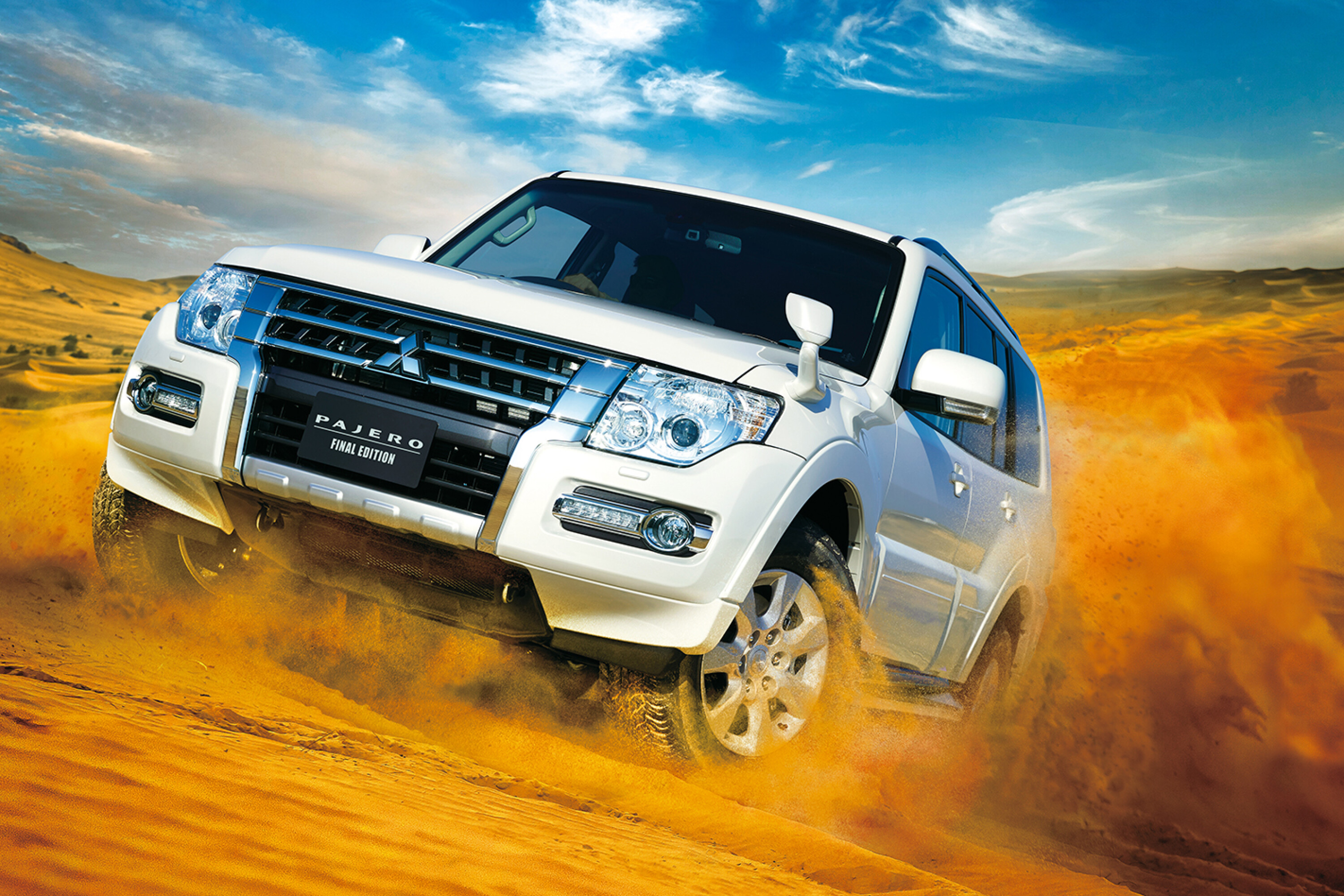
Axed by Mitsubishi in 2021 after several decades of service, the resuscitation of the Pajero nameplate has been a staple of the rumour mill since.
And, on the surface, a large 4×4 should be the last thing on a carmaker’s radar given the holus-bolus race to lower emissions motoring. Yet, the sales success of the Toyota LandCruiser and Nissan Patrol suggest otherwise. Indeed, a large monocoque SUV features in Mitsubishi’s mid-term plan, which might herald the return of the Pajero nameplate.
“If we can [re]introduce Pajero, that is a wonderful dream for us!”, Takao Kato, president and CEO of Mitsubishi Motors, told 4X4 Australia recently.
1
However, Mitsubishi executives also warned that the planned SUV might not pass Australian regulations without major modifications.
Could it hook into the super-sized underpinnings of the new-gen Nissan Patrol, given the corporate synergies between the two Japanese automakers? Reportedly not, but we could see the future of the Pajero intersect with another mainstay Mitsubishi offroader: the Pajero Sport…
Pajero Sport
Another model impacted by those pesky ADR changes, the current Pajero Sport will have to make way for a new generation soon.
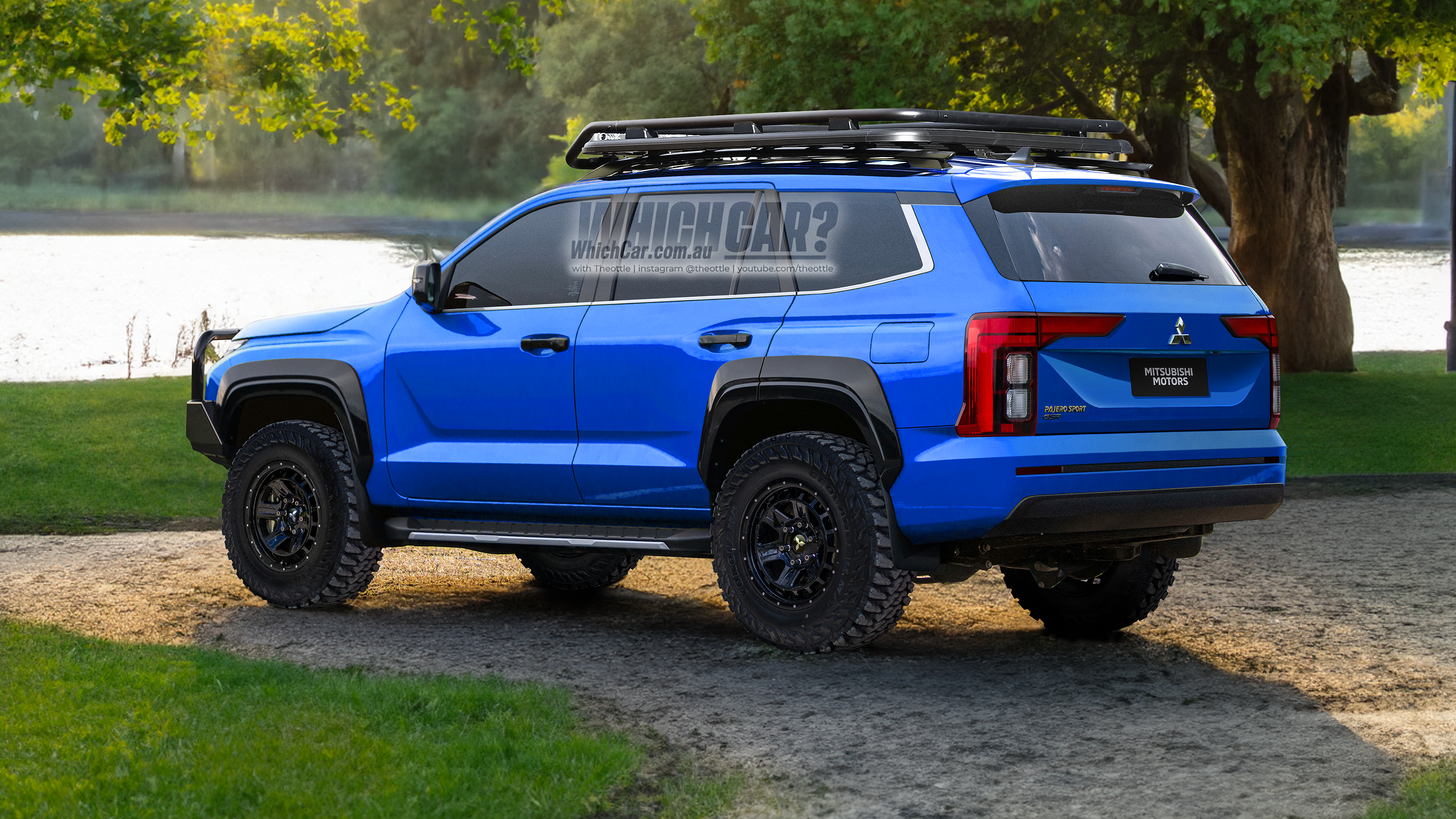
With its new ladder frame, lighter body and safety features developed with the Australian market and its strict safety requirements in mind, it’s only logical that Mitsubishi would use the Triton as a base for a new Pajero Sport SUV.
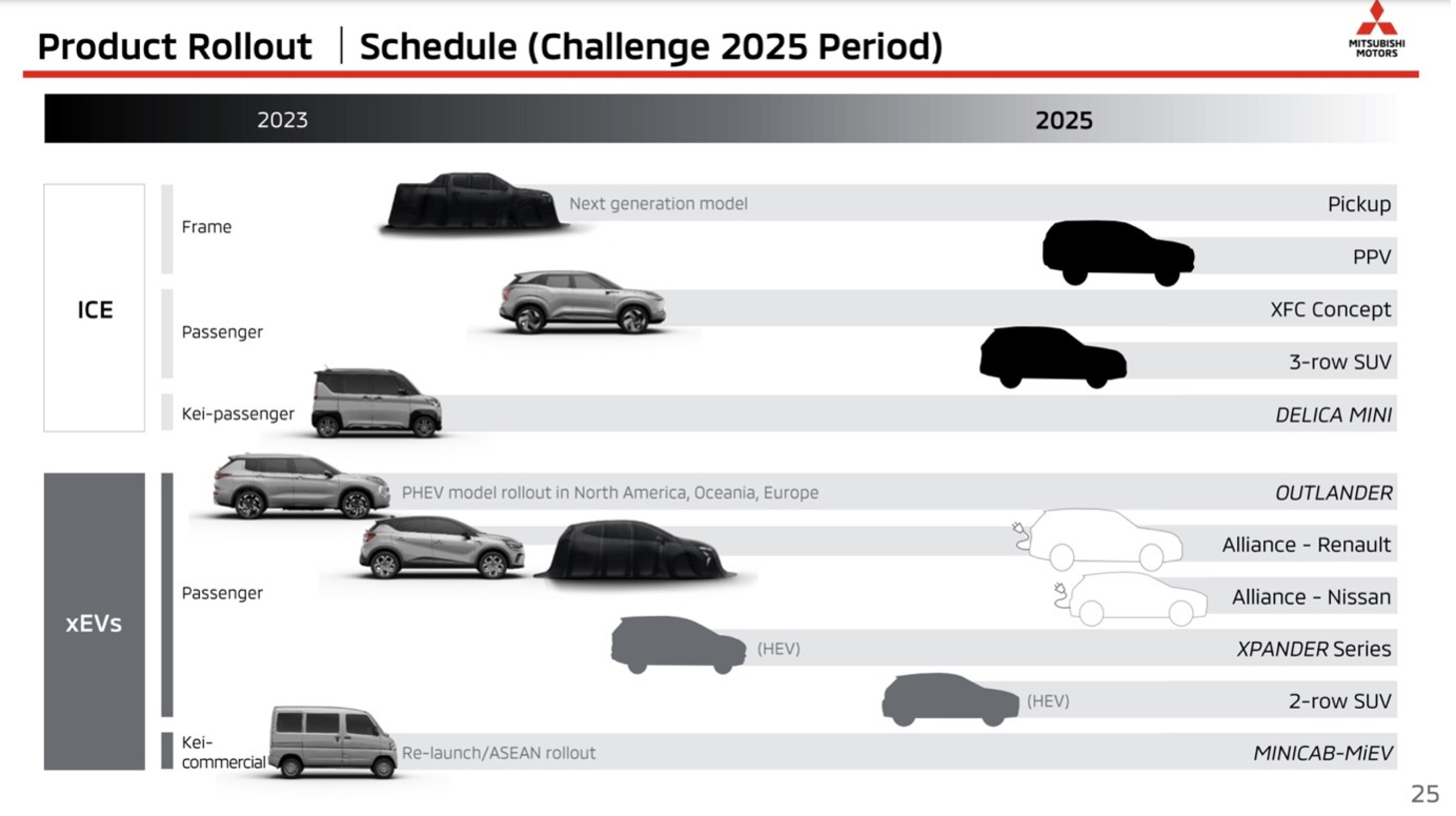
Although confirmed to be known as Pajero Sport, Mitsubishi’s mid-term plan outlines a ‘PPV’ (pick-up based passenger vehicle) which is what the segment, that also features the Toyota Fortuner and Isuzu MU-X, is called in the ASEAN region.
1
Just like the current Pajero Sport, expect it to lift the engine and other under-the-skin mechanicals from the new Triton ute.
However we also anticipate the new Pajero Sport will use a coil-sprung rear end rather than the Triton’s leaf springs, per the segment norm. As for the existing difference between six-speed automatic Triton to eight-speed Pajero Sport, it’s unclear whether that will carry over into the next-gen model.
1
Outlander
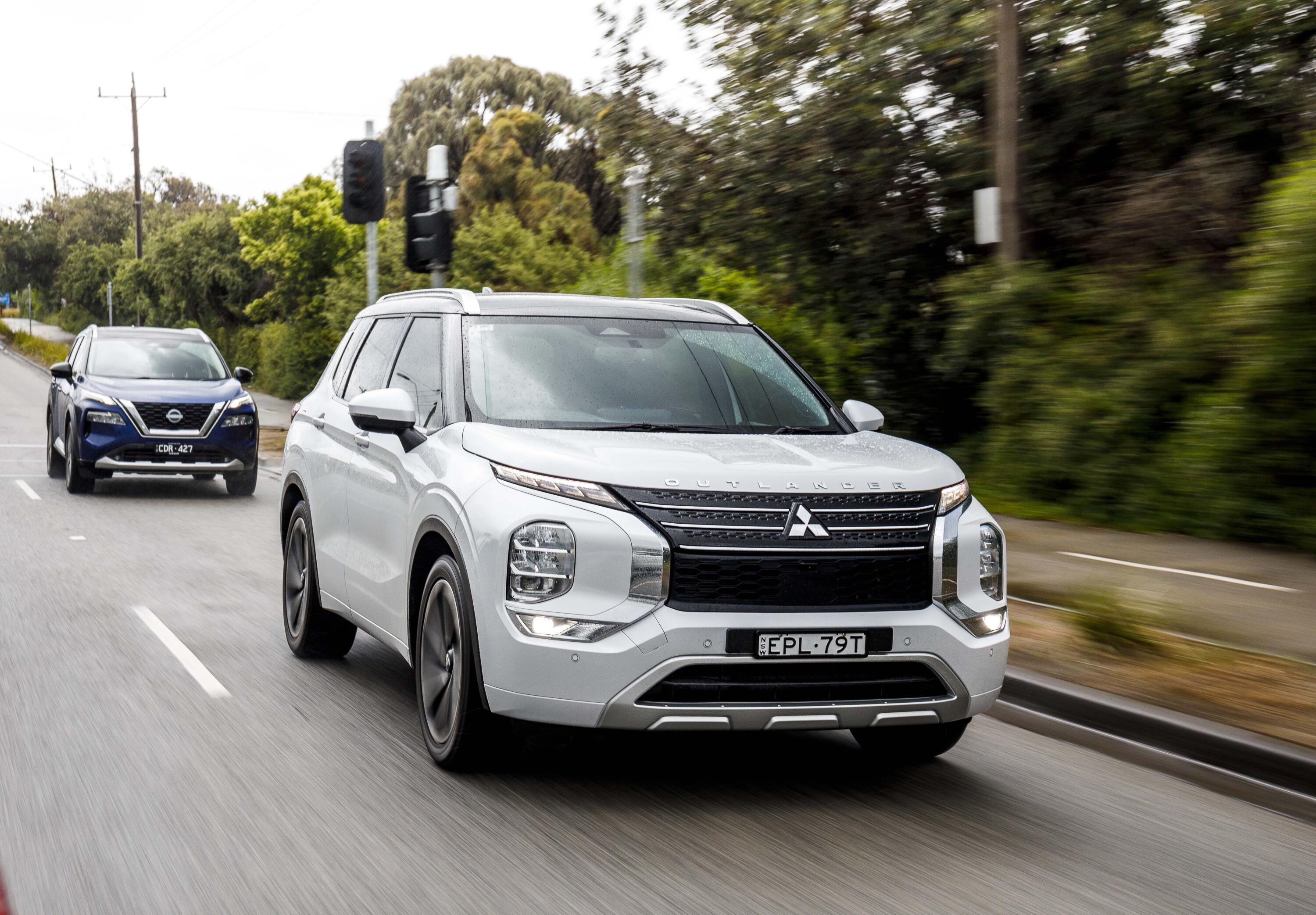
The latest iteration of the Outlander is one of the few shared success stories of the Nissan-Renault-Mitsubishi Alliance, as it shares its platform with the latest Nissan X-Trail.
Locally, Mitsubishi continues to push the benefits of the Outlander’s hybrid versions, but the one we’re all hoping to see is the range-topping Ralliart ‘Almighty’ version, which is set offer three electric motors and air-sprung suspension in a first-up effort to re-establish the Ralliart performance brand.
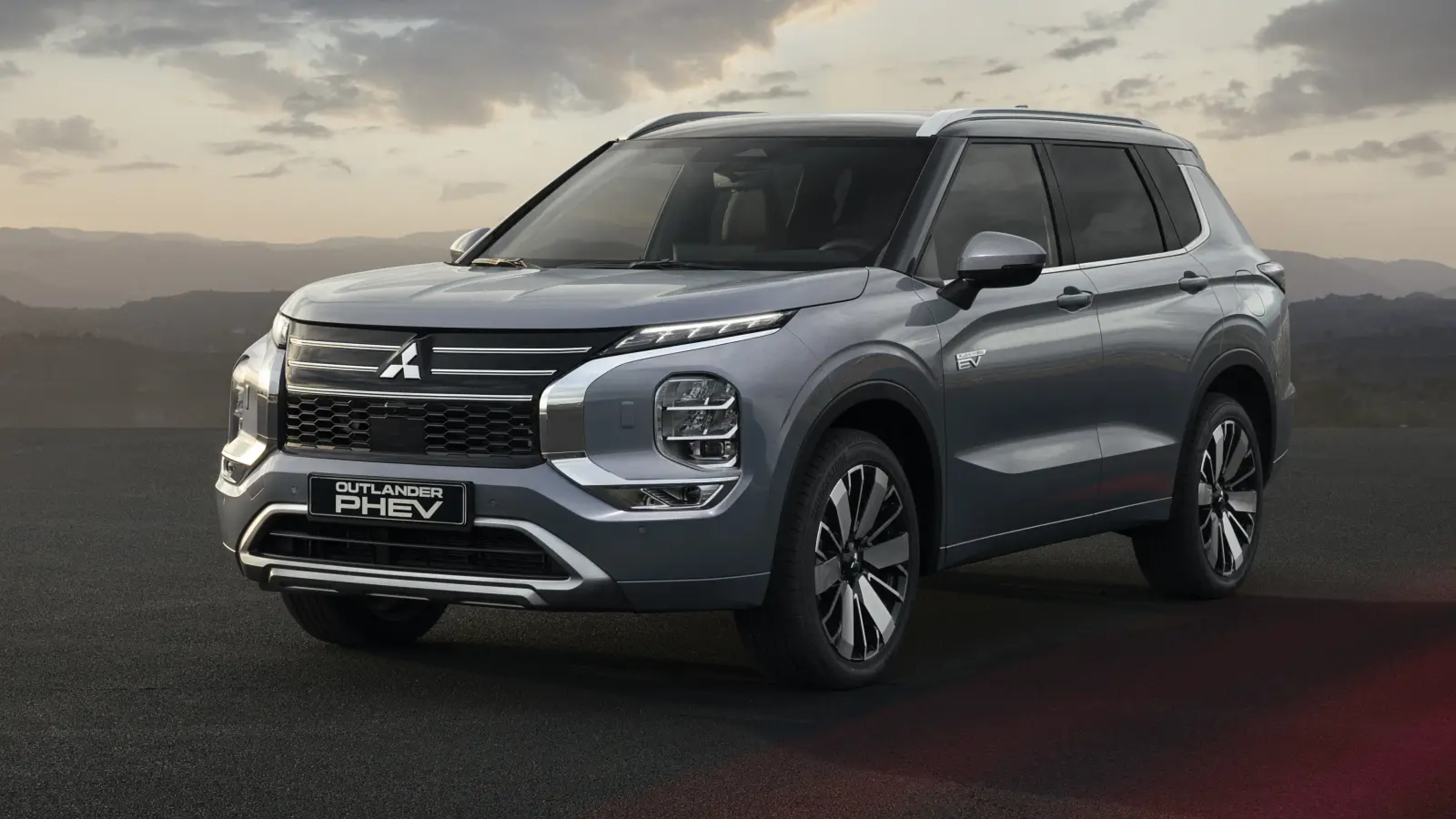
Before that comes, an updated Outlander will go on sale later this year, with very subtle styling changes (of the ‘blink and miss it’ type) and improvements to its suspension and steering tunes.
1
The Outlander PHEV gets a key upgrade, however, with a battery bump from 20 to 22.7kWh giving it a longer EV-only range – although by exactly how much is still to be confirmed.
The current model claims 84 kilometres on the older NEDC test cycle, whereas the update claims 86km on the newer WLTP system – so rather than the 2km difference it appears to be, the actual improvement could be around 15 kilometres.
Delica
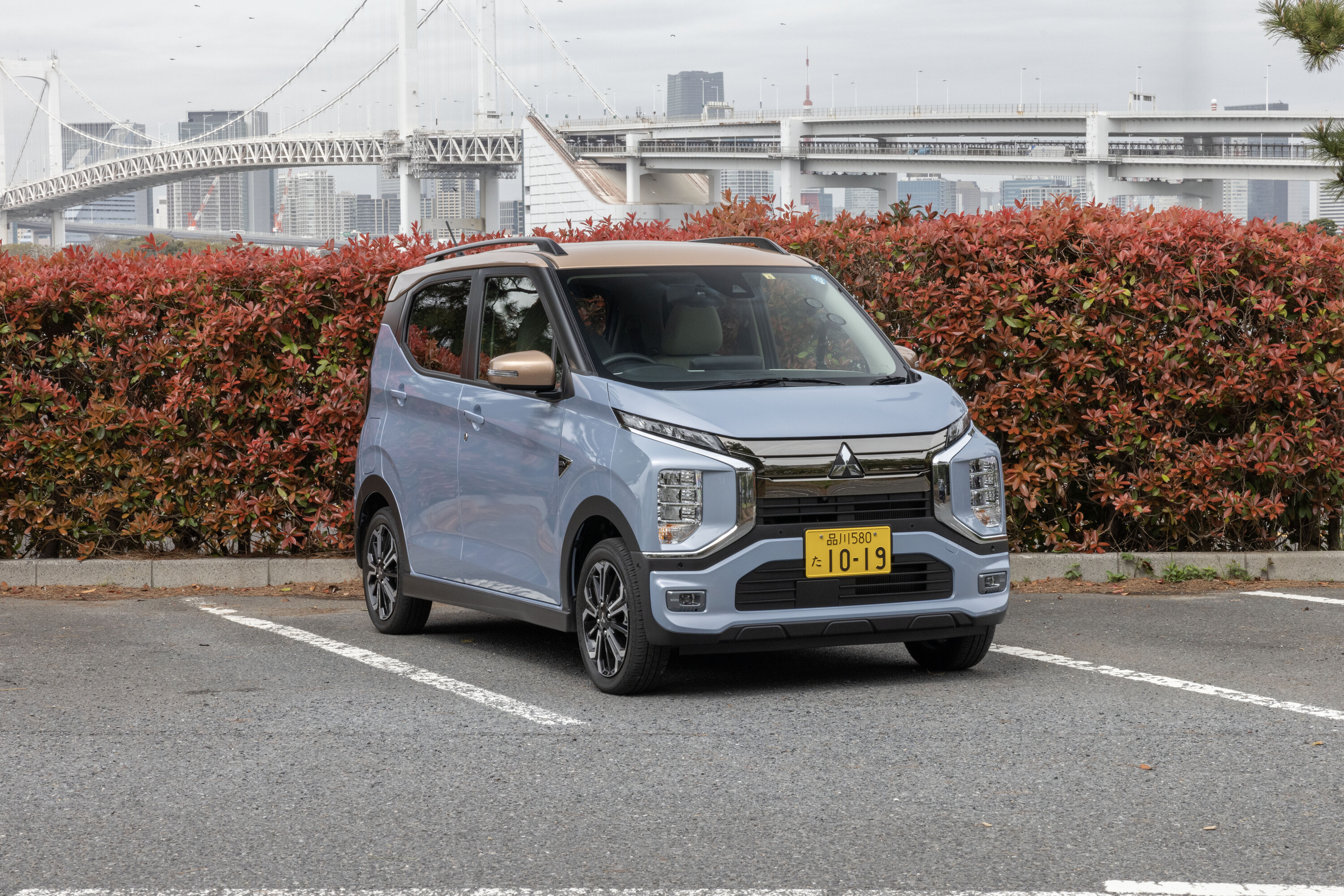
There are no announced plans to introduce the Delica people-mover to Australia, but there’s strong support within Mitsubishi’s Australian arm for the big three-row van to come our way if it’s made available.
It’ll need to wait until a full model changeover occurs first, however that ball is already rolling with the debut last year of the D:X concept, which previewed a chunky-looking one-box van with an open-plan interior and plug-in hybrid powertrain.
With loads of ground clearance and rugged offroad styling cues, it could be just the trick for adventure-seeking families – but don’t expect it until 2026 at the very earliest. We’ve still yet to see the production ‘D:6’ Delica break cover, after all.
1
Electric vehicles
Despite Mitsubishi being a pioneer in the EV space with the i-Miev city car early in the 00s, current thinking looks quite different.
Take, for example, the notion of an electric Mitsubishi Triton ute, which has been soundly rebuffed by Mitsubishi Australia CEO, Shawn Westacott.
“There are people that develop show ponies and there’s a place for show ponies. That’s fine. But we understand who our core target market is, and that’s middle-income Australia, working Australia,” he told WhichCar.
1
“And we need to produce a product that is of value to the mass market – for farmers, tradies, people that deliver that work, who drive the economy of Australia.
“There are some companies, particularly out in the US, that have grabbed headlines by saying ‘we’ve developed an electric ute‘. But the reality of a ute is that our customers buy them because they are workhorses.”
There is also talk that the ASX could morph into a small hybrid-electric SUV with co-operation across the alliance to get it done, with a two-row SUV-shaped HEV shown as part of Mitsubishi’s 2025 future plans.
All of this leads us to…
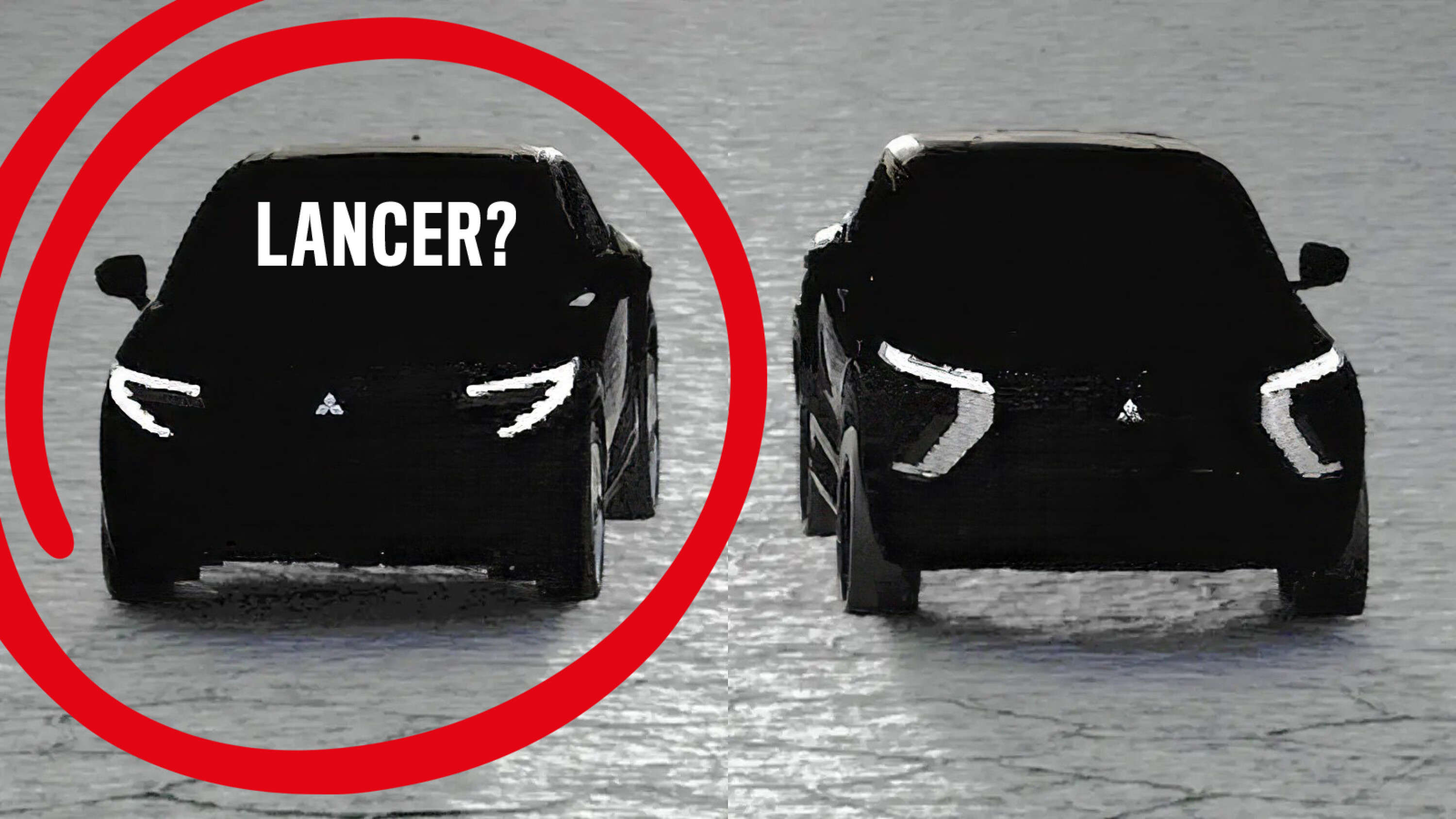
Small electric Mitsu SUV expected: A Lancer revival?
First teased in mid 2024, Mitsubishi is now understood to be planning a new compact electric SUV, based on the next-generation Nissan Leaf.
At this point, there’s no firm confirmation that this new model could see the Lancer badge revived – but, given the Eclipse name was repurposed for the Eclipse Cross SUV, a Lancer Cross (or simply Lancer) is easy to imagine.
1
The Lancer Sportback recently had its trademark re-upped in the US (Car and Driver), so that too could be a sign of the name’s return – if not simply a case of trademark protection, which is common enough.
Whatever name it ends up wearing, the new small EV will likely arrive after the upcoming ‘mini Ariya’ leaf – so expect a debut sometime in 2026.
More EV stories to help you choose the best car for your needs
- ? EV news, reviews, advice & guides
- ❓ Short & sweet: Your EV questions answered
- ⚡ New EVs: Everything coming to Australia
- ? Australia’s EVs with the longest driving range
- ⚖️ Best-value EVs by driving range
- ? How much do EVs cost in Australia?
- ? How much more expensive are EVs?
- ⚖️ Number crunching: Is it time to switch to an EV?
- ♻ Should you buy a used EV?
- ?️ Are EVs more expensive to insure?
- ? Costs compared: Charging an EV vs fueling a car
- ? EV charging guide
- ? Are there enough EV chargers in Oz?
- ?? EV servicing explained
- ? EV battery types explained
- ? When do EV batteries need replacing?
- ? Hydrogen v EVs: What’s best for Oz?
- ✋? Mind your manners! EV charging etiquette tips
- ? How sustainable are EVs, really?
MORE advice stories to help you with buying and owning a car
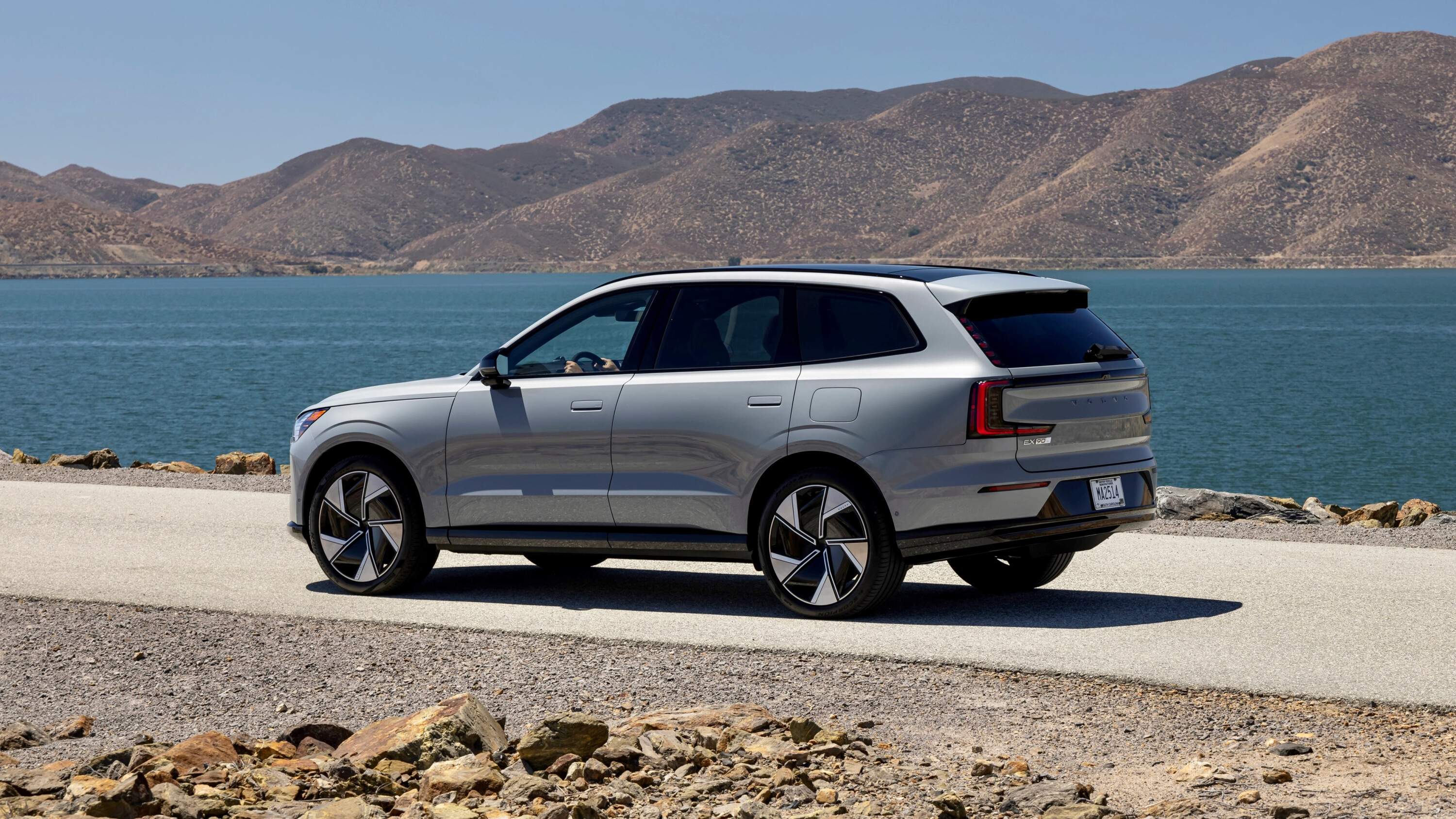
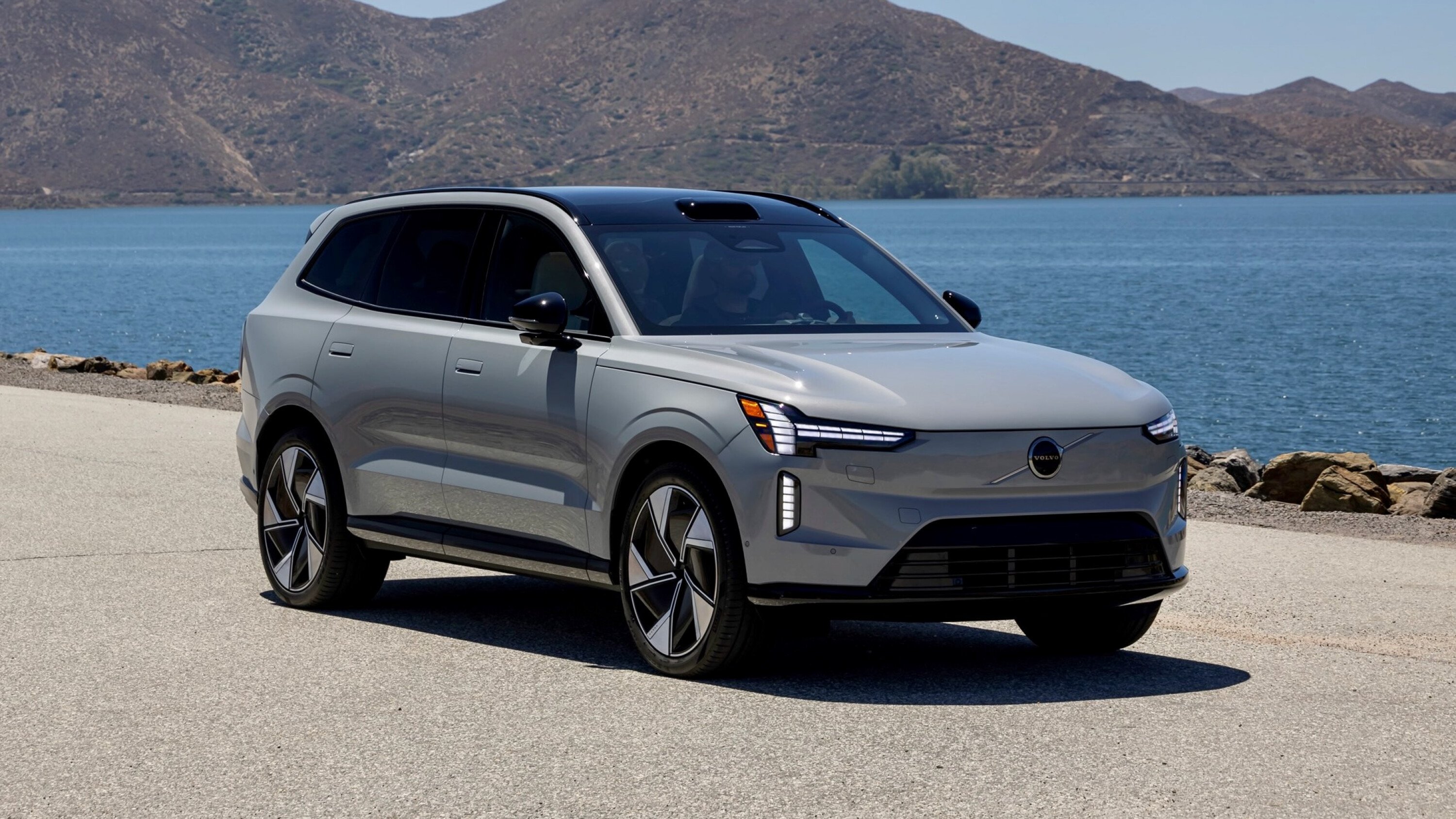
Volvo Cars Australia has released local pricing and initial specifications for the EX90 electric seven-seat SUV, which is due to arrive in the country soon.
Priced from $124,990 plus on-road costs, the EX90 will be available in two models initially: the entry-level Plus and the upper-spec Ultra.
Both models use a huge 111kWh NMC battery, which gives the EX90 up to 570km of range (WLTP). Volvo claims that the EX90 can be charged at up to 250kW on a DC fast charger for a 10 to 80 percent charge in as little as 30 minutes.
Both variants also use a twin-motor all-wheel drive set up, with the Plus outputting 300kW of power and 770Nm of torque, enough for a 5.9-second 0-100km/h sprint.
1
The Ultra increases outputs to 380kW and 910Nm to take a second off the 0-100km/h time. The smaller EX30 is still the quickest current Volvo, but the EX90 is still fast for a 2.8-tonne seven-seat SUV. Its top speed is limited to 180km/h and it can haul up to 2,200kg.
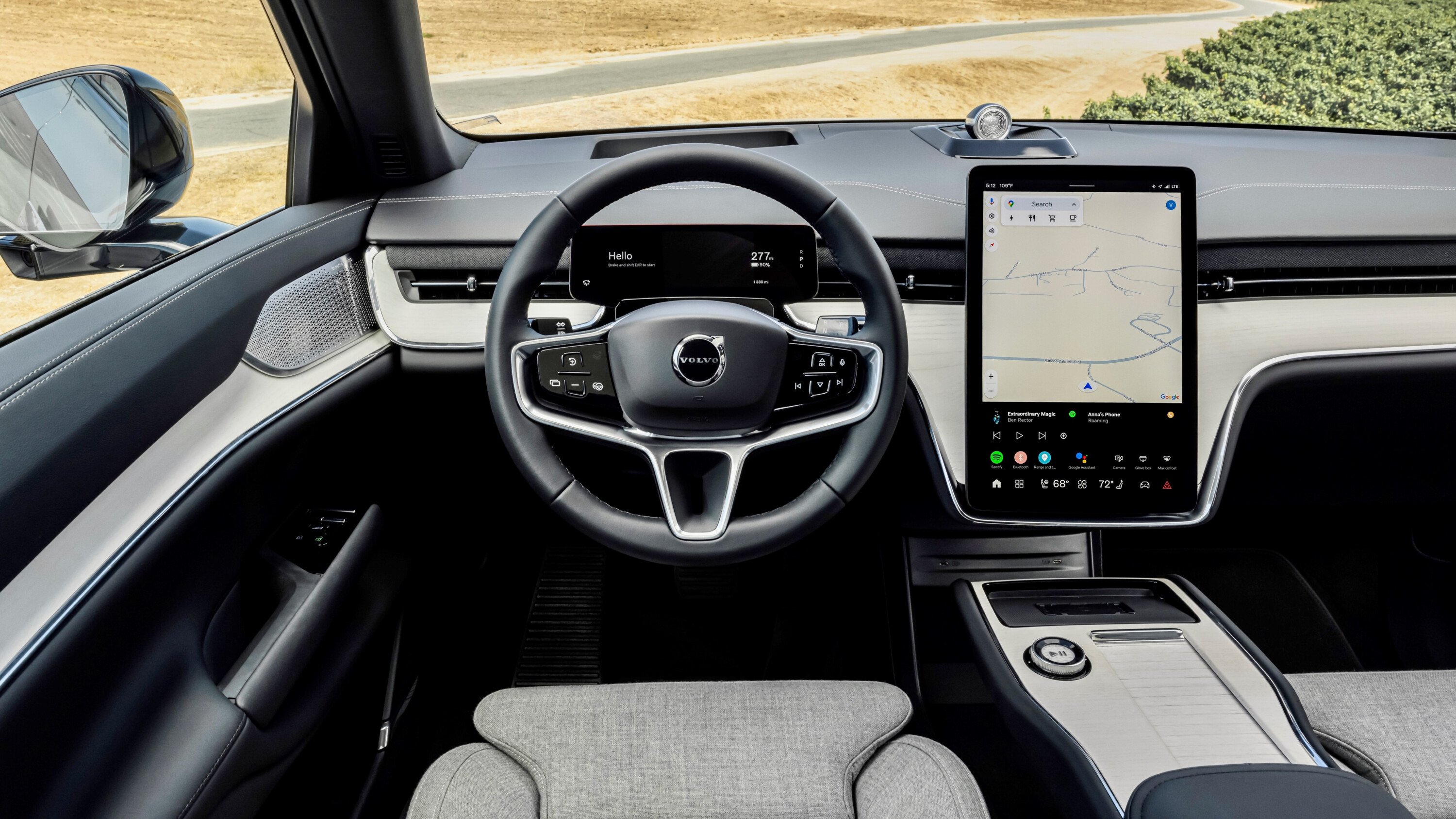
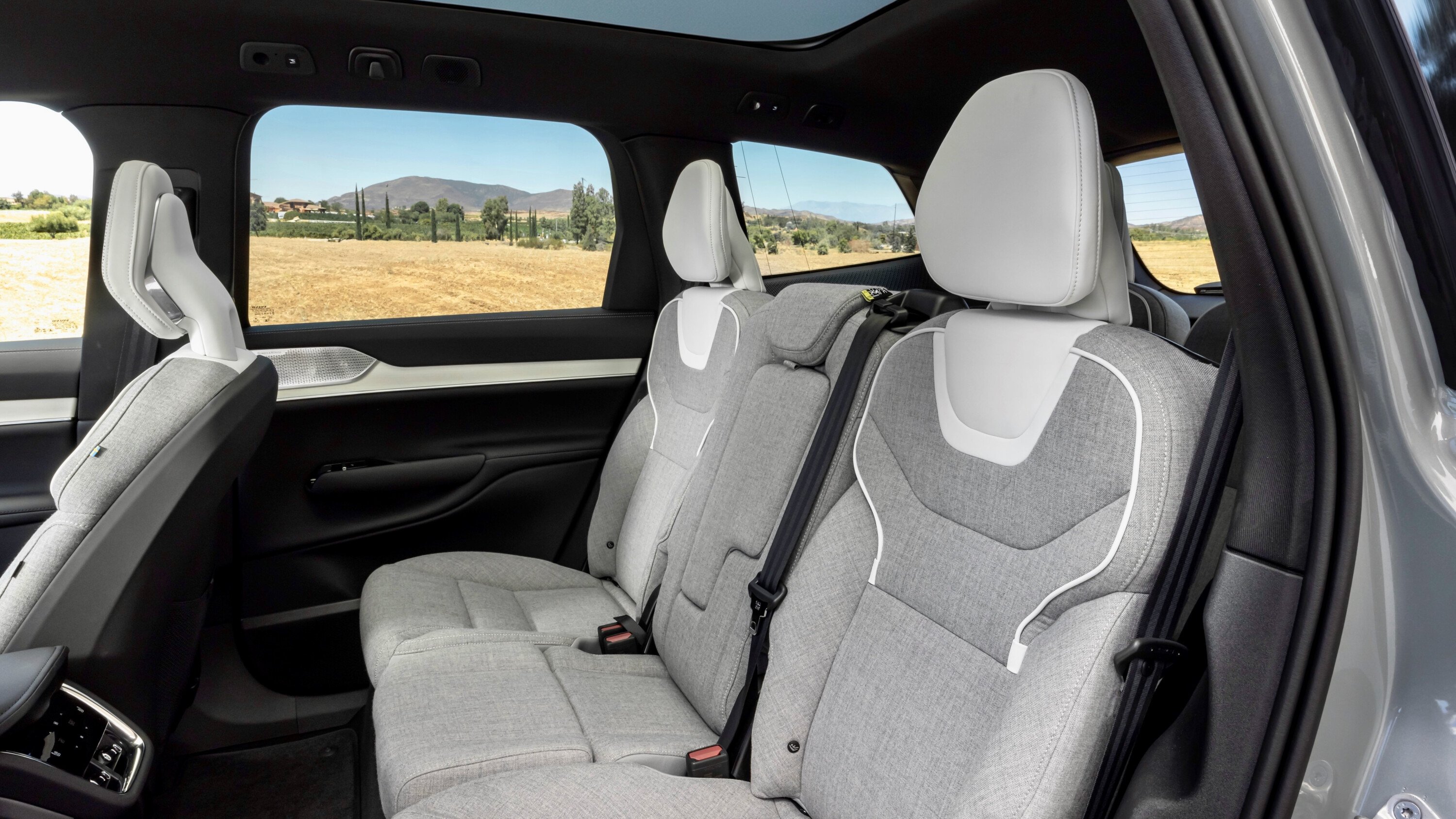
Inside the EX90 is a new 14.5-inch touchscreen that runs the same Android infotainment system as the EX30 with Google Maps, Google Assistant and access to the Google Play Store to download apps, as well as phone key tech, a Bose sound system on the Plus and a 25-speaker Bowers & Wilkins sound system on the Ultra.
The Ultra also adds ventilated front seats and adaptive air suspension.
1
According to Volvo, the EX90 contains 15 per cent of recycled steel, 25 per cent of recycled aluminium and 48kg of recycled plastics and bio-based materials, which is the highest level of any Volvo car to date.
The EX90 will be available in Denim Blue, Crystal White, Sand Dune, Onyx Black, Platinum Grey, Silver Dawn and Vapour Grey exterior colours.
Volvo Cars Australia is yet to release any further details about the EX90, but has confirmed that a five-year service plan will be included in the price.
1
Volvo EX90 pricing (plus on-road costs):
| 2025 Volvo EX90 pricing | |
|---|---|
| Plus Twin Motor | $124,990 |
| Ultra Twin Motor | $134,990 |
Competition for the EX90 includes the Polestar 3, which shares the same platform as the EX90, and BMW iX, Cadillac Lyriq and Kia EV9. Of those competitors, only the Kia shares a seven-seat layout.
Local release timing and full specifications for the Volvo EX90 are yet to be released.
6
MORE
Everything Volvo
MORE
Electric Cars
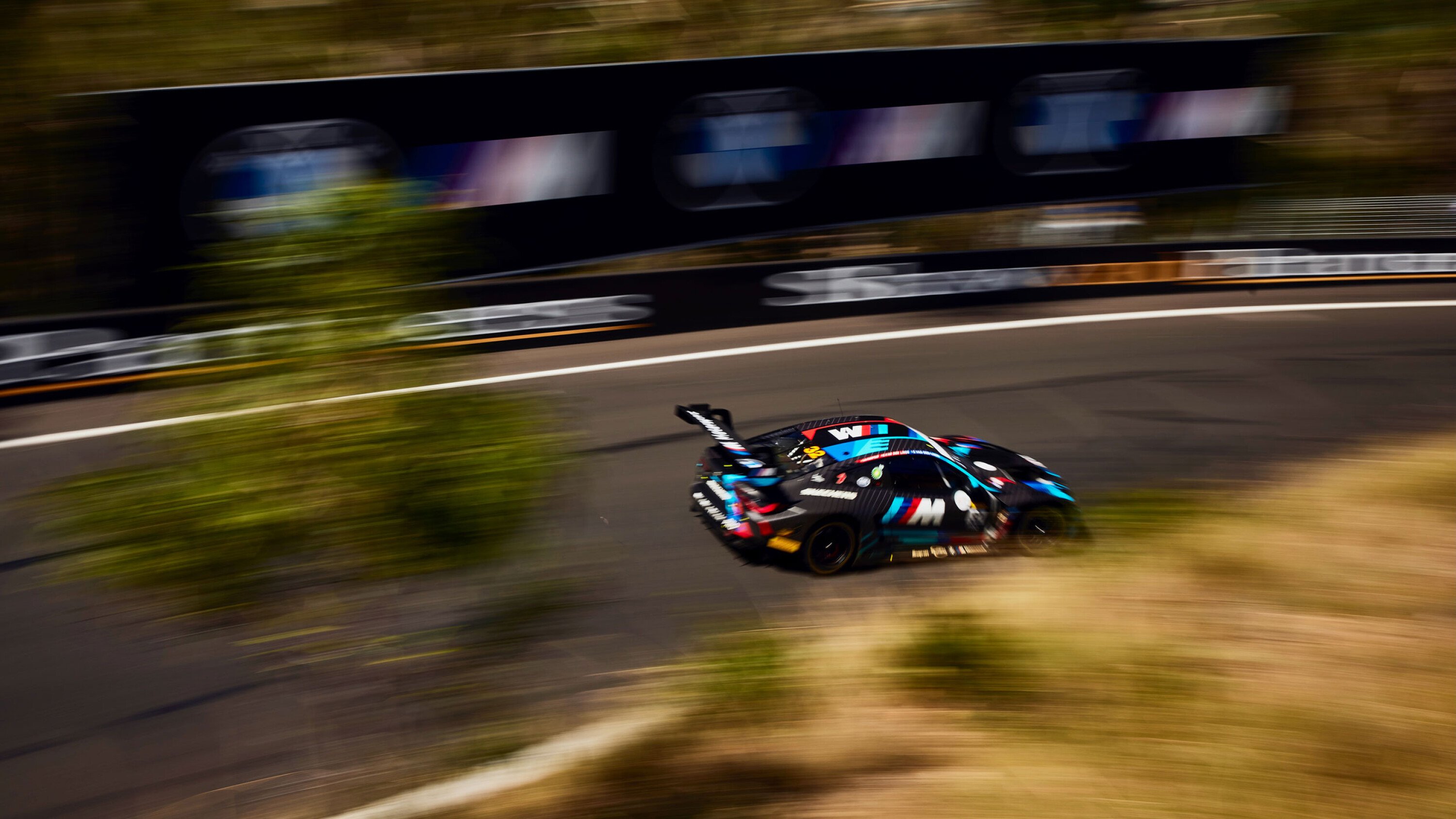
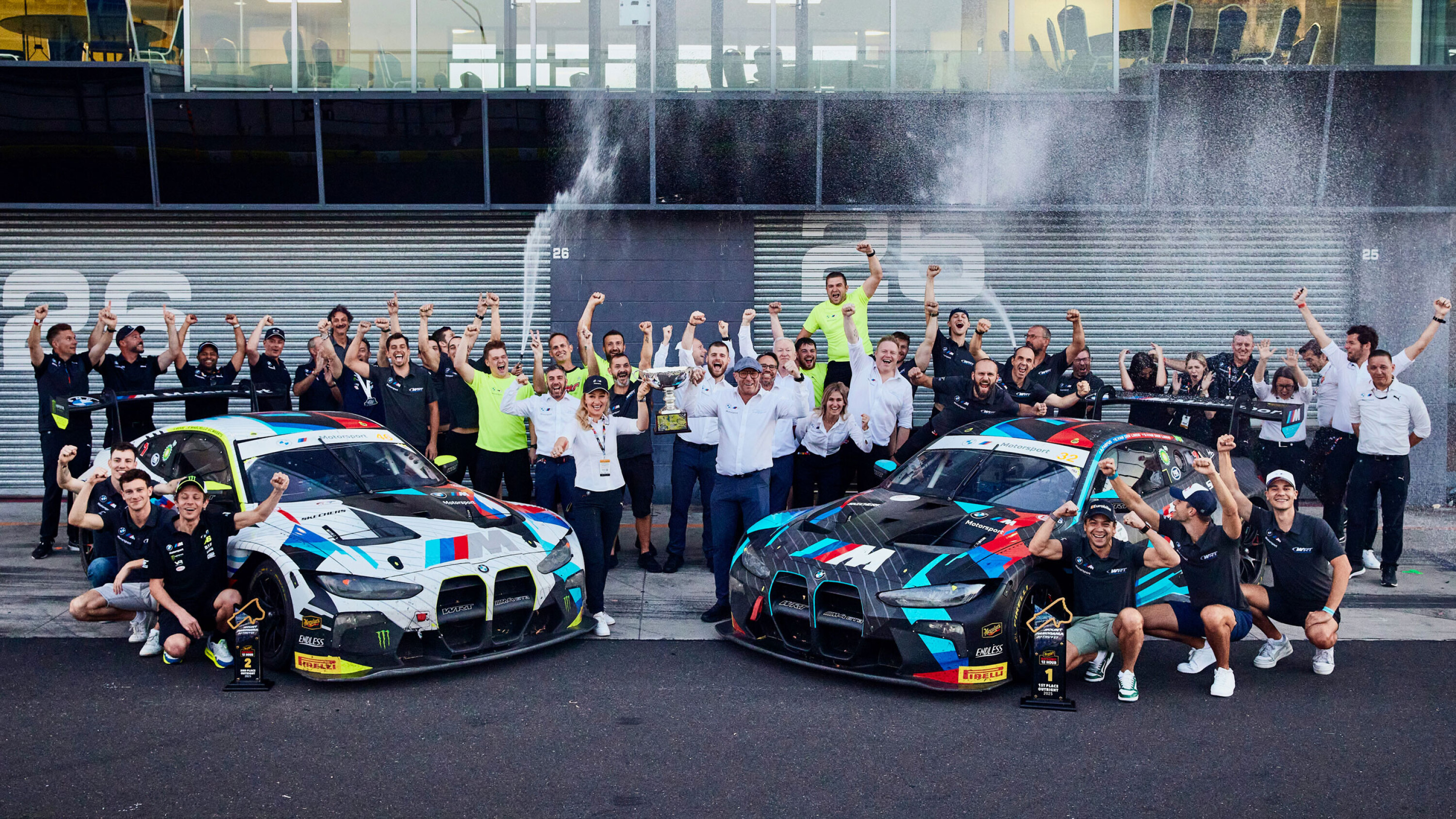
Notching its first victory at Mount Panorama since 2010, BMW Team WRT has celebrated a one-two finish at the Bathurst 12 Hour, including second place for MotoGP legend Valentino Rossi.
Putting its performance down to a “perfect race strategy”, Team WRT said its victory was ultimately decided by the BMW M4 GT3’s fuel consumption advantage which saw it avoid refuelling during the last laps of the race, unlike other competitors.
1
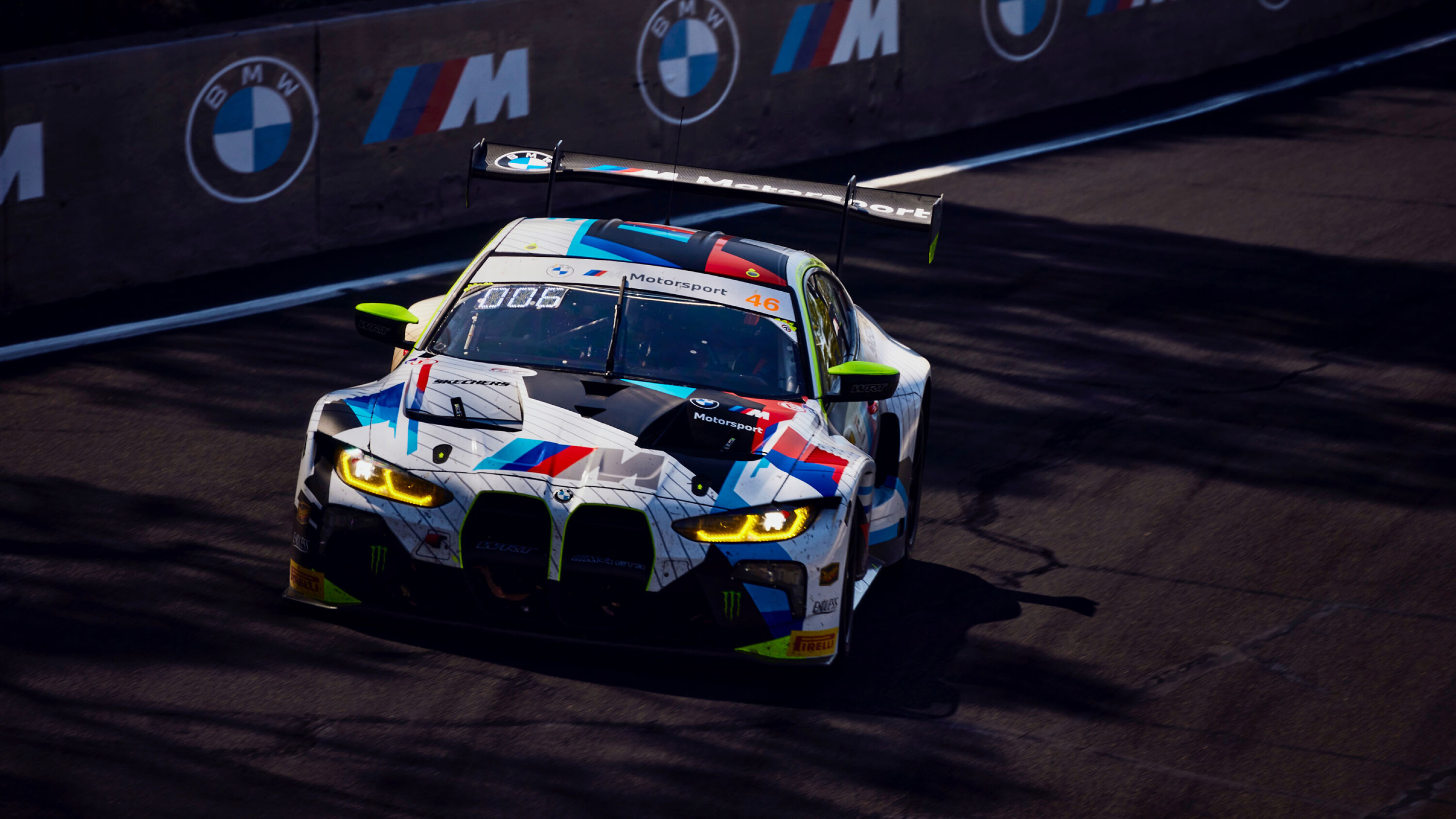
BMW M Motorsport’s win comes after numerous attempts since GT3 cars have been competing at the Bathurst 12 Hour. For brothers Kelvin and Sheldon van der Linde, who piloted the winning M4 along with Augusto Farfus, it was their first joint victory in a BMW M Motorsport car while for Rossi, it was his first podium at the Bathurst 12 Hour.
Sheldon van der Linde taking the chequered flag in car #32 capped an epic, close-fought race that was frenetic from start to finish. Chaz Mostert from Arise Ferrari made headway early and was leading by the seventh lap.
Dramatic incidents occurred throughout the day, including Craig Lowndes from Scott Taylor Motorsport crashing around 1.5 hours in and the Method Motorsport McLaren losing control and almost taking out the Valmont Audi. Nearly 2.5 hours into the race Kenny Habul from 75 Express Mercedes side-swiped Stephen Grove from Grove Racing, causing a sizeable stack and sending him to hospital to be checked.
1
As the race continued, it was clear the van der Linde-Farfus partnership had largely controlled the race and by the end, won by a full 10 seconds. After the win, Sheldon van der Linde said: “I am very, very happy! I think this victory was down to excellent execution of the guys at Team WRT. I don’t think I have ever seen such a perfect execution in terms of strategy before. We did not have the outright fastest car today, but still we did it! Both my teammates didn’t make any mistakes.”
Speaking about his second placing along with fellow drivers Raffaele Marciello and Charles Weerts, Moto GP legend Rossi said: “This podium is a fantastic way to start the season. The whole weekend was great, as we were always strong and competitive. We were able to fight with our sister car until I made a mistake unfortunately and we had to serve a drive-through penalty. But we managed to come back with great pace. I am very happy with the result.”
The Bathurst 12 Hour was the first round of the 2025 Intercontinental GT Challenge (IGTC), with the Nurburgring in Germany next in June, Spa in Belgium in the same month, Suzuka in Japan in September and the final round in Indianapolis in the USA in October.
1
