
MOTOR has scored an early peek at the upcoming Lexus LC 500 ahead of its Australian launch.
A recent track day we attended happened to be sponsored by Lexus, with the car on display to hopefully tempt a few customers. While we weren’t allowed to move the car even a metre, Lexus did agree to let us film a quick walkaround which at least allows you to see and hear this new V8 coupe.
The LC 500 will be the range-topping flagship two-door for Lexus, sitting above the RC F with which it shares its 351kW/540Nm 5.0-litre naturally-aspirated V8. Apologies, the video says 530Nm, but it was recorded off-the-cuff.
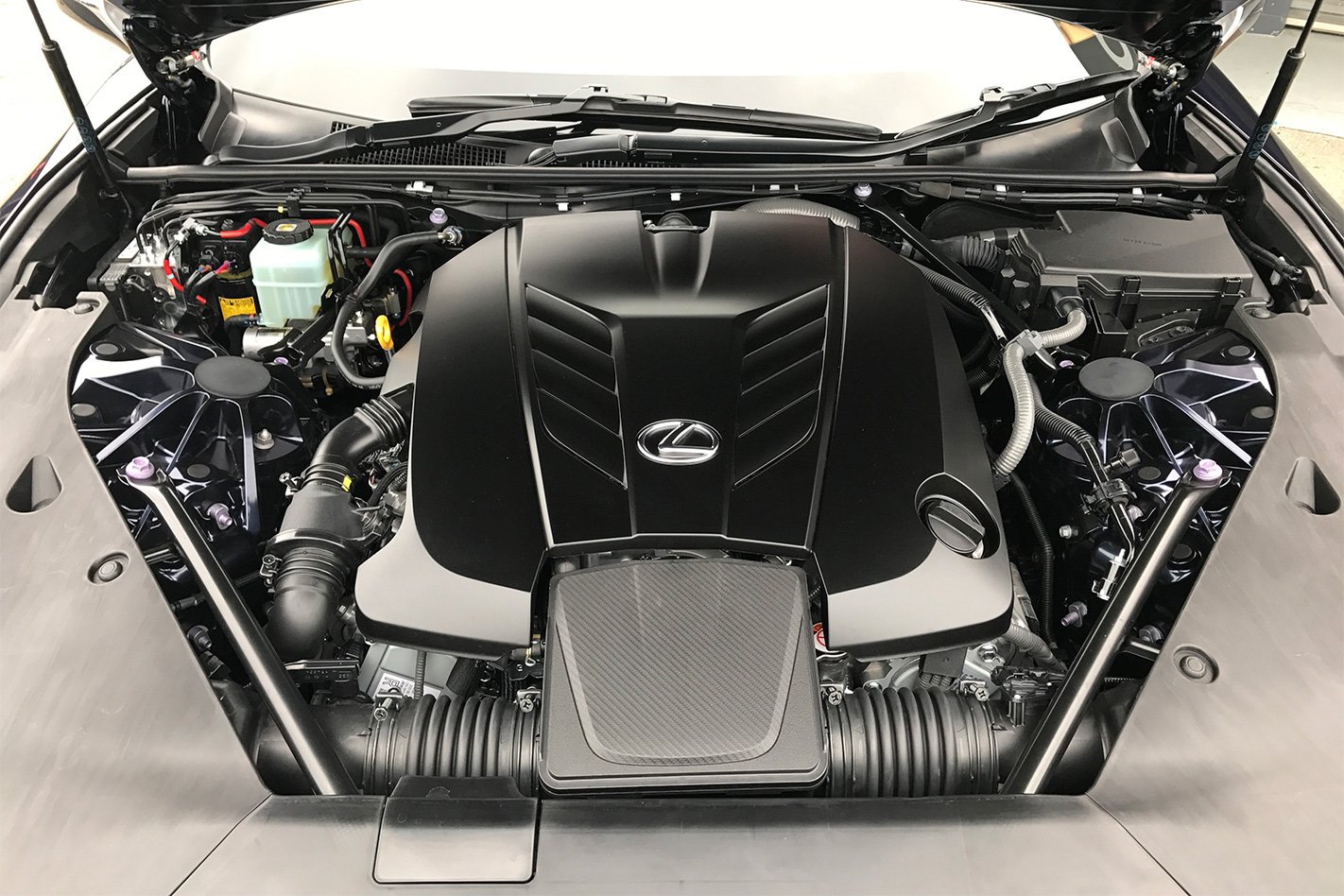
Also available will be a LC 500h, which uses a 3.5-litre V6 allied to an electric motor. Lexus claims 0-100km/h in 4.5sec for the V8 and “under five seconds” for the hybrid.
Pricing is not yet confirmed, however we expect the LC 500 to land around the $200,000 mark, putting it head-to-head with the likes of the BMW 640i and, to a lesser degree, sports cars such as the Aston Martin Vantage, Porsche 911 and Jaguar F-Type.
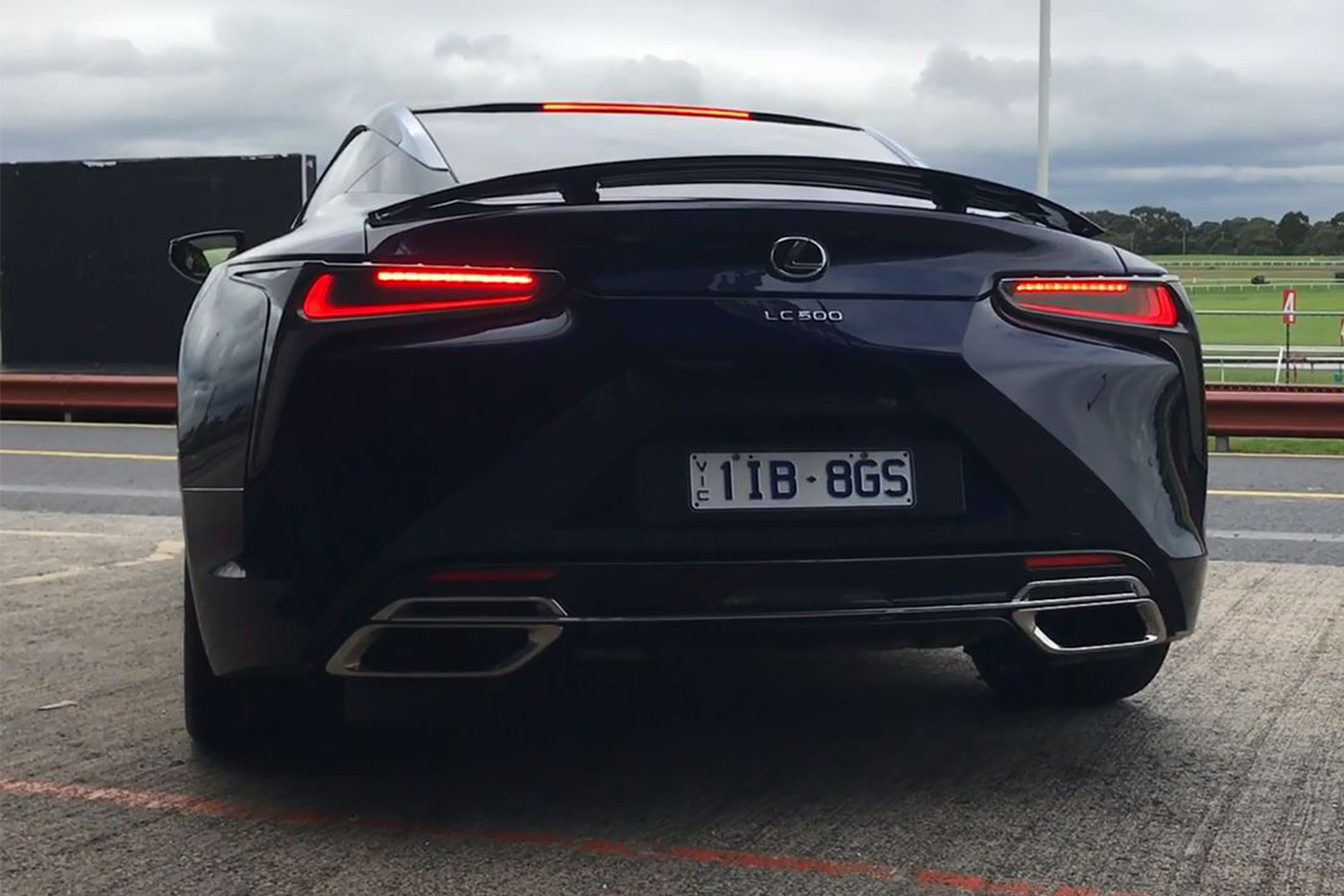
We’ll bring you more on the Lexus LC range when we get behind the wheel in early June.
One of the world’s rarest Lamborghinis is currently sitting in Dutton’s Garage, Melbourne, waiting for its next owner to rock up with some loose change.
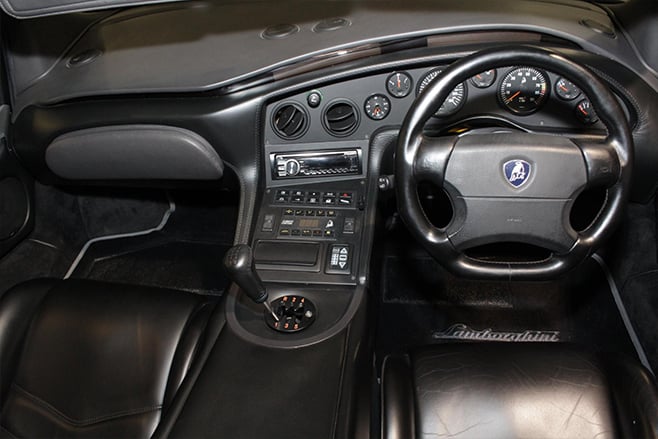
It’s a 1999 Lamborghini Diablo SV Roadster, and it’s only got 17,900km on the clock, with a full history available and an apparently large amount of work performed on it recently – someone forked over $100K to Zagame’s for the invoice.
Oh, and it’s right-hook, which means it’s one of two in the world.
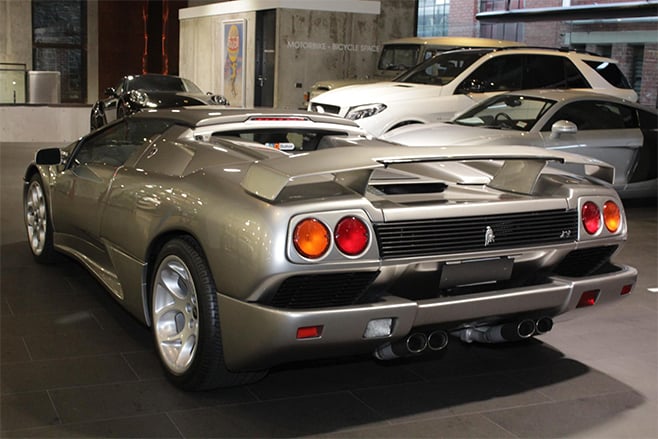

You do get a lot of car for the money, though. Plus, buying a V12 Lambo is the best way to enjoy Lambo doors. They’re just not the same on a Celica.
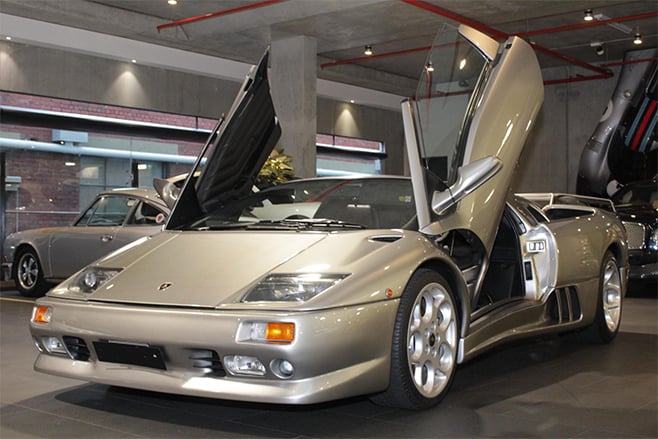
We can’t be sure if he anticipated a Pioneer car stereo being plonked into the centre console, though.
IT MAY have been uglier than a Shar-pei licking salt off a saw blade, but Toyota was actually on to something when it conceived the X-Runner concept for the 2003 Melbourne motor show.
While Ford and Holden were busy knocking out rear-drive sedan-based utes, the Japanese maker’s local design outfit was creating a version that had four-wheel drive and a boosted ride height for more adventurous tradies.
And what do you know? – 14 years later, the one-tonne ute is king, lead by the Toyota Hilux as Australia’s favourite car, while the car-based ute has been put out to pasture.
At the time, Toyota probably had no idea just how prophetic its concept car was, but its intended purpose was not to offer an insight into the future of the Australian car market, but to convince head office that a local R&D centre made sense.
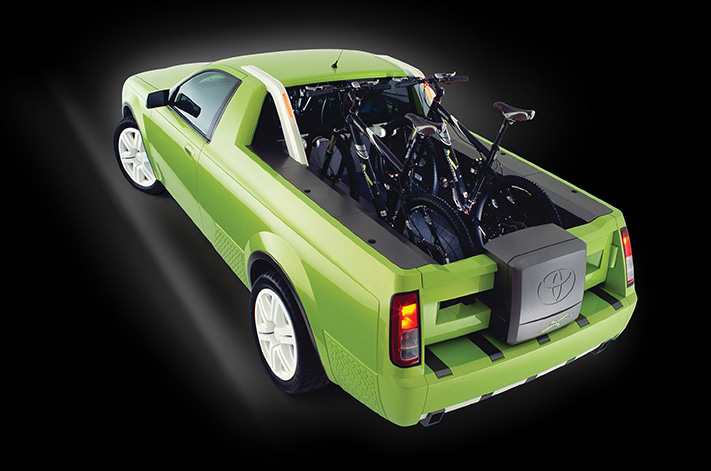
For the 2003 show car, Toyota pinched some of the 4×4 bits of the Lexus RX300 of the same year and matched it up with the rear axle of a Tarago. Power was courtesy of a 3.0-litre V6 petrol that had a nip of spice in the form of a TRD supercharger.
Power from the familiar V6 jumped 20 percent to 185kW, while torque got a 30 percent boost to 330Nm at about 4400rpm thanks to the 4.0psi forced-feeding.
Much of the remaining construction was borrowed from the Avalon large sedan, including a fettled version of its nose, although its wheelbase had been chopped and stretched by 150mm, while the jacked-up suspension set up offered 210mm of ground clearance.
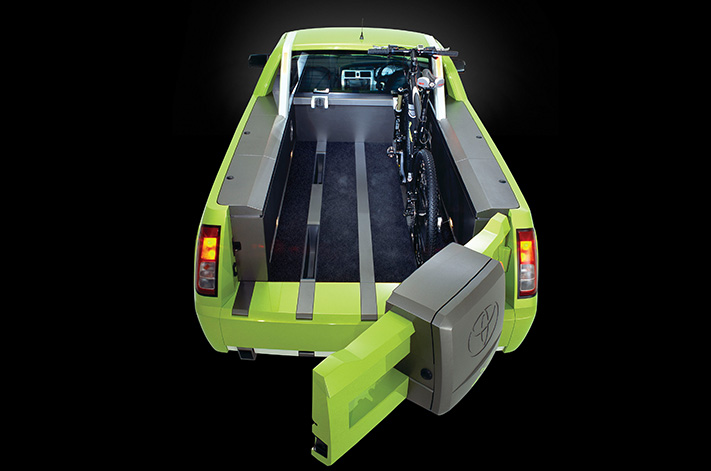
The load area also incorporated a number of other forward-thinking ideas such as a 17-inch plasma screen (no LED TVs in 2003) which displayed the location of mountain bikers via GPS tracking. Ice boxes, floor lighting and a tailgate storage bin that resembles a drag-chute were also included for post-ride convenience.
Unlike some far-fetched concepts that never expect to see the real world, Toyota pushed hard for permission to produce a showroom version of the X-Runner and, while the car never came to fruition, Toyota still has the last laugh.
It didn’t have a low-range of cogs in its four-speed automatic transmission and the 19-inch Dunlop rubber on white alloy wheels were strictly on-road propositions, but the concept was a clear step in the direction of all-terrain utes nonetheless.
WINNER: KIA
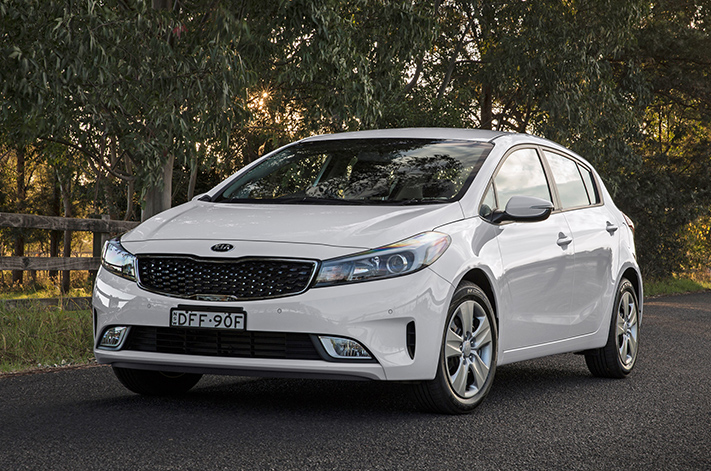
Korea’s second-biggest brand after (parent company) Hyundai usually occupies 9th spot in the monthly top 10 brands table, but another monthly 36% increase saw Kia jump into 7th position with 4120 sales – more than a 1000 units higher than April 2016. The Carnival people-mover (+32%) and Sorento and Sportage SUVS (+50% and +38%) all contributed, though a special mention must go to the Cerato. A year-on-year increase of 41% – to 1490 sales – propelled the small car into the top 10 best-selling vehicles for April.
WINNERS: SUBARU AND MITSUBISHI
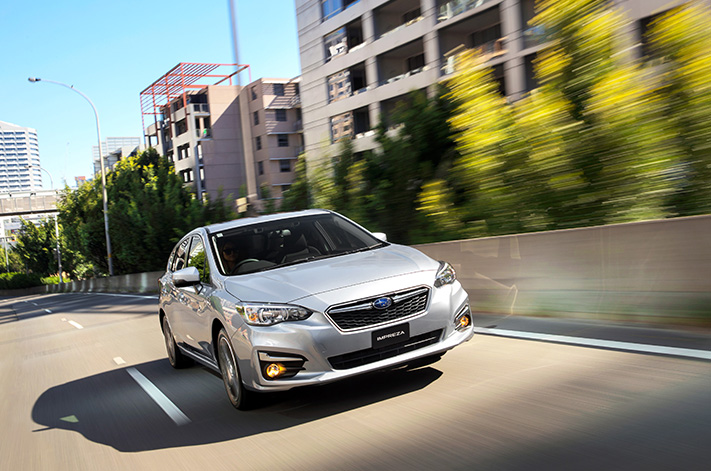
Subaru’s enduring popularity in Australia is showing no signs of faltering. A sales figure of 3854 in April gave it 22% year-on-year growth – boosting its year-to-date growth to 11%. The Impreza was the star, up 177% for the month, with strong support from the WRX sports car spin-off (+46%), the BRZ sports coupe (+88%), and Outback (+11%). The Forester SUV was also consistent, if down 3%. Subaru Australia will be further encouraged by the fact its popular XV compact SUV is due mid-year in second-generation form.
Mitsubishi is another Japanese brand faring well in 2017, and it recorded 31% growth last month compared with April 2016. Its major players were all SUVs: Outlander (+125%), Pajero Sport (+106%) and ASX (+58%).
WINNER: MERCEDES-BENZ
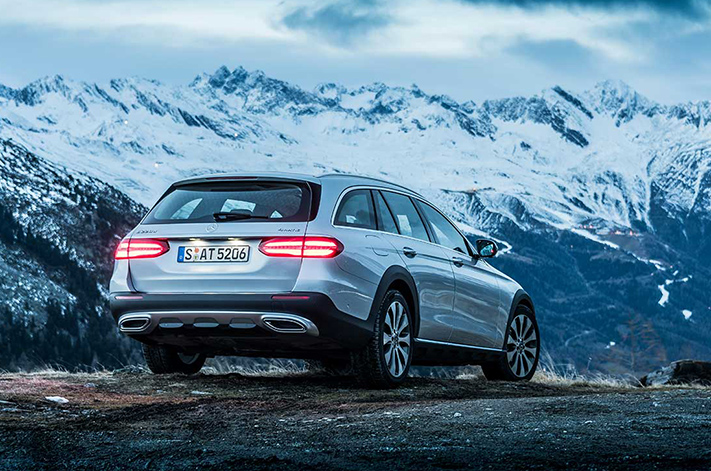
In isolation, Mercedes’ stagnant April result – just 0.3% up on the same month last year – doesn’t seem impressive. Yet in the context of an April in which many luxury brands suffered notable declines, it’s a strong performance – very strong when you consider Benz’s total of 3312 units, even allowing for the benefit of commercial vehicles, outsold the combined total of Audi and BMW sales (3193). Infiniti, Lexus and Volvo were other luxury marques posting negative results for April.
WINNER: MAZDA SUVs
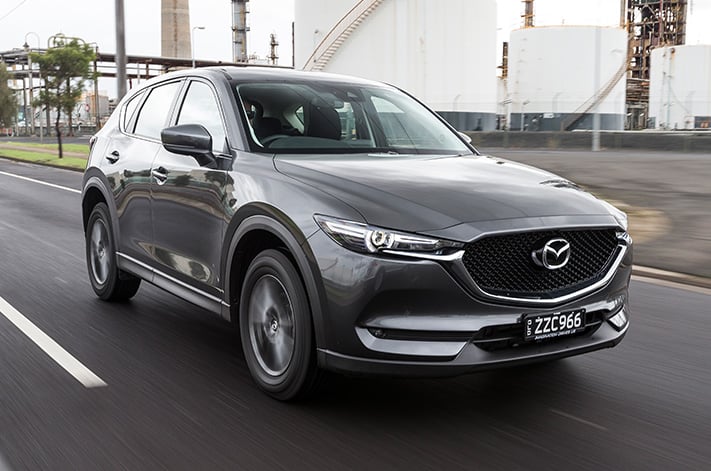
Mazda sold 4000 of its CX-badged SUVs in April – accounting for almost half its 8630 total for the month (an April record for the Japanese brand). The baby CX-3 actually slid backwards by 26% (but retains segment leadership for 2017), but the newly released second-generation CX-5 surpassed 2000 units (2166) and the still-fresh CX-9 seven-seater’s 639 sales equates to a 914% year-on-year increase over its predecessor.
WINNER: UTES
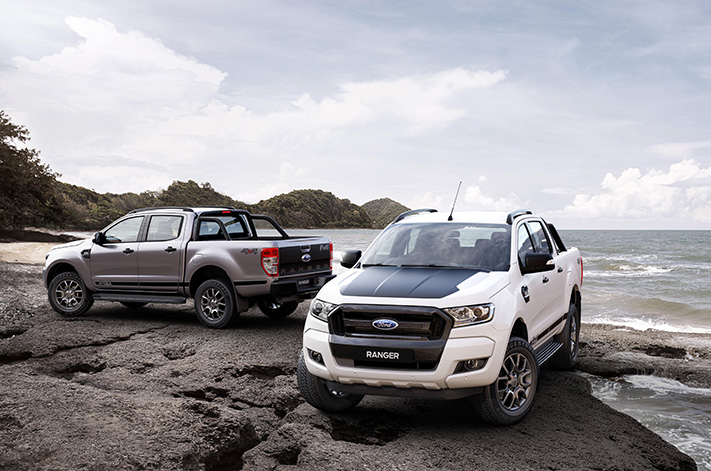
Light-commercial vehicles proved to be the only segment impervious to April’s 5% decline, with the ute-biased class posting 3% growth while passenger cars (-12%) and SUVs (-1%) both fell. The Toyota HiLux and Ford Ranger were the champs, the only models to surpass 3000 units for the month – with the former increasing its overall lead for 2017’s best-seller status. The Ranger, though, again beat its rival in the bigger 4×4 segment.
LOSERS: FRENCH BRANDS
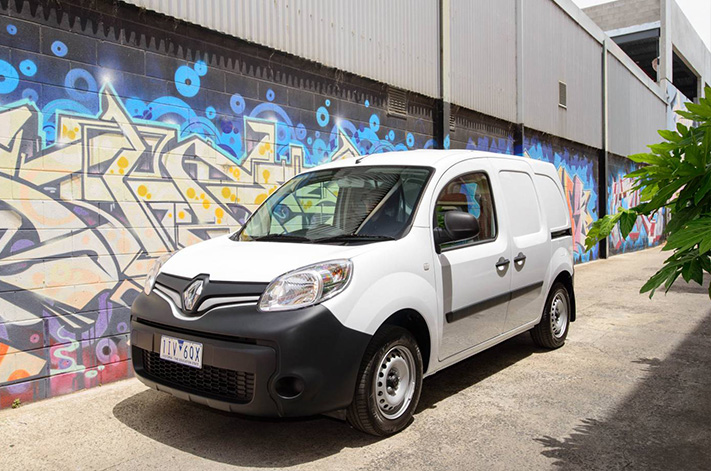
A sacré bleu month for Citroen, Peugeot and Renault – if more against form for the latter. Renault had been tracking positively so far for 2017 but a 32% year-on-year stumble for April has turned 10% growth in March into a 2% deficit at the third-way stage of the year. Citroen’s 38% drop for April is consistent for its year-to-date decline (-41%), while Peugeot’s huge 63% fall last month has increased its decline compared to this time last year to 47%.
LOSERS: 4×4 SPECIALISTS
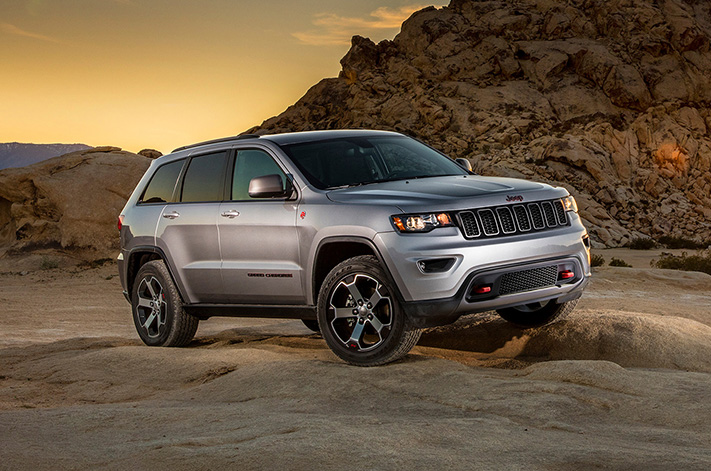
America’s Jeep and Britain’s Land Rover both struggled in April, posting sales drops of 37% and 40% respectively. Grand Cherokee (-30%) and Wrangler (-41%) were the key offenders for Jeep, which will be looking forward to the crucial, new mid-sized Compass due at the end of the year. Land Rover is hindered slightly by buyers waiting for the new-generation Discovery due mid-year, though no such excuses for the Range Rover (-34%), Evoque (-17%) and Range Rover Sport (-51%).
LOSER: HOLDEN COMMODORE
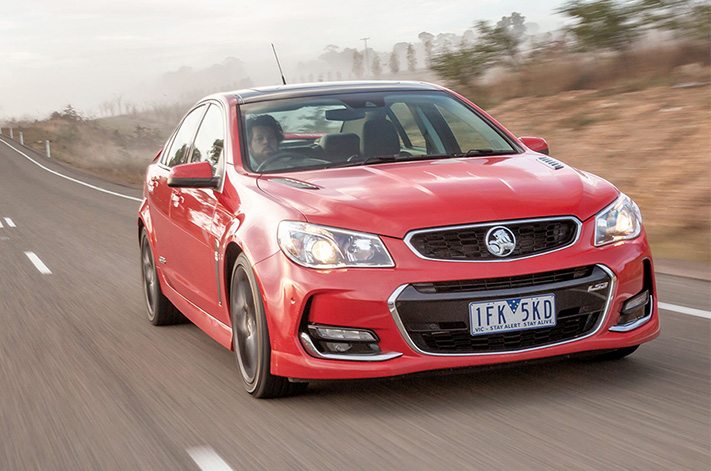
The large car that was once Australia’s favourite car for 15 consecutive years suffered the ignominy of dropping out of the top 10 best-selling models for April. A 25% year-on-year drop did the damage, dropping sales from April 2016’s 1908 to last month’s 1441. It wasn’t even Holden’s most popular vehicle. The Colorado ute took that mantle – and a place in the top 10 – with 1824 sales.
LOSERS: CITY CARS
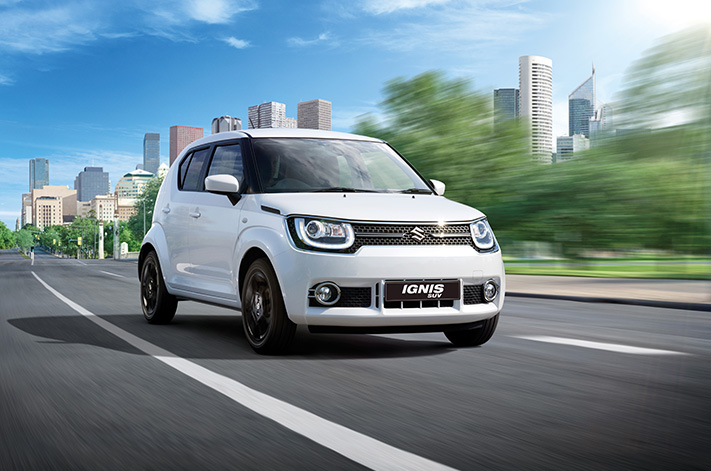
The micro-car and light-car segments both took sizeable hits again last month – dropping 30% and 22% respectively. The result for lights cars mirrored their year-to-date performance (-21%) but was slightly out of the norm for micro cars, which are now down 7% overall. Of all the models in both classes, only the Kia Rio and Skoda Fabia could point to notable growth.
LOSER: NISSAN
The Japanese giant didn’t fare much better than its alliance partner Renault. With key models including the Juke, Pathfinder, Patrol, Qashqai and X-Trail all underperforming, Nissan posted a 17% sales decrease for April. Its 3350 units for the month dropped it to last place in the Top 10 Brands table – outsold by Volkswagen and Subaru, and only 38 units from being out of the chart completely (Mercedes sold 3312 vehicles). Year-to-date sales are down 14%, dropping seventh-placed Nissan’s market share from 5.7% to 5.1%.
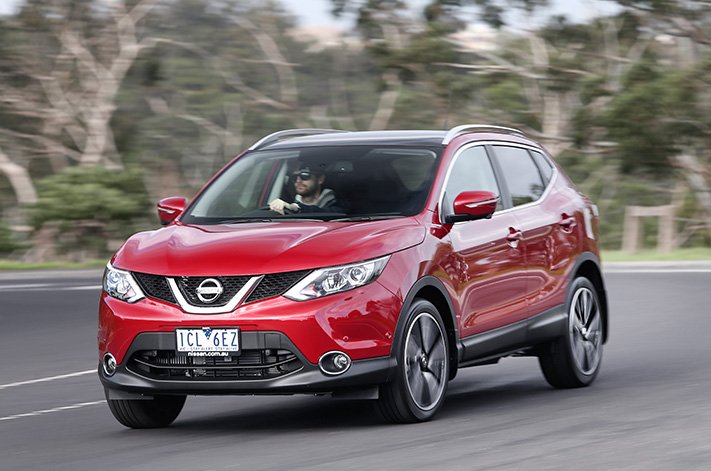
We know, we know – those pesky trees are constantly moving! You were just minding your own business, trying to park the car when the tree uprooted itself and jumped straight in front of you causing to slam on the brakes a little too late and leaving a little bingle in the front left of the car you’re driving. And it’s not even your car!
So what do you do?
Naturally, you’ll panic at first. And rightly so – the owner of the car isn’t going to be happy when they see part of the plastic inverted on their car.
Time for some problem solving. You could leave the country, or maybe just confess and tell them about the moving tree, but surely they’ll think you’re insane. There’s always the option of taking it to the nearest panel beaters – but how much would that cost?
| Winter’s coming: how should I warm up my car?
Then, the light bulb moment hits, and you remember that video on Facebook you saw last week of a girl pulling a dent out of her car using a sex toy. Surely, if that works there’s bound to be another option to solve your problem?
We’re here to tell you there is, so you don’t have to worry about trying to explain the walking tree.
However, before we get started, WhichCar holds no responsibility for any damage these tricks cause to your car. We highly recommend you take your car to the closest panel shop to get it fixed if you aren’t prepared to deal with repercussions should anything go wrong.
USE A PLUNGER This handy tool can do so much more than just unclogging a sink. If the dent in the car isn’t too big or deep, then a little suction can save you some coin and return your car’s body to near-normal.
| When should I upgrade my car?
The method is simple – throw some water on a cup plunger and on the car’s dent, then start plunging just like you would if you were trying to unclog a drain.
Keep in mind this isn’t the perfect solution and you may still be left with a few small dents in your car.
BOILING WATER If the dent in the car is on a plastic bumper, then boiling-hot water may be your best friend. Popping a dent out isn’t easier but if you pour boiling water over the plastic, the heat from the water should soften it up enough for you to reach behind and push it out.
The plastic will cool down quickly, especially if it’s a cold day, so you might have to keep topping up the hot water to get the ding the whole way out.
This trick will also make life a little easier if you’re using the plunger method.
HAIR DRYER AND AIR DUSTER This method requires a little more care to protect the car’s paint from overheating or being damaged by the compressed air.
On a high setting, heat the dented plastic and the area around it with the hair dryer for a minute or two, taking care not to hold it too close to the car as the heat can cause some damage to the paint. Then, holding the can of compressed air upside down, spray it onto the dent. The combination of heating and cooling should cause the plastic to contract and expand rapidly, and force it to take its original shape.
You can also use dry ice for this instead of the air duster, but make sure you know what you’re doing first as it can be dangerous to use.
You may want to cover your car with some aluminium foil before spraying it to retain heat and protect the surface, and likewise, thick rubber gloves to protect your own skin.
VACUUM CLEANER Similar to the plunger, the suction from a vacuum cleaner can help remove a dent.
Obviously putting the end of a vacuum cleaner directly on to a car is a recipe for disaster – not only will you lack the grip, but it’s also likely to cause even more damage to the plastic. So, create your own ‘electric plunger’ by attaching the vacuum hose to the end of a plastic bucket and taping it (make sure it’s air tight) around the dent. Turn the vacuum on and voila, your dent should pop out – but unlike the plunger, this method will work best on dents that aren’t too shallow.
LEGENDS! Last, fast ballistic blast in HSV’s all-conquering W1; the real story behind the rising road toll; Japan v Germany in the rear-drive performance stakes; Corby’s four-wheeled motorbike mash-up; mid-engined Corvette headed for Oz; Benz’s straight six-shooters explored; Mercedes-AMG’s drop-top GT tracked and tested
ALSO INSIDE THIS EDITION:
- Sinking a boot into Audi’s firebrand RS3
- One-on-one with the Bugatti Veyron’s successor
- What drives bone-crunching stuntman Matt Mingay?
- Midweight muscle: Merc-AMG E43, Audi S5 tested
- Toyota’s C-HR comes out to play in the baby SUV nursery
- First date with Mini’s all-grown-up country cousin
- Mazda CX-5, Holden Barina, Nissan Pathfinder driven … and MUCH, MUCH MORE!
AMIDST the horde of SUVs making public debuts at the New York motor show, the bold Genesis GV80 concept previewed the future of Hyundai’s luxury offshoot in more ways than one.
It showcases not only the brand’s vision of autonomous vehicle styling, including the phasing out of conventional headlights, but also features a hydrogen fuel cell drivetrain and design indicative of a future production model and the brand’s direction.
Genesis recruits Bugatti Chiron designer
“This car is really important for us, because it’s not only about announcing the GV80 but it’s also showing for the first time the DNA that is going to evolve in the future,” says chief designer Luc Donckerwolke.
Check out the video to hear more about the GV80’s design secrets, and read about Donckerwolke’s predictions for autonomous vehicles here.
During a Ferrari convoy through the Italian hinterland, one F40 prototype burst into flames and subsequently burned to a crisp.
Owned by British property entrepreneur Jon Hunt, the 1987 model F40 was originally a display car at the 1987 Frankfurt Motorshow, which he bought from an RM Sotheby’s auction in 2012 before returning it to its original Rosso red.
The lot listing for the car at the time stated “this car is the sixth of approximately just eight F40 prototypes that were used by the factory for testing, each with an individual purpose or application”.
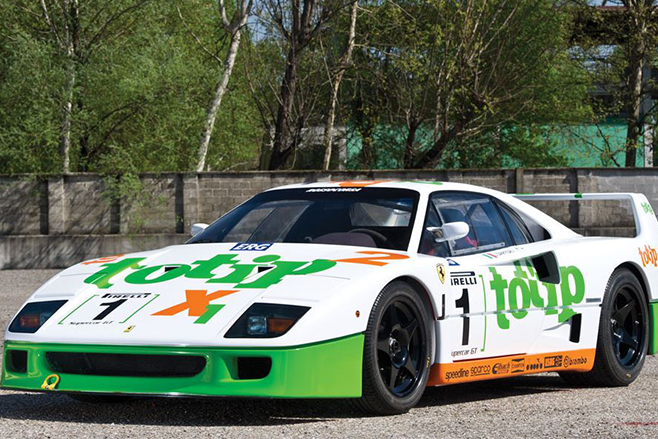
Not unaccustomed to having his cars burst into flames, Hunt had had a run in with a repairs garage when his Miura self-immolated on the drive home from being serviced.
He does however get to enjoy his cars on occasion, and doesn’t mind showing everyone to prove it.
The above video features (likely) a different F40 thrashing around a farmyard and (also likely) pretending to crash at the end.
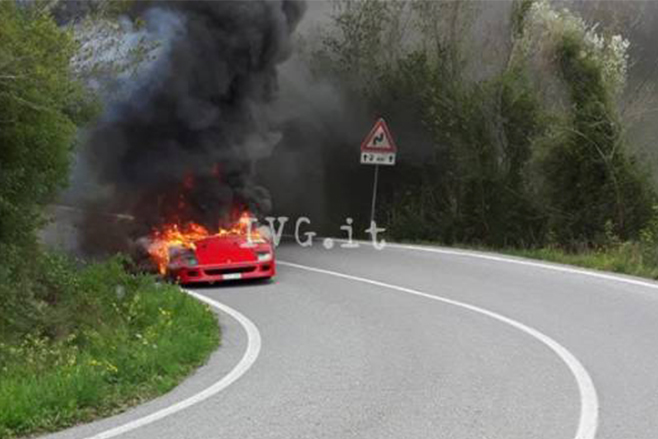
“In 1991, 74047 returned to Michelotto for further race-oriented improvements, and the car is believed to be the first of seven F40 examples to receive such conversions.”
These modifications included lowering the ride height by five centimetres, tuning the engine for an increase to approximately 590 bhp… extra NACA cooling ducts, a fire system and wider Speedline wheels.
Unfortunately, the fire system and cooling ducts didn’t work.
IMAGES: Sotheby’s; IVG News Italy
THIS is it. The end of the line.
The 2010s is the final decade of Aussie-built Muscle Cars. Ford shuttered its doors in October 2016, and when Holden follows suit in October this year, it will signal the end of our home-grown manufacturing.
But despite the teary-eyed farewell, the 2010s have given us some of the best examples yet, with both Holden and Ford sending off their fleets with a fitting swansong.
Ford resurrected the Sprint badge, with the XR6 and XR8 proving a somewhat understated exterior doesn’t equate to understated performance.
HSV has given the Aussie Commodore a screaming death metal thrash of a final song, in the GTSR W1. The LS9 powered car is the most powerful and most expensive Aussie Muscle Car to be released.
While FPV may have left us before the final closures, it still went out with a high-performance bang and the 351 GT F.
Vote on which Aussie Bruise was the best of the 2010s below:
Utes were the big movers in April as passenger cars fought back against SUVs but the overall market continued to slow.
New-car sales posted a five percent year-on-year decline with 83,135 units for the month, according to unnofficial industry figures seen by Which Car. The result contributed to a three per cent year-to-date drop.
Light commercial vehicles were the only growth sector for April, with the Toyota Hilux, Ford Ranger and Holden Colorado leading the ute charge. Hilux was April’s best-selling vehicle with 3430 sales, with the second-placed Ranger not too far behind with 3120 units.
The Ford’s result catapulted it from fourth to second in the race for 2017’s Most Popular Vehicle, leapfrogging both the Toyota Corolla and Mazda 3.
The small cars were third and fourth, with the Corolla registering 2555 sales and 2313 Mazda 3s leaving showrooms.
A new-generation Mazda CX-5 helped the medium-sized SUV place 5th with 2166 units, putting it ahead of the Hyundai i30 that sold half the numbers it did in April 2016 owing to the upcoming launch of an all-new replacement.
The Commodore wasn’t Holden’s best-selling model last month, either – with the Colorado ute taking that honour with 1824 sales. Holden’s large car dropped out of its usual place in the top 10, placing 12th with 1441 sales.
There’s still no budging Camry from this chart (7th, 1885 sales), while Hyundai’s Tucson (9th, 1530 sales) continues to be a strong performer.
A surprise model stole in for the final, 10th spot – Kia’s Cerato small car, which sold 1490 units thanks to a 41 percent year-on-year increase.
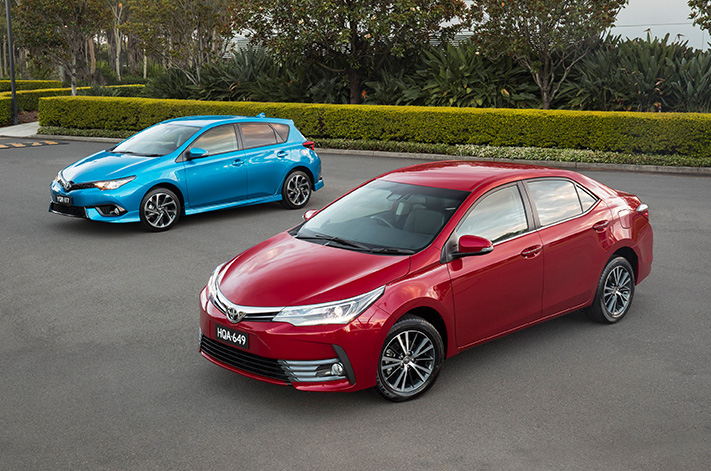
April’s top four mirrors the year-to-date table for best-selling vehicles. It continues to be a close race between the HiLux, Ranger and Corolla, while the Mazda 3 isn’t out of the running – and well clear of the fifth-placed i30, for now.
SUVs had outsold passenger cars in February and March but the traditional order was resumed last month. There were 32,147 passenger car sales in April compared with 31,368 SUV sales.
SUVs maintain a slight year-to-date lead, however.
In the battle of the brands, Toyota was predictably top in April – with its 16,090 sales almost double that of second-placed Mazda despite a 3 per cent year-on-year drop.
Holden (4th) and Ford (5th) were separated by just two sales, while Kia made a big jump into 7th with a 36 percent year-on-year sales increase.
Mercedes-Benz came close to entering the top 10, finishing just 38 units behind Nissan. The German luxury brand’s 3312 total for April outsold Audi and BMW combined for the month.
April 2017 – Top 10
Toyota HiLux – 3430
Ford Ranger – 3120
Toyota Corolla – 2555
Mazda 3 – 2313
Mazda CX-5 – 2166
Hyundai i30 – 1979
Toyota Camry – 1885
Holden Colorado – 1824
Hyundai Tucson – 1530
Kia Cerato – 1490
2017 Top Five Most Popular Vehicles – to end of April
Toyota HiLux – 13,763
Ford Ranger – 12,518
Toyota Corolla – 12,464
Mazda 3 – 11,968
Hyundai i30 – 8383
