
John Surtees, the widely admired motor sporting hero and only person to win grand prix world titles riding motorcycles and driving Formula One cars, has died at 83.
Despite his accomplishments, Surtees missed out on the knighthood that so many in motorsport sensed he richly deserved.
Despite his imposing world titles in two sports, and six-pack of F1 grands prix wins, Surtees probably should have won more on four wheels.
A stubborn, unbending gent of unyielding principle who inevitably did things his way or no way at all, Surtees walked out on opportunities at Lotus and Ferrari that may have brought him more wins and perhaps more championships.
Brave, naturally quick and mechanically sympathetic, Surtees was a remarkable talent who dominated the premier 500cc motorcycle category for much of the late 1950s, when he won world championships in 1956 and then again in 1958, ’59 and ’60.
In 1958, 1959 and 1960, he won 32 out of 39 races and became the first man to win the Senior TT at the Isle of Man TT three years in succession
A dispute with MV Agusta encouraged Surtees to look at alternatives during the 1960 season. He was stunningly quick in a couple of tests in cars. In his first car race, for Formula Juniors, he beat Jim Clark to pole.
He was soon in F1. Second place second time out at home at Silverstone confirmed his versatile talent. He was on pole for his third F1 GP.
After claiming his fourth 500cc crown, Surtees switched to Formula One full time, proving immediately competitive in privateer cars. He was signed by Ferrari in 1963 and won the drivers’ championship for the Scuderia in 1964 after a tense battle with Jim Clark and Graham Hill.
Though Surtees continued to be one of the standout drivers of the mid-1960s – along with Clark, Hill, Jackie Stewart and Dan Gurney – that 1964 title was the only F1 championship he won.
In 1965, Clark and the Lotus was an unstoppable combo, but the following year, Ferrari was more competitive.
But Surtees perhaps cost himself a second title when he walked out on the Italians after a dispute with the team manager over his non selection for the squad’s Le Mans team.
Turning up at Cooper part-way through 1966, Surtees embarrassed the incumbent Jochen Rindt. In seven GPs together, Surtees out-qualified Rindt six to one and won the final race the year, in Mexico.
In 1967 Surtees landed at the new factory Honda team.
After winning a GP and taking fourth in the drivers’ points, he won for the Japanese marque in Italy and finished fourth in the championship, before Honda abandoned F1.
There was an unsuccessful time with BRM before his driving career stuttered to a halt after starting his own team in 1970. At first he took the twin roles of driving and running the outfit, before he called time on his racing career at the end of 1971.
Surtees Racing was not a resounding success, its best GP result being a third place in the 1973 US Grand Prix.
One of Surtees’ drivers was Alan Jones, in the 1976 season, but the car was not competitive and the two iron-willed personalities didn’t get along.
The team folded in 1978.
Surtees remained in motor sport, turning out with classic cars and bikes at historic events. In 2005-7 he was the figure-head chairman of the British entry in the A1 Grand Prix series.
But motor racing brought him tragedy in 2009 when his gifted teenage son Henry was killed by a loose wheel in a Formula Two race crash at Brands Hatch.
This inspired him to set up the Henry Surtees Foundation to assist people recovering from brain and other injuries.
In his retirement, Surtees was a delightfully charming and approachable man who in hindsight readily agreed he’d made some poor career moves.
Surtees passed away on March 10, 2017 following a short illness. He is survived by his wife Jane and daughters Leonora and Edwina.
Just retired 2016 F1 world champion Nico Rosberg was one of countless people who registered their appreciation of Surtees’ rare talent: “Very sad, can’t believe it John. You had been so supportive of me all along! My thoughts are with your family. REST IN PEACE #johnsurtees”
After dominating much of Rally Mexico, Citroen’s Kris Meeke almost threw it all away on the final power stage, firing off the road less than one kilometre from the finish, narrowly missing parked cars, before rejoining and taking victory.
Meeke, who went into the final stage with a comfortable 37.2sec buffer, relived his big scare afterwards: “I’m a lucky boy. I got caught out on a bump,” said the 37-year-old from Northern Ireland
What had been a comfortable lead over Sebastien Ogier (M-Sport Ford) going into the deciding stage was reduced to 13.8 secs at the finish.
Meeke’s fourth career victory elevated him to sixth in the FIA World Rally Championship standings after miserable results from the opening two rounds in Monte-Carlo and Sweden.
Meeke and co-drive Paul Nagle increased their overall lead with a strong Saturday performance, going to sleep with a half-minute advantage over Ogier after the Frenchman lost 10 secs when he looped his Ford Fiesta.
Hyundai’s Thierry Neuville, who crashed out of the lead of the opening two WRC events this year, was a relieved third, nearly a minute off the lead. He and team-mate Hayden Paddon, who was fifth, both had troubles with tyres.
They were split by M-Sport’s Ott Tanak.
Jari-Matti Latvala, who led the world championship going into the Mexican round, finished sixth and conceded the rally had largely become an extended test for the Toyota team which experimented with engine settings and tyres.
In pursuit of his fifth consecutive world title, Ogier now leads the championship after three of the 13 rounds by eight points from Latvala.
A farcical glitz forced organisers to cancel two stages on Friday after World Rally Championship cars failed to arrive back in Leon after Thursday night’s Mexico City stage.
The four-truck convoy was delayed behind a road crash in the early hours of the morning on the 400km journey back to the service park base.
That has led to the cancellation of what would have been Friday’s first two stages.
For once, no one in Mexico blamed Donald Trump.
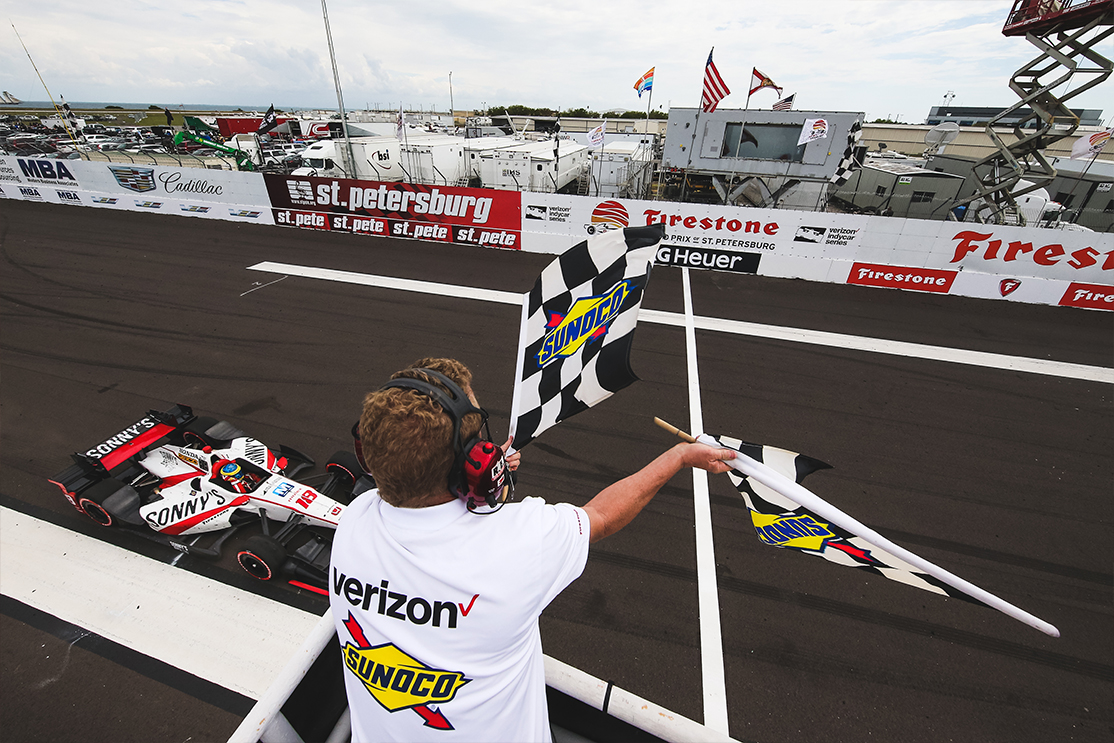
Bourdais last-to-first in IndyCar
Will Power hit by cruel luck in season opener at St Petersburg
Sebastien Bourdais completed a magical charge from last to first in in the 2017 IndyCar opener in St Petersburg, Florida, handing Honda an early success in what will be a season-long battle with rival engine Chevrolet.
The Frenchman crashed in qualifying, meaning he started 21st and rear of grid.
Clever strategy from Dale Coyne Racing, along with some opportune yellow flags, aided his progress through the field.
On lap 37 of 110, he out-braked Team Penske’s defending IndyCar champ Simon Pagenaud, and then controlled the race through to the chequer.
Pagenaud, who started 14th, was had some good fortune with the yellows, ultimately taking second ahead of Ganassi’s Scott Dixon.
The race was a disaster for polesitter Will Power who after leading at the start incurred a pit penalty for driving over his air hose early in proceedings.
His race ended with fuel-feed issues which slowed him. He was then disqualified for driving too leisurely, officially classified 19th.
Earlier, the front row was an Australasian shutout, with Power securing his seventh pole in eight years at the circuit. He does have a handle on this track.
The Australian set a best time of 1m01.064s in the final, ‘fast six’ segment of qualifying to beat Ganassi’s Honda-powered kiwi Dixon to pole.
Last year Power won the pole but was ruled out of the race with a medical condition. This year, he did at least make the start, if not the finish.
Okay, you’ve heard the rumours – stories about a last-of-the-breed big-hitter to mark the end of HSV’s locally produced hot-rods.
Tales of near-on 500kW, V8 Supercar suspension and semi-slick tyres. And whispers of a price north of $150,000. In other words, the most powerful, most expensive Australian-made car. Ever. Well, just for once, the rumours turn out to be true.
Mind you, it’s not that simple and while there is a headline act, HSV has put together a three-car range of big-bangers to farewell the local Commodore platform, just so there’s something for everyone. Everyone with fairly deep pockets, anyway.
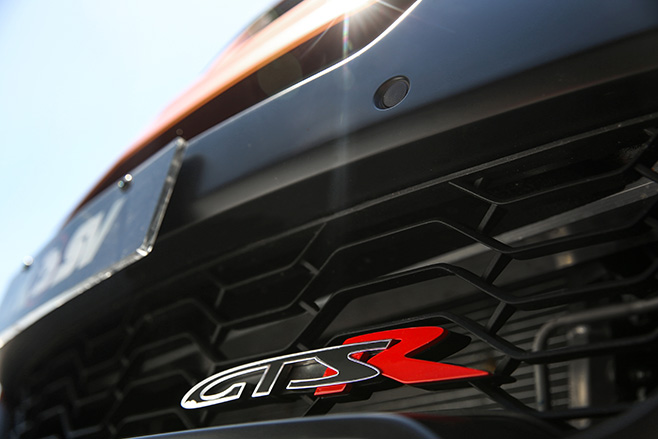
The farewell line-up has been dubbed the GTSR family and more or less amounts to a GTS sedan and Maloo with plenty of mods and tweaks as well as the big-daddy W1 with pretty much all those rumours bolted to it. Tweaks you say?
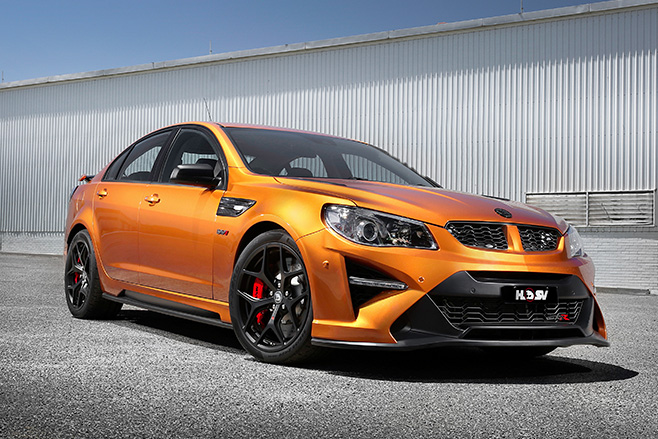
Starting at the start, the GTSR and GTSR Maloo’s blown 6.2 (LSA) gets a small power hike from the GTS’s 430kW. The new number is 435kW and comes courtesy of a new air filter. Torque remains at 740Nm.
A brake upgrade is part of the deal with new-gen six-piston AP Monobloc calipers now grabbing 410mm floating rotors at the front. Four-piston calipers decorate the rear axle. Wheels are now forged 20-inchers in the same sizes as the GTS.
Check out our 8 nerdy facts about the HSV GTSR W1
HSV has really gone for the doctor with the bodywork, too, and somehow managed to get a set of widened polypropylene front guards past the bean-counters. There’s also new front and rear fascias, fender vents, a rear diffuser, rear spoiler, exhaust tips and, of course, the appropriate badging. Inside, it’s a mix of Alcantara and leather.
Are we looking at a further modified LSA? No, we are not. Instead, you’ll find an LS9 a la the Corvette ZR1. It remains a 6.2-litre engine but with a bigger pump and a range of internal goodness, it kicks out 474kW and 815Nm.
Some of the extra power is liberated by being able to rev the thing to 6600rpm, and to achieve that, the LS9 gets forged titanium con-rods, forged alloy pistons, titanium inlet valves, hollow-stem exhaust valves, under-piston oil jets for cooling, a specific camshaft and a 2.3-litre belt-fed blower.
Underlining all that race-tech is a dry-sump system that holds almost 10 litres of oil and incorporates a water-to-oil cooler. That list wouldn’t look out of place on the spec sheet of a high-end racer.
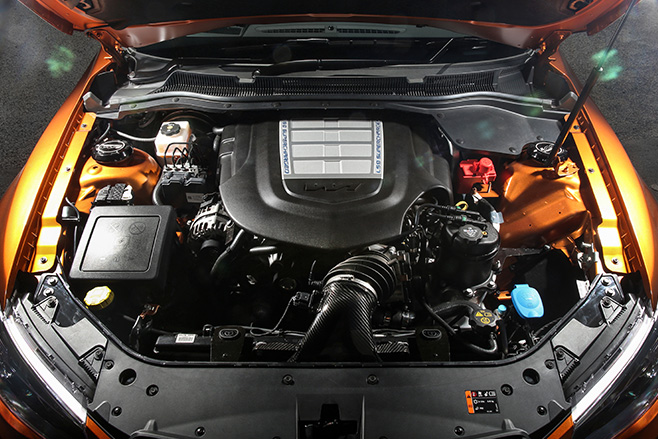
The other piece of the puzzle is the intercooler, which has 47 per cent more capacity than the LSA’s unit, features a twin brick design (one matrix per bank) a front-mount heat exchanger and a stand-alone, sealed cooling system (it doesn’t use the engine’s coolant).
You can forget about an auto tranny option for the W1; there’s just no auto that is compatible with the LS9 AND capable of harnessing 800 Newtons. So HSV has cobbled together its own take on the Tremec TR6060, combining the Corvette’s gearset (known within GM as MH3).
The high ratios are shorter, the low ratios are taller. That’d be a close-ratio ‘box, then. A twin-plate clutch has been snavelled from the Sachs catalogue and there’s a solid (single-mass) flywheel.
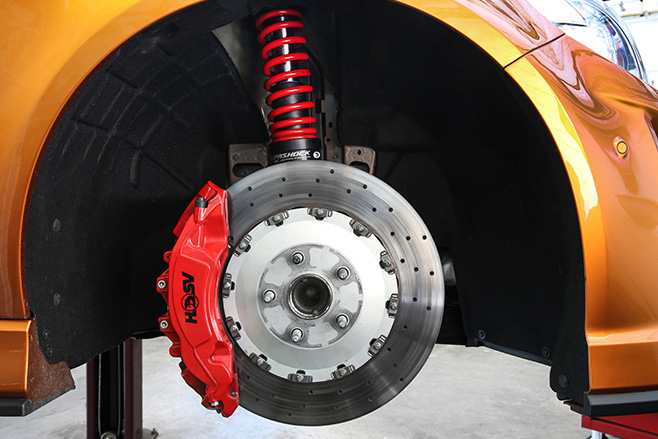
The rotors are fully floating with sliding pins and anti-rattle clips to keep them civilised. All up, we’re talking 25 per cent more pad area and a 10 per cent reduction in unsprung weight. Really, it’s a win-win.
Throw in the R-spec Pirelli P Zero Trofeos and it’s all starting to look and sound a bit racy, no? Well, it gets better. See, the wider front guards have allowed not just for the 265/35 R20 hoops, but also a change to wheel offset and scrub radius. It sounds Nth-degree, but it’s all tried and true race-car stuff.
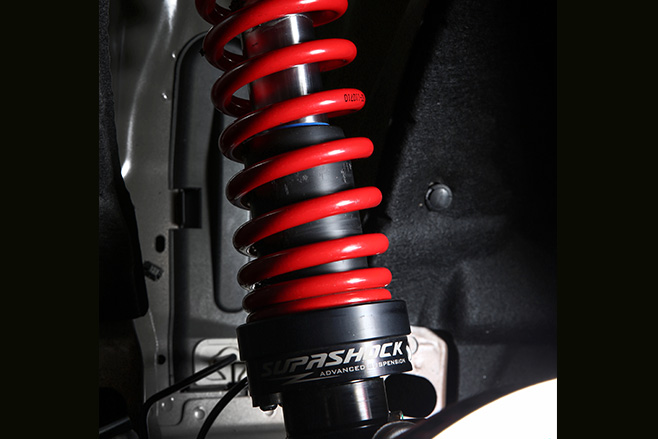
All four corners feature monotube construction, and the rears have ditched the actual, physical coil-over layout so that HSV could mount the rear spring in the original upper spring mount (and the rubber pad) in the interests of keeping transmitted noise down.
That’s a big change, for sure, and it means the W1’s spring rates are now getting up towards the rates that you’d see in a Supercar set-up for something like a street circuit. Hardcore, or what? And what’s that going to do to ride comfort?
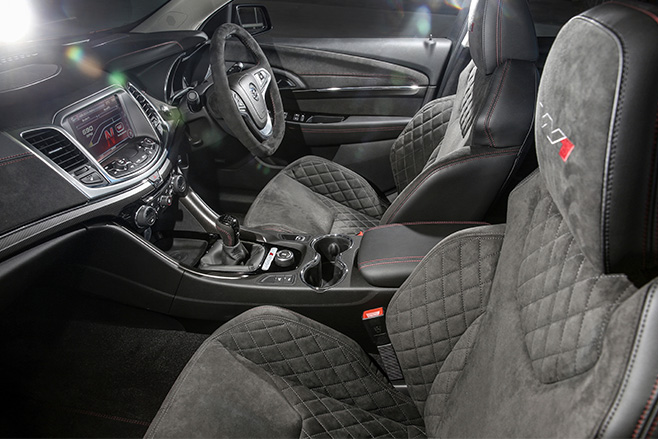
Inside, the W1 gets full Alcantara seating and a tiller and gear-knob trimmed in the same stuff. The diamond-pattern stitching sounds kind of twee, but when you see it in the flesh, it’s just lovely.
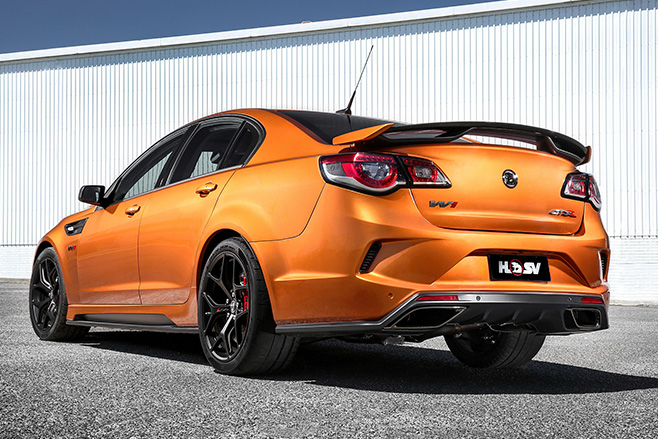
Outside, you’ll pick the W1 by its specific 20-inchers, and a heap of carbon-fibre extending from the fender vents to the skirts and the upper part of the rear wing. Then there are the trapezoidal exhaust tips and bold GTSR rear diffuser just to make sure. Nah, you ain’t gonna miss it.
Few of them will see the road on a regular basis, some of them will possibly never see the road at all. Throw in the $169,990 ask and you can see why an actual W1 sighting will be a bit of a rarity.
Search Engine
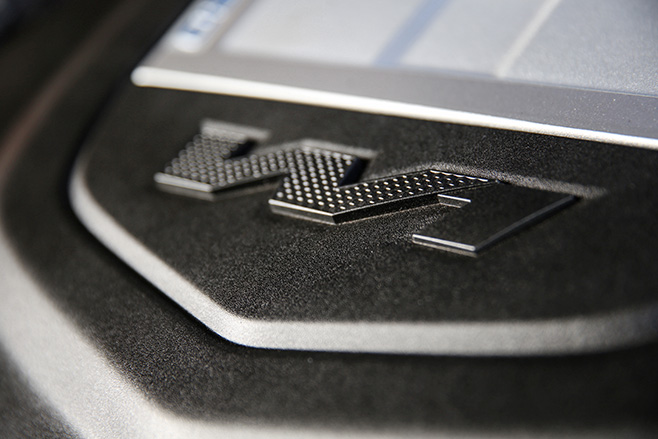
“We had to head to the US and start going through warehouses trying to find enough engines,” he says. “And then we had to kind of beg for them. At the start, we could only find a handful, but we kept at it and found enough to complete the program.” The challenges didn’t stop there. “We had to come up with a new accessory drive, too,” Stoddart says. “The Corvette has hydraulic power steering so the accessory drive included that.
We didn’t need that (the Commodore has electric-assist) so the pulleys are our own. “But an even bigger problem was finding a transmission to handle 800Nm. We knew the Tremec TR6060 from the Corvette could, but that car has a transaxle, not a conventional layout. So we had to somehow put that gearset into our gearbox casing. Then we couldn’t find an input shaft anywhere in the GM world that was the right length, so we had our own made.”
Stoddart admits that’s a lot of development work for a car that will be built just 300 times. While nobody is saying for sure how much gold has been used, HSV brass reckon the number is close to $10 million. Yet, HSV claims the car will still be profitable, saying “it’s not a price gouge on our part. Not by any means.”
Under the skin
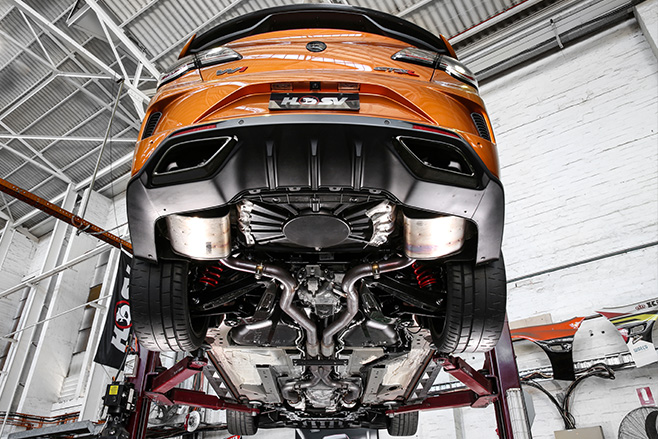
1. Noise A two-and-a-half inch stainless exhaust system and recalibrated bi-modal valve ups the volume
2. Tyres The track-focused R-Spec Pirelli Trofeos will stick like glue around a track – but risky in the wet
3. Dry sump The V8 is dry-sumped with an oil capacity of almost 10 litres and a water-to-air oil-cooler
4. Suspension With the addition of SupaShock items the W1 has suspension akin to (V8) Supercars. Impressive
If this new Lamborghini Aventador S has a job to do – over and above the usual one of providing the most attention seeking and dramatic way of getting from A to B – it is to prove to the world that Sant’Agata’s ‘super sports car’ can be as much about substance as it is style.
The original Aventador LP700-4 remains a spectacular looking car, underpinned with a genuinely impressive pushrod-suspended, carbon-fibre chassis and a thumping 515kW naturally aspirated 6.5-litre V12. No mistake, the Aventador is the ‘proper’ Lamborghini for those who consider the Huracan merely an Audi R8 in Italian designer clothes.
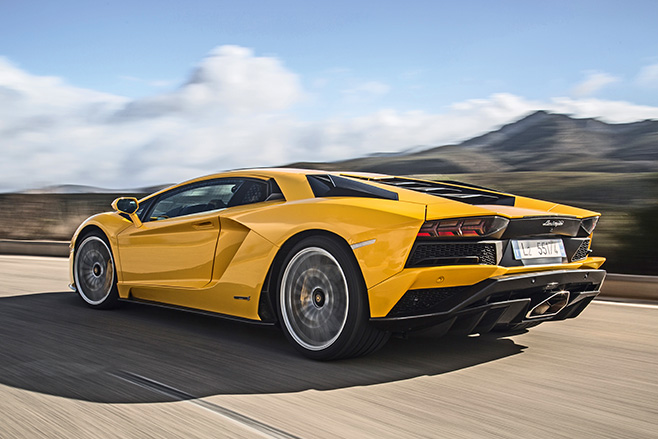
The limited-production SV version launched in 2015 proved that with a few dynamic tweaks and a little extra power there was potential in the Aventador to ruffle a few feathers in the supercar establishment, exactly as the brand has done since its founding in 1963.
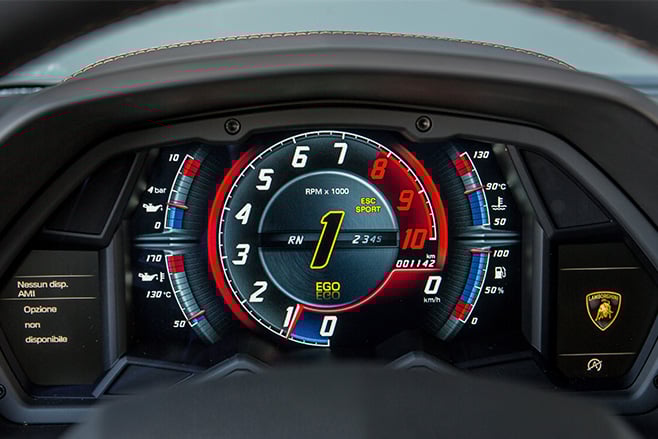
Not bad for a car relying on good old fashioned V12 grunt over hybrid gimmickry and with a list price about a third that of Porsche’s technological tour de force.
For the Aventador S, Lamborghini has carried over some of what it learned from the SV – Dynamic Steering included – while making the aforementioned power increase and aero upgrades. It has also added that latest supercar must-have, four-wheel steering, and thoroughly reworked the suspension and control systems.
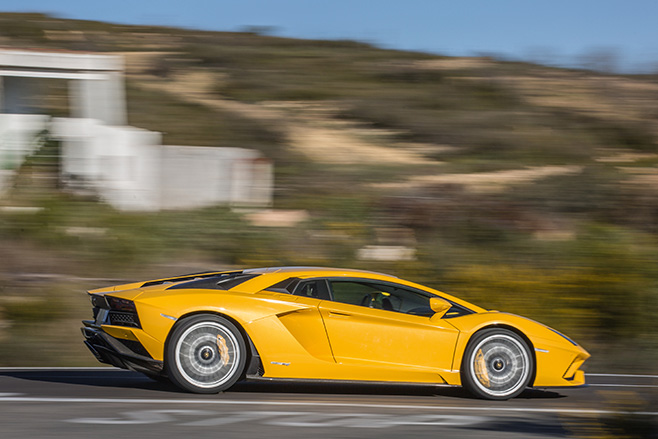
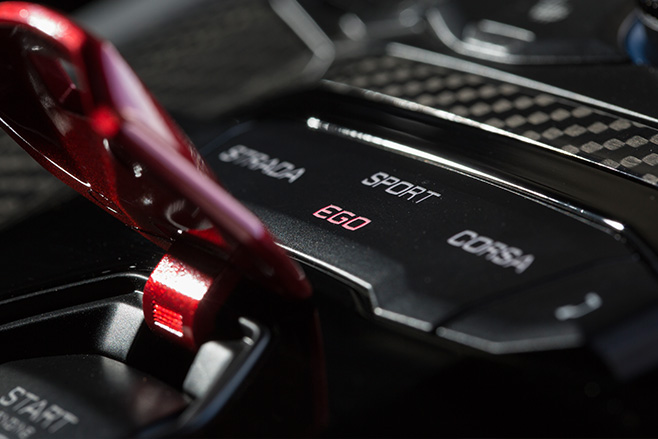
The Aventador S still feels hefty, but has more aerodynamic grip and increased agility from the four-wheel steering, so Lamborghini clearly hopes to address the criticisms about the Aventador’s lack of dynamic sparkle. Just in case you thought it was in danger of taking life a bit too seriously, there’s a new configurable driving mode over and above the familiar Strada, Sport and Corsa settings. It’s called ‘Ego’.
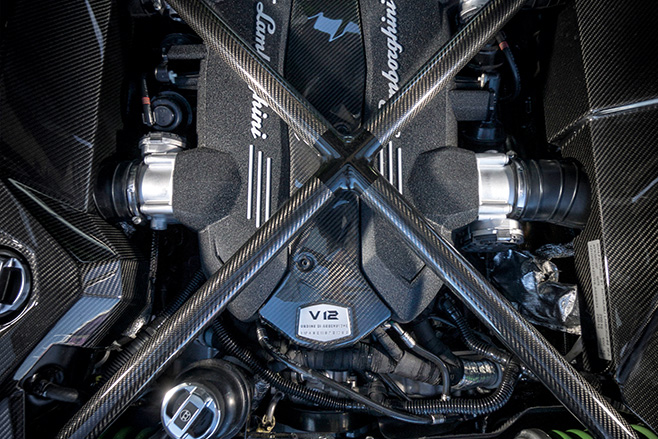
Be under no illusion, the Aventador S is a ferociously fast car and underlines just how outrageous that V12 remains, even in this age of hybrid assistance. Forget any electrically assisted pretence of saving the planet while travelling at 320km/h, though – updated or not, the V12 still chucks out a suitably unapologetic 394g/km of CO2 while achieving an average of just 16.9L/100km.
As in other applications, the four-wheel steering turns the rear wheels in the opposite direction from the fronts for greater agility in low-speed corners. At higher speeds, it turns them the same way as the fronts to give greater stability.
Meanwhile, the variable steering can go from 2.1 turns lock to lock to 2.4, offering scope for front-end bite as well as relaxed cruising and good manners around town. For those who dare to go on track, 130 per cent more downforce at 240km/h from a new front bumper and splitter further emphasises Lamborghini’s efforts to improve the front-end grip, suggesting it’s listened to the earlier criticisms. Does it all work, though?
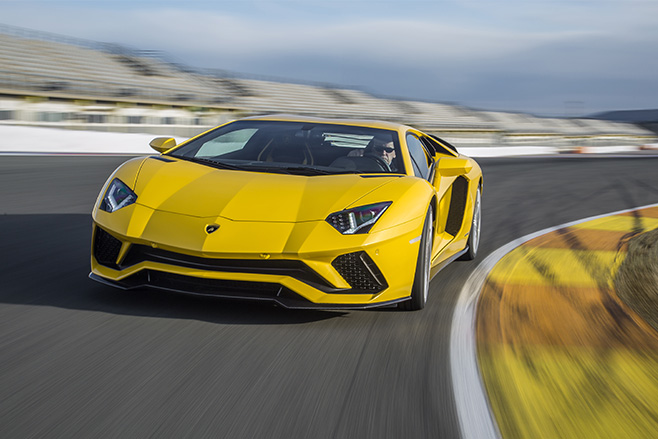
When the track eventually opened, it was strictly controlled ducks and drakes behind cautious instructors. But even at a slow pace, the work that’s gone into this new flagship is evident. Working through the modes, Strada maintains the surprisingly ponderous feeling you could get from the LP700-4.
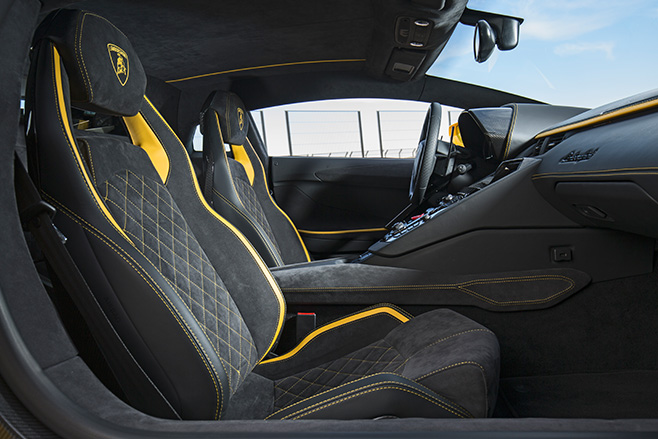
In Strada, though, it’s hesitant and long-winded in automatic and slow to respond to flicks of the paddle shifters in manual. The conservative front/rear torque split of 40/60 also means you have little choice but to tread carefully into the corner and then bide your time on the way out.
In the wet, Sport is more exciting, sending up to 90 per cent of the drive torque to the rear axle and letting you dial out mid-corner understeer on the throttle; the car rotates with commendable predictability considering the variances in steering lock, effective wheelbase length and rear-wheel steering. The stability control is sufficiently lenient in this mode to demand assertive corrections in slippery conditions.
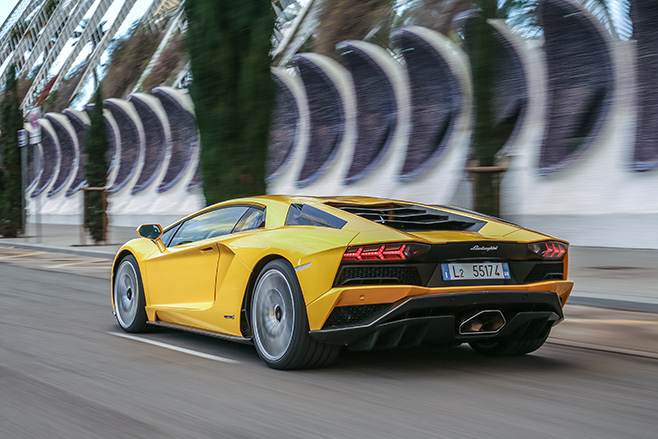
Ego, for all the novelty value of the name, simply lets you mix and match your preferred settings for steering, powertrain and suspension.
That there’s so much to adjust in the way the Aventador S drives is a significant progression from the LP700-4. Rather than a death grip at the wheel and gritted teeth, you now drive the big Lambo with something close to fingertip precision.
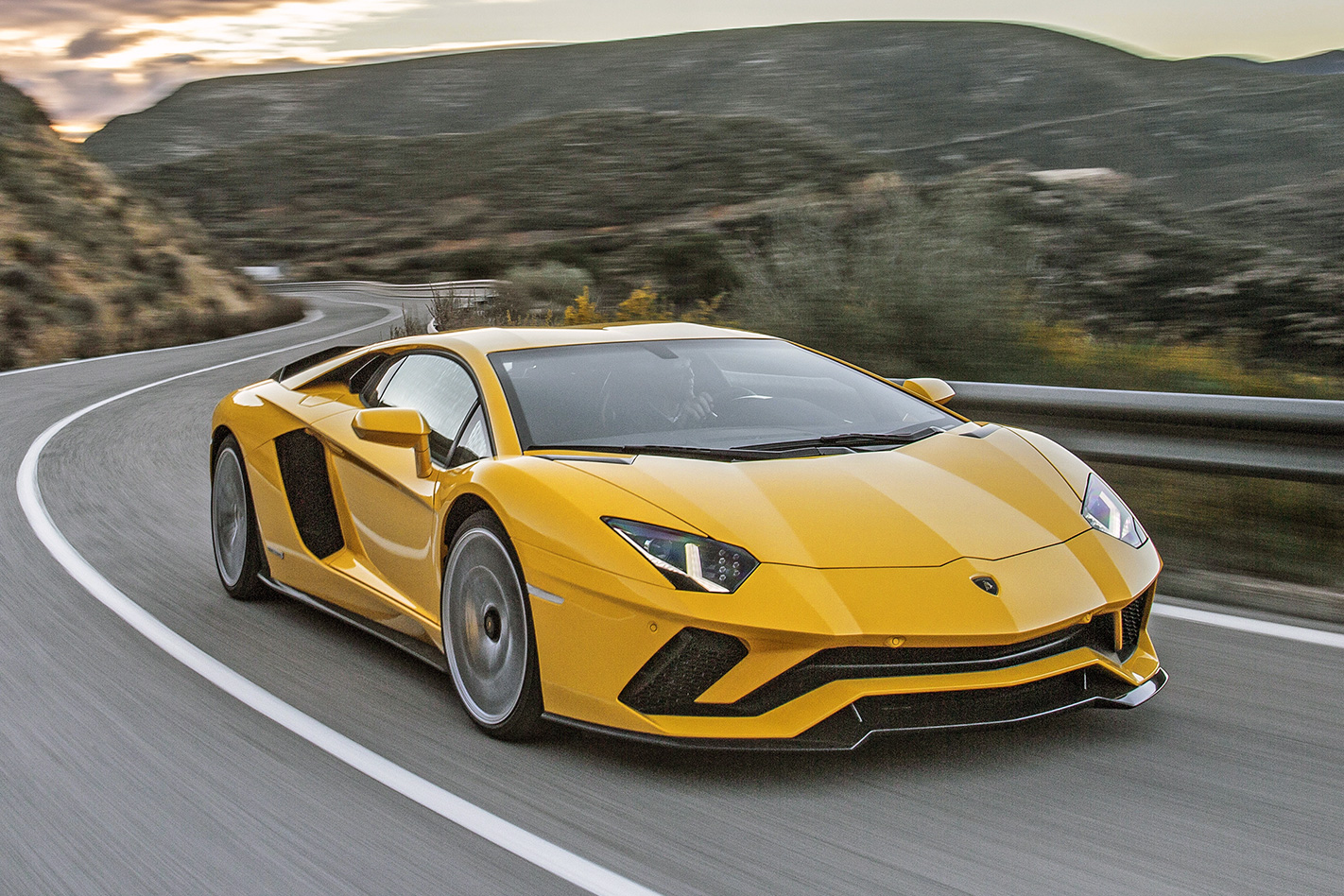
It is, in other words, a much more sophisticated and rewarding car without diluting the raw excitement any V12 Lamborghini should deliver. It won’t win over those who think it a bit much, but for those of us who take a childlike glee in such cars still existing, it’s nice to know it delivers on the looks at last.
4.0 OUT OF 5 STARS
Like: Stunning looks; performance; noise; upgrades Dislike: Terrible gearbox; ride still firm; massive price
SPECS Engine: 6498cc V12, DOHC, 48v Power: 544kW @ 8400rpm Torque: 690Nm @ 5500rpm Weight: 1575kg 0-100km/h: 2.9sec (claimed) Price: $789,425
MARK Bernhard knows 2017 won’t be easy for Holden. Entering his 31st year with General Motors, the chairman and MD of the once-dominant brand is philosophical about what is the manufacturer’s most challenging period since it produced its first car in 1948.
He seems almost calm in outlining the months ahead. Come October 20 there will be no more Holden as many remember it: a manufacturing giant, a top-selling car maker and a brand that helped shape Australia with nameplates like Kingswood, Monaro, Sandman, Torana and Holden Commodore.
Bernhard has witnessed wild swings in fortunes for Holden, from its near-demise in 1986 to the Monaro-infused revival a decade or so later. Just last year the brand posted its lowest ever market share, finishing outside the top three for the first time.
Yet he’s not dwelling on the past. Instead he turns to the import-only future, which kicks off in 2018 with the arrival of the next Opel Insignia, a car that will wear the Commodore badge.
Bernhard emphasises he doesn’t want to “downplay the importance of the last year of manufacturing”, in particular ensuring the 1000 employees that will lose their jobs are treated with “dignity and respect”.
“But our focus is more on building a long term sustainable business. What happens this year is something that’s already been written. We talk about the 24 new products by 2020 and we’re now working beyond that, too.”

But Bernhard, who took up his post in July 2015, appears ready for the challenge, albeit battle weary from a challenging year and a half at the helm.
“It’s probably not so much a concern as opposed to something we know we need to address,” he says of the disastrous result in 2016. “We’ve got the green shoots now; we’ve got the product portfolio starting to change over as well. We’re confident we can turn it around from where it’s at.”
While Holden’s PR message is on getting the basics right – the cars, customer service, and after-sales – rather than market share, it’s clear that number four on the sales charts does not sit well.
There’s a hint of frustration about the delay between implementing plans and seeing results. For now, poor decisions of the past are playing out and Bernhard is the man at the end of pointed fingers.
He won’t rule out more pain, but says challenges will be dealt with as they arise.
Despite the shutdown of manufacturing, Bernhard says much of the core of what Holden does won’t change.
“We’re in the business of looking after customers, we’re in the business of selling vehicles, selling services, and to a large extent that doesn’t change, I’m conscious that we’ve got what is going to be a very, very sad day for the industry and country at large. But we’ve got to be focused on the business long term,” he says.
Yet Holden’s future relies more on its overseas siblings than ever before. The company has previously designed cars purely for Australia. Now it must demand a seat at the development table to ensure Australians get cars that suit.
As part of that it is clear that Commodore will play a far less important role.
“We’ve got some fantastic products that give a portfolio that should appeal to a broad range of Australians,” he says. “Commodore is one product. Is it important? Absolutely, but so are all the other products as well.”
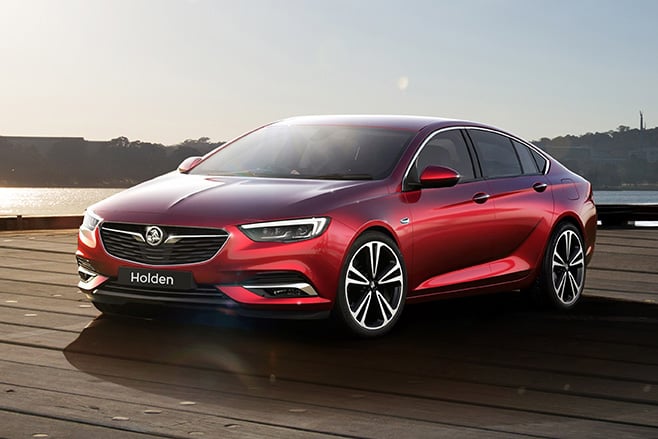
Of the 24 promised models by 2020 more than half have now been confirmed, and some are obvious replacements, including an all-new Holden Colorado.
Considering the success of the Mustang – it was Ford’s third best-selling passenger car behind the under-performing Focus – it all but guarantees the Chevrolet Camaro is on Holden’s hit list.
Bernhard gives one more clue by suggesting Holden will take advantage of strong V8 demand.
“We sell a significant number of V8s ourselves today. We understand the demand is there in the portfolio. We’re very comfortable with the portfolio we’ve got coming.”
The yet-to-be-revealed eighth-generation Corvette is a done deal – giving Holden the V8-powered sports car the company promised in 2015 – and Wheels expects the new-gen Chevrolet Camaro, due in 2021, to be part of the mix (see p.10-11).
In this bold new world of futuristic thinking, Bernhard is keeping an eye on emerging technologies, such as electric and autonomous. He wants Holden to play a role – if it makes sense.
Yet despite the focus on the future and appealing to a broader customer base, there is an appreciation of Holden enthusiasts.
“They’re great ambassadors for Holden,” says Bernhard of the rusted-on Holden faithful. “They’re very, very passionate people. We want to engage with them as much as we can.”
But Bernhard reinforces that Holden is changing and looking to appeal to customers it has previously shunned.
He also acknowledges that there is much work to be done reviving Holden’s brand health, something he admits will happen “slowly” – in much the same way it has unravelled over the past decade.
“It takes a significant amount of time and effort and that’s part of the work and building blocks that we’ve put in place over the last 18 months, probably longer.”
“The underlying parts of the business are showing really positive signs, so when you’re putting in the effort and you’re getting results, you say ‘now I want more results’.”
Carbon-ceramic brakes used to be the preserve of only the most exotic of cars.
The technology was originally developed for the high-speed rail industry, but the first auto application was unveiled at the 1999 Frankfurt motor show. Its production debut came in 2001 as an option on the Porsche 911 GT2, before being adopted by the early-2000s supercar trio of the Ferrari Enzo, Porsche Carrera GT and Mercedes-McLaren SLR.
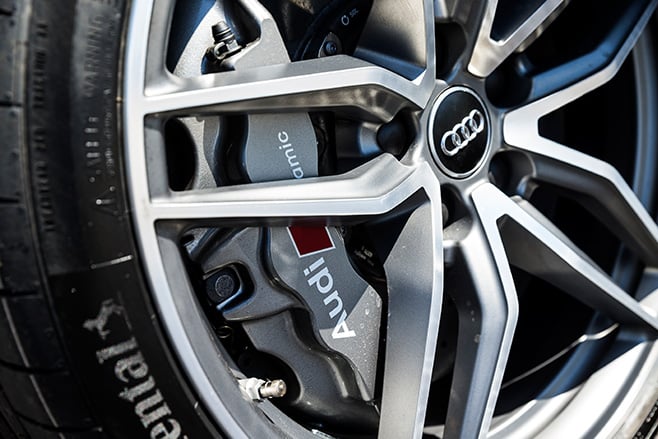
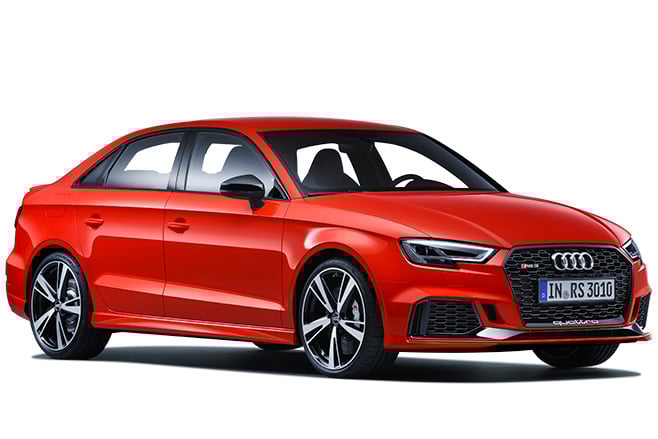
There’s a reason that until recently carbon-ceramic discs have only been available at the upper end of the market, and that’s because the production process is extremely time-consuming. In fact, it can take up to 20 days to produce a composite disc. Despite this, like all technology, it has slowly filtered down to the point where the lightweight stoppers are an option on the likes of the Audi RS3.
Low-speed pedal feel was also poor, with early Lamborghinis and the Merc SLR in particular requiring an ‘all or nothing’ approach to braking. Porsche and Ferrari got on top of this quickly, however, despite assurances that carbon-ceramic brakes would last the life of the vehicle, owners quickly found themselves with five-figure replacement bills when their cars were driven hard on circuits.
COOKING CLASS
Baking brakes
1. RAW INGREDIENTS The raw materials of a carbon-ceramic brake disc are a heat-mouldable silicone resin and chopped bits of carbonfibre, which are combined in an aluminium mould to create the shape of a brake rotor. Aluminium inserts are hammered into the side of the mould to create the ventilation slots.
2. PRESSING MATTER A press then applies 20,000kg of pressure to this mixture and heats it to 200 degrees Celsius, which compresses the carbonfibre and transforms the resin into plastic. The disc is then dunked in water to cool.
4. FEEL THE BURN Oxygen burns carbon at high temperatures. You may have seen this occur during F1 races, with clouds of black dust emerging from wheels under heavy braking as the discs disappear. To prevent this each disc is painted to prevent oxidisation, which extends the life of the brakes under extreme temperatures.
5. WHAT A GRIND The paint leaves a white residue when cured, so the final step is to remove this, polish the disc and inspect it at a micron level to ensure there are no flaws. Then it’s time to fit the hats and attach to the car.
Light weight, heavy bills
Top-notch braking doesn’t come cheap
FOR THE vast majority of drivers, carbon-ceramic brakes are unnecessary. Unless you’re a regular track-goer, the only difference you’ll feel is a slight improvement in ride quality, as composite brakes are lighter and therefore reduce unsprung weight.
However, if you do decide to take the plunge, you’ll need fairly deep pockets. At the supercar end of town, carbon-ceramic brakes are increasingly common standard equipment – all Ferraris, for instance, come so equipped, as do Porsche’s Turbo S models.
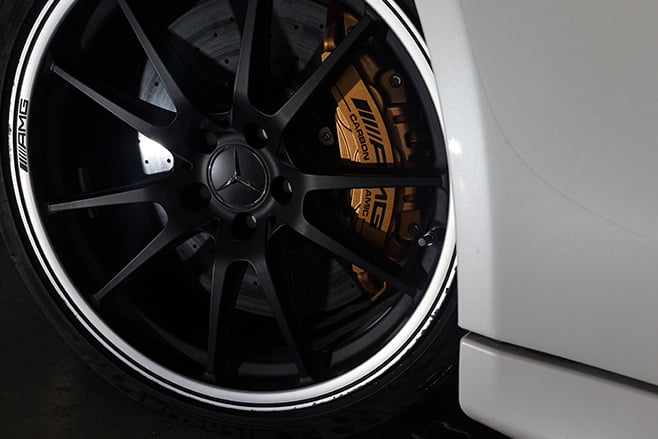
AMG offers front carbon-ceramics for $9990 on the C63, which are signified by gold calipers. BMW’s M Division also uses gold calipers to identify cars so equipped, but charges $15,000 for the privilege on the M3/M4, though it does throw in composite rears as well.
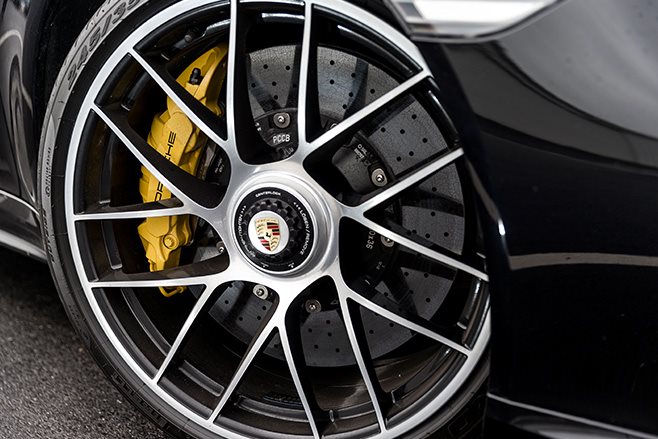
Porsche, the company that started it all, uses yellow calipers for PCCB-optioned cars, and you’ll need $19,990 to add these to your 911 or $17,990 for your Boxster or Cayman. Bentley likewise charges $20,000 for the ultimate in braking while Audi asks for $20,940 on the RS6/RS7 but helpfully writes ‘ceramic’ on the grey calipers to remind everyone that you are as brave with your financial decisions as you are with the middle pedal.
Just remember, they cost just as much at replacement time.
THE American President’s F1 is for sale, but not of the Air Force kind.
A Ferrari F430 F1 coupe Donald Trump bought new in 2007 will hit auctions blocks this month bearing his signature, and Fifth Ave New York address, in its title deed.
With Donald Trump’s garage once housing a Lamborghini Diablo, McLaren SLR, and Rolls-Royce it’s no surprise capitalism’s poster boy has a penchant for fast cars.
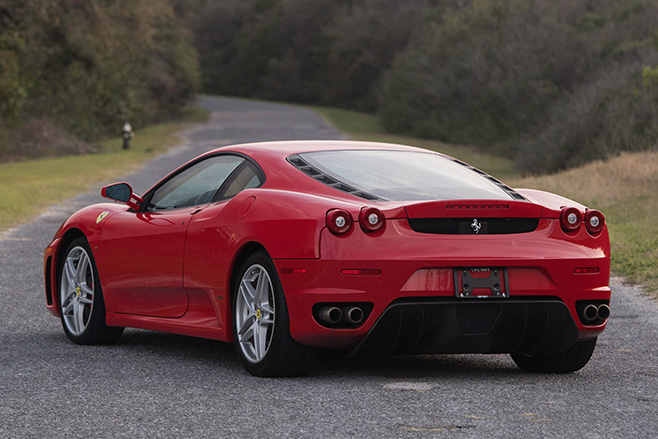
Speaking of which, Ferrari’s F430 still commands huge appeal. Its 365kW atmo V8, rear electronic clutch-diff, aggressive aerodynamics, and paddle-shift transmission make it a proper driver’s car.
Added to this specification are Scuderia guard crests, yellow gauges, and a carbon fibre dash insert. While the Ferrari’s exterior red paint is complemented by beige leather skin inside, a colour combination similar to its original owner.
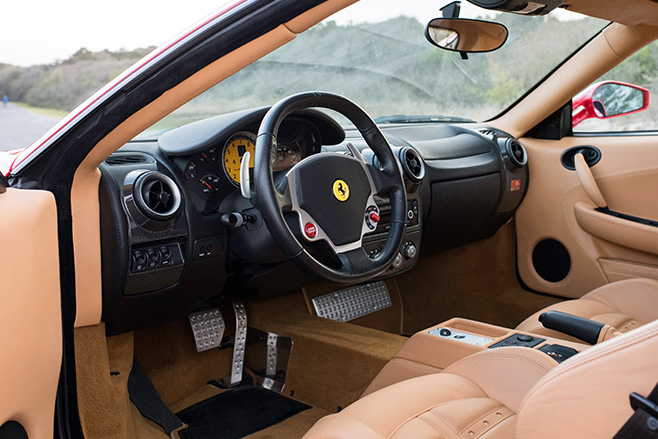
In contrast to his disruptive politics Trump’s kinder to his car. The F430 still boasts is original books and records, a tool kit, car cover, and charging kit.
While we’ve seen politicians get about in flashier forms of transport Down Under, few would have the means to slot Ferrari’s special coupe in their garage.
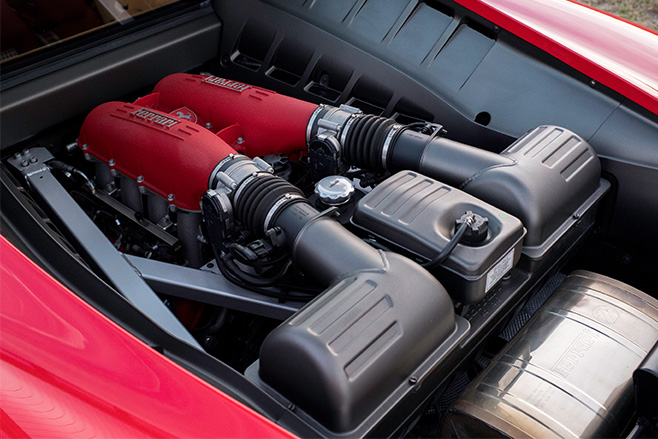
Whether it’ll fetch that much will be revealed at the end of this month when it’s auctioned off in Fort Lauderdale, Florida.
Photo credit: Dirk de Jager
Meet the driving force behind Valvoline’s recent ad campaign.
WE’VE seen some epic automotive TV commercials over the years. Few are being made these days, though, thanks to advertising standards that can see a campaign pulled after a single complaint. So who’d get behind a balls-out, rev- and rubber-fest like Valvoline’s recent ‘Man Like Horsepower’ ads?
Valvoline marketing manager Tony McDermott was born into a car family. “My father used to take us to the car racing, motorbike racing. He had cool cars: an MG TC, Jag S-Type, Jag XJ-6, Brock Commodore. And my mum had cool cars: a 302 XY Fairmont four-speed, then a 351 XB four-speed…”
That sort of upbringing puts a kid in danger of becoming a motoring journalist. Leaving university with a marketing degree, McDermott joined the market research department at ACP (then-publisher of Wheels) in 1987.
“While I was working there, I wrote a few articles for Street Machine. I could write reasonably well, but there were people who could write really well. Marketing was just a better career for me.”
He joined Rothmans, before the tide had fully turned against tobacco sponsorship. McDermott spent most weekends “up close and personal” with Winfield-sponsored drag racing, speedway and the Gibson Motorsport Nissan team.
His employer’s Winston brand connection helped McDermott to tick a bucket-list item: driving a NASCAR.
“I was going to the US for a holiday, so I arranged to go down to North Carolina. Winston gave me VIP tickets to a race.
“I booked a three-day course at Buck Baker’s stock car school, where you drove real, 600hp NASCARs around Rockingham … People talk about driving around in circles, but it’s actually driving a track with four corners. I was doing about 140mph (225km/h), and then I went around with Buddy [Baker] at about 180 (290).”
Through subsequent career stints with bourbon brands Cougar and Jim Beam, McDermott’s ridden shotgun in V8 Supercars, Carrera Cup cars, a three-seater top-fueller and Gary ‘Burnout King’ Myers’ Ford Mustang at Summernats. He’s also raced his own VN Commodore V8 in Super Sprint competition.
McDermott joined Valvoline in 2008. The brand’s long association with radio announcer John Laws (“You know what I mean”) was under review. With full synthetic oils gradually dominating the market, the brand needed to emphasise its SynPower offering.
“Engine oil is not sexy, it is not exciting. Cars are sexy and exciting. So we wanted to tap into that emotional connection.”
The ‘Man Like Horsepower’ ads were shot in Uruguay, where production costs can be half of those locally. As McDermott found on set, local authorities are also a bit more flexible…
“We went into Montevideo, to the equivalent of [Sydney’s] Cross City Tunnel. They just closed it for us, we did our shots and off we choofed.”
While any such campaign has to be structured around industry guidelines, McDermott says the ad received about half a dozen complaints. “We expected that. One person can write an email and cost Australia hundreds of thousands of dollars… And the system is run by people who catch the bus.”
Crude intentions
Oil man and petrol-head Tony McDermott isn’t worried about electric cars drying up his employer’s market. “I think it could be 50 years before electric cars become universal because of the range issues and the ability to regenerate the battery. So until then, we’ll need hybrids. And in fact, Valvoline already supplies to Tesla: coolant for the batteries.”
IT’S a surreal and disarmingly intoxicating experience to sit across from someone who has saved the lives of thousands, if not millions, of people.
First published in the February 2017 issue of Wheels magazine, Australia’s best car mag since 1953.
Frank-Werner Mohn is tall, rotund and bubbles with a relentless energy, most of which is being used to attack a steaming plate of what appears to be deer and potato.
He’s also the man who invented ESP, known as the Electronic Stability Program.
We’re sat at a long table in a delightfully authentic, wood-panelled restaurant, nestled in a valley in the German countryside outside of Stuttgart, and Frank’s eyes shine as he tells his story. It’s a good one, not only because it shaped the course of motoring history, but because it begins with something we can all relate to – crashing a car.
“I was young, you know,” he says sheepishly. “I was in Sweden on an icy road testing the steering in a W124 Mercedes-Benz E-Class and I slid into a big ditch. The car went in, it got dark because the snow was so deep and I thought ‘Oop, this is going to roll.”
It didn’t, but as a young Mercedes engineer working with Bosch on ABS calibration in the late ’80s, Frank had suffered the indignity of crashing in front of a group of his colleagues. And yet it was on the side of that slippery road, as Frank stared at the wreck of what had been a shiny and straight 300E only minutes before, where inspiration struck.
“I thought ‘Hey, what if you brake one wheel to stabilise the car?’”
Convinced of his idea, and armed with a working proposal full of complex algorithims, Frank charged back to Germany and pitched the concept to his superiors. They laughed at him.
“‘If you brake one wheel, then the car will turn like a rabbit running from a fox,’ they said. But I was convinced it could work, yet they still laughed.”
There was also the mechanical hurdle of integrating the idea with Bosch’s existing ABS technology, but dogged determination and Frank’s unyielding enthusiasm eventually saw high-ranking Benz engineers drive a working prototype. By 1995, having been co-developed with Bosch, ESP entered production on the circa-$360,000 V12-powered S600 Coupe. Two years later, it was fitted to the A-Class (after it rolled during the infamous Elk test) and then made standard on all Mercedes models. In 2010 it was a mandatory requirement for entry to Wheels Car of the Year.
Wheels has a long history of independently testing advanced safety systems, be it ABS on gravel or ESC (as we refer to ESP) in a controlled environment. It’s important, because even now, more than 20 years since it was first introduced, there’s still a vast gulf in the effectiveness of ESC systems between manufacturers.
This year, we’ve continued the tradition by putting Autonomous Emergency Braking under the microscope. And, just like ESC, our testing (done in conjunction with Insurance Group Australia) during round one of COTY, has proven that not all AEB systems are created equal. In fact, the results have ruffled some feathers (p17 has the full report), and they’re a welcome reminder of what makes Wheels COTY so vital. No other outlet goes to such exhausting and process-driven lengths to find the best car released in the previous year.
It’s why, at the end of seven tiring, though unwaveringly brilliant, days of COTY testing, I found myself taking a deep, shaky breath. I stood in a stark, white-tiled bathroom in the rural town of Inverloch, clutching a bunch of palm cards scribbled with seven different types of handwriting.
It fell to me to tally the final COTY vote, which tradition dictates must occur in the nearest dunny. And as I locked the cubicle door, I realised that for a few months, I’d be the only person on the planet to know what had won the world’s longest-running motoring accolade. As a Wheels fan and reader since my early teens, that too was a surreal and intoxicating experience.
RUF, the German tuning house that made its name fettling and tweaking Porsches, has wheeled out something a little different from its usual creations at this year’s Geneva Motor Show.
At a glance, it’s a fairly faithful homage to the original CTR, the heavily-massaged 911 Carrera 3.2-based twin-turbo monster that earned the nickname “Yellowbird” and put CTR on the map. Peek under the skin of the present-day CTR, however, and there’s a surprising lack of Porsche-ness.
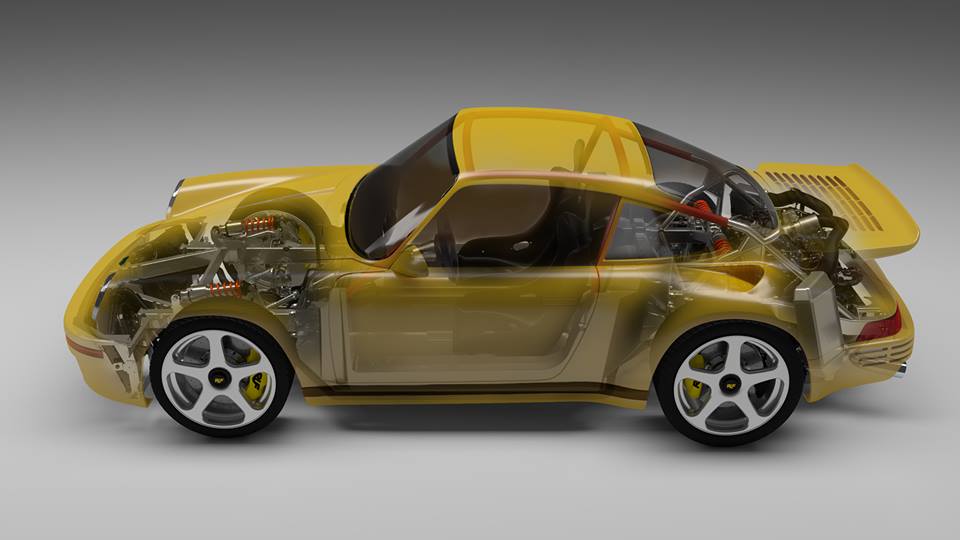
The classic fastback silhouette, eye-searing yellow paint, gaping NACA ducts, chunky five-spoke alloys and whale tail spoiler are throwbacks to the original CTR, but underneath is an entirely bespoke carbon-fibre passenger compartment bookended by steel subframes at front and rear, which carry the suspension, steering and powertrain.
That means that besides the dry-sumped, 515kW twin-turbo 3.6 litre Mezger flat-six hanging out back and the six-speed manual hanging off it, there’s very little Porsche content in RUF’s CTR redux.
The suspension is a racecar-style pushrod config, and thanks to the light weight of the carbon chassis it all weighs in at just 1200kg dry.
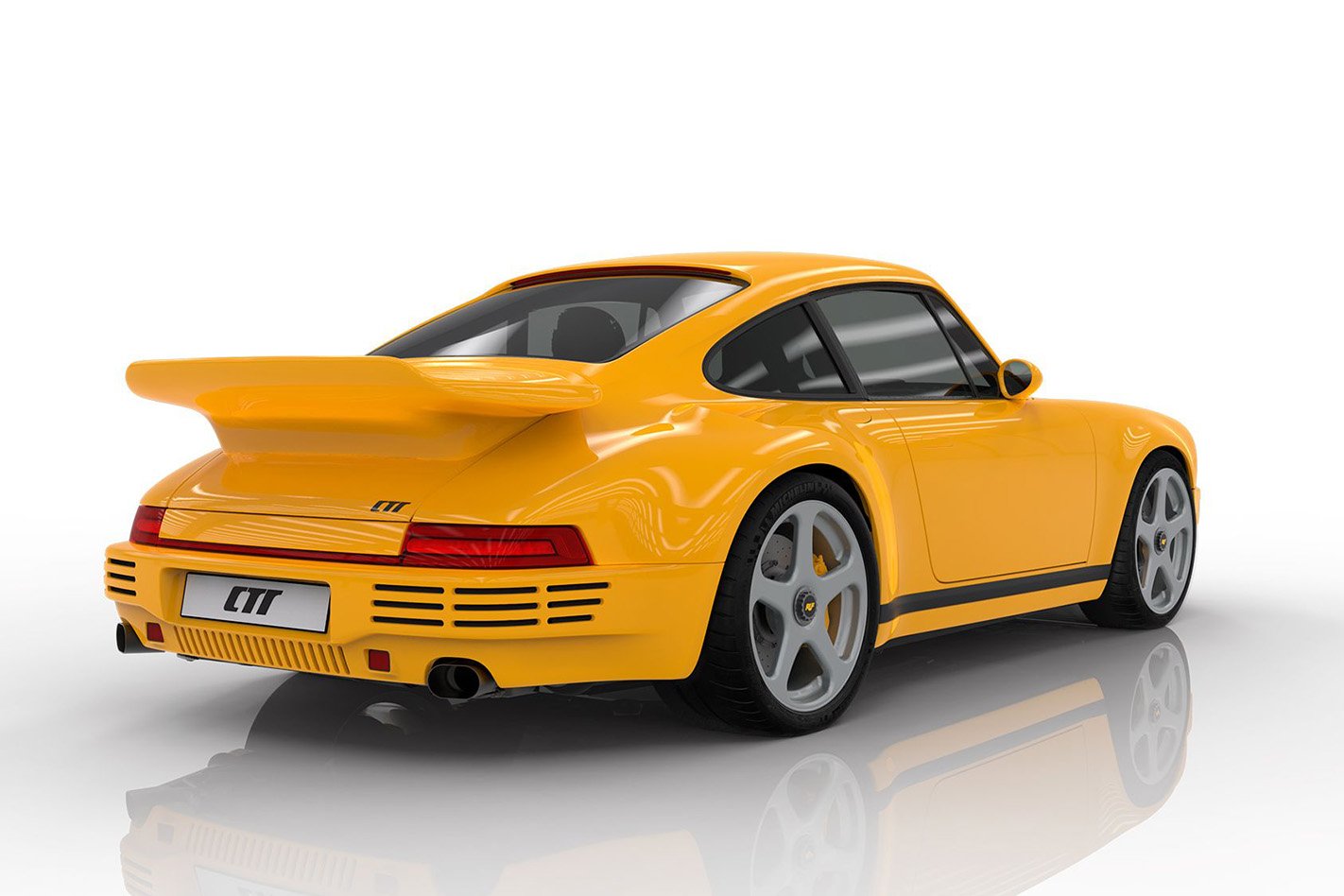
Modern features like LED daytime running lamps, LED light bar tail lights and a mammoth brake package are also key clues that this is more than just a reboot of the classic Yellowbird.
Mega-fat 305-section rear tyres take power to the ground, and RUF says the 2017 CTR will smash through the 100km/h barrier in a brisk 3.5 seconds. Only 30 cars will be made and RUF still isn’t talking about pricetags just yet, but you can bet none will be coming our way.
We’ll have to enjoy this one from afar, but we can at least soothe our sorrow with this legendary and absolutely bonkers footage of the original Yellowbird being whipped around the Nurburgring Nordschliefe by test driver Stefan Roser. Enjoy.
