
Holding the wheel
If you prefer to grip the wheel with your right hand at the 11-o’clock position, stop! You’re doing it wrong, and potentially putting yourself – and other motorists – at risk of an avoidable accident. Other steering methods that are similarly terrible for car control include the single-hand-at-6-o’clock style, the both-hands-at-12-o’clock (AKA, The Nanna) and the “Look ma, no hands (feat. Knees)” technique.
Your steering wheel is your only means of directional control of the direction of the car, so holding it properly is vital. If something falls off the car in front of you or a pedestrian accidentally steps into the path of your car, you’ll want to be able to react and take evasive action instantly. So how should you hold it to ensure you’ve got adequate directional control at all times?
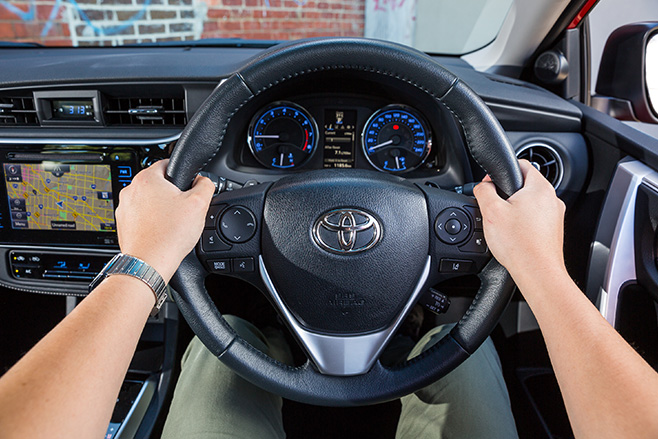
It’s simple – you left hand holds the wheel at the nine-o’clock position (exactly halfway up the wheel when it’s pointing straight ahead), while the right hand is directly opposite at the three-o’clock position. This will give your arm muscles enough leverage to turn the wheel throughout its entire range of motion, more so than the commonly-taught “ten and two” position.
Another key consideration is to never have your arms completely outstretched – that reduces the amount of turning force you can apply, and will just lead to your arms becoming tired much sooner. Similarly, don’t have your elbows bent too far – that will just limit your arms’ range of movement.
Sitting correctly
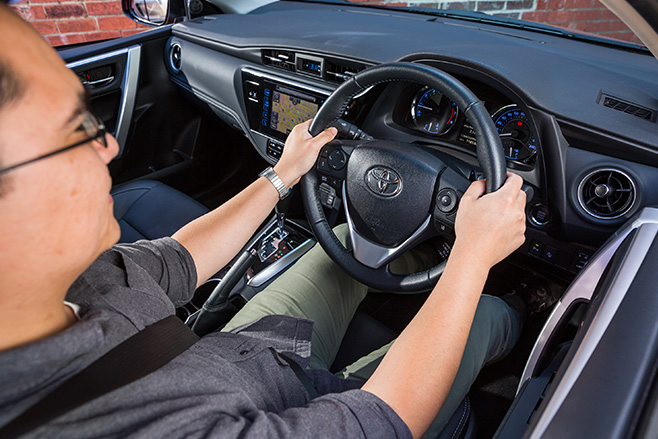
Speaking of positioning your arms, the same principles apply to the rest of your limbs. After all, operating your car’s controls is a hell of a lot easier if you can actually reach them. Human beings come in various shapes and sizes, but the general rule for how to position your driver’s seat is to adjust it so that neither your arms or legs are over-extended at any time.
Don’t position yourself too close to the wheel and/or pedals either – that can be just as bad, and you could be putting yourself at risk of serious injury if you’re too close to the airbag in your steering wheel, as shown below.
Mirrors
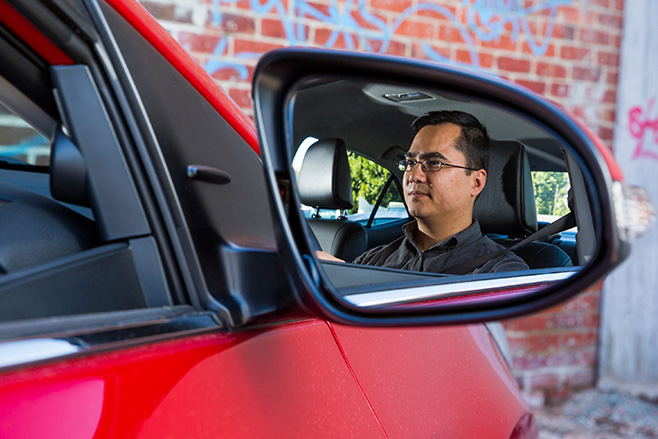
You’d be amazed how many people have their wing mirrors permanently pointed downward to make parallel parking easier, or have their rear-view mirror pointed toward their face so they can apply makeup or check for stray spinach between their teeth. Those mirrors are there for keeping tabs on traffic behind you and to your sides, nothing else!
And they’re only useful if adjusted correctly. Wing mirrors should ideally have the horizon right in the middle of the frame, with as little of the car’s bodywork in your field of view – though having a small corner of your car visible may help your eyes determine exactly where other traffic is relative to your position.
Vision
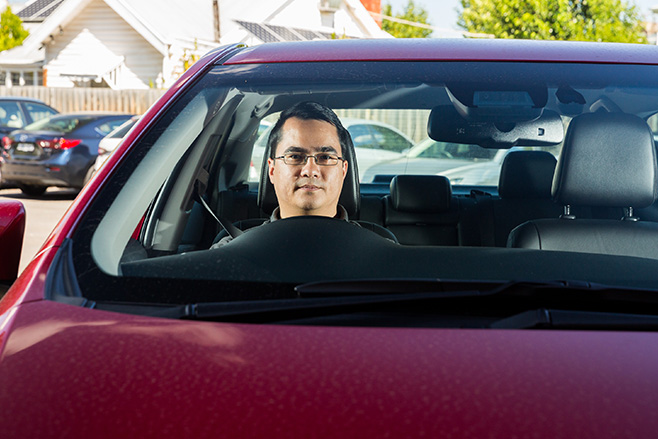
Forward vision is something that is frequently overlooked (geddit? Haha) as well. Keep your eyes up and forward, don’t look at your phone (we shouldn’t even need to say that one) and ensure your seat is adjusted high enough to give you a good view over your dashboard and bonnet. It’s important to check your instruments periodically to keep tabs on your speed, but don’t bury your head down there either – your eyeballs should spend far more time scanning the road.
The worst thing you can do for forward vision is to adopt the so-called “Gangster Lean” stance shown above. You may think you look cool with your seat reclined all the way back, but besides limiting your ability to grab the wheel it also significantly reduces your view of the road ahead.
Braking
Auto-equipped cars have two pedals, ergo one is for your right foot and the other for your left… yeah?
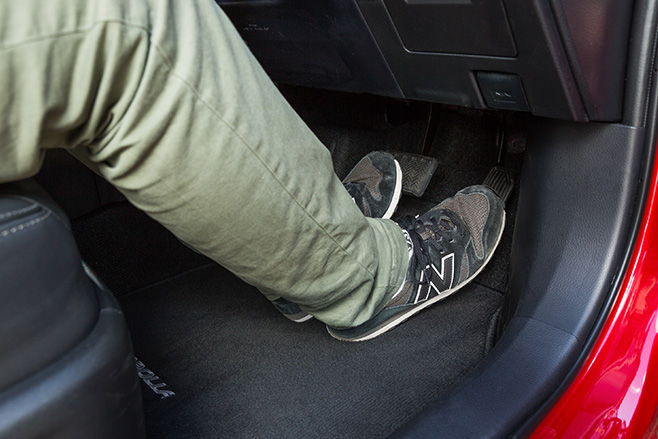
Actually, no. Left-foot braking may be a clever technique employed by race drivers, but it’s not such a great idea on the road. Why? Because the temptation there is to use the brake pedal like a footrest, which will leave your brake lights permanently lit and have those behind you wondering whether you’re speeding up, slowing down or just cruising.
It also results in heinous brake pad wear, meaning you’ll be paying more money to keep your car roadworthy than you should. Instead, just use your right foot for both braking and accelerating.
Indicators
Lastly, there’s the forgotten art of the blinking light – otherwise known as indicating. Indicators are a handy way of signifying your intent to turn or change lanes, but a quick drive around Australia’s second-largest city, Melbourne, reveals that many no longer know how to use them.
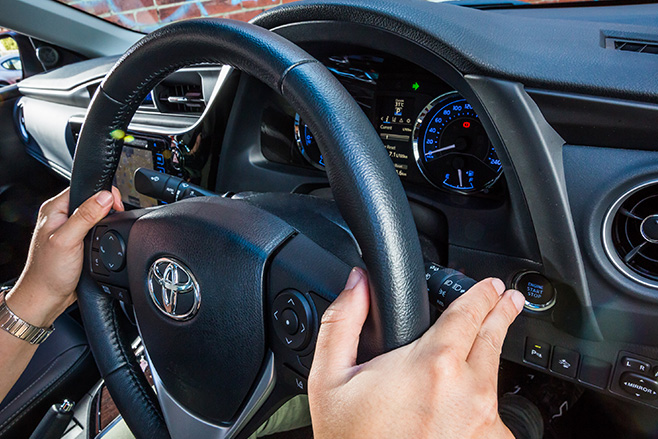
Take the effort to indicate well before your turn (the law usually recommends no closer than 30 metres from the turn) and other road users will thank you for it. Not literally mind you, because they’ll be inside their cars and thus unable to communicate with you easily, but they will be grateful.
It should also be noted indicators are for informing other drivers of your intention to move across lanes, and are not a right-of-way toggle – although it is also polite to make room for cars with their indicators on.
THE Hyundai i30 N hot hatch has been caught testing in Australia at least six months before it goes on sale as a rival to the Volkswagen Golf GTI.
Based on the soon-to-arrive third generation i30, codenamed PD, the top secret development mule was snapped by an eagle-eyed Wheels reader, who sprung it on public roads north of Sydney.
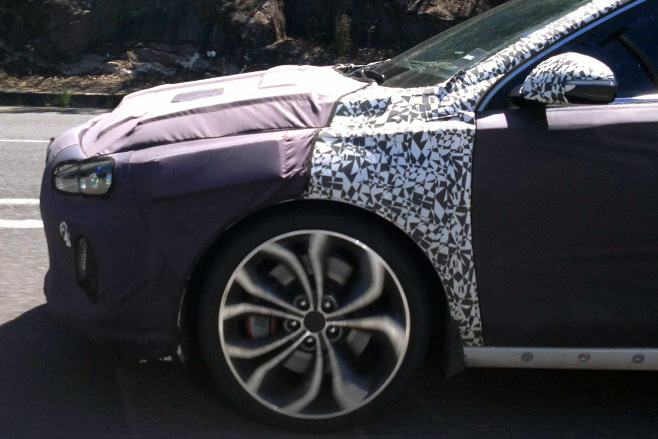
Its proximity to a private test track sparked speculation within the Wheels office that it may be undergoing last-minute hot weather testing in Australia before being unleashed on a global market where it has built high expectations of shaking the hot hatch establishment.
The i30 N development car was heavily camouflaged, but the disguise had been carefully cut around the air intakes on the nose, yet another suggestion this car was undergoing heat testing in the Australian summer.
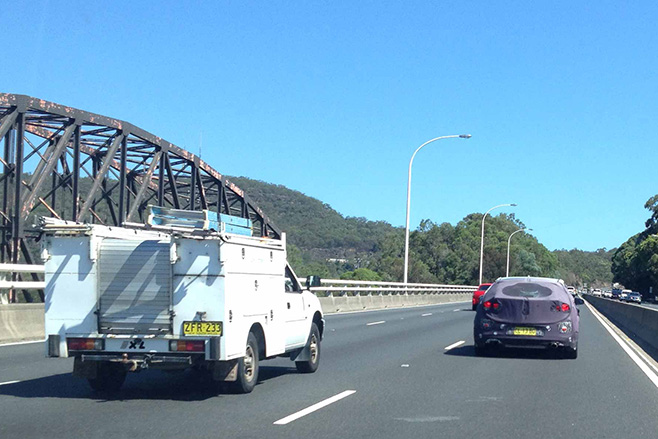
Large brakes with red calipers wearing a distinctive “N”, and twin exhausts are further giveaways that the development PD i30 is not a garden variety runabout.
It’s also riding on large wheels – our guess is 19-inch – with suitably low-profile rubber; previous reports have suggested it will run on Pirelli P Zero tyres.
However, the body of the test mule looks identical to that of the regular i30, right down to the front bumper with its almost vertical LED running lights under the main multi-beam headlights.
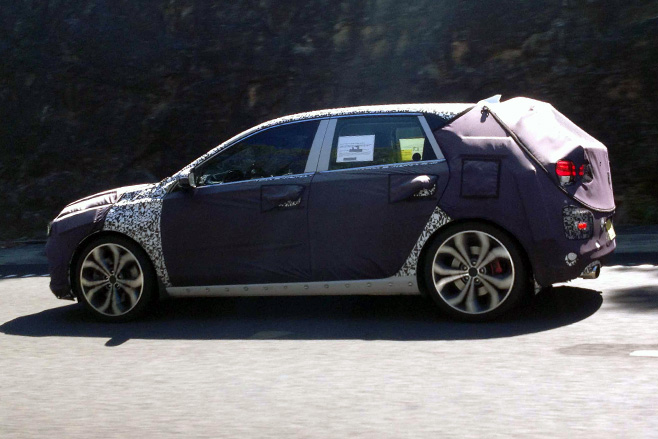
The wheel arches look nicely flared, although closer comparison with a mainstream i30 PD suggests there are no differences.
Overseas spy shots of the i30 N have featured a unique front bumper with a broader lower air intake to feed the front-mounted intercooler that sends cooler air to the turbo.
The i30 N will be offered in at least two guises, each with a 2.0-litre four-cylinder turbo, mimicking the strategy of the Golf GTI.
The base car, with 184 kW of power, will be more road-focused, while the hero car, the Performance Package, will get 202kW and have more of a track focus.
There will be a six-speed manual and, in 2019, a new eight-speed dual-clutch automatic.
The i30 N Performance will also get a limited slip differential, helping get the power to the bitumen through the front wheels with minimal fuss.
Hyundai was remaining tight-lipped on the development i30, although a spokesman said: “We have a constant flow of hot weather evaluation cars coming through the Australian headquarters but I can’t go into specifics about particular vehicles.”
The local existence of the heavily disguised left-hand-drive development car confirms Australia will be a crucial market for what is gearing up to be the fastest, most focused Hyundai ever produced.
The i30 is already hugely important to Hyundai – it’s the second best-selling passenger car on the market and makes up more than a quarter of i30 sales globally – and the i30 N has the potential to boost interest in the model and the marque.
And Australians love performance cars; Audi, BMW and Mercedes-Benz all talk of high take-up rates of performance models.
After idling its Australian factories late last year, the now globally focussed Ford is hard at work reinventing itself. The latest step – and potentially the most important it will make in 2017 – is shelving the Ford Kuga small SUV and replacing it with a significantly facelifted version wearing an old name: Escape.
WHAT IS IT? It’s a re-snouted and repackaged right-hand-drive version of the Spanish-built car still sold as the Kuga in Europe (where it leads its segment, so suddenly changing the name would be a marketing disaster) but here it now wears a new, but old, badge.
WHY WE’RE DRIVING IT When Ford introduced the Kuga in 2012 as a replacement for the aged Japan-built Ford Escape, it stuffed up slightly by failing to recognise that not all buyers wanted all-wheel-drive ability under their small, range-middling SUV. A mid-cycle press of the reset button has created an opportunity for Ford to dump the Kuga name and plug a big gap in its showroom.
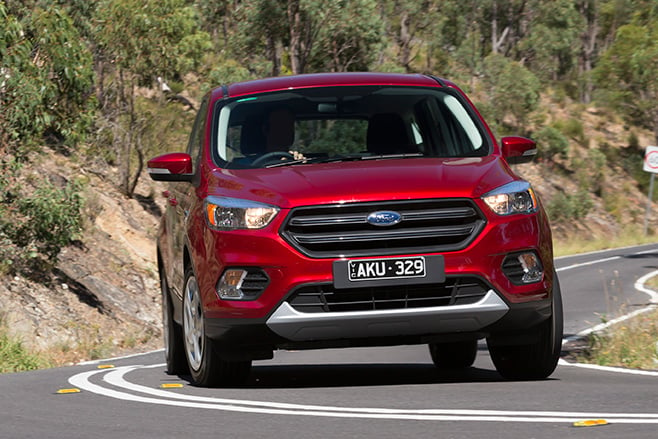
THE WHEELS VERDICT Big changes in exterior looks and interior presentation, dicking around the edges of pricing and expanding the model line-up with a circa $33,000 sweetener all do a lot to improve the Escape over the Kuga that it pushes aside. But it meets benchmarks rather than advancing them.
PLUS: Perky 1.5L engine; cleaner centre console; adds paddle shifters MINUS: Interior shows age; ride on 19s is sports car rough; no safety pack for Ambiente
THE WHEELS REVIEW IT’S hard enough for you and I to say we’re wrong, so imagine how difficult it is for someone as big as Ford Australia?
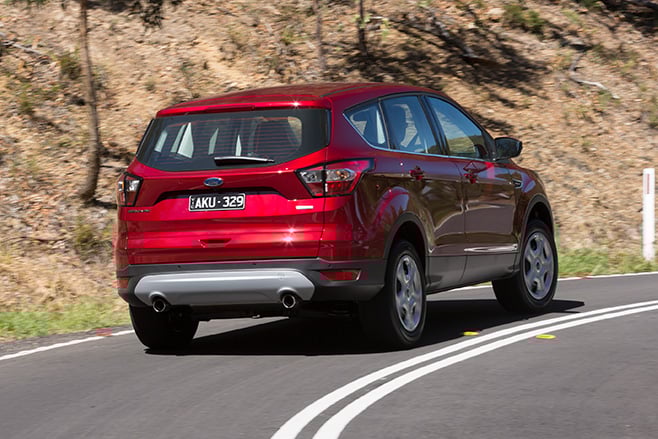
But as is so often the case, timing is everything. The Kuga was due for a mid-life shake-up, and a major redesign of the front bumper to better accommodate radar technology made the new one look very different – different enough, Ford reckoned, to carry off a change of name. The rest, as they say, is history.
Underneath, the Escape is still all Kuga, including the Euro suspension tune that we take in preference to the US market one. Escape also brings in a $32,990 mid-spec front-drive Trend fitted with a six-speed auto that plugs in above the base Ambiente and right into that Kuga-sized hole left in the old showroom. The Escape also gives us an early taste of the 132kW/400Nm 2.0-litre diesel engine that will feature under the bonnet of the Edge – Ford Australia’s replacement for the Ford Territory SUV – due in 2018.
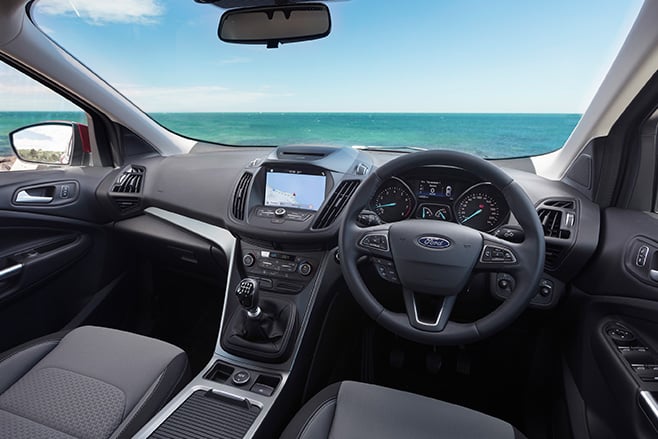
That’s not a bad thing. The 1.5 is a fun little engine, revving sweetly and willingly. It works well when left to slur through the auto’s gears on its own, and when forced to change via the new steering wheel’s paddle shifters that replace the Kuga’s daft rocker switch on the side of the gearlever.
The 1.5 is a better choice than the 2.0-litre petrol. The AWD Escape struggles to rein in the extra poke, scrabbling around corners and dissolving into ESC-induced understeer almost too easily. We’d also take the Trend’s 18-inch alloys over the range-topping Titanium’s 19s any day; the larger hoops completely corrupt the ride.
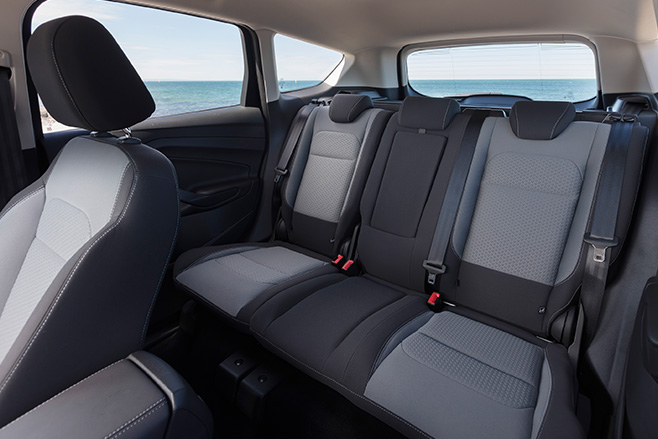
From behind the wheel, though, the Kuga shows its age. The centre stack on the low dash is layered like a multi-tiered wedding cake. The big 8.0-inch colour touchscreen is a long way from the driver’s eyeline, and its small buttons are painfully difficult to use while bouncing down the road – best to learn how to use the much-hyped SYNC3 voice controls.
And with a sharp, new Mazda CX-5 just around the corner, Escape may suddenly feel even older.
SPECS Model: 2017 Ford Escape Trend FWD Engine: 1498cc in-line 4, dohc, 16v, turbo Max power: 134kW @ 6000rpm Max torque: 240Nm @ 1600-5000rpm Transmission: 6-speed auto Weight: 1607kg 0-100km/h: N/A Fuel economy: 7.2L/100km Price: $32,990 On sale: Now
LOAD up Toyota Australia’s website right now, and you’ll see a big banner near the top proudly proclaiming that “The wait is over” for the all-new C-HR compact SUV. However, with pent-up demand for Toyota’s long-awaited small soft-roader being mixed with a relatively small allocation of cars, the wait may be far from over for those interested in the spunky C-HR.
Toyota Australia has only managed to secure 6000 examples of the C-HR, which starts at $26,990, for local sale this year. In the context of the small SUV segment, that’s a relatively small number: minor players like the Suzuki Vitara and Holden trax managed 5713 and 7976 sales last year respectively, while the segment-leading Mazda CX-3 achieved a whopping 18,334 sales over the same period.
And while the C-HR’s entry pricing is well above those of most of its rivals – CX-3 included – Toyota Australia’s executive director of sales and marketing, Tony Cramb, told WhichCar that the bulk of shoppers in the small SUV segment were disregarding entry-level models and aiming for mid- and high-spec variants – which is where the C-HR and the flagship C-HR Koba are positioned.
Cramb also said that the C-HR had the potential to achieve sales numbers similar to the dominant CX-3, but that would entirely depend on how many cars Toyota’s Japanese production facility could send to Australia.

The C-HR is presently built in two factories, with one located in Toyota’s homeland of Japan and the other in Turkey. According to Cramb the economics of sourcing cars from Turkey would result in uncompetitive pricing for the C-HR, thus making Japan the preferred source. However, with Japanese buyers placing orders for a whopping 48,000-plus C-HRs in the car’s first month on sale, supply out of Japan is already stretched thin.
“This will be like 86,” Cramb said, referring to the sell-out situation that followed the Toyota 86 sports car’s arrival here in 2012, spurred on by that car’s unexpectedly keen pricing. Buyers queuing up for an 86 had to endure a lengthy waiting list for the most popular variants.
“That’s our single biggest concern, trying to manage the expectations of our [customers]. That’s what we’re dealing with in sales and marketing at the moment.”
“The interest that we’ve already had considering the car hadn’t actually gone on sale yet, is fantastic. We’ve definitely got more than a month’s sales already lined up.”
The situation is expected to improve for 2018, with Cramb confident that the Australian allocation would at least double to 12,000 cars. That said, production numbers for next year are still far from being locked in. The message to buyers interested in the C-HR is this: secure one now before they’re all snapped up.
For more information on Toyota’s new SUV, have a read of our Toyota C-HR price and features story.
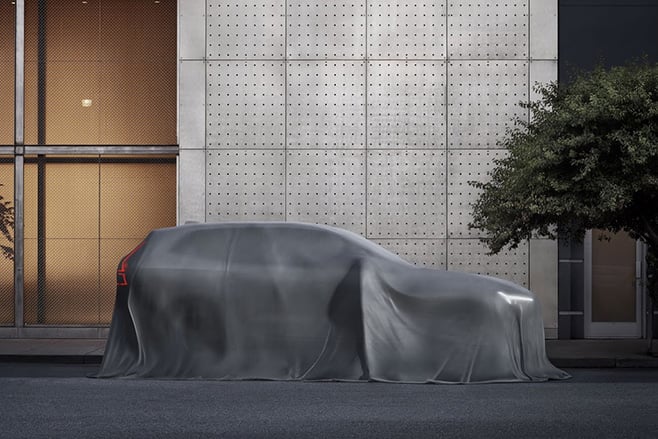
There’s been more teasing in the lead up to the 2017 Geneva Motor Show than in a school playground, with the Volvo XC60 the latest big name to be partially revealed.
The long-awaited successor to the current Volvo XC60 will essentially be a mid-sized version of Volvo’s flagship XC90.
That said it will have some unique features, with the teaser image showing broader “Thor Hammer” headlamps that extend all the way to a large rectangular grille while the ‘waterfall-style’ taillights have a new LEDsignature.
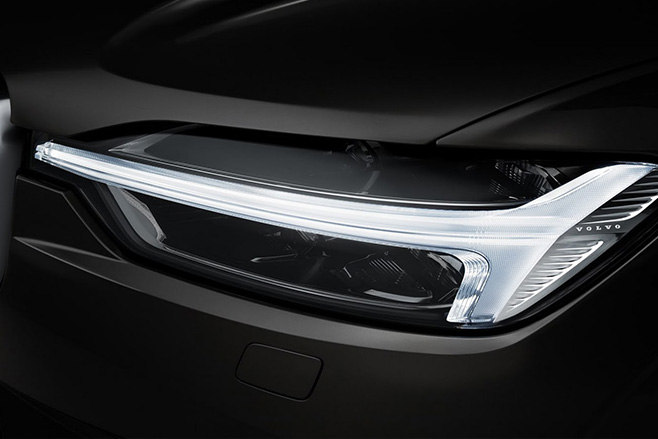
The new look will help the ageing XC60 take the fight to its main rivals including updated versions of the Audi Q5 and BMW X3.
As well as fresh exterior looks, it will take interior design cues from the Volvo XC90, including the uncluttered dashboard and vertical-oriented touchscreen display which will host a version of the 90 Series’ Sensus Connected Touch infotainment system.
It will also be the 90 Series’ XC90s Scalable Product Architecture (SPA) platform, with the all-new S60 and V60 to follow suit.
Engines will also follow the format established by the XC90, with a family of turbocharged four-cylinder petrol and diesel “Drive-E” motors working on their own or as part of a “Twin Engine” hybrid system.
Technology wise, the XC60 is likely to become one of the safest cars in its segment thanks to an array of active safety features including the acclaimed IntelliSafe technology. This will incorporate advanced driver assist capability including the ability to drive itself up to certain speeds.
The all-new XC60 is expected to launch globally late 2017 with the new Volvo S60 and V60 sedan and wagon models to follow soon after.
It’s one of the most talked about cars of the past 12 months – and yeah, sure, we’ve been doing a lot of that talking. However, in the final reckoning, and thrown up against the toughest PCOTY field in living memory, Ford’s Mustang GT simply found itself outgunned in every quarter, despite that wholesome 5.0-litre V8 under the hood. Err, make that bonnet.
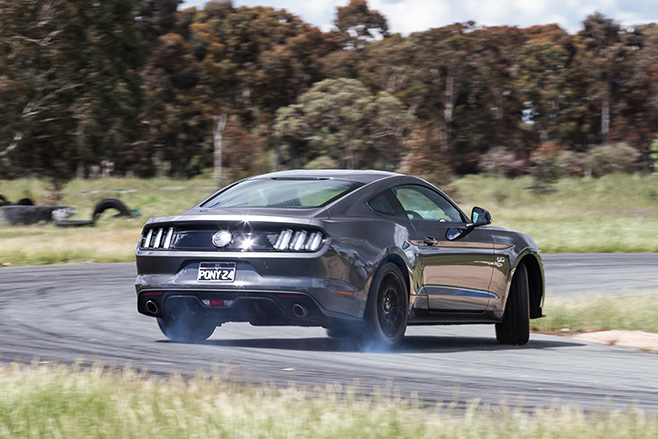
Its muscle car-esque stance and languid rear-wheel drivetrain belies surprisingly accurate and feelsome steering. The ’Stang also has a decent enough chassis tune, with a faithful, predictable rear end and loads of front grip in dry conditions. At DECA, its long-throw manual and taller third gear held it in good stead, though the sharp change of direction over the left crest spooked it a bit.
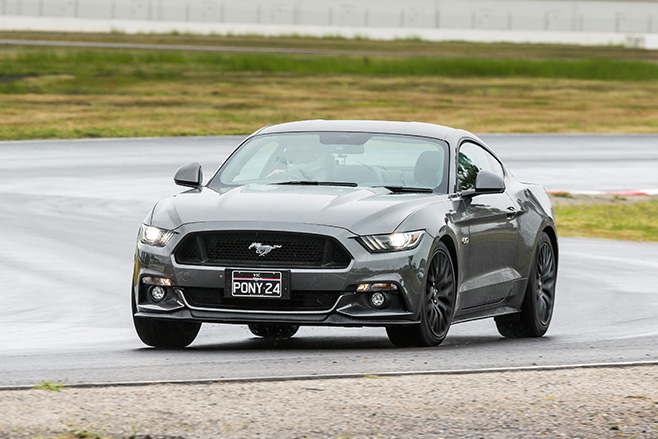
However, on the mountain loop and in direct comparison with a pair of hardcore, head-kicking rear-drivers in the HSV and the Merc, the Mustang GT showed admirable pluck, thanks to its wall of torque, its long throttle travel and that long gearing. Slot it in third, let physics sort out the whole power delivery thing and work on loading up that front end, and the GT is a willing companion in open, flowing terrain with positive braking, adept steering and great roll control. Although that long wheelbase does see it become less enthusiastic in tighter terrain.
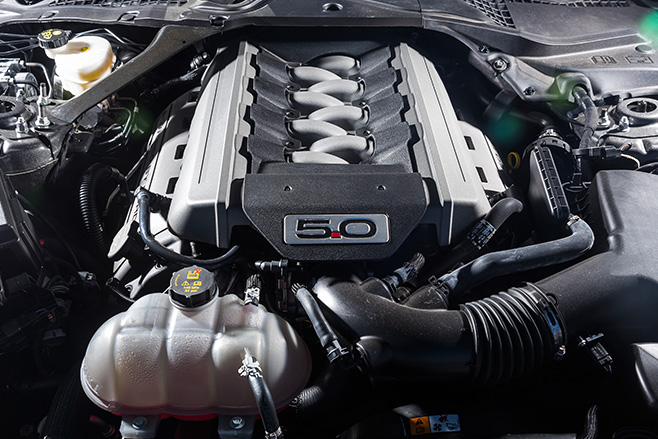
At the end of the days there’s no doubt that this is easily the most driver-centric ’Stang to ever be sold Down Under. Its rock-star popularity with the enduring Ford faithful means that the next, more focused version will be able to improve on a solid PCOTY showing – it finished just half a point behind the HSV and a handful away from the GT-R – in the face of formidable competition. At the final reckoning, though, this year’s PCOTY field is simply too deeply stacked for the Mustang to scrabble any higher than it did.
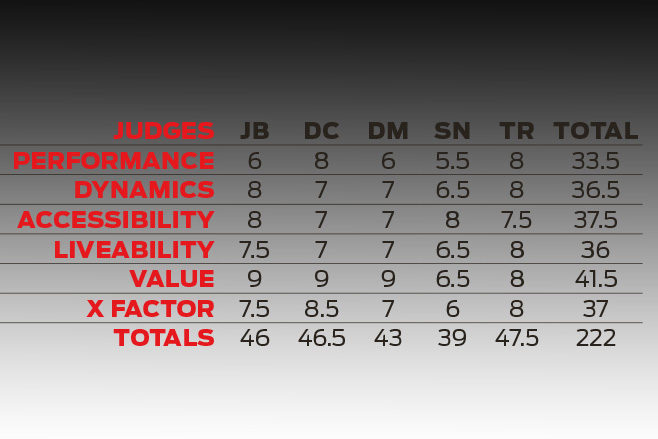
JUDGES’ RANK DAVID MORLEY: 9th I’m a huge admirer of the new ’Stang. Steak comes before sizzle for once.
DYLAN CAMPBELL: 8th Surprisingly sorted but its genius is more in making you feel good, than making you go ‘wow’.
SCOTT NEWMAN: 12th Felt overawed in this company, but a terrific modern muscle car.
TIM ROBSON: 9th Modern muscle car is outpointed in a strong year. Still a cool rig.
JOHN BOWE: 6th Old style, but by far the best American drivers’ car ever.
The facelifted 2017 Hyundai Sonata is expected to be revealed in the coming months, but we have been given a sneak-peek at the car’s looks thanks to leaked images.
Posted to Hyundai-Blog.com, the images appear to be of official design sketches for the updated car.
Unlike most mid-life updates, Hyundai’s mid-size sedan is due to undergo major cosmetic surgery, with attractive new exterior styling.
The Korean brand seems to have found its design mojo, with the leaked images getting us excited for how the car will look in the flesh.
The Sonata will adopt Hyundai’s redesigned cascading grille, with a large logo as the centrepiece.
The headlights are different from the predecessor, while the front bumper receives significant tweaks to make it appear more aggressive.
The leaked sketches also include side-by-side shots with the current-gen Sonata.
While the front looks noticeably different, the rear of the car remains similar to the previous generation but appears to include new LED taillights, updated bumper styling, and more prominent exhaust tips.
Two variations of the Sonata are pictured, with the standard variant accompanied by the sportier ‘turbo’ model, which wears a bigger front lip, and more prominent rear diffuser.
The sketches hint at a continue push towards a more European styling for the brand, which can be seen with the brand-new Hyundai i30.
Hyundai will officially launch the updated Sonata later this year.
In our Fast Facts series, WhichCar delves deep into the history of automotive brands to bring you fascinating facts and intriguing information. Here we focus on Holden, the company started by an Englishman but became an Australian legend with cars such as the FJ, Torana, Monaro and, of course, the Commodore.
Saddling up
Holden started life with horses rather than horsepower. Englishman James Alexander Holden started his Adelaide-based saddlery business in 1856 – two years after arriving in Australia as a 19-year-old. It was under the stewardship of son Henry, in the early years of the 20th century, that the leather manufacturer transitioned into a car-body trimmer, then body builder.
The General takes command
Holden’s Motor Body Builders had established a hugely successful operation by the 1920s but a downturn in sales towards the end of the decade forced the company to diversify into other product areas including fruit packing cases, steel filing cabinets and golf-club heads. In 1930, it approached General Motors about expanding ties already formed years earlier. A merger was signed in 1931, giving General Motors control of Holden while the company retained its Australian management and character.
Lion and the stone
Holden’s famous “lion and stone” badge was first designed in 1928, and symbolised the fable of man inventing the wheel after observing lions rolling stones with their paws. It was tweaked in the 1970s and 1990s, and most recently in 2016 as part of the company’s efforts to rebrand its image, though for marketing rather than car badges.

First all-Aussie car
Until 1948, Holden had been manufacturing bodies and chassis for brands such as Pontiac and Oldsmobile for sale in Australia. Then came the Holden 48-215, the first all-Australian car – a six-cylinder family sedan. The model more commonly known as the ‘FX’ would be the catalyst for the brand’s dominance of the local market in the 1950s.
FJ
A revamped version of the FX, the FJ, becomes a more iconic model, helping to push GMH production beyond half a million cars by the end of the decade – resulting in one in three Australians driving a Holden product. It’s also the first Holden to be exported, to New Zealand from 1954. Holden built a stunning custom concept called the Efijy in 2005 as tribute to its famous FJ.

Safety leader
GM-Holden set the standard for inclusive safety features in the 1960s, and is the first local manufacturer to fit seatbelts in all models.
Football, meat pies, kangeroos …
Arguably one of Australia’s most memorable TV commercials was released in the 1970s with Holden’s ‘We love football, meat pies, kangaroos and Holdens’ jingle. The ad, which mixed Holden cars with Australian cultural icons, was borrowed from the ‘Baseball, hot dogs, apple pie and Chevrolet’ campaign of its GM sister brand.
All hail the Commodore
A car based on two European Opels – the Rekord and Senator – replaced the popular Kingswood begins an Australian legend in 1978. While initial omens weren’t good – the car was smaller than the rival Ford Falcon, and expensive engineering was required to overcome structural brittleness of the Opels discovered during arduous local testing – the Commodore would become a huge sales success. After exchanging market leadership with the Falcon several times in the late 80s and early 90s, from 1996 the Commodore went on a 15-year run as Australia’s most popular vehicle.
On all fours, and just fronts
Two models in the 1980s establish firsts for Holden. The Jackeroo becomes the company’s first 4WD passenger vehicle, while the (JB) Camira is Holden’s first front-wheel-drive model.
King of the mountain
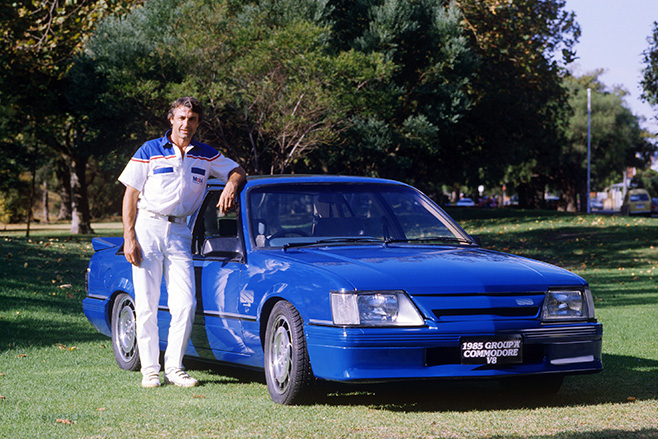
The late Peter Brock’s unsurpassed nine Bathurst 1000 victories were scored between 1972 and 1987 – and all in Holdens, ranging from the LJ Torana to the VL Commodore SS Group A. Brock’s success linked him umbilically to Holden and he even formed an official tuning house called HDT Special Vehicles in 1980. However, his persistence with an Energy Polariser led to an acrimonious split with Holden. While Brock was convinced the Polariser improved the VL Commodore’s driving experience through crystals and a magnet said to align the car’s molecules, neither Holden nor GM engineers could validate the claim. Performance Holdens subsequently become the domain of Holden Special Vehicles (watch out for its own dedicated Fast Facts article next week).
Monaro reborn
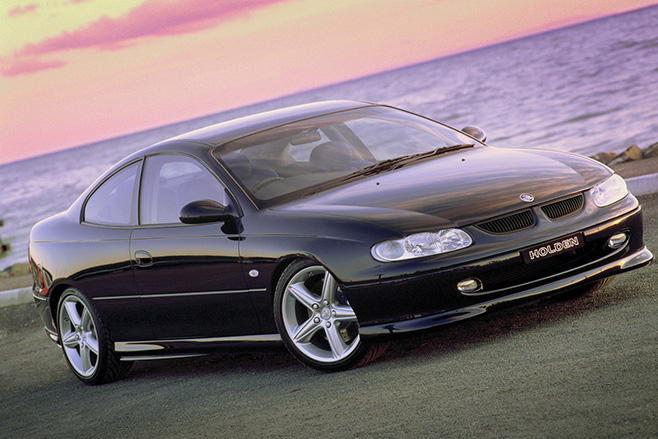
Back in a day when teaser campaigns didn’t exist and motor shows could offer genuine surprises, Holden stunned gatherers at the 1998 Sydney motor show when it whipped the covers off the Commodore Coupe. The public reaction was such that Holden had little choice but to build it – and just three years later it emerged as the modern-day successor to the 1968 Monaro coupe muscle car.
Export blow
Holden announced in late 2007 that its impressive VE Commodore, developed at a cost of $1 billion, would be exported to the US to become a Pontiac G8. The ute variant was meant to follow with Holden becoming GM’s focal point for rear-wheel-drive expertise, but the global financial crisis curtailed the important program – and led to General Motors axing the Pontiac brand to help revive the parent company’s fortunes.
New era
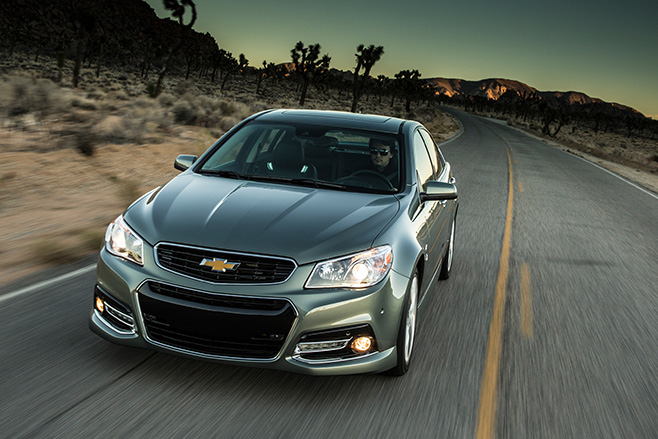
The Commodore actually returned to the US in 2013, this time rebadged as a Chevrolet SS – though at the end of the year Holden announced it would follow Ford in the cessation of local manufacturing – though about a year later, at the end of 2017. From 2018 onwards, Holden will be a full-line importer only, with most models to either be rebadged Chevrolets from North America or rebadged Opels from Europe. That includes the 2018 Commodore, which will be based on the Opel Insignia.
Twelfth on the grid. P-Last.
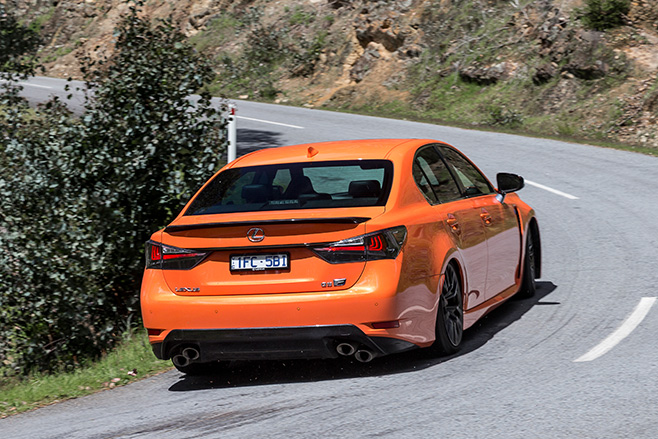
It’s not where you want to end up, but I reckon in this case, it’s not a true or fair reflection of the Lexus GS F’s real abilities and place in the world. And let’s not forget, just to make it into a PCOTY field suggests a fair degree of nous in the first place, so winding up at the blunt end of things isn’t as bad as it looks on paper.
Speaking of which, on paper, the Lexus really does look the business. Specifically, that 5.0-litre atmo V8 knocks out 351kW as well as 530Nm at a high-ish 4800rpm. But where such a high torque peak can sometimes make for a frustrating drive, in the Lexus, it simply means you need to rev it up to about 4000rpm and then hang on. Because at that point, the exhaust note hardens, the GS F squats at the rear and just takes the hell off. Oh, there’s plenty below that for just getting around, but if you want to be getting along, then 4000 is the magic number.
Okay, it lacks that last few percentage points of driver involvement, but that’s what happens when you also opt for a supremely quiet interior and a refined overall demeanour. In fact, the Lexus is a bit like the opposite of the C63 S Coupe; the former trades off blood and guts for silkiness, the latter is the other way around. Neither approach is wrong… just different. And hey, they’re both proper performance cars at the end of the day and worthy of inclusion in this field.
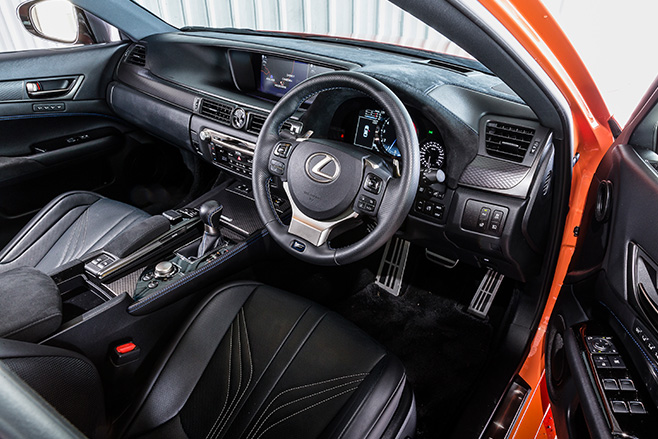
Then there’s the mish-mash of an interior. We loved the adaptive digital display with its ghost needles and user-chooser options, but the waterfall dashpad brought a tier (geddit?) to our eyes. But let’s not forget that the Lexus also provides decent value for money and in isolation (as in, not as part of PCOTY) it would be a serious contender against all comers from a similar price bracket and with a similar brief.
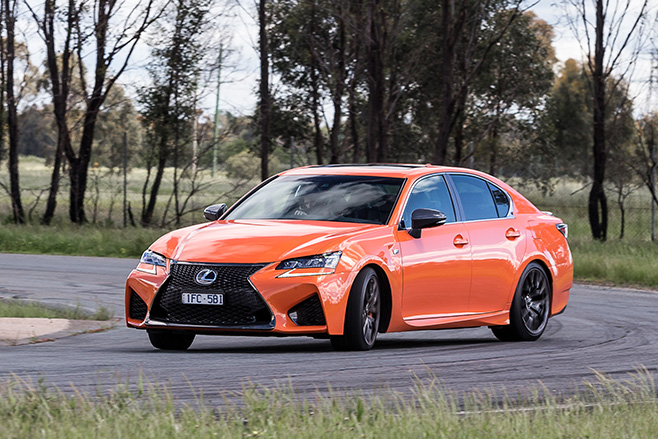
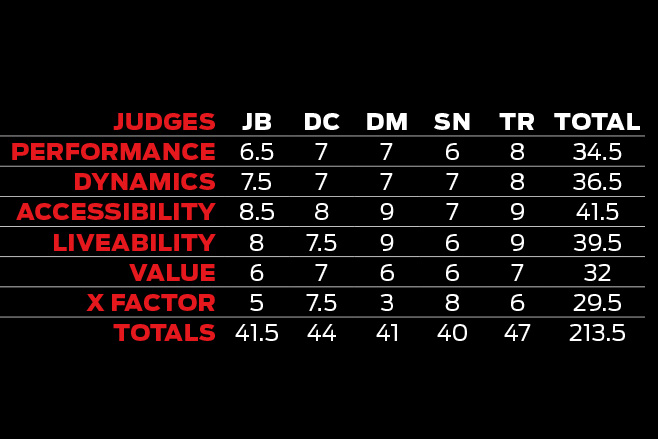
JUDGES’ RANK David Morley: 11th Don’t underestimate the Lexus. If it had an Italian badge, we’d be oohing and ahhing. Dylan Campbell: 12th Japan cooks up a rear-drive V8 four-door. Result is reliably odd, enthusiastic and likeable. Scott Newman: 11th Flawed, but full of character and great fun to drive. Tim Robson: 11th The basic bones are there, but the GS F needs more punch and attitude. John Bowe: 12th I liked its road behaviour but on a wet track it was dreadful.
All set for Clipsal after Supercars test at SMSP
Simona settles in; GRM back in Commodores
After a stultifying parade of breathless press releases centring mainly on new Supercars’ liveries – hardly worth a photo and caption – at last the new championship season gets underway properly this weekend with the Clipsal 500 in Adelaide.
Reverting to the old format of a 250km race on both Saturday and Sunday, the Clipsal event is often a huge test of driver endurance and car durability with temperatures soaring in the concrete ravines that make up much of the street circuit.
With last week’s official test at Sydney Motor Sport Park essentially closed to all but ARDC members and a few media, Adelaide will be the first time race fans get to check out the changes to teams’ line-ups.
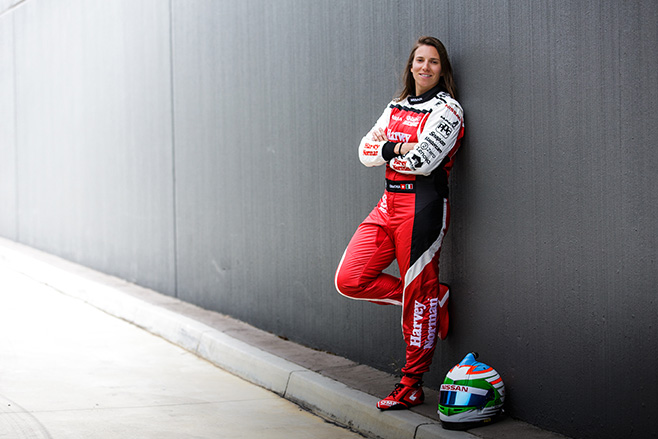
The Swiss reported she was happy with her performance on the hard tyre at the Sydney test day but felt she needed a bigger yield from the softs.
Finishing just 1.1sec away from her team-mate Rick Kelly – who was fastest over the day – suggested a solid start to 2017, especially given it was her first look at SMSP.
As well as trying to get a handle on the new construction Dunlops, most of the teams were also adjusting to new technical personnel and in a few cases, new drivers.
Ex Formula One boffin Sam Michael was in the thick of things in the garage of champion team Red Bull HRT, when he has been hired in a consultancy role. Michael was spotted scrutinising data and keenly observing how the operation went about its business.
Uncorking ultra-quick laps was not a priority for any of the teams, although many of the usual suspects finished in top half of the time sheets.
The team formerly known as HRT rolled out its re-liveried Commodores, with Mobil 1 HSV Racing warpaint.
Understanding two new Dunlop tyre compounds were on top of the agenda for the team, but it was also a chance to experiment with setup, collate data, and in Scott Pye’s case, get behind the wheel of his new ride for the first time.
Mobil 1 HSV Racing managing director, Adrian Burgess, said the test was about much more than a single lap time.
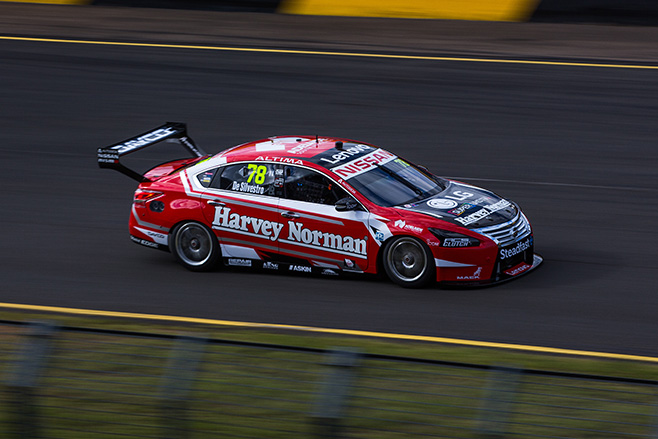
Newbie Pye was happy with the day too.
“The first part of the day went really well. We got it to a point where it was really comfortable for me, which just had to spend some time fine tuning, which allowed us to work through a good test program in the second half of the day.”
Now in his seventh season with Walkinshaw Racing, James Courtney said the team got some of the answers it was seeking. Some; not all.
“These new tyres are the biggest change in the category for this year, so it’s about just working with Terry (Kerr) and the boys to get an understanding on how it reacts and the good and bad points. We set the testing plan around evaluating that,” Courtney said.
The Brad Jones Racing garage was also one of methodology and calm.
“Yeah, we’re all good, here,” reported Brad Jones. “We think we’ll have a strong year with Nick Percat joining us alongside Tim [Slade].
“Nick’s a talent. But we need to calm him down a bit. He’s a bit fiery for us cruisy bunch of Albury people!”
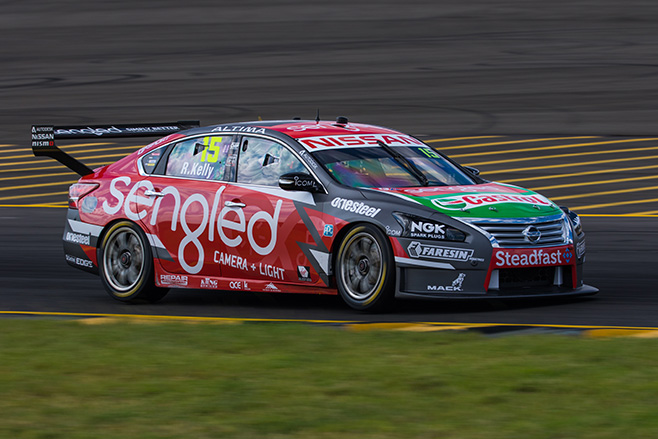
Right at the end of pitlane, Lucas Dumbrell Motorsport had its two cars on hand though one of its two seats was still in doubt due to the controversy over Superlicence eligibility. Though CAMS had denied Matt Chahda a licence for 2017, he was at SMSP sharing the driving duties in #3 with a LDM co-driver from last year, Aaren Russell.
Fresh from having his Superlicence granted provisionally, 16-year-old Alex Rullo managed 73 solid laps and has pronounced himself ready for his Supercars championship debut at the Clipsal.
A stark black transporter bereft of and sponsor logos hinted strongly that Erebus was still chasing commercial support – or at least a sign writer – prior to the Clipsal. This didn’t stop David Reynolds being among the top 10 fast guys.
Scott McLaughlin has settled in swiftly at DJR Team Penske, witness his second-fastest lap of the day just ahead of team-mate Fabian Coulthard.
While there were some early communication difficulties with new engineer Frenchman Ludo Lucroix, a refugee from Triple Eight, the pair seemed to be gelling nicely by the end of the test.
Dunlop judged the official test day a success but hinted the teams face a steep learning curve to fully understand the characteristics of the new 2017 rubber.
Supercars teams were issued with four sets of the new soft and super-soft tyres to evaluate at ahead of the season opener.
Drivers sensed the new tyres gave a lot more grip compared to last year’s offering, but many indicated the improvement wasn’t night and day. Times were broadly better though.
Hamilton calls for fewer limits on social media across race weekends
World-famous tweeter wants greater freedoms
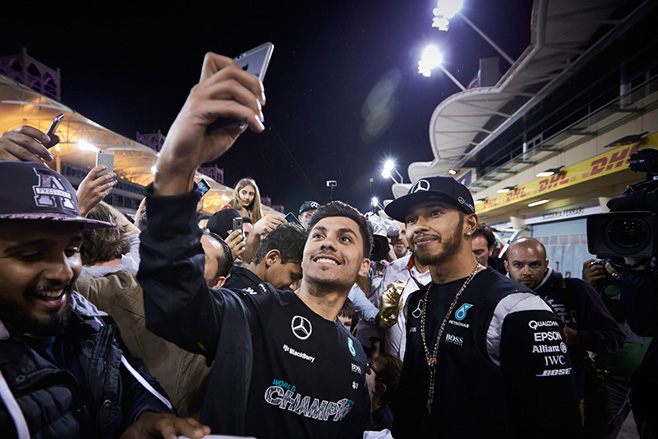
F1 strictly limits the shooting and broadcasting of video from paddocks, and these constraints include drivers.
A few, and Hamilton was one offender, got into hot water for not appreciating the exclusive nature of broadcast rights.
Hamilton is urging Liberty to free up the rules for the betterment of the sport.
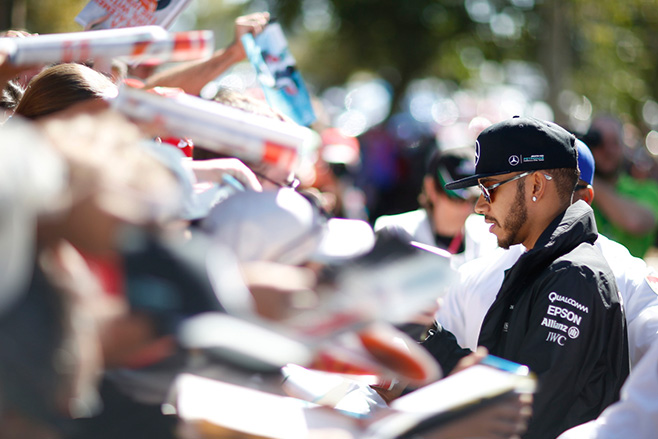
“In F1 every time, for example, I would have posted a picture or a video, I would have got a warning from the FIA, or notice telling you to take it down.
“[Social media] is a super easy free tool to grow for the sport, for us to use, to share it, to engage with other people.”
Internationals join field for Australian GT opener
Record numbers set for Adelaide streets, but no Chris Mies
The rise and rise of GT racing continues with a 27-car field to jam on to the streets of Adelaide for the opening round of the 2017 CAMS Australian GT Championship next weekend.
Missing though will be factory Audi GT star Christopher Mies, who has been forced out of the Australian GT Championship due to his heavy racing commitments in Europe and the US.
The twice Bathurst 12-Hour winner has been a standout in the Aussie GT series over the past two seasons, winning in 2015.Joining the local names on track though are international factory drivers Côme Ledogar and Kelvin van der Linde.
The Clipsal weekend will be the 10th time the Australian GT Championship has visited the city of churches and strange murders, with eight of the world’s leading automotive marques represented, including a record number of current-spec GT3 machines.
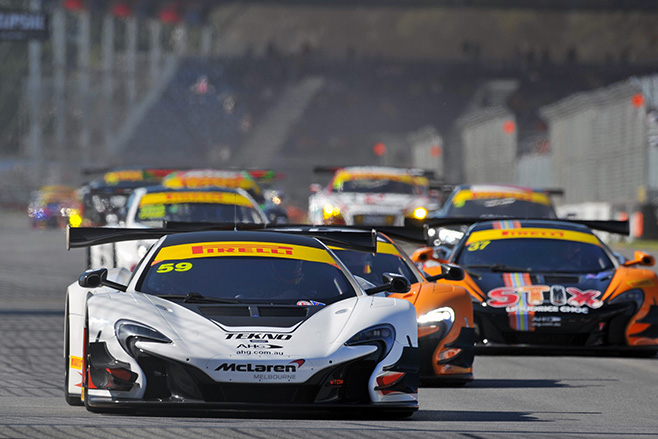
Part of McLaren’s 2016 Blancpain Endurance Series winning team, Ledogar made his Australian GT title debut at Highlands, New Zealand, at the end of 2016, making an immediate impact.
Ledogar will join Fraser Ross at the wheel of a McLaren 650S GT3, run by reigning CAMS Australian Endurance Championship-winning team Tekno Autosport.
The 20-year-old van der Linde will share duties with Geoff Emery in the #74 Jamec Pem Audi R8 LMS.
Despite his youth, van der Linde has already notched up a host of championship successes, including the ADAC GT Masters in 2015 – Germany’s equivalent of the CAMS Australian GT Championship.
They’ll be up against the gun locals including some who were prominent in the recent Bathurst 12 Hour.
Former Bathurst 1000 winner Steve Richards will share his BMW Team SRM M6 GT3 with James Bergmuller, who will make his Australian GT debut in Adelaide.
Craig Baird and Scott Taylor will be partners in one of Scott Taylor Motorsport’s two Mercedes-AMG GT3s.
Max Twigg will pilot the team’s second entry, rekindling a relationship with Mercedes that began in 2015.
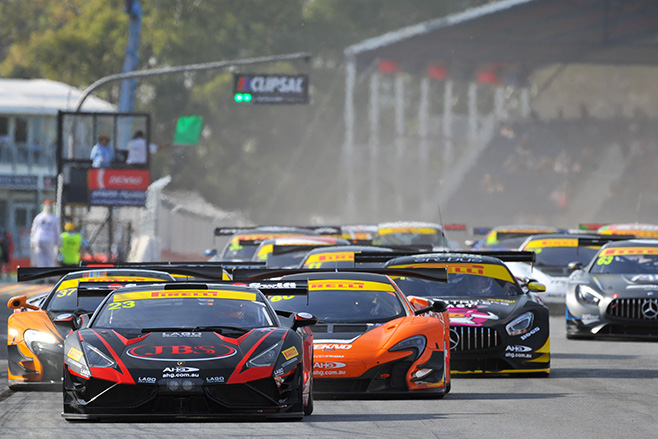
Lamborghini has serious representation with eight entries.
Jim Manolios and Dean Canto will share the Trofeo Motorsport Lamborghini Huracan GT3 in what will be that model’s first competitive outing around the Adelaide Parklands circuit.
Audi is well represented with six entries, with Greg Taylor and Nathan Antunes continuing their successful partnership aboard the GT Motorsports Audi R8 LMS.
Ash Samadi and Marc Cini will drive solo in their own cars while James Koundouris will be joined by former Supercars racer Ash Walsh in the Supabarn Supermarkets entry.
McLaren will field two cars; the Ross/Ledogar entry and the McElrea Racing run Objective Racing 650S GT3 for Tony Walls, who notched his maiden Australian GT victory there 12 months ago.
Two Aston Martins will also take to the 3.219-kilometre circuit, with Tony Quinn driving the Darrell Lea entry and Tony Bates at the wheel of the sole Miedecke Stone Motorsport car.
Aussie international Liam Talbot will make his second Australian GT appearance in the Walkinshaw GT3 Porsche 911-GT3 R. The Clipsal 500 weekend is the first of the five-round 2017 GT Championship.
GT cars and Supercars top support card for grand prix
Lots to watch before the F1 rockets crank up at Albert Park
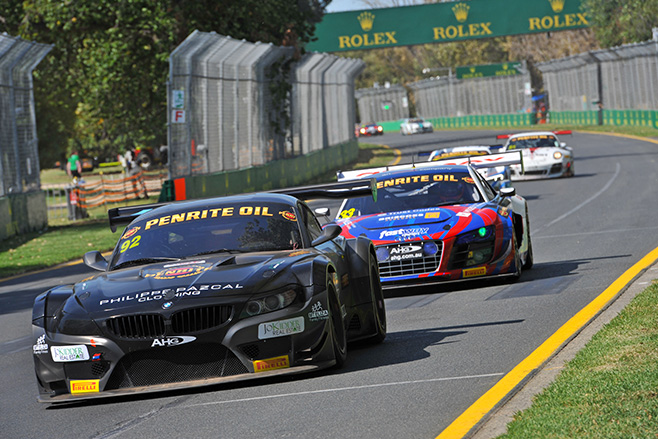
Most of the GPs held elsewhere simply don’t bother with racing other than Formula One.
Aussies though expect good value for their hard earned.
Australia’s unique support program across the four days includes the Coates Hire Supercars Challenge, Porsche Carrera Cup, Shannons Australian GT, MSS Security Ultimate Speed Comparison and the Shannons Historic Demonstration.
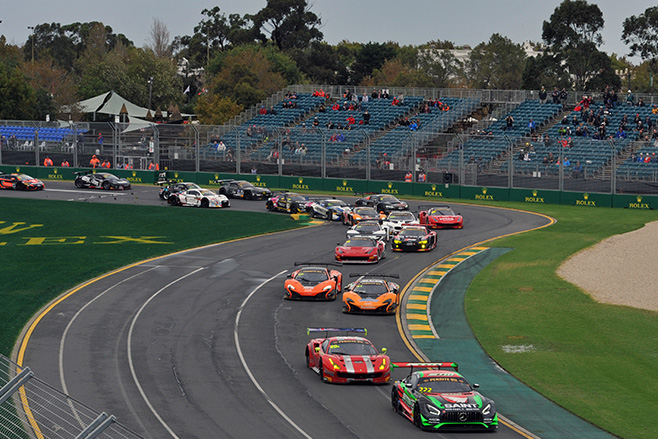
The new high-pressure format will see all 26 Supercars on track in sessions which set the grid for the four races, allowing only 10 minutes between each session for crews to adjust or fix the cars.
A bit old hat now, but still it seems to intrigue spectators, is the Ultimate Speed Comparison, will ramp up the adrenalin as three different cars – the Minardi 2-seater F1 car, a Mercedes GT car and Mercedes road car – compete in the ultimate speed test.
Supercars’ reigning Bathurst winner Will Davison will drive the F1 two seater, with Peter Hacket steering the GT racer and Mick Doohan in the Merc road car.
Joey Mawson and Mick Schumacher to fight again in European F3
Teenager Pironi to chase this year’s Formula Renault Eurocup series
Last year the rivalry between Australian Joey Mawson and German Mick Schumacher was a fiery ongoing component of the 2016 German Formula 4 title – and the two will be going at it again this year in the Formula 3 European Championship.
Mawson’s deal to remain with Dutch team Van Amersfoort Racing was confirmed this month while Schumacher is expected to line-up with the hot Prema outfit.
On the grid too will be Brazilian Pedro Piquet, promising Briton Harri Newey and rated German David Beckmann, all in Amersfoort cars.
Mawson’s deal was made possible with serious support from Australian investment company PODIUM, the acronym for ‘Promoting Our Drivers In Universal Motorsport’.
“I’m ready for the next step,” said Mawson, who was pipped to the Asian MRF Challenge win over the Christmas-New Year break by Newey on a wins tiebreak.
Other pleasing developments for Australian open-wheel followers is confirmation that Tasmanian teenager Alex Peroni will contest this year’s Formula Renault Eurocup series.
Peroni, 17, has confirmed he’ll drive for Britain’s Fortec team in the high-profile series, which this year features a race in Monaco on the same day as the F1 grand prix there.
His graduation to Eurocup follows his victory in last year’s French Formula Renault Monoplace Championship, and a competitive wild card appearance in the 2016 Eurocup finale at the Estoril circuit in Portugal.
“Ever since I started racing karts as a seven year-old I’ve dreamed of following the drivers I look up to into Formula 1,” Pironi said.
“Daniel Ricciardo raced successfully in Formula Renault on his way to F1, and I hope to do the same.
Supporters Blundstone and RACT have been joined by United Petroleum and Renault Australia this year to help Pironi’s campaign.
Peroni will travel to Europe in early March for pre-season testing at Magny Cours (France), Paul Ricard (France) and Nurburgring (Germany). The 2017 Eurocup series begins on April 21-23 at Monza in Italy.
Taylor and Subaru announce 2017 ARC plans
Moving up to freer PRC category in WRX STI
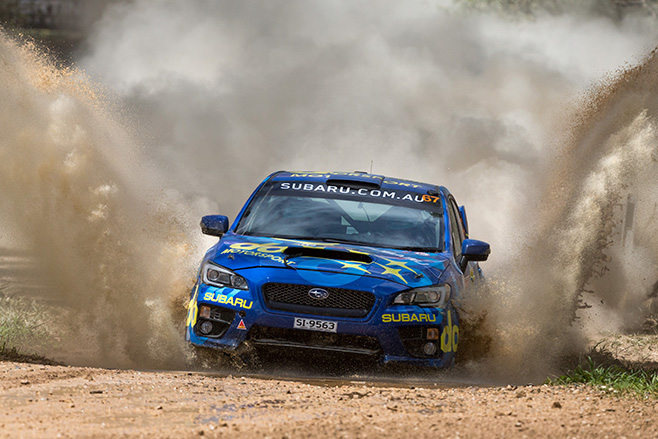
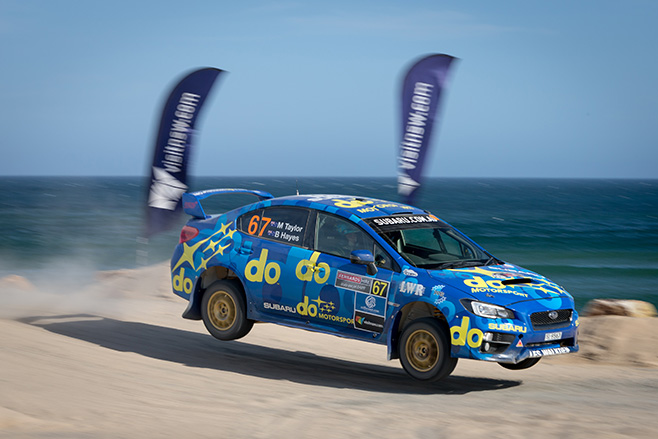
The championship-winning duo of Taylor and co-driver Bill Hayes will again campaign a WRX STI in 2017 – but in the Production Rally Car (PRC) class, where technical restrictions are not as limited as in the Group N Class pursued in 2016.
The team’s new car is being prepared by Launceston-based Les Walkden Rallying (LWR) and will compete in the expanded six round series that begins next month with the Eureka Rally, in Ballarat, Victoria (March 17-19).
“From what we hear, the competition may well be more intense this year, so we want to give the team every opportunity to repeat their success – which means it’ll be an even more exciting championship for rally fans!”
Last November, Taylor became the first female – and youngest – winner of the ARC after the tightest title tussle in 25 years.
Hayes took out the co-drivers title too, making it a dual celebration.
