Don’t get lost in the letters when buying your next car. Here are 14 of the most commonly used car-related acronyms and what they mean
ABS
Anti-lock Braking Systems are commonplace on all new cars these days and, just as the name suggests, ensure your wheels won’t lock up regardless of how much pressure you put on the brake pedal. It means better control under heavy braking as well as much shorter stopping distances.
ACC
Active Cruise Control allows your car to maintain a safe distance between the vehicle in front of you while cruise control is activated. It’s also sometimes called Adaptive Cruise Control and it just means you don’t have to dab the brake and readjust your cruise control setting if you happen to approach a car travelling slightly slower than you on a freeway.
ANCAP
Australasian New Car Assessment Program is a mob in Canberra who acquire new cars and put them through a series of tests in order to achieve an independent safety rating for would-be owners. Right now, ANCAP has published reports and ratings for 233 current-model vehicles.
CVT
A Continuously Variable Transmission feels similar to an automatic transmission, but where an automatic changes the pre-determined gears (or ratios) automatically, a CVT will continuously vary the gear ratio to always make sure you’re in the perfect so-called gear. Think of it like the front and rear chain rings on your bicycle. Instead of having the different-sized sprockets at each end, you’d have a two-pulley system which was growing or reducing at either end so you require the least amount of pedal power.
DOHC
A Double Overhead Camshaft means you have two separate shafts controlling the valve actuation in the cylinder head. One shaft will open and close the intake valves, which allow air and fuel into the combustion chamber, while the other shaft will open and close the exhaust valves, which allow the burnt fuel-air gases top escape.
EBD
Electronic Brake Distribution ensures an even brake force is applied to each wheel while braking. In a straight line this tends to happen anyway, but if you apply the brakes mid corner when there’s more load, or weight, on the outside wheels than there is on the inside two wheels, then EBD makes sure there’s more pressure where it’s needed on the outside, as well as reducing braking power to the inside wheels so they don’t lock.
ECU
The Electronic Control Unit is the brain, or the boss, of your car’s engine and its associated systems. All of your car’s systems talk to and are controlled by the single unit which, much like a leader of a team, ensures everything is performing its role at the right time and in conjunction with everything else. Umm, like a well-oiled machine.
EDC
The Electronic Damper Control system is picking up information from both the surface you’re driving on and, quite often, the gusto with which you’re driving the car (information it is getting from the ECU) and it’s electronically adjusting the shock absorbers to ensure you’ve got the best handling car for the situation you’re in at any given time.
ESC
Electronic Stability Control is designed to stop your car breaking traction as a result of a sudden swerve, a slippery surface or a misjudged corner. It’s sometimes called ESP (Electronic Suspension Program) and it continuously monitors your steering input so it knows the direction you want to be heading. Then, using both speed sensors and independent braking on each wheel, if the system detects a loss of traction or a rear-end slide, it will apply brakes and reduce engine speed in order to maintain control of the car.
ETC
Electronic Traction Control. There’s various ways that your car might actuate its electronic traction control system, but basically series of sensors are constantly monitoring the wheel speed and if it picks up an anomaly between one or more of your four wheels — which suggests wheel spin — then the system will talk to the ECU which will reduce the power to the offending wheels to stop them spinning which improves traction.
OEM
Original Equipment Manufacturer. Not everything on your brand-new car is produced by the factory. Toyota, for example, doesn’t produce its own brand of tyres. So when someone refers to a part being OEM, it means the same brand or type as was used at point of manufacture. The alternative to this might be referred to as after-market.
RPM
This is term you’re no doubt very familiar with and Revolutions Per Minute refers to the rotational speed of a mechanical component around a fixed axis. It’s used in all sorts of contexts, but in the case of your car, it’s measuring the speed of your engine or how many revs your car’s engine is doing and this information is sometimes portrayed to you on the car’s tachometer, or tacho, on your dash.
VIN
Vehicle Identification Number. Just like you’ve got fingerprints, each and every vehicle manufactured since 1954 has been issued with an individual VIN. Some people might refer to it as a chassis number and you can generally find the stamped number through a small transparent window at the base of the windscreen, as well as your registration papers and insurance documents. Before you purchase a second-hand car, it’s a good idea to run the VIN through the government’s Personal Properties Securities Register (www.PPSR.gov.au) to ensure there’s no money owing on it.
VVT
Variable Valve Timing allows your engine to use less fuel when you’re sitting in heavy traffic, or increase performance if you plant your foot to get out of trouble. What was once a pre-determined tempo of when the inlet valves open to let fuel and air into the combustion chamber and when the exhaust valves allow the gases to escape, with VVT it’s now more tailored to your specific needs which not only improves fuel economy, but it reduces emissions considerably, too.
The car that kicked off the VE Commodore’s reign as the most successful V8 Supercars generation is up for sale, with prototype chassis WR 001 hitting the market this week.
As the designation suggests, Walkinshaw Racing initially developed the prototype model in classic red-and-white Holden Racing Team (HRT) livery for testing that began at the end of 2006 just after the production VE Commodore’s launch.
According to the advertisement – posted on V8Sleuth.com.au – the ‘07’ stickered vehicle was Mark Skaife’s HRT 02 racecar driven in the first four opening rounds of the V8 Supercars championship in 2007.
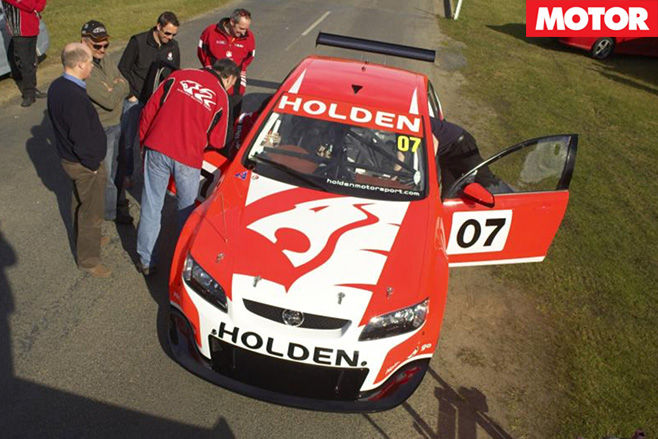
It was sold to D’Alberto Racing for the V8 Supercars season in 2008 and 2009 – and driver Tony D’Alberto still owns the car and has placed it for sale with a Price On Application (POA) sticker on its front window.
There is a catch, however. The VE racer does not currently conform to its original Series I specification and livery, and it does not contain an engine or gearbox. D’Alberto admits he was hoping to transform the vehicle back to its initial prototype design and look, and is willing to continue doing so for the buyers as part of a fixed purchase price.
Holden Motorsport previously released a behind-the-scenes video of this VE Commodore prototype in design and development more than a decade ago.
THIS is it. The 54th Wheels Car of the Year Award takes place tonight, and we’re inviting you to watch it live on Facebook – but only if you want to.
Subscribers will start to receive their magazines from tomorrow, February 2. If you’re one, and would like to avoid having the fun of discovering the winner spoiled, be sure to avoid both Wheelsmag.com.au and our social media channels until your February issue arrives in the mail.
In contrast, if you’re just keen to know, head over to the Wheels Australia Facebook page, where a live stream of the winner’s unveiling will take place tonight at Melbourne’s Crown Palladium, before an audience of more than 200 of the industry’s peers. The live broadcast will start at 9.15pm AEST at www.facebook.com/WheelsAustralia. Watch out for our special guest.
Profiles of the winner of Australia’s most coveted motoring award, will also go live on WheelsMag.com.au moments after the announcement.
As part of the wider Virgin Australia Supercars Championship-sponsored Australian Motoring Awards, Motor will announce the 2017 Performance Car of the Year, while 4×4 Australia will name its 2017 4×4 of the Year.
The awards night will also usher in the 2017 WhichCar Style Award winner.
For the full Car of the Year announcement, make sure to pick up the February issue of Wheels Mag on sale from Thursday February 2.
With a 50-year-strong heritage, the Ford Mustang has made a triumphant return. Judges deemed it to be the most emotive car of the WhichCar Style Award finalists
Handsome is one word to describe Ford’s pony car. It’s styled to the nines with designers doing their best to merge the old with the new, and, as far as the judges were concerned, they did so excellently.
It’s a supercar after all and if it doesn’t get the butterflies fluttering and heart pounding at first sight, then it’s already failed at half of its purpose. But the Mustang almost guarantees love at first sight and the guys at the Blue Oval design studio have certainly created a stunning refashioned version of the original Mustang.
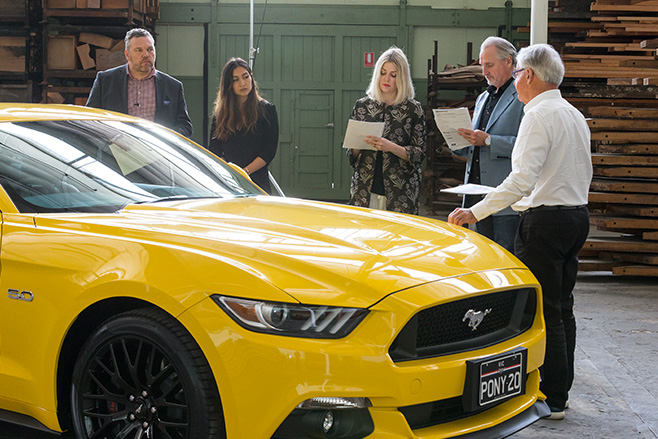
“The design cues of this car are all about harking back to the original 1964 Mustang and the great Mustangs that we remember through the ’60s and ’70s … they’ve managed to bring those heritage cues into the contemporary setting really well, and I think it’s a good-looking car,” said judge Ged Bulmer
The list of stylish features in the Mustang is endless, but here are our top five:
- A reinterpretation of the original Mustang’s signature style, including its aggressive front grille, bonnet sculpting and vertical taillights.
- It’s got muscle. Not in a way that makes it purely appealing to the masculine, but rather it gives drivers a sense of power. And while the engine plays its hand in that, its appearance sets up its reputation from the get-go.
- It manages to bring heritage cues into a contemporary setting really well without falling into the tacky trap.
- Aircraft style toggle switches, split level dash, aircraft style logos and stubby shift levers make the Pony feel like a cockpit that you want to jump in to and drive … fast.
- It looks like it should cost more than it does. While price isn’t really a style feature, the fact the Mustang managed to make you feel like you’re getting a bargain from the moment you sit in the seat, purely because of how it looks, got a big tick from the judges.
When Audi released the new ninth generation Audi A4, most were left scratching their chins at the familiarity of its exterior. Upon closer inspection, however, this is a sedan that presents exquisite detailing and its well-considered design elements become apparent the moment you ease yourself inside.
While it received improved dynamics, better safety equipment, and a punchier powertrain, stylistically the exterior was a bit ‘samey’. The cabin, however, got the red-carpet treatment, resulting in a stunning, refined and well-thought-out design.
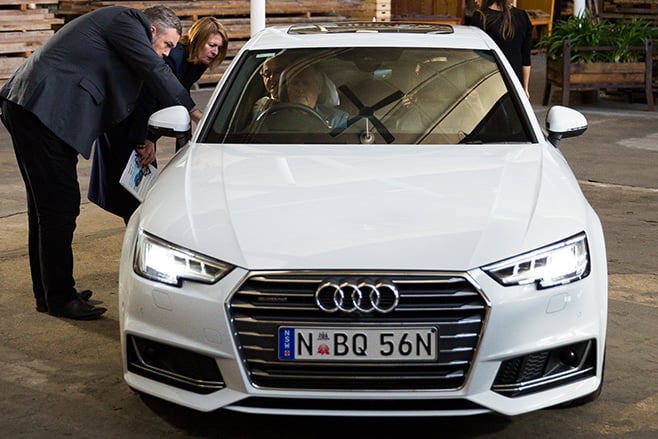
The judges of the WhichCar Style Awards labelled it “understated and refined” with “chic minimalist interiors”. Judge Ged Bulmer likened it to a “well-made suit that you can pull out of your cupboard 10 years later and it’s still going to be just as good today as it was when you first bought it”.
- Although there was some criticism of a disconnect between the exterior and interior of some of the Style Award finalists, judges deemed the Audi’s style coherent. Designers managed to create a stylish flow from the outside in.
- While the skin of the A4 only received a marginal upgrade, its clamshell bonnet, wider arrowhead LED headlights and sleek lines offer a polished silhouette.
- It is inside the Audi A4 where it really hits its stride. Audi is known for beautifully crafted, classy interiors, and the A4 doesn’t disappoint with its spacious, elegant, high-tech cabin, filled with opulent textiles and an uncluttered dash.
- It’s got plenty of space. An extra 244mm in the front and 233mm in the rear sees the Audi A4 take on some of its roomier competitors.
- With the option of Audi’s Virtual Cockpit, the instrument panel is dazzling. Not only does it reveal a James Bond-esque feel, but it also looks tidy.
Off the back of his sterling work with the HRT Supercar team, MOTOR’s very own Warren ‘Wazza’ Luff has taken on the role as HSV’s development driver.
And he seems to be enjoying the work, too, managing to get a W1 prototype around Winton in central Victoria back in December last year in a time of 1.33:2, more than four full seconds faster than the previous best set by a GTS during HSV’s own testing.
To put that in perspective, during testing for PCOTY 2016 Luffy clocked a 1min32.5sec lap in a $300K Mercedes-AMG GT S, while something closer to the W1’s price bracket, the Mercedes-AMG C63 S, managed a 1min36.3sec lap with carbon-ceramic brakes and Cup tyres. So what’s the goss, Luffy?
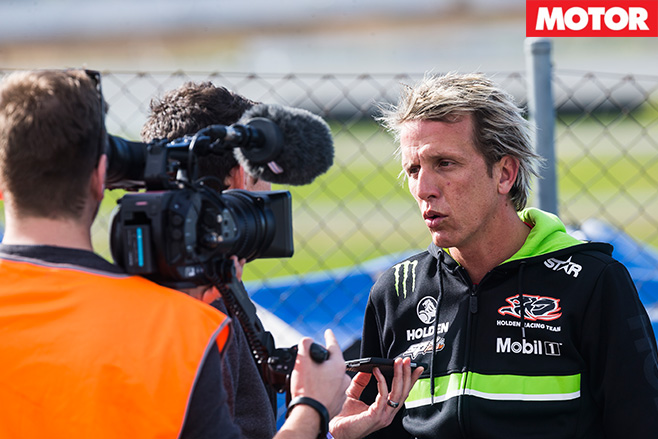
“For a car as heavy as this, the mid-corner speed and turn-in is phenomenal. You really wouldn’t expect an 1800 or 1900kg front-engined car to feel as nimble as it does around a tight circuit like Winton. It makes you realise how much work has gone into it, and I’m so pleased that HSV has decided to give the big girl a proper send-off. She’s going out with a bang.
Sounds like a challenge to us, but with HSV still mulling over whether to do a press vehicle, we might have to rely on a generous owner. If you are that generous owner feel free to drop us a line at [email protected].
To read more on HSV’s 2017 range click here.
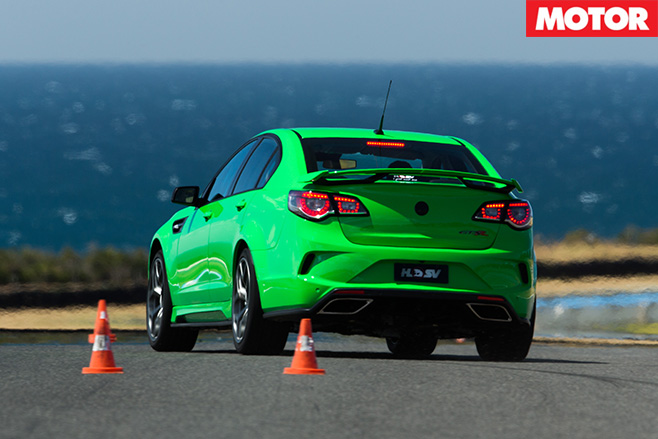
We put HSV’s new GTS-R line-up, including the GTS-R W1, through the wringer at Australia’s fastest race track.
IN AN era defined by nonsense, self-interest and post-truth bullshit, there’s a warm-and-fuzzy feeling knowing that the final MY17 Holden Special Vehicles Commodore V8s will be bottlers. If you expected a bent-eight celebration rather than maudlin commiseration as Australia hangs up its manufacturing boots, then the Clayton crew have something for you.
Faced with the looming uphill battle of no more rear-drive V8s to satisfy its muscle-car-loving customers, HSV knew it needed to produce something special to farewell an Aussie motoring icon. Something like the gobsmacking HSV GTSR W1.
See how the 2017 GTSR W1 compares to the 1995 HSV GTS-R
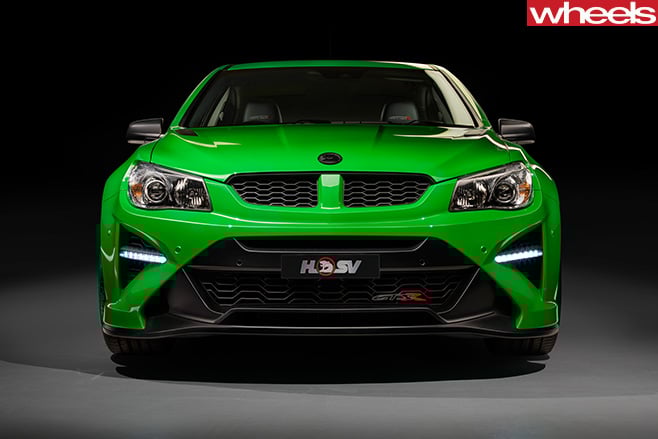
Make no mistake, this is no stripes-and-decals money-spinner, and nor is it merely a fettled upgrade with a brag-worthy new badge. It’s the frigging duck’s guts, fulfilling every muscle-sedan fantasy anyone could have ever dreamed of.
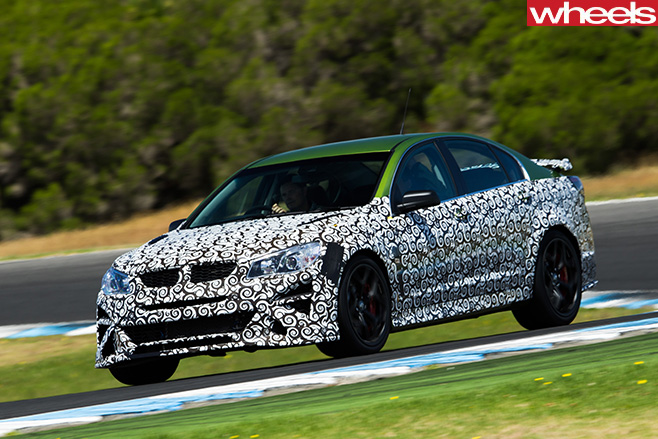
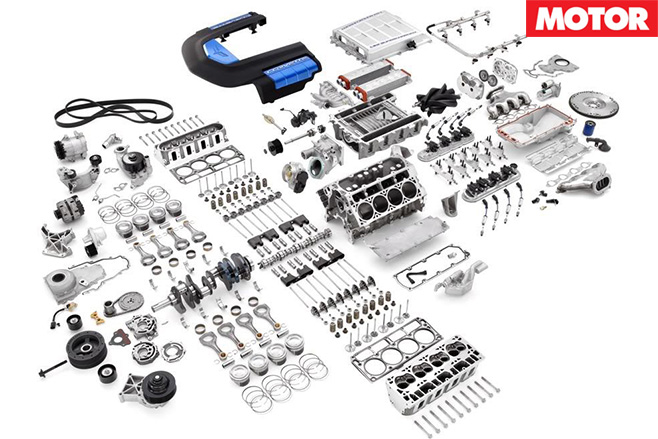
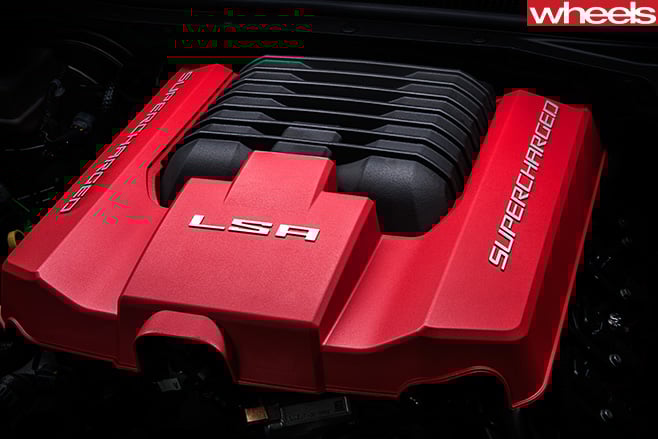
Gone is the standard GTSR’s excellent Magnetic Ride Control (MRC) adaptive-damper suspension for a fixed-rate SupaShock set-up derived from that used by V8 Supercar racecars. And instead of the already-ballistic 6.2-litre supercharged LSA V8 featured in the GTSR (tweaked to produce 435kW via a new K&N air filter), the W1 gets the dry-sumped, mad-hatter LS9 V8 shared with the iconic Chevrolet Corvette ZR1.
With a torque figure hitting 815Nm, the W1’s LS9 heart transplant also demanded a transmission that could handle the additional muscle. The existing Tremec TR6060 six-speed manual still has enough headroom in the MY17 HSV GTS and GTSR (each with 740Nm), but in HSV’s superhero, it cops a new MH3 close-ratio gearset from the Corvette, as well as a unique input shaft – rated at 850Nm – specifically for W1. And there’s a ZF Sachs twin-plate clutch with a solid flywheel.
Our introduction to HSV’s greatest-ever model line-up starts at the legendary Phillip Island Grand Prix Circuit in Victoria, starting with the ‘standard’ MY17 line-up of Clubsport R8 LSA sedan and Tourer, Maloo R8 LSA ute and Senator Signature sedan, each featuring a new 410kW/691Nm LSA engine tune (up 10kW and 20Nm) and a tweaked bi-modal exhaust system intended to enhance the V8’s addictive acoustic rumble.
Full-noise track laps prove the beefy manual Maloo is one of the true gems in the MY17 range. Not only is it cheaper than its Clubsport R8 cousin (by $3000, making it the most affordable HSV) but the combination of its Caprice-derived wheelbase and lighter tail means there’s loads of throttle-adjustable fun to be had at every turn.
In comparison, the shorter-wheelbase Clubsport R8 sedan feels tighter and grippier, with greater power-down ability and a neater, faster approach to track-lapping.
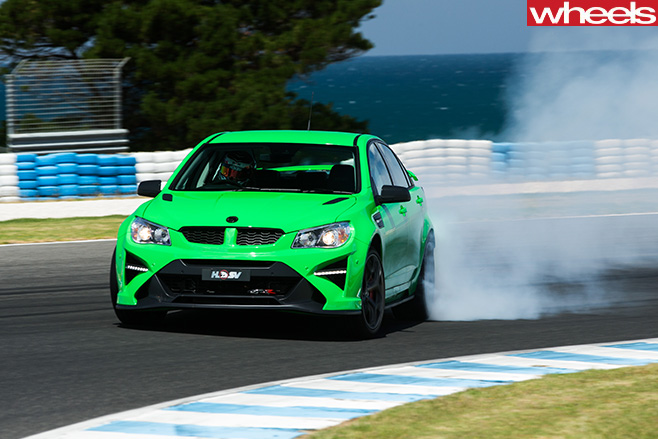
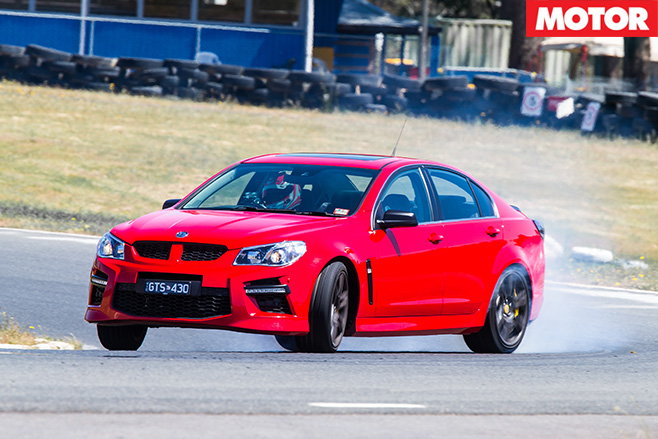
The tweaked LSA V8 is definitely stronger, with a richer mid-range and fleshier torque, and there seems to be a greater emphasis on torque vectoring directing the GTSR’s nose towards the apex, making it easier to get power down out of slower corners. It’s a superb combination, as if this is the car the Clubsport wants to be when it grows up. But it’s the monster braking performance that really stands out. The upgraded stoppers are phenomenal, pulling up the GTSR consistently from 200km/h for Phillip Island’s second-gear Honda hairpin, lap after lap, with incredible consistency.
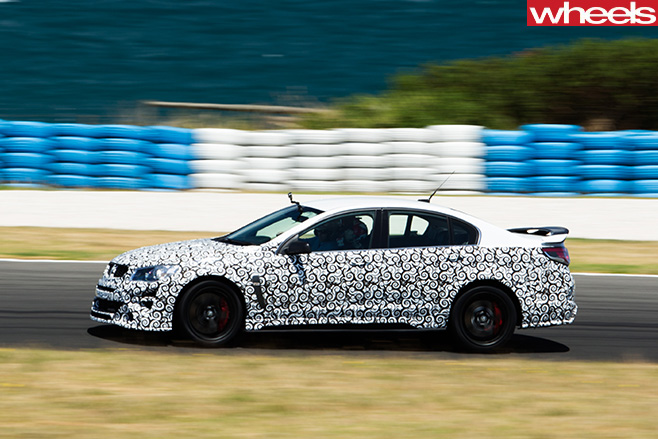
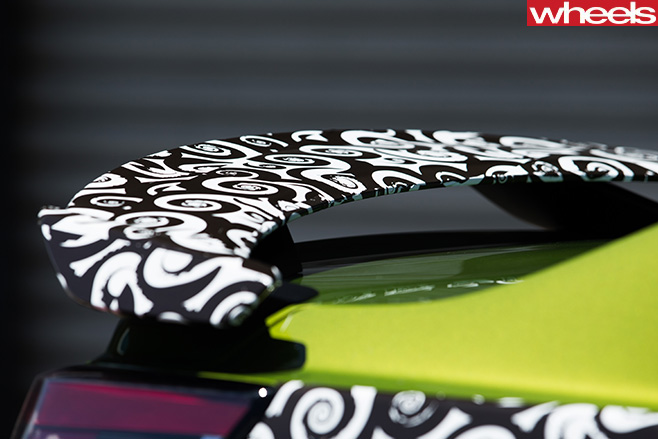
Finally, it’s W1 time. The pair of pre-production cars we’re presented with are covered in black-and-white camouflage, and come equipped with either Warren Luff or Tony D’Alberto riding side-saddle to make sure the cars return to pitlane in one piece. But the W1 is nowhere near as intimidating as its on-paper stats might suggest.
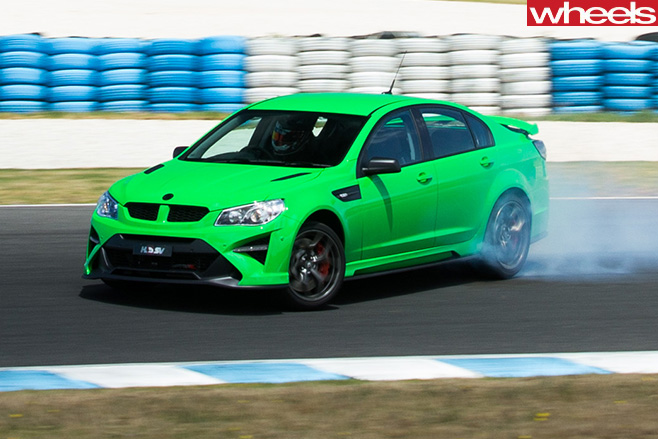
As the motley W1 noses out of the pits, I squeeze the throttle flat in second gear and immediately swoon over its dirtier, old-school V8 exhaust note. The LS9 is an angrier engine than the LSA, with a proper ‘big-block’-style burble, yet it’s also keener to rev, swinging the W1’s red tacho needle towards its 6600rpm cut-out with greater intensity than the normal GTSR’s 6200-limited LSA.
And the gearing! The MH3 ratio set sees a staggering 98.5km/h in first gear, hence why HSV is currently claiming ‘only’ 4.2sec to 100 for the W1, but at a steady 100km/h, it’s ticking over at an almost-busy 1950rpm in sixth gear. Talk about close-ratio!
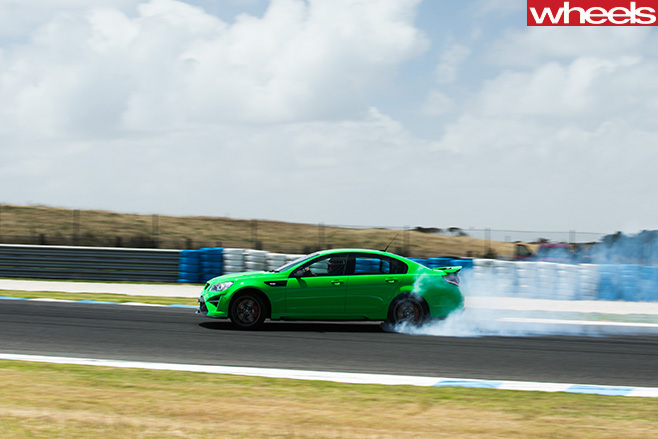
HSV claims that so far in testing, the W1 is 4.4sec faster around Winton than a GTS, and driver Warren Luff puts roughly half of that down to its superb tyres. But there’s also the SupaShock suspension, which feels more rigidly tied down than the GTSR’s MRC set-up in Track mode, despite no longer being a pure coil-over arrangement like the race car. The spring and the shock have been separated, which means the W1 ultimately loses around five percent in chassis performance, but gains 95 percent in refinement compared with a pure coil-over.
Indeed, HSV describes the W1’s on-road ride quality as “firm but not harsh”, and there’s no indication at Phillip Island that we shouldn’t believe the engineers. But with only two flying laps to experience what 300 lucky customers will following the start of GTSR production in April, it’s that dirty LS9 shove and the immense capabilities of its tyres, brakes and handling that continue to be rammed home, corner after corner.
Even in not-quite-finished guise, there’s no doubt the W1 is the greatest performance car Australia has ever been proud enough to produce. But that shouldn’t take anything away from the similarly excellent GTSR sedan and Maloo ute, or even the standard 30thanniversary range.
Besides the fact that all 300 will set out in moments, even a small taste of the GTSR W1 proves it’s way beyond expectation. Muscle-car butch combined with tangible doses of polish and refinement, it’s a fitting tribute to 30 years of homegrown bent-eight bravado. All hail W1.
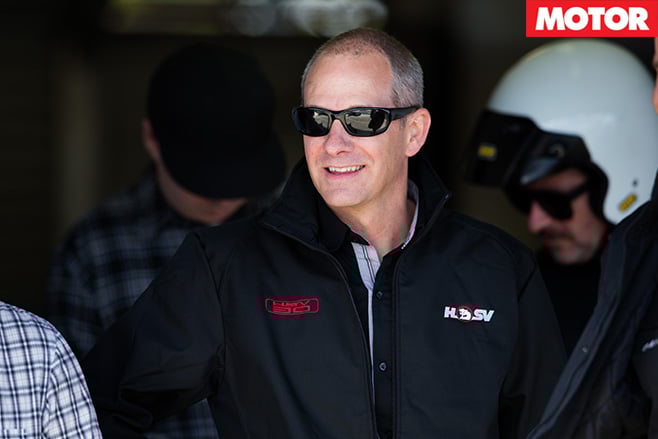
According to HSV’s engineering boss, Joel Stoddart, the move to an LS9 presented plenty of challenges.
Not the least of which was actually finding the engines, since the LS9 is now out of production within GM. “We had to head to the US and start going through warehouses trying to find enough engines,” he says.
“And then we had to kind of beg for them. At the start, we could only find a handful, but we kept at it and eventually found enough to complete the program.” Sounds like you can forget about ordering an LS9 crate engine any time in the future. Even then, the challenges didn’t stop there.
“But an even bigger problem was finding a transmission to handle 800Nm. We knew the Tremec TR6060 from the Corvette could handle it, but that car has a transaxle, not a conventional layout. So we had to somehow put that gearset into our gearbox casing. Then we couldn’t find an input shaft anywhere in the GM world that was the right length, so we had our own made.”
Yet, HSV claims the car will still be profitable, and stresses that “it’s not a price gouge on our part. Not by any means.”
To read more on HSV’s 2017 range click here.
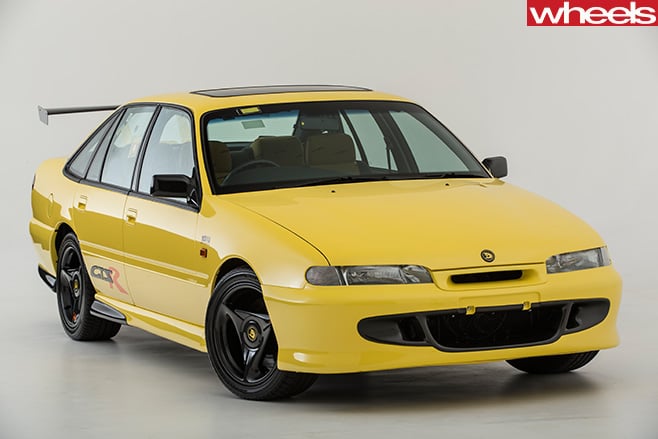
WHEN it was unveiled at the 1995 Sydney Motor Show the GTS-R was the wildest car to date developed by the then-fledgling HSV.
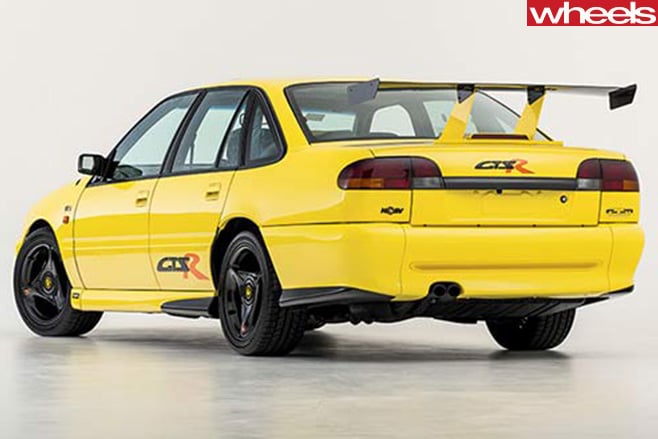
A race-inspired rear wing, yellow seats, three-spoke alloy wheels and carbonfibre trim details on the wheels, wing, front bumper and side skirts cemented it as a head-turner and a muscle car classic.
With an optional blueprinted version of the 5.7-litre ‘stroker’ V8 it was also the most powerful Australian muscle car of its day, with about 230kW, up from 215kW in the standard HSV GTS.
The $75,000 asking price was steep at the time (even steeper once you added $10,000 for the optional blueprinted motor, which saw the 5.7 stripped down, all components optimised, and then rebuilt).
But translated into today’s money it’s about $123,000, so is a relative bargain next to the $169,990 GTSR W1.
That buyers have since sold the car for double its original money bodes well for would-be buyers of the GTSR W1.
Whereas the original GTS-R used the same 5.7-litre engine as the GTS of its day – albeit with the option to up the power through the blueprint optimisation – the modern W1 gets a bespoke engine.
Its LS9 6.2-litre supercharged V8 pulls much harder in the middle revs and keeps powering on all the way to its 6600rpm redline.
About the only area the modern GTSR W1 loses to its 20-year-older stablemate is in kerb weight. At 1895kg it’s 275kg heavier. Blame that on the VF Series II Commodore’s bigger body and the industry’s increased focus on safety, which means a stronger structure and more airbags (the original GTS-R had one airbag, the W1 one has six).
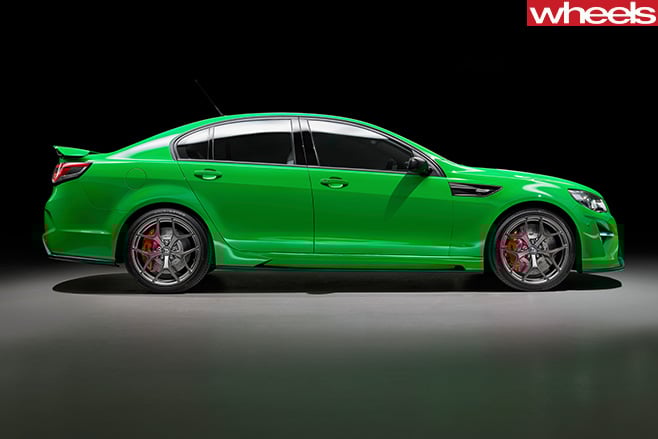
Despite the shared nomenclature there are distinct differences between the two in their design philosophies.
The original was designed by Ian Callum, a former Aston Martin designer and the man now in charge of Jaguar design.
The modern GTSR is a product of HSV design chief Julian Quincey. He said the performance car game has moved on enormously in two decades.
“We felt that today’s customer of performance cars is a little bit more discreet than perhaps one that would have been around maybe 20 years ago,” said Quincey.
“At this price point you’re actually after quite a sophisticated clientele. They’re buying into quite a nice vehicle … they’re obviously enthusiasts. They’re not necessarily going to be looking for big shakers on the hood, that’s something that belongs in the past.”
That said, HSV debated creating a modern version of the 1995/1996 GTS-R’s towering wing.
“The deck lid spoiler, we thought long and hard about,” said Quincey. “GTS-R’s got probably the biggest one in modern history. I think 20 years on that’s probably not appropriate for road-going vehicles.
“Spoilers these days have got smaller by the year. We felt this was not appropriate to put on something huge, something enormous, something that wasn’t going to function any better than something this size.”
Quincey says the new GTSR W1 will also stand out, but in a different way.
“In traffic, from a long way away you’ll be able to spot that this isn’t just any other Commodore or any other HSV.”
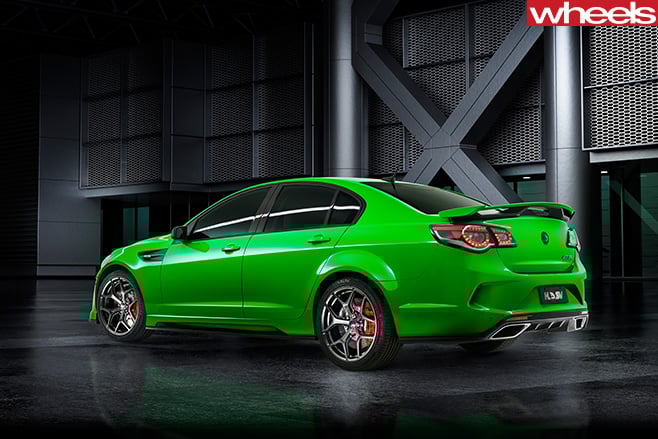
As for colours, it’s available in many, both subtle and bold, including the new lairy Spitfire Green or the more subdued Son of a Gun gunmetal grey.
As for the taxi yellow, or XU3 Yellah, it was discussed internally but ruled out.
“We don’t have a yellow colour … we have discussed it, we looked at lots of different options,” said HSV managing director Tim Jackson.
“The cost of implementing that yellow is just cost prohibitive. We have worked at could we look at a local paint supplier or a paint group to do it. It proved very difficult and there were a whole bunch of discussions about warranty.”
Now, for the fun stuff. For an idea of how far the car industry and HSV have progressed in 20 years, here are the key specifications and differences between that original GTS-R and the new GTSR W1.
| Price | $75,000 ($10,000 for blueprinted engine) | $169,990 |
| Years produced | 1995-1996 | 2017 |
| Number built | 85 | 300 |
| Engine | 5.7-litre V8 | 6.2-litre supercharged V8 |
| Power | 215kW at 4800rpm (230kW blueprinted) | 474kW at 6500rpm |
| Torque | 475Nm at 3600rpm (507Nm blueprinted) | 815Nm at 3900rpm |
| Gearbox | Tremec T56 6-speed manual | TR6060 6-speed manual |
| Speed 1st gear | 70km/h | 98.5km/h |
| Engine cutout | 5700rpm | 6600rpm |
| 0-100km/h | 6.6 seconds | 4.2 seconds |
| 0-400m | 14.8 seconds | 12.1 seconds |
| Weight | 1620kg | 1895kg |
| Fuel use | 14.9L/100km (Wheels test) | 16.5L/100km (government test) |
| Wheels | 17-inch 3-spoke cast alloys | 20-inch 5/10-spoke forged alloys |
| Wheel size | 17 x 8.0-inch (front and rear) | 20 x 9.0-inch (f), 20 x 10.0-inch (r) |
| Tyre type | Bridgestone Expedia S-01 | Pirelli P Zero Tropheo R Track |
| Tyres (front) | 235/45 ZR17 | 265/35 R20 |
| Tyres (rear) | 235/45 ZR17 | 295/30 R20 |
| Brakes (front) | 2-piston 328mm discs | 6-piston 410mm discs |
| Brakes (rear) | 1-piston 280mm discs | 4-piston 372mm discs |
| Rear traction | Hydratrak limited slip diff | Electronic torque vectoring |
Okay, so everybody’s talking about the W1, but with just 300 examples to be built, it’s the GTSR on which the W1 is based that will be the HSV we mortals will aspire to. Is tragedy, no? No, not at all.
And, in fact, the GTS-R gets a bunch of the W1’s good bits including the bold new look, headlined by those fattened front fenders and the new front bar that goes with it. And inside, while you don’t get the full alcantara business, you do get some of it, crucially with that gorgeous diamond-stitch thing going on.
It’s also a seriously good thing to drive whether you’re in the sedan or the Maloo version. The dyno might notice the extra five kiloWatts, but I’m tipping you won’t (I didn’t). But that doesn’t mean the thing isn’t still a riot, because the LSA remains a force of nature.
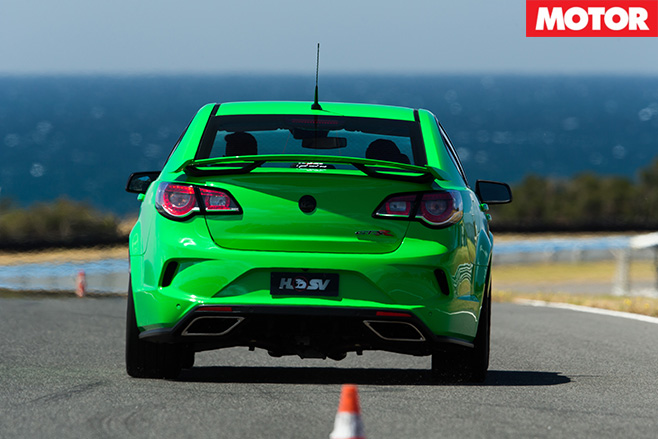
And, man, the whole package really hauls the big guy down. The pedal feel is excellent and if you can make these mothers fade, you’re a better butcher than I am.
The other big selling point for the GTSR as opposed to the W1 is the fact that you can option the automatic transmission which is going to broaden its appeal no end.
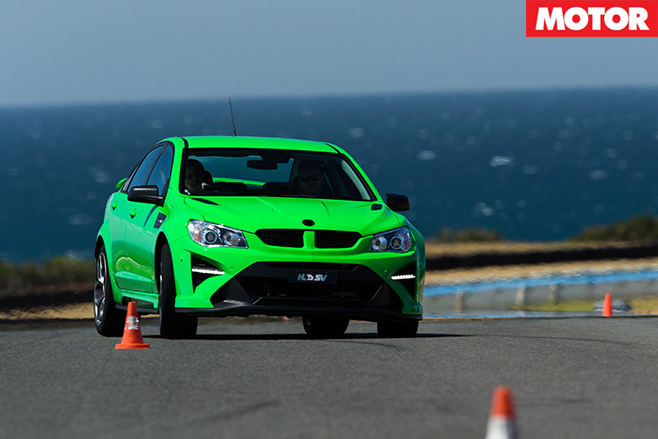
The other massive advantage held by the GTSR is the dollar thing. While the W1 will get you two-beers’ worth of change from $170,000, the GTSR and GTSR Maloo come in at $109,490 and $96,990 respectively. Enough left over to build a shed to keep it in.