
Electric sliding doors are now standard even on entry-level versions of the Volkswagen Multivan people-mover, though pricing slides upwards.
The electric side doors and power latching tailgate were previously a $2680 option for the Comfortline TDI340 in either short- or long-wheelbase form.
Volkswagen Australia said the popularity of the option encouraged the company to make it inclusive, though the two models increase in price by $3000 and $4000, respectively.
The side doors can be opened or closed using either the key fob or a button on the dash.
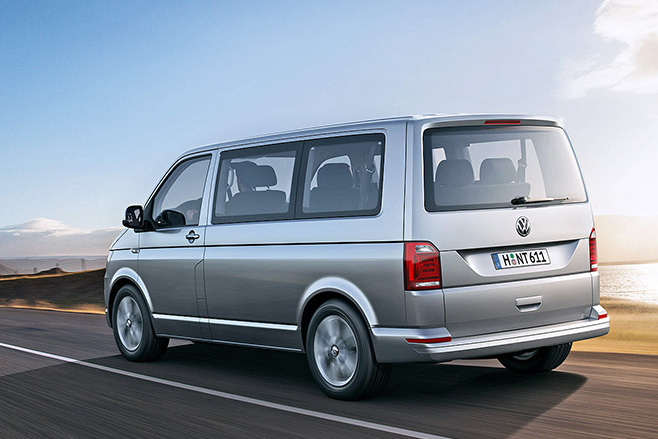
The German car maker said the change of specification gave the Multivan an advantage over seven-seater rivals, while also shortening the waiting list for buyers.
“Electric sliding doors standard across the range is something you won’t get in the Mercedes-Benz Valente, Kia Carnival or Hyundai iMax,” said VW Australia’s commercial vehicles director, Carlos Santos.
“Our buyers redefined the price point. They all wanted electric sliding doors, were queueing up to pay the optional cost, but they didn’t like having to wait for their order.”
Higher-grade Multivans that already featured the electric doors and tailgate also increase in price.
The Highline TDI450 jumps $3400 in either two-wheel drive or all-wheel drive guise, while the LWB Executive moves $3100 to $83,390.
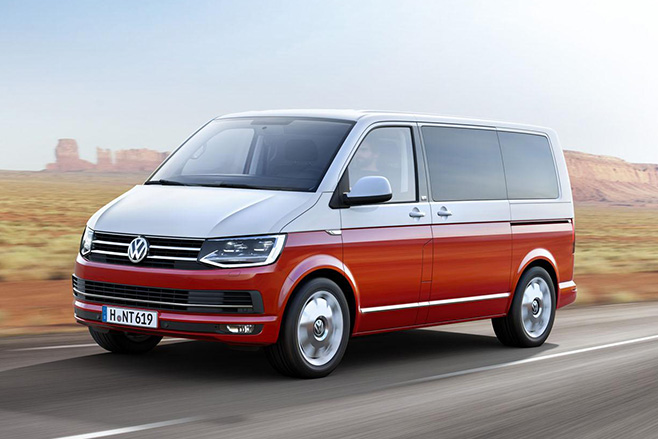
Other standard features unique to entire range include captain chairs up front as opposed to the buckets in rival people movers.
Key options include: Multi-function table with storage space and four cup holders; child booster seats integrated in the second row swivel seats and voice control and electronic voice amplification
The latest Volkswagen Multivan was released in late 2015.
MY17 VW Multivan retail pricing
- SWB Comfortline TDI340 7 Spd DSG $52,990
- LWB Comfortline TDI340 7 Spd DSG $57,990
- Highline TDI450 7 Spd DSG $79,890
- Highline TDI450 7 Spd DSG 4Motion $83,390
- LWB Executive TDI450 7 Spd DSG $83,390
A smorgasbord of technological firsts, and the fastest diesel-powered seven-seater money can buy.
WHAT IS IT? The already accomplished Audi Q7 SUV has evolved into the SQ7 after a week-long bender of protein powder and science fiction. It’s more muscular and technologically advanced than anything else in the four-ringed line-up. This is Audi’s big, bold, brute of a seven-seater.
WHY WE’RE TESTING IT It’s the fastest SUV of its kind, and promises an experience unlike any competitor, thanks in part to the first road-going application of Audi’s electronic compressor tech. This is our first chance to experience the 320kW/900Nm SUV on local roads, specifically the foothills of the Snowy Mountains.
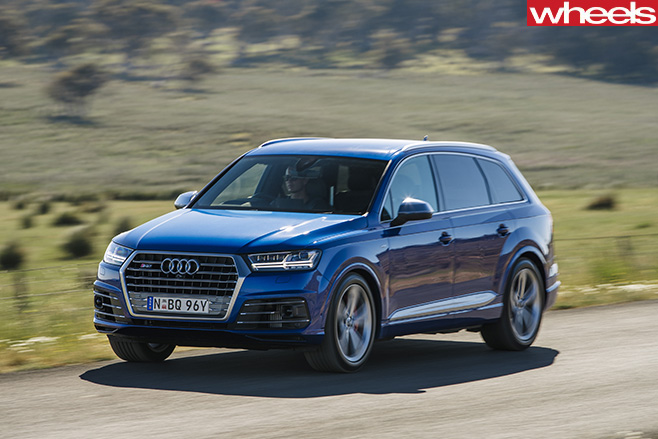
THE WHEELS VERDICT The SQ7 is an eye-widening smorgasbord of tech firsts. Its ambitious triple-turbo diesel doles out unrelenting torque, and will decimate a clean licence if given half a chance. Otherwise, it’s a luxuriant people mover with badge cachet that sets it apart from the regular Q7.
PLUS: Refinement, performance, technological superstardom MINUS: Remote steering, expensive options, yearns for an autobahn
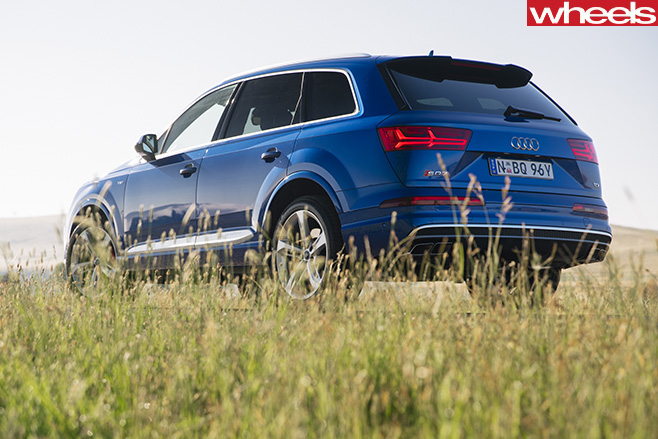
Foot flat, there’s a momentary pause as the 2330kg SUV inhales, followed by a deep, rising rumble from the 4.0-litre V8, mashed with the rushing air of three turbochargers that surge the five-metre lump forward on an almighty wave of torque.
It’s not quite a Tesla-rivalling, all-electric sock to the back of the head, but it ticks over 100km/h in 4.9 seconds; quicker than a Audi TTS Roadster. It takes one of the most complicated powertrains currently on sale to manufacture all that thrust.
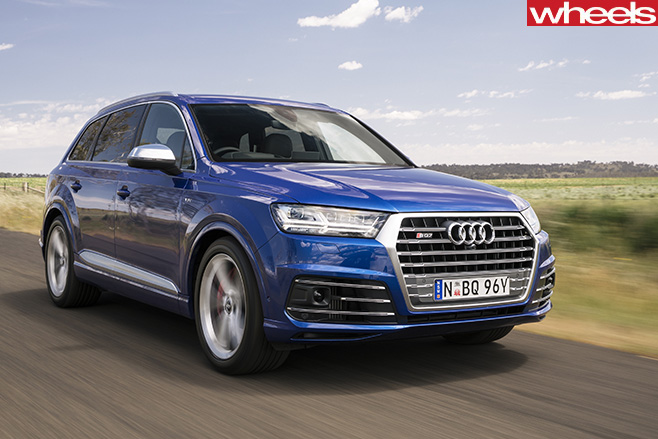
Passing on the highway the SQ7 puts on pace effortlessly, and has such effective sound isolation that one’s perception of speed is often way off. Its long-legged eight-speed gearing is good for 150km/h at 1900rpm, which doesn’t help.
Audi’s electric turbocharger tech debuted nearly three years ago in the relatively conventional RS5 TDI concept sports car. Yet here we are in the first road-going application of that system – a 320kW seven-seater.
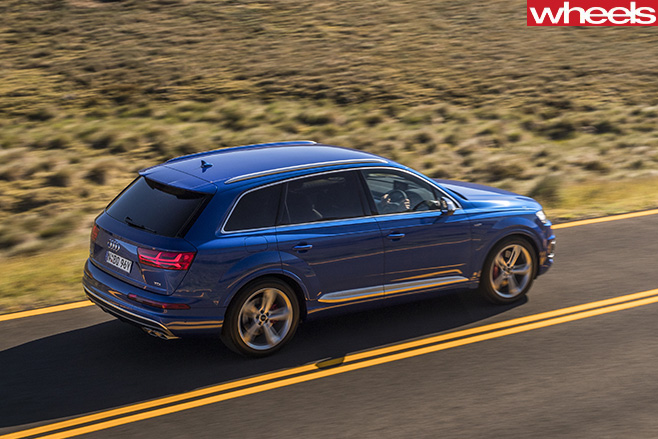
Selecting Dynamic mode flexes all systems simultaneously. The air suspension drops, active sway bars tense and steering weights up. This is not a naturally athletic car, but the electronics try earnestly to convince otherwise.
There’s monstrous grip and bizarre agility. Front and back axles feel connected, though the SQ7’s obesity is exposed in delayed reactions when switching back through tighter corners.
Strangest of all is the body control. With the electromechanical roll stabilisation in full swing, there is just one degree of lateral body roll for every 1G of cornering force, of which normal road tyres only handle around 1.2G – at maximum. Away from the limit of tyre grip the system is impressive, though it does make it difficult to judge where that limit lies.
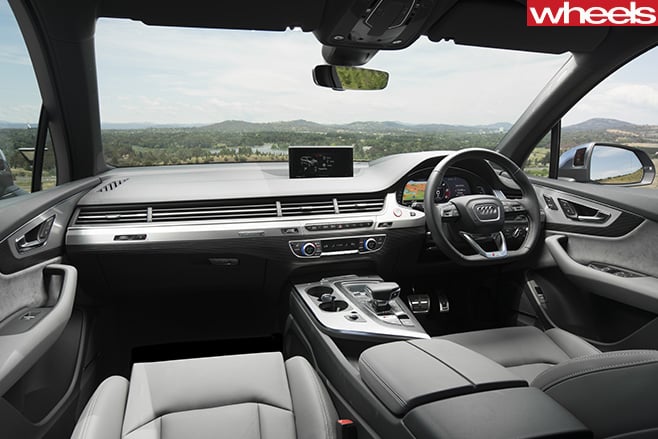
As a demonstration of what’s possible the SQ7 is astonishing. As a performance car in its own right it’s remote. Layer upon layer of computer interpretation and intervention sit between driver input and car response, forever relaying signals to open and close solenoids, switch on secondary intake and exhaust valves, tighten up stabilisers and regenerate energy for the 48V system.
It’s a marvel of tech that Ron Dennis would be proud to put a McLaren badge on, but ultimate driver appeal is diminished when really on it once the shock and awe factor wears off.
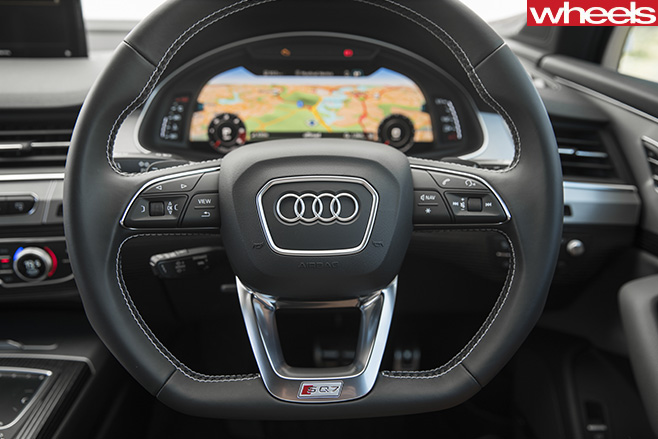
It can be incognito, too, especially when left to ride on standard 20-inch wheels rather than the 21- or 22-inch rims most buyers choose to option. In a plain colour without any extras it doesn’t immediately look like an Audi S car. Fitting a blackout option pack and the exclusive Sepang Blue colour ups the ante.
The SQ7 is confused and deeply impressive at the same time. It shows off tech likely to trickle down to Audi’s other sports cars, and that’s something to look forward to. As a performance car in its own right it’s a bit like using a jackhammer to crack a walnut, but all that grunt under the right foot is addictive. And as a conversation starter at the pub, three turbos are hard to top.
SPECS Model: Audi SQ7 Engine: 3956cc V8 twin-turbo diesel, dohc, 32v, electric compressor Max power: 320kW @ 3750-5000rpm Max torque: 900Nm @ 1000-3250rpm Transmission: Eight-speed automatic Weight: 2330kg 0-100km/h: 4.9s Fuel economy: 7.2L/100km Price: $153,616 On sale: Now
CAR servicing franchise Ultra Tune has attracted 739 complaints in 2016 over their television advertising campaign.
The Advertising Standards Bureau today released its top 10 list of ads that collected the most complaints in 2016, with Ultra Tune taking up three places – including the top slot.
The most complained about ad of 2016 was the company’s 16-second free-to-air TV spot that features two dancing women in rubber suits, with the tagline: “We’re into rubber.” The ad attracted 418 separate letters of complaints, suggesting it was in breach of sections 2.1, 2.2 and 2.4 of the advertising standards code that relate to discrimination, exploitation and degradation, and sex, sexuality or nudity respectively.

The third Ultra Tune ad to make the list finished seventh, attracting 113 separate complaints. This ad showed the same pair driving off a cliff after selecting the wrong gear before driving off.
- Bentley’s banned ad: 330km/h on the Sturt Highway
- Audi’s banned ad: complaints about ‘irresponsible driving’
The “We’re into rubber” spot has drawn the second highest number of complaints of any ad reviewed by the Advertising Standards Bureau, finishing runner-up to a TV spot for adulterous dating site Ashley Madison that attracted 643 complaints through 2014 and 2015.
Ultra Tune executive chairman Sean Buckley defended his ads to the ABC earlier this year.
“They’re joking, fun, humorous, have some Hollywood theatrics,” he said.
Mr Buckley said the banned ad that showed the women being hit by a train at a level crossing was trying to highlight the dangers of poor car maintenance.
“I agree we’ve copped some flak, but the idea we would want to alienate part of our customer base, that’s just ridiculous,” he said. “People should lighten up.”
If the way a race car looks can be used as a gauge as to how it will perform, the FIA might as well give the 2017 WRC trophy to M-Sport right now.
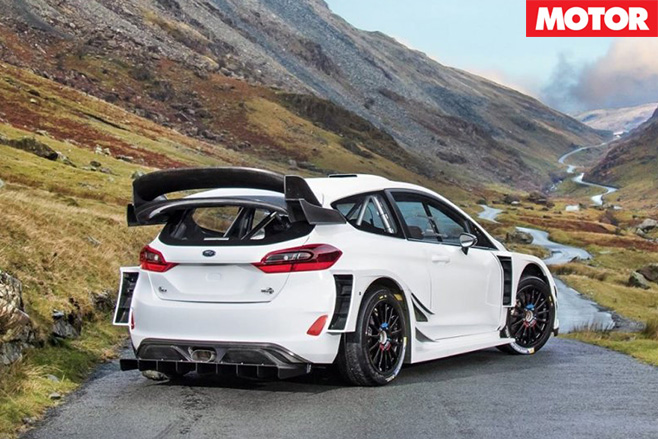
The British engineering firm that has run Ford’s WRC operations for the past 20 years has unveiled its latest challenger, built to the new 2017 regulations and based on Ford’s overhauled Fiesta.
M-Sport boss Malcolm Wilson has also pulled off the deal of a lifetime by signing reigning four-time champion Sebastien Ogier, who was left stranded without a drive following the withdrawal of the Volkswagen factory outfit. He will partner Estonian Ott Tanak.
The Cumbrian firm has struggled for results since losing factory Ford funding at the end of 2012 and despite coming close with Colin McRae, Carlos Sainz, Marcus Gronholm and Mikko Hirvonen has never won the WRC driver’s title.
The last time a Ford won was 1981 with Ari Vatanen – ironically as a privately-funded outfit – but Malcolm Wilson has thrown everything possible at the 2017 regulations in the hope of once again building a rally-winning car.
As with all 2017 World Rally Cars, the new Fiesta sports around 280kW/450Nm from its 1.6-litre turbo four-cylinder engine thanks to a lift in inlet restrictor size from 34mm to 36mm. Minimum weight has decreased by 25 to 1175kg and electronically-controlled centre diffs are once again legal.
Certainly the most obvious regulation change has been to relax the restrictions around aerodynamics, with all the 2017 WRC contenders sporting wider tracks, huge wings and monstrous diffusers for a huge increase in downforce.
The 2017 WRC season kicks off in Monte Carlo on January 19.
The luxury brands Lexus, Audi, Mercedes-Benz, and BMW were scored out of 1000 in a study which measures the satisfaction of customers since they have purchased their cars.
The study is based on responses from 518 luxury-vehicle owners who bought new cars from August 2011, through September 2016, and took their vehicle for service at an authorised car dealership from August 2015 through September 2016.
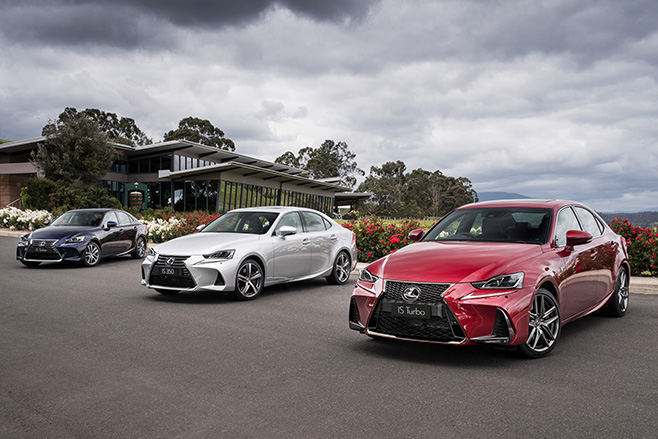
Lexus (852) was the highest ranked of the four brands tested, with Mercedes-Benz second (828), Audi third (826), and BMW missing out on a podium (811). The Bavarian company also fell short of meeting the luxury average (824).
Land Rover and Volvo were included in the study, but not ranked due to small or insufficient sample sizes.
The study found more than 1 in 3 customers say they are “delighted” with the courtesy of their service advisor in 2016, an increase from 24% in 2015.
“Service advisors are vital to the success of service centres across Australia,” said Mohit Arora, executive director at J.D. Power
“Customers’ interaction with their service advisor needs to be professional, transparent, trustworthy and, most importantly, enjoyable. A happy customer is one who will return for future work when the car warranty expires and will recommend your services to others.”
The survey company says companies which maintained contact with customers often ranked better in their results.
“While all dealers across the network mention how difficult it is to make contact with their customers, those that are successful in doing so reap the benefits of happier customers,” said Loi Truong, senior country manager of Australia at J.D.Power. “Contacting customers and asking about their service experience—and measuring this performance with a view to continually improve—is the key to success.”
Five different factors compromised the overall satisfaction ranking with different weighting on the final results. These were, service advisor (20-percent), Vehicle pick-up (20-percent), service quality (25-percent), service facility (17-percent), and service initiation (18-percent).
J.D. Power is a customer satisfaction researcher, and their annual surveys are well-respected in the automotive industry.
Despite the image of Mustangs being big, heavy American muscle cars, Herrod’s car blitzed the braking to have the third-shortest stopping distance from 100km/h at 35.8m, beating out both all-wheel drive Golf Rs and the Hi-Torque R35 GT-R!
Hot Tuner 2016 is brought to you by Valvoline SynPower
It showed just how good the factory Brembo performance brake package can work with judicious upgrades to the suspension.
Unfortunately, due to persistent rain we couldn’t accurately record acceleration figures at Sydney Dragway, though Dave Morley has clocked 4.19sec to 100km/h on his way to a 12.14@197km/h 400m time. It is important to note this time was done at Heathcote, in rural Victoria, under very different atmospheric and track conditions, as part of the September issue of MOTOR.
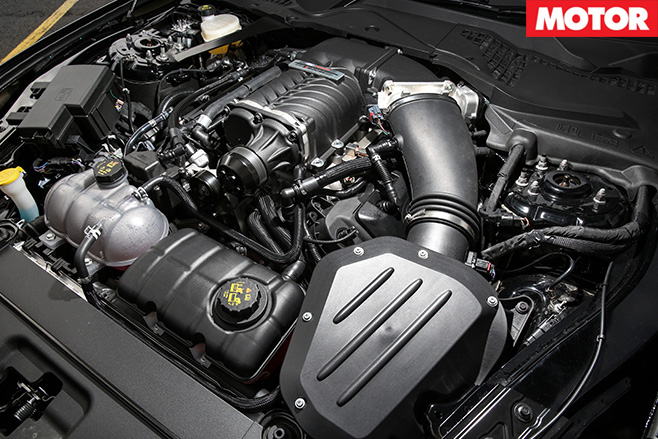
While those times were impressive, at Hot Tuner ’16 both Rob Herrod and offsider John McAlinden knew something wasn’t right with the Mustang after the black coupe’s performance on the Mainline chassis dyno, where it made just 351kW at the back wheels, some 90kW down on what Herrod regularly records for these cars. They both immediately pointed to the control fuel the car had been filled with (see page 74 for more on this issue).
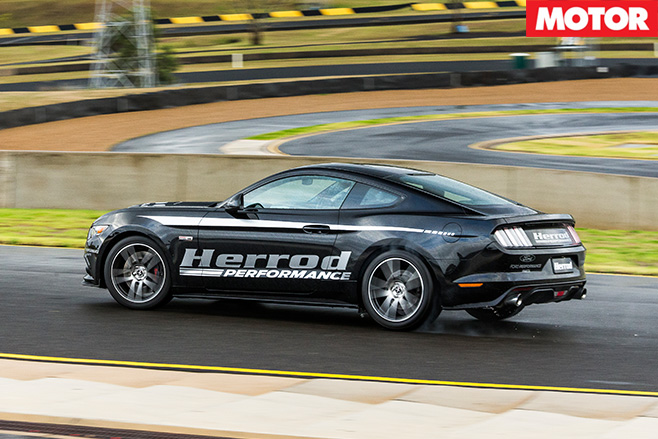
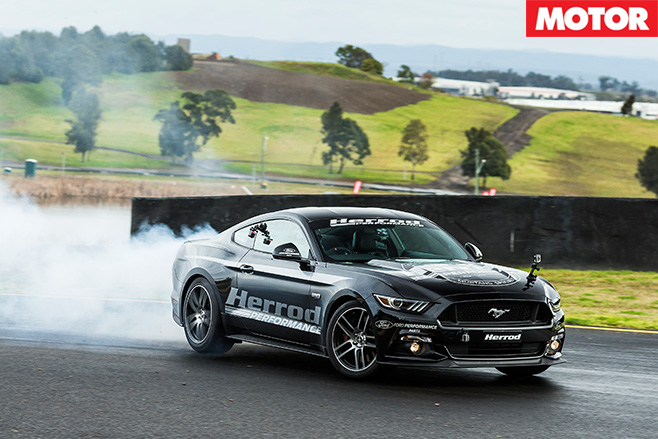
Impressively, even though it was down nearly 100kW at the wheels, D’Alberto managed to run a lap time of 1.04:7, less than one second behind the all-wheel drive Harding Golf R and ahead of much lighter and more powerful competition. That didn’t mean it was easy to drive, though, with the fat wall of torque making it almost comically easy to put the car into lurid drifts at part-throttle on the massively greasy and undulating surface.
While slip-sliding around was fun, it was a revelation to find the part-throttle response was crisp and useable, despite both McAlinden and Herrod saying they felt the response was much doughier than normal. They pointed to the car’s automatic octane-sensing function in the tuned ECU, which pulls ignition timing (and therefore power) when it senses the fuel in the system isn’t up to providing the full-freight 440rwkW.
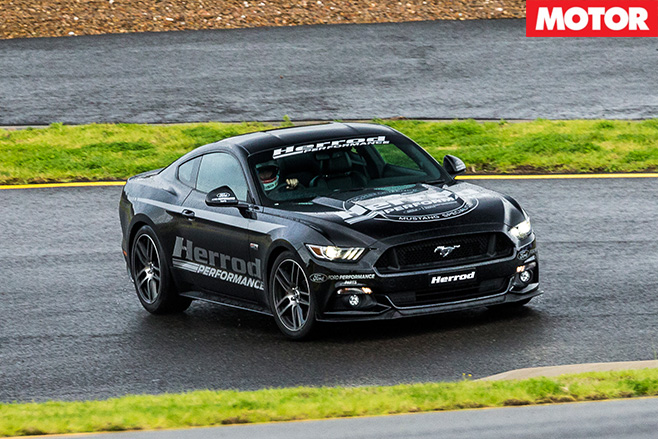
The brakes felt strong and were easily modulated to smoothly haul the car up from pedestrian speeds, or when diving into the South Circuit’s difficult downhill, tight Turn 2. While I am an avowed fan of manual transmissions in V8 muscle cars, the six-speed automatic performed brilliantly in all possible shift modes.
Overall, the Herrod Performance package really does move the Mustang into another league, and it should be considered by traditional performance car buyers who would never otherwise think of purchasing a ‘modified’ car. The car’s excellent performance in the tough conditions, even down on power, sealed its well-earned third place at Hot Tuner 2016. I can’t wait to drive one with the full 440kW at the wheels!
DISCIPLINE RANKING
3rd | Lap time: 1:04.7sec 4th | Lap V-Max: 155.07km/h 4th | Lap V-Max: 101.97km/h 3rd | Lap V-Max: 53.67km/h
EDIT: Having written the article below praising F1 for its social media efforts, it appears F1 doesn’t actually want anyone to watch its YouTube videos as it’s blocked them being embedded on websites. To watch the video on a smartphone (it’s worth it) click the video’s YT link above rather than the play button.
It took Formula 1 a long time to embrace social media. Head honcho Bernie Ecclestone was famously reluctant, primarily because he couldn’t see a way to make another billion dollars out of it.
Thankfully for fans, F1 has taken to social media in a big way in 2016. It now has accounts on all the major platforms and has come up with some great initiatives, including Grill the Grid, reposting old footage and, most importantly, not being afraid to poke fun at itself, something the sport at large could learn a lot from.
One of its cleverest initiatives is its 2016 season review video, created in the style of 1980s video games like Pole Position (see video below) or Outrun. The team that made it clearly spent plenty of time on similar games in their youth as everything from the music to the menus to the graphics is spot on.
Being a little over three minutes long it is by no means a comprehensive review, but a few of the major events are covered and the section regarding Daniel Ricciardo’s ‘Tyre-gate’ situation is very funny indeed.
With Liberty Media extremely likely to complete its deal to take over Formula 1 in early 2017 chances are its social media presence will continue to expand. Then all it needs to do is offer a live streaming service for fans to watch on demand…
The sport is facing one of its biggest technical shake-ups in decades in 2017 and we’ll be eagerly awaiting the arrival of winter testing to see which team gets the best handle on the new cars.
The venerable Disco continues to posh up but remains a premium off-roader – though we’re none the wiser about how it travels on bitumen.
WHAT IS IT? The fourth-generation Land Rover Discovery is a very different beast from its predecessors, with a move upmarket making it closer to being a three-row Range Rover than a utilitarian off-road hauler. Our drive in a prototype was limited to an off-road course, which the Discovery conquered with near-effortless disdain. The unanswered question, for now at least, is how it will cope when asked to perform in the real world.
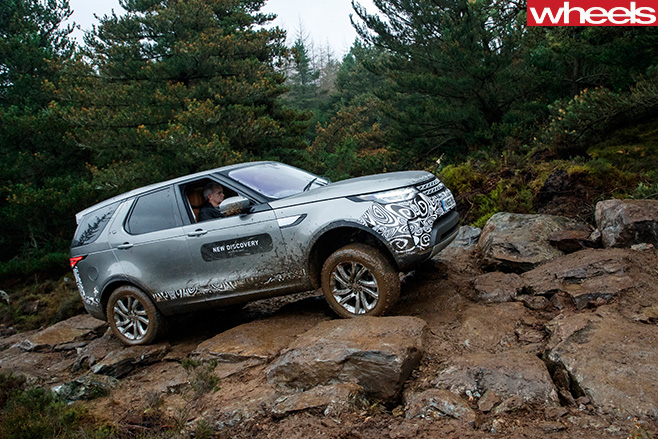
WHY WE’RE TESTING IT The Land Rover brand has been getting posher for years, with the Discovery being the latest product of this creeping “Range Rover-ization”. It sits on the same aluminium platform as the current Range Rover and Range Rover Sport and therefore benefits from substantial weight saving over its pudgy predecessor, with the diet resulting in a significant increase in performance. It’s bigger and more practical than the last Discovery as well, with its optional three-row layout particularly well suited to Australian tastes.
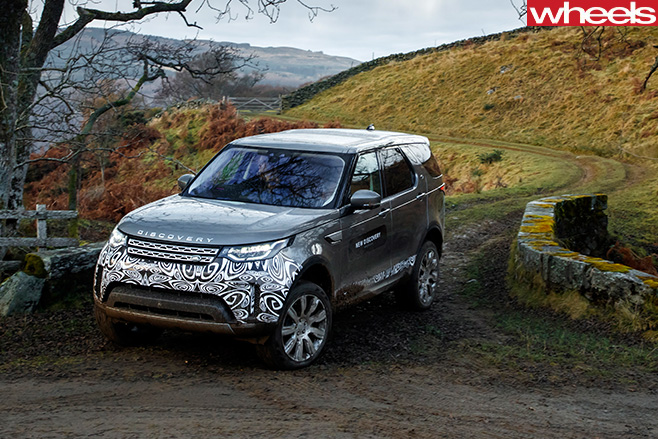
THE WHEELS VERDICT We’re not going to attempt a definitive take after a drive that didn’t take in a metre of tarmac, but we’ve still seen enough of the new Discovery to be broadly impressed. The design lacks the utilitarian charm of its predecessors, but under the mostly generic styling is a well-engineered and practical SUV that combines three-row usefulness (and magic folding seats) with a welcome improvement in material quality and ergonomic design. It’s mighty when asked to deal with low-speed off-roading, now we just need to find out how it copes with sealed surfaces.
THE WHEELS REVIEW This definitely isn’t going to be a definitive review, or even a sketchy one. JLR seems to love introducing new models in environments seemingly chosen to prevent journos from gathering anything more than the most rudimentary dynamic impressions. In the case of the new Land Rover Discovery that meant on a private estate in Scotland, big enough to accommodate a three-hour drive without leaving mud or gravel. My peak speed was a dizzying 30km/h and the full road test will have to wait until we have access to an actual road.
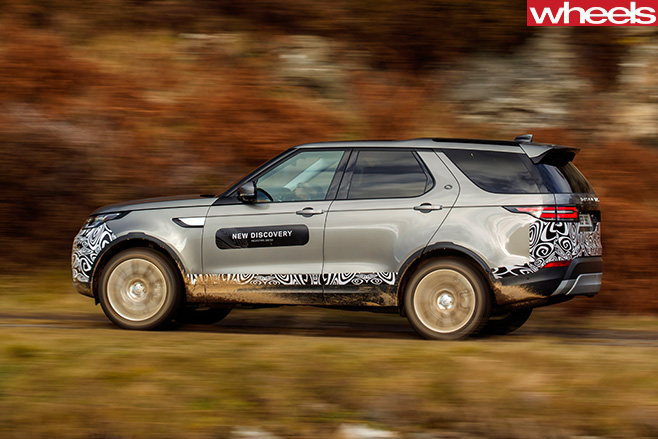
It sits on the same PLA platform as the Range Rover and Range Rover Sport, meaning a switch to aluminium construction, and will be constructed alongside its posher sisters and JLR’s Solihull plant in the UK (also later in the company’s new factory in Slovakia.)
The change in emphasis is obvious in the styling, with the new Disco moving far away from the slab-sided styling of its predecessors to take on much of the Range Rover’s design language.
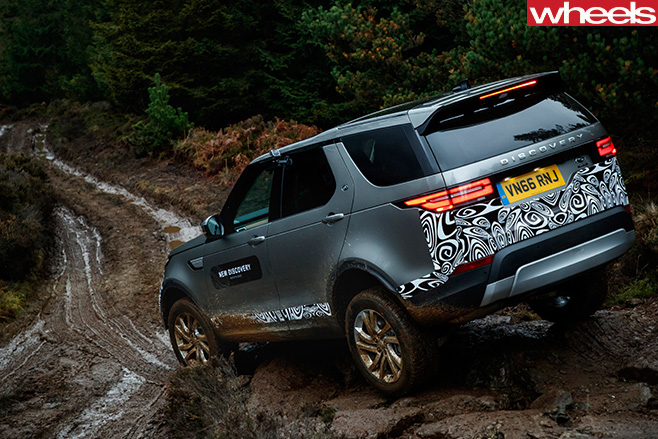
For the most part the styling is generic lifestyle SUV, but the tailgate features an offset license plate mount that’s presumably designed to make us think of the stepped glass on previous Discos. This looks awkward, certainly with a big UK licence plate filling the space.
The cabin is good. Material quality feels a magnitude better than the previous Discovery, with Land Rover promising generous standard equipment in all markets. The Disco uses conventional instruments (shared with the Discovery Sport) rather than the full VDU panel of the Range Rover, but in every other regard it feels close to its snootier sisters in terms of fit and finish.
Land Rover’s claims the rear seats are adult sized would require finding some flexible and uncomplaining adults, but it’s certainly bigger in the rear than the Discovery Sport or “5+2” Range Rover Sport.
Engine choice reflects the Discovery’s mid-range position in the Land Rover league. It doesn’t get the option of a V8, instead having a carried-over 250kW supercharged petrol V6 and three turbodiesels – a 2.0-litre four-pot from JLR’s new “Ingenium” family in either 132kW or 177kW states of tune, and a 190kW V6.
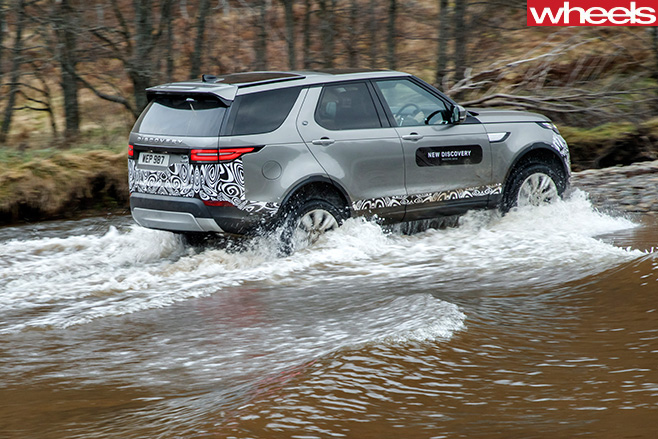
The switch to the aluminium platform has resulted in some impressive weight saving – the new Discovery is 500 kg lighter than its predecessor spec-for-spec – and on the official performance figures the petrol V6 will be the quickest Discovery yet, with a claimed 7.1-sec 0-100km/h time.
Not that I got a chance to confirm that. Indeed, thanks to the gentle pace that Land Rover insists off-roading is conducted at I barely got either the V6 petrol or V6 diesel that I drove into third gear.
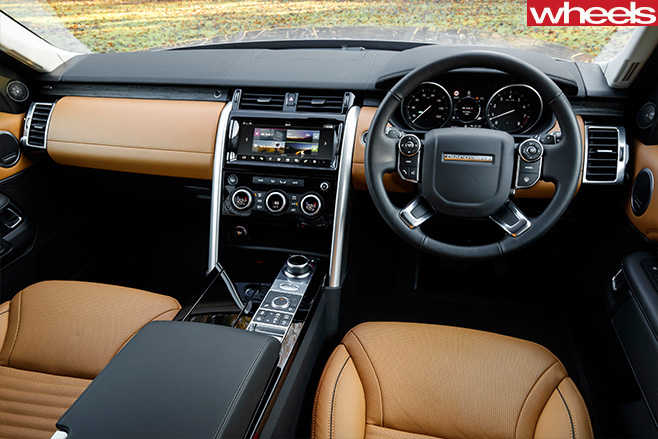
An eight-speed autobox is standard, but Land Rover is making the two-speed transfer box an option for the first time. The uptake of low-range gears will be a good indication of how many Discoveries are being bought to actually tackle the wilderness.
At such low speeds, it was even hard to discern much difference between the two engines. The petrol sounds nicer and punches harder when asked to do so, but it surges enough to make it difficult to maintain ultra-low speeds. The diesel’s flat-everywhere torque curve seemed ideally suited for chugging through the scenic wilderness that is the Atholl estate in the Highlands. I can’t honestly say anything about ride, steering response or refinement, except that – even at the lowest speeds – the new Discovery feels obviously lighter than its gargantuan predecessor.
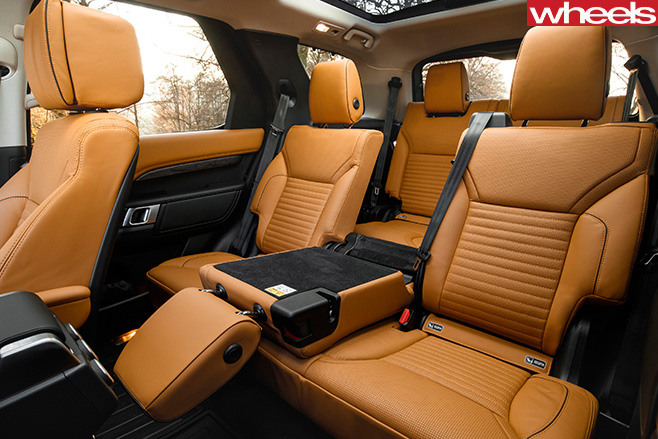
It certainly feels plusher and posher than the last version and can still manage a fairly serious off-road challenge, albeit one that’s a fair bit removed from a trip to the Outback.
The big unanswered question is whether it can get close to the car-like ride and refinement of its premium rivals on road.
SPECS Model: Land Rover Discovery (Mk5) 3.0 Si6 Engine: 2995cc V6, dohc, 24v, supercharged Max power: 250kW @ 6500rpm Max torque: 450Nm @ 3500rpm – 5000rpm Transmission: Eight-speed auto, all-wheel drive Weight: 2223kg 0-100km/h: 7.1 sec (manufacturer) Fuel economy: 10.9L/100km Price: TBC On sale: Q2 2017
There are big price hikes of between $11,000 and $19,970 for the seventh-generation BMW 5 Series that reaches Australia in March.
The range starts $13,500 higher with the 520i dropping out to leave the $93,900 520d diesel as the new entry point.
The outgoing 520d costs $82,900, though BMW Australia says standard equipment has been increased extensively across the line-up.
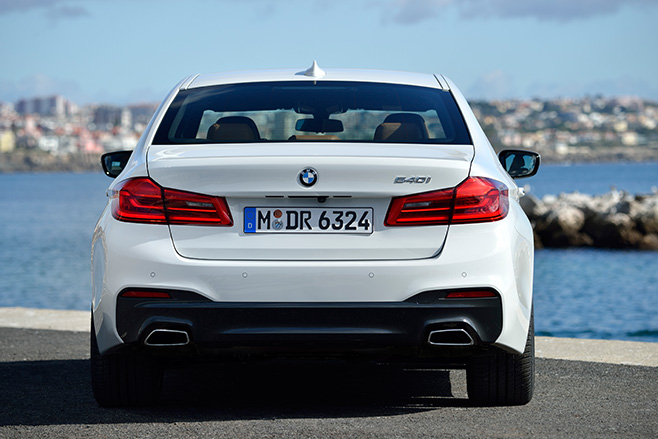
BMW quotes a value of $15,500 for features added to the 520d while the four-cylinder petrol 530i gains $16,000 worth of gear over the 528i it replaces. The latter figure also applies to the $119,900 530d six-cylinder turbo diesel, which will substitute for the current 535d that is slightly more expensive ($122,500) though faster and more powerful than the new model.
The six-cylinder petrol BMW 5 Series, the BMW 540i, makes the biggest price jump, rising from the $116,930 of the outgoing 535i to $136,900. BMW, however, says additional value for the 540i amounts to approximately $34,000.
The successor for the mighty BMW M5 performance sedan has yet to be revealed, while BMW Australia will also have the option of two other V8 models featuring all-wheel drive coming later in 2017.
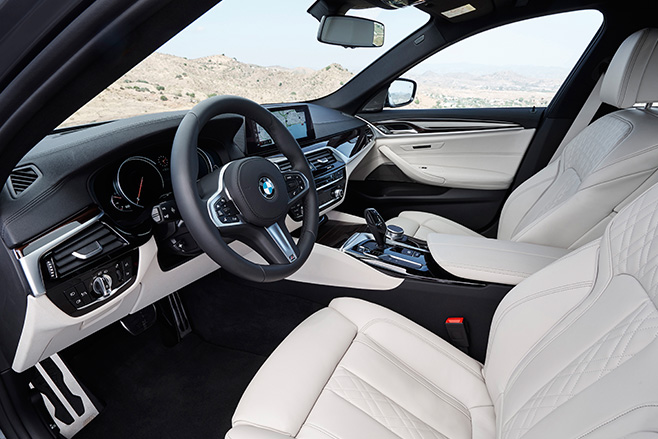
The diesel is the 550d xDrive, while another new badge is the M550i – which uses a 340kW twin-turbo V8 to accelerate faster than the current M5. BMW quotes a 0-100km/h time of 4.0 seconds for the M550i.
BMW’s latest 5 Series is slightly bigger than before, though loses up to 100kg courtesy of a new, lighter architecture.
The price rise follows the rival Mercedes-Benz E-Class, which launched here in mid 2016 with increases of around $10,000.
Here’s WhichCar’s easy-glance guide to the 2017 BMW 5 Series launch range.
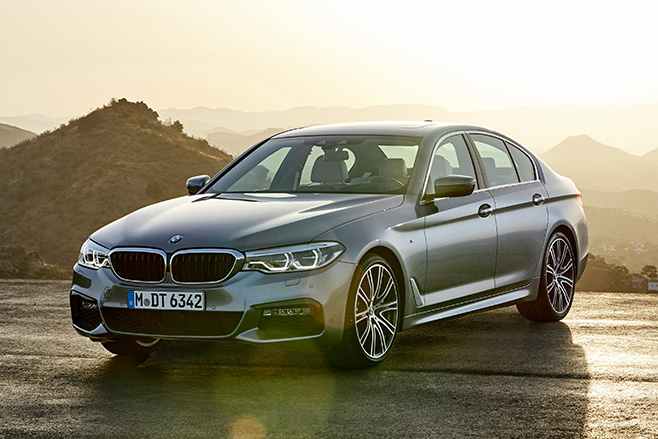
Price: $93,900 Engine: 2.0-litre four-cylinder turbo diesel Power/Torque: 140kW/400Nm Acceleration (0-100): 7.5 seconds Fuel consumption (official): 4.3 litres per 100km
Standard equipment highlights LED headlights 18-inch alloy wheels Dakota leather seating Electric front seats Electrically adjustable steering wheel 10.3-inch touchscreen with navigation Wireless smartphone charging Head-up display Active cruise control with stop/go function Front cross-traffic warning Lane-keeping assist Active park distance control Surround (360-degree) car view BMW ConnectedDrive internet connectivity with app integration
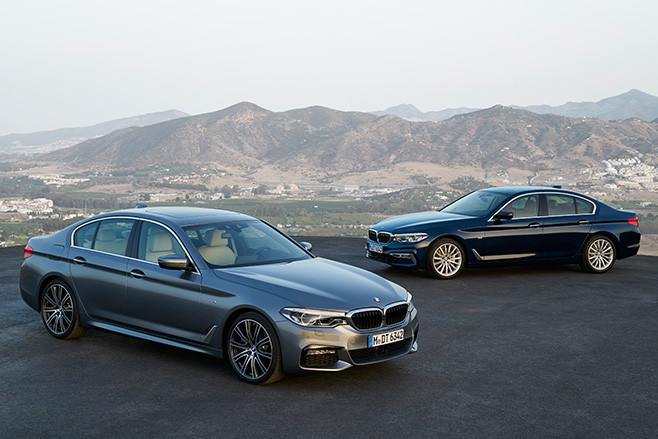
BMW 530i
Price: $108,900 Engine: 2.0-litre four-cylinder turbo petrol Power/Torque: 185kW/350Nm Acceleration (0-100): 6.2 seconds Fuel consumption (official): 5.8L/100km
Standard equipment highlights (over 520d) M Sport Package + M Aerodynamics Package M Sport brake system 19-inch M light-alloy wheels Electric tailgate Adaptive LED headlights with Selective Beam and High Beam Assist Dynamic Damper Control 12.3-inch hi-res multifunction display Sports seats with heating and lumbar support Harman Kardon 16-speaker audio system M leather steering wheel
Price: $119,900 Engine: 3.0-litre six-cylinder turbo diesel Power/Torque: 195kW/620Nm Acceleration (0-100): 5.7 seconds Fuel consumption (official): 4.7L/100km
Standard equipment highlights (over 520d) Same as 530i.
BMW 540i
Price: From $136,900 Engine: 3.0-litre six-cylinder turbo petrol Power/Torque: 250kW/450Nm Acceleration (0-100): 5.1 seconds Fuel consumption (official): 6.7L/100km
Standard equipment highlights (over 530i) Adaptive Drive with active anti-roll bars 20-inch BMW Individual light-alloy wheels Electric sunroof Metallic paintwork Electric blind for rear window Rear side window blinds Nappa leather seating Active front-seat ventilation
BBC’s Top Gear unleashed Ken Block’s Hoonicorn Mustang through London and its new full 10-minute video of the day is a hoot.
There’s smoke, there’s noise, and many city sights – the formula playing out much like one of the American’s viral Gymkhana videos.
However, with a classic Top Gear twist, host Matt LeBlanc’s plonked in the passenger seat for a sight-seeing tour.
Block’s mental 630kW all-wheel drive Mustang serves as LeBlanc’s ‘black cab’, seen in pre-1044kW trim, delivered via Chinook helicopter to London’s docks.
Block then becomes LeBlanc’s tour guide, albeit not a very helpful one, and the two blast around the city sideways.
Shot for a Series 23 episode the video treats us to never-seen-before footage. It was cut following backlash to the stunts performed outside the city’s Cenotaph war memorial in Whitehall.
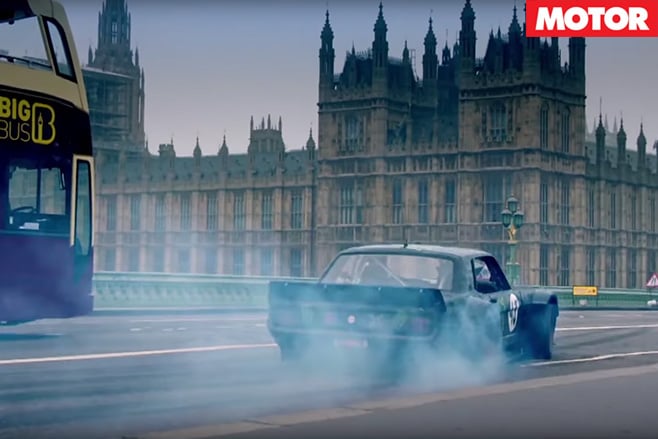
Of course, Block’s flat-out driving means he isn’t very interested in LeBlanc’s plans, the host pleading at one point, “we can talk about some of these sights I’d like to see… when you get a minute”.
But the pair’s role-playing will find chuckles among audiences as they make their way from London’s docks, to Canary Wharf, then Tower Bridge.
The video finishes in epic style, with a police chaperone to Buckingham Palace and helicopter-assisted exit from the city.
Block, who’s yet to release his Gymkhana 10, has a lot to follow after this in his own series. But the promise of the Hoonicorn now a methanol-slurping twin-turbo beast, sacrificing piles of tyres, should be satisfying enough.
