One more thing: 7-seaters!
Need a seven-seater? We’ve got just the page for you.

While petrol power still dominates (but is on the decline), sales of hybrid vehicles were up 88% in July 2024 compared to the same time last year! PHEV sales also grew from 965 (July 2023) to 2209 (July 2024), an increase of 1244 sales or +128.9 per cent.
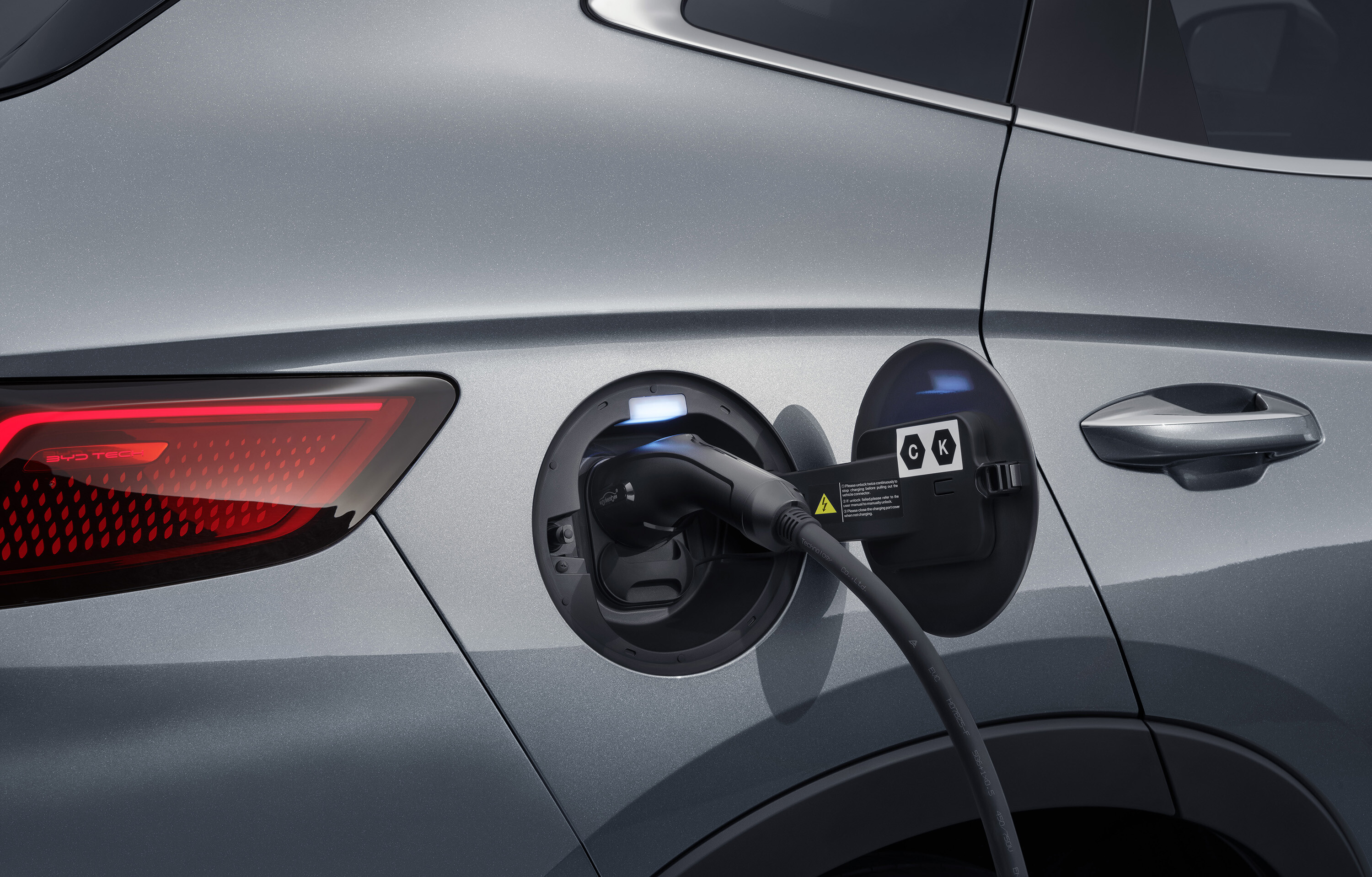
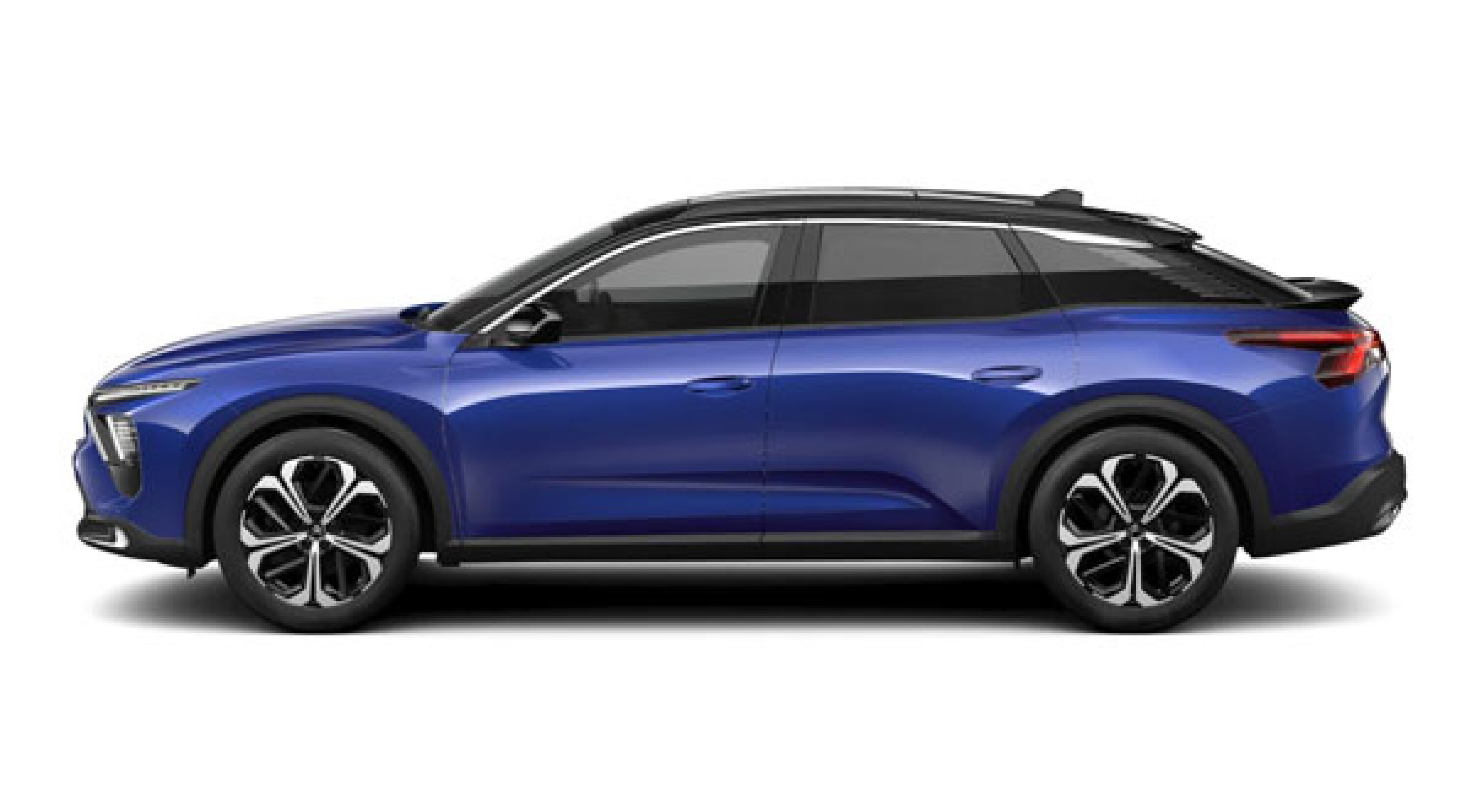
The ‘avant-garde’ body design sits on a 2785mm wheelbase for a 545L boot area in petrol versions – expandable to 1640L to the roof with the rear seats folded – but based on overseas specs, the hybrid unit reduces that by 60 litres.
It uses the same 133kW/250Nm 1.6-litre four-cylinder petrol engine eight-speed auto but adds an 80kW electric motor and 11.9kWh battery – with a 50km range under electric power.
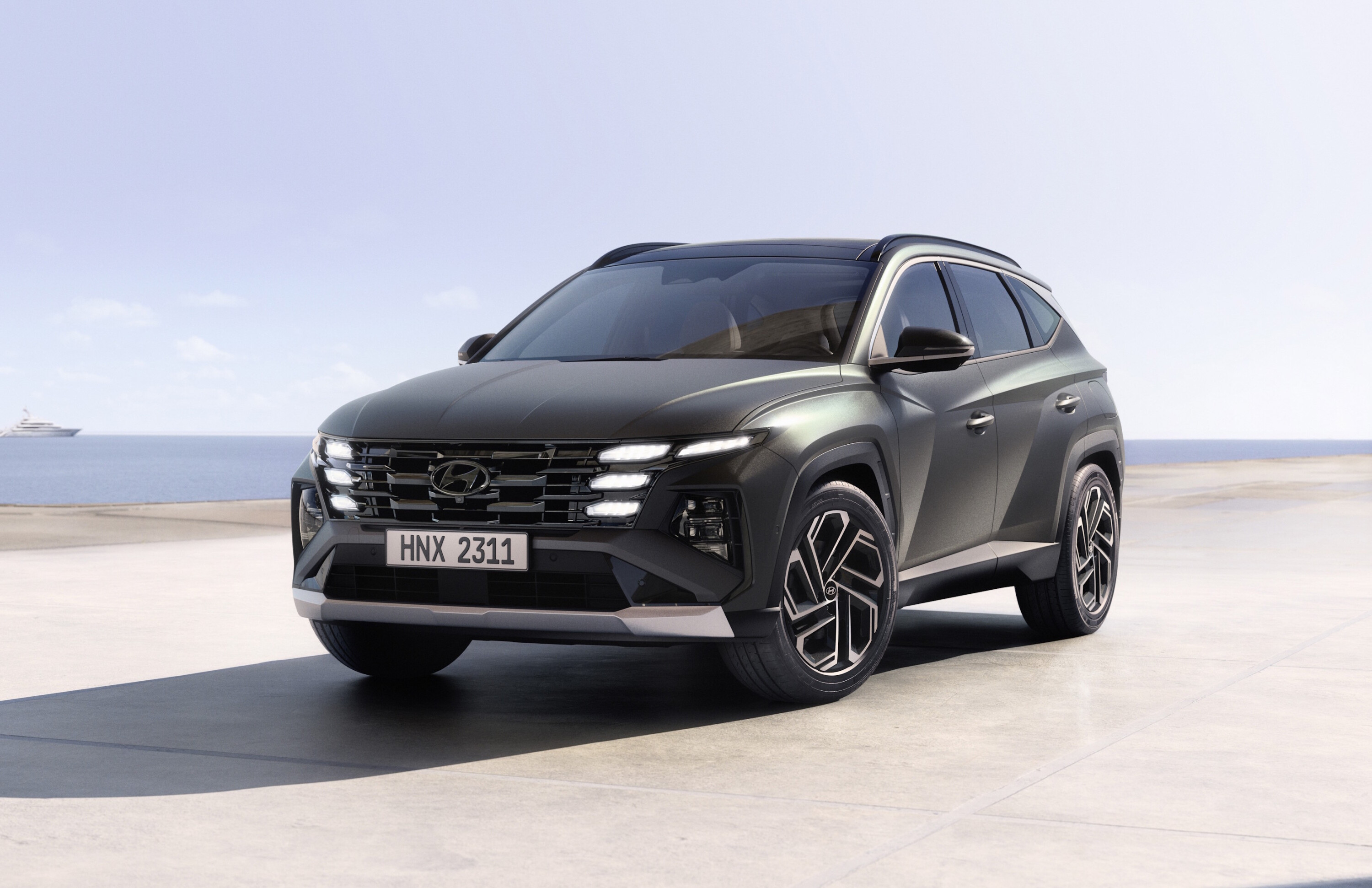
The mid-size Tucson will use the same 1.6-litre turbocharged four-cylinder petrol engine and electric motor package to take on the dominant Toyota RAV4 Hybrid in the showroom shootout.
Hyundai Australia is yet to confirm which trim levels the hybrid will be offered on, with front- and all-wheel drive versions available overseas, with a best official combined fuel number of 5.9L/100km for the front-drive model.
Fingers crossed it comes on the new N-Line trim level announced with the new model which arrives in the third quarter of 2024.
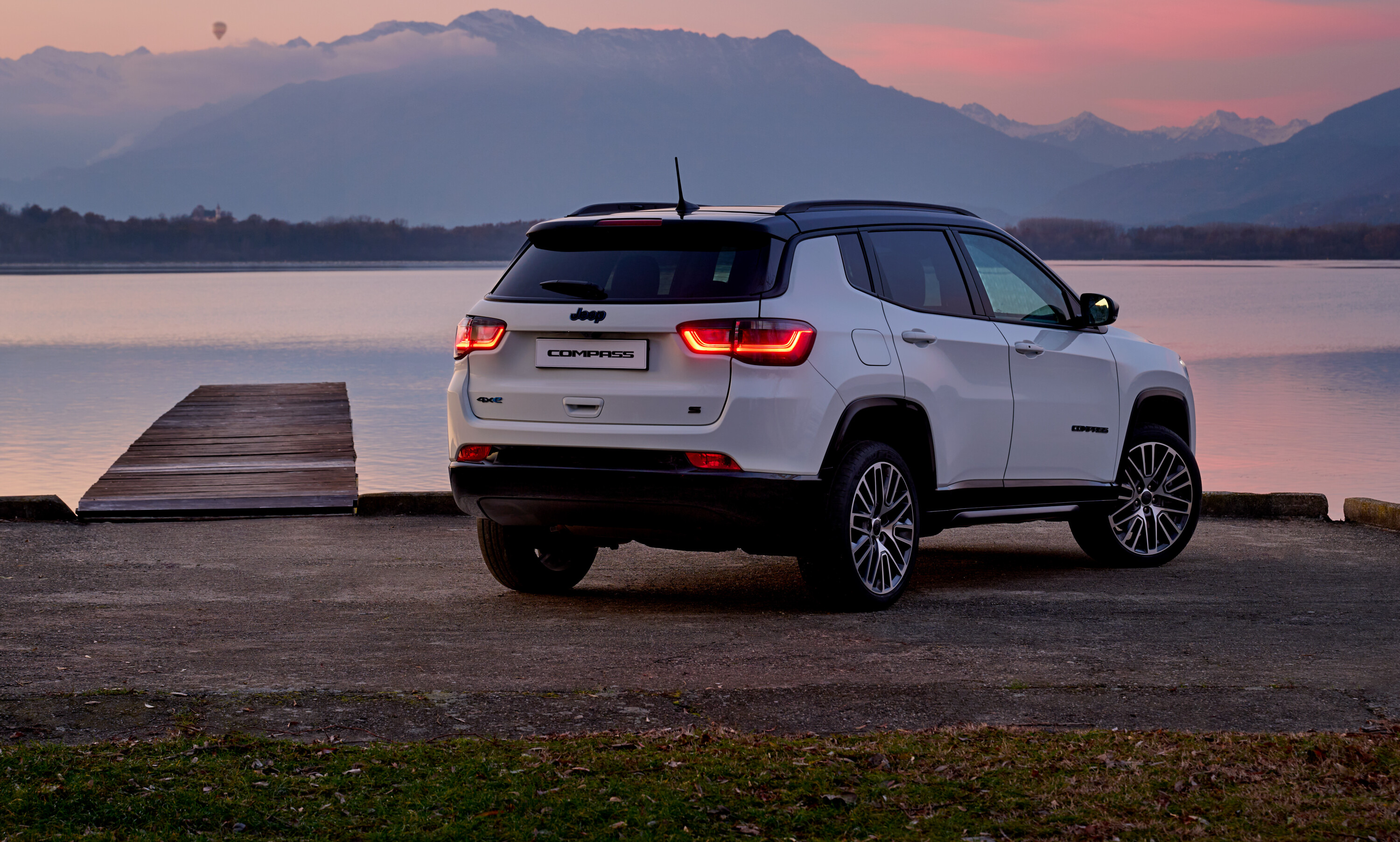
The all-wheel drive 4xe plug-in hybrid combines a 1.3-litre turbocharged four-cylinder petrol engine with six-speed auto and electric motor for a 176kW/270Nm combined output.
Electric only range from the 11.4kWh battery is a (very specific) claimed 43.7 km, fuel economy of 2.1L/100km and the same cabin space as the mild-hybrid (badged the Compass ‘eHybrid’).
Its 483L boot space is considerably smaller than many rivals’ including the Ford Escape PHEV (566L), but on par with the Mitsubishi Outlander PHEV’s 478L.
With arrivals “late this year (2024)”, two equipment levels have been confirmed for Australia – the Limited and Summit – priced at $61,990 and $69,990 before on-road costs respectively.
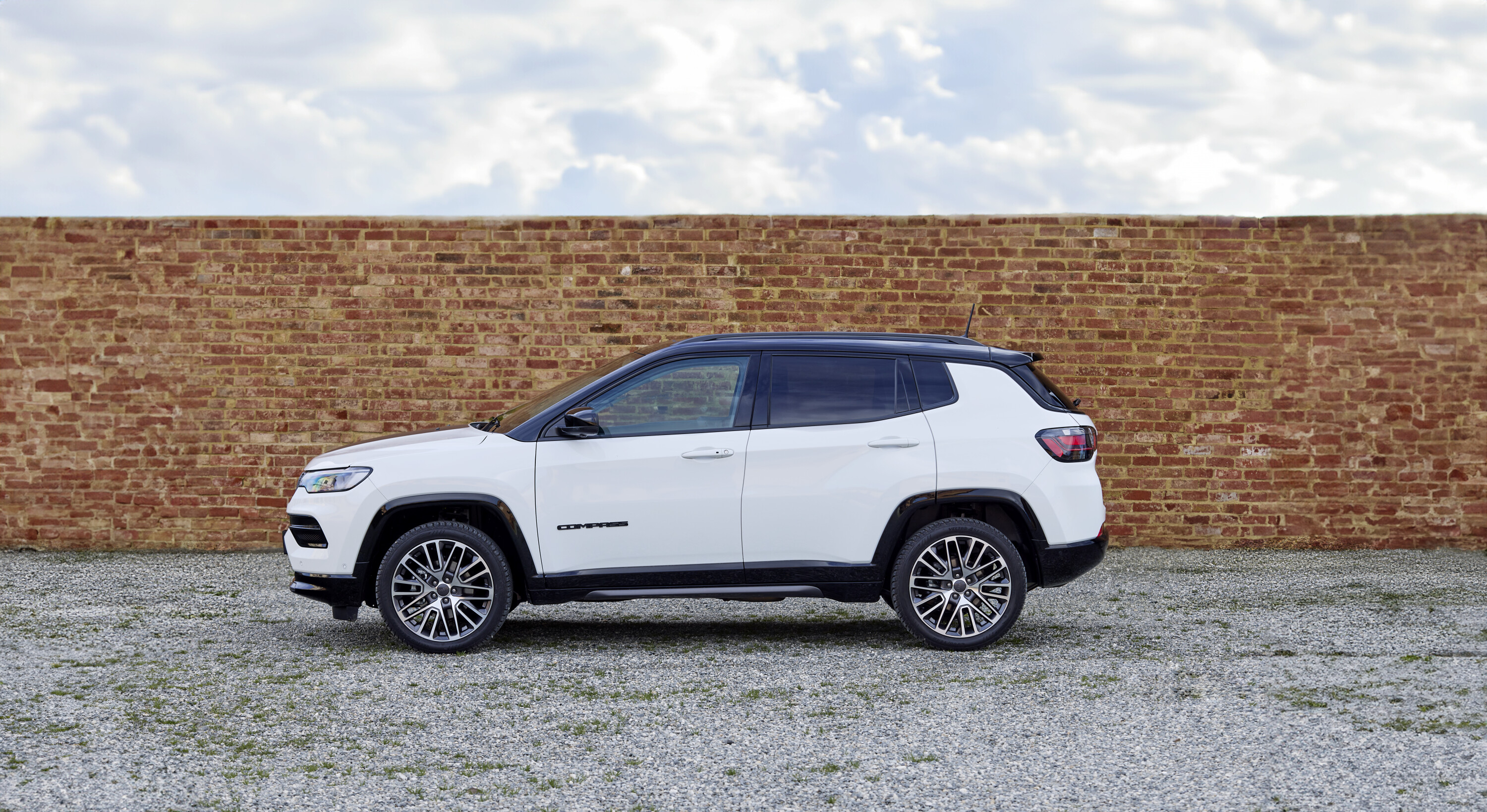
The new Compass eHybrid is a ‘mild hybrid’ sits below the plug-in Compass 4xe, with both due in local showrooms by the end of 2024.
The front-wheel drive Compass eHybrid – denoted ‘eTorque’ badging – doesn’t have an electric motor, but uses a 48V battery pack for low-speed driving such as parking. The rest of the time it relies on its 96kW/240Nm 1.5-litre four-cylinder petrol engine and 7-speed dual-clutch transmission. Fuel economy is a claimed 5.1L/100km with the same cargo space as both the 4Xe and
Jeep Australia has confirmed the eHybrid Limited will be $45,990 plus on-road costs with the eHybrid Summit $54,990.
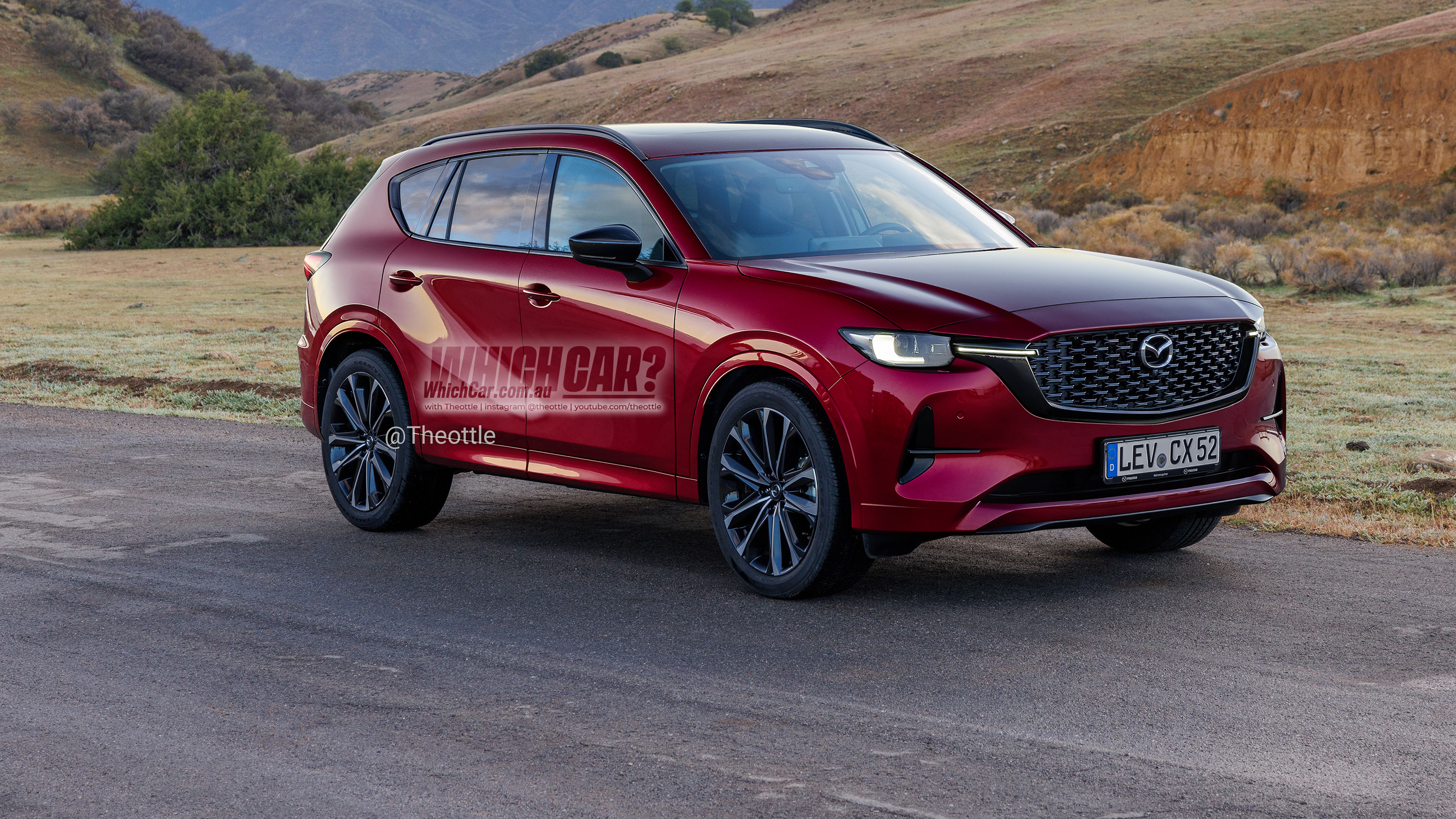
In a bold move, it won’t be Toyota-powered despite a tie-up between the companies, with Toyota owning a five percent stake in Mazda. The CX-50 SUV, sold in China and the US, uses the Toyota RAV4 hybrid powertrain, but the next CX-5 will instead use the first in-house Mazda-developed plug-in set-up.
That’s all Mazda has confirmed for now, with scant information on the hybrid set-up, so watch this space as the CX-5 hybrid inches closer to Australian showrooms – and driveways.
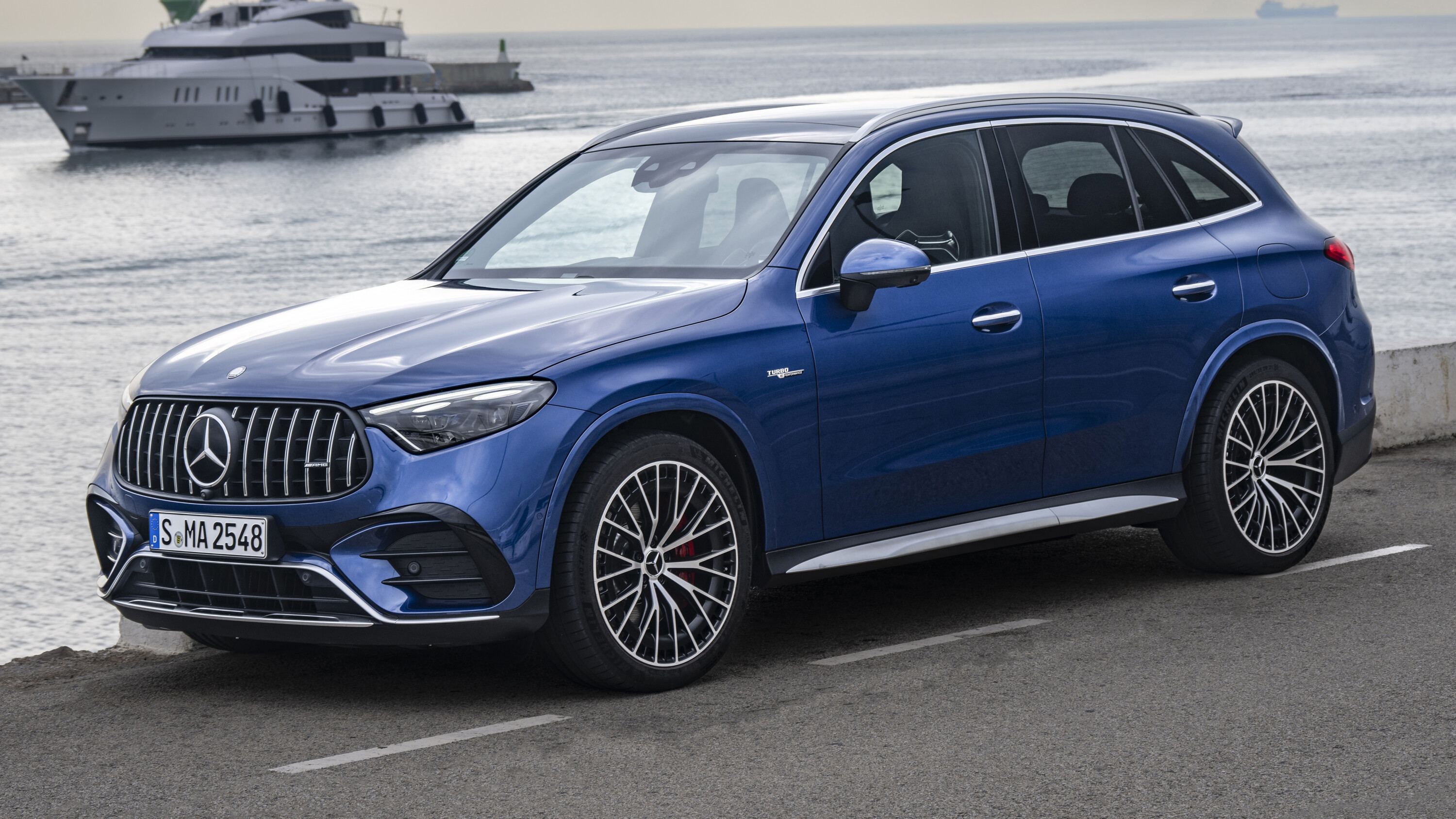
Running a 350kW 2.0-litre four-cylinder turbocharged petrol engine with a battery pack and pair of 75kW electric motors delivers a healthy 500kW total, and while there’s 2.3 tonnes to move, our first drive overseas found it was more agile and talented than the stats suggest.
Somewhat a technological wonder, it’s pricey, though, starting at $192,900 (or $199,500 for the Coupe). It’s on sale now.
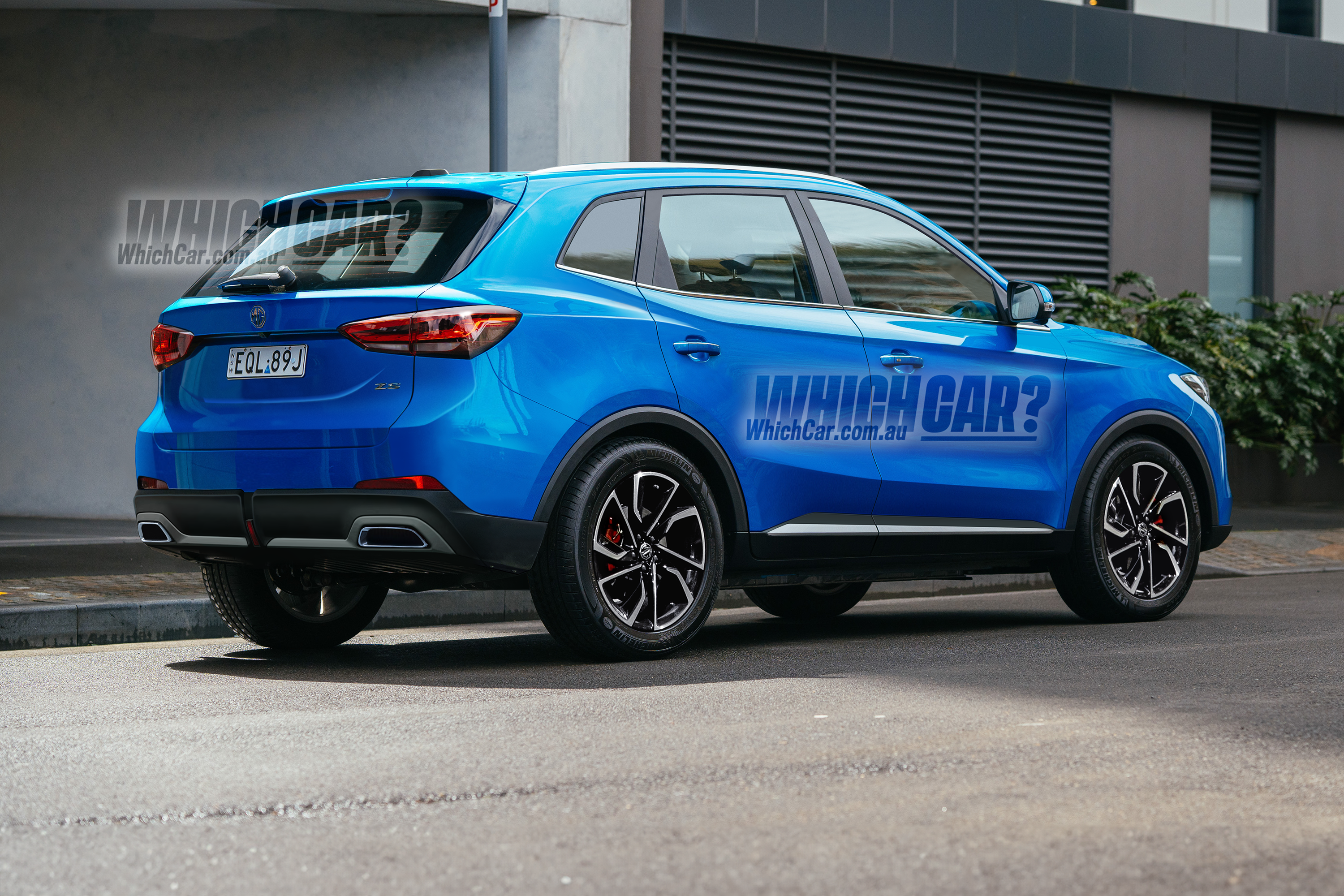
Dubbed eRX5 in plug-in hybrid from, the donor model brings the same size 1.5-litre turbocharged petrol engine as the outgoing HS PHEV, but brings more power and torque with a bigger battery wrapped in a more contemporary design.
That sees the petrol engine’s 138kW/300Nm boosted by a 180kW/270Nm electric motor and 12.3kWh battery, but there 2765mm wheelbase – an increase of 40mm – brings more to move. That sees electric only range fall from 63km to 50km in what appears to be one of few downsides of the model.
We’ll know for sure when official specs are announced ahead of it local launch later this year.
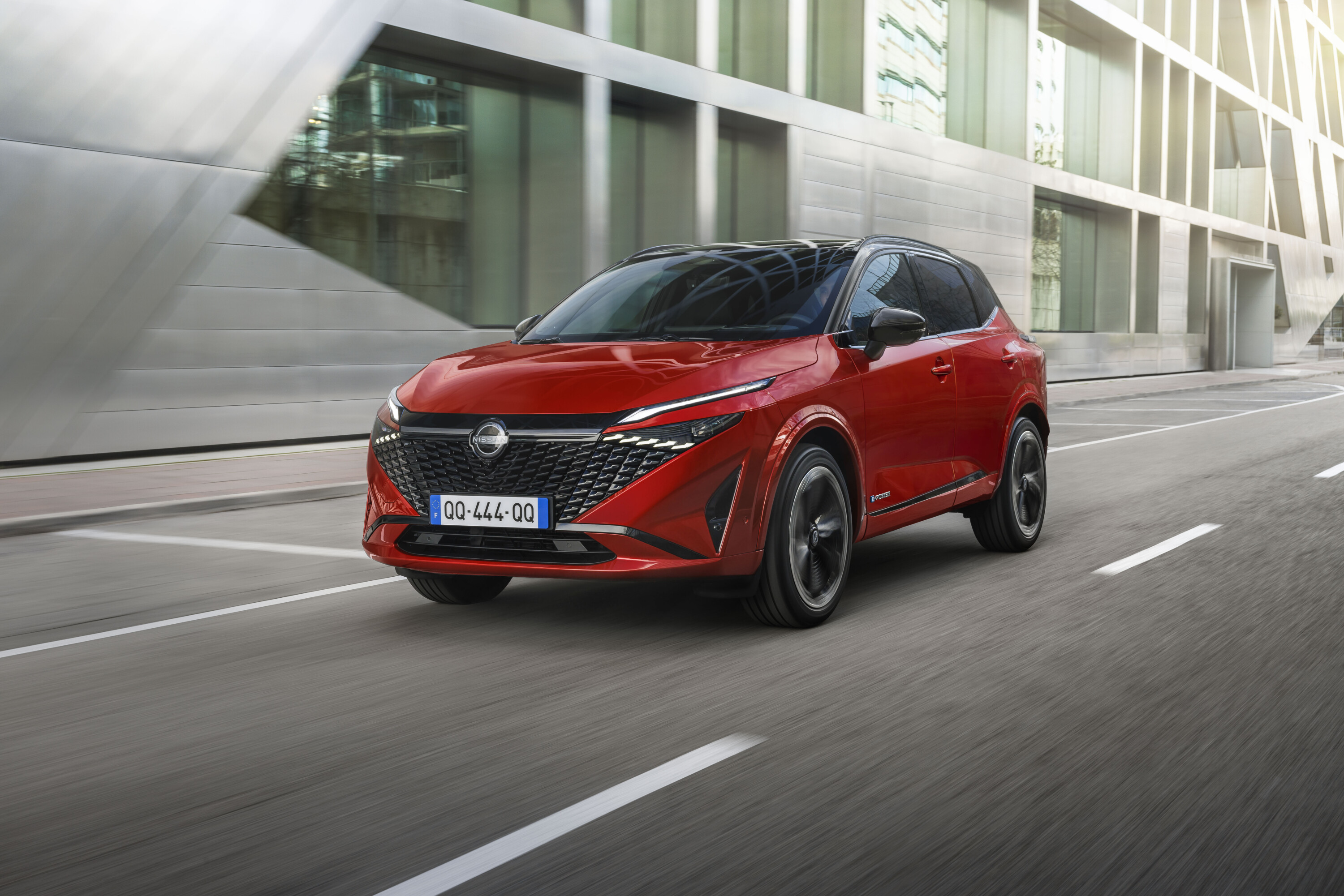
Australian arrivals are set for Q4 2024 with a single Ti e-Power spec priced at $51,590 before on roads – $3200 above the non-hybrid Qashqai Ti
The Qashqai e-Power follows the same set-up, whereby its 140kW/330Nm electric motor is the sole source of drive to the (front) wheels, with its 2.1kWh battery topped up by the generator – a 1.5-litre three-cylinder petrol engine.
A claimed combined 5.2L/100km compares to 6.1L/100km for petrol-powered Qashqai, while bringing a 23-litre larger boot with its second row in place.
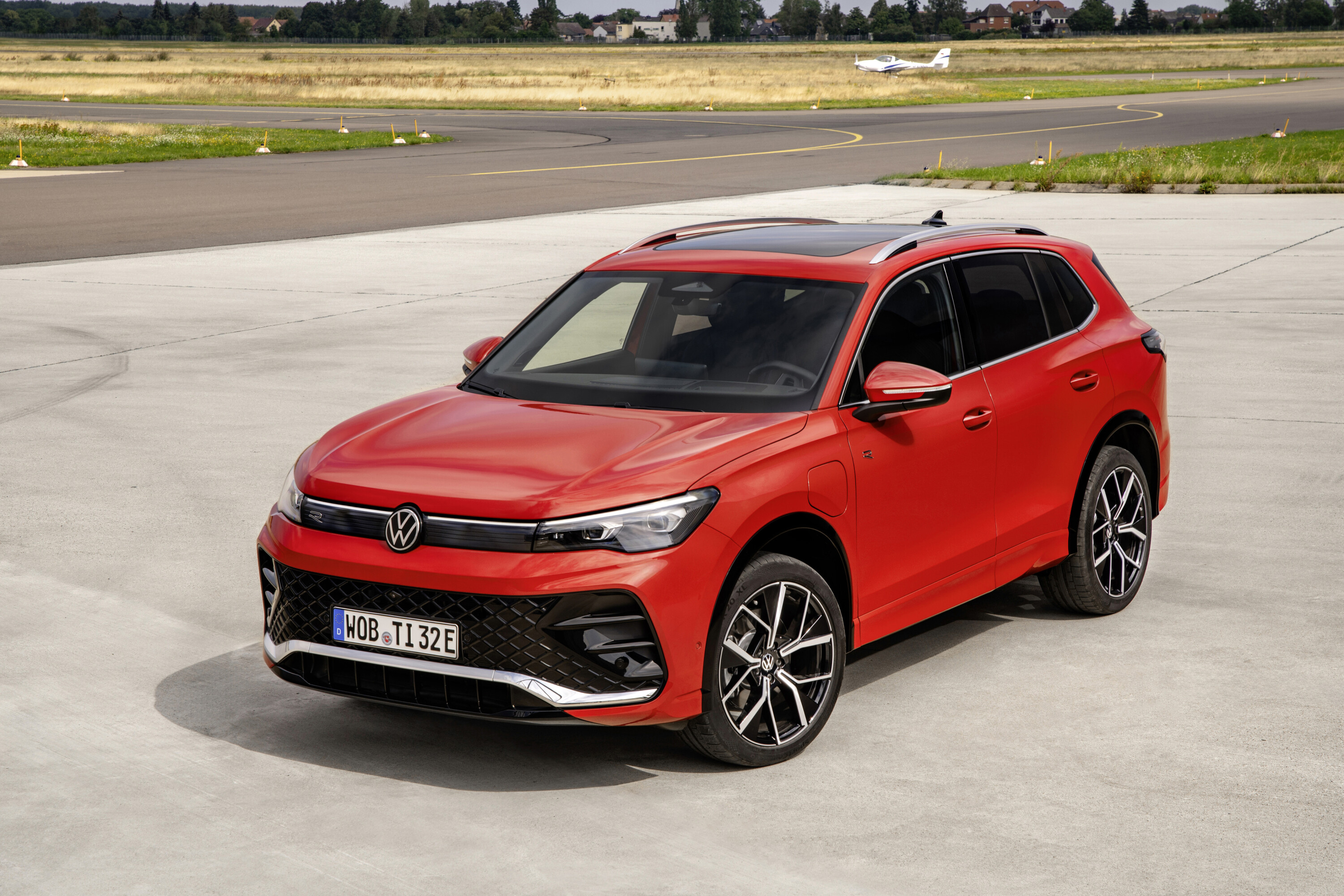
Australia missed out on the PHEV with the previous Tiguan, but the local arm has expressed a keen interest in the 2025 Tiguan eHybrid in place of diesel powertrains.
Sharing the Golf’s MQB Evo platform, the pluggy Tiggy also uses the same 1.5-litre turbocharged four-cylinder petrol engine and electric motor – sold overseas in 150kW and 200kW outputs – and 19.7kWh battery, with a claimed electric only range of up to 120km.
With increasing cost-of-living pressures and jaw-dropping fuel bowser prices now the norm, consumers seem to be looking at ways to combat this financial burden – and ridding their vehicles of combustion power seems to be an alluring method.
According to the July 2024 VFACTS report, a total of 18,039 hybrid vehicles were sold in July. At the same time last year (July 2023) that figure was 9574, an increase of 8465 sales or a whopping +88.4 per cent.
Petrol sales, by comparison, remain higher (42,027 petrol variants sold in July 2024) but have dipped compared to last year (48,227 sales in July 2023), representing a decline of 6200 sales or -12.9 per cent. It’s a bit different for diesel-powered vehicles, with sales increasing from 27,791 (July, 2023) to 29,263 (July, 2024), a jump of 1472 units or +5.3 per cent.
PHEV sales grew from 965 (July 2023) to 2209 (July 2024), an increase of 1244 sales or +128.9 per cent.
“Consistent with trends in many overseas markets, sales of hybrid vehicles are up 88.4 per cent and plug-in hybrid vehicles are up 128.9 per cent compared with July 2023,” said FCAI Chief Executive, Tony Weber. “The hybrid performance is highlighted by the fact that the Toyota RAV4 was the top-selling vehicle for the month ahead of Ford Ranger and Toyota HiLux. Most RAV4 sales are hybrids.”
“Sales of battery electric vehicles – with the inclusion of the reported Tesla (2592) and Polestar (103) results – are currently at 6.6 per cent of the market, down from 7.0 per cent in 2023,” Weber added.
The year-to-date numbers reinforce Australia’s transition away from petrol power. From January to July, 2023, a total of 342,509 petrol vehicles were sold – that number has shrunk to 314,783 sales over the same period in 2024 (a decline of 8.1 per cent). Diesel numbers may have increased from 203,730 to 223,122 (+9.5 per cent) over the same period, but hybrid numbers have skyrocketed from 9574 to 18,039 (+108.3 per cent).
Granted, the bulk of those hybrid sales are in the passenger and SUV markets, with only a fraction in the Light Commercial segment due to slim pickings. Still, at this time last year, zero hybrids we sold year-to-date. In 2024, a total of 311 hybrid vehicles have been sold in the segment so far.
| 2024 | 2023 | Difference | |
|---|---|---|---|
| Diesel | 5773 | 6992 | -1219 |
| Electric | 23,671 | 15,965 | +7706 |
| Hybrid | 27,154 | 13,059 | +14,095 |
| Petrol | 73,481 | 84,817 | -11,336 |
| 2024 | 2023 | Difference | |
|---|---|---|---|
| Diesel | 68,207 | 64,052 | +4155 |
| Electric | 30,369 | 33,876 | -3507 |
| Hybrid | 72,187 | 34,785 | +37,402 |
| Petrol | 227,238 | 242,206 | -14,968 |
| 2024 | 2023 | Difference | |
|---|---|---|---|
| Diesel | 149,142 | 132,686 | +16,456 |
| Electric | 227 | 97 | +130 |
| Hybrid | 311 | 0 | +311 |
| Petrol | 14,064 | 15,486 | -1422 |
The storming N hatch launches in Australia in August, 2024, with prices starting at $50,000 (excluding dealer delivery and on-road costs) for the base N variant in either six-speed manual or eight-speed automatic guise.
A DCT i30 N Premium sans sunroof has been added to the local line-up, and is priced at $53,500 (excluding dealer delivery and on-road costs) with the same manual and DCT transmission options. Upgrading to an N Premium with a sunroof costs an extra $2000. Premium paint is $595 across both N and N Premium models.
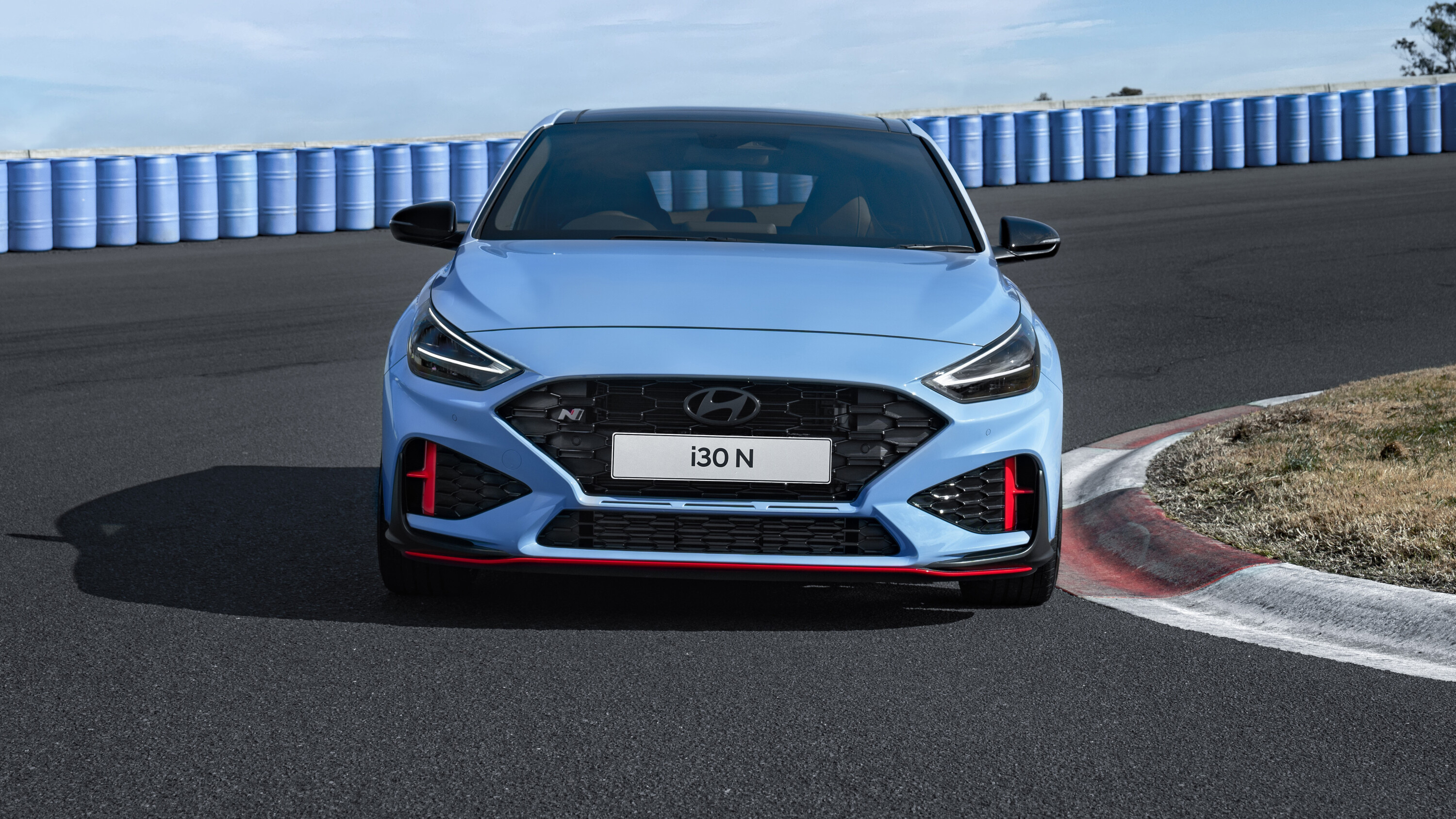
Safety additions for the 2025 model include Intelligent Speed Limit Assist and Rear Occupant Alert. Plus, rain-sensing wipers are now included as standard.
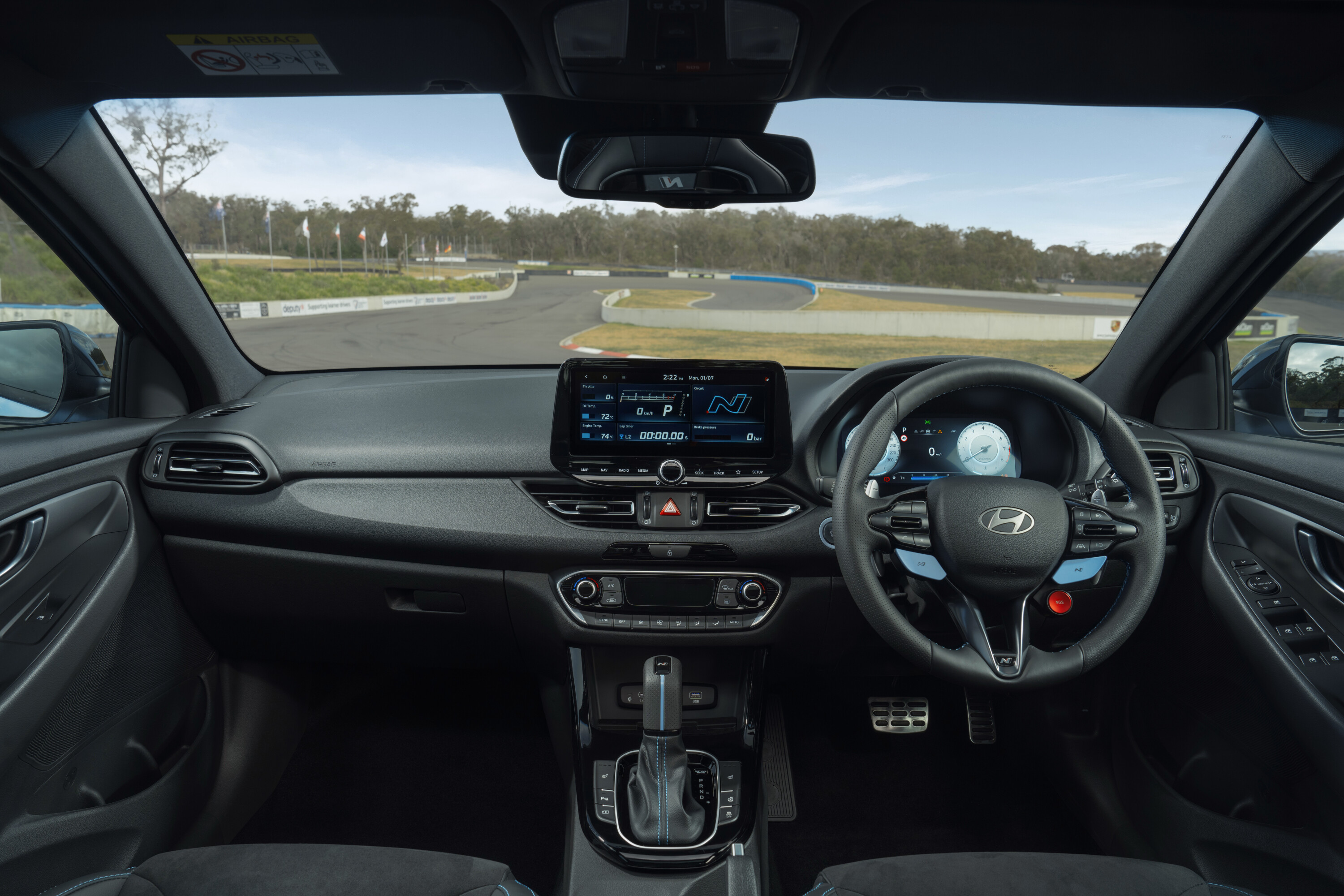
Interior technology has been improved with the addition of Hyundai’s 10.25-inch supervision instrumentation that complements a multimedia touchscreen of the same size. The digital dash provides drivers with important track-day information such as a lap timer, g-force indicator and turbo boost gauges.
Exterior tweaks include 19-inch forged alloy wheels, a revised grille, and red trimming around the side skirts and front bumper.
“These key updates are about improving the Hyundai i30 N formula, without changing the fundamentals,” said Hyundai Motor Company Australia Chief Executive Officer, Ted Lee.
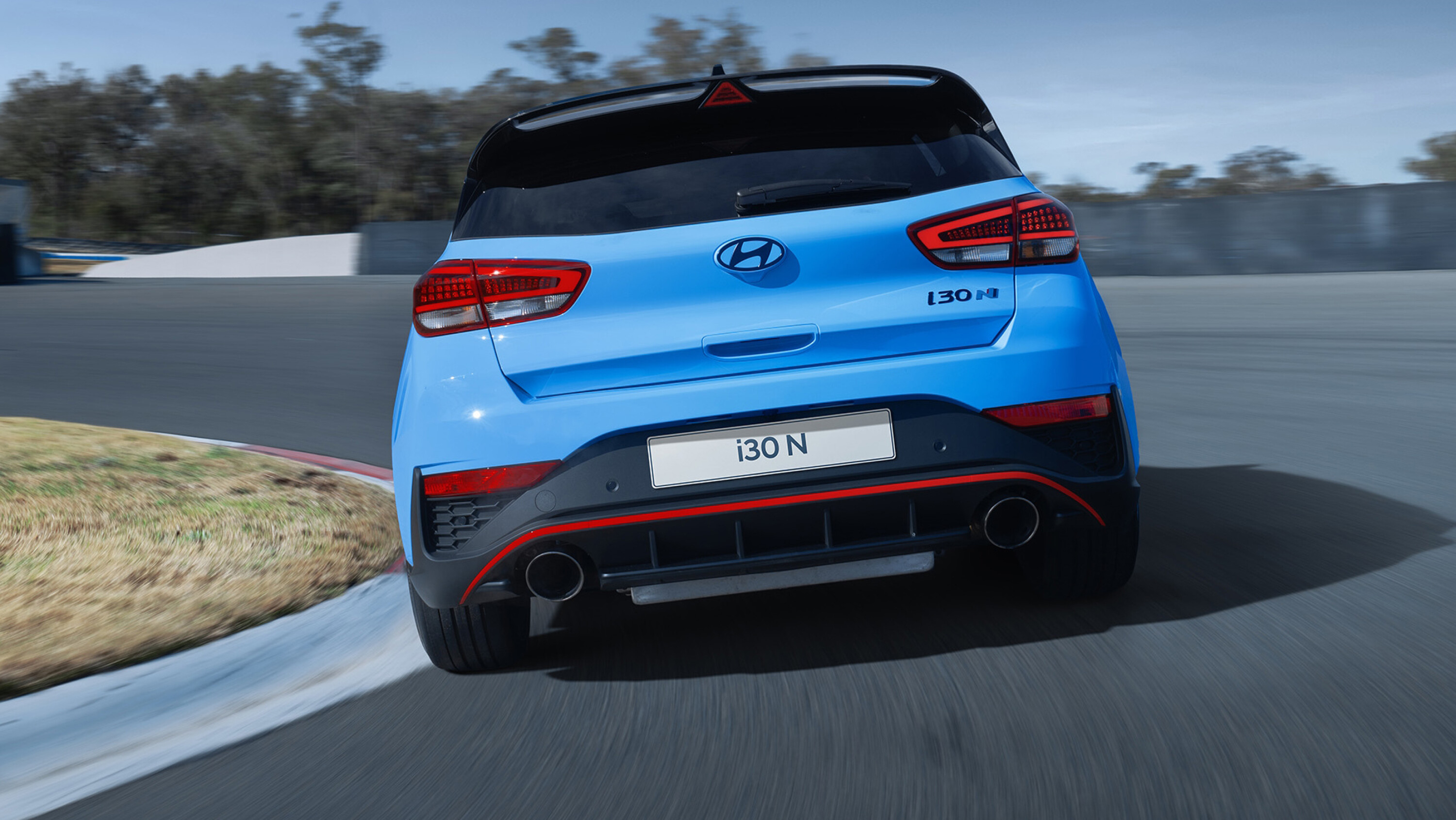
Adding to the driving excitement is Hyundai’s N Grin shift button that has been added to the steering wheel, a feature that has been included on the i30 Sedan N and the bold, electric IONIQ 5 N. A poke of this button gives the driver 20 seconds of extra power, uproarious engine note and aggressive shifts.
“While the i30 N has always been about maximising performance and fun, these improvements focus on delivering key safety and technology updates, adding to the well-rounded nature of this accessible and exciting performance vehicle,” said Lee.
| N exclusive styling appointments – New design | Leather steering wheel & gear knob – New emblem design |
| 19-inch forged alloy wheels – New colour | Dual zone climate control with clean air function |
| Temporary spare tyre | Auto up/down on all windows with safety |
| LED Daytime Running Lights (DRL) | Rear privacy glass |
| LED Headlamps u2013 Multi MFR | Rear View Monitor with parking guidance (RVM w/ PG) |
| LED taillights | Parking Distance Warning Front/Rear (PDW-F/R) |
| Aero windscreen wipers with rain sensing | Tyre Pressure Monitoring System (TPMS) |
| Electric mirror folding w/ LED side repeaters | SmartSense Safety |
| Puddle lights (mirror type) and door handle courtesy lights | Electric Chromic Mirror (ECM) |
| 10.25-inch Supervision instrument cluster | Rain-sensing wipers |
| 10.25-inch navigation and Bluelink with voice control | 2x Rear USB-C charging ports |
| LED interior lights | Front USB-C charging port |
| Smart key with push button start | Cloth seats |
| Heated and power folding door mirrors | 6 speakers |
| Solar windscreen and front door glass | N Light bucket seats |
| Leather-accented and Alcantara seat upholstery – New upholstery design | Heated front seats |
| Heated steering wheel | Panoramic sunroof (optional) |
| Transmission | N | N Premium |
|---|---|---|
| 6-speed manual | $50,000 | $53,500 |
| 8-speed DCT | $50,000 | $53,500 |
| Options | N | N Premium |
|---|---|---|
| Premium paint | $595 | $595 |
| Sunroof | – | $2000 |
In a market as small as Australia’s, where we ‘only’ see around 1 million new car sales each year, car brands will quickly follow each other – and one-up each other – to stay competitive.
And, with something like 60 brands currently competing for buyers’ attentions, it’s a hard-fought battle.
One clear example of tight competition is in warranties. The complexities of covering the cost of a new warranty means that brands can’t quickly and easily increase the length of their offer, but as soon as a few brands started upgrading from three- to five-year plans, others followed as quickly as they could.
Likewise, in servicing costs and scheduled visits, with more and more brands working to keep their costs attractive and the visits as infrequent as possible. Not all are doing a great job on that front, however, and that’s where it’s great for buyers to have a resource like the one we’ve built here.
So read on, to see which new-car brands in Australia are offering the most competitive and compelling warranties and capped-price servicing plans.
| Note that there may be specific conditions to these programs, so be sure to read our detailed breakdown u2013u00a0including a list of the shortest warranties u2013u00a0below this brief list. |
New car warranties traditionally covered a new vehicle for three years, and often with a limited number of kilometres.
However, Kia Australia’s decision to introduce a seven-year, unlimited-kilometre warranty in 2014 shook up the market in Australia and prompted other manufacturers to increase their coverage.
Some mainstream carmakers initially offered seven-year warranties for a limited time only, but few match Kia permanently – settling for five-year deals instead.
So is a longer warranty worth the paper it’s written on? Generally yes, though it’s important to check the terms and conditions. Its worth is only tangible if something goes wrong with the car. However, it provides peace of mind and could help resale values if the car is sold within the warranty period, as it transfers across with the sale.
It’s worth noting warranties are conditional on the car being regularly serviced to prescribed schedules, but you have the right to choose your own authorised mechanic. Some manufacturers offer incentives to service your vehicle at their dealerships, such as capped-price servicing, free roadside assist or loan cars.
The British marque introduced its 10-year / 250,000km warranty in August, 2024, overtaking Mitsubishi to offer Australia’s longest new-car warranty. Unlike Mitsubishi, MG’s new 10-year warranty covers all EV, PHEV and hybrid models. However, if the vehicle is used for commercial purposes, the warranty dips to seven-year / 160,000km.
Prior to this update, MG offered a competitive seven-year / unlimited kilometre warranty. A seven-year/unlimited-kilometre warranty on anti-perforation and paint remains the same, though.
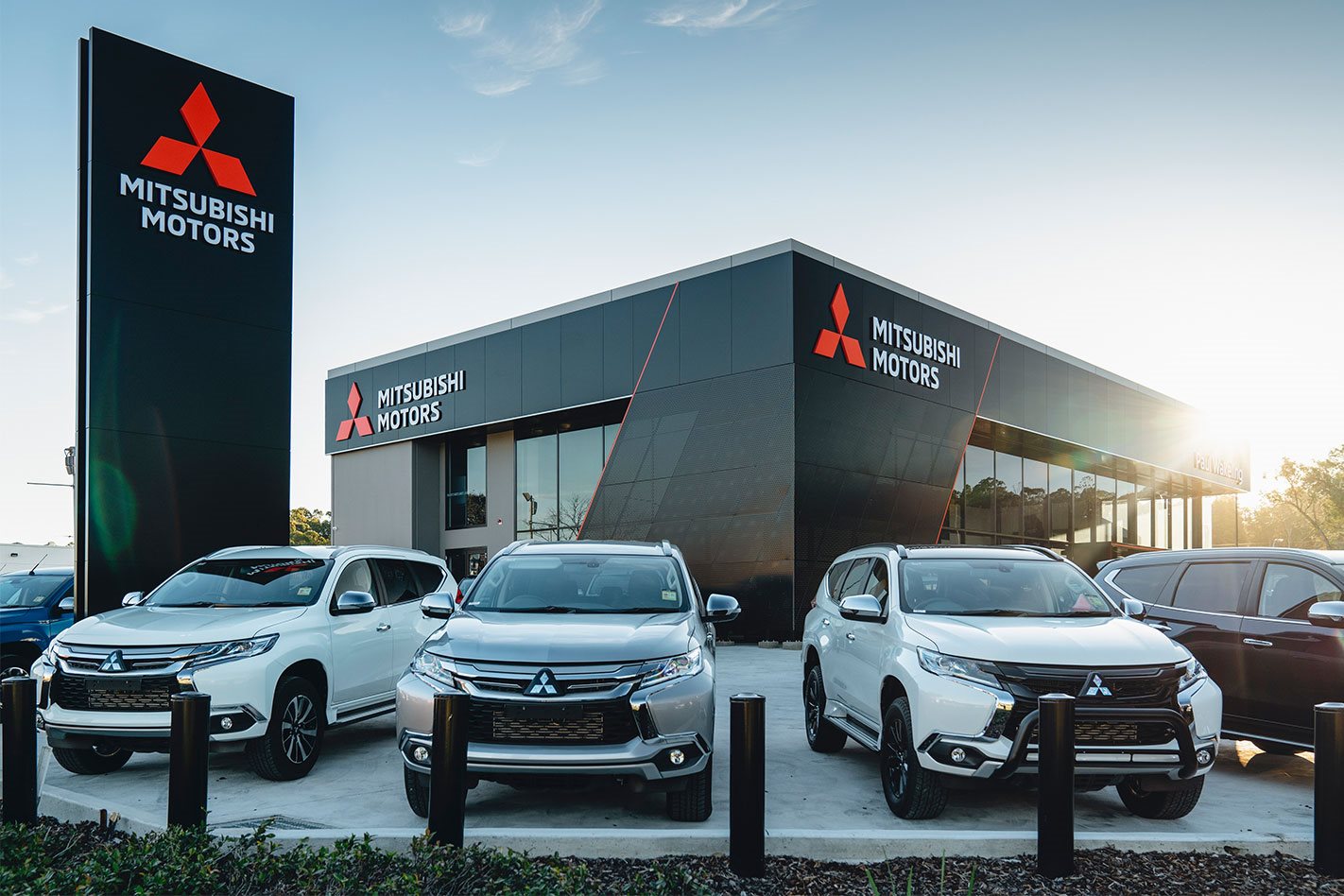
Mitsubishi Australia has a 10-year/200,000km warranty under its Diamond Advantage program, but there’s more to the story than just that. Owners who wish to receive the benefits of a 10-year warranty from Mitsubishi must also undergo their regular servicing through brand dealerships for the full decade.
If owners take their vehicle outside the dealer network for servicing, the coverage is halved to Mitsubishi’s standard five-year/100,000km.
The exclusion to this is plug-in hybrid vehicles, which are covered by an eight-year/160,000km deal separately.
Corrosion cover is offered for 5 years from the date of first registration, and roadside assistance can be obtained as part of their 4 year capped price servicing program.
GWM utes and Haval SUVs are covered by the Chinese automaker’s seven-year/unlimited-kilometre warranty, with capped-price servicing available across the model range for the first five services if you have your vehicle checked at a Haval dealership.
The seven-year warranty applies to all Haval vehicles sold from October 1, 2018, and the GWM Ute – Great Wall Steed vehicles sold after April 1, 2019 have a five-year/150,000 km policy.
GWM/Haval owners also benefit from free Roadside Assistance Cover for five years/100,000km after their ownership commencement date.
Kia’s offering also comes with free roadside assist for 12 months, but can be extended to the full seven years if you get the vehicle serviced at an authorised Kia dealer. It also offers seven years capped-price servicing, which is subject to conditions depending on certain models or types of engines.
A perforation guarantee is included for the duration of the 7 year warranty.
EV models are also included in the 7 year coverage, although to a mileage of 150,000km (whichever occurs sooner).

In November 2022 LDV announced that they were upping their warranty from five years and 130,000km to seven years and 200,000km, but only for their non-EV vehicles. This was partly due to the introduction of new models to their line-up, along with increasing competition from other brands.
The LDV EV range is covered by a five-year term, with separate coverage for genuine parts and accessories. Roadside assist is available for the duration of the warranty, with capped price servicing available on select models up to 3 years or 95,000km.
Australian head of LDV did indicate confidence that the EV range will eventually have its warranty increased to match the ICE equivalent vehicles.
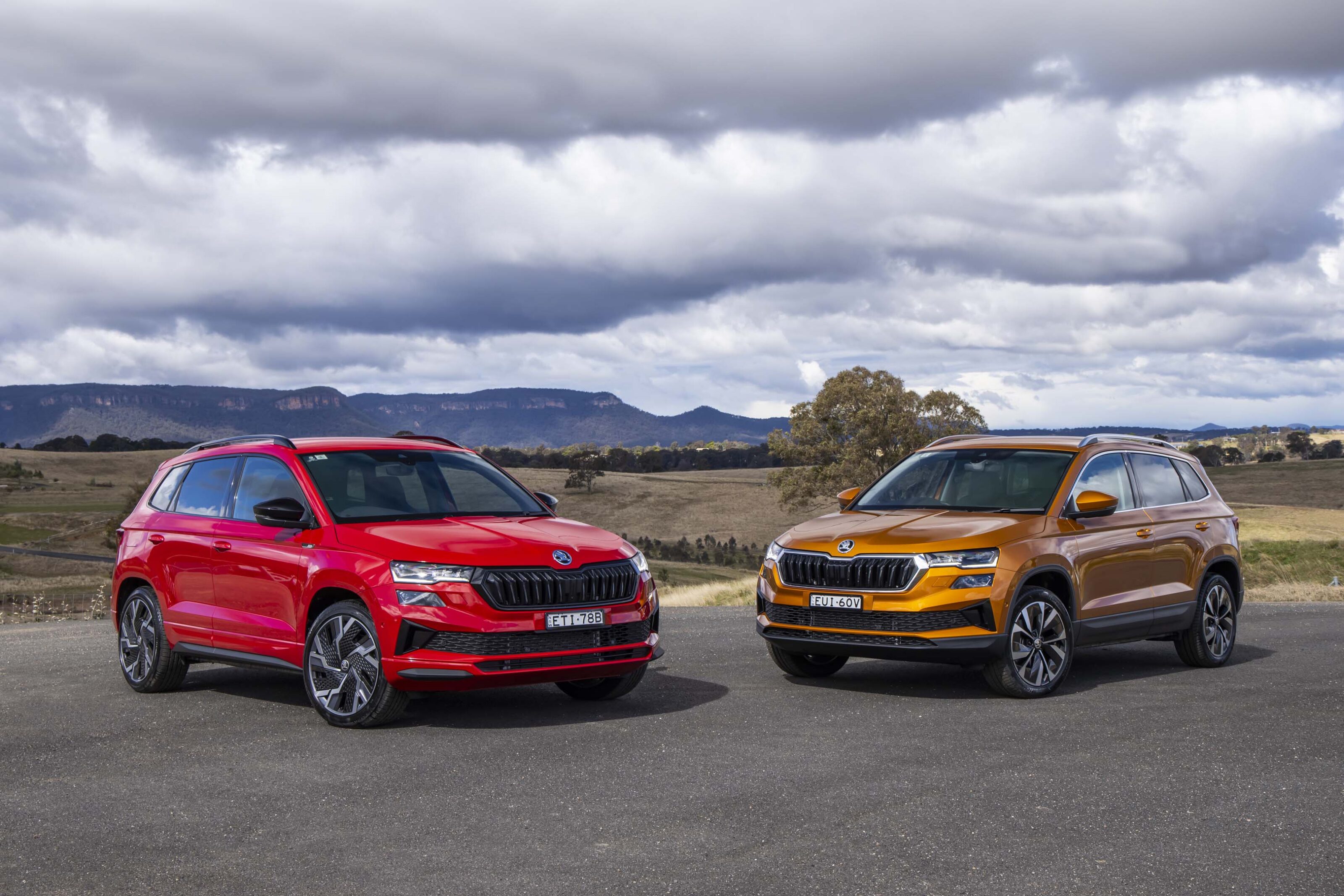
The Czech brand upped its five-year warranty to seven years in September 2022, which includes complimentary roadside assistance for the first year and is renewable at service for a further nine years.
Corrosion and perforation is covered under a three-year warranty for paint, and 12 years for body. Capped-price servicing plans are available on new cars for periods of five and seven years at 75,000km and 105,000km respectively.
The Korean carmaker’s factory-backed return to the Australian market came with all its new models covered by its 777 Care Cover – which includes a seven-year warranty, seven-year roadside assistance plan and seven years of capped-price servicing.
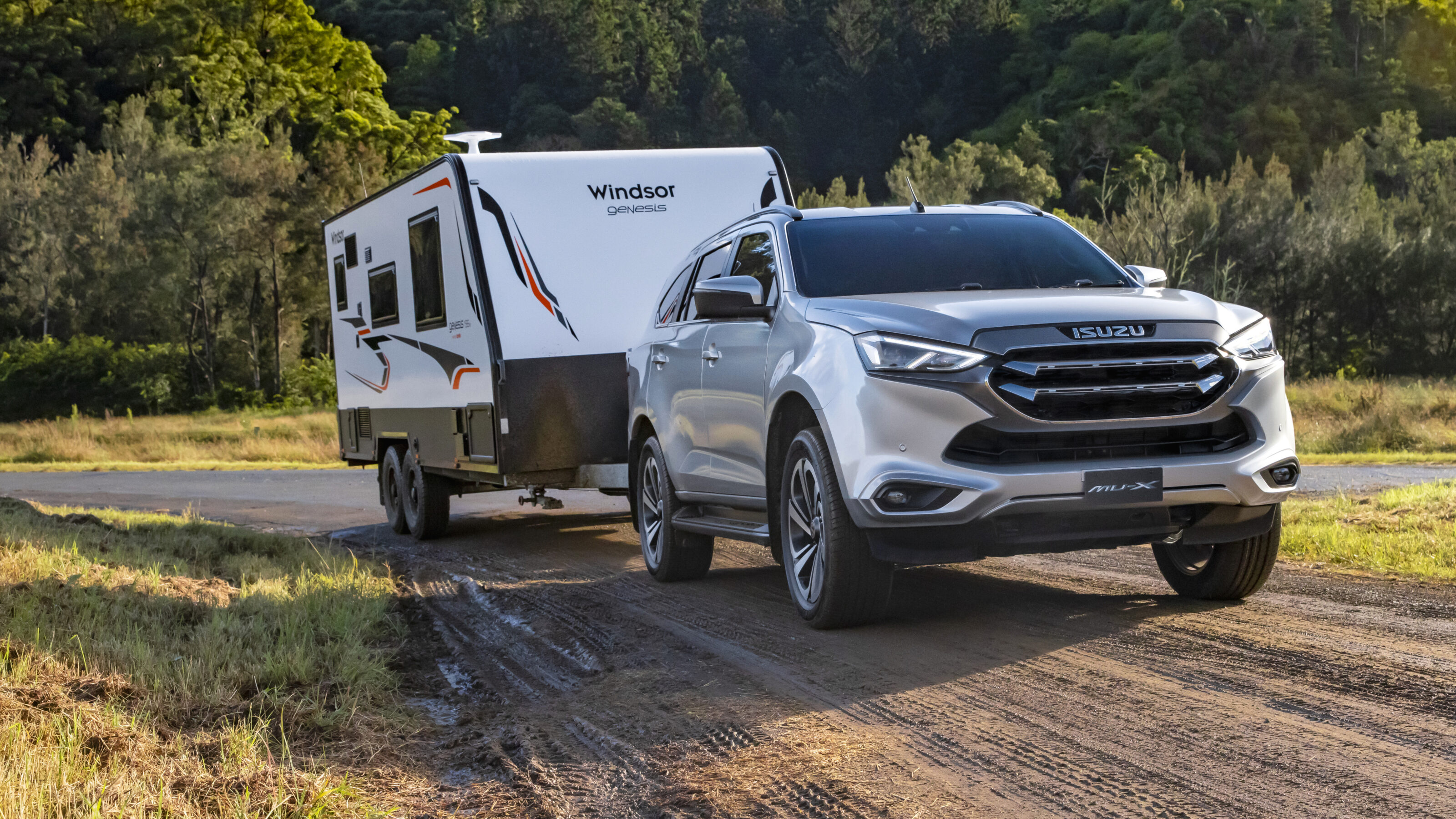
Isuzu stretched its five-years by an additional 12 months on May 1, 2019. However, the increase in maximum kilometres driven in order to qualify, from 130,000 to 150,000km, wasn’t quite as generous.
The cover period is matched by a seven-year roadside assistance plan, as well as a seven-year capped-price service schedule.
Following an outcry from customers BYD reduced its capped-price servicing costs and offered a free initial 12-month service to those who bought prior to August 31, 2022. The warranty period of six years up to 150,000km otherwise remained unchanged apart from some components (ie 12-volt aux battery and charging cable) being covered for 12 months.
Roadside assistance is offered complimentary for 12 months with an option to extend the support at each annual service.
The battery and drivetrain are covered for a period of 8 years up to 160,000km and 150,000km respectively.
Jumping up from its previous three-year/150,000km warranty, Alfa has extended its coverage to five-years/unlimited-kilometres as of April 22, with a five-year roadside assistance package also standard on all new purchases.
Capped price servicing is available for a period of 3 years, and corrosion coverage last to 8 years from start of ownership.

Having stuck with its three-year offering for nearly two years after Mercedes-Benz increased its warranty period, all Audis sold in Australia are now covered by a five-year warranty as of the start of 2022.
With e-tron models the battery is covered for 8 years / 160,000km, with roadside assistance included for 6 years as part of their Audi Advantage package.
Capped price servicing is available as part of Audi’s Genuine Care Plans, with options of either 2 year or a 5 year service plan. Corrosion or perforation cover is given for 5 years on the paint and 12 years on the bodywork.
The last hold-out of the premium European makes, November 2022 saw BMW upping their warranty from three years to five for any customers who bought their vehicle on or after October 1, 2022. BMW do not outline a distance in their warranty brochure.
BMW detail that panel rust and perforation will be replaced or repaired for a period of 12 years from first registration, with paint covered for five years. The high-voltage battery in BMW’s electric vehicles can enjoy 8 years of support up to 160,000km, while plug-in hybrid vehicles are covered for 6 years and 100,000km.
Roadside assistance varies based upon the vehicle, but begins at 3 years with unlimited kilometres for petrol and diesel vehicles, moving to 6 years for plug-in hybrid vehicles. 7 Series and 8 Series owners can enjoy 7 years assistance, while high-voltage battery vehicles are covered for 8 years with unlimited kilometres.
Complimentary servicing is offered on 7 Series and 8 Series, along with M5 and M8 models. This servicing runs for 5 years or 80,000km – whichever occurs soonest.
The French brand previously came with a six-year limit, but this was slashed to three years by its Australian distributor Inchcape – which then extended it to five years in February 2018. Roadside assistance is also provided for 5 years, and capped price servicing is available on the first five services.
Corrosion and perforation cover is also included with a guarantee of three years for paint and 12 years for bodywork.
Ford bolted another two years to its three-year Express offer for all new vehicles sold from May 1, 2018, and removed the 100,000km limit.
Seven years of support is provided with each new car sale from March 2021 as part of Ford’s National Roadside Assistance & Auto Club Lifestyle Membership, provided the vehicle is maintained at a participating Ford dealership. Corrosion is included in a 5 year guarantee for paint and bodywork.
Ford EV vehicles and batteries come with an 8 year / 160,000km warranty.
The premium brand offers a generous 5 year, unlimited kilometre warranty on new registrations, with 5 years of complimentary servicing up to 50,000km for vehicles with a turbo and 75,000km on vehicles without. Customers within a 70km radius of Sydney, Melbourne and Brisbane CBDs can also enjoy a valet service that collects their vehicle for servicing before having it returned.
Roadside assistance is also included for 5 years from the start of ownership, which also offers a 24/7 customer service line.
Paint is covered for defects for a period up to 12 months.
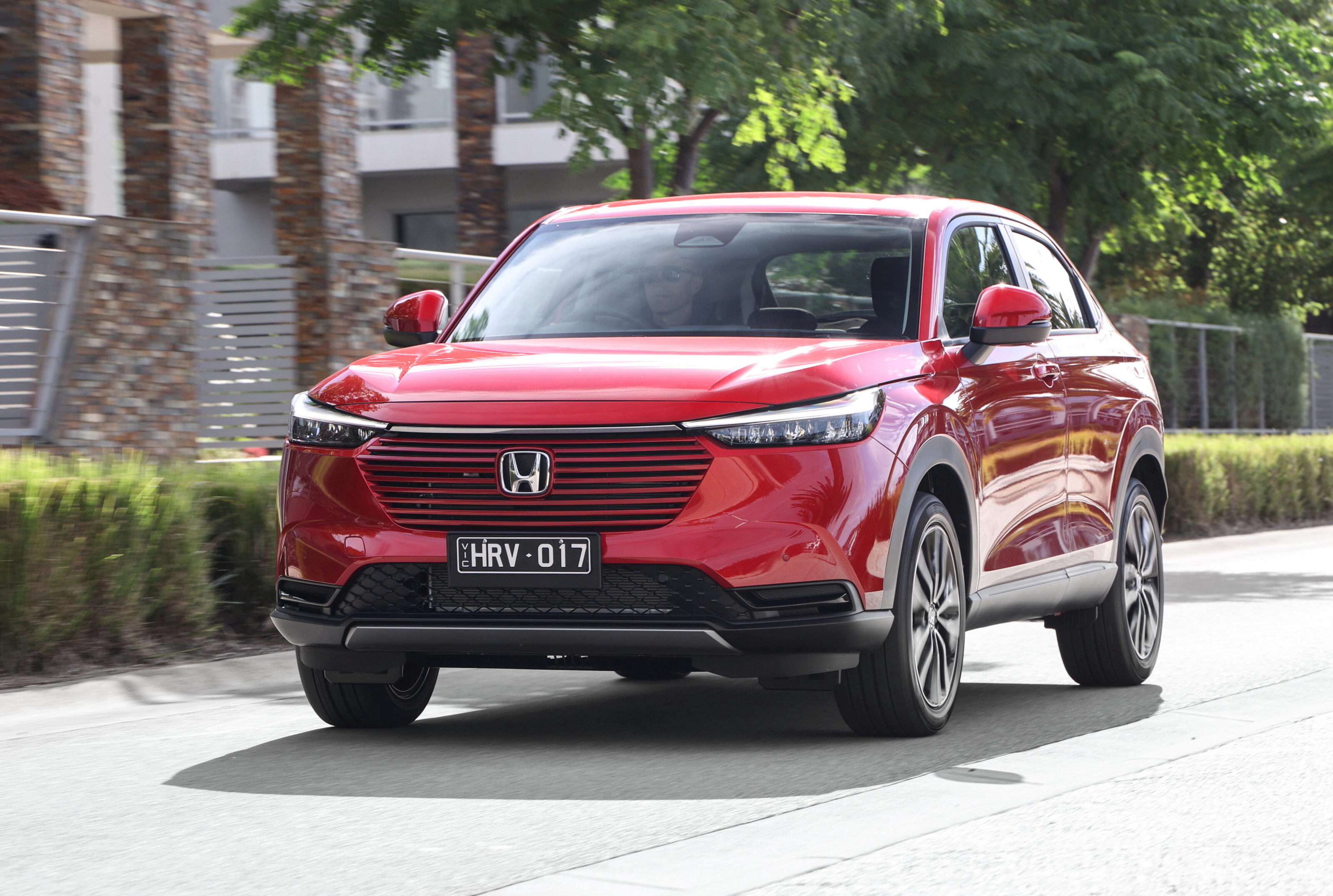
Honda’s standard five-year/unlimited kilometre policy also comes with six-year protection against rust perforation. In the past some Hondas had been covered by seven-year terms, which were part of limited edition offers, and included free roadside assist. It is possible that these may again become available during Honda’s ‘Annual Event’ sale.
Hyundai’s five-year/unlimited-kilometre warranty extends to all its vehicles for private use. Paintwork is only covered for 12 months if there’s an application issue or three years for durability. The N Performance brand provides 5 years of corrosion coverage, while other vehicles in the Hyundai range are “per vehicle usage type” according to Hyundai’s Service Warranty Passport. Hyundai’s Genesis and Ioniq sub-brands are also covered for five years.
Roadside assistance is complimentary for 12 months, with a 12 month renewal available at each service with a Hyundai dealership. Capped price servicing is offered through lifetime or through pre-paid servicing packages
The high-voltage batteries in Hyundai EVs including the new Ioniq 5’s battery are covered for eight years or 160,000km, whichever comes first.
After dabbling with temporary five-year offers, JLR increased permanently to five years and unlimited kilometres from April 1, 2021. This replaced the previous three-year, 100,000km warranty on all new Jaguar, Land Rover and Range Rover vehicles sold in Australia and New Zealand.
Roadside assistance is provided as part of the 5 year warranty for Jaguar and Land Rover models, as well as 5 years for paint surface. Corrosion cover is for 6 years. Service plans are also available, providing services for a duration of 5 years, with kilometre limits differing per vehicle.
Batteries for electric vehicles are covered for 8 years or 160,000km – whichever occurs earliest.
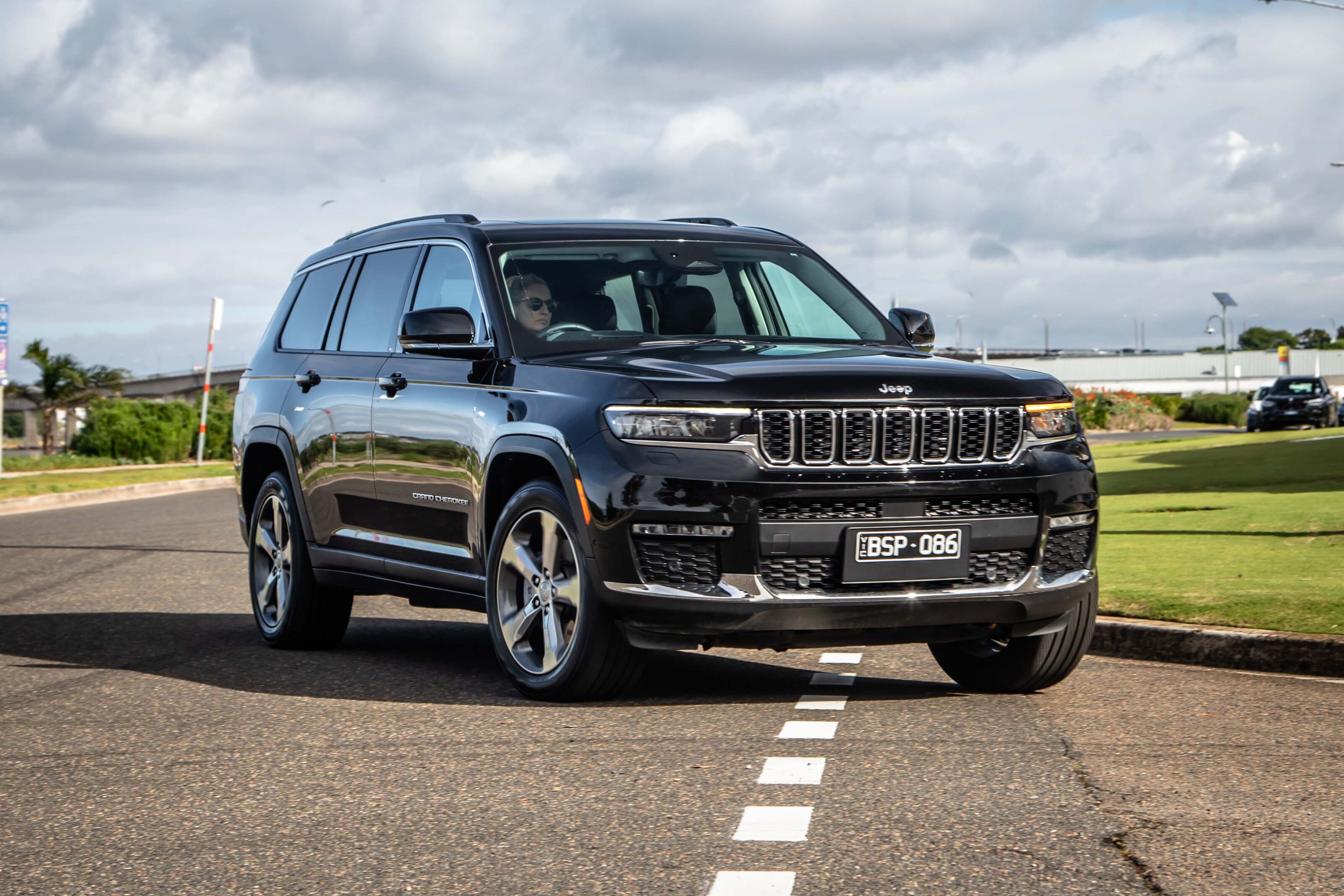
As well as the five year ‘There and Back’ warranty and fixed-price servicing, Jeep offers lifetime roadside assist, but it is dependent on you having your vehicle serviced through authorised dealers. The 100,000km limit is a little tight considering Jeep’s adventure sales pitch.
Corrosion is also covered for 3 years, and also for a distance of 100,000km.
This may come as a surprise if you’ve just purchased a Lexus in 2021, but don’t despair. The Japanese luxury carmaker announced in November 2021 that it will be increasing its warranty from four years/100,000kms to five years and unlimited kilometres. This warranty is bumper-to-bumper and covers hybrid systems (although not the high voltage battery), and driveline.
High voltage batteries (hybrid, PHEV and EVs) are covered for five years and unlimited kilometres, with an option for a further five years subject to an annual health check with Lexus. Battery degradation is assured through an 10 year, unlimited km warranty.
Roadside assistance is offered for 3 years from the date of registration as part of Lexus’ Encore membership.
Rust or perforation on all models is covered as part of a 7 year, unlimited kilometre warranty. Capped price servicing is available through Lexus’ Encore membership and, depending on the membership tier, is available for a period of three or five years from the vehicle’s warranty registration date.
Mazda followed Ford’s lead by stretching its three years to five from August 1, 2018. This covers any defect in material or workmanship in both parts and panels. The new period also covers the BT-50 ute, which prior to August 2018 was only covered for two years/unlimited km.
Mazda’s roadside assistance also lasts for the duration of the new car warranty. The warranty also provides corrosion protection for 7 years.
Mazda do offer a pricing guide for their servicing, but November 2022 saw Mazda lift their service intervals from 10,000km to 15,000km.
The batteries in Mazda’s electric models are covered by an 8 year / 160,000km warranty.

Mercedes-Benz Australia surprised everyone when it announced all its vehicles, including AMG and EQ electric models, would be covered by a five-year warranty from April 1, 2020.
EV model batteries are covered by Mercedes’ 8 year / 160,000km warranty.
Service prices are be capped for the first three services, with amounts available on their schedule. Roadside assistance is available through an annual membership.
The German manufacturer was the first German luxury-car brand to extend its warranty period beyond the industry-standard three years – but as yet its main rival BMW is yet to follow.
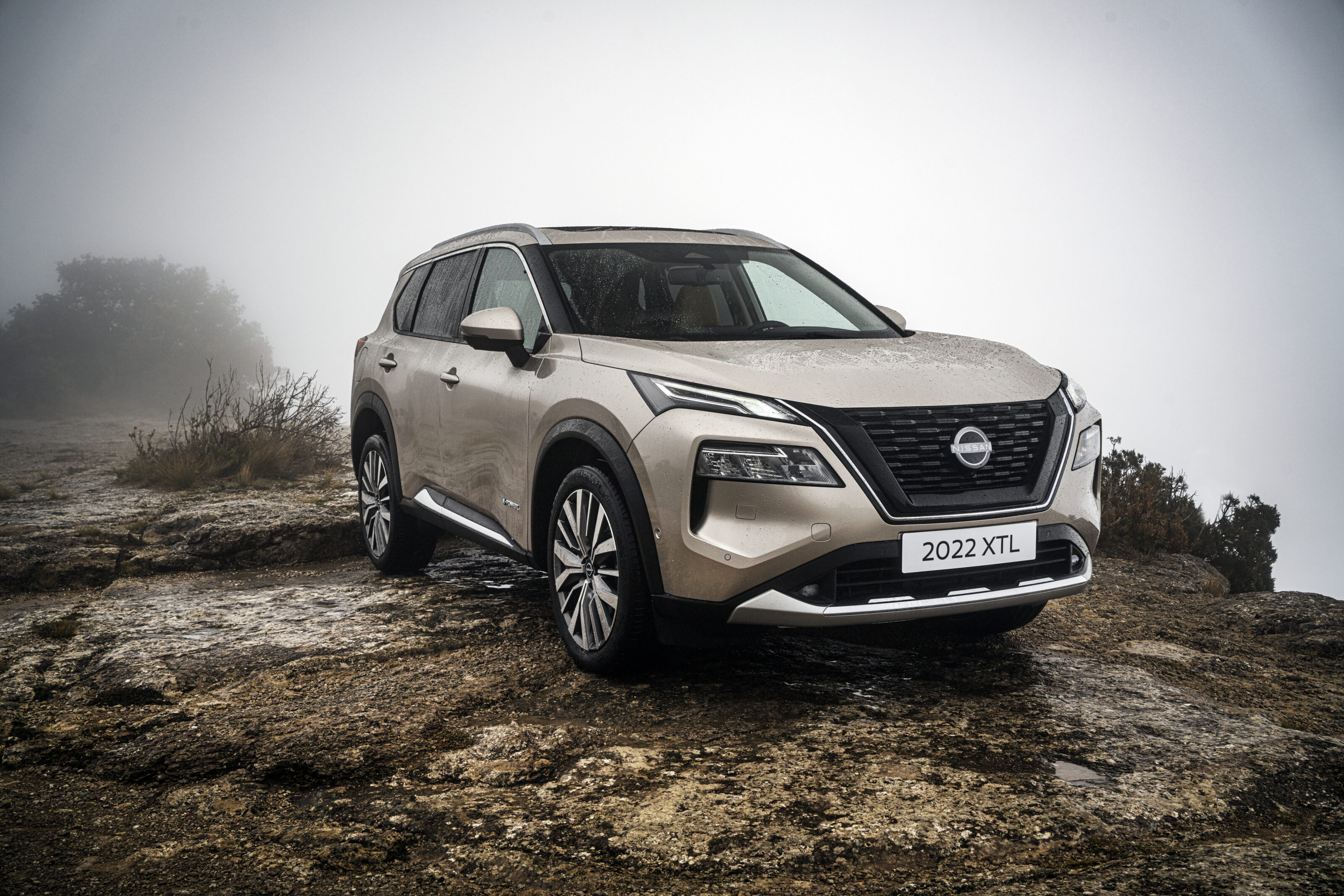
Nissan now offers a five-year unlimited-kilometre warranty on all its products, with their batteries on EV models covered by the standard 8 years or 160,000km warranty.
Capped price servicing is available on the first six services.
Like Citroen, Peugeot cars were sold under licence by UK-owned Inchcape, which extended the deal for both French brands from three to five years in February 2018.
8 year, 160,000km coverage is also offered for batteries on EV/PHEV models, with capped price servicing provided through Peugeot’s Assured Service Price Promise.
Corrosion protection is granted through a 3 year guarantee on paint and 12 years on bodywork.
Renault offers five years with no kilometre limit on all its passenger cars and SUVs, with its Kangoo, Trafic and Master vans covered for three years/200,000km.
Service your Renault at an authorised service centre and you also get five years capped-price servicing and roadside assist.
Renalt’s electric offerings come with a 3 year, unlimited kilometre warranty, with the battery covered for 5 years or 100,000km.
Subaru was one of the stragglers when it came to increasing its coverage period, but relented at the start of 2019 and as such, each of its models now receives a five-year, unlimited-kilometre warranty. Roadside assistance is complimentary for the first 12 months, and is renewable at each annual service.
Batteries in hybrid models fall under an 8 year / 160,000km warranty.
Capped price servicing is for five years, although the kilometre limits differ depending on the model. Most are covered to 62,500km while other vehicles such as the BRZ and WRX top out at 75,000km.
Suzuki held out until October 2019 – since then all its vehicles are covered by a five-year, unlimited-kilometre warranty, bolstered by a capped-price service program (to 100,000km). Roadside assistance also comes with a five year offering with new cars.
After insisting it would stick with its three-year policy in August 2018, Australia’s most popular car brand read the room and introduced a five-year warranty, along with a 60-day money-back guarantee in January 2019. Corrosion and rust is covered through a 7 year, unlimited km warranty.
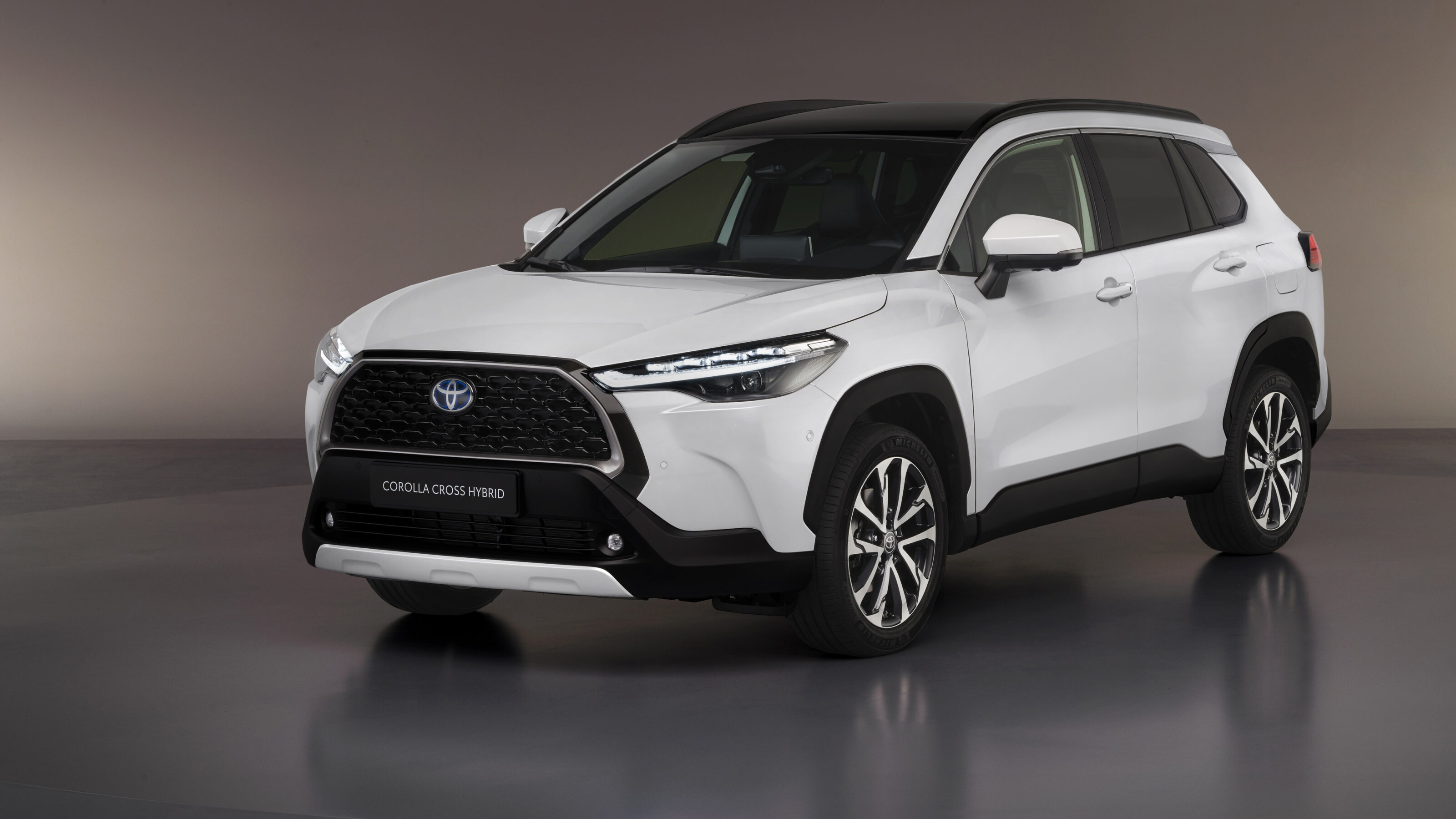
Hybrid and EV models are covered by a 5 year warranty, with a further 5 year coverage provided with an annual check up through Toyota’s participating dealers.
Roadside assistance is offered through an annual membership and capped price servicing is available for 5 years through the Toyota Service Advantage program.
Volkswagen became the first German brand in Australia to offer a five-year, unlimited-kilometre deal in December 2018. Roadside assistance is provided for the first 12 months of ownership, with an annual renewal available at each service.
Capped price servicing is viewable through VW’s Service Pricing Guide.
Perforation cover is provided for 3 years on paint and 12 years on the panels.
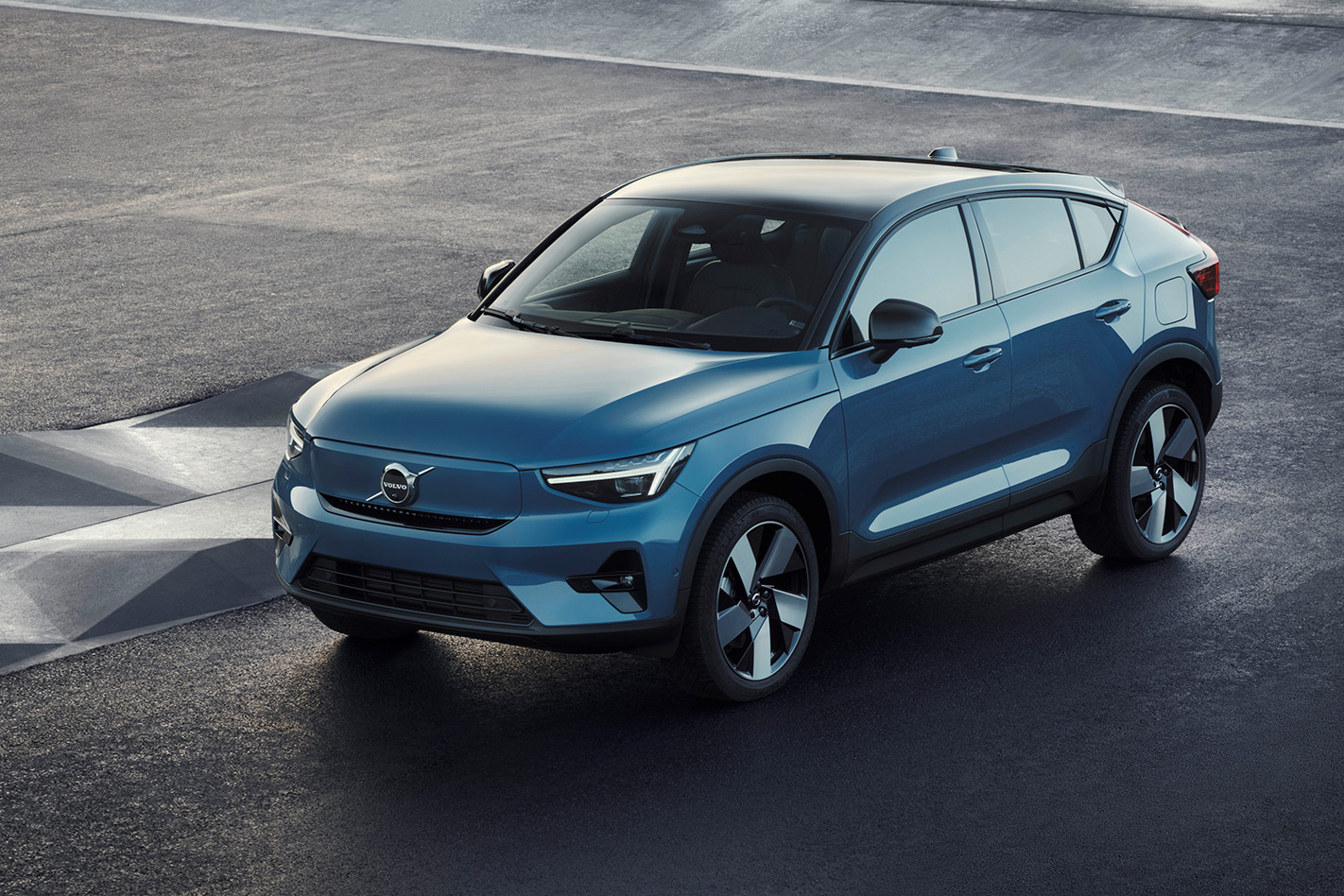
Volvo Cars increased its term to five years in July 2020, but backdated it to apply to all vehicles registered from April 1, 2020. Roadside assistance is provided for 8 years through Volvo’s Roadside Assistance Program.
Batteries and EVs enjoy an 8 year, 160,000km warranty. Service plans are available for 3 or 5 years, depending on the model of vehicle.
Few cars that cost as much as a house come with more than a three-year warranty, though this only applies to private Rollers and not commercially operated limos. The four-year term includes free roadside assistance.
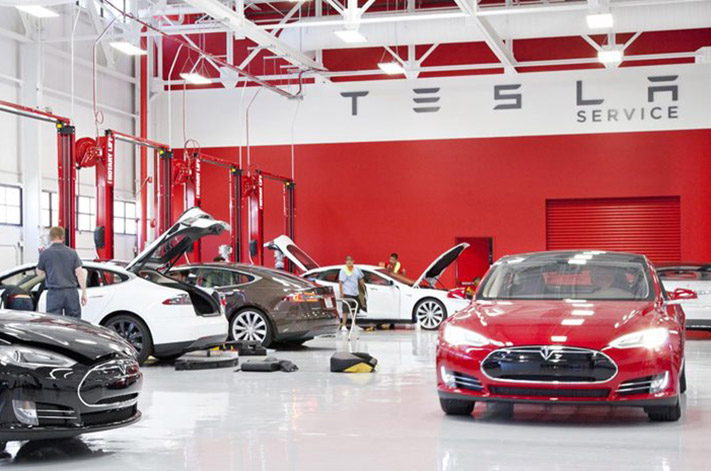
In typical unconventional fashion, Tesla is the only carmaker to actually decrease its general warranty period – from eight years and unlimited kilometres to four years and 80,000km. The good news is the batteries and drive units are still covered for eight years, with the maximum kilometres varying for different models. (eight years/160,000km for RWD, 192,000km for AWD models)
Corrosion and rust is covered for 12 years and unlimited kilometres, while roadside assistance is available through Tesla themselves.
Previously, Mitsubishi held Australia’s best new-car warranty with its 10-year / 200,000km Diamond Advantage warranty (if regular services took place at Mitsubishi dealerships) or 10-year / 100,000km warranty (if customers took the vehicle outside the dealer network).
Unlike Mitsubishi, MG’s new 10-year warranty covers all EV, PHEV and hybrid models. However, if the vehicle is used for commercial purposes, the warranty drops to seven-year / 160,000km. A seven-year/unlimited-kilometre warranty on anti-perforation and paint remains unchanged.
“If you’re looking for value and peace of mind from a new car purchase, the length and quality of the factory warranty should be as important as the horsepower. We think that our new 10-year warranty for EV, PHEV, Hybrid and petrol range is the best and strongest in market,” said MG Motor’s Chief Commercial Officer, Giles Belcher.
“We are listening to our customers. We do think a longer warranty is more attractive, and it also reiterates trust in our cars.
“MG’s 10-year warranty delivers unmatched peace of mind and ensures that you are fully supported on every journey. When it comes time for our customers to upgrade their car, we want them to turn to us first. We have a stack of great product in market and more on its way, so we want people to try us sooner than later,” Belcher added.
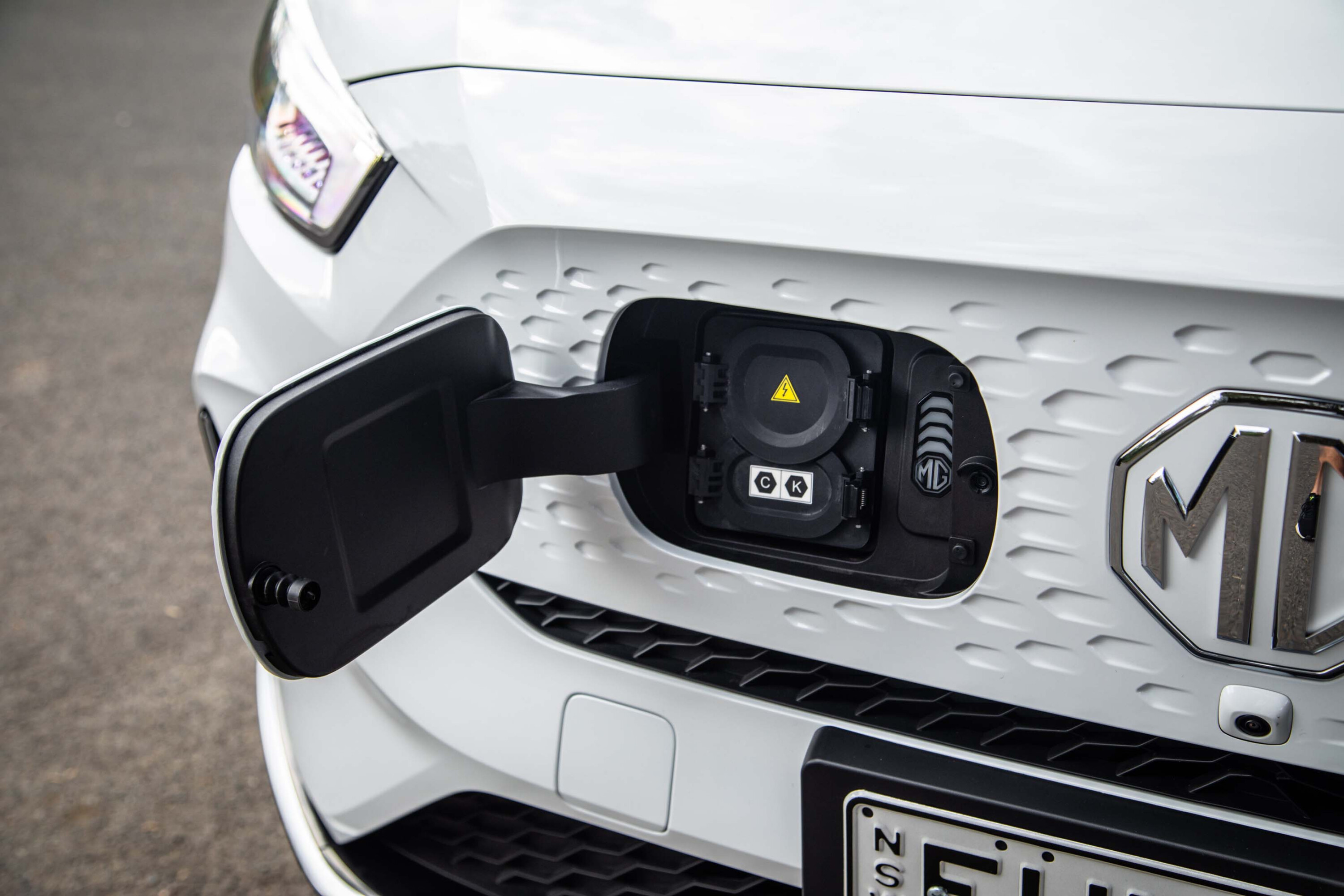
In addition to the updated warranty, MG has also altered the MSRP across its entire range. This includes a price reduction of its ZS EV (MY23 Excite) during the month of August only, making it the most affordable RV in the market at $34,990 drive-away.
“MG is putting customers first by ensuring all road users can access a wide range of affordable zero emission vehicles thanks to a special National Driveaway Price Campaign on our ZS EV Excite at a very affordable $34,990 driveaway (01/08/24), during the month of August” he said.
Received wisdom has it that the production car V10 was inspired by the 1988 turbo ban in Formula 1, with manufacturers keen to latch onto the reflected glory of the astonishing-sounding motorsport engines. The truth, as ever, is a little more complicated.
While diesel V10 engines have been used in tanks, trucks and buses for many years, the first petrol V10 was the 272kW 4.0-litre unit in the back of the stillborn Lamborghini P140, which dates to 1987.
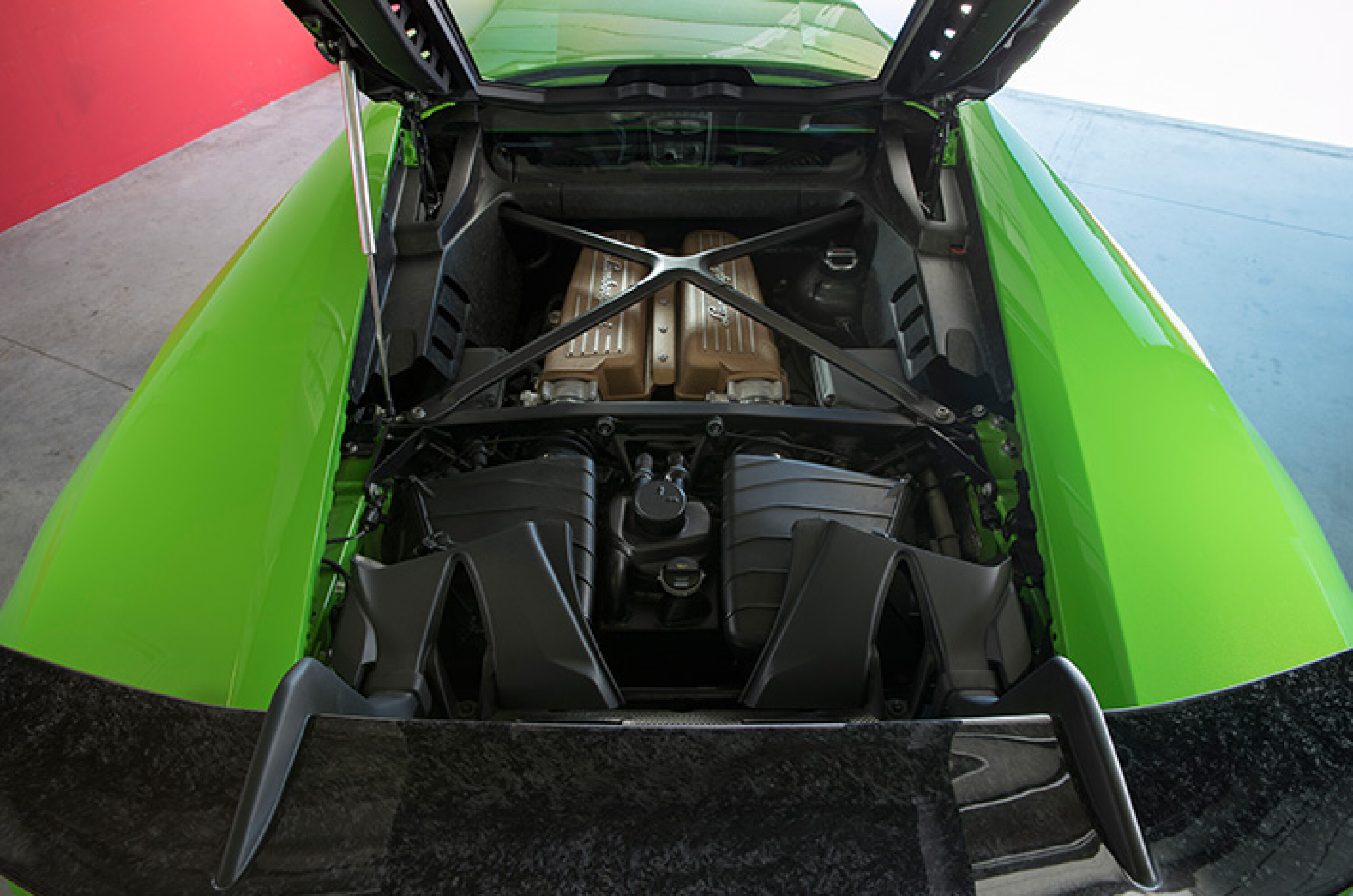
It wasn’t the European bluebloods that got first dibs on V10 petrol engines though. Dodge launched the Viper with an 8.0-litre V10 in 1991, albeit with Lamborghini’s help with the aluminium block casting.
That engine was, effectively, a Magnum 5.9 with a couple of extra cylinders and a bit of creative stroking – a version going into the ’94 Dodge Ram. Ford’s Triton truck engine followed in ’97 and VW developed a 5.0-litre V10 diesel that was used from 2002 to 2010 in the Touareg SUV and the Phaeton limousine.
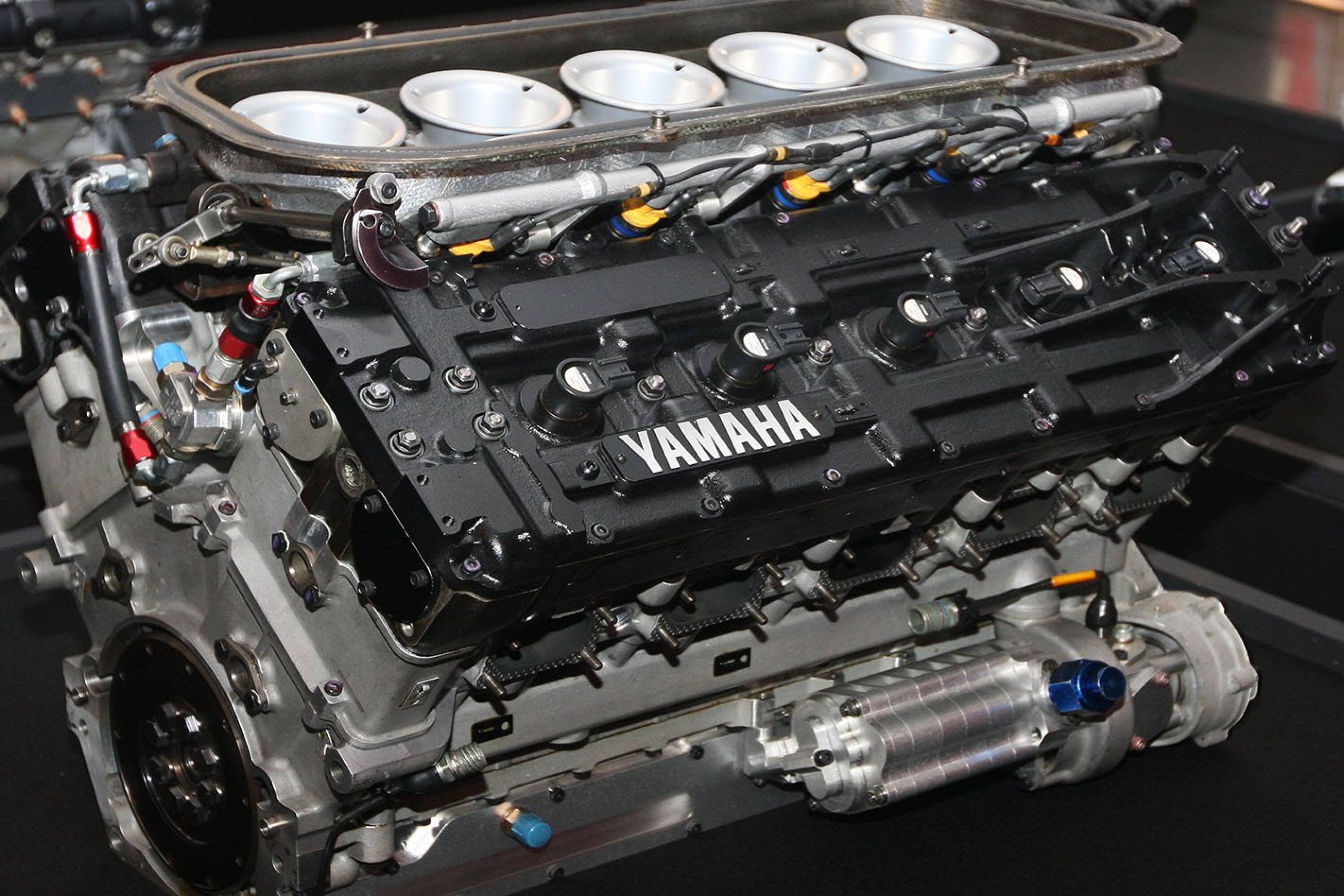
The Lamborghini V10 arrived with the Gallardo in 2003, the same year that Porsche plumbed the 980/01 5.7-litre V10 into its Carrera GT hypercar.
By 2005, the V10 was adopted by BMW, the troubled S85 unit being fitted to M5 and M6 models. The following year saw the Audi S6 and the S8 both get a 5.2-litre V10. Rather than being a development of the Lamborghini 5.0-litre V10, this was an extension of the 4.2-litre V8 FSI, sharing its 90mm cylinder bore spacing rather than the Lamborghini’s 88mm.
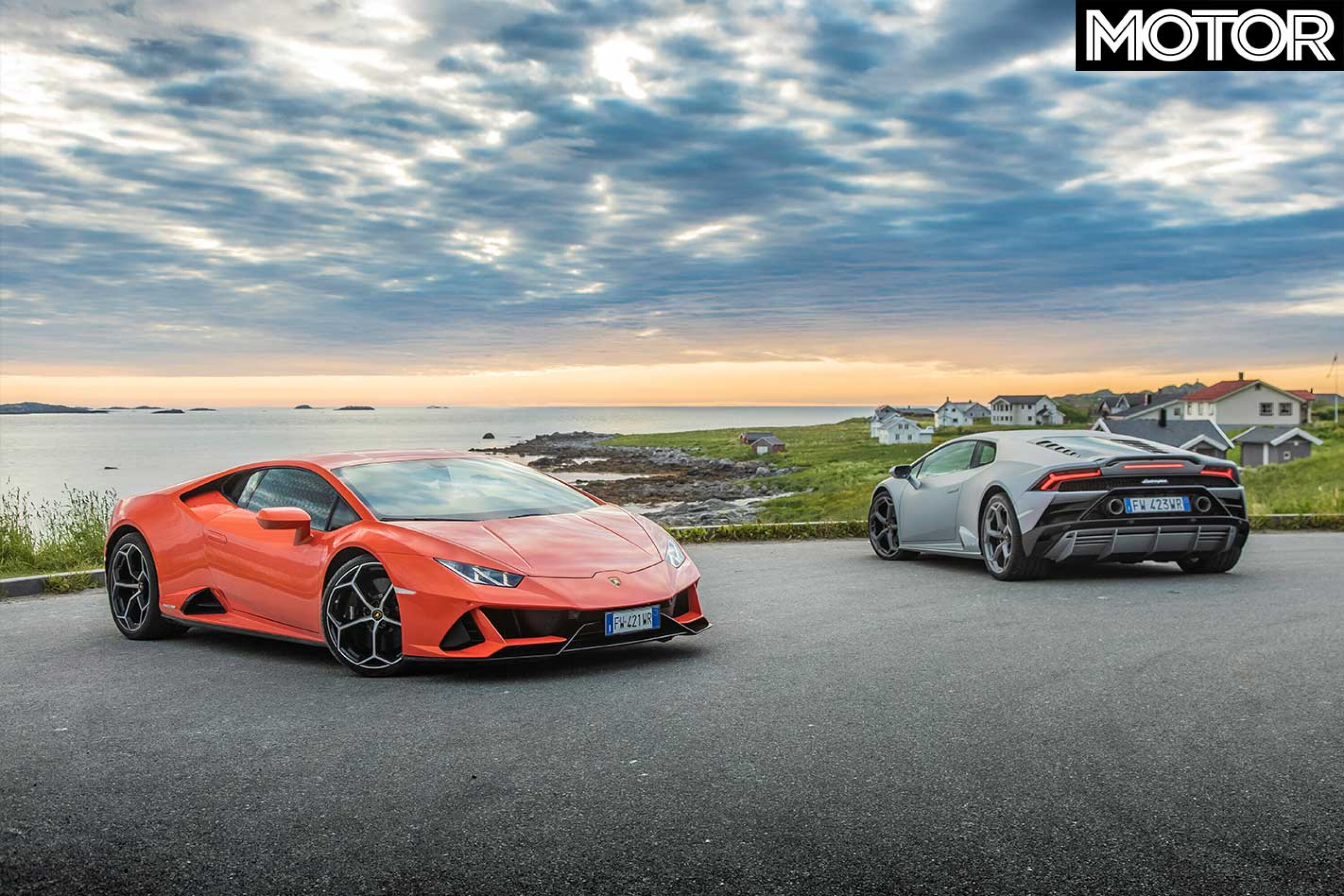
The mania for V10 engines had long come and gone by the time that Toyota developed the best example of the ilk with its 1LR-GUE powerplant. This only ever had one application – beneath the bonnet of the Lexus LFA.
Co-developed with Yamaha, this 4.8-litre 412kW masterpiece was conceived not because of any F1 associations, but purely because it was realised that the V10 was the only engine that had the requisite engine response and rev ceiling.
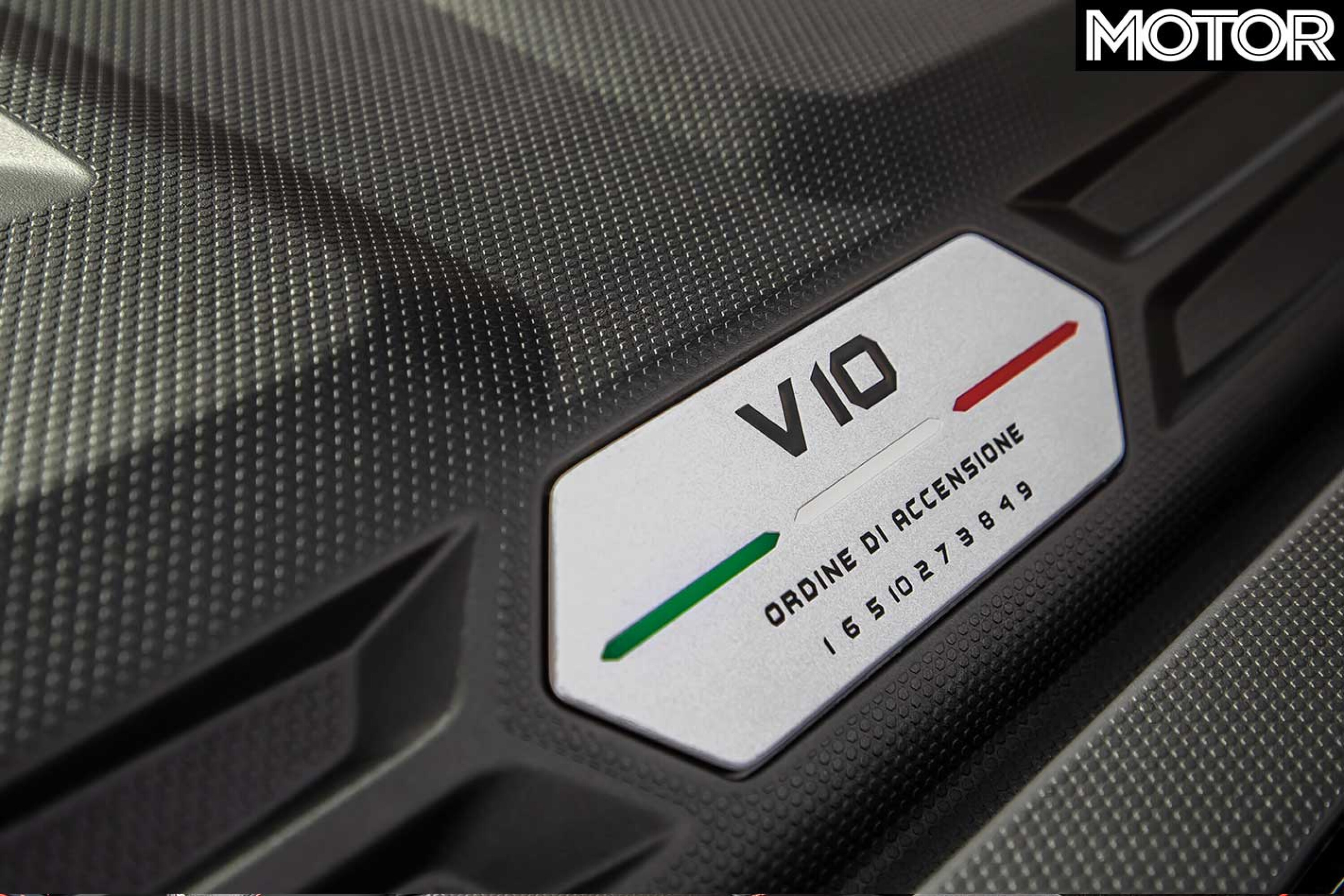
You’d need to be dead inside not to be thrilled at the sound of a howling V10. Thirty grand will buy you a tidy V10-powered Audi S6 or S8. Fit the right exhaust and you’ll sound like Mika Hakkinen on a quali lap. What’s stopping you?
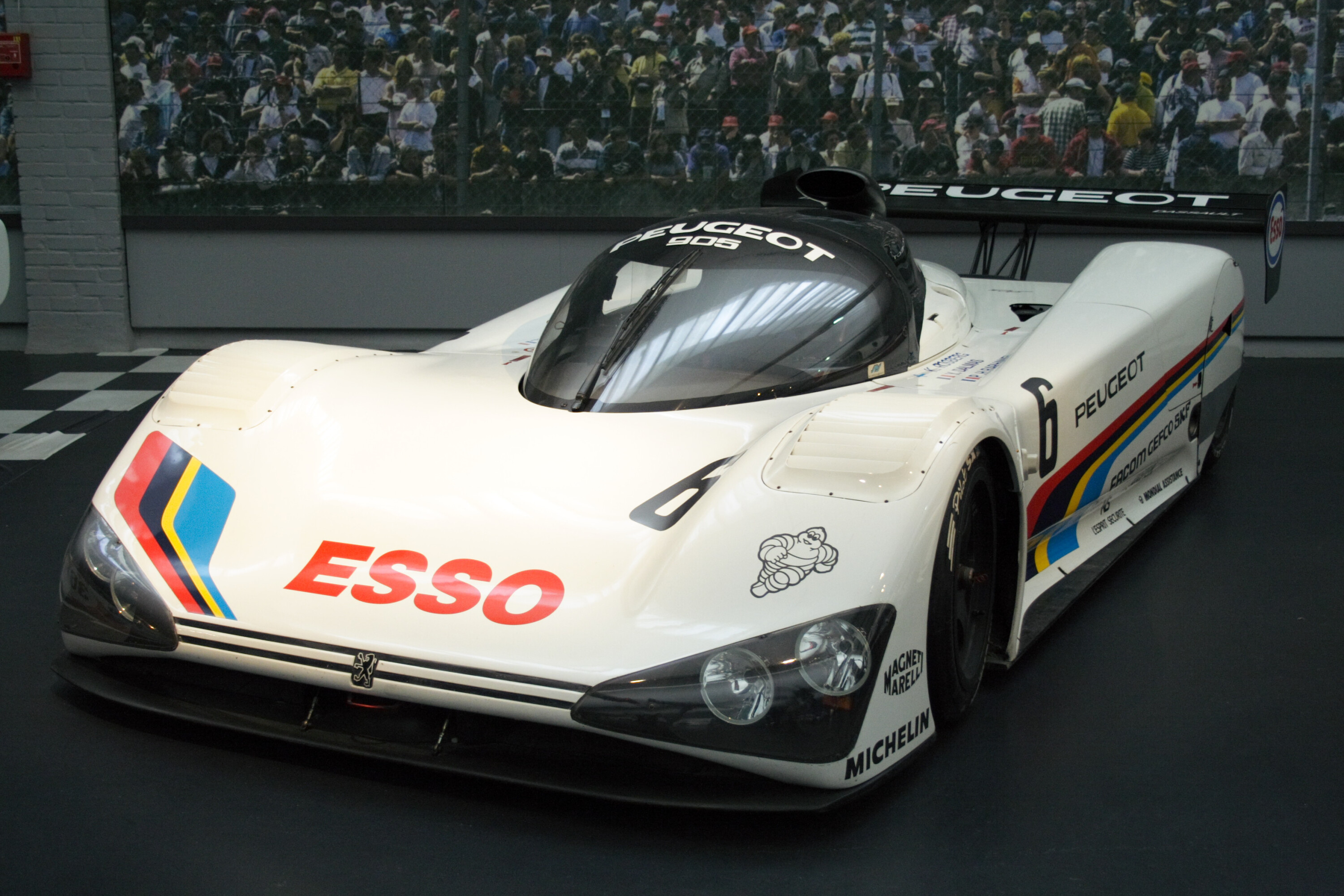
The first V10 used on track was found in the 1990 Peugeot 905, which campaigned in the last two races of the 1990 World Sportscar Championship.
A DNF in Montreal and a 13th place in the final round in Mexico weren’t auspicious results, but the following year, Peugeot was joined by V10s from Judd and Toyota on the sportscar grids. The 905 came good, winning Le Mans in 1992 and 1993. The final hurrah for V10s in LMP1 racing came with the Audi R15 diesels that scored a 1-2-3 at Le Mans in 2010.
Recently I drove a long-time jewel in the small-car crown – a new-generation Suzuki Swift. A rival to this month’s Wheels cover car, the MG 3, this Swift is not a facelift, it’s an entirely new vehicle – and when there’s a new generation of a small car, balloons should be falling from ceilings. Damn near public holidays should be declared.
It wasn’t that long ago that small cars were ferociously mauling the ankles of bigger vehicles in the Aussie sales race. Fifteen years ago, in 2009, the Light car segment comprised 12.4 percent of all new cars sold in Australia. The Hyundai Getz and Toyota Yaris fought over the number-one spot like two terriers in a tug-of-war, as the little Mazda 2, Holden Barina and others nipped and snarled from the sidelines.
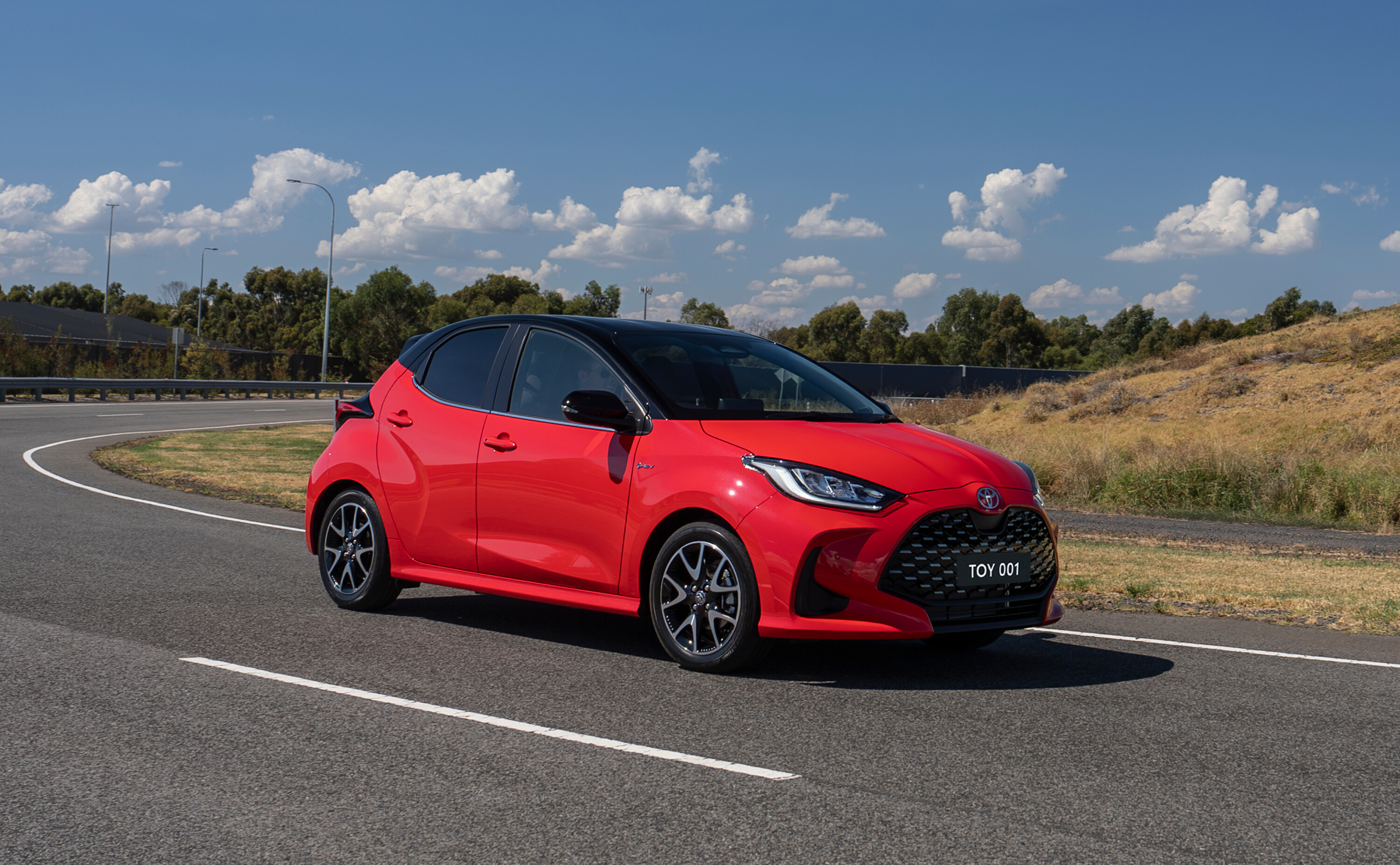
It’s a very different story today – the Light segment making up just 2.9 percent of the new car market in 2023 as buyers are upsold into small SUVs instead. The old $18,990 drive-away MG 3 (Australia’s favourite small car) has proven an appetite remains for cheap small cars, but for the most part it’s been a bloodbath of discontinued models, including Mitsubishi Mirage, Ford Fiesta, Honda Jazz, Renault Clio, Nissan Micra, Peugeot 208 and Hyundai i20.
It’s a pity because cars like these probably make more sense than ever. We are, of course, facing a crisis of climate – one that’s changing the face of the automotive industry. Those in power are sensibly taking heed of scientists’ furious arm waving and barely muted screaming, and implementing rules to reduce fuel consumption of brand new cars (heard of NVES?).
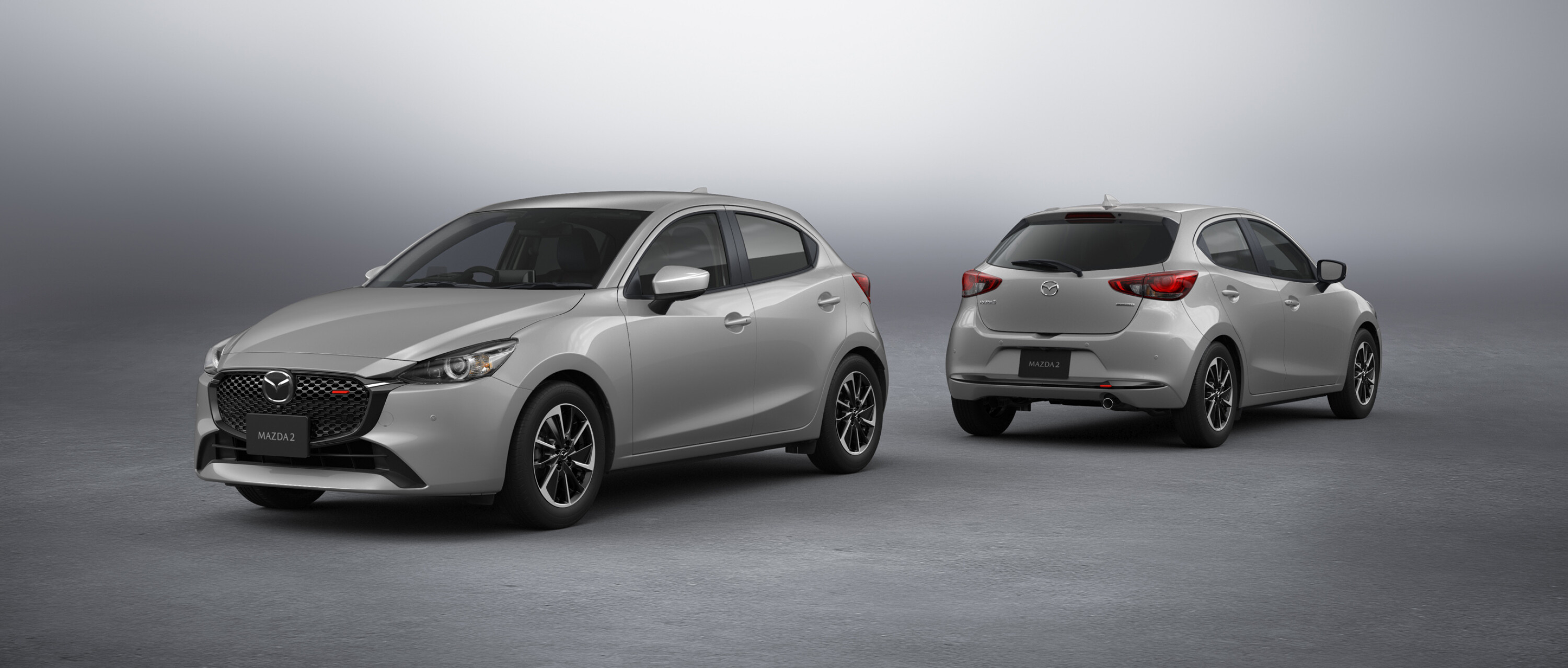
Worse still, they are vehicles built to carry four, five or seven, and instead, the vast majority of time can be seen carrying one.
If we had to imagine a type of vehicle to expedite the reduction of fossil fuel it might not be an EV pretending to be an off-roader. It might be more appropriately sized given its regular occupancy of just one, or one and a few kids.
A small car, basically.
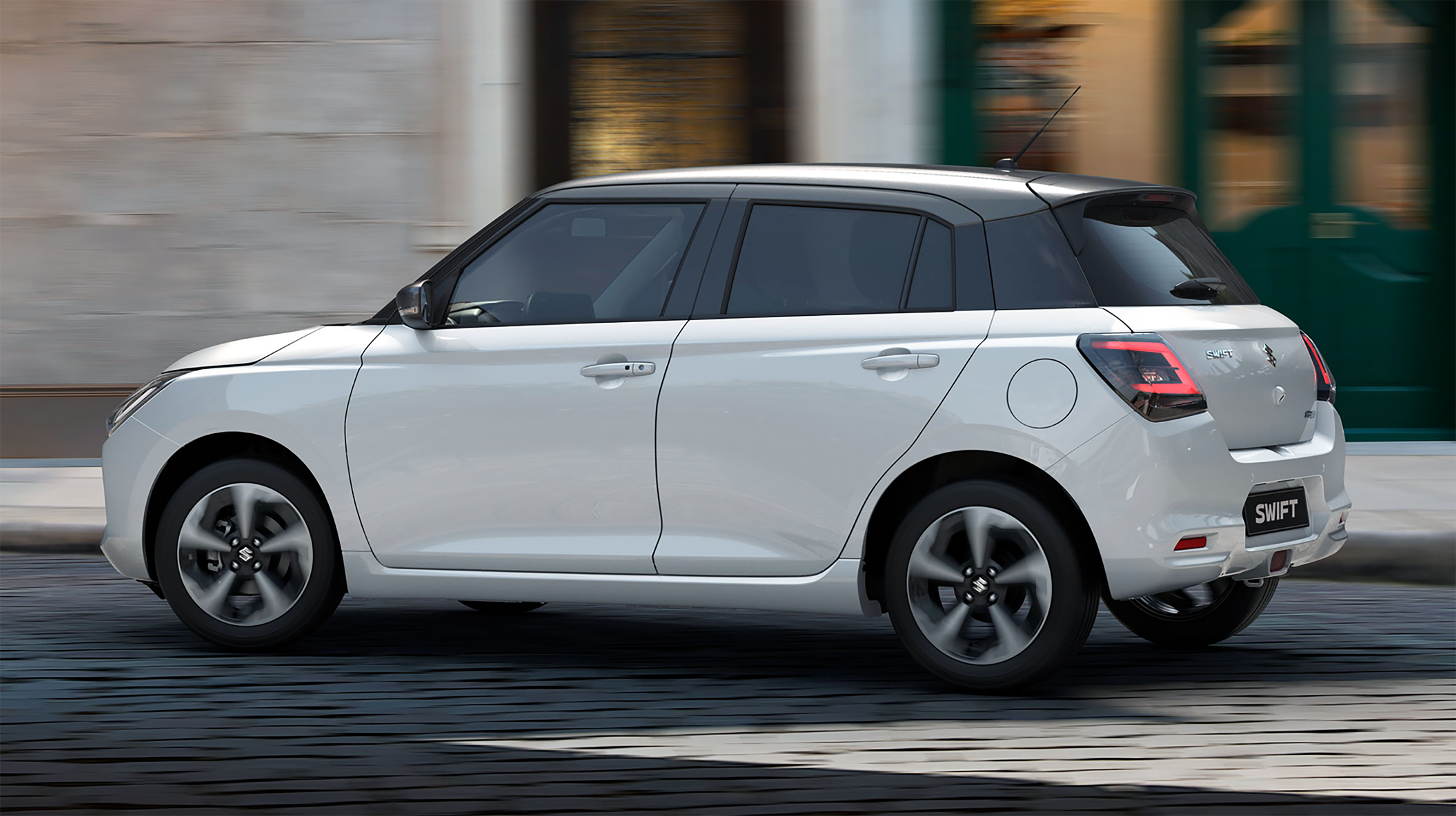
It’s a ‘mild hybrid’, which is a cynical term, as it uses a smaller battery with an integrated starter-generator, but god forbid it was a real, dinky-di hybrid like that of a Toyota or a Hyundai because it might actually start generating petrol out of nothing.
Real world fuel economy around 4.0L/100km – at worst, 5.0L/100km – bespeaks the value of not just mild electrification but also lightness and smaller frontal areas.
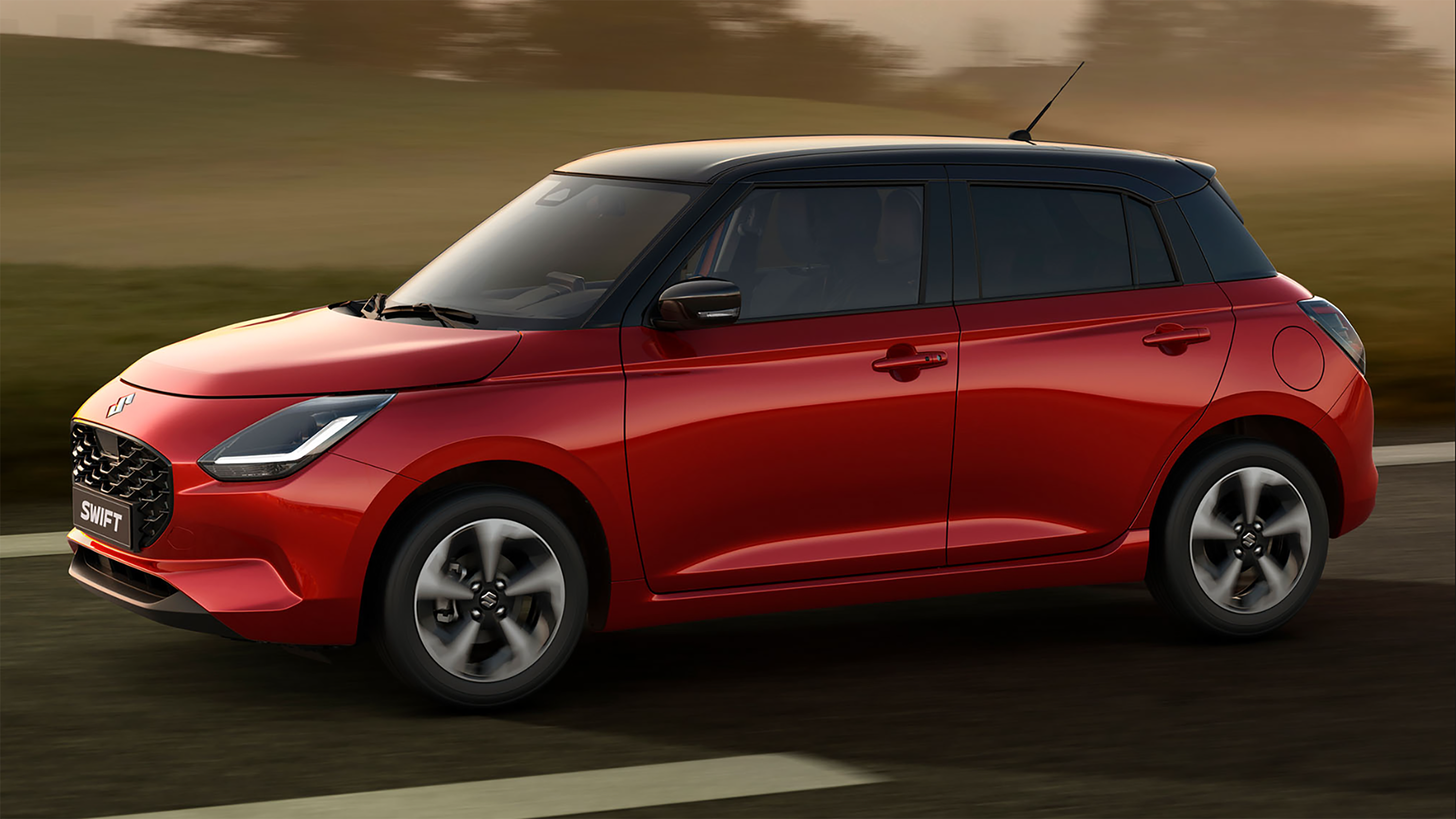
Lightness also grants the little Swift a lovely ride-and-handling balance – the car feeling delightfully quick-stepping on its feet as well as granting plenty of lane to drive within owing to its petite width. It’s easy to park, tackles speed bumps with aplomb, and I’d put money on it tackling a dirt road as well as any small SUV.
It’s a pity so few will be seen in the wild, then. But whatever program might be needed to increase its numbers and those of its small car kin, I will get behind.
Trying to find a new car with a manual transmission is hard enough these days, but an affordable low-riding family hauler is nearly as hard. Some brands continue to plug away in the segment, but your widest selection is absolutely in the SUV space.
And boy are they selling, to the point of absolutely dominating Australia’s top 10 – beaten only by the no-longer humble ute.
Below, you’ll find lists of the top models in each SUV size class, linked to our pages for each model.
Of course, popularity isn’t the greatest mark of a car – so you’ll also find links to our Best SUVs stories, again organised by size and price. Read on!
Need a seven-seater? We’ve got just the page for you.
Let me attempt a little mind-reading. You’ve pigeonholed me as some sort of antipodean analogue of a Floridian dentist, a man unencumbered with anything much by way of refinement and who is blithely unaware that a cheaper BMW M3 Competition does just about everything better. Am I close? I’ll happily take all of those on the chin and admit that these barbs are built around a faint germ of truth.
That said, I have yet to pedal a Vette in socks and sandals, I don’t drive with a Cohiba sticking out of my head, I have no friends called Larry and I don’t own a golf bag, so I’m not a complete overlap on the stereotypical owner Venn.
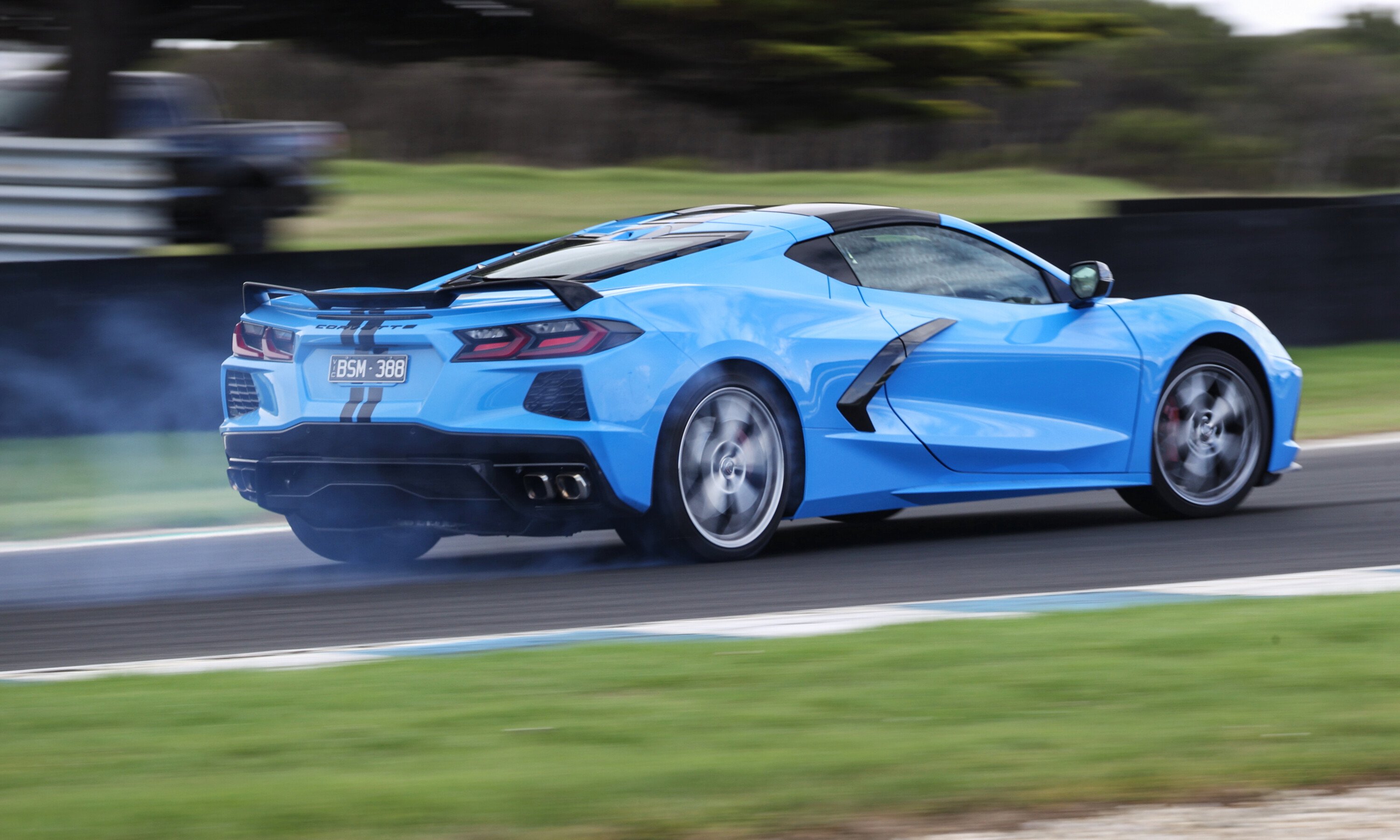
It beat the Audi RS5, the Jaguar F-Type P450 and the Mercedes-AMG C63 S coupe. It finished a very credible fifth at PCOTY that year, beaten by, yes, an M3, two Porsches and a Lamborghini.
That very same car – BSN 388 – was also compared to the new BMW M2, the Toyota GR Supra and the Lotus Emira at the start of this year. Two hard years on press fleet duties had clearly started to weigh on it.
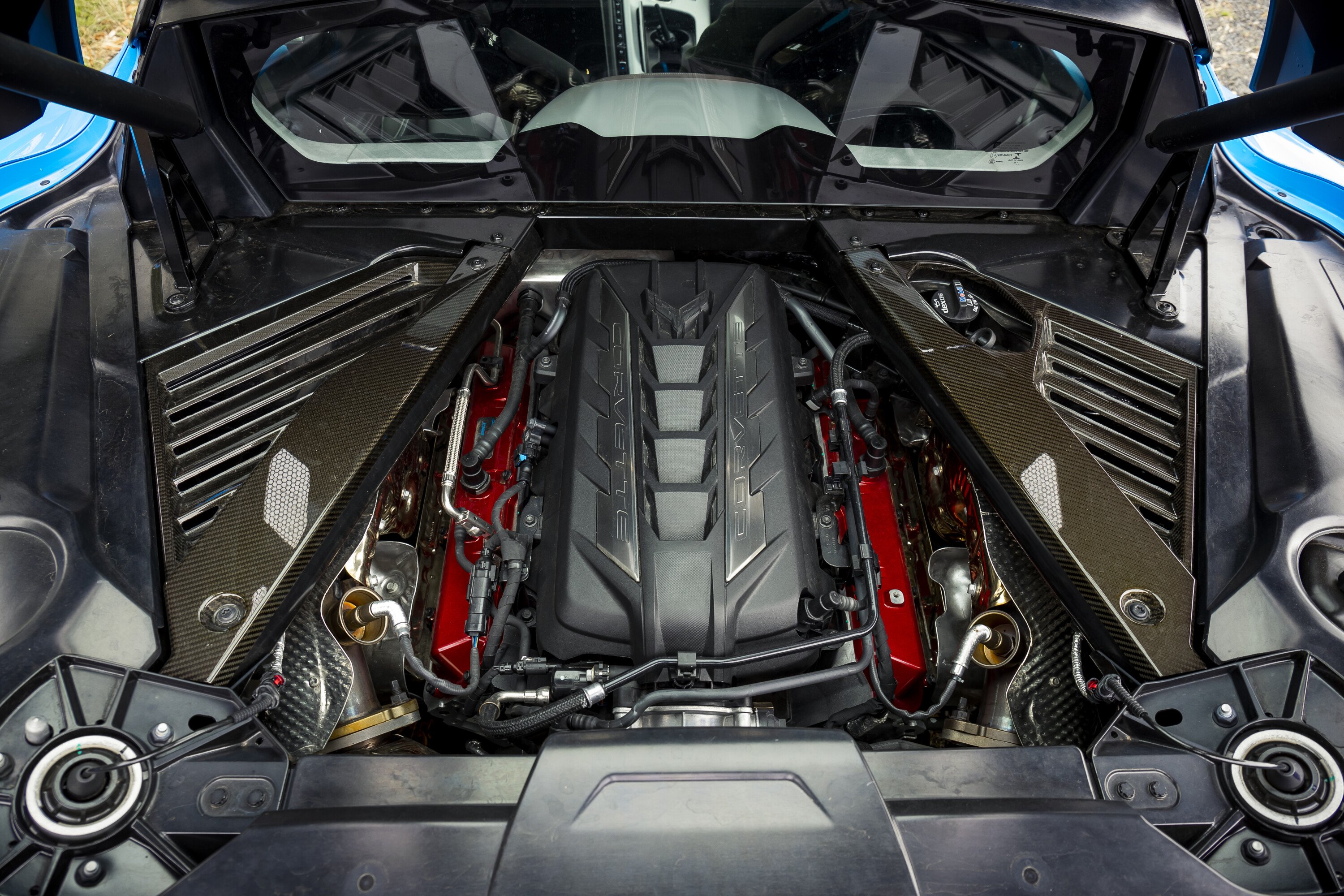
Thankfully, I’ve just had a chance to drive Corvette’s new 3LT demonstrator. The cabin so red it feels like the aftermath of a Mexican cartel standoff, but the exterior is, thankfully, a far more muted execution.
The Silver Flare paint is complemented by some tasteful alloys. Where its predecessor on fleet was a garish bleach-bottle blue, with stripes and chrome wheels, this one instantly feels a more refined confection. It just goes to show that specifications really do matter. I’m told that forest green with a tan leather interior would have been quite the combo.
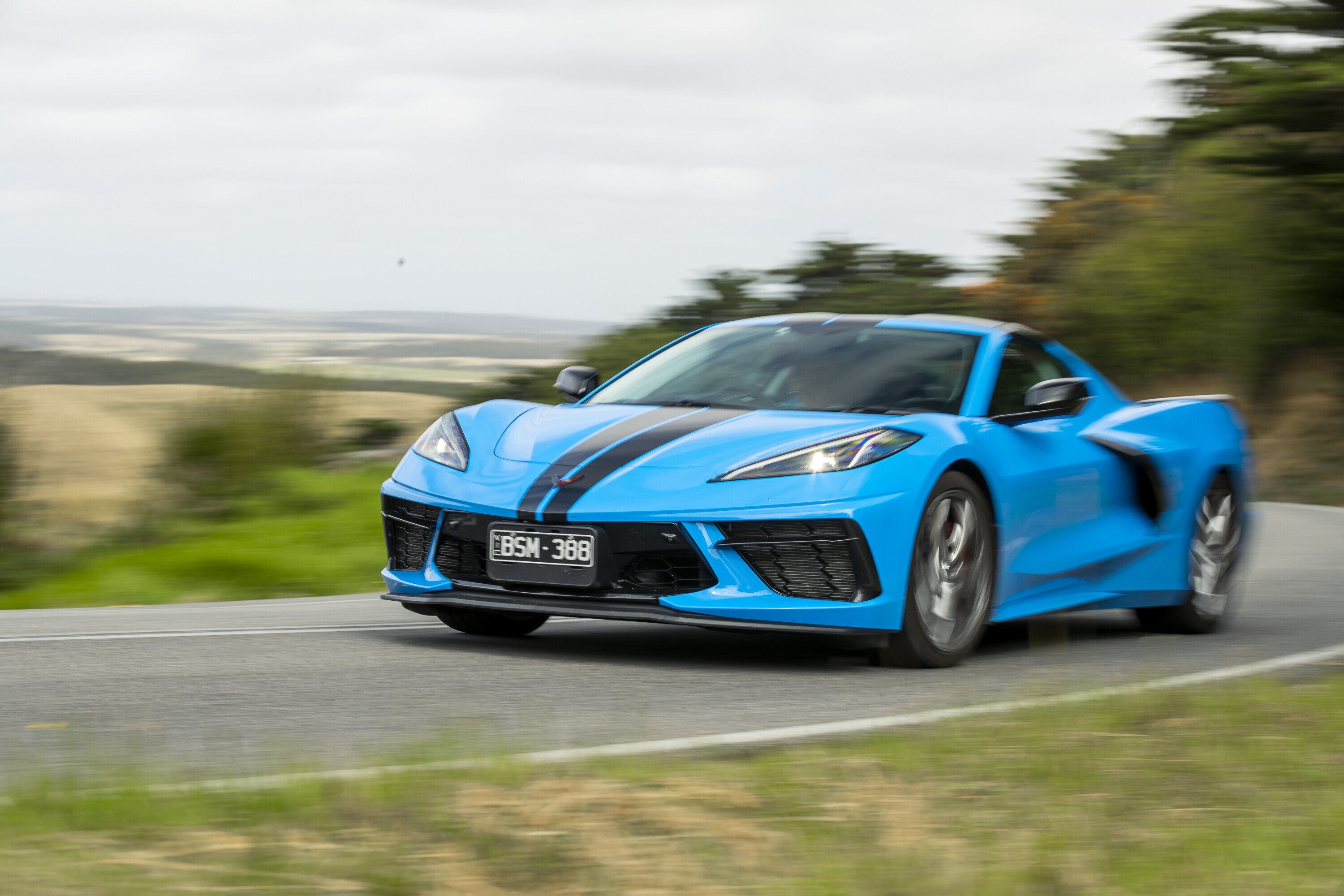
Jump onto its configurator and you can see a number of pre-set colour and trim combinations to point those who might struggle in the right direction.
Trouble is, there’s likely an element of style-oriented Dunning-Kruger syndrome at play here. Those who have terrible taste are also the ones least equipped to recognise the fact.
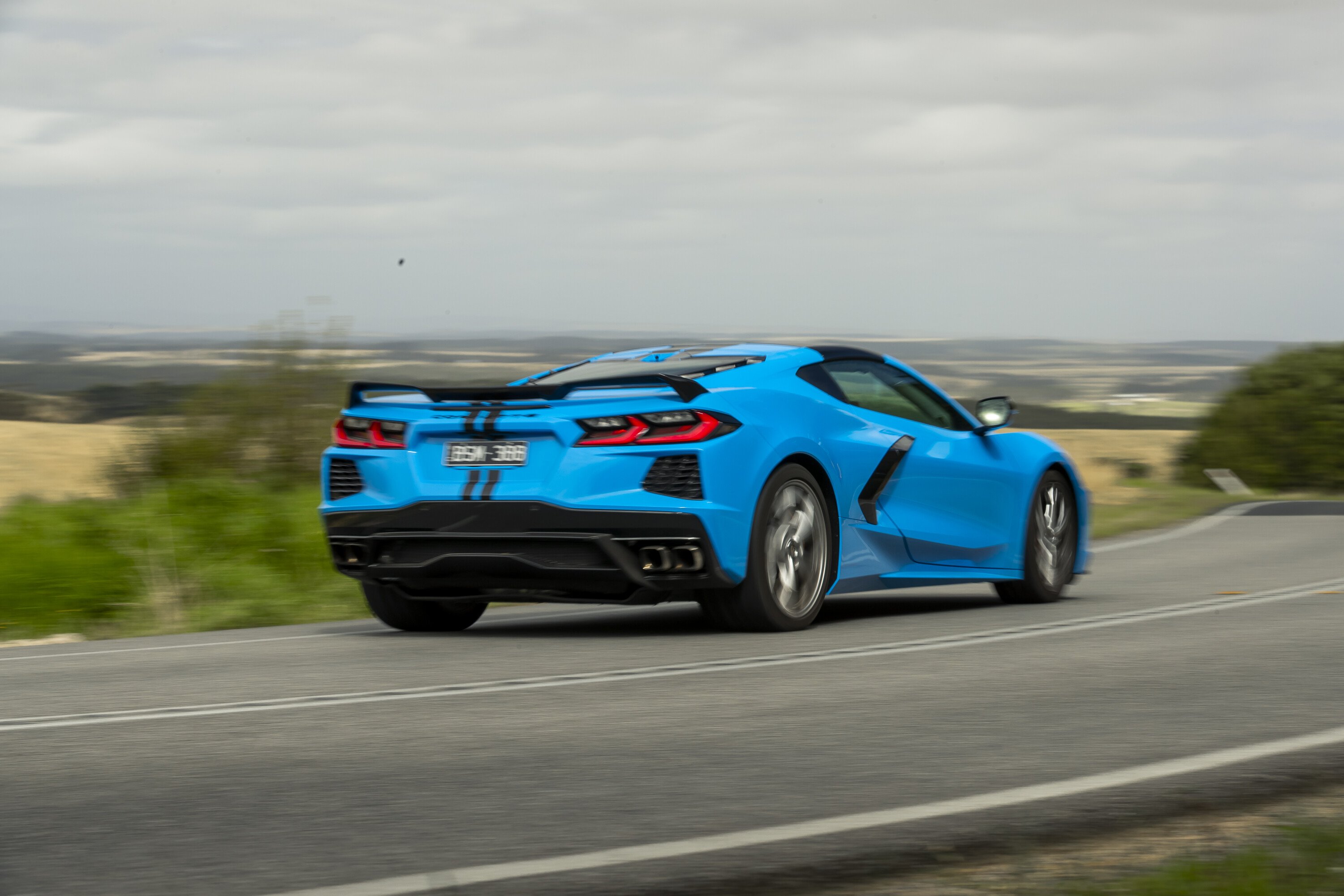
I’d put it down to the fact that, with typical optioning, for four-cylinder Porsche Cayman money, you’re getting a V8, naturally-aspirated, mid-engined sports car that’s only 6kW down on a 992 GT3.
I might not know which tie knots are in vogue right now or whether caramel dress shoes have had their day, but I know a cracking performance car when I see one. Just tone it back when you get to the colours, hey?
From a high of 1023 licensed vehicles there back in 2003, there were only 276 left on British roads by the end of last year.
In other words, the magnificent Cerbera is becoming a very rare vehicle everywhere. Flawed but fabulous, it’s a car with such breathtaking audacity and ambition that it certainly deserves to be saved, so when we tracked down this beautiful Cerbera Speed Six in Melbourne, we were determined to give this Blackpool unicorn its moment in the spotlight.
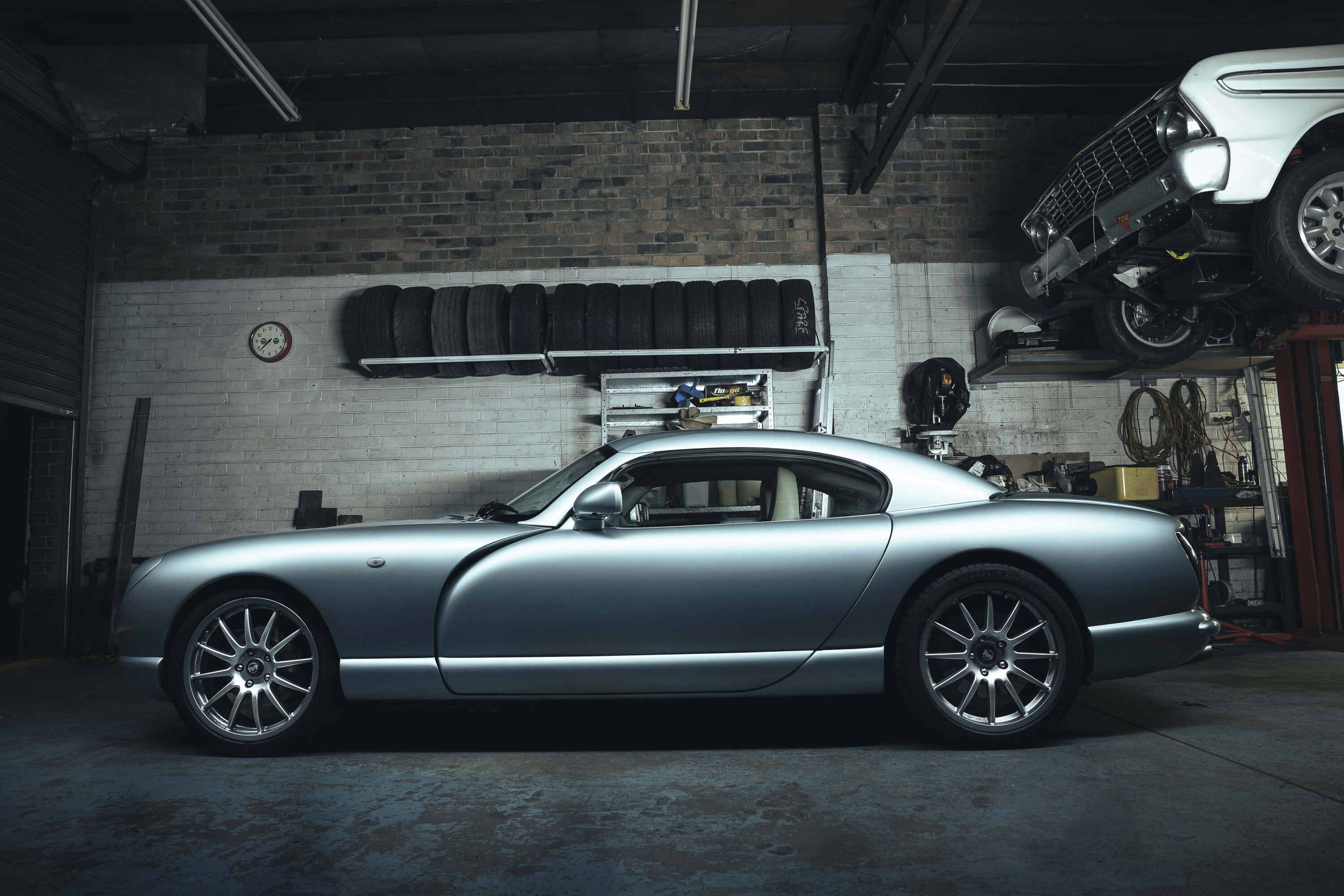
When asked what they would like to see improved on the Cerbera, owners cited better ventilation, rear suspension that was more accommodating, a handbrake that worked, brighter air conditioning LEDs, less wind noise, a better stereo and windscreen wipers, fewer electrical problems with doors and security, a clutch footrest, non-vibrating rear-view mirrors, better rear ground clearance and less brake squeal. Oh, and you only got a one-year warranty from new. That’s if the dealers would entertain your claim.
That was then. It’s fair to say that any Cerbera still perambulating the roads will likely have had most, if not all, of its snagging points fixed at least once by now.
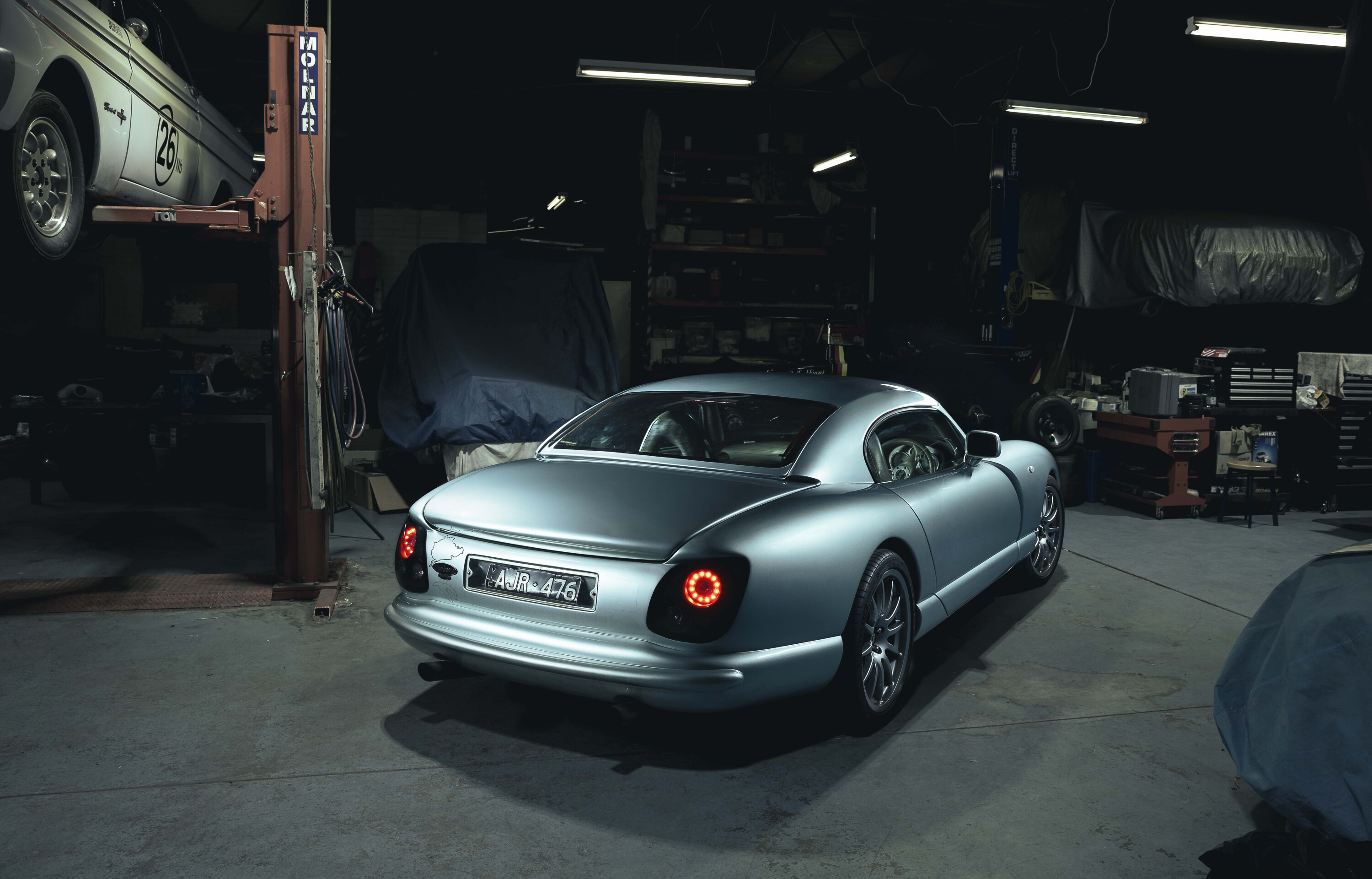
After more than 30 years, the Cerbera might have settled comfortably into its niche.
Although the Cerbera was first unveiled in 1993 at the London Motor Show, its lineage can be traced to when then-38-year-old Peter Wheeler parked himself behind the TVR chairman’s desk in 1982. Ironically, it was unreliability that had landed him there. He’d just sold his company, ETA, a business that sold desalination gear to the North Sea oil industry, and his flaky TVR Taimar Turbo was due another visit to Blackpool to be fixed.
Out went Ford engines and in came Rover V8 units – a smart and practical decision that helped elevate the company’s performance credentials. The old M Series cars were replaced by the wedge-shaped Tasmin bodies, reaching their apogee with the wild 420 SEAC. In 1988, TVR sourced a 5.0-litre Holden V8 through HSV. The engine was installed in the TVR White Elephant (see Fast Facts below) and whetted Wheeler’s appetite for even higher performance.
A turning point arrived in 1990 with the beautiful Griffith. Gone was the angular wedge design language of the Eighties and in came a classic lozenge-shape, retro-tinged roadster.
Being deluged in orders from enthusiasts who couldn’t get enough of a great-looking British sports car with aV8 under the bonnet created a moment of extreme ambition. Some would call it insanity. TVR made the decision to start building its own engines and the first car to receive them would be the Cerbera.
While he was clearly a talented chemical engineer, perhaps Wheeler had failed to fully acknowledge the budgets required to thoroughly design, test and build your own engines.
That was ample in a car that weighed just over 1100kg, or about the same as a modern MX-5. This later morphed into a 4.5-litre V8 – good for either 313kW or, in Red Rose trim, a hefty 328kW.
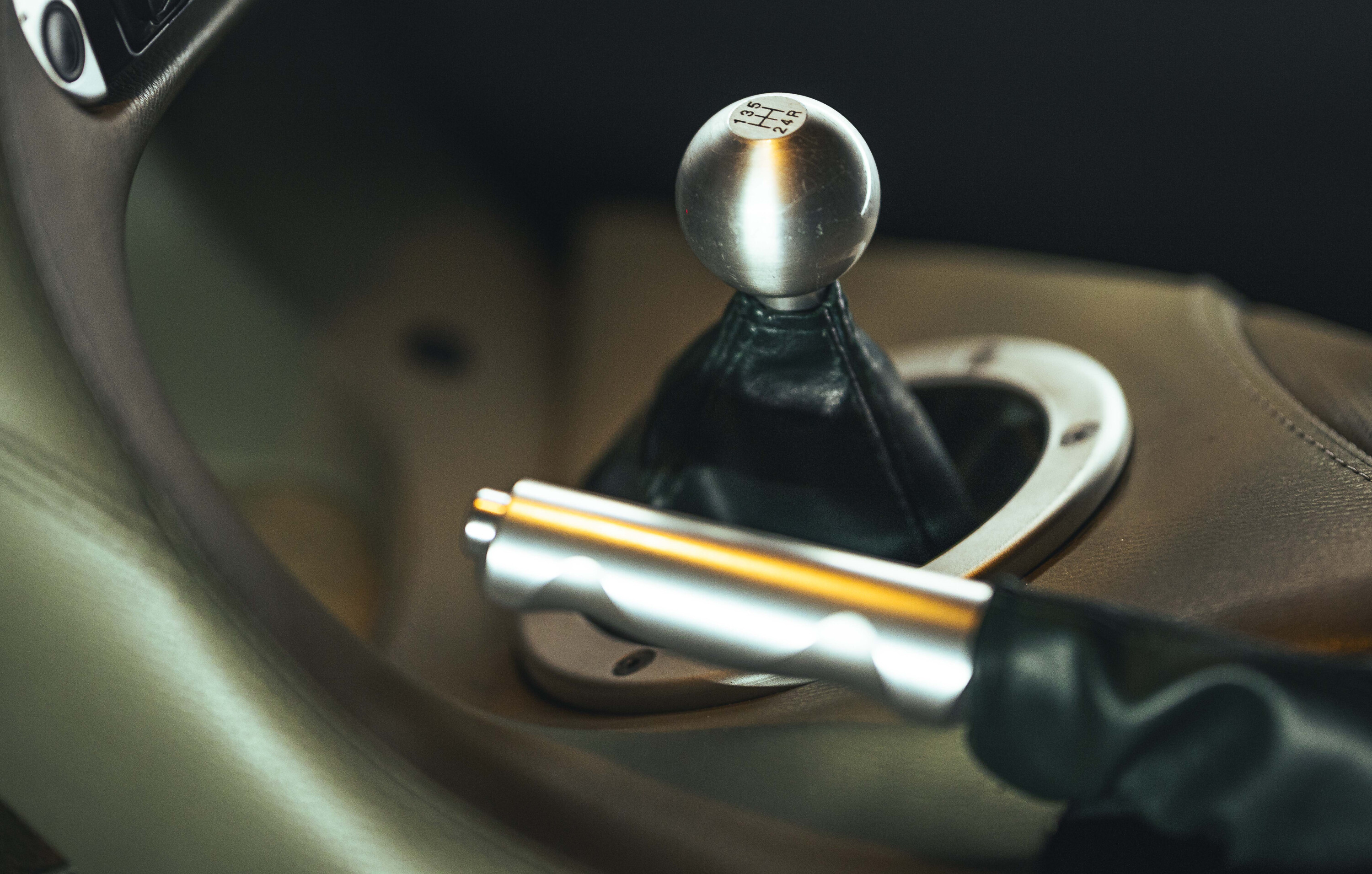
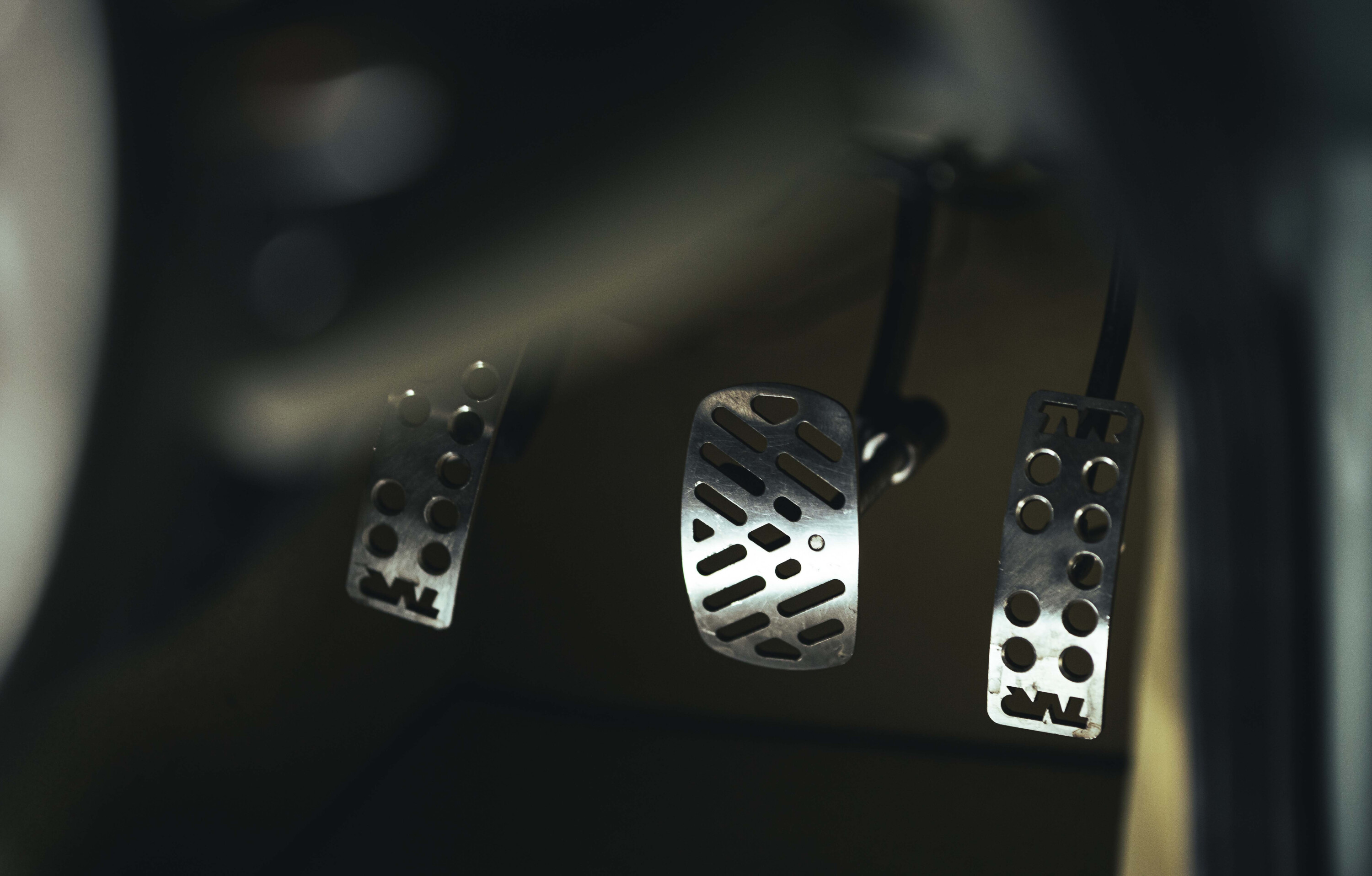
Buyers got a limited-slip differential as standard, or could pay extra for a viscous Hydratrak diff. What you couldn’t pay for were anti-lock brakes, traction control or airbags. It was just you to figure out how that torque curve, the Borg Warner T5 manual ‘box, a long-travel throttle pedal and four contact patches made nice with each other. Get it all right, keep the power pouring through its 6500rpm peak and a 4.4-second 0-100km/h time was theoretically possible.
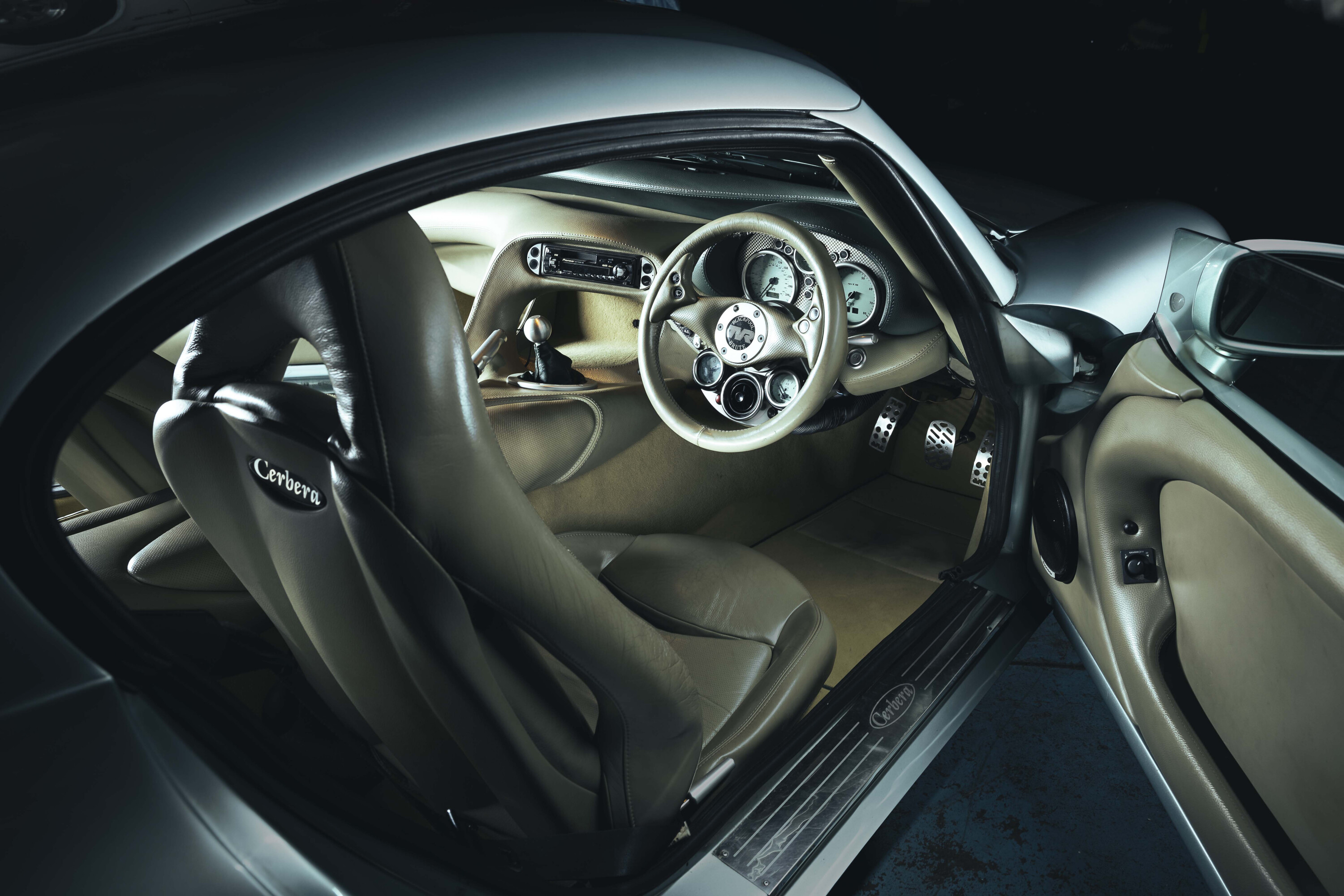
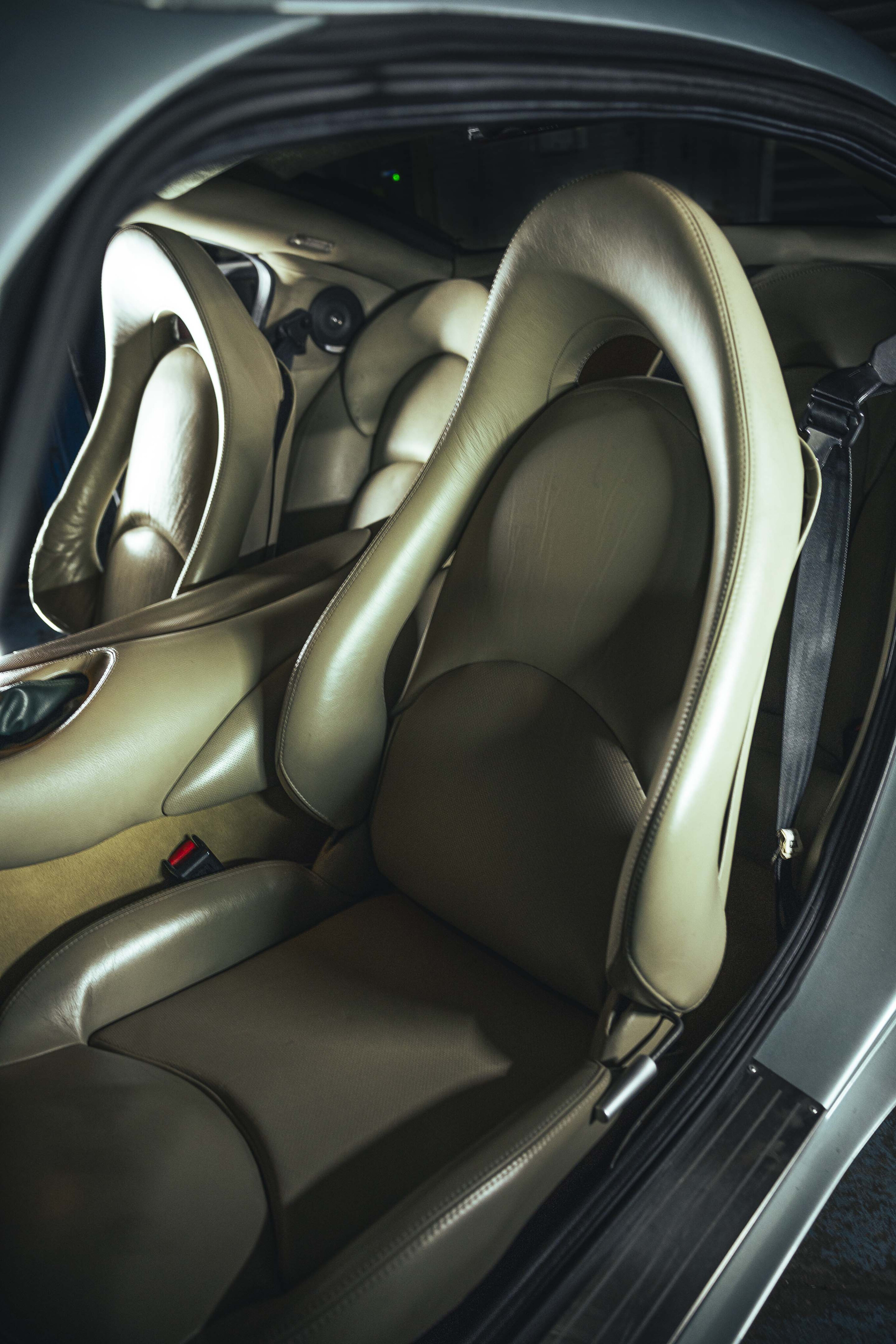
If the decision to build an engine family was bold, that left-brain creativity was on full display in the Cerbera’s design. A long, low 2+2, it shared little with the Chimaera and the cabin still has the capacity to shock. And there are rituals. The steering wheel holds push-button controls for lights, washers, wipers and horn. Once you’ve worked out which switch does what, it’s surprisingly intuitive.
The back seats are best reserved as additional luggage space, unless you plan to make a habit of transporting people who have no heads or legs. There is, however, a surprisingly generous amount of stowage space around the fascia.
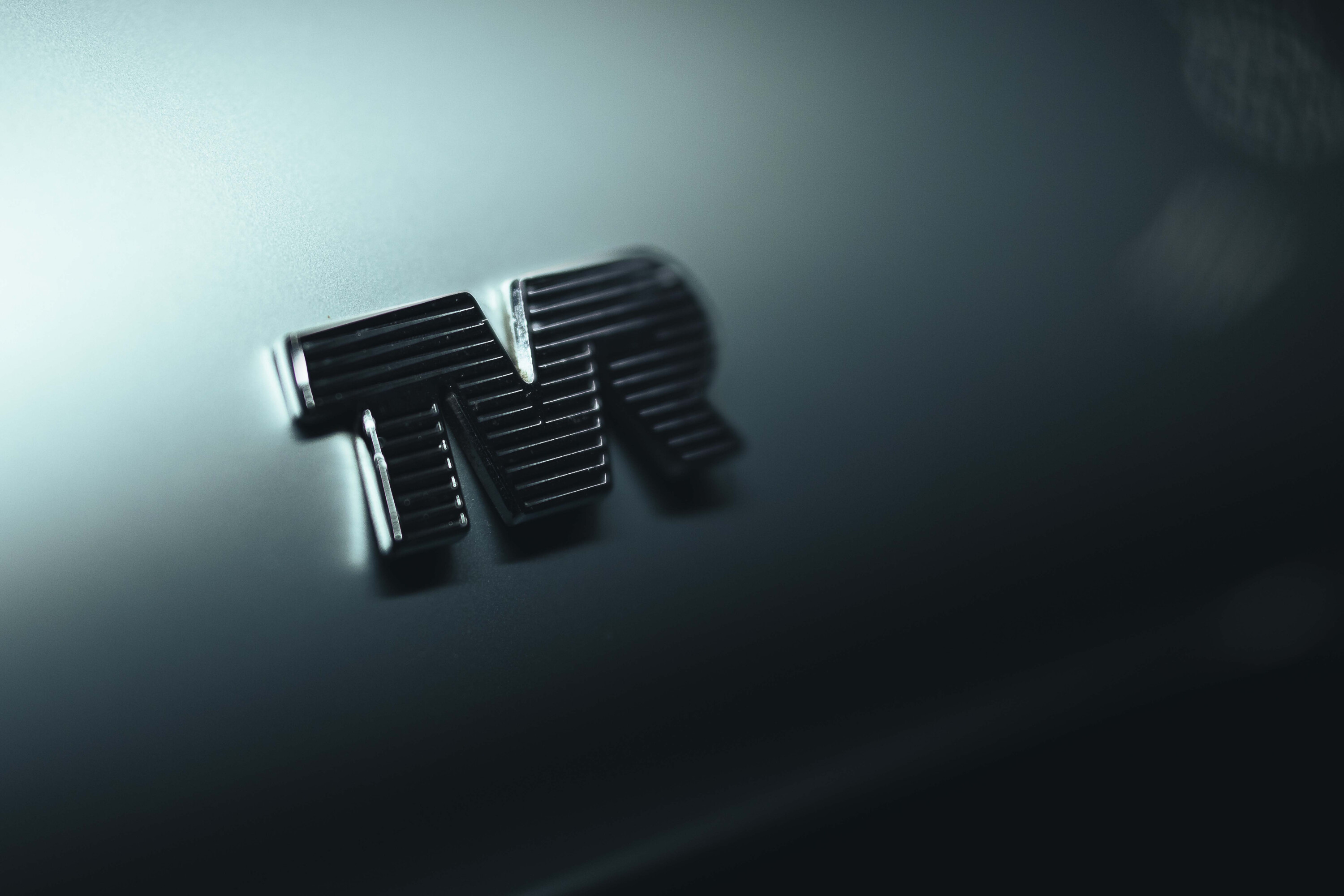
Where the Griffith used a little lever on the transmission tunnel and the Chimaera had a rotating aluminium pastille next to the gear lever, the Cerbera has something different. On the door’s side pocket is a tiny button which you’ll need to press to make the door spring open.
To get in you must deactivate the alarm and press a button on the underside of the door mirror. To start the car, press a black button below the fuel gauge. Hold it in, wait for the electronic diagnostics to do their stuff and then listen to the engine spring into life. Pressing the red button under the steering wheel cuts the ignition. The engine stops instantly, like a racing car.
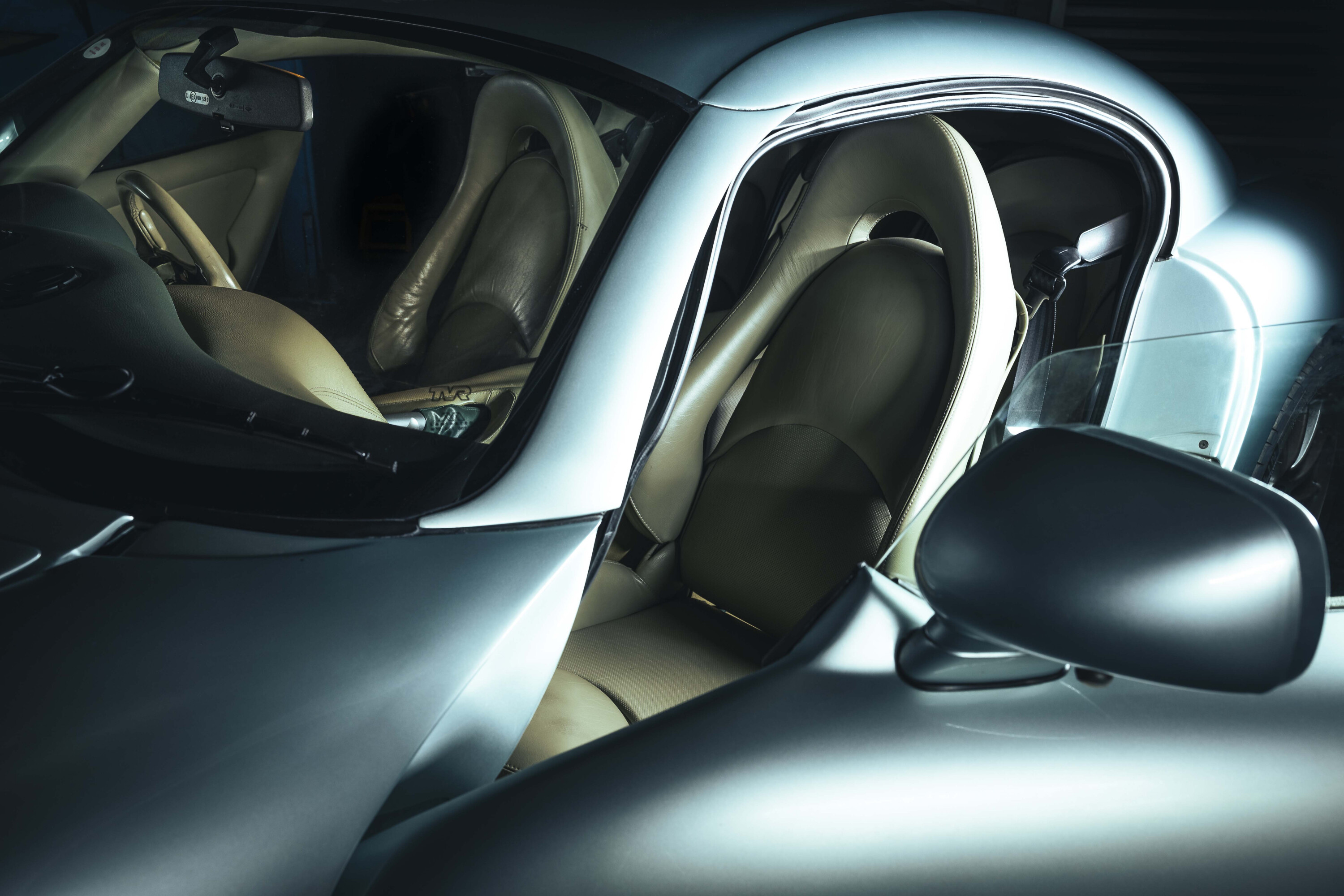
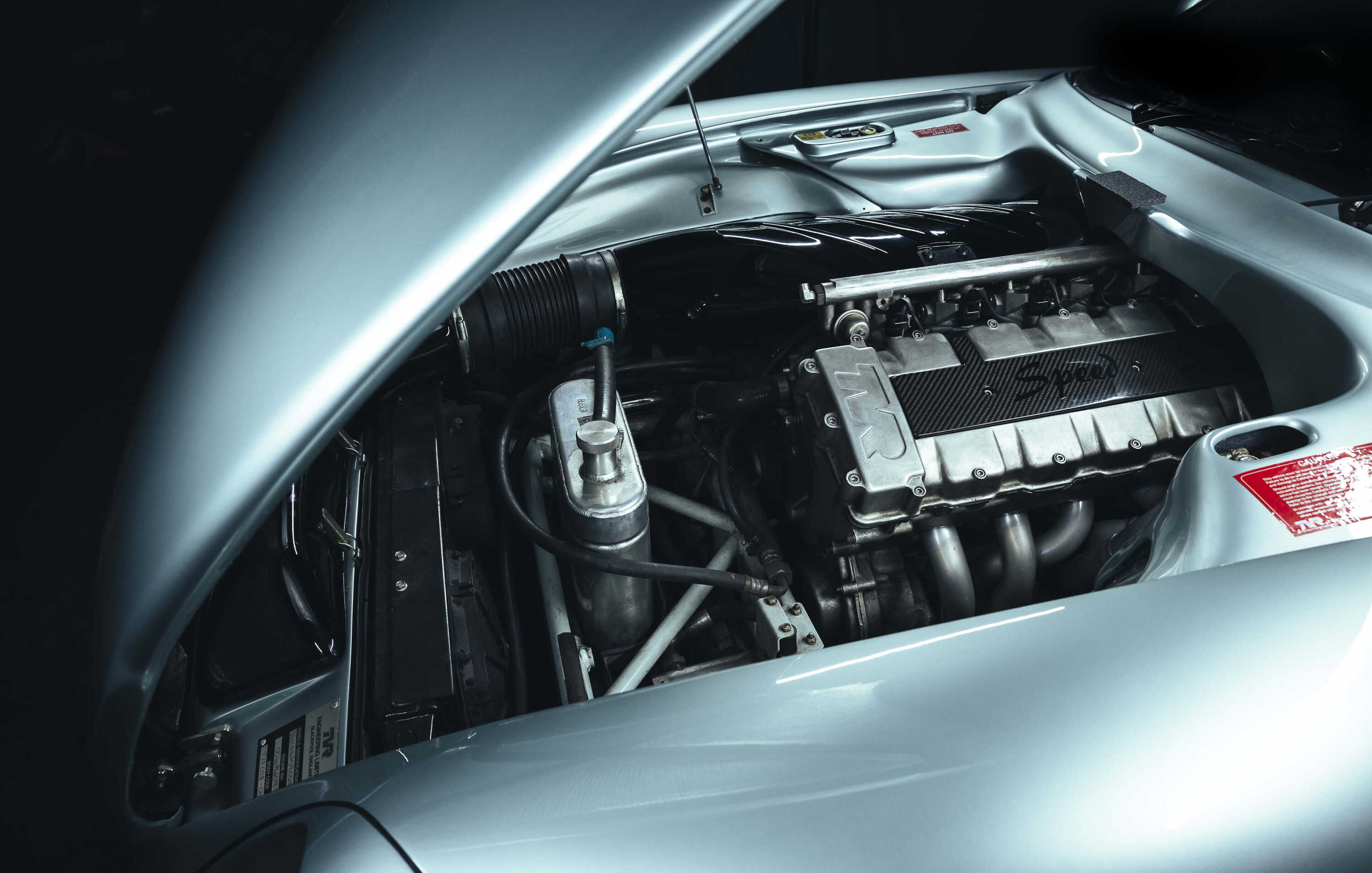
Until the Porsche 996 GT3 arrived, the 4.0-litre Speed Six was the most powerful normally-aspirated six-cylinder engine in the world, good for 261kW at 6800rpm and 447Nm at 5000rpm. Another Al Melling design, its genesis was troubled, with TVR’s engineers at times overriding Melling’s design work and altering his specifications, often with little to no consultation.
Melling had initially proposed a turbocharged V6 to Wheeler, a move that was rejected due to its two-valve head design. Wheeler wanted a straight-six reminiscent of the old XK Jaguars and Bentleys. A power figure of 298kW at 7000rpm was originally mooted.
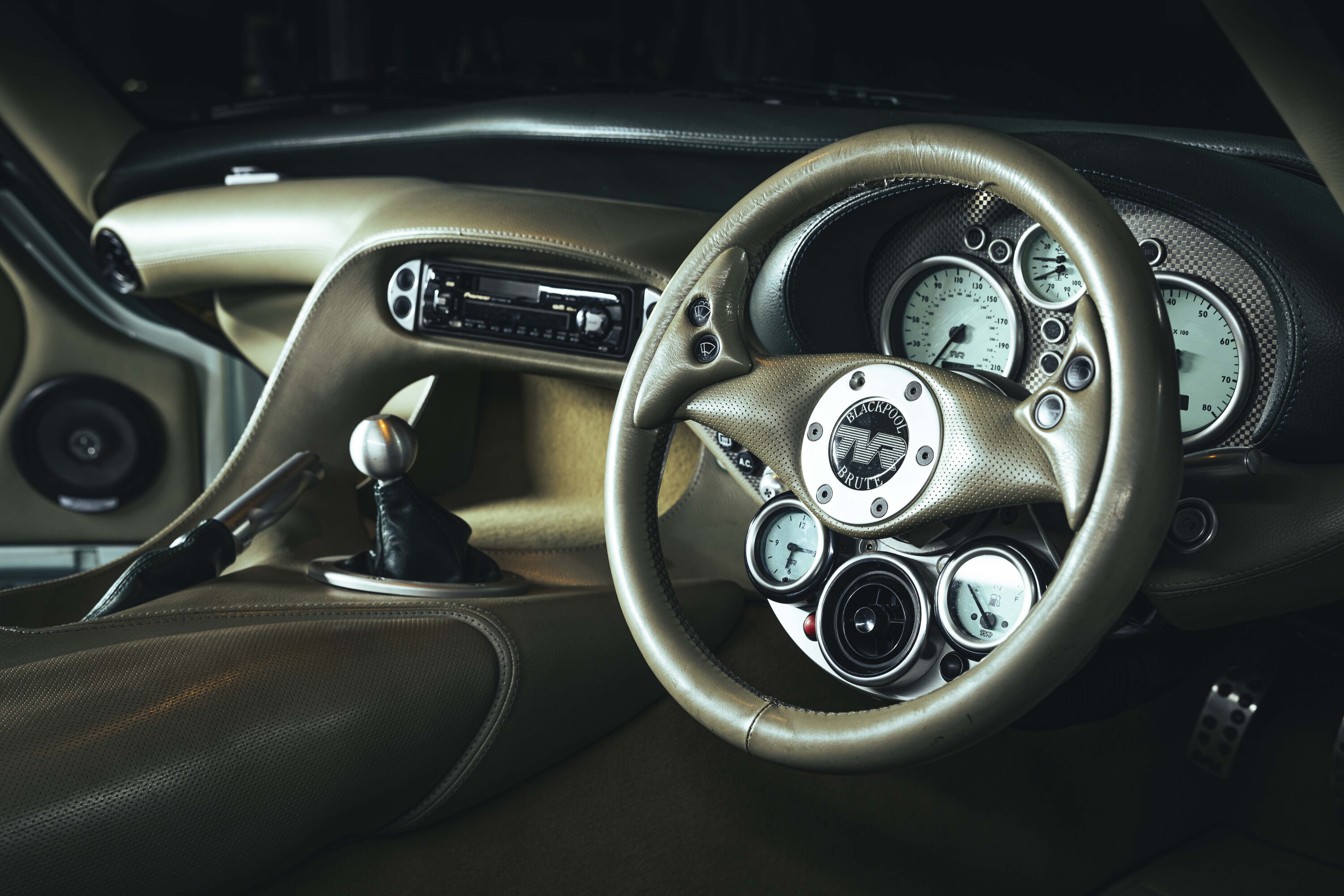
A quick calculation yielded a potential output of 97KW per litre. The size of the 24V cylinder head, with those followers and springs, was going to be the issue, so in order to keep weight down, it all had to be built from aluminium.
This was becoming a seriously exotic piece of engineering. Melling insisted that despite having certain racing design cues, that the AJP6 would only ever be a roadgoing powerplant. The basic design just wasn’t structurally tough enough to cope with the rigours of competition.
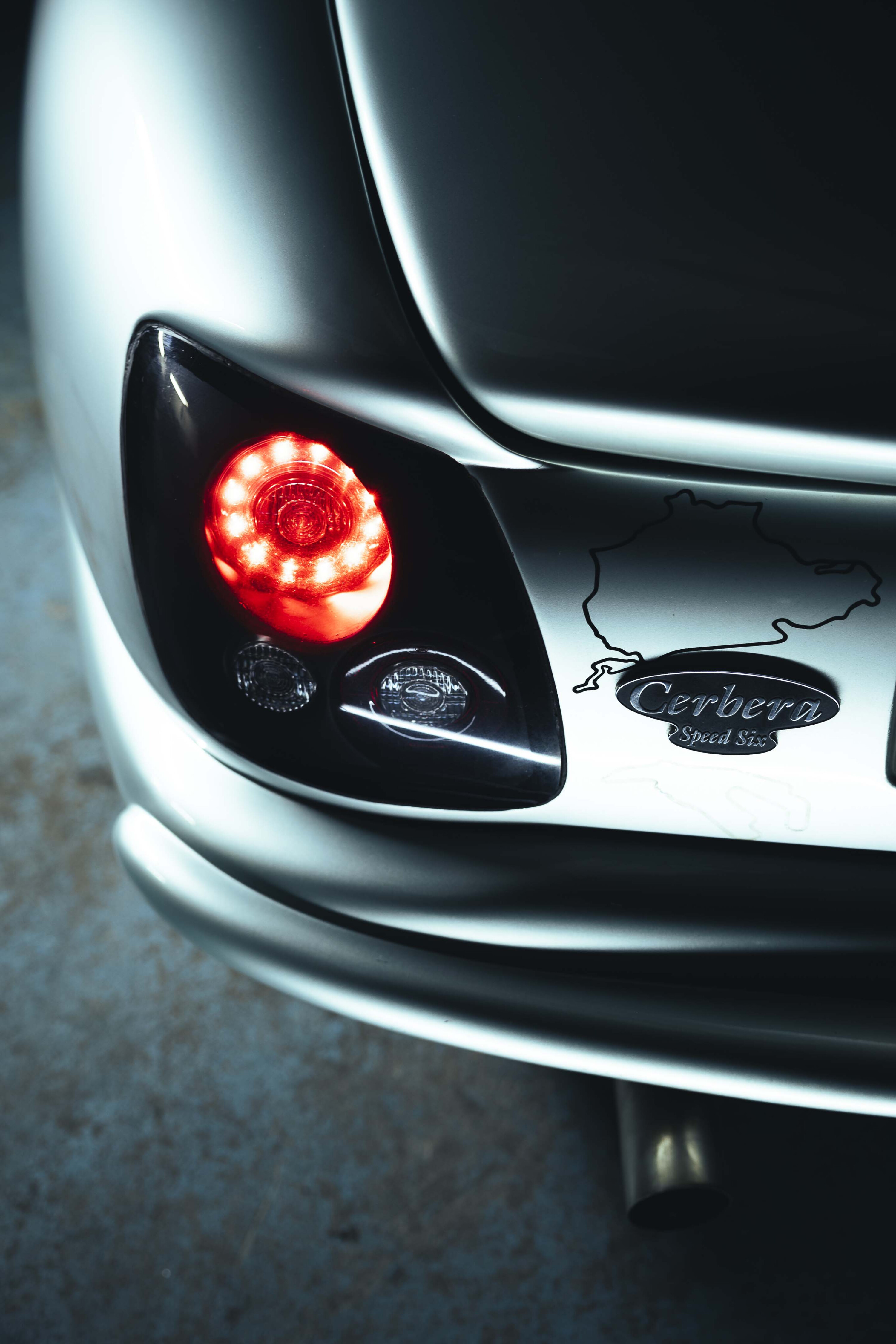
The engine was canted over in the engine bay to aid oil flow in the head. When siting the engine in the bay, a crossmember meant that there was no space for a traditional wet sump so, much to Melling’s delight, a dry-sump system was engineered, something he had wanted at the outset but had initially been told there was no capacity for.
TVR’s engineers – a team that Melling dismisses as “the undergrads” – then started further fiddling with the engine. The oil filter position was changed, with the effect that oil flow to the drilled pathways on the inlet side of the block casting was fine, but the drilled holes were removed on the exhaust side, strangling lubricant flow to the cams and finger followers.
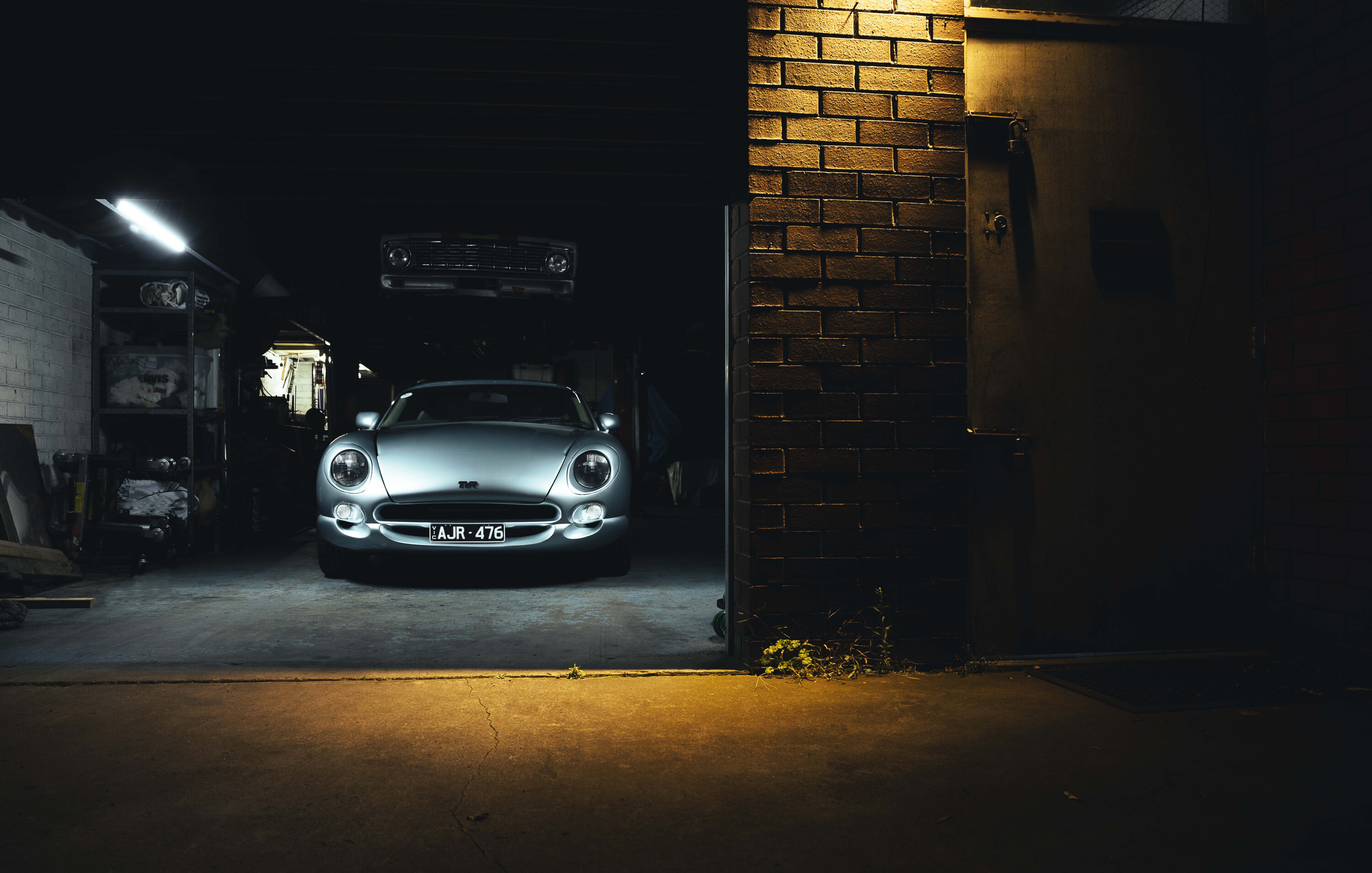
In Melling’s view, the engine was ruined, and dealers were soon flooded with questions from owners that the putative engine designer was in no position to answer. The headlines wrote themselves in the automotive media: Wheeler’s hubris had come back to bite him. Thing is, that wasn’t anything like the whole story.
The good news is that there are those who can, in effect, retro-engineer the Speed Six to Melling’s original, or near original, specifications. No, they can’t have the six-speed sequential gearbox that was originally envisioned, but the problems with the Speed Six’s lubrication are solvable.
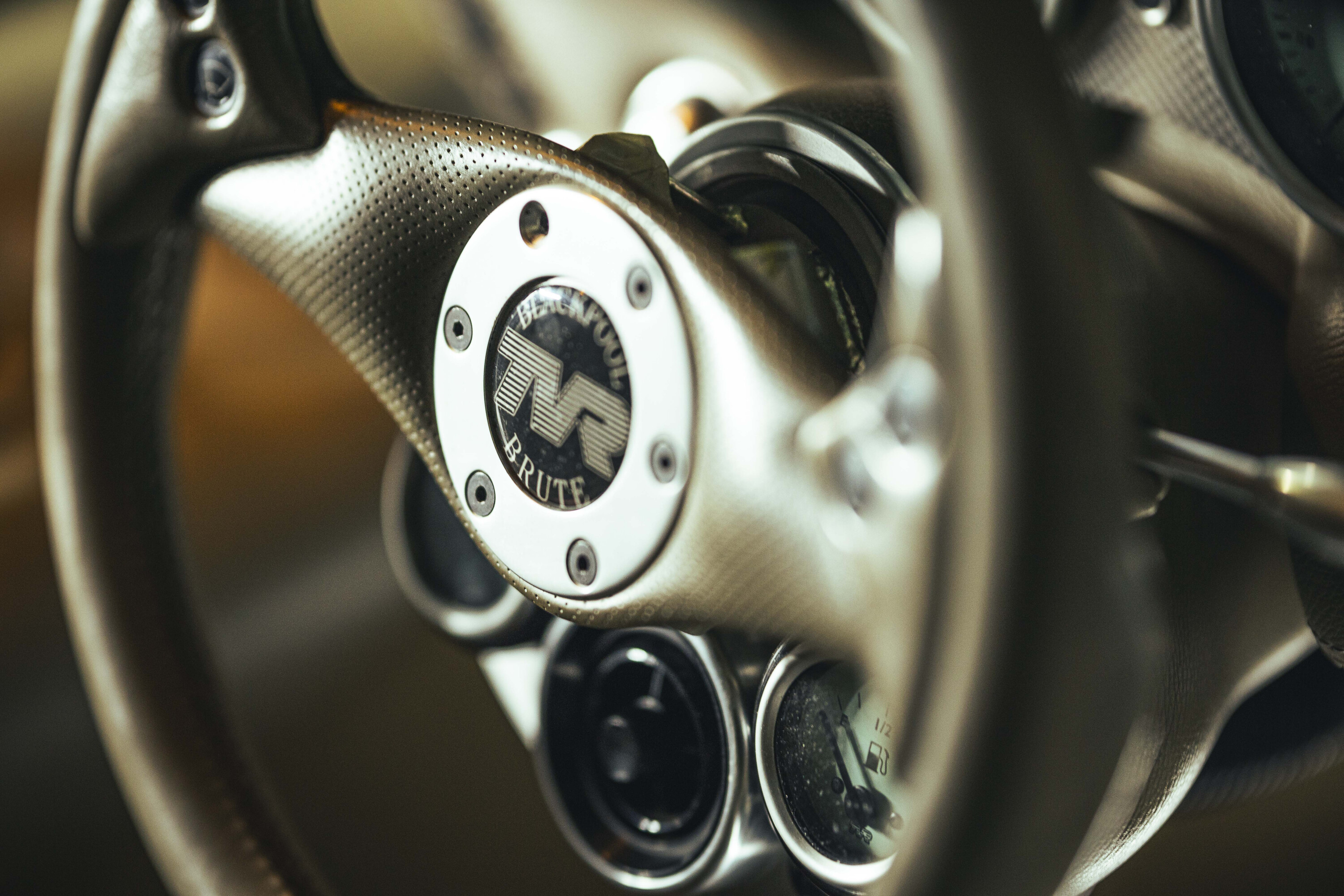
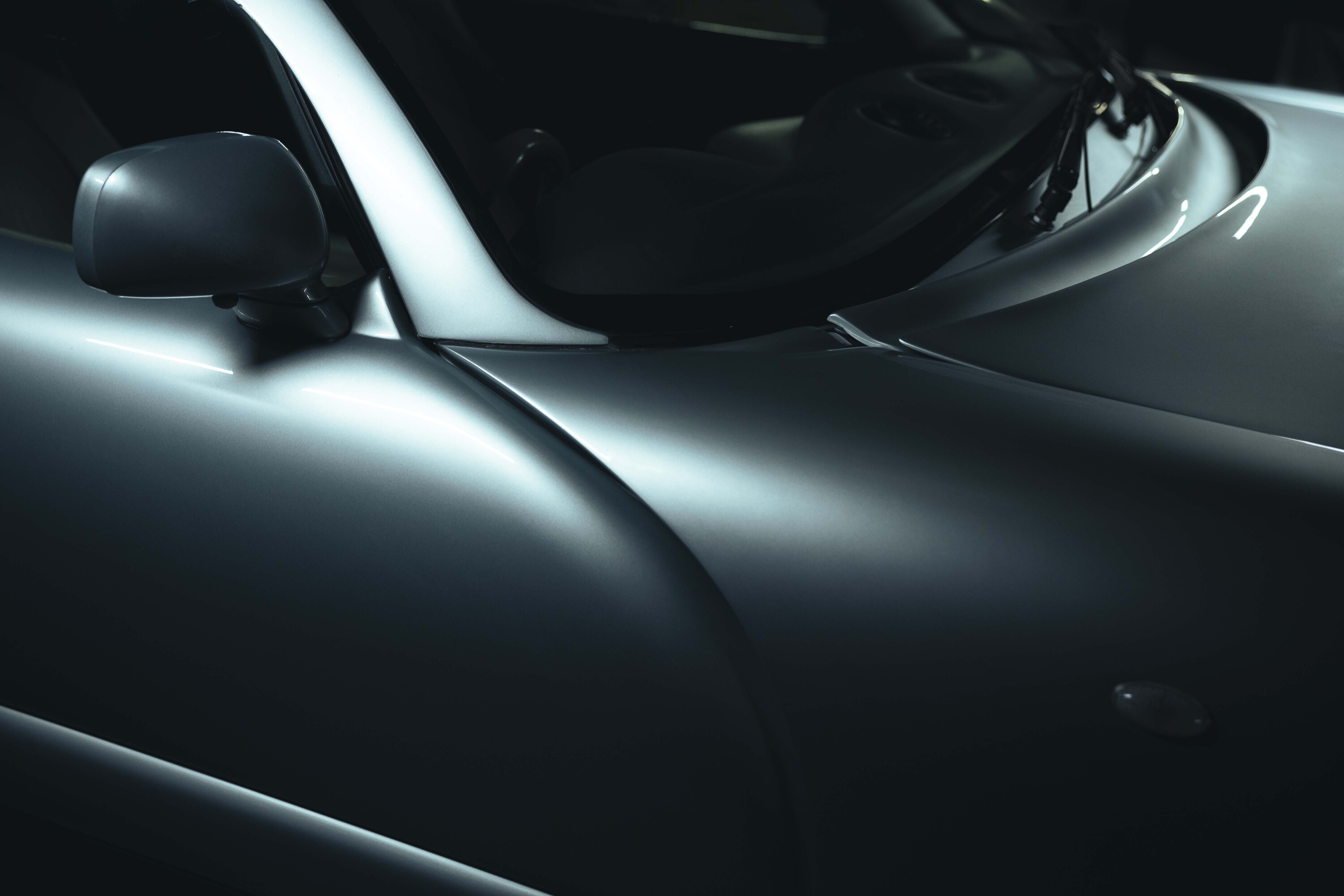
In 2000, TVR tweaked the Cerbera formula, replacing the classic round lights with an ungainly compound unit, in order to create a family resemblance to the Tuscan. The 4.5-litre cars were also offered with a lightweight option, comprising lighter body panels and a reworked interior. Then there was the outlandish but stillborn Speed Twelve, which is probably another story for another day.
So what’s it like to run a TVR Cerbera in Australia? ‘Involving’ might be the best answer. Owner Andrew McCarthy has clearly put considerable effort into fettling this Speed Six.
Key to that exercise was acquiring the original blueprints with parts numbers from a source in the UK. From there, McCarthy was able to rectify the rod ratio, change the halftime bearings and throttle-position sensors. He also realised that the finger followers fitted to his engine were 25 percent smaller than those shown on the blueprints and installed an additional flexible oil line.
He uprated both front and rear springs, finding that an extra 25lbs in spring rate worked a treat. The cable stretch on the handbrakes of the Cerbera is a recurring issue that will need some more thought.
He claims it’s a wonderful engine to work on although “getting to number six spark plug is a pain” due to the engine being set so far back in the bay. With a background in open-wheeler racing, it’s clear that he’s across the issues of this engine and takes great satisfaction in problem solving.
“I can understand Al Melling being a bit precious about his design,” he notes, pointing out that the lubrication issues don’t tend to be a problem if the engine gets some revs, but acknowledges that the original Indian-sourced cam lobes could have been more durable, hence his workaround oil line.
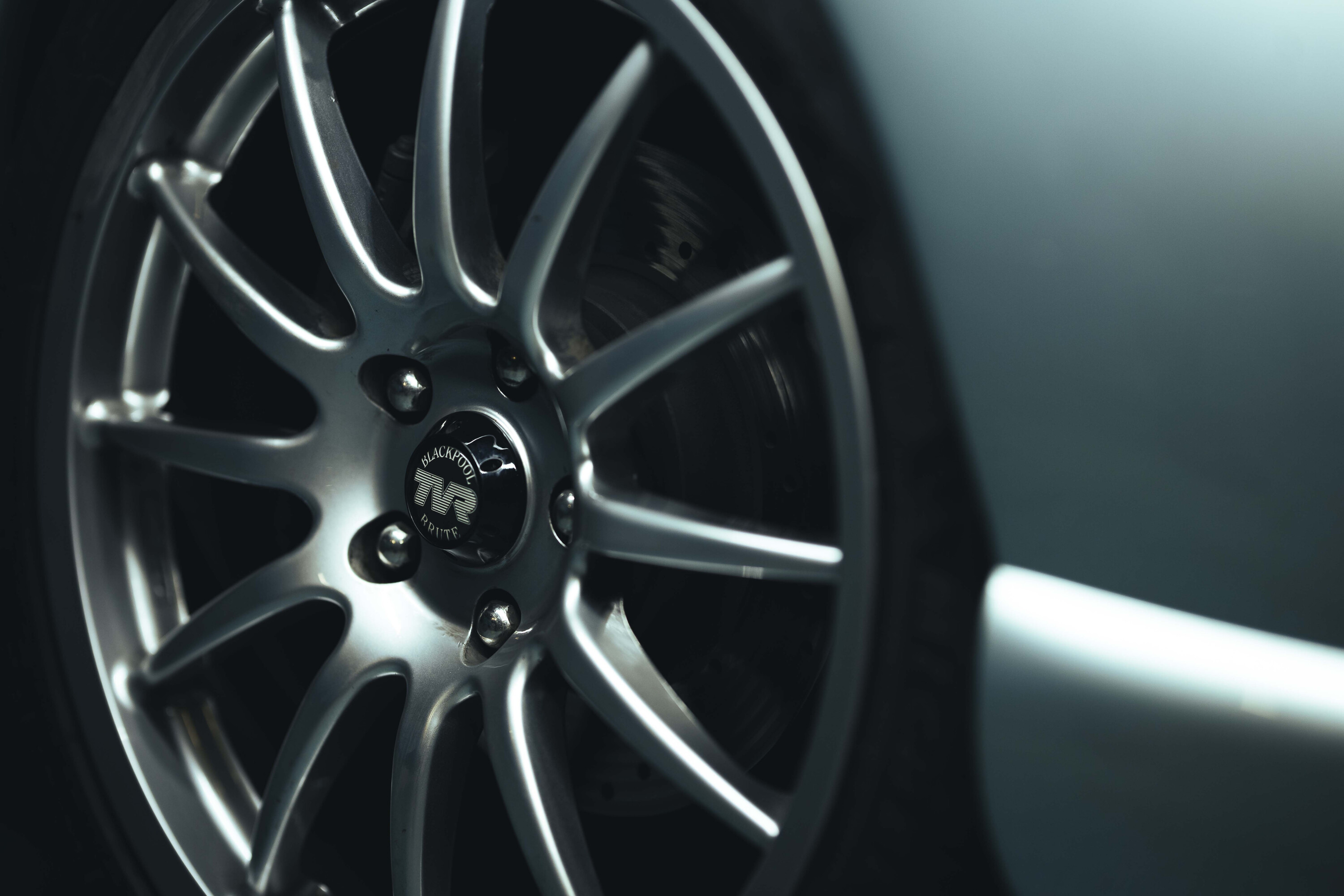
Indeed, McCarthy is a typically well-informed owner. The Cerbera is not a car for the mechanically timid, and a close-knit network of capable enthusiasts has taken advantage of the price softness that has stemmed from its somewhat unnerving reputation.
Should the idea of a beautiful, charismatic and exotic 2+2 that always offers an opportunity to get hands on with the tools appeals to you, there’s a lot to be said for the Cerbera. Know what you’re getting into and you’ll be richly rewarded.
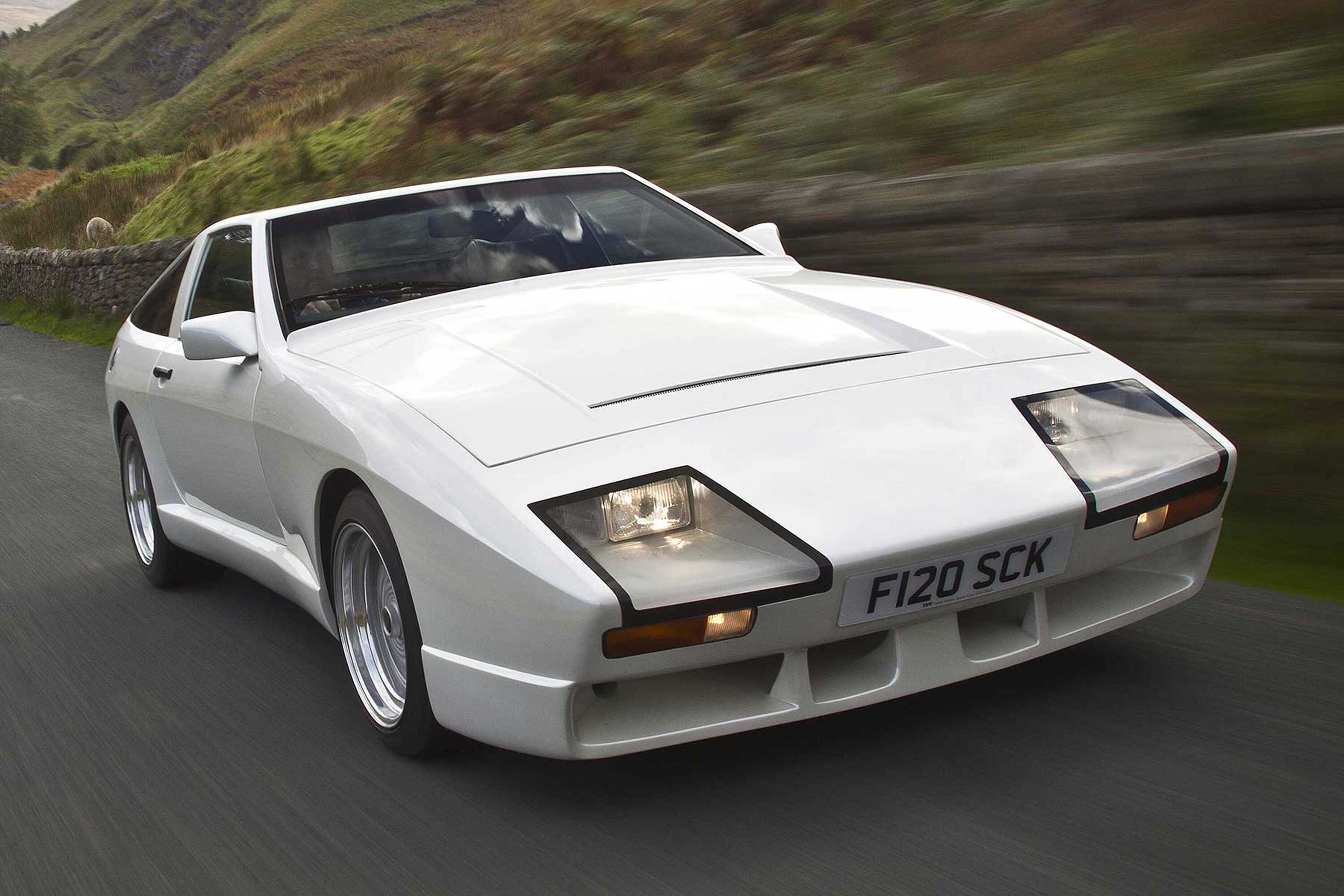
It was commissioned and driven for 18 months by Peter Wheeler, who came to the conclusion that the wedge-shaped styling was too similar to the outgoing Tasmin and that the logistics around sourcing the Aussie engines could also be an issue.
As a result, the the project was shelved and, 12 months later, the TVR Griffith was born, spawning a modern-classic design philosophy that would lead to Cerbera. The Elephant was rescued from a dumping ground at the rear of the factory two weeks before Peter Wheeler sold the company to Nikolai Smolensky in July 2004.
| TVR Cerbera Speed Six | |
|---|---|
| Engine | 3996cc 6cyl, dohc, 24v |
| Max power | 261kW @ 6800rpm |
| Max torque | 447Nm @ 5000rpm |
| Transmission | 5-speed manual |
| Weight | 1130kg |
| 0-100km/h | 4.4sec |
| Price (now) | from AUD $65,000 |
