
20 years after the Thrust SSC set the World Land Speed Record, the Bloodhound Project has announced the date for its first crack at the initial 1287 km/h (800mph) target.
The tranquility of the dusty, desert plains of the Hakskeen Pan in the remote Northern Cape of South Africa will be shattered in October next year, with the formal announcement by the team behind the Bloodhound Supersonic Car, of their preparations for its first World Land Speed Record campaign.
The announcement comes twenty years after Andy Green went supersonic in the Thrust SSC (on the 15October 1997) to set a new World Land Speed Record of 1277.98 km/h (763.035 mph).
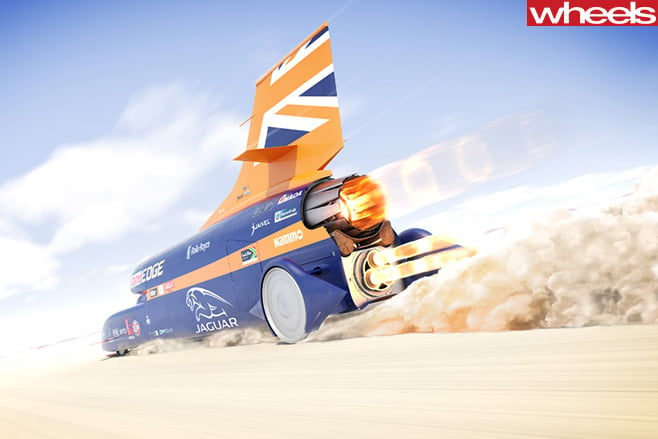
Project Director Richard Noble said, “Before we could only see financially a few months ahead, but now we can go for it. We have come through this difficult stage wiser, so while the pace and the pressure will ramp up, so too will the sense of satisfaction as we head towards our car breaking the sound barrier for the first time.”
The first SSC displayed in September 2015 was a ‘trial-build’ without fluids according to Bloodhound engineers, done in part to check the fit of over 3500 bespoke components. While conventional motor manufacturers typically build hundreds of pre-production prototypes to finalise details, there is only one Bloodhound SSC; so the project used this opportunity as a ‘trail build’ to ensure key components were accessible for servicing and that all one-off parts were manufactured to the correct tolerances.
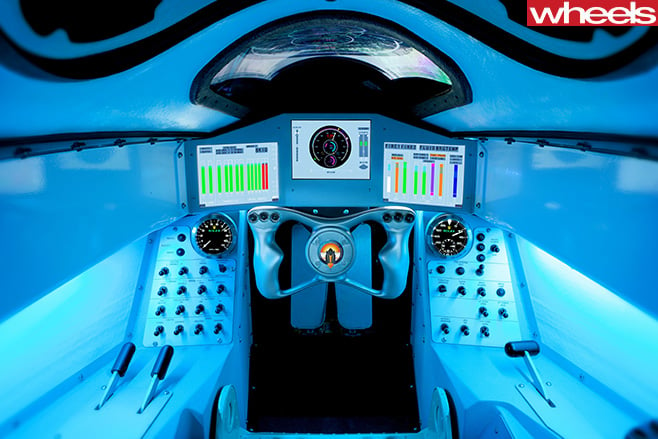
Where necessary, modifications will be made and new parts created before the car is reassembled and transported to Newquay Aerohub in England for tie-down tests with its Rolls-Royce EJ200 jet engine and Nammo rocket system in place. While the jet is already used by Rolls-Royce to develop the production engines for the Eurofighter Typhoon, the rocket is a new design and further work will be required before engineers sign it off for use in the car.
Latest VFACTS figures show the Korean giant’s i30 hatch remains a winner with buyers.
AUSTRALIANS are on course to buy over 1.2 million new cars in 2016, with 598,140 vehicles sold in the first six months of the year.
The car market continues to grow, with overall sales cracking 128,569 for the month of June according to V-Facts. This is an increase of 2.2 percent on the same month last year, and with nearly 600,000 sold so far in 2016, it represents a 3.4 percent increase over the same period last year.
While the Hyundai i30 remains Australia’s bestselling car at the moment, Toyota continues to be the sales king, commanding 17.2 percent of total sales for the month of June, and 17.1 percent for the year so far – maintaining much the same performance from this time last year.
However, the battle between Mazda and Hyundai for runner-up rages on. A total of just 155 sales separated the pair last month: 12,455 for Mazda, and 12,300 for Hyundai.
While Mazda holds the advantage over Hyundai in total sales, the Korean manufacturer continues to be on a winner with its i30 small passenger car.
The Hyundai i30 made up a quarter of all sales in its segment, beating key rivals the Mazda3 and Toyota Corolla by over 2000 cars rolling off showroom floors.
The 6,432 i30s sold in June is up 16.5 percent on what Hyundai achieved in the same month last year, and pushes its year to date performance to a 44.7 percent increase over its 2015 comparison.
“I think is what we have seen is people that have seen the offer in the previous three months have decided to jump in and grab a deal,” Hyundai spokesperson Bill Thomas told Wheels.
“It was a very strong result for i30, but the marketing said the deal had to end, and our dealers were aware that deal will end. We are expecting that our targets will be lower for the remaining months of the year. June is the biggest month of the year.”
Thomas confirmed the Korean manufacturer is still awaiting a new model to fill out its range.
“We are due a small SUV which is the gaping hole in our line-up at the moment – a CX3 rival,” he added.
“We are due that soon. We are expecting that next year, and I think that is going to help us.
“You can see the CX3 is doing very well and hit a chord with the Australian buyers. We understand that quite a few buyers are going from small cars like the Mazda3 and i30 to cars like the CX-3, so that is a very strong and growing segment that we are not playing in yet.
“But we are intending to fix that as soon as we can.”
Mazda sold 1,790 CX3s in June.
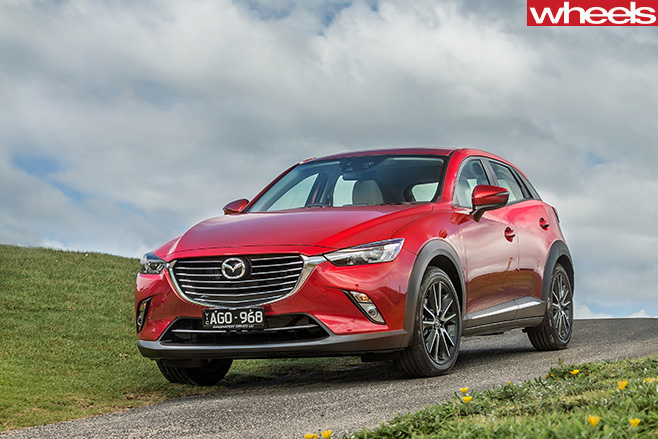
It also controls the SUV segment, with 6186 sales of the high-riders giving it a 13.4-percent market share. Interestingly, Mitsubishi sits second despite an ageing lineup, with 4584 sales in June giving it a 10-percent share of the total sales for the month.
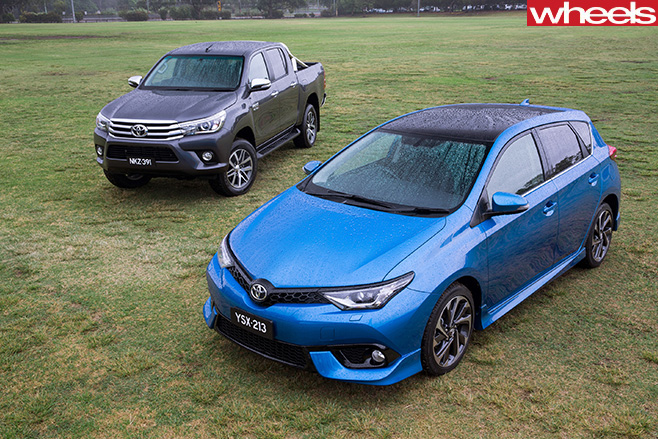
Toyota also claimed a win with the Toyota Hilux being the second most successful nameplate overall, behind the i30. The iconic ute sold 4613 models in June [4×2 and 4×4 combined figure sales].
Though down 3.8 percent on a year-to-date measure, passenger cars remain the highest-selling segment, with 41.9 percent of all cars sold this month falling into that bracket.
However, SUV sales continue to close the gap. SUVs made up 35.8 percent of sales in June, with a 2.7 percent increase on the first half sales of 2015.
However, Business car sales are the major contributor to this growth. Private sales, government sales, and rental sales are all down in regards to both monthly figures and year to date, while sales for businesses are up by 10.7-percent on the same month last year, and 15.8-percent on what was achieved in the first half of 2015.
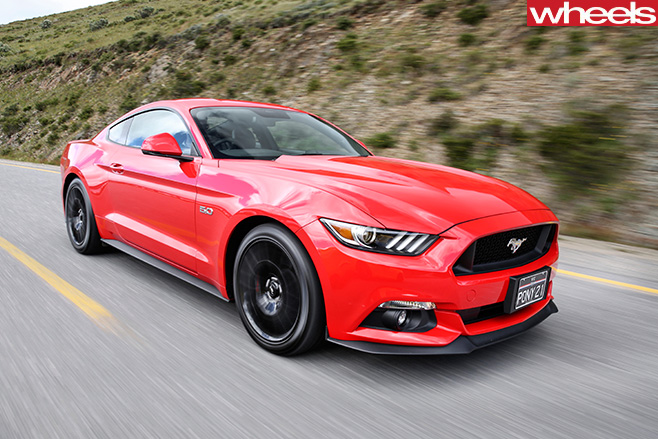
The Ford Mustang continues its strong run, with 382 Mustangs delivered in June for a 28.7% share of its segment. This gives the pony car leadership of the Sports vehicles more than $80K Segment for the sixth month in a row.
Meanwhile, Holden is losing ground on its sales figures from last year, with 11,376 new car sales in June resulting in a 7.2-percent loss on year to date from 2015. The Holden Commodore is still the biggest seller, with 3054 sales in June a 10.2-percent increase on June 2015.
Dodge was the biggest loser of the month, with only 37 examples of its only model, the Journey, rolling off showroom floors. This is a 79.8-percent drop on the same month last year, and 62.9-percent loss in YTD figures compared to 2015.
Both Kia and Land Rover won big in June, with 5170, and 1339 sales this month a 41-percent, and 30.3-percent increase respectively.
VOLVO CAR has announced that no full Autonomous Driving (AD) vehicle will be released until there is watertight proof that everything will perform exactly – and as safely – as intended for it to take responsibility.
The Swedes have also rejected the term ‘driverless’ car, with Volvo Car safety specialist and Cluster 90 vehicle line manager, Anne-Cathrine Thore Olsson, instead comparing AD to an aircraft’s autopilot system in that it will support, rather than replace human interaction with the vehicle. In fact, the Swedes are calling it ‘Auto Pilot’.
She also revealed that there would still be a number of research and development trial and error stages requiring verification before true AD could become a commercial reality.
“It will never be a driverless car that will take you fully from A to B,” she told Australian journalists in Gothenburg in late June. “You still have to stay awake, be sober, and be prepared, because the driver is still required to take over if something happens.
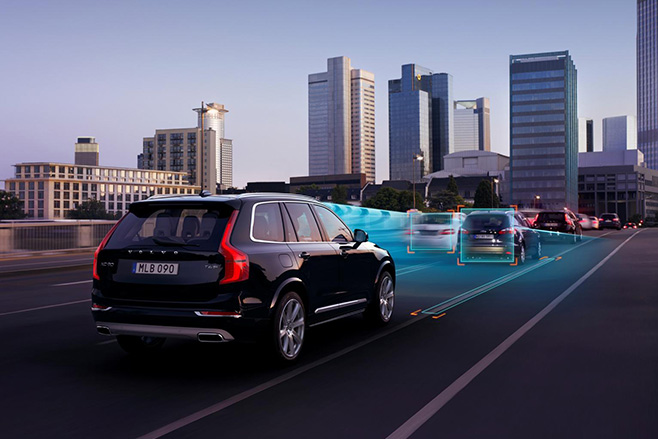
“Also, Volvo won’t accept a system that is less than good enough for it to take responsibility.”
The comments come hot on the heels of the first AD-related fatality in the USA in May involving a Tesla Model S colliding with a truck. The owner was alleged to have been watching a movie at the time from behind the wheel.
Volvo recently announced that it would undertake the world’s largest public AD test next year in Sweden – fully supervised by the company’s safety specialists – until it is satisfied that the tech is proven completely ready and safe. Only then will a second phase commence, involving just the public, with no company supervision.
Around 100 Volvo XC90 T8s will be involved, initially in Sweden around the company’s headquarters in Gothenburg, before London and China testing also commences. However, Volvo reckons the public won’t be able to option up Auto Pilot until the beginning of next decade at the earliest.
“Volvo assumes that somewhere around 2019, it can switch to unsupervised testing, and by 2020 Volvo expects to have a fully industrialised offering,” Thore Olsson said.
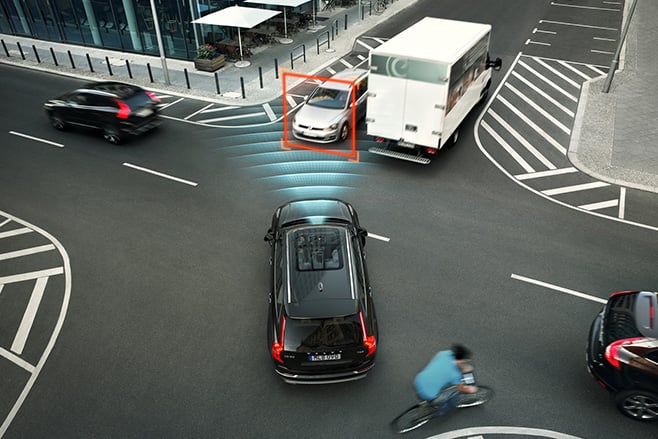
“But we will do that only when we know it is safe enough and that we can take full responsibility. Volvo has a safety heritage that we will never, ever jeopardise.”
However it is far too early to know much, and on which versions AD will find itself on once it hits the market.
Volvo’s AD system has been designed to work in any part of the world, and will include a driver-monitoring camera, with very clear warnings if or when the vehicle is going out of AD mode.
“The car will have to handle all potential traffic situations, under the circumstances of pre-set conditions,” Thore Olsson added. “There will be multiple radars, cameras, a laser, and ultrasonic sensors monitoring the complete surroundings, while GPS and Cloud-based mapping monitor the situation, and with back-up just like in a plane.
“Weather, tech malfunction, or reaching the end of the route means the driver is prompted to take over; if he or she fails to do so, the car will come to a complete stop.
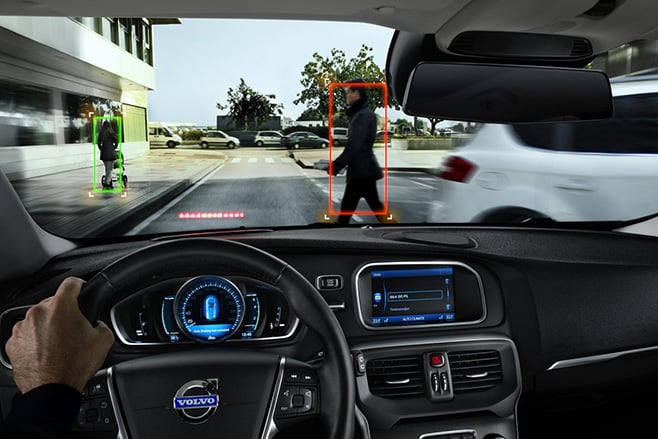
“It’s all about learning, the traffic environments, how cars interact, how other drivers not in AD cars behave. “Starting in Gothenburg, and then London and China, in 2017, Gothenburg will be the proof of concept, and China and London the verification of the technology.”
Finally, Thore Olsson said that the benefits of AD are too great to ignore now that the technology is so close to becoming available.
“In heavy traffic people are bored and can get frustrated,” she said. “And 1.2 million die in traffic accidents and a further 50 million are injured. Why? 95 percent is due to human behaviour error, so taking the humans out of the loop should logically reduce those figures. That’s why we have AD.
“But AD is not about not driving. It’s about driving when we choose to, so it’s still about freedom… in fact it’s more about freedom that ever.
“And traffic flow will be more efficient because the technologies interact quickly and more efficiently than humans do. Plus, fuel efficiency will improve too as a result.”
AD contributes to the Swedish brand’s mission statement made nearly a decade ago that nobody should be killed or seriously injured in a new Volvo car by 2020.
ONE LAST dance. To many it is the title of a Patrick Swayze flick, but for Mitsubishi Lancer Evolution X owners the term to dance perfectly captures the way this turbocharged all-paw sedan moves with its driver.
Some cars need to be grabbed by the scruff of the neck and manhandled into line. Others require delicate inputs, tiny footsteps and a shuffle here, a shuffle there, to make ground fast. A few get boogying, then collapse in a fluster when the beat picks up.
Not the Evo X. The way it slides into bends, as though to smear its shoe across parquetry flooring, then quick-steps its booty into line before firing its partner across the room in a balletic waltz done in cha-cha time, is the stuff of which legends are made. Or at least they should be.

Mitsubishi was similarly on-song. Its 1992 Lancer GSR evolved to Evos I, II and III, then in 1996 to the all-new Evo IV. The subsequent Evo V, VI and VII were immaculately timed with the rise of the PlayStation, which brought WRC heroes such as Tommi Makinen and Colin McRae to the screens of impressionable teenagers globally (one of them, yours truly).
For Australia, however, it wouldn’t be until the Evo IX of 2005 that the series would be officially imported. The launch of this Evolution X in 2008 was not so beautifully timed. The global financial crisis that year carved-up Japanese car makers the most. It soon went from hero to blood-ravaged victim.

So, in the words of The Killers, are we human or are we dancer? Today, we shall have a final dance with a car wearing defeatist ‘Final Edition’ badging.
When editor Campbell suggested the Evo X needs one final salute, I told him to get lost. Quite literally. We needed to escape the bulging affluence that afflicts Sydney, signified by the exhaust brahhp of an AMG A45. A thought struck: Thunderbolts Way.

The 10th-generation Evo debuted a new 2.0-litre turbocharged four-cylinder, the all-aluminium 4B11 replacing the iron-block 4G63. It banished the previous mill’s balance shafts, adopted variable valve timing and lift on both the exhaust and intake camshafts and included a forged-steel crankshaft and connecting rods to allow a fearless feed of revs.
The Lancer Evolution Final Edition, finally, gets a boost from 217kW to 226kW still at 6500rpm and from 366Nm to 407Nm at an also unchanged 4000rpm, all in a sedan that weighs 1537kg, or 38kg less than the 440Nm Focus RS hatchback.

It may be an eight-year-old design but it takes less than eight minutes to get intimate with my dance partner. The Recaros are seemingly made for a Chinese gymnast. The engine takes three slow, baritone cranks to fire, as though to imitate some big-bore wound-up unit. The manual baulks in a rubbery fashion into first, and upon release of the short, sharp clutch, several buzzes tingle across the hard plastic dashboard like it is a racer with fixed engine mounts.
The five-speed manual has relatively short gearing, and freeway cruising results in 3500rpm at 115km/h in top gear. The engine fights with road noise to swallow conversation with snapper Thomas, which proves handy when he asks “can we shoot here?” as dusk draws near.

After three-and-a-half hours we overnight in tranquil Gloucester with our backbones still jolting to the rhythm of Bucketts Way’s coarse-chip, the touring introduction to Thunderbolts Way tomorrow.
The flag drops at 6am on a misty morning across the Manning River’s narrow bridge. Thunderbolts doesn’t wait to draw you onto its dance floor, immediately ducking and weaving over rolling hills that permit great exploitation of the Evo’s turbocharged torque. There is frustrating and hilarious turbo lag.

This road is named after Captain Thunderbolt, who in 1863 escaped prison in the middle of Sydney Harbour, swimming to shore before roaming these parts on horseback as a bushranger. His horse has nothing on Evo X pace, though he may have been more comfortable in his saddle than these Recaros.
In the space of 13 kilometres the road climbs 800 metres, from 200m above sea level to 1000m… above clouds. It isn’t high enough for Thomas, who at Carson’s lookout – named after sawmiller Eric Carson who actually helped build the road rather than a grub thief who had the road titled after him – decides to go rock climbing for a better view. Not wanting to witness Thomas’s imminent death, I hook the Evo X back the other way for a run from high in the sky. Time to dance.

It begs you to push harder and further. True, there isn’t a whole lot of feel through the digital steering, but you drive the Evo X through the tremors of its tightly hugging seat, and a mash of the toe on a firm brake pedal followed by a heel-kick of a reactive throttle.
The trip computer is showing 20.8 litres per 100 kilometres and the Evo X has only a tiny 55-litre tank. Driving back and forth for photography and waiting for my mountain-goat snapper has notched up 150km with 80km showing to empty – or roughly the distance either to Walcha or back to Gloucester. Erm…

Stomachs become light with 1500kg of small sedan over blind crests that then suddenly fall away. But the Evo X is a tinny car with an aluminium bonnet, roof and boot, and bracing everywhere including behind the rear seat backrest to press pumped rear arches tight. It feels battle-hardened and therefore resolutely controlled.
Then arrives one of the best moments swinging with the Evo X today, and a staggering display of wizardry (over) working. A long downhill straight ends with a right-angle right-hander, over a bridge so short you could almost combine the next 90-degree right-hander into the one double apex corner.

A short uphill straight then extends into a long, long, sweeping uphill left-hander that again crests over. Approaching it on the straight, the rev-limiter bounces twice in second as the clutch is dipped and third is driven home. The long throw is a perfect match for the brief pause in delivery before the 4B11 unleashes, climbing terrain matched by rising speed as this time the right-side shoes are pressed (and howling).
The active centre differential can juggle torque 50:50 front-to-rear – with choice of Tarmac, Gravel and Snow modes – while active yaw control utilises myriad sensors to swap drive between each back wheel. A limited-slip differential up front keeps that end hooked up. The long straights into Walcha are dispatched in the tallest gear on light throttle with the low-fuel warning light on. We make it with kays to spare.

Rivals (VW Golf R, Audi S3, Ford Focus RS) have taken an era to close a sizeable dynamics gap. We can’t help but feel a GFC-sliced Mitsubishi could have thrown new clothes over the current Evo X and it still would have challenged competitors, but it doesn’t even have a new base Lancer to work with.

All we know is that Evolution ends here, at midday beside a humming Walcha fuel bowser. The Final Edition is safe in these parts, away from mobile reception and modern expectations, but where it can remain one of the finest performers around.
3 OUT OF 5 STARS
LIKE: Terrific AWD system DISLIKE: Dated interior; short top gear in five-speed ’box
SPECS Body: 4-door, 5-seat sedan Drive: all-wheel drive Engine: 1998cc inline-4, DOHC, 16v, turbo Bore/stroke: 86 x 86mm Compression: 9.0:1 Power: 226kW @ 6500rpm Torque: 414Nm @ 3600rpm Power/weight: 144kW/tonne Transmission: 5-speed manual Weight: 1565kg Suspension(f): struts, coil springs, anti-roll bar Suspension(r): multi-links, coil springs, anti-roll bar L/W/H: 4510/1810/1480mm Wheelbase 2650mm Tracks: 1545mm (f); 1545mm (r) Steering: hydraulic rack and pinion Brakes(F): 350mm ventilated discs, four-piston calipers Brakes(R): 330mm solid discs, two-piston calipers Wheels: 18 x 8.5-inch (f/r) Tyre sizes: 245/40 R18 (f/r) Tyre: Dunlop SP Sport 600 Price as tested: $53,700
As any driving school will preach, where you look is hugely important when you’re driving, so what are the world’s best drivers looking at when driving the world’s fastest racing cars?
Thanks to this piece from the Force India F1 team, we can find out. Clever new technology is able to track eye movements and we are able to see exactly where Nico Hulkenberg is looking as he races around the track.
Hulkenberg says he doesn’t think about it too much, describing looking from apex to apex as a natural process, but the video reveals some interesting details about an F1 driver’s incredible ability to process visual information, as well as the speed with which they are able to react to that information.
Bucket list, must do, before you die and so on…
We all know about Goodwood, and we all know just how much automotive insanity is packed into the grounds of a large English estate every July. We also know about Lord March’s awesome 1.86km long driveway.
Every year, a frankly astonishing array of machinery lines up at the bottom for a spirited, or sideways, or crash-riddled run up alongside adoring crowds, and this year’s slightly damp weather didn’t dull proceedings.
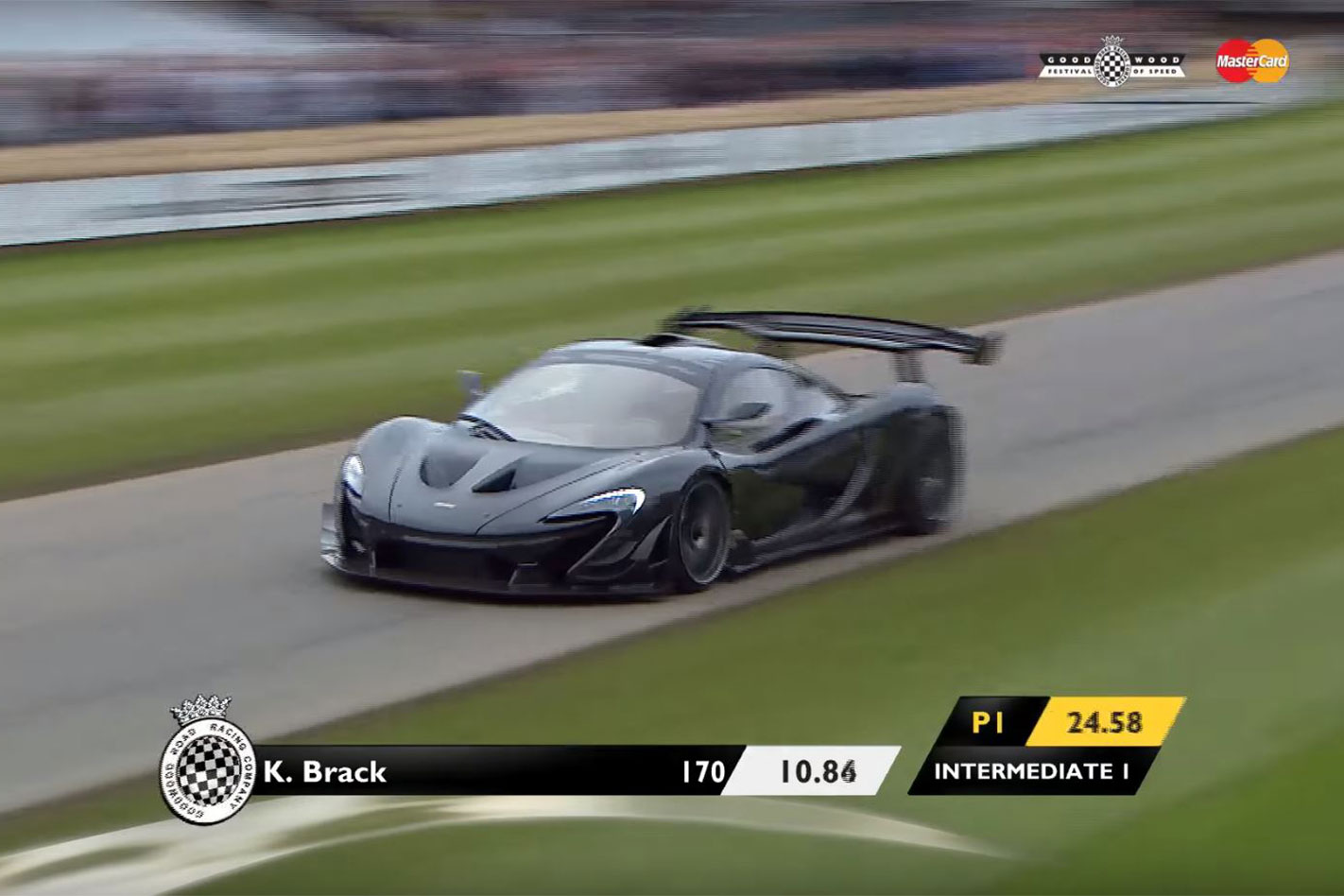
Lanzante Motorsport – the LM in P1 LM – are the same crew behind the original McLaren F1 road car, and will make exactly six of these 735kW monsters. The big Macca is more ferocious than even the P1 GTR, and is 60kg lighter to boot. Eeek.
Former Champ Car racer Kenny Brack, a long-time visitor to this hallowed hill, was tapped as the LM’s driver for the weekend. Brack is a certified nutter, as proven by this video of him wrestling a Ford GT40 in the wet at the Goodwood Revival.
The Swede’s run up the narrow road was simply heroic, stopping the clocks at an astounding 47.07 seconds, three seconds faster than the next best supercar, and resetting the road car record in the process.
He was ultimately pipped by just 0.7sec for the overall by 2015 winner Ollie Clark in a 580kW, slick-shod, time attack Subaru Impreza.
Both have some way to get over the top of the fastest time ever set up the hill, though; Nick Heidfeld ran a 41.6sec time in a 1998 McLaren MP4/13 Formula One car in 1999…
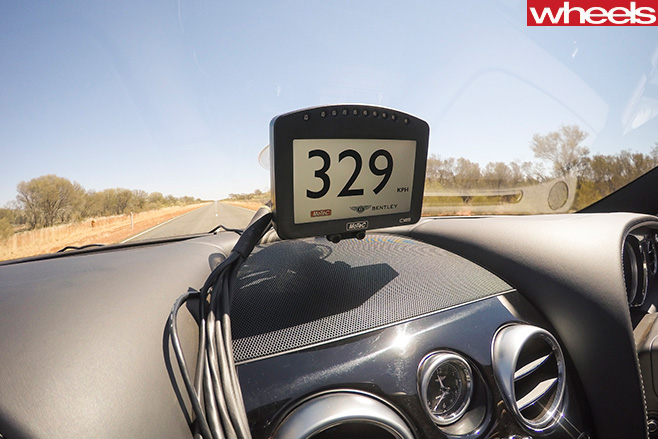
BENTLEY has been forced to take down a YouTube video that showed a Continental GT Speed clocking 330km/h on the Stuart Highway in the Northern Territory.
Two-time Bathurst 1000 winner, multiple national champion, and veteran of over 1000 races, John Bowe was at the helm of the Bentley during shooting of the film, and has hit back at those who complained the ad promoted speeding.
Wheels was on the ground during filming, publishing a feature from behind the scenes in our February issue earlier this year.
The clip was placed on Bentley’s international YouTube channel, and was found in breach of standards by the Advertising Standards Bureau in Australia.
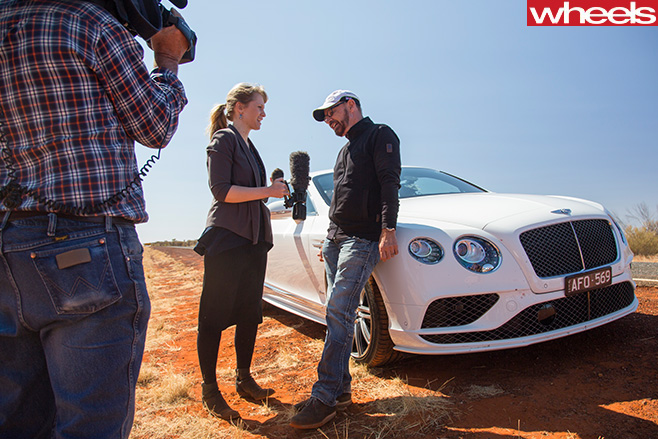
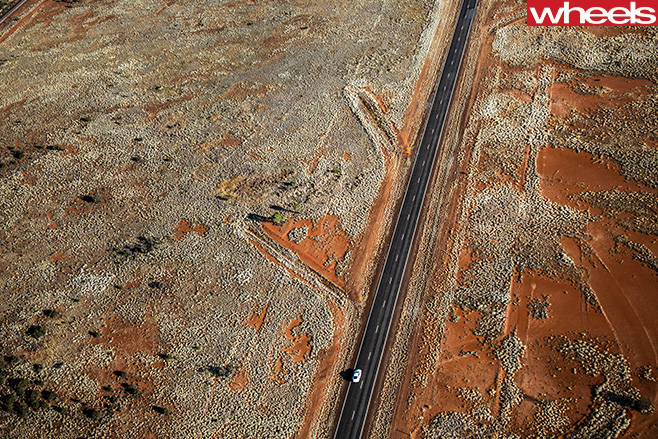
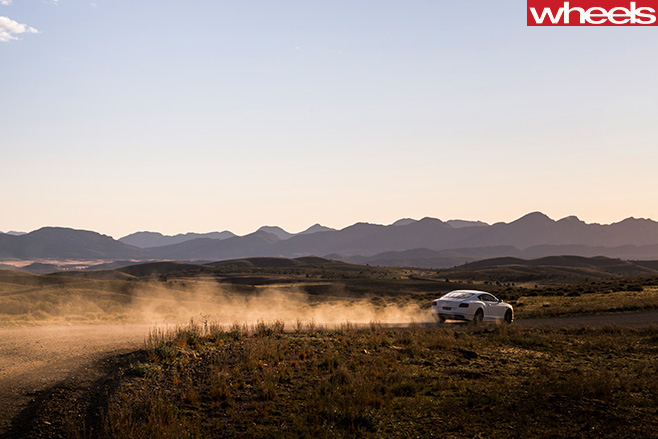
Driving at 330km/h is legal on the unrestricted stretch of highway in the Northern Territory on which the clip was filmed. Bentley said filming was conducted under closed conditions and the section of road was closed by NT Police for that purpose. Even so, the Advertising Standards Bureau deemed the video promoting the car at those speeds (triple the legal limit in every other Australian state and territory) is a breach of advertising standards.
“The Board noted that whilst the advertisement uses John Bowe, described as a ‘legend of Australian motor sport’, to drive the Bentley, he states ‘this is not a customised race car’ and the driving takes place on a public highway, not a race track or dedicated testing facility, to show how fast the ‘road car’ can go,” the ASB said.
“It doesn’t promote speeding! I wouldn’t for a minute say that anyone should do it, but I think the fact is that the cars you can buy are capable of doing these sorts of speed, very very safely,” he explained.
“If that particular individual wants to create a fuss, he should create a fuss about unroadworthy vehicles.
“It is not ‘many people’ that are making a fuss, it is one individual that makes much more noise than the majority.
“That is what happens in this country unfortunately. We listen to the minority and the majority are too busy getting on with their lives to say anything. I just think it is ridiculous.”
“We have been complaining about any ad that depicts speed for over 16 years,” Scruby told Wheels.
“Speeding is the number one killer on our roads, and any organisation that promotes speeding is helping to kill people on the roads. That is all there is to it.”
Scruby denied a disclaimer noting the closed course, professional driver, and prepared vehicle were enough to prevent the film breaching advertising standards.
“It is completely and utterly irrelevant,” he said. “That is what every TV ad was showing before they brought in the code. They would say ‘filmed under supervised conditions’.
“If you read the code and the intro to the code, it states very clearly that you cannot do that.”
Bowe was nonplussed by the takedown, and maintained the film was conducted in safe conditions, which didn’t encourage others to replicate the feat.
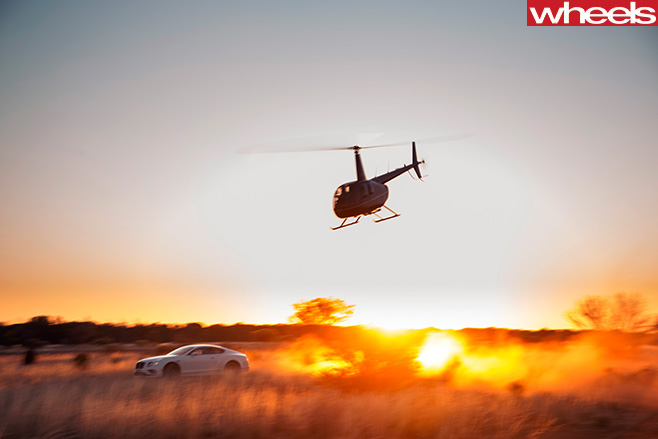
“It was done with a massive degree of safety; we had government approved road closures, a helicopter sweeping the road, a constant radio connection,” he added.
“If there was anything dodgy the helicopter would radio me and I would hear it. It was as safe as a church. The car was incredibly stable, it was terrific in fact. 338km/h was the quickest speed I got. I had a GPS speedo, we had a OH&S guy that works in the movie industry in the UK, so it was safer than driving down St Kilda road.
“It was truly and absolutely rock steady. The speed it did depending on the wind, but the best I did was 338km/h, while most of them were 330km/h plus. I would have done 20 to 30 runs – it was safer than most churches.”
“I think our road laws are draconian. I think our road laws are terrible,” he continued.
“I think some of our better roads would allow more speeds than 110km/h in complete and utter safety.
“I have always been an advocate for driver education which we do none of. The country does nothing to educate the drivers. It is not the cars that kill people, or the speed, it is the drivers.
Despite not being promoted on television or online, the film was determined to be an advertisement by the ASB through the placement of Bentley logos and slogans at the start and finish of the clip.
Toyota Australia has confirmed an updated Tarago people mover will hit Australian shores in the third quarter of 2016, but remains tight-lipped on the new model’s pricing structure.
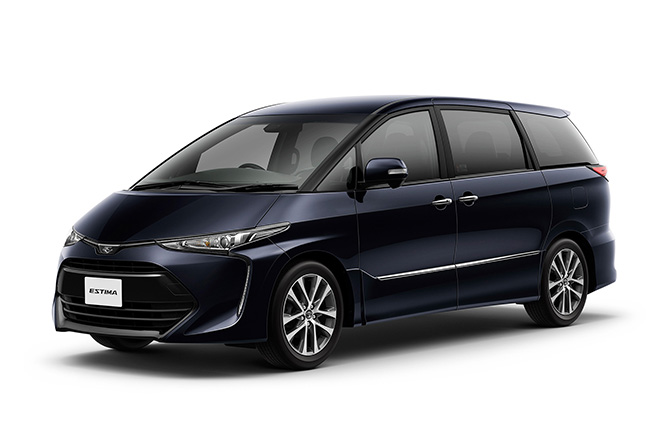
Updates to Japan’s Estima-badged domestic model lifted the lid on details of the revised Australia-bound Toyota Tarago, with the Estima receiving cosmetic updates both inside and out, as well as revisions to both its transmission and electronic safety package.
While new alloy wheels, a redesigned bumper and reshaped taillights are among the updated exterior, the most obvious changes have occurred up front with a heavily revised grille, bringing it in line with Toyota’s strategy to create a unified and recognisable front-end styling across its range.
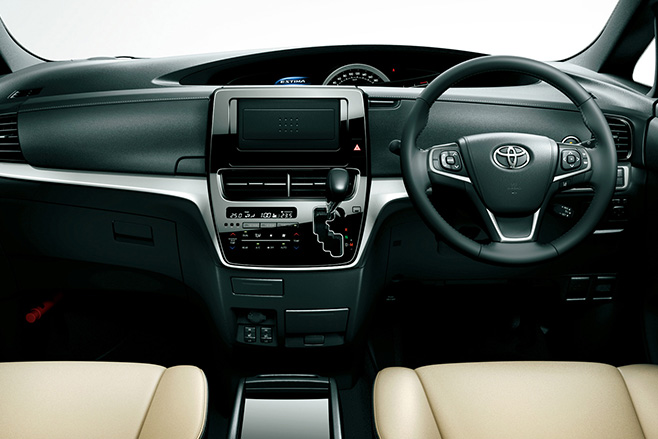
Family resemblances aside, updates to the car’s interior include leather seating, a new multi-function steering wheel and a new infotainment system to replace the now-dated audio system found in the outgoing model. That means a larger 2.6-inch touchscreen has been slotted into the traditional Tarago-style dashboard, which gets updated trim to match the revised in-dash storage compartments and what appears to be faux-leather highlights.
The 2017 people mover has also received the firm’s Safety Sense C Package which sees the addition of a pre-collision safety system, lane departure alert and automatic high-beam to the car’s electronic safety features. The climate-control system is also new, and now features revised vents as well as soft-touch controls.
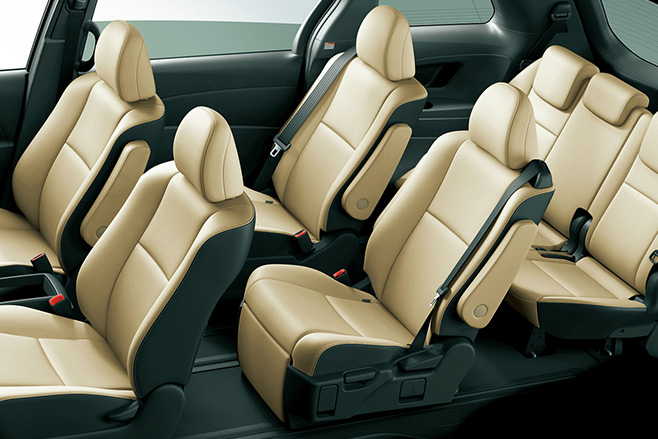
Under the bonnet, the next-generation Tarago is likely to be powered by the same 3.5-litre V6 petrol engine as the outgoing model, while a new CVT (continuously variable transmission) will replace the current four-speed automatic gearbox.
And despite Japan’s domestic market having the option of a new hybrid version, Toyota Australia wouldn’t be drawn on commenting on the likelihood of the greener option making it Down Under for the upcoming model year. Nor was it prepared to comment on the impact, if any, the facelift and associated updates might have on the car’s retail price.
It’s official: HSV’s Gen-F2 GTS is the fastest standard Austrailan production car we’ve ever tested.
HSV claims 4.4sec 0-100km/h for its 430kW/740Nm range-topper, but this manual example managed 0-100km/h in 4.31sec and a 12.37sec quarter mile at 188.32km/h.
On drag strip timing, which includes a one-foot rollout, that would result in a 12.1-12.2sec quarter mile run, which is seriously fast for a big Aussie four-door.
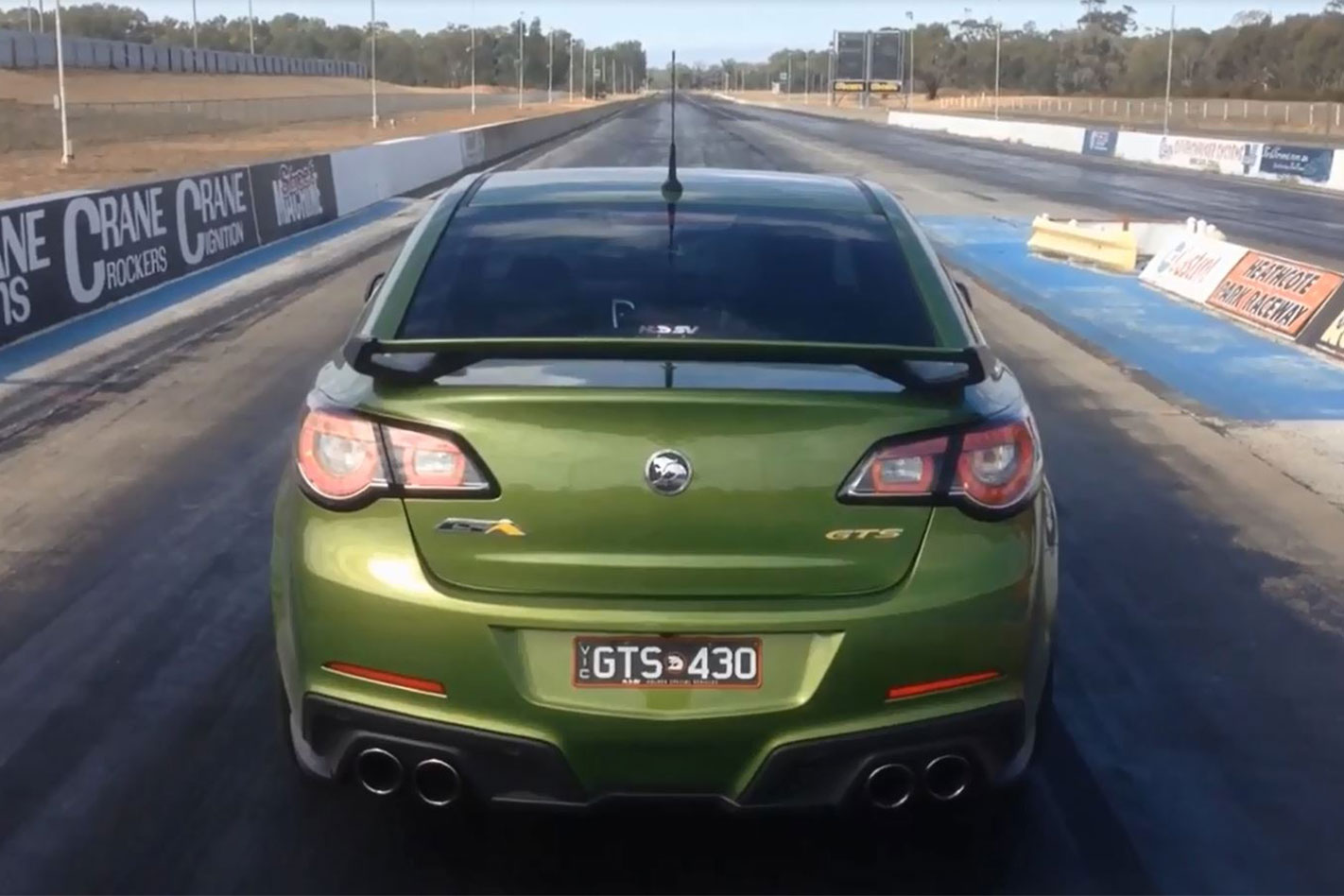
0-10km/h – 0.27sec 0-20km/h – 0.67sec 0-30km/h – 1.04sec 0-40km/h – 1.45sec 0-50km/h – 1.80sec 0-60km/h – 2.24sec 0-70km/h – 2.62sec 0-80km/h – 3.32sec 0-90km/h – 3.78sec 0-100km/h – 4.31sec 0-110km/h – 4.87sec 0-120km/h – 5.79sec 0-130km/h – 6.52sec 0-140km/h – 7.29sec 0-150km/h – 8.10sec 0-160km/h – 9.20sec 0-170km/h – 10.27sec 0-180km/h – 11.39sec 0-190km/h – 12.59sec 0-200km/h – 13.86sec
0-400m – 12.37sec @ 188.32km/h
You can read the full comparison test against the Lexus GS F and Mercedes-AMG C63 S in our latest issue, on-sale July 7.
Toyota has expanded its crush-test dummy family with three new child-like models.
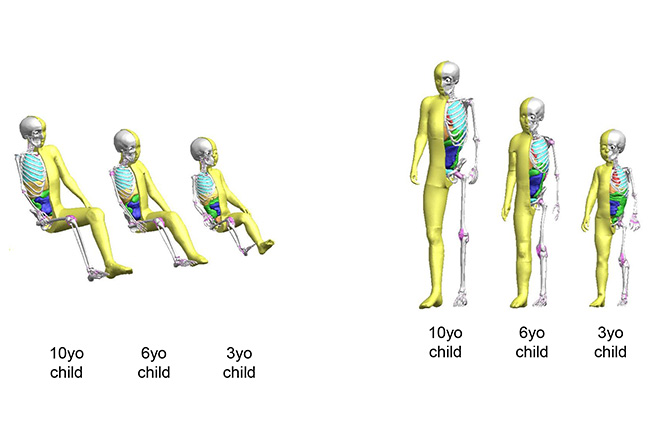
Replicating the physical characteristics of children aged 10, six and three, the Total Human Model for Safety (THUMS) gives the manufacturer the opportunity to simulate injuries sustained by passengers and pedestrians in the case of a vehicle crash.

Through the family of dummies, Toyota is able to forecast the extent of injuries on the human body during a collision, to help with the development of safety features such as airbags.
The three child dummies are added to the existing adult male and female dummies, and are offered in a passenger and pedestrian version.

The dummies mirror human characteristics with the children’s heights at 138cm for the 10 year-old, 118cm for the six year-old and the three year-old dummy measuring 94cm. Now in their fifth version, the THUMS crash-test dummies realistically replicates a human bone structure, ligaments, tendons and vital internal organs, in order to more accurately measure the impacts of a collision on the human body.
The addition of the child models were developed through joint research between Wayne State University, University of Michigan and Collaborative Safety Research Centre at the Toyota Technical Centre in Michigan.
Originally developed by and for Toyota, the child-THUMS will be offered for sale to a number of road safety and collision researchers as well as vehicle manufacturers later this year, with the end-goal of eradicating traffic fatalities.
