
Everyone seems to be doing it. Recalling cars, that is. Volkswagen’s now infamous ‘Dieselgate’ scandal last year saw a proposal to recall up to 11 million cars worldwide and we’ve already seen Toyota and Mitsubishi issue large-scale recalls in Australia to fix faulty systems. So what happens if you’re one of those affected by a recall?
So what’s a recall?
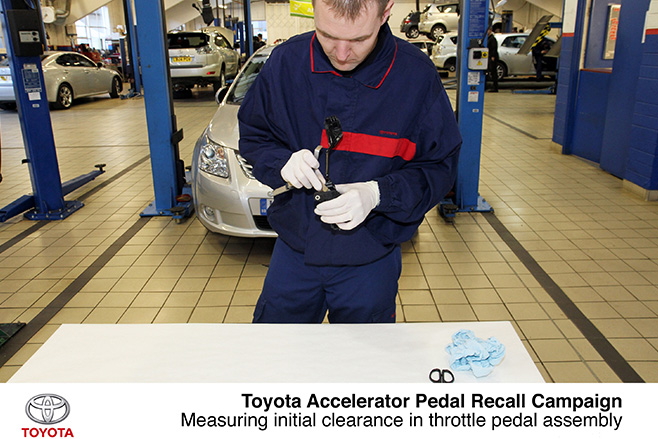
A recall occurs when a car manufacturer detects a fault in the cars it has sold. In order to maintain the safety of their products, they will require the cars to be brought in to the dealership for the fault to be rectified. It’s not just cars that are subject to recalls.
How often do they occur?
More often than you’d think. Of course, the big recalls attract media attention, but smaller-scale fixes are instigated all the time. Even Toyota, usually seen as a paragon of reliability, has issued 68 recalls in Australia in the last decade. Mercedes-Benz has clocked up 82. If you think that’s a lot, you’re right. In 2013, the National Highway Traffic Safety Administration (NHTSA) in the US tightened up regulations around recalls, fining car manufacturers who didn’t alert them to potential safety issues. This increase in recalls has spread globally.
There’s recalls, and then there are recalls
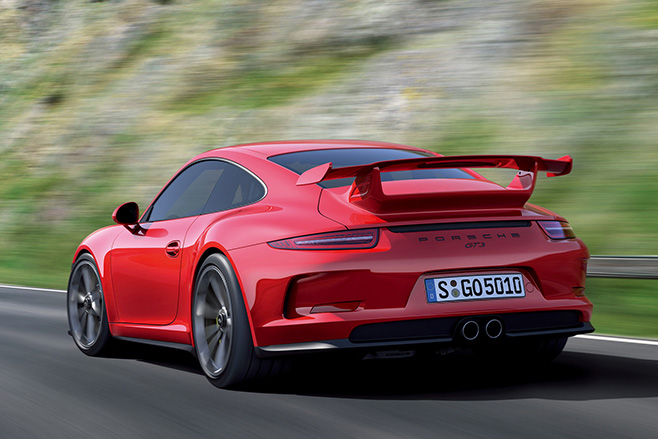
Although Volkswagen was hauled over the coals for its fiddling of emissions figures, nobody was claiming the cars were in any way unsafe to drive. That’s not the case with all recalls. At the most extreme end of the scale, the manufacturer might issue a ‘do not drive’ directive. Porsche took this decision when its 911 GT3 models started catching fire, subsequently fitting every one of the cars with a new engine. If your car is subject to a recall, the manufacturer will assess the risk and notify you accordingly.
How much will it cost me?
It shouldn’t cost you anything. The vast majority of recall work is for very minor technical issues. Mitsubishi’s huge recall this month was largely concerned with connectors in the lighting system that could, over time, corrode and no longer function. It’s a part that costs a few cents to change out and Mitsubishi reckoned that each vehicle would take thirty minutes to repair.
How will I know if my vehicle is recalled?
Manufacturers will usually contact you by mail to let you know that your car is being recalled. That’s all well and good if you’re the first owner of the vehicle. If you bought it as a used car, it might well be worth visiting the website of the ACCC and looking up your vehicle.
If I ignore the recall, does it affect my warranty?
Yes, people do ignore recalls with such regularity, there’s even a term for it – recall fatigue. Put bluntly, people get fed up taking their cars back to dealers for what they see as trivial fixes. It’s best to observe them for the sake of safety and the sanctity of your warranty. Some manufacturers will look for wiggle room when dealing with expensive warranty claims, so it pays to make sure you’ve honoured your side of the deal as a responsible owner.
IF THERE’S any debate about whether car nuts are born or created, we reckon it ends with the story of Josh Stebbing.
Eight years ago, Josh’s mum Melissa bought a Hot Wheels car at the supermarket for her son, then aged just two. Something about the 1:64-scale green Chevy El Camino seemed to click with the kid. “I started playing with them and then I got more and more,” Josh says. Now he has collected more than 3000 toy cars.
Melissa can’t fully explain the “natural attraction”, because there’s no overt automotive influence in the family, aside from one of her uncles who restores and modifies Falcon coupes. Neither has Melissa, a single parent, been showering her son with what equates to one model car per day over eight years.
With Hot Wheels and Matchbox cars costing about $3 each and the larger Disney Cars characters around $10 each, Josh is sitting on at least a new Mitsubishi Mirage’s worth. Josh is a lad of few words, but he’s a smart car shopper.
“If he does good things at school he’ll get a car,” Melissa says. “He’s just at the shops all the time, at the supermarket, he wants to go to car boot sales, op shops, garage sales, flea markets. Sometimes he’ll go to a garage sale and there’ll be a box of 20 cars for $5 or something.
“We’ve got a friend, older than I am, who was collecting cars when he was a kid. He gave Josh a box of about 30 Matchbox cars from the 1970s. Those are some special ones.
“He has a very big collection of Disney Cars; he’s got like 600 of them, although some of them are doubles. And he’s got a Cars character encyclopaedia, so he knows word for word which cars are from where.”
Josh estimates that about 60 percent of his cars are Hot Wheels, another 30 percent Disney and the rest Matchbox. For all the prevalence of the big-wheeled, flame-painted Hot Wheels, he admires the accuracy of the Matchbox ones.
Josh parks a lot of his cars in plastic tubs and on bookshelves when he’s not using them. “I build cities and I have garages and I drive the cars around in them,” he says. There’s also a motorsport edge, with circuit races held on the pool table and drag-racing down the playground slippery slide.
More bizarrely, he’s cultivating a scale automotive “body farm”, with models strategically left in different situations around their 13ha property in the Yarra Valley, east of Melbourne. Explains Melissa: “He’s got a junkyard where they all sit; he puts salt on some of them to watch them corrode more quickly, some are left in the pool…”
Josh isn’t far away from getting a real car. “I’d like a Chevy or something, from around the 1970s,” he says. “I like American muscle cars.”
And he has no doubts where all this is headed. “I want to be a mechanic. And I want to own a junkyard.”
Poor P-plate drivers. With the restrictions on what cars provisional license holders can and can’t drive, they are often left in an automotive wasteland of beige and boring cars which do nothing to excite you, or tickle your passion for driving. But never fear, for WhichCar is here. We have formulated a list – in no particular order – of the coolest cars you can own and drive on your P-plates. The regulations on what provisional drivers can steer changes from state-to-state, so make sure to check your jurisdiction’s legislation. While you’re doing that, this list should provide some inspiration on how to get a cool car while rocking those P-plates.
MAZDA MX-5
Cost $31,990
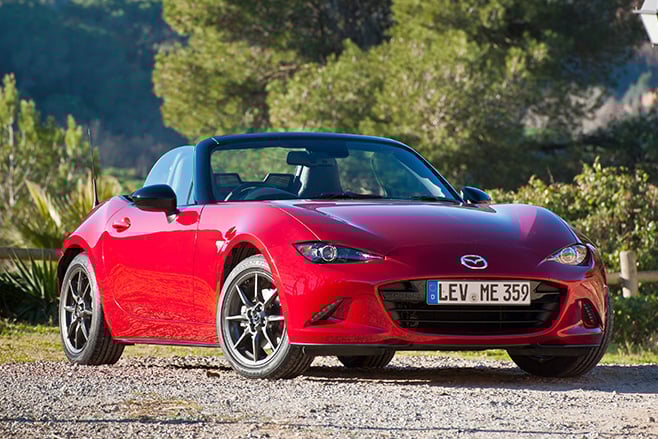
Don’t call it a hairdressers’ car, because the little Mazda MX-5 is seriously cool. It is small, zippy, and an absolute blast to take for a drive through the hills. Oh, and the drop top means top-down cruising in summer is a hoot. Serious cool factor with modern styling, and, as always, bonus points if you get it in red.
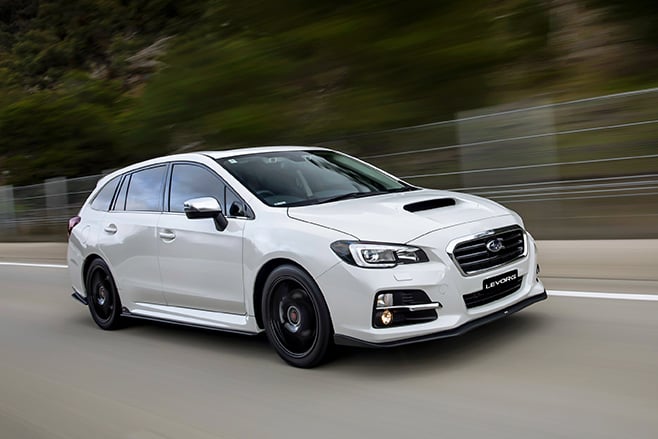
SUBARU LEVORG
Price: $42,990
Yes, it’s a wagon, but wagons are cool (and not in an ironic sense either). The Levorg comes with the engine and spirit of a Subaru WRX, but gives you all the practicality of a full-size wagon. Perfect for getting your mates together for a road-trip or long-weekend camping. 0-100km/h is dealt with in 6.6-seconds, which in a wagon makes the Levorg a full-blooded sleeper. Cool!
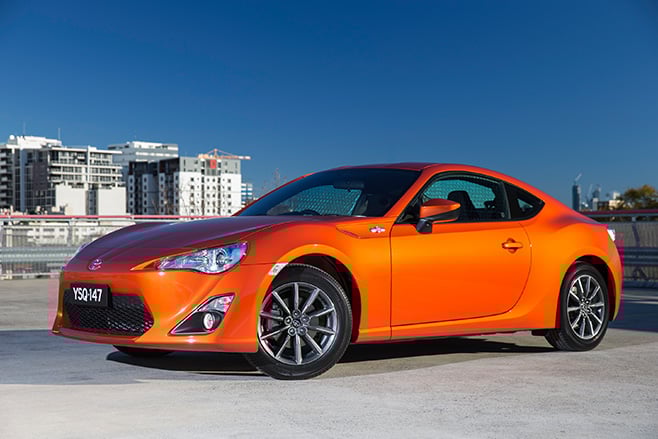
TOYOTA 86
Price: $29,990
You don’t have to have a billion horsepower to have brilliant fun in a car, and the Toyota 86 is proof! The small two-door coupe only pumps out 147kW, but will give a grin from ear-to-ear if you decide to make your way into the twisties. The 86 (and its identical Subaru BRZ sibling) shovels out fun in spades, making it one seriously cool P-plate ride.
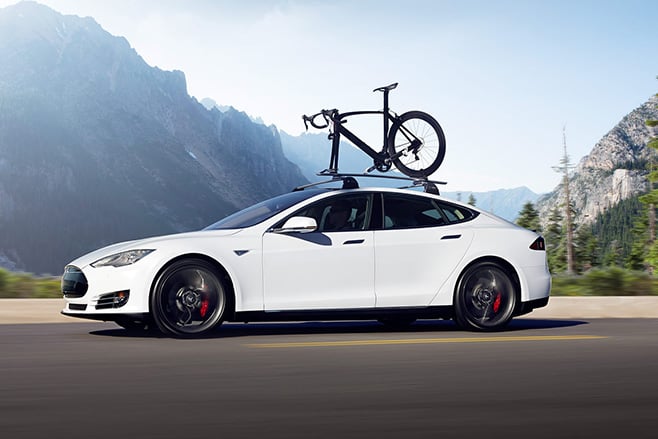
TESLA MODELS S 70/70D
Price: $128,573
Yes, the price of the Tesla Model S does put it outside the realms of your average (and most non-average) P-plater. However, it meets regulation and definitely deserves a place on this list. The Model S is one of the coolest cars available today, and even the base 70 or 70D model would make for a seriously schmick set of wheels.
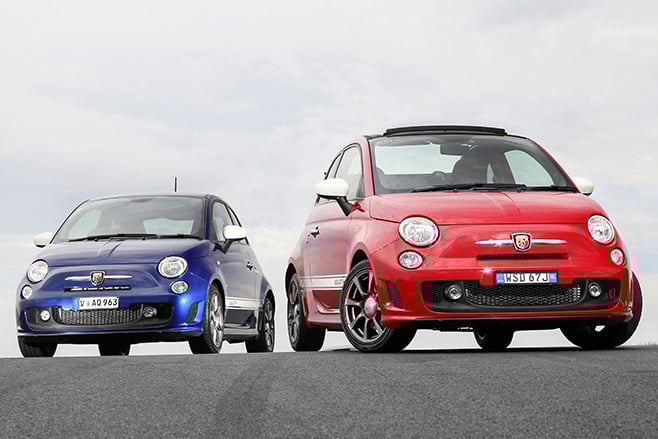
FIAT ABARTH 595
Price: $37,000
Nothing says cool like a scorpion on the badge. The Fiat Abarth 595 is a seriously, wickedly, fun little car. Powered by a 1.4-litre turbo engine, the Abarth is perfect for those living in big cities. The small size makes it great for parking, and it packs enough punch to make getting around exciting no matter what.
Tesla continues its chase for volume with the all-electric Model X SUV. Riding on much the same underpinnings as the existing Model S, Elon Musk’s ballistic breeder bus is much more than a showy set of doors.
WHAT IS IT? Offered with five, six or seven seats, the Model X targets both traditional SUVs and the upper echelons of the minivan market. It retains the trademark concussive acceleration and slick control systems of the Model S but adds a few party tricks of its own. ‘Falcon Wing’ rear doors and ‘Bioweapon Defence Mode’? Yes, seriously.
WHY WE’RE TESTING IT Model X arrives more than two years late, so we’ve been champing at the bit for a while. We know the company can do headline-grabbing stunts like no other, but can it get down and dirty by making the Model X properly family friendly?
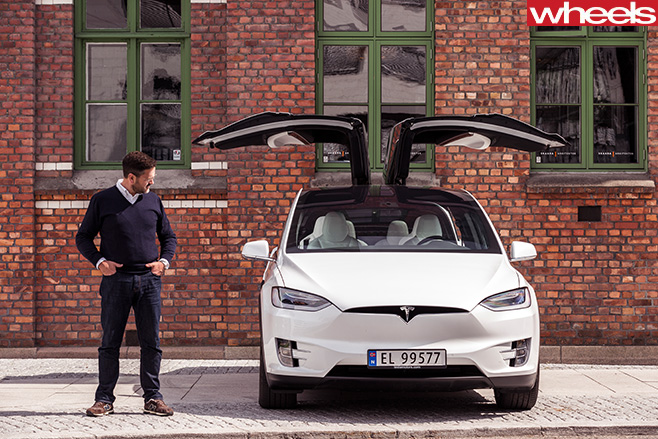
THE WHEELS VERDICT Model X retains all the things that made the Model S such an intriguing proposition. The pace, the surface-skimming centre of gravity and the surprise-and-delight touches are all present. As a practical SUV, the Model X gets a more mixed report card. That hasn’t hurt demand, though, and Tesla will shift all the allocation that Australian importers can lay their hands on.
PLUS: Acceleration; refinement; charisma; space; smart technology MINUS: Slow rear doors; second-row seats don’t fold; expensive
THE WHEELS REVIEW IS THIS the year’s most significant new car? Wall Street thinks so.
But first we get this Model X SUV. Tesla’s second volume model after the Model S sedan, it’s expected to more than double Tesla sales on its own. It’s a fascinating car in its own right, and will tell us a lot about whether the Tesla hype is justified.
The first thing you will want to know about is those mad, double-hinged ‘Falcon Wing’ rear doors, intended to require less space to open than conventional doors and give better access from either side. Instead, they’ve just given Elon a headache. Getting them to work delayed the launch, early US customers have reported problems, and there’s already been a series of over-the-air software updates.
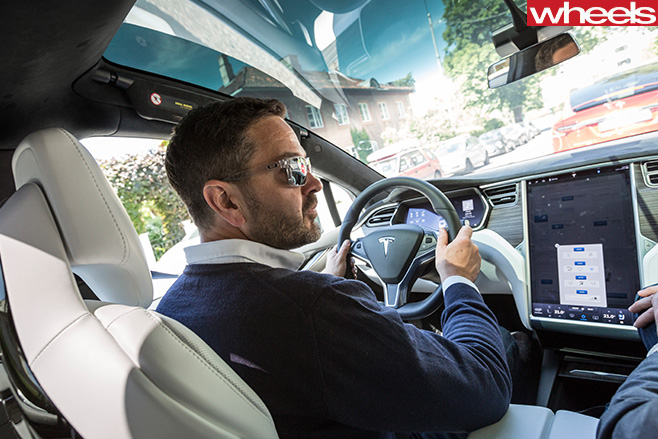
The conventional driver’s door powers open as it senses you approaching, and closes automatically when you put your foot on the brake. Okay, that’s another gimmick, but the biggest windscreen in any production car – it arcs over your head like a fighter-jet canopy – really isn’t; the effect is sensational.
The rest of the cabin architecture is familiar from the Model S, so there’s minimal switchgear and pretty much everything is controlled from the swimming-pool-sized central touchscreen that remains, for me, hands-down the best user interface in the car industry.
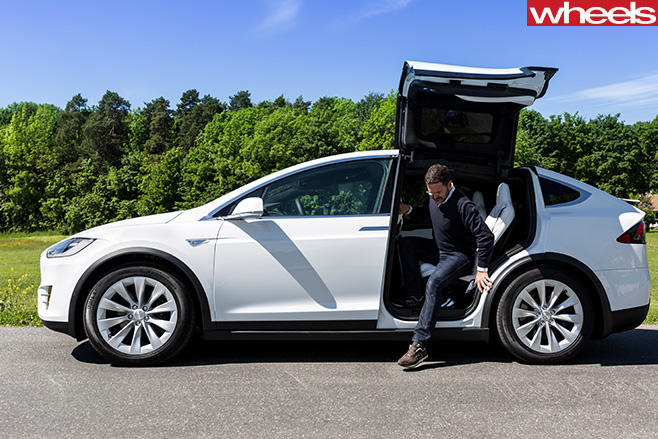
There’s also the option of five, six or seven seats. The third row will take a six-footer, just, and leaves a huge boot when folded flat into the floor. The second row doesn’t fold but each seat is mounted on a single post, allowing space for bags or third-row occupants’ feet. It’s a clever system, but I suspect that SUV buyers might prefer them to fold.
But why are we discussing boot space when we have an SUV that will out-accelerate a Ferrari to 100km/h?
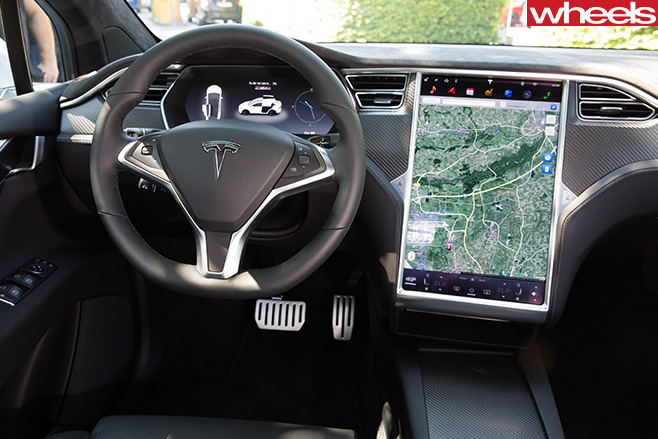
Choose the full-house P90D version with Ludicrous mode enabled (it’s Musk’s geeky Spaceballs reference) and this seven-seat all-wheel drive will use its 396kW and 967Nm to crack 100km/h in 3.4 seconds. The motors on each axle deliver colossal traction, balance torque and grip instantly, and of course produce all that torque instantly.
The Model X is as fast as a Ferrari, and over the first few yards feels like we expect the Bugatti Chiron will. So long as he can keep his doors working, I don’t think Elon’s going to have any strife shifting them.
Vote for the Tesla Model X to win the 2018 Wheels Car of the Year Readers’ Choice competition
SPECS Model: Tesla Model X P90D Engine: Two electric motors (193kW front, 375kW rear) Max power: 397kW (combined system power) Max torque: 967Nm Transmission: 1-speed fixed gear Weight: 2440kg 0-100km/h: 3.4sec (claimed) Range: 480km Price: $150,000-$220,000 (estimated) On sale: December 2016
Remember the old SL55 AMG? In hero silver with multi-spoke wheels, it was once splashed across a poster in MOTOR.
In 2002 it was the quickest car in the world to 300km/h, claimed Mercedes. Its 5.5-litre blown V8 cranked out 368kW and 700Nm, back when a 911 Turbo only made 309kW and 560Nm. In 2002 the SL55 was an animal. And these days a Mercedes-Benz SL500 would smoke it.
It’s always a bit unfair to compare two cars from totally different eras – of course the SL500 should be better given the passage of 14 years. In some ways, considering the progress of most other performance cars, it should be even faster than it is.
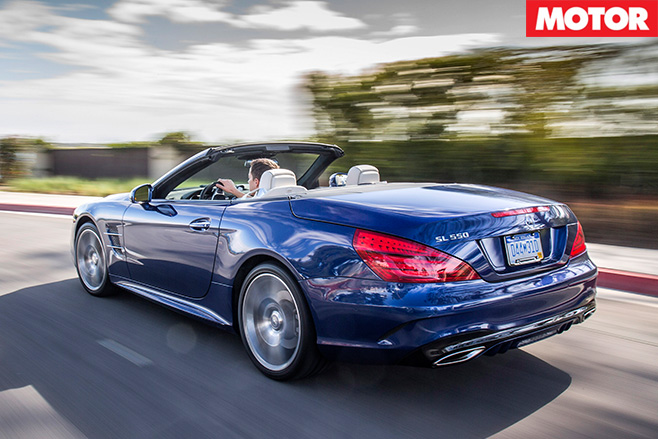
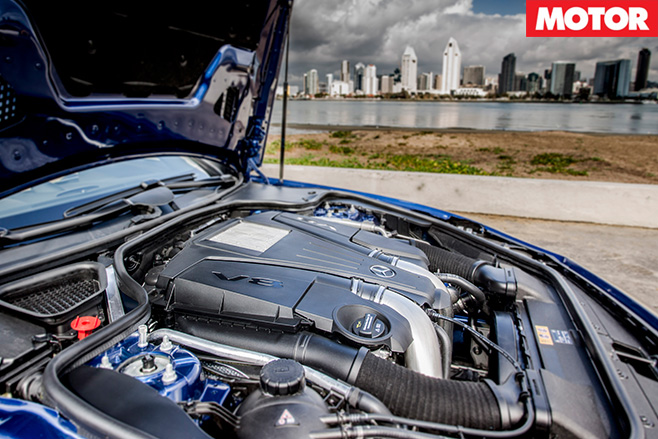
The burly 4.7-litre twin-turbo M278 V8 has powered up by a token 15kW, now 335kW, torque unchanged at 700Nm. But the big news mechanically is a new nine-speed torque converter auto.
Presumably its more tightly-stacked ratios, and snappier upchanges, are to thank for the hastening of acceleration from 4.6sec to 100km/h, to a now bordering-on-silly 4.3sec. And all for less fuel, too, the big Merc benefiting not only from lower ratios at cruising speeds but also a new sailing function, the engine decoupling downhill and off-throttle to save 0.4L/100km, now 9.0L.
The SL500 misses out on ‘Curve’, the system on SL400 that tilts the suspension into corners, more a comfort than performance feature. Much like the old one the SL feels big around you, a long bonnet extending outwards, and as you attack the first few corners it can be difficult to pick an initial steering input, and you never quite nail it. Of the performance droptops there are easier front ends to point.
The SL500 attacks corners with competence and owing to its fat Pirelli P-Zero rubber (255 front, 285 rear) can carry impressive speed. But unless you’re the kind of driver who goes through rear tyres twice as fast as fronts, it makes its progress in a more functional than enormously fun manner.
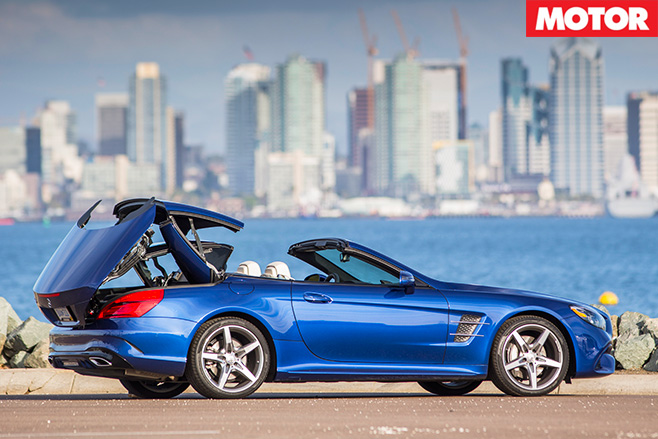
Instead the SL500 is made for lapping boulevards and it’s this brief it nails. It rides beautifully despite rubber band tyres and even with the roof down at highway speeds the interior remains serene and breezy.
And in a straight line it’s still frightfully fast. Owing to its twin turbochargers the SL500 is more torque monster than redline screamer, there being no enormous reason to extend the car to its 6250rpm limiter.
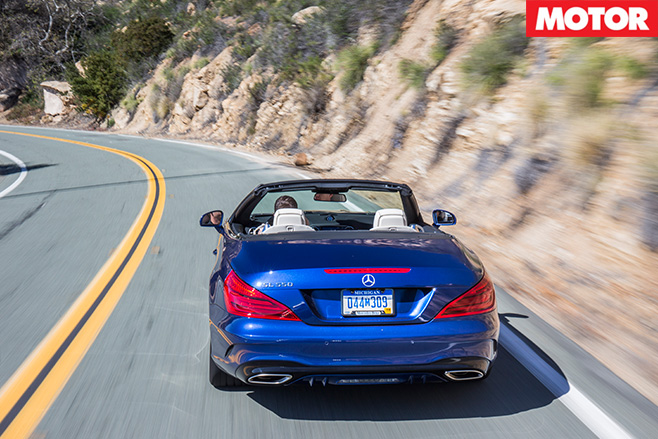
Sound-wise, the SL500 mixes menace with restraint. It burbles in a lower pitch, gurgling a V8 note as you potter about town in the lower revs. It’s not as brash as its SL63 bigger sibling but the exhaust note is still reason to fold the roof down. The facelifted SL500 goes on sale in Australia in July. SL55 AMG owners, consider yourself warned.
4 OUT OF 5 STARS
LIKE: Massive grunt; ride; serenity even with roof down; cruising ability DISLIKE: Hard to place; there are better driver’s cars
SPECS Engine: 4663cc V8, DOHC, 32v, twin-turbo Power: 335kW @ 5250rpm Torque: 700Nm @ 1800rpm Weight: 1795kg 0-100km/h: 4.3sec (claimed) Price: $305,000 (est)
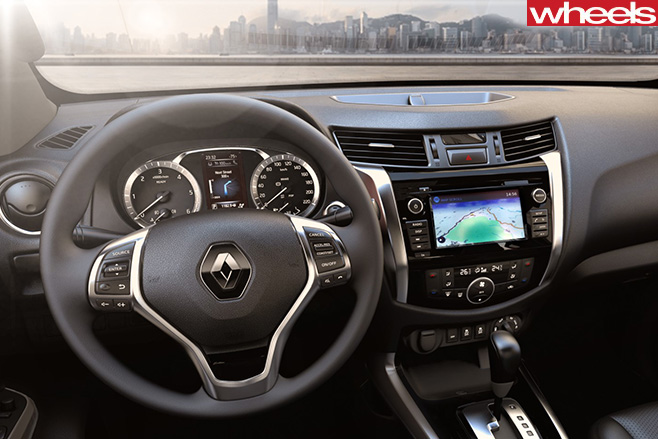
Renault will become the second European manufacturer – after Volkswagen – to enter Australia’s growing utility market, when the production version of its 2015 Alaskan concept goes on sale here next year.
It’s the first one-tonner for the French brand, and the latest vehicle to spawn from the successful Renault-Nissan Alliance which sees the Alaskan’s chassis and running gear underpinned by Nissan’s popular and highly capable Navara NP300.
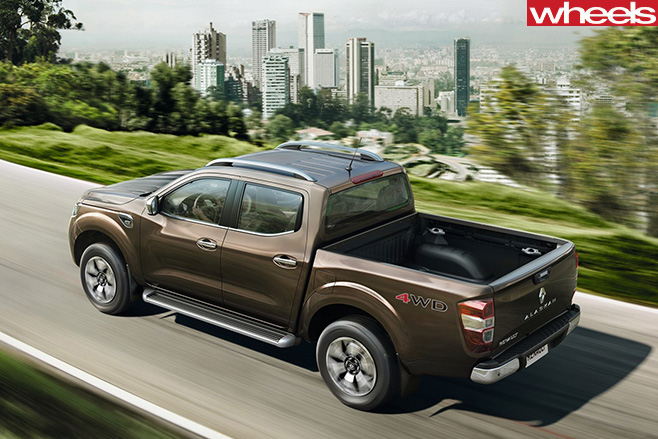
Available with six-speed manual or seven-speed automatic transmissions and in two and four-wheel-drive options, there are also 2.5-litre petrol and 2.5-litre diesel variants slated for production –though it’s still unclear whether they’ll make it to the Australian market.
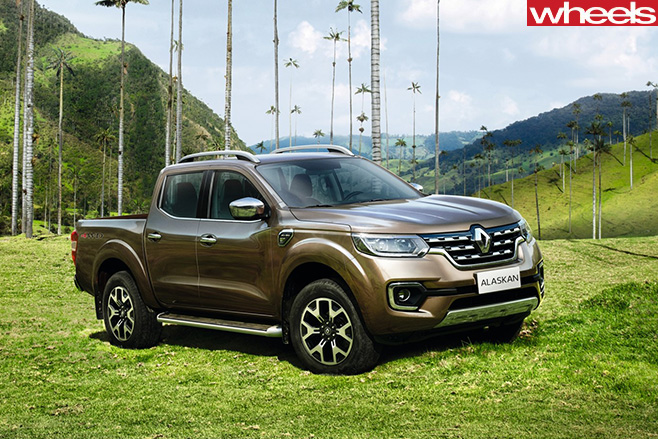
Renault Australia is yet to confirm which options will be made available domestically, but the firm will offer the Alaskan in single, dual and cab-chassis variants. Also available will be long and short-bed options with wide or narrow bodies. The bed itself will feature C-channels equipped with four quick-fit hooks as well as a 12-volt power outlet.
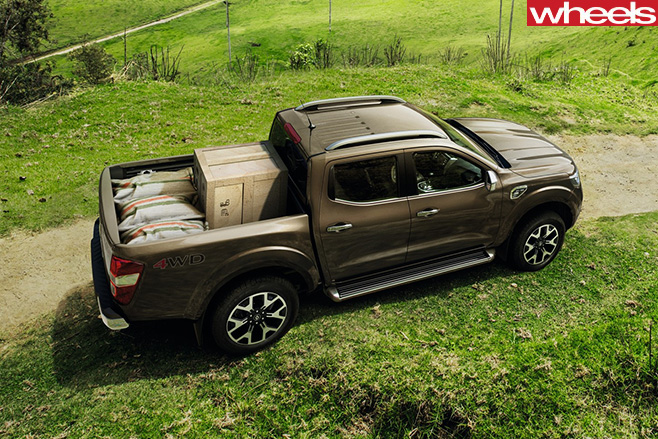
There’s heated seats front seats, and depending on the model, either a 5-inch TFT colour display or a 7-inch connected full-colour touchscreen controlling the in-built navigation and infotainment system.
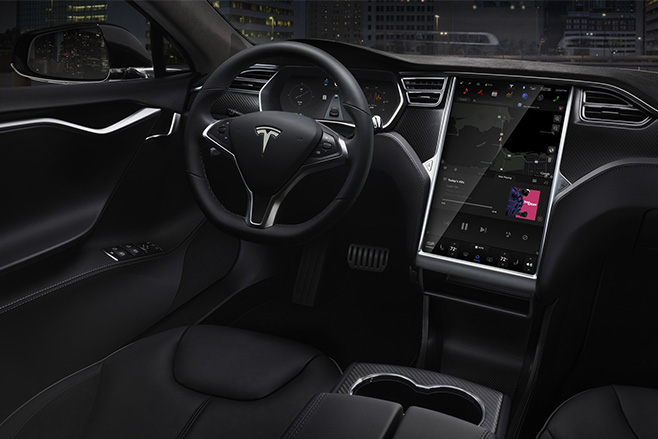
Regulators in the US are investigating what is believed to be the first-ever fatality involving autonomous driving, after a Tesla driver crashed while using the car’s Autopilot system.
The National Highway Traffic Safety Administration has started a preliminary evaluation of the May 7 incident in Florida, in which a Tesla Model S collided with a turning truck.
Driver Joshua Brown, 45, died of his injuries at the scene.
In a statement on its website, Tesla said the Model S’s Autopilot system was engaged when a [prime-mover and] trailer crossed the highway on which the vehicle was driving.
“Neither Autopilot nor the driver noticed the white side of the tractor trailer against a brightly lit sky, so the brake was not applied,” said the company. “The high ride height of the trailer, combined with its positioning across the road and the extremely rare circumstances of the impact caused the Model S to pass under the trailer, with the bottom of the trailer impacting the windshield of the Model S.
“Had the Model S impacted the front or rear of the trailer, even at high speed, its advanced crash safety system would likely have prevented serious injury as it has in numerous other similar incidents.”
Tesla was keen to stress that this was the first known fatality in 130 million miles [210 million kilometres] of activated Autopilot driving, comparing it with the fatality every 94 million miles among all vehicles in the US.
The electric-car brand also emphasised that its Autopilot technology is switched off by default, and that drivers activating the system are advised it is an assist feature and to always keep hands on the steering wheel as they “need to maintain control and responsibility for your vehicle” while using it.
Tesla maintains the technology, when combined with driver “oversight”, is statistically safer compared with manual driving. The fatality, however, is still a major setback for autonomous-driving technology, which is currently being assessed by regulators around the world – including in Australia – to establish safety guidelines for its widespread use.
Volvo, one of the other car manufacturers investing heavily in autonomous driving systems, said in 2015 that it would assume responsibility for any of its vehicles being driven in such an auto mode.
In a statement, the National Highway Traffic Safety Administration (NHTSA) – whose investigation ultimately covers about 25,000 Tesla models – said: “The opening of the preliminary evaluation should not be construed as a finding that the Office of Defects Investigation believes there is either a presence or absence of a defect in the subject vehicles.”
In Australia the Model S is sold complete with the Autopilot system, which can steer the vehicle in its lane, change lanes if the indicator is selected, and manage speed with its advanced cruise control. It’s also designed to steer and brake to help avoid potential front or side collisions.
Tesla Australia spokesman Heath Walker said he wasn’t aware of any incidents in this country involving the Model S’s autonomous-driving technology.
Say what you will about Porsche making large saloons. It’s okay, we’ll wait. Oh, you’re done? Good, because the new-generation Porsche Panamera S just tore its Nurbringring time a new one.
Why? Well, bragging rights as the fastest four-door around the ’Ring, for a start.
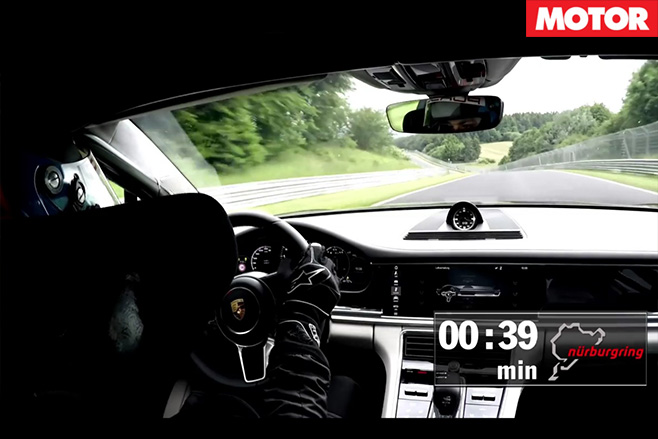
Unfazed, Porsche sent a new-generation Panamera S with ceramic brakes, rear steering – as seen in the 911 and 918 – and road tyres out for a lap or two, and it came back in with a 7min 38 under its belt.
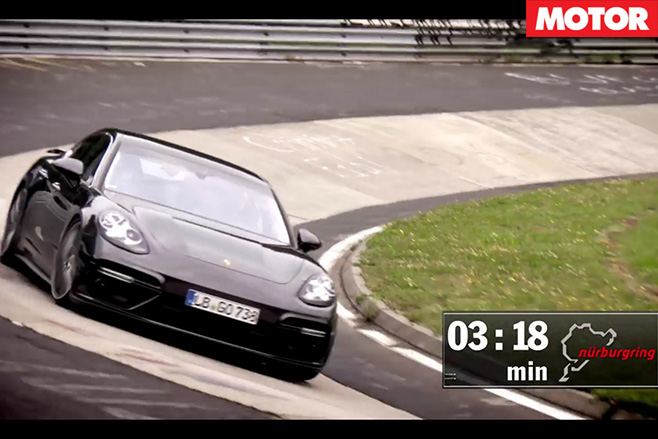
Its time puts it in some pretty esteemed company, and goes to show how far the game has come along in the new-gen turbo era.
Porsche Panamera S: how its Ring lap stacks up
| Lamborghini Gallardou00a0LP570-4 Superleggara | 7min 37sec (2012) |
| Porsche 911 991 Carrera S | 7min 38.9sec (2012) |
| Porsche Panamera S | 7min 38sec (2016) |
| Lexus LFA | 7min 39sec (2010) |
| Alfa Romeo Giulia Quadrifoglio | 7min 39sec (2016) |
With the federal election upon us, many people may still be looking for guidance on which party deserves their vote.
There are so many policies and promises floating around, it’s hard to find the ones relevant to you. So, here are the four policies you should know about this election – and the parties standing behind them.
1. Liberal Party

The Liberal Party plans to lift the red tape and allow car enthusiasts to personally import one car every two years starting in 2018. Further to this, they plan to lift restrictions on cars that can be imported and remove the $12,000 special duty on imported used vehicles.
Under the new proposition, vehicles that are at least 25 years old will be eligible for import under these new arrangements. This rule would intentionally combat the current concessional arrangement stating an individual can import a car if it was manufactured before 1 January 1989.
For newer vehicles, the policies will be revamped and limits on the number of vehicles that can be imported by Registered Automotive Workshops will be removed.
2. Labor Party

Already Coalition MPs are calling the new proposal “dead”, and if they were to win the federal election, they have shown that the policy will almost certainly be killed off. “Labor is concerned that the proposed arrangements have not been properly thought through,” said a spokesperson.
Worried about the potential implications to road safety, consumer protection and environmental performance, Labor has stood firmly behind its decision to oppose the new used car reforms.
3. The Greens

On top of this, they plan to hit luxury cars with higher taxes to help pay for electric car incentives and necessary charging stations. This plan is already in place in some places with officials promising dozens of electric vehicle charging stations in WA, as part of a Greens Party plan to slash transport pollution.
4. Australian Motoring Enthusiast Party (AMEP)

Without representation in the senate, AMEP will have a hard time finding a voice and will lose a great deal of influence, yet despite his short term, Senator Muir vows he will be back and will continue to challenge the ingrained dishonesty of politics.
The Pimms may have stopped flowing and the grounds of Goodwood House a mere remnant of last week’s Goodwood Festival of Speed, but the chatter is far from over.
On Wednesday, a video dropped of the outrageously fast McLaren P1 LM hypercar clocking a record breaking 47.07 second climb up the world famous driveway in West Sussex, England.
The super-rare, super-fast LM is the road-legal version of the McLaren P1 GTR race car, and pays tribute to the iconic McLaren F1 LM which was known as the world’s fastest car in the 1990s, and won Le Mans in 1995.
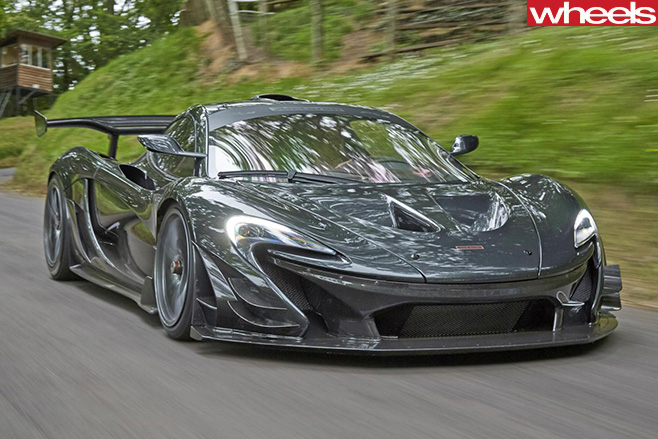
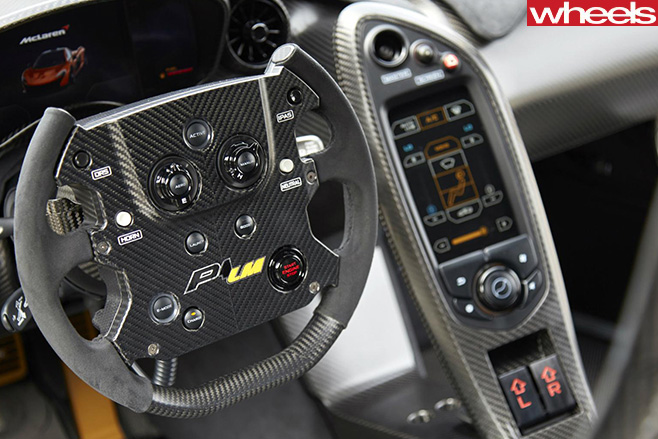
The P1 LM has the same 735kW, twin-turbo 3.8-litre, V8 hybrid-powered engine as the P1 GTR, and thanks to its huge downforce package as well as lightweight design (it’s 60kgs lighter) and Swedish racer Kenny Brack behind the wheel, the ultra-rare McLaren broke the record as the fastest road-faring car at the track; shaving 2.2 seconds off the former record-holding Nissan GT-R NISMO (49.27 seconds in 2014).
But it wasn’t the fastest of the week – a highly modified Subaru WRX time-attack racing car managed to record a 46.29 second time up the 1.86km hillclimb. The overall record belongs to McLaren MP4/13 F1 racer driven by Nick Heidfeld in 1999.
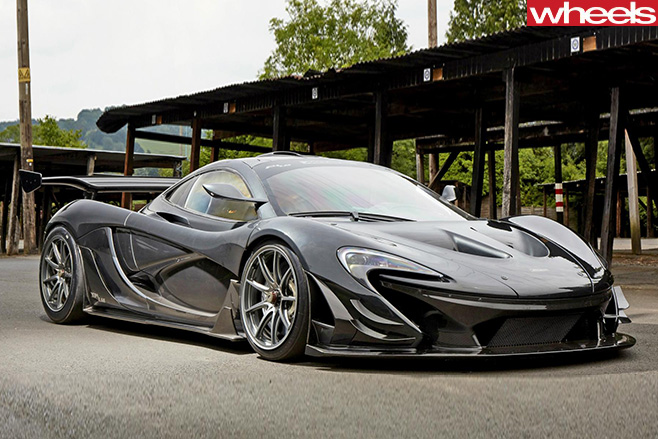
Creators of the LM, Lanzante Motorsport – the former team behind the McLaren F1 – has said it will convert just six P1 GTRs to LM spec, each costing close to A$5.36 million to buy.
