
McLaren’s mental P1 GTR will be unleashed on streets.
A new P1 LM will debut at this weekend’s Goodwood Festival of Speed to introduce a road-going version of the GTR, but it won’t simply be a de-fanged variant.
Details revealed by Lazante Ltd, the UK motorsport firm in charge of cooking up the LM, suggest it’ll be more wild than its track-only counterpart. And by some margin too, as it cuts the GTR’s weight, ups the downforce, and matches every one of its kilowatts.
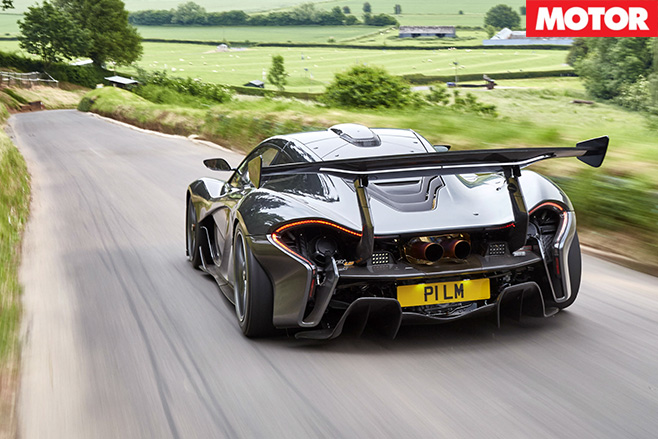
Then to make three-point turns interesting, the car’s aerodynamic package has been little changed besides a modified rear wing, larger front splitter and dive planes. Overall it’s estimated to produce 40 per cent more downforce.
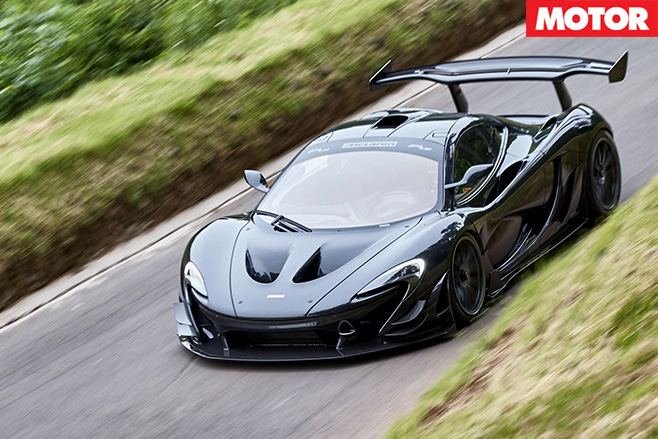
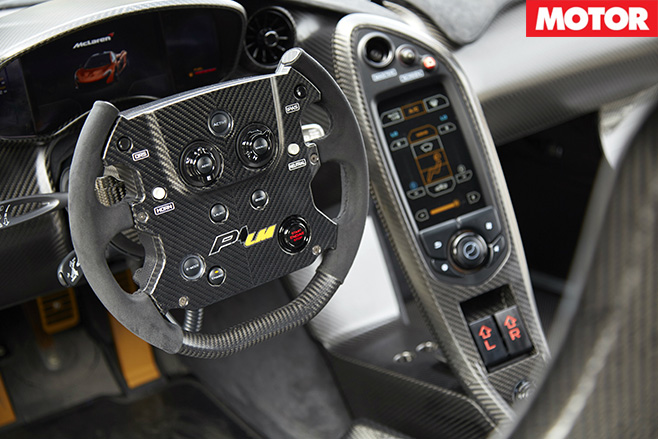
Milk-runs will be more bearable thanks to Lazante adding air-conditioning, but besides the promise of some exclusive additional panels there’s isn’t much else to ensure the LM will be good for the groceries.
How much? Well, the track-only GTR was near 2 million pounds. So if you have to ask…
The Drift King – and new Top Gear presenter – takes on the most Australian car ever: HSV’s tyre-shredding, supercharged GTS Maloo.
The news that the most Australian of all Aussie cars, the HSV GTS Maloo, is set to burn up the hill at the Goodwood Festival of Speed this weekend, got us thinking about the last time a Brit sampled HSV’s supercharged ute.
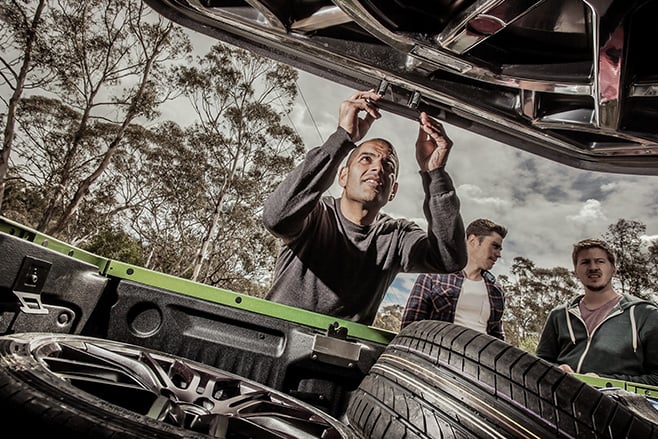
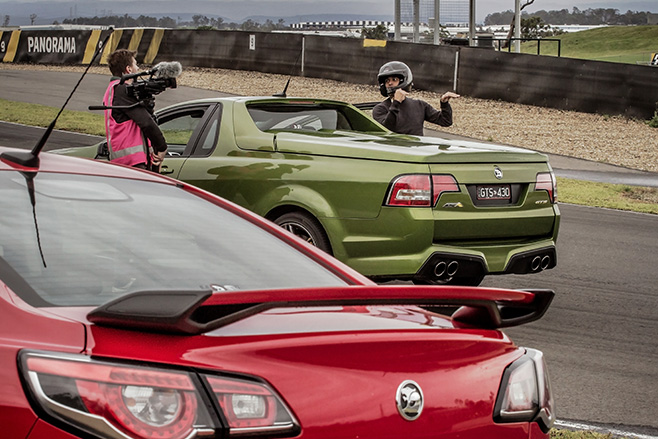
To see Harris’s full assessment, and some mega drifts, watch the full video below.
If, however, still pictures are more your thing, we had ace motoring photographer Thomas Wielecki along to capture how the day went. It was long, smokey and – thanks to Harris’s infectious personality – fun.
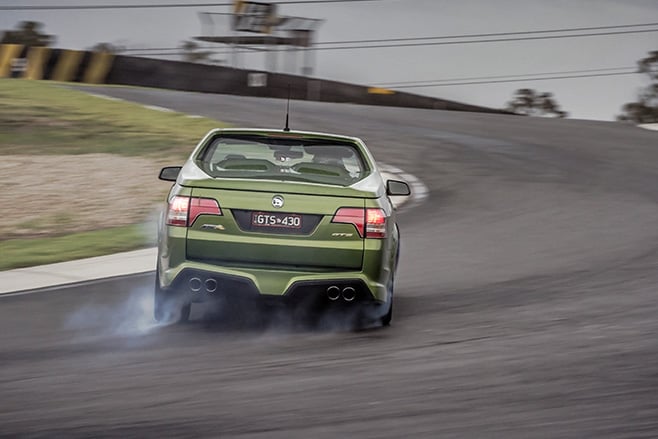
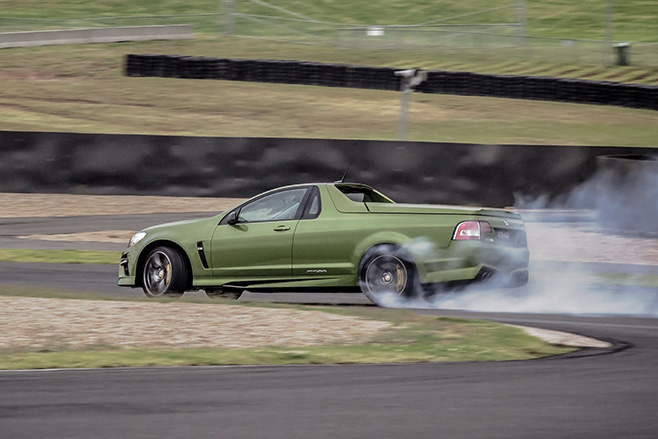
TELL ME ABOUT THIS CAR
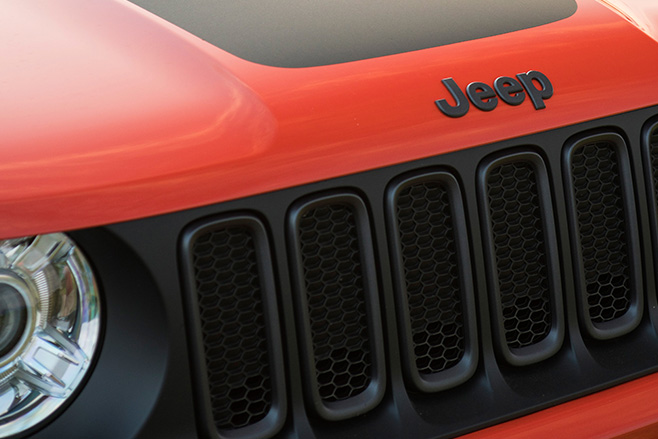
The top of the line model of the Jeep Renegade range, the Trailhawk melds inner-city living with outdoor adventure. Starting at $40,000 the Trailhawk touts its off-road capabilities in your face as it tries to stake a claim as a genuine contender once the bitumen runs out.
As the top of the Renegade range, the Trailhawk is the only of its siblings to come fitted with a 2.4-litre engine, 9-speed automatic gearbox, and all-wheel drive. It’s not going to conquer the more-difficult back-trails, but will handle sand, dirt, gravel, and rocky terrains in comfort.

STRENGTHS
- Spacious interior. Despite outside appearances and the small-SUV classification, sitting inside the cabin of the Trailhawk is an accommodating experience. The front seats come equipped with eight-way adjustable seating – meaning you can position yourself exactly as desired. Big windows, generous headroom, and ample visibility make driving easier despite stocky bodywork. It should be noted though, that rear legroom can get in short supply if front passengers are taller than average.
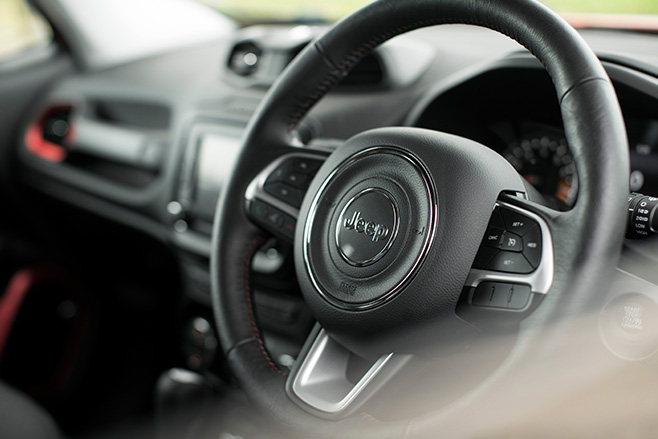
- Nicely trimmed. The rough and rugged credentials are not to be spied inside the Trailhawk’s cabin. Leather seats (with red Trailhawk) stitching are comfortable and provide ample support, the leather steering wheel is tricked out so you don’t have to take your hands from ten and two, while seat and wheel heaters keep passengers toasty in the winter months. Dual zone climate control means differing opinions on air conditioning don’t leave one party unhappy. Blind spot detector is always a welcome addition, even if the Trailhawk’s is a tad overzealous. Speakers by BeatsAudio are an auditory treat and keyless entry and start is a fun convience.
- Confident ride. The Trailhawk is less about carving up a mountain pass, and more about making your own. Despite this, the all-wheel drive and electronic steering allows the driver to place the Renegade as desired. Steering is light, without losing feel, and provides decent feedback in tricky conditions. The suspension soaks up smaller bumps with ease, but passengers are jostled lightly if the road surface gets too uneven. More off-road oriented rubber makes for a slight road-noise hum, but barely noticeable above the entertainment unit at low volume. Raised suspension means you sit above the majority of road users.
- Drive modes. It looks more suburban café than rugged back-road, but the Trailhawk has the tech to help you get off the beaten path – within reason. One of the best all-wheel drive systems in its class, combined with a five setting Selec-Terrain provides confidence for adventures.
WEAKNESSES
- Fuel economy. The 2.4-litre naturally-aspirated ‘Tigershark’ engine is a thirsty beast. A claimed 7.5-litres per 100-kilometers blows out to 9.8L/100km in urban environments. With a 45-litre tank, you won’t make it 500-kilometres between fills.
- Connectivity. Utilising the UConnect system, connecting an iPhone through Bluetooth proved fiddly and temperamental. Satnav comes as standard, but is slow to plug in directions, and will often take odd routes.
- Weight. At over 1.5-tons the Trailhawk is the heaviest of the range – largely due to extra equipment. It also falls down in towing capabilities, with the cheaper Sport, Longitude, and Limited models all being able to haul heavier loads.
- Engine. The Tigershark engine can only be found in the Trailhawk, but despite an extra litre of capacity, is less fuel efficient than the 1.4-litre turbo units in other Renagade models. No torque difference between the pair either, and only an extra 26kw to boot.
- Cost. $40,000-plus is a lot to ask for the Trailhawk. The difference over less-equipped siblings may not be worth it for the extra kit.
ANY RIVALS I SHOULD CONSIDER?
Hyundai ix35 and Mazda CX-5 are both viable options to consider if lacking the urge to take the road less travelled.
Get under the skin of a 728kW Audi R18 LMP1 car and let your mind boggle.
No other manufacturer has dominated the Le Mans 24 Hour in recent times like Audi. The German brand has conquered the 13.6km Circuit de le Sarthe with 13 wins since 2000. Only Porsche has more overall victories to its name, standing at 18 since 1970.
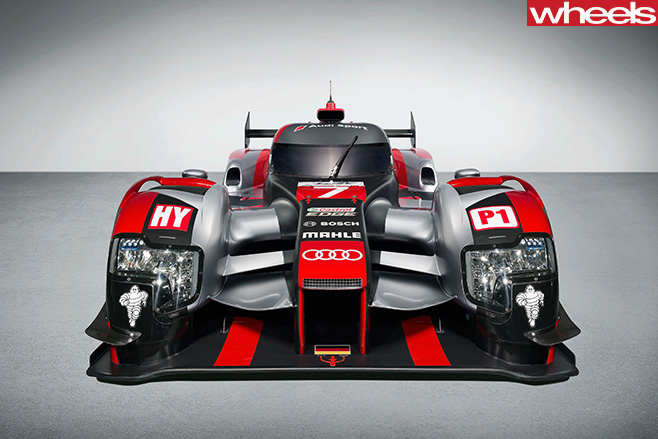
The Audi R18 LMP1 is the carmaker’s current World Endurance Championship contender. Its detailed spec information reads like science fiction, yet Audi says the weird and wonderful innovations hidden within have real-world relevance for the production cars it will build in future.
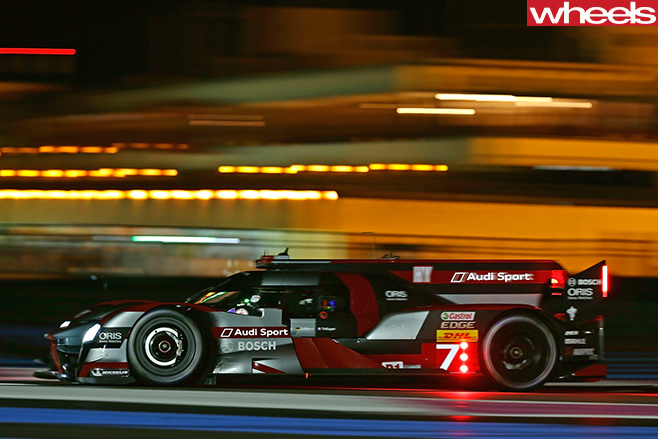
ENGINE Audi uses a hybrid drivetrain in the R18 race car. It’s made up of a 378kW 4.0-litre V6 turbo diesel engine, driving the rear wheels, and a 350kW electric motor, powering the front axle. Audi’s famous quattro all-wheel drive system was first derived for motor racing, and it is still a core element today.
Diesel and electricity combined, the powertrain produces 728kW, though a regulation restricts the electric motor to 300kW for the high speed Le Mans track in an effort to slow the cars down. At Audi’s last Le Mans win, in 2014, the R18 hybrid was making only 520kW total.
Critically, the engine is not only powerful but also massively fuel efficient. Audi says economy has improved by more than 30 percent compared to its first-gen V6 TDI engine from 2011. It has a 49.9L fuel tank and can go for 13 laps (approx. 177km) between stops. That’s roughly 28L/100km, which is incredible for a race car driven at full throttle for the majority of a lap and at speeds exceeding 300km/h. Good fuel efficiency means less pit stops, which, over 24 hours of racing, can be the difference between winning and losing.
LMP1 cars are not governed like Formula One cars. Manufacturers are free to interpret the rules however they see fit provided they follow the regulations for fuel use (referred to as energy and measured in kilojoules) and electricity regeneration. Porsche uses a 2.0-litre V4 turbo in its 919, while Toyota has a 2.4-litre V6 turbo in the TS050.
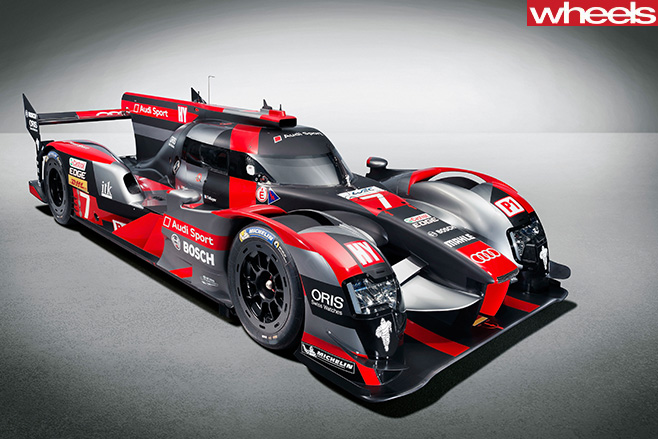
CHASSIS Even though this is the third Audi LMP1 car to be badged R18, it is an all-new chassis for 2016. Almost nothing has been carried over from the 2014/2015 chassis.
Its structure is made from carbon fibre reinforced plastic with a core of honeycomb aluminium. Layers of an exotic synthetic material called Zylon have been added to the car’s flanks to protect against side impacts.
The minimal allowable weight of an LMP1 car is 875kg, about 250kg heavier than a Formula One car.
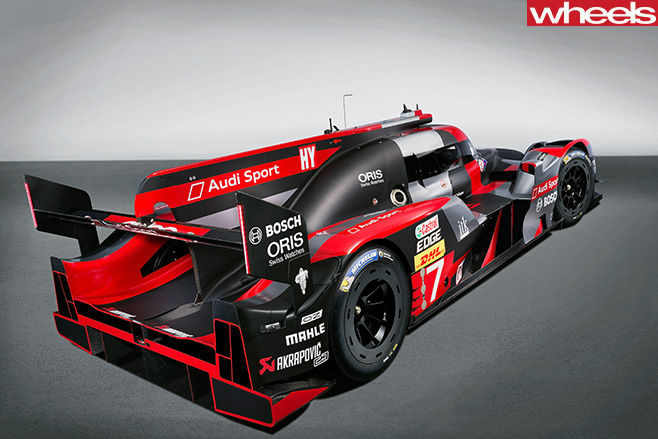
The gearbox is shifted via paddles on the steering wheel. Top speed is 324km/h on the Mulsanne straight.
BRAKES Brembo brake calipers sit inside F1-style carbon fibre housings that hide almost all of the brake rotor faces. Kinetic energy harvested under braking generates electricity for the hybrid system.
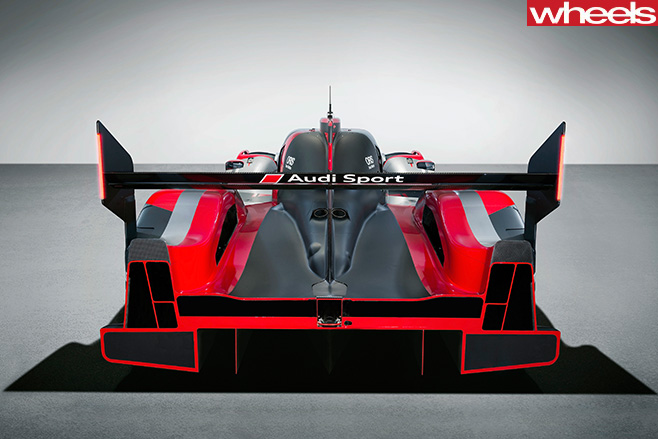
Over a full Le Mans 24 Hour race, one R18 generates 2358MJ, or 655kWh. That’s enough to power a small household for two and a half months.
The Audi actually generates less electricity, but can use more fuel than the Porsche and Toyota LMP1 cars. Those two moved up to the 8MJ class this year.
TYRES Michelin and Audi work in partnership to create tyres with custom compounds specifically engineered for the R18 LMP1. Each team uses its own special tyres and the details are kept confidential. The rules allow for 48 sets of slicks per car at Le Mans.
It is understood most LMP1 teams have at least six different compounds of tyres, covering everything from extreme wet weather conditions, to cold/damp track running, through to ultra-soft, high-grip slicks, and others in between.
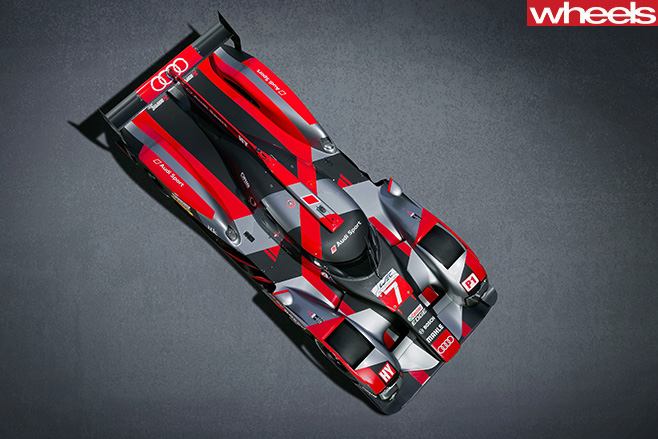
A better framework for aerodynamic changes and weight reduction was brought about by altering the R18’s proportions. The driver’s legs have been elevated and the seat back inside the cockpit is more upright. What is difficult to see without context is how small the R18 is; it’s two metres wide, yet shorter than an Audi A4 and barely a metre high.
DATA Several-hundred gigabytes of data is generated by the car’s telemetry systems during the race. Sensors and on-board electronics generate a stream of information that transfers to the team via radio in millisecond intervals across more than 1000 channels. Audi says the R18 LMP1 is the most complex car it has ever built.
Each R18 has a crew of 25 engineers who constantly monitor all of the car’s functions from a facility behind the pit garages. A total of 120 people make up the pit crew for the two cars.
VOLKSWAGEN Group is believed to be planning to cull as many as 40 models from its lineup as the carmaker attempts to reinvent itself, post Dieselgate.
German newspaper Handelsblatt reported on the weekend that the German premium brand, which announced late last week that it would invest tens of billions of dollars to become a world leader in “sustainable mobility”, was considering culling 40 models from the more than 360 it currently builds under its Volkswagen, Audi, Škoda, Porsche and Seat brands.
While a Volkswagen spokesman confirmed the model cull was under consideration, “a decision on how many models will be phased out or ceased has not been taken yet”, the report said.
The carmaker is expected to face angry shareholders at today’s annual general meeting in Germany, pushed back from earlier in the year, as the company tried to account for the full impact of the Dieselgate scandal.
Today’s AGM is the first since revelations that Volkswagen had cheated on emissions testing for diesel and petrol-engined models almost a year ago.
‘[The] ‘TOGETHER – Strategy 2025’ provides the framework and compass for the Volkswagen Group’s envisioned evolution from car manufacturer into a world-leading provider of sustainable mobility,” Volkswagen chief executive Matthias Müeller said.
“It will be fleshed out with corresponding strategies for the [Volkswagen] Group brands to be gradually elaborated over the coming months.”
The carmaker is expected to make a decision on which models to cull from its line-up by the end of this year; a timeline set by Mueller for VW to release its “detailed strategic program, broken down into brands and functions and backed up with specific measures and financial targets”.
Volkswagen Group Australia has already rationalised part of its local line-up, giving clues as to what models are likely to face the axe. These include the Volkswagen Eos four-seat convertible, and the Volkswagen Polo three-door hatchback.
For 2016, BMW has upped equipment levels and dropped the price of all of its 4 Series models – the F32 Coupe, F33 Convertible, and the F36 Gran Coupe. Additionally, an all-new family of petrol engines with more of everything lob in.
WHAT IS IT? The BMW 4 Series is really a current (F30) 3 Series with different body styles – a distinction that allows the Bavarians to promote them as being a little more exclusive. For 2016, the mechanical updates that came with last year’s 3 Series facelift have only now just reached the 4 Series.
WHY WE’RE TESTING IT ALTHOUGH this is an updated 4 Series, things aren’t quite what they seem. This is nowhere near the level of change that the very closely related 3 Series sedan and wagon received for the 2015 facelift. But as it involves all-new petrol engines – more specifically BMW’s box-fresh modular range of B48 and B58 in-line four-cylinder and six-cylinder units respectively – then the MY16 4 Series update is definitely worth checking out.
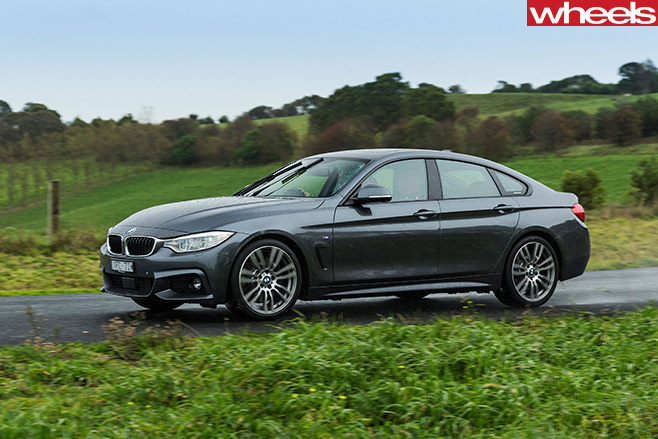
THE WHEELS VERDICT THE BMW 4 Series range of coupes (F32), convertibles (F33), and hatchbacks (F36 Gran Coupe) will soon be the oldest on sale now that Audi has officially unveiled the second-gen A5, so the Bavarians’ attempt to keep buyer interest with lower prices, higher spec levels, and even more efficient and/or powerful engines sharpens their appeal in small but significant ways. Applying to all non-M car petrol variants, the powertrains in particular are reasons enough to choose these over the latest C-Class coupe or equivalent, and there are no duds in the range at all. Just be aware that a more significant change is coming during 2017 in the form of a facelift. So it’s best to treat these as the MY16-only 4 Series updates.
PLUS: Performance, efficiency, handling, stability, increased specification, lower prices MINUS: Ageing and samey dash, jittery ride on bigger wheels, expensive desirable options
Both are central to what makes each exceptional.
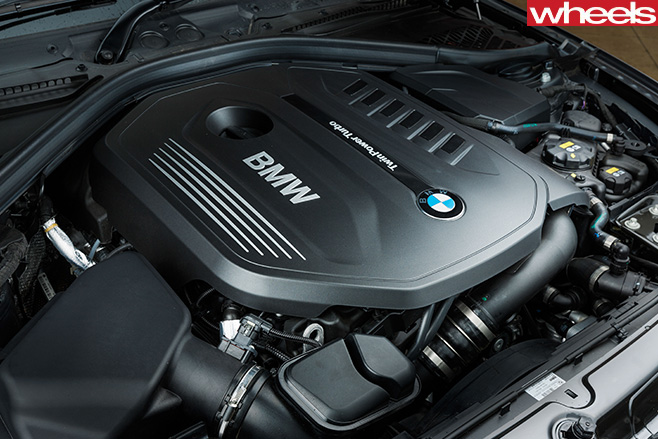
But that’s what BMW has done in order to stop an exodus to the newer Mercedes-Benz C-Class Coupe and Lexus RC (as well as next year’s all-new Audi A5 Mk2); binning the (hardly) old 2.0-litre four-cylinder turbo in the 420i and 428i, as well as the 3.0-litre in-line six-pot turbo in the 435i, for a brand new family of modular direct-injection turbo engines that bring small but significant gains in efficiency, economy, emissions, and – in some cases – performance.
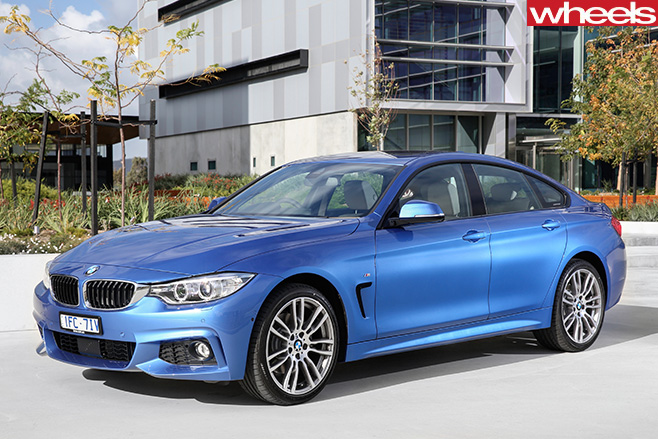
To let everybody know you’re driving the MY16 4s, the upgrades bring new badges on some versions (420i excepted), with the 428i giving way to a 430i, while the 435i is now known as the 440i. In typical German fashion, neither of these larger alphanumerical badges correspond their engines’ actual capacity, as the former has 1998cc while the latter is a 2998cc item. They’re known as the B48 and B58 family respectively.
The 420i still delivers 135kW/270Nm from its 2.0-litre, but now averages 0.4L/100km less consumption; the 185kW/350Nm version of this engine in the 430i boasts both a 5kW rise and a 0.6L/100km fall; and the same amount of fuel saving can be found on the 240kW/450Nm 3.0-litre in-line six-turbo 440i, despite it being 15kW and 50Nm stronger, while slicing 0.1 seconds off its 0-100km/h time (to 5.0s) in the bargain.
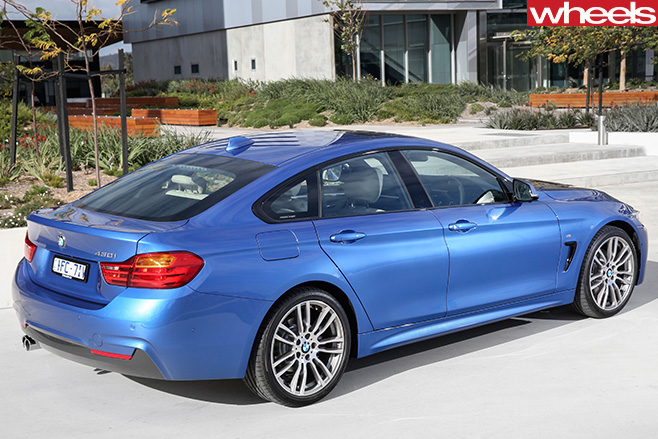
More impressive is the 430i Coupe’s uprated 2.0-litre, which really turns the heat up with a hefty forward shove, combined with a more tantalising shriek as the engine visits the red line. Both four-pot turbos feel about the same as before, which is great news as there was nothing wrong with either.
Yet it is the all-new 3.0-litre straight-six shooter that best fits the BMW image, both for rapid off-the-line acceleration and effortless overtaking response. Throw in an alluring exhaust note, and it is easy to see why the 440i (again in Coupe mode as sampled) is the one to save up for.
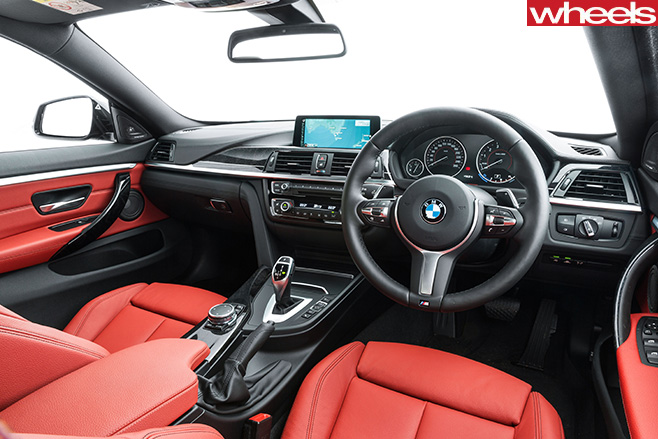
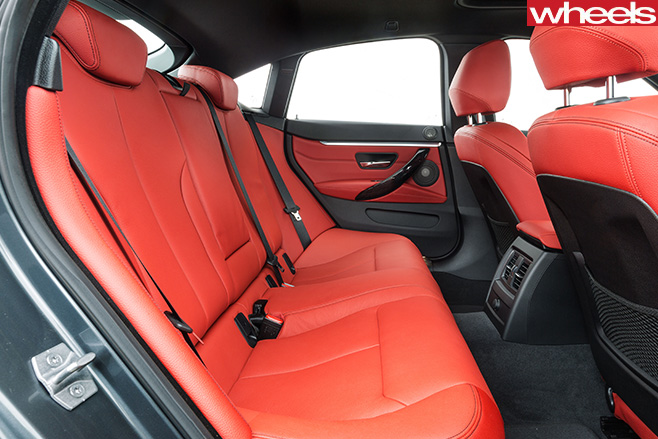
Other previously optional items to be found in the base 420i includes a head-up display, Lane Departure Warning and a surround/top view reversing camera set-up, while the expected bestseller 430i versions (from $79,900 for the Coupe) up the ante with those plus an M Sport Package: swishier leather interiors, and keyless entry/start. Choosing the 440i now means that front seat heaters, automatic high beam, adaptive cruise control, and automatic parking will be fitted.
Clearly, then, BMW is keen to keep the 4 Series relevant. It claims that about 57 percent of buyers are new to the brand, and has translated to about 4000 fresh customers out of the total 6847 sales since the range debuted in Coupe guise in 2013 and Convertible/Gran Coupe formats a year after that.
Of course, it may be fighting a losing battle since most consumers for this style of vehicle are fashion conscious, and the 4’s increasingly derivative and rapidly dating dashboard won’t do the BMW any favours – especially when people see how attractive the upcoming A5’s fascia looks.
Other than that, though, the 4 Series remains one of our favourite BMWs. Whether they’re necessary or not, the engine revamp hasn’t upset the great driving experiences, while nobody can complain about lower entry prices and higher equipment levels.
SPECS Model: BMW 430i Coupe Engine: 1998cc 4cyl, dohc, 16v, turbo petrol Max power: 185kW @ 5200rpm Max torque: 350Nm @ 1450-1800rpm Transmission: 8-speed auto Weight: 1470kg 0-100km/h: 5.8s Fuel economy: 5.8L/100km Price: $79,900 On sale: Now
The Dodge Viper officially dies this year when the final 8.4-litre V10 coupe is scheduled to roll off the Detroit production line.
In a bittersweet moment for US muscle car fans, the torquiest naturally aspirated passenger vehicle in the world celebrates its 25th anniversary in 2016 with five commemorative limited editions announced to farewell the biggest of big guys.
All will be produced in ACR specification that launched in 2016 with the 481kW/813Nm rear-wheel drive “ultimate street-legal race car” scoring significant aero and suspension upgrades.
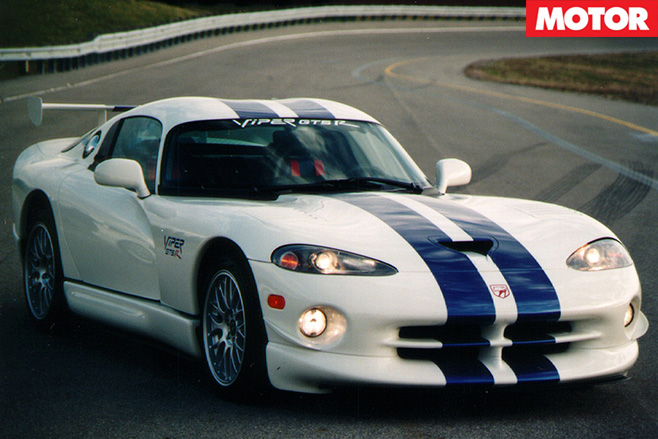
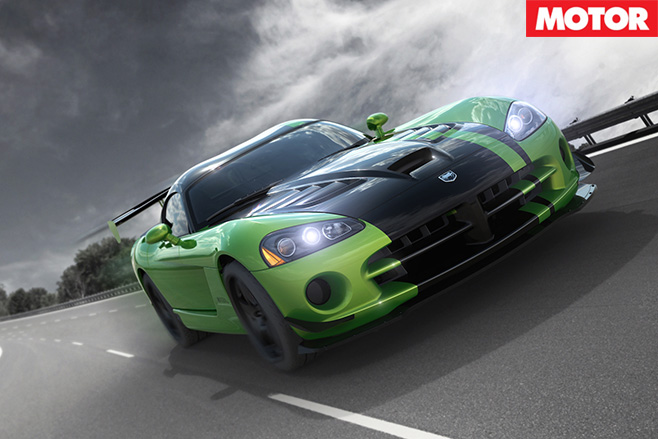

“The Dodge Viper has had a great run, and 25 years after it was first introduced it leaves the supercar world reaching for the records it continues to set,” said Fiat Chrysler Automobiles (FCA) head of passenger cars Tim Kuniskis in a statement.
Detroit has cranked out 30,000 Vipers since 1992, but more recently FCA has most focused on its top-earning US SUV marques and relaunching Alfa Romeo.
Still, with Alfa heading back to rear-drive and both Ferrari and Maserati sticking with the configuration, a resuscitated Viper can’t be ruled out. After all, the Alfa Romeo 159 finished production in 2011 and it has taken that FCA brand five years to replace it with the stonking M3-rivalling Giulia…
More features, improved efficiency and lower prices is what’s defining BMW’s latest 4-series range, which is already available in Australian dealerships. Both the petrol (420i) and diesel (420d) Coupe and Grand Coupe variants all boast a $2200 reduction off the manufacturer’s recommended list price (MRLP) which sees the updated models now priced from $68,900 and $71,200 respectively.
As well as improved fuel consumption, all four models now feature a 360-degree camera system; extended smartphone connectivity; lane-departure warning technology as well as the firm’s high-tech adaptive suspension system. While the Convertible variant of the 420i and 420d have received the same upgrades as the Coupe and Grand Coupe models, its price has been reduced by $2500 which lowers the updated petrol version’s MRLP to $85,900 and the diesel version’s MRLP to $88,200.
In a move aimed at simplifying the series’ model names, the newly named 430i will replace the outgoing 428i and is available in the same Coupe, Grand Coupe and Convertible variants, albeit in petrol options only. With a $2500 price reduction applied to the models, the Coupe and Grand Coupe start at $79,900 while the Convertible now carries a reduced MRLP of $96,900. Among the revisions to the 430i are electric lumbar support for both front seats, a new nine-speaker HiFi system and 19-inch alloy wheels.
What was once the range-topping 435i, the newly named 440i (petrol only) can boast a considerable price reduction of $10,000 which prices the updated Coupe and Grand Coupe models at $99,900 and the 440i Convertible at $117,900. As well as a top-shelf 16-speaker surround sound system, active cruise control, a leather instrument panel and parking assistance technology, other improvements include more power from its turbo-charged six-cylinder engine and over 12 percent more torque.
Kkrrcchhh. It’s one of the most shameful noises you can hear in a car, that of alloy wheel scraping against kerb.
It’s evidence you’re unfit to hold a licence, that you have failed to master one of driving’s most basic manoeuvres. In the old days, any such misjudgement would be cushioned by a nice fat tyre sidewall, but with today’s oversized rolling stock often protruding beyond the edge of the tyre, mistakes can be costly – literally.
Sports SUVs are the worst. Their size and poor vision make them especially susceptible to the odd knock and intricately-carved 22-inch diamond-face rims can almost require a second mortgage to replace. It’s why these monsters tend to be parked virtually in the middle of the street, with a gap to the kerb large enough to park a Suzuki Celerio in.
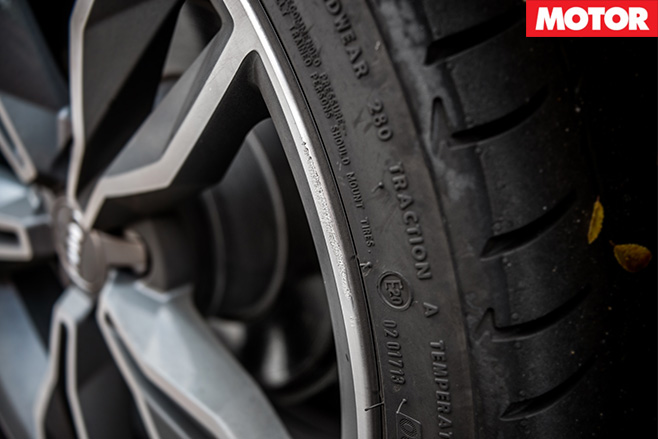
Scuff aside, it’s been a quiet month for the S1, however day-to-day driving really plays to its strengths. Its size is one of my favourite things about the car and makes a real difference when searching for a park or squeezing through gaps in traffic that would warrant sharp inhalation, if not be outright impossible, in larger vehicles.
That said, while earlier I described the S1 as “a tiny city car” it isn’t actually that small. It’s 56mm wider and 18mm taller than a first-generation Subaru WRX, though also 365mm shorter. Thankfully, a 2469mm wheelbase means interior space is still reasonable.
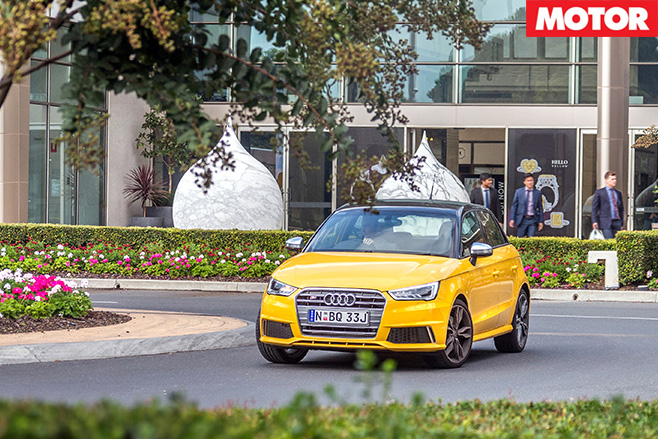
The driving position itself is very good and the leather-wrapped wheel feels spot-on in size and thickness to my hands, though I can never remember which wheel-mounted controls do what and end up just using trial and error until I stumble upon the function or readout I need.
The basic interior architecture of the S1 is five years old, aeons when it comes to Audis, but it’s not necessarily a bad thing. If Audi’s new Virtual Cockpit – found in everything from the new A4 to the R8 – is an Xbox One, then the blocky graphics in the centre of the S1’s instruments are akin to a Super Nintendo, but the slate-grey dials look great and are easily read.
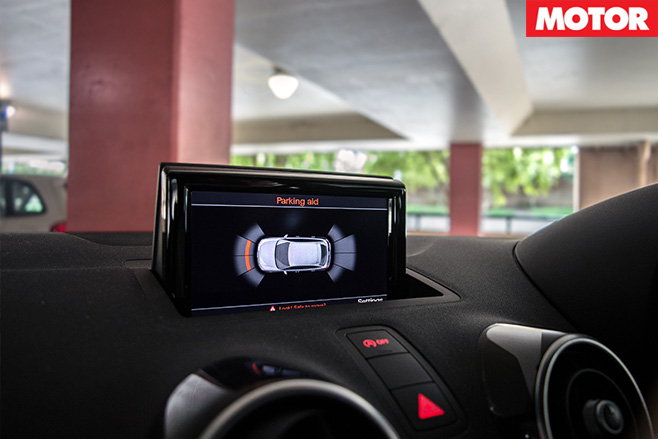
One small annoyance is the wheel for scrolling through menus is calibrated back-to-front for right-hand drive markets, though a bigger one is the inability to select tracks when playing music via Bluetooth. You can select the next or previous track, but not individual songs, which is no doubt due to the age of the system (five years is a long time in technology!). Next month, our little yellow terror heads for the hills.
Month: Four Liked: Size makes it a great city car Disliked: Gutter rash; not having time to drive it more Favourite moment: Scoring a park that larger cars have to drive past because they don’t fit
Fuel this month: 9.1L/100km Average: 9.1L/100km Distance this month: 1215km Total: 6774km
Want to see more of our Audi S1 long-termer? Check out the below:
- Part 1 of the Audi S1 long term test
- Part 2 of the Audi S1 long term test
- Part 3 of the Audi S1 long term test
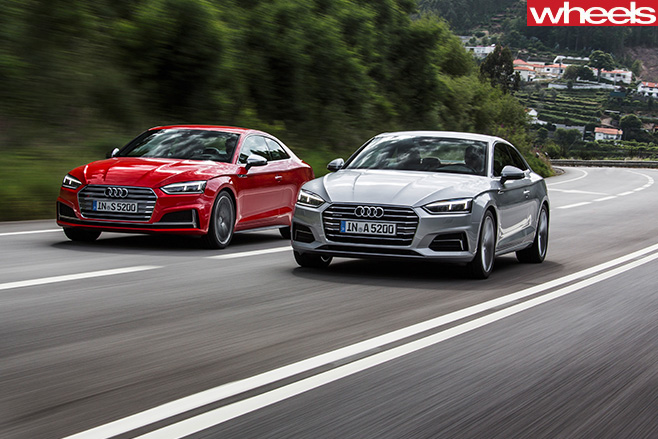
Superbly styled exterior of Audi’s new coupe shows off Ingolstadt’s metal pressing skills.
WHAT IS IT? Two-door four-seater addition to Audi’s growing ‘B9’ generation of mid-sizers. It’s built on the same MLB Evo platform as new A4 sedan, Avant and Allroad quattro.
WHY WE’RE TESTING IT It’s almost ready for launch in Europe, but Australia will have to wait until next year for the Audi A5/S5 Coupe. The international launch in Portugal provided our first chance to find out if has more going for it than those looks.
MAIN RIVALS The BMW 4 Series Coupe and Mercedes-Benz C-Class Coupe ranges provide the obvious competitors for the regular A5 Coupe line-up. Most obvious rival for the S5 Coupe is the turbo 3.0-litre, six-cylinder powered BMW 435i.
PLUS: Exterior design; interior quality; performance of S5 Coupe MINUS: Stiff ride of A5 Coupe; rear seat headroom
THE WHEELS REVIEW Frequently – and justly – Audi is praised for the precision and beauty of its interiors. Now, with the new A5/S5 Coupe, hymns to Ingolstadt’s mastery of metal will need to be composed. To run a finger along the join between the four-seater’s clamshell bonnet and its front guards is to encounter pressed perfection.
Yet this is just one detail – perhaps the most outstanding – to be savoured. This coupe is a real looker. Compared with the visually bland A4 sedan and Avant wagon (very close under-the-skin relatives), the coupe is a richly detailed and lusciously proportioned feast for the eyes. It is surely one of the best looking shapes to emerge from Audi’s design studios in recent times.
With the local launch so far off, Audi Australia has not yet finalised its A5/S5 Coupe line-up. A spokesman said the company is aiming for prices similar to current models, although there will be some adjustments to the line-up.
It’s likely the slow-selling 2.0 TDI turbo diesel variant will be dropped and that a 140kW front-drive 2.0 TFSI will be the least expensive model in the range. While there will be a 3.0 TDI quattro, the choice between 160kW and 210kW versions of the turbo diesel V6 is yet to be made.
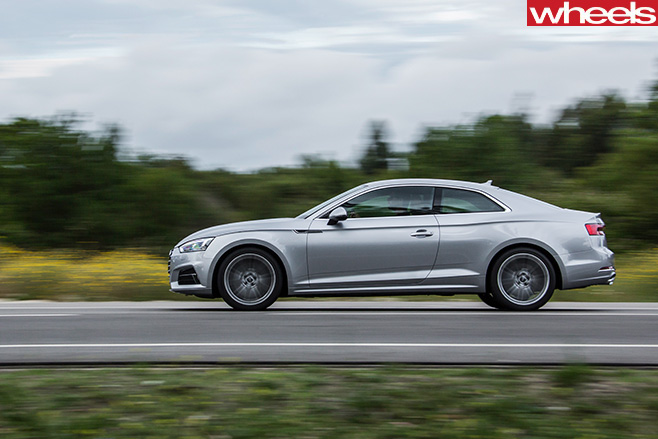
While the new A5/S5 Coupe’s external dimensions are very close to the previous generation, there’s a little more room inside the two-door. While the slight increases in cabin length and shoulder room are welcome, rear-seat headroom in the Coupe remains tight. Anyone taller than, say, 180cm will find the Coupe’s rear seat headroom insufficient.
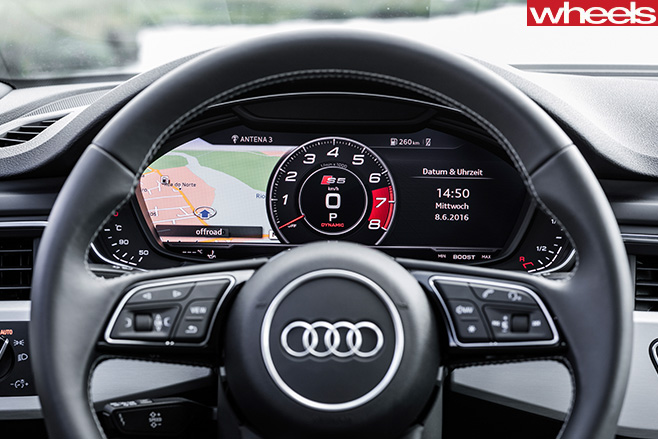
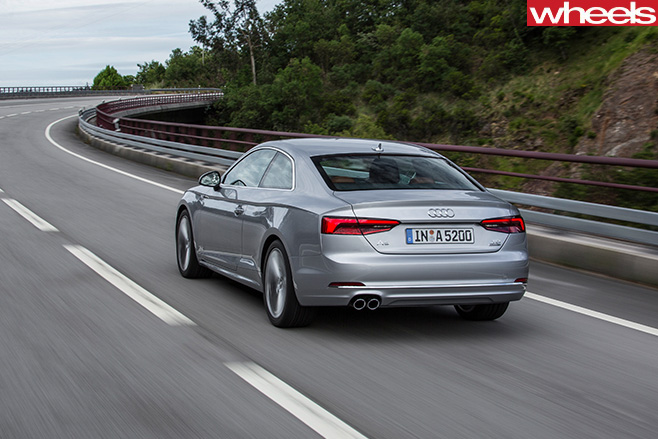
For looks, the A5 Coupe rides lower and stiffer than the new A4 sedan and Avant built on the same MLB Evo platform. The ride of the A5 Coupe 2.0 TFSI quattro was noticeably stiffer. While it was acceptable on Portuguese roads, it may prove a shade too brusque on Australia’s often second-rate blacktop.
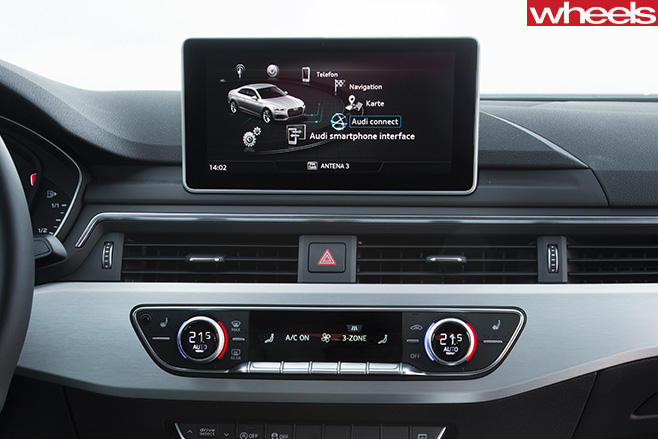
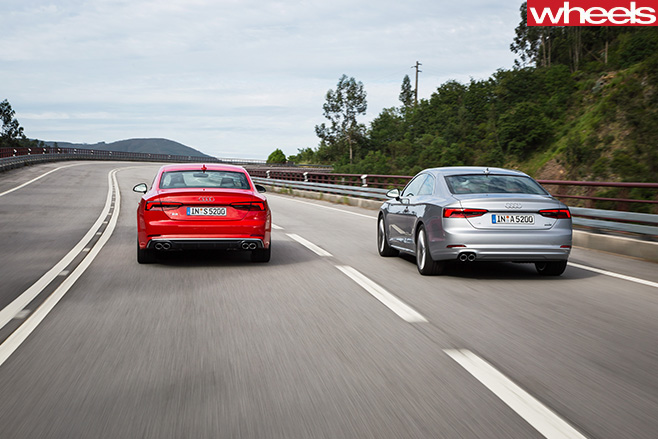
Strangely, the supposedly sportier S5 Coupe had a more rounded ride than the A5 Coupe 2.0 TFSI quattro. With 260kW on tap, acceleration is in a different league. Audi’s new turbo 3.0-litre V6 is a refined and torque-rich propulsion unit. And the car’s chassis has the quattro-enhanced grip and handling finesse to make the most of it.
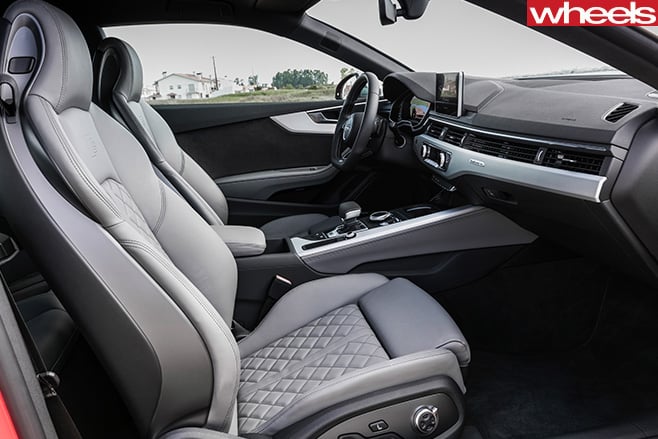
Setting new Standards
New A5/S5 Coupe’s standard equipment will be better than the current car. Audi has made a number of across-the-board upgrades that go into everything rolling off the Ingolstadt production line. These include front seatbelt feeder mechanisms, Audi’s Drive Select system, LED rear lights and Xenon headlights (with different grades of LED headlights either standard or optional, depending on model)
SPECS Model: Audi S5 Coupe Engine: 2995cc V6, dohc, 24v, turbo Max power: 260kW at 5400 to 6400rpm Max torque: 500Nm at 1370 to 4500rpm Transmission: 8-speed auto Weight: 1690kg 0-100km/h: 4.7 sec (claimed) Fuel economy: 7.4L/100km (European combined cycle) Price: $125,000 (estimated) On sale: First half 2017
