
1. BMW i3 Fuel economy: 0.0L/100km
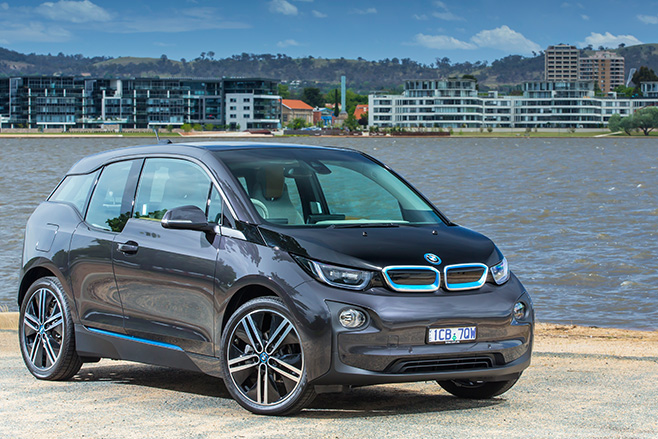
Go for the pure electric i3 and you’ll use no fuel at all, courtesy of a 22kWh battery pack claimed to cover 190km. The 125kW/250Nm motor provides snappy performance too.
2. NISSAN LEAF Fuel economy: 0.0L/100km
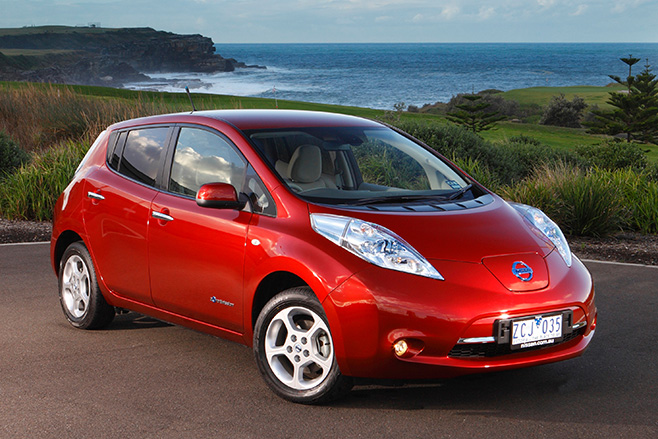
Bigger body and bigger battery (24kWh) than the i3, but the Leaf’s range claim is only up to 170km. Respectable performance from the 80kW/280Nm motor, but bland dynamics.
3. TESLA MODEL S Fuel economy: 0.0L/100km
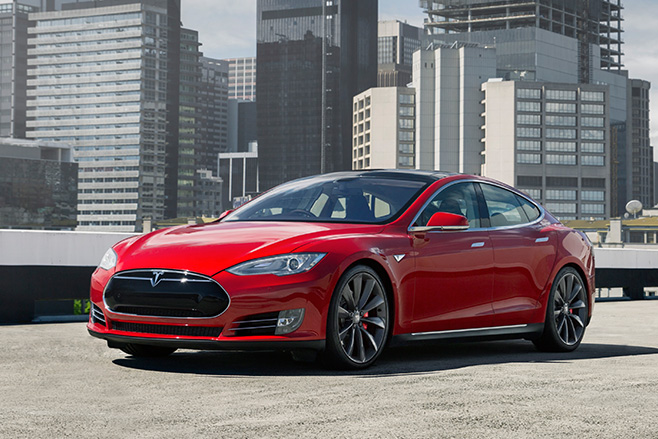
If it’s no-fuel excitement you want look no further than the Model S P90D, which delivers 967Nm. Tesla trumps on range too, with up to 557km for the lower-powered 90D version.
4. AUDI A3 SPORTBACK E-TRON Fuel economy: 1.6L/100km
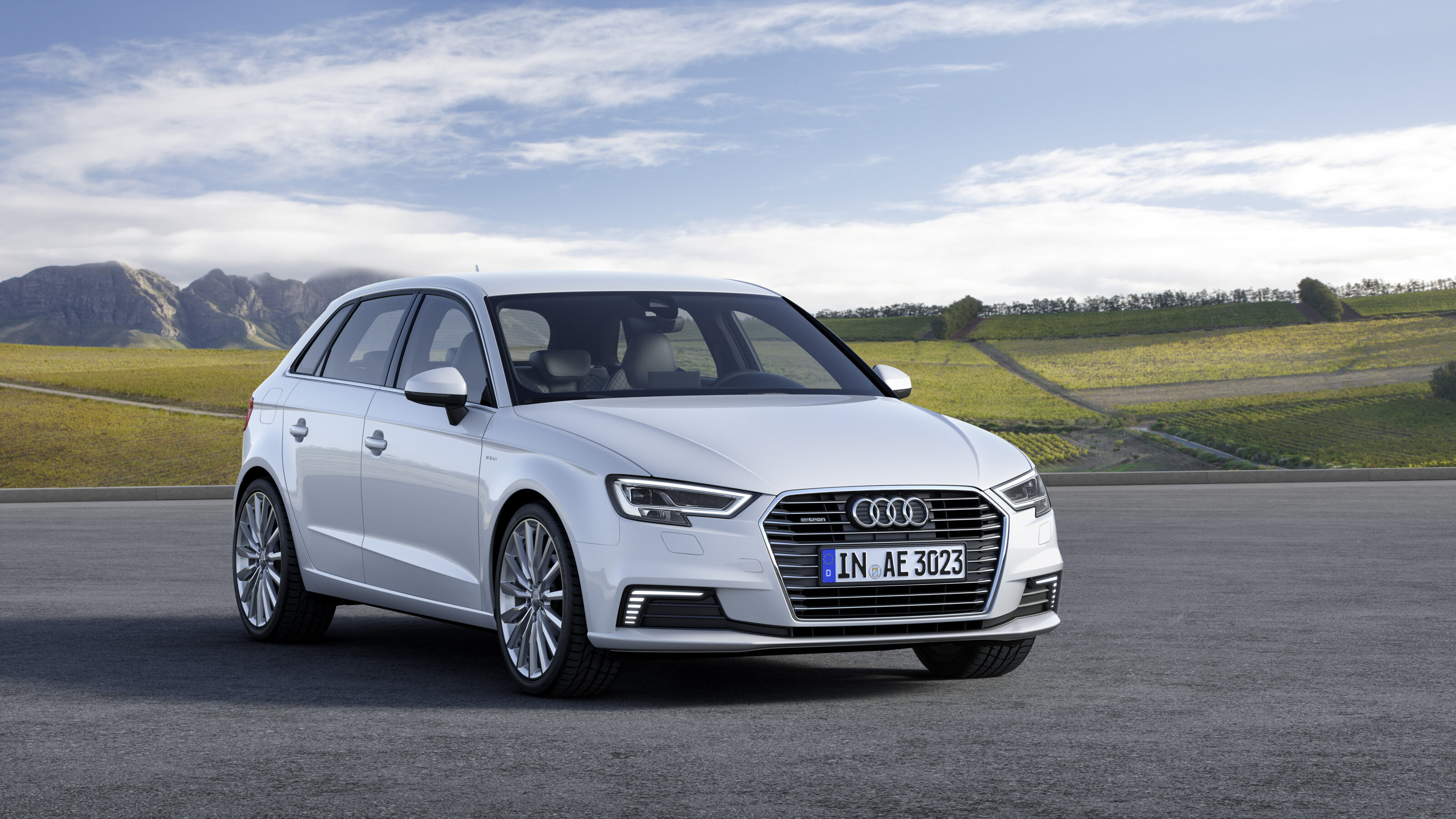
You’ll use either no fuel or lots more than 1.6L/100km with Audi’s plug-in. Good fun, though, with a combined 150kW/350Nm thanks to a 1.4 turbo four paired to the electric motor.
5. MITSUBISHI OUTLANDER PHEV Fuel economy: 1.9L/100km
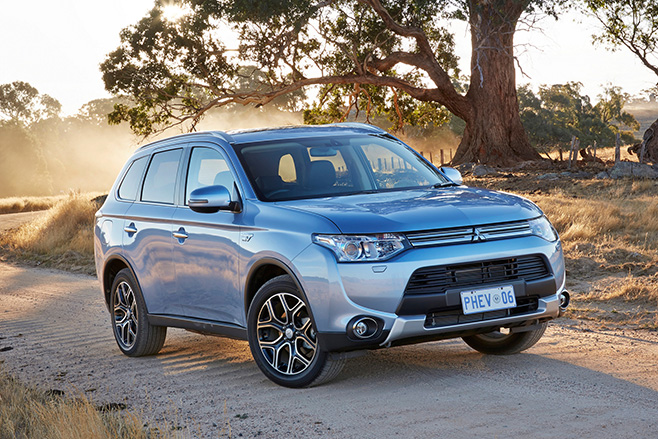
Decent drivetrain, shame about the rest of the car. Still, greenies will like the 60kW motor at either end, backed up by a 2.0-litre four-cylinder petrol engine.
First published in the July 2016 issue of Wheels magazine.
Wheels learns the tricks to mastering the Belgian monster.
Here at Wheels we’re lucky enough to have driven some of the world’s best race tracks. Nurburgring, Laguna Seca, Kyalami, the newly-opened Highlands Park in New Zealand and, of course, our own Mount Panorama.
But one that’s eluded us until now is Spa. Many Formula One drivers list it as their favourite track. And the fast Eau Rouge corners, in particular, are rated among the best and most challenging in F1.
Arriving at the track led to initial disorientation. Looking down a steep section I was trying to work out what part of the track it was. Turns out it’s the section alongside the pit exit, straight after the first corner hairpin. TV does not do it justice how steep the road is at that point.
My opening lap is a learning experience. This is a track that requires serious respect. Walls are close in some places and, other than the corners at either end of the start-finish straight, it’s super fast.
You get that impression the second you’re heading down that steep hill. It’s about heading towards the right of the track to set up for the biggest challenge on the 7.004km course: Eau Rouge.
The trick is to hug the right wall and tip in fast – flat if you’re brave – before straightening in the middle of the corner and punching the brake hard, using the rise in the track to force the nose into the bitumen and point it for the right-hander.
Exiting is just as tricky. It’s about aiming left for an apex you can’t see, and an apex that is almost 41m above the lowest point in the corner. Fortunately, the ripple strip is low and smooth, almost encouraging a healthy corner cut.
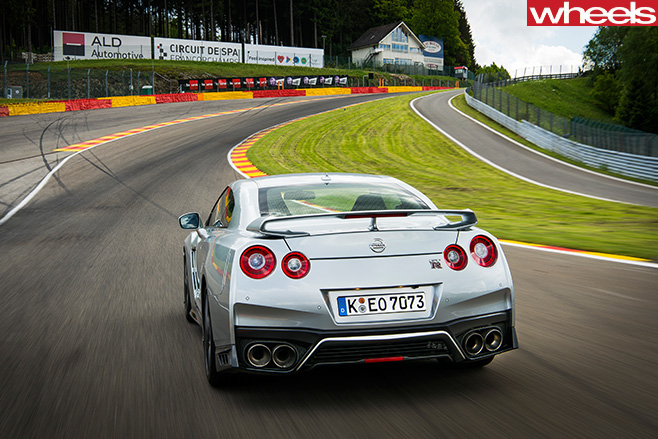
Les Combes are fairly standard, and as with many other parts of the track there’s generous run-off.
From there, though, you’re heading down hill, first with the long, tightening Bruxelles right-hand bend then into the turn 11 left-hander.
Again, it’s steep down hill into the opening Pouhon left-hander. A double apex corner that can be taken with serious pace, it also requires patience so as not to run wide on to the strips of Astro-turf that define the edge of the track. Apparently they’re okay in the dry, but nasty in the wet; I’m happy to stay away from them.
Campus and Stavelot are indicative of a track that constantly challenges. Not particularly fast, but demanding of the correct line to ensure you don’t lose speed unnecessarily.
More fast stuff follows, and it’s into Blanchimont where many F1 passes have occurred. It’s super fast and sweeping requiring a dab of the brakes and correct track placement.
The chicane leading on to the straight is a brief pause to the high speed action and some time to dig deep for the next lap.
It’s a hugely satisfying track once you start to link it together and get some corners right. But it’s one that makes you appreciate the talent and commitment of the Formula One drivers. Having completed nine laps I promptly log on to YouTube to look at just how quickly they’re going, especially through Eau Rouge. I was in a Nissan GT-R and 160km/h required decent commitment. F1 cars hook in at almost double the pace.
As well as being one of the best corners to watch in F1, Eau Rouge highlights just how good F1 cars are at high speeds.
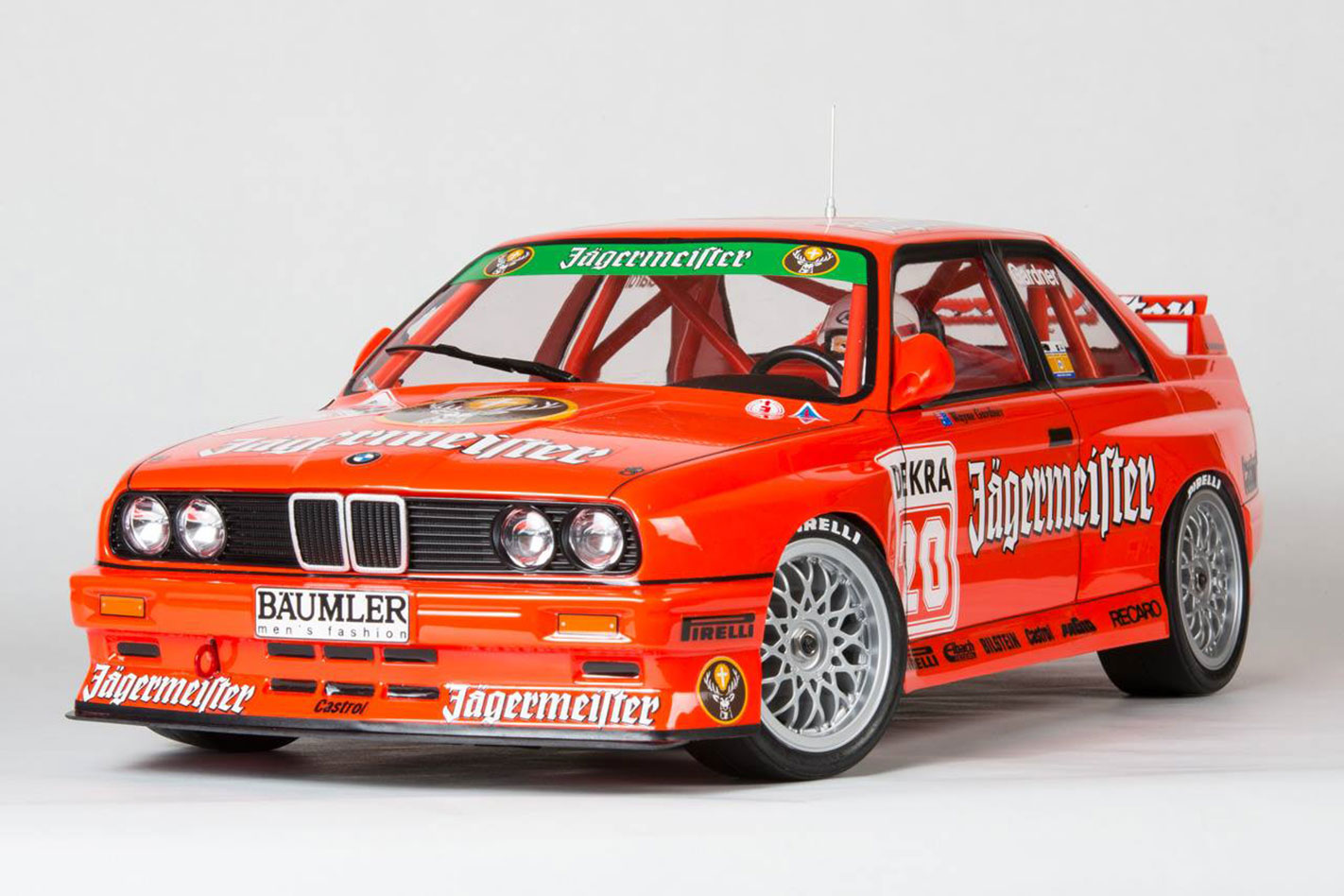
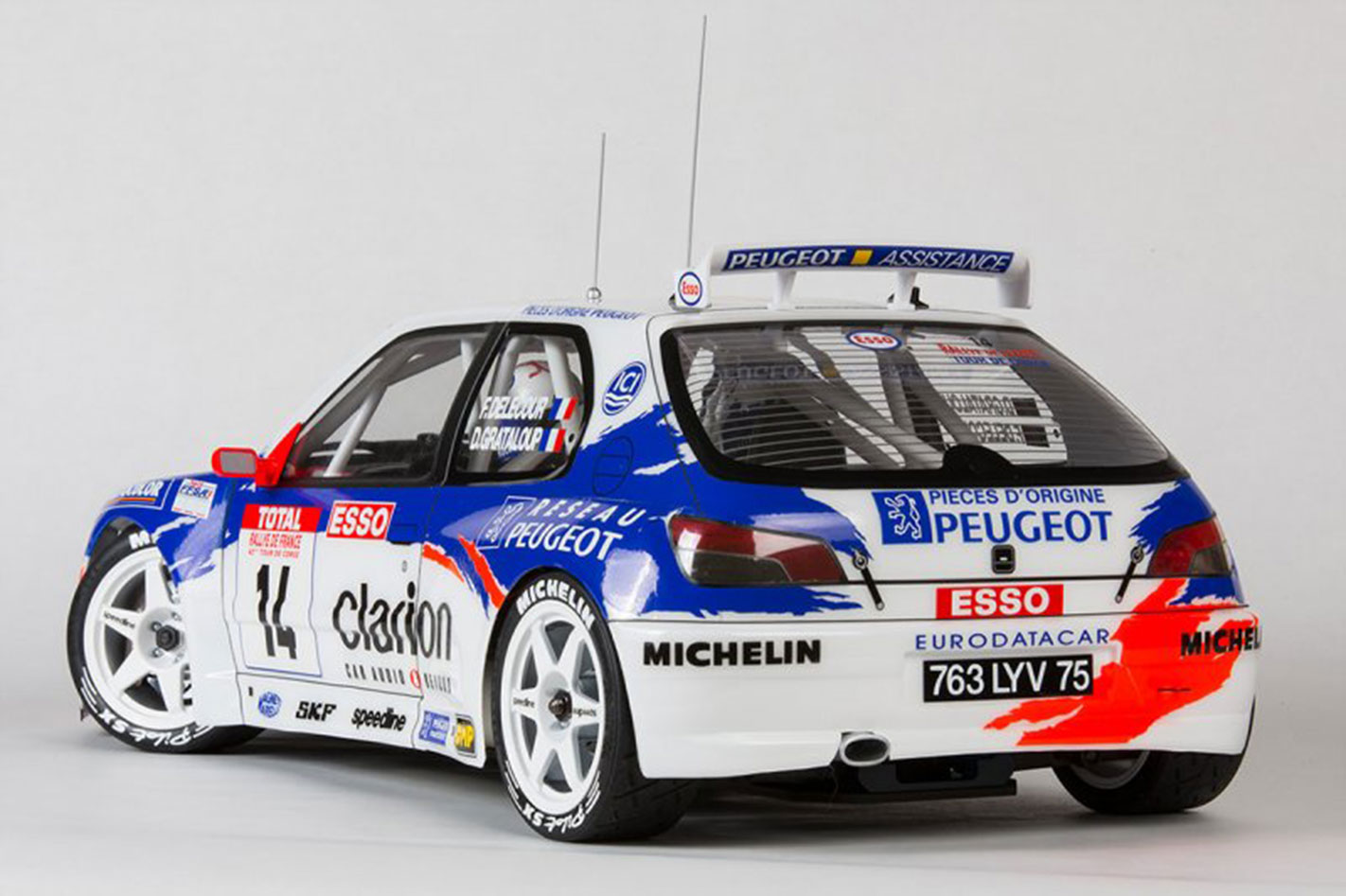
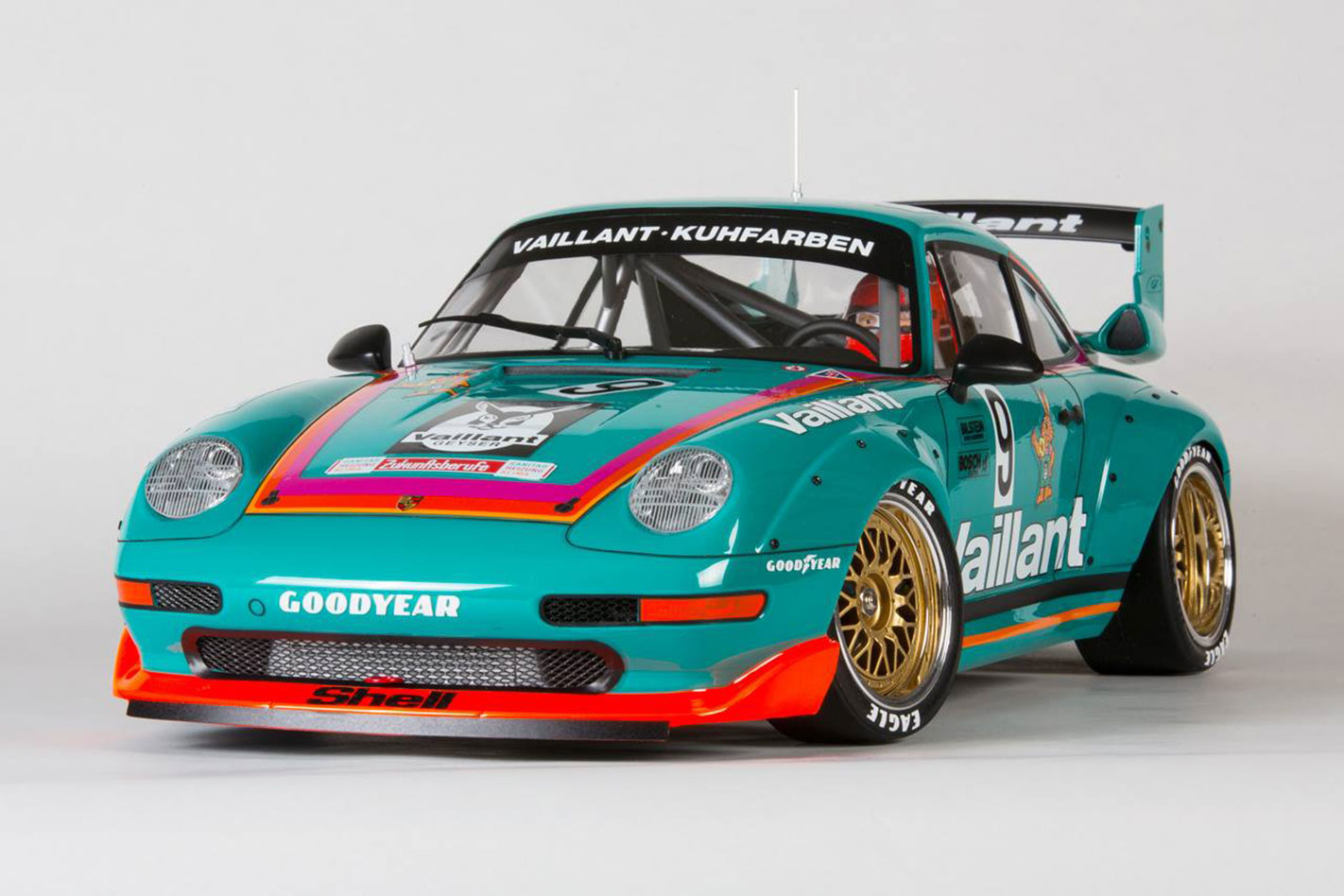
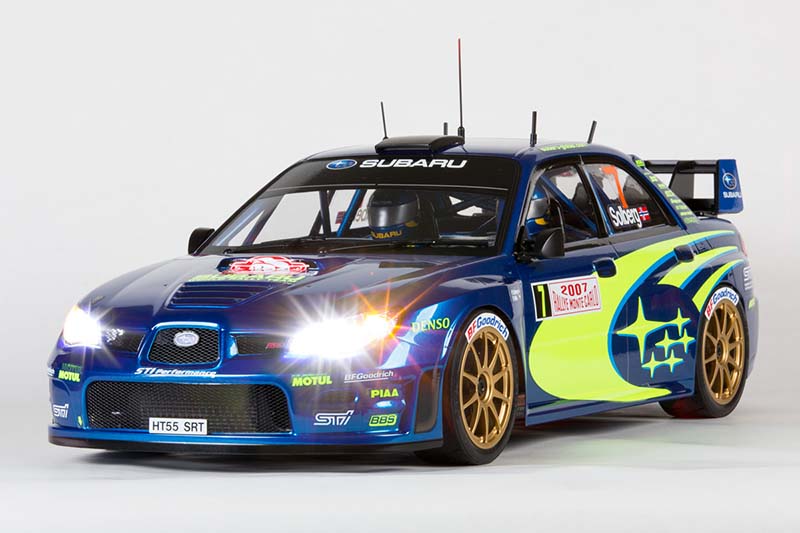
For those of us unable to afford a multi-million dollar car collection, scale and remote control cars offer a more affordable outlet that somewhat sates the desire for the real thing.
Usually enthusiasts like in one of the two camps, preferring the static scale models or the ability to drive and race electrically-powered replicas. Enthusiast Adrian, who goes by the name Kuhfarben on the website TamiyaBase.com, is a mixture of both, however.
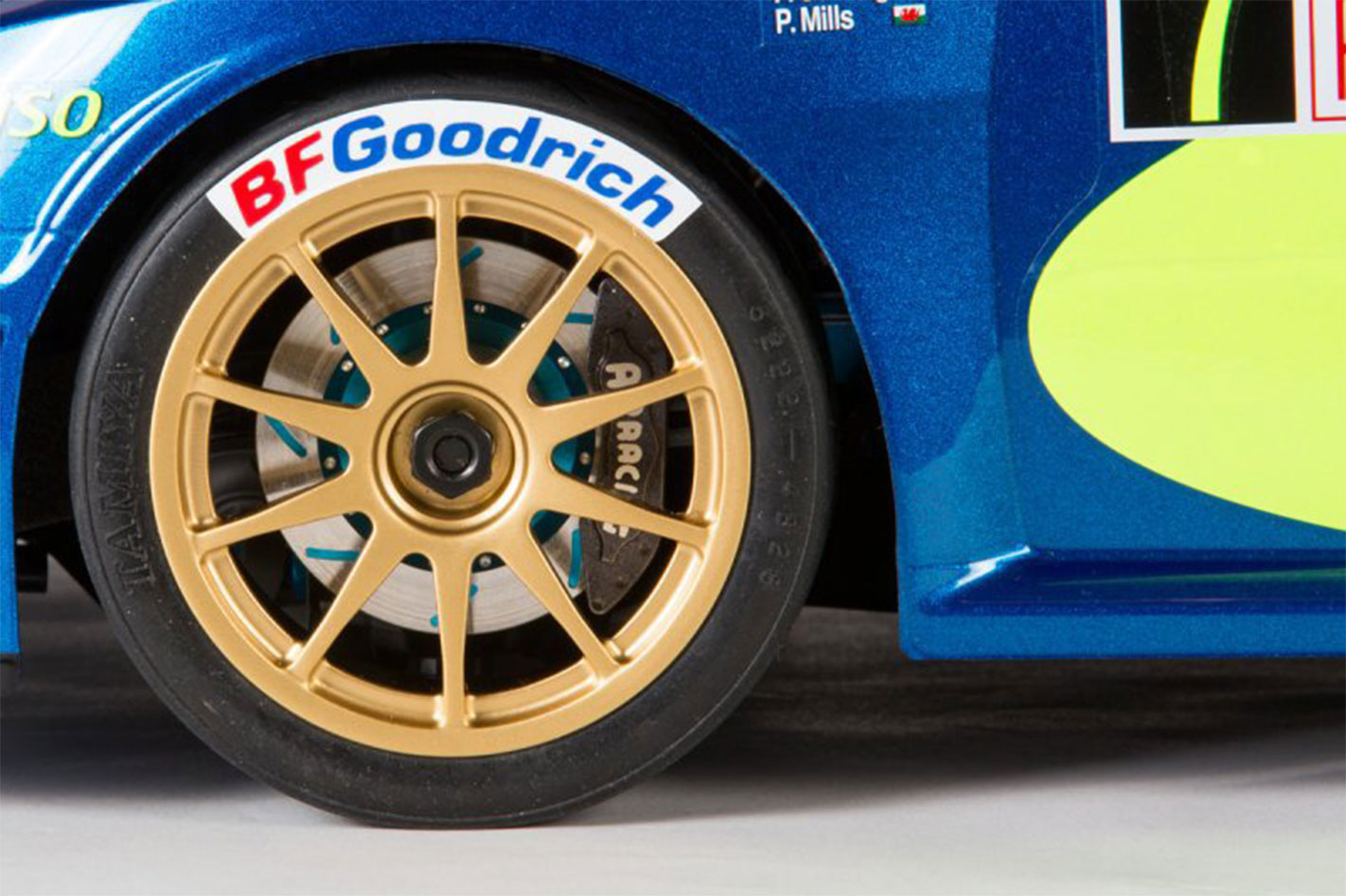
Adrian adds real metal brake discs, full roll cages, painted interiors, adjusts wheel fitment, makes his own exhaust systems and much more in an effort to make these incredible models a spitting image of the real thing.
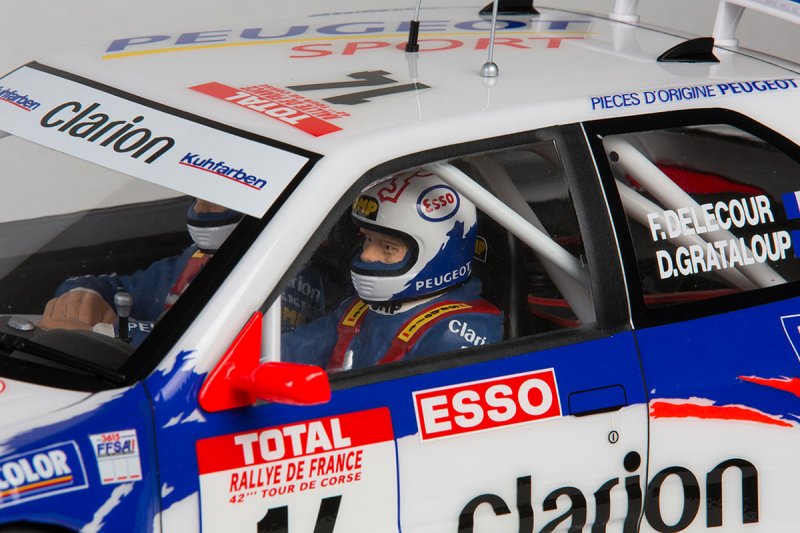
Here are a few of our favourites.
BMW E30 DTM
A car’s engine, if you want to get right down to it, is nothing more than a pump. It draws in air and fuel, burns it (which is where the power is made) and then expels what’s left. The efficiency of any engine is directly related to how well it takes unburnt fuel and air in, and how well it gets rid of the burnt left-overs – in other words: how well it breathes.
To increase that efficiency, a supercharger (itself a pump, if you want the truth) pressurises the air going in to the engine, forcing it down the engine’s throat. That means more fuel can go in at the same time as that extra air and there’s a bigger bang. Bigger bang equals more power. Think of it this way if it helps; what do you do when your campfire won’t burn properly? Yep, you blow on it. You become the supercharger. It’s the same process in your car’s supercharged engine.
There are different types of supercharger, but the important thing to know is that they’re powered by the car’s engine, usually by a rubber belt. That means they consume a certain percentage of the engine’s power, but the gain they provide makes up for that and then some.
Talk about a symbiotic relationship!
HYUNDAI GENESIS SENSORY Score: 80/100
Price & Equipment | 17/20
Analogue clock underscores a classy cabin, yet it’s modern enough to feature slick ambient lighting, though ‘leather appointed’ trim is not all actual leather. Masses of rear legroom and there’s an armrest with controls for front seat position, audio and the rear window shade. Boot opens hands-free when it detects the key; hauls 493 litres.
Performance & Economy | 14/20
Hyundai’s 3.8-litre V6 is powerful but not especially sonorous; musters 397Nm at a steep 5000rpm and 232kW at 6000rpm. Eight-speed auto keeps it spinning for 0-100km/h in 6.5sec, while combined-cycle consumption is only okay for a two-tonne limo, at 11.2L/100km. Thankfully, the Genesis is happy with a (77L) tankful of 91 RON.
Ride & Refinement | 17/20
Encouraging initial ride and refinement impressions from the back seat, and similarly positive from behind the wheel. Isolates tyre, wind and suspension noise superbly, with no unwanted road and drivetrain vibes, and rides beautifully. Conservative combination of 245/45 Hankooks on 18-inch wheels with locally tuned suspension do the job.
Steering & Handling | 16/20
Initial dynamic assessment from a quick track session suggests the Genesis is quite good fun, but away from its natural habitat, it’s no Ultimate Driving Machine. Yet it’s well balanced, with accurate steering and decent drive out of corners. However, the rack-mounted motor-assisted steering is low on feel and ESC can be over-zealous.
INFINITI Q70 GT Score: 76/100
Price & Equipment | 16/20
Shared equipment includes a reversing camera, auto wipers, dual-zone climate control, powered and heated front seats, electric steering column, smart key, sat-nav, bluetooth connectivity and tyre-pressure monitoring. But the Q70’s lane-departure and blind-spot systems provide corrective input, and it has ventilated front seats and a sunroof.
Interior & Versatility | 16/20
Infiniti features semi-aniline leather and terrific build quality. Design is a bit fussy but the overall vibe is modern Jap-luxe. Foot parking brake is old-fashioned, though driver’s memory function adds exterior mirror position and climate control setting to the usual seat and steering wheel position. Rear compartment is generous; likewise its 500-litre boot.
Performance & Economy | 15/20
Smaller 3.7-litre V6 makes less torque (360Nm) but spins to 7000rpm to produce 235kW and has a purposeful, if coarse, note. It’s a bit quicker (and sportier) than the Hyundai, sprinting to 100km/h in 6.2sec. Relatively light 1719kg kerb weight helps Q70 deliver 10.2L/100km economy. And seven-speed auto’s downshift rev-match function is cool.
Ride & Refinement | 16/20
GT level is the Q70 sweet spot if ride comfort is a priority. With sports suspension – and pretensions – dropped, along with the Sport Premium’s 20s (in favour of modest 18s with 245/50 tyres), the Infiniti takes on a more relaxed touring persona. All versions are quiet inside but the GT is even better on narrower rubber with fatter sidewalls.
Steering & Handling | 13/20
On smooth roads the Q70 is entertaining and reasonably well balanced, its variable-assist, speed-sensitive rack-and-pinion steering moderate in its responses. However, the common bumpy Aussie road removes much of the Infiniti’s poise and ultimately betrays a lack of chassis cohesion and dynamic polish.
VERDICT
The front-engine, rear-drive layout usually provides a fine basis for a good handler, and here it’s the Hyundai that makes the most of it. Neither car will trouble a 5 Series or E-Class, but the Genesis is certainly more comfortable and more capable than the Q70. It’s a better tourer, or limo, the latter especially considering a warranty no Bee Em or Merc can match. You get a mid-level Genesis for base
Infiniti money, though they’re close in terms of spec and equipment. The Hyundai is a bit roomier, with a more appealing cabin design, but both do non-Euro prestige respectably well. On the flipside, the Q70 gets the nod in the drivetrain department, being sportier, quicker and thriftier. Yet, as we summarise in Showroom, the ‘Hyundai Genesis is a better luxury sedan’.
If you think a 2000 piece LEGO model is difficult, then you should thank your lucky stars you didn’t have to put together the LEGO Ford GT displayed at Le Mans 24 hours.
It took 40,000 LEGO pieces and three weeks to build this scaled-down version of the debuting Ford GT race car, which is the talk of the town at this week’s Le Mans event.
It’s bigger than any of the LEGO models we own, but scaled at one third of the size of the real Ford GT and will be displayed at Circuit de la Sarthe in France to celebrate 50 years since the Ford GT40 scored its memorable 1966 Le Mans trifecta over Ferrari.
Working with LEGO expert-builder Pascal Lenhard, Ford also built a LEGO replica of the historic Ford GT40 which won the Le Mans title four times from 1966.
The models included logos and vehicle characteristics like the Ford GT’s rear diffuser, race number (66) and green wing mirrors.
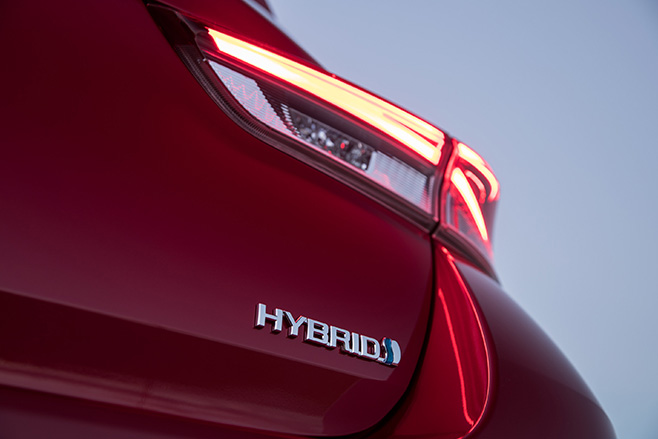
The Toyota Corolla Hybrid has cut the hugely popular hatchback’s fuel consumption by a third.
Toyota has released full details for its new petrol-electric variant a week after WhichCar reported the model would be priced from $26,990
The Corolla Hybrid borrows its drivetrain from the Prius to achieve an official combined fuel consumption figure of 4.1 litres per 100km – two litres lower than the regular petrol-engine versions of the five-door.
Despite the fuel tank shrinking by five litres to 45L, the efficiency extends the Corolla’s theoretical driving range by almost 280km to 1097km.
The Corolla Hybrid’s 1.8-litre four-cylinder petrol engine and electric motor produce a combined power output of 100kW. This is slightly less than the 103kW of other models that use a different four-cylinder of the same engine capacity, that doesn’t require premium unleaded.
Toyota doesn’t provide acceleration figures, though the Hybrid is likely to be handicapped by the extra weight of its special components. They add 90kg to the kerb weight compared with the range-topping, $28,990 ZR hatch model it shares most of its standard equipment with.
These features include keyless entry and engine start, dual-zone climate, and LED daytime running lights.
Boot capacity remains at 360 litres because the Hybrid’s battery pack is positioned under the rear seat.
The Hybrid is the most advanced Toyota Corolla beyond its more fuel-efficient drivetrain, which offers limited electric-only motoring. It also features electronically controlled brakes, larger front brakes, and a fully independent rear suspension instead of the torsion-beam set-up of other variants. Such double-wishbone suspensions are typically more expensive but provide superior ride and handling qualities.
The Corolla Hybrid has been available for a number of years in other markets, but now becomes the fifth Toyota hybrid model to be offered in Australia.
The Corolla Hybrid’s 4.1L/100km fuel consumption figure places it behind the Prius (3.4L/100km) and Prius C city car (3.9L/100km) but ahead of the Prius V people-mover (4.4L/100km) and Camry hybrid (5.2L/100km).
CARS being hacked make for great headlines. It provokes sinister images of a menacing hacker typing away on a keyboard in darkness, and then having the ability to turn your brakes off while you barrel down the highway – scary stuff.
But it is time to put down the tin-foil hat, because Hackers cannot – and are not about to – cause the biggest crash the M1 has ever seen. No unmodified car that the hackers didn’t have physical access to has been hacked in any meaningful way – ever. There have been instances where some running systems within the car can be played with – namely the Nissan Leaf’s air-con can be controlled remotely, and the Mitsubishi Outlander hack which was reported recently was only limited to systems such as the alarm, charging, and heating. Neither of these hacks posed any safety threat to owners of the car, and were actually carried out by a dedicated team of white hat (good guy) hackers trying to find flaws.
But let’s talk about the big scary hacks – the ones where the steering, braking and acceleration of a car is controlled remotely.
The poster boy for this type of hack is the Jeep Cherokee, which was ousted by a team of US hackers as being rather vulnerable. Here’s the catch, however; The car that was hacked was owned by the hackers, who had spent months preparing the car by updating the operating system to include key programs, and then flashing the software into the car’s computer.
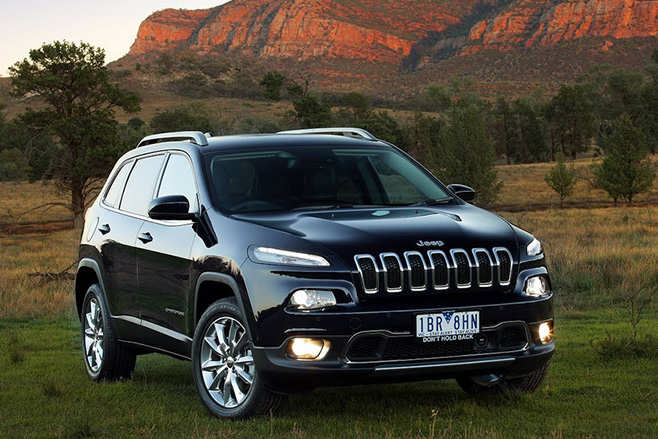
So extensive was the work needed to allow the team to hack the car, the ECU had to be replaced twice after botched attempts. A Fiat Chrysler Australia representative stressed to WhichCar that the technology which was hacked in the US wasn’t even installed on cars sold in Australia.
“That was exclusive to US vehicles, and in fact the technology doesn’t exist anywhere outside the North American market,” the spokesperson said.
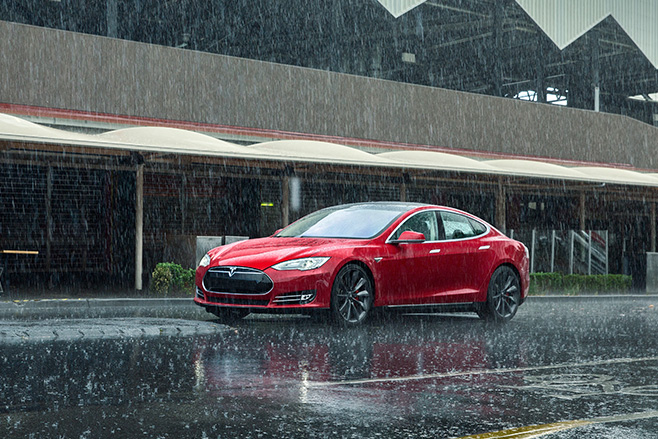
Tesla was reported as another automaker to fall foul of hackers last year, when outsiders were able to shut the car off and force it to stop. Again, though, this was a white hat hack: they had access to the car they eventually hacked, and were only successful after disassembling the dash to fiddle with the inner workings of the onboard computer, including SD card slots and USB ports – parts of the car only Tesla technicians were meant to access.
Currently then, if you’re worried about hackers taking over control of your car, the only thing you need be looking out for is a team of people pulling your car apart for weeks on end.
Regardless, Tesla Australia spokesperson Heath Walker explains the California-based company is actively working to safeguard against any potential threats.
Walker was quick to point out just because one manufacturer is vulnerable, not all are.
“It is worth noting that other models are set up very differently to the Model S in terms of connectivity,” Walker told Which Car.
“Not every car and its connectivity is the same. If one car is hacked, it doesn’t mean that all cars with connectivity will be hacked.”
Walker added Tesla has taken on input from security experts on what it can do as a manufacturer to improve cyber security.
“From recent investigations and research around the hacking of vehicles, the three main things that were recommended for vehicle manufacturers were the separation of the IT System from the driving system – which Tesla does; software updates – which Tesla does to be able to fix any breaches in security instantaneously; and finally, identifying secure codes with each communication with the vehicle… similar to what a bank would do, whereby [when] you undertake a transaction with a bank you get an individual security code as opposed to a repetitive code – and we also do that.
“So Tesla has ticked all the three recommendations in terms of what the experts in this field say.”
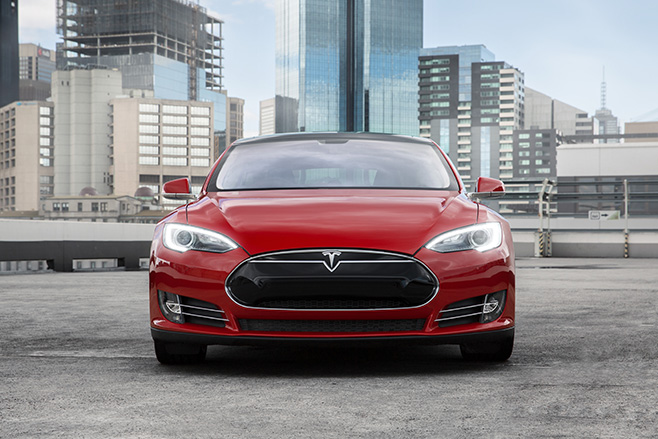
Tesla has built a dedicated team to work on cyber security, poaching Chris Evans from Google’s dedicated team of hackers – Project Zero –, as well as long-time Apple employee and former head of OS Security Aaron Sigel.
“That just shows that by going out and recruiting the best in those areas… how seriously we take those matters,” Walker added.
“I don’t think it is unique to vehicles, I think that any online tool has the ability for security breaches, and thus we have to be proactive in that field and are taking steps proactively. We are constantly testing our security in advance of release to ensure that we are ahead of the game. I think the fact that we can provide over the air software updates which can include security measures is a huge advancement in automotive technology.”
However, just because hacks like those that have been reported can’t happen, it doesn’t mean manufacturers shouldn’t be wary.
The Australian Cyber Security Centre (ACSC) is responsible for leading the Australian Government in regards to cyber threats, and says car manufacturers need to be serious about security.

“If you are connected to the internet, you are vulnerable,” ACSC coordinator Clive Lines told WhichCar in a statement.
“As many devices and control systems now connect to the internet or are designed to be accessed via wireless for maintenance purposes, security must be a key consideration in the design and operation of these systems.
“As with all software, ACSC recommends that security patches and software updates be applied as soon as possible.
“Motorists should also seek specific advice from their car manufacturer when they learn of potential vulnerabilities.”
In conclusion, you don’t have to worry about a grimy teen with a laptop cutting the brakes on your car at all. At worst, if someone wanted to play with your car, they can fiddle with the air-con, but this is only on select models, and even then, these security holes are being patched rapidly.
But cyber security is a growing topic when it comes to new cars. Manufacturers need to take the issue seriously when building models with internet connectivity, and be ahead of the game. As a consumer, however, you don’t have much to worry about at all.
VOLKSWAGEN Group is believed to be on the cusp of announcing a major carve-up of its empire, as it struggles to pay for the rising cost of Dieselgate.
Rumours are flying ahead of a press conference called for later tonight Australian time, where the German carmaker is expected to announce it will shed some of its non-passenger car assets, including motorcycle brand Ducati, and truck-making arms MAN and Scania.
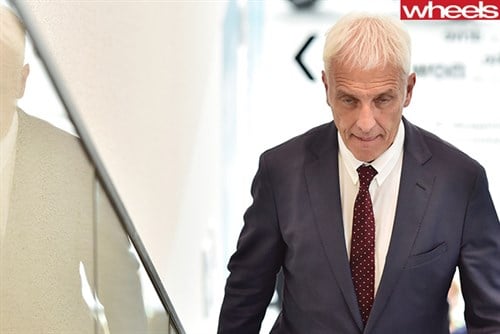
Volkswagen chief executive Matthias Mueller is believed to have already presented the change in strategy for the world’s largest carmaker to its supervisory board, gaining approval for tonight’s announcement, Bloomberg reported.
The biggest change – apart from the shedding of some of the company’s best-known brands – is believed to be plans to merge its parts operations for individual brands, including Volkswagen passenger cars, Audi, Škoda, and European budget brand Seat. Volkswagen is unique in the carmaking world in that it makes most of the components that go into its cars, rather than relying on outside suppliers.
Volkswagen Group has already flagged major changes for the way it will build cars in the wake of Dieselgate.
Instead of pursuing outright growth making traditional passenger vehicles, the carmaker says it will focus on developing new ride-sharing and the development of electric vehicles.
Dieselgate – the name given to the crisis that enveloped the carmaker in the wake of the revelation that it had cheated on vehicle emissions tests in mostly diesel engines – has already cost the company dearly.
In April, VW Group announced a A$25 billion dollar loss in 2015 as it accounted for fixes that it will need to apply to more than 11 million cars globally.
In Australia, VW will need to fix almost 100,000 vehicles. So far, the company has only rolled out a software fix to more than 8600 Amarok trade utes, with the next roll-out of fixes to apply to more VW, Škoda, Audi and Porsche-badged cars due soon.
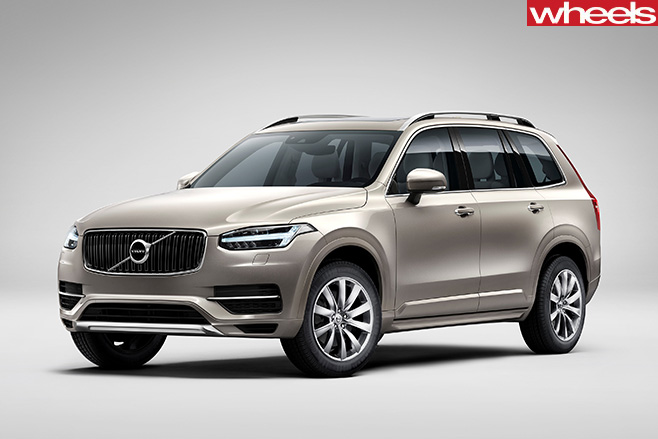
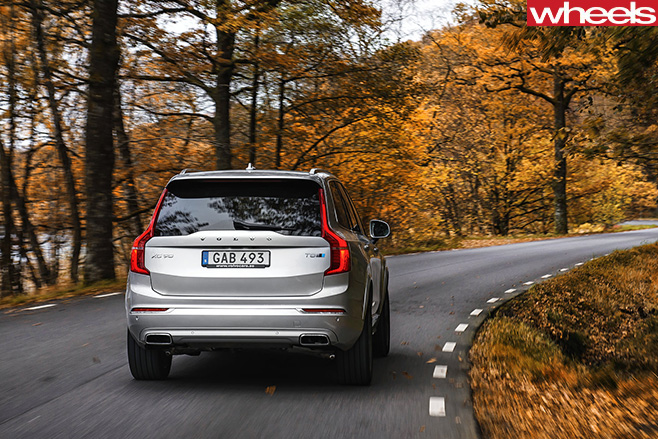
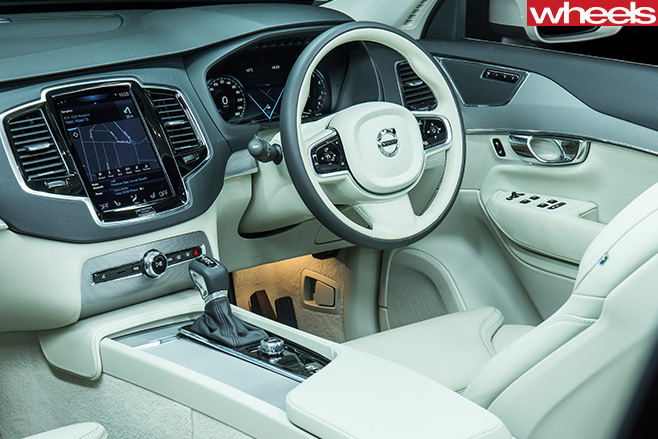
Volvo has a new, unlikely performance hero – the XC90 T8 SUV – thanks to those mad Swedes at Polestar. What’s more, it’s available here in Australia right now.
Polestar is the skunkworks responsible for hi-po Volvos like the V8 Supercars-inspired S60 and V60. The company’s new generation optimisation package for the flagship XC90 wrings out 314kW and 680Nm (up 11kW and 40Nm), making it the most powerful production Volvo ever.
Somewhat amazingly, all that grunt comes from a 2.0-litre, four-cylinder engine, though the T8’s ‘Twin Engine’ setup uses every known power-adder under the sun to get such huge numbers out of so little. The four-pot petrol engine is supercharged and turbocharged, direct injected and assisted by an electric motor.
The upgrade costs approximately $1850, depending on dealer labour charges. That’s on top of the XC90 T8 purchase price of $122,950.
As with the Polestar packages released for Volvo S90 and V90 last week, the XC90’s entire drivetrain is tweaked for better dynamic performance. It features improvements to throttle response, gearbox calibration, and overall engine output.
Other tricky tech in the XC90 T8 includes a more compact version of the ‘eAxle’ system found in the Porsche 918 Spyder. It combines the power of the internal combustion and electric engines to drive the Volvo’s rear wheels.
Australia has been a proving ground for Polestar in the past. The premier fast Volvo company sent its first Polestar-badged product Down Under exclusively, in the form of the Volvo S60 sedan.
It seems fitting that an SUV is the hottest production car ever made by the safety-conscious Swedish brand. After all, this is the same company that went touring car racing in the Volvo 850 family wagon.
