
MITSUBISHI Australia has recommended owners of its Outlander PHEV plug-in petrol-electric SUV turn off the vehicle’s wireless internet hub after hackers broke into one using nothing but a laptop computer.
The hack, revealed overnight, has found security breaches in the software used to allow owners to remotely control functions of the Outlander PHEV, British software security group Pen Test Partners said.
“Some of them [the hacks] are just funny, but some of them actually really are quite nasty,” online security researcher Ken Munro said in a video posted on the company’s website showing how the hacks worked.
What concerned the hackers was that unlike other remote access applications, which used the relatively secure mobile phone network to link an owner’s smartphone to the car, the Mitsubishi Outlander PHEV used an on-board wireless network that the researchers could easily access.
This, combined with a relatively insecure electronic key linking the owner’s software with the car, “just isn’t enough”, Munro said – even though he admitted that with basic key-cracking software it would take at least four days to work out what it was.

However, for about £1000, or the equivalent of $2000, hackers could have the key “almost instantaneously”, he said.
Once in control, hackers can turn on the car’s lights, play with the heating and cooling, turn off the alarm and open the doors, and even search for a victim using wireless network sniffing tools. At worst, though, hackers can only flatten the car’s batteries, although the ability to disable the alarm means breaking into or stealing the $47,490 plug-in hybrid is easier.
Since the hackers revealed their findings, Mitsubishi said it was working on a solution to the problem.
Mitsubishi Australia said Outlander PHEVs sold here did have the same app-based system as the one that was hacked.
“Our counterparts in Europe have recommended that, at this early stage and until further technical investigation, customers who are concerned about their vehicle should deactivate the WiFi using the ‘Cancel VIN Registration’ option on the app, or by using the remote app cancellation procedure,” Mitsubishi Australia spokesman Shayna Welsh told Wheels.
“In the meantime, the hacking is a first for Mitsubishi Motors as none other has been reported anywhere else in the world.”
Mitsubishi’s connected car woes follow on from an Australian hacker who in February revealed he was able to take control of any Nissan Leaf in the world – from a deckchair beside his pool – using a smartphone app that was meant to remotely link owners with the world’s best-selling electric car.
The security breach forced Nissan to take the Leaf’s internet-based owner’s access offline while it plugged the security gap.
Similarly, a group of US hackers was able to remotely break into a Jeep Cherokee and wrestle control away from the driver, playing with the brakes and accelerator while it was moving.
Online security researchers have also flagged the increasing use of keyless entry and start systems on cars as another potential open door for hackers to gain access to vehicles.
THE 24 Hours of Le Mans is the ultimate event in sportscar racing.
The gruelling twice-around-the-clock event pushes both man and machine to the breaking point, and many often plunge over that line.
Drivers must be at their best, both physically and mentally, to tackle the unique challenges of endurance racing. To just complete in – let alone win – one of sports most coveted events is recognised as an achievement in itself.
It could be assumed such a gruelling event would bar someone missing limbs that are vital to controlling a race car from competing.
You would assume wrong.
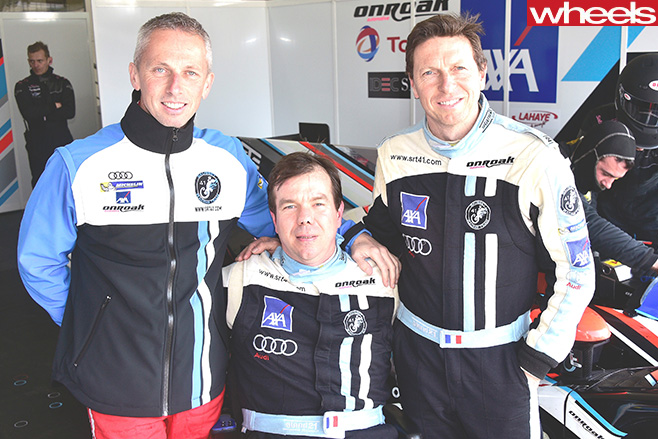
Sausset is not a professional racing driver – in fact he has only been racing competitively for roughly 12 months – but this year the ex-businessman will create history when he races in this year’s 24 Hours of Le Mans.
Less than four months after the 46-year-old underwent surgery, he hatched a plan with close friend, professional driver, and mentor Christophe Tinseau to compete at the 24 Hours of Le Mans in an LMP2 prototype. Four years later, the plan is becoming a reality.
The FIA, along with 24 Hours of Le Mans organisers ACO, have granted Sausset and co. an entry under the experimental Garage 56 banner.
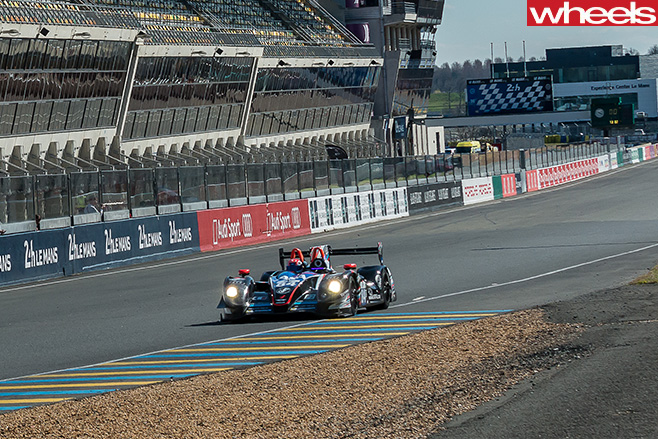
You may be asking how, exactly, a bloke with no arms or legs manages to pilot a 300km/h road car?
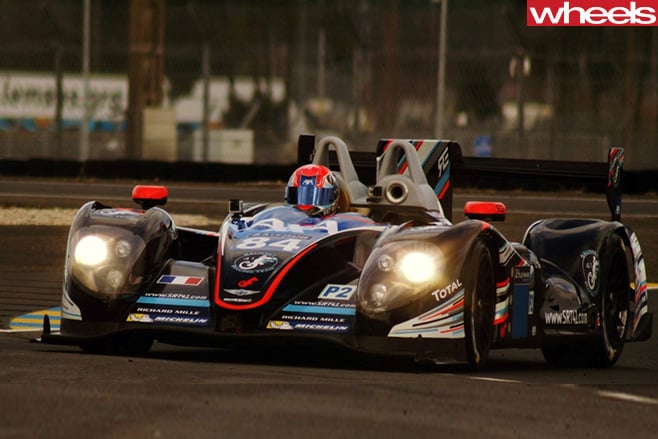
Sausset will use controls under each thigh to accelerate and brake, with a prosthetic limb attached to his right arm affixed to the wheel giving him the ability to steer the Morgan LMP2.
Cutting his teeth in a CN Ligier in the French VdV endurance series, the beefed up LMP2 is a significant step up for Sausset. However, he’s coping with the change well.
The Frenchman will share driving duties with two able-bodied teammates, including Tinseau, who will use traditional controls.
Racing without legs or arms throws up some unique challenges, with Sausset having to be hoisted into place inside the car.
To qualify for the June 18th race the former businessman needed to complete 10 laps in his OAK Racing Morgan LMP2 during last weekend’s test day.

Meanwhile, Tinseau pushed the modified LMP2 car to a best time of 3:48.253 – placing the team 33rd overall from the opening practice, three seconds adrift of the slowest LMP2 car.
“You have to know how to balance the arm and effort. Then it’s learning”, Sausset told Motorsport.com. “In this car it is very long, and for me it is an additional handicap.
“After six or seven laps I slipped! We must take this test day to improve everything that can be. I am surrounded by team and my family. An adventure like this, we cannot win it alone.”
Sausset and his SRT41 team will compete outside the overall classification of this year’s Le Mans 24 Hour.
Photo credit: Pascal Aunai
French electric vehicle onslaught extends to local showrooms.
PSA boss Carlos Tavares’ announcement of a raft of EV and plug-in hybrid vehicles from the Peugeot, Citroen and DS means that Australian dealers are in line for clean, green French machines. Part of a new ‘Push to Pass’ global ‘technical offensive’, it comes on the back of Tavares’ financial restructure of the company, which is now officially ‘Groupe PSA’. Four EVs and seven PHEVs will roll out by 2021.
While it means more EVs and plug-ins for our showrooms, the entire range won’t be available for local purchasers. Instead, Australian new-car buyers will likely be given a unique mix of the PSA products that will be on sale in China and Europe.
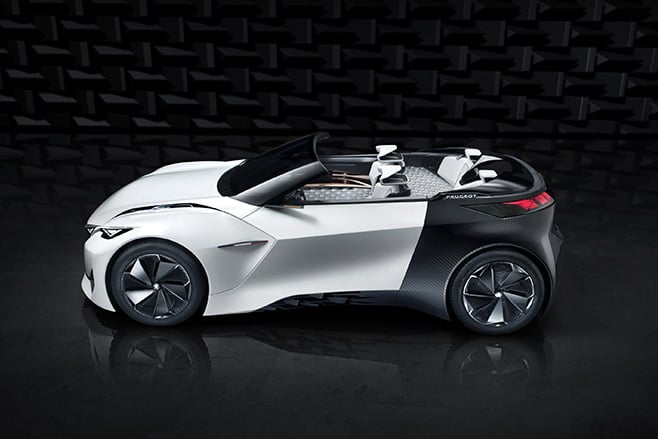
The Fractal was shown at the 2015 Frankfurt motor show, and is an EV coupe that features a pair of electric motors, one on each axle. It uses the new e-CMP (Electric Common Modular Platform) developed in conjunction with Groupe PSA shareholder, Dongfeng.

Seven PHEVs will be developed using the EMP2 platform – which underpins the Peugeot 308 and Citroen C4 Picasso, among others – to be launched over three years from 2019. These, says Citroen, will all be SUV and CUVs, so we could see a plug-in successor to the Citroen C4 Cactus using electric all-wheel drive, and with a claimed 60-kilometre electric range.
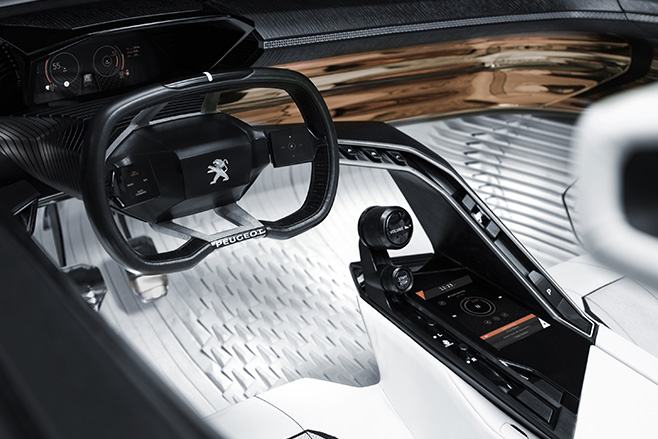
Bruesewitz told Wheels that he doesn’t expect the new models to necessarily see the Peugeot, Citroen and DS brands rocket up the sales charts. Their focus, he explained, is on appealing to the motoring equivalent of the tech world’s ‘early adopter’ market. “I think it is common sense that EV/PHEV customers are trailblazers; customers that want to be at the leading edge, who want to be the first movers in their social network and also want to make a sustainable statement. Since those are the only motivational factors at the moment here in Australia, it is still a niche market at least.”
The 2017 Audi A5 Coupe will be in showrooms mid next-year with the sporty S5 variant available at the same time. The A5 is the fastback version of the popular Audi A4 sedan, and will use the same new architecture and engines as the A4, which was released in Australia earlier this year. It’s a direct rival for the BMW 4 Series as well as the Mercedes C-Class Coupe and Lexus RC line-up.
The A5 looks very similar to the Audi A4, but has its own styling tweaks to distinguish it as the five-door variant, including unique LED headlights. It also takes some visual cues from the latest Audi TT sports car, but more importantly it sits on a longer wheelbase than the current model A5, which has been on sale since October 2007.
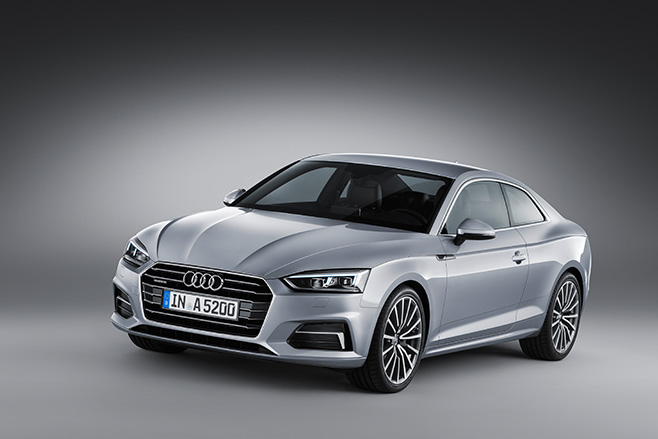
That spells more space inside, with its 465-litre luggage compartment making it 10 litres larger than before, and access to the boot via 40:20:40 split-fold rear seats. Audi will also offer a motion detector so that you can open that A5’s hatch by sweeping your foot beneath the rear of the car.
The interior should be the new class leader if the A4 is anything to go by. Options will include the excellent ‘Virtual Cockpit’ instruments; an LED display replaces the conventional gauges for the speedometer and sat-nav can be displayed in the instrument cluster.
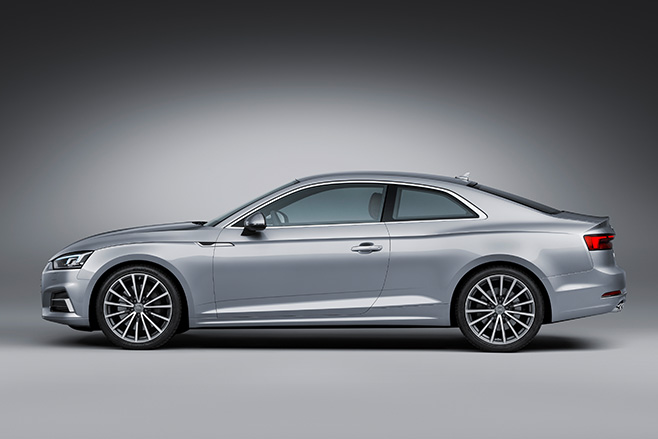
Like the A4, there’s Audi’s 7.0-inch colour centre display as well, with Bluetooth and USB standard, as well as LED interior lights.
Safety is also a strong suit for the A5. As well as its Active Lane Assist and Adaptive Cruise Control, there are some new features on offer including Park Assist, Cross Traffic Assist Rear, and in a nod to cyclists, an ‘exit warning’; a flashing red light lets the occupant know if there is an oncoming obstacle – like a cyclist – on a trajectory towards the door.
Under the A5’s bonnet for its European launch will be two petrol engines and three diesel variants. With a weight reduction of up to 60kg over its predecessor, Audi claims that fuel efficiency has improved by as much as 22 percent despite boosts in power and torque. The line-up for Australia will likely include 1.4-litre, 1.8-litre and 2.0-litre four-cylinder petrol engines, with a 2.0-litre turbo-diesel also available.
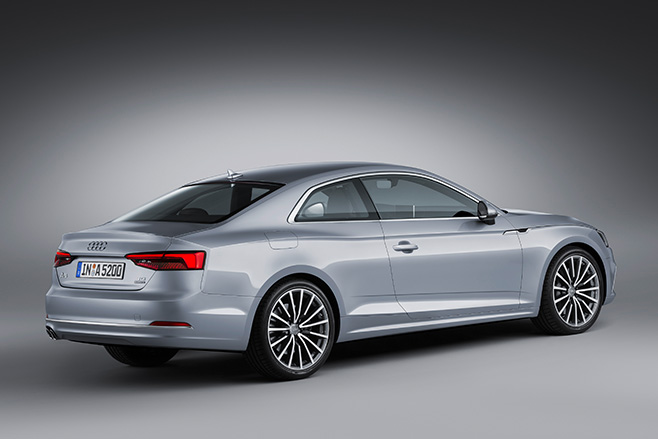
The sports model – the S5 – will be powered by a supercharged 3.0-litre V6 with 260kW, making it the most potent in the line-up. Its 4.7sec 0-100km/h time is 0.4sec faster than the outgoing S5, and although that mightn’t sound like much of an improvement, it’s a significant achievement.
A convertible model, as well as a five-door ‘Sportback’ version, will follow the arrival of the three-door A5. Prices are yet to be announced for the 2017 Audi A5; however we don’t expect much of a change from the current starting price of $68,200 when it arrives in Australian showrooms in mid-2017.
LAND Rover is suing a Chinese carmaker over a copycat version of its style-driven Range Rover Evoque compact SUV, the British company says.
The move comes after Jaguar Land Rover, the Indian-owned British luxury marque, filed trademarks in Australia that protect the design of the Evoque, effectively blocking Chinese carmaker Jiangling from ever selling its version of the SUV – the Land Wind X7 – here.
Reuters reported that Jaguar Land Rover had “served Jiangling with newly filed actions surrounding copyright and unfair competition”, and aimed to block sales of the Evoque knock-off via the Chinese courts.
JLR added the Evoque to Chinese showrooms last year in an attempt to tap into one of the fastest growing new car markets globally. In contrast, the Land Wind X7 was launched in China in late 2014.
The similarities between the vehicles were so close that Land Wind owners can reportedly buy Evoque grilles and Range Rover badges, and fit them to their vehicles.
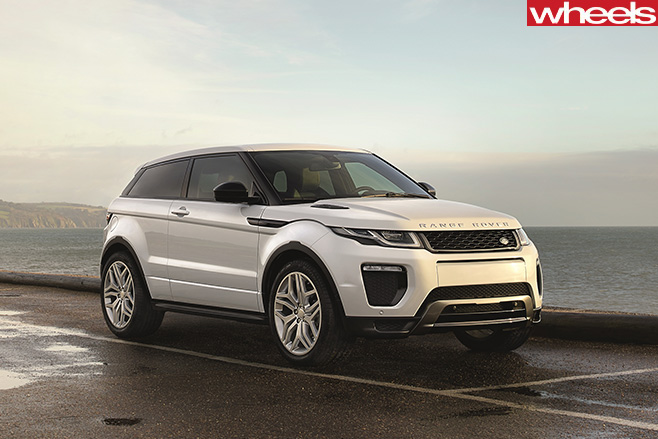
The Chinese car industry has a long history of seeking inspiration from other car brands, producing vehicles that were little more than clumsy clones of strong-selling foreign models.
Jaguar Land Rover is not the first carmaker to try and block sales of a blatant rip-off.
More than a decade ago, Honda sued Hebei Shuanghuan Auto Co. over a copy of its CR-V compact SUV that surfaced in China in 2004. The Chinese knock-off sold for a third of the price of the Honda-badged car.
Honda eventually won the court case – after a 12-year fight.
Likewise, BMW successfully blocked the sale of the Shuanghuan Auto CEO in Germany after arguing it was a blatant rip-off of the German luxury brand’s X5 mid-size SUV.
Other vehicles that have spawned Chinese spin-offs include the Mini Cooper, Smart ForTwo, Volkswagen Touareg, Porsche Macan, Lexus RX, Jeep Cherokee, Volkswagen Amarok, and even the Rolls-Royce Phantom.
Red Bull renaissance comes at the expense of Ferrari as the Italian media begins its mauling.
If Red Bull Racing is making some competitive progress, certainly at some circuits that allow its excellent chassis to shine, then Ferrari is slipping backwards, with no wins to its name this year.
It is always a bad sign when the Italian press begins to savage the most famous team in Formula One, and – guess what? The media mauling is underway.
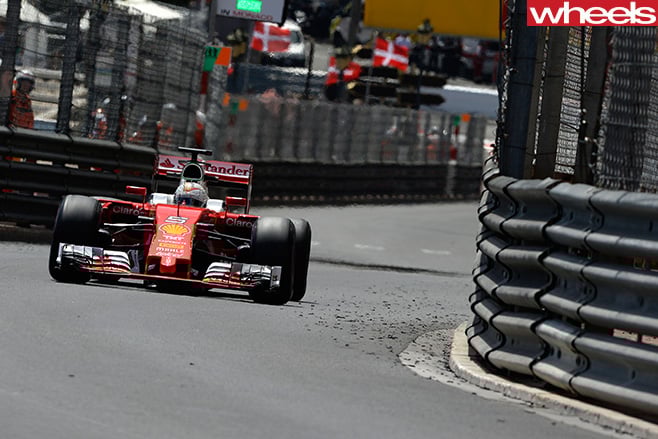
After all, Ferrari does not want for funding and resources, and has two world champion drivers in Sebastian Vettel and Kimi Raikkonen to capitalise on the capabilities of the car.
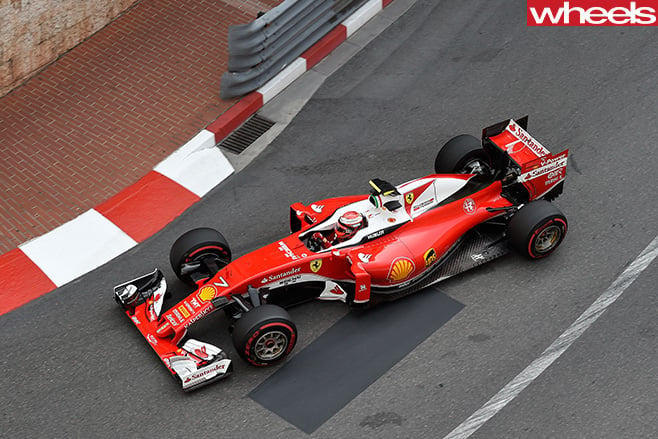
Ferrari already trails Mercedes by 67 points in the constructors’ championship, with Red Bull just nine points further back.
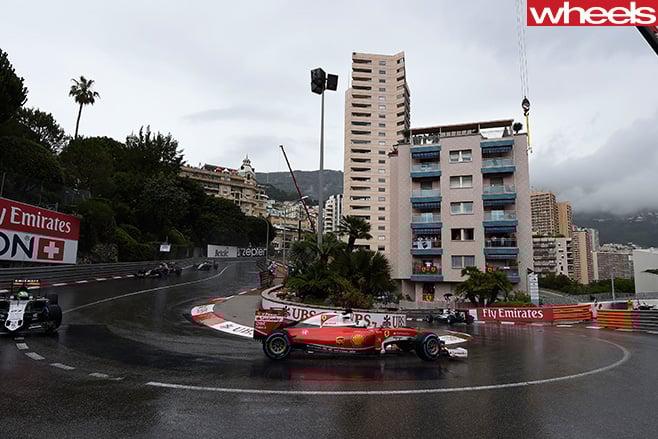
Mediocre qualifying efforts are hurting Vettel and Raikkonen badly with the Saturday results impacting the drivers on race day.
The Italian media isn’t missing its targets, with the team and its drivers under fire.
Ricciardo struggling to forget a Monaco lost Could Red Bull Racing’s pit-stop stuff-up be sheeted to huge crew party the previous evening?
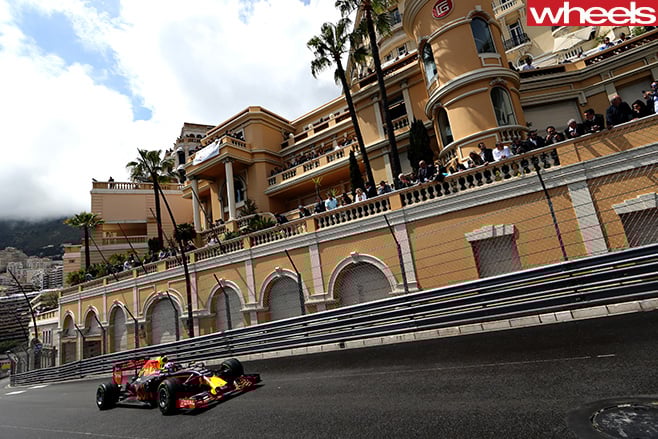
And team principal Christian Horner conveyed it, unambiguously.
Ricciardo was an angry and frustrated young man fuming after a nightmarish error by his pit crew cost him crucial seconds leading to him relinquishing the lead to Mercedes rival Lewis Hamilton, who went on to win from the Red Bull racer.
Horner blamed the pit-stop blunder on a combination of poor communication between the pit wall brains trust and the pit crew, and the antiquated Monaco team garages.
“We as a team owe Daniel a huge apology today as we failed to support him,” Horner said.
“The garage is downstairs, (and) tyres are on heat both in the garage and behind the garage,” Horner said. “Unfortunately the set of tyres that were called for weren’t readily to hand and were at the back of the garage.”
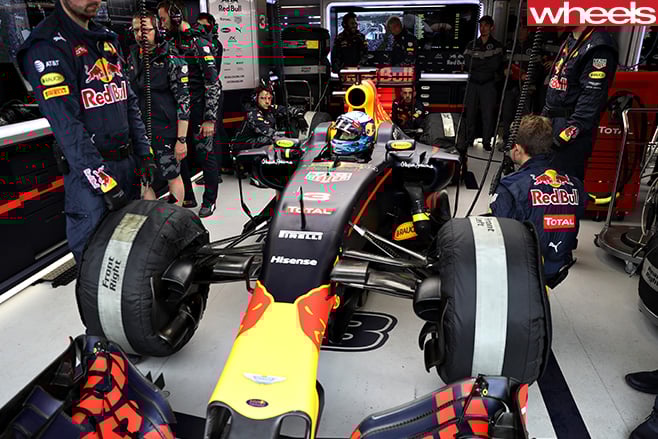
But F1 broadcaster James Allen has also pointedly asked if the Red Bull team’s big Saturday evening party may have been responsible for the less-than-slick pit stop.
“While it’s great to invite team members and sponsors to dance to an international DJ the night before the race, if you then go out the next day and fail to get the basics right then it’s fair enough for the driver to ask some serious questions,” Allen wrote on his website.
Allen is one of many people wondering whether being screwed out of likely victory at two races in a row might provide the impetus for Ricciardo to look elsewhere for work. Like Ferrari.
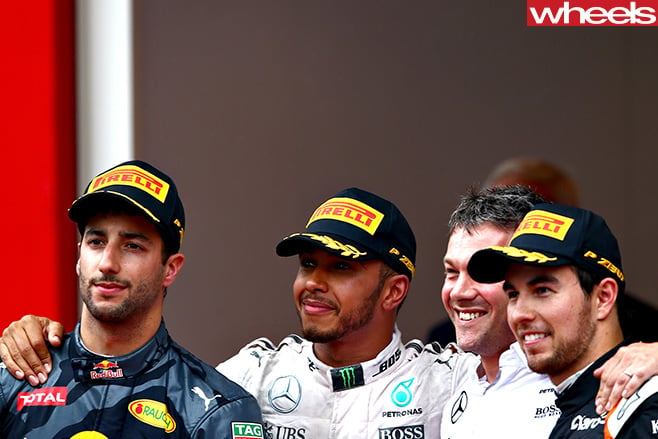
There is too the feeling that Verstappen is the teacher’s favourite at Red Bull High, although his Monaco weekend suggests he is very much a work in progress.
And, yes, the conspiracy theorists have been in full flight these past eight days, some even suggesting that Dr Helmut Marko, the team’s powerful adviser, doesn’t like Australians and that he somehow influenced the team to deprive Ricciardo of the win.
This is fanciful stuff. Modern F1 doesn’t work that way.
A week after the biggest disappointment of his career, Ricciardo says he is not sure how to move on from the pain of Monaco.
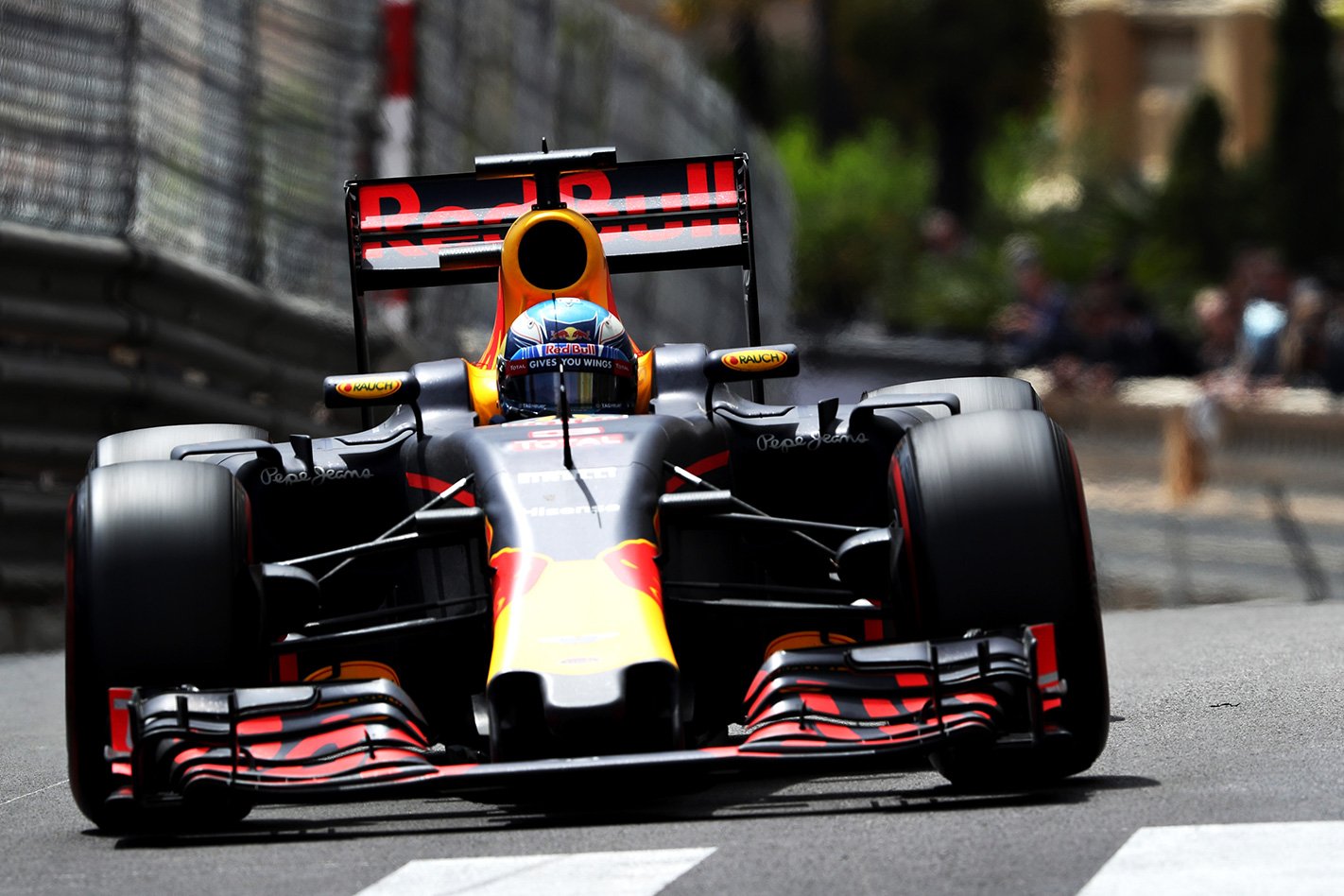
“So to have an opportunity to lead two races in a row and especially here in Monaco – to get it wrong twice definitely hurts.
“I’m not sure where we go from here, what to do.
“Obviously they’ve got to understand what’s going on and learn from it but this win I’ll never get back, that’s a fact.”
Ricciardo is if nothing resilient. A few days after the Monaco disaster, the smile was back when he jumped into the Williams FW07B that helped compatriot Alan Jones win the 1980 world championship.
Ricciardo drove the car, used in six world championship races that 1980 season, at Paul Ricard, which hosted the French Grand Prix that year.
“It was cool!” Ricciardo reported after his brief few laps in a car with a traditional H pattern gearbox and no driver aids.
“The brakes are actually really good. If my downshifts were better I could brake later; I was already braking quite late into [Turn] One, and the car stops really well.
“I was impressed.”
Mercedes-Benz is “quietly confident” it will have G-Class Professional 4x4s available through its dealerships in the near future, with prices starting above $100,000.
The G-Class Professional is Merc’s toughest off-roader, favoured by the Australian Defence Force for its hardiness and all-terrain ability. Nearly 2500 vehicles are currently in service.
An increase in production capacity at the manufacturing plant in Graz, Austria, has opened up a limited number of vehicles for potential retail sale Down Under.
“We’re only talking about 100 to 200 vehicles that we can tap into per year,” said Mercedes-Benz Australia spokesman David McCarthy.
“It’s looking good. We hope to have an answer in about a month. We’ve been working on this for some time.”
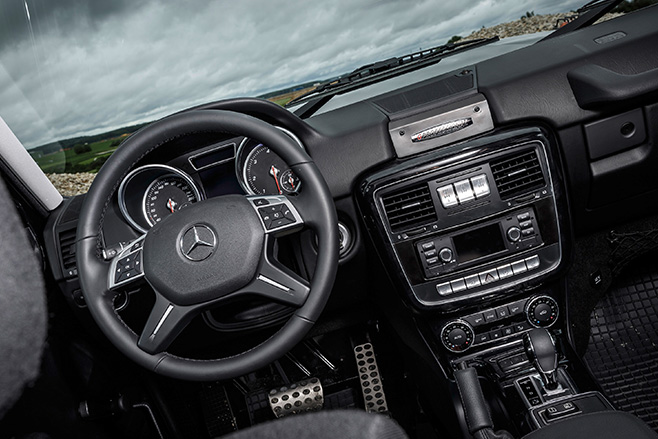
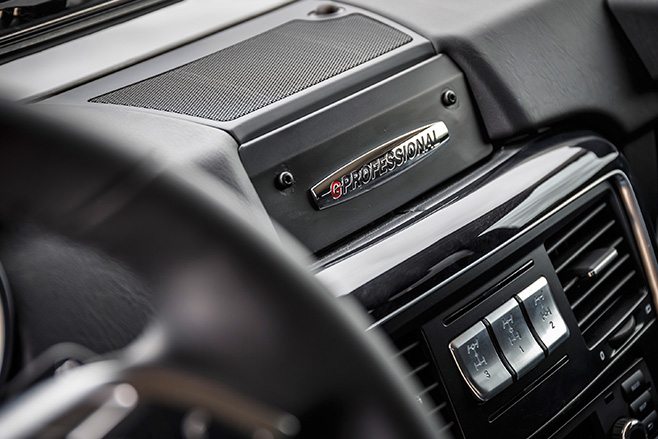
Benz plans to offer wagon and cab-chassis body styles in just one model grade to keep pricing as accessible as possible.
The G350d Professional is powered by a 3.0-litre turbo diesel V6 with outputs of 180kW and 600Nm, coupled to a seven-speed automatic and permanent all-wheel drive system.
Benz has tailored it to off-road applications with significant upgrades including three locking differentials, ground clearance of 245mm and greater departure angles, an all-terrain wheel and tyre package, and an interior that can be drained through the floor after water crossings.
Prices for the Toyota 70 Series Landcruiser wagon start at $57,990, powered by a 4.5-litre twin-turbo diesel V8 producing 151kW and 430Nm.
Mercedes-Benz successfully secured government fleet sales for G-Class Professional vehicles as fire engines in rural Victoria. More are on the way for use in remote areas as ambulance and police vehicles.
“These are whole of life tenders that take into account purchase price, service, parts, expected lifespan and what you estimate the vehicle will be worth at the end,” explains McCarthy. “We were able to win despite its higher purchase price initially.”
It’s a further tinkering of value for the BMW-owned, British-built small car, which had price cuts of between $3000 and $5000 for the third-generation model that was released in 2014.
The $26,650 Mini Cooper 3-door and $27,750 Cooper 5-door, which remain unchanged in price, now feature halogen foglights as standard.
A new Multimedia Essentials package costs $1500 and bundles navigation and Radio Mini Visual Boost that bring a 6.5-inch display, plus rear-view camera with guidelines, front armrest, and the Bluetooth streaming that was a surprise omission from the Cooper.
It can also be paired with an $1800 Convenience package that includes semi-automatic parking, anti-dazzle side and rear-view mirrors, and keyless vehicle access.
The more powerful Mini Cooper S increases by $800 in both 3- and 5-door form – to $37,750 and $38,850 – in return for extra gear.
Cooper S gains headlights, daytime running lights and foglights with LEDs, as well as a reverse-view camera with guidelines.
Driver aids including active cruise control, auto high beam control, forward collision warning, and low-speed autonomous braking feature under a $1500 Control package. It also includes tyre-pressure monitoring and adaptive LED headlights.
Mini hatch sales are down three-percent year to date, after an impressive 2015 with a 61-percent increase. It still leads its most direct rival, the Audi A1, so far in 2016, with 1028 sales versus 878.
Overall Mini year-to-date sales are up 14 per cent.
TOYOTA will reduce its Yaris light car range in Australia to a single model after revealing it will dump the slower-selling four-door version later this year.
The strategic exit from one of the hardest-hit segments of the Australian market will leave the Yaris hatchback as the brand’s only model in the micro car sector, which so far this year has had its sales fall more than 27 percent – the biggest showroom slide of any new-car sales segment.
The decision means the Japan-built Yaris sedan will join Toyota’s FJ Cruiser, Nissan’s Micra and Y61 Patrol, and the Proton Preve that have also queued up for a strategic Aussie exit, and mostly because they will miss the November 1 cut-off to meeting stricter Euro 5 emissions limits for passenger cars.
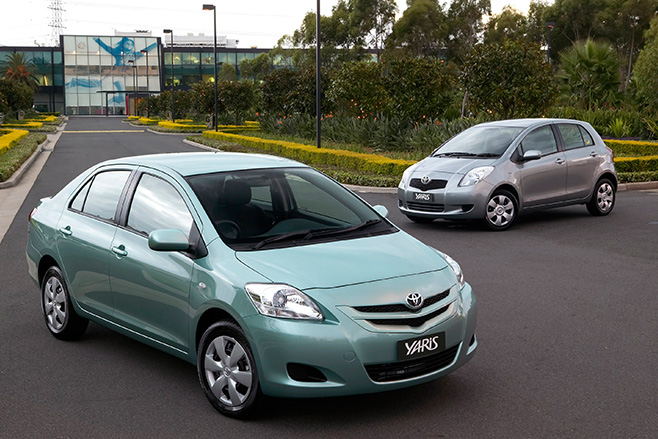
“We’ll certainly continue to sell the Yaris beyond November this year and it will be certified to comply with Euro 5 standards.” Toyota Australia spokesman Stephen Coughlan said.
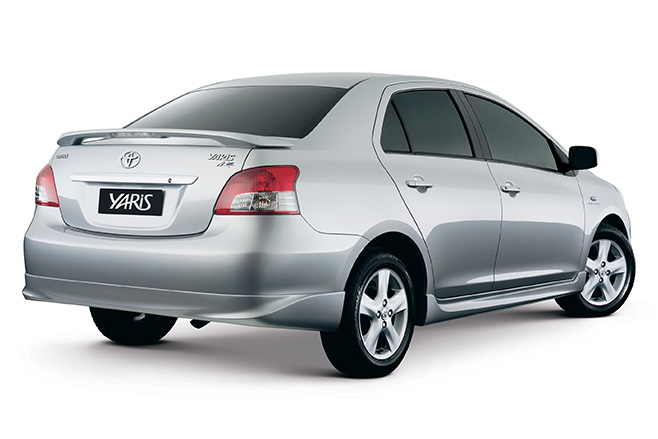
“Going forward, however, the Yaris will be offered exclusively as a five-door hatch in Australia, as we plan to discontinue the low-volume Yaris sedan from our local line-up,” he said.
“This decision is based on a lack of customer demand for such a vehicle in this segment. Final production for Australian-spec Yaris sedans will be this month.”
Coughlan said only seven percent of buyers walking into its showrooms last year drove out behind the wheel of a four-door Toyota Yaris, compared with about 14 percent a decade ago.
“You will recall we discontinued the three-door body style from our line up back in 2014, essentially for the same reason – marked shifts in consumer preference in this segment,” he said.
Carmakers are scrambling to have Euro 4-certified cars upgraded to Euro 5 in time for the November 1 cut-off. Industry insiders told Which Car the usual 21-day wait for Department of Industry certification to say the engines complied with Euro 5 standards, had blown out to more than 40 days – the Yaris being one of the models that needs to update ahead of the deadline.
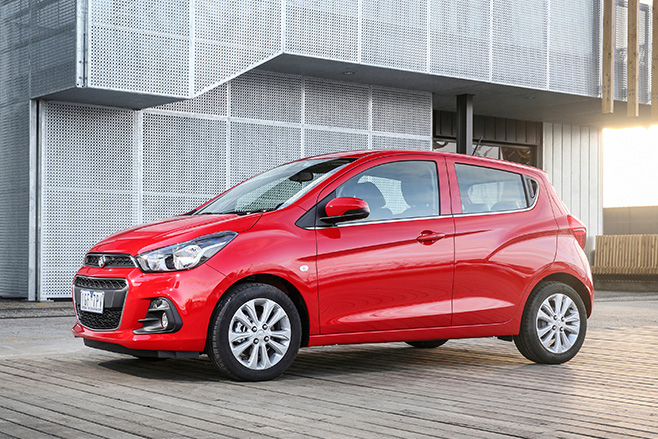
The micro car segment – the playground of small city runabouts including the Holden Spark, Kia Picanto, Suzuki Celerio and Mitsubishi Mirage – has only accounted for 704 sales, or 0.7 percent, of the booming Australian new-car market for the first five months of this year, down from 1.0 percent for the same period last year.
The only new-car segment that has a smaller slice of the Australian market are the premium large cars, which only has the Chrysler 300 and Holden Caprice competing for 0.3 percent of the market’s buyers.
Toyota is struggling to maintain market share in Australia after once accounting for one in four new cars sold here. It is still number one by a significant amount, but has fallen from 17.7 percent market share in 2015 to 17.1 for the first five months of 2015.
Late last year, Which Car tipped that Toyota would struggle to keep market share in 2016, in part because of its reliance on passenger cars to build sales volumes.
VFACTS data for May, released last week, shows that SUVs have fallen within 2000 sales of overtaking those of passenger cars, as the split on passenger car sales falls below 40 percent. In contrast, the data showed that SUVs accounted for 37.5 percent of May’s sales.
The Abarth 124 Spider now has its own dedicated website and is inviting Australians to register their interest in the convertible sports car that will arrive towards the end of 2016.
While details on pricing and specs are yet to be released, the site contains video showcasing the 124 and its history.
The new Mazda MX-5-based 124 Spider has already had an interesting history – originally envisioned to be an Alfa Romeo, before being adopted by parent company Fiat.
Australia has decided to take the version of Fiat’s performance brand Abarth, with the notable expectation that the Italian model will cost more than its Japanese twin.
The Abarth version does come with a more powerful engine – a 1.4-litre turbocharged four-cylinder with 125kW and 250Nm. That compares with the bigger-engined Mazda MX-5; a 2.0-litre priced between $34,490 and $41,550, and offering 118kW and 200Nm.
You can read more about the Abarth 124 spider at their official website.
