
You may have already read a few reviews of Peugeot’s new 308 GTi, but they are almost guaranteed to have been of the fitter, faster 270 variant.
Peugeot doesn’t seem overly keen for people to sample the lesser 250 version – there were none at the international launch, for instance – and that makes us suspicious.
After all, compared to its big brother, the 250 forgoes quite a lot of equipment. Yes, at $44,990 it’s $5000 cheaper, however as the name suggests you lose 20hp (16kW), the massive Alcon front brakes disappear, as does the Torsen limited slip differential and 18-inch wheels wrapped in 225/40 Michelin Pilot Sport 3s replace the 270’s 19s and 235/35 Pilot Super Sports.
There are other spec differences too, but it’s these missing mechanicals we’re most interested in. Do the omissions leave the 250 feeling a little half-baked, like a superhero stripped of his powers? Not at all. In fact, this is a very entertaining hot hatch, which says that Peugeot has managed to get a lot of the fundamentals right with the new 308 GTi.
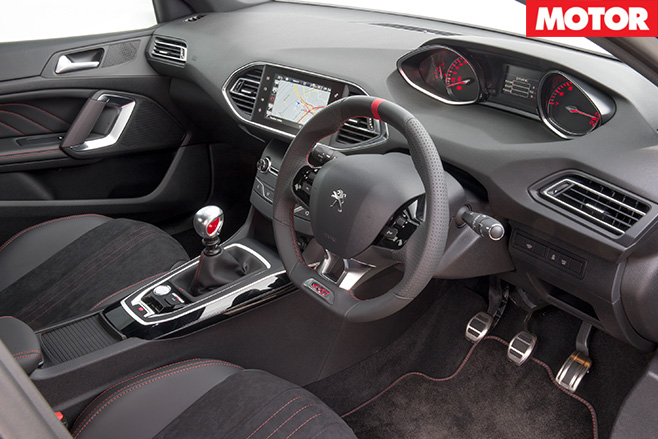
Its cornering capabilities are equally impressive. The smaller brakes feel more than up to the task on the road, there’s plenty of grip and traction is very rarely an issue even without the 270’s limited-slip diff.
It’s a neutral chassis setup, which inspires confidence, with front grip more often than not the first to go at the limit. Unfortunately, what doesn’t inspire confidence is the steering.
Once you’re used to operating Peugeot’s tiny steering wheel it’s well weighted and reasonably accurate, but with lock applied it is very difficult to feel how much grip is left in the front tyres. Subsequently, cornering hard requires a little too much guesswork and you can be left taking two or three bites at each bend.
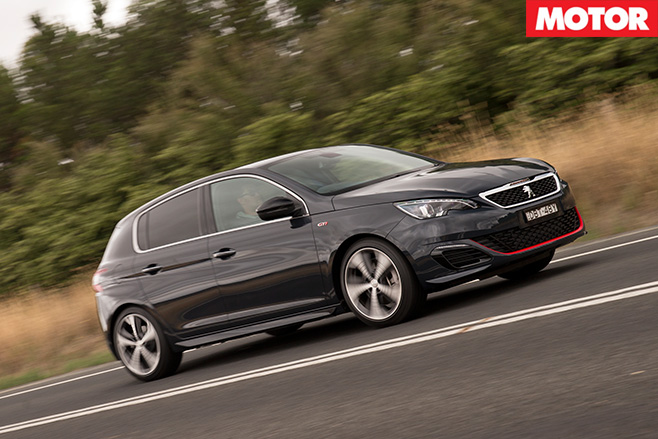
That said, Peugeot has no reason to hide this ‘lesser’ GTi, and now the only suspicion we have left is whether this 308 GTi 250 is good enough to take on that other, German GTI.
4 OUT OF 5 STARS
SPECS Engine: 1598cc inline-4, DOHC, 16v, turbo Power: 184kW @ 6000rpm Torque: 330Nm @ 1900rpm / Weight: 1205kg 0-100km/h: 6.2sec (claimed) Price: $44,990 Like: Great engine; nice gearshift; accomplished chassis Dislike: Little overpriced; weird steering; lack of diff
In a Wheels tradition that lasted nearly five decades, editors summed up annually in a personal column all the cars they had driven. Here is the late Bill Tuckey’s view of 1966.
First published in the December 1966 issue of Wheels magazine, Australia’s most experienced and most trusted car magazine since 1953.
We have a small, eager boy in this office who makes the coffee, files the photographs, graphs out the road test figures and sits at the feet of the masters. He also keeps the road test chart up to date. This is probably his most important task, for about this time every year I feel constrained to write about all the cars I have driven during the preceding 12 months, and if small eager boy isn’t up to the job I tend to forget some of the bolides that have been slipped under me since December, 1965.
Read former Wheels editor Peter Robinson’s story of how Bill Tuckey came to write this classic tale.
It hasn’t been a particularly exciting year for cars — a fact that is slowly dawning on us as we get closer to the annual judging of our Car Of The Year award — which will be announced in the next issue of WHEELS. Much of the material around this year has been warmed-up leftovers from 1965’s cold cuts, and I found little in engineering to get excited about. I gather, with some sense of horror, that I drove 52 cars during the 12 months, some of them cars for full testing, some loaned for impressions, some borrowed as curiosities, some used simply for transport. That’s an average of a new car every week, although I haven’t counted the many variations of the compact sixes that I drove from time to time.
Mind you, my personal opinion of a car doesn’t count for much. Our evaluations of cars are based on a fairly well-proven system of objective argument, scales of measurement and some good old horse-sense. Very rarely do any small prejudices get very far.
I drove the usual array of compact sixes — all the Valiants, all the Holdens, but only the Fairmont version of the XP Falcon, this because Ford’s 1966 economy campaign left Sydney virtually nude of test vehicles. I still think the Falcon does the job best, although now that the v8 Valiant has discs it ranks as a reasonable but expensive competitor for this new CR, which is a long way ahead of the Holden in terms of engine, ride control and keeping its feet on the ground. I spent some time with the Austin 1800 early in the year, but I’ll hold back on that because we’re about to start a lengthy consumer test on the car to find out for you how it lasts over, say, 10,000 ordinary miles.
I found I could take or leave the VW 1600 slowback, although the styling I consider offensive, and the Renault Caravelle was exceedingly pretty, has finally got good performance, but is ridiculously overprices. To get back to earth one needs to spend some time driving the sub-$2200 cars, where sales competition is so fierce at the moment you wouldn’t believe it. A short acquaintance with the Mazda 1500 told me that Toyo Kogyo is building just about the best cars in Japan at the moment. Like the delightful Mazda 1000 coupe, the 1500 has a magnificent interior, very good road balance, precise steering and handling and — something few Japanese cars have — real individual character. The coupe is utterly charming, although from some angles it looks a bit stubby. Maybe next year they’ll build a proper white chap’s coupe body for it: meanwhile, it has a far more powerful sales argument than the Honda S600 coupe, which disappointed me with its lack of performance and interior noise.
With another poor soul I drove the Volkswagen 1300 to Melbourne — and got quite a shock. You still have to row it along on the gearlever, but the extra capacity has improved the handling quite a bit.l it’s marvellous what a power reserve can do when you’re all crossed up in oversteer. You can’t deny the tremendous value in these cars, even though the interior is cramped and the performance marginal.
The Peugeot 404 charmed me greatly, if you can forgive Gallic logic in the gearshift and fairly sedate city traffic performance. You have to take this one out on the open road and screw it up to around 70 and keep it there. Then it’s something fairly special. But it could use some more inches. The half-brother Renault Ten is still the best car under $2000 in anyone’s language, and if you buy a car in this area without sampling the Ten’s braking, handling and interior comfort then you’d be better wash out your mind with soap and water. It’s a crying shame that this great car is outsold by some perambulating cases of terminal gerry-building. The R4 is also charming, in a rather farmyard sort of way. Romsey Quints though it was enormous, but he’s like that. He nearly went out of his mind with the Desert Rat.
The Hillman Imp MkII I can take or leave alone, mainly because they’ve set up the suspension in such a roundabout way to get any sort of decent handling, but the Minx and Gazelle are very pleasant, if still a little too much Rootes haircord carpet, understeer and acres of tree-wood. They have a good engine there and I’m glad to see it got a new body at Earls Court in the Hillman Hunter/Vogue group. From there to the Sabre 1000, which is really the Skoda 1000MB; it is a strange car, but as tough as dried squid and it, as we did, you grow to appreciate its many thoughtful points — the biggest of which is that it will almost certainly last 20 years given enough neglect — on which it thrives.
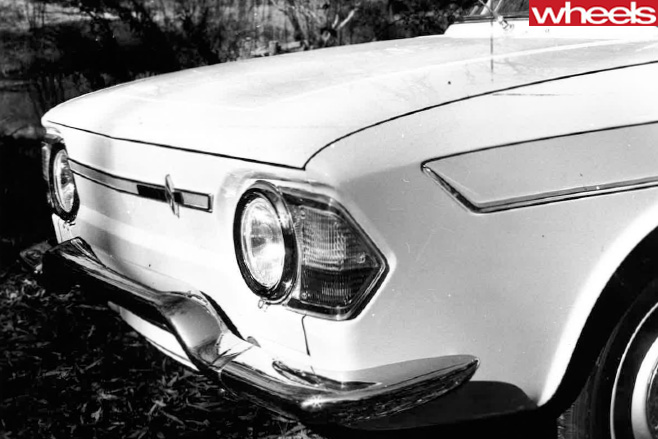
So it should — it costs a lot more.
The best value of all this armour is the Rambler Classic 770 with discs, sensible size, good handling, bags of equipment, lousy steering and frightful facia. But it just makes so much more sense than the 199 in. wheelbase things. The Rambler American, to me, is neither here nor there. It doesn’t have as much poke as an X2 Holden but can’t be called an economy car. What it does have is one of the smoothest six-cylinder engines in the business.
There were quite a few imports to drive; we had two Toronados, one left and one right hand drive, and I like the car a lot except for the abominable brakes. The Ford Thunderbird was quite, cream-smooth, dramatically handsome and generally impressive while a Pontiac GTO convertible with 389 and stick shift was the fastest-accelerating car of the year. It was quite rough inside, but who cares?
I hauled a Mustang GT350 around for a few hours, but the limited slip differential wasn’t limiting or wasn’t slipping or something, so we treated it gently; it’s quite a rude car, and hertz must have their GT350H series gussies up a lot before they rent them.
There were a lot of good performance cars during the year. I renewed acquaintance with the two Volvos, leaving the B18 with the thought that it’s getting somewhat old-fashioned, and the Prince Skyline GT2000, which seems to improve with every car made and now almost handles properly; the 1275 Cooper rushed me down to Melbourne in eight hours flat observing all speed limits but using much oil and I liked the latest Sprite quite a lot. The Datsun SS needs proper suspension, while the Bellett GT could use wider rims, decent rubber and that’s all, for it’s a very good steerer and has all the right gear.
Then there was the Renault 8 Gordini, my choice as the country’s fastest point-to-point car under $4000, or the Alfa Giulia Super, which is an enormous motor car but needs a less boxy body to appeal to the wives who won’t let their husbands buy it because it doesn’t look four grand’s worth.
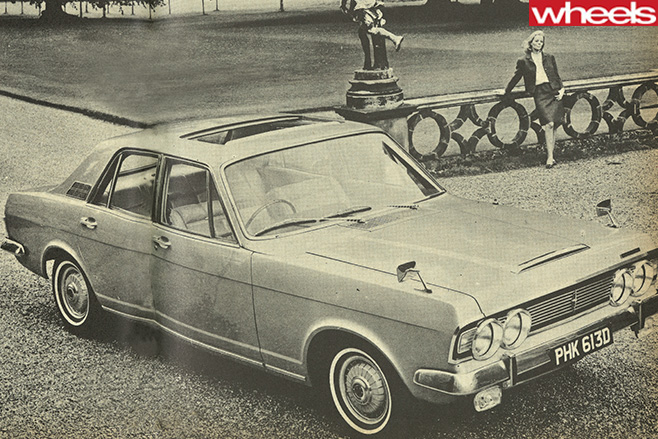
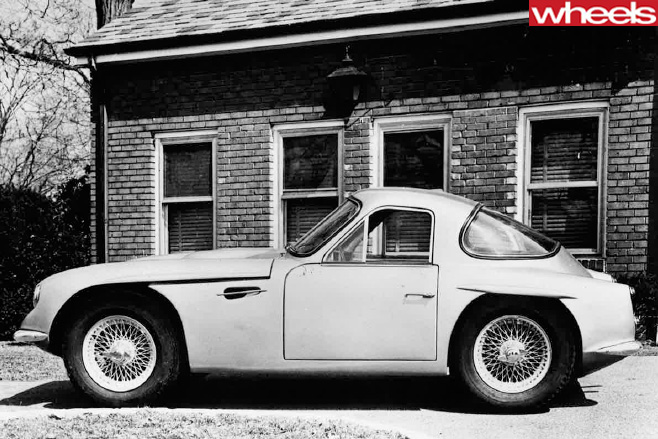
I have reserved for the last the two most shattering cars of the time. There was the TVR Griffith 200, a short-lived and ill-concieved idea of stuffing a 289 Ford V8 into the TVR glass-fibre shell and undercarriage. You shoehorn into this, grasp a two-inch gearlever atop a huge quilted central tunnel and wait for the count-down. It goes so hard you just can’t keep it straight. The thing just thunders along in any gear, accelerating from 10 mph in top harder than an E-Type would in first. I spent five dazed days with it keeps doing wheel bearings and crown wheels and wheels spokes.
Finally there was the Morgan, I followed a staff man back from Sandown Park driving a Pontiac on a cold winter’s night, and he looked so stupidly happy in the Morgan that I pulled him over and swapped places. It was freezing, as the hood was down, as all Morgan hoods should be. But there is nothing — nothing — on this earth that points and stops and goes and obeys instantly every twitch of brewery cart and steers like a truck but it will see off any sports car costing less than$6000. And it just about made up for all the ordinary stuff I had to drive over that 12 months. Would you believe a Morgan 4/4 Series 5 Competition model as the Car of the Year?
WE DRIVE THE ’67s
The new heater-ventilation System works well, apart from the nasty, cheap plastic outlets for fresh air on the facia. In ride, roadholding, steering and sound insulation the Viva is completely transformed. It rolls much less, it has lost that curious twitch as you set it up for a fast corner, steering is lighter and more accurate and the handling now remains neutral at surprisingly high cornering speeds. Stability is outstandingly good in a quick swerve and counter swerve or’ in the transition in the middle of a fast S bend. Pressing on at rally speeds over mountain roads ·I gave the Viva high marks for steering, cornering and comfort. The disc brakes, vacuum-assisted on the SL, give a lot of confidence. The standard drum system requires more pressure but not excessively so. Both the standard engine and the ‘SL are astonishingly flexible, pulling smoothly .in top gear from 20 mph, but gear changing is a pleasure with the short centre lever and good synchromesh on all four speeds.
SPITFIRE + 6 = JUNIOR E-TYPE
JT has long been obvious that Triumph’s six cylinder engine could be fitted very neatly into the Spitfire chassis; in fact a conversion was offered by an independent firm at this year’s Racing Car Show in London. Now Triumph has done it and added a hardtop two-seater coupe body styled by Michelotti to produce the GT6. Like the 2-litre Vitesse, it has a special version of the 1998 cc six cylinder engine with twin Stromberg horizontal carburettors and compression ratio of 9.5 to 1 to produce 95 bhp at 5000 rpm. It drives through an 8.5 ins. diameter clutch with diaphragm spring for light pedal action to a gearbox with synchromesh on all four speeds controlled by a short lever on the centre tunnel.
Chassis design is basically Sptifire, but the centre of gravity has been lowered slightly at the rear to maintain negative camber on the wheels as far as possible, and stiffer bushes are used in the radius arms locating the swing axles. The rack and pinion steering is retained with the adjustable and collapsible steering column giving a range of 4 ins, and the three-spoke steering wheel has a leather-covered rim. To cope with the much higher performance the GT6 has disc brakes of 9.7 ins. diameter up front and 8 ins. drum brakes at the rear.
The new permanent coupe top harmonises well with the basic Spitfire body lines and the, big rear window opens for easy loading of luggage. The GT is strictly a two-seater, both seats having deeply curved backrests which give good lateral support and the seats tip forward to reveal pockets for packages below the main luggage platform. There is a padded centre armrest, the passenger has a grab handle; facia top, parcel shelf and door waist rails are padded. Interior trim is in Ambia with walnut facia and moulded pile carpets. Standard Triumph has succeeded in producing a fast car which is comfortable, quiet and flexible. You can drive it in top gear in a way that is probably not possible with any comparable car and still pass most other traffic and if you use the gears it will go from 0 to 50mph in under 8 secs and 0 to 60 in about 11 secs. I saw 100 mph on the speedometer and the absolute maximum is said to be about 107. Steering is light and transmits very little shock. It needs only 4.25 turns from lock to lock to produce the unrivalled Triumph turning circle of 25.5 ft. It is probably going to be regarded as a junior E-Type, but I’d like it still better if it had some sort of compensator spring for the rear swing axle.
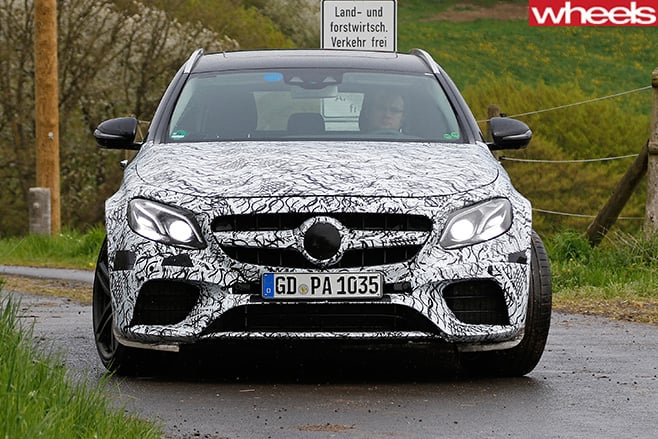
ALTHOUGH the eagerly awaited Mercedes-AMG E63 sedan is still waiting in the wings for a Paris Motor Show unveiling in late September, the E63 Estate wagon version is undergoing final testing ahead of an anticipated world debut sometime in early 2017.
Vying for uber-executive express glory against the BMW M5, Audi’s RS6 Avant, and the upcoming Jaguar XF R, the Mercedes-Benz W213 E-Class flagship’s intent is clearly evident from the gaping front air ducts, wide tracks, hunkered stance, quad exhaust outlets, and massive wheels providing a peek of the huge red brake calipers lurking within.
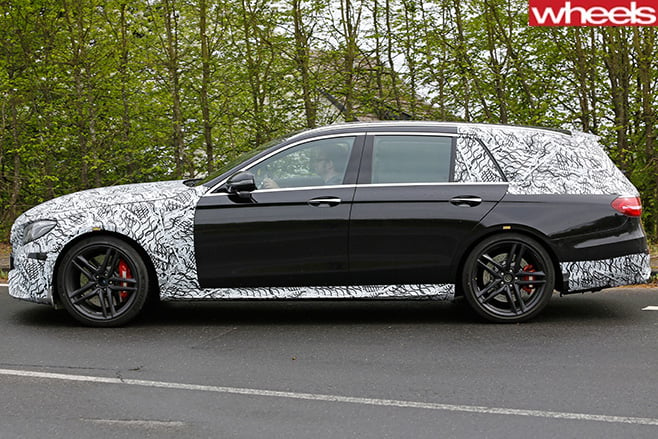
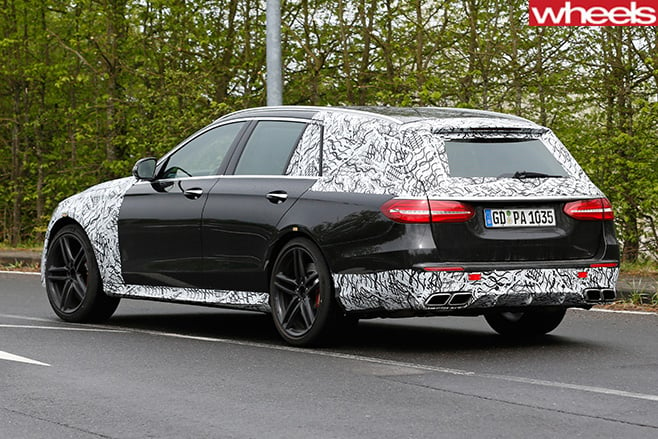
Among many innovations, it will also have a drift mode, taking the E63 on a higher fun threshold than any mega-fast Benz wagon has managed before it.
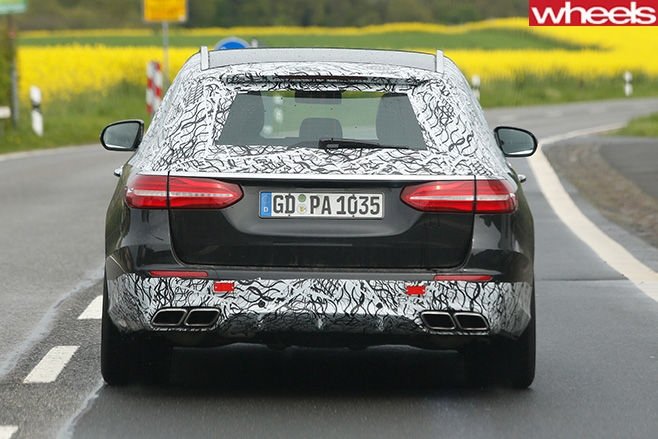
While the when and how much remain unanswered questions, a mid-to-late 2017 landing in Australia seems likely. As for cost, with the previous T212 E63 AMG Estate retailing from $244,000 back in 2013, and the latest RS6 Performance Avant kicking off from $245,400, don’t expect any change from this cool quarter-of-a-million buck uber-wagon.
A Holden Monaro, flexible speed limits and the open road; the joys of driving around Australia in a by-gone era, as only Bill Tuckey could describe it.
First published in the May 1973 issue of Wheels magazine, Australia’s most experienced and most trusted car magazine since 1953.
“THEY’RE rock farms,” I said.
“What?”
“They’re bloody rock farms. You see all those little white rocks lying around? They keep watering them. When they get big enough they get a tractor and a rake or a winnow or a thresher or a basher or whatever they call them and they rake them up into those small heaps you see there.”
“Then what do they do with them?”
“What do you think? They pick them up in trucks and take them into the city and sell them to people. Rocks are very scarce in the cities in Australia, so they have to grow them in the country. People use them to landscape their gardens. Rock farms, that’s what they are.”
“Bull dust.”
“No way! They water them, and spray them with fertiliser with cropdusters — you know — but it takes a long time for them to grow.”
When I dropped him off at Dimboola, the Canadian with the long hair and the banjo in a battered leather case was going to go into the nearest pub and ask them about the rock farms. I hope they treated him gently.
It is a long time since I spent a long time on the roads of Australia. As one gets older the straight-through overnight dash from Sydney to Melbourne becomes less exotically inviting; one gets to prefer a gin and tonic at 30,000 feet cossetted and befriended by TAA and Boeing.
My memory banks are rich with detail of Trips That Were, and even now I quietly marvel at the resilience or (alternatively) stupidity of the keen-eyed, hot-breathed young motoring journalists who would drive anything anywhere at the drop of a suggestion. (They still do Bill, they still do, Ed).
I remember that for my inaugural issue as editor of WHEELS (actually it was the second which is close enough, Ed), I decided to test the very first Lotus Cortina in Australia. It was in Melbourne, so I organised (of all things!) a Pontiac Laurentian from GM and with photographer John Keesing and our wives we drove down to Melbourne, spent four hours driving and shooting the car, then turned around and drove straight back.
Some time after that I had to drive solo to Melbourne in one of the first Cooper S-types, so I decided to do a Wizard Smith. I strapped a notebook to my leg, mounted four ballpoints and a pencil in the side pocket, and depressed the right foot.
It says a lot for the ability of that little car that I took just seven hours 15 minutes from Sydney GPO to Pentridge Gaol — whence I would undoubtedly land today should I try the same thing. It is certainly not the record for Sydney-Melbourne, but the notebook made interesting reading – particularly the page that took me many days to decipher.
It turned out to be just before the Tucker Box on the road to Gundagai and read: “Nasty right-hander, very bad” … I arrived at it flat at around 95, writing with one hand and fending off disaster with a multiple-jointed elbow and a cry of anguish.
In 1964 BMC (then) decided that to prove out the then-unreleased Morris 1100 it would put together half a dozen two-driver teams and attempt to cover 30,000 miles in 30 days on the public road. Today that would attract governmental censures of manufacturers’ irresponsibility and maniacal disregard for public safety, but then it was just an exciting exercise.
We would go out for four or five days from Sydney, follow mostly fast roads to Adelaide and around and then rest. I was paired with Evan Green who has an extremely fine tenor voice that wailed away over many an hour across the Hay plains. I remember being in Taree at 11 o’clock at night and asking Evan where we would go: He said: “We’ll go to Mildura for breakfast.” So we did. The car reached 30,000 miles in 28 days.
These days, belaboured by thoughts of exposure risk mounting in direct ratio to miles covered, of ever-spreading speed limits and vigilant police equipped with radar and suspicious minds of thicker traffic densities and bigger trucks, driving interstate represents much labour lost.
But it isn’t, really. I have just spent almost a month doing around 8000 miles through Queensland, NSW, Victoria and South Australia, and it has given me a new dimension of being. I drove a base Monaro with 253 cu in. V8, Trimatic transmission, reclining bucket seats, and Uniroyal Steel Cat radials. These proved to be far and far away the best tyres I have ever sat on, but more of them later. I had been to most of the places and over most of the roads at various times in the last 20 years. It should have been an endless bore, mile unreeling after unrelieved mile, but it wasn’t. I drove down an ever-changing tapestry of people and behaviour and places and things.
For me it was a kind of catharsis, a return to the land of my birth, or even a re-numbering of personal priorities. The country is so vast and the life-styles so vividly different that your own existence as a cipher in a great sprawling megalomaniacal metropolis like Sydney seems insignificant. Through the windscreen of a car going quickly over many hours you do begin to question the rightness of your own social order.
The car first: Along with the staff of Wheels, I was probably the country’s nastiest critic of the HQ series. I think at one stage I called it the Great Leap Backward, and the comment was justified at the time. The first HQ Holdens were all bad apart from their very good vision design; they could not be driven remotely enthusiastically, the seats were atrocious, the spring and damper rates wrong and the brakes funny. GM has fixed all these things now, although the washers still suffer from inbuilt menopause and the speedometers break and the fuel gauge moons about like a lover of Cremona.
My respect for the car now is immeasurable. Much of the time it was around 100 mph, and most of that in temperatures of around 10 degrees F. The 253 V8 used not a drop of oil nor water and never altered its tune an inch. The idle rpm was the same at the end as the beginning. The discs squealed from new and speedometer developed stickies, but at 16,000 miles the damned car is brand new.
With the Steel Cats on it was possible to drive it like a Torana. Once on a 150-mile fast trip I started in rain, it dried out and then rain started again. The cruising speed stayed between 90 and 100 in both conditions. These tyres do not change their behaviour one title, not one jot, wet or dry. For the first 2000 miles of their life they are too sticky, you can’t make the car move around, or slide, or change attitudes at all. After that, they do everything right. Every car I buy from now on will wear them.
Let nobody construe this mild rave as putting the humble Monaro into the same class as a Dino or a Porsche 911E or an SM Citroen or a 2-litre Alfa-Romeo. It’s not. Neither does it cost as much.
It’s just that most motoring writers get so bloody subjective, that they measure every car by the limits of their own bravery or foolishness. I fell into the same traps for years. Until you sit your bum in the car for at least 2000 miles spread over a week you can’t even begin to analyse or appreciate the car.
All this yammering about high cruising speeds brings up the point — what about speed limits? South Australia and Queensland have 60 mph absolute limits and Victoria 70. In NSW, about 200 miles around Sydney on every highway now carries posted limits of 70 to 65 mph. However, governments can put up all the signs they like, but if the signs are a joke and the law is obviously stupid, then most drivers just ignore them. Few people before or after speed limits in Victoria and South Australia cruised faster than 60 or 65 anyway. They felt comfortable at that speed. I am convinced that even the police force know it’s a joke. I saw not a single police car or bike on the open road in either State.
As I said in an article in Wheels years ago: Are they really going to book you for 73 mph at 3 am 66 miles west of Bourke? Of course, they aren’t. Across the desert between Mildura and Renmark, or from Bordertown to Murray Bridge, or from Horsham to Ballarat, the police force doesn’t appear to give a damn what speed you do — and the same applies on almost every major Victorian road (except the Hume Highway) from 10 miles outside the town limits.
It’s a different story, in NSW and Queensland. In NSW the police force is dedicated to keeping up its figures, and well-known treasury fund-raising sections like the first 15 miles east of Bathurst, the bottom of the first steep hill north of the Hawkesbury Tollway, the l-o-o-o-o-ng 35 mph zones out of Picton, the last five miles coming into Goulburn, the long 35 mph zone through Cundletown north of Taree, the downhill stretch past the Chullora drive-in in Sydney … display regular visual evidence of the efficiency of the NSW police force. There is nothing like the unmarked Toranas and Falcons of NSW in other States. In fact, Victoria has just launched its first proper interceptors and have painted them with Dayglo orange bands front and rear so you can see them coming.
Queensland, of course, has become so accustomed to jack-booted police work that nothing would surprise them. Any government with the gall to erect permanent signs saying “radar zone ahead” just inside the border on each highway and then neglect any other sign to say the zones have ended is capable of anything. Even so, apart from saturating the Golden Road from Brisbane to Beersheba-on-the-Nerang, the Queensland police just ride around on their white 750 Honda Fours looking faintly like out-of-work cowboys.
However, even Queenslanders are a little shocked by the emphasis NSW has placed on road traffic patrols. In Hay I met a young Adelaide electronics technician on his honeymoon. He was still reeling from the shock he got when a Sydney police constable actually booked him and fined him $20 on the spot for doing a U-turn over double lines. Admittedly it was in George Street at 10 o’clock at night, but the young fellow had a very hurt tone in his voice. I told him that no Sydney driver in his right mind would ever attempt a U-turn over double lines. Sydney drivers are generally better trained, faster, more professional, more aggressive, less courteous; more impatient and more disciplined than any others in the country. This is partly because of their narrow, convoluted streets and the topography. Sydney is so hilly, its roads carrying gullies and corners and bridges and alignments you never see in any other capital except possibly Brisbane, that its drivers have acquired more skill. In Melbourne they are nearly as sharp, except Melbourne’s drivers are handicapped by atrocious sign-posting (the infamous NO CENTRE TURN sign is a dirty grey square nine inches by nine hidden among the overhead tram wires next to a ‘roof awning) and by yawningly wide streets and multiple intersections that give them ample room for error. They’re just lazy.
In Adelaide they are slow, careful, and dull. In Brisbane they are abysmally bad. They don’t know their own road rules, they drive only two feet ahead, and — worst of all — they are plain ignorant and bad-mannered. Not bad-mannered in the way that Sydney drivers are, for that … is simply impatience; but bad-mannered deliberately, rudely and blatantly. All the worst characteristics of Australians as operators of motor vehicles are concentrated in Brisbane drivers. Perhaps it’s because the State gives them a driver’s licence for 10 years free of charge …
These are all, naturally enough, generalisations. You can follow with hundreds of others. But generalisations are depressing and facile.
Those generalisations aside, you absorb a lot of intrinsically useless but fascinating information in the process of sitting still for hundreds of miles. Things like half of South Australia blowing away to New Zealand at the height of the drought-heatwave that mummified much of Australia last January. You ran along the endless open miles of South Australia’s north-western country heading into a huge red cloud perhaps 10,000ft high. As you got into it, it proved to be the red topsoil from the properties beside the road. You had to run for mile after mile on full headlights, oncoming cars looming up on arm’s length away.
Or the new road from Bordertown to Pinnaroo, ultimate Porsche-Ferrari country and probably the finest length of driver’s road in the country … 80-odd miles of fantastic 40ft wide bitumen, desert either side and eddies of white sand swirling in your wake, long flat sweepers capable of accepting 140mph. The road was gravel up to a few months ago. Try it now, before they send the radar team down there.
Or a huge wedge-tailed eagle sitting on a smashed rabbit corpse between Hamilton and Mount Gambier, staring unblinkingly at me with ferocious yellow eyes as I braked down to 50 and 30 and finally having half a loss in the wet as I swerved around the majestic fowl who absolutely refused to move. I hope he didn’t try the same thing with a Peterbilt truck.
Or the small Australian flags that flutter from every third radio aerial on South Australian cars, private cars and cabs alike. It’s a little fetish they have; in Mount Gambier even the rooftop aerial on the local police Valiant sported a national flag. Most police cars in South Australia are blue Valiants; their highway patrol is distinguished only by an extra aerial, extra lights and probably a V8 engine.
And once again I was bemused by the persistent ferocity with which each State clings to its own way of telling the peasants what to do in their horseless carriages. NSW is the only State that uses yellow centre lines, and the only one with broken yellow lines to warn of an unbroken yellow coming up. Victoria uses white only, and puts its white unbroken lines in the queerest places, leaving blind crests with just broken lines and putting double whites along straight flat bits of road.
Signposting in Victoria is improving, but still grubby, and they still insist on marking mile-posts with the distances FROM Melbourne, instead of the miles to the next major town. But then, all roads lead to Rome (Melbourne) … NSW has an interestingly autocratic habit, incidentally, of marking its mileposts only for the town inside the border.
Thus you can be driving between, say, Balranald and Mildura, and the mileposts will give you the distance to some town with a population of two men and a brown dog, ignoring 40,000 people in Mildura just across the border … Victoria’s Main Roads Board absolutely bans all roadside signs except those revoltingly cute anti-bushfire slogans — Don’t be a deadhead, douse that redhead — so you get to the stage where this is absolutely nothing to look at. Fortunately, Victoria is small, and in some ways I prefer this environmental austerity to the visual vulgarity of Queensland, where giant hoardings proclaim the virtues of everything from white ant treatment to cans of beer.
In South Australia they signpost their main highways very well, but kinda forget about the rest, and as half the countryside is desert, you often sit there for mile after mile wondering if you really are going in the right direction.
Of all the roads I travelled, the one with the worst memories is Port Augusta-Whyalla. This lumpy grey track, flanked for most of its length by a pipeline, strides through grey-green saltbush and Pilliga and ochre-red clay pans in a panorama of unrelieved harshness. The day I did the trip it was 42 degrees, and I sat there in my un-air-conditioned Monaro gasping, mouth open, like a goldfish, as the Steel Cats zizzed and sang on the sticky surface and the road ahead dipped and waved and shimmered.
I bought two cans of cold Southward Bitter in Whyalla for the trip back, and it was the silliest thing I ever did, for between Port Augusta and Port Pirie I went a bit light in the head. Must have been the heat … couldn’t possibly have been the booze …
But there were some nice surprises, like whistling along between Swan Hill and Mildura and every 20 miles or so the magnificent moody Murray making a giant U-bend in to touch the highway and then disappear again through the flooded trees and mangroves. Like seeing a Fairlane bowling along the white-yellow flats between Kerang and Swan Hill with a big 15ft Pongrass and a black Hundred Mere bobbing behind it and wondering where the hell is he going miles from the water and a few miles later you sweep past Lake Boga, all bright green grass and rooster tails from the skiers and caravans among the trees.
I picked up only two hitch-hikers the whole time. One was the Canadian whom I regaled with the details of the rock farms, and the other was a young fruit-picker whose ancient Austin A50 just gave up and died noisily south of Barmera. He threw into the boot a split suitcase and a handful of dirty clothes and started to get into the front seat carrying a transistor radio and a six-inch long sheath knife. I said: “The knife goes in the boot, or you stay on the edge of the road.” He may not have meant to use it, or maybe he just wanted to practise skinning peaches, but not on my time.
If you’ve never done anything like all this, never gotten off your bronze and ‘seen something of this unbelievable and charismatic country, then its high time you did. It will stir in you something of what the citified Australian is always’ boasting about- the frontier mentality, mateship, toughness, the outdoors man, bronzed bloody Anzacs.
You’ll never get the feel of it propping up the bar at your local RSL club or street-racing from Binkies Burgers to Brickies’ Road. It makes you proud, and tired, and lonely and romantic, to the point where you wonder if it wouldn’t have been better to have stayed in that little North Coast dairying community where you were born, a one-horse town in which the last horse died in 1927.
I give you a land of beauty, and terror, and colour and desolation and mad strange songs in the overhead wires and puffs of red dust in the distance and a sky so blue that it hurts to look at it.
Go see Australia.
It’s generally regarded as a sensible, useable supercar. It’s been Motor’s Performance Car of the Year. And now it’s all new. Well, sort of.
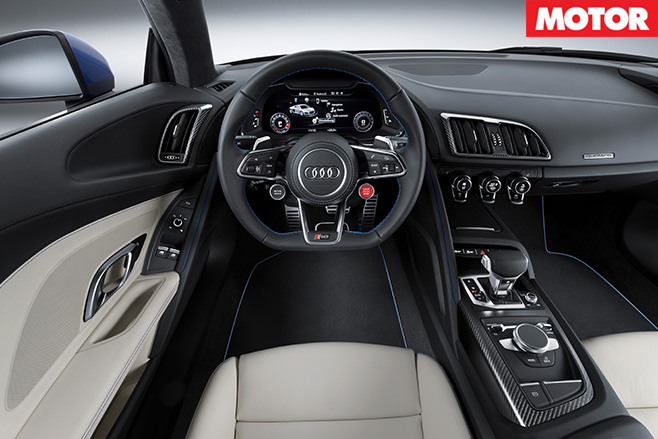
See, the 2016 Audi R8 has a new, lighter, stronger structure with plenty of carbon-fibre, a new interior and a new-ish look. But underneath all that newness beats the heart of the previous model R8, albeit with a few tweaks to bring it up to date. If, that is, you can call one of the passenger-car planet’s last big-inch atmo engines a modern interpretation of anything.
In any case, MOTOR got to sample the new R8 recently, although, sadly, there was no on-road component and really just the greasy (it was about 34-ambient) South Circuit at Sydney Motorsport Park from which to draw a conclusion. Which kind of means we haven’t (drawn a real conclusion). Yet.
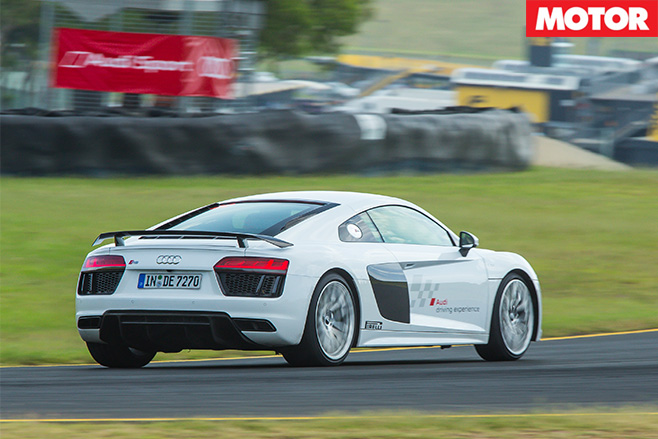
So that’s okay, then. Even more so because the Plus version gets carbon-ceramic brakes (a $20,300 option on the lesser model) tighter suspension and 20-inch alloys as well as a range of trim fluff.
If anything, the new R8 is even more complicated than before with a range of driver modes, all selectable via switches and buttons on the flat-bottomed tiller. But there has also been a worthwhile upgrade to the Quattro system including a water-cooled, electro-hydraulic centre diff and the ability to shuffle 100 per cent of the torque front or rear.
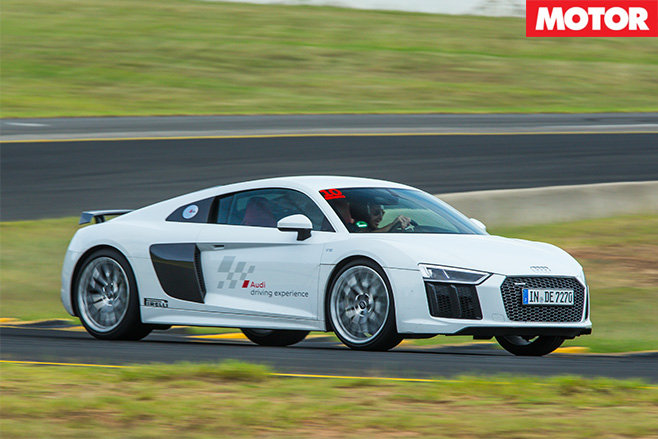
But even more impressive is that tweaked Quattro set-up which seems to make the car rotate much more willingly. There’s a surprising amount of leeway afforded by the ESP, too, but provided you don’t completely screw the pooch, there’s a fair chance you’re going to come out the other side of the corner intact.
4.5 OUT OF 5 STARS
SPECS Engine: 5204cc V10, DOHC, 48v Power: 449kW @ 8250rpm Torque: 560Nm @ 6500rpm Weight: 1555kg 0-100km/h: 3.2sec (claimed) Price: $389,900 Like: Atmo engine lives; revamped Quattro; useability Dislike: No manual; cheaper, but not exactly cheap
The evolution of the micro car hasn’t really taken off here in Australia, with the segment down 28.1 per cent compared to last year, according to VFacts.
Micro cars have seen the biggest sales drop, with several manufacturers pulling the micro-plug from Australia, such as the Fiat Panda and Suzuki Alto, leaving just five cars to fill the bubble-car division.
In other parts of the world, however, the pages read a very different story.
In places like Europe, where drivers need to fit into tight parking spots, or densely populated countries like Japan, teeny tiny cars thrive.
And while Australia heads into a population boom and leans toward compact living in metro areas, drivers are opting for more expensive, space-consuming SUVs.
At least for now, anyway.
We might see the return of the micro car, but until then, here are five cutesy cars we don’t get to buy!
FIVE MICRO CARS WE CAN’T GET IN AUSTRALIA
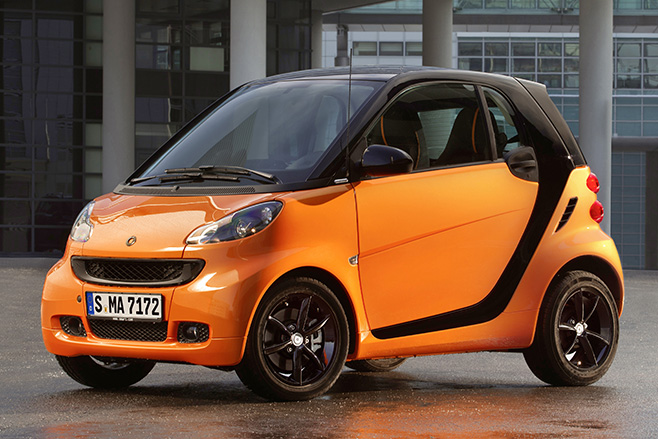
Smart ForTwo
Smart’s ForTwo was taken off the Australian market last year. The ForTwo is a two-seater hatchback that had a lifespan of more than a decade in Australia. While still successful in Europe due to resembling a scooter with four wheels, the Smart car can occasionally be seen scooting along Australian roads.
Renault Twizy
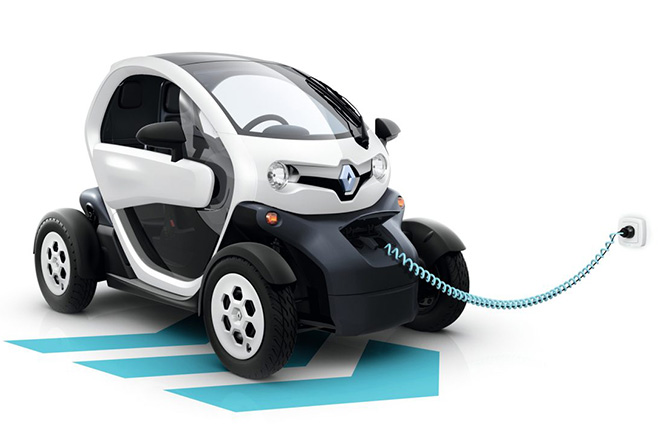
Not to dissimilar to the Smart ForTwo, the Renault Twizy is a cute little two-seater plug-in electric vehicle. But while the Smart is compared to a scooter, the Twizy is more like a quad bike. The Renault baby is sold in several European countries and saw a successful inaugural year in 2012.
Volkswagen UP
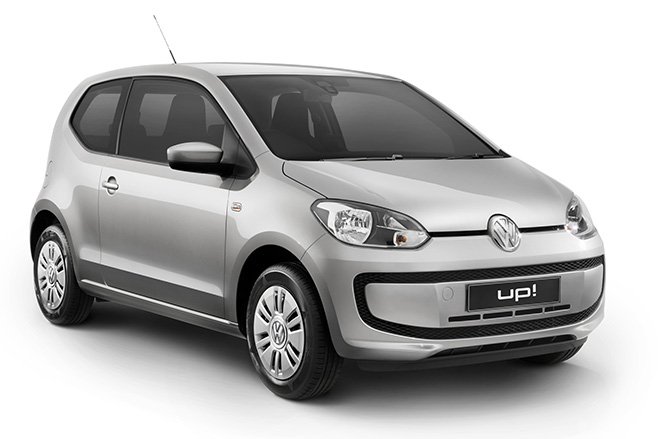
Another loss from the Australian market, the Volkswagen Up left the Australian building in 2014. Priced at just A$13,990, the Up was the cheapest European-made vehicle on sale in Australia but still couldn’t gain sales traction here, perhaps largely because it wasn’t available with an automatic transmission.
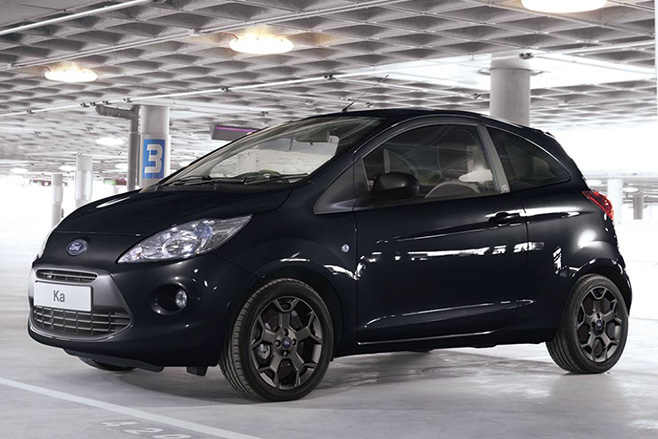
Ford Ka
The Ford Ka was sold in Australia for three years between 1999 and 2002. In its original guise, the Ka was a three-door hatch, but is now available as a five-door and went on sale in Europe last year.
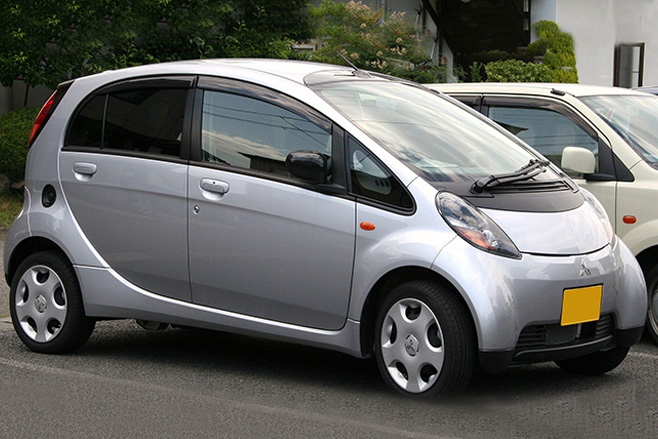
Kei cars
We couldn’t decide on just one Japanese micro-car so we included the whole segment. A Kei car is basically the Japanese version of a micro-car but also covers vans and utes as well as passenger cars. They’re often identified by yellow number plates. Kei cars we love include the Mitsubishi i, Daihatsu Move or the Subaru Sambar.
FIVE MICRO CARS WE CAN GET IN AUSTRALIA
Ok, so there may be a big chunk of the mini-car segment buyers are missing out on, but that doesn’t mean we’re left starving. Here are the five micro-cars (and only micro-cars) we can buy new in Australia…
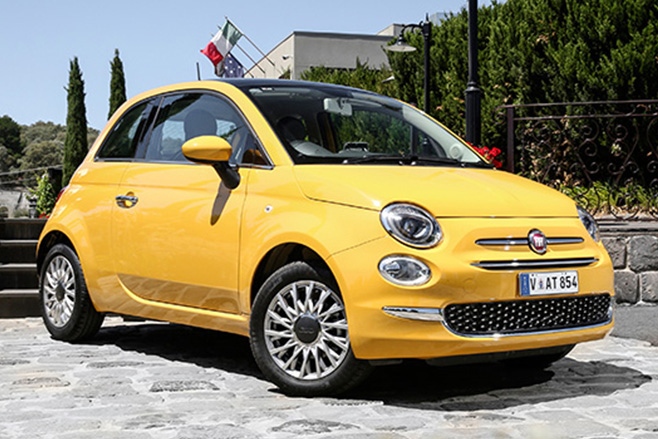
Fiat 500
The little Italian Fiat 500 has recently undergone an update, with a 2016 model released. As one of the oldest and smallest little cars on sale in Australia, its uniquely Italian and adorable styling has earned itself a cult following and a large portion of the car’s 500 buyers are women.
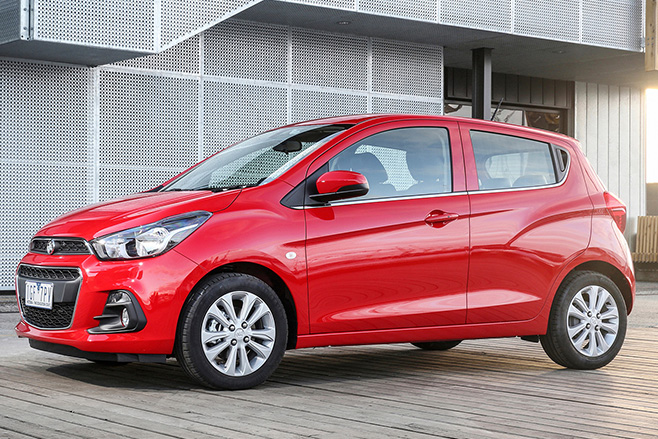
Holden Spark
This is Holden’s newest contestant in the micro-car game, replacing the previous Barina Spark. But the Holden Spark was a big jump forward for Holden, offering a more spacious, zippier, techno-packed and stylish car than its predecessor.
Mitsubishi Mirage
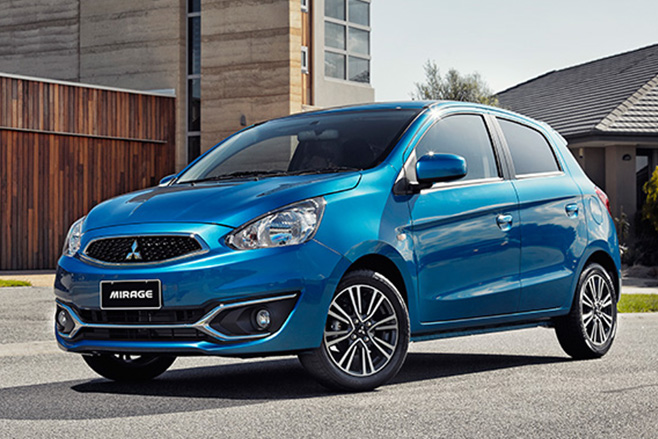
The Mitsubishi Mirage takes runner-up title for Australia’s cheapest car, narrowly losing out on the top spot to the Suzuki Celerio. Earlier this year, a minor-tweaked generation of the Mirage arrived in Australia. It’s fuel efficient, cheap and comes with a range of bright colour choices.
Nissan Micra
The affordable city car has seen strong sales in 2016, since Nissan launched a new version late last year. However, Nissan’s micro-Micra sitting as the second most popular car in the segment, Nissan announced in April it’ll be axing the car in Australia.
Suzuki Celerio
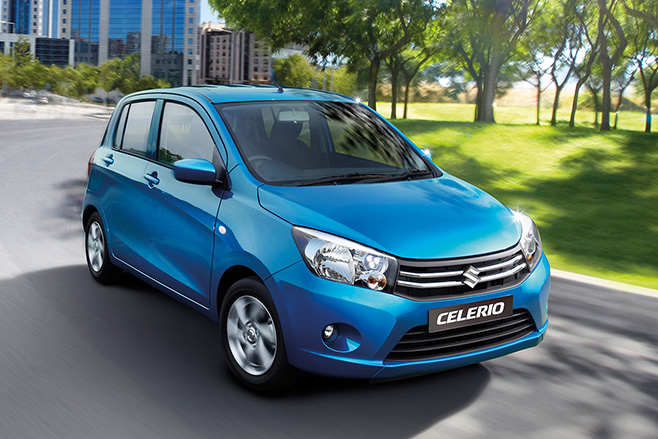
The Suzuki Celerio is the cheapest car available in Australia’s new-car market, and was a replacement for the now defunct-in-Australia Suzuki Alto. But don’t let the cheap price tag fool you – this isn’t a case of cheap and nasty. The Celerio offers decent performance and handling, with its biggest downside being its 4-star ANCAP rating. Still, despite its affordability, it’s the lowest selling car in the segment.
NISSAN has swooped on troubled rival Mitsubishi, sinking $A3 billion to expand its stake in the rival Japanese carmaker and effectively taking control of it.
It’s picked up something of a bargain, too, with the scandal-wracked Mitsubishi’s share price struggling to rebound from revelations in late April it had for decades cheated on fuel emissions tests for Japanese market models.
Described by Nissan chief executive Carlos Ghosn as a “capital alliance” rather than a takeover, the investment makes Nissan the single largest shareholder in Mitsubishi, with a 34 percent stake in the carmaker – enough to give it control under Japanese business law.
Importantly, though, Reuters reports that the investment also gives Nissan a pathway into the South-East Asian market; one in which it has struggled and Mitsubishi has thrived.
Nissan and Mitsubishi already have a relationship formed in 2011 as part of a joint venture to develop next-generation microcars for the Japanese domestic market. Tellingly, it was the dodgy fuel numbers for Nissan-badged cars built by Mitsubishi that have sparked the latest crisis for the carmaker – and Nissan’s timing for the takeover.
“This is a breakthrough transaction and a win-win for both Nissan and Mitsubishi Motors,” Ghosn said in an official statement from Nissan.
“It creates a dynamic new force in the automotive industry that will cooperate intensively, and generate sizeable synergies.”
He acknowledged Mitsubishi still has a hard road ahead of it.
“We will support MMC [Mitsubishi Motors Corporation] as they address their challenges and welcome them as the newest member of our enlarged Alliance family,” Ghosn said.
Strategically, the deal also has the potential to give Nissan inroads to Mitsubishi’s petrol-electric hybrid technologies, used on vehicles such as the Outlander SUV.
Following on from the initial announcement, Nissan has scheduled a press conference for later today to expand on what the takeover means for both companies.
The 595 receives some mild engine and styling changes, and gains some worthwhile extra features.
Design tweaks are based on the 500’s 2015 redesign, with the Fiat Abarth 595 employing the same new circular LED daytime running lights but adding visual aggression to the front end with larger air intakes.
At the rear, the 595 features a more prominent diffuser.
The range continues to comprise hatchback and cabriolet body styles, with three variants each offering varying levels of power from a 1.4-litre turbocharged four-cylinder.
The base 595 and mid-range 595 Turismo both get a 5kW power increase, respectively moving to 108kW and 118kW.
Abarth’s racier Competizione remains at 132kW but now offers the option of a mechanical limited-slip differential on the manual gearbox version to help put that power through the front wheels more efficiently.
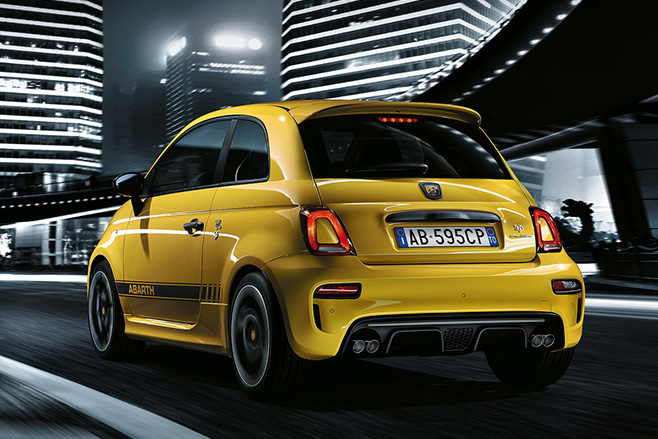
The special diff’ is part of a Performance Pack that also includes 17-inch Supersport wheel rims and Sabelt leather/Alcantara carbon-shell seats.
Dampers from specialists Koni also now feature on both the front and rear suspension of the Competizione, or just the rear of the Turismo that sits on new, lighter-weight 17-inch Granturismo alloys.
Additions to the 595 cabin includes more extensive use of carbonfibre and the suede-like Alcantara, a new flat-bottom sports steering wheel, and FiatChrysler’s Uconnect infotainment touchscreen system.
Uconnect comes with a standard 5-inch display or an optional 7-inch screen. The bigger system is required for Apple Carplay and Android Auto integration.
Fiat Australia has priced the current 595 from $27,500 for the single, 103kW version available. There’s a $4000 premium for the cabriolet variant.
Fiat’s local arm has yet to announce timing for the new-look 595, but expect a 2017 rather than 2016 arrival.
BMW has announced a five-year wait to see the next big step in the German luxury brand’s electric car – and whether it will also carry an Apple logo.
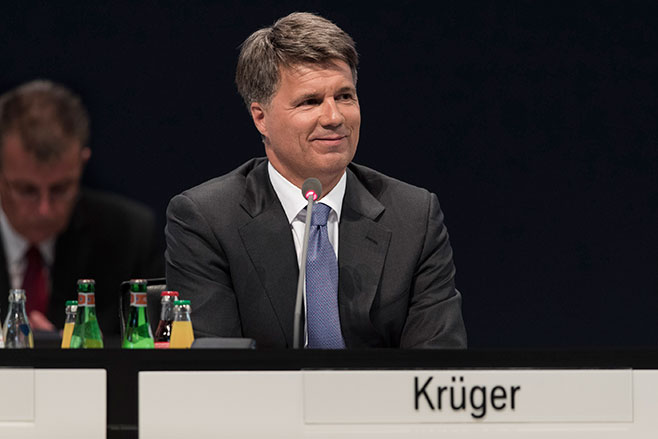
Harald Kruger, the chairman of BMW’s board of management, announced at the carmaker’s annual general meeting overnight that its next big leap in its “i” hybrid and electric sub-brand wouldn’t surface until 2021 – lagging rivals’ timelines for similar technology leaps.
He said the company’s performance now would help to “pay for revolution over the coming years”.
“I have always emphasised that electro-mobility is a marathon, not a sprint,” Kruger said.
“We are further expanding the BMW i line-up. In just a few weeks, we will offer an i3 with 50 per cent more battery capacity. In 2018, we will launch a BMW i8 Roadster.
“This will be followed in 2021 by the BMW i NEXT, our new innovation driver, with autonomous driving, digital connectivity, intelligent lightweight design, a totally new interior and ultimately bringing the next generation of electro-mobility to the road.”
However, Kruger said the German luxury brand was still waiting to see which way drivetrain technology would turn before backing one.
“We will continue to chart our own course,” he said. “It is still unclear which drivetrain will prevail, but we are prepared: We are optimising the combustion engine with Efficient Dynamics NEXT, in which efficient diesel engines will continue to play an important role.
“At the same time, we are electrifying our vehicles – focusing on battery power for short distances and fuel cells for longer trips. In this area, we are working closely with our partner, Toyota.”
Kruger said he also wanted BMW to dominate in the field of autonomous car technology, which was still evolving.
“People often ask me, when will we be driving autonomously,” he said. “My answer is: We already can.
“A BMW test vehicle autonomously completed a lap of the Hockenheimring racetrack back in 2006. In 2011, a BMW drove on the A9 autobahn from Munich towards Nuremberg – without any driver intervention,” he said.
“It will be a while before these cars reach series maturity – also because the proper legal framework for customers and manufacturers has not yet been decided.”
Rumours have speculated that BMW has already held extensive talks with computing and software giant Apple, which is believed to be working on its own version of the autonomous car under the codename Project Titan.
News broke overnight that Apple – better known for its consumer-friendly smartphones and laptops than carmaking – has tripled its spend on research and development in the last year to almost $A14 billion as it ramps up development work of the so-called iCar.
Development for a second-gen Toyota 86 is underway and the brand’s traditional hybrid system is being ruled out as a powertrain option.
Speaking to MOTOR via a translator at the Festival of 86 event held in Canberra this week, Toyota 86 chief engineer Tetsuya Tada claims there are a few surprises in store for the second iteration of the compact rear-drive coupe.
“We have started planning the next generation 86 (but to) try to provide something beyond people’s expectation is not easy,” begins Tada-san.
“It will definitely be above the fans’ expectation, because if you supply what all the fans really want, nobody gets really surprised or impressed, so wait and see, we provide something that will be really surprise.”
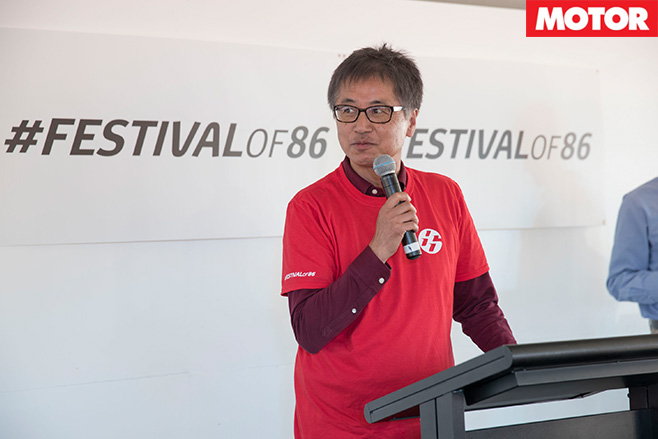
“Not necessarily we would be saying hybrid as such, hybrid could be a part of the answer but if (we) provide just a normal hybrid it make no-one surprise,” he replies.
However the chief engineer’s eyes light up following the suggestion that an electric motor could be used as ‘boost’ for an internal combustion engine.
“Ohhh, yes, yes,” he responds, only to then put a dampener on the theory that type of powertrain could arrive in the next 86.
“It’s a good idea but it is not surprising as (we) want to make. The whole package as a new generation 86 … want to make everyone go wow, and beyond expectations.”
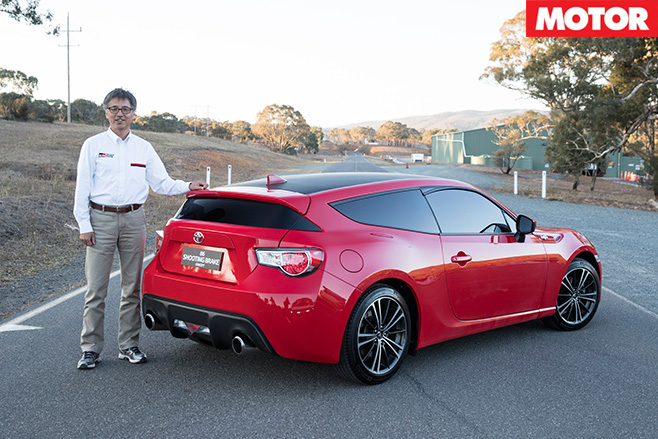
“The (current) 86 maybe can go slightly smaller but it wouldn’t have much of a less weight or make it less cost, so at the time when developed 86 like that, that was the best balance between cost and (practicality of) usage.
“Currently because technology has advanced more … maybe if you reconsider same good balance we might be able to make it smaller.”
And what about hitting the magic one-tonne figure, to match the current Mazda MX-5?
“I will try to do my best,” he responds with a shy grin.
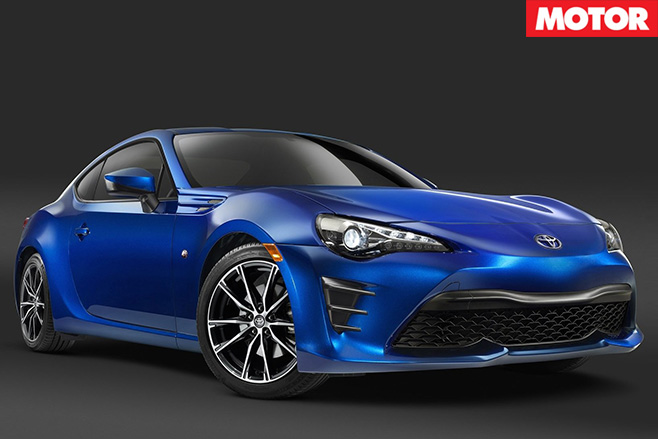
Tada-san adds that maintaining a good business case is essential to continuing the 86 into future generations, something he believes Toyota must do.
“Continuation is very something, because in the past Toyota make so many sports car … and then when the profit goes down they already finished every single time and didn’t continue,” he tells, noting that the current 86 is returning a profit for the brand.
“Even the president of Toyota is not considering making a huge profit throughout the 86 but if the profit disappear totally it is very hard as part of the company policy to making the same style, so as soon as they are making even a little bit profit (we) can continue.”
