
Our previous experience with Caterham’s 485 wasn’t, erm, very positive. Put simply, we didn’t feel the driving experience justified the substantial $116,990 price tag.
After all, there are some very talented rivals like the Porsche Boxster and Alfa Romeo 4C at this price point, which demand nothing like the level of compromise required with the Caterham.
However, we’re re-visiting the 485 as there’s been a notable change to its standard specification, as well as the opportunity to run it down the strip to try and validate Caterham’s eye-widening 3.9sec 0-100km/h claim.
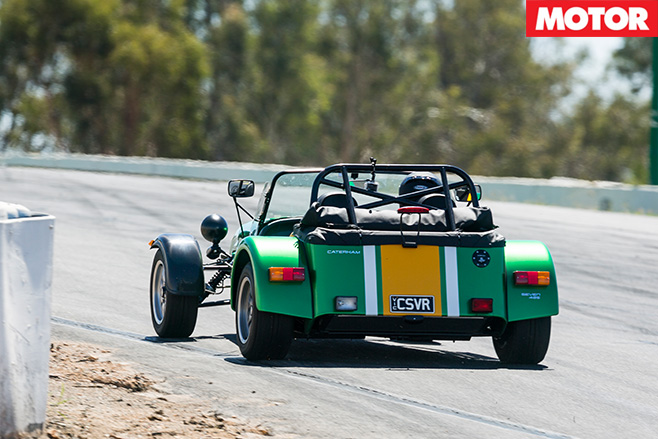
It takes a lot of concentration, as with no electronic aids of any kind – not even ABS – you’re completely on your own in a car that will easily wheelspin through the first three gears and can be tricky to catch when it does slide. The corollary of this, of course, is the buzz that results from knowing you alone are in control.
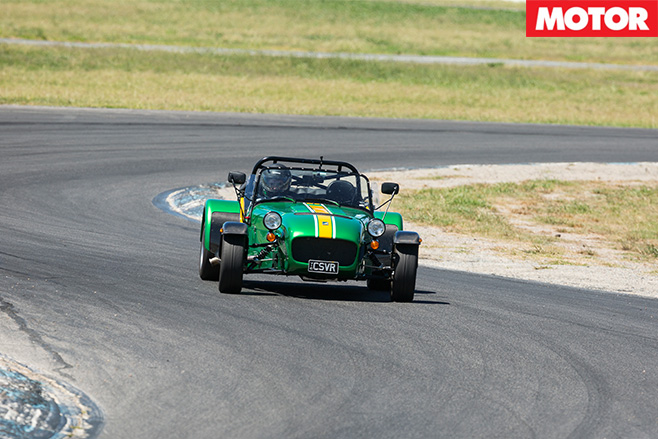
Or a dry, warm track, at least, as performance testing the 485 at a dry but cold Heathcote drag strip was heart-in-mouth stuff. With the highly tuned 177kW/206Nm four pushing just 675kg (sans driver) the Caterham fires off the line like it’s been stung, but continues to slither and slide all the way to the top of third gear.

The thing is, though, a 13-second run in a 485 is much more thrilling than an 11-second run in a 911 Turbo, which sums up the whole Caterham experience. It’s madly compromised and expensive, but it’s a car every enthusiast should try at least once. With less power and grip, it might even be more fun. Stay tuned.
3 OUT OF 5 STARS
SPECS Engine: 1999cc inline-4, DOHC, 16v Power: 177kW @ 8500rpm Torque: 206Nm @ 6300rpm Weight: 675kg 0-100km/h: 3.9sec (claimed) Price: $116,990 Like: Old-school raw driving thrills; LSD now standard; novelty Dislike: Price; practicality; quality issues
HYUNDAI SAYS despite strong sales figures last month, it needs new models to truly take the fight to Japanese juggernauts Toyota and Mazda.
The Korean manufacturer is bucking predictions this year, and has just recorded one of the most impressive months in its history in Australia.
According to VFACTS, Hyundai was the top-selling brand for passenger cars (excluding ever popular SUVs and high-volume light commercial vehicles) in the month of April. This is the first time Hyundai has been the top sales dog for passenger cars since it first started selling on Australian shores.
This is largely due to impressive sales of the i30, which stomped its rival, the Toyota Corolla, by 33 percent last month to move 4143 units.
“It is obviously a fantastic result for us, and it is actually the second month running that we have topped the sales charts in Australia,” Hyundai spokesperson Bill Thomas told Wheels.
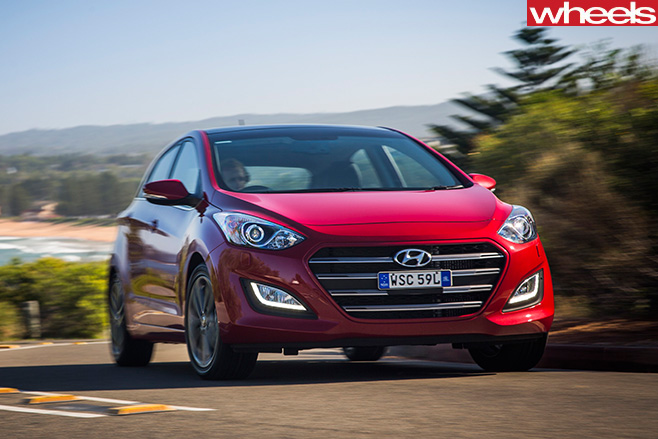
“One of the more interesting facts about it is that that is only counting the hatch version [in the i30] – whereas the Toyota Corolla and Mazda 3 within their ranges are including the sedan versions of those,” he explained.
“Given that, it is an even more outstanding result.”
Hyundai sold 234 Elantras last month.
The boost in sales pushes the Korean manufacturer into second overall in market share, behind Toyota – which benefited from a 14.1 percent rise in light commercial vehicle sales this month to control 18.9 percent of the market overall. Hyundai took a 9.9 percent share of the market to demote Mazda to third by just 0.2 percent.
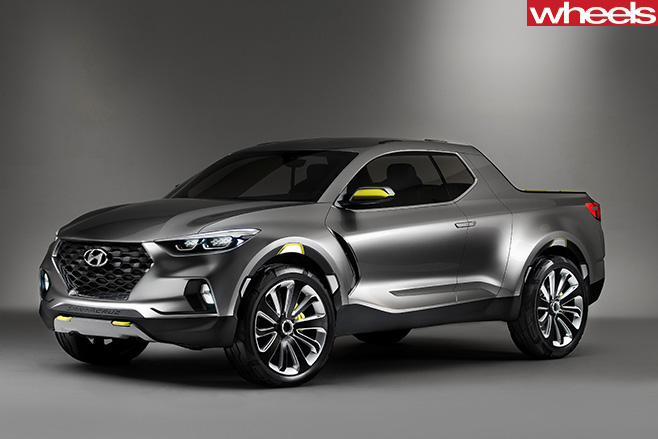
Thomas says not being able to fight Toyota and Mazda in all segments hurts them overall.
“We have got some strong product, but at the moment we are not playing in every market segment, which kind of limits our potential – certainly at this current point,” Thomas added.
Currently, the Korean manufacturer does not have any competition for the Toyota Hilux or Mazda CX-3, which sold 3384 and 1604 models a piece.
Hyundai believes selling rivals to these two models would both suit the brand, and boost sales.
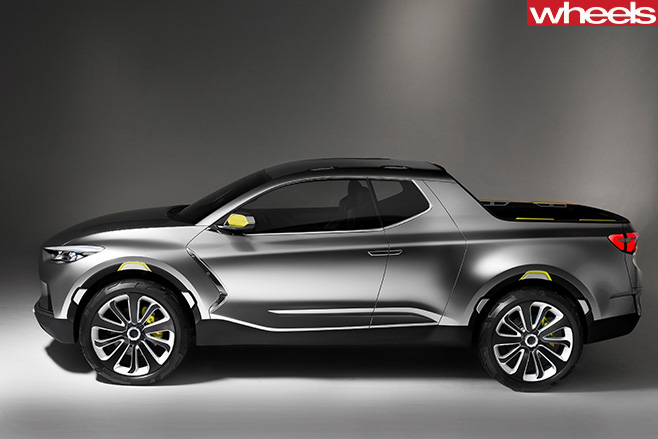
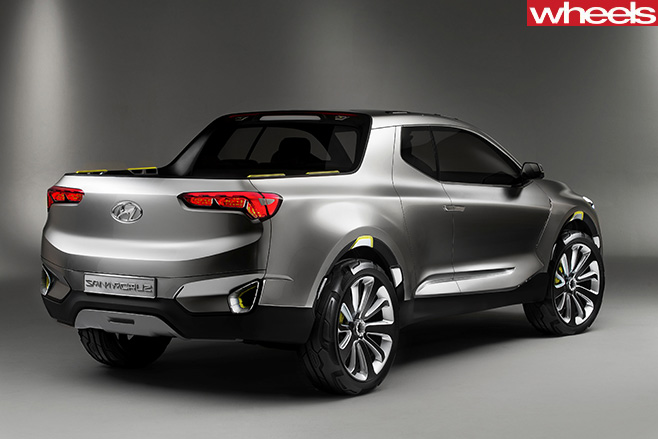
“I think if we had a Hilux rival for example, that would add considerable incremental volume – also a CX-3 rival.
“Both of those vehicles would be suitable for our brand. I think if you look at the success of iLoad for example, our van, it proves that we can build a successful, strong, commercial vehicle.
“You can imagine that the ute would be along those lines. I think Australians would like a Hyundai Ute.
“The same goes for a small SUV. That is something Mazda is doing very well with the CX-3, and we could certainly play in that sphere.
“We are a little limited at the moment across our product ranges, but I think eventually we will get there and we will get those cars launched.”
Thomas refrained from revealing specific numbers, but said Hyundai is pleased with its sales so far, and is on track to reach its own goals for the year.
“We just have our targets and our ambitions and we have to hit targets and we set ourselves goals and that is what we are all about,” he explained.
“We don’t really pay much attention to what other manufactures are selling and where we are on the so-called leader board.
“But we are very aggressive at the moment, and it seems to be working.
“We have a number, and we are expected to hit it. I guess you could say it is a very similar number to the sales number that we had last year.”
Faster and promising a sharper drive, the BMW M3/M4 Competition Pack arrives locally priced from $144,900 plus on-road costs.
There is a $10K jump from Competition Pack sedan to the $154,900 coupe and another $11K to the $165,900 convertible, each commanding a $5000 premium over the standard M3 sedan and M4 coupe/convertible models.
That surcharge buys an extra 14kW from the 3.0-litre twin-turbo six-cylinder engine, which now produces 331kW (although 550Nm is unaltered) to deliver a claimed 4.0sec 0-100km/h, a tenth faster than the regular M3/M4.
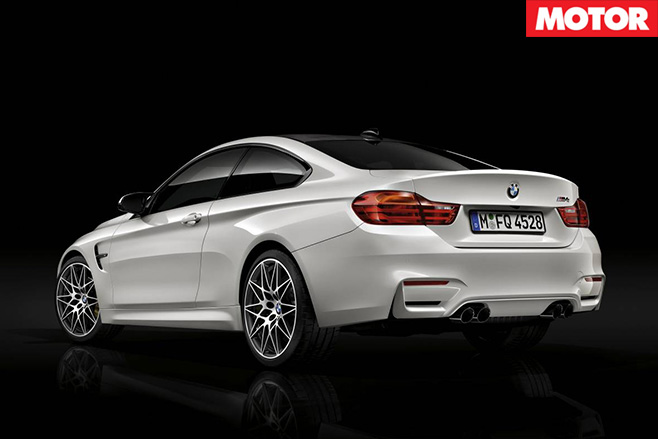
The Competition Pack also swaps out the standard 19-inch alloy wheels for machine-finished multi-spoke 20s, with 265/30 front and 285/30 rear rubber offering 10mm extra tread width, “to deliver improved handling characteristics”.
BMW further claims a new calibration for the active M differential “aids drivability and traction” while the adaptive suspension has been reconfigured in each of its three modes to match revisions to the three-step stability control.
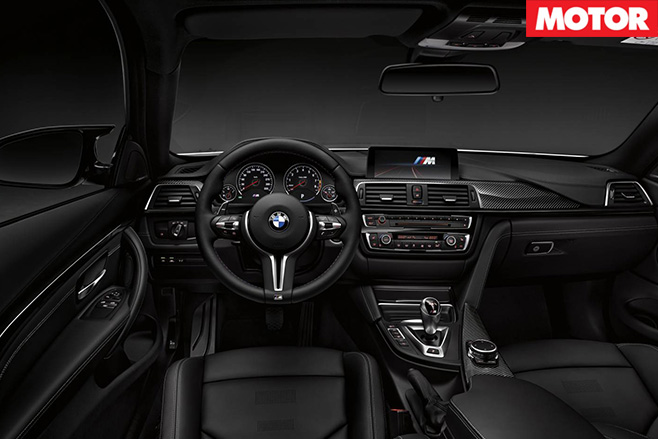
Primary changes inside include new leather-trimmed electrically adjustable front buckets “that use distinctive cut-out elements to reduce weight” and M stripes stitched into the seatbelts.
The M3 and M4 Competition Pack is clearly designed to more closely challenge the Mercedes-AMG C63 S and the $162,400 coupe’s 3.9sec 0-100km/h.
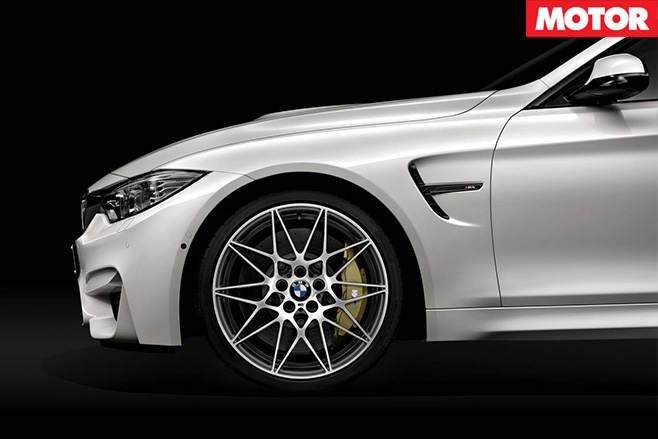
Time will tell if the Competition Pack models can keep tough competition at bay.
DO YOU remember Romsey Quints?
If you do, there’s a fair chance you also know that Bill Tuckey was his creator, handler and spokesman.
Quints was colourful, cantankerous and completely content to raise hell and shine a spotlight on the strange and wonderful stories in the world of motoring and motor racing.
It’s the same for Tuckey, who was everything from a Bathurst racer and the man who tagged Ian Geoghegan as ‘Black Pete’ to a magazine editor, prolific book writer, newspaper reporter, television presenter and talkback radio star.
If you believe Tuckey, and many did, he was on track to win the Bathurst 500 until his co-driver Sib Petralia destroyed the engine in their Holden Monaro 350. Tuckey also claims credit for baptising Allan Grice at Mount Panorama when the pair shared a Fiat 124.
All of this, and much much more, should have been covered in minute detail when Tuckey sat down to write about his life. But bad health cut short his writing days.
It’s a travesty that so few words have been written about a bloke who has written millions about what he has seen and done in a jam-packed life of towering adventure. There is not even a Wikipedia entry for William P. Tuckey.
It’s a yarn, the only word that fits, that begins when Tuckey was born in Lismore on April 20, 1936. Other landmark dates were his wedding to Marcie – a one-time rally driver – on July, 12, 1958, the arrival of their son Stuart on July 16, 1959 and the birth of daughter Elisabeth on July 31, 1965.
Tuckey first made his mark as a crime reporter in Queensland in the very early 1960s, before joining the Courier-Mail newspaper in Brisbane. When the editor called for volunteers for the motoring writer’s slot, Tuckey’s hand was the first one up.
It was an easy step from there to the editor’s chair at Wheels magazine in Sydney and a career that made Tuckey a force of nature as a writer, editor, talent spotter, promoter, and more.
There were some downs with the many ups, but it’s hard to argue when the end result runs to 32 books, successful time in everything from advertising to television and radio, and creation of the world’s first Car of the Year award. He loved to be the centre of attention, was a natural leader, and a ferocious critic of cars he didn’t like and anyone who didn’t agree with him.
Mel Nicholls, who followed Tuckey through the motoring mill in Australia and went on to become a writer, editor and publisher in the UK, recently put him into perspective.
“Tuckey wasn’t just a writer whose copy flowed like lava. He criticised cars ferociously. When he wrote that an important new Holden had ‘savage power but drum brakes the size of boot polish tins’, its maker, General Motors, blackballed Wheels. Tuckey didn’t relent.
“Eventually Australian cars got decent brakes, suspension and tyres that weren’t, as he said, ‘dynamite if a seagull peed on the road’.”
Peter Robinson, who would become the longest serving editor of Wheels and Australia’s most respected motoring journalist, says he was also inspired by Tuckey.
“Bill’s writing style took putting the reader behind the wheel to a previously uncharted level. His writing was evocative and passionate and beautifully in touch with contemporary Australian culture. He understood Australian writing; he created word pictures that put things effortlessly into cultural context”.
There are far too many stories for one story, but how about this?
“Did you know, in volume one of Australian Motoring Year 1982/83, Romsey Quints predicted the Toyota Corolla would be the number one selling car in Australia? It only took 31 years for the prediction to become reality,” says Mike Breen, long-time Toyota Australia spokesman and a man with an eye on history.
At this point it’s worth remembering that Quints was mostly comedy, with a twist. He could say and do things that were beyond the reach of a regular journalist and Tuckey also used his alter ego to explore a different writing style.
Sadly, the roots of the Quints character are lost, but not the achievements of a character who preferred to go about his business dressed in a deerstalker hat and a Sherlock Holmes-style cape.
He tested vehicles as diverse as a racing Rover and a giant Euclid earthmover and railed against all sorts of perceived wrongs.
Tuckey once said he created Quints to give Wheels and Sports Car World an extra byline on the cheap, but it was a masterstroke.
While Quints was starring on the flanks, Tuckey was making his own frontal assault.
McLaren supremo Ron Dennis once said that his team made history and journalists only wrote about it, but Tuckey was one of the rare exceptions.
He set the standard for motoring journalism in Australia, helped drive the Holden Dealer Team at a time when General Motors was officially out of motor racing, and demanded better locally made cars. He was one of the pioneers who headed to Japan to investigate its car industry in the 1960s, later also packing his bags to see what was happening in Korea and China.
But he wasn’t perfect, as he showed with an early test review of the Mini 850. “It produces a pleasant chirp from the rear tyres on upshifts,” Tuckey wrote.
He also had lots of hits with a few misses with his mentoring and tutoring of several generations of journalists, from Rob Luck and Mac Douglas and John Smailes to Jim Laing-Peach, Wayne Webster and even myself.
Peter Robinson recalls one story that shows the ability of Tuckey.
“I remember, once, abusing Bill because his Wheels column was late. At the time, he was publisher or editor-in-chief, and his office was one floor above Wheels.
“As I finished speaking, he slipped a piece of paper into his typewriter and started tapping. Twenty minutes later, he delivered the column – all of 1250 words, no photographs in those days. It was exactly to length, required no editing whatsoever and was beautifully written. The bloke was a genius, a natural writer and a wonderful story teller.”
As the Wheels editor, Tuckey was always looking for new ways to build the story, even if that meant sitting in a car’s boot to show the relative carrying capacity of rival vehicles.
On the book front, his first – and one of the most successful – was called The Book of Australian Motor Racing, published by KG Murray in 1964 when Tuckey was 28.
John Smailes says it was “both textbook and a call to action” and remembers Tuckey’s description of a lose-and-save from its pages: “You sit, braced, and realise the car is lost, adhesion has gone , and the driver has snapped on instant opposite lock and slapped the car back into line like a man slams a door in a rage, and it’s all happened before you even register that all is not normal”.
There was drama with his next book, The Ultimate Excitement, in 1967, when Customs officials thought it was a pornographic publication. But it was a compilation of excellent motorsport pictures by Nigel Snowdon with words by Tuckey.
For a while there was a diversion from writing in the early 1970s as Tuckey and his wife opened a delicatessen and sandwich shop in Neutral Bay, then moved into the entertainment business with the French Hell Drivers and a number of other club acts.
But it didn’t last long, and Tuckey forged a long-term alliance with Ray Berghouse and Tom Floyd that became Chevron Publishing, the umbrella company for Australian Muscle Car and many other successful business ventures from the annual ‘Bathurst book’ to Aero magazine and the Australian Muscle Car Masters.
Somewhere he also found time for a spell at the George Patterson advertising agency, where he was one of the essential cogs that kept the Holden Dealer Team running at a time when General Motors had an official anti-motorsport policy.
He was also an on-the-spot reporter through the craziness of the Repco Round-Australia Trial in 1979 and showed his commitment to the car business with a series of Motoring Year annuals.
Tuckey was in on the ground floor at Business Review Monthly magazine and used it as a platform to report, analyse, cajole and embarrass the good and the great across the business. It was a perfect match for a man who knew more than many of the people he was writing about.
Tuckey’s son, Stuart, says his father was proudest of a range of his achievements. There is the inaugural Motoring Journalist of the Year award from 1985, a CAMS motorsport media award, and the book Rise and Fall of Peter Brock.
“He put an incredible amount of research and effort into that book. It was a best seller and went into a second repeat,” Stuart says.
“He was also very proud of the Bathurst books. He always said it’s about the emotion, not just the race.”
As for drivers, Tuckey was a fan of Stan Jones but his personal favourite was Frank Matich.
“We lived in North Rocks in Sydney and they lived in Carlingford, and we used to socialise all the time. We saw what Frank did, all the way through. From an engineering and a driving point of view, he was one of the greatest apart from Jack Brabham,” Stuart says.
Tuckey had one last big tilt, after time as editor at Car Australia magazine, when he became a radio shock jock in Melbourne. He wasn’t quite Derryn Hinch, and it only lasted a few years, but his time on 3AW reflected the same opinioned and entertaining style that carried him through the decades of motoring journalist.
Tuckey and Marcie retired to Merimbula in 2001 but they eventually returned to Melbourne where his health took the first of several dives in 2010.
Bill Tuckey has amassed an incredible body of work that will outlive him and provide a legacy that is a reflection of his talent, commitment and personal belief.
“Motoring journalism, and possibly the motoring industry, would have been different without Tuckey. He made both better,” says John Smailes.
“Every Australian motoring journalist owes Bill Tuckey a debt,” says Mel Nichols.
But let’s not forget the many, many thousands of people who have enjoyed and learned from the work and words of Bill Tuckey, and Romsey Quints, over more than 50 years.
Bathurst blasts
Bill Tuckey is one of many motoring journalists who raced at Mount Panorama in the heyday of the Series Production regulations.
He made three starts in the late 1960s, introduced Allan Grice to Mount Panorama, and was even an outright contender in a Monaro.
Things got going in an unusual way when Fiat staged a race for motoring journalists at the Warwick Farm circuit in Sydney in 1967, using the then-new Fiat 124.
“Memory says 11 identical cars,” recalls John Smailes, then a reporter and now the head of one of Australia’s most successful and respected public relations consultancies.
“I got the gig because David McKay (a successful racer and team boss who also wrote for the Telegraph in Sydney) was overseas and recommended me. Bill won, Max Stahl was second, with me third and learning from the only blokes in the field who knew how to race.
“The Farm event led to McKay running two of the cars for the state Fiat distributor, Grenville Motors, in the Bathurst 500. Tuckey and Stahl were in one and Mike Kable and I were in the other. The Tuckey/Stahl car finished laps ahead, two laps I recall, but we were in the same class as the Minis which had won the year before.”
The records show that Tuckey and Stahl qualified 31st for the Gallagher 500, finishing 20th overall and 8th in Class C.
The following year Tuckey was back for the first Hardie-Ferodo 500, with a twist. He brought Allan Grice to Bathurst for the first time in a Fiat 124 Sport which they qualified 30th, before running home 18th and ninth in class D.
“I didn’t drive with Bill Tuckey, I drove with Romsey Quints,” Grice laughs now.
“David McKay of Scuderia Veloce saw me drive in an Elfin Mono F2 and offered me the drive. Yeah, it was my first time at Bathurst and I don’t even remember if we finished. The car was dead standard and, as I remember, boring.
“My only memory was David McKay drilling me for spinning the car in practice at the top of the mountain somewhere. It was actually Romsey who spun the car in the session before …
“Tuckey was easy to get on with and, as I remember, just wanted to finish. I don’t recall any breathtaking tips or secrets.”
In 1969, Tuckey was in a Holden Monaro GTS350 with Sib Petralia for his first genuine shot at outright victory.
They qualified 13th and for many years Tuckey maintained they were a serious chance to win. But the car only managed 44 laps before the engine failed.
Wheels Car of the Year
In 1963, Bill Tuckey changed the world.
As editor of Wheels magazine, he introduced the world’s very first Car of the Year award – an honour that went to the Renault 8.
If that had been all he achieved in his career as a motoring journalist, it would have been enough. But Tuckey did a lot more to bring credibility and clout to the motoring beat, as well as establishing himself as the best of his breed – anywhere in the world.
“Bill took motoring journalism to new heights of respectability within journalism and the motor industry. He understood how cars were created and developed, how they were sold. Bill believed there was no reason why a car magazine shouldn’t aim for the highest standards of journalism,” says Peter Robinson, the longest-serving editor of Wheels and himself a powerhouse in global motoring.
“Bill brought freshness, entertainment, a sense of humour, and – most of all – brilliant writing. He invented comparison tests, at least among Australian magazines, and was never afraid to criticise a new car. He took the local industry seriously and effortlessly imparted his knowledge and enthusiasm for cars and magazines.
“It helped that he could drive and was an insightful road tester. What he brought was the ability to put the reader behind the wheel, especially in stories for Sports Car World.”
Robinson says there were things he happily continued at Wheels.
“The objectivity of his comparisons, the need for each issue to contain a ‘good read’, and a culture that took the reader behind the scenes to make them feel they belonged to an exclusive club of like-minded enthusiasts.”
And he has no doubt about the historical importance of that fledgling Car of the Year award.
“COTY gave Wheels credibility and Bill built on this so that it became, and remains, the Australian industry’s highest and most-sought-after award.”
This article was first published in Australian Muscle Car magazine in 2014. Updated May 2016.
BILL Tuckey, one of the most influential motoring writers of his time and a former long-serving editor of Wheels, has died overnight aged 80.
Tuckey joined Wheels in 1963 after he was headhunted from the Brisbane-based Courier Mail, where he was editor of its motoring section, replacing Ian Fraser as editor.
He is recognised as the single largest influence on the magazine in its 63-year history. Tuckey inaugurated the annual Wheels Car of the Year, invented the multi-car comparison, developed his own style of gonzo journalism under the name of his alter-ego Romsey Quints, and introduced the era of colour print to the magazine.
Tuckey left Wheels in 1968 to become a freelancer, but rejoined the magazine’s publisher between 1974-78 to head up the entire magazine group.
He was a prolific writer, publishing several books including Rise and Fall of Peter Brock, The History of 100 Years of Australian Motoring, and Commodore Lion King: Celebrating 21 Years.
Tuckey had struggled to recover from a stroke in 2010 that severely limited his creative abilities.
He leaves a long and lasting legacy. At his peak, Tuckey was the best motoring journalist in the English-speaking world, introduced a degree of professionalism in the industry that carries through to today, and pioneered a style of automotive journalism that had never been seen before.
Wheels extends its deepest sympathies to his family, including Marcia, Stuart and Libby.
1. It’s the most affordable Abarth ever sold in Australia. Priced from $27,500, the Abarth 595 undercuts the previous cheapest model by a hefty $6500.
2. There are expensive Abarth models, though. While the 595 is the entry point to the range, sitting atop the Abarth hierarchy is the track-focused 695 Biposto which costs $65,000. Only 15 were imported to Australia and they’re all sold.
3. The brand’s creator, Carlo Abarth, was born on November 15, 1908, making his star sign Scorpio. Abarth models feature a scorpion on their badge to reflect this.
4. It’s tiny. The Abarth 595 is one of the shortest cars on sale in Australia, measuring only 3.6 metres long and 1.6 metres wide.
5. And it’s fast. Being small means it’s light, and the 595’s turbocharged engine is powerful enough to propel it from 0-100km/h in a respectable 7.9 seconds. Give it enough space and it’ll even sail to a top speed of 205km/h.
6. Being tiny doesn’t mean it’s cramped. The cabin is roomy enough for two adults up front and (very) small children in the back. And while the boot isn’t huge (it’s only 185L), it’s still big enough to swallow two large overnight bags.
7. The Abarth 595 name has a long history. Fiat first launched the Abarth 595 in 1963, giving it a pedigree that stretches more than 50 years.
8. There’s a convertible version. Cabrio models are fitted with a retractable cloth roof, perfect for open-top cruising. Convertible models start at $31,500.
9. It’s designed to attract new, younger buyers to the Fiat brand.
TELL ME ABOUT THIS CAR
As the name suggests the C-Class Coupe is a two-door version of Mercedes-Benz’s best seller, the C-Class sedan. There are four models, starting with the four-cylinder C200 tested here ($65,900) and finishing with the V8-powered C63 AMG ($162,400). In the middle are two more four-cylinders, the diesel-powered C250d and the more powerful C300. While it looks smaller than the C-Class sedan, the Coupe is actually the same length and width, but it only gets four seats, one fewer than the four-door version.
STRENGTHS
- It looks the business, partly because of its two-door silhouette but also thanks to the unique “diamond grille” which brings more definition and visual excitement to the nose. Inside, too, it’s all elegance and class thanks to a clean but functional design and well-chosen materials, including matte-finished dark wood and aluminium.
- Those who enjoy driving will appreciate the AMG suspension fitted as standard to C-Class Coupes. It’s slightly firmer than the suspension on C sedans, but combined with steering that requires fewer turns to get the desired result it makes for sharper cornering responses, which is perfect for twisting roads. If you want more comfort splash out on the Airmatic adjustable air suspension system. It has a Comfort setting that is very compliant, making for more relaxed motoring.
- Despite being the most affordable model in the line-up, the C200 comes generously appointed. There’s fake leather that looks and feels convincingly like the real stuff, as well as digital radio tuning (for clearer reception in main cities), sat-nav and power-operated front seats with the ability to program settings for different drivers. The safety story is strong, too, with blind spot warning, partial auto emergency braking which can automatically apply the brakes to avoid a nose-to-tail crash, and nine airbags (dual front, side airbags for each of the four occupants, curtain airbags to protect heads in a side impact, and a driver’s knee airbag).
- It’s impressively fuel efficient. Claimed consumption is 6.0 litres/100km, and while you’re unlikely to achieve that in daily driving, with some careful driving you can get close to the claim. Keep in mind, though, that as with key competitors it prefers more expensive premium unleaded fuel.
- The 2.0-litre four-cylinder turbocharged engine in the C200 is strong around town and is a relaxed tourer but it lacks some of the sporty sizzle you might expect given the boldness of the exterior design. Those wanting more zing would do better to up the spend to the C300.
- The steering doesn’t match the athleticism evident elsewhere. Sure, it’s faithful in its responses to driver inputs and has a reassuring weight to it when you select the Sport or Sport+ mode as part of the Dynamic Select system (it also adjusts throttle sensitivity and how the seven-speed auto changes gears). But its initial reactions aren’t particularly direct, requiring more of a twirl to point the nose into a corner. It’s more noticeable through tighter bends and when you’re changing direction quickly.
- Rear seat space is tight, especially if you’re shoehorning taller adults in. Head room in the rear is actually marginally worse than the model it replaces – and 37mm less than in the sedan – and there are only two seats in the back. Leg room, too, is 83mm worse off than the C-Class sedan, although if those in the front don’t have their seats pushed all the way back it’s liveable for shorter journeys.
Traditional challengers include BMW’s 4-Series Coupe and Audi’s A5 Coupe.
A more recent entrant to the affordable end of the luxury two-door market is the Lexus RC. For similar money you could even consider Ford’s recently introduced Mustang, although with a big engine and retro-infused styling it’s a very different machine to the two-doors from luxury brands.
Can’t get enough? Now read 10 things you didn’t know about the Mercedes-Benz C-Class Coupe.
With the clock ticking on local car production, we can’t help but let our mind wander down ‘what if?’ lane and conjure up a few of the cars we would’ve liked to have seen emerge from our Aussie makers.
Top of our wish list is a hot six-cylinder Commodore, a car to continue Holden’s fine tradition of six-pot sexpots, cars like the Torana GTR XU-1 and our Sweet Dream’s spiritual predecessor, the VL Turbo.
Consumer appetite for performance Commodores is strong, with V8s making up around 30 percent of total sales, but the SS’s arch rival, Ford’s Falcon XR6 Turbo, has proved there are plenty of punters out there keen on a force-fed six as a V8 alternative.
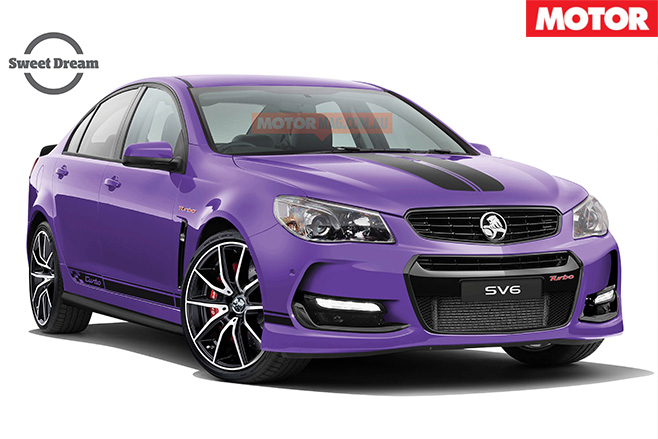
Thankfully, we still have the V8s to enjoy and we’ll be savouring every moment.
Here’s how we’d do it
LESS IS MORE Choices, choices. GM has a couple of engines to choose from here, including the 346kW/603Nm 3.6-litre twin-turbo V6 powerhouse found in the Cadillac ATS-V. That’s probably a step too far, however, so our SV6T would adopt GM’s new 300kW 3.0-litre twin-turbo V6 found in the Buick Avista concept car (see p12).
SAME SAME Choosing a chassis setup for our SV6T is easy – it’s exactly the same as the VFII Redline’s, consisting of FE3 suspension, 275mm rear rubber and Brembo brakes front and rear. The LS3 is a light V8, so should be similar in weight to a downsized twin-turbo V6 (if not lighter).
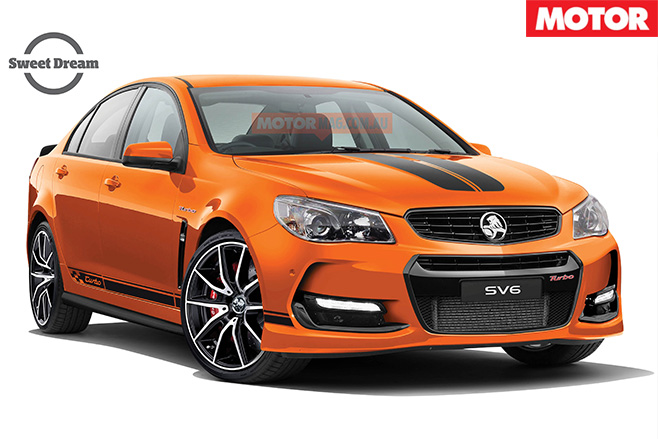
COLOURING IN Aussies love a good retro paint job and we’d revive the 70s colour palette including modern interpretations of Strike Me Pink, Lime Green, Chateau Mauve, Salamanca Red and Lone O’Ranger. Stripe package a delete option.
PRICE IS RIGHT To protect the V8’s place as king of the Commodore hill, the SV6T would neatly split the SS V and SS V Redline in price, starting at $48,490 for the manual ute and $50,990 for the sedan with automatic a $2200 option. The auto-only SV6T Sportwagon would set you back $55,690.
Acrid brake smoke rises from all four wheel arches as MOTOR pulls up at the designated driver changeover point in Marbella, Spain.
Bentley boss Wolfgang Dürheimer is nearby, and he’s not taking it as a compliment: “Would you drive as hard as this if it was your own vehicle?” he demands. “Better take it to the next village and back for a cool-down drive.”
Er, okay then. A few kays down the road, the brakes begin to recover. The pungent stench dissipates and the bite returns to the previously spongy pedal. But there is no smoke without fire and, in this case, the incendiary stoppers are lit by the 2442kg kerb weight of Bentley’s first foray into SUV territory.
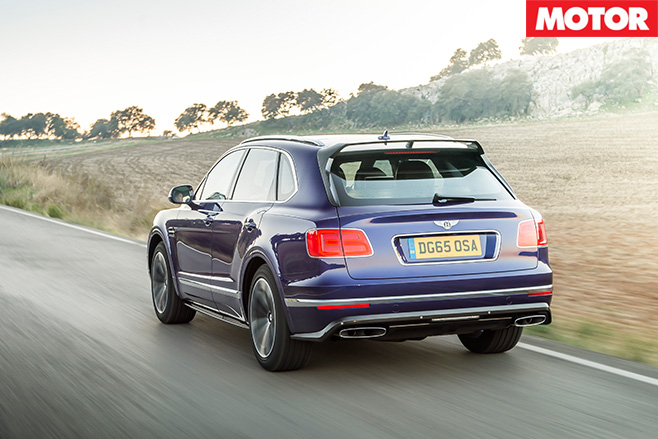
Why steel when there are surely carbon-ceramics in VW Group’s parts bin? “Because the carbon-ceramic brakes are not quite production-ready yet,” admits senior engineer Rolf Frech. He assures us they are on the case, but it’s a curious admission.
Earlier that day, we did push the brakes to the brink of self-destruction onmore than one occasion. When the Bentayga’s hunched hind quarters felt the W12’s whip, the brakes copped a beating. Yet we never overshot an apex or ran out of road.
This surprisingly benign attitude at the limit is largely masterminded by the active body control system dubbed BDR (Bentley Dynamic Ride). Explains Frech: “Unlike other mostly hydraulically-operated applications, BDR is powered by small electric motors which respond a lot faster.”
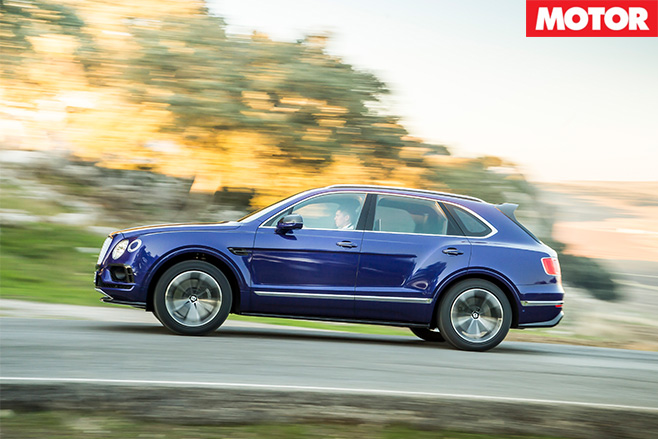
Thanks to BDR, turn-in is sharp and devoid of excessive bodyroll, early understeer or a momentarily wayward rear end. Even when cornering at the limit of adhesion, the heavyweight SUV remains flat and composed, stable and attentive.
Most owners could probably live without the swarm of pricey assistance systems, but the aforementioned BDR (standard only in North America) is absolutely essential. We know this for a fact, because a software glitch intermittently deactivated the system, quickly converting the agile and sure-footed crossover to an indifferent and ponderous colossus.
At least the variable-rate steering is linear, precise and responsive. By selecting Custom mode via the Drive Dynamics Control (DDC) knob on the transmission tunnel, you set the calibration of steering, chassis and driveline to your preference. After two days and plenty of experimental fiddling, Sport emerged as the most involving set-up and the best comfort-versus-handling compromise.
Its power output of 447kW falls only 20kW short of the muscular Continental GT Speed, yet beats it for maximum torque, with 900Nm (up 80Nm on the GT Speed) on tap from 1250 to 4500rpm. Assisted by the standard all-wheel drive system, the bruising Brit can rip to 100km/h in 4.1sec, with rivals from Munich, Stuttgart and Solihull hot on its heels.
Beyond around 270km/h, though, the Bentayga is without peer. Thanks to its remarkably slippery drag coefficient of 0.34, relatively small frontal area, and low ride height, the Bentley is the only SUV which can crack the 300km/h barrier.
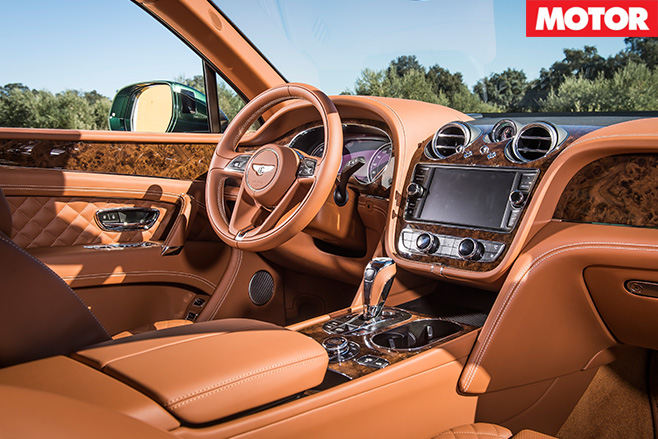
As for the design, the olde worlde styling, garnished with even more wood, leather and chrome, adheres to predictable Bentley fundamentals. Driver and front seat passenger travel in superior style and comfort, rear head- and legroom disappoint.
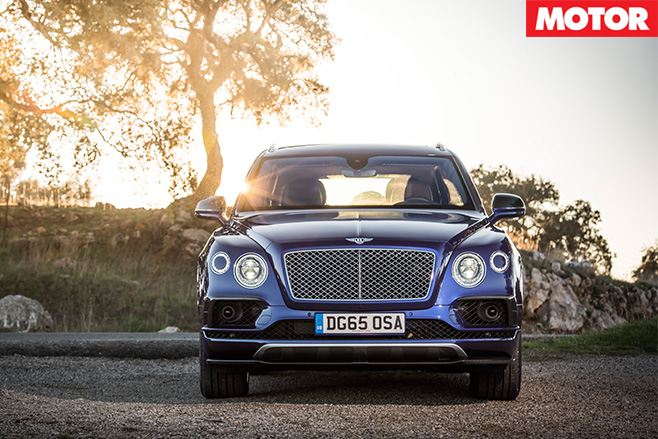
Still, the company only plans to build around 5500 units annually and most of that is already spoken for until the end of 2016.
4 OUT OF 5 STARS
SPECS Engine: 5950cc W12, dohc, 48v, twin-turbo Power: 447kW @ 6000rpm Torque: 900Nm @ 1350rpm Weight: 2242kg 0-100km/h: 4.1sec (claimed) Price: $500,000 (est) Like: Superb luxury; clever-dick body control; proper pace Dislike: Huge price; rear interior space crammed
TELL ME ABOUT THIS CAR
The C4 Cactus is Citroen’s newest, quirkiest addition to its French fleet. The innovative and funky Cactus is basically a cotton-wool wrapped bubble car. It features rubber air-pillows, known as AirBumps, on the side and front of the car to protect against pesky paint-chipping, metal denting dings. Quirky design features like these really sets the Cactus apart from the rest of the ever-growing compact SUV market.
But there’s more to the Cactus than just a concept-like quirks and slapstick names. The new Citroen also offers spaciousness, fuel efficiency, decent handling and refinement. There’s plenty to love about the Cactus. The question is: will Australians embrace its quirky features or cast it aside like a prickly gimmick.
STRENGTHS
- If cars could walk the red carpet at the Met Gala, the Citroen C4 Cactus would hog the spotlight. Design is the best and the worst feature of the French-owned compact SUV. Like a couture fashion show that wows some and leaves other’s scratching their heads, the Cactus merges sophistication with eccentricities. There’s something appealing about the lack of symmetry in its design, and yet it leaves it vulnerable in aspects of practicality.
- There’s plenty of interior space in the Cactus. The back seat has the width to fit three grown men, although leg space is a bit tight. Its cargo space is sizable at 358 litres when compared to some of its competitors.
- The sofa-like seats of the Cactus offer surprisingly supple cushioning for the tush. The wide seats are a nice homage to cars of old.
- Like a succulent that doesn’t need much water, the Cactus isn’t a thirsty car. Citroen claims a fuel efficiency of 4.7L/100km, but our real-world testing came in a bit higher than that. Still, 7.0L/100km driving up windy mountain roads, along highways and over bumpy country streets is still pretty decent.
- There’s not a lot of mechanical variety. Citroen offers only a manual 1.2-litre three cylinder petrol engine, or an automatic 1.6-litre four cylinder diesel. It’s a strange decision by the French automaker. Given the current market skew towards automatic, however, Citroen would surely have its sights set on an automatic petrol option in the future.
- The Cactus’s quirky design does have some consequences. There are no rear air-vents and it has commercial car-like pop-out windows instead of modern-day wind-down windows. There are no back-seat pockets and while physical space is a Cactus strength, there’s not a lot of storage options.
- For the most part, the petrol engine in the manual is quiet, but there wind-noise and tyre-noise can be an issue in the back seats. From the front it’s not overly noticeable.
- Finding a comfortable driving position is not easy – another downside of the funky design perhaps. The steering wheel doesn’t sit centre of the driver’s seat, which makes it hard to find the right positioning to drive the manual.
The Fiat 500X is an alternative to the Cactus if you’re after something a little less head-turning, but still want that unique café-style. Buyers looking for more of a tough, SUV feel will benefit from looking at the Jeep Renegade. And those looking for the Cactus, minus the design fads, should book themselves in for a test drive of the Honda HR-V.
