
Older siblings get all the attention – just ask the new Audi R8 V10.
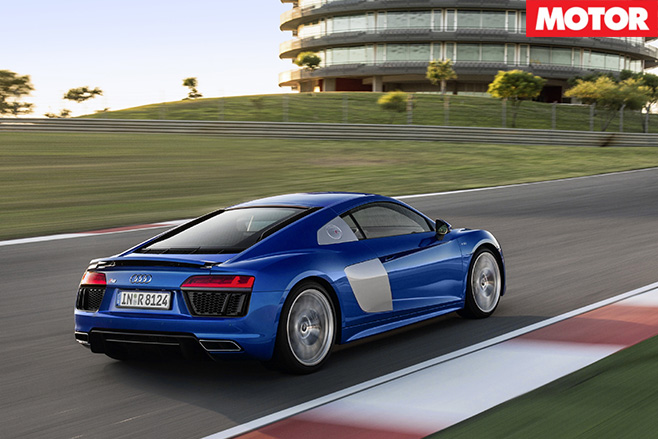
There’s a lower-spec version, of course (you’re looking at it) but the Plus has hogged the attention, what with being generally leaner, faster and meaner. Which is fair enough.
But since Audi kyboshed the 4.2-litre V8 version (boo) and the manual gearbox (booooo), the base R8 V10 is suddenly the cheapest R8, which makes it important. (That is, until a rumoured 2.9-litre twin-turbo V6 version arrives, but given it’s still unconfirmed, that could be twaddle.)
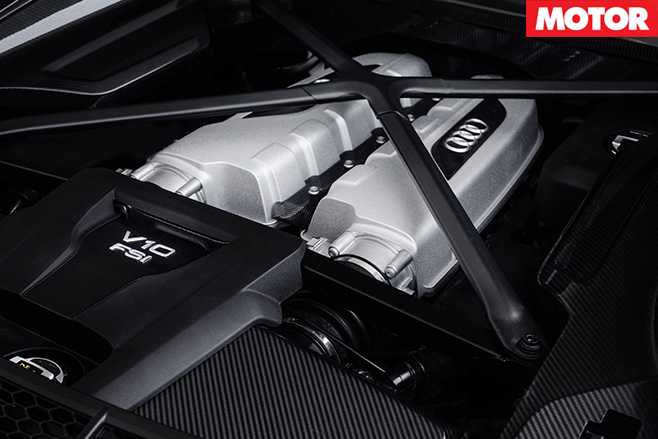
But despite all that, the engine is still firmly the star of the show. It’s such a big part of the R8’s personality that a V6 version would be a totally different car.
Audi’s taken the V10 out of the old PCOTY-winning Plus and bumped compression from 12.5 to 12.7:1, installed a dual-injection system (using both port and direct), redesigned the inlet runners and tweaked the valve timing, unleashing 449kW in the new Plus. Torque is also up 540 to 560Nm, while the engine itself revs 20 per cent faster than before. The base R8 V10 which we’re driving here gets a lower tune of 397kW and 540Nm.
At 1595kg, the base R8 V10 is 40kg heavier than the new Plus and weighs the same as the old Plus. Much of the saving has come from material changes in the chassis – if Audi made the new R8’s chassis using the old car’s aluminium, it would be 32kg heavier.
The R8 V10 will do 3.5 seconds to 100km/h with launch control. Hardly tardy, and yet the Plus is still 0.3sec quicker, and will do 0-200km/h in 9.9 seconds. The Plus’ll hit 330km/h while the R8 V10 will do 320km/h.
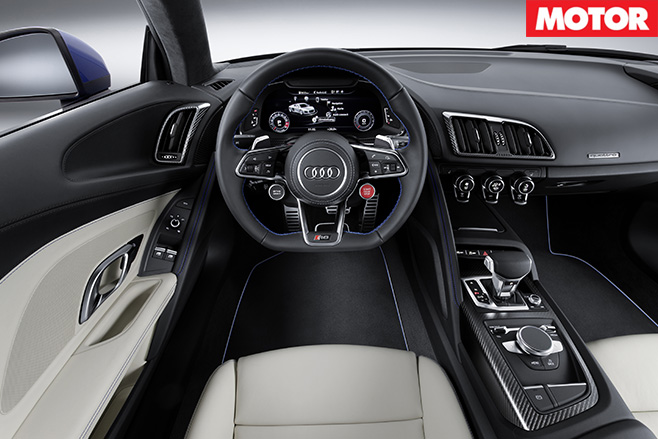
The differences are also subtle in the driving. Due in no small part to the revvy, snarling, roaring and deliciously linear V10 wedged immediately aft of your spine, the R8 gets a big, fat tick for theatre and sheer entertainment factor – beyond any doubt, the driving experience of both cars is dominated by the donk. And it’s genuinely one of the best-sounding engines on sale today.
The R8 V10 has plenty of power, surely enough to frighten any passenger who’s never been in a fast car before. But driving it and the Plus back-to-back, the R8 V10 can be felt to lack the Plus’s explosive final 10 per cent. It’s telling the R8 V10 makes peak power at 7800rpm and the Plus, 8250rpm.
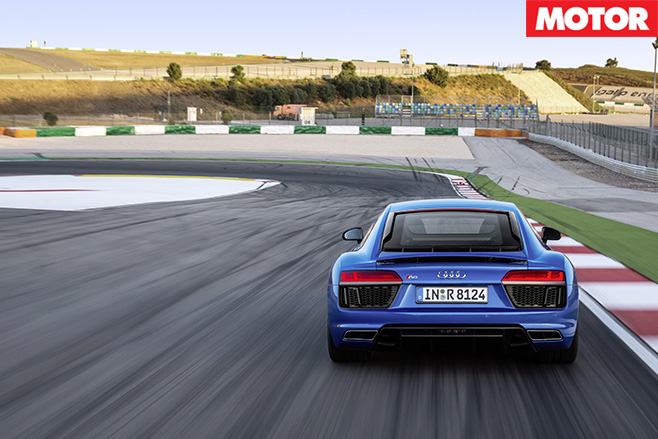
More time on track reveals the R8 V10, both base and Plus, worships a handling philosophy centred on stability and grip, rather than one of extroverted chassis playfulness. Not a bad thing at all – it means you can carry huge speed through corners and it’ll remain planted.
On the road the R8 V10 is awesomely fast, well-damped and rows through its seven gears with that crisp and responsive twin-clutch gearbox; exploring that spine-tingling redline will have you sweating about passing a cop over the next crest.
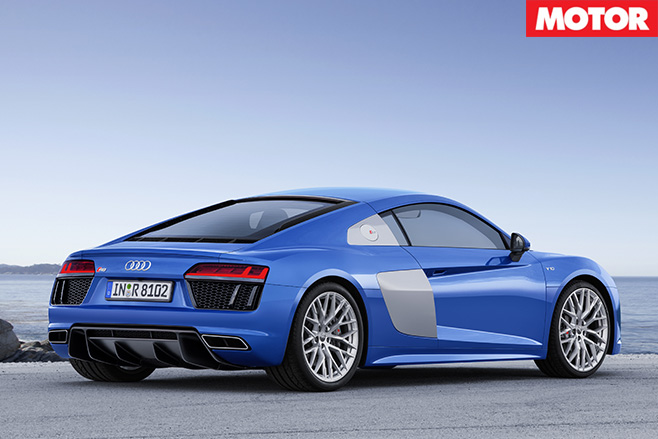
Audi Australia says the car is arriving in around June. Price? A sharp (by supercar standards) $354,900, undercutting the V10 Plus by $35,000.
4 out of 5 stars
Specs Engine: 5204cc V10, DOHC, 40v Power: 397kW @ 7800rpm Torque: 540Nm @ 6500rpm Weight: 1595kg 0-100km/h: 3.5sec (claimed) Price: $354,900
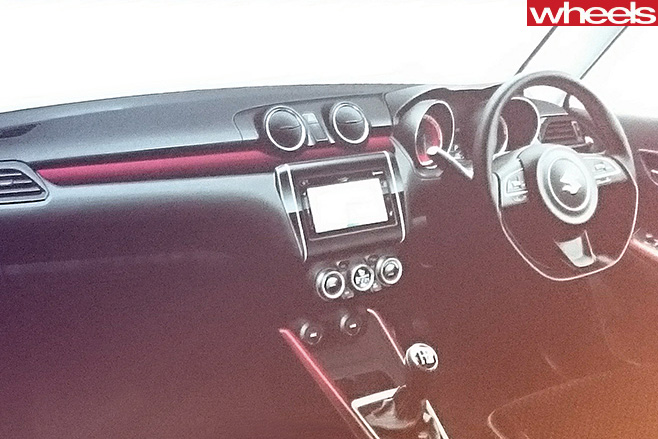
BEHOLD the next-generation Suzuki Swift, leaked in a series of rendered images, and more recently sprung testing on public roads in all its bin-liner glory.
Expected to be one of the stars of the Paris Motor Show in October, before a mid-2017 on-sale date in Australia, the next Swift continues the successful Japanese supermini’s evolutionary design trajectory, seen first 12 years ago in the landmark EZ series.
Fun and affordable, that car came to define what Suzuki is today.
However, while the 2017 Swift’s overall shape and rear-end treatments are familiar, the nose and headlights jut forward in a far more pronounced manner, giving it a significantly more aggressive character than before.
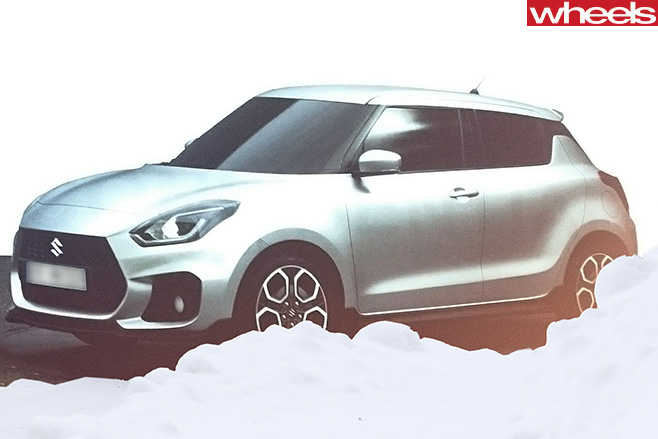
With the sleeker silhouette pointing to a longer (and hopefully roomier) interior, current model issues such as tight rear legroom and a tiny boot might at last be addressed.
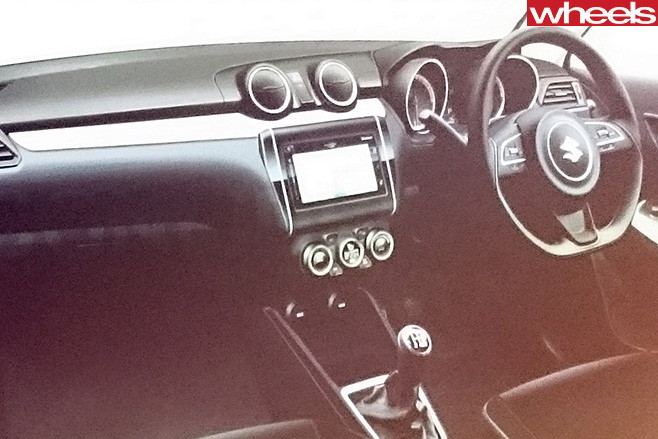
There’s even greater change going on underneath, thanks to an all-new platform shared with the upcoming reborn Baleno. Under the bonnet in some variants will be the promising new 1.0-litre three-cylinder Booster Jet turbo engine, while updated versions of the current 1.4-litre naturally aspirated four-cylinder unit are also likely.
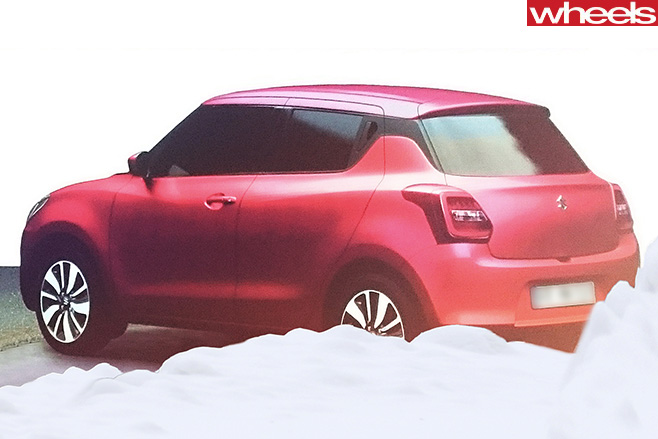
The 2017 Swift will usher in a wave of fresh superminis expected over the next 12 to 18 months, including the next-gen Volkswagen Polo, Ford Fiesta, Nissan K14 Micra, Toyota Yaris, and Hyundai Accent.
That means pricing is likely to kick off from around $16,000 for the base Swift, rising beyond the mid-$20,000 mark when the Swift Sport surfaces.
Have spy pics of your own? We’d love to see them. Just email them to [email protected]
Craig Dean and co-driver Alex Gelsomino have had a lucky escape following a high-speed accident during this year’s Targa Tasmania.
Driving a Shelby Mustang, the pair were sitting in a strong third place in the GT2 category when a slight mistake on the Irishtown stage had very major consequences.
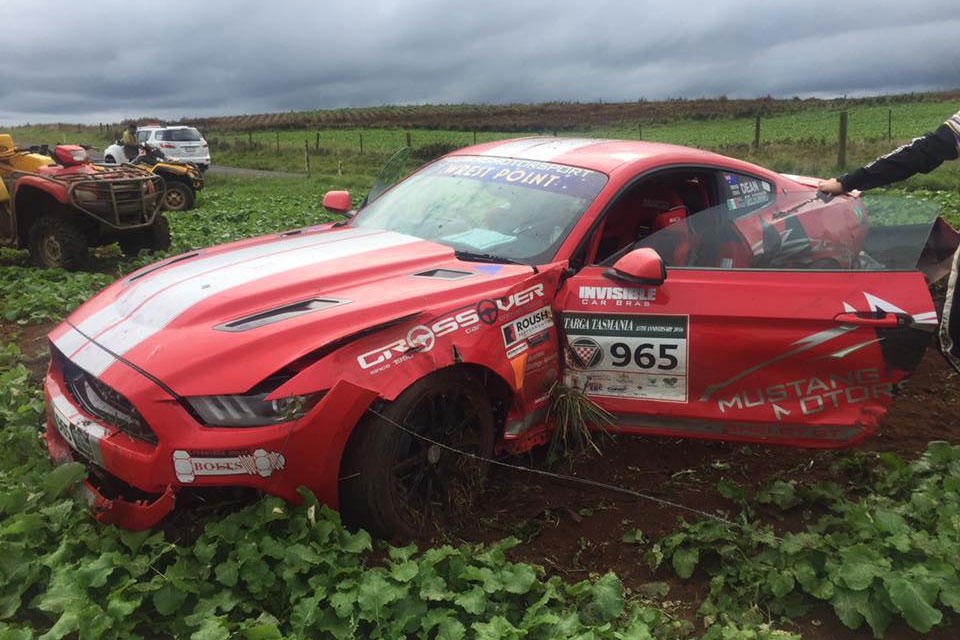
The rear of the car bounced and drifted on to the grass verge on the right-hand side of the road at about 180km/h and from there the pair were passengers.
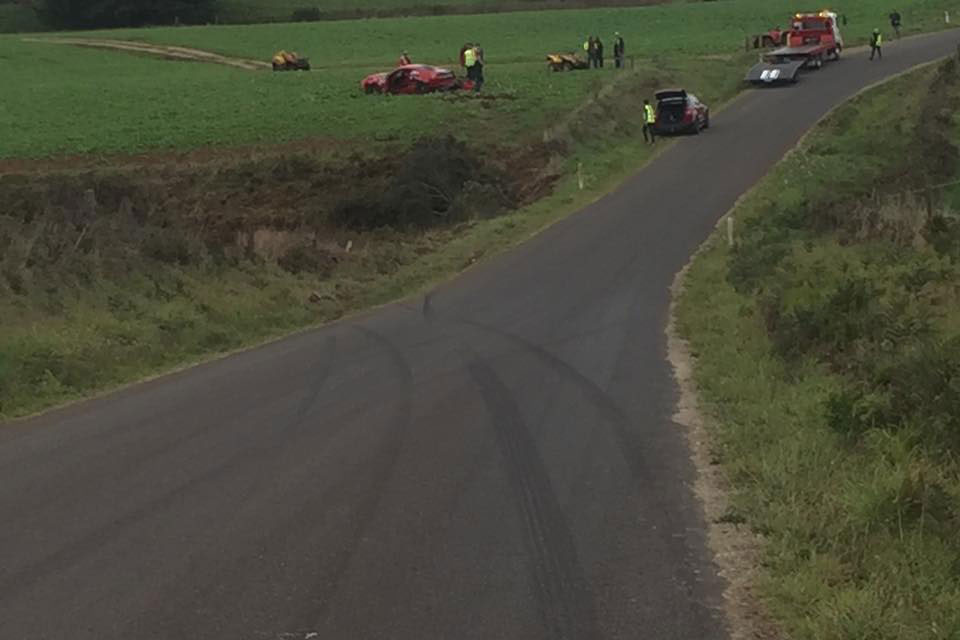
The onboard camera shows the violence of the incident and the value of wearing the proper safety equipment, such as HANS devices and proper winged seats.
In a slightly comedic twist, at the end of the onboard footage you can hear SYNC attempting to call 911.
The National Transport Commission (NTC) has reported that Australian consumers purchased a record number of fuel-efficient, low-emission vehicles in 2015. The jump in sales is the largest the NTC has reported since it began keeping score in 2004.
Paul Retter, Chief Executive of the NTC noted that 4.7 per cent of new cars sold in 2015 were classified as low-emissions vehicles; that’s a 1.9 per cent increase from 2014. For a car to qualify as a low-emissions vehicle, it must emit less than 120 grams of carbon dioxide for every kilometer travelled.
“Today’s consumers are spoilt for choice. In 2015 there were 72 different types of fuel-efficient cars on the market up from just 59 in 2014. Back in 2008 there were just seven fuel-efficient cars available,” said Retter.
Year | Number of low-emissionsu00a0 | Percentage of total |
2008 | 5,076 | 0.6 % |
2009 | 4,864 | 0.7 % |
2010 | 5,252 | 0.6 % |
2011 | 7,361 | 0.8 % |
2012 | 13,432 | 1.2 % |
2013 | 24,034 | 2.2 % |
2014 | 29,905 | 2.8 % |
2015 | 52,613 | 4.7 % |
The increasing attraction to environmentally-conscious vehicles has reportedly helped drop the national average carbon emissions intensity 27 per cent compared to 2002. Despite the improvement, Australian consumers still gravitate towards cars with an on average 43 per cent higher carbon emissions intensity than our European counterparts.
“There are a number of reasons for this, including that Australians generally prefer heavier vehicles with bigger, more powerful engines, and our fuel prices are lower. Europeans also have more incentives to purchase low-emissions vehicles,” Retter explained.
The top-selling low-emissions vehicles for 2015 are:
Model | Sales in 2015 |
Toyota Prius (Prius and Prius C) | 9020 |
Audi A3 (A3 and A3 Sportback) | 4839 |
Mazda 2 | 3658 |
Mini Cooper | 3204 |
Lexus CT200H | 2484 |
Mitsubishi OUTLANDER | 2383 |
Passenger cars and trucks are a major cause of air pollution in urban areas. In fact, road traffic is responsible for over 13 percent of greenhouse gas emissions in Australia.
Owning an eco-friendly car doesn’t just mean spending less time and money at the servo. Hybrid, electric and fuel-efficient petrol cars burn less oil and emit substantially less pollution than conventional vehicles.
Governments from across the world have put in place all kinds of incentives for eco-friendly car buyers. These incentives range from dedicated parking spots for Hybrid and EV owners, to major tax benefits and discounts. Australia may be one of the more unenlightened countries in this regard but thankfully, there are still some financial perks to buying ‘green’.
Luxury cars with a combined-cycle fuel consumption of 7.0L/100km are classified as ‘green’ cars and are therefore subject to a higher Luxury Car Tax (LCT) threshold. This means that ‘green’ cars get a tax break, and if the purchase price falls below the increased threshold, can be exempt from LCT all together.
Other incentives include reduced stamp duty for electric cars in ACT, and various registration discounts for low-emissions vehicles in Victoria.
In light of new emerging technology, and the increase in low-emissions car sales, there has been a big call for added government incentives. As other countries continue to provide benefits for eco-friendly motorists, we hope Australia will follow suit.
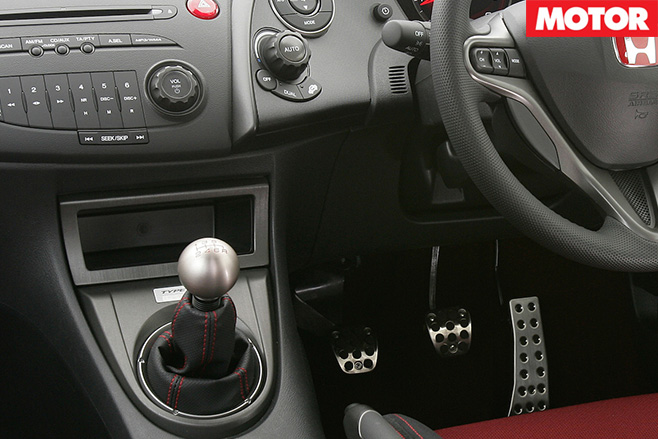
In an upcoming issue MOTOR will celebrate the resurgence of the manual transmission after being threatened since the advent of dual-clutchers.
For some driving enthusiasts the three-pedal configuration is a must, and manufacturers are now realising the DIY shifter is an important niche. Aston is offering a seven-speed manual with its latest Vantage, Peugeot only offers manual in 208 and 308 GTi, and likewise Ford with Fiesta ST and Focus ST/RS, and Porsche with Boxster Spyder and Cayman GT4. Volkswagen recently returned the species to Polo GTI.
We could go on. Instead let’s gather some of our favourite driver’s manuals from over the years.
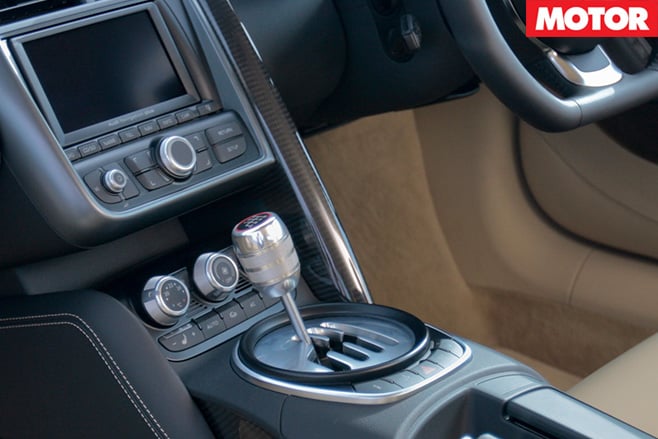
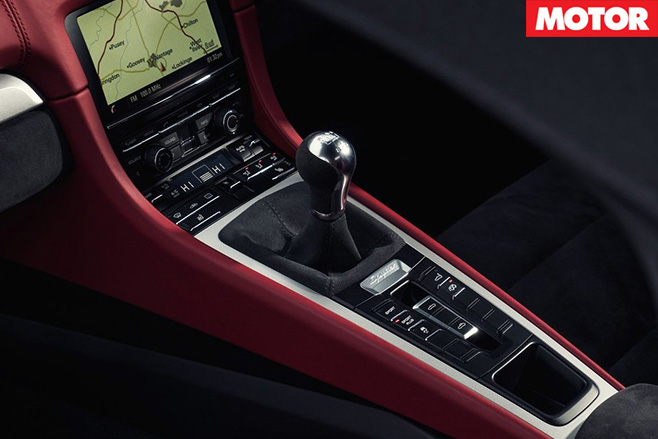
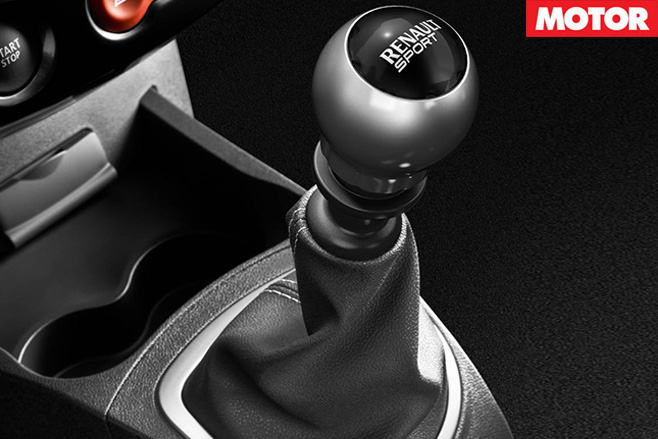
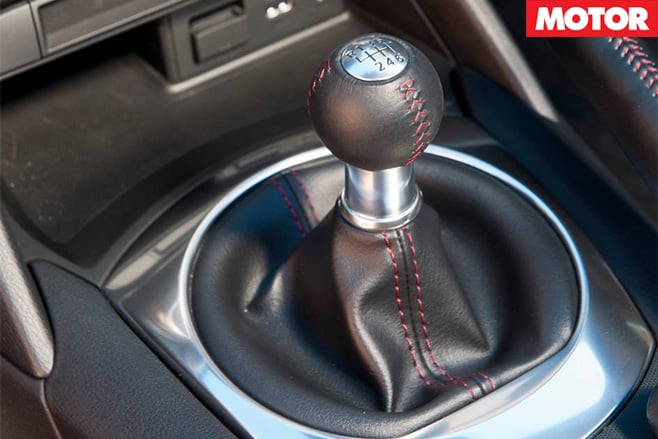
Citroen has completed the first test of its next World Rally Car and it gives us the first real glimpse of rallying’s wild new generation of cars.
Next year’s WRC regulations are undergoing a significant overhaul in an attempt to make the cars louder, faster and more spectacular and attract more fans to the sport.
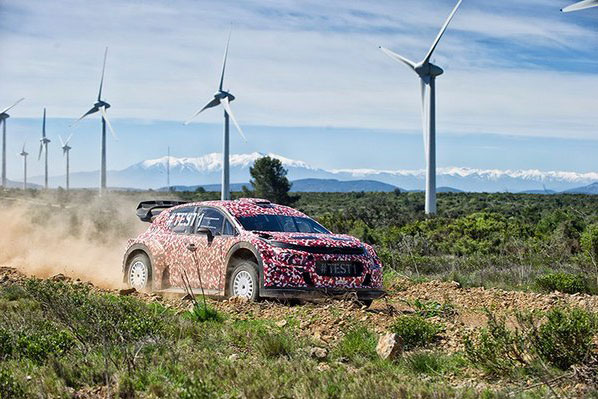
Most obvious is the heavily flared bodywork, as under the new rules cars can be 55mm wider than previous as well as running much more substantial aerodynamic addenda, as you can see by the C3’s enormous rear wing.
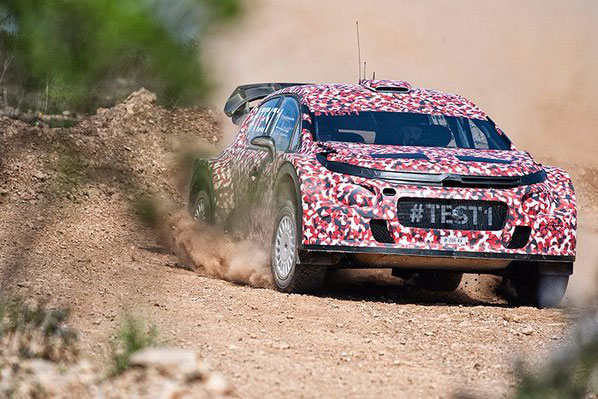
Whether the changes will have the required effect is currently subject of some speculation, as some drivers and rally organisers have expressed concerns about the potential speed of the cars and the increased downforce possibly making the cars less spectacular.
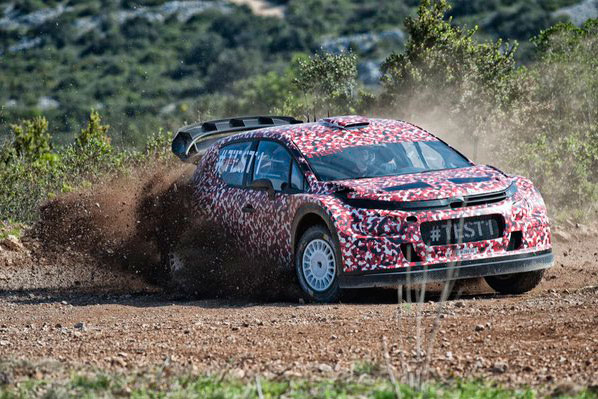
The French marque is taking a sabbatical in 2016 to concentrate on development of the new car, with Irishman Kris Meeke handling the bulk of the testing duties, before returning to battle VW, Hyundai, Toyota and M-Sport next year.
Everybody was on the edge of their seats waiting for the all-new Mustang to hit Aussie showrooms, and even now it’s here, demand is such that you’ll need to wait your turn to get your mitts on a new Pony.
But head honcho of Melbourne-based Mustang Motorsport, Craig Dean, wasn’t that patient. So his solution was to import his own Mustang and convert it to right-hand drive himself. Patience may well be a virtue, but sometimes you’ve just gotta act.
Obviously, this is doing it the hard way, so why didn’t he just wait until local examples arrived, grab one of those and save himself a whole mess of toil moving the tiller across the cabin?
Well, it pays to remember that Dean has lots of experience converting cars from left- to right-hook, and his Crossover Car Conversions company has the skills to prototype stuff like the new firewall required for the switch. But there’s more to it than that.
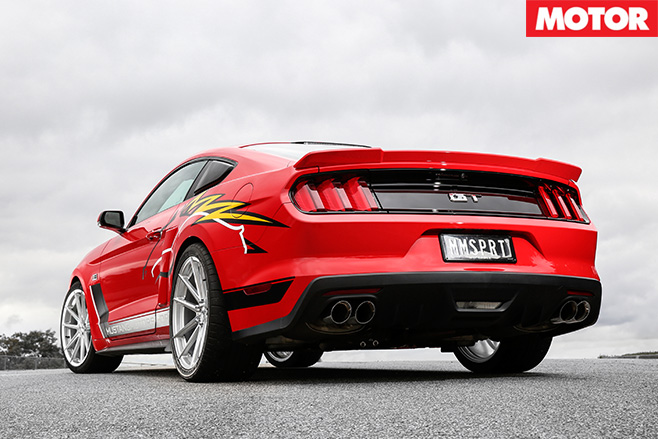
It’s also true that having a Mustang on the road now enables Mustang Motorsport to showcase its range of special bits, some of which have been developed locally, others coming from the hallowed house of Roush Industries in the US.
That ability to showcase what’s possible with a new Pony car is even more important when you consider that Ford Australia has no plans to import the tastier, high-end, hi-po variants of the ’Stang. This means, of course, that if you want a nag with more drag, you need to be talking to people like Mustang Motorsport, or Rob Herrod.
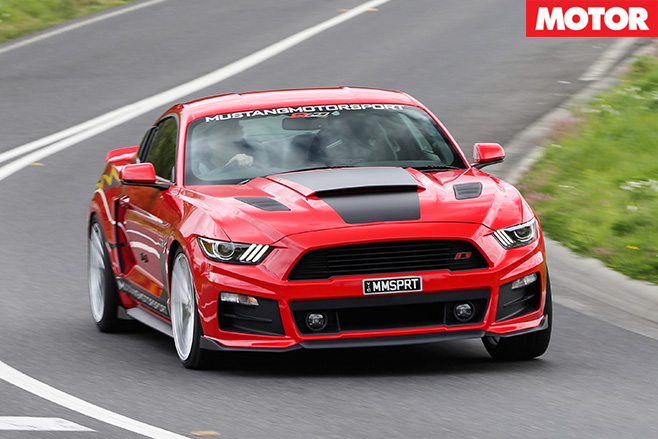
Locally developed gear includes the coil-over suspension, two-piece front rotors (the calipers are already Brembo units) and a stiffening kit for the rear suspension cradle to dial axle-tramp out of the independent-rear-suspension equation.
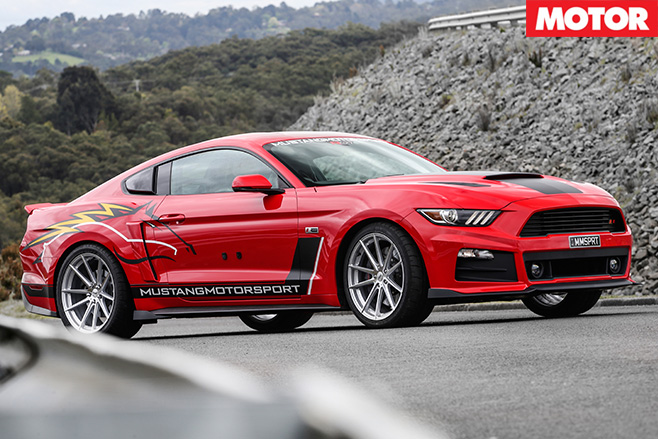
The Roush gear, meanwhile, starts with the body kit that leads off with a new grille, front bumper and splitter. Then there’s the bonnet scoop, guard flutes, winglets on the side-skirts, rear spoiler, upper and lower quarter-panel scoops and the rear valance.
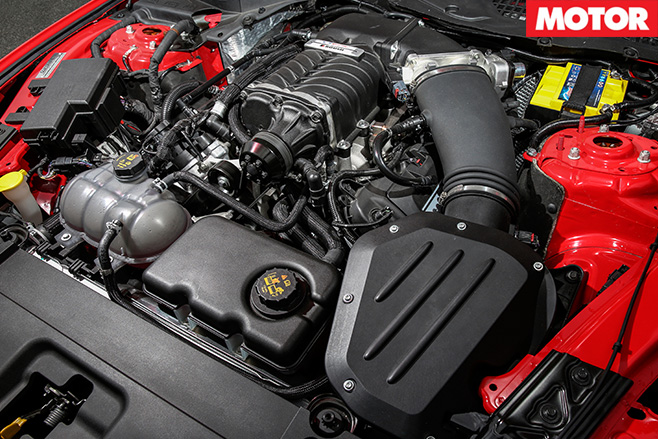
On the dyno, the combo grunts out 468kW at the crank (hence the R627 tag) and, combined with the Performance Pack GT Mustang’s 3.73:1 Torsen LSD, Getrag six-speed manual and a set of just-released 20-inch TSW ‘Bathurst’ alloys (9.0-inch at the front; 10.0-inch out back) you’ve got yourself a pretty serious piece of hardware. Looks tough, too.
My first attempt to slide into the driver’s seat is made a bit more complicated than it should have been thanks to the too-low steering column, a generic Ford thing given my experience with FG Falcons.
Turns out that, no, it was set up that way to make the set-up perfect for when this car’s showroom duties are done and the race-seat goes in (Dean is a keen competitor on the tarmac rally scene, and this car will eventually be turned to that task).
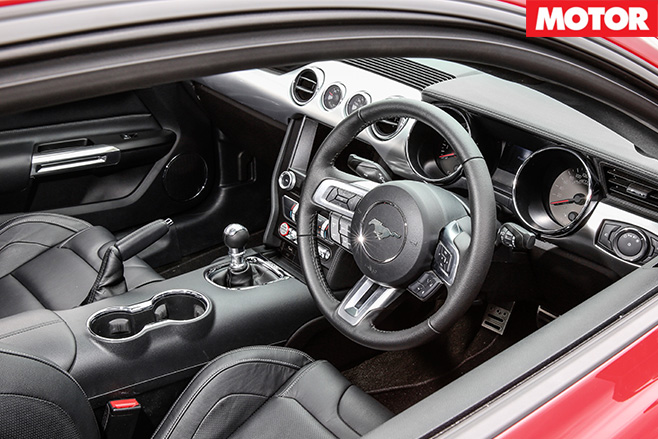
The shifter isn’t quite rifle-bolt sharp, but it’s not far off it. So can somebody please tell me, then, how a mob can make a shifter so good and then fit it with a reverse lock-out collar that rattles on every shift? Americanos, eh?
The clutch itself, though, is extremely light, yet has a positive feel, and it lets you in on precisely where the friction point lives. This is not an engine you’re going to be stalling first up, either – it feels like it has plenty of flywheel and it’s smooth to boot.
The ratios in the six-speed manual seem to be relatively short for the first five gears, with a big jump to the super-overdriven sixth (100 kliks in top equals about 1700rpm). Thanks to those closely stacked first five, fifth gear is viable even in 70km/h traffic and its feel encourages you to shift up early.
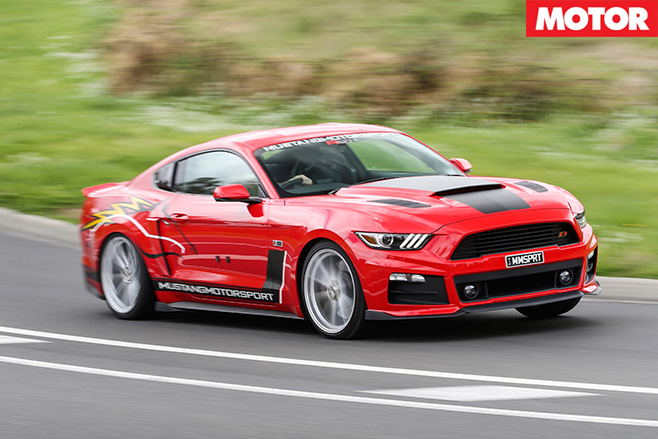
By the time you’re getting anywhere near redline, the thing is going off its nut. Not in a bad way, mind, and there’s never any blower-belt whine or other hysterics from under the lid.
There is, however, a monumental racket from those four exhaust tips. And the DOHC, blown-and-injected wonder has that neat trick of feeling and sounding like all the good bits of an old-school V8.
It has the full-fat mid-range, for instance, and, I swear, the noise totally reminds me of an old 351 Cleveland at full chat, including the bass notes and that distinctive thong-clap racket when you’re poking it with the really sharp stick. But while it does well torque-wise as you get to around 3500rpm, the engine is also remarkably linear and progressive.
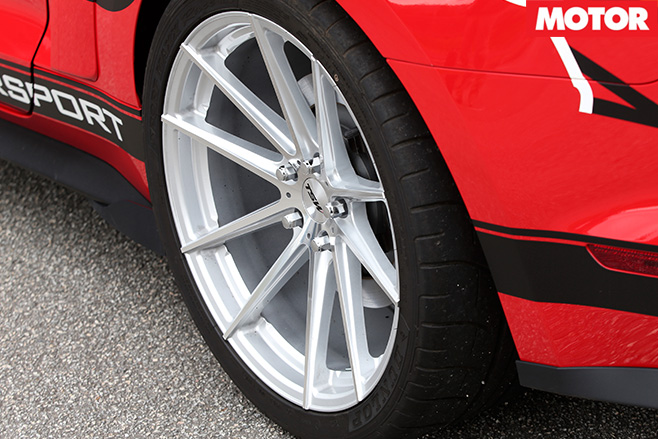
In fact, you can forget about getting cute in first gear, because it’ll just end in a smoke-fest. Even rolling off in second and jumping on the noise will see the hoops melting before 4000rpm has been logged.
Happily, though, the braced rear cradle seems to do the job it was designed for and the wheelspin is easily managed and doesn’t send the whole car into a juddering spasm of axle tramp. If – and it’s a big if – you could hook it all up, you’d be looking at a lazy low-12-second car here.
But you’d want a can of VHT with you on the day. Dean reckons the independent rear suspension leaves space under the car for a set of 305mm rears, and, after the supercharger box, that’d be the first one I’d be ticking.
This isn’t a one-trick pony, and the sticky tyres and taut chassis play along. The coil-overs were set for our test drive at about the mid-way point for stiffness, and it’s quite remarkable how well the thing rides. There’s a hint of dullness through the helm in the manner of most modern power-steering systems, but the car is relatively pointy without feeling flighty.
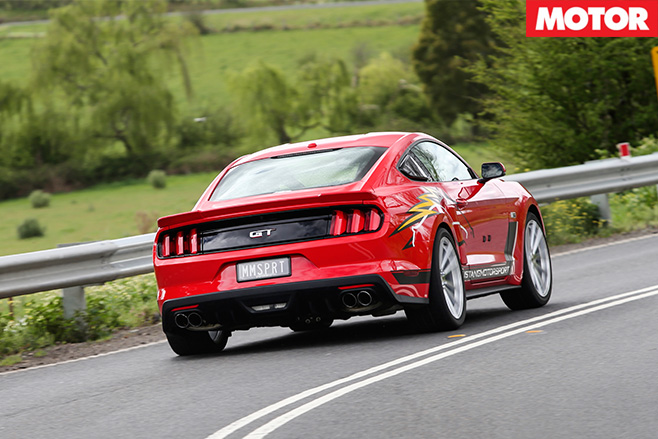
Dynamically, the biggest complaint is driveline shunt. It’s not as bad as some I’ve driven, but I can’t recall a single full-sized, rear-drive Ford product I’ve ever driven with a manual ’box that didn’t snatch and root at low speed, in a low gear, on light throttle. Again, I’ve driven a lot worse than this one, but it still surprises me that it should be so in 2015.
The quality of the left-to-right conversion is flawless from what I could see, but it does lead to some elements that, to be fair, have to be called characteristics rather than flaws. For instance, the original driver’s footrest remains in the passenger’s footwell (no point removing it and leaving a big hole in the carpet, Dean says) and the bonnet release is still on the left.
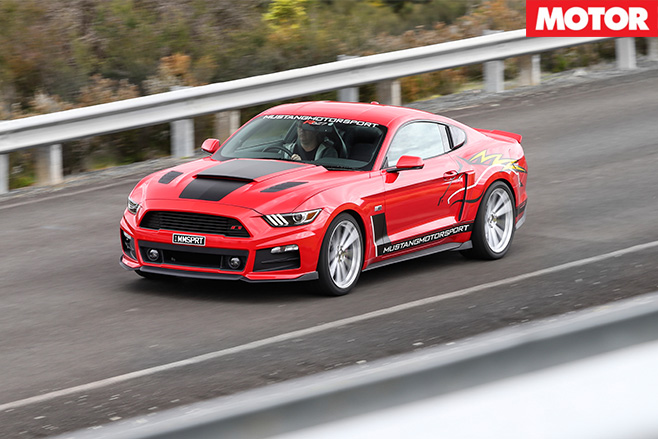
Other oddities include the bonnet scoop which is non-functional and the plastic covers over the rear three-quarter windows that turn an already big blind-spot into a monster that makes lane-changing a captain’s call in the truest political sense of the term.
If this was my Mustang, Jack Roush would be keeping those covers. Anyway, none of that stuff would be a deal-breaker for most people, and at the core of this thing is a very fast, very capable car that suggests the whole Mustang thing will gain legs in this country.
So you want to get your hands on a Mustang-Motorsport enhanced, Roush-blown Mustang, how do you get one? Actually, you don’t. There’s simply no point in converting a left-hooker when you can start with an Australian-delivered car with the steering wheel already in the right spot.
Besides which, this car would cost something like $175,000 to replicate, and that just won’t add up for would-be Mustang buyers. So, this car is one of only two that will ever be made this way. If you want a hi-po Mustang Mr. Dean and his merry men can now accommodate you as long as you’re cool with a Shelby badge, rather than a Roush one.
4 out of 5 stars
Specs Body: 2-door, 4-seat coupe Drive: rear -wheel Engine: 4951cc V8, DOHC, 32v, supercharger Bore/stroke: 92.2 x 92.7mm Compression: 11.0:1 Power: 468kW @ 6800rpm Torque: 729Nm @ 4500rpm Power/weight: 278kW/tonne Transmission: 6-speed manual Weight: 1681kg (stock GT) Suspension(f): A-arms, coil-overs, anti-roll bar Suspension(r): multi-links, coil-overs, anti-roll bar L/W/H: 4784/1916/1381mm Wheelbase: 2720mm Tracks: 1570/1637mm (f/r) Steering: Electrically-assisted rack-and-pinion Brakes(F): 380mm ventilated discs, 4-piston calipers Brakes(R): 330mm ventilated discs, single-piston calipers Wheels: 20.0 x 9.0-inch (f); 20 x 10.0-inch (r) Tyre sizes: 265/35 ZR20 (99Y) (f); 295/30 ZR20 (r) Tyre: Dunlop Sport Maxx Race Price as tested: $175,000 (est)
Roush? Who’s he?
The man behind the legend
BORN in 1942, Jack Roush heads up Roush Industries, which now employs 3000 people, mainly in the engineering and prototyping side of the transport industry.
But the Roush brand is best known for its motorsport activities and the rap sheet is a corker. It covers stock-car (NASCAR), sportscar and drag racing, and includes 32 championships and more than 400 wins over more than four decades.
Roush moved to Detroit in 1964 to work for Ford and was immediately drawn to the motorsport world, joining a group of like-minded individuals called The Fastbacks in about 1966. By 1970, Roush was running successful drag-racing teams and, in 1976, he formed Jack Roush Performance Engineering.
In the 1980s, it was sportscar racing and then NASCAR at the end of the decade. Roush has also supplied engines and pretty much everything else to other super-successful race teams around the world.
These days, the focus is on designing and making fully integrated performance gear using the knowledge gained from nearly 50 years on race tracks. Stuff like the blower on this car, for instance.
There is no greater weight than that of expectation, and it was one that fell heavily around the shoulders of those involved in the new ND Mazda MX-5.
Engineers, designers, marketers, everyone working on the fourth-generation of Mazda’s iconic roadster knew that if they got it right it’d be the highlight of their CV, but stuff it up and they’d never be forgotten, for all the wrong reasons.
Of course, it’s slightly ironic that the MX-5 should become an icon in the first place, given the original was shamelessly derivative of 1960s British roadsters. Bob Hall’s idea of reviving simple, back-to-basics motoring was an inspired one, but the concept itself – lightweight, rear-drive, revvy four-cylinder engine – was well-established by cars like the MGB, Austin-Healey Sprite and Triumph Spitfire.
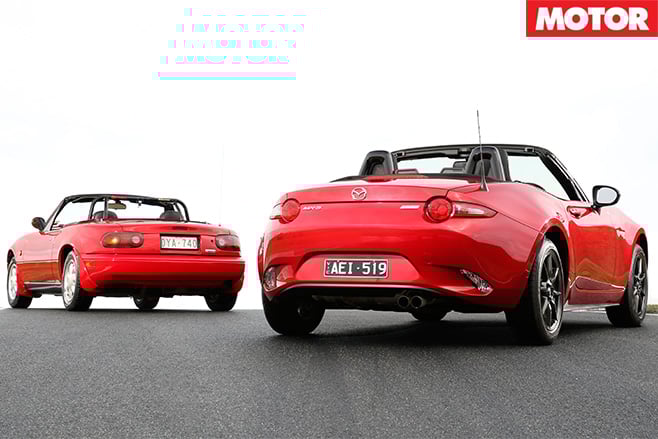
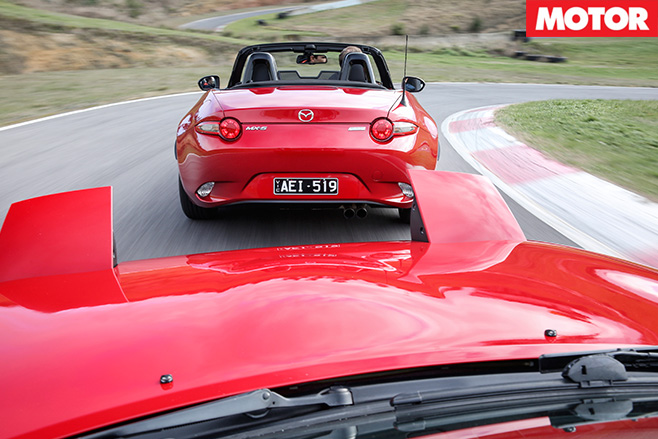
As a result, the ND MX-5 is the only car in recent memory that is significantly smaller than the model it replaces – it looks like it’s been shrunk in the wash. The first clue as to its diminutive size is the fact that 16-inch wheels aren’t completely lost in its flared arches.
Parked side-by-side, ND and NA look virtually identical in size, but it’s no clever design trick; the newer car is actually 33mm shorter and only 1mm taller, though 59mm of extra width and a 44mm longer wheelbase means the ND has the larger footprint.
Each successive generation of MX-5 has become progressively ‘happier’ in its front-end styling, with the cheerfully content NA morphing into the NC’s almost demonic grin. With its narrowed ‘eyes’ and sharper lines, the ND has an air of mischief about it; likewise, the rear is much more angular – Mazda refers to it as a more “feline” design – than Nicholas Bodey’s NA.
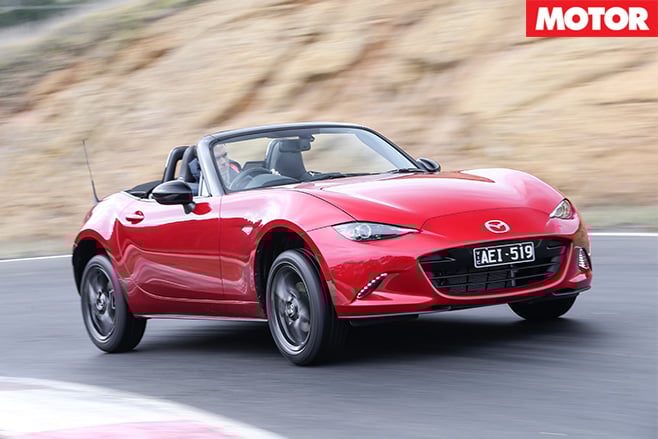
Despite showing over 200,000km on the clock, Bodey’s MX-5 is a very tidy example without being a pristine show car. It’s a very early build, believed to be the 38th Australian-delivered car, and was bought as 17-year-old Bodey’s first car following advice from a friend of his father’s. The MX-5 was chosen as a car with collectible appeal, unlikely to depreciate and wouldn’t attract too much unwanted attention, boxes that the NA undoubtedly ticks.
Mazda’s stated aim with the ND MX-5 is to recapture some of magic of the original, so it seems appropriate to start in the NA to establish a benchmark. Having never driven an original MX-5, I’m not quite sure what to expect; the car’s massive following suggests it’s something quite special, however there are dissenting opinions – I was once put off buying an NA MX-5 thanks to someone informing me they could be out-dragged by a Toyota Landcruiser.
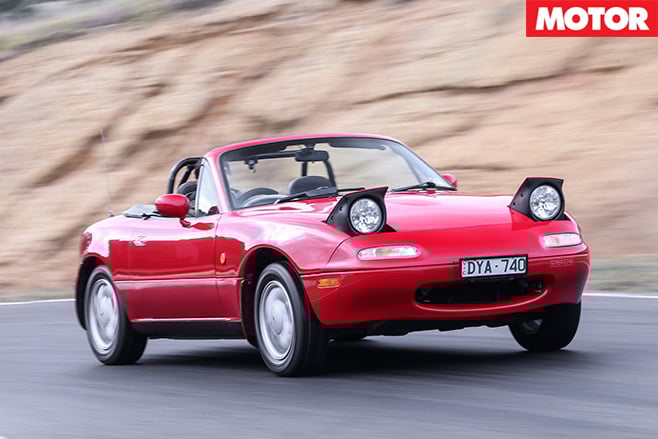
Though a little extra urge would be welcome, this little 1.6 does suit the character of the car, and keeping it singing is no chore thanks to a superb five-speed manual gearbox, the short gate and tiny stub of a lever meaning gearchanges are a quick and accurate affair.
The ND’s six-speed manual is similarly slick, longer in throw but light and easy to use. It doesn’t quite possess Porsche levels of precision but it’s one of the better manual shifts around. Ratios seem well chosen, too, making the most of the relatively meagre 96kW/150Nm.
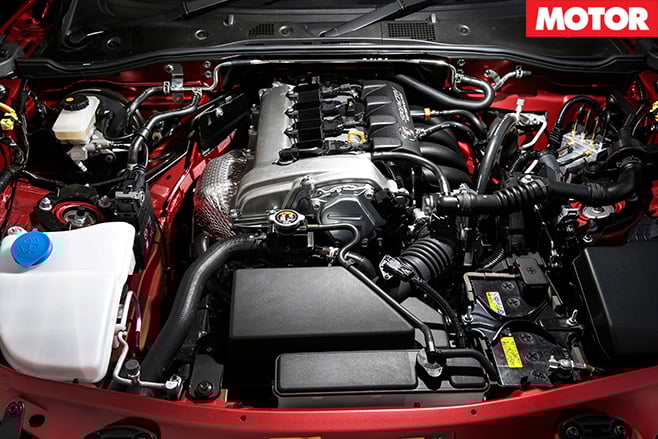
Sadly, though, while the engine sounds sporty enough, it’s not as rorty as the 2.0-litre found in the NC, let alone the NA’s 1.6 – this is one instance when a little extra NVH would have been welcome.
Around the tight confines of Bryant Park hillclimb circuit it feels pokier than you’d expect, though on the wider expanses of the open road it can occasionally struggle on long inclines. The reason Mazda’s new roadster can get away with such a tiny powerplant is the hefty diet it’s been subjected to.
The majority of the weight drop has come from the mechanicals; obviously, building a smaller car helps, but increasing the use of aluminium and high-tensile steel saved 20kg from the chassis, the diff and gearbox shed seven kilograms each and 12kg came out of the suspension.
The greatest thing about saving weight is you end up in a virtuous circle; less weight means smaller brakes and wheels/tyres are needed, which saves further kilograms, so you can use a smaller engine, which needs smaller driveshafts and the like. You get the feeling the likes of Colin Chapman and Gordon Murray would approve of Mazda’s engineering approach.
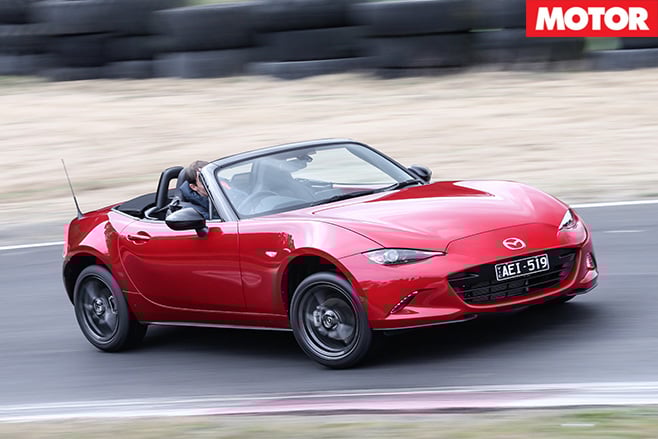
Trail the brakes or lift sharply mid-corner and the rear will edge wide, at which point a healthy dose of throttle will hold the tail sideways – yes, you can drift the MX-5 with only a 1.5-litre engine. Depending on the corner, it’s actually easier in the dry: in the wet the MX-5’s softness can make it a little imprecise when sliding, whereas on a dry road you can nudge the front end into understeer which smoothly transitions into oversteer.
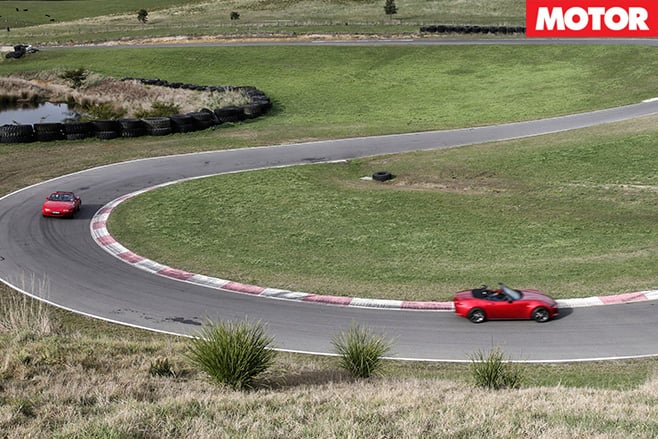
Such modest grip levels also mean anyone accustomed to modern performance cars will need to readjust their expectations before committing to their first corner in anger, though the presence of ESP for the first time should help mop up any errors. It must be said that Bryant Park flatters the MX-5 – in fact, it could’ve been made for this track – but even at Winton it remains a spectacular amount of fun.
There’s no doubt the ND is a massive step forward in terms of enjoyment. A Bilstein-equipped NC MX-5 25th Anniversary is also present on the day but feels dull, inert and understeery in comparison, though it almost certainly would be the faster car in terms of outright speed.
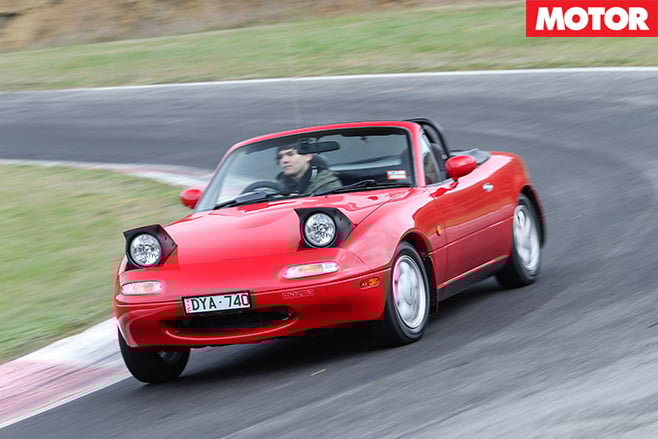
Still, you’re unlikely ever to need too much correction, as even on 185/60 R14 rubber the NA MX-5 possesses more grip than grunt. Overdrive the car and it lapses into gentle understeer, but with a little restraint it digs in and really works the tyres, even moving the rear slightly if the road is appropriately cambered, though it’s more of a wiggle than a slide.
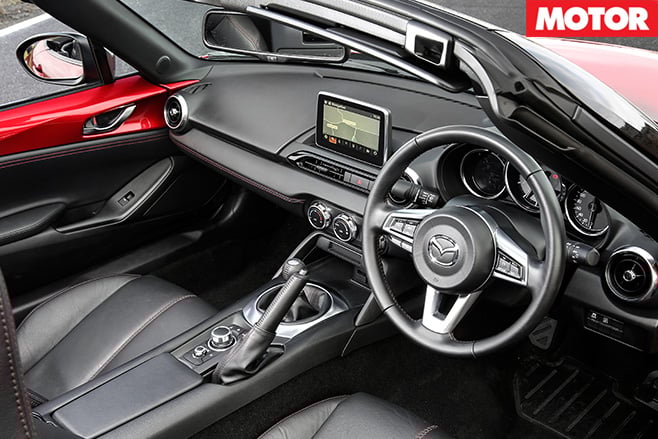
Towards the end of its 11-year lifespan, the NC’s interior was a stark reminder of its age, with little in the way of connectivity or gadgetry. Our Roadster GT test car comes equipped with heated leather front seats, climate control, auto headlights and wipers, nine-speaker Bose stereo, seven-inch touch screen display with sat-nav, Bluetooth phone and audio and internet radio capability, all for $37,990, almost $10K less than the previous NC.
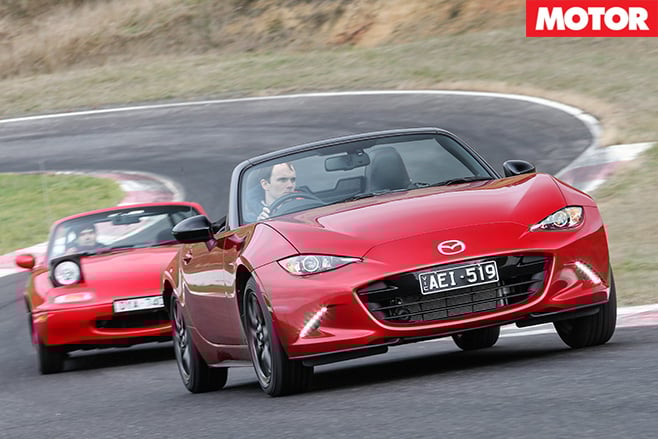
With the price having undergone a similar diet to the mechanical package, the driving thrills of the MX-5 are more attainable than ever, but even more importantly, those thrills are of a higher quality than ever. Expectation may have initially been a burden for the hard-working development team, but it’s driven them to create something truly excellent, a car worthy of the MX-5’s reputation as a true driver’s car.
| u00a0 | Mazda MX-5 (NA) | Mazda MX-5 1.5 GT (ND) |
| Body | 2-door, 2-seat roadster | 2-door, 2-seat roadster |
| Drive | rear-wheel | rear-wheel |
| Engine | 1597cc inline-4, DOHC, 16v | 1496cc inline-4, DOHC, 16v |
| Bore/stroke | 78.0 x 83.6mm | 74.5 x 85.8mm |
| Compression | 9.4:1 | 13.0:1 |
| Power | 85kW @ 6500rpm | 96kW @ 7000rpm |
| Torque | 135Nm @ 4250rpm | 150Nm @ 4800rpm |
| Power/weight | 86kW/tonne | 95kW/tonne |
| Transmission | 5-speed manual | 6-speed manual |
| Weight | 990kg | 1009kg |
| Suspension | double A-arms, coil springs, anti-roll bar (f); multi-links, coil springs, anti-roll bar (r) | double A-arms, coil springs, anti-roll bar (f); multi-links, coil springs, anti-roll bar (r) |
| L/W/H | 3948/1676/1224mm | 3915/1735/1225mm |
| Wheelbase | 2266mm | 2310mm |
| Tracks | 1410/1428mm (f/r) | 1495/1505mm (f/r) |
| Steering | unassisted rack-and-pinion | electrically-assisted rack-and-pinion |
| Brakes | 236mm ventilated discs, single-piston calipers (f); 231mm solid discs, single-piston calipers (r) | 258mm ventilated discs, single-piston calipers (f); 255mm solid discs, single-piston calipers (r) |
| Wheels | 14 x 5.5-inch (f/r) | 16.0 x 6.5-inch (f/r)u00a0 |
| Tyres | 185/60 R14 | 195/50 R16 84 V (f/r) |
| Price as tested | $29,995 (1989) | $37,990 |
| Positives | Cute as a button; pure driving experience; reliability | Divine balance; brilliantly playful; keen engine; new low price |
| Negatives | Image; could handle more power; starting to go up in price | Itu2019s really not fast; looks not for everyone; need to try it on-road |
| Star Rating | 4/5 | 4/5 |
WILL it or won’t it? Mazda has given yet another hint that a firebrand, Volkswagen Golf GTI-fighting MPS-badged passenger car is still on the company’s radar – it’s just a question of timing.
Mazda director and senior managing director Yuji Nakamine – in Australia to open the Japanese brand’s Australian headquarters in Melbourne this week – said he was asked “a lot” about whether passenger cars such as the MX-5 roadster, or even the mid-size Mazda CX-5 SUV, could one day wear a MPS badge, and pop and crackle with the exhaust note of a high-octane turbocharged powerplant.
“I know many people are excited about MPS,” Nakamine said. “But we offer SkyActiv [fuel-efficient, normally aspirated] engines and we’re trying to upgrade the SkyActiv technologies for the future products, and so we’re really focussing on that one.
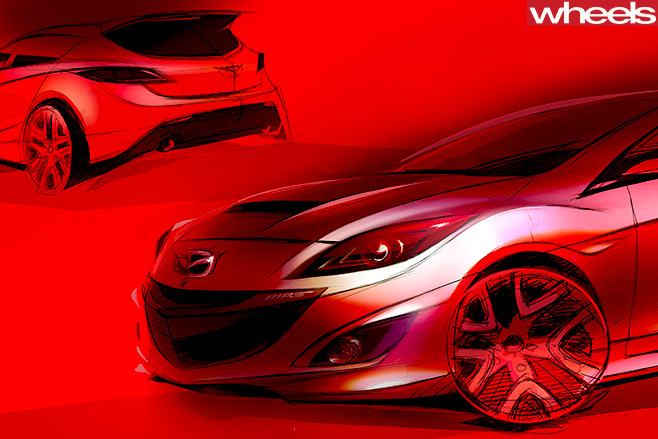
The future of the MPS badge was cast into doubt in 2014, when Mazda said it would halt the development of performance models and instead concentrate on its core volume models – the ones that make the most money for the Japanese brand.
Nakamine’s refusal to write off the badge suggests the brand is rethinking its strategy in the wake of the launch of its latest halo model, the Wheels Car of the Year-winning MX-5 roadster that will soon expand to include a folding hard-topped version.
However, Nakamine said Mazda would need to be “careful” about how it would roll out its engineering resources, and think about its customers first, before considering a revival of the MPS badge.
“If there is an opportunity, or if we can make MPS into a kind of business that’s feasible in the future, then maybe we can study, and we should study,” he said.
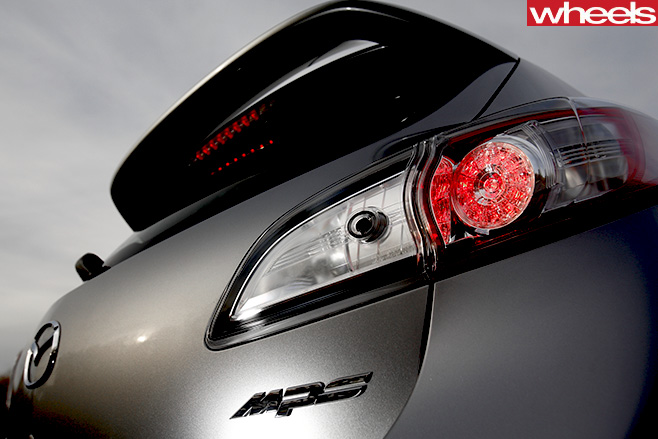
“I think that kind of strategy [using the MPS badge to shift Mazda into more premium territory] is a feasible one,” Nakamine said.
“I think that MPS may be something which may or might help us to improve the brand further.”
The turbocharged 2.5-litre unit that will power the upcoming Mazda CX-9 seven-seat SUV, due on sale in Australia in July, has always been considered the likely powerplant around which to build an MPS-badged model.
Mated to a six-speed automatic transmission, the only turbocharged SkyActiv engine in Mazda’s powertrain line-up produces 169kW and 420Nm.
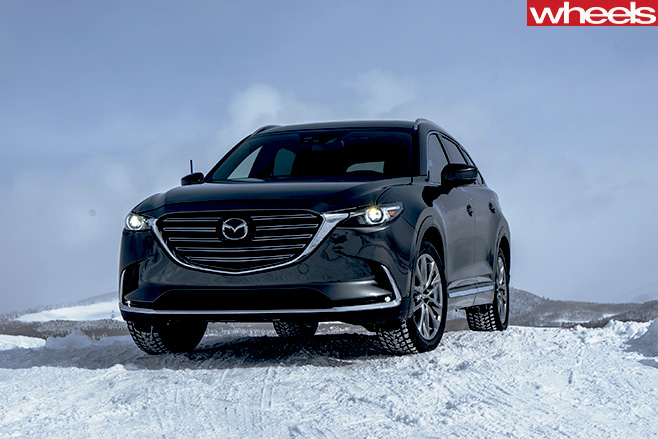
“Maybe 2.5 litre [engine] plus turbo, I think that’s a really good part of our powertrain, in terms of the torque, power and fuel economy,” Nakamine said.
“We’re really excited about this engine, because this engine generates the performance, clearly.
“So I think, maybe, it would be fantastic to take advantage of this 2.5-litre turbo engine for the performance options for the future..
“But first we really want to see the reaction [to the 2.5-litre turbocharged engine in the CX-9] from the market about this powertrain,” he said.
Judging by those words, the revival of Mazda’s MPS badge could all down to us.
The good times have been rolling along with our wheels thanks to oil prices stable at about US$40 a barrel and bowser prices hovering as low as a buck a litre. Just a few years ago we winced as basic unleaded hit $1.60 and higher per litre.
But all good things must come to an end and a finite resource such as oil can never stay cheap. Since fuel pricing can affect household budgets, the subject of price rises and gouging by big retailers is a news story on endless repeat. But is a price rise actually going to happen soon and when should we fill our cars for the cheapest fuel?
Let’s start with where the financial boffins believe oil prices will be down the road and dispel some of the doomsday myths. The US futures index expects to see a slow increase in the price of oil from the current US$40 (A$52.30) per barrel by the end of 2016, going up to US$44/barrel by the end of 2017. That’s nothing to worry about; the high prices we saw in 2008 and in 2013 were the result of US$60 and more a barrel, and while the futures index is just a prediction, the money gambled on oil makes for conservative estimates. In fact, we may not see a price rise at all this year, or the next. But a disclaimer – while it’s not impossible to predict supply shortages, influencing factors such as politics and war can instantly throw prices into chaos.
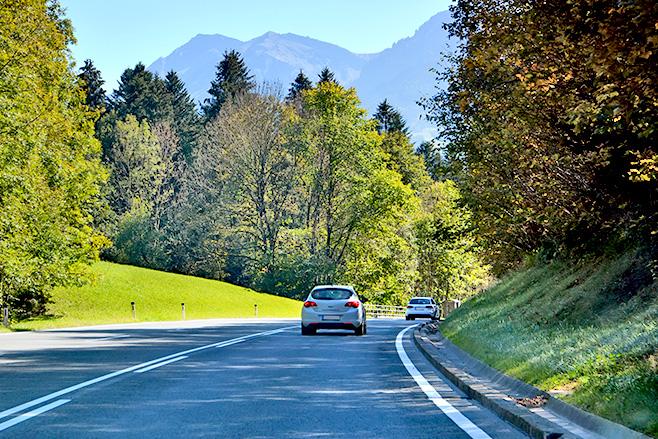
Petrol prices at the consumer end of the scale can also fluctuate wildly, and reading the price cycle can be tricky as retailers’ pricing policies can make costs go up and down without any real influence from oil costs. In other words, it’s done deliberately by petrol retailers to increase profit margins, the cheeky sods.
The up-and-down price cycles vary from state to state – most people think the cycle is a week long, with tight-arse Tuesday being the low and Friday and weekend prices the highest to take advantage of people using their cars or second vehicles more, or filling up for a weekend away.
In part this is right, but government data from the Australian Competition and Consumer Commission (ACCC) shows that only Perth has a true weekly cycle; the other states can drag it out over a month. In Sydney and Adelaide the cycle appears to run at about 20 days, while Melbourne and Brisbane are about a month long.
Sadly, few of us can fill up monthly, particularly commuters or enthusiasts. But happily, a weekly cheap day is about to get easier to predict.
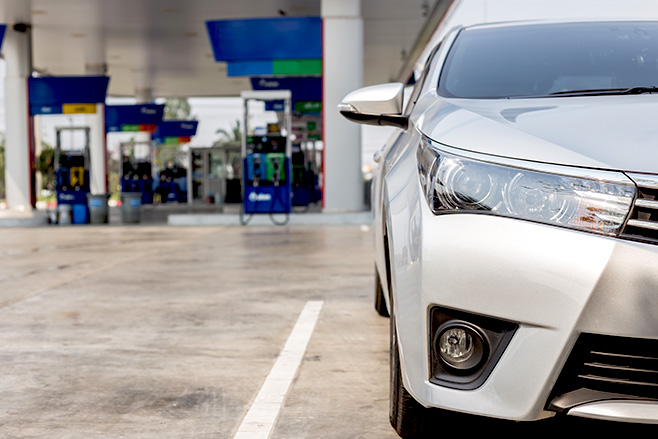
The secret world of covert fuel pricing is about to be blown open as the result of a Federal Court action to bring transparency to the industry. The ACCC took Informed Sources, an information and data service, to court to make the petrol pricing and trends it was providing to big retailers including BP, Caltex, 7-Eleven and Woolworths available to the public.
The data will be public domain by 20 May, leaving the way open for news services and apps to provide more accurate information on fuel price trends and where to find the best place to fill up with to-the-minute accuracy.
The data transparency provided by the court action, along with the low oil prices and a slightly more stable Aussie dollar, should see even fairer pricing at the bowser – or at least less heady fluctuations and more healthy competition.
So breathe easy – there’s no need to save the pennies left over from the cheap bowser prices for an electric-powered alternative just yet. Not that swapping one finite source of fuel for another is going to fix future inevitable fuel shortages – but that’s a column for another time.
