
If every single person who told me that I’ll be looking for a new car soon also gave me a dollar, I could fill the tank of my little hot hatch twice over. The knowing looks as I heave myself stomach-first out of the back of the two-door with a toddler in arms fill me with an odd sense of defiance: yes, we will have two under two in a matter of months; no, I will not be selling my beloved, completely impractical four-seat, four-wheeled first love.
It’s not just a stubborn whimsy, clinging to that pre-child life when the car ran the road on weekdays and racetrack on weekends. Well, there’s an element of that… But every time my back twinges as I extricate my family out of the second row and thoughts stray towards replacing the car with a big sedan or wagon, I remember seeing a family of five in a Starlet, a woman with two child-seated hatchlings in a Porsche 911 Cabrio, and a host of other far more impractical cars with all manner of boosters and capsules shoehorned into them.
It is certainly inconvenient, often uncomfortable, and definitely time consuming to combine a family and a non-family car. Ultimately, it depends on the car as much as the stubborn resolve of the owner as to whether it stays or goes, and we found there are four key areas that one must tick off.
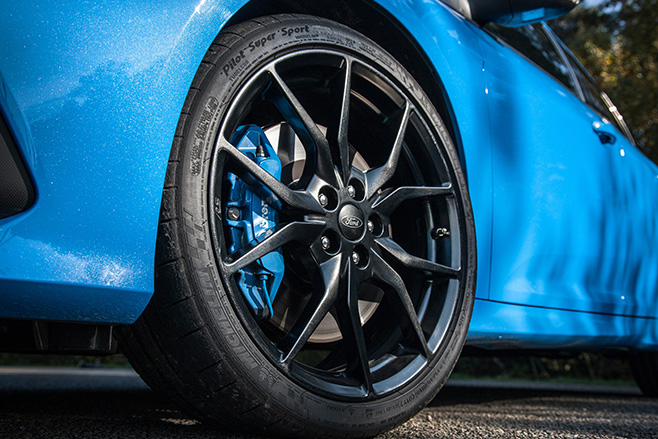
The first is the most obvious – it must fit the appropriate number of car seats. A quick Google search for my car model and keywords like ‘baby seat’ brought up the good old forum discussions, where punters were asking other owners about the feasibility of baby seats in the deep, bolstered suede Recaro seats. The responses were many and varied: what type of seats worked best, which ones would actually fit, and which ones could remain rearward facing for longest. The many responses were indicative of a tribe of families putting up with the discomfort of two-door travel to keep their car.
This sent us on the hunt to find the right seat for us, and it came down to space versus safety. The latter will win out every time, hence the decision to buy one of the safest seats on the market but sacrificing leg room for the driver. There’s that word again – sacrifice. Hey, we can deal with the odd leg cramp, as long as it doesn’t compromise the ability to safely drive the car of course.
Then there was the space needed for everything else. Fortunately, my car is based on a four-door with one of the biggest boots in its class, and the 19-inch rims on the top-shelf edition means there’s no spare in the boot floor either. Not great for a flat – a can of goo and a patch kit is all we have – but it does make for an eon of space that fits a full double pram, nappy bag, and with a bit of Tetris skill, stuff for the adults as well.
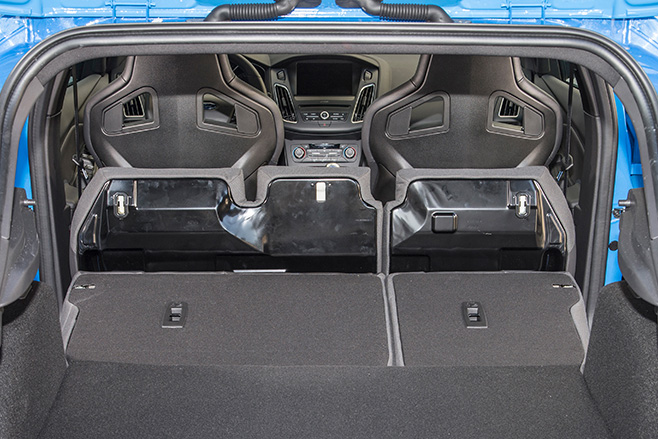
The spare car parts and second wardrobe that were once permanent fixtures in the boot are long gone, but it can now feasibly fit enough for an interstate trip, portacot and all. Owners of sporty cars with smaller boots may find themselves shelling out for roof racks or relegated to the caryards, but not us.
Then we needed protection from scrapes on the rear bumper by prams and heavy baby paraphernalia; from spills and spew; from thrown toys and grubby hands and grassy feet.
There are quite a few covers, organisers, bumper protectors and stain removers in the baby stores as well as the car shops, and a hundred or so dollars later, the car is arguably cleaner and more organised than it was before the baby.
Finally, the last reason why we can live with the impractical hatch: there is a second car in our garage. Admittedly, whenever I can, I do ‘borrow’ the husband’s four-door, particularly for the trips where the toddler will be taken in and out more than once. It gives a glimpse of how easy life would be with a more practical car; but then I don’t get the thrill of busting through the gears to merge onto the highway; the light feel of the wheel through roundabouts and the lovely burble of the pipes which still makes me smile whenever the car starts from cold.
We already surrender so much for these little humans, and though it’s totally worth it, one more sacrifice and a little extra insanity can surely be justified.
Welcome to the next generation of Ford versus Holden. For some die-hard traditionalists, the fact these vehicles are no longer Australian-made makes the rivalry an irrelevance, however for the companies themselves the competition for market share is fiercer than ever.
No longer will it be a straight head-to-head contest between large sedans, though, for the 21st-century battle will be fought on many fronts: front- and rear-wheel drive; fours, sixes and eights; hatch, coupe and SUV.
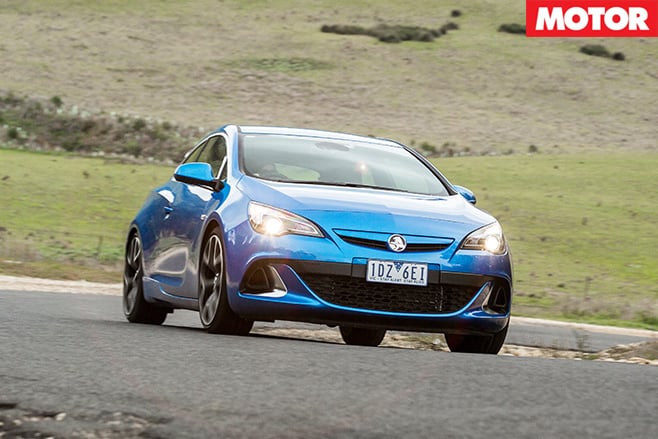
First into the fray are the Holden Astra VXR and the facelifted Ford Focus ST. The Astra is an automotive Lazarus, a phoenix rising from the ashes of Opel’s failed Australian experiment. With the VXR having spent two years in the wilderness, Holden finds itself in the unusual position of launching a three-year-old car.
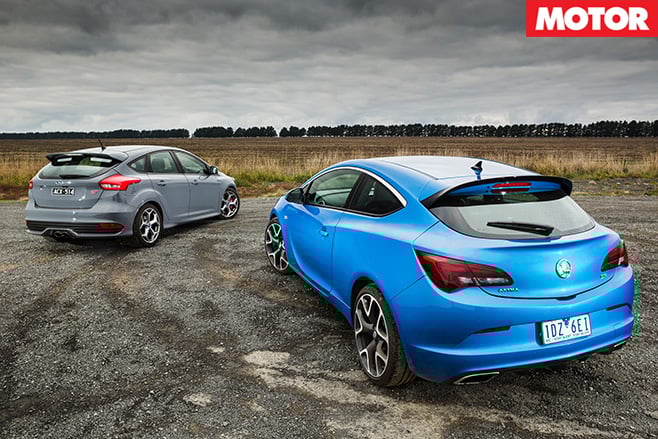
On paper, there’s very little to choose between the two. Both are front-wheel drive hatches with 2.0-litre turbocharged four-cylinder engines, available only with a six-speed manual gearbox. The Astra’s impressive 206kW and 400Nm towers over the Focus’s 184kW and 360Nm, but the Holden’s portly 1543kg kerb weight narrows its power-to-weight advantage to just a single kilowatt-per-tonne, 134kW/tonne versus the Ford’s 133kW/tonne.
Perhaps unsurprisingly, this equality led to the two recording identical numbers on the drag strip, though neither is exactly a barrel of laughs to performance-test. With so much power feeding through the front wheels, wheelspin is easily induced, yet a far greater hindrance is the vicious axle tramp that afflicts both cars.
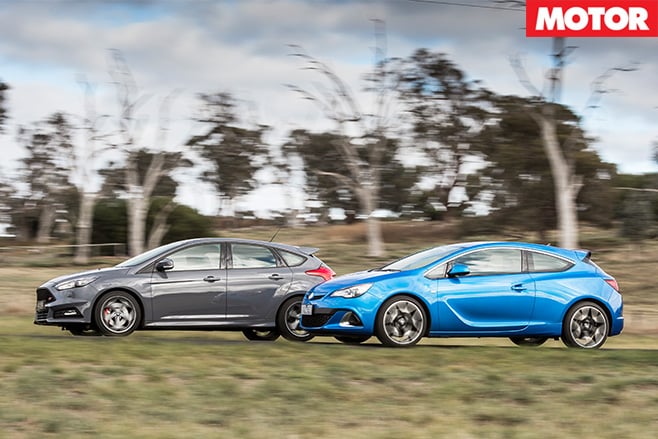
Still, with perseverance both cars eventually clock 0-100km/h in 6.4sec and a 14.7sec quarter mile. Impressively, the Focus manages to beat its claim by 0.1sec, though getting that number requires you to stretch second gear right to the 6800rpm cut-out (which equates to 102.5km/h), otherwise you’re looking at a low-seven.
Despite the identical times the Astra is the faster car, beating the Focus to 160km/h by a clear second. It suffers against the clock by feeling to fall off boost for a fraction of a second following fast gearchanges, and it needs a shift from third to fourth just as it crosses the quarter mile mark (though not making the gearshift is slower).
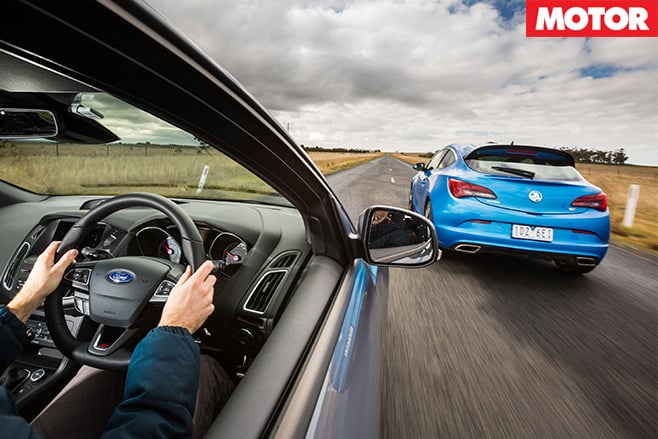
Like the Renault Sport Megane RS265, the Astra blurs the lines between hatch and coupe, its svelte three-door body sacrificing practicality for style. In this instance it’s a trade-off worth making as the VXR looks sensational, its squat stance – from some angles it looks as wide as it is long – aided by guard-filling 20-inch wheels and crisp body creases.
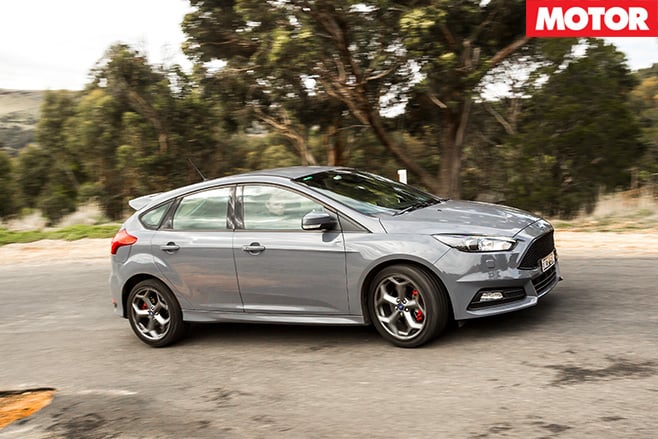
Surprisingly, a glance at the spec sheet reveals the Focus is shorter (by 104mm), wider (18mm) and lower (11mm) than the Astra, something you’d never believe when looking at the two side-by-side.
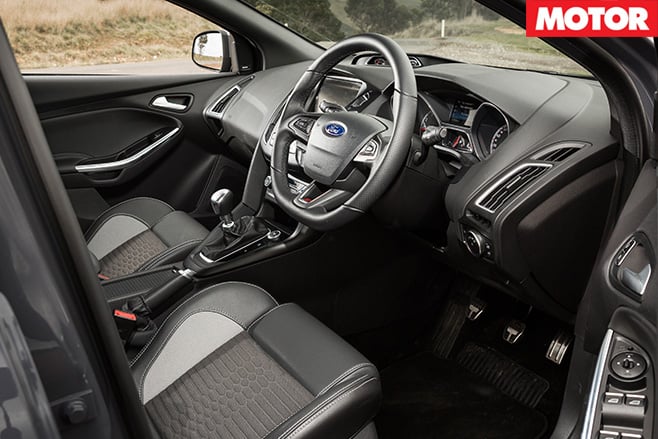
Things improve little on the inside. The piano black Nokia-inspired button-fest of the pre-facelift car has disappeared, replaced by an 8.0-inch touchscreen that’s home to the SYNC2 infotainment system. Unfortunately, the free space liberated by the flash new ’screen has resulted in the centre stack being swathed in hard grey plastic that looks and feels cheap.
There are other issues. While SYNC2 can no doubt be made to work reasonably well if you wade through the encyclopedia that is the instruction manual, it’s about as intuitive as patting your head and rubbing your tummy while cooking an omelette and juggling a chainsaw.
Case in point: to input a sat-nav destination using voice activation (which you have to use while on the move) you have to know a street in the town you’re travelling to. If you only know the town name, tough luck. It might seem like a small thing, but its obstinance will drive you up the wall.
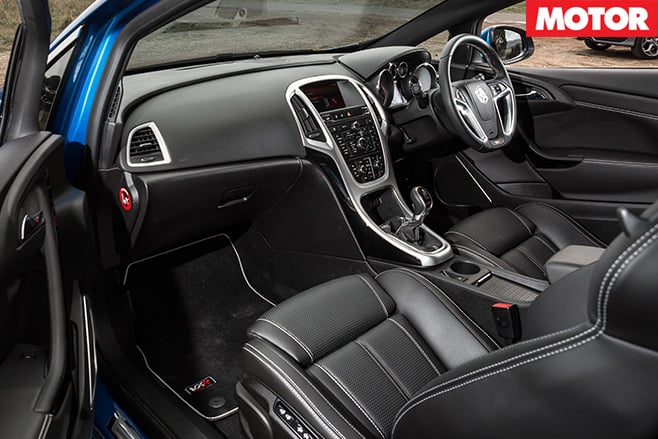
Don’t think this means it’s an easy win for the Holden, though. The Astra’s centre stack is an ergonomic disaster, a bamboozling assortment of buttons and dials. And while the infotainment unit is familiar from the Commodore, it lacks touchscreen functionality, so adjusting audio/sat-nav etc. is now slow and clunky.
But it’s what happens when you sink the slipper that matters far more than what you put in the boot. And once again, in concept and execution, these are two very different hot hatches. GM threw the kitchen sink at the Astra VXR, stuffing it with so much brand name gear that it almost needs a ‘shopping list’ written on the front guards, Japanese tuner-car style.
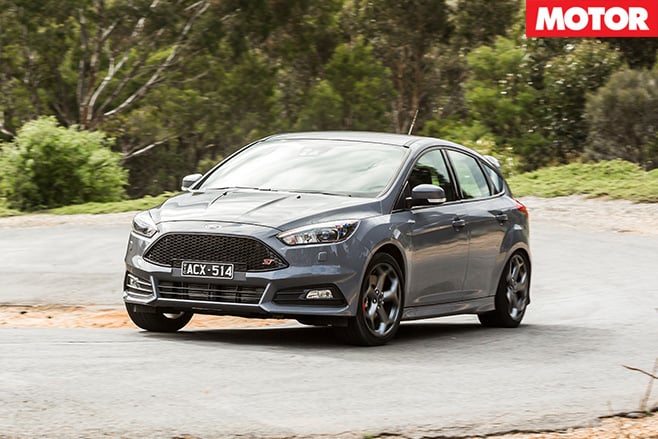
In contrast, the Focus ST couldn’t be simpler. In fact, there’s not much to talk about – no limited-slip diff, adjustable suspension or tricky front suspension. Ford claims that its electric power steering system is so good at compensating for torque steer that it doesn’t need any mechanical help, but Ford is telling furphies.
The Focus ST is all too eager to spin up an inside wheel and you’re guaranteed to find yourself wrestling with the steering under full throttle on anything less than a perfectly smooth road. The engine itself is a gem, though, with a broad spread of power, great response and a rorty (though artificial) soundtrack. It’s matched to a gearbox with well-spaced ratios and a light, reasonably accurate shift.
Breathing in 21psi of boost, the turbo takes a while to come on song yet progress feels to slow dramatically beyond 5500rpm. There’s nothing wrong with the speed of the Astra, but its workmanlike character and industrial soundtrack mean it’s not the most exciting engine around.
The corners themselves, however, are far more entertaining. With 245/35 Michelin Pilot Super Sports at each corner, the grip levels the Astra can generate are astounding. In fact, it’s difficult to think of a front-drive hot hatch that could live with the VXR, particularly in tricky conditions. In faster corners the LSD nails the front end to the ground, while providing excellent traction exiting tighter bends.
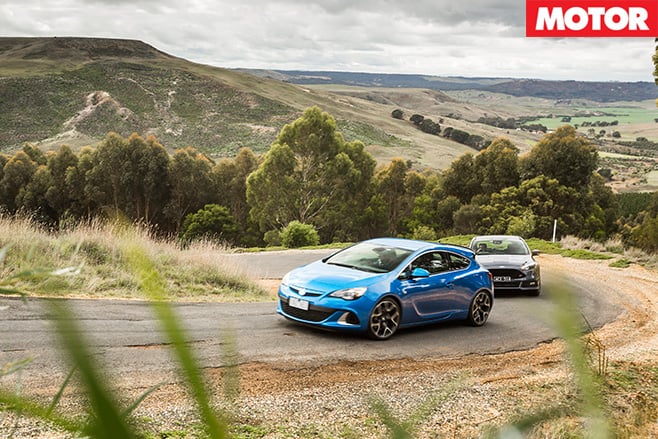
Unfortunately, fairly severe steering kickback rears its ugly head over mid-corner bumps and the brakes, while powerful, also feel awful, with a large dead spot in the first couple of centimetres of pedal travel.
However, these flaws fail to detract from what is an impressive performance, and in terms of speed at least, it’s one the Focus can’t match. But the Ford has other tricks up its flat grey sleeves.
Y’see, whereas the Astra is like the model student sitting attentively in the front row, the Focus ST is the class clown, reclining on its chair at the back of the room blowing spitballs and making rude signs at the teacher. It’s not particularly interested in going fast, that’s too boring, it just wants to have fun, swinging its tail about like a dog that hasn’t seen its owner in a month.
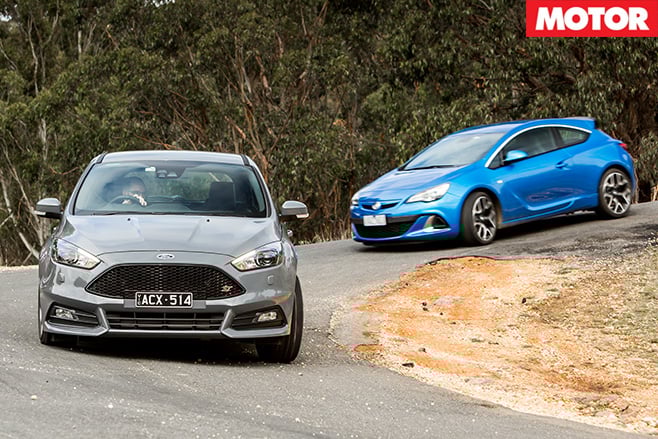
Still, you’re extremely unlikely to reach such limits on the public road, instead you’ll revel in the way the chassis adjusts to every movement of your right foot. The steering is more communicative than the Holden’s and the brakes are no more powerful, but inspire much more confidence underfoot.
Its damping is excellent with great body control, though the price you pay is a ride that might be unacceptable for some; it could get wearing on long journeys. With its adjustable dampers set to ‘comfort’ the Astra has a pillowy pliancy over larger bumps that few other sports-focused cars can match. Its secondary ride isn’t quite as flash, as there’s only so much dampening 35-series tyres can do, but the VXR is a comfortable car to drive day-to-day.
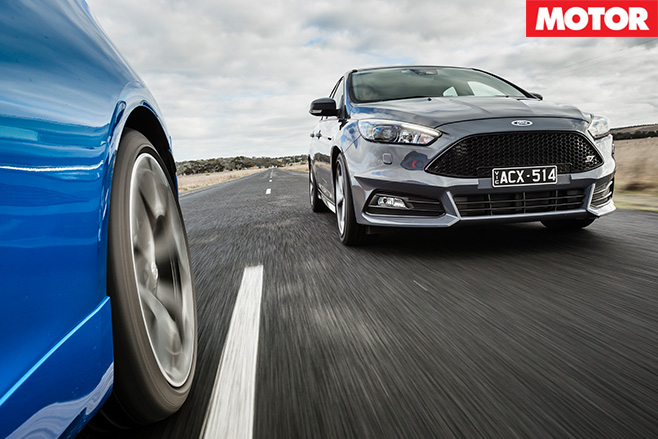
The Holden is a very enjoyable car, but also one you figure out quite quickly. We suspect you could live with the Ford a long while and still feel you were learning more about its abilities (and your own). And for that reason, it takes first blood in Holden versus Ford 2.0. Roll on, Round 2.
| u00a0 | FORD FOCUS ST | HOLDEN ASTRA VXR |
| Body | 5-door, 5-seat hatch | 3-door, 5-seat hatch |
| Drive | front-wheel | front-wheel |
| Engine | 2000cc inline-4, DOHC, 16v, turbo | 1998cc inline-4, DOHC, 16v, turbo |
| Bore/Stroke | 87.5 x 83.1mm | 86.0 x 86.0mm |
| Compression | 9.3:1 | 9.3:1 |
| Power | 184kW @ 5500rpm | 206kW @ 5300rpm |
| Torque | 360Nm @ 2000-4500rpm | 400Nm @ 2400rpm |
| Power/Weight | 133kW/tonne | 134kW/tonne |
| Transmission | 6-speed manual | 6-speed manual |
| Weight | 1389kg | 1543kg |
| Suspension | A-arms, anti-roll bar (f); multi-links, coil springs, anti-roll bar (r) | struts, adaptive dampers, anti-roll bar (f); multi-links, adaptive dampers, anti-roll bar (r) |
| L/W/H | 4362/1858/1471mm | 4466/1840/1482mm |
| Wheelbase | 2648mm | 2695mm |
| Tracks | 1559/1549mm (f/r) | 1584/1588mm (f/r) |
| Steering | electrically-assisted rack-and-pinion | hydraulically-assisted rack-and-pinion |
| Brakes | 320mm ventilated discs, 2-piston floating calipers (f); 271mm solid discs, single-piston floating calipers (r) | 355mm ventilated discs, 4-piston calipers (f); 315mm solid discs. single-piston calipers (r) |
| Wheels | 18 x 8.0-inch (f/r) | 20 x 8.5-inch (f/r) |
| Tyres | 235/40 R18 (f/r); Goodyear Eagle F1 | 245/35 ZR20 (f/r); Michelin Pilot Super Sport |
| Price | $38,990 | $39,990 |
| Positives | Hilariously playful handling; superb engine; value for money | Searing pace; great ride/handling balance; looks sensational |
| Negatives | Firm ride; torque steer; interior ergonomics; turning circle | Uninspiring engine; average gearshift; heavy; confusing dash |
| Star Rating | 4/5 | 4/5 |
A newfound driving maturity makes the Elantra one of Hyundai’s more convincing offerings. But it comes with compromises.
WHAT IS IT? This Elantra begins the sixth generation of Hyundai’s longest running model. It is a sedan that competes with some of the small-car heavy hitters.
WHY WE’RE TESTING IT The Hyundai Elantra is all new, from the engine and chassis to the interior and body. It’s the first newcomer for Hyundai in 2016, and it precedes the arrival of a new Hyundai i30 hatchback by at least a year.
MAIN RIVALS Toyota Corolla, Mazda 3, Subaru Impreza, Ford Focus, Holden Cruze.
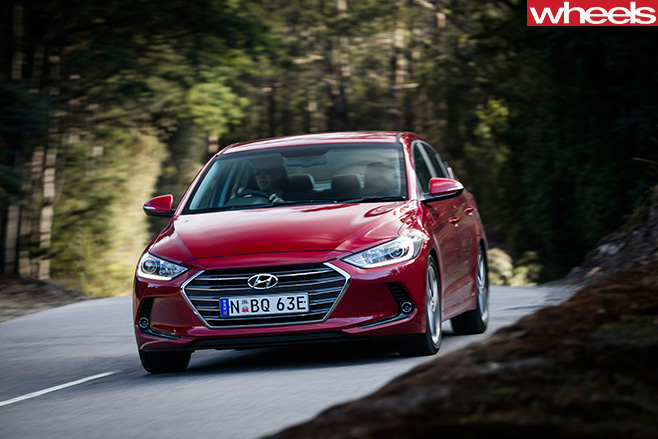
PLUS: Refined and relatively quiet; perky engine; plenty of space; decent value. MINUS: Bland interior; mild suspension booming; auto transmissions lacks sporty smarts; no AEB.
THE WHEELS REVIEW IT MAY be Hyundai’s biggest selling model globally, but the Elantra is up against it in Australia, where four-door sedans are being swallowed steadily by SUVs.
On paper, the sixth generation Elantra does not look to be a shaker-and-mover. Fuel use has increased, the boot is smaller, and prices have edged up.
The reality is more appealing, starting with a crisper design that places the emphasis on the sloping roof line rather than on that apparent turn-off for buyers, the boot.
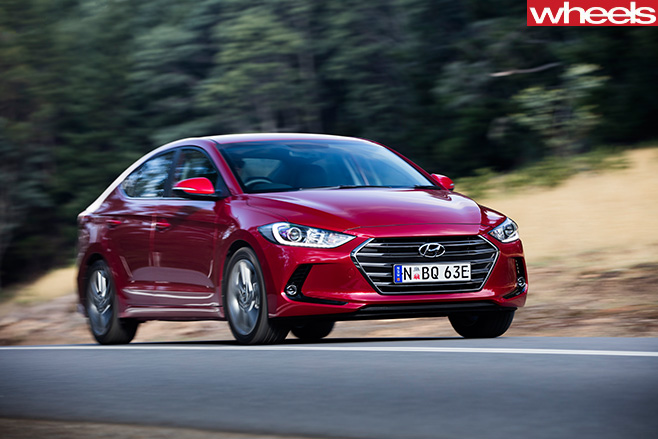
Open it up and it approaches 6000rpm before slurring the change into second. Peak revs increase in higher gears to the point where you can eke 6500rpm out of it. The sound is a vocal companion but without the thrashiness of previous small Hyundais.
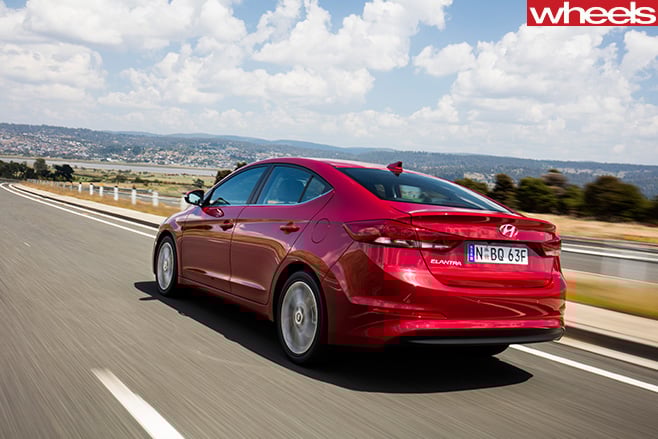
Refinement has made a big leap, eschewing the rawness of the previous Elantra – and its i30 hardback sibling – for a more hushed in-cabin experience.
There’s a newfound maturity to the dynamics, too. Put that down to the stiffer chassis: the amount of ultra-high tensile steel has more than doubled, now making up 53 percent of the body, in turn helping push torsional rigidity up some 30 percent. The suspension, which was tuned extensively in Australia, has also been redesigned for better control, something instantly obvious on the challenging Tasmanian roads of the media drive.
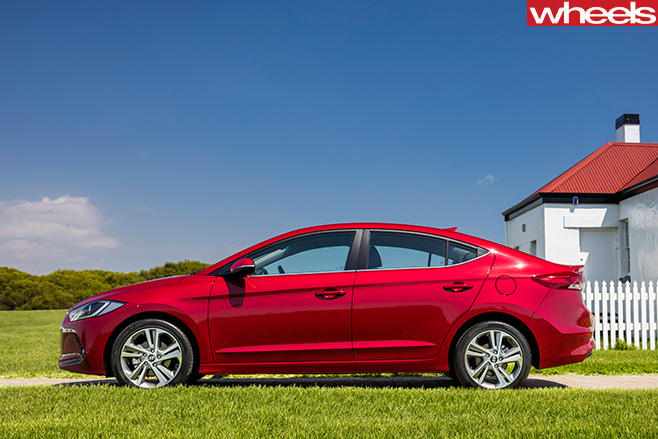
The tyres – 16s on the Active and 17s on the Elite – are well suited to the relaxed nature of the car, delivering respectable grip but ultimately squealing at punishment. The steering has a reassuring meatiness to it, but initial accuracy is dulled by the profile of the tyres – more so on Active with its 16s.
Inside, there’s a mass of grained plastics and fake silver streaks for what is a bland look. Fortunately, the more convincing silver streak around the touchscreen adds a dash of flair, as does a centre stack that’s tilted towards the driver.
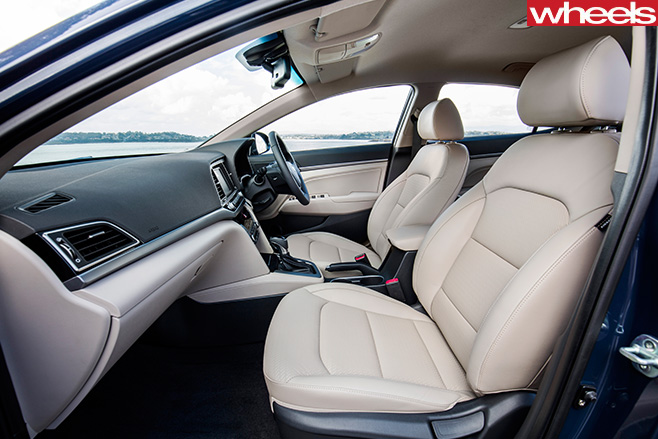
There’s brilliant adjustability to the front seats, ensuring tall drivers are blessed with legroom. The rear, though, loses points for headroom, which tapers off with the sweep of the roof. The middle rear seat, too, is a temporary affair thanks to its narrowness. But the rear air vents are a plus.
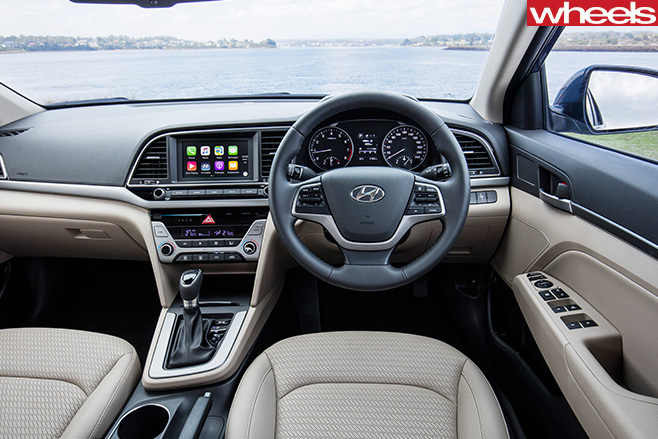
The Elite ($26,490 as an auto only) throws in some leather, rain-sensing wipers, smart key entry, dual-zone climate and 17-inch alloys.
Those prices, though, are above the discount deals that have seen Hyundai command more small car share recently. The challenge for the Elantra is repeating that in a declining segment.
SPECS Model: Hyundai Elantra Elite Engine: 2.0-litre 4cyl Max power: 112kW @ 6200rpm Max torque: 192Nm @ 4500rpm Transmission: 6-speed auto Kerb weight: 1355kg 0-100km/h: NA Price: From $26,490 On sale: Now
MORE: Hyundai Elantra Range Review MORE: Hyundai Elantra Specs, Range & Price
One of the basic assumptions of economic theory is that consumers are rational; that is, they’ll make the decision that gives them the most benefit for the least outlay.
In which case, the BMW X6 should not exist. In xDrive50i form, it costs $17,670 more than the X5 on which it is based, offers no real performance benefit, and has less luggage and passenger space.
Luckily for BMW, its product planners don’t subscribe to such theories, as the X6 has been a huge success, with global sales of more than 250,000 since its 2008 introduction. Given the aforementioned practicality constraints, it seems reasonable to assume the majority of purchases were made on the basis of its looks, which proves beauty really is in the eye of the beholder.
The updated X6 is a mild evolution of the original concept, though it’s bulked up, with a larger, more muscular body. It has presence, but that’s mostly due to its enormous size.
Perhaps thanks to our test car’s grey paintwork, I can’t help but picture a hippopotamus every time I look at it. In fairness to BMW, however, Mercedes-Benz’s recent effort with the GLE-class Coupe suggests that elegance and beauty will forever elude the Coupe-SUV segment.
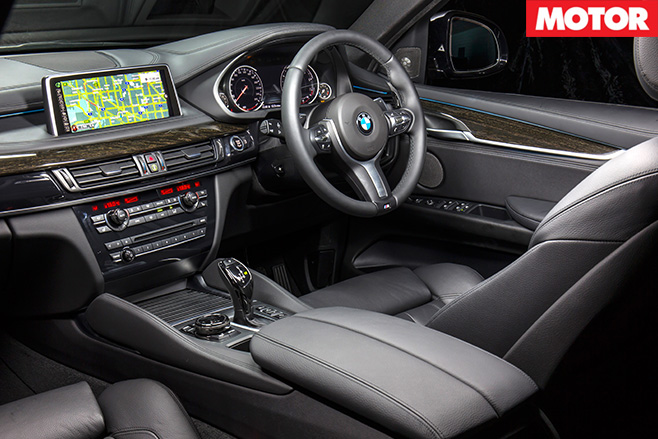
Things improve on the inside, with a high-quality interior and a raft of new standard equipment including active safety tech such as lane departure warning, active cruise control and collision avoidance, a head-up display and giant 10.25-inch infotainment screen, operated by the excellent iDrive system.
Equally impressive are the X6’s cornering capabilities. Nothing this big and heavy should be able to be driven this fast. Really throw it around and its weight becomes apparent, but by and large there’s mammoth grip (thanks to huge tyres; rears are 315mm wide!) and the clever all-wheel drive system shuffles torque where it’s needed. It rides reasonably well, too, bar the odd crash when the enormous wheels fall into a pothole or similar.
Sadly, the dynamic package is badly let down by absolutely woeful steering. That a company of BMW’s dynamic reputation could sign it off is beyond belief. It’s far too light, syrupy and gloopy in its movement and offers as much connection to the front wheels as a Sega Rally arcade driving machine.
Then there’s its sheer size, which can be a pain around town, and the coupe roofline, which destroys rear visibility. It’s difficult to understand why any rational person would choose an X6 over the identically-engined X5 or 5 Series, but then, as the X6 has so ably proven, assuming car buyers are rational is a dangerous game.
3 out of 5 stars
Specs Engine 4395cc V8, DOHC, 32v, twin-turbo Power 330kW @ 5500-6000rpm Torque 650Nm @ 2000-4500rpm Weight 2170kg 0-100km/h 4.8sec (claimed) Price $151,600
THE world’s most controversial SUV over the past 15 years is about to be reinvented, with all-new lightweight architecture.
Sprung undergoing winter testing in Europe, the 2017 Porsche Cayenne gently morphs the design language set by the 2002 original, with heavy hints of the Panamera Sport Turismo Concept that starred at the 2012 Paris Show. And it blends in a bit of the Audi Q5-based Porsche Macan for good measure.
The result should be a sleeker and more attractive vehicle than what’s come before.
Not surprisingly, the Stuttgart SUV switches to the tech-heavy MLB Evo platform first seen beneath the latest Audi Q7 and just-released Audi A4, to improve both dynamics and efficiency.
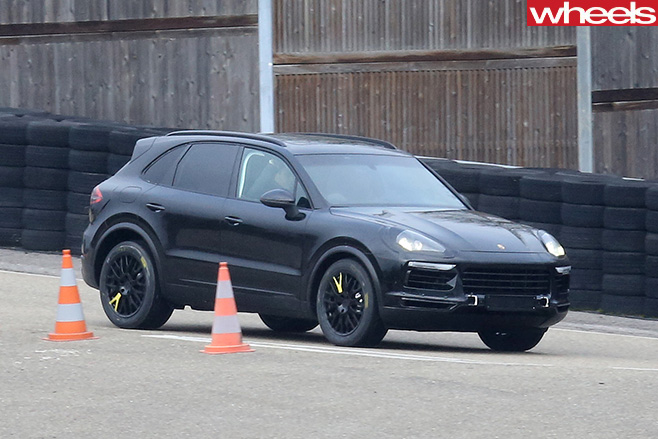
For fans of frugality, expect to see turbo-diesel offshoots to eventually surface (Volkswagen’s emissions scandal may have a bearing on exactly when they appear), to replace the existing 3.0-litre V6 and 4.2-litre V8 TDIs.
We hear that an S E-Hybrid AWD will once again lob in, though which petrol engine that includes remains a secret.
Additionally, like the Mk2 Panamera due out later this year, the Cayenne’s button-festooned interior will give way to a crisper and cleaner layout, featuring a massive central touchscreen and the possibility of this year’s favourite new cabin gadget, gesture control.
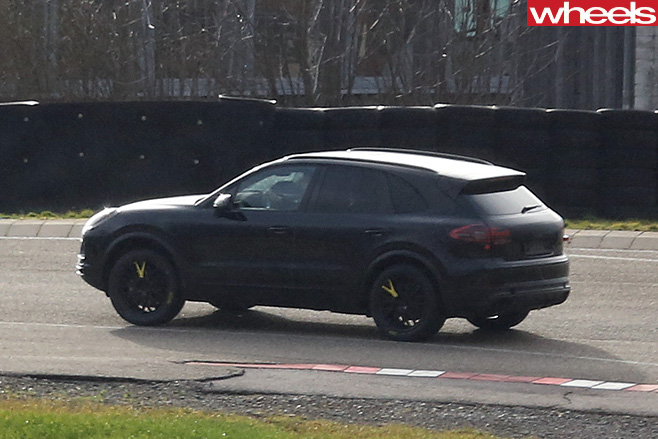
Currently, the Mk2 Cayenne kicks off with the base atmo V6 AWD from a tad over $107,000 in Australia, topping out at nearly $285,000 in flagship Turbo S AWD guise. Don’t expect much deviation from that.
Sources suggest that the 2018 Cayenne will debut by the next IAA Frankfurt motor show in September 2017. An earlier unveiling at the Geneva Motor Show in March 2017 is also possible.
Have spy pics of your own? We’d love to see them. Just email them to [email protected]
NISSAN Australia has pulled the plug connecting its Leaf electric car to owners’ smartphones, after hackers used the system to break into the world’s best-selling electric car and toy with its settings.
Nissan told Wheels its app, which among other things allows owners to remotely warm up or cool down their vehicle via a smartphone app, was “currently unavailable” after it was taken down today in response to the hack.
Troy Hunt, an Australian security researcher, was able to send data to a friend’s car parked more than 15,000 kilometres away and play with the air-conditioning system and seat warmers via the car’s connection to the UK’s mobile phone network – all from a laptop’s browser window while seated beside his pool in Queensland. The owner did not even need to be in the car.
Working out how to hack into the Leaf – which Hunt emphasised did not allow a hacker to take complete control of the vehicle in the way that US hackers were able to play with the brakes, throttle and even the steering of a Jeep Cherokee in the US last year – took less than an hour.
“When I ran a workshop for software developers in Norway last month there was a bloke there who, using some of the things we’d learned during the day about how mobile phones talk to services such as Nissan’s, managed to find that the only thing that he needed to know in order to access information about the vehicle’s status and the climate control features was the VIN,” Hunt told Wheels.
“I ran this workshop, the guy had one hour of training, and he figured it out. So it is not that I showed some secret ninja tricks or something like that.
“He managed to find that the only thing that he needed to know in order to access information about the vehicle’s status and the climate control features was the VIN.”
Not even the whole Vehicle Identification Number – a string of numbers and letters unique to each car. Instead, Hunt found that only the last five digits of the VIN – clearly visible in a corner of the Leaf’s windscreen – were needed to make the hack work.
Think that’s bad? He was even able to look through the car’s entire travel history. Hunt said he was not able to see any GPS details in the data, which would easily have allowed a hacker to work out where the car was located, but he could get a sense of where it had been.
“What we do have is, as far as we can tell, the entire history of the vehicle on a day-by-day basis, how many trips were done, and then for each one of those trips, what time was it and what distance was it,” he said.
“So if you start to look at the data in the aggregate you can say this person always takes a short drive at this time of week, and then they do this, and then they do that, and you could then establish usage patterns as well.
“Now, if you did take the VIN and do something like a rego check in whatever part of the world they’re in and then match that back to identities, you can start to get a pretty good idea of who owns it, where they’re going, what they’re up to, what they’re movements are.”
This was not good from a privacy point of view, Hunt said.
According to Hunt, the Leaf’s vulnerability to a simple hack attack showed that, just as when other companies rushed to connect devices such as light bulbs and fridges to the Internet, online security was often taking a back seat.
“I guess cars are complicated as they are without throwing even more electronics into them,” he said. “So [smartphone app connectivity] is adding a huge amount of complexity.”
Subaru Australia is returning to the sport that made it famous following a 10-year hiatus.
The brand will compete in the 2016 Australian Rally Championship with a single WRX STI NR4, driven by Molly Taylor and prepared and run by Tasmanian-based outfit Les Walkden Rallying.
Catalyst for the return has been the reintroduction of four-wheel drive as the sport’s premier category, replacing the well-intentioned by ultimately unsuccessful G2 category that has reigned since 2012.
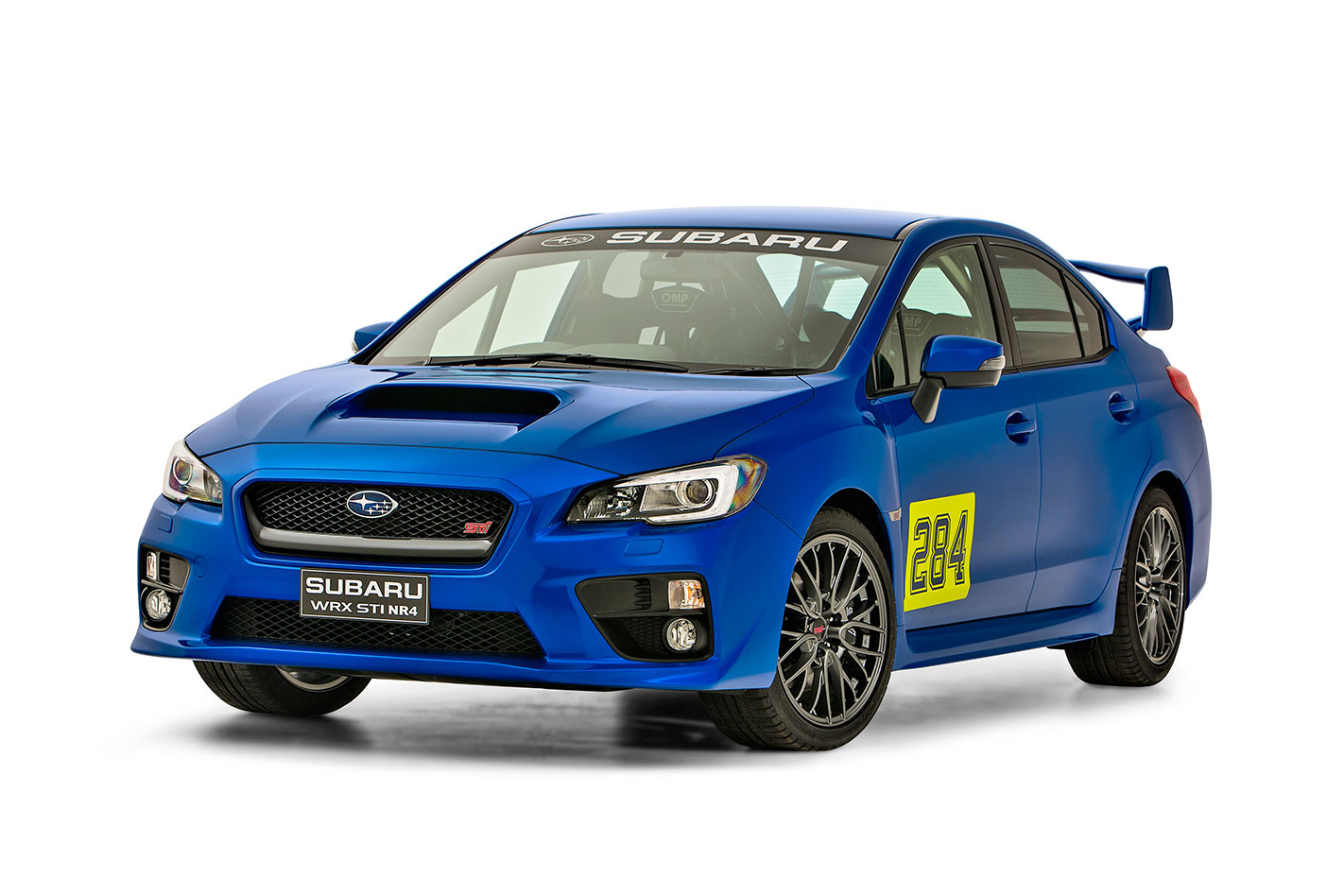
It is heavily based on the production car, however it uses the 227kW/422Nm 2.0-litre turbo flat-four from the Japanese domestic market rather than local cars’ 2.5-litre EJ25.
“The rekindling of our partnership with LWR is very pleasing,” said Subaru Australia Managing Director, Nick Senior, in a statement. “They are highly successful and have a great record. We are going to be very realistic with our expectations; we really want our motorsport philosophy to be ‘run on Sunday, buy on Monday’.”
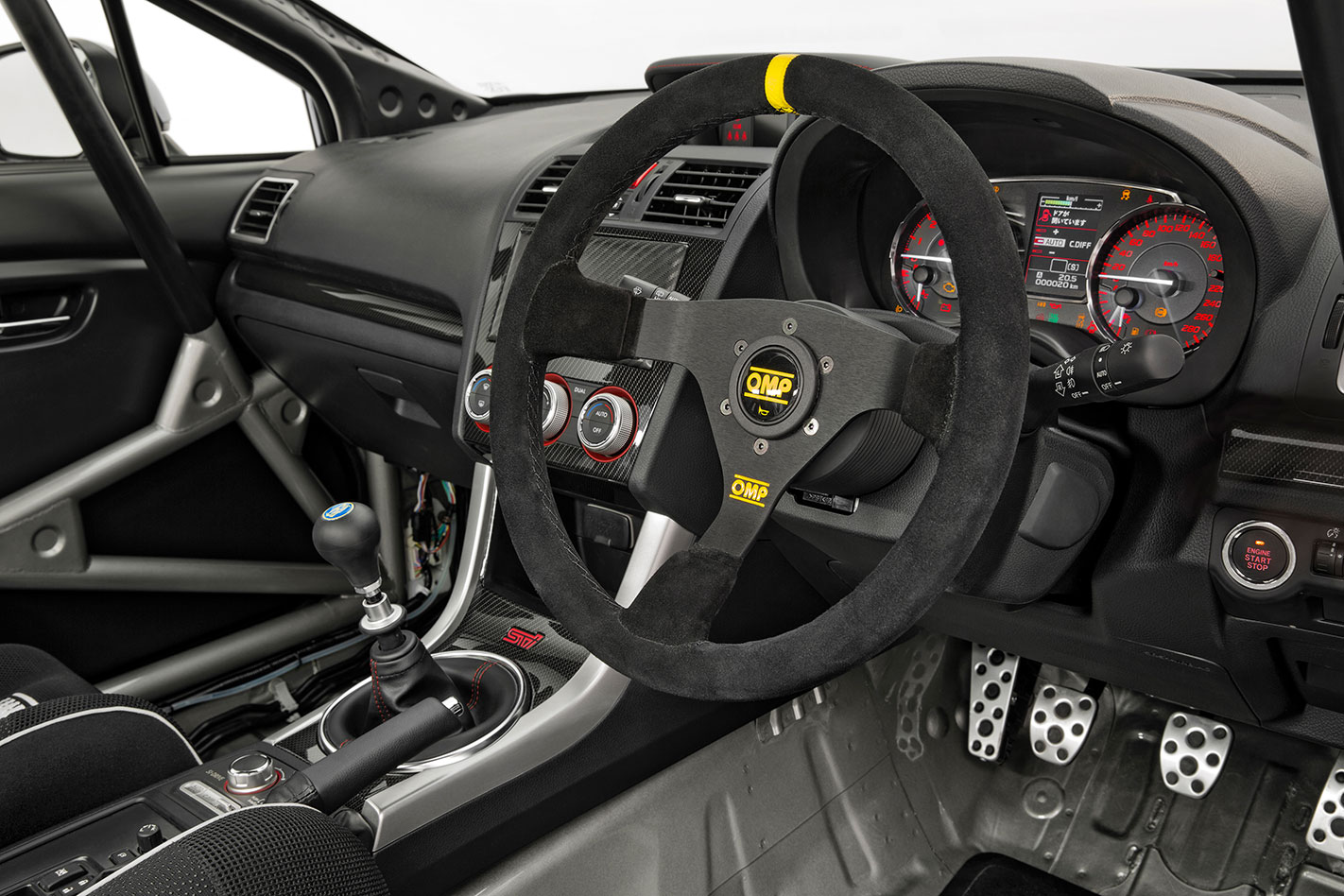
Driver Molly Taylor is the daughter of Coral, who partnered Neal Bates to four ARC titles during the championship’s glory years during the mid-’90s. Taylor (M) finished second in last year’s ARC and recently won the Peter Brock Medal in recognition of her ability and attitude.
The 2016 Australian Rally Championship kicks off in Western Australia on April 22.
Mounting pressure from enthusiasts has helped lead Ford Australia to officially offer Mountune Performance modifications with warranty support for Fiesta and Focus ST.
Available in Europe for some time on both Sport Technologies hot-hatchbacks, the dealer-fitted performance-enhancing hardware boosts power and torque for both considerably.
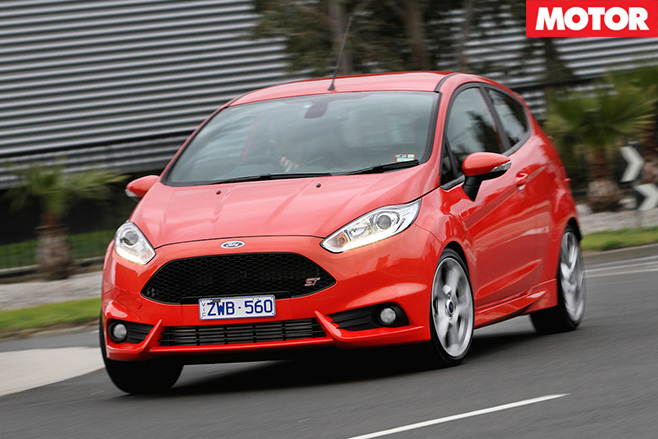
The $25,990 Fiesta ST moves from 134kW to 158kW at 6000rpm, and from 240Nm to a Polo GTI-matching 320Nm at 3000rpm, for a recommended retail price of $2328 extra.
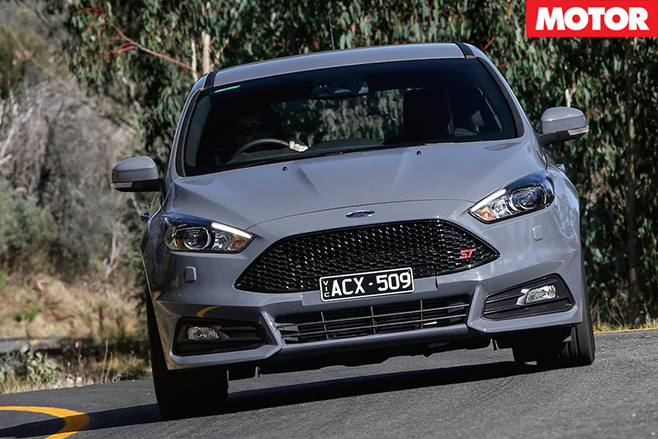
MOTOR has previously achieved 0-100km/h acceleration times of 6.97 seconds for the smaller three-door ST and 6.4sec for the larger five-door ST, so expect solid improvements for both.
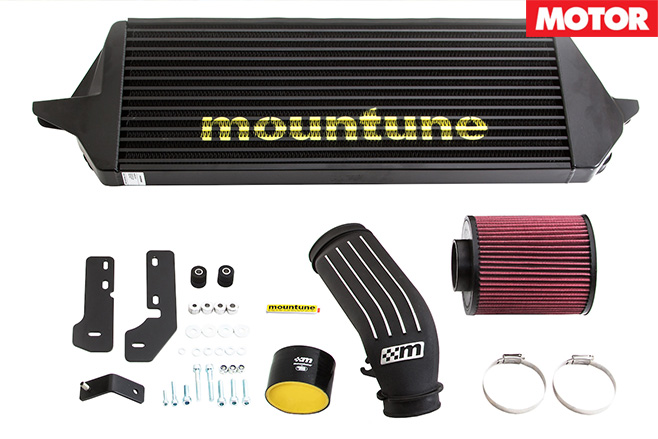
Both Fords include Mountune Performance badging and revised engine calibration, although the Fiesta ST only adds a new porous lower feed hose, custom aluminium high-flow airbox with dual cold air feeds and high-flow panel air filter. The Focus ST gets a large-capacity alloy intercooler, cast crossover duct and dual-entry air filter.
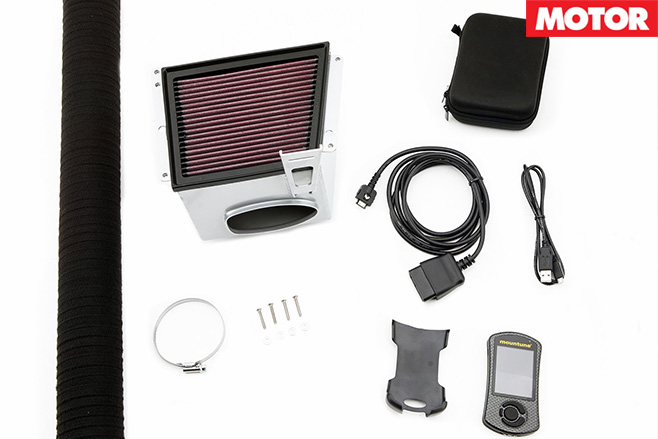
MOTOR has tested a similar Mountune performance kit on the Fiesta ST added privately by Herrod Motorsport here.
Two of the most buzz-worthy concepts in automotive and tech right now could be joining forces – the ride sharing behemoth Uber and self-driving cars – a concept being championed by Google. Who also happen to own Uber.
The controversial ride sharing company is currently testing self-driving cars in Pittsburgh, USA. The company plan to take over an old factory and build temporary test roadways for self-driving cars.
“Self-driving technology has the potential to drastically cut down on accidents and congestion while making transportation even more affordable and convenient for everyone,” John Bares, Director of Uber Advanced Technologies Centre, said in a statement.
However – don’t get too excited. He continued that “the adoption of this technology at scale is likely still many years off.”
The facility – called Alamo – will join another facility in Pittsburgh which has been working on mapping and safety technology for self-driving cars.
But what we want to know is – without a driver – who will be responsible for giving out bottles of water, mints and infuriatingly repetitive small talk (“So… have you been using Uber long?”)
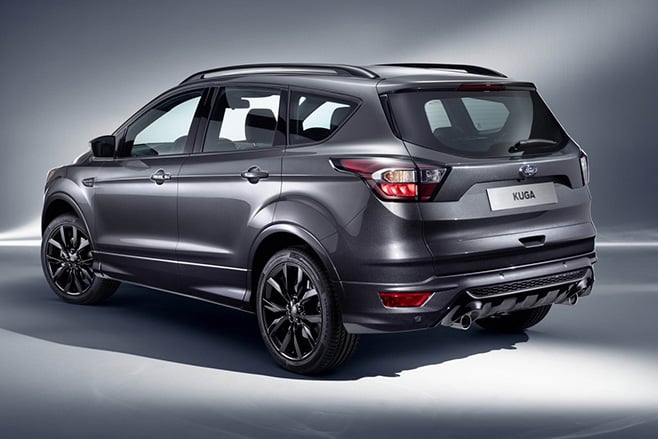
Featuring styling updates from every angle, the freshened-up Kuga has a look more closely resembling its larger siblings Ranger and Everest, thanks largely to the new front grille.
The front end features a reshaped front bumper with new foglights, and new headlights with built-in daytime running lamps. At the back, Ford has altered the Kuga’s tailgate by trimming down the revised, LED taillights and refining the handle design.
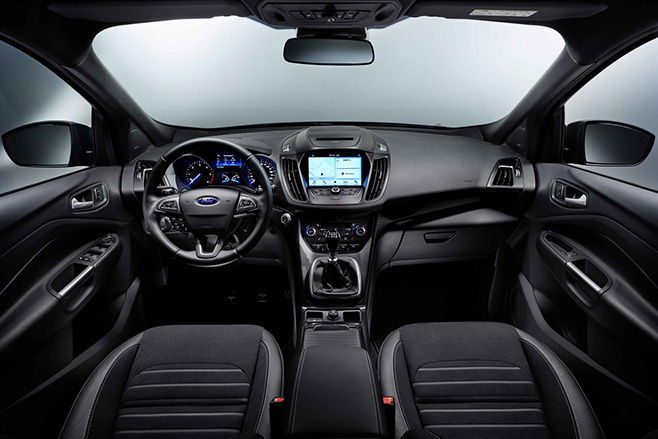
Interior changes are limited to the new three-spoke steering wheel, and an update to the latest Sync 3 infotainment system. Other new tech featured in the Kuga includes a parking assistant for parallel and 90-degree spots.
Ford’s ‘MyKey’ functionality will also make its way into the Kuga. This system allows parents to give younger drivers their own key which limits top speed and restricts Bluetooth calling.
Details of the Australian release are yet to be detailed, but with a European launch scheduled for the near future, the refreshed Ford Kuga could be in local showrooms by the end of the year.
