Here’s a Kia SUV that allows you to ‘check yourself’
THE Kia Telluride has been revealed at the 2016 Detroit motor show but is unlikely to be sold in Australia. The seven-seater Telluride (yes, that’s the concept’s official name) is larger than the seven-seat Kia Sorento that’s offered here, and is tipped to be the replacement for the Kia Mohave, which is sold only in left-hand drive markets including North America, where the Korean maker enjoys its greatest sales.
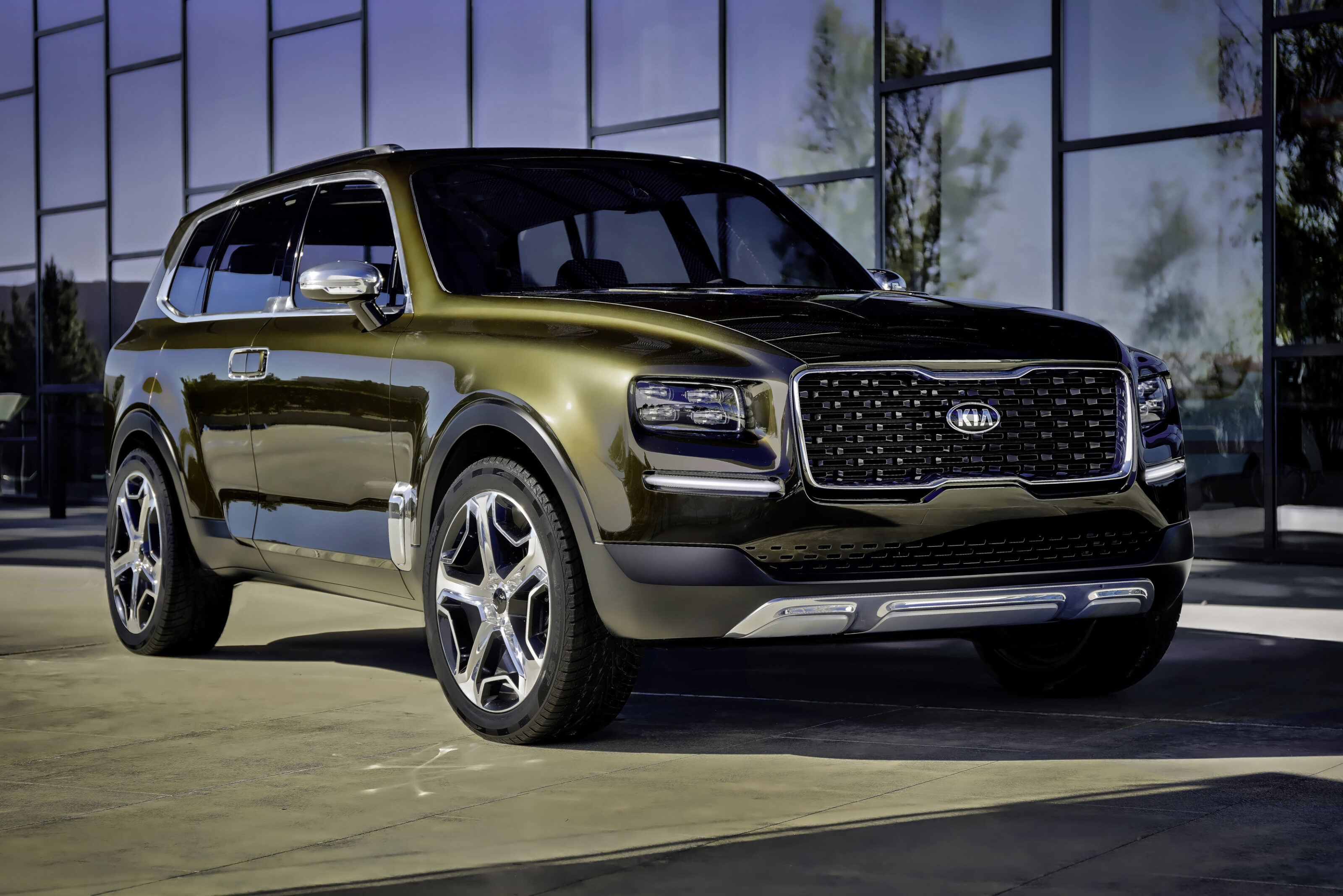
There’s still good reason to check out the new SUV, beyond the styling which looks like a Kia had a brawl with an old Ford Bronco. The muscular interior even has some Volvo elements to it, including the windowline and the huge alloy wheels.As well as a glitzy mirrored roof, the interior features four leather-trimmed ‘captain’s’ chairs and a new digital instrument cluster that extends to the central display, as well as ‘health and wellness features’ that include a ‘Light Emitted Rejuvenation’ (LER) system.
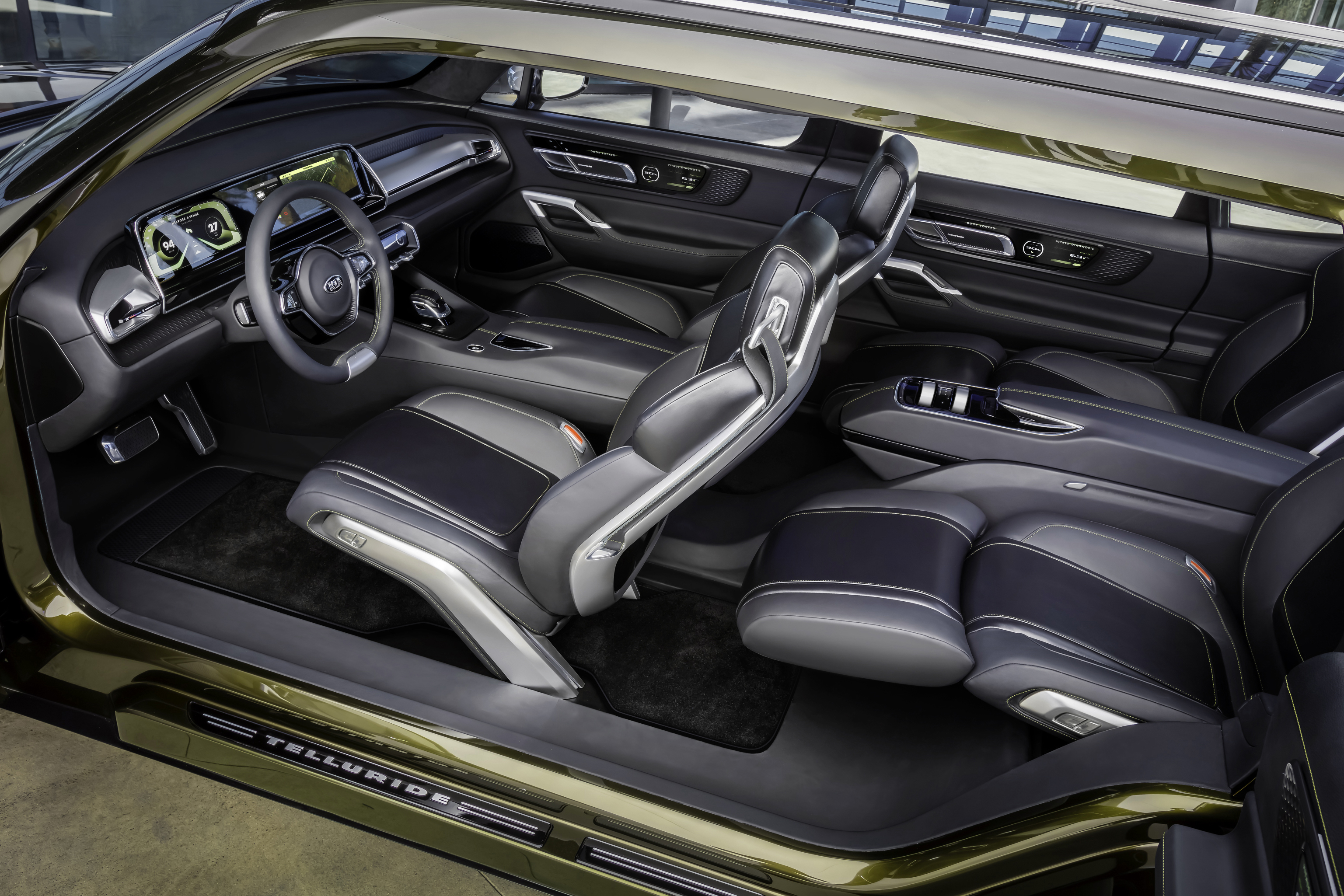
Kia says that the LER system uses ‘a massive, wing-shaped LED panel mounted beneath the oversize sunroof that displays a pattern of therapeutic light to treat desynchronosis (jetlag) and improve passengers’ energy levels.” Those seats, too, include Smart Sensors to “capture a passenger’s vital health information”.
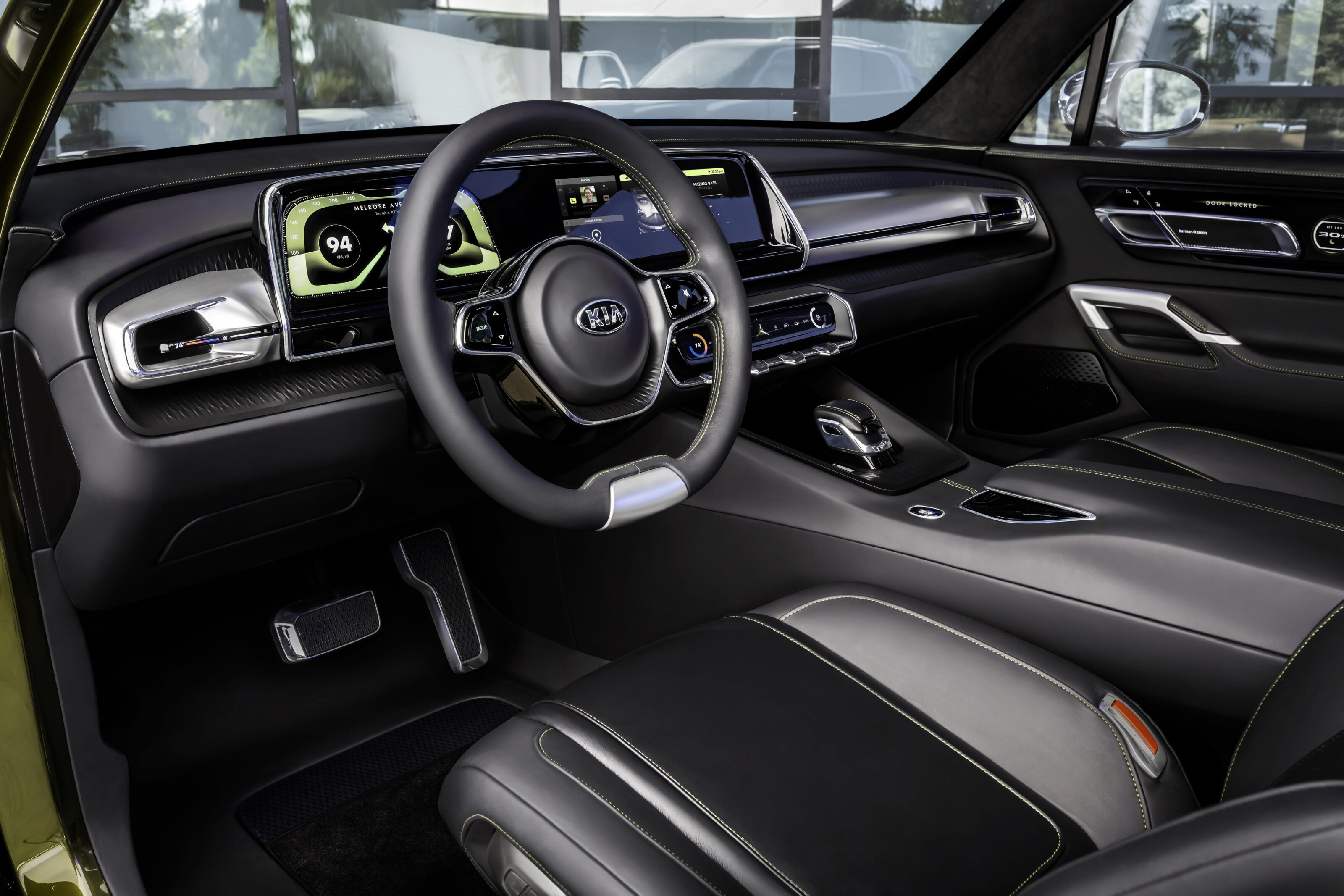
The Telluride is easier to get into, too, with rear-hinged doors a al the Mazda RX-8 sports car of last decade. And, at a whopping 24.13cm longer than the Sorento, using the same platform but with a stretched wheelbase (3081mm) to offer even great interior space.
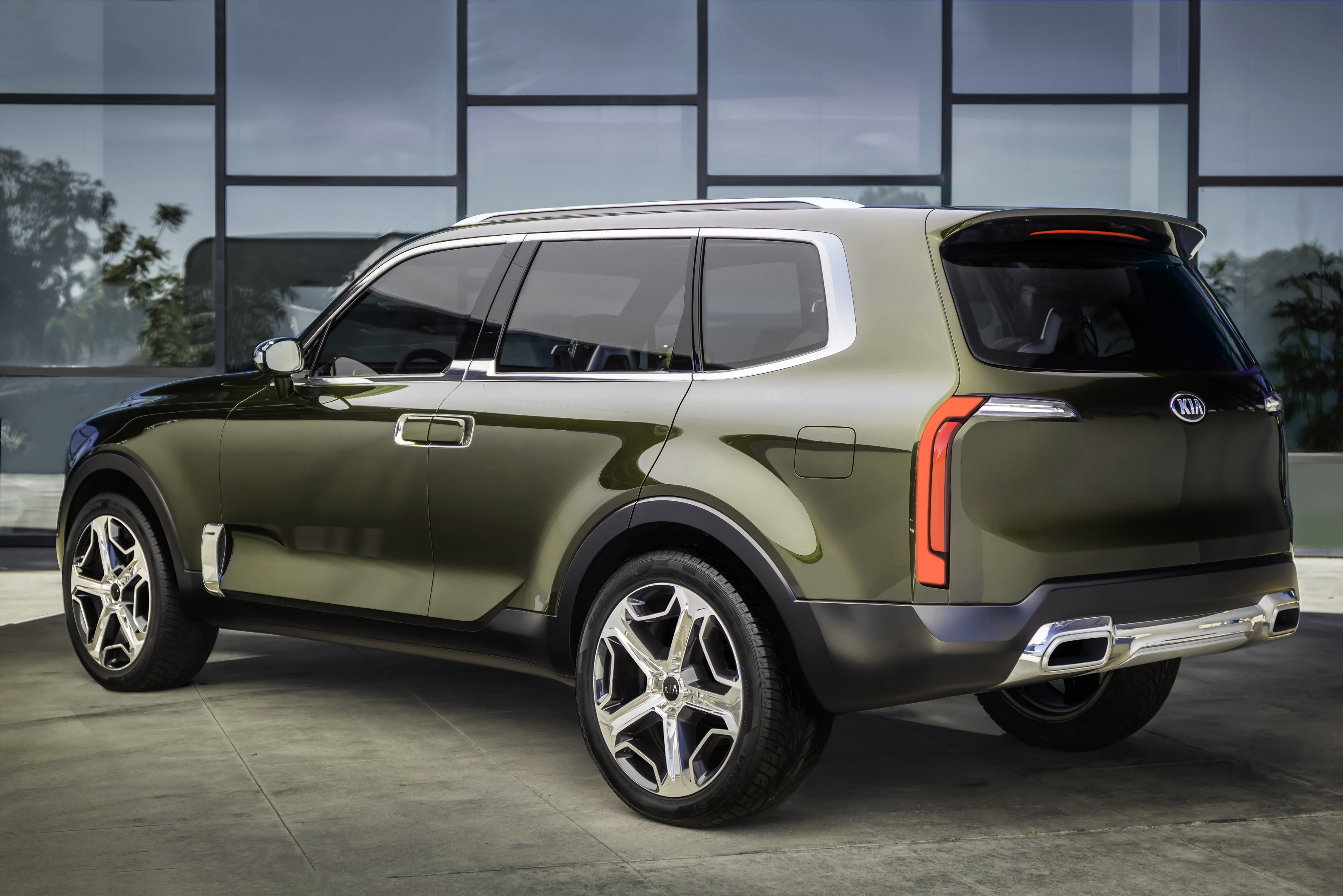
Under the bonnet of the Dark Pyrite green concept car is a 3.5-litre V6 hybrid driveline, making a total of 298kW – 201kW from the engine and 97kW from an electric motor – for a claimed 7.84L/100km. That matches the claim for the most efficient Australian-spec Sorento, the 2.2-litre turbo-diesel, which is a less powerful 147kW.
Despite Kia suggesting that the Telluride “is anything but a Utopian fantasy”, Kia Australia has told Wheels that the Telluride is not yet confirmed for production, and even if it does arrive in U.S. showrooms, it’s still not part of its Australian strategy.
Dearborn announces ‘FordPass’ as a customer service free-for-all, and you don’t even need to be a Ford owner to benefit
FORD says its transition from an automotive company into a “an auto and mobility company” begins in April with the launch of FordPass, a multi-tiered customer experience program that Ford hopes will change how people engage with the brand. And you won’t need to own a Ford to benefit from it.
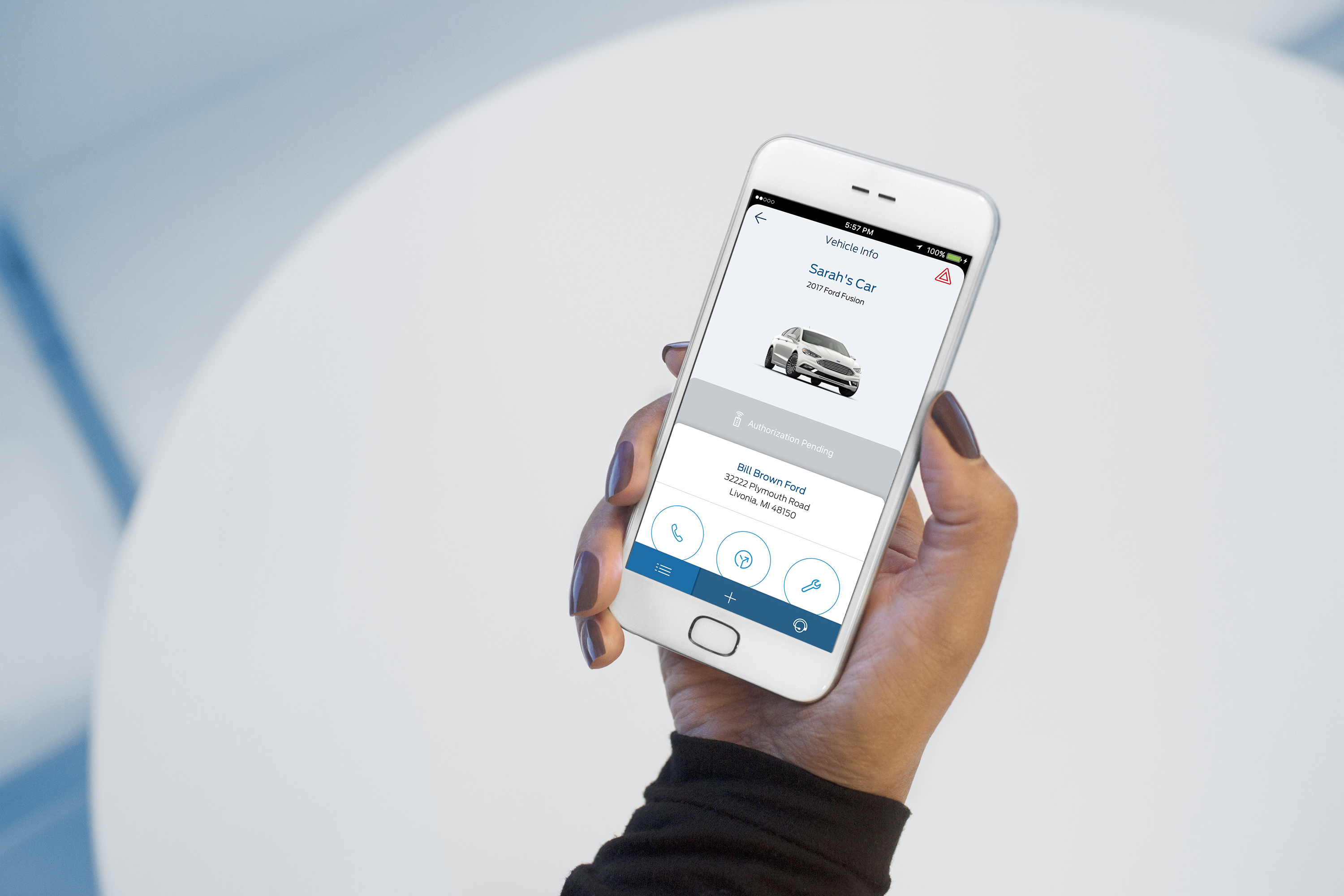
“A lot of people keep talking about how the auto industry is going to be disrupted by the tech companies. Our approach is we’re going to disrupt ourselves,” said Ford CEO Mark Fields. “[FordPass is] a reimagining of the relationship between Ford and the consumer, and membership is free whether you own a Ford vehicle or not,” said Fields. “All you will have to do is register online.”
And it won’t just be limited to Ford owners. The company says everybody will be able to take advantage of services like FordGuides, a personal concierge to help you navigate, to find services, and locate parking spots, all for free.
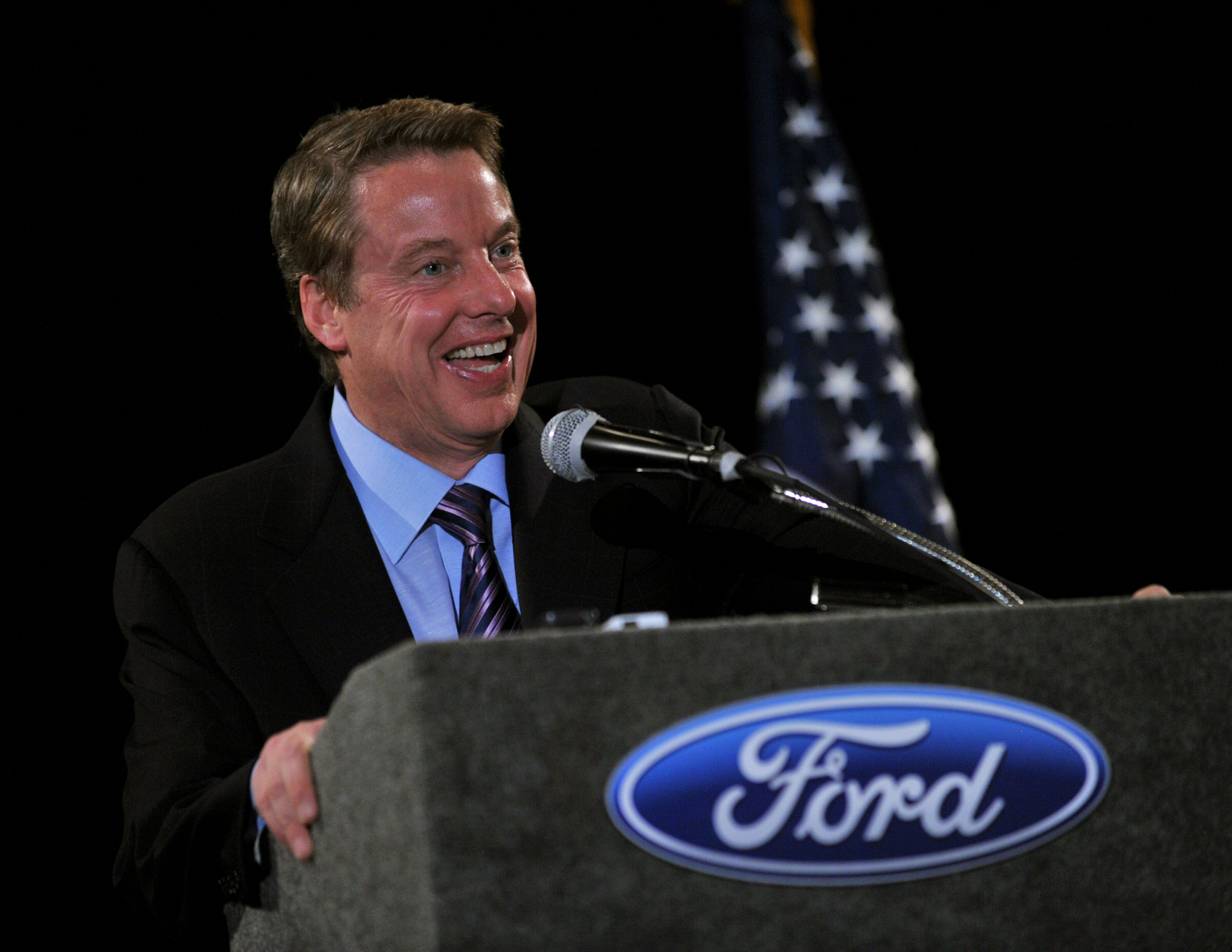
Ford chairman Bill Ford and CEO Mark Fields co-announced the bold new plan at the 2016 Detroit motor show, likening its revolutionary potential to the way Henry Ford revolutionised personal transport back in the early 1900s.
“My great-great grandfather changed the way the world moved with the Model T, in very fundamental ways. We have the same opportunity now in a very different era with very different challenges in front of us. We are on the cusp of a series of revolutions which will enable this to happen. The powertrain itself has been disrupted. The way people access vehicles is being disrupted. And of course we have autonomous driving coming too, so the opportunities we have in front of us are very different to what my great grandfather faced. But the notion of providing mobility to people around the world… that’s not new to us.
Benefits of FordPass currently include Marketplace where customers can locate, reserve and pay for parking spots ahead of time, or book in their next service; FordGuides, where call centre operators will assist customers with tasks like navigation and finding parking facilities, and; Appreciation, where partner brands like 7-Eleven and McDonald’s will offer specials to FordPass members.
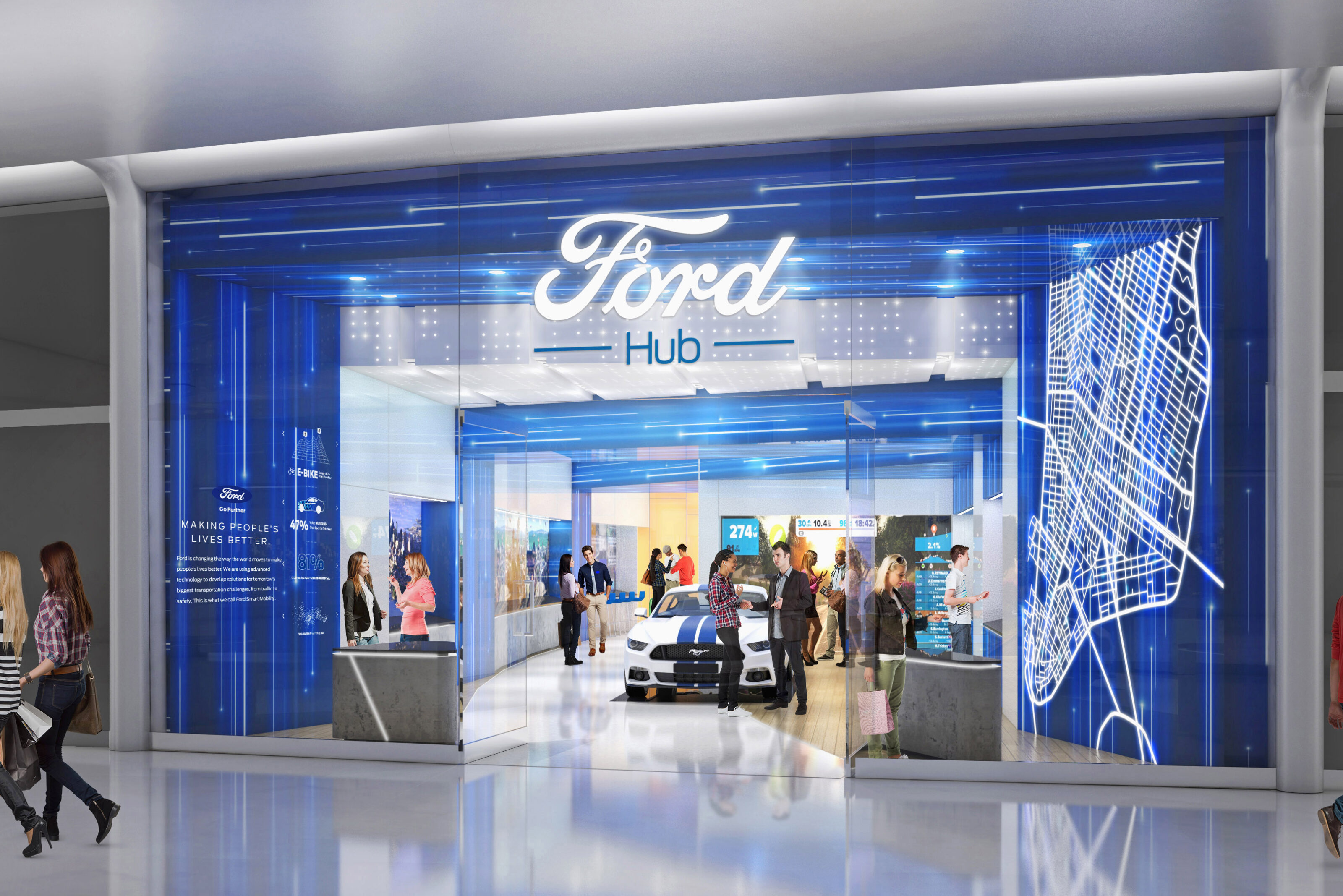
In addition, Ford plans to open a number of Apple Store-type shops called FordHubs, where the public can explore Ford’s latest innovations and services. The first one will open in New York later this year, with more planned for San Francisco, London and Shanghai.
Ford’s chairman and great grandson of Henry Ford, Bill Ford, defined FordPass as “making people’s lives better”, and said what was announced today was just the beginning.
“Like other platforms, FordPass will continuously grow and evolve … No one company can do this by itself. It will require partnerships between existing and new companies, start-ups and more.”
Ford Asia Pacific spokesperson Sinead Phipps said it’s too early to say when or if FordPass will be launched in Australia. She did confirm that China would be the first Asia Pacific country to get FordPass, later this year.
“There are a lot of steps to take before we can set up FordPass in a new country. We need to make partnerships, establish the support infrastructure and more.”
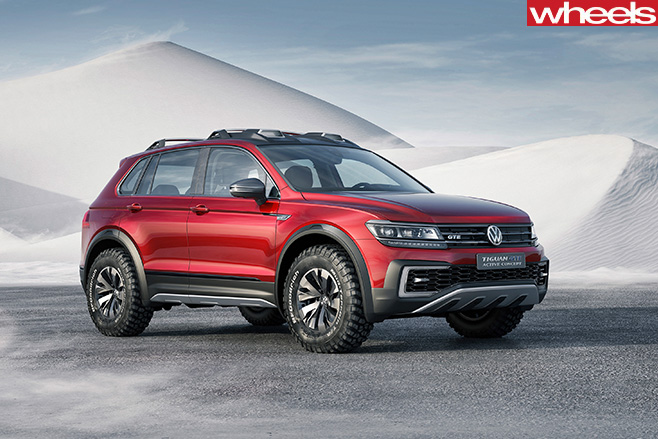
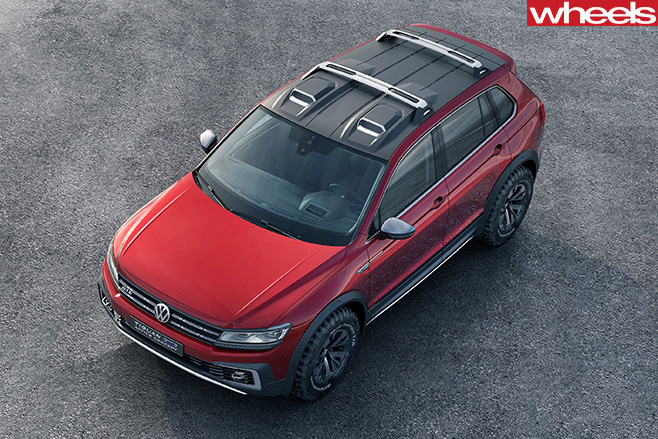
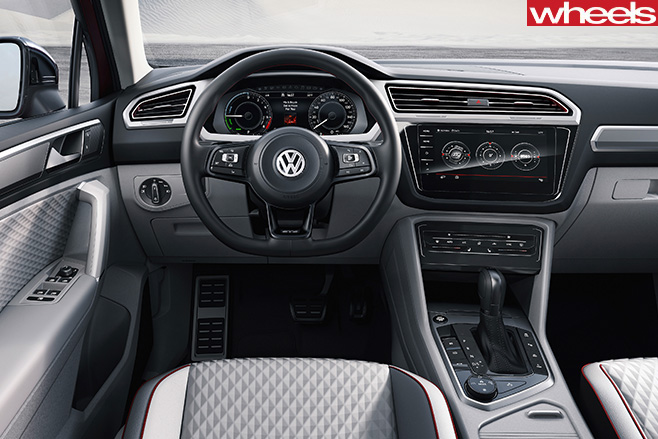
VOLKSWAGEN has launched a plug-in hybrid version of the Tiguan compact SUV at the Detroit auto show, but most of the interest was around its meeting with the EPA this Wednesday.
In his first appearance before US media since the scandal broke, VW Group chief executive Matthias Mueller said Volkswagen would “offer some solutions and then we will see what the reaction will be,” in Wednesday’s meeting.
In what appears to be back-pedalling from earlier unequivocal admissions of guilt, Mueller stopped short of saying the company lied about the defeat device, or that it cheated consumers.
Volkswagen sales fell nine percent in the USA in 2015, contributing to a total of 9.93 million sales globally for the Volkswagen Group. In Australia, Volkswagen notched up its best year ever, selling 60,225 passenger cars and commercials (up 9.9 percent on 2014). Despite being at the centre of the Dieselgate scandal, the Golf small car led the sales charge, up 15 percent.
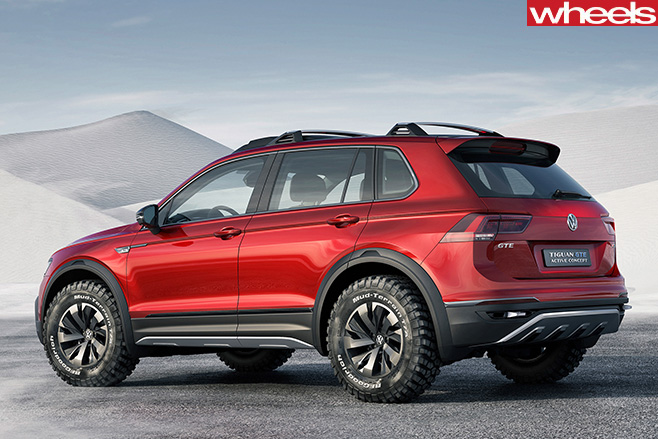
The car can be driven by just the front, the rear or all four wheels. It always starts off in EV mode, and can cover up to 32km on electricity alone.
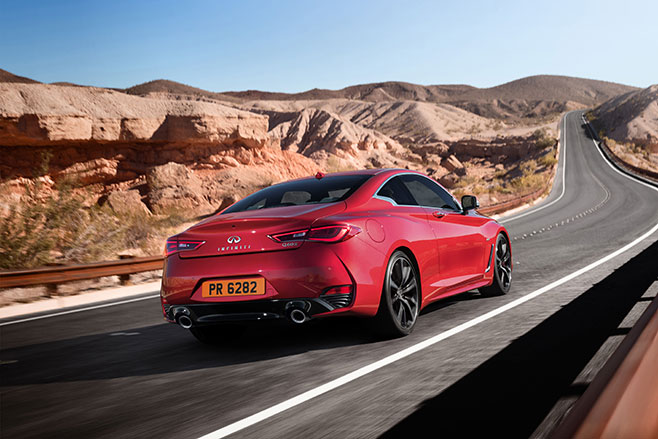
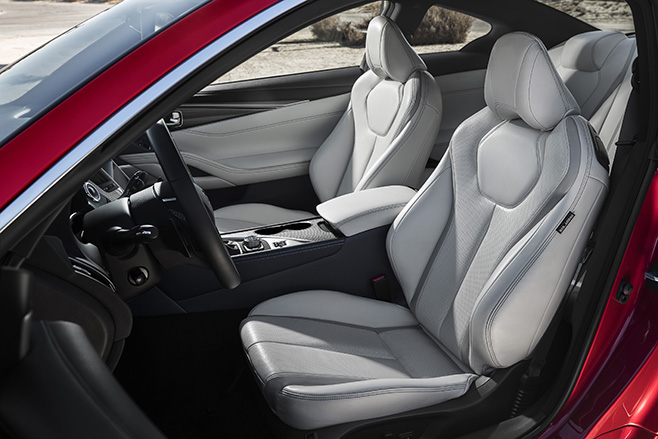
THE 2016 Infiniti Q60 is the luxury brand’s answer to the BMW 4 Series and Mercedes C-Class Coupe. The svelte coupe has been revealed in the metal at the 2016 Detroit motor show and has keep its seductive overall shape from the showcar that was wheeled out at last year’s event.
Riding on the same rear-wheel-drive platform as the Infiniti Q50 sedan, the Q60 replaces the current that’s based on the Nissan 370Z sports car. The 4690mm length makes it longer than the current model, while being 45mm wider (1865mm) and 17mm lower 1370mm). To fill the shoes of the current model, a convertible version should follow later this year.
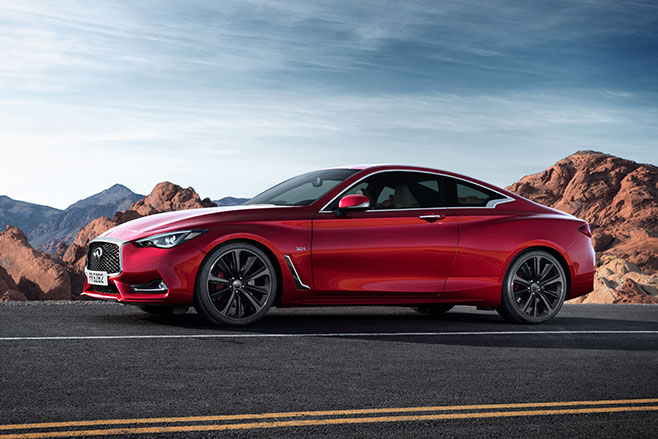
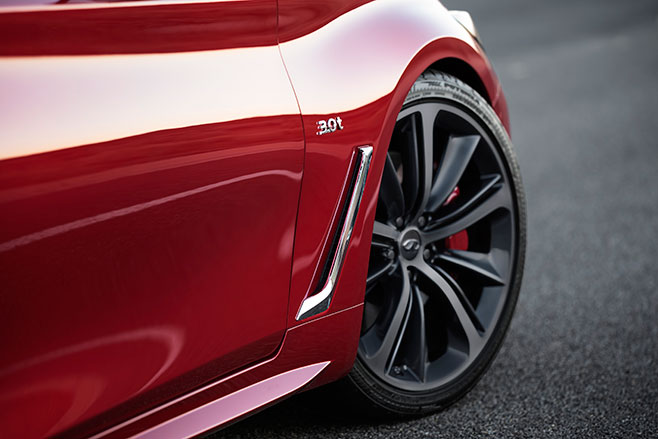
Powering the production version of the Q60 is a new-generation 3.0-litre twin-turbo V6, code-named ‘VR’, that replaces the VQ series V6 that has served in the Nissan 350Z and 370Z. Two power outputs will be produced, starting with a 224kW tune, and a 298kW version – the same output as the Buick Avista concept coupe that sits across from it on the 2016 Detroit motor show floor – which also delivers 475Nm. That compares to the 370Z’s 245kW and 363Nm, and the Q60’s 235/360Nm.
The Australian market is more likely to offer only the higher output engine, given our penchant for high-performance models. The square engine (86mm stroke by 86mm bore) weighs 194.8kg, which Infiniti says is 14.1kg lighter than the 3.7-litre it replaces, boasts an integrated exhaust manifold that reduces manufacturing costs and improves packaging.
It features an aluminium block, as well as direct-fuel injection, advance valve timing and a low-friction cylinder-bore coating that Infiniti says reduces losses by as much as 40 percent. It’s likely to be sold here only with a seven-speed automatic, although a six-speed manual will be offered in other markets.
The new powerplant will be manufactured at Fukushima, Japan, where Nissan produces engines for the extended Renault-Nissan family, including the 1.6-litre turbo used in the Renaultsport Clio.
Infiniti has sold more than 192,000 cars at the end of November 2015, surpassing its full-year 2014 result which was a then-record 186,200. The brand’s best market is the US, where 131,000 of its total sales were made, equating to more than two-thirds of its total global volume. Later this year, Infiniti will open a core dealership in Manhattan as its flagship retailer in North America.
In Australia, Infiniti’s 2015 sales grew a substantial 30.2 percent over 2014, when it sold just 441 cars. Yet its 574 sales are a pittance compared with Lexus, which sold 8691 units in 2015 for 24.2 percent increase, while Mercedes-Benz led the luxury car market with 36,374 sales.

The brand has undergone significant changes following the departure of chairman Andy Palmer, who left to head up a revitalised Aston Martin and had publically questioned the need for Infiniti, the luxury arm of Nissan in the same way that Lexus is positioned within Toyota. It’s now run by ex-BMW executive Roland Kruger, who has been head of Infiniti globally since January 1, 2015.
The 2016 Infiniti Q60 has been confirmed for the Australia market and is due here in the third quarter of this year. Pricing is yet to be confirmed, but is expected to start from around $70,000.
Chevrolet’s ambition to become “a global brand” does not include selling electric vehicles like the Bolt EV in Australia.
AUSTRALIANS will not be able to buy a Holden Bolt once the city-sized electric vehicle goes on sale in the US as a Chevrolet later this year. The American marque’s stated mission to become a global brand will not extend to selling electric vehicles like the new Bolt EV in Australia.
The Bolt, revealed in production form at the Consumer Electronics Show (CES) in Las Vegas last week, was the star of Chevrolet’s Detroit show stand alongside the 2016 Cruze hatchback. Chevrolet North America boss, Alan Batey, confirmed that the Bolt, which goes on sale in the USA later this year priced around $US30,000 ($AUD43,000), has a range of more than 320 kilometres and can recoup 145 kilometres of range after a 30-minute charge from a DC (direct current) outlet.
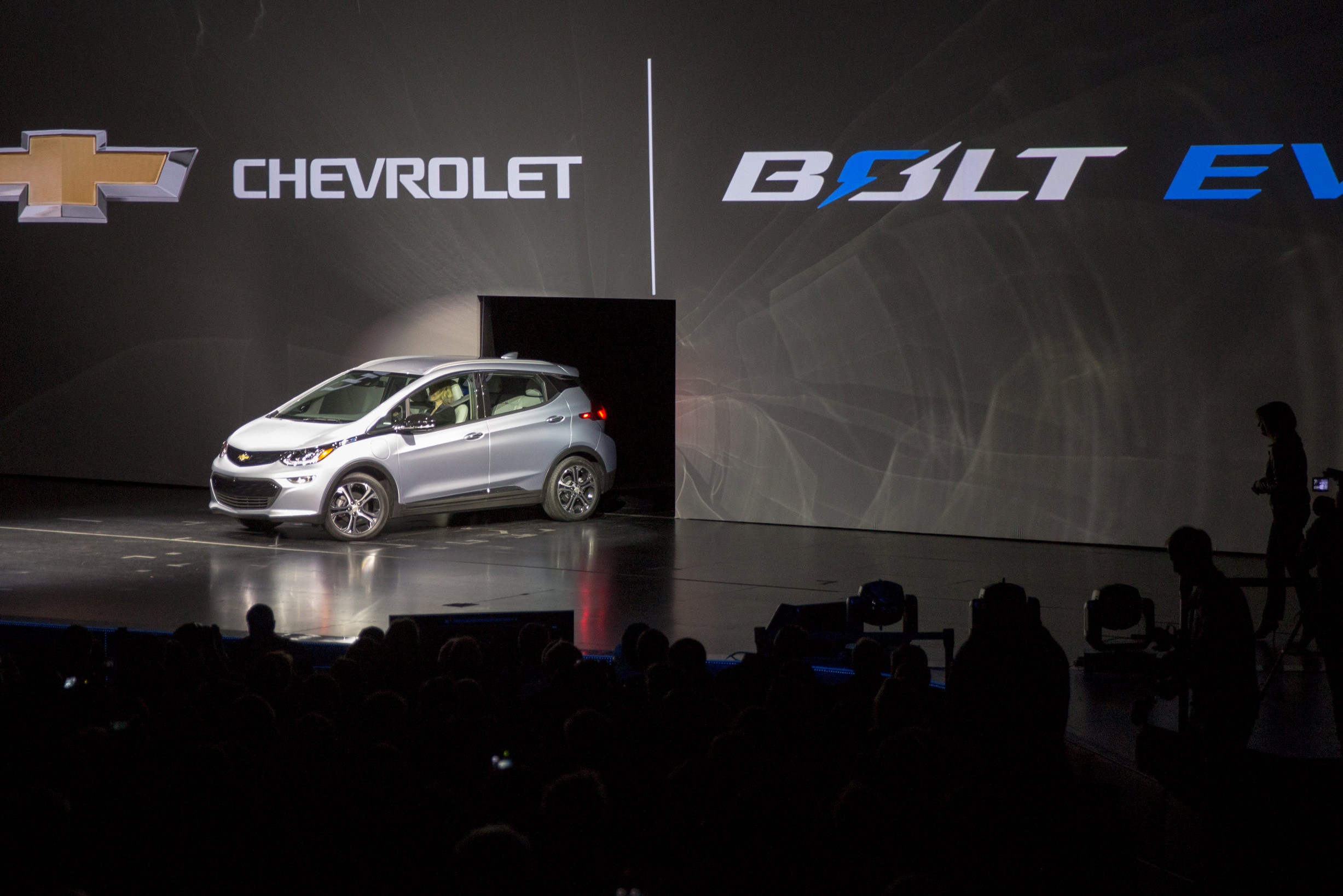
Batey said that the Bolt, “Breaks new ground in long range, affordable electric driving,” and will make electric cars easier to live with, “because it won’t need to be charged every night”. He said the Bolt crossover is GM’s “first architecture designed specifically for electric vehicles since the EV1”, which was produced in 1996-97. It’s possible that GM will develop other body-styles for the flat floor architecture and its 288-cell battery pack, although Batey’s response when asked was predictably non-committal.
“The beauty that we’ve got is we have a lot of learnings, because we launched the Volt here in Detroit six years ago, so we’ve got a lot of learnings. We arguably have the widest range of electrified vehicles: Spark EV, Volt, the Bolt EV, and the Malibu hybrid with 47mpg [5.0L/100km]. Our electrification expertise is deep and we’re always looking to find new ideas.”
When asked about the potential for right-hand drive, Batey was more direct: “At this moment in time we’re not making any announcements of where it will go in the anywhere in the world. Initially in the US, and then we’ll look at other markets”.
According to the UK’s Autocar magazine, right-hand drive is not part of the plan.
Details about the Bolt’s measurements have not been released. Chevrolet claims it has the interior size of a D-segment car (Holden Malibu), for the exterior size of a B (Barina Spark). The body is constructed from lightweight materials including carbonfibre, aluminium and magnesium, and utilises active aerodynamics in areas like the rear quarter panels.
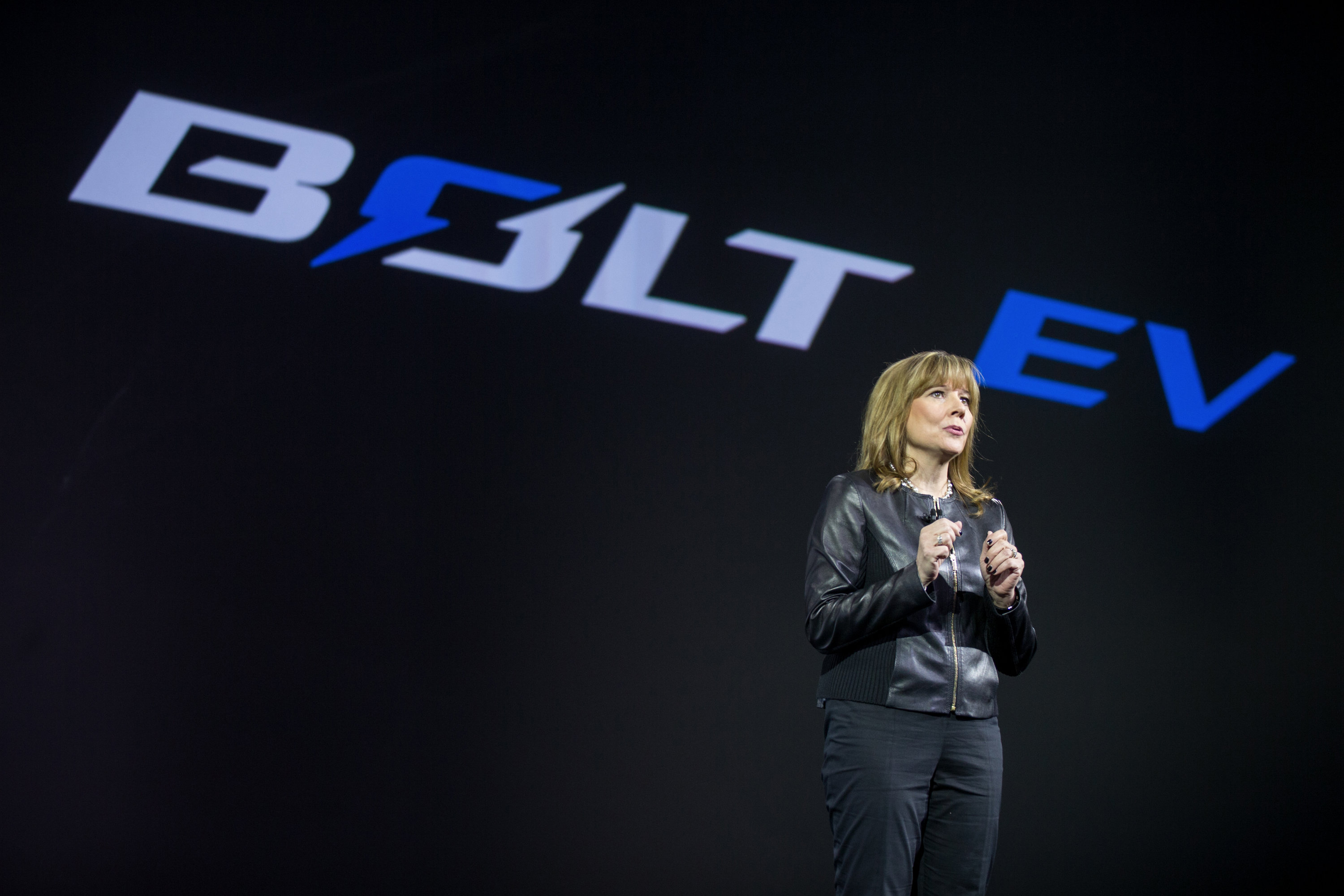
General Motor Chairperson Mary Barra (pictured above) says the Bolt crossover is, “an electric vehicle for everyone”, and would “raise the bar for EVs”.
Now you can get the supercharged, track-focused Lotus Exige S as a ragtop. Has it lost its razor edge?
WHAT IS IT? A Lotus Exige S, minus the roof and boy-racer rear wing. Lotus has also softened the suspension slightly, in an attempt to pitch the Roadster as more of a cruiser than its balls-out hardtop brother.
WHY WE’RE TESTING IT To see if ripping off the roof and softening the ride has robbed the sharp-shooting Exige S of its track-honed character.
MAIN RIVALS Alfa Romeo 4C, Audi TT S, Porsche Cayman
THE WHEELS VERDICT Roofless versions of sports cars are, as a rule, worse. Generally they’re heavier, sloppier and less fun at the limit. This Lotus Exige S Roadster is an exception. It’s just as raw, just as engaging, and feels just as at home on the race track.
PLUS: Steering has race car levels of feel; engaging, adjustable chassis; supercharged grunt; better on track than the road MINUS: Heavy steering and no rear camera or sensors make parking a pain; awkward to get in and out; stiff ride; road and tyre noise; better on track than the road
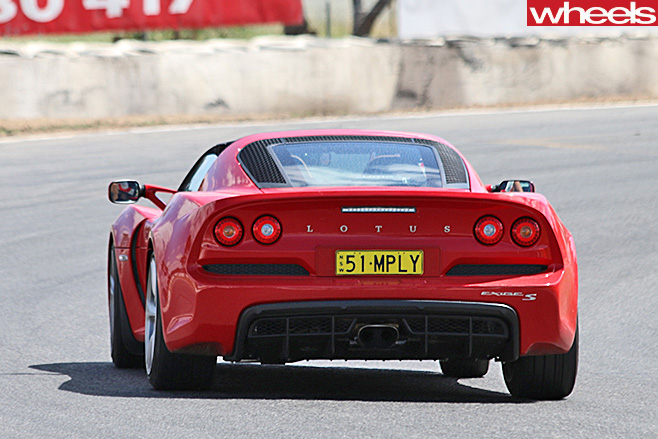
The first, and most obvious, is that you value driving enjoyment above all else. This is proven by your willingness to sacrifice a cushy ride and other creature comforts – such as a glovebox and power steering – for brilliant go-fast engineering.
The second is you have a keen interest in track days, given a circuit is the only place to safely extract the maximum from your track-honed toy.
Which is why I’m at Winton Raceway to test the new Exige S Roadster, the Exige S hardtop’s softer, more comfortable sibling. I’m here to see if the Roadster retains the intrinsic, track-based Lotus DNA, and the initial signs are good.
Power comes from the same mid-mounted 258kW/400Nm supercharged 3.5-litre V6 as the hardtop. And fitting a cloth roof has cut weight by 10kg in precisely the spot where you want to lower the centre of gravity. All up, the Roadster hits the scales at 1166kg.

Removing the rear wing and front splitter has also added a dash of sophistication, compared to the “look at me I’m a real racing car!” hardtop.
And you can forget fears that these changes have diluted the car’s ability: it still handles brilliantly.
The unassisted steering is pure, oozing with feel, and the wheel dances in your hands. The chassis is beautifully balanced and grips hard, and the linear, Toyota-sourced V6 is a cracker.
Lotus says 0-100km/h takes 3.96sec, but it’s the way the Roadster pulls relentlessly through third and fourth gears to the 7200rpm redline that’s more impressive.
The brakes, helped by a well-weighted pedal and the Roadster’s light weight, are brilliant.
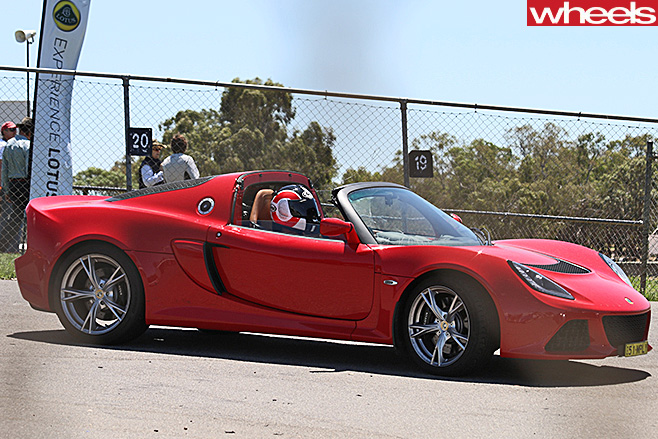
So, far from detracting from the Exige’s ability, ripping off its fixed roof has enhanced it. The Roadster is more usable, just as exhilarating to drive and, with the easy to operate cloth roof stowed away, adds another dimension to the driving experience.
It’s a stretch, though, to call it comfortable. More comfortable than the hardtop, sure, but the usual Lotus bugbears remain. Getting in and out is a chore, the heavy steering is a pain while parking, and there’s an annoying amount of road and tyre noise. And the spare and simplistic cabin is an exercise in function rather than luxury.
But these are foibles Lotus owners are willing to grin and bear. And if a love of driving is your number one priority, it’s easy to see why.
Lotus people are good people
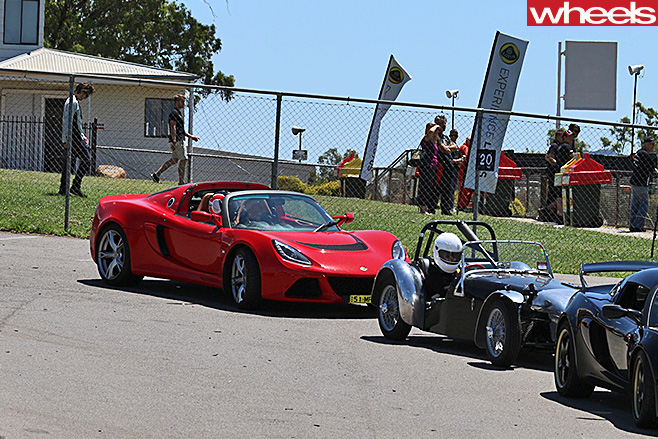
None mention any significant mechanical issues, but one owner does let slip that because modern Lotus models don’t have bumpers, dinging the front often requires the entire clamshell bonnet to be replaced, which can get costly. The common thread, though, is a passion for driving. Case in point is the owner who drove his rare 340R to Winton from Queensland to take part in the track day. “That’s just what Lotus people do,” says another owner. “We all love to drive.”
SPECS Model: Lotus Exige S Roadster Engine: 3456cc V6 (60°), dohc, 24v, supercharger Max power: 258kW @ 7000rpm Max torque: 400Nm @ 4600rpm Transmission: 6-speed manual Weight: 1166kg 0-100km/h: 4.0sec (claimed) Fuel economy: 10.1L/100km Price: $132,990 On sale: now
Transporters must be costly things.
Or at least inconvenient, as this photo of Porsche’s complete World Endurance Championship fleet marching down Melbourne’s Dandenong Rd reckons.
Gifting commuters a cracking watercooler story, Speedcafe.com’s interview with Alan Hamilton reveals the three 956 racers in the photo were making their way to the last round of the WEC at Sandown Park – as it was known in 1984 – quite illegally.
Hamilton had reportedly made his facility in Noble Park, a suburb adjacent to Sandown Raceway, available to teams competing in the first-ever Australian WEC round, including Rothmans Porsche.
When the cars needed to be at Sandown, the Porsche team hopped in and took to the public Princes Highway, where today the speed limit is 80km/h, far below the 350km/h speed the cars were capable of on trackr.
Hamilton explains bewildered police arrived on scene half an hour later, but without much clue as to what happened. Porsche went on to win the event.
Wonder if they used them for any lunch runs as well?
Picture credit: Speedcafe
THE all-new Mercedes E-Class will be larger, more efficient and bristling with semi-autonomous driving technology when it arrives here later this year, but its biggest ace will be a new generation of in-line six-cylinder engines.
Unveiled on the eve of the 2016 Detroit Motor Show, the tech-laden new-generation E-Class, codenamed W213, takes the tech war against the BMW 5 Series and Audi A6 to another level, and easily outmuscles the brand’s traditional technology flagship, the Mercedes S-Class.
The 2016 E-Class boasts the next-generation of Benz’s Drive Pilot system that can follow another car at speeds of up to 210km/h, as well as the ability to change lanes autonomously. It will even park itself with no one aboard, and can drive itself on roads without clear lane marking at speeds up to 130km/h.
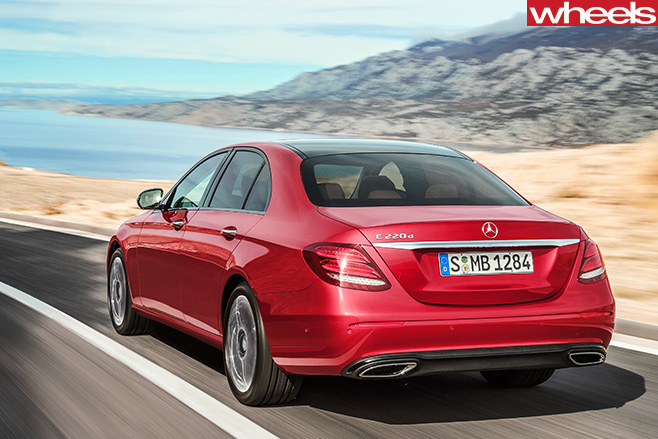
The bad news is a large chunk of this tech won’t be available from the E-Class’s July 2016 launch in Australia. The self-parking function and autonomous lane change don’t comply with current Australian Design Rules; however Mercedes-Benz Australia is working closely with the government and is confident the systems will soon be legal.
“We’ve got to demonstrate the way the systems work to the government for them to approve it,” said Mercedes-Benz Australia public relations, product and corporate communications senior manager David McCarthy. “If all goes well, we should have all the systems working in the cars by the end of the year. But I’d say next year is more likely.”
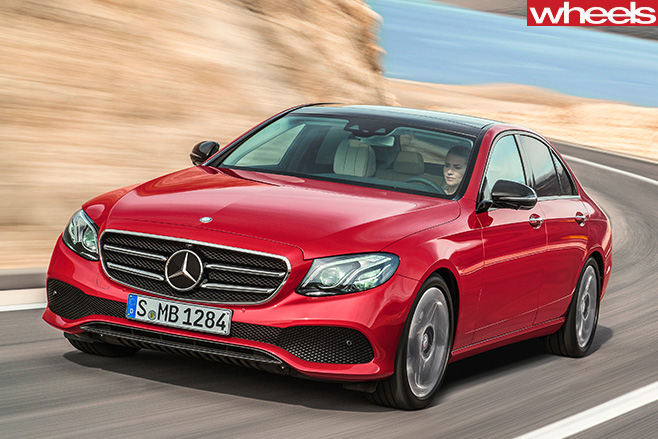
You won’t have to wait for the new generation of in-line six-cylinder engines that will be available from launch in Australia. They start with the turbo-diesel in the E350d, which will be joined by a petrol in-line six by the end of 2017. Also available at launch will be a 143kW/400Nm turbo-diesel and 135kW/300Nm petrol four-cylinder units, with all E-Class models fitted with a nine-speed automatic transmission as standard.
Also joining the model line-up at a yet-to-be confirmed date will be the 350e plug-in hybrid capable of travelling up to 30 kilometres on electric power alone.
Meanwhile, Mercedes Oz says the E-Class Estate is likely to have all-wheel drive as a point of difference to the rear-drive layout of local sedans.
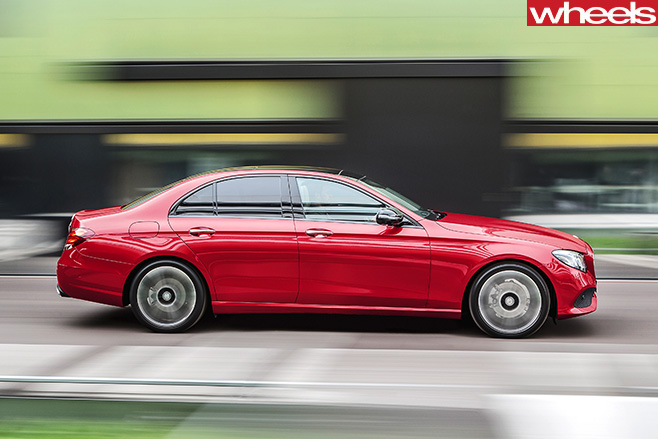
Buyers will have the choice of standard steel suspension in three tunes, or a new multi-chamber air suspension set-up.
Where Mercedes has been most generous with the special sauce is inside the E-Class’s cabin, which is dominated by an enormous (and optional) “Command Digital Instrument Panel”. Made up of two 12.3-inch HD screens, the digital dash is mounted behind a thin film of mineral glass and is fully configurable, with drivers able to choose between three designs: Classic, Sport and Progressive.
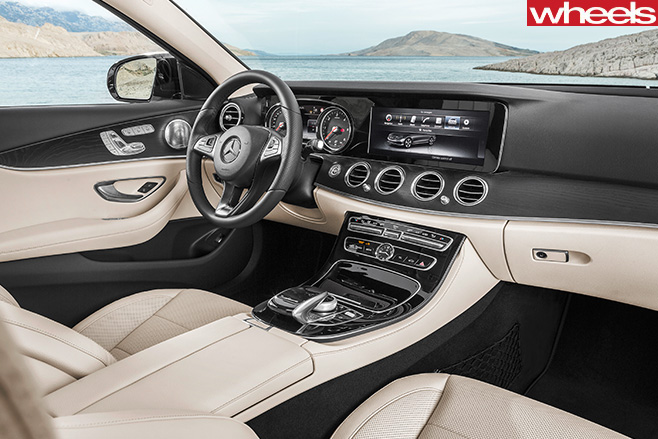
What’s missing is the use of touchscreen and gesture control technology (like that on the new BMW 7 Series), with Mercedes instead installing two mini-touchpads on the E-Class’s steering wheel. By swiping horizontally and vertically, the touchpads give the driver access to the instrument cluster and infotainment system.
Even better is confirmation that all of the systems that make their debut on the E-Class will quickly be added to the best of the Mercedes range, much like technology from the S-Class has traditionally filtered down to lesser models.
The new E-Class arrives in Australia in July, with prices expected to reflect those of the current range that starts from $80,400.
DRINK in these, the first official images of what could be the next Holden Monaro. The 2017 Buick Avista concept is a two-plus-two rear-drive coupe officially revealed ahead of this week’s 2016 Detroit Motor Show.
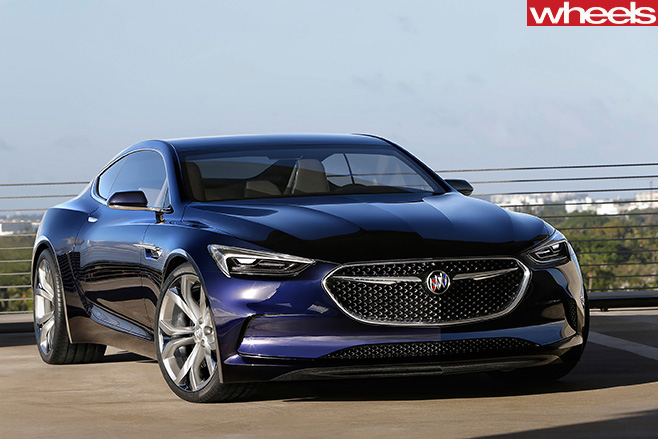
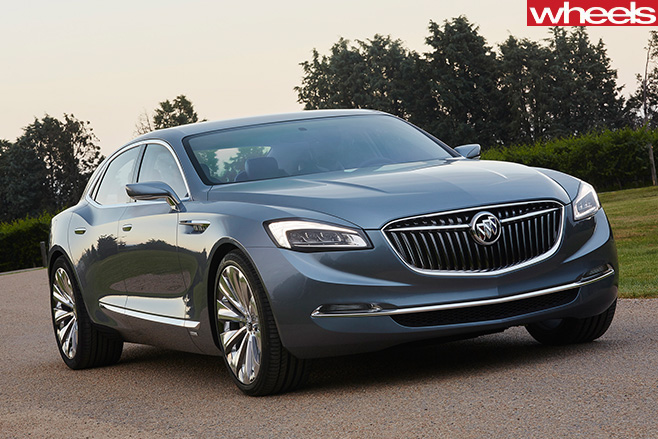
In fact, all signs point to the Avista as Holden’s next hero, after General Motors’ executive vice-president, Stefan Jacoby, ruled out V8 power for a low-priced performance Holden once production of the current VF Series II Commodore ends in 2017.
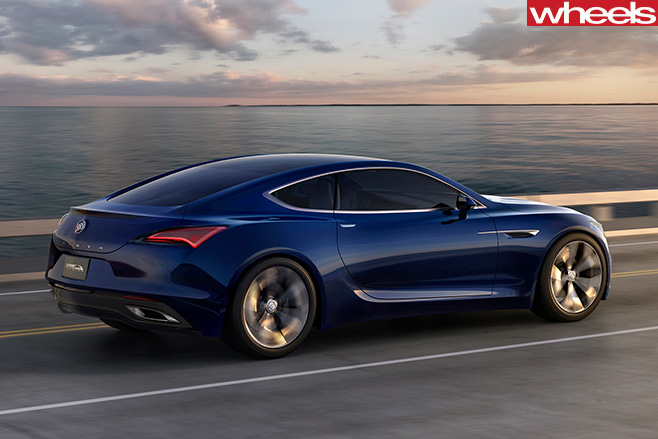
The 298kW twin-turbo 3.0-litre V6 under the bonnet of the Avista – 6kW shy of the current Holden Commodore SS – could be exactly what Jacoby was talking about when he added that Australian customers seeking an affordable performance car “will get exactly what they want, based on a different technology”.

It’s mated to an eight-speed ZF automatic, and includes cylinder de-activation (Active Fuel Management in GM-speak) as well as idle-stop technology.
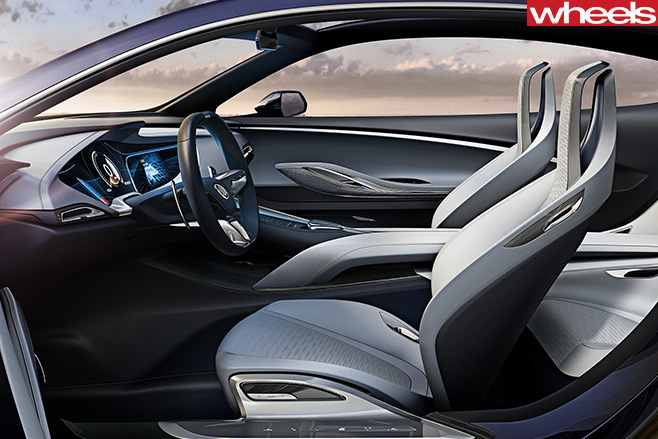
According to Holden, GM Australia had no role to play in the development of the car. A spokesman told Wheels that while the concept car was “stunning”, because it was not yet confirmed for production the Australian arm of GM could not comment any further on how it would fit into the carmaker’s vision once local manufacfturing ends late next year.
The Buick Avista will be on display at the 2016 Detroit motor show, which starts tomorrow.
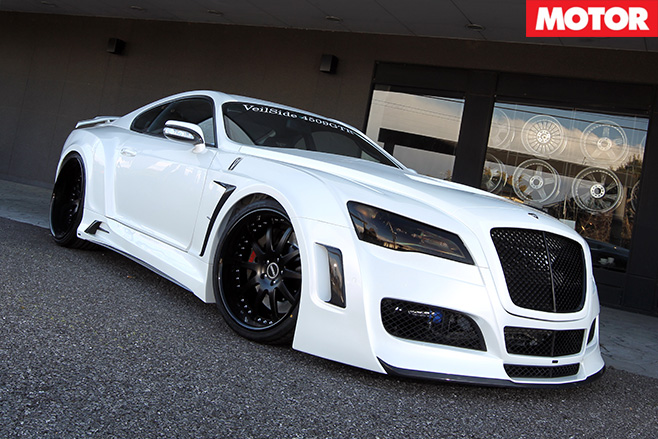
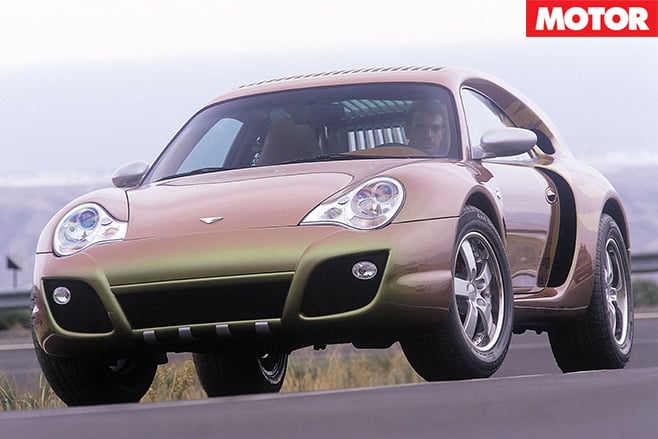
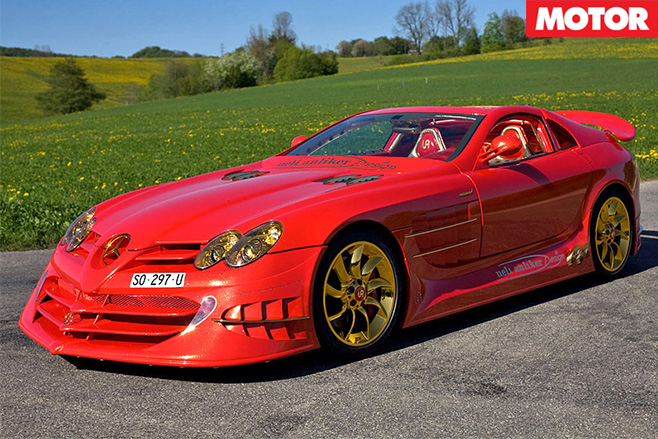
We get the whole aftermarket tuning thing, but here are ten reasons why it’s sometimes best left to the professionals. Or at least people with taste.
VEILSIDE 4509 GTR
RINSPEED BEDOUIN
‘RED GOLD DREAM’ SLR
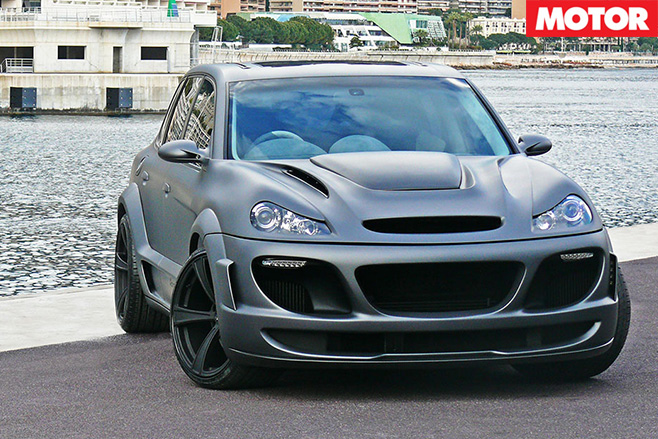
GEMBALLA TORNADO
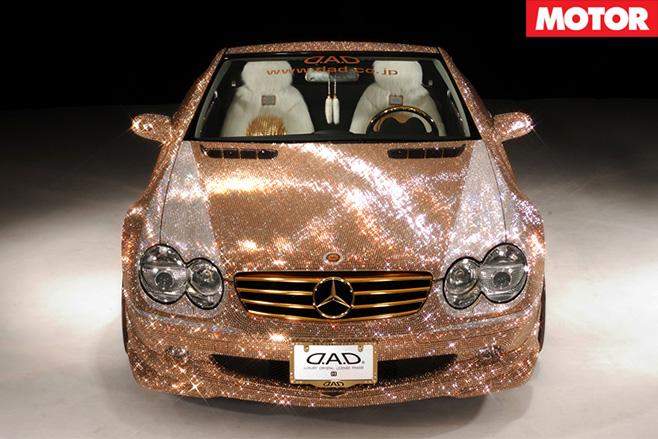
D.A.D MERCEDES SL55
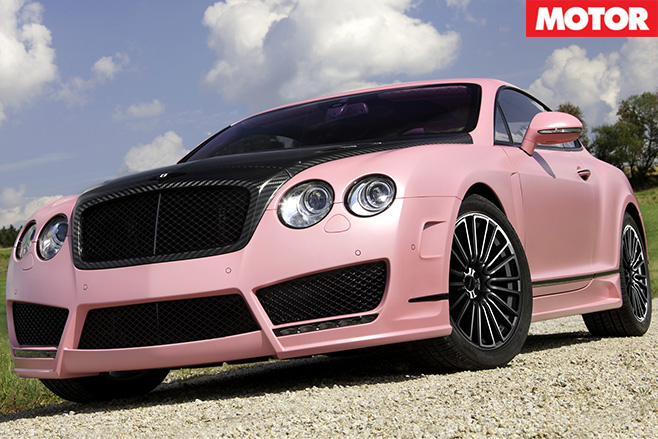
MANSORY BENTLEY
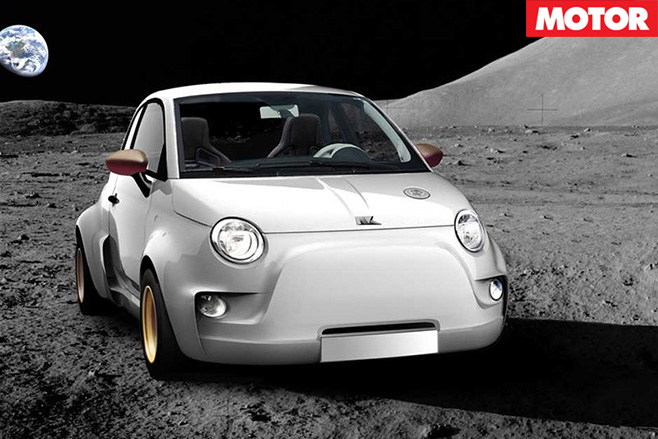
ATOMIK 500 EV
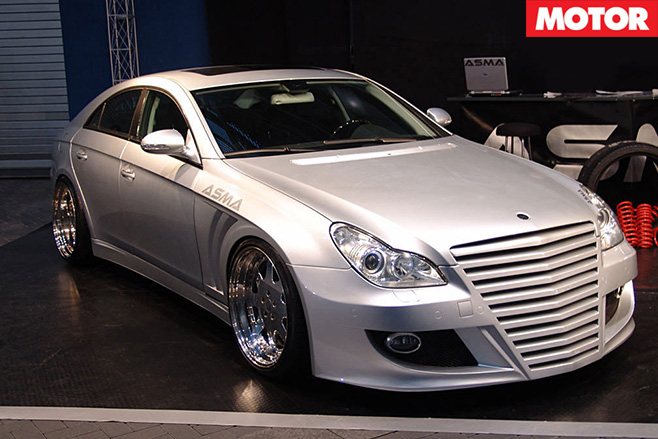
ASMA DESIGN CLS
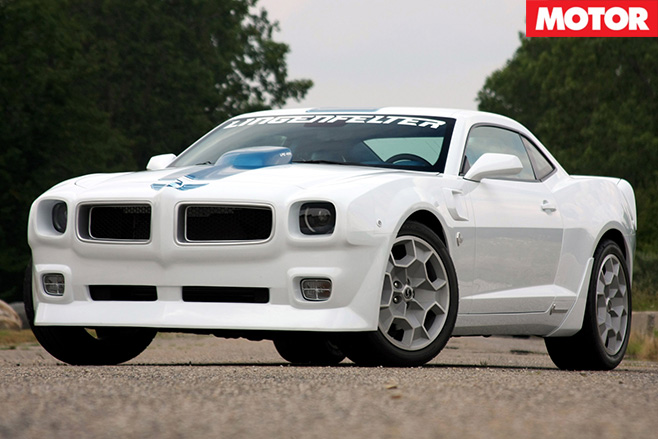
LINGENFELTER TRANS AM
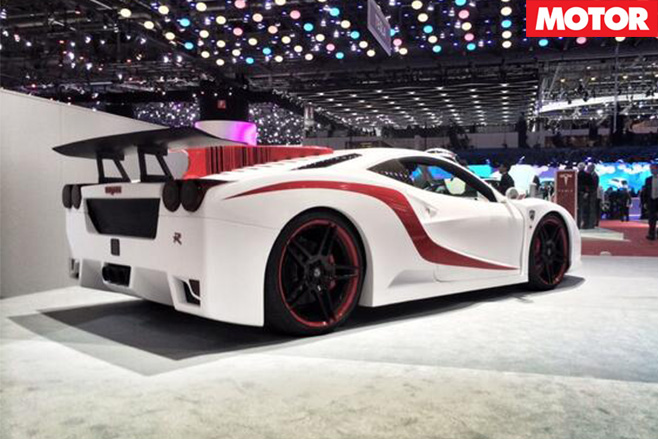
NIMROD FERRARI 458