
- Part One: Reconnecting with my inner bogan
- Part Two: Thirsty Work
- Part Three: Compare And Contrast
- Part Four: Return Of The King
Part One: Reconnecting with my inner bogan
A CAR is more than nuts, bolts, plastic, metal and oil. If you’ve ever built your own street machine, you’ll know it’s bucket loads of blood, sweat, tears and emotion (not to mention rolls of cash).
That’s what the HSV Clubsport is to me: a rolling tribute to our motoring history. It has links to my childhood hero, Peter Brock. I have memories of V8 Commodores with my big brother, some of my best mates, and my dad when I was a kid.
He reckons I was taken home from the hospital in a VH – unfortunately, a VH Valiant, whereas I’d have preferred a VH Commodore but that was only launched four months after I was born.
So it’s with a heavy heart that I drive what will probably be my only Australian-built long-termer. After several years living in England and talking CO2 tax, it’s the ultimate car for repatriation into Australian culture for this lifelong Bathurst tragic.
This HSV Clubsport R8 automatic sedan in Heron White rides on awesome SV Rapier 20-inch wheels. It’s bold and confident, yet not as brash as a Fantale Orange VF, though its ‘GENF’ plates and bassy exhaust note show this is not a car for the timid.
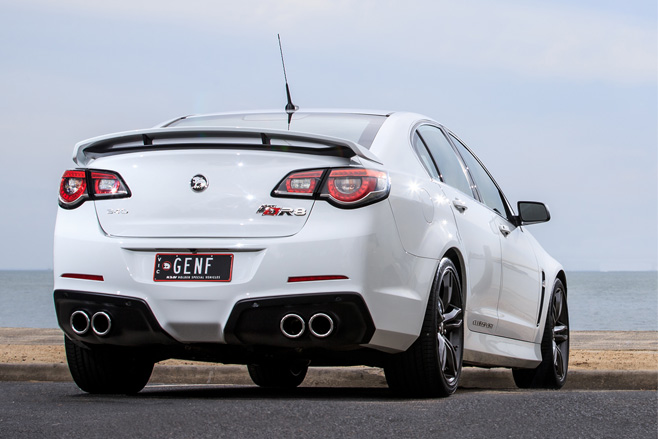
A V8 measuring 6.2 litres isn’t for the meek, either, and while it’s not the flagship supercharged GTS, the 340kW Clubbie R8 is hardly tepid.
It’s not carrying a blower under its bonnet – the Gen-F GTS runs a great big supercharger to push it to a somewhat unfathomable 430kW – but the R8 still packs a bigger punch that any previous GTS hero model.
Hard to believe that the very first HSV GTS was the 1992 VP with what now seems a pathetic 200kW, and the original HSV Clubsport, based on the VN, had a downright laughable 180kW…
My first weekend with the Clubbie peeled back a layer of its identity because I attended a Bathurst Legends dinner attended by Holden Dealer Team royalty including Colin Bond – who, with Tony Roberts, won Bathurst in 1969 driving an HT Monaro GTS – and blokes like Frank Lowndes and Ian Tate, who built the engine that took Brocky to his first Bathurst crown in ’72.
This car is a remnant of the past. Brock built his HDT Special Vehicles as an escape from the mundaneness of ordinary life. And that’s exactly what the Clubbie does.
It represents escapism from the front-drive and all-wheel-drive hatches that dominate the performance scene, while its $79K ask is a long way short of the $155K-plus rear-drive C63 AMG Mercs and BMW M3s we love driving. There’s simply nothing like it for the cash.
It also shows that a car is a social machine created for and by a social animal – the human. Now, over six months, we’ll see if I change into an atypical stereotype or if it can fit into contemporary Melbourne, where it was conceptually born long before lattes, organic food and the snobbery of an even wealthier nation took over.
Dollar dazzler, sunk by the SS
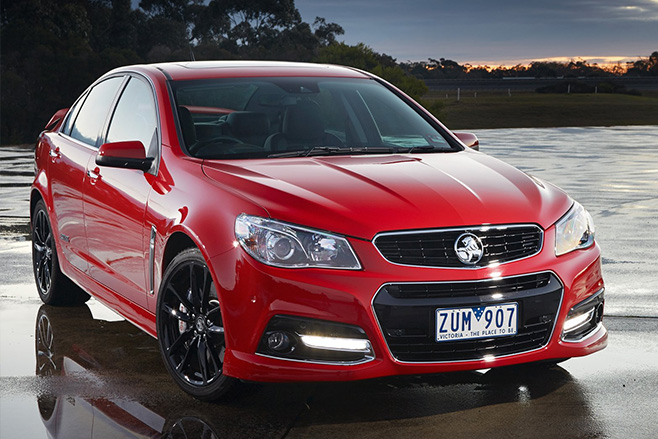
THE starting price for a Clubsport R8 sedan is $73,290, including Luxury Car Tax but before on-road costs. Our ‘GENF’ is an auto with excellent steering wheel shift paddles, adding $2500, while the Red Hot leather trim costs another $695.
Outside, 20-inch SV Rapier alloys cost an extra $1895 while the Hyperflow rear wing adds $985. That brings the bill to almost $80K for a sedan that can hit 100km/h in 4.8sec. Still damn good value, unless you mention Holden Commodore SS-V Redline.
HSV CLUBSPORT R8 Price as tested: $79,365 Part 1: 820km @ 15.4L/100km Overall: 820km @15.4L/100km Odometer: 6810km Date acquired: March 2015
Part Two: Thirsty Work
IT’S clear that the Clubsport R8 is not just a fast and glorified taxi. It’s a hero car for bogans, a thin slice of the performance car wedge. It’s part of a cult, a religion, an addiction, where emotion and wallets meet, with emotion usually winning.
We’re at the annual All Holden Day in Dandenong, and we feel a little out of place in our brand-spankers and completely stock R8. Yet all the 400 cars here – chrome-bumpered sedans, panel vans and utes, large and small alike, fours, sixes and eights, turbo and supercharged – have one thing in common; they wear the Lion emblem on their bonnets and in their owners’ hearts.
And so the Clubbie R8 is welcomed into the tribe with open arms, the faithful admiring the six-piston AP Racing stoppers that perform so well pulling up its 1782kg mass, the Anthracite 20-inch wheels that still don’t scupper the ride, and the optional rear wing that hampers rear vision, especially at night.
Whether you’re in a standard FB Holden, a rebuilt VL Turbo or the latest hardware from HSV, however, the kinship remains.
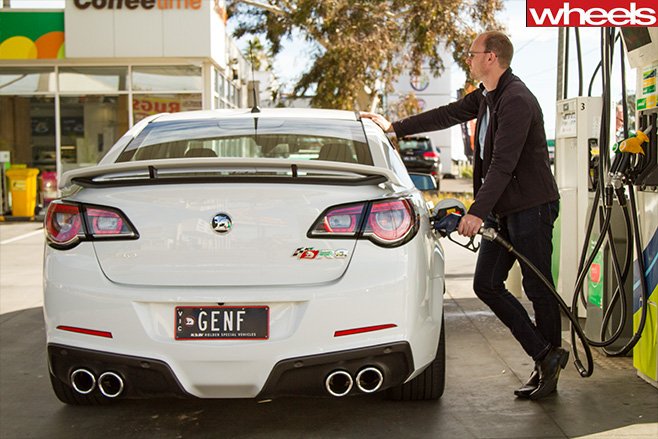
The R8 has booked us into the club, yet at a price. Its fuel economy is admirable for a 6.2-litre V8 – a best of 701km from the 71-litre tank is as good as the R8 gets, achieved on an interstate run – but around town you’re looking at close to 16L/100km.
You need to keep it in Sport mode because Touring mutes the bi-modal exhaust too much and Performance doesn’t feel much different on the street. You can feel its weight around corners, but those front seats hold you as firmly as the Continental rubber grips the road, even in the wet.
The R8 is extremely easy to drive and behaves itself in the city, even around corners that in my late teens had my V8-engined VH Commodore’s tail as switchable as an MP after an opinion poll.
The All Holden Day was quite a big deal, as is the R8. I can’t say it’s the car for all occasions, but so far it is the occasion.
It’s white, but a white good it ain’t.
Spare a thought
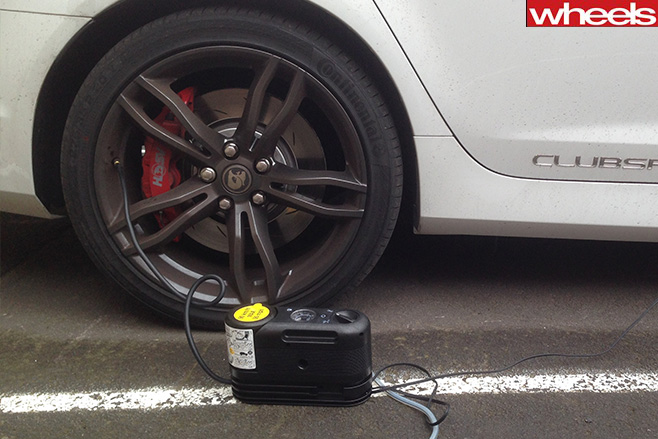
In the boot was a can of goo, which worked, until days later a screw lodged itself in the same bloody tyre! Now there was no goo, or even a wheelbrace to remove the alloy and get it fixed.
HSV has since fitted a 20-inch spare and toolkit snugly in the spare wheel well.
HSV CLUBSPORT R8 Price as tested: $79,365 Part 2: 2309km @ 9.6L/100km Overall: 3129km @ 11.1L/100km Odometer: 9119km Date acquired: March 2015
Part Three: Compare And Contrast
The virtues of the Clubsport stand out sharply after a steer in a Camry.
I’M IN Port Melbourne picking up a test car. Bertie Street, to be exact, a Mecca for Holden fans and Australian performance cars in the 1980s because this is where Peter Brock’s HDT Special Vehicles was based.
I’m well aware this is a road where countless hot Holden Commodores once laid rubber in the fight against everyday mundanity as Dire Straits pumped out of their Eurovox cassette decks. Yet now, two decades on, at the end of this street, sits the HQ for the most boring car company in the world: Toyota.
I’m picking up the last Aussie-built version of Toyota’s cardigan on wheels as another significant chapter of our car industry approaches its end.
Yet, unlike anything from HDT, the Camry is a car I loathe: unexciting, underdone and usually bought by people who don’t like cars. The complete opposite of a mulleted Aussie car lover decades ago, or an HSV buyer today, then.
The Camry is a pragmatic Ned Flanders on wheels, and its buyers don’t want to become race drivers.
The Clubbie is anything but mundane. Like it or loathe it, the R8 is pure entertainment on a daily basis. Yet there’s one part of its skillset that’s not much fun: the inner-city parking game. If the Camry is Flanders from The Simpsons, the white Clubsport is Nelson Muntz. Like Nelson, it has a presence and people notice its arrival.
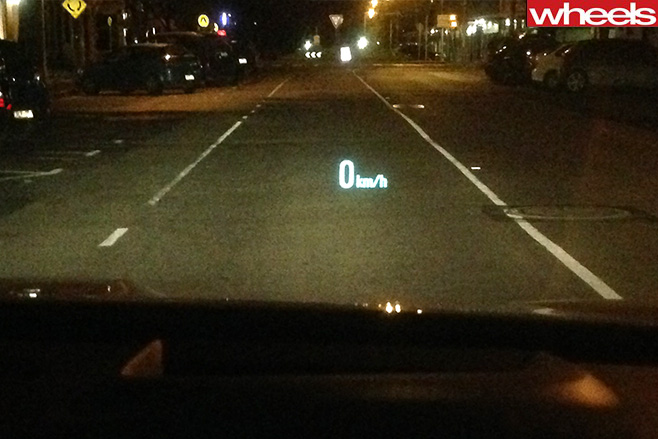
The Clubsport R8’s head-up display is brilliant because it lets you use the centre display for something other than speed.
Surprisingly, it swaps lanes swiftly and easily, and the steering is light enough that it doesn’t feel like you’re at the controls of a disobedient bullock. It is responsive, sharp and precise, but no amount of engineering can hide the fact it’s five metres of steel.
So while it can dice with Melbourne trams, cyclists and pedestrians who fail to check the road before stepping off the pavement, I can’t count the number of times I’ve missed a parking spot left teasingly by a smaller car.
I fume over the fuel it’s soaked up hunting for the next spot, with the trip computer telling me we’ve used more than 20L/100km. Then, down one of Melbourne’s eclectic laneways, with cars parked on both sides and the HSV taking up the entire space between, it felt like threading a needle to get slotted into the only spot left by the mid-morning brunch set feasting on quinoa with a clear conscience.
Thank God for that reversing camera, though not that stupid rear wing…
Yet I can live with this. I only occasionally need to park in the CBD, and it just requires a little more patience (and fuel). But I was reminded of why cars like the Clubsport exist while steering that Camry back to Bertie St.
On a white VF Clubsport R8 Tourer (I’m not making this up) was a sticker: “Life’s too short to drive boring cars.” Right on.
Enter Sandman
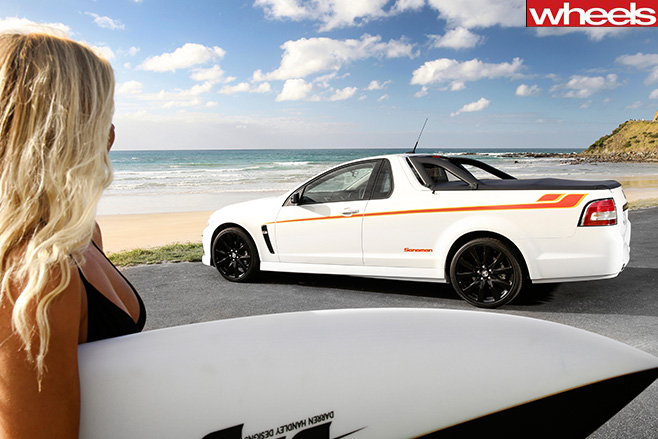
And you know what? The Sandy felt that bit more light on its feet in terms of handling, but was slower, didn’t sound anywhere near as good and didn’t give the kick in the back the Clubbie does. Perhaps this HSV stuff is worth it after all.
HSV CLUBSPORT R8 Price as tested: $79,365 Part 3: 761km @ 17.8L/100km Overall: 3890km @ 13.7L/100km Odometer: 9880km Date acquired: March 2015
Part Four: Return Of The King
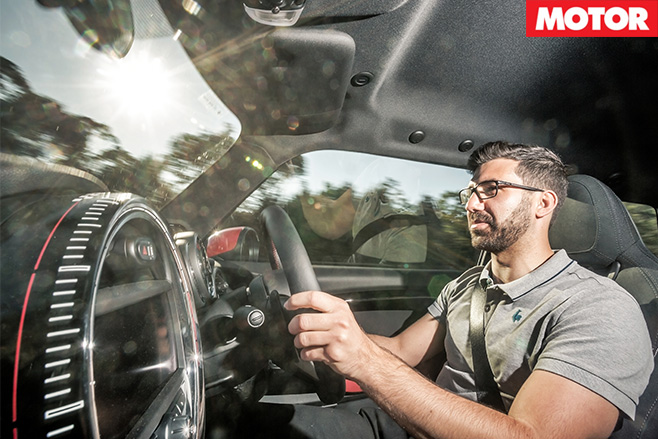
“I CAN’T believe you gave it back,” says HSV’s keeper of the keys, Tim Stevens, as he drives off in ‘my’ Clubbie after I returned it to Clayton, just shy of 16,000km on the odo and near spotlessly clean. Not a single stone-chip near those white nostrils, a scuff on any of those stunning 20-inch wheels, nor a single mark. I loved that car, and it showed.
I’ll miss it.
That doesn’t mean it was perfect. The cabin is tacky but fun, the materials good rather than stellar, and for some reason, the boot remote stopped working days from the end – before randomly working again.
On the road, the transmission proved too slow to maximise the 340kW on tap and, while the R8 is a supremely sorted vehicle for its size and price, it still felt like a collection of excellent parts rather than the proverbial ‘fashioned out of a single piece of metal’.
The light steering only added to that feeling, and it seemed odd that, in this day and age, it didn’t have idle-stop to save fuel.
Also odd was that the HSV logo came off the passenger-side floor mat, not the heavily used one under the driver. And the bolster on the driver’s side was heavily worn thanks to my backside.
Yet the R8 is a car to sink your heart and soul into. It’s a link back to Australia’s motoring heritage, the golden era that kicked off in the late 1960s, even if its 6.2-litre V8 is made in Mexico.
The idea of this car is archaic – let’s face it, it’s a dinosaur on wheels – but we still bake bread in loaves and wilt over the oldest bottles of whisky. Old doesn’t mean bad. The smartphone proves that ‘new’ isn’t always better, and we often see change for change’s sake.
The Clubsport isn’t something that’s better than a modern marvel like a VW Golf R, for instance. It’s not as precise, not as sharp, even if it is (in a straight line) faster; who can argue with a 4.8sec 0-100km/h time?
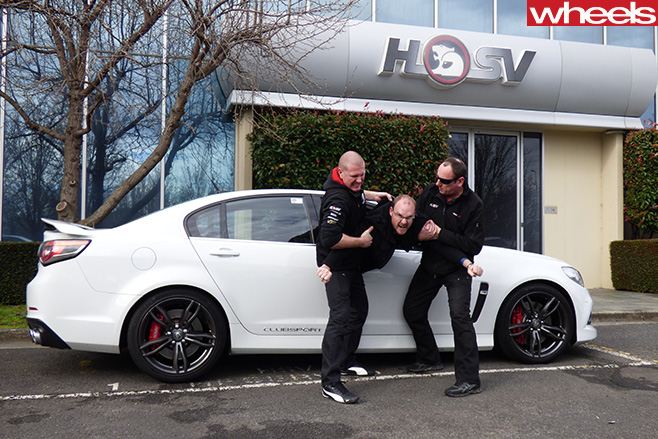
In our time together, so many people sat in the Clubsport that would normally shun an Aussie-made machine as a relic; surely it must drive like the HK Holden their grandad had? After all, the Aussie industry can’t have made any progress, could it? Yet the response, time and time again, was, “You know, I didn’t think these things were this fast, or so comfy”.
Okay, so none of them beat HSV’s door down for one of their own, but still, the R8 proved that there’s often little respect and a lot of ignorance for how good these cars are. They’re loaded not only with our proud past, but misconceptions as well. That, too, stems back to the 1960s.
Cars like my Clubbie are the Aussie cultural cringe on wheels. They’re Midnight Oil; supremely talented, but often overlooked as Bogan bop-alongs.
Modern Australia is a wealthy, latte-sipping nation that sees sophistication in European cars and regards things like the Hills Hoist and Victa lawnmower as artefacts of a daggy past. Many park our beloved V8s in that frame, too.
Yet in 2015 I wear a scarf (questionable a decade ago), sport a beard, drink cappuccinos and wear pointy suede shoes. And I love Holden V8s, because I love driving, love the sound and don’t care what my peers, parents or poseurs think.
I’ll miss the Clubbie, and hopefully will see her in a few decades, after riding my eggshell autonomous car to a show-n-shine, its proud young owner beaming proudly over his ‘old HSV’. Perhaps there will be a blower on the side, some oddball paint scheme or oversized wheels ruining the ride.
Whatever happens, this particular car will be loved, wherever it ends up.
Bogan brothers hit the highway
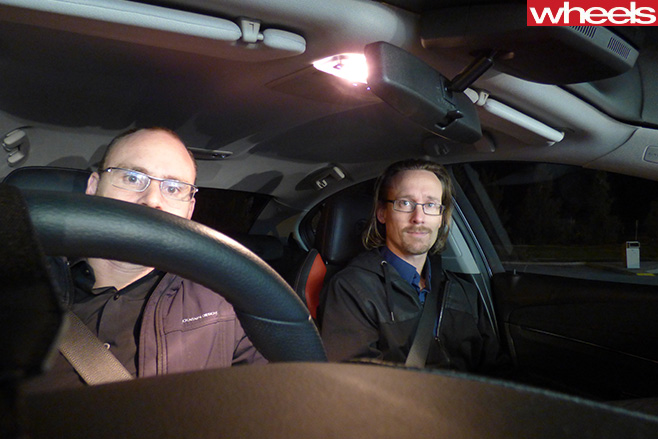
The best mileage we recorded was on the last run, 10.6L/100km. That happened to be the same tank that I stretched the furthest: 724km.
My brother did the same return trip alongside the Clubbie in his 2005 VZ Berlina 5.7-litre and recorded a figure of 9.2L/100km. That’s not bad for a 225kW V8 with 148,000km on the clock and loaded to the gills.
HSV CLUBSPORT R8 Price as tested: $79,365 Part 1: 2220km @ 13.4L/100km Overall: 9980km @14.4L/100km Odometer: 15970km Date acquired: March 2015
Thunderbolts are the least you’d expect. A scorched sky, some localised banshee wailing, perhaps – a pathetic fallacy worthy of an ancient Greek myth.
But the weather is anticlimactically calm and clear now as the very low, very loud and very angry-looking McLaren 675LT rolls to a stop in the car park at the MIRA Proving Ground in the UK.
Waiting in the same line of marked bays is the car I’ve driven here: one of only a handful of 2015’s other new model introductions with the potential to deny the McLaren the status that Woking would claim for it. A nemesis?
Maybe not – but a rival, a kindred immortal. Something equally special, too, if not more so. Because if this McLaren isn’t the most exciting driver’s car of the year, the new Porsche 911 GT3 RS may very well be.
Both of these cars were outstanding athletes before their latest performance makeovers. Both have since been endowed with the kind of performance and handling superpowers that are normally reserved for cars with racing liveries. And right now, both are here at the start of a very special 650km, 36-hour UK road trip.
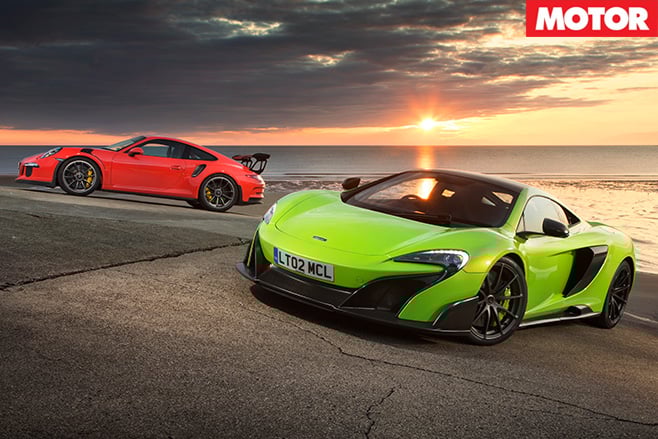
They’re both sold out. So, much as we like to imagine there’s a throng of wealthy individuals waiting with bated breath for MOTOR’s endorsement before ordering a new car, we can leave the final arguing and justifying aside.
Instead, we’ll simply find out what life on road and track is like in the company of not one but two of the most hardcore, most wanted sporting machines that this year, or any year, has to offer.
A morning of flat-out testing lies ahead at the Midlands proving ground, followed by an afternoon of photography. Then it’ll be an early evening blast north-east onto little-visited moorland roads once used by motoring journos to become acquainted with one of the McLaren’s legendary forebears.
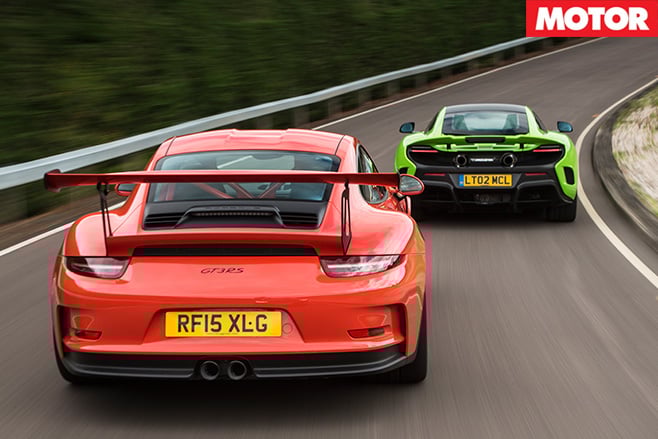
The howl that Porsche’s flat six makes is sabre-sharp and supremely characterful. Porsche’s launch control system makes it sound all the more frenzied, governing it at high revs until the car’s gigantic 325-section rear tyres can transmit 368kW all on their own.
From inside, the car certainly feels fast – even on a wide, empty, long stretch of perfectly flat asphalt – but, like the GT3, only supercar-fast once it’s revving beyond 5000rpm.
The higher reaches of the Porsche’s rev range feel so special, though, suffused with incredible pedal response and with a visceral power delivery still building until beyond 8000rpm, that you want to stay among them whenever you can. The whip-crack changes of the excellent seven-speed PDK dual-clutch gearbox make it possible to do just that.
It’s close on swept volume, however the 675LT’s engine might as well be from a different planet. This is a compression ratio of 8.7:1 versus the Porsche’s 12.9:1, twin turbocharging versus Stuttgart’s atmospheric aspiration.
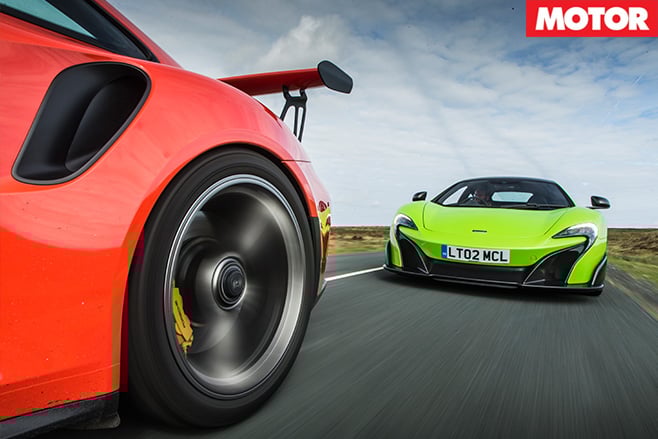
Drama is what McLaren’s sportscars need. But there is still more than a hint of turbo lag to be accounted for here at low and medium revs, just enough of it to notice when you flatten the accelerator suddenly. Perhaps not so much that it’ll be a factor on the road. We’ll see.
Once the engine has responded to that flattened pedal, though, you may not care about the preamble. The 675LT is obscenely fast – and more unconditionally so than the GT3 RS.
Like the Porsche, the McLaren revs beyond 8000rpm, but unlike the 911 it can catapult its bulk into seriously urgent motion with less than half as many revs on the tachometer. There’s enough torque to work those Pirelli P Zero Trofeo R rear tyres up into two or three successive flurries of electronically quelled wheelspin through both second and third gears – all in the dry.
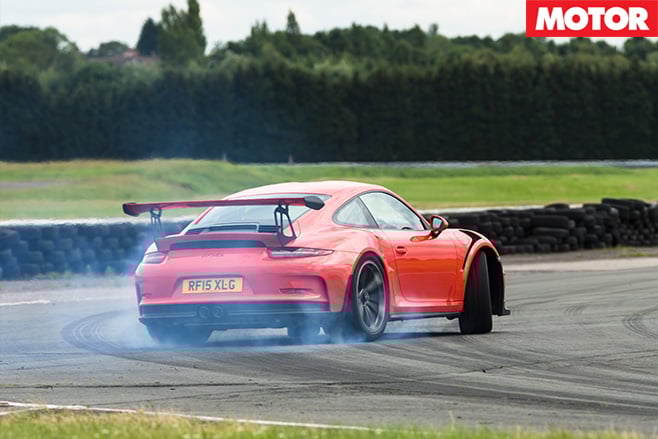
The crispness and immediacy of this car’s cornering manners are truly astonishing.
Unexpected, too, because the Porsche rides with a gentleness that you just wouldn’t imagine possible. The RS flits towards an apex with a magnetic kind of nonchalance; its every response comes more quickly than those of the regular GT3.
On the limit of grip, it has to be mastered with a quick pair of hands, but it’ll tolerate any driving style you like, fast and smooth, or more wild and unfettered. You decide. Want to nudge those 325/30 ZR21 rear tyres into a 110km/h, third-gear sweep of lift-off oversteer? Just think it, lift your right foot and it’s happening.
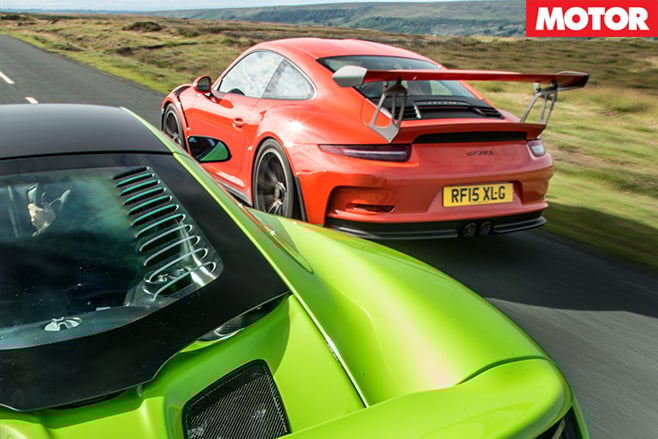
McLaren’s rebalancing of the 650S’s suspension and steering systems has paid dividends and sharpened the car’s
reactions to a fine point. There is a limpet-like, confidence-inspiring front end to lean on, along with huge reserves of lateral adhesion. After back-to-back drives in both cars, I’ve now no doubt that a P Zero Trofeo R is a stickier tyre than a Michelin Pilot Sport Cup 2.
Which is saying something.
But here on track, when you’re likely to be after a more varied driving experience than full-bore qualifying pace alone can provide, even the 675LT feels slightly one-dimensional – much as the 650S did. A softness in the accelerator pedal prevents you from tapping into those huge reserves of horsepower with quite the precision that you’d like.
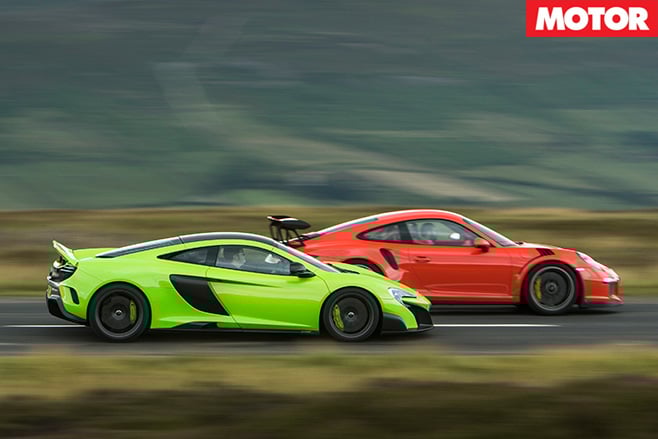
When Woking launched the MP4-12C, it said the car didn’t need an E-diff. We disagreed. It said the same about the 650S – again, we disagreed. Now along comes the 675LT, still without the telling item of mechanical specification now common on sportscars at less than half the price asked for this one.
Hear us this time, please, McLaren. Because a torque-vectoring ESP system is still no substitute for the uniquely rewarding, relationship-building sensation of a sportscar being both driven and steered by its rear wheels.
The long day on track juggled between two steering wheels is drawing to a stunning close, but there’s still time for a spurt on public bitumen. And 200km on England’s busy M42, M1 and A1M motorways has provided a few insights into what real-world use of these cars would be like.
The first is that, even when battling through a sweaty rush hour with no air conditioning, questionable all-round visibility, an unintuitive navigation system and bucket seats almost as tight as your three-year-old’s safety seat, driving a lime green supercar can only ever make you smile.
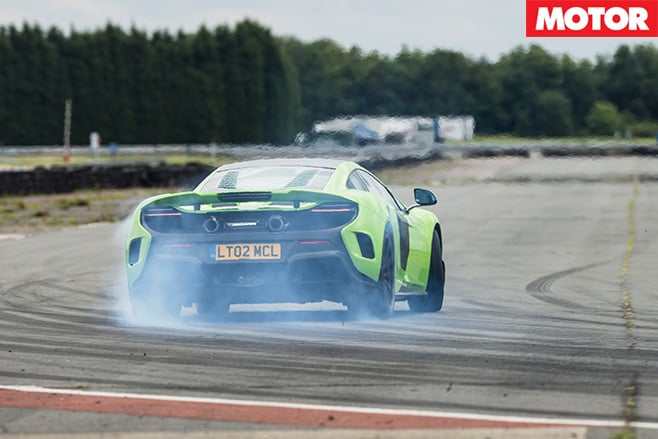
The Longtail McLaren can do that: sort of wave. Flipping its active aerodynamic functions on and off makes that extra-long rear wing waggle up and down. Children, it turns out, love it.
The busy motorway begins to gradually give way to quieter and quieter stretches, each giving our cars more space on which to stretch their legs. A mobile speed camera van came as a welcome reminder of the need for restraint when driving such cars.
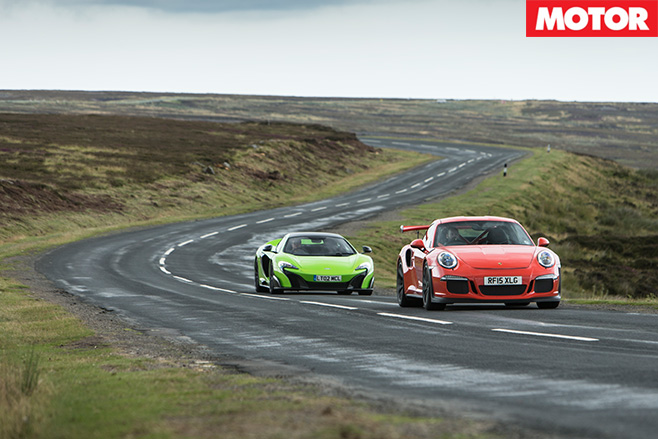
I glance in the Longtail’s rear-view mirror to check that my colleague in the Porsche is being treated to the same spectacular view, only to realise that he’s fallen a little way behind.
Later it’ll become clear why. Maintaining a fast pace in the GT3 RS isn’t hard, but it needs some commitment to the idea by staying in lower intermediate gears and allowing the engine to add a fair bit of mechanical thrash into a cabin already humming with plenty of road roar. This Porsche is very much a ‘go hard or go home’ sort of car.
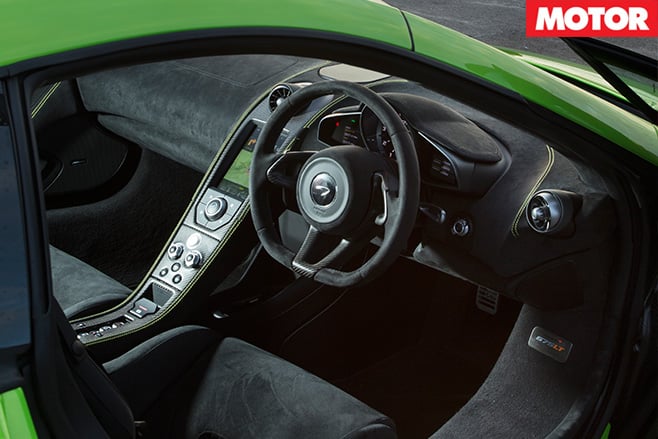
When the road opens up ahead, you can flex your right foot and pick up what you imagine will be a brisk but responsible stride – then often scare yourself silly at how fast you’re travelling.
As clearly as the GT3 RS distinguished itself on the track, it’s becoming clear that the McLaren enjoys at least as big an advantage over the Porsche as a road car – and we haven’t really started with the road driving yet.
Early the following morning we are in a convoy traversing blissfully quiet roads that sometimes stretch before you for kilometres into the distance, before closing in again over crests and around blind bends. Up here, where three Ramblers and a local in a Land Rover count as the rush hour, the roads have nearly everything.
Having spent yesterday’s journey in the 675LT, I start the day in the GT3 RS, mainly to challenge the impression forming in my head that it may not be as brilliant on the road as I’d like it to be.
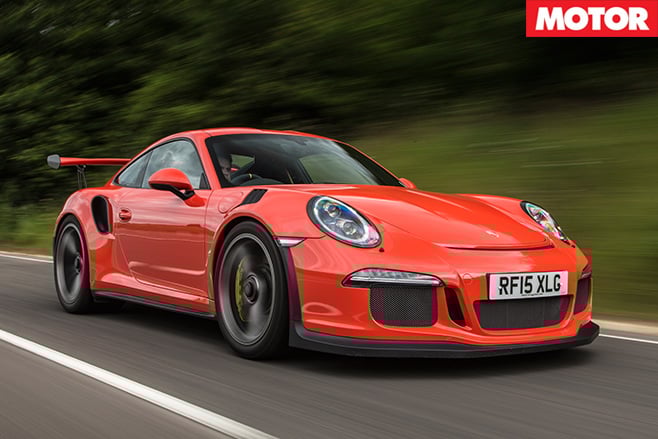
Steering that seemed expertly weighted and brilliantly tuned for the circuit is a bit hyperactive over a bumpy B-road. Two hands are needed on the Porsche’s downsized steering wheel at all times – and even then the car can still be tricky to guide.
The RS’s suspension doesn’t quite perfect the compromise of body control and bump absorption for fast road work, either.
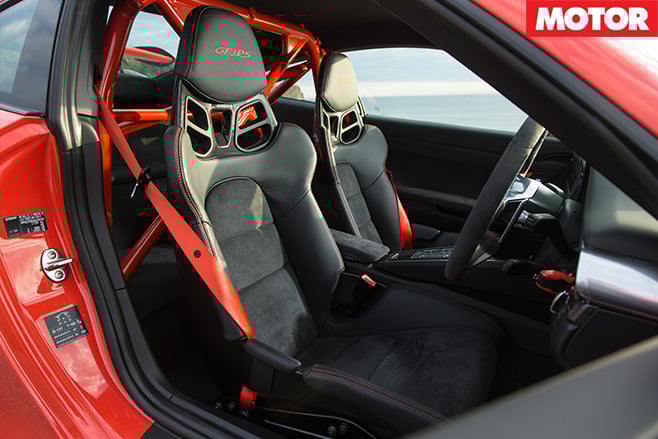
Not so the McLaren. Woking’s engineers will tell you that, even at the conception stage, the 675LT was always a road car first and a track car second.
That may seem ridiculous for something on cut slicks, dressed from head to toe in lightweight materials and capable of licence-losing velocities in a heartbeat, but it’s readily apparent, because the Longtail’s ride remains uncommonly compliant for a proper supercar, even on the most challenging of surfaces. And yet its body control is all but flawless on the road.
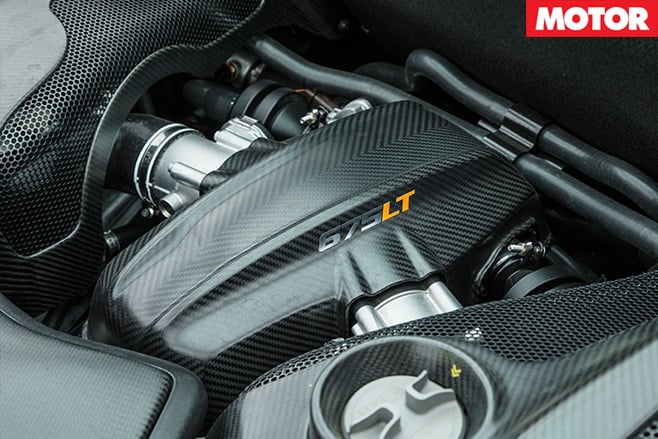
As we wrap up with our photos and think about turning for home, it’s a relief not to be ranking these cars in relative terms and not to have to pick a winner. The GT3 RS may well be the best track-day special in the world, ready for driving to and from the circuit as often as you want.
The 675LT is evidently one of the most rapid, capable and exciting performance road cars you can buy, and stands ready to entertain you on a circuit as and when the opportunity arises. They’re more different than we’d have believed 36 hours ago – and all the more brilliant because of it.
And yet it doesn’t save you or I from having the same internal conversation that any enthusiast would have before drawing a line under the story: which one of these cars is for you?
The Longtail is a harder car to connect with than the GT3 RS – and ultimately it’s probably the less rewarding to drive. The McLaren’s chassis doesn’t communicate in the same direct, vivacious, plainspeaking terms. You have to trust that it’s going to look after you as much as knowing that it will.
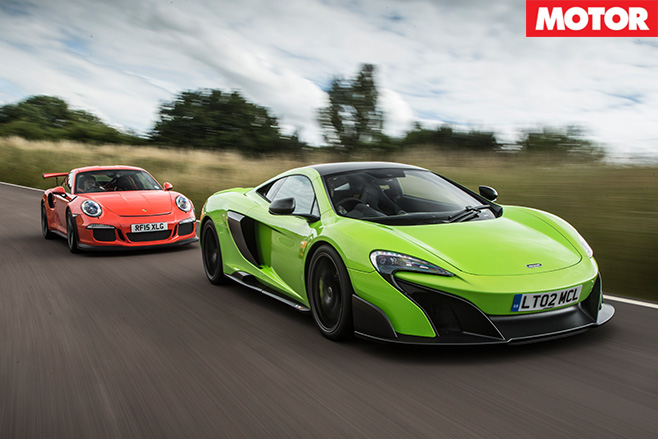
And yet, with 210km to drive home, the McLaren 675LT edges it for me.
It’s still a work in progress, but the way it combines huge, easily won pace and fluent, infallible composure on the road would be ideal for the kind of use I’d give it. Some wider sports seats for my not-so-sporting backside wouldn’t go amiss and, as I may have mentioned earlier, if there was a limited-slip diff option, I’d tick it. But I’d tick it a very happy man.
| u00a0 | u00a0 | PORSCHE 911 GT3 RS | u00a0 | MCLAREN 675LT |
| Body | u00a0 | 2-door, 2-seat coupe | u00a0 | 2-door, 2-seat coupe |
| Drive | u00a0 | rear-wheel | u00a0 | rear-wheel |
| Engine | u00a0 | 3996cc flat-6, DOHC, 24v | u00a0 | 3799cc V8, DOHC, 32v, twin-turbo |
| Bore/stroke | u00a0 | 102.0 x 81.5mm | u00a0 | 93.0 x 69.9mm |
| Compression | u00a0 | 12.9:1 | u00a0 | 8.7:1 |
| Power | u00a0 | 368kW @ 8250rpm | u00a0 | 497kW @ 7100rpm |
| Torque | u00a0 | 460Nm @ 6250rpm | u00a0 | 700Nm @ 5500-6500rpm |
| Power/Weight | u00a0 | 368kW/tonne | u00a0 | 354kW/tonne |
| Transmission | u00a0 | 7-speed PDK | u00a0 | 7-speed dual-clutch |
| Weight | u00a0 | 1420kg | u00a0 | 1403kg |
| Suspension | u00a0 | struts, coil springs, anti-roll bar (f); multi-links, anti-roll bar (r) | u00a0 | A-arms, coil springs, adaptive dampers (f/r) |
| L/W/H | u00a0 | 4545/1880/1291mm | u00a0 | 4546/2095/1188mm |
| Wheelbase | u00a0 | 2456mm | u00a0 | 2670mm |
| Tracks | u00a0 | 1587/1557mm (f/r) | u00a0 | 1676/1603mm (f/r) |
| Steering | u00a0 | electrically-assisted rack-and-pinion | u00a0 | electrically-assisted rack-and-pinion |
| Brakes | u00a0 | 380mm ventilated discs, 6-piston calipers (f); 380mm ventilated discs, 4-piston calipers (r) | u00a0 | 394mm ventilated carbon-ceramic discs, 6-piston calipers (f); 380mm ventilated carbon-ceramic discs, 4-piston calipers (r) |
| Wheels | u00a0 | 20.0 x 9.5-inch (f); 21 x 12.5-inch (r) | u00a0 | 19.0 x 8.5-inch (f); 20 x 11.0-inch (r)u00a0 |
| Tyres | u00a0 | 265/35 ZR20 (f); 325/30 ZR21 (r) Michelin Pilot Sport Cup 2 | u00a0 | 255/35 ZR19 (f); 295/30 ZR20 (r) Pirelli P Zero Trofeo R |
| Price as tested | u00a0 | $387,000 | u00a0 | $616,250 |
| Positives | u00a0 | Delicious engine; brilliantly involving dynamics; value | u00a0 | Fearsome speed; amazing comfort; supercar looks; exclusivity |
| Negatives | u00a0 | Theyu2019re all gone; puts the racer in road-racer; tyre noise | u00a0 | Almost double the GT3u2019s price; slightly aloof at the limit; sold out |
| u00a0 | u00a0 | 5 out of 5 stars | u00a0 | 5 out of 5 stars |
The past year has been a big year for four wheel drives. Especially in the dual-cab utility market, which has seen a lot of key new arrivals and will, as ever, deliver some of Australia’s best-selling cars overall.
Arrivals such as the all-new 10th-generation Toyota Hilux, Nissan’s new Navara NP300 and a new Mitsubishi Triton, and updated and facelifted versions of the Mazda BT-50 and Ford Ranger, have left little activity for 2016.
In ute-derived wagons, Mitsubishi’s Challenger replacement for 2016, the Pajero Sport, snuck in with a December 2015 launch. Toyota’s Hilux-based Fortuner lobbed at the end of October. The five-seater Mitsubishi is two pews down on many of its rivals, but offers a value-packed three-tier line-up starting at $45K.
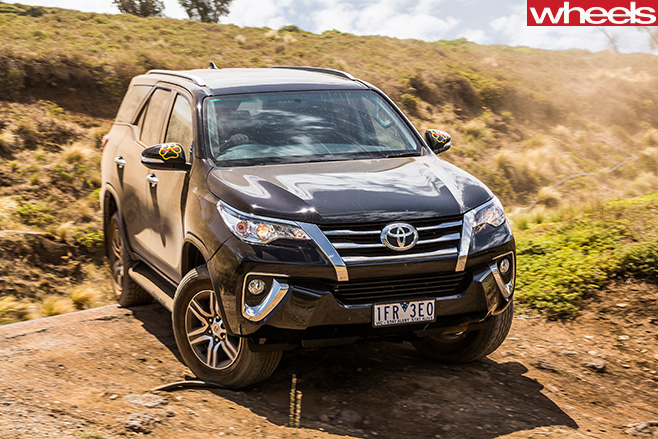
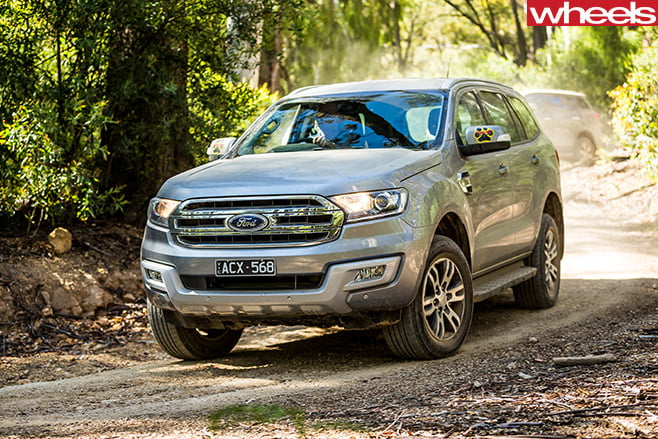
Working in similar terrain, Ford’s big Everest wagon (pictured below), which is derived from the polished, capable Ranger ute, hit local soil in late 2015 as an MY16 car. Just like the Fortuner and Pajero Sport, the Everest sets itself apart from its ute donor with a coil-sprung live rear axle, for superior road manners, rather than using a rear leaf spring arrangement like the Ranger.
Meanwhile, it’s not certain if Jeep will debut a refreshed Grand Cherokee, but we certainly won’t see its Grand Wagoneer, which will eventually replace the Commander.
Finally, Dodge will seek to capitalise on the popularity of utes in Oz by bringing in its plus-sized Ram.
How will the next generation of cars prevent human error? By eliminating human input – and it’s already happening. Cars can already accelerate, steer and slam the brakes on for you. They can also reverse-park themselves, keep a distance at speed using radar cruise control, peer around corners and inform you of something in your blind spot.
Yet we still have accidents.
Volvo wants more, and its next-generation XC90 – due in Australia next year – introduces a vital step towards autonomous driving in the form of cloud-based car-to-car communication. Volvo says the XC90 will be the safest car in the world and the first of its new-generation SPA (Scalable Platform Architecture) models that will be primed for ‘Autopilot’, Volvo’s term for autonomous driving.
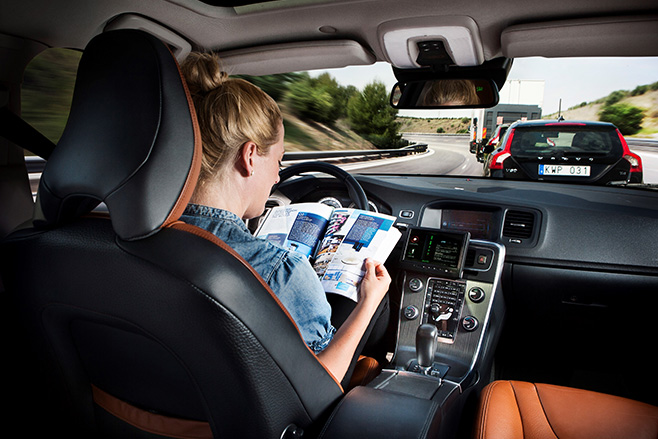
Volvo president and CEO Hakan Samuelsson told Wheels that Autopilot “will be very safe”, and vital for the future. “That’s the next step,” he said. “You have cruise control, adaptive cruise control, and then you add the steering, the centre lane hold and you follow the car behind and let the steering wheel go. That will be part of the new generation of cars. It will be very important.”
Australasian NCAP head Nick Clarke applauds this car-to-car communication technology: “Vehicle-to-vehicle communications will become important, so instead of one car scanning the road ahead … it might actually scan ahead and communicate with a car travelling at right-angles or some other direction that’s on an intersection – on a collision path. If the cars can communicate, then the right messages can get to the driver to say, ‘We need to slow down before this corner’, and prevent an accident.”
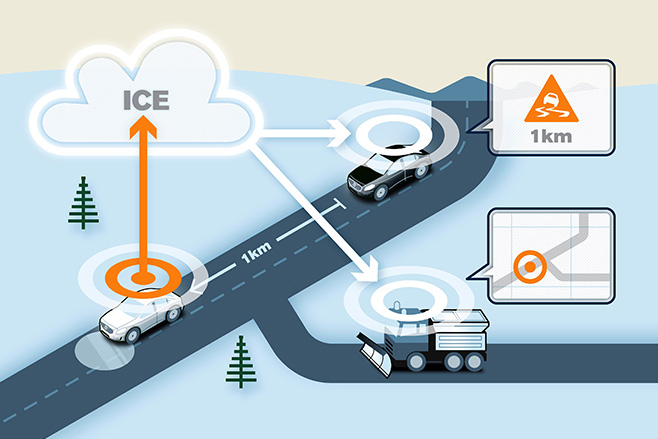
Samuelsson says Autopilot is needed for Volvo to reach its goal of zero deaths in its cars by 2020: “There is a lot of distraction going on and it’s getting worse and worse. The more smartphones people have, and you say ‘no texting, it’s the law’, but people will text anyhow. This is extremely dangerous. Autonomous driving is a way of eliminating that risk.
“You’re closer to just saying to the car, ‘Drive me home’.”
THE ROAD TO THE AUTONOMOUS CAR
ABS: 1978 Traction control: 1992 Brake assist: 1996 ESP: 1997 Radar cruise control: 1997 Lane-keeping assist: 2001 Auto parking: 2003 Pedestrian detection: 2008 Volvo City Safety: 2008 Cloud-based comms: 2014
This article was originally published in Wheels September 2014.
Almost by definition, the most exciting newcomers of 2016 will be high-performance sedans and hatches – quick but practical cars that are within reach of people on average earnings.
Ford’s Focus RS (pictured top) will be the wildest hot-hatch to join their ranks. It will sell alongside the Focus ST in Ford showrooms from February. Unlike limited-run previous versions, the new RS will have all-wheel-drive, which will help it deploy the 2.3-litre Ecoboost four-cylinder turbo engine’s prodigious 257kW.
Focus RS highlights include a dynamic torque vectoring system, a drive mode system with launch control and a ‘drift’ mode, and selectable sport suspension. There will also be 19-inch alloys and gripping Recaro front seats.
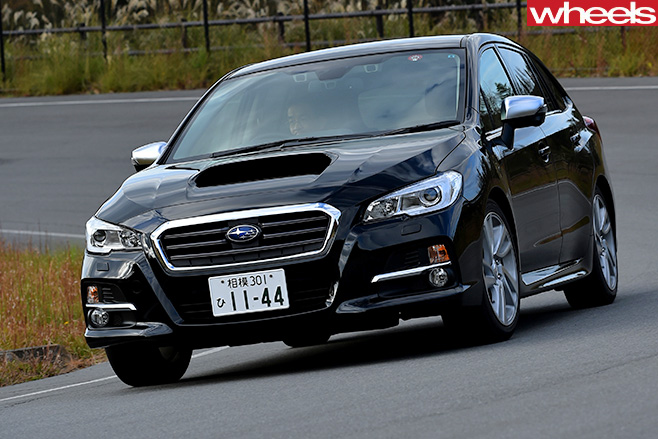
We’ll also be treated to a Peugeot 308 GTI (pictured below) in February. Considering how good the mainstream 308 line-up is – and the fact the GTI will be a manual-only front-drive with a 200kW 1.6 turbo – it should be a cracker.
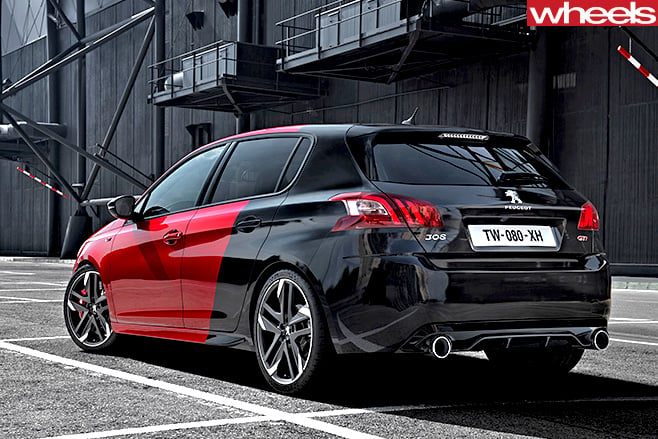
We’d also have welcomed the 228kW Honda Civic Type R offered overseas, with its direct-injected 2.0-litre turbo four-cylinder. But with the ninth-generation Civic set to be superseded, the ordinarily rev-happy Honda’s first snail-assisted Type R looks highly unlikely to make it to Oz.

Hot limited-edition versions of the Ford Falcon badged ‘XR Sprint’ will also roll from Broadmeadows in 2016, in a send-off for the model before Ford shuts its local manufacturing operation in October. The XR Sprint will come in both V8-powered XR8 and turbo six cylinder XR6 Turbo forms, and while the Falcon has fallen out of fashion, the pair should still be ripper drives and a fitting finale.
Most of the time on most technologies, the rest of the world’s car companies take their lead from Germany.
Germany’s three premium brands live and breathe in the sweet spot between volume and margin, so they can let their geeks wander down research and development paths that would be too flippant for mass production or too risky for a Ferrari or even a Jaguar to follow.
The technologies then take anywhere from half a generation to a generation (so, between three and seven years) to make it to global volume brands. Sadly, the news from the Big Three Germans isn’t good for the future of naturally aspirated engines.
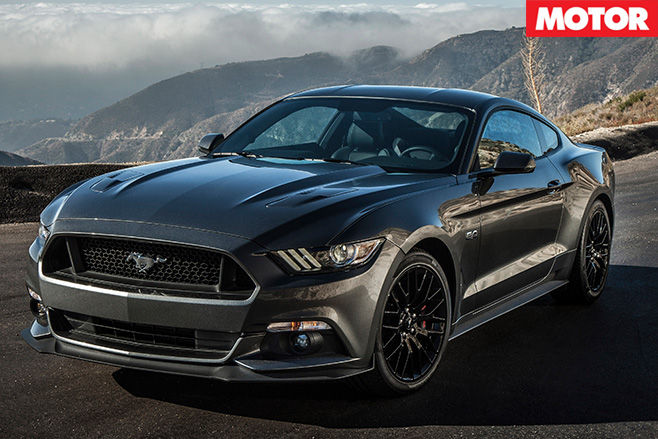
The same thing goes over at Audi, where you can buy cars with turbo, biturbo or supercharged engines, but you won’t get natural aspiration until you reach up into the rarified air of the RS4 or R8. Even then, the next RS4 is going turbo and the next R8 won’t have the 4.2-litre atmo V8, so the 5.2-litre V10 will be the last one the brand ever offers.
Benz has turned its back on atmos, too, though there are hints that an atmo straight-six power might return with the next E-Class. But it seems unlikely.
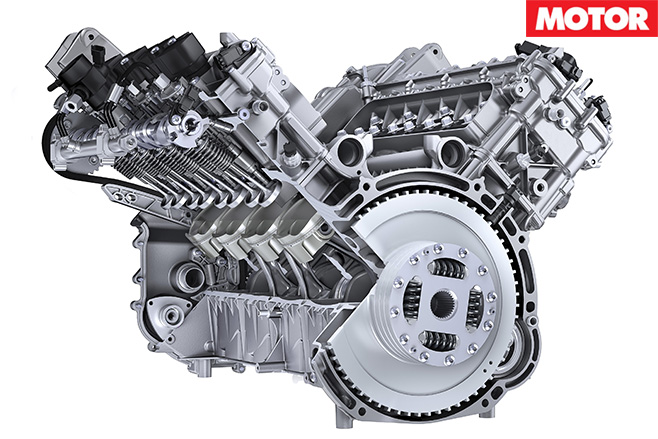
Where did it all go wrong? There was talk, of course, and there was a drift back to turbos in the early noughties, but the immensity of the threat to the future of atmo engines really hit home during the Frankfurt Motor Show about six years ago. During an interview with M-B’s engine boss, Bernard Heil, he was chatting about the downsizing of engines, which we’d heard about before.
Downsizing had become a fast, easy, affordable way for carmakers to meet more stringent emissions laws from not just the European Union, but from the California Air Resources Board (and the 16 other US states who copy the west-coasters’ regulations), China’s State Environmental Protection Administration (which typically follows in the wake of the EU) and Japan’s Ministry of the Environment.
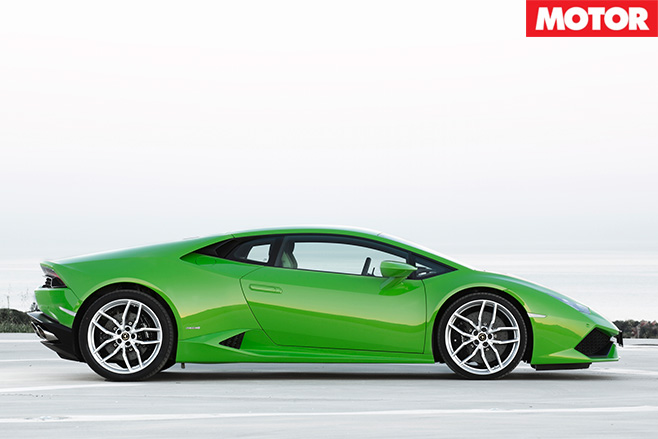
Then, with the introduction of EU regulation number 443/2009, it all got serious. It demanded an average CO2 figure of 130g/km for every marque by 2012/’15 (stretched out over three years to account for model cycles). Ouch.
Not that the car companies minded too much, especially the Big Three, plus Volkswagen, Toyota and PSA. New rules demanded new technologies and new technologies were marketable. Variable valve timing. Twin-scroll turbos. Variable-geometry turbos. Cylinder On Demand. Direct fuel injection. Sodium-filled valves. On-demand ancillaries. The list goes on.
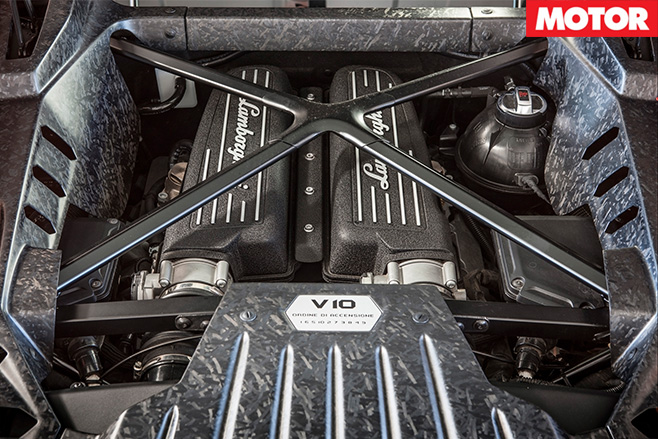
So downsizing is a thing, confusing alphanumeric naming structures the world over. Three-cylinder engines are the new industry buzzword, with BMW even tossing one into the i8 sports car. Audi, Ford, PSA and Volkswagen swear by them. Fiat even boasts of its two-pot screamer, though its real-world economy benefits are, at least anecdotally, scant.
What our Mr Heil told us, that we hadn’t heard about before, was downsizing’s more potent stablemate, downspeeding – lower revs, ever lower revs. And he just let it slip, almost accidentally, into a conversation in a way that indicated he’d been tossing it around at work for years. Which he had been.
But Mercedes-Benz has since backflipped and will even fit a three-cylinder engine to its next E-Class…
The more we dug, the more we saw it wasn’t just Mercedes, either, because downspeeding is now a thing at the other two Big Three Germans. Former BMW board member of development, Herbert Diess, has admitted to MOTOR downspeeding could become more extreme than anybody credits, especially in mass production. “To get below 80 grams we will need longer gearboxes and down-speeding engines,” he said.
“Initially that will mean 1800-2500rpm for internal combustion engines (ICE), but it will really mean 800-1500rpm in the longer term. That’s where the ICE has to go in the future to meet those kinds of numbers. High torque, low revs, higher injection pressures and probably electric power to boost at low speeds.
“We all knew this was coming. When we kept MINI as a brand one of our major motivations was our fleet CO2 emissions.” Sadly, those same fleet CO2 averages must include quattro, M and AMG. All three sell only turbocharged cars (with the exception of the outgoing C63, the RS4 and the R8), though all three also have hints of a future that might save atmo engines.
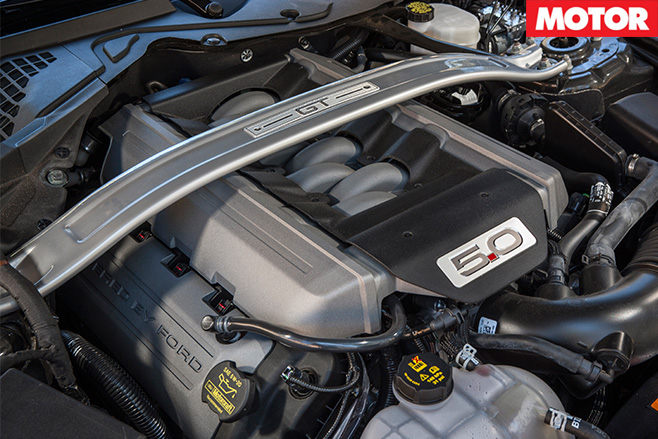
“But the concept that we pursue in all our segments deserves turbocharged engines and that’s what we are focused on. So, no more atmo.”
It’s the continuing quality and cost improvements of turbocharging that are cruelling atmo engines. The cost of turbochargers has come down dramatically in the last decade and their efficiency continues to climb.
Turbos of today aren’t like yesterday’s. They can change the geometry of their vanes to ward off lag. They are so precisely controlled that the power delivery is more or less instant. They deliver hard, early, then happily fade out, with sequential turbos then climbing in to help with higher revs.
The packaging isn’t always easy, with extra space needed for cooling circuits, intercoolers and the turbo itself. BMW, Audi and Benz have all migrated the turbos inside the vee of the their V8s. One Audi engineer told me for all the talk of shorter tracts and better throttle response, the real reason was packaging.
But the beauty of the turbocharger in context is when it’s not being boosted, the car can deliver (almost) the fuel consumption of a smaller engine. Then punch hard like a big one.
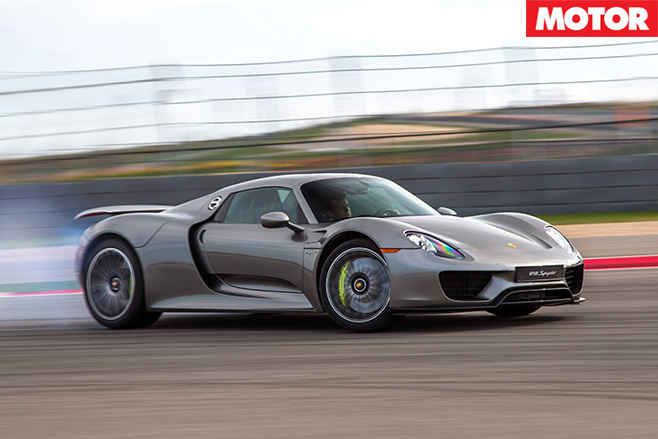
The possibility remains that someone might do a cut-price Porsche 918 and combine an atmo motor with electric power for low speeds, like a lag-less turbo, though it’d be a long-odds bet.
The tantalising prospect is an electric ‘turbo’ might save the atmo engine. Or at least its characteristics. It still force-feeds air into the engine, but operates instantly and with fewer heat and packaging constraints.
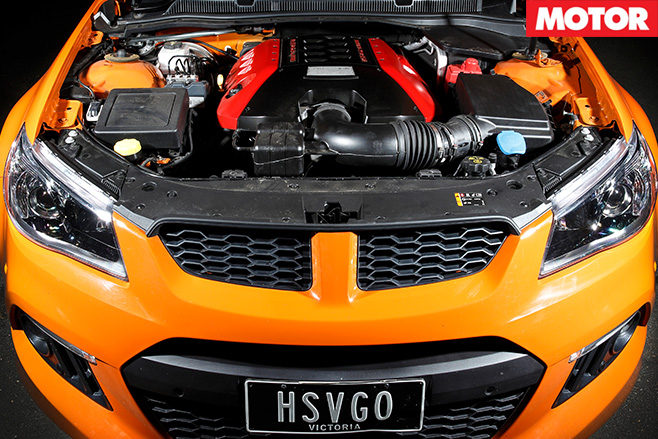
The V12s are the last holdouts at Ferrari, as they are at Lamborghini. The relatively low volumes mean the V12 model cycles run far longer than the smaller motors, so they will stand longest without turbos. Them and, probably, Chevrolet’s V8.
There is development left in the Lamborghini Aventador’s V12 (it has yet to adopt even direct-fuel injection) and some left in Ferrari’s V12, too, though Aston Martin doesn’t have the funds for its V12. It will, inevitably, be replaced by something from AMG, which owns five per cent of Aston.
But nobody is spending resources to design a new atmo engine from a clean sheet of paper. There might be some upgrading of existing hardware, but don’t expect much more than that. Not only is that fairly sad, but there’s never been a greater reason to appreciate NA engines while they’re still around.
RESULTS
It has been a rare positive year for Mitsubishi, but its climb up the charts has all been off the back of the new Triton ute and some cracking deals on the ASX compact SUV. The ageing Lancer – it’s approaching retirement age in dog years – continues to shed share in a large and important market segment. Its smaller sibling, the Mirage, battles with fickle sales at the cut-throat end of the market.
Rank: 5th 2015: 75K 2016: 70K Grade: B-
OPPORTUNITIES
A replacement for the Challenger arrives early in the year, renamed Pajero Sport. It won’t be massive volume, but will add some muscle in the serious off-road segment and stem some flow from Pajero to other brands. An updated Mirage hatch will appear in the second half. An updated Lancer, due in the first half, won’t challenge class leaders but may claw back some of the market share it has shed in recent years.
CHALLENGES
Every other brand. And a lack of genuinely new product; Mitsubishi has been sitting on its hands for so long they must be numb. Passenger-car share is dismal and the brand’s successes – ASX and Triton – will come under increasing pressure in 2016. The Triton may be new, but it’s selling largely on price in a ute market bristling with a dazzling array of fresh offerings
SUMMARY
Punching above its weight, but challenges ahead. With little on the product horizon, it’ll be a tough year, made more difficult by rivals rediscovering their mojo. So expect plenty more grey clouds ahead. That’s a tough call considering it has just emerged from a tropical downpour, but a lack of fresh and exciting product offers little short-term relief.
So, what is it?
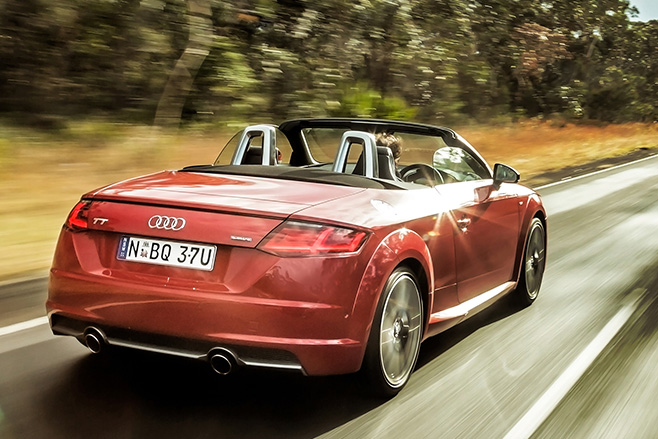
The first TT stunned the world when it was launched in 1998. It not only had a name that could be pronounced backwards or forwards, but was also stunningly beautiful and fast too.
Sure, the slipstream design meant the early ones tended to get loose and spear off the road at warp speed, but hey, they sorted that out pretty damn quick with a stick-on spoiler.
The second generation of 2006 was more modern but less adventurous and now the sharper third generation car is here.
It’s based on the Volkswagen Group Golf/A3 platform and is available locally with a single turbo four-cylinder 2.0-litre engine that uses petrol. Audi Australia could have imported a diesel version, but they realised people would have laughed and then thrown rocks.
The petrol four is decent, with 169kW and 370Nm.
You can get a TT as front-driver or stump up the extra cash for one that sends power to both the front and the rear wheels. The front-driver is available with a six-speed manual or a six-speed dual clutch automatic, which makes loud sporty fart noises when you change gears. The AWD car is only available with the automatic transmission.
Why should I care?
Because it is an iconic sportscar, that’s why. It is also the kind of sportscar you could live with day to day. That is unless you want to give a lift to more than one person. There are two extra seats in the back of the TT, but it is so cramped back there that Audi fitted a sticker warning against crushing the passengers’ heads when you close the boot hatch. Very small children might fit back there (in the rear seats, not the boot), but they would want to have slim car seats or booster seats. Most cats would also fit, although mine would probably be too big. He is very fat.
But if you don’t need to carry more than one adult or over-sized cat, the TT could actually be a very nice daily driver.
It is a bit unique in that it sits well above the ageing Volkswagen Scirocco R ($45,990) and the faster but more crude Nissan 370Z ($56,930), but well below the sublime Porsche Cayman ($106,600).
What’s new about it?
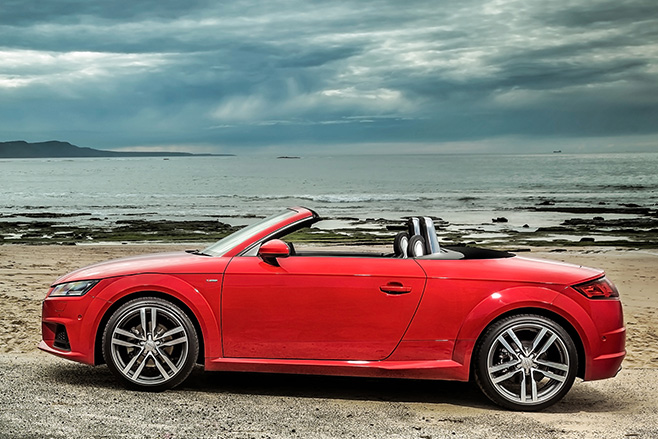
Look at it from the back or side and you may not immediately notice this is a new model.
But the front end certainly does look different with its new hard lines, more aggressive nose and sleek headlights.
The TT is basically new from the ground up compared to the last one although it follows the same formula. It is also 50kg lighter for a total of just 1230kg.
There is a bunch of new tech, including the first ever Audi Virtual Cockpit display, which looks like something from Iron Man. There is no analogue speedo and tacho, but a high-resolution screen that can be fully customised. It is way cool and can show a huge sat-nav map or lots of car information, with a small tacho and speedo. Alternatively, it can simply show the tacho and speedo just like it used to. It’s great because you can see everything you want and don’t have to look down to the centre screen.
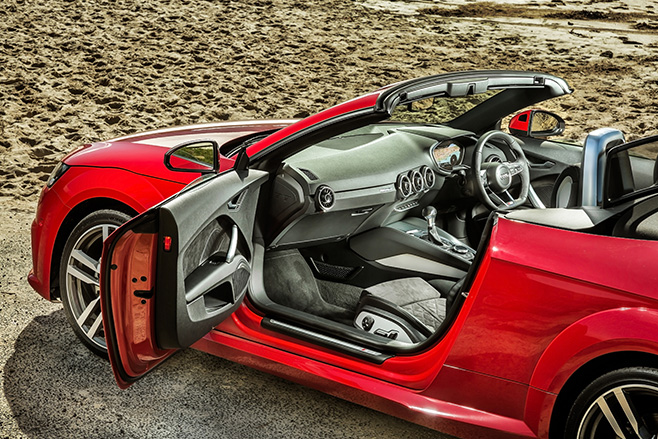
The interior is new and it looks fantastic. Audi’s designers didn’t go crazy, but the design is both attractive and practical in equal measure. There are some lovely touches, such as the AC controller buttons on being fitted to the actual vents and lovely quality surfaces.
Something else new is the Matrix full LED headlights, which are available as a $2500 option. Audi promises they are 100 per cent free of Keanu Reeves.
That’s all fine, what’s it like to drive fast?
Well, I wasn’t driving fast, your honour. But let’s say if I did, I imagine the TT would go pretty damn fast without breaking into supercar territory.
Remember, the hotter TT S version is also available and the regular TT leaves it a decent amount of room.
All of the TTs are quick and fun, but the AWD is a lot more engaging.
The front-drive car does tend to tug through the wheel a bit on acceleration and is a bit more prone to wheelspin (which is snuffed out quickly by the on-board computer). Even in the dry, the AWD car puts its power down better and this is only likely to be more evident in wet or slippery conditions.
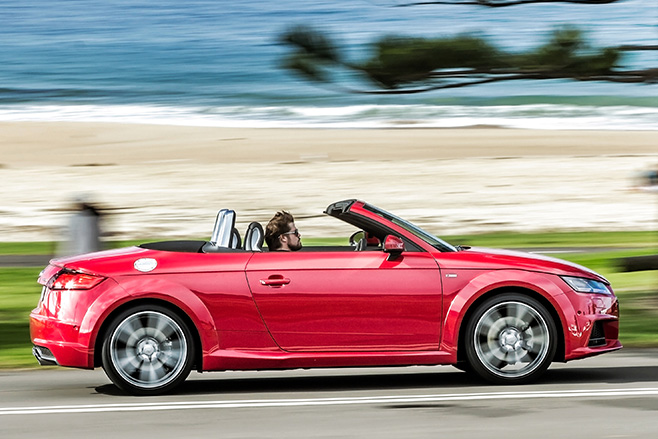
The engine pulls hard all the way through to just above 6000rpm and sounds a little bit rorty, without being too raucous. You can do the 0-100km/h dash in just 5.3 seconds if you engage the cheaty launch control. That is mighty fast, but to be honest, ours didn’t feel quite that fast.
Cornering is fun and the TT is well tied down, but is also quite comfortable too.
Adjustable electric charged magnetic dampers are available as an option, if you want to get a bit more sporty.
And driving home from the city?
The shape of the TT’s tail means its rear visibility is wretched, which makes it a perfect candidate for a reversing camera. It’s a pity then that a reversing camera won’t be available until later this year. It does have reversing sensors at least.
If you hate parking lots, then you might like the $2200 Assistance Package, which helps you park, stay in your lane and see if anyone is lurking in your blind-spot.
The TT has a variable steering rack, which doesn’t change according to speed (like some systems), but does alter the steering rate depending on the position of the wheel.
This takes some getting used to and it’s easy to turn too much or too little when pushing hard. The steering also feels a little vague. You can change the weighting, but the heavier Dynamic mode is far better for pushing than the other modes.
Audi has done a cracking job with the seats, which feel supportive and comfortable.
All TTs get leather seats, cruise control, keyless entry and start, a big 12.4-inch colour screen with hi-res sat-nav, an eight speaker sound system and Xenon lights (with LED daytime running lights).
The Sport models sit on 18-inch wheels, while the S-Line models get 19s, a body kit, some extra metal interior trim and other elements as well as a beefier sound system.
The option list is long and includes metallic paint (between $1077 and $1400 – ouch) and things like 20-inch rims (between $2846 and $3000).
Anything bad about it?
Well, the steering isn’t perfect and the front-driver isn’t as good to punt quickly as the AWD, but the TT does what it promises. No, it isn’t a hardcore sportscar weapon, but it is pretty quick and looks lovely.
There is the issue of the rear seats, which don’t actually don’t seem to exist when you try and get into them, but hey, it’s a sports coupe.
Oh, I nearly forgot: the automatic transmission changes up when it wants, even when you have selected the manual mode. This makes me very angry and sad at the same time.
How much would I have to pay? And is it worth it?
Did I mention this is an Audi? I did, and that means you are going to pay a bit over the odds. But when you consider the design, the performance, the badge and all the technology, the TT isn’t bad value.
The line-up starts with the manual Sport front-drive manual at $71,950 and rises to $74,950 for the automatic (which is worth it by the way). The best one is the AWD auto, which costs $77,950.
If you have bundles of cash spilling out of your pockets, feel free to lash out on the S Line, for the extra kit.
It costs $78,450 for the front-drive manual, $82,480 for the front-drive auto and $82,450 for the AWD auto.
Would you take the TT or Nissan 370Z coupe?
I’d still take the Nissan if I want to go as fast as possible, but the TT is not slow, has a heap more cool stuff and is easier to live with.
Click here to find out more about the Audi TT.
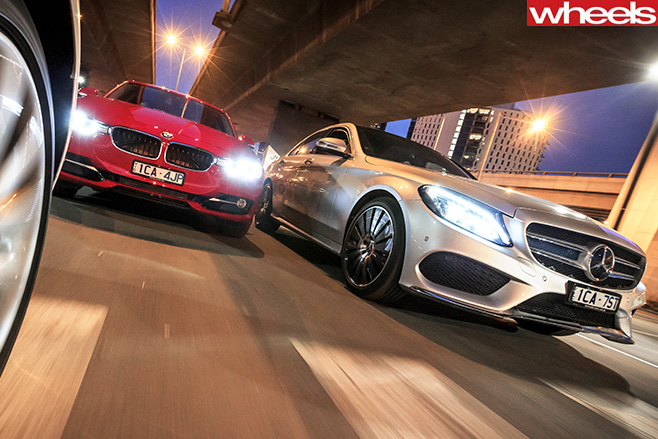
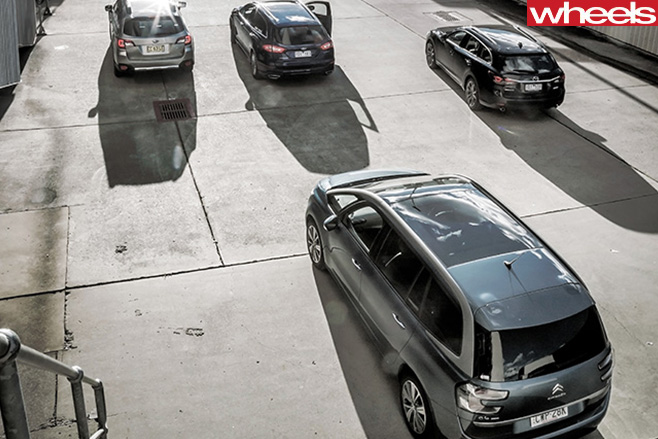
AT Wheels, we take a lot of care when researching our car comparisons, and a lot of pride in the results. The key piece of research is the experience of driving the cars side-by-side – and for much of the time, nose to tail – over several days.
For most comparisons, three days are reserved for a tour with all the cars together, over a route prepared for that particular story. The journey is designed to expose weaknesses and bring out strengths, over a range of conditions that the cars would encounter in the hands of owners. And of course, the aim is also to enjoy driving the cars through some pleasant scenery and over roads that are entertaining for other reasons.
It is common for people in enviable places to say they spend much more time slogging and much less time soaking up glamour than outsiders might think. That’s often fair comment, and it is true of Wheels writers, too. But if you imagine it must be a hell of a lot of fun to go rolling around the countryside in a bunch of fresh cars so as to develop a view on which will satisfy most, you’re dead right. And the fun continues over dinner at our overnight stops, where the merits of the contenders are always be debated, and often hotly.
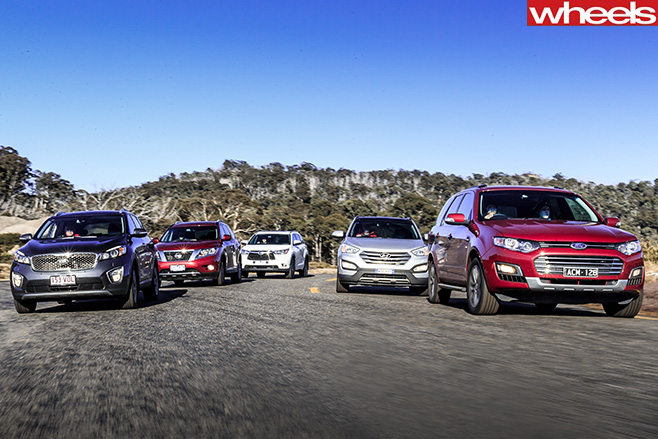
What were some of the key themes from comparisons posted online this year? One that stands out is the growing strength of Korean makers, and in particular Kia, which for the first time supplied a vehicle we rated best of the bunch. “What once was up is now down, and down is up, courtesy of a seven-seater from Kia that shatters preconceptions about Korean build quality, design and dynamics,” wrote staffer Alex Inwood of the Kia Sorento, in our look at five of the best big SUVs.
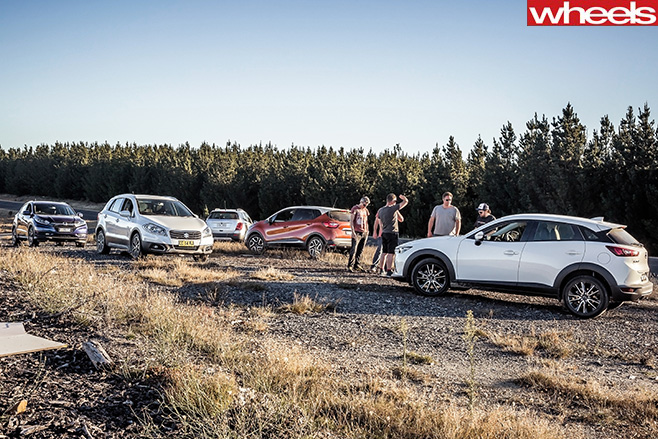
While we’re on SUVs, what about small ones? A theme from our round-up of five booming SUV babies was perhaps harder to draw, but one you could point to was the depth of ability at this end of the market. Another might be the breadth of your choices. The Mazda CX-3 was lauded for its driver appeal; while the Honda HR-V drew equal praise for its versatility. “So, CX-3 or HR-V? Hate to say it, but it depends on your priorities because they’re so different,” Ponchard concluded.
Dylan Campbell – Editor
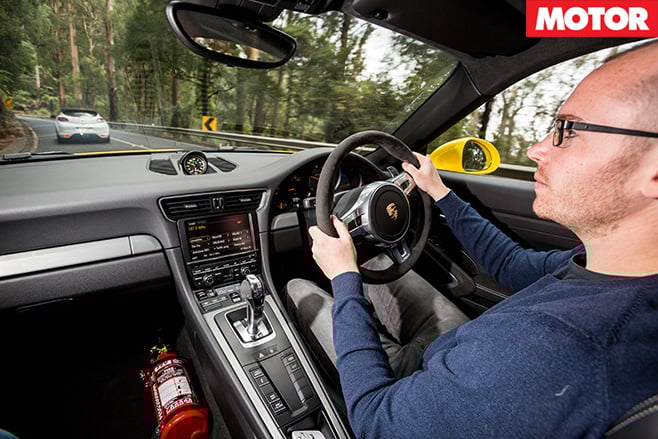
Porsche 911 GT3 – Holy moly. In a forest somewhere north east of Melbourne I had my best drive of the year in this car. The engine (9000rpm), the chassis (playful yet talented), the grip, the noise… They don’t come much closer to perfection than this.
Holden Commodore LS3 SS – Australia’s still got it. Holden tidied up a lot of VF complaints and installed the engine with the pep the SS deserved. Sounds great and matches a sweet, well-sorted chassis – it’s by far and away not just a Clubsport with a Holden badge. It’s even better than that.
Mercedes-AMG C63 S – A few hundred metres down the road the first time I drove the new C63, I was thinking, this is my kind of car. Sure, the ride’s a little firm, but it makes all the right V8 noises (turbos done right for a change), has plenty of grunt and is keen to play. Merc sent one to PCOTY on Michelin Pilot Sport Cup 2s, which initially had us concerned. But the C63’s chassis took the significantly extra grip in its stride. By god, it was good.
Audi R8 V10 Plus – Would list just the engine if I was allowed. Not saying the new R8’s chassis isn’t good – in fact it’s excellent, which says a lot about that 5.2-litre naturally-aspirated V10. Truly one of the best engines ever (not just for the way it sounds) it turns the R8 into a silly-fast missile and is such an enormous part of its personality, fit any other engine and you’d have an entirely different car.
BMW M135i – Recently facelifted, but the hardware was barely touched, which might suggest it’s at risk of feeling outdated. Not at all. A recent blast in our new long-termer could count as one of my best this year. It’s got turbo-six grunt and hot-hatch agility in equal measure, yet it’s also fun and friendly. And the price these days is seriously right (hence the Bang For Your Bucks class win).
Lowlights
HSV Clubsport LSA Tourer – Drove it back-to-back with the new Chrysler 300 SRT. The Clubbie corners better but the 300 shows it up for noise and entertainment – it’s what a V8 should sound like. Holden nailed the LS3 SS for noise – why can’t HSV do the same? Might sound like I’m being picky but you don’t buy a V8 for the little badge on the boot. LSA Clubsport is a great car, and fast, but I wish it showed more personality.
Mercedes-AMG GT S – Not so much a miss as it is just a wee disappointment. Was so looking forward to driving this car – had it described to me as ‘a 911 with a Jaguar F-Type R engine’. It’s fast and remarkably well sorted – it feels right at home on a track – and looks stunning. If it had the C63’s steering this could have been on the ‘Hits’ list.
Porsche 911 Carrera S – Again, not a bad car (truly the opposite) but the problem is I spent a lot of time in the old, naturally-aspirated Carrera. It’s not that the new car isn’t good – it’s brilliant – but the turbos give it a totally different personality to its predecessor. This invites the subjective. And I would simply trade the improvements of the new car for the old naturally-aspirated engine.
Audi TTS – The latest-generation, base TT quattro had everyone shaking their heads in disbelief at Bang For Your Bucks. Finally, a TT that drives as good as it looks, we all agreed. So I expected the TTS to be that, and then some – but it wasn’t quite. The suspension feels to need more polishing, not least because of a too-harsh ride. But just generally it wasn’t the epic piece of kit I really wanted it to be.
Scott Newman – Associate Editor
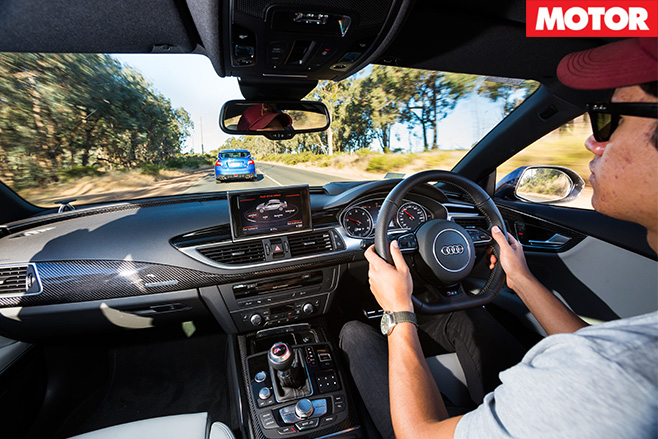
Holden VF II SS V Redline – There wasn’t much wrong with the old Redline but the VF II updates fix pretty much everything. It goes hard and sounds amazing, but the detail changes are just as impressive, like the slicker gearshift, strong brakes and more agile handling. The car I’d buy with my own money (if I had any).
Mercedes-AMG S63 Coupe – The ultimate grand tourer. Sublime ride and spectacular interior make it feel special day-to-day, yet it is brilliant to drive hard and the 430kW/900Nm twin-turbo V8 gives it fearsome acceleration. Only the rear-end styling lets it down; oh, and it went through a set of front tyres in under 100km. Sorry again, Jerry.
Renault Megane RS275 Trophy-R – A triumph. Front-wheel drives don’t get any better than this. Gearshift sucks, but apart from that it’s one of the best drivers’ cars around, on road or track.
Porsche 911 GT3 – One of the most impressive performance cars there’s ever been. Now liveable enough that you could conceivably drive one every day, yet almost unparalleled for circuit ability. Would I buy one? I don’t think so, it’s a bit serious for my tastes, but it’s utterly brilliant.
Toyota 86 rally car – This essentially standard Toyota 86 was the car I had most fun in all year. Needs a proper mechanical LSD and some gravel tyres to be properly complete but otherwise this is rallying at its cheapest and most entertaining. I want another go.
Honourable mentions: Lamborghini Huracan; Mercedes-AMG C63 S Coupe; Porsche Cayman
Lowlights
Audi TT S – This is a great car badly let down by its suspension tune. Punchy drivetrain, playful, adjustable handling and a beautiful interior, but the way it crashes, thumps and bangs over bumps is unacceptable. What’s worse is the suspicion that it’s engineered-in to justify the ‘S’ badge, as the standard TT doesn’t seem to have these issues.
Mercedes-AMG GT S – Let me get one thing straight: the new GT is incredible in terms of pure performance. The way it stops, goes and handles sets a new Mercedes standard, however the light, darty steering and lack of composure over bumps meant I struggled to gel with it. Haven’t had a lot of time behind the wheel, so might be just an acclimatisation thing; hopefully there’ll be a chance in 2016 to rectify that, as this is a car I really want to love.
Missing in action – Despite numerous requests, we’ve not driven a Maserati, Lotus or Aston Martin this year; locally, at least. Nor a McLaren, though that’s more of an availability issue. Fingers crossed for 2016.
Louis Cordony – Staff Journalist
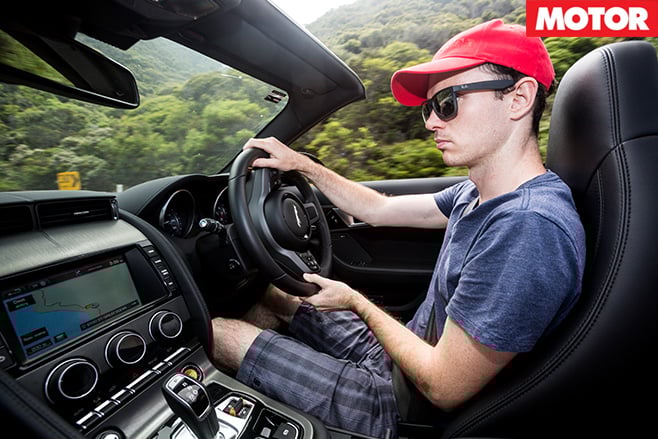
Jaguar F Type V6 S AWD – While its interior isn’t class leading, the F-Type makes up for it with sex kitten looks, explosive performance, and a drive experience both visceral and friendly.
BMW M6 – Slurps up highways with crushing speed and cosseting luxury. Lacks tactility, and space, but that’s not its point. Also looks better than a Victoria’s Secret show change room.
Mazda MX-5 1.5-litre – Without power, grip, or tricky electronics, the 1.5-litre’s balanced chassis and dialled-in inputs reward proper driving while punishing dodgy stuff. Cramped cabin could be a deal breaker, though.
VW Golf R Wagon – Why can’t you have it all? This mutt-wagon’s all-round ability is only surpassed by its accessible performance. Exhaust is rortier than the hatch’s, too.
Renault Megane RS275 Trophy-R – Dieppe’s stripped-out hatch offers super levels of performance with the character to match. Isn’t so charming when driven slow, but easily makes up for it on circuit.
Lowlights
Volvo V40 T5 R-Design – An absolute stunner to look at, being swoopy and futuristic, however the rest of its package isn’t as feel-good. Gone was the characterful five-cylinder, and rear seat room makes airplane economy class look spacious. Not terrible, rather mentioned because it should deliver more on its stunning looks and $49K price tag.
Peugeot 308 GT – The fact the 308 GT nails design, class, and refinement makes its flaws all the more frustrating. There’s a decent chassis underneath it, but the lack of speed, feel from its inputs, and ridiculous details, like its tacho that winds backwards, handicap its likeability.
David Morley – Resident Bloke
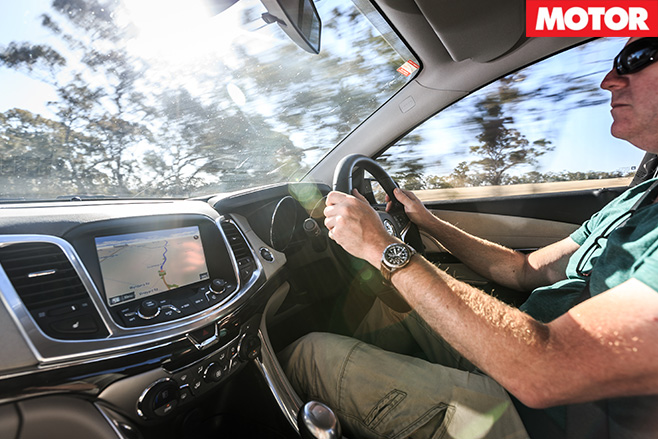
Holden Commodore VF Series 2 SS – Got to be the Redline version with the Brembos. But even the boggo SS is all A-side. That noise!
Renault Megane RS275 Trophy-R – The best tail-dragger I’ve ever driven. Period.
Porsche 911 GT3 – I know, predictable. But so was the realisation that this is still the high-water mark for 911s.
Tesla P85D – If one motor is good, two must be better. Yes, yes they are. A real dynamo (geddit?).
Jaguar F-Type V6 – It’s not often I would forgo the V8 version for the six, but this thing is bliss on a stick. For a bloke like me, anyway.
Lowlights
BMW M5 Pure – Yeah, it goes and all that, but the basic M5 package is still wooden and aloof.
Ford Mustang Ecoboost – Not because it was a bad car, just that I really wanted to drive the V8.
Interviewing VW brass just 36 hours before the emissions scandal hit the fan – oh how my questions would have been different.
Georg Kacher – European Correspondent
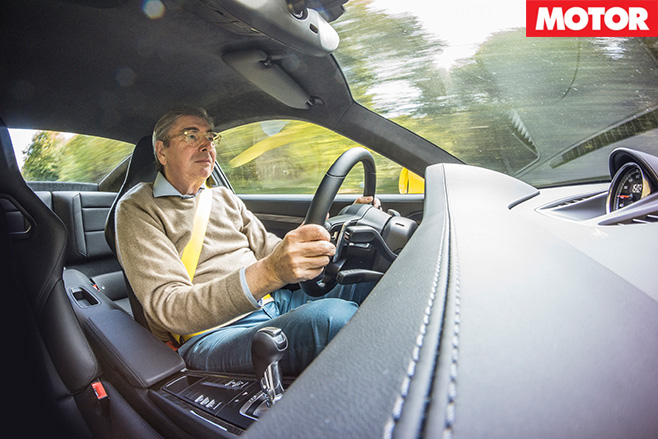
Porsche Cayman GT4 – GT3 fun for the price of a used Carrera 2.
Ferrari 488 GTB Spider – Pretty much the best of all worlds, at a price.
Lamborghini Huracan LP 580-2 – Even more smiles per mile than the much faster Ferrari.
Mercedes-AMG C63 S Coupe – Perhaps currently Germany´s finest muscle car.
Ford Mustang V8 – Perhaps currently America´s finest muscle car.
Lowlights
Audi R8 – Immensely capable but poorly packaged. We didn´t click.
BMW M4 GTS – A lot more money for not a lot more poke.
Porsche 911 – Can´t wait until they unleash the GTS
Daniel DeGasperi – Web Editor
Mercedes-AMG GT S – Balances a typically AMG brutish personality with a delicacy we haven’t seen before from the brand (and certainly not from the SLS). I’ve only driven the GT S on track, where its light but incisive steering and nimble attitude results in being able to drive it with loose fingertips, not clenched fists. Likewise, the new V8 is fast and sounds great, yet superb throttle response means it’s communicative rather than simply arrogant.
Jaguar F-Type R Coupe – Forget the 4.2-second 0-100km/h claim – this supercharged V8 coupe has one of the strongest mid-range power deliveries of any car at any price. In short it feels much faster than its claim. Sitting on the back axle and guiding that long nose feels as though you’re perched on the base of cannon, just like Cher in the If I Could Turn Back Time music clip but minus (hopefully) the fishnet stockings.
Holden VF II Calais Sportwagon – The combination of soft suspension and touring tyres with 6.2-litre V8 and bi-modal exhaust is sleeper heaven. The VF II chassis remains sweetly balanced, but the Calais is a challenge to drive quickly given the pitch, roll and occasional float. Add a sexy, practical wagon bodystyle with police-pack brakes hiding behind the 19-inch alloy wheels, and you have a car that surpasses the VL Turbo – in maroon, no modifications! – as my Commodore wagon favourite.
BMW M235i with optional LSD – Adding a limited-slip differential to the M235i raises the price by a hefty $4000, but it also transforms the driving experience of what already is a lovely, turbo-six rear-drive coupe. To match the sharp front-end is a backside that feels properly connected to allow impressive mid-corner power-down. The perfect gap-filler between best hot-hatch and entry-level Cayman.
Volkswagen Polo GTI – Not inspiring at first glance and with a rubbish driving position, steering a Fiesta ST and then 208 GTi 30th Anniversary made me fully appreciate how much the little Polo GTI offers. Not only does it feel faster than both of them, but its ride and refinement is in a different league, yet its handling is brilliant without being boring. New turbo engine with manual gearbox, adaptive suspension and trickier front-diff electronics/Sport ESC truly transforms it.
Lowlights
BMW i8 – It is possible to love a car yet be disappointed by it. I love the way the i8 looks and drives – a dainty, zingy supercar seems like the equivalent of healthy cocaine. What were BMW thinking, though, fitting bicycle-thin front tyres to its hero car? They hobble the handling as much as the three-cylinder turbo hybrid drivetrain limits supercar-matching acceleration. It all means that with the exception of consumption, the i8 almost deliberately falls short to drive. While AMG shoots for Porsche, BMW are aiming for … well, I don’t even know.
Subaru Liberty 3.6R – Another generation, another disappointing Liberty. The boxer six is still a sweet engine, but it’s installed in a sedan with woeful damping that allows it to feel supple over small bumps, yet aggressive in its rebound over larger ones. The result is a combination of gently waving head-toss on a country road punctuated by occasional abruptness. To think 10 years ago this tester coveted a Liberty 3.0R Blitzen manual. In red. As a wagon.
Lexus RC200t – Lexus delayed its 2.0-litre turbo four-cylinder program, claiming that it needed to address NVH issues the Germans ignored. The engine is now deathly quiet, with no personality anywhere. Despite 180kW and 350Nm, the dreadfully heavy (1675kg) RC200t feels sluggish. The eight-speed automatic is docile, even in Sport+, and the brilliant four-wheel steering system that transforms the handling of the RC350 F Sport hasn’t been engineered for RC200t – the result is safe, stable, but ultimately dull dynamics. A bit like the rest of the car.
