
So, what is it?
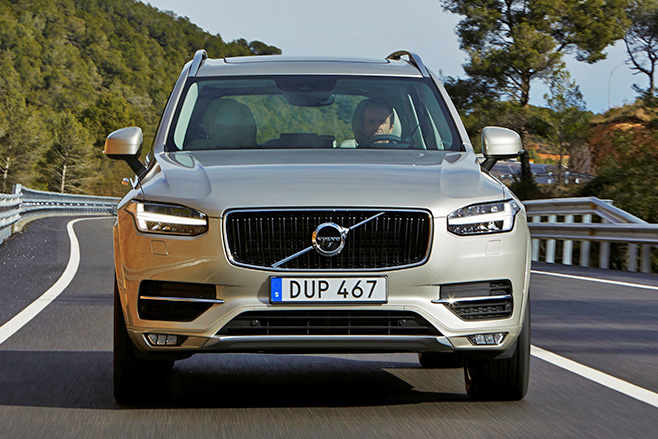
In launching its second generation XC90, Volvo isn’t skimping on big, sweeping statements. According to the Swedish chefs from Gothenburg , the seven-seat SUV represents “a new beginning” and “defines the company’s future direction.” Which is code for Ford sold us to Geely five years ago, and we’re free to do what we want without wading through masses of red tape in Detroit.
Why should I care?
In fact, Volvo claims it will turn over its entire line-up in the next four years, and believes all that fresh metal, marketed under a new ‘Made by Sweden’ positioning, will finally make it a credible contender in the upper-luxury ranks. It cost $11B over three years, and Volvo’s calling its ambition out loud and proud, saying the XC90 has been designed to “lead the market” in terms of comfort, luxury, and user interaction.
What’s new about it?
Although overall proportions are similar to the car it replaces the second-gen XC90 sits on the brand’s new modular SPA (Scalable Product Architecture) chassis, which is likely to underpin many of its upcoming siblings due by 2019.
Initially there’s a choice of two engines in the Volvo XC90, a 165kW/470Nm twin-turbo diesel four (D5), and a 235kW/400Nm twin-charged petrol four (T6). The latter uses a supercharger to enhance torque at lower engine speeds, with a turbo taking over to boost the top end. Both are matched with an eight-speed auto, produced by Aisin-Warner to Volvo’s in-house design.
Six months down the track, Volvo will add a plug-in hybrid version of the petrol unit (T8) which tips in another 65kW/240Nm of electric grunt for a family fast 5.6 second 0-100km/h time.
There are three model grades – Momentum, Inscription, and R-Design, the latter available from the fourth quarter of this year.
Beside the platform and drivetrain there are several key tech features that stand the new XC90 apart.
First, the standard ‘Run-off road protection package’ combines seatbelt pre-tensioning with energy-absorbing seats to help prevent spinal injuries in a hard, off-highway landing.
Next, the ‘Auto brake at intersection’ system automatically brakes the car if the driver turns in front of an oncoming car.
Plus, the tablet-style ‘Sensus’ infotainment interface uses an infrared screen (so you can wear gloves and still tap or swipe) for everything from nav and audio, to phone and on-board vehicle functions. In certain sections icons can also be positioned on the ‘desktop’ in line with user preference.
That’s all fine, what’s it like to drive fast?
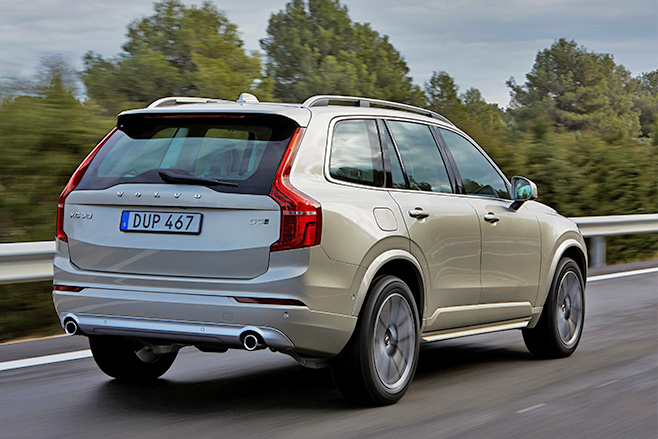
The XC90’s local launch in and around Canberra took in a mix of freeway, coarse-chip b-roads, as well as the odd dirt section, and the first few kays in a Momentum T6 had us double-checking we weren’t in a diesel, because at idle and slow speeds the twin-charged four sounds comparatively coarse. But get it up into the mid-range and the new engine is spirited and the eight-speed auto smooth. The transition from supercharger to turbo is imperceptible, and maximum torque is available from 2,200rpm all the way up to 5,400.
Suspension set-up is double-wishbone front and an integral axle rear, incorporating a lateral leaf spring, and ride comfort on the Momentum’s standard 19-inch alloys, shod with 235/55 Michelin Latitude Sport 3 rubber, is excellent, although more pronounced holes and cracks generated some over-the-odds noise and vibration.
Road feel from the electrically-assisted, variable power steering is OK, braking is strong, and the design and development effort that’s gone into the front seats has paid off with great long-distance comfort combined with excellent (adjustable) lateral support.
Swapping to a D5 Inscription, the twin-snail diesel chips in with an extra 70Nm of torque, delivered across a relatively narrow peak brand from 1,750-2,500rpm, which is perfect for towing, (max weight 2,250kg).
The step up to 20-inch rims, wearing 275/45 tyres, doesn’t harm the ride/handling balance, and highway cruising is relaxed, with plenty in reserve for rapid overtaking. Optional 21 and 22-inch wheels are available.
And driving home from the city?
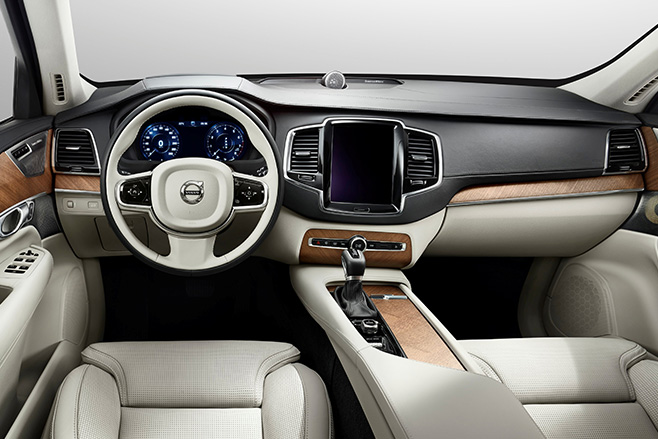
The interior design is classic Scandinavian minimalism, with the Sensus system incorporating most of the functions normally handled by dash and console switchgear. The base Momentum we drove featured a dark colour (leather) upholstery and interior trim, and while the standard of fit and finish is high, the overall impression is flat; lacking a sense of occasion. Our advice would be to stump up an extra $700 for birch or walnut wood trim elements. They make a big difference, as did lighter Nappa leather upholstery in the Inscription.
The Sensus interface is super easy to use, the 12.3-inch digital driver instrument display is clear and easy to configure, the widely adjustable second row seats incorporate Volvo’s signature built-in child booster cushion in the centre position, and the third row is tailor-made for kids, with more than adequate space for grown-ups on short to medium trips. Plus folding seats for a multitude of load positions is stress-free.
Anything bad about it?
As mentioned, the petrol engine sounds un-prestige at low revs, the steering could be more feel-some, and the dark interiors feel a bit, well, dark.
How much would I have to pay? And is it worth it?
Pricing starts at $89,950 for the Momentum D5, rising to $96,950 for the Inscription and $97,950 for the R-Design. Opt from Petrol power and you’ll need to add $4k to the equivalent model walk up ($93,950, $100,950, $101,950). When the R-Design T8 Hybrid hits later in the year, it will stretch to $122,950.
On the face of it, that’s a roughly $20k increase from the out-going model across the board, but Volvo’s confident the new drivetrains, innovative tech, and increased spec more than justifies its pricing strategy.
Standard equipment for the Momentum includes the Sensus system, 10-speaker ‘High Performance Audio’ (19-speaker Bowers & Wilkins is a $4,500 option on all variants), Hill Descent Control (HDC), ‘Park Assist Pilot’ with front and rear sensors, power tailgate, rear parking camera, electric front seats, leather, alloys, LED auto-bending headlights, four-zone climate-control, rain-sensor wipers, cruise, plus ‘Driver Alert’ and ‘Lane Departure Warning’ systems.
The Inscription picks up Nappa leather, high-level interior illumination, dual integrated exhausts, and the ‘IntelliSafe’ package, including the Blind Spot Information System (BLIS) with ‘Cross Traffic Alert’ and ‘Rear Collision Warning.’
Then the R-Design adds, ‘Drive Mode’ adjustable power steering, Charcoal headlining, sports seats, and interior carbon trim elements. And with the T8 drivetrain the R-Design cops an Orrefors crystal gear lever and panoramic sunroof (a $2,950 option on other models). Lots of cash, but lots of fruit.
Would you take the Volvo XC90 Momentum T6 or BMW X5 xDrive35i?
Similar outputs with identical 0-100km/h acceleration and claimed fuel consumption numbers. The Beamer is loaded, but $13.5k dearer. The new XC90’s a real contender.
Click here to find out more about the Volvo XC90.
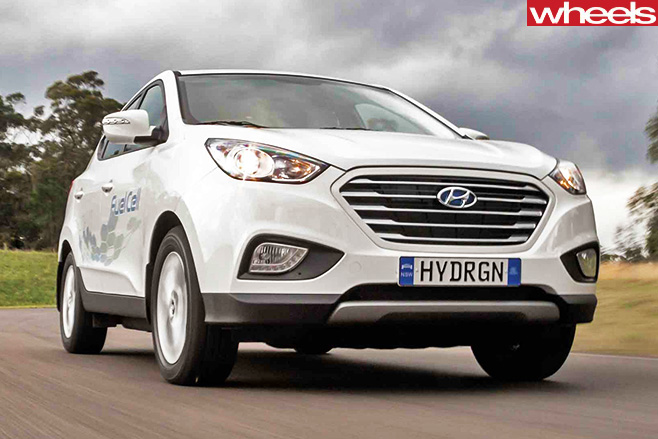
The Hyundai ix35 Fuel Cell is the world’s first mass-production hydrogen fuel-cell powered car, and its presence in Australia signals the Korean company’s focus on hydrogen power as a key part of sustainable motoring.
WHAT IS IT? The ix35 Fuel Cell is Hyundai’s fourth-generation hydrogen fuel-cell powered car, and the first prepared for mass production. It uses a fuel-cell stack to power an electric motor that drives the front wheels. A pair of rear mounted hydrogen tanks hold a combined 5.64kg.
There’s also a lithium-polymer battery to handle peak loads – it’s kept charged via a brake energy regeneration system.
With the exception of the drivetrain, the Hyundai ix35 Fuel Cell is just like a conventional internal combustion ix35.
MAIN RIVALS Toyota Mirai
THE WHEELS VERDICT The Hyundai ix35 Fuel Cell accelerates quietly and effortlessly, like a hybrid, and drives much like a conventionally powered version. Meanwhile, Hydrogen’s environmental credentials (water is the only by-product of using it to produce electricity in the fuel cell), inherent safety, and internal-combustion rivalling range, suggests hydrogen – and the Fuel Cell Vehicle – have a key part to play in our motoring future.
PLUS: Zero emissions motoring; range; smooth, quiet and responsive drive; safety MINUS: You can’t buy one yet; the cost will be high initially; Australia’s hydrogen story isn’t as advanced as other regions such as California and parts of Europe.
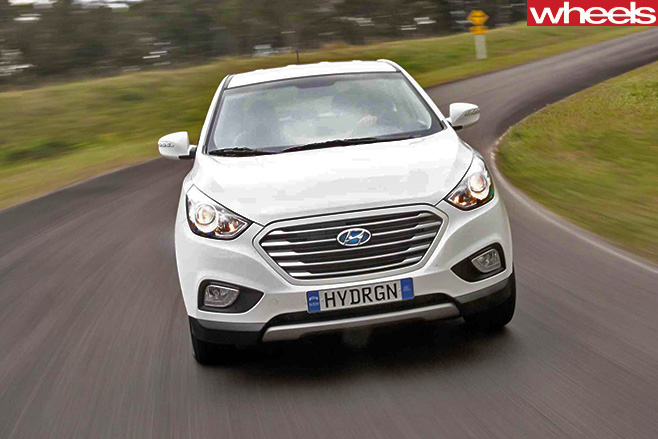
Developments in Hydrogen storage tank and fuel-cell technology have brought the key. Range has increased from the first-gen FCV’s 160km to the current ix35 FCV’s 594km, which is on the page with petrol and diesel cars.
That’s not the only way in which the ix35 FCV fits easily into the ordinary passenger car mould. In fact, unusual instruments are about the only things that make the fuel-cell ix35 any different from a petrol or diesel one, along with the hybrid-like torquey, smooth and quiet driving.
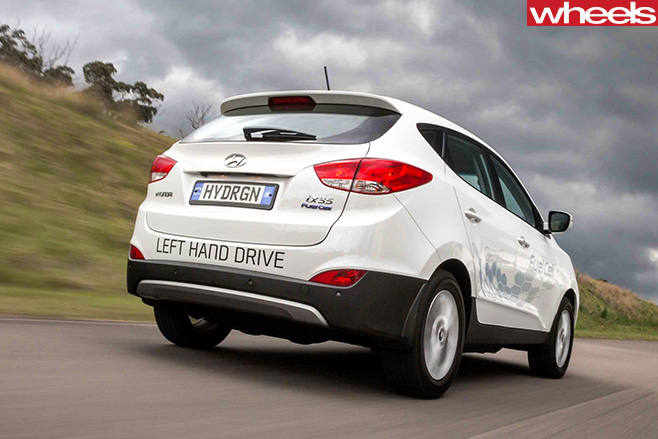
If you listen carefully, a faint fizzing signposts that the fuel cell under the bonnet is producing electricity in a chemical reaction of hydrogen with oxygen. The only by-product is water, which is emitted as a vapour or as the odd drop from the tailpipe.
The precious metal insides of the fuel cell are on the cutting edge, but if you’ve driven a hybrid, there’s nothing confronting at all about driving the ix35 FCV. The immediacy of the motor’s torque delivery means it’s more effortless than the claimed 12.5sec 0-100km/h figure suggests, and Hyundai claims a top speed of 160km/h.
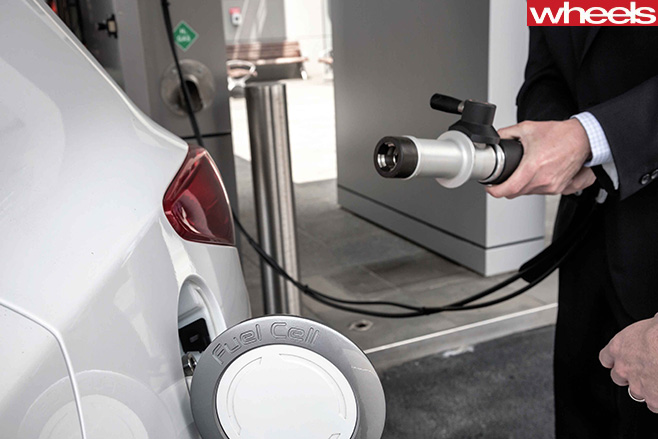
Safety is often the first question for prospective fuel-cell converts. Hydrogen’s low atomic mass helps make it an inherently safe fuel, and there is measure upon measure built into the refuelling process, and the ix35 itself.
Drive the SUV and listen to its proponents, and rather than being challenged by hydrogen as a car fuel, it becomes difficult to see a motoring future without it.
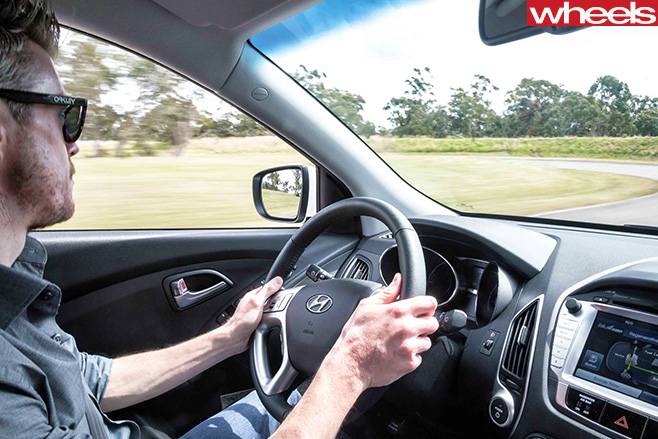
SPECS Model: Hyundai ix35 Fuel Cell Engine: hydrogen fuel cell powered AC induction electric motor Max power: 100kW @ 5000rpm Max torque: 300Nm @ 1000rpm Transmission: reduction drive Weight: TBC 0-100km/h: 12.5sec Fuel economy: 0.9512kg/100km (tank capacity: 5.64kg) Price: not available
As the i3 departs the Wheels test fleet, modern life strikes a cord.
DESPITE society’s obsession with lycra-infused bike riding and 24-hour gyms, we’re generally a pretty lazy bunch. The thought of getting out of your seat to change the TV channel or answer the phone long ago went the way of home-delivered milk and affordable houses. Walking to the shops? Forget it in this app-happy world.
So I’m not as surprised as I once might have been that plugging in a power cord feels like a chore. Yet I haven’t had to visit a petrol station for weeks. That’s life in an electric car for you.
Three months into my time with a BMW i3 and it’s time to say goodbye, only I’m not ready to wave it off.
Sure, I could live without the oddball looks (it’s dorky and skinny from behind), the headlights are more about preserving electrons than lighting the road, and the front-rear pitching is about as fun as vacuuming. Oh, and I’ve never really got used to the rotary gear selector.
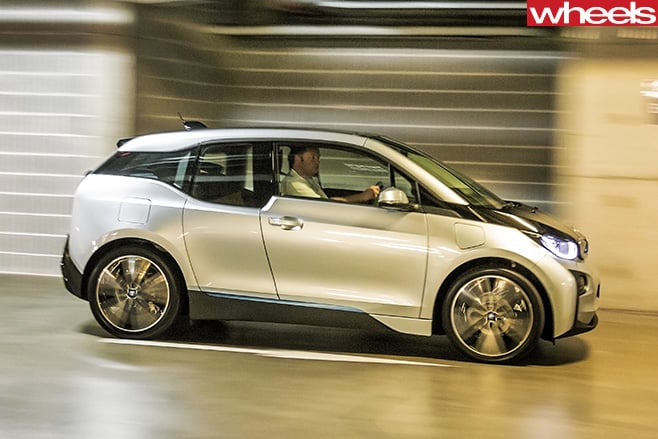
It starts with traffic, something difficult to like. But I hated it less in the i3. Being able to dart away from a set of lights on full throttle without the noise of a beefy V8 or frenetic four-cylinder was pretty cool. And when the gridlock banked up again – yep, just 300 metres later – I knew I’d be turning some of my kinetic energy back into electricity for the next mini grand prix.
I came to value Connected Drive, the app that allowed me to check where the car was and how much charge it had (you can also monitor energy usage). OK, it’s gimmicky, but it’s also handy, like when I knew I’d only be driving 20km the next day so I didn’t have to wander out on a cold night to plug it in.
Yet it struck me after these few months that I had no idea how much it was costing to run. After all, 15kWh per 100km doesn’t mean much.
So, off to the filing cabinet for an electricity bill. I’m paying 25.0926 cents per kWh precisely. Each 100km in the electric Beemer has therefore cost me something like $3.90. That’s half what I’d be spending in a Toyota Prius, but amounts to plenty when it’s comes in one three-month lump sum added to an electricity bill already bloated with three months of heating, cooking and lighting.
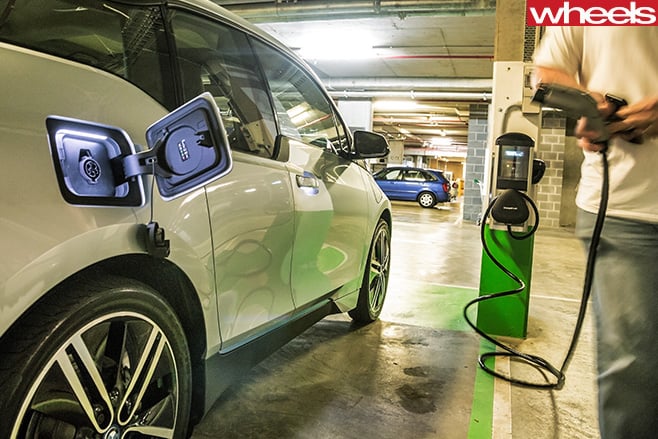
But there’s plenty of feel-good factor about driving the i3. Apart from doing my greenie bit, I also found myself looking down the nose of Prius drivers, in much the way they did to other drivers a decade ago. Such old technology…
Range reality
BMW claims an electric-only range of 170 kilometres for the i3 Rex (and double that distance if you use the range extender’s nine-litre fuel tank) but we never got close to the battery-only figure. Typically it was between 110 and 125km before the drone of the 647cc two-cylinder petrol engine kicked in. That was fine for most of our city-based driving, though, and we often went two or three days before plugging in for a charge.
Grid-locked
THE solar power system I’d waited months for arrived two weeks after my i3 went back. But at least my next electric car will be largely charged for free – assuming I can charge it during the day. My 4kWh system only works when the sun is out, reverting to dirty old grid power after that. Battery systems that take you off the grid are the hot topic in solar energy circles, but they’re a lot more expensive than the increasingly common quality sub-$10K systems.
Read part 2 of our BMW i3 long-term car review.
BMW i3 REX Price as tested: $69,900 Part 3: 817km @ 15.1kWh/100km (plus 3.0L of fuel) Overall: 1633km @ 15.4kWh/100km (plus 8.5L of fuel) Odometer: 5152km Date acquired: April 2015
Family bonding proves inevitable in the BMW i3’s unusually intimate cabin.
“ARE we there yet?” It’s a phrase parents never like to hear but inevitably do. Often.
With the BMW i3, you are just that little bit closer to the piercing shriek of a three-year-old. In fact everything in the cabin of the diminutive electric car is pretty close. BMW describes it as a “complete new sense of space”.
Such confined quarters have their benefits, though; not far to reach to ban an argued-over iPad or pick up a wayward Lightning McQueen, for example. Plus there’s the feeling of closeness to the family, which is great for the first hour or so but wears thin approaching the outskirts of town having listened to the toddler car-cry most of the way.
So began our attempt at turning the COTY-winning “future of urban mobility” and “electrical revolution” into a family car.
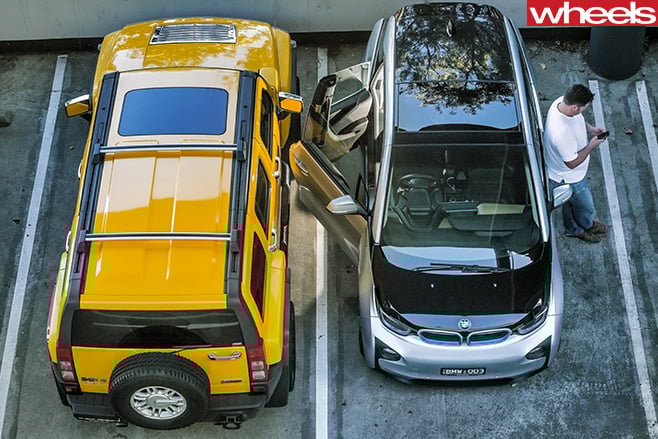
Once you’ve screamed “Stop kicking the seat!” for the 17th time and accepted the fact everything is a lot closer, there’s plenty to like with the i3. Getting kids in and out, for example, thanks to the ‘suicide’ rear doors. Given that the B-pillar and seatbelt open with the door (don’t do it when the person in front is still belted in!), it makes for a broad opening and it’s surprisingly easy to lash a kid. Less appealing is the cubbyhole you create for yourself with both doors open in a car park.
Speaking of parking, a big, bright colour screen gives clear reversing camera vision, while the view forward is great. A stubby bonnet reinforces the shortness of the carbonfibre machine.
My travels also involved the testing West Head Rd through Ku-Ring-Gai Chase National Park near Sydney, with its hills, dips and bends. It’s a challenging road and one that brings the i3’s suspension undone.
It’s not that bad dynamically; ultra-direct steering points the nose faithfully, but pitch too quick into a corner and it’s a frenzy of stability control graunching as it quickly rights the leaning wrongs. The big challenge, though, are bumps, exacerbated by the short wheelbase that results in plenty of pitching. It bucks and weaves more than our Prime Minister.
Thankfully the torquey motor punches hard – anywhere – and maintains the i3 smile factor.
Going the extra yard, one meter at a time
TRIP computers are often optimistic, so I Googled “electricity meters” hoping to find some wunder-machine that could count every electron flowing into the i3’s battery pack. Turns out buying one of these gadgets is tricky. Prices range from $20 to hundreds.
I chanced my luck with a mid-ranger that online forums suggested was vaguely accurate. Fail! Some charges my whizz-bang-o-meter suggested it had stuffed in half the electricity the car thought it used. Occasionally it was out the other way, by up to 30 percent.
Read part 1 of our BMW i3 long-term car review.
The rotary is back! The Mazda RX-Vision concept unveiled at the Tokyo motor show previews a return of an engine design synonymous with the Japanese brand.
Mazda says its two-door coupe concept – expected but unconfirmed to go into production – delivers the classic proportions of a front engine, rear-wheel drive model.
It sits low and wide, with a long nose like a Jaguar F-Type and a similar cab-rearward design. The interior is minimalist almost to the point of retro.
The brand says the styling of the RX-Vision “is modern but maintains a sense of lineage and authenticity, encapsulating Mazda’s entire history of sports car design.”
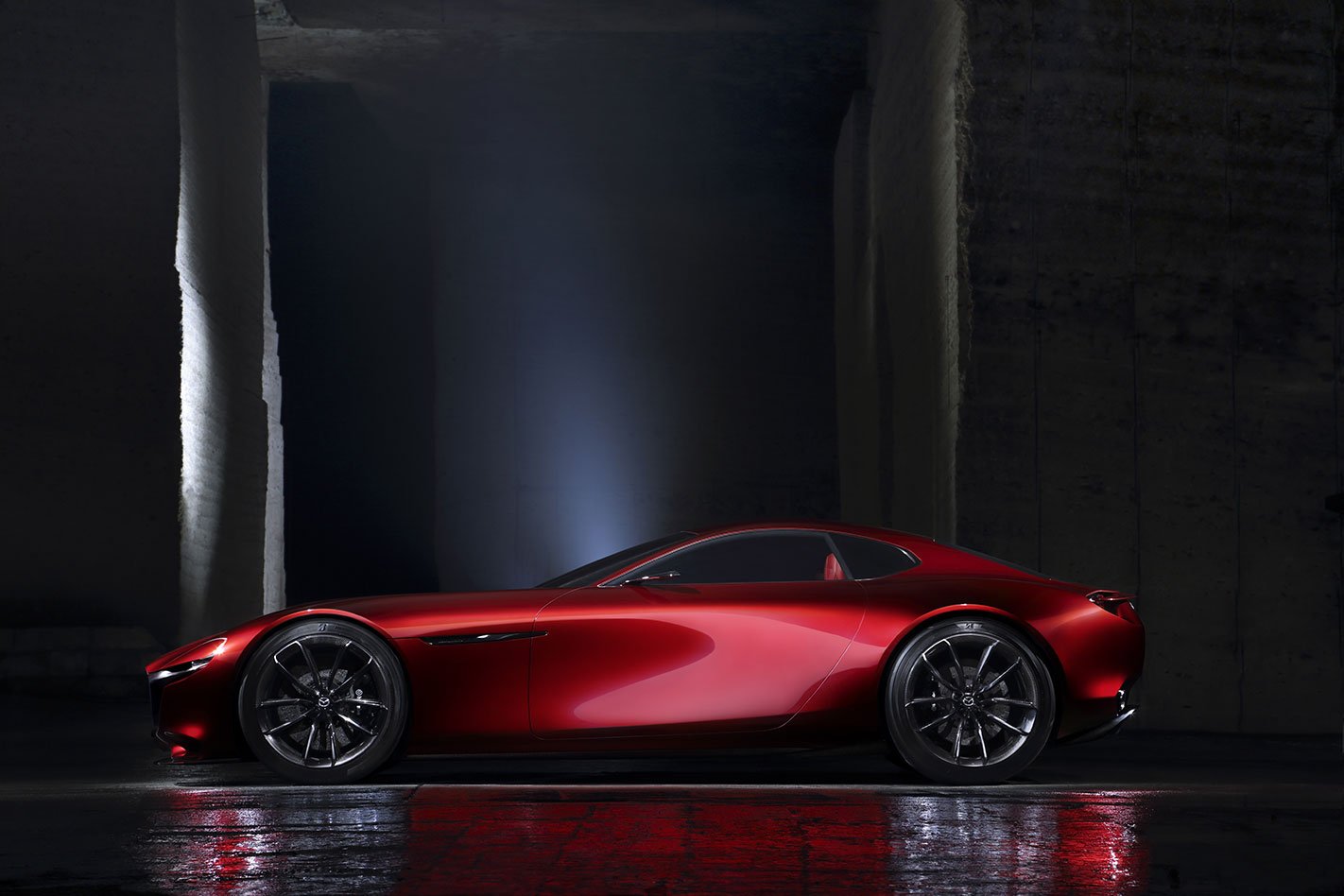
Width of 1.925m is beyond either (each 1.3-litre-engined predecessor measured about 1.75m), although the concept uses the same 2.7m wheelbase as the RX-8.
The “incredibly low bonnet” owes to a new rotary engine dubbed Skyactiv-R, in a similar naming strategy to Mazda petrol/gasoline (Skyactiv-G) and diesel (Skyactiv-D) engines.

“Mazda will never stop challenging to deliver new rotary engines that provide its unique brand of driving pleasure,” the company says in a statement.
“Skyactiv technology [will help] towards achieving a breakthrough in addressing three key issues with rotary engines – fuel economy, emissions performance and reliability.”

In two years Mazda will celebrate 50 years since it introduced the Cosmo Sport using the brand’s first rotary engine.
It will be a celebration that that will likely include a production version of this RX-Vision concept set to revive the RX-7 nameplate or continue onwards to RX-9.
Bad news for VTEC fans, with Honda Australia boss Stephen Collins confirming ahead of the Tokyo Motor Show that the current-generation Civic Type R won’t make it to Australia.
The spearhead of Honda’s performance renaissance, along with the new NSX, the Civic Type R’s local release had been ‘unconfirmed’ for some time due to problems of timing.
As Honda Australia sells both sedan and hatch variants of the Civic, the Type R’s late arrival would have seen it sitting side-by-side in showrooms with the next generation of Civic Sedan.
While a Type R version of the new-gen Civic will arrive in due course, fast Honda fans will need to wait until at least 2018 for it to appear locally.
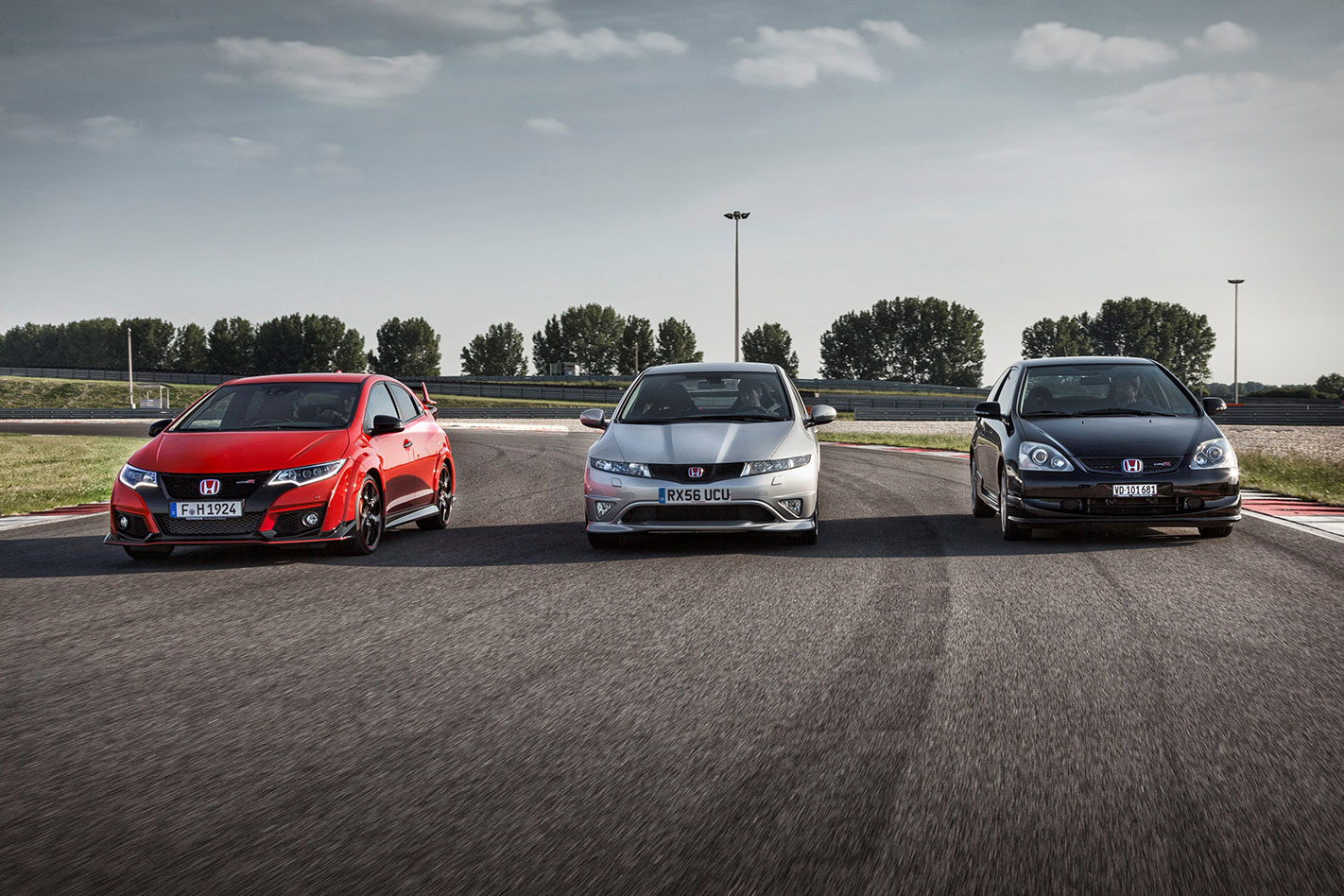
The new Type R, powered by a 228kW/400Nm 2.0-litre turbocharged four-cylinder engine, lapped the Nurburgring in just 7:50.63, putting it up there with the likes of the Renaultsport Megane RS275 Trophy-R as one of the fastest front-drivers around.
We were impressed following our first overseas drive, but sadly we’ll now never get the chance to see how it stacks up on Australian soil.
Mark Webber tips into turn one at Phillip Island with all the fuss of someone stirring a cup of tea. Except, of course, we’re doing somewhere north of 250km/h.
We’re sitting next to him as he’s flogging a new 991 Turbo. He smashes the brakes into turn one, the car wriggles on its tyres a little bit before settling, at which point Webber’s foot is again buried in the firewall carpet, a throttle pedal beneath it.
We’re very lucky to be riding alongside Webber for the launch of the new 911 Turbo and Turbo S, where he’s showing us what it can do. Originally we thought we’d be reporting on the 911 GT3 for you. But it’s had a few, err, issues (see page 12).
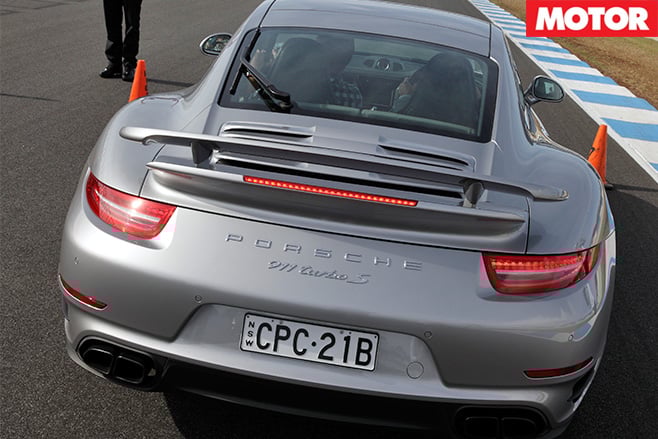
That’s indeed a lot of dough. Over the Turbo you get active sway bars, special LED headlights, carbon ceramic brakes and centre-lock 20-inch wheels. And in case the $359,800 Turbo’s 383kW/660Nm and 0-100km/h time of 3.4 seconds didn’t quite scratch your itch, Porsche adds more chilli for the S.
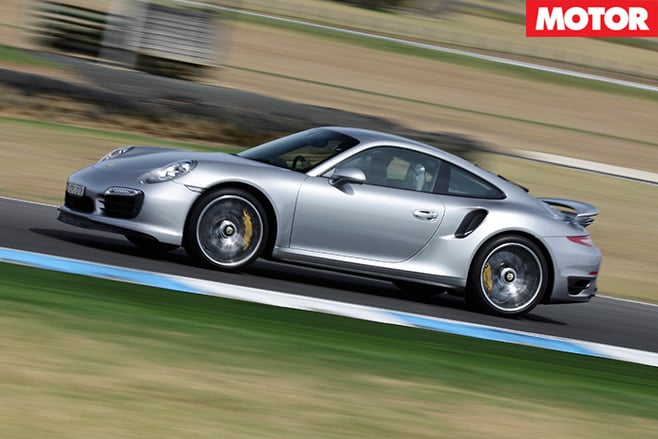
For $441,300, the 3.8-litre twin-turbo flat-six is wound to 412kW/750Nm (on overboost) and the rev ceiling raised from 7000 to 7200rpm. The 0-100km/h time lowers to 3.1sec and 0-200km/h drops from 11.1sec to 10.3sec.
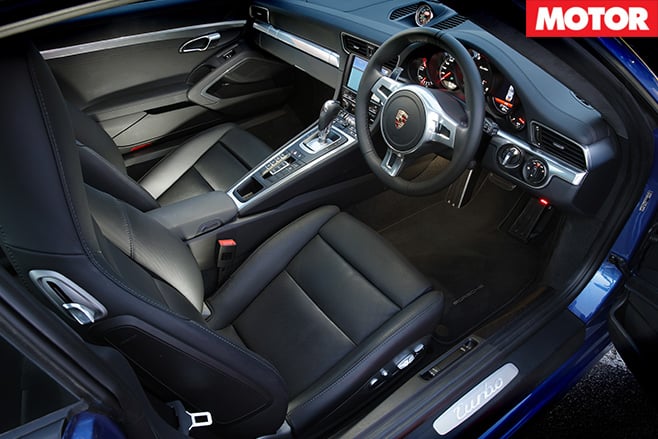
Particularly on track. Of course, the throttle pedal feels like it’s connected to the nozzles of the Saturn V rocket. The brakes seem to have limitless bite the harder you squeeze them. The all-wheel steering unlocks new levels of high-speed stability but also low-speed agility. You step out of a 911 Turbo after a few laps of the Island able to mumble words only one at a time.
Five out of five
Specs:
Engine: 3800cc flat-six, DOHC, 24v, twin-turbo Power: 412kW @ 6500-6750rpm Torque: 700Nm @ 2100-4250rpm 0-100km/h: 3.1sec (claimed) Weight: 1605kg Price: $441,300
When Holden and HSV raise outputs on production Commodore V8 models, tuners Walkinshaw will only take them higher – in this case to 547kW and 880Nm.
Tagged the W547 kit, referencing its power figure, the VF Series II tuner package is the most powerful ever created by Walkinshaw Performance and one of the most affordable.
Even an LS3-equipped $40,990 SS Ute can be fitted with the $25,990 supercharger package, which delivers a serious 243kW and 310Nm rise over the standard naturally aspirated 6.2-litre engine’s 304kW/570Nm.
Trivia time: the hike itself is more than the 185kW/290Nm total output of a base Commodore V6.
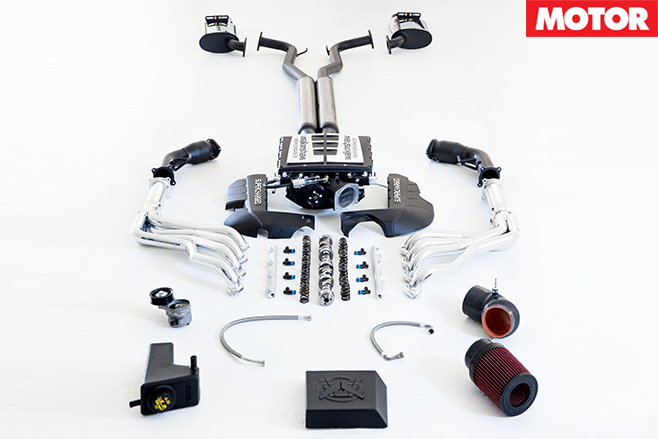
Given a Walkinshaw W547-tuned SS will also produce more grunt than the 430kW/740Nm HSV GTS, which we’ve nailed a 4.55sec 0-100km/h in, expect a low-4sec time if the rear tyres will play ball off the line (and that’s a big if).
Owners of 2012 to 2015 HSV models with the LS3 engine can also stand in line for the W547 upgrade, however the Walkinshaw Performance three-year/100,000km driveline warranty is only valid if the manufacturer warranty is as well.
A camshaft and valve spring upgrade is also part of the package, in addition to ceramic-coated headers and a twin active catback exhaust.
Atop the engine sits an individual build number, while W547 badging is slapped on the outside and buyers will get both a certificate of authenticity and a Walkinshaw Racing plaque signed by all current V8 Supercars drivers.
No chassis upgrades are included in this purely output-boosting package, though Walkinshaw insists, “It’s not necessarily about the power and torque, it’s really about how well the package is put together and how well it drives which in turn is based on how well it’s been engineered”.
Walkinshaw Performance has sold close to 2000 ‘W Series’ performance packages in two years, and six other kits beyond this one remain available.
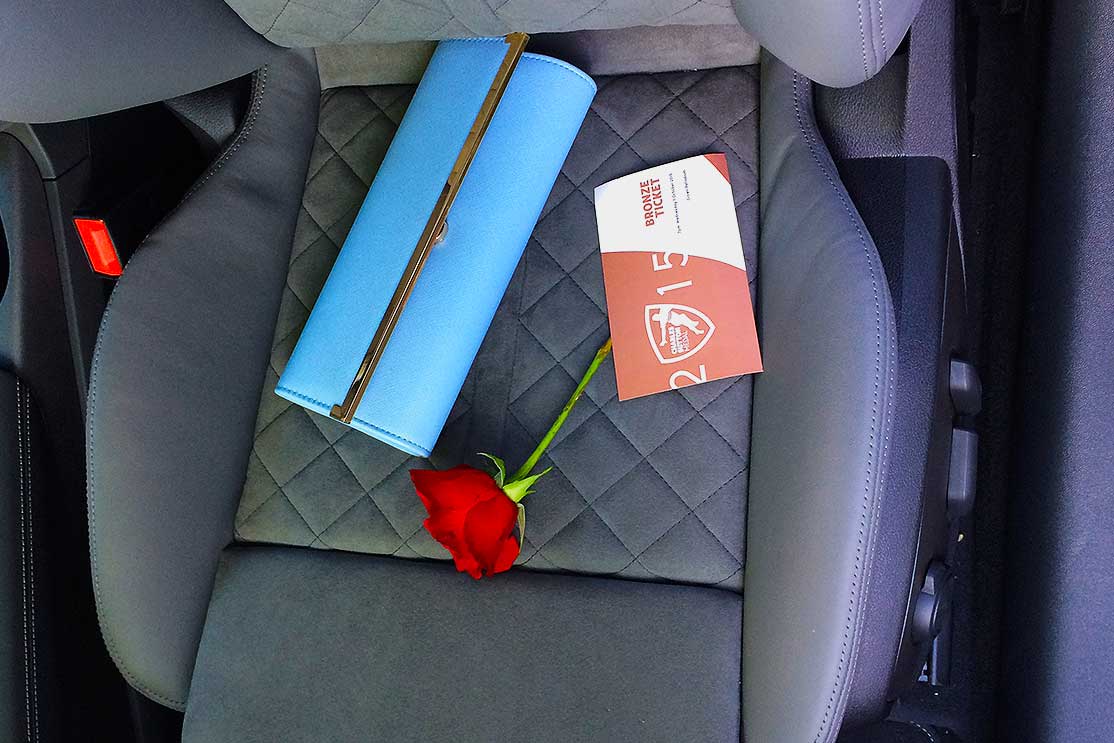
In one hand I had the keys to the Audi TT Roadster; in the other I was holding a ticket to the Western Bulldogs’ Charles Sutton Medal (for non-Victorians, it’s an AFL club’s best and fairest award). It was my night to shine and play ‘WAG’, except I wasn’t a wife or girlfriend; I was a guest of staff.
While my fellow WAGs spent their nights trawling the internet looking for the perfect designer dress, making Pinterest folders for possible hairstyles and ruthlessly exfoliating their skin in preparation for a fake tan, I tossed and turned trying to decide which car I was going to drive through Crown Casino’s valet.
I decided on an Audi TT Roadster, with the approval from several of my colleagues who told me it was the ‘perfect fit’ – Cinderella might have had the glass slipper, but I’ll take the TT Roadster over a pumpkin carriage any day.
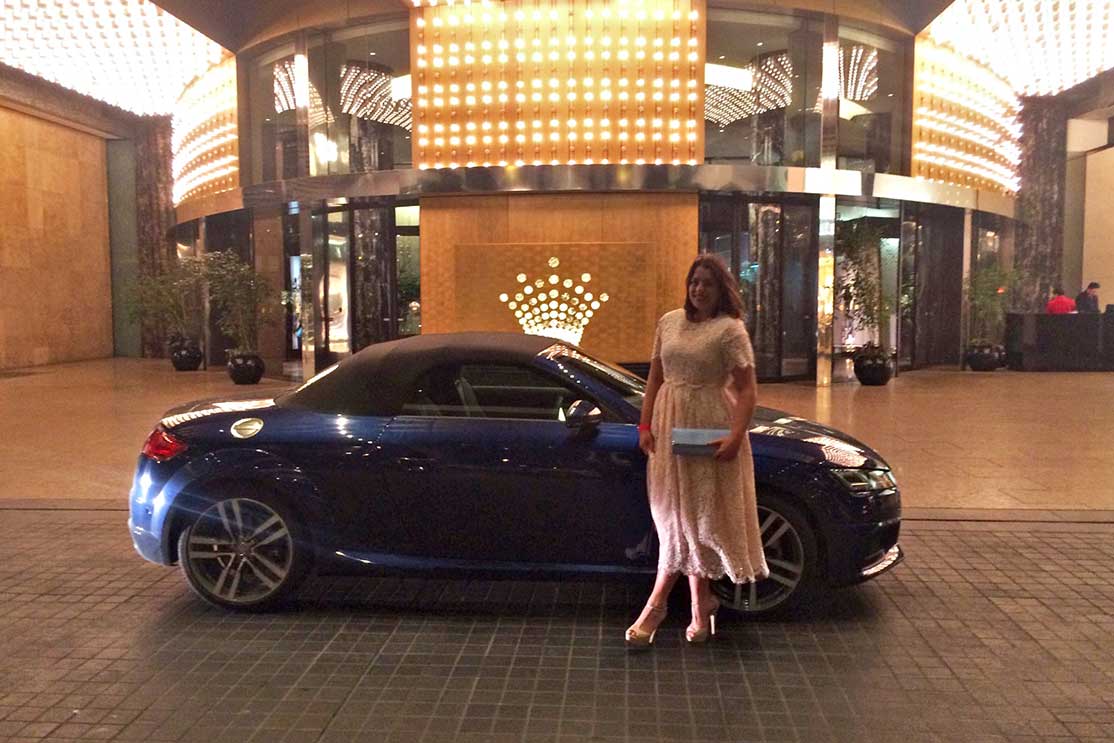
Surely if Cinderella could win a prince with a pumpkin, I could do the same with an Audi TT Roadster. If I could just act cool for one night and slip the TT’s facts and figures into a conversation with one of the footballers, it might lead to a walk on the Brownlow Medal red carpet next year. And if I failed, well, that was fine too, because I have never really wanted to be a WAG anyway.
Prospective romance aside, the biggest attraction of my blue steed was its convertible-ness – it was my real old-Hollywood moment. Except I didn’t have a silk scarf wrapped around my hair, driving gloves protecting my manicured fingers or glasses preventing my make-up from running – no matter, what could possibly go wrong driving a roofless car around Melbourne? Plenty.
I learnt a very valuable lesson that night: Convertibles are like a pair of stilettos; they look great and make you stand proud, but they’re bloody inconvenient and uncomfortable.
Having toured around in a series of big SUVs in previous weeks, it took me a while to get used to the TT. I was no longer the king of the road looking down on people; I was now looking up at them. The TT Roadster was so low to the ground. Not only did this make getting in and out of the car with our skirts hitched to our waists an adventure, but it also meant visibility was pretty average. Throw in a blacked-out soft-top with a small rear-window and you’ve got yourself a pretty stressful on-road experience. Putting the roof down helped and was a novelty I was keen to make the most of, but once twilight arrived the sun started to play havoc – without the roof there was nothing to shield my eyes.
On the road, the TT makes a beautiful revving sound and steers as you’d imagine a sports car should. It’s hard not to get caught up in the hype and suddenly start visualising yourself on a racetrack… in a dress.
When I finally arrived at Crown Casino my hair was no longer the same as when I’d last looked in the mirror, my mascara had started to leak, and I was so cold I was going to be drawing attention to the wrong kind of headlights. Thank God for the TT Roadster’s heated seats and neck vents; one of the best car features… ever!
The event was glamorous and I was surrounded by AFL athletes and dedicated fans. It was a Hollywood night – minus the paycheque, the expensive super-lux gown… and the actors. Unfortunately, even with my pretty new dress and suave sports car, I didn’t get my WAG ending, despite all efforts.
I thought, “I drove here in the Audi TT Roadster. It’s a pretty cool car”, would win some brownie points. Instead, I was greeted with unimpressed smirks and comments like: “Oh that’s a hairdresser’s car. It suits you”. #facepalm.
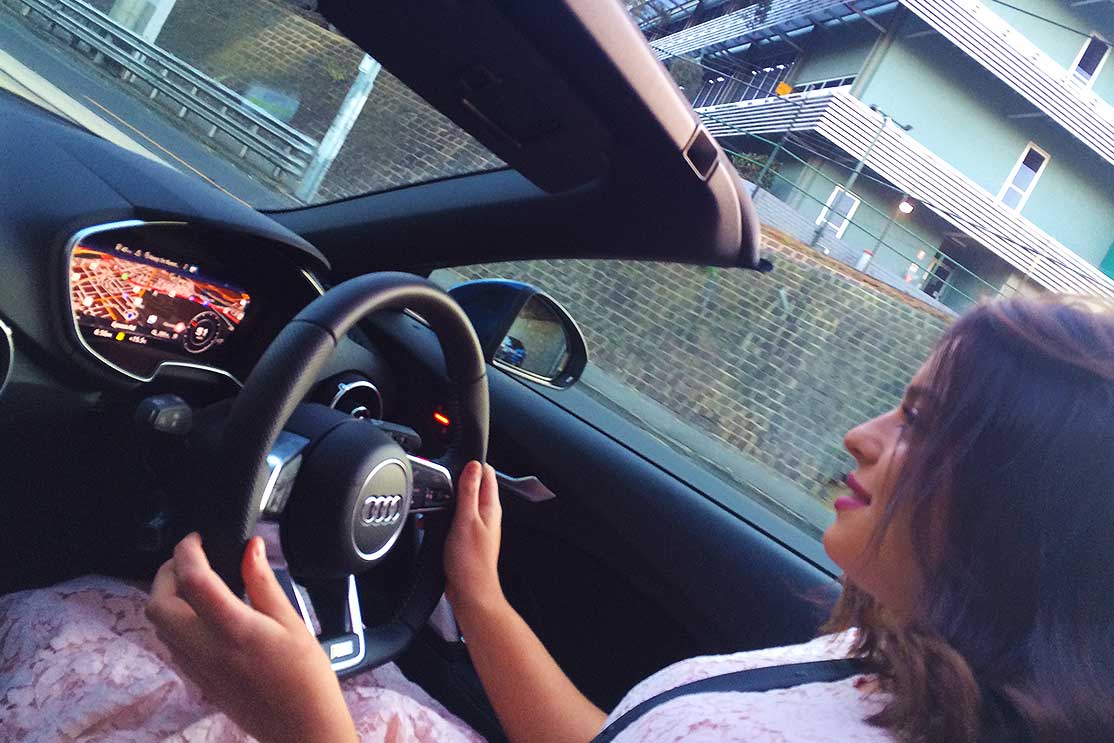
But who cares what they think anyway. When it comes down to it, the Audi TT Roadster is a fun car to drive. Sure, it can be impractical, but that’s not unusual for a convertible.
It’s invisible to absent-minded drivers, there’s very little cabin space, and it’s not as fast as some of its competitors. If you love the polished look of the TT Roadster, however, none of that is going to bother you. It looks cool, puts a smile on your face, the fabric roof folds down in 10 seconds at any speed up to 50km/h, and it has decent cargo space. When I drove to the office the next morning, my boot was decked out with all things girly. The boys weren’t too impressed by my wardrobe loaded into the back, but a girl’s got to have options for such a big night.
Okay, so I wasn’t the talk of the night. That honour went to the handsome, sweet-talking Easton Wood, who made a speech so beautiful you could see the melting hearts of every lady in the room. Nor did I manage to have players lining up for a few laps around Crown in the TT. But given most of them are nearly a decade younger than me, I wasn’t too disappointed.
But hey, shout out to the wonderful valet who delivered the Audi at the end of the night. He said he loved the car, called me beautiful and then offered to take some photos outside the casino. You, sir, are a legend!
What is it?
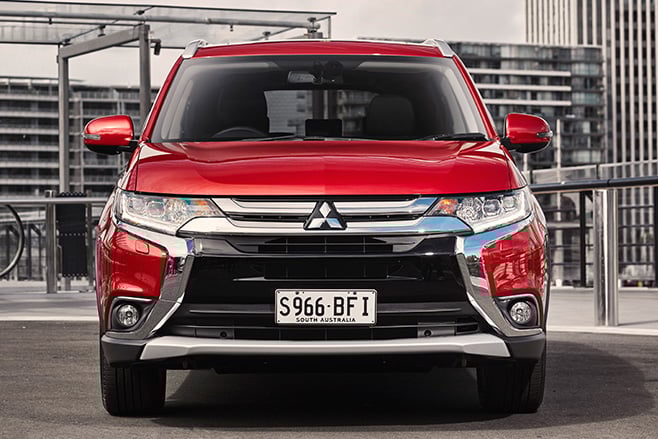
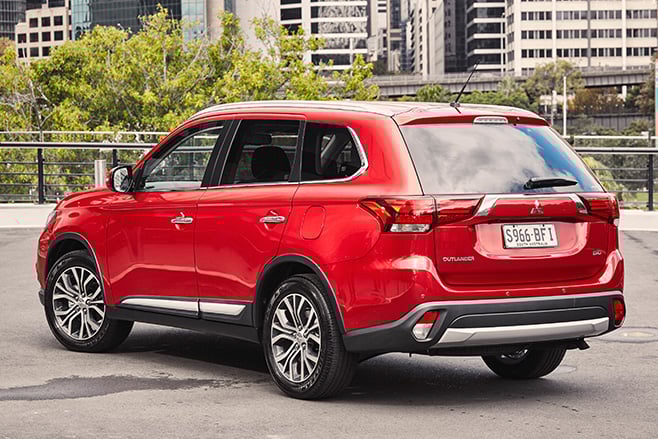
The updated version of Mitsubishi’s family SUV. The outgoing version was a bit pants, so Mitsu’s given it quite the going-over, including a new more stylish exterior: that new nose is called the “dynamic shield”, and it really does make the new model look a bit more special. (Mitsubishi says “exterior appeal is a key driver in this segment”, so if you don’t care about anything except how it looks, you can basically stop reading now.)
There’s three spec levels (LS, XLS and Exceed), three engine types (two petrol, one diesel) and three transmission types (manual, CVT and auto), which adds up to a total of eight variants to choose from: see the end of this review for all eight with pricing. For this road test, we only drove the 4WD petrol XLS with the CVT box, and the 4WD diesel XLS with the auto box.
All the new Mitsubishi Outlander variants get new 18in alloy wheels, which (to our eyes at least) look like interlocking wine glasses. Or maybe we were just thirsty at the time.
Mitsubishi’s also spent a lot of time on the NVH equation, with 39 “improvement points” over the last Outlander – and it really is smoother, quieter and more refined inside.
At this point, there’s no new Outlander PHEV, the hybrid electric version – the PHEV remains the same as it’s been since it launched a year ago.
What’s it like to drive fast?
Find yourself some open road and the Outlander is willing to dial itself up if you give it the berries, but there’s no point pretending this is a sporty ride – it isn’t. It’s a family hauler. Tip it into bends at speed and it grips well enough, but it feels weighty and it’s clear the ride has been designed for comfort, not speed. That’s not an insult – if you’re in the market for a seven-seat 4WD, chances are you’re not looking to go racing in it.
But overtaking requires some planning – neither the 2.4-litre petrol XLS (with 220Nm) nor the 2.2-litre diesel XLS (with 360Nm) are beasts of acceleration, though the torquier diesel is better at it. Boringly, we got stuck behind an L-plater and then a pensioner in a LandCruiser on the twisty stretch of National Parks road in Kuring-gai Chase north of Sydney, and the Outlander is not the machine you want for lightning quick overtakes.
What about the commute home?
It’s a fine companion for the traffic slog. The seats are comfy, if nothing flash – all manual adjustments in all models except the top-spec Exceed – there’s enough head- and legroom for adults front and back, there’s a decent amount of storage space. It’s quiet inside, even at freeway speeds, and at commuting speeds it’s an easy and compliant drive.
The diesel did get a bit rumbly and grumbly at slow speeds, but nothing too intrusive.
Anything bad about it?
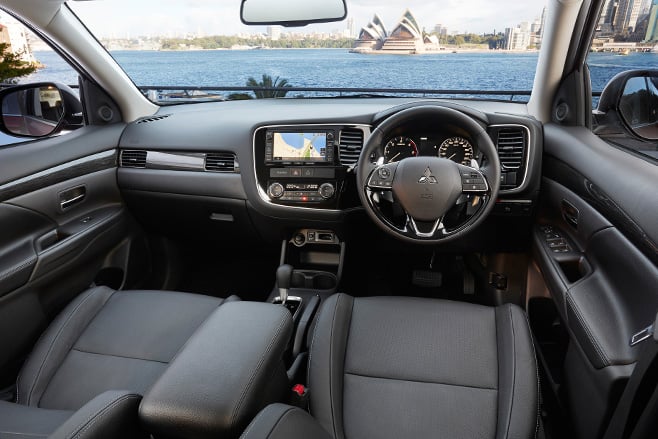
The infotainment system remains as clunky as ever. Honestly, Mitsubishi ought to bump that right up their priority list of things to fix – it’s not intuitive, the sat nav looks like a video game from the Eighties, connecting Bluetooth is a pain, and it simply looks and feels outdated. The infotainment system is one of the most used features in any car, especially a family car – so why would you want this old clunker of a system in there?
What’s it cost? And is it worth the money?
The 4WD petrol XLS we drove is $36,490, and the 4WD diesel XLS is $39,490. Both are a reasonable buy for the price – especially if you want seven seats. The entry-level LS (2WD with a manual ’box) starts at $28,490, but forgoes the third-row seating – you have to step up to at least the 4WD XLS to get the seven-seat option. All variants get reversing cameras, reverse parking sensors, hill start control, keyless entry, rear air-con ducts and a fairly generous helping of other fruit.
But the Outlander is perhaps best labelled competent, not outstanding. Competent is fine. Competent gets the job done. But it’s not at the level of some of the competition.
Would you take this or a Mazda CX5?
Depends on whether you want seven seats or not. If you have a massive family, or coach a kids soccer team, or run an Uber service for circus midgets, the Outlander’s pop-up third row of seats is perhaps a clincher. But all things considered, we’d opt for the Mazda, which just feels a bit more premium inside.
MORE: Mitsubishi Outlander Range Review MORE: Mitsubishi Outlander Specs, Range & Price
