
PLUS
- This is the sportiest version of the C-Class available and it has a powerful engine with 375kW and 700Nm of torque. That’s heaps.
- It has a V8 (and two turbos), so it sounds great. The regular exhaust note is sporty but not too rowdy, but press the special exhaust button and it gets very loud.
- The interior is very classy and has some neat touches like a Swiss clock on the dashboard as well as smart interior lighting. This version comes with all the bells and whistles as standard.
- It doesn’t actually use all that much fuel (unless you drive really fast) and has an official fuel consumption average of 8.6L/100km on a combined city/highway loop.
- The last C63 was great in a straight line, but wasn’t the best around corners. This one handles much better, especially when the suspension is set to Sport.
- The ride is a bit firm for everyday driving. You can select different suspension modes, but even in the Comfort setting the ride can get a bit annoying on bumpy roads.
- Wrap-around sports seats are standard and they are supportive but feel thin and hard. Thankfully, you can swap them for softer but still supportive Comfort seats at no extra cost.
- It is a great car and comes with all the gear, but the prices are prohibitive at $154,510 for the sedan and $157,010 for the wagon.
- Mercedes-Benz still refuses to fit touch screens to their cars and this can take a while to get used in the new age of touch screen smart phones. The central controller can take some time to master.
WHERE DOES IT FEEL AT HOME?
The Yaris feels most at ease when it’s surrounded by bright lights and sky high buildings. It’s light, easy to drive and its steering is pretty rigid, so weaving through city traffic is a breeze.
Its little engine isn’t very powerful so if you’re looking for a car with the heart of a Porsche, you’ve jumped on the wrong ship.
STAND OUT FEATURE
But it comes with a whole heap of stuff. Running out of phone battery? Just plug it in via USB. Sick of talk-back radio? No problem, just run your playlist through the Bluetooth.
There’s also plenty of space in the back to fit three adults comfortably, and thanks to all the little storage compartments, you’ll never have to worry about finding a place for your bobby pins, earrings, necklaces, coins and everything else.
WE LOVE
We love the colour range of the Yaris. It comes in a variety of colours including hot pink. Let’s be honest, who wouldn’t want a car that matches their lipstick?
Its reverse camera is also notable – it makes parking this small car even easier.
We’re pretty chuffed the Yaris has a decent sized boot – excellent for that wardrobe overflow.
THINGS WE’D LIKE TO CHANGE
But what goes up, must also come down and when it comes to fuel efficiency, the Yaris falls faster than a… well, car.
The sedan range also comes with less than the hatchbacks which is a downfall for this buzzbox. And, as strange as this may sound, Toyota seems to have missed a gear with the windscreen wipers – too slow, too fast, no in-between.
WHO WILL IT SUIT?
So, who is the Yaris’s perfect match? All the single ladies, put your hands up! This car is for you.
Click here to read the full review on the Toyota Yaris.
Still months out from an Australian launch, the facelifted Kia Cerato and Kia Koup promise significant upgrades.
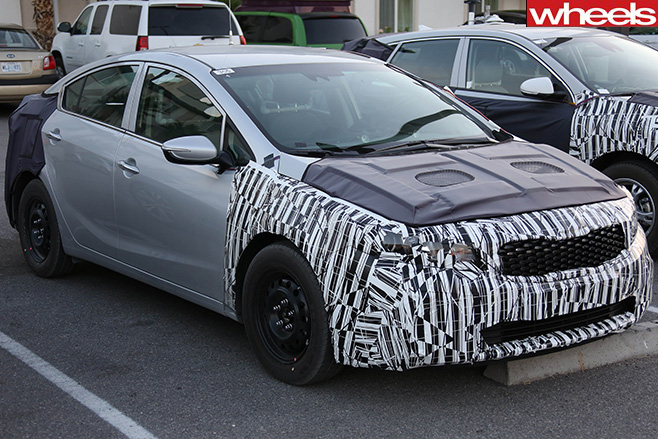
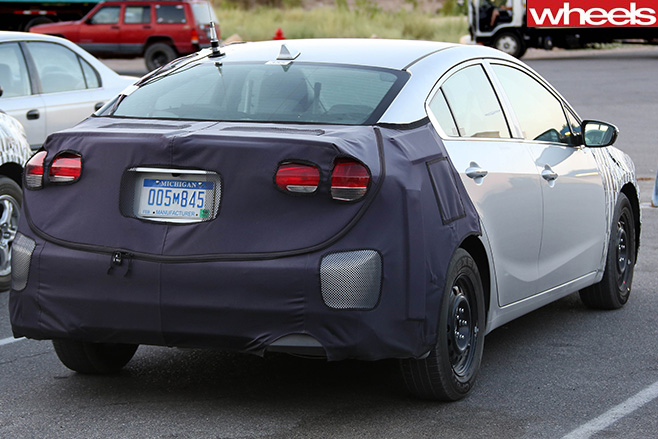
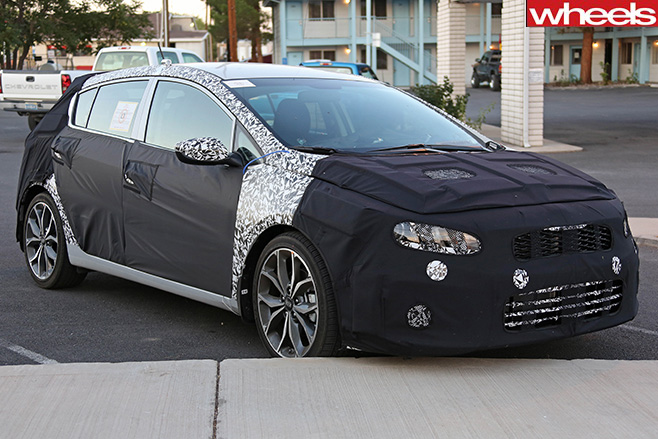
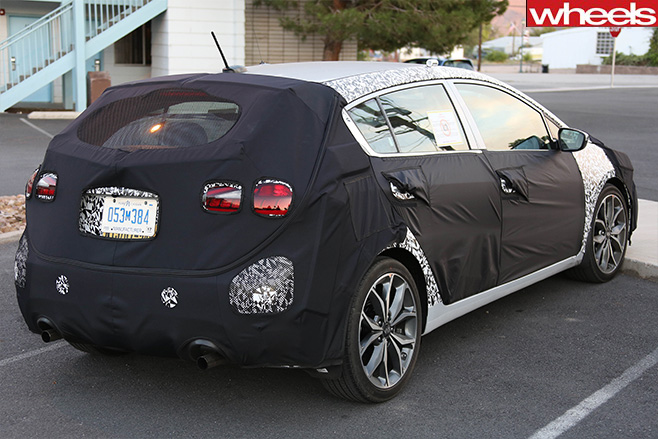
DEFTLY disguised prototypes of the heavily revised and upgraded Kia Cerato (as well as its closely related Kia Cerato Koup sister) have broken cover Stateside, ahead of the cars’ global unveiling late this year in Los Angeles or very early in 2016 at the Detroit show.
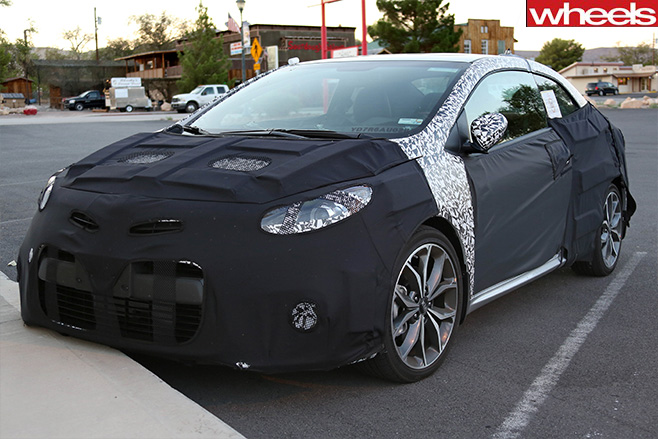
The aim is to imbue the South Korean small car range with a look more closely aligned to the all-new, fourth-gen Sportage medium SUV expected to surface at the LA Show in November.
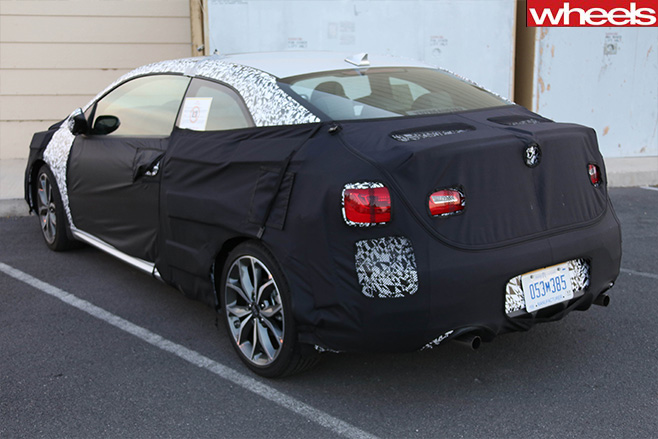
These prototypes were snapped in North America, probably undergoing hot-weather testing. We hope this means the inclusion of the current Koup’s lusty 150kW/265Nm 1.6-litre T-GDI direct-injection turbo four-pot petrol belter for the upmarket versions of the Cerato four-door sedan and five-door hatch models.
Have spy pics of your own? We’d love to see them. Just email them to [email protected]
Click here to read the full range review of the Kia Cerato.
Renault’s limited-edition Nurburgring ace has been re-named and becomes part of the regular Megane RS range.
Although it’s now called the Megane RS 275 Cup Premium, the luxe-sounding new variant actually keeps everything offered by last year’s 100-unit Megane RS 275 Trophy special including its $52,990 price tag.
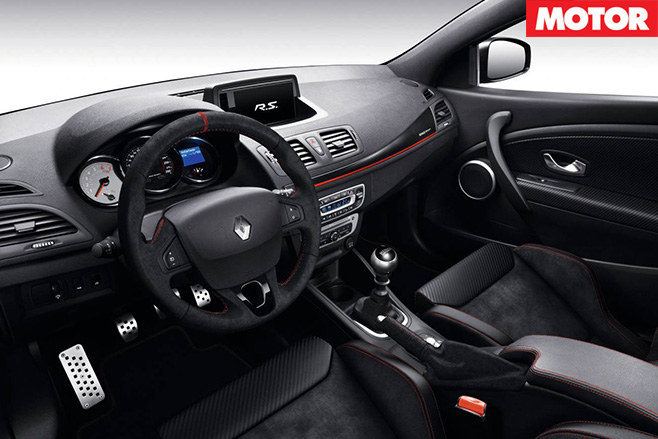
Beyond the existing Megane RS 265 Cup that remains entry to the small Renault Sport performance range (and this month rises by $1K to $43,990) the RS 275 Cup Premium adds: leather and Alcantara-trimmed Recaro sports seats, Alcantara-clad steering wheel and handbrake, Zamac alloy gear knob, Akrapovic titanium centre exhaust and 19-inch Speedline Turini alloys wheels with Bridgestone Potenza RE050 A tyres.
Pick the Cup Premium from the Cup by those black alloys along with a grey lower lip. The lighter exhaust and alloys team with an aluminium lower wishbone in the front suspension to shave 35kg from the kerb weight, now 1376kg.
As the digits on the badging suggests, a 10hp difference takes the 2.0-litre turbocharged four-cylinder engine from 195kW (265hp) to 201kW (275hp) in the pricier model, though 360Nm and a 6.0sec 0-100km/h claim are shared.
Sadly, the Ohlins dampers (20-way front/30-way rear manually adjustable) and Michelin Pilot Sport Cup 2 rubber that were each optional overseas aren’t available on our RS 275 Cup Premium just as they weren’t on the RS 275 Trophy last year.
Sad, because that’s the bulk of the performance gear pinched from the two-seat Megane RS 275 Trophy-R that became the fastest front-driver around the ‘Ring with a 7min 54.36sec time.
Just as Renault extended its five-year/unlimited kilometre warranty to Renault Sport products last year (which previously had three-year cover), the French brand is now extending its zero per cent finance offer to all RS-badged cars.
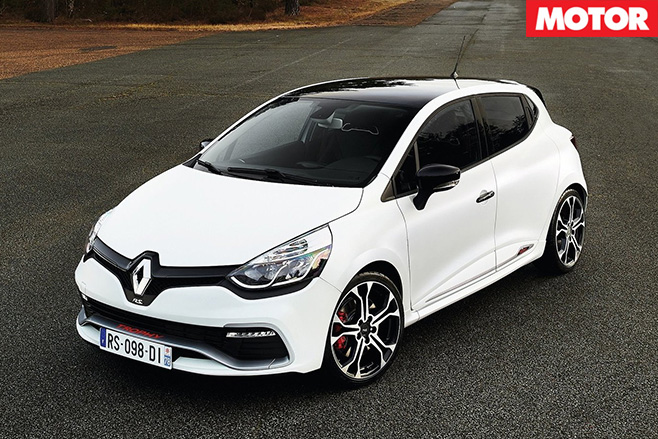
Decent deals, we reckon, though in the case of the Clio, the one enthusiasts will be hanging out for is the limited edition Clio RS 220 Trophy that arrives locally early next year with a 20hp power jump, firmer suspension and (critically) 50 per cent faster shifts from the six-speed dual clutcher.
The curtain’s barely dropped on the 308 GTi yet Peugeot’s already massaged its newest hot hatch into a racing car.
No other than Peugeot Sport, the firm’s in-house go-fast arm, has developed the car for race duties, and in doing so has widened the car, tweaked its engine and increased downforce.
Between its front struts the 1.6-litre turbo inline four, matched to a six-speed sequential gearbox, is now fed by a new turbocharger borrowed from the Pikes Peak-dominating 208 T16 to bump up power from the road car’s 201kW to 230kW.
Cheekily, it’s also a figure that translates to 308hp.
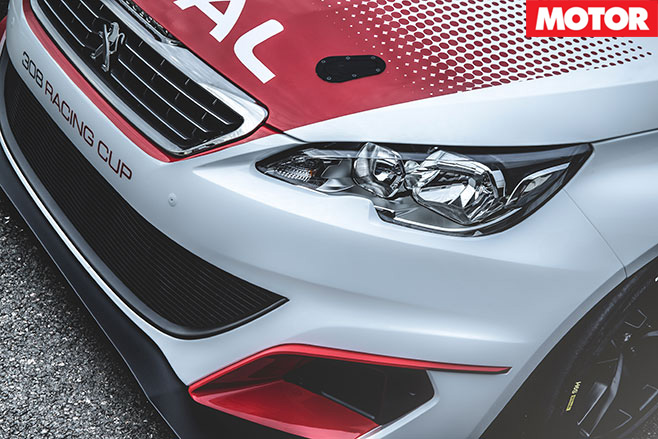
Meanwhile, race-spec aerodynamics are delivered by a WTCC-spec rear wing and wide front splitter.
Brakes, too, have been upgraded, with six-piston calipers finding their way behind the front wheels.
All up, with an FIA roll cage on board, Peugeot says the Racing Cup tips the scales somewhere between 1000kg and 1050kg.
Set for its debut on race tarmac at the end of 2016, Peugeot has billed the car as the successor to the RCZ single-make series, while also planning to offer it to private customers for competition in various sports car racing series and endurance championships.

Fans of hot Peugeot models past rejoice – the new 308 GTi is arriving locally early next year in both 182kW and 200kW versions.
The French brand will mount a two-pronged attack against the Golf GTI with its first small hot-hatch since the delightful 306 GTi passed at the turn of the new millennium.
Pricing may be a hurdle, though, as the current 308 GT petrol variant already costs the same $41,990 as a certain properly hot German rival. Hopefully Peugeot Oz is barracking HQ to trim the price of that model to give the new 308 GTi a chance.
Both the 308 GTi 250 (denoting 250hp or 182kW) and 308 GTi 270 (270hp or 200kW) versions will arrive with the same boosted 1.6-litre petrol four-cylinder each developing 330Nm from 1900rpm all the way to 5000rpm.
While that torque figure is 20Nm down on a Golf GTI, the Peugeot’s EMP2 platform means that the 308 is across-the-board lighter than the Volkswagen, and the same is expected comparing the upper-case ‘I’ to lower-case ‘i’ model.
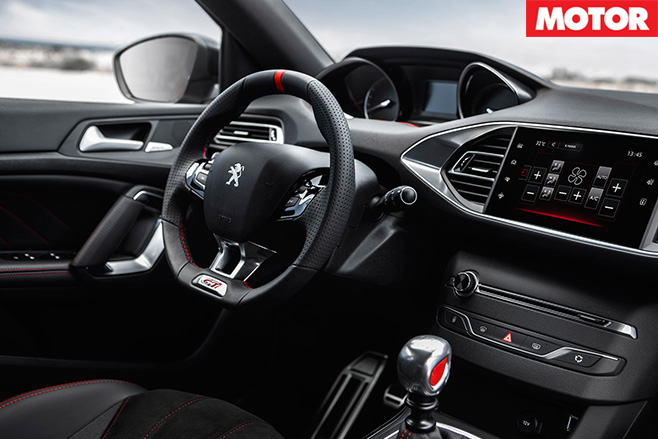
Both GTi variants sit 11mm lower than a standard 308 with wider front and rear track and suspension tuned by Peugeot Sport. Steering and throttle response can be altered by pressing a Sport button along with a separate button to switch the stability control to either a sports mode or fully off.
The entry GTi will get 225/45 R18 Michelin Pilot Sport 3 rubber and accelerate to 100km/h in 6.2 seconds.
The top GTi drops that time by two-tenths, while tyres shift to a 235/35 R19 Michelin Super Sport variety with beefy 380mm ventilated front discs behind them, and a Torsen mechanical limited slip differential behind again.
So closely does the above GTi 270 specification mirror a Golf GTI Performance, it even gets sportier seats with Alcantara cladding to match its foe.
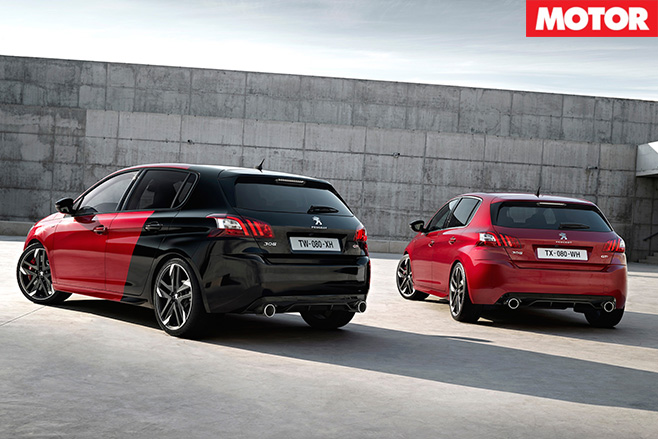
We just hope that the pricing starts on the right side of $45K and doesn’t push much beyond $50K when the twin-attack 308 GTi models arrive in the first quarter of 2016.
WHERE DOES IT FEEL AT HOME?
Being a Mercedes, you may expect the A-Class to wear a hefty pricetag, but it’s actually not as expensive as you would think. This car is built for the city and while it can go the distance, driving this on country roads is like wearing a suit to the pub.
STAND OUT FEATURES
As you’d expect from Mercedes-Benz, this range comes with a whole lot of new technologies.
When we’re talking safety features, the Attention Assist is the most notable which sends you a warning when it thinks you are falling asleep at the wheel, and we think that’s a pretty good backup.
On a brighter note, under-seat storage also comes in handy to hide those little extra bits and pieces.
WE LOVE
The A-class is an attractive hatchback range. The cabins are stylish and beautifully built using high quality materials that puts it right into the luxury market.
Now, we know we don’t usually focus on the tyres of a car but this car’s ability to drive around 80km on a flat is worth mentioning. Anything that can get me to a warm and cosy place while waiting for roadside assist is a massive plus for me. But the lack of a spare may cause some tension on those longer trips. It means you may have to rely on the tyre repair kit, which still beats changing a tyre in my opinion.
THINGS WE’D LIKE TO CHANGE
Space isn’t a notable feature in the A-class and is somewhat similar to rivals, but the cargo space is a little bit average.
Now, comfort has been compromised in the sports models and head space has been sacrificed in those with the panoramic sunroof.
While we’re at it, the oddly-shaped and narrow rear doors make getting in and out a little bit difficult and block out a fair bit of visibility – thank goodness for the reversing camera.
And the infotainment system does take a little bit of getting used to.
WHO WILL IT SUIT?
The A-Class is for anyone who wants a practical and versatile car with a luxury badge.
Click here to read the full review on the Mercedes-Benz A-Class.
WHERE DOES IT FEEL AT HOME?
Style is in the eye of the beholder and while the ladies like the Veloster, it has the male staff split. But what do they know about style anyway?
The Veloster doesn’t quite fit the ‘hot hatch’ class, but it gives it a good crack for a little sports car. The quirky coupe is made for those who like to drive with a bit more power than your standard eco car, but tend to stick to city roads.
STAND OUT FEATURES
It’s fun, charming and true to Hyundai’s form, the interiors are reminiscent of a 90s neon disco. Its asymmetrical design with an extra door only on the passenger side is a standout feature, as Hyundai brings a concept to life. That’s one, two, three doors, and four doors.
WE LOVE
We love that the Veloster is affordable for a sporty hatch and it comes with all the modern features you’d expect of a car, including tyre-pressure monitoring system, reverse camera and parking sensors.
As for the extra door in the back, we’re sitting on the fence with this one. While some love that it allows for easier access and eliminates the need to fold seats, the asymmetrical design has us A-types desperately trying to look away.
THINGS WE’D LIKE TO CHANGE
The shortcomings of the Veloster fall to a jerky double-clutch transmission, so driving in stop-start traffic is a bit erratic, and even with the third door, getting in and out is a bit of an effort thanks to the low seats.
WHO WILL IT SUIT?
The unorthodox Veloster is a risk that has paid off for Hyundai. We think ladies and forward thinking blokes will be particularly impressed with this car. It’s a fun, fast and affordable hatch.
Click here to read the full review on the Hyundai Veloster.
Wheels review
Ford has refreshed its popular Ranger ute for 2016, with styling and tech upgrades aimed at making upper-spec XLT and Wildtrak double cabs more attractive for families.
WHAT IS IT Ford’s five-tier Ranger line up has taken the showroom fight to the Toyota Hilux, and it punches on in 2016 with class-leading safety tech.
WHY WE’RE TESTING IT Ford is first to bring safety features like lane departure warning, collision warning and radar cruise control to the light truck segment, and this becomes more important as these vehicles get more popular with family buyers and recreational off-road enthusiasts.
MAIN RIVALS Toyota Hilux; Mazda BT-50; Mitsubishi Triton; Volkswagen Amarok; Nissan Navara.
THE WHEELS VERDICT Ranger has always been a class leader for size, capacity, ability and performance. Now it leads the truck pack again with renewed safety features. But it also leads them on price: the top-spec Wildtrak is one of the most expensive utes of its type.
PLUS: Safety tech; performance; more refined MINUS: Massive size; not so refined down the range; rear camera only on top model
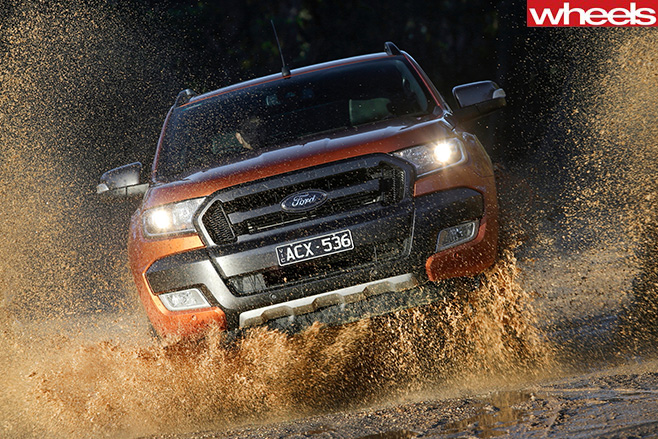
A key part of the new PXII Ranger line is a Tech Pack that is optional on the upper spec XLT and Wildtrak variants. The pack includes adaptive cruise control with collision alert; lane departure warning with lane keep assist; a driver impairment monitor that keeps tabs on the driver’s actions and gives a warning if the car thinks the driver is tiring; and a reversing camera which is standard on Wildtrak.
While it’s good news that these features are filtering though to light trucks from passenger cars, not so good here is that the reversing camera is only optional on the Ranger XLT and not available at all for the lower grades. However, rear park assist is standard on XLT and on the Wildtrak, which also gets front parking sensors.
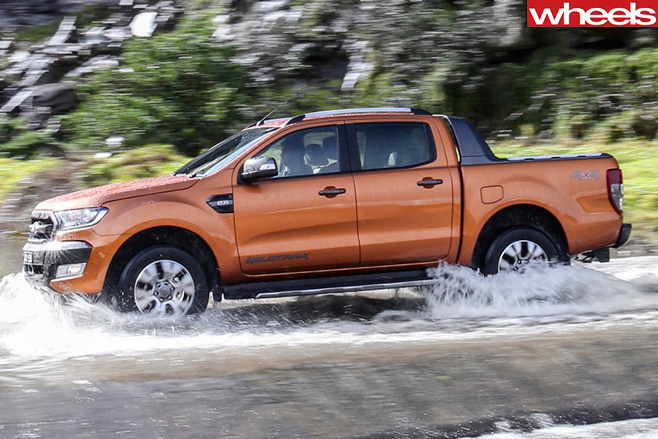
The exterior styling upgrades are limited to the metal forward of the A-pillar, with new ’guards and bonnet and a more contemporary front fascia. The interior cops a more comprehensive makeover. The piddly little dash screen of the previous generation has been replaced in XLT and Wildtrak Rangers with an 8.0-inch touch screen featuring Ford’s SYNC2 interface, while the XL and XLS variants get a smaller 4.2-inch screen with SYNC1 which is still way better than the old one. XLT and Wildtrak also get a new gauge cluster featuring dual customisable screens either side of the digital speedometer, while the lesser grades feature a more basic dash.
Mechanically speaking, the Ranger carries over its two diesel engines: the 118kW/385NM 2.2-liter four cylinder and more popular 147kW/470Nm 3.2-liter five-pot. Both of these turbocharged engines offer adequate performance when the trucks are unladen, but if you want to test the one-tonne payload or 3.5-tonne towing capacity you really want to opt for the bigger more powerful mill.
Neither engine makes the Ranger a rocketship but the 3.2 is the stronger performer. The 3.2 also benefits from improvements to the fuel injection system for 2016 which have made the engine quieter. The 2.2 remains a bit noisy and harsh when on the throttle and will find favour only with fleet buyers.
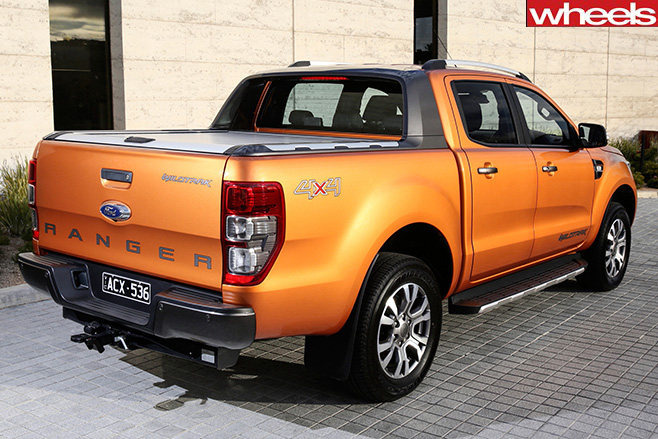
Buyers of the Ranger shouldn’t expect sports-car like gear shifting regardless. These are light trucks and there is nothing sporty about them. They are big, heavy and a chore to park in the city environment. This is why rear cameras would be such a benefit to drivers. Despite the overall size, the space in the rear seat can’t match that of a 4×4 wagon or a traditional station wagon, and nor are they as comfortable. But then you can’t toss a tonne of whatever into the back of those wagons.
The Ranger feels more at home out on open roads and bush tracks, where visibility from behind the wheel is good and the seating position okay despite there being no reach adjustment on the steering column. The new electrically assisted power steering is super light at parking speeds but firms up out on the road, while the suspension soaks up bumps and potholes well. Ford claims the suspension is the same across the range but we felt that the Wildtrak had a softer, more compliant and passenger-friendly calibration.
The Wildtrak also benefits from the most sound insulation, and disappointingly this dwindles down the range. We would expect that at least the XLT models would get the top level of insulation, for buyers who don’t want the flashy features of the Wildtrak yet still expect a high level of refinement with their $60K truck.
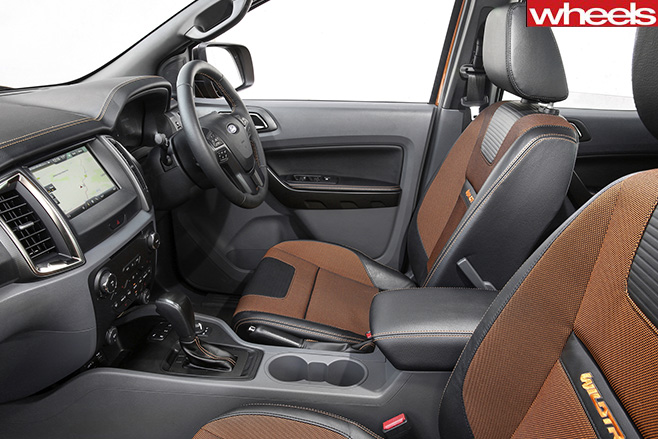
Ranger 4×4 remains a competent performer off road. A full complement of electronic driver aids help its cause, and standard features include low range gearing in the transfer case, a lockable rear differential (also usefully included on 4×2 Hi-Rider models) and adjustable electronic hill descent control. The 800mm wading depth is another class-leading feature of Ranger.
With more buyers in the market for utes, and more utes coming to market, this segment will continue to boom through the latter part of 2015 and into the new year. Ford hopes to spearhead the charge with its extensive line up of Rangers.
NOT SO LONE RANGER
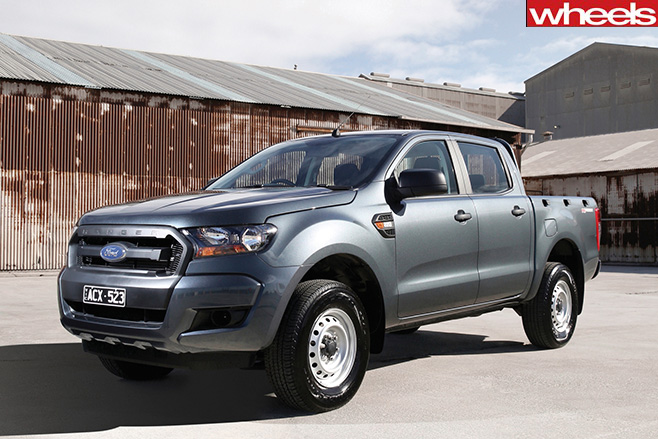
The XL-Plus models, specced for mining and industry fleet buyers, have been carried over to the PXII range. Available only as 4×4 with 3.2 engine and auto trans, and as single cab-chassis, double cab-chassis or double-cab ute, the XL-plus has all the basic features of the XL but also an extended wiring harness for additional lighting and an extra four-switch panel, an auxiliary battery, and 17-inch steel wheels with all-terrain tyres. Daytime running lights and plastic side steps are also part of the XL-Plus package.
SPECS Model: 2016 Ford Ranger Wildtrak PXII Engine: 3.2L turbo-diesel Max power: 147kW @ 3200rpm Max torque: 470Nm @ 1750rpm Transmission: 6-speed automatic Weight: 2200kg Fuel economy: 9.0L/100km Price: $60,090
Click here to read the full range review of the Ford Ranger
Second opinion: 4×4 Australia’s verdict

4X4: Australia’s guide to the off-road adventure lifestyle.
Mixing in-depth vehicle reviews with off-the-beaten-track adventures and gear tests, 4X4 is all about enjoying Australia’s great outdoors.
Ford has refreshed its popular Ranger ute with new style and tech for 2016
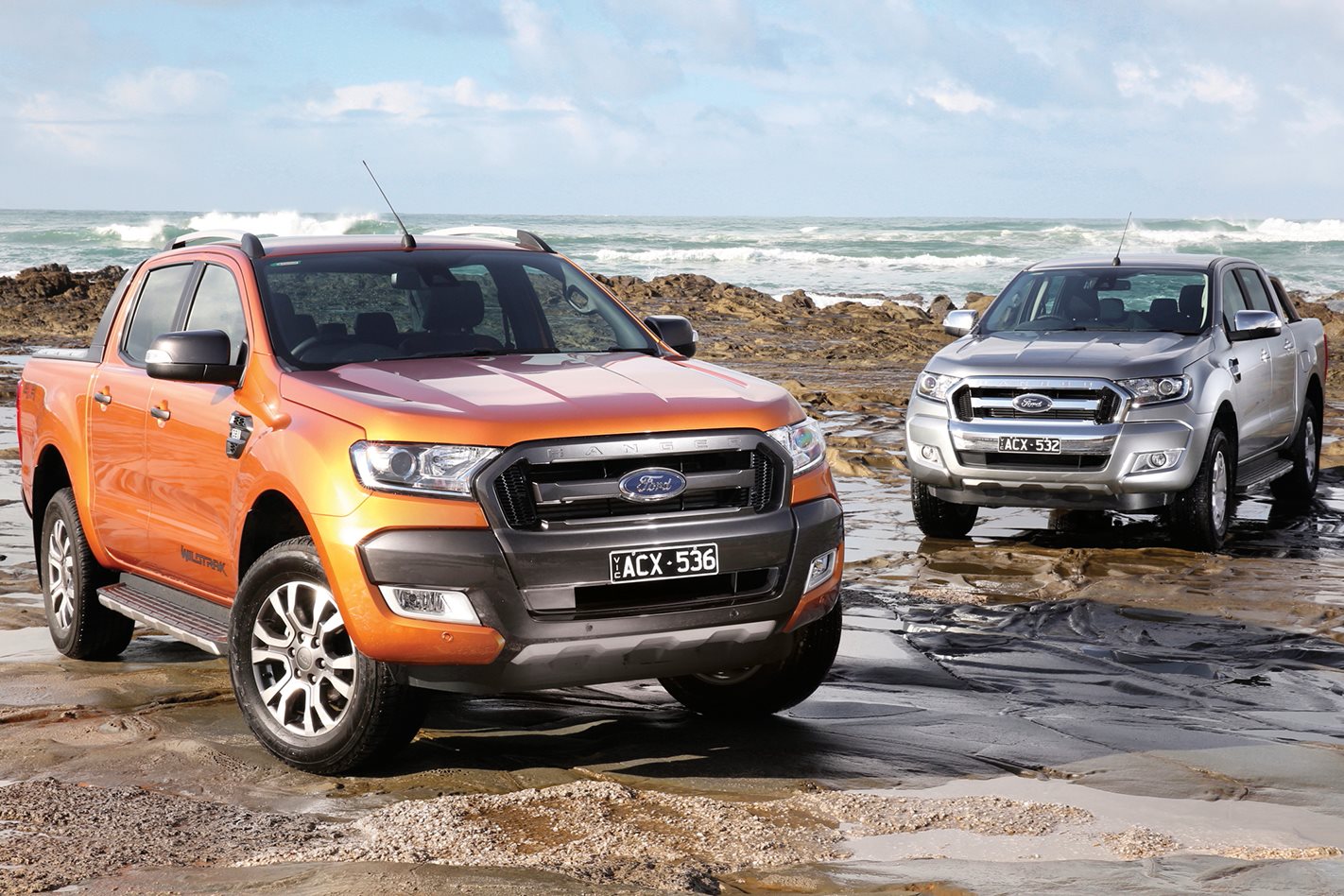
Double-cab, one-tonne 4×4 utes continue to grow in popularity as family vehicles.
With a swag of new and upgraded models hitting showrooms in the second half of 2015, the numbers of them on suburban streets, worksites and bush tracks will only increase.
Ford has counter-punched the all-new models launched by Mitsubishi (Triton) and Nissan (Navara), and taken a pre-emptive strike on the soon-to-be released 2016 Toyota Hilux, with a major makeover of its Ranger truck introducing first-in-class technologies, improved refinement and refreshed styling.
A key part of the PXII Ranger line-up is a ‘Tech Pack’ that is optional on the upper-spec XLT and Wildtrak variants. The pack includes adaptive cruise control with collision alert; lane departure warning with lane keep assist; a driver impairment monitor that keeps tabs on the driver’s actions and gives a warning if the car thinks the driver is tiring; and a reversing camera which is standard on Wildtrak but only optional on the XLT.
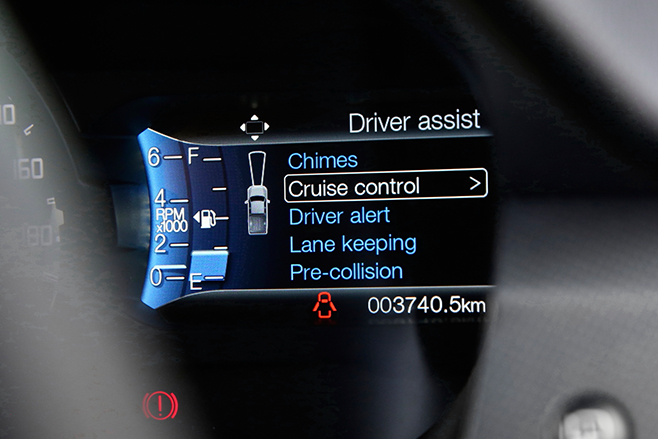
While it’s good news that these features are filtering through from passenger cars to light trucks. Not so good here is that the reversing camera is only optional on XLT and not available at all for the lower grades.
Rear park assist is standard on XLT and Wildtrak, which also receives front parking sensors. Adaptive cruise and collision warnings and lane assist are first-in-class technologies in the Ranger. But it is believed that some of these features will be included in the new Toyota Hilux to be introduced in October, making this style of vehicle more appealing to family buyers.
Like most of the modern one-tonners, the Ranger has a five-star ANCAP safety rating. Putting aside the tech stuff, the Ranger retains its solid, body-on-frame chassis and suspension with a revised calibration to improve ride. The 4×4 system remains part-time with a rear locker fitted across the range of 4×4 and even some of the 4×2 models.
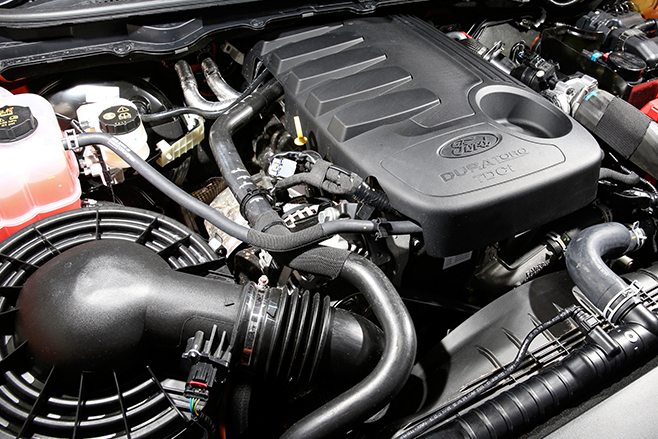
The two diesel engines are carried over; both the 118kW/385Nm 2.2-litre four-cylinder and more popular 147kW/470Nm 3.2-litre five-pot. Both of these turbocharged engines offer adequate performance when the trucks are unladen. But if you want to test the one-tonne payload or 3.5-tonne towing capacity, you really want to opt for the bigger and more powerful mill.
Neither engine makes the Ranger a rocketship, but the 3.2 is the stronger performer. The 3.2 also benefits from improvements to the fuel-injection system for 2016, which have made the engine quieter. The 2.2 remains a bit noisy and harsh when on the throttle and will only find favour with fleet buyers and fuel misers.
A choice of six-speed manual or auto transmission is offered and, notably, the manual-gear shift behind the five-cylinder engine has been vastly improved by adapting the cable-linked shift mechanism that was previously only used behind the four-cylinder engine.
Regardless of this, buyers shouldn’t expect sports car-like gear shifting. These are light trucks and there’s nothing sporty about them. The Ranger feels more at home on open roads and bush tracks – visibility from behind the wheel is good and the seating position is okay despite there being no reach adjustment on the steering column.
The new electrically-assisted power steering is super light at parking speeds but firms up out on the road, while the suspension soaks up bumps and potholes well.
Ford claims the suspension is the same across the range, however we felt that the Wildtrak has a softer, more compliant and passenger-friendly calibration.
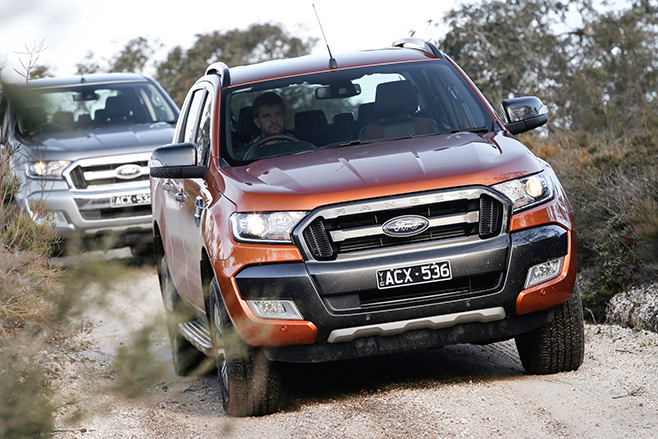
The Wildtrak also benefits from the most sound insulation and, disappointingly, this drops off down the range. We would expect that at least the XLT models would get the top level of insulation for buyers who don’t want the flashy features of the Wildtrak but still expect a high level of refinement for their $60K truck.
The heated and power-adjustable (driver only) leather front seats of the Wildtrak might also be expected in the XLT. The seats, along with the lockable cargo area roller shutter, front parking sensors, reversing camera, improved sound deadening and rear bumper would be useful features on the XLT. They make the extra $4K spend for the Wildtrak tempting, even if the latter’s wild styling isn’t to your taste.
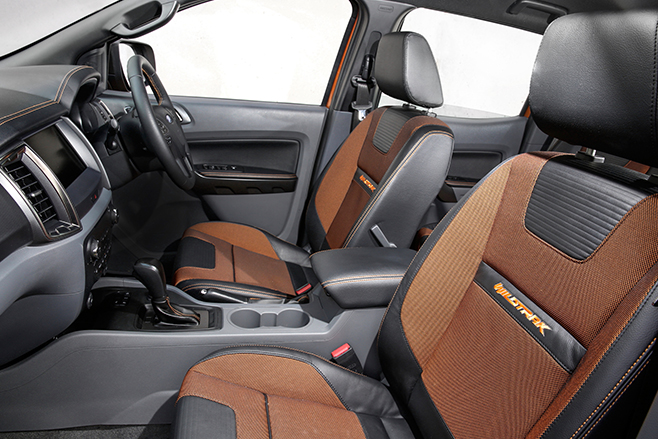
The exterior styling upgrades are limited to the metal forward of the A-pillar, with new guards, bonnet and a more contemporary front fascia.
The interior cops a more comprehensive makeover. The piddly little dash screen of the previous generation has been replaced in the XLT and Wildtrak models with an eight-inch touch screen featuring Ford’s SYNC2 interface.
The XL and XLS variants get a smaller 4.2-inch screen with SYNC1, which is still way better than the old one. XLT and Wildtrak also get a new gauge cluster featuring dual customisable screens either side of the digital speedometer, while the lesser grades feature a more basic dash.
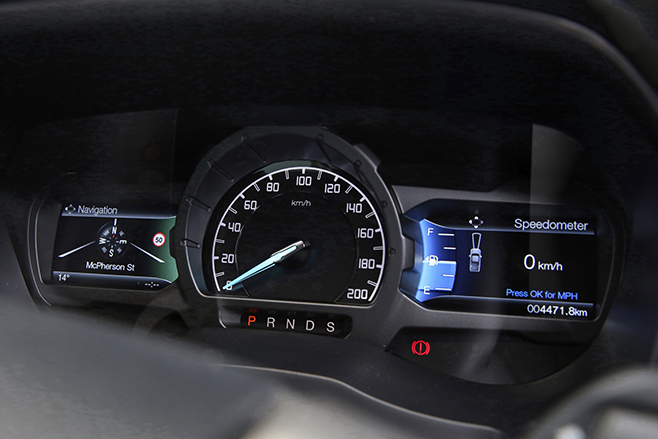
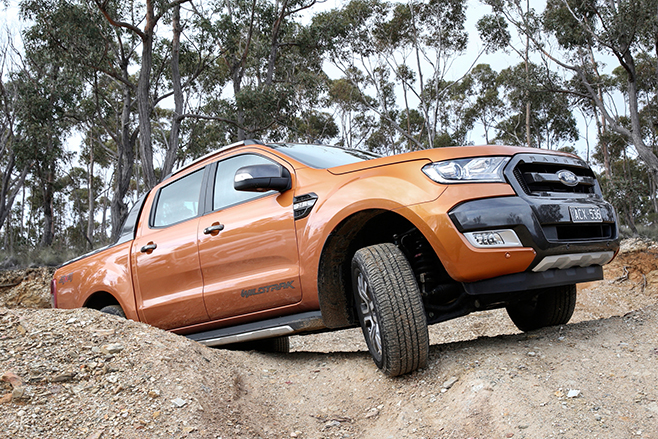
The Ranger 4×4 remains a competent performer off-road with a full complement of electronic driver aids to help its cause. It also has low-range gearing in the transfer case, a lockable rear differential, and adjustable electronic hill descent control all included as standard features. Its 800mm wading depth is another class-leading feature.
With more buyers in the market for utes, and more utes coming to market, this segment will continue to boom through the rest of 2015 and in to 2016. Ford hopes to spearhead the charge with its extensive Ranger line-up.
Ford Ranger Wildtrak PXII
| Engine | 3.2L turbodiesel |
| Max power | 147kW @ 3200rpm |
| Max torque | 470Nm @ 1750rpm |
| Transmission | 6-speed automatic |
| Weight | 2200kg |
| Fuel economy | 9L/100km |
| Price | $60,090 |
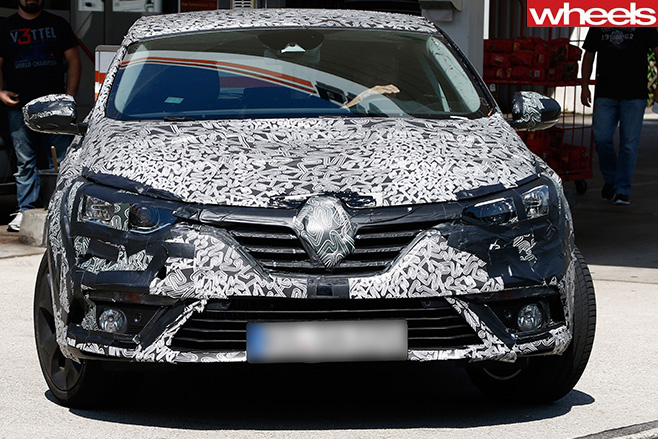
FRANKFURT will be awash with new metal, but few will be as significant or as keenly anticipated as the next-gen Renault Megane, sprung here in five-door hatchback guise.
Dubbed internally the X96, this mark-four version of the French C-segment stalwart throws away its dowdy old threads for a swanky new outfit courtesy of former Mazda design chief Laurens Van Den Acker.
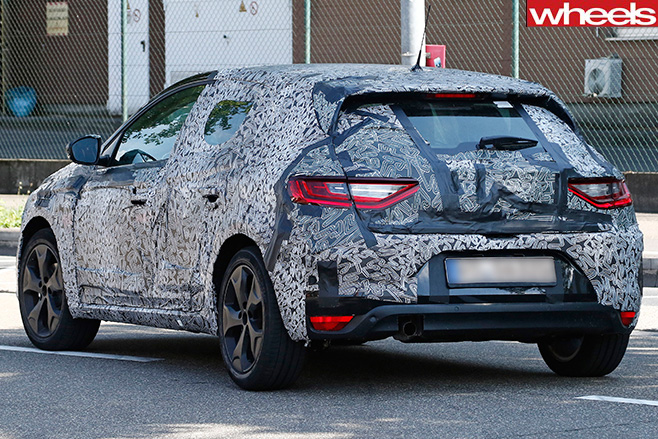
Everything about the handsome hatchback you see here is a step-up from its ho-hum seven-year old ancestor, from its proportions to the attention to detail. Check out the seamlessly integrated grille, LED headlights, and far more classy tail-light treatments. As the elegant symmetry of the silhouette suggests, the Parisian sculptors are building on the X98 Clio IV’s successful visage.
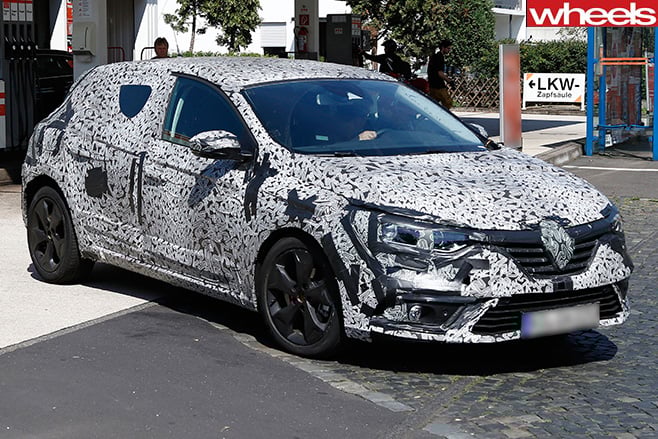
We hope the same level of design nous will be applied to the upcoming three-door coupe and wagon versions, which have singlehandedly saved the current X95 Renault Megane from ignominy.
It’s a revolution underneath too, with the X96 switching to a variation of the Renault-Nissan Alliance’s CMF1 modular transverse platform. That underpins a bewildering array of vehicles, including SUVs such as the latest Espace MPV/crossover and the Nissan Qashqai.
Speaking of weight, the next Megane is thought to be upwards of 80kg lighter yet significantly stronger than before, thanks to an increase in aluminium and lightweight steels. Why? To improve efficiency and performance, of course.
To that end, reports are suggesting that the initial engine range will be spearheaded by a revised version of the Clio/Captur compact SUV’s 1.2-litre four-cylinder turbo petrol unit, thought to be known as the TCe 130, delivering around 90kW to the front wheels. Also certain (for Europe anyway) are dCi turbo-diesels in 1.5 and 1.6-litre varieties.
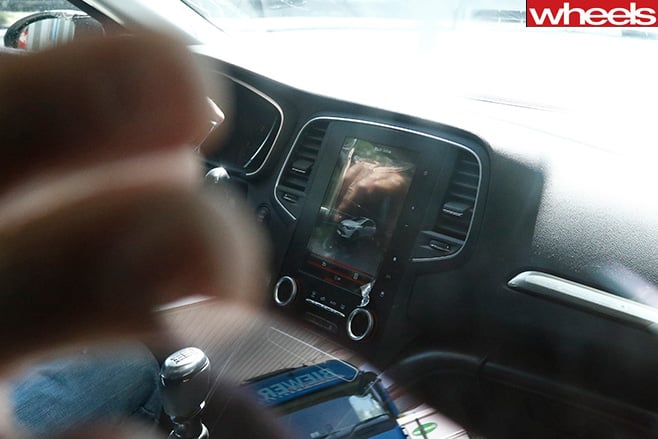
A peek inside shows a very Tesla Model S inspired tablet-style touchscreen display, integrated vertically within a centre console that looks like it is aeons ahead of the existing dashboard architecture for quality and layout – even in the test mule pictured.
Along with the usual array of multimedia connectivity features, it is evident from the prototype’s windscreen, grille and bumper that radar-guided driver-assist systems such as adaptive cruise control and Autonomous Emergency Braking are mooted for the new Megane.
With one Renault spokesperson calling this car “vitally important”, count on the base model matching the low-$20,000 cost of the entry-level Golf and 3, but for the hotly awaited RS cars to punch past the $40K mark.
European sales are slated to begin late this year or early in 2016, with the Australian supply taps turning on sometime after July. That’s still a while away, but the wait should be worth it.
Have spy pics of your own? We’d love to see them. Just email them to [email protected]
Sign up here to receive the latest round-up of Wheels news, reviews and video highlights straight to your inbox each week.
