
Swedish brand’s new dawn begins right here with the stylish seven-seat Volvo XC90 SUV that takes up the challenge to the German luxury brands, starting with the Audi Q7 and BMW X5.
WHAT IS IT? The second generation of the car that saved Volvo, the XC90 has to do it all over again with a new platform, new engines and new design language.
WHY WE’RE DRIVING IT This is Wheels’ first drive of the XC90 on Aussie soil. And, appropriately, it’s in politically charged Canberra with its mix of rough, winding roads, smooth corridors and take-no-prisoners pollies. It’s question time for the largest Volvo SUV.
MAIN RIVALS Audi Q7, Mercedes-Benz GLE, BMW X5, Range Rover Sport, Infiniti QX80
THE WHEELS VERDICT PLUS: Faster and more frugal than predecessor; style; great driveline; seven seats standard MINUS: Average dynamics with below-par handling; German-level price tag
THE WHEELS REVIEW THIS is a new era for Volvo. Car companies often wax lyrical about new dawns, but the Volvo XC90 is off a slate that’s as clean as they come.
It’s the first completely new product post-Ford ownership, ushering in a new platform, a new generation of engines and fresh design language under former VW designer Thomas Ingenlath.
With a starting price of $89,950, the XC is $20K more expensive than its predecessor. Yet the 2003 model kicked off at $69,950 ($93,983 in today’s money) and had far less equipment.
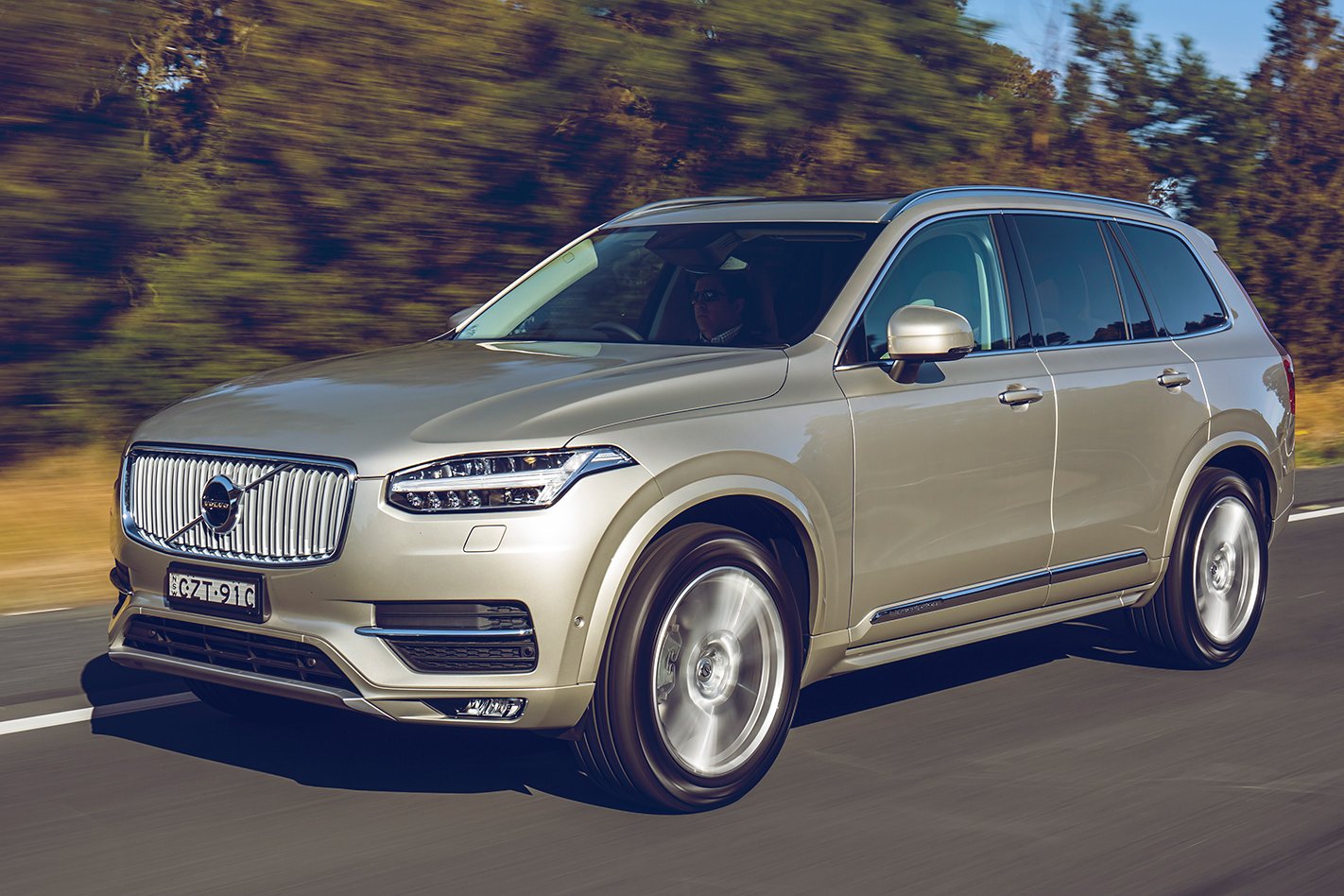
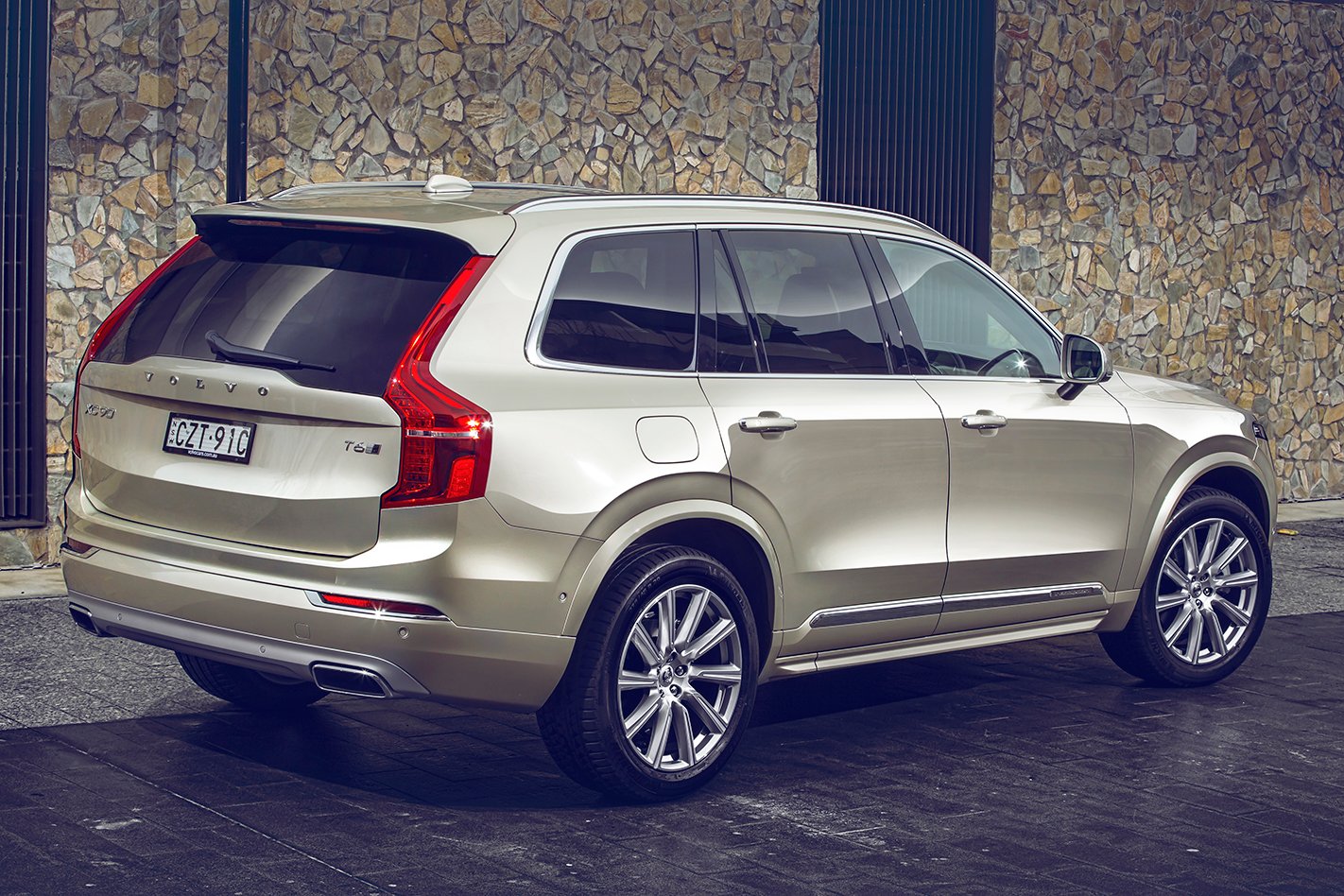
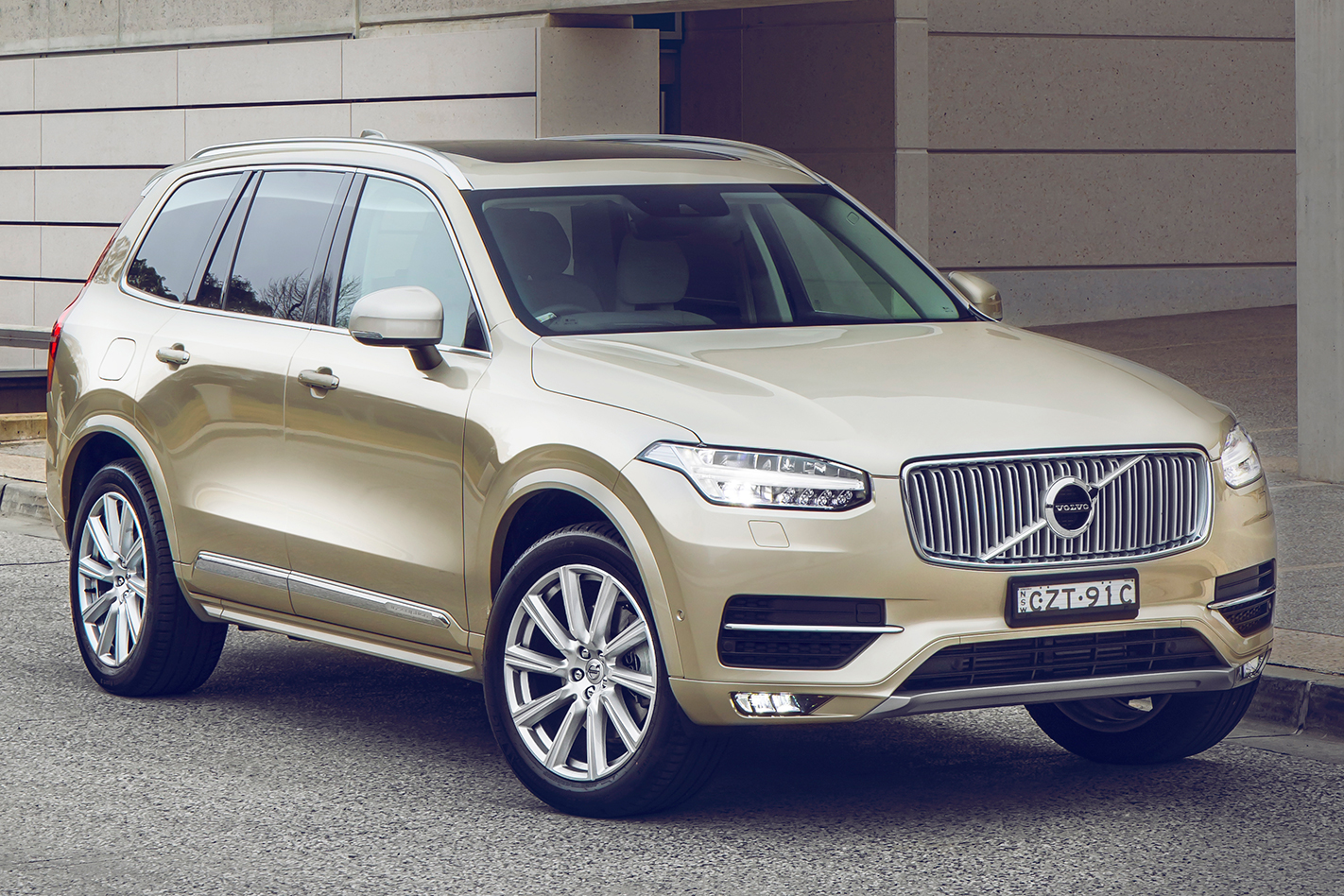
The smooth new design is distinctively Volvo yet with Ingenlath’s VW lineage evident in the clean, smart shutlines.
The most popular model is expected to be the $96,950 Inscription D5 (about 60 percent of sales), which is the mid-spec model that rides on 20-inch alloys, has leather interior and can be picked by its chrome grille.
D is for diesel, with a 2.0-litre twin-turbo common-rail four-cylinder delivering 165kW and 470Nm, 18kW and 50Nm up on its predecessor. It develops its maximum torque at 200rpm fewer revs (1700rpm) while using a whopping 2.6L/100km less diesel (now 6.2L/100km), helped by up to 125kg less weight.
The sole oiler, it comes with the Aisin-Warner eight-speed auto developed especially to match Volvo’s new engine family, and fifth-generation Haldex all-wheel drive.
On paper, it struggles to match the equally new Audi Q7 3.0 TDI.
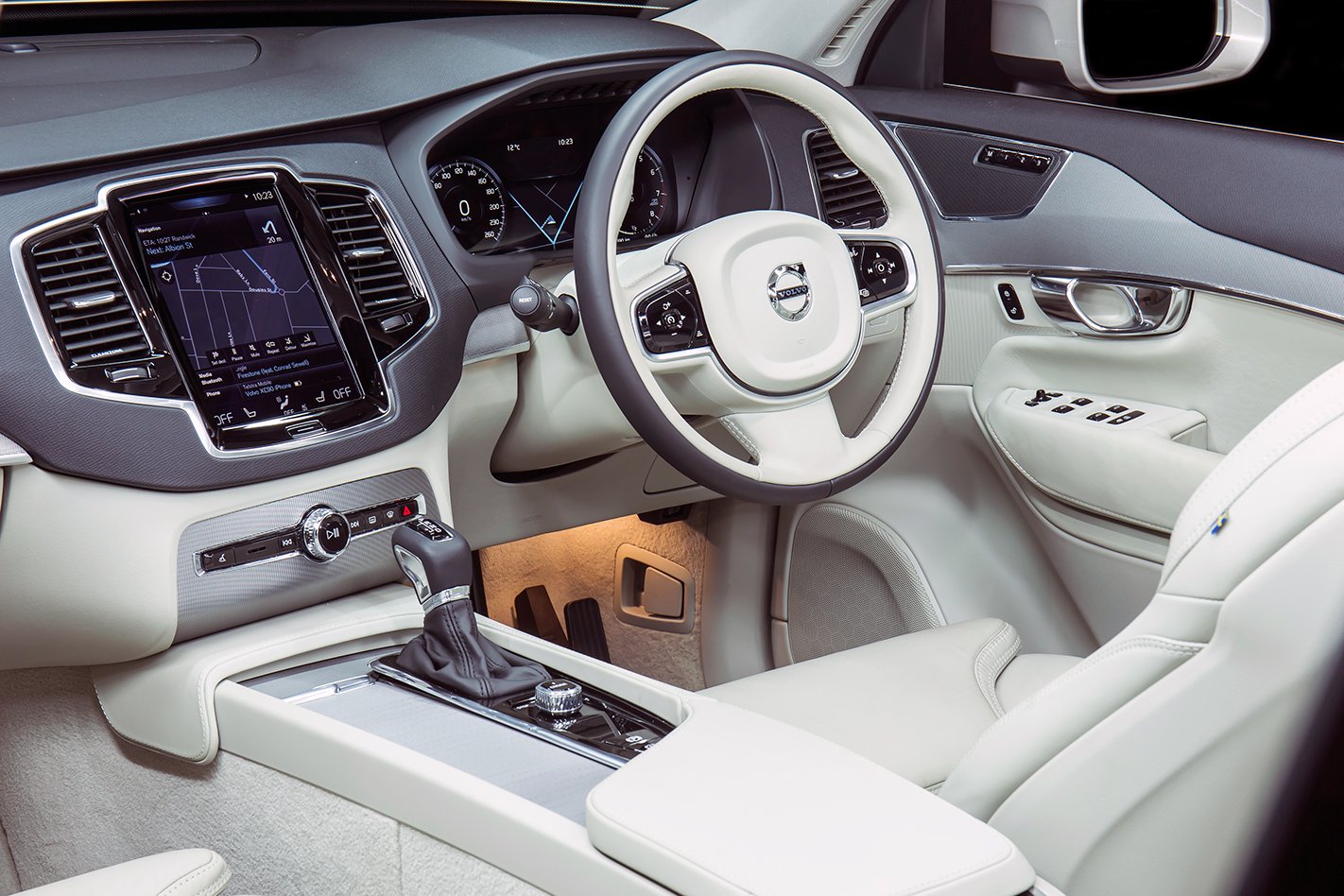
The interior of the XC90 reeks of effort, with stunning attention to detail. The surfaces, fit and finish are top-shelf, with perforated leather seats that are six-way adjustable (with electronically adjustable bolsters).
It has an excellent driving position, large mirrors and cool design touches including a rimless centre mirror. All-round vision is excellent, and the digital instruments are crisp and clear.
The dash has been designed around a superb nine-inch centre touchscreen. It performs like a tablet: you swipe its menus, which are simple and intuitive, and the haptic touch means you can even wear gloves or tap it with your fingernails – clever.
It also helped the designers de-clutter down to eight physical buttons.
The stalks are solid and feel premium, and the steering wheel has the rest of the menu at your fingertips. Add the optional head-up display and it’s tough to beat.
To start the car, you now turn a nicely textured knob in the centre console next to the gear lever.
At idle the engine is smooth and quiet while on the road, you wouldn’t know it’s a diesel from its grunty sounds, but you do from the strong torque.
The eight-speed auto changes gears seamlessly. Response is good, but kickdown from the throttle is far too slow to be called sporty.
Our test car rode on standard 20-inch Michelin-shod alloys and was equipped with the optional ($3600) air suspension. Don’t bother ticking this box; while it gives the XC90 a cloud-like primary ride, it’s sharped-edged over bumps and robs the vehicle of any composure.
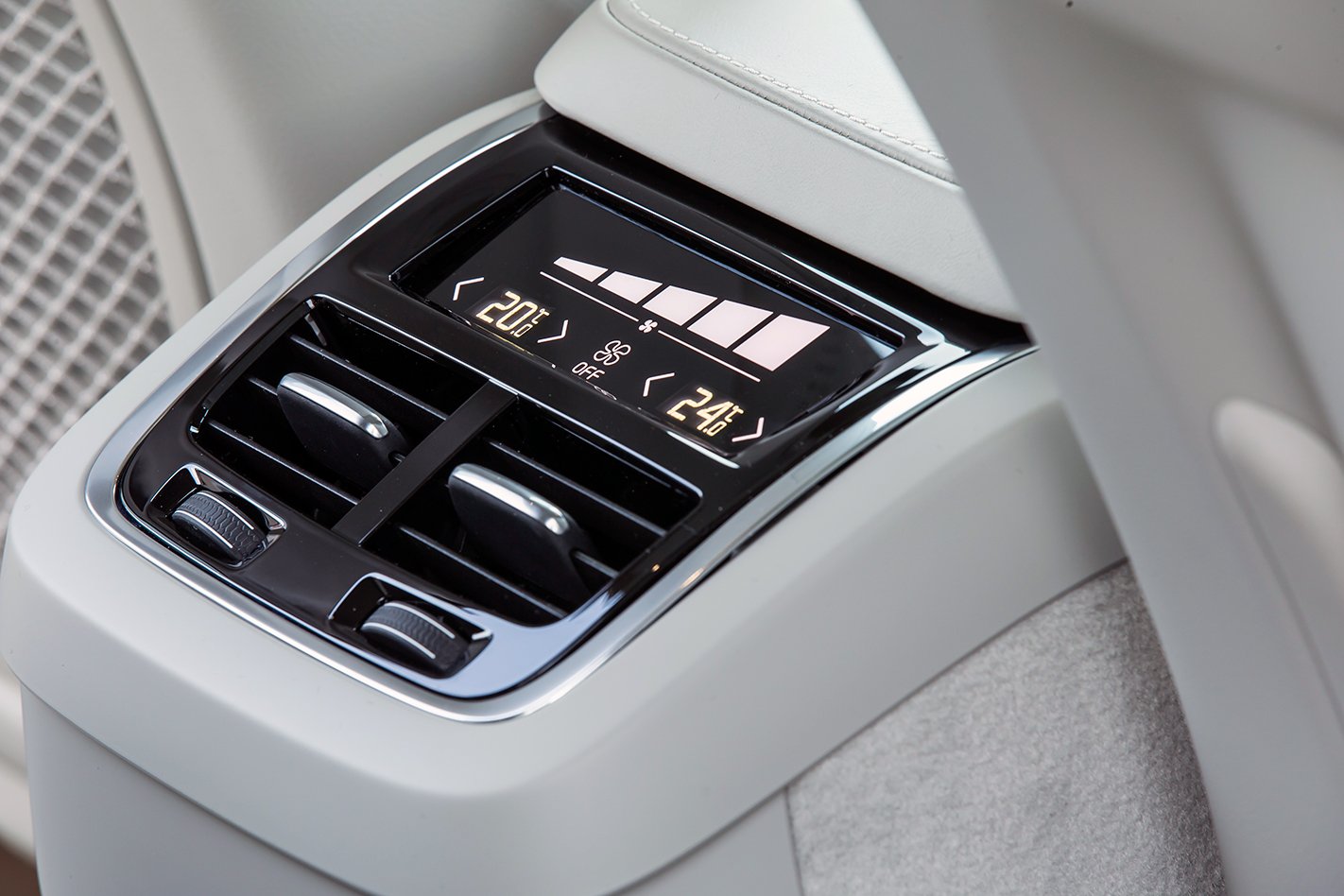
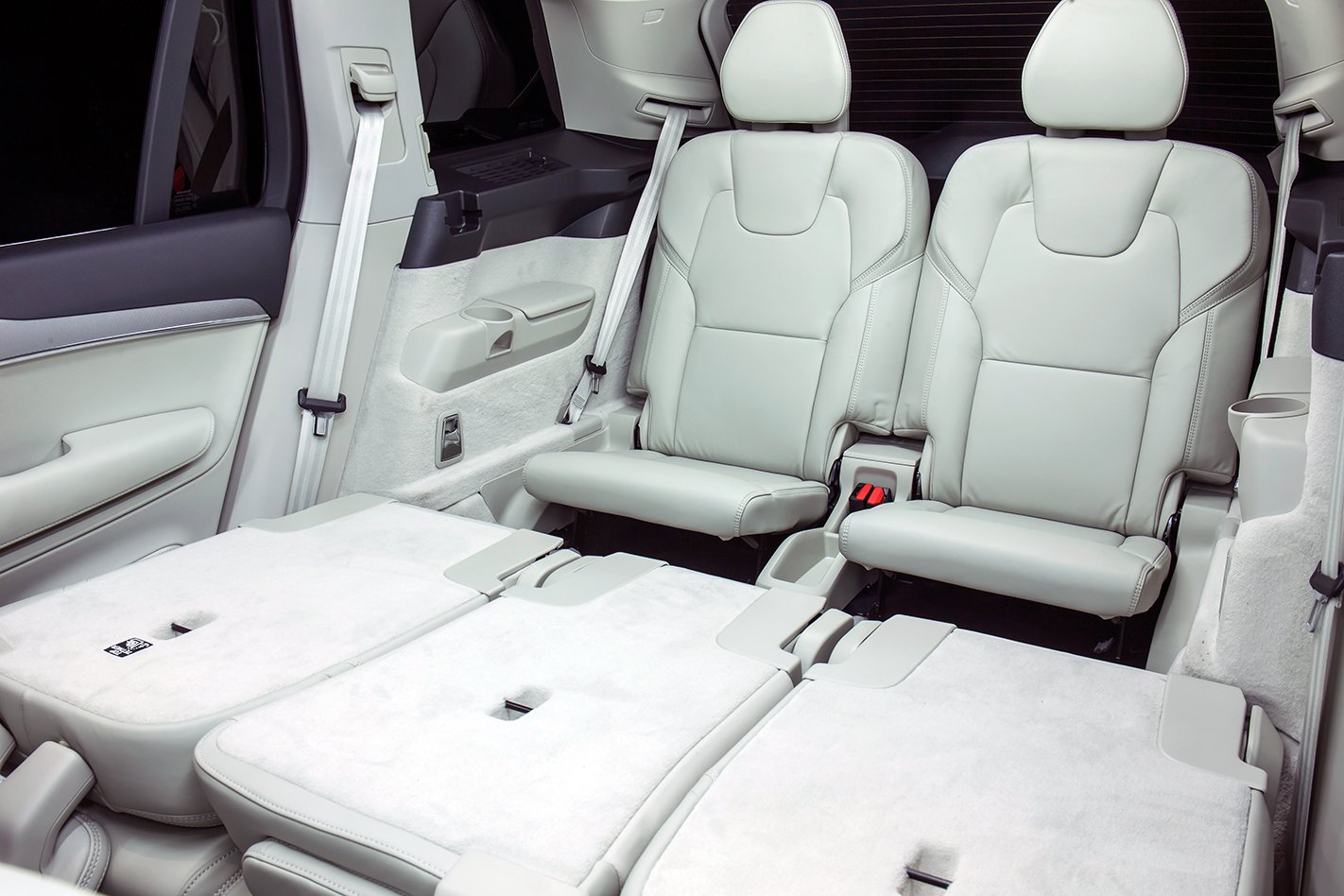
Volvo talks up the compliance offered by the double-wishbone front end and the integral axle rear end – which provides a larger boot (2427 litres) and genuine space for adults in the third row – but there’s far too much head-toss and constant input in the steering even in a straight line with the soggy air set-up.
On standard ‘Touring’ springs, the XC90 is far better, yet still lacks composure and that head-toss, while lessened, remains. There’s too much nose-lift under throttle, and too much dive under brakes.
Change of direction is also a moot point, with too much body roll, even for a large SUV.
The steering weighs up oddly, and its lack of consistency is a menace on winding roads.
At least around town the previous model’s stadium-sized turning circle is gone, now a reasonable 11.8m for a 4950mm-long SUV.
The XC90’s dynamics, then, are generally adequate rather than athletic, and may prove a stumbling block for SUV buyers looking for entertainment as well as extra space.
Granted, it’s loaded with airbags and a 5-star Euro NCAP rating, while refinement is good – there’s too much road noise for it to be class-leading – and the overall execution pleasant, but the XC90 fails to knock your socks off. A hit, but not yet a knockout.
SPECS Model: 2015 Volvo XC90 D5 Inscription Engine: 1969cc 4cyl, dohc, 16v, twin-turbo diesel Power: 165kW @ 4250rpm Torque: 470Nm @ 1750-2500rpm Transmission: 8-speed automatic Weight: 1970kg 0-100km/h: 7.8sec (claimed) Economy: 6.2L/100km Price: $96,950 On sale: Now
What stands out?
The Ford Focus has long been one of the better small cars to drive, and it’s no different with the current model. Power is excellent in most versions, and all steer well. There is voice activation for some infotainment features, and the revised Focus ST sports hatch remains absorbing and quick. This review covers the Focus range prior to the October 2015 update.
What might bug me?
Finding your way around the audio system on all but the Focus ST – there is a mass of buttons and it can be hard to find the one you need. The central information screen is very small, also.Using the fiddly shift-buttons on automatic versions.On more expensive models, driving at 80km/h on the space-saver spare if you puncture a tyre.
What body styles are there?
Five-door hatch and four-door sedan.All are front-wheel drive.The Focus is classified as a small car, lower priced.
What features does every Ford Focus have?
Cruise control with a speed-limit function, which allows you to set an upper limit that avoids speeding fines.Rear parking sensors.Bluetooth connectivity. Voice controlled phone calls and music selection.Hill launch assist, which controls the brakes automatically to help you start from rest on a slope.Six airbags: two directly in front of the driver and front passenger; one alongside each front occupant to protect the upper body; and a curtain airbag on each side covering the front and rear side-windows.Electronic stability control, which can help control a skid. All new cars must have this feature.The Focus is covered by a three-year, 100,000km warranty.
Which engine uses least fuel, and why wouldn’t I choose it?
The 2.0-litre turbo diesel is the most fuel efficient engine, with consumption of 5.4 litres/100km in official tests (city and country combined). It also delivers strong performance.But the diesel demands a significant price premium, is available only as an automatic, and is not available in the least costly Focus, the Ambiente.The Focus Ambiente comes with a 1.6-litre petrol engine rated at 6.5 litres/100km in auto form. Its power output is modest, and you might have to drive it hard to keep up with traffic.The 2.0-litre petrol engine that is standard in Focus Trend, Sport and Titanium versions has about 30 per cent more power than the 1.6 and is much more responsive – with fuel use almost unchanged. (The diesel is optional in these cars.)The 2.0-litre turbocharged petrol engine in the hatch-only Focus ST is the performance hero, producing twice as much power as the 1.6. It requires premium unleaded fuel and uses significantly more of it. However, a start-stop system helps keep fuel use down in the city: it switches off the engine when you come to a halt, and restarts it when you press the accelerator to drive away.The ST is available only with a six-speed manual gearbox, limiting its appeal.The other two petrol engines are available with a five speed manual gearbox or a six-speed dual-clutch automatic. The diesel is automatic only.The Focus auto gearbox shifts smoothly and decisively, but its dual-clutch design does not offer the fluid, elastic take-up from rest of a conventional automatic, and therefore may require more attention in stop-start driving.
What key features do I get if I spend more?
The Ambiente is the least expensive Focus, and it rolls on 16-inch wheels made of steel.Spend more for the popular Trend and you get the bigger, 2.0-litre engine, and more stylish aluminium alloy wheels that are also lighter, for better roadholding. The Trend’s wipers operate automatically when rain hits the windscreen, and its headlamps switch on automatically at night. Dual-zone air-conditioning allows different temperatures to be set for the left and right sides of the car.On the Focus Sport, the wheels grow to 17 inches and the tyres are slightly wider. There is a leather-wrapped steering wheel, smart key entry (you can open the car by pushing a button on the door handle, provided the key is nearby), satellite navigation, and a reversing camera. Ambient interior lighting produces a subtle red glow at night.The Titanium brings leather trim, a power-adjusted driver’s seat, and a sunroof. Wheels grow again to 18 inches, and the tyres become significantly wider and lower in profile, sharpening steering response and improving grip. Front parking sensors are added, along with a semi-automated parking system that can measure a parking spot and steer the car into it. An auto transmission is standard.And option on the Titanium is a Sports Executive Pack that includes active cruise control, which matches your speed to that of a slower car in front, and Active City Stop, a form of automatic emergency braking that works at speeds up to 30km/h.The sporty Focus ST comes with the turbocharged petrol engine, grippier tyres, and firmer suspension for more stable handling. Its front seats are made by Recaro, a specialist known for body-hugging racing seats. Headlamps are brighter, using HID bulbs. The Unlike the Titanium, the ST does not have a sunroof.The ST is the first variant to arrive of a freshened Focus range, and among its improvements is a more appealing and effective dashboard that displays the sat-nav on an 8.0-inch touchscreen. It also has Ford’s Sync2 connectivity, which allows voice control of the sound, navigation and air-con, and your phone.An optional Technology Pack available only with the ST includes headlamps that dip automatically for oncoming drivers, an alert that warns when changing lanes if a car is alongside in a blind spot, and another that warns if you are drifting out of your lane. And there is Active City Stop, which brings low-speed automatic emergency braking.
Does any upgrade have a down side?
Only the Ambiente and Trend versions have a full-size spare wheel. The Sport, Titanium and ST have a narrower spare, with an 80km/h recommended speed limit.Tyres on the more expensive 17-inch and, particularly, 18-inch wheel models ride more roughly than those on the smaller-wheeled variants.The more expensive models also have firmer suspension, with the ST the most firm.The ST is the most expensive Focus but it does not have the self-parking system or sunroof fitted to the Titanium.White is the only standard colour on all but one model: the Focus ST also offers red as standard. All other colours cost extra.
How comfortable is the Focus?
The interior of the Focus feels dated, with some grainy plastic finishes that detract from the ambience. The centre console looks busy, with lots of similar buttons.The exception here is the Focus ST, which has a dashboard that is more appealing to look at and easier to use.The 3.5-inch monochrome blue screen on Ambiente and Trend versions is too small.The 5.0-inch screen on Sports and Titaniums remains smaller than those on many rivals, with poorer definition. Those models also get a Sony sound system with a unique cluster of audio buttons. Those buttons too can be difficult to navigate.The Focus ST’s higher-resolution 8.0-inch colour touchscreen with SYNC2 connectivity is simple to use, with effective voice actuation.Two cupholders ahead of the covered centre console provide space for odds and ends in the Focus, as does a smaller binnacle alongside the driver’s left knee.Seats on the Ambiente and Trend are flat but comfortable. The Sport and Titanium get better side support, which improves long-distance comfort.The Recaro seats on the ST have large side bolsters, to hold you in place. Such seats can be uncomfortable for some people, but these examples fit a broad spectrum of body sizes.Around town the Focus is an easy car to drive, with light but responsive steering and an agile feel.At freeway speeds, there is some roaring from the tyres.The Ambiente and Trend versions have the most supple ride. Sport and Titanium models get slightly firmer suspension. The firmness is more obvious on the Titanium, because its larger wheels and lower profile tyres leave less air between the wheel and the road.The sporty Focus ST feels very stiff, and can jar its occupants over small bumps.
What about safety in a Ford Focus?
Six airbags, stability control and rear parking sensors contribute to the Focus’s good standard safety, and all but the Ambiente step it up with auto-on wipers and headlamps.The Sport, Titanium and ST come with a rear vision camera, which can help you see people in your path when reversing.The Titanium and ST offer automatic emergency braking in a package of extra-cost options. This Active City Stop applies the brakes at city speeds to avoid a crash.The Australasian New Car Assessment Program (ANCAP) has awarded the Focus its maximum five-star safety rating.
I like driving – will I enjoy this car?
The Focus has a well deserved reputation as a competent car through corners. Steering is accurate and the suspension settles the car confidently after bumps.Grip levels on the Sport, Titanium and ST models are high. That is helped by suspension that reduces leaning in bends.The 1.6-litre petrol engine in the Ambiente doesn’t offer much power. The 2.0-litre supports confident overtaking.The diesel is a bit noisier but pulls strongly.The six-speed auto performs very smooth, fast gear shifts that boost performance. (It is only if you want to override its selections that you must use the small buttons mounted awkwardly on the shift handle).The Focus ST is a genuine hot hatch, and very rewarding to drive. The turbo engine makes it very quick in all situations, with a big spread of power and a silky willingness to rev. It is limited mainly by its ability to apply all its power to the road through its front tyres. Clever electronics – fitted to all Focuses – help here in corners by directing more power to the tyre with more load.The ST’s six-speed manual gearbox is slick in its shifts. The absence of an auto gearbox option is partially offset by the immense urge of the engine, which means you rarely have to change gears in highway use.
How is life in the rear seats?
The rear seats are quite flat yet still comfortable, even if you want to squeeze three across the rear.For adults, the three adjustable head rests will need to be raised, to prevent them digging into upper backs.Head room is marginal for tall adults, and there are no rear air-conditioning vents.The rear wheel arch hinders entry slightly, but once inside leg room is good, without being as accommodating as, for example, the Nissan Pulsar and Holden Cruze.
How is it for carrying stuff?
The 60/40 split-fold seats help with loading bulkier items, and they can create a completely flat floor – on both the sedan and the hatch – if you flip the seat bases up first.The hatch is the better suited body style for carrying bikes or large boxes with the seats folded.However, with all seats in place the sedan’s boot is bigger: 421 litres versus 316 for the hatch.
Where does Ford make the Focus?
The Focus ST is made in Germany. All other Focuses are produced in Thailand.
What might I miss that similar cars have?
Seatbelt reminders for the back seats (the Mazda3 and Subaru Impreza have these).High-speed auto emergency braking (available on the most expensive Mazda3 variants).Head-up speedometer display (available on some Mazda3 variants).Auto stop-start. Used on the Volkswagen Golf and Mazda3, this shuts down the engine whenever the car is stationary, to save fuel. Only the Focus ST has this.Other cars you might consider include the Volkswagen Golf, Holden Cruze, Honda Civic, Hyundai i30 and Elantra, Nissan Pulsar and Kia Cerato.
I like this car, but I can’t choose which version. Can you help?
The Focus ST is a very entertaining car if you want something that sporty. And it comes with features such as the bigger touchscreen that other versions won’t get until the final quarter of 2015.Among the other cars it is the Focus Sport that makes the best case. It gets the bigger of the two petrol engines, which in itself is a significant improvement over the Ambiente. Throw in features such as the smart key entry and leather steering wheel and it justifies the price premium.
When did Ford update this Focus?
The Focus generation went on sale in 2011 and received a minor update in 2014. A bigger update began in May 2015 with the revised Focus ST. In October 2015 the remaining Focus models were given more powerful, turbocharged 1.5-litre petrol engines, and the base Ambiente version was dropped. Among other changes were a re-sculpted nose, revised interiors, better infotainment systems, and the fitting of reversing cameras as standard. An all-new Focus is due about 2018.
A sportier Toyota 86 tweaked by Toyota Racing Development (TRD) will race into local showrooms later this year, three years after the compact coupe arrived.
The big-T brand tickled enthusiasts’ interest at the 86 Festival of Speed late last year with a TRD-tweaked show car painted white with black wheels, a bodykit and partial red interior, keeping further details quiet but hinting at a possible limited edition.
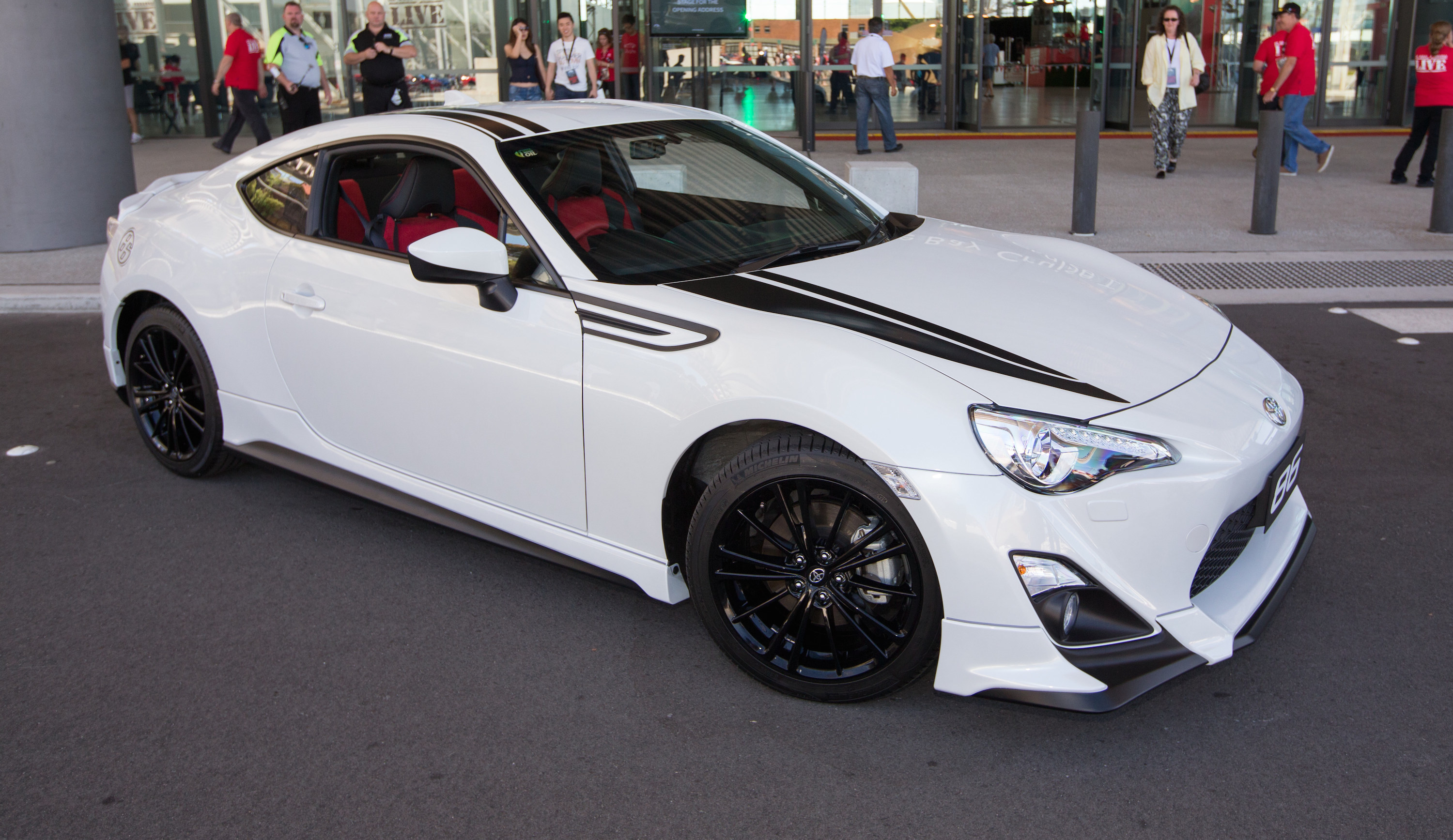
A Toyota dealership has now exclusively confirmed to MOTOR that a TRD 86 is on the way before year’s end, with one or two units of the limited edition going to each dealership in the country – meaning a run of between 200 and 500 units.
The dealer said to expect a circa-$50,000 price tag for the limited edition, which indicates it will be more than just a sticker-pack model. Speaking of which, while there may be TRD badging on the car, the 86 limited edition is expected to get its own name in the same way the HiLux Black Edition did.
There won’t be a turbocharger boosting the 2.0-litre horizontally opposed boxer four-cylinder engine, though, possibly because global chief engineer Tetsuya Tada is philosophically opposed to a ‘more is more’ approach.
Tada-san was in Australia for the 86 Festival of Speed last November, while his boss and the man who signed off on the 86 program, Toyota president Akio Toyoda, at the same time participated in a 72-hour tuning project Down Under.
Rather than adding power, a racier suspension set-up is likely along with potential exhaust and intake modifications. It is no secret that Tada-san has continued to play around with the 86 chassis since the model first went on sale and he believes in the car’s motorsport potential.
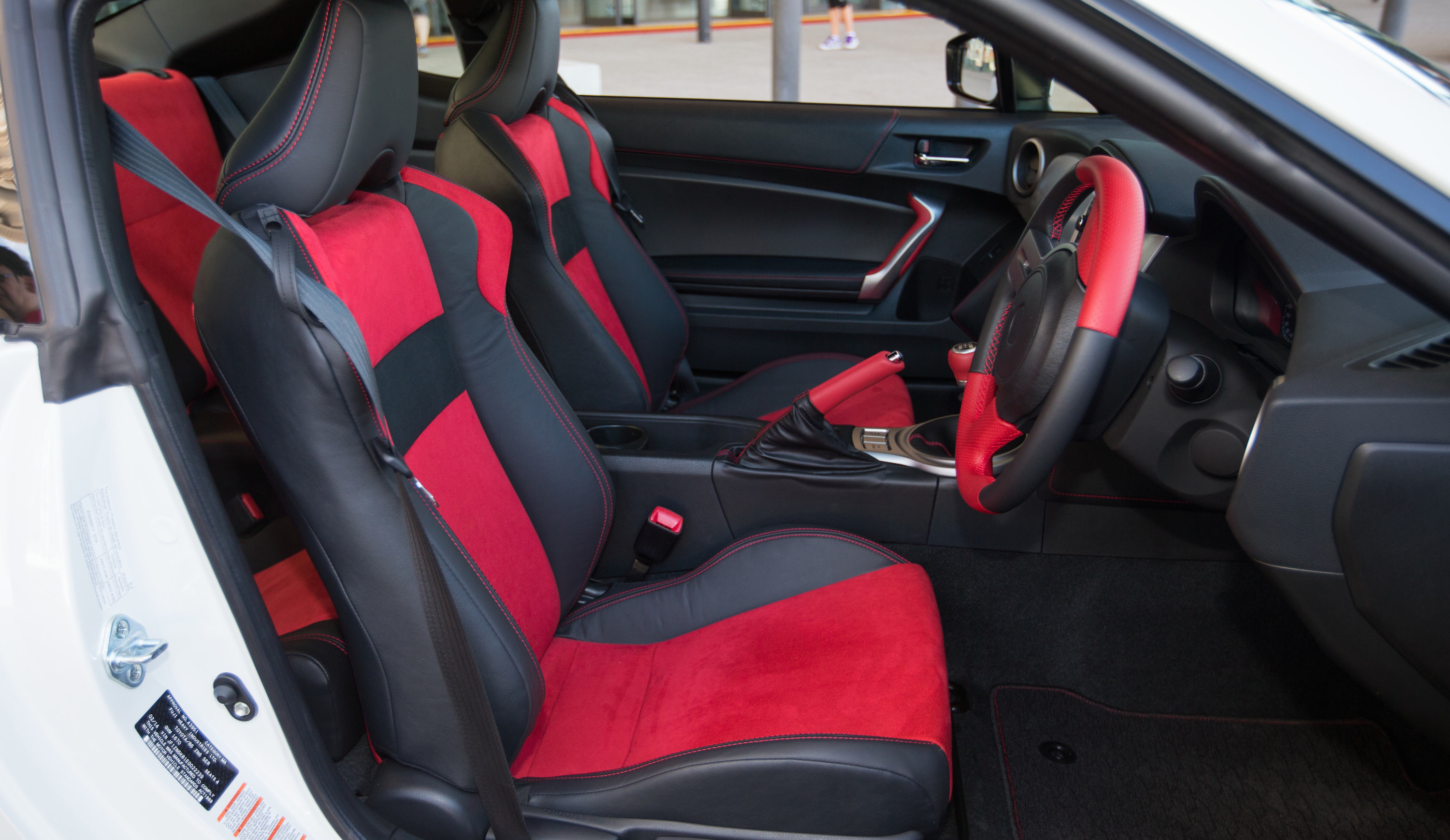
Toyota also knows the car has a loyal following and those first-time buyers may be looking to trade up soon and want a fresh hachi roku hit. This country may rank third in the world for 86 sales – behind Japan and the US – but sales are down 25 per cent to June this year.
Back in 2012 it was all about that $29,990 price tag for the simple concept of a rear-wheel drive small sports car we hadn’t seen in years. In 2015 and with no mid-life facelift on the horizon, TRD performance parts are clearly being thrown in to keep 86 sales ticking.
Ford’s all-new seven-seater has genuine off-road credentials and the ability to challenge the popular Toyota Prado, Isuzu MU-X and Holden Colorado 7 for 4×4 SUV honours.
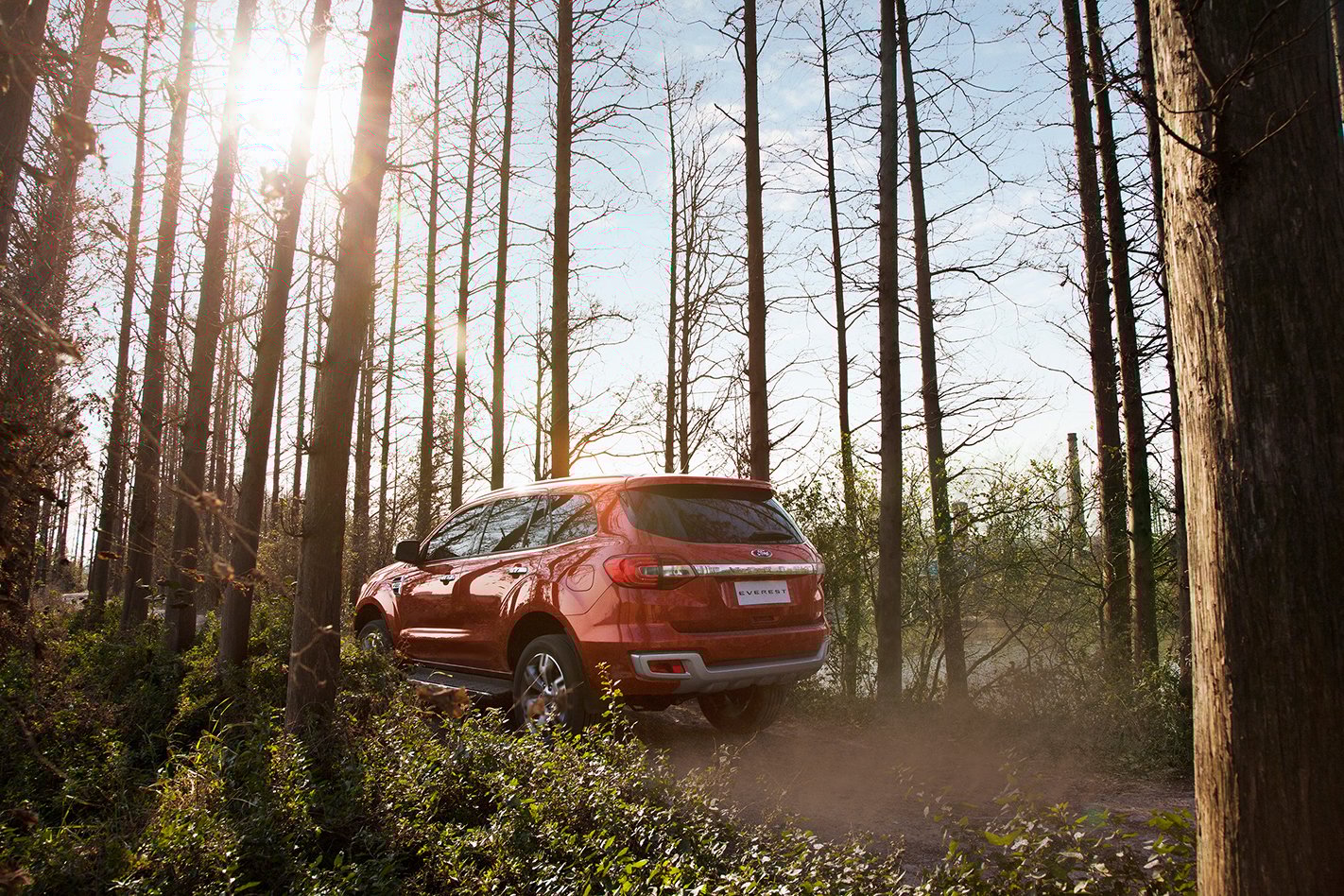
WHAT IS IT? Designed and developed in Australia among other places, the Ford Everest will partially fill the gap left with the departure of the Territory while also taking on the likes of Toyota’s popular Prado 4×4.
WHY WE’RE TESTING IT This is the closest thing we’ve ever had to an Australian-made four-wheel-drive wagon, even though it’s manufactured in Thailand. Much of the engineering was done by Ford Australia alongside development of the Ranger truck.
Toyota Fortuner – Toyota is covering its bases here, introducing another seven-seat 4×4 wagon around the same time as Everest lands here. Smaller and cheaper than the Prado, it will form a rear-guard action against the new Ford.
Isuzu MU-X – Old-school, simple, functional and affordable, the often-overlooked MU-X is a quiet achiever in this segment and is the smart choice for those who can’t afford a Prado.
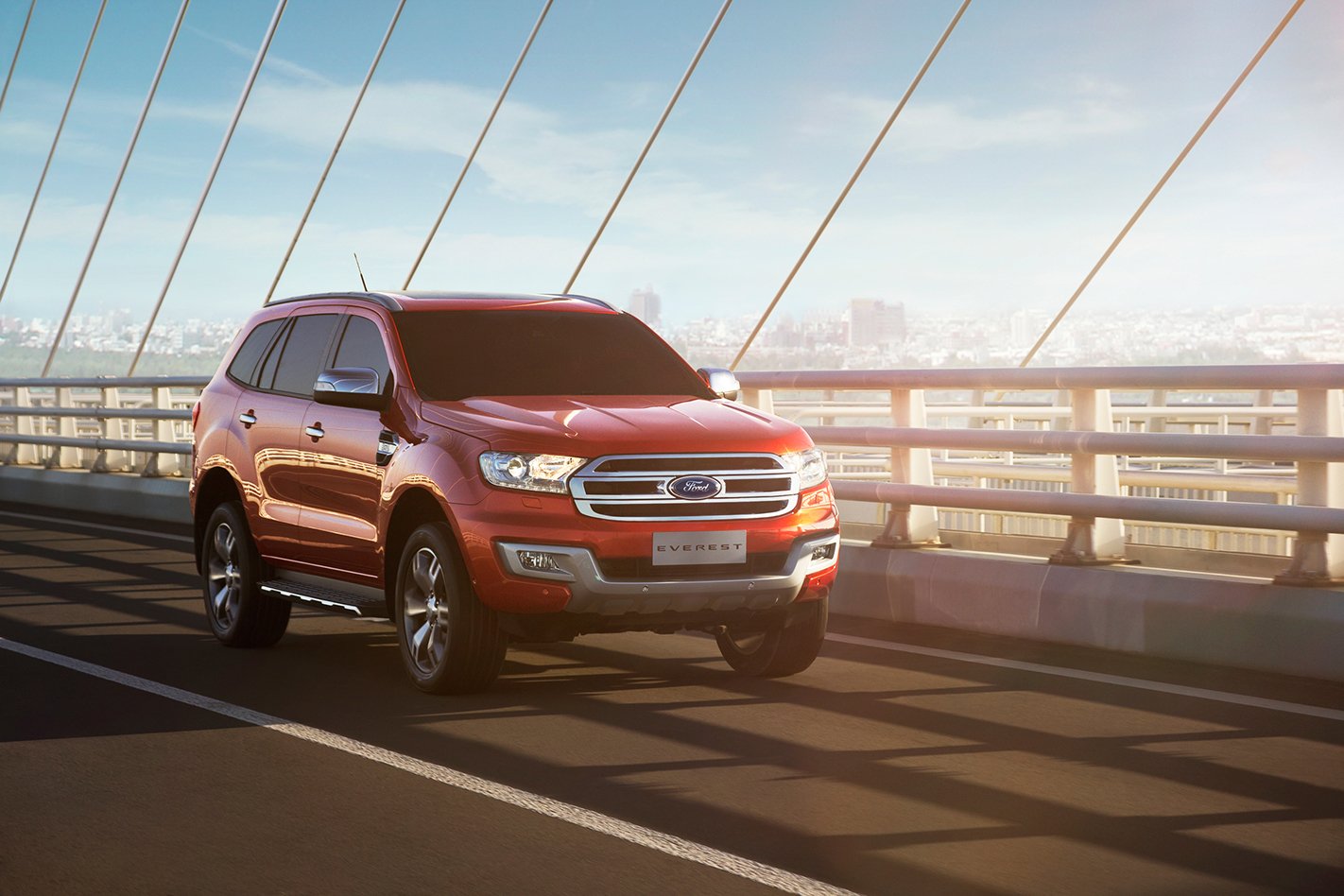
THE WHEELS REVIEW THE Everest is the culmination of a long gestation period of developing a wagon off Ford Ranger’s T6 chassis/platform. It’s also Ford’s short-term replacement for a seven-seat SUV once the Territory ceases to exist at the end of next year.
Everest is not expected to be the only vehicle to fill this role as it is a light truck-based SUV as opposed to the passenger car-derived Territory. Ford’s American-made Edge SUV is expected to complete a two-pronged Territory replacement strategy.
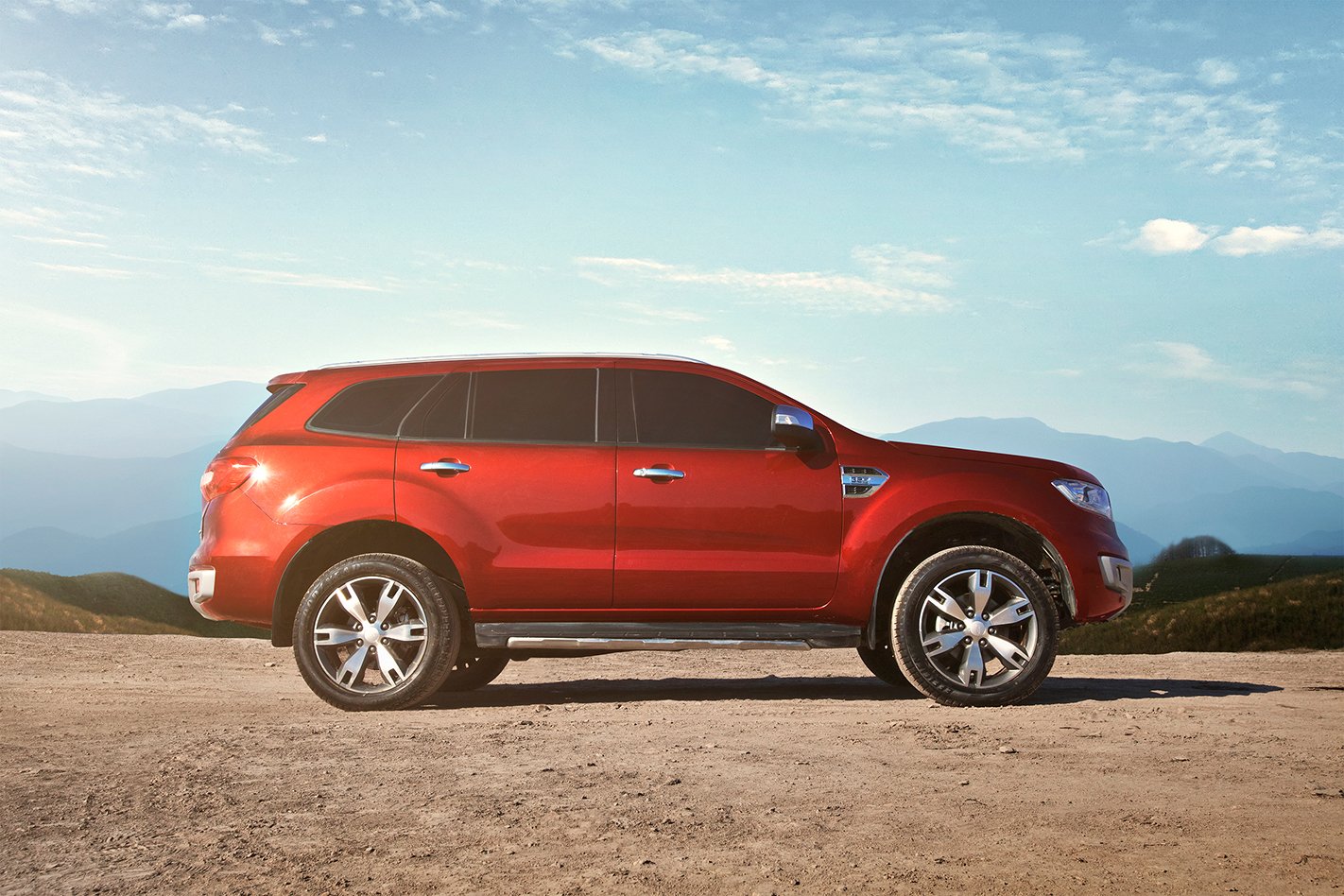
Ford has done well to engineer refinement and functionality into a light commercial vehicle-based wagon. The Everest wagon employs a multi-link, coil-sprung rear suspension in lieu of the Ranger’s more commercial leaf springs.
This set-up incorporates a Watts link for lateral location of the live axle to improve on-road characteristics, a system that was successfully used on Falcons for many years. While by no means a modern design in terms of passenger cars, it provides a good compromise between what’s needed on and off the road. It better controls the rear end, taming the usual tendency to move around over irregular surfaces and under lateral dynamic loads.
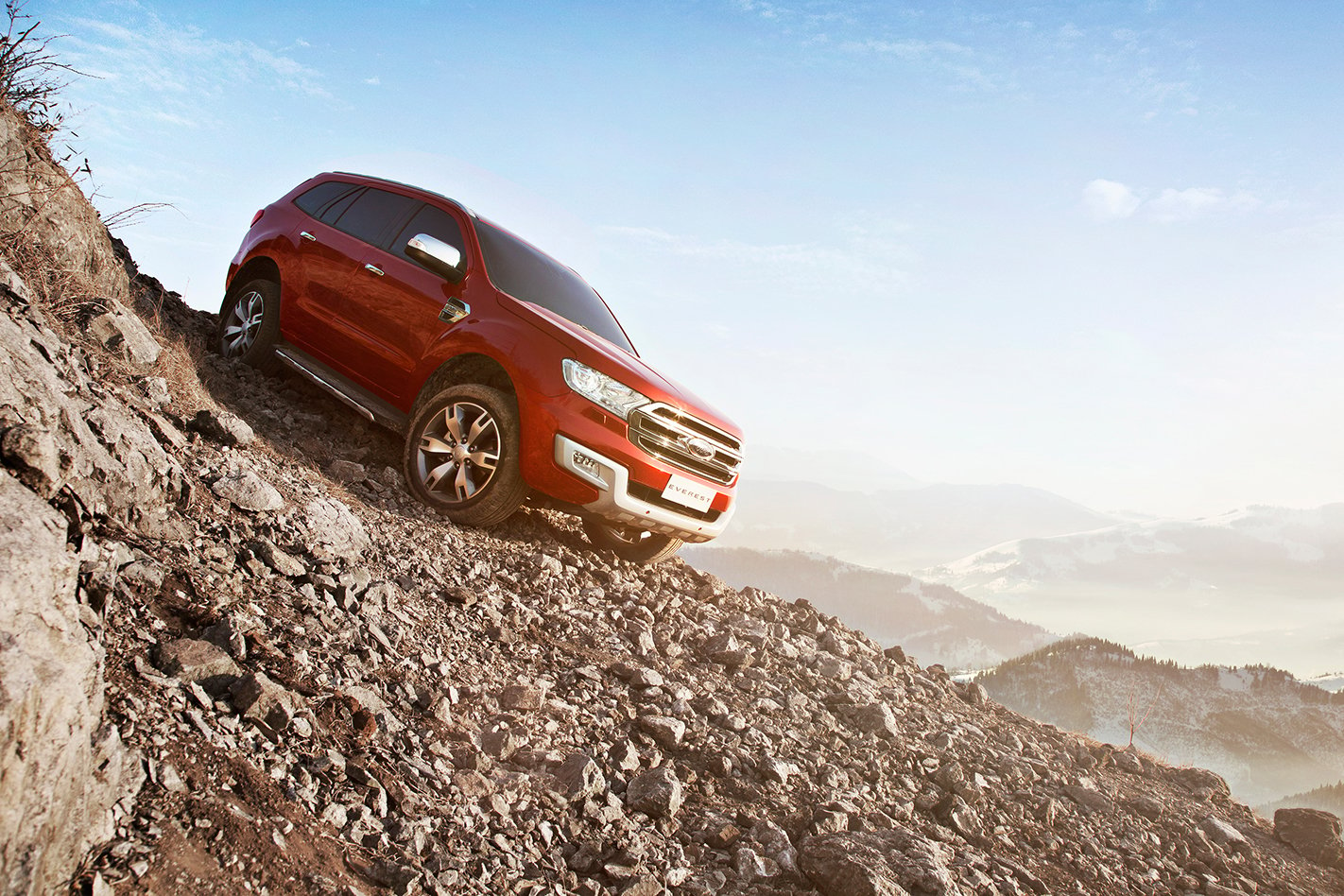
The electric-assisted steering is light at low speeds where you want to it be and firms up at speed, although it doesn’t give the same connected feel of hydraulic power steering.
Everest’s separate chassis helps isolate the body from road NVH even on the low-profile 20-inch tyres fitted to these test vehicles. Top-spec Australia Everest Titanium models will also ride on the 20s while the mid-spec Trend gets18s and the base Everest more comfortable 17s.
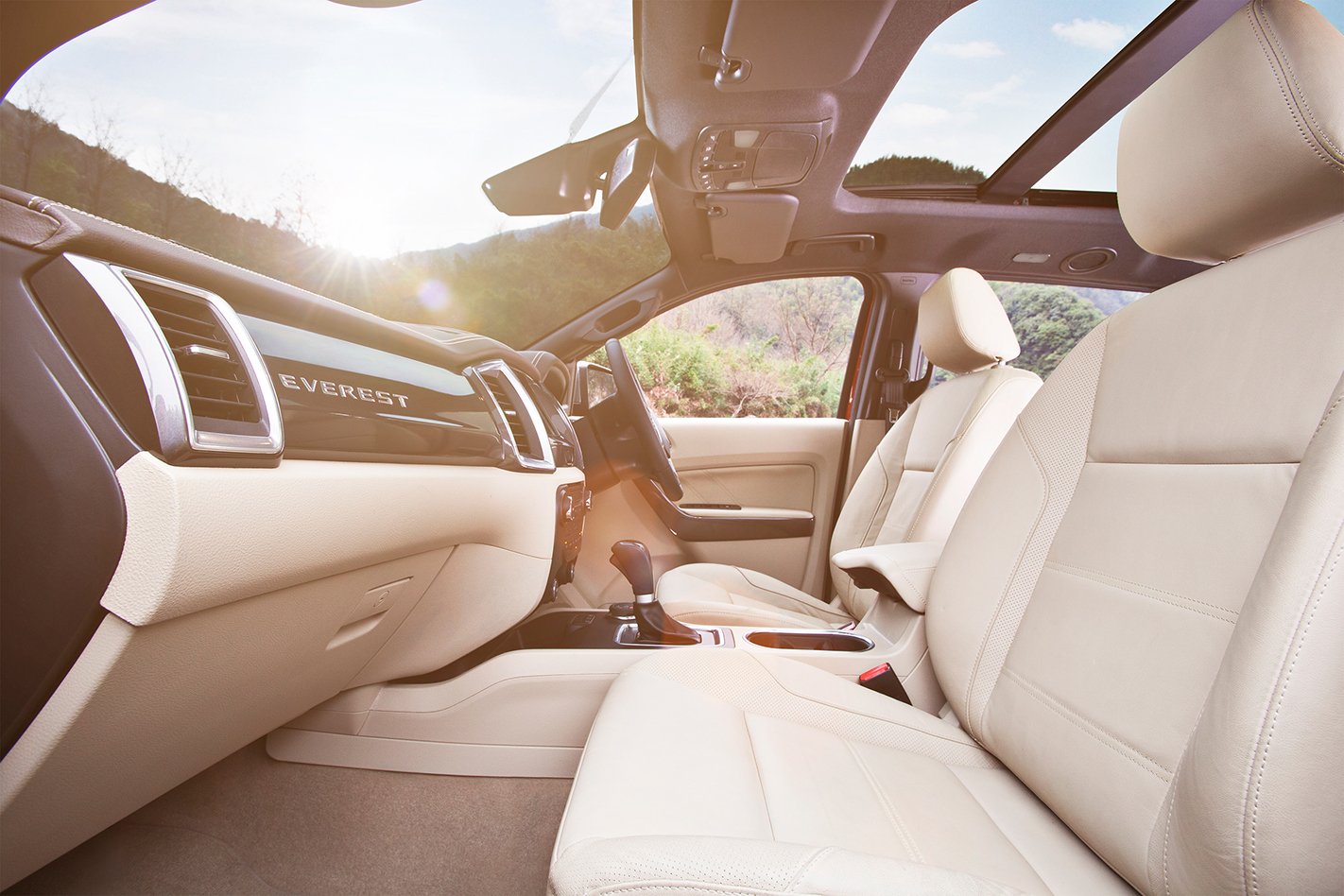
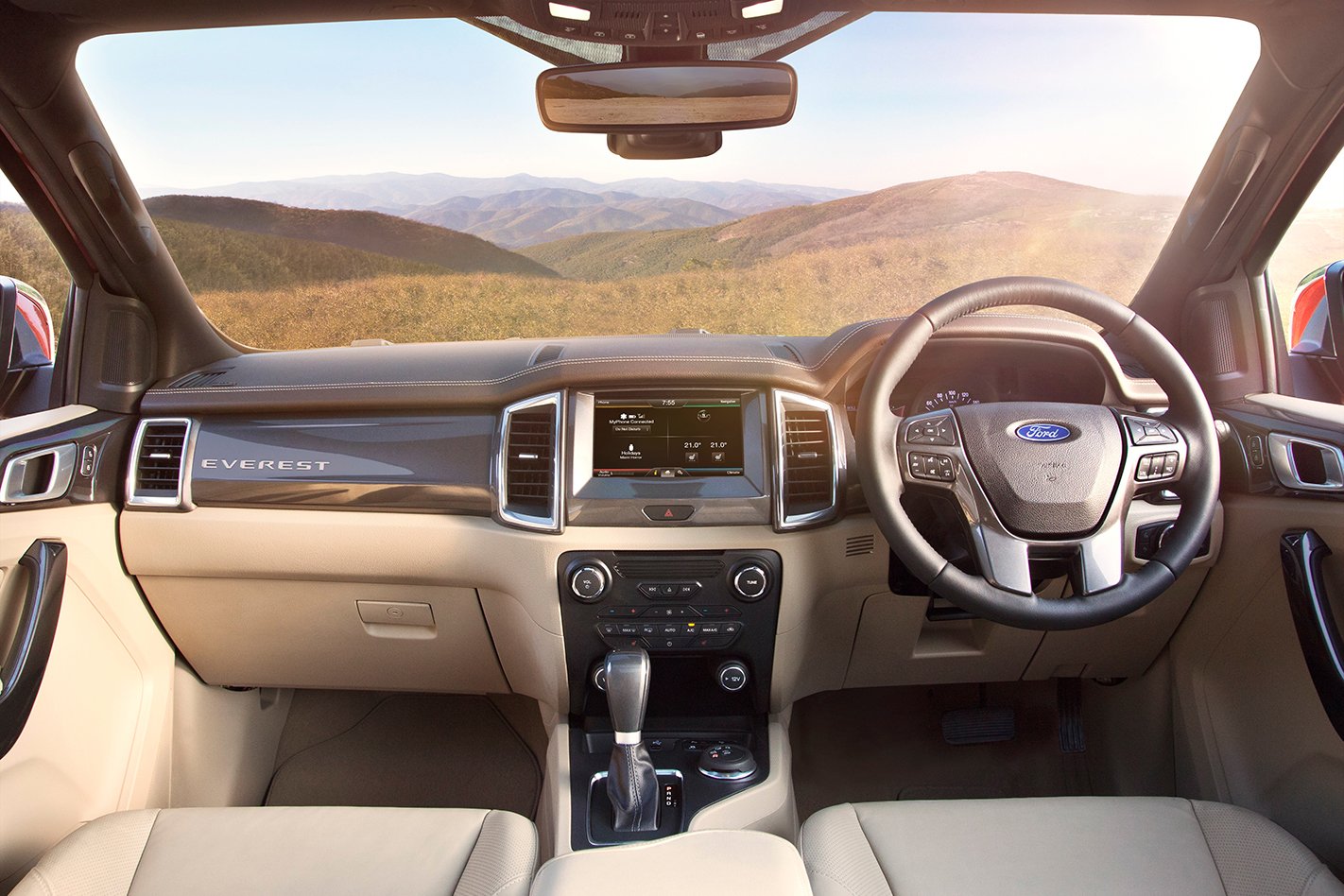
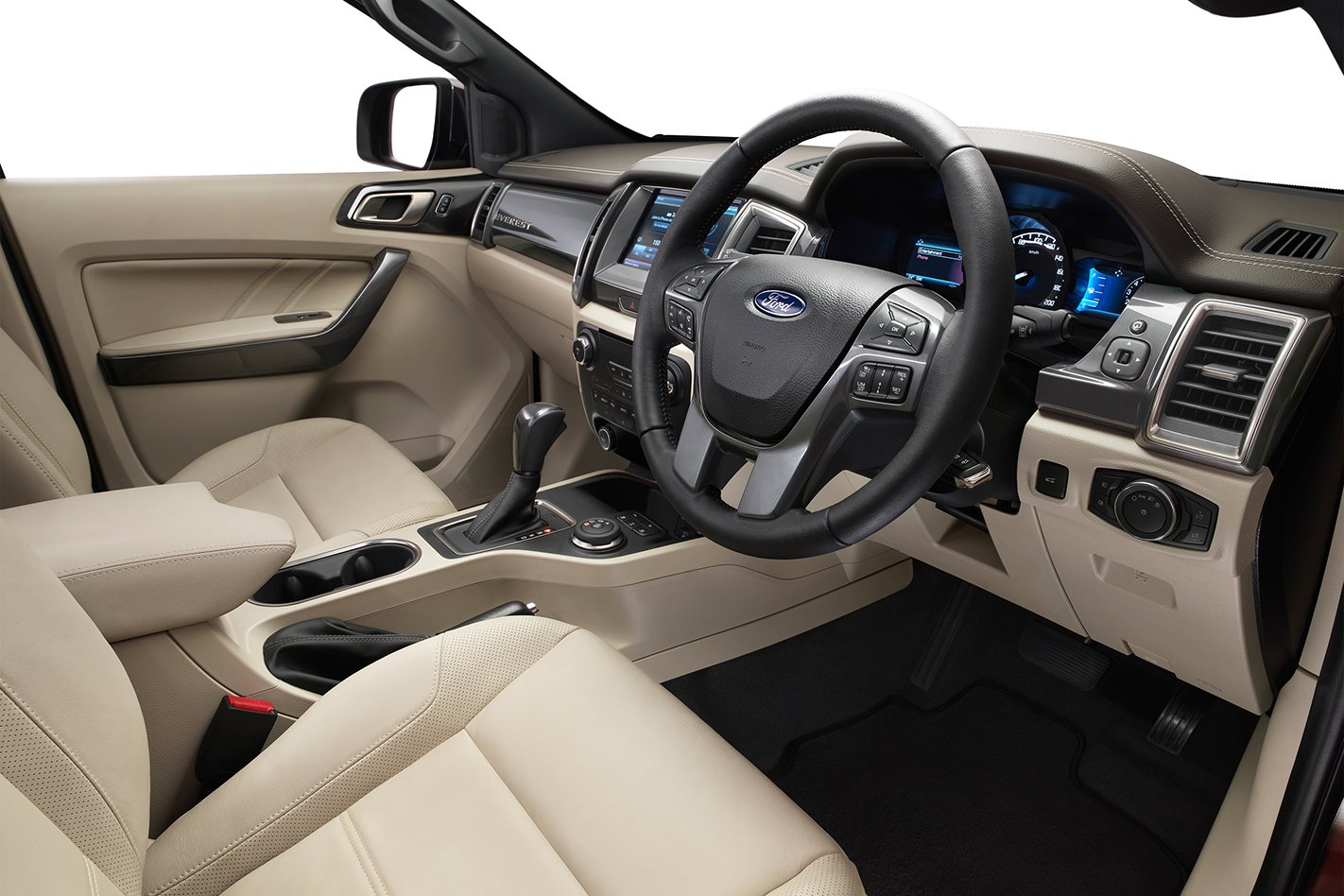
Head room in the back seats is limited by the sculptured roof lining that houses ducting for rear air vents. Notably absent are keyless entry/start and reach adjustment for the steering column, which may inconvenience taller drivers.
Cabin refinement is aided by Active Noise Cancelation that, like similar technology in high-end audio headphones, transmits an opposing ‘sound’ to the cabin to cancel out ambient noise. This includes the sound of the diesel engine, where the low-frequency growl has been targeted.
All Australian-spec Everests will be 4×4, for now at least; 4×2 is available for other markets and isn’t being ruled out for us down the track.
The full-time 4×4 system is aided by a clever Multi Terrain Selector that offers four driving modes: Normal; Snow, Mud, Grass; Sand; and Rock. These are designed to make it easier for novice off-road drivers to manage different conditions. Low-range gearing, a locking rear differential, hill descent control, and an 800mm wading depth add to Everest’s off-road capabilities, although we weren’t able to put them to the test on this drive.
SPECS Model: Ford Everest Engine: 3198cc in-line 5cyl; dohc, 20v, TD Max power: 143kW @ 3000rpm Max torque: 470Nm @ 1750rpm Transmission: 6-speed automatic Fuel economy: 8.5L/100km Price: $54,990 to $76.990 On sale: October 1
Think 2.0-litre four-cylinder rear-wheel-drive coupe from Japan, think Toyota 86. But add a turbocharger to that equation and you can now picture a Lexus RC200t.
The RC200t should cost under $60,000 when it lands locally in December, just after the IS200t sedan with the same engine in September.
In the coupe range it will duck beneath the $66,000 RC350 that utilises a 3.5-litre naturally aspirated V6 and is barely more powerful, much less frugal and heavier.
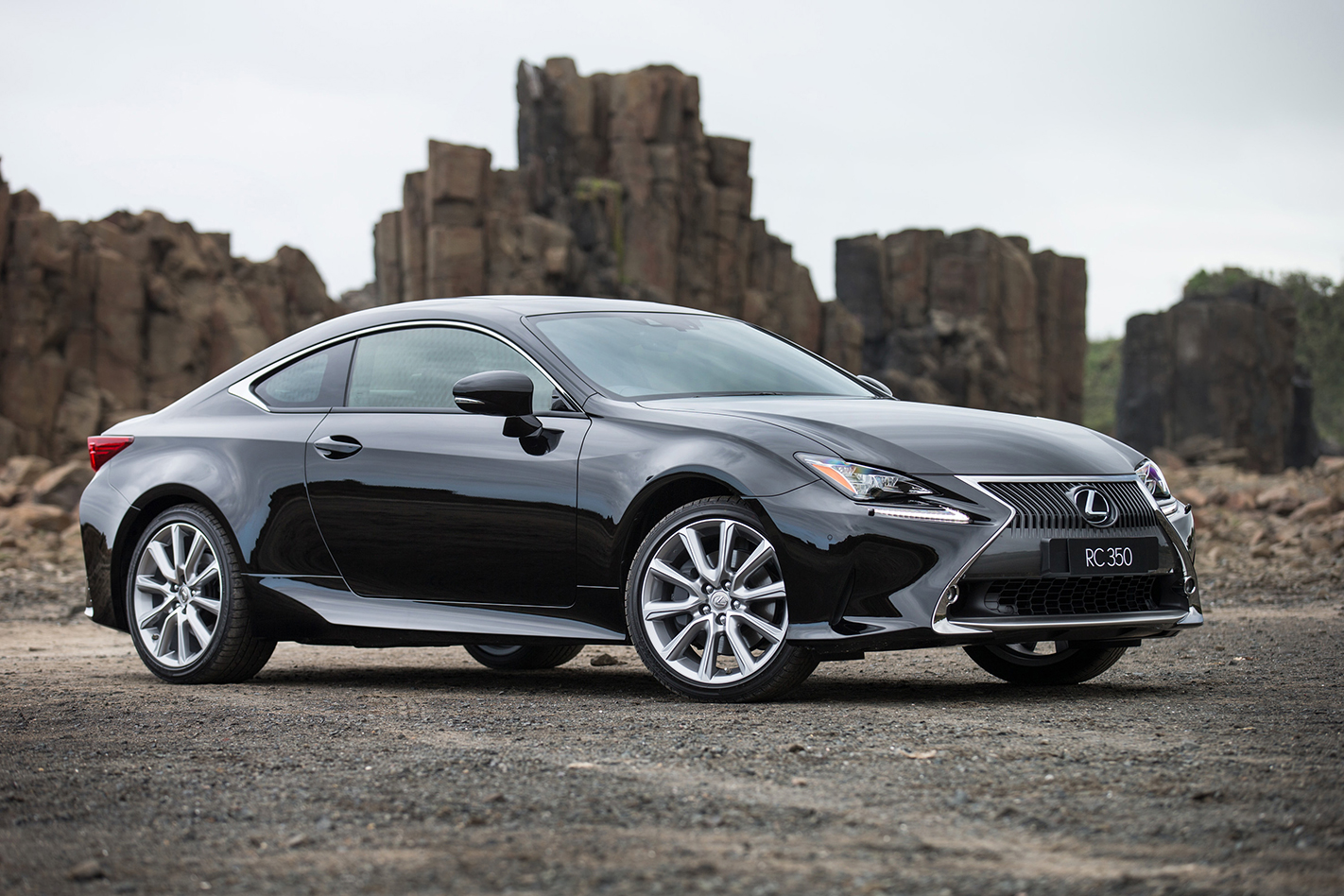
Unlike the flat-four, Subie-derived 86 engine, the RC’s pots line up straight. Like its natural German rival, the BMW 428i coupe, the same-sized engine in the RC200t makes an identical 180kW and 350Nm.
A base RC coupe weighs a portly 1680kg, but while Lexus isn’t talking kerb weights with the new RC200t, the 2.0-litre engine itself weighs 160kg – or around 20kg less than the V6 that produces 53kW/28Nm extra.
Where the RC350 makes torque at 4800rpm and power at a peaky 6400rpm, the equivalent engine in the NX200t compact SUV makes its maximums between 1650-4000rpm and 4800-5600rpm respectively.
In short, the twin-scroll turbo unit lathers grunt over the throttle rather than forcing you to reach into the pedal to get it.
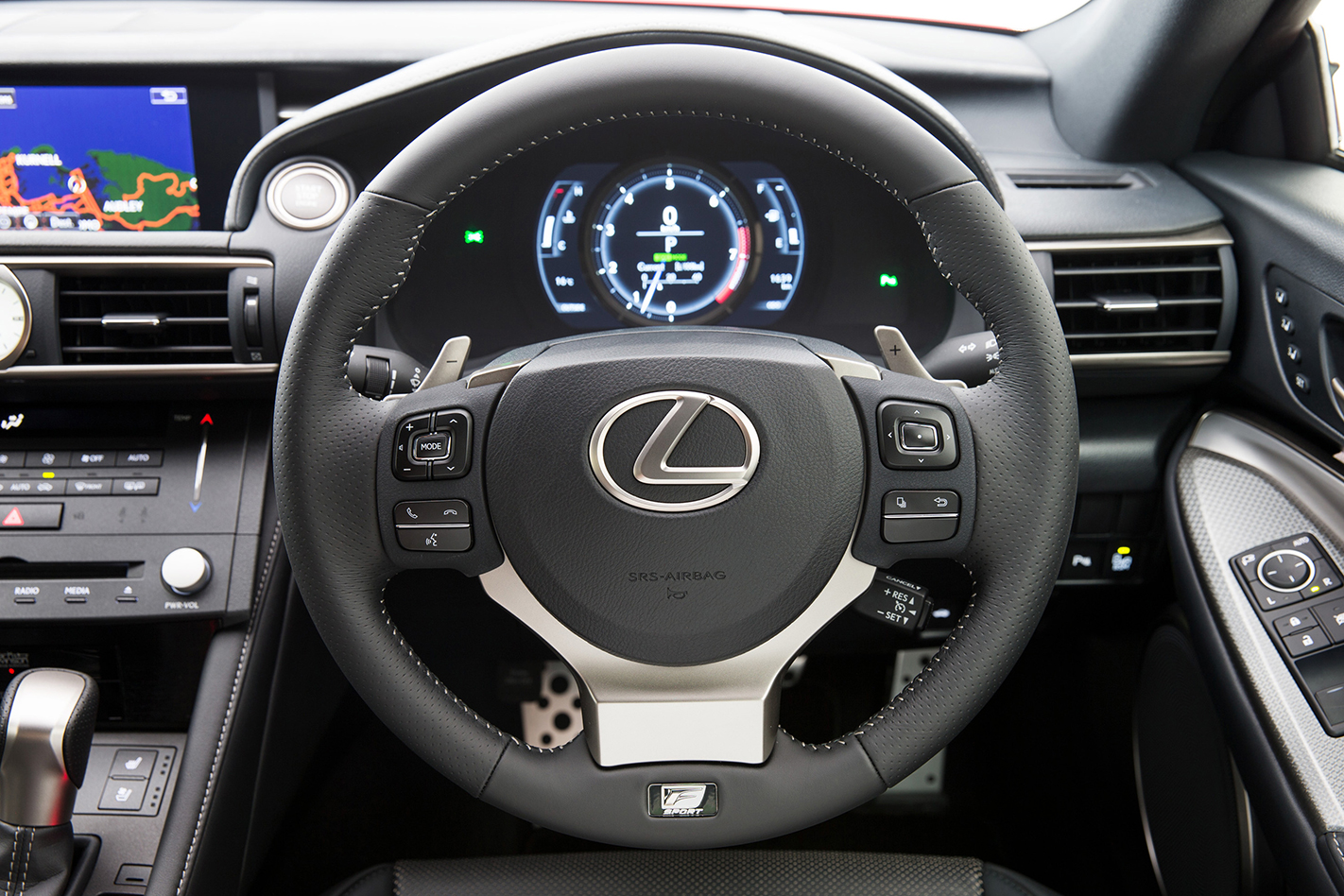
The fatty NX200t weighs 1700kg, gets 5kW less than RC200t and the same torque, with a 7.3-second 0-100km/h claim and 7.7L/100km economy.
The RC200t also gets two extra gears to play with, utilising an eight-speed torque converter automatic, and with along with around 50kg less to lug around, should achieve a ton run in the high sixes with low-seven frugality.
We won’t mention the 428i coupe can achieve high-fives and low-sixes respectively.
Still, Lexus will definitely want to mention that the RC200t will undercut the Bavarian coupe by more than $20,000. It will also slice into the pricing territory of the ageing Nissan 370Z that currently retails at $60,000. Which brings us back to square one – this could be a more powerful and posh 86.
Get your free weekly report from the world of fast cars – subscribe to the MOTOR newsletter!
V8 SUPERCARS: Bluewash in Queensland
Ford’s Mark Winterbottom and Chas Mostert left their V8 Supercar rivals scratching their heads after a dominant weekend which collectively landed them all three race wins at Queensland Raceway.
With two wins on Saturday and a third place on Sunday, Winterbottom extended his already big lead over Holden’s Craig Lowndes (two seconds and a third) in the championship. His wins on Saturday were Winterbottom’s first at QR since 2008.
Winterbottom’s young Prodrive team-mate Chaz Mostert again uncorked his blistering one-lap speed to take pole for two of the three races.
But Frosty proved to be a faster starter come race time on Saturday, jumping to the lead in both 20-lap sprints. He was never headed, relieved to be clear of some occasionally brutal and manic racing back in the pack.
Lowndes opportunistically grabbed a podium in the first of the Saturday races when he fired past Mostert and Shane van Gisbergen on the final lap as the youngsters squabbled over third.
The Red Bull Holden ace started from pole in the second Saturday race but was jumped by Winterbottom before fighting back to maintain pressure all the way to the flag.
After struggling to convert his qualifying pace into victories, mainly because of tardy starts, Mostert put it together brilliantly during Sunday’s 65 lap race, with compulsory fuel/tyre stops.
He nosed ahead in the run to the first corner and kept his advantage for the ensuring 200 kilometres, Lowndes and Winterbottom taking the minors.
Mostert’s strong weekend at the ‘paperclip” lifted him to third on the championship standings, with Holden’s Fabian Coulthard slipping to sixth after struggling with car set up.
While Winterbottom enjoys a useful 256-point buffer to Lowndes, he cautiously acknowledges there is much of the 2015 season to play out including the always unpredictable enduros.
Frosty respects Lowndes as a tough rival but would also inwardly acknowledge that the young bloke in the adjoining garage, Mostert, can’t be ignored as a title contender.
And if Winterbottom’s Saturday was close to perfect, his Sunday was less so, admitting to a “few little issues”. “The start for me wasn’t great,” he owned up.
Title rival Lowndes saw positives in his weekend. “The car speed is definitely improving but we know we’ve still got more work to do. To have three podiums over the weekend was sensational. A third and two seconds was more than what we could have expected. We’ve got a little bit of time before Sydney Motorsport Park next round, but it’s encouraging. There are a lot of good signs, we had good pace on the softs and good pace on the hards, and we were able to match the pace of the Prodrive guys over the course of the race so a lot of encouragement.”
CHAMPIONSHIP POINTS (after 20 races) 1. Mark Winterbottom (Ford) 1744 points 2. Craig Lowndes (Holden) 1488 3. Chaz Mostert (Ford) 1452 4. David Reynolds (Ford) 1420 5. James Courtney (Holden) 1373 6. Fabian Coulthard (Holden) 1332 7. Garth Tander (Holden) 1261 8. Jamie Whincup (Holden) 1261 9. Shane Van Gisbergen (Holden) 1165 10. Rick Kelly (Nissan) 997
Stories of bias in favour of certain drivers within the Red Bull-owned Formula One teams are never far from the surface.
In his new book, Aussie Grit, Mark Webber talks of Red Bull giving Sebastian Vettel preference in the seasons they spent together in that team.
Webber says that while he doesn’t harbour any animosity towards Vettel today, his generous attitude does not extend to his old team’s polarising ‘motorsport advisor’, Helmut Marko.
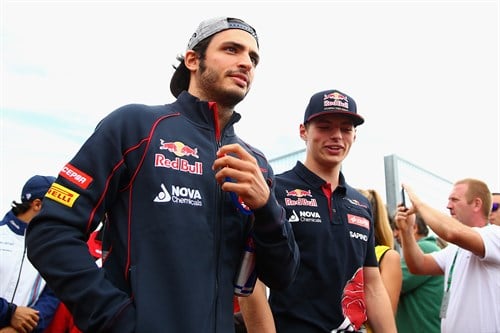
Now it seems the bias might be extending to Red Bull’s junior team. Scuderia Toro Rosso where Max Verstappen is getting favoured treatment. Or so says the team’s other driver, Spain’s Carlos Sainz Jr.
Sainz expressed his anger after the team appeared to give Verstappen a preferential pit stop strategy during last weekend’s Hungarian Grand Prix.
The Spanish media is running hard with the idea that Toro Rosso has inexplicably favoured the young Dutchman.
Sainz, 20, was running ahead of his high-profile teammate when Verstappen was given the advantageous strategy.
“I’m angry because I was doing a very good race,” Sain told the Marca newspaper.
Sainz ultimately retired with a car issue but this did nothing to wipe away his bafflement over why his team appeared to favour Verstappen, who went on to finish fourth.
“It has not been explained to me why they didn’t stop me first,” said Sainz. “Imagine the anger that I have. I stopped later than the others, Max did ‘the undercut’ and passed me in the pits. That’s what I cannot understand.”
Spanish journalists have sided with Sainz, one writer suggesting overt favouritism towards a driver sometimes described as ‘the new Senna’.
Sainz has been no less impressive this year than Verstappen, matching the Dutchman in qualifying (five apiece) but missing out in the races. Verstappen collected 12 points in Hungary to jump to 22 points, 13 ahead of Sainz.
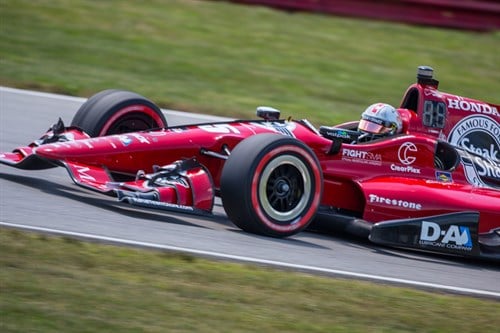
Foreign drivers have tended to dominate American IndyCar racing in recent years but now a good ol’ mid-western lad, Graham Rahal, is making a determined assault on the 2015 title, his cause boosted by an emphatic victory in the Indy 200 at the Mid-Ohio road course on Sunday.
Rahal, son of former champ Bobby Rahal, overcame a 13th starting slot in his Honda to charge to his second win of the season, closing to nine points of championship front-runner Juan Pablo Montoya (Penske Chev) with two races left in the schedule.
Ten drivers can mathematically take the 2015 crown.
Rahal grabbed the lead for good on lap 67 when the pointy-end pack, including race leader Montoya, pitted under caution for their final fuel/tyre stop.
With six laps remaining, Rahal then had to get his elbows out to fight off Justin Wilson, Simon Pagenaud and Scott Dixon on a restart at the 13-turn road course, going on to win by 3.4 seconds.
All the three podium men had to fight through from the middle of the pack. Wilson started 14th while Pagenaud went from 15th to third.
Queensland’s Will Power went from the outside of the front row in his Penske Chev to a 14th-place finish and has slipped 59 points off the lead. Fellow Aussie Ryan Briscoe was four places back.
Pole starter Scott Dixon, a five-time winner at Mid-Ohio, finished fourth and is still well in title contention.
Montoya, who started 10th and led for a spell in the middle of the race, finished 12th after being caught out by a caution that couldn’t have come at a worse time.
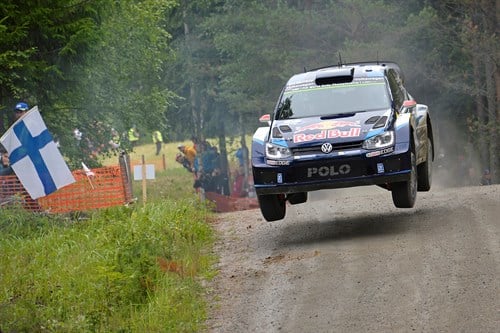
Volkswagen’s speedsters Jari-Matti Latvala and Sebastien Ogier turned on an electrifying show of on-the-edge high-flying driving for the three days of Rally Finland, but it was the local hero who landed the win in round eight of the 13-round World Rally Championship..
Latvala’s average speed – 125.44km/h – was the highest ever in the history of the WRC.
Urged on by thousands of fervent Finns, Latvala put his abundant local knowledge to great effect in the fastest and most spectacular of all events in the world championship, repeating his stirring home win of 2014.
After the Volkswagen drivers exchanged super-close stage wins over the first two days, JML went into Sunday’s final two competitive gravel stages with a cushion of 13.2 seconds over Ogier.
Latvala can blow hot or cold in some rallies but in his homeland he is one tough customer. His excellent Saturday performance, when he opened the 13.2s gap over the defending champion, set up the dramatic victory.
Latvala is a sporting rarity, one of those people who says exactly what he is thinking. So it was no surprise when he blurted out that “Saturday was one of the greatest drives I’ve ever had in my life.” No argument. Any time a rally driver gaps Sebastien Ogier is a good day indeed.
Latvala held his nerve on Sunday, didn’t make any mistakes, and went on to take his third win in Finland – by 13.7 seconds.
Third in an event that surely ranks as one of the greatest spectacles in all of motor sport was Citroen’s Mads Ostberg, followed distantly by Hyundai’s Thierry Neuville, who seems to be suffering a crisis of confidence, and Ford rising star Ott Tanak.
This year, the legendary Ouninpohja stage was reintroduced in its glorious 34.39km entirety, replete with scarily high average speeds and 77 crests. Air time on the Ouninpohja stage is a huge talking point – in 2003, en route to victory, Estonian Markko Martin recorded Rally Finland’s longest ever jump when he launched his Ford Focus RS WRC at a take-off speed of 171km/h over the most notorious crest, flying for all of 57 metres. Someone with access to team data revealed that in 2013, Ogier’s Volkswagen spent 30.4 seconds in the air on a stage that only took 15m08.9s.
This year, the slippery surfaces, high speeds and roller-coaster yumps brought many undone, including New Zealand’s Hayden Paddon (Hyundai) who slid into the trees on Friday, VW’s Andreas Mikkelsen (roll), Ford’s Robert Kubica (somersault), and Citroen’s Kris Meeke, who aquaplaned off the road.
Aussie Scott Pedder with co-driver Dale Moscatt finished an excellent fifth in the WRC2 category and 15th outright, aboard a Ford Fiesta R5. It was the pair’s best finish of his debut WRC season, having also contested the Portugal, Italy and Poland rounds. They’ll miss this month’s tarmac-surfaced ADAC Rallye Deutschland to prepare for Coates Hire Rally Australia.
Sign up here to receive the latest round-up of Wheels news, reviews and video highlights straight to your inbox each week.
PLUS
- Pep. On paper, the new Triton is not the most powerful ute out there, but because it is relatively light and short in length for a modern 4×4, it still feels zippy and even sporty compared to some other trucks on the market.
- Easy 4×4. The Triton’s ‘Super Select’ 4×4 system brings the benefits of full-time 4×4 to general driving. It’s a bonus to be able to select full-time 4×4 rather than shift between high-4 and 2WD on different driving surfaces.
- Suspension. Revised suspension means a softer ride and less coffee spilt in your lap.
- Easy to reverse. A camera turns on to show you what’s behind you down low when you’re reversing. It makes it hard to hit something, which is great in a car that might otherwise be scary to park.
- The interior. The cabin’s finish is far better than it was in the previous Triton, with more of a passenger-car feel than that of a commercial vehicle.
- Steering. The Triton handles pretty well for a big car and drivers can now adjust the tilt and reach of the steering wheel.
- Safety. The new Triton has achieved a five-star ANCAP safety rating.
- The gears. The auto Triton has an older transmission system with fewer speeds than some of the other new utes on the market. It doesn’t do a bad job, but it could be more agreeable by offering quicker, smarter and more decisive shifts.
- Fuel use. Despite a good ADR fuel figure of 7.6L/100km, our real-world tests show the Triton consumes more like 11.5L/100km.
- Room. The new Triton’s cabin is slightly bigger than old Triton’s, but it’s still pretty small, and it’s certainly cosy for three adults in the back.
- The sports bars. You might think the chrome sports bars on the ute tray look pretty cool. But when you keep seeing an imaginary silver car in your blind spot, the sportiness loses its appeal.
Click here to read the full review on the Mitsubishi Triton.
Ferrari will release a stripped out, faster F12 and there’s now imagery to prove it.
What’s said to become the 2016 Ferrari F12 ‘Speciale’ was snapped inside Ferrari headquarters, and the image shared by Cavillino Rampante this morning on his Facebook page.
The car is pegged for an official reveal at the Frankfurt Motor Show 2015 this September along with the 488 Spider, however it’s reported that customers have already been introduced to the car in private.
With the public’s first look, what’s most obvious about the super F12 is a more extreme exterior that will help it achieve credentials as a ‘Speciale’ Ferrari.
Its rear bumper wears a wide gaping diffuser flanked by two new vents that house its exhaust pipes.
Meanwhile a larger rear ducktail spoiler will complement a new front bumper.
Specifications are not known, but Autocar reports the aggressive aerodynamics will be assisted by a hefty drop in weight and a slight increase in power.
Two hundred kilos are said to escape the F12’s total mass, much of which looks to be helped by Perspex glass materials, 10-spoke lightweight wheels, and lightened body panels. We can imagine Ferrari’s also saved a few via radical strategies for interior trim and equipment.
Power will climb to 567kW, 22kW more than the standard F12’s 6.3-liter V12, and propel 1325kg.
While it’s reported to dodge the ‘GTO’ moniker worn by Ferrari’s most revered V12 Berlinetta, the 250 GTO, vented gills on the F12 Speciale’s rear haunches reminisce the original.
And there are upsides to the Speciale nametag. Like the 458 the F12 Speciale will be produced full scale alongside the standard car.
When it arrives here, expect its price to fly much higher than the current $690,475 Australians have to pay for the F12.
(Picture credit: Cavallino Rampante)
Get your free weekly report from the world of fast cars – subscribe to the MOTOR newsletter!
The 66th Frankfurt motor show, which opens on September 15, is shaping up as the biggest ever with a number of crucial new models from major brands. All tastes will be catered for, from an all-new Renault Megane to an awesome Lamborghini Huracan Spyder, and everything in between. Here’s what we know so far…
2015 BMW M2
ONE of the most anticipated reveals of Frankfurt is shaping up to be BMW’s rear-drive rival to the Audi RS3 sedan. The 240kW-ish output of its in-line six is not yet confirmed, but it will mate to either a six-speed manual or a seven-speed dual-clutch auto.
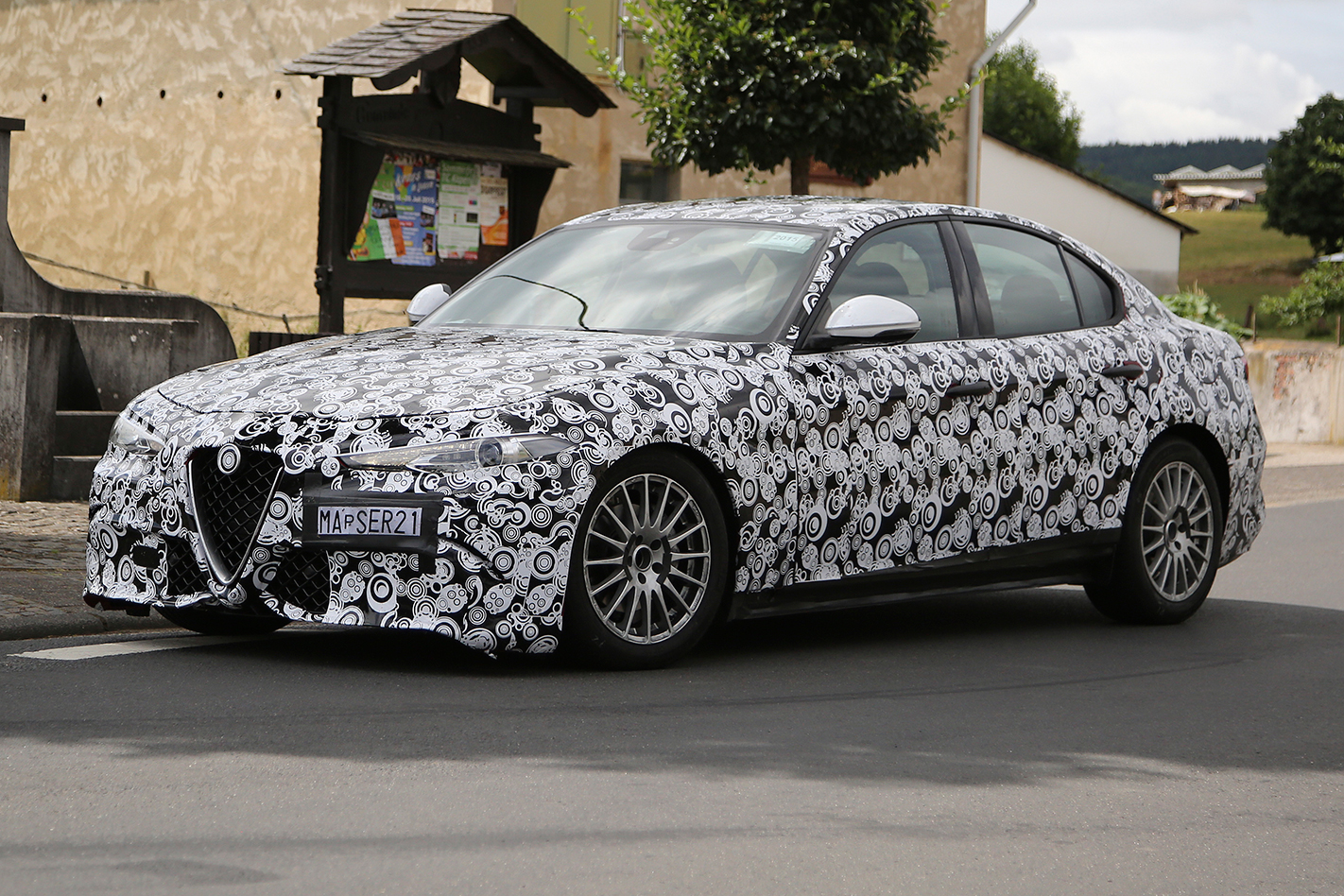
WE’VE seen it wearing its track gear, but now we get to assess Alfa Romeo’s sweet-looking BMW 3 Series rival wearing its street clothes. It won’t be anywhere near as lairy as the stove-hot twin turbo V6 QV-badged version, but a mix of four-cylinder petrol and diesel engines should still send drive to the rear wheels.
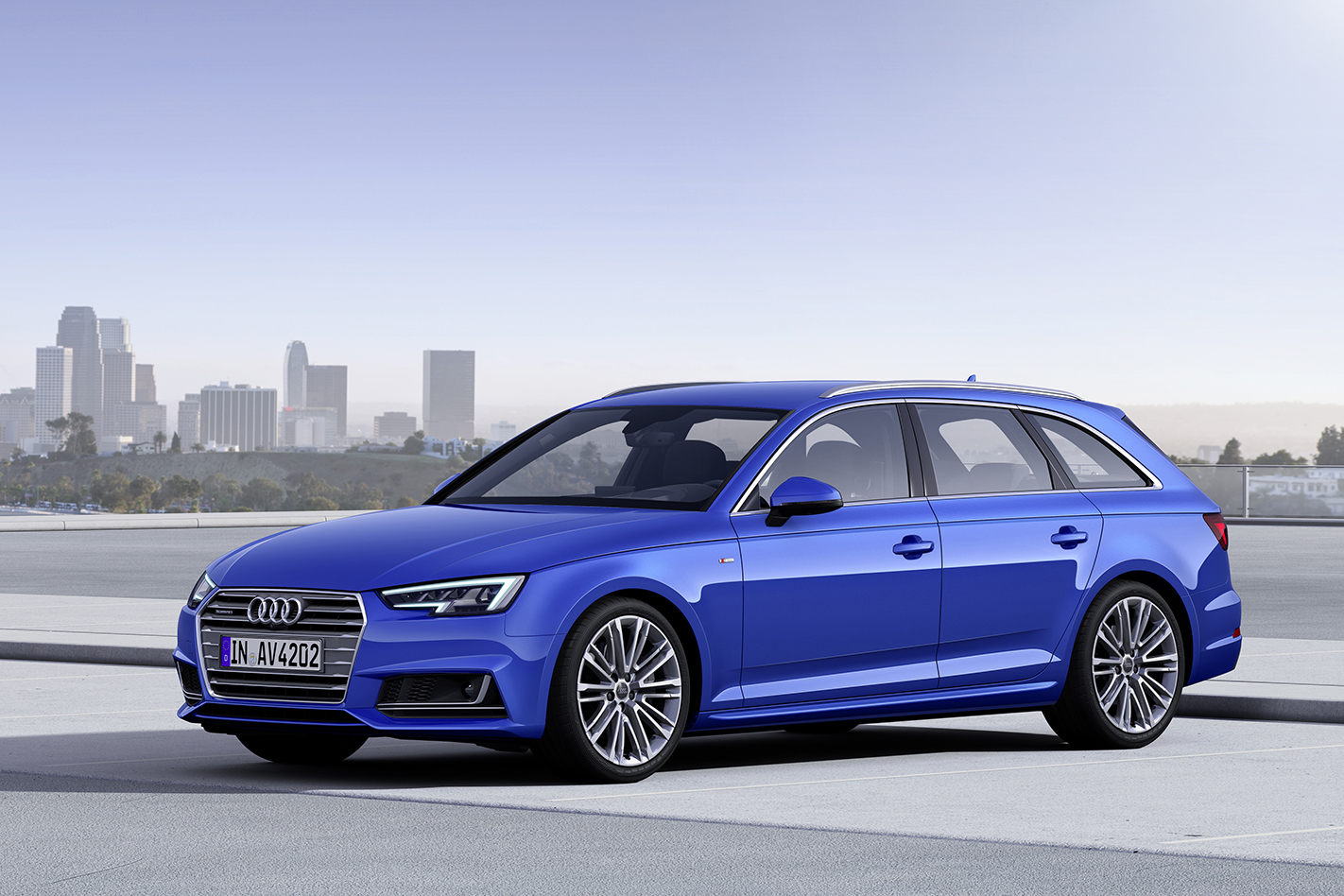
ONCE the German luxury brand’s best-seller here, the Audi A4 sedan has since been eclipsed by Australian luxury buyers’ taste for jacked-up SUVs such as the Audi Q5. The new Audi A4 wears a watered-down face pulled off the more sharply styled Audi TT, and backs it up with a rather bland rear end.
2017 Audi Q6 e-tron
AUDi is expected to test the waters with an all-electric SUV mangled into a coupe form as it fights off rivals including the BMW X6, Mercedes-Benz GLE Coupe and even the upcoming falcon-doored Tesla Model X. Production models are expected to use a range of conventional and plug-in hybrid drivetrains, and maybe even a hydrogen fuel cell.
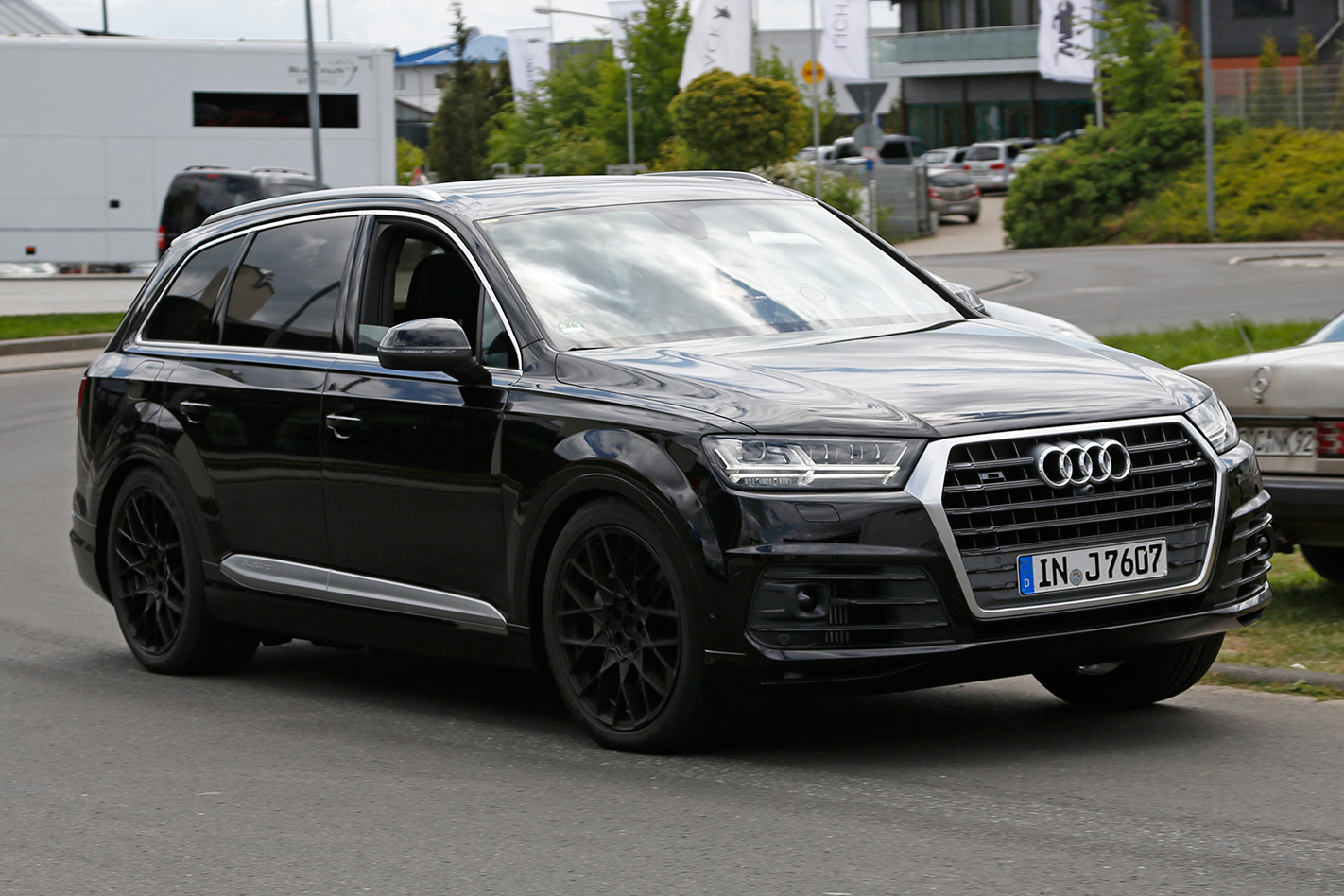
THE era of electric turbochargers is on us, and Audi is lining up to become the first to strap a pair of them to a car – in this case, the tighter, sharper second-generation Audi Q7. The twin-forced induction SUV is expected to wear the Audi SQ7 badge, although it will use a V8 diesel rather than a conventional petrol one.
2016 Audi TT RS
AUDI’S oddball turbo 2.5-litre five-cylinder engine is expected to return for another showing in the freshly styled four-seat Audi TT coupe. Driveline tweaks are expected to turn the dial up to nudge 300kW which, combined with an aggressive aero package, should turn the Audi TT into something of a mini-Audi R8 fighter.

ONCE it was Range Rover left alone to play in the luxury off-road sandpit. Now everyone else wants in on the segment, including Bentley with the oddly named Bentley Bentayga. It is expected to loosely stick to the Crewe formula, featuring quad headlights framing a cheese grater grille up front, but in another first for the brand, should feature a twin-electric turbo diesel V8 under the bonnet.
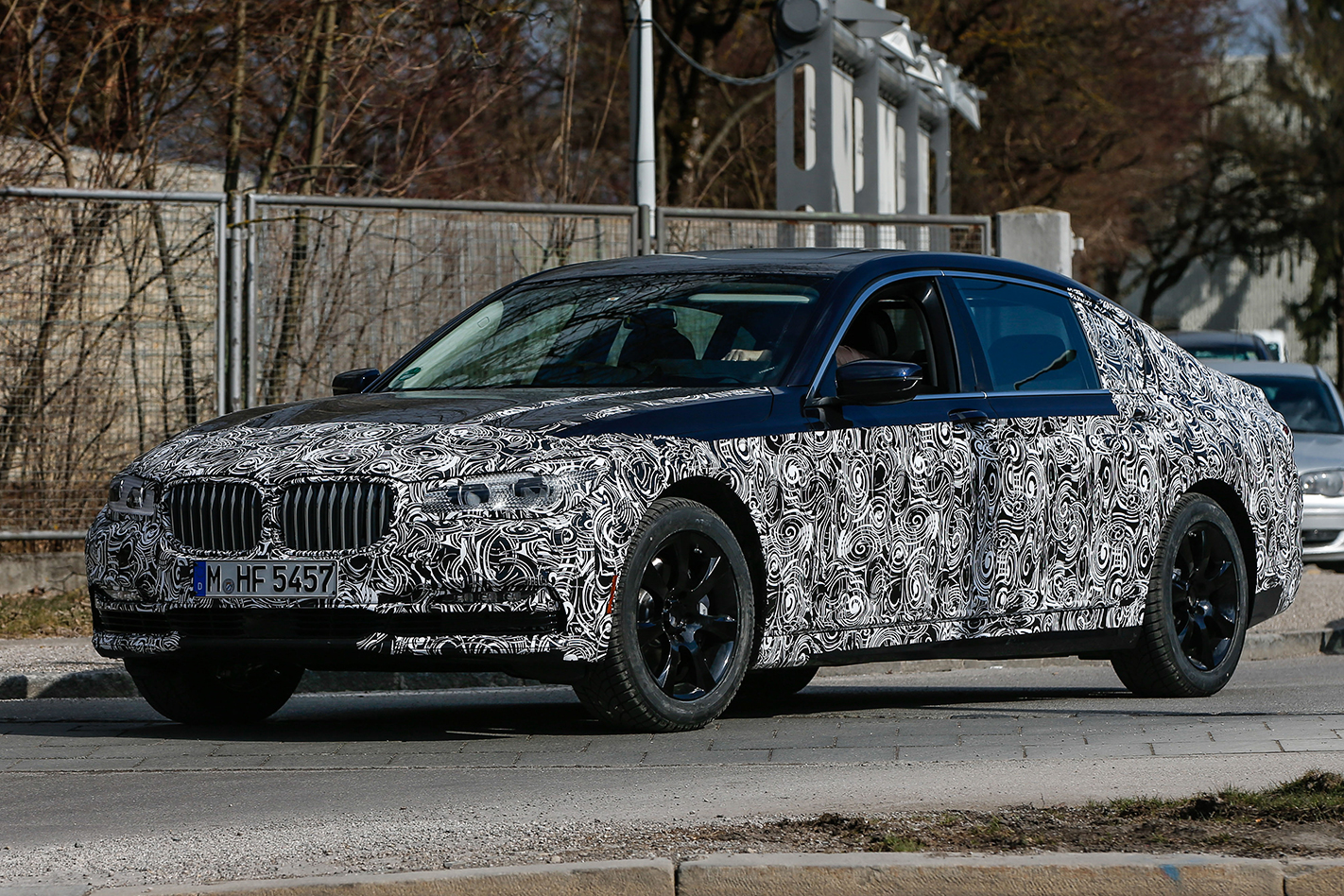
THE pinnacle of BMW’s showroom has also been the means by which the carmaker has tested new technology on buyers who demand, and can afford to pay for it. This time around, expect a gesture-controlled multimedia interface, a smart key that can tell the owner remotely what the driving range is, and even a self-parking function.
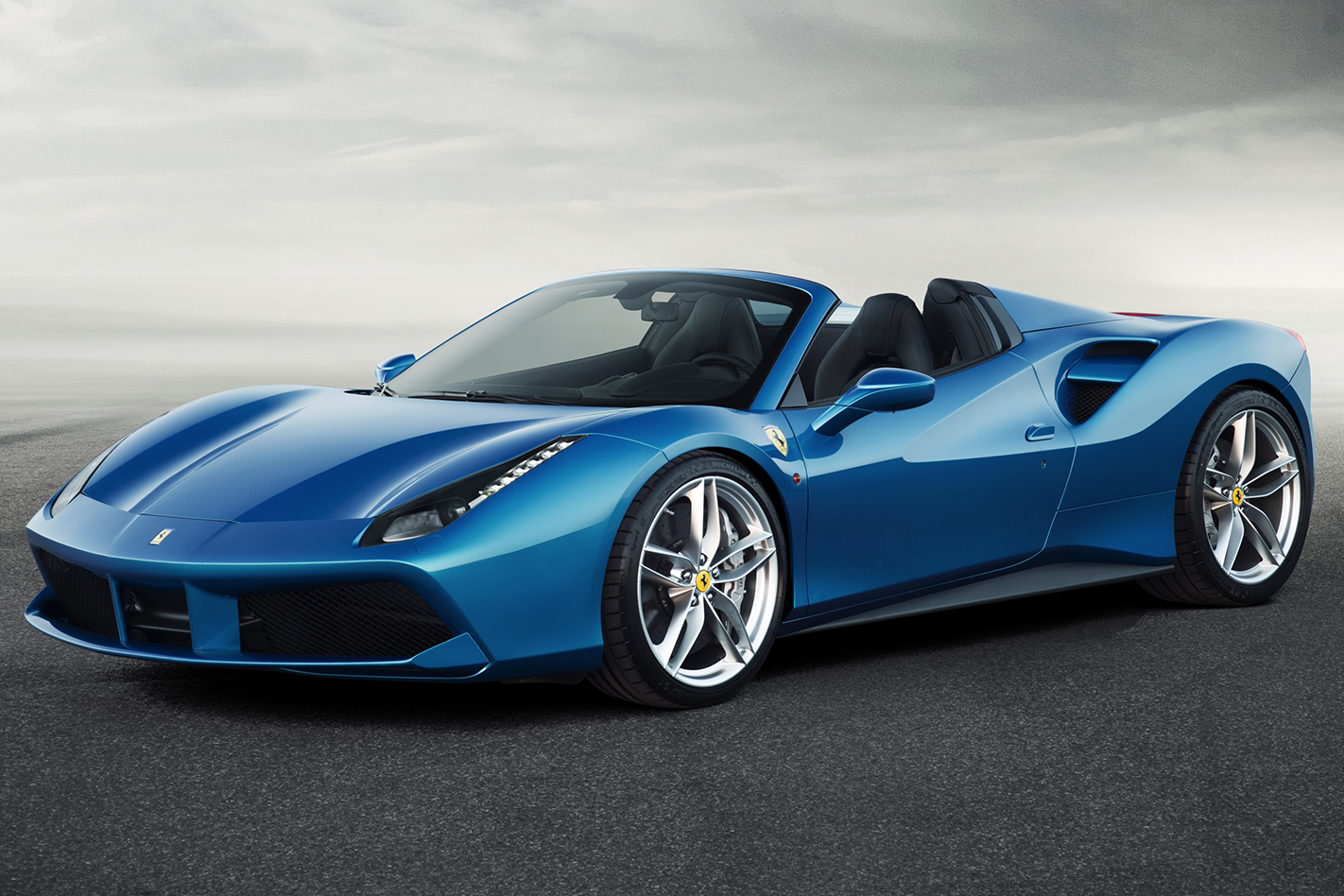
MARANELLO’S engineers rip the roof off the Ferrari 488 GTB to create a wind-in-your-hair replacement for the 458 Spider. It’s expected to use the same turbo V8 as the current coupe, pushing drive to the rear wheels, and will still clock the 0-100km/h in 3.0secs despite a 50kg weight penalty.
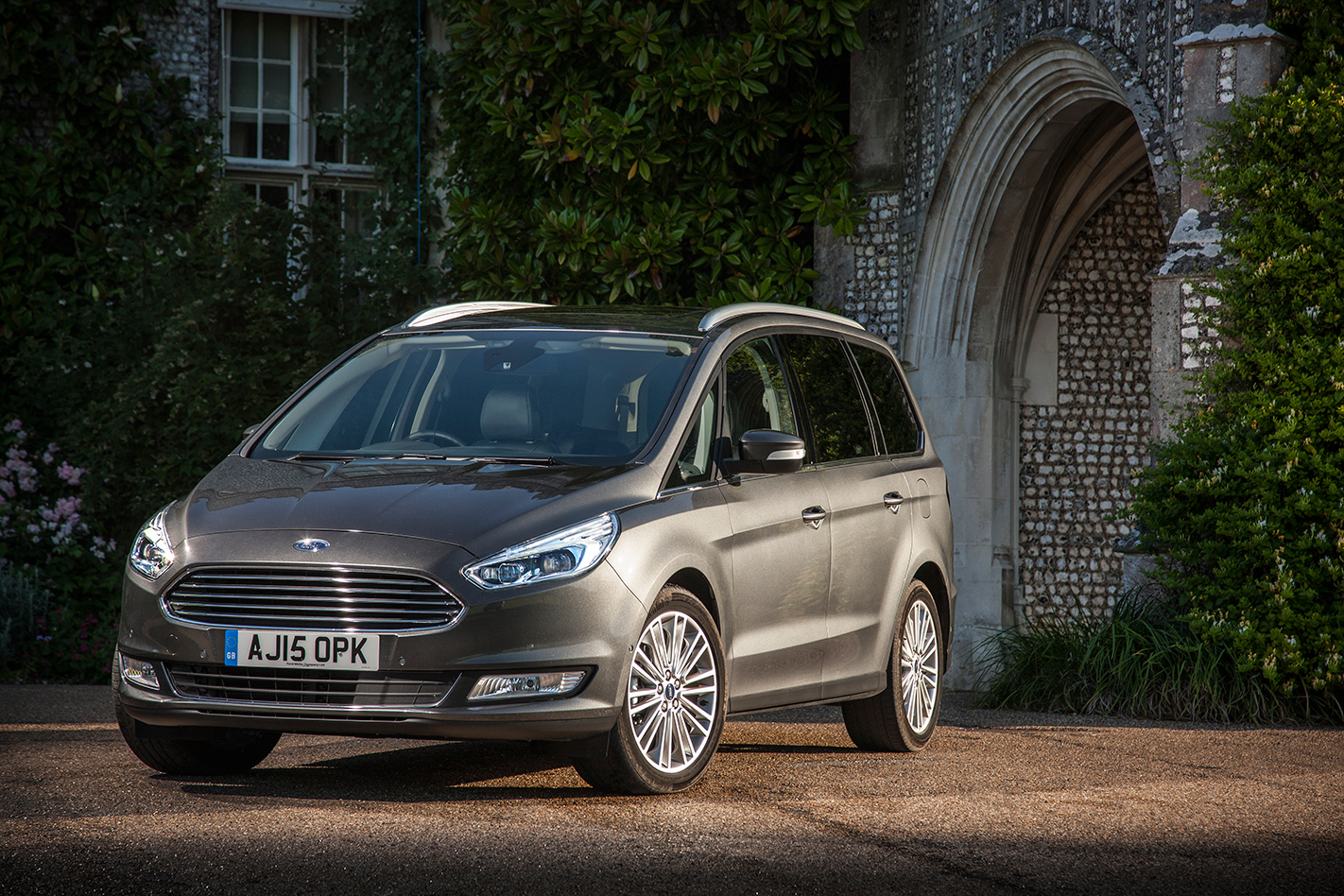
FORKING over $55K for a Ford Everest seven-seater will be beyond the means of many families, so don’t rule out the Ford Mondeo-snouted Ford Galaxy people-mover as a potential starter for the Australian market once the Territory signs off.
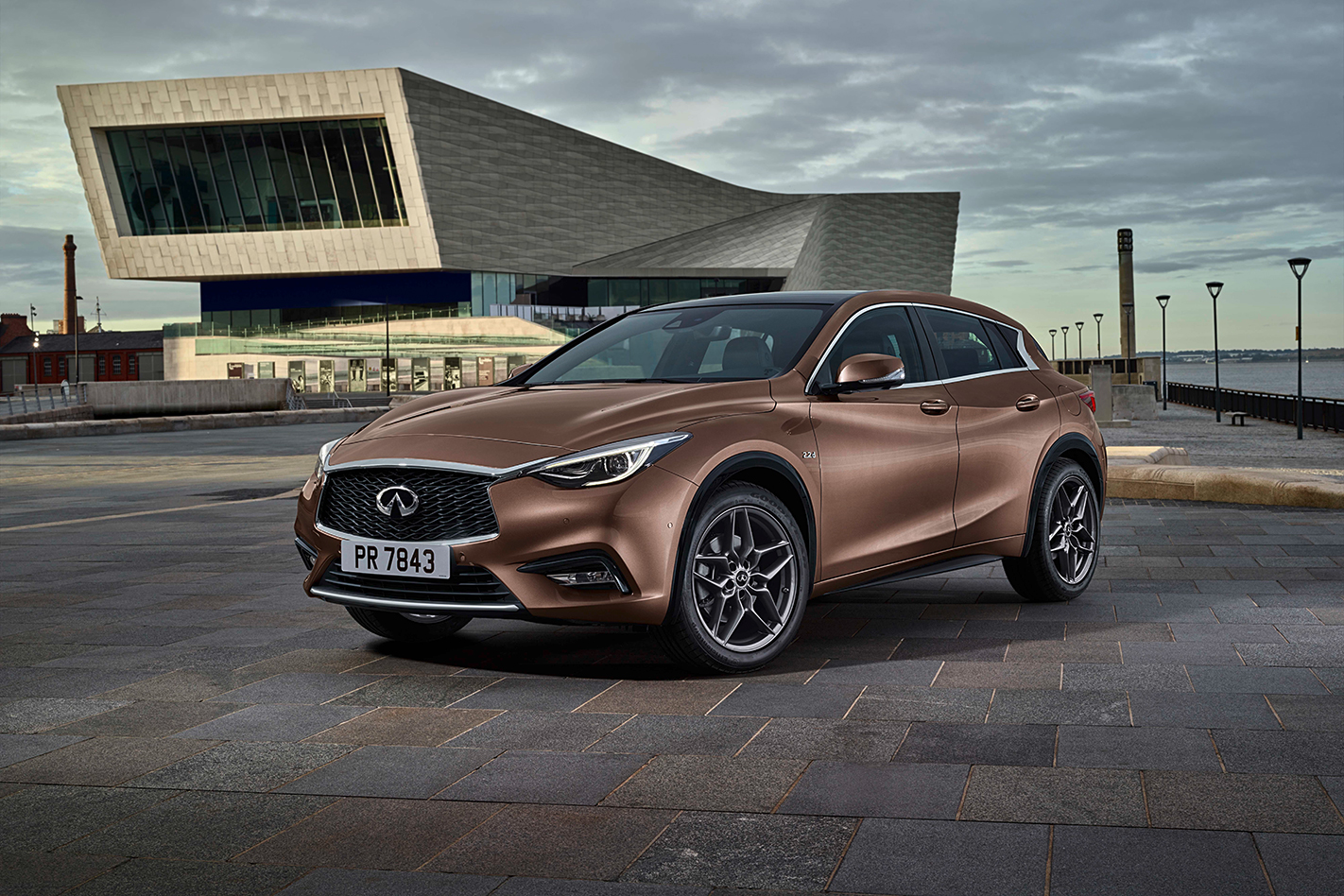
NISSAN’S luxury arm is breaking into the small five-door hatchback segment with a restyled Mercedes-Benz A-Class that will wear an Infiniti Q30 badge. Aimed at entry-level buyers, the Infiniti Q30 will use a mix of Benz four-cylinder petrol and diesel engines.
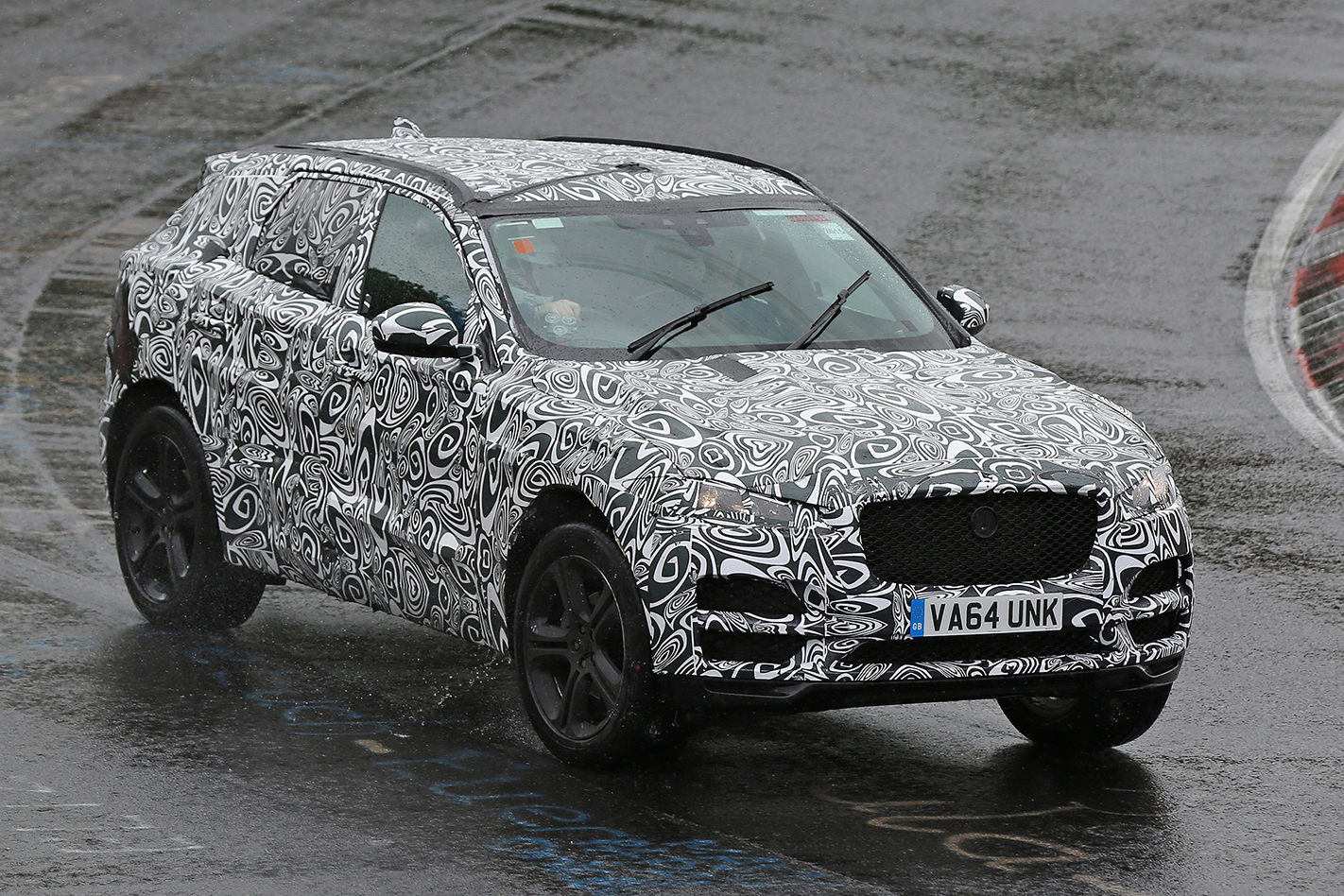
JAGUAR is keen to hedge its bets on the future of the traditional passenger car with its first-ever SUV, oddly named the Jaguar F-Pace. Based on the 2013 Jaguar C-X17 concept, the almost production-ready Jaguar F-Pace has already had a brief public outing supporting Team Sky at this year’s Tour de France.
2015 Jaguar XJ facelift
LOOKING only subtly different, Jaguar’s refresh for its flagship saloon also adds an Autobiography model wearing most of the bits formerly reserved for the options list. A new R-Sport trim level will feature a more aggressive aero package.
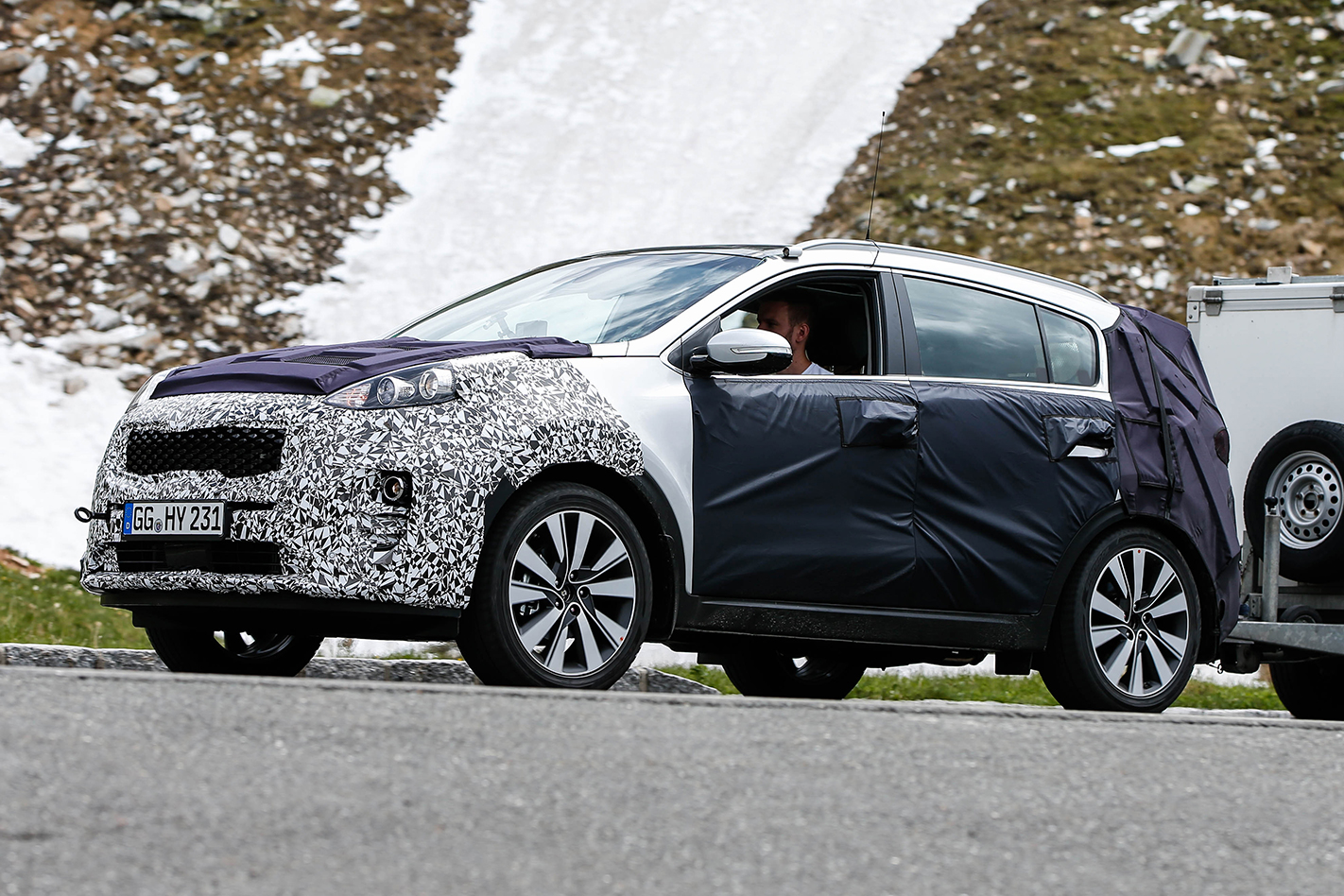
A FOURTH-GENERATION Kia Sportage is expected to surface at Frankfurt, featuring fresh looks and a new 1.6-litre turbocharged four-cylinder engine mated to a seven-speed dual-clutch auto. Expect design to not stray far from the previous gen’s formula.
2016 Lamborghini Huracan Spyder
ONE of the big mysteries of tearing the roof off the Lamborghini Huracan is where the folded-up part will stow. That big 449kW V10 sitting behind the front passenger seats presents a few packaging challenges, so will it be folding metal, carbonfibre, or fabric?
2016 Maserati Levante
STYLING a Quattroporte front end on a jacked-up, Porsche Cayenne-style SUV could be polarising, but we get to judge how well the Italian sports car brand blends it all in at Frankfurt. A choice of twin-turbo V6 or atmo V8 is expected to provide the growl under the bonnet.
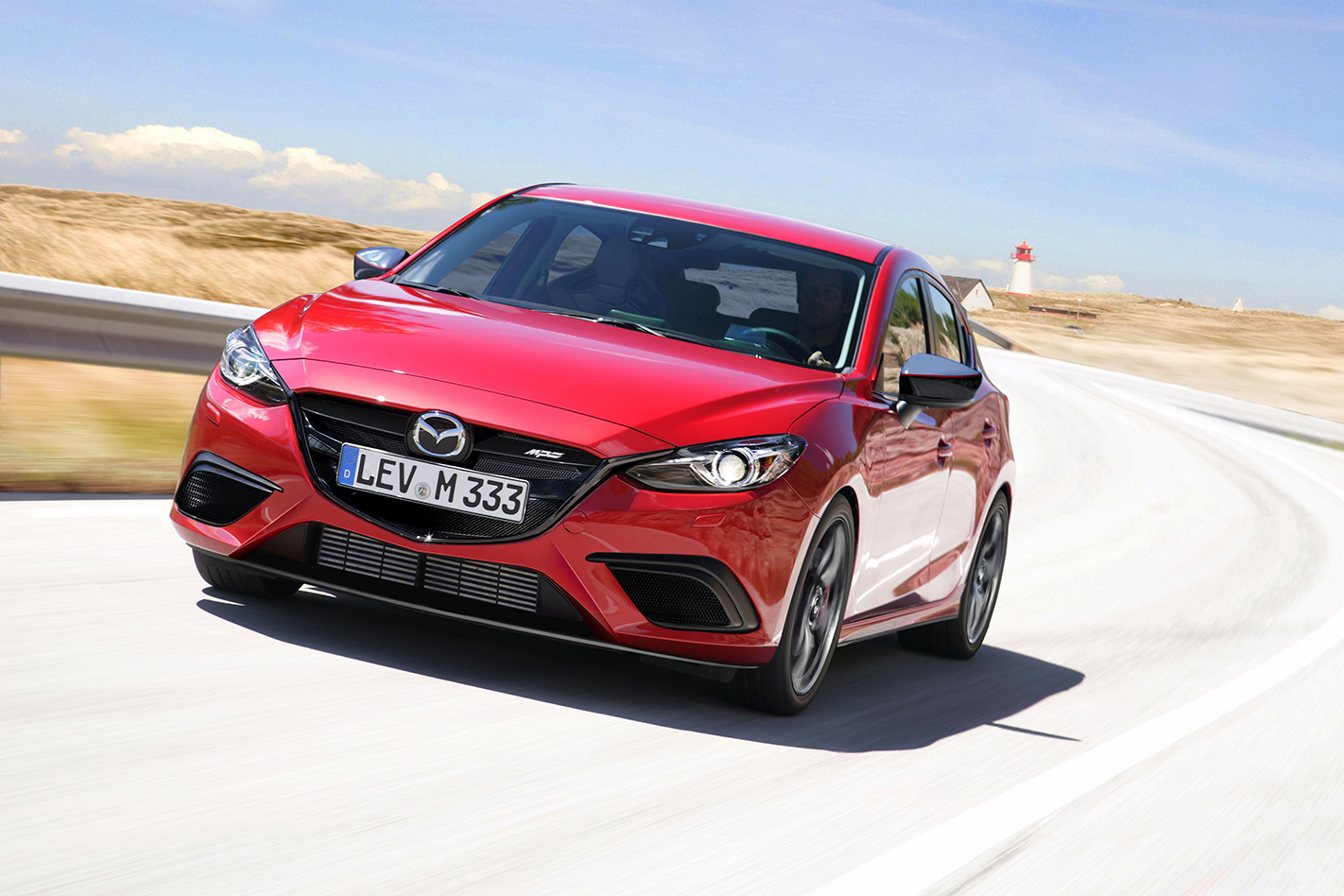
IT’S A BIT of a wildcard for a Frankfurt showing, but all the rumours point to Mazda’s turbo-four Volkswagen Golf GTI rival arriving on the Japanese carmaker’s show stand. Going the other way, the MPS badge could instead appear on the bigger Mazda 6…
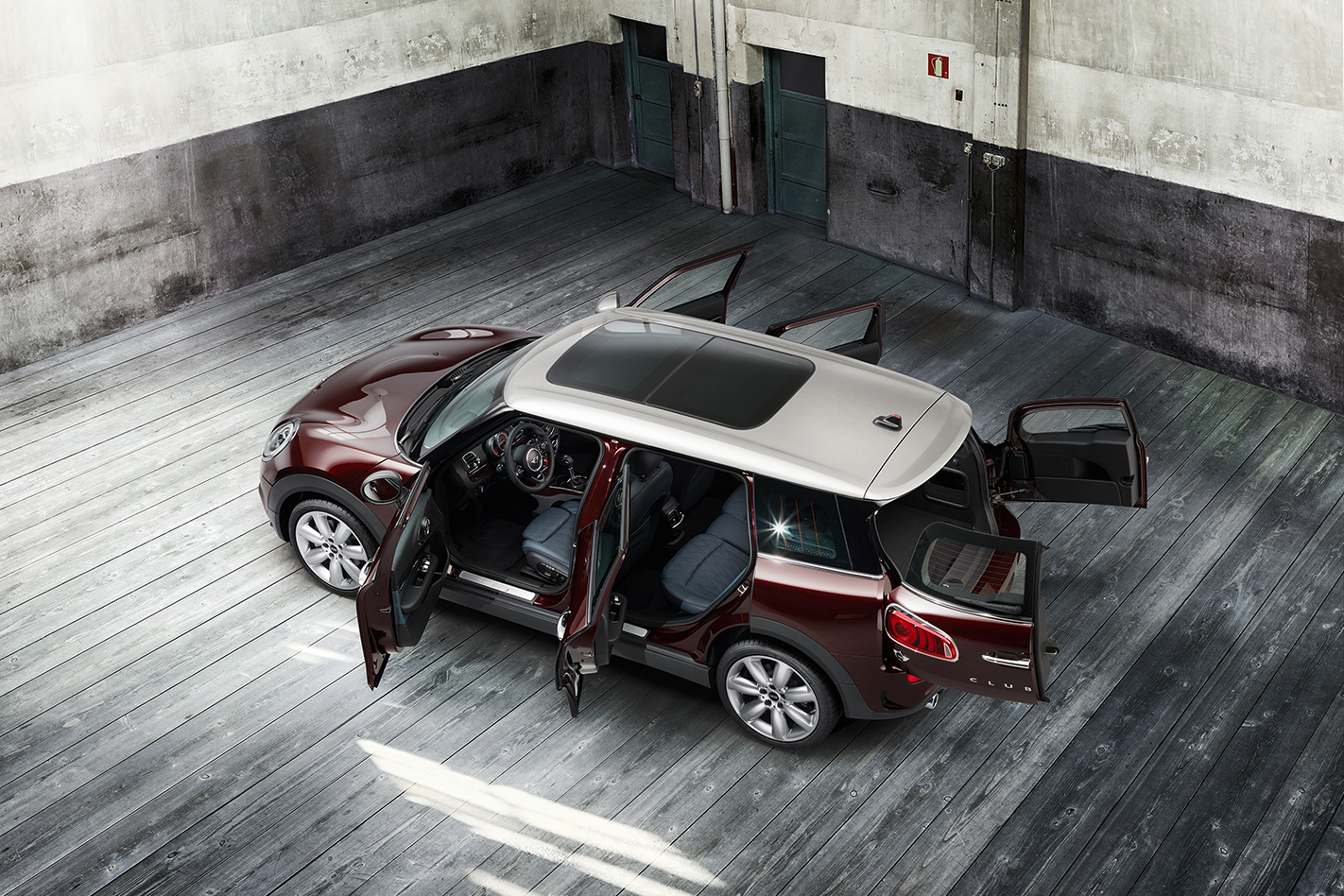
A BLOODLESS coup has cleaned out Mini’s slower selling models so it can concentrate on five core body shapes. One is the six-door Clubman, which will go head-to-head with the Audi A3 and the Mercedes-Benz A-Class.
2015 Mercedes-Benz C-Class Coupe
SHRINKING the Mercedes-Benz S-Class Coupe’s styling to produce a two-door Mercedes-Benz C-Class version is Stuttgart’s answer to the BMW 4 Series. The more stylish shape is also expected to tap into Benz’s diesel-electric hybrid development skunk works.
2016 Mercedes-Benz GLS
OUT goes the GL badge for the largest SUV in the Mercedes-Benz line-up, and in its place comes the Mercedes-Benz GLS. This will be our first close-up look at the production version of the facelifted model, due to go on sale some time next year.
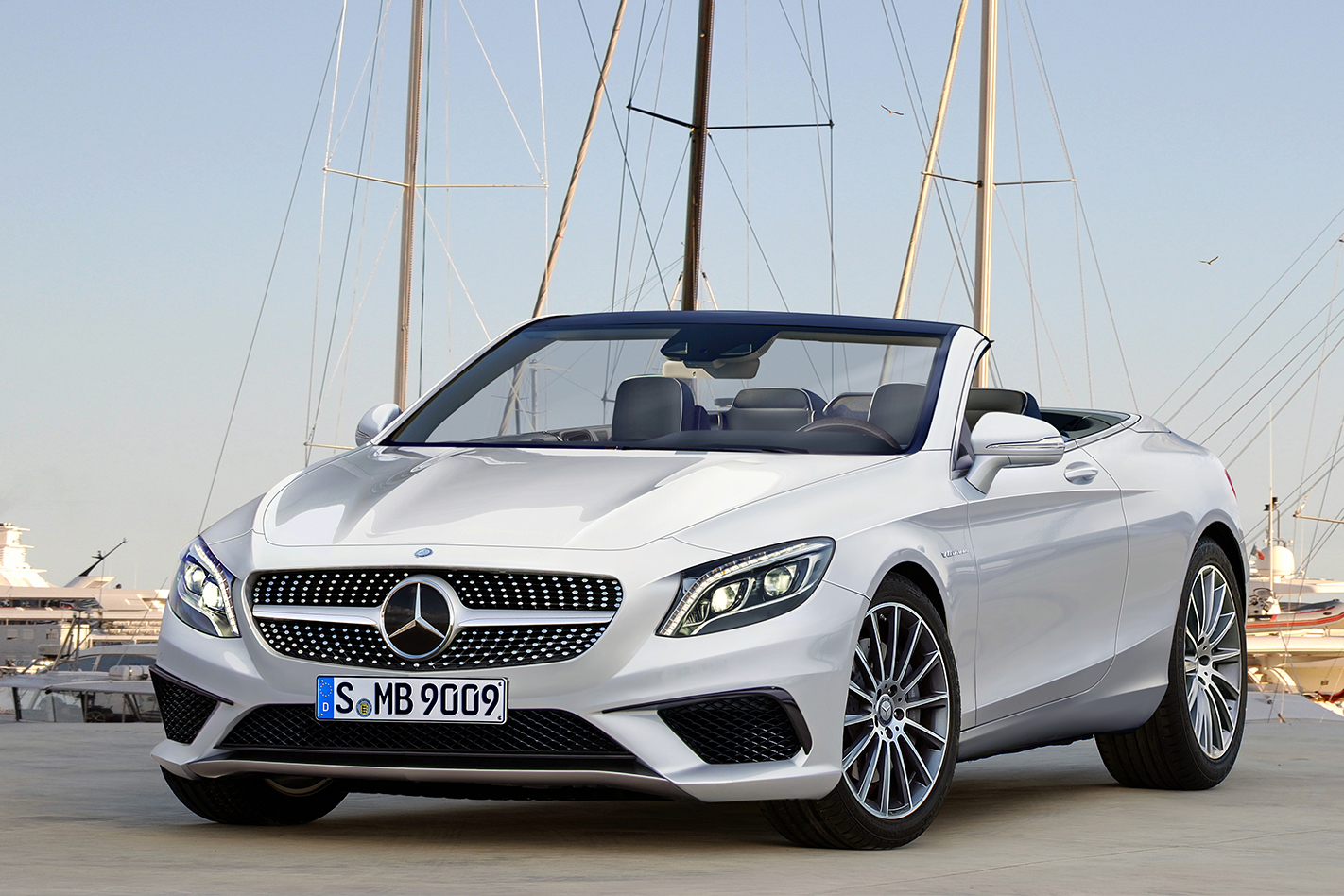
THE sixth spin-off of the Mercedes-Benz S-Class family once again features a folding fabric roof, with a Mercedes-AMG model expected to use the 5.5-litre twin-turbo V8 shared with the other S63-badged cars.
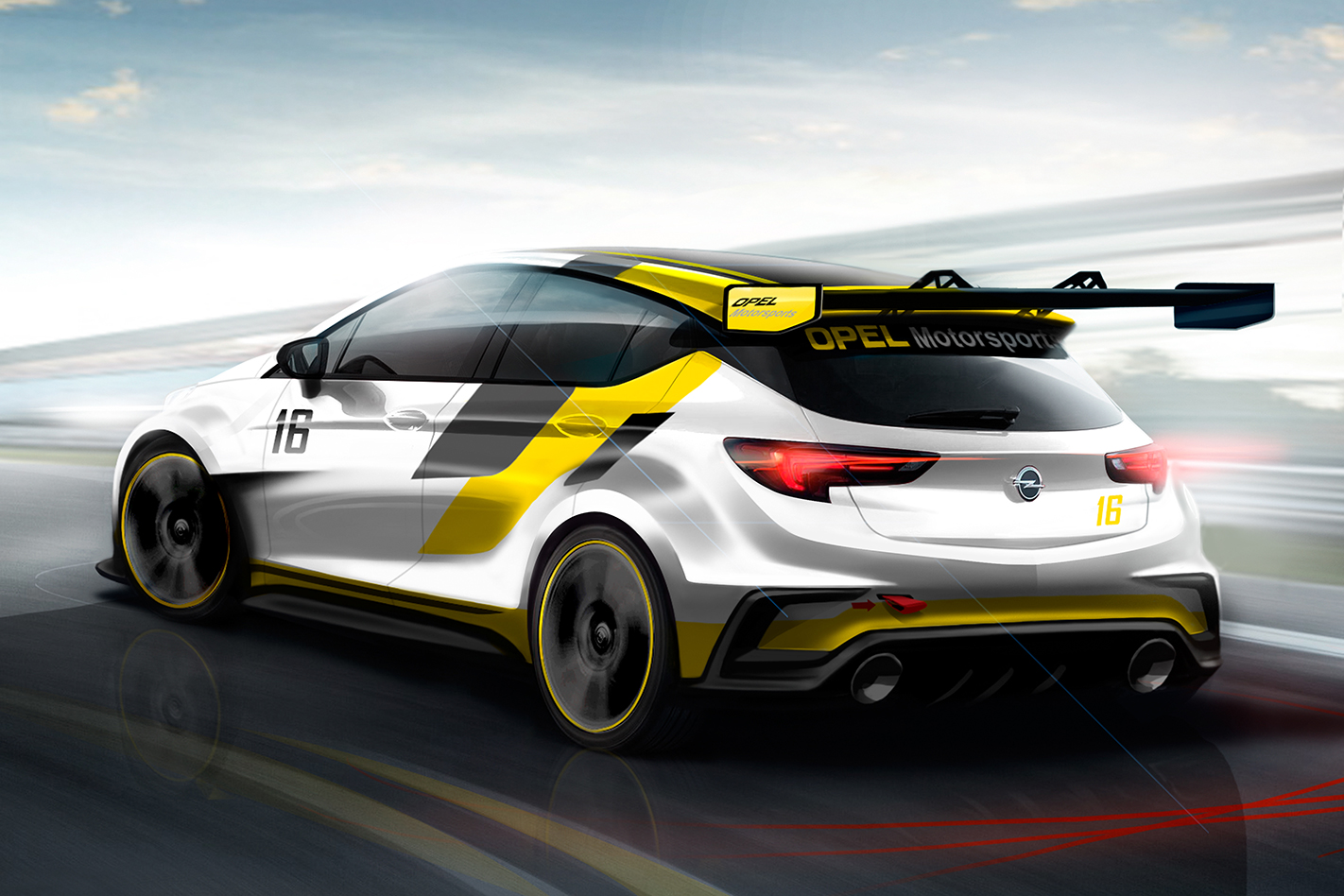
NOTHING builds a bit of excitement like a road car reimagined as a track warrior. Opel’s engineers are believed to have created a special wide bodied version of the German-engineered hatchback to add some wow factor to the show stand.
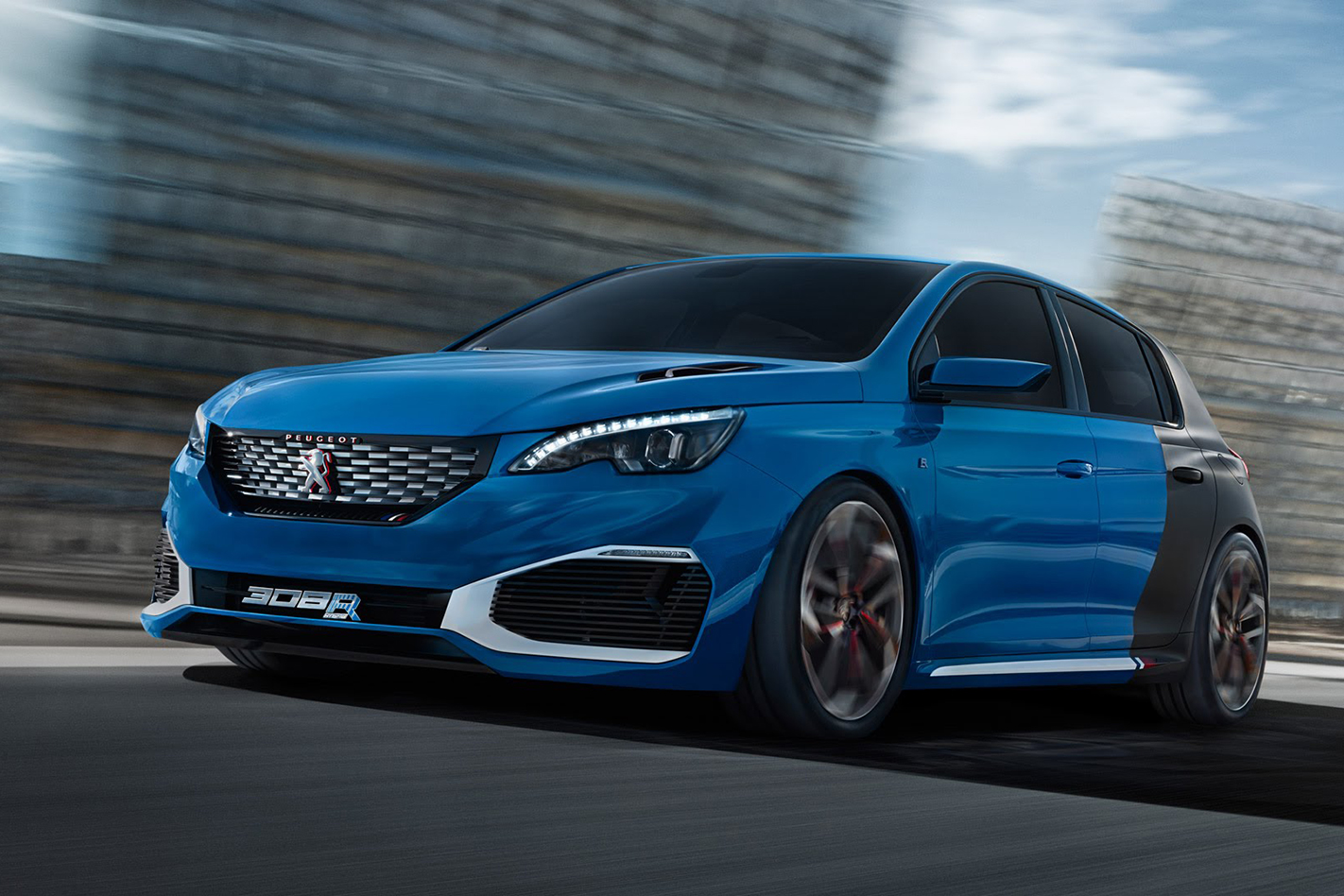
HIGH-STRUNG hybrids are a Le Mans staple, so why not a production car? This will be our first look at Peugeot’s most hardcore Peugeot 308 model, featuring a turbo 1.6-litre engine mated with an electric motor on each axle.
2015 Porsche 911
IS THIS it? The moment that the Porsche 911 finally eschews atmo induction for turbo power? Expect your serve of entry-level sports coupe to potentially feature a 3.0-litre flat six producing something close to 300kW, lightly tweaked looks and a heavily revised multimedia system.
2016 Porsche Pajun
A BMW 5-Series rival known as the Porsche Pajun has been rumoured for some time, with a Frankfurt reveal almost certain. Surprisingly, though, the Porsche Pajun concept is expected to use an electric drivetrain hinting at the carmaker’s alternative fuel future.
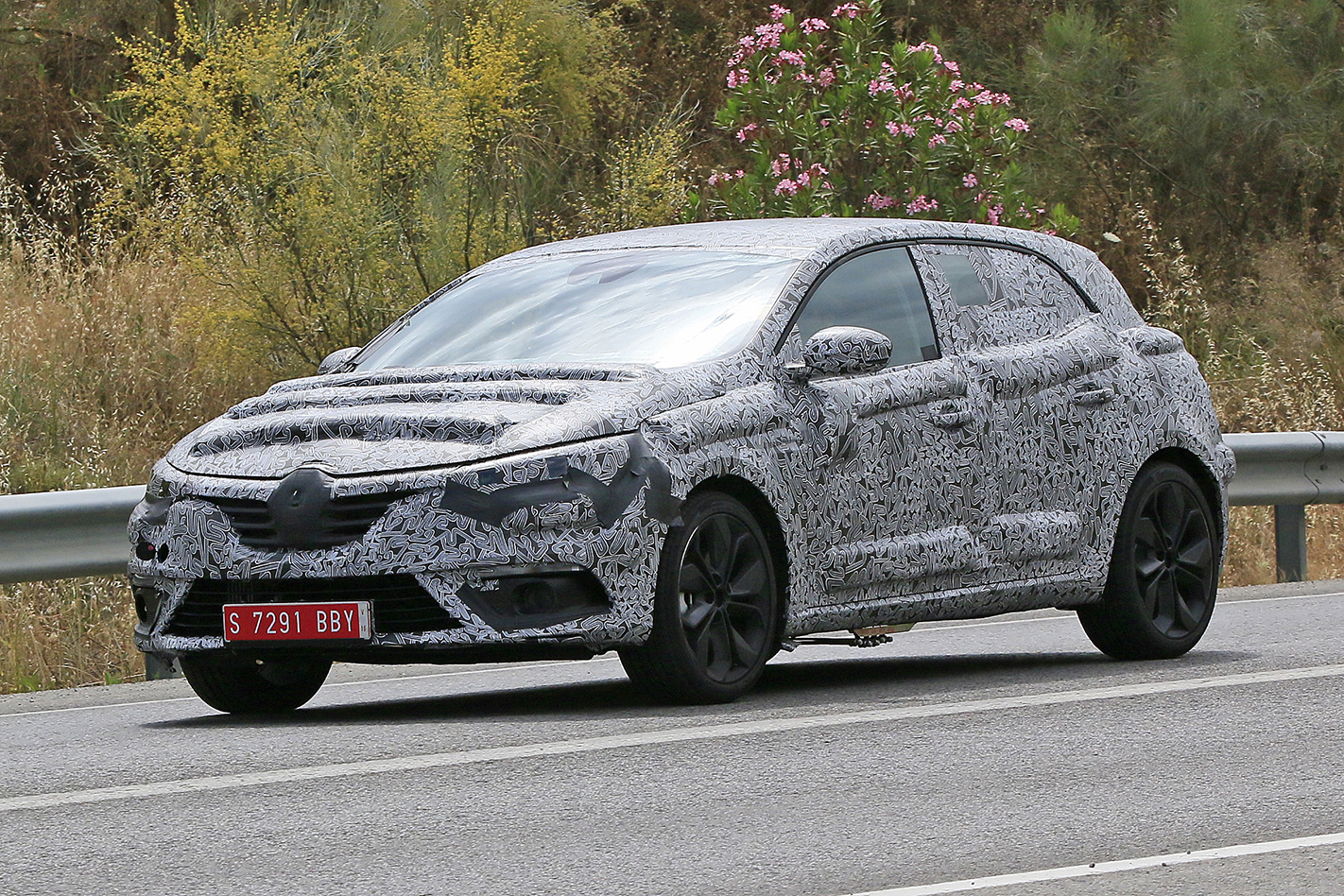
A FOURTH generation of Renault’s small city hatch and sedan will appear, with the Megane gaining a complete makeover to take on the Volkswagen Golf and Peugeot 308. Underneath, it will share the same platform as the European-market Nissan Pulsar.
2015 Tesla Model X
TESLA doesn’t really do motor shows, and the last time we officially saw the Californian electric vehicle maker’s falcon-winged Model X SUV at Geneva in 2013 it wasn’t quite in production trim. It’s due to go on sale in the US later this year.
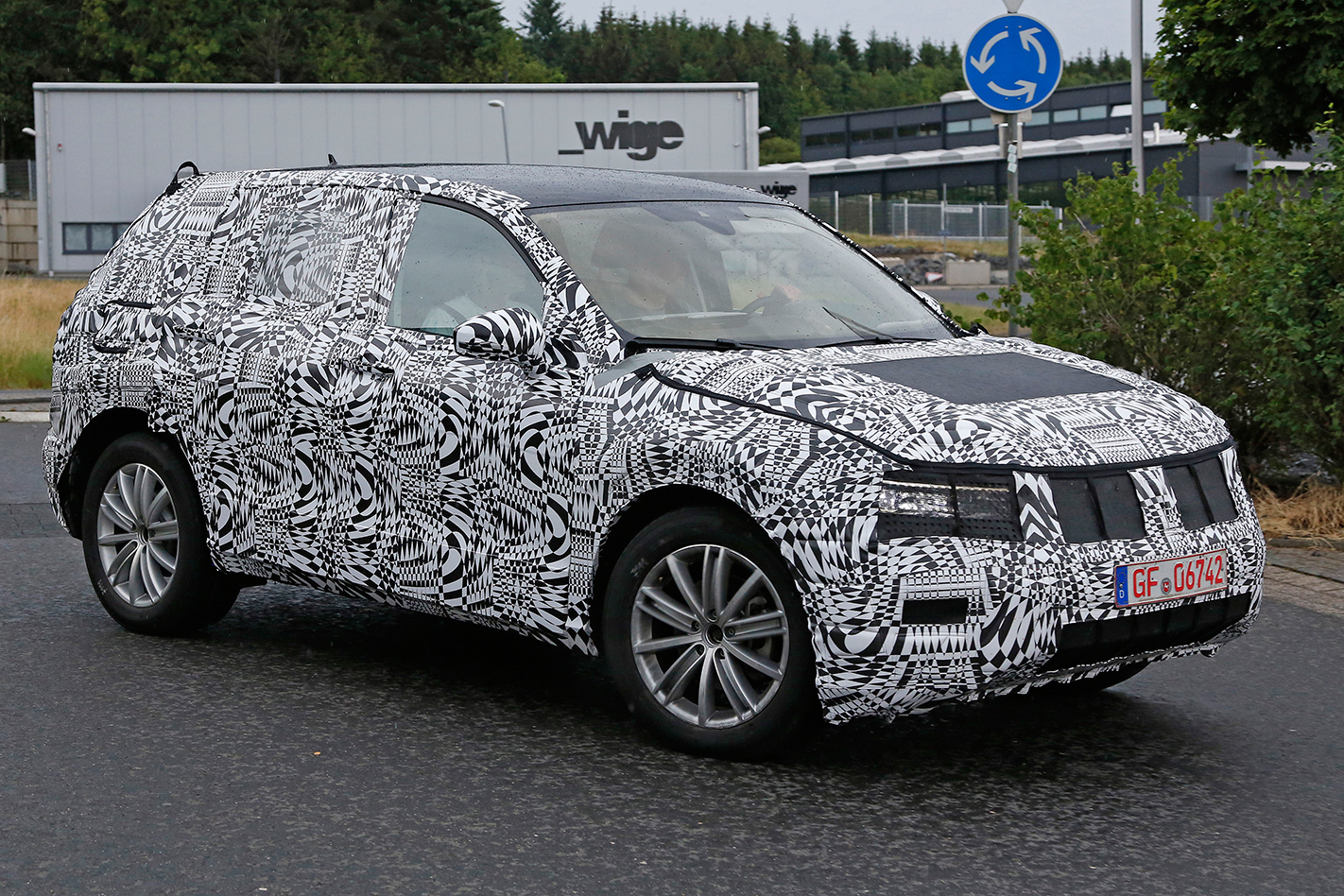
THE eight-year-old Volkswagen Tiguan SUV is finally pensioned off, this all-new version swapping to the slick MQB architecture underpinning the Golf hatchback range. Rumours hint at three Tiguan spin-off; conventional hatch, extended-wheelbase seven seater and a fastback-styled CrossBlue design study.
IMAGINE how a new law proposing to make a frontal lobotomy compulsory for all immigrants to Australia would be received.
This is a rhetorical question by the way, not news from Canberra.
I ask it because we already have laws in place that do exactly this to cars. Automotive technology, in case you hadn’t noticed, is advancing at a brisk pace these days. But we have a regulatory environment that means the most evolved examples must be dumbed-down.
Audi’s new Q7 makes a nice case study.
The second generation of the big seven-seat SUV no longer deserves the amusingly cruel QE7 nickname it’s known by in the Wheels office, by the way. But what’s important here is that the new Q7 introduces a bunch of advanced driver aid systems. It will be, for a time, the most technically sophisticated model in Audi’s line-up, and that makes it one of the cleverest cars in production anywhere.
Yet two of the Q7’s most outstanding technologies will not – cannot – come to Australia.
Predictive Efficiency Assistant may sound dull, but it’s not. Think of it as a new app for a new Audi, using data feeds from the sat-nav antenna, the Q7’s forward-facing camera and the radar sensors of the adaptive cruise-control system.
There’s not space here to go into detail on all this system’s abilities. The way I used it was as a super-intelligent cruise control. The Q7 was able to recognise speed limit signs and automatically adjust vehicle speed accordingly (that’s from the camera). It would slow when it knew a roundabout was coming up (sat-nav). It would brake to standstill when the queue of traffic ahead stopped (adaptive cruise).
The system’s operation is stunningly smooth and polished. It’s obvious that an awful lot of work went into its development.
But our standards for road signs and regulations on heavy vehicle markings create visual confusion that Predictive Efficiency Assistant, and similar but simpler technologies common in Europe, can’t cope with.
The other victim of Australian regulations is Audi’s Trailer Assistant system. With something hitched to the Q7’s optional towball, twirling its MMI dial swings a pointer displayed as an overlay on the image from its reversing camera. Which, obviously, includes the trailer or caravan behind. Simply point where you want the trailer to go and the Audi’s electric steering automatically does what’s needed to put it there. As a confirmed trailer-hater, I was amazed how easy this made it to reverse a laden motorcycle trailer around a 90-degree curve.
The system requires a towball with a built-in drawbar angle sensor, but the towbar Audi has developed with this relatively simple device inside isn’t legal for Australian use. The major problem, but not the only one, is the lack of safety chain attachment points.
For decades we’ve had a policy of harmonising our automotive regulations with those of other advanced countries. Australian Design Rules covering safety and exhaust emissions have come from the US and Europe, for example.
We need more of the same in areas beyond the car, covering such things as signs and trailers, if we want to have the latest and the best the automotive industry has to offer. Until that happens, as the Q7 shows, wonderfully clever cars will continue to be turned into wombats with wheels before being shipped to Australia.
Under the radar
MAYBE Australia isn’t so bad after all. I met an Indian journalist at the Q7 launch who told me radar-reliant adaptive cruise control can’t be sold in his homeland. It seems that all radar wavelengths are reserved for military use.
Sign up here to receive the latest round-up of Wheels news, reviews and video highlights straight to your inbox each week.
