
Monday motorsport wrap: Frenchman Jules Bianchi has become the first driver to die from a Formula One accident since Ayrton Senna in 1994
JULES Bianchi died on Saturday, nine months after crashing his Marussia F1 car into a recovery vehicle during the Japanese Grand Prix.
The 25-year-old French driver never regained consciousness after suffering massive head injuries in the October 5 race.
Bianchi was a member of the Ferrari development squad and was widely thought to be on the verge of joining the main team.
His death sent the motorsport world into mourning for the popular young star, who is the first driver to die in an F1 car since Ayrton Senna crashed at Imola in Italy 21 years ago.
Bianchi’s accident prompted a review of recovery procedures in motorsport events and saw the introduction of a ‘virtual safety car’ in F1 races to slow competing cars when officials and their equipment are on the track.
Under yellow flags designed to warn drivers of an incident for force them to slow, Bianchi lost control of his car in wet conditions during the Japanese race and slammed into a tractor removing a car that had crashed a lap earlier.
He was a popular member of the F1 community and close friend to a number of his colleagues, including Australian driver Daniel Ricciardo.
Ricciardo posted a photo of the him with Bianchi from their early racing days as a tribute to his friend.

F1: Ricciardo returns to Hungary with fondest of memories
NEXT weekend’s Hungarian Grand Prix, round 10 of the world championship, brings back good memories for Red Bull’s Daniel Ricciardo; 12 months ago he celebrated his second F1 victory after pulling off two late overtaking moves – on Lewis Hamilton and Fernando Alonso, no less – in a dramatic contest at the Hungaroring.
The Aussie loves the place, although he probably won’t bother drafting a victory speech for next Sunday.
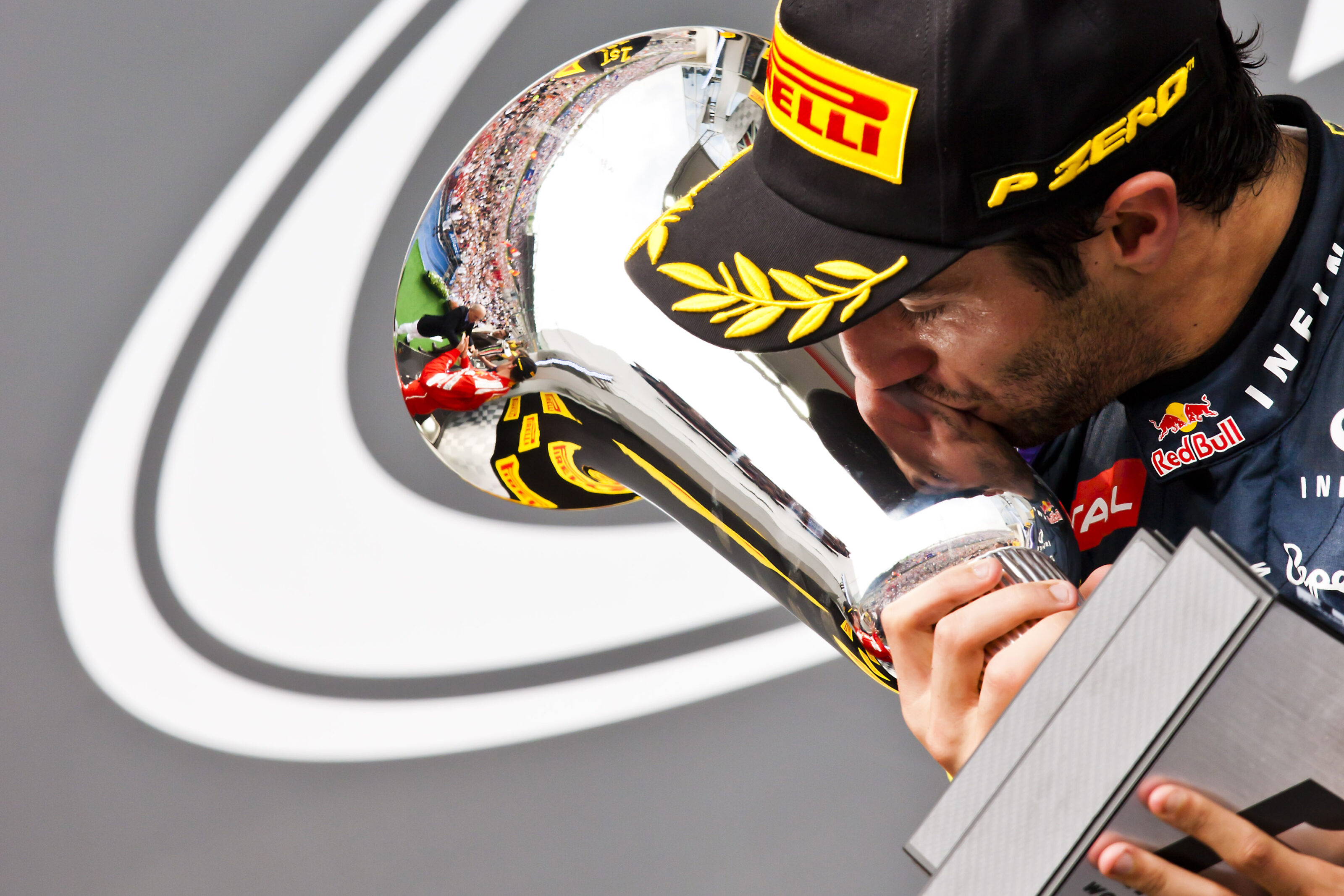
“The Hungarian Grand Prix has a lot going for it,” he says. “Personally, I love these races in the European summer when you have the high temperatures and – usually – the great weather, plus it’s the final race before the summer break and that tends to put everyone in a good mood. There’s usually a really good party on Sunday night and, because of the break, everyone tends to stay and have fun. Budapest is a cool city, really good restaurants and bars, really nice, really loyal fans and basically a great place to have a grand prix.”
His opinion of the track is a little mixed…: “It’s a great, great track for a qualifying lap, one of the best of the year. It’s tight, twisty and bumpy, and you have to use a lot of kerb – so getting in a low-fuel, new-tyre lap right on the limit it’s lots and lots of fun.
“Last year was a great race for me! Of the three wins last year, it was the one where I was definitely most excited during the race. It’s tough for me to judge but probably it was the best performance of the three, purely because of the people I passed to finish in the lead. I had tyres in better condition – excellent strategy from our guys – but Fernando and Lewis don’t let you have the places for free; I had to really work for it!”
F1: Record 21 races pencilled in for 2016
THE 2016 F1 World Championship season is set to run across a record 21 races, the provisional calendar showing the return of Germany (hooray!) and an inaugural Azerbaijan race mid-year (boo, hiss!).
Germany, dumped this year due to money issues, returns to Hockenheim on July 31.
The season fires up as usual in Australia, on the later date of April 3, and is set to conclude in Abu Dhabi on November 27.
Yes, that’s the same Abu Dhabi that recently arrested, jailed and then deported an Australian woman for posting an image and writing “bad words” on Facebook about a vehicle blocking two disabled car spots at her apartment block.
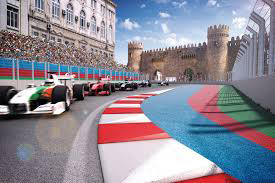
The F1 hierarchy has shown no qualms about jumping into bed with dodgy regimes. Bahrain has a history of savage crackdowns on civil unrest.
Bernie Ecclestone’s bright idea to give Azerbaijan a round also raises eyebrows. Political activism there is a dangerous business.
But such trivialities don’t appear to matter to F1. It’s inevitably a case of “show me the money”.
Meanwhile, there is still no sign of a return of grand prix racing to France, where it all began…
Other changes for next year include the Malaysian GP moving from March to September – bookended by nearby Singapore and Japan – and Russia, another bastion of democracy, switching from October to May.
The full provisional 2016 F1 calendar is:
03 April Australia (Melbourne)
10 April China (Shanghai)
24 April Bahrain (Sakhir)
01 May Russia (Sochi)
15 May Spain (Barcelona)
29 May Monaco (Monte Carlo)
12 June Canada (Montreal)
26 June Britain (Silverstone)
03 July Austria (Spielberg)
17 July Azerbaijan (Baku)
31 July Germany (Hockenheim)
07 August Hungary (Budapest)
28 August Belgium (Spa-Francorchamps)
04 September Italy (Monza)
18 September Singapore
25 September Malaysia (Sepang)
09 October Japan (Suzuka)
23 October USA (Austin)
30 October Mexico (Mexico City)
13 November Brazil (Sao Paulo)
27 November Abu Dhabi (Yas Marina)
INDYCARS: Americans charge to the top in Iowa
FOREIGERS have largely dominated the US IndyCar race series in recent years, but it swung back to the locals in the corn belt of the mid-west when, for the first time since the 2006 Indianapolis 500, Americans claimed the first three places in an IndyCar Series race.
Iowa’s 1.4km oval generated the highest cornering forces in the series, and some seriously tight racing.
Through it all, Ryan Hunter-Reay prevailed from Josef Newgarden and wild child rookie Sage Karam in the Iowa Corn 300.
Another local hero, Graham Rahal, came from two laps down at one stage to charge back to take fourth.
Hunter-Reay became the ninth different winner in 13 IndyCar races this season.
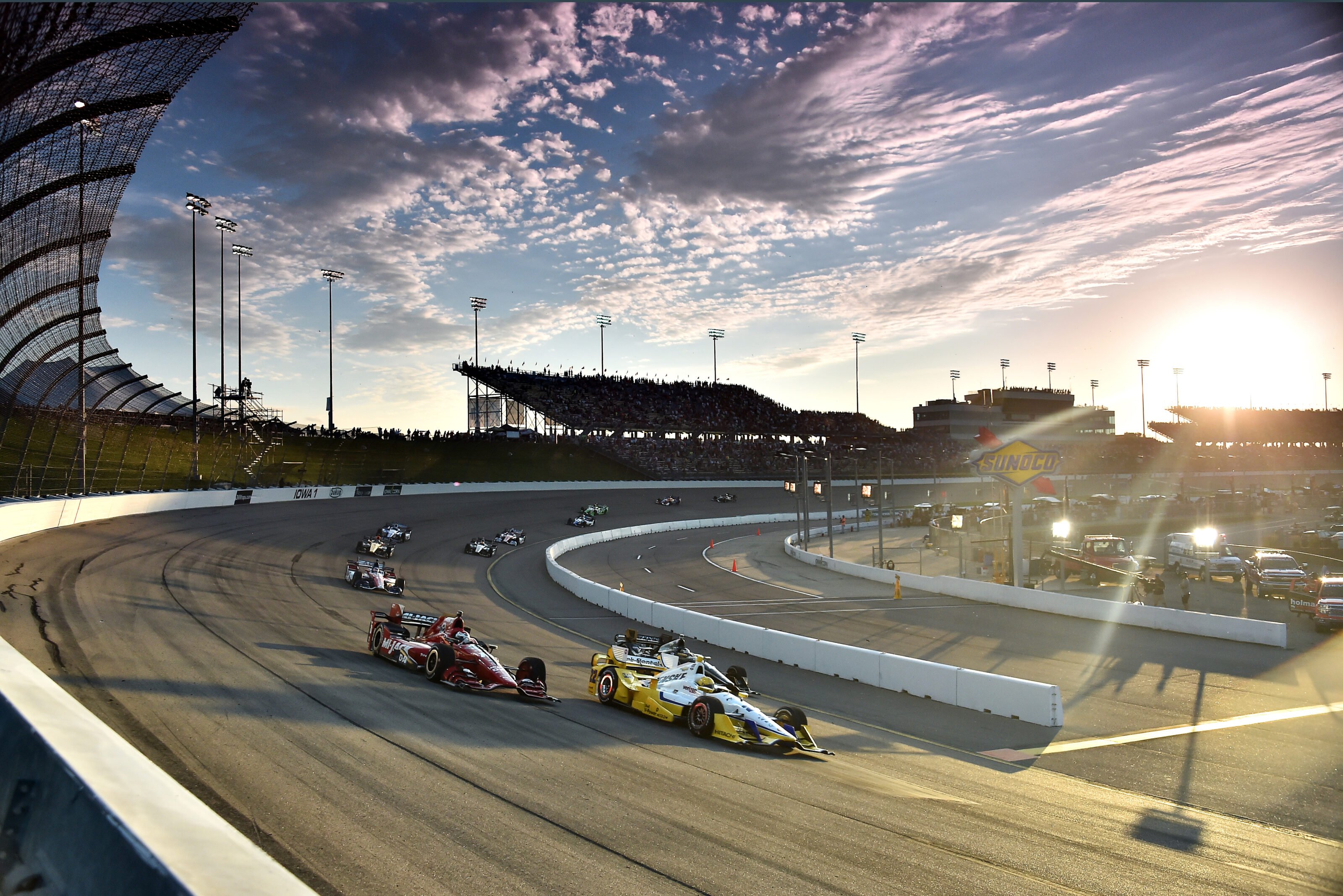
After the race, Karam was angrily confronted by veteran Ed Carpenter, who took issue with the rookie’s extreme driving.
“I said that he has no respect for anyone out there,” Carpenter explained in a later TV interview. “If it wasn’t for guys with experience driving with their heads on, he would be hurting himself and other people. I think it’s ridiculous.”
Karam was unrepentant: “He’s just angry at my driving; he says I squeezed him a few times,” Karam said. “But [it’s the] same way he drove me. It’s hard racing. I’m going for wins. And that’s how we’re driving. It’s close racing. It’s IndyCar racing.”
An early casualty was points leader Juan Pablo Montoya, whose Penske Chev slammed the wall after suspension failure.
But nearest rival Scott Dixon also had dramas, dropping a swag of points when his Ganassi car had a rear-end breakage.
Rahal is now second in the standings, 42 points behind Montoya, while Dixon, who finished 18th, is 48 points back. Helio Castroneves is 54 points off the lead and one point ahead of defending series champion Will Power (10th in Iowa), who is running out of races to claw back the gap.
The other Australian in the field, Ryan Briscoe, was a solid eighth.
DRIFTING: Is it real motorsport?
V8 SUPERCARS opened a hornet’s nest when it announced drifting has been added to the card at Sydney Motorsport Park on August 21-23.
The announcement included the claim that “Drifting Australia’s roaring engines, screeching tyres and plumes of burning rubber will add a new, exciting, adrenalin-charged dimension to the V8 Supercars event experience”.
While CAMS-sanctioned drifting has its army of loyal adherents and there is no argument that the leading exponents are wonderfully skilled, many ask if this is proper motorsport.
Drifting competitions are judged according to the speed, angle, showmanship and line taken through a set of corners. Some describe it as motorised synchronised swimming.
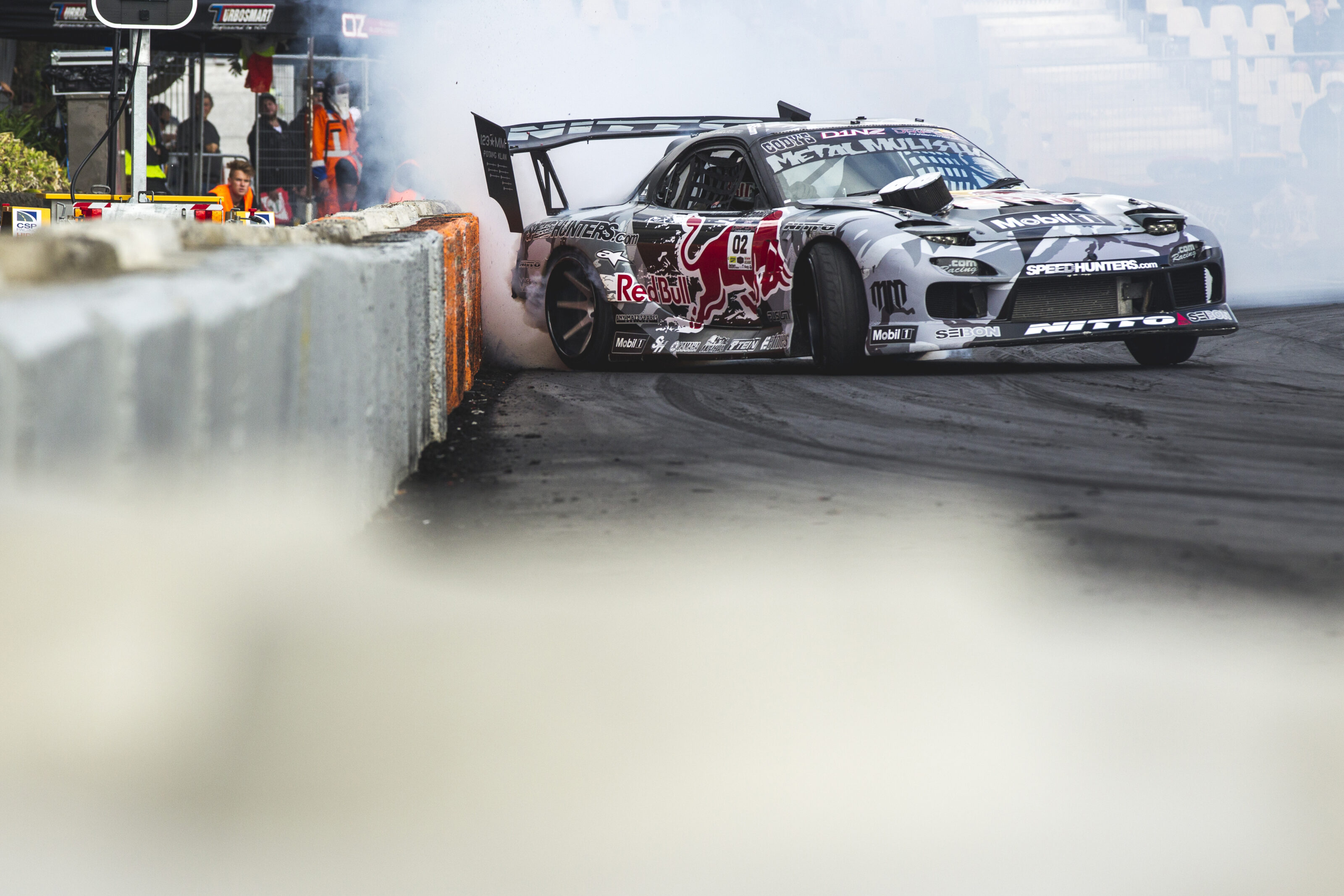
But Shane Van Gisbergen gives drifting the thumbs up. “Drifting is awesome fun from a drivers’ perspective, and fantastic to watch for fans,” said the Kiwi, who has done drifting competitions in New Zealand.
The drifting events will be conducted on the Friday and Saturday evenings of the August round.
Apart from the three races for V8 Supercars, the SMSP SuperSprint schedule will also feature the highly entertaining Australian GT Series, Porsche Carrera Cup, Aussie Racing Cars and the Jayco Australia Formula 4 Championship.
RALLYING: Reeves wins again in the US
VICTORIAN Brendan Reeves and fellow Aussie Anthony McLoughlin have scored a dominant class win the New England Forest Rally in the US.
Reeves now has six class wins from six starts in the American national championship after a successful five-event campaign in 2013.
His triumph has been well received by M-Sport, the UK-based team that prepares Ford’s World Rally Championship cars.
M-Sport chose Reeves to debut its new Ford Fiesta RS in North America in the hope of generating sales in that part of the world.
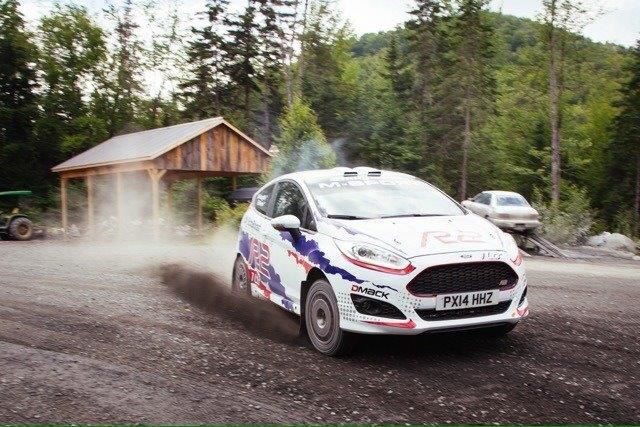
Reeves’ 2WD class win in Maine, by over 10 minutes to his nearest rival, was exactly what M-Sport was hoping for.
The Fiesta RS is powered by a 134kW 1.0-litre turbo-triple EcoBoost motor; it conjures up 300Nm, compared to just 190Nm from the previous 1.6-litre car.
The rally followed two days of solid testing in the new Fiesta.
“I did lots of kilometres and took many guest rides,” reported Reeves.
One passenger was Henry Ford III, of Ford Performance. He was beaming when safely delivered back to the staging point.
ENDURANCE: Molly scores podium in Europe
RALLY ace Molly Taylor forsook the Aussie dirt for one of the strangest venues in motor sport, a Lithuanian ‘race track’ that uses freeways and on and off ramps for the running of the 1000km of Palanga enduro.
The crazy course is possibly more notable than the race itself, with chicanes built into the straights and a hooking tight turn ringed by barriers.
Taylor was part of a four-driver Lithuanian team that made the podium with a BMW E46 M3.
“I had the opportunity to bring the car over the finish line, had a stint in the pouring rain and I set our fastest lap of the race,” exclaimed Taylor after what was just her second road race.
“Have to say I quite enjoyed this circuit racing stuff!”
Asia GT: Venter in big battle for title
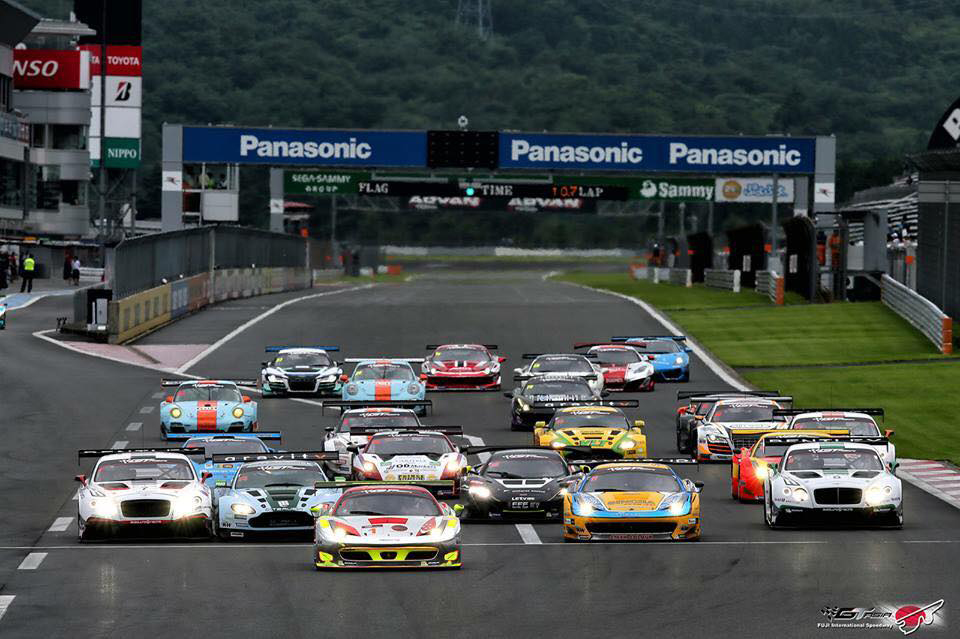
AUSTRALIAN teenager Jonathan Venter, with driving partner Darryl O’Young, has taken an excellent second in round six of the Asia GT Series held at Mt Fuji Raceway, the podium result moving the pair to equal second in the championship.
Venter, 19, earlier claimed pole position in Craft Bamboo Racing’s Aston Martin.
Fellow Aussies Nathan Antunes and Rod Salmon had a mixed weekend in their McLaren 650S, coming from 16th to finish eighth in Saturday’s race, and then 24th to ninth on Sunday.
Sign up here to receive the latest round-up of Wheels news, reviews and video highlights straight to your inbox each week.
Australian rally star Brendan Reeves has given the new Ford Fiesta R2 a perfect US debut at the New England Forest Rally, winning the two-wheel drive class.
Reeves completed the rally’s 13 forest stages, situated in the north-eastern state of Maine, over 12 minutes ahead of his nearest two-wheel drive competitor.
Even more impressively, Reeves finished sixth outright, with only much more powerful four-wheel drive machinery ahead of him, driven by the likes of multiple US champions David Higgins, Ken Block and Travis Pastrana.
The US has been a happy hunting ground for Reeves, who took five wins from five starts in the 2013 and secured the 2WD championship in the previous-generation R2.
It was Reeves’ extensive experience with the Fiesta R2, including two seasons in the WRC Academy in 2011-2012, which led to British engineering firm M-Sport selecting him to drive the new car in its US debut.
The new Fiesta R2 is powered by a 1.0-litre turbocharged three-cylinder EcoBoost engine, which despite its diminutive capacity produces an incredible 132kW/250Nm.
‘Brendo’ has had a long relationship with MOTOR, lending his driving services on many occasions, and hopefully this further success leads to the opportunity his speed undoubtedly deserves.
Get your free weekly report from the world of fast cars – subscribe to the MOTOR newsletter!
PLUS
- It’s got a new integrated touch screen, voice-recognition tech, and the plastic used for the interior are better than predecessors.
- There’s plenty of space to keep the adults, and family, happy.
- With a $1500-$3500 range-wide price cut, it’s hard not to love the value.
- It’s quiet and efficient.
- U.G.L.Y, this Subaru ain’t got no alibi. Yep, we don’t think it’s the most attractive SUV from the outside.
- The driver’s seat isn’t overly comfortable with a lack of lumbar support.
- The boot space is reduced due to floor’s lift to cover a full-size spare. I mean, the spare comes in handy for those moment you’re stuck on the side of the road and enlist the help of a handsome young man to replace it, but the boot space comes in even more handy, we ‘spose.
- Imagine this: it’s a hot, Australian 30-plus degree day. You’ve got the kids in the back, plus their friend. The aircon is blaring, you’re freezing and they’re still complaining it’s “too hot” and wind down the windows to let the hot air in. You look back and realize – there are no bloody rear vents! Advice: don’t go out for long drives on hot days.
Click here to read the full review on the Subaru Forester.
IN THE END, Ford Performance Vehicles went out with a whimper, rather than a bang.
In a noble attempt to bury bad news under good, a Ford Australia press release, issued November 11, 2013, trumpeted the return of the Falcon XR8 in 2014, confirming the “retirement” of Ford Performance Vehicles, after 12 years, virtually as a side note in the fifth paragraph.
Rumours had been blossoming since mid-2012, when Ford Australia took full control of FPV after its UK-based, joint-venture partner, Prodrive, selected reverse on the deal. Since acquiring Ford Australia’s previous performance partner, Tickford Vehicle Engineering (TVE) in 2002, Prodrive had held a controlling 51 per cent share of the operation.
Citing the acute decline of local large car sales, Prodrive not only withdrew from FPV but exited the country altogether, with former Asia-Pacific Managing Director, Bryan Mears, now entrenched in the world of corporate consulting.
In an interview for our ‘Into the Future’ feature (MOTOR June, 2012), Mears touched on FPV strategic planning, saying, “We’re looking out as far as 2016”, adding that despite the fact he had an open mind on the development of non-Falcon based products, the company was planning to stick with one core line of vehicles.
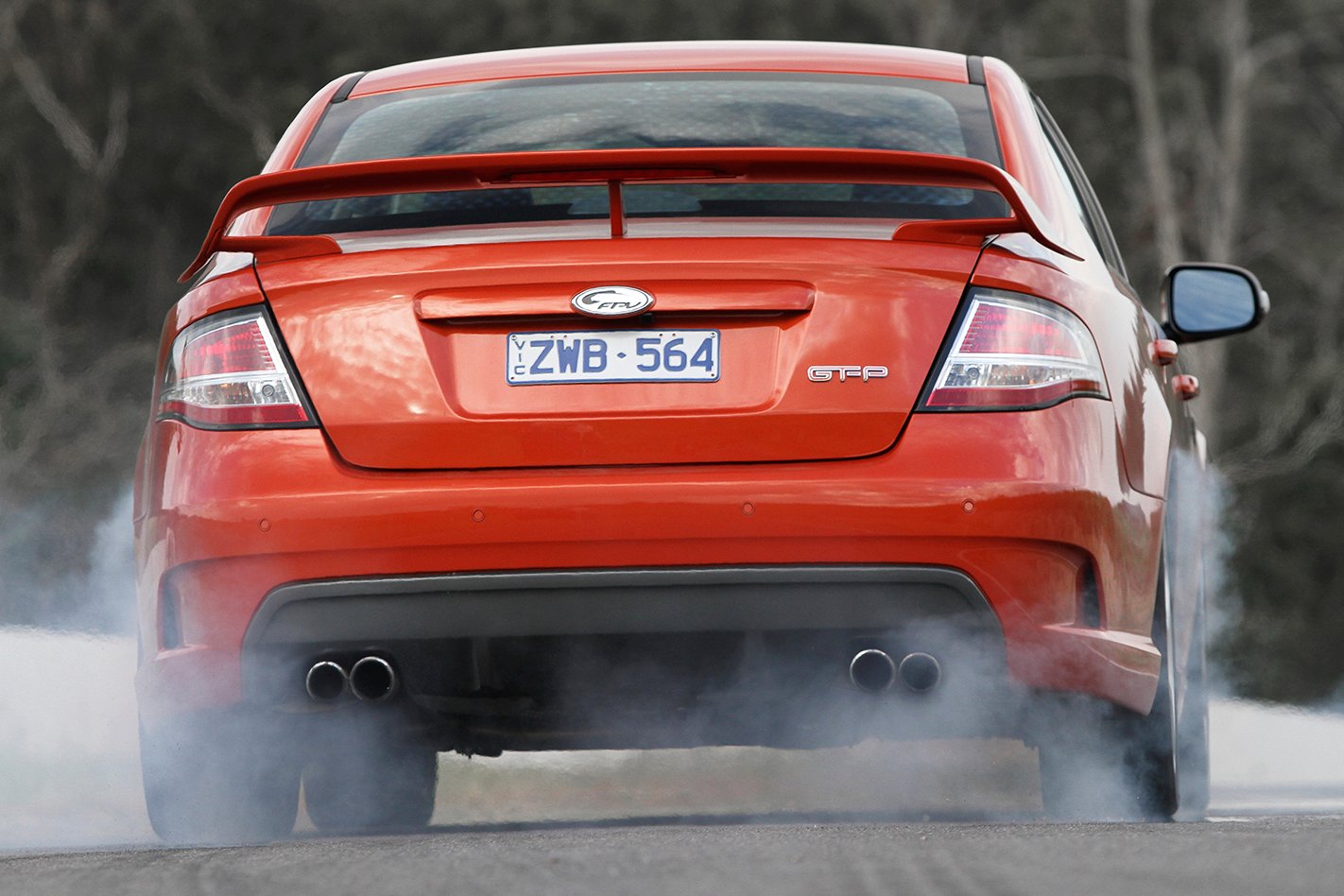
Management turmoil and job cuts were recurring themes following the retirement of long-time MD, David Flint, in 2006. Flint had kept a steady hand on the wheel, having established the joint venture manufacturing operation between Tickford and FoMoCo in 1991, and managing the transition from TVE to FPV in 2002.
Following a decade-and-a-half of Flint stability, his replacement, former Saab Australia MD Sak Ryopponen, lasted just seven months. Hired in June ’06, Ryopponen arrived as the first of two rounds of redundancies was in full swing. Prodrive was on a mission to pull cost out of the business, and by January ’07, he and five senior managers, as well as another 30 employees, had departed the building.
Eventually, Rod Barrett was recruited as FPV general manager in August ’07, but the same cost-cutting imperative saw him exit, with 12 others, in a mid-2012 staff cull.
At the time Bryan Mears, who had absorbed the role of FPV MD, positioned the move as, “A pragmatic decision to re-size the business to fit demand.” But FPV was clearly in distress, and the question on everyone’s mind was ‘why is demand shrinking?’
From a product point-of-view, FPV had morphed out of TVE at a perfect moment in time. In 2003, Tickford versions of the unloved AU Falcon gave way to FPV versions of the far more palatable BA, FPV reviving the iconic GT badge with its first offering.
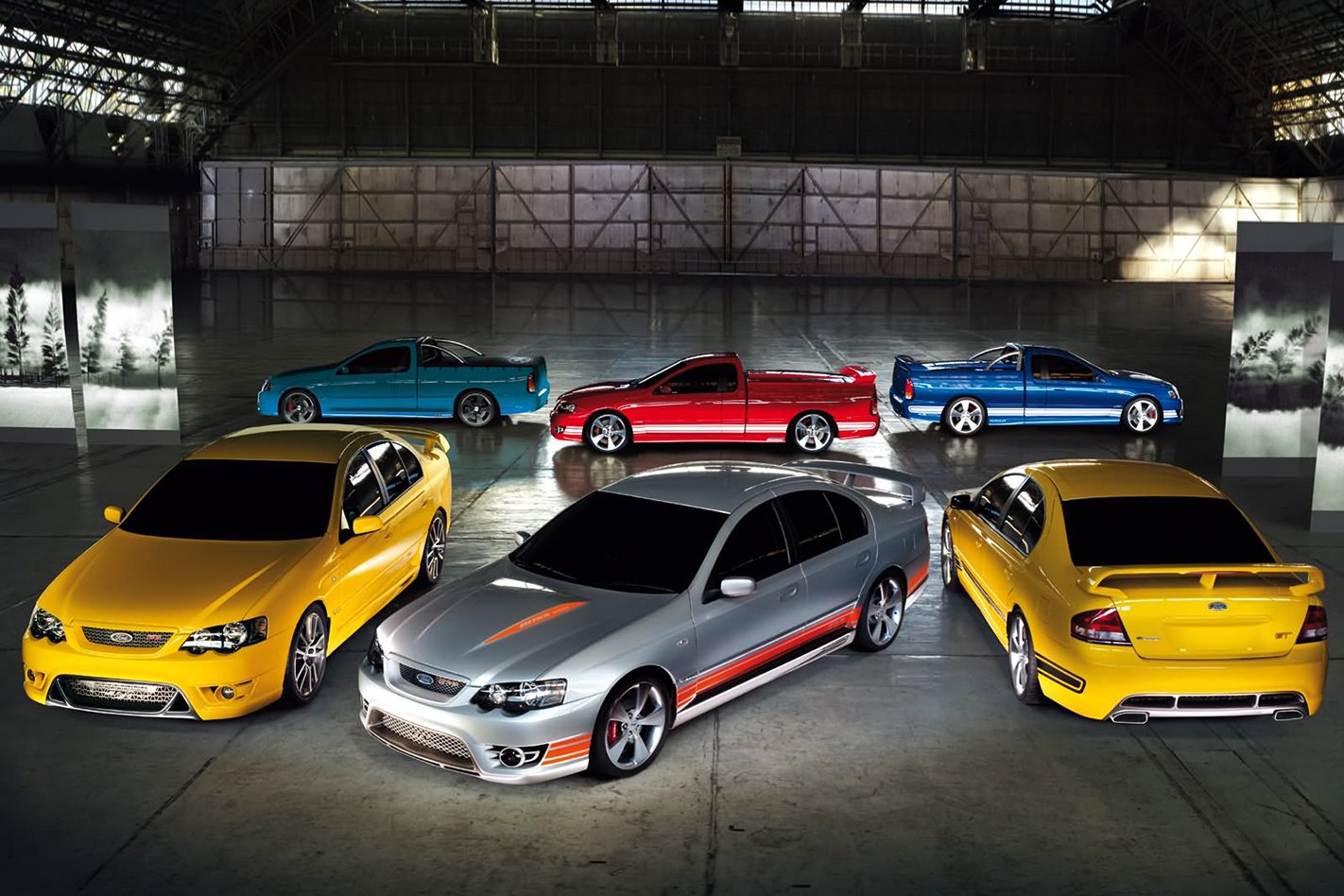
The premium GT-P variant and Pursuit ute completed the line up and FPV was firing on all cylinders, taking the fight to HSV’s VY- and VZ-based Clubsport and Maloo models.
Again, in mid-2006, there was some vigorous FPV chest-beating in response to “six successive months of record retail sales, including an all-time record monthly result of 226 new FPV purchases in June.”
Tap-dancing around the fact it had knocked off HSV, Ford’s performance partner added, “FPV has overtaken its direct rival in total volume with 1151 sales Year To Date – a 28 per cent increase over the same period in 2005”.
By this time, Ryopponen was in the MD’s chair, noting “to achieve outright leadership in such a competitive segment of the market, particularly against a rival that has been in this business for over 15 years, is testament to the fantastic range of products that currently wear the FPV badge.”
FPV’s take on the turbo version of the locally-produced (Barra) 4.0-litre inline six had also emerged with the BA II in ’04; the 270kW/550Nm F6 Typhoon adding another potent weapon to the brand’s arsenal, not to mention taking out MOTOR’s 2006 Australian Performance Car of the Year gong in BF guise. Happy days.
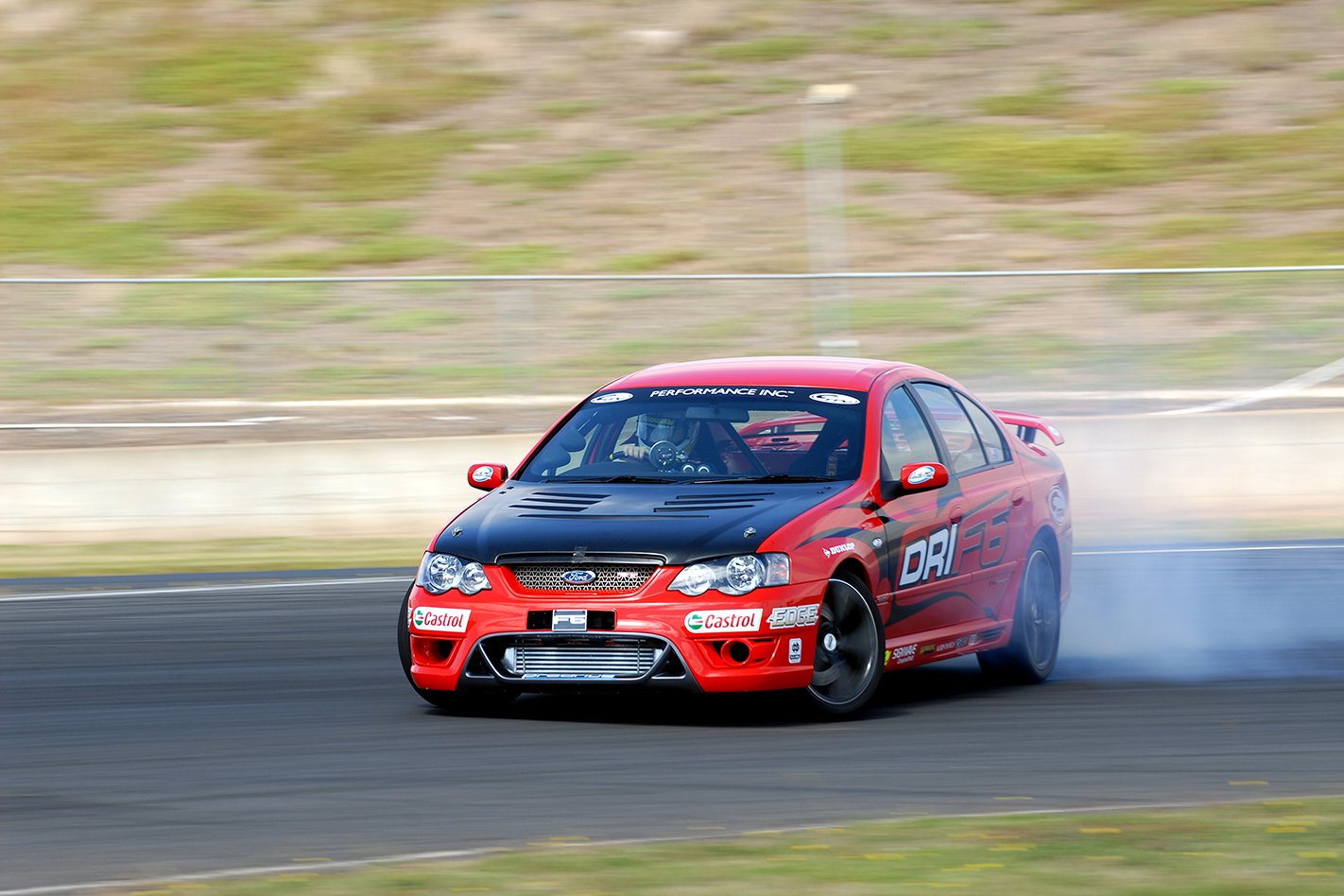
The senior management group was sacked in a Prodrive-led cull, only days after FPV announced its best ever annual sales result, ultimately selling 2144 cars over the course of 2006.
Then-Ford MD, Tom Gorman, cut to the heart of the matter early the following year, when he inferred that on the manufacturing side, FPV was structured for even larger volumes, and costs were simply too high. At the same time he admitted, “FPV had a management structure that was a little bit top-heavy”.
From that point on, it was clear Prodrive was expecting bigger returns from its investment in the FPV joint-venture, and was willing to act quickly and aggressively to extract maximum value.
To compound matters, the 10-year run of the sixth generation (AU/BA/BF) Falcon was in its twilight, with the new FG model still 12 months away. So FPV had no new product announcements until 2008.
With the aim of getting things back on track for the FG Falcon’s arrival, the decision was made to transition Rod Barrett, the successful and well-liked commercial director of the Prodrive-owned Ford Performance Racing (FPR) V8 Supercar team, into the role of general manager for FPV.
With a blue-chip CV, including senior marketing roles with Coca-Cola, Fosters and Dairy Farmers, Barrett was also a talented racer, enjoying success in Europe before hanging up his helmet and using his professional skills to move into motorsport management and promotion.
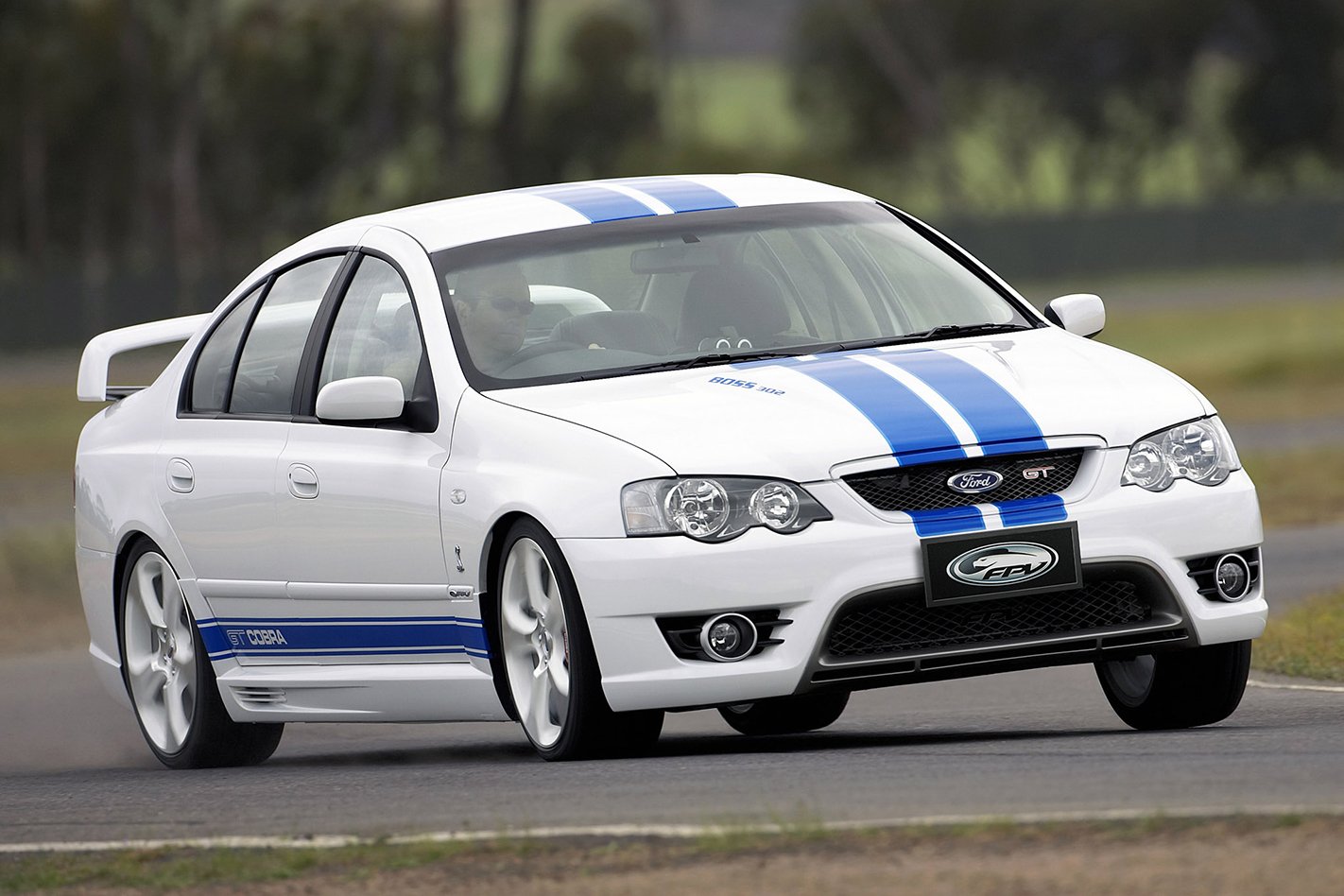
The main event, though, was the FG Falcon, and from its launch in early ’08 the new car was met with widespread acclaim. FPV’s FG-based line-up followed almost immediately, but as the motoring media and eager owners started to get their backsides behind the wheel of the new F6, GS and GT model derivatives, the response wasn’t quite so positive.
The suspension tune, in particular, came in for special criticisms, with a ponderous, bobbing front end that never felt as sharp, stable or settled as the VE Commodore-based HSV competition.
Power down was also an issue, with the now 315kW/551Nm GT struggling for traction at step-off, thanks largely to relatively skinny 245/35 19-inch rubber. The brakes struggled under pressure and the FPVs also suffered from broader FG ergonomic shortcomings, like a high driver’s seat and low steering wheel.
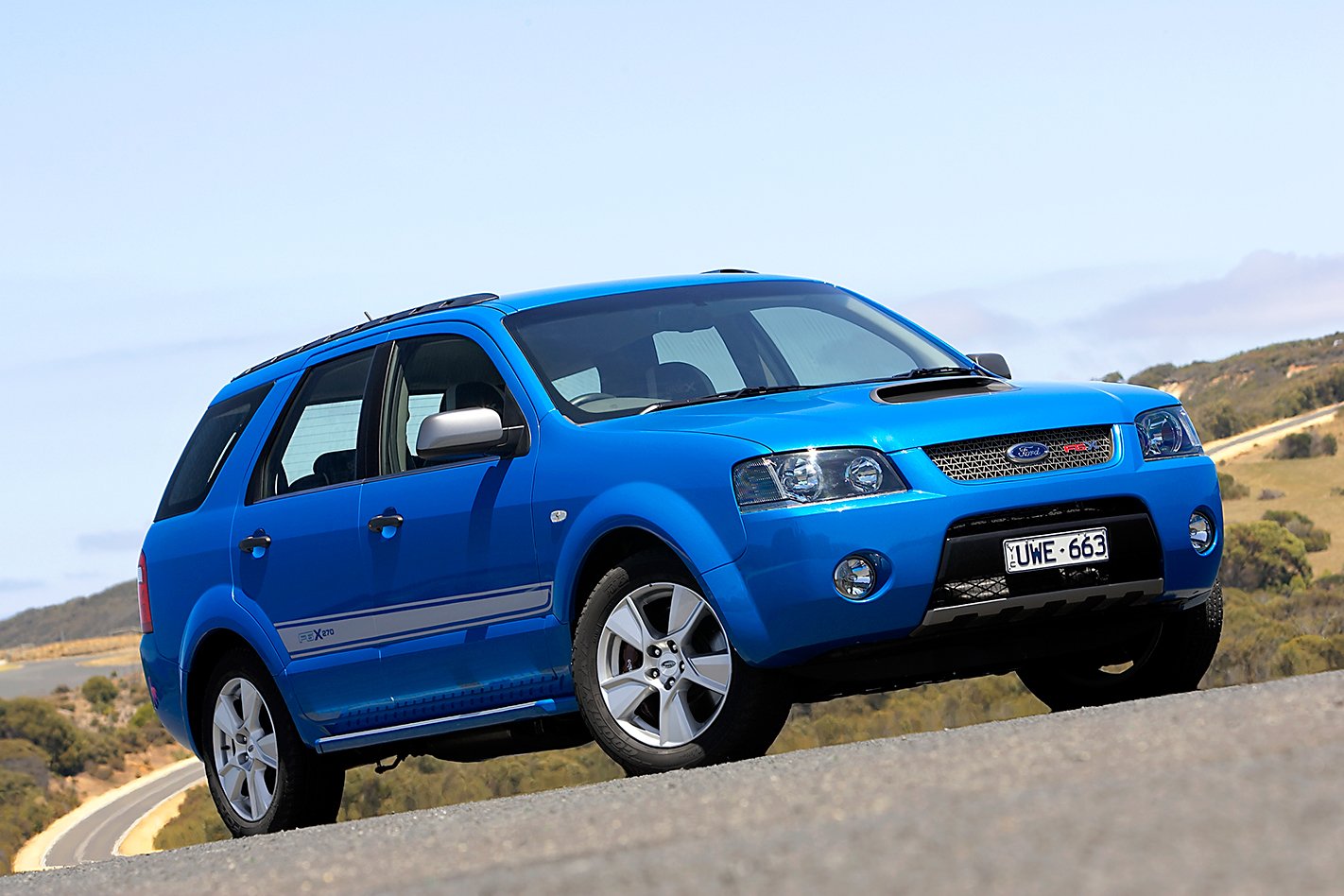
With the FG Series not getting off to a flying start, FPV diversified by focusing on the Territory. Based on the just-introduced turbo six version of Ford’s local SUV, the FPV F6X produced 270kW/550Nm but was ultimately a flop, with just over 200 units sold.
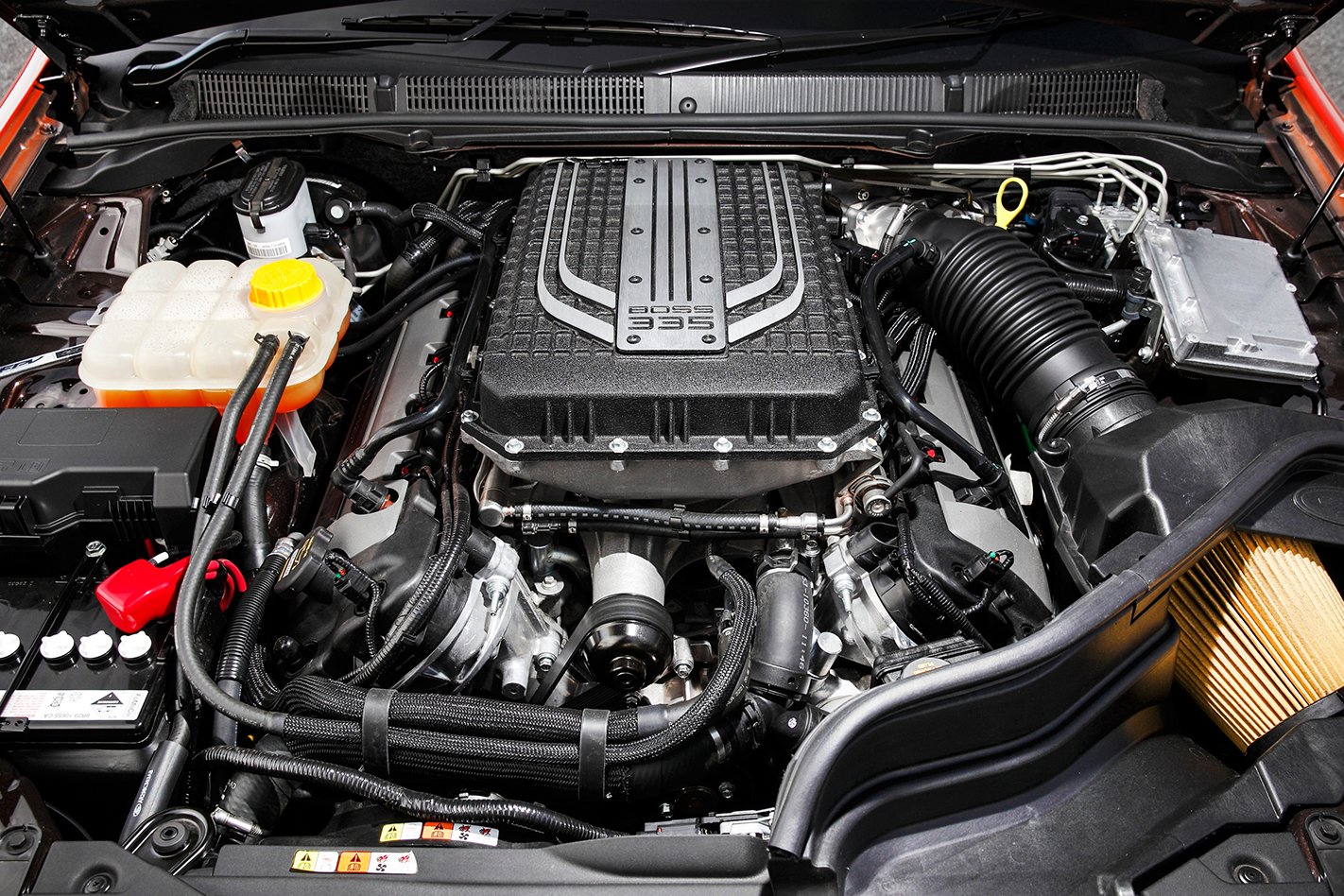
This locally conceived and executed project took Ford’s 5.0-litre ‘Coyote’ V8, added a 1.9-litre, twin-screw Eaton blower and slotted it into the nose of the FG Series FPVs. The result was a supercharged engine producing 315kW/545Nm for the GS, and 335kW/570Nm for the GT; although those numbers are widely thought to be conservative (with insurance rating management in mind).
Muscle car lovers were happy with more power, but dynamic and ergonomic shortcomings remained, and HSV’s E Series continued to hold the upper hand.
In mid-2011, FPV displayed a GT ‘Black’ concept, featuring re-tuned suspension, bigger brakes, an aggressive aero package and, crucially, staggered 19-inch forged alloys, shod with fatter 275/35 rubber at the rear, and Dunlop SP Sportmaxx GT all ’round. FPV wanted to capture feedback at the show, with production obviously in mind. It looked like the answer to all the car’s shortcomings had arrived.
Within a month, the ‘Black’ entered production, but as a limited edition build of 125 units only. And the kicker was, the only thing carried over from the concept car was the black paint and graphics package. No ‘track tuned’ suspension, no brake upgrades, no body mods, and standard GT tyres.
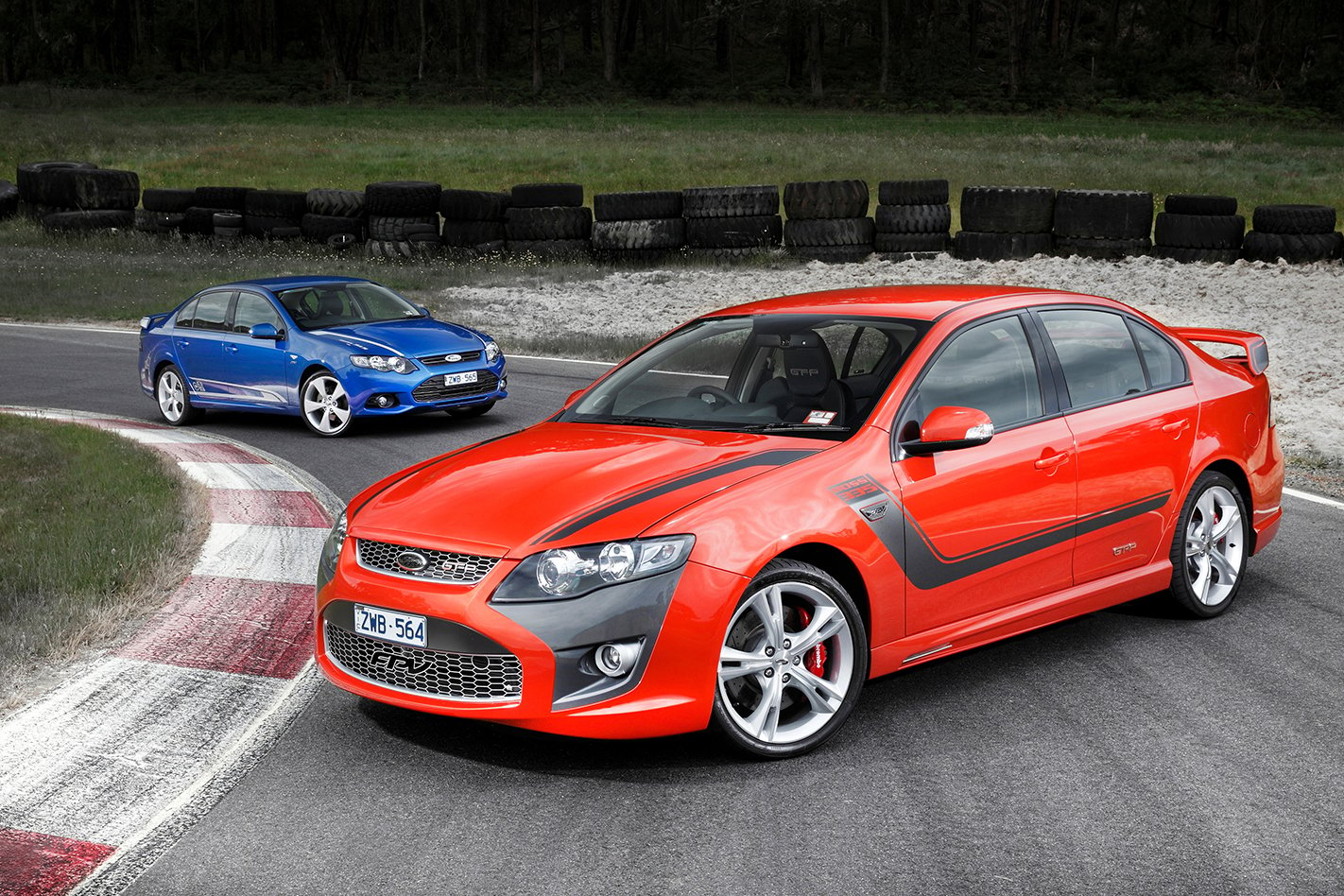
New Ford Australia MD, Bob Graziano, issued a statement at the time, saying, “We recognise the passion and dedication of FPV enthusiasts and their desire to see Ford high-performance vehicles available in the market”. He added, “Although this segment is relatively niche, it is an important part of Ford’s performance history and DNA”. Soon enough, Graziano would eat those words.
Replacing Barrett, Prodrive’s regional chief, Bryan Mears took over as FPV MD. He was immediately on the front foot. “The good news is that FPV is set for stronger sales this year than last, and we have some very exciting new products to talk about later in the year.”
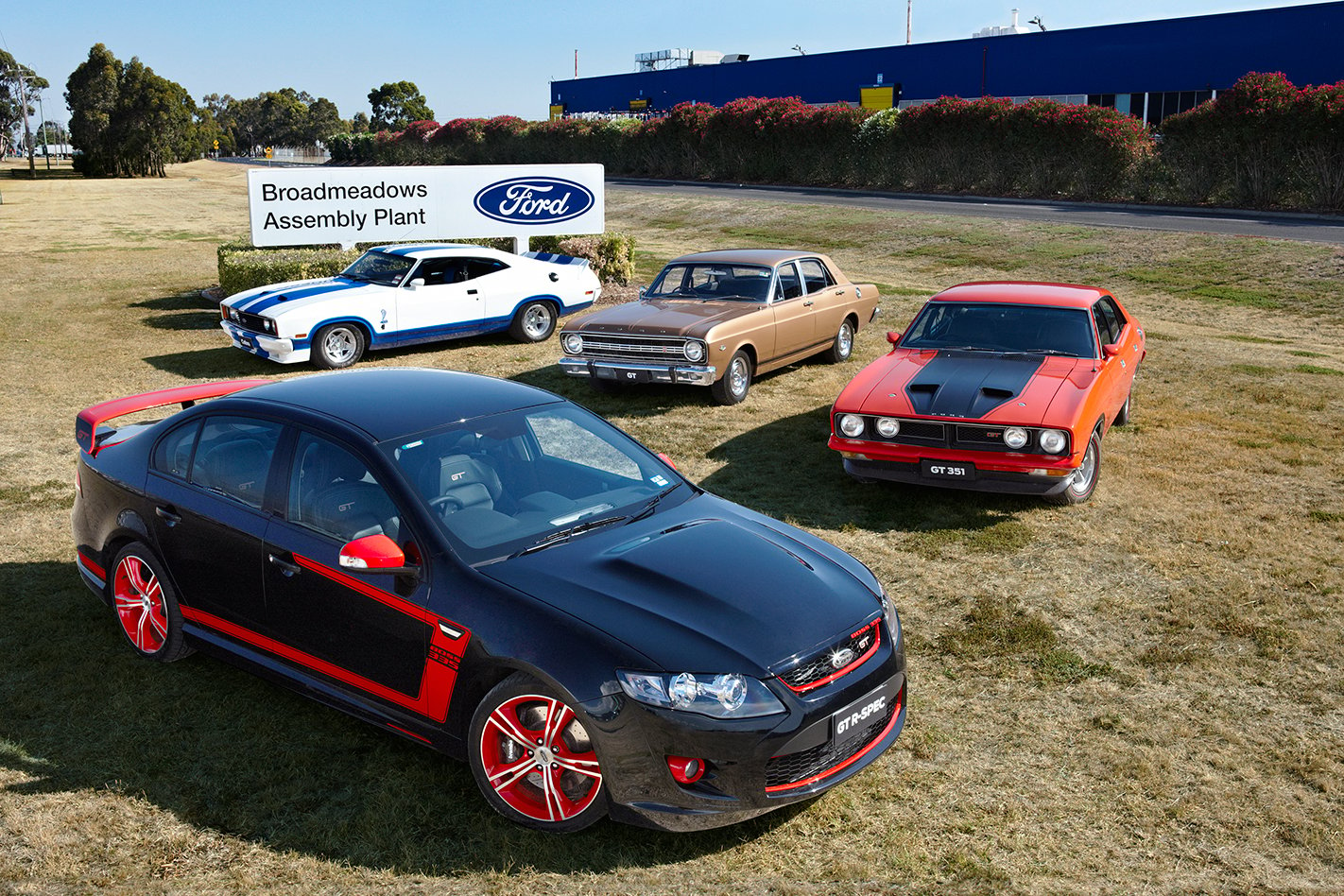
A revised suspension set-up sharpened and stabilised the front end. Bigger, better brakes improved stopping power and endurance. And, finally, staggered rims brought bigger rear tyres, this time 275/30 Z-rated, Dunlop SP Sport Maxx on 19s.
With launch control added, the FPV GT R-Spec became the fastest Australian sedan ever built to manage 0-100km/h in the mid fours, the Miami engine at last able to put its prodigious outputs to good use.
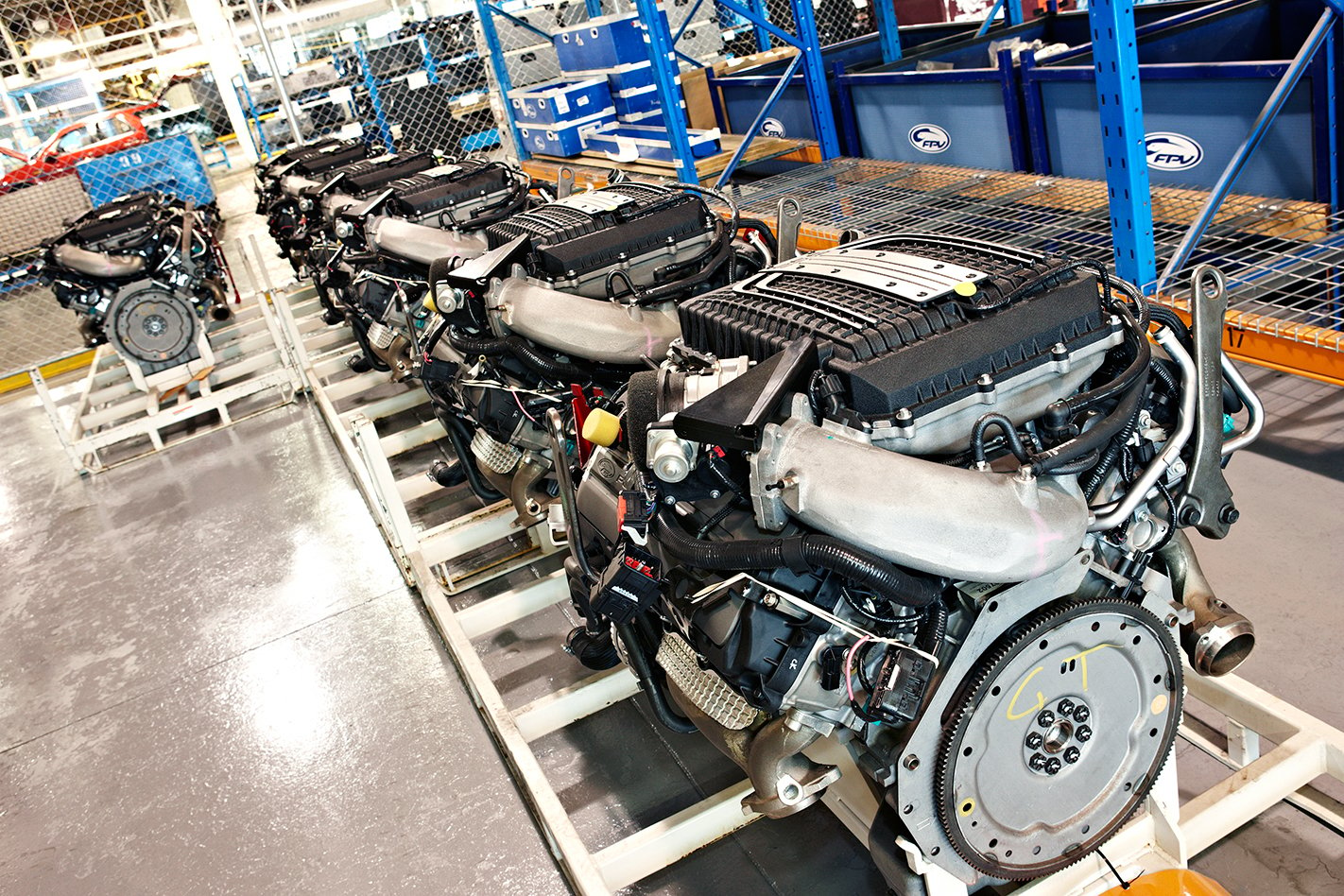
In early 2013, FPV production was shifted into the main Broadmeadows plant, but it was another Bob Graziano statement, less than three months later, on May 23, 2013 that put the final nail in FPV’s coffin – Ford’s decision to cease manufacturing the Falcon in Australia, and retire the nameplate, as of 2016.
Speaking to Rod Barrett, now a senior executive with BP Australia, on news of the closure, he told MOTOR, “Personally, I’m disappointed FPV is going. I gave my heart and soul to FPV, and it became part of my DNA. But professionally I’m not surprised”.
He added, “I’ve experienced the passion among FPV fans and owners. I feel more for them, because it’s like their favourite football team or pop singer has just been taken away. If you check the forums, people are really hurting.”
Issuing FPV’s final send off, Ford’s then-VP of marketing, sales and service (and now CEO), Graeme Whickman said, “We appreciate all of the great team members, dealers, customers and fans who have supported FPV through its history.”
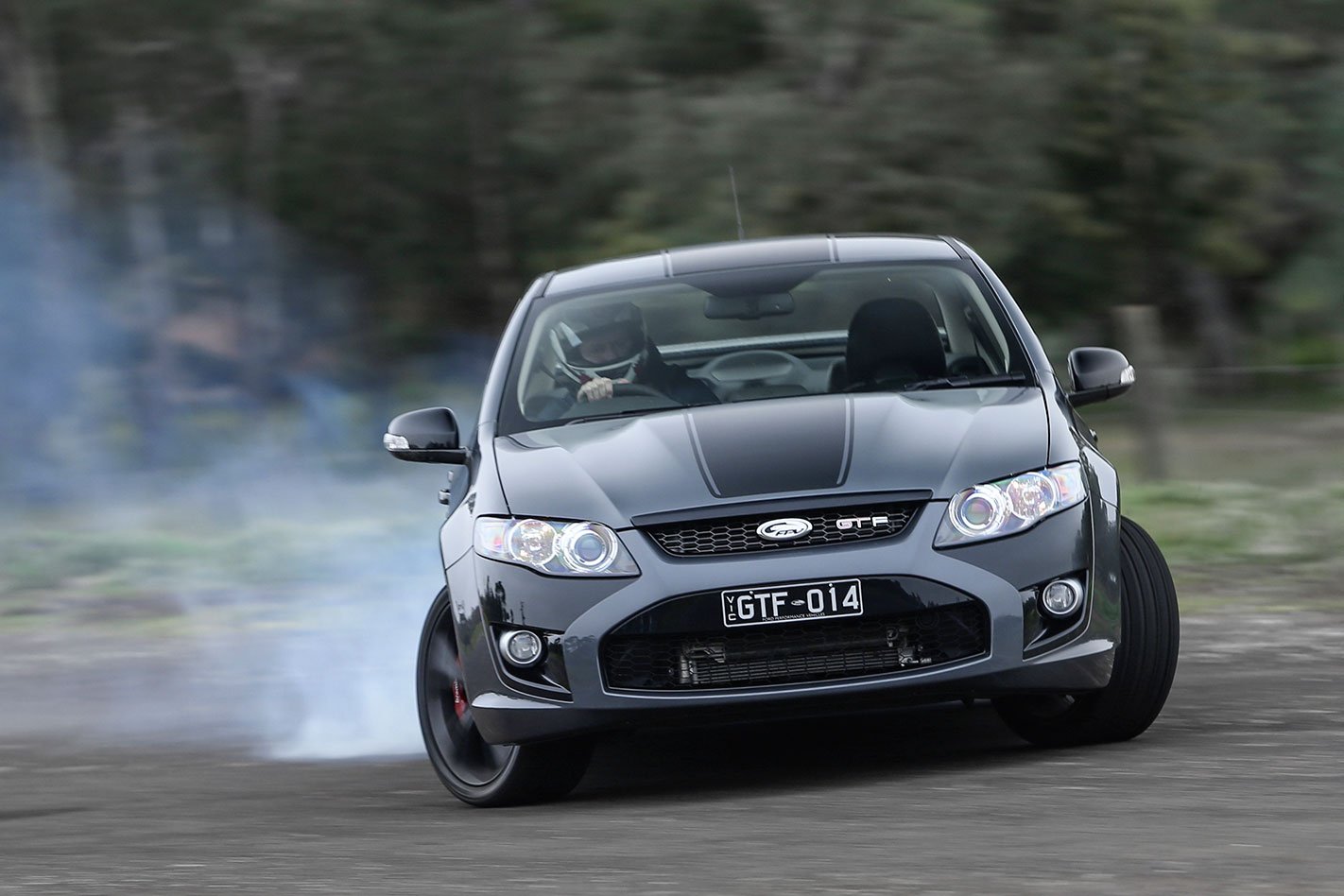
Thankfully, this was no cynical badge engineering exercise, with the small but passionate GT-F engineering team throwing everything they had at this last hurrah, the car gaining all the R-Spec chassis, wheel and tyre upgrades. This made it not only the fastest but also the sharpest and best-handling FPV ever made.
With just 550 built (500 for Australia, 50 for New Zealand), the GT-F became an instant collectable, with cars changing hands for twice its recommended $77,900. It was a fitting farewell to a brand that had become a unique part of the Australian performance car landscape.
This feature first appeared in the February 2014 issue of MOTOR.
Looking for Aussie muscle? We’ve trawled the classifieds to find the best value buys for budget Aussie motoring fun.
The rules are simple: less than 150,000km on the clock, in decent, near-original condition, and inside 20 years old.
This story has been updated to reflect prices as of early 2020.
Holden Monaro
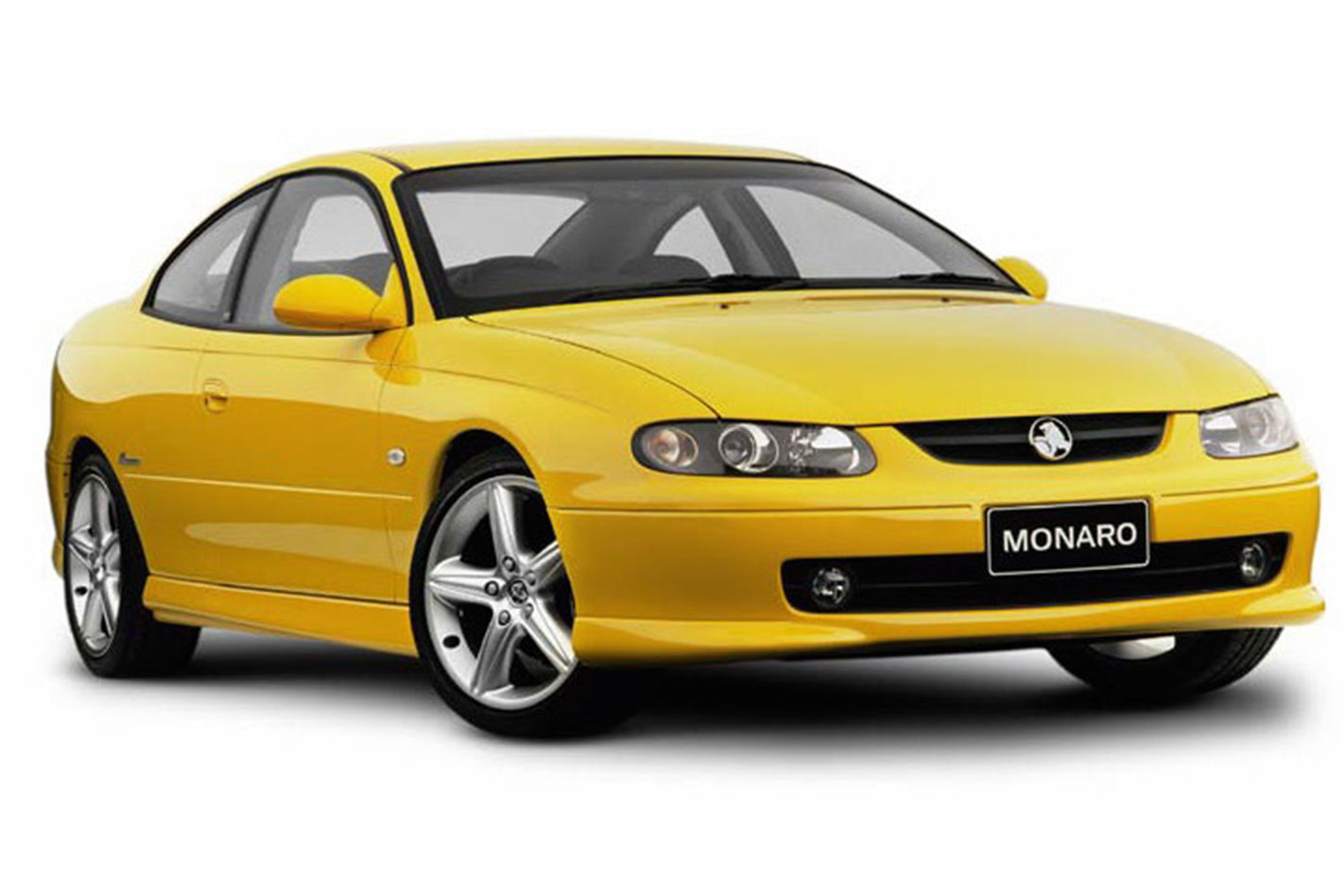
Go for an unmolested 2001 original, in CV8 manual rather than antiquated four-speed automatic or breathless CV6 guise, and you’ll have a future classic on your hands.
We found good examples of this sleek, 225kW/460Nm two-door 2+2 all between $25,000 and $75,000. Spend what you can and chances are your Monaro won’t get less valuable.
Ford BA Falcon XR6 Turbo
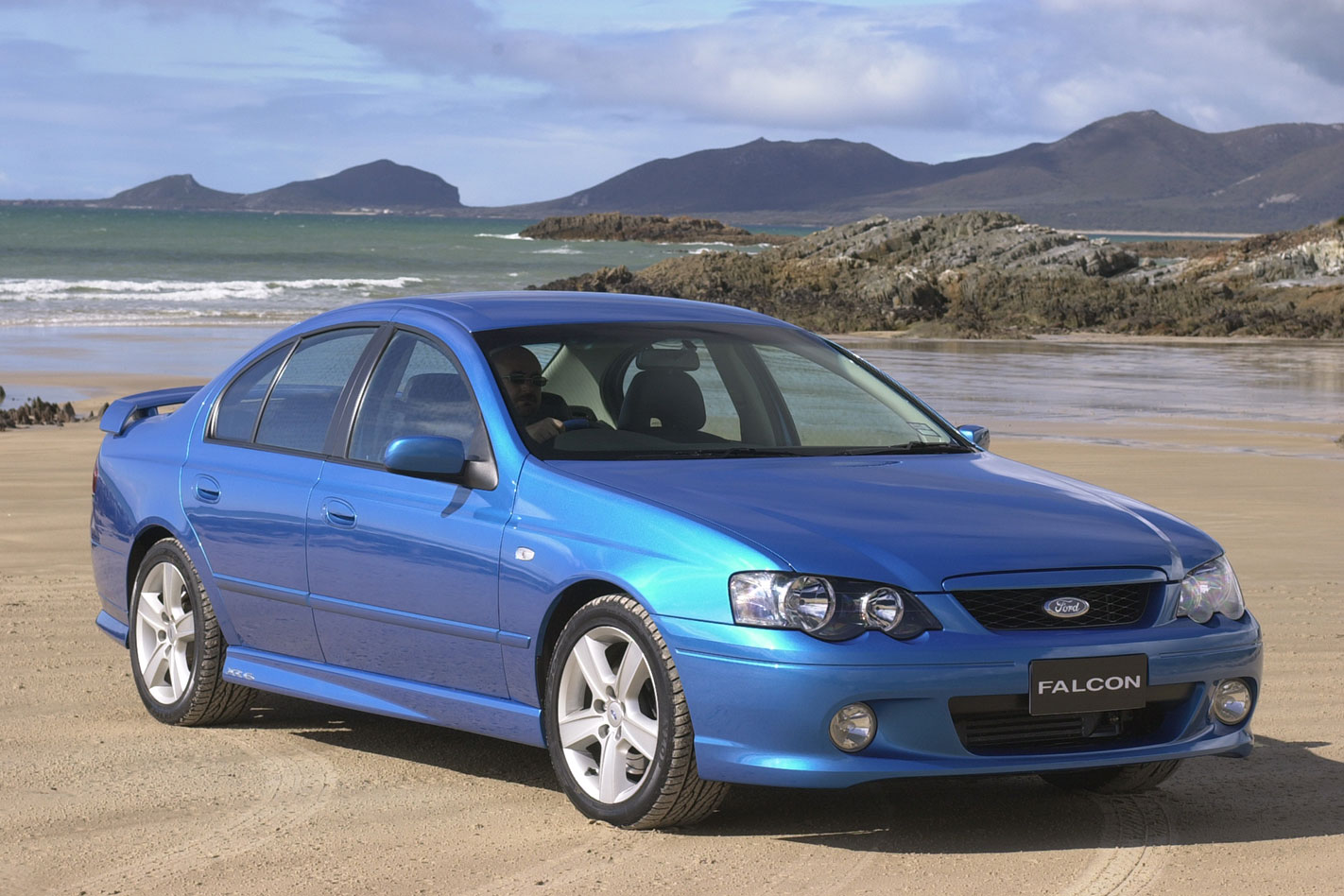
Super-sharp steering and a sophisticated independent rear suspension gelled with the 240kW and 450Nm that was on tap in the BA Falcon XR6 Turbo.
Over time the chassis became more exposed as Ford turned up the boost and when the VE Commodore arrived the Blue Oval lost its dynamic dominance and never regained it.
So the BA XR6 Turbo is where it’s at, and we found that you can pick one up from $10k up to $20k, though there’s one particularly well-kept example in the mid-20s…
Holden VE Commodore SS or HSV VZ Clubsport
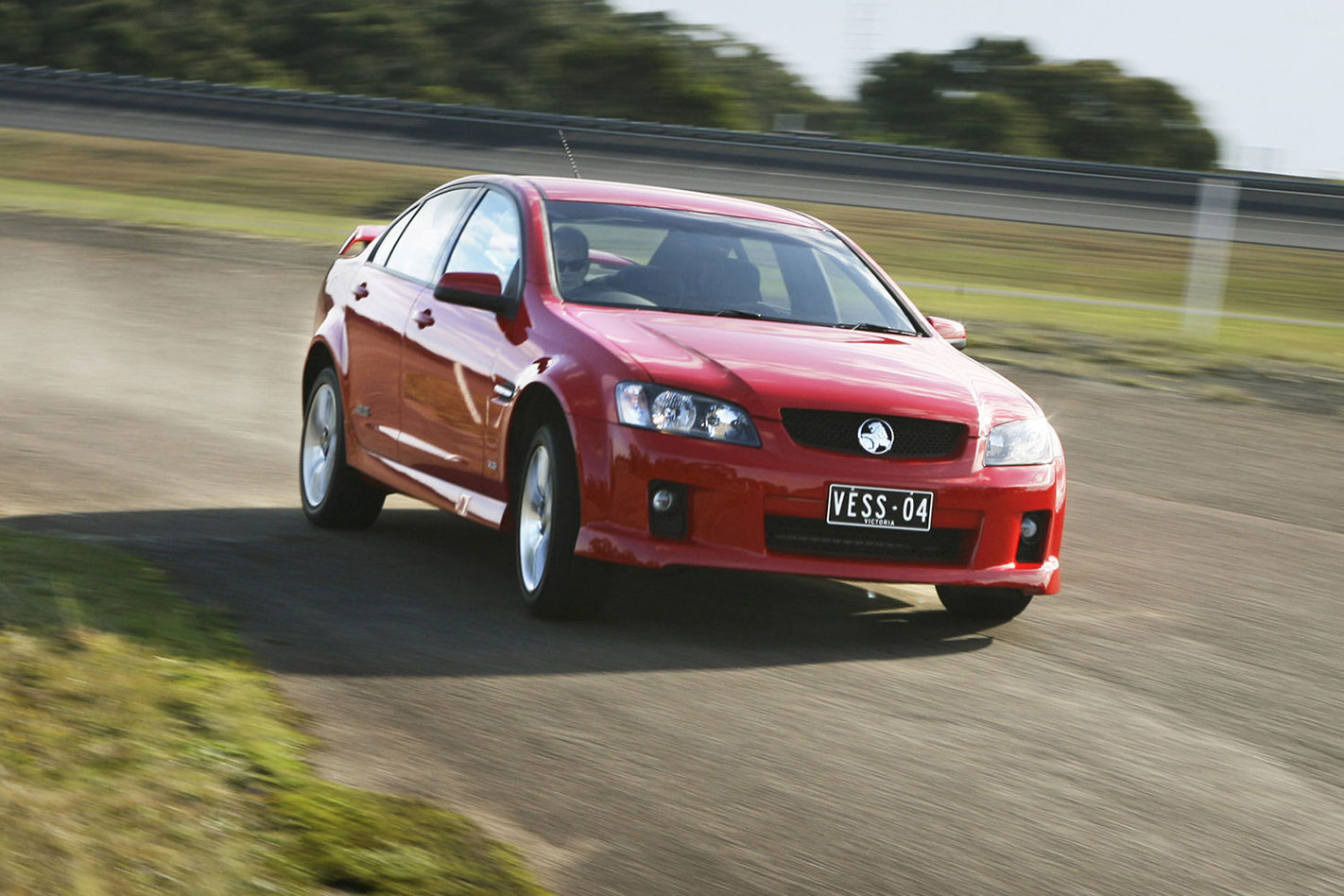
If you can stretch to around $15,000 or beyond, forget Falcon for a moment because the beautifully engineered VE Commodore is where it’s at.
The 270kW and 530Nm from the 6.0-litre V8 are barely changed even now in VF guise, and the VE actually has the more relaxed stability control system and feelsome steering compared with the newer car.Expect to spend anywhere from $14,000 to $30,000 on a VE or VEII.
If you want to get down and dirty, an alternative is a VZ Clubsport manual, which weighed less than a VE SS (1643kg versus 1770kg) yet boasted 297kW/530Nm and a 5.2-second 0-100km/h time.
A VZ Clubsport will set you back around $30k, give or take a few thousand.
Ford Performance Vehicles FG-generation
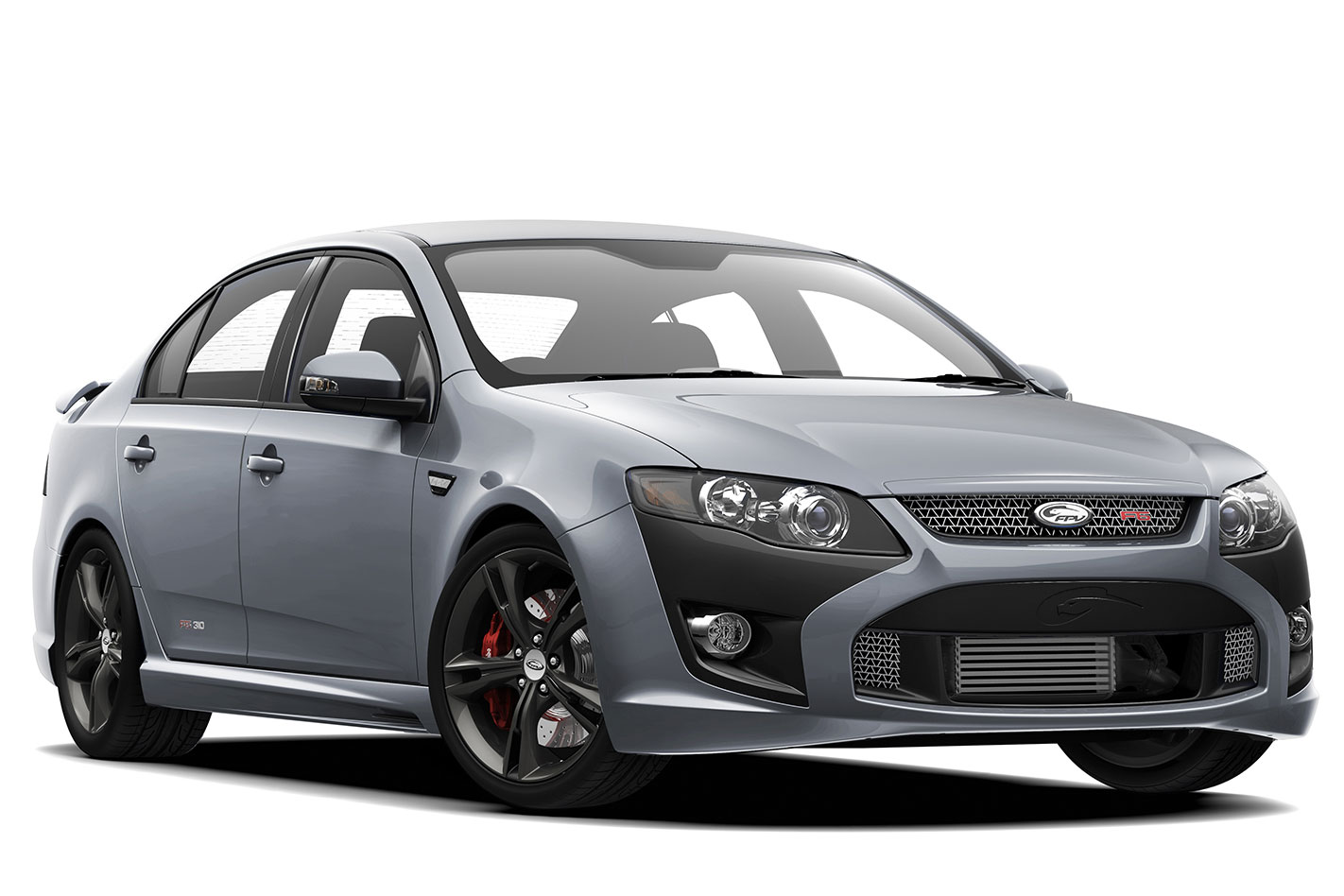
FPV models in FG guise weren’t bad cars that have depreciated faster than their HSV counterparts.
An FG GT, GS, or F6 for around $30k isn’t a bad buy, though the options get better and the models rarer the more you spend. GT-Fs are up past the $80-90k mark, which can’t really be considered ‘budget’.
HSV VE Clubsport and Senator Signature
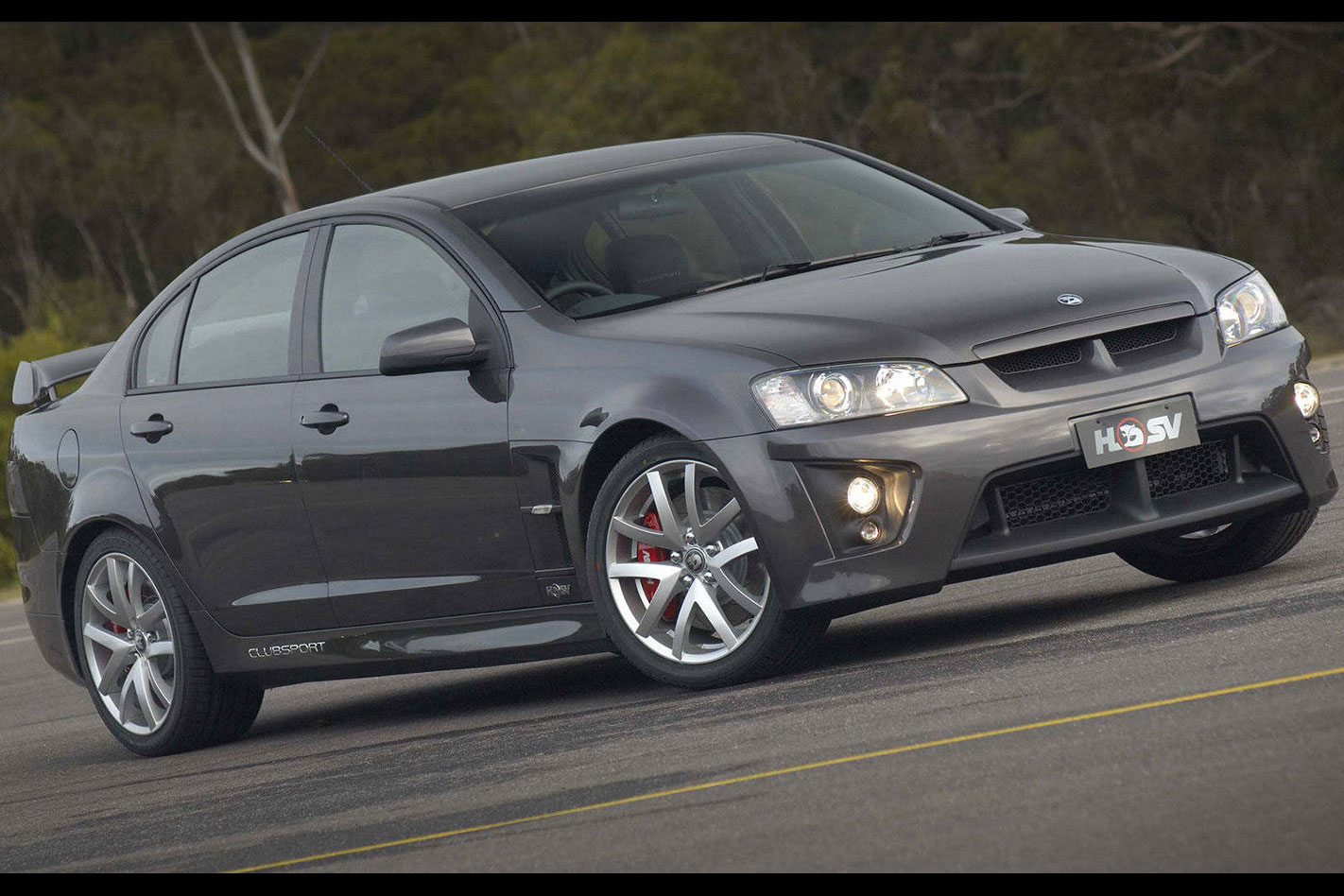
It is worth remembering that the VE Commodore had a two-year head start on the FG Falcon, and that’s two years of sheer dominance compared with the ageing BF of the time.
That means you can pick up a HSV E-Series made in 2006 for under $30,000. Both deliver 307kW and 550Nm, or more power and about the same torque as the VF SS.
HOLDEN has posted a $255.2 million loss for the 2013-14 financial year, the second-largest loss in its history following the previous year’s $553.8m. It means that the company hasn’t posted a profit since the $89.7m it recorded in 2011.
Holden sold 106,092 vehicles in 2014 as the second-most popular brand, yet the loss still equates to $2403.57 per vehicle.
Holden chief financial officer, Jeff Rolfs, was interim CEO for most of the year, following the abrupt departure of Gerry Dorizas in October. “It’s obvious that there are major costs associated with our decision to cease domestic manufacturing of vehicles in Australia by the end of 2017, chief among them being employee separations and entitlements,” Rolfs said in an official statement, citing the loss as a direct consequence of its planned 2017 shut-down.
Holden says that despite the loss, it has a healthy balance sheet with zero debt and is committed to supporting its employees as it becomes a full-line importer. It’s a similar statement to that of cross-town rival Ford, which will quit Australian production by October 2016.
“We are always mindful of the impact on our employees and our financial results, however these are expected and foreshadowed costs that are well within our forecasts,” said Rolfs. “As we announced in 2013 and again last year, there are substantial costs involved in the orderly wind-down of local manufacturing. This is a difficult path to tread but we’re committed to our long-term plan.”
That plan will have to be carried out by new MD Mark Bernhard, who took over the top job from July, the first Australian chief of Holden since John Bagshaw left in 1990.
“Having started my career with Holden, I understand the strength of the brand and its importance to Australia and our customers,” said Bernhard. “My job is to build on that for future generations.
“Our company is going through a challenging transition to a national sales company and I am determined we will treat our people with the respect and dignity they deserve. But we must also look forward and Holden’s future success will be built on three pillars: brand, product and customer experience.”
Holden’s loss compares with rival Ford’s $191 million loss in 2014, while in a surprise result, Toyota made a $194 million profit in its 2013-14 financial year on the back of strong exports and sales of imported product.
Sign up here to receive the latest round-up of Wheels news, reviews and video highlights straight to your inbox each week.
Fancy yourself as pretty handy behind the wheel? Meet 10 of circuit racing’s toughest tracks – the kind that will bring you crashing back down to earth, hopefully not literally.
ISLE OF MAN
When it comes to challenging circuits, the 60.7km Snaefell Mountain Course that hosts the Isle of Man TT each year is the grand daddy. Sadly, every year riders lose their lives attempting to tame it, but such is the allure that no-one questions coming back.
It’s better known for two-wheeled exploits than four, but settle down with a cuppa and watch dumbfounded as Mark Higgins attacks the course to set a production car lap record in a Subaru WRX STI in 2016. It’s insanely fast.
NÜRBURGRING
Most of us have ‘’Ring fatigue’ these days. Between car makers constantly quoting lap times and its appearance in every driving game around, it’s easy to lose sight of why it’s so revered in the first place. It’s fast, there’s little run-off, and even if you’ve memorised the 154 turns, you then have to deal with the thousands of bumps.
And there’s the weather, never better illustrated than in one of the most amazing bits of racing footage ever recorded, Leh Keen’s helmet cam during the 2013 Nurburgring 24 Hour.
SUZUKA
Every year, when the Japanese GP rolls around, the F1 grid starts getting all giddy and excited. Few places show off a modern F1 car’s abilities better than Suzuka, and unlike most circuits on the calendar, it still punishes mistakes harshly.
Who better to illustrate the correct way to navigate this tricky track than the great Ayrton Senna during the 1989 Japanese Grand Prix?
CIRCUIT DE LA SARTHE
There are those that argue Le Mans isn’t the same these days, that the installation of two chicanes on the Mulsanne Straight in 1990 neutered the famous French circuit. That’s all nonsense, of course.
While drivers no longer have to contend with 400km/h+ top speeds, it remains one of the fastest and most difficult tracks in the world that poses plenty of challenges for the likes of today’s top-tier LMP1 cars.
INDIANAPOLIS
The uninformed may sneer at the inclusion of a circuit with only four turns, all of them left. But when you consider Indycars average upwards of 370km/h around the 4km oval you get some idea of the challenge involved.
And there are no gravel traps, so if anything goes wrong you’ll be eating concrete before you can say “oh crap, I’ve lost it”. To get a taste of the flat-out, separated-by-milliseconds nature of Indy 500 racing, here’s the tense final laps of the 2014 Indy 500.
MOUNT PANORAMA
In the pantheon of great racing circuits, only the Nürburgring and Spa are on the same level as the ‘The Mountain’. It’s a cliché, but you can’t appreciate just how steep and blind some sections of the track are until you’ve seen it in person. It gives you a whole new appreciation for the drivers that tackle it at full speed each October.
One of the most amazing videos ever filmed at Bathurst was ex-MOTOR staffer Dean Evans during the Lotus Trophy race in 2005. We don’t know what Deano had for breakfast that morning, but it must have been heavily garnished with brave pills.
MACAU
When a circuit places permanent yellow flags on one of its corners, you know it’s tricky. So tight is Macau’s hairpin that overtaking is forbidden there. In fact, overtaking is almost impossible everywhere thanks to most of the track being barely wider than a car.
Only the very best conquer the streets of this gambler’s paradise, as it offers zero margin for error. WTCC driver Tom Chilton gives you a commentary on how to tackle this unique circuit.
PHILLIP ISLAND
Jingoism? Not a bit of it. While PI is another location perhaps better known to motorbike fans, its sweeping high-speed layout makes it a stern test of even the best drivers. Whereas tracks like Winton or Sandown can be largely figured out in a day, you always seem to come away from Phillip Island feeling no closer to understanding it than when you started.
Ride with Scotty McLaughlin in a Porsche Carrera Cup car as he shows you the fast line around this magnificent circuit, and gives a graphic illustration on what happens when you slightly overstep the mark in turn one – oops!
SPA-FRANCORCHAMPS
Most tracks have one seriously balls-out corner; at Spa you are spoilt for choice. There’s the fearsome Eau Rouge, the flat-out Blanchimont and the super-fast, downhill left-hander Pouhon. Combine these with Spa’s unique weather, where it can be raining on one part of the track and dry on another, and it’s easy to see why it’s loved by fans and drivers.
For a lesson in how to tackle the famous Belgian track without ever pointing in a straight line, check out this video onboard a 1965 Porsche 911 with Roman Caresani.
MONACO
While the Monaco grand prix circuit may seem nice and friendly with all the million-dollar boats, casinos and picturesque ocean views, it’s extremely difficult to drive around in a pathetic little Fiat 500 let alone a F1 car.
Because Monaco is a street circuit it’s very bumpy and the cambers are all wrong, plus the walls are very close. And solid. So if you muck it up, something’s going to break. And when it rains, things really get dicey, as this onboard from the 2008 Monaco GP proves, riding with Fernando Alonso.
Get your free weekly report from the world of fast cars – subscribe to the MOTOR newsletter!
Recent allegations that celebrities have taken borrowed Jeeps on an “extended” loan should come as no surprise. After all, celebrities are pretty low on cars. We’re told some of them don’t even have one for each day of the week. How do they live?
Star power is one of the many saleable assets a celebrity has. Brands have long been sending their products to big names in the hope they might turn up on a red carpet or a late night TV show. Lending hot-ticket items like cars is nothing new, nor is it usually news-worthy. Until things go missing.
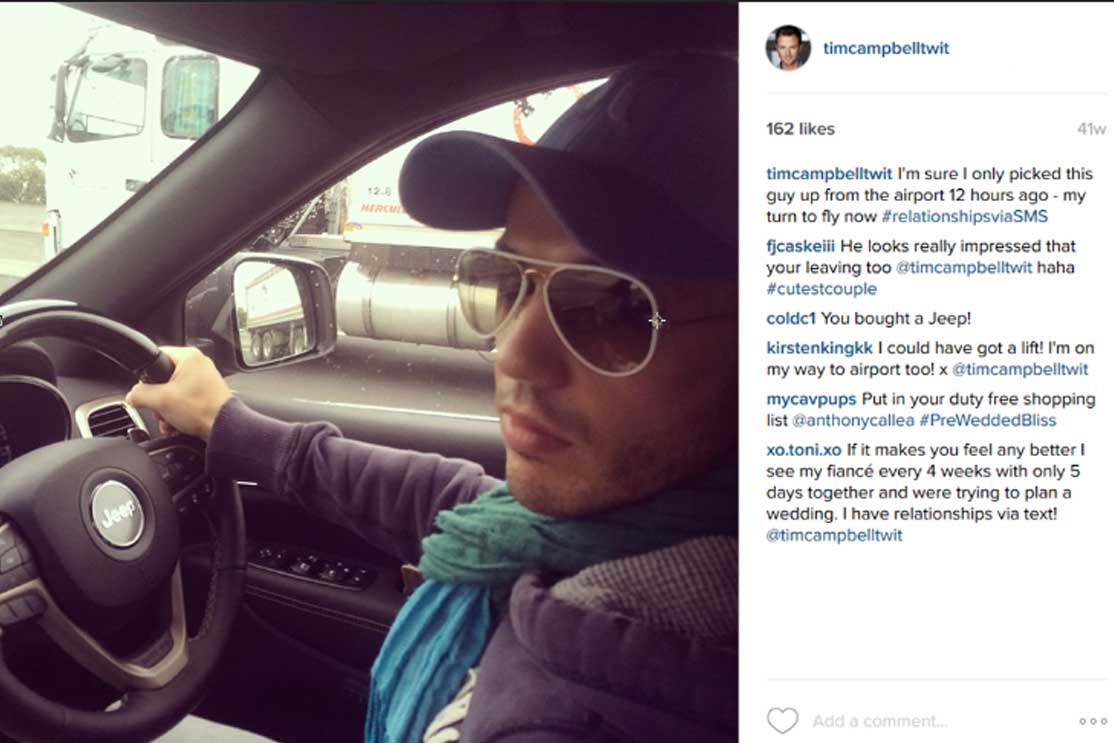
Photo: Instagram @timcampbellwit
For their part, Jeep did let some famous folk borrow a car, including Australians like Shane Warne and Jesinta Campbell. By borrow, we mean the celebs were allowed to use the car for a while. Not forever. We’re pretty sure it wasn’t a give-away.
And yet, there’s a crossed wire somewhere. In recent months, it’s been reported that Jeep wants its cars back but it’s having trouble tracking them down. According the sources, up to $10 million worth of cars are out there in the ether. That’s a whole lot of cars.
Not that the celebs in question are accused of any wrongdoing, of course. We’re certainly not accusing anyone. These are some of our most loved TV and sporting personalities. Some celebs might be a little worse for wear after Logies night, but there’s no suspicion of grand theft auto. And we doubt Shane Warne’s house, allows for any spare room for a Jeep loaner between his multiple Porsches and Ferraris.
It’s just that from time to time, now and again, one or two celebrities have, perhaps, historically, forgotten to pay for things. So in the wake of this scandal, we decided to take a look at six other things celebs have stolen.
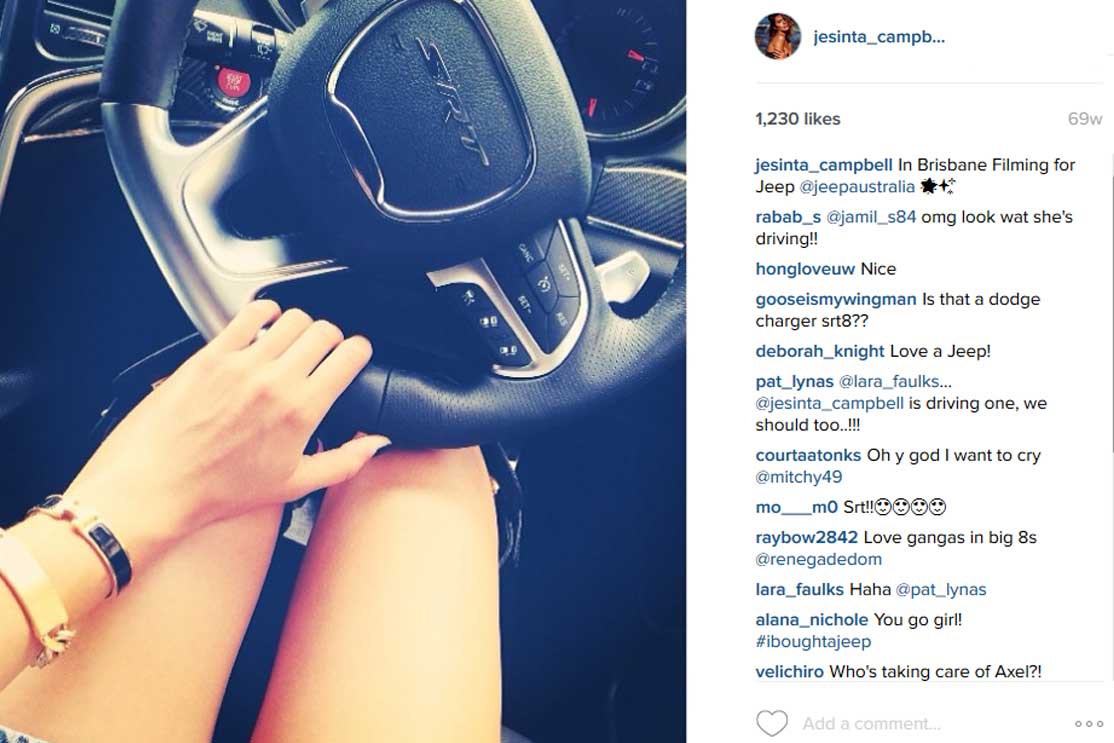
Photo: @jesinta_campbell Instagram
OTHER THINGS CELEBRITIES STEAL
Dresses
Winona “and Johnny 4eva” Ryder is arguably most synonymous with shoplifting. In 2002 she was convicted of nicking off with almost $10,000 worth of high-end clothing from Saks Fifth Avenue.
Necklaces
Lindsay Lohan denies it, but a few years back she was accused of stealing a $2,000 necklace. Poor LiLo has been photographed wearing the stolen necklace, though, so she’s either super brazen or just confused.
Wigs
When Britney shaved her head in 2007, many of us were concerned about the warmth of her skull. Luckily, resourceful Brit allegedly took off from an adult store, brand new wig in hand.
Husbands
Claws out: Angelina Jolie famously nabbed Jennifer Aniston’s husband on the set of Mr and Mrs Smith in 2005. Although Angie had said she would never hook up with a man who cheated on his wife, Brad Pitt is technically not a man – he’s a god. Still, #teamjen!
Hearts
Let’s be honest, it would be easy to fall for Channing Tatum, but he stole the hearts of women everywhere for real this week. Magic Mike ignored his fellow Marvel superheroes to help 92-year-old comic legend Stan Lee off the stage.
Thunder
It’s the stuff of music industry folklore now, but Kanye West wins hands down when it comes to stealing someone else’s thunder. Rushing Taylor Swift at the 2009 MTV Music Awards is just one in a long list of Kanye self-love moments.
THE all-new Mercedes AMG C63 AMG is here – and we’ve thrashed it around Australia’s most famous race track.
WHAT IS IT? The fastest C Class money can buy. Mercedes-Benz isn’t bringing the less powerful C63 to Australia, instead going only with the more powerful S. And for those tempted by practicality, there’s a wagon version too.
WHY WE’RE TESTING IT For the Australian launch of the Mercedes AMG C63 S we were invited to Bathurst to give it a proper blast around Mount Panorama.
MAIN RIVALS BMW M3, Audi RS4, Lexus RC F.
THE WHEELS VERDICT The C63 formula is unchanged but it’s better than ever in this latest model. And it relishes a decent blast around Mount Panorama.
PLUS: Fantastic V8 – both in sound and performance; vaguely practical MINUS: Engine ultimately outdoes the tyres; steel brakes overcome by Bathurst stops
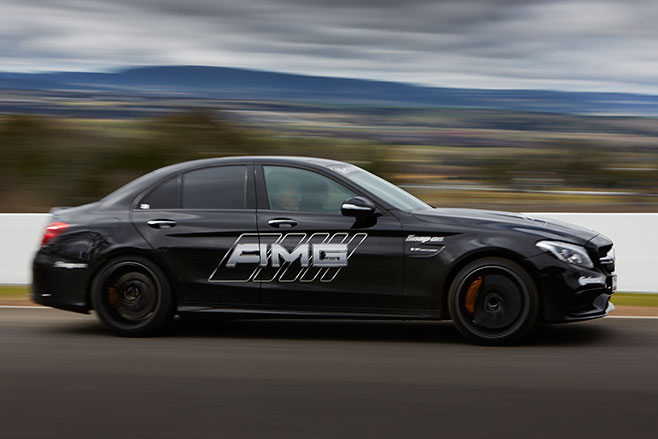
THE WHEELS REVIEW TICKLING 220km/h cresting the hill while climbing Mountain Straight at Australia’s most famous race track is something to get the heart started on a chilly Bathurst day.
Anything pulling that sort of pace has to be brisk – seriously brisk. In this case it’s the Mercedes-AMG C63 S, the car that aims to make life difficult for the BMW M4 and Audi RS4. And anything from Alfa Romeo, Jaguar and others that’s somewhere around the corner.
The latest generation C uses the same 4.0-litre twin-turbo V8 from the hero of the range, the $295,000 AMG GT S. The sump is wet instead of dry as it is on Benz’s two-door hero, but the C63 S is nonetheless a weapon befitting one of the world’s most iconic tracks.
With 700Nm the feisty C63 triggers the traction control as it gets light over the blind crest that on a 60km/h lap of the track during any other day barely feels like a rise.
After its brief electronically-induced pause the V8 is back and roaring throatily as it rushes towards Griffins Bend for the climb up Australia’s most challenging track.
Solid carbon ceramic stoppers bite hard and the car hunkers down for the fast right-hander that has loads of grip if you get the line right; too far left and the falling camber can suck you towards the ever-present ripple strips and into one of the many unforgiving walls of Mount Panorama. On line and the rise of the track and gentle camber team with the nicely sticky Michelins to slink you safely around.
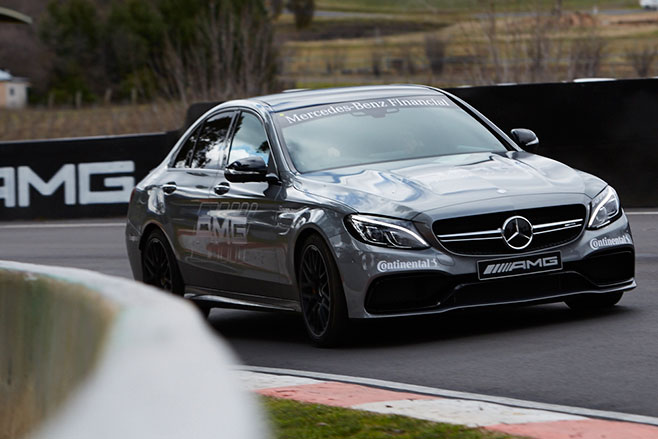
We’re running with the traction control on, but in its most aggressive Race mode. It’s clearly limiting punch as the rear fights for traction for the run up the mountain. But it’s clean in its action, quickly unleashing those full 700Nm as things have straightened up.
Pitching hard into the tight left-hander at The Cutting takes extra concentration as the light steering of the C63 quickly points the nose towards the apex.
Then it’s the final crest of the mountain before flowing the C through the string of left-handers that characterise Mount Panorama’s peak.
It’s quicker than any four-door deserves to be, and impressively agile – something that comes into play through the steep descent through The Esses and the Dipper.
The 19-inch tyres protest regularly with a distinctive high-pitched squeal. But for road-going hoops they’re standing up impressively to the punishment.
Fire in to those tighter bends too quickly and the nose will understeer slightly. But there’s loads of grip before that. Similarly, if you’re too eager on the accelerator out of the somewhere like The Chase it can test the traction at the nose.
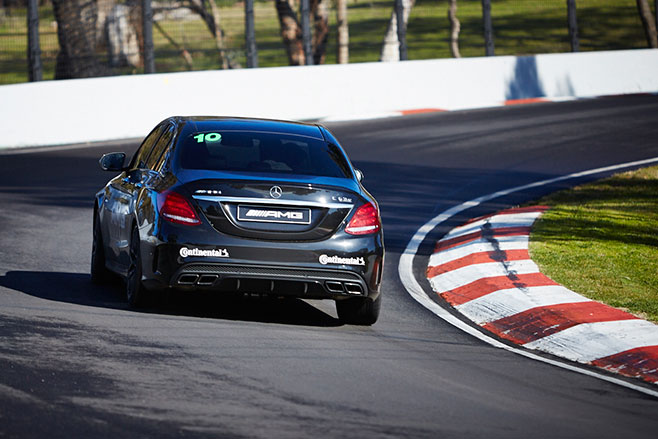
The rear is surprisingly well tied down, albeit ready to wag and wheelspin without electronic assistance. There’s no shortage of grunt, something the throaty sedan relishes along Bathurst’s many long stretches.
And while you can feel the weight with some leaning on quick direction changes – there’s 1655kg to hurl around – the C63 S never feels flustered. It’s slick and composed – and impressively quick.
Some more weight to the steering – particularly through fast corners – would add to the already high levels of composure, but it’s minor stuff for what is a hugely competent and fast four-door.
Oh, and regular access to Mount Panorama.
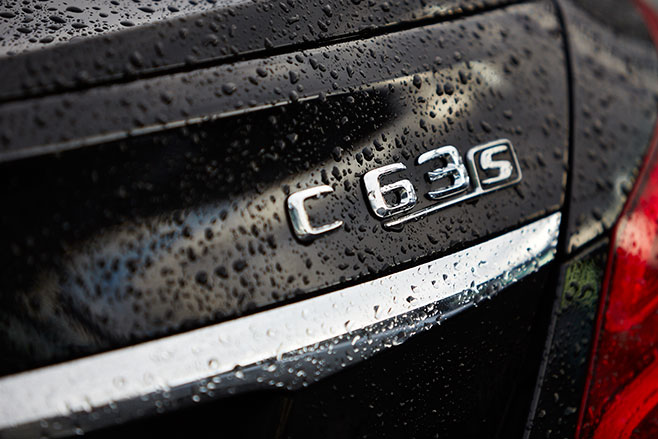
SPECS Model: Mercedes-AMG C63 S Engine: 3982cc V8 (90°), dohc, 32v, twin turbo Max power: 375kW @ 5500rpm Max torque: 700Nm @ 1750-4500rpm Transmission: 7-speed dual-clutch automatic Weight: 1655kg 0-100km/h: 4.0sec (claimed) Economy: 8.6L/100km Price: $154,900 On sale: Now
THE fastest road car Mercedes has ever produced and Australia’s fastest race track. But is the Mercedes AMG GT S up to the 6.2km challenge?
WHAT IS IT? The Mercedes AMG GT S is the new hero car for Benz, introducing the new 4.0-litre twin-turbo V8 to the AMG lineup.
WHY WE’RE TESTING IT Wouldn’t you? We’ve driven the Mercedes AMG GT S before – but not like this. For the Australian launch Mercedes shut down the Mount Panorama circuit for a week and invited Wheels along to join in on the fun.
MAIN RIVALS Porsche 911 GTS, Audi R8 V10, Aston Martin V12 Vantage S, Ferrari California T
THE WHEELS VERDICT The most fun we’ve had in a Mercedes-Benz. The GT S feels brilliant – and brilliantly brisk – around what is a hugely challenging track.
PLUS: Brutal torque; fantastic noises; slick dynamics MINUS: Direct steering is quite light
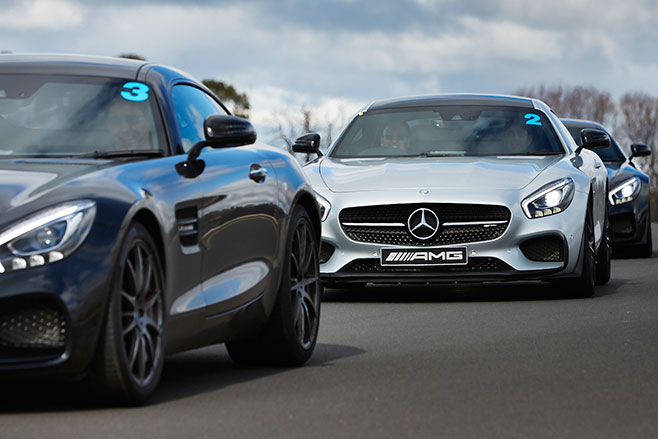
THE WHEELS REVIEW Same 4.0-litre twin-turbo V8 engine as the C63 S AMG, but slightly different tune and details. But instantly the AMG GT feels like a different beast around the challenging confines of the 6.2-kilometre Mount Panorama circuit at Bathurst. More honed, more focused.
Put that down to the fact the two-door Benz hero car is carrying less weight (about 85kg) and has a much lower centre of gravity (thank the dry sump and low-slung coupe body for that).
The GT S also has more rubber to play with, with huge 295-wide 20s at the rear trying to contain that grunt.
It’s 50Nm down on torque compared with the C63 S, but you don’t notice it, and the claimed acceleration to 100km/h is quicker by 0.2 seconds – that’s plenty when the final figure is 3.8 seconds.
There’s a wonderful thump forward once you sink the accelerator. And the AMG GT threatens to break traction over the hump cresting Mountain Straight. It’s approaching 230km/h and wanders delicately as weight temporarily rises off the road-going Continental tyres.
Better still is the GT S is still pulling hard. That’s the beauty of Bathurst – being able to sink the foot at 200km/h-plus and not have to worry about flashing lights and a lecture.
But you do have to worry about the walls. Big time. It’s amazing how the seemingly never-ending vertical strips of concrete either side can focus the attention. Corners rush up quickly, too.
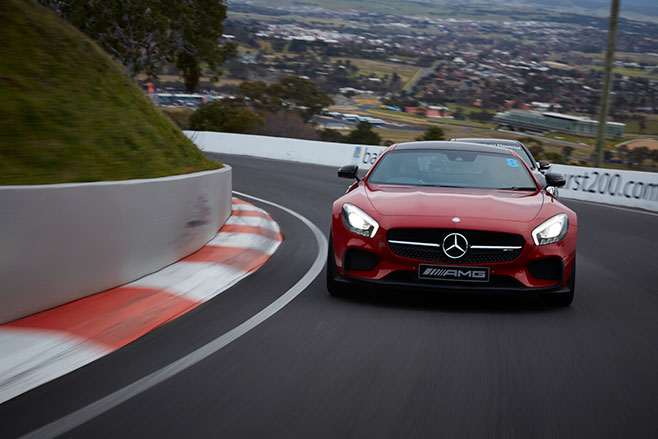
Steering is super direct for the GT S, something you want to get right pitching into the deceptively fast right-hander that begins the big climb up the mountain.
Again, having that 650Nm surge to propel you faster towards the tightening part of Australia’s fastest race track is a bonus. The noise ain’t bad, either; a mix of high tech thrust with old school V8 rumble. The crack on full-throttle up-shifts, too, is a superb aural accompaniment.
It’s a decent dab of the carbon ceramic brakes for the kink before The Cutting, too. Then it’s pitch in hard and coax the nose around. Too fast and the GT S will understeer. But its near perfect weight distribution and long wheelbase rewards getting the balance right.
On exit, too, those big rear tyres hunker down nicely. Peering over the long nose gives a great indication of which way you’re pointing, as does the superb seat-of-your-pants feel of the nicely curved seats and snug yet broad cabin.
The V8 will win any horsepower argument with the tyres out of slower bends, though. It’s only electronics that are keeping things sane. While the stability control is sometimes too eager to contain the fun, on my brief few laps it’s not something I’m complaining about. Besides, its activation is smooth and well managed, as though it’s gently peeled your foot an inch or two off the accelerator.
It’s over the fast, flowing top of the mountain where the poise of the GT S most comes into play. There’s minimal body movement and a surety that reinforces as you pitch hard into the succession of left-handers.
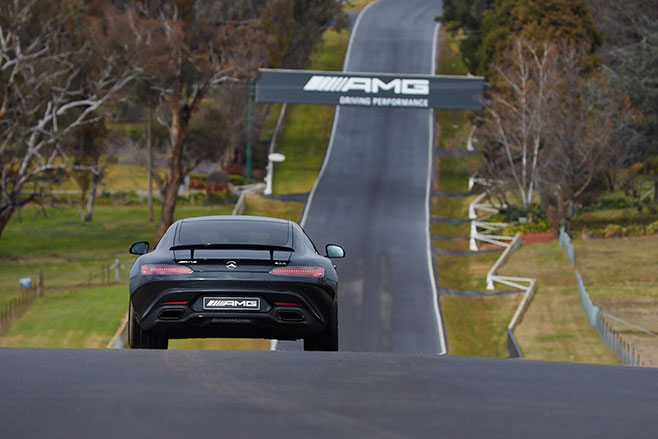
Even with the car lightening before pitching left into McPhillamy Park the GT S is beautifully settled – and quick. Gently dial on some lock and it settles in to a fast, flowing bend that gives you confidence to gently unleash that V8.
Those big, powerful brakes don’t have the race car firmness to the pedal, but there’s a reassurance with the way they wash off speed. And there’s never a hint of fade.
It adds to the confidence down the mountain. The left hander into The Dipper reinforces that low centre of gravity and ensures the Benz is ready to blast through the next brief straight-ish section.
Then it’s on to Conrod Straight, where the AMG really gets a chance to open up. Hearing it pop through the gears is a lovely sensation and by the bottom of the first dip it’s nudging 240km/h. That it’s showing no signs of slowing is a reminder of the massive reserves that track-ready engine has.
Even better is the aggressiveness of the seven-speed auto once you’re hard on the brakes. It blips the throttle early and ensures it’s ready for the next application of the throttle. There’s also fantastic stability as it dives under brakes.
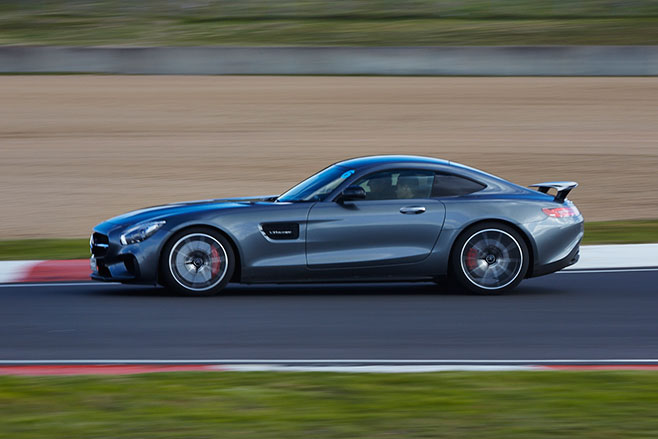
Jumping shot-gun for a few laps with five-time 500cc Motorcycle champion Mick Doohan reinforced the ability of the GT S. He’s raced bikes around here (something he says he’d never do again) so knows a thing or two about pushing on.
It also gave me a better chance to glance at the speedo – 183km/h at Skyline and 272km/h before braking for a cautious approach to The Chase.
It’s a mighty machine and one that relishes in the challenges of long straights and fast, flowing bends.
That the GT3 version will be some 20 seconds quicker around Mount Panorama is eye opening.
Yes please.
SPECS Model: Mercedes-AMG GT S Engine: 3982cc V8 (90°), dohc, 32v, twin-turbo Max power: 375kW @ 6250rpm Max torque: 650Nm @ 1750-4750rpm Transmission: 7-speed dual-clutch Kerb weight: 1570kg 0-100km/h: 3.8sec (claimed) Economy: 9.4L/100km Price: $295,000 On sale: Now
