
Subaru has confirmed that its oddly-named kiddie-hauler is set to do battle with the VW Golf R Wagon, as the sub-$60K sports wagons promise plenty of fun for the school run.
THE Subaru Levorg has been confirmed for Australian showrooms for 2016 setting up a battle of the hot wagons by joining the VW Golf R Wagon Down Under. As predicted back in the March 2015 issue of Wheels, both will cost less than $60,000 and offer scintillating performance to go with the extra luggage space.
Despite the odd name, which Subaru Oz has confirmed to Wheels will remain for the Aussie market, the Levorg ain’t a Star Trek villain. It’s effectively a Subaru WRX-powered successor to the Liberty GT wagon, though the front and rear-end styling has been amped to separate it from the current mum-and-dad Liberty sedan, even if it misses out on the WRX’s wheelarch blisters.
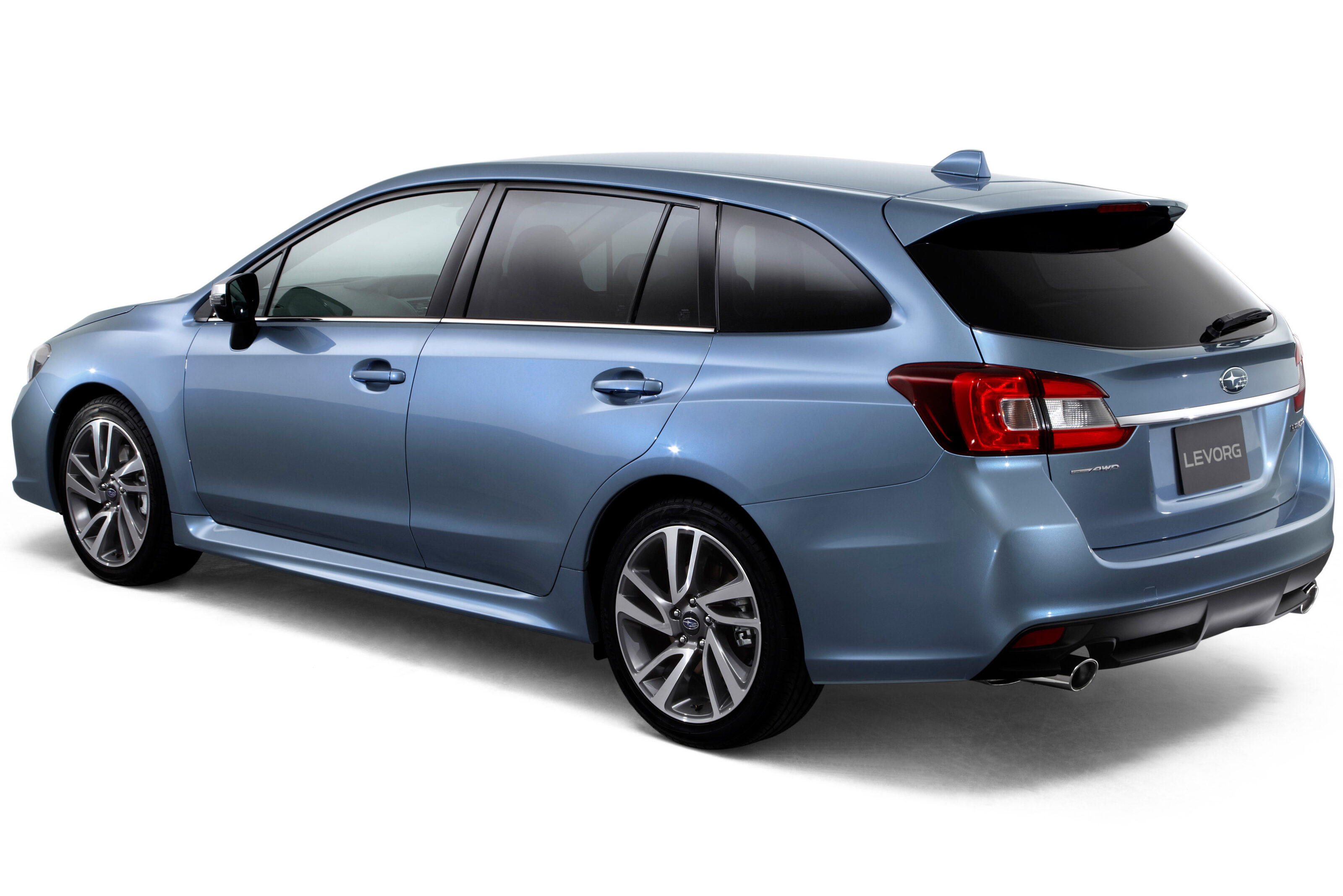
While local spec is yet to be confirmed, this grunty wagon, which sits on the same platform as the Impreza and Liberty duo, runs a 211kW/400Nm version of the WRX’s 2.0-litre four in its most potent Japanese-market guise, making it good for a mid-five-second 0-100km/h sprint. Yet the Levorg is expected to be updated between now and the time it arrives in Australian showrooms in early 2017, which may include refreshed engines as well cosmetic tweaks.
Snapping at its heels will be the VW Golf R Wagon, which is due here in October with a $58K estimated price and a 0-100km/h claim of 5.1sec. The hot Golf wagon is powered by the EA888 206kW/380Nm 1984cc turbocharged four-cylinder with a six-speed dual-clutch transmission and a Haldex all-wheel drive. VW Oz has ruled out a manual version, while the Levorg will take a leaf out of the WRX’s book at be offered exclusively with a CVT.
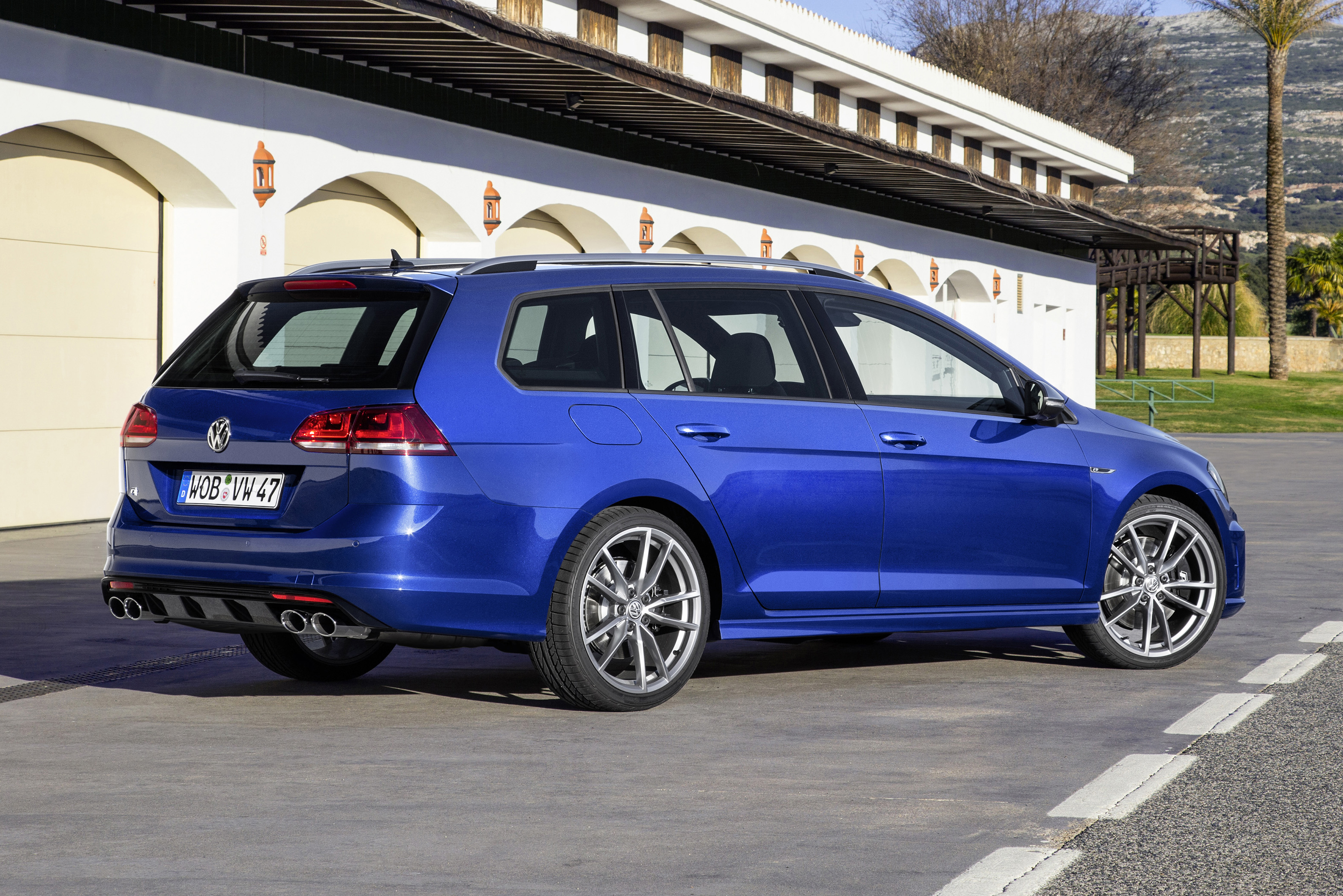
The lack of a Subaru Liberty wagon has the local arm of Subaru expecting the Levorg to entice showroom shoppers who want something more dynamic than the Subaru Outback wagon. So far in 2015, the wagon has outsold the sedan by a factor of three-to-one.
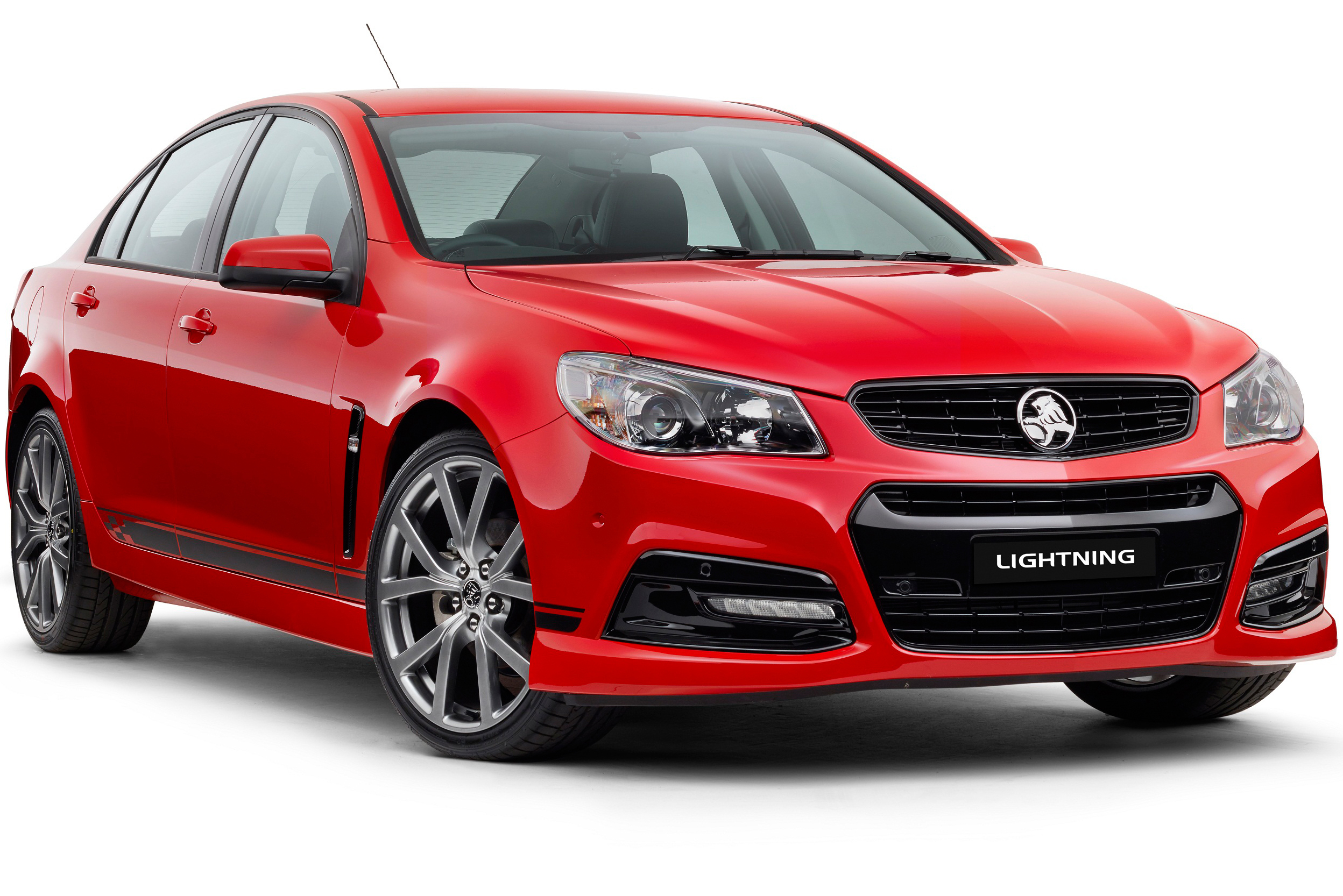
The two heavy-hitting kiddie haulers won’t have the wild wagon market to themselves. They’ll be up against the cheaper, almost as fast and roomier $55K Holden Commodore SS V Sportwagon, which has the muscle to cover 0-100km/h – complete with baby seat – in a Wheels-tested 5.7sec. On top of this, expect the current VF range is expected to be given a serious update before the close of 2015, so the Holden wagon could be even faster that that once the VW and Subaru arrive in showrooms.
Sign up here to receive the latest round-up of Wheels news, reviews and video highlights straight to your inbox each week.
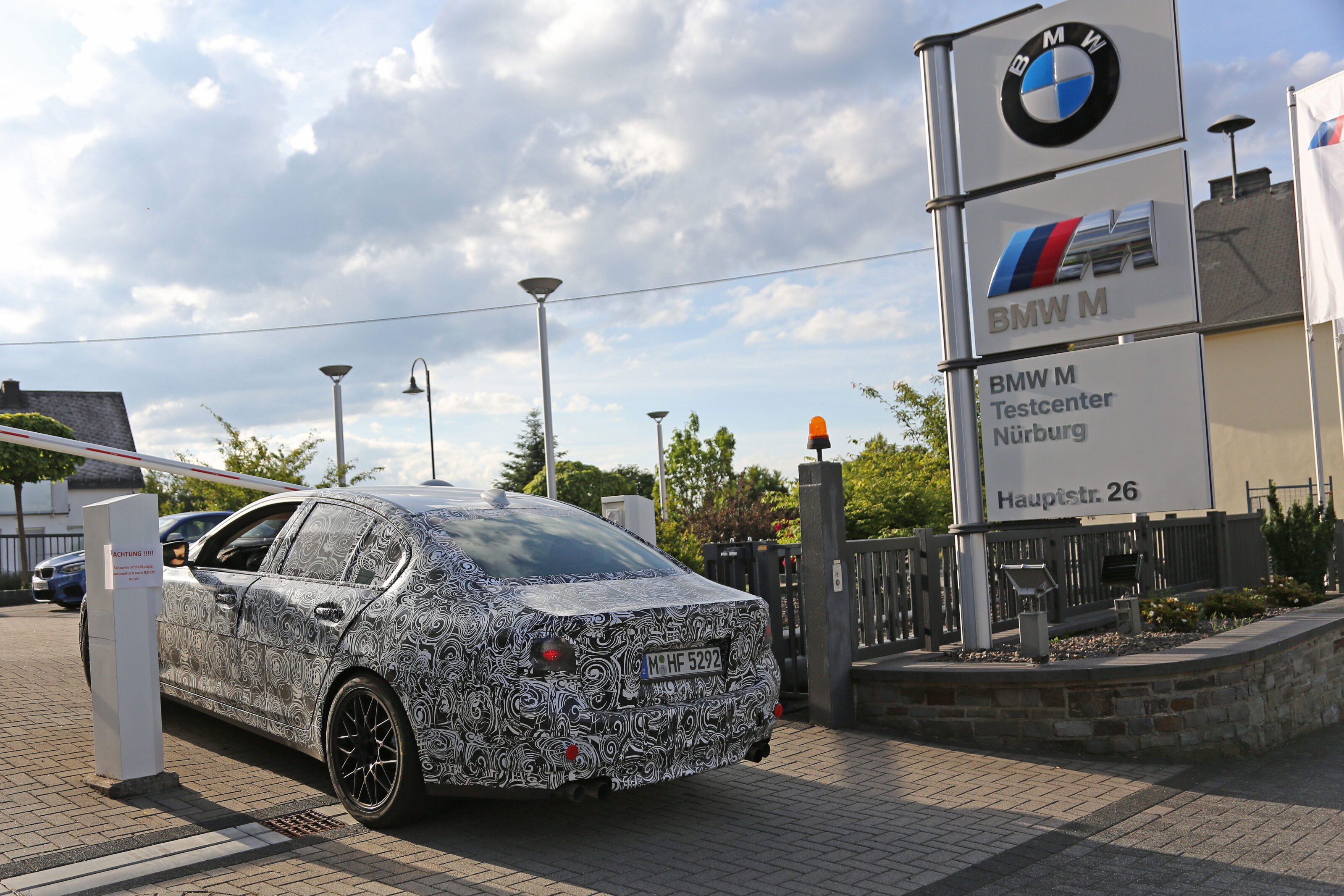
THE NEXT-GEN BMW M5 is already out on the prowl in prototype form, with nearly 480kW and all-wheel drive rumoured to be part of the completely redesigned Bavarian ‘bahn-storming sedan’s armoury.
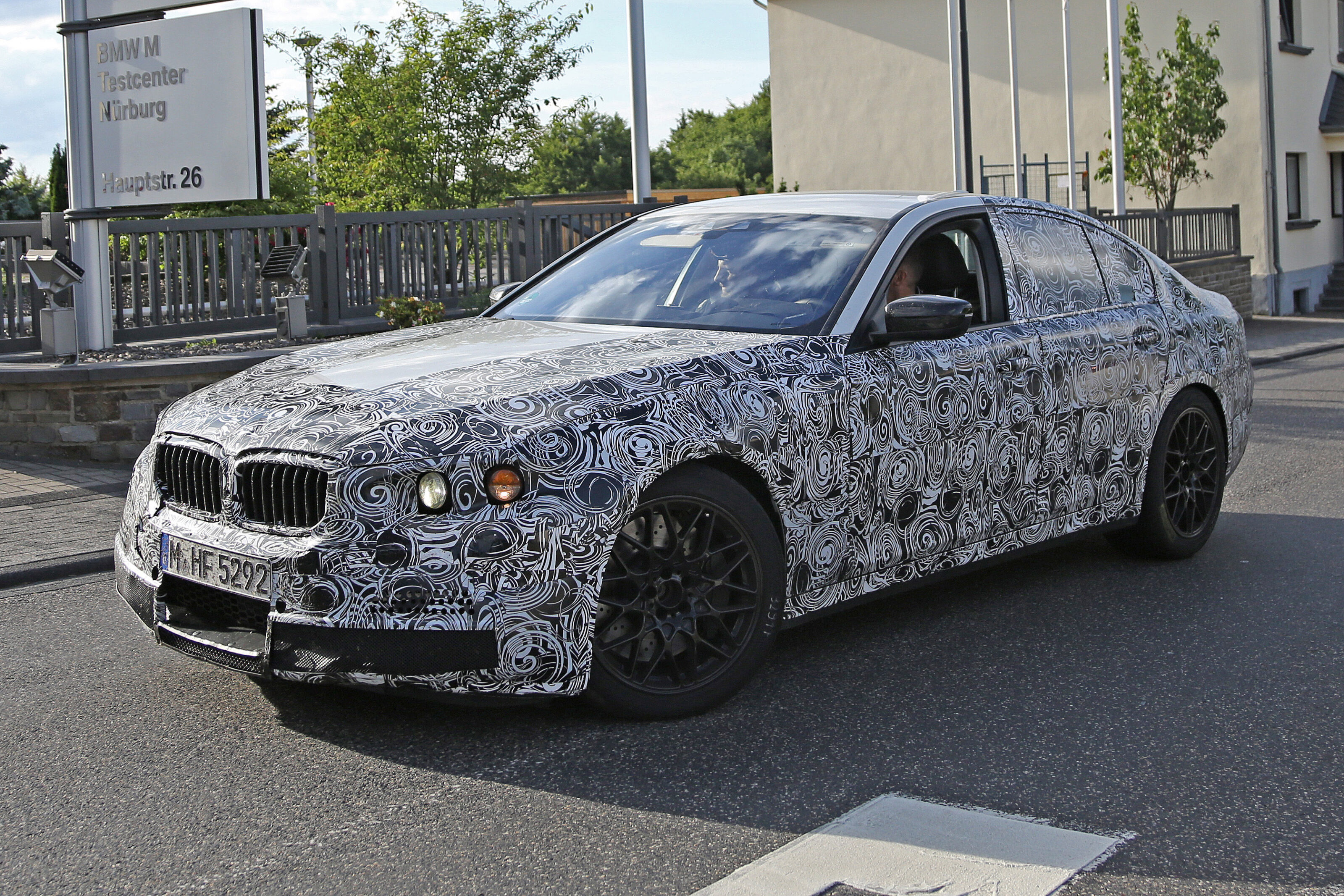
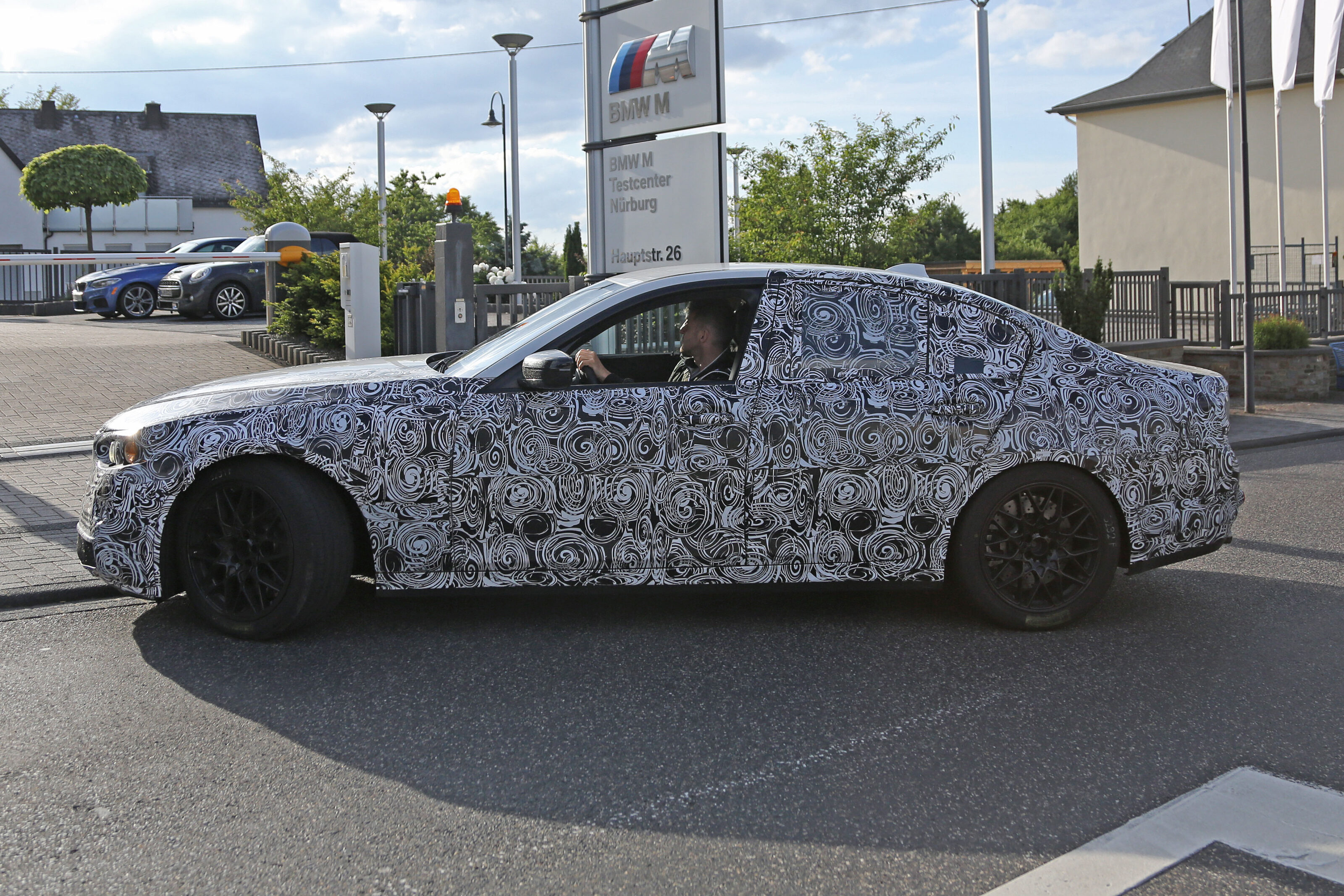
The best guide to how the seventh-generation 5 Series sedan will look like is by taking a gander at the G11/12 BMW 7 Series luxo barge that surfaced in early June, as both adopt BMW’s latest design language.
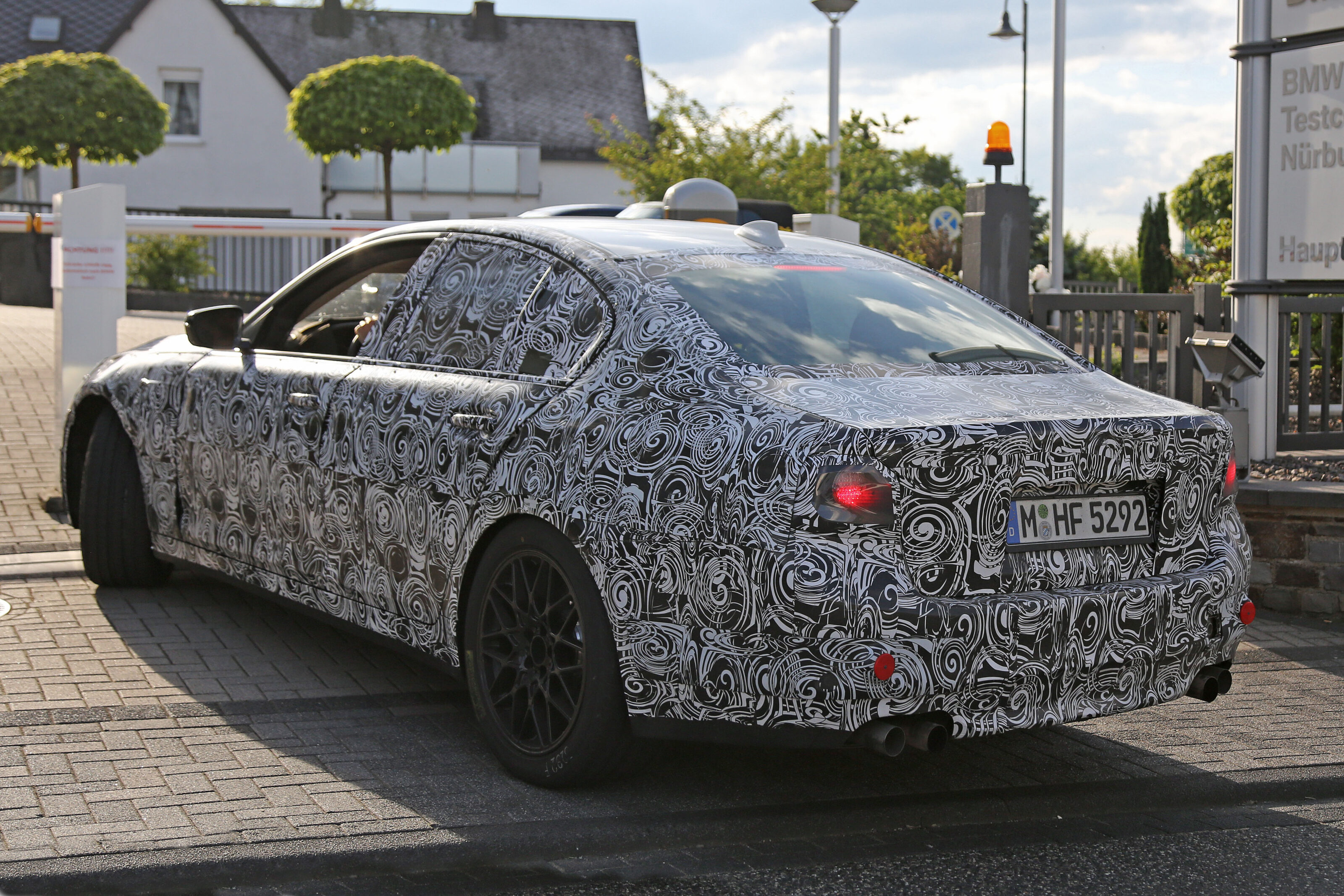
The performance will also extend to the recetly updated BMW M6 range, which uses the same platform and mechanicals as the M5 but in a coupe, convertible and ‘Gran Coupe‘ four-door body styles.
If the G80 M5 does offer AWD, it will most probably be based on the rear-drive biased xDrive system serving the X5M/X6M, though it is hard to believe BMW wouldn’t prioritise RWD for one of its most enduring performance icons.
With the regular G30 5 Series range expected to debut sometime later next year (the September 2016 Paris show is a sound bet), the new M5’s exact launch timing is anybody’s guess at this stage.
The current F20 BMW M5 kicks off from $229,930, so expect its successor to start from similar money.
A few decades ago, when fluffy dice was the coolest technology going around, most people couldn’t have imagined half the technologies available in today’s cars – and let me tell you, I was a kid with a vivid imagination.
I still remember the earliest car I ever drove. It had a bench seat in the front covered in green leather, the gear stick sat on the side of the steering wheel and the radio had a thing they called a dial. It was a ‘tasteful’ khaki colour (or poo green), the roof was a white canvas, a lemonade-can was used to connect the exhaust pipe to the muffler and the bonnet was starting to rust on the left. It wasn’t your stereotypically beautiful car, but it still gave off a kind of charm. It was simple, tough, durable and it didn’t give in to any fancy-pants new technology. Years later, I still fondly reminisce about the years we had together.
The car I speak of was my grandfather’s Holden HQ, and I was about six when he sold it. Okay, so I didn’t actually drive it per se; I just got to steer it… okay, okay, I was holding the steering wheel… while the engine was off! In fact, since we’re being honest, my memories are far better served sitting in the middle of the bench seat eating Minties.
The memory of the Old Bomb came back to me recently while I was driving around Melbourne in a Volvo XC60. While the navigation told me to turn right, Adele poured her little heart out through my phone’s Bluetooth and the engine halted to a quiet stop thanks to the Volvo’s start/stop technology, I had a Nina Proudman-like flashback (Offspring fans, you with me?) that was so realistic, I could have sworn I saw the old HQ drive past.
I wondered how the HQ would feel if it were still alive today; would it be comparing itself to the newer upgrades, or would it own the vintage space.
When I think of the HQ and its home-made exhaust, I realise how far we’ve come in the car-techno stakes. Idle stop, adaptive cruise control, automatic high-beams, in-car internet, navigation systems… the list goes on and on.
Auto-technology appeared on my radar a few years ago when I borrowed a Jeep Grand Cherokee from a friend to drive from Melbourne to Adelaide. A 16-hour round trip is plenty of time to get acquainted with a car and its features. On this occasion, it was the adaptive cruise control (ACC) that really got my attention. For those who have never driven a car with ACC, it’s similar to normal cruise control only it adapts to the speed of the car in front of you. Basically, you push a button, control the wheel and let the car drive itself (almost). It was somewhat of a life-saver on the eight-hour drive but when it came to stopping at traffic lights, I got a daunting insight into the downsides of certain technologies. Two hours without peddle-use or having to worry about speed meant my brain had to jump into gear and tell my foot to press the brake to stop at lights. Cavemen say what?
Modern cars, these days, have more ‘gadgets’ than James Bond and it’s causing some inner conflict for me. Yeah, 007 always wins and he’s driven some pretty cool cars, even ones that can fly (or was that the Batmobile?), but for those who don’t spend their days fighting crime and turning damsels in distress into sexy sidekick heroes in bikinis, I’m not convinced the growing reliance on automotive technologies are a positive thing for the industry – or at least our driving skills. They leave us susceptible to a reliance on outside influences, as well as potentially fatal faults.
Sure, buttons on a steering wheel sound like a luxury, but if these technologies start taking away the skills and concentration of drivers, are we just leaving ourselves open to complacency? In 20-odd years of owning the HQ, my grandpa had one minor ding… with a shopping trolley in a supermarket car park! No adaptive cruise control, no reverse camera, no blind spot beep-beep-beepers. No complacency. Just skilful, attention-paying driving.
That’s not to say these technologies don’t have a place. I’m pro-advancement and know first-hand driving a car like the Volvo XC60 is much more comfortable than the Old Bomb. I think the new features and technologies are a good thing and certainly a step toward making our roads a safer place; who knows, maybe one day we will even be able to make an AMC Matador coupe fly (007 could make cars fly). But as for whether they make better drivers, I’m yet to see the proof.
Have you tumbled into an inky whirlpool of Goodwood Festival of Speed videos yet?
If not, we’re sorry, because if you’re at work, this video might affect your productivity.
And even if you have already put in a solid YouTube session of Goodwood “research” following the June 27-28 event, this one you mightn’t have seen yet.
It’s our favourite Kiwi drifter Mad Mike, doing his thang, in his off-its-head 400kW “26B” quad-rotor FD RX-7.
In this video listen to it spike 11,000rpm (limiter, says Mad Mike, is set at 10,750rpm) as it turns 265-section rear tyres into ghosts.
But the difference is, the camera isn’t wobbling about on a bonnet. Attached to his helmet it’s seen as close as you can get to the lens of Mad Mike himself.
Even around Goodwood’s intimidating walls, Mad Mike is still tugging the handbrake and slewing the thing sideways. Fearless, he is.
It’s our kind of video. And the best POV on the internet. (With pants.)
Enjoy.
And if this hasn’t triggered the aforementioned inky whirlpool, perhaps our Top Five Goodwood Runs will.
Get your free weekly report from the world of fast cars – subscribe to the MOTOR newsletter!
This is one garage you won’t be able to replicate on Forza Motorsport.
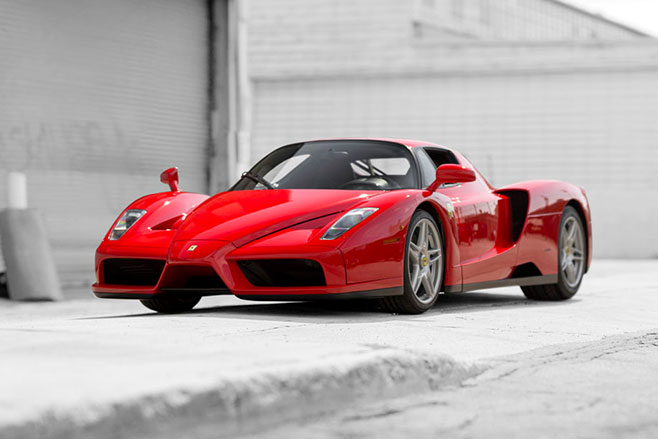
When RM Sotheby’s bring the ‘Pinnacle Portfolio’ to its Monterey sale on August 13 in California, punters will have the opportunity to take home legends that include the first ever built Bugatti Veyron or the last ever built Ferrari Enzo, known as the Pope’s Enzo.
Said to become the most valuable car collection ‘ever presented at auction’, this 30-strong fleet is poised to pass the previous record sale for a private fleet of cars which stands at US$53.9m, or $71.9m when converted to Aussie peso.
Sotheby’s is yet to reveal all 30 cars, however the 23 already known proves the anonymous American businessman who gathered the fleet has meticulous taste.
Leading up to the event we’ve picked out a few going lots that might explain any bank heists between now and August…
THE POPE’S ENZO
MCLAREN F1 LM

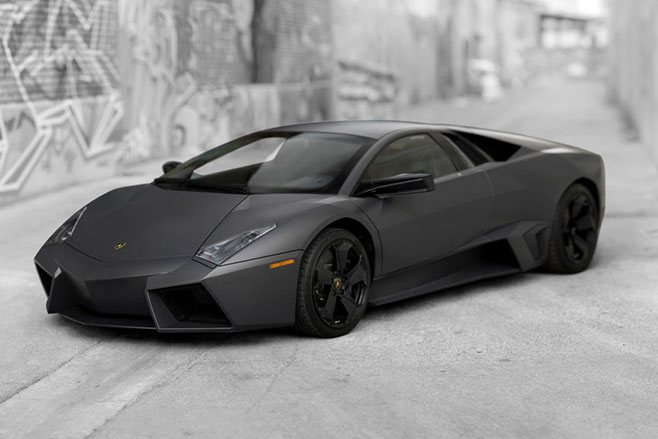
LAMBORGHINI REVENTÓN
SALEEN S7 TWIN TURBO

MASERATI MC12

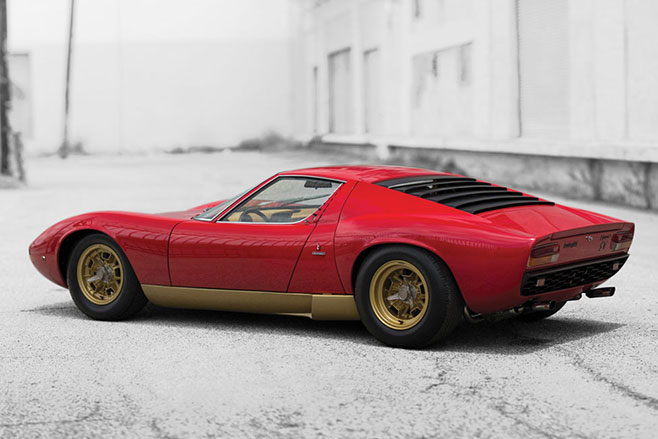
LAMBORGHINI MIURA P400 SV
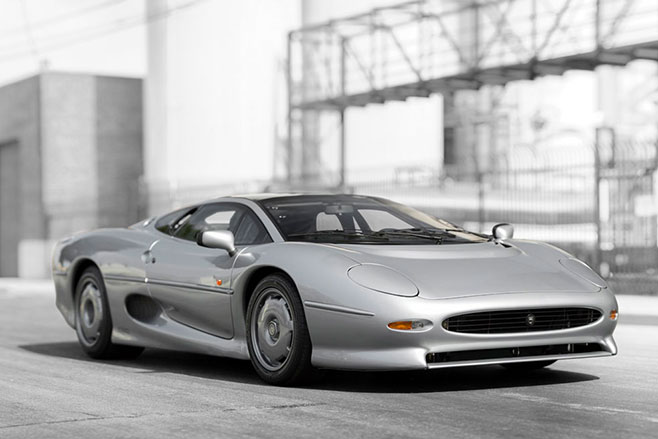
JAGUAR XJ220
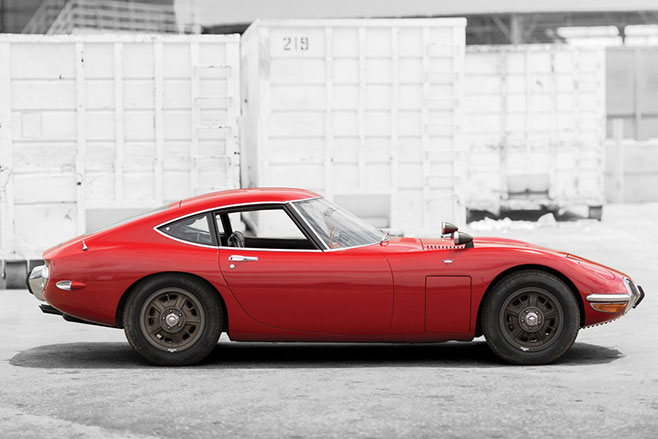
TOYOTA 2000GT
There are also a slew of Ferrari classics like the 288 GTO, F50, F40 LM, 250 LM, 250 GT LWB that display the collection’s penchant for the Prancing Horse, further complemented by other classics like a Porsche 959 and 356 Speedster, Mercedes-Benz 300 SL Gullwing and McLaren SLR, and finally a Koenigsegg CCXR.
Check out the click through gallery up top for more photos.
Pictures: Patrick Enzen for RM Sotheby’s
New Managing Director Mark Bernhard has begun his position as the boss of Holden and the first Australian to run the company in 25 years.
MARK Bernhard has taken over the top job at Holden after former MD Jerry Dorizas left suddenly in October last year only eight months into the job. With Dorizas’ exit, Jeff Rolfs took up a caretaker position before Bernhard, who joined Holden in 1986, was appointed to the role which he commenced last week.
Holden faces similar challengers to cross-town rival Ford, which also has a recenlty installed MD, as both companies end local manufacturing to become sales companies with fully-imported line-ups. It’s a critical time in the company’s history as it looks for a cohesive brand identity beyond its catchcry of the 1980s of ‘Australia’s Own’.
The company has already confirmed that the Holden Commodore nameplate will be used on an imported model once local production ceases in 2017, and that its products will continue to be tuned at its Lang Lang, Victoria, proving ground.
Bernhard, who completed a Bachelor of Business (accounting) at Monash University in Victoria and has worked for General Motors in Zurich, Shanghai and Singapore, has ambitiously committed to Holden to reclaiming the top spot on local sales sheets, something it last achieved in 2002. Currently, it sits in third position behind a strong Mazda and ahead of a fast-closing Hyundai, with its 8.9% market share down on this time last year, when it commanded a 10.1% stake.
There’s also daylight between market leader Toyota and every other maker, with its sales more than double that of Holden’s so far this year (101,714 plays 51,737 at the end of June).
“Re-establishing Holden as Australia’s favourite car brand means a total focus on our customers, redefining the Holden brand and launching 24 world-class vehicles by 2020,” read a statement from the new Holden chief. “We are taking the long view; this is not going to happen overnight. It is going to be challenging and we have plenty of hard work ahead but I’m energised by our potential.”
Sign up here to receive the latest round-up of Wheels news, reviews and video highlights straight to your inbox each week.
The Holden Racing Team is paying tribute to one of Australia’s greatest ever racing drivers with a retro livery for the upcoming Townsville round.
As part of HRT’s 25th Anniversary celebrations, both Garth Tander and James Courtney’s VF Commodores will wear a livery inspired by that of the 1997 VS Commodore, the car driven by Peter Brock in his last full year of V8 Supercars competition.
Even at 52 years of age, Brock remained a force to be reckoned with, taking his final round win at Barbagello Raceway and finishing sixth in the championship.
The distinctive livery is the work of Peter Hughes, who also designed the original livery. “HRT’s 1997 livery is one of my all-time favourites,” he says. “It was the first HRT Commodore I designed and is sentimental to me being Brock’s final year.
The Townsville 400 takes place this weekend, July 10-12.
Get your free weekly report from the world of fast cars – subscribe to the MOTOR newsletter!
I have always been a car guy and I’ve always loved technology, so when the Tesla Model S came out I just had to have one. I saw it as the first fully-electric car without compromises. Unlike most of the golf carts out there that masqueraded as road-worthy, the Model S’s size, range, and performance were all at acceptable levels.
So, I bought one of the first 20 cars to be sold in Switzerland. It was, in retrospect, an insanely risky decision. At the time, in 2013, there were almost no charging stations in Europe, the news was full of stories of battery fires, and no-one knew what the car would be like after a couple of years. If it was anything like my iPhone, I wouldn’t reach the end of my driveway before the batteries died.
One of the perks of living in Switzerland, I belong to a group of enthusiasts who meet early on weekend mornings for drives into the mountains. I showed them the Model S and they nodded politely, but I think they saw it as a curiosity and secretly rued the absence of a big, throaty engine.
Yet today, that has all changed. Porsche, Cadillac, and Ford are all developing fully-electric vehicles to compete with the Model S. And, many major manufacturers showcased prototypes or plans for fully-electric or hybrid models at the 2015 Geneva Motor Show. If that wasn’t enough, tech giants including Apple, Samsung, and Google have all announced electric-vehicle projects.
Does this spell the end of the fossil-fuelled car? I think the answer is yes. Yet, the real answer is ‘sooner than anticipated’. After all, there are solid scientific reasons that fossil fuels are called ‘non-renewable’. The reason for the change, however, is something much more practical: convenience.
My argument is electric cars are simply more convenient than gasoline cars, and will only become more so. My electric car is always full. This is because I plug it in every night. No engine means mountains of storage space. I almost never have to take it to the garage, because upgrades and fixes are downloaded overnight. The other day when I started the car, I noticed that lines in the rear camera had appeared to help me reverse.
We are not at the tipping point just yet. The battery range needs to be improved so that motorists (an antiquated term) can travel long distances without recharging – I think the magic number is 1000km on a single charge. We still have some way to go before we reach that number.
What about the current car giants, will they be the same companies in the future? I think the answer is probably yes, but not all of them, and the market will be redistributed. Automobile manufacturing is a high fixed-cost business, and not an easy one to enter. Tesla is one of the very few exceptions, and a lot of their success can be put down to timing, luck, and chutzpah. I recently took a tour of their manufacturing facility in Fremont, California (yes, they only have one factory worldwide) and learned that they picked up their factory essentially for nothing. These opportunities are few and far between.
Most of the car companies will survive, albeit in different forms. The basic structure of an automobile will not change that much, unlike the motor. I would worry more about the oil and gas companies whose lifespan, which was already finite, will likely be reduced.
Car nut Michael Wade is a Professor of Innovation and Strategic Information Management at the International Institute for Management Development, Switzerland. Check out www.imd.org for more info.
This article was first published in MOTOR June 2015.
A mild makeover with refinement and multimedia upgrades should keep the ageing Fiat 500 fresh until the next-gen Cinquecento surfaces in 2017
AUSTRALIA may see the 2016 Fiat 500 facelift sooner than expected, with a December or early first-quarter launch likely for the popular Polish-built retro baby.
Unveiled on July 4 in Turin to signify the current Tipo 312 generation sub-B segment supermini’s eighth anniversary, the makeover is the final before an all-new version launches internationally in two years time as the 2018 Fiat 500.
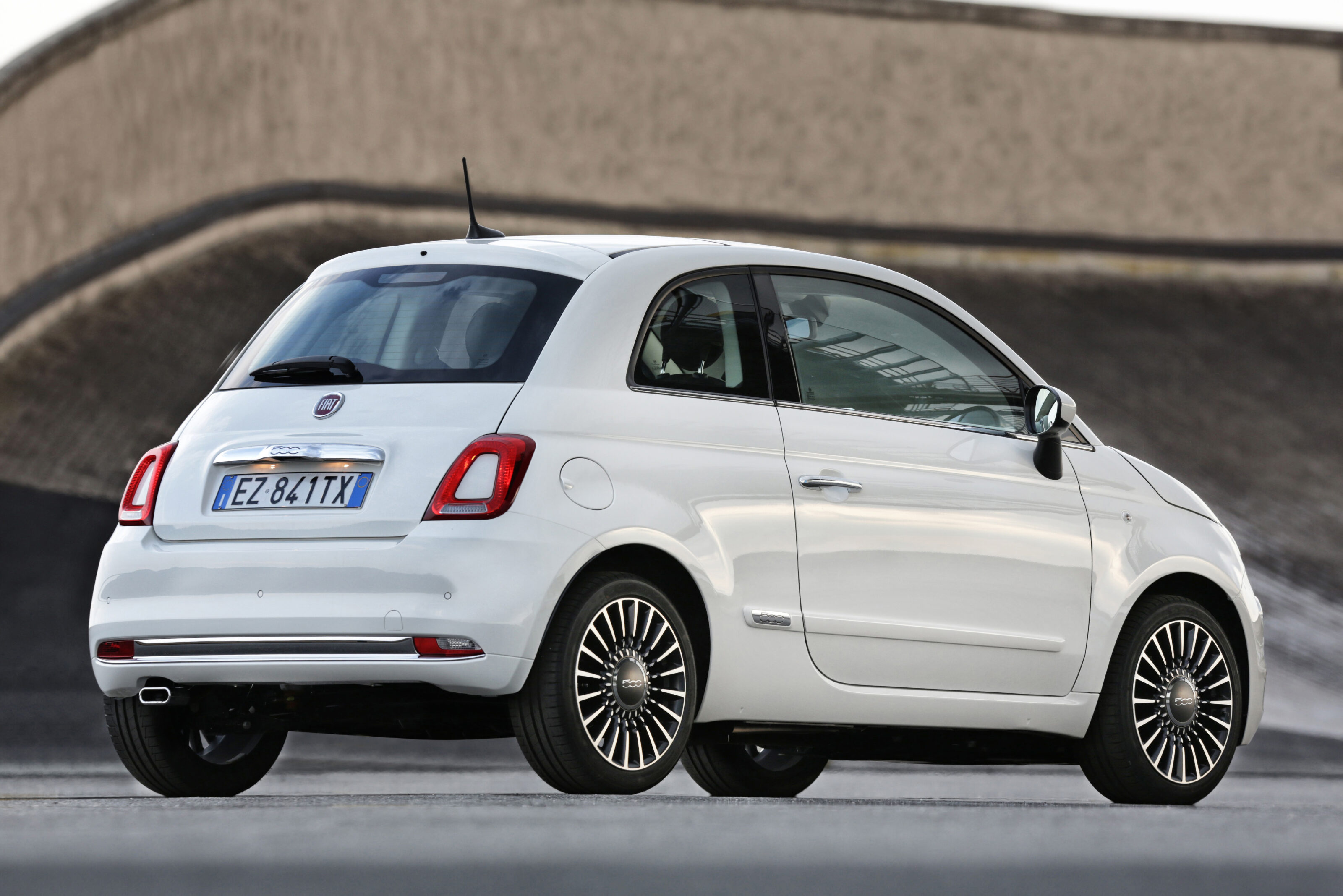
While the differences revealed for both the hatch and convertible are subtle, the Italians claim that some 1800 parts have changed; all are designed to help stave off the threat from a rash newcomers, including the latest Mini range, the Suzuki Celerio and – most importantly for the Australian Micro class where the 500 dominates – the all-new Holden Spark and Kia Picanto that are also due in the first half of 2016.
But don’t strain your eyes too hard attempting to spot the differences between old and new Fiat, since they’re restricted to non-sheetmetal bits such as the headlights (now on a greater slant and featuring daytime running lights), bumpers (brandishing two grilles and even more chrome lipstick up front and relocated reverse and fog light elements out back), tail-light lenses with body-colour centre inserts, and an amended colour palette.
However, if you’re a current Cinquecento driver, you’ll probably be happier with the revised front seats promising improved support more, as well as the more ergonomic window switches, increased storage, better cupholders, relocated 12V socket, and boost in sound-deadening material.
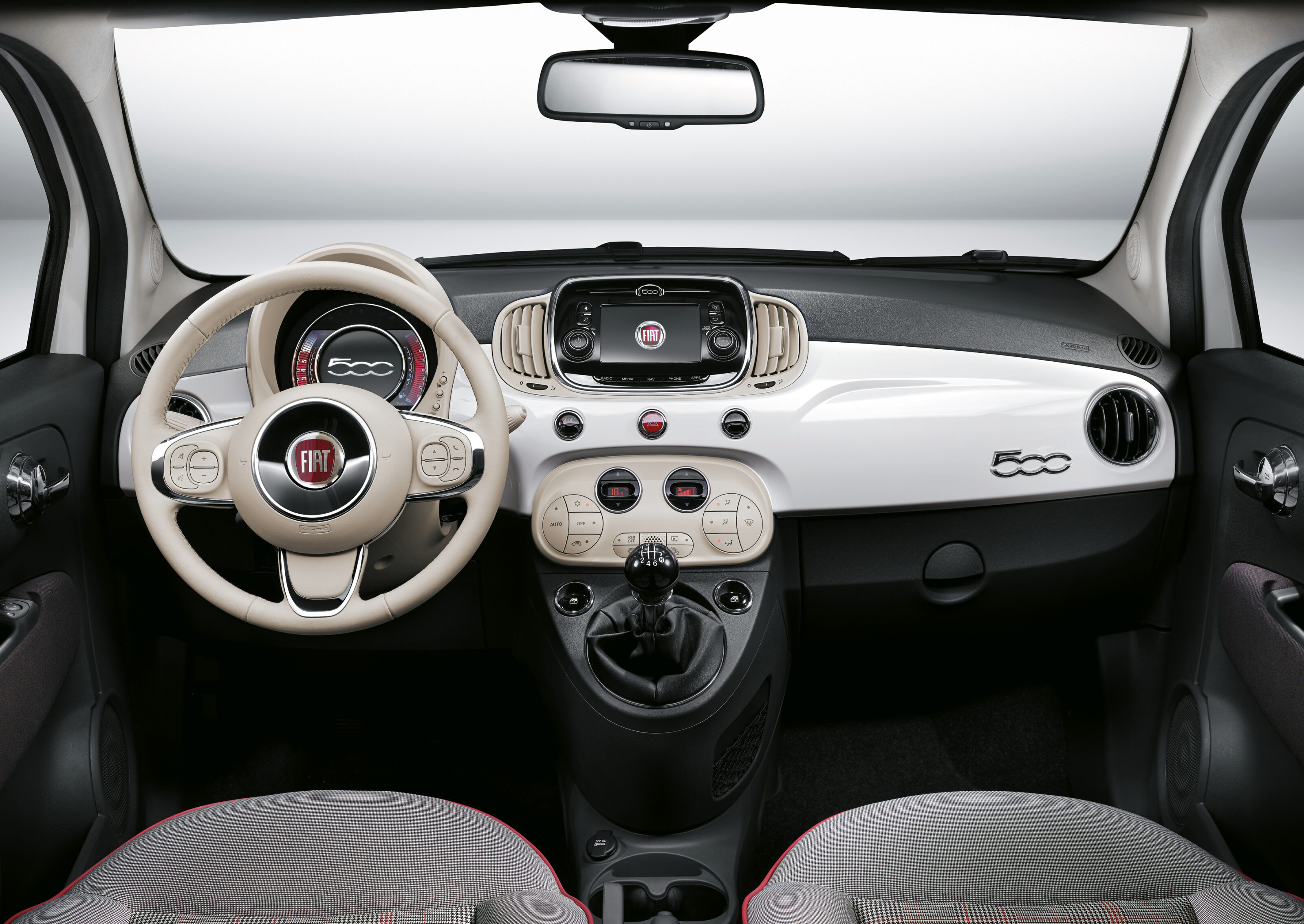
Additionally, the steering wheel adopts more remote control functionality, the dashtop has been redesigned with reshaped air vents to accommodate the fitment of the Uconnect multimedia system serving most other current Fiat Chrysler cars, and (in European spec vehicles), there is now touchscreen capability and new TFT instrumentation with a more comprehensive trip and infotainment data readout offered on up-spec Lounge variants.
Expect to see the same (albeit fettled) array of petrol engine choices powering the existing models for Australia, meaning a pair of four-pot engines (entry 1.2 Pop and 1.4 Sport) and the 0.9-litre TwinAir twin-cylinder firecracker for the Lounge. Final output info has yet to be released for Australia. However there is still no full automatic transmission availability, meaning the Dualogic robotised clutchless manual will suffice as the alternative to a conventional manual gearbox.
A new special 1.2-litre Eco model that can average a significant sub-100g/km carbon dioxide emissions rating will also most probably be overlooked for Australia, along with the revised 1.3-litre MultiJet turbo-diesel options.
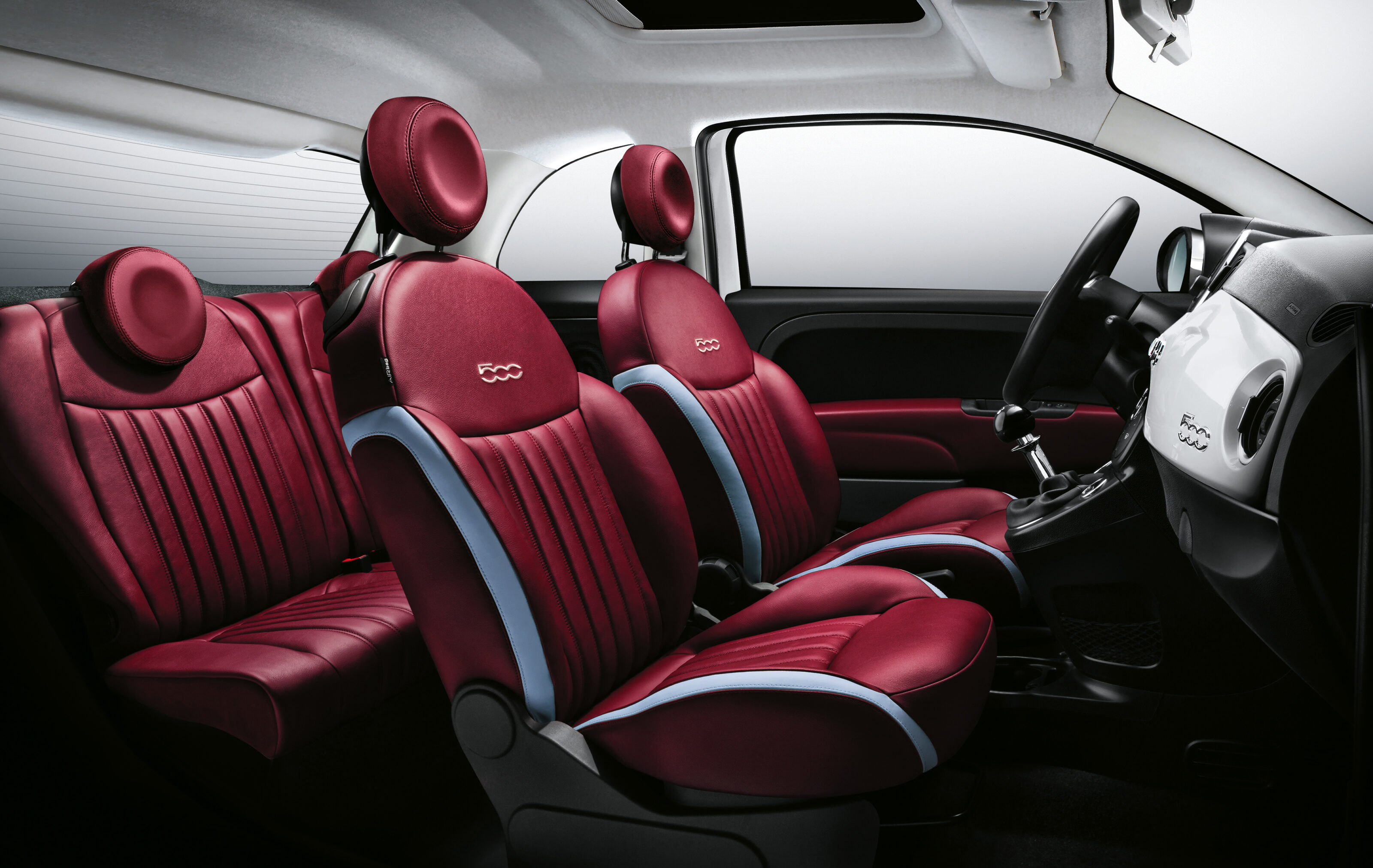
Speaking of which, a step-up in personalisation options should see the facelifted Fiat 500 compete more ably against the recently revamped and expanded Mini range.
More information and final specifications for the MY16 Fiat 500 will be revealed closer to the Australian launch date, so watch this space, retro fans.
Sign up here to receive the latest round-up of Wheels news, reviews and video highlights straight to your inbox each week.
It may sound like a cyborg, but there is no need to be afraid of the Subaru Levorg that is officially heading Down Under by the middle of next year.
The Levorg is essentially a new-generation WRX wagon complete with a 221kW/400Nm 2.0-litre turbocharged four-cylinder engine, although an automatic CVT with paddles is the only choice.
Another drivetrain choice for the Japanese domestic market is a 125kW/250Nm 1.6-litre turbo that we haven’t yet seen in a local Subie. However according to Subaru Australia corporate affairs manager David Rowley, “It’s something in our own research that hasn’t had a lot of appeal among our customer base in Australia.”
The local arm – which recorded third-highest sales worldwide in June, only behind Japan and the US – is actually pitching the Levorg as a “spiritual successor” to the previous-generation Liberty GT turbo that failed to make an appearance with the new model.
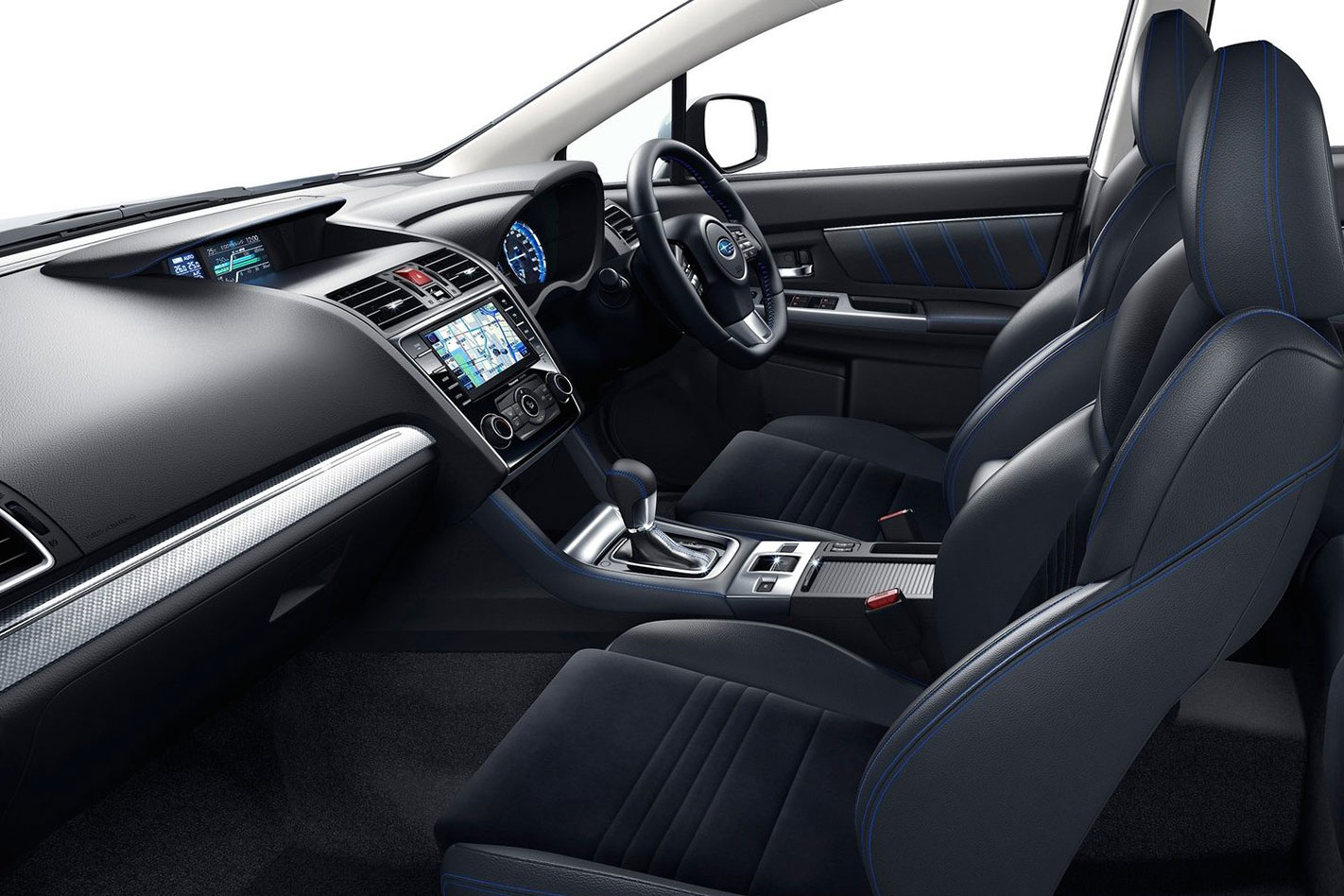
“It will appeal to those fourth generation Liberty GT buyers who have been starved of a logical successor,” commented Subaru Australia managing director Nick Senior. “But we believe it will also attract a much wider audience because of its performance, its versatility, its refinement and its high level of standard equipment.”
“The factory has been extremely supportive in helping us to secure the Levorg for the Australian market,” he added.
Highlighting its in-betweener positioning, the Levorg measures 4690mm long, stretching 276mm further than an Impreza hatch but stopping 85mm short of a new Liberty wagon. It’s also 40mm wider than the smaller of those two Subaru models and 41mm narrower than the larger load-lugger.
Subaru Australia says it has its own internal competitor set, which we imagine includes the 4685mm-long, 350Nm Skoda Octavia RS wagon that retails for $40K – and that’s exactly where we expect the Levorg to sit come the middle of 2016.
Reckon the new Levorg is a bit tame for your tastes? Check out our 10 Wildest Wagons.
