
Iconic British sports car firm TVR is set to return, revealed UK outlet Autocar yesterday.
TVR disappeared almost a decade ago, after Russian entrepreneur Nikolai Smolenski bought the outfit from Peter Wheeler, under whom the brand thrived producing cars like the Griffith, Chimaera, Tuscan and Sagaris.
The brand’s presence in Australia has been limited to a handful of private imports, and normally we wouldn’t dedicate too much time and effort to its re-emergence.
However, there’s one crucial bit of information that makes us potentially very excited about these new TVRs – the engineering has been outsourced to Gordon Murray Design.
As most enthusiasts know, Gordon Murray was the man behind the McLaren F1 supercar, which we named the greatest performance car of all time.
He also has the most successful F1 car of all time (McLaren MP4/4), most powerful F1 car of all time (Brabham BT55) and arguably the most innovative F1 car of all time (Brabham BT46 ‘fan car’) on his resume.
Recently, Murray has been working on revolutionising the way cars are made with his ‘iStream’ process, and TVR’s yet-to-be-named new model will be the first production car to be built using this process.
Abandoning conventional construction, iStream builds cars by using a spaceframe of large diameter, thin-walled steel tubing, connected by composite panels.
The resulting body is meant to be extremely light, extremely stiff and much cheaper to build than established methods, with this new TVR aiming for a 1100kg kerb weight.
Providing ample performance will be a Cosworth-developed V8 producing around 330kW, for a sub-4sec 0-100km/h time.
Far more exciting than the bald numbers, however, is the prospect of Murray sinking his teeth into another performance car project.
While not all his ideas work, he has far more hits than misses and his belief that pleasing the driver is the ultimate goal with any sports car means this new V8 rear-drive coupe could have us booking flights to Blighty when it’s released in 2017.
For more details on the project visit Autocar’s original story here.
Get your free weekly report from the world of fast cars – subscribe to the MOTOR newsletter!
Zero to 100km/h in 2.6 seconds is a good statistic for the Quantum GP700, because it is an Aussie hypercar that has come fast from nowhere.
In a shed in Gisborne, north-east of Melbourne, father and son team of Jeff and Andrew David have been creating a brisk and bespoke sports car in the vein of the Ariel Atom and KTM X-Bow.
The Quantum GP700 seems like more than just a kit car, though. It has been in development for seven years with some bright engineering minds creating the 700kg, 700hp two seater.
A Honda K-series four-cylinder block has been stroked to 2.7 litres and two Swedish Rotec superchargers attached, working sequentially to provide a maximum 26psi of boost.
Power of 522kW comes online at 7800rpm and 654Nm at 6500rpm, which is sent to the rear wheels via a paddles-operated single clutch gearbox by Hollinger.
Beyond the ton, 160km/h is claimed to fly by after 5.0sec on the way to a 320km/h top speed.
A Motec traction control system can be adjusted in a variable way via two buttons each altering wheelspin and power delivery.
Inboard-located pushrod style front and rear independent suspension is said to help deliver 2.5G of cornering force at 180km/h, while the brakes and Yokohama R-Spec rubber also contribute up to 2G of deceleration force.
Adjustable front and rear wings, and huge intakes for the engine wrap around the slippery carbonfibre body shape to enhance aero.
Far from being a pipe dream, the Gibson brothers plan to build more than just the single Quantum GP700 currently made.
The business will tour motor show markets, particularly in the Middle East and China, needing only three sales per year to make a profit while capping production at 10 per year.
The ask? Full of asterisks. Officially, the GP700 costs US$695,000 but contrary to conversion rates it will be cheaper to buy in Australia where it is road registerable and ADR compliant (just don’t drive it in the rain as there is no roof).
The price also includes $50K in replacement parts over three years, 24/7 support for the duration of ownership, bespoke modifications included for a particular country and up to four days per year of at-racetrack support.
The GP700 has mainly been tested at Winton raceway in Victoria where it is claimed to have delivered “competitive times”.
Quantum Performance now hopes to get investors on board to continue releasing new go-fast products as it expands its operations.
Get your free weekly report from the world of fast cars – subscribe to the MOTOR newsletter!
The ‘unbreakable’ ute seems unshakable in the showroom stakeout despit fresh competition from an armada of rivlals
THE Toyota Hilux is the most popular vehicle in Australia, outselling the second-placed Mazda 3 by almost 300 units. The Toyota Corolla was third, followed by the Mitsubishi Triton and the Ford Ranger.
That means that the Hilux was one of three utes – or ‘pick-ups’ as the vernacular becomes increasingly Americanised – in the Top Ten, with the Mitsubishi Triton in fourth and the Ford Ranger in fifth.
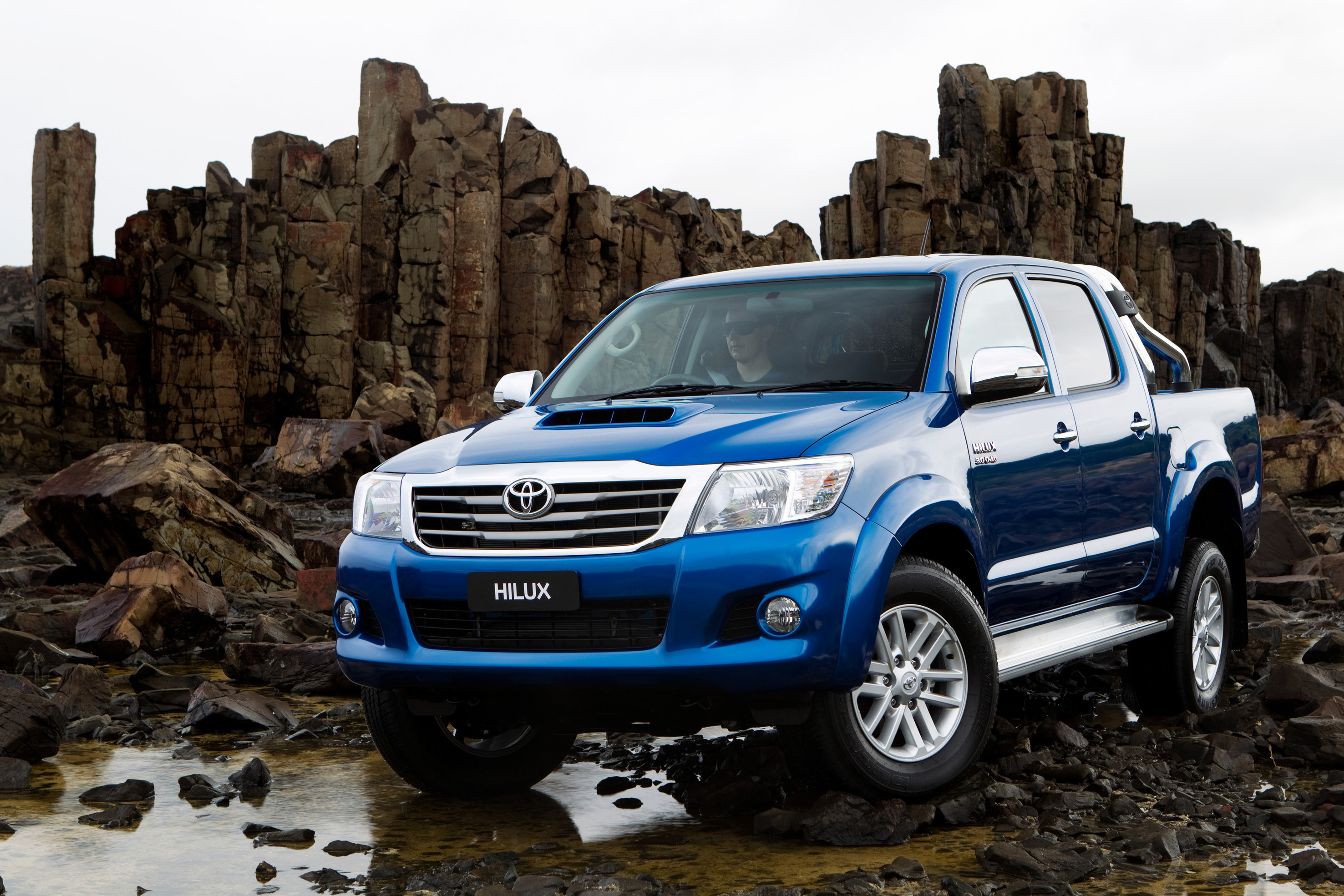
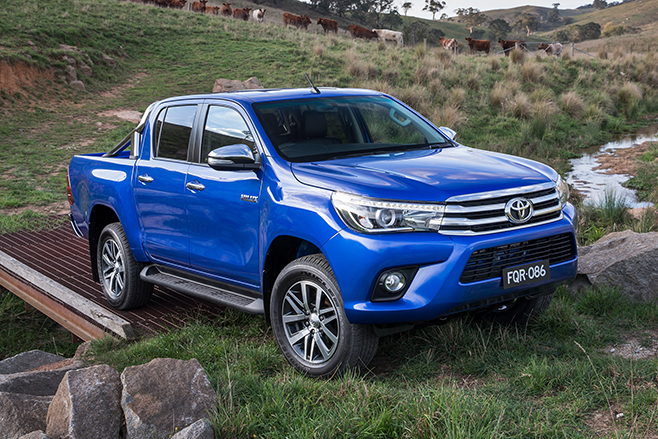
May was the 14th time that the Hilux was topped the sales charts, with the flagship SR5 model the most popular in the line-up. Its sales are particularly impressive given that a new Hilux has been shown ahead of its launch this October (pictured, below), and the current ‘old’ model is yet to be heavily discounted to ‘run out’ unwanted stocks.
Toyota is, however, offering attractive driveaway pricing across the Hilux range, with the entry-level 2WD cab chassis starting at $20,990, compared to its 1$8,990 list price. The most popular model, on average, is the Dual-cab SR5 flagship in diesel, with automatic transmission. It’s currently $49,990 driveaway, with Toyota likley to see a run on these as the end of the financial year approaches.
The top sales result also comes in spite of new Nissan Navara having just gone on sale within weeks of an all-new Mitsubishi Triton, while the Ford Ranger has been updated this year as well, meaning that the Hilux has done exceeding well in the face of serious competition.
The overall market for May 2015 was down 1.3% yet Australians have bought more new cars year-to-date than in 2014.
While the Hilux spearheaded the light commercial segment, which grew by 1.0% compared to April last year and 3.6% for the year so far, SUVs increased 5.8% for the month to be up a whopping 13.5% year-to-date. The trend of passenger cars declining continued as well, with a 5.0% fall so far in 2015 and a 7.3% fall in May.
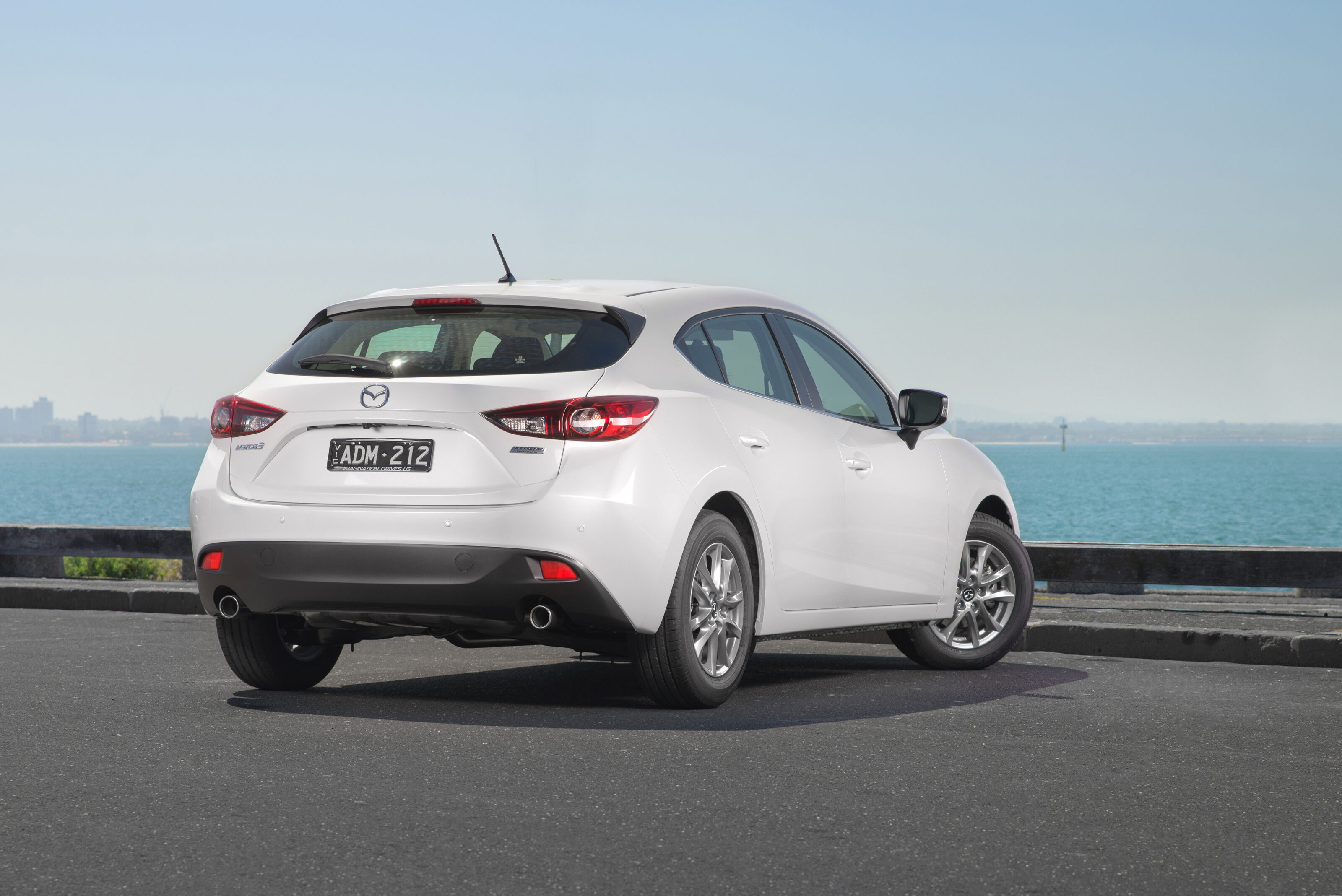
It was still the Mazda 3 (above) in the prime form for passenger cars after it wrestled back the top spot from the Corolla for the month, but still trails the Toyota by more than 1000 units so far this year.
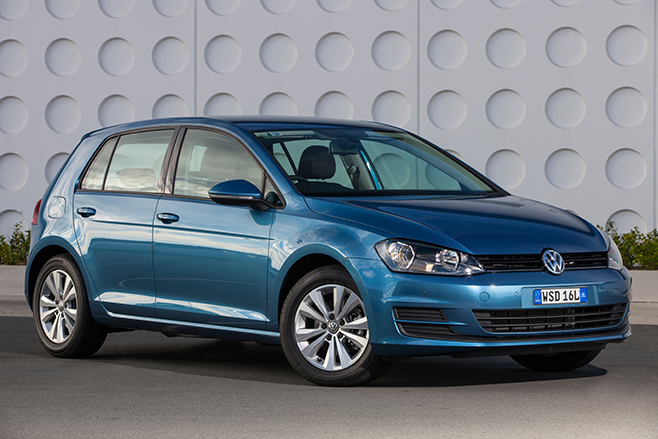
Impressively, the VW Golf (below) is snapping at the heels of the Holden Commodore, the big Aussie still performing remarkably well, with sales of the German maker’s hatch up a huge 10.7% year-to-date.
That increase is particularly noteworthy considering that the trailblazing Corolla and 3 have fallen 0.5% and 11.7% respectively, in a segment that’s declined 10.7% this year.
TOP 10 VEHICLES MAY 2015 RANK MODEL (SALES, % CHANGE)
1. Toyota Hilux (3173,-4.2) 2. Mazda3 (2876,-12.6) 3. Toyota Corolla (2688, -30.6) 4. Mitsubishi Triton (2683, 19.0) 5.Ford Ranger (2411,4.1) 6. Holden Commodore (2217,-16.3) 7. Volkswagen Golf (2115, -9.5) 8. Mazda CX-5 (1981, +15.5) 9. Hyundai i20 (1920, +36.6) 10. Hyundai i30 (1666,-34.7)
TOP 10 PASSENGER CARS FOR MAY 2015 RANK MODEL (SALES, % CHANGE)1.Mazda 3 (2876, -12.6) 2. Toyota Corolla (2688, -30.6) 3. Holden Commodore (2217, -16.3) 4. Volkswagen Golf (2115,-9.5) 5.Mazda CX-5 (1981,+15.5) 6.Hyundai i20 (1920, +36.6) 7. Hyundai i30 (1666,-34.7) 8.Toyota RAV4 (1633, +7.3) 9. Toyota Camry (1464, -3.8) 10. Hyundai ix35 (1395,-0.7)
Sign up here to receive the latest round-up of Wheels news, reviews and video highlights straight to your inbox each week.
He’s the most exciting driver in F1, if for all the wrong reasons.
Pastor Maldonado exploded on to the F1 scene in a shower of sparks and carbon fibre in 2011, his hefty backing from the Venezuelan government buying a seat with the struggling Williams team.
Ever since, his brief flashes of speed – he won the 2012 Spanish Grand Prix – have been punctuated by incidents with almost every driver on the grid and a number of embarrassing solo accidents.
This new film, created by YouTube user Boris Sljivic, features ‘highlights’ of Maldonado’s action-packed F1 career to date, with commentary from fellow drivers and team managers, along with words from the man himself.
This weekend’s Canadian Grand Prix offers another chance for the fast but flawed Venezuelan to cover himself in glory, or, more likely, cover the track in bits of F1 car.
Get your free weekly report from the world of fast cars – subscribe to the MOTOR newsletter!
The funky new Citroen Cactus marks a serious return to traditional French values of comfort, cost and fun
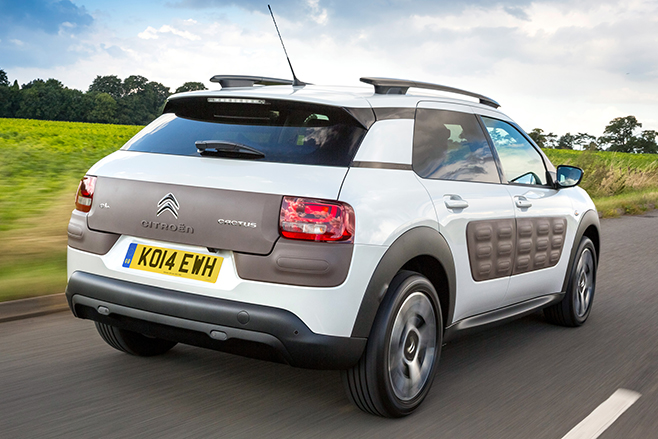
THE new Citroen C4 Cactus crossover, positioned midway between a conventional five-door hatchback and a compact SUV, may represent the future of the French brand. The Cactus combines imaginative styling with rational thinking in a clever package that is smaller than it looks, light of weight, modestly powered and comfort oriented, yet purely conventional in its mechanicals.
WHAT IS IT? Different, yet also pragmatic. A front drive-only crossover that’s taller than hatchback rivals, but shorter than an SUV, Australian Cacti are expected to get an 81kW 1.2-litre petrol triple turbo manual and a 68kW 1.6-litre four-cylinder turbo-diesel with robotised, clutchless manual (ETG) gearbox. Sadly, the Cactus drivetrains don’t include the brilliant six-speed auto from the newC4 Picasso and Peugeot 308.
MAIN RIVALS Mazda CX-3, Nissan Juke, Renault Captur, Honda HR-V
THE WHEELS VERDICT Priced right – meaning under $25k – and, if you like the way it looks (we do), the Cactus deserves to be on the shopping list of anyone wanting a cleverly thought-out small car that’s relaxing and distinctive.
Plus: Charming to drive and in appearance, supple ride, Minus: No proper automatic, driving position compromised for the tall
THE WHEELS REVIEW ANY way you look at the Cactus it’s a beautiful piece of real design, combining both practicality and desirability in a truly unique form. It’s a style that instantly distinguishes the Cactus from its more convoluted-looking rivals via a mix of straight lines and pure curves. Like all great Citroen designs, it’s timeless as well as contemporary. We welcome a look that is utterly non-aggressive.
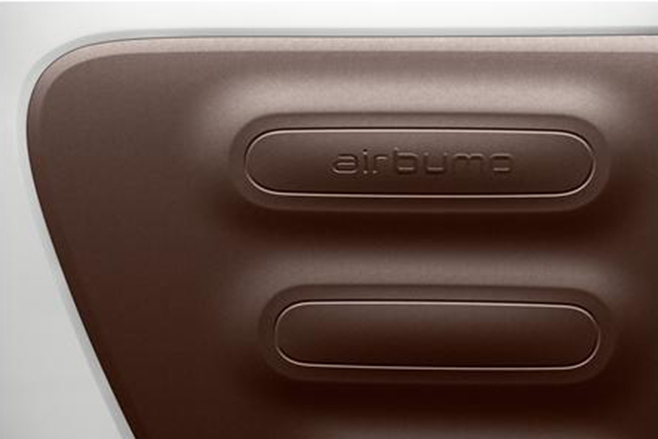
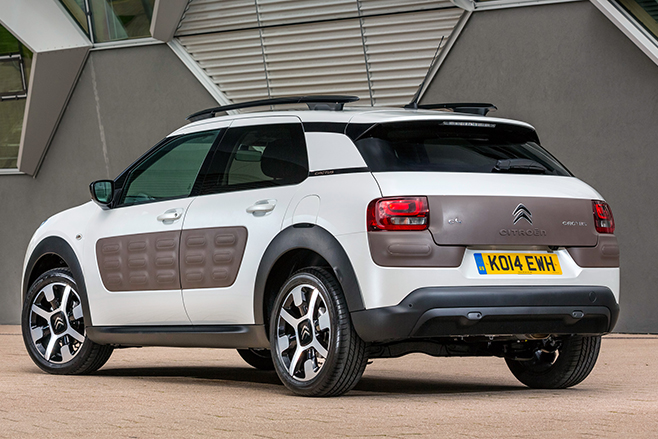
Citroen wants customers to personalise their Cactus and offers a choice of 92 colour/trim combinations with (mostly) vivid exterior colours and a choice of four colours for the ‘Airbump’, so the chances of seeing two the same is highly unlikely. The ‘Airbump’, plastic cladding on the bumpers and doors where it looks like a giant magnet, are there to prevent scratches and dings in the bodywork. Works too, for the oval pads of air are embedded in sheets of a soft yet durable plastic.
The crossover elements include a slightly raised ground clearance, that protective perimeter, and a not-quite SUV tall-height. There’s no pretension of being an off-roader. The Cactus is built on the same 2595mm wheelbase and platform as the regular C4, and not the new EMP2 platform of the C4 Picasso and Peugeot 308. Despite this, Citroen managed to reduce the weight by around 200kg over the C4 hatchback. The entry level petrol version weighs just 965kg, the diesel test car a commendable 1070kg; you can feel the lightness in the driving.
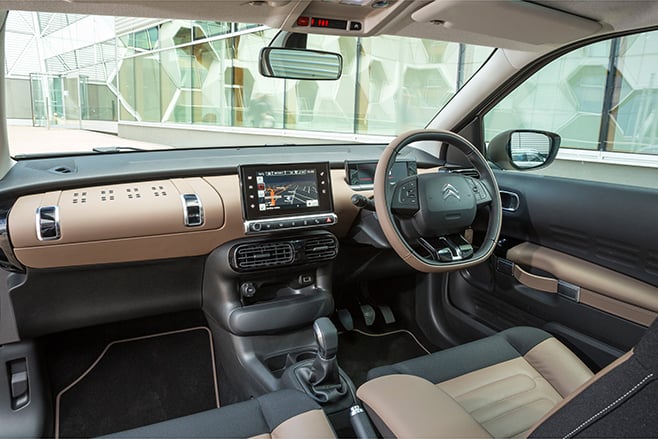
Inside the Cactus is spacious with soft armchair front seats. The interior feels roomy and unpretentious, though tall drivers would like more steering wheel travel and space around the pedals. The dash is confined to a big digital speedo and coloured strip fuel gauge. No tacho, to confirm a product philosophy that blatantly rejects any suggestion of a hard-driving GTI version, 4WD or big-capacity and heavy diesel engine. Therefore Citroen believes, there’s no need for a six-speed gearbox or whopping brakes or heavyweight suspension.
Air conditioning and sound system controls are all on a central touch screen, the passenger airbag is moved to the roof to allow a huge glovebox and the door pulls are luggage-like straps. Other weight saving choices include no split-fold rear seat and pop-out rear windows.
The Cactus is no dynamic marvel, but then it sets out to deliver driving serenity and effortlessly meets real-world requirements without ever feeling earnest or straitlaced. On the relatively large 17-inch alloys fitted to the test car (16s are likely to fitted to the entry model in Australia), the soft suspension soaks up big bumps, noisily absorbs most small irritations and settles happily on the motorway. At least on Portuguese roads. The steering is light enough to make the Citroen easy to manoeuvre and park, requires just 3.0-turns, and weighs up at faster speeds to provide reasonable confidence. Though there’s also plenty of body roll, the Cactus doesn’t pitch to inhibit the driver.
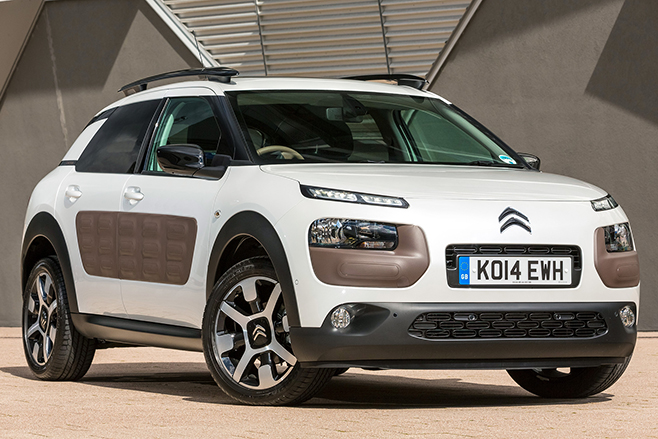
The 73kW turbo-diesel majors on refinement rather than power. Wide gear ratios and a tall top gear make for plenty of gear changing, when the performance is surprisingly strong. It’s no slick MX-5 change and a high clutch take-up requires initial concentration, but the drivetrain’s manners are relaxed, it’s simple to drive and easy to live with, as well as remarkably frugal. How’s 3.2L/100km in the combined cycle?
The Cactus functions in a totally different world to most of its rivals and that’s the car’s inherent charm. It’s a shame there is no proper automatic (to understand why not, remember 84percent of Citroens sold last year in France were manuals) and it needs to be keenly priced to convince customers it’s a worthy rival to the Mazda CX-3 and Honda HR-V. In no way is this a car for young thrusting drivers, its basic ideology is to be comfortable, charming and clever with a distinctiveness of styling that perfectly defines it role. We embrace the philosophy.
SPECS Model: Citroen C4 Cactus BlueHDi 100 Engine: 1598cc, 4cyl, dohc, 16v, turbo Max power: 73kW @ 3750rpm Max torque: 254Nm @ 1750rpm Transmission: 5-speed manual Weight: 1070kg 0-100km/h: 10.7sec Fuel economy: 3.2L/100km (EU) Price: $28,000 (est) On sale: February 2016
This month’s Goodwood Festival of Speed will for the first time sport a drifting competition category.
The annual UK event usually features fast cars taking to the hillclimb, but this year organisers have snared some big names to find a turn of speed while getting in touch with a car’s lock stops.
Catch my Drift? Of course you do; that’s actually the official name for the competition of tyre-squealing, high-powered machines born to keep sideways.
YouTube sensation Ken Block will powerslide his 634kW Mustang around the Formula One paddock, while European drifting champion James Deane will return in his 560kW Nissan S14 after last year setting a world record for longest continual drift – at an astonishing 28.5 kilometres.
Aussie drifting champion Luke Fink will compete in his V8-engined Nissan S13, while across the ditch New Zealander ‘mad’ Mike Whiddet will take to the course in a Mazda RX-7.
Norway’s top sideways man Joachim Waargaard will enter a brand new BMW M4, Polish contender Piotr Wiecek will look to be across-ways for days in his 745kW Budmat R34 Skyline, and at the lesser end of the power spectrum, another Polish bloke Kuba Przygonski will steer a Toyota 86.
While drift cars have displayed their wares before, this is the first time in Goodwood’s 22 year history that those participating in the Japanese sideways sport will be allowed to competitively tackle the 1.86 kilometre hillclimb event.
“With the sport of drifting’s popularity exploding, now is the perfect time to unleash Extreme Drift Allstars at the Festival of Speed,” explained chairman and CEO of Extreme Drift Allstars Alistair Gosling.
With a roll-call of exotics rolling into Brit fields, the Goodwood Festival of Speed dubbed the ‘moving motor show’ will run across three days from June 25 to 28.
Get your free weekly report from the world of fast cars – subscribe to the MOTOR newsletter!
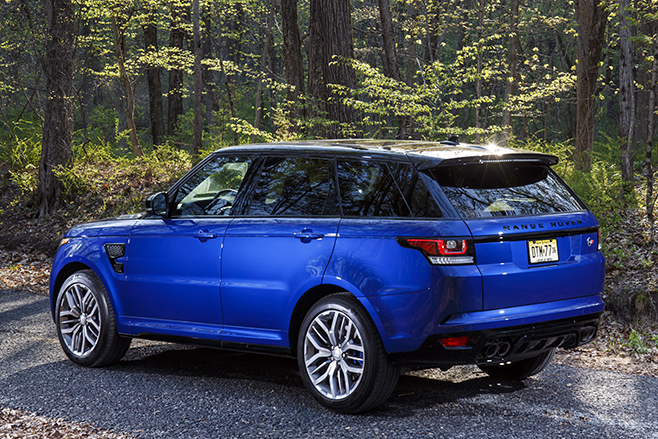
It had to happen. Land Rover, a brand borne of mud and built for decades on its peerless all-terrain ability, is now quoting Nurburgring lap times. The new Range Rover Sport SVR takes a 5.0-litre, supercharged V8 heart, dons some automotive Nikes and proves that weighing 2.4 tonnes need not be an impediment to going quick.
WHAT IS IT? Range Rovers are SUVs for posh folk. These high-riding four-wheel-drive wagons are sumptuously kitted out and priced accordingly, selling more these days on their ability to enhance the owner’s image than any desire to go to the Outback.
WHY WE’RE TESTING IT This high performance SVR model takes the Range Rover list of accomplishments in a very new direction – the racetrack – though it’s doubtful any owner will ever live that dream either.
MAIN RIVALS High-performance SUVs are big business, and very profitable. That’s why the Mercedes-AMG ML63 and Porsche Cayenne have been playing here for a while. More recently, BMW joined the gang adding bona fide M models to the X5 and X6 ranges. It’s only a matter for time before Audi adds an ‘S’ or even – gasp – an ‘RS’ to its Q7 equivalent.
THE WHEELS VERDICT You have to admire Range Rover’s technical nous. They’ve taken a 2.4-tonne off-road wagon and turned it into a high-performance track star: Ferociously quick, impressively capable and kitted to the gills with luxury. The SVR is not as enjoyable to drive fast like a true sports sedan or wagon, but its incredible breadth of talent will win buyers, even if they never venture onto the track – or beyond the bitumen.
PLUS: Astonishing breadth of ability; sounds raucous; goes hard; luxurious MINUS: Lifeless steering; leans a lot
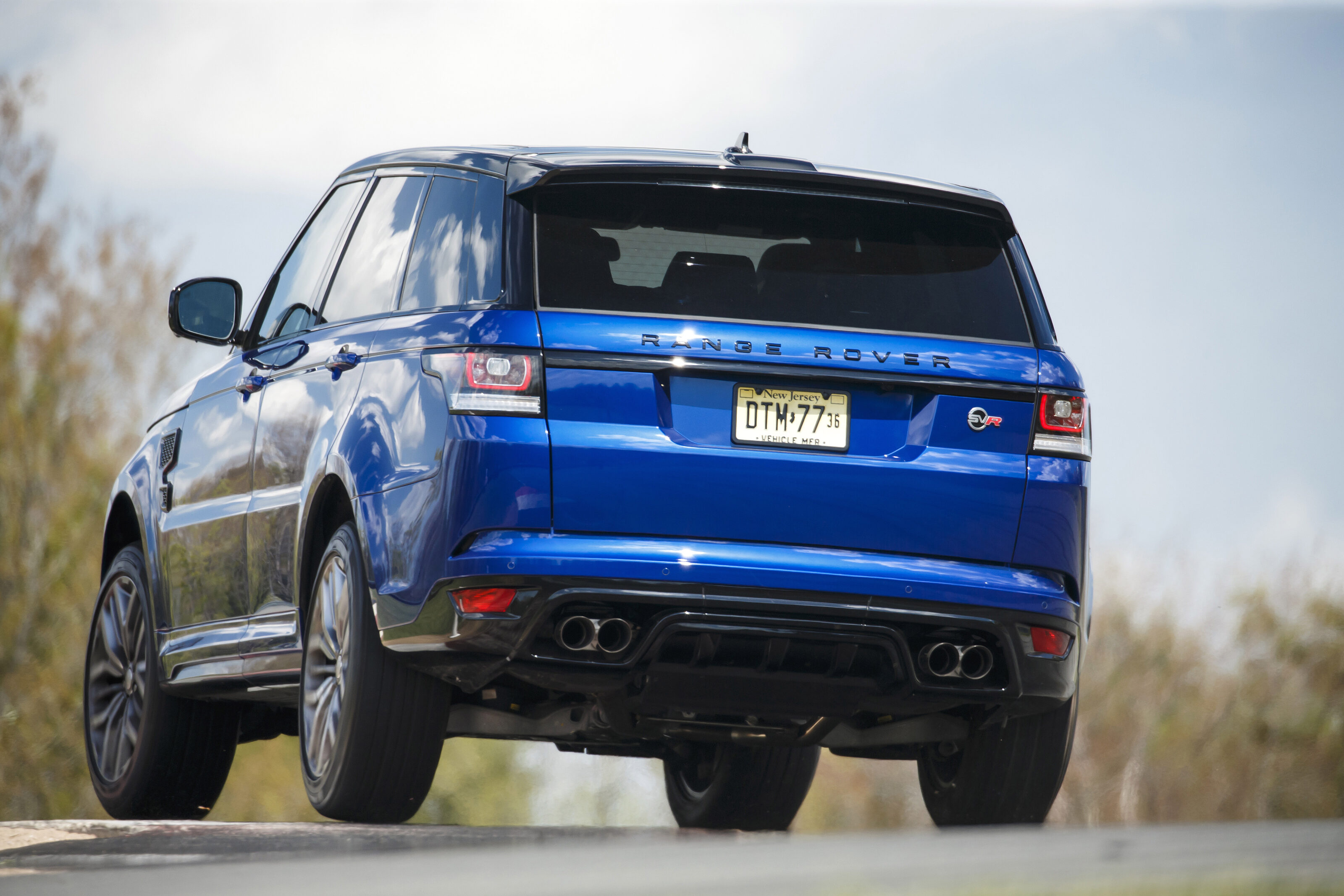
THE WHEELS REVIEW LAND ROVER, a brand born in the English mud and built up over decades around the all-terrain ethos, is now talking Nurbrugring lap times. Madness, surely.
Which is what I felt during my laps of the Monticello race track west of New York at the Range Rover Sport SVR launch. I was laughing out loud. Like a loon.
How in the world can a 2.4-tonne brick on wheels standing 1.8m tall lap the world’s toughest race track faster than a Honda NSX? Faster even, than a Porsche Cayman S?
I mean, I know how. Tyres and thunder. And two decades of automotive development.
The SVR rides on 22-inch wheels and tyres that grip like a gator – try getting snow chains for those next time you go skiing – and a monstrous 5.0-litre supercharged V8 that surely can move mountains. Or move you over mountains, at least. It’s even got a thundering bi-modal exhaust to ensure all that pesky mountain wildlife get outta the way when you’re doing 0-100km/h runs in 4.7 seconds.
But still … why?
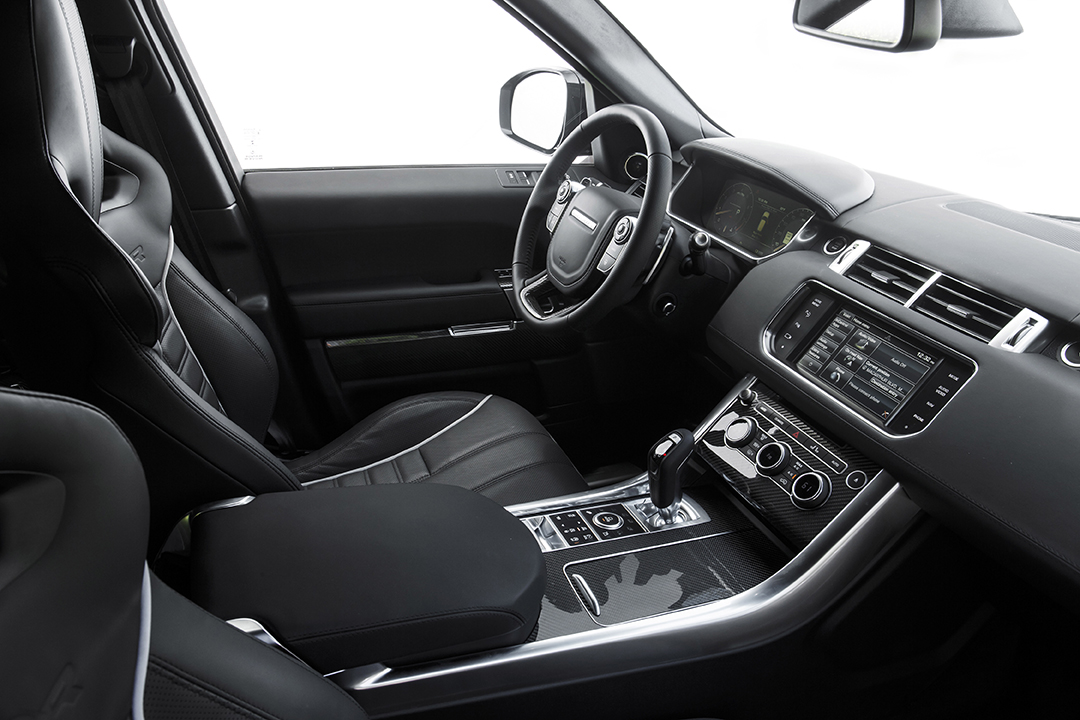
Perhaps we shouldn’t be surprised. Four-wheel drives like the Range Rover and its Discovery kin have for a long time sold on the power of dreams. The dream of one day going off the grid, and safe in the knowledge that your big SUV, which in reality will spend its entire life firmly rooted on the bitumen, can deliver that dream.
Now, the big SUV dream appears to have swung completely the other way.
What if I dream of lapping the Nurburgring in 8min 14seconds? Will your SUV realise that dream? This one will. (And, as of January this year, a Porsche Cayenne Turbo S will too – 7min 59sec – but we’re not talking about that teutonic all-terrain titan here).
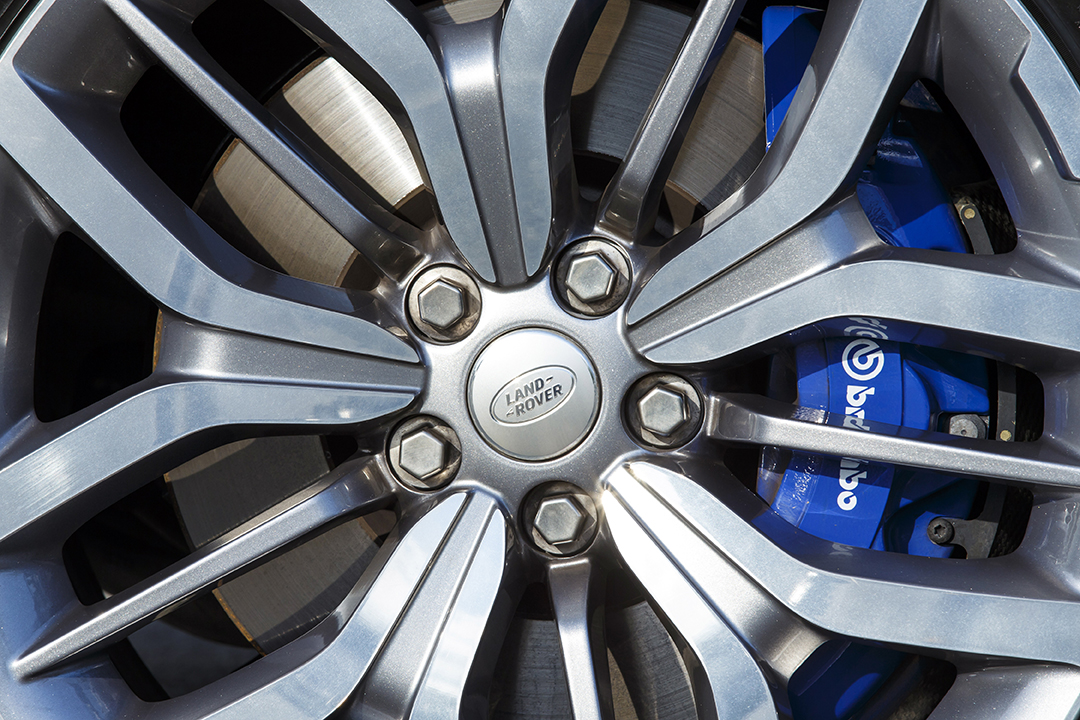
The fact that you’ll murder those expensive 22-inch Continentals and toast those dinner-plate Brembo brakes to ashes in one lap seemingly doesn’t matter. Nor does the fact you’ll probably empty the entire 107-litre tank before making it back to the pits. But hey. Dream the dream bro!
To demonstrate this bizarre duality of purpose, Land Rover asked us to drive through the muddy woods around Monticello. Then – after a quick water bath to clean said mud from the SVR’s nether regions – we hit the racetrack for a few quick ones.
And, of course, the Range Rover Sport SVR lapped it all up.
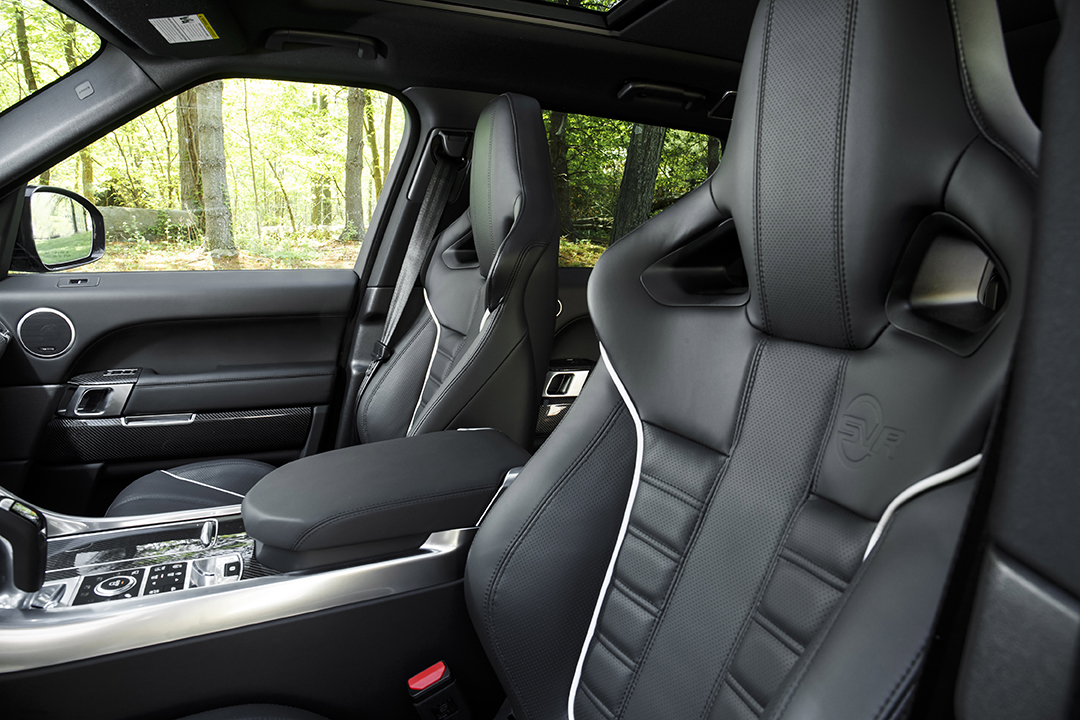
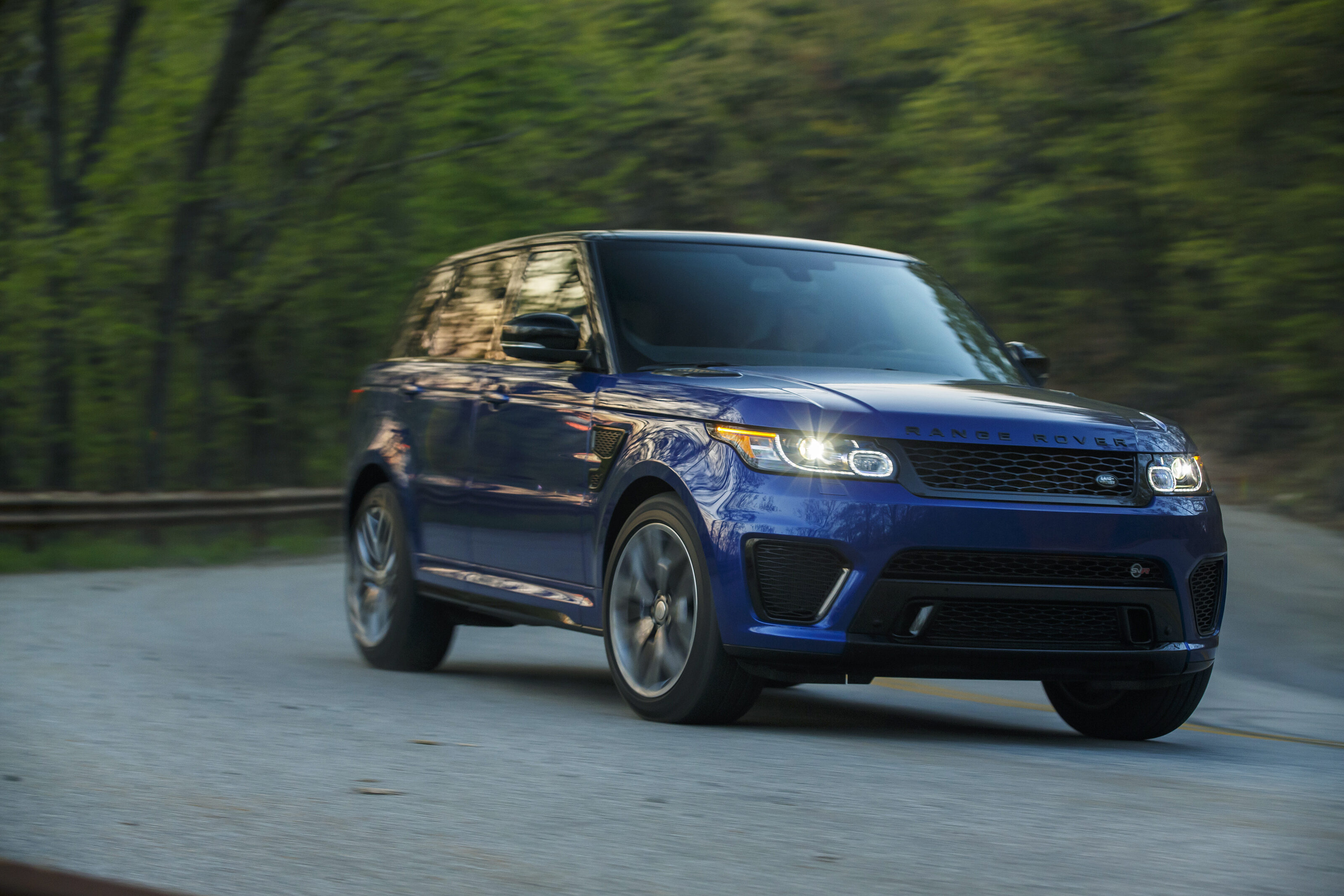
I don’t get this car. But I get why cars like the Range Rover Sport SVR – and the Porsche Cayenne and their M and AMG rivals from BMW and Benz – exist. Some people are very greedy. They want everything. And the Range Rover SVR has, without a doubt, the biggest bandwidth of any vehicle I have ever driven. It’s a very fast sports wagon, an all-terrain mauler, and a luxury conveyance all-in-one. If that sounds like your ideal vehicle, dream on buddy.
The next Holden Astra has been shown off with a tweet from Opel’s boss following a series of online leaks
THE 2017 Holden Astra has been revealed by Opel boss Karl-Thomas Neumann following a number of online leaks of official images. KTN, as he is known, showed off the VW Golf and Mazda 3 rival that’s slated for its debut in the metal at this September’s Frankfurt show. And it looks good.

With details including LED matrix headlamps and a floating C-pillar, the images show the seventh-generation five-door Astra K wears a much more sophisticated, developed styling treatment and design than the current car, which is doing remarkably well at aging gracefully. The new Astra replaces a car that arrived in Europe in 2009, and was sold in Australia during 2012, the annus horribilis that was Opel Down Under. It will return all too briefly this month in GTC (meaing three-door form) before the new 2017 model effectively replaces the Holden Cruze in Aussie showrooms.

The new model rides on the new D2XX C-segment platform, a heavily refreshed version of the current Delta platform that it shares with models including the Cruze, and is 49mm shorter, 26mm lower and has a 23mm shorter wheelbase than its predecessor. Despite the smaller exterior dimensions, the cabin will still offer the same amount of space as the current car, according to Opel, while overall weight is reduced by around 120kg for improved dynamics, straight-line performance and fuel efficiency.

The Astra will boast Apple and Android smartphone connectivity, just like GM stablemates including the 2016 Chevrolet Camaro and next Holden Cruze that will all run the IntelliLink R 4.0 system, which includes a 7.0-inch touchscreen.
The new Astra will be powered by General Motors’ new engine and transmission families, with up to 13 engine choices in Europe including an 85kw/168Nm 1.0-litre turbocharged three-pot that’s offered in the Opel Adam supermini and B-segment Corsa models. There’s also a 107kW 1.4-litre turbocharged four-cylinder featuring an aluminium block and direct injection and a strong 250Nm of torque from 250Nm.
A new lightweight six-speed manual transmission will also be offered with the diesel and petrol powerplants.
The Holden Astra K will be produced in the same factories in Poland and the United Kingdom as the current model. Specification and Australian Astra prices are yet to be announced by Holden.
Sign up here to receive the latest round-up of Wheels news, reviews and video highlights straight to your inbox each week.
IT ALL began with a poster of Allan Moffat’s emphatic Hardie Ferodo 500 victory in 1971. The striking black-and-white image of the Canadian driver’s muscular XY Falcon GT-HO Phase III thundering across the finish line at Bathurst stayed fixed to my wall for so long that, by the time the yellowed Sellotape crumbled, a ghosted outline remained etched on the wall.
That victory and others like it helped enshrine the homologation-special Phase III GT-HO in the psyche of many local performance car fans, me included, as the high water mark of Aussie muscle-car development. It wasn’t, of course. There have since been many cars faster and more sophisticated, but the ‘Ho-ey’ wrote its own legend, securing a place in our motoring culture that nothing will ever surpass.
With only 300 built, at least a third of which have gone to the great wrecking yard in the sky, the Phase III was already a near-mythical creature by the time my journalistic career steered me to the helm of Motor in the late 90s.
The beast continued to evade me for another 20 years, including a near decade-long stint at Wheels, but today, 46 years after Moffat’s famous Bathurst victory, I’m heading to Broadford to finally drive this giant of Aussie automotive folklore.
To get into character, I’ve reread Mel Nichols’ seminal HO Down the Hume about driving the Phase III off-the-clock at 145mph on the Hume Highway.
As I approach ‘my’ striking Yellow Glow Phase III, the irony isn’t lost on me that Broadford is just a few kilometres from where Nichols would have streaked past all those years ago in his yellow missile, the mighty Cleveland V8 hitting its 6150rpm electric rev limiter in top gear. Nichols called it “the fastest, most awesome car Australia had ever produced”, and I can scarcely believe that the planets have finally aligned to make my Bucket List wish a reality.
I drop down into the softly sprung buckets, pausing for a moment to take it all in, inhaling deeply the heady mix of petrol, vinyl and patina. The interior is basic period-spec Falcon, the only obvious embellishments being the Mustang steering wheel with faux-wood rim, a GT-HO logo on the dashboard and a 351 High Performance badge on the centre console. But look closer and there are clues to the Phase III’s serious intent in the 8000rpm tacho, 140mph speedo, manual choke and trio of temp, oil and fuel gauges.
The belts are lap-sash but there’s no inertia reel and virtually no side bolsters in the seats, so I snick the belt tight before turning the key. The starter churns the 351 Cleveland into life and the signature Shaker air scoop rocks sideways as the iron beast awakes with a snarl. The note, described by Nichols as “a thunderclap of exhaust”, still gets your attention. The noise is strong, clean and potent, rising in intensity as I prod the throttle, the twin exhausts punching fat holes in the still morning air, the Shaker trembling as the Holley beneath it greedily gulps fuel.
It’s still a serious piece of kit, but easing out the hefty twin-plate clutch, I immediately sense the lightness of the steering, directed via the overly large and thin-rimmed wheel. Out onto the straight and into the loud pedal and – whoa! – the rear squats, the nose lifts and the GT-HO surges forward with attention-grabbing urgency, the V8 bellowing like a wounded bull elephant.
The powerful surge consumes gears as quickly as I can feed them in via the skinny floor-shift, my eyes and ears on the rev limiter. At the end of the straight, I’m onto the brakes, hard at first, then harder and… Bloody hell! The thing doesn’t want to stop. Or turn. The yellow beast’s nose points resolutely towards the outside of the bend as I saw on the unassisted wheel, standing harder again on the brakes before eventually muscling it through. Phew.
“It’s like driving a thug,” owner David Frake laughs afterwards as we recall my laps, the physicality of muscling it through bends, the powerful acceleration as it lays back its ears on the straights, the epic old-school V8 soundtrack that makes you like you’re travelling three times faster than you really are.
What was it like? Fabulous. Flawed. And frankly just as Nichols had so eloquently described it all those years ago. It really is a legend of a machine.
Did you know?
- The Phase III was a homologation special. The 351 V8 came with a feisty 11:1 compression ratio, there was a choice of close- or wide-ratio four-speed manual gearboxes, multiple diff-ratio options, and a Detroit locker rear diff.
- To optimise it for Bathurst, Ford balanced and blueprinted the Cleveland, adding a big 780cfm four-barrel Holley, tuned-length HM extractors, baffled sump, solid lifters and cam, and toughened crankshaft. Other race bits included a twin-core radiator, 164-litre fuel tank and improved brakes.
- With a tested top speed of 141.5mph (228km/h), Wheels declared the GT-HO Phase III the fastest four-door on the planet in 1971, a claim no-one disputed.
Living the dream
“YOU actually had to drive these cars. Nowadays the car drives you.” That’s the frank assessment of David Frake, the lucky 57-year-old owner of this handsome GT-HO Phase III.
As proprietor of Melbourne-based GT Ford Performance, it’s fair to say this bloke bleeds blue, his business specialising in parts for fast Falcons from the ’67 XR GT to the ’76 XC Cobra. David’s love affair with V8 Falcons started when he was 20.
Plated October 1971, this car was delivered new in NSW. David picked it up 25 years ago as only the third owner and worked on it for a year before selling it, only to buy it back three years later. He stripped it and sent it to a panel shop for what he thought would be a relatively quick tidy-up; it was there more than seven years.
David’s incredibly blase about his HO. He clearly loves it, but he also drives it regularly, has had it on the track, and handed the keys over to me with the instructions to simply “get up it”.
“I just drive the thing in my way and will probably leave it to someone in my will,” he says. That’s some inheritance, given David’s twice been offered the staggering sum of $1m for the car.
Model: 1971 Ford Falcon GT-HO Phase III Engine: 5766cc V8 (90°), ohv, 16v Max power: 246kW @ 5700rpm (est.) Max torque: 542Nm @ 3600rpm (est.) Transmission: 4-speed manual Kerb weight: 1524kg 0-100km/h: 6.6sec Economy: 27.2L/100km (Wheels Oct 1971) Price when new: $5312
WITH a late invite to Wheels’ bucket list drive it was too late to dig out any of my absolute favourites, the BMW 328 and 507 roadsters.
I’m not sure a 507 even resides on these shores, so it was with an open mind that I entered the halls of Motorclassica with Editor Butler to see if there was anything among the legions of forensically buffed classics that would deliver an authentic ‘once in a lifetime’ experience.
In case you’re wondering how anybody could saunter past a Lancia Stratos and an Aston Martin DB2 and not cast a vote in that direction, it’s because Mercedes-Benz Australia pulled the sheets off something altogether rarer. An absolute one-off that comprehensively one-ups anything else we had at Broadford. It’s an original right-hand-drive 220SL.
“That would do it,” I said to Butler without ever imagining we could arrange a drive of the car. The star of the show at Motorclassica carries a price tag of over $2m. We’d just been told this was the only surviving example of four 220SL prototypes made and is the sole right-hand-drive car in existence. It appeared I’d be more likely to be allowed to borrow the Mona Lisa for the weekend, but after a quiet drink with the 220SL’s owner, Ray Eastwood, in the hotel bar later that evening, Butler had arranged the silver Benz to be delivered to our drive day. I’m still not sure how that happened, and neither he nor Ray is telling.
While there were a couple of similar and earlier vintage European roadsters on my personal bucket list, I like to think I could be excused for not having the 220SL among them. Until now I didn’t even know it existed. I don’t think too many other people did either.
Sure, I’d admired the beautiful, classy lines of the little 190SL of the same era, and everybody knows the uniquely elegant 300SL gullwing coupe and its more conventionally apertured roadster sibling, but the 220SL was a great unknown.
Now it’s a car I will never forget.
The night before the drive day was like an automotive Christmas Eve for all of us. Broadford took the place of Christmas tree and I arrived to see the SL being lowered out of its transporter. With a puff of white smoke from its double barrel exhaust tips, the unmistakable sound of a straight-six burbled into life.
Despite its age and sporty design, the ergonomics are surprisingly good. The thin wood-rimmed steering wheel and tall alloy gear lever sit comfortably in the driver’s reach, although the stubby windshield seems more of an afterthought than any kind of actual screen.
Sure enough, as we pulled out of pit lane the wind buffeted my face and I had to resist a huge smile forming on my face so as not to catch too many bugs in my teeth. They feel like hailstones at speed. Happily, I couldn’t resist grinning as the six-cylinder engine wailed up through 4000rpm and I clicked through the four-speed gearbox.
Broadford is one of the few tracks in Australia to offer any real relief in its topography yet it feels inadequate; this little roadster would be more at home barking its way through the hairpins and cols of the Swiss Alps than the undulations of country Victoria.
Driving the 220 is remarkably easy. The steering isn’t sharp but turns precisely, the handling is predictable and the drum brakes are better than expected.
It just shows how well a properly prepared and maintained classic car can perform – and this truly is a classic. The engine isn’t a strong puller but does well for its age. The smoke it blows at idle and the top-end misfire suggest it’s a bit tired, but its note is intoxicating and prompts me to change back a gear and let it sing its tune, over and over again.
Did you know?
- Some Mercedes-Benz enthusiasts question the pedigree of the Eastwood 200SL and argue there was no reason for the factory to build a right-hand-drive prototype. Eastwood and Mercedes-Benz Australia have since verified the car with Stuttgart to be one of the four built and the only one known to remain
- Testing the 220SL prototype at the Nordschleife in 1956, F1 ace Karl Kling lapped the famous circuit in 11min 25sec. Kling was also instrumental in developing the 300SL
- A regular production six-cylinder SL finally made its debut in 1963 in the form of the W113 230SL. An instant success, the 230SL was succeeded by the 250SL in 1967 and the 280SL in ’68. Today’s SL400 retains the six-cylinder lineage, with 245kW helping it to a faster lap time around the ’Ring
Living the dream
THE 220SL was an experiment to produce a car with more performance than the four-cylinder 190SL, while being more affordable than the exotic 300SL. A bigger engine was thought to be the answer and the six-cylinder from the 220 sedan was trial fitted to a 190SL after massaging the engine bay to make the required space.
Four 220SL ‘prototypes’ were hand-built in this guise; three left-hand drive and just one – our one – right-hand drive. Capacity issues at the factory scotched any hope of series production and two of the prototypes were destroyed. The RHD one was sent to Macau, possibly for the Grand Prix there in 1957, while the fate of the remaining LHD prototype remains unknown. Also unknown is how the RHD car found its way from Macau to Australia.
It arrived with a standard twin-carb 1.9-litre engine and in 1960 was sold by BEA Motors in Adelaide. In 1973 it was sold as a “non-going 190SL” and then-BEA service manager Ray Eastwood bought it. A trip to Germany with photos resulted in historical experts identifying it as the RHD 220SL.
With this knowledge, Ray restored the car with a fresh 2.2-litre six and mechanical fuel injection as used in the prototypes. He changed the colour from black to traditional Mercedes racing silver and trimmed the interior in Mille Miglia tartan cloth.
Model: 1957 Mercedes-Benz 220SL prototype Engine: 2195cc 6cyl, sohc, 12v Max power: 97kW @ 6000rpm Max torque: 189Nm @ 3900Nm Transmission: 4-speed manual Kerb weight: 1200kg (est) 0-100km/h: 10.5sec (est) Economy: 9.0L/100km (est) Price when new: Not sold
