
FRANK Matich, who died on Monday at 80 after a long illness, could have been Australia’s next Jack Brabham, but shunned international glory for a more regular life at home.
Matich performed so well against the visiting international drivers to Australia in the 1960s that he was courted by a number of Formula One teams, including Cooper, Lotus, McLaren and even Ferrari.
It was not just his driving ability – which Frank himself underplayed – but his engineering ability that made Matich such a rare talent, and attractive to the fast-developing world of F1.
He was a good friend of Bruce McLaren, who tried a number of times to entice him to Europe, including one firm offer to become involved in the Ford GT40 development program that Matich was keen to pursue before being injured in a race accident.
Years later, Bruce entrusted Matich with the development of McLaren’s first Formula 5000 open-wheeler, which not only gave Matich his first Australian Grand Prix victory but went on to numerous international successes. Matich himself took his Holden-engined version to America, finishing first and second in the first two rounds of the US championship.
Matich’s career spanned 16 years and netted the 1972 Australian Drivers Championship, the 1969 Australian Sports Car Championship, the 1961 Australian GT Championship, two Australian Grands Prix and the New Zealand Grand Prix.
For the second half of his career, Matich built his own world-class sports and racing cars, but suddenly retired in early 1974 due to complications from being seriously electrocuted while working on his boat. He nursed his wife back to health after spinal surgery, looked after his four children and turned his attention to business.
He was a towering talent in the 1960s and, like his great rival Leo Geoghegan who also died recently, helped build the sport we know today.
Sign up here to receive the latest round-up of Wheels news, reviews and video highlights straight to your inbox each week.
You might expect the Dodge Viper ACR to go fast in a straight line, but this latest track-focused special prioritises grip, braking, aero and handling changes.
The sadly left-hand-drive-only Viper ACR gets a monster 8.4-litre V10 making 481kW and 813Nm – only slightly up on the previous top Viper, though that torque figure is claimed to be the highest of any naturally aspirated engine in sports car land.
Engineered to “withstand severe track duty in ambient temperatures of 100 degrees Fahrenheit (38 degrees Celsius),” grunt is sent via a Tremec six-speed manual to the widest rear tyres of any production car in the world – 355mm-wide, 30-aspect 19s, versus 295mm/25 19s up front.
No mention of performance times – or, cough, what emissions those evil side pipes are spewing out – though the specially-designed Kumho Ecsta V720 tyres are said to produce lap times 1.5 seconds quicker than other production race tyres.
Brembo carbon ceramic brakes (six-piston, 390mm front/four-piston 360mm rear) work with five-mode stability control (on, Sport, Track, Rain, Full-off) and an Extreme Aero Package – featuring a detachable front splitter, bonnet with removeable louvres, a massive adjustable rear wing and rear carbon fibre diffuser that contribute to the “highest aerodynamic downforce of any production car”.
The aero pack also is said to deliver more than three times the downforce of a Viper TA (Time Attack) 2.0 package, with the 10-way adjustable coil-over Bilstein race suspension delivering more than double the stiffness.
The interior gets swathes of Alcantara trim and ACR badges as a reminder of the track model’s 16-year history, but sadly the Detroit factory still won’t put the steering wheel on the right hand side of any Viper. The Yanks will get theirs to compare with the also-LHD-only Corvette Z06 from the third quarter.
Get your free weekly report from the world of fast cars – subscribe to the MOTOR newsletter!
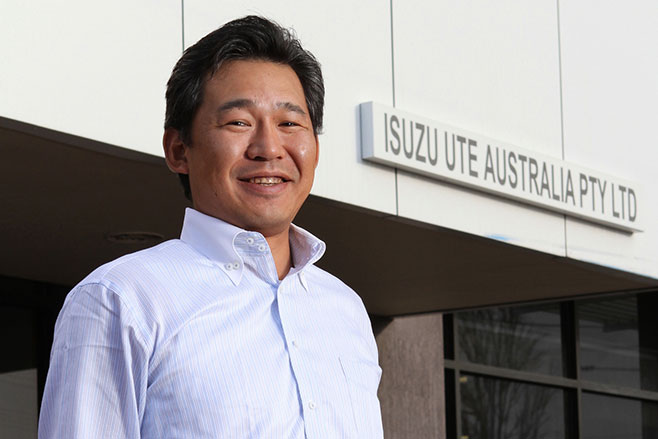
NO WONDER Yasu Takeuchi looks happy. As managing director of Isuzu Ute Australia, he’s presiding over what is currently the biggest success story in domestic vehicle retailing. With a 63 percent growth in sales in 2014, Isuzu’s D-MAX one-tonne ute and MU-X seven-seat 4×4 are responsible for landing one on the chin of every other marque in Australia.
The numbers are staggering. The company has realised an average 29 per cent year-on-year sales growth since entering the market in 2008. Back then Isuzu Ute, which is a 100 per cent-owned subsidiary of Mitsubishi, had a fledgling network of 38 dealers.
It now has 120 outlets, with 12 more being opened in 2015. “We worked at making our vehicles more fitted and suitable to the Australian market. We improved the quality of our dealer network and we took customer complaints – right from the smallest issue – extremely seriously and fed them back to the factory,” explains Takeuchi.
Thailand remains Isuzu’s biggest market, selling about five times as many one-tonne utes there compared to Australia. “In Thailand, they don’t care so much about safety. They’ll carry 10 people on board and don’t bother about airbags. In Australia you need six or seven airbags to get a five-star [safety] rating,” he chuckles.
Sales in Thailand this year are up 22 per cent, with the company targeting a 20 per cent annual increase, so Isuzu Ute is already ahead of the curve. But putting so many eggs in the Thai basket is a worry. The vehicle market is contracting there, the Thai government reporting a drop of nearly 11 per cent year-to-year in domestic car sales for February, this marking a 21st consecutive month of decline.
In the face of a declining home market, Thai manufactures like Isuzu are hedging with exports. Thailand’s car shipments abroad in February rose more than 11 percent, largely due to a pick-up in the Australian market, but the maths still don’t look rosy. Thailand’s military coup in May 2014 hasn’t spawned a great deal of consumer or investor confidence.
As Thailand’s car industry contracts, Indonesia, in particular, is becoming more attractive for manufacturing, due to more favourable rupiah exchange rates, low wages and a spike in car demand. Mitsubishi Motors chief executive Osamu Masuko said in an interview with The Wall Street Journal recently that the Japanese carmaker is looking to Indonesia and the Philippines rather than Thailand.
“For Thailand, I think we should operate within the scale that we currently have now,” said Masuko, alluding to the 500,000-vehicle production capacity in Thailand; a number that includes Isuzu utes.
To compound the issue, there’s an absolute broadside of new product being thrown at Isuzu within the next 18 months, with Mitsubishi launching an all-new Triton, Ford looking confident with the facelifted Ranger and Toyota aiming to skittle the lot with the new Hilux.
Isuzu and General Motors entered into an agreement in September to develop the next-generation ute platform, but a conservative estimate puts that at four years out. Isuzu has more than doubled its promotions budget to try to stave off this assault and has cut prices aggressively to big fleet operators.
Takeuchi knows there’s only so much he can do. “Customer satisfaction is most important. It’s the best way to growth. We want to make a profit investment,” he explains.
So while it may appear that Isuzu Ute are in it for a quick buck before the rest of the market wakes up and takes them seriously, the company’s looking to a longer game, aiming to bring younger customers on board with an increasing lifestyle focus, switching from the purely rational economy, residuals and payloads promo.
There are huge challenges ahead for a manufacturer with one engine and two bodies to sell. Isuzu Ute is looking to tough it out. It knows of no other way.
A new look for the the locally made Toyota Camry and a new sports-focused model combine with more realistic pricing to make the mid-sized sedan more appealing.
WHAT IS IT? The final major update to the locally-produced Toyota Camry before it is imported in 2018. It’s the biggest mid-model-life update ever from Toyota, with all the metal bar the roof restyled and the addition of a new model variants, the Atara SX.
WHY WE’RE TESTING IT The new model has just gone on sale and we jumped behind the wheel at the media launch.
MAIN RIVALS Subaru Liberty, Mazda 6, Ford Mondeo, Holden Malibu, Hyundai Sonata, Kia Optima, Honda Accord
THE WHEELS VERDICT More of the same done better. The SX is a better drive than other (softer) variants but is in desperate need of an engine. There’s as much space as there’s ever been in one of the biggest mid-sizers on the market.
PLUS: Space, value, decent to drive, hybrid drivetrain blends economy and performance. MINUS: Dull four-cylinder engine, auto not particularly intuitive
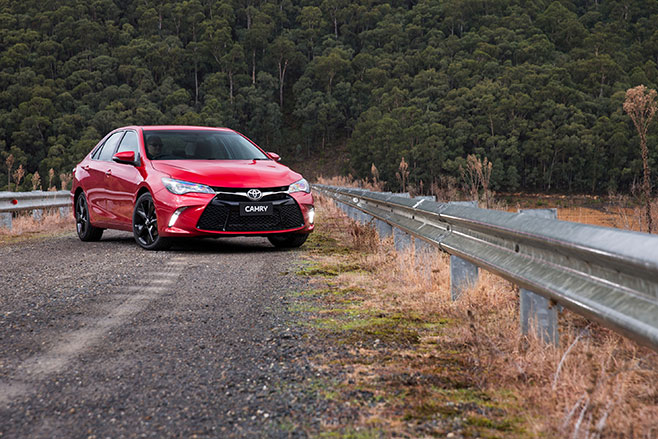
Perhaps unsurprisingly car makers typically aim their wares at roads best suited to the car they’re trying to spruik (the torque-steering Saab Viggen was unleashed to the media in the Northern Territory, for example).
So the prospect of a Camry on some of Victoria’s best driving roads may seem about as obvious as sticking Mick Jagger in a jazz club.
That it was drizzling rain added to the excitement.
But Toyota engineers are clearly confident about the new Camry. Well, one model in particular.
Most new Camrys are identical to drive as the ones they’re replacing. Same uninspiring 2.5-litre four-cylinder (with 133kW on the base Altise and 135kW on the Atara variants thanks to twin exhausts) and same fuel mising hybrid drivetrain with better performance (151kW, albeit in a heavier body). There’s also the same suspension, which neither particularly sharp or particularly comfortable.
But the new Atara SX is a different prospect – partly.
And it all works pretty well. The ride is noticeably firmer so feels fidgety at slow speeds on successive bumps; it’s less of an issue at higher speeds.
But the steering is more consistent through its motion, and while it lacks the accuracy of a Mazda 6 it’s direct enough to feel more inspiring once you ramp the pace up.
Grip levels, too, are higher than Camry drivers would be used to and the Atara SX scrabbles around corners at a very un-Camry pace. The myriad bumps and lumps – and occasionally greasy patches – did little to faze what is a composed four-door. It’ll ultimately reach its limits into gentle understeer, but there’s enough talent to keep the smile alive on the right road.
Now, if only it had an engine to match.
The 135kW four-cylinder is unchanged – and genuinely uninspiring. Sure, acceleration is OK, but it sounds flat doing it. And you’ll be listening to that drone lots because it needs a decent kick to elicit respectable response.
That tendency to jump into those taller gears takes the edge off the already edge-less performance.
Still, at $31,990 with large car levels of space and a pleasant if largely unchanged interior (the foot-operated park brake is a low point; the leather seats could do with more bolstering to keep up with the new suspension) the Camry makes sensible buying that can now be a little more enticing.
SPECS Model: Toyota Camry Atara SX Engine: 2494cc four-cylinder Max power: 135kW @ 6000rpm Max torque: 235Nm @ 4100rpm Transmission: 6-speed auto Kerb weight: 1505kg 0-100km/h: NA Price: $31,990 On sale: Now
Click here to read the full range review of the 2015 Toyota Camry
CHRYSLER is readying yet another red-hot version of its 300 sedan, sprung testing in facelifted MY16 left-hand-drive guise near Detroit, ready to be rolled out in the last quarter of this year.
Proving that the rear-drive five-seater muscle car will survive the demise of the Australian vehicle manufacturing closures of 2016 and 2017, the prototype snapped here appears to be in production-ready form, complete with the signature SRT crosshatch grille, LED-enhanced headlights, lower ride height, quad exhausts, and 20-inch alloys (looking very much like a blacked-out version of the limited-edition Satin Vapor released back in February).The word is that Australian demand for the US-built SRT in its current iteration – which at times has accounted for about a third of all 300 sales – has helped push through the development of the 6.4-litre Hemi V8 flagship, with Chrysler hoping to snare traditional Falcon XR8 and Commodore SS/HSV buyers once they start exiting the market.Expect a step-up in power and torque above the outgoing SRT’s 347kW and 641Nm, with an eight-speed automatic driving the rear wheels via a Getrag limited slip differential, instead of the old Mercedes-sourced five-speeder.The MY16 should also usher in improved advanced driver-aid tech such as adaptive cruise control that can draw the car to a complete stop, autonomous emergency braking, a lane departure warning, and lane keep assist, with the range-wide upgrades also expected to include a revamped interior.Interestingly, the test vehicle is not wearing the Chrysler winged logo front or rear, suggesting that North American versions of the SRT may don Dodge badges instead. With the local SRT currently ranging from $56,000 (raw and ready Core) to $66,000 (well-equipped SRT8), it is likely that the facelift will not stray too far from the present pricing structure.Have spy pics of your own? We’d love to see them. Just email them to [email protected]
STYLE meets substance as a big-daddy engine is shoved into the Mini Cooper S John Cooper Works performance machine.
WHAT IS IT? The most powerful, fastest and sharpest Mini in the shed, this is the John Cooper Works edition of the new-generation Mini.
WHY WE’RE TESTING IT Who would say no to the world’s fastest go-kart? The new Mini John Cooper Works is bigger, heavier, yet a dynamic step up on its predecessor. The regular R56 Mini is a much better base to make a hot hatch from, and the new JCW has the biggest engine ever fitted in a series production Mini and should have the chassis to match.
MAIN RIVALS Volkswagen Golf R, Renaultsport Megane
THE WHEELS VERDICT PLUS: Faster, more powerful and more complete as a genuine performance hot hatch; engine elasticity; more equipment and performance for less money MINUS: The Mini’s mass is apparent on change of direction; slightly compromised driving position; vague manual gearbox shift
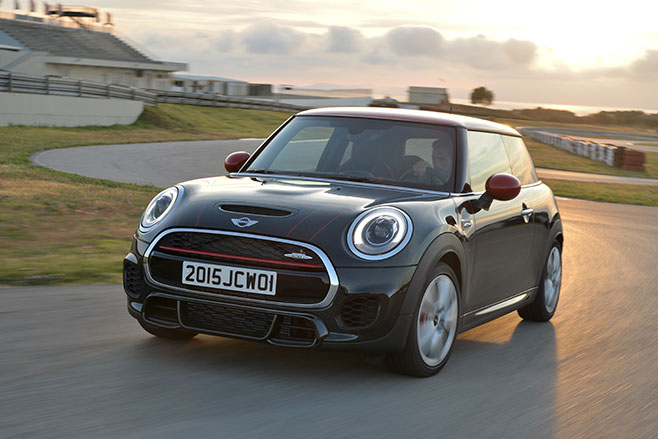
THE WHEELS REVIEW SPAIN is where low-cost airline-loads of Brits and Germans head to play up and party. So it makes sense that the Mini that promises the most fun is being launched in the sun-drenched throes of life-long mistakes and sore heads.
The 2015 Mini Cooper S JCW is the king of Minis and, ensuring it can take the fight to the VW Golf R, Honda Civic Type R and Renaultsport Megane, this third-generation model is the most powerful Mini to roll out of Oxford. And at $47,400, its starting price is $3K less than the car it replaces.
The big new 2.0-litre turbocharged engine is why the front, which doesn’t look as cohesive or elegant as before, has gaping air intakes that look out of place – almost literally a square peg in a round hole – to cool the donk and larger Brembo brakes. In Mini terms, it may seem like fitting a 7.0-litre V8 into a Jag, or using a fire hydrant to blow out birthday candles, but it’s not so odd given this generation’s size increase.
The world will know you’re in the supreme Mini thanks to the usual stripes, roof colour choices and standard 18-inch alloys. There’s also a chunkier rear, and that cuteness hasn’t gone, but the new JCW certainly looks like an oddly decorated Christmas tree compared with its predecessors and rivals.
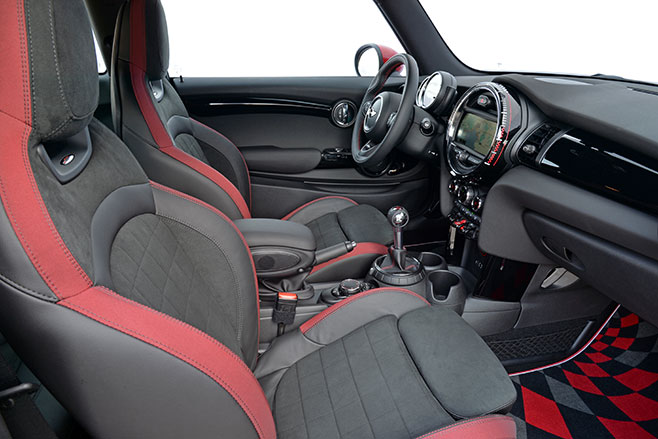
All that’s forgotten inside where, like the rest of the new range, it’s lost some but far from all of Mini’s iconic boutique charm; for instance, the chrome aircraft switches in the centre remain, though the window buttons are now cheap plastic items on the door, as with the now-doomed Mini Paceman. The funky lighting, excellent surfaces and clever design are all present, and for this speed machine there’s a crisp head-up display.
The driving position is a little compromised; it takes a while to feel comfortable on the firm yet well-bolstered sport seats that have you up slightly too high. Hit Start and the turbo four, which delivers 170kW and 320Nm (up 15kW/40Nm on the previous 1.6-litre turbo), burbles nicely. This is the only new Mini that’s not been given a smaller engine, and it has a single, twin-scroll turbo that’s cleverly packaged into the exhaust manifold, saving space and allowing it to spool up faster, and it shows when you push the Mini hard.
There’s a snap, crackle and pop as you lash the pedals of the six-speed manual, the 6.3sec 0-100km (6.1sec for the auto) bettering the Golf GTI but far off the Golf R’s 4.9sec effort. Yet the JCW delivers it in an entertaining manner: that sound, maximum torque from a low 1250rpm, and the traction from its electronic diff lock and new launch control system make this one effective hot hatch.
Mini has worked hard to eliminate torque steer, but hasn’t eliminated it completely. “If we did that, it would feel sterile,” says Lars Weller, the bloke responsible for its driving dynamics.
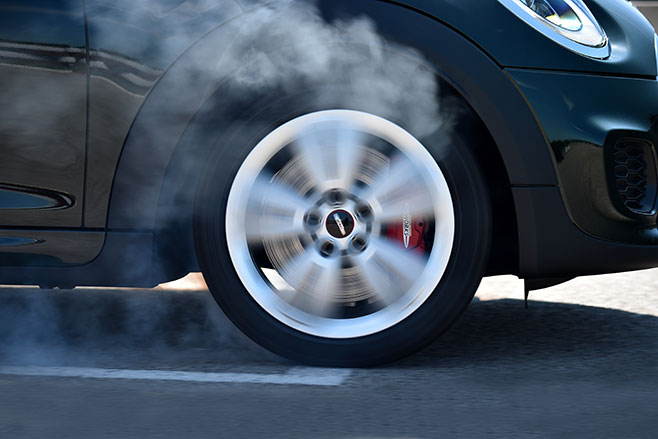
Sterile it ain’t. Traction levels are Tarzan-like, with no wheelspin even with the DSC switched off, making the balanced JCW predictable yet fun as it delivers its power to the ground and punches forward, urging you to do so again and again like an exuberant puppy returning a stick. Choose Sport mode and the sharp steering has a delicious gooey centre for great feedback, but is a little quick for the body and hampers change of direction that could be sharpened (leaving room for another track-tearing Mini GP model?).
There’s a little dive and squat, and slightly too much body roll, but the roadholding is enough to make it fun without being wallowy. The JCW deals with large bumps quickly and maintains its composure, although our test car ran Pirelli-shod 17-inch wheels instead of the 18s we will get. Also standard in Oz will be two-stage adaptive dampers, again not on our test car.
Those four-piston front Brembos are the biggest single improvement, the JCW staying as composed as a Beefeater when you stomp on the brakes.
A low point is the six-speed manual shift, it’s lack of directness making mis-shifts and aimless hunting a regular occurrence. However, the auto’s wheel-mounted paddles answer quickly and in manual mode won’t change up on you. It’s also faster and more frugal (5.7L/100km being a full litre better than the self-shifter), so it’s difficult not to warrant the hefty $2550 premium for the auto.
The 2015 JCW is much more composed and grown up, so it’s a more liveable car around town than before. Remember when these were torque-steering wheelspin factories? Where the JCW was once a wild teenager, this new version is a sophisticated young up-and-comer with sharper manners, yet still knows how to play hard. It’s just much better at both.
SPECS Model: Mini Cooper S JCW Engine: 1998cc 4cyl, dohc, 16v, turbo Max power: 170kW @ 5200rpm Max torque: 320Nm @ 1250-4800rpm Transmission: 6-speed manual Kerb weight: 1205kg 0-100km/h: 6.3sec (claimed) Economy: 6.7L/100km (EU) Price: $47,400 On sale: July
GET ready for the Toyota Camry that’s good to drive.
That’s the promise from Toyota in unveiling the final Australian-made Camry that will take on the new Ford Mondeo, the strong-selling Mazda 6 and Holden’s lacklustre Malibu.
Or, at least, it will offer more excitement with some of the updated mid-sized range.
The heavily revised Toyota Camry lineup – with 800 new parts and fresh speed skater-inspired sheetmetal – includes a unique-to-Australia sports model designed to broaden the appeal of a medium car known for its conservatism.
That sports version – the Atara SX – includes unique suspension, 18-inch Bridgestone tyres and a faster steering ratio.
But the same 2.5-litre four-cylinder engine, with a modest 135kW of power. It is not available with the 151kW petrol-electric hybrid drivetrain.
Toyota Technical Centre president Max Gillard said the Atara SX allowed Toyota to create “a Camry with two flavours” – one that offered variants focused on reliability and comfort, and one focused on the “fundamental excitement of driving”.
That Camry Atara SX was engineered locally to Australian conditions under the watchful eye of chief engineer Masato Katsumata.
Katsumata claims the new suspension setup has “transformed Camry into a true driver’s car” and one that is “much more fun to drive”.
The cynical – including us at Wheels – would suggest there was plenty of room to move.
Toyota will no doubt be hoping the Toyota Camry Atara SX will be more successful than the locally produced Toyota Aurion TRD, with its supercharged V6 that struggled to compete with V8 and six-cylinder turbo options from Ford and Holden.
Toyota has priced its final Australian-made Camry from $26,490 (plus on-road costs) with the Atara SX priced at $31,990.
TOYOTA has slashed up to $5000 off its heavily revised new Toyota Camry in an effort to maintain or boost sales as local production winds down by 2017.
The move takes Toyota Camry pricing back to that of the Camry sold almost two decades ago, in 1997.
“Australia’s favourite mid-sized car is now even better,” said Toyota Australia executive director of sales and marketing Tony Cramb in announcing the heavily revised pricing. “We’ve injected Camry with greater emotional appeal … and freshened the interior.”
The move is in an effort to increase Toyota Camry’s dominant share of the mid-sized market, currently at 44.5 percent – but planned to go higher.
However the headline price reduction is in many ways debatable because it’s only off the “list price”, which excludes on-road costs such as stamp duty and registration.
The Toyota Camry has for years been selling for big discounts, often in excess of $5000.
Also, most Toyota Camrys – about 65 percent – have been sold to fleets, which gain significant discounts.
Cramb concedes maintaining share in the struggling medium car segment is not enough to produce the 90,000 cars annually required to ensure the viability of the soon-to-close Altona manufacturing facility.
“We’ve totally redefined the concept of value in the medium segment,” said Cramb. “For the metal, it’s the best value car you can buy today.”
Cramb said appealing to younger buyers – those aged 35 to 50-years-old – was crucial to the success of the Toyota Camry.
“We are now attracting more buyers under 50 than over 50,” he said, convinced the new Atara SX model – with firmer suspension and 18-inch wheels – would improve that percentage.
Cramb also said there would be another minor update to the Camry in 2016.
“We’ll have some further updates in about a year’s time.”
And, of course, there are imported Camrys from 2018 onwards.
“It’s certainly not the last Camry. Camry will continue for many years to come,” Cramb said.
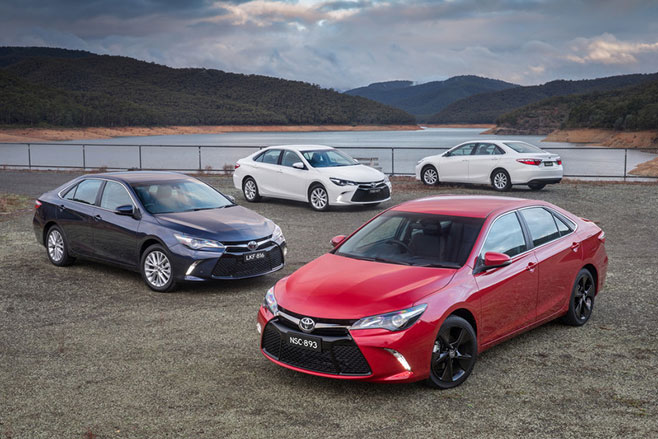
The just released new Toyota Camry is available in four model grades – Altise, Atara S, Atara SX and Atara SL.
The Altise gets 16-inch wheels and sells for $26,490 (plus on-road costs), a 6.1-inch colour touchscreen, voice recognition and a 2.5-litre four-cylinder engine with six-speed auto. It makes 133kW and has single exhaust outlet.
The Atara S ($29,490) gets 17-inch wheels, Toyota Link with Pandora app functionality and a powered driver’s seat. It also gets a unique black lower grille with honeycomb mesh and a dual exhaust system that ups power slightly to 135kW.
The Atara SL ($37,440) gets leather, a dark wood finish, beefier JBL audio, sat-nav, digital radio, rain-sensing wipers, rear blind, powered passenger seat, auto emergency braking and active cruise control.
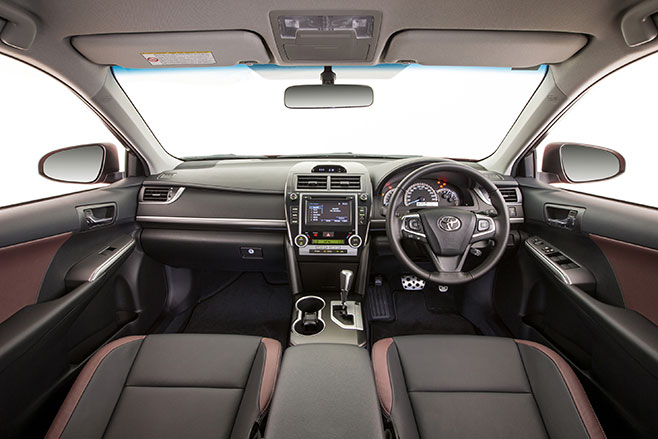
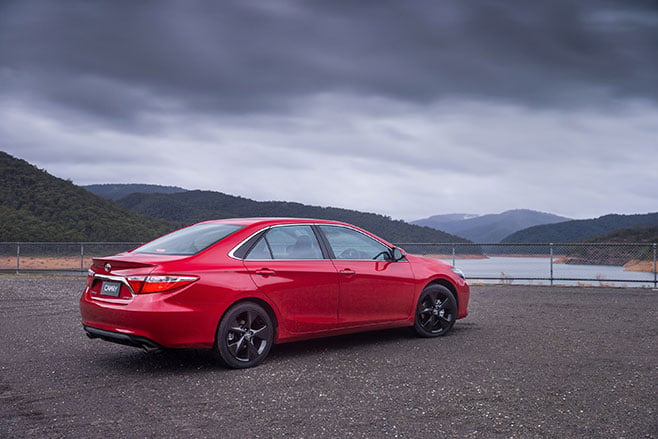
The Atara SX ($31,990) gets 18-inch black wheels, sports suspension, smoked chrome grille bar, leather seats with deep red for the bolsters, a rear spoiler and unique mesh-look finish inside
The Hybrid drivetrain adds $4000 to the Altise, $3000 for the Atara S and $3000 for the Atara SL.
The hybrid is not available in the sporty, new-to-the-range Atara SX range.
FORMULA ONE: Hola! Rosberg bounces back to reign in Spain
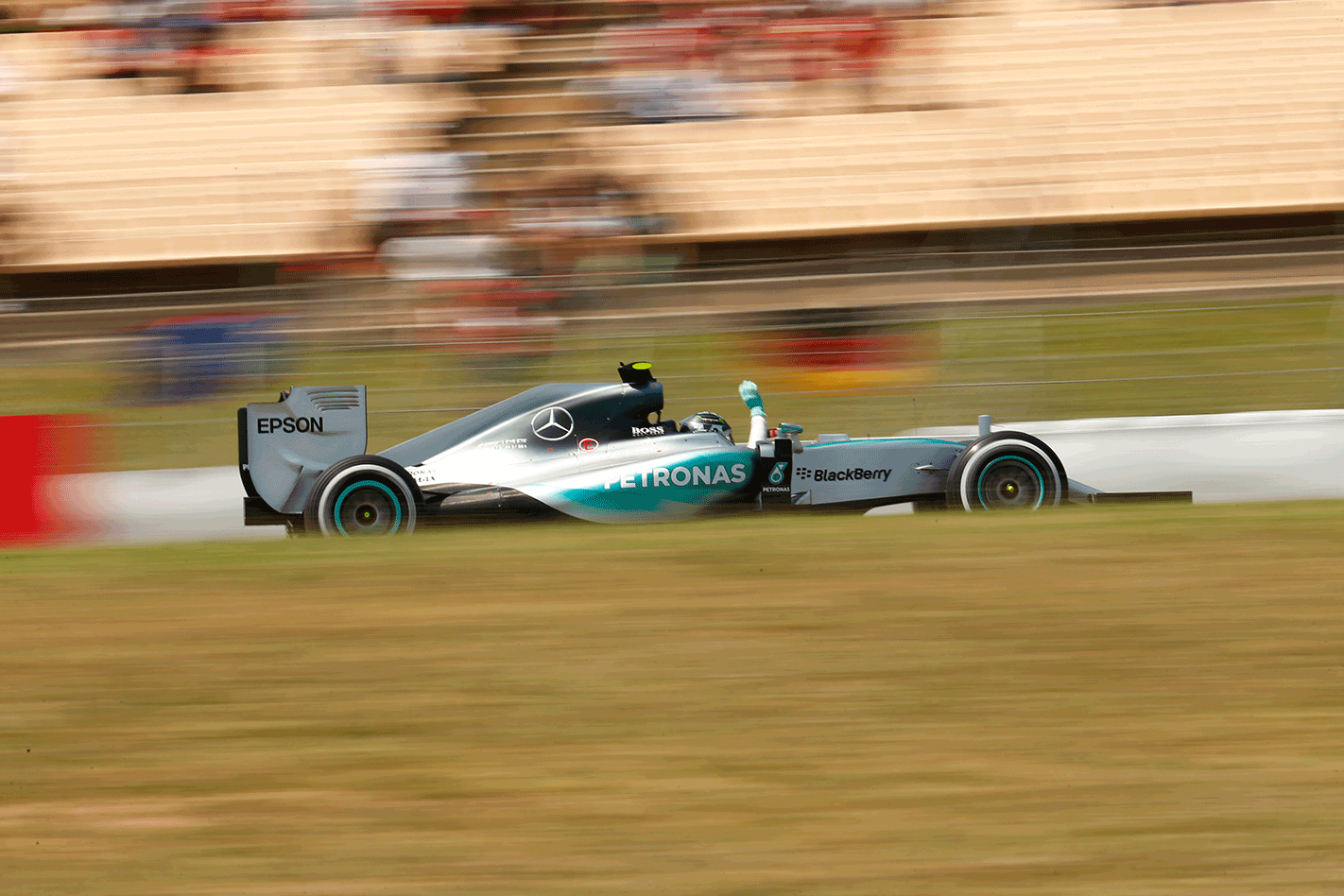
Regrouping after being hammered at the first four races by his Mercedes team-mate, Rosberg responded to critics in a most convincing way. He has now closed the gap to Hamilton to 20 points.
It was a perfect weekend for the German driver. He made a perfect start from pole – Mercedes’ 16th consecutive pole – and, following Catalunya tradition, that was the ballgame.
Hamilton, overwhelmed by wheelspin, was jumped by Sebastian Vettel’s Ferrari in the run to the first corner, but later regained second.
Rosberg controlled the race throughout, easing off to allow Hamilton to move closer as the laps ran down.
Hamilton had the pace to account for Vettel, landing another Silver Arrows one-two. Vettel scored another podium, from Williams’ unflappable Valtteri Bottas, a menacing Kimi Raikkonen (Ferrari) and Felipe Massa (Williams).
Australia’s Daniel Ricciardo battled hard but was never a challenger, taking seventh more than one lap down. It’s looking like a long, hard season for our Dan.
“Seventh was the maximum I could get out of the car,” the disappointed West Aussie reported. “There were some parts of the race that were encouraging. We’re still further off than where we want to be, but we’ll keep pushing. We came here with upgrades this weekend but they didn’t give us what we were expecting, so that’s something we’ll keep working on.”
Many of the stronger teams brought major updates to Barcelona. The outcome, though, was no significant shuffling of the pecking order at the pointy end.
Using his fourth internal combustion engine at Catalunya, Ricciardo was holding his breath throughout the race. Another power pack failure would mean a tough grid penalty for the next race, the Monaco Grand Prix, where passing is always at a premium.
The teams are considering approving the use of an extra engine in season. Red Bull is obviously in favour of the move, but Williams and Force India – users of reliable Mercedes engines – are against any further concessions on competitive and cost grounds.
V8 SUPERCARS: Ford dealer team dream
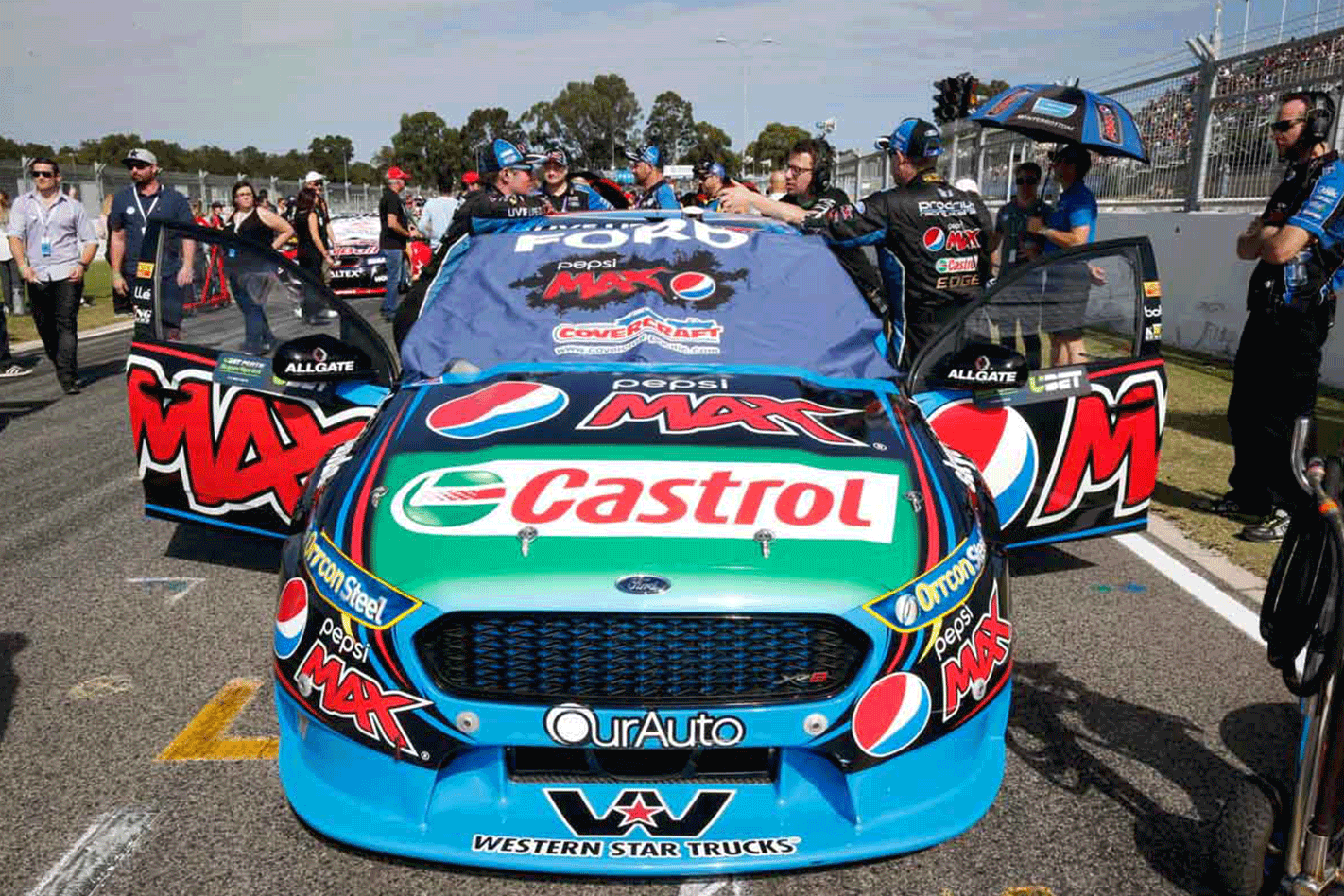
HOW much credibility do we attach to a newspaper story suggesting that a group of Ford dealers are looking at ways of keeping the Blue Oval’s V8 Supercars program alive despite the company’s decision to withdraw its support at the end of this season?
Well, not much, given the story emerged from News Corp, and that it quotes the unconvincing “anonymous source”.
The story suggests the dealers are working at finding a $1 million budget for Ford teams, with a hope that Ford Australia will match the dollar commitment.
But Ford Australia moved with lightning speed to dismiss any suggestion it might execute a handbrake turn and somehow stay involved, issuing an unambiguous statement on the same day as the tale emerged: There are no changes to the brand’s motor sporting philosophy of non-participation in V8 Supercars from next year.
“We are absolutely committed to serving our customers by investing more in our products and consumer experience, including 20 new vehicles by 2020 and our new free loan-car program for scheduled service,” said Ford Australia’s communications and public affairs director Wes Sherwood. “Our racing plans remain the same.”
In other words, no racing.
F1: Red on par with silver
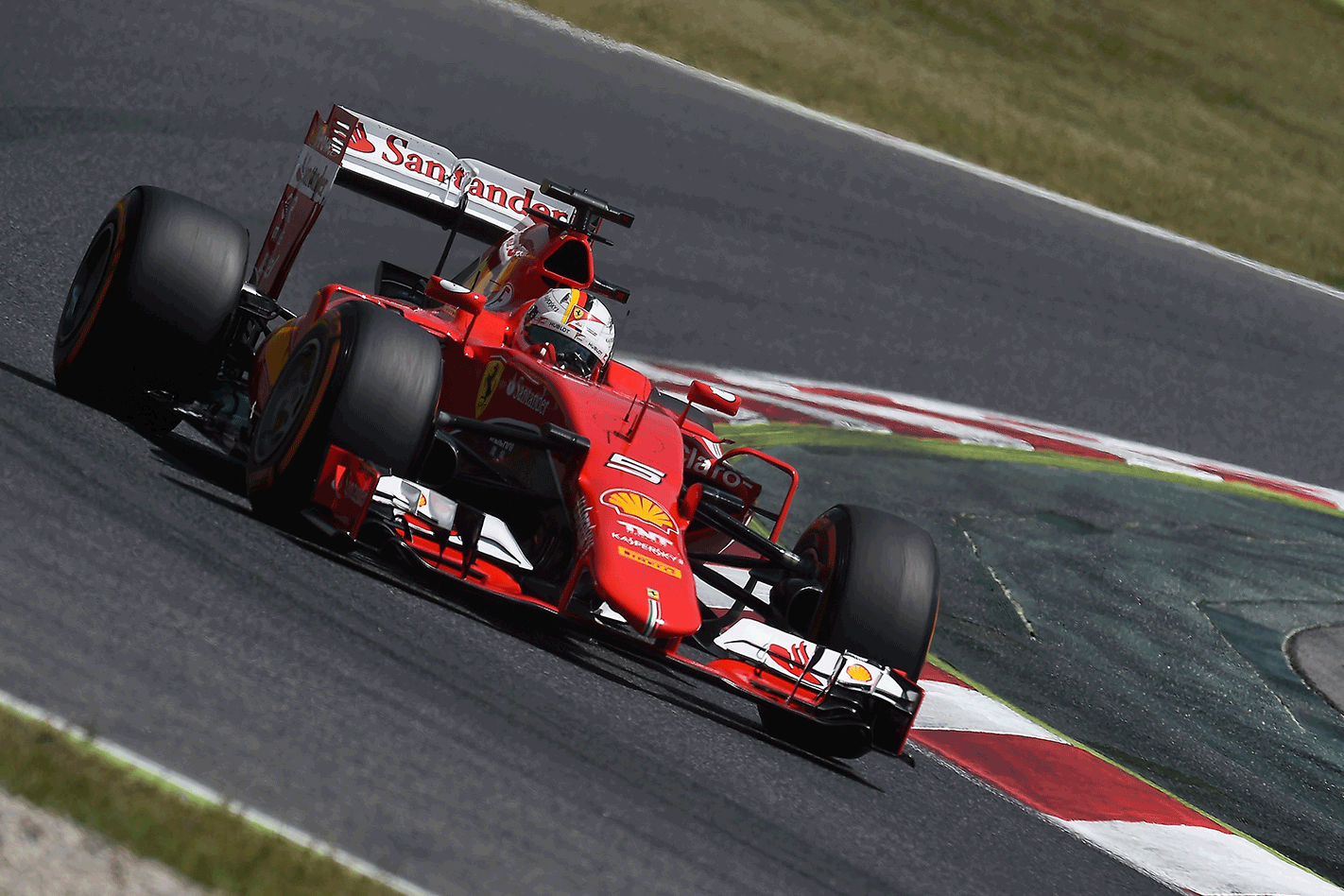
FERRARI is now matching the rampant Silver Arrows cars of Lewis Hamilton and Nico Rosberg for engine power, or so says Mercedes F1 non-executive chairman Niki Lauda, who may or may not be looking at the same comparative performances that we are…
It certainly didn’t look like it at Catalunya, where the nearest Ferrari finished 45 seconds behind the winner.
Ferrari made huge gains over the off season, catching out rivals – and F1 pundits – when Sebastian Vettel took a stunning win in the Malaysian Grand Prix.
Mercedes has won the other four races this year but Ferrari has emerged as a regular threat.
“Ferrari has closed the gap from last year to this year to nearly zero,” Lauda said. “I think they increased their engine by about 45 horsepower, so my estimate at the moment is that they have the same power Mercedes has.”
Red Bull’s Daniel Ricciardo agrees that Ferrari has been the big mover off season, and has moved ahead of Williams and Red Bull.
But Vettel insists there is still a gap to Mercedes, despite Ferrari bringing many aero updates to the Spanish GP. The race results suggest he’s right.
PORSCHE SUPERCUP: Power kicks off European Porsche campaign
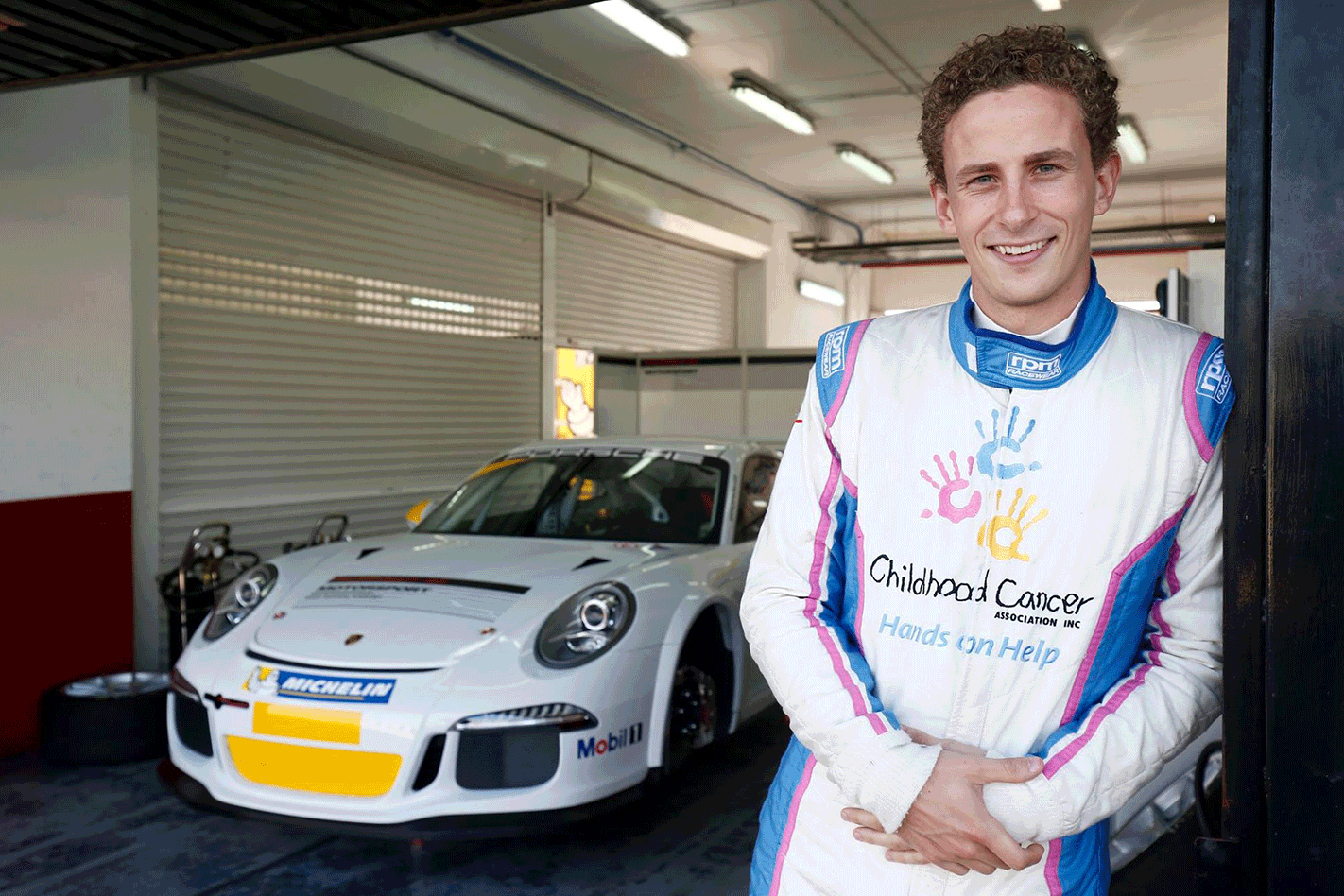
ADELAIDE’S Sam Power made a positive start to his European Porsche Supercup campaign in Barcelona.
Power, a graduate of Australian Formula Ford, qualified 15th (+1.2s from pole man German Michael Ammermuller and only 0.4s behind teammate Ben Barker, who raced Carrera Cup Oz in 2011).
A storming drive in the 14-lap race, which had an early safety car interruption, rewarded Power with a 10th place finish, one slot behind Barker. So he has bagged points on debut in a race won by Ammermuller.
Power has sunk everything into a venture that he hopes can fulfil his ambition of carving a career at the highest levels of GT racing.
The Porsche Supercup is the top one-make championship in the world with former champions including Le Mans 24 hour winner Stephane Ortelli.
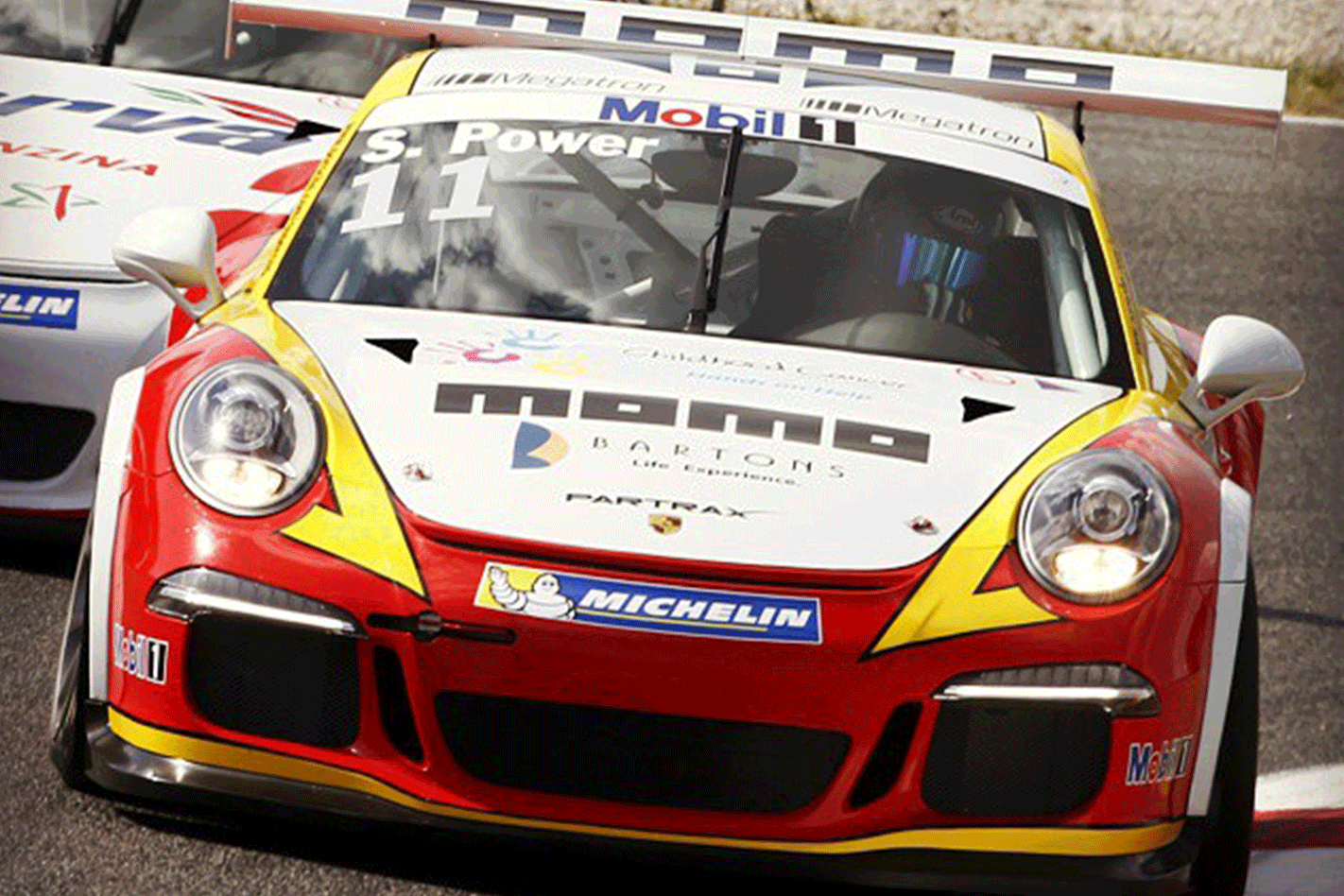
He admits he went to the opening round fit but not with enough seat time in the car.
“Having completed one full test in the car, we can see the pace is there, and I know the areas I need to work on,” he explained.
Next stop for the series is the Monaco Grand Prix meeting in a fortnight.
RALLYING: Police investigate WA spectator death
WEST Australian police have launched an investigation after a spectator was killed and two others injured by a competition rally vehicle on Saturday.
The incident occurred during the Donnelly round of the Western Australian Rally Championship, about 280km south of Perth.
One spectator sustained fatal injuries as a result of the incident, the Confederation of Australian Motor Sport said in a statement. The two other spectators were flown to a Perth hospital for treatment, it said.
Sign up here to receive the latest round-up of Wheels news, reviews and video highlights straight to your inbox each week.
An electric blower may sound like something an Audi TT owner would use, but it’s an electric compressor that makes the Audi TT Turbo Concept a seriously fast compact coupe.
Basically, take one 2.5-litre turbo five-cylinder engine from the new Audi RS3 (and forthcoming Audi TT RS, presumably) and inject micro-hybrid technology.
Adding tiny lithium-ion batteries and a 48-volt electrical system that is around four times the voltage of a regular car means allowing a compressor to instantly build boost pressure to feed the engine when you touch the throttle. Even the best turbos still have lag, but an electric compressor doesn’t. You can then tune the mechanical turbocharger to make big boost at the top end because the compressor will more than fill in the gap down low.
The result? 441kW and 650Nm in a 1396kg, carbonfibre-reinforced polymer package, driving all four wheels via a six-speed manual transmission with a cool R8-style H-gate pattern.
Torque is produced between a staggering 3000rpm and 7000rpm, with a resulting 3.6sec 0-100km/h sprint and 310km/h top speed.
Thankfully that manually adjustable rear wing, 20-inch tyres and carbon ceramic brakes help when you want to go the other way (and the brakes furiously recharge the compressor’s batteries).
The electric compressor is far from a production pipe dream. Audi has shown the technology on the RS5 TDI concept before, and it is headed to production with the Q7 SUV. The Audi TT Turbo Concept is the first time the tech has been shown with TSI petrol power, and the combination of high-revving petrol engine and instant off-the-line boost sounds even tastier.
Time to blow away the stereotypes of both this Audi coupe and electric tech – this looks like a proper sports TT, with electric tech that’s more LaFerrari than Prius.
Get your free weekly report from the world of fast cars – subscribe to the MOTOR newsletter!
