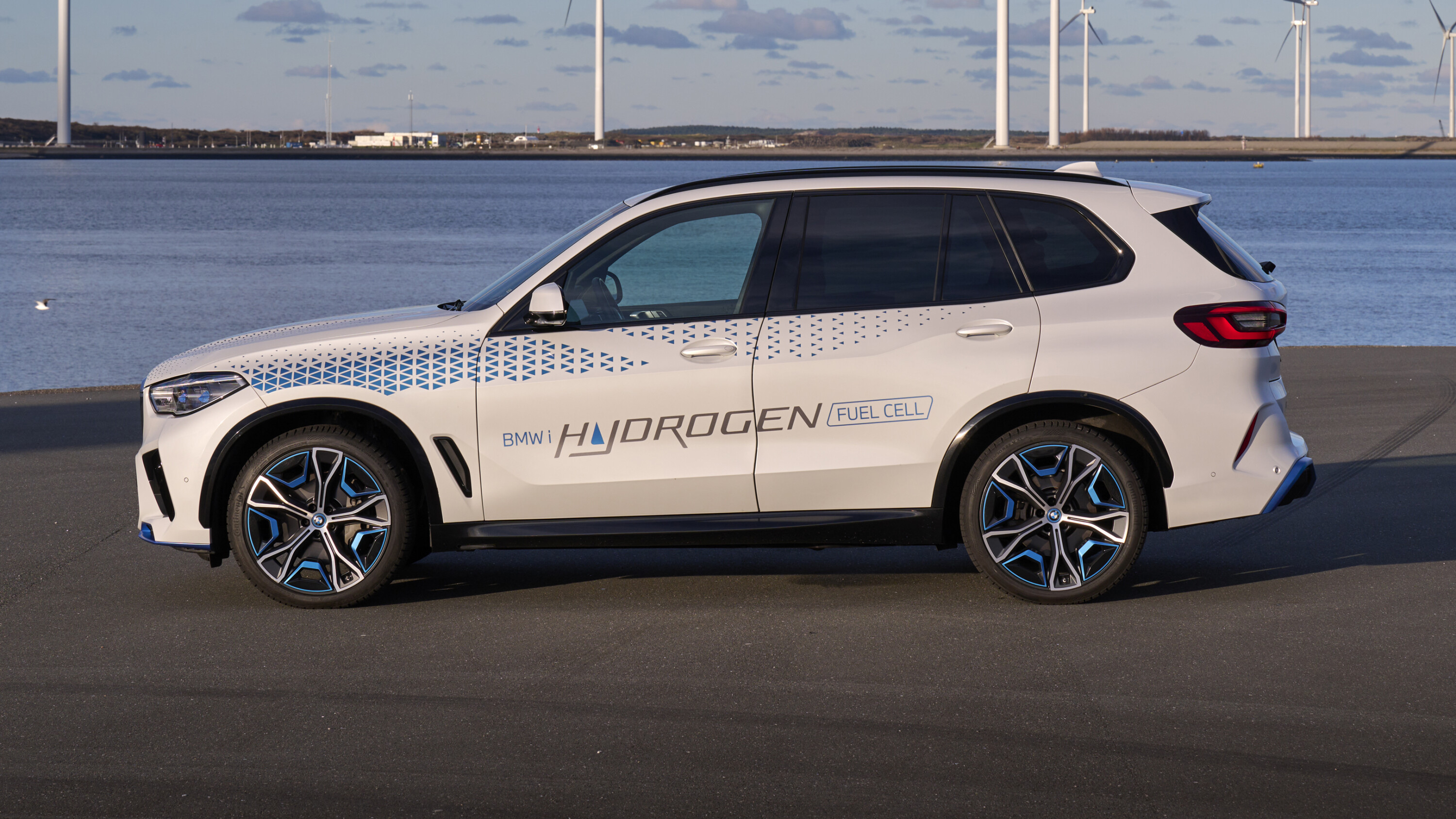
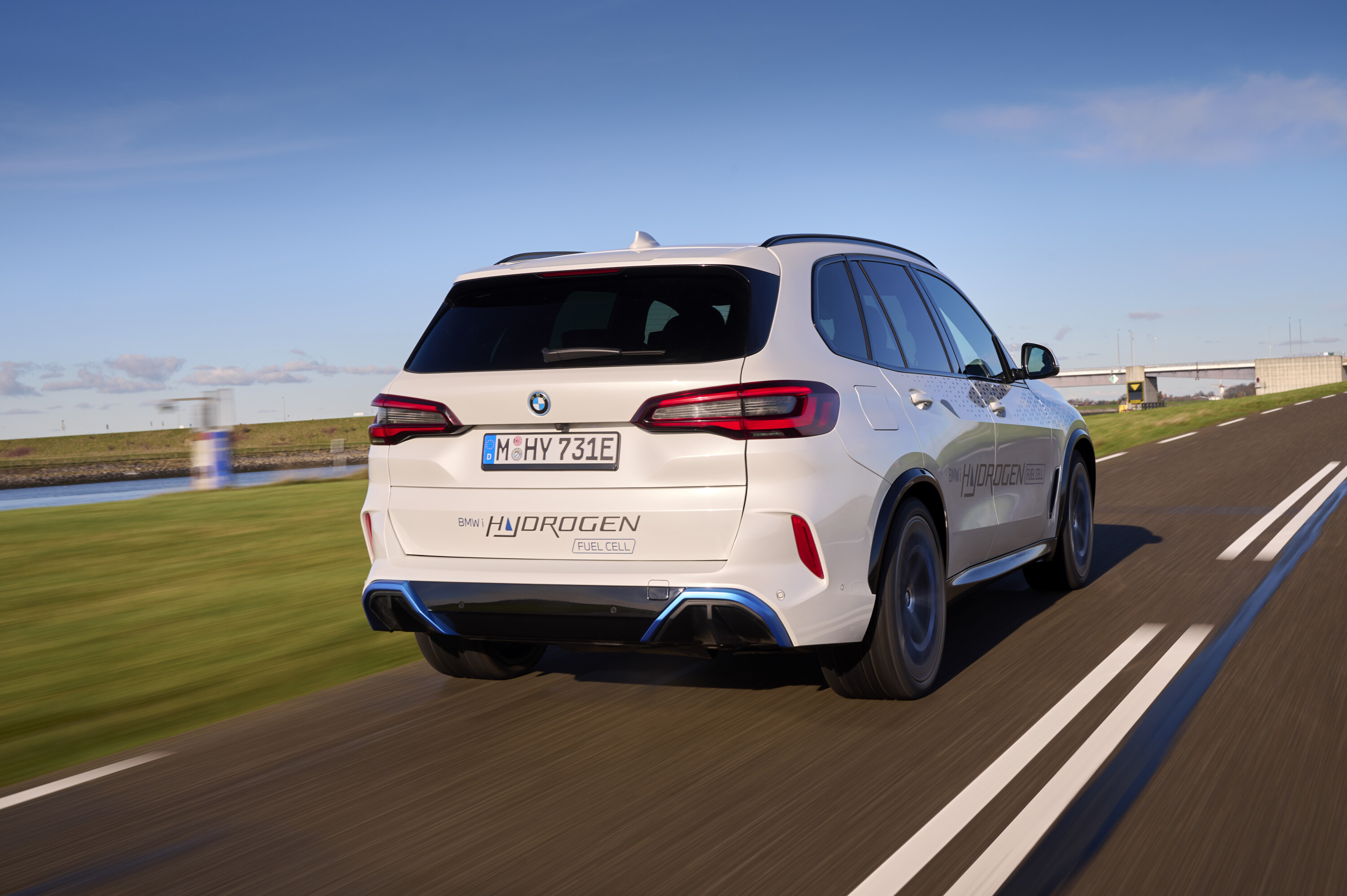
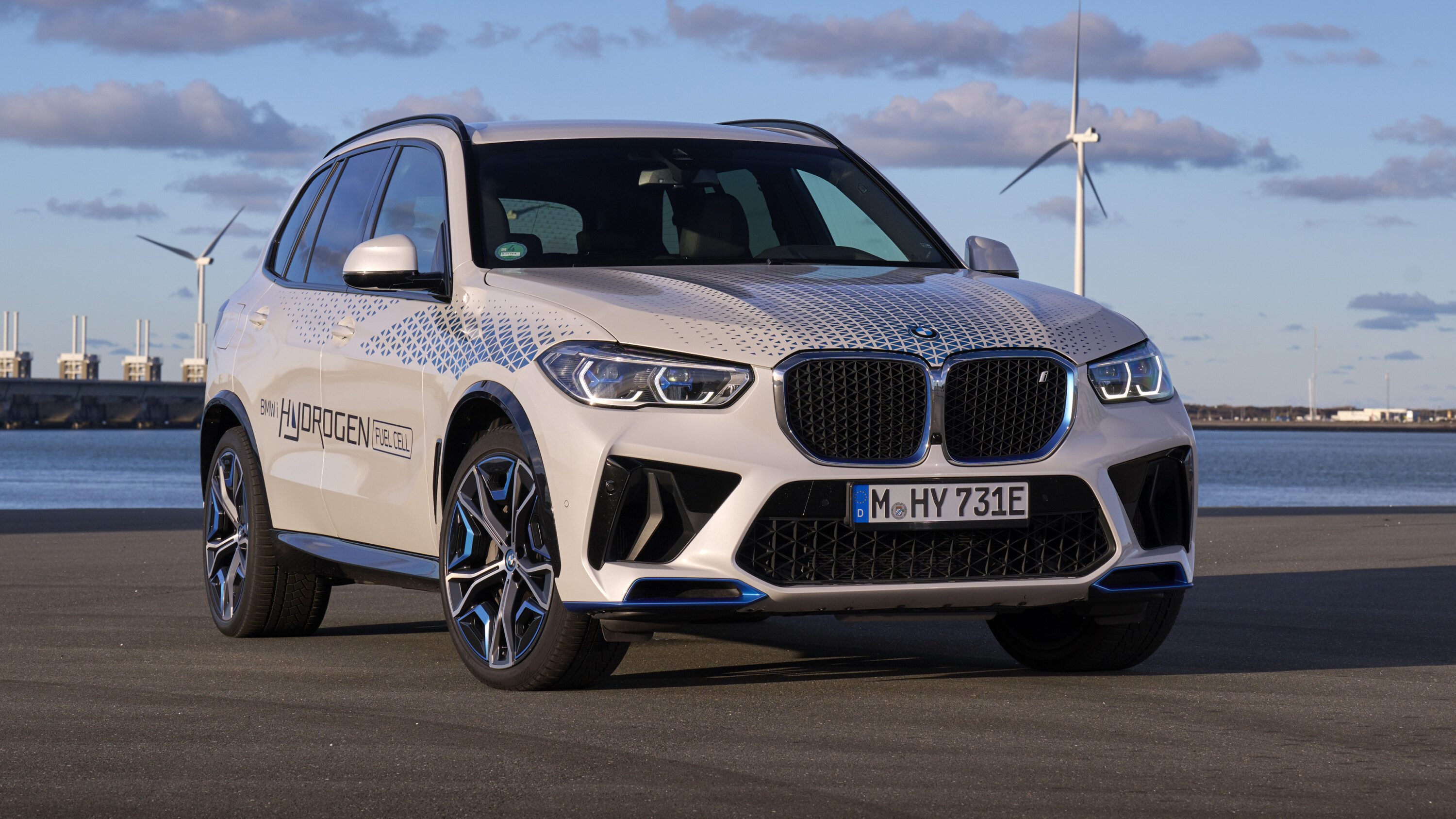
It’s the BMW iX5, the latest instalment in the Bavarian brand’s hydrogen adventure. One which began right back in the 1970s with an E12-generation 5 Series that accepted liquid hydrogen as its fuel.
Things have moved on a bit since, of course, with a number of 7 Series prototypes dotting the timeline since. More significant is a 2013 tie-up with Toyota, the result of which (for BMW) is this iX5.
It’s an electric vehicle, to all intents and purposes, with a motor from the iX SUV powered by hydrogen fuel cell tech shared with the latest Toyota Mirai.
2
Don’t get too attached, though; fewer than a hundred are being made, and none are for sale. After an extensive four-year development programme spanning the length and breadth of Europe, the iX5 now enters a ‘pilot scheme’ phase much like the original Mini E did over a decade ago.
These SUVs will be used as test and demonstrator vehicles across the world – and Wheels managed to blag a seat in one.
1
Are they serious? Is hydrogen really viable?
“Hydrogen is the missing piece in the jigsaw when it comes to emission-free mobility,” says BMW chair Oliver Zipse. “One technology on its own will not be enough to enable climate-neutral mobility worldwide.”
To paraphrase, the electric car network can’t keep swelling at the same rate of knots without huge expense, and BMW reckons growing a second infrastructure – to feed a more flexible fuel option – is the answer. Electric and hydrogen will complement rather than compete with each other.
“Betting purely on electric is like trying to stand on one leg,” iX5 project leader Robert Halas tells us. “Hydrogen has a role to play in the zero emissions story. It has fast refuelling, suits colder climates and is more useful for anyone who tows trailers or can’t charge an EV at home.”
The wider story is that it helps BMW decarbonise its cars and supply chain quicker. But ultimately that’ll only pan out if the car itself is a corker…
1
What are the numbers?
There’s a total output of 295kW, making the iX5 the most powerful fuel cell passenger car in the world and good for hitting 100km/h in under six seconds on its way to a 185km/h top speed. Limited, of course. A 6kg hydrogen tank yields a WLTP range of 504km.
While no weight figure is quoted, Halas tells us the batteries in a fuel cell car save 100kg over a conventional EV, making this iteration of the iX5 equivalent to a plug-in hybrid X5. Let’s call it 2.5 tonnes.
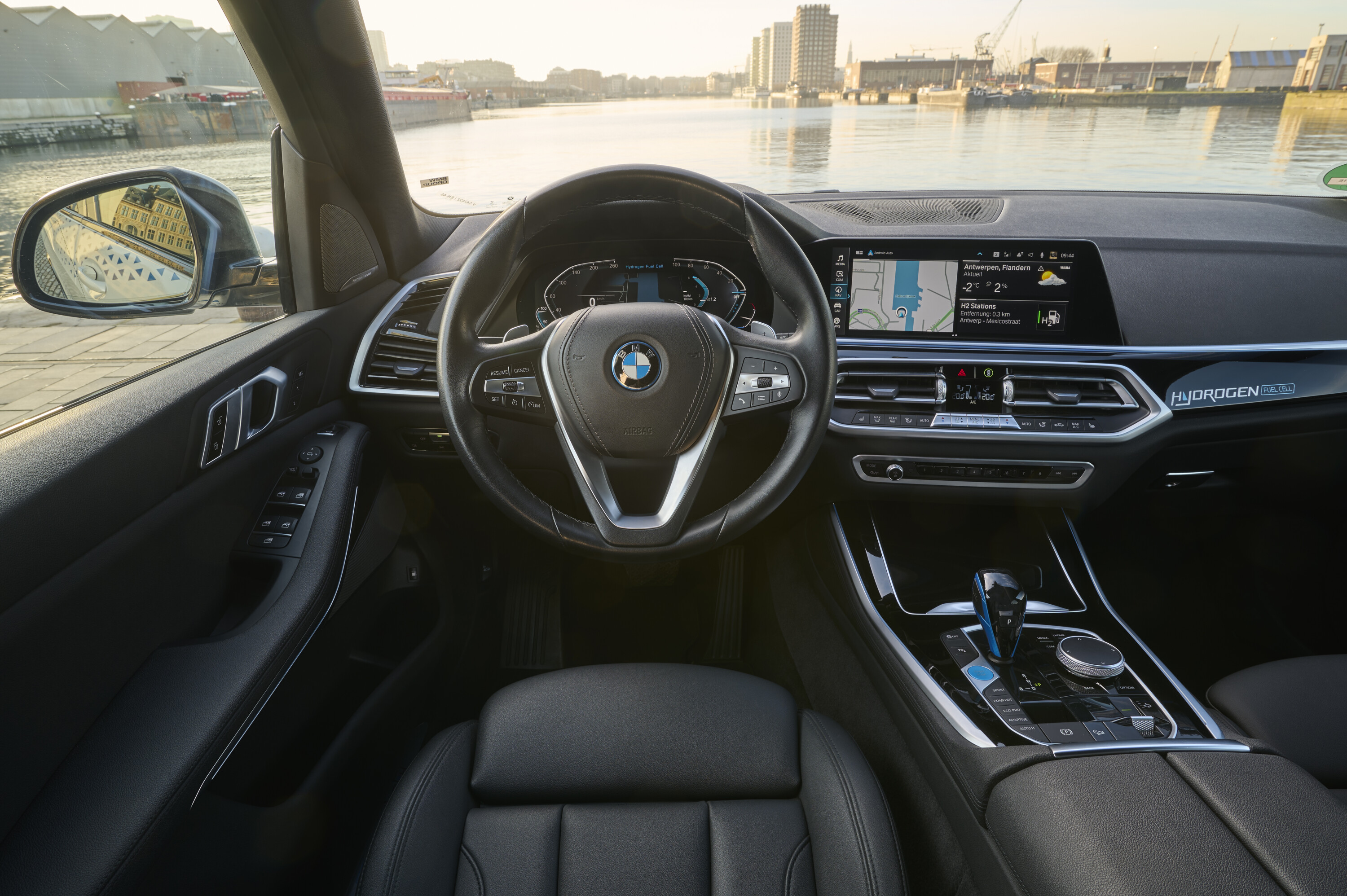
It drives as such, too. If BMW hadn’t emblazoned the iX5 with hydrogen stickers – or etched the word into the dashboard – we’d assume this was a battery EV, albeit one with the precision typical of products from the Munich marque.
Various driving modes and adjustable regenerative braking (via the steering wheel paddles) ensure the iX5 delivers every inch of the electric SUV experience.
It’s quick, too, feeling as brisk as its performance claims. You rarely get the chance (nor the inclination) to fully extend its throttle pedal in the urban setting X5s seem to invariably live their lives.
2
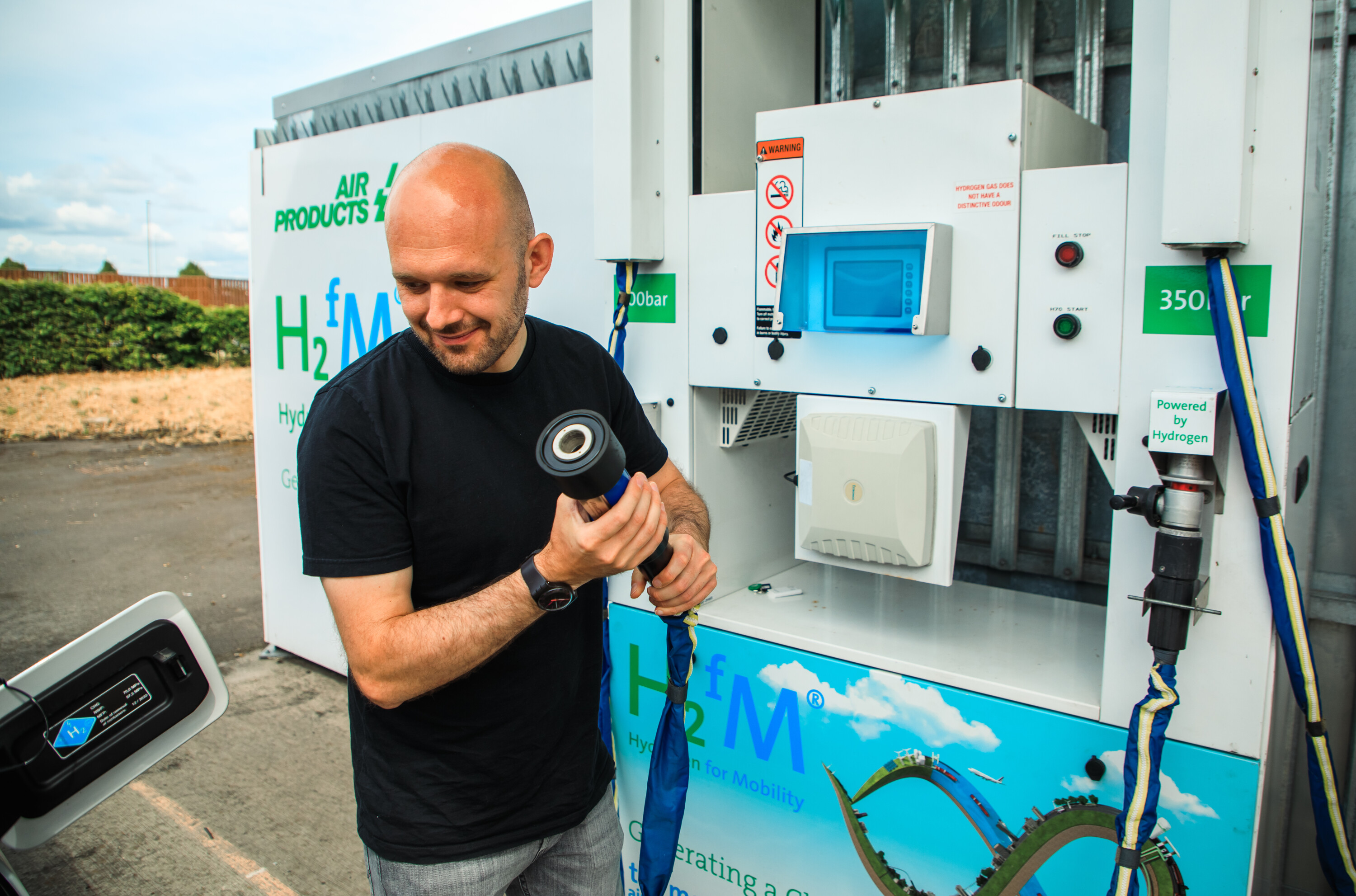
It takes a bit more brute force to clamp the hydrogen nozzle into the car compared to petrol or diesel models.
The big differentiator from existing electric SUVs is the three-to-four-minute refuel time. Not including the almost certainly lengthy detour to find a hydrogen filling station, of course. But let’s be kind and focus on the actual filling process.
It takes a bit more brute force to clamp the hydrogen nozzle into the car compared to petrol or diesel models, but that’ll likely allay any sceptics’ fears as they consider the mightily high pressures involved.
The process feels totally safe and, in a trial phase where membership schemes are crucial for access to the UK’s 12 hydrogen fuel stations, begins with the simple tap of a card on the touchscreen. Once you’ve located a station, it’s little different to filling up the traditional way – and there’s no greasy hand or impulse-bought chocolate afterwards.
1
Is it worth waiting for the BMW iX5 Hydrogen?
Well, it’d be a long wait. BMW’s figures identify five hydrogen filling stations in Australia right now.
That’s the same as Belgium, which has 99.6 per cent less landmass. It’s not going to be the work of a moment to make our shores a natural home for hydrogen power.
But in countries where the infrastructure expands as quickly as demand for hydrogen-powered commercial vehicles (cars, trucks and buses can share stations) the next step of BMW’s hydrogen journey might just be worth a punt.
The car itself has convinced us; we just need the stations that power it – or the governments whose decisions they hinge on – to do the same.
Well, that’s a shock, MG has launched the MG4 XPower in Australia with an incredibly sharp $59,990 (before on-road costs) price.
Story continues: MG4 XPower review
What is the MG4 XPower and what are its key rivals?
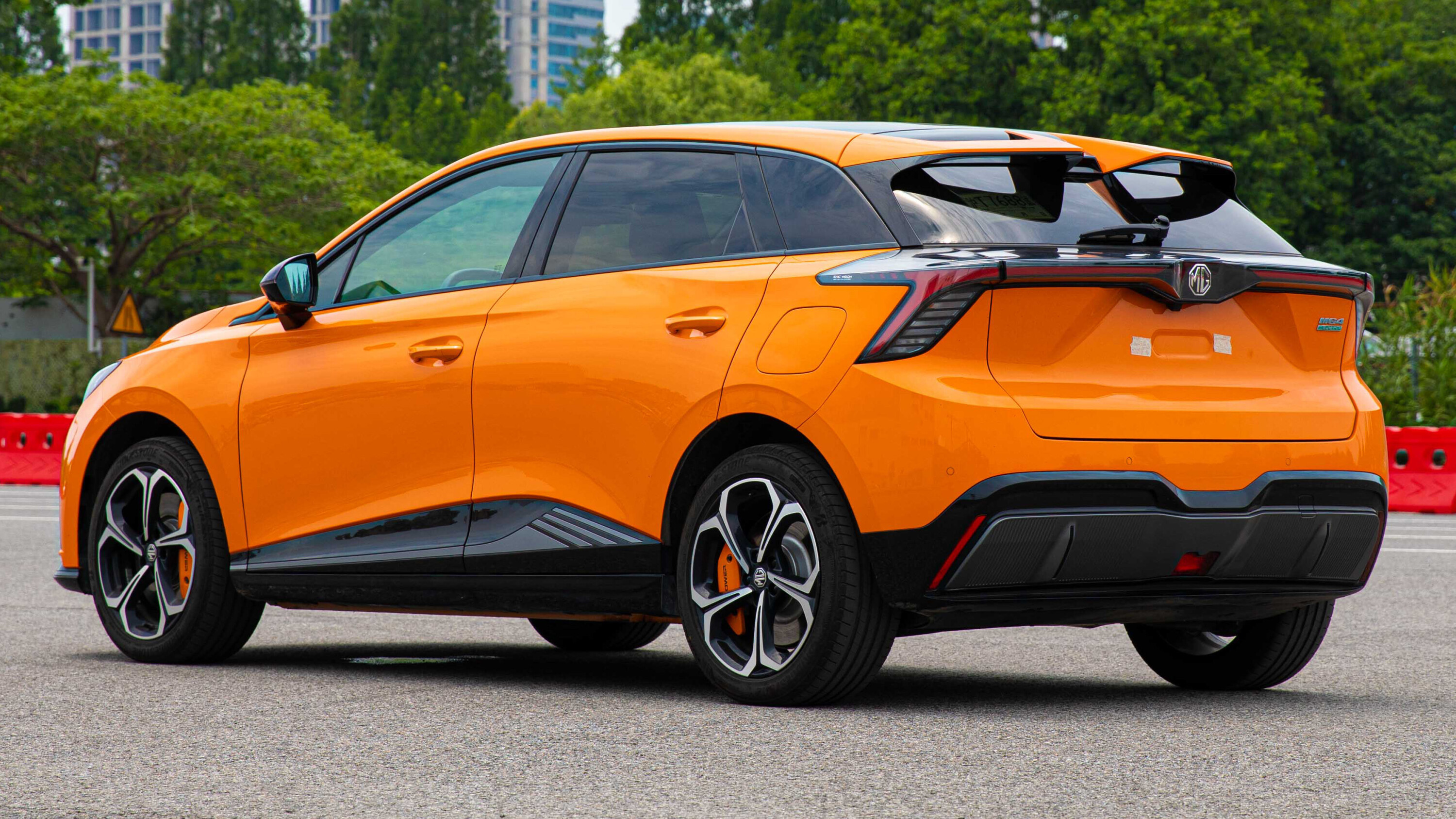
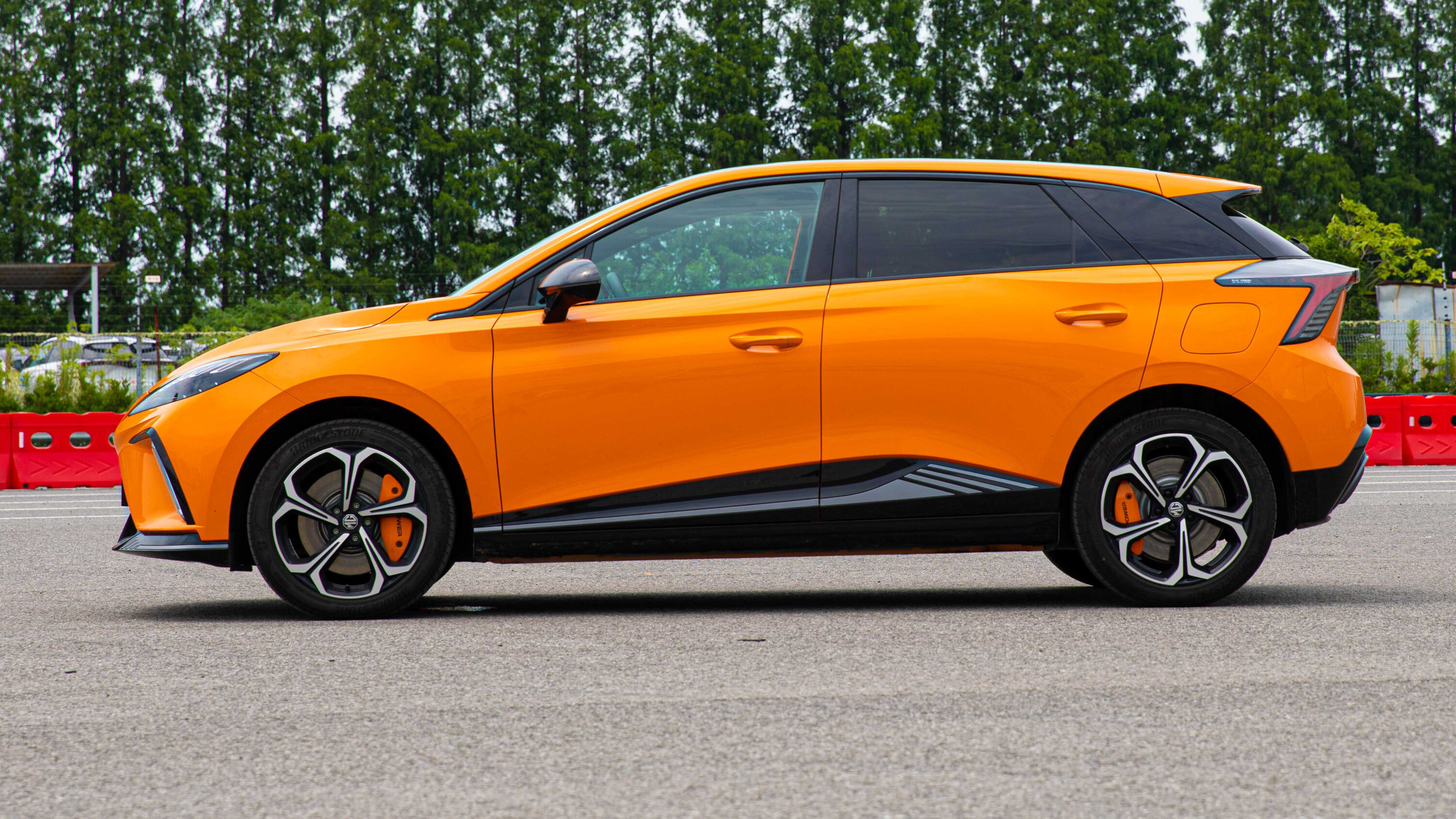
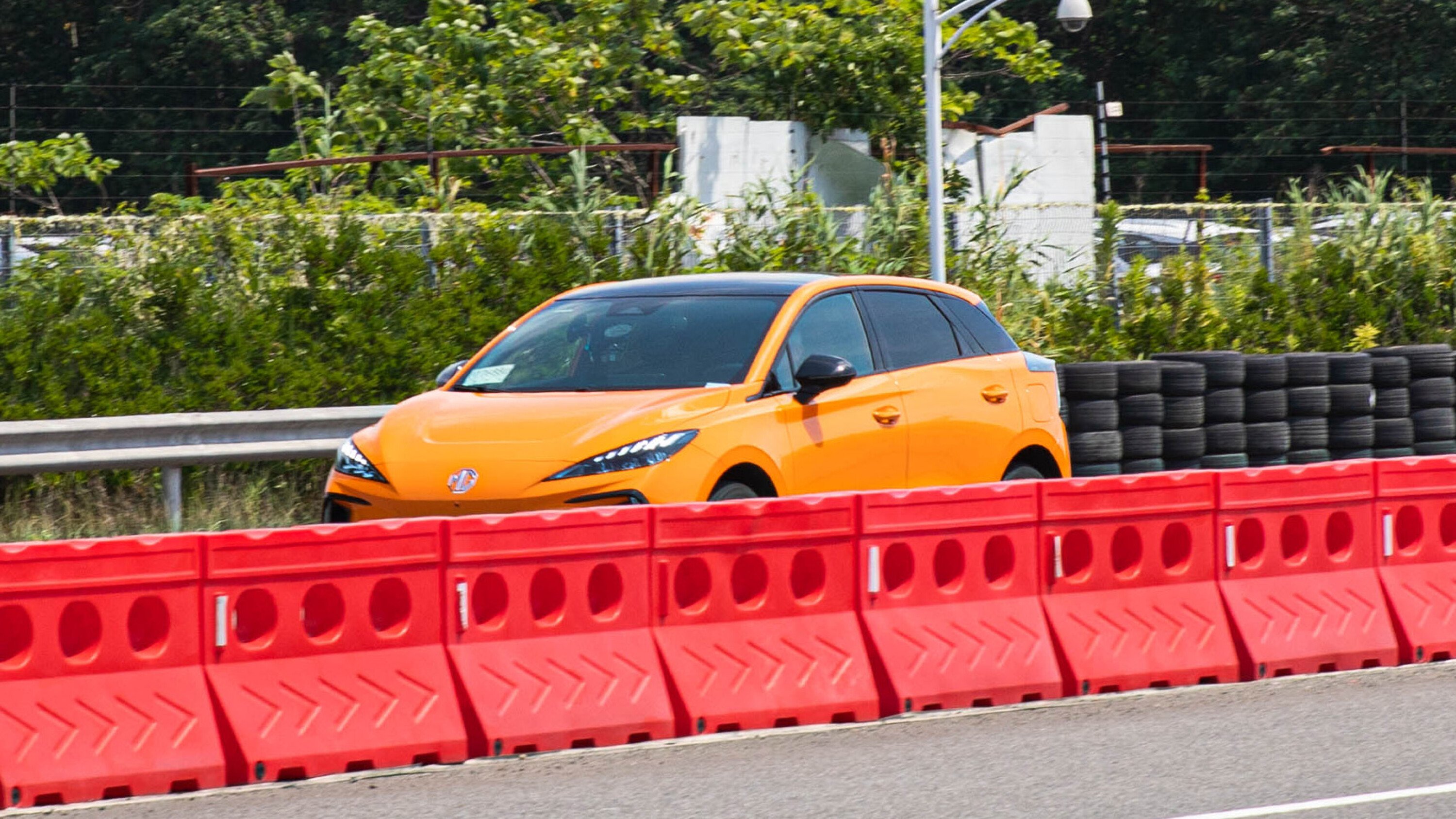
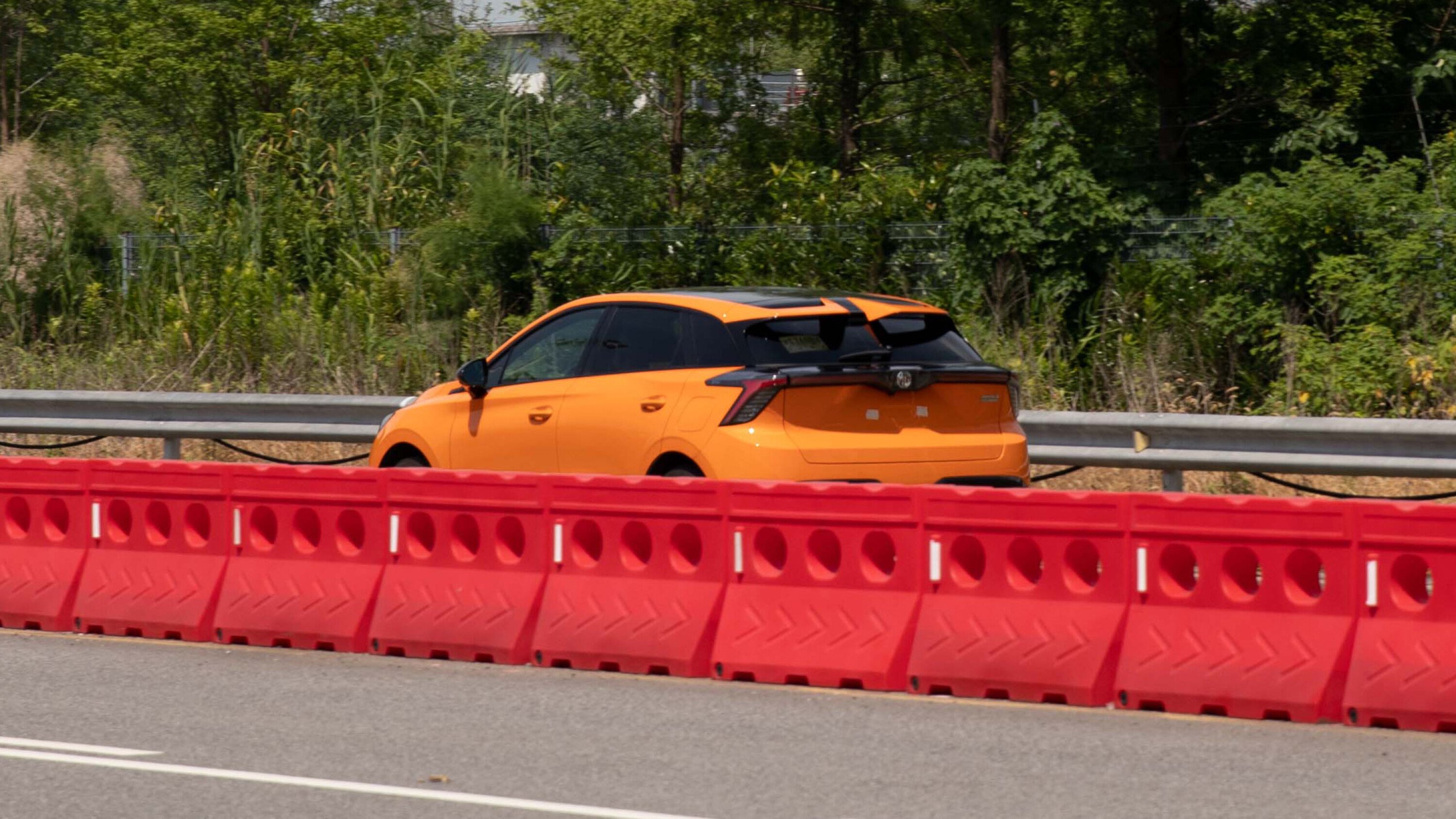
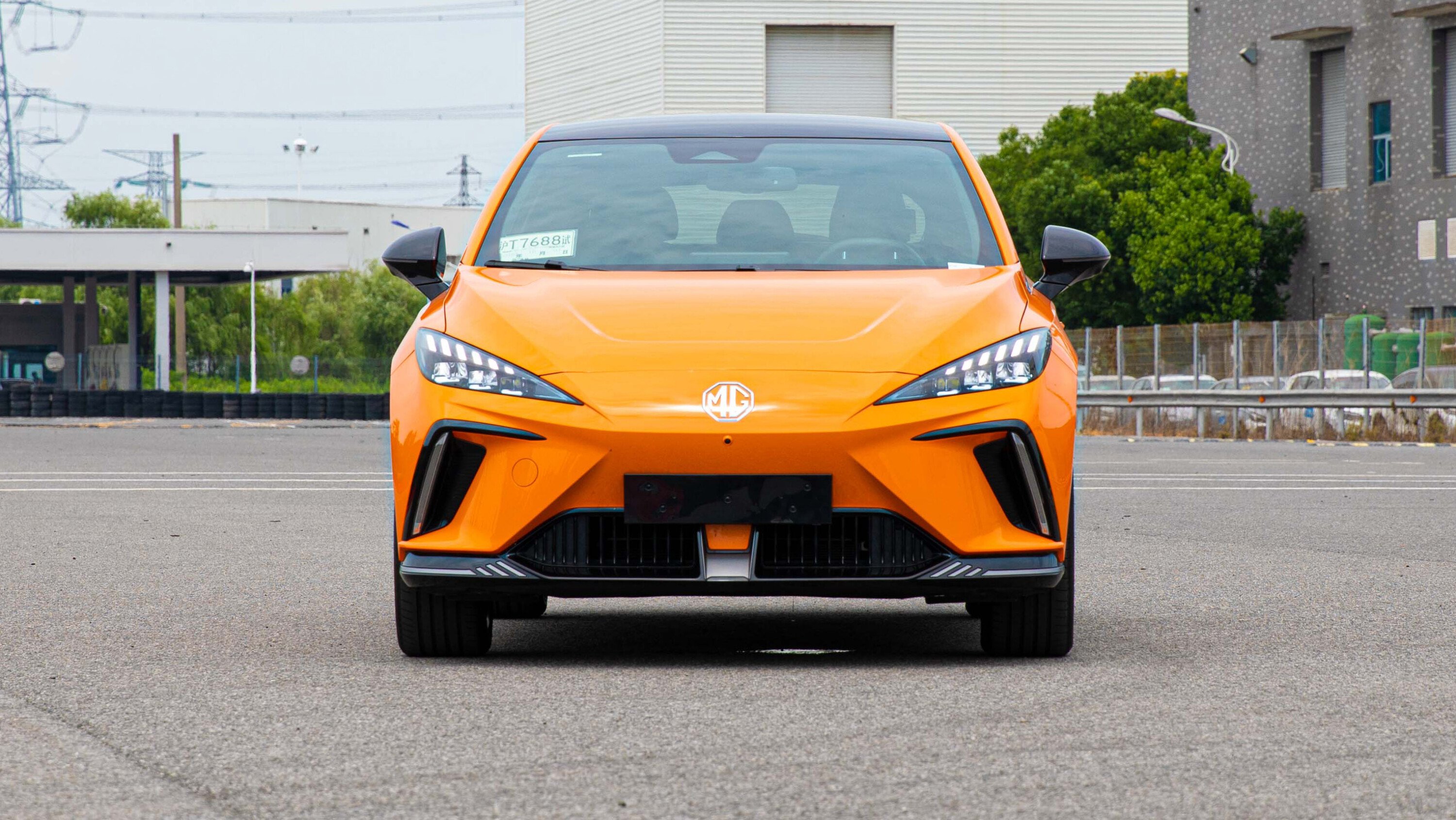
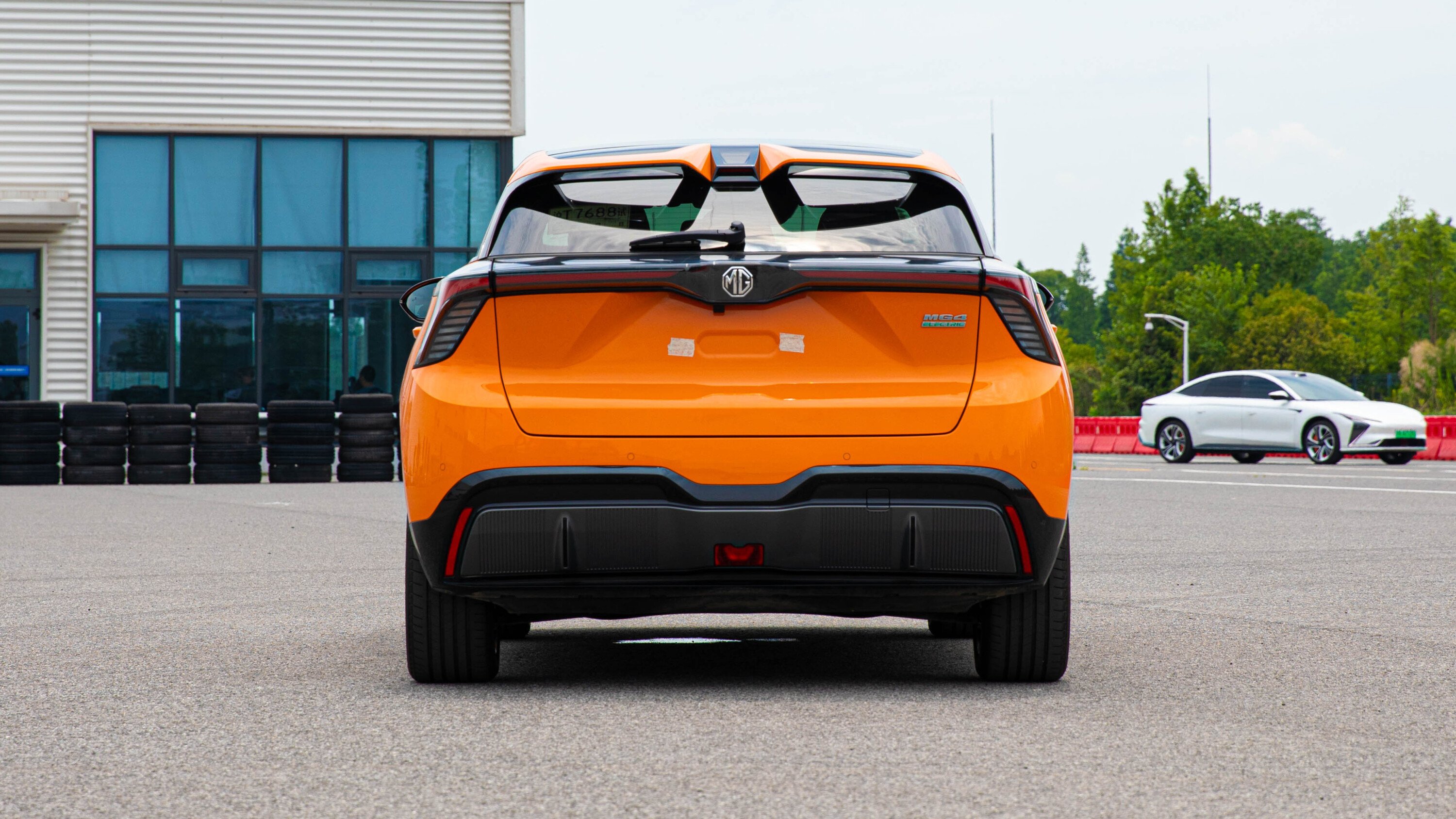
The MG 4 XPower is a dual-motor battery electric performance car touted as the world’s first dedicated, all-electric hot hatch – and it’s coming to Australia in late 2023.
Fed by a 64kWh battery offering 385km of claimed range (WLTP), the MG4 XPower’s dual motors serve up 320kW/600Nm and a claimed 0-100km/h figure of 3.8 seconds. Top speed is 200km/h.
Although the MG 4 is a smaller car at just 4.3 metres long, its 2.7-metre wheelbase maximises interior space, especially in the back. The XPower is eye-catching, especially in the retina-burning Volcano Orange of our test car.
1
The materials are a bit economy, giving it an almost Skoda-like ambience.
Inside, it feels well-built and there’s even something satisfying about the way the doors close. The materials are a bit economy, giving it an almost Skoda-like ambience. A 7.0-inch digital instrument panel and a 10.25-inch infotainment touchscreen with Android Auto and Apple CarPlay give it a modern, high-tech feel.
The XPower jazzes things up further with a leather steering wheel and Alcantara-trimmed sports seats. The MG4 XPower we drove was on 18-inch wheels shod with Bridgestone 235/45 T005 rubber.
In a sense, the MG4 XPower’s only rival – for now – is the Tesla Model 3 Performance which costs $83,400 before on-road costs. You might be able to count the 430kW Kia EV6 GT, but it’s $99,950 which could be considerably more than the XPower.
1
When is the MG4 XPower due in Australia?
Late 2023.
What’s it like to drive?
It’s very good. The MG4 XPower makes us think about acceleration in the same way the Subaru Impreza WRX did when it first arrived in 1994.
Back then, the WRX introduced Porsche-frightening, turbocharged all-wheel-drive acceleration for a bit of a bargain price. It certainly scared the chest hairs off many of the local V8 sedans.
With its claimed 3.8-second 0-100km/h time, the MG 4 XPower is similar in a sense – especially if it costs something like $65K. Only the Tesla Model 3 Performance can beat it, with its 3.5-second as-tested 0-100km/h time – albeit for more than $80K.
It means the MG4 XPower could be the best bang-for-buck performance car for acceleration once it arrives in Australia. You simply pull up somewhere and plant the accelerator, and it races away like it’s been bitten on the rear bumper.
1
There’s a little bit of front wheelspin – there are no mechanically locking diffs – but otherwise, traction is clean.
Some polite electric motor whine increases with speed, but there’s no fake engine noise in the interior, at all. Humorously, expect your iPhone to go flying off the little flat dashboard charging tray and into the back seat the first time you give it full beans.
Where the WRX comparison falls down is in that the MG4 XPower is somewhat less involving to drive fast. While you sit low and ‘in’ the car, there is no redline to stay aware of, no gears to shift, and no clutch to perfectly match with the accelerator. There are no revs to listen to, no turbocharger to keep on boost.
1
Instead, the MG4 XPower is all about the handling. It’s surprisingly soft, giving it a supple ride quality, but also causing the body to move around a lot.
Pitch, squat and dive are noticeable – and give you something to manage, almost like an electric, five-door MX-5. MG says the XPower’s weight distribution is 50:50, and we’d believe it.
Driving the XPower, therefore, becomes a bit of a game of blasting silently between corners where you then have to carefully wash off the speed, as it feels like it’ll rotate into oversteer on corner entry – if you want.
The 235-section tyres are hardly supercar-wide, making it easy to approach the XPower’s limits of grip, especially given it weighs around 1850kg. The handling certainly gets you thinking, in a good way.
1
The MG4 XPower has Snow, Eco, Standard, Sport and Custom driving modes (allowing you to mix power, steering and pedal sensitivity as you wish). You can’t switch between all-wheel drive and rear-wheel drive.
We drove a pre-production model, but MG said the XPower will come with a Track Mode when it gets to Australia – and a lap timer. MG says the XPower is rated to “low level track day use”.
Our drive was agonisingly brief and on an MG test track, so we’ll reserve final judgement for a proper test back on Aussie soil.
1
Is it worth waiting for the MG4 XPower?
That depends on how much will it cost. Nobody knows, and there is no Chinese pricing to help us make a guess. If we had to take a punt, we’d say around $65K, but it could be closer to $70K. Or even more. Honestly, we have no idea.
If you love driving and don’t care about the EV thing, it will be hard to look past ICE hot hatches for around the same price. For sheer involvement, there’s no comparison between an electric MG4 XPower and, say, a $62K six-speed manual Toyota GR Corolla.
A comparison against the Tesla Model 3 Performance will be more interesting. Until then, the XPower might pick up spiritually where the WRX left off in being the new cut-price traffic light king.
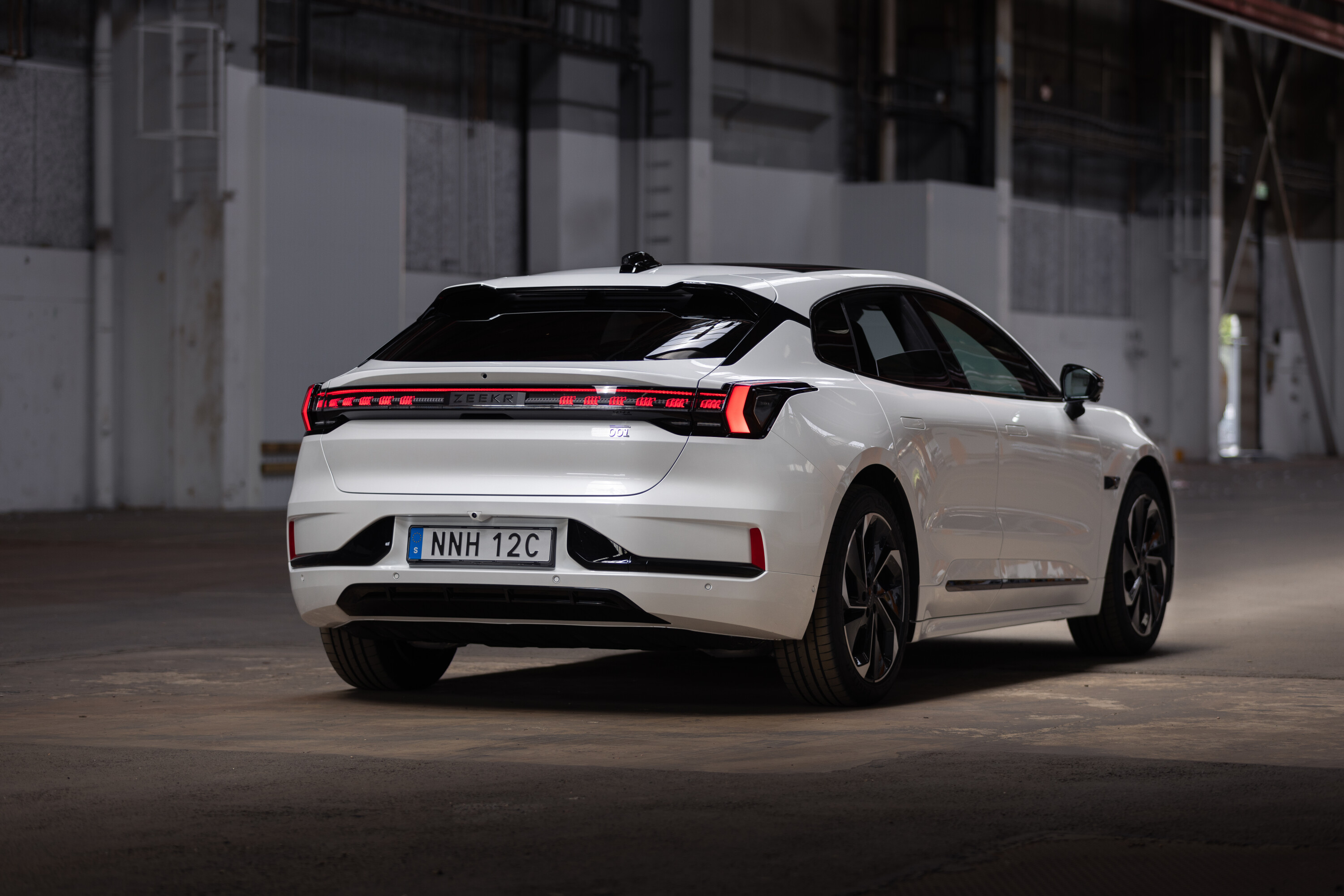
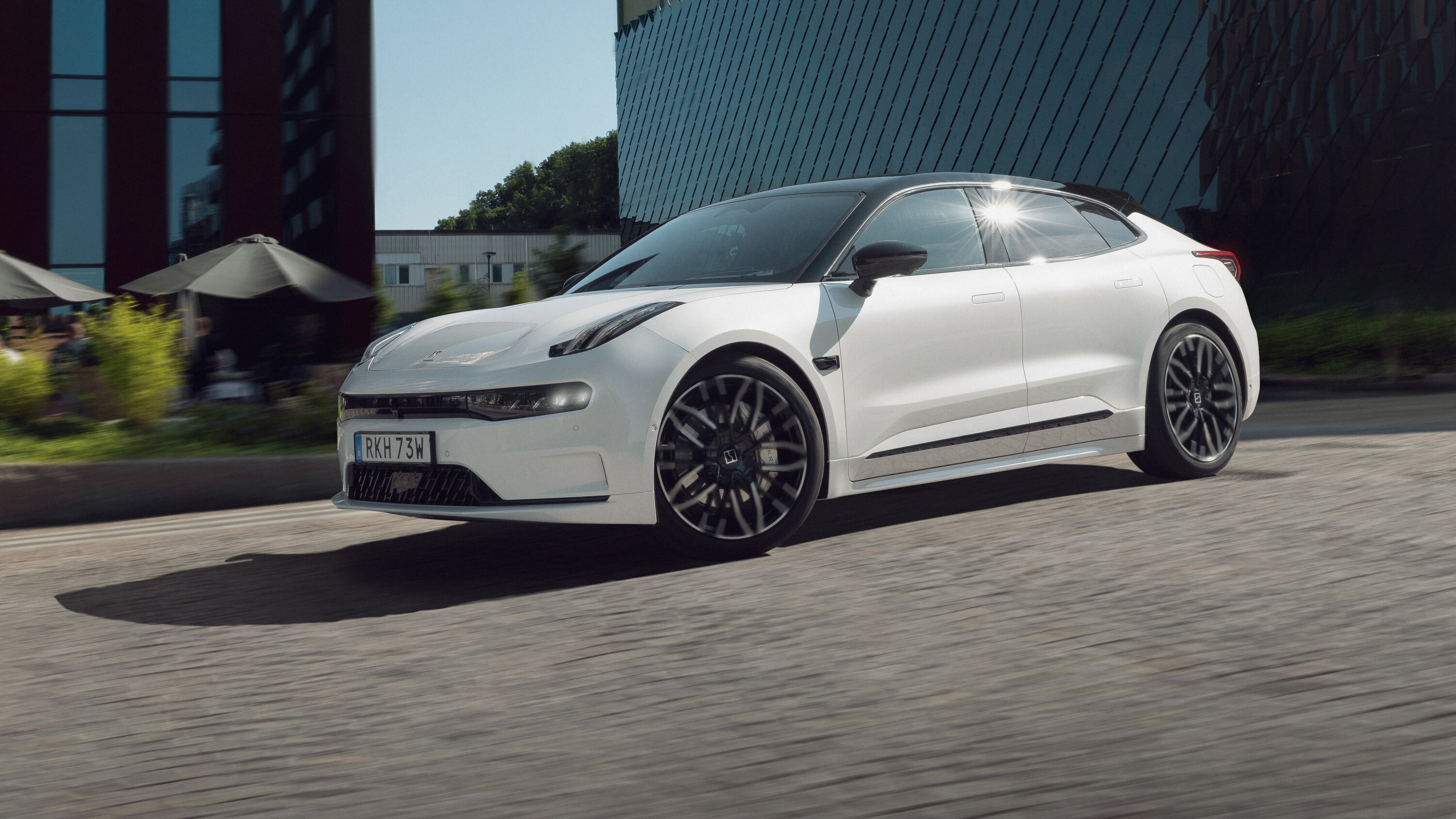
If you’ve never heard of Zeekr, you’ll be more familiar with other brands sitting under the umbrella of its Chinese parent company Geely:Volvo, Lotus, Polestar, and (jointly with Mercedes) Smart.
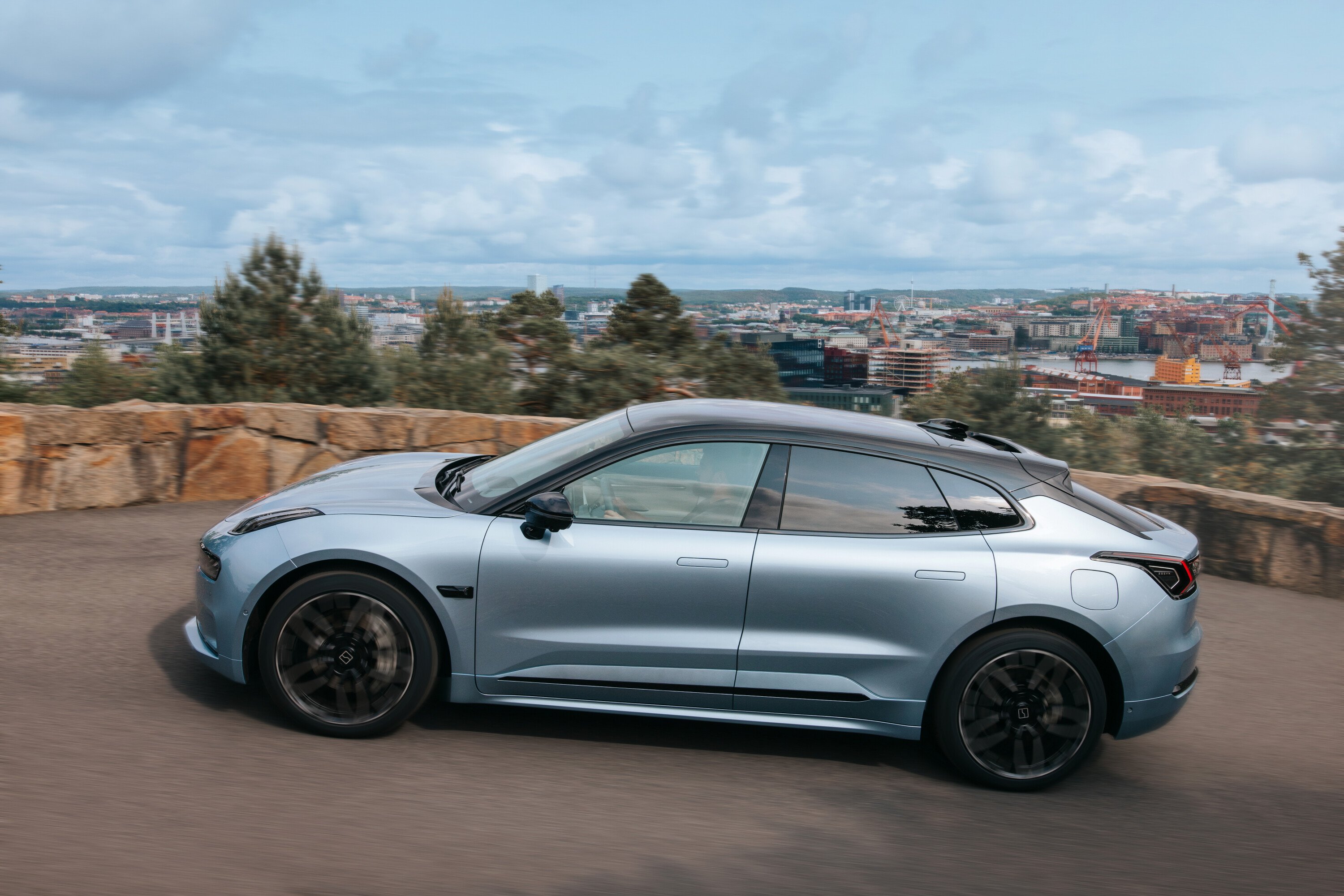
Zeekr, spun out of another Chinese brand, Lync&Co, is targeting the premium end of the EV market and bills its first car – aptly titled the 001 – as a luxury shooting brake.
Development of the Zeekr 001 began in late 2017, it was launched on the eve of the 2020 Beijing Show as the Lync & Co Zero concept, but a year later became the spearhead of the all-new, premium Zeekr brand.
1
By the end of 2025, sources say the Zeekr portfolio will be extended to 10 different small, medium, and large models, all based on Geely’s fully electric Sustainable Experience Architecture (SEA).
Five metres long and two metres wide, the newcomer sits on a generous three-metre wheelbase that is big enough to accommodate a 100kWh battery.
The 59,490 Euro ($98,000), 203kW single-motor base version costs only 3000 Euro less than the much zestier, 406kW dual-motor model that can whiz from 0-100km/h in 3.8 seconds and reach a top speed of 200km/h.
1
Average consumption works out at 18.5kWh/100km – but even in Sweden, where traffic often moves at a snail’s pace, enthusiastic part-time lawbreakers may find 30kWh/100km to be the rule rather than the exception.
Although equipped with a potent 800-volt system, the fast-charging capability is restricted to 200kW. As a result, the standard 10-to-80 percent energy boost takes half an hour – Tesla does the same job in only 15 minutes.
At 2350kg, the air-sprung, top-of-the-line Privilege version is 280 kilos heavier than a Tesla Model S yet 55 kilos lighter than the base RWD Mercedes EQE.
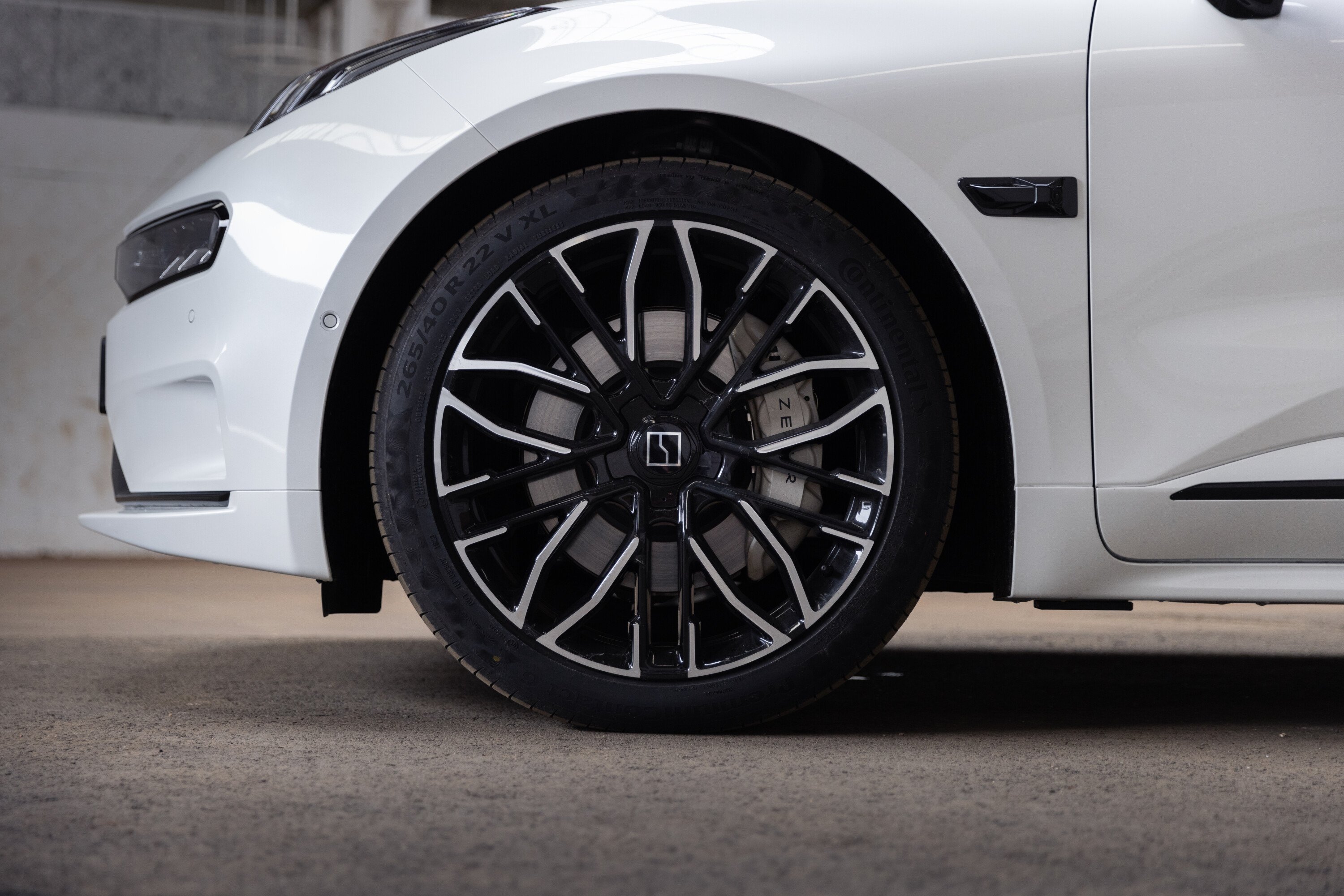
Although shod with meaty 265/40 ZR22 tyres, even the no-frills Zeekr 001 Performance fitted with conventional steel springs and passive shock absorbers outclasses its rivals in terms of ride comfort on any surface at any speed, and it also deserves full marks for confidence-inspiring body control, precise steering action, and ever so slightly rear-biased torque vectoring.
2
The air suspension is marginally more compliant still, and it flexes a few more g-force-defying muscle cords for even faster and flatter cornering.
Furthermore, the ride height can be lowered and raised by up to 83mm for venturing off-road where a maximum wading depth of 450mm awaits you just in case. Other assets of the Privilege pack are bigger, 21-inch front brakes and attentive continuously variable dampers.
There are five drive modes to choose from: Dynamic, Comfort, Eco, Snow and Off-Road. That´s the good news. The bad news is that you cannot mix and match individual settings, such as having the chassis in cloud-nine Comfort and the drivetrain in aggro (Dynamic).
2
Perhaps one needs more time to get used to the car and the specific radar-infested Swedish driving conditions of our overseas test drive.
Dynamic is essential to unleashing maximum performance, though unfortunately the pedal response in this programme is more black-or-white snappy than intuitively progressive. The same applies to the brake pedal, which is either over-excited or a tad too relaxed, depending on the chosen mode.
Perhaps one needs more time to get used to the car and the specific radar-infested Swedish driving conditions of our overseas test drive.
At any rate, it does not help that the energy regeneration can be set only on low or high, because High feels like travelling with one foot on the brake while Low is still a long shot away from unchained coasting.
1
On the credit side, we noted the reassuring directional stability, the strong grip, and the nimble handling that belies the car’s considerable size and mass. Another big bonus point goes to the near absence of wind and road noise.
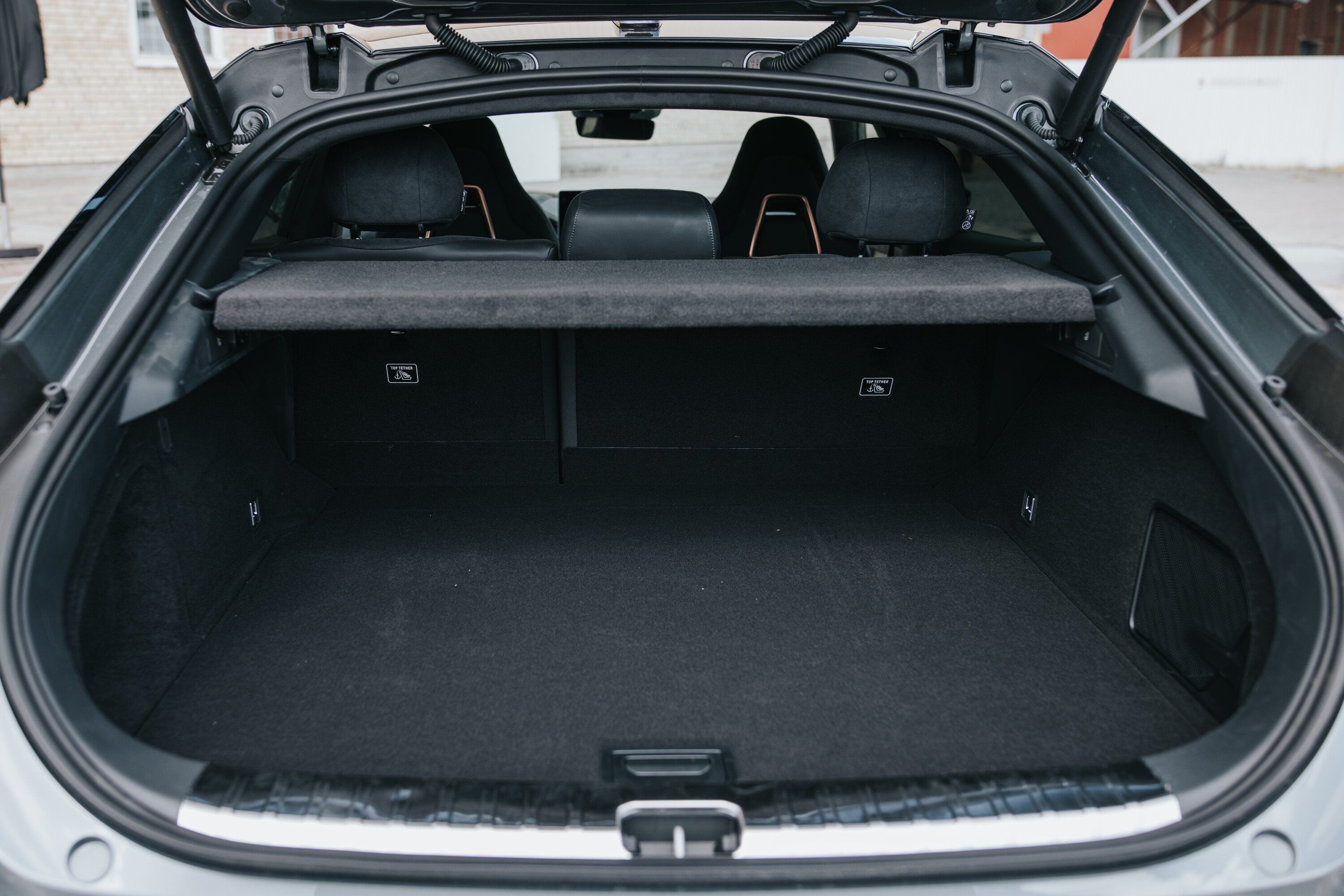
Although in Europe it costs almost 40 per cent less than the 355kW Mercedes-AMG EQE43, the interior of the 001 is at least as classy, the ergonomics are as straightforward except for the remote steering-wheel and mirror adjustments, the all-in specification borders on the luxurious, the packaging is probably even a tad more spacious, and the sizeable 539-litre boot holds 109 litres more than the Benz.
Compared with its chief rivals, the Zeekr 001 settles at a slightly lower torque plateau (686Nm versus the EQE’s 858Nm and i4 M50’s), yett at 580 to 620km the 001’s nominal range easily eclipses Tesla’s 547km, matches or beats any EQE, and clearly betters the i4 M50 (519km).
1
Level 3 autonomous driving is standard and level 4 allegedly only a couple of legislative steps away, but since ADAS was still deactivated in the pre-production test cars, we could not check out the different functionalities. About six months prior to launch in major EU markets, removing a bunch of reoccurring software bugs and adding one or two new features should be an easy fix.
There’s plenty to like about the Zeekr 001 and it’s whetted our appetite for the brand’s next model – the Zeekr X compact crossover out later this year.
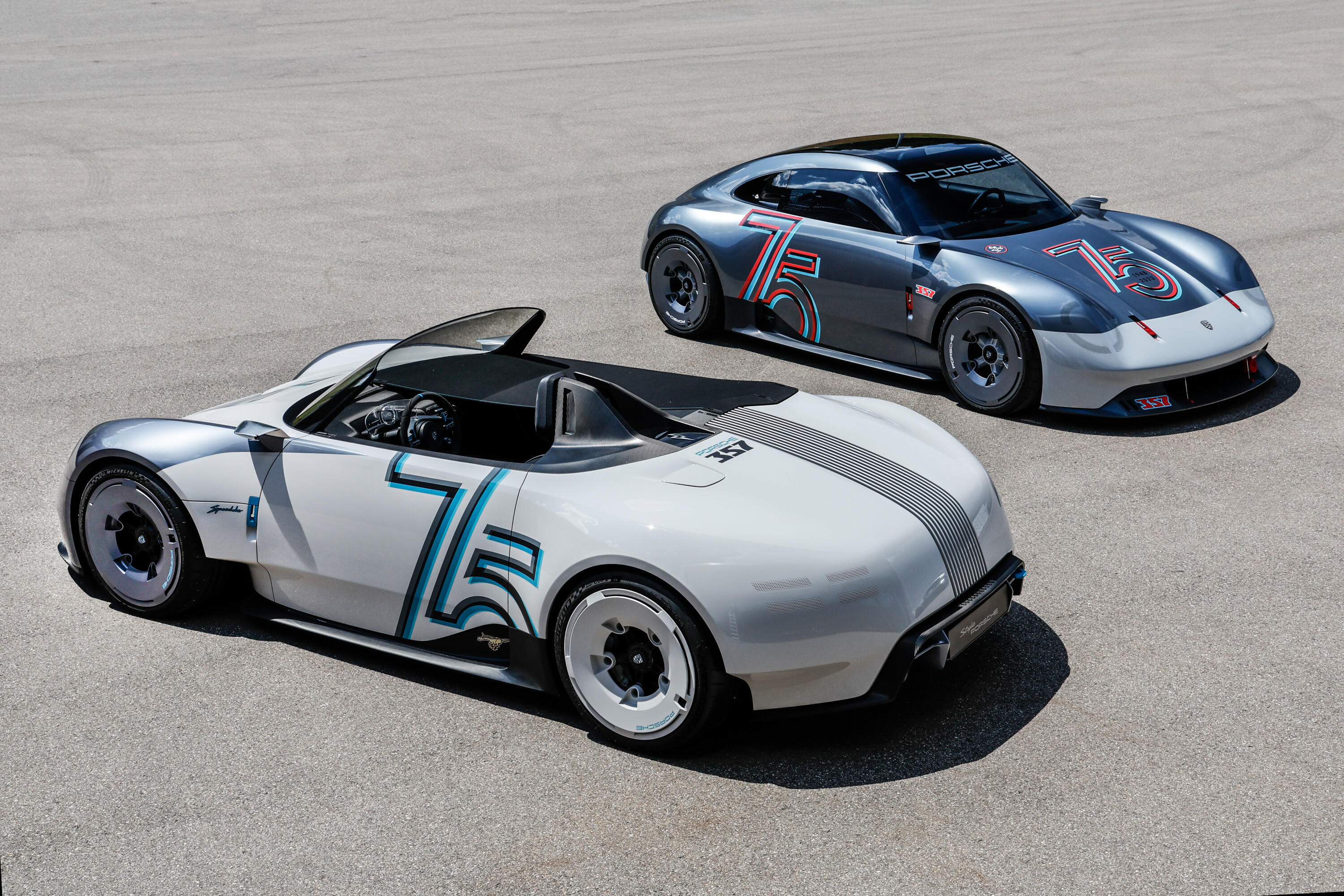
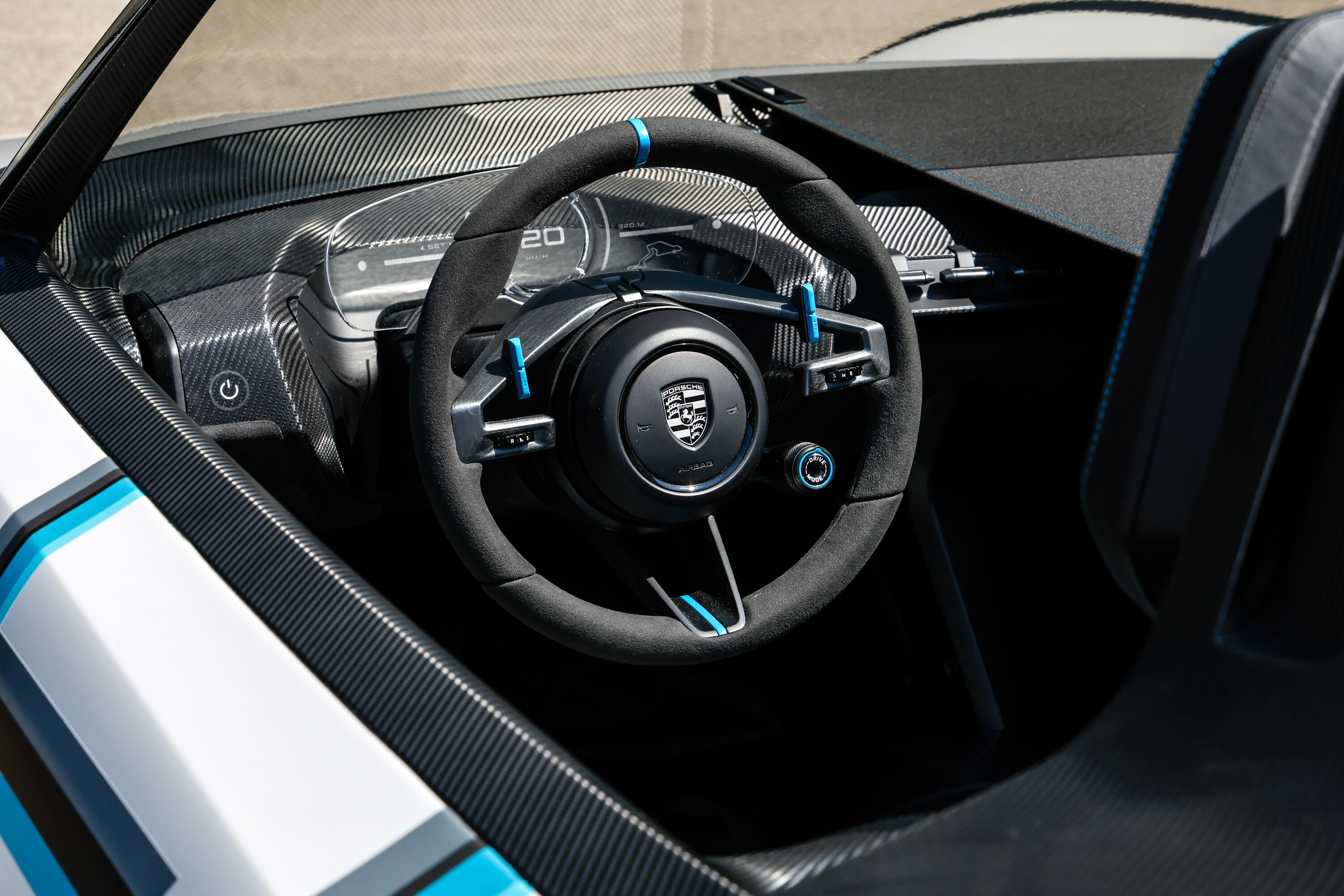
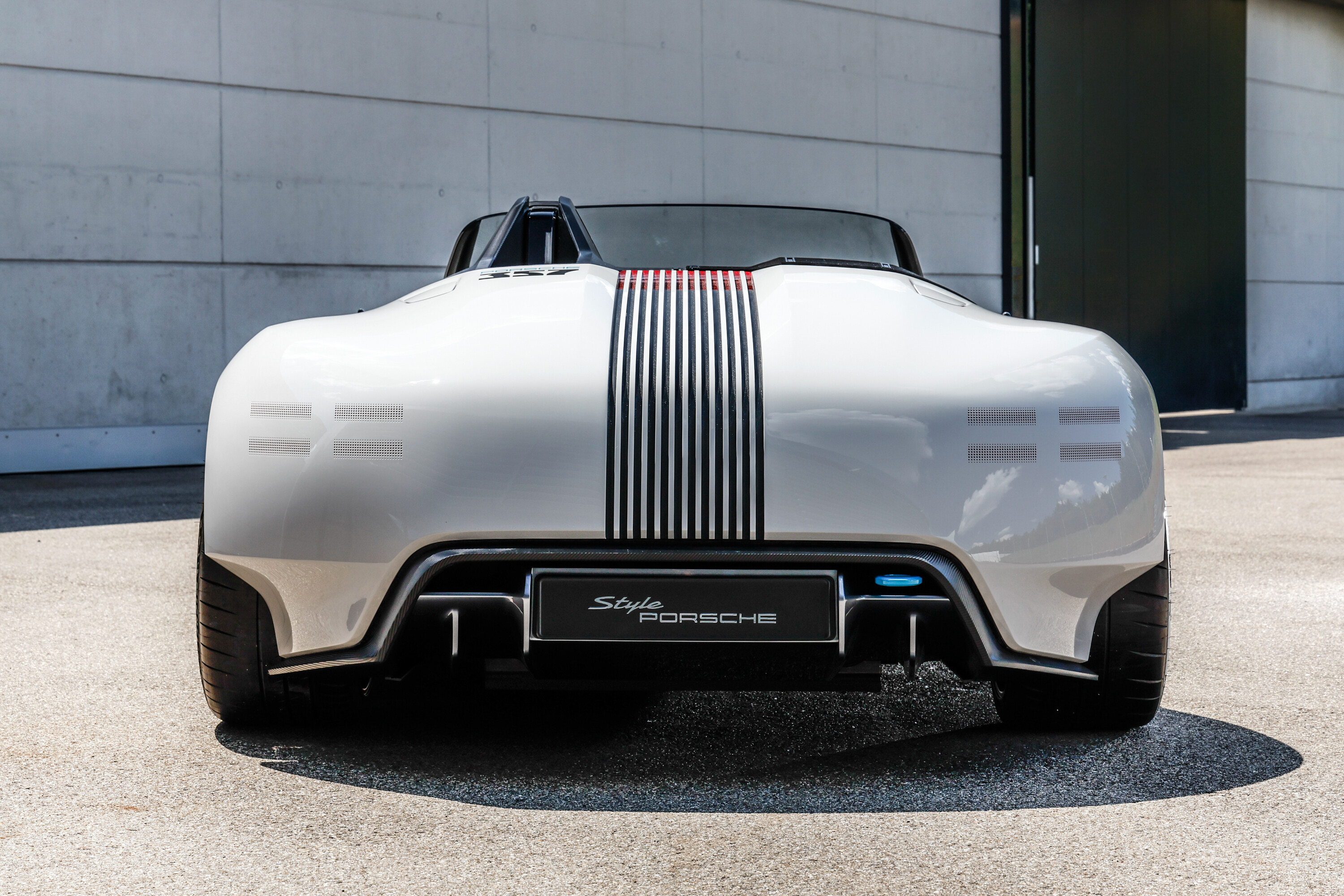
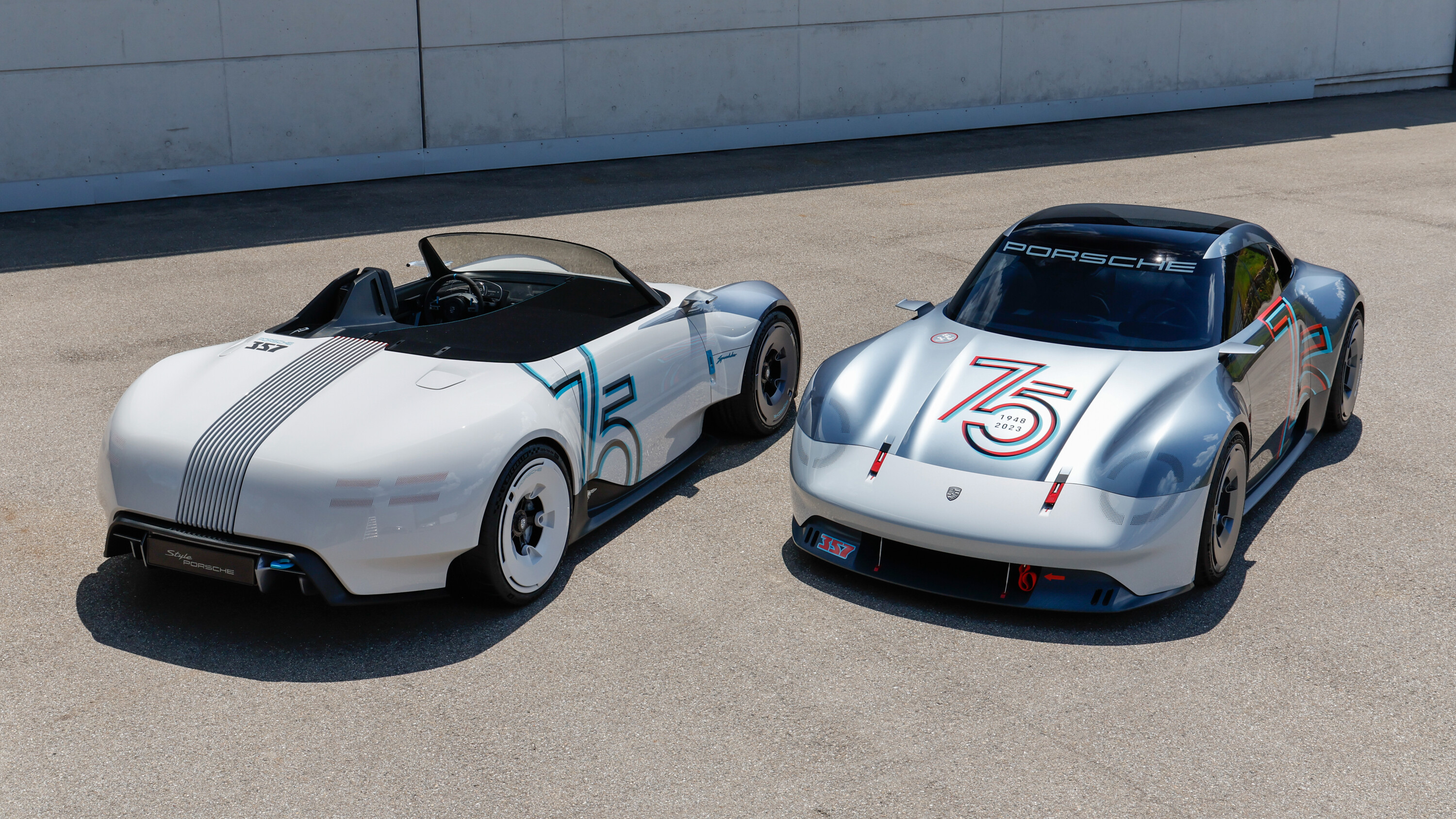
Pick your jaw up from the floor, this is Porsche’s gorgeous new 357 Speedster concept – built, like its hardtop sibling, to celebrate the Stuttgart icon’s 75th birthday.
Unlike the 368kW Cayman GT4 RS-based and powered 357 coupe concept, the 357 Speedster is based on the more future-focused Cayman GT4 ePerformance unveiled in May last year.
There’s a circle-of-life element here, however, because even that track-eating terror was a testbed that drew on the Mission R concept revealed in 2021 – likely previewing the next-generation, electrified Cayman.
1
In Speedster form, the 356-celebrating 357 show car boasts no official power figures, but the Cayman GT4 ePerformance claimed 450kW of constant power, with a peak output of 725kW.
That’s a step down from the Mission R concept, which claimed a combined output from its two electric motors of 800kW – although Porsche said it would limit that to around 500kW for any actual motorsport application.
As for its styling, the 357 concept – we desperately want to see ‘concept’ dropped from its name at some point – follows its coupe companion in paying tribute to the legendary 356.
1
“The Porsche Vision 357 is a nod to the first Porsche model line, Ferry Porsche’s dream sports car,” says Michael Mauer, Vice President for Style Porsche.
“And since the 356 has burned itself into the collective brand memory as both a convertible and a coupé, the same logic applies to the concept car: there can only be two.”
“The Porsche Vision 357 Speedster embodies the essence of the brand. Driving pleasure and driving dynamics combined with an extremely purist form. As with the Mission X that we presented just a few weeks ago, this model demonstrates that even with fresh design genes, the Porsche DNA shines through.”
1
In Porsche’s words
“The two-colour concept with the two grey tones Marble Grey and Grivelo Grey Metallic is inspired by historic motorsport forerunners, such as the front fenders used to protect against flying rocks in race scenarios and the front wings, which feature the darker Metallic colour.
“The front wheels are also painted in Grivelo Grey Metallic. This is complemented by contrasts in Miami Blue, for example on the quick-release mechanisms on the wrap-around front bonnet.
“The anniversary logo with the large “75” and the two years “1948” and “2023” feature Grivelo Grey Metallic and Miami Blue – a fresh alternative to the decorative elements of the coupé Vision 357, where red was used as an additional colour.
“Above this are comic-style unicorns in front of the rear wheels. The mythical creature was drawn specifically for the concept car by Porsche designers, who also put their hand to the punchy “Speedster” logo.
“Cameras replace the exterior mirrors. As in the classic forebears, they are not positioned on the doors, but further forward on the fenders. In the open-top 357, they feature a new, aerodynamically optimised shape reminiscent of wings.”
Where can I see the 357 Speedster concept?
Book a plane ticket, fast.
The 357 Speedster will make its world premiere at the Goodwood Festival of Speed, before going on to be displayed at this year’s Rennsport Reunion in the USA at the end of September.
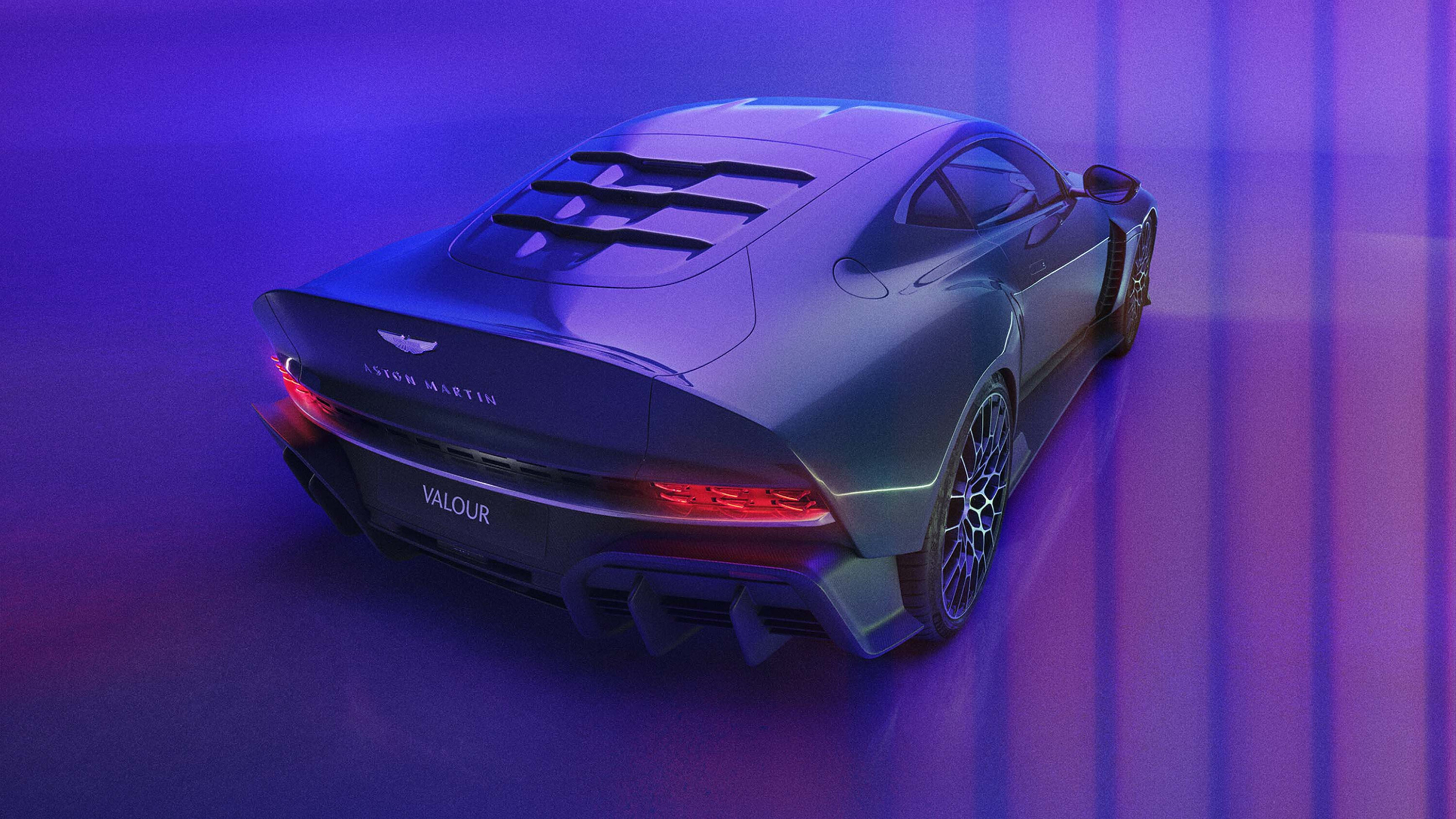
Pining for the days when blokes were blokes, machines were more analogue than hard wired and big petrol donks weren’t public enemy number one? Well, the Aston Martin Valour is here, and it gleefully gives the middle finger to automotive political correctness.
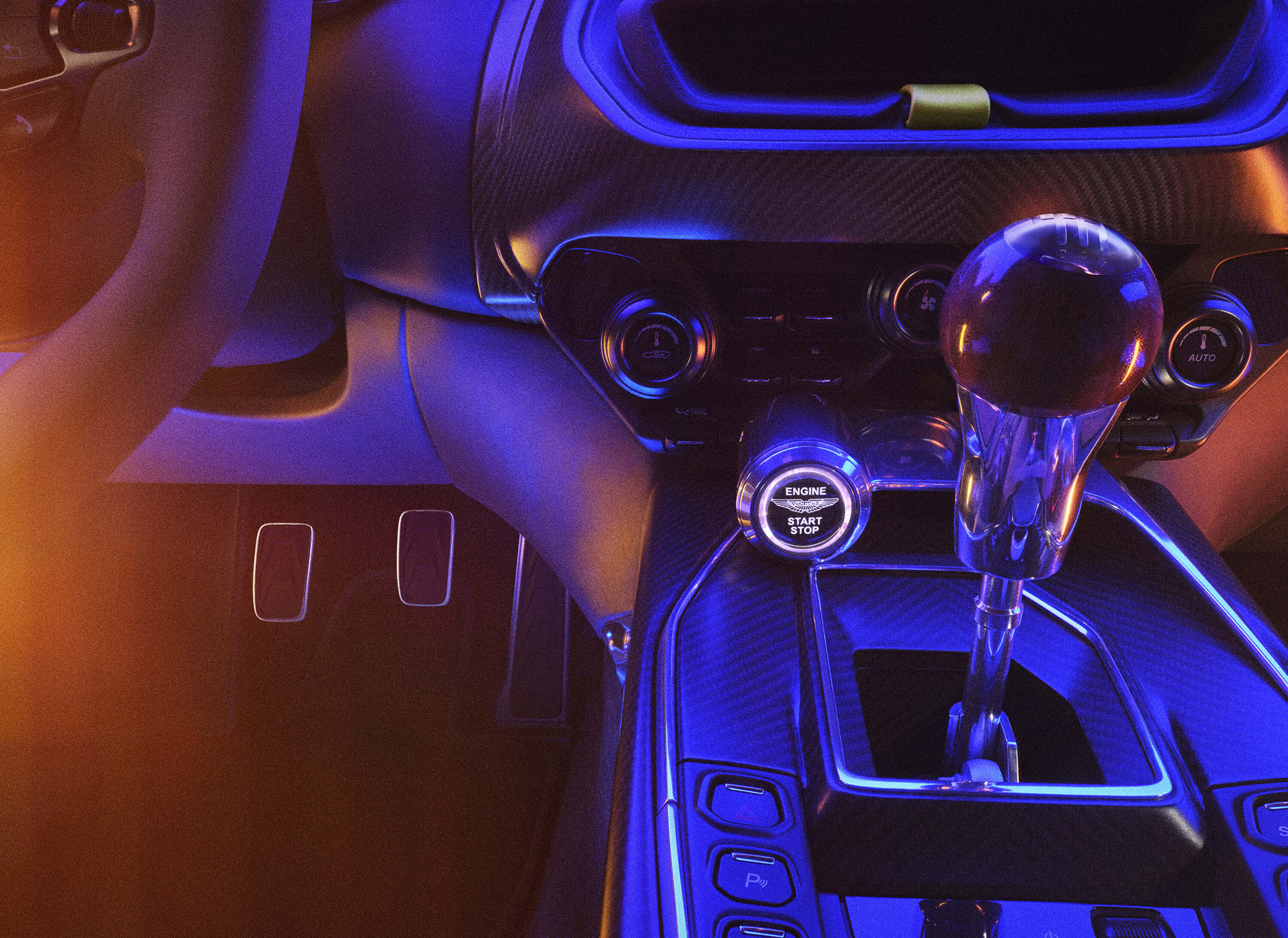
Powered by a bespoke version of Aston’s 5.2-litre V12 petrol behemoth, the Valour pumps 526kW and 723Nm through a – get this – a six-speed manual that’s attached to a mechanical limited slip differential between the monstrous 325mm-wide rear tyres. How quaint!
1
A bespoke thin-wall stainless steel exhaust system shaves 7kg off what Aston terms a “more traditional system”, and ends with a matched triple outlet that screams Le Mans racer.
Even though the powertrain is a nod to a glorious past, the Valour taps into Aston Martin’s collective resources to produce a thoroughly modern, ultra-desirable – and highly collectible – driver’s car. Based on a tweaked version of the company’s bonded alloy platform, the Valour incorporates adaptive dampers, uprated springs and adjustable everything.
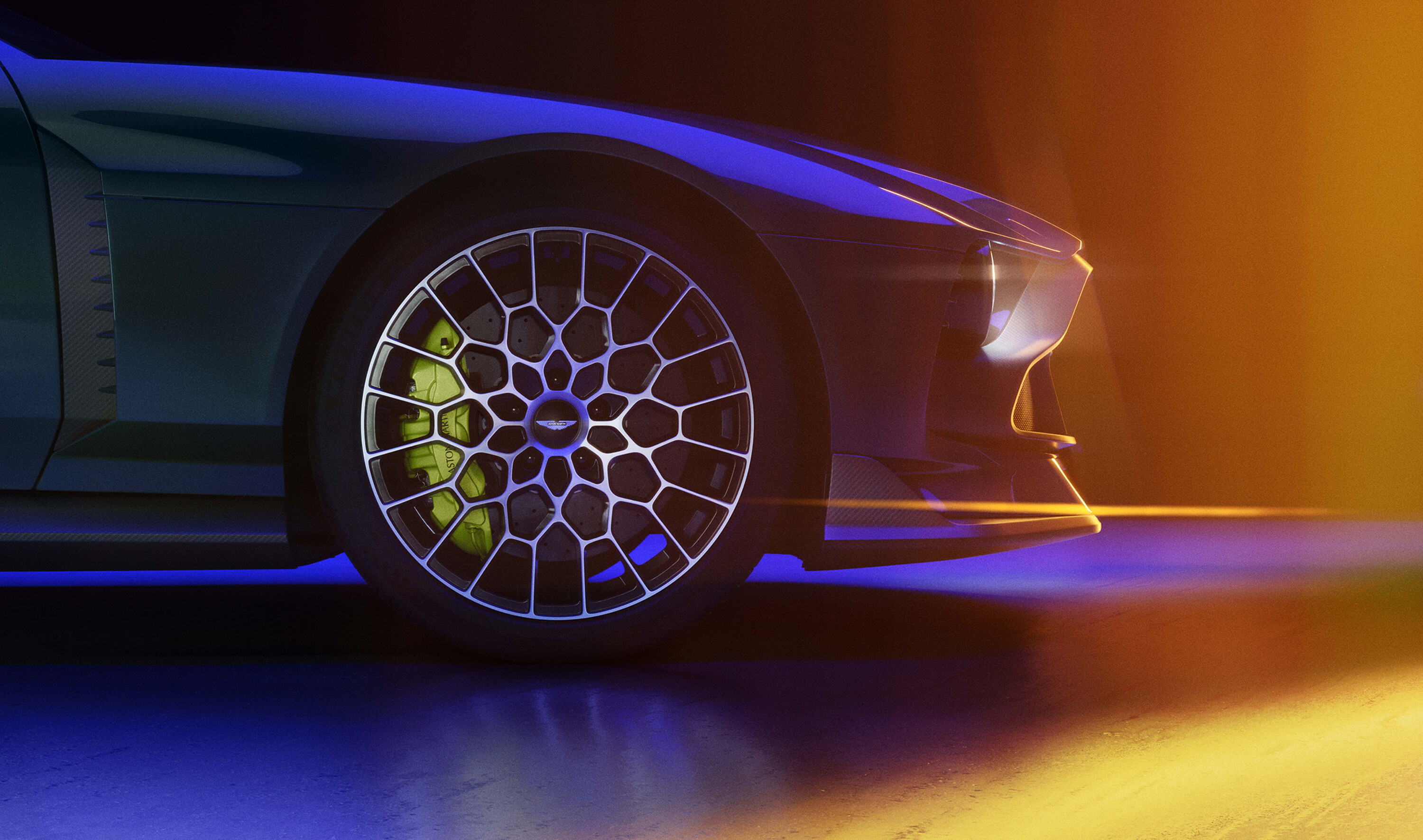
Nestled behind the 21-inch staggered rim set is a set of suitably oversized stoppers, too, with 410mm carbon-ceramic rotors up front and 360mm versions on the rear axle, clamped by six- and four-piston calipers, respectively.
1
Outside, the Valour pays homage to the one-off Victor of 2020, with LED headlights, new-design grille, boosted guards and that unmistakable Kamm sweep to the integrated rear wing.
Carbon fibre abounds, too; witness the prominent front splitter and huge rear diffusor array, which will also help keep the Valour stuck to the circuit.
Inside, too, is a world where race meets racy, with lightweight carbon buckets trimmed with leather, a gorgeous manual shifter and lashings of carbon fibre.
Want one? Just 110 will be built – one for each year of Aston Martin’s existence – and the price will be… substantial, let’s say. First deliveries are expected late in 2023.
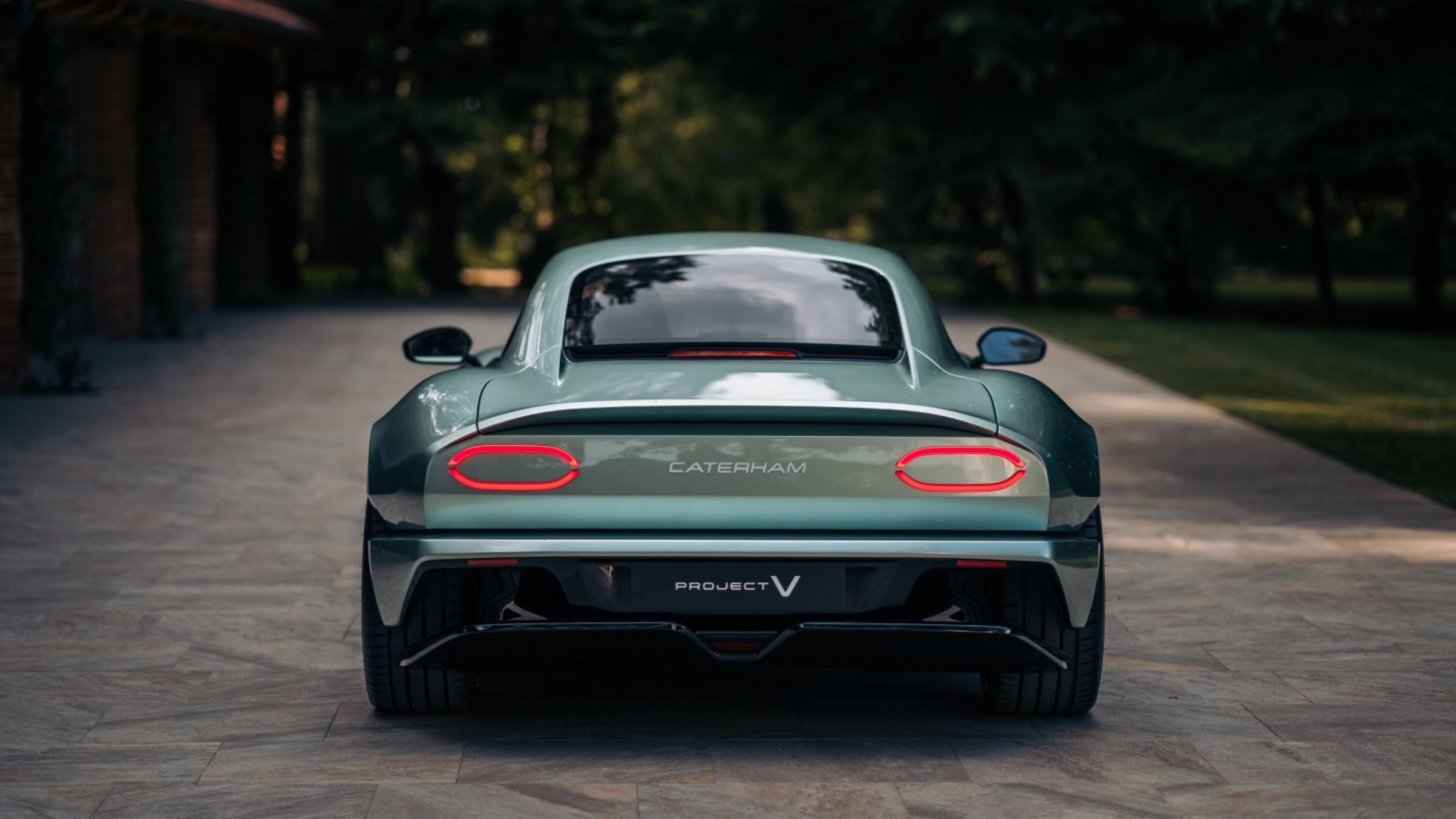
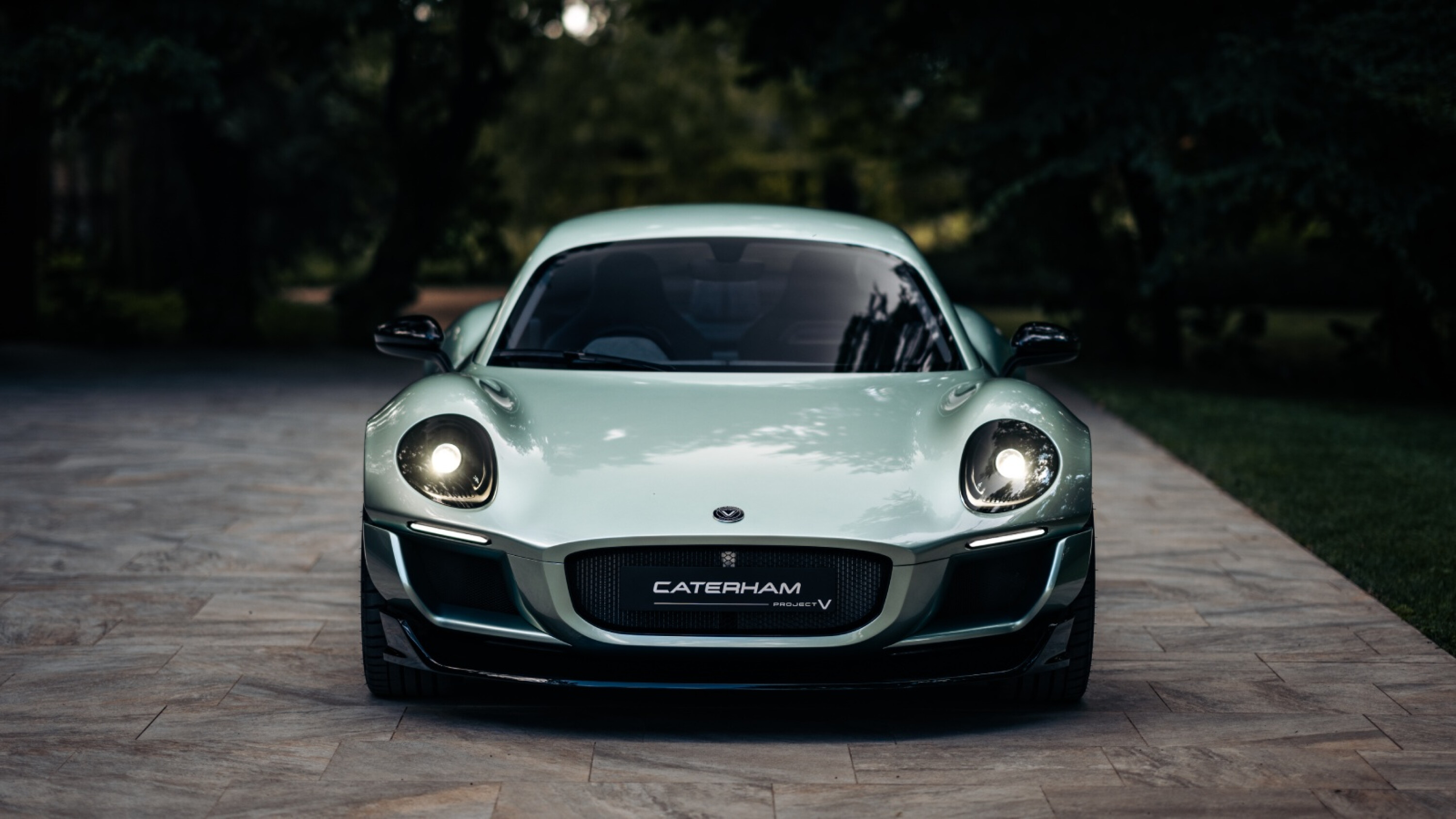
If you know Caterham, then you’re already thinking ‘hang on… this thing has a roof!’ The storied British carmaker (owned by a Japanese retail group since 2021) is famous for its two-seat open-top 7-styled roadsters, but this Project V prototype moves the company firmly into the new century.
And Caterham hasn’t moved far from its lightweight roots. The most interesting element of the two-door, two-seat rear-driver concept is not the fact it’s powered by a 200kW electric motor on the rear axle; it’s the fact that, even with a 55kWh battery, the car is purported to weigh just 1190kg.
“Project V is not just a concept or design study, we’ve conducted engineering and production feasibility throughout the development process,” said Bob Laishley, CEO of Caterham Cars Ltd and COO of the newly established Caterham Evo.
1
“An electric Caterham of any shape and size has to stay true to what sets us apart from everyone else: being lightweight, simple and offering an unparalleled driving experience; that’s our DNA.”
With 200kW on tap at the rear wheels, it makes for a very handy road-carving device. Caterham says its projected 0-100km/h time will be around 4.5 seconds and it will boast a claimed top speed of 230km/h, and of course all of the torques will be available from rest, making for some very fun times.
And that smaller battery won’t take as long to charge, either, with Caterham suggesting it can be juiced up from 20 per cent to 80 per cent in 15 minutes. Its low-slung shape should also ensure its range isn’t overly impacted by air resistance.
Speaking of distance travelled, its claimed projected range is an impressive 400km.
1
Elsewhere, weight has been minimised via the use of a carbon fibre/aluminium chassis, composite panels and fly-by-wire steering.
A set of 20/21-inch staggered wheels hangs from multilink suspension front and rear, and owners can muck about with castor, camber, toe and ride height to their heart’s content.
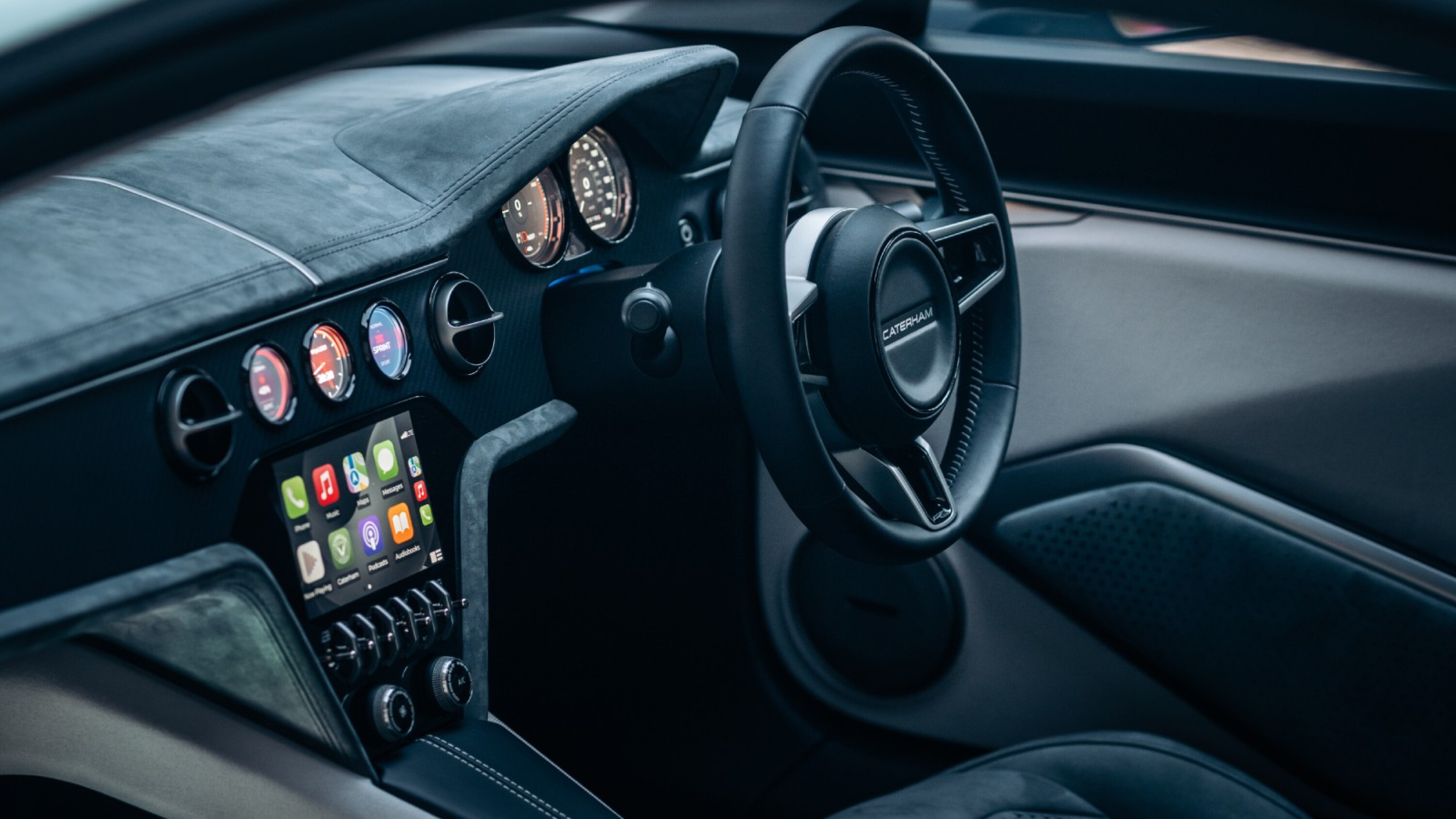
Inside, the concept car sports a cool three-up seating arrangement with a single rear-seat passenger pew, while its digitial instrumentation is minimal and driver-focused.
3
The Project V is still in concept form, but Caterham’s top brass reckons it will be in production by late 2025. What’s more, its projected price of under GBP80,000 (around $150,000) will put it in a very interesting place in the burgeoning performance EV market.
Rivals will include MG’s inbound Cyberster roadster, but with most other carmakers targeting big power and longer ranges for their sports-centric EVs, the crew at Caterham may well be onto something here.
Volkswagens, by their very definition, are cars for The People. And in Australia, The People rather like the fast ones.
The German auto giant reckons that by next year, 25 per cent of its Australian sales volume will come from performance models – those being badged GTI, R, and (eventually) GTX – a feat that no other market can match.
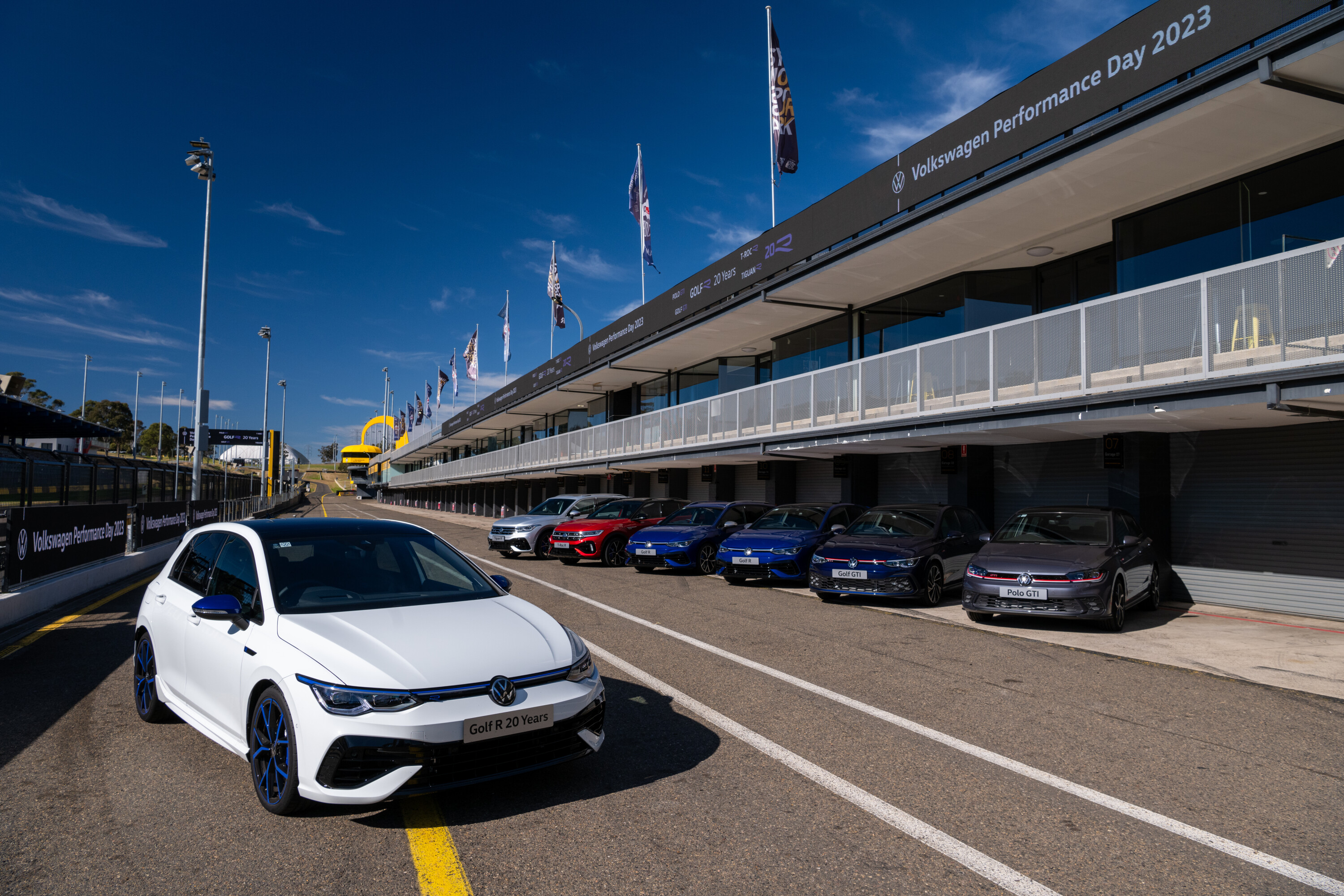
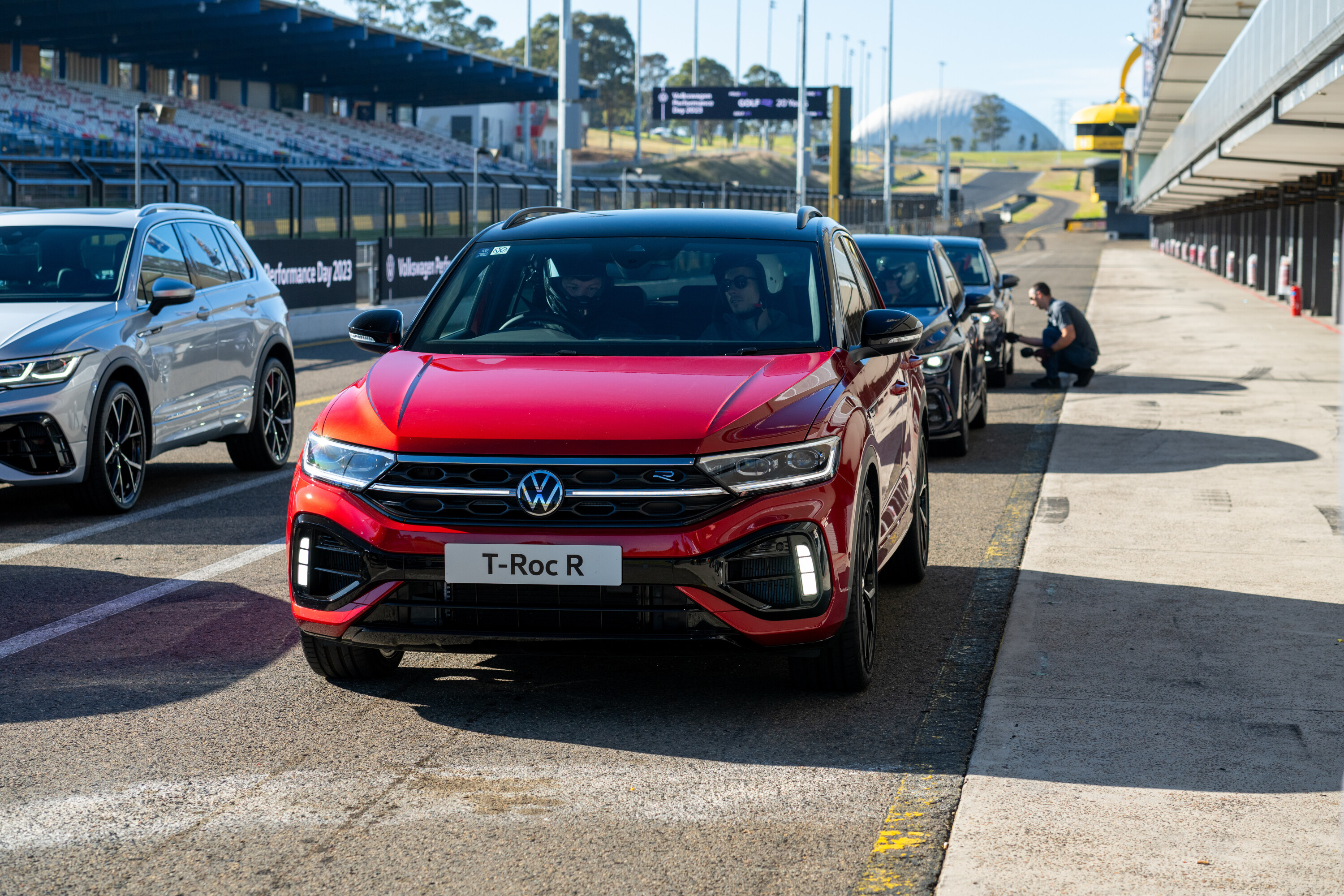
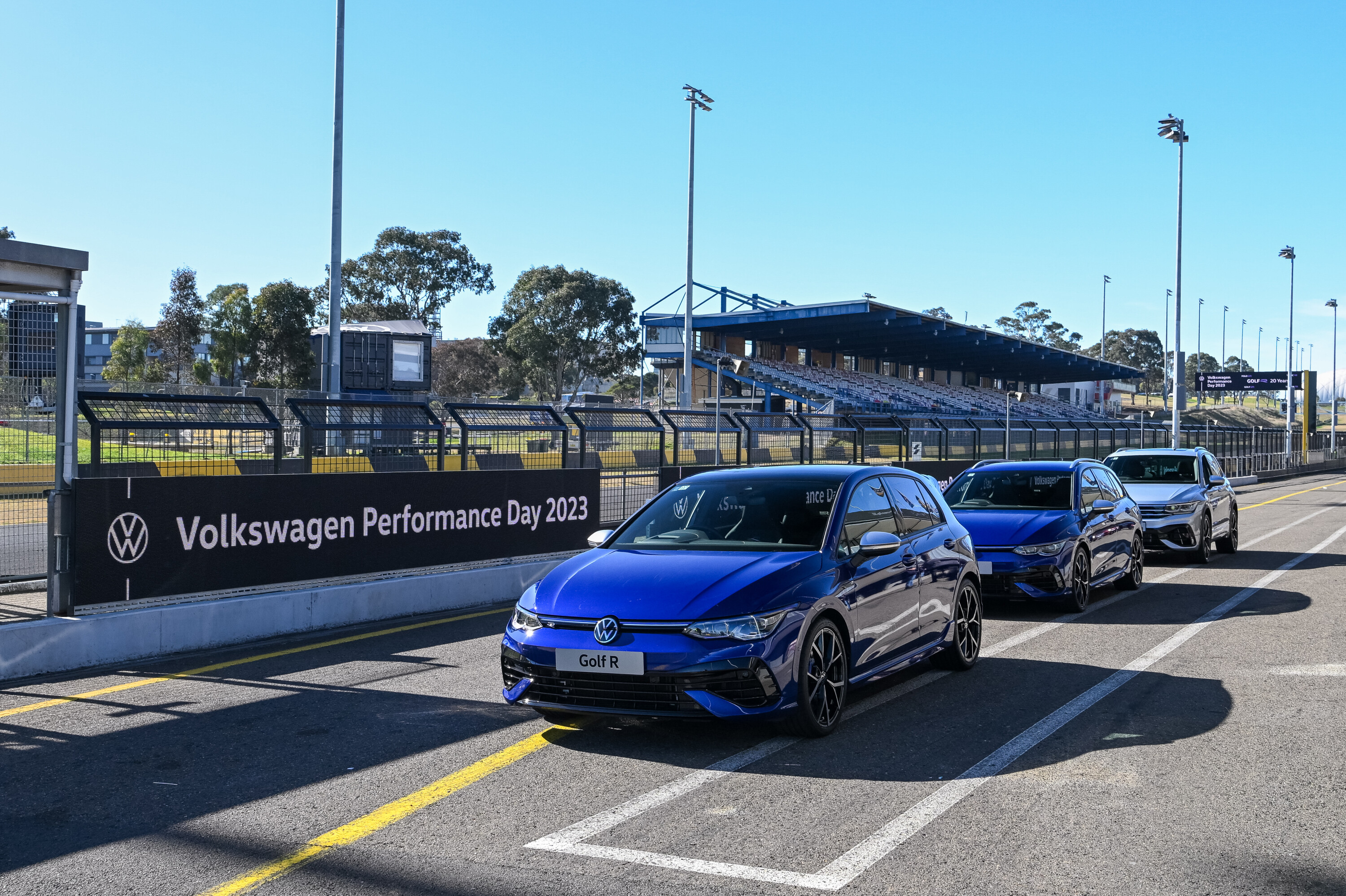
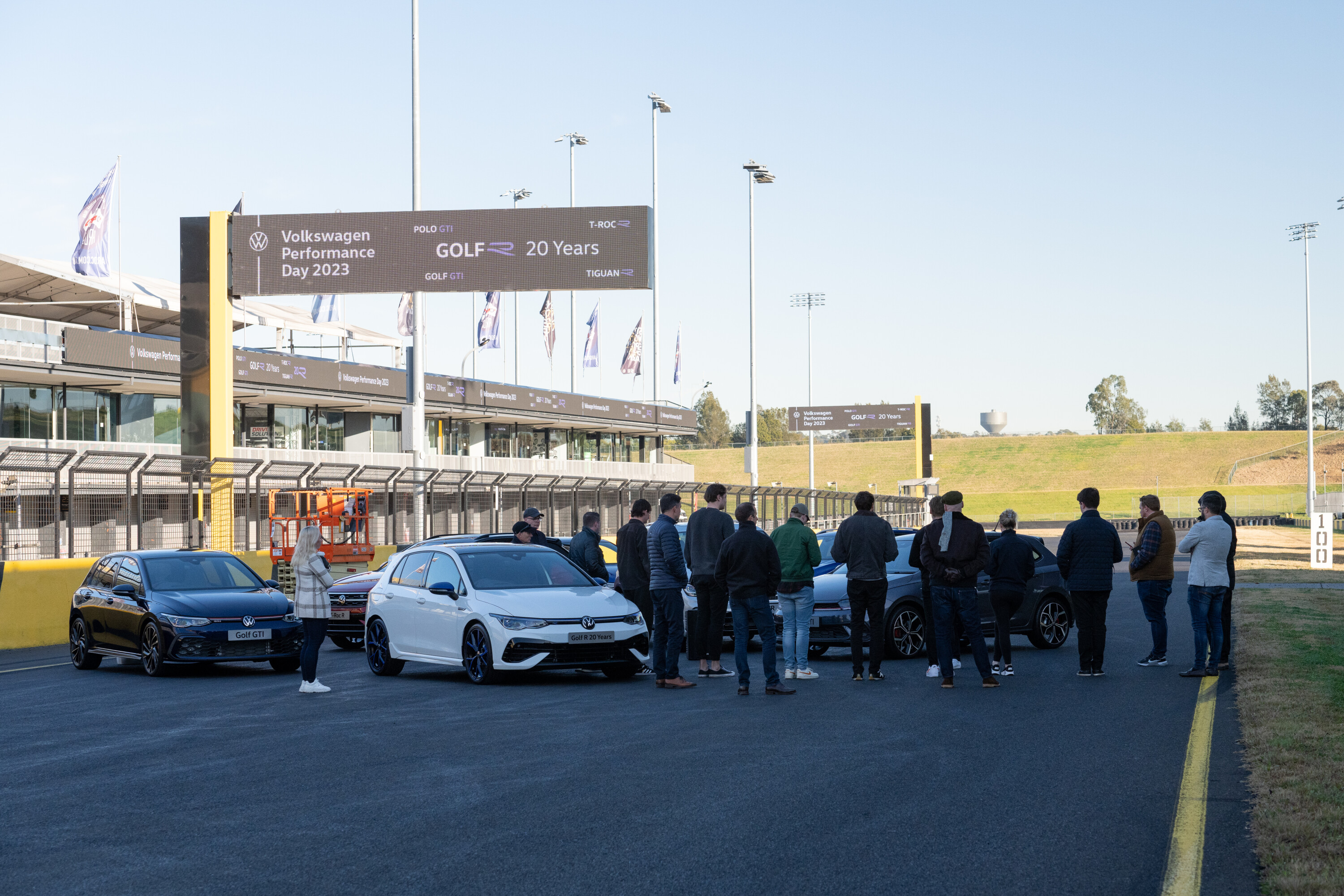
As a way of proving its performance credentials, Volkswagen invited Wheels along to test each of its offerings on Sydney Motorsport Park’s North Circuit, a 2.8km winding loop comprising a 200km/h-plus straight, high-speed bends, a tight hairpin, and myriad surface changes.
1
The basic recipe for most of the GTI and R products is the same, 2.0-litre turbo petrol, front- or all-wheel drive, a practical body, and wolf-in-sheep’s-clothing intentions.
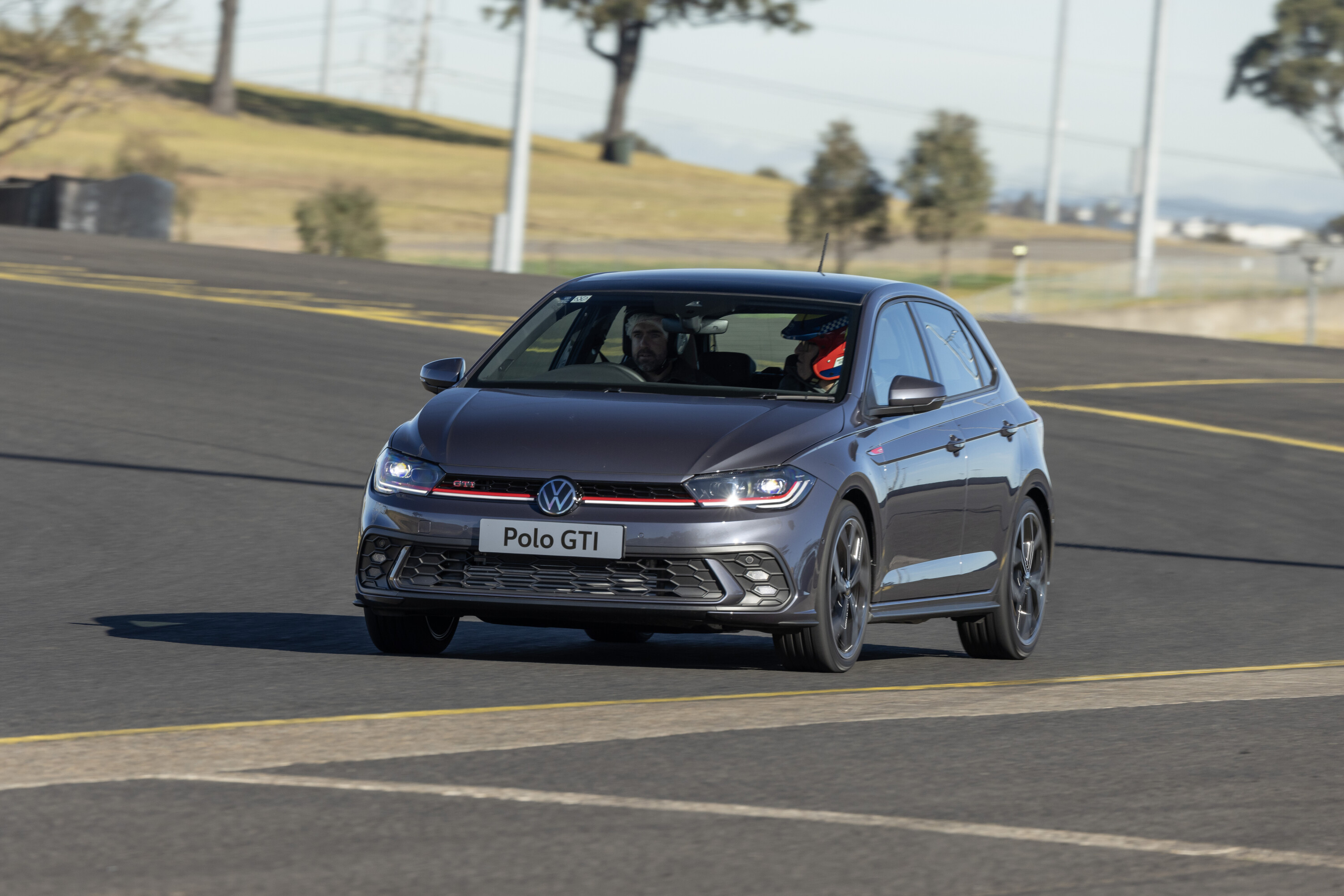
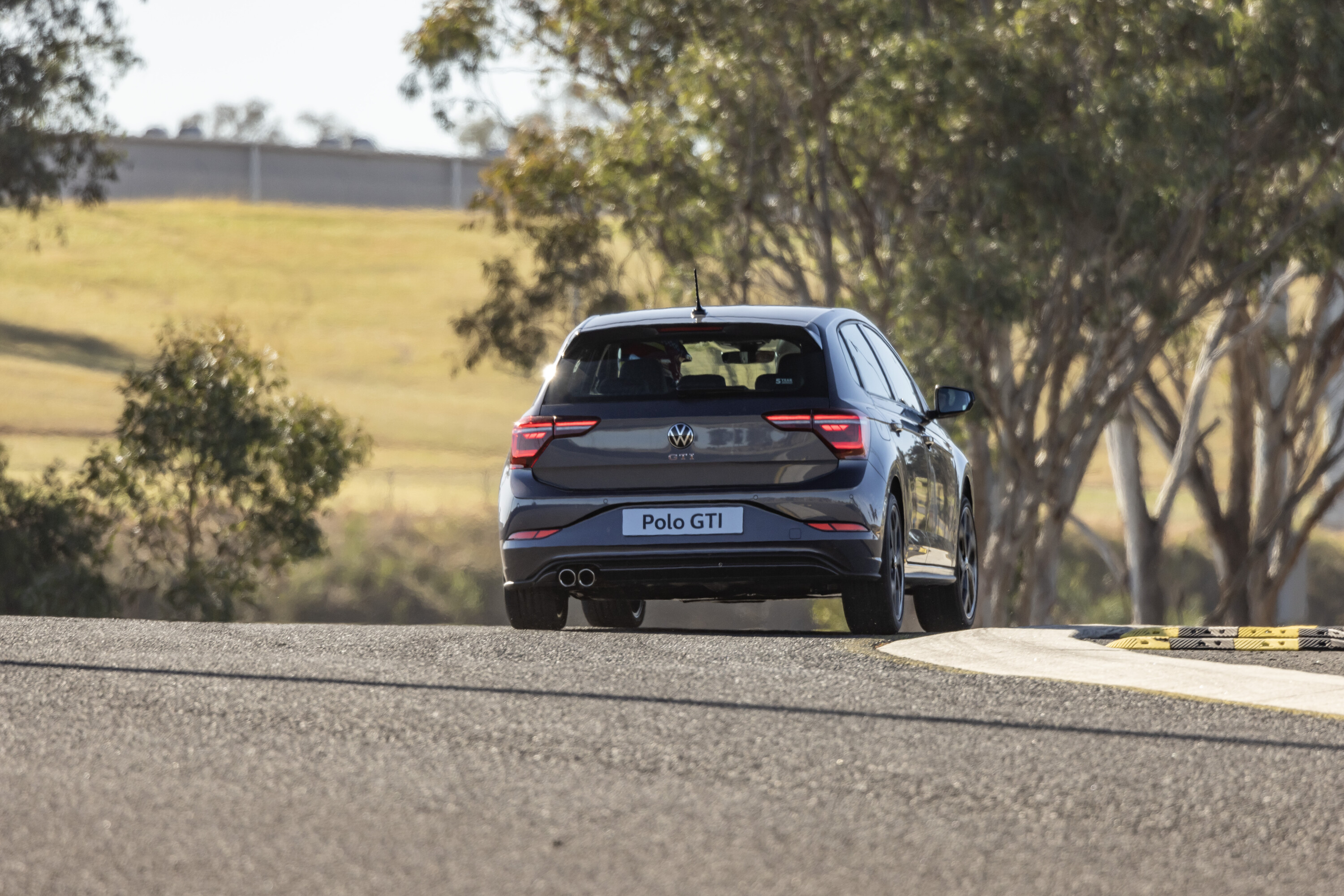
Often in life, it’s the simplest things that bring us the most joy – and VW’s Polo GTI is a perfect example.
Essentially a Mark 5 Golf GTI powertrain strapped into a new body and married to a tech-heavy cabin, it features MacPherson strut front suspension and a torsion beam rear end.
With Sport mode engaged, I head down the pitlane to the turn two hairpin, hit the anchors for the first time and the agile Polo squirms under brakes, its pedal remaining firm as the pointy front end dives into the first of two apices.
2
There’s no tricky diff here to pull you out, but there isn’t enough power to overwhelm the front tyres in the dry and the torquey motor pulls the Polo out with conviction.
Dancing through the left-right chicane, the Polo’s lack of mass means you can float the tail through – it’s actually the most rewarding of the lot to drive.
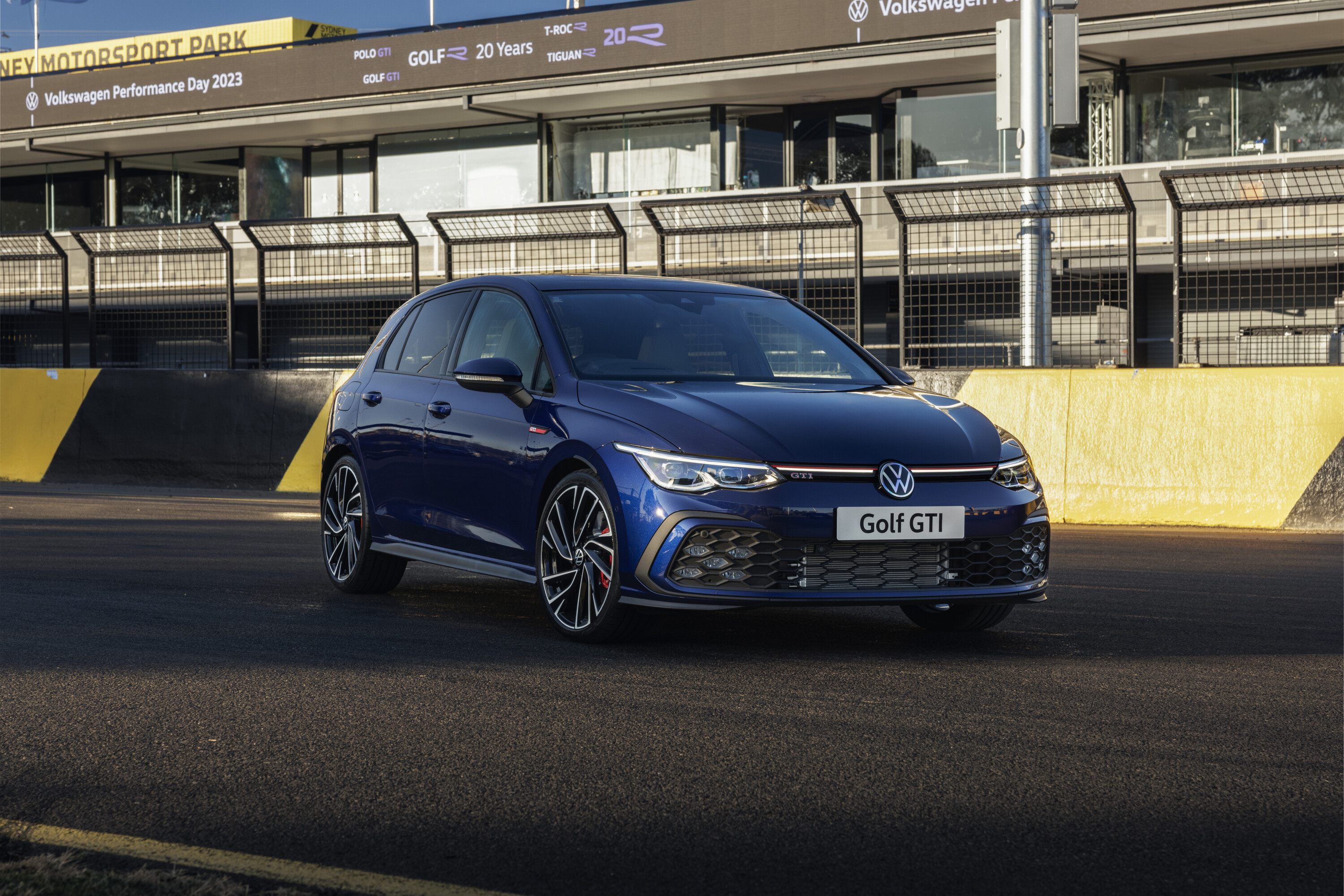
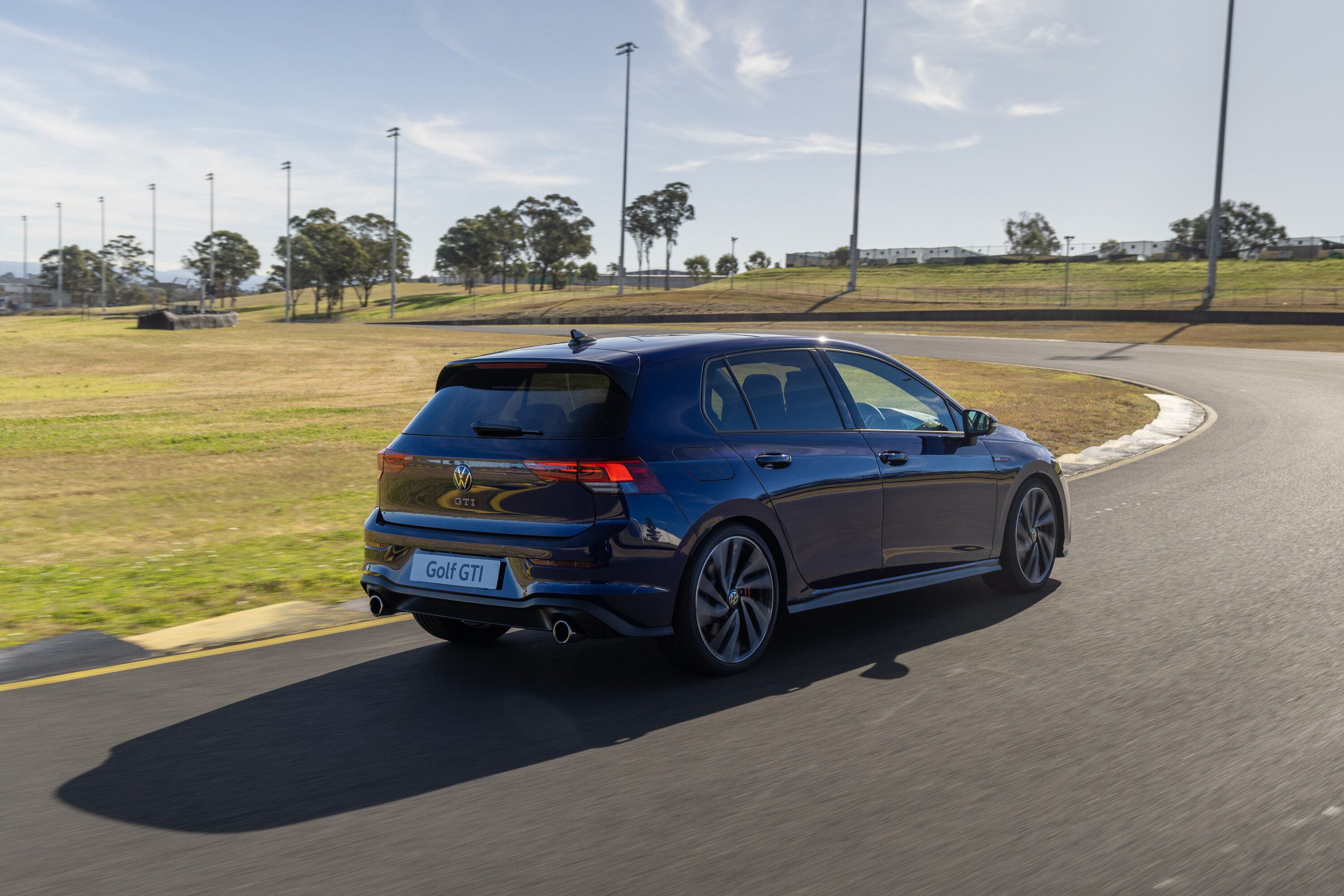
The Golf GTI is all grown-up. This long-standing nameplate is one that’s too often forgotten in a world of ever-harder hatchbacks.
A pleasing four-cylinder burble from the exhaust, tractable motor and responsive seven-speed dual-clutch transmission make this a brisk and fun car on the racetrack – providing you don’t over-drive it.
1
Like the lighter Polo, the front-drive Golf GTI doesn’t have much weight over the rear end, meaning the hind pair of Bridgestones need to smear across the road to help turn-in, which is especially enjoyable through the North Circuit’s final complex as weight transfers from the outside kerb back into the apex.
Through the high-speed first turn, the Golf GTI’s grown-up multi-link rear suspension and longer wheelbase inspire more confidence than the slightly unsettled Polo, so it’s easier to commit to the throttle on exit.
With enough power to spin the fronts in second, the GTI’s ‘VAQ’ locking front differential drives the Golf out with no fuss and minimal on-throttle understeer.
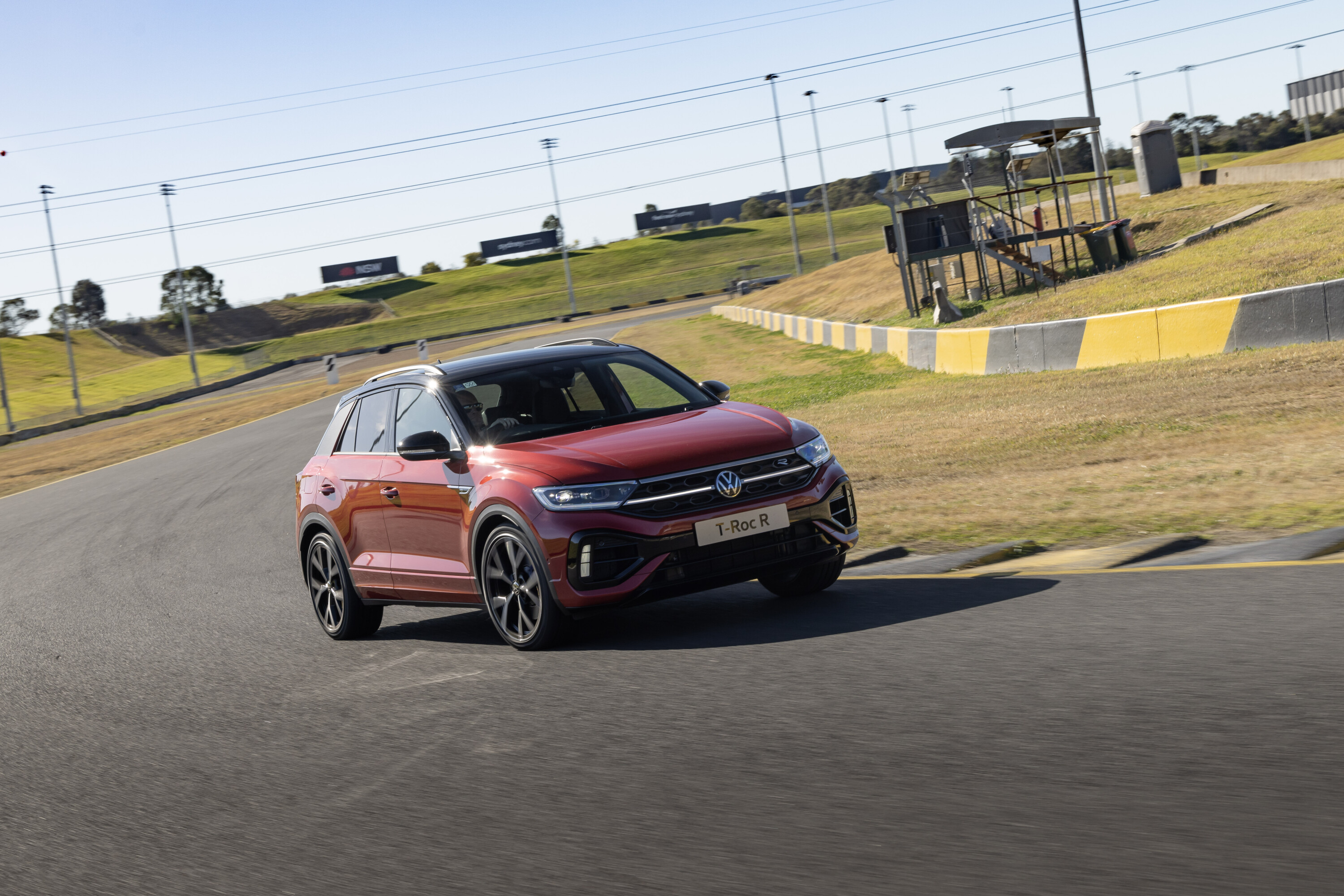
‘Take it if the race car’s broken’ was what I was going to write, but do you know what? Stuff it, bring both along and share the T-Roc R with someone else.
It’s plenty capable on the racetrack, the all-wheel-drive system making up for the lack of a locking front differential on corner exit.
Unlike the Golf GTI, it’s best to set the taller T-Roc into Individual mode, with steering, engine and gearshift all amped to maximum attack, but the dampers softened back to Normal as Sport introduces enough mid-corner hop to be unsettling.
1
Raising a vehicle off the ground comes with consequences: stiffer suspension is needed to stop it toppling over.
Don’t let that thought ruin the day though. The T-Roc R sounds good, pulls hard, stops well, and moves around more than a Golf R. Sure it’s less confidence-inspiring, but that doesn’t make it much less fun.
These two make turning out fast lap times as easy as shooting fish in a barrel (seriously though, who does that?)
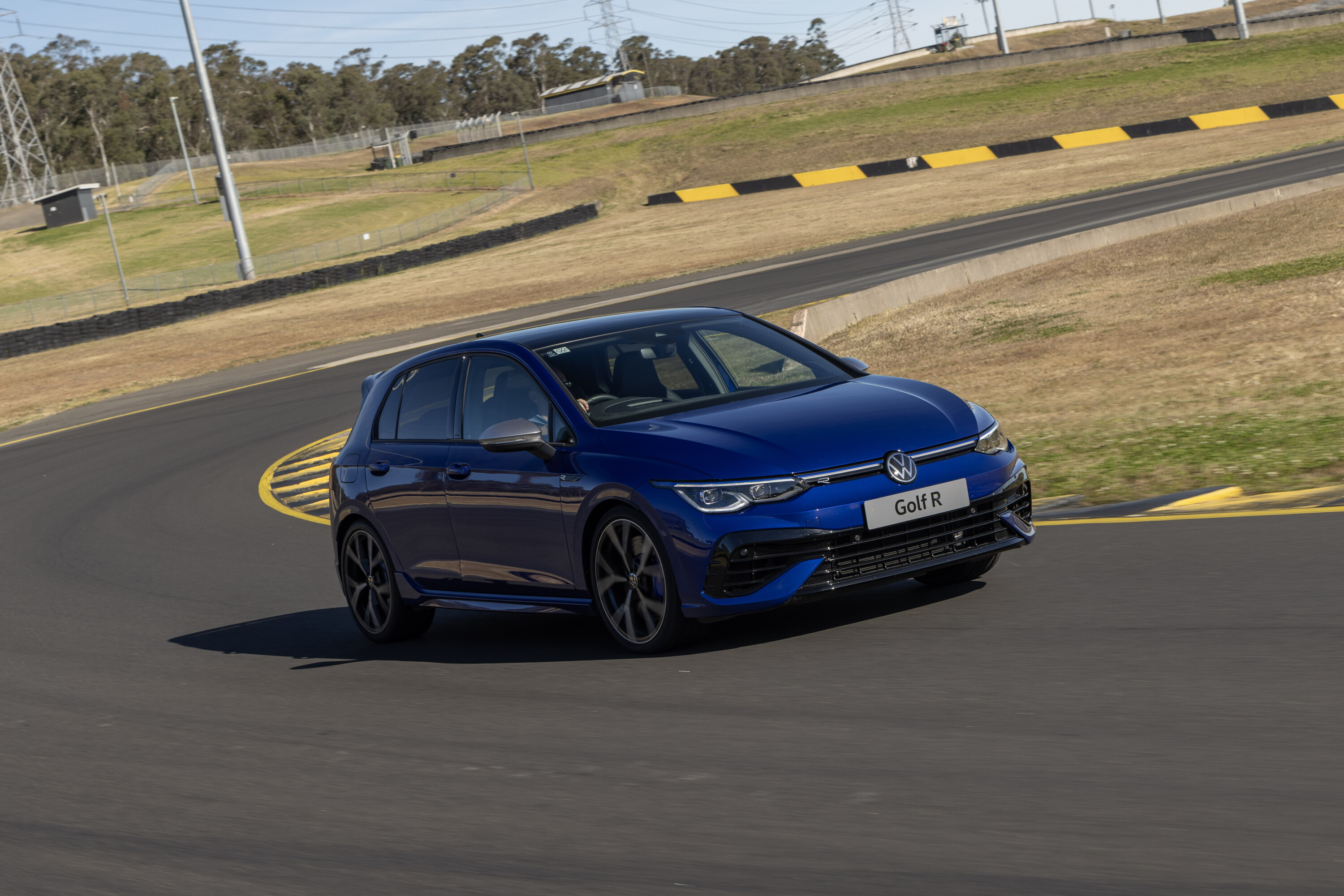
A lower rating than the much slower Polo and Golf GTI might raise some eyebrows, but here’s the thing: Volkswagen never really designed the Golf R as an outright track monster.
1
The Golf R generates its speed via a trick twin-clutch locking rear differential that allows the R to unleash maximum grunt
If you want that, a Hyundai i30 N or Honda Civic Type R are better bets. The trade-off (certainly in the Korean’s case) is a bigger chiropractor bill from its stiff ride.
Remaining neutral to understeery on turn-in, the Golf R generates its speed via a trick twin-clutch locking rear differential that allows the R to unleash maximum grunt unto the outside rear, killing front-end push on exit. Mighty impressive it may be, but the overwhelmingly digital feeling isn’t as satisfying as the human-machine bond you get in a looser front-drive car.
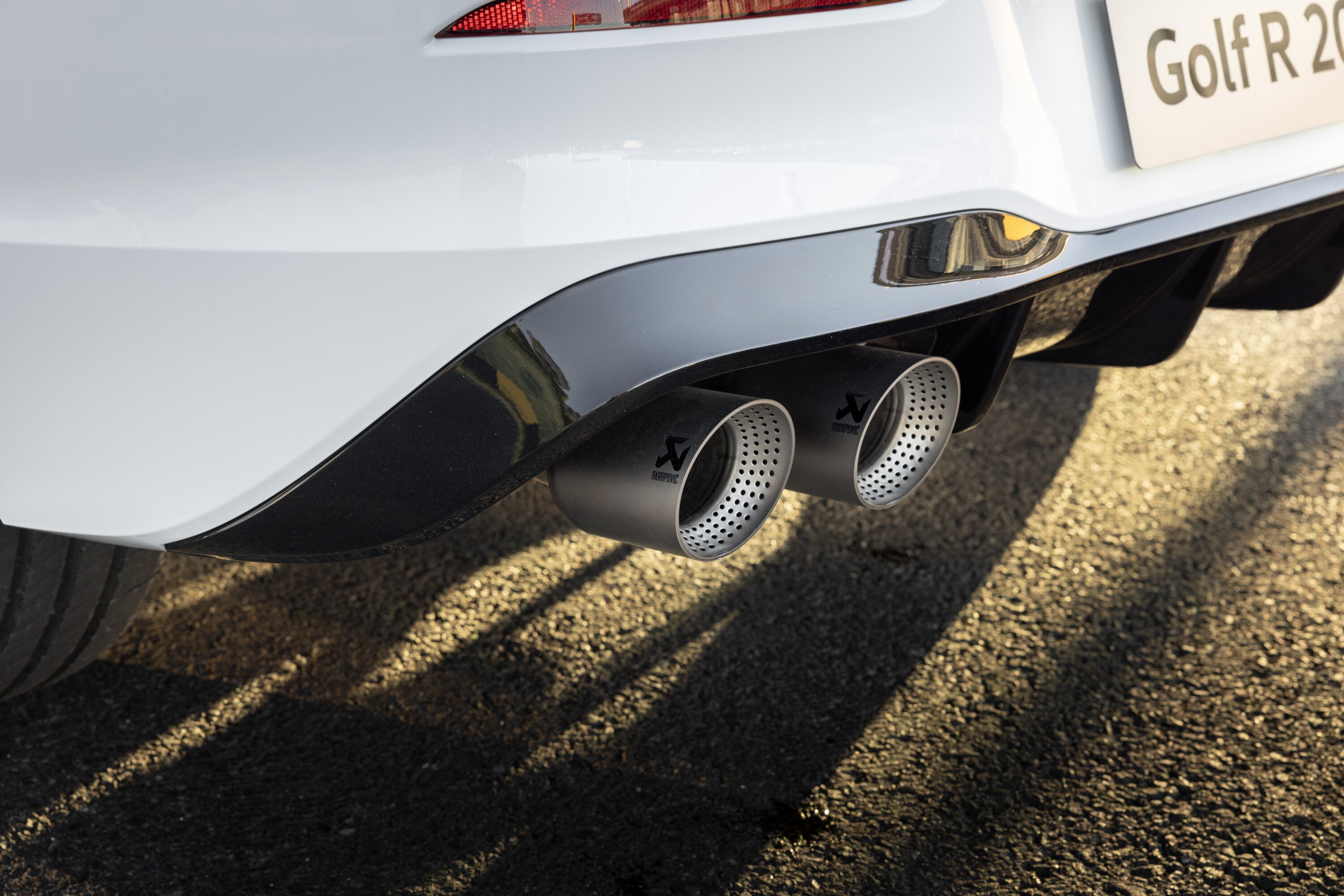
With a titanium Akrapovic exhaust adding aural drama and a thump in the back of your head when you shift up at redline, the R 20 Years give a better impression of speed, but its road-biased Bridgestone S005 tyres are the limiting factor.
Moreso even than the Hankook-shod regular R, the 20 Years’ front end was less hooked-up through Eastern Creek’s tight turn two.
1
Stay patient through the apex, though, and you can let the intake gobble fresh air on exit as the tricky electronics overdrive the outside rear to send you out with a just-past-neutral attitude.
Like the normal R hatch and wagon, the 20 Years is plenty quick – in fact even quicker with an extra 10kW sent to all four wheels. It’ll flatter track day novices, but more experienced drivers won’t find all that much substance to sink their teeth into. The Golf R is more impressive on a wet twisting road.
For when you have school run at 9:00 and track day at 10:00.
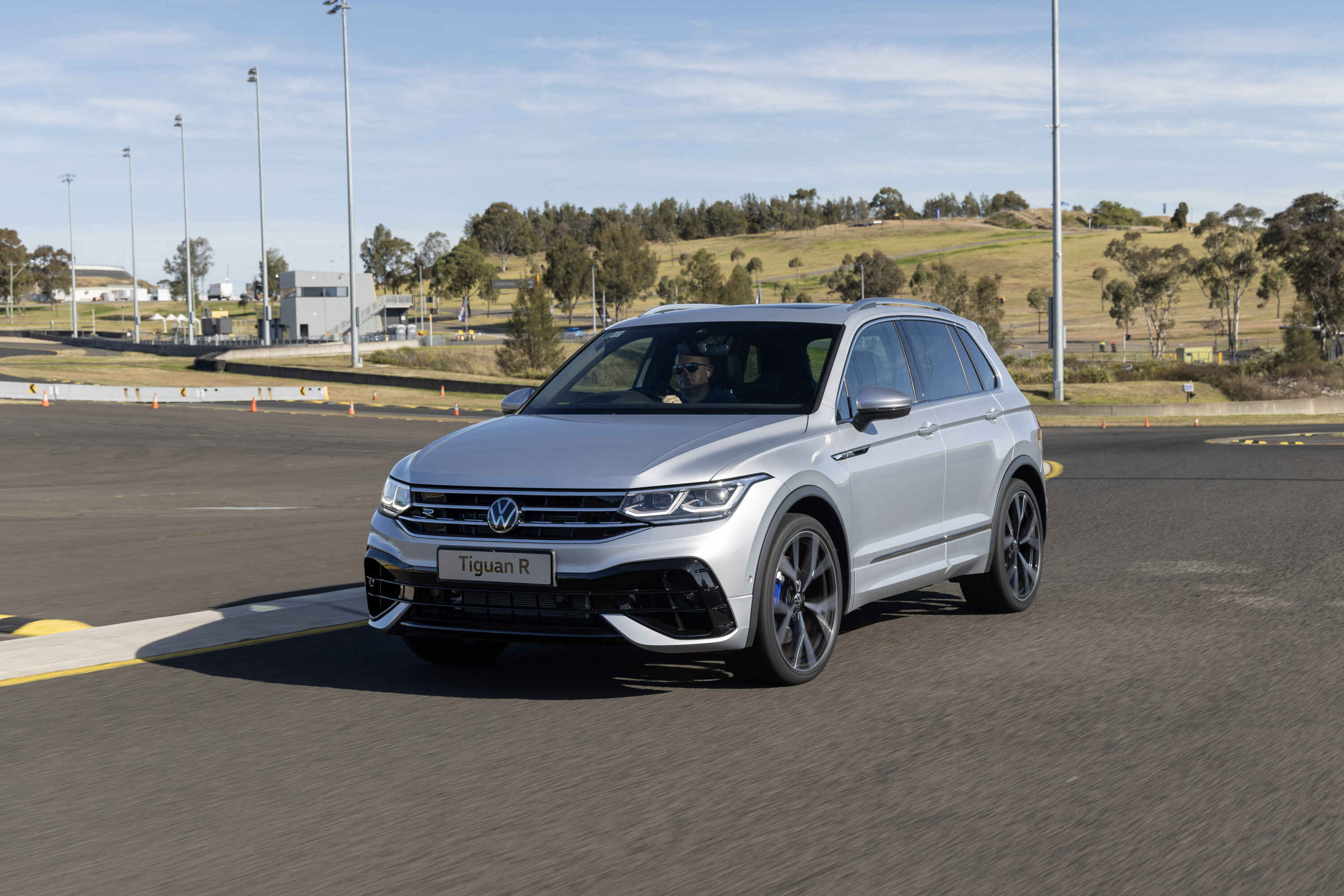
Strangely, the high-set Tiguan with its comparatively bus-like driving position felt the calmest of the lot on the racetrack. Its brakes are up to the task, the steering responsive and chassis planted.
It helps that you’re up high – it masks the sensation of speed. You can’t gobble kerbs like you might expect, though, as Volkswagen has clearly wound huge amounts of spring rate and rebound control into the Tiguan R’s chassis to keep it on the ground.
1
It hops over undulations in the asphalt in Race mode and clobbers sawtooth kerbs with its 21-inch alloys.
There’s plenty of grunt and a couple of laps are satisfying. I can imagine coming to a track day here and really giving regulars in modified hot hatches a run for their money. That would be funny and rewarding in its own way.
As a disclaimer, we did no more than two flying laps in any of these cars and, although Wheels didn’t experience major brake fade, your average track day with 10- or 15-minute sessions will definitely overheat the brake pads and tyres of every car tested here. Maybe not in the first session, but by runs two and three, they’ll be worse for wear.
If you intend to use your car on the racetrack regularly, extra preparation is needed. Higher-temperature brake fluid is a great start, followed by sturdier brake pads and tyres designed for the kind of loads experienced on longer stints.
What’s the winner, then? The T-Roc R was probably the biggest surprise, and the Golf Rs were predictably excellent. If I had to choose one as a track car it’d be the Polo GTI. The cheapest, lightest, and loosest. There’s a lot of fun to be had here.
Today wasn’t about proving any of these cars as ultimate track tools; ultimately Volkswagen’s GTI and R range are Swiss army knives. You don’t expect to be able to slice sashimi with your Gerber, but if the opportunity presents itself the blade will be sharp enough to carve a slice of salmon for the barbie.
“We’re cleaning up”, is how managing director Michal Szaniecki put it. “It’s a very desired move that’s highly strategic, and it results in a simplification of the customer journey”, he added.
“For the dealers, we have to replace these cars and demonstrate there are other options. It makes absolute sense to do this move, and we are very happy that it’s happening in conjunction with a performance and electric vehicle expansion – it’s very characteristic for the Australian market.”
With electric vehicles incoming, there isn’t enough space in VW dealers or cash with head office to stock all the new and old models; slow-sellers need to be rationalised.
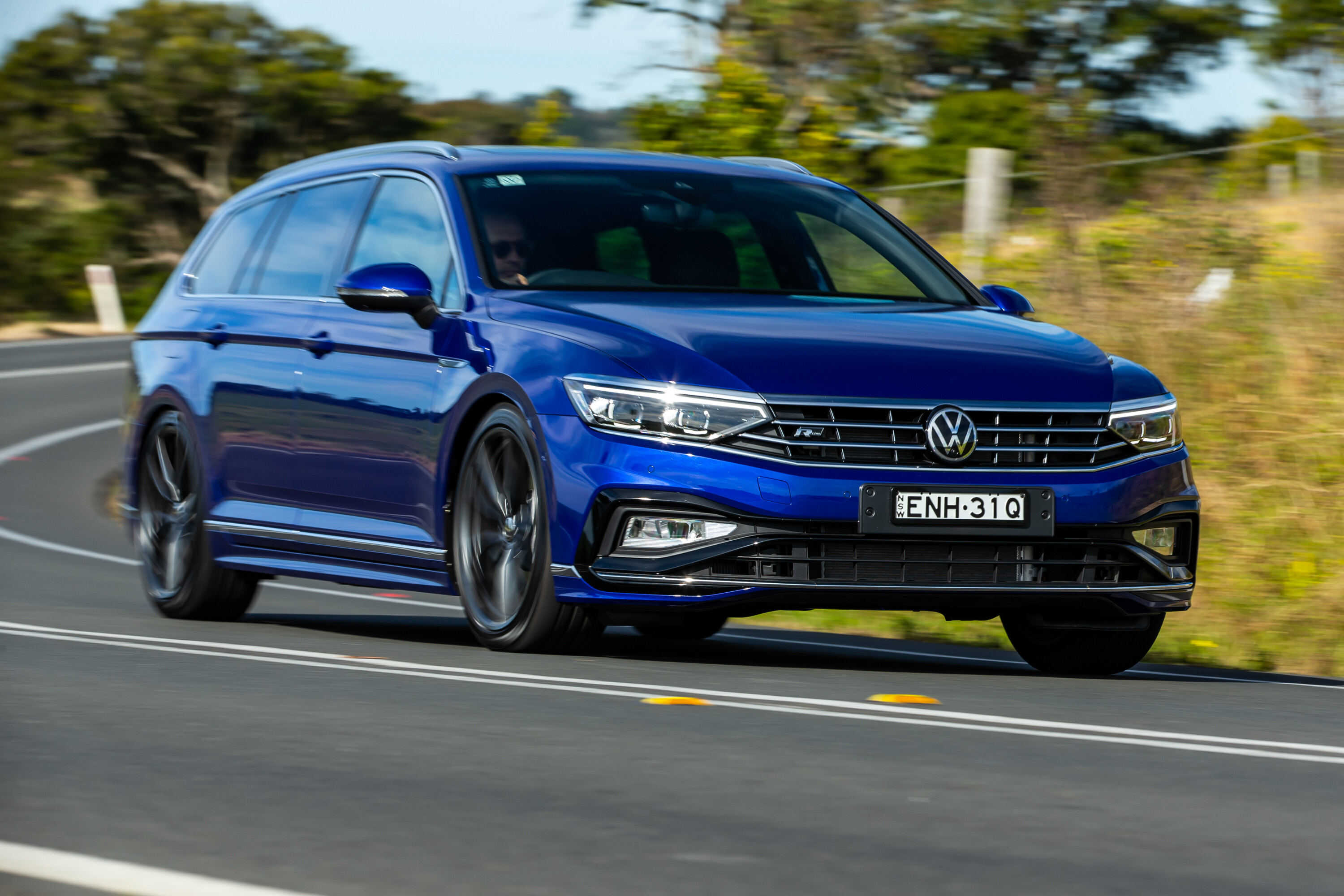
In the Tiguan diesel and Polo manual’s cases, their sales were described as “insignificant”; there won’t be replacements due to the lack of demand. For niche vehicles such as the Golf R and Passat wagons though, there is demand. Small as it may be, a minority are still devoted to the long roof.
1
The wagon story may not be as dark as it seems on the surface. Under the broader Volkswagen Group umbrella falls new Spanish performance brand Cupra, which offers more wagon choices overseas.
Wheels reported last week that Cupra Oz is evaluating the Leon Sportstourer – a Golf wagon-sized performance vehicle – for local release, with the option of either a front-drive 180kW plug-in hybrid (VZe) or 221kW all-wheel drive (VZx) configuration. A near-direct Golf R wagon replacement.
With the new Skoda Superb on the way later next year, the next-gen Czech wagon will have to fill the gap left by the Passat/Arteon.
Correction: This article previously read that Skoda had paused local Superb wagon orders; the current Superb remains available in liftback and estate form in Australia with the new generation confirmed for 2024 in both body styles.
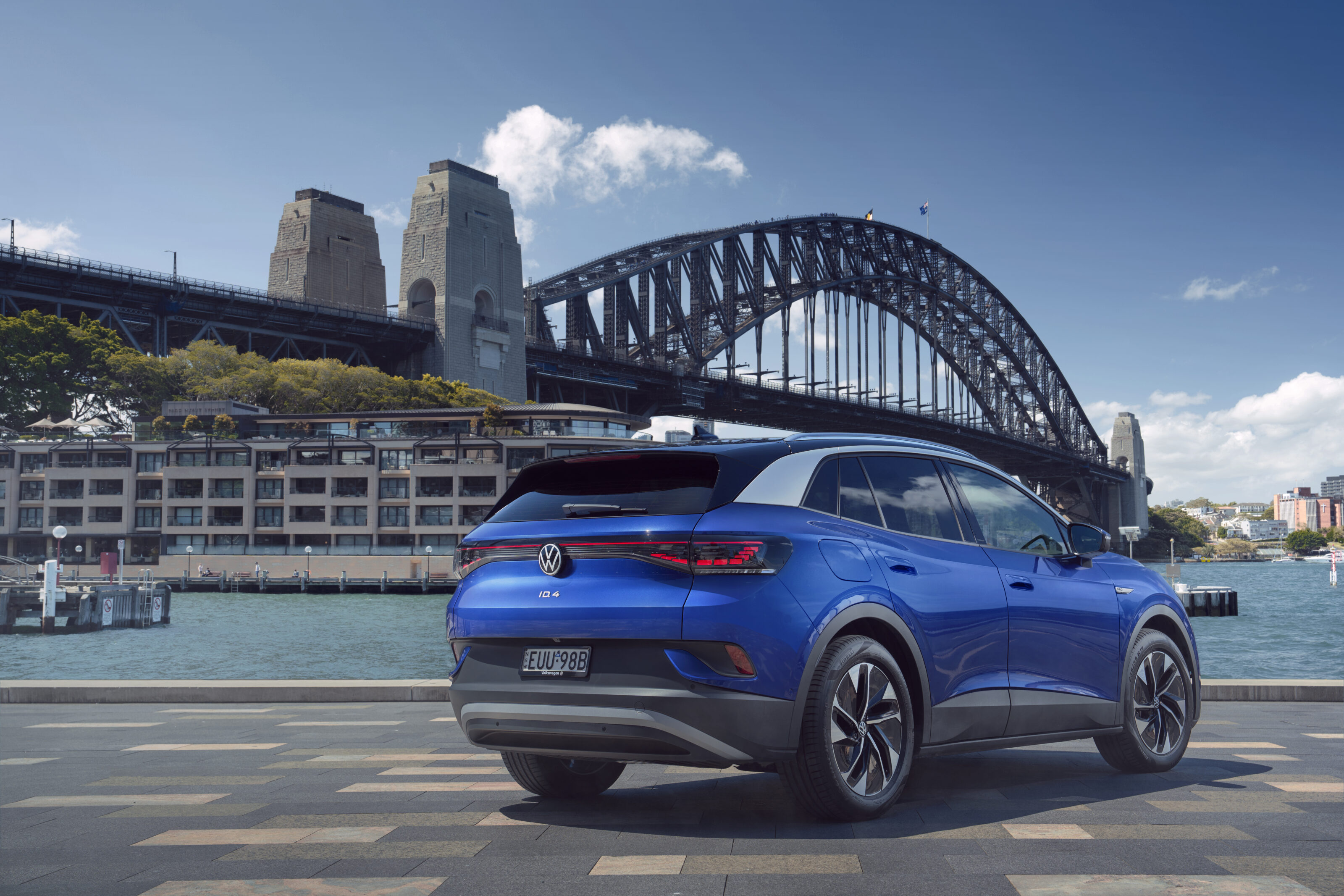
The 2024 ID.4 and ID.5 medium SUVs will arrive in July next year in updated guise.
More efficient motors add 60kW to Pro variants, and 30kW to performance-oriented GTX trims. There are also improvements to range and ride quality promised.
The 2024 models also benefit from revised software running on a larger 12.9-inch touchscreen, with various other usability improvements detailed below.
Our original story, below, continues unchanged.
UPDATE: Volkswagen Australia has confirmed that the 220kW ID.4 and ID.5 GTX will launch before the end of June 2024.
The performance versions of ID.4 and ID.5 will land in the second quarter (April-June inclusive) of 2024, and it’s likely the regular models will arrive around the same time.
July 2023: Local timing for Volkswagen ID.4 mid-size SUV, and its ID.5 coupe SUV twin, has been locked in – and you’ll need to wait a little longer.
Snapshot
2024 Volkswagen ID.4 and ID.5 timing confirmed
Mid-size SUV twins to arrive in the first half of 2024
Pricing target similar to internal-combustion Tiguan 162TSI R-Line
Volkswagen Australia has today confirmed official timing for the ID.4 and ID.5, with a local debut now set during the first half of 2024.
A more precise date will be announced closer to the time, but production isn’t scheduled to commence until early next year – suggesting the launch won’t occur until closer to June 2024.
According to the brand, every Volkswagen dealer in Australia will retail and service its electric vehicles, including the previously-confirmed ID.3 hatchback, and the ID.Buzz and ID.Buzz Cargo confirmed today.
“The Volkswagen ID.4 and the coupe-style design-led ID.5 will provide Volkswagen Tiguan customers with three choices in the medium SUV segment – BEV with a 500km-plus range, or high-performing and efficient turbocharged petrol engines,” said Volkswagen Australia.
“Upgraded product such as the more premium ID.3 and a 500km-plus range for ID.4 and ID.5 will gel with our ability to sell these vehicles nationwide, no matter which dealership is closest to you. This is an advantage that not all start-up companies are able to match,” added passenger vehicles director, Michal Szaniecki.
“We can confirm the ID.3, ID.4 and ID.5 will both start production and go on sale next year, so our message for customers thinking about switching to a BEV is this – we’re here in 2024, and here in a big way.”
In November 2022, Szaniecki said the ID.4 had a “target pricing similar to [Volkswagen’s] most in-demand SUV, the Tiguan 162TSI R-Line,” suggesting a rough starting point of around $56,000 before on-road costs.
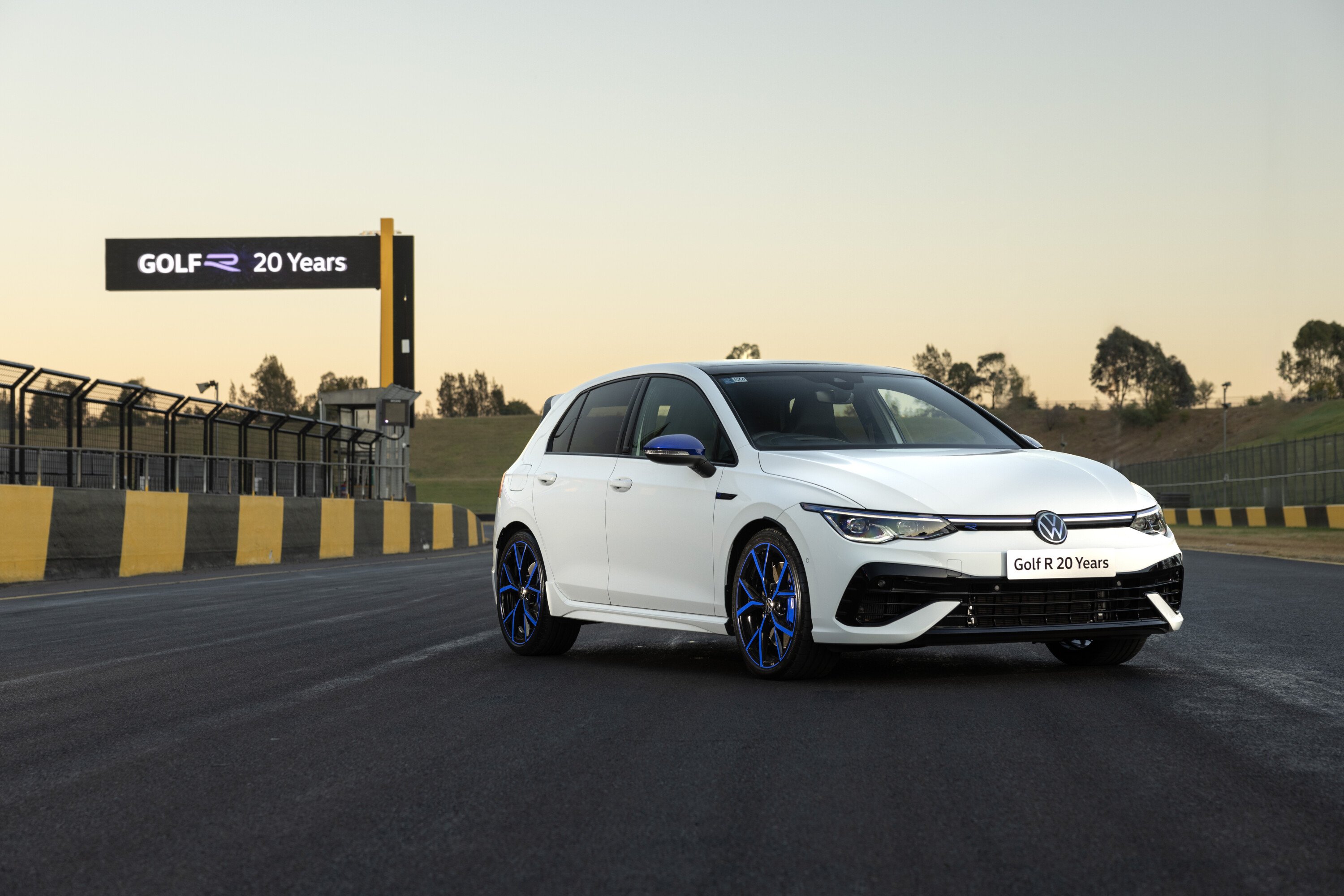
Volkswagen is celebrating 20 years of R in style with the fastest Golf yet.
Since the Mark 4 R32‘s release, (it was 2003 by the time it hit Aussie shores) R has introduced plenty of innovations, starting with the pioneering six-speed dual-clutch ‘DSG’ transmission still in use today – quite literally, in the Polo GTI’s case.
The latest Mark 8 R is by far the most engaging of the breed, thanks to a torque-splitting rear differential that took the Golf R from anodyne express to enthusiastic drift machine.
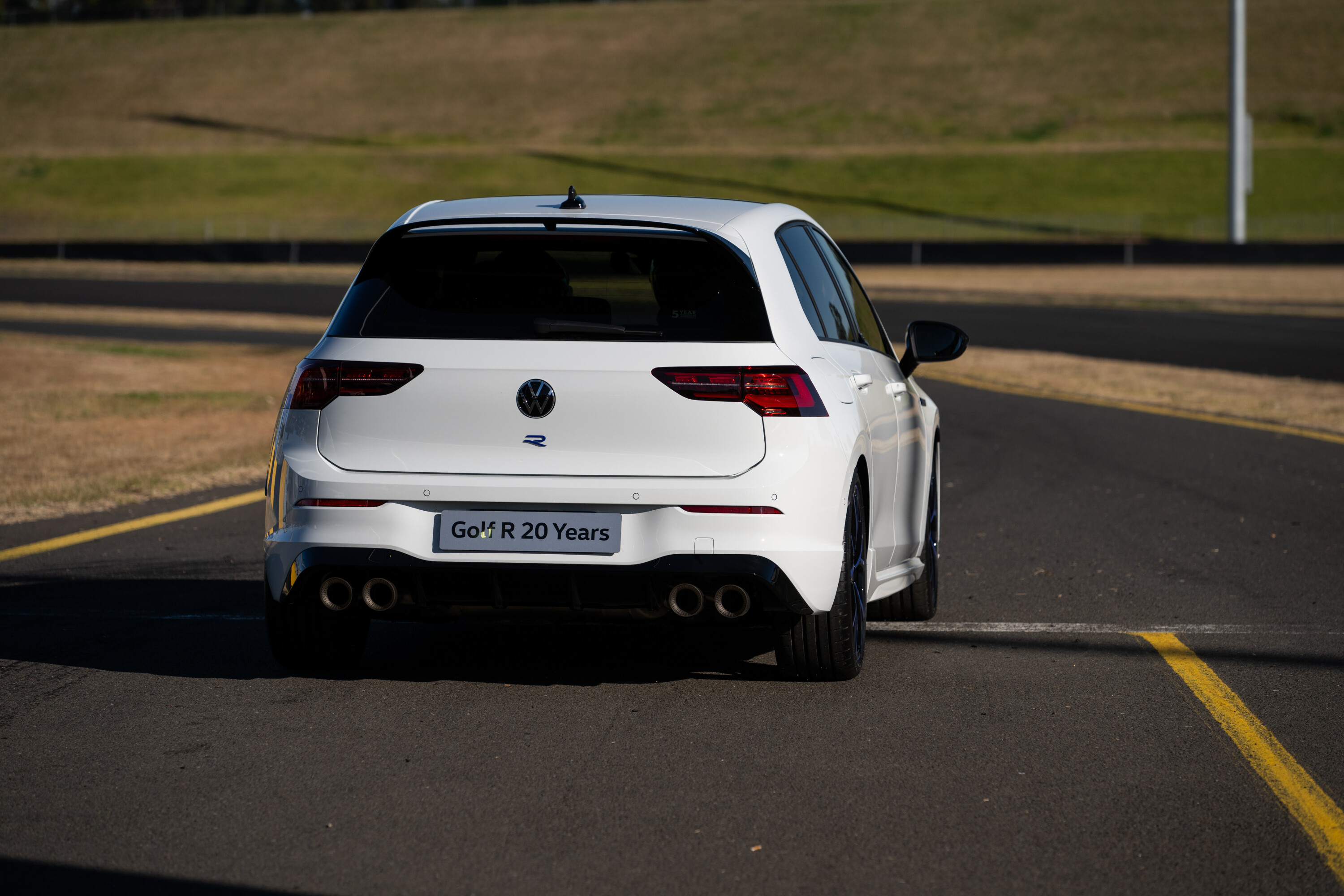
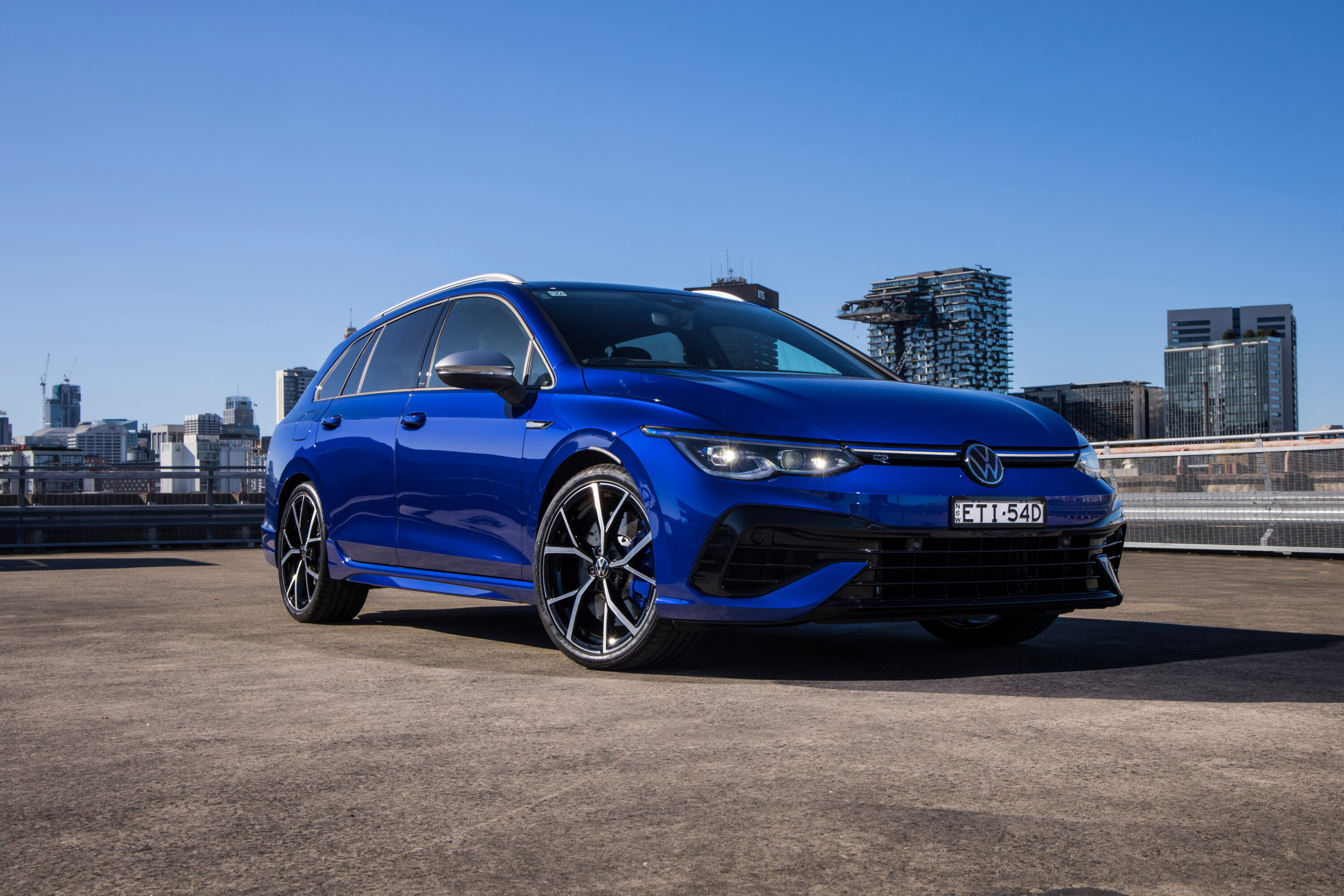
To honour the lineage, all 50 examples of the R 20 Years wear (some) iconic Lapiz Blue paint.
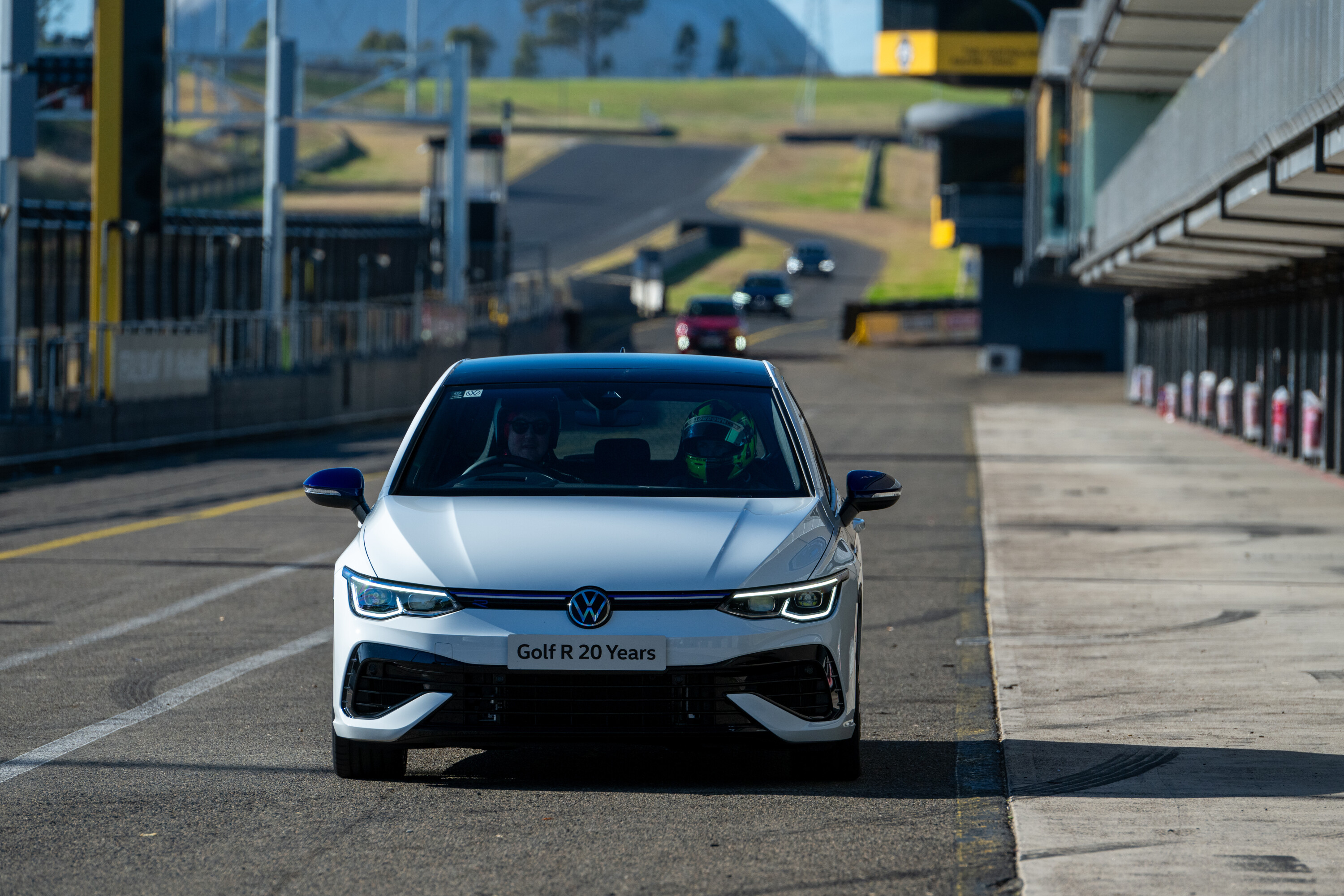
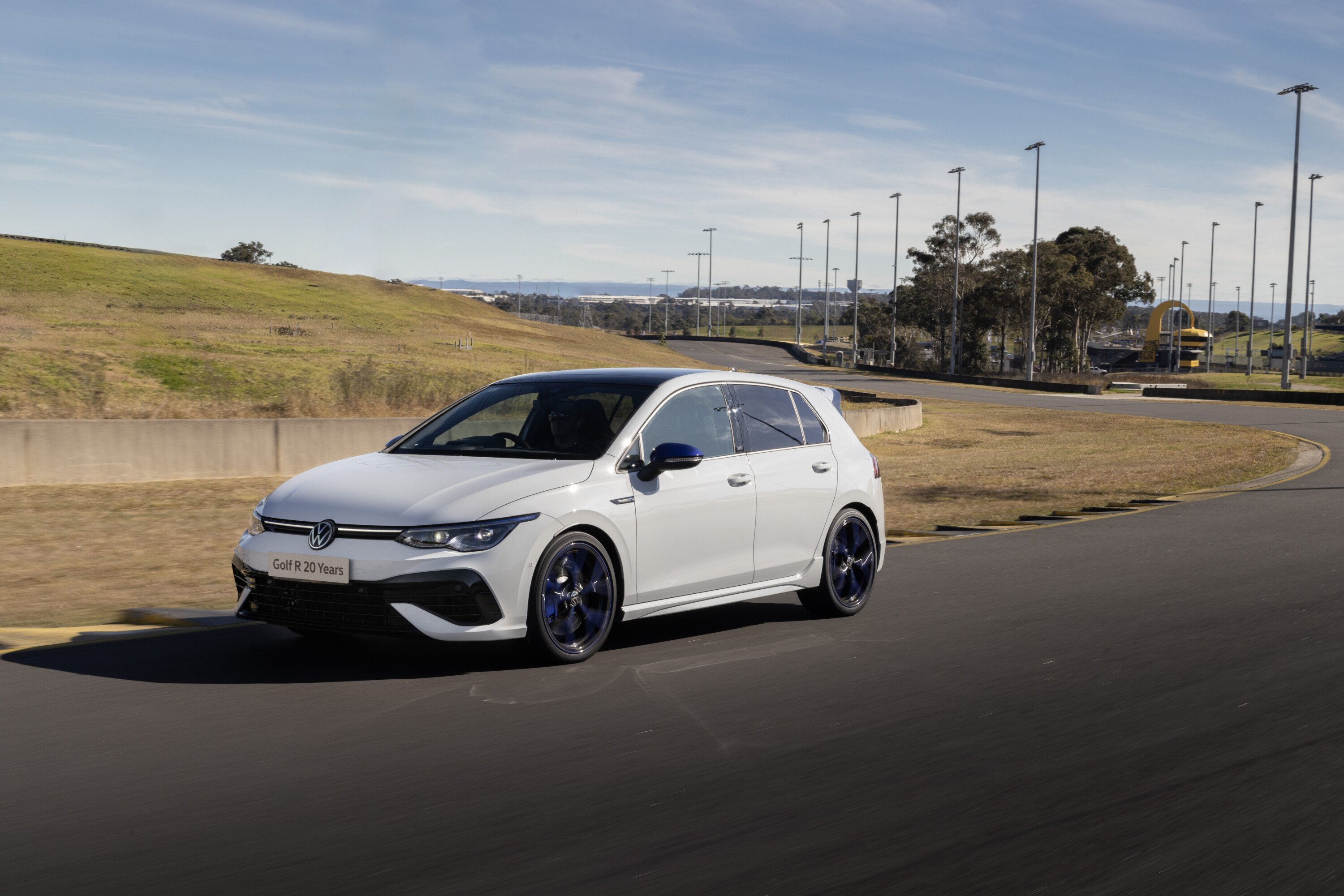
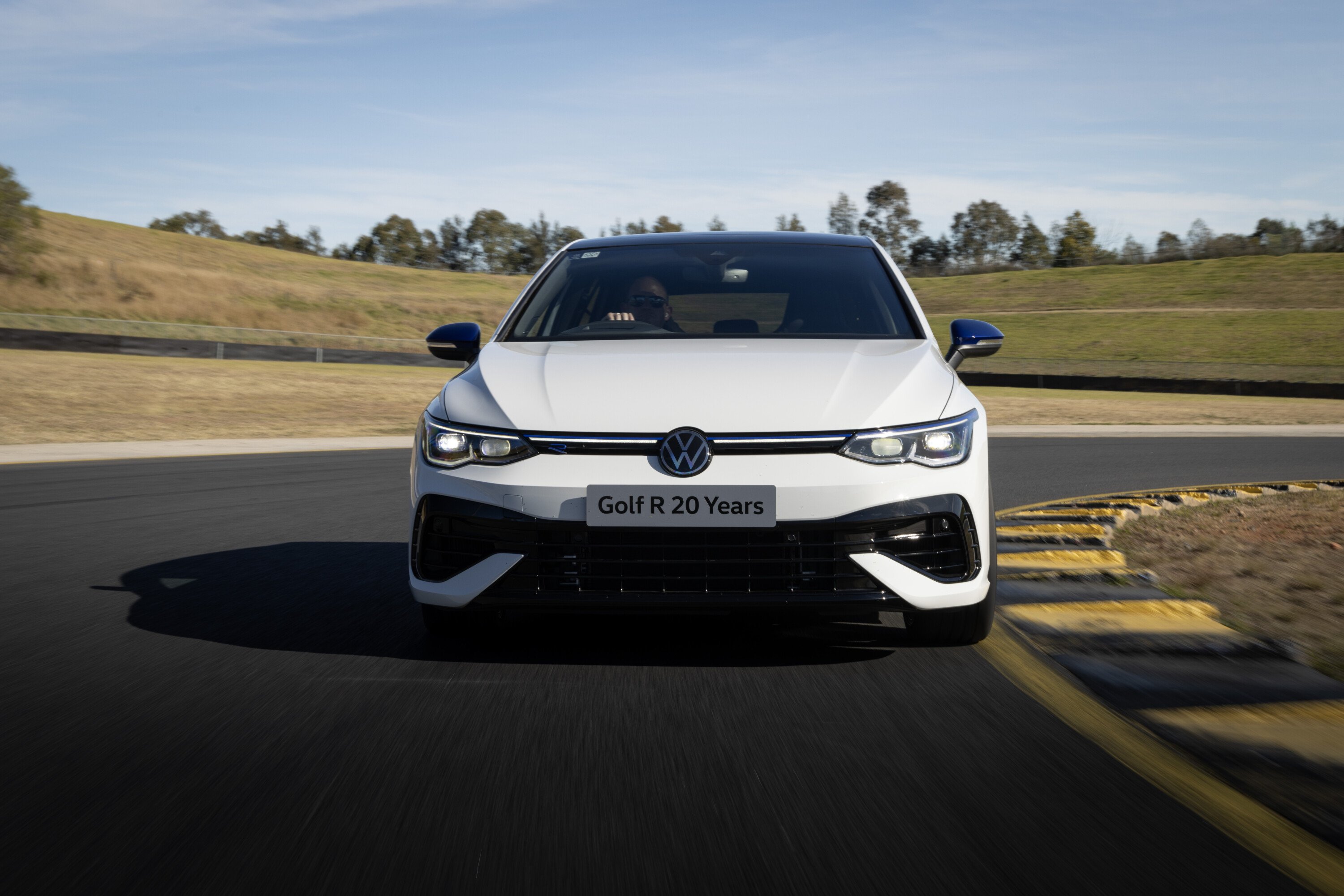
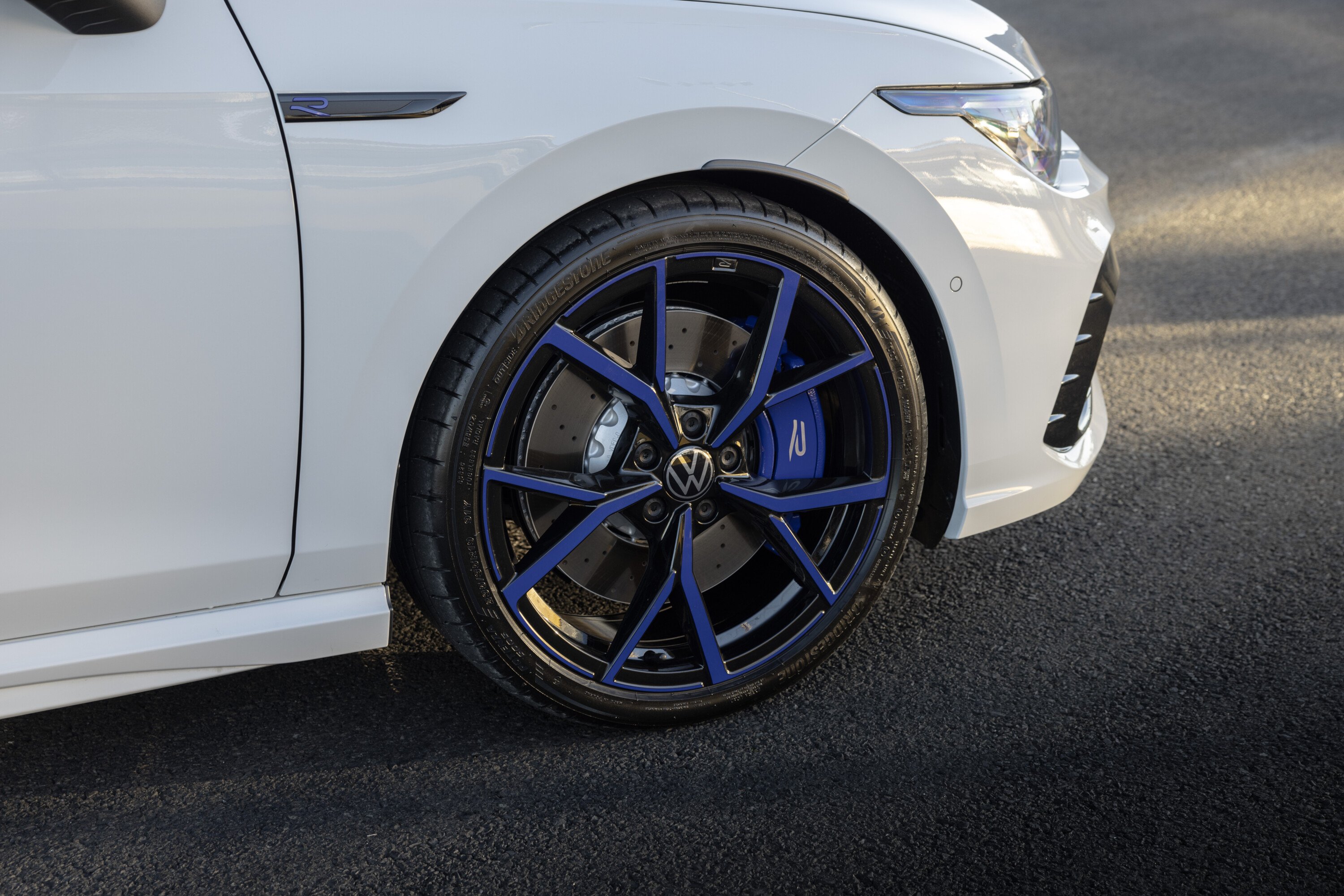
Going for a blue car gets it all over, naturally, while the 18 white examples (like the one you see here) get Lapiz Blue mirror caps, R badging, accented 19-inch ‘Estoril’ alloys, headlight inserts and cabin details.
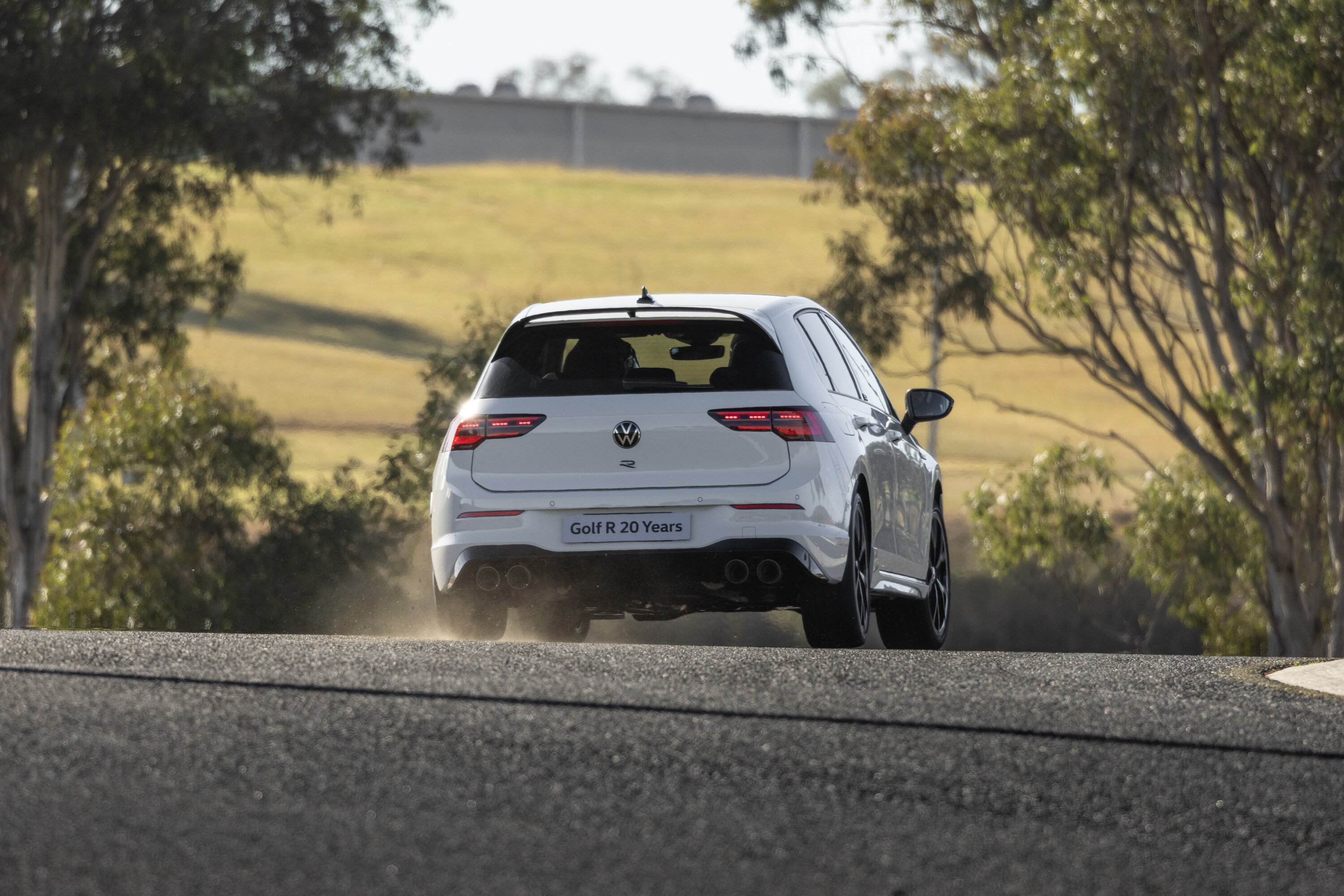
Making it more than just a sticker pack, VW engineers have fiddled with the ‘EA888’ 2.0-litre turbo-petrol, adding higher pressure injectors and a titanium Akrapovic exhaust for 245kW and 420Nm – up 10kW and 20Nm from the regular hatch. There’s also an ‘anti-lag’ system that improves response by keeping the turbo spooled for a short period after coming off throttle.
1
Aside from performance credentials, the R 20 Years gets a petrol particulate filter (just like the R wagon) dropping ADR consumption from 7.8L/100km to 7.3L/100km.
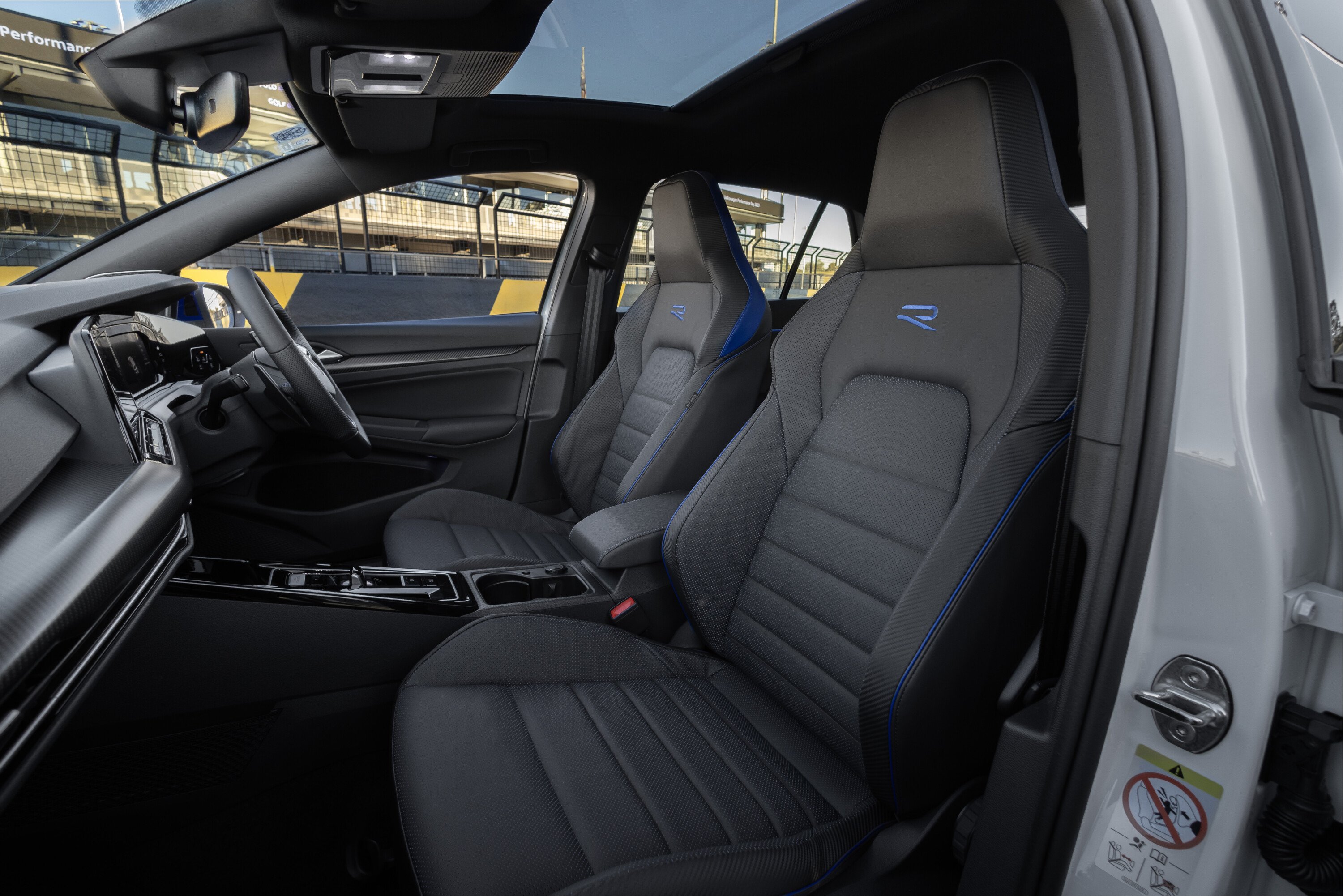
While it’s more than an appearance treatment, it’s no stripped-out track special. The R 20 Years has all five seats, leather upholstery, heated and power-adjustable front buckets, a kick-arse Harman Kardon sound system, real carbon-fibre trim and a panoramic glass sunroof.
The price? It’s $77,490 before on-road costs, a $10,500 premium over the regular Golf R. But in 2003, an R32 would have set you back $63,000 – over $100K in today’s cash – so maybe it isn’t such bad value.
Plus, the sad truth is that by the time you’re reading this review, you’ve probably missed out on getting an allocation.
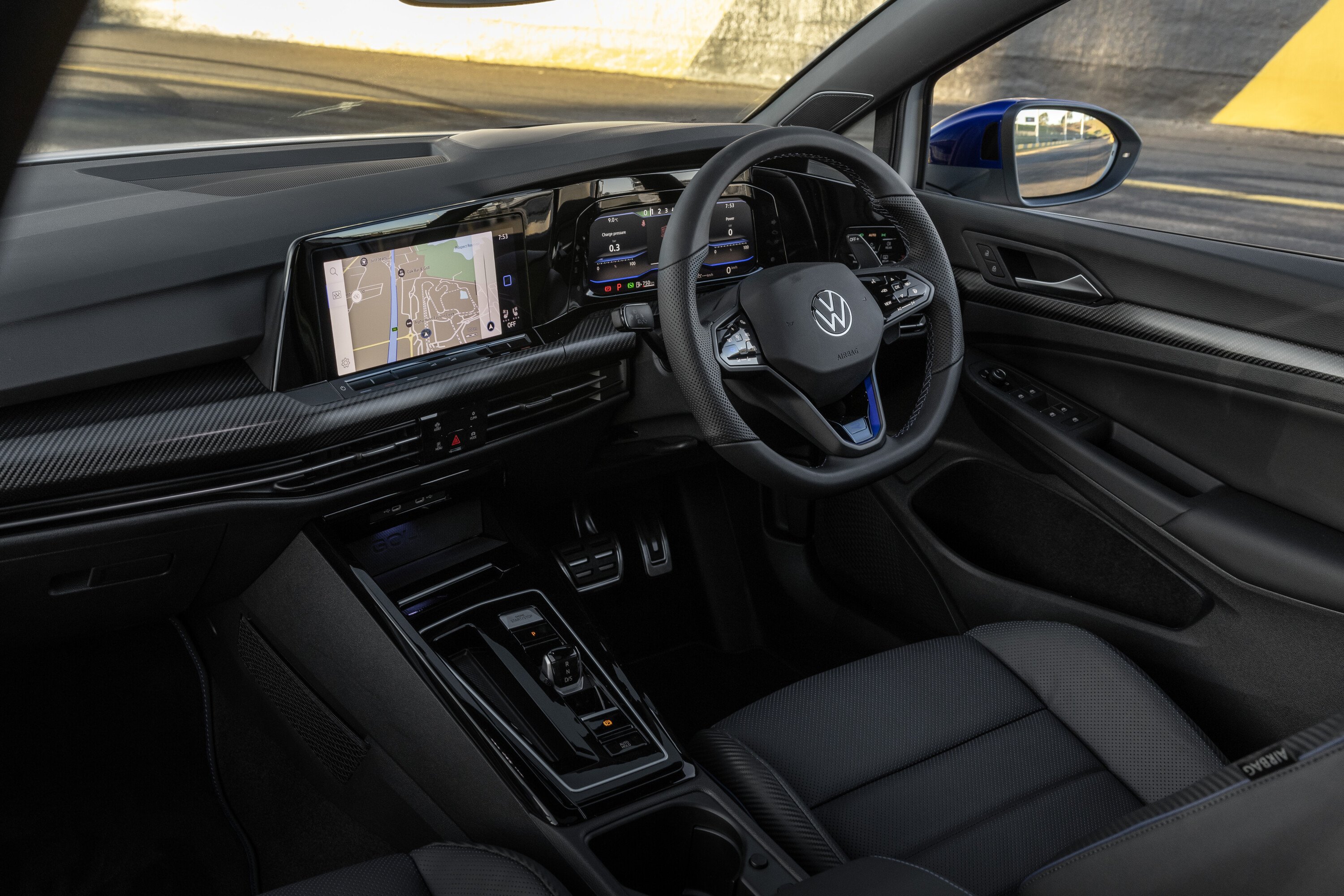
The R 20 Years’ interior will feel very familiar to current Golf R owners, save for the addition of real carbon-fibre trim and a ‘20’ badge on the piano black B-pillar.
Ahead of the driver is an excellent 10.25-inch digital display that changes to reflect what drive mode you’re in. The central 10.0-inch touchscreen that controls the infotainment system felt more responsive and intuitive than we remember – perhaps the Golf’s cabin is improving. Navigation and wireless smartphone connectivity are standard.
Ergonomically the Golf is most excellent, with the crucial controls all gathered logically around the rectangular start-stop button and stubby gear selector. The steering wheel is chunky and lovely to hold, and those extended paddles are far more satisfying than the dinky ones in a GTI.
1
The only problem on track is the infuriating touch capacitive steering wheel. Halfway through Eastern Creek’s 165km/h first turn, I feel my hands burning up, the sweat loosening my palms’ grip on the wheel. Not ideal!
You don’t have to grip the tiller too tightly, thankfully, as the ensconcing bucket seats hold you in with great adjustment to fine-tune your driving position. They’re heated with two memory settings, so it’s a very practical machine.
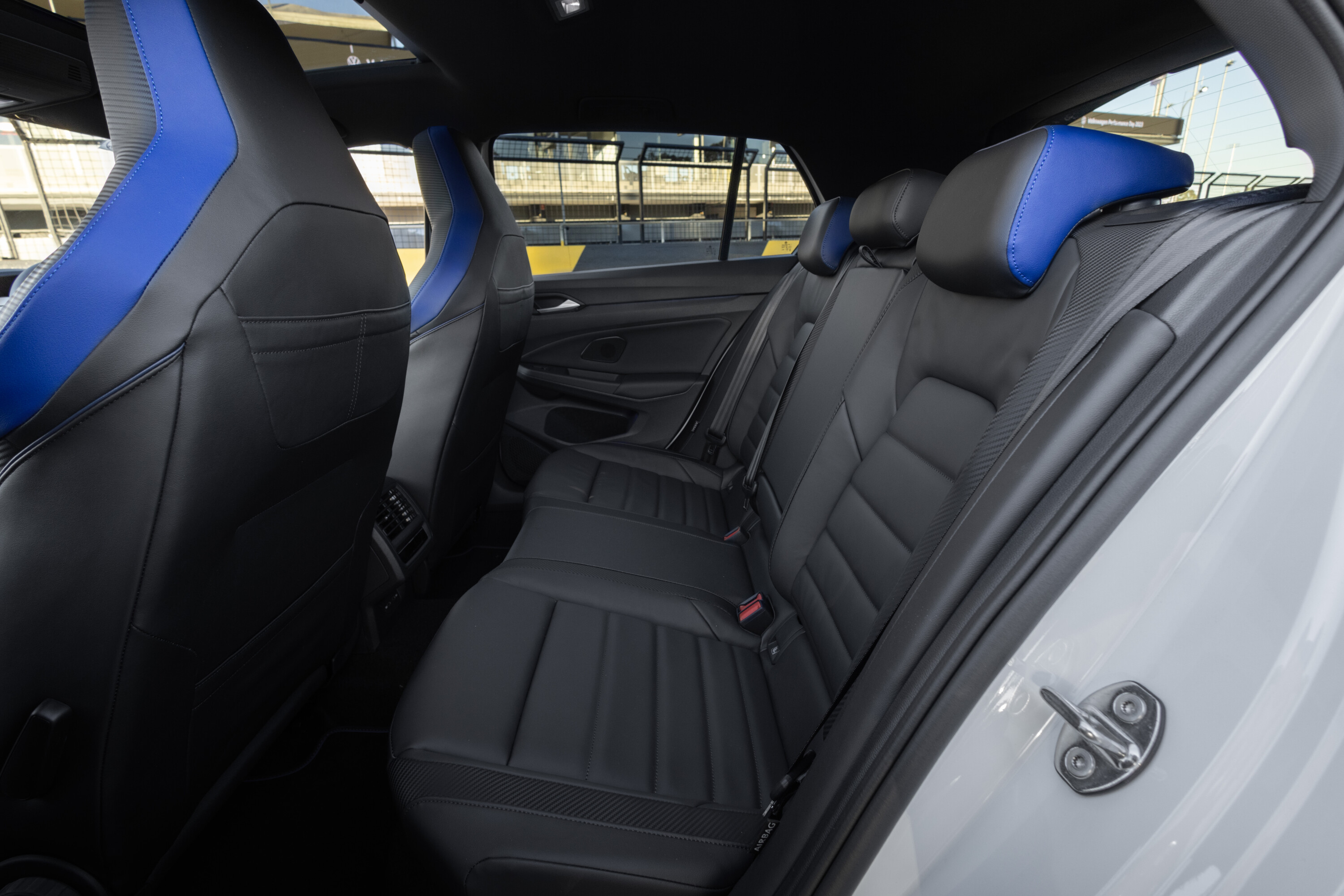
In the back seat, it’s just regular Golf, and that’s great. There’s space for the family with ISOFIX and top tether points for child seats/capsules, air vents to keep the kids cool, and USB-C points to charge the iPads. A 374L boot has plenty of room for a weekend getaway.
The 20 Years intensifies the Golf R’s best characteristics, keeping its daily driveability while amping involvement and feel-good factor thanks to extra theatrics.
Giving the start button a long press, for example, fires the R 20 Years up with extra rev flare. Set it to Race mode using the wheel-mounted button and the exhaust sound at idle bumps a few decibels and hardens in tone. It’s augmented, of course, but the pops and crackles on the overrun – amplified through that titanium Akrapovic exhaust – are legit.
A full dose of acceleration leaving the pitlane confirms the 20 Years is typically rapid, though I’d be lying if I said my butt-dyno could tell it’s two-tenths faster to 100km/h (4.6 seconds) than the normal hatch.
1
For the 20 Years, VW engineers deliberately programmed in a more aggressive shift feel at redline to amp engagement
Pulling back on the right paddle at redline thumps my helmeted head into the 20 Years’ headrest. That’s new. The seven-speed dual-clutch is usually suspiciously smooth; for the 20 Years, VW engineers deliberately programmed in a more aggressive shift feel at redline to amp engagement.
The downshifts can be a little belligerent, though. Even in Race mode with the shifter in Auto, the Golf R won’t gear down under heavy braking in the same way a Porsche PDK will, so the paddles are a must. Annoyingly, it occasionally refuses downshifts, while upshifting as you approach redline.
An upside of the R 20 Years is it keeps the butterfly valve slightly open off-throttle to maintain turbocharger speed, giving slightly quicker response than a regular Golf R. We imagine the difference is even more pronounced on a twisty road or when you need to overtake.
1
Volkswagen hasn’t made any changes to the suspension or geometry for the 20 Years, which is no bad thing.
You still get a bewildering number of damper settings (15, in fact) but for a relatively smooth track like Eastern Creek, Race mode is perfect. For bumpier circuits, such as Wakefield Park, the Nurburgring setting would be better.
The R’s progressive steering is responsive and well-weighted, if devoid of any real feedback for the driver. And while the R engineers have done their best to reduce understeer in the Mark 8, it’ll still happen if you barrel into Eastern Creek’s turn two a bit fast.
1
With 1556kg leaning on the nose under braking, the R is heavy for the racetrack and its right front 235/35 R19 Bridgestone S005 is the first thing to give up on the anti-clockwise North Circuit.
For corners where you build speed, such as the on-camber turn three, the R is devastating. You can just about hold the 20 Years flat here, feeling the ESC and torque-splitting rear diff do everything in their power to best split its 245-kilowatt punch between all four tyres.
Through the high-speed turns 4-5 chicane, the R remains composed, obliging some rotation under braking helping reach the apex and neutralising under power. Be patient through the last turn onto the straight and the 20 Years rockets onto 220km/h and beyond – impressive stuff for a car you can comfortably take on the school run.
The fastest Golf is devastatingly quick but, as much of an improvement as it is over a Mark 7.5 for the driver, even the most powerful Golf ever doesn’t make a hugely rewarding track car.
After a few sessions, the AWD rocketship experience grows tiring as you feel the tyres and brakes weakening their resolve.
1
Don’t be afraid to give this car a hiding on the racetrack, just budget for replacement tyres and brakes.
The Golf R 20 Years is, instead, an extremely flattering machine; confident, composed, and rapid enough to embarrass most supercar drivers at a track day. Don’t be afraid to give this car a hiding on the racetrack, just budget for replacement tyres and brakes.
It’s a cracking way to celebrate 20 years of the R brand, though. With the 20 Years’ conspicuous visual additions and extra aural drama, all 50 examples of the most powerful Golf to date are sure to be snapped up quickly.