
The electric revolution is in full swing. Makers of regular cars and SUVs (such as Volvo) are already completely committed, but sports cars aren’t immune. The Lamborghini Aventador’s replacement will be a plug-in hybrid (PHEV), Ferrari’s new sports car, the 296 GTB, is also a PHEV, and even the likes of Renault Sport – soon to be Alpine – will be producing EVs exclusively.
Put aside the decreasingly distant threat of electrification and the SUV has already arrived in full force. Ferrari’s Purosangue, Ford killing the Fiesta (and with it the excellent ST hot hatch), and even Lotus entered the SUV game for goodness sake! Colin Chapman would be turning in his grave.
It’s this context that makes setting a silly early morning alarm to meet Nathan Ponchard at Berowra Ampol rather exciting.

We’ve arrived to brim-fill a brace of bespoke, two-door sports cars you can buy right now for about $50K. Sure, one of them has been around for a while – the MX-5 hit Oz in September 2015 – and Toyota’s new GR86 is a heavily revised version of the 2012 86, but come on, does it get much better this side of $100K?
Well, you could argue it does, with the new Nissan Z and a manual Supra here now, and Honda’s ‘FL5’ Civic Type R launching shortly (not to mention the rest of the hot hatch crew), driving enthusiasts are still spoilt for choice. But today isn’t about celebrating what we have, it’s about deciding which of these two is best.
JUMP AHEAD

Pricing and features
Neither car is cheap for what they offer on a spec sheet; small screens, manual seat adjustment and negligible boot space are common themes, but to be fair that isn’t why you buy them.
We have the most focused variants from both brands. In Mazda’s case that’s the $47,320 (before on-road costs) Roadster GT SP. The SP is the latest addition to a now seven-strong MX-5 range and can be identified by lightweight 17-inch BBS alloys, German Bilstein dampers and red Brembo four-piston front brake calipers clamping 280mm discs.
The 2023 GR86 GTS manual is $45,390 before on-road costs – the same as the auto, which is one reason to buy a BRZ – and can be told apart from the GT by anthracite 18-inch alloys, two-tone ‘Ultrasuede’ upholstery, red stitching and adaptive LED headlights.

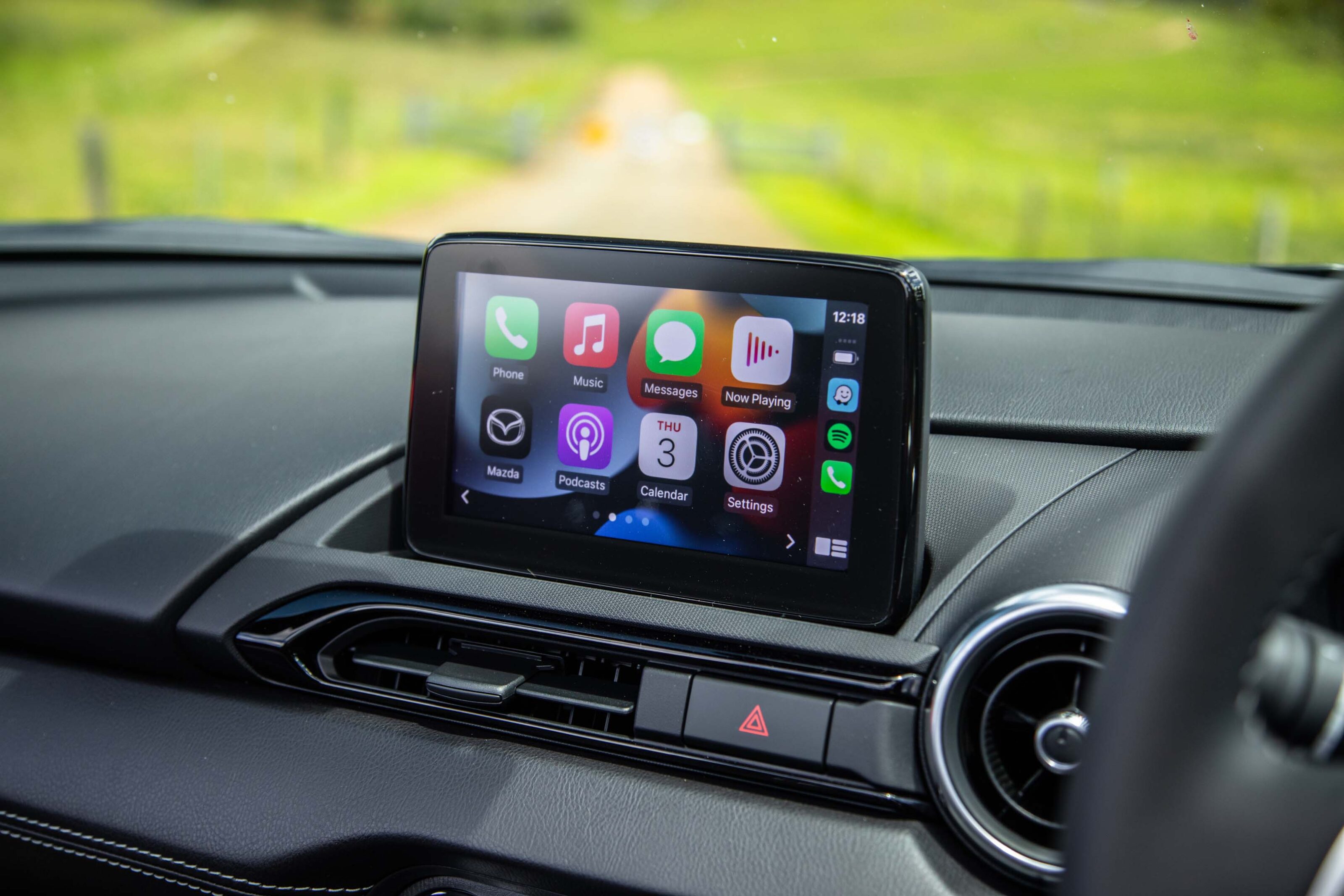
The Mazda MX-5 has a 7.0-inch touchscreen that now runs wireless Apple CarPlay (but wired Android Auto), built-in sat-nav and DAB+ digital radio. The gauges may not have a digital speed readout, but they are attractive even if the speedo’s font verges on too small.
A 230W nine-speaker Bose sound system is fitted to the MX-5 Roadster SP, and although OK at low speed it’s certainly not powerful enough to overwhelm 100km/h of wind rushing over your head.
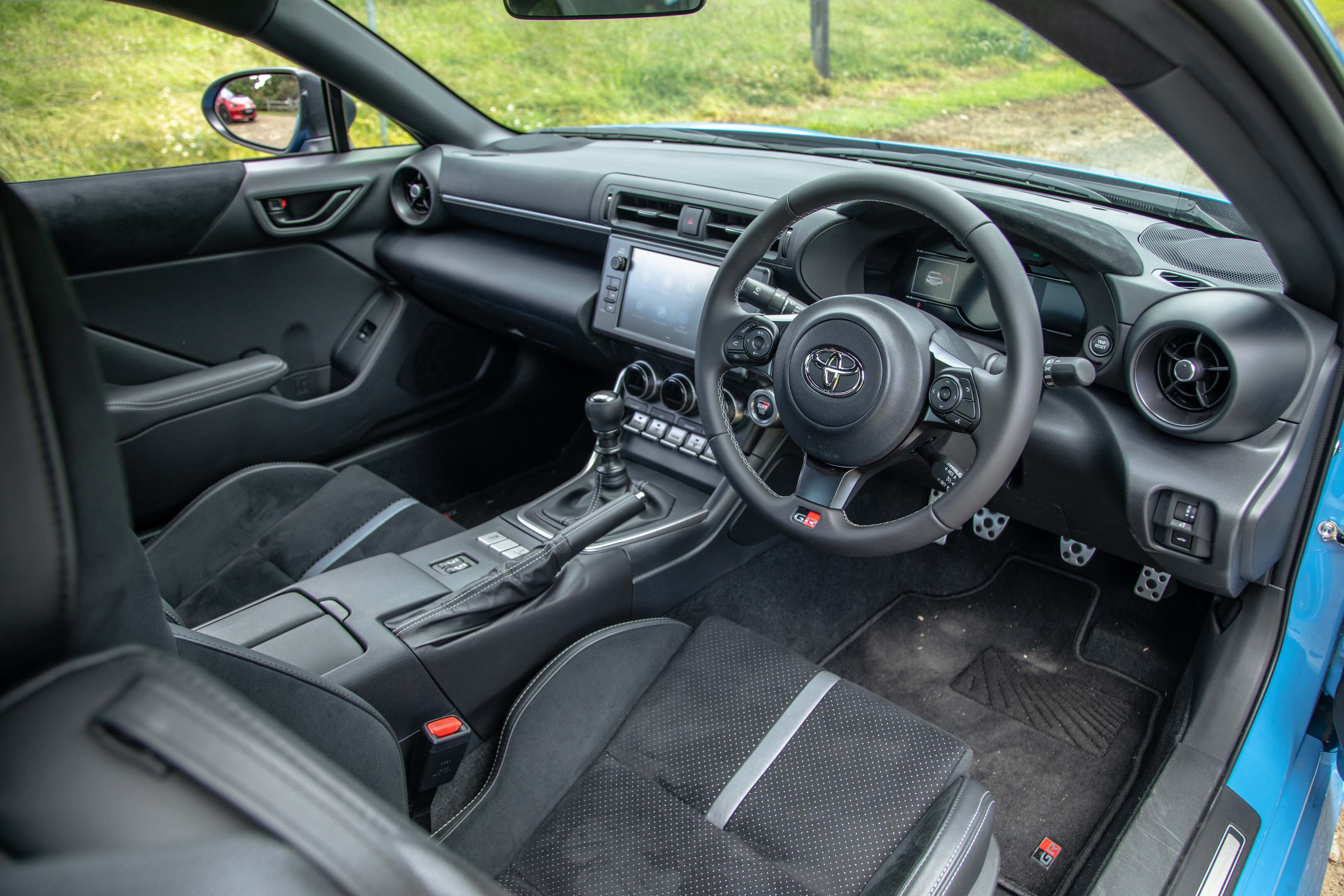
Inside the GR86 things have improved markedly for the new-gen car with a crisp 8.0-inch touchscreen featuring shortcut buttons, wired Apple CarPlay and Android Auto. There’s also a very easy-to-read digital instrument cluster with several displays and clear speed read-out.
Toyota GR86 and Mazda MX-5
The Basics
| Toyota GR86 GTS | Mazda MX-5 GT SP | |
|---|---|---|
| Drive | rear-wheel | rear-wheel |
| Engine | 2387cc flat-4, DOHC, 16v, petrol | 1998cc inline4, DOHC, 16v, petrol |
| Power | 174kW @ 7000rpm | 135kW @ 7000rpm |
| Torque | 250Nm @ 3700rpm | 205Nm @ 4000rpm |
| Transmission | 6-speed manual | 6-speed manual |
| Weight | 1291kg | 1053kg |
| Tyres | 215/40R18 Michelin Pilot Sport 4 | 205/45R17 Dunlop SP Sport Maxx |
| Price | $45,390 + on-road costs | $47,320 + on-road costs |
Comfort and space
The Mazda MX-5’s cabin immediately presents as a more premium space. The attractive, larger-diameter steering wheel (that would look at home in a resto-modded MG B) is wrapped in high-quality leather.
It also has leather seats, squishy secondary materials and, when finished in Soul Red Crystal (or another bright hue), an engaging pop of colour courtesy of the colour-matched door tops. This looks tacky in a small SUV but suits the MX-5.
Ergonomics and practicalities are not the MX-5’s forte. Even if the cup holders are a clever solution, heavier bottles have a tendency to slip out under hard cornering. The token space under the armrest is just big enough for the MX-5’s key fob and the recess under the centre stack doesn’t really fit a modern smartphone. At least the lockable cubby between the seats is a nice touch.
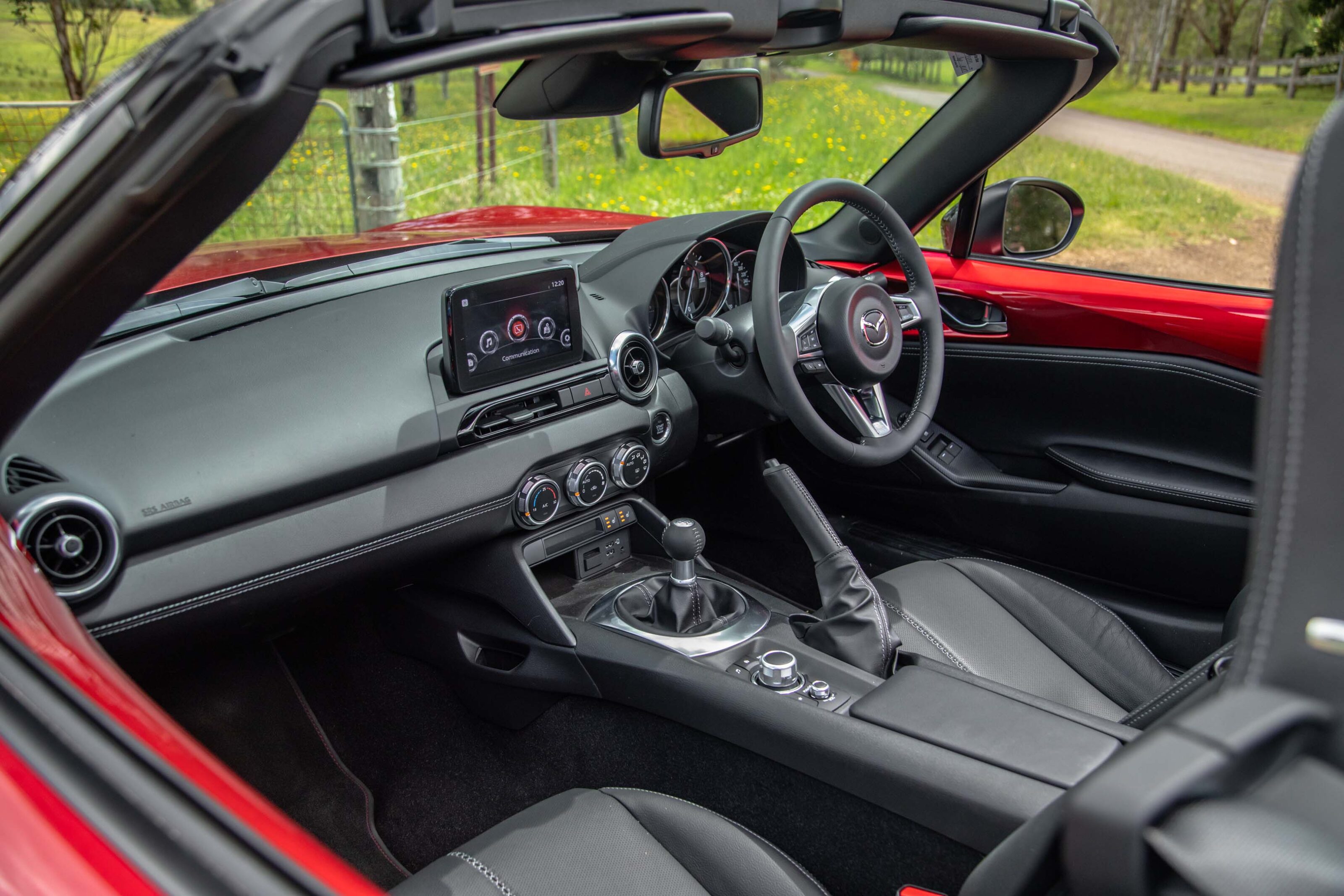
At 188cm tall I’m also right on the MX-5’s height limit with just enough headroom, and the seat on the last click of the sliders. Luckily I’m skinny, because the cockpit is intimate as well. The seats look comfy but on long stints I found them to lack lumbar support, resulting in a sore lower back.
In contrast, the GR86’s driving position had me worried initially, as its two-stage heated ‘Ultrasuede’-appointed seats don’t have as much tilt or under-thigh support as I’d want, but over hours and hours of driving, they never grew uncomfortable.
There is the feeling Toyota redesigned the seats, widening the bolsters, perhaps to make the GR86 more accommodating for larger frames than the snug 86. The GR also loses the facelifted 86’s lovely triangular soft pads that kept the driver’s left knee protected during hard cornering. Strange.
And then there’s the baby elephant in this coupe, that being a pair of seats in the back that are actually usable. Not comfortable, but functional, and having that extra flexibility if this is your only car cannot be overstated.
The GR86’s 237L boot is also miles more useful than the MX-5 Roadster’s 130L. Fold the seats and you can fit four spare tyres when you’re going to the racetrack, too.
On the road
As I arrived at the meeting spot in the GR86 having already enjoyed the privilege of spending a few days punting it around town, I chose to swap into the MX-5 for the first leg of the comparison.
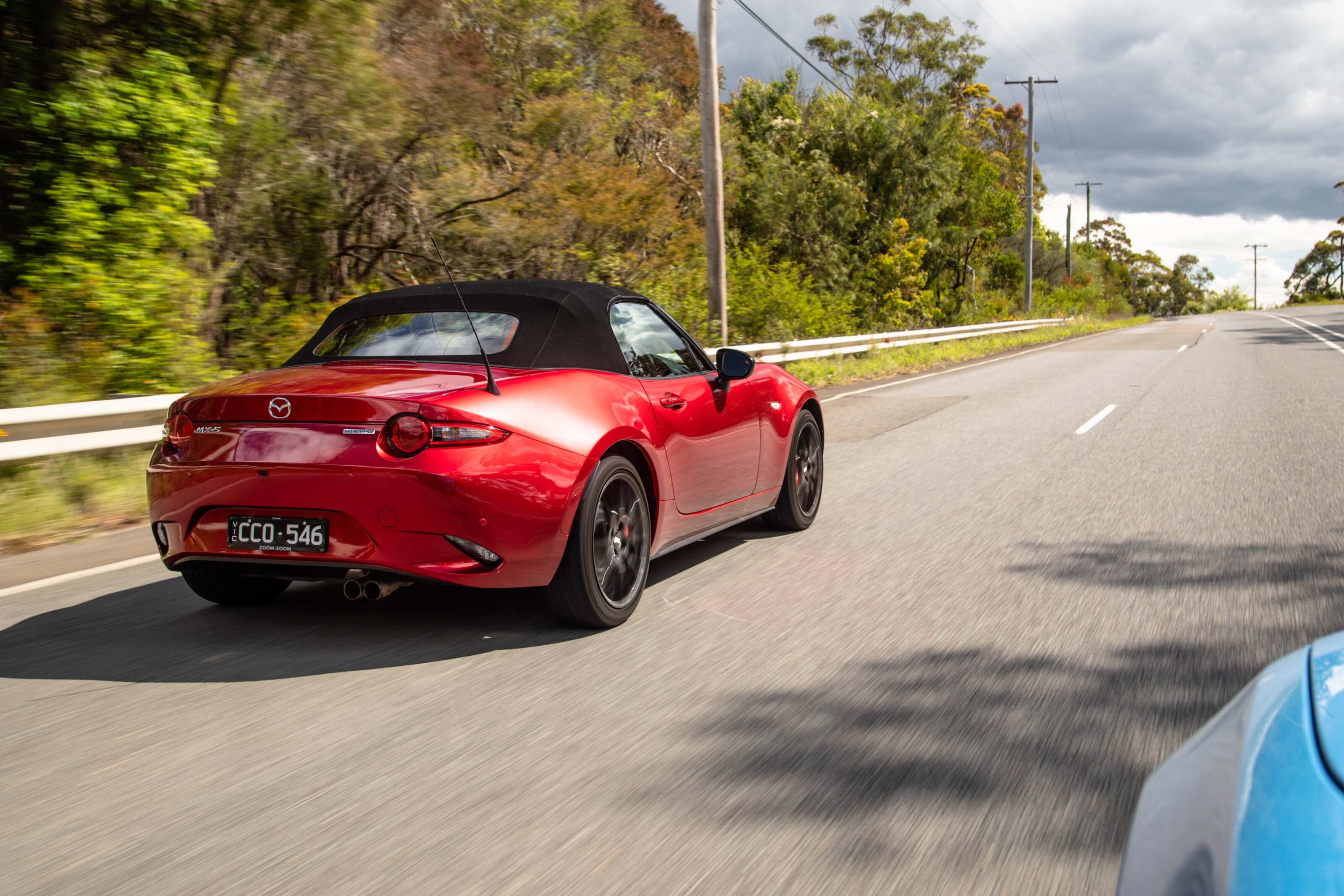
It was a mellow start with smooth, constant-radius turns of the Old Pacific Highway unravelling behind slow traffic. Despite a subdued pace, the MX-5’s body was still wriggling and moving around. The roadster’s easier clutch, longer-throw six-speed manual and more refined engine are second nature to the driver. It’s true, the MX-5 is fun at all speeds.
There’s an effortlessness to the GR86’s chassis that invites you closer to your limits, rather than indulging in the process of each corner.
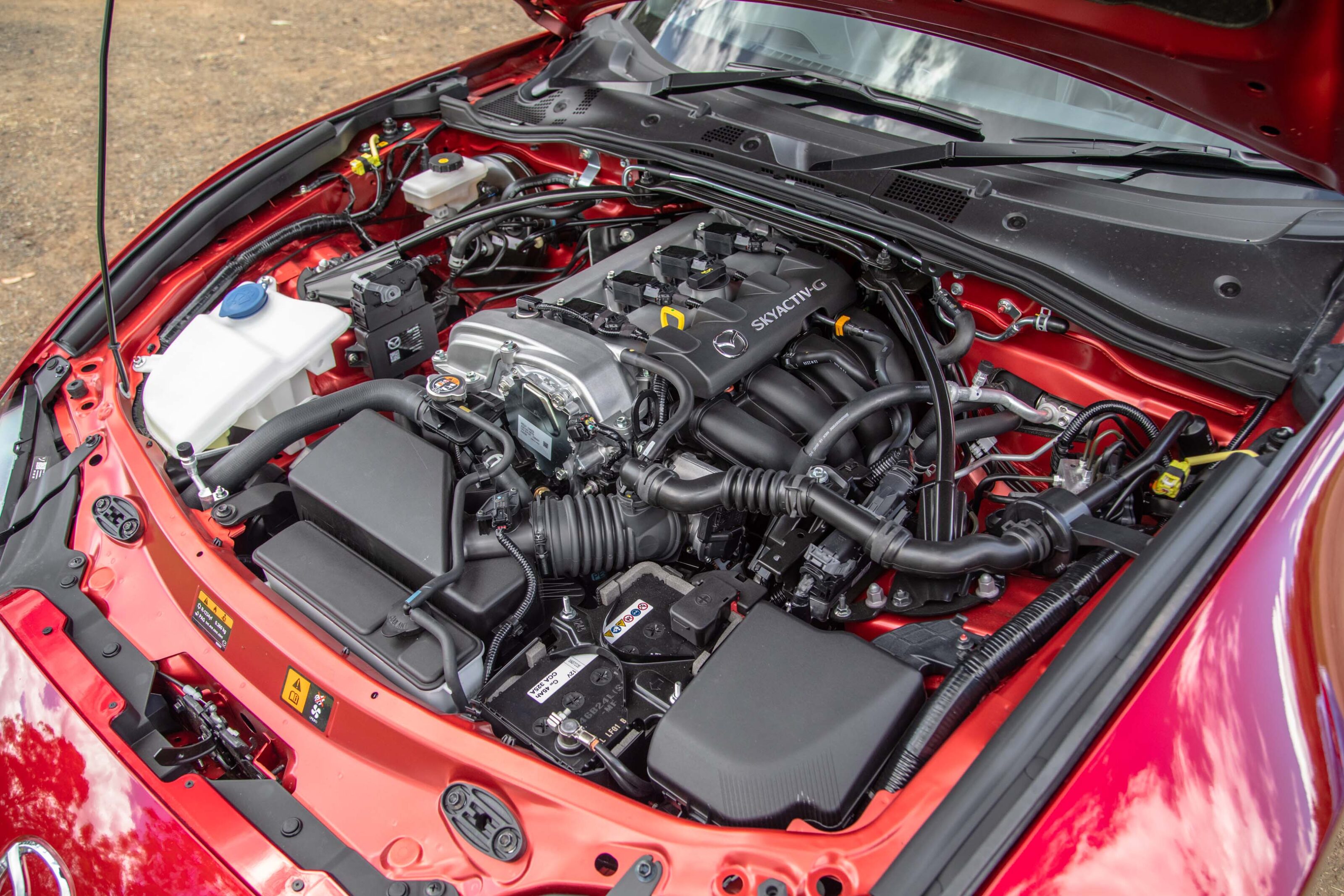
As the road opened up, the MX-5’s (beautifully presented) 135kW/205Nm 2.0-litre naturally aspirated engine could flex its muscles. The MX-5’s midlife update really sweetened the ‘big block’ up with a seriously high redline, allowing you to indulge in second gear up to the 7800rpm fuel cut.
Putting more load through the MX-5’s chassis reveals how the firmer Bilstein dampers have tied the MX-5’s body down. Not so it doesn’t roll – it definitely does – but some of the standard car’s occasionally unnerving vertical pitch is minimised. The ride is firmer without compromising control.
For 2022, Mazda also introduced ‘Kinetic Posture Control’ (KPC) that brakes the inside rear wheel to tug the roadster’s nose into the apex a little tighter. All manual MX-5s still have a mechanically-locking rear diff.
Does it work? Sort of. Except that after a hard run up and down our back-to-back hillclimb the MX-5 left a distinct odour of warm brake pads wafting through the Hunter Valley. This also comes down to an overly-grabby ESC tune that seems to have been amplified by the raised grip limit granted by the Bilstein dampers.
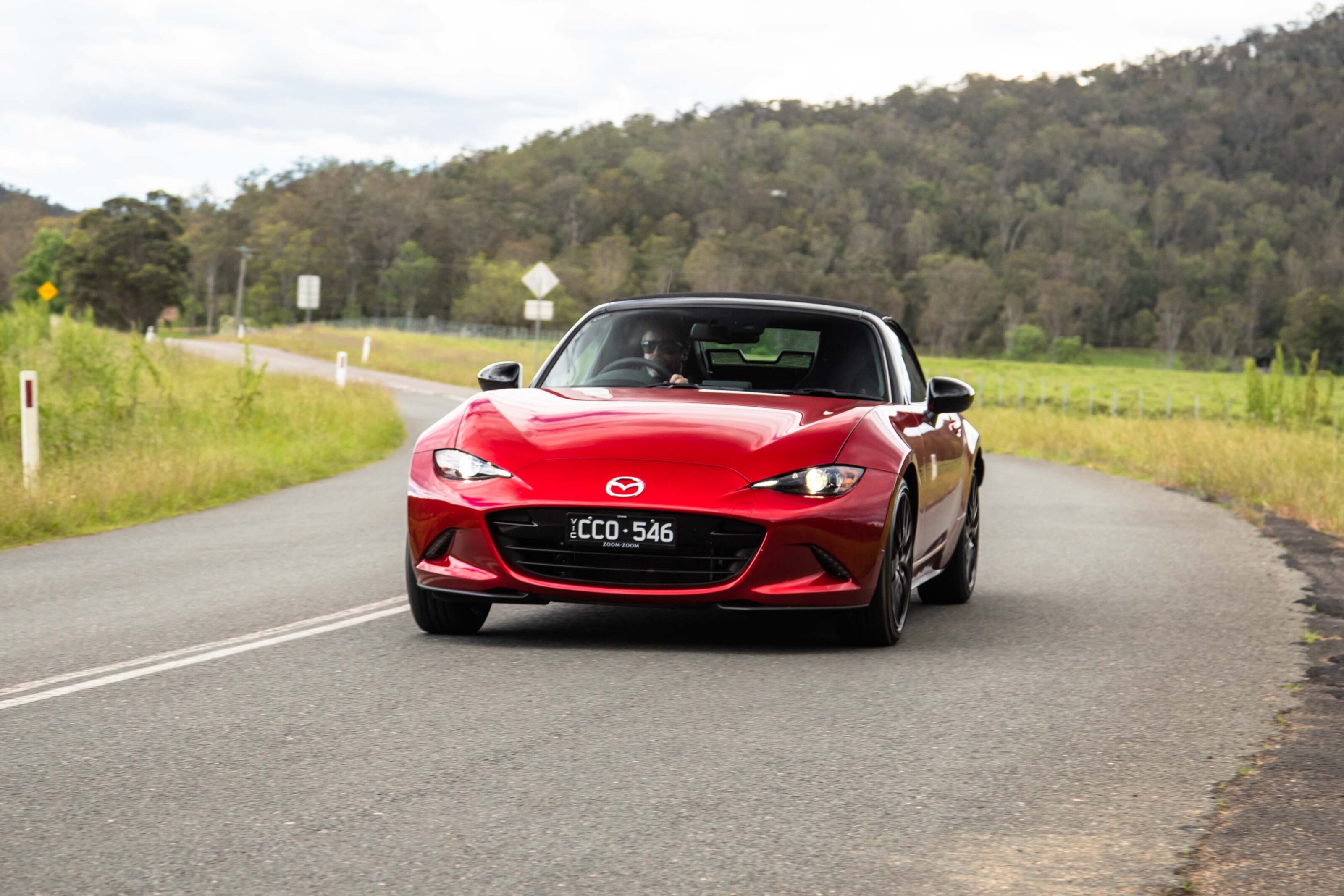
Jumping straight into the sharper GR86, and in the first 100 metres the difference in chassis rigidity against the Roadster is stark.
Over a scabby patchwork of potholes the MX-5’s tiller skips in your palms, while the Toyota’s wheel reminds you of the bumps, but doesn’t kick back like the Mazda’s.
The Toyota’s firm brake pedal, meaty gearshift and sharp throttle inspire you to get to work immediately. That sharper 2.5-turn lock-to-lock rack makes the GR86’s front end feel ultra-responsive too.
But the GR86 doesn’t flow like the MX-5. Where the roadster fluidly rolls, dips and slides on its 205/45 R17 Dunlop Sport Maxx tyres, the GR86’s dance is more punctuated. There’s a flow to be found, but it’s a staccato one as the GR86 eggs the driver to brake harder, turn in faster, hit the gas sooner. There’s an effortlessness to the GR86’s chassis that invites you closer to your limits, rather than indulging in the process of each corner.
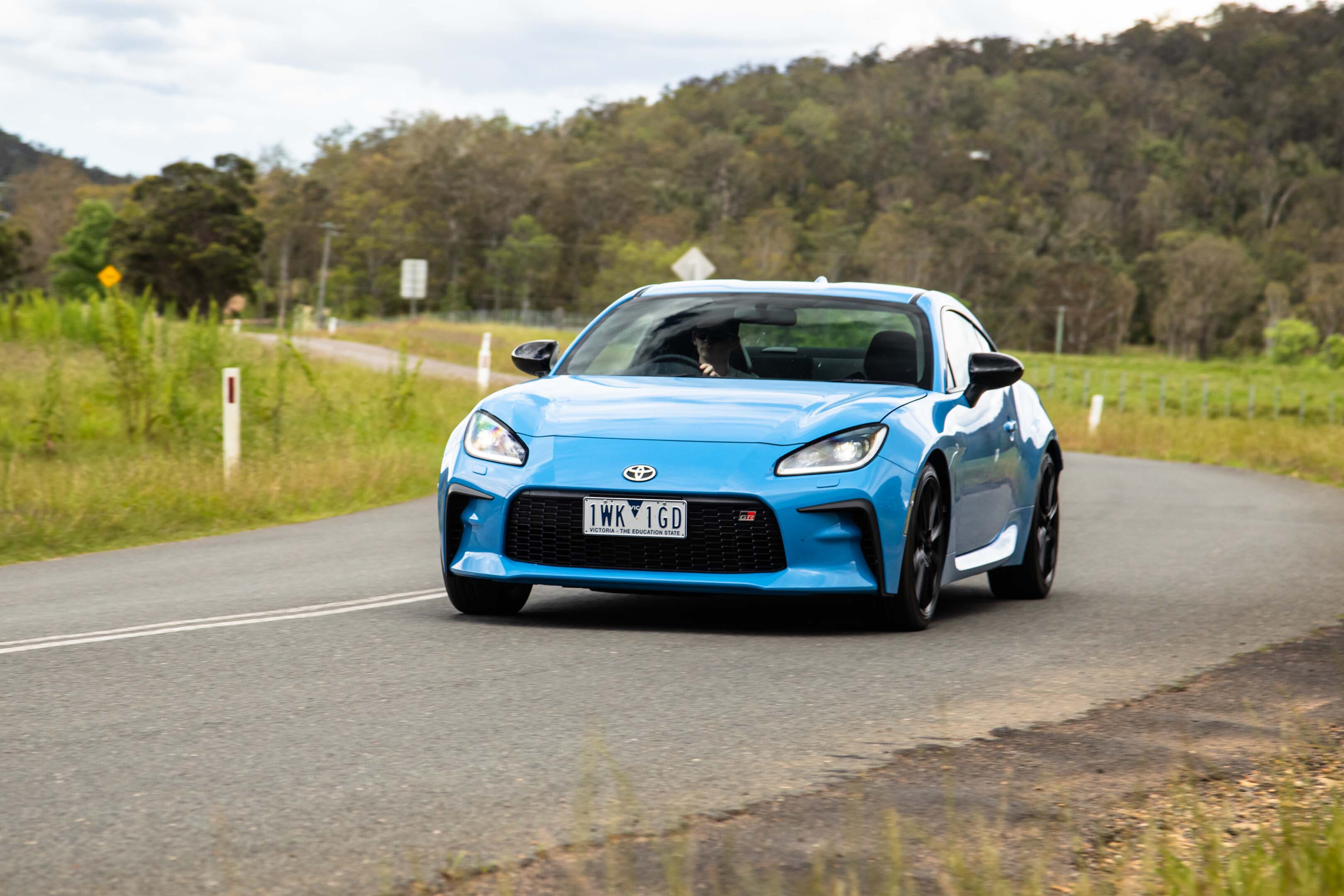
The GR86’s engine is stronger, too with a handy lump of extra mid-range punch accompanied by a tuneful (if rather fake) soundtrack. Outright pace between this pair isn’t too different on paper, with Toyota claiming a 0-100km/h sprint of 6.3 seconds and Mazda 6.5 seconds. You can put that down to the weight difference, the delicate Mazda bearing 238 fewer kilos than the 1291kg GR86.
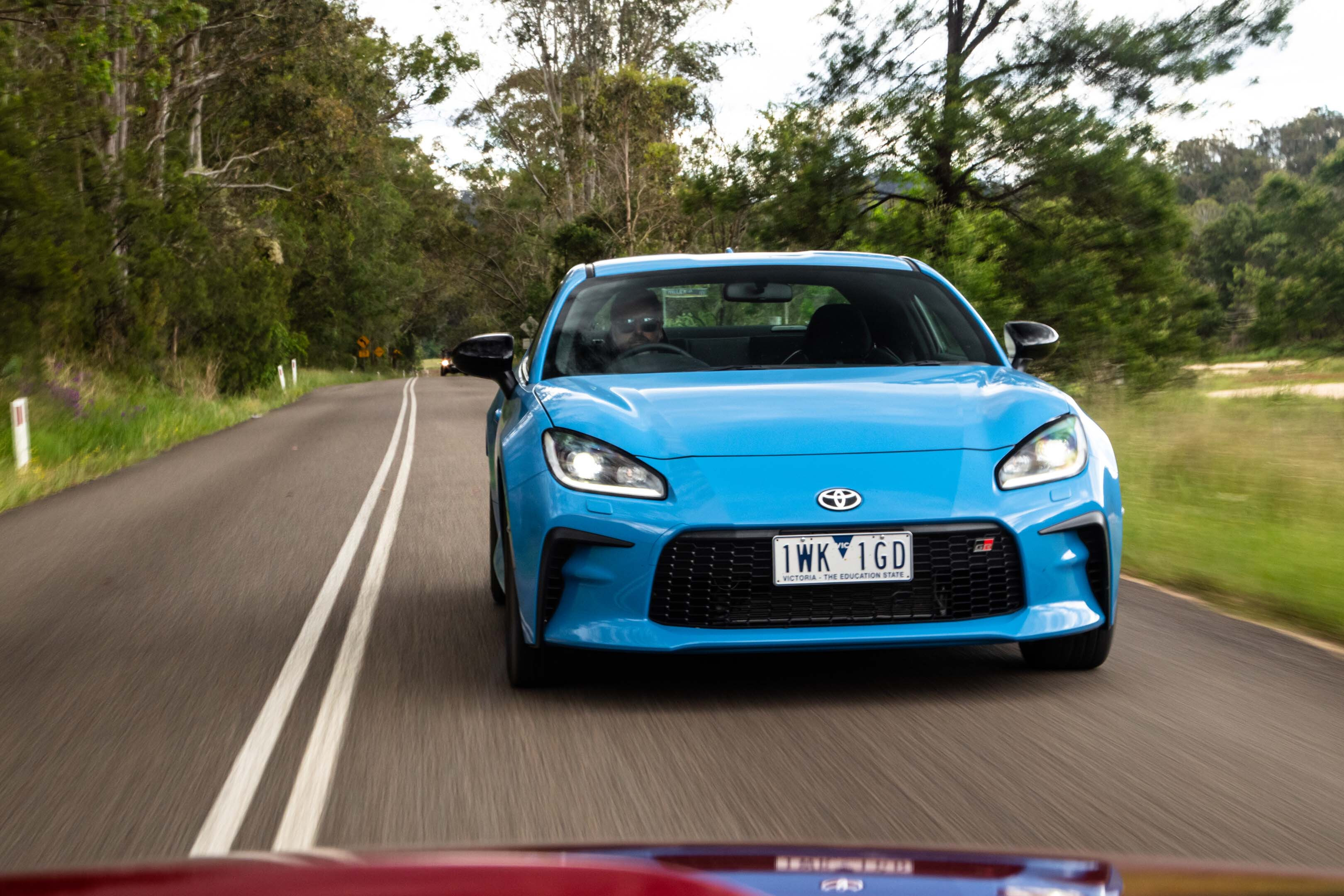
Look in the GR86’s (no-longer-frameless) rearview mirror and, well, there is quite a difference in real-world pace. Throw some twists in the mix, and the Mazda is nowhere to be seen. Toyota’s GR86 feels like a tool for taking on a Targa Tasmania stage rather than a mellow Sunday drive in the countryside.
The GR86’s focus can compromise its fun factor. Where the MX-5 – and also the Subaru BRZ – give a wider envelope of neutral, throttle-adjustable steer mid-corner without finding understeer, the GR86 is edgier. That said, the new car has lost none of the old 86’s throttle-steerable antics, even on grippier 215/40R18 Michelin Pilot Sport 4 tyres.

But when you get too greedy on the throttle in a higher-speed corner, the GR86 is more likely to nibble at the front tyres with a gentle, reassuring smidge of understeer. It punishes the driver, to a certain extent, where the MX-5 flatters aggressive movements.
Ponch reckoned that by stiffening both cars the manufacturers had really made them worse on the road, and that’s probably true. In any case – just like its predecessor – the GR86 is subtly asking the owner to come along and tweak it: dialling out that front-end push would only take a little extra front camber or stickier tyres.
The MX-5, though, is a more rounded, balanced package out of the box. Not only is it more approachable, it’s also more fun. Except for the road noise. The roadster’s unbearable roar on coarse chip surfaces gets tiring very quickly. The GR86 isn’t what you’d call serene, but it’s much more tolerable.
Safety
The Mazda MX-5 scored five stars in its 2016 ANCAP safety test. The Toyota GR86 has not yet been evaluated by the safety body, and Toyota has not indicated any intention to submit it for crash testing.
Standard safety features fitted to the GR86 GT include seven airbags, anti-lock brakes, stability control and a reversing camera. Not much in 2023.
Automatics GR86s get front auto emergency braking, rear parking sensors with low-speed reversing AEB, adaptive cruise control and lane departure warning. The tested GTS adds rear cross-traffic alert and blind-spot monitoring for both manual and automatic transmissions.
The Mazda MX-5’s safety suite is a little fuller, including forward and reverse AEB with pedestrian detection (in the manuals, too. What gives Toyota?), blind-spot monitoring, driver attention monitoring, rear cross-traffic alert and traffic sign recognition.

Fuel efficiency
Though the Mazda’s engine is a little less powerful, it’s more fuel efficient. During testing, the Mazda consumed 9.0L/100km of petrol.
When driving more sedately, the Mazda easily hits its official ADR combined figure of 6.8L/100km. The MX-5 will take a minimum of 95 RON unleaded petrol, though its high-compression engine prefers 98 RON.
The GR86 will accept no less than 98 RON and returned 9.6L/100km on our test loop. Not far off the GR86’s combined ADR 81/02 figure of 9.4L/100km.
Around town, the GR86 is noticeably less efficient than the Mazda, returning closer to 10.0L/100km in the suburbs, and only getting down to about 8.0L/100km on the highway.
Ownership
Toyota and Mazda both cover their sports cars with capped-price servicing, which means no nasty surprises despite owning a fairly exotic-looking beast.
A GR86 customer gets five years or 75,000km of servicing capped at just $280 per visit, which is due every 12 months or 15,000km. That makes the total service pricing for the GR86 just $1400 over the duration.
The Mazda MX-5’s service costs are a little dearer, with the total coming to $2065 over the same period. Both the MX-5 and GR86 are covered by five-year, unlimited-kilometre warranties in Australia.
It is worth taking into account the use cases for both of these cars, as they might not match up to typical driving. For example, a Corolla or Mazda 3’s engine oil may be fine for 15,000km but over that same distance, it’s likely the GR86 and MX-5 will both get subjected to higher revs.
Higher engine speeds generate more heat, and heat breaks down oil which leads to engine damage. So if you intend to use either car on the track, or drive spiritedly, consider more regular oil changes than prescribed by the manufacturer.

VERDICT
They may be relatively affordable but the GR86 and Mazda MX-5 are proper sports cars; they’re like putty in the driver’s hands.
You can bend, shape and mould their cornering attitudes at will. The difference is, where the MX-5 is playdough, the GR86 is precision modelling clay.
Don’t write the MX-5 off as a childish plaything; it’s anything but. In fact, playdough is a compliment, for the MX-5 is an approachable car that almost anyone will be able to find the limit of, and doing so brings an instant smile to the face.
And while precision modelling clay may sound like what you want, deriving satisfaction from modelling clay requires a lot more concentration and commitment than playdough. Trust me.
That said, for me the GR86 is the car I lust after. Its delicacy, accuracy and outright pace won me over, but contributor Nathan Ponchard argued a strong case to put the MX-5 first on drivers car terms. These are unique sports cars, each will suit a different driver, and that should be celebrated.
Ultimately, the verdict comes down to more than on-limit dynamics. Considering these two are roughly the same price – and while a fixed roof will be an absolute deal-breaker for some – the GR86’s newer technology, space for four and usable boot make it the winner.
SCORING
| Toyota GR86 GTS | Mazda MX-5 GT SP | |
|---|---|---|
| Safety, value and features | 8 | 8 |
| Comfort and space | 7.5 | 6.5 |
| Engine and gearbox | 8.5 | 9 |
| Ride and handling | 9.5 | 9.5 |
| Technology | 8 | 7 |
| Overall | 8.5 | 8.5 |
Toyota GR86 GTS: 8.5/10
Things we like
- Precise steering
- Outright grip
- Practicality
- Control weighting
Not so much…
- No AEB for manual; price gouging
- Firm ride
- Not as fun on the surface
Mazda MX-5 GT RS: 8.5/10
Things we like
- Back-road flow
- Revvy petrol engine
- Easy gearshift
- Non-stop al fresco smiles
Not so much…
- Lacks chassis rigidity
- Dated infotainment
- Road noise
| Toyota GR86 GTS | Mazda MX-5 GT SP | |
|---|---|---|
| Body | 2-door, 4-seat coupe | 2-door, 2-seat convertible |
| Drive | rear-wheel | rear-wheel |
| Engine | 2387cc flat-4, DOHC, 16v, petrol | 1998cc inline4, DOHC, 16v, petrol |
| Power | 174kW @ 7000rpm | 135kW @ 7000rpm |
| Torque | 250Nm @ 3700rpm | 205Nm @ 4000rpm |
| Transmission | 6-speed manual | 6-speed manual |
| 0-100km/h (claimed) | 6.3 seconds (claimed) | 6.5 seconds (claimed) |
| Fuel consumption (ADR combined) | 9.4L/100km (98 RON) | 6.3L/100km (95 RON) |
| Fuel consumption (tested) | 9.2L/100km (98 RON) | 9.0L/100km (98 RON) |
| Weight | 1291kg | 1053kg |
| Boot space | 237 litres | 130L |
| Suspension | strut front / multi-link rear | double wishbone front / multi-link rear |
| Length/Width/Height/W-B | 4265/1775/1310/2570mm | 3915/1735/1230/2310mm |
| Track (front/rear) | 1520/1550mm | 1495/1505mm |
| Brakes (front) | 2 piston caliper, 294mm ventilated discs | Brembo caliper, 280mm ventilated discs |
| Brakes (rear) | 1 piston caliper, 290mm ventilated disc | 1 piston caliper, 280mm solid disc |
| Tyres | 215/40R18 Michelin Pilot Sport 4 | 205/40R17 Dunlop SP Sport Maxx |
| Wheels | 18-inch alloy | 17-inch BBS forged alloy |
| Price | $45,390 + on-road costs | $47,320 + on-road costs |
All of a sudden, we’re just about spoiled for choice when it comes to EVs. Now you need to know: Which electric cars are the best in 2023?
We’ve run a megatest of almost every electric vehicle under $100,000 to find out which are the best EVs for 2023 in Australia.
The EV market is gradually growing with new entrants like the affordable facelifted MG ZS EV and BYD Atto 3 small SUVs priced just under $50,000, popular Tesla Model Y crossover, Kia EV6 and Polestar 2 liftback joining the premium-priced segment, and the Mercedes-Benz EQB marking a return of a seven-seater electric family SUV in 2022.
We’ve linked in-depth reviews of each model in the story below, to help you get all the details you need.
Find our other stories in this series, exploring the full range of options
Best electric cars under $65,000
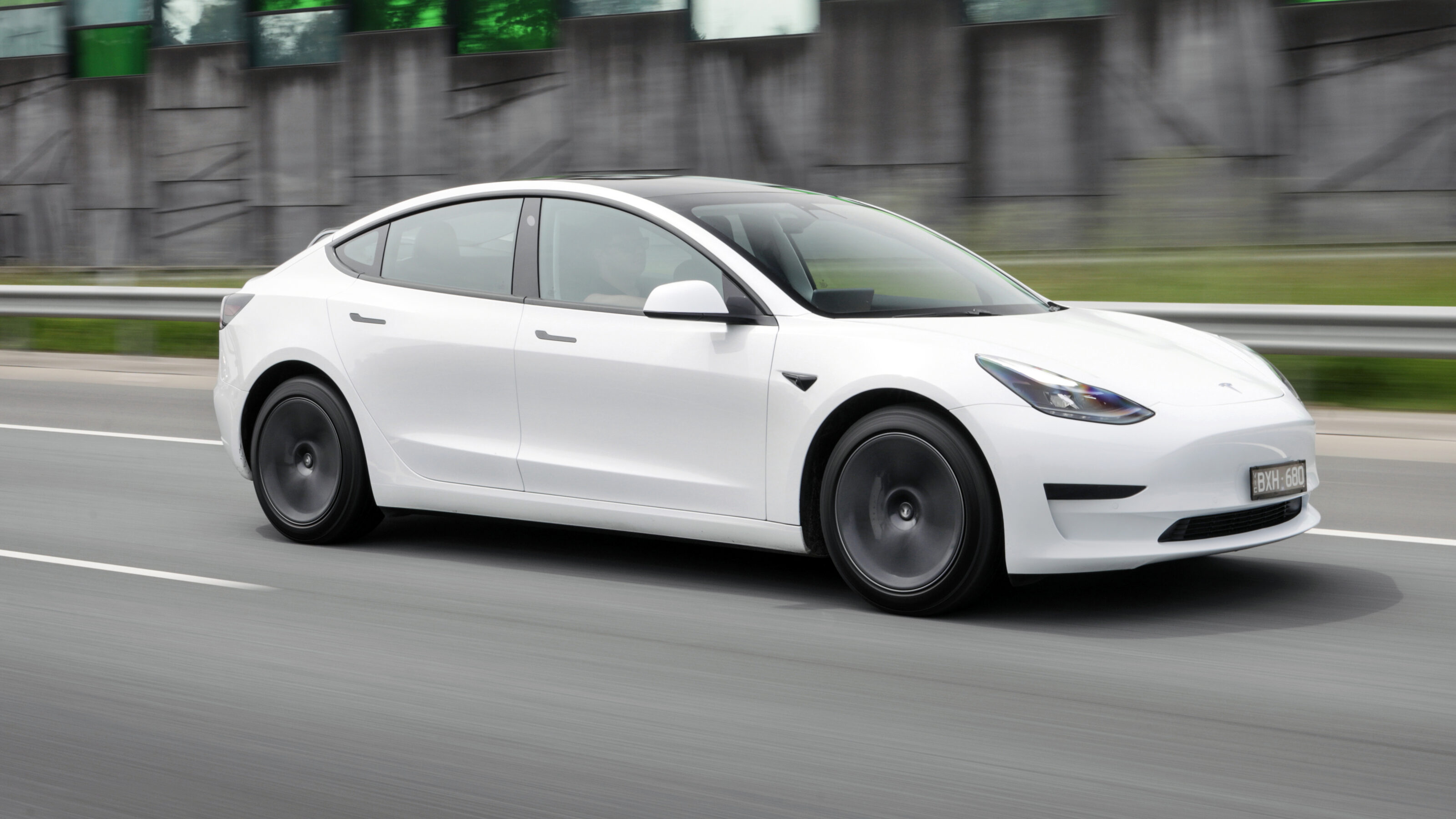
Tesla Model 3
- $63,900 + on-road costs
- Mid-size sedan, 5 seats
- Single-motor RWD, 62.3kWh battery
- 491km range, 170kW fast charge
Things we like
- In-house charging networkt
- Rapid recharget
- Airy cabint
Not so much…
- Infotainment learning curve
- Firm ride
- Needs a head-up display
The Tesla Model 3 small sedan is our best-buy electric car, priced from $63,900 before on-road costs.
The entry-level rear-wheel-drive (RWD) Model 3 offers up to 491km of claimed range on the stricter WLTP testing cycle and can be recharged at up to 11kW AC and 170kW DC charging speeds with exclusive access to the convenient, albeit pricey, Tesla Supercharging network in Australia (for now).
Key features include a large 15-inch central infotainment system with built-in Google Maps and over-the-air (OTA) software update capabilities, minimalistic animal-free interior and a built-in all-round dashcam recorder.
The Model 3 RWD comes with a four-year/80,000km vehicle warranty and an eight-year/160,000km battery warranty with the American company promising it’ll retain at least 70 per cent of its capacity in that period.
Tesla uses a condition-based servicing scheme, so the car will notify owners when specific parts need routine maintenance depending on the usage.
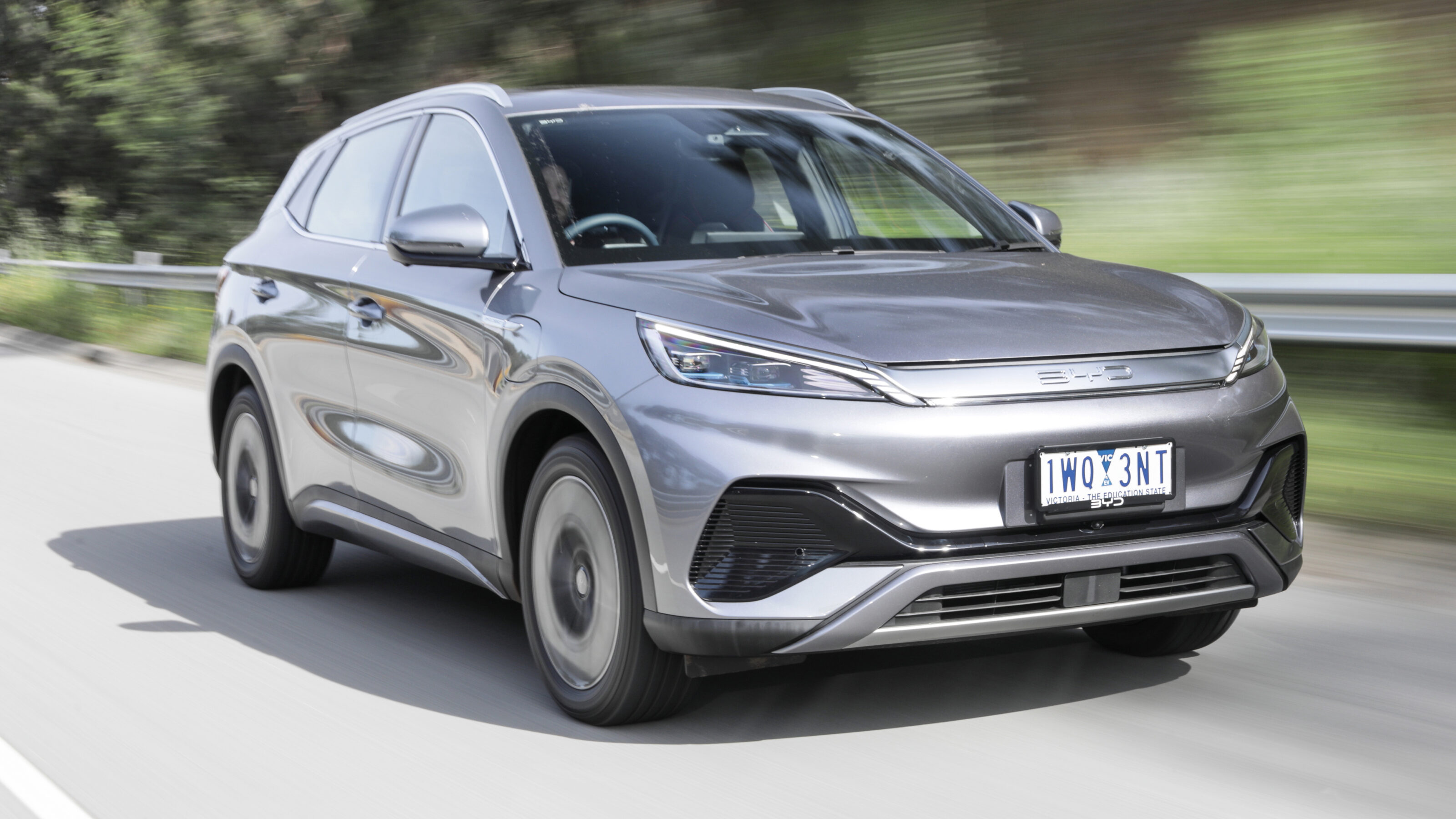
BYD Atto 3
- $48,011 + on-road costs
- Small SUV, 5 seats
- Single-motor FWD, 60kWh
- 480km range, 80kW fast charge
Things we like
- Sharply price & well equipped
- Cabin is spacious and feels well made
- More room, range and performance than key rivals
Not so much…
- Quirky cabin wonu2019t be to everyoneu2019s taste
- Handling gets ragged on demanding roads
- Unproven record for reliability and customer support
- Long wait times
The BYD Atto 3 small SUV is a highly recommended affordable EV, starting from $48,011 before on-road costs.
With one high-spec variant and two lithium-iron-phosphate (LFP) Blade Battery size options, the entry Standard Range has up to 345km claimed driving range and is capable of charging at up to 11kW AC and 70kW DC rates.
The electric crossover offers a clever rotating 12.8-inch tablet touchscreen capable of OTA updates, 360-degree camera system, and full LED head- and tail-lights with sequential indicators at the rear as standard.
The Atto 3 is covered by a six-year/150,000km vehicle warranty (with specific parts exclusions) and an eight-year/160,000km battery warranty with a guarantee it’ll keep at least 70 per cent health during that period. The electric car requires servicing every 12 months/20,000km on the standard tier or 12 months/12,000km for the first five years if owners opt for the light tier.
Best electric cars $65K-80K
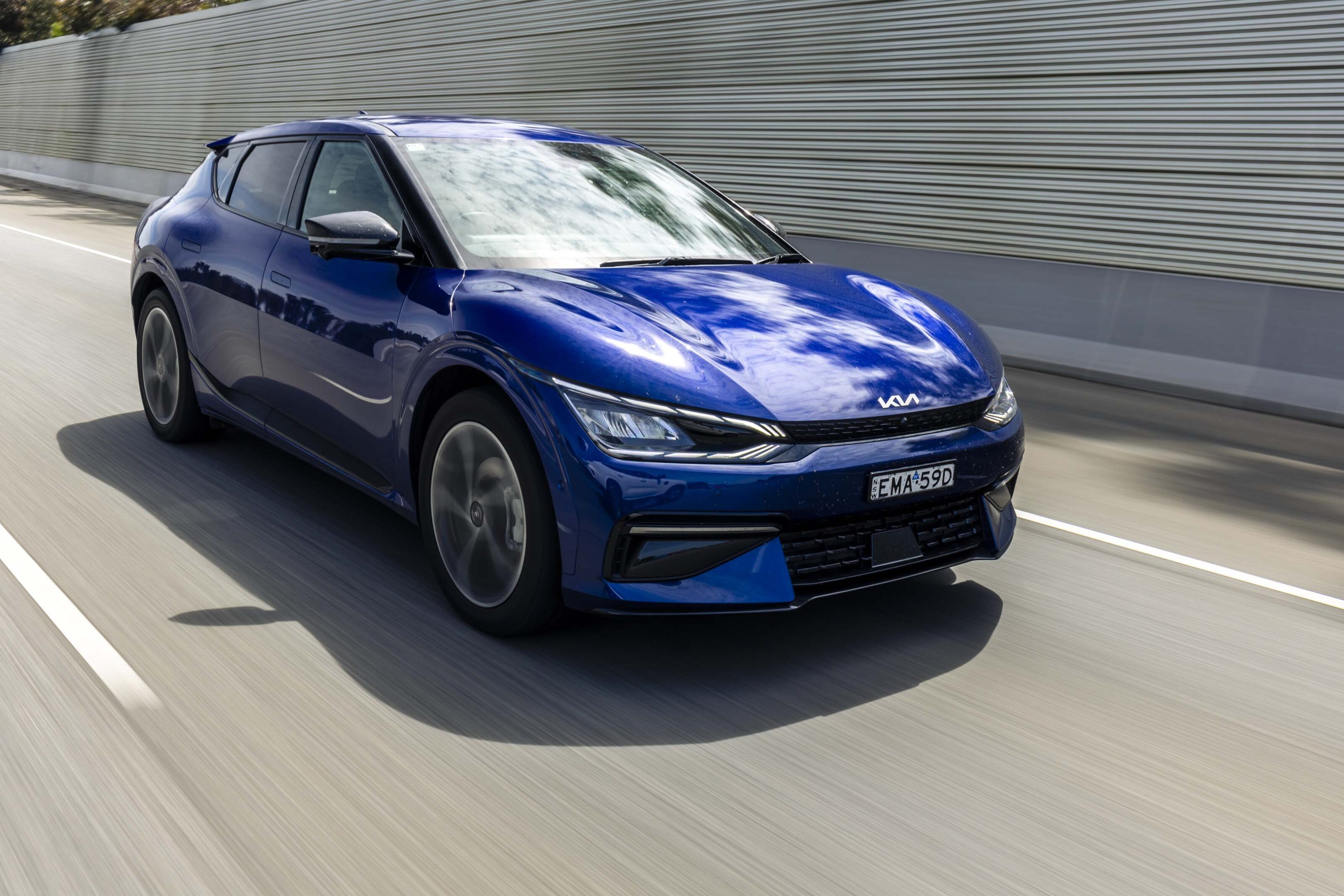
Kia EV6
- $72,590 + on-road costs
- Large SUV, 5 seats
- Single-motor RWD, 77.4kWh battery
- 528km range, 350kW fast charge
Things we like
- Exceptional ride and handling
- Performance even from base-spec RWD
- Swoopy good looks
Not so much…
- Missing features
- Rear row comfort
- Price no longer able to access EV incentives
The Kia EV6 continues to reign supreme as our 2022 Wheels Car of the Year winner and best buy electric car starting from $72,590 before on-road costs.
The base Air model is the most efficient in the four-prong line-up, offering up to 528km claimed range and can recharge at up to 10.5kW AC and 250kW DC using an 800-volt class charging architecture.
The medium crossover boasts dual curved 12.3-inch displays with wired Apple CarPlay and wired Android Auto, a sleek full-width LED tail light, and exterior vehicle-to-load (V2L) as standard.
The EV6 comes with a seven-year, unlimited kilometre vehicle warranty and a seven-year/150,000km battery warranty. Servicing is required every 12 months/15,000km.
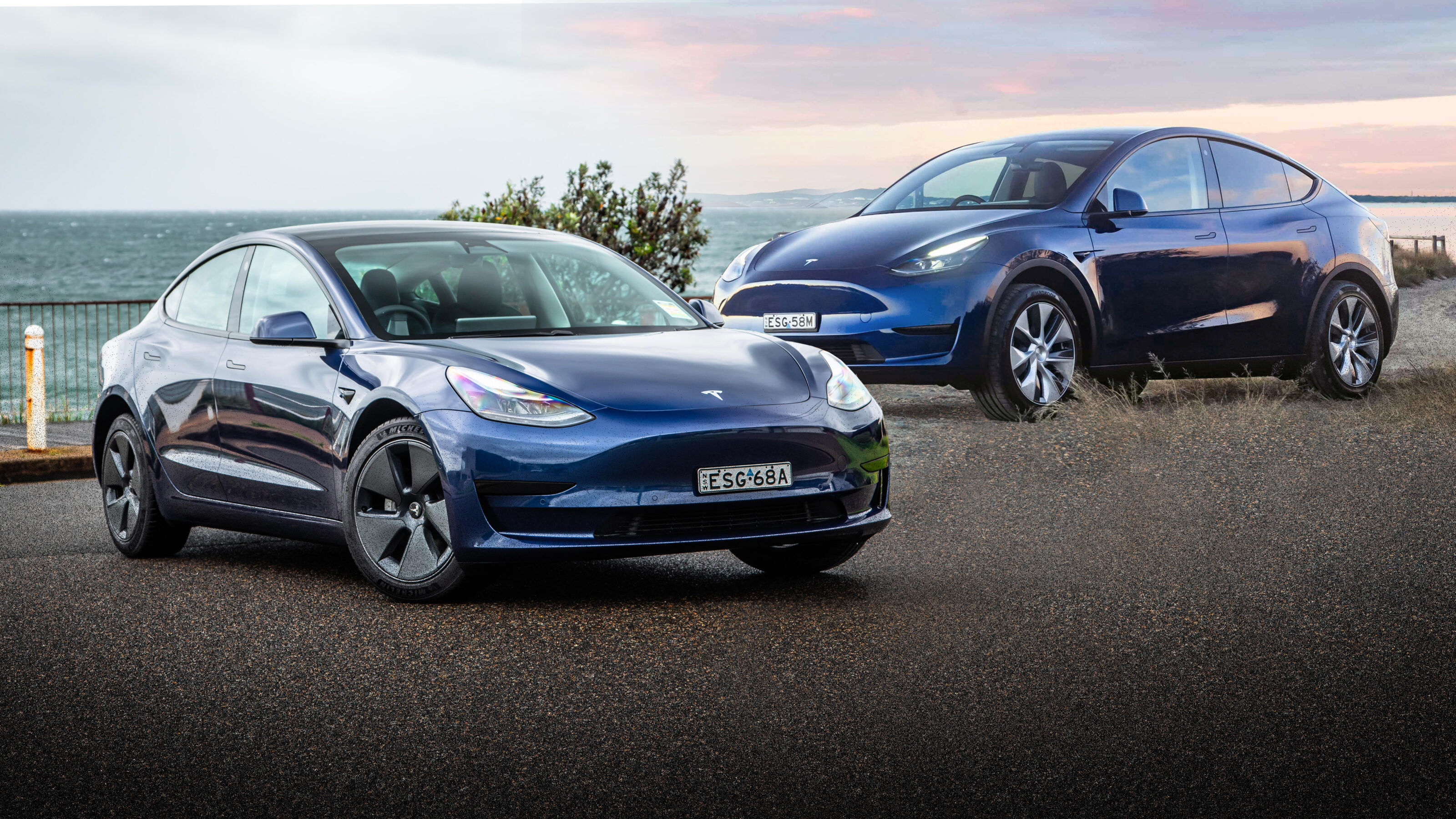
Tesla Model Y
- $68,900 + on-road costs
- Medium SUV, 5 seats
- Single-motor RWD, 60kWh battery
- 455km range, 210kW fast charge
Things we like
- Ultra spacious cabin
- Genuinely competent to drive
- Stowage space
- Supercharger network access
Not so much…
- Dizzying array of menus
- Concedes efficiency to Model 3
- Increasingly good rivals at this price
The ubiquitous Tesla Model Y is a highly recommended electric SUV priced from $72,300 before on-road costs.
There’s two trim levels available in Australia with the base RWD providing up to 455km of claimed range and can charge up to 11kW AC and 170kW DC charging speeds. Like all Tesla’s, it has exclusive access to the Tesla Supercharging network in Australia (for now).
Key features include a large 15-inch central infotainment system with built-in Google Maps and OTA software update capabilities, a fixed panoramic glass roof and a power tailgate.
The Model Y RWD comes with a four-year/80,000km vehicle warranty and an eight-year/160,000km battery warranty with the company promising it’ll retain at least 70 per cent of its capacity in that period. Tesla adopts a condition-based servicing scheme, so the car will notify owners when specific parts need routine maintenance.

Hyundai Ioniq 5
- $69,900 + on-road costs
- Large SUV, 5 seats
- Single-motor RWD, 72.6kWh battery
- 481km range
Things we like
- Edgy, retro-futuristic design
- Cabin majors on wow factor, comfort & storage
- Rapid charging capability
Not so much…
- Ride can feel unsettled
- Over eager Lane Keep system
- Huge demand and low supply
The Hyundai Ioniq 5 is a highly recommended medium electric crossover priced from $72,000 before on-road costs directly rivalling the Tesla Model Y.
Buyers can choose from three variants, but the entry Dynamiq RWD has the longest range at up to 507km and can be recharged at up to 10.5kW AC and 350kW DC speeds using a 800-volt class architecture.
Sharing the same dedicated EV platform as the Kia EV6, the Ioniq 5 features twin 12.3-inch white-bezelled displays with wired Apple CarPlay and wired Android Auto, an augmented reality heads-up display, and auto pop-out flush door handles as standard.
All Ioniq 5s are covered by a five-year, unlimited kilometre vehicle warranty and an eight-year/160,000km battery warranty. The electric crossover needs servicing every 24 months/30,000km.
Best electric cars $80K-100K
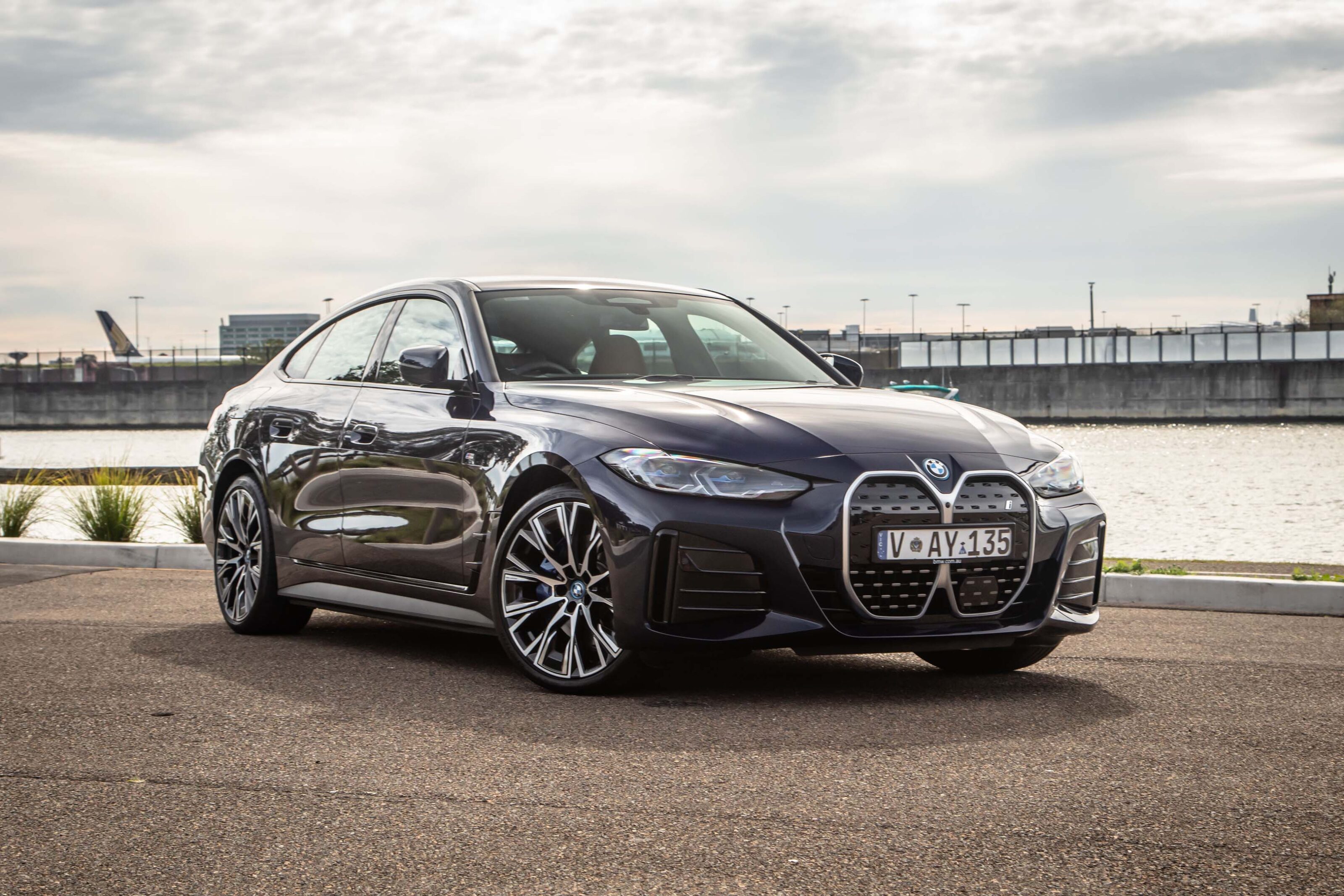
BMW i4
- $99,900 + on-road costs
- mid-size sedan
- single-motor RWD, 84kWh battery
- 520km range, 200kW fast charge
Things we like
- Superb refinement
- Impressive charging
- Compelling driving dynamics
Not so much…
- Slightly hindered rear headroom
- Options jump it into six figures
- Some features require a subscription
The BMW i4 liftback is our best buy electric car priced from $99,900 before on-road costs.
Sold in two guises, the Tesla Model 3 competitor in its base eDrive40 variant provides up to 520km claimed range with the ability to charge at up to 11kW AC and 200kW DC rates on a compatible charger.
The German EV is based on the petrol-powered BMW 4 Series Gran Coupe. It features curved 14.9-inch infotainment and 12.3-inch driver’s digital displays running the brand’s latest iDrive 8 operating system with wireless Apple CarPlay and wireless Android Auto, IconicSounds Electric artificial driving noises, and a five-year unlimited charging subscription to the Chargefox network.
The i4 is backed by a five-year, unlimited kilometre vehicle warranty and an eight-year/160,000km battery warranty. BMW uses a condition-based servicing scheme, so the car will notify owners when specific parts need routine maintenance depending on the usage.
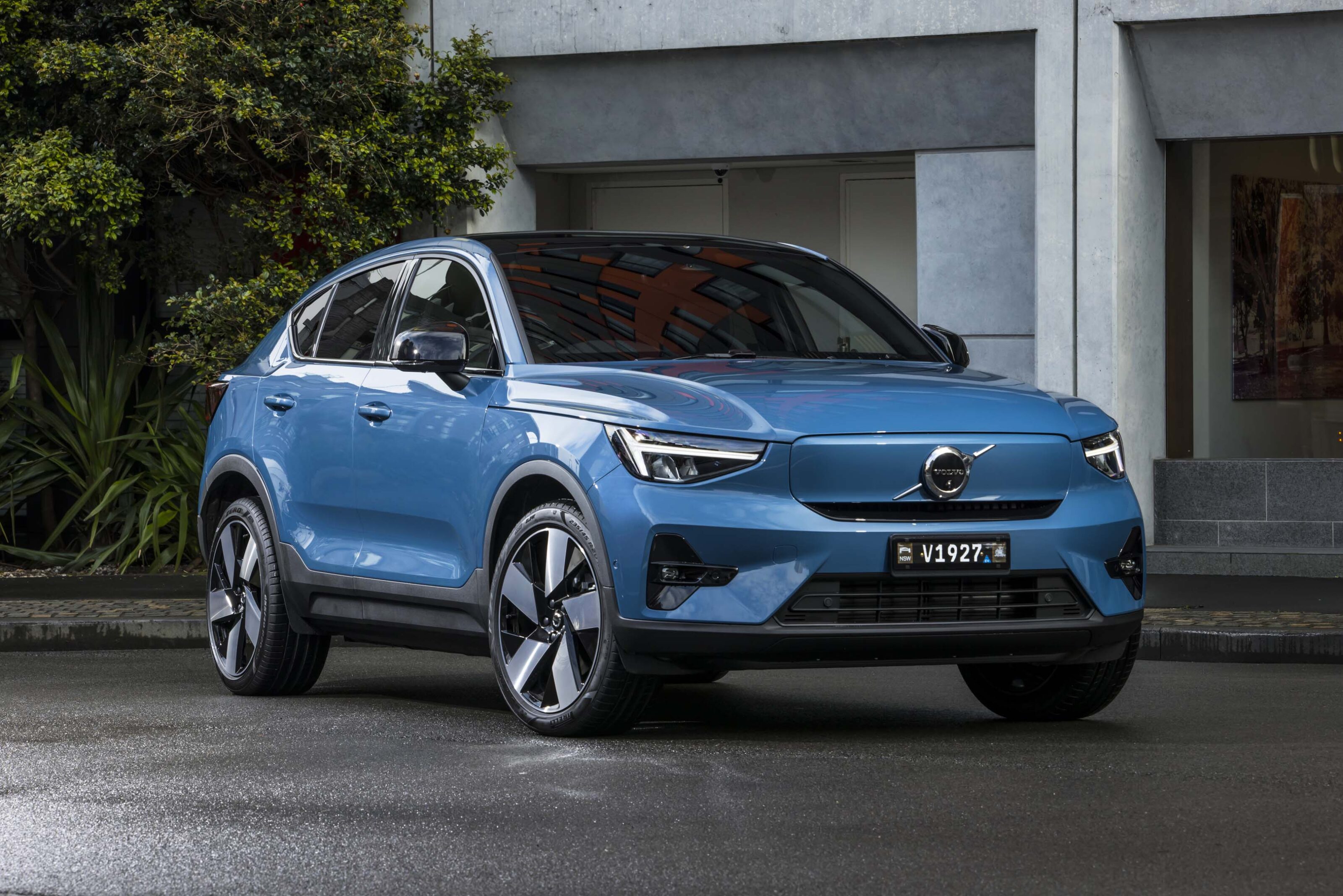
Volvo C40 Recharge
- $82,490 + on-road costs
- small SUV
- dual-motor AWD, 75kWh battery
- 420km range, 155kW fast charge
Things we like
- Regen braking programming
- Minimalist cabin
- Sharp handling
Not so much…
- Energy efficiency
- Jiggly urban ride
- Do you need the twin motor?
The Volvo C40 Recharge is a highly recommended EV starting from $74,990 before on-road costs.
The electric coupe SUV is based on the boxier XC40 and is offered in two models. The entry single-motor, front-wheel drive boasts up to 540km claimed range and can recharge at up to 11kW AC and 133kW DC.
Key features include a 9-inch portrait touchscreen running on Google’s Android Automotive operating system with a 12.3-inch driver instrument display, unique segmented LED tail lights with sequential indicators, and a hands-free power tailgate as standard.
The C40 Recharge is covered by a five-year, unlimited kilometre vehicle warranty and an eight-year battery warranty. Servicing visits are required every 24 months/30,000km with the first three-years/100,000km included for free.
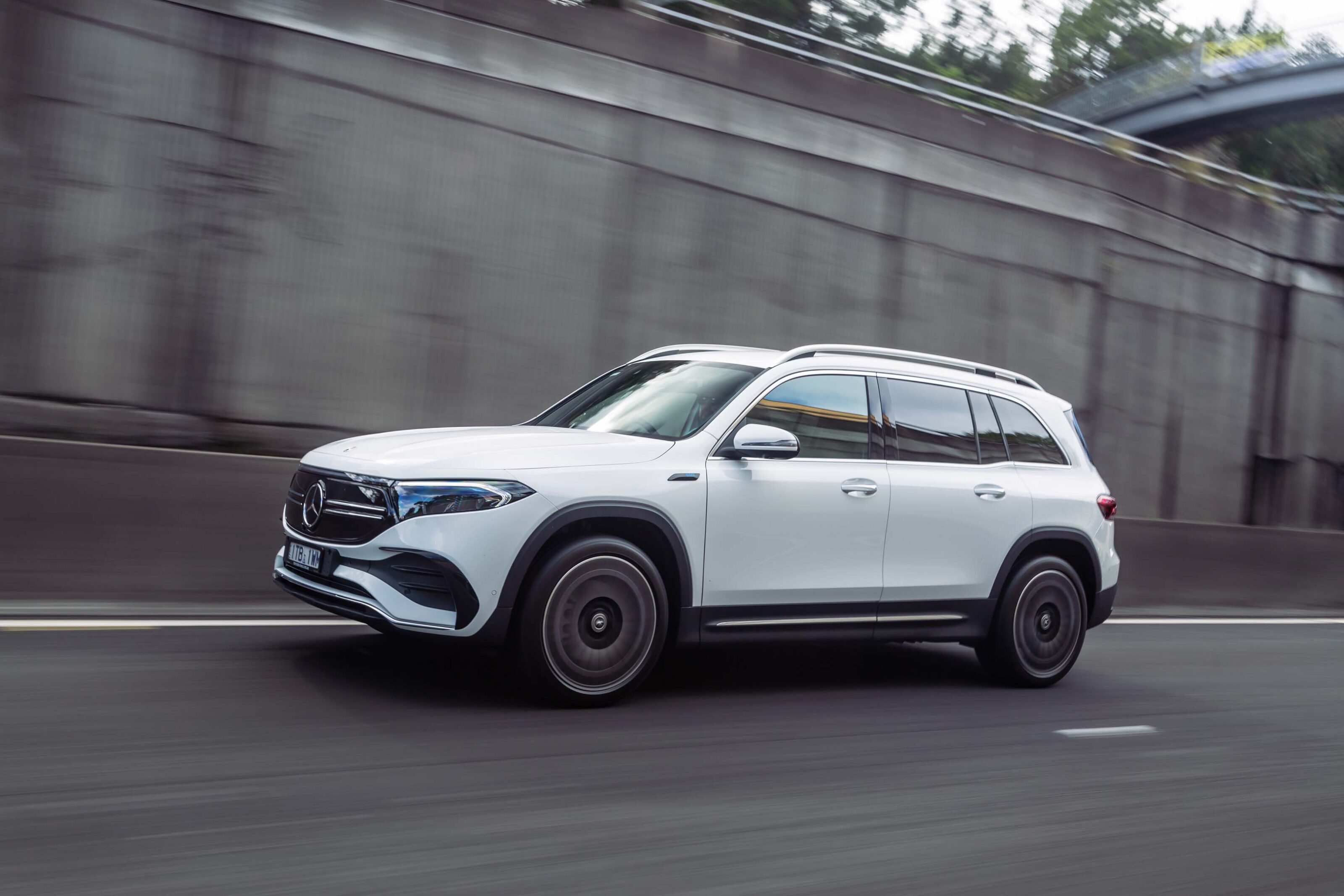
Mercedes-Benz EQB
- $87,800 + on-road costs
- medium SUV
- single-motor FWD, 66.5kWh battery
- 371km range, 100kW fast charge
Things we like
- Impressive presentation
- Familiarity and ease of use
- Low speed urban ride refinement
- Disguises its weight well (mostly)
Not so much…
- Upset by larger bumps
- 3rd row offers limited use
- Piano black trim will require upkeep
- Display mass mid corner
The Mercedes-Benz EQB is a highly recommended luxury electric family SUV priced from $87,800 before on-road costs.
With two trim grades on offer, it can drive up to 507km and charge at up to 11kW AC and 100kW DC speeds.
Only the base EQB 250 model can be optioned up as a third-row seven-seater – not available in any new EV currently on sale – with dual 10.25-inch screens capable of wired Apple CarPlay and wired Android Auto, 64-colour ambient lighting, and adaptive suspension as standard.
The EQB has a five-year, unlimited kilometre vehicle warranty and an eight-year/160,000km battery warranty. The electric car needs routine servicing every 12 months/25,000km with prepaid servicing plans available.
EVs in 2023 and beyond
A plethora of new electric cars are coming to Australia in the coming years on the back of supply chain delays.
From affordable entrants like the MG 4 and GWM Ora Funky Cat small hatchbacks to lower the EV price barrier, to flagships like the Hyundai Ioniq 6 and Volvo EX90, plus even electric commercial vans like the Renault Kangoo E-Tech and Ford e-Transit, the competition in Australia is about to get spicier.
After legislating tax breaks for company fleets, the Australian Government will put ‘fuel-efficiency standards’ next on the agenda – a critical policy that will encourage more EV models to land in Australia (with more supply) and ultimately drive down price tags.
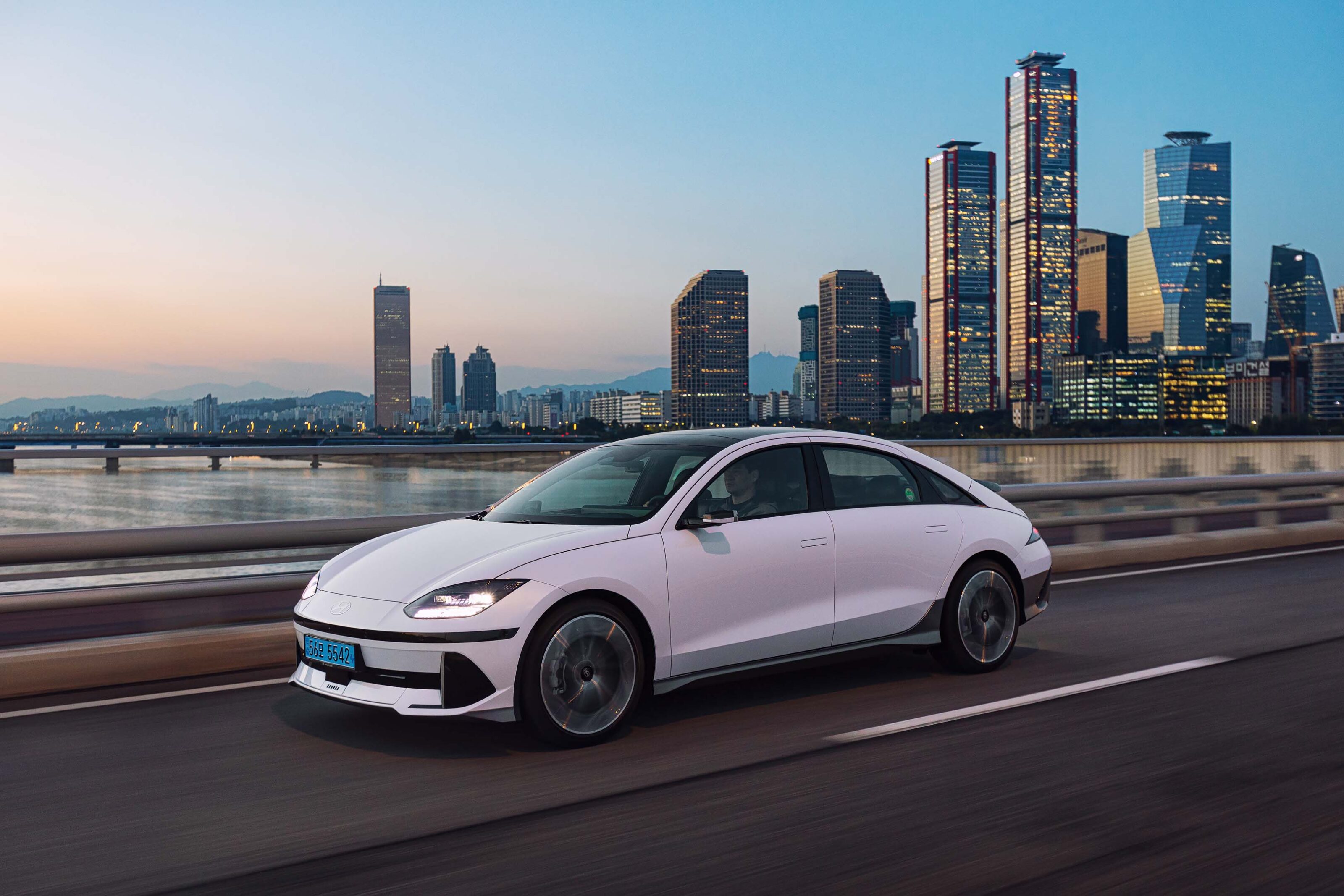
While electric cars are still more expensive to buy than petrol or diesel cars today (mostly), the savings obtained from cheaper running and maintenance costs will eventually offset and surpass the price premium over time – especially if you take advantage of charging off of free solar energy at home or even emerging vehicle-to-grid (V2G) tech.
And with soaring fuel prices and looming strict emissions, fuel economy and noise regulations like Euro 7 overseas, the case for internal combustion engine vehicles is becoming increasingly narrow – for carmakers and car buyers.
Find our other stories in this series
⚡ More EV stories to help you choose the best car for your needs
Snapshot
- Extra 200 units coming to Oz
- Starting from $62,300
- On-sale March 7
UPDATE: Toyota Australia has managed to secure 700 examples of the 2023 GR Corolla GTS for local sale in 2023.
That represents an increase in allocation of 200, or 40 per cent – no small feat. Orders officially open on March 7, 2023.
There will be no jaw-dropping drive-away prices this time for the GR Corolla (unlike the briefly $39,990 drive-away GR Yaris), with vice president of sales, marketing, and franchising Sean Hanley admitting that was a bold ploy to launch the GR brand locally.
Instead, the GR Corolla GTS will start at $62,300 before on-road costs. There have been almost 5000 expressions of interest (EOIs) since the confirmation of GR Corolla’s Australian release in April 2022.
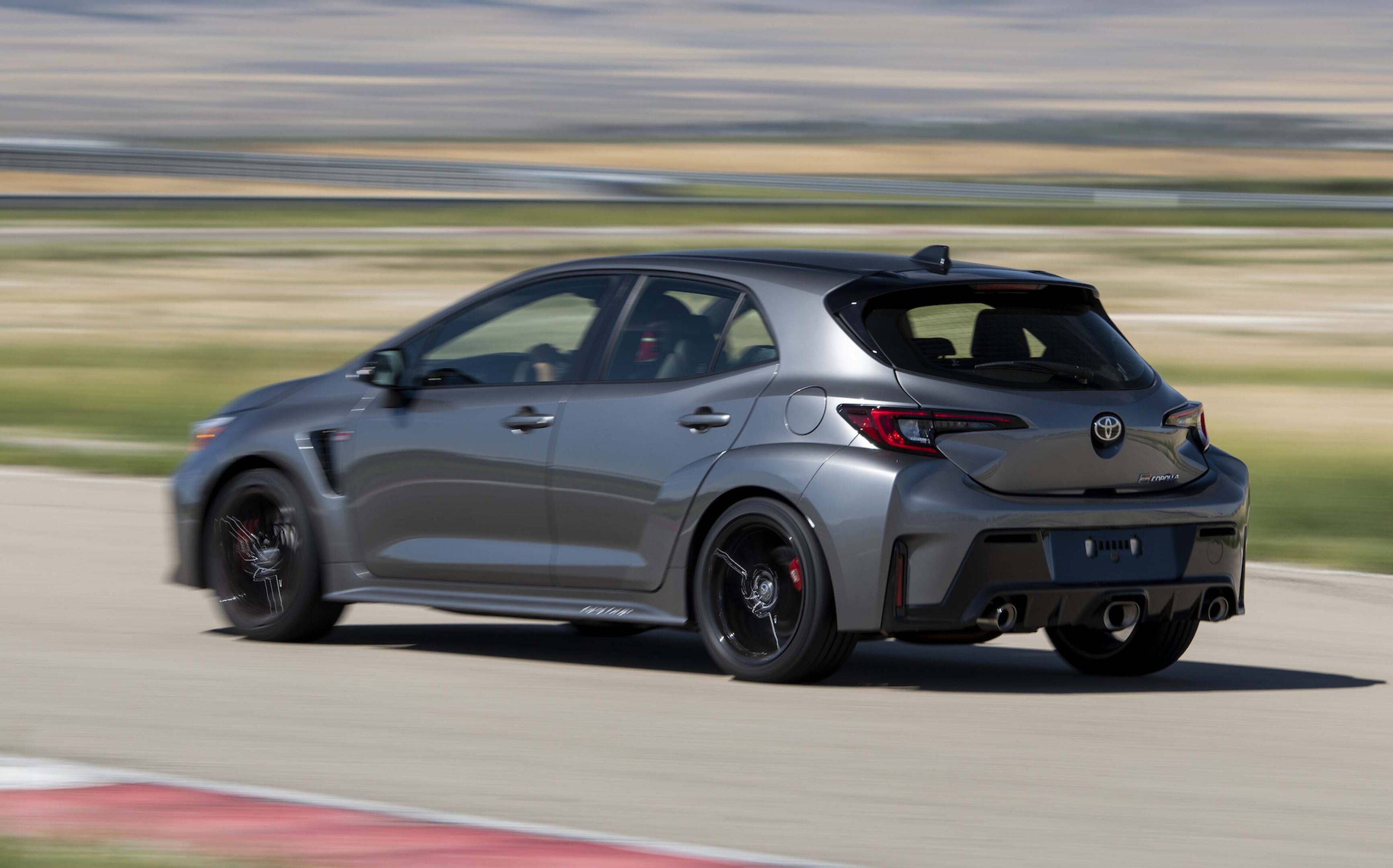
The EOIs are more involved than your typical order form, with Toyota asking for information on previous rides, car club affiliations and enthusiast credentials to make sure the GR Corollas fall into the right hands.
Additionally, 25 examples of the ultra-hardcore two-seat Morizo edition are bound for Australia in 2023, with a local launch slated for May.
Our original story, below, continues unchanged.
The story to here
September 2022: Toyota confirms 500 GR Corolla hot hatches for Australia in 2023
Australia will get 500 examples of the Toyota GR Corolla in 2023, the Japanese carmaker has confirmed, with deliveries beginning in the first quarter.
Australian pricing is still to be confirmed, but a number upwards of $60,000 is likely.
Dealers are set to take orders (officially expressions of interest) from September 15, and if the GR Yaris is anything to go by, places are likely to go quickly.
As outlined below, the GR Corolla is powered by the same 1.6-litre three-cylinder turbo engine that drives the GR Yaris, with power dialled up to 220kW.
A six-speed manual transmission is the only shifter on offer, and GR-Four all-wheel drive is also standard.
Each corner hosts 18-inch alloy wheels wrapped with Yokohama Advan Apex rubber.
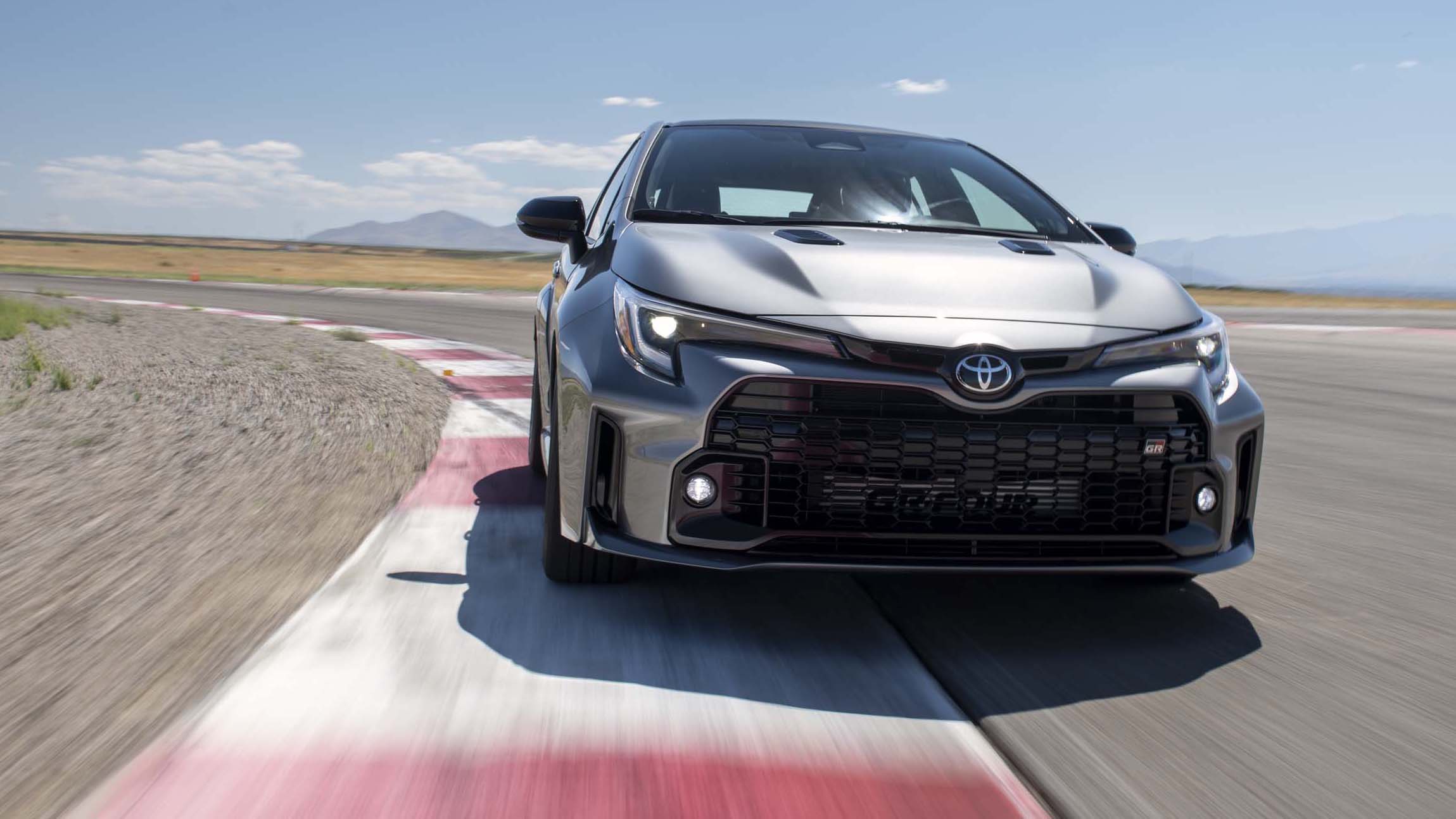
Australian-delivered cars will be equipped with an 8.0-inch display and a 12.3-inch instrument cluster, along with wired Android Auto and wireless Apple Carplay.
There’s also dual-zone climate control, heated front seats and steering wheel, leather trim for the steering wheel, parking lever and shift knob, power windows, smart entry and start, illuminated entry and tilt and telescopic steering wheel adjustment.
Active safety kit includes active safety features as standard, including pre-collision safety system with pedestrian and daylight cyclist detection, intersection assist, emergency steering assist, lane trace assist, active cruise control, blind spot monitor, reversing camera and front and rear parking sensors.
Toyota Connected Services remote connectivity is also standard, although the complimentary subscription lasts only 12 months.
Watch for more on the GR Corolla to come in the months ahead, and get our international first drive review at the link below.
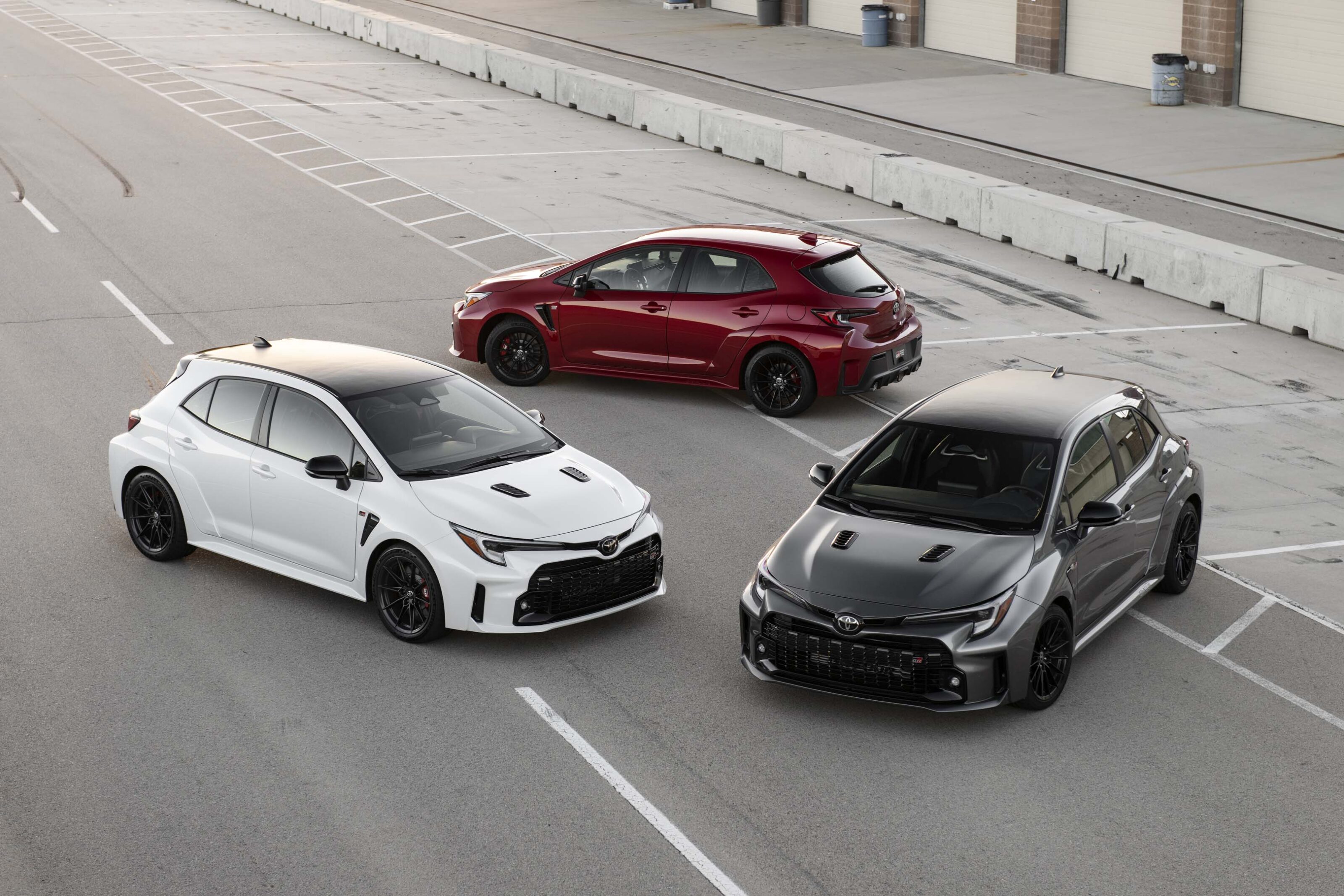
June 2022: 2023 Toyota GR Corolla revealed
Snapshot
- Toyota to release hardcore GR Corolla with just two seats
- More torque and less weight headline the latest variant
- Australian launch confirmed
A lighter, stiffer, faster, two-seater version of the 2023 Toyota GR Corolla hot-hatch has been revealed as a new option for track day enthusiasts.
The higher-performance version of the GR Corolla will be available in Australia in undisclosed limited numbers sometime next year, following the regular model’s launch in late 2022.
Toyota’s Gazoo Racing engineers have made several upgrades to the fast Corolla to make it even quicker, the most dramatic of which is ripping out the rear bench to shed 30kg from the kerb weight and replacing it with additional body bracing.
The rear doors remain, however, leaving the Corolla as a five-door hatch.
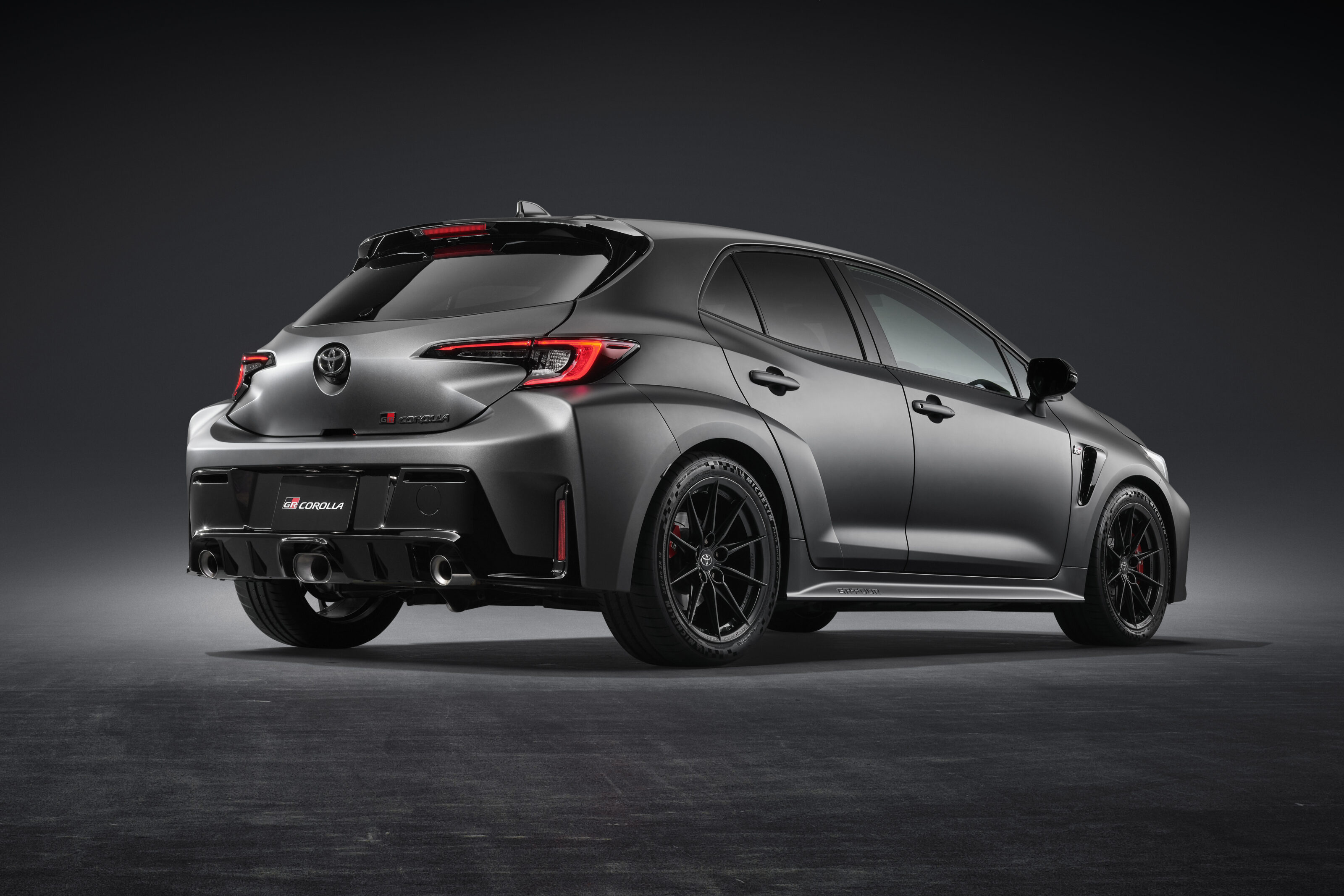
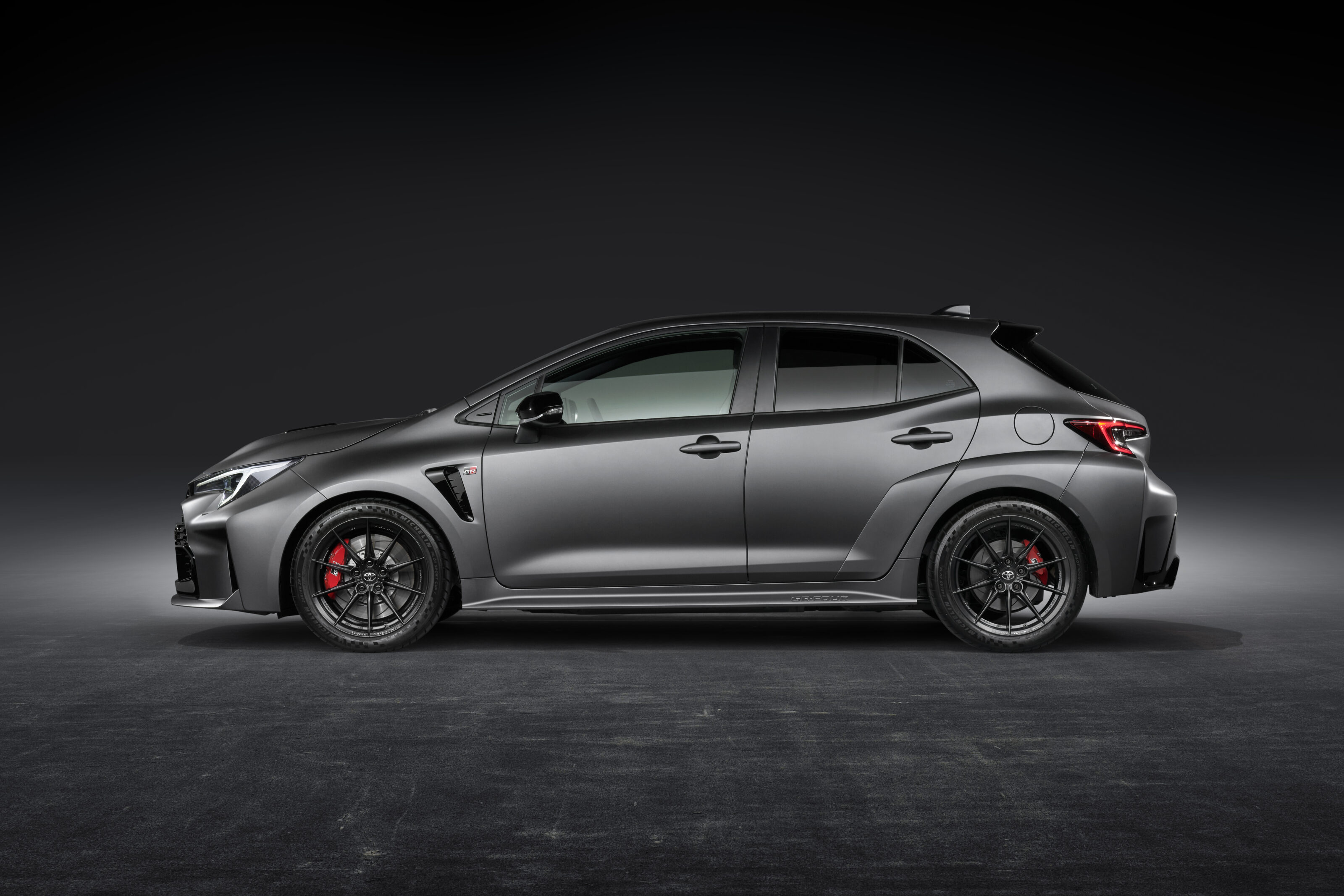
The suspension gains monotube dampers front and rear, with the front dampers inverted, while for extra cornering grip the two-seater Corolla – labelled the Morizo Edition in the US – switches to stickier Michelin Pilot Sport Cup 2 tyres, which are also 10 millimetres wider.
There’s also attention for the 1.6-litre turbocharged three-cylinder engine. Power remains at 224kW, but torque is increased from 370 to 400Nm. The increased maximum torque is just produced across a slightly narrower range – from 3250-4600rpm rather than the 3000-5550rpm of the five-seater GR Corolla.
Combined with closer ratios for the six-speed manual’s first, second and third gears, Toyota has aimed to improve the acceleration and mid-range performance of the two-seater.
Torsen limited-slip differentials remain, front and rear, to help distribute power to all four wheels, and there are no changes to the distinctive triple-branched exhaust system.
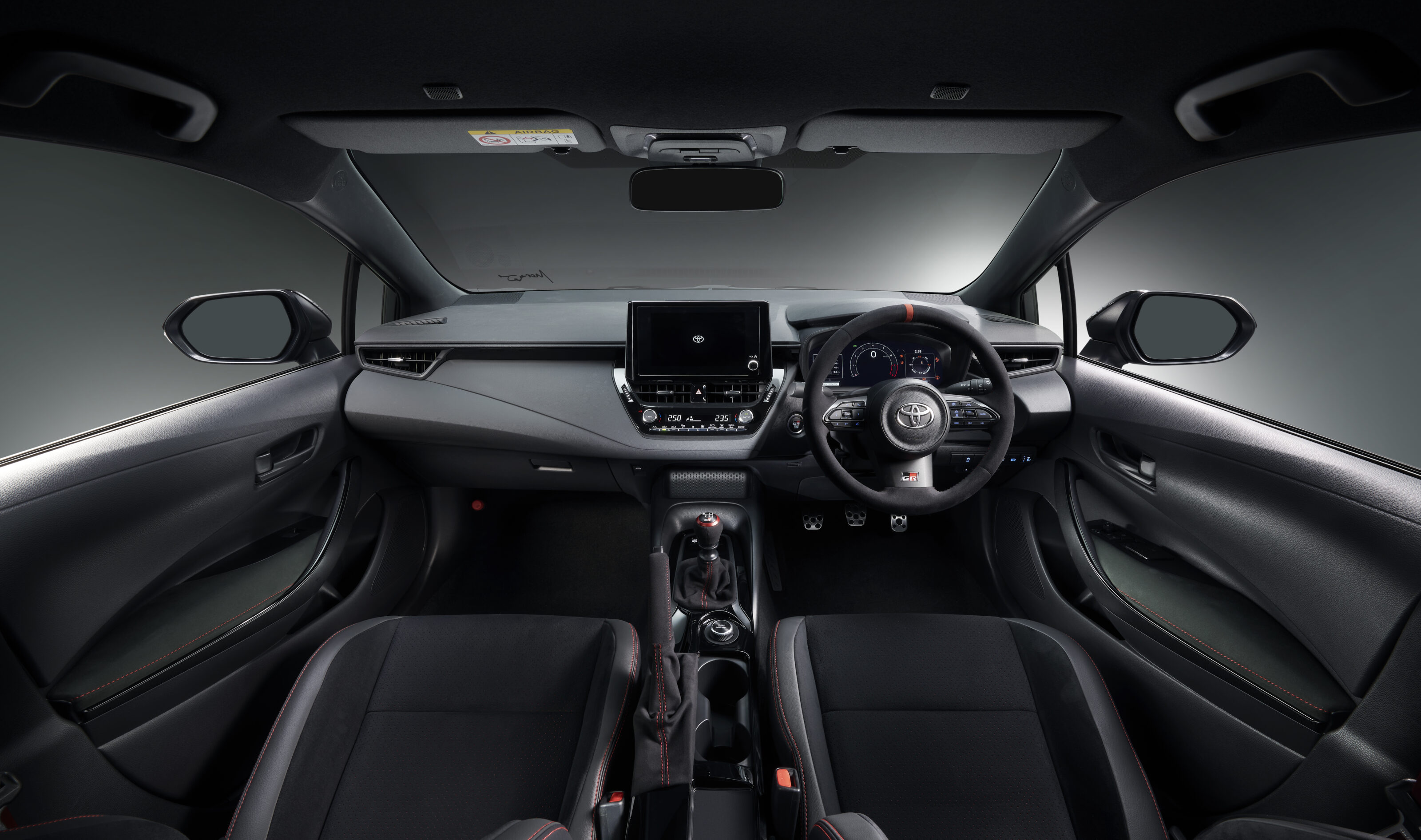
Inside, the track-focused GR Corolla gains semi-bucket front seats, a generous amount of red stitching, a cast-black paint ornamention for the doors and instrument panel, and ‘Ultrasuede’ material for the steering wheel, gearlever and handbrake.
The steering wheel also adopts a Renault Sport-style red stripe at its top centre, while the gearknob also gains a GR logo.
A metallic matte grey will be an exclusive option for the two-seater.
Toyota Australia says more information on the ordering process for both versions of the GR Corolla will be announced in the fourth quarter of 2022.
Just 200 units are being made available for the US market.
UPDATE: The GWM Ora Sport – known as Lightning Cat in China or Next Cat in Europe – is under evaluation for an Australian launch.
Wheels had a chance to test the intriguing electric liftback from China; you can read the full review here.
“This car is not yet confirmed for the Australian market, in much the way as GWM Tank 500 isn’t, but it is under strong consideration”, said head of marketing and communications at GWM, Steve Maciver.
“What I would say, is that we wouldn’t be bringing vehicles here for you to drive them if we weren’t serious about bringing them to market”, he elaborated.
The car in question was a single motor example with 150kW/340Nm and a driving range of 55km in NEDC testing from a 59kWh lithium-ion battery.
Understandably, Australian pricing was not given in full, but GWM is confident that, if the Ora Sport does go on sale, it will be competitive with the Tesla Model 3 Standard Range ($63,900 before on-road costs) and Polestar 2 Single Motor ($63,900).
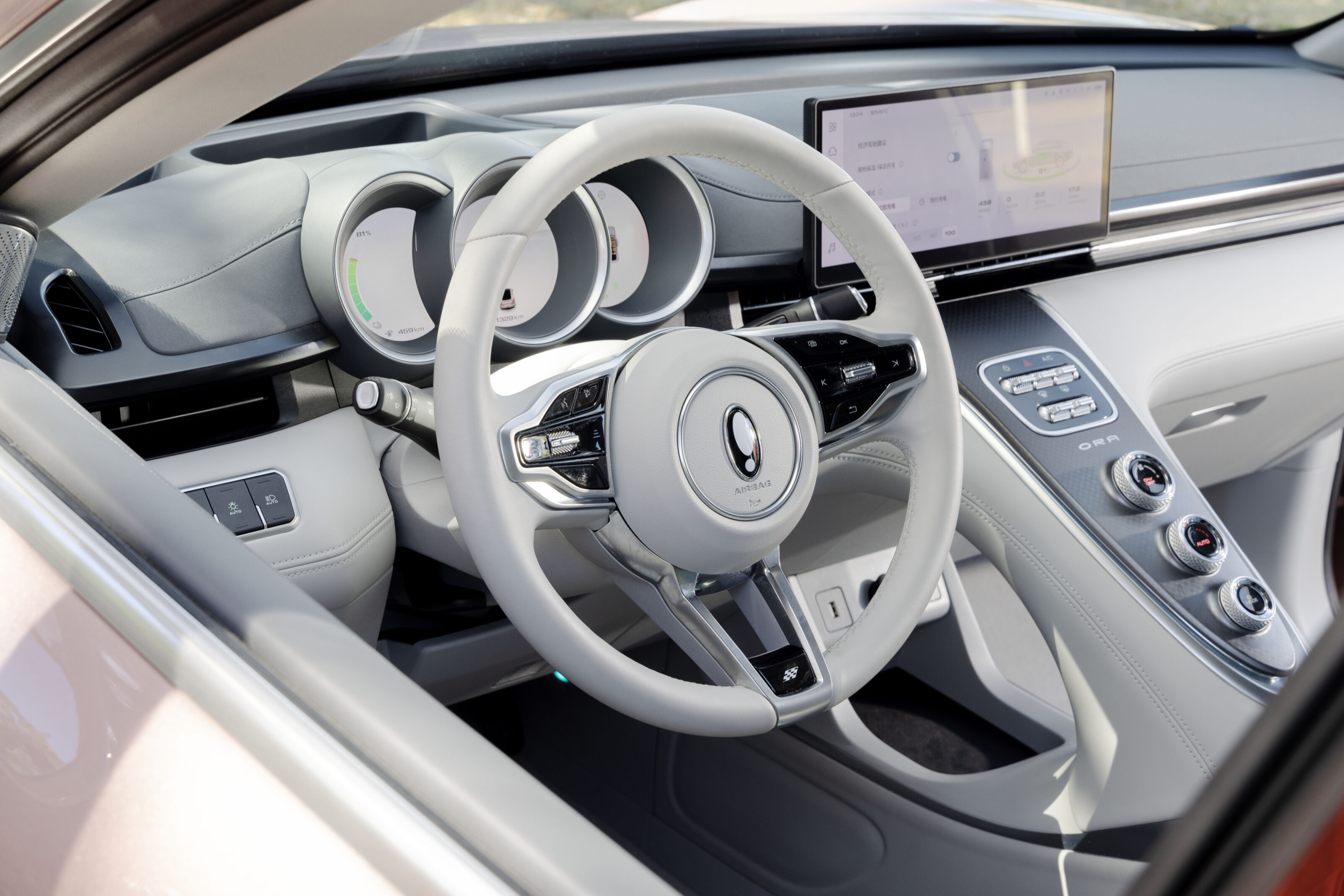
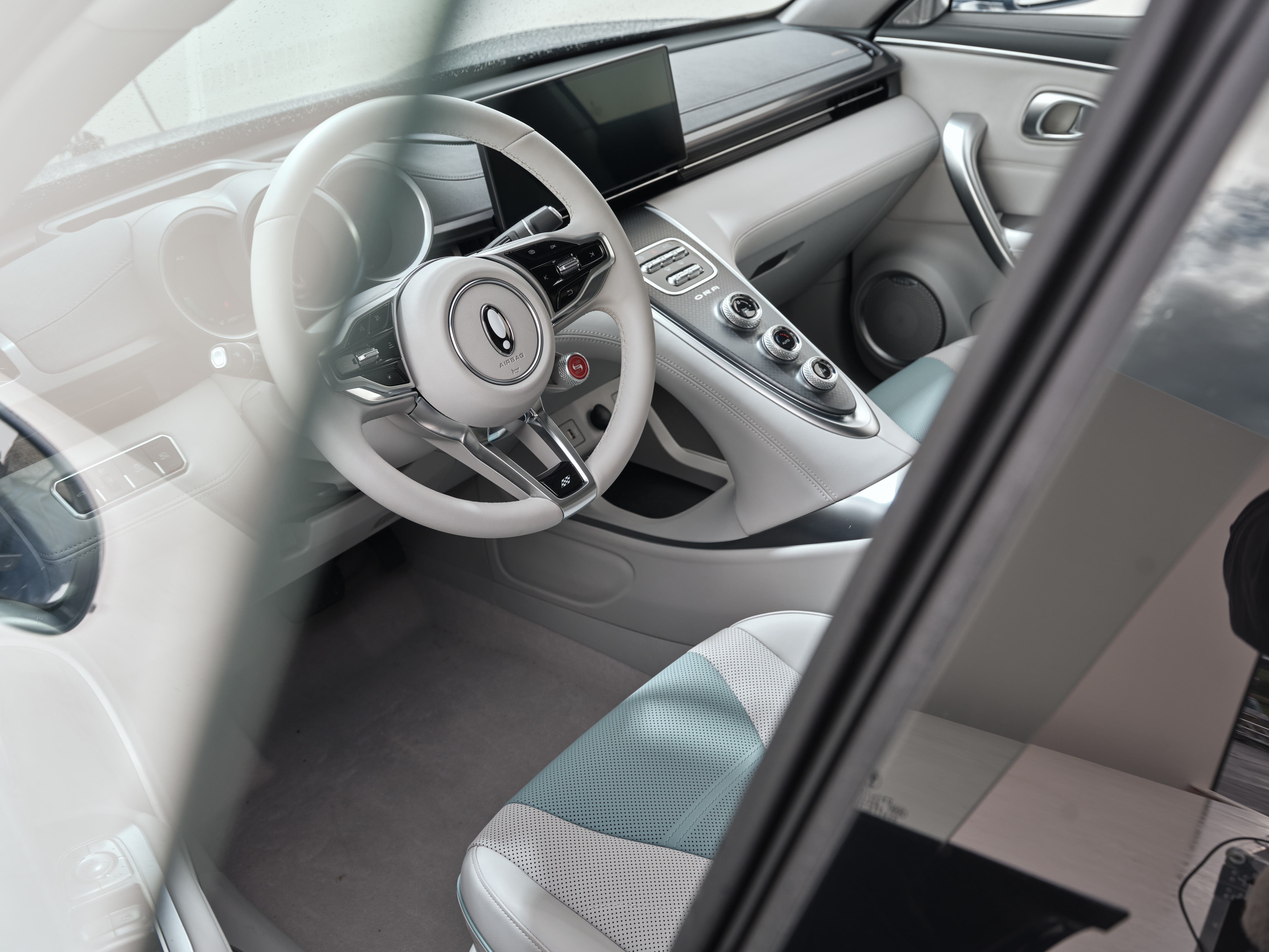
The car was equipped with white leatherette upholstery, a Porsche Taycan-inspired 10.25-inch digital driver’s display, a 12.3-inch touchscreen, and a massage function for the power-adjustable front seats.
It is expected that, if the Ora Sport does hit our market a more powerful 300kW/680Nm twin motor that hits 100km/h in a claimed 4.3 seconds and is rated with a 705km driving range (NEDC) will also be offered.
Our original story, below, continues unchanged
The Story to here
October 17, 2022: 2023 GWM Ora Next Cat EV revealed, could come to Australia
Snapshot
- 300kW, 680Nm motor with 89kWh battery
- 0-100km/h in 4.3sec, 430km range, 0-80% in 55min
- Australia not confirmed, but local arm hopeful
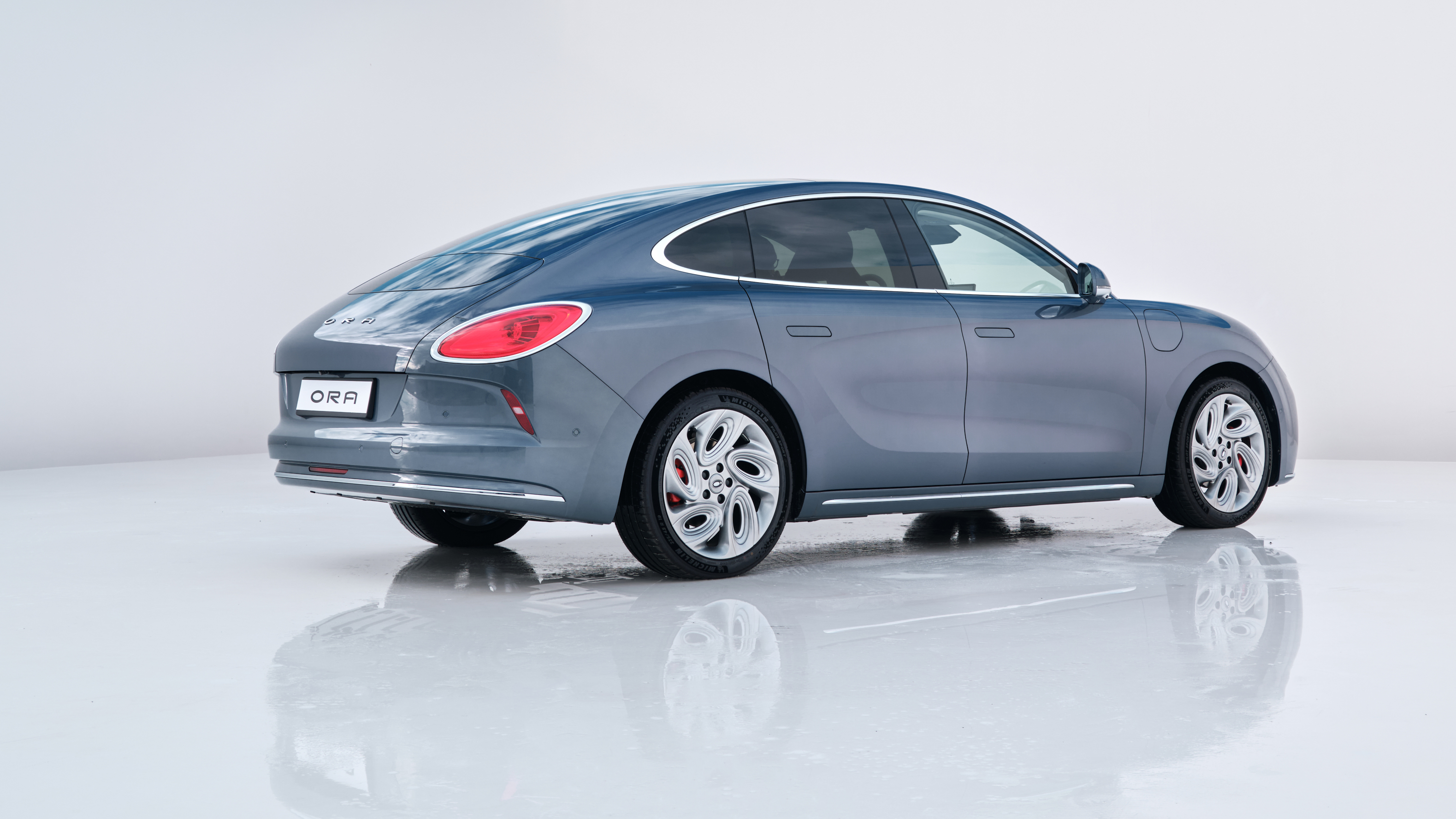
The 2023 Ora Next Cat electric car has been revealed for Europe, hoping to rival the likes of Tesla’s Model 3 sedan.
Though parent company GWM has not yet confirmed the model for Australia, it’s possible it could launch here next year or in 2024 as part of the firm’s wider plans to launch more than 50 energy-efficient vehicles by 2025 – including the Ora Good Cat next year.
JUMP AHEAD
- Battery and performance
- Driving range and charging time
- Features
- Dimensions
- What is Ora?
- When will the Ora Next Cat come to Australia?
Ora Next Cat battery and performance
The Ora Next Cat, revealed today at the Paris Motor Show but known in China as the Lightning Cat, uses a 89kWh lithium battery and is capable of producing 300kW/680Nm to propel it from 0-100km/h in a claimed 4.3 seconds.
Driving range and charging time
GWM also claims a driving range of 430 kilometres with a 0-80 per cent charge time of 55 minutes, and the sedan comes with all-wheel drive and 19-inch wheels.
Features
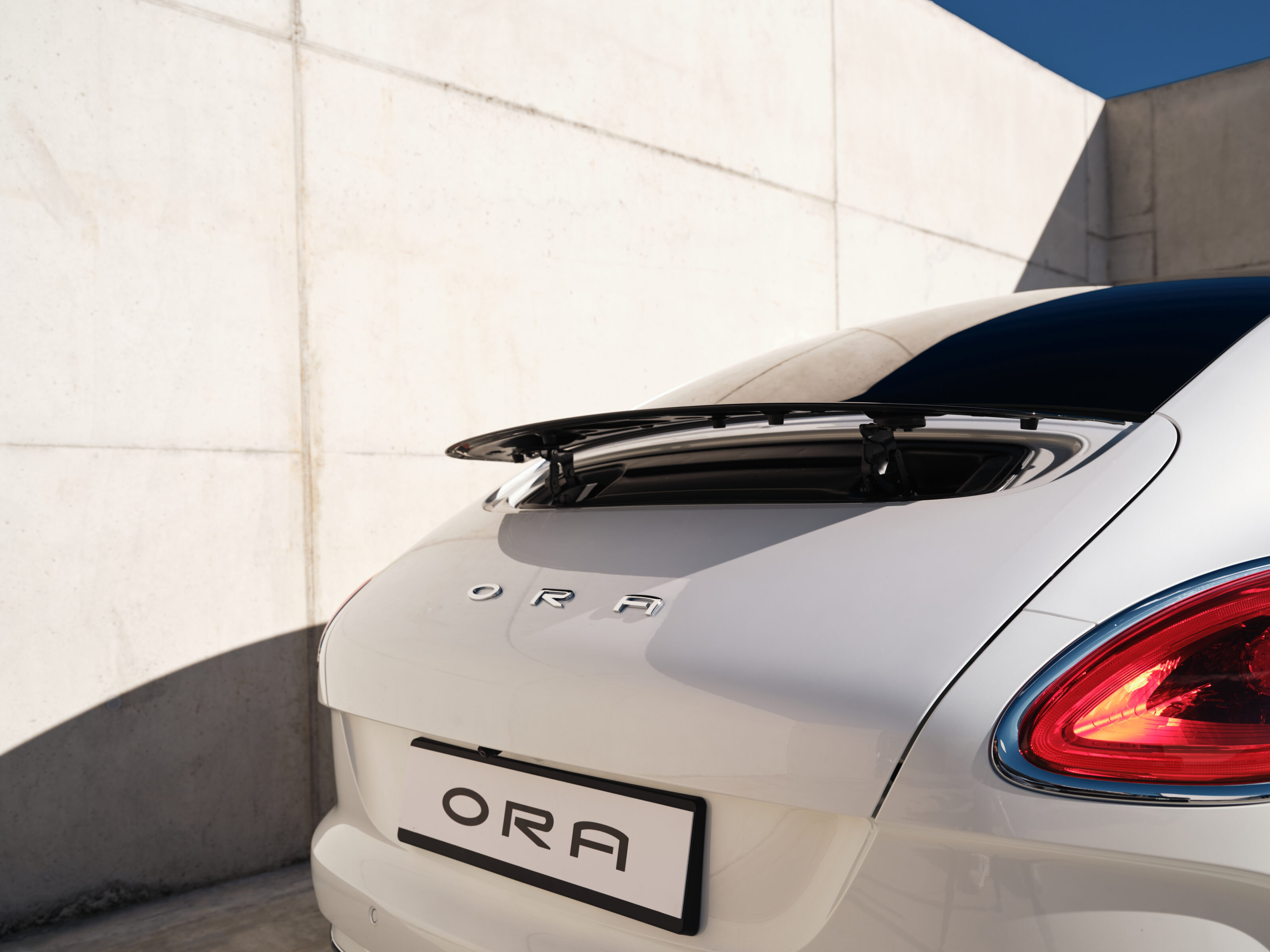
As standard, the European model also gets; a 10.25 inch digital instrument cluster, 12.3 inch central screen, 11-speaker immersive sound system, 360-degree view cameras, remote connectivity via the GWM Ora app, heated and ventilated front seats, a panoramic sunroof and kick-start powered tailgate.
Dimensions
The car weighs in at 2200 kilograms, and has a wheelbase of 2780 millimetres. It’s 4871mm long, 1862mm wide and is 1500mm tall.
What even is GWM Ora?
GWM Ora is the company’s dedicated EV marque, launching alongside GWM Tank which will focus on four-wheel-drives, and the established SUV brand GWM Haval – with GWM remaining dedicated to utes in Australia.
It’s expected the 2022 GWM Ora Cat 01 will be offered here in a similar specification to the model launched in the UK, with a choice of 48kWh or 63kWh battery packs feeding a 126kW/250Nm electric motor driving the front axle.
Depending on the battery optioned, Ora claims a driving range of up to 336 kilometres and 420km respectively.
Will the GWM Ora Next Cat come to Australia?
GWM’s local arm GWM Haval has told Wheels Media the Next Cat is not yet confirmed for Australia, but given the company plans to launch 50 EVs and hybrids by 2025, the Next Cat would seem a good chance for Australia.
Watch for more details to come in the months ahead.
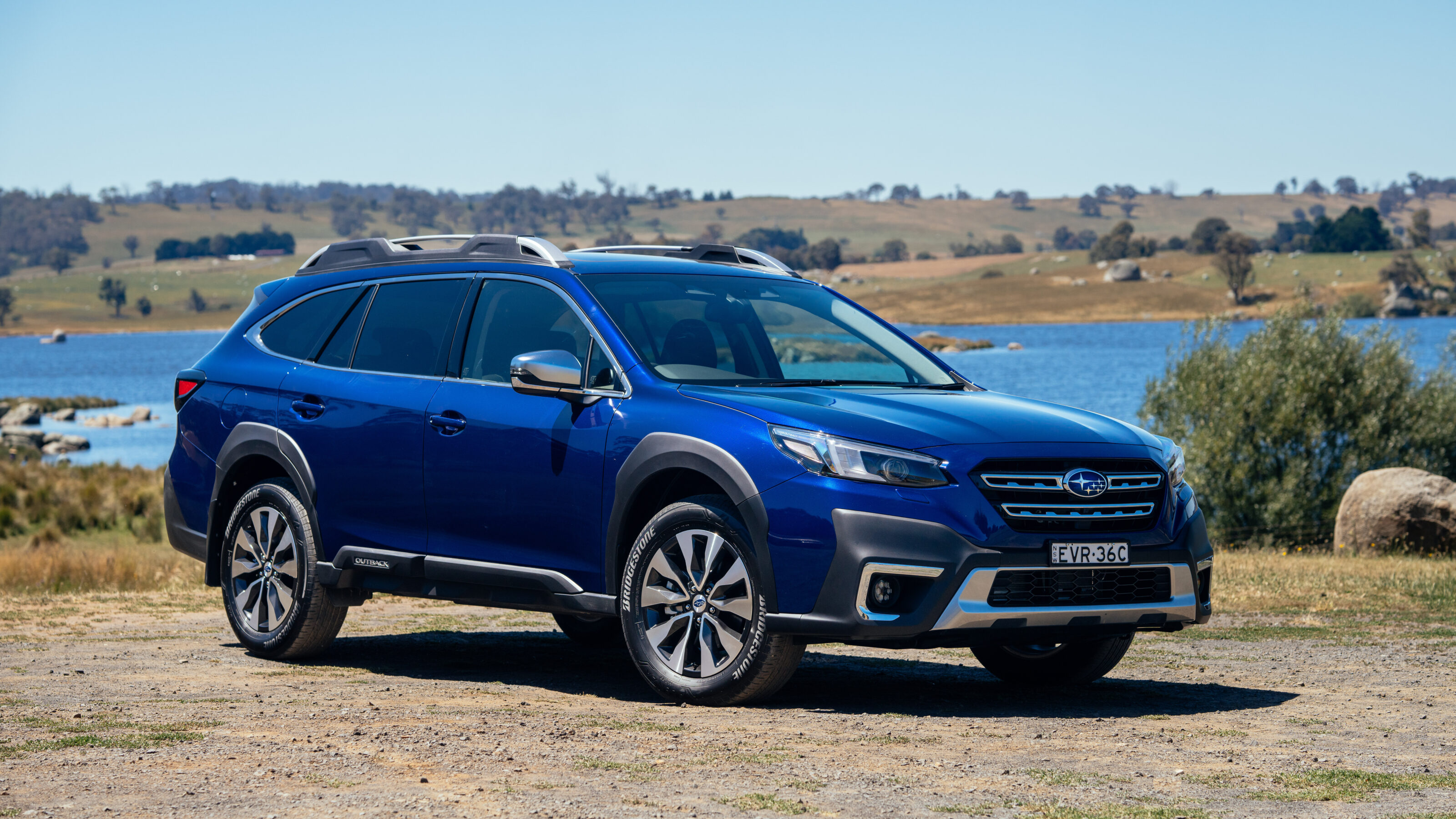
As a motoring journalist, it’s always a treat when you spot a Subaru Outback in the upcoming calendar. It’s just one of those cars where you know you’re in for a pleasant experience. This is a car that rarely puts a foot wrong.
The 2023 Subaru Outback update is headlined by a new-for-the-model 183kW/350Nm 2.4-litre turbocharged four-cylinder petrol engine, providing some welcome power, pace and towing capacity in comparison to the existing 138kW/245Nm 2.5-litre naturally aspirated unit.
Younger enthusiast readers may recognise this formula from Subaru’s back catalogue – the spirit of the Liberty GT lives on!
Elsewhere, there are several subtle quality-of-life updates, with wireless Apple CarPlay and Android Auto (now full screen!) fitted as standard, complemented by a simplified multi-function steering wheel topped off by various software improvements and subtle comfort updates.
JUMP AHEAD
- How much is it, and what do you get?
- How do rivals compare on value?
- Interior comfort, space and storage
- What is it like to drive?
- How is it on fuel?
- How safe is it?
- Warranty and running costs
- VERDICT
- Specifications
How much is it, and what do you get?
The new turbo powertrain is offered in existing Sport and Touring trims, usurping the top two positions in the range. It is not available with the eponymous base-grade Outback.
It means the Outback Sport XT begins from $52,190, with the flagship Outback XT Touring asking $55,990 (both before on-road costs). In other words, opting for the turbocharged engine commands a $5000 premium over the naturally aspirated equivalents.
| 2023 Subaru Outback range (pricing before on-road costs) | |
|---|---|
| Outback AWD | $42,690 (2021: $39,990) |
| Outback AWD Sport | $47,190 (2021: $44,490) |
| Outback AWD Touring | $50,990 (2021: $47,790) |
| Outback AWD Sport XT | $52,190 (new variant) |
| Outback AWD Touring XT | $55,990 (new variant) |
Headline standard features across the range include a portrait-style 11.6-inch infotainment touchscreen, digital driver information display, wireless Apple CarPlay and Android Auto, auto stop-start, Subaru Intelligent Drive (SI-Drive) modes, off-road X-Mode, auto-folding door mirror and hands-free powered tailgate.
Outback Sport and Outback Sport XT vehicles are treated to synthetic leather upholstery, further protected by a water-repellent coating.
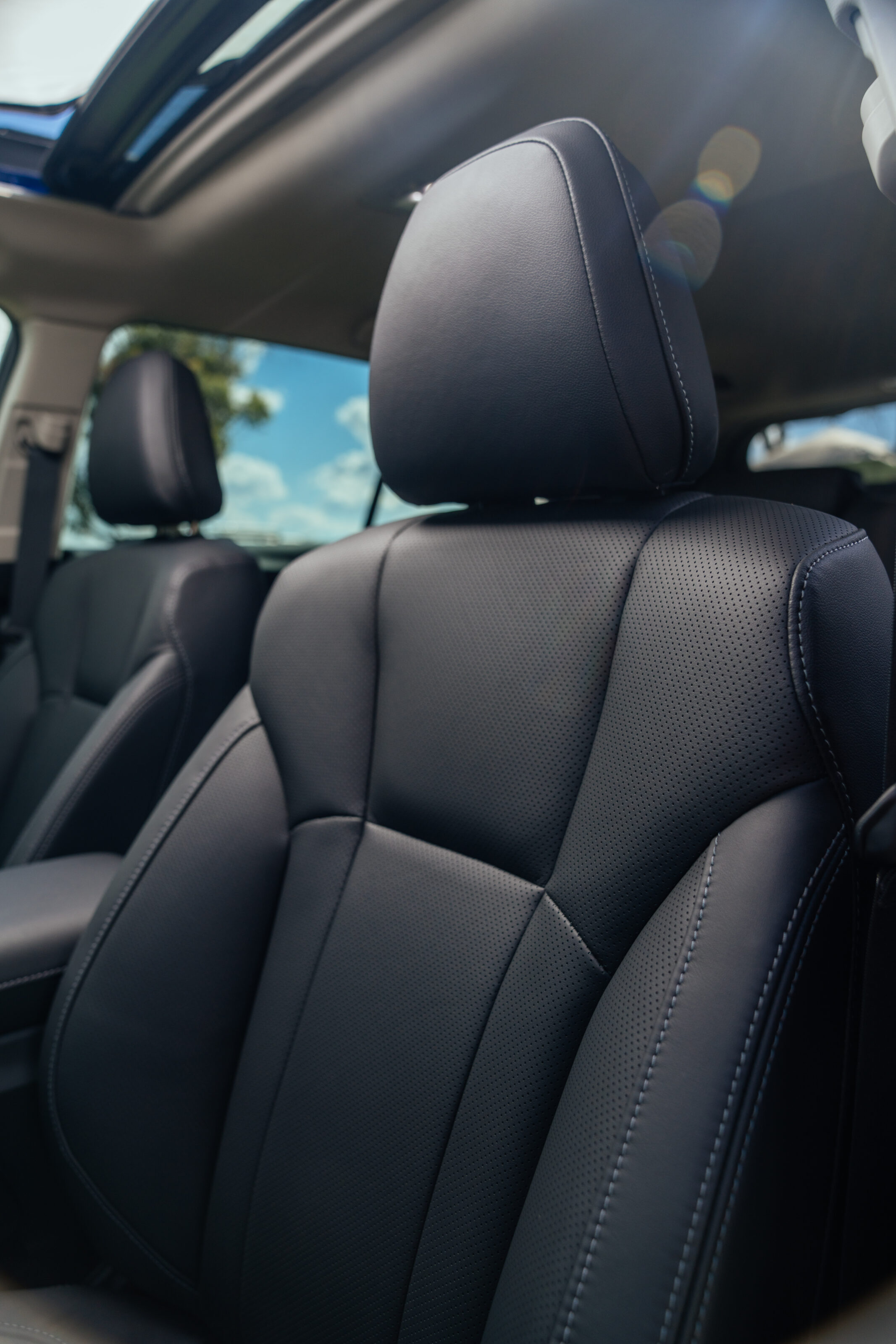
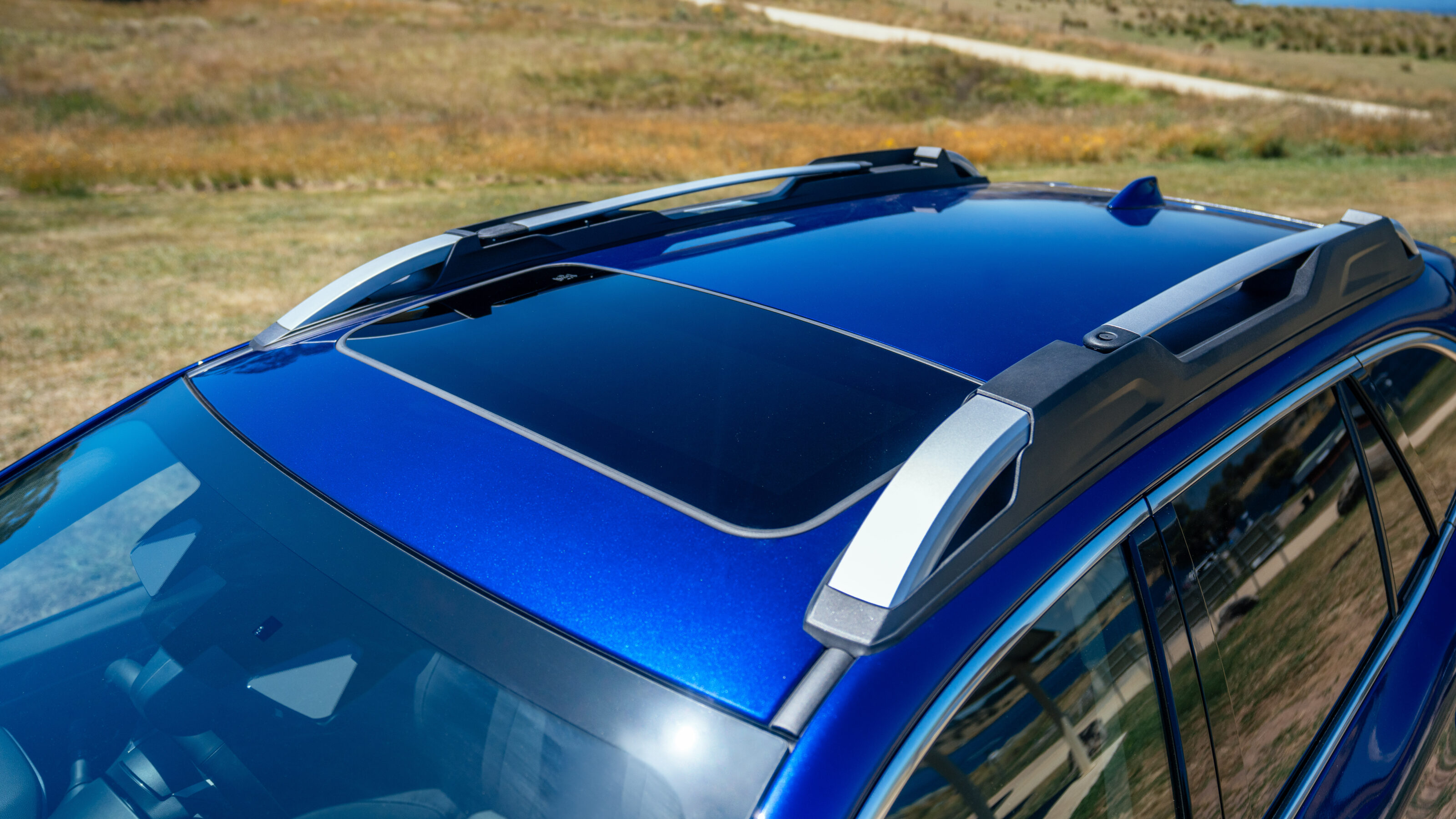
Flagship Outback Touring and Outback Touring XTs feature Nappa leather accented trim that further elevates the in-cabin atmosphere, also adding auto door mirror adjustment and auto driver seat adjustment, heated steering wheel, power-adjustable front seats with memory, front seat ventilation, nine-speaker Harman Kardon audio and a sunroof to the mix.
Features unique to the Outback XT include dual exhaust outlets, six-LED fog light units, exterior XT badging and suspension tweaks.
The latest iteration of Subaru’s comprehensive safety suite is also included, featuring eight airbags and virtually every active safety system you could think of.
How do rivals compare on value?
Despite its longroof proportions and the Subaru Liberty/Legacy roots of its distinctly Australian nameplate, the Outback is officially classed as a large SUV.
However, given its price point and five-seat layout, obvious popular rivals include medium SUVs such as the flagship Kia Sportage GT-Line (from $49,390), Mazda CX-5 GT SP Turbo (from $51,290) and top-spec Nissan X-Trail Ti-L AWD (from $52,990). All before on-road costs.
While rivals may pip the Outback in certain regards, such as passenger or cargo space, none of them boast the Outback’s unique mix of all-terrain talent and the on-road manners that stem from its passenger car origins.

Tech, comfort, space and storage
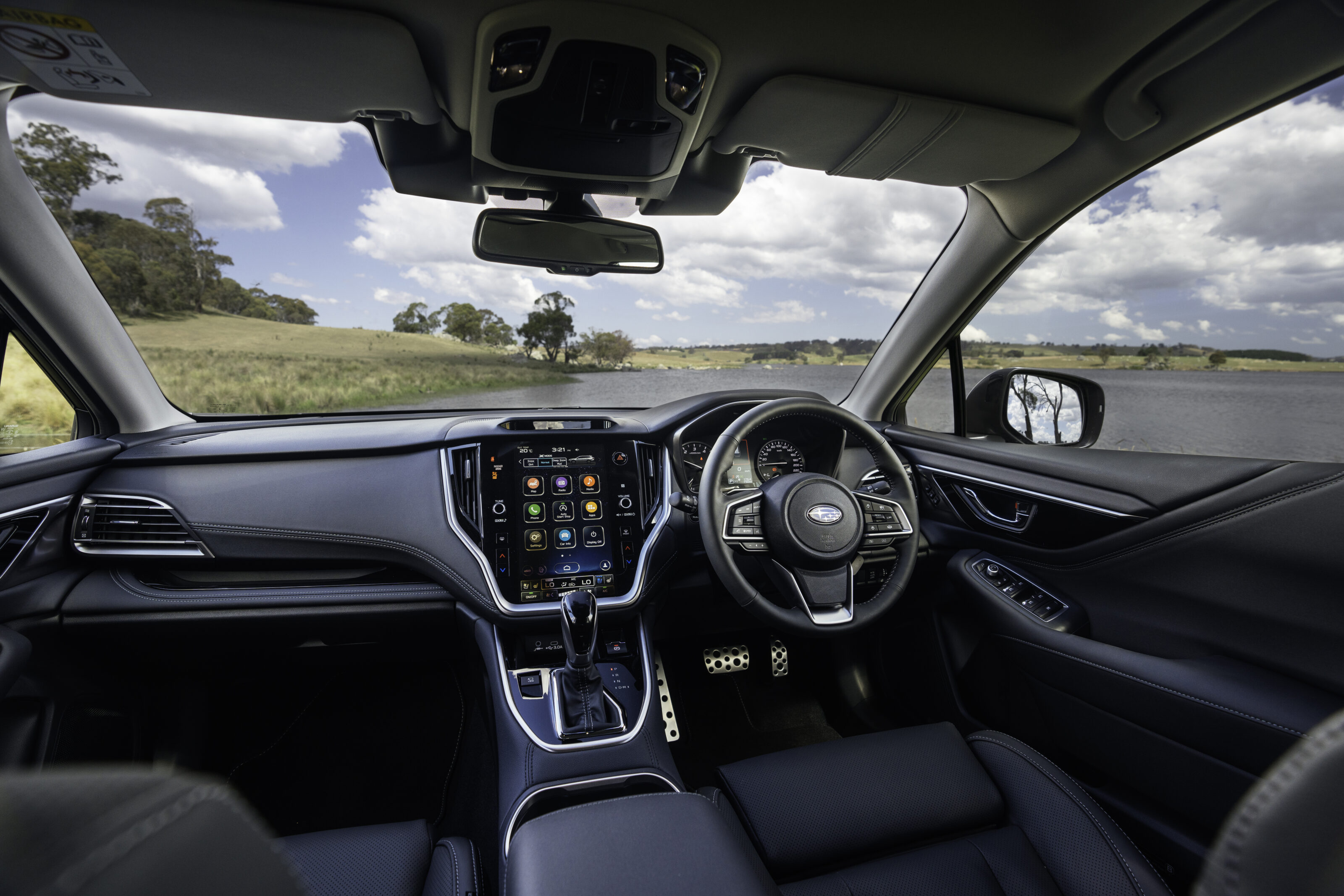
Instant impressions from the widely adjustable driver’s seat are of the solidity and durability Subaru excels at, balanced nicely with leather-wrapped (almost) everything.
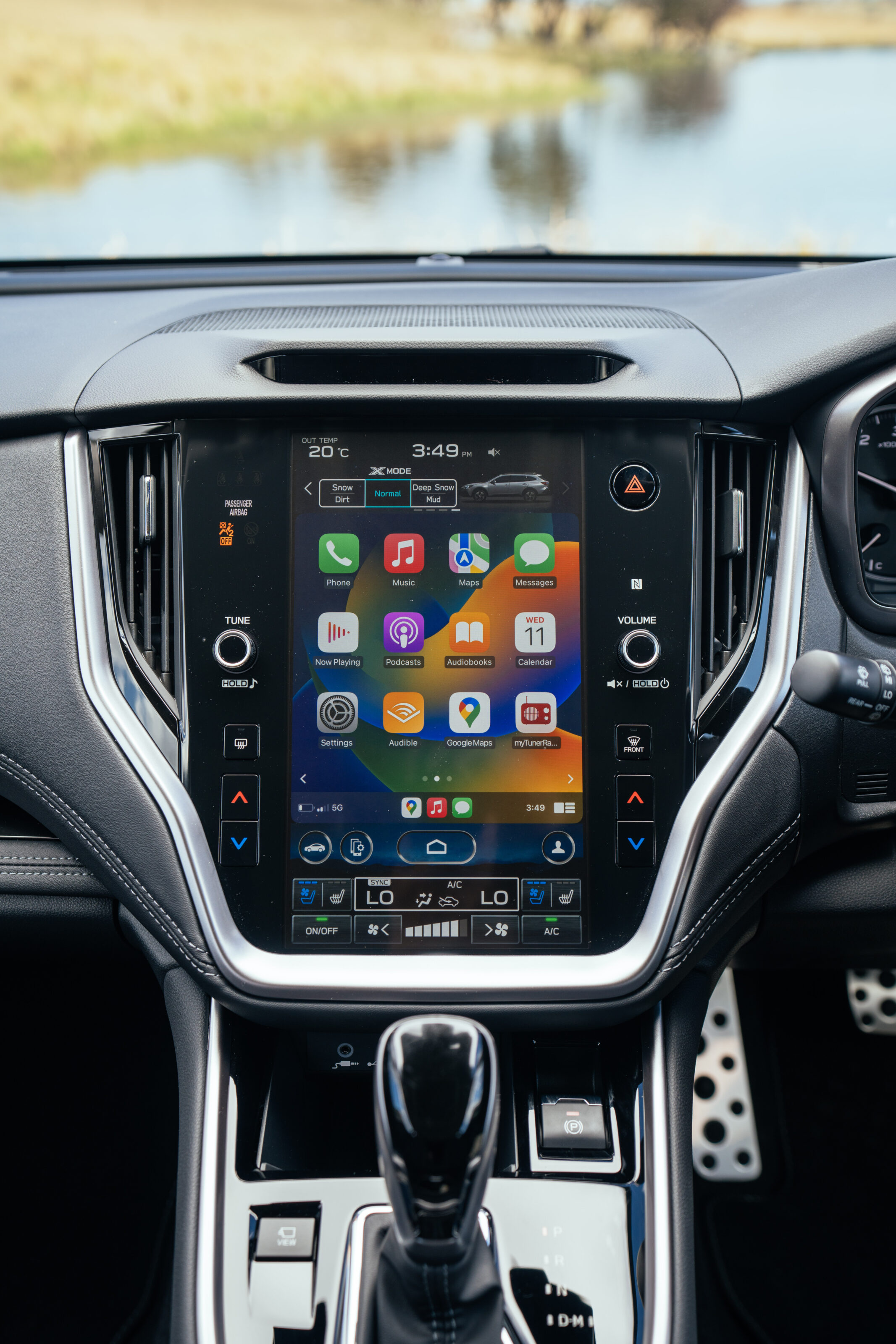
The 11.6-inch tablet-style touchscreen commands attention, and is mostly intuitive to navigate, displaying a wide array of information.
Users of Android Auto will be overjoyed to know that the mirroring software now utilises almost all of the available digital real estate, whereas the previous vehicle made do with an almost laughable letterbox-style aspect ratio.
Physical switchgear for climate, window demisters, audio volume and radio tuner are very welcome considerations, easily adjustable without taking your eyes off the road.
Wireless phone charging and a head-up display are increasingly noticeable omissions in this day and age, however, there are easily accessible USB-A and USB-C ports under the central stack for device charging.
Pleasantries continue to the second row, which features agreeable knee room, with toe and headroom to spare when planting my 175cm frame behind my own driving position. Rear passengers are treated to two air vents, two USB ports with two cup holders in the central armrest and two further drink holders in each door.
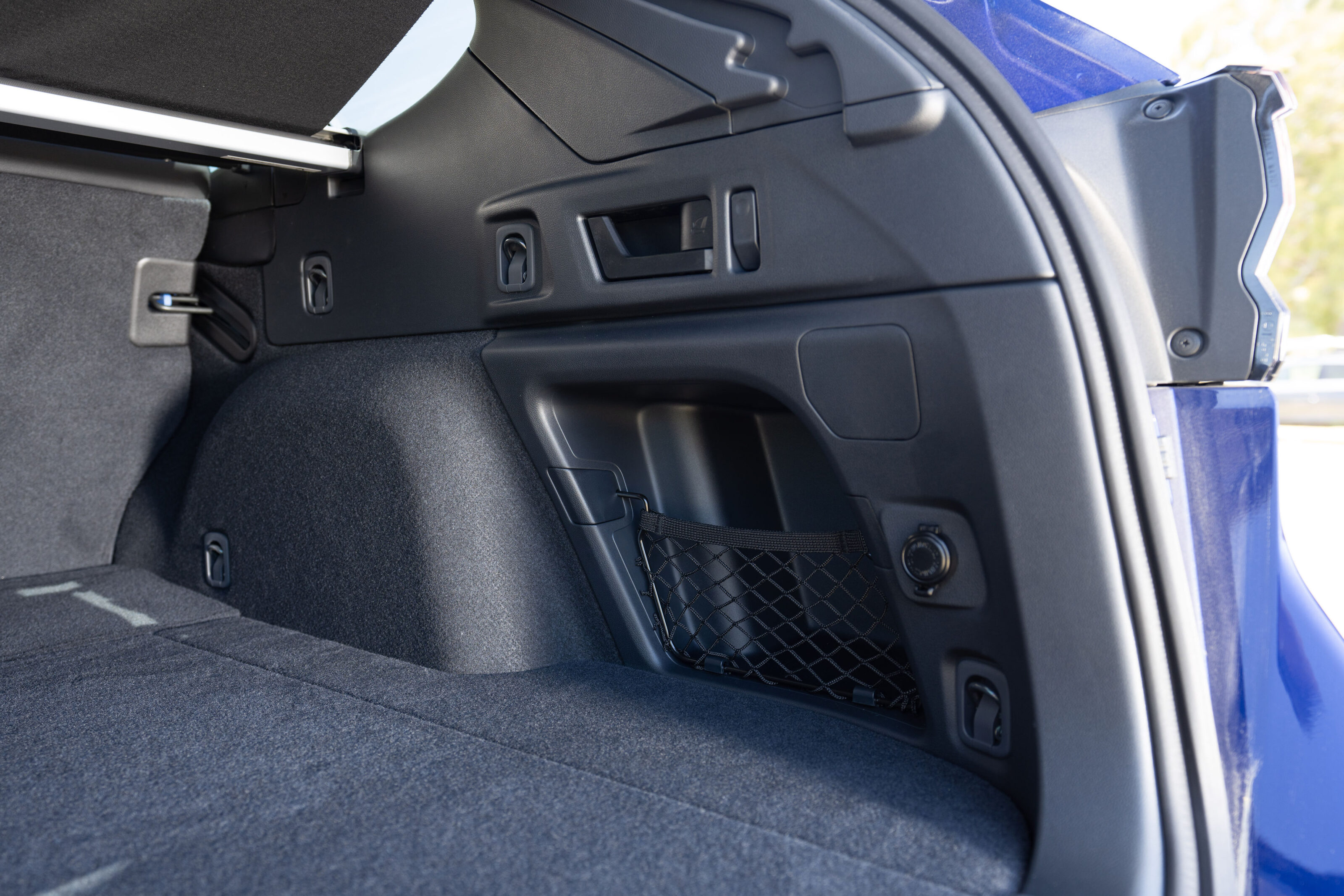
Further out back (no pun intended), the boot measures an impressive 522 litres of cargo space, expanding to 1267 litres with the rear seats folded. There are also various tie-down points, a 12-volt outlet, a hands-free powered tailgate and storage nooks on each side.
What is it like to drive?
The basics
| 2023 Subaru Outback XT drivetrain | |
|---|---|
| Engine | 2.4-litre boxer-4 turbo-petrol |
| Power | 183kW @ 5200-6000rpm |
| Torque | 350Nm @ 2000-4800rpm |
| 0-100km/h | 8.6 seconds (estimated) |
| Transmission | continuously variable |
| Body | 5-door, 5-seat large SUV |
| Fuel / tank | 95 RON / 63 litres |
| Fuel consumption | 9.0L/100km (ADR combined) |
| Boot space | 522L / 1267L |
Our launch route begins on the motorways out of Sydney, due west for the Blue Mountains. The Outback feels dense and sure-footed, with well-weighted steering.
Subaru brought along some naturally aspirated 2.5L models for comparison and on the motorway, the turbo’s increased in-gear response makes for a significant step in overtaking ability.
With more power and torque available for the continuously variable transmission (CVT) to exploit, the big monotone flare of revs under a heavy throttle remains but you’re sitting in that unpleasant drone zone only fleetingly. In the same conditions, the atmo 2.5-litre Outback leaves you basking in it.
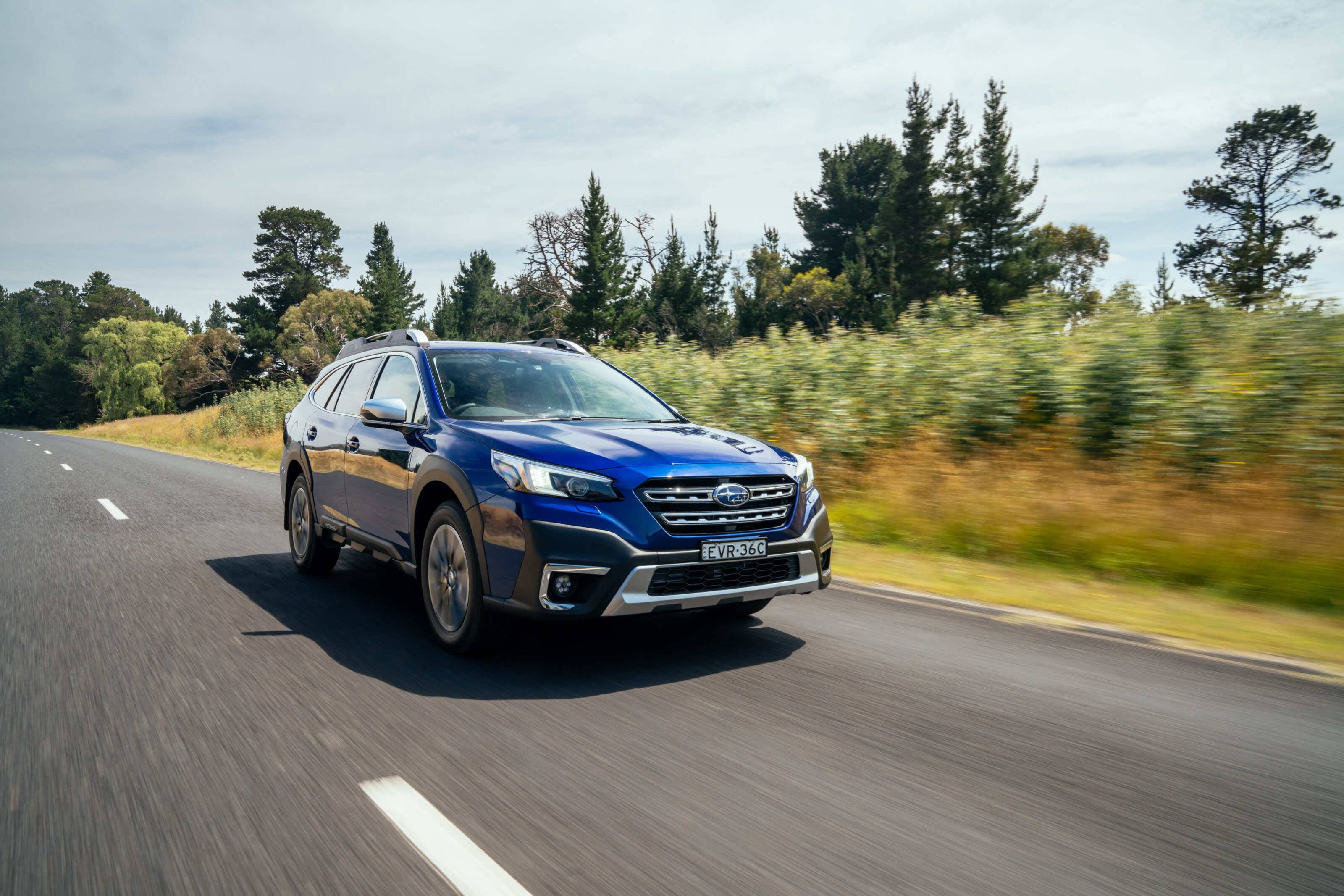
As we reach the mountain ranges, the added turbo power is starkly felt on a sharp ascent, too.
Subaru did not provide an official 0-100km/h claim, though independent tests by US publications have returned 8.6 seconds in their 0-60mph tests.
The naturally aspirated 2.5-litre unit was beginning to feel noticeably dated in comparison to younger competition, but the new engine returns the Outback into line with its increasingly sprightly rivals such as the Toyota RAV4 hybrid and turbocharged Mazda CX-5.
Even on fast descending, off-camber mountain switchbacks, the Outback’s roadholding remains confident, with decent noise, vibration and harshness suppression from its Bridgestone Alenza H/L33 tyres (measuring a square 225/60/18).
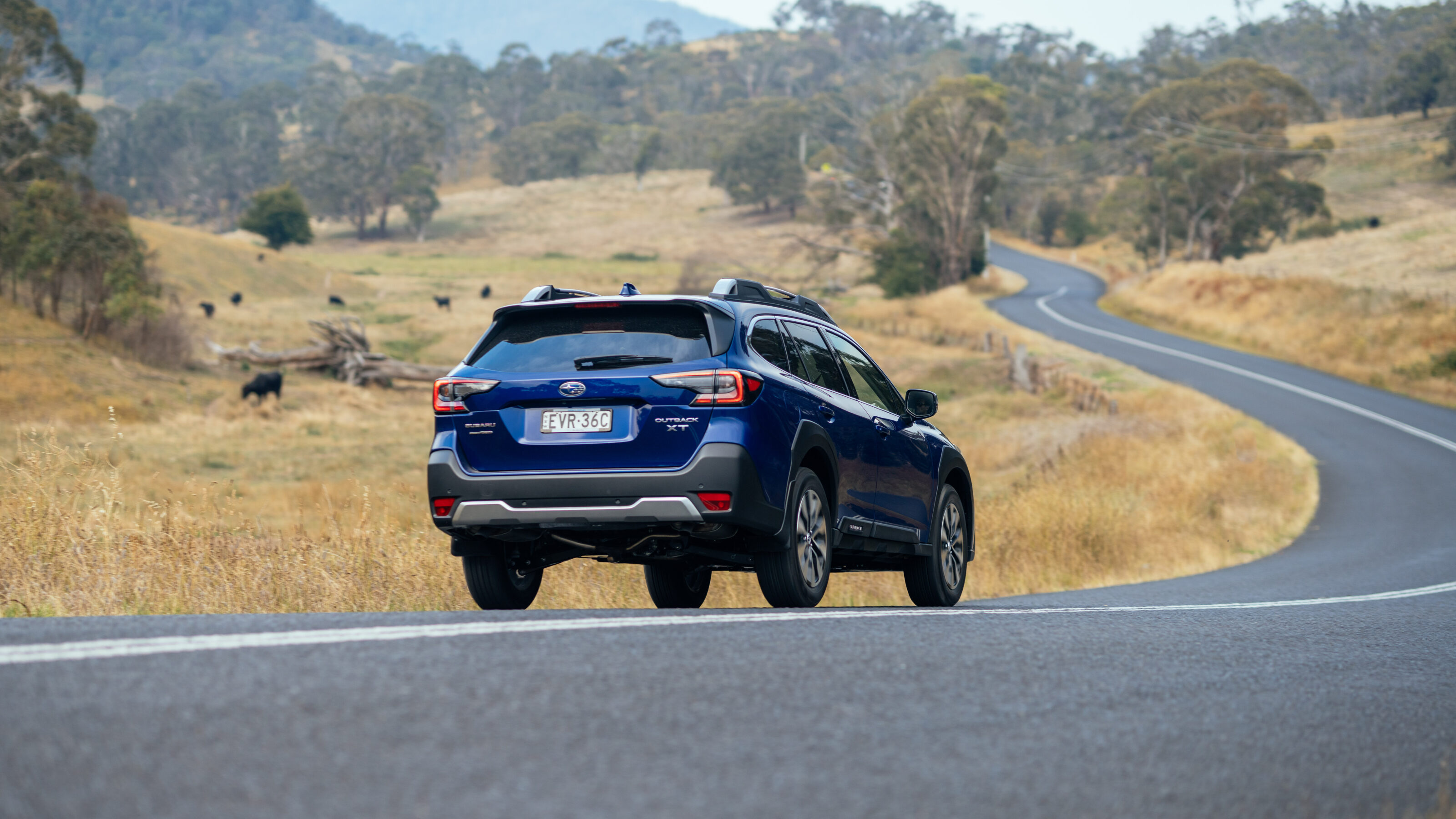
The addition of forced induction doesn’t just improve performance, but also increases the Outback’s towing capacity to 2400kg (up 400kg over a 2.5L Outback).
A little body roll is brought about by the higher centre of gravity, but the overall Outback driving experience feels much more ‘car-like’ than that of an SUV.
Still, this latest generation is more tied-down than its predecessor and, in naturally aspirated guise, it was always the engine that stuck out as the weak point in the Outback recipe.
The new XT antidotes that by elevating its performance envelope, providing a newfound level of cohesion with the rest of the Outback’s talents in regards to comfort, ruggedness and ease of use.
Even over patchy and potted stretches of tarmac, the Outback remains steadfast with a high degree of bump resistance and a resounding feeling of solidity.
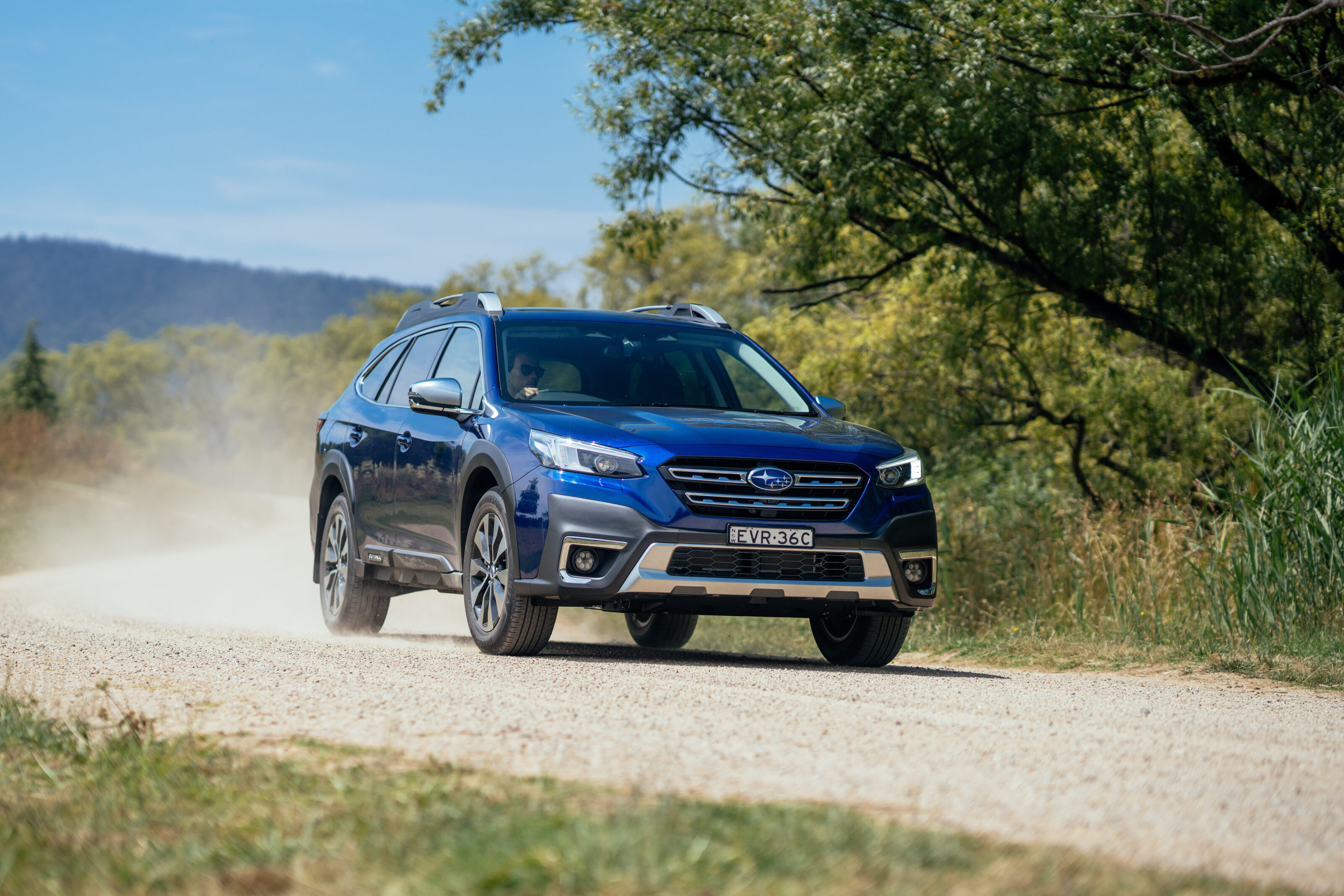
Of course, on-road dynamics are only part of the Outback remit and, to show off its capabilities, we were pointed down some very steep and narrow off-road tracks.
I’m still quite green when it comes to off-roading, and am always faced with a tinge of trepidation when such activities feature on an upcoming event program.
Chunky 60-section tyres and 213mm of ground clearance signal inherent capability, but the genius lies in the software of Subaru’s deftly intuitive ‘X-Mode’.
It really is an ‘idiot-proof’ system, enabling hill descent control, and comprising a no-slip general Snow/Dirt mode as well as a Deep Snow/Mud setting for more extreme obstacles.
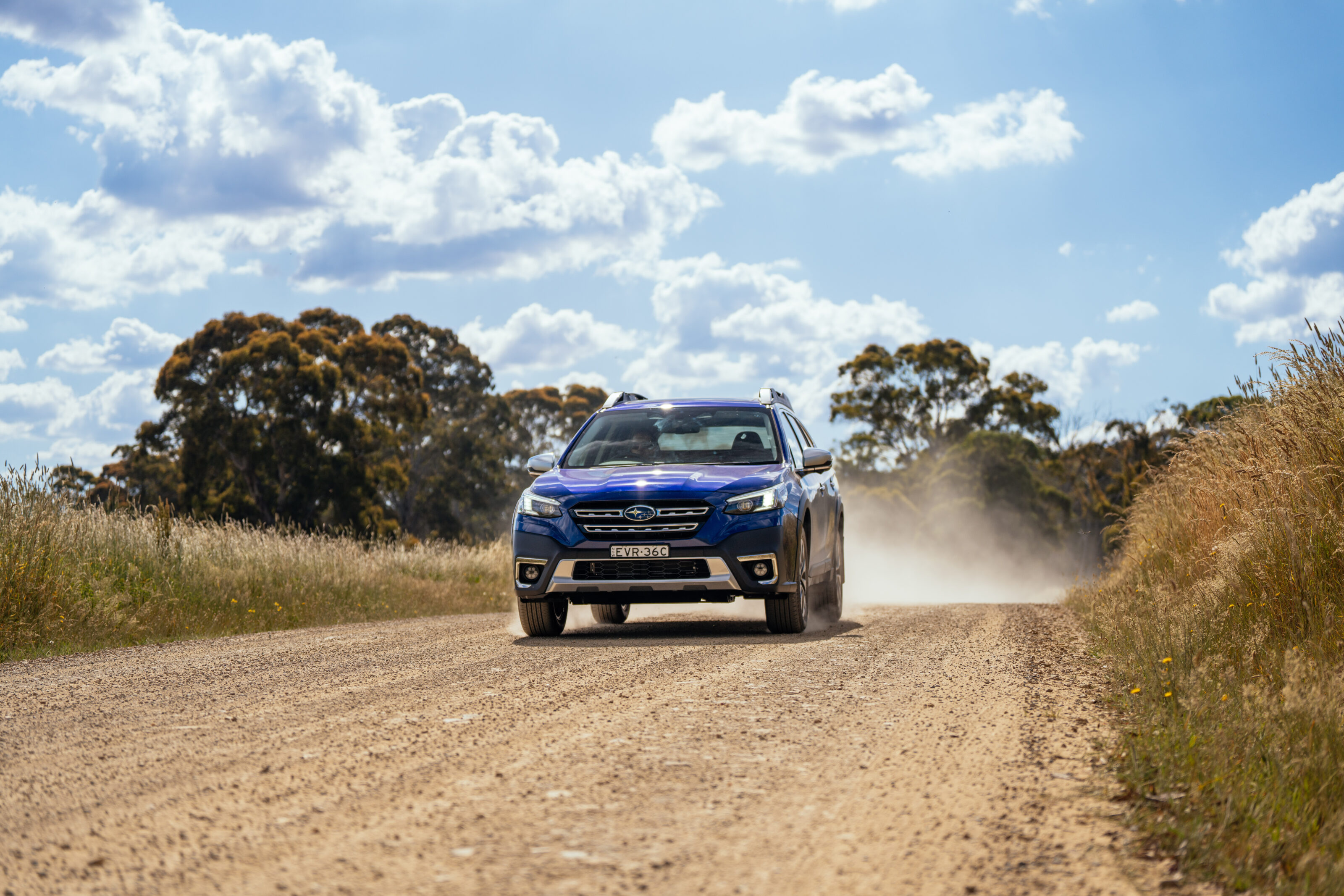
Hill descent control is engaged as soon as you enter X-Mode, defaulting to a crawl of 5km/h but will hold at the speed you throttle (or brake) to – up to a maximum of 40km/h.
X-Mode’s simpler Snow/Dirt setting is the primary mode here, as the vehicle leans on its deft traction control system to ensure minimal wheelspin. Entering the network of off-road tracks required descending a steep rocky incline. A front-facing camera helps with seeing over crests, and hill descent control sees you simply guiding the nose while covering the brake as the Outback confidently crawls down the slope.
A slight on-centre dead zone in the steering becomes a boon in traversing off-road tracks slowly with the ability to finely hone steering inputs. Whether faced with sharp descents, climbs or ruts, the deftly calibrated X-Mode system rendered the entire experience as little more than ‘point-and-shoot’.
The limits of the general Snow/Dirt settings were reached, however, when we were tasked with navigating a sharp incline with an immediate tight right-hander at the crest.
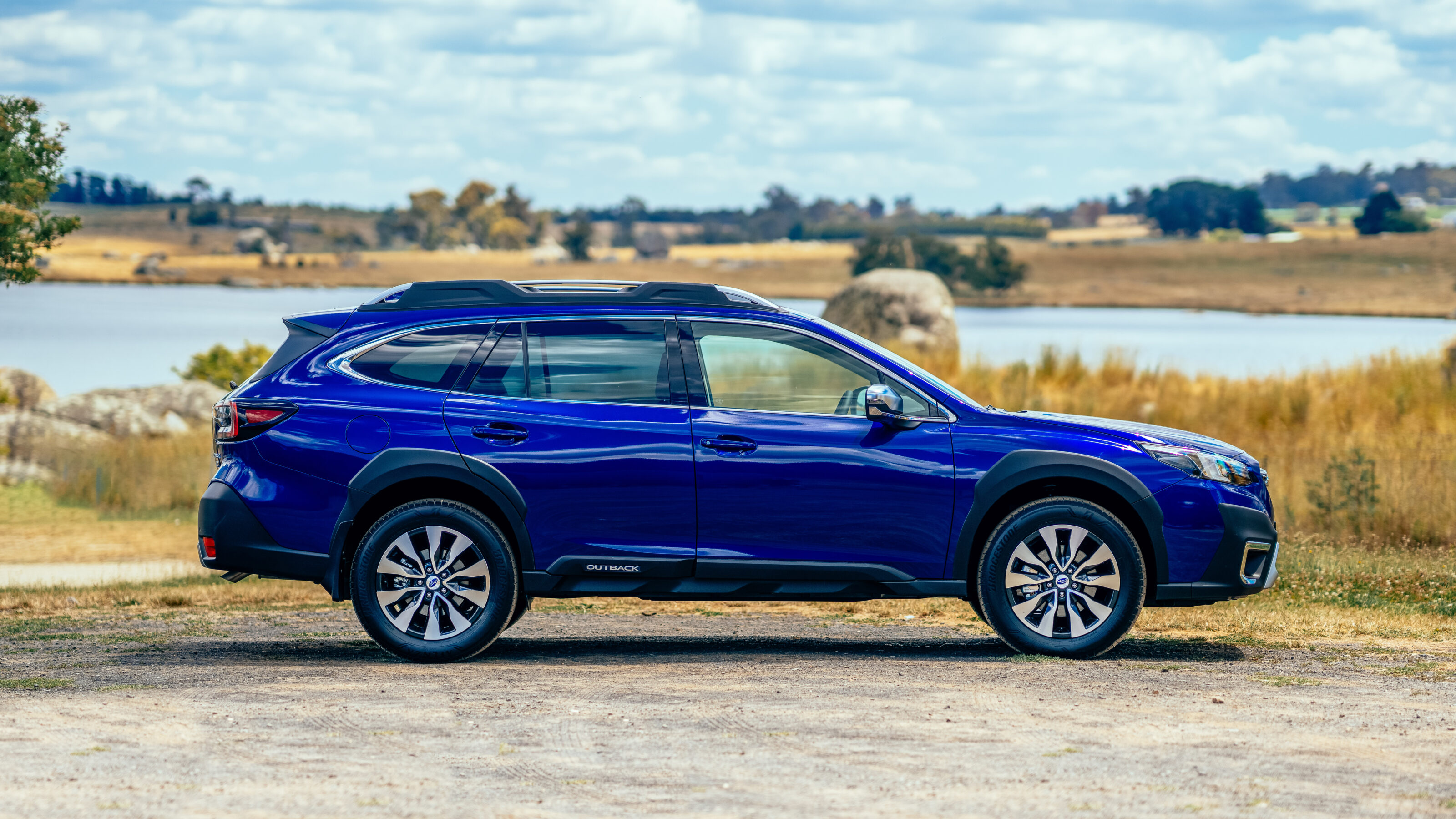
Left with its rear driver’s side wheel free-spinning in the air, X-Mode’s Deep Snow/Mud escape setting was engaged, which deactivates traction control and utilises torque-vectoring-by-brake to routinely pulsate each wheel so the car can identify which corners have purchase and subsequently biasing power to them.
Controlled bursts of wheel slip also aid escape and recovery from deep slush, snow and mud – whereby there’s often a hard-packed layer beneath the surface.
Whether on the road or off it, the XT impresses with the Outback’s traditional strengths of deft body control and a well-considered ride.
The new powerplant adds some much-needed pace and muscle but also benefits the overall user experience and refinement. In terms of the actual driving experience, there is very little to complain about.
How is it on fuel?
The more powerful turbocharged Outback XT claims 9.0L/100km, which is up somewhat against the naturally aspirated Outback’s 7.3L/100km claim.
A launch event, with drivers sharing cars, isn’t an ideal environment for testing claimed fuel consumption – so we’ll return to this with our upcoming week-long booking of the car.
How safe is it?
The 2023 Subaru Outback range bears a five-star ANCAP rating – awarded in 2021 under less-strict criteria.
Its airbag suite comprises dual front, dual front side, dual curtain, driver’s knee and front passenger cushions.
The latest iteration of Subaru’s vaunted EyeSight system includes adaptive cruise control, emergency lane-keep assist, lane centring function, lane departure prevention, lane departure warning, lane sway warning, lead vehicle start alert, pre-collision brake assist, pre-collision throttle management, autonomous emergency steering, brake light recognition, intelligent speed limiter and speed sign recognition.
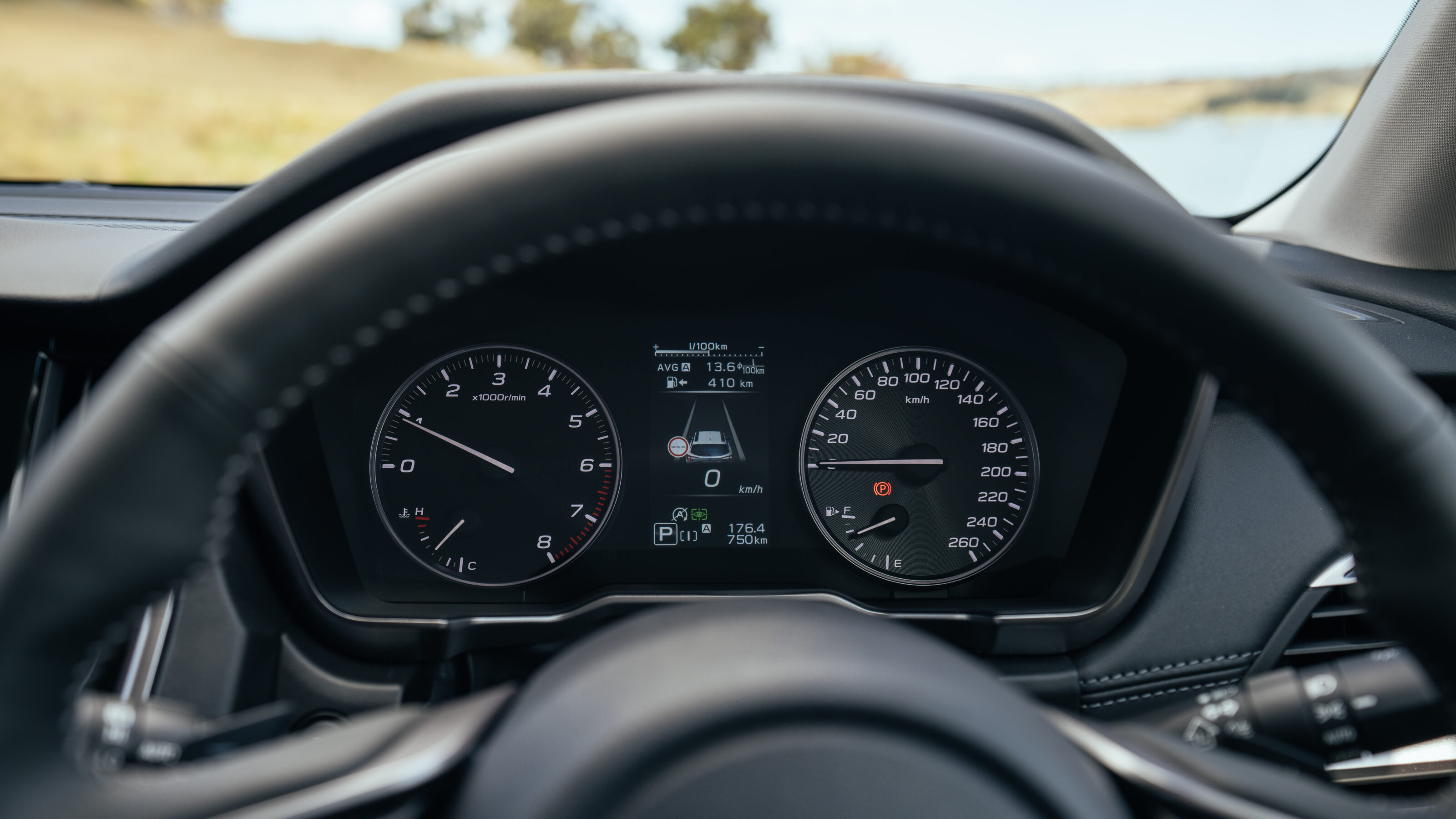
EyeSight combines with Subaru’s Vision Assist package, which includes adaptive driving beams, blind-spot monitoring, lane change assist, rear cross-traffic alert and reverse autonomous braking.
There are also driver distraction and drowsiness warnings to top off Subaru’s well-known dedication to safety.
Warranty and running costs
The 2023 Subaru Outback range is covered by Subaru’s five-year, unlimited-kilometre warranty, with new cars treated to 12 months of complimentary roadside assistance.
Service intervals for the current generation of Outback run every 12,500km or 12 months, whichever occurs first.
The Outback falls under Subaru’s five-year/62,500km capped-price servicing program which, according to Subaru’s website, indicates that buyers can expect to pay a maximum of $2748 over the first five years of ownership at an authorised Subaru service centre.
VERDICT
There is so much to like about the Subaru Outback as an effortless go-almost-anywhere family hauler, and the addition of the turbocharged 2.4-litre engine rectifies a previously glaring weak spot in the formula.
It is now the car we wanted when this generation of Outback landed in Australia at the end of 2021.
On the road, the turbocharged Outback is the most polished and enjoyable one yet, yet trades off none of its rugged vibes, off-road capability and wide breadth of talent.
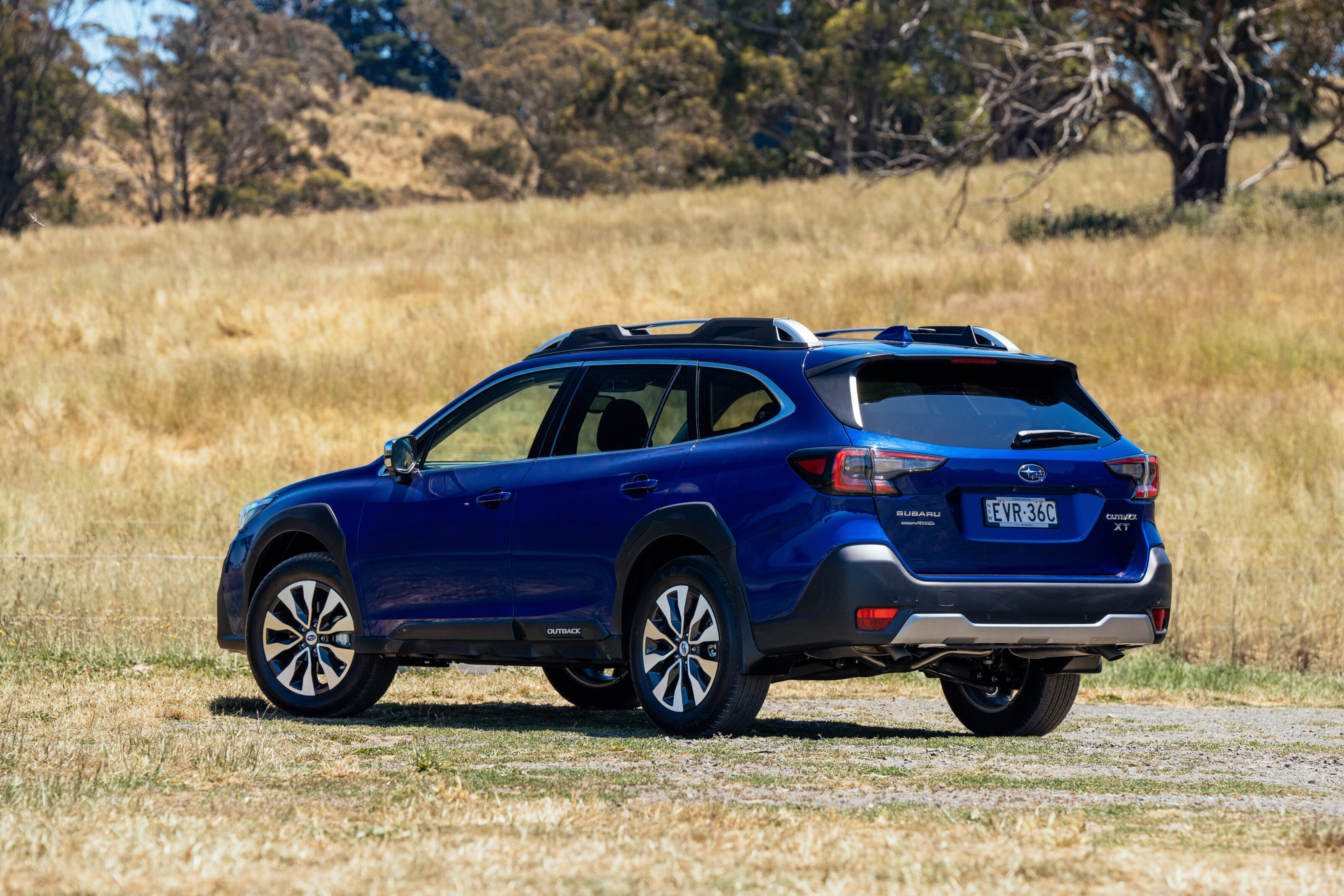
For the increasing number of Australian buyers seeking an outdoor ‘lifestyle’ vehicle, the Subaru Outback will fill the brief with poise and will go further than many conventional unibody SUVs when the bitumen comes to an end.
It will also deliver a level of on-road refinement that the ubiquitous ladder-frame ute-based SUV could never hope to achieve.
Beyond our now-extinct locally-made vehicles, few cars on the market exude that rugged feeling of suiting ‘Australian conditions’ so perfectly.
As the nameplate suggests, it feels as if the Subaru Outback was made for us.
| 2023 Subaru Outback specifications | |
|---|---|
| Model | Subaru Outback XT Touring |
| Engine | 2387cc boxer-4, turbo-petrol |
| Max Power | 183kW @ 5200-6000rpm |
| Max Torque | 350Nm @ 2000-4800rpm |
| Transmission | continuously variable |
| Weight | 1730kg |
| 0-100km/h | 8.6 seconds (estimated) |
| Economy | 9.0L/100km (ADR combined) |
| Price | $55,990 (before on-road costs) |
| On Sale | Now |
This story was first published for Valentine’s Day 2022 – and we’re thinking we might just have to keep reviving it until Porsche’s got a 50th anniversary video for us all…
February 2022: Porsche has penned a love letter to the V8 on the 45th anniversary of its 928’s release.
Launched on Valentine’s Day, a short video was posted to the manufacturer’s YouTube page, looking back at the history of V8 engines in its models over the years.
It all started with the debut of the 928 in 1977 at the Geneva Motor Show, becoming the first eight-cylinder model from the Stuttgart marque – but far from the last.
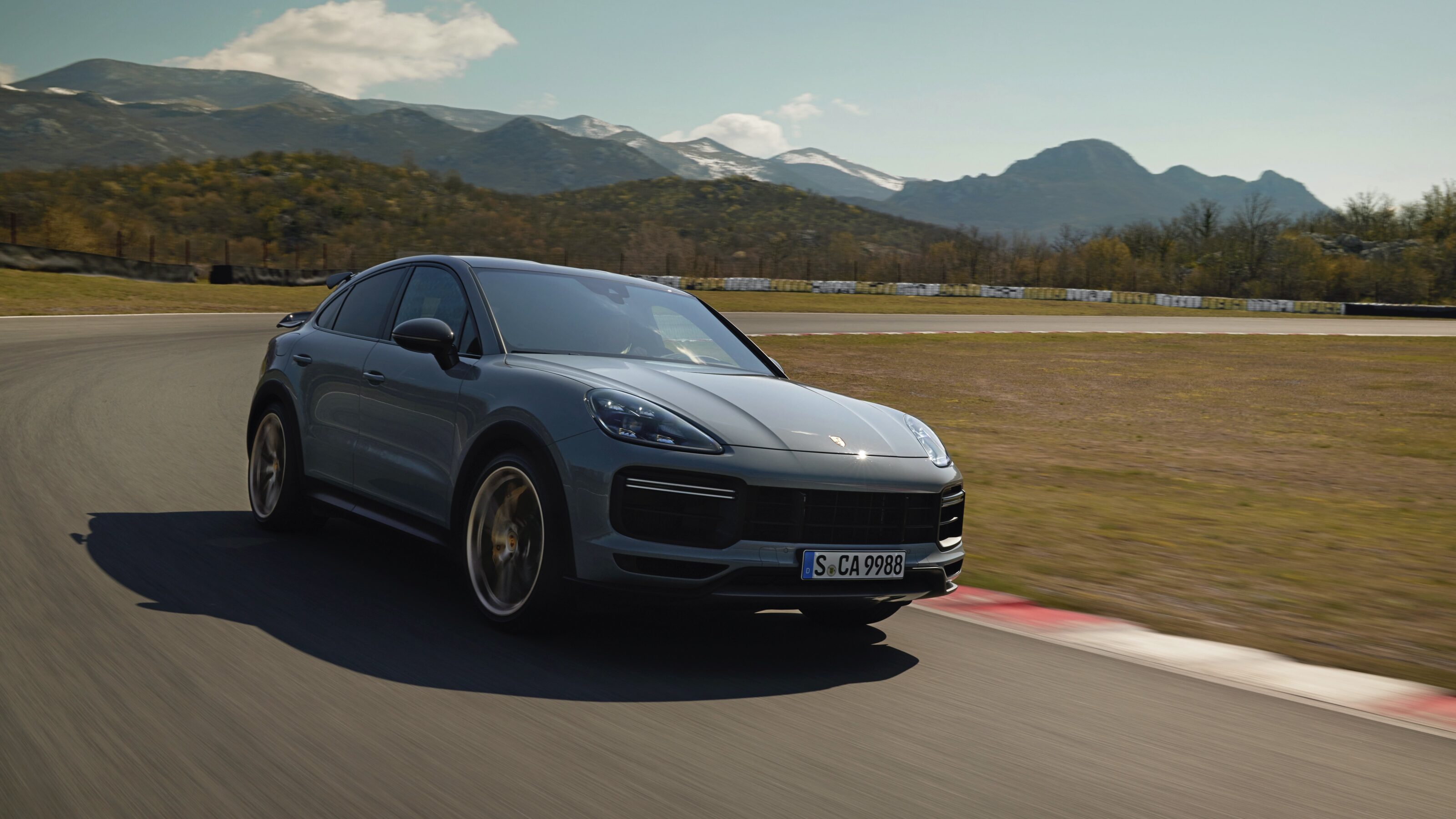
Next came the Cayenne in 2002 – a controversial car at launch as it signified the beginning of sports car manufacturers turning to SUVs for a quick buck, but 20 years on from its debut as Porsche’s first four-door, it still tops the sales charts for the brand.
Following it was the Panamera, an equally eyebrow-raising machine, which slotted in to the line-up as a modern, low-slung GT car amongst the ever-growing sports car and SUV models.
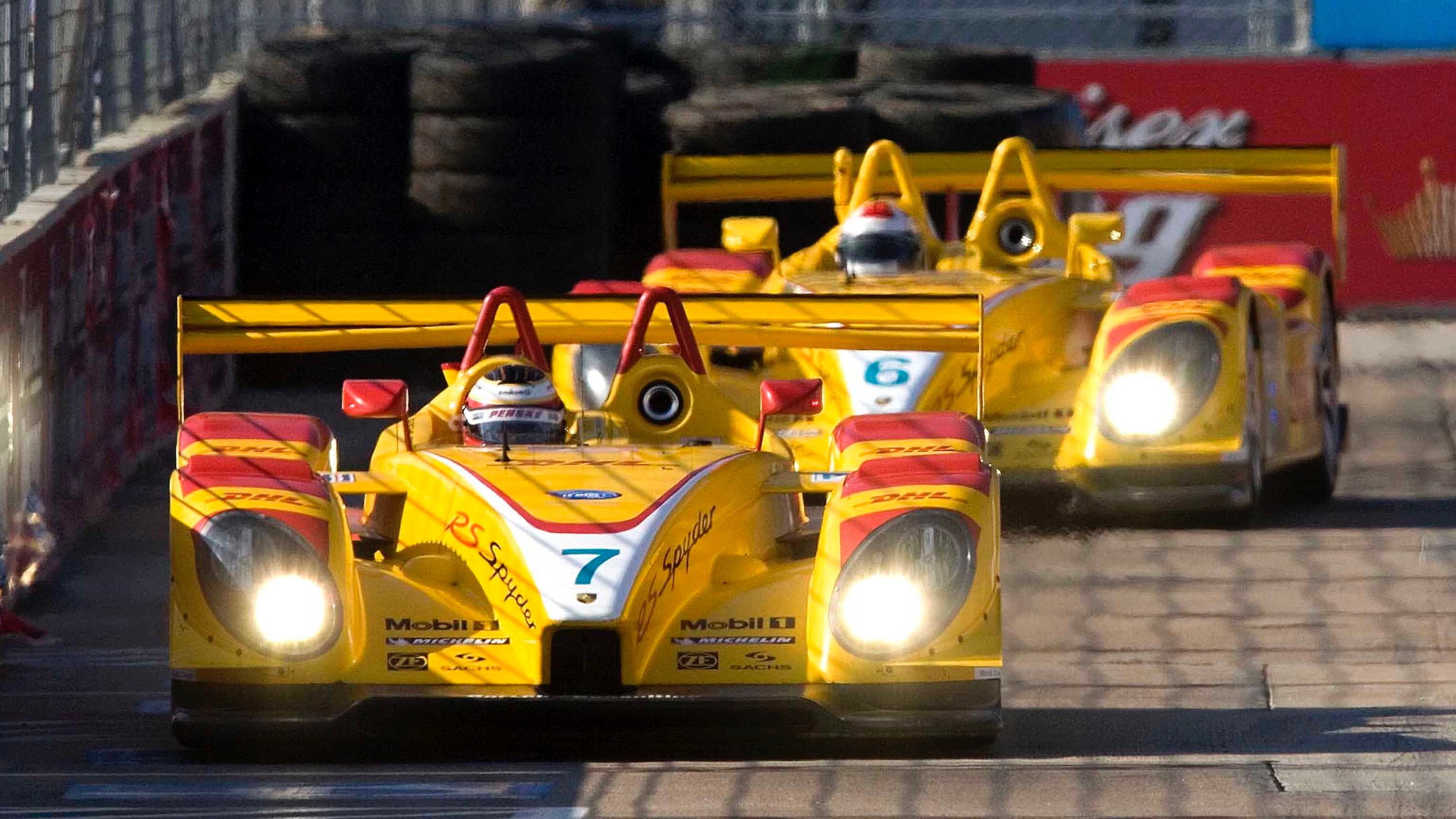
Porsche doesn’t forget the specialist models either, from the RS Spyder – a four-time championship winner for Team Penske in the American Le Mans Series between 2006 and 2009 – and the 918 Spyder, its first attempt at a hybrid hypercar from 2014.
Lessons learnt from the 918 will be used in its next Le Mans challenger, with the 2023 LMDh hybrid prototype racer set to be powered by a twin-turbocharged V8 from its current Cayenne and Panamera, albeit heavily modified with a hybrid system further boosting its output.
Although Porsche is investing heavily in electric vehicles, such as its Taycan and a partial ownership of Rimac and Bugatti, it has also been pouring money into synthetic fuel development, wanting to keep internal combustion engines alive well into the future.
Here’s some other reading for you, too.
October 18, 2023: Victoria’s EV road tax has been struck down
In a blow for the state, Victoria’s zero-emissions vehicle road-user tax has been deemed unlawful.
See the full story at the link below.
STORY CONTINUES: High Court challenge over Victoria’s EV tax begins
Snapshot
- Legal claim based on Commonwealth’s exclusive power over taxation
- Ruling could impact what happens in other states
- Pair crowdfunding to help with legal costs
A legal challenge mounted by two Melbourne electric vehicle owners against Victoria’s contentious EV tax will begin in Australia’s High Court in Canberra today.
The pair, represented by legal firm Equity Generation Lawyers, will argue that the State of Victoria lacks the constitutional power to levy a road user charge on electric vehicle drivers.
The State meanwhile, will defend the accusation on the basis that the road user charge is not a tax ‘on goods’, but rather a tax on the activity of driving a zero or low emission vehicle (ZLEV) on a ‘specified road”, and that even if the charge is considered by the court as a tax on goods, it is not on the ‘production, manufacture, sale or distribution’, but rather on the use or consumption of them.
David Hertzberg, Senior Associate at Equity Generation Lawyers, representing the drivers at the High Court, said the case will have ramifications for the division of power between the Commonwealth and the States going forward.
Back in July last year, the Commonwealth Government intervened in support of the two owners providing a written submission to the court as such in October, while the following month all other states and territories made their own submissions backing the Victorian Government.
“The Commonwealth, which is currently designing a national electric vehicle strategy, has intervened in support of our clients. All other States and Territories have intervened against us,” said Hertzberg.
“For our clients, this case is about challenging a tax that will discourage everyday Victorians from switching to lower emissions vehicles.”
Read on for more contained in our earlier stories below.

The story to here
July 18, 2022: Federal Government intervenes in case
The new Labor Government has backed two electric vehicle owners’ bid to have the Victorian road user charge scrapped.
Commonwealth Attorney-General Mark Dreyfus filed an intervention in the High Court last week supporting the two motorists fight in the High Court to overturn the charge, which came into effect in July 2021.
While NSW and SA also propose a similar charge, these aren’t set to begin until 2027 or until EV uptake has met a predetermined level.
A spokesman for the Attorney-General told The Age he had intervened in the case because it had “potential implications for longstanding constitutional principles in relation to revenue and economic policy”.
“The Commonwealth Government would like to work with Victoria, and with the other states and territories, on policy relating to electric vehicles. We think that is best done through governments working cooperatively,” they said.
Read on for more contained in our original story below.

September 17, 2021: Owners take Victorian Government to court
Two Victorians have launched a High Court bid to have the State’s controversial electric vehicle tax withdrawn.
Chris Vanderstock, a nursing manager, and Kath Davies, an engineering consultant – both electric vehicle and plug-in hybrid drivers from Melbourne – argue that the State of Victoria doesn’t have authority to impose a road-user charge.
They basis of their claim involves Section 90 of the Commonwealth Constitution, which grants the Commonwealth “exclusive power over customs, excise, and bounties”. Their interpretation is that only the Commonwealth can create a road-user charge – making Victoria’s recently introduced tax invalid.
If the High Court challenge is successful, other states’ plans to introduce such a fee could also be in jeopardy – leaving the Federal Government as the only entity capable of introducing a new charge for EV owners based on the distance travelled.
While Chris and Kath’s legal claim rests on the Court’s interpretation on the division of state and federal powers, their main concern is that the law unfairly punishes motorists trying to reduce their carbon footprint.
“We went electric to help improve the air quality of not only my family, but also those of my neighbours, my community and more. Instead of taxing clean technologies, such as electric vehicles, the State Government should be concentrating on getting dirty cars off the road,” Chris said in a video explaining why he is taking legal action.
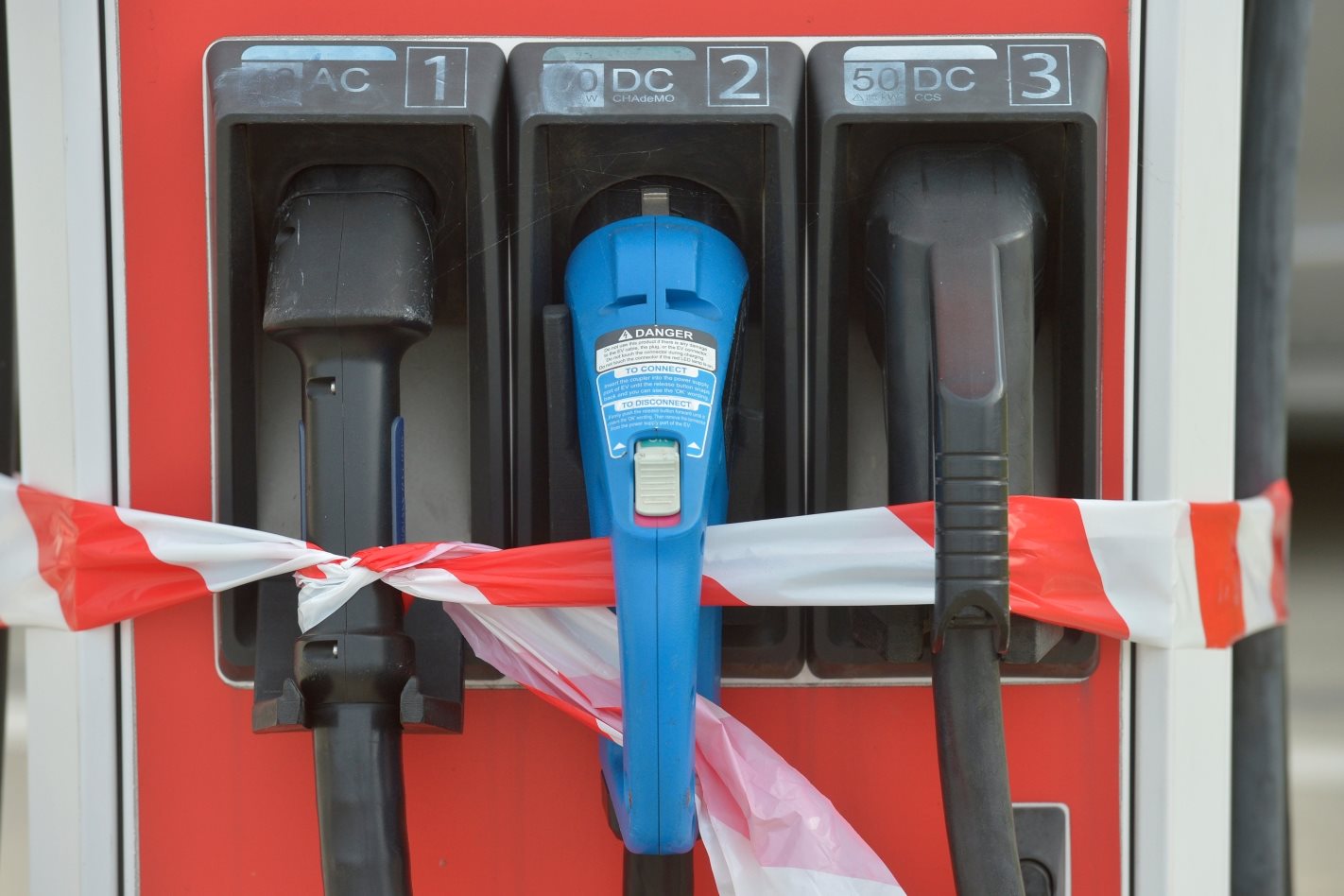
The pair’s legal team, Equity Generation Lawyers, has also seen success with a decision in the Federal Court earlier this year in which it was ruled the Federal Minister for the Environment has a duty of care to avoid causing injury to young people while exercising powers to approve new coal projects. The Minister has since appealed the decision.
Chris and Kath have now raised more than $18,000 in less than 24 hours via crowdfunding to help with their legal costs.
What’s been dubbed as “the world’s worst EV policy” came into effect July 1, 2021 for Victorian electric vehicle owners, who have to submit a photo of their vehicle’s odometer to VicRoads in order to maintain their registration.
At renewal, drivers submit another reading and receive an invoice to pay a fee of 2.5c/km, or 2c/km if they have a plug-in hybrid (PHEV). An EV driver who travels 15,000km a year will pay an average $375 each year for their registration.
Of course, an EV owner isn’t subject to the fuel excise at the bowser, so the cost is off-set, however critics argue taxing low-emissions vehicles is particularly unfair for PHEV owners who have to pay both.
New South Wales and South Australia announced earlier this year that a road-user charge for electric vehicles is not in their state’s best interest while adoption is so low. Both authorities will wait until either July 1, 2027, or when EVs make up 30 per cent of all new car sales to introduce fees. The Victorian Government however, claims the tax must be implemented now because it would be “too hard” to implement in the future.
UPDATE: RAM has detailed the 1500 REV at the 2023 New York International Motor Show.
It’s a battery-electric ute to rival the likes of Ford’s F-150 Lightning, Rivian’s R1T, and Tesla’s forthcoming Cybertruck – and an Australian release sounds likely.
RAM is yet to validate its figures with the US EPA, so the claimed 560km and 805km driving range figures are, for now, based on its own internal testing and calculations. Still, it’s pretty impressive stuff.
The all-electric 2024 Ram 1500 REV debuted at this year’s Super Bowl.
Snapshot
- 2024 RAM 1500 REV unveiled
- Electric truck to commence production next year; few technical details
- Based on new STLA Frame electric vehicle platform, but retains current Ram 1500 body
It was previewed in a 60-second commercial shown during the United States’ biggest sporting event of the year, along with images – but there’s minimal technical information at present.
With production set to commence in 2024, we expect more information to be released in the coming months; however, US customers can now pre-order the vehicle with a refundable US$100 deposit.
Unveiled just a few weeks after the RAM 1500 Revolution concept debuted at the 2023 Consumer Electronics Show, the production version has been toned down for a strong resemblance to the current internal-combustion model.
However, while its body is largely identical to the petrol version, Ram’s parent company Stellantis claims the 1500 REV is underpinned by the STLA Frame architecture.
This modular platform is intended for body-on-frame electric vehicles, with an 800-volt electric architecture, support for up to 350kW DC fast charging, and a driving range of around 800 kilometres.
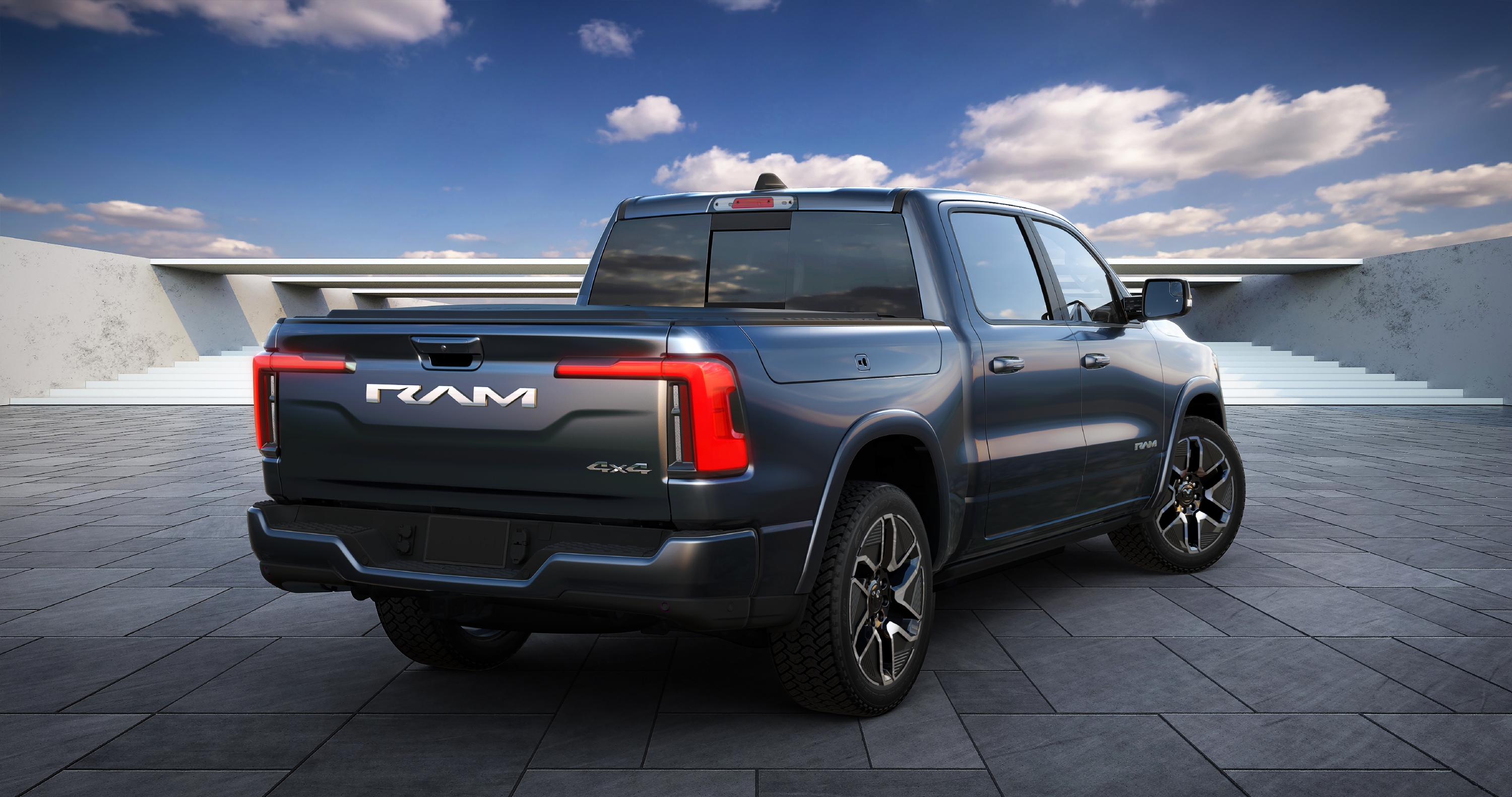
It is an evolution of the current RAM DT chassis, with modifications to allow for large battery packs sized between 159kWh and 200kWh.
As such, external changes are limited to a redesigned front end inspired by the Ram 1500 Revolution concept, unique alloy wheels, and a new LED signature for the tail-lights.
In addition, it features Ram’s updated badging, with the changes likely to be mirrored when a facelifted version of the Ram 1500, which launched in 2019, arrives in 2024 or 2025.
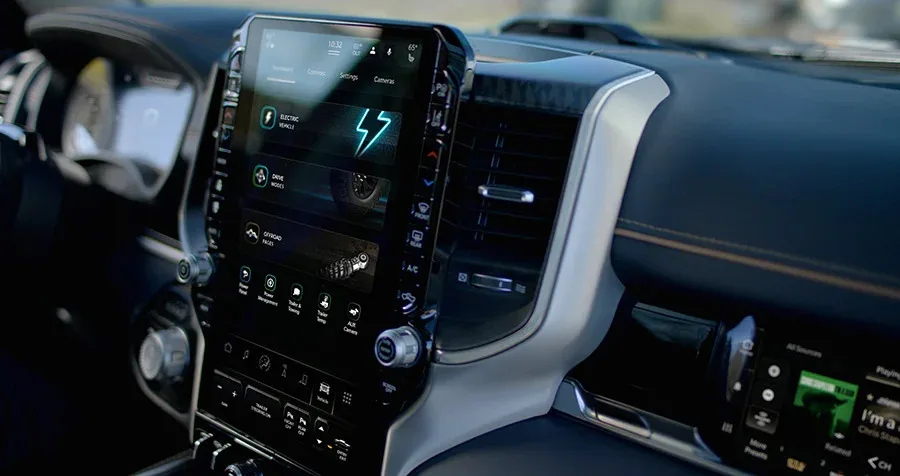
Inside, the Ram 1500 Rev retains the portrait-orientated Uconnect 5 infotainment screen, but it is larger, while it features a passenger-side widescreen display similar to the Jeep Grand Cherokee L’s unit.
It is a similar differentiation to the Ford F-150 and Ford F-150 Lightning, which share the same body but ride on different platforms, compared to the unique Chevrolet Silverado and Chevrolet Silverado EV.
Ram claims the 1500 Rev will “lead the competition” for range, payload, towing and charge time.
This suggests it should eclipse the 4.5-tonne capacity of the Ford F-150 Lightning and Chevrolet Silverado EV, and perhaps even the claimed 6.35-tonne limit of the Tesla Cybertruck.
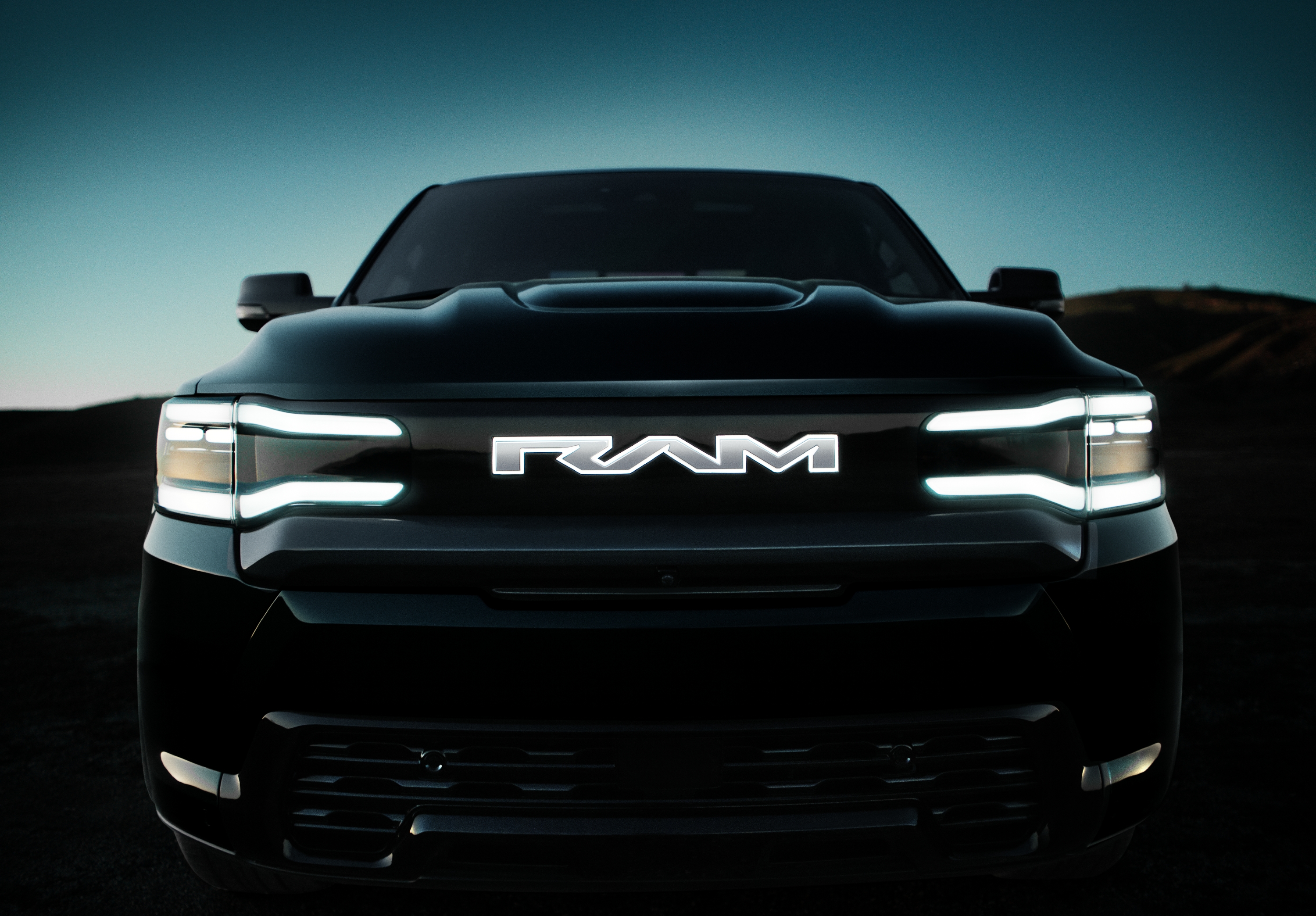
“The Ram brand has redefined the pickup truck segment before and will once again with the all-new Ram 1500 REV,” said Ram brand CEO, Mike Koval Jr.
“We believe in bringing the right range of powertrain solutions to our customers, and the Ram 1500 REV will be the first in a lineup of electrified solutions that will add to our current award-winning truck lineup.”
The 2024 Ram 1500 REV electric ute will commence production in the United States next year.
Ram Trucks Australia has yet to announce if it will be converted locally to right-hand-drive, but if it is confirmed, a one- to two-year delay is likely.
Following GWM’s introduction of the Ora small electric vehicle in April this year, the brand is looking to expand its electric operations and model range.
That’s why we’re at Anglesea Automotive Research Centre (AARC) to sample another product under consideration: the Ora Sport.
Known as the Lightning Cat in China, or Next Cat in Europe, a brand streamlining operation sees GWM opt for Ora Sport as a tie-in with the Ora small car.
But the Sport isn’t confirmed for Australian sale yet – it’s just here for evaluation.
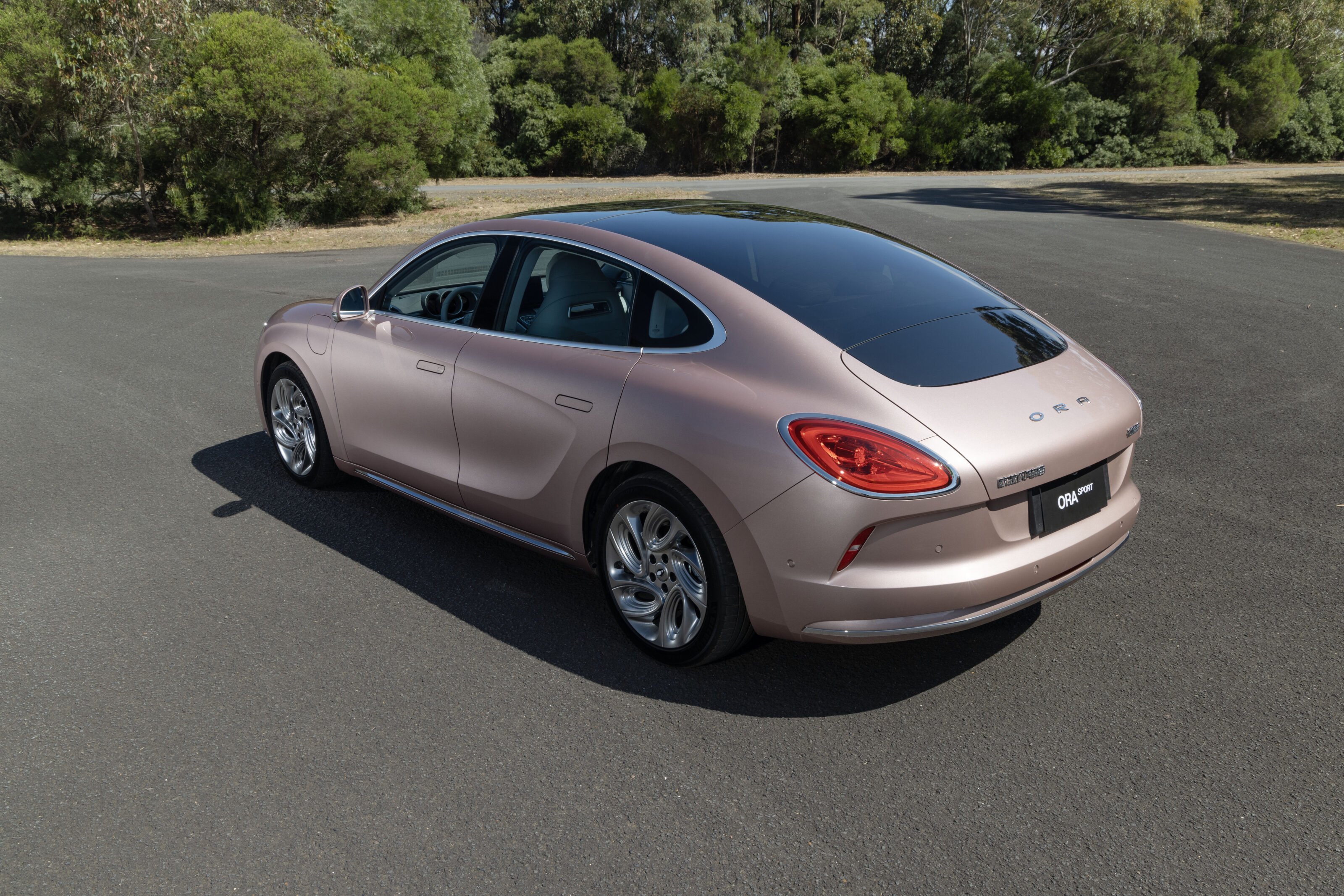
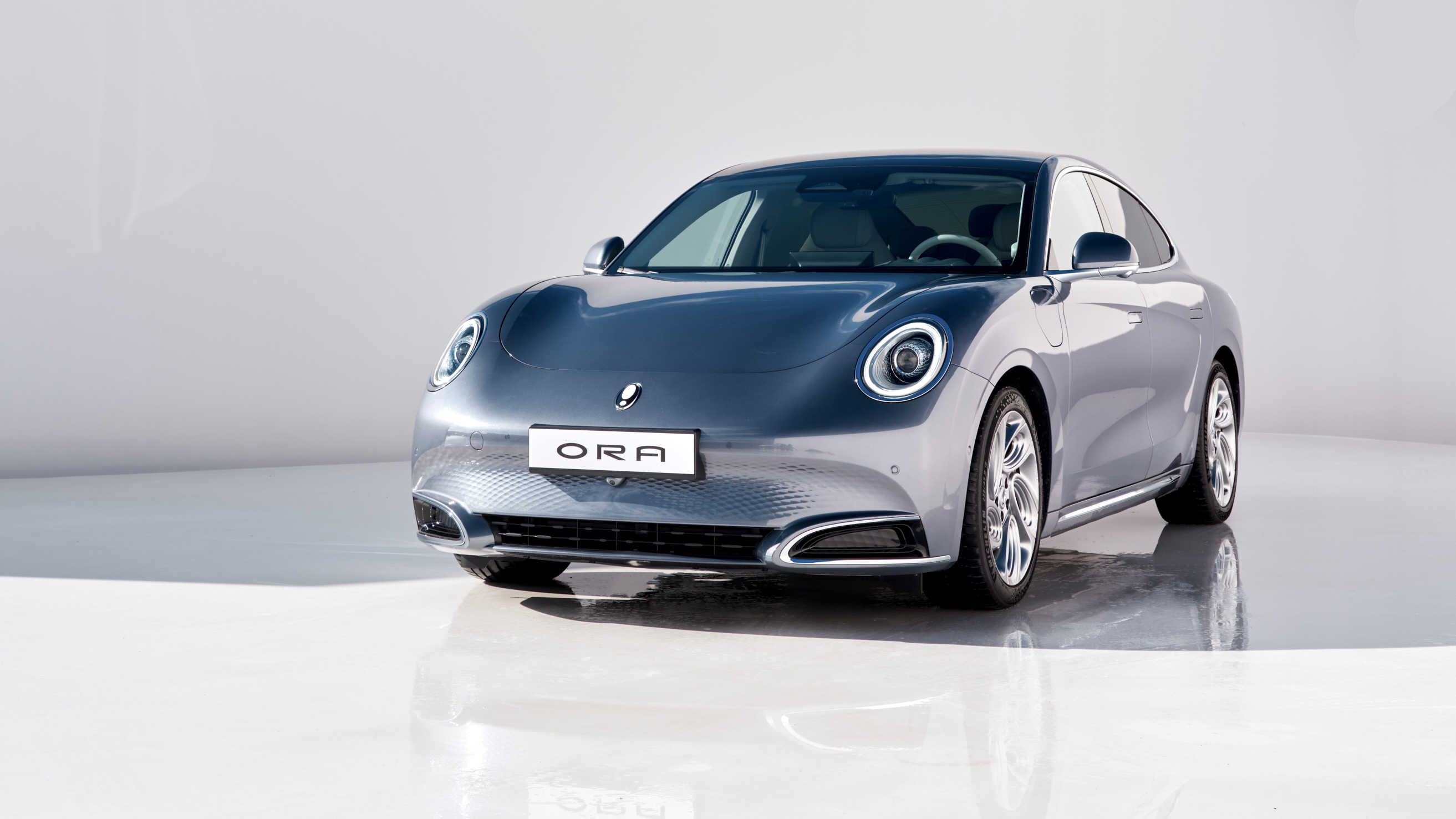
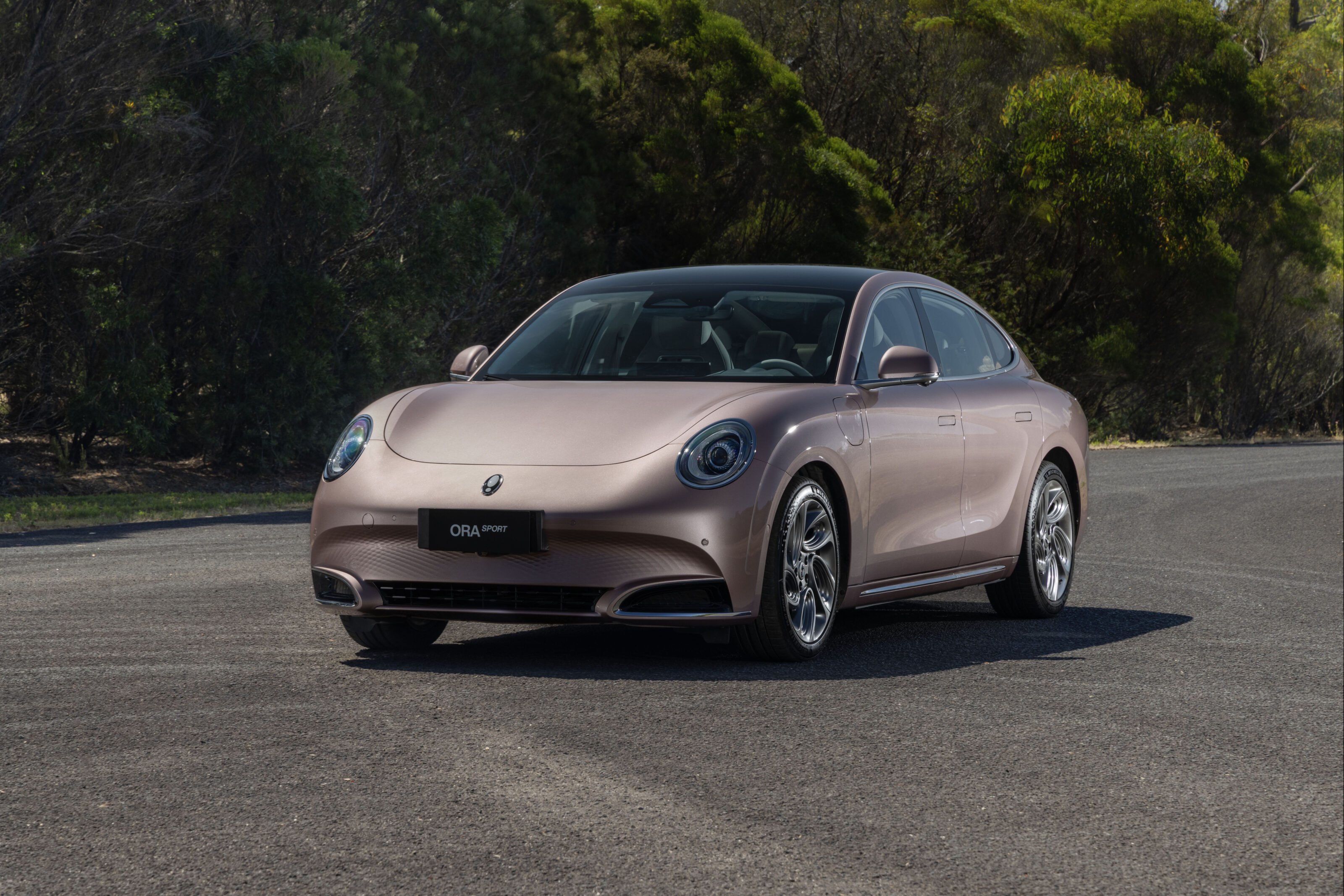
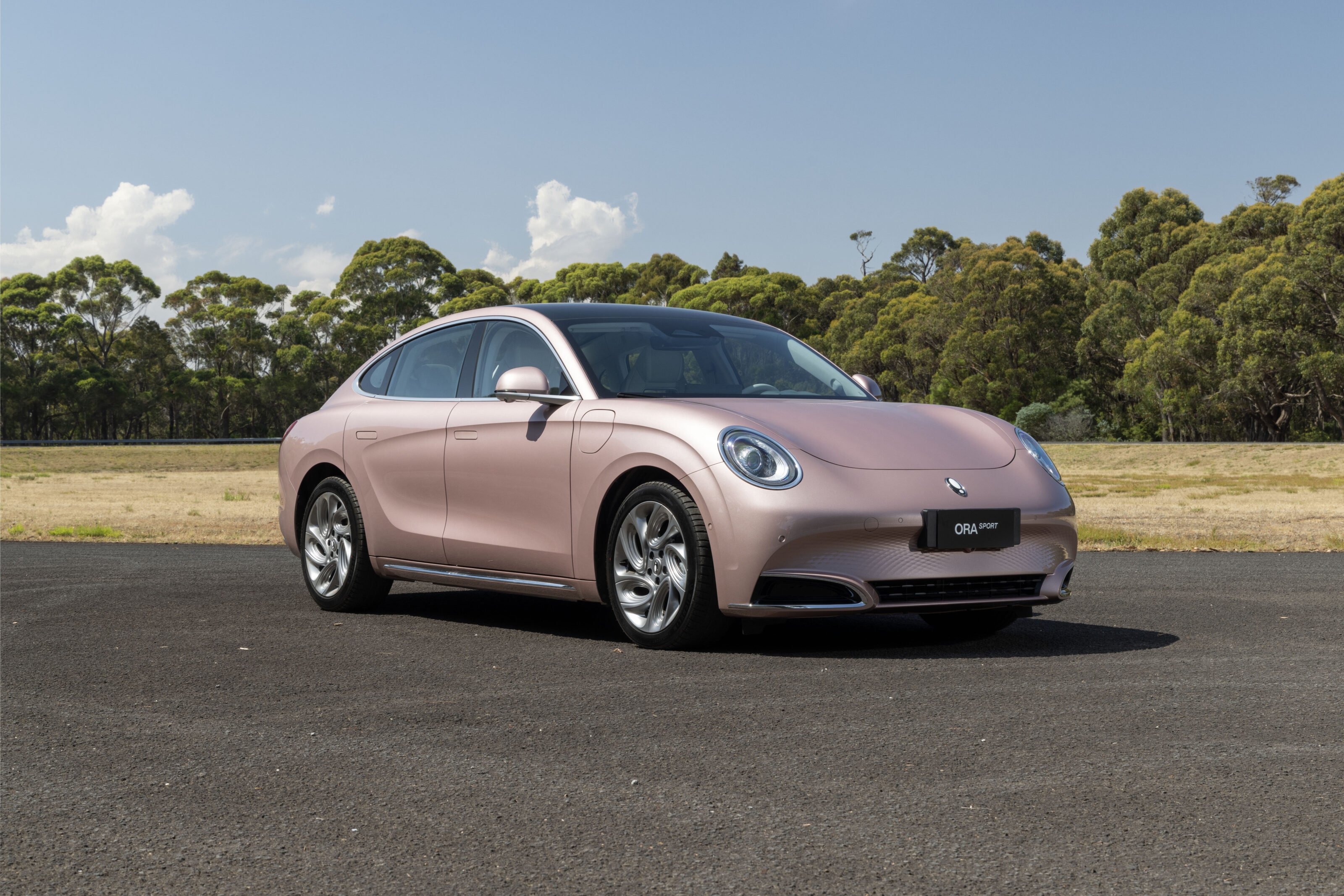
If you’re wondering why the Sport looks like a Wish.com lovechild between a Porsche Taycan and Panamera, with 993 Carrera headlights and Bentley Continental taillights, it’s because GWM pinched ex-Porsche designer, Emanuel Derta, for Ora design.
The marketing material in China is very female-centric for the Ora brand in general, but especially so for the Ora Sport. It’s available in only four colours: Jade White, Canyon Grey, Amethyst Purple, and Diamond Pink.
Quirky styling, driving range claims over 700km (under NEDC protocols) and a 300kW power figure for the twin-motor variant are intriguing, but today’s short sample is about understanding how the Ora Sport would fit into the Aussie motoring landscape, were it to arrive in 2024.
JUMP AHEAD
- How much is it, and what do you get?
- Interior comfort, space and storage
- What is it like to drive?
- How much range does it have?
- How safe is it?
- Warranty and running costs
- VERDICT
- Specifications
How much is it, and what do you get?
As the car is still under evaluation for Australia, we don’t know the Ora Sport’s price.
GWM was bullishly suggesting a single-motor Ora Sport like ours will be priced at, or below, the equivalent Tesla Model 3 and Polestar 2 (both $63,900 before on-road costs for entry-level variants).
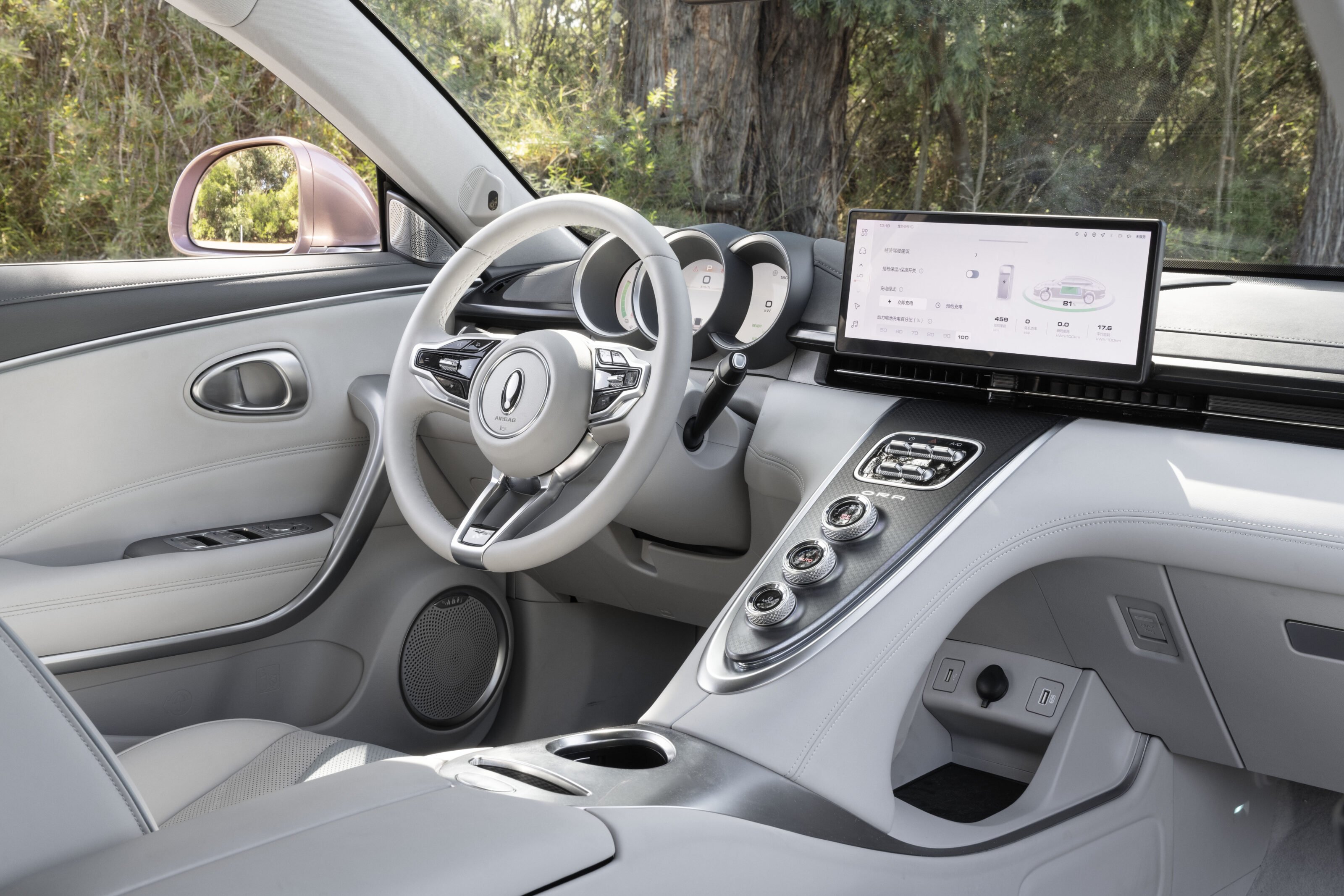
There’s plenty of technology on board the Ora Sport, but also some neat touches. The inclusion of physical air-conditioning fan and temperature controls on the ‘T-Shaped’ centre stack and drive mode selector shows that GWM has been listening to feedback.
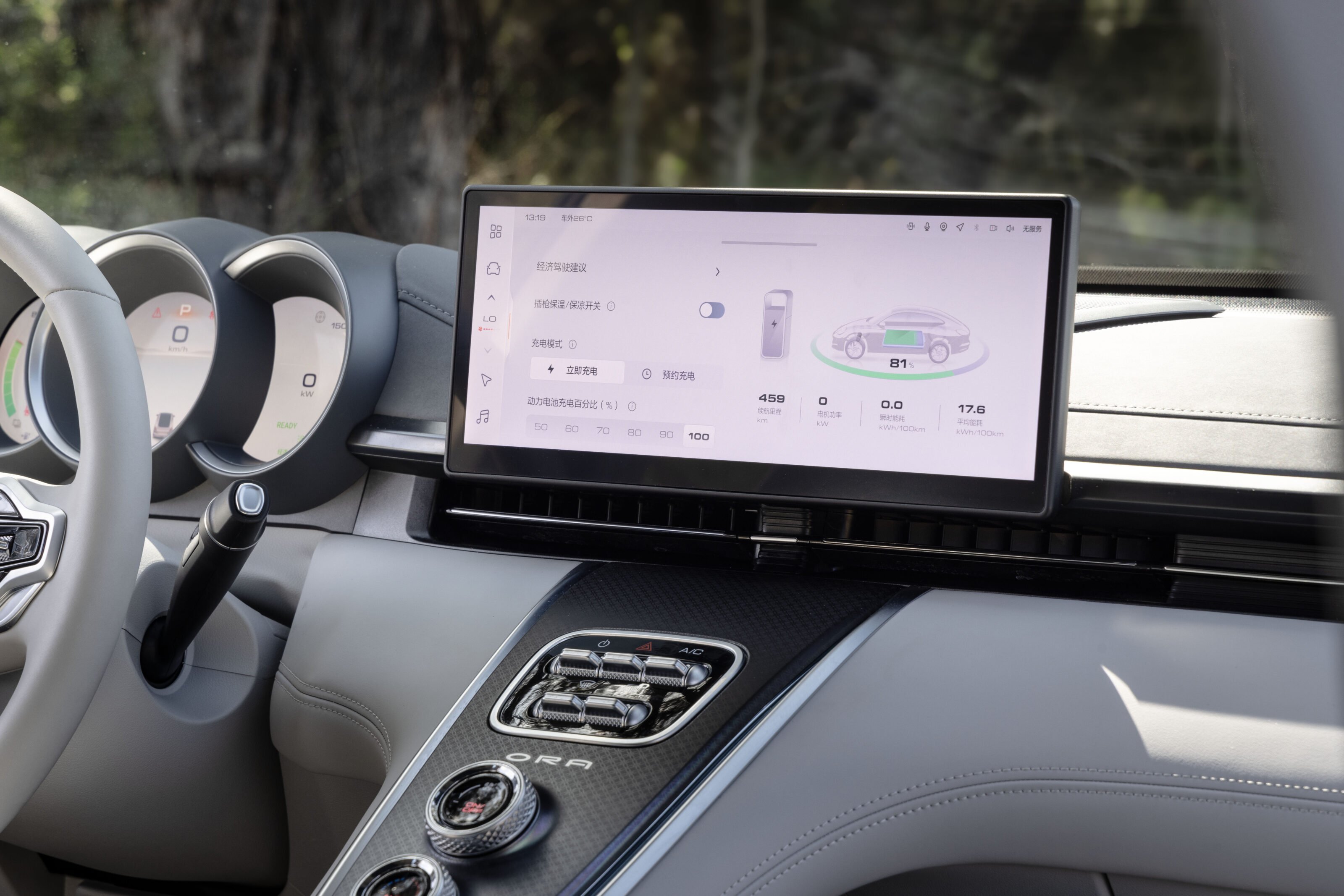
Below is a list of features standard on the Ora Sport – and it’s pretty impressive.
| 2023 GWM Ora standard features | |
|---|---|
| 10.25-inch digital driveru2019s display | Dual-zone climate control |
| 11-speaker Harman Kardon sound system | Keyless entry and easy-start |
| 12.3-inch multimedia touchscreen | LED headlights |
| 360u00ba surround-view cameras | Power-adjustable front seats with heating, massage |
| 5G SIM connection | Vinyl upholstery |
| Active aero spoiler | Wired Apple CarPlay/Android Auto |
Interior comfort, space and storage
If you thought the exterior had some Taycan going on, then inside there are even more homages. The digital driver’s display sits across three individual binnacles, just like a Porsche. The steering wheel, too, looks like something from Stuttgart.
The infotainment system, however, does not. A 12.3-inch touchscreen driven by quirky software (the writing was all in Mandarin), it features cats and strange noises as you select certain functions.
A lack of positive feedback when changing drive modes, or one-pedal braking settings, made interacting with the touchscreen on the move difficult – although again, the language barrier doesn’t help.
Build and material quality are high in the Ora Sport. Cabin storage was not great, however, with small door pockets and no space under the armrest. Beneath the Star Trek-style floating centre console, there is some incidental storage for bags.
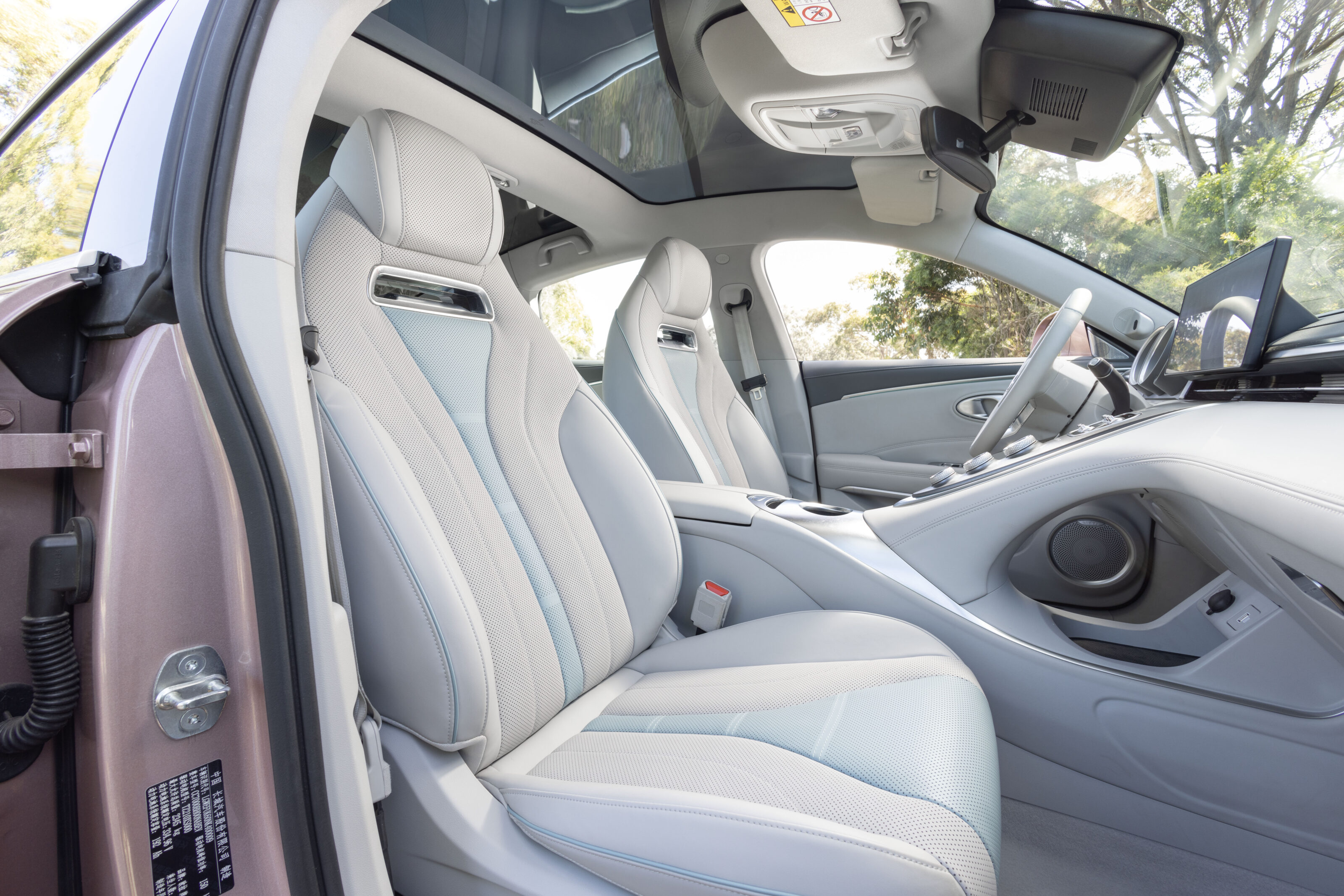
It’s light in here; our car’s white leatherette upholstery and glass roof welcomed sunshine in without being as hot as black upholstery. Perhaps that Diamond Pink paint helps reflect hot rays, too. Other upholstery colours, including saddle brown, are available as well.
Unlike the Ora small car, the Ora Sport is compact inside considering its footprint. There’s a lack of headroom for taller drivers in the front seat, and a driving position set oddly close to the steering wheel and windscreen – you feel on top of the front axle, which is odd for a sporty vehicle.
The seats are comfortable, featuring electric adjustment for both driver and passenger, as well as a heating and a massage function.
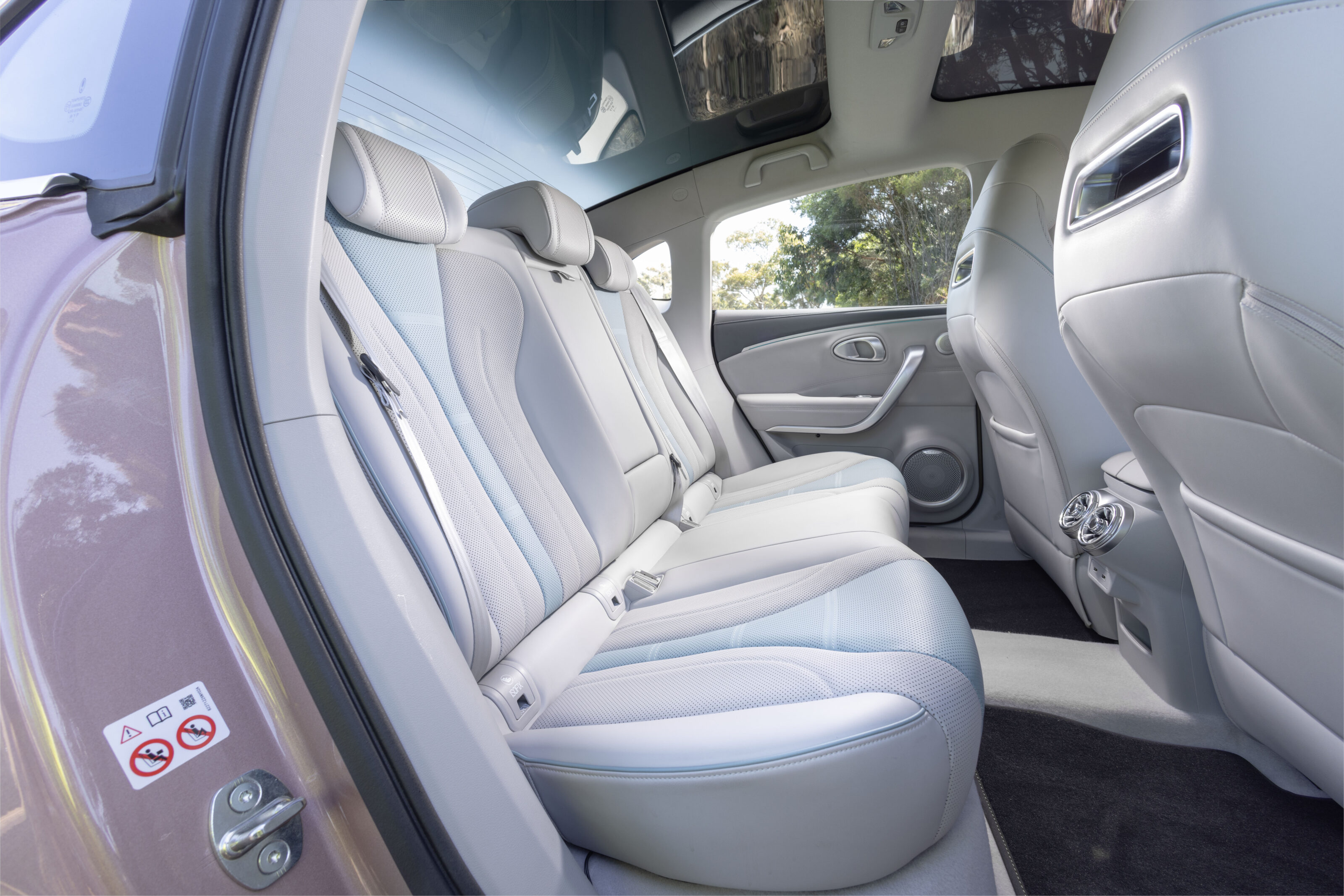
However, the rear seats don’t offer much headroom for taller riders. Legroom is fine, but a high floor with batteries underneath saps toe space.
What is it like to drive?
The Ora Sport has one of the strangest steering systems we’ve ever encountered.
Its ratio was quick, but the weighting light, vague, and inconsistent through the corners of AARC’s five per cent gradient track (that featured heavily in COTY 2022).
GWM also chose a similarly doughy throttle programming for this model as the Ora small car. It’s almost like turbo lag, requiring you to step on the gas for half a second before you want to go anywhere. The same delay is present with the one-pedal braking system, too.
These two facets erode most of the Ora Sport’s athletic pitch and its pronounced body roll through the corners doesn’t help either.
Rather than a road-devouring grand tourer, think of it as a softly-suspended liftback with a rapid turn of acceleration. In our single front-motor guise, it develops 150kW of power and 340Nm of torque.
In China and Europe, a twin-motor variant is also available with 300kW/680Nm and a 0-100km/h claim of 4.3 seconds.
Switching through the Ora Sport’s drive modes reveals even more unorthodox features. In Sport mode, acceleration in the Ora is accompanied by a strange, synthesised V6 engine note that can be customised to your preference. It also firms up the steering and mildly sharpens the throttle, but not by enough to make it really feel racy to drive.
For an Australian buyer to fall in love with Ora Sport, it needs more than just straight-line pace. Further suspension and software development will be required for this vehicle to dethrone the likes of the Tesla Model 3, Polestar 2 and Hyundai Ioniq 6.
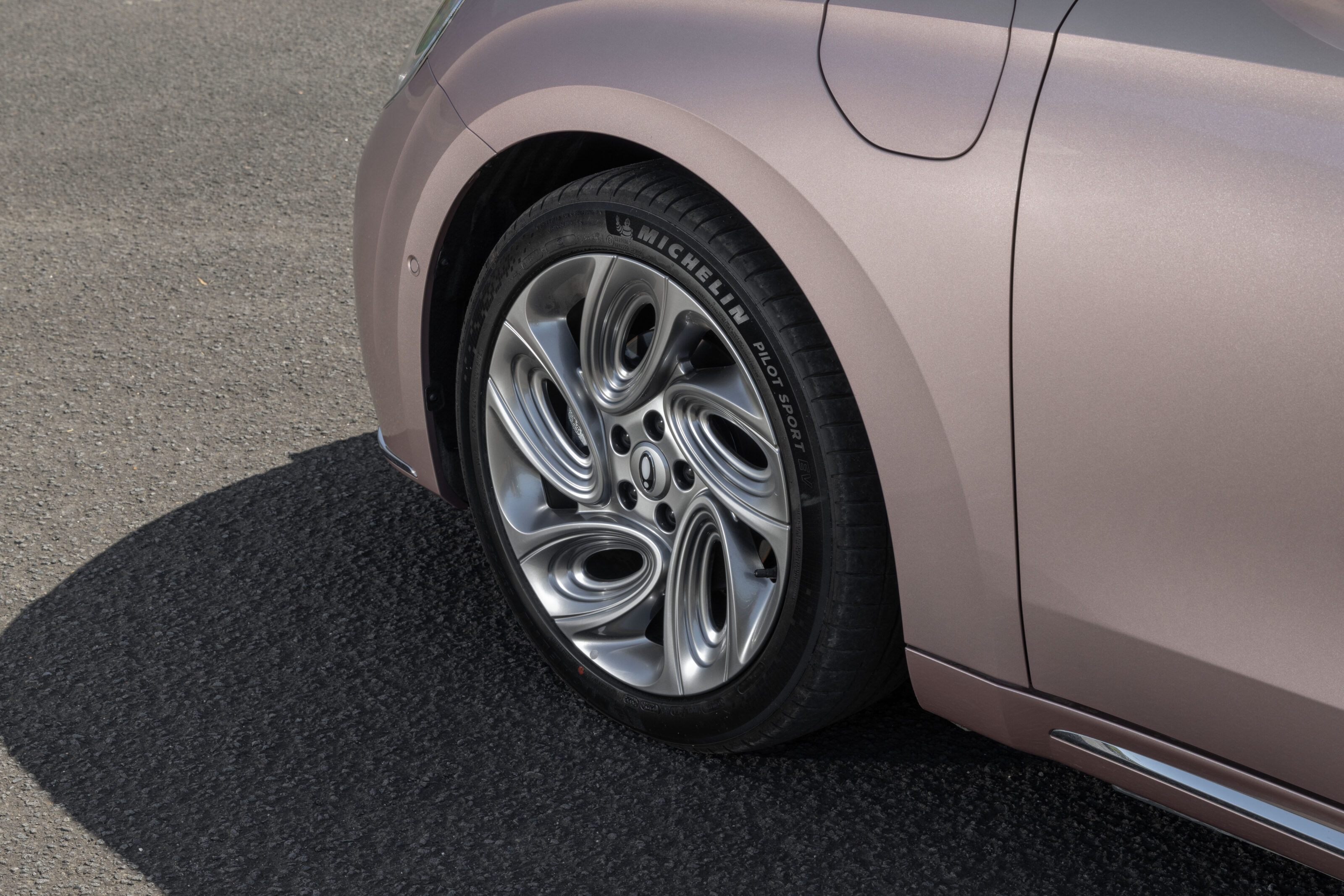
How much range does it have?
Driving range is something GWM has going for it, as is battery technology.
It owns battery builder SVolt energy, which is looking into future technology not unlike BYD’s Blade units. It is also looking into cobalt-free packs to drive down costs and speed up charging.
The single-motor Ora Sport with a 63.8kWh battery pack is able to achieve a 555km driving range according to the – admittedly optimistic – NEDC combined protocol. In more realistic WLTP ratings, expect that to be around 450-500km.
With its 85kWh battery, the twin-motor Ora Sport gets a pretty astounding 705km driving range rating on the NEDC combined cycle.
Best Electric Cars Under $65k: Affordable EVs Rated
Welcome to part one of three price-based EV buying guides, this one focused on the most affordable electric cars available in Australia today
How safe is it?
The Ora Sport is equipped with a litany of sensors (27, to be exact) to inform the driver assistance and active safety systems.
Processing is taken care of by a powerful Qualcomm 8155 unit developed specifically for automotive applications. As a result, GWM claims ‘class-leading ADAS’, though as is the nature of driving at a proving ground we were not able to test their efficacy in the real world.
The Ora Sport is yet to be rated by ANCAP or Euro NCAP, but the smaller GWM Ora’s encouragingly-high five-star ANCAP result bodes well for the sporty liftback.
VERDICT
The Ora Sport has potential. That interior has wow factor with its T-shaped centre console, Porsche-inspired steering wheel and massage seats included.
But, for a car to resonate with Australians, it needs more than a decent driving range and quirky cabin styling. There needs to be some real substance.
For the Ora Sport, right now, that’s lacking when it comes to the driving experience. Our spin was brief, but we can tell that some wizardry from chassis and steering engineers would help unlock the depth of the Ora’s ‘Sport’ moniker.
| GWM Ora Sport specifications | |
|---|---|
| Price | $55-62K (estimated) |
| Drivetrain | |
| Motor | single asynchronous |
| Power | 150kW |
| Torque | 340Nm |
| Gearbox | single-speed reduction gear |
| Battery size (usable) | 63.8kWh |
| Driving range (NEDC) | 555km |
| Chassis | |
| Body | steel, 5-door, 5-seat medium fastback |
| L/W/H/Wu2013B | 4871/1862/1500/2870mm |
| Suspension | Front: struts, coil springs, anti-roll bar. Rear: multi-link beam |
| Steering | electric rack-and-pinion |
| Safety | |
| ANCAP rating | NA |
| Performance | |
| 0-100km/h | 7.5 sec (estimated) |
The championship game for the 2022 National Football League (NFL) season has wrapped up in the United States.
While the match between the Kansas City Chiefs and Philadelphia Eagles – and the half-time show – is the main focus for sporting fans, the Super Bowl is now well known for its specially-developed commercials.
This year, several carmakers – including Toyota, Hyundai, Nissan and BMW – didn’t feature at Super Bowl LVII, with spots limited to General Motors, Jeep, Ram and Kia.
According to industry publication Automotive News, the semiconductor chip shortage and electric vehicle investments caused many brands to step away from spending millions at this year’s event.
Hyundai’s US division recently published a commercial for its Ioniq 6 electric sedan. The ad, titled ‘Your Dad Is Going Electric’, features actor Kevin Bacon and his daughter, Sosie Bacon.
However, it didn’t air during the Super Bowl, with the marketing budget intended to be extended over a longer period, including as the exclusive automotive sponsor of 100th-anniversary celebrations for the Walt Disney Company.
2023 Super Bowl LVII car commercials
General Motors and Netflix partner for electric vehicles
General Motors has announced a partnership with streaming giant Netflix to promote its electric vehicles.
The first television series and movies featuring the company’s all-electric vehicles – including Love is Blind, Queer Eye and Unstable – will premiere in the coming months.
A commercial starring Will Ferrell played during the Big Game, with the actor entering the world of some of Netflix’s most-watched shows and films – such as Army of the Dead, Squid Game and Stranger Things – in a Chevrolet Silverado EV, Chevrolet Blazer EV and GMC Sierra EV.
Jeep Grand Cherokee and Wrangler 4xe – ‘Electric Boogie’ and ‘Parking Spot’
Following a hiatus at last year’s Super Bowl, Stellantis has returned with commercials for its American brands: Jeep and Ram.
It has focused on electrification, with two off-road advertisements for the Jeep Grand Cherokee and Wrangler 4xe plug-in hybrids.
The first ad is the Electric Boogie spot, featuring a remixed version of ‘Electric Slide’ by Marcia Griffiths and dancing animals, while the second commercial focuses on the off-road capabilities of the vehicles.
While the Jeep Wrangler plug-in hybrid is unconfirmed for Australia, the electrified Grand Cherokee 4xe will arrive here later this year in range-topping, five-seat Summit Reserve guise.
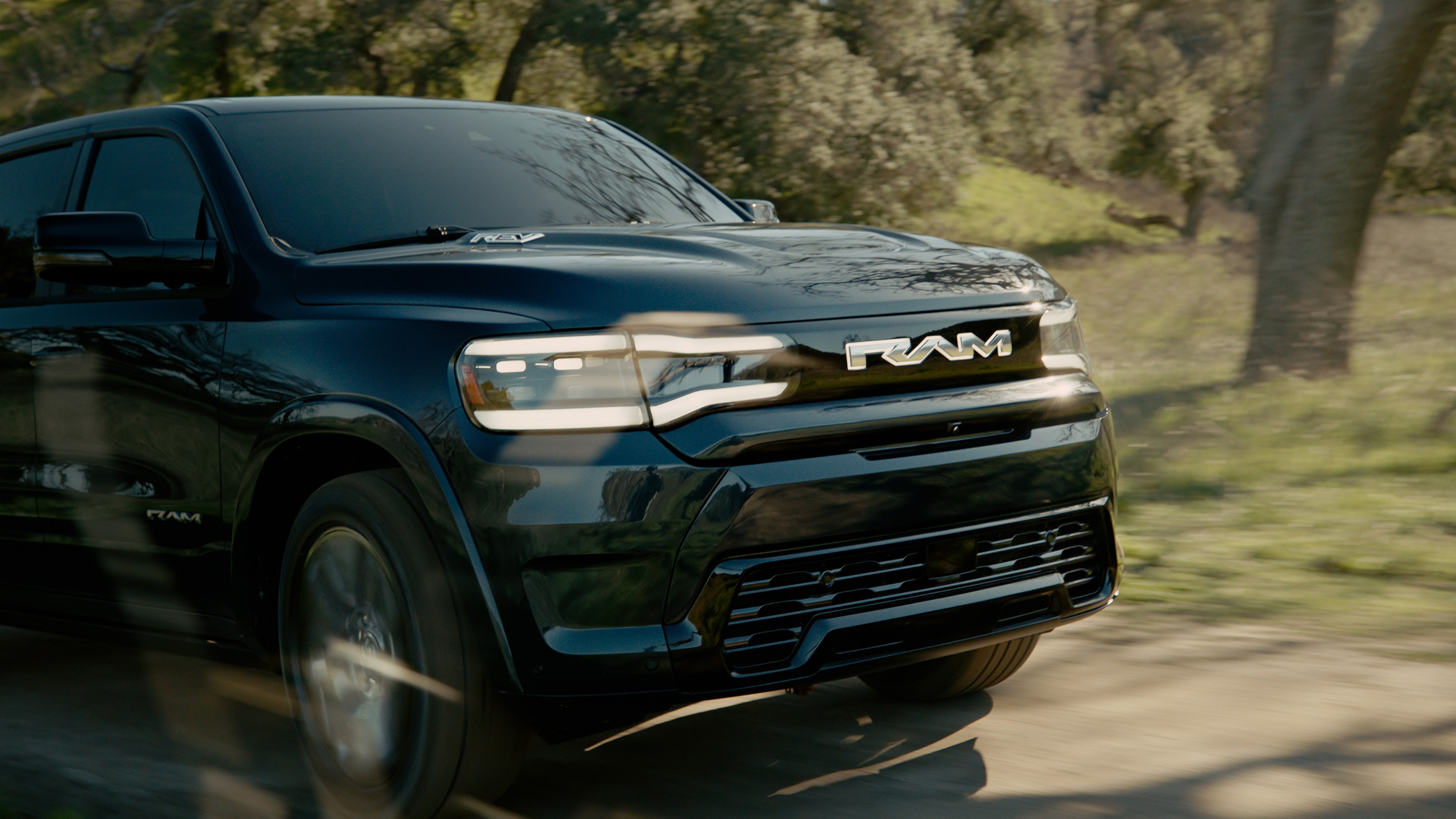
RAM 1500 REV – ‘Premature Electrification’
Ram has poked fun at pharmaceutical advertisements with an innuendo-filled commercial for the upcoming 2024 Ram 1500 REV.
It tackles the issue of range anxiety, in a bid to dispel fears about ‘premature electrification’ with its electric ute.
Kia Telluride – ‘Binky Dad’
For any parent, it’s a nightmare if you leave your child’s favourite dummy – or binky – at home, but this determined dad will stop at nothing to retrieve it.
The commercial – featuring the updated, not-for-Australia 2023 Kia Telluride X-Pro – sees the father embark on an adventure through snow, a football pitch, and a police escort… only to return with the wrong one.
Kia America says three versions of the commercial will be posted on TikTok to resolve the cliffhanger seen in the television version for the Super Bowl.
