
Mitsubishi is not interested in being the first company to bring an electric ute to Australia, because, the local boss says, the Triton is a workhorse and “not a showpony”.
Speaking with Wheels, Mitsubishi Australia’s CEO, Shaun Westcott, poured cold water on the idea of an electrified Triton – either plug-in hybrid (PHEV) or full-EV – coming anytime soon because he says the types of electric utes currently available don’t meet the needs of its customers.
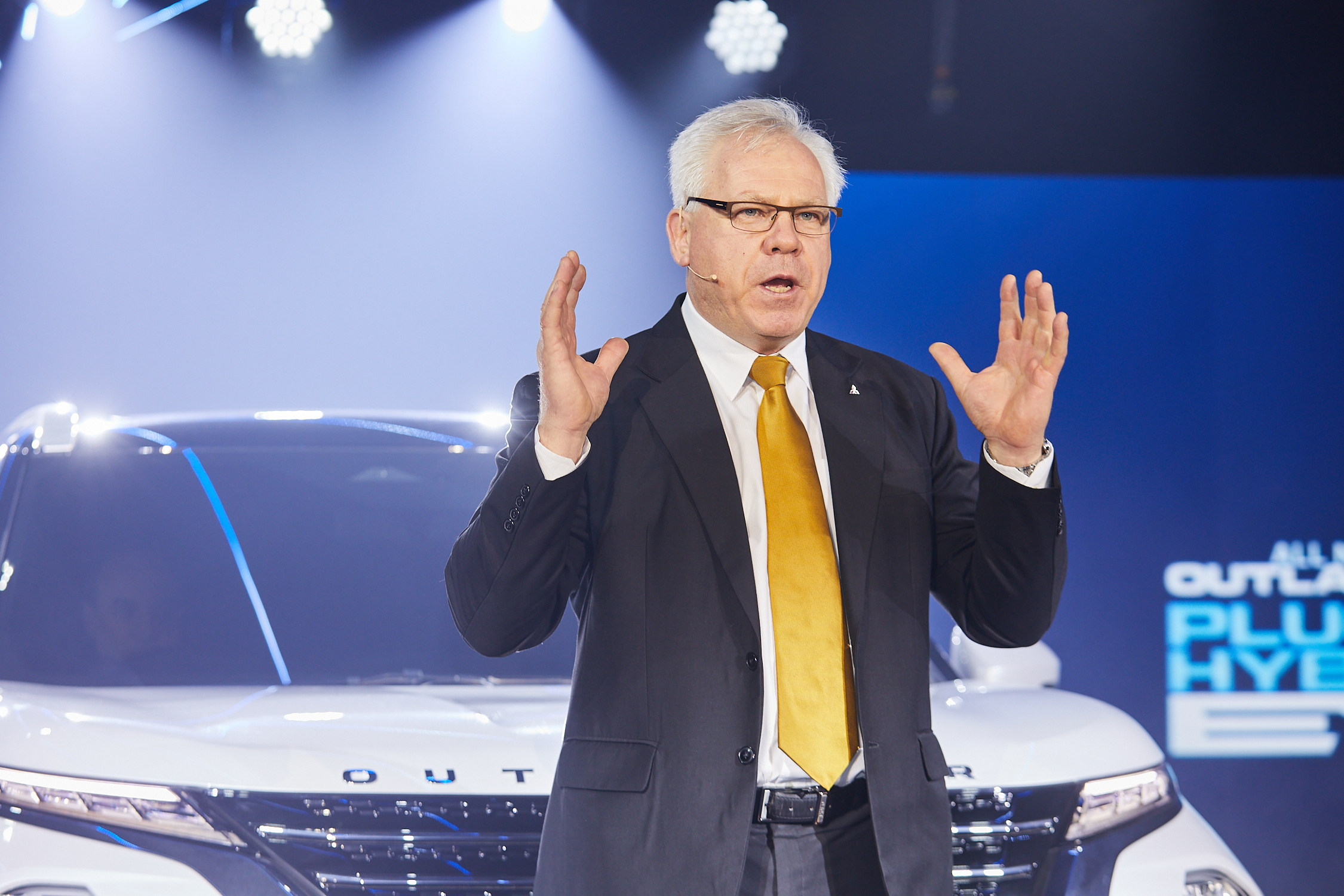
“There are people that develop show ponies and there’s a place for show ponies. That’s fine. But we understand who our core target market is, and that’s middle income Australia, working Australia,” he told us.
“And we need to produce a product that is of value to the mass market – for farmers, tradies, people that deliver that work, who drive the economy of Australia.
“There are some companies, particularly out in the US, that have grabbed headlines by saying ‘we’ve developed an electric ute’. But the reality of a ute is that our customers buy them because they are workhorses.”

Mitsubishi’s next-generation Triton is steadily approaching the showroom, with a global debut expected in mid-2023 with an Aussie arrival in 2024.
However, while Mitsubishi’s local office has voiced its desire for a hybrid variant – whether a regular hybrid or a more capable plug-in hybrid (PHEV) – Mitsubishi Motors’s top brass says that an electron-enhanced version of its workhorse Triton has yet to be locked in, and certainly won’t be available at launch.
Late last year, Mitsubishi’s head of EV powertrain engineering and development Takashi Shirakawa, also told Wheels the chances of seeing a hybrid Triton – whether PHEV or otherwise – by the end of 2025 were unlikely at this point.
“We are trying to introduce the electrified [Triton] application in the 2020 period, not after 2030,” he said.
“We’re trying, but we don’t know if it will happen or not – it depends on whether we can reduce the cost.”

Asked why the cost was proving so prohibitive for Mitsubishi, Westcott said it was because the Japanese carmaker is focusing on more typical ute capabilities for its future electrified vehicles, rather than driving range.
“Payload and towing capacity are critical. Now, what no one tells you until you until you pull away the veil of secrecy, and I’m not naming names, is that vehicles [current electric utes on sale] do not have payload and carrying capacity because they’re carrying their own weight in batteries,” he said.
“And that’s the problem you have with the ute is that it’s a workhorse and you still need to provide people with payload and towing capacity. And that’s the biggest challenge that any motor manufacturer faces at the moment, is to get enough battery density, because the technology in lithium batteries doesn’t yet give us the battery density – which is the amount of energy you can store per square centimetre – is still not where it should be.
“So there’s a lot of research going into battery technology because we almost need a step change, I won’t call it a quantum leap, because of the size and the weight of the ute you need so many batteries that it takes away the payload and the towing capacity. That is the big conundrum that we face at the moment. And that’s what we are working on. And that is why, as a transition technology, we think PHEV is the answer for Triton – but I can’t tell you exactly by when.”
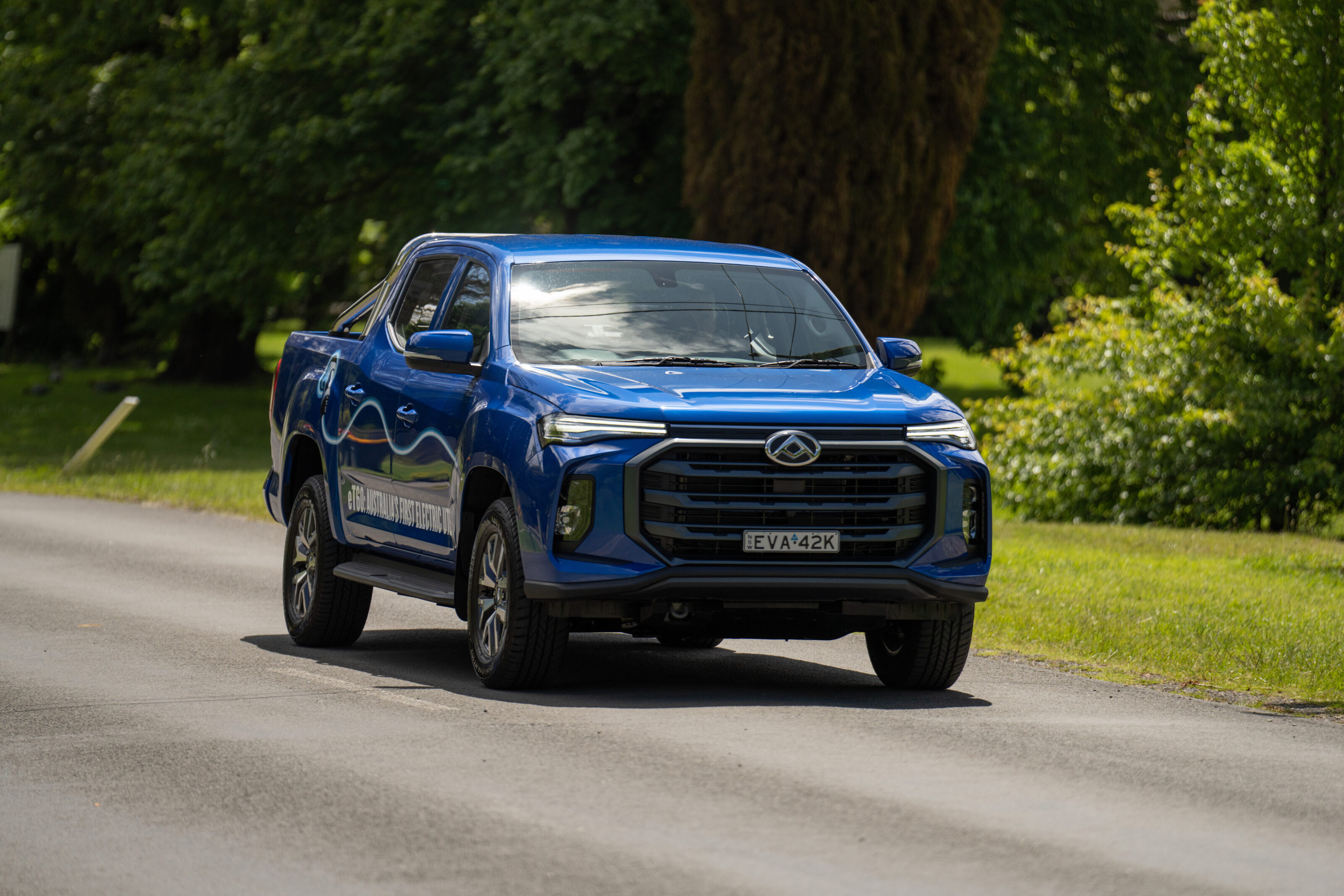
In November last year, the LDV eT60 became the first electric ute to go on sale in Australia, costing from $92,990.
The LDV eT60 has a 1000 kilogram braked towing capacity – a third of the diesel T60’s. Its 1000kg payload, however is actually higher than the regular range – which is rated at 750kg for the flagship Luxe and 935kg for the entry-level Pro.
UPDATE: 2023 Mazda MX-30 R-EV plug-in hybrid revealed
The 2023 Mazda MX-30 R-EV plug-in hybrid has debuted at the Brussels Motor Show.
For everything you need to know about the rotary-powered series hybrid, click on the read-more link below:
After years of waiting, the rotary-powered 2023 Mazda MX-30 plug-in hybrid will finally debut later this week.
Mazda will unveil the range-extending version of the electrified small SUV at the Brussels Motor Show on Friday, January 13, at 8pm AEDT.
“Faithful to its multi-solution approach to the global challenges of reducing greenhouse gas emissions, Mazda will introduce a new powertrain option for its MX-30 at the Brussels Motor Show 2023,” said Mazda Europe.
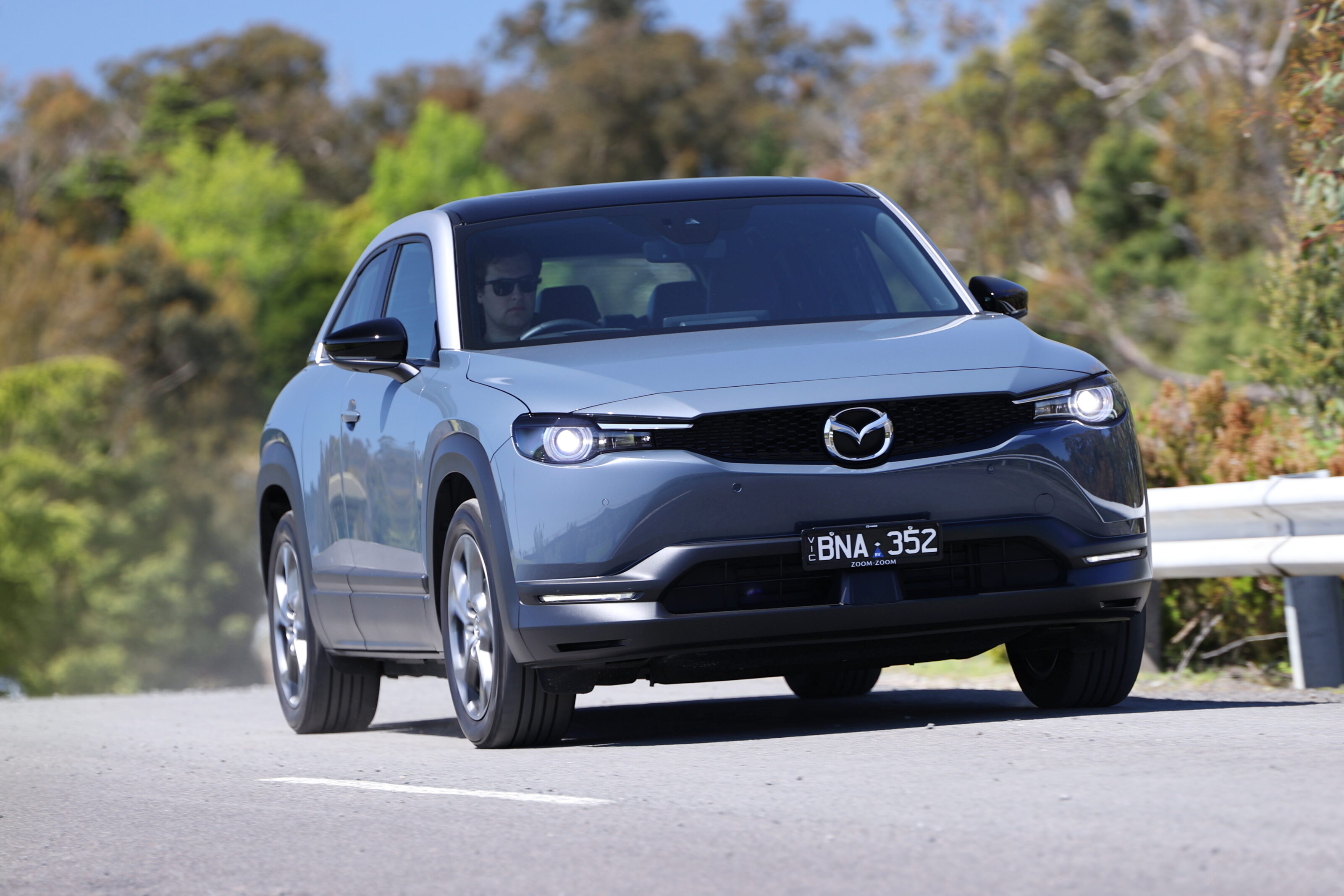
“Available on the European market from the spring [March to June] this year the unique plug-in hybrid powertrain of Mazda’s compact crossover will feature an electric generator powered by a newly-developed rotary engine.”
The brand also confirmed badging for the new model – a triangular motif with rounded edges, similar to a rotor within a Wankel design, identical to trademark filings from mid-2021.
It was complemented by other trademark filings, which include ‘e-SKYACTIV R-HEV’, ‘e-SKYACTIV R-EV’, and ‘e-SKYACTIV R-Energy’.
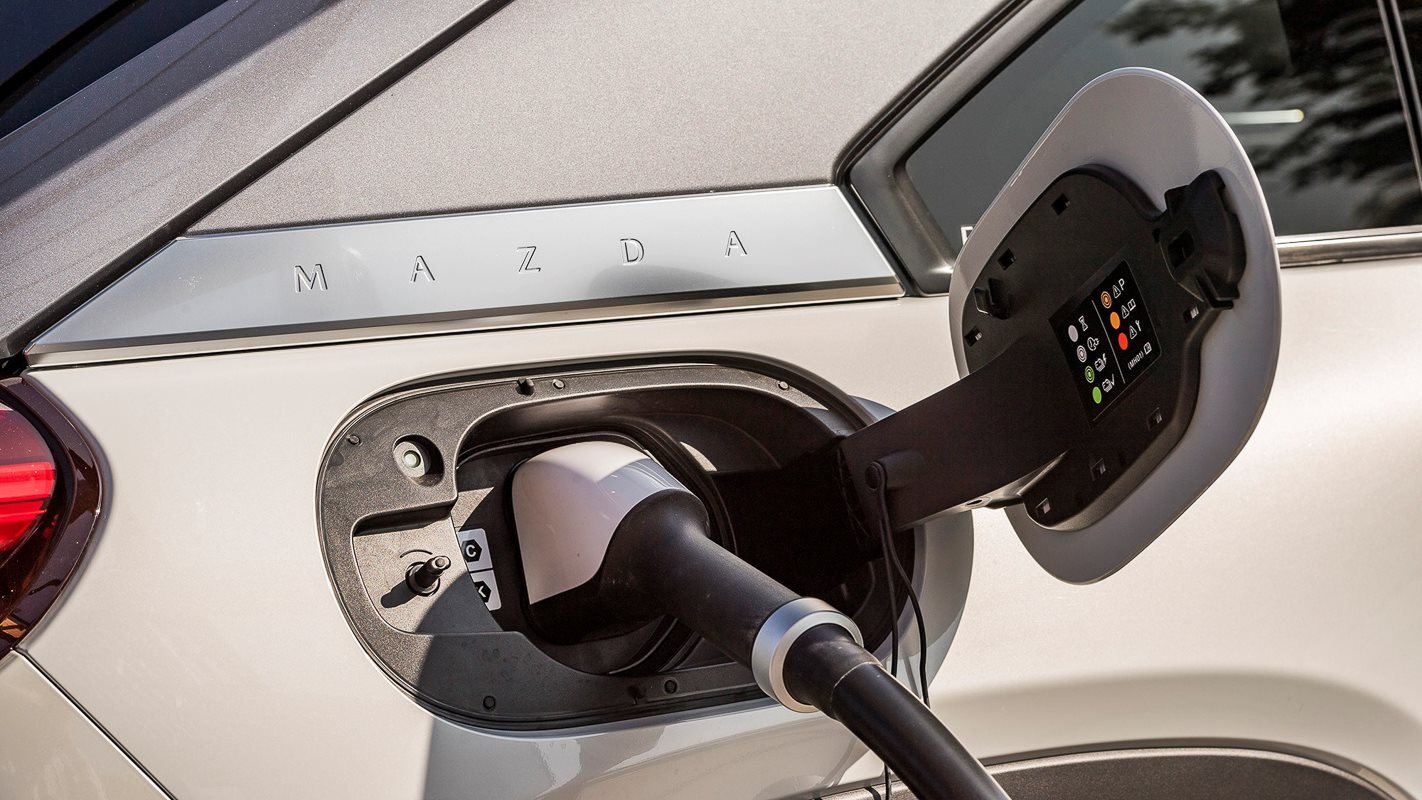
It will be similar to the BMW i3 REx range extender, which featured an identical battery pack and a 125kW electric motor, but added a two-cylinder motorcycle engine and a nine-litre fuel tank, for a 320-kilometre driving range.
The current all-electric Mazda MX-30 – priced from $65,490 before on-road costs – has a 35.5kWh lithium-ion battery pack, a 107kW/271Nm front-mounted electric motor, and a 224-kilometre driving range.
We can expect the range-extending MX-30 to reach closer to a 400-kilometre driving range to better compete against its rivals – including the Hyundai Kona Electric, Kia Niro, BYD Atto 3 and MG 4.
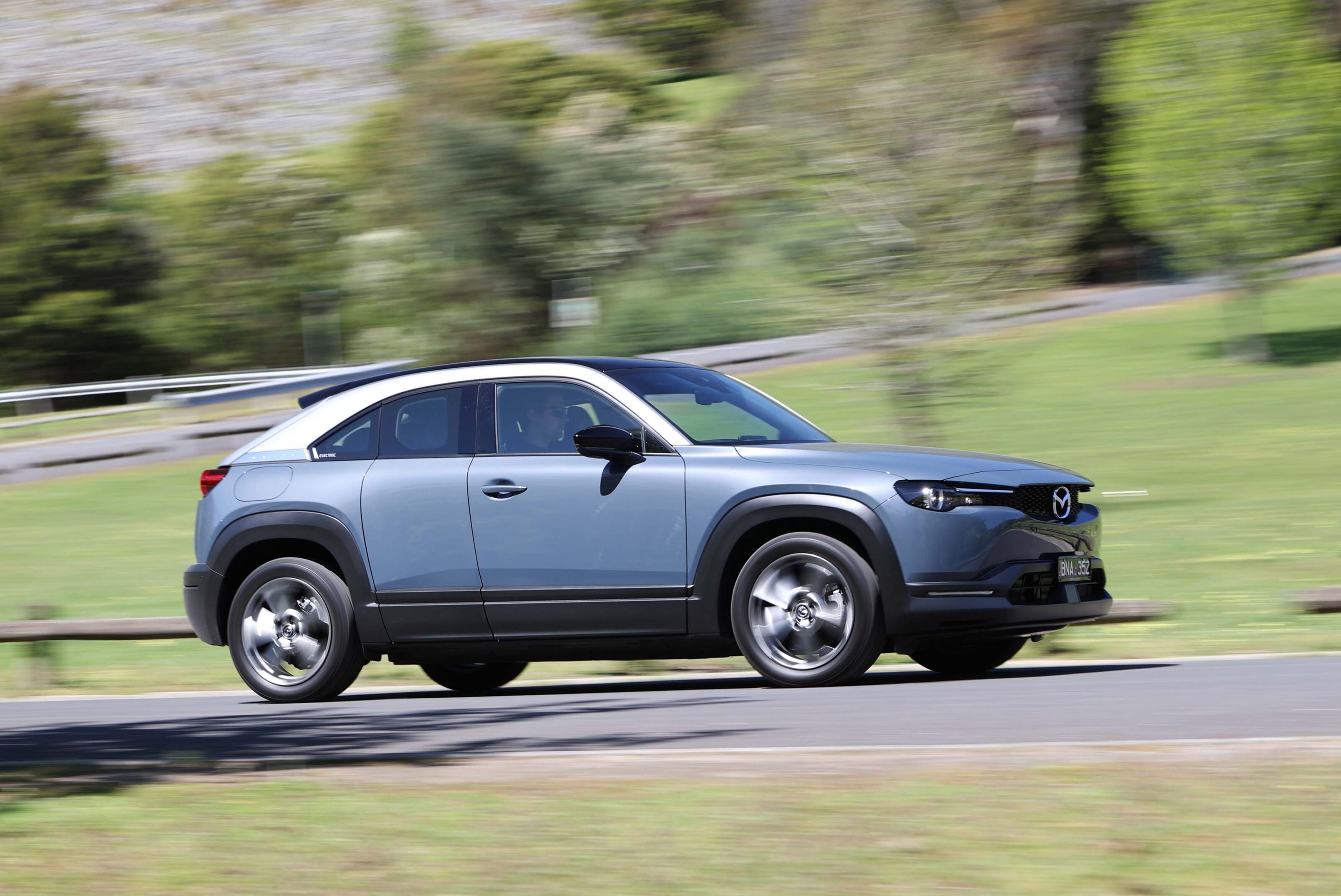
While Mazda Australia has yet to officially confirm if the MX-30 plug-in hybrid will reach local shores, it could be sold here in limited numbers – similar to the all-electric version.
“MX-30 range extender is coming out… and we’re still in line for that car,” said Mazda Australia’s marketing director, Alastair Doak, last year.
“It’s a unique proposition around the world. There’s some interesting thinking behind that car that can be used in other applications down the track.”
Snapshot
- 2020-2022 Kia Sorento recalled
- Due to potential failure of the transmission electric oil pump
- Just over 8500 current-generation examples affected
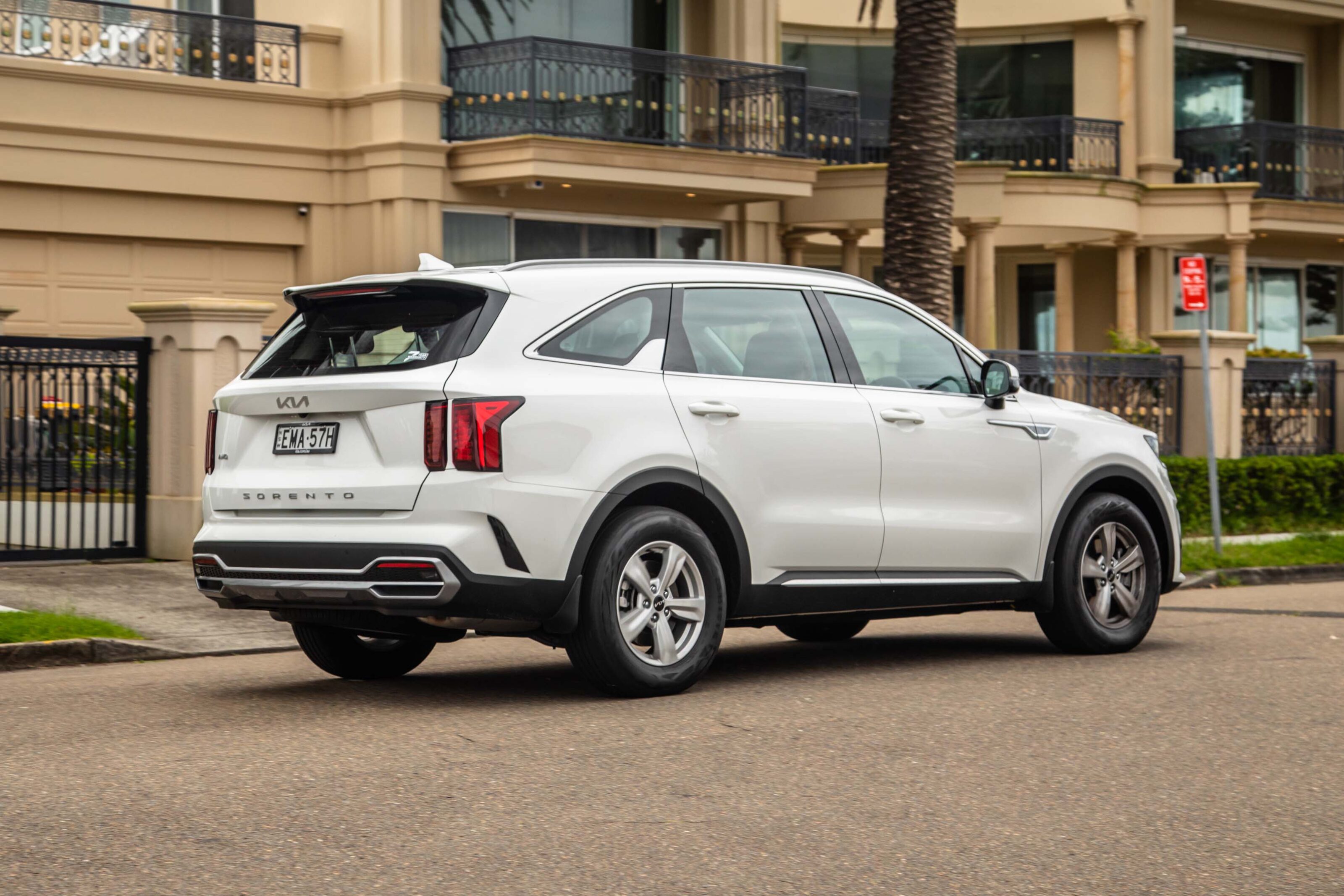
Kia Australia has issued a recall for more than 8500 examples of the Sorento large SUV due to a manufacturing defect.
The issue affects 8572 units of the current-generation ‘MQ4’ model built between 2020 and 2022.
According to the recall notice, production variations could lead to a crack developing in “the Printed Circuit Board (PCB) of the transmission electric oil pump (EOP), which may lead to failure of the EOP”.
“If the EOP (electric oil pump) fails, hydraulic pressure will be lost and the vehicle may lose drive, thereby increasing the risk of an accident resulting in serious injury or death to vehicle occupants and other road users.”
Kia Australia said affected owners should immediately contact a dealership to schedule an appointment to have the transmission software updated, free of charge.
A VIN list for the affected vehicles can be found here.
The company can be contacted directly by calling 131 542, or by visiting a dealership, found here.
Snapshot
- 2017-2019 Jeep Grand Cherokee recalled
- Due to a manufacturing defect with the anti-lock braking system
- Just under 500 examples affected
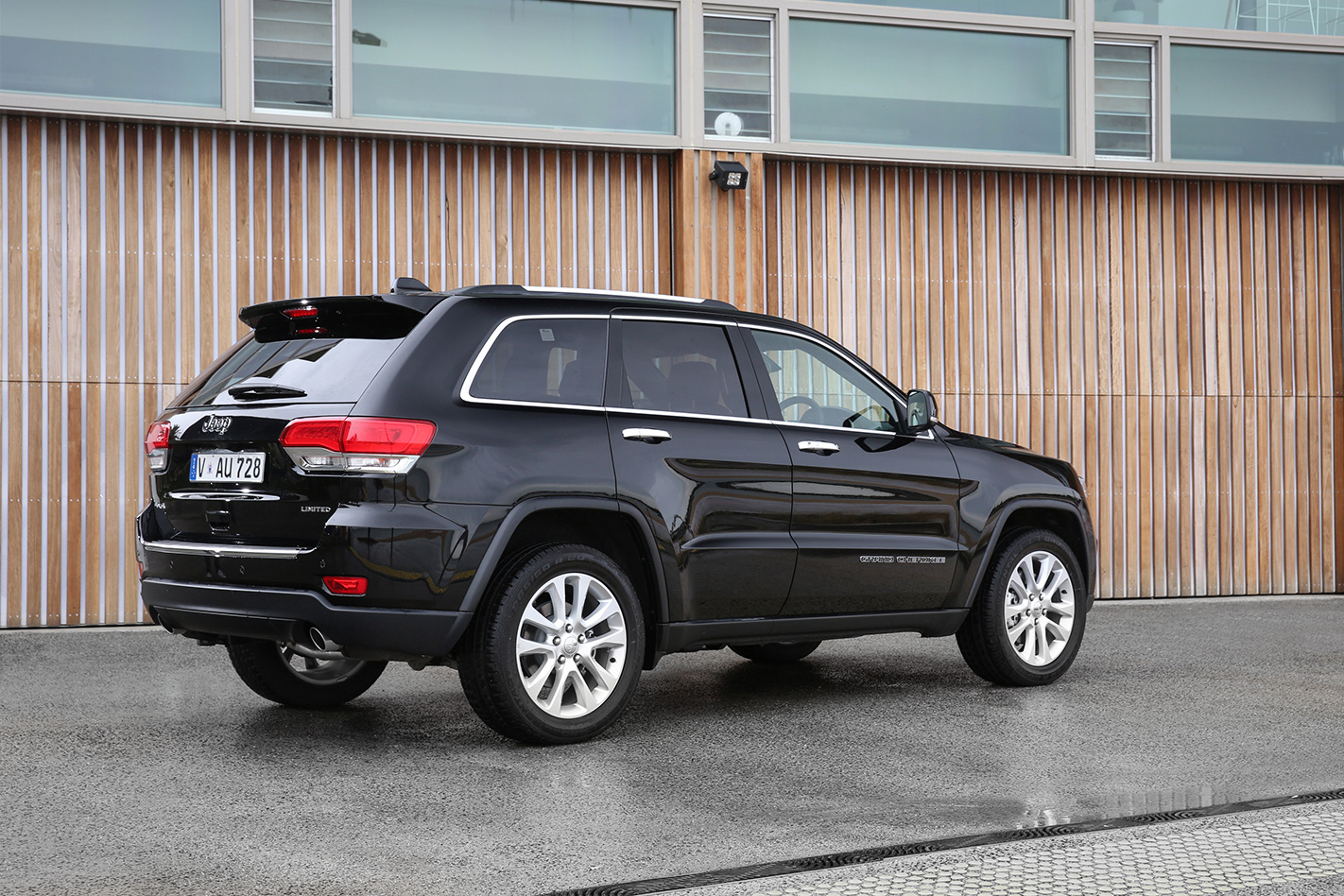
Jeep Australia has issued a recall for just under 500 examples of the Grand Cherokee large SUV due to a manufacturing issue.
It is the 17th recall for the previous-generation Jeep Grand Cherokee in Australia, which was sold between 2011 and 2021.
The latest issue affects 485 units built between 2017 and 2019.
According to the recall notice, a manufacturing defect could cause the anti-lock braking system to fail.
“If this occurs, the brake lights may illuminate or allow the vehicle to start and shift out of park without the brake pedal being depressed. This may result in an unintended vehicle movement.
“An unintended movement of the vehicle may increase the risk of an accident causing serious injuries or death to vehicle occupants and/or other road users.”
Jeep Australia said affected owners should contact a dealership to schedule an appointment to complete the repair, free of charge.
A VIN list for the affected vehicles can be found here.
The company can be contacted directly by calling 1300 133 079, or by visiting a dealership, found here.
Hyundai’s Palisade is still, relatively speaking, a new kid on the block. It’s only been on sale in Australia for a couple of years, yet there is already a facelift on the market with slightly sharper front and rear styling plus additional safety gear, a glitzier interior, and upgraded tech.
Sitting above the seven-seater Santa Fe and starting from a tad under $66,000 before on-road costs, this seven- or eight-seat large SUV aims to deliver a premium experience for not-crazy money, and is a challenger to monocoque-based rivals such as the Mazda CX-9.
It also sits in the same segment as more off-road-focused, body-on-frame SUVs such as the Ford Everest and Isuzu MU-X.
Here we have the top-flight Highlander with all the bells and whistles, testing it out as a family hauler and spending most of its time with us in the eastern Melbourne suburbs.
Pricing and features
For 2023, there are two grades of the Palisade only – Elite and Highlander – and they carry across from the previous model.
Both grades are available with a choice of front-wheel-drive petrol or all-wheel-drive diesel powertrains and interiors configured with either seven or eight seats.
Excluding on-road costs, the Elite petrol 2WD costs $65,900 and the higher-spec Highlander 2WD costs $75,900. Meanwhile, the Elite diesel AWD costs $69,900, rising to $79,900 for the Highlander (which is what we had here). Premium paint is available for all variants, which adds $695. Our Palisade was dressed in the optional, and very classy, moonlight blue.
The differences for MY23 are tech and safety focused – headlined by the debut of Hyundai’s Bluelink smartphone connectivity system in Australia. Unfortunately, as you need a subscription as an owner, we weren’t able to test this during our time with the car.
| 2023 Hyundai Palisade Highlander – features & equipment | |
|---|---|
| Nappa leather seats (available in warm grey two-tone, dark khaki two-tone or black) | Driveru2019s seat integrated memory system (IMS) |
| Dual sunroof with tilt function | Heated front and second row seats |
| Separated tail-light feature | Ventilated front and second row seats (now available on both seven and eight seat variants) |
| Back-up light guide | Automatic defog |
| Body coloured cladding and bumpers | Second row wing-out headrest |
| Highlander exclusive skid plates and chrome grille with hidden DRL | Four-spoke, two-tone leather heated steering wheel |
| Power adjustable front passenger seat with two-way lumbar | Digital electro-chromatic mirror with full display |
| Suede roof lining | Remote smart parking assist |
| Head-up display (HUD) | Rain-sensing wipers |
| Rear door blinds | Creamy white, shimmering silver, graphite grey, abyss black, gaia brown, sierra burgundy, moonlight blue, olivine grey or robust emerald exterior paint |
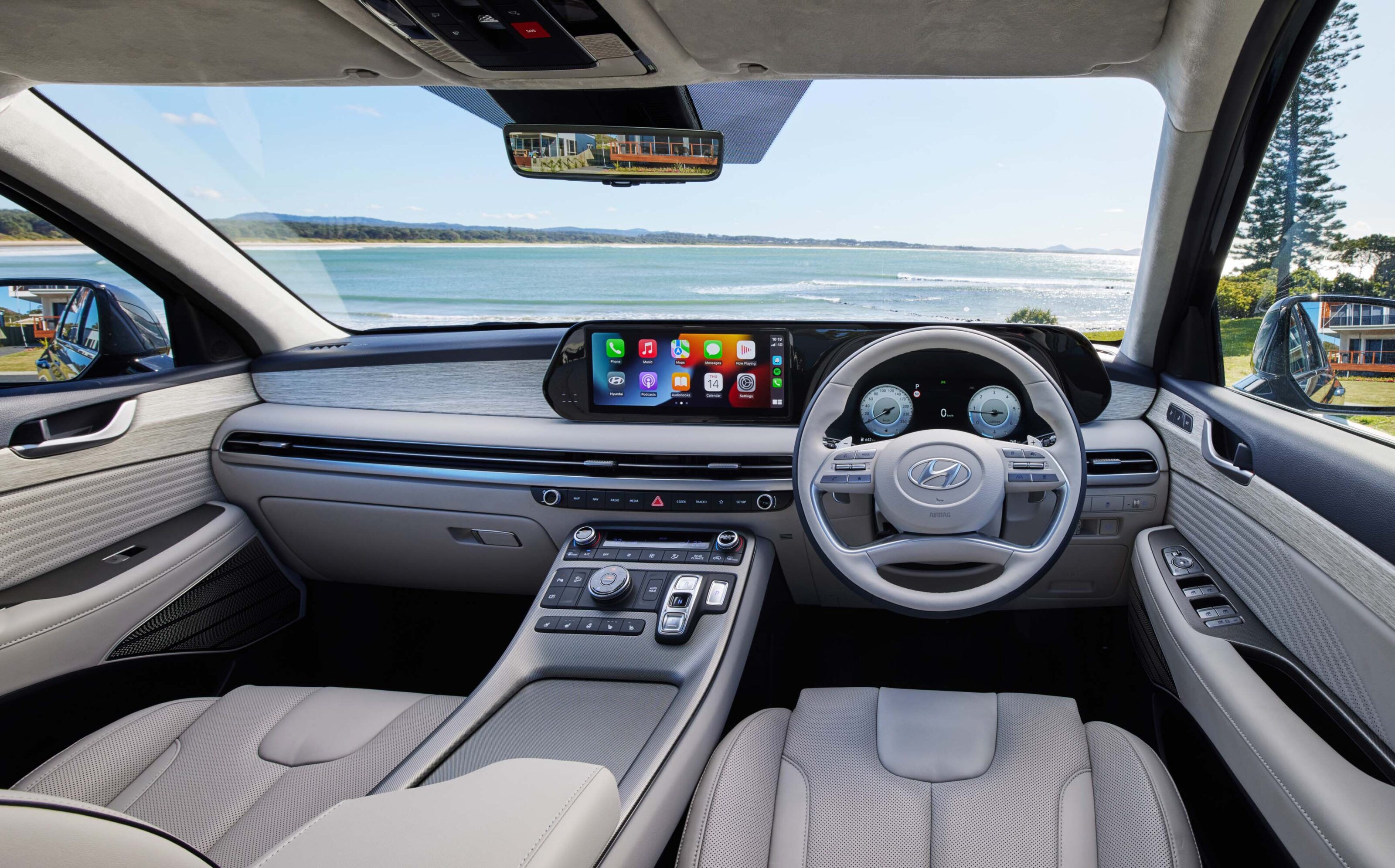
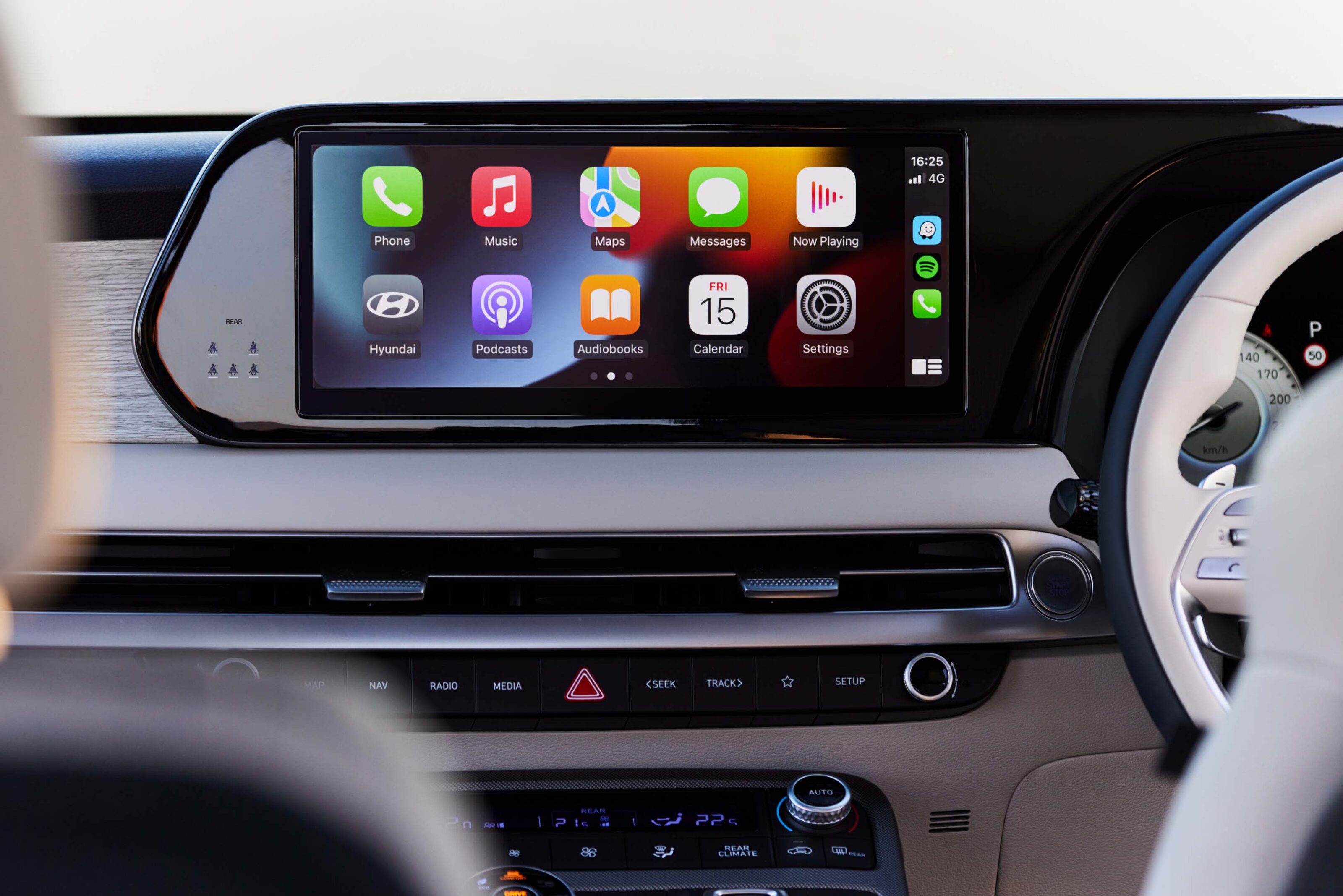
Alongside Bluelink, other new features for the facelifted Palisade include ventilated seats in the second row of eight-seat variants for the first time, a revised head-up display, USB ports upgraded from type A to C, a more powerful wireless phone charging pad, and an infotainment screen and digital instrument cluster that have both grown considerably to 12.3 inches.
The central screen is simple to use and we liked the combination of touchscreen and hard buttons in the Hyundai as opposed to the haptic dual-purpose climate/media version found in recent Kias.
Apple Carplay and Android Auto are both present, but, as with all top-spec models in the Hyundai and Kia lines, they are both wired rather than wireless. This remains an ongoing supply issue for both brands, with only the lower-spec variants equipped with wireless phone mirroring.
Also making its Hyundai debut in Australia, the digital rear-view mirror uses a camera mounted to the Palisade’s rear spoiler. Its 44-degree viewing angle gives the driver a better look at what’s behind them than a conventional 20-degree unit.
This is a nifty little feature, and the quality is crystal clear, but we didn’t end up having that much use for it aside from that final check of the kindy car park to make sure there weren’t any little ones passing behind the car.
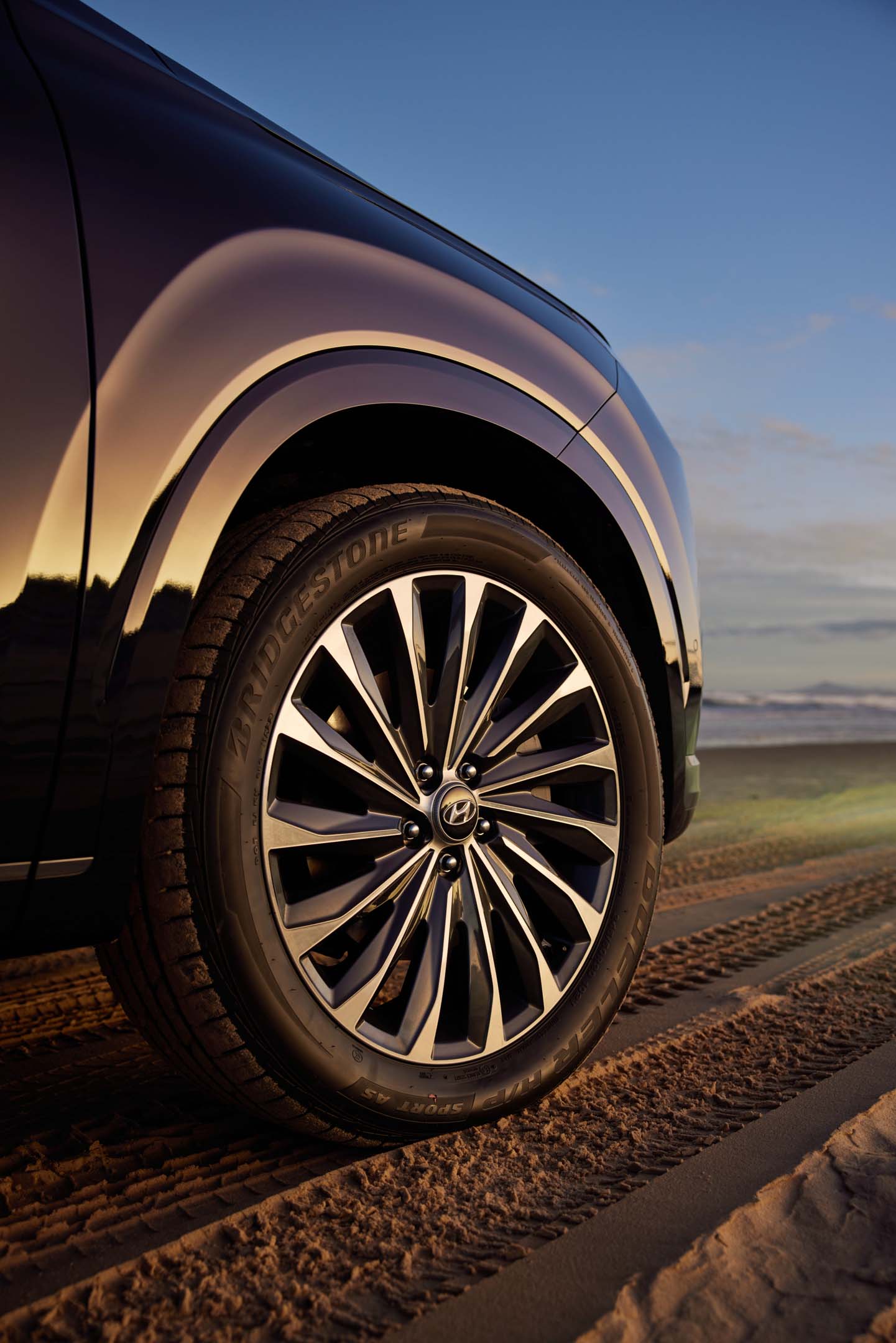
Aesthetic changes to the MY23 Palisade include Hyundai’s new parametric grille design – in soft chrome for the Highlander – with vertically-stacked LED headlights, a four-spoke steering wheel and fresh 20-inch alloy wheel designs.
The Highlander also gains new skidplate designs, a full-width high-mounted LED stop light, and revised tail-light design.
All 2023 Palisades have a five-star ANCAP safety rating after Hyundai addressed the pre-facelift version’s lack of a centre airbag and its less sophisticated autonomous emergency braking (AEB) system.
Other improvements also include an intelligent speed limit information system (though unfortunately this will drive you crazy and is our biggest gripe with this car – it never shuts up, sounding an alarm four times at just 1km/h over the limit) and multi-collision braking.
As well as the upgrade to seven airbags, the 2023 Palisade has a full suite of Hyundai SmartSense safety technologies – many of which are new or revised for this update – including blind-spot collision avoidance assist and blind-spot view monitor (Highlander only), forward collision-avoidance assist, lane following and lane-keep assist, parking collision avoidance assist, surround-view monitor and more.
2023 Hyundai Palisade Australian pricing
All pricing is before on-road costs.
| Variant | Pricing |
| Elite 2WD | $65,900 |
| Elite AWD | $69,900 |
| Highlander 2WD | $75,900 |
| Highlander AWD | $79,900 |
Premium paint for all variants costs $695.
Comfort and space
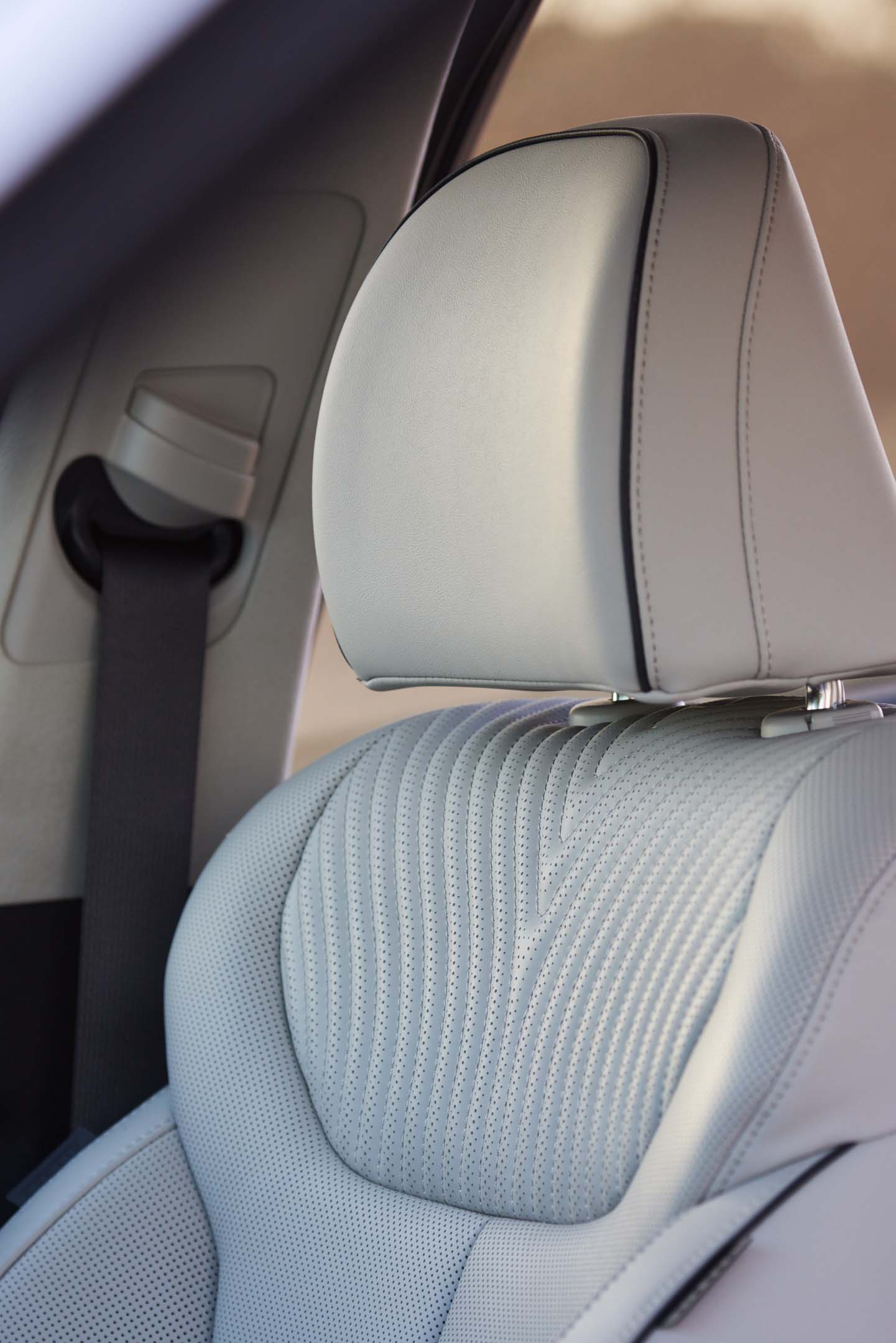
Although both Palisade trim levels feel pretty posh inside, the Highlander takes the level of refinement up a notch to seriously rival the most impressive offerings in its segment with warm grey Nappa leather (dark khaki is also available) and wood-look trim. Though we liked the soft grey colouring of the seats, the wood effect looks more reminiscent of an Ikea coffee table than high-end veneer.
All materials feel very high quality, and the seats, front and back, are incredibly comfortable. An optimal driving position can easily be found thanks to the electrically adjustable toggles on the side of the seat – which the front passenger of a Highlander can also make use of – with memory function too.
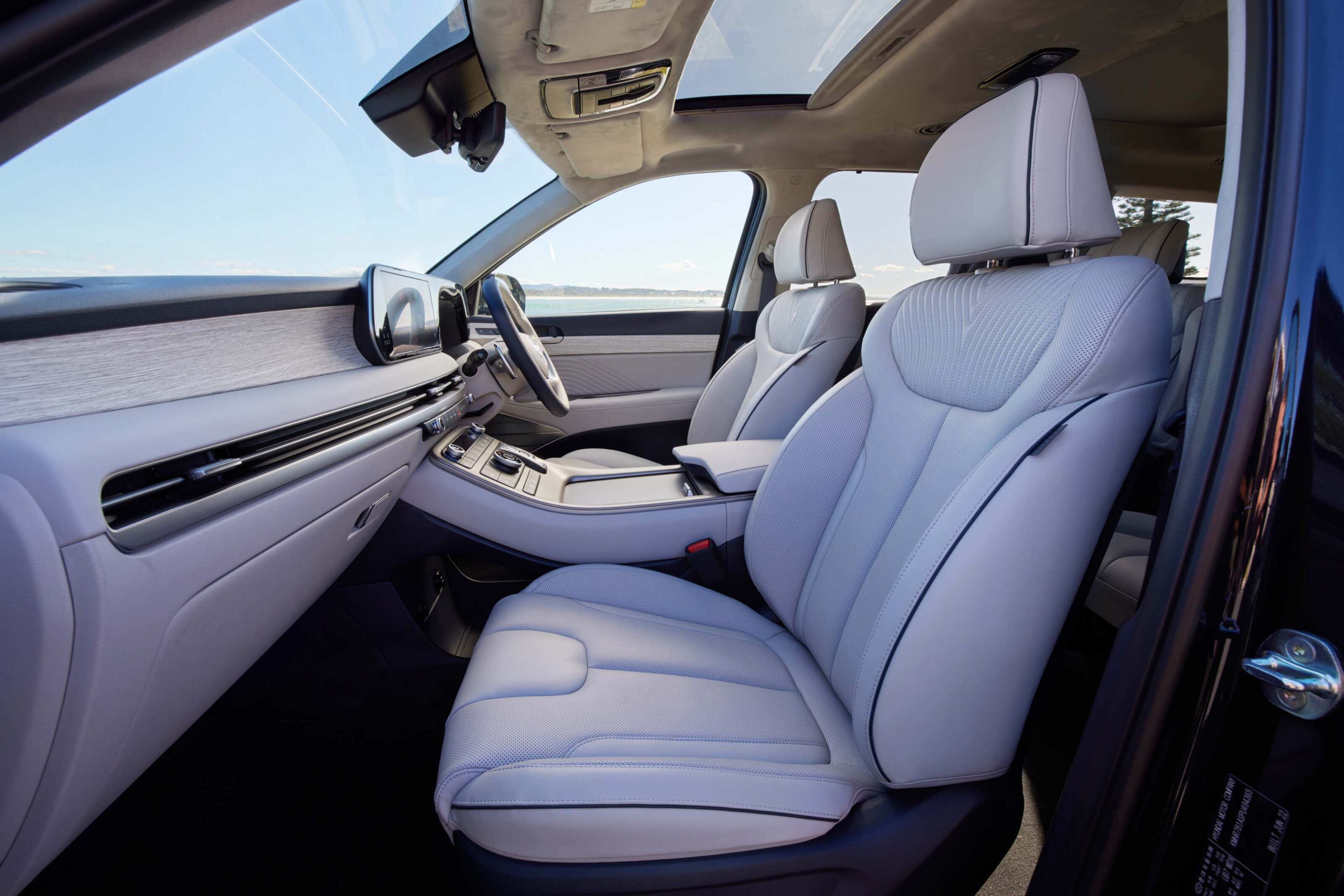
Whereas the Elite has heated front-row seats, the Highlander we tested had heated and ventilated in both the front and second rows (and we did use both depending on the changeable Melbourne spring weather). Second-row passengers have a manual seat sliding mechanism to adjust legroom too.
In seven-seat versions like our test vehicle, the second row comprises two captain’s chairs, offering more space to spread out for rear passengers – a rare luxury for our three-year-old who felt very fancy occupying such a special seat.
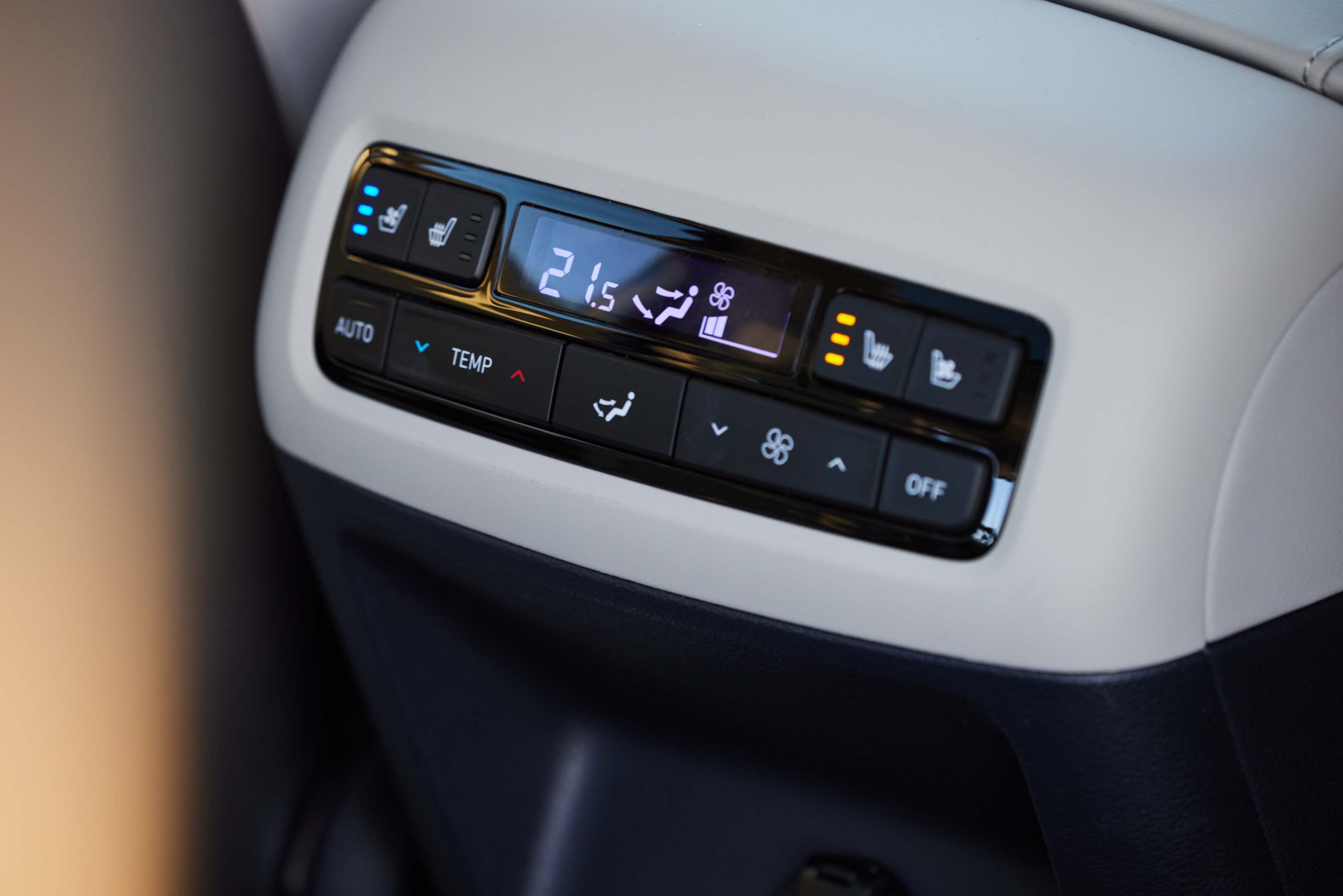
Throughout the entire cabin there are plenty of creature comforts to be found, showing this is a vehicle made with the whole family in mind. There are USB-C ports for every row (yes, even the very back), digital climate controls in the second row and a total of 16 cup holders.
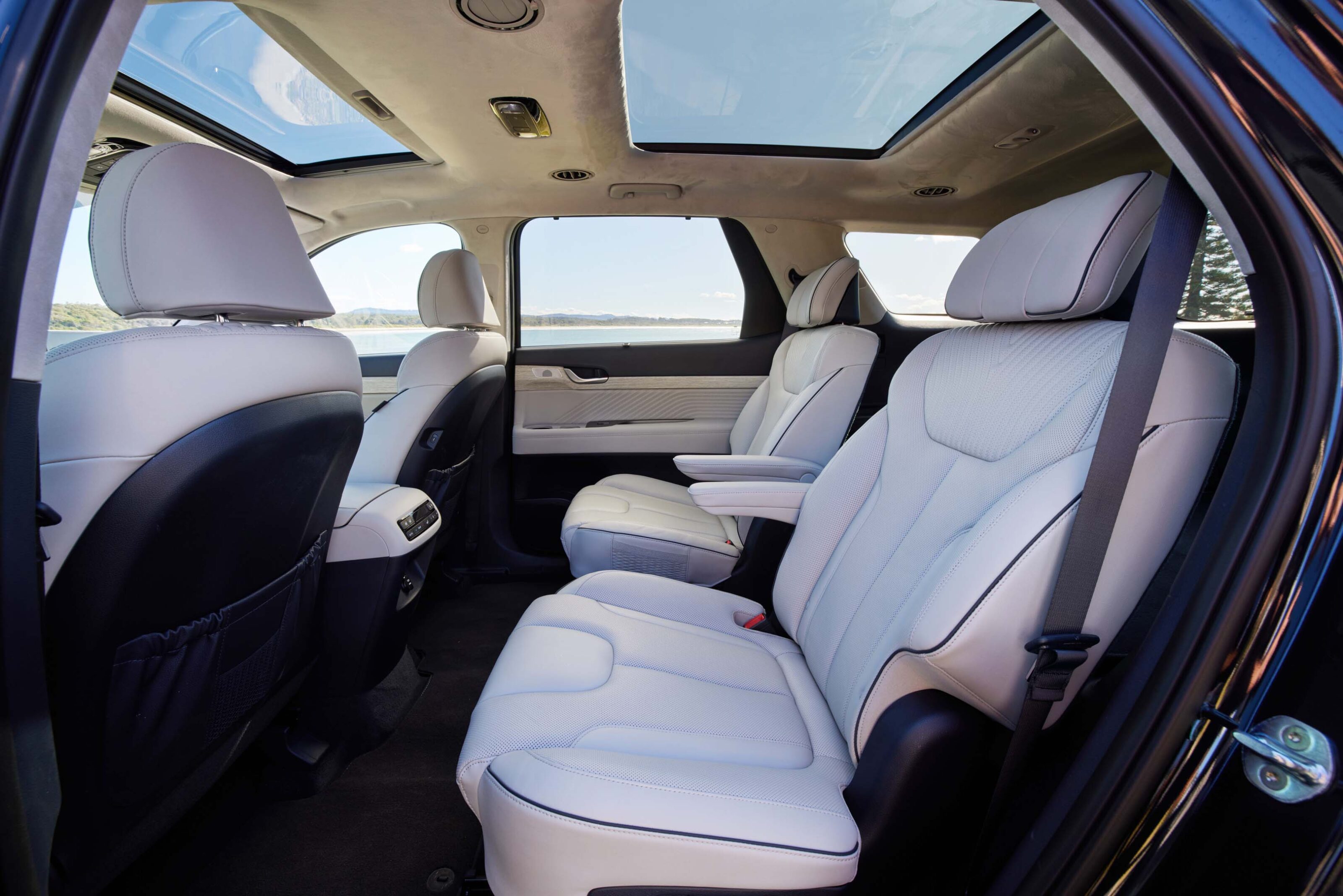
While stretchy map pockets, a dual sunroof and heaps of legroom are great for family-focused buyers, the door cards could do with a little more space – proving useful only for a regular-sized drinks bottle with no extra nooks and crannies for toys.
The second row at least has two cup holders on each door’s armrest, as well as further down, which makes drinks more accessible for the small ones.
Rounding out the family functionality are three sets of ISOFIX anchor points, two in the second row and one in the third, and two top tether points for the middle bench (three if an eight-seater) plus another two at the very back.
With just one child in the rear rows though the Palisade does feel a little unnecessary for smaller families, being better put to use by those with two or more children.
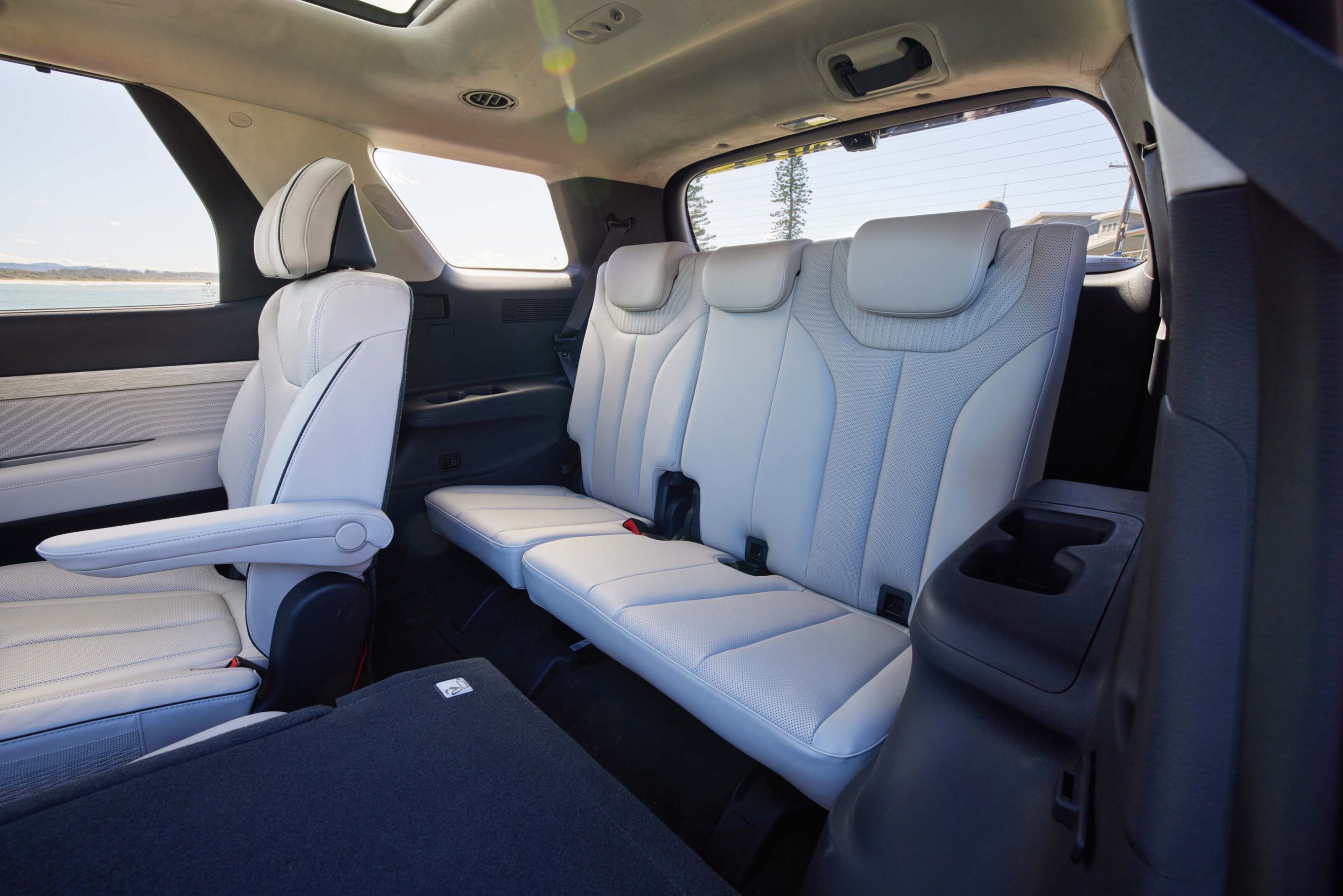
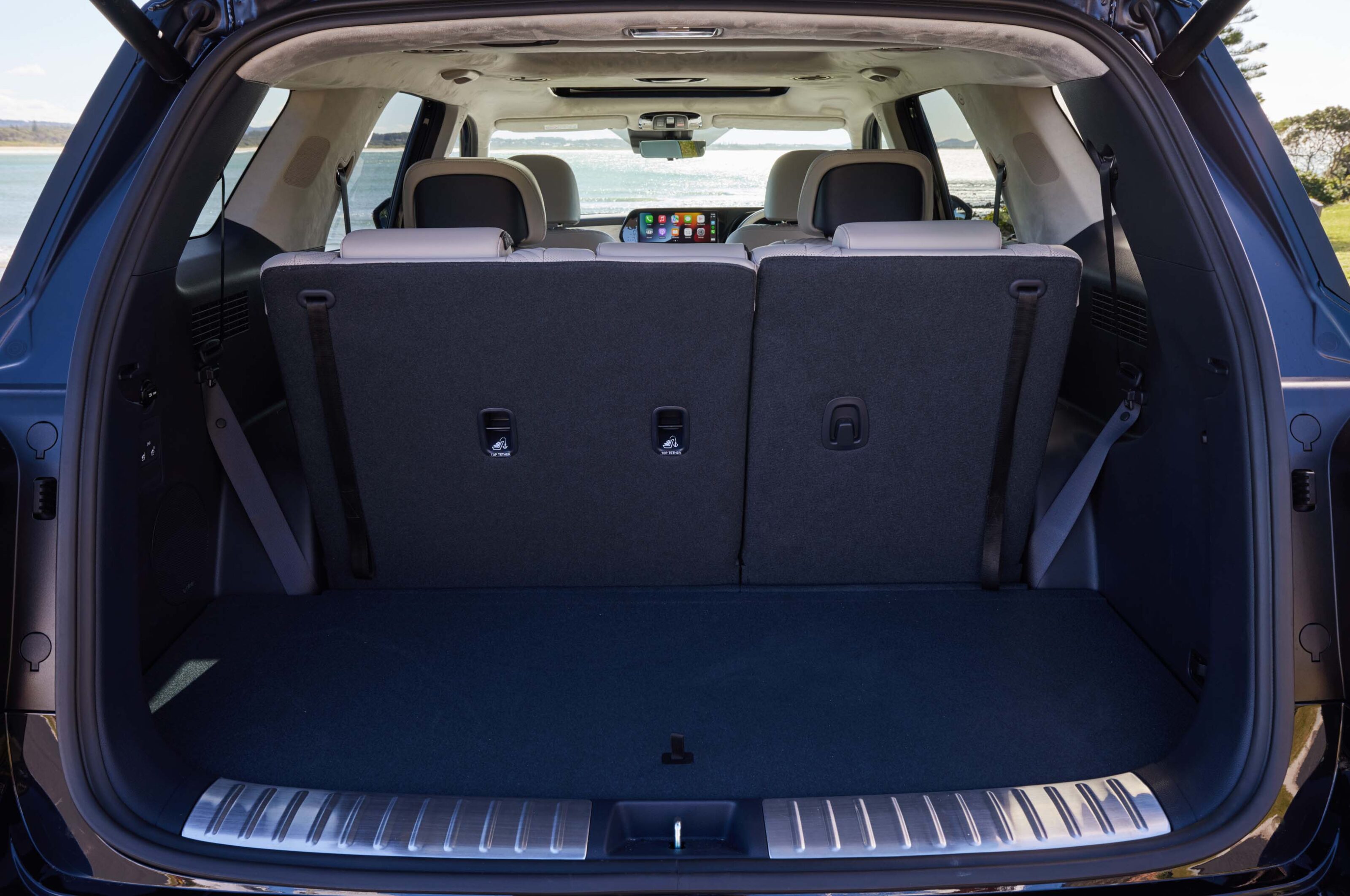
Boot space is inevitably restricted with all three rows in place but, rated at 311 litres, the Palisade can fit more than your average seven-seater behind the last-row seats – such as six bags for the week’s food shop.
If, most of the time, you only need four or five seats and had the third row down then you’re in business, as that boot space number is bumped up to 704L and has generous room for baby or child kit on a daily basis or even for a holiday. Lose the second row as well and you’ve got 1297L.
We also loved the space beneath the centre console, which is perfect for storing a small handbag or wallet – rather than having to dump it on the passenger seat or footwell – and the cavernous cubby bin which is so deep you could lose half your arm in it.
On the road
The basics
| 2023 Hyundai Palisade Highlander | |
|---|---|
| Drive | all-wheel |
| Engine | 2.2-litre four-cylinder turbo-diesel |
| Transmission | 8-speed automatic |
| Power & torque | 147kW / 440Nm |
| Fuel consumption | 7.3L/100km (combined) |
The Palisade range is available with the same choice of 3.8-litre petrol V6 with front-wheel drive or 2.2-litre turbo-diesel with all-wheel drive as previously, both teamed with an eight-speed automatic transmission. Here we had the diesel.
Hyundai has made a number of small revisions to improve the Palisade’s driving experience, though the big SUV in pre-facelift form had already impressed as a Finalist in our 2022 Car of the Year.
The transmission has been tweaked to produce smoother, and more refined, gearshifts – making the torque converter unit feel like a good match for either engine – as has the chassis structure to improve body rigidity and safety.
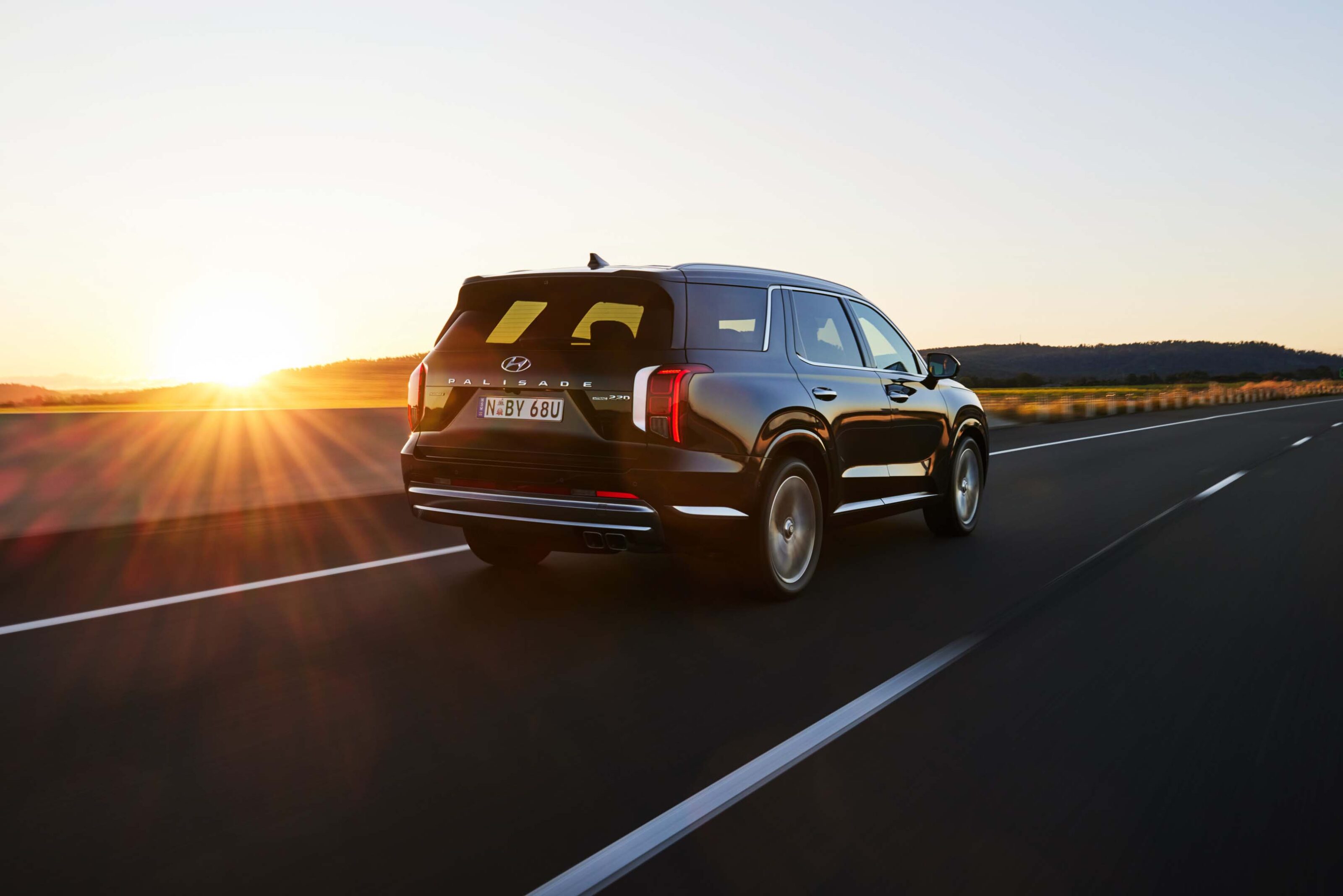
The suspension has also been retuned with Hyundai’s third-gen Selective Damping Control technology plus revised spring rates to enhance ride and handling, the multi-terrain mode controls have been adjusted and there’s more insulation and thicker glass to reduce noise in the cabin.
Wind noise is now only intrusive in gusty weather and road rumble is kept to a hushed minimum but this does make you focus more on the diesel engine, which can be especially vocal around town and feels a bit at odds with the rest of the otherwise calm driving environment.
Capable of delivering 147kW of power and 440Nm of torque, the diesel is definitely no slouch, though, and is a good all-rounder for load-lugging torque and decent fuel economy.
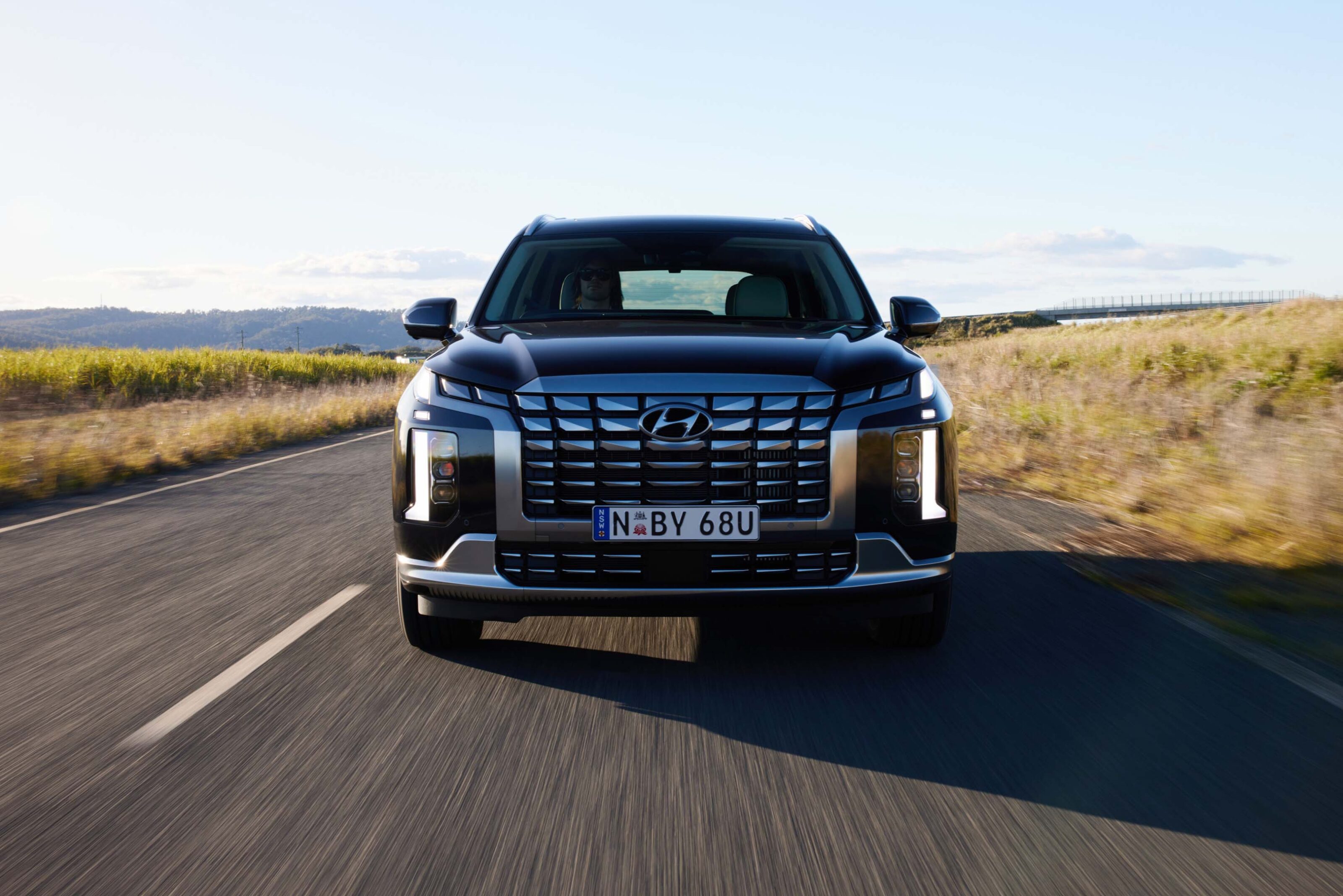
Considering its size, the Palisade’s claimed consumption of 7.3L/100km on the combined cycle for the diesel is pretty respectable.
We largely used Eco mode for town driving, where we achieved 7.1L/100km at best.
It also offers prompt off-the-mark acceleration and brisk performance for overtaking considering the Palisade’s size. However, the diesel feels slightly more stunted in the mid-range where you’d usually expect its sweet spot to be – only demonstrating more oomph under 60km/h or over 90km/h.
Braking meanwhile is solid and dependable, with no need to apply too much pressure in the wet or dry, and there’s plenty of traction from the AWD system.
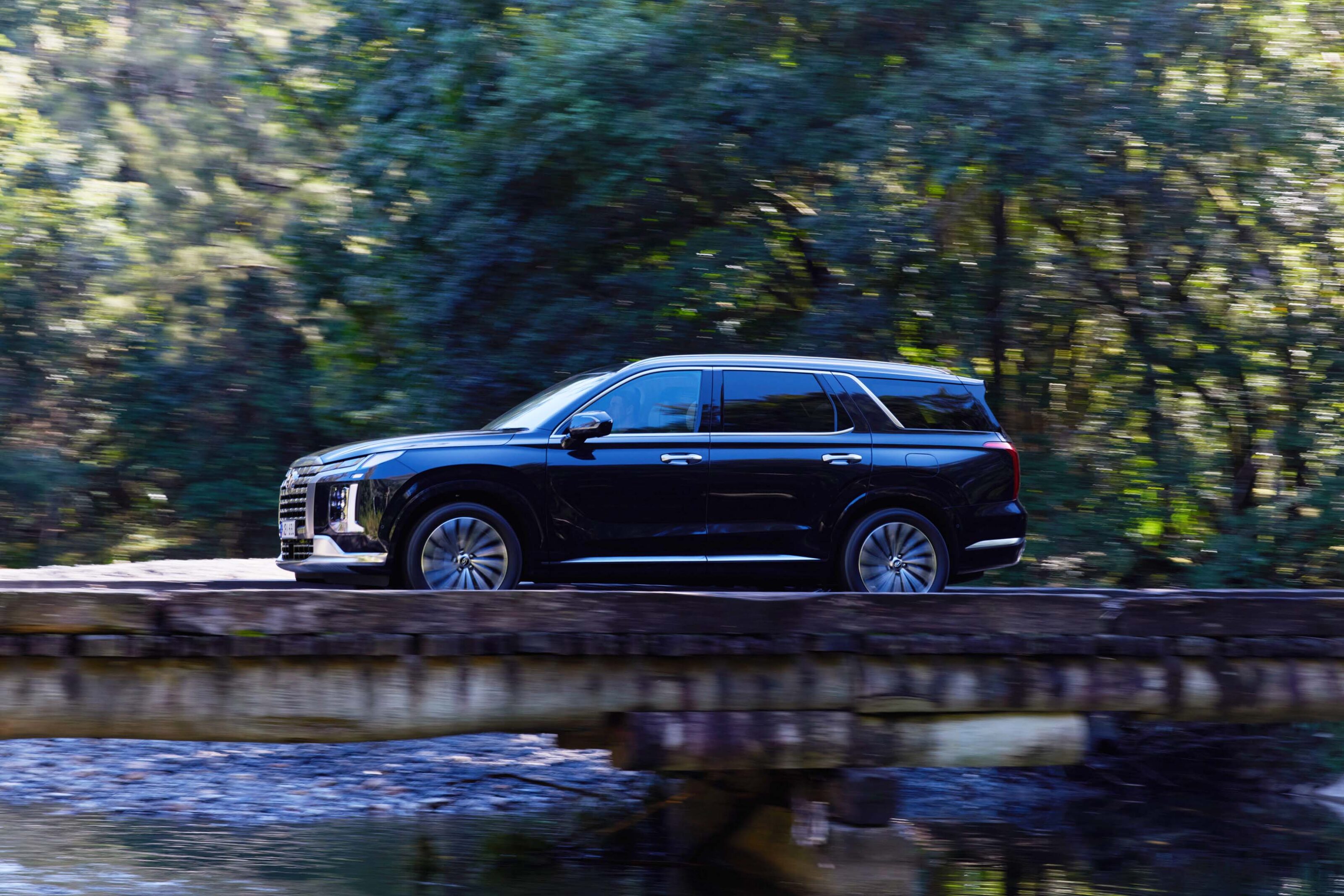
Befitting its premium aspirations, the Palisade’s ride stands out as incredibly smooth thanks to well set-up front MacPherson strut and rear multi-link arrangements, which have been specifically tuned for Australian roads and hide the big SUV’s 2200kg weight and size well. It’s composed over almost all surfaces with the exception of the worst potholes, yet never feels unsettled or bouncy.
Steering is smooth too, not requiring too many turns lock to lock to get it around a tight bend despite its size, nor are there any apparent dead spots – any flick of the hand in either direction and the Palisade is alert and ready to respond.
We opted to use Normal mode for the most part as it gave the nicest feedback. Sport firms things up without being too resistant if that’s your thing – otherwise stick with Normal or Smart mode (the latter interprets your driving style and adjusts accordingly).
Ownership
Hyundai Australia offers a five-year, unlimited-kilometre warranty, complimentary roadside assistance for 12 months and lifetime capped-price servicing at intervals of 12 months/15,000km.
Pricing for each service is $399 for the 3.8-litre V6 petrol or $489 for the 2.2-litre diesel over the first five years.
To entice customers to service their Palisade at Hyundai dealerships, each service for the first 10 years comes with a 12-month extension to roadside assistance and sat-nav map update.
VERDICT
While there are only some minor differences on the exterior of the 2023 Hyundai Palisade to set it apart from the first version that came out in 2020, it’s a sharp-looking refresh, and the inside is full of luxuries normally found on cars beyond even this vehicle’s top asking price of $80K.
If you’ve got the money and need a large SUV for hauling lots of people then it’s hard to argue with what this car has to offer for the asking price – and that’s only considering the Highlander we had on test here.
The Elite represents even more bang for your buck for marginally fewer frills such as missing out on greater paint choices, different wheels, a head-up display, remote smart parking and blind-spot view monitor to set it apart.
While it doesn’t quite offer the ruggedness of some of its more off-road-focused competitors, it brings a greater degree of on-road refinement and manners to the daily drive.
2023 Hyundai Palisade Highlander specifications
| Body | 5 door, 7/8 seat large SUV |
|---|---|
| Drive | all-wheel |
| Engine | 2.2-litre four-cylinder turbo-diesel |
| Transmission | 8-speed automatic |
| Power | 147kW |
| Torque | 440Nm |
| Bore stroke | 96mm x 87mm |
| Compression ratio | 13:01 |
| 0-100km/h | not quoted |
| Fuel consumption | 7.3L/100km (combined) |
| Weight | 1984kg (kerb) |
| Suspension | MacPherson strut front, multi-link rear |
| L/W/H | 4995mm/1975mm/1750mm |
| Wheelbase | 2900mm |
| Brakes | ventilated discs front and rear |
| Tyres | 245/50 R20 |
| Wheels | 20-inch alloy |
| Price | $80,595 + on-road costs |
Wait times for new cars are unlikely to improve during the course of 2023, the boss of Mitsubishi Australia has said.
Delays for taking delivery of new models has become a worldwide problem for almost all manufacturers since the COVID-19 pandemic began in 2020, with a shortage of semiconductors largely to blame.
However, according to Mitsubishi CEO Shaun Westcott, “the problem has morphed into a different issue” with multiple factors now causing long waits that are unlikely to ease in the short term.
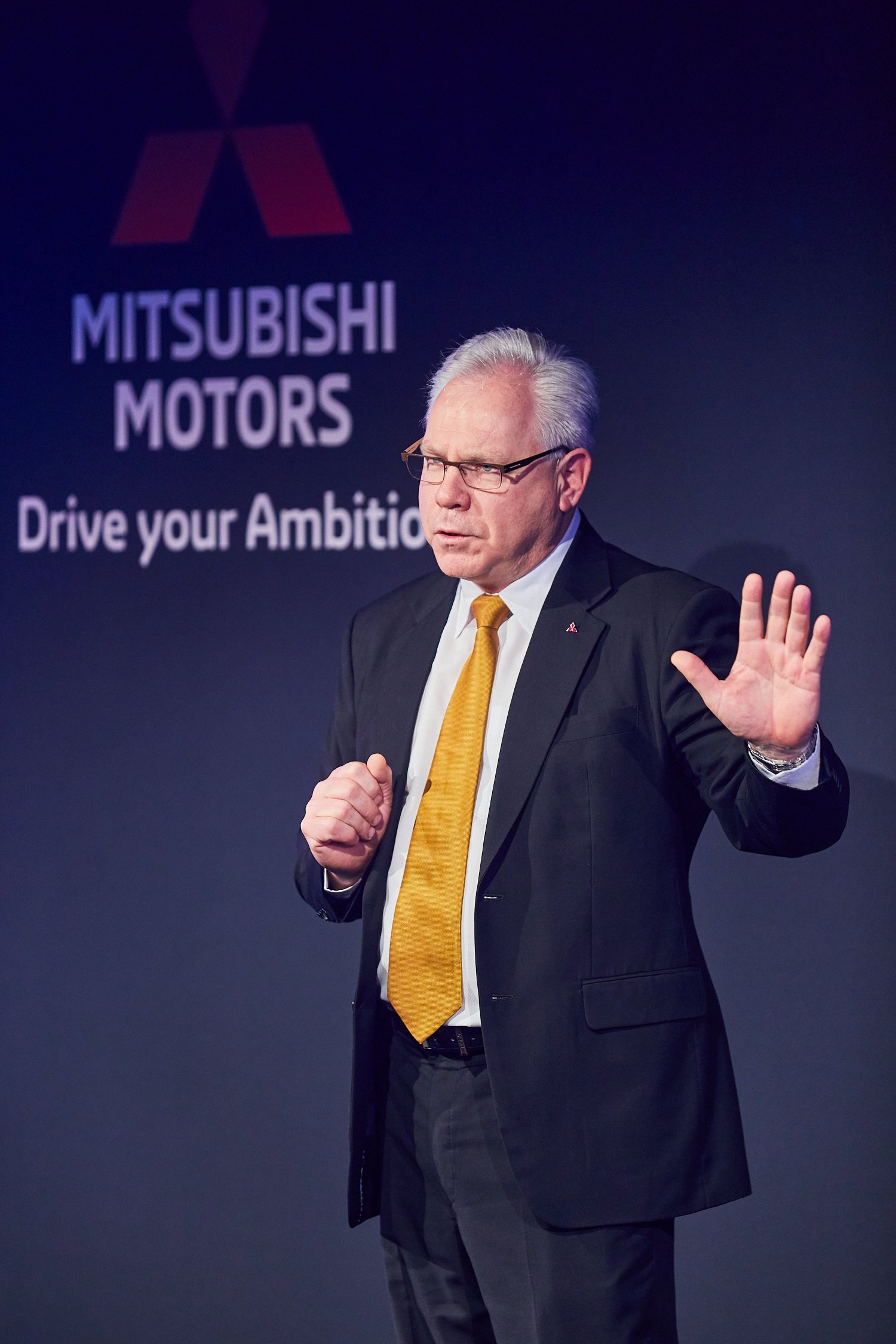
“The semiconductor issue is starting to improve. It’s starting to alleviate. But, as often happens in business, there’s now more problems with things such as shipping lanes, shipping congestion and also availability of vessels is becoming a new challenge,” he told Wheels.
“Much like it takes two-to-three years to build a semiconductor factory, it takes two-to-three years to build a mega car transporter. So it’ll take some time before we pass the challenges that we have. And not only us, but all motor manufacturers have those. And I don’t need to tell you our competitors’ lead times are all pretty long too at the moment.”

Wescott also emphasised that while the semiconductor situation was beginning to improve, it has not disappeared, and could even take another turn for the worse due to the increasing popularity of electric vehicles worldwide.
“We still have semiconductor challenges and that may even, interestingly enough, exacerbate because an electric vehicle has a 300 per cent higher concentration of semiconductors than a petrol car,” he said. “And that means that even as that extra capacity comes online, as demand for EVs accelerates, we are gonna face ongoing shortages for a number of years to come.”

Beyond EVs though, Westcott also pointed to other emerging issues, such as more stringent crash test standards introduced by Australasian New Car Assessment Program (ANCAP) from January 1 this year – calling them “onerous”.
“ANCAP keeps moving the goalposts and making even more and more requirements on safety – lots of which I won’t say are superfluous, but involve bells and whistles,” he said. “What we need to remember is that all of that additional technology requires semiconductors.
“The more onerous the requirements become, the more semiconductors are going to be required.
“I’ve got bad news for our customers and even our competitors’ customers out there – wait times is not something that’s gonna disappear. It may just get easier on certain models that are less semiconductor rich.”
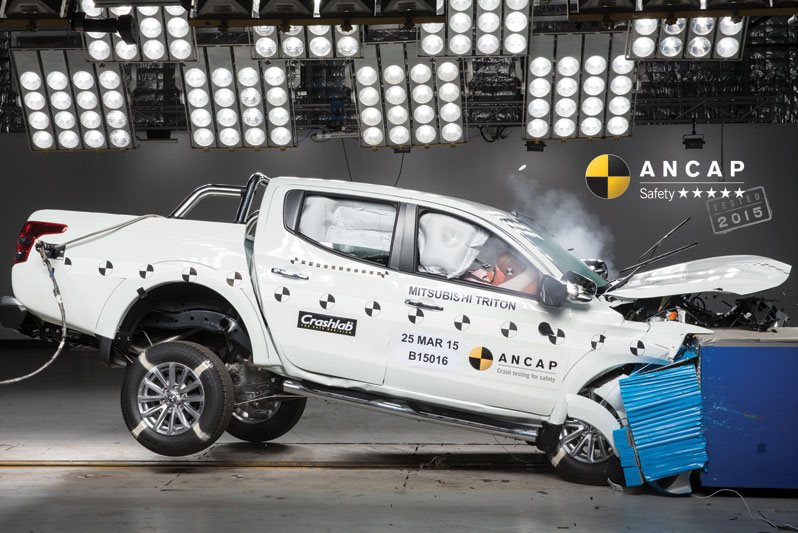
Last year, ANCAP detailed its updated 2023 safety protocols with a focus on floodwater testing, child alert systems and motorcycle detection – as well as bringing in greater penalties for poor performance in AEB testing.
The new criteria will apply to all cars tested by ANCAP from January 2023 and builds on the current protocols that came into effect in January 2020.
Overall, according to Price My Car, the average current wait time for a Mitsubishi is now 145 days – compared to 95 days in January 2022.
Snapshot
- 2021-2022 Honda Civic and CR-V recalled
- Due to front side window tinting that exceeds Government requirements
- Approximately 5000 vehicles affected by the recall
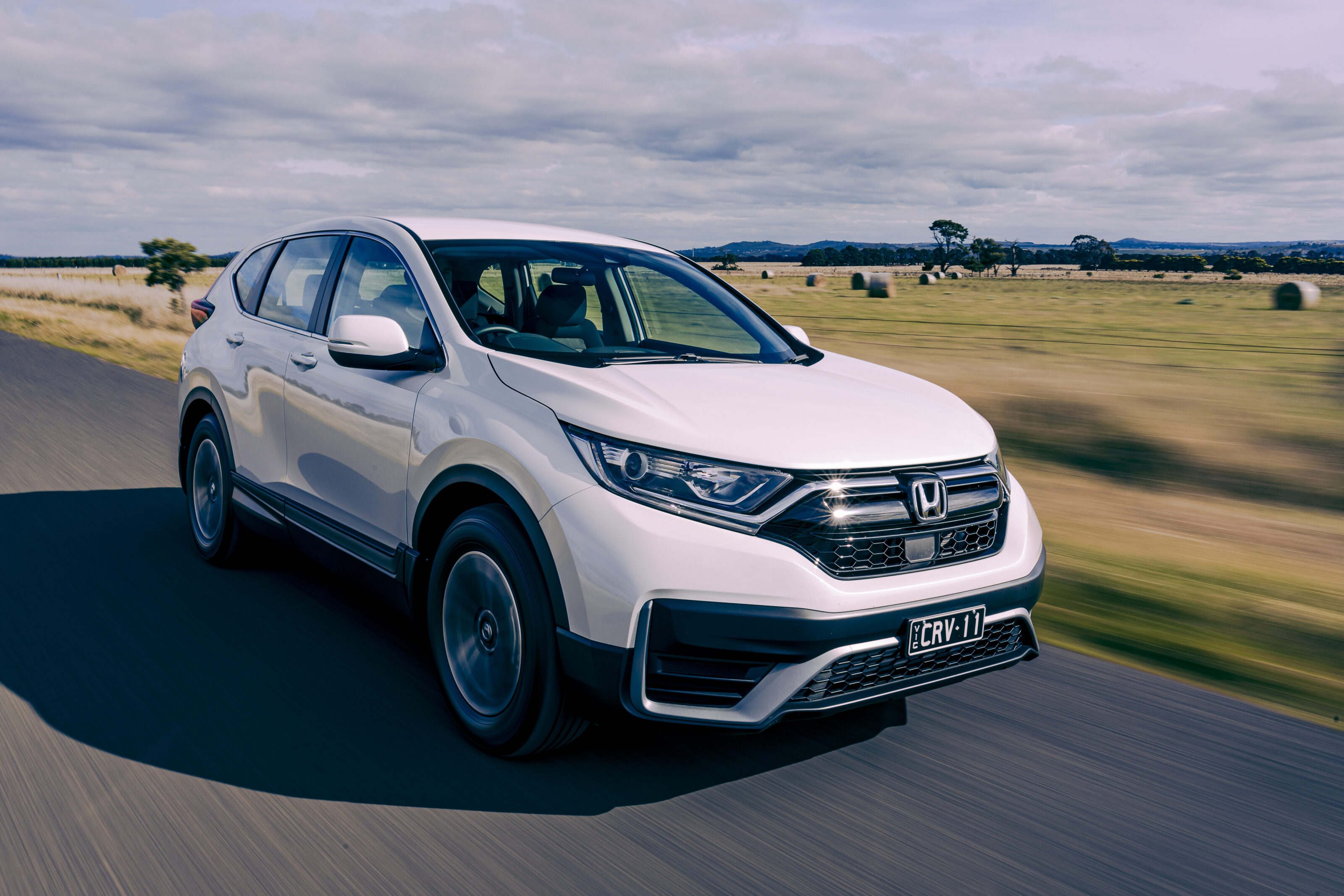
Honda Australia has issued a recall for more than 5000 examples of the Civic and CR-V due to the fitment of illegal front window tinting.
The issue affects 5053 units sold between July 1, 2021 – when the brand implemented its fixed-price model – and November 7, 2022.
According to the recall notice, the affected vehicles are fitted with genuine accessory window tint to the front side windows that “does not meet specifications and may be too dark and reduce visibility.”
“Honda Australia can confirm a recall notice has been issued for the accessory window tint to be removed from the front side windows of selected CR-V and Civic models sold between July 1, 2021 and November 7, 2022.
“The reason for the recall is that the tint product used during that time did not meet the visible light transmission (VLT) requirements in the Australian Light Vehicle Standards Rules 2015, and related legislation in each State and Territory for the front side windows.
“Consumer safety and product satisfaction is our top priority at Honda Australia, and we are taking this issue seriously. Affected customers will be notified of the recall in January to have the accessory window tint removed from their front side windows.
“The window tint product has been withdrawn from sale while Honda Australia reviews its tint processes.”
Honda Australia will contact affected vehicle owners by mail to request they make an appointment with a service centre to have the window tinting removed.
A company spokesperson said customers would be “reimbursed from the removal of the tint from the affected windows”.
A VIN list for the affected vehicles can be found here.
The brand can be contacted directly by calling 1800 804 954, or by visiting a dealership, found here.
Snapshot
- Tesla Shanghai factory makes Model Y body every 40 seconds
- Giga casting machines key to its efficiency
- Local supply chain ramps production, drives down costs
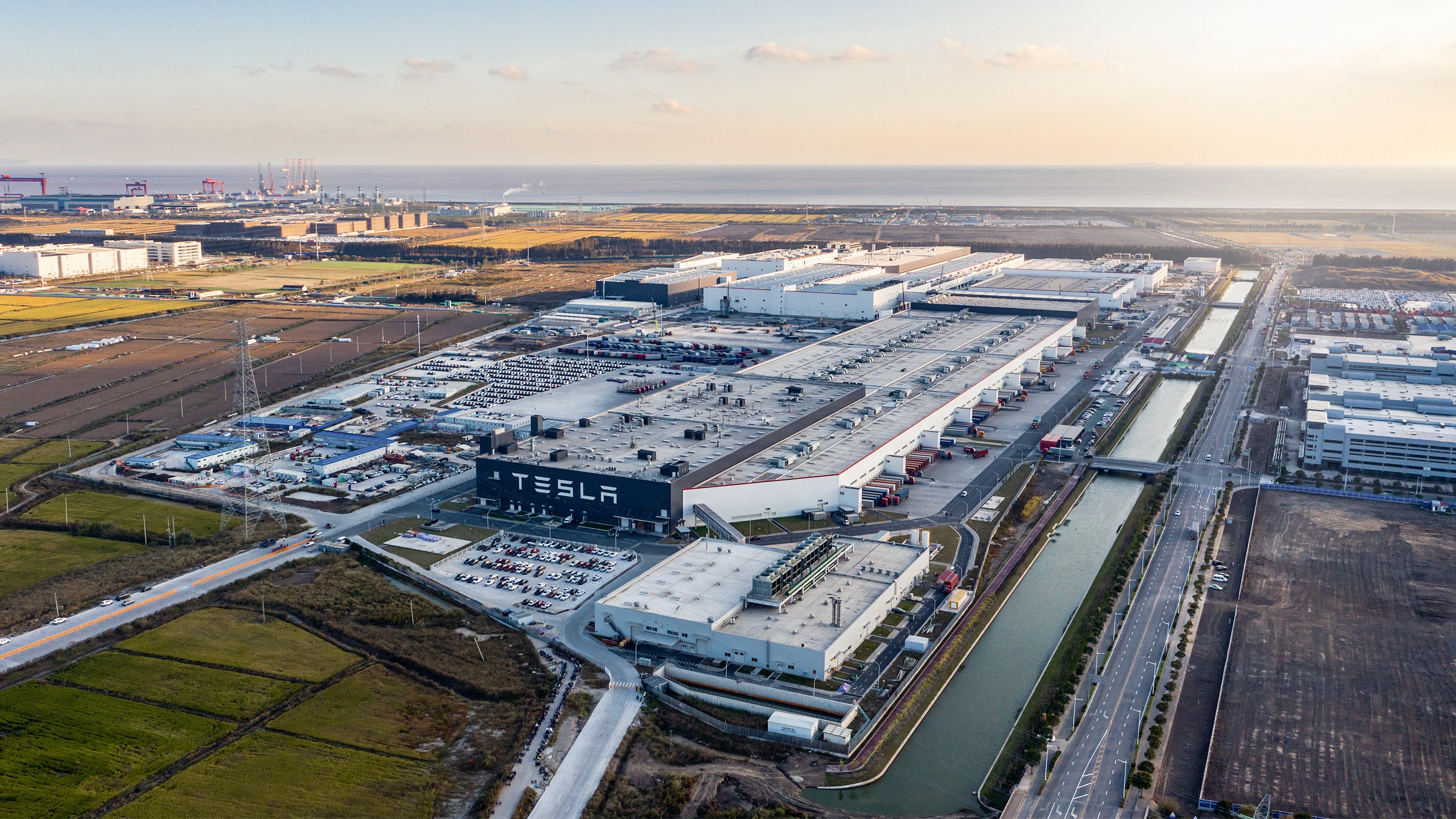
Tesla’s Shanghai Gigafactory produces a Model Y ‘body-in-white’ every 40 seconds on average, according to the Chinese government’s publication People’s Daily.
The American electric carmaker uses more efficient automated ‘Giga casting’ machines that only need to fuse several large metal parts together to form a body, instead of multiple individual pieces.
Reuters reports it recently upgraded the assembly lines of the battery-electric Model Y SUV and related Model 3 sedan in its Shanghai factory – which is where Australian Teslas are sourced from.
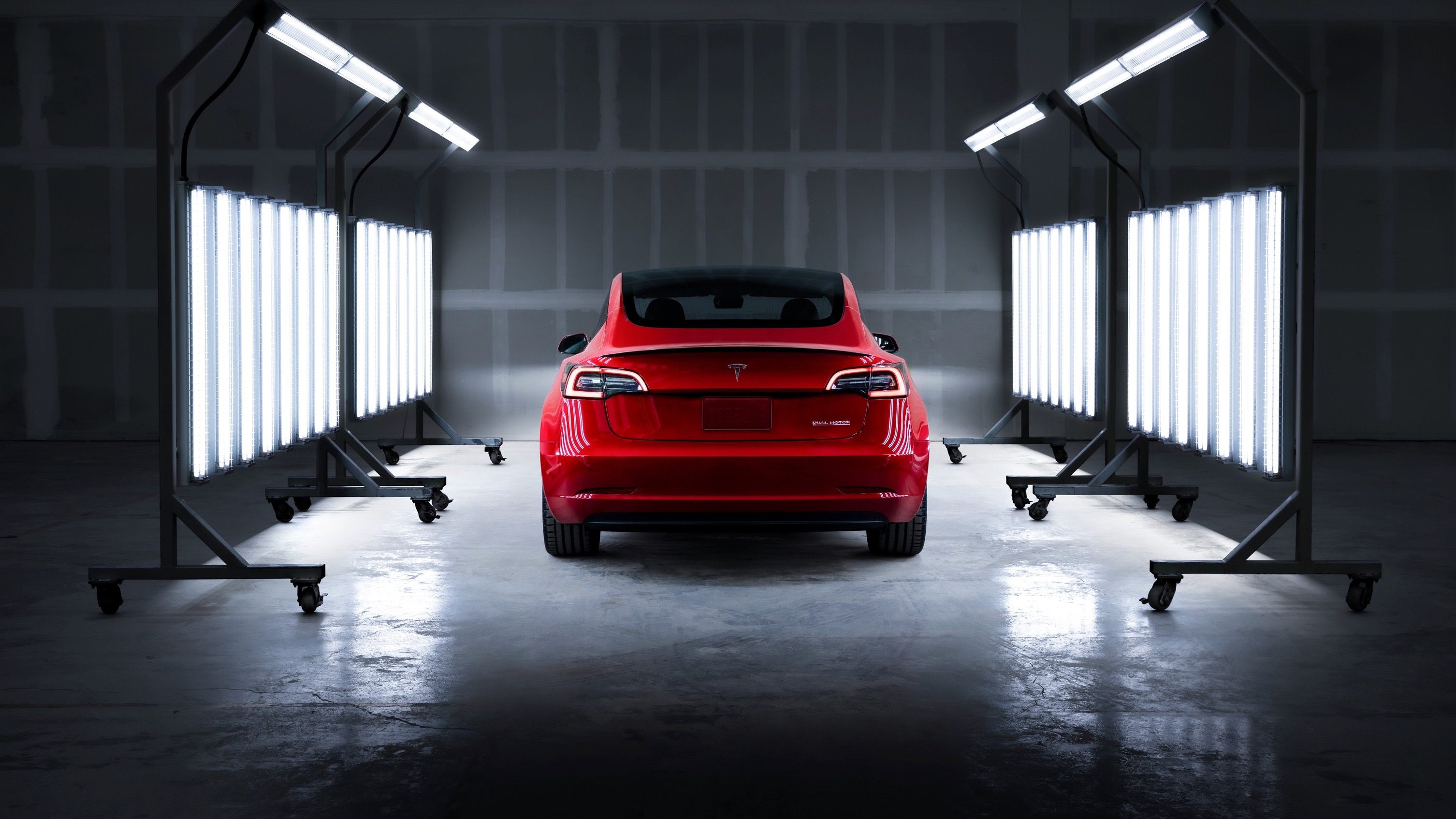
The China plant started production in late 2019, before Australian-bound Model 3s switched its source away from the Fremont, California factory in early 2021.
The one millionth Tesla rolled off the Shanghai factory floor in August last year, less than three years after it opened amid strict COVID-19 health restrictions and lockdowns.
As at the time of writing, new customer orders for the Model Y and Model 3 are only estimated to deliver in two- to four months, despite ongoing supply chain struggles.
Tesla even dropped the price of both electric models locally last week, though they were raised on several occasions last year. In China too prices were cut to boost sales momentum in recent days.
A key reason is the Shanghai plant’s localisation rate of more than 95 per cent, according to Teslarati.
Chinese automakers such as Tesla, BYD and Polestar benefit from China’s local supply chain of car components and expensive EV batteries, and cheaper labour costs.
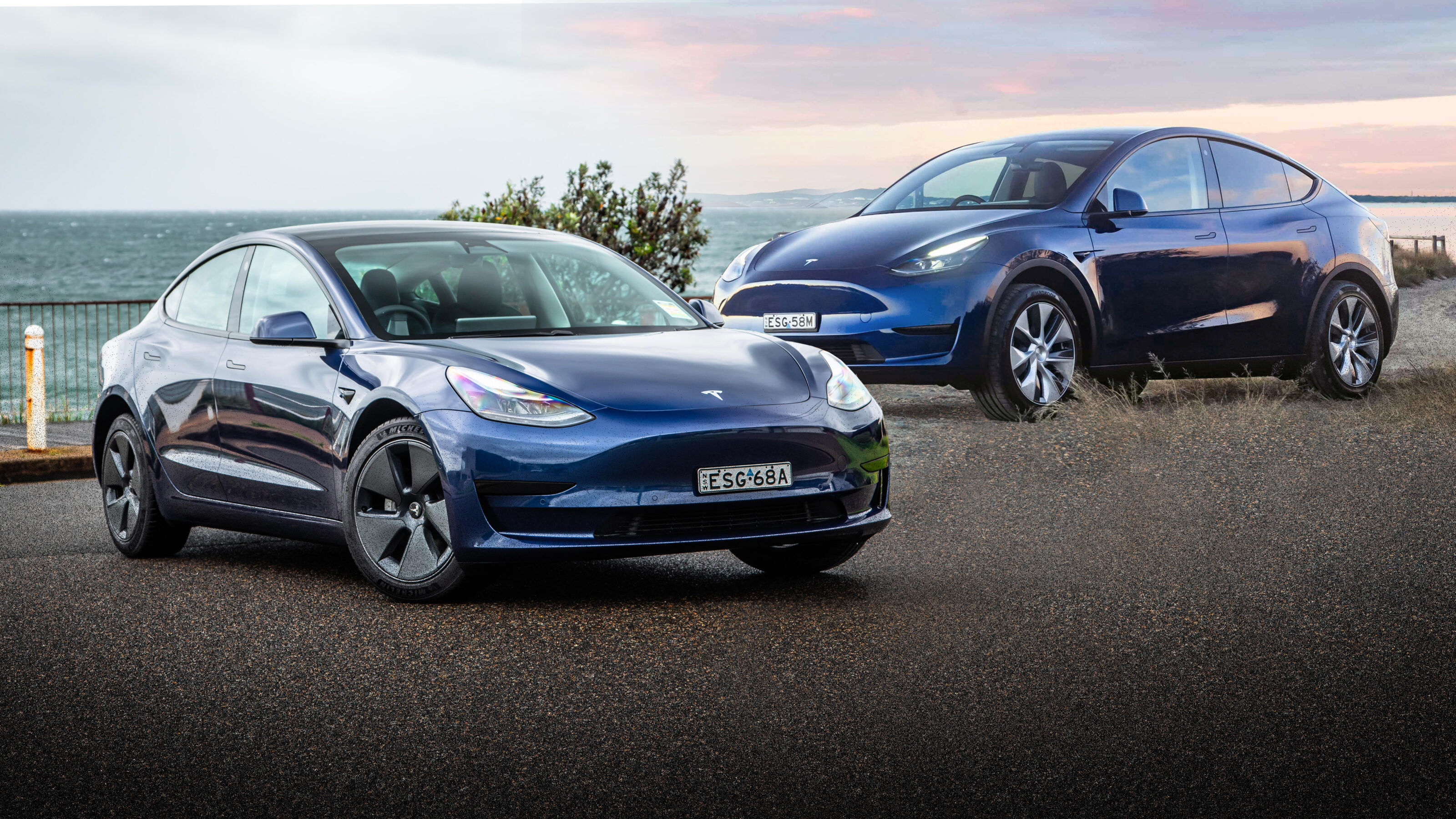
The top five best-selling EVs in Australia in 2022 were all made in China, with 122,845 vehicles sold last year overall hailing from the country – or nearly three times German-made cars.
Tesla is expected to introduce an even cheaper-to-produce third-generation EV platform in March, with a sub-$40,000 entry-level small car likely.
Best Electric Cars Under $65k: Affordable EVs Rated
Welcome to part one of three price-based EV buying guides, this one focused on the most affordable electric cars available in Australia today
It’s not every day that a future classic sports car like the Jaguar F-Type lobs into the Wheels long-term test shed, but we weren’t going to say no to this one. How’s life with a V8 two-door in your care? Cam Kirby takes on the arduous task of telling the tale.
2022 Jaguar F-Type P450 R-Dynamic long-term review
JUMP AHEAD
- Welcome: Reverting to F-Type
- Update 1: Friendly fire
- Update 2: Hello, and who are you?
- Update 3: The beautiful flaws
- Specifications
Reverting to F-Type
- Fuel use this month: 774km @ 11.04L/100km
- Fuel use overall: 774km @ 11.04L/100km
The way it works is that instead of paying more for the same product, prices are kept at a fixed price point and the product itself is reduced in size. A 750ml drink that is now 700ml but with an unchanged price; that is shrinkflation.
No one seems to have told Jaguar about the concept, with the British brand going in the opposite direction with its most recent update to the F-Type coupe line-up in Australia.

Gone are the six-cylinder variants, with every model delivered Down Under fitted with JLR’s raucous 5.0-litre supercharged bent-eight with two different tunes. It’s V8s all the way, baby!
That means the entry point to the F-Type range is no longer the P380 with its 3.0-litre supercharged V6. While often overshadowed by its V8 siblings, we liked the P380; not only did the V6 deliver its 280kW and 460Nm with linear grace, but the rear-drive layout offered a more nuanced driving experience than the all-wheel-drive, V8 brutalism.
Now though the F-Type family starts with the P450 R-Dynamic, the extra cubes delivering 331kW/580Nm. More power, more dosh, right? Nope. Despite the addition of two extra cylinders, 51kW and 100Nm, the V8 F-Type is $14,000 cheaper than the V6 it replaces. You can add Jag’s svelte coupe to your garage from a still chunky $166,048.

The good news doesn’t stop there. Unlike the flagship model, power from the P450’s V8 is sent exclusively to the rear wheels. A rear-drive V8 F-Type isn’t a new concept, but it has been absent from our market for quite some time, and did go out of production internationally for a moment.
However, that iteration put 405kW/680Nm to the ground for a, well, let’s just call it lively driving experience. Oh, and it would blow a $200K-plus hole in your wallet before you started thinking about the tyre bill. If the P450 doesn’t quite hit the spot, Jaguar does still offer its full-fat flagship now badged simply as the R, with 423kW and 700Nm delivered to all four wheels.
However, experience tells us that unless you are truly dedicated to demolishing all comers at a traffic light grand prix, the halo model quickly devolves into diminishing returns. So, to recap, this updated F-Type has finer looks, more useable power, a refined dynamic intent, and is a greatly improved value proposition. Consider us compelled.

That more affordable price point does come with a notable caveat. Unlike key rivals that load their Australian cars to the gunwales with standard equipment that in turn jacks up the base price, Jag opts instead to offer a straightforward list of standard equipment and leaves it to the customer to tick boxes and fine-tune final specification.
In total there are more than $22,000 worth of optional extras added to ‘our’ F-Type, such as the panoramic sunroof ($2110), extended leather inside the cabin ($4720), black exterior styling pack ($4720), dual-zone climate control ($1040) and powered tailgate ($1160). While it diverts from the norm, different does not mean worse, and there will certainly be customers happy to pay for these options, omitting what they consider superfluous.
An exception to this is the presencee of some additional safety equipment on the options list ($1000 for rear cross-traffic alert and blind-spot assist in our tester). Safety shouldn’t be optional.

Thankfully, British Racing Green paint is a no-cost option. Pairing it with the tan interior ($2330) is next level colour complementarity.
As a daily proposition, the F-Type has met some lofty expectations. The damping is excellent for a two-door sports coupe, softening off the edges of Australia’s pockmarked roads. This impressive composure is mirrored by steering, which while direct and accurate, doesn’t buck and pull in your hands.
The calibration is lighter than we would expect for something with such serious performance credentials but makes driving the F-Type a breeze. We’ll reserve a full dynamic assessment for when we get the opportunity to head to some of our favourite driving roads, but on first impression the shortcomings of the F-Type are straightforward and avoid being anything too major.

There are some tech omissions that we’d expect at this price point – namely a head-up display, seat memory function, and wireless phone charging. That final absentee dovetails into the second bugbear; a cabin bereft of decent storage options.
You have two central cupholders, a small central cubby and then that’s it. The bottom of the doors could hold a wallet at best, and the glovebox is entirely occupied by the owner’s manual.
Given its purpose, stunning looks, and charismatic engine note, we’ll forgive the F-Type these glitches. Now, time to take a big sip of water and check the price of premium fuel.

Update 1: Friendly fire
Our photographer unwittingly opens both barrels on the public
By Alastair Brook
- Fuel use this month: 895km @ 12.94L/100km
- Fuel use overall: 1669km @ 12.06L/100km
You see, the Jaguar really is a caged animal around town. Yes, one could probably deduce that the low-slung styling and hardly ambiguous ‘R-Dynamic’ and ‘P450’ badging (that numerical figure standing for metric horsepower from the 5.0-litre supercharged V8) don’t exactly gel with a metropolitan jungle with restrictive 40 and 50km/h speed limits.
With a personalised Spotify playlist containing more than 1600 songs, I’d require almost 100 Melbourne-Sydney trips to get through my must-listen catalogue of tunes. Unfortunately, I don’t think I’ll be able to keep Kirby distracted with a Scalextric track that long, so there will be no deep dive into the Jag’s Meridian sound system this month.

Instead, I’ve been basking in the F-Type’s rich auditory signature.
An obligatory prod of the exhaust button on cold start-up transforms what is initially a svelte eight-part purr into a rather loud, wet gargle, really ramping anticipation that the following drive will be broadcast to anyone within a 3km radius.
In reality, the Jag quietly keeps to itself once you’re rolling along, slowly waking itself up. Driving the coupe with restraint has it humming instead of shouting.
Filtering through traffic, that initial raspy bark of the cold start never really comes back without a sharp introduction of your right foot with the throttle pedal. Even with the exhaust button on, drive mode in ‘Dynamic’, gear selector across to ‘Sport’ and paddles pulled for control of the ratios, the soundtrack remains initially covert.

But while the decibels aren’t off the charts, be of no doubt that this four-stage set-up means the F-Type’s driver is in a full yobbo mindset. Claws out, ears back.
Just when you’re on the cusp of feeling short-changed as you’re working your way up the rev range, the valves in the exhaust suddenly open and the noise erupts from behind you. It doesn’t half have a growl on it when it decides to announce itself. Pedestrians duck for cover, birds take flight, glass shatters, the whole nine yards.
And that’s before another gear is plucked with the F-Type seemingly relishing the opportunity to extend its boisterous upshifts. Instead of snapping the next ratio quick smart, the Jag lets it all hang out with an extended show that sounds like a rift to the Nine Hells opening in your wake. Whatever your aural inclinations, it’s impossible to deny how glorious this thing sounds.

There are also bonus theatrics on the overrun, which strike me as more of a genuine, natural by-product of excess fuel being dumped rather than the pre-programmed pops and bangs that some manufacturers offer.
My major issue with this frankly intoxicating mixture is it’s hidden in the mid-to-upper echelons of the rev range. It all kicks off at around 3500rpm, which doesn’t sound like a lot, but the big cat only sings up to a 6600-7000-ish rpm redline. I say ‘ish’, as the actual rev limit is a mystery in the F-Type.
Even when you let it know you want to take control of shifting with the paddles the Jag will automatically pluck a gear on upshifts when you get near its indicated 7000rpm limit. No full manual mode – what’s the go with that? The end result is that in most circumstances you have dialled a fair amount of momentum into proceedings when the music starts.

This would be less of an issue if the eight-speed automatic’s ratios were spaced in a sympathetic fashion. Instead the Jag is rather long legged. In first gear, you’re comfortably in the 30-50km/h mark by the time the chorus plays, in second, you’re fraying on the edges of legality when bidding for an encore.
The occasional squirt is one thing but shouting about it only while well on your way to breaking the limit seems inadvisable. Perhaps this vocal display is best kept aside just for a countryside blat, with the operatic performance just out of reach in urban driving. Such a tease.
Which brings us to the unsuspecting A4. Kirby had figured out the distraction that allowed me to scoop the keys of his desk, and my time with the F-Type was about to come to an end.

I found myself second in line behind the Audi at a set of traffic lights, and my addiction demanded I get that sonorous hit a final time before journey’s end.
One lane opens to two, with an 80km/h limit ahead. Just enough for one last ear-splitting war-cry in first and second, all of which reached its dramatic crescendo just as the pert rear of the Jag was roughly level with the driver’s window of an unsuspecting Audi. Unleashed upon them was the F-Type at maximum volume.
To you sir or madam, apologies. I think in the jungle they call that the ‘element of surprise’. Cats will be cats.
Hello, and who are you?
Kirby shapes the Jag F-Type in his image. It isn’t pretty.
- Travel this month: 827km
- Travel total: 2496km
- Fuel this month: 13.61L/100km
- Fuel total: 12.57L/100km
- Price: $188,868 as tested
This is thanks to Jaguar’s Dynamic-I settings, which in more common parlance is a configurable individual mode. In Dynamic-I you can tweak the F-Type damper firmness, engine response, transmission calibration, and steering weight. It has resulted in me playing god and adjusting and testing every possible configuration to find the sweet spot for my needs.
What has been most impressive is the breadth of ability available. The dampers in the softest setting breath wonderfully over the road, with the suspension having adequate travel to soak up bumps with composure.

Switch to sportier modes and the F-Type firms ups without becoming too crashy, instead transmitting the texture of the bitumen while retaining its composure.
Unless you are at a circuit or recently resurfaced road, we’d stick to the softer settings, as while there is slightly more body movement, it’s easy to key into and adds a tinge of ‘60s inspired charm to the driving experience.
Next on the tweaking menu is the steering, which has been a part of the F-Type’s character that I feel fails to gel properly with the rest of the package. No matter the setting it was unable to shirk an overriding feeling of artificial springiness.

The modes do increase the feeling of weight, but with no requisite boost in communication or feedback. Pick which weight suits your style best.
Then we get to the good stuff – the fact Jaguar’s engineers separated engine and gearbox calibrations. No longer is the strongest throttle response locked behind a transmission mode which results in jerky shifts and hanging onto gears for too long.
If you want something calm and docile, keep things in normal, with the throttle’s first third of travel softened significantly for brilliant low-speed useability. But I’m a sucker for punishment, which means the F-Type has had its 5.0-litre V8 set to kill most days.

Engine response in its most aggressive mode is wonderfully immediate without being abrupt. You can modulate the throttle easily, without a fun-sapping dead zone early in the pedal travel. Blessed be supercharged engines, as I feel that the F-Type wouldn’t be half the riot it is using a pair of turbochargers instead of the current blower.
A raucous machine it is, with the low peak torque, high peak power combo meaning the P450 is able to punish its rear tyres at any rpm you decide to lay into it. The Jag exudes the kind of old-school wiley charm that is so often missing from modern machines.
It wiggles, shimmies, and shakes under hard acceleration, each moment you press beyond half throttle application an event.

We haven’t had the chance to performance test this particular vehicle, but when editor Enright and I were manning the Good Ship MOTOR, we strapped a VBOX to Jaguar Australia’s other P450 R-Dynamic press car at the annual Performance Car of the Year test at Phillip Island.
The numbers on that warm and sunny day were 4.81sec 0-100km/h, and a quarter mile slip of 12.94sec @ 183.7km/h. Only a couple tenths off the official 4.6 second claim, but who cares about numbers on a spreadsheet when the launches are this much of an event?
Finally I’ve taken to choosing the less sporty of the transmission settings, as I can leave the Jag in its regular drive mode and the eight-speed will slip between ratios subtly, but still flick the central gear selector over to sport when required.

Doing so sees the F-Type jump down a handful of ratios, hold onto gears higher into the rev range, and downshift intuitively when braking. If I choose to go one further selecting gears with the wheel-mounted paddle shifters is a grin-inducing good time.
Now to Dynamic-I’s biggest misstep. A quirk of Jag’s system is that it replaces the standard Sport setting. For me that’s not the end of the world as I can jump back in and tweak as needed before a mountain drive, but it does mean you sacrifice a drive mode setting to make use of the customisation.
With the ability to adjust the F-Type to my exacting tastes, it’s also a little disappointing that the ESC system’s only two settings are full on, and completely disengaged.

I bring this up, as I’ve found the ESC in the Jag not up to the more sophisticated standards of some rivals, often reacting to minor wheelspin or yaw moments with sudden clamping of brakes which can upset the car’s balance in what are often high-speed moments.
A middle of the road ESC setting would be a brilliant addition to the car’s customisation suite. Without it the driver is forced to choose between a system which is over zealous in its interventions, or going without a safety net entirely.
The lesser of two evils is the former, which is a shame as I feel the Jag’s chassis and tyres have so much more to give before its electronics enforce its inevitable powertrain lockdown in brutal fashion.
You may not be able to get everything you want, but the F-Type certainly goes close.
The beautiful flaws
Kirby discovers that things don’t need to be perfect to be everything you could hope for.
- Travel this month: 1870km
- Travel total: 4366km
- Fuel this month: 12.14L/100km
- Fuel total: 12.39L/100km
- Price: $188,868 as tested
When the Wheels team conducts a comparison test, we must be objective. The road-testing team can’t let our personal biases influence the end outcome, instead measuring each vehicle pragmatically and through a sometimes-dogmatic lens.
This is an issue for the F-Type. Not because it is a bad car, quite the opposite. But because objectively, it can often be outmatched by rivals. Fresher competition can have greater standard equipment, more refined power delivery, updated engine technology, or a wider dynamic ability. But objectivity be damned. Throw the logic out the window and the F-Type’s true nature reveals itself.

Purely rational perceptions can be a blinder of sorts, where we focus on the pragmatic over the emotional – and the Jaguar F-Type is fundamentally an emotional car. By design it evokes a response that moves beyond the ticking of boxes and into something more ethereal.
After three months living with the F-Type, it’s fair to say I have fostered a strong emotional connection with the car. This is not a soulless hunk of shaped metal with some ‘she’ll be right’ mechanicals, but instead something larger, more imposing than the sum of its parts.
It’s telling that at the end of any test that the F-Type is involved in, the end of the day will result in the attending staff members side-eyeing each other as we all attempt to secure the keys for the night. There are cars that tick more boxes more comprehensively, but there is an unquantifiable x-factor to the Jag that tugs at your soul like a black hole hoovering up surrounding planets.

Its this gravitas that allows you to forgive transgressions like the god-awful hands-free system, which sounds like the beta version of two tin cans connected with wire. My poor Mother asked with genuine worry if I’d fallen down a mineshaft after calling me in the car one afternoon.
Objectively, I’d mark the F-Type down for this, as it renders a major modern technological function almost redundant. But if I was making a personal decision I’d gladly gloss over the issue. Why talk to people when I’ve got one of the last great supercharged V8 engines at my disposal?
Captivating, engaging, authentic, the F-Type commands your attention, and that of anyone within eyesight and hearing distance. It knows when to take its time, relish the moment, really eek out every millisecond of dopamine.

Take the shifts for example, which aren’t as crisp as others you can find in the market, but why watch a 10-second Tik Tok recap when you can get the full-fat directors cut. Burbles, crackles, and thunder swirling like mechanical jazz as the next ratio slots into place.
When I returned to the office after handing the F-Type back to Jaguar, Andy sounded genuinely disappointed – like I’d just told him he was banned from ever enjoying a mid-afternoon snack again.
Together we reminisced of the way the F-Type and I would leave the office every day with a dramatic supercharged V8 gun show. He would watch on from the window, and I in the tan leather interior, each wearing a mile-wide grin. The Jag does that to people.

Worryingly, it’s all quiet on the western front when it comes to the F-Type’s replacement. Industry speculation would have us believe BMW’s 4.4-litre twin-turbo V8 will replace the 5.0-litre supercharged monster currently deployed by JLR, but the pair aren’t in the same league when it comes to character.
And there have been no heavily camouflaged mules captured slinking about the wild just yet. I hope the F-Type isn’t a case of one and done, but if it is a future modern classic, it will be.
But it’s not good for the soul to ponder darkly clouded futures. Focus on the positives. Ignore that phone call. Learn to love imperfections. Have fun. Live. The F-Type awaits.
2022 Jaguar F-Type P450 R-Dynamic specifications
| Body | 2-door, 2-seat coupe |
|---|---|
| Drive | Rear-drive |
| Engine | 5000cc V8, DOHC, 32V |
| Compression | 9.5:1 |
| Bore/stroke | 92.5mm x 93.0mm |
| Power | 331kW @ 6000rpm |
| Torque | 580Nm @ 2500-5000rpm |
| 0-100km/h | 4.6sec (claimed) |
| Transmission | 8-speed automatic |
| Weight | 1781kg |
| Fuel consumption | 15.0L/100km (test-ed) |
| Front suspension | Double A-arms, coil springs, adaptive dampers, anti-roll bar |
| Rear suspension | Double A-arms, coil springs, adaptive dampers, anti-roll bar |
| L/W/H | 4470/1923/1311mm |
| Wheelbase | 2622mm |
| Brakes | 380mm disc, two piston caliper (f) 376mm disc, single-piston caliper (r) |
| Tyres | Pirelli P Zero 255/35 ZR20 (f) 295/30 ZR20 |
| Wheels | 20-inch alloys |
| Price | $166,048 ($188,868 as-tested) |
Snapshot
- New heated seatbelt designed for EVs
- Can improve driving range by up to 50 per cent
- Same thickness and safety as conventional seatbelts
German automotive parts supplier ZF Friedrichshafen has developed a new heated seatbelt to extend electric vehicle driving range.
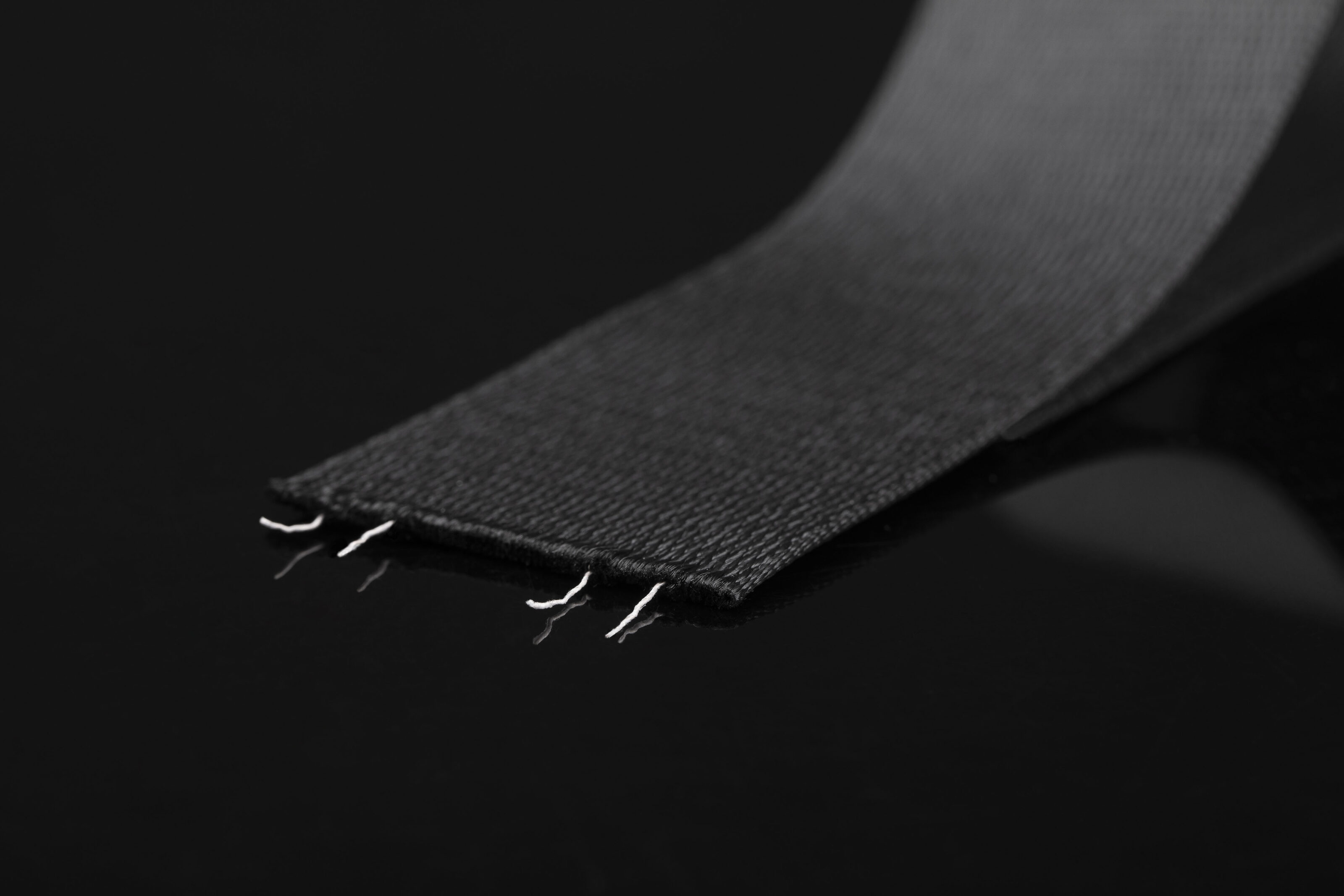
It incorporates a unique textile processing method by weaving electrical heating conductors into the seatbelt structure, with no compromising necessary on occupant protection or need to increase its thickness.
ZF claims it can increase EV driving range by up to 15 per cent in combination with heated seats and reducing climate control use.
The seatbelt quickly heats up between 36 to 40-degrees celsius with a uniform feeling and is most useful in extreme colder climates such as Europe, where temperatures of up to -50 degrees celsius have been recorded in some regions.
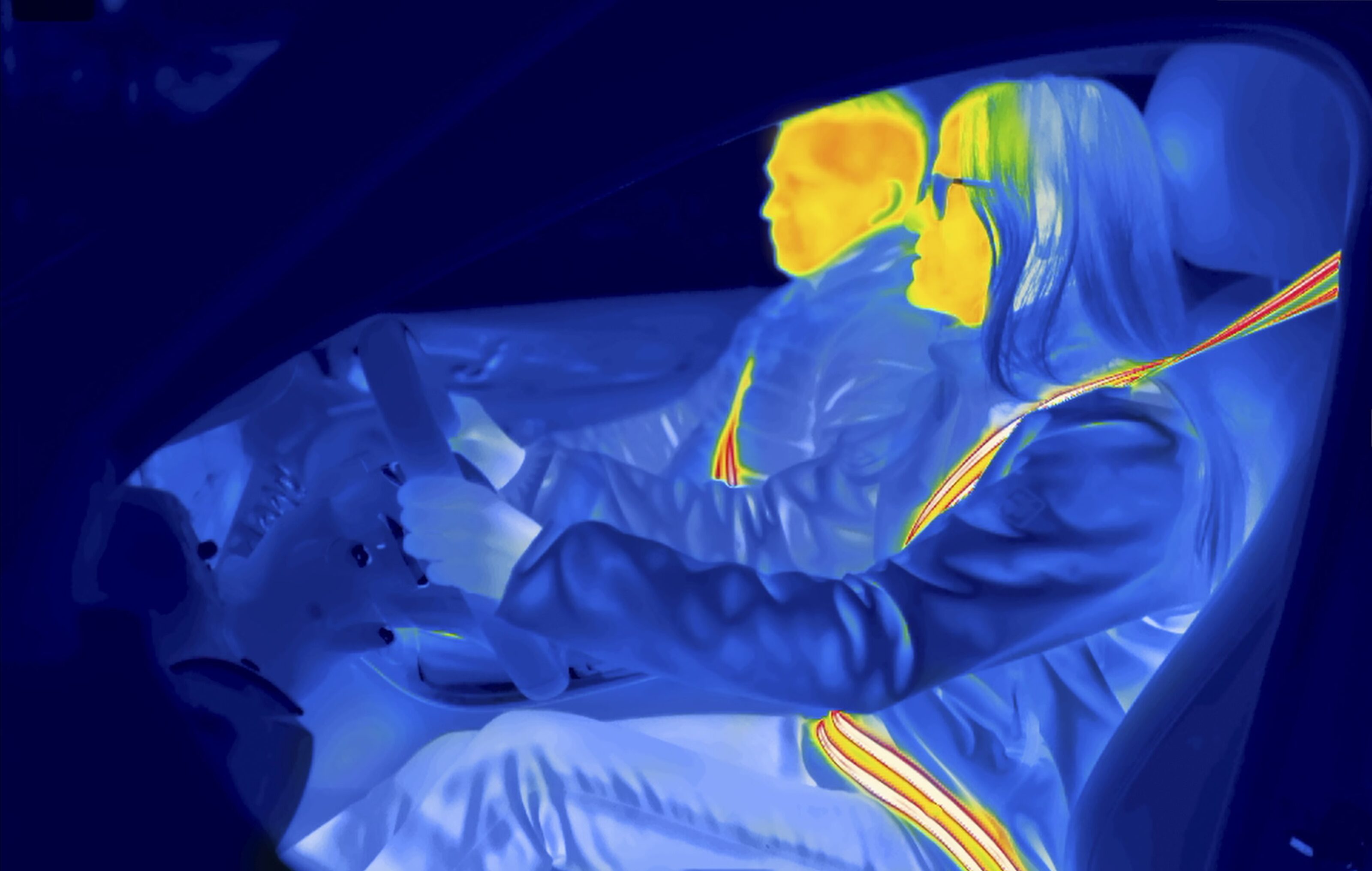
This means, occupants are more likely to take off their thick winter jackets while inside the car, allowing the seatbelt restraint to be closer against the body to ensure optimum crash protection.
There are no added procedures or qualifications needed from car brands to fit the heated seatbelts at mass scale, but there are likely to be slight installation differences.
The company hasn’t detailed when it’ll be available.
ZF has been best known to supply its eight-speed torque converter automatic transmission to models such as the latest BMW M3 and M4 high performance sedans, Rolls-Royce Ghost limousine and GWM Tank 300 off-road SUV.
The German manufacturer is responsible for the electric drive unit – including the motors, transmission, electronics and control software – for the Mercedes-Benz EQC mid-sized SUV and introduced an improved version late last year.
It also develops airbags, safety assistance systems and autonomous driving tech.
