
UPDATE: Mercedes-Benz Australia has confirmed when the all-new AMG C63 S is due to arrive Down Under.
July 2023 is earmarked as the arrival month at this stage, pending any shipping delays, which provides some clarity to the previous indication of mid-year when the car was first revealed.
A Mercedes spokesperson has also shared that interest in the new model, which ditches the 4.0-litre V8 in favour of a hybridised 2.0-litre four cylinder, is encouragingly high.
Australia is one of AMG’s largest markets worldwide and such is our love of all things fast that AMG models accounted for 30 per cent of Mercedes’s total Aussie sales in 2021.
We’re heading to Spain later this week to drive the new C63 S so be sure to keep an eye out for our review and video when the embargo lifts on December 14.
FULL DETAILS: Fifth-generation Mercedes-AMG C63
Snapshot
- V8 replaced by a 2.0-litre plug-in hybrid with 500kW and 1020Nm
- Aussie arrival now confirmed for July 2023
- Sedan and wagon body styles revealed; wagon not coming to Australia
- Chassis tech includes drift mode, fully variable four-wheel drive and rear-wheel steering
- 0-100kmh in 3.4 sec, 0.7 seconds quicker than Audi RS4
Here it is: the biggest personality shift the Mercedes-AMG C63 has undergone in, well, ever.
Finally revealed after years of rumours, teasers and spy shots, our first official look at the all-new C63 confirms what we all knew was coming: the V8 is no more.
Cue outrage, waggling fingers and fighting in the streets.
A C63 without a V8!? It’s like the Beatles without McCartney. The Stones with no Jagger. But let’s not focus on what we’re losing; let’s drink in what we’re gaining. And that’s a colossal step forward in performance.
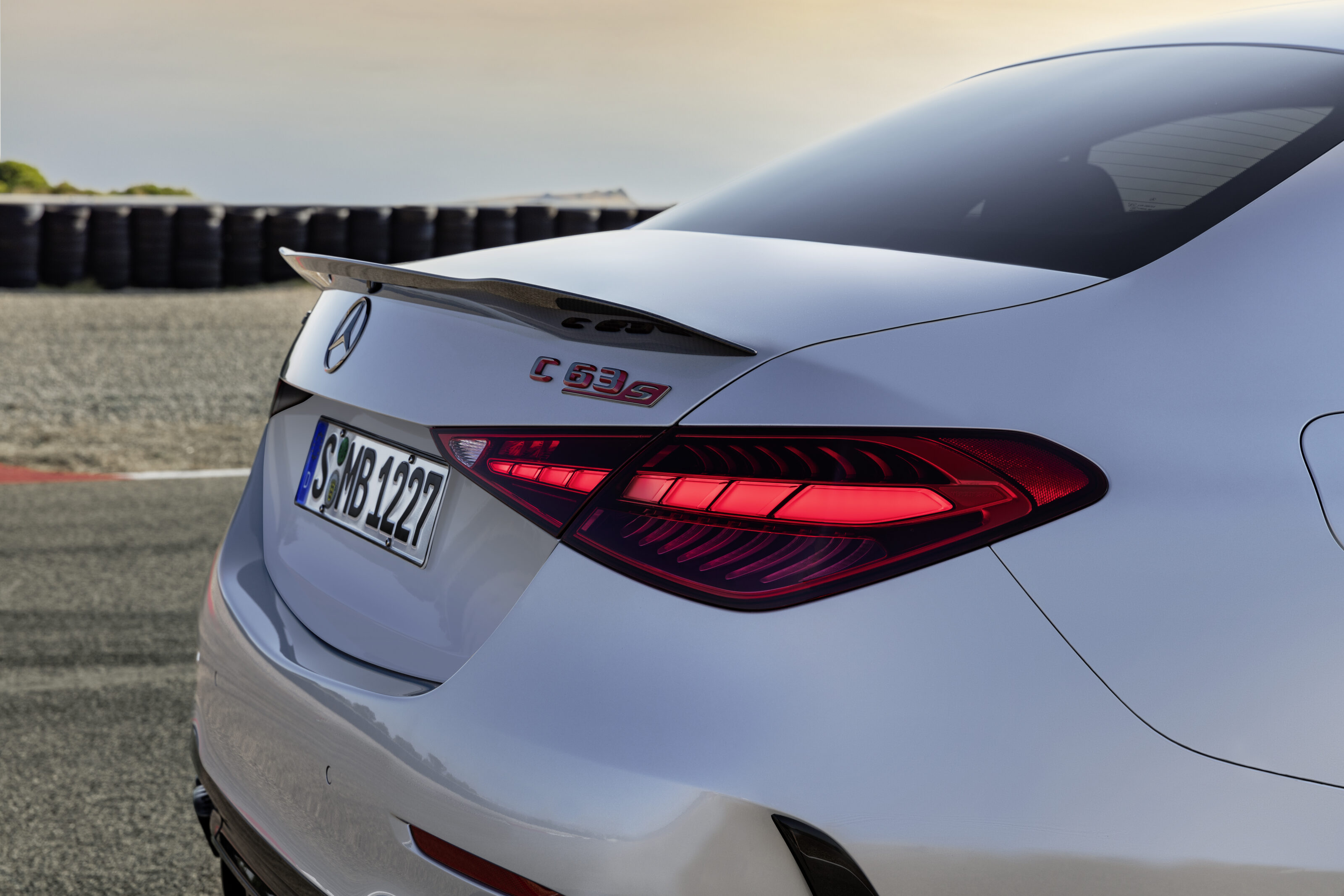
We’ll start with the outputs
Powering the new C63 is the combination of AMG’s frenzied M139 2.0-litre four-cylinder turbo and a single electric motor mounted on the rear axle.
Together they produce 500kW and 1020Nm.
Need some context? That’s 125kW and 320Nm more than the current V8 C63 S, which is a car in which we’ve never thought “Oh this could use more grunt”, and a healthy jump over the C63’s longstanding rivals in the Audi RS4 and BMW M3.
It also helps to make this the quickest C63 yet. Combine the newfound grunt with fully variable all-wheel drive and AMG says the new 2023 C63 will rocket from 0-100km/h in 3.4 seconds, which is a 0.6sec improvement over the outgoing rear-drive model. Mind you, that’s only a tenth quicker than a current M3 Competition xDrive despite the Beemer’s inline six producing ‘only’ 375kW/650Nm.
| W206 C63 S E Performance | W205 C63 S sedan | Audi RS4 Avant | BMW M3 Competition xDrive | |
|---|---|---|---|---|
| Engine | 2.0-litre 4cyl turbo + electric motor | 4.0-litre V8 twin-turbo | 2.9-litre V6 twin-turbo | 3.0-litre inline-6 twin-turbo |
| Power | 500kW (combined) | 375kW @ 5500-6250rpm | 331kW @ 5700-6700rpm | 375kW @ 6250rpm |
| Torque | 1020Nm (combined) | 700Nm @ 2000-4500rpm | 600Nm @ 1900-5000rpm | 650Nm @ 2750-5500rpm |
| Weight | 2036kg | 1745kg | 1715kg | 1855kg |
| 0-100km/h | 3.4sec | 4.0sec | 4.1sec | 3.5sec |
| Fuel use | 6.9L/100km | 9.9L | 8.9L/100km | 10.2L/100km |
Still, outputs only tell part of the story; how the petrol engine and hybrid system interact in the W206 C63 is impressively sophisticated. The petrol unit is the same core engine found in the A45 hyper hatch and the AMG C43, only in this application it produces 350kW @ 6750rpm and 545Nm @ 5250-5500rpm. AMG says that makes it the world’s most powerful four-cylinder engine, and it has a specific per litre output of 176kW.
Like the C43, the petrol engine is mounted longitudinally and the turbo is electrified which helps to improve response and reduce lag. Unlike the unit in the C43, however, the C63’s turbo is “significantly larger”.
The petrol engine is paired with a nine-speed automatic and, thanks to a wet clutch in place of a torque converter, launch control is standard.
It’s the electrified side of the C63’s powertrain that promises to deliver the biggest character change, however. Mounted on the rear axle is what AMG calls a “compact electric drive unit”. It’s effectively the same plug-in hybrid system as in the more expensive GT63 S E Performance and it combines an electric motor with its own two-speed gearbox and integrated electronically controlled locking rear diff.
Driving the electric motor through its own gearbox was necessary given the system’s huge combined 1020Nm torque demand (mounting it to the crank of the combustion engine would like tear the 9-speed auto to bits) but the e-motor can also send drive to the front axle if needed via a seperate propeller shaft.
Mounted above the electric drive unit is a 6.1kWh battery pack which has been designed and engineered in-house by AMG to be as light as possible at 89kg. No word yet, though, on whether mounting the battery above the rear motor eats into boot space but we’d say it’s likely.
In regular running, the electric motor produces 70kW – but AMG says it’s capable of a peak output of 150kW for 10 seconds. To deploy the battery’s full potency, the driver simply pushes the accelerator through a detente or “tangible pressure point” towards the end of its travel.
The motor also gives the C63 the ability to run purely on electric power at speeds up to 125km/h, although the EV range is fairly short, at 13km.
Managing weight and effective cooling were high priorities for AMG’s engineers, and they claim the unique design of the 89kg battery pack – which is cooled by a new non-conductive cooling liquid that flows around each of the 560 cells individually – is twice as power-dense as a conventional battery set-up.
Charging is handled via the onboard 3.7kW AC charger, or through a home wall box or public charger, but AMG is yet to provide an indication of charge times.
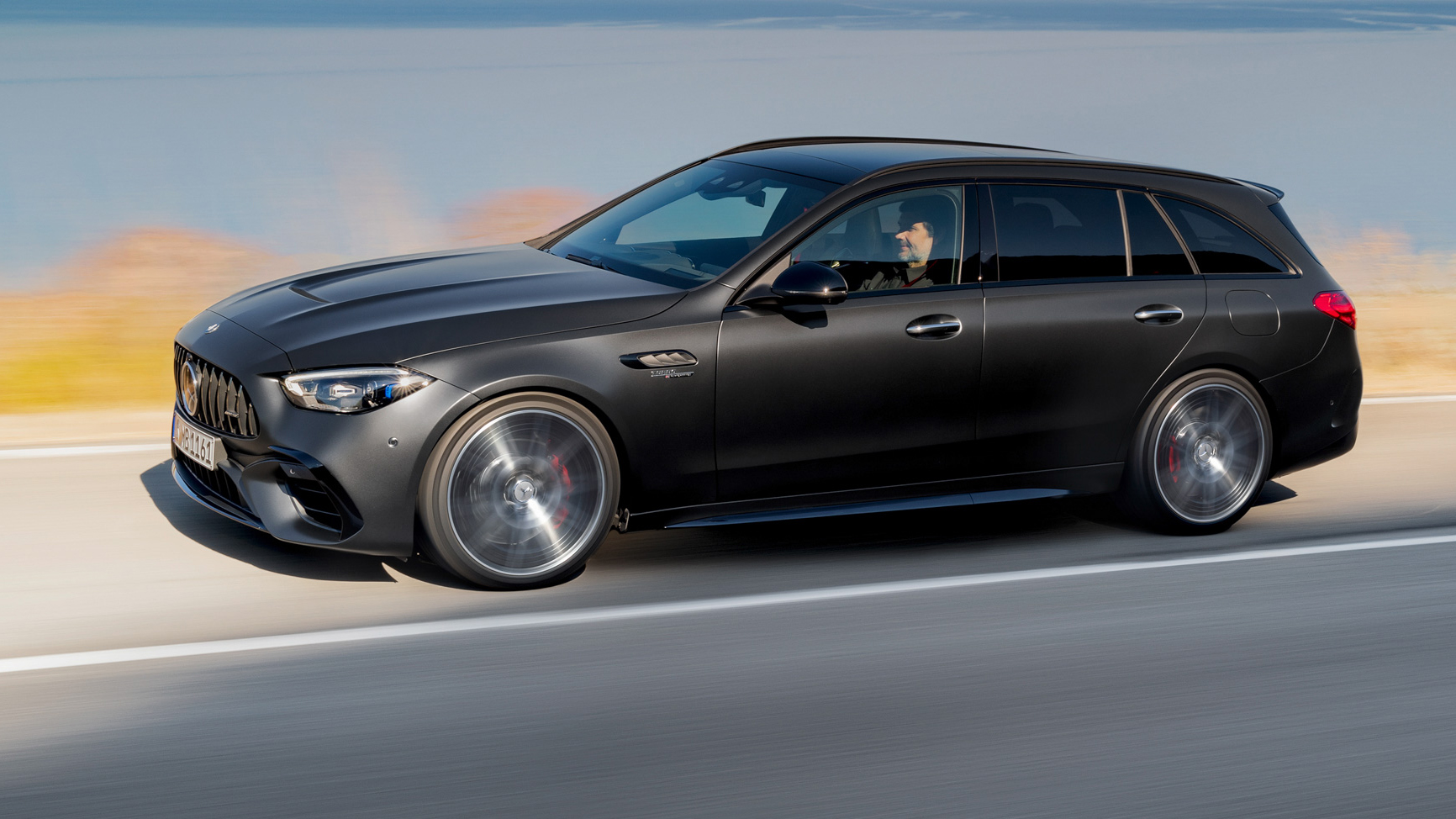
You can also top up the battery through regenerative braking. Four levels of regeneration are offered via a toggle on the right steering wheel spoke and range from Level 0, or virtually no regen, through to Level 3 which offers ‘one-pedal’ driving and can feed up to 100kW back into the battery.
As for drive modes, there are now eight to contend with: Electric, Comfort, Battery Hold, Sport, Sport+, Race, Slippery and Individual. As usual your chosen drive mode adjusts the ferocity of the adaptive dampers, steering and transmission – but in the C63’s case, it also determines how much power the electric motor produces.
In Comfort mode, for example, the boost power of the motor is limited to 25 per cent, while in Sport+ and Race, that lifts to 80 percent. The motor only gives its full peak of 150kW if the driver activates the ‘kick down’ function by going to full throttle, which can be done in any drive mode.
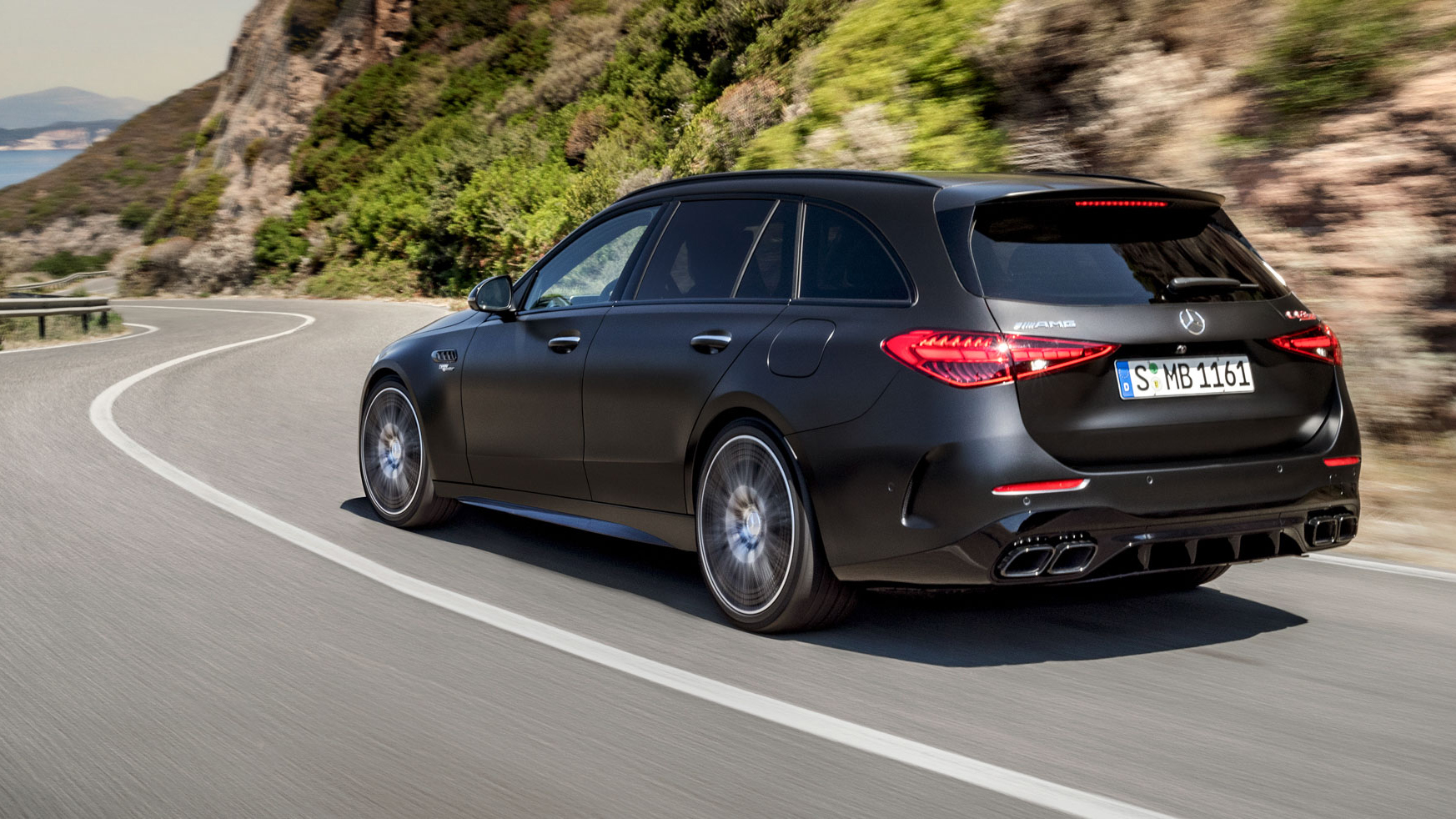
Right, time to talk about the sound
Or to be more accurate, the lack thereof, if you’re driving in Electric mode.
Perhaps acutely aware that the current C63’s sinister V8 rumble is intrinsic to the car’s appeal, AMG has worked hard to engineer this new car with its own sound signature. Start the car in EV mode, for example, and AMG says it will deliver a “powerful, sonorous start-up sound” through the vehicle’s speakers.
At low speed, the C63 will also warn pedestrians by emitting a “specially composed, low-frequency” sound through loudspeakers mounted in the front and rear of the body, while in regular driving the soundtrack of the 2.0-litre engine is amplified through the internal speakers.
Colour us a touch apprehensive about all this, but we’ll retain an open mind. At least they haven’t tried to make it sound like a V8…
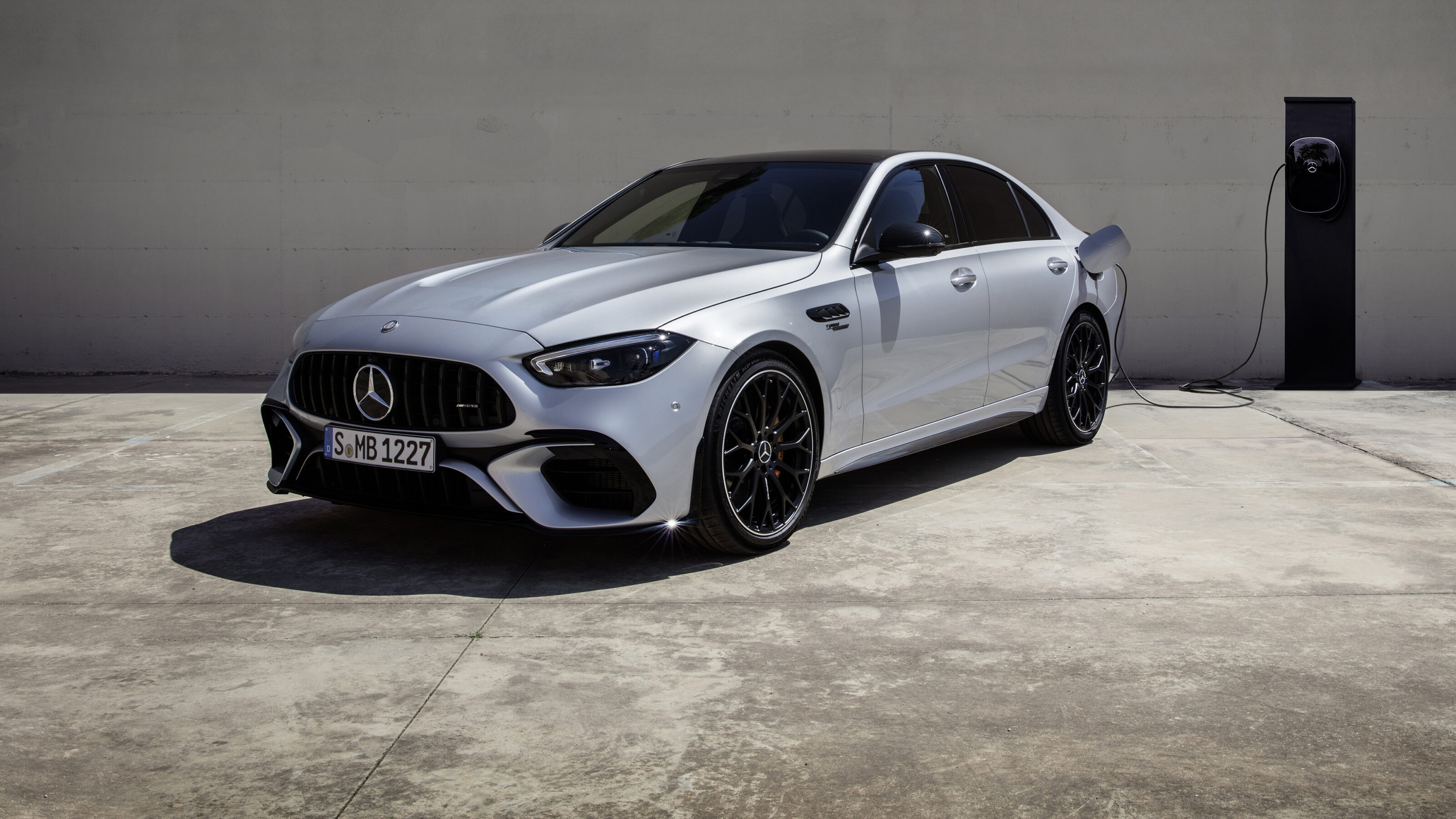
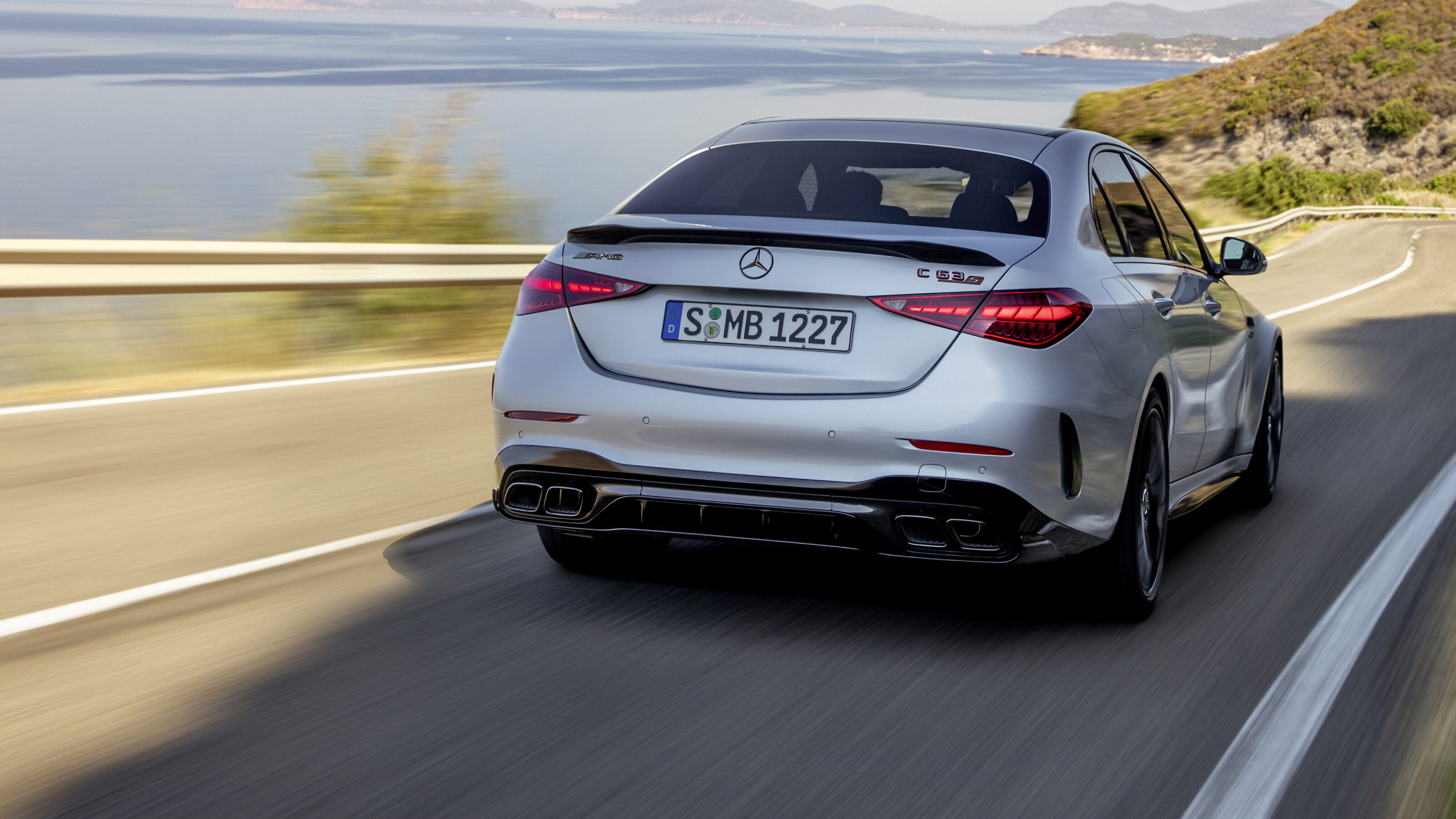
Naturally, moving to a hybrid powertrain means the new C63 is all-wheel-drive, and AMG says the system is fully variable. There’s also a Drift Mode function and four-wheel steering is now standard, which can move the rear wheels by up to 2.5 degrees. Suspension is steel springs with three-stage adaptive dampers and we’d wager they’re going to get a workout because the new C63 is a bit of a porker.
Adding the battery, e-motor, four-wheel steering and two gearboxes has driven weight to 2036kg sans driver, which is 300kg portlier than the W205 C63.
It’s also significantly heavier than an M3 or RS4 but the AMG’s huge power output means it still gazumps them in the power-to-weight stakes. An M3 Comp has 202kW per tonne, for example. The new C63 produces 245kW/tonne.
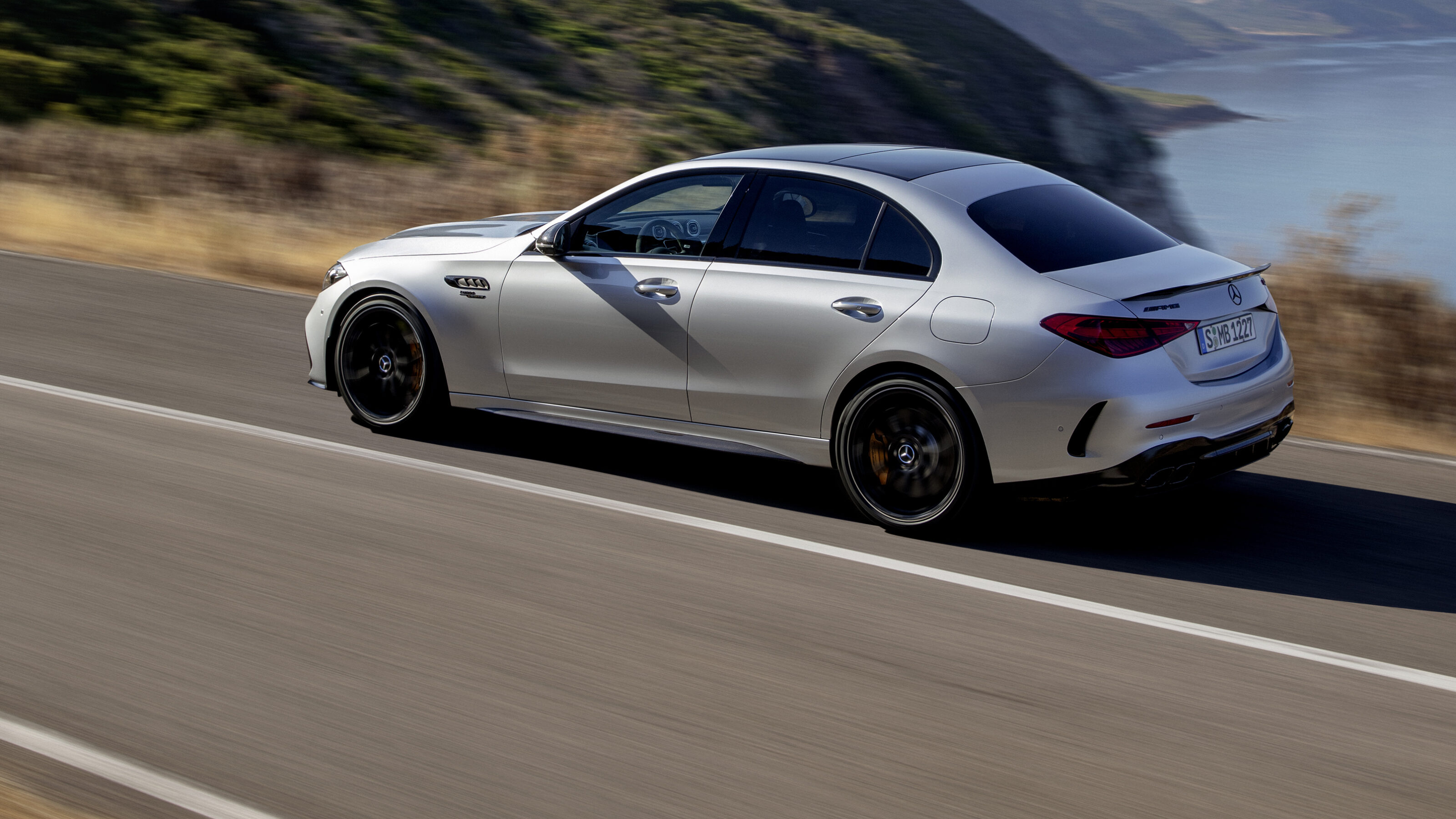
Design-wise, the C63 doesn’t offer too many surprises, given we’d already seen it in camouflage – although we are fans of the thin air vent between the two power domes on the bonnet.
Don’t just write it off as a regular C-Class with some pumped up guards and a subtle rear wing, though. There are serious bodywork alterations at play here.
Overall length is up 83mm compared with a C300, the front track is 76mm broader, and even the wheelbase has changed and is now 10mm longer.
Wheels are staggered 19s, although 20s are optional and will likely be standard fare in Australia, and lurking behind them is a high-performance composite braking system with six-piston front callipers. Even more powerful carbon-ceramic stoppers will be an option.
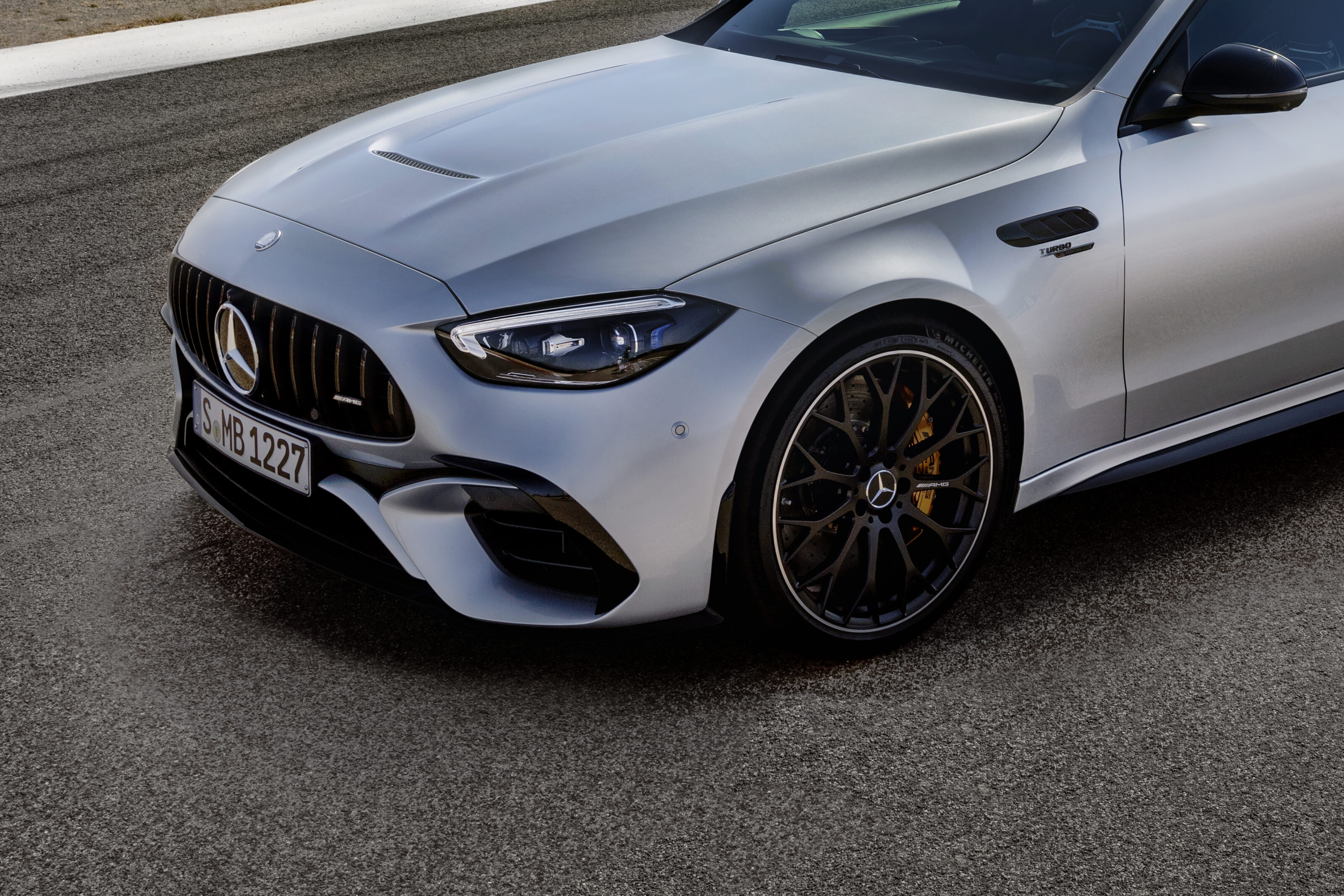
One other little detail worth mentioning? Look closely at the nose and you’ll notice the traditional Mercedes star and wreath have been replaced by a black AMG emblem.
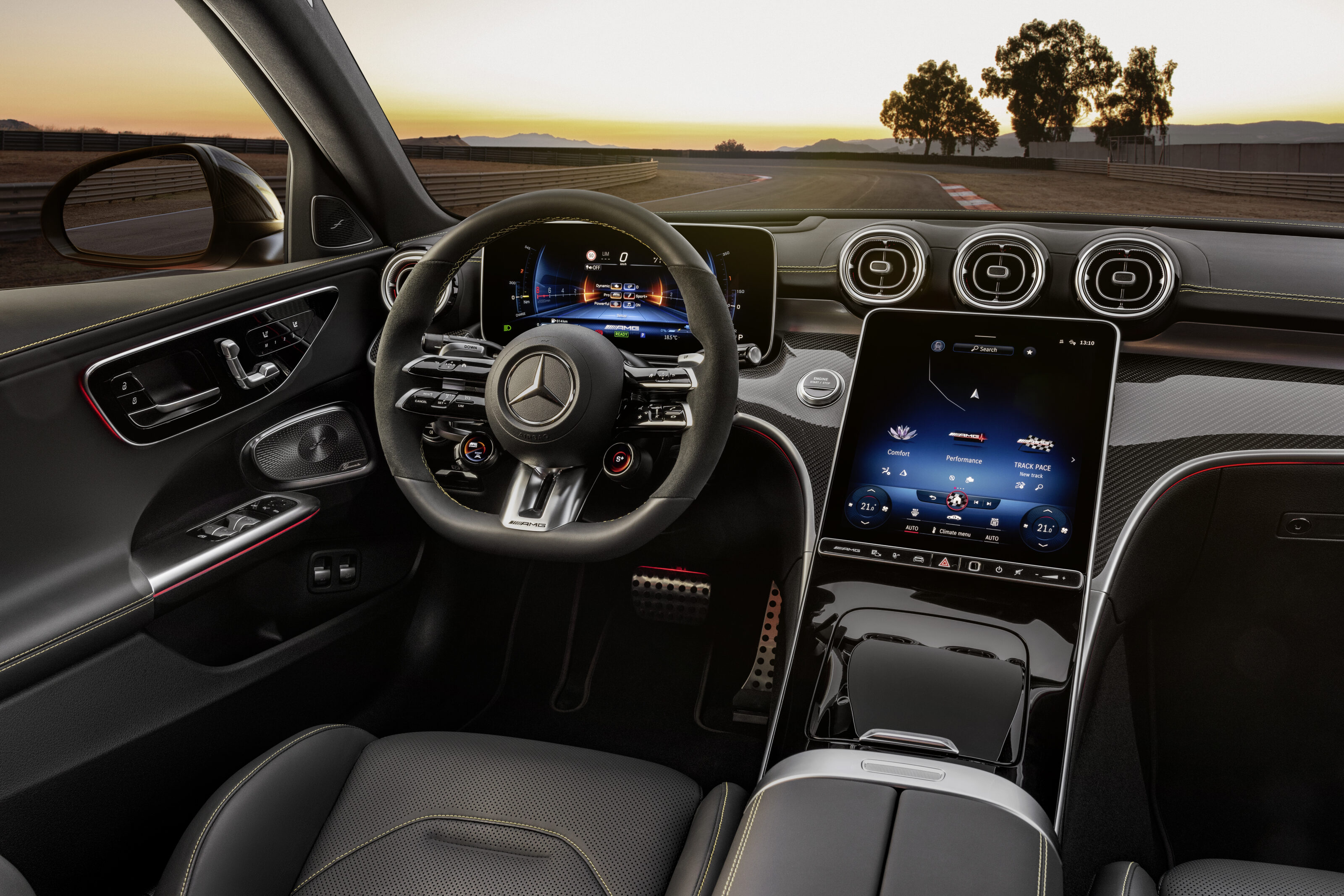
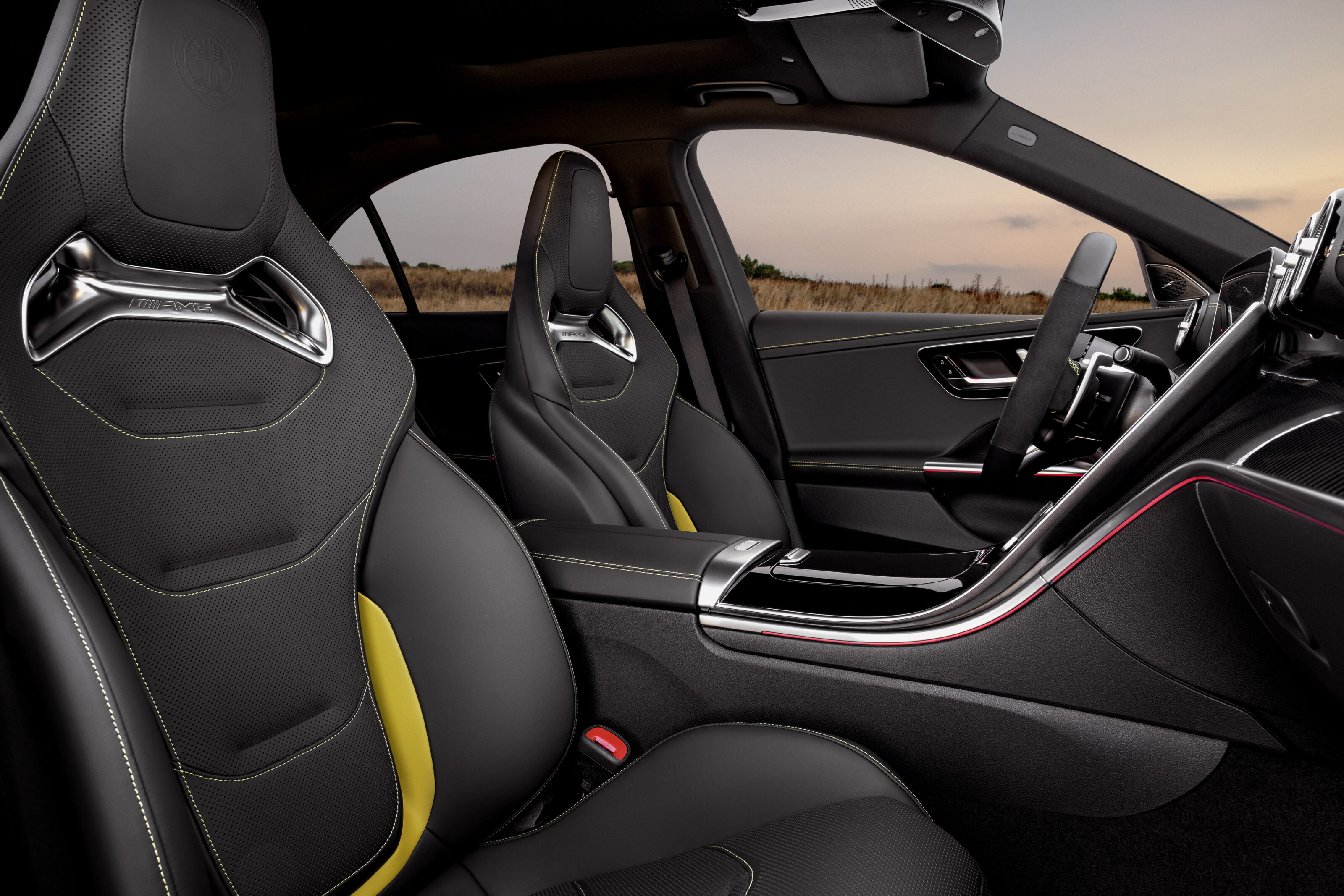
Inside it’s the usual fare of an AMG-specific steering wheel and grippier bucket seats, although AMG has redesigned its optional performance seats with “weight saving openings” in the side bolsters, which sounds a lot like the gaps you get in the BMW M3’s carbon seats.
There are also specific hybrid displays on the digital screens and head-up display which display how the powertrain is deploying its performance and the temperature of the motor and battery.
So there you have it. Our first chance to properly digest the most radically different C63 in decades. Is it a shock?
Given the shift towards electrification and AMG’s lengthy drip feed of information, no not really. Is it going to deliver a driving experience that’s completely alien to existing C63 owners? Almost definitely. Whether that’s a good or a bad thing will have to wait until we drive it later this year. Stay tuned for that. As for when we’ll see cars arrive Down Under? Mercedes is tipping a mid-2023 release and we wouldn’t be surprised if the price starts with a two. The game really has moved on…
Key Points
- Family people-mover available in three powertrains overseas
- Configurable seats, fresh looks, more tech
- Australian plans unclear, but delivery van confirmed for 2024
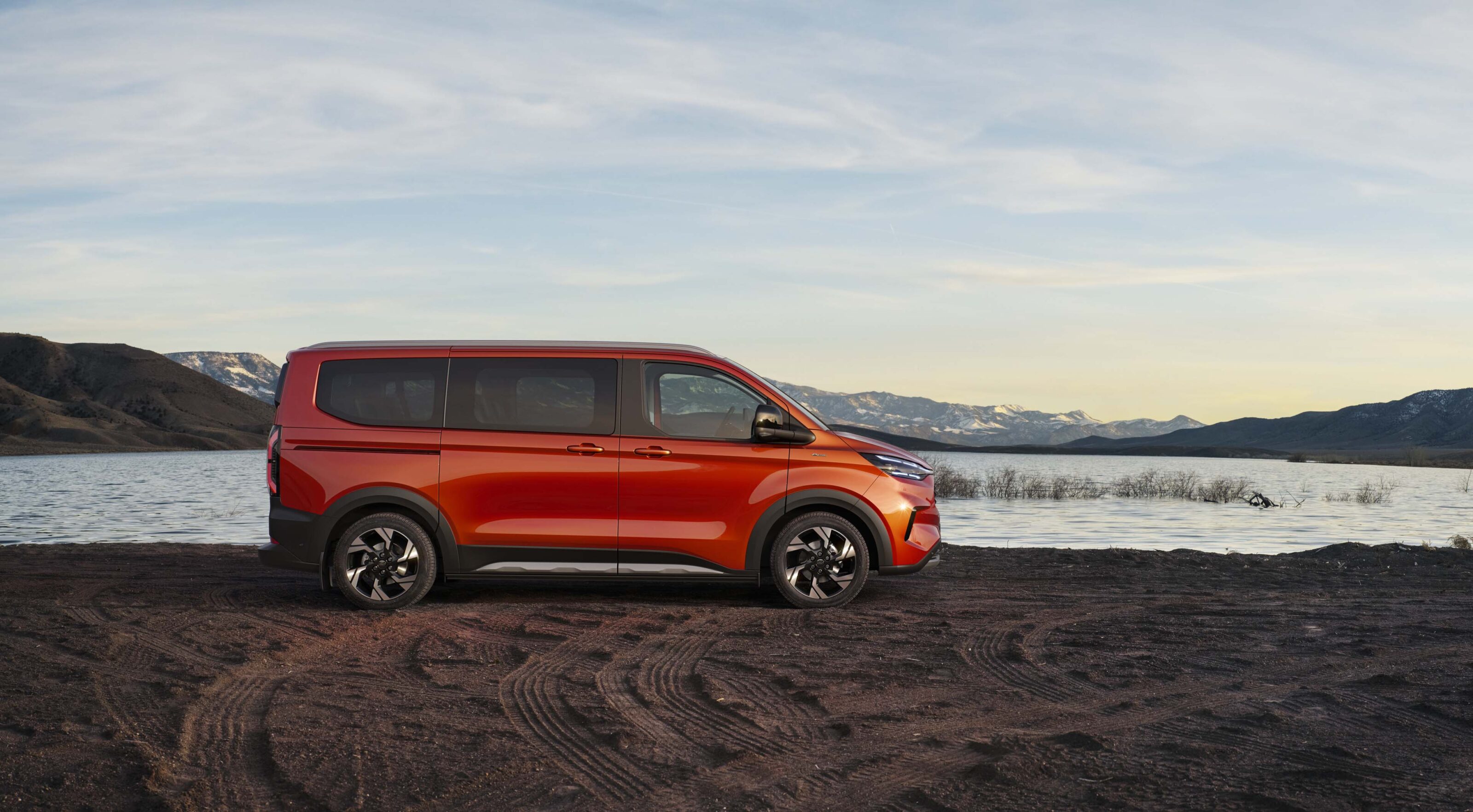
Ford has unveiled the all-new Tourneo Custom people-mover van, available with full battery-electric, plug-in hybrid and diesel powertrains – but it’s unclear whether it’ll be sold in Australia.
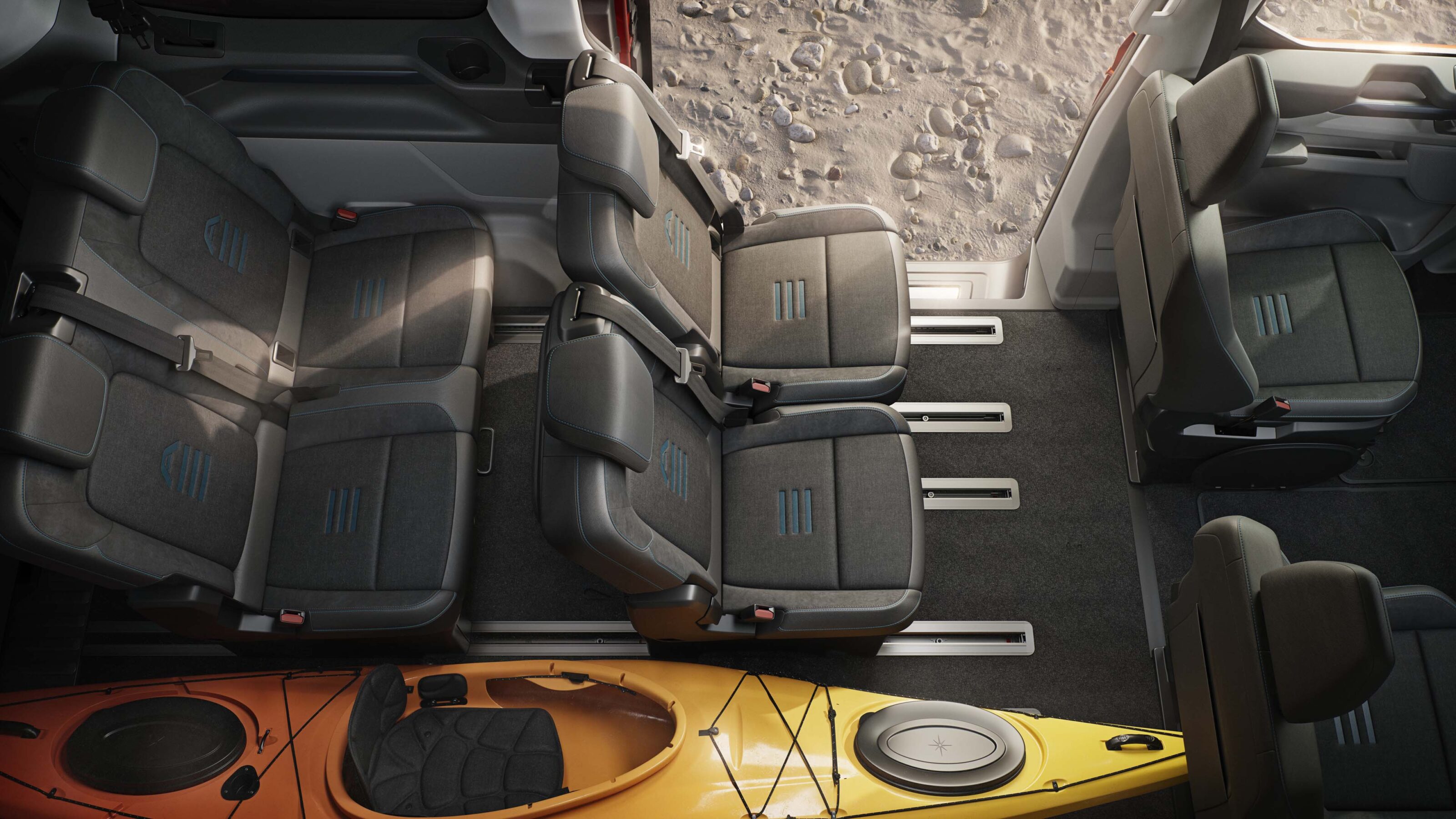
Based on the second-generation Transit Custom and E-Transit Custom that are confirmed to land by 2024, the Tourneo Custom line-up adds three row seating for up to eight people in the all-electric E-Tourneo Custom or nine people in the Tourneo Custom PHEV and diesel-powered models.
On both standard and long wheelbase models, the second- and third row use a new track-based system to slide seats along notches, reconfigure them into a six-person face-to-face layout, or remove them completely.

The seats are also lighter than in its predecessor, the second row boasts integrated seatbelts, and there are three Isofix child seat anchor points across the second row and two outboard seats in the third row. The new platform also has a lower floor height and integrated side step for easier entry and exit.
In Europe, the carmaker will offer the choice of EcoBlue diesel engines with a range of power outputs from 100kW to 125kW mated to an eight-speed automatic or six-speed manual transmission.
The people-mover can also be optioned with an all-wheel-drive powertrain for the first time, but is exclusive to select diesel configurations.
Meanwhile, the Tourneo Custom PHEV combines a 2.5-litre petrol engine and an electric motor with a 11.8kWh (usable) battery pack. Its pure-electric driving range is ‘targeted’ to be more than 50 kilometres.
The headlining fully-electric E-Tourneo Custom family van packs a 74kWh (usable) battery with a 160kW electric motor good for a ‘targeted’ driving range of 370km from a full charge. It can recharge on up to 11kW AC and 125kW DC speeds.
A new retractable towbar option allows the E-Tourneo Custom to tow a maximum of 2000 kilograms braked, whereas the diesel-powered variant can tow up to 2500kg.
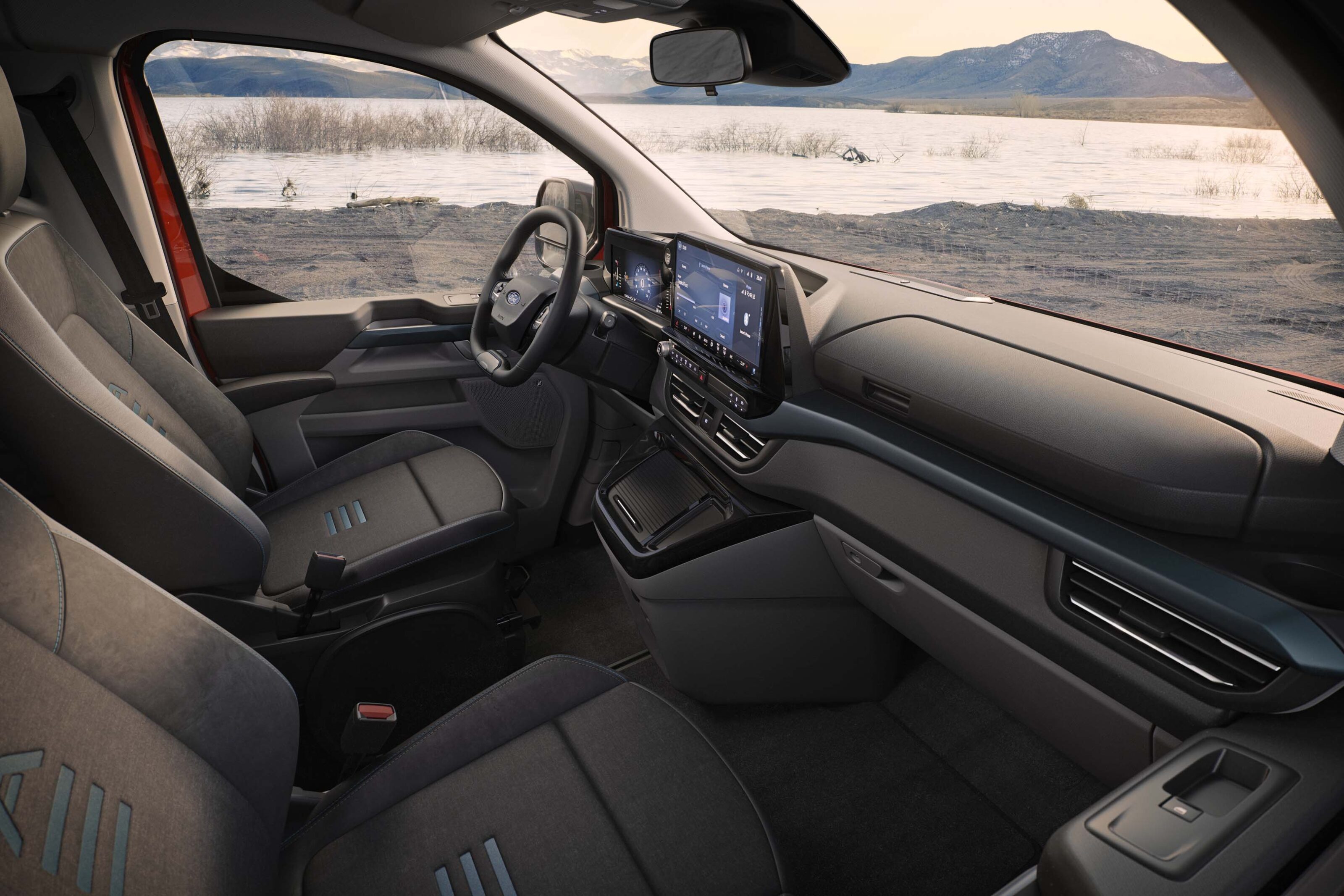
Like the related Transit Custom delivery van, key headline features include; a driver’s steering wheel that can tilt flat to serve as a table for a laptop or for lunch (when not driving), 13-inch touchscreen running Ford’s latest Sync 4 software with wireless Apple CarPlay and wireless Android Auto, 5G connectivity, heated second row outboard seats, tri-zone climate control, a 14-speaker Bang and Olufsen system, ambient interior lighting, matrix LED lights, full-width front light bar, a card key and more.
A full suite of active safety assistance systems are offered, including the debut of a 360-degree camera system, adaptive cruise control with lane centring, and reverse auto emergency braking assist for the Tourneo Custom.
The family van can be had in a variety of variants overseas, including; Active, Sport, and flagship Titanium X guises.
Will the Ford Tourneo Custom come to Australia?
Ford Australia currently doesn’t have any comment to make about the Tourneo Custom people-mover, so it’s unclear whether it’ll make it Down Under. For context, it has not sold this version here previously to rival the Hyundai Staria, Kia Carnival or Volkswagen Caddy.
However, the local arm has confirmed the diesel-powered Transit Custom delivery van will land here in late 2023, followed by the electric E-Transit Custom in 2024.
The latter will be Australia’s third electrified model after the Ford Escape PHEV medium SUV and upcoming E-Transit large van, as part of the brand’s promise to introduce at least five such vehicles by 2024 locally.
The Ford Tourneo Custom line-up is produced at Ford’s Turkey factory and first deliveries in Europe are slated from mid-2023 for diesel models first.
Snapshot
- Last batch of original Ioniq units arriving for final customers
- 396 original Ioniq HEV, PHEV, BEVs sold since announcement
- Electric range now includes Santa Fe Hybrid, Kona Electric and Ioniq 5
The original Hyundai Ioniq Hybrid, Plug-in Hybrid and Electric liftbacks were officially discontinued in May, but the last batch will soon land in Australia.
“Ioniq has been discontinued for the Australian market, with the last orders placed several months ago. The vehicle is no longer available for sale in our dealer network,” a Hyundai spokesperson told WhichCar.
“We still have the last batch of units produced trickling into the country, which are going to existing customer orders.”
The Hyundai Ioniq line-up has now been removed from the local website, with few dealer demonstrators listed on the classifieds.
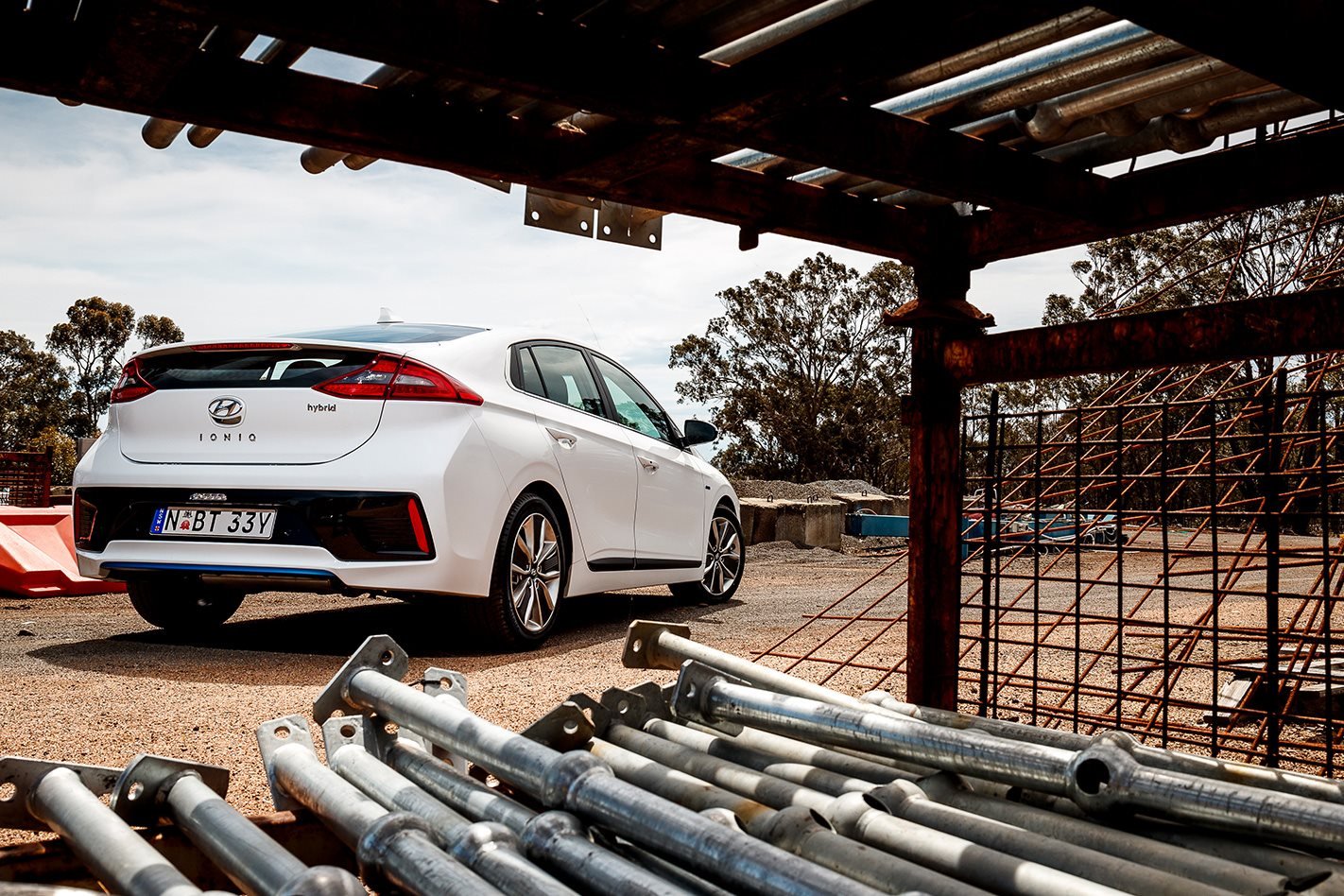
The i30 Sedan-sized liftback officially ended global production in July.
Since the local announcement in May, to the end of October this year 396 Ioniqs have been registered in Australia. That’s compared to 431 sold during the same period for the supply-constrained Ioniq 5 medium crossover.
The eco-friendly liftback first debuted in 2016 as the South Korean carmaker’s answer to the venerable Toyota Prius. It landed in Australia two years later, before receiving a facelift in 2019, and the entry-level Hybrid Elite and Plug-in Hybrid Elite variants were axed in 2021.
The outgoing Hyundai Ioniq Hybrid Premium started off at $41,390 before on-road costs, the Ioniq Plug-in Premium from $47,950 before on-roads, and the zero emission Ioniq Electric Elite from $49,970 before on-roads.
The latter in particular was one of the most affordable pure battery-electric cars in Australia, in line with the MG ZS EV, BYD Atto 3 and Nissan Leaf. It offered 311 kilometres of claimed WLTP driving range from its 38.3kWh battery pack.
Although the original Ioniq is now gone, its name lives on with a dedicated Ioniq-branded line-up of EVs based on the Electric Global Modular Platform (E-GMP). The futuristic-looking Ioniq 5 was first, with the Ioniq 6 sporty sedan to come early next year, and the Ioniq 7 large SUV set to follow.
Hyundai’s only hybrid model is the recently-launched Santa Fe Hybrid family SUV, while the most affordable pure-electric car in the line-up is the Kona Electric small crossover. Hyundai doesn’t currently offer a plug-in hybrid model in Australia, despite being available on the Tucson and Santa Fe SUVs overseas.
Household transport costs continue to rise with Sydney, Melbourne and Brisbane remaining Australia’s most expensive capital cities.
Alice Springs and Geelong were also the most expensive of the regional cities analysed.
That’s according to the latest findings from the Australian Automobile Association’s (AAA) Transport Affordability Index which also shows the typical household now spends 14.9 per cent of its income on transport costs.

The latest quarterly results include the final three months of the temporary halving of the fuel excise rate, annual inflation at 7.3 per cent and higher vehicle prices affecting car loan repayments.
The AAA data shows the typical weekly household transport cost in capital city households is now $413.53 and $343.93 in regional households.
Compared to the previous quarter, weekly car loan repayments rose in every city tracked in the index whether regional or a capital.
While fuel prices declined by the end of the last quarter, the typical Australian household is still paying $18.57 per week more than this time last year in fuel expenditure.
AAA Managing Director Michael Bradley said transport costs are placing a significant strain on household budgets.
“The latest figures are a timely reminder for governments that they need to carefully consider policies that may add to transport cost of living pressures across both regional and metropolitan Australia,” he added.

The AAA data shows Sydney is still Australia’s most expensive capital city with typical weekly transport costs averaging $485.68, followed by Melbourne ($463.64) and Brisbane ($458.38).
Alice Springs is Australia’s most expensive regional city at $377.85 per week, while Geelong ($364.06) has replaced Bunbury ($363.48) as the second most expensive regional city.
The Tasmanian cities of Launceston (18%) and Hobart (17.6%), followed by Brisbane (17%) had the highest transport costs as a proportion of household income.
With technology companies such as Amazon, Meta and Twitter significantly reducing their workforces, Jaguar Land Rover is snapping up fresh talent with the launch of a recruitment drive to entice skilled workers.
The initiative will look to fill 800 digital and engineering positions across the UK, Ireland, US, India, China and Hungary, promising flexible working arrangements to successful applicants – a carrot that would seem to poke at Twitter CEO Elon Musk’s recent insistence that employees return to in-office attendance.
Industry-wide slowing in the tech sector, and recent (and very public) streamlining at Twitter has resulted in thousands of jobs being shed, emptying a slew of engineers onto the job seeker market.
Given Jaguar Land Rover’s strategy of moving to the electrification of its products, and a shift to becoming a “digital-first and data-driven organisation”, former engineers and tech workers from the world’s premier tech giants could benefit the maker greatly.
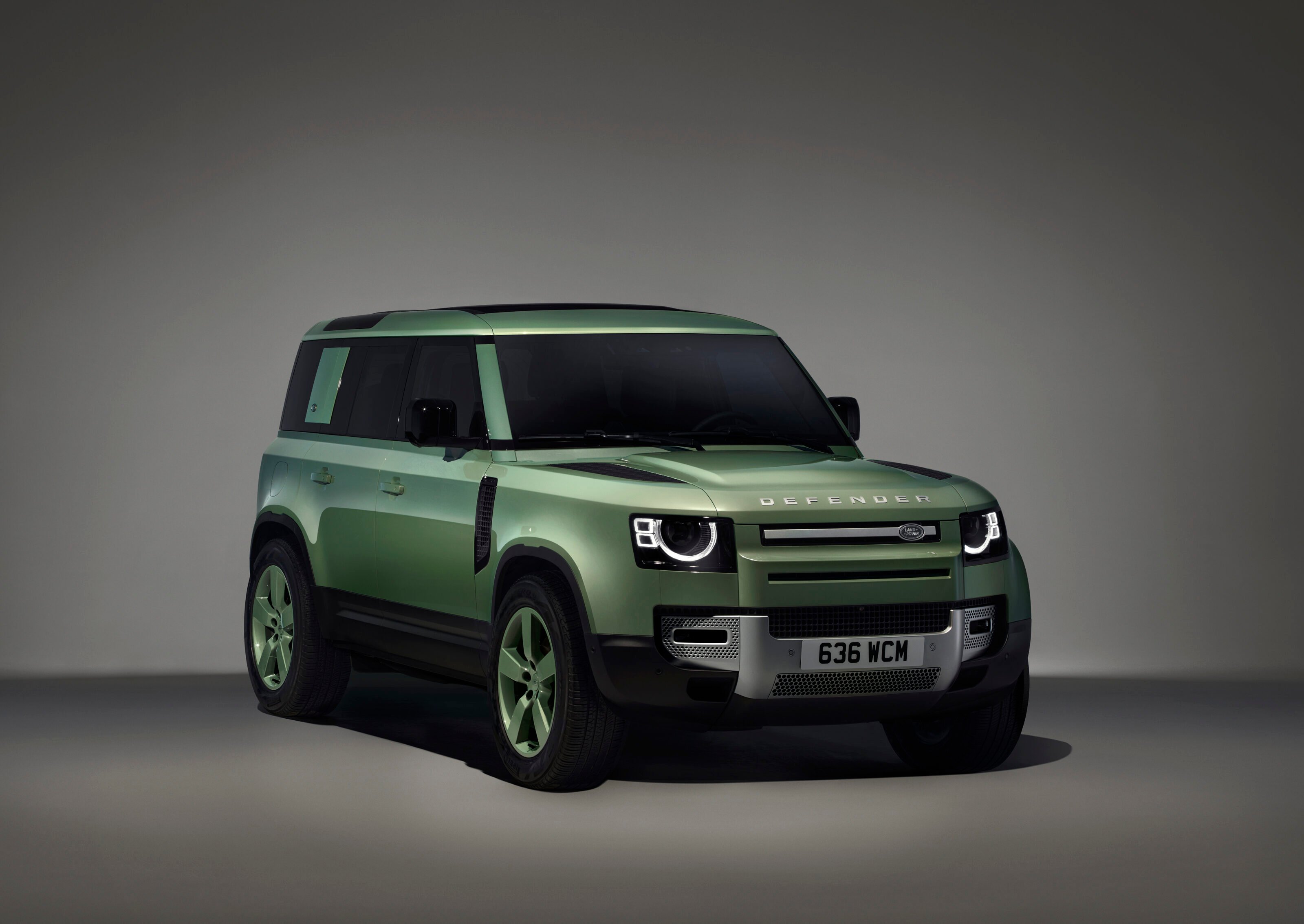
Anthony Battle, JLR’s Chief Information Officer, said: “Our digital transformation journey is well underway, but being able to recruit highly skilled digital workers is an important next step. We are pleased to be able to provide opportunities to talented individuals with digital capabilities.”
“Jaguar Land Rover is transforming to an electric-first business, and we are creating some of the most digitally advanced vehicles ever seen. Through our products we will create new experiences, new levels of intimacy and connected car services for our customers, to give our clients a true modern luxury experience,” added Dave Nesbitt, Digital Product Platform Director.
JLR claims that electrified cars accounted for two-thirds of sales following the introduction of hybrid and electric cars to the range, and the new talent from this recruitment drive will be tasked with expanding development in autonomous driving, AI, electrification, cloud software, data science, and machine-learning as the Tata-owned company sets its eyes on enhancing its range and meeting its lofty zero-emission hopes.
Snapshot
- Mazda will gradually electrify this decade
- Focus on meeting regulations, improving ICE efficiency and profitability
- Additional BEV models will first debut from 2025
Mazda has updated its electric vehicle transition master plan up to 2030, while showing off a strange video game-like coupe vision model.
The electrification strategy is separated by three gradual stages and has committed to making Mazda factories carbon neutral globally by 2035, with the aim to go carbon-neutral completely by 2050.
2022-2024: Prepare for electrification
In the next two years, the Japanese carmaker will continue to invest in research and development (R&D) in preparation for electrification, while meeting carbon emissions regulations in each country.
Mazda will focus on its US factory and more upmarket large product architecture, including the CX-60 medium SUV (due next year) and related CX-80, plus CX-70 and CX-90 large SUV successor (confirmed for Australia).
Mild-hybrid diesel engines and plug-in hybrid powertrains will be offered.
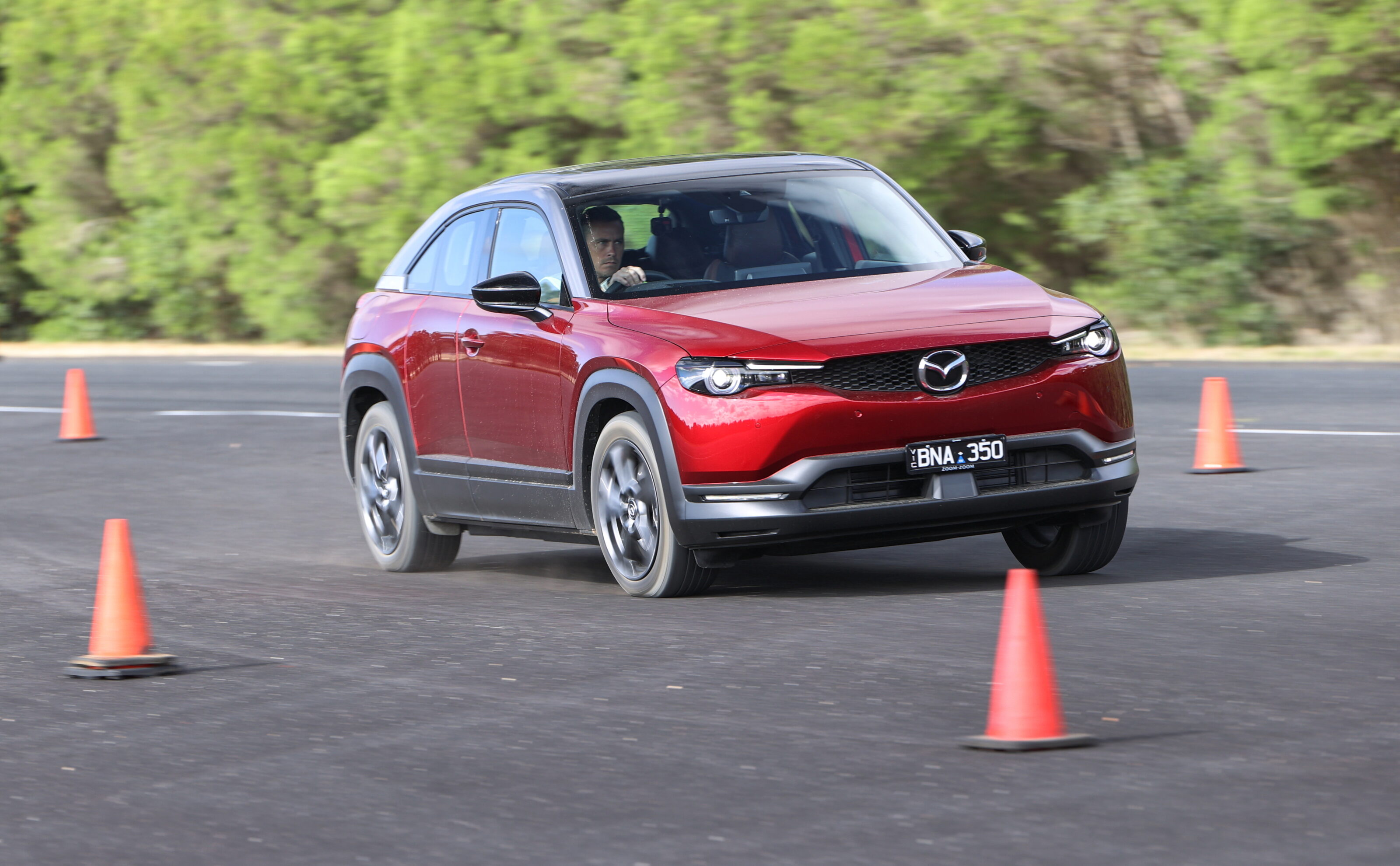
2025-2027: Transition to electrification
From 2025 to 2027, the company will start its transition phase to electrification as regulations become more stringent globally.
Mazda will introduce a new hybrid powertrain, while launching pure battery-electric vehicles (BEVs) in China and begin launching EVs globally in the later half of this second phase.
Further investments in battery R&D will also ensure they’re more cost efficient and work with Japanese suppliers and joint ventures to procure batteries and develop more efficient electric drive units.
But, it’ll still rely on profits from internal-combustion engine (ICE) vehicles and continue improving their efficiency with the potential of using future renewable fuels.
2028-2030: Full-scale BEV launch
By the end of the decade, the Japanese firm will ramp up launching pure-electric models across the line-up using the scalable Skyactiv EV architecture, while offering ICE, electrification technologies and alternative fuels to “provide appropriate combinations that suit power generation conditions in each region”.
Mazda expects 25 to 40 per cent of sales globally would be a BEV model depending on each country’s electrification public policies and regulations.
It will also consider the possibilities of investing in battery production, rather than outsourcing from suppliers.
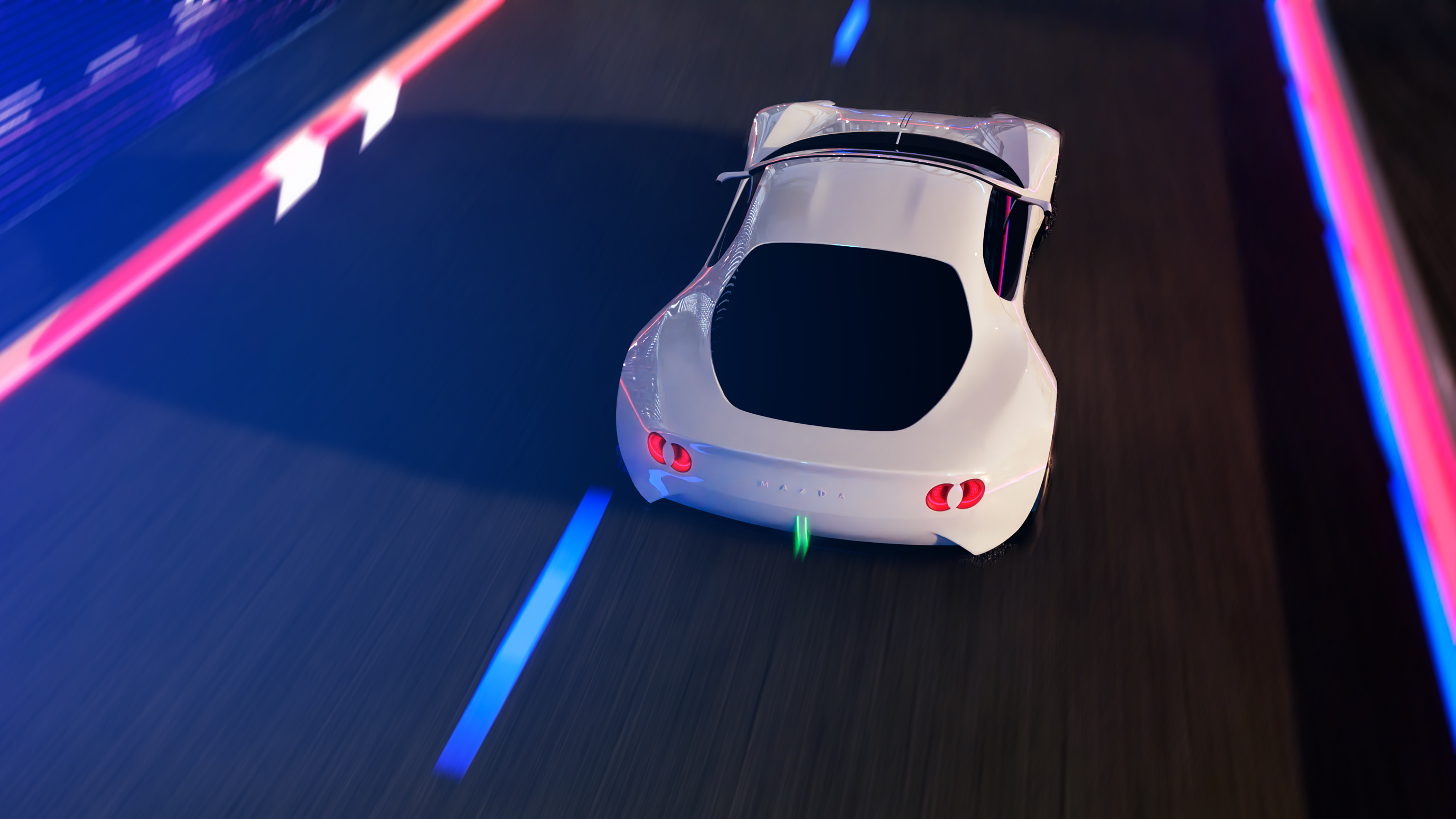
Mazda vision study model
To visualise its updated three-phase electrification approach, the company unveiled a video-game like Mazda coupe model.
It doesn’t look like its iconic MX-5 roadster; rather, it’s a sleek three-door hardtop coupe more reminiscent of the Jaguar F-Type.
According to the Climate Council, Mazda ranks sixth in the car brand EV transition, trailing Volkswagen, Ford and Volvo Cars. But, Toyota and Isuzu are at the bottom with fewer electrification commitments.
Mazda only sells the low-volume MX-30 Electric city crossover as its first and only BEV right now, with the forthcoming CX-60 medium SUV available with a plug-in hybrid powertrain.
UPDATE: Australian images added
With the new 2023 Hyundai Santa Fe Hybrid now on sale locally, fresh Australian photos have been added to this story.
Watch for our first-drive review to go live on Friday November 25, and continue reading here for all the key pricing and specification details.
November 4: 2023 Hyundai Santa Fe Hybrid pricing announced
Mike Stevens and Jordan Hickey
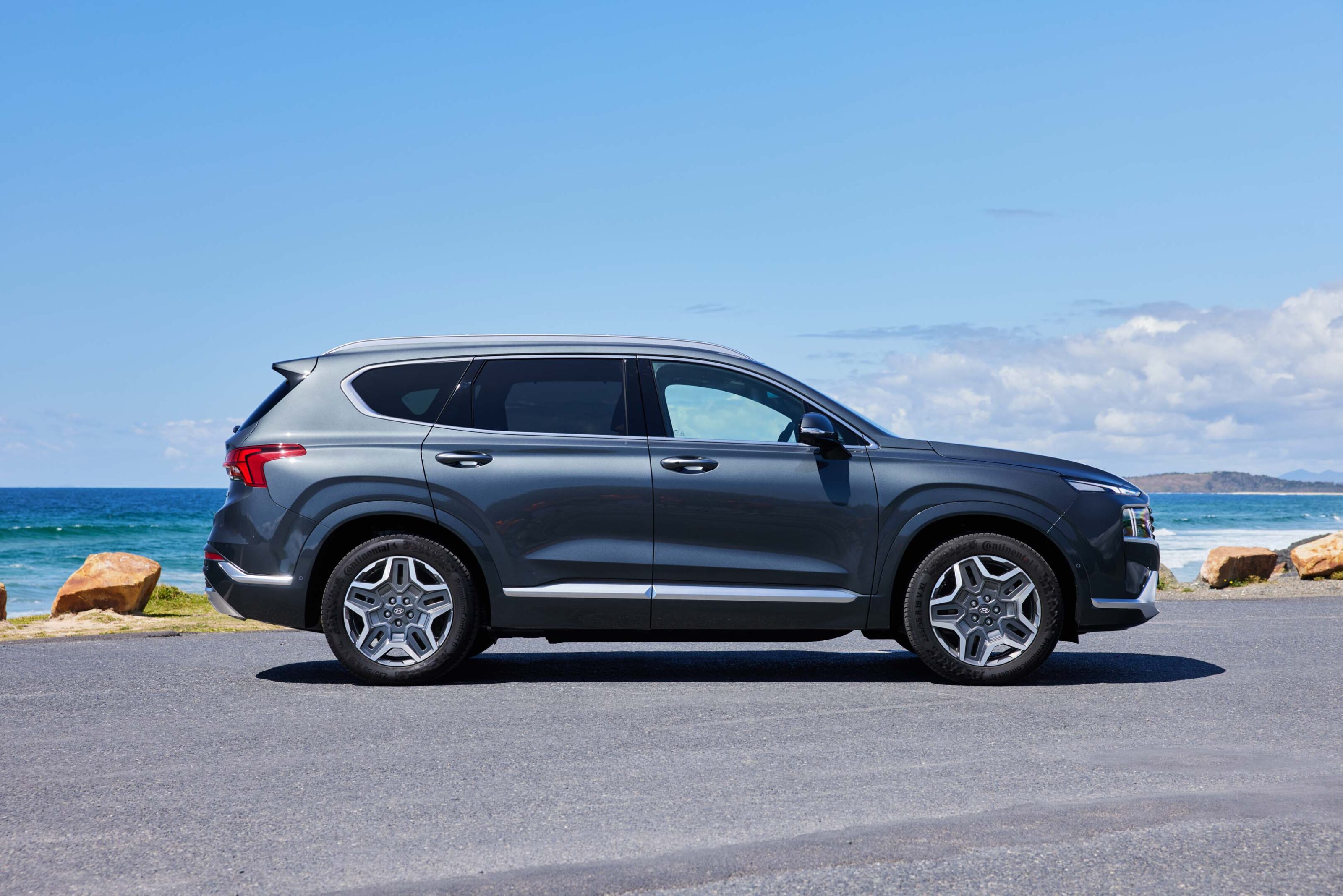
The 2023 Hyundai Santa Fe Hybrid will arrive in Australian showrooms later this month, priced from $63,000 before on-road costs, positioning it at the top end of the overall Santa Fe line-up.
The Santa Fe Hybrid’s pricing positions it in the same spend range as the related Kia Sorento hybrid (available only in GT-Line form, from $66,750) and the new Toyota Kluger hybrid (from $54,150 in base form or $63,650 for the comparable GXL variant).
Interestingly, the model arrives just before an all-new fifth-generation Santa Fe makes its global debut, with spy photos of heavily camouflaged cars already revealing a much boxier style seemingly inspired by America’s big SUVs, or even the new-gen Land Rover Defender.
JUMP AHEAD
2023 Hyundai Santa Fe pricing
2023 Hyundai Santa Fe Hybrid features
| Santa Fe Elite Hybrid | Santa Fe Highlander Hybrid adds: |
|---|---|
| 19-inch alloy wheels (aero type) | Remote smart parking |
| 10.25-inch touchscreen infotainment system | Panoramic glass sunroof |
| Wired Apple CarPlay and Android Auto | Head-up display |
| DAB+ digital radio | 360-degree camera |
| Satellite navigation | Autonomous emergency braking (reverse) |
| 12.3-inch digital instrument cluster (new) | Heated and ventilated front seats |
| 10-speaker Harman/Kardon audio system | 14-way powered front seats |
| Reversing camera | Heated second-row seats |
| Rear parking sensors | Heated steering wheel |
| LED headlights, tail-lights and daytime running lamps | Nappa leather upholstery |
| Wireless phone charger | Ambient lighting |
| Keyless entry and start | Aluminium interior trim. |
| Leather upholstery | |
| Dual-zone climate control | |
| Third-row USB charge ports | |
| Safe exit assist | |
| Rain-sensing wipers | |
| Rear privacy glass | |
| Front parking sensors | |
| Power-folding exterior mirrors with puddle lamps | |
| Push-button gear selector. |
Premium paint is $695 extra across the Santa Fe range.
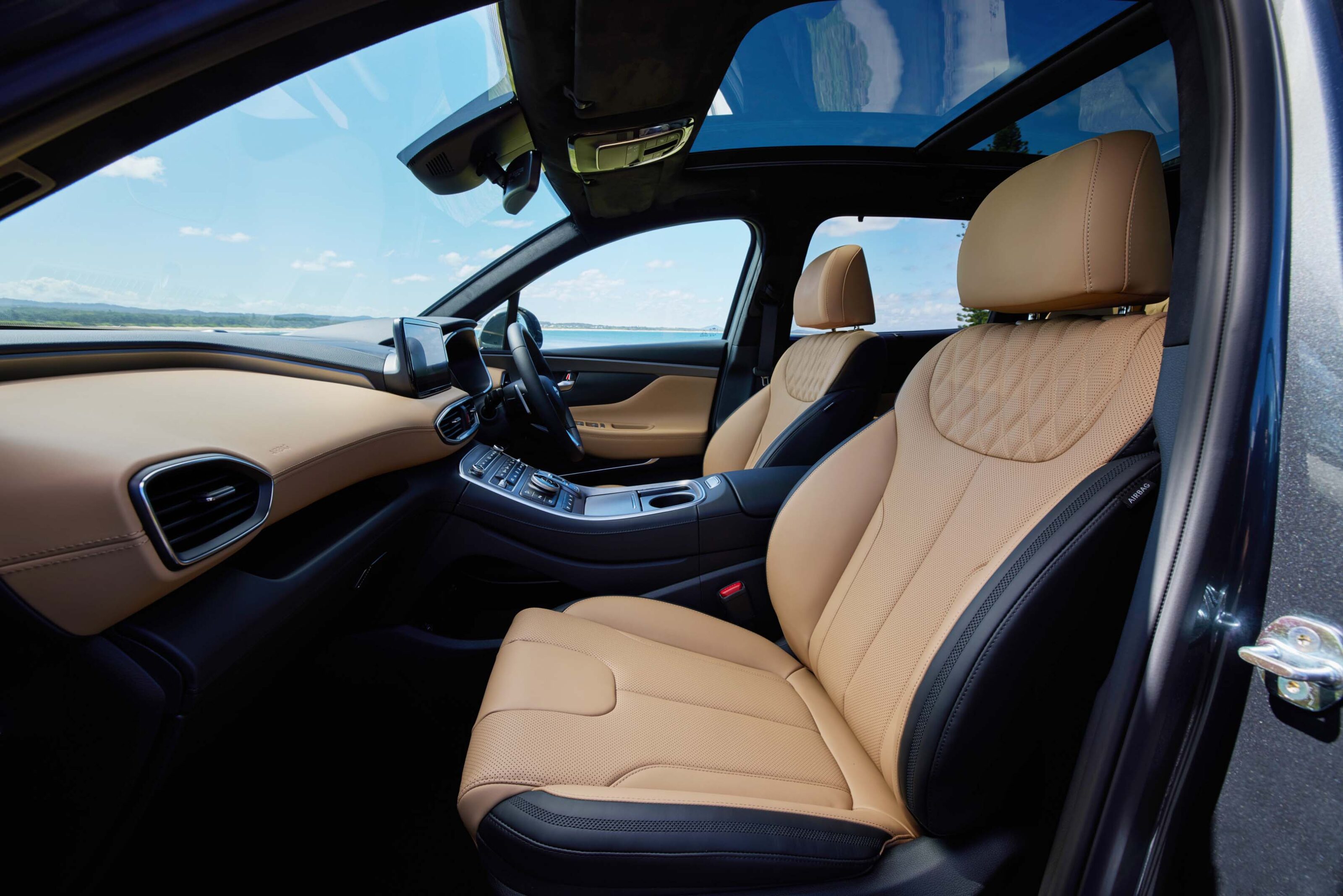
Elite buyers can opt for cognac brown leather upholstery for $295, with camel brown Nappa leather available for the same premium on the Highlander.
A six-seater arrangement that adds two second-row captain’s chairs is available as a no-cost option on the Santa Fe Highlander hybrid.
Powertrain
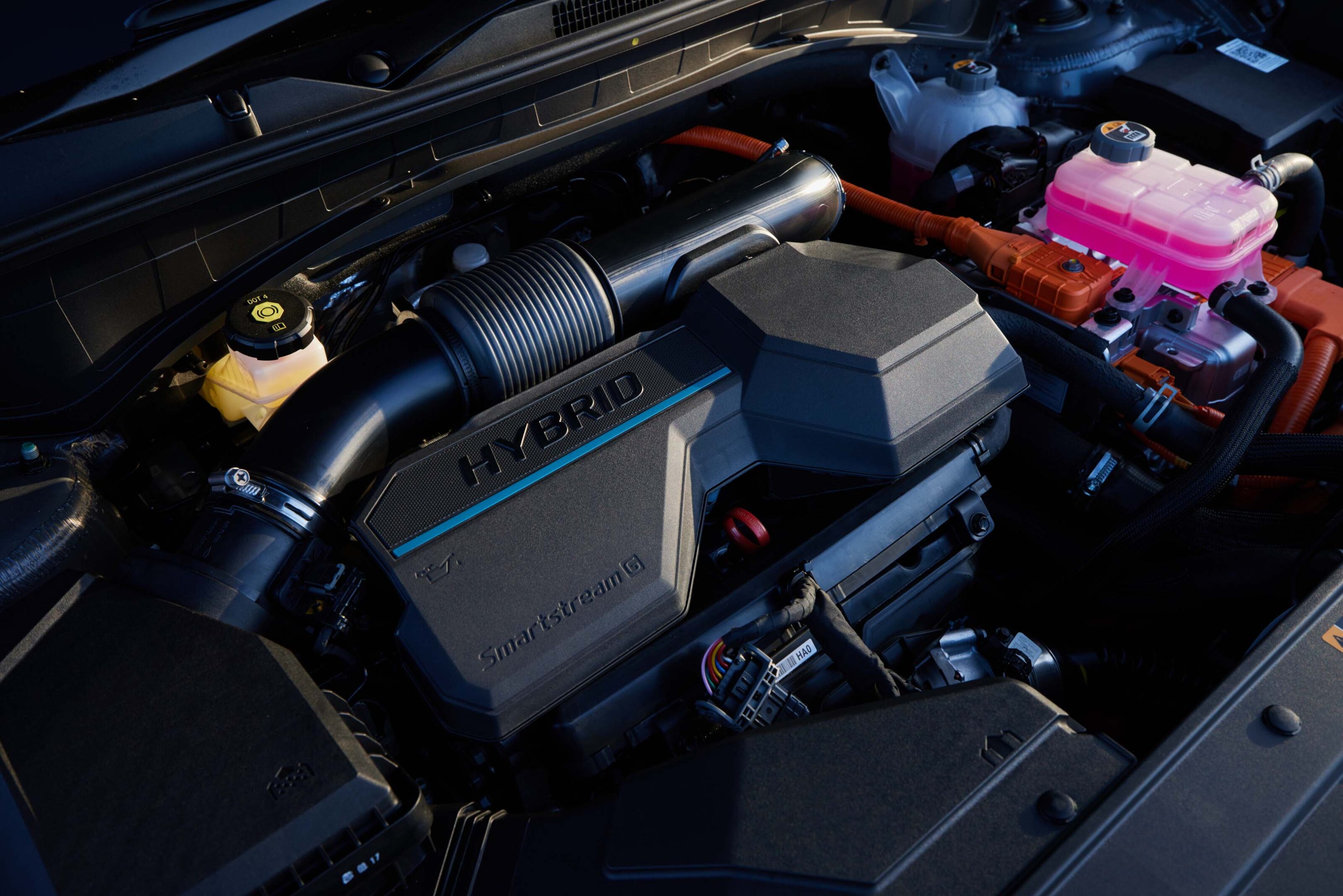
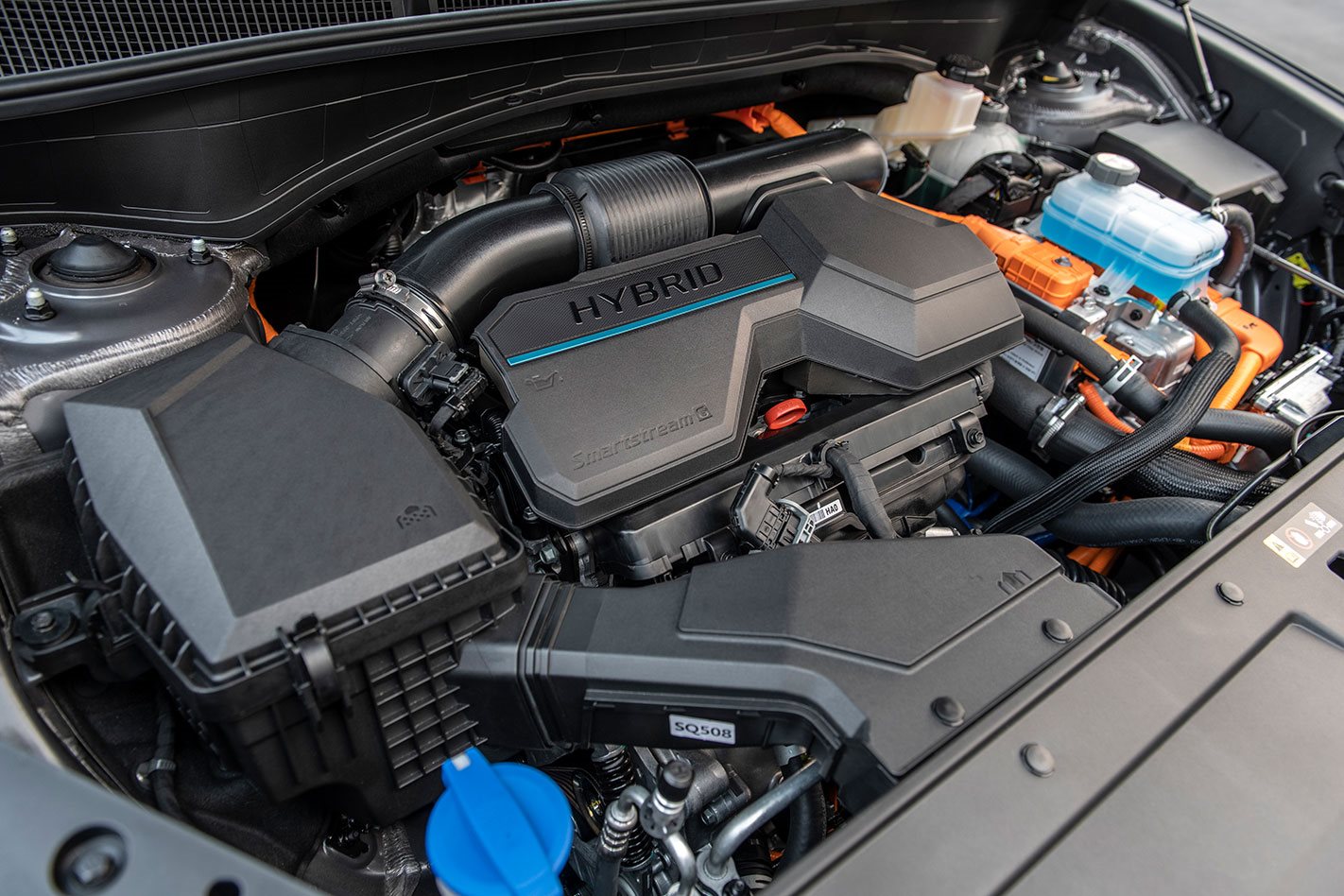
The 2023 Hyundai Santa Fe Hybrid combines a version of the company’s 1.6-litre turbo four-cylinder petrol engine – as found under the bonnet of the i30 N Line and Tucson – while adding a 44kW electric motor and 1.49kWh battery pack to complete the hybrid equation.
Behind that is a six-speed torque-converter automatic in place of Hyundai’s usual dual-clutch offering, and all-wheel drive is standard for both.
Together, this system delivers a combined 169kW and 350Nm. By comparison, the 3.5L V6 petrol model offers 200kW and 331Nm, while the 2.2L 4cyl diesel lists 148kW and 440Nm.
While petrol and diesel versions have a 2500-kilogram braked towing capacity, the Santa Fe hybrid is limited to 1650 kilograms. The unbraked towing limit is unchanged at 750kg.
2023 Hyundai Santa Fe Hybrid fuel consumption
| Configuration | Fuel use (combined cycle) | emissions |
|---|---|---|
| 1.6-litre petrol-electric hybrid | 6.0L/100km | 137g/km |
Watch for our first-drive review of the Australian-market Santa Fe Hybrid to come on November 25.
The story to here
UPDATE, February 7, 2022: Hyundai’s Santa Fe Hybrid SUV won’t arrive in Australian showrooms until the second half of 2022.
The delayed local arrival was confirmed by Hyundai Australia, with the hybrid variant set to join the recently-revised Santa Fe line-up later this year.
“Santa Fe Hybrid production for the Australian market has been delayed until the second half of 2022,” a spokesperson told Wheels.
Read more about the hybrid SUV below.
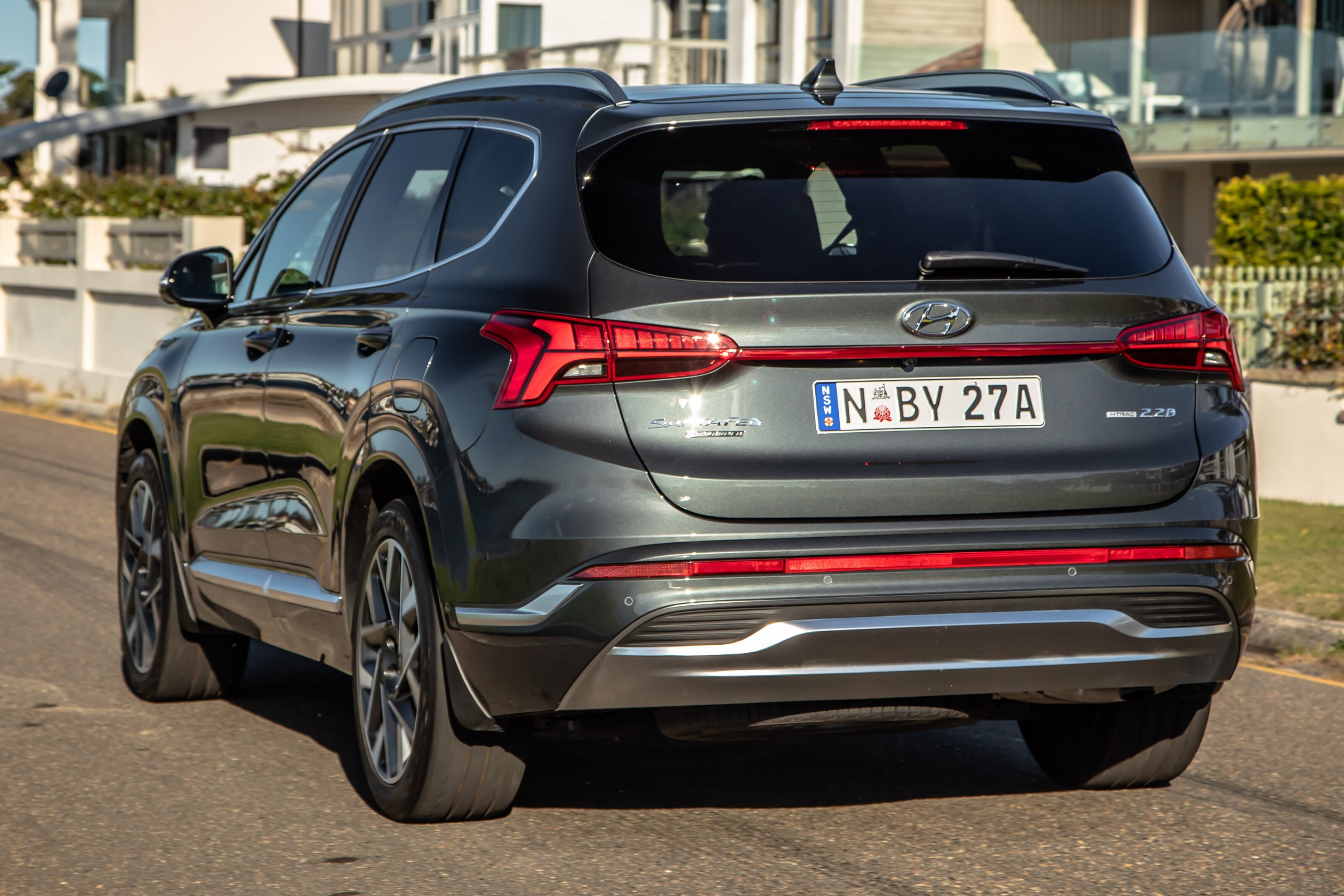
December 16, 2020: Santa Fe Hybrid revealed
Hyundai will introduce its first electrified SUV to Australia when a hybrid version of the Santa Fe large SUV arrives in 2021, bringing a new performance-focused option to the freshly updated model.
Speaking at the launch of the 2021 Santa Fe, Hyundai product general manager Andrew Tuitahi revealed the hybrid will be joining the family alongside the petrol and diesel offerings in the second half of next year.
But more excitingly, the hybrid will not only offer the efficiency benefits of a hybrid drivetrain but will also represent a new high-performance hero of the line-up, said Tuitahi.
“The biggest opportunity being a high-performance version of the Santa Fe,” he said. “It’s a level of performance we’ve never had in Santa Fe.”
Full details will have to wait until closer to its Australian debut but, it’s a fair bet the variant will share most if not all the key features of the drivetrain that has already been confirmed for the model in other markets, as well as its Kia Sorento mechanically related sibling.
That means a healthy 169kW and 350Nm for the Santa Fe and while those figures don’t obliterate the 200kW of the current 3.5-litre V6 petrol or 440Nm of the 2.2-litre diesel, the combined effect is expected to elevate the new hybrid as the most performance-focused version.
Tuitahi did not confirm if the most involving version of the model would also mark the introduction of an N-Line version, but reiterated the company’s desire to offer at least one N-branded option of each model.
“Our hope is that there will be an N or N Line for every model,” he said.
The hybrid combines a version of the company’s 1.6-litre turbo four-cylinder petrol engine and 132kW – as found under the bonnet of the i30 N-Line and Tucson, but bolts a 44kW electric motor for power, torque and efficiency upgrades.
Behind it is a torque-converter type automatic transmission in place ofHyundai’s dual-clutch offering and will be slotted into all-wheel-drive versions.
Pricing is speculation at this stage but expect the new hybrid addition to be positioned at the pointier end of the range and close to the existing flagship – the $65,200 Highlander diesel.
Arch rival Toyota will also introduce a hybrid version of its large SUV at about the same time but Tuitahi said the Hyundai will “do well against the Kluger”.
Snapshot
- 7yr/200,000km warranty for all new LDV models with a combustion engine
- Electric models to stay at 5yr/130,000km
- LDV boss confident all models will eventually move to 7yr warranty
All of LDV’s new combustion-powered models will feature a seven-year warranty, the brand has confirmed.
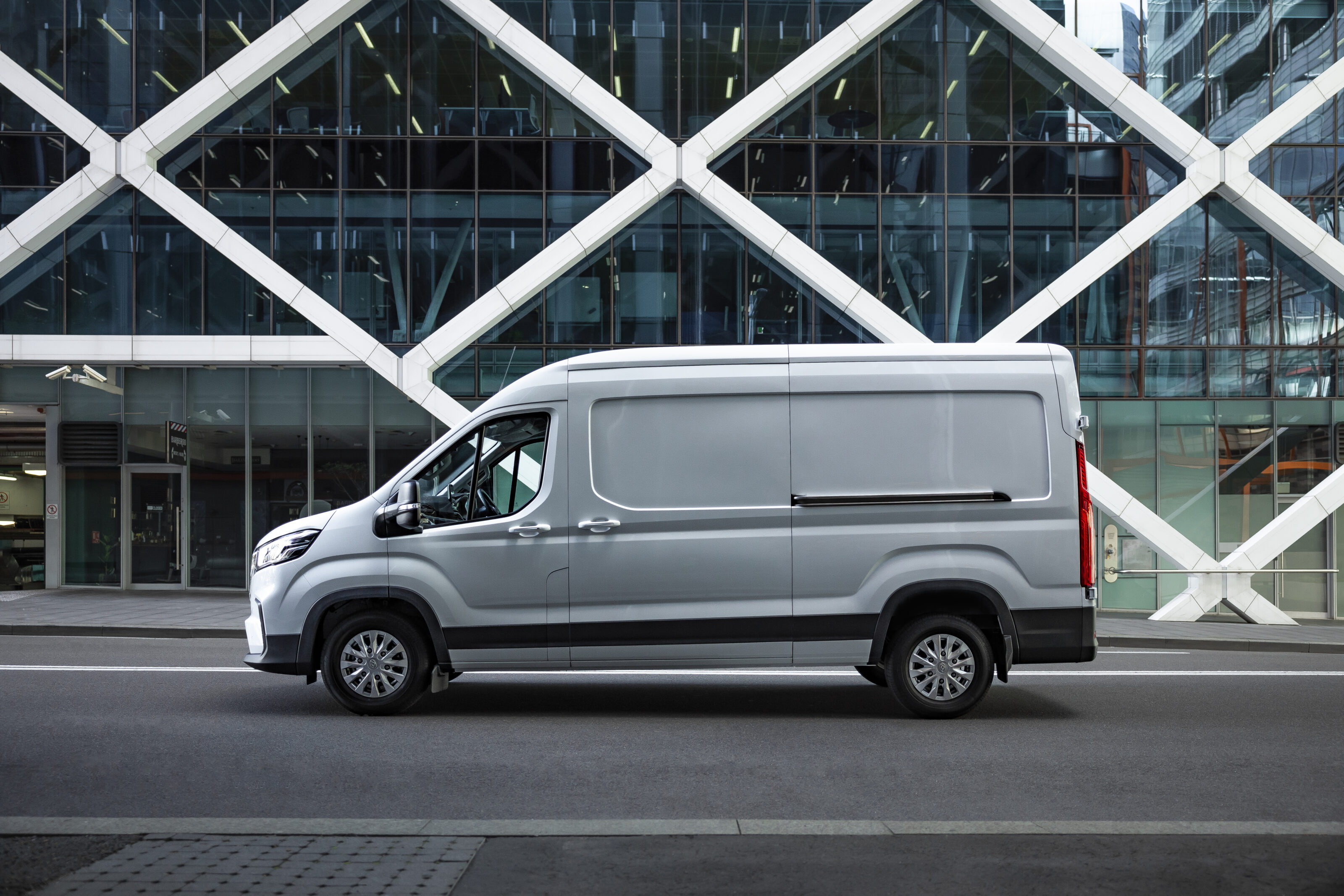
Until now LDV’s warranty period has stood at five years/130,000 kilometres for the D90 SUV and T60 Max dual-cab ute, while the company’s range of vans has been covered for three years.
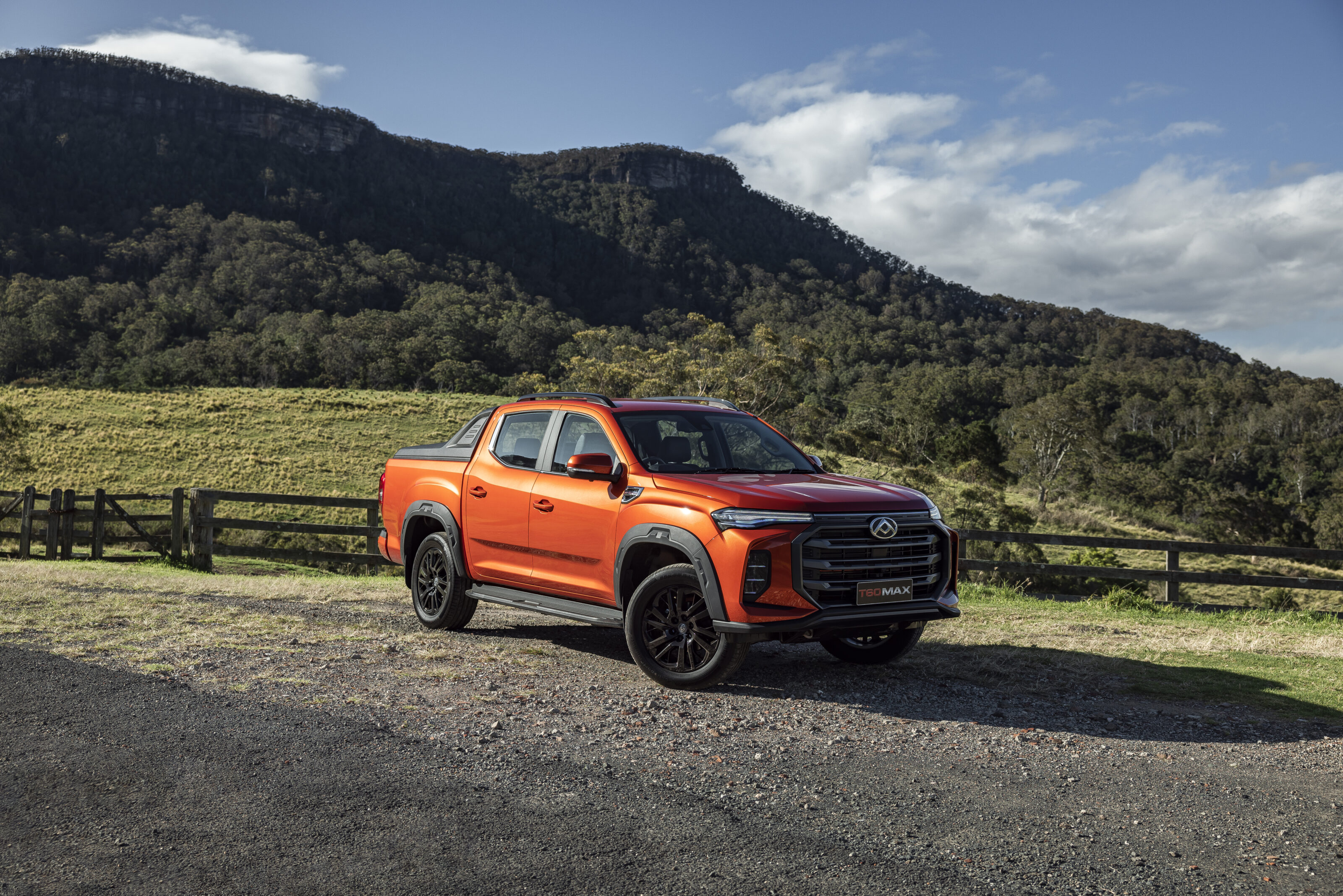
But the brand has recently moved to a longer seven-year/200,000km timeframe for an influx of new products like the Mifa people-mover and MY23 T60 Max dual-cab.
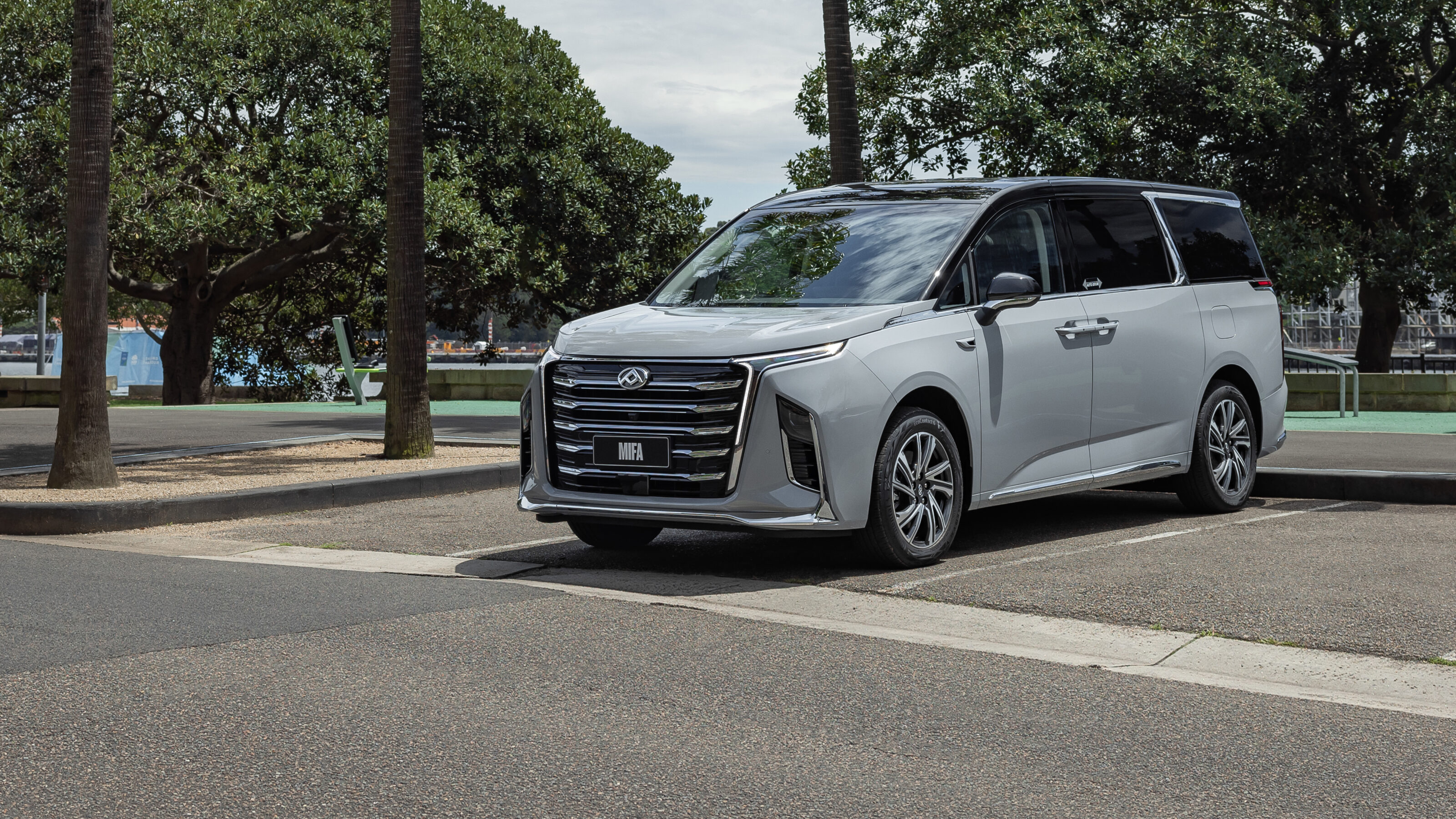
That longer period will now apply to all new models according to LDV’s Aussie boss, Dinesh Chinnappa, providing they are powered by a internal combustion engine (ICE).
LDV’s fresh range of electric vehicles, which includes Australia’s first electric ute, the eT60, the eDeliver 9 van and Mifa 9 people-mover, will remain at five years/130,000km.
“My belief is that moving forward any new ICE models will have the seven-year warranty,” Chinnappa told Wheels. “The EV models have a five-year warranty and I can only explain it to you in that it’s early days for China in terms of the Australian market and in terms of understanding the costs of these EVs. So if they’ve been guilty of anything it’s being a bit conservative.
“They started with a five-year warranty for the ICE vehicles here in Australia and now that they’ve traded here for two to four years they’re able to model their costs and they have better understanding of it.
“So my expectation is that everything will ultimately stabilise at the seven-year mark – but they need time. They just need to collect the information so that they can model the costs for the EVs and bring it to market.”
The new terms mean LDV will have one of the longest coverage periods of any brand in Australia and puts it on par with Kia which made the move to a seven-year/unlimited km warranty back in 2014.
Since then a number of other brands have followed suit, with GWM, MG, SsangYong and Skoda all now offering seven-year/unlimited km deals of their own.
Mitsubishi currently leads the race for Australia’s longest warranty period at 10 years, providing you service your car at an authorised dealer. Like LDV, Mitsubishi’s coverage period is limited to 200,000km.
A crucial distinction for LDV’s new period, however, is that it will only apply to new incoming models. Existing products will continue with the same coverage.
“We won’t go back in time,” said Chinnappa. “Like the G10 won’t be upgraded to a seven-year warranty. It will get phased out and a new model will come in and it’ll get a seven-year.”
Tyre Stewardship Australia has announced that an experimental new road barrier has passed a 100km/h crash test, an achievement that brings it one step closer to market.
The barrier is constructed with rubberised concrete, which uses rubber crumb gathered from spent tyres, providing a means to reduce waste winding up in landfill.
The barrier, named Rubber T-Lok, is the result of work by the University of Melbourne’s Advanced Protective Technologies of Engineering Structures (APTES) Research Group, with funding and support from Tyre Stewardship Australia (TSA).
The barrier boasts safety benefits and longer lifespan, along with providing an economical solution for the various sectors that would use them, such as traffic management, event management, construction and mining.
The rubber crumb comprises four per cent of the concrete mixture, and according to the test results provided a 10 per cent higher total energy absorption compared to conventional concrete barriers. The test was conducted at Victoria’s Lardner Park facility, and involved launching a Chevrolet Silverado at the barrier to assess its impact.
Professor Tuan Ngo of the University of Melbourne said: “Road users are the winners here. The test showed that designed rubberised concrete road barriers will help reduce the force of impact thereby reducing the likelihood of injury and death, as well as being less damaging to the barrier itself. Debris emanating from shattered concrete road barriers, which may create another safety hazard after a crash takes place, is substantially reduced.”
According to Lina Goodman, CEO of Tyre Stewardship Australia, the organisation has already invested $8 million in 56 projects such as this that increase consumption of the 140,000 tonnes of used tyres which go to waste in stockpiles and landfill each year.
Darren Hotchkin, CEO of Saferoads, added: “This new product will enable Australia to recover 115 tonnes of used tyres for every 10 kilometres of the Rubber T-Lok road safety barrier produced.”
The barrier’s passing of this test is another step toward it reaching the market, but regulatory hurdles remain. “The next step for us now is to support the team from the University of Melbourne and Saferoads, in calling on regulators to expand infrastructure specifications to include this new product,” Goodman added.
Snapshot
- Next-generation T60 due in two years; currently in development
- Electric version will be primary focus and will add 4X4 capability, bigger battery and lower price
- LDV’s Australian arm has had input into the new model’s development
Australia’s first ever electric dual-cab may have only just arrived but LDV has revealed it’s already working on a replacement with a bigger battery and high towing capacity.
The second-generation eT60 dual-cab will arrive in “two or three years” according the LDV’s Australian boss Dinesh Chinnappa and it will usher in a host of improvements including a new platform, fresh battery tech and longer driving range.
The news also means an all-new version of the increasingly popular T60 Max should arrive around the same time.
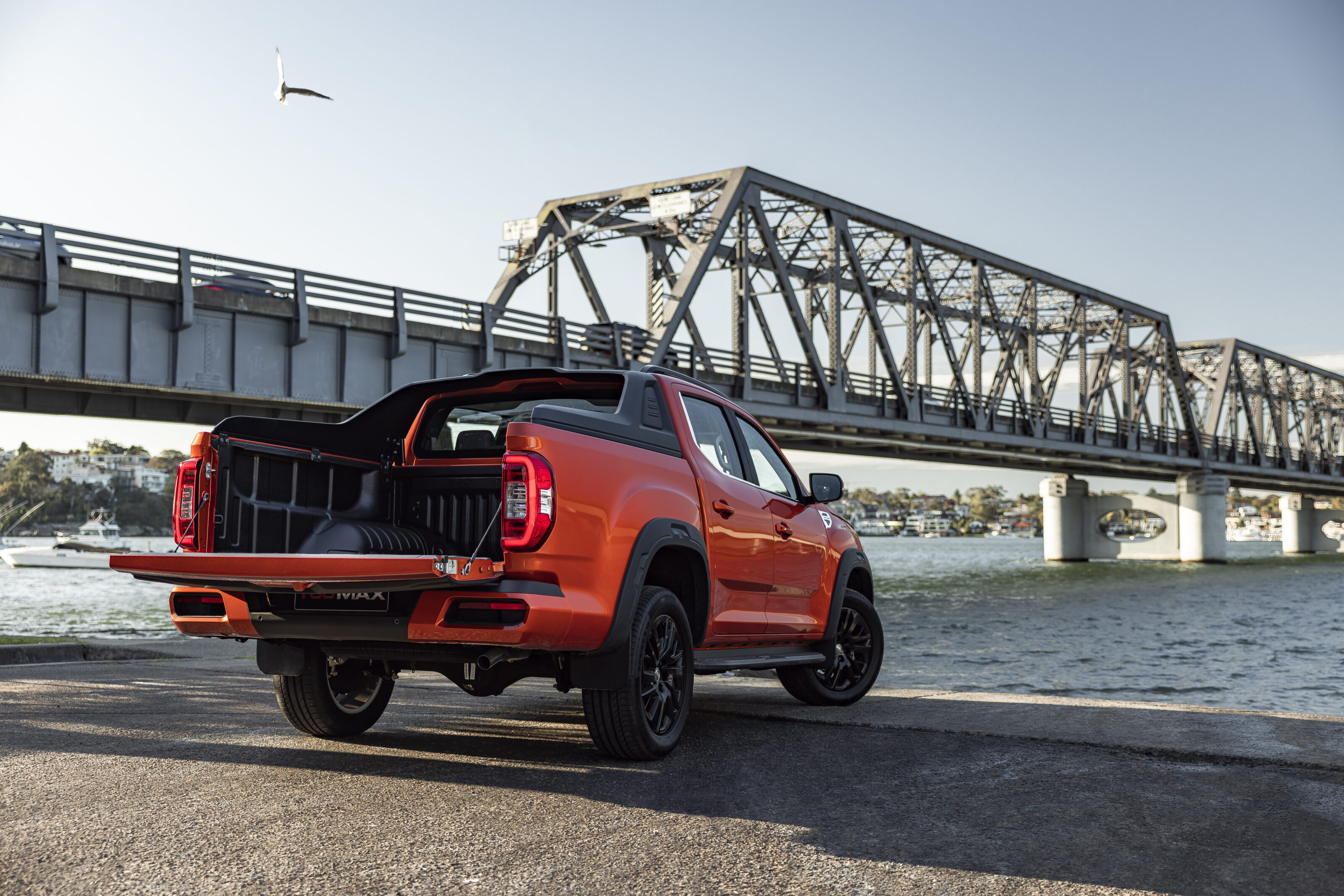
Chinnappa confirmed the new ute is currently being developed when Wheels asked about the possibility of the current eT60 adopting 4X4 capability as part of a future update. The current eT60 is 4X2 only and is powered by a single electric motor on the rear axle that’s fed by an 88.5kWh battery pack.
“Not in this T60 version, but most definitely in the next generation version – which is already being worked on,” revealed Chinnappa.
When asked how far away the all-new, second generation eT60 was, Chinappa added: “Two or three years. It’s a completely new generation.”
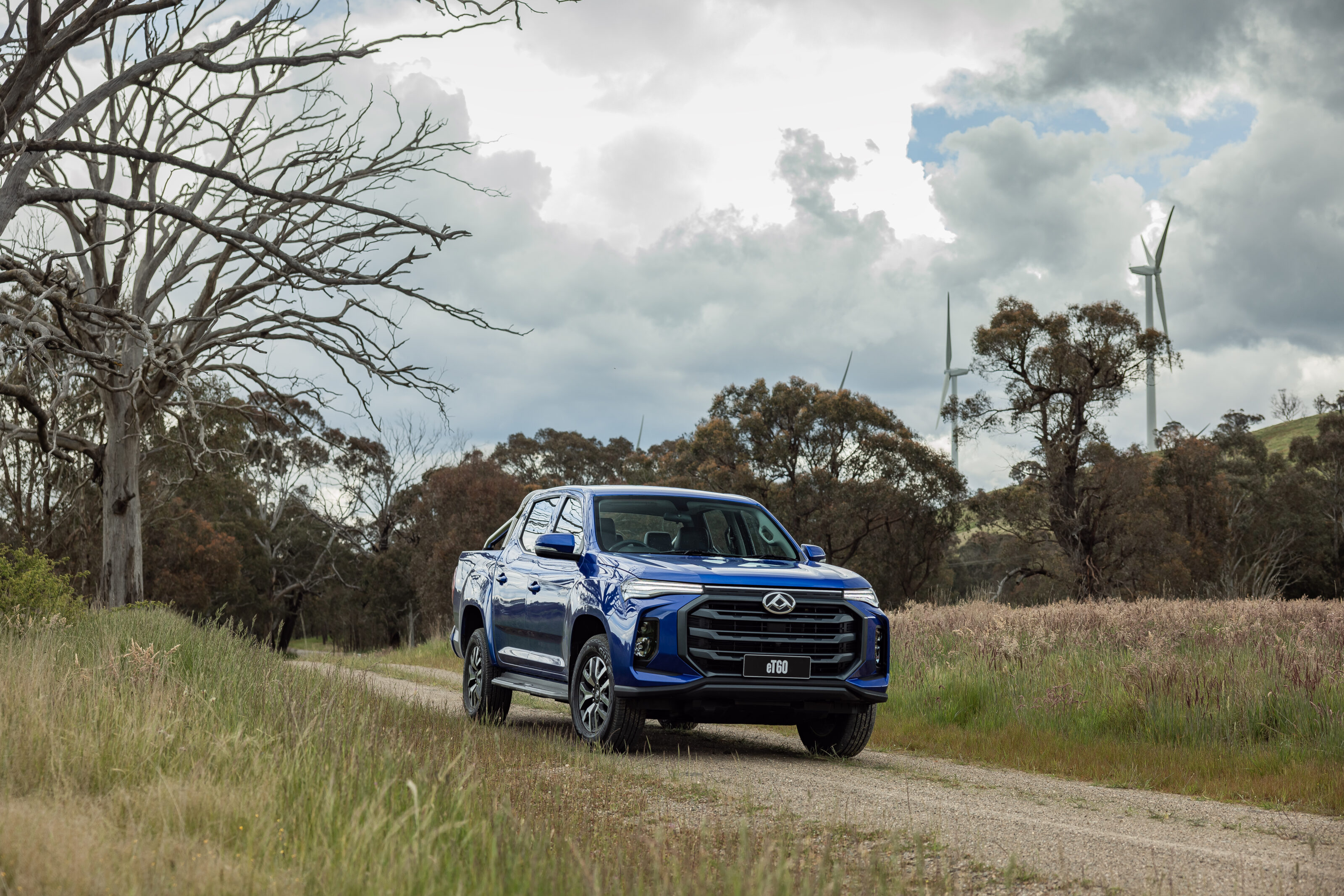
It’s unclear what kid of battery and e-motor tech the new eT60 will feature, but Chinnappa did confirm it will deliver a step-change improvement over the brand’s existing electric ute.
“It’ll have the benefit of newer battery technology, greater range, lighter weight, cheaper manufacturing process…the technology curve is exponential,” said Chinnappa.
The current eT60 produces 130kW/310Nm and has a claimed WLTP driving range of 330 kilometres. Two key shortcomings are a reduced braked tow rating of 1000 kilograms, which is well down on the 3000kg tow rating of a diesel T60, and the fact that it’s 4X2 only – meaning it isn’t really suitable for buyers looking to drive off-road.
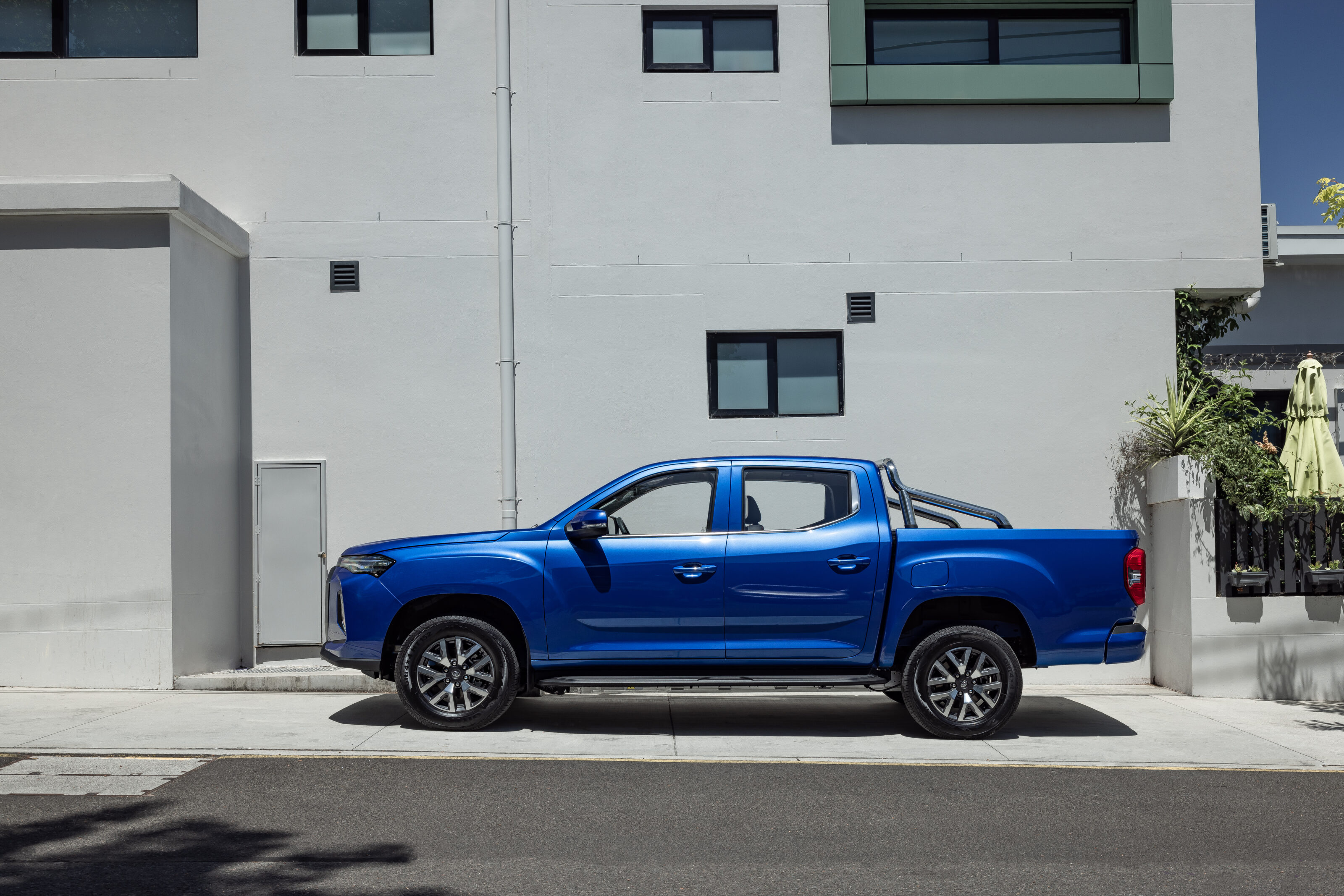
Also yet to be confirmed is whether the second-generation eT60 will be built on a dedicated electric platform, which will allow for a host of packaging benefits like additional storage and a flat floor in the cabin.
Given the infancy of electric dual-cabs globally, however, it’s likely the next-gen eT60 will share its underpinnings with internal combustion-powered (ICE) models.
“I don’t know yet,” admitted Chinnappa when asked about the next eT60’s platform. “In our environment it may be a blending of both [electric and combustion models] because let’s face it, Australia is huge and you’re probably not going to be able to go from here to Perth [in an EV].
“So we may remain for some time where we have to have an ICE version because the owner and operator wants to do certain things an EV just can’t do it.”
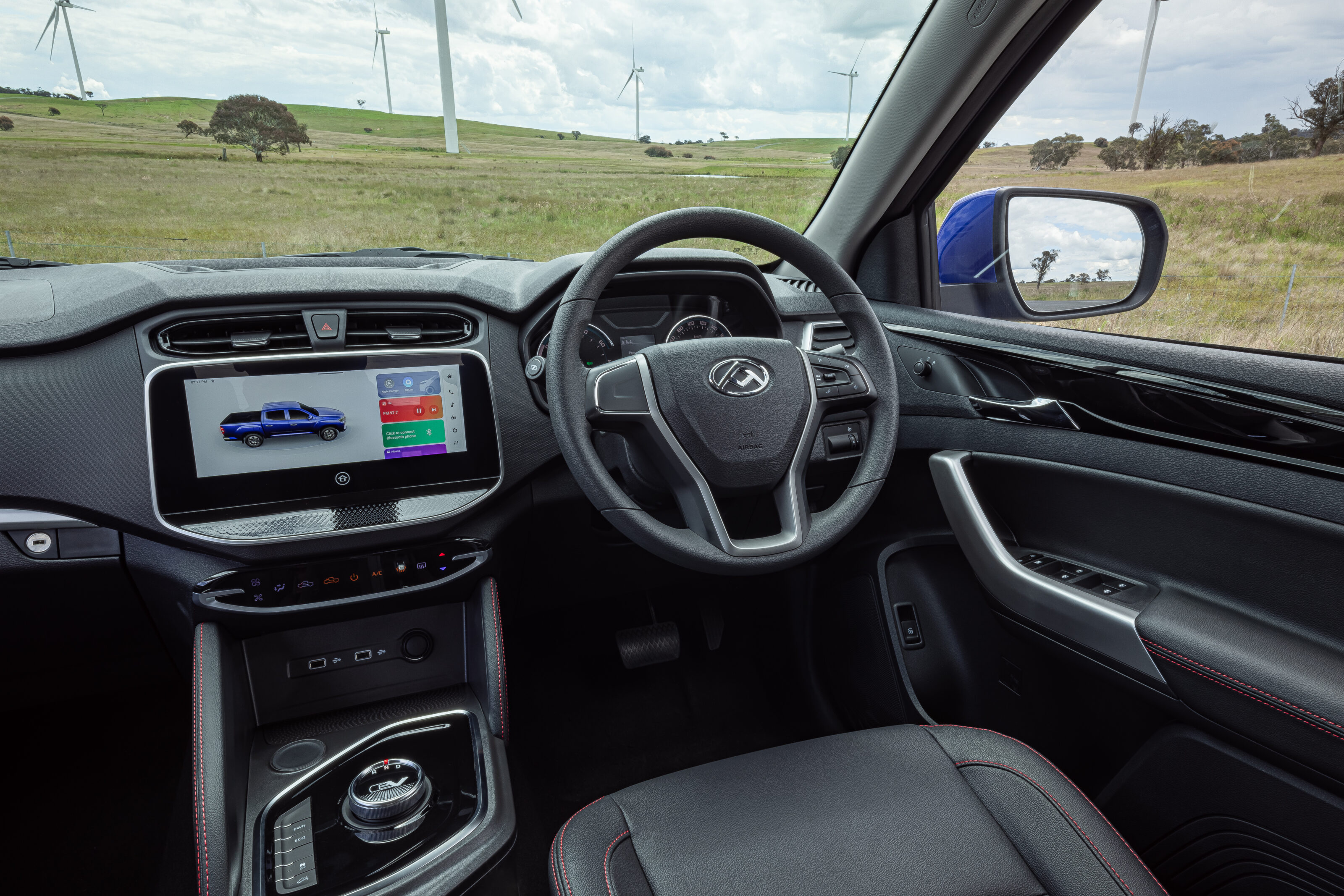
LDV is at the forefront of electric commercial vehicles in Australia and is currently the only brand to offer an electric dual-cab. Alongside the eT60, LDV has also launched the eDeliver 9 electric van and an electric people-mover, dubbed the Mifa 9.
All three models have raised eyebrows with high pricing, though LDV is targeting blue-chip fleet companies and governments looking to hit strict emissions targets rather than private buyers.
