
Since Audi took control of Lamborghini way back in 1998, the Raging Bull’s reliability, sales and profitability have skyrocketed.
And although the Urus SUV may not be the V12 supercar enthusiasts want, globally it accounts for 60 per cent of Lamborghini’s sales.
In Australia, though, the number is flipped, with the Urus SUV only accounting for 40 per cent of orders.
“It’s because we love loud cars”, Oceania manager Peter Crombie Brown told Wheels at the Australian preview of the Huracan Tecnica this week.
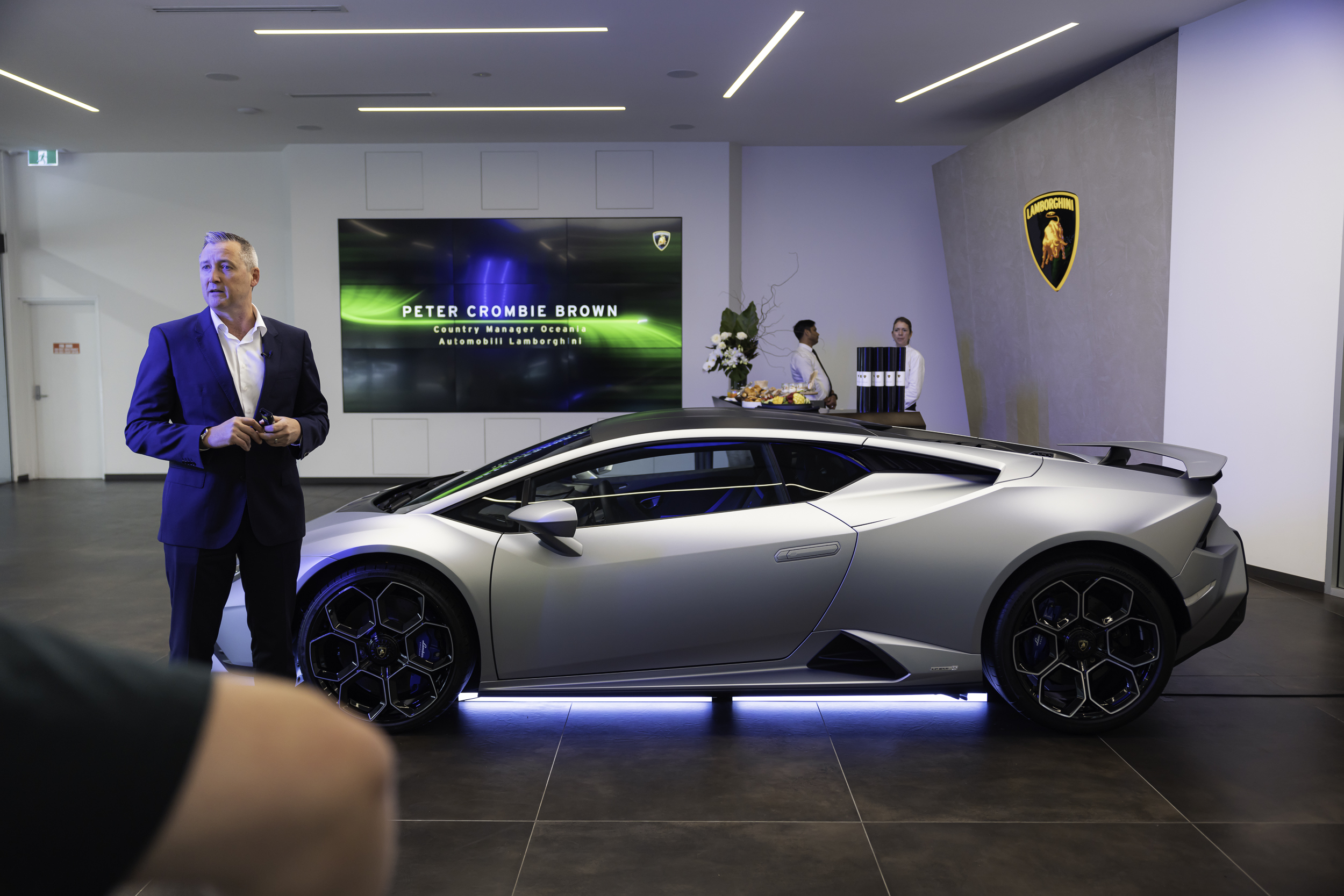
The Urus making up nearly half of sales here is still significant, of course, and with the Aventador now fully retired and Huracan not far behind, soon Urus will be the only Lambo you can buy brand new.
The sales split between SUV and supercar will fluctuate accordingly over the next few years. But it is nevertheless exciting to see strong demand for cars that make our inner teenager weak at the knees.
In total, Lamborghini delivered 5090 cars across the globe in 2021, a 10-fold increase over the 494 Diablos and Murcielagos sold in 2001.

Are chip shortages affecting Lamborghini?
The scarcity of raw materials and precious metals has affected the industry widely, but due to its unique positioning in the VW Group’s portfolio, Lamborghini has managed to escape the worst of it.
With Lamborghini’s €1.33 billion (AU$2.05 billion) gross earnings translating to a €425 million (AU$656 million) profit margin, each semiconductor deployed in Aventador, Urus or Huracan makes more money than the same chip getting into, say, a Volkswagen Polo 70TSI Life.
This has meant that Lamborghini has effectively had semiconductors kicked-up the supply chain, which Crombie-Brown said gave the Sant’agata carmaker a leg up over rivals such as Aston Martin and Ferrari in production terms.
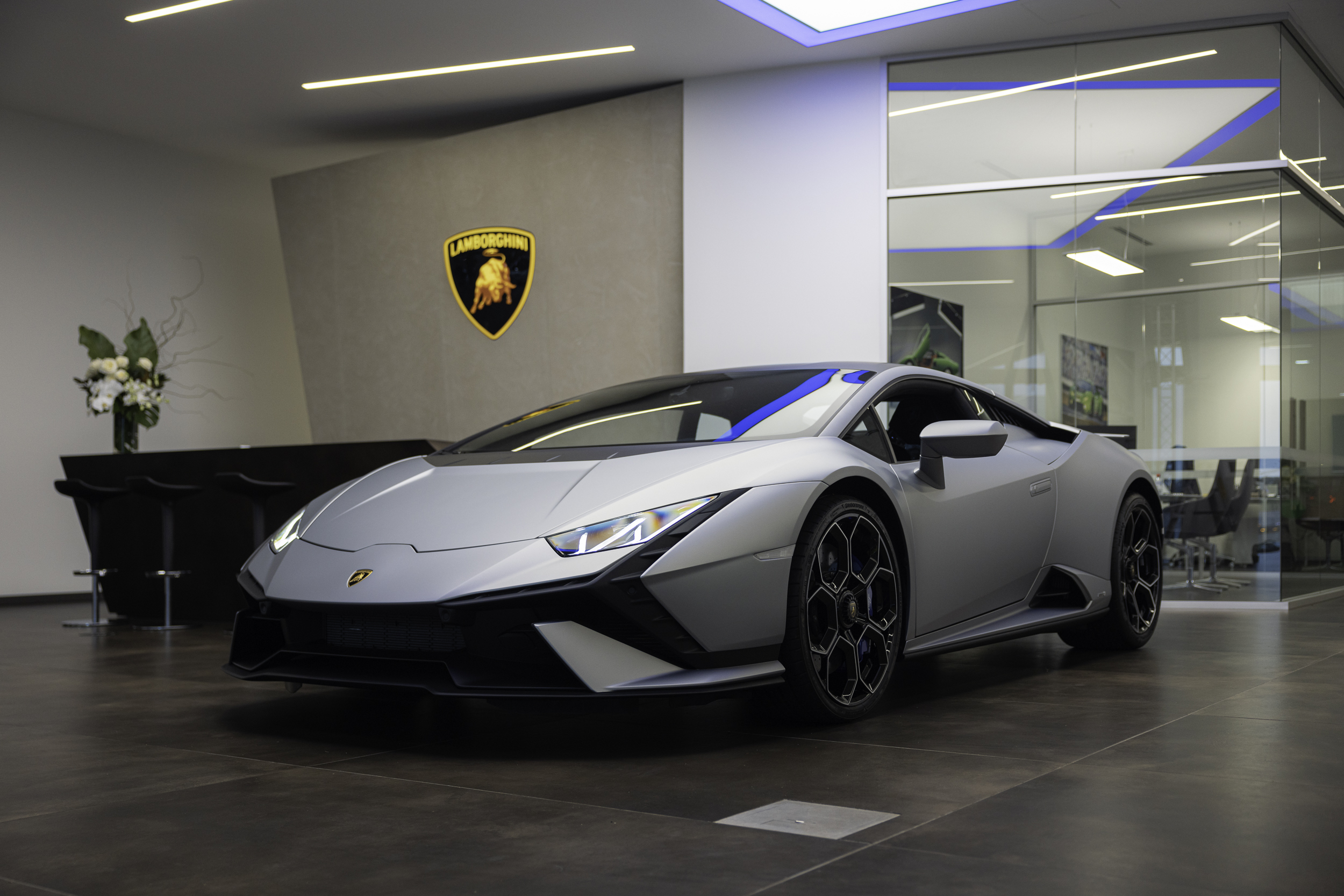
VFACTS numbers tell a different story
Australia’s official sales tallies are released monthly by the Federal Chamber of Automotive Industries (FCAI) in its VFACTS report. By the end of September 2022, 71 Urus cars were registered against 47 Aventadors and Huracans.
This puts the split at 40 supercars/60 SUVs, just like global totals. A spokesperson told Wheels that although official VFACTS numbers will fluctuate based on deliveries, it is the current Australia order bank that sits at 60 per cent supercar, 40 per cent SUV.
The exclusive nature of Lamborghinis means some may not be counted in sales tallies as, if a car isn’t registered at sale, it won’t end up on the official count.
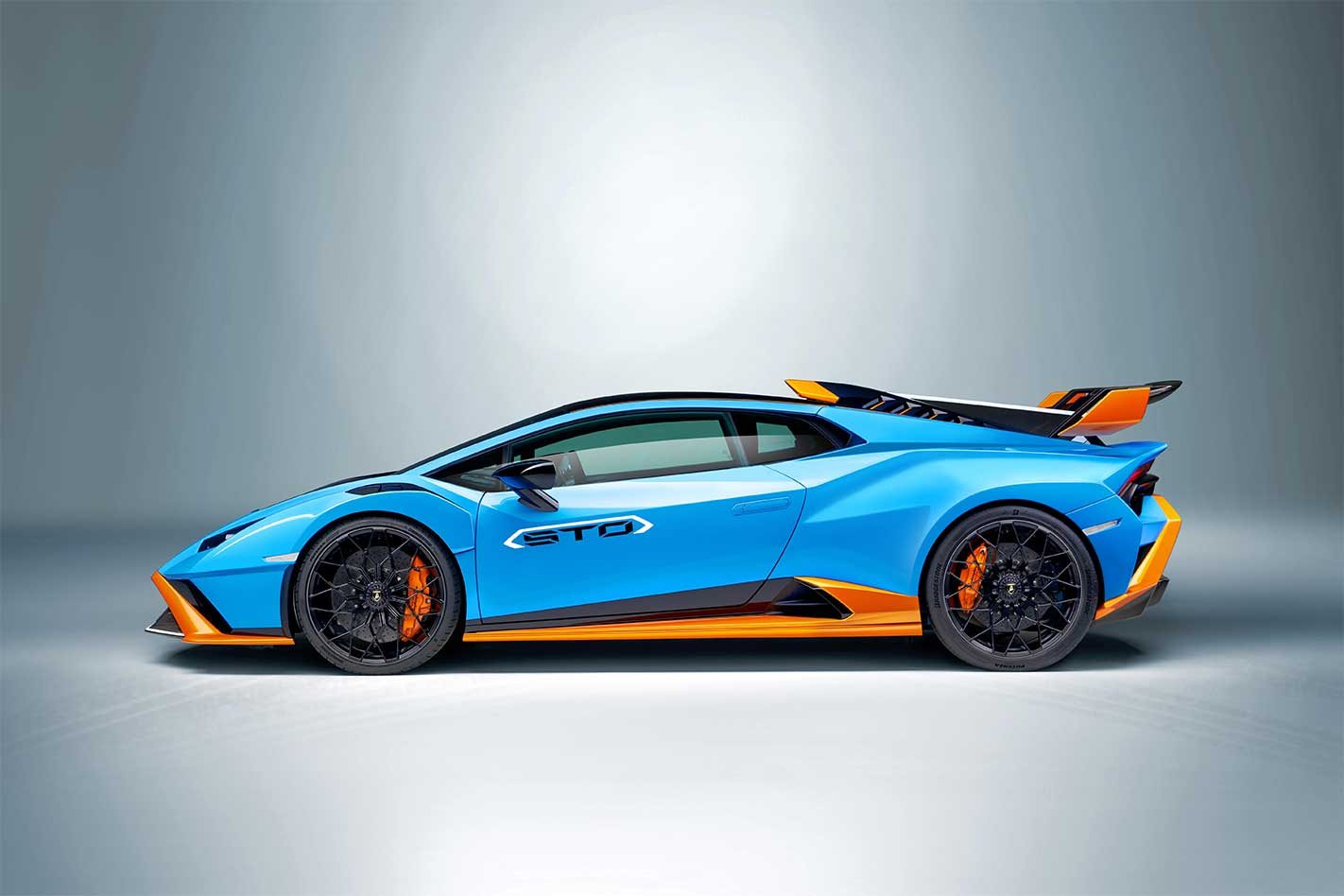
Special editions such as the Aventador SVJ and track-focussed Huracan STO may be purchased by collectors who choose not to register them for the road immediately and won’t be counted in public sales tallies.
New models coming up from Lamborghini include the lifted Huracan, set to be released later this year, a plug-in hybrid Aventador successor in 2023, more hybrids (and likely Huracan replacement) in 2024 and the first battery-electric vehicle by 2028.
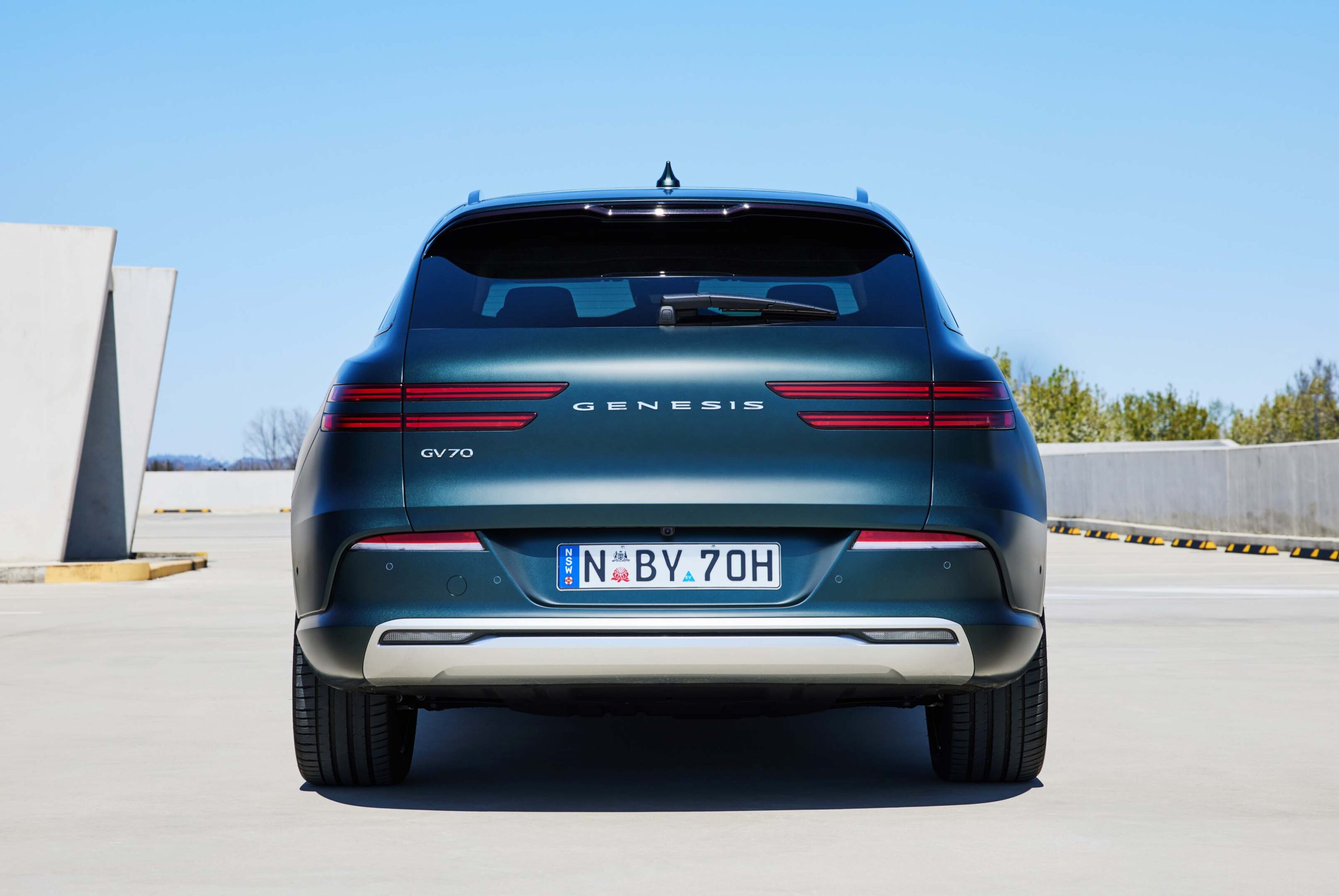
With automotive electrification finally part of the vernacular for both the Australian federal government and the general public, the fresh EV offerings from premium contender Genesis couldn’t be better-timed – the Electrified GV80 limousine, the sporty GV60, and now the Electrified GV70 medium SUV.
Yet of the three, it’s the electric GV70 that stands the best chance of making a long-term sales impact for the brand.
Genesis remains unsure as to just how effective this $128K electric SUV might be in elevating its presence in Australia – especially when carrying such a premium price – but based on our positive initial impressions of the Electrified GV70, and the 43 orders already placed during its first two weeks on sale, there’s a solid chance the GV70 sales split will nudge towards the electric version as supply improves throughout 2023.
There’s no doubt the Electrified GV70 finally offers the contemporary drivetrain tech the GV70 range has been crying out for since it launched here in mid-2021.
But is this Genesis good enough to compete head-on with its electric SUV rivals from Germany on both ability and price?
JUMP AHEAD
- How much is it, and what do you get?
- How do rivals compare on value?
- Interior comfort, space and storage
- What is it like to drive?
- How energy-efficient is it?
- How safe is it?
- Warranty and running costs
- VERDICT
- Video
- Specifications
How much is it, and what do you get?
At the Electrified GV70’s Australian preview drive back in May, rumoured pricing indicated a $105-115K sticker for this crucial electric SUV. But the full-production reality is $127,800 (before on-road costs) for this fully-loaded Genesis GV70, and just one optional extra – matte paint for $2000.
While an on-paper comparison with the twin-turbo GV70 3.5T petrol marks this as a huge price premium for electrification – a fully optioned 3.5T AWD sits at $91,700 before on-road costs (with matte paint another $2K) – the Electrified GV70 does include a five-year Chargefox subscription, or if you prefer, a complimentary AC wallbox charger for home or office use.
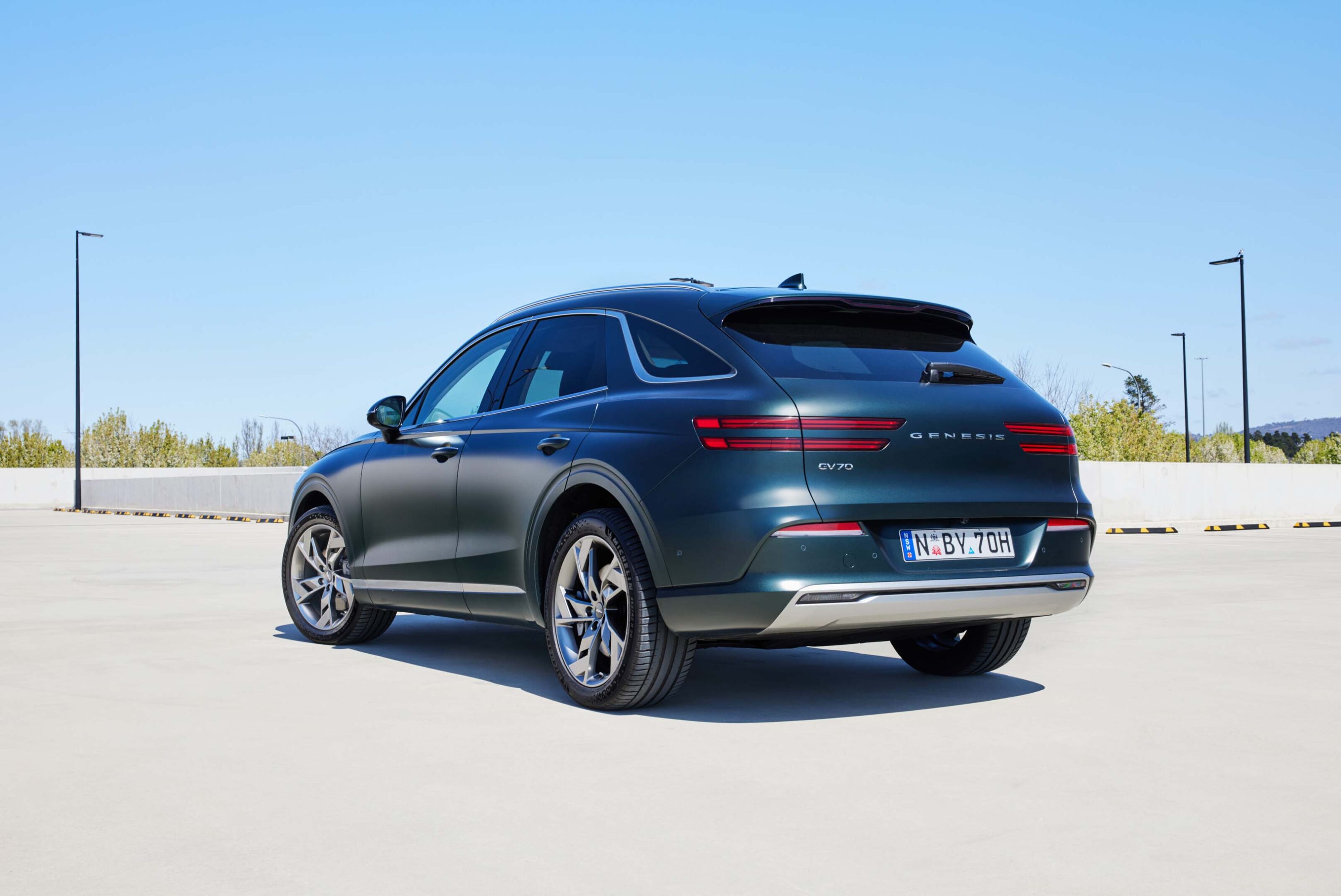
2022 Genesis GV70 electrified: the basics
As for what equipment the Electrified GV70 brings to the table, it arrives carrying every possible item available to combustion-engined GV70 customers, plus a few bespoke features.
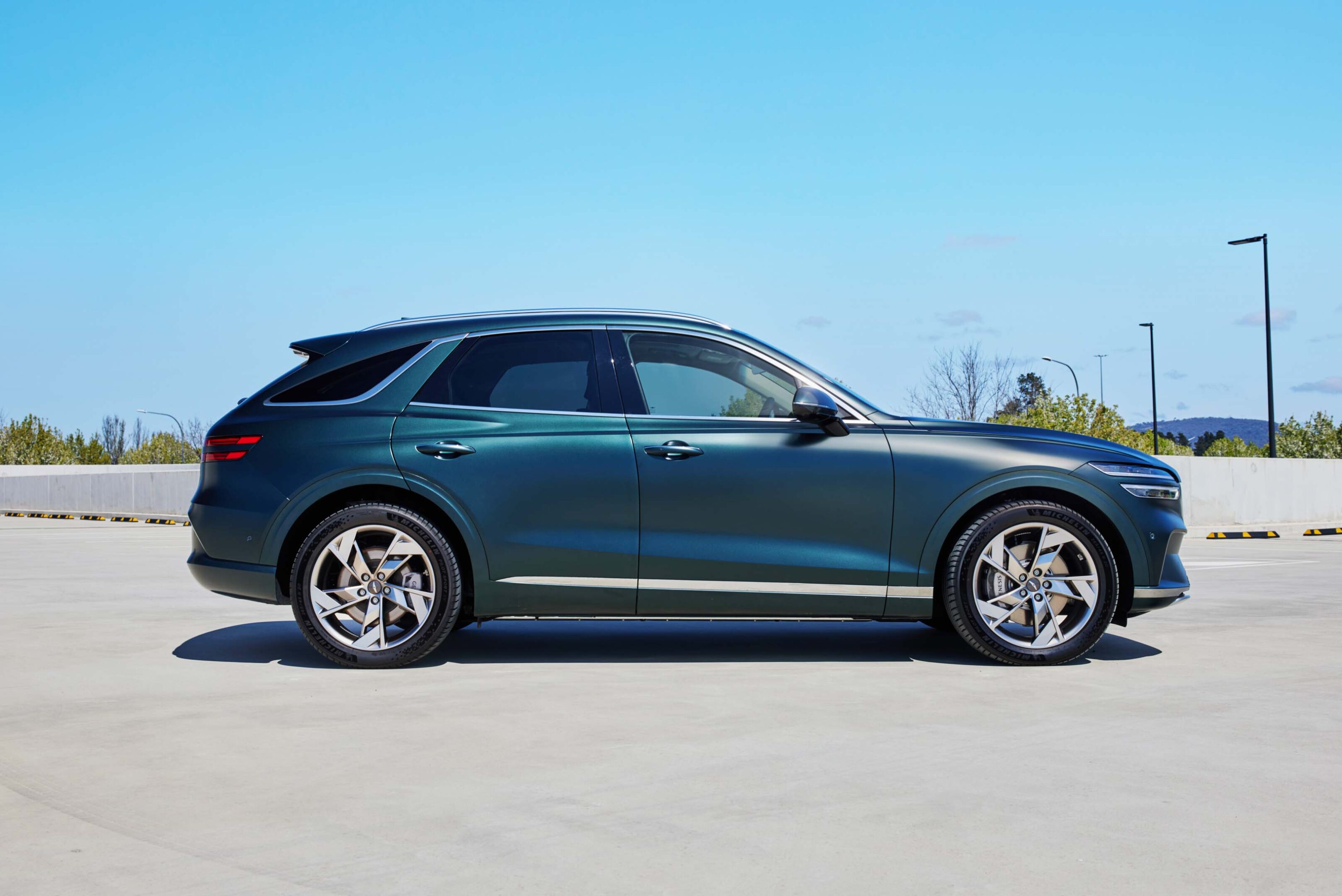
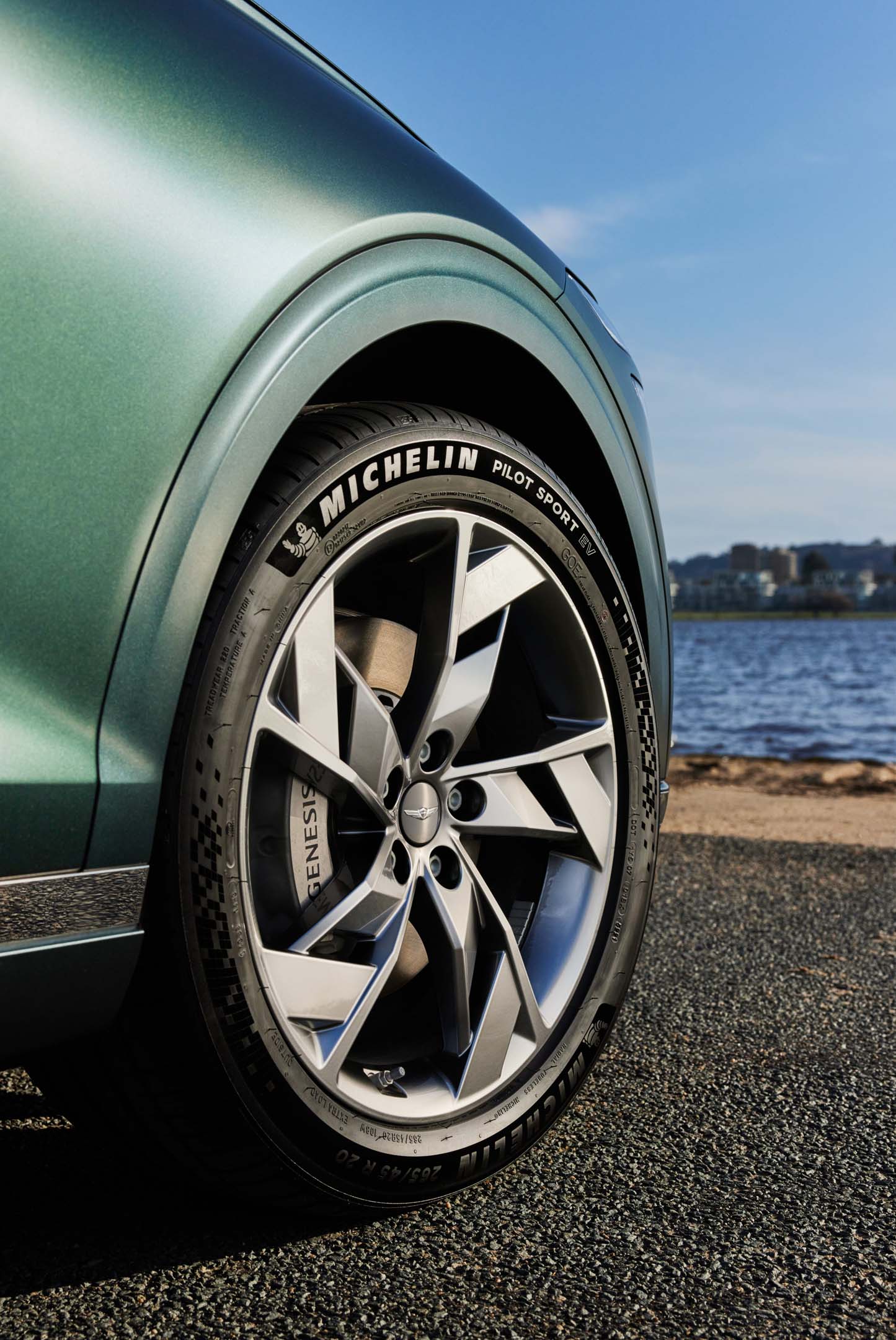
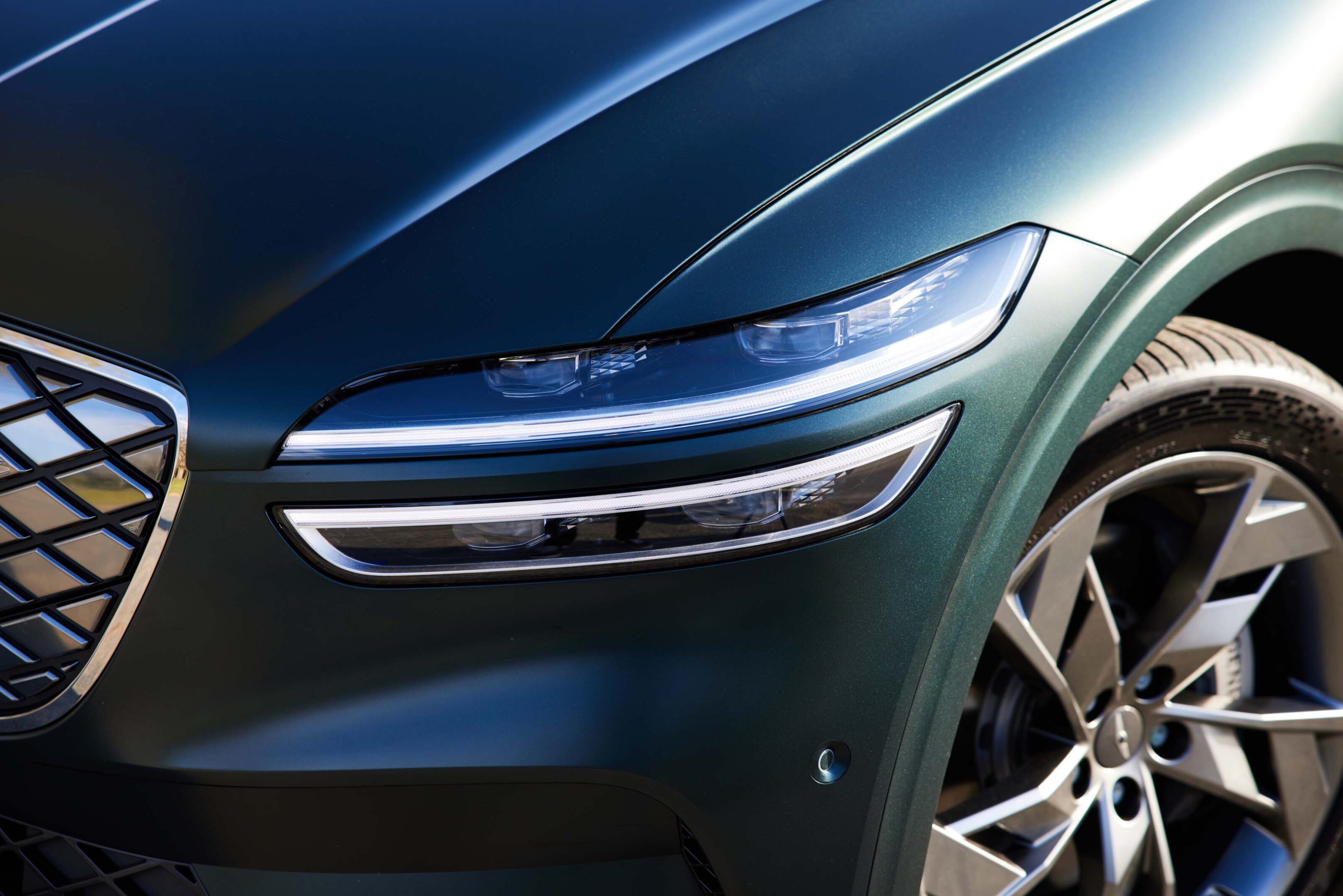
These include unique 20-inch alloy wheels with 265/45R20 Michelin Pilot Sport EV tyres (regular GV70s wear either 19s or 21s), a filled-in front grille with concealed charging flap, unique front and rear bumpers (minus the gratuitous exhaust outlets of combustion-engined models), acoustic laminated rear door glass, a ‘boost’ button on the lower spoke of the sports steering wheel, a driver-only option for the climate control, active noise control and interior/exterior vehicle-to-load charging capability (including a three-prong, house-type outlet in the boot).
It’s also available in a unique colour (Atacama Copper), with either a gloss or matte finish – complemented by copper seat piping on cars with Glacier White upholstery.
What the Electrified GV70 foregoes is a pair of speakers for its Lexicon by Harman sound system (14 in total instead of 16) and the 3.5T’s excellent torque-vectoring limited-slip rear differential.
How do rivals compare on value?
The Electrified GV70’s price positioning (39 per cent higher than a top-spec GV70 petrol) vaguely reflects what BMW and Mercedes-Benz command for their medium electric SUVs – the iX3 and EQC.
Starting at $114,900 (before on-road costs), BMW’s rear-wheel-drive iX3 is more affordable by some margin, despite being comprehensively equipped and including a five-year Chargefox subscription, though it lacks the five-year free servicing and valet convenience of the Genesis.
In late 2021, the Mercedes-Benz EQC split into two models – a new entry-level variant (starting at $122,724 before on-road costs) and the previous range-topper rebranded as the EQC Sport ($139,723 before on-road costs). While both models feature ‘4Matic’ all-wheel drive and a five-year Chargefox subscription, only the Sport gets leather trim, a sunroof and a head-up display – stuff that’s standard on the Electrified Genesis.
Interior comfort, space and storage
If you’ve sat in a regular Genesis GV70 and thought ‘I wouldn’t change a thing’, then the Electrified version acts like a Facebook algorithm monitoring your brain function.
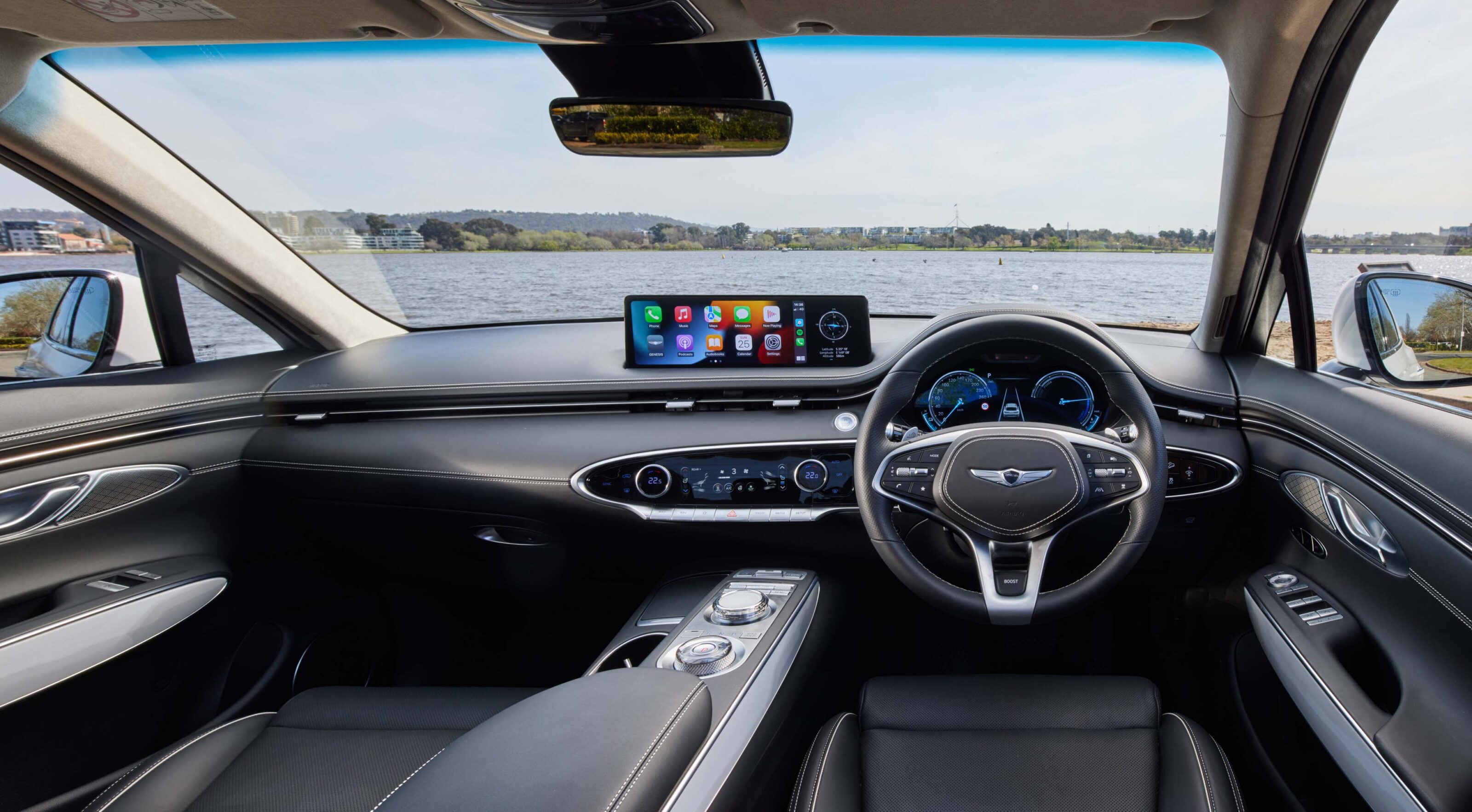
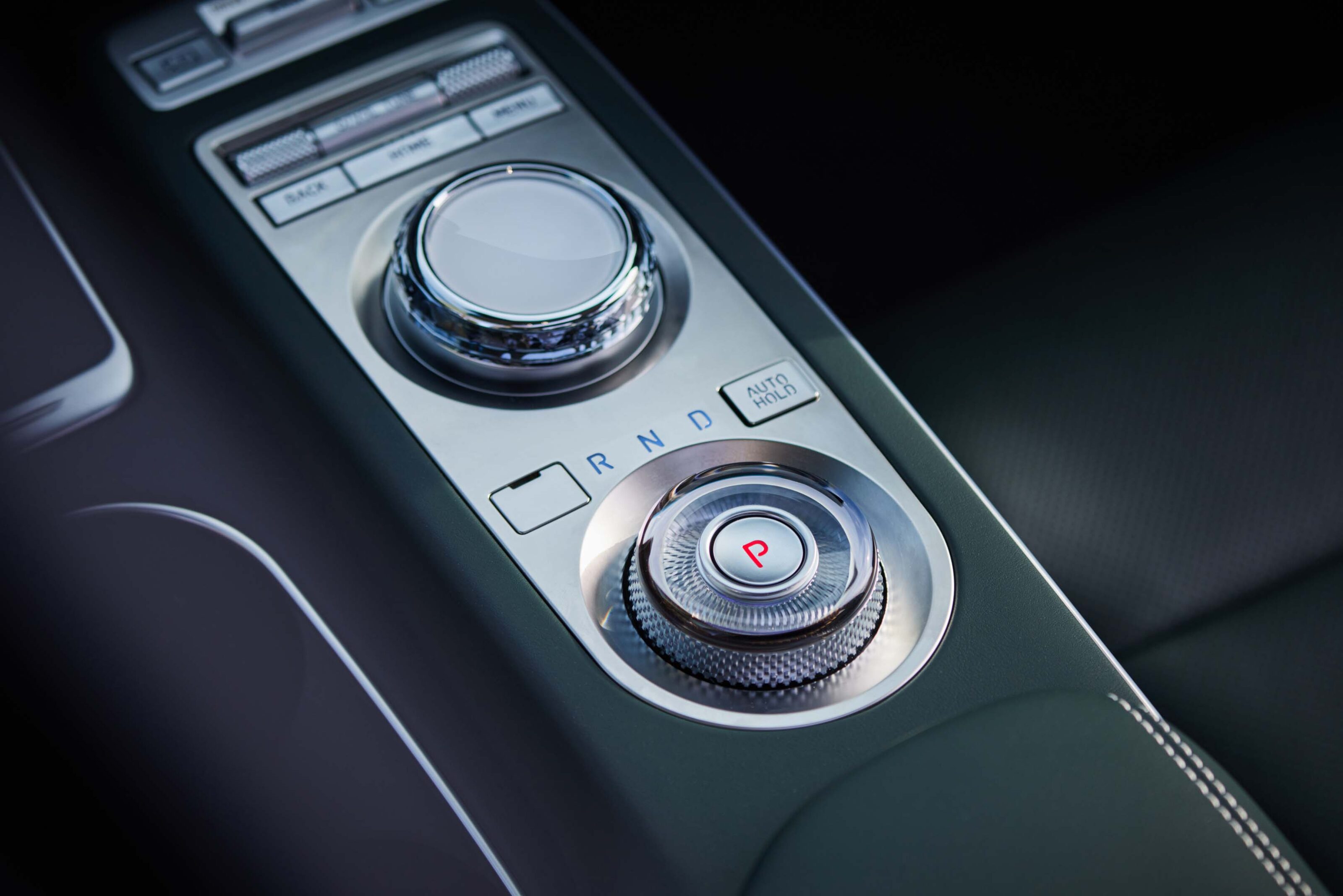
On the inside, an Electrified GV70 changes only what it has to for differentiation – the tachometer becomes a charge/power energy indicator while the paddle shifters alter regenerative braking intensity, visually supported by a gauge that replaces the fuel level indicator.
And there are two unique alternatives to an all-black interior – Ocean Blue upper/Pine Grove Green lower, or Ocean Blue upper/Glacier White lower (with copper accents), all in quilted Nappa leather.
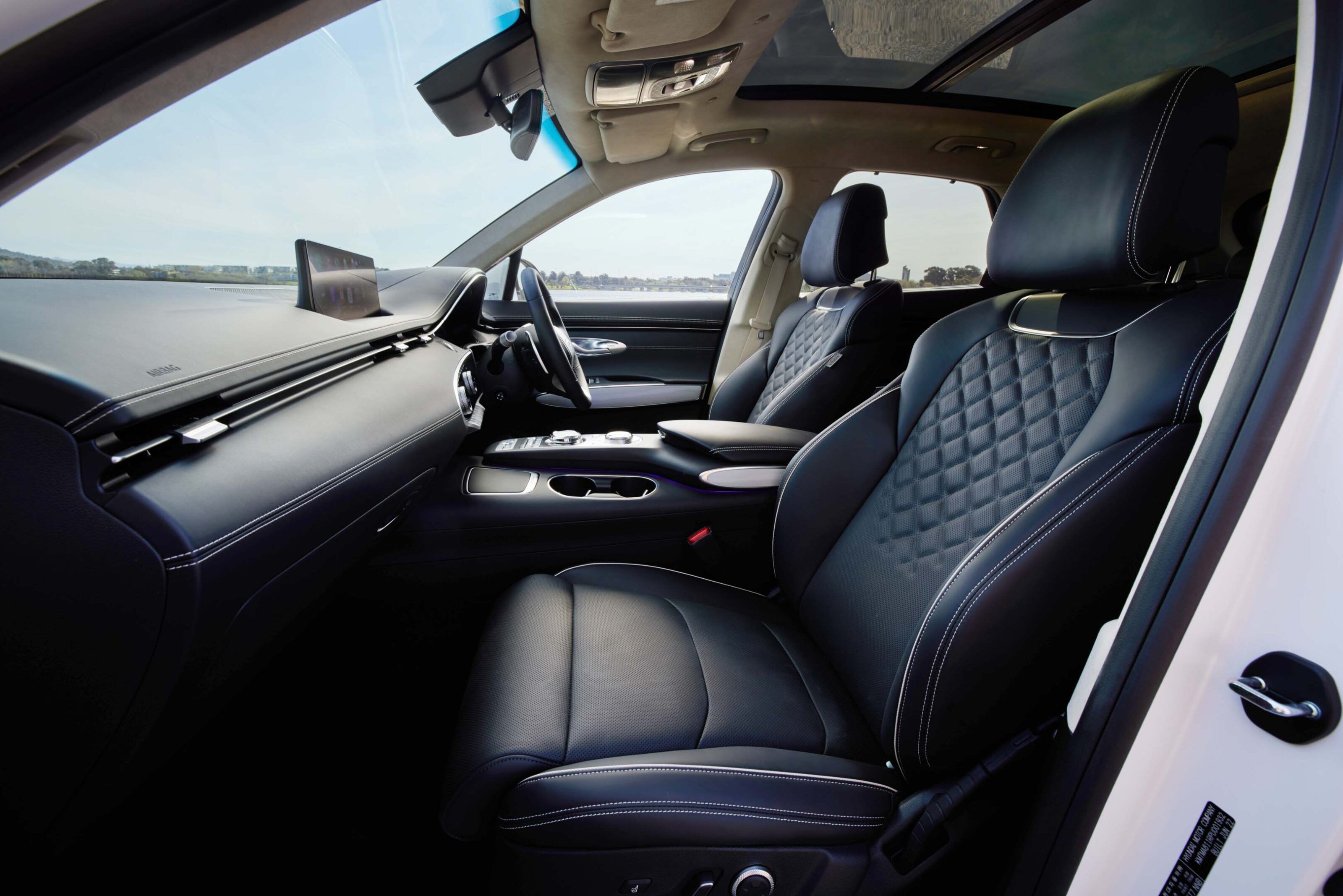
So from the front seats, it’s situation normal – 18-way electric adjustment with ‘Ergo Motion’ massaging functions that prove surprisingly pleasant, supported by effective seat bolstering and long-distance comfort.
As with the regular GV70, the driving position and most of the control layout achieve high marks for ergonomics, though squeezing anything beyond 600ml water bottles in the front doors is a challenge.
In the rear seat, however, there are some subtle architectural changes. To sufficiently accommodate the batteries underneath, the outer rear floor sections are 16mm higher than combustion-engined models, which reduces foot room under the front seats slightly, without significantly impacting the excellent under-thigh support and overall space and comfort of the outer two positions.
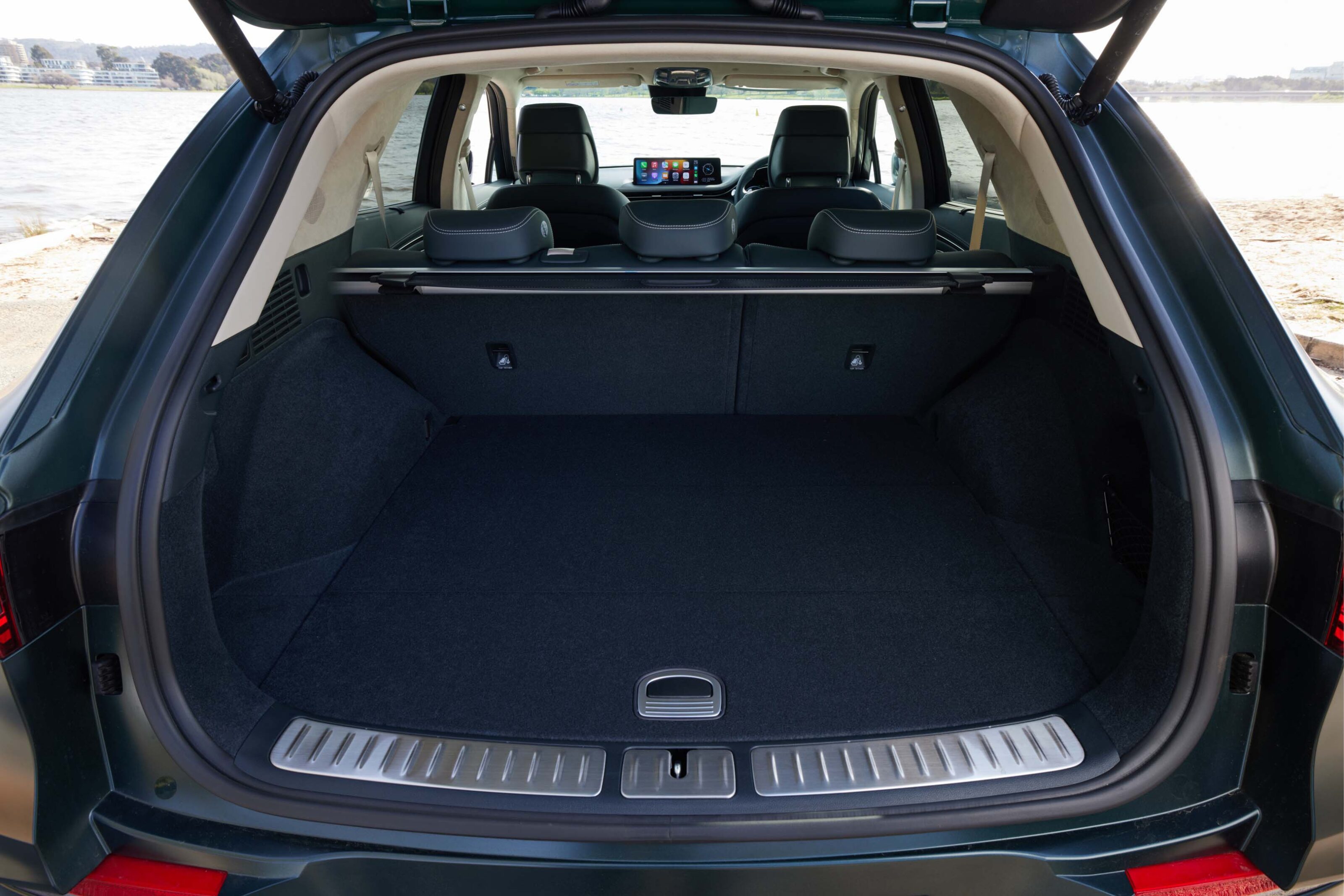
Conversely, the centre tunnel has reduced in height, making the reasonably useable centre seat a better proposition. And while the Electrified GV70’s boot capacity has shrunk to 503 litres below the luggage cover (down from 542 litres), that volume remains competitive with the BMW iX3 (510 litres), and it gains 22 litres of under-bonnet storage not offered in conventional GV70 models.
What is it like to drive?
Although the Electrified GV70 doesn’t ride on a bespoke EV platform like the smaller GV60 (and related Hyundai Ioniq 5 and Kia EV6), its underpinnings were developed with electrification in mind, and thus its 77.4kWh battery pack resides in the floor, between both axles, to enhance its packaging efficiency and dynamic ability.
With all that mass mounted low, the Electrified GV70 does an impressive job masking its considerable heft (2310kg – 272kg heavier than the already chunky 3.5T AWD).
Combined with electrically assisted dynamic torque vectoring, there’s a considerable degree of fluency and accuracy when pushing the Electrified GV70 through tight corners that inspires confidence. And that’s with the adaptive suspension in Comfort mode.
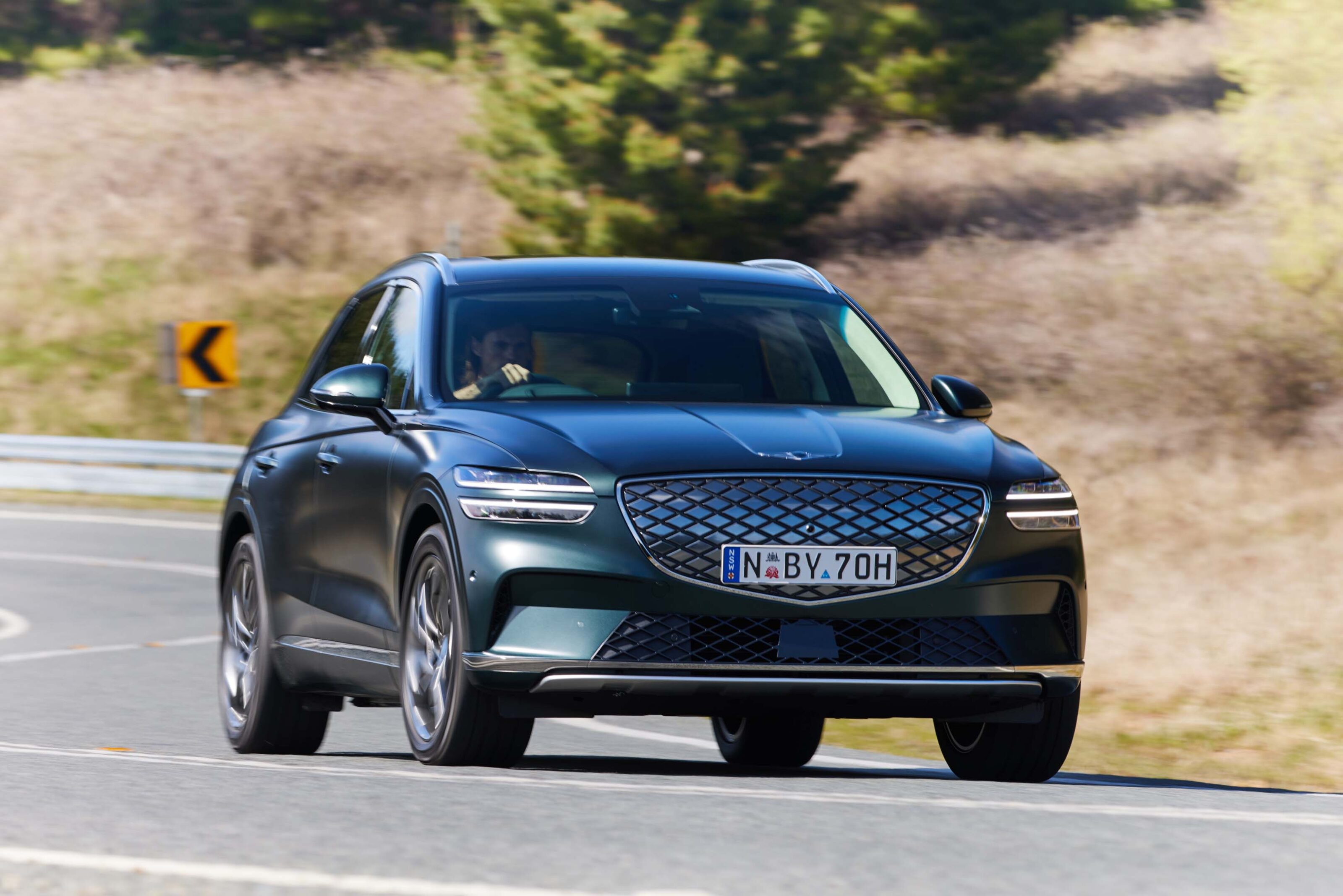
Selecting ‘Sport’ increases steering weight (though not feel, which remains rather digital) and tightens body control, yet driver enjoyment in the Electrified GV70 isn’t dependent on the selected drive mode. In fact, punting it rapidly in a more subdued setting (which includes Eco mode) is probably to the benefit of other passengers because the Electrified GV70 possesses an almost alarming turn of speed.
With a 180kW/350Nm electric motor on each axle and Boost Mode selected (which lasts for 10 seconds), the Electrified GV70 can blast from 0-100km/h in an eye-widening 4.2 seconds. That’s almost a second quicker than a petrol GV70 3.5T or a Mercedes-Benz EQC, and 2.6sec quicker than an iX3.
Rolling acceleration is also rapid – a claimed 2.5sec from 80-120km/h – though that’s identical to the 80-120 figure quoted by BMW for the rear-drive iX3, meaning the Electrified GV70’s thrust off the line is all about using all four wheels to transfer its 360kW/700Nm to the tarmac.
Punting it rapidly in a more subdued setting (which includes Eco mode) is probably to the benefit of other passengers because the Electrified GV70 possesses an almost alarming turn of speed.
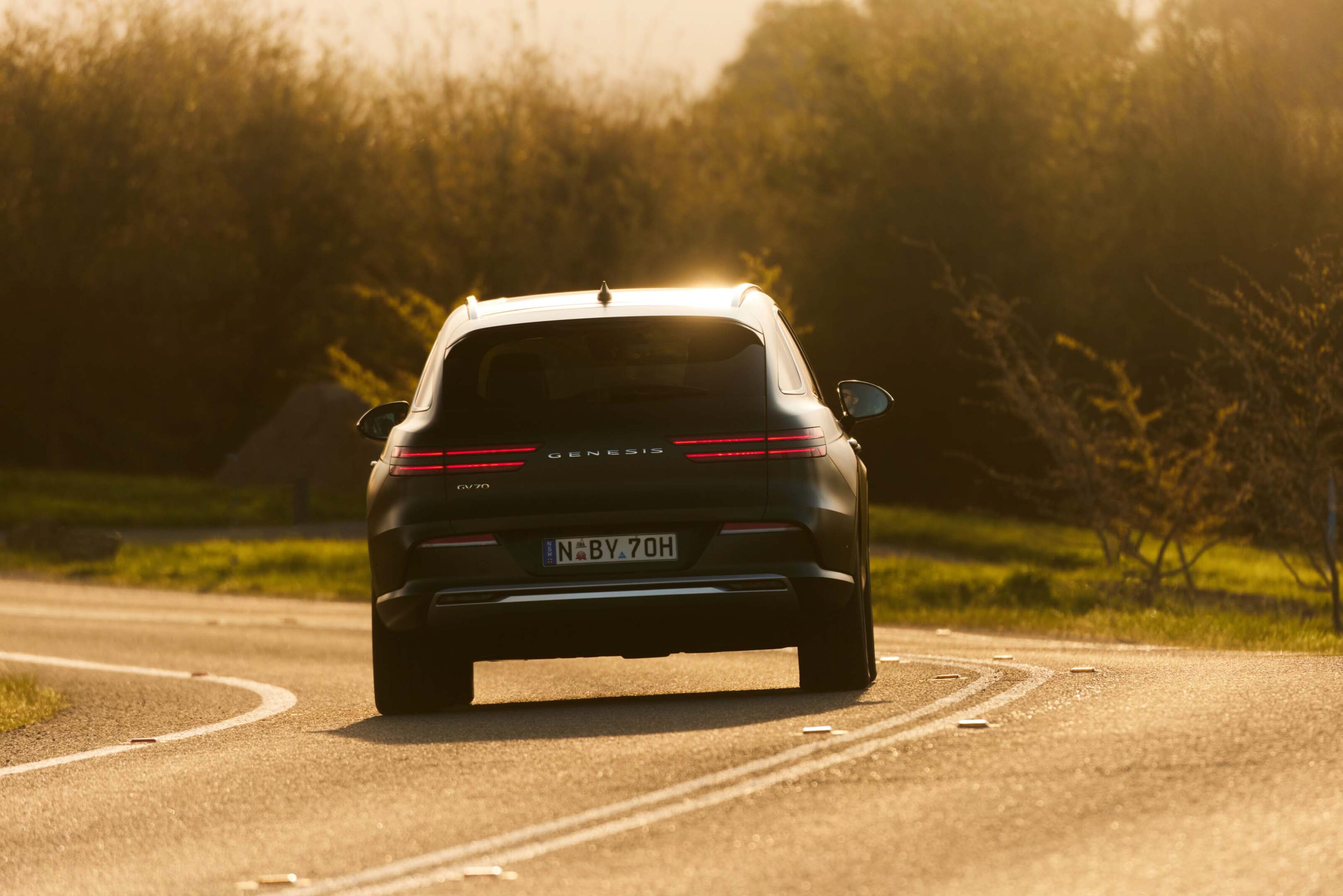
Yet there’s a measured calmness to the Electrified GV70’s accelerator response in lesser drive modes that makes it feel beautifully progressive in all driving situations.
The regenerative braking also proves highly effective, both in its ability to feed energy back to the batteries as well as its ease of modulation in stop-start and low-speed motoring. Likewise, the ‘road preview’ electronic dampers, which rely on a windscreen-mounted camera to read road surfaces before they reach the GV70 to prepare a suitable damping resistance.
For the most part, the Electrified GV70 does a fine job balancing disciplined ride comfort with sound body control – even in Eco or Comfort mode – though our test car lost its cool over one particularly large hit, sending a front wheel into the bump stop. Yet this isolated incident failed to dim our overall impression of the Electrified GV70’s sophisticated dynamic cohesion.
How energy-efficient is it?
The claimed WLTP range for the electrified GV70 is 445km. Our test car averaged 16.4kWh/100km over a fairly unchallenging 120km drive route – much of it on the freeway – which equates to 451km of range (based on a useable battery capacity of around 74.0kWh).
In more demanding dynamic testing, a 19.9kWh/100km figure reduced the calculated overall range to 372km.
As for charging times, Genesis says the Electrified GV70 can go from 10-80 per cent in as little as 18 minutes using a 350kW ultra-fast charger.
How safe is it?
The combustion-engined Genesis GV70 received five stars in ANCAP crash testing – highlighted by 89 per cent scores for both adult and child occupant protection – which is a rating that can be broadly applied to the Electrified version.
In terms of standard active safety equipment, the Electrified GV70 wants for nothing. Stand-out features include blind-spot collision avoidance assist, junction and lane-change auto emergency braking (AEB) with evasive steering assist, reversing AEB and rear cross-traffic AEB.
Warranty and running costs
Genesis Australia’s standard warranty is five years with unlimited kilometres or eight years/160,000km for the high-voltage battery packs.
Recommended service intervals for the Electrified GV70 occur every 12 months or 15,000km, with the first five years of maintenance covered by the manufacturer. Genesis also offers five years of complimentary valet service and 10 years of roadside assistance.
VERDICT
If your desire for a premium-brand electric SUV centres around luxury, convenience and inherent enviro-friendliness, the Genesis Electrified GV70 nails the brief perfectly.
By appearing near-identical to its combustion-engined siblings, the Electrified GV70’s battery-powered propulsion almost seems incidental, though once you start to consider its performance, range, charging ease and all-round slickness, you quickly realise there’s much more to the Electrified GV70 than its subtle styling tweaks might suggest.
With off-the-line acceleration to rival serious sportscars, there’s a ‘dark horse’ aspect to the smooth and refined Electrified GV70 that gives it a considerable advantage over both its natural EV rivals and its conventional relatives.
But you’ll pay handsomely for the privilege, without the unique visual pizzazz to truly justify it … aside from one new paint colour. Where an iX3 looks identifiably electric compared to a regular X3 and the EQC is an entirely different proposition to a GLC, the Electrified GV70 is the definition of stealth.
And where the standard GV70 seems a bit of a bargain compared to its premium competition, the Electrified version battles head-on with the German establishment when it comes to price.
The Electrified GV70 is convincingly impressive at what it does – arguably more so than its European alternatives – but only time will tell whether punters are willing to fork out establishment money for this highly accomplished Genesis product.
Related video: Pre-production drive
2022 Genesis GV70 electrified specifications
| Body | 5-door, 5-seat medium SUV |
|---|---|
| Drive | all-wheel |
| Motor | dual electric motors |
| Battery size | 77.4kWh lithium-Ion |
| Charging speed | 350kW |
| Power | 360kW |
| Torque | 700Nm |
| 0-100km/h | 4.2sec (claimed) |
| Transmission | reduction gear |
| Weight | 2310kg |
| Front suspension | MacPherson strut, multi-link |
| Rear suspension | multi-link (5 links) |
| L/W/H | 4715/1910/1625 |
| Wheelbase | 2875mm |
| Brakes | ventilated discs |
| Tyres | 265/45 R20 108W |
| Wheels | 20-inch alloy |
| Price | $127,800 + on-road costs |
These are some of the safest cars for new drivers
Your children have passed their driving test at the ripe old age of 16 and think they’re God’s gift to the road.
It’s understandable that you’d be a little anxious about their safety out there.
Luckily, you’re able to help them out a little with a new car, so what do you choose?
We’ve put together a list of 10 cars that should keep your kids safe, happy, out of the house and limit the amount of anxiety-induced grey hairs on your dome.
Cars are not as cheap as they were; $15,000 starting prices are no longer the norm. But that’s okay, because they’re now much safer. In fact, safety is probably your number one consideration, so the inclusion of accident-avoiding autonomous emergency braking (AEB) is worth pointing out.
With stricter safety standards, some strong contenders may not score a full five stars in ANCAP testing – don’t worry, we’ll outline what the reasons for not obtaining a maximum score are and whether you should be worried about them.
Jump ahead
- Kia Picanto
- Mazda CX-3
- Suzuki Swift
- Volkswagen Polo
- Kia Cerato
- Skoda Scala
- Toyota Yaris Cross
- Hyundai Venue
- MG ZS EV
- Fiat 500
Kia Picanto S auto – $19,990 (drive-away)
AEB – Yes Crash safety – Four stars (ANCAP 2017)
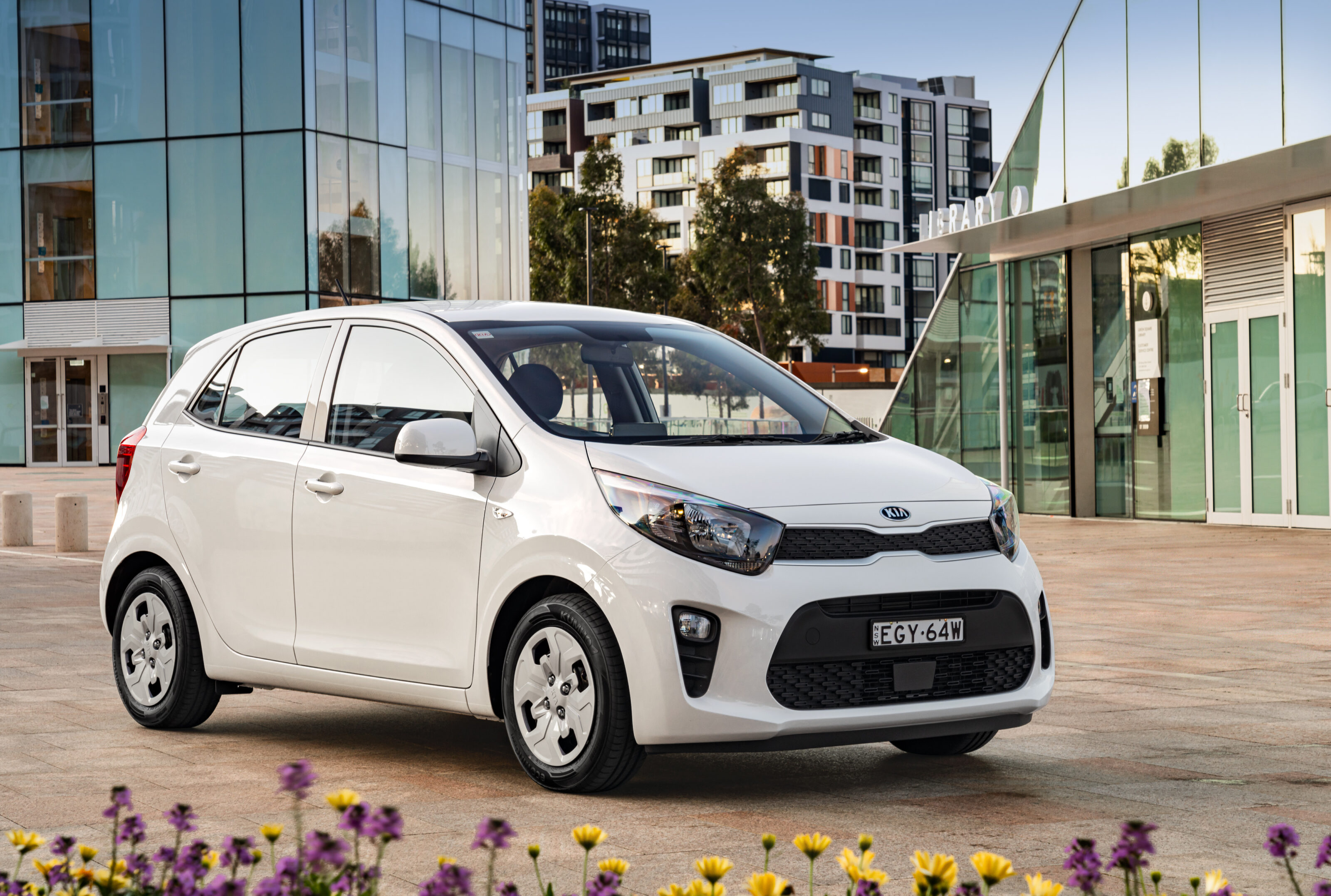
Kia’s compact Picanto is a winner when it comes to affordability, with an auto S able to be driven home for less than $20,000. Easy to drive and spacious for its size, it’s a cinch to park thanks to its ultra-compact proportions. Those after a hot hatch on a budget could do much worse than the peppy turbo-triple GT manual.
AEB is standard as well, minimising the chance of front-to-rear accidents, however the Picanto only scores four stars in ANCAP testing due to low results in pedestrian protection, safety assist and child occupant protection. Adult occupant protection, meanwhile, was rated highly.
Mazda CX-3 Neo Sport manual – $23,390 (MLP)
AEB – Yes Crash safety – Five stars (ANCAP 2015)

The Mazda CX-3 has been updated many times since its 2015 release date and is still very much in-vogue. Sure, others have moved on in infotainment terms, but the CX-3 retains an affordable purchase price and quality cabin feel. It’s a shame the boot is so small.
Under the bonnet is a 2.0-litre petrol four-cylinder that’s plenty adequate for the CX-3’s spry 1185 kilogram kerb weight. The six-speed manual is a sweet thing, and an auto is only a small up-charge of $2000.
Suzuki Swift GL S Plus – $25,990 (MLP)
AEB – Yes Crash safety – Five stars (ANCAP 2017)
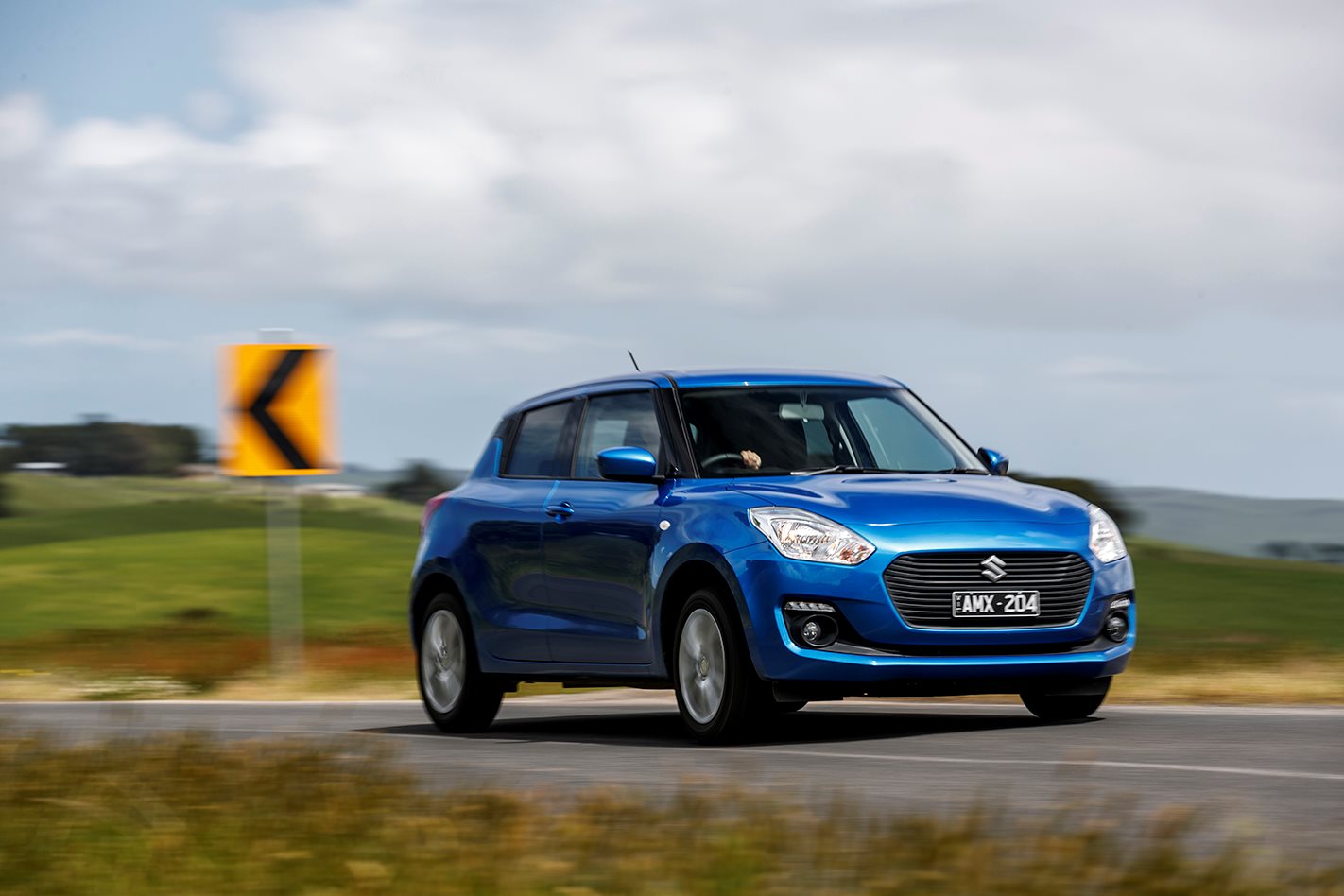
This may have been the default car for years, but this third-gen that launched in 2017 is no longer available for the same bargain basement price it once was with its peppy ‘Boosterjet’ turbo triple.
Still, you can get a GL S Plus fitted with a 66kW 1.2-litre four-cylinder petrol engine and CVT automatic for under $30k on-the-road. It features; climate control, touchscreen infotainment with navigation, adaptive cruise control and – crucially – AEB that helps it net a solid safety rating.
Volkswagen Polo 70TSI Life – $25,250 (MLP)
AEB – Yes Crash safety – Five stars (ANCAP 2022)
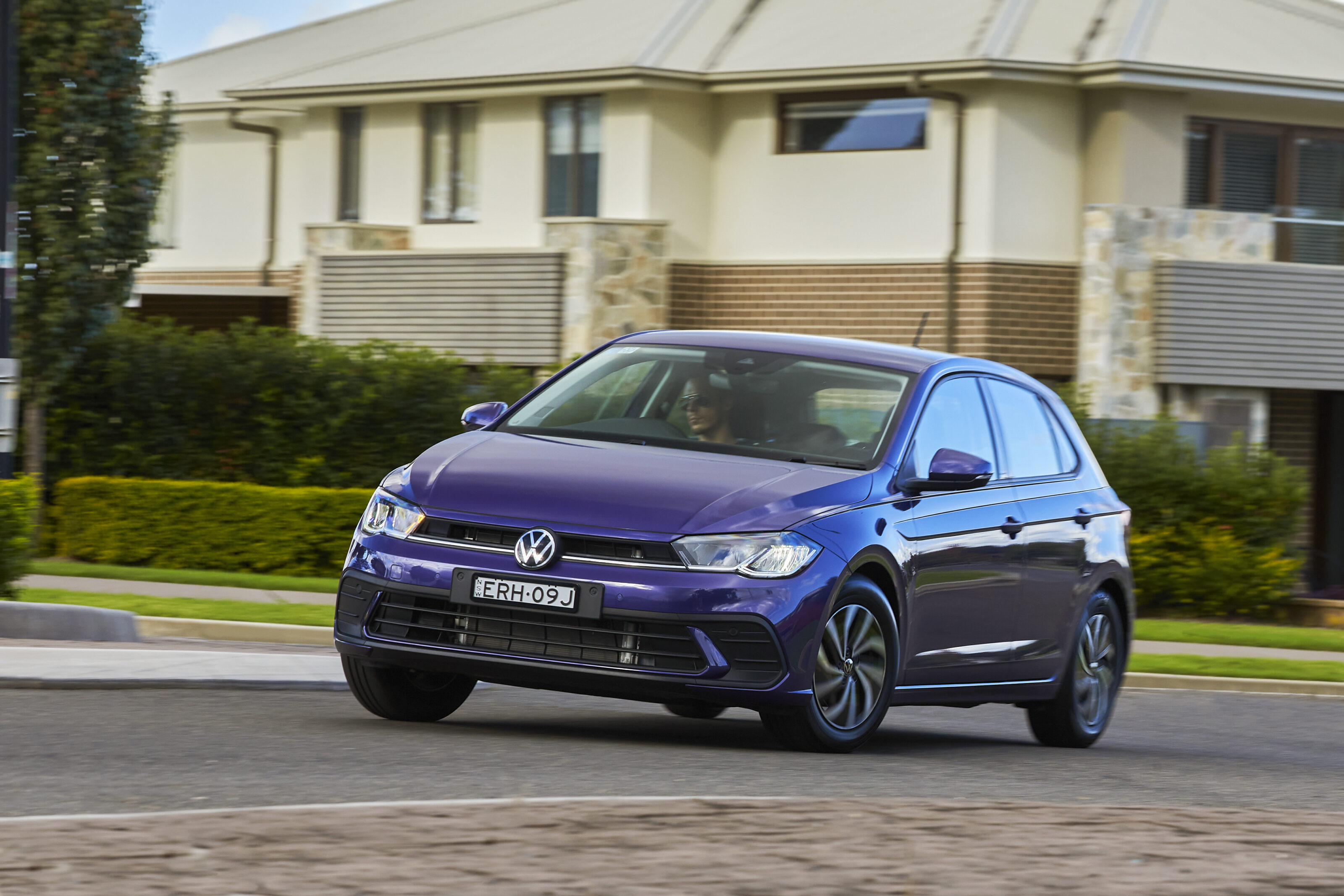
This is one classic first car that’s really jumped in price over the years – the facelift’s $25,250 starting price came as quite a shock when an auto 85TSI Comfortline could previously be had for a whisker over $20k.
But there are reasons: a centre airbag, renewed 2022 five-star ANCAP rating, premium cabin feel, generous touchscreen with wireless smartphone mirroring, incredibly efficient one-litre turbo and a driving experience from the size class above in refinement terms.
Kia Cerato S auto – $25,990 (drive-away)
AEB – Yes Crash safety – Five stars (ANCAP 2021)

Refreshed and re-rated by ANCAP in 2021, you know the Cerato is a safe vehicle. It also happens to look mature and grown up. You could hop out of a black Cerato sedan in the city wearing a suit and not look too out of place.
That 2.0-litre multi-point injected engine isn’t a highlight, but for a first car, going fast is the enemy of safety anyway.
Skoda Scala 110TSI Ambition – $31,990 (drive-away)
AEB – Yes Crash safety – Five stars (ANCAP 2019)
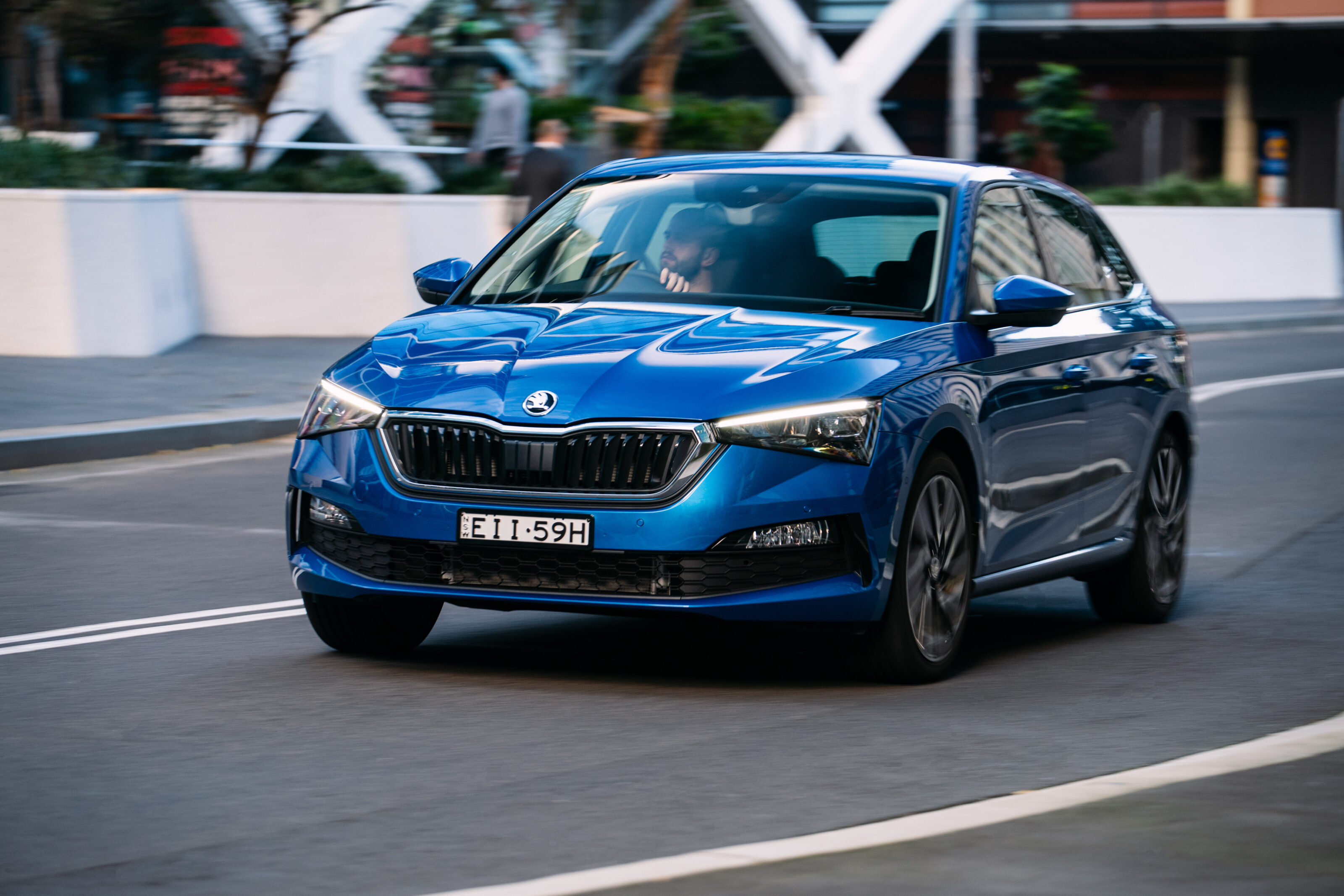
For kids who like bike riding, drum smashing or surfing, an affordable, spacious vehicle (that isn’t an SUV) is hard to come by these days – especially with the loss of Skoda’s Fabia wagon in Australia.
The Scala is an alternative, being Golf-sized but with more tech than the base VW and nearly as affordable as a Polo. It’s got all the safety gear, a very benign chassis and a really swish interior.
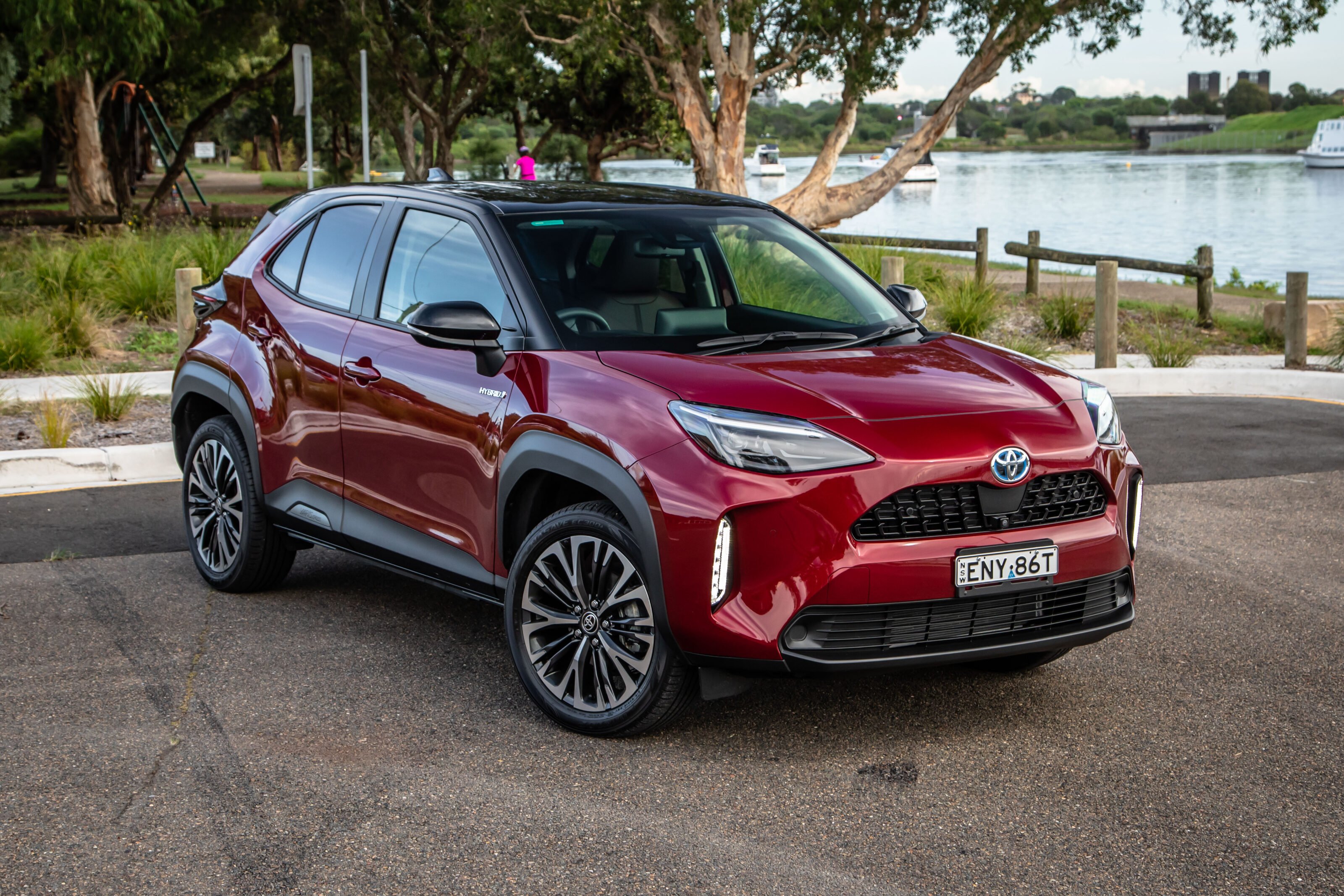
Toyota Yaris Cross GX auto – $26,990 (MLP)
AEB – Yes Crash safety – Five stars (ANCAP 2020)
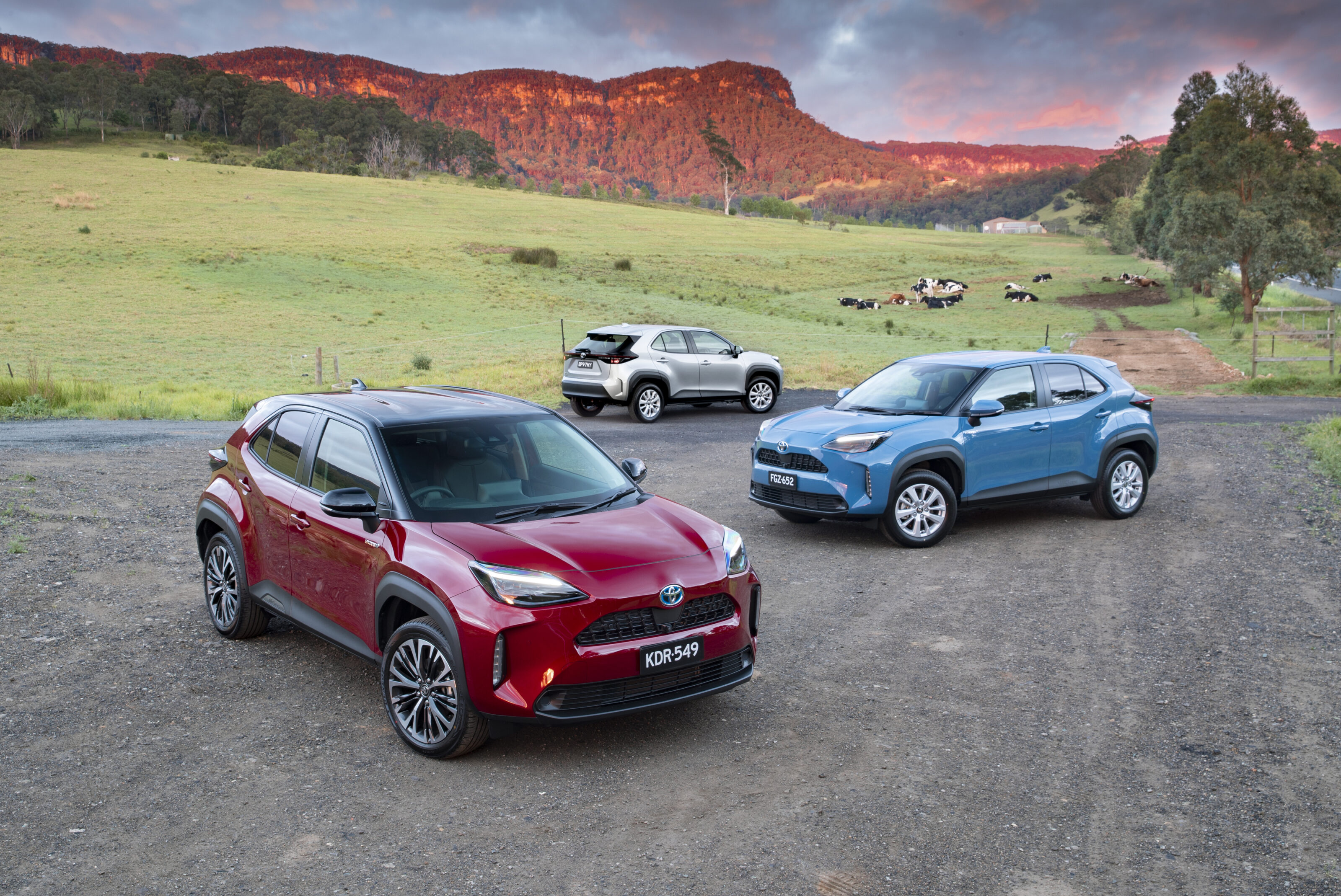
The Toyota Yaris was always a go-to first car, but the high-riding Yaris Cross SUV looks way cooler – especially in the fetching latte beige hue. There’s also something to be said for its higher driving position aiding safety.
As is typical for Toyotas, maintenance required is minimal and affordable absolutely. Being based on the brand’s GA-B platform means Yaris Cross is a perky SUV to drive around town. The option of an ultra-efficient hybrid powertrain for just $2k more makes it a winner.
Hyundai Venue manual – $21,740 (MLP)
AEB – Yes Crash safety – Four stars (ANCAP 2019)
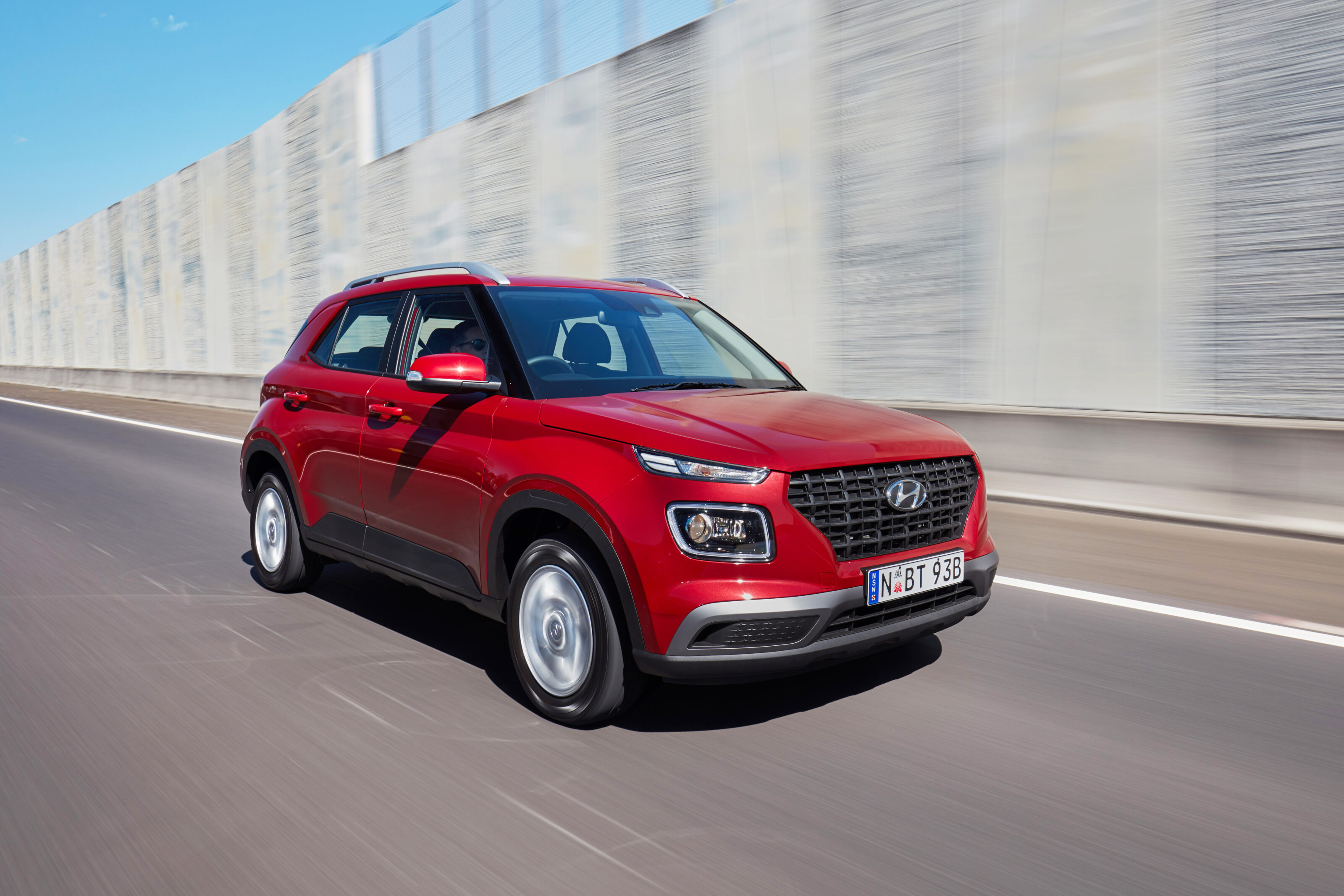
The Hyundai Venue is among the cheapest of the new SUVs you can buy, yet it manages to look convincing in mid and upper trims.
What may not be so convincing is its four-star ANCAP rating. Don’t fret too much, as it scored very well for adult and child occupant protection, but was marked down as its camera-based AEB system cannot detect cyclists.
MG ZS EV Excite – $44,990 (drive-away)
AEB – Yes
Crash safety – Five stars (ANCAP 2019)
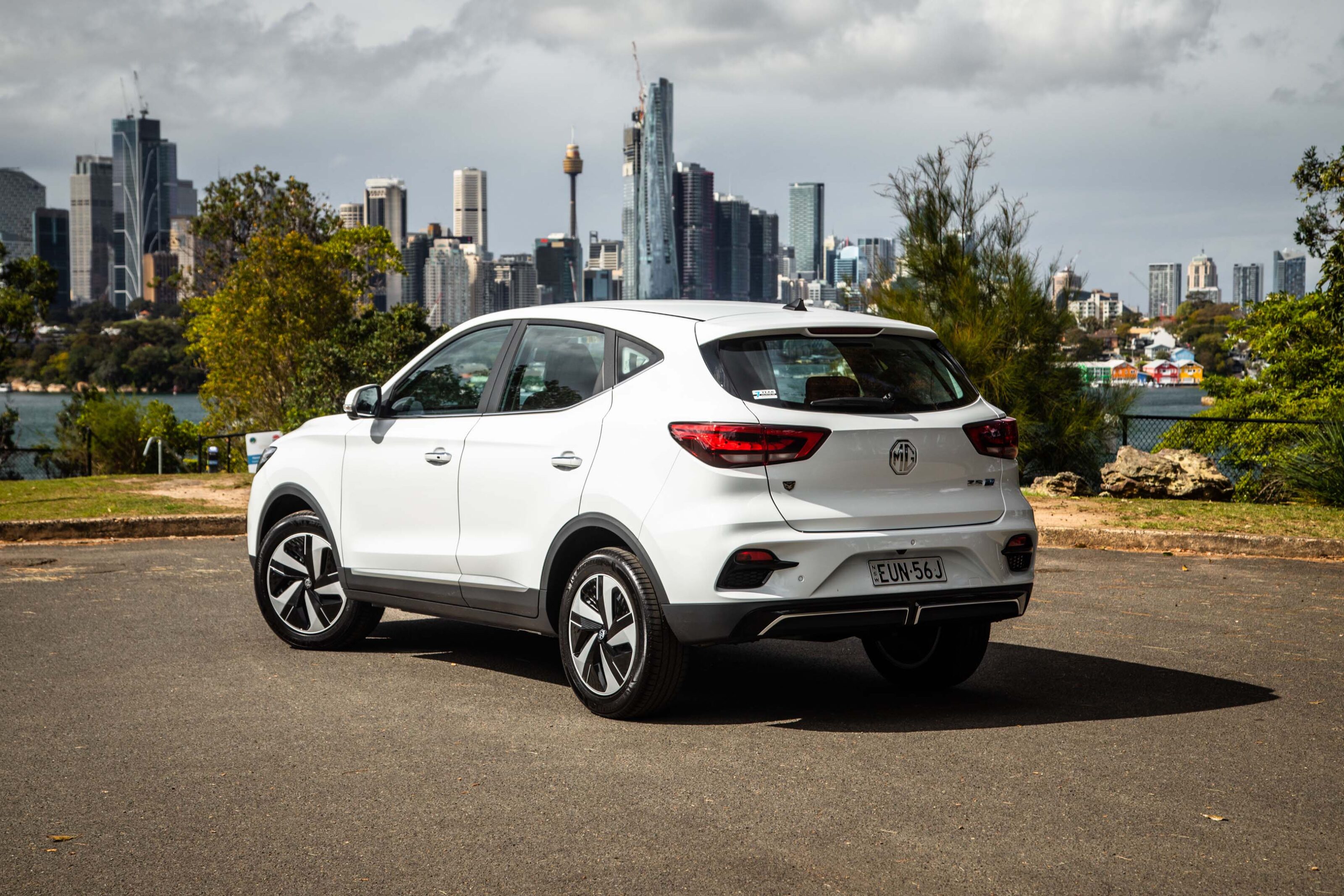
Ok, the MG ZS EV stands out in this list. It is the most expensive car here, and it’s no secret we don’t rate its driving experience particularly highly at Wheels.
But this is currently the cheapest brand-new electric vehicle, so if you’re a CO2 conscious enviro-warrior on a budget – you aren’t exactly spoiled for choice.
The MG ZS electric has a driving range of 320 kilometres in the WLTP combined cycle from a 50.3kWh battery and has a 50kW DC fast-charge speed. There’s plenty of technology to be found inside, including a 10.1-inch touchscreen and digital driver’s display, as well as a five-star ANCAP rating.
Fiat 500 Lounge – $23,100 (MLP)
AEB – No Crash safety – Five stars (ANCAP 2008)
If your kid keeps up-to-date with influencers on Tik Tok, has themselves pinned as a future fashion or furniture designer, and lives in the inner city, then the fashionable Fiat 500 simply must be considered.
And anyway, with the price of new cars skyrocketing in general, the fashion-forward 500 is relatively affordable – mainly because it hasn’t changed much since its 2007 release. The 500 scored five stars in crash testing…way back in 2008. Things have moved on since then and the 500 isn’t equipped with must-haves such as AEB or blind-spot monitoring.
The Lounge variant starts at under $25k and, while you do get an entirely unremarkable 1.2-litre four-cylinder, your offspring may simply fall in love with what this car stands for.
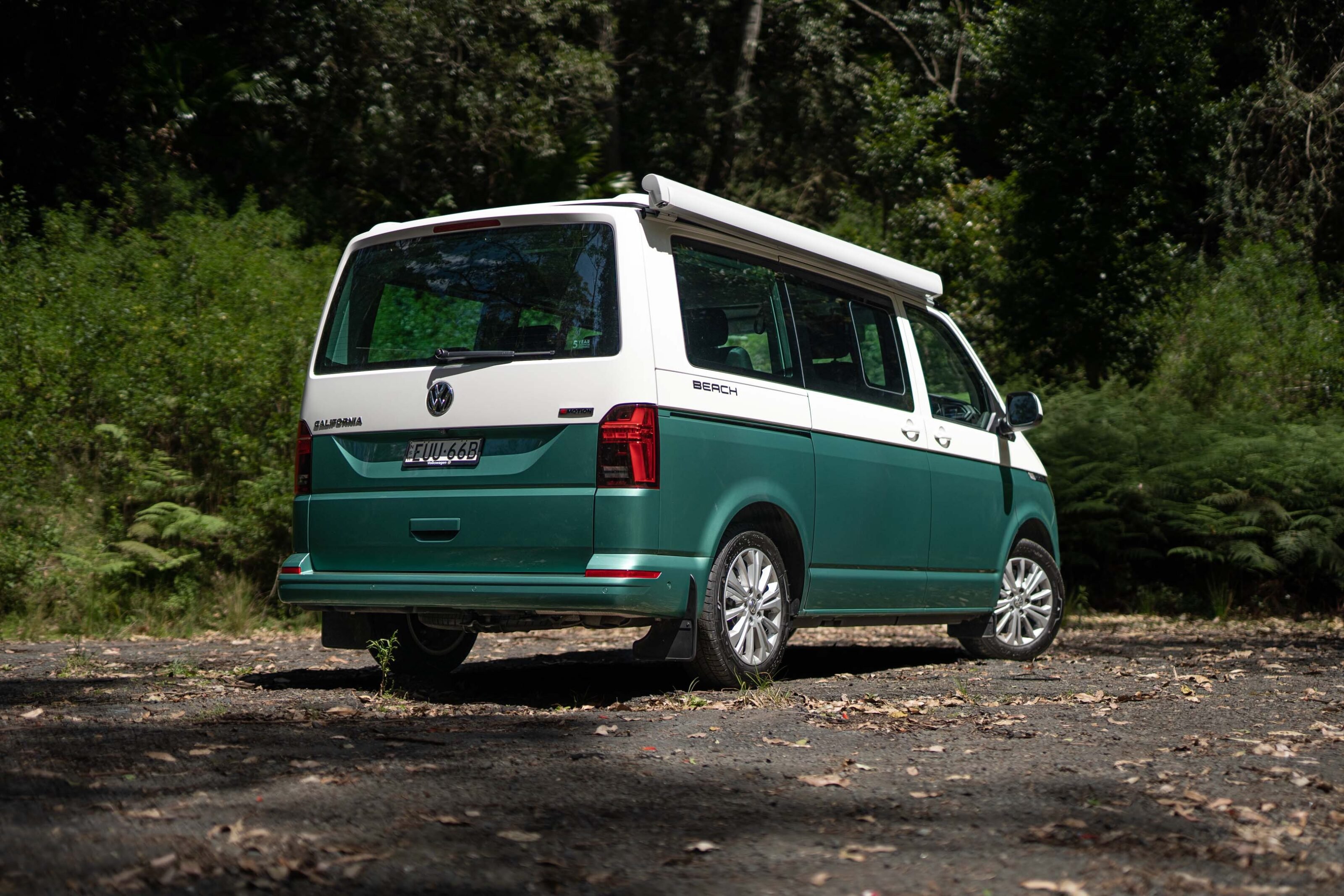
Few cars get the kind of unsolicited positivity as a Volkswagen Transporter or Multivan or, in this case, the California Beach. Smiles, waves, light flashes, honks of the horn or, in one particularly amusing case, a young man in a ute and a mullet winding down his window and shouting, “That’s f***ing sick, mate.”
I’m old enough to remember that sick means good and that it has indeed returned to that usage after three decades. VW’s experience with this kind of machine goes back twice as long (and a bit more) so I had high expectations for my first go in a VW campervan. Well, second after the Caddy California, but that isn’t quite the same, is it?
We had the California Beach for a few days to explore all of its cleverness and give me the opportunity to ask myself if this would tempt me into the outdoors life.
JUMP AHEAD
- How much is it, and what do you get?
- How do rivals compare on value?
- Interior comfort, space and storage
- What is it like to drive?
- How is it on fuel?
- How safe is it?
- Warranty and running costs
- VERDICT
- Specifications
How much is it, and what do you get?
There are three California Beach specifications available, starting with the TDI340 two-wheel drive at $90,990. The next camper off the site is the TDI340 4Motion all-wheel drive at $94,990 and then there’s the TDI450 for $100,990 (all before on-road costs). Each of the start with the same specifications:
| 17-inch alloy wheels |
| 8.0-inch touchscreen |
| Halogen headlights |
| Remote central locking |
| Front power windows |
| Cloth interior |
| Full-size spare wheel |
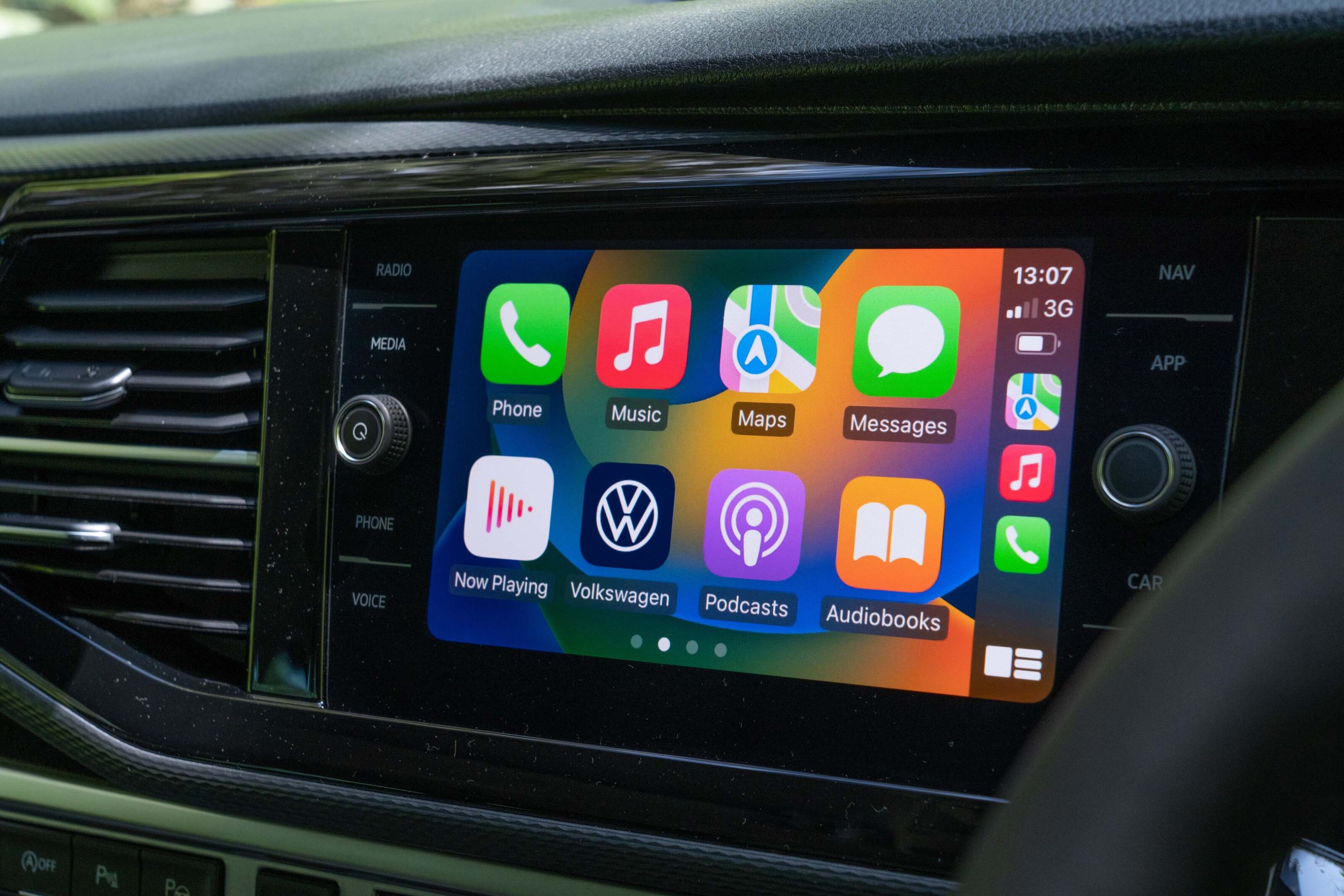
| Multi-zone climate control |
| Heated windscreen |
| Manually-operated exterior awning with rails on both sides |
| Adaptive cruise control |
| Six-speaker stereo |
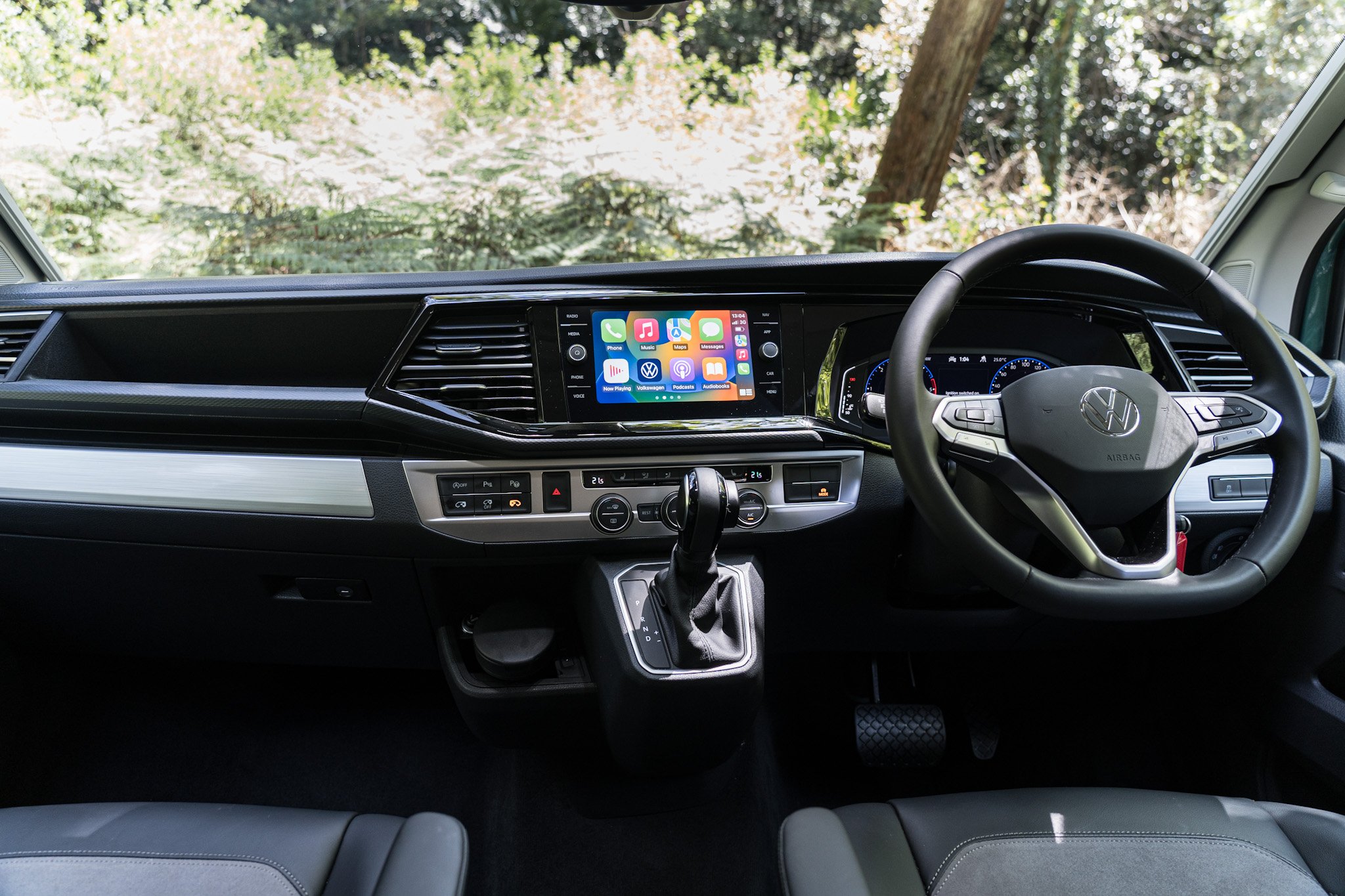
| Wireless Apple CarPlay |
| Wired Android Auto |
| LED interior lighting |
| Leather-trimmed steering wheel |
As you might expect, there are a ton of options available and some packages. The package prices are below, although many of the options in them can be taken separately.
| Electric pop-up roof | $3050 |
| Off-road package u2013 mechanical rear diff, hill descent control | $1720 |
| Underbody protection for engine and transmission | $1940 |
| Interior upgrade package u2013 Art velour microfleece upholstery, heated front seats, digital dash | $3690 |
| Interior upgrade package u2013 Wood look floor, rubber mats for front | $1080 |
| LED headlights | $2050 |
| Foglights with cornering function | $940 |
| High beam assist | $140 |
| Adaptive chassis control | $2010 |
| Park assist with side protection | $460 |
| Discover Pro media system | $1050 |
| Two-tone paint (with silver awning) | $4050 |
| Metallic/pearl paint | $1780 |
Our car had the two-tone paint, electric roof, LED headlights, Art velour microfleece seats, adaptive chassis control, off-road pack, power sliding doors, foglights with cornering function, park assist and light assist.
Which took the $94,990 TDI340 4Motion base package to $114,750 before on-road costs. I think you’ll agree that’s a hefty outlay on options and a good case for getting rid of the luxury car tax. For example.
How do rivals compare on value?
The slightly larger Mercedes-Benz Marco Polo kicks off at $121,199 before on-road costs with a decent spec and the same pop-top style design. It even has the same little hatch windows in the rear sliding doors.
And, er, that’s about it for factory camper vans that aren’t plonked on the back of a truck chassis or an aftermarket splurge based on vans from VW, Mercedes, Renault and Fiat. Or try your luck with an ageing Delica Spacegear 4×4?
Interior comfort, space and storage
The California is a big unit and not only is it very spacious, that space is packed with endless surprise and delight cleverness. Let’s start with the really fun stuff.
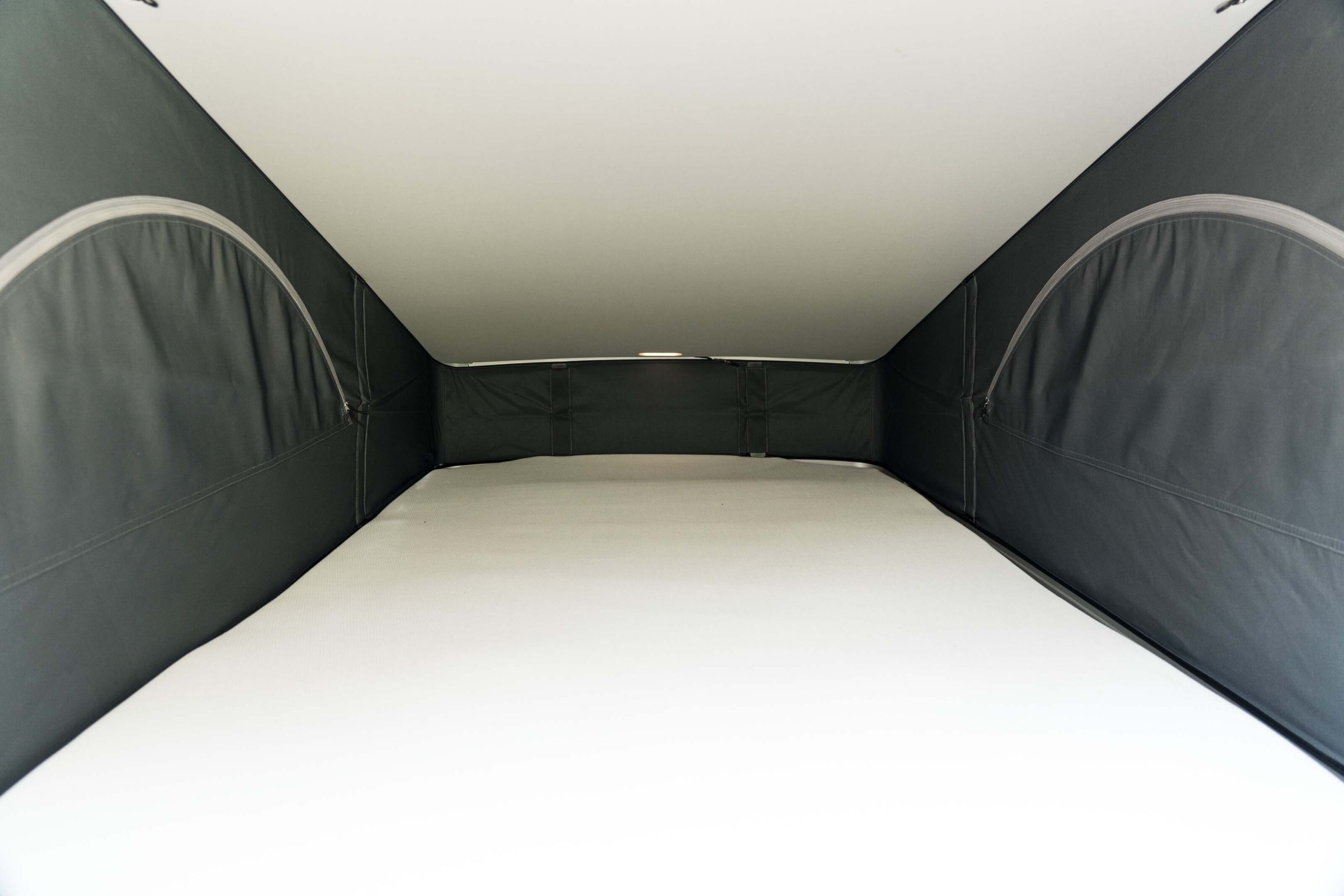
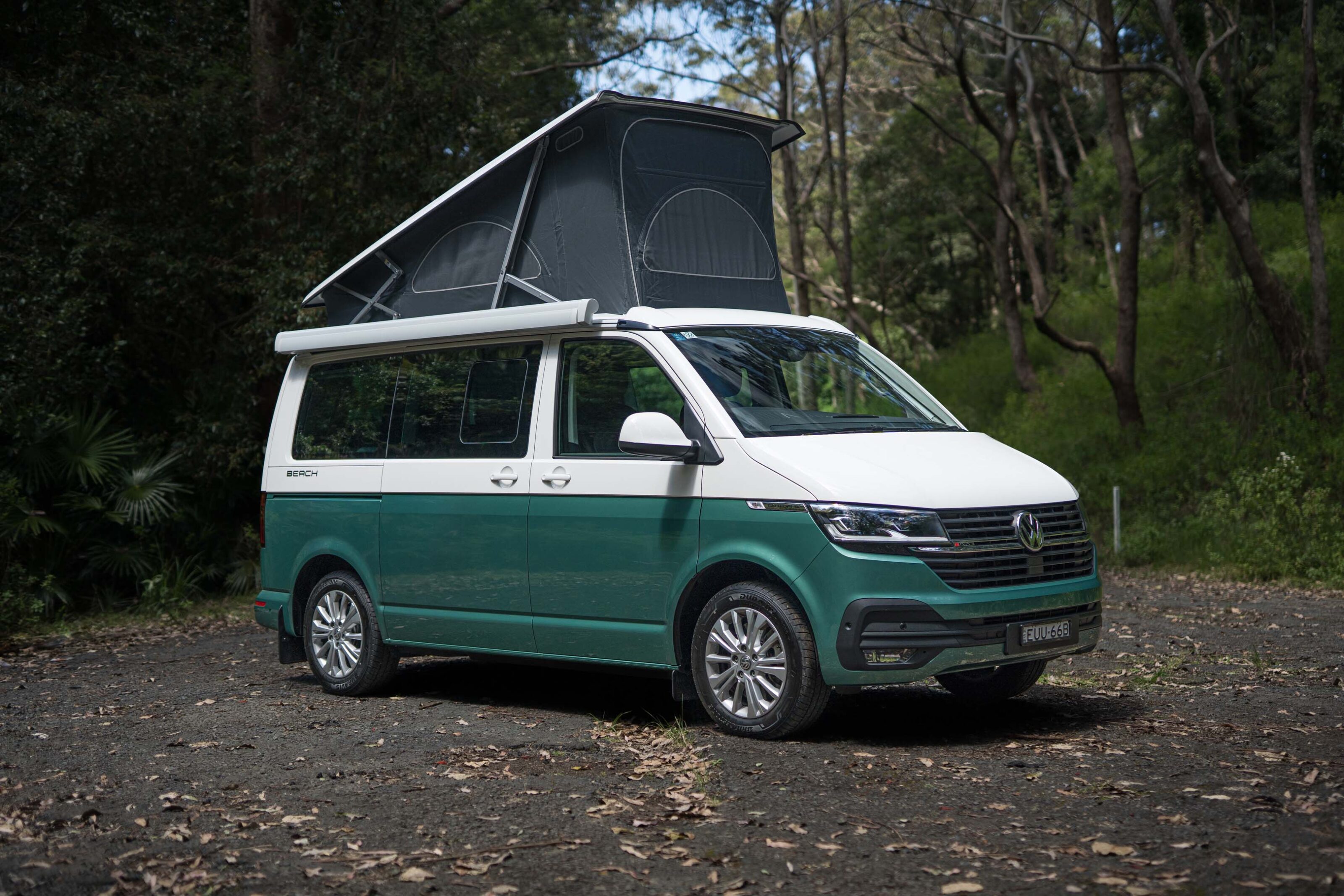
Our test vehicle was fitted with the optional party-piece electrically-operated pop-top and you don’t get one of those on a Rolls Royce even though you should for the money. The roof raises up nice and high, allowing a six-foot tall adult to sit comfortably on the forward end of the surprisingly comfortable bed, which will also fit two six-foot tall folks or any number of kids of various sizes.
There is a load limit of 150kg up top, though, so you’ll need to have your weights and measurements handy.
Panels with flyscreen on the side zip out for light and air and you can zip out the front panoramic section, either leaving the screen in place or zipping it out altogether.
That would be perfect for long afternoons of kids’ cricket – you’re up nice and high, can see all the action and can also doze on the bed. Or a music festival if you can get close enough.
It’s a bit of a climb up there so you might enjoy throwing smaller children up there from outside – although that might attract the attention of the authorities, so perhaps don’t. The kids might not like it either, but I’ve found smaller children to be spoilsports when it comes to these sorts of activities.
There are little LED lights scattered around up there as well as throughout the cabin, as well as handy little night light that detaches for use as a torch. You can also run the heating as well as a few appliances overnight on the second battery. The same screen from where you operate the power roof (if so optioned) also monitors the battery level and “camping mode” ventilation.
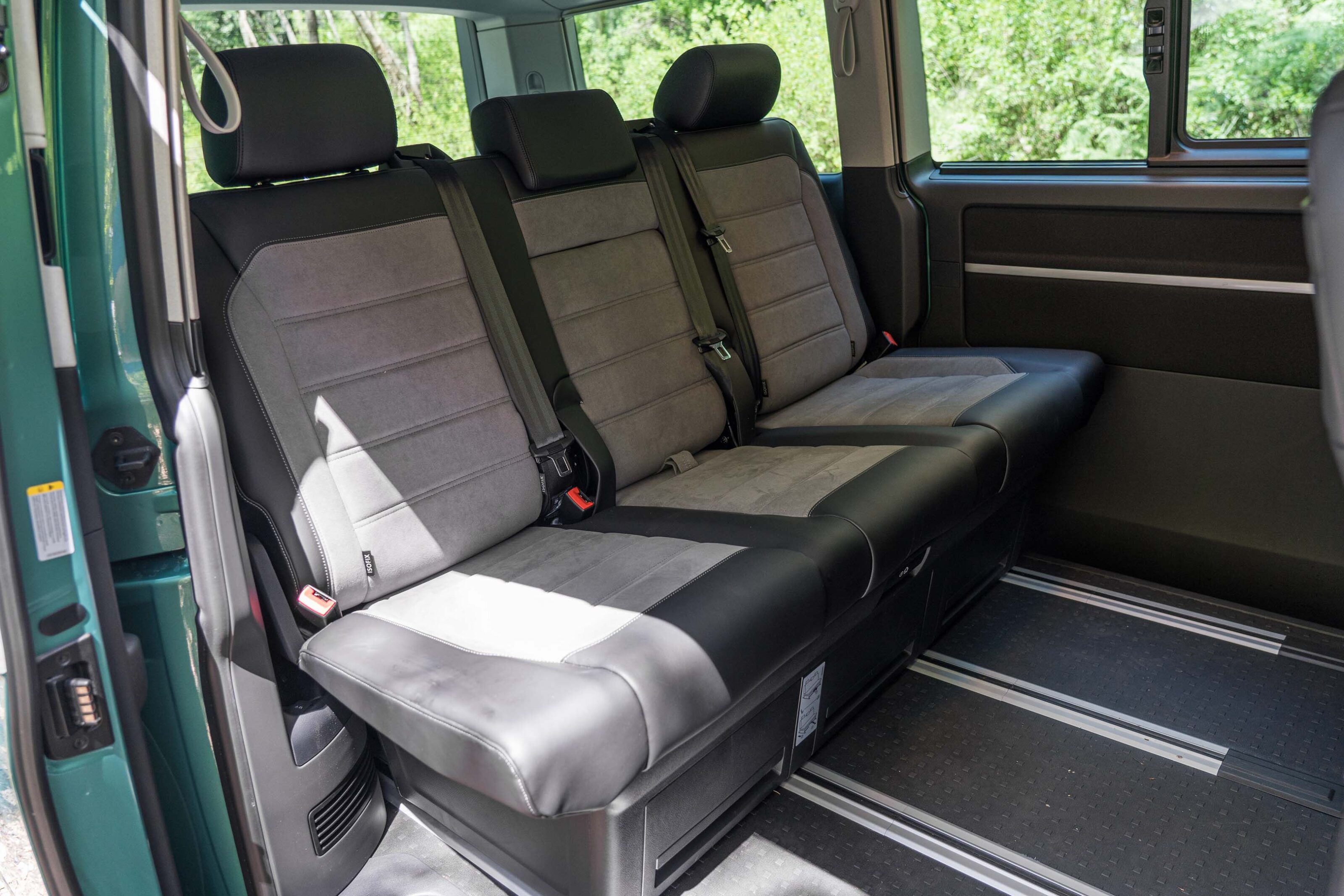
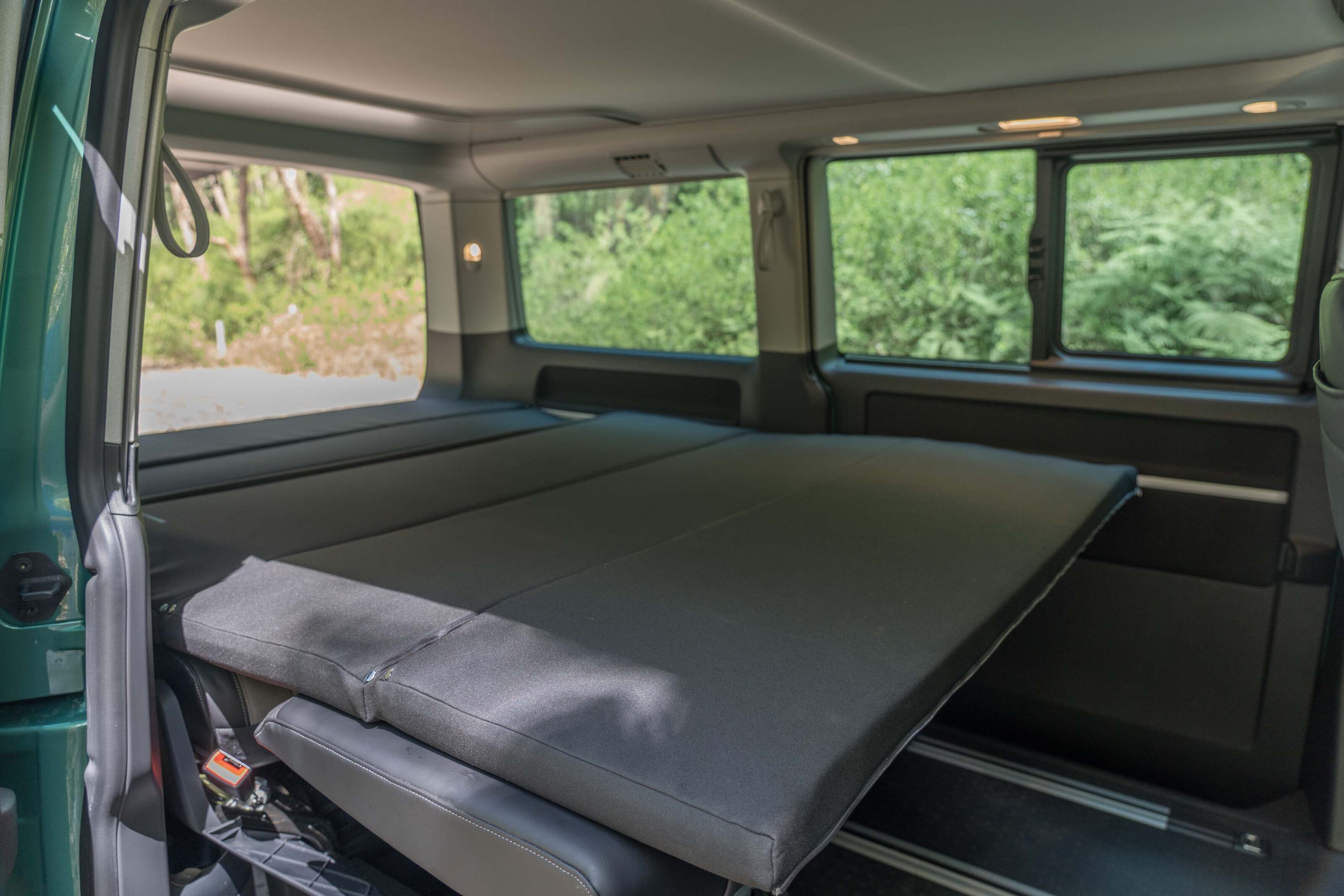
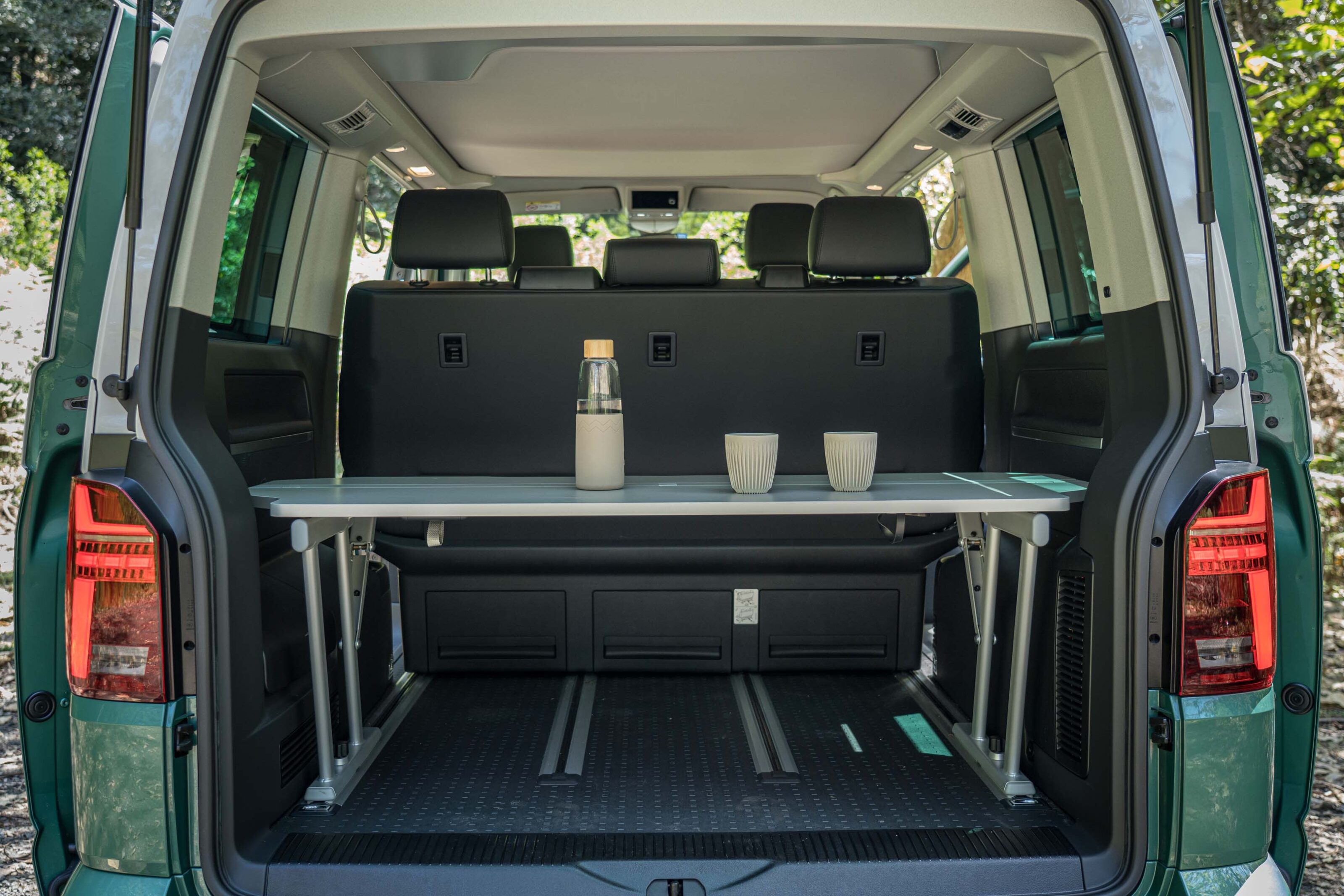
You could also fit two six-foot (180cm) adults “downstairs” on the bed formed of a raised table section in the boot, the fold-flat bench seat and a series of folding mattress sections, but what fun is that? I wouldn’t say the lower bed is more comfortable than up top, because that would be a lie, but it’s certainly easier to access and is better than outside on the ground by quite a margin.
When it’s time to sleep, every window has a retractable sun shade, including a two-piece item for the windscreen and cloth ones with magnetic fixtures for the two front doors.
Pop the tailgate and you’ll notice the lower edge has a zip-up pouch with two substantial folding camping chairs plus a matching folding table – also substantial – snapped into the sliding rear door. Both are easy to remove and return, which is also nice. Sometimes features like this are an afterthought and a royal pain to master.
While not strictly the interior, the awning (mounted from the factory on the driver’s side but can be mounted on the passenger side) cranks out of the side of the California. It can be done on your own but it’s a bit of a faff as you have to crank it out a bit, unseat the slightly fiddly legs, and then complete the operation; two people can get it done quicker.
You can then park yourself under there for an afternoon of quiet contemplation. I assume that’s what you do when you’re camping because in my head it’s a largely uncivilised way to run your life but I do accept that I am well and truly in the minority here.
Jokes aside, this is an incredible set-up. Even without the optional electric roof and electric doors, it’s extremely versatile and, as far as I can tell, a very functional family camper. It seems way more fun than a caravan, too, and easier to travel as a package rather than the detachable van vibe.
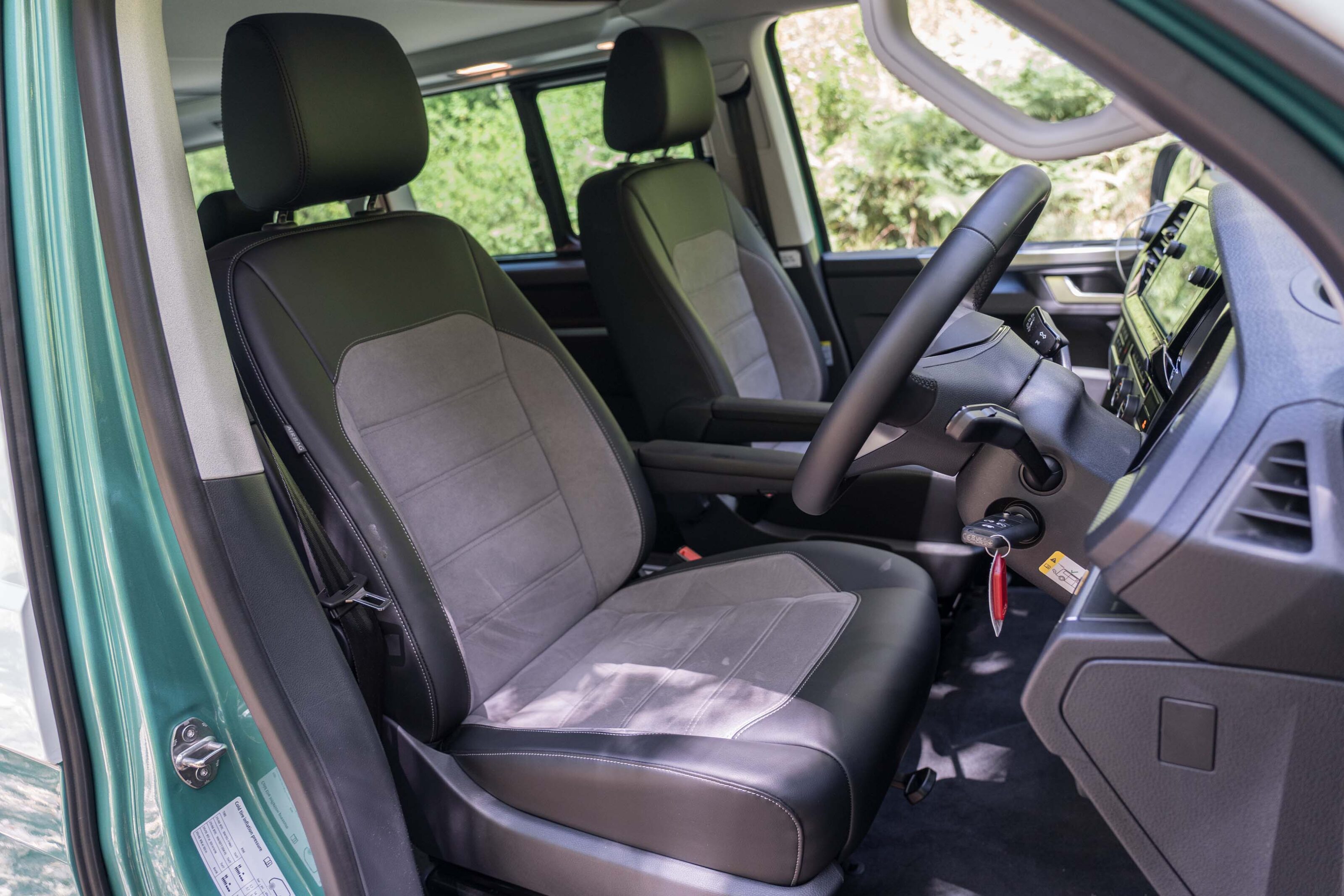
The front seats also swivel to face the rear seats, which is extremely cool. The front passengers will also find cup holders in the dash, huge door pockets in the base of the doors and another slot higher in the doors which will fit six 95-gram tins of tuna perfectly. It’s this kind of very specific consumer information that sets us apart from the others.
Behind the bench seat is a hefty space for luggage. It does have a removable table but that’s not something you’re going to want to tackle too often.
What is it like to drive?
Over the years of talking to folks who drive various types of camping vehicles, I have learned that driving dynamics are exceptionally low on the list of things they care about. Anyone who has driven a Kombi or a Winnebago-type thing will know what I mean.
| TDI340 | TDI340 4Motion | TDI450 4Motion |
|---|---|---|
| 2.0-litre four-cylinder turbo-diesel | 2.0-litre four-cylinder turbo-diesel | 2.0-litre four-cylinder turbo-diesel |
| 7-speed dual-clutch automatic transmission | 7-speed dual-clutch automatic transmission | 7-speed dual-clutch automatic transmission |
| 110kW @ 3250-3750rpm | 110kW @ 3250-3750rpm | 146kW @ 4000rpm |
| 340Nm @ 1500-3000rpm | 340Nm @ 1500-3000rpm | 450Nm @ 1400-2400rpm |
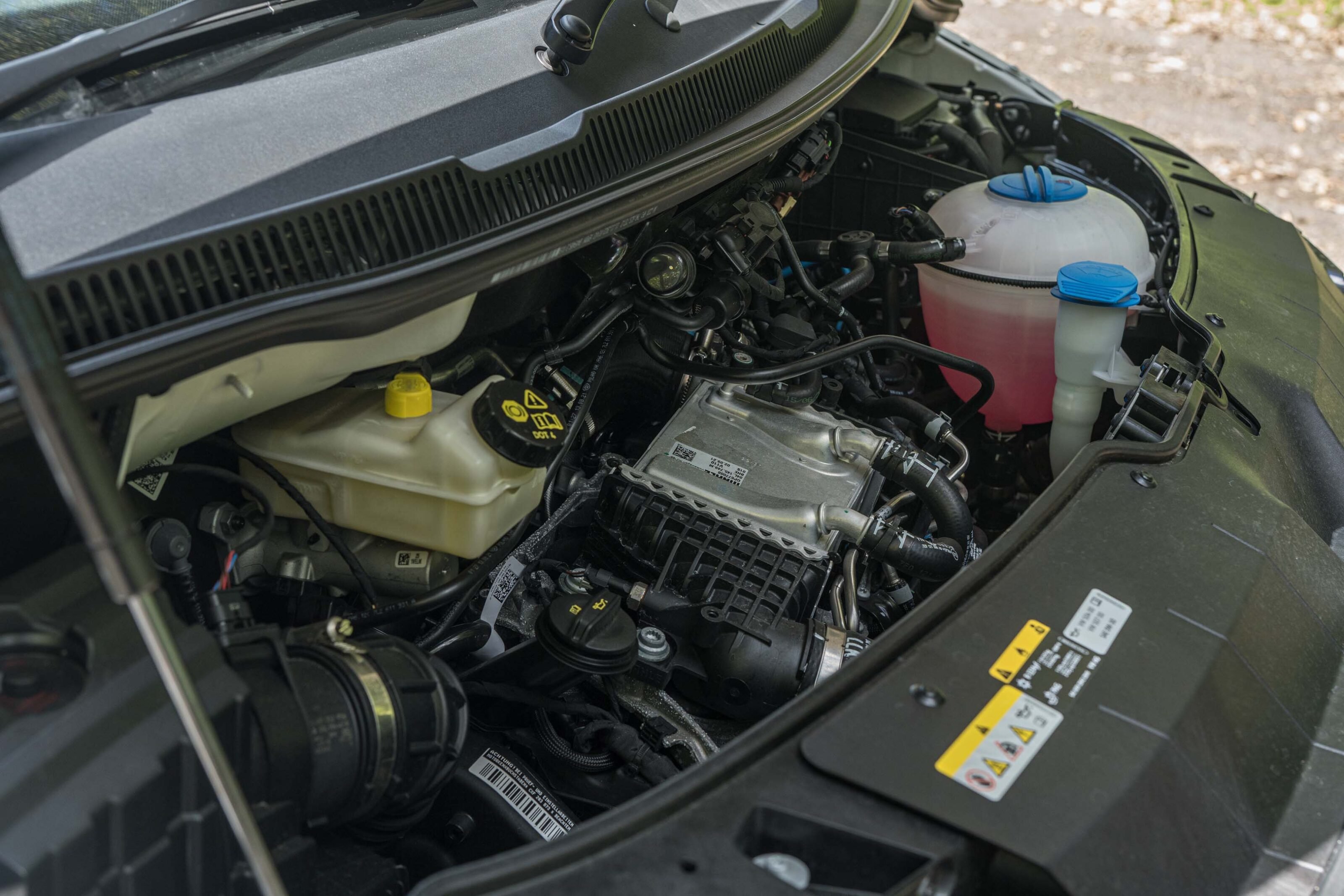
Having previously driven a Multivan, I largely knew what to expect. Obviously, with all the extra gear the weight is up a scooch to just under 2500kg. Both TDI340s muster up 110kW and a solid 340Nm, with the 4Motion, as the name suggests, pushing the power out to all four wheels via a seven-speed transmission rather than just the front.
As ever, the 2.0-litre from VW pulls strongly but does have a bit of initial lag, which may or may not also work in concert with a slow clutch uptake from the transmission. Once you’re underway, though, it’s a pretty good performer, particularly in the gears.
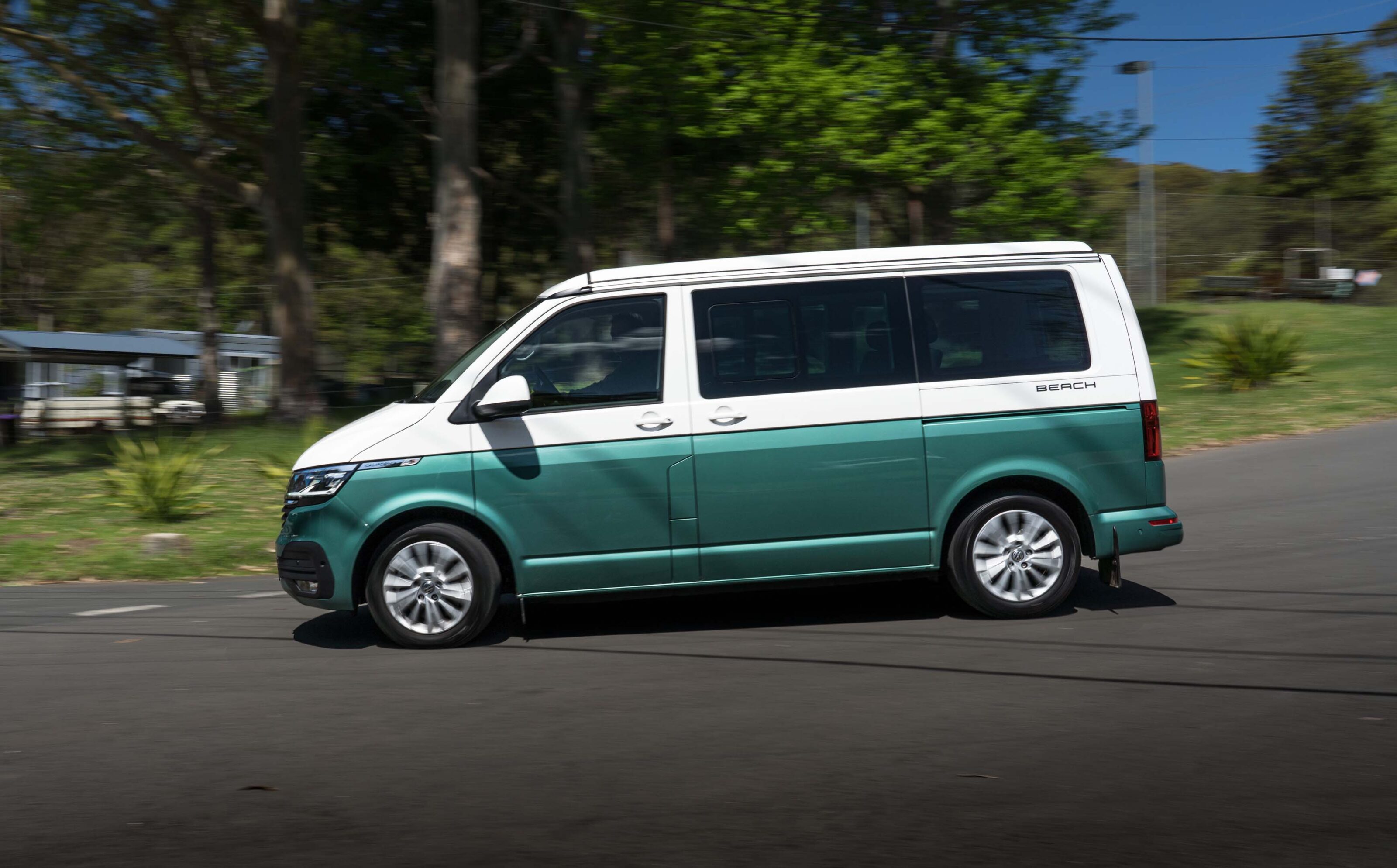
With extra weight on the roof, you’d be forgiven for thinking the California rolls a bit in corners and it does. But it’s not hugely different to the Multivan, a van that is actually a decent bit of fun to drive, for a van.
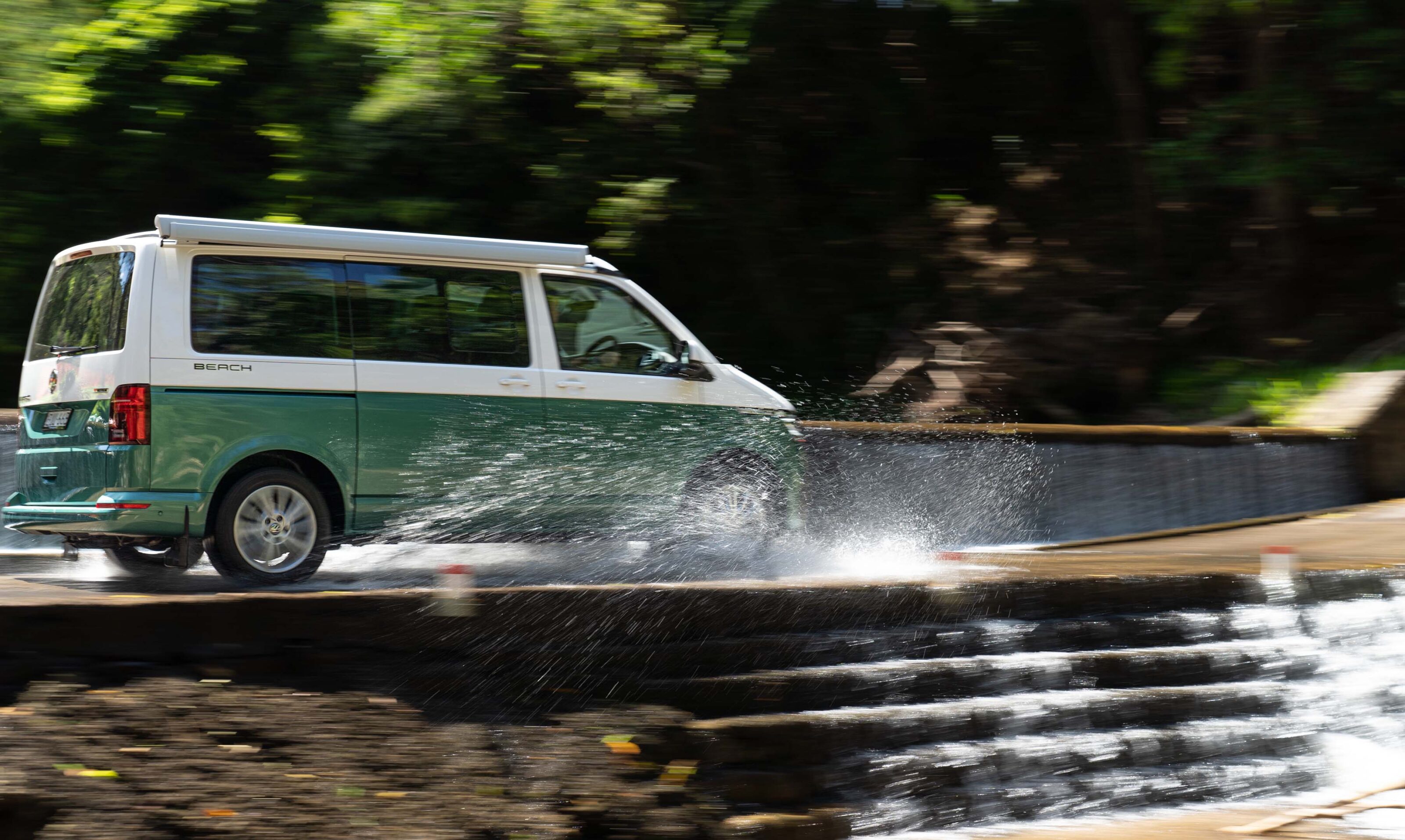
The all-wheel drive offers a lot of security on loose or wet surfaces and tackled the moderate nastiness we threw at it. These things are so well sorted you don’t have to worry about where it is you’re going, whether it’s snowing or wet or a bit muddy. No, it’s not an off-roader, but you’ll get to a few more places than some others might. It’s probably worth the extra unless you’re convinced you won’t ever stray from tarmac.
Even the brakes feel pretty strong and have good pedal feel.
The best bit though? People love these things and you will be the subject of many waves, toots and encouragement from other road users, especially in the two-tone paint finish.
How is it on fuel?
The official figure for the TDI340 with all-wheel drive is 7.5L/100km on the combined cycle. My few days with the California were not particularly representative of my usual driving habits nor the typical owner’s habits, so the 11.1L/100km we got should be taken with a reasonable grain of salt given we idled it a lot during the photo shoot.
Interestingly, there are hybrid versions available, we just don’t get them here in Australia.
How safe is it?
The Multivan on which the California Beach is based scored five ANCAP stars in 2022. It’s worth noting that there are no curtain airbags for the rear passengers.
| Four airbags |
| ABS and stability controls |
| Driver fatigue detection |
| Multi-collision brake |
| Blind-spot monitoring |
| Lane change assist |
| Forward collision warning |
| Forward AEB (up to 80km/h) |
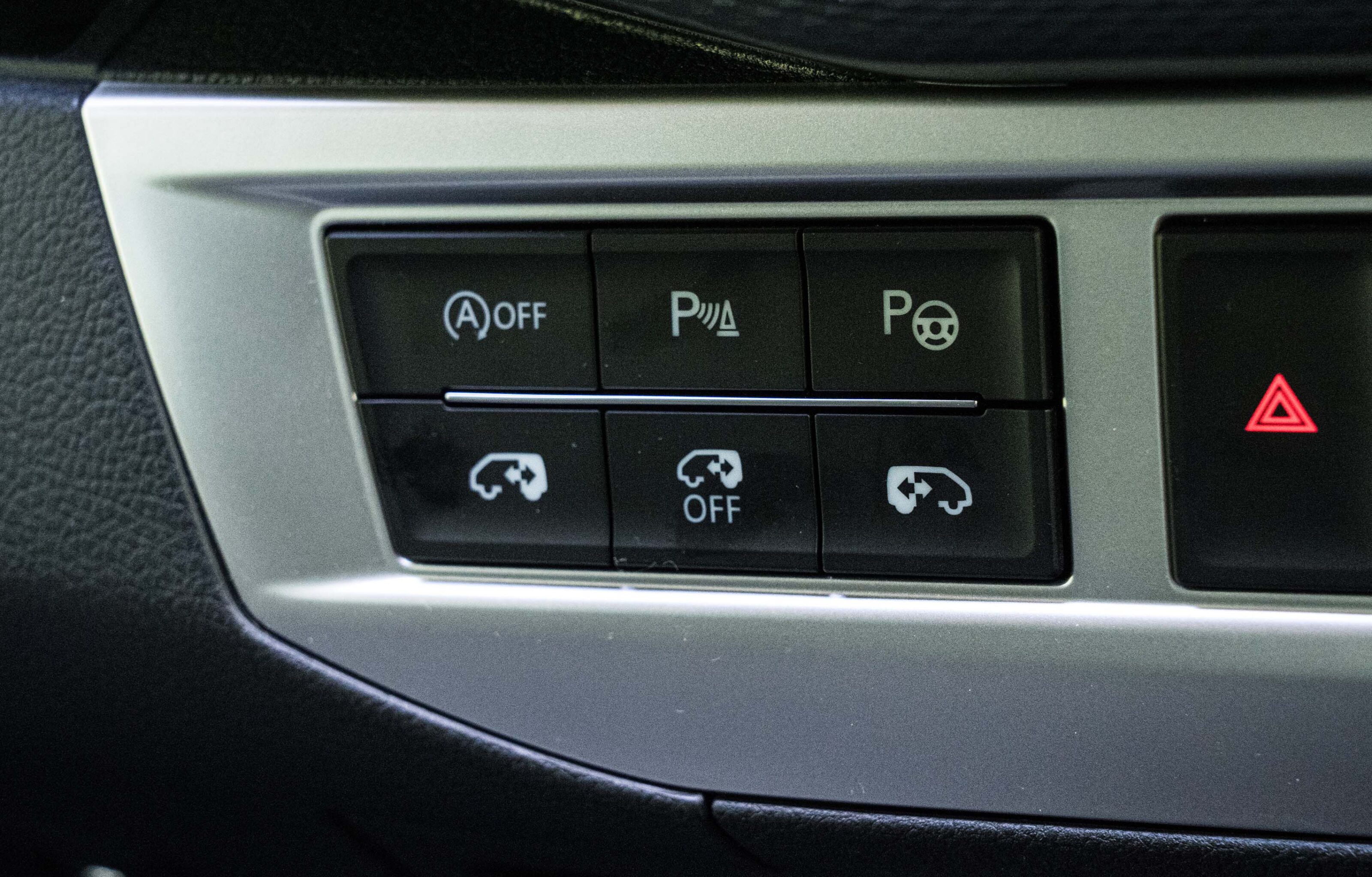
| Park assist with side protection |
| Reverse traffic alert |
Depending on whether you specify captain’s chairs in the second row or a bench seat, you’ll have two ISOFIX points and two (the former) or three (the latter) top-tether anchors for securing child seats.
Warranty and running costs
Volkswagen offers a five-year warranty with unlimited kilometres along with a year of roadside assistance.
As ever, you can pay-as-you-go for your servicing or buy a five-year Care Plan for $1850, saving you a whopping $2302 over the period. The trick here is that the five-year plans were selling for the price of three years at the time of writing (October 2022)
VERDICT
The California Beach isn’t cheap, but nothing even remotely like it is either. For someone who isn’t into camping, I plotted in my head a number of ways I might be able to use it as its maker intends. Time and an unwell spouse put paid to that, but plans were well advanced.
Because for the uninitiated, the Cali makes it all so easy and therefore appealing. You could use it every day, too, as it’s no bigger than an SUV but with way better vision. And a small house built in.
2022 Volkswagen California 6.1 Beach specifications
| TDI340 | TDI340 4Motion | TDI450 4Motion | |
|---|---|---|---|
| Body: | 5-door camper van with 5+2 seating | 5-door camper van with 5 seats | 5-door camper van with 5 seats |
| Drive: | front-wheel | all-wheel | all-wheel |
| Engine: | 2.0-litre four-cylinder turbo-diesel | 2.0-litre four-cylinder turbo-diesel | 2.0-litre four-cylinder turbo-diesel |
| Transmission: | 7-speed dual-clutch automatic transmission | 7-speed dual-clutch automatic transmission | 7-speed dual-clutch automatic transmission |
| Power: | 110kW @ 3250-3750rpm | 110kW @ 3250-3750rpm | 146kW @ 4000rpm |
| Torque: | 340Nm @ 1500-3000rpm | 340Nm @ 1500-3000rpm | 450Nm @ 1400-2400rpm |
| Bore/stroke (mm): | 81.0 x 95.5 | 81.0 x 95.5 | 81.0 x 95.5 |
| Compression ratio: | 15.5 : 1.0 | 15.5 : 1.0 | 15.5 : 1.0 |
| 0-100km/h: | 12 sec (estimate) | 12 sec (estimate) | 12 sec (estimate) |
| Fuel consumption: | 6.6L/100km (combined) | 7.5L/100km (combined) | 7.8L/100km (combined) |
| Weight: | 2431kg | 2457kg | 2472kg |
| Suspension: | MacPherson struts front/semi-trailing independent rear | MacPherson struts front/semi-trailing independent rear | MacPherson struts front/semi-trailing independent rear |
| L/W/H: | 4904mm/2297mm/1990mm | 4904mm/2297mm/1990mm | 4904mm/2297mm/1990mm |
| Wheelbase: | 3000mm | 3000mm | 3000mm |
| Brakes: | 340mm ventilated disc front /294 mm ventilated disc rear | 340mm ventilated disc front /294 mm ventilated disc rear | 340mm ventilated disc front /294 mm ventilated disc rear |
| Wheels: | 17-inch alloy (full-size steel spare) | 17-inch alloy (full-size steel spare) | 17-inch alloy (full-size steel spare) |
| Price: | $90,990 + on-road costs | $94,990 + on-road costs | $100,990 + on-road costs |
The next-generation 2023 Honda Accord has been teased ahead of its debut in November.
It will become the 11th generation version of the mid-size car, which has been in continuous production since 1976 – including for the Australian market.
However, local plans for the new-generation sedan are unclear, with the current Thai-sourced Accord launched in late 2019 – around 18 months after the North American version debuted in mid-2017.
A spokesperson for Honda Australia said the Thai-built version for Asia-Pacific markets “operates on a separate model lifecycle to the [North American] version.”
This means locals could be in for a similar wait for the new model, should it arrive in Australia.
“Accord remains an important global nameplate for Honda, with a very loyal and valued customer base here in Australia, but it is too early for us to confirm any details about plans for the next generation model,” they added.
“The current model will continue in Australia for some time yet and it continues to perform strongly as a supporting model in the line-up.”
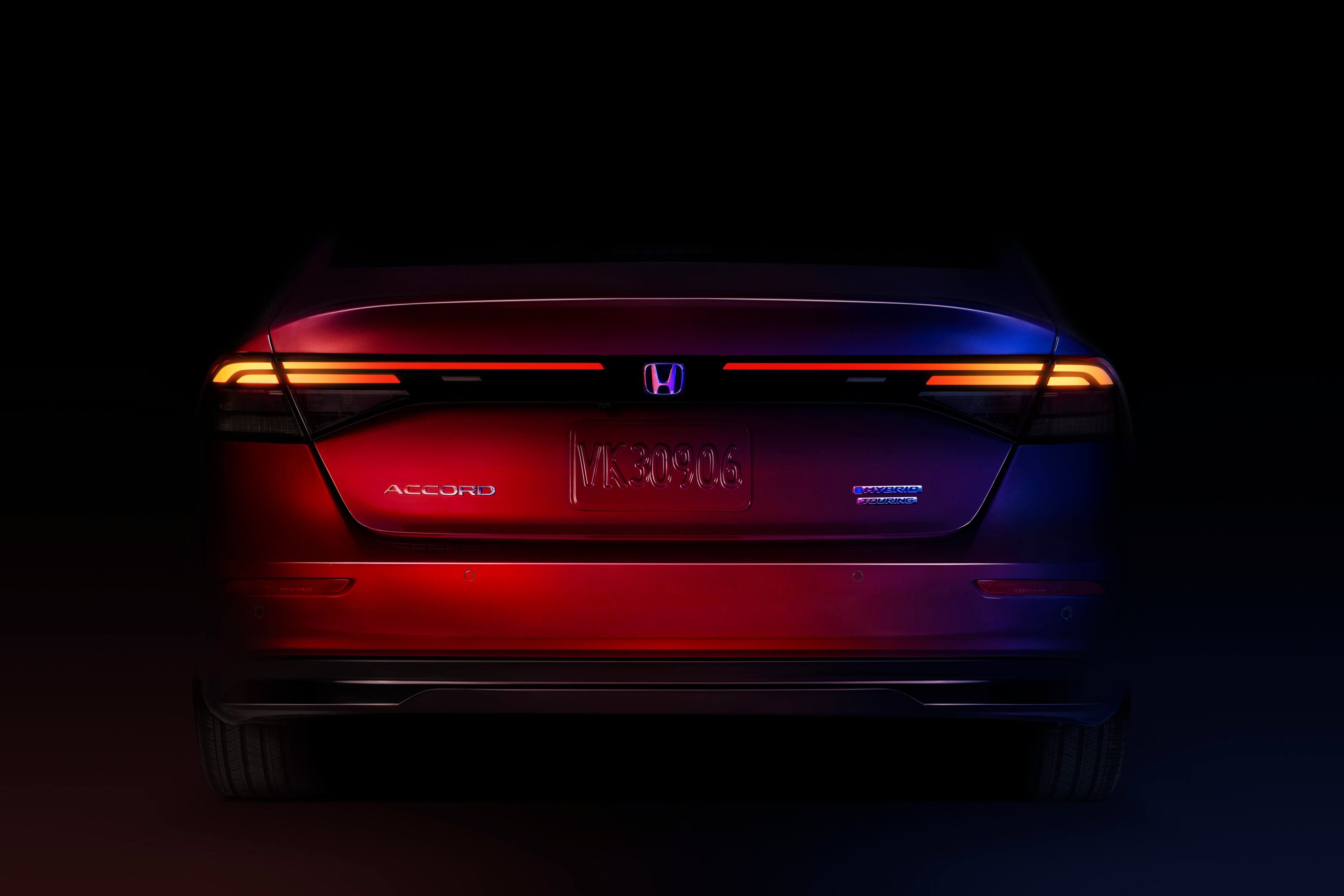
As shown in the teaser images, the Accord will receive a sportier look with Honda’s latest design language, as found on the latest Civic hatch, ZR-V small SUV, and the CR-V medium SUV.
It features a hexagonal grille, with slimmer headlights and a minimalist lower bumper. At the rear, the claw-like tail-lights are replaced by stretched units with a light strip across the boot lid that runs into the Honda badge.
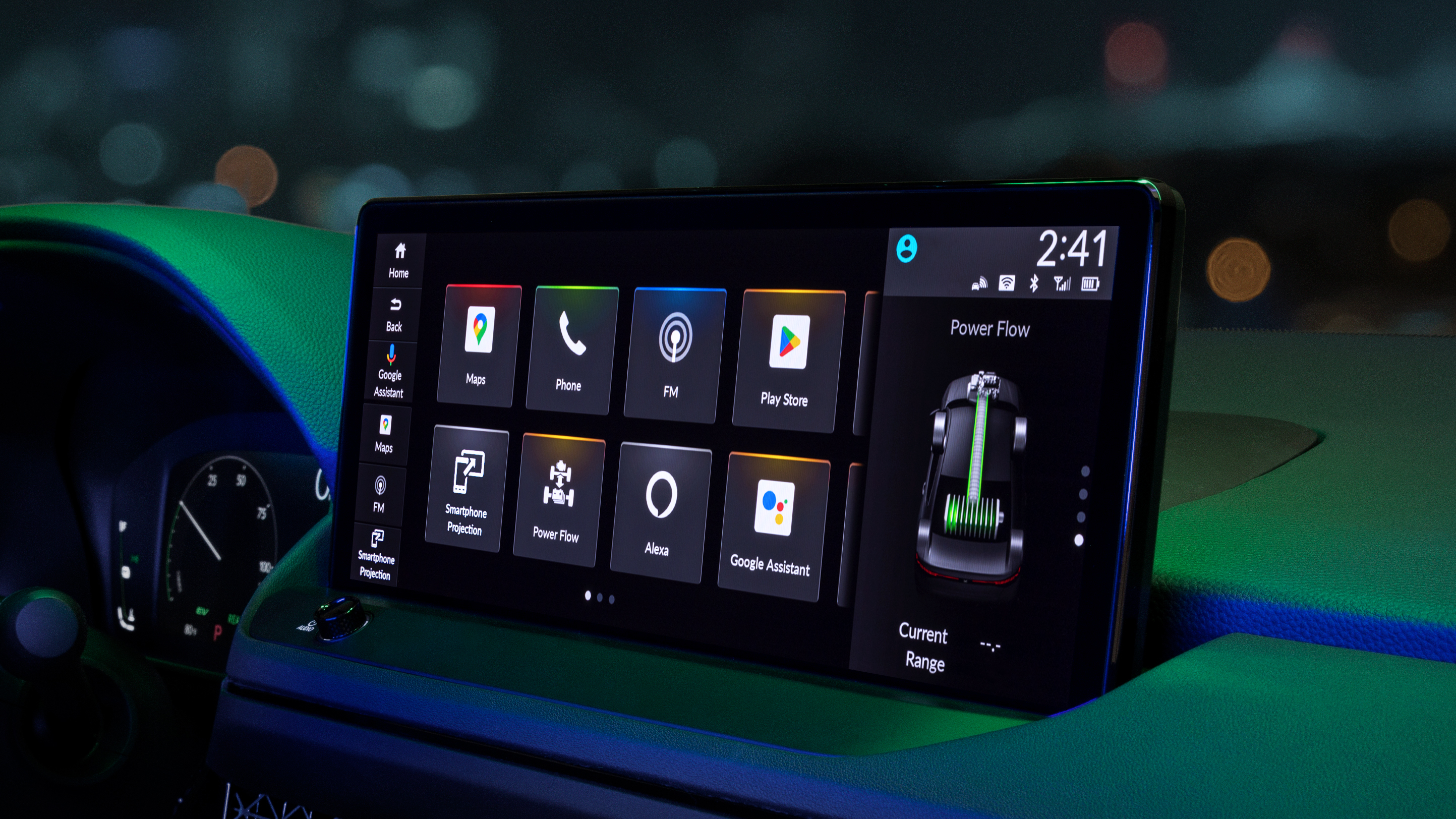
Inside, the Accord will include a 13.2-inch infotainment system running the Android Automotive operating system – a first for Honda, with the Prologue electric SUV revealed last month not due until 2024.
It is flanked by a physical volume knob and Civic-like horizontal air vents likely to run across the length of the dashboard.
Honda’s US division has confirmed the new Accord will sport “improved hybrid performance”, with the current model featuring a 2.0-litre Atkinson-cycle hybrid system producing 158kW and 315Nm.
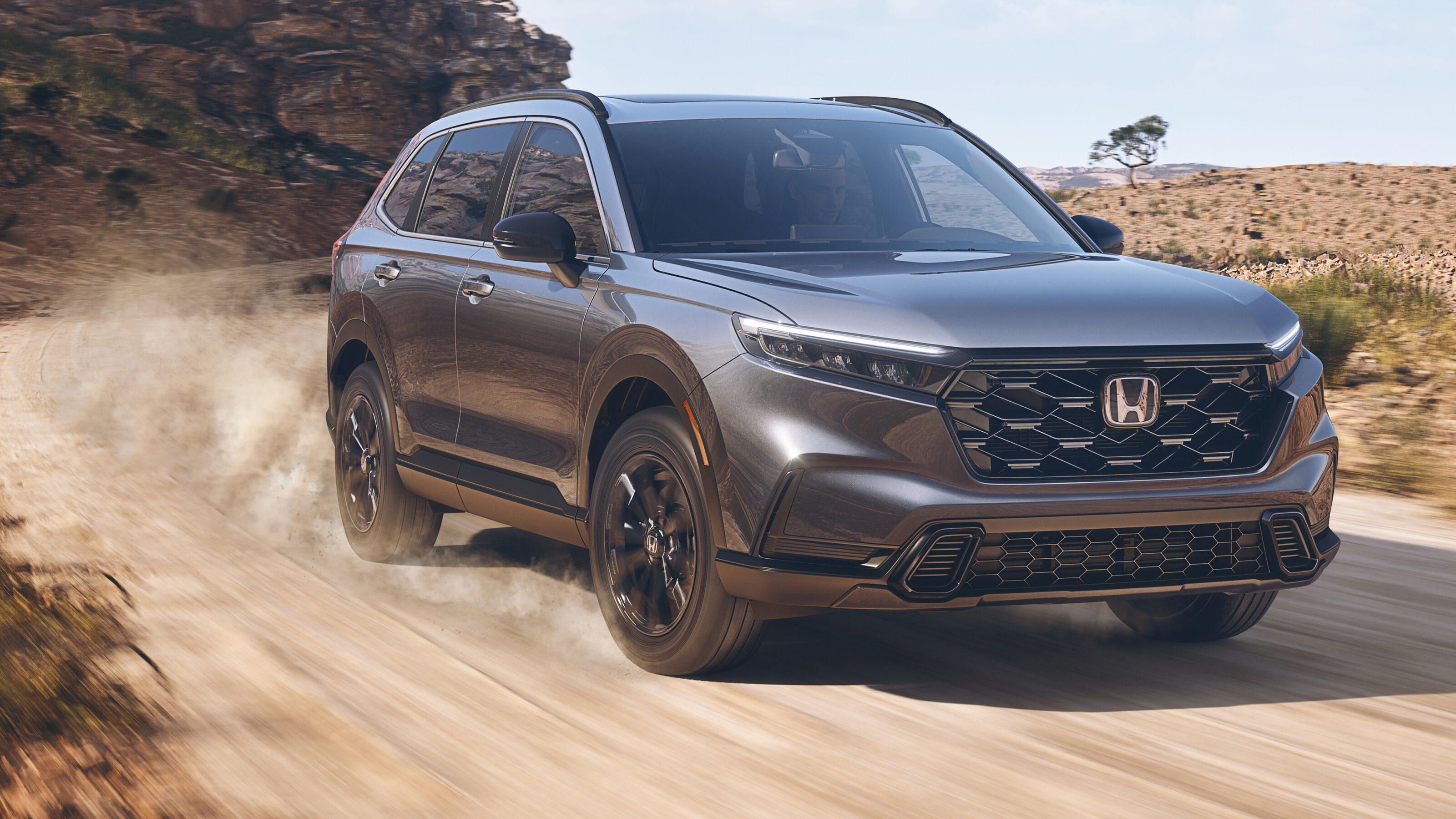
For reference, the next-generation CR-V – due in Australia in mid-2023 – includes a torque bump at 332Nm, but total system power is reduced to 152kW. It is matched with a CVT automatic transmission, as before.
As with the CR-V, a 1.5-litre turbo-petrol engine is tipped to carry over for lower-grade Accords.
In Australia, the current Accord – a rival for the Toyota Camry and Mazda 6 – is priced at $57,900 drive-away, while the hybrid version retails for $61,900 drive-away.
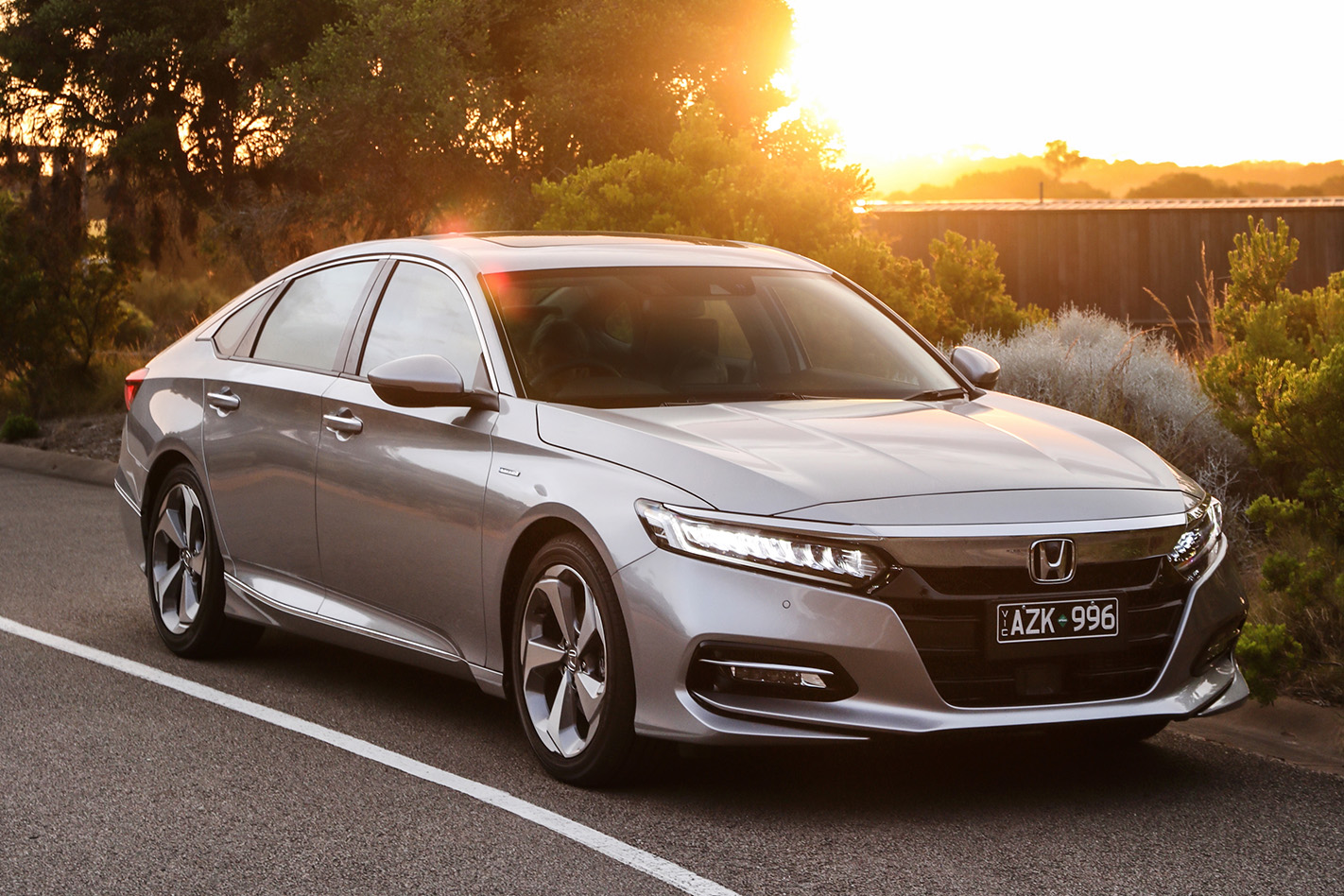
It has been a slow-seller since it launched in 2019, but Honda Australia says “demand continues to exceed available supply, particularly for the hybrid variant.”
Year-to-date, sales have increased by 44 per cent compared to the same point in 2021, but just 85 examples have been delivered.
The 2023 Honda Accord will debut in November, likely during the Los Angeles Auto Show, so stay tuned to Wheels for the latest information as it emerges.
Snapshot
- Petrol-powered Mifa people mover confirmed
- Mid-November release locked-in
- Space for seven or eight
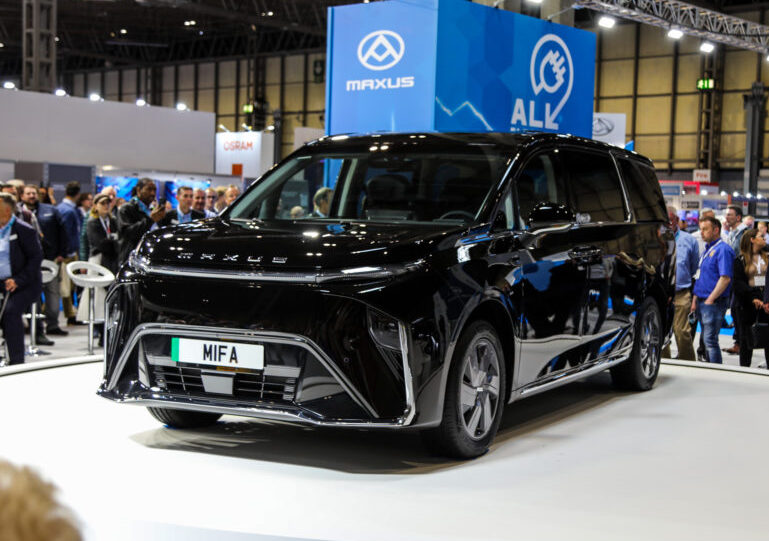
LDV’s model range is expanding again with the addition of the 2023 Mifa people mover, a rival for the Toyota Granvia and Kia Carnival.
The petrol-powered Mifa – known as the G90 in China – will be sold alongside the electric Mifa 9, with both readying for Australian release in mid-November 2022.
Pricing will be confirmed closer to the Mifa’s November release date, but the three-strong petrol-powered Mifa range could start from as low as $50K before on-road costs.
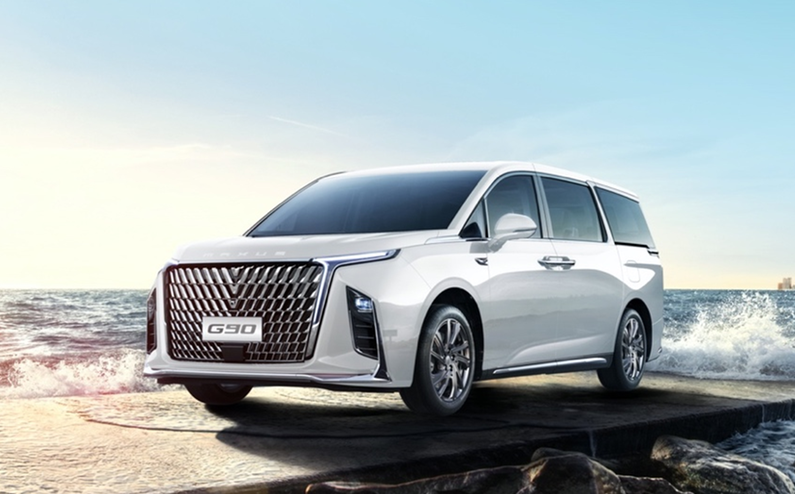
The Mifa measures almost 5.3-metres long and rides on a 3.2 metre wheelbase with space for seven or eight passengers, depending on trim.
“While it might not share the heart of its electric sibling, the Mifa 9, it does share the fundamentals of evolutionary design, passenger comfort, safety and more.
“It has advanced the people mover game significantly and we’re looking forward to redefining the segment that has, until now, been dominated by two brands”, said Dinesh Chinnappa, LDV Australia general manager.
The LDV Mifa range
Final details are not yet locked in, but the Mifa range will comprise three variants: Mode, Executive, and Luxe.
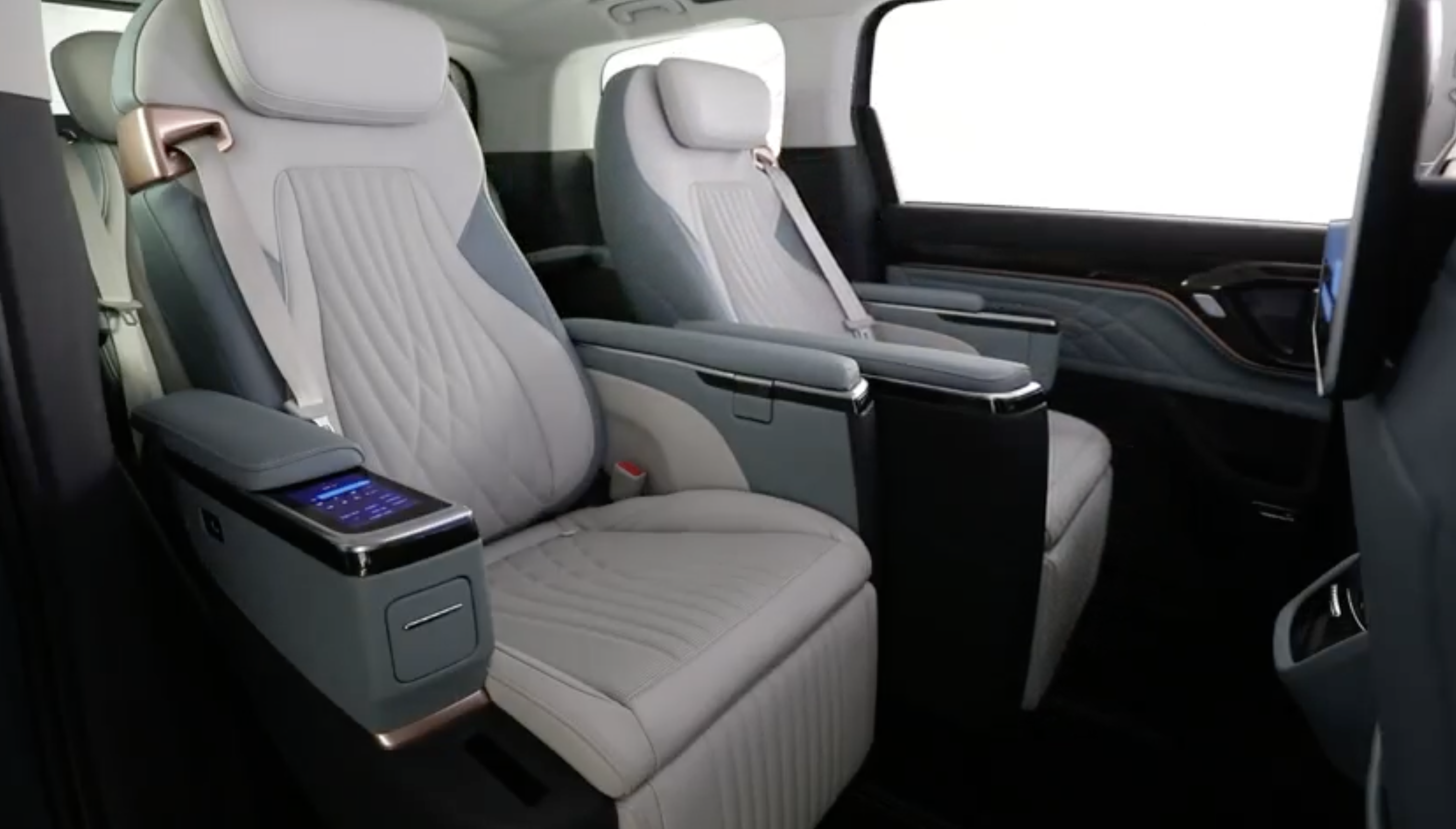
Expect the lower grade Mode and potentially Executive to offer seating for eight passengers, while the range-topping Luxe will likely get higher grade leather-upholstery, power-adjust captain’s chairs in the first and second-rows, fold-out tray tables and footrests.
Outside, the Mifa has LED daytime running lights at the front, and full-width taillights to accentuate its size.
All Mifa grades will be equipped with forward and reverse AEB, rear cross-traffic alert, lane-departure warning, traffic-sign recognition and adaptive cruise control.
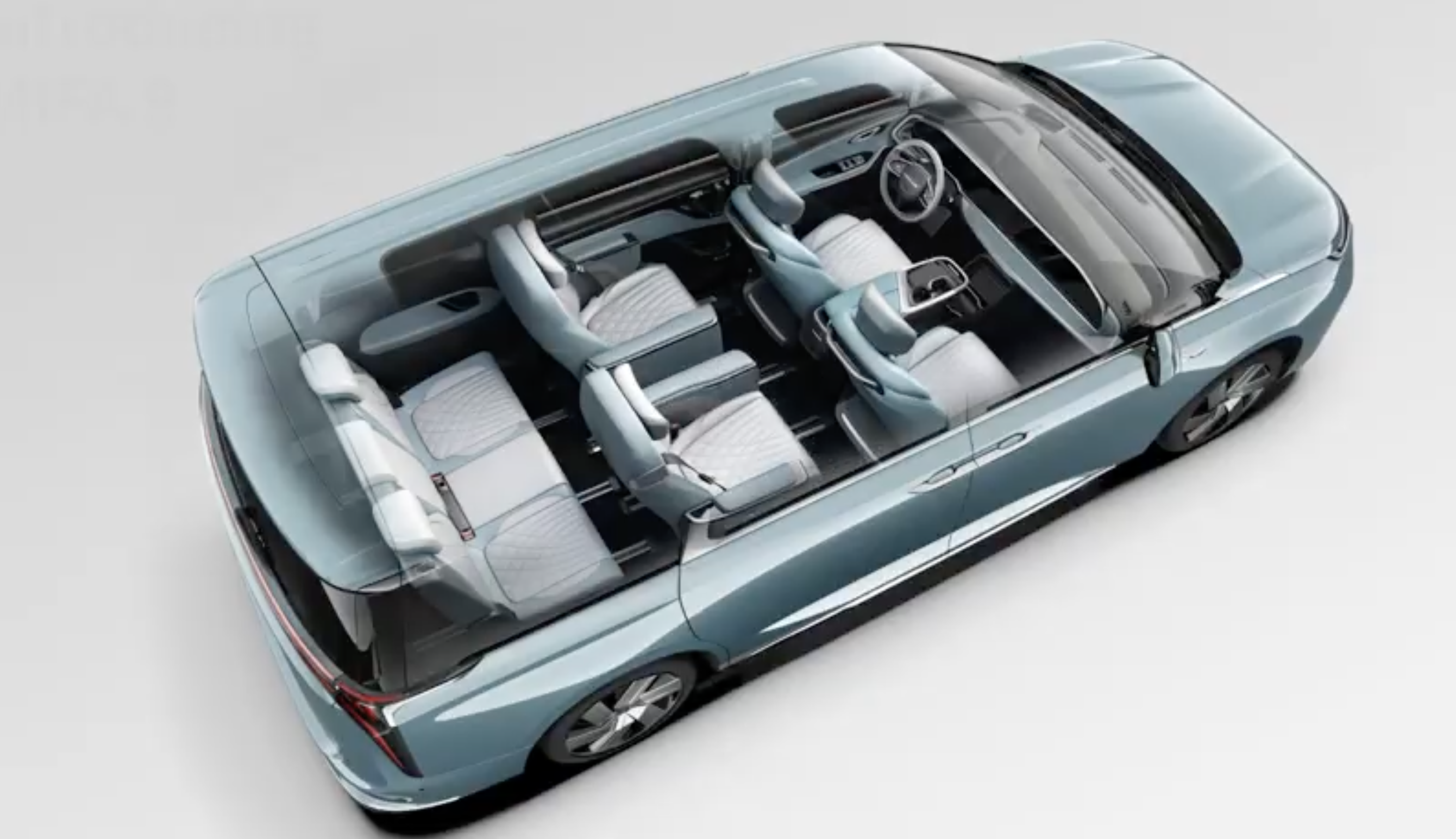
Inside, China market G90s have broad screens across the dashboard, a floating centre console, up to 10 screens and rear seat entertainment.
We don’t exactly know what the final Australia-spec Mifa will look like. It will have the grille of the G90 though. Pictures to better illustrate Australian-spec cars will arrive closer to the mid-November release.
Powertrain
The combustion-powered Mifa range is powered by a 2.0-litre turbo-petrol four-cylinder developing 160kW of power and 360Nm of torque.
The Mifa sends drive to the front-wheels drive via an eight-speed Aisin torque-converter automatic.
Snapshot
- 2023 Cupra Born specifications announced
- Electric small hatch set to arrive in March or April 2023, with one high-end grade
- $60,000 price target in line with flagship Leon VZx hatch
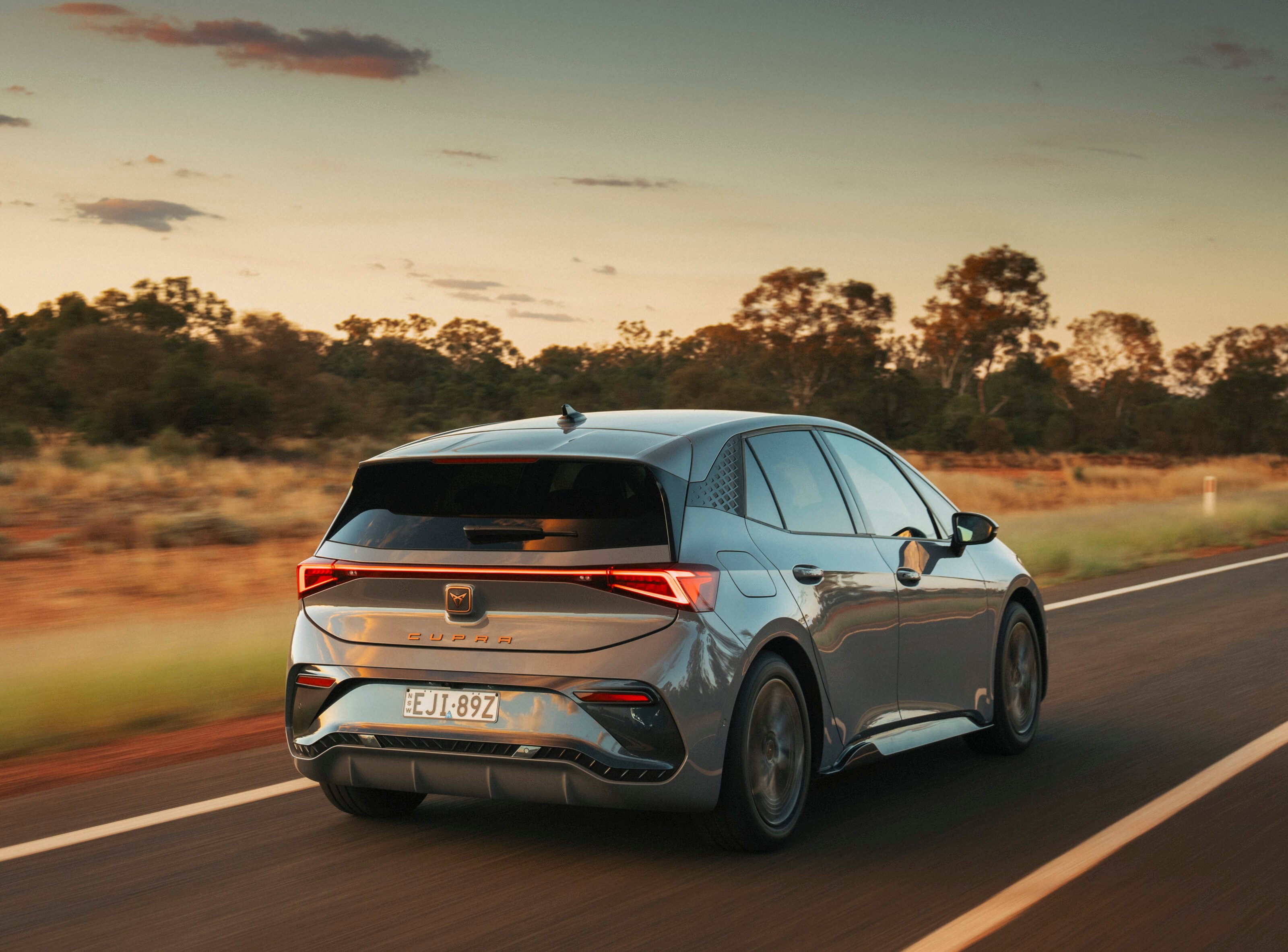
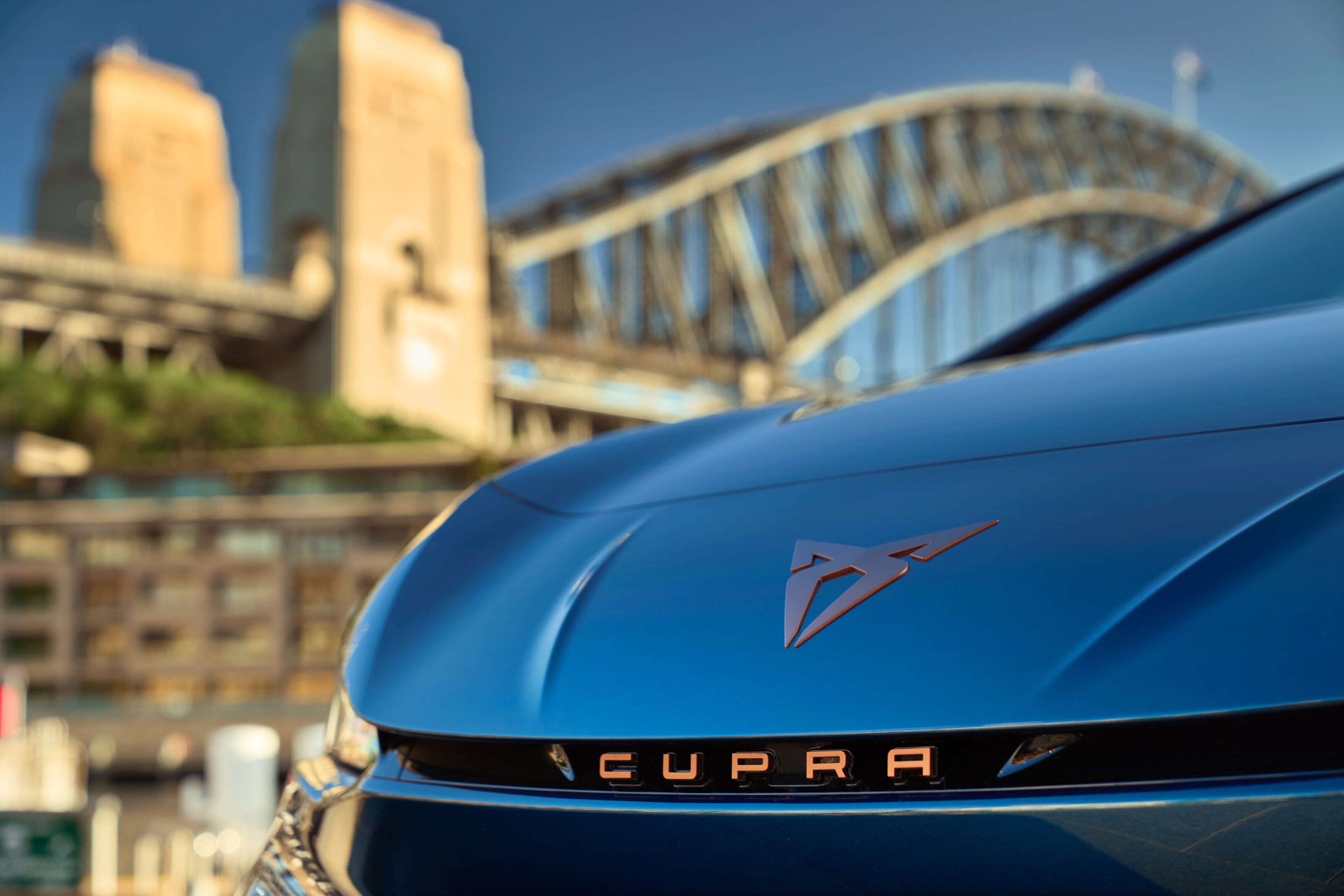
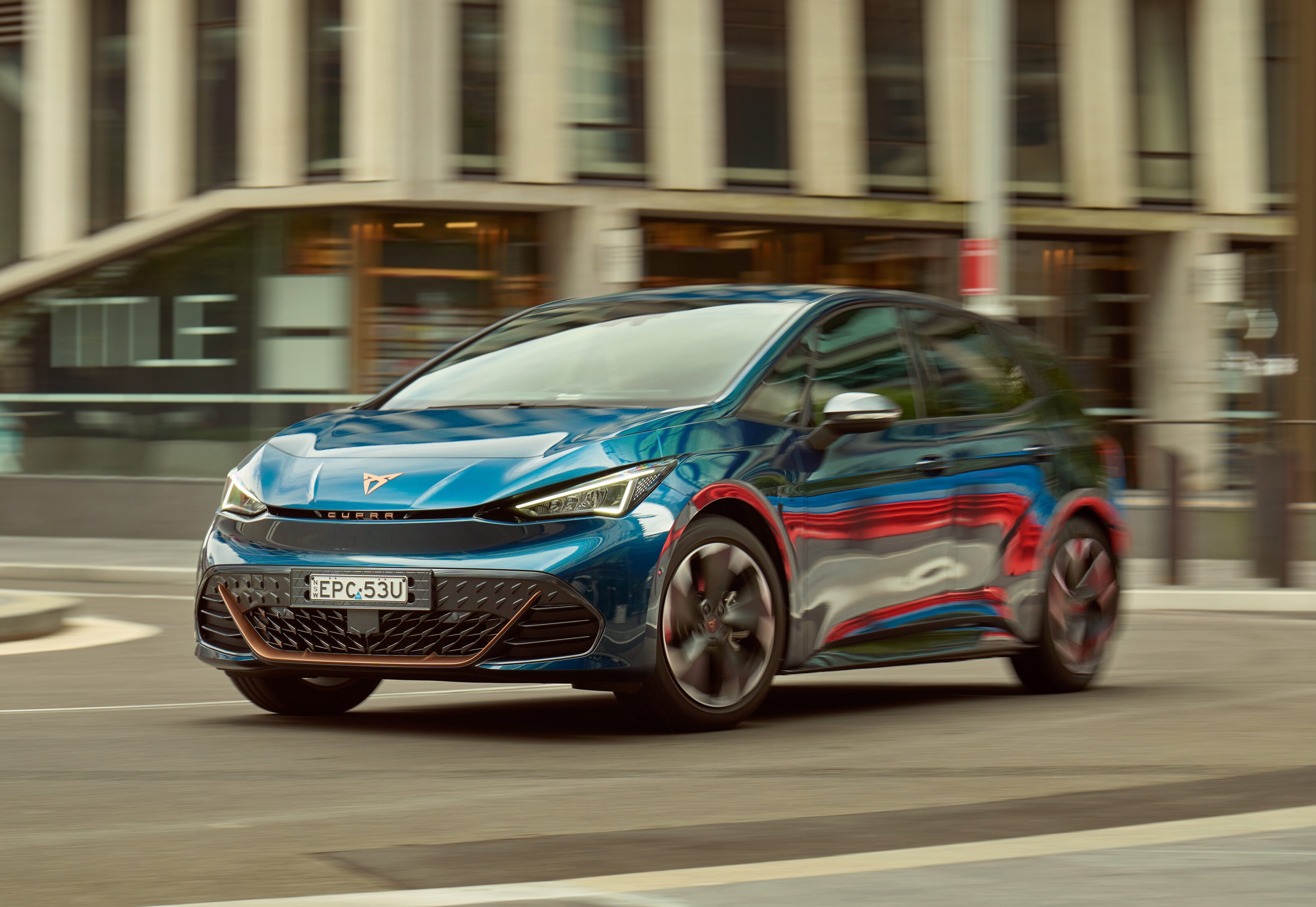
The 2023 Cupra Born will arrive in March or April with a $60,000 price target, the brand announced today.
It will become the first electric vehicle sold by Volkswagen Group Australia – and the Cupra brand – ahead of the launch of the Volkswagen ID.4 and ID.5 medium SUVs later in 2023.
JUMP AHEAD
- Estimated pricing
- Powertrains, charging and driving range
- Features and options
- Safety
- Dimensions
- Warranty and servicing
- Availability
UPDATE, December 2022: Australian Born pricing announced
Cupra has confirmed Australian pricing and features for its Born electric hatch. Get all the details at the link below.
Story continues…
2023 Cupra Born estimated pricing
Cupra’s local arm said the Born has “accumulated significant interest in Australia” with enquiries second only to the Formentor crossover, which is available in turbo-petrol or plug-in hybrid guise.
“The Born is a [battery electric vehicle] BEV with a long 500 kilometre-plus range, exclusive rear-wheel drive hot hatch dynamics, plus the interior space and versatility of a larger vehicle,” said Cupra Australia director Ben Wilks.
“Its specifications are ideal for progressive Australian customers who will also be drawn to pricing similar to our other great hot hatch, the Leon VZx.”
This should equate to a price between $60,000 and $65,000 before on-road costs – or around $65,000 to $70,000 drive-away without available EV subsidies – with the Leon VZx priced at $61,490 plus on-roads.
Powertrains, charging and driving range
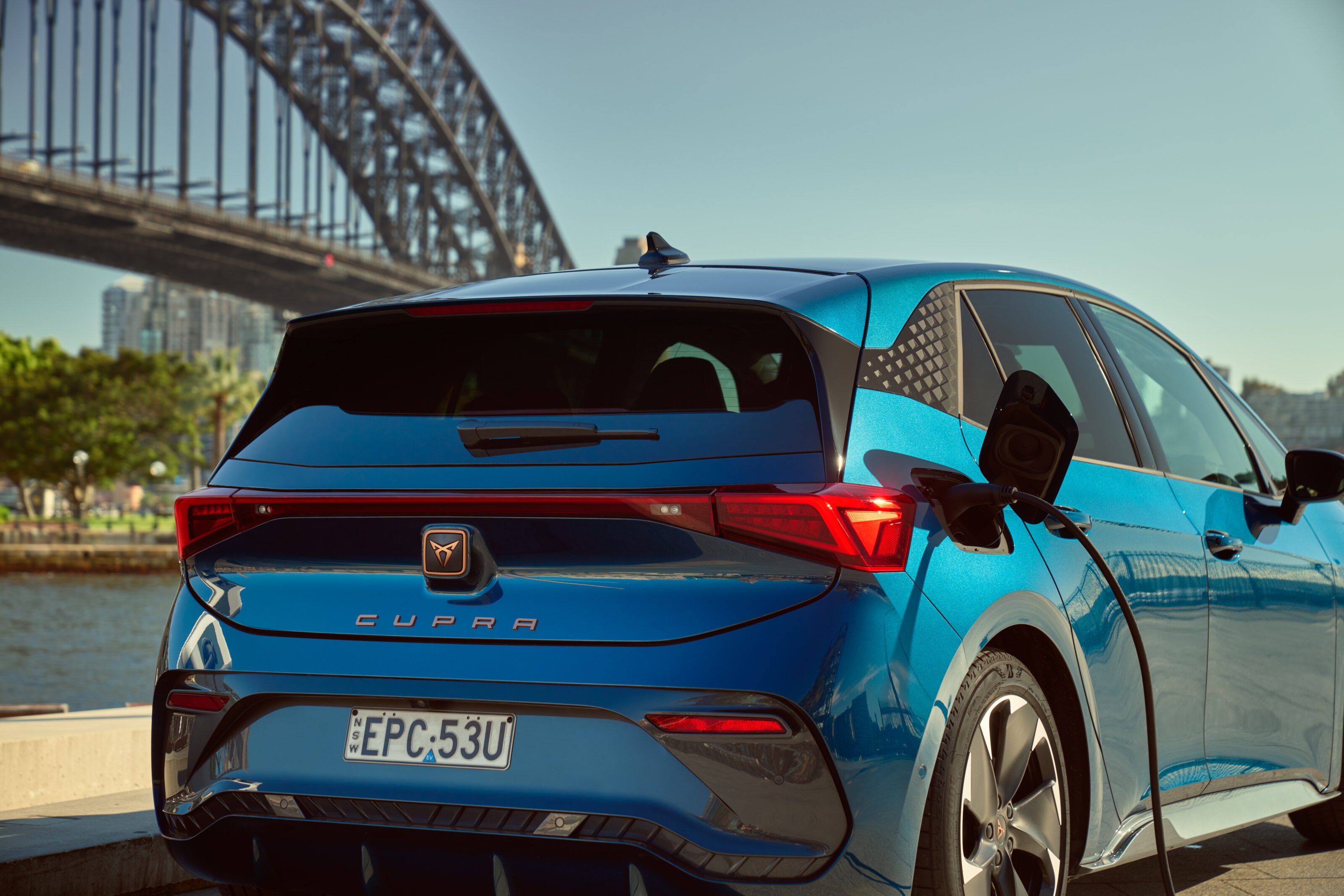
Only the flagship Born will be offered in Australia, pairing an 82kWh lithium-ion battery with a single electric motor mounted to the rear axle.
The electric motor – featuring the ‘e-Boost’ performance pack as standard – produces 170kW and 310Nm, with a claimed 0-100km/h sprint time of seven seconds.
This allows for a claimed 511-kilometre driving range, with support for 170kW DC fast charging.
However, that range figure is based on more lenient ADR and NEDC protocols, with a 422-kilometre claim on Europe’s stricter WLTP standard.
“Teamed with rear-drive, the Born will be unique in the market as a dedicated ‘hot hatch’ with instant responses from the throttle and steering,” said Cupra Australia.
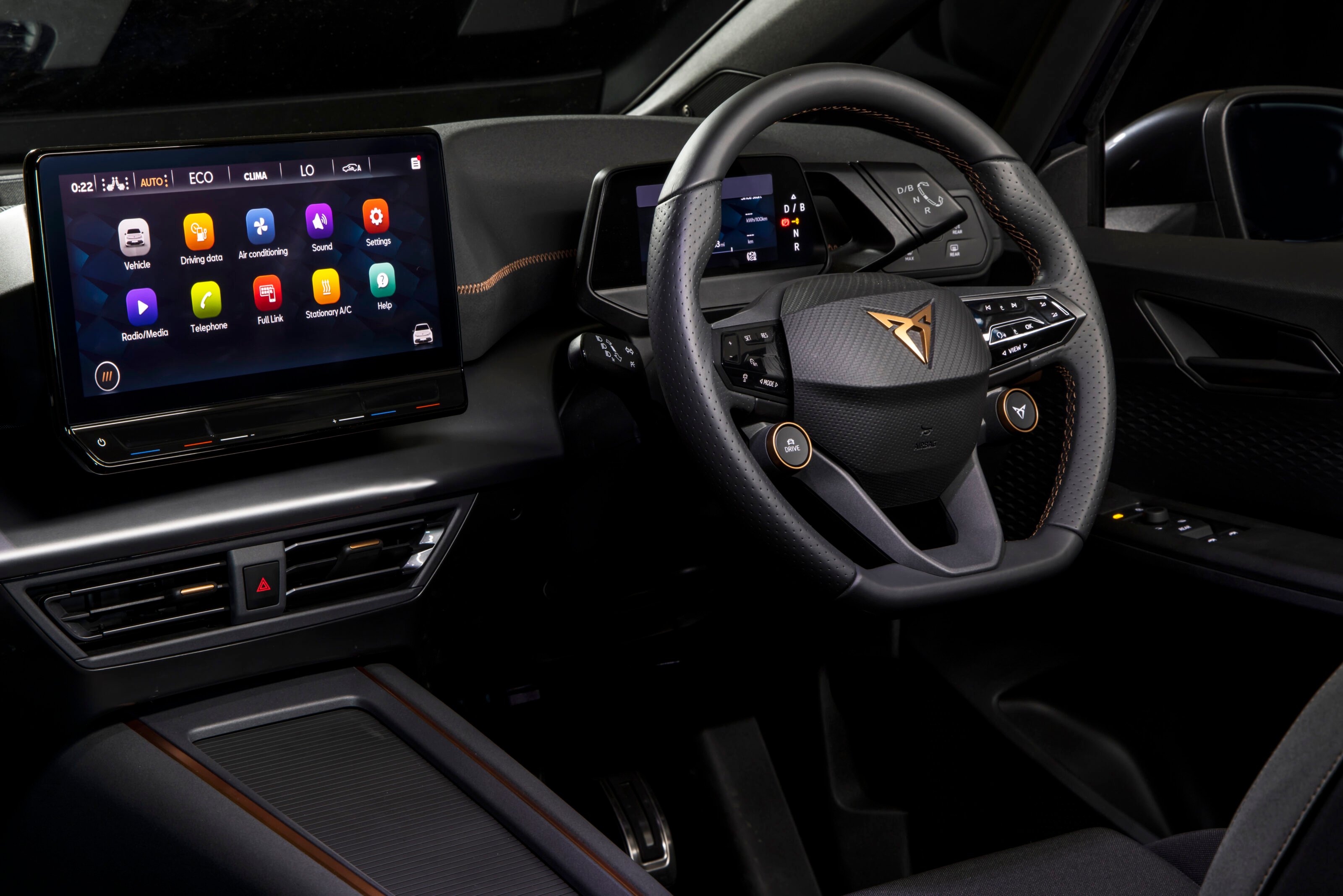
2023 Cupra Born features
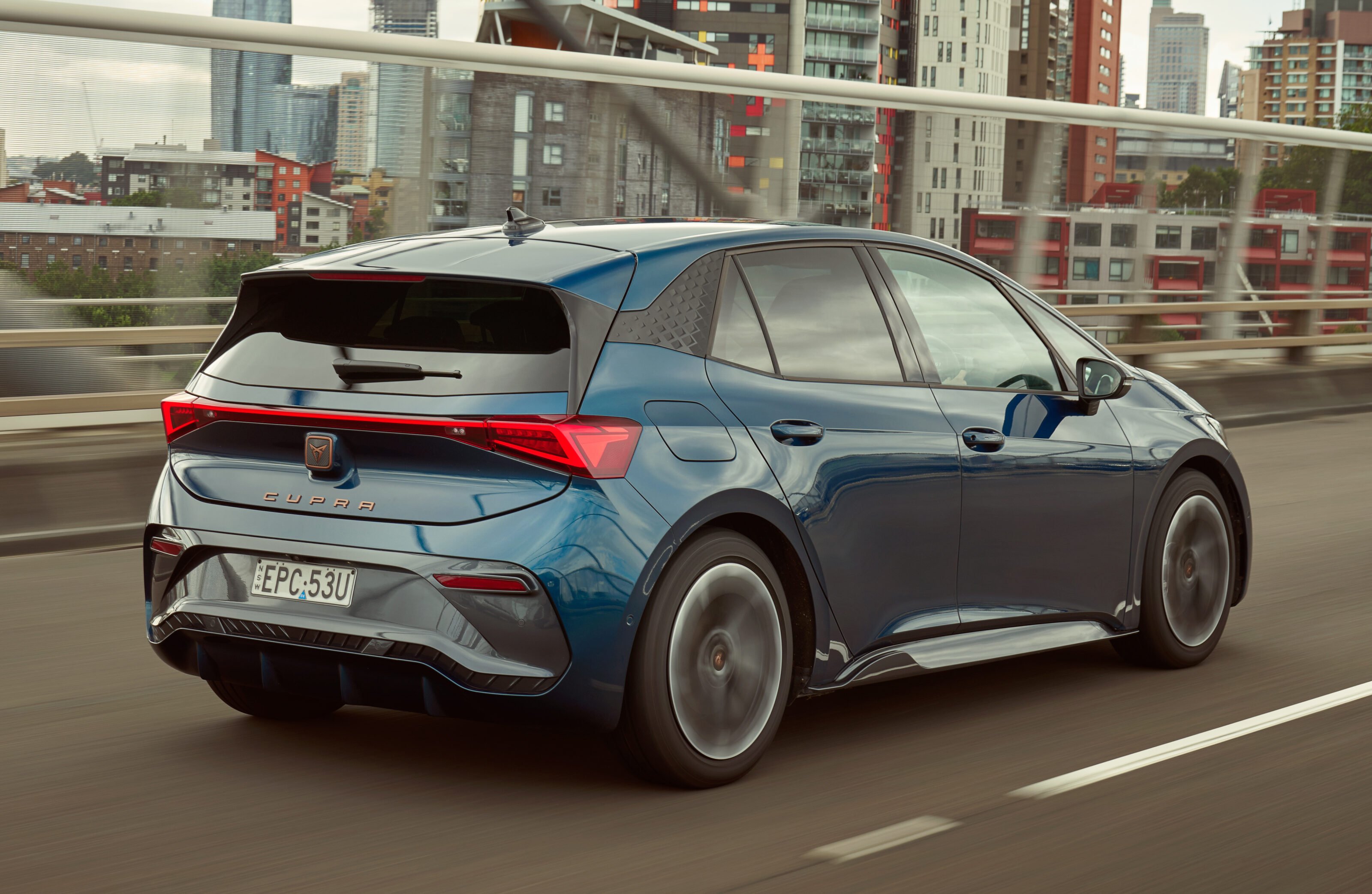
Options
Interior package
Best Electric Cars Under $65k: Affordable EVs Rated
Welcome to part one of three price-based EV buying guides, this one focused on the most affordable electric cars available in Australia today
Performance package
Metallic paint – glacial white, geyser silver, quasar grey and rayleigh red Premium metallic paint – aurora blue.
Safety
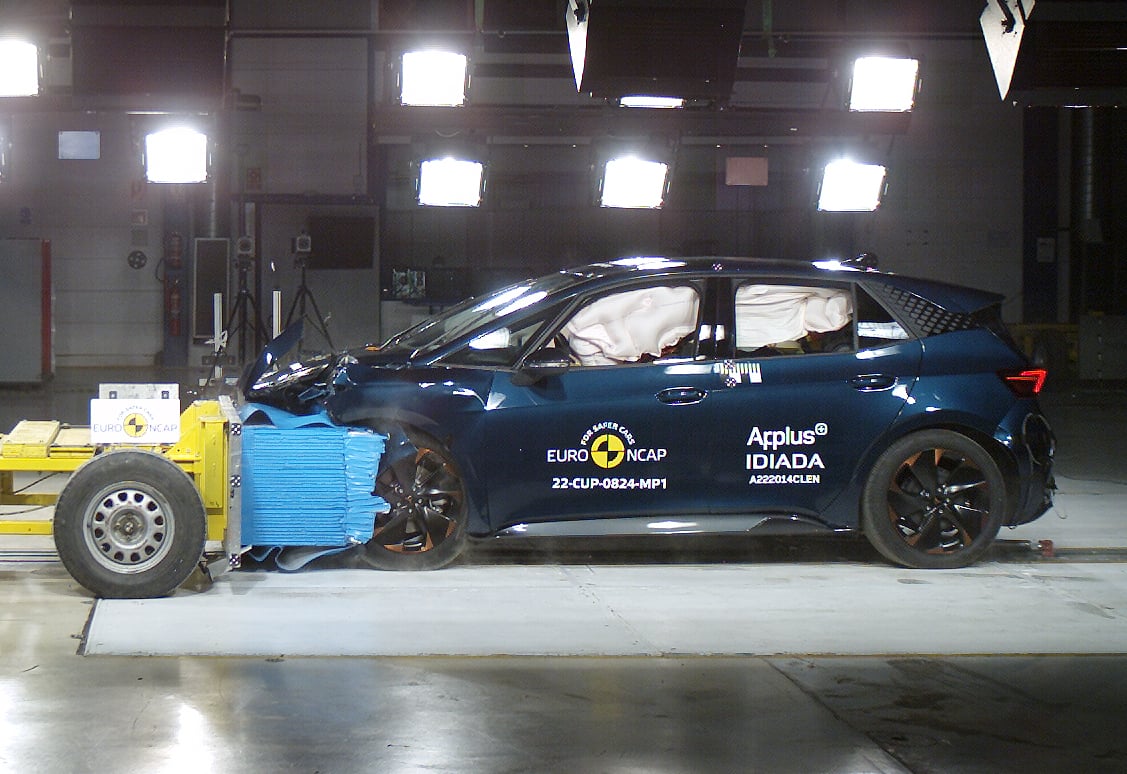
While the Cupra Born has yet to be rated by ANCAP, it received five stars from Euro NCAP under the latest 2020-22 criteria.
It has a 93 per cent score for adult occupant protection, 89 per cent for children, 73 per cent for vulnerable road users, and 80 per cent for safety assist.
Seven airbags (dual front, side, curtain, and front-centre) feature across the range.
The following active safety equipment is fitted as standard:
Dimensions
The Cupra Born has a wheelbase of 2675 millimetres, and is 4322mm long, 1809mm wide, and 1537mm tall.
It has a claimed 385-litre boot space, which is similar to the internal-combustion Leon hatchback (380L).
Warranty and servicing
As per the wider Cupra range, the Born will be covered by the brand’s five-year, unlimited-kilometre warranty.
Cupra Australia has yet to announce details for battery coverage and servicing information for its electric vehicles. The high-voltage components in its plug-in hybrid range are covered for eight years or 160,000 kilometres, whichever occurs first.
Availability
The 2023 Cupra Born electric hatchback will arrive in Australia in March or April, with full details and pricing to be announced in the coming months.
The 2024 Lotus Eletre electric SUV has been detailed for Europe, with the brand confirming a more-powerful variant.
In Europe, Lotus will offer three versions – the Eletre, Eletre S and Eletre R – which all feature a 112kWh lithium-ion battery pack and a dual-motor, all-wheel drive powertrain.
While the British sports car marque has previously stated a maximum power output of around 450kW, it has now confirmed the range-topping Eletre R will pump out 675kW and 985Nm.
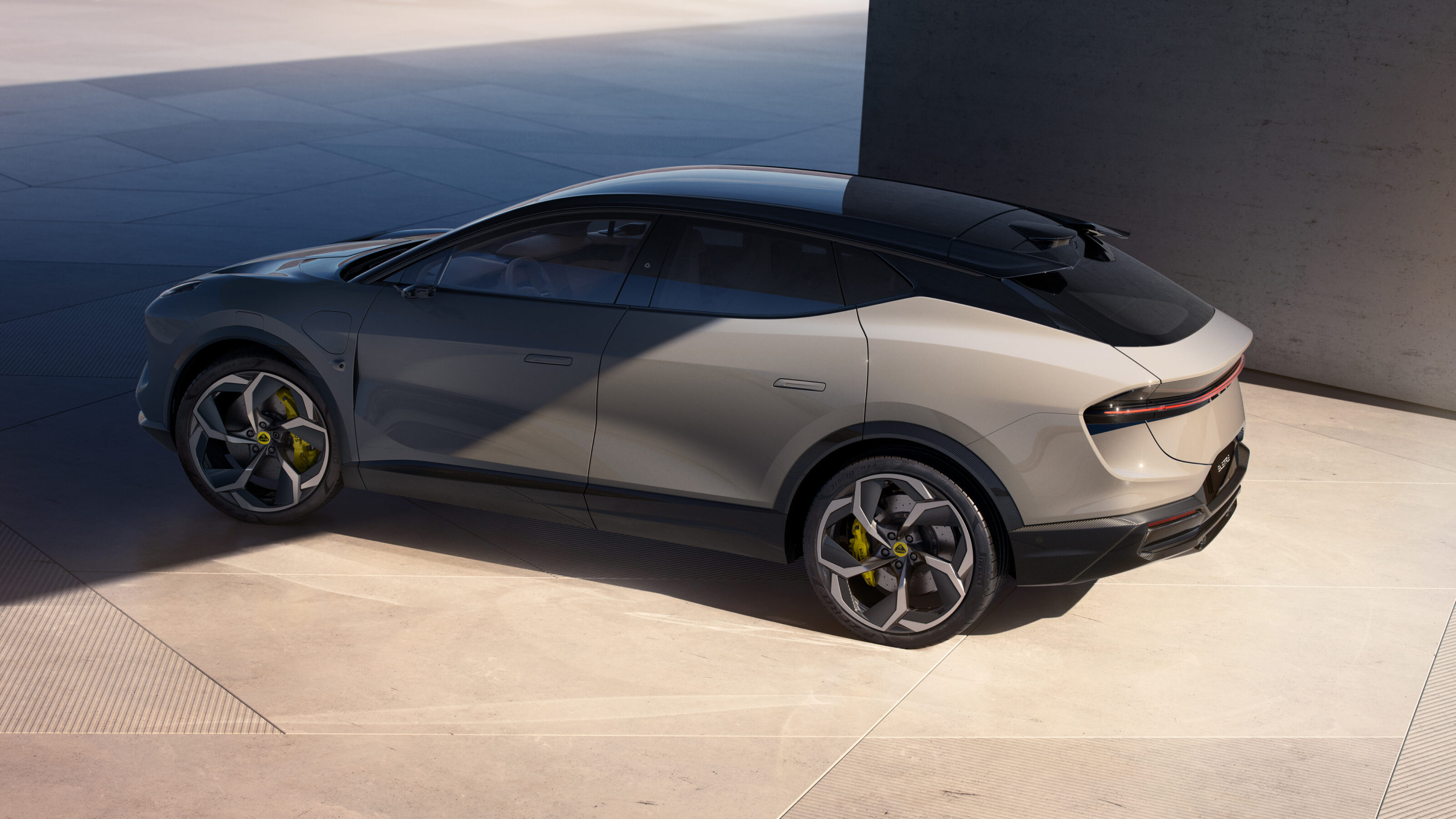
This allows for a claimed 0-100km/h sprint in 2.95 seconds and a top speed of 265km/h, with a claimed 490-kilometre driving range on the WLTP testing cycle.
Lotus says the additional performance is aided by the fitment of a two-speed transmission – as seen on flagship Porsche Taycan models – rather than the single-speed reduction gear found on the base Eletre and Eletre S.
These grades have identical performance figures, with 450kW and 710Nm, a 4.5-second 0-100km/h time, and a 258km/h top speed.
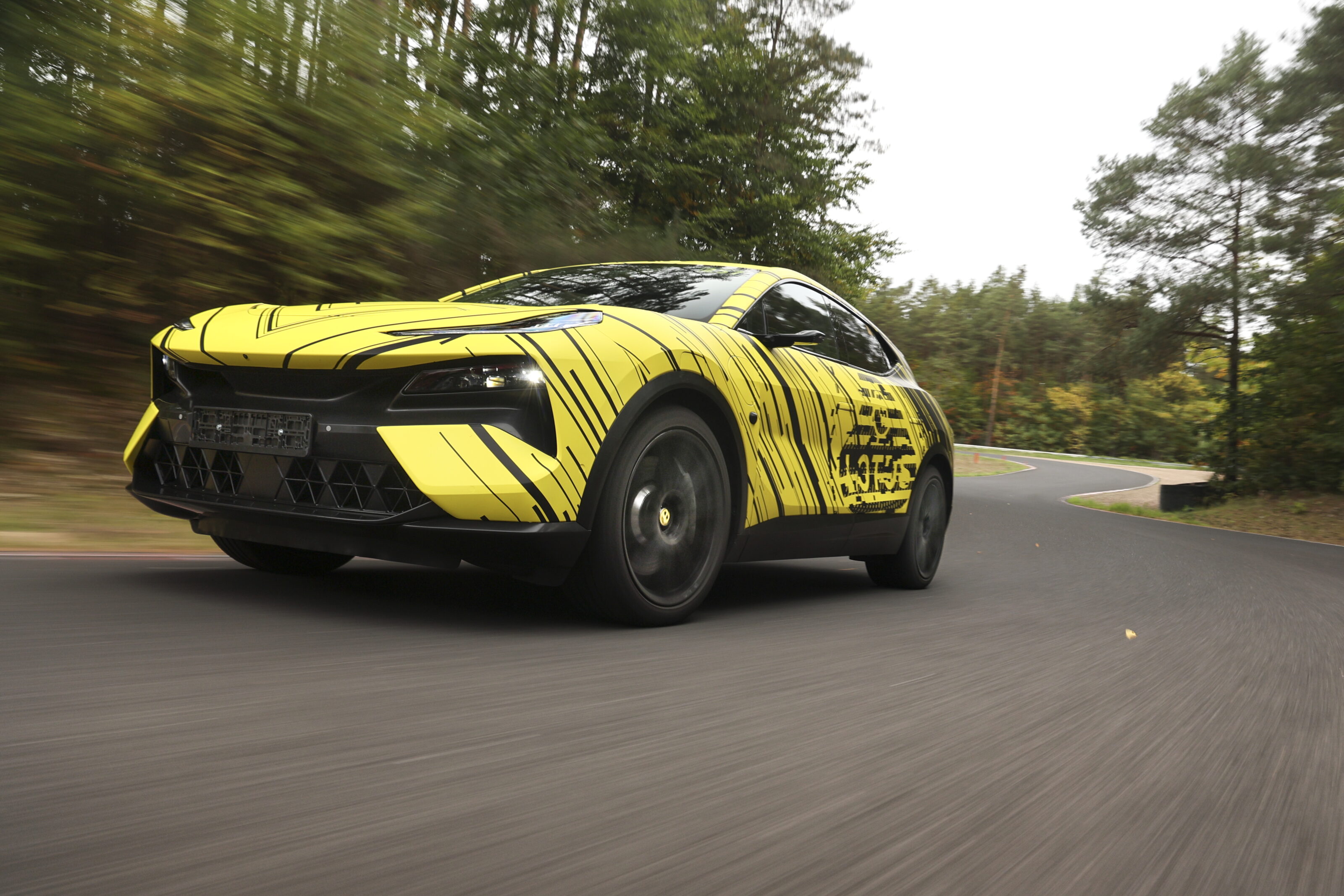
Lotus claims the Eletre and Eletre S have a driving range of up to 600 kilometres.
All versions of the Eletre support 350kW ultra-rapid charging, with support for a 10 to 80 per cent top-up in approximately 20 minutes.
It is priced from £89,500 (AU$160,000) plus on-road costs, while the Eletre S starts from £104,500 (AU$187,000).
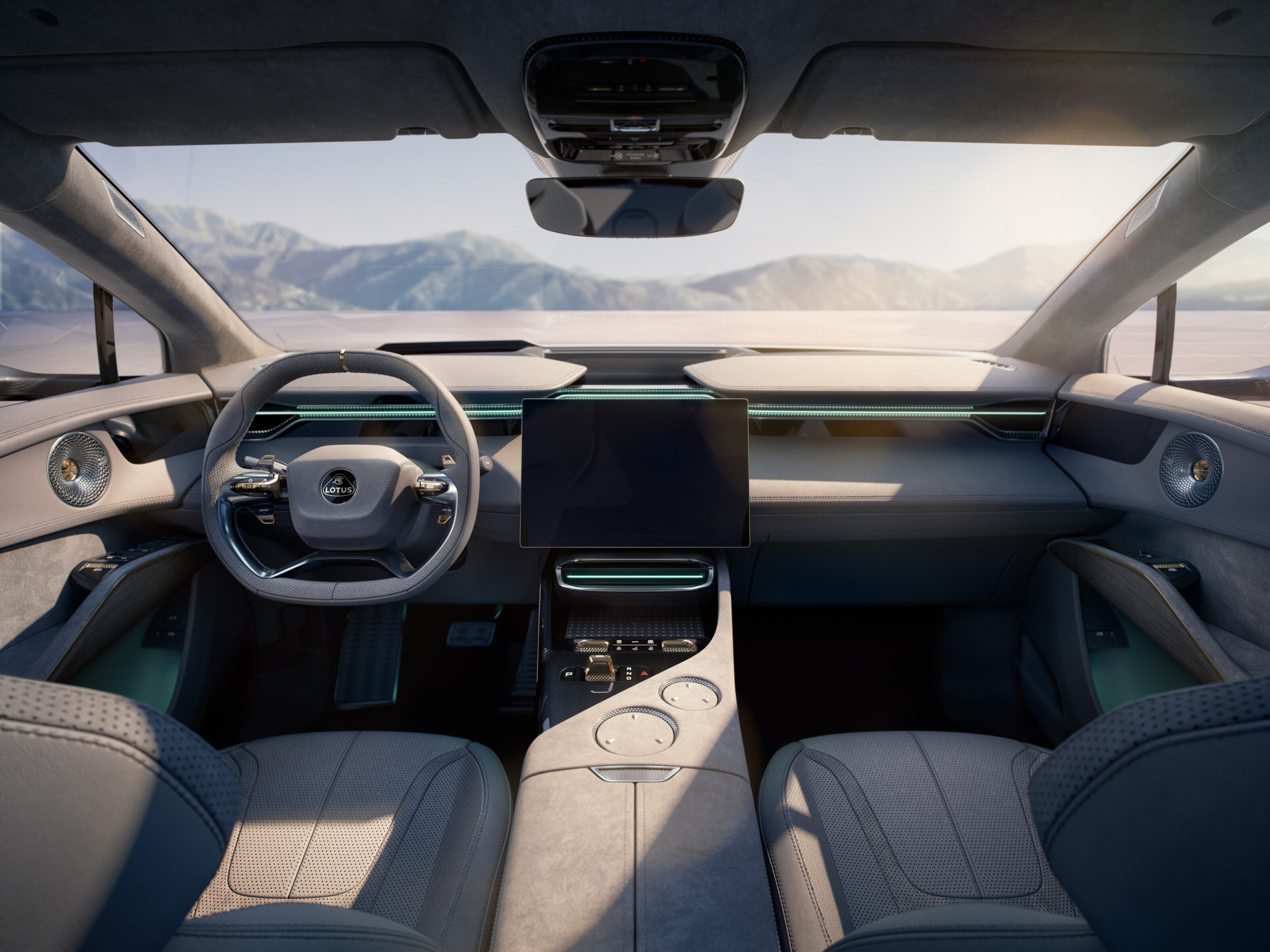
The performance-focused Eletre R is priced from £120,000 (AU$214,500).
Australian pricing is yet to be confirmed, with a local launch expected in 2024.
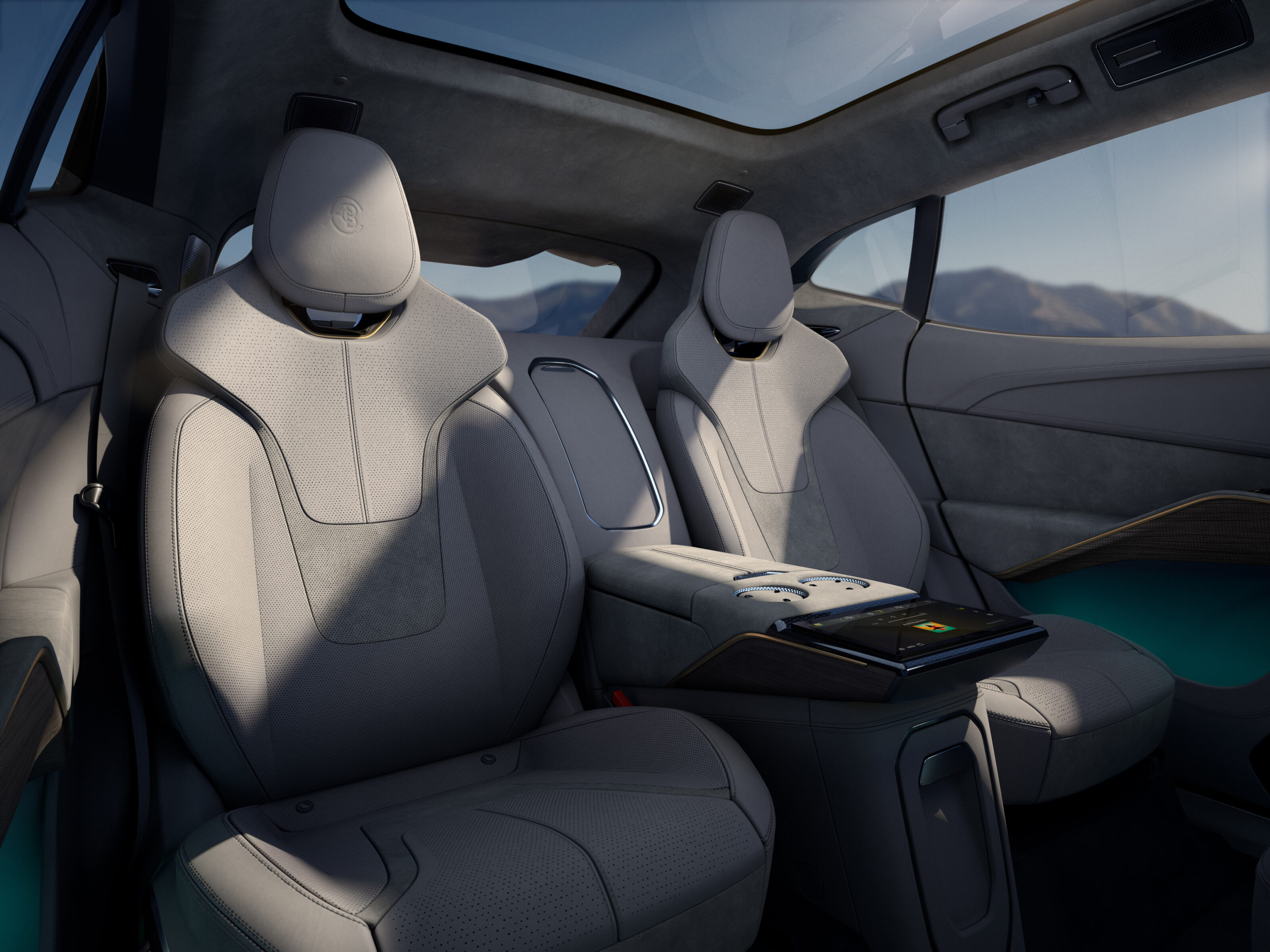
Standard equipment includes; 22-inch alloy wheels, air suspension, torque vectoring, a 15.1-inch infotainment system, matrix LED headlights, an active front grille, five drive modes, a wireless phone charger, four-zone climate control, 12-way power adjustable front seats and a 15-speaker KEF audio system.
LiDAR technology is fitted across the Eletre range, however, it is currently disabled in preparation for the approval of autonomous driving regulations in many global markets.
Stepping up to the Eletre S nets; a louder 23-speaker KEF audio system, soft-close doors, an air quality system, colour-adjustable ambient lighting and an active rear spoiler – while the Eletre R gains Lotus’s dynamic handling and carbon fibre packages, plus gloss black highlights and high-performance tyres.
The Lotus Eletre electric SUV will arrive in Australia in 2024, with local details and pricing expected in the lead-up to its local launch.
“It never rains but it pours.” It’s a well-known proverb, meaning that bad news seems to come in rapid succession – or at least, it’s an observation of the human tendency to remember all the bad times.
This week, Ford has confirmed what has been expected for some time – the Fiesta is dead, after 46 years and 4.8 million sales.
The news is worse than expected, however, with reports earlier this year suggesting it would be only the three-door Fiesta sent to pasture. A logical decision, that would have been, and certainly in keeping with market trends. Alas, it’s the full Fiesta line-up Ford is seeing off, just months after confirming the larger Focus is also signing out.
There is perhaps some irony here, too, because when Ford announced the current Fiesta range, it said: “Moving with the times to set new standards for fun-to-drive, technology and efficiency has been a huge part of Fiesta’s enduring success”.
In reality, the times have moved beyond light hatches in favour of little SUVs – such as the Puma that now becomes Ford’s smallest offering. The Fiesta will endure no longer.
Of course, it’s really not much news for Australian buyers – most of the Fiesta range left this land years ago, thanks both to shrinking sales and and a decision for production to centre in Germany, killing the cheaper Thai-built model we got here.
The current generation arrived in 2020 with only the hero ST grade, but Ford confirmed in August that it’s done with that one, too. (Along with the Focus ST.)
Along with announcing the Fiesta’s end, Ford has published a touching video (the sort that if released a few years ago with a more positive tune, might’ve spurred buyers to consider the Fiesta once again) to celebrate its history.
The video ends with a fleeting glimpse of the electric Puma SUV expected to debut in 2024 – one of seven new EVs Ford intends to launch in Europe over the next couple of years. How many of those we’ll see in Australia is still unclear, although the company’s local arm has confirmed electrification is a future focus (if not in the form of a Focus).
We can likely expect the Mustang Mach-E to be among the brand’s first local electric passenger offerings, though.
Snapshot
- Federal discounts incentivise new EV purchases
- 117 EV charging stations and a hydrogen highway
- Investing in local renewable manufacturing
- Incentivising home solar power
Overnight, the Albanese Labor Government announced the Federal Budget with a focus on lowering emissions, creating greater equality and strengthening the economy.
Crucially for us at WhichCar, the Budget encourages decarbonisation of Australia’s automotive fleet with big spending on charging infrastructure, EV uptake and reaching net zero by 2050 written into law.
The Budget also outlines the funding allocated to roads, the national grid, green energy and reinvigorating local manufacturing.
Jump ahead to what interests you
Decarbonising Australia’s transport fleet
The Federal Budget includes Electric Car Discount incentives totalling $345 million in value.
Part of this is cutting the Fringe Benefits Tax (FBT) and five per cent import tariff for battery-electric vehicles (BEVs). The FBT savings amount to $9000 per annum for an employer, or $4700 for an individual with a salary sacrifice agreement for a $50k electric vehicle such as an MG ZS EV or BYD Atto 3. Cutting import tariffs drops purchase prices by a further $2500, according to the documents.
To help bolster the second hand EV market, as well as cut CO2 outputs, the Government has pledged 75 per cent of its fleet will be made up of battery EVs by 2025. Small businesses are being encouraged to decarbonise with a $62.6 million funding package, including for electrification of fleets.
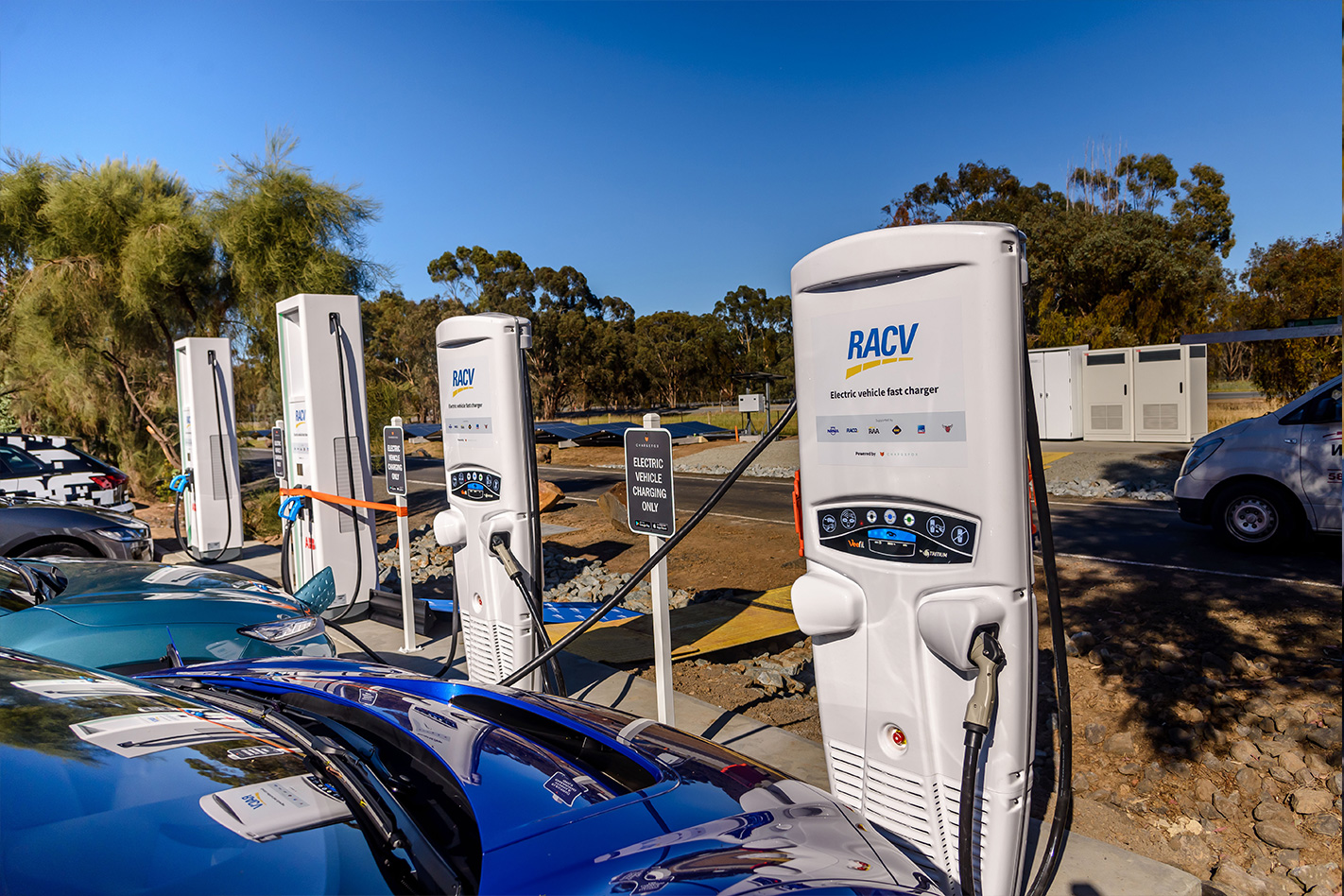
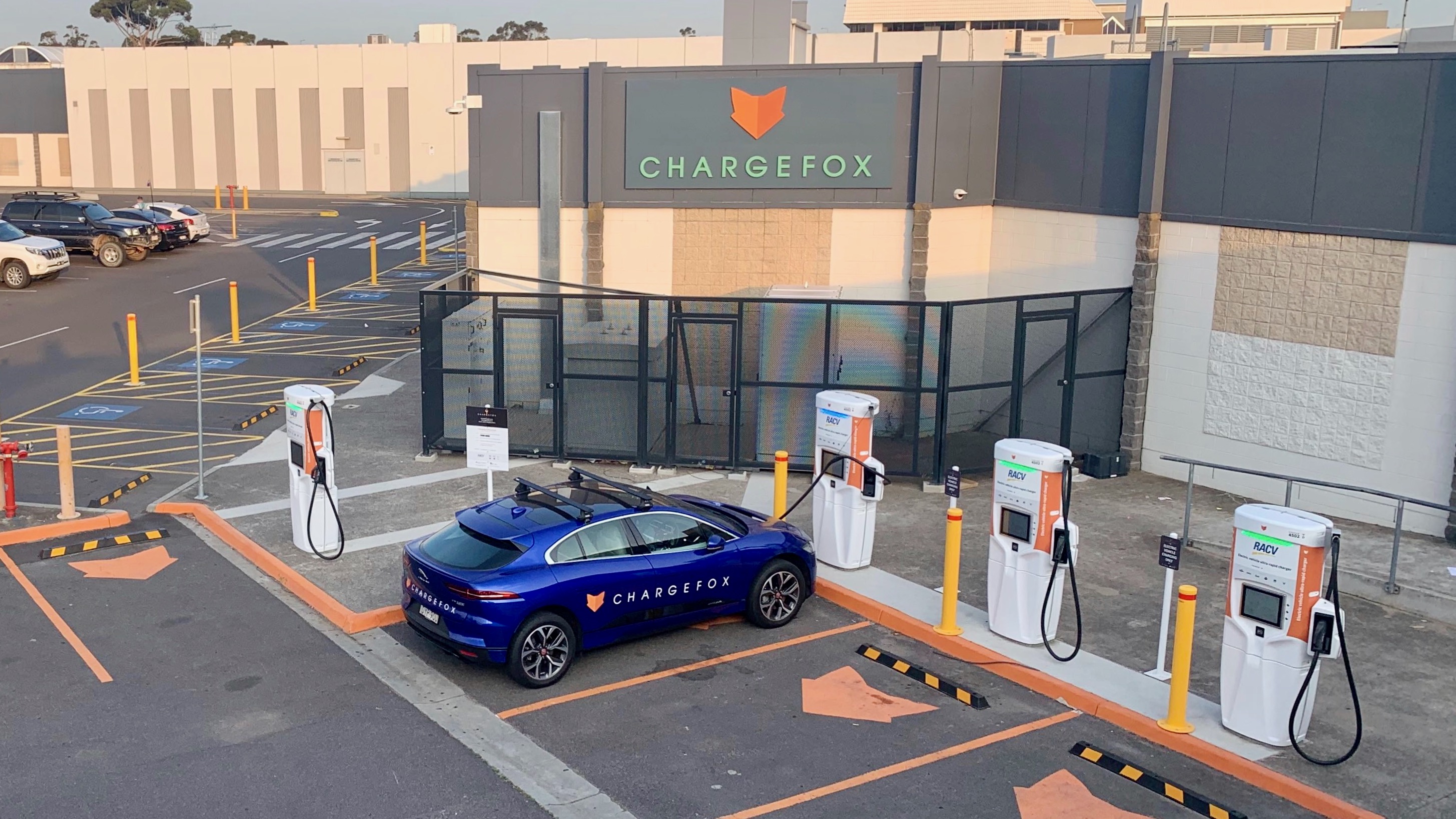
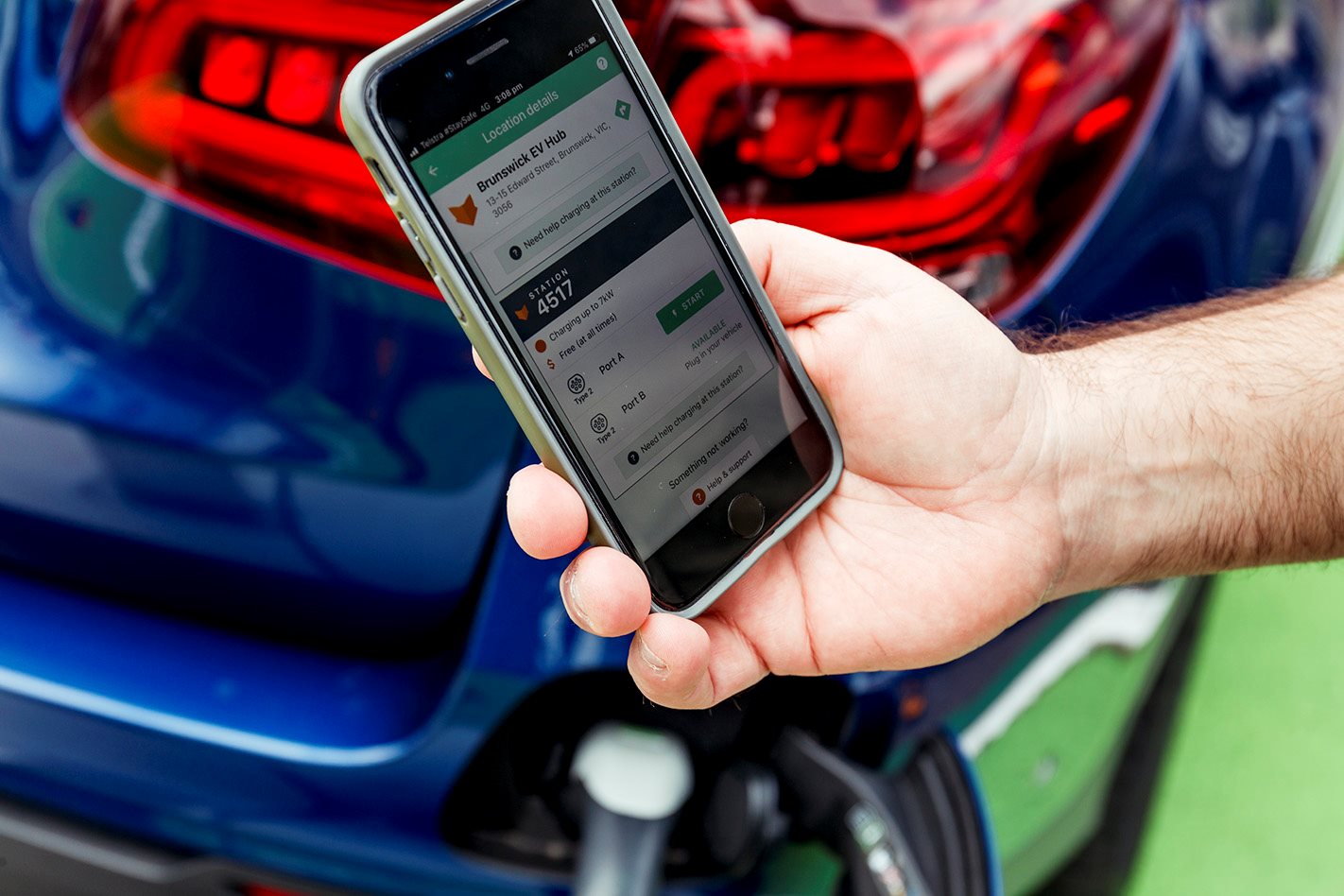
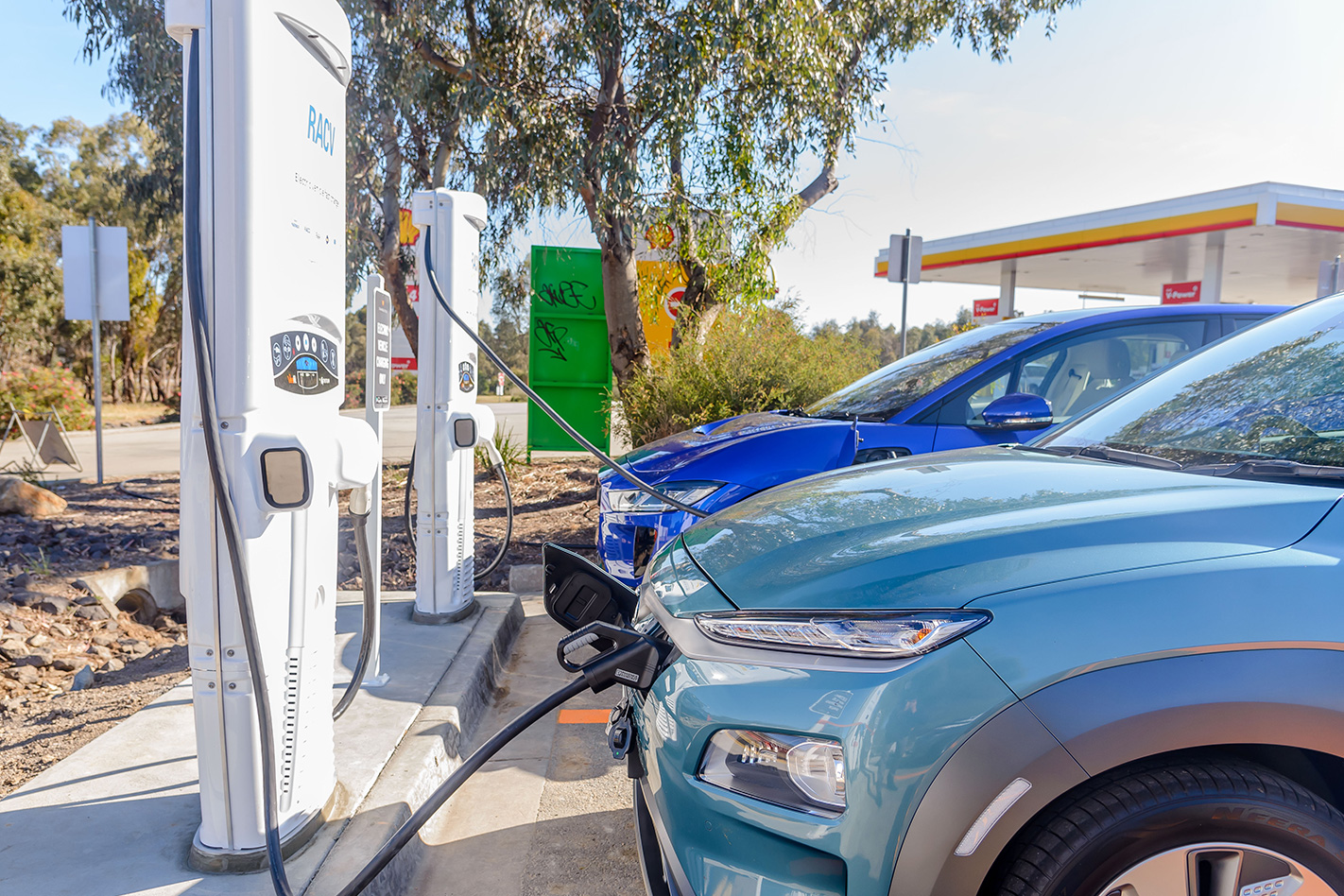
A $500 million ‘Driving The Nation Fund’ includes rolling out 117 EV charging stations and hydrogen refuelling stations for key freight routes.
The Government has also pledged $14 million to real-world efficiency testing to test manufacturer’s claims after Volkswagen’s Dieselgate scandal, a move which the Australian Automobile Association (AAA) praised.
The Budget is a step in the right direction for lowering emissions, but some are calling for more to be done.
“By introducing an ambitious and robust fuel efficiency standard, manufacturers would be compelled to introduce more fuel-efficient vehicles into the Australian market, including more electric vehicle models,” said Carola Jones, founder of EV charging software supplier Everty.
“To accelerate the supply of electric vehicles to Australia, the Government should commit to implementing the fuel efficiency standard by January 1, 2024 at the latest.”
The government is investing $42.6 million into reinvigorating the Climate Change Authority to track the country’s progress on lowering emissions.
In tandem with the initiatives announced in the Budget, the Federal Government continues consulting on the first National Electric Vehicle Strategy with key stakeholders.
Emissions reduction mandates of 43 per cent by 2030 and net zero by 2050 are now law.
State-by-state differences in how road users are taxed for various vehicles remain in place for now, so Victorians will still need to pay 2.1 cents/km driven in a plug-in hybrid.
Local manufacturing and skills
There isn’t going to be an influx of automobile manufacturing in Australia, but the Budget does outline spending in with the National Reconstruction Fund, aimed at providing opportunities in the private sector.
Among the seven sectors are renewables and low emissions technologies and transport. This could see further investment in local battery skills such as repair, recycling or manufacturing with grants of up to $113.6 million offered.
This is something Stavros Yallouridis, CEO, of the Motor Traders’ Association of NSW (MTA NSW) sees as crucial to support the adoption of EVs.
“Small businesses within the motor trading industry continue to struggle to find skilled workers and our data shows that there is currently a deficit of over 30,000 skilled professionals nationally,” he said.
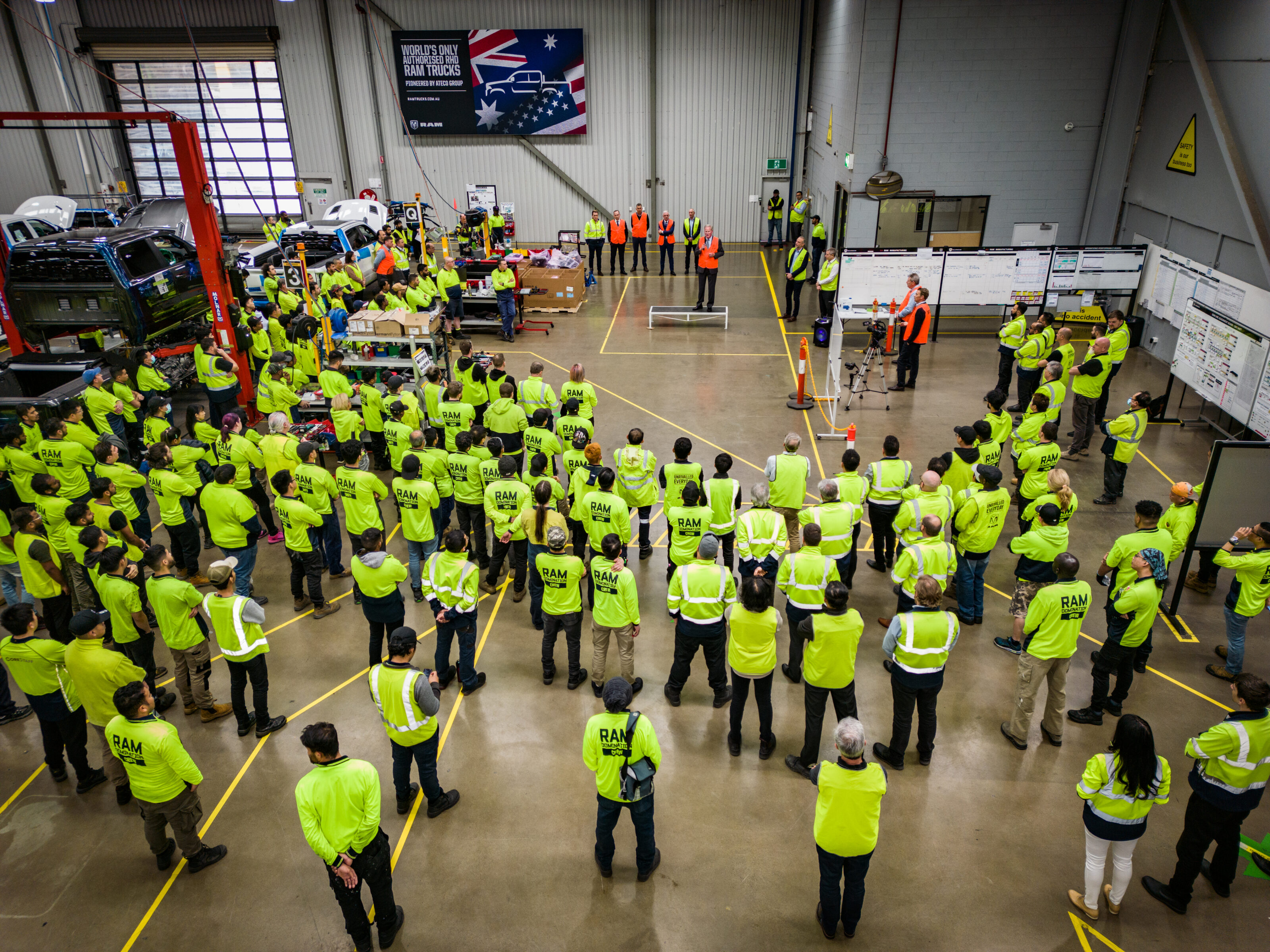
“To service and repair EVs will require additional qualified professionals and an upskilling of the current workforce to safely and effectively undertake this work.”
Additionally, the AAA called out the disconnect between the continued revenue from tariffs, such as the Luxury Car Tax, that were designed to protect local vehicle manufacturing but are now impeding the uptake of electric vehicles by increasing prices.
Road and infrastructure spending
Over the next 10 years, the Government has pledged a total of $120 billion of investments into transport infrastructure.
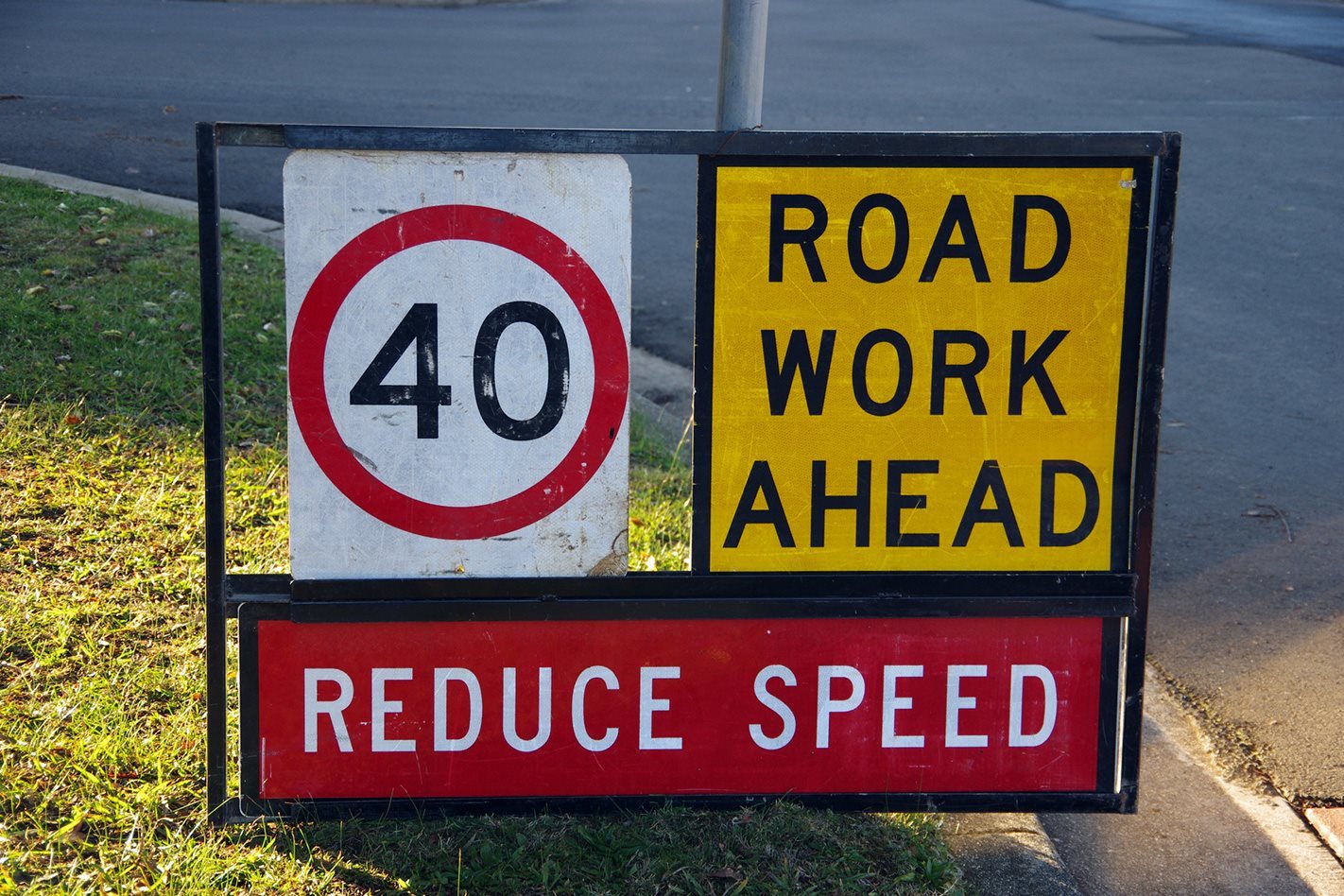
For the next 12 months, $13.3 billion is going towards infrastructure improvements. The Budget outlines road improvement projects in New South Wales, Victoria, Queensland, South Australia, Western Australia and the Northern Territory.
There is also a $125 million investment headed to WA to set up electric buses and charging stations.
However, the AAA continues to criticise the Government for not returning 100 per cent of revenue from the fuel excise to infrastructure.
“The AAA is continuing its call for the Government to allocate 100 per cent of fuel excise revenue to Commonwealth funding of land transport infrastructure. The budget shows 91 per cent of fuel excise is being reinvested in 2022-23, 97 per cent in 2023-24, 92 per cent in 2024-25 and 88 per cent in 2025-26”, the AAA said.

Energy and grid incentives
Without significant improvements to the national energy grid, electrifying the nation’s transport could cause the country to come to a standstill.
Alongside improving wiring and storage on a macro level, the Budget is pledging money to provide affordable solar power solutions to houses in cities and regional communities.
The Rewiring the Nation incentive will use $20 billion in low-cost loans to improve the national grid. This includes energy transport and storage solutions to reduce Australia’s reliance on external energy.
Alongside Rewiring the Nation, a $1.9 billion Power the Regions fund will assist Aussies outside big cities by giving access to lower emissions energy sources. This is teamed with a $224.3 million pledge under the Community Batteries for Household Solar program and $102.2 million investment to help 25,000 households access affordable household solar.
This will cut 100,000 household’s power bills, according to the Government, with 400 batteries to store solar energy rolled out in communities around Australia.
